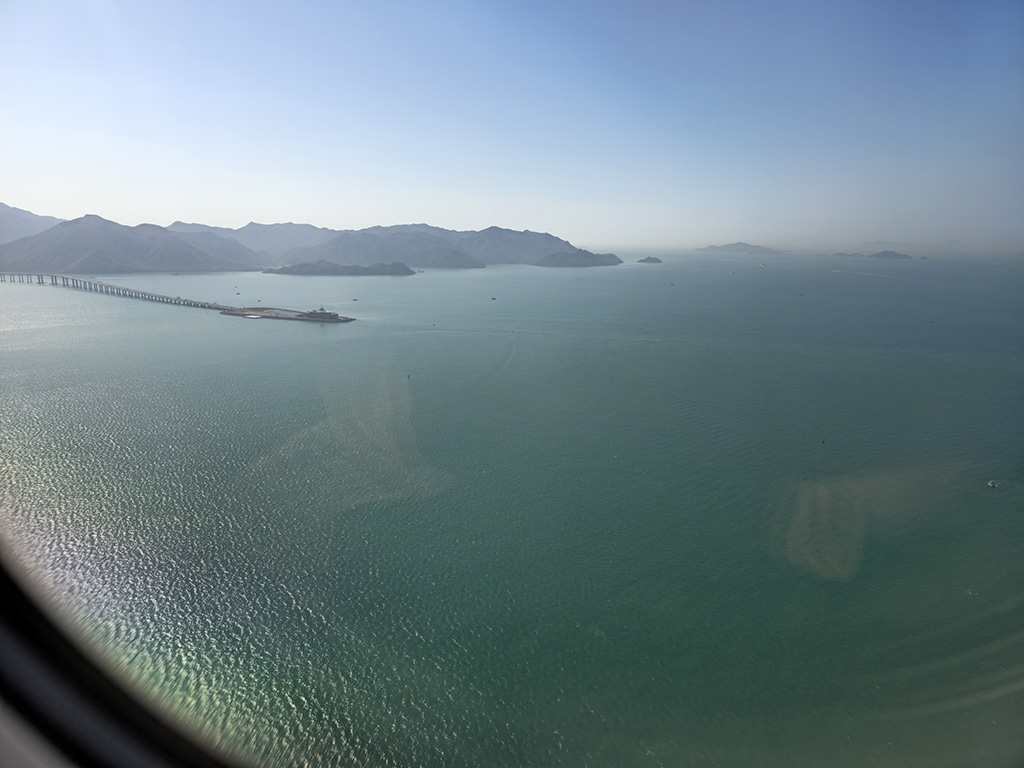
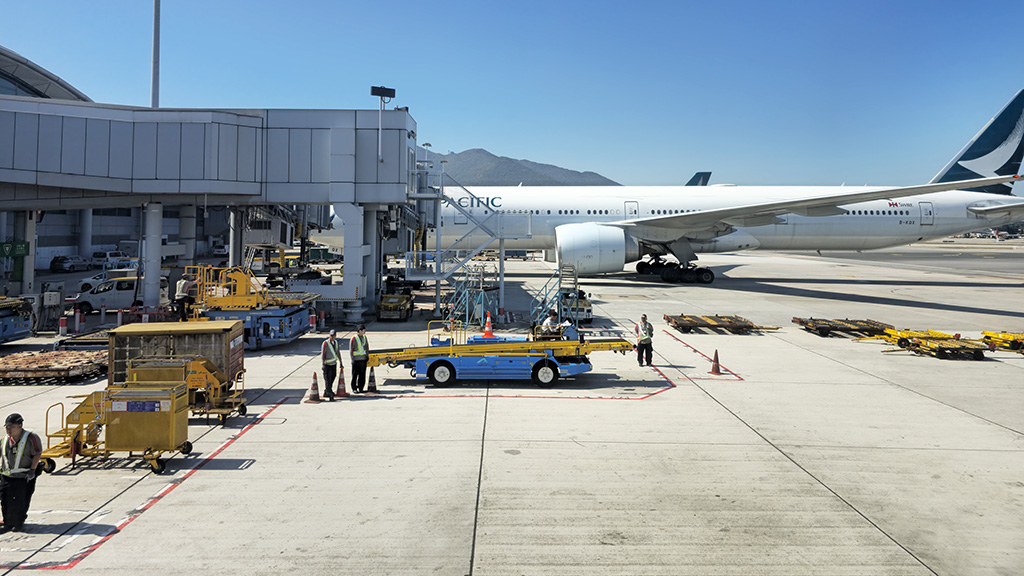
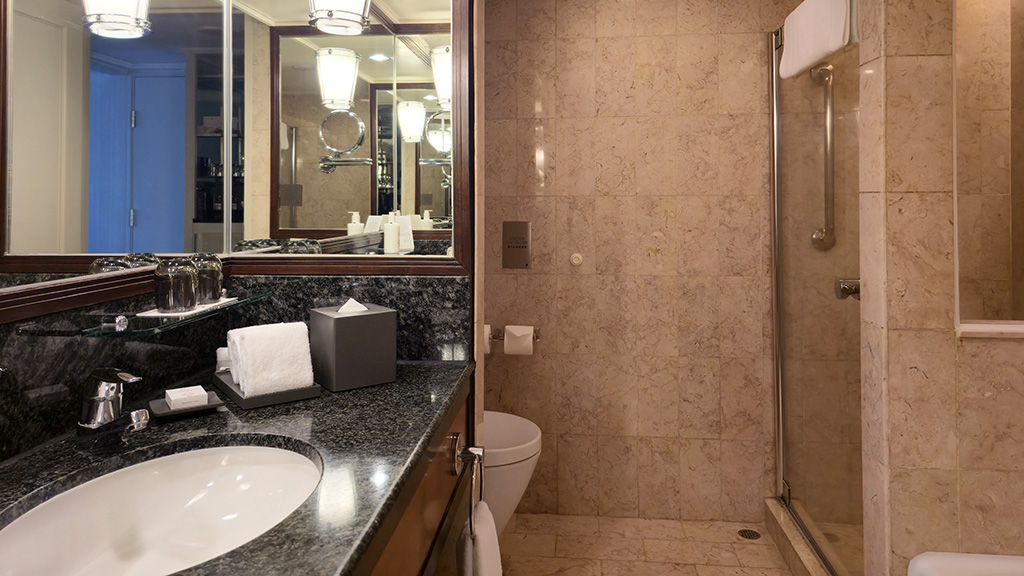
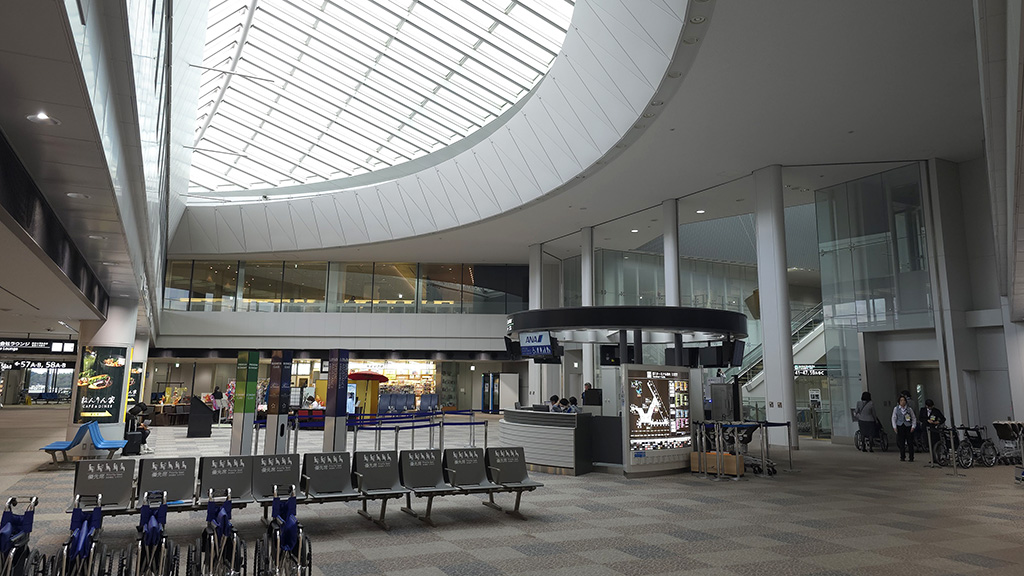
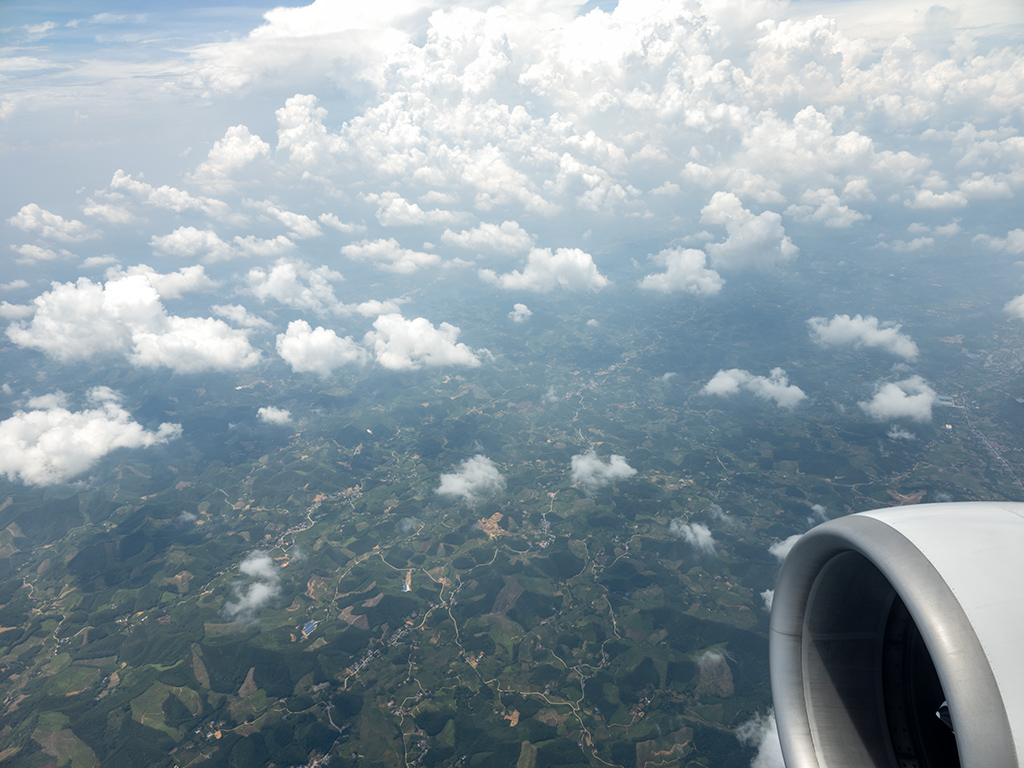
Hello, STARLUX Airlines flights 236 and 2 from Hong Kong to Taoyuan to Los Angeles

For the past three weeks, I’ve been blogging little by little about my trip to Hong Kong, a special administrative region of China.

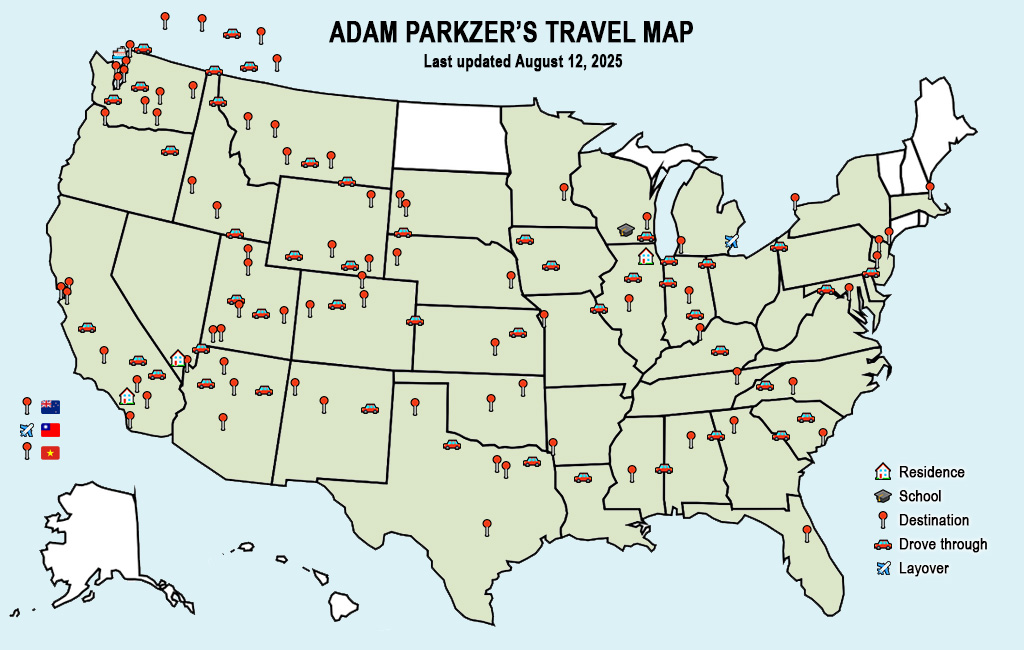
For the past couple of years, I’ve been far more open to international travel outside the United States and Canada; this started with a trip to New Zealand, which was then followed by trips to Vietnam, Japan, and Mexico. I especially enjoyed my time in Asia, so when I had another opportunity to join some friends on a trip across the Pacific, I decided to tag along.

At first, we all flew into Hong Kong (albeit on separate flights—I took Starlux Airlines while my friends flew United). After exploring the region together for a little while, my friends continued their multi-city itinerary by heading into mainland China while I stayed behind to continue enjoying Hong Kong. I could’ve joined them into mainland China if I wanted to, but there are some extra logistics that I hadn’t finished taking care of ahead of time (such as applying for a visa, downloading Chinese mobile apps, and securing special network tools that would allow me to continue doing my USA-based work remotely), so I decided to postpone my introduction to mainland China for another time.

I published a handful of blog posts detailing various things I did and ate in Hong Kong; in case you missed them, here is a quick overview (in chronological order on the basis of when I published the blog post, not of when I actually did the activity):

Overall, I’d say that I had a very positive experience in Hong Kong. Compared to the two countries that I’d previously visited in Asia—Vietnam and Japan—Hong Kong felt like a balanced combination of the two. Vietnam was a bit too chaotic for my preference, while Japan seemed like it was operated and occupied by robots; Hong Kong was still nice and very efficient, but had enough of a human element to it such that it felt like there were real people there.

One thing that trolled me repeatedly throughout my trip was the currency conversion. When I first checked the exchange rate for United States dollars to Hong Kong dollars, I saw that one USD was about seven and a half HKD. Then my brain continued that train of thought by thinking that seven and a half is almost eight, and eight is almost ten, so I could take a shortcut and convert HKD to USD by moving the decimal point one spot to the left.

Spoiler: That is not a good way to handle the mental calculation of currency conversion from HKD to USD.

Taking my dinner at VEA as an example, I saw that the tasting menu was HK$2,280, so I went into it expecting to end the night having spent somewhere in the mid- to upper-200s USD after the non-alcoholic beverage pairing. Instead, my bill ended up being over US$400—more than US$100 above what I expected. Take that and then repeat it over and over again for two weeks, and I actually ended up spending a few thousand USD more in Hong Kong than I thought I did. (To be clear, I am not upset about this, and it is entirely my own fault that I inted myself with smooth-brain math.)

In terms of weather, I went into Hong Kong expecting a slightly milder version of what I experienced in Hanoi, Vietnam, but I’m glad to report back that it was nowhere near as bad. Of course, the obvious reason is because I went to Hanoi in August and Hong Kong in March; however, while Hanoi regularly reached a climate where I literally had difficulty breathing because of the humidity, Hong Kong just felt like a regular hot and humid Midwestern day in the United States. Miraculously, I only had a couple two-shower days in Hong Kong (while it was an ongoing and regular occurrence in Hanoi).

 
Before I start the overview of my flight, I do feel the need to share my one negative observation about Hong Kong, for the sake of transparency and balance. First, it needs a little bit of context.

I don’t understand people who film everything, especially in places where you’re meant to enjoy a special, gated event. For example, when I see professionally-filmed videos of concerts nowadays, it is a bit saddening to see so many people in the crowd being so focused on recording the show with their phone when there are literally multiple US$50,000+ cameras with US$10,000+ lenses already handling it. I am aware that plenty of people have valid reasons for doing so, such as filming a more personalized perspective for a friend who couldn’t make it… but it is difficult to believe that everyone has a really good reason to record the whole set, the entire time.

A lot of people in Hong Kong are like this, but for everything around them. It’s almost like half the population of Hong Kong is trying to become an online influencer. Everything is filmed, and if it can’t be filmed yet, then people stand in long lines to wait their turn to get their own recording of it. I have blogged for around two decades now, and if you look at the number of pictures I take and compare it to the number that everyone else around me takes, you’d think they’re all running their own blogs and social media platforms a hundred times bigger than mine.

As a side note, I also know I’m not the only one who feels this way, because in the most congested tourist areas, there are literally posted signs asking people not to put on performances in public for personal recording (i.e., telling them not to make TikToks in the middle of the path and get in others’ way).

Adjacent to this, many people seem to have their eyes completely glued to their phones. It seems like people don’t look up to see what’s around them anymore, and the most egregious ones don’t even care where they’re walking and just hope that others will navigate around them. Even worse, a subset of people randomly stop walking in the middle of the street, presumably a subset including those who are unable to text and walk at the same time, or are unable to veer off to the edge of the path so they’re not in anyone’s way. Even even worse, I saw a bunch of people give up on walking and just stop in the middle of the sidewalk for no reason… and they didn’t even have their phone out!

My point is, I wish people in Hong Kong would be more present and aware of their surroundings. Hong Kong is a nice place with a lot to see, and believe it or not, you can learn a lot just by people-watching and observing those around you. I heard that our newest, youngest generation is embracing a movement away from living in a digital world, and is instead aiming to shift towards “dumber” technology so they can connect more with the real world. That sounds like great news to me, and I look forward to seeing if that can have a positive impact on Hong Kong’s day-to-day environment.

 
And finally, one more positive thing before I go into my day of travel: the public transit system in Hong Kong is impeccable. I was very impressed at how accessible Tokyo was because of their transit, and somehow, Hong Kong seemed even better. It’s difficult to precisely articulate what I liked more about it, and it’s more of a feeling than it is a concrete thing. However, believe it or not, even with people in Hong Kong being more disorganized and less orderly than people in Japan, the Hong Kong system itself felt more efficient. I felt like transfers between different lines were easier, and there were fewer instances of everything happening at once and just being completely bombarded by information.

Partway through my stay, I transferred from the JW Marriott Hotel Hong Kong to the Park Lane Hong Kong, Autograph Collection. I’m not as intense of a hotel hopper as the people who check into a new hotel every single day, but I did still want to experience two different neighborhoods during my stay. The JW Marriott gave me a good idea of what the upscale shopping district was, while Park Lane was deeper into the bustling action.

This is what my room looked like at the Park Lane.
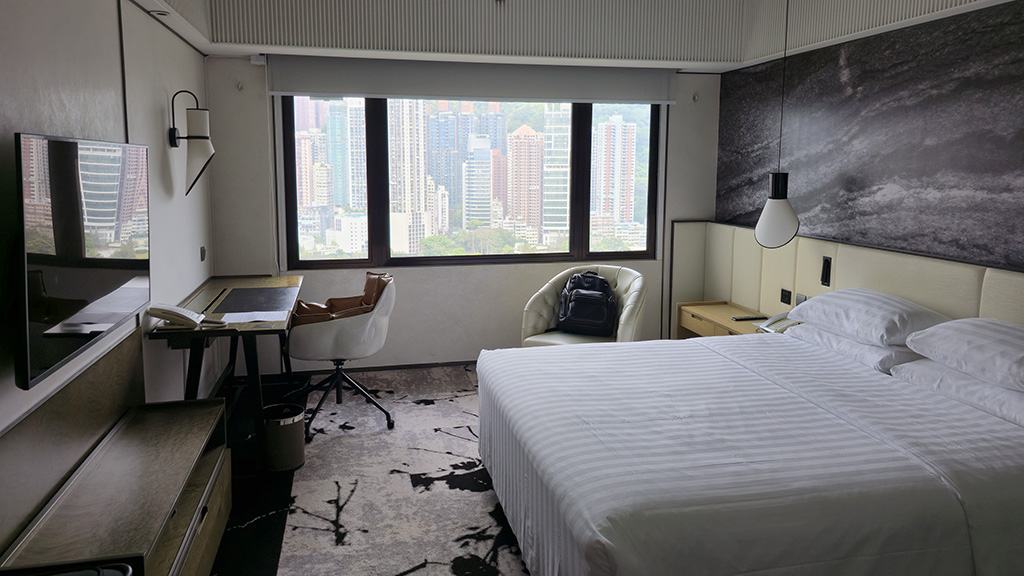
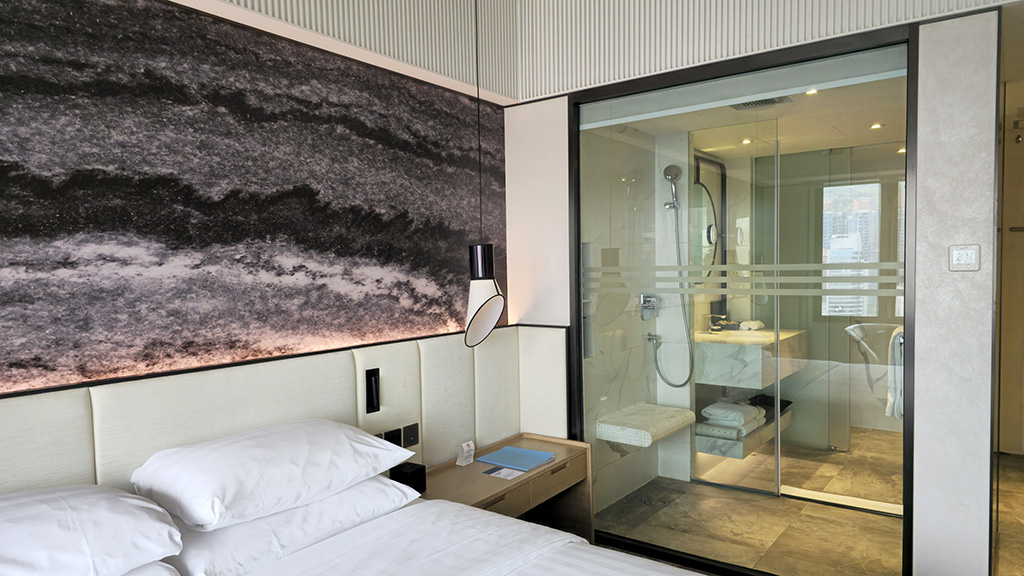
Because of my Ambassador Elite status with Marriott’s loyalty program, I was offered a free upgrade to a suite at check-in and was shown photographs of different available suites I could pick from. Funny enough, all the suite options had a bathtub in the middle of the showering area such that it seemed like just using the standing shower would be inconvenient. I would’ve taken the upgrade if I was sharing my room with a friend because I have a lot of friends who enjoy taking baths, but because I was in this room alone for this trip, I declined the upgrade and just took a standard guest room (albeit with the best available view).
After checking out, I ventured down into the subway, took a quick ride on the Island Line from the Causeway Bay Station to the Central Station, connected via foot to the Hong Kong Station, then took the Airport Express to Hong Kong International Airport.
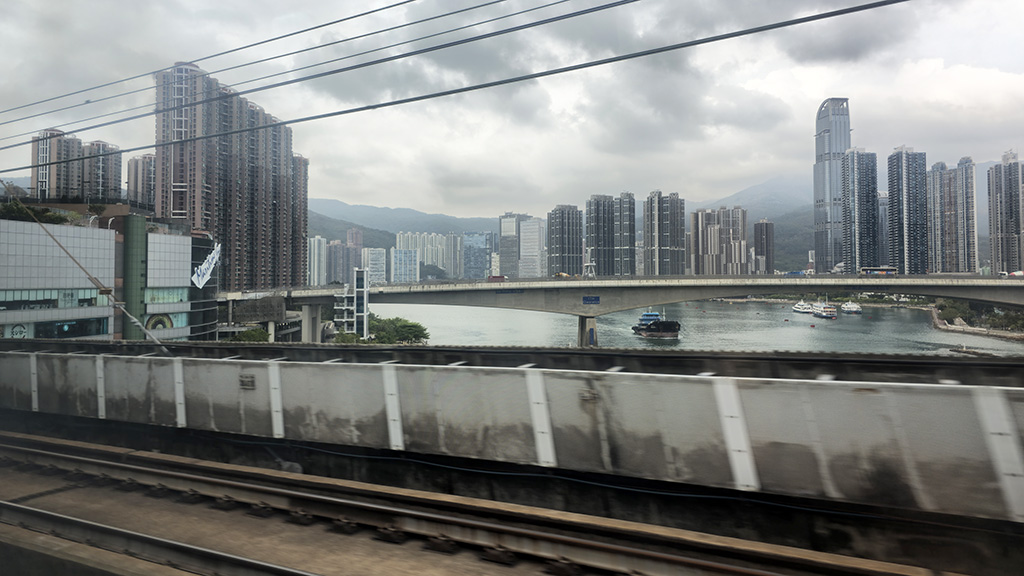
I allocated about an hour and a half for transport, but due to a mixture of walking quickly and the Airport Express being ahead of schedule, I managed to walk out of my hotel and walk into the airport in a matter of under one hour.
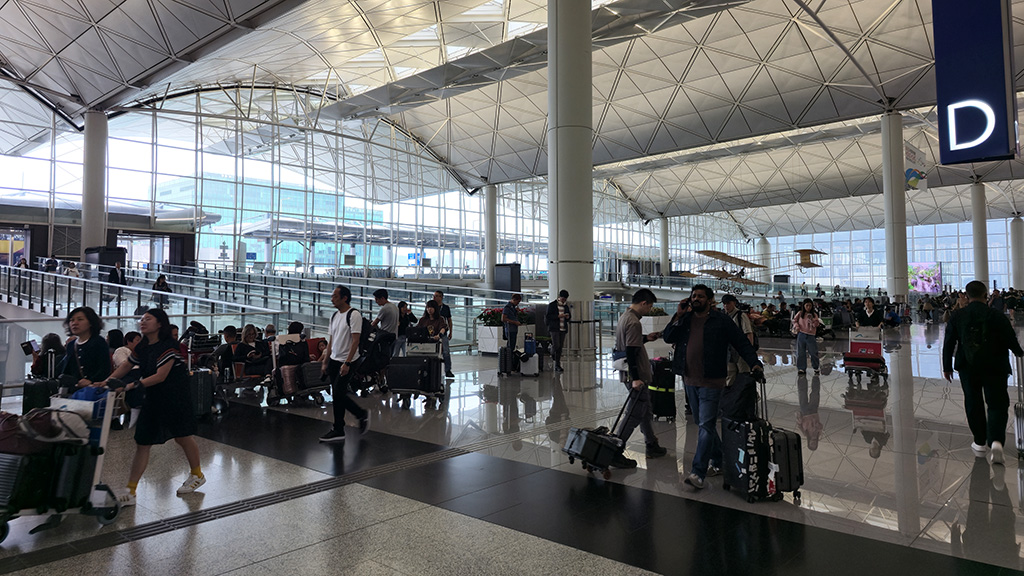
I also allocated about an hour and a half for check-in, security, and immigration. I’m used to all of this being quick in the United States because of my enrollment in both TSA PreCheck and Clear, but I figured that it would take much longer in Hong Kong due to me being a foreigner and not being able to use their expedited systems.

Well, I was wrong. Hong Kong International Airport is extremely efficient. I had already started my check-in process online, and because I did not have any checked luggage, I was able to go directly to the security checkpoint with my QR code instead of finishing the check-in with a desk agent. The security lines were short, and the efficiency of standard security in Hong Kong seemed to be even better than the TSA PreCheck lines in the United States. The immigration lines were also short, and the officer glanced at my passport for just a few seconds before waving me in.

Overall, it took just shy of 15 minutes for me to walk off the train and walk into the secured area airside. Upon my entry, I was greeted by a live band, which is the first time I’d ever seen that in an airport.
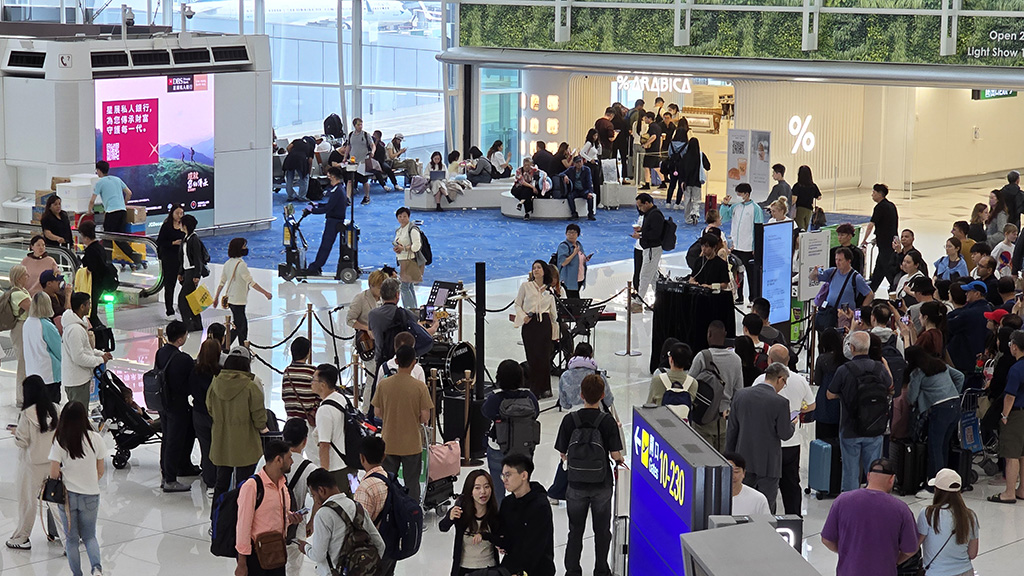
Funny enough, I spent more time looking for my designated airline lounge than I did getting through security and immigration. The lounge I was trying to find was upstairs in this area, but all the elevators were broken, I couldn’t find any stairs, and an escalator in the far corner didn’t actually lead to the front door of the lounge.

If you told me that I walked back and forth for an entire mile trying to figure out how to get up there, I wouldn’t be surprised.
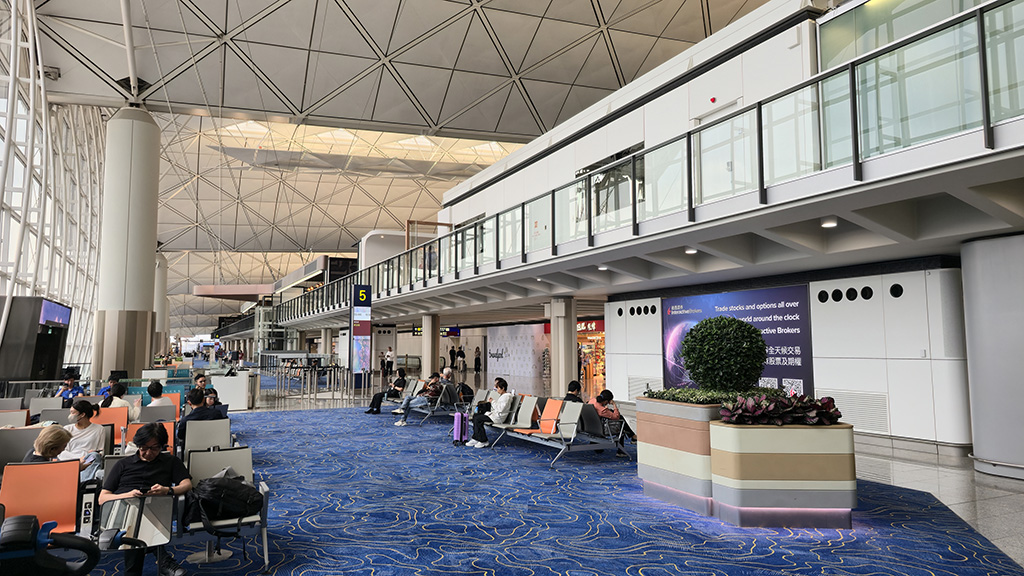
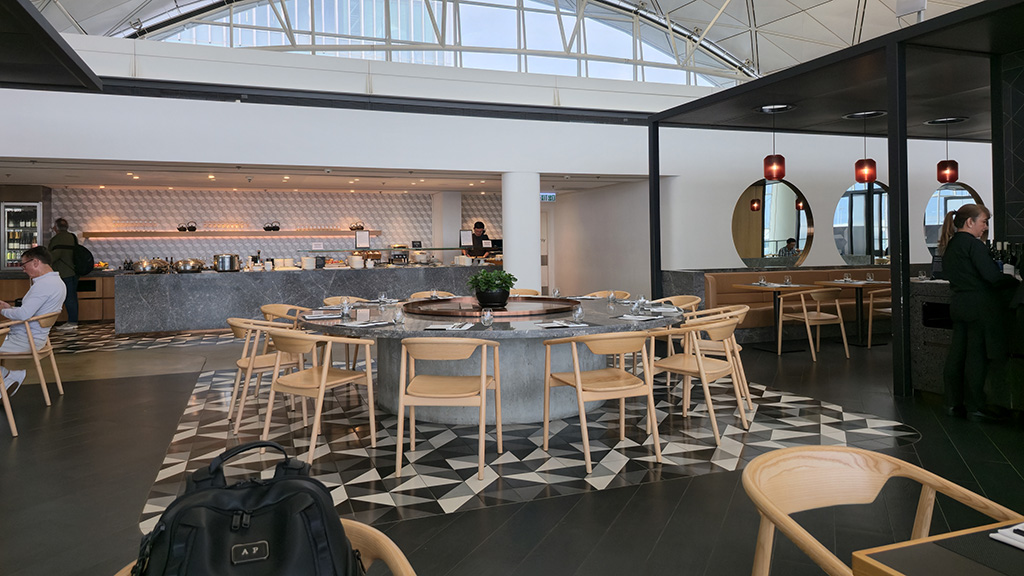
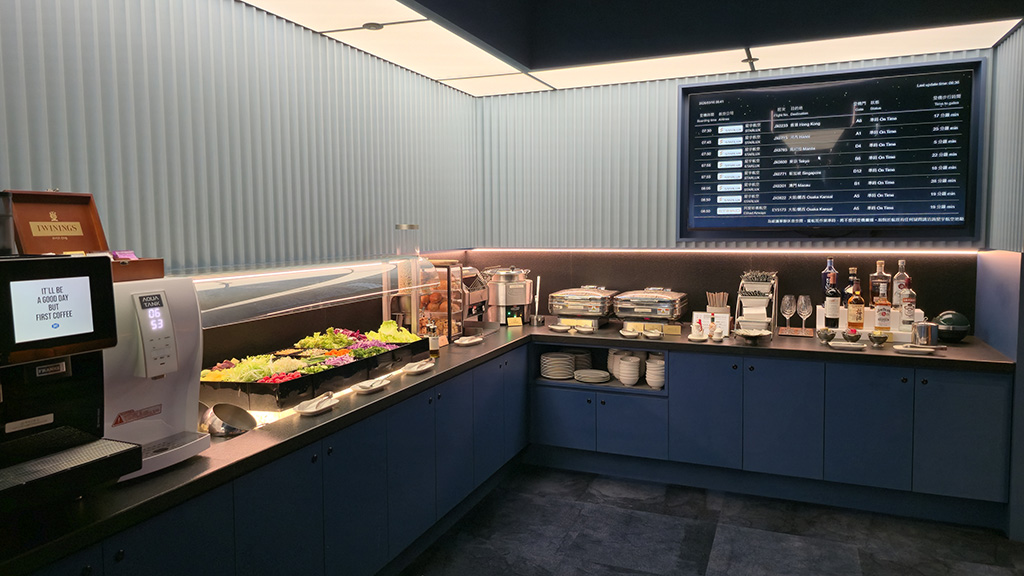
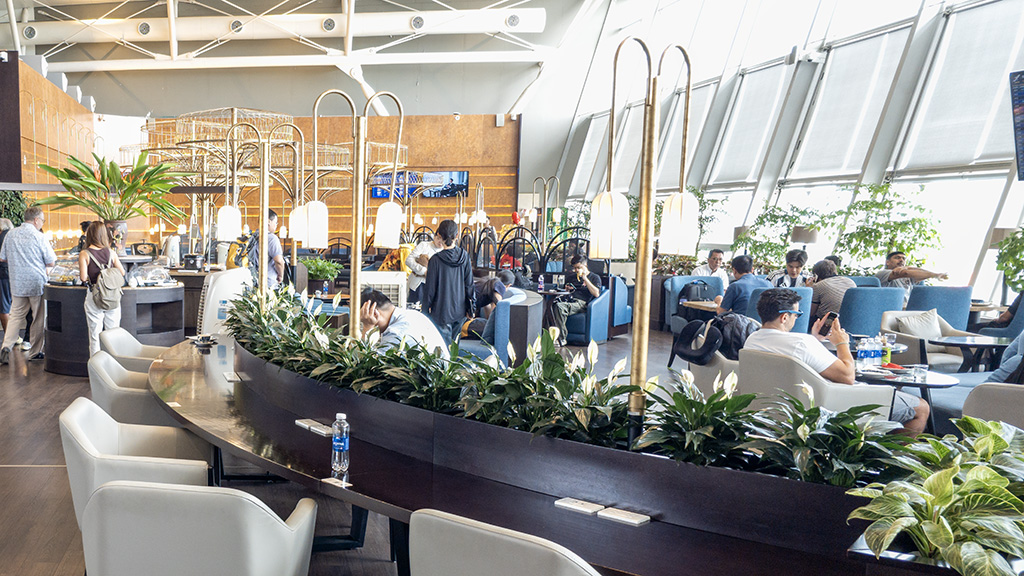
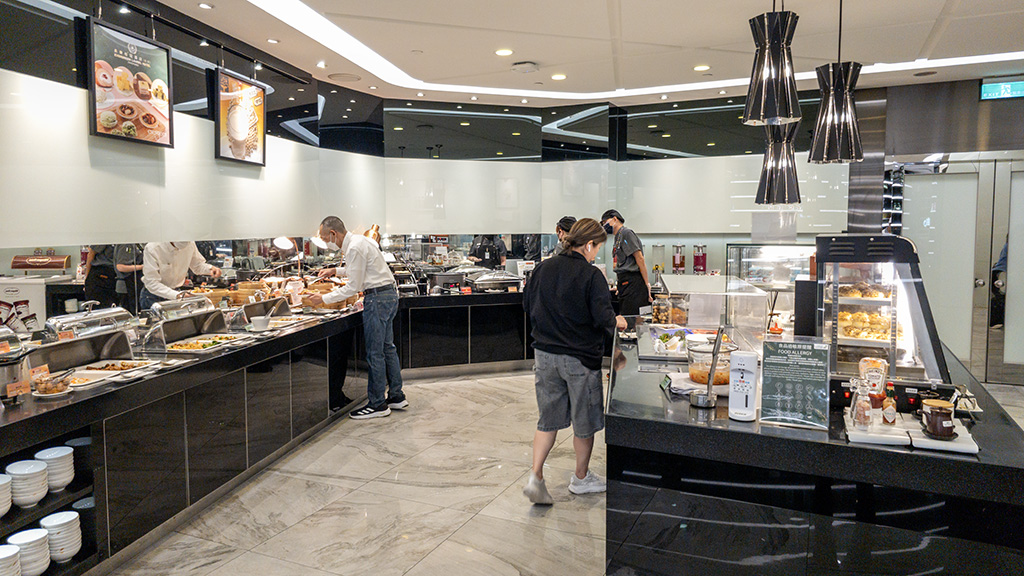
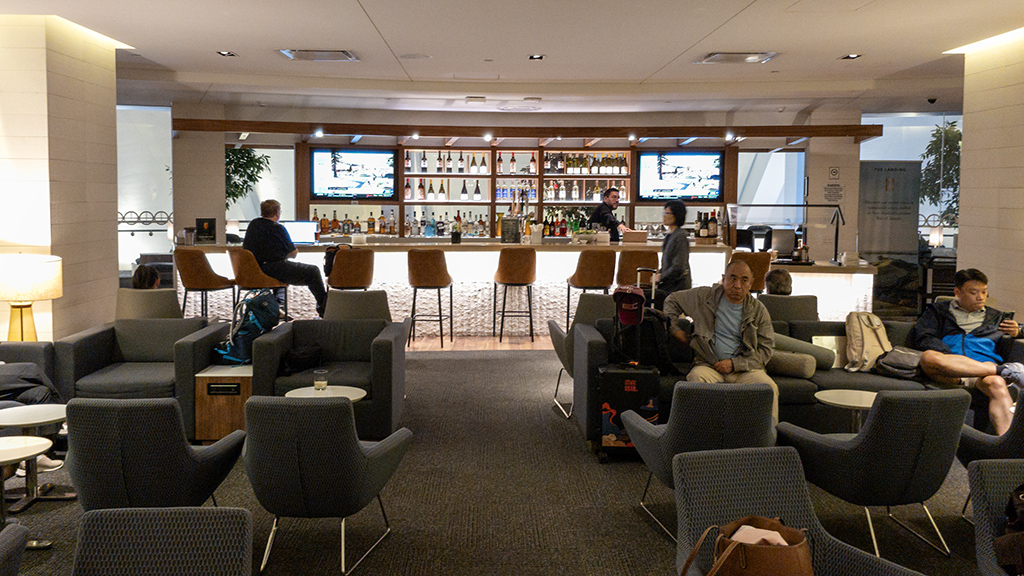
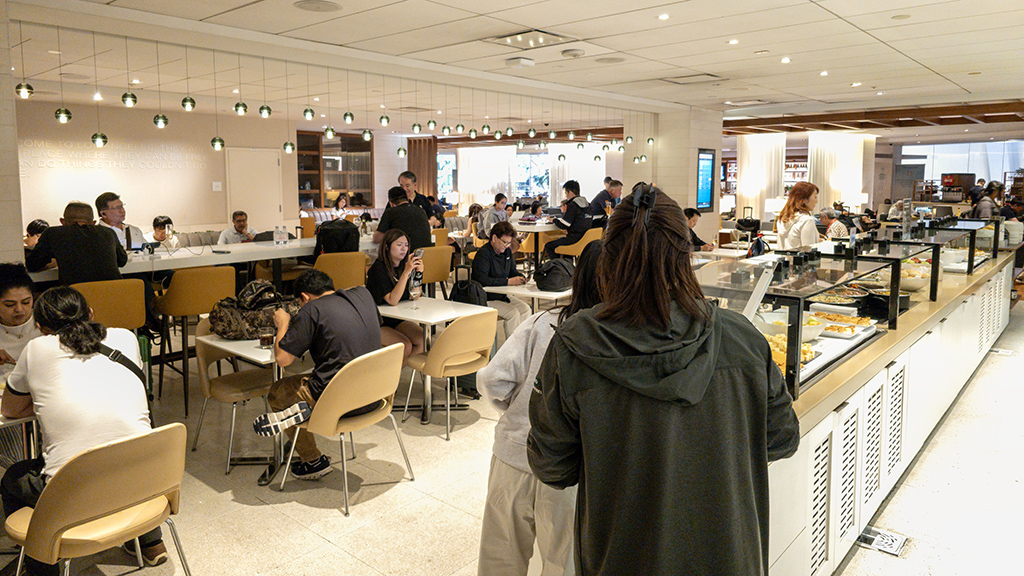
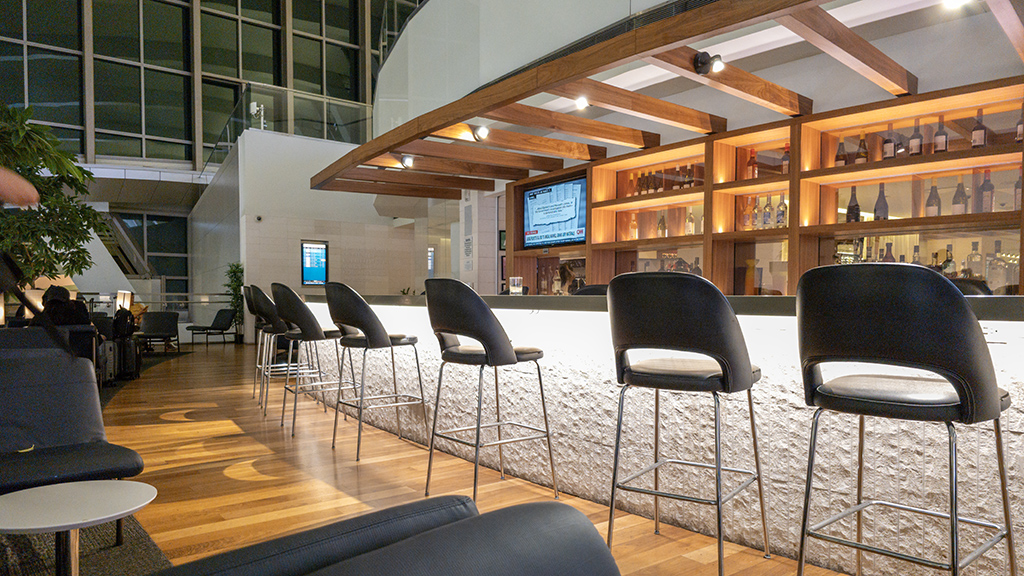
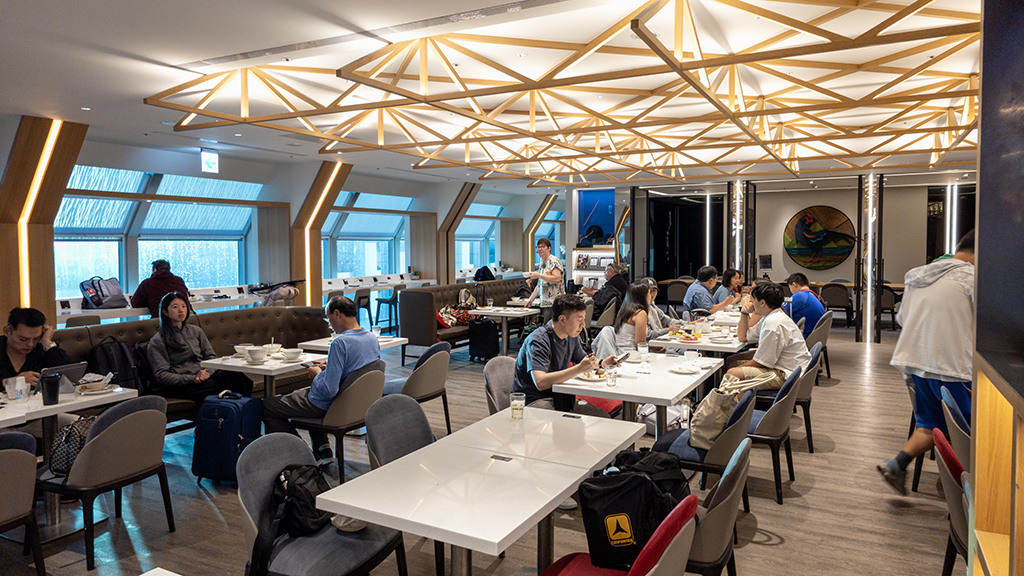
Because Starlux Airlines doesn’t have their own lounge and isn’t part of a major airline alliance, they partner with Qantas Airways to accommodate their business class passengers in the Qantas Hong Kong International Lounge. One of the downsides of having done my entire check-in process online is that I didn’t receive a formal lounge invitation ticket that is usually provided at the check-in desk, but when I showed up, the lounge attendant tentatively admitted me anyway while he contacted Starlux customer service and verified my eligibility.
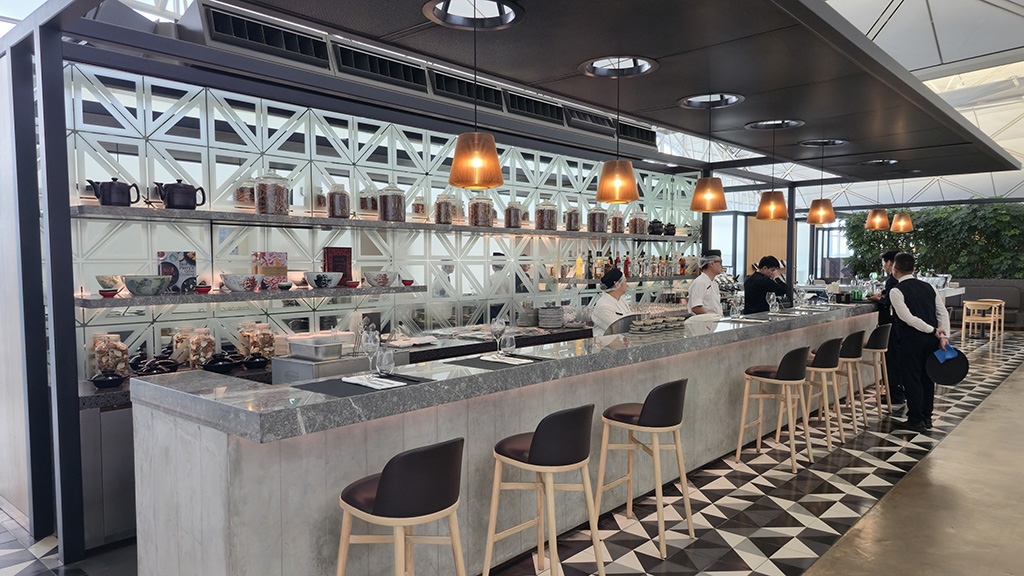
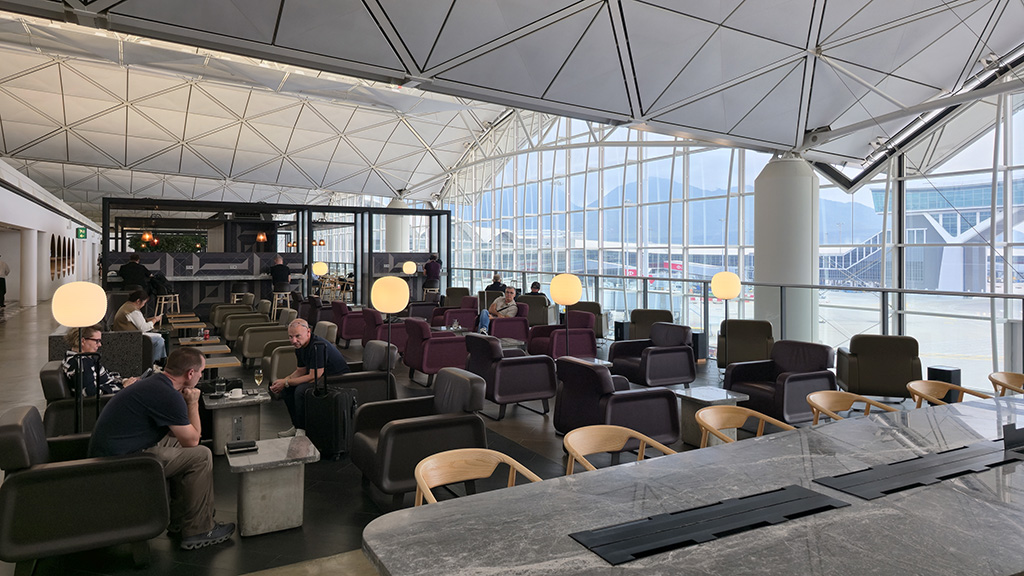
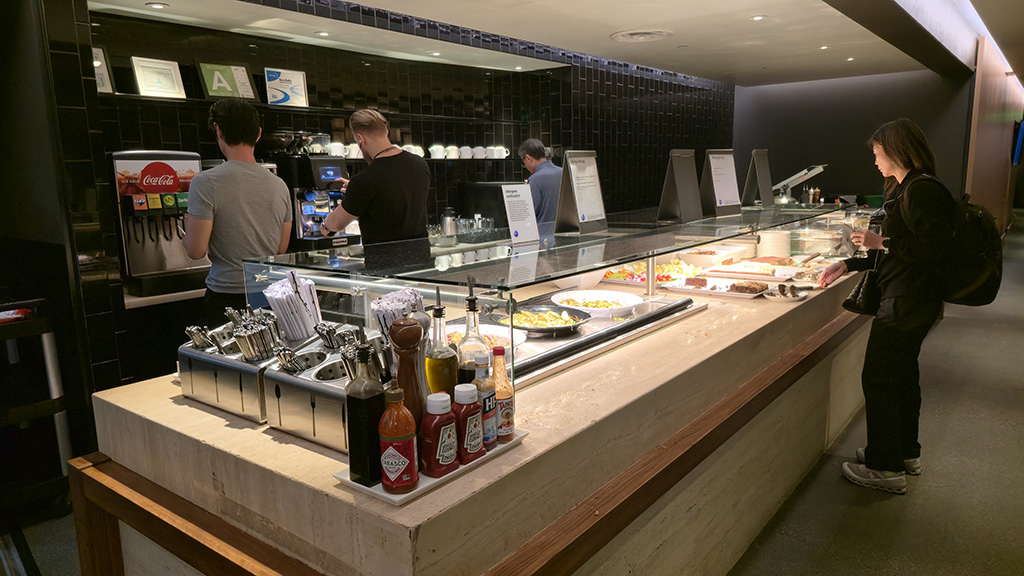
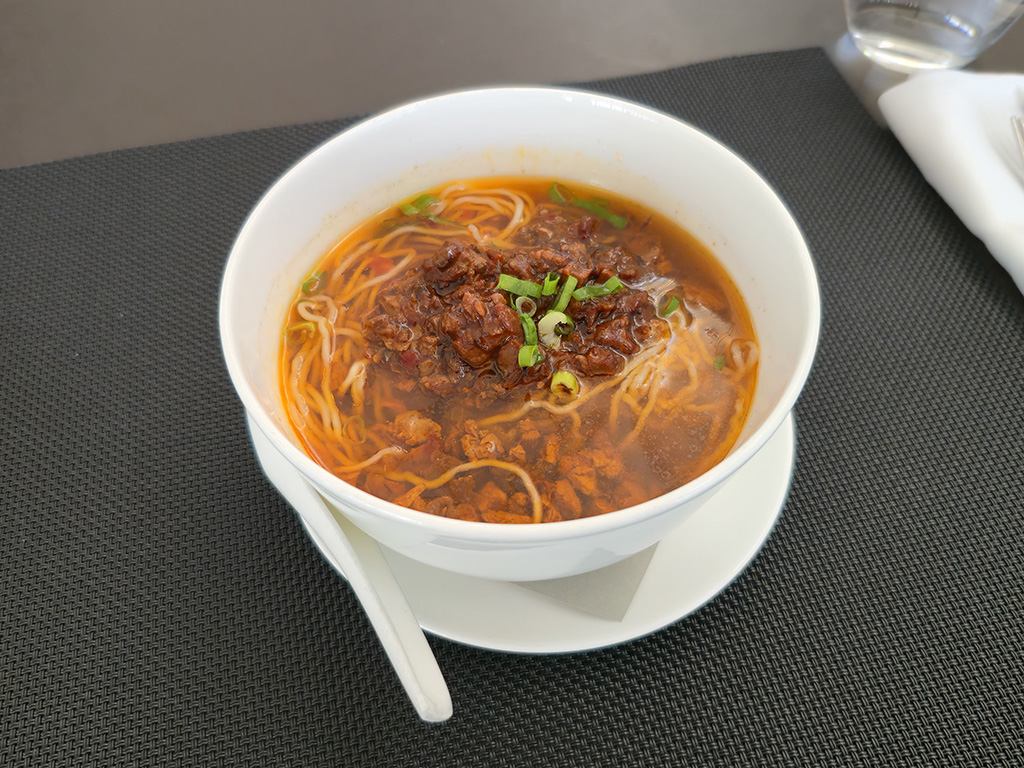
There was an à la carte menu in addition to a buffet. I grabbed a plate of food from the buffet, but I saw that there were some dandan noodles on the menu, so I ordered a bowl of that as well.
As I was finishing my food, a man came around with a literal dim sum cart and asked if I wanted some dim sum. I was trying to limit the amount of food I was eating at the lounge because I knew there were a lot of meals coming up on the plane, but there is no way I could deny dumplings from a dim sum cart in an airport lounge.
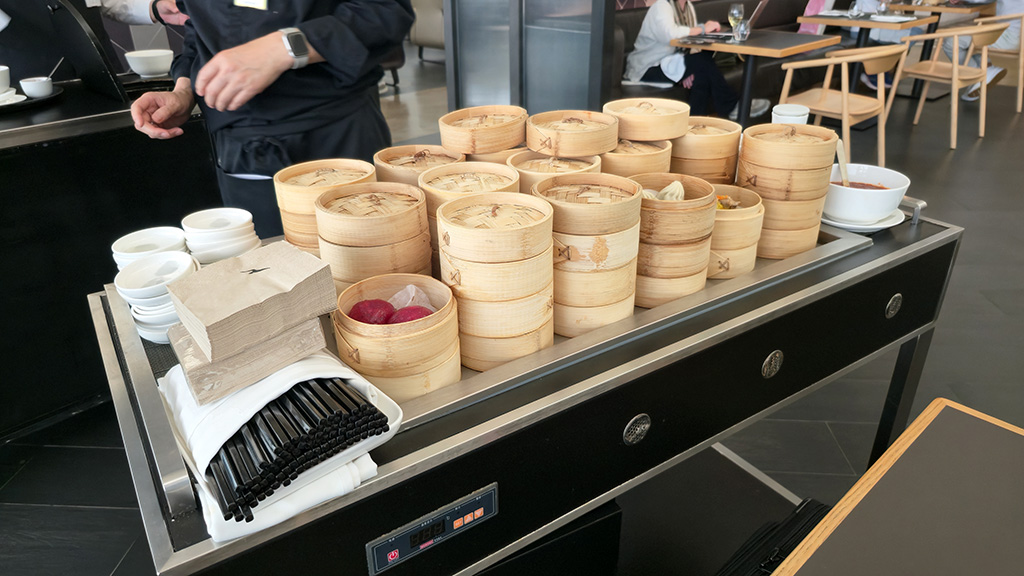
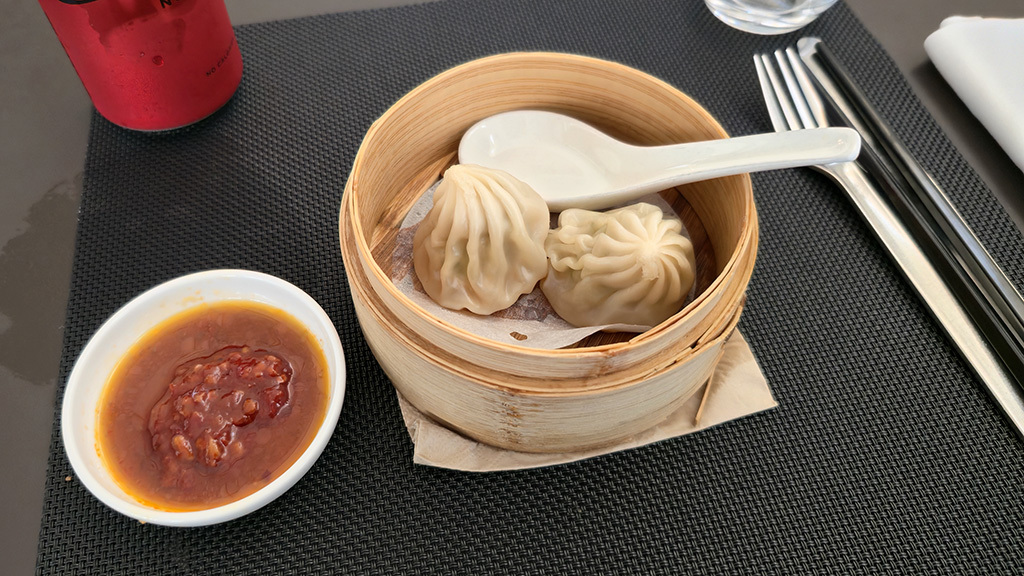
I asked for one bamboo steamer basket of soup dumplings, with a side of chili sauce.
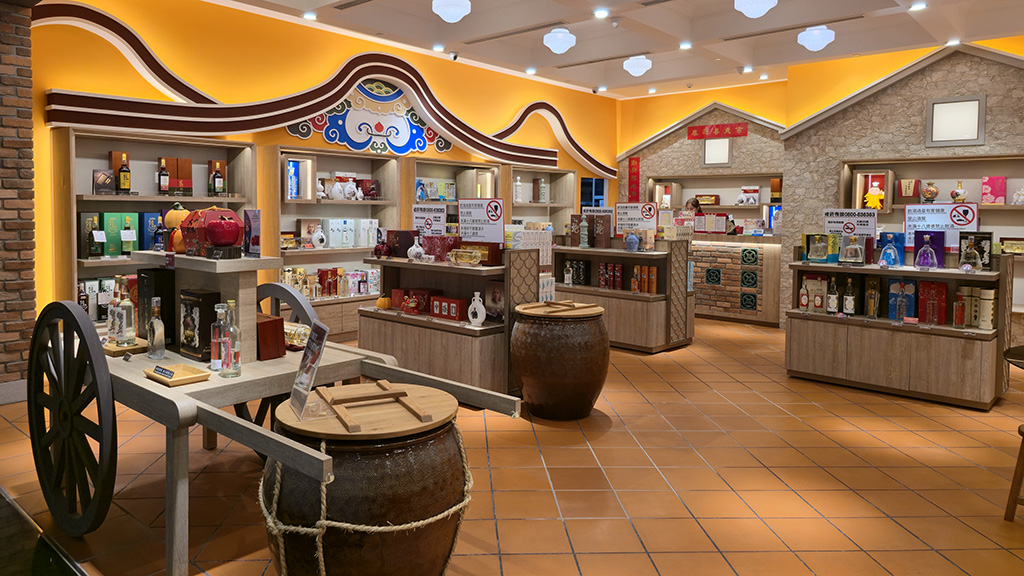
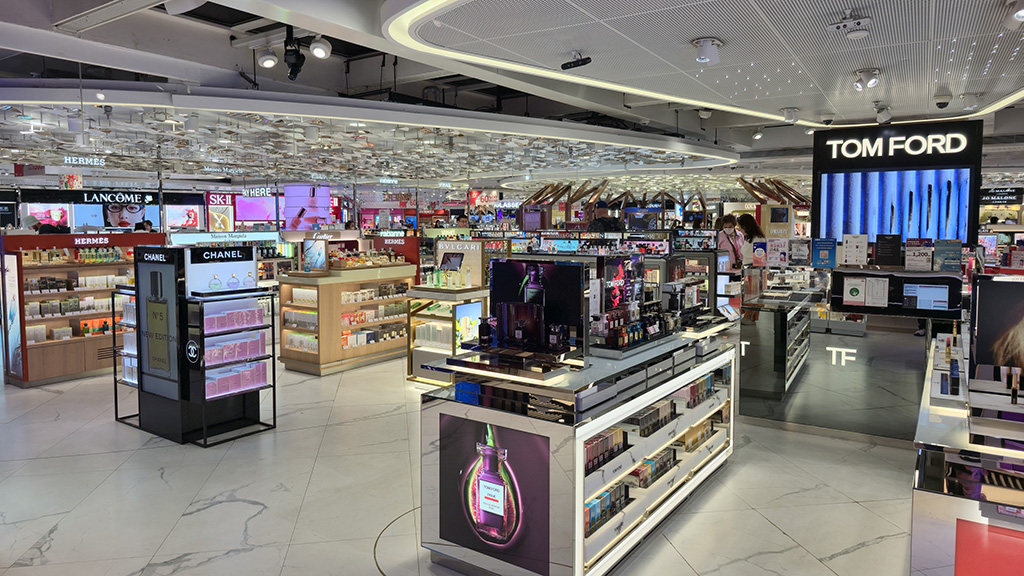
After a peaceful three hours in the lounge (which was longer than I anticipated due to my unexpectedly quick travel to and into the airport), I left to start heading over to my gate. Similar to the other Asian airports I’ve been to, Hong Kong International Airport had a lot of very large general retail areas airside, which is not common to see in airports in the United States.
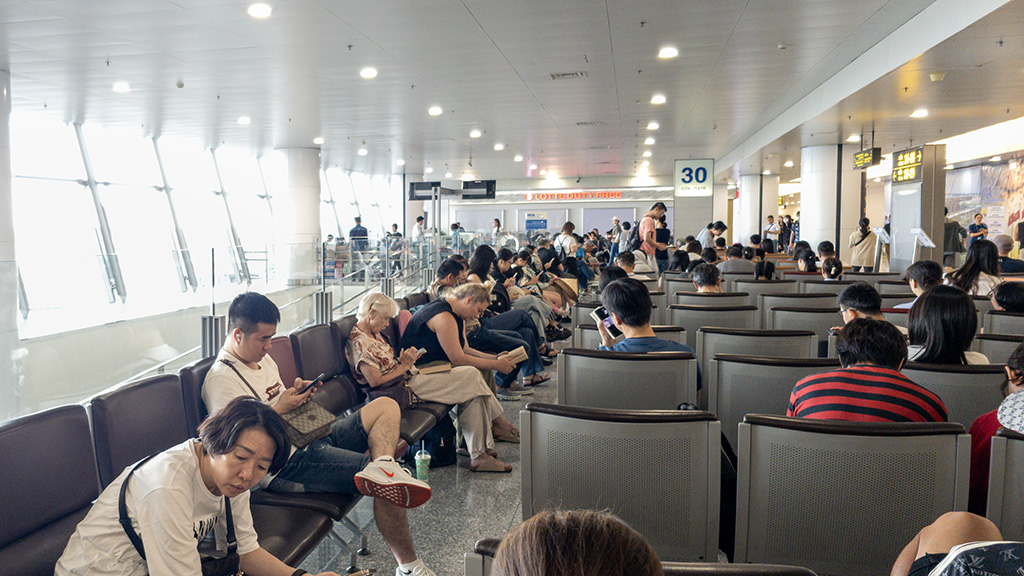
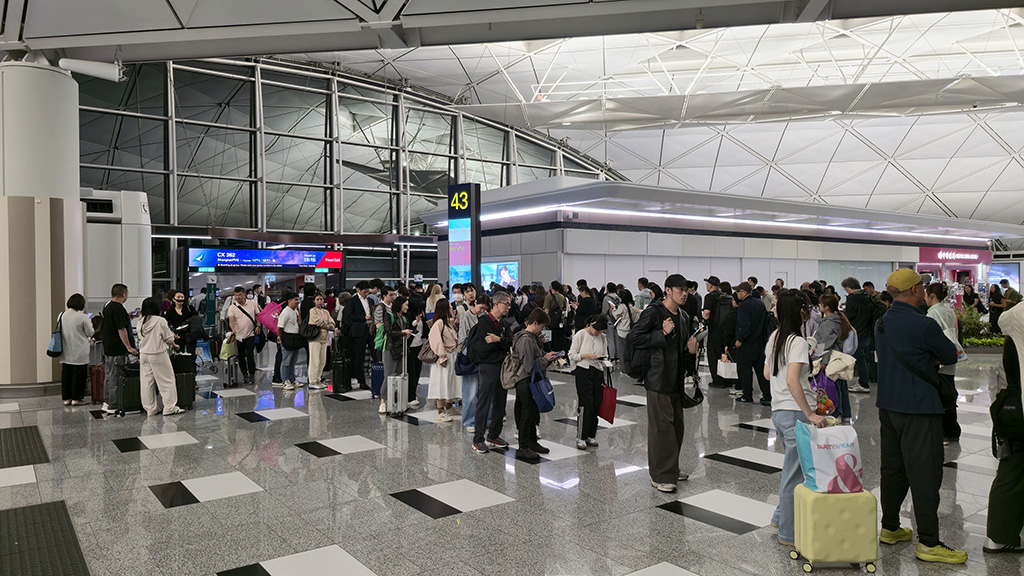
When I arrived at my gate, I saw a gigantic line snaking back and forth and got incredibly confused. I checked the time to verify that I still had about ten minutes left before boarding began, but it looked like economy passengers were already in the process of boarding.

Then I realized that was the wrong gate, and those passengers were going to Shanghai.
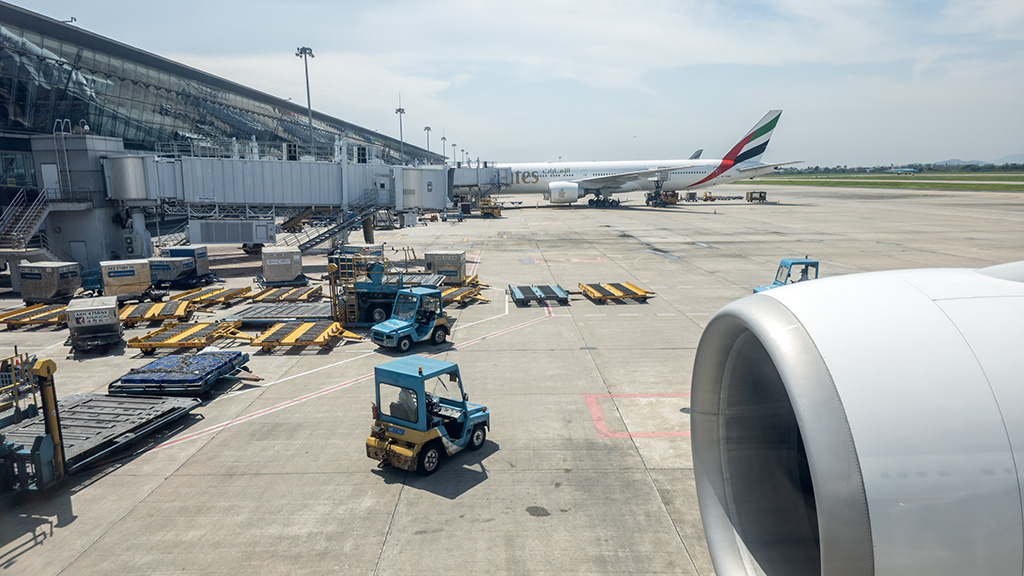
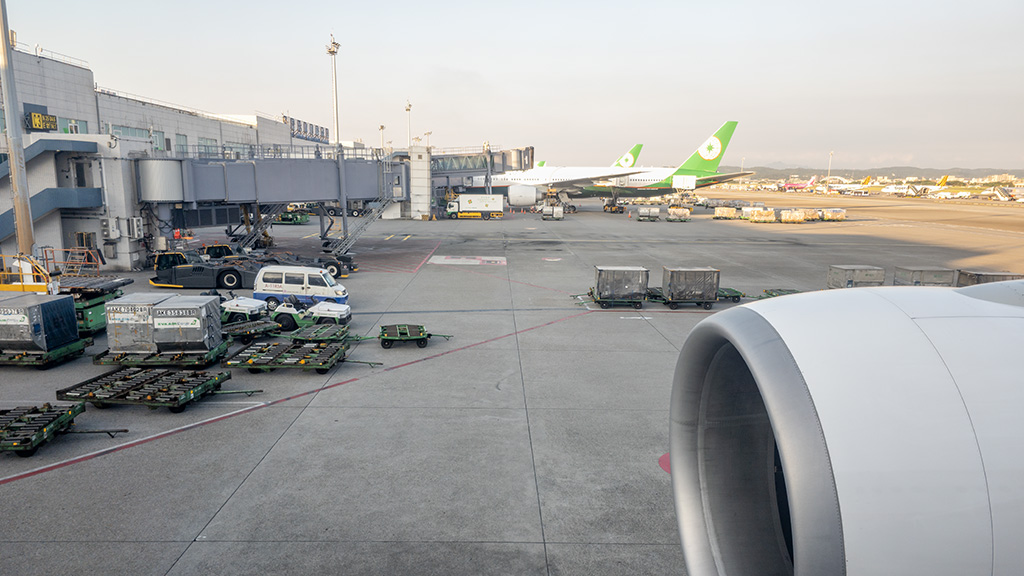
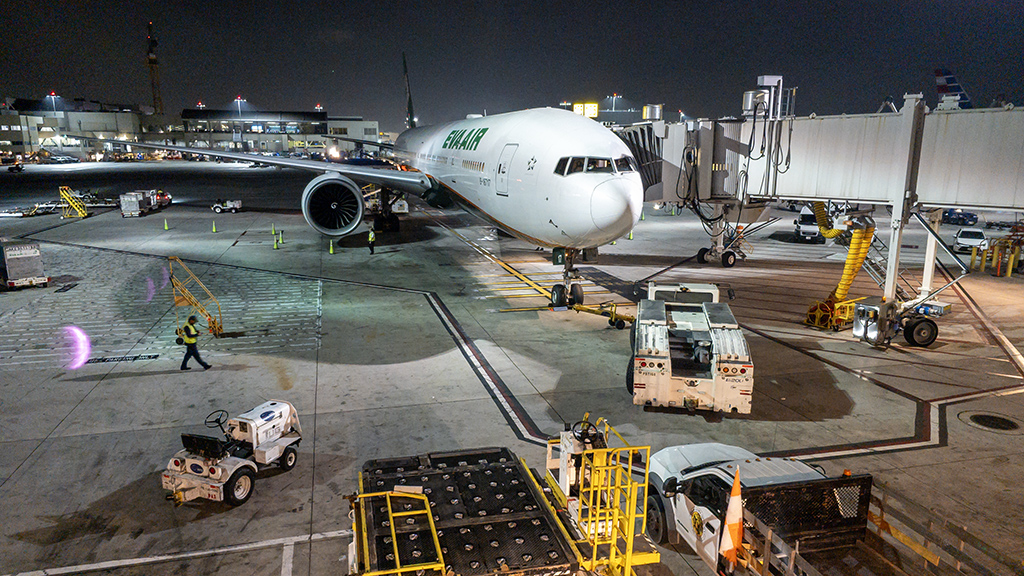
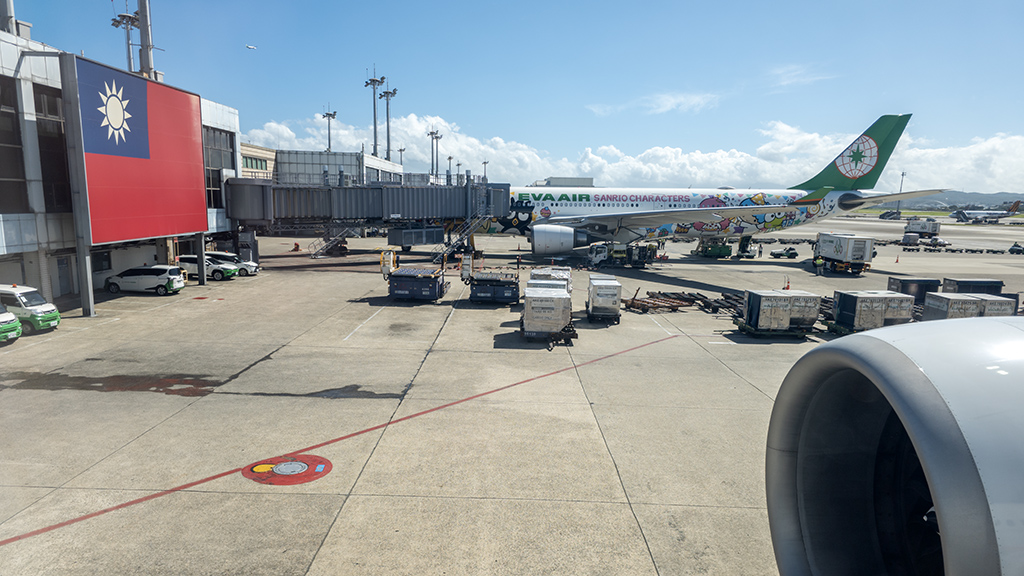
After walking a little bit further to the correct gate, I peeked out the window and saw our Airbus A330-900neo waiting for us outside.
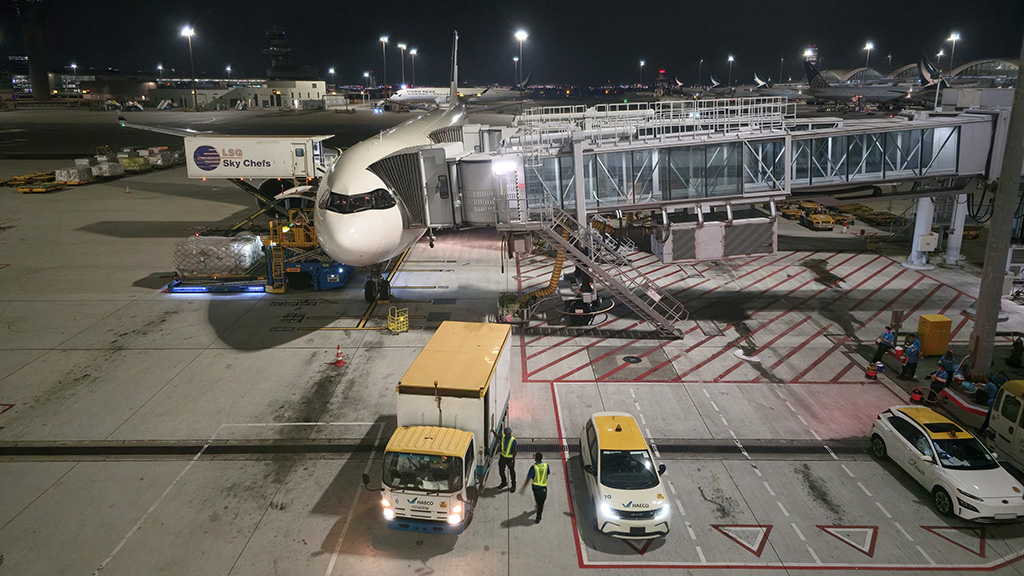
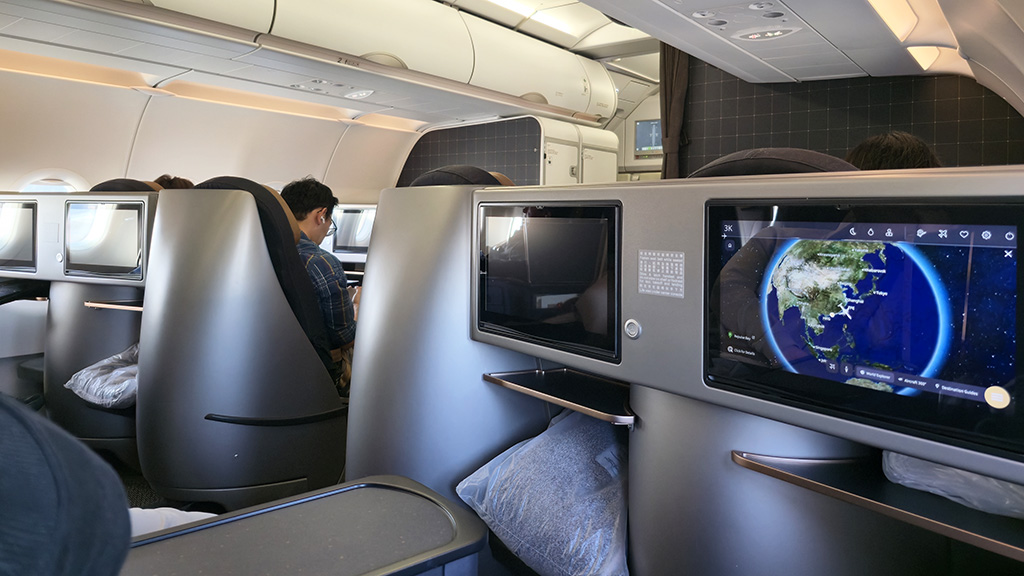
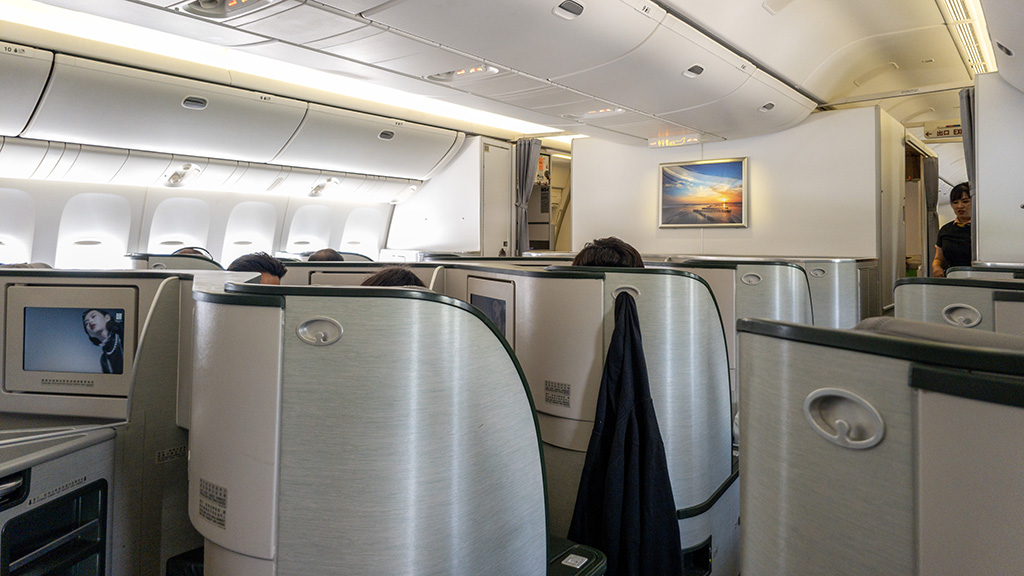
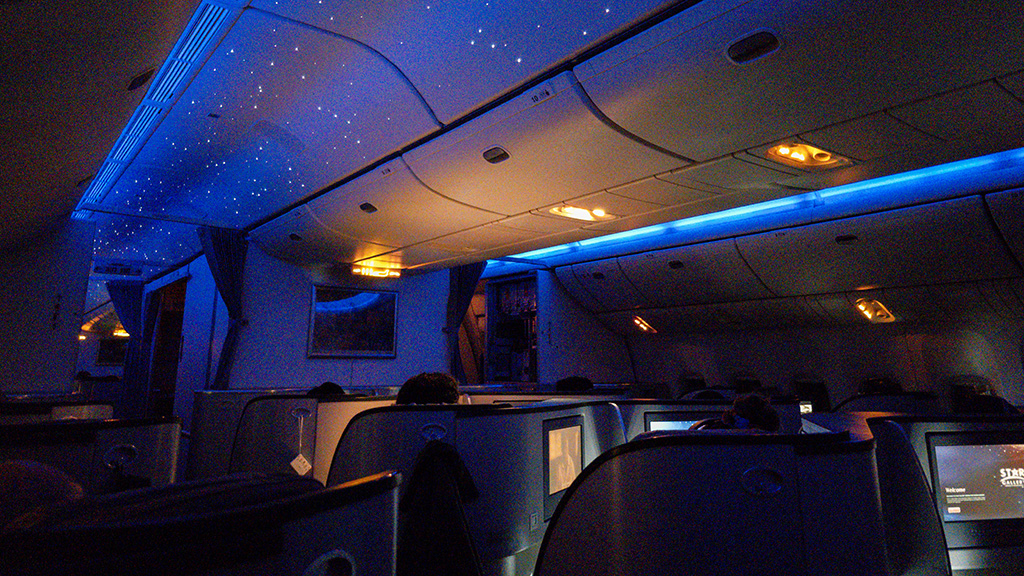
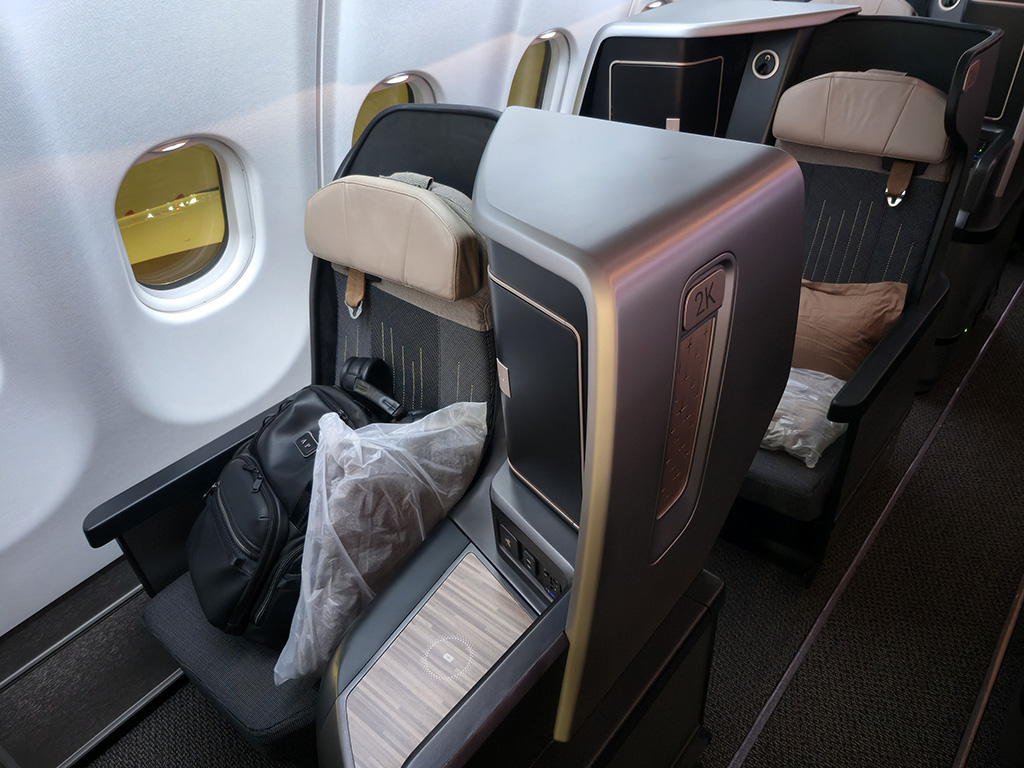
For this leg of the flight, I selected Seat 2K. Because the Starlux Airlines version of the Airbus A330neo only has business class seats in the forward cabin, I picked the first seat in the first row (there is no row 1 on this aircraft) in the window side of the staggered configuration to be furthest away from the lavatories and get the most privacy possible.
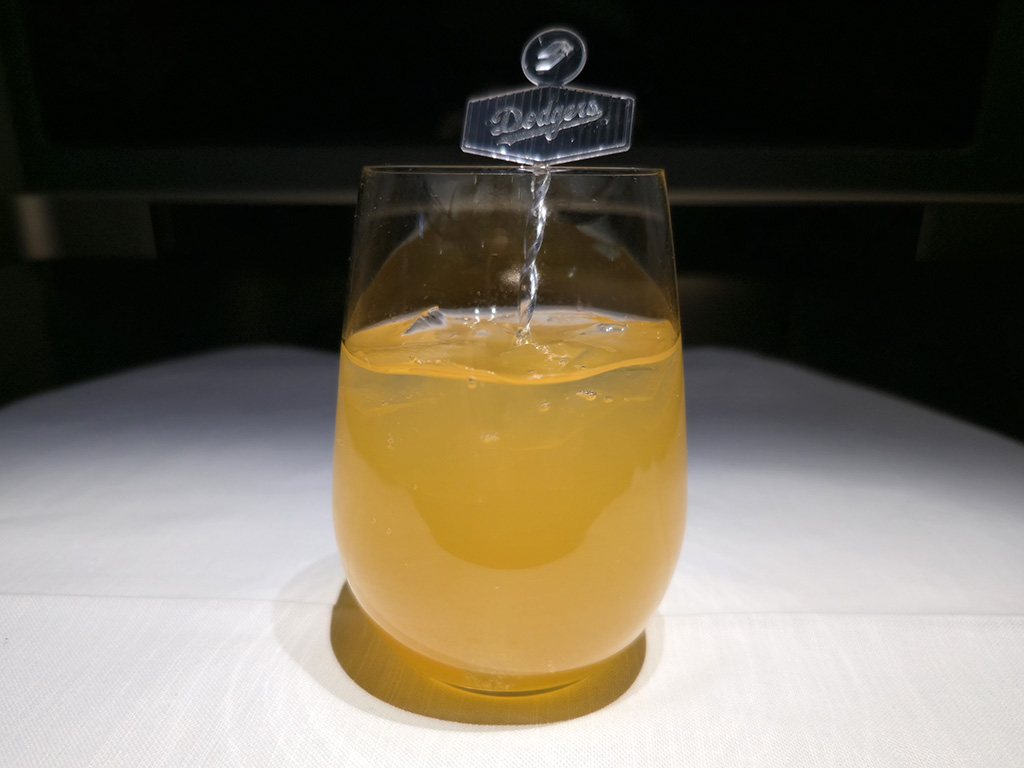
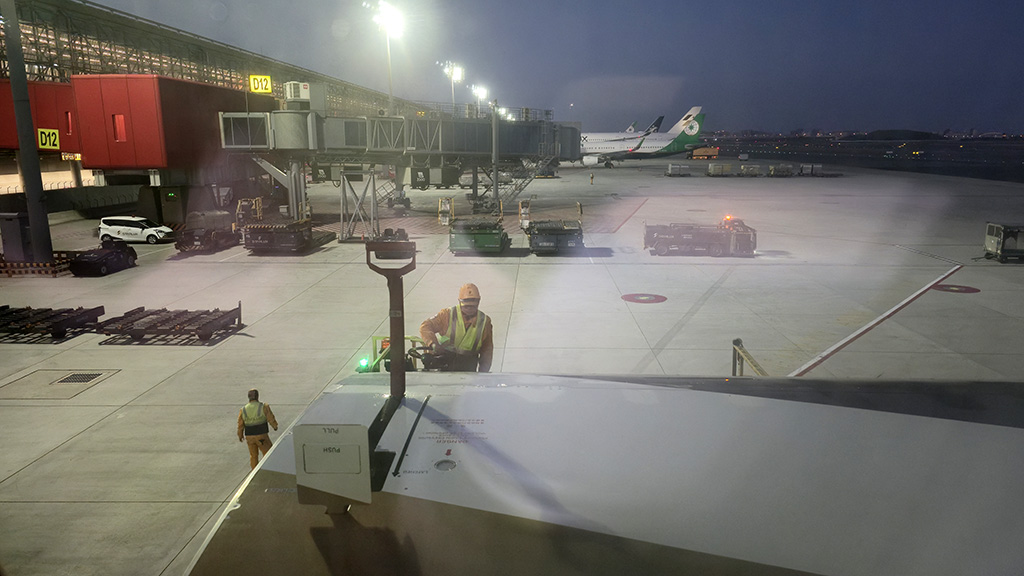
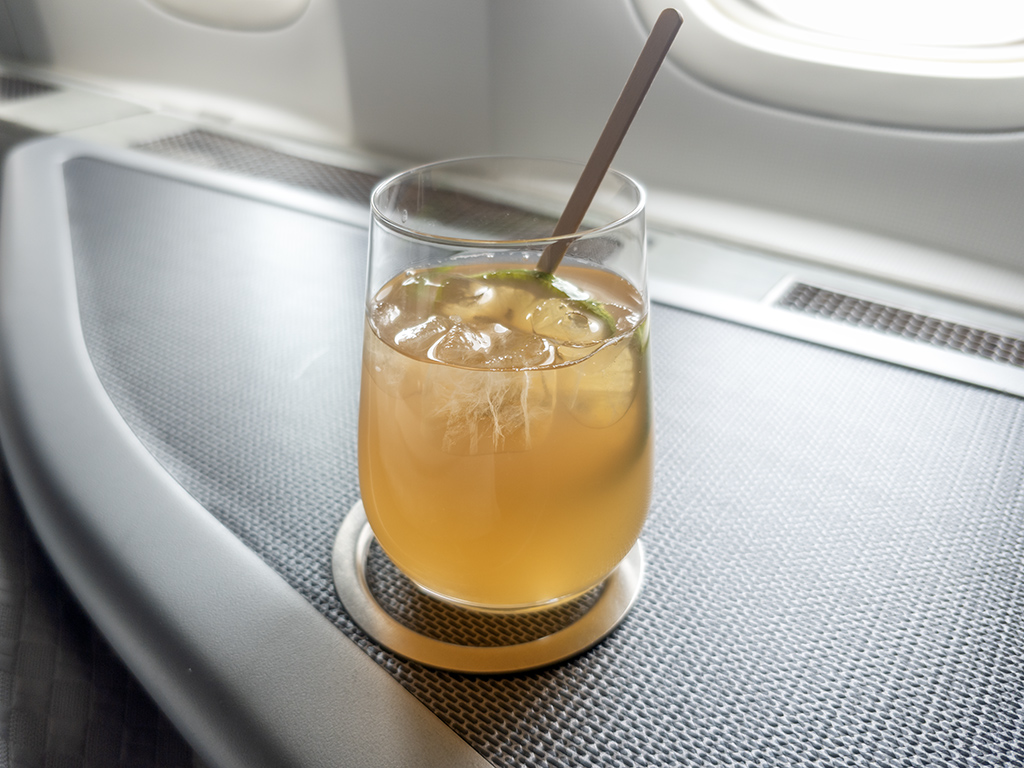
After relaxing with a cup of juice and watching the ground crew load checked baggage into the underbody compartment, we left Hong Kong for a timely departure.
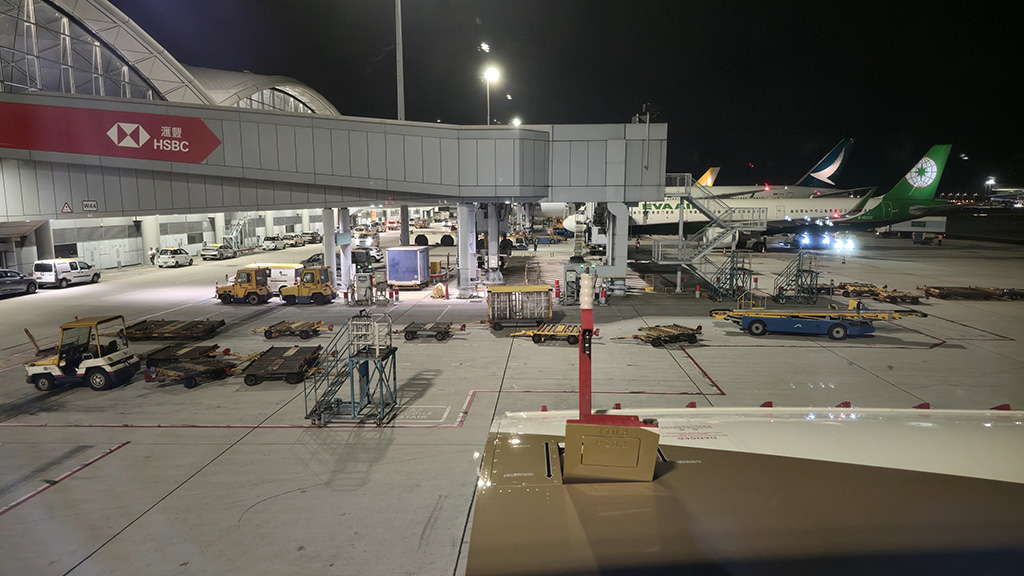
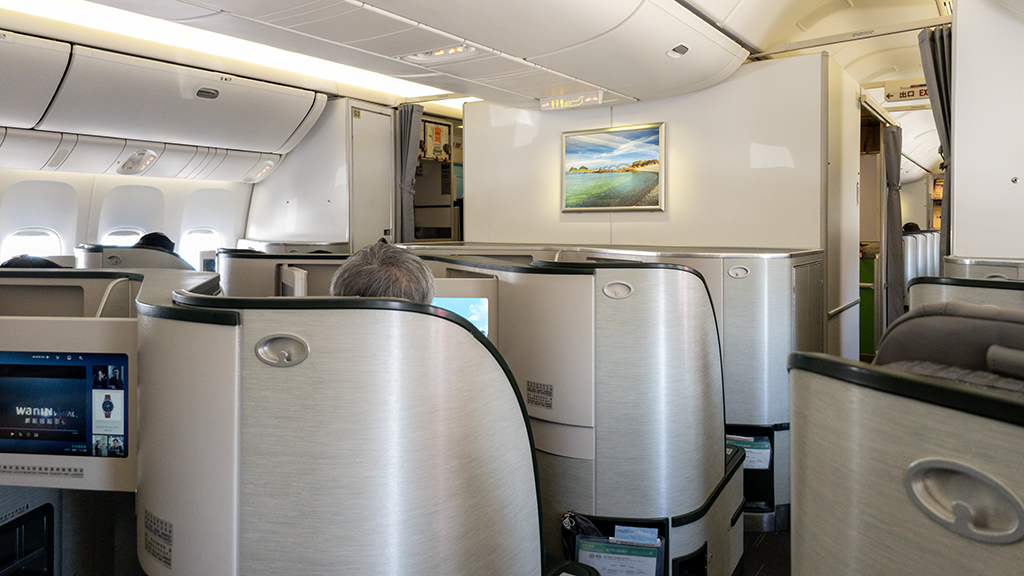
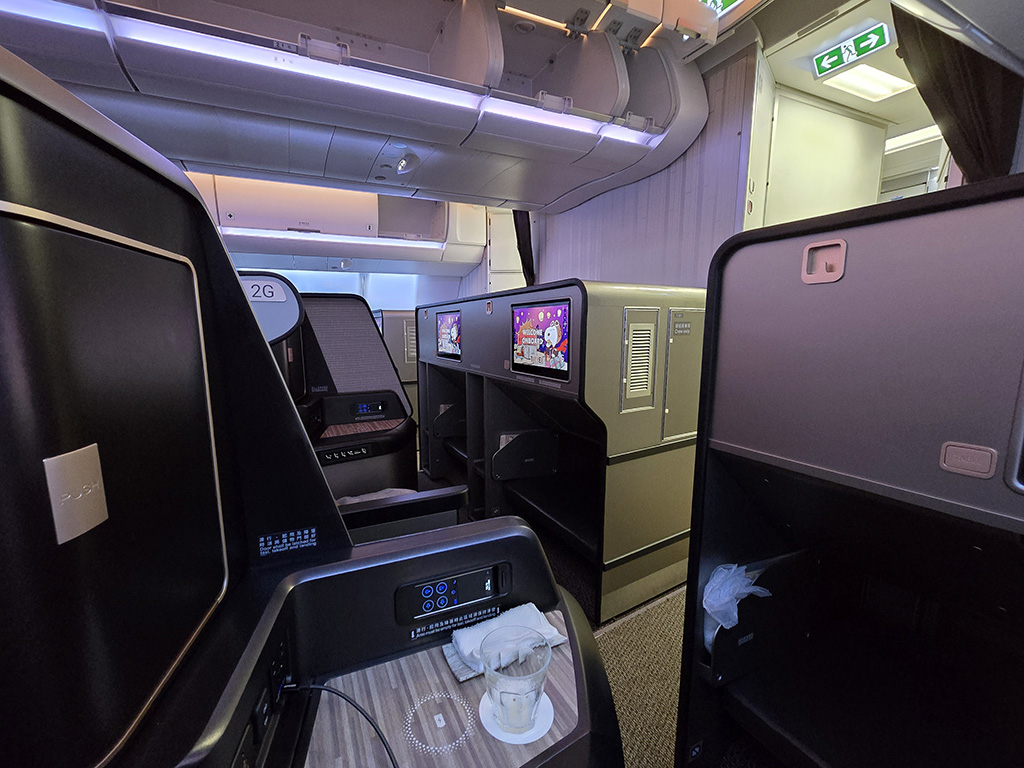
By this point, I had flown on three out of Starlux’s four aircraft currently in service: the Airbus A321, A350-900, and now the A330 (with the only one I hadn’t been on being the A350-1000). Out of the three I had tried so far, my favorite was this A330-900neo.

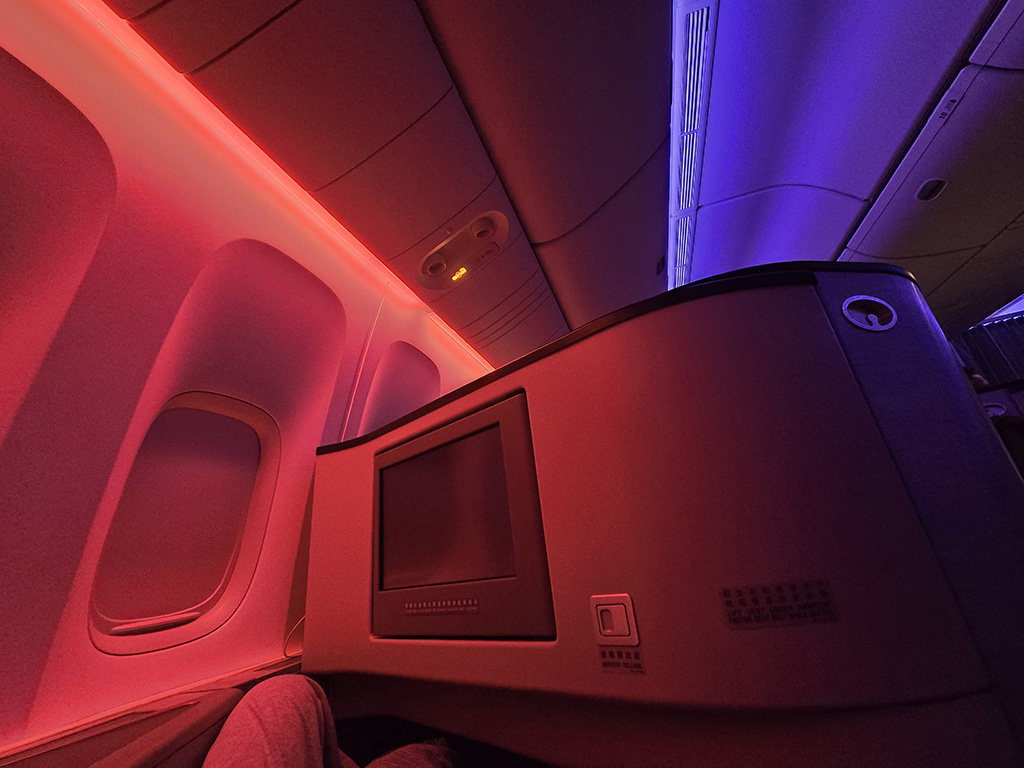
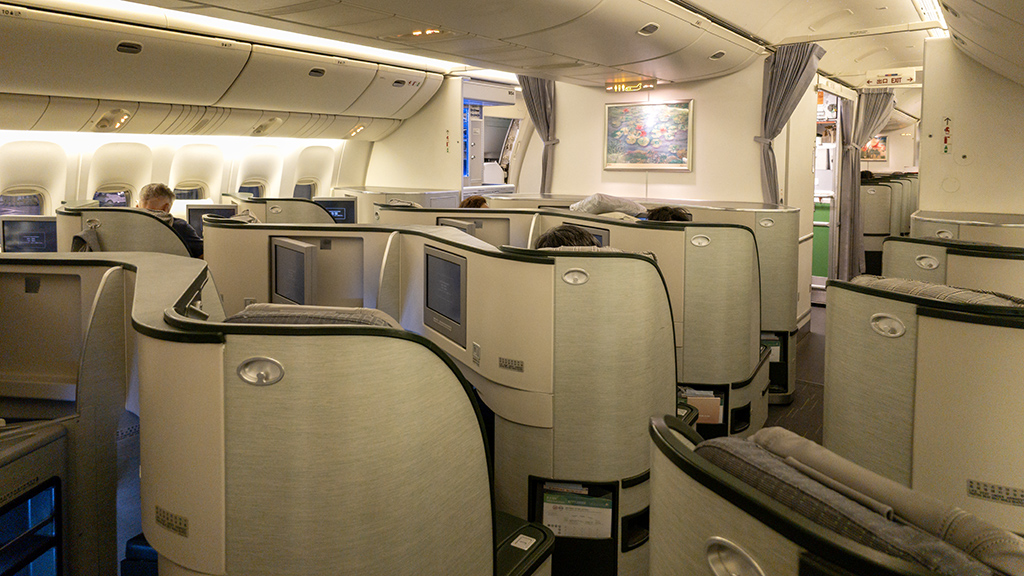
The A330 was obviously better than the A321 because the A330 had direct aisle access and a 1-2-1 configuration, but I think it even felt better than the A350 because the overhead compartments over the middle seats made the cabin feel much more cozy and private.
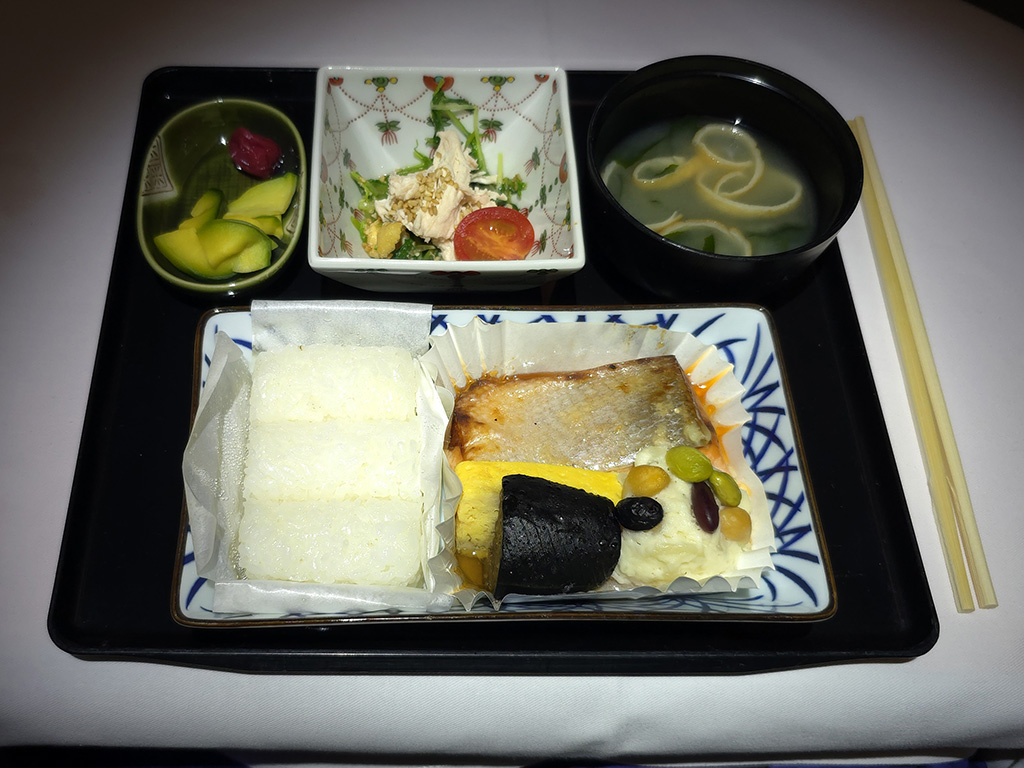
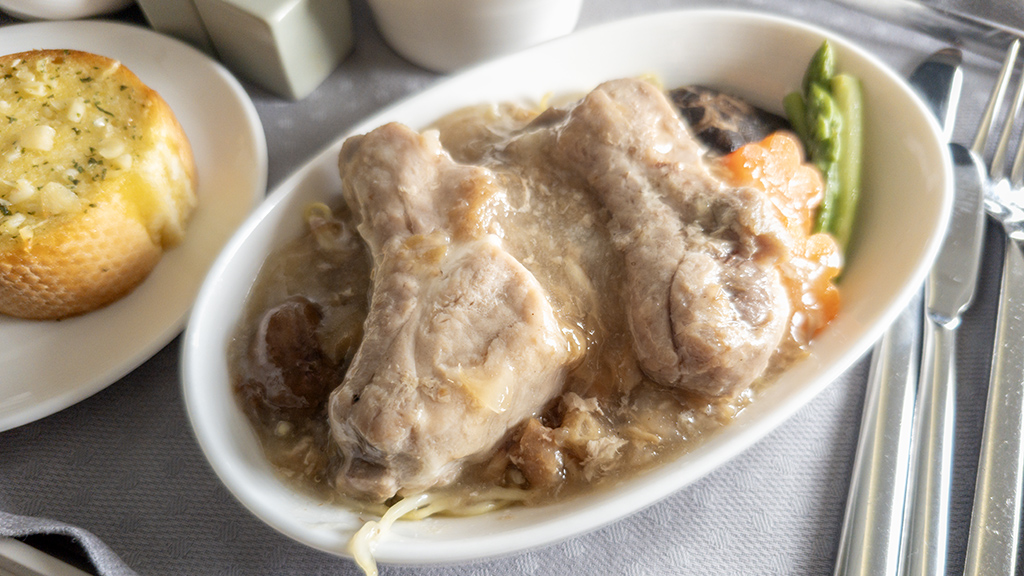
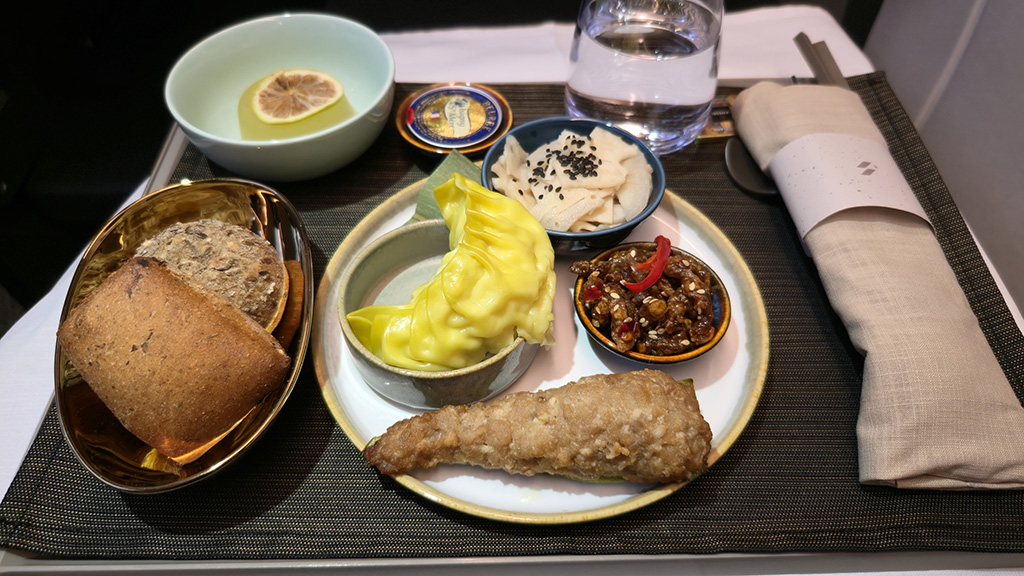
Because this was the shorter leg of my flight to my layover in Taiwan Taoyuan International Airport, meal service was done on a single tray. I didn’t have a menu or course list explaining what each item was. Instead, the flight attendant came around at the beginning of the flight and asked whether we wanted the Taiwanese meal or the international meal; I, of course, picked the Taiwanese one for a more authentic experience.
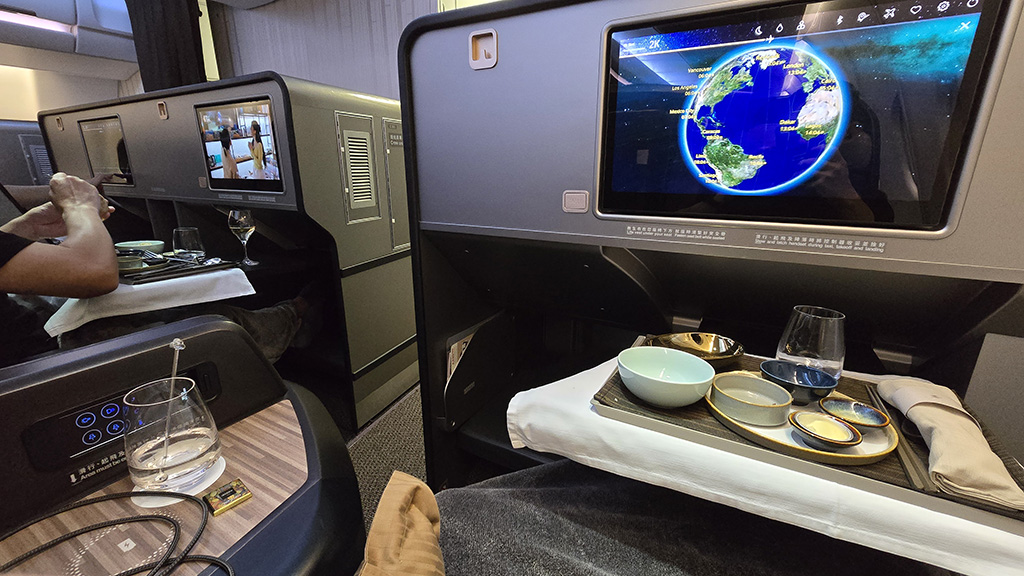
Another small thing I liked about this cabin was the way the seat tray tables were designed—they articulated forwards and backwards relative to your body, so I was able to push it away and have a little space through which I could leave my seat to go to the washroom without needing to wait for the flight attendant to take my tray away first (or alternatively, perform an acrobatics maneuver to navigate above the tray table).
After only about two hours on board, it was already time to deplane. It would have been very nice if it was the A330 that took me all the way back to the United States, rather than being only for the shorter leg of my trip.
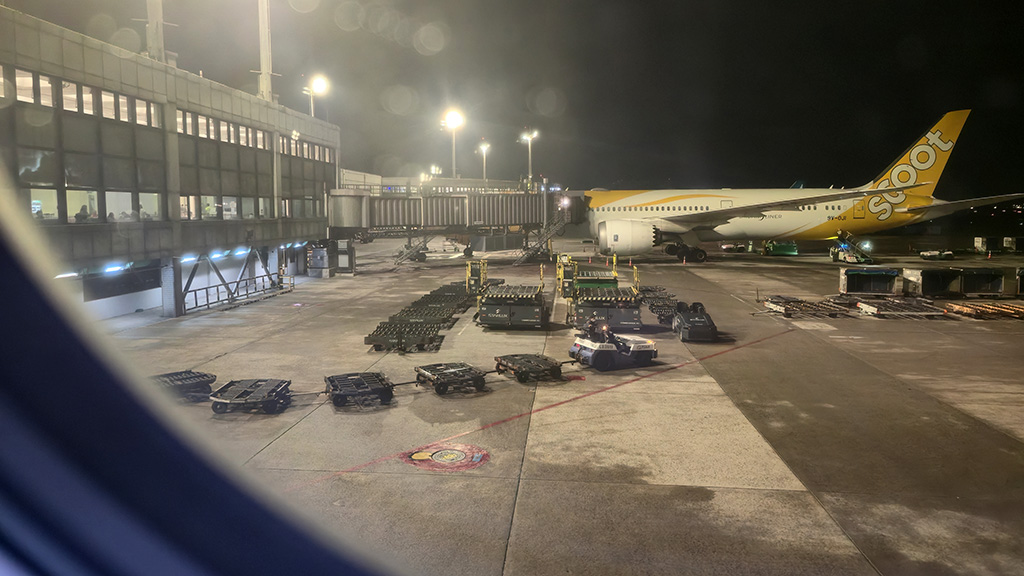
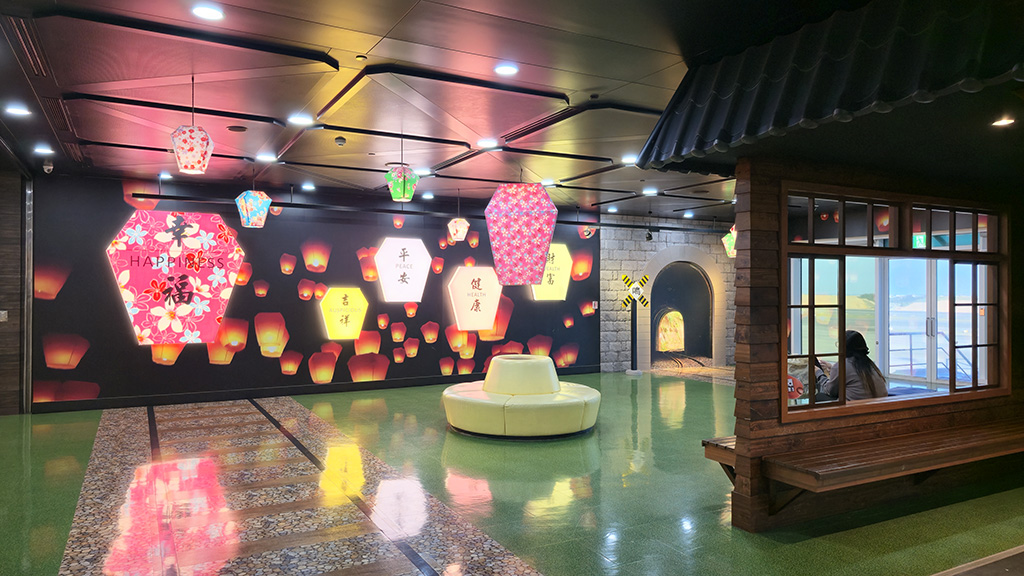
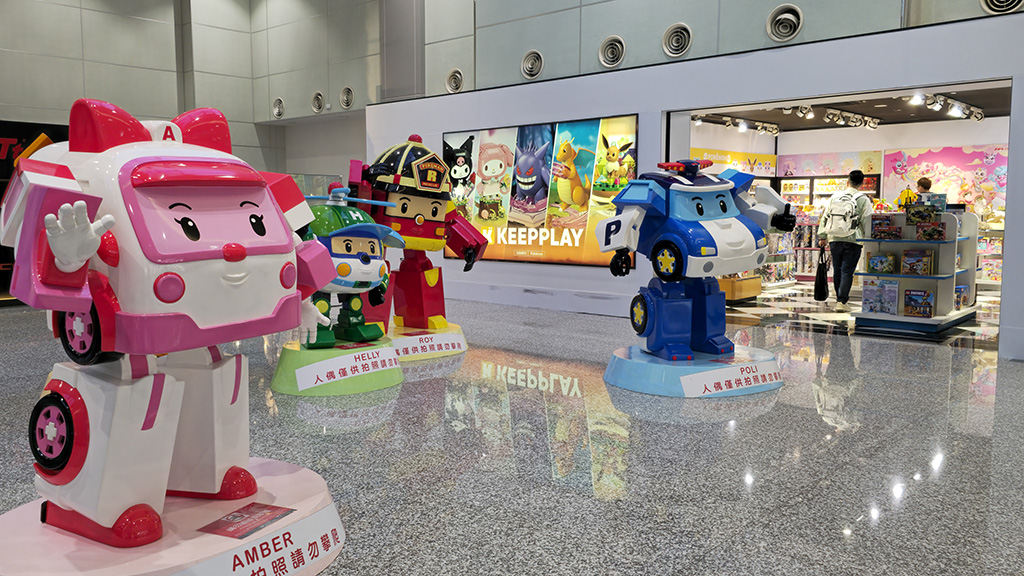
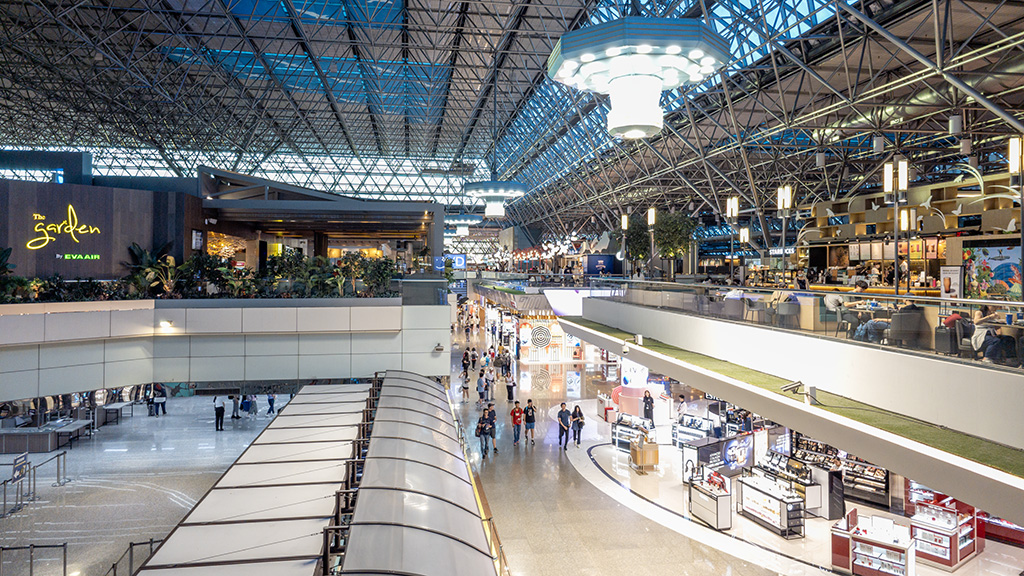
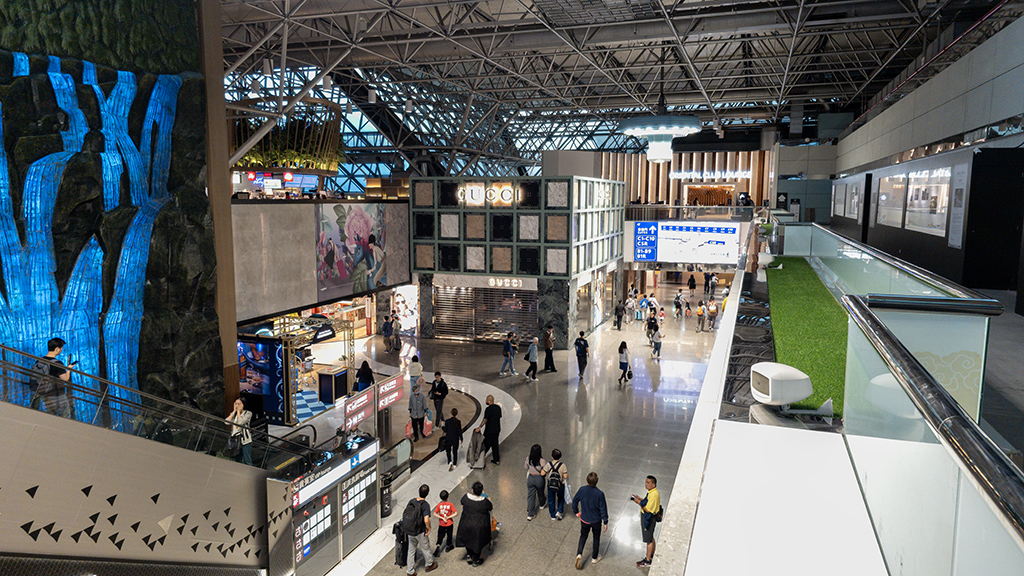
I was about to get on another plane for around twelve hours soon, so I took this two-hour layover opportunity to go for a walk and check out some of the retail areas and other points of interest inside Taoyuan International Airport.
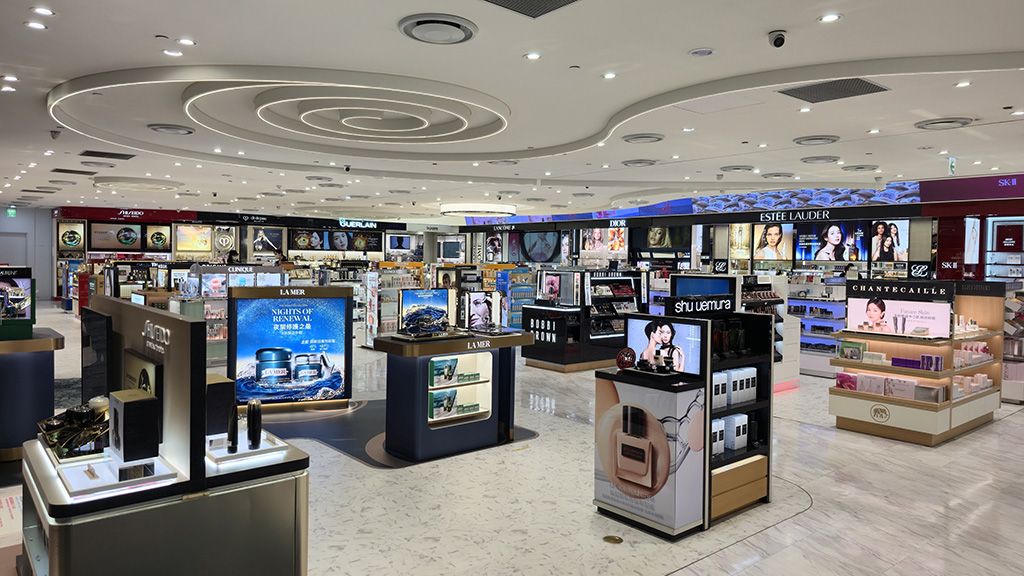
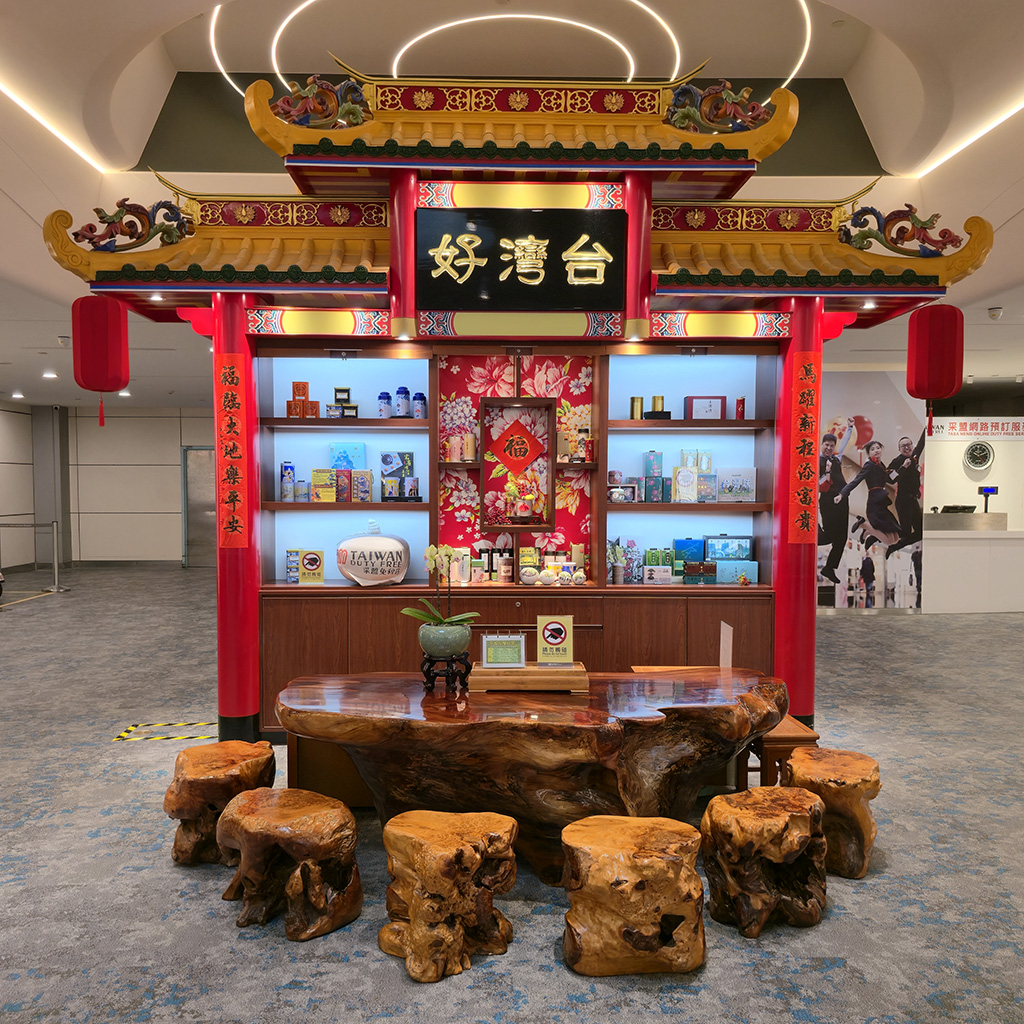
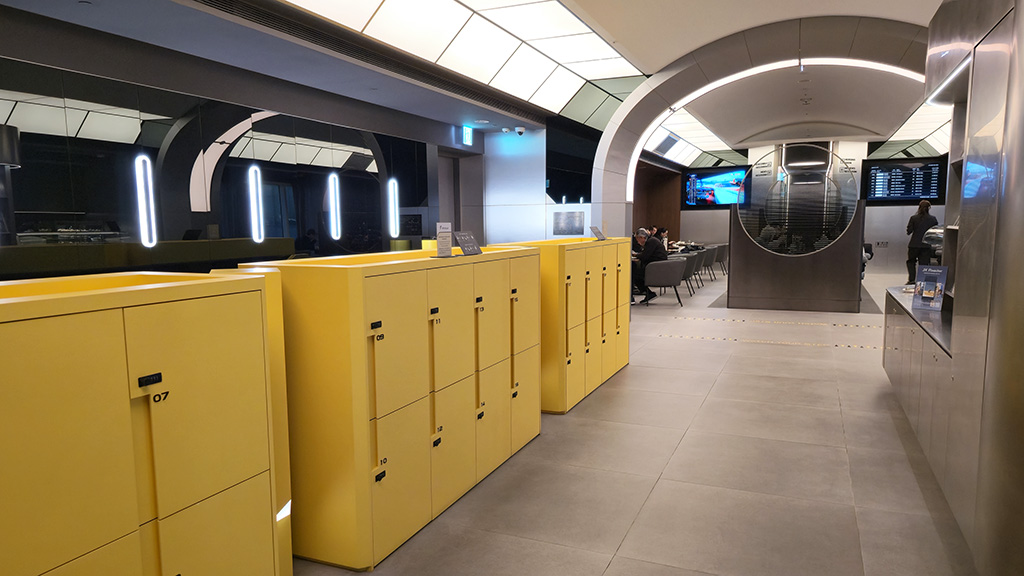
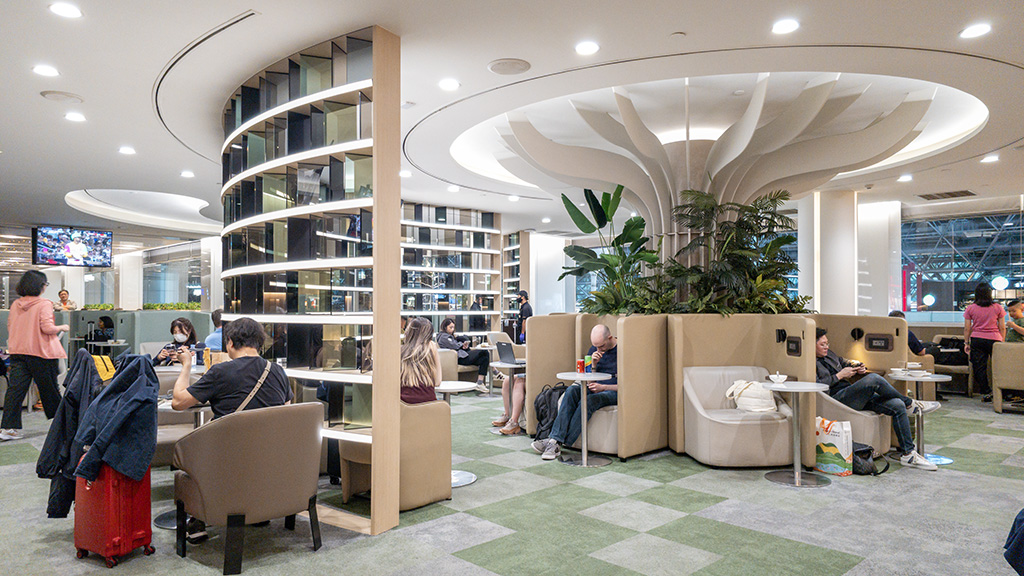
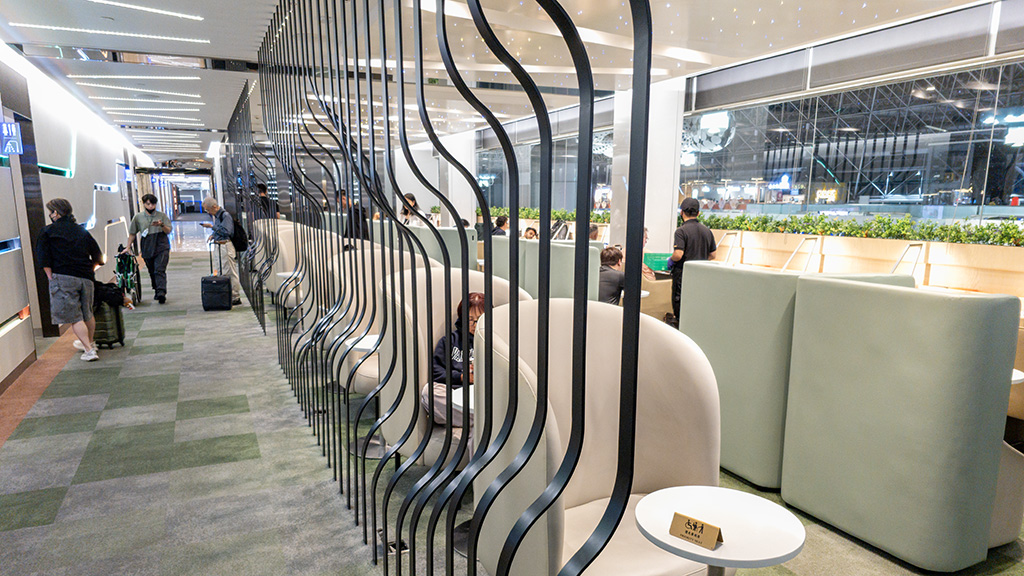
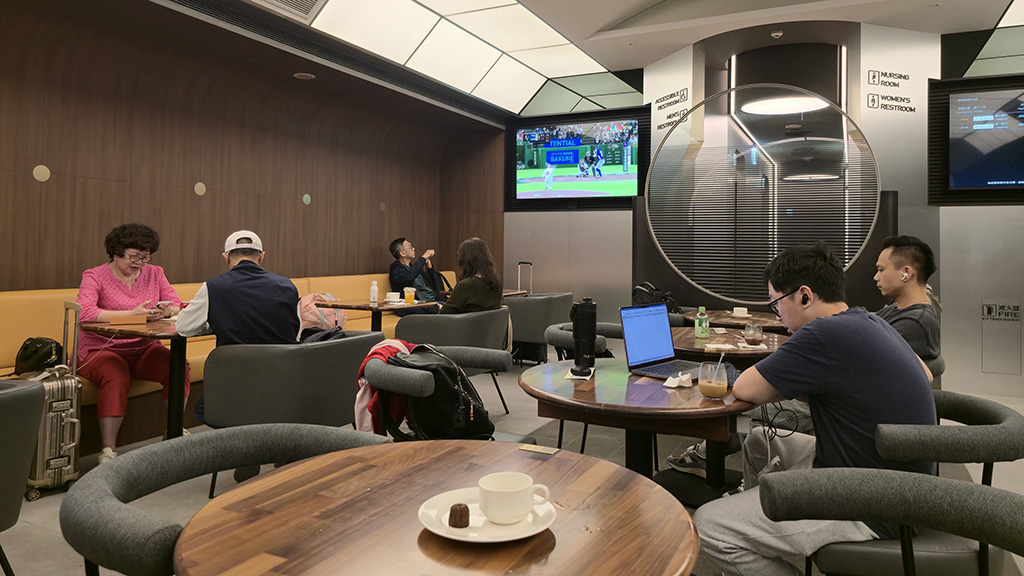
After getting my steps in, I took a quick stop at the Starlux Galactic Lounge for a short break.
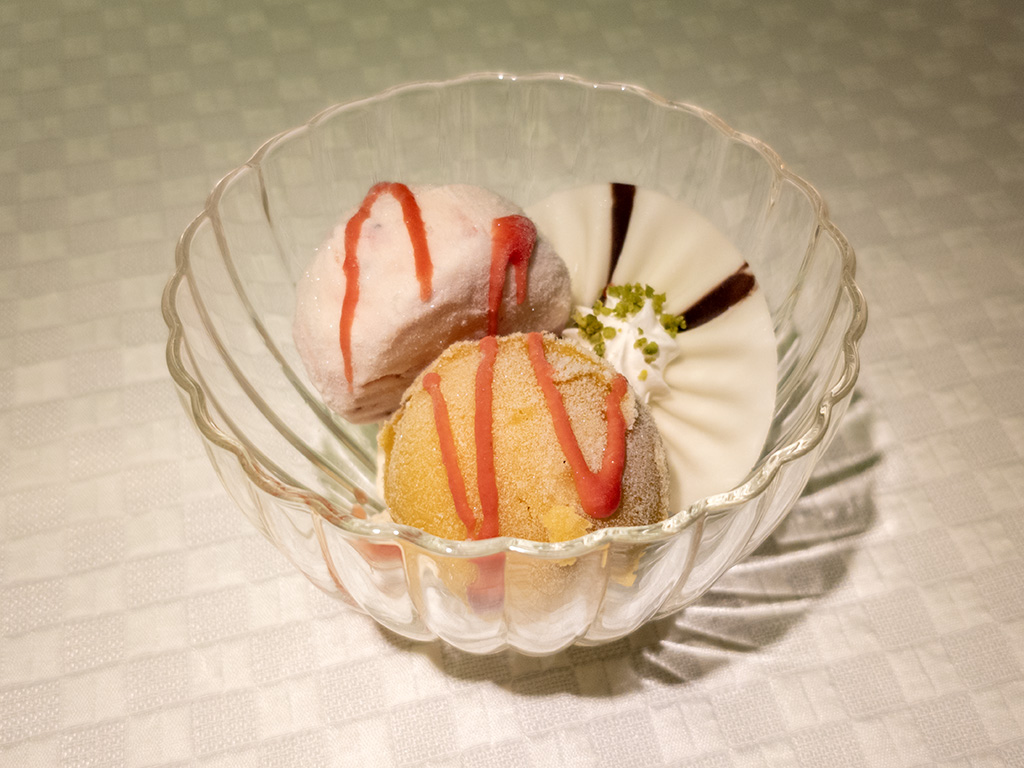
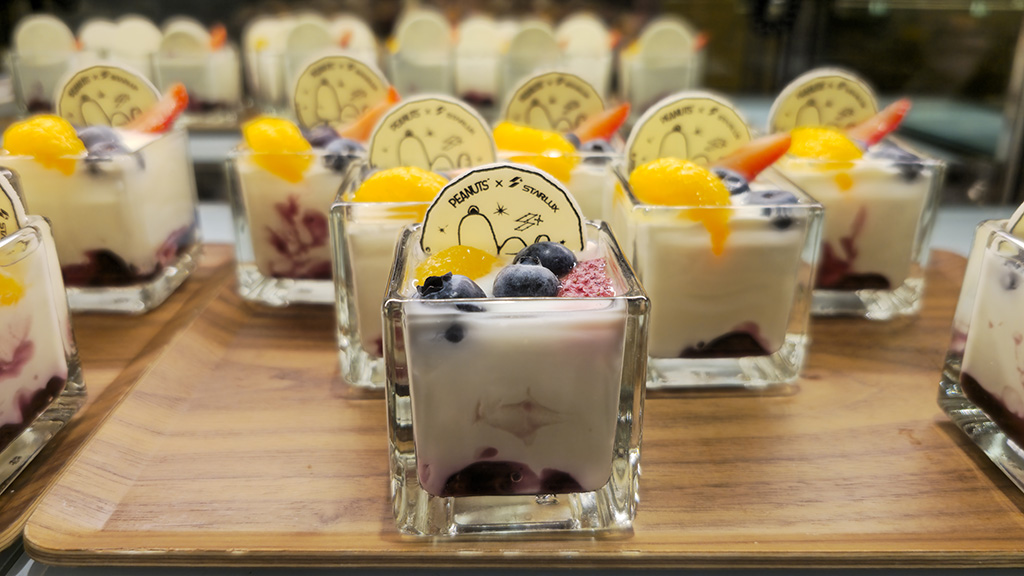
I had already seen Starlux’s partnership with Peanuts on the in-flight entertainment screens, but in the lounge, I saw that they also had themed food. To be clear, I don’t know why this is a Peanuts-partnered parfait instead of a regular parfait, but it’s still nice to see the scope of these collaborations reaching more depth.
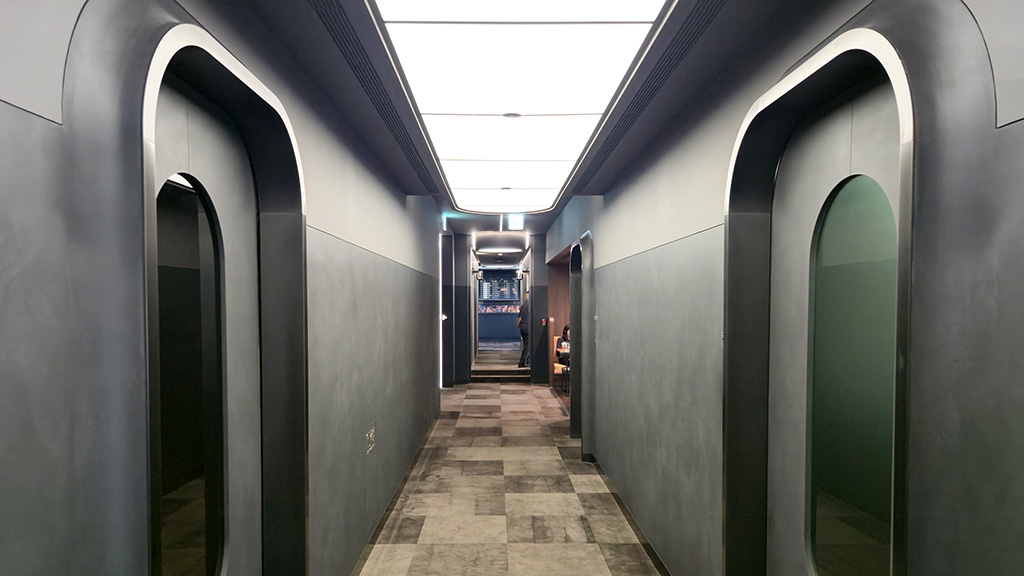
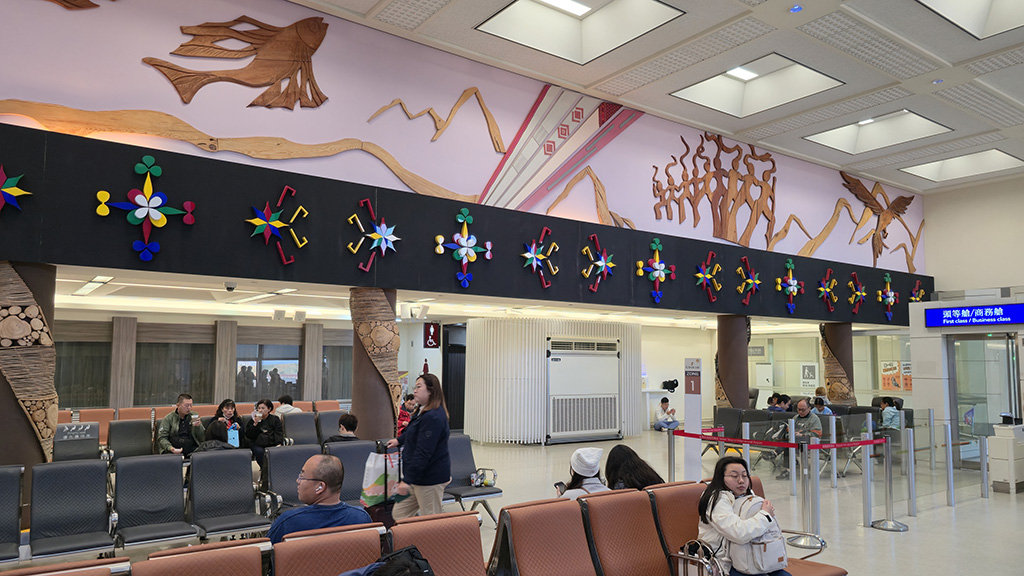
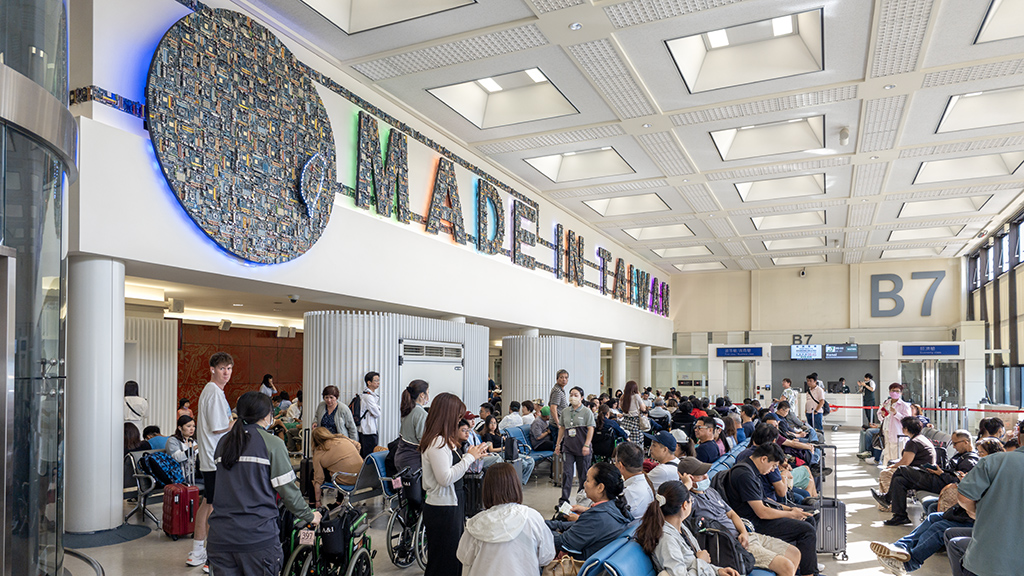
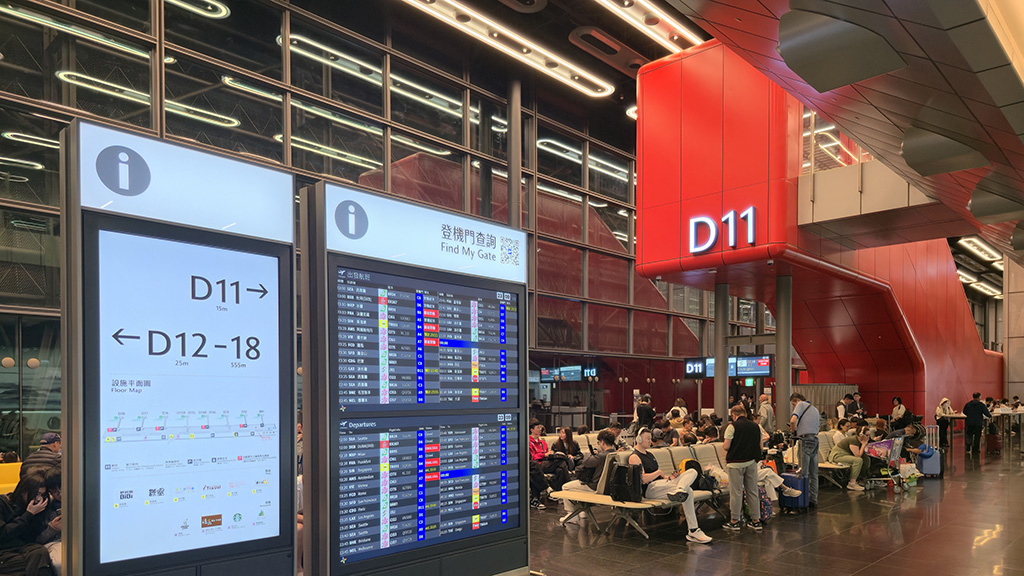
Soon afterwards, I walked over to my gate in Terminal 3. The styling of this area was very different, and it made me wonder whether Taoyuan International Airport just decided to build it like this, or if these were dedicated Starlux gates and the theming had to do with Starlux’s focus on space.
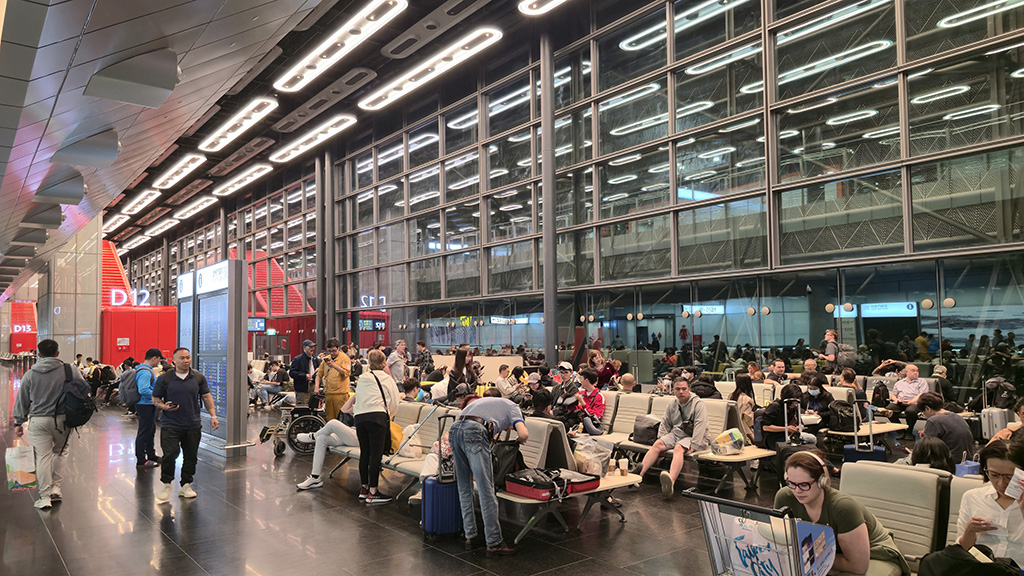
This area was quite disorganized and very uncharacteristic of what I now come to expect from Asian airports and Asian airlines. Instead of using the proper gate desks, there were gate agents set up on plastic folding tables just randomly in the middle of the seating area, checking passports and asking questions to passengers.

The employee who intercepted me smelled like he had just finished laying out in the sun after running a marathon. He checked my passport and boarding pass, and then he tried to get me to do something else. Unfortunately, his English was so poor that I couldn’t figure out what he was asking me to do (and this is coming from someone who is generally stellar at understanding Asian accents, especially Chinese ones).

I pulled out my phone, opened my translator, set it to Chinese, then asked him to speak into it. He proceeded to speak into my translation app… again in broken English. Of course, the app thought he was speaking Mandarin, so it tried to map his English to Mandarin, then translated that and informed me that the gate agent wanted to “retreat with the substances while killing the troops.”

I solved this predicament by saying “no thank you,” smiling, giving him a quick bow, waving, then just walking away. Whatever he wanted me to do clearly wasn’t important, because I was able to board the aircraft with my electronic boarding pass with no issues.
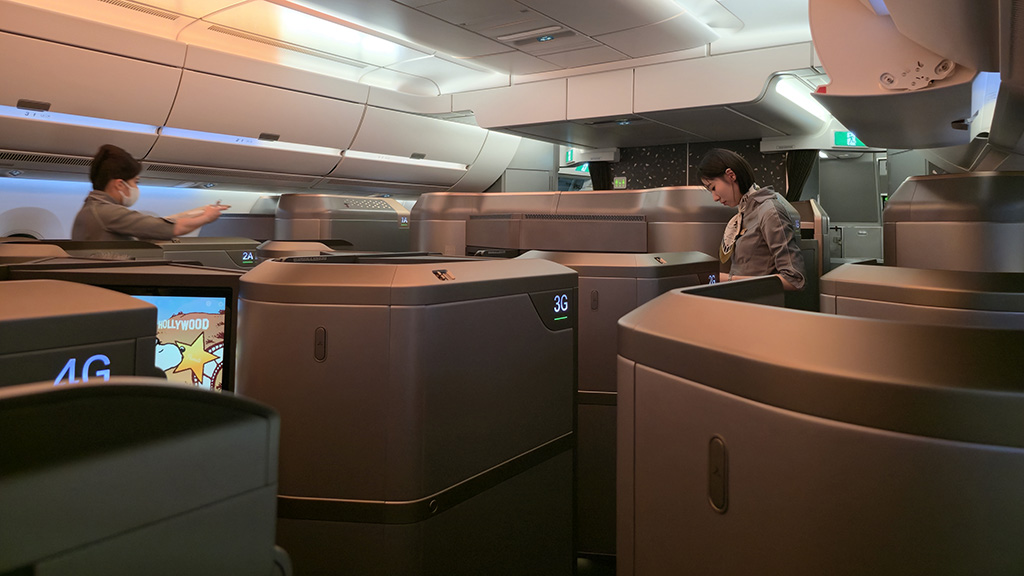
By the time I booked this return flight, Seats 2A and 2K were already occupied, and I was ineligible to pick anything in row 1 because it was first class. I saw that Seats 3A and 3K had obstructed views out the window, so I opted for Seat 4K instead. Row 4 was still far enough away from the lavatories that I wasn’t bothered.
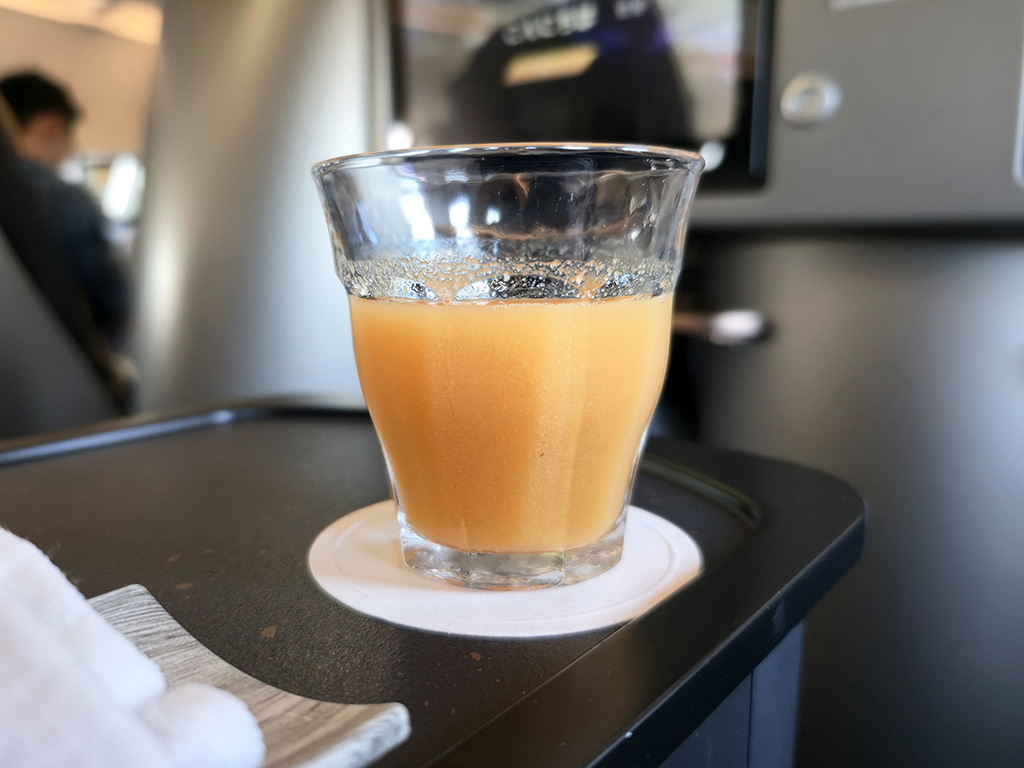
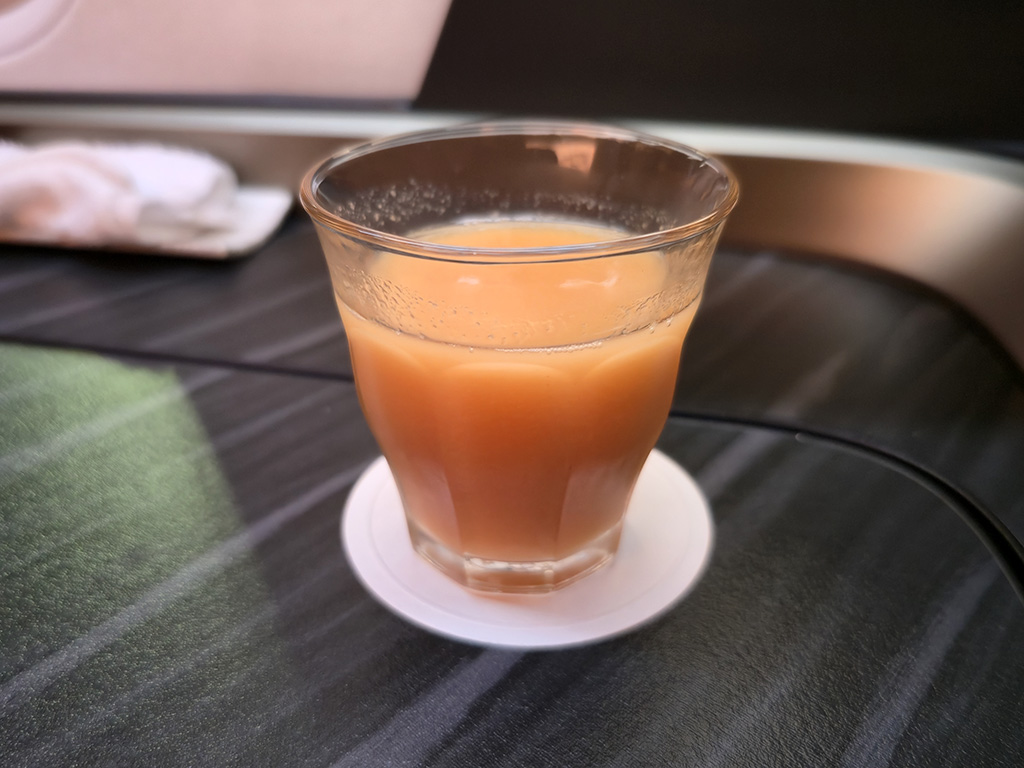
For my pre-departure beverage, I received a small cup of juice.

I also informed my flight attendant that I would like the Star Gourmet option for my meal, which was a tasting menu developed in collaboration with a high-end contemporary Taiwanese restaurant called YUENJI (formally, 元紀 台灣菜), located in Taichung.
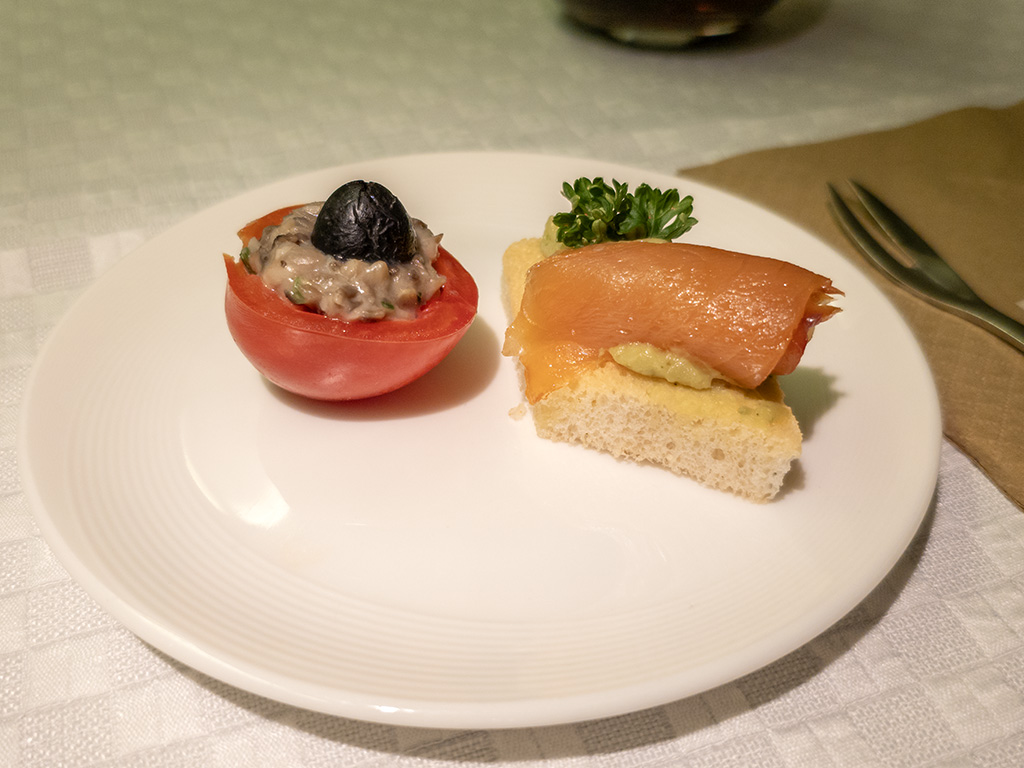
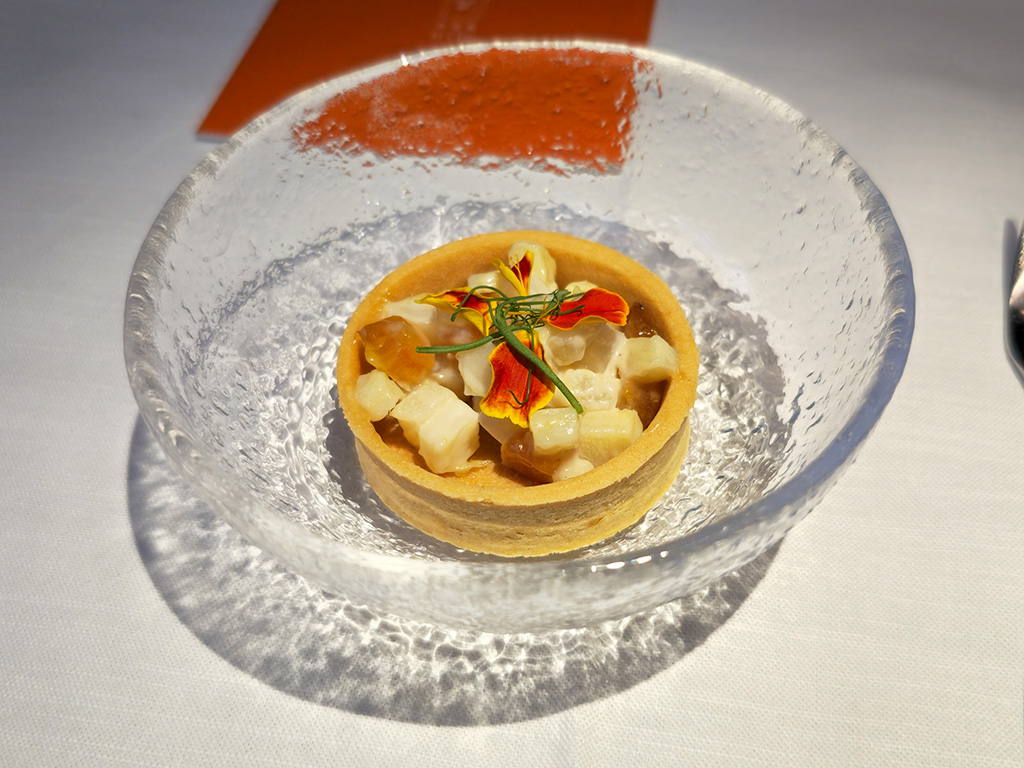
The meal started with a savory tart containing grilled Lukang wild sliced mullet roe (better known in Taiwan as karasumi) and green bamboo shoots.
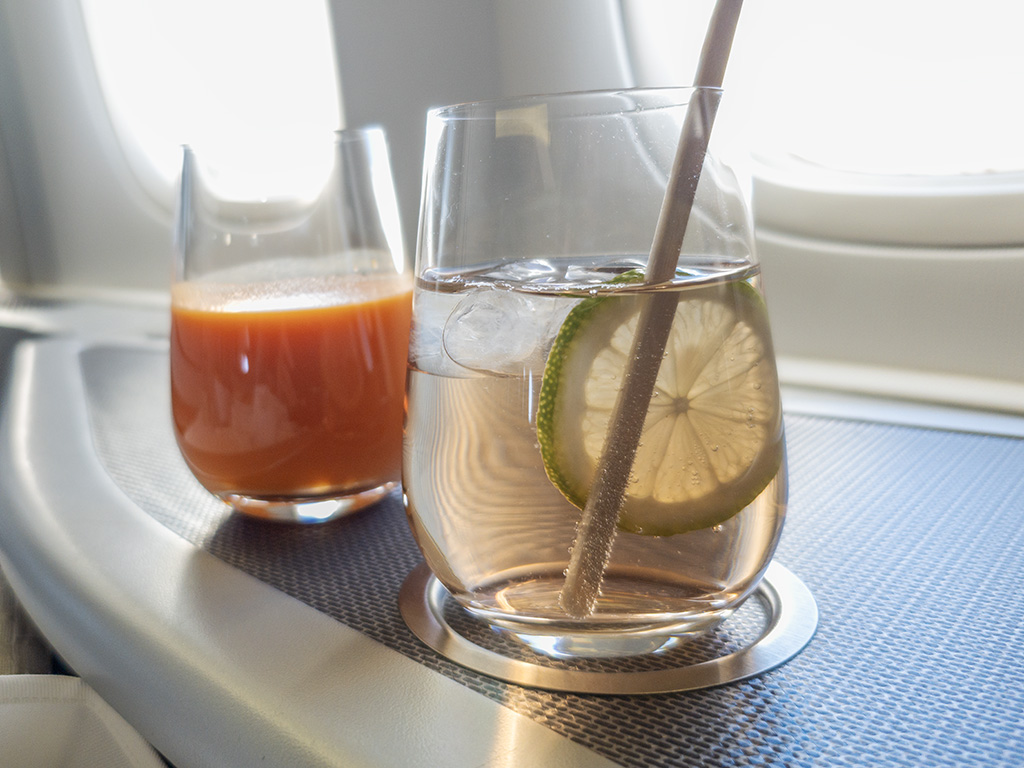
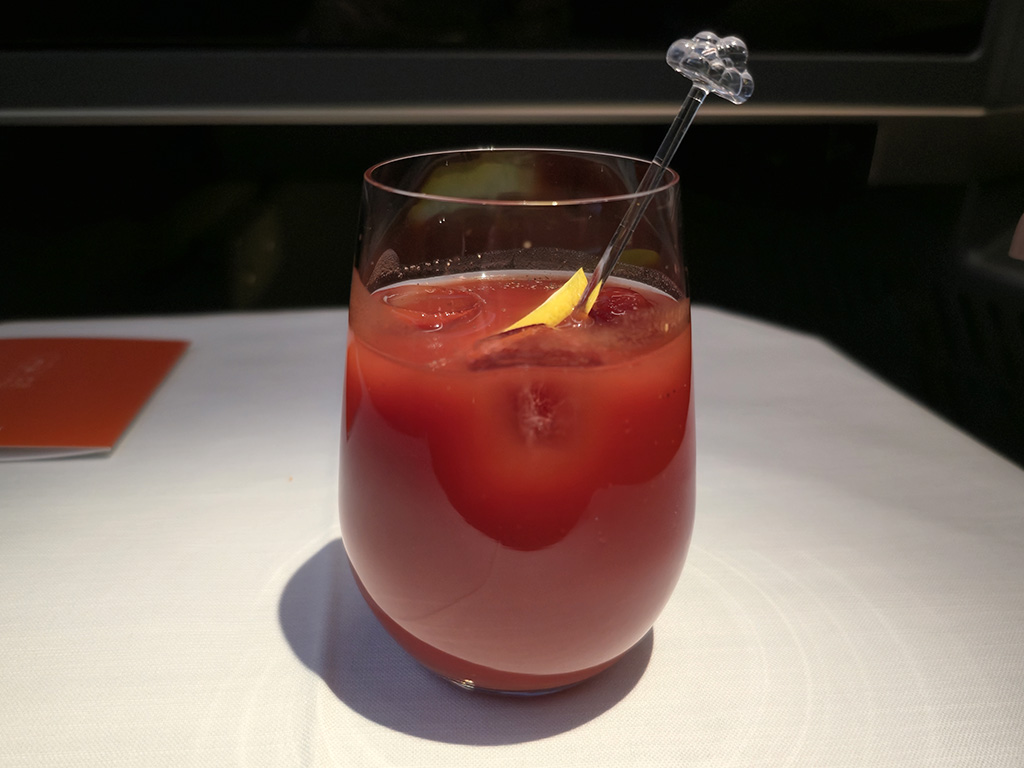
For my beverage, I ordered a Virgin Mary, which is a non-alcoholic version of the Bloody Mary.
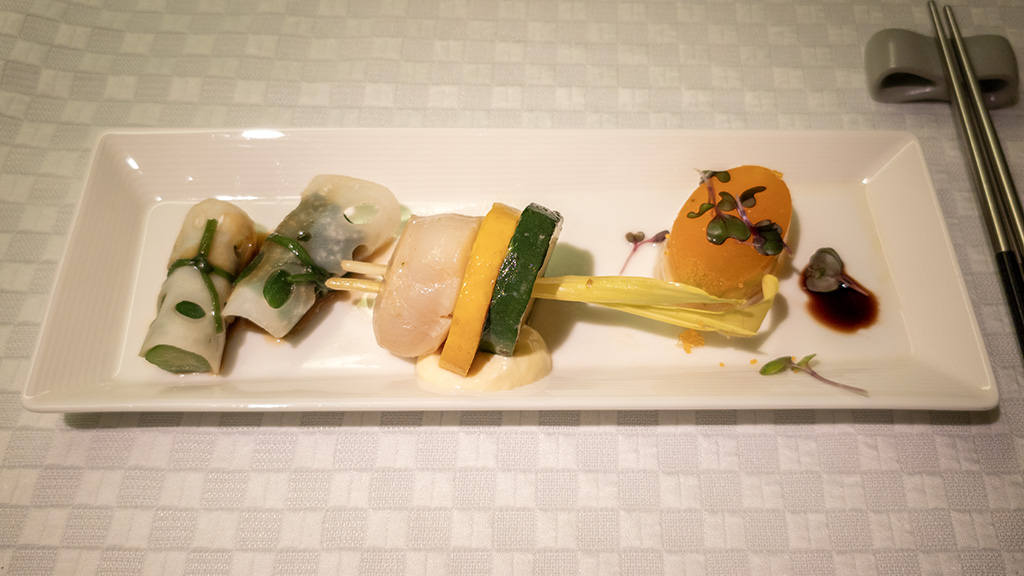
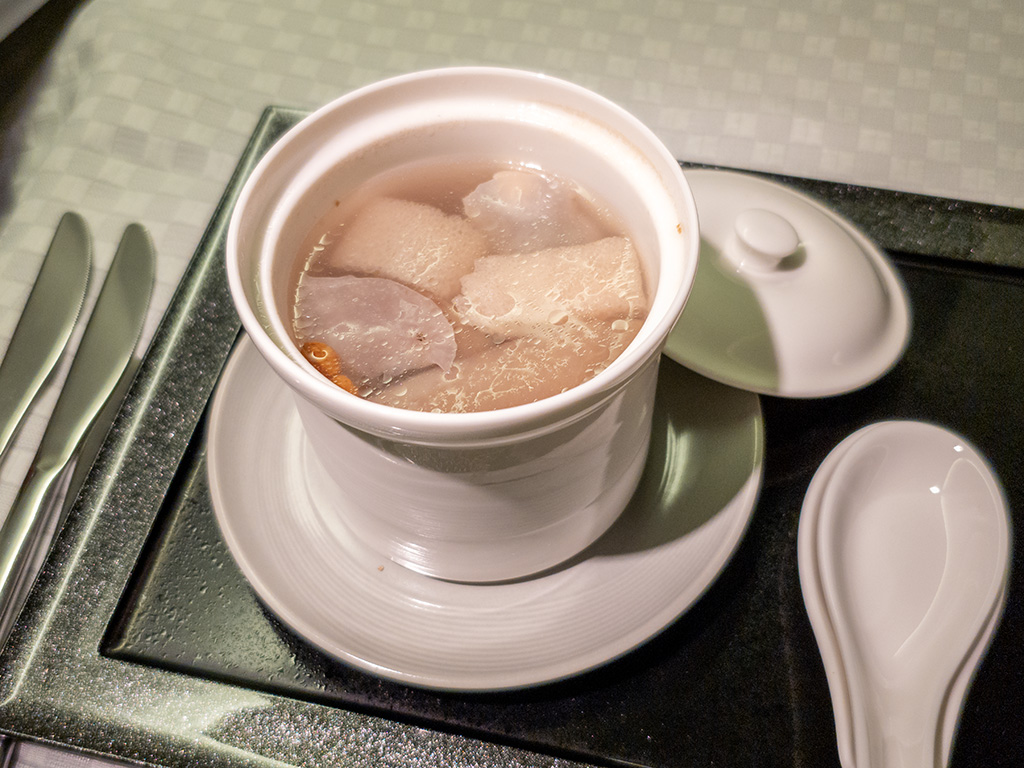
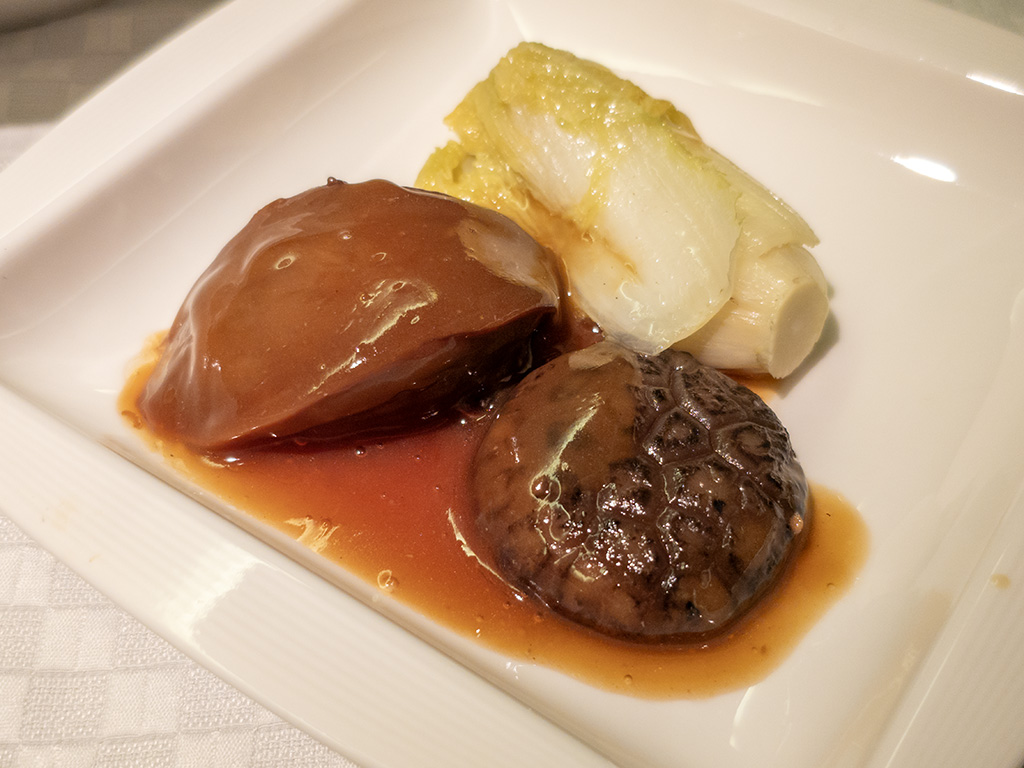
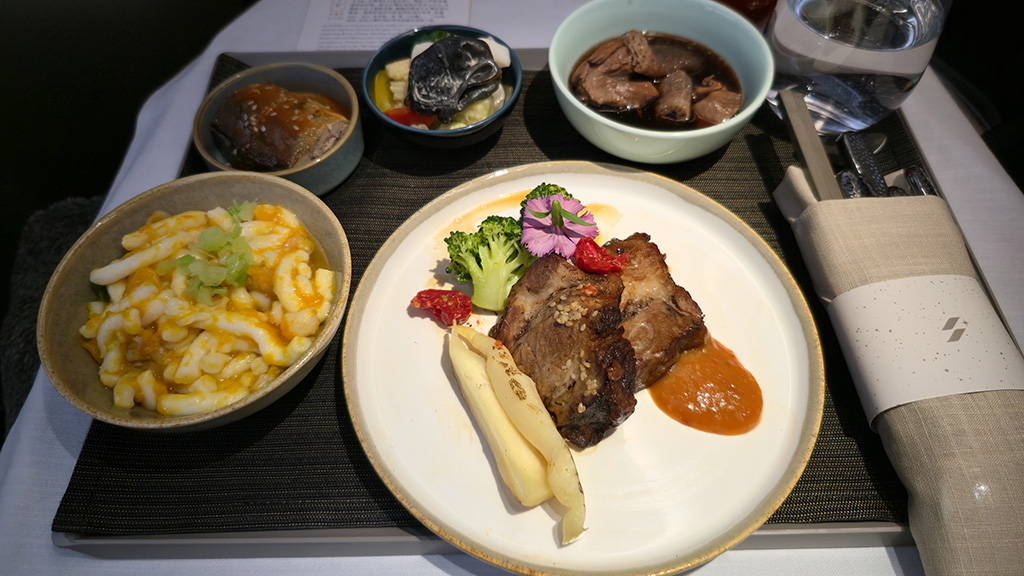
The main entrée was tea-smoked Iberico pork collar and stir-fried Penghu rice noodles. This came with a side of vinegared squid with seasonal vegetables, braised sweetfish in soy sauce, and aged pu’er tea chicken soup with bamboo fungus.
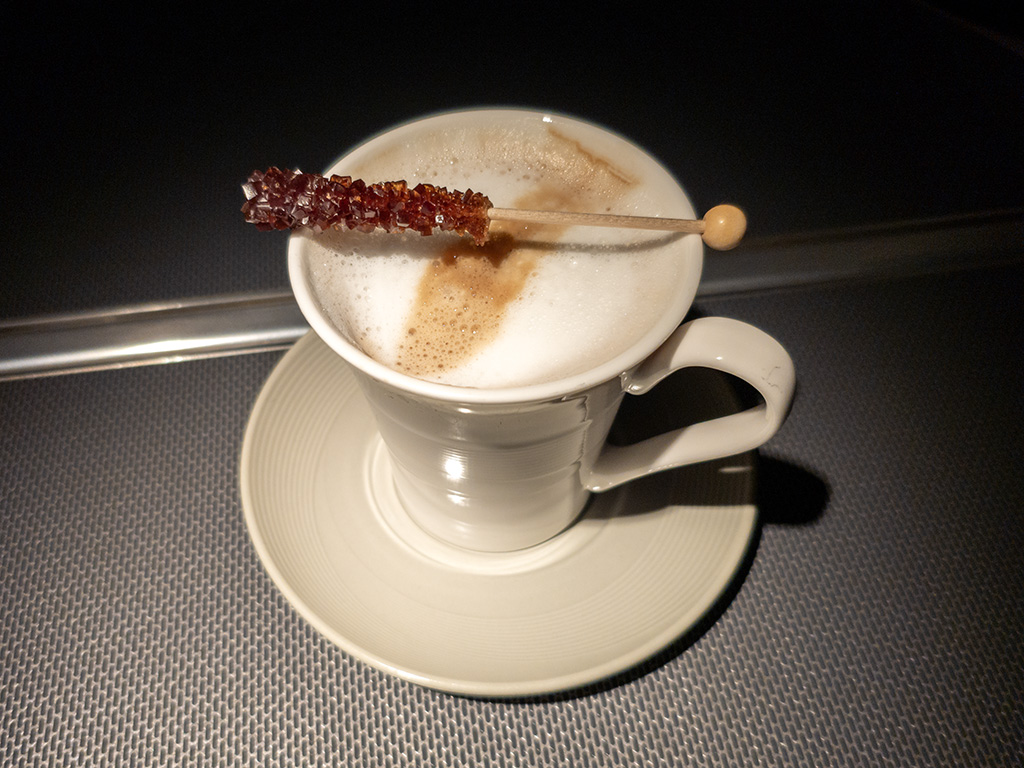
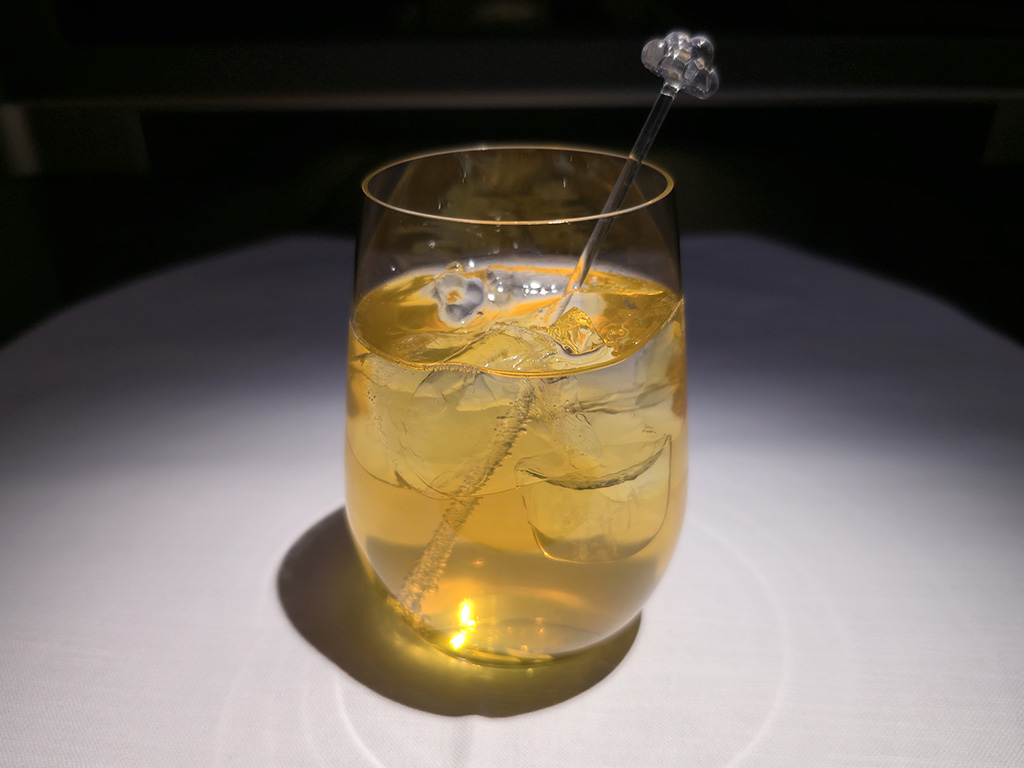
For my second beverage, I got a green tea special; I think the thing that made it “special” was that it was lightly carbonated.
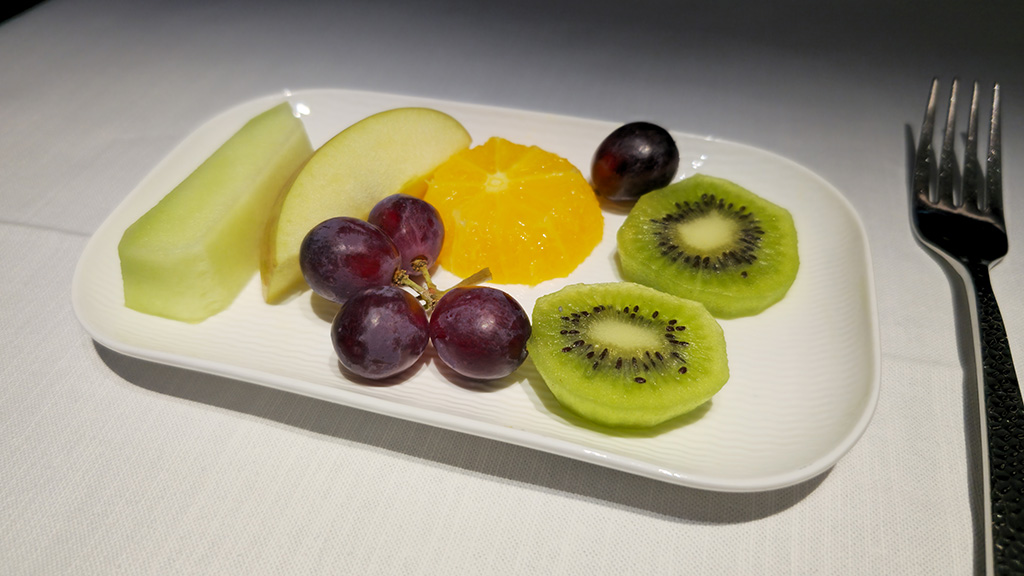
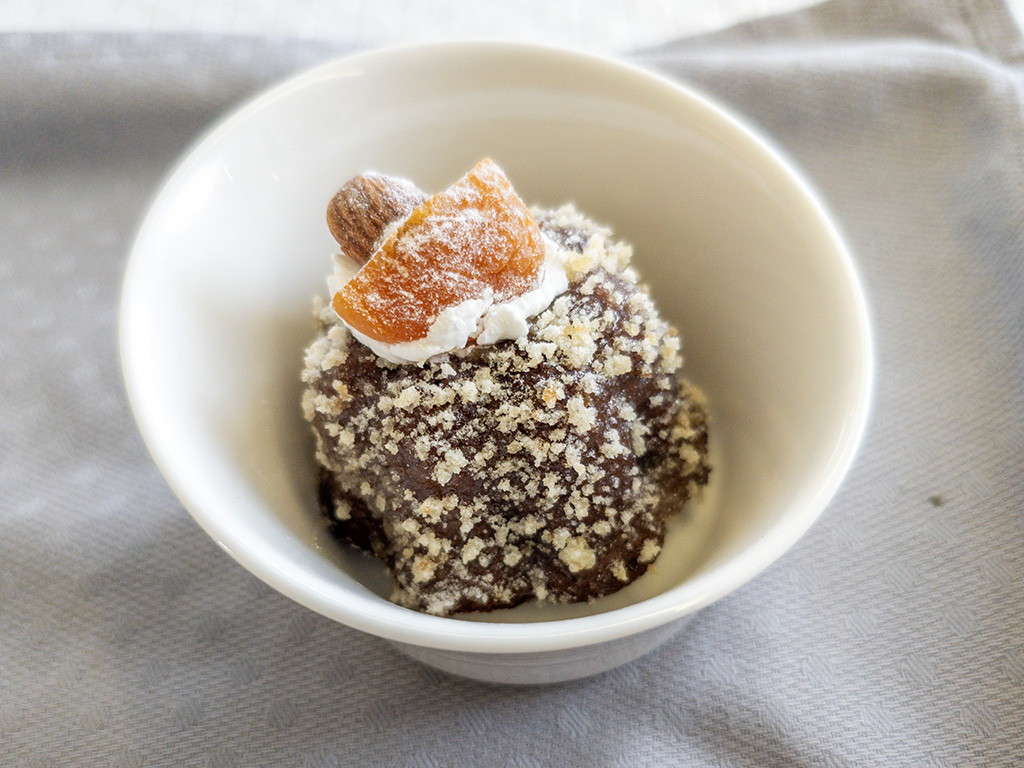
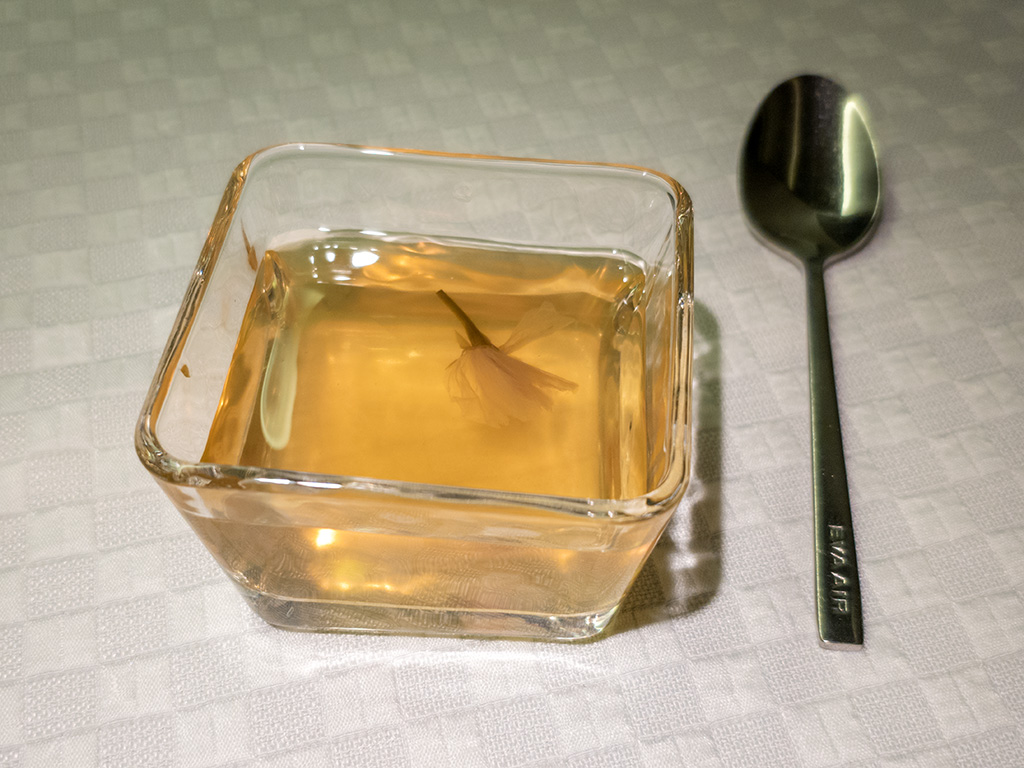
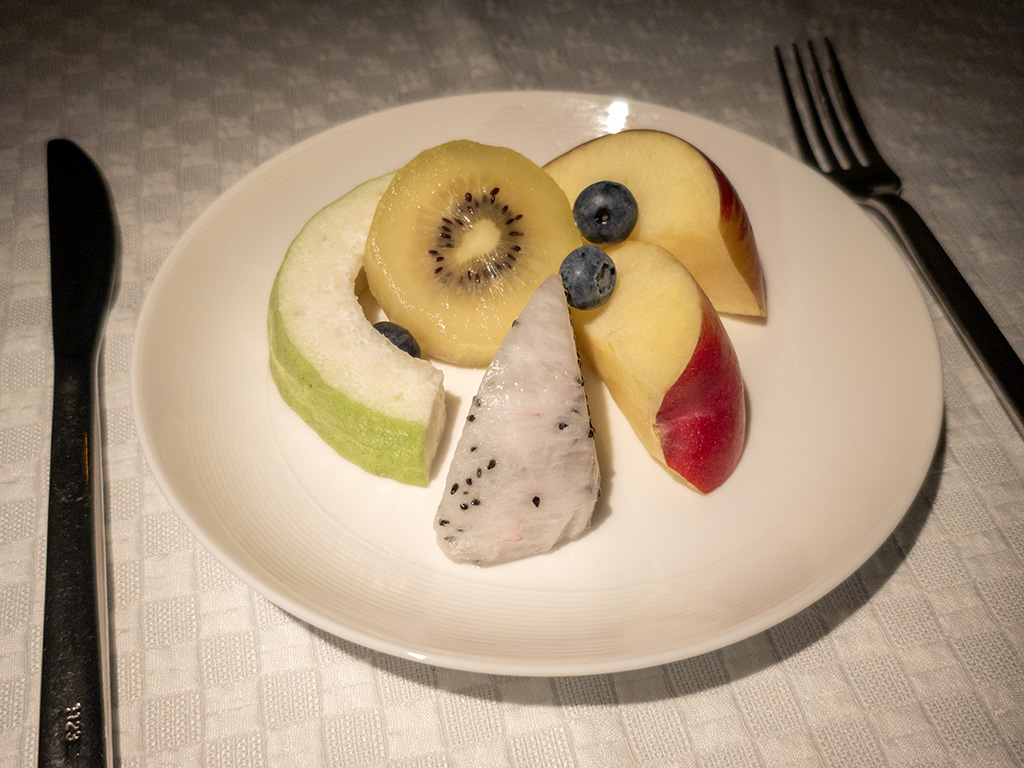
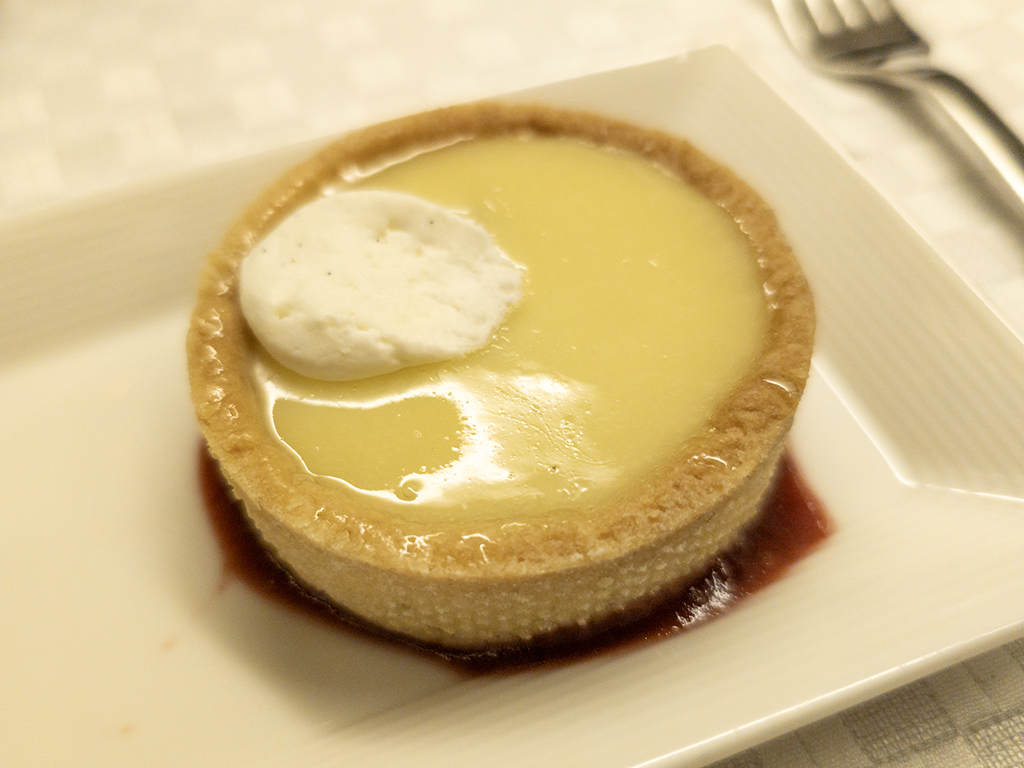
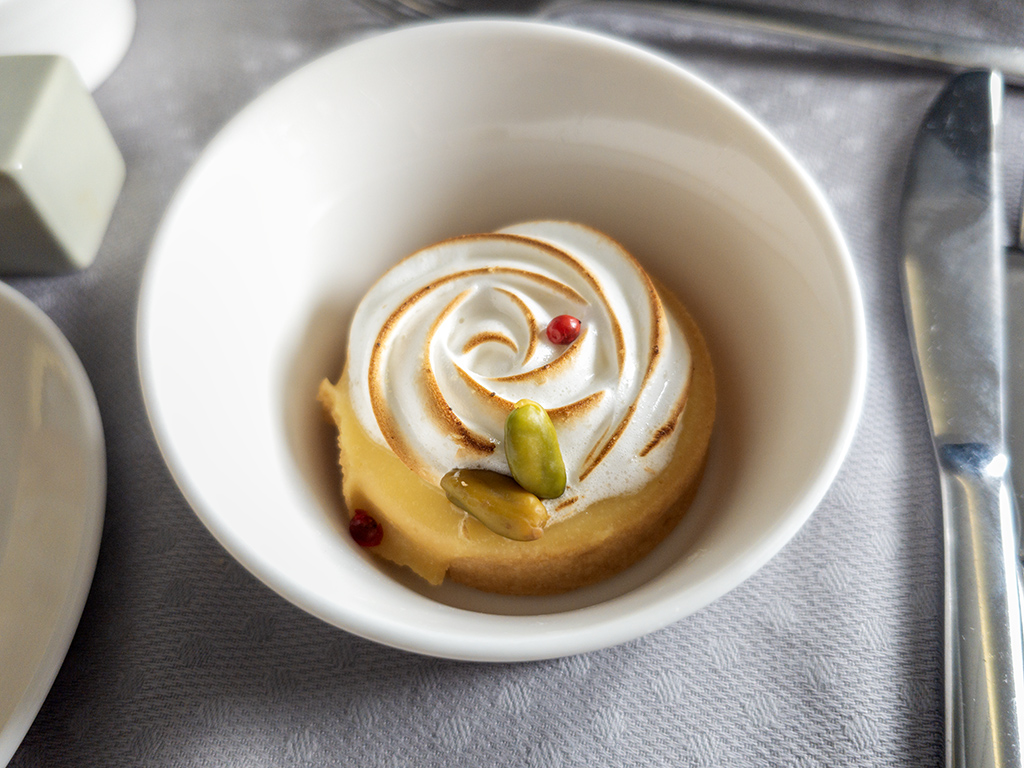
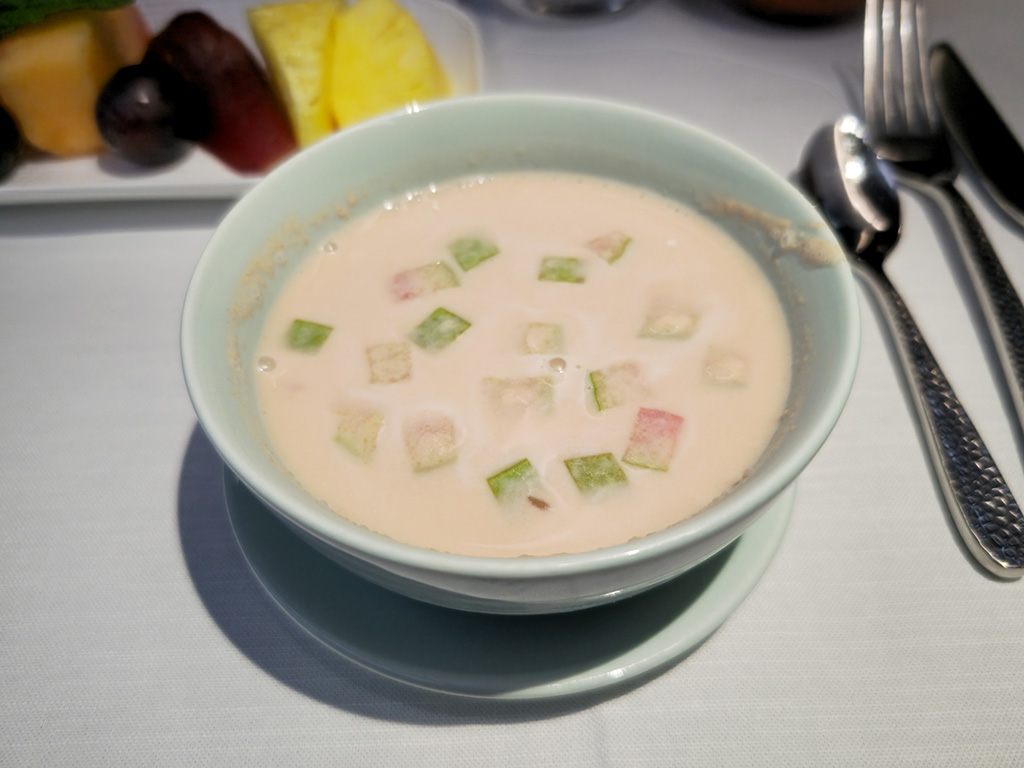
Dessert was guava sago with pomelo and palm seeds, along with a plate of assorted fruit.
Flying eastbound back to the United States is quicker than flying westbound out to Asia because of the jet stream. So, due to the shorter flight duration, I wasn’t able to get a full eight hours of sleep after finishing my dinner and then relaxing for a bit and watching some YouTube videos while digesting. However, the lie-flat seat was comfortable enough that the sleep I did get was pretty restful.

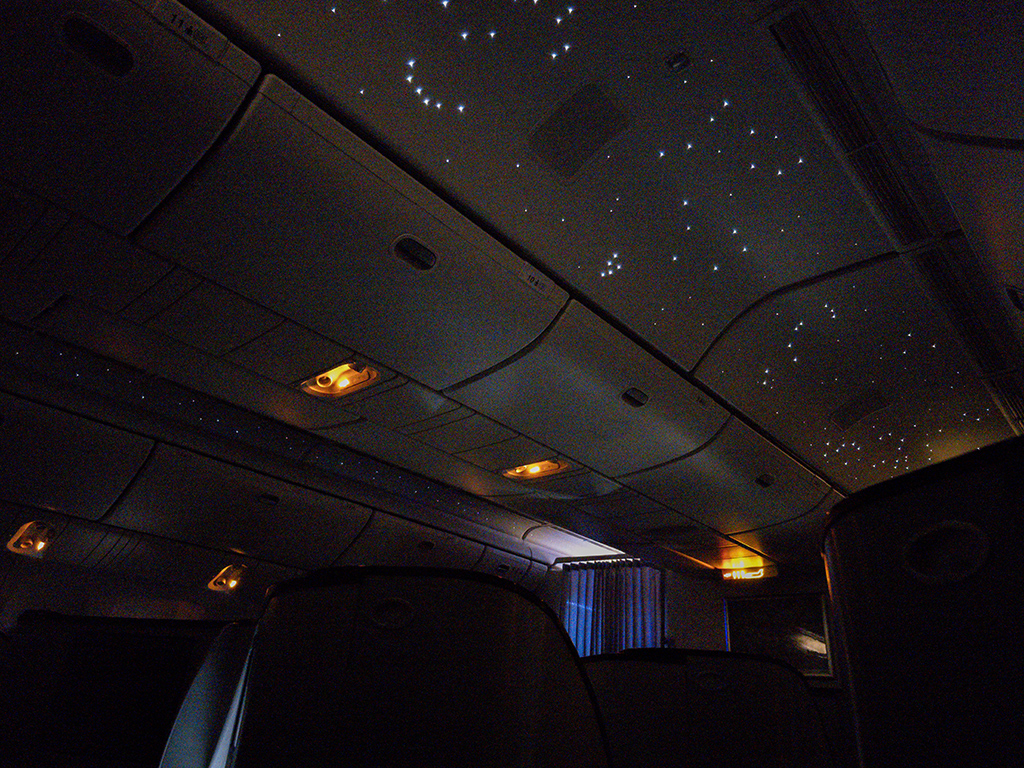
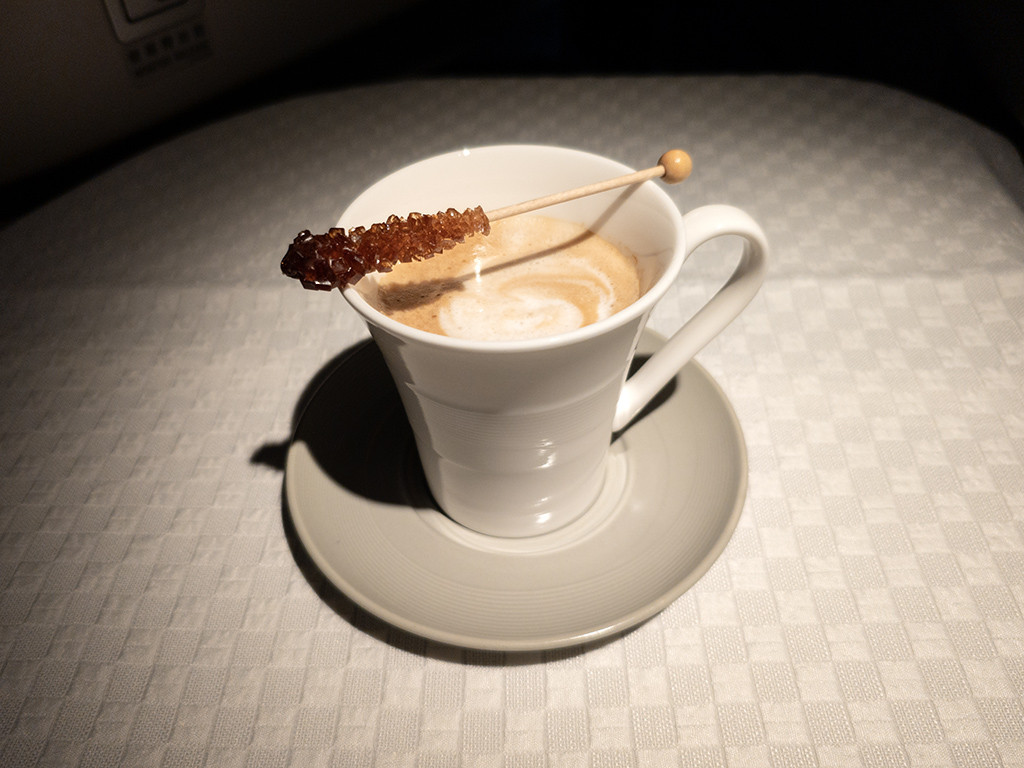
With a couple hours left in the flight, the cabin lights were illuminated and the flight attendants came around to serve breakfast. Interestingly though, although this made sense for Taiwan’s time zone, it was already around 6 PM Pacific time.

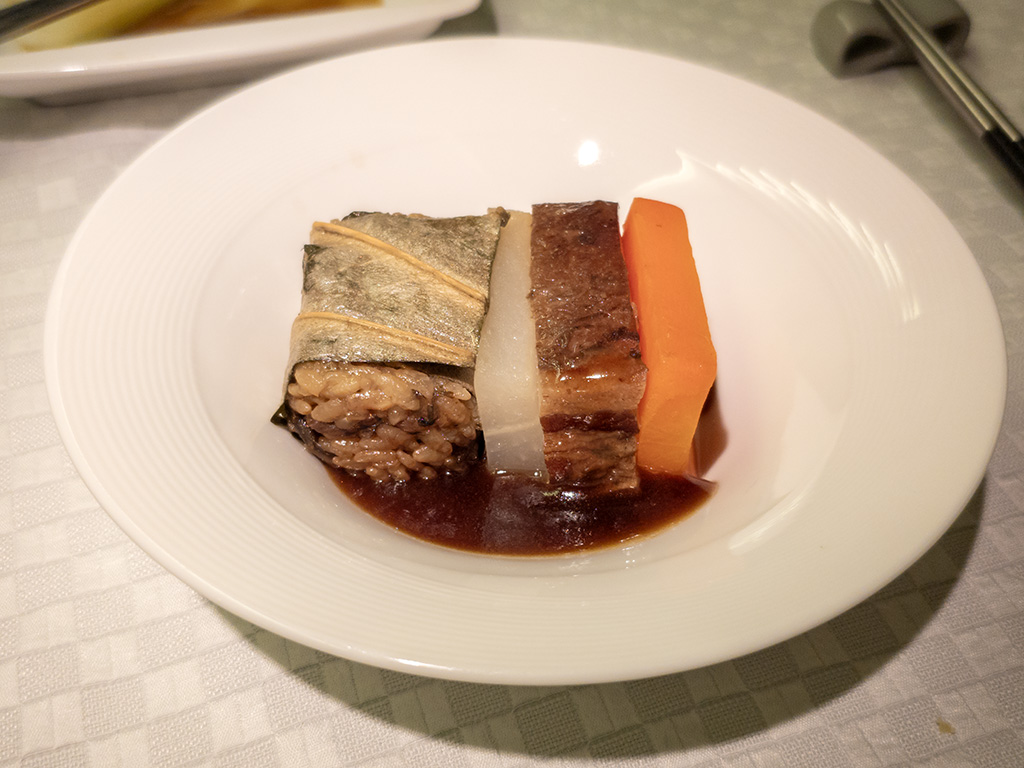
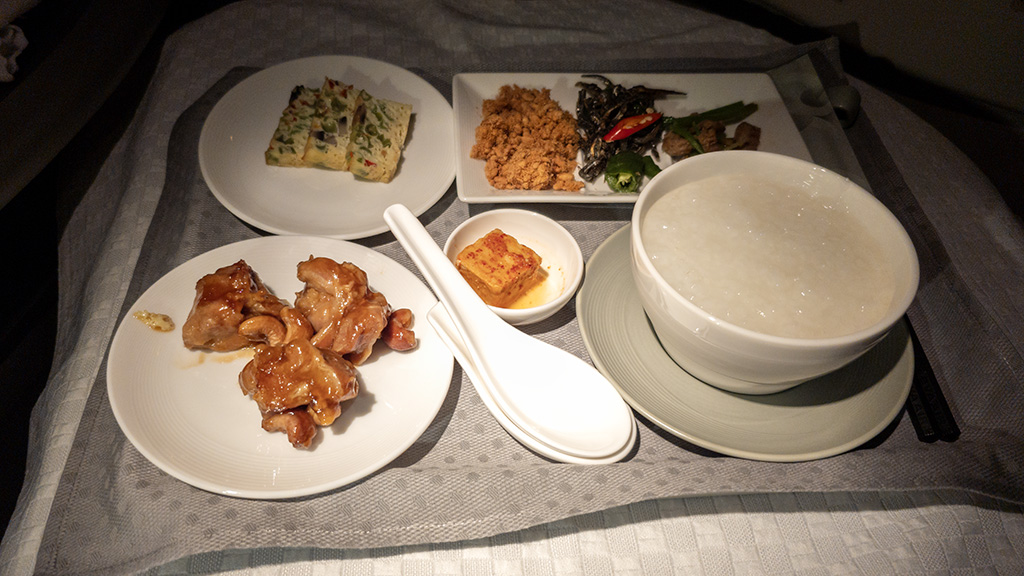
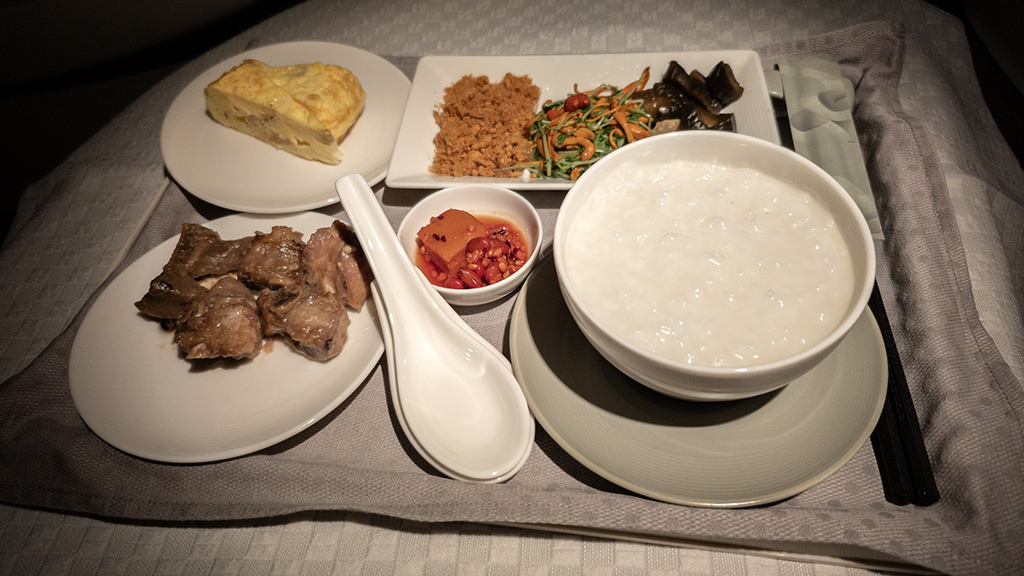
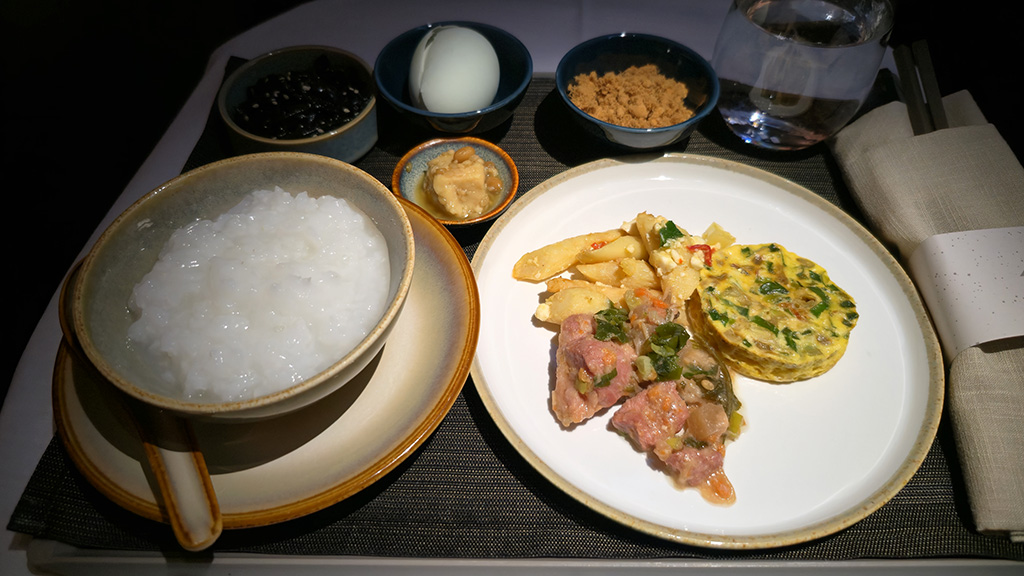
For my evening breakfast, I received a bowl of plain congee with some sides of steamed pork with winter melon, fried water bamboo with salted egg yolk, silver mullet and green onion frittata, black fungus tsukudani, salted duck egg, pork floss, and tofu curd.
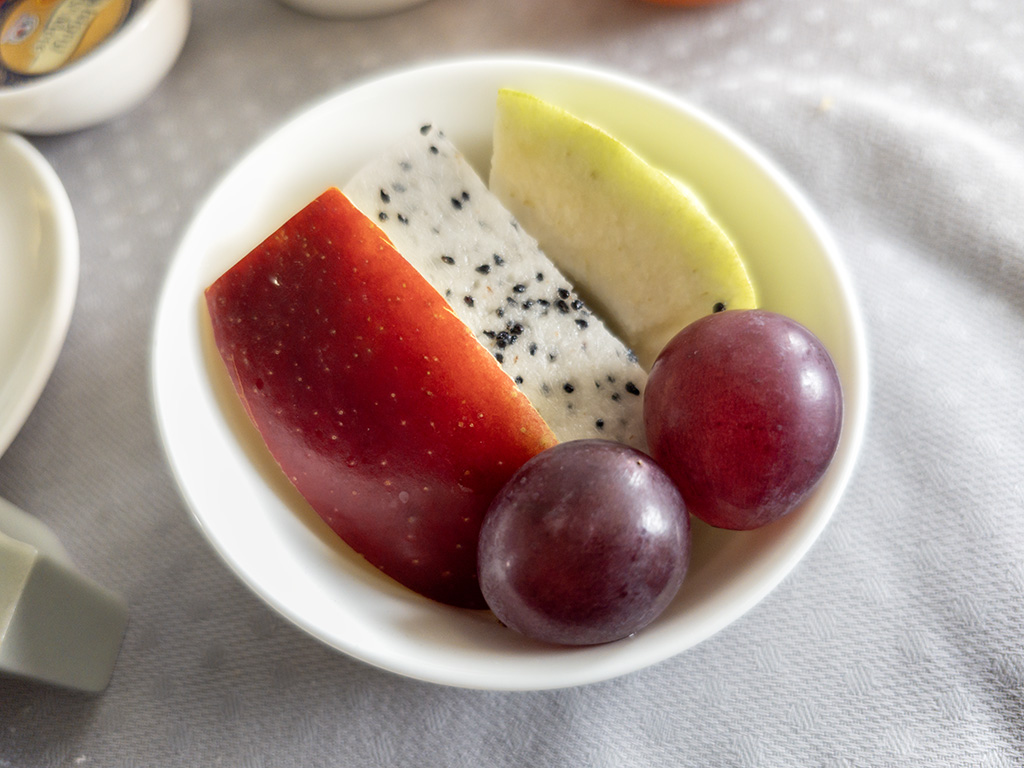
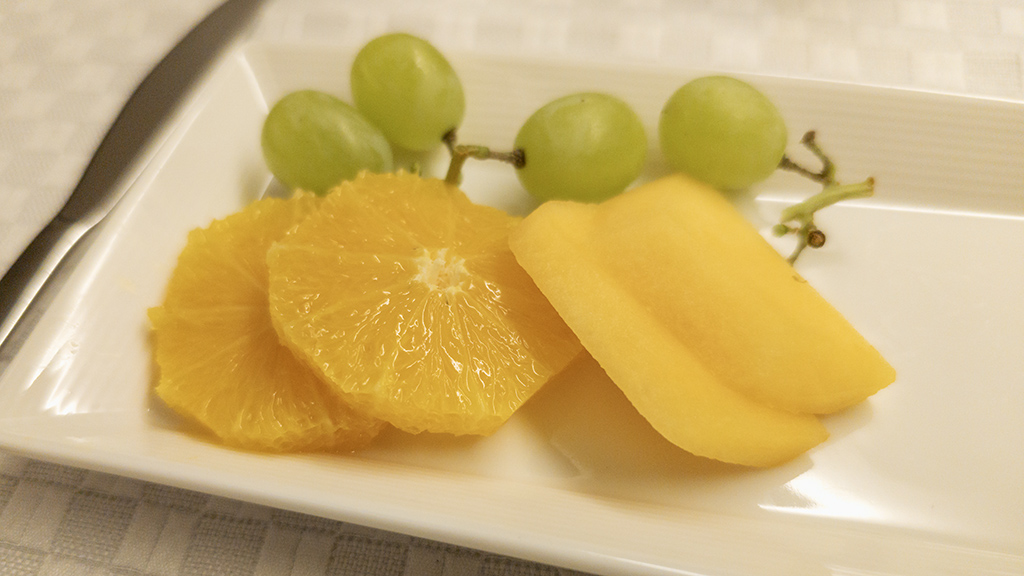
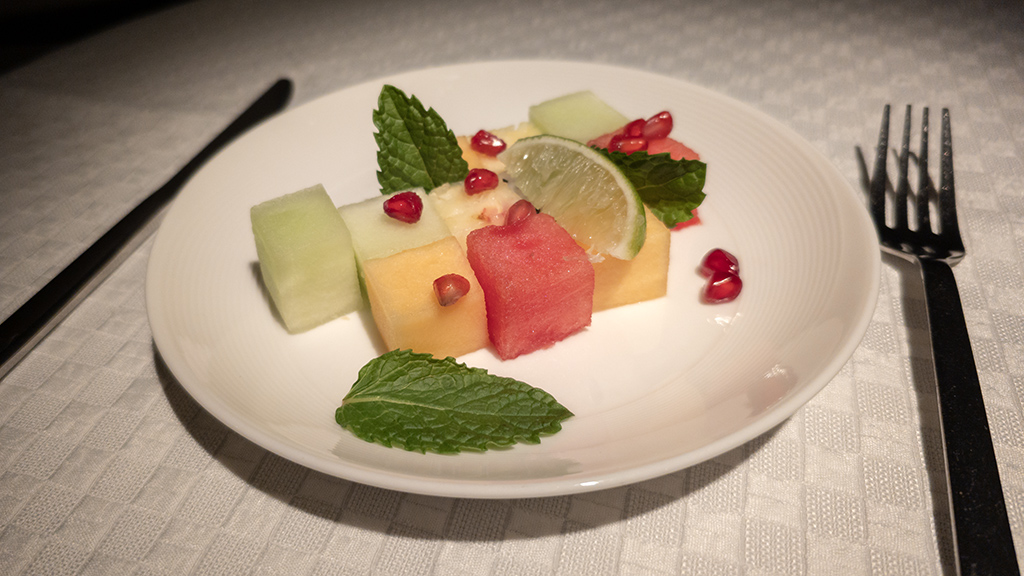
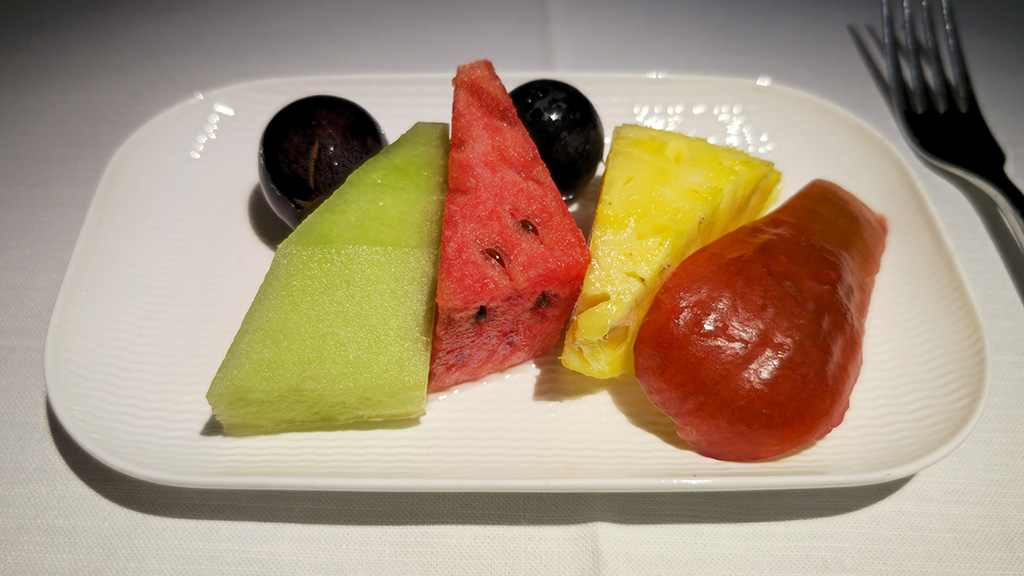
To wrap up my breakfast, I received another plate of fruit, which was refreshing and helped rehydrate me after several hours in the dry air of the plane.
Although we took off from Taiwan on time, there was a short air delay, which implies that we might have had to take an inefficient flight path due to weather. I’m not complaining though, of course; I think a lot of people in long-haul business class actually appreciate delays so that they can enjoy the amenities for longer.
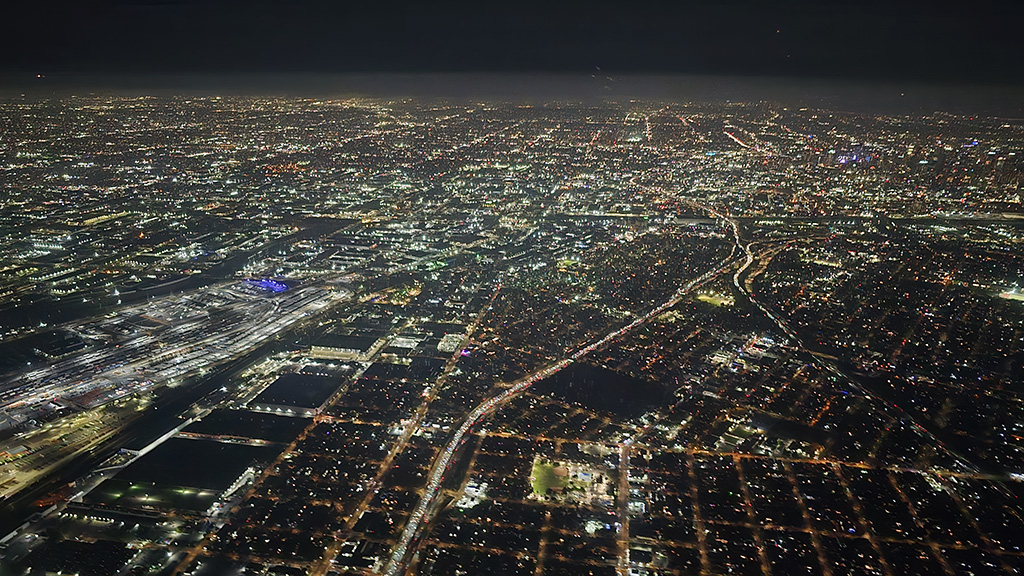
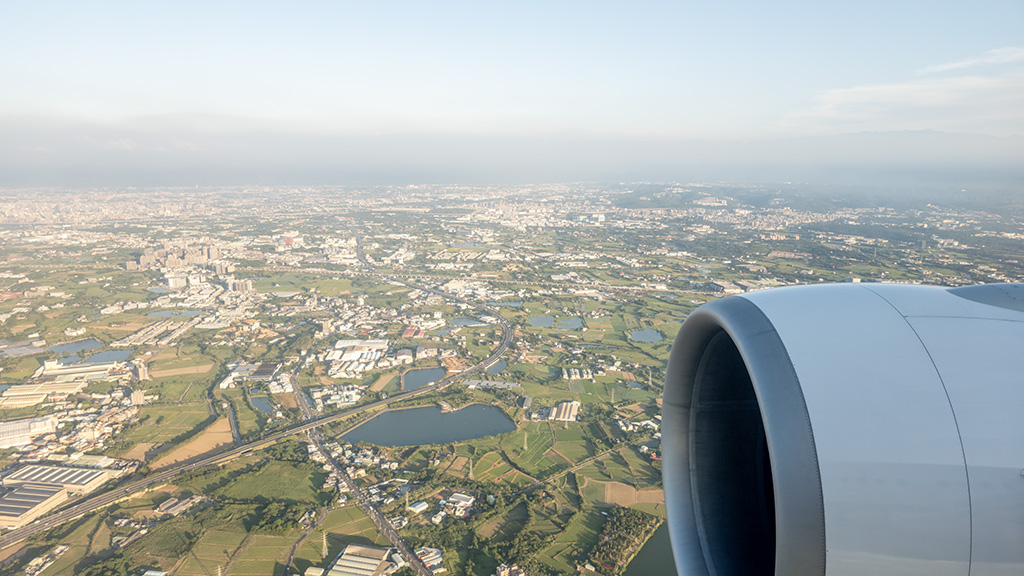
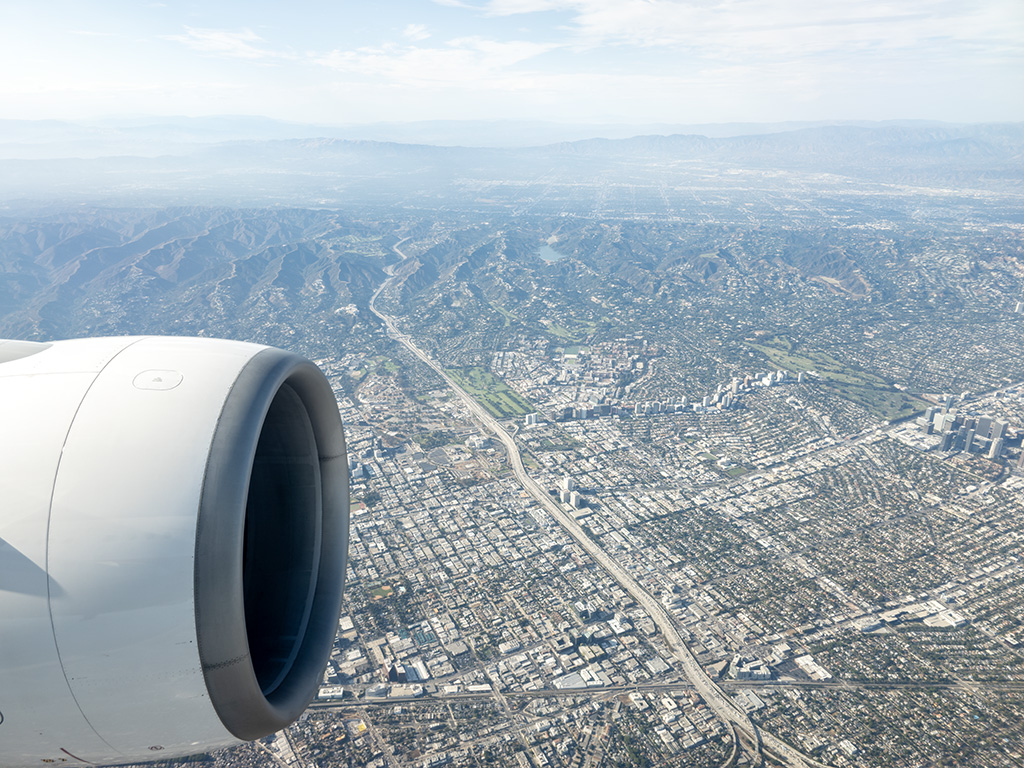
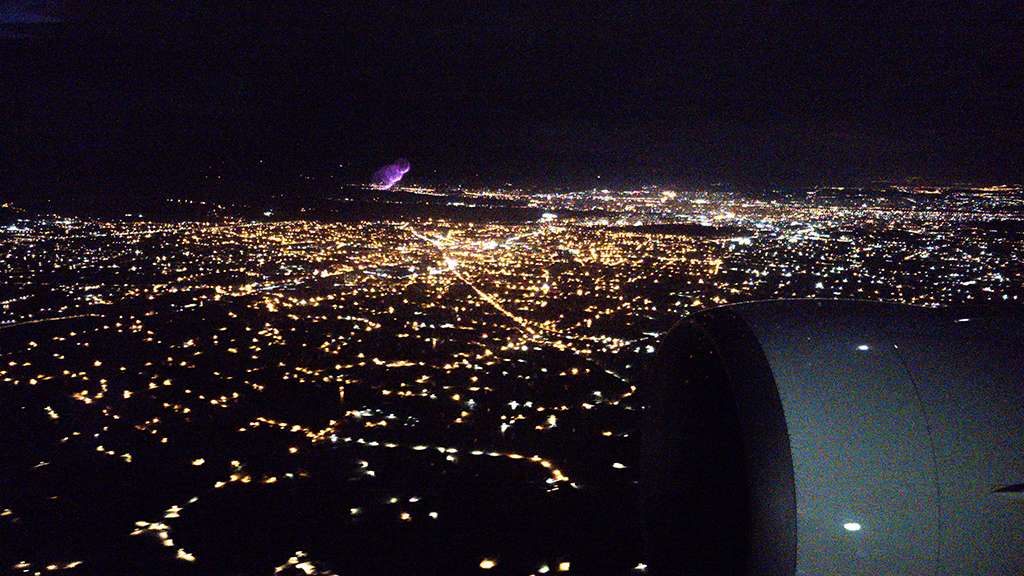
We soon touched down at Los Angeles International Airport for a nighttime arrival of 8:36 PM PDT.
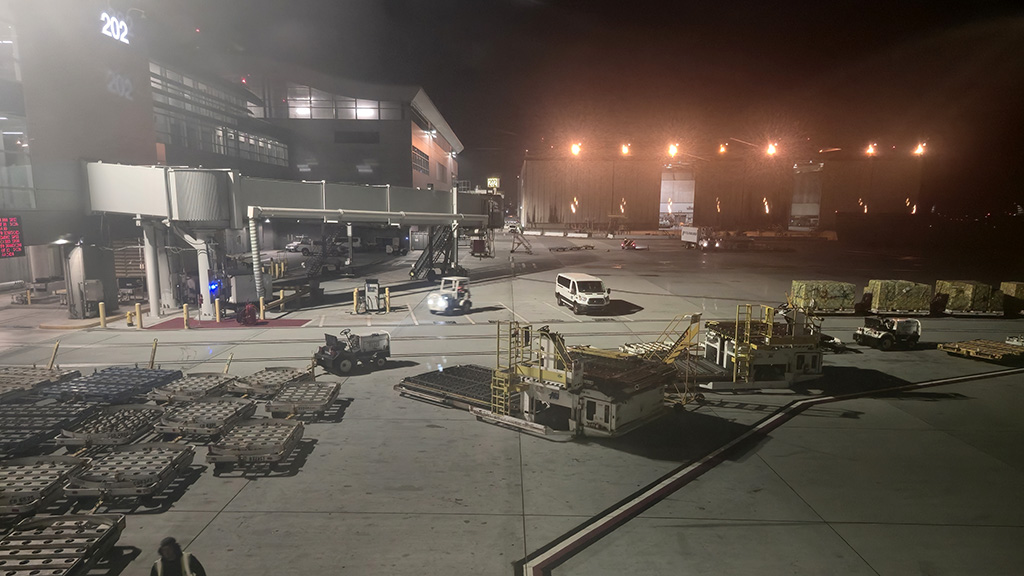
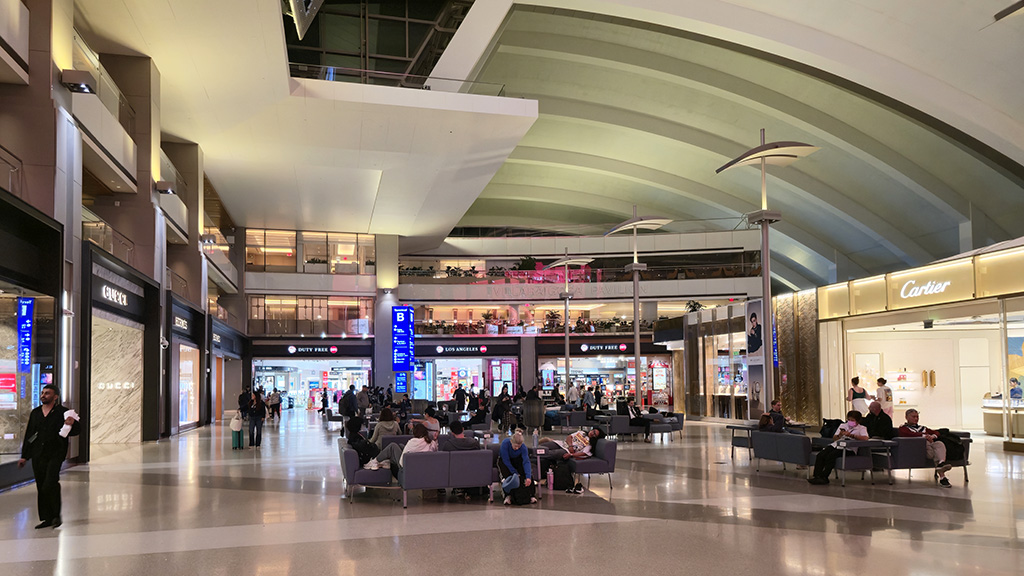
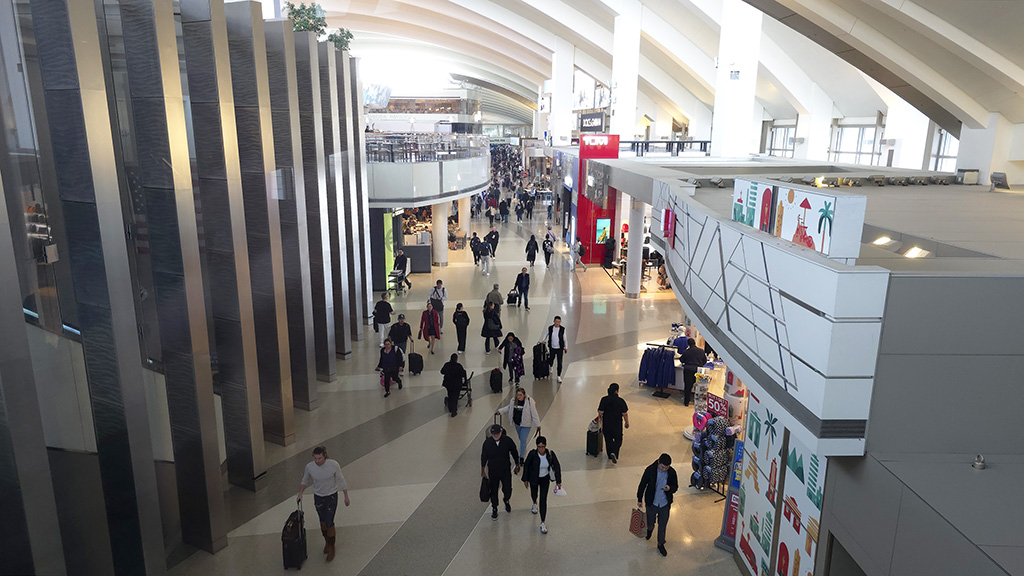
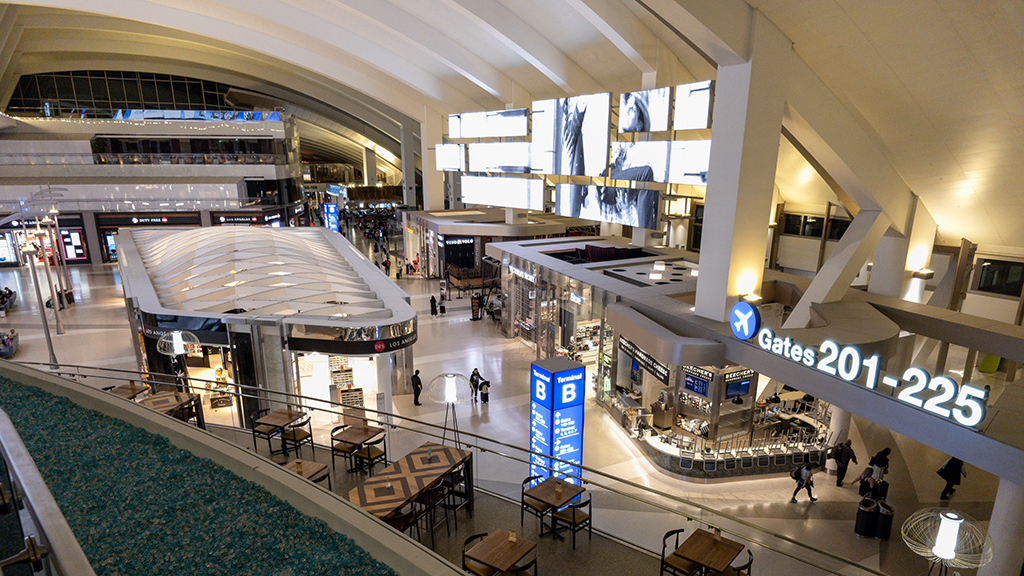
After deplaning and walking into the Tom Bradley International Terminal, I was quickly reminded how inefficient and unwelcoming airports generally are in the United States compared to Asia.

This was around the time that there were some major problems with staffing due to a government shutdown caused by politicians’ inability to agree on a new budget, but luckily, Global Entry was still operational and I was able to clear immigration and customs relatively quickly.

Like usual, I walked from Terminal B to Terminal 7 so that I can stretch my legs after a long flight and I don’t have to sit in bumper-to-bumper traffic while my rideshare driver tries to drive out of LAX’s horseshoe. After calling my car, I hopped in and went on my way.
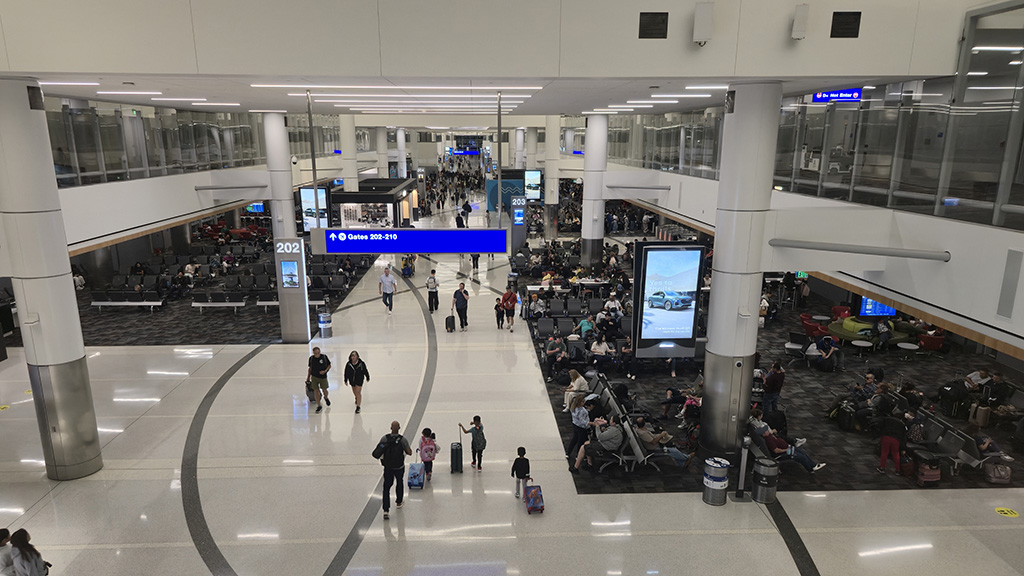
That concludes my Hong Kong blog posts. I covered so much in the introduction that I guess I don’t have much else to conclude on.

… ok bye.
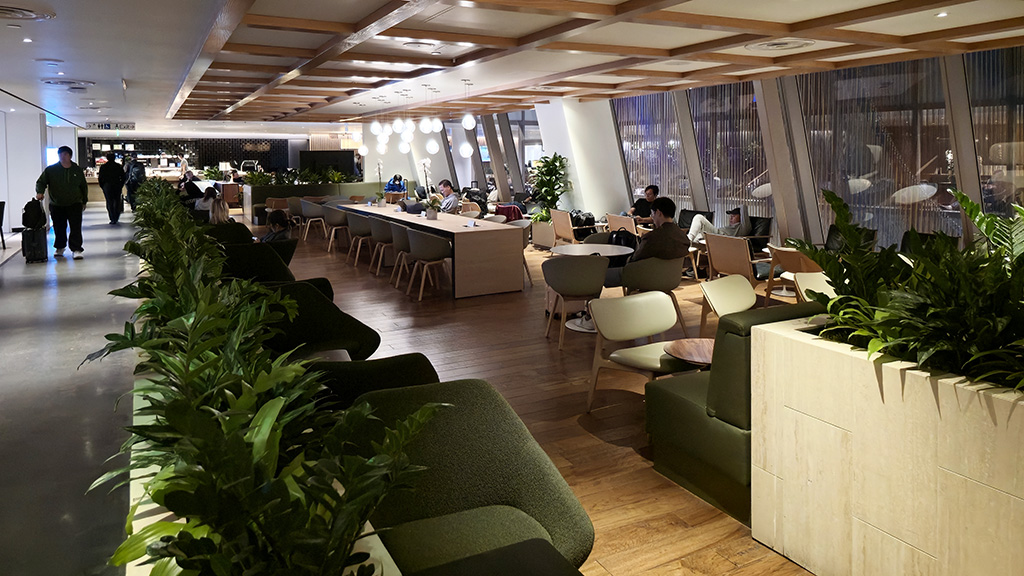
 

—§—


Hello, STARLUX Airlines flights 1 and 233 from Los Angeles to Taoyuan to Hong Kong

I mentioned in my most recent previous blog posts that I was in Los Angeles County in preparation for an international trip departing from Los Angeles International Airport, but I never clarified to where. As of today, I am back from my trip and am revealing the destination: Hong Kong.
Similar to the trip that I took to Japan in November 2025, I took a break from blogging while I was in Hong Kong; this is contrary to how I often try to publish blog posts in real time while traveling. I opted to gather all these for after I returned to the United States because, not only were they not time-sensitive, but I also wanted to maximize the amount of time I had going out and being a tourist, as opposed to spending time sitting indoors editing photos and writing.

So, it would make sense to start at the beginning: my outbound flight. Like usual for international trips, I decided to fly out of Los Angeles instead of from my home airport of Harry Reid International Airport in the Las Vegas Valley due to pricing from LAX being more competitive. With that being said, even though I had some good non-stop options to Hong Kong International Airport, I booked a flight with a layover.
I am someone who highly recommends taking non-stop flights to your destination, even if it is a little bit more expensive or requires you to fly to an alternative nearby airport. Going straight to where you want to go will help reduce the number of opportunities for things to go wrong, such as missing a connecting flight due to a delay in your first leg, or having the airline make a mistake during your baggage transfer and losing your luggage. However, for this trip, I chose not to take my own advice, though I think it was for a good reason.

Ever since I saw YouTubers reviewing Starlux Airlines when it first started flying in 2020, I’ve always wanted to try it out. I liked how unique it was with its futuristic styling and full commitment to the space theme. At first, this trip to Hong Kong might not seem like the optimal route to try out Starlux, but if you think more about it, I would argue that it’s actually better. If I’m flying an airline specifically to experience the service and amenities, it would make more sense to fly more segments in your itinerary so you can spend more time on the plane and see different aircraft types. In addition, if I’m going to take a layover, I’d rather that layover fall in the middle of a personal leisure trip, rather than a business trip where I need to actually make sure I get to my destination on time.

With that in mind, I passed on the available non-stop on Cathay Pacific (though Cathay is definitely also an airline that I’d like to try out in the future). I also passed on a non-stop on United Airlines, which is actually extra funny because I had friends who were flying on United with whom I coordinated overlapping days on my trip, yet I literally abandoned them to fly Starlux instead.

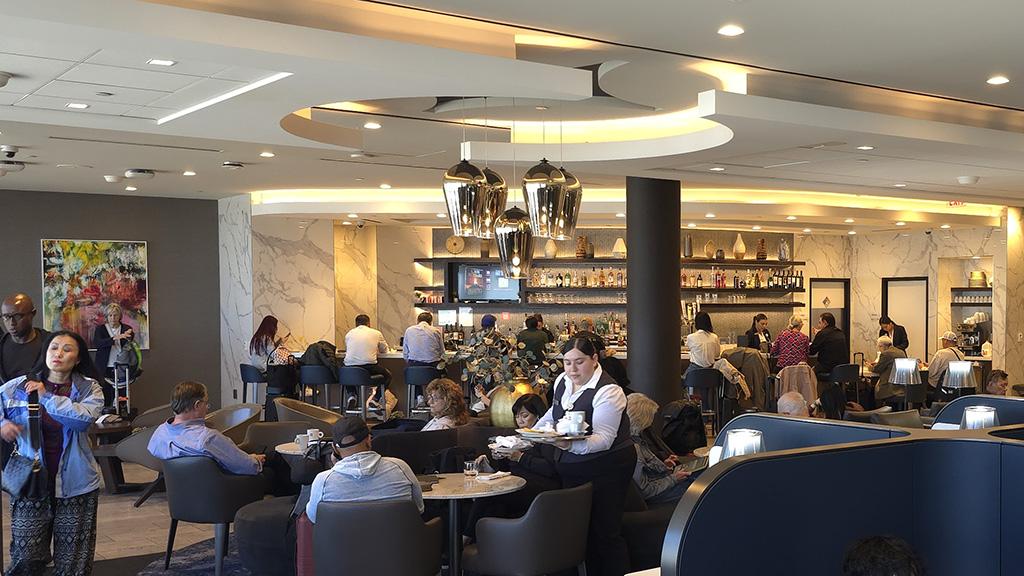
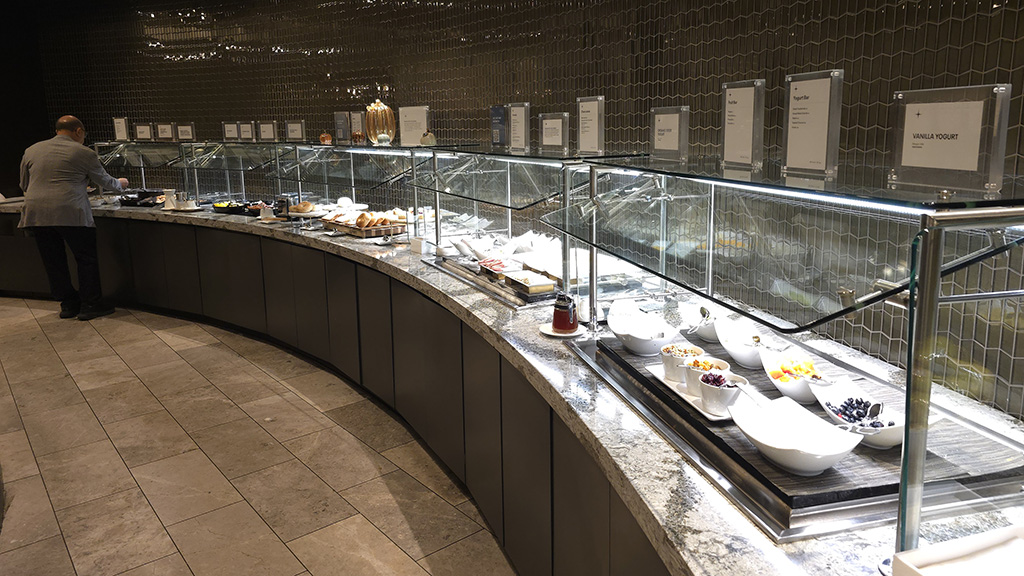
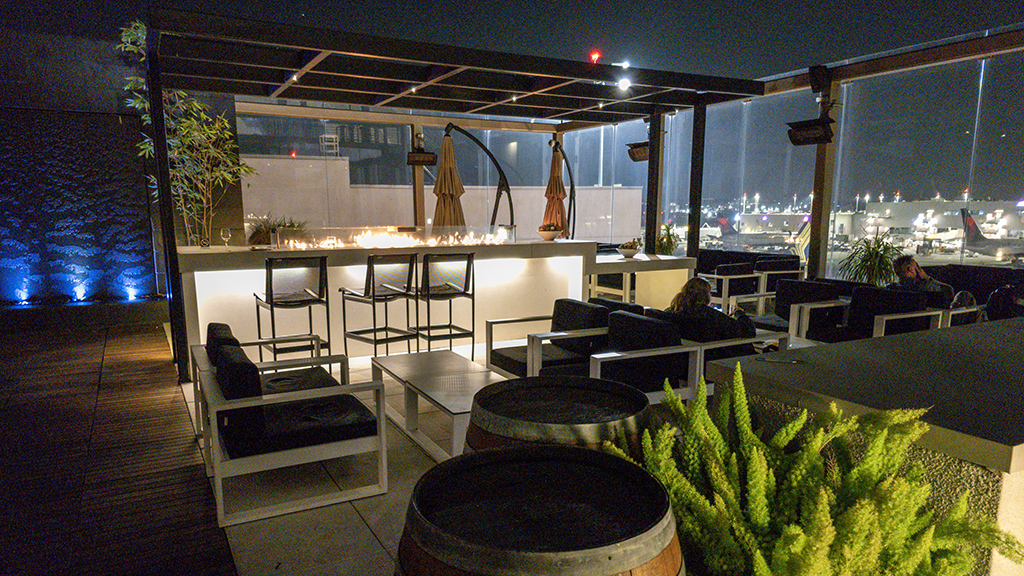
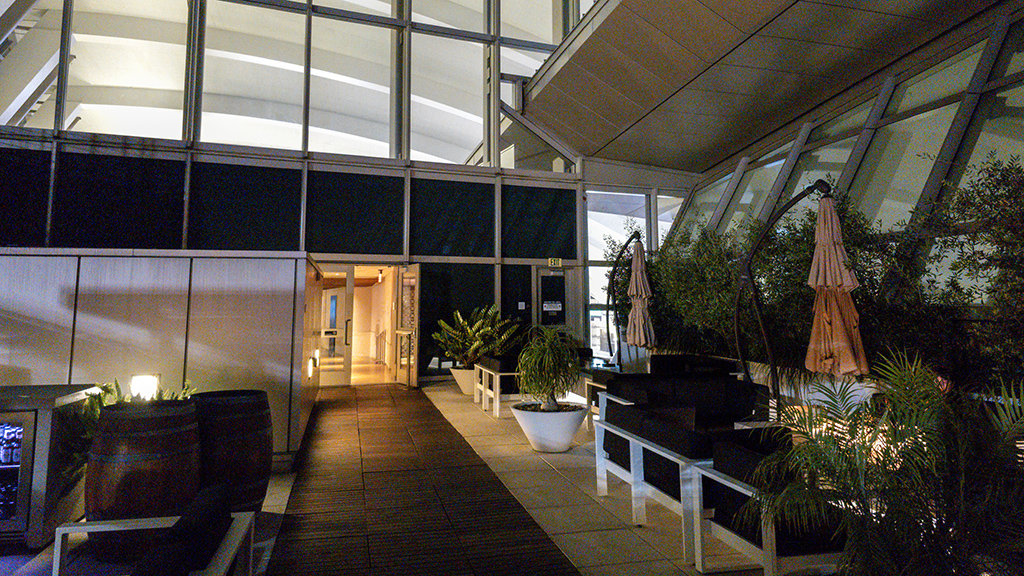
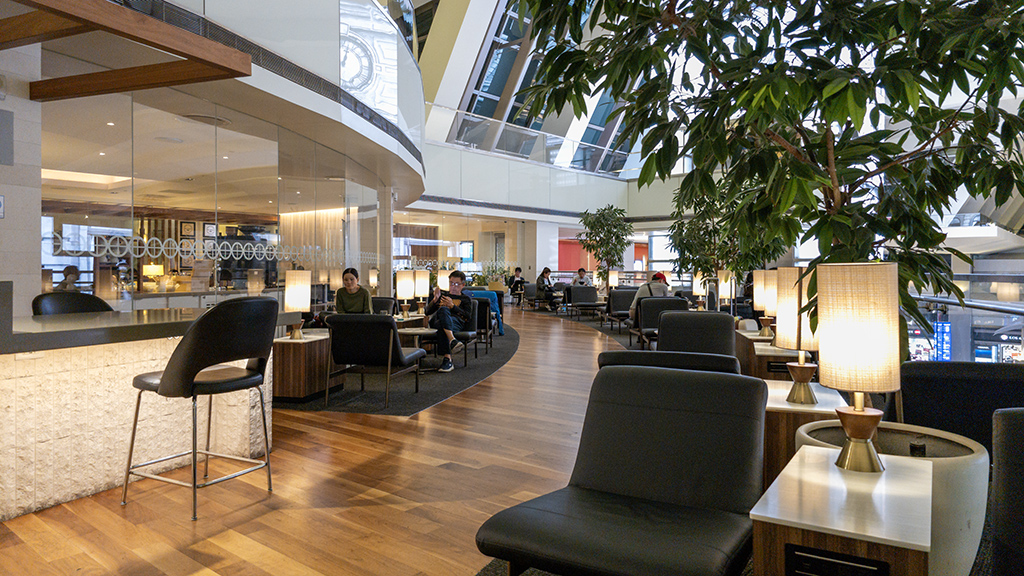
The best available route on Starlux Airlines that I was able to find started with a late night departure from Los Angeles International Airport. Because Starlux isn’t part of an airline alliance and doesn’t have their own lounge in Los Angeles, business class passengers were instead directed to use Starlux’s partner airport lounge owned by the Australian Qantas Airways, the Los Angeles Business Lounge.

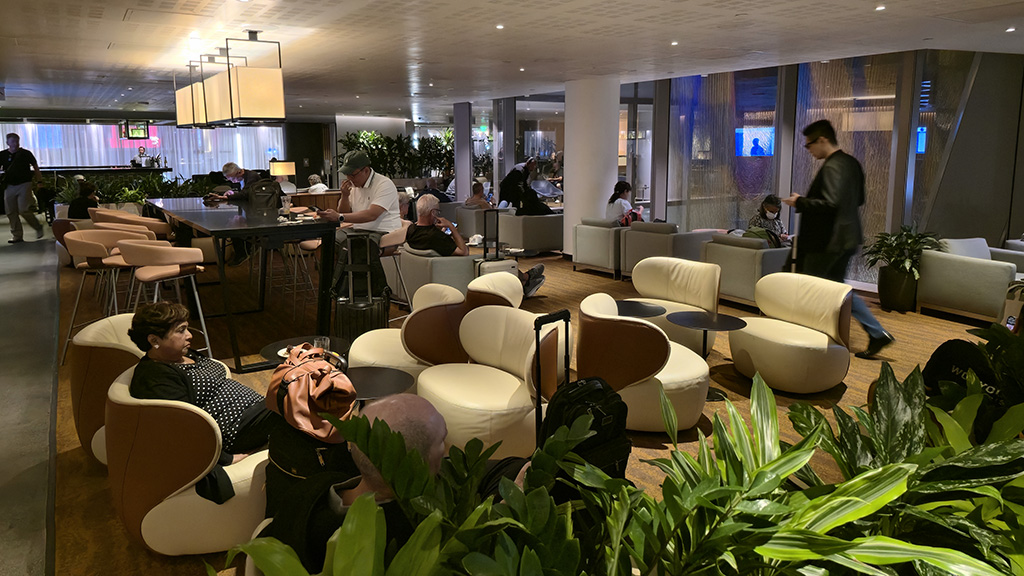
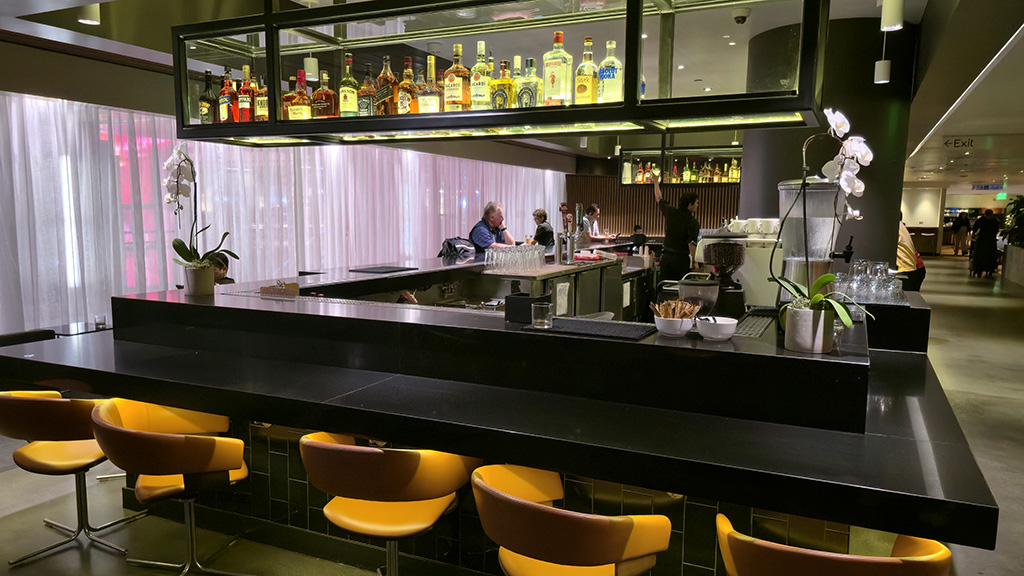
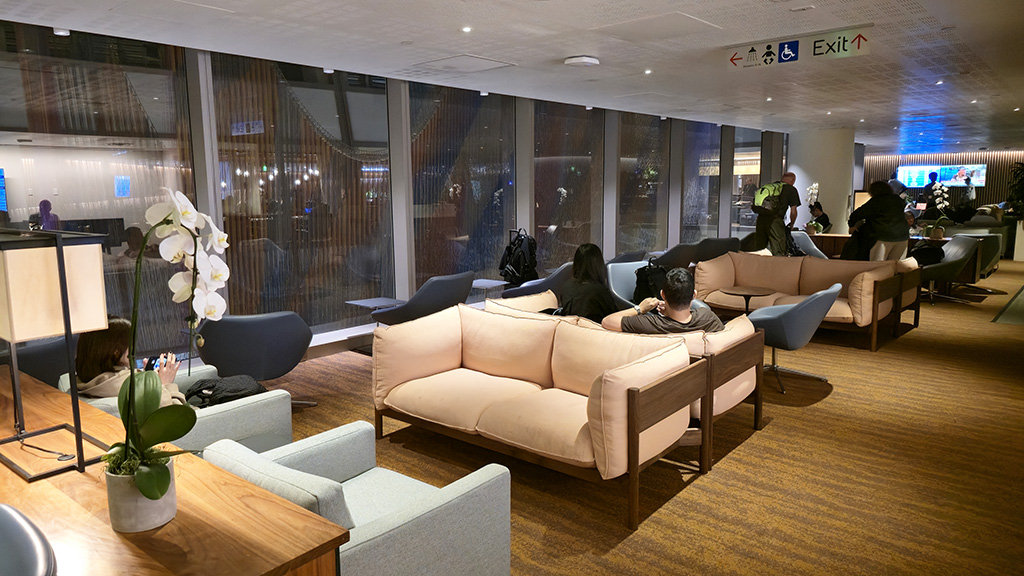
The lounge was decently large. The food options weren’t spectacular, but still satisfactory. One thing that stood out to me was that it felt like each section of the lounge was “themed” differently. The style of furniture in each area was different enough that it felt like the lounge was a collection of about four different miniature rooms merged together into a lounge. It was surprisingly busy when I first arrived so I ended up finding a seat in a distant spot far away in the corner, but as the night went on, more people left to catch their flights and it became less packed.

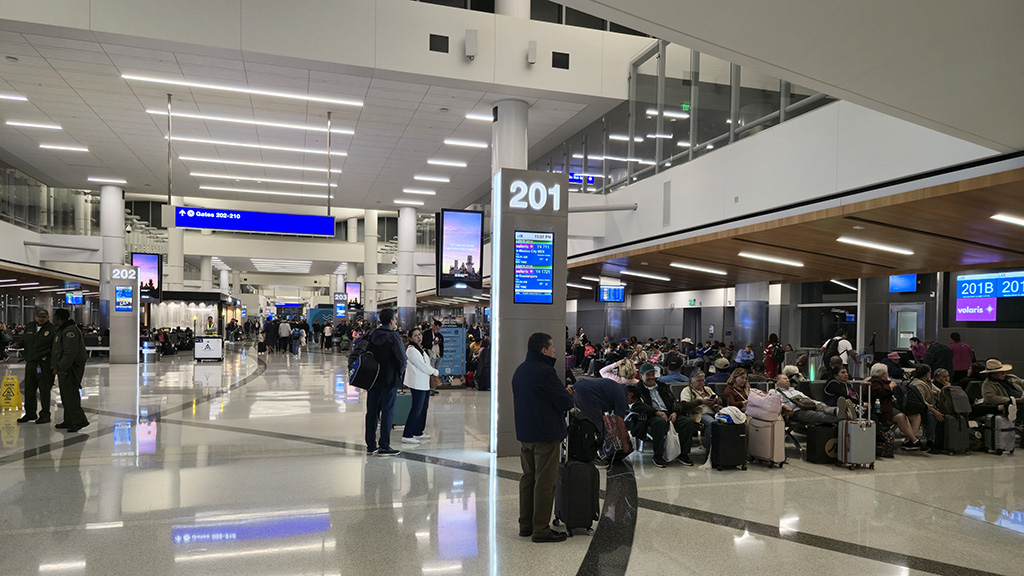
I noticed that my boarding gate was in the western building of the Tom Bradley International Terminal. Getting there from the Qantas lounge involves quite a bit of walking, so with plenty of time to spare, I headed out and started marching my way over to the 200 Gates.

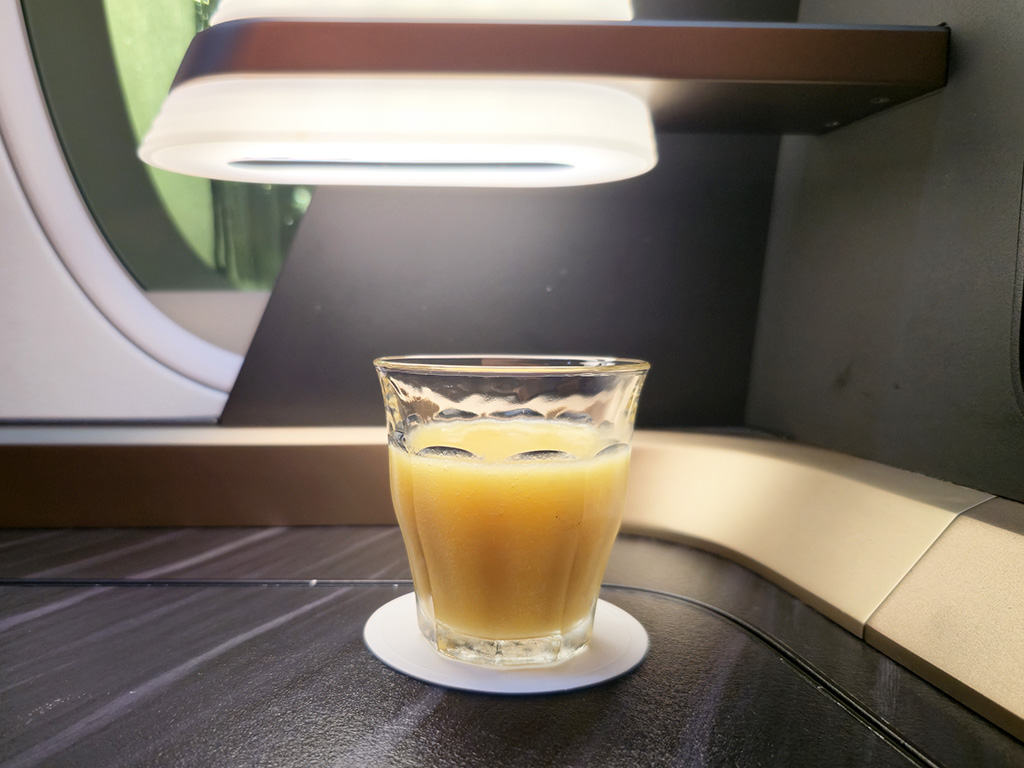
Upon boarding, I received a small glass of juice as my pre-departure beverage.

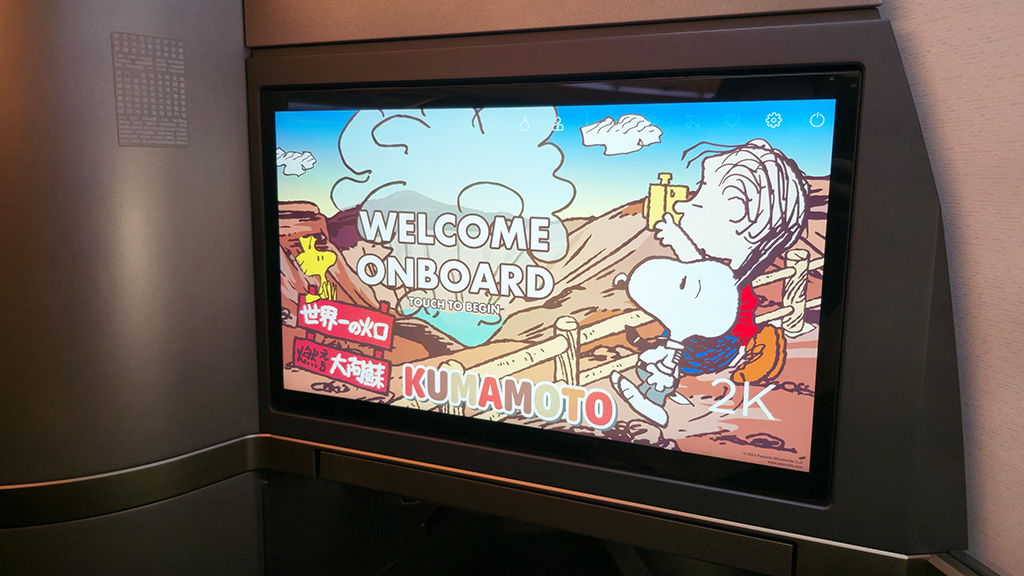
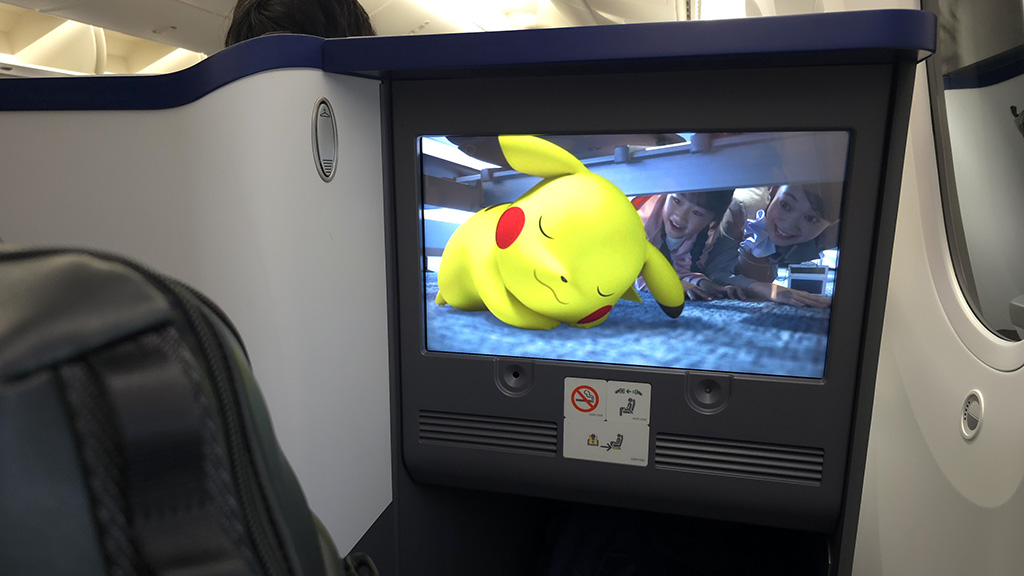
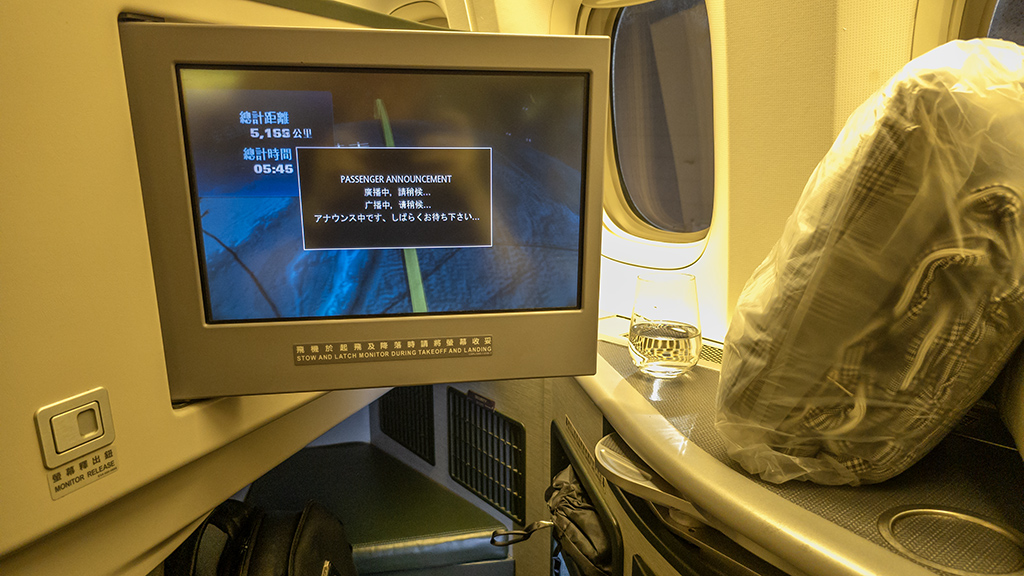
One of the things I found particularly memorable about flying with All Nippon Airways was their collaboration with Pokémon and the integration of Pokémon characters in their pre-flight safety briefing. It was nice to see that Starlux had their own special collaboration too—some characters from Peanuts were waiting for me on my in-flight entertainment screen.

On this Airbus A350-900, I opted for Seat 2K.

If you’ve read some of my previous flight reviews, you might remember that I usually prefer securing a window seat in the final row of the rear business class cabin. The reason I didn’t do that on Starlux’s version of the Airbus A350-900 is because the “rear business class cabin” section is actually occupied by a small premium economy section, and then the entire remainder of the plane is filled with economy seats.

Unfortunately, due to the placement of the lavatories, sitting in the final row of the front section of the business class cabin will mean that people will constantly be walking past you and sometimes standing and hovering over you while they wait for the bathroom to vacate. I instead took the front-most available business class seat in the front corner of the aircraft that does not have a bathroom by it (Row 1 is a miniature first class section, so I was not eligible to pick Seat 1K instead).

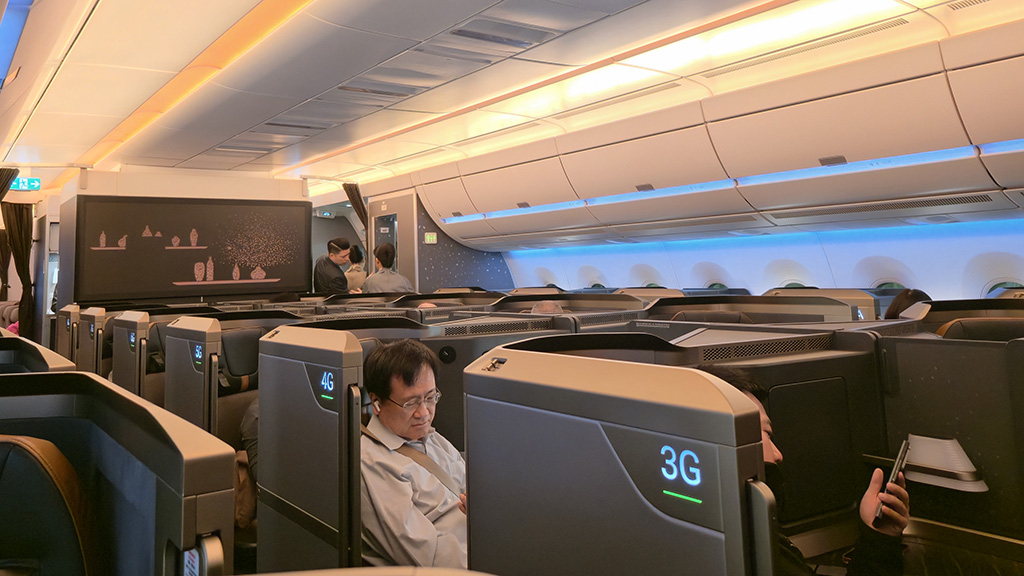
One thing I found unusual about Starlux’s business class cabin was the lack of overhead bins in the center of the aircraft. I personally didn’t like this because it introduces two inconveniences.

First, everyone, including people with inner seats, has to use the overhead bins above the window seats to store their luggage. We had issues finding space for everyone’s stuff, even with me trying to help the passengers around me and rearranging people’s baggage in the optimal orientation so there’s the most space possible. Compounding on this issue was the fact that, as is typical for lie-flat business class seats, there was no under-seat stowage, so even personal items had to be Tetrised into the limited room above.

Second, the center of the aircraft felt bare and exposed. I think an unintended positive side effect of having the overhead bins above the inner seats is that it feels cozier and more private. Having the lower ceiling means that the seats are more like little cubicles with overhead “walls.” In addition, people standing up in one of the aisles wouldn’t be able to see as clearly across the middle and to the other side, which adds to the feeling of privacy.

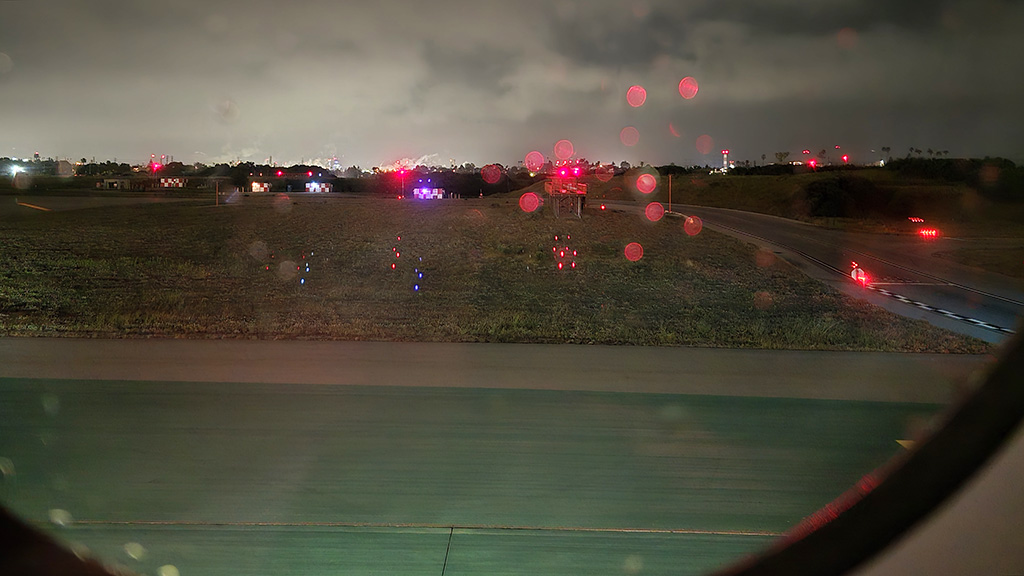
After a very minor delay, we taxied out onto the runway.

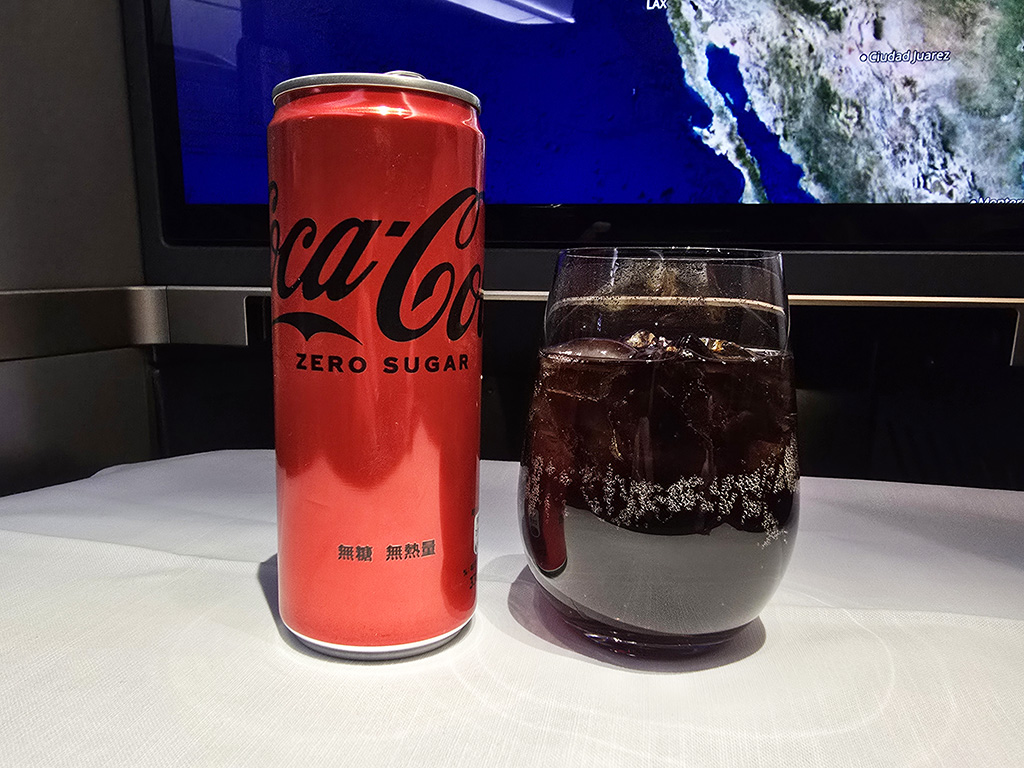
After reaching 10,000 feet, the in-flight wifi activated and the flight attendant served me a Coca-Cola Zero to sip on while waiting for meal service to begin. Even though it was around 1 AM already, it was still a decent time for dinner for me because I was already adjusted to Asian waking hours (i.e., I had already been falling asleep in the United States around the time that the sun comes up).

Asian airlines usually have two menus—an Asian menu based on the cuisine of the home country of the airline, and an international menu with more Western food options. I always opt for the Asian menu, but for this flight, when I was pre-selecting my meals a few days before departure, the international menu was the only available dinner option.

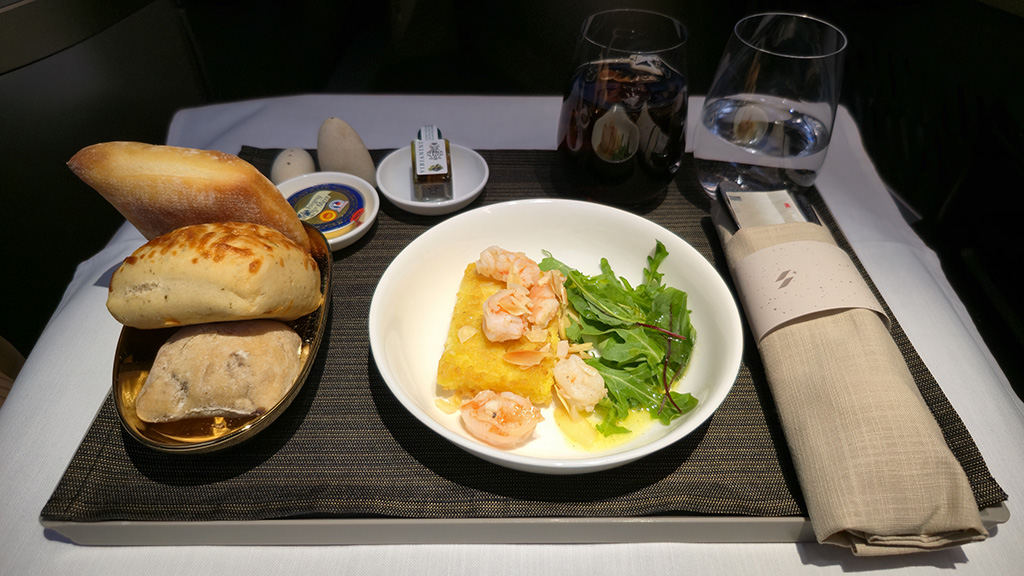
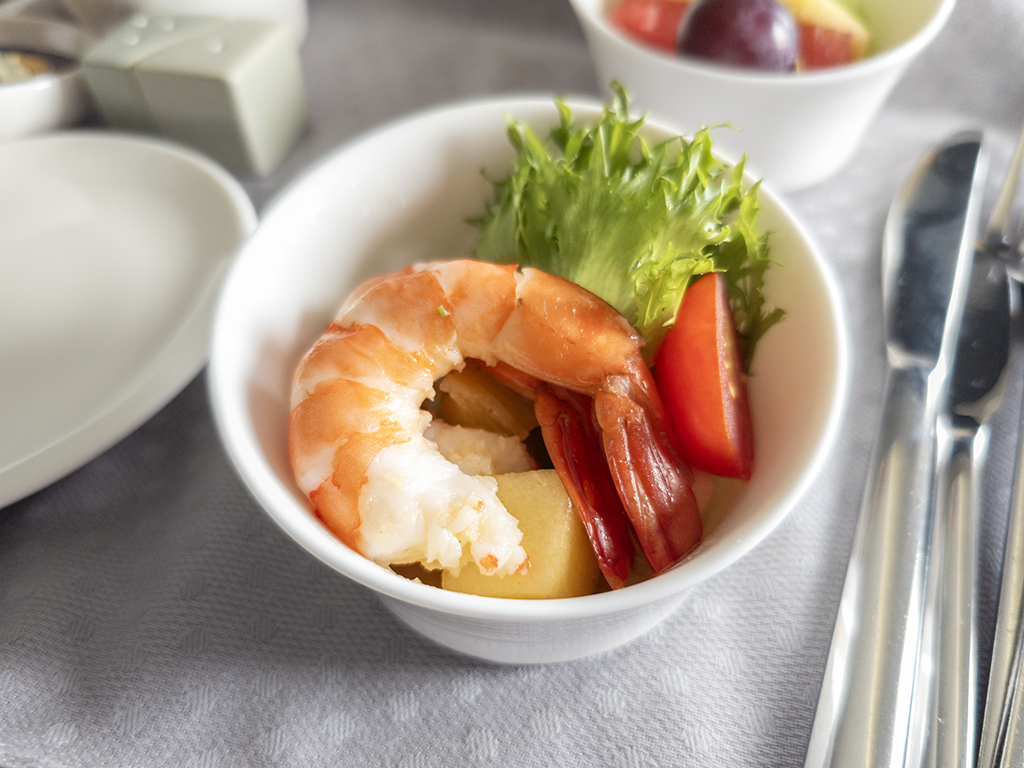
For my starter, I received crispy rice topped with almond shrimp salsa with a splash of lemon vinaigrette, as well as a side of some greens.

To accompany the food, I received a piece of sweet potato curry bread, a basil cheese roll, and a diamond roll. This came with some Isigny Sainte-Mère butter, extra virgin olive oil, and balsamic vinegar.

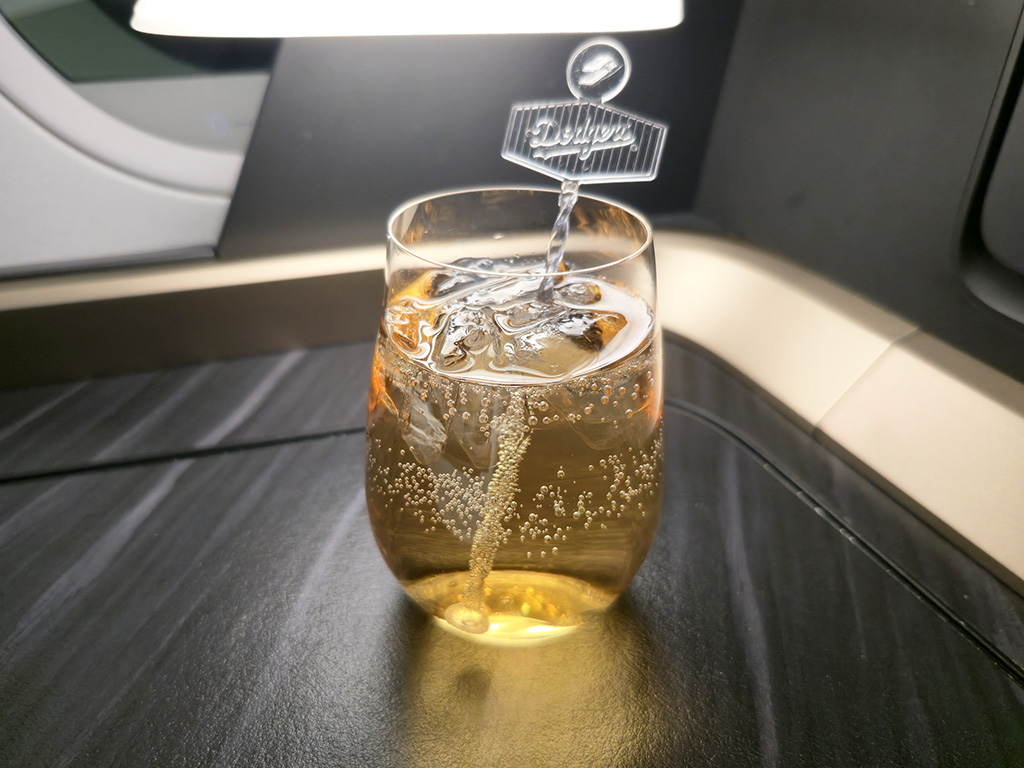
In addition to a glass of water and the Coke Zero I already had, I also ordered an apple sparkling mocktail. I liked this because, although it basically looks like carbonated juice, it basically wasn’t sweet at all, so the apple tasted more “earthy,” if that is even a valid descriptor for an apple.

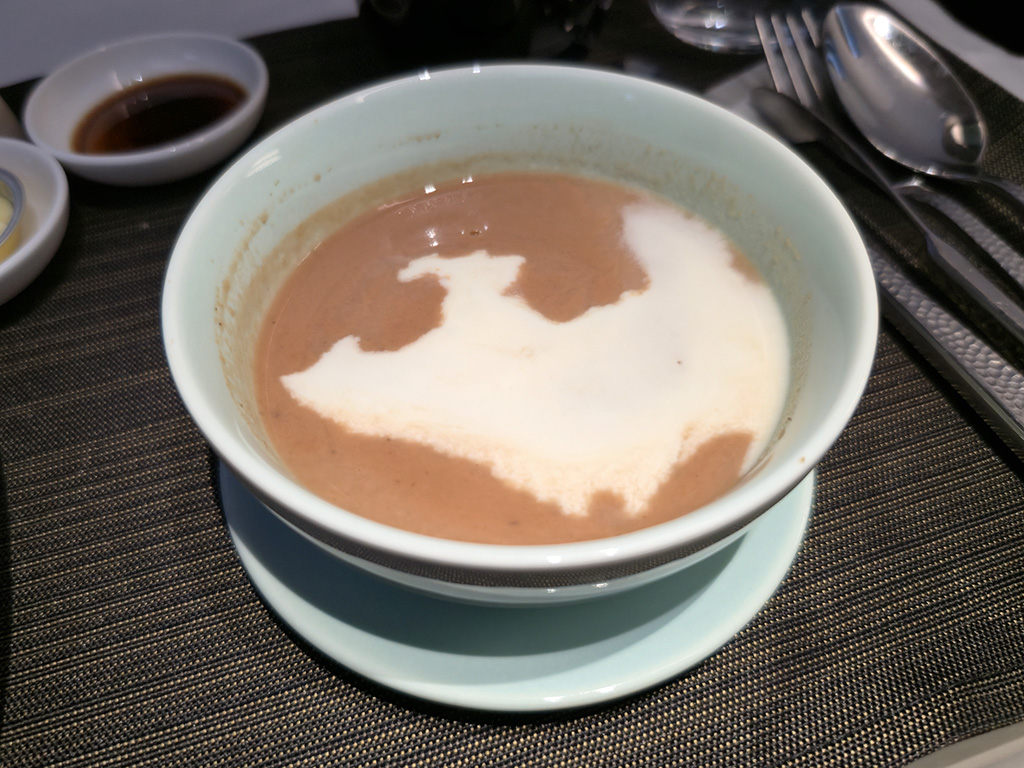
Next up was the soup course. The menu described this as potato and beetroot cream soup, but I am pretty sure that was an error; this had a very strong chestnut flavor instead.

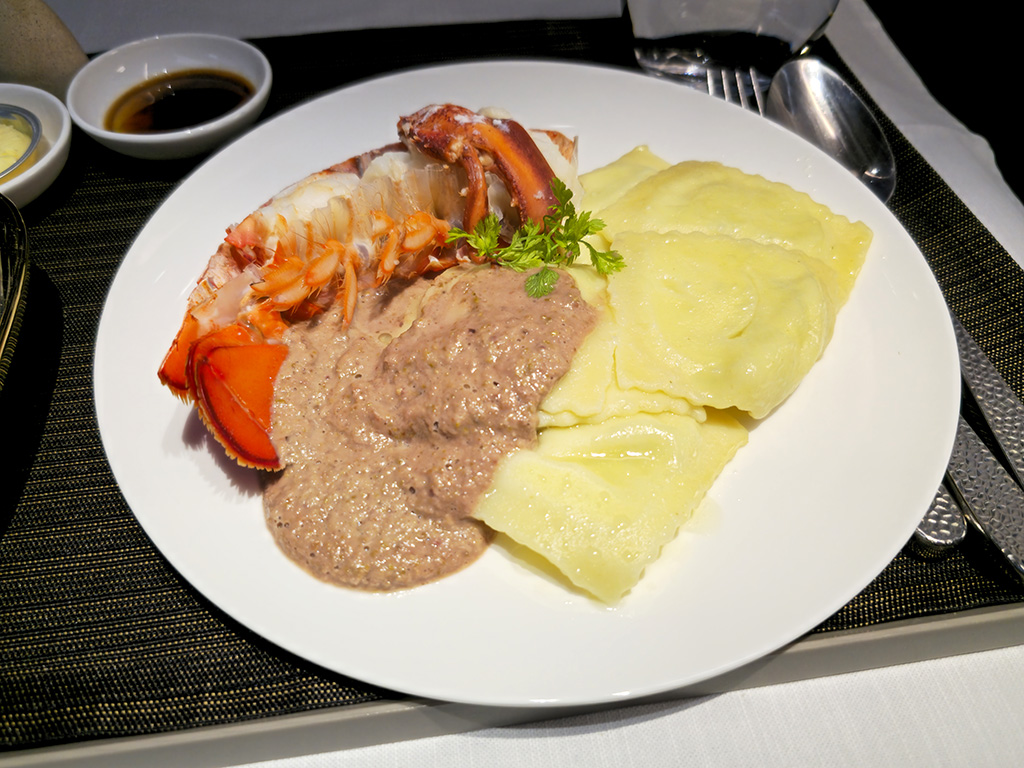
My main entrée, which I pre-ordered as an online exclusive, was a lobster tail with ravioli. This was a decent and straightforward dish—not particularly memorable as an amazing dish, but also not bad at all.

The other available main courses that I passed on in lieu of the lobster were braised beef cheek in red wine sauce, roasted rosemary chicken thigh, braised pork shoulder in Thai red curry, and mushroom risotto.

I’m still trying to be conscious of heart health due to my hereditarily high cholesterol, so I still try to prefer eating dishes with seafood or poultry. I avoid chicken on planes because it is so easy to dry it out by overcooking, so it naturally left lobster as my top choice.

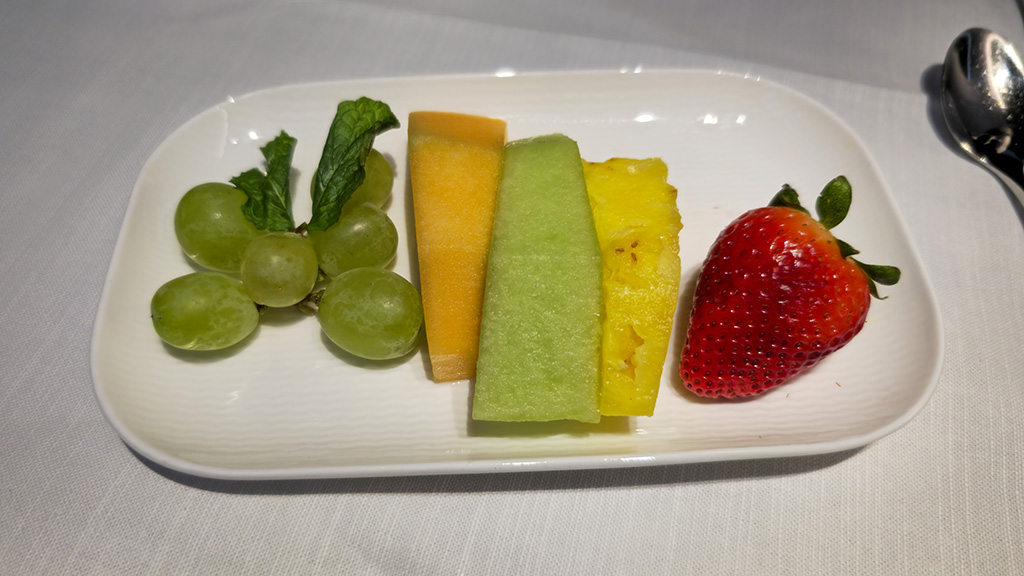
To serve as a palate cleanser after my meal, my flight attendant brought me a plate of fruit with some grapes, a couple slices of melon, a slice of pineapple, and a strawberry.

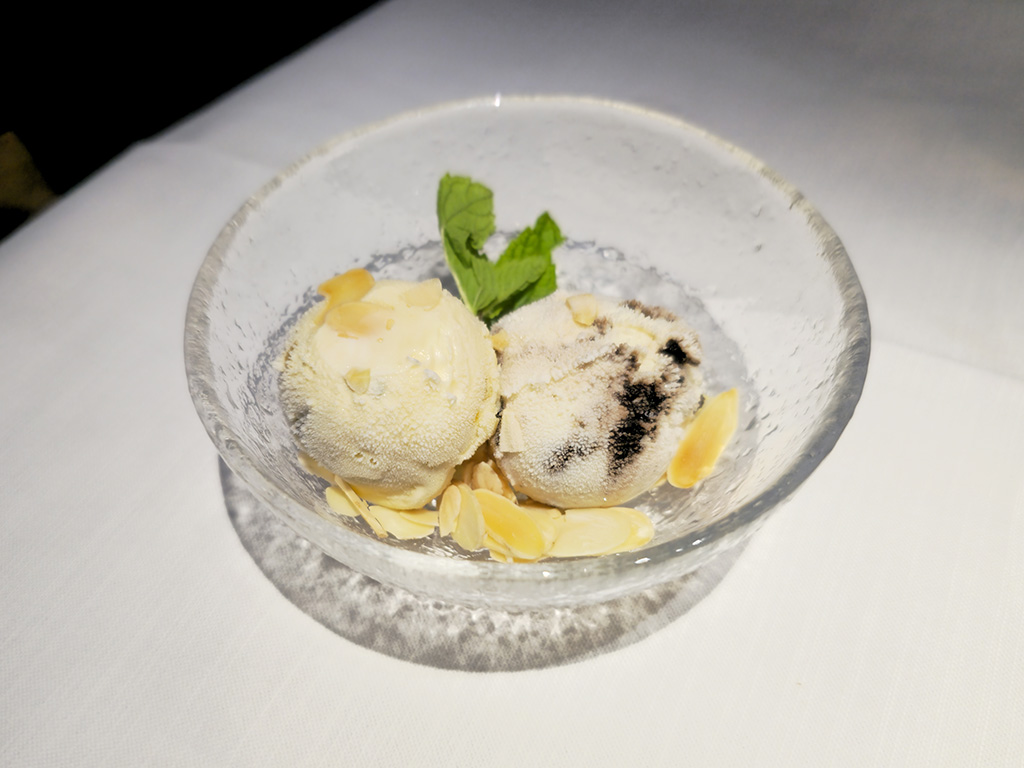
And finally, for dessert, I went with the assorted ice cream with sliced almonds.

After finishing my dinner, I wanted to relax for a little bit before going to sleep, so I reclined back in my seat.

I’ve always stood by my belief that, even in a lie-flat seat, it’s better to keep the seat slightly up rather than flattening it all the way down if you’re just relaxing and not knocking out for a full night of sleep. Even if you are planning on an entire night’s worth of sleep, I think raising your chair a very tiny amount is still better than going all the way flat.

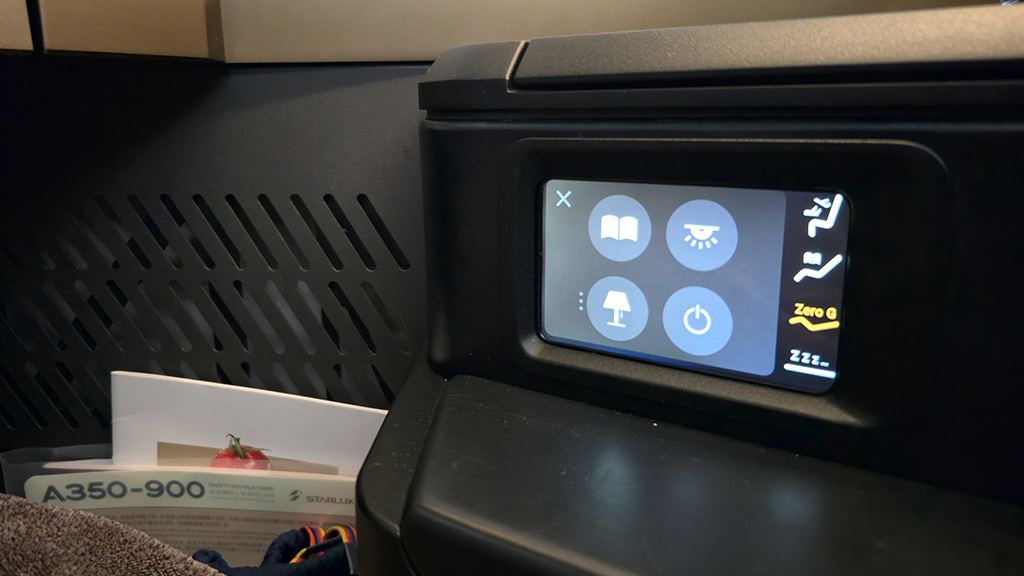
I feel validated in this observation, because Starlux has a “Zero G” mode that brings you to a position that is very close to what I recommend and use. The flight attendant explained this to me, and she said that it is a scientifically proven way to minimize the impact of gravity on your body and distribute your weight as evenly as possible as to not create any undesirable pressure points.

If dinner wasn’t enough food, I also had the option of getting a snack. The options were a braised beef noodle soup, grilled chicken burger with smoked bacon, and nachos with tomato salsa and guacamole. The nachos were a Los Angeles route exclusive, and you know how much I like restricted-access or limited-edition things, so it would’ve been nice to try it out… but I was at a reasonable fullness level and didn’t want to overdo it, especially with a lot of great meals coming up starting from the first day upon landing in Hong Kong.

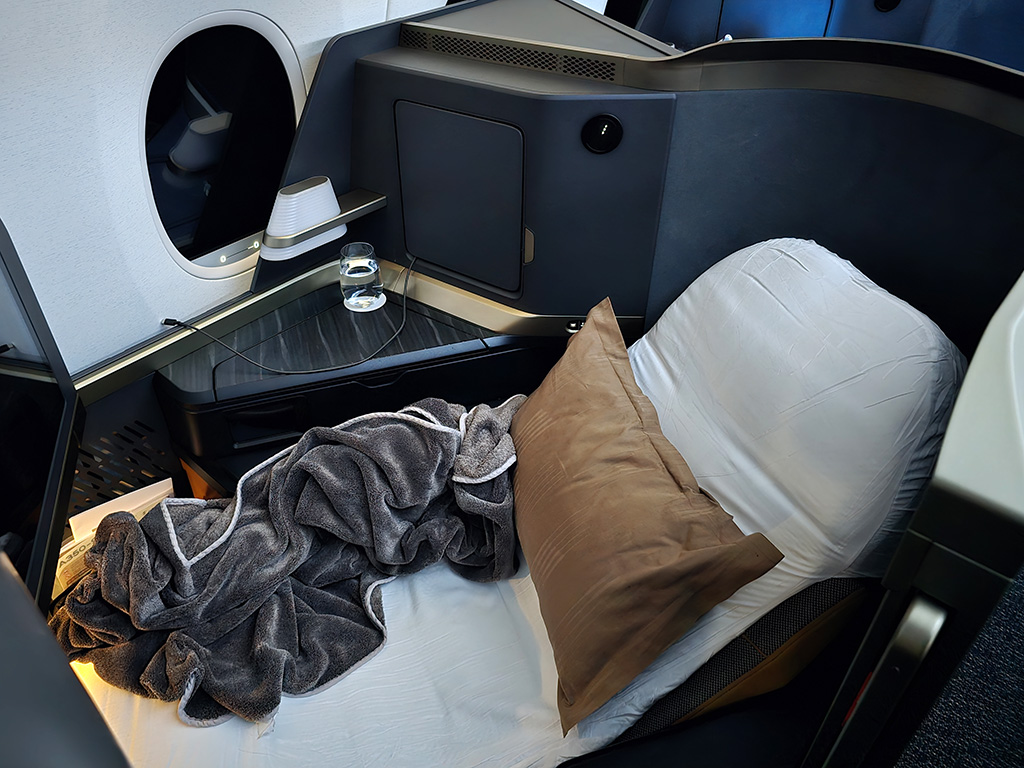
After spending some time digesting while watching YouTube videos using the free in-flight wifi, I let my flight attendant know that I was ready to go to sleep for the night. While I was gone taking a quick bathroom break, my seat was converted and set up with a thicker mattress pad so I could lay down and have more cushioning for a more comfortable night of rest.

I ended up getting very close to a full eight hours of sleep.

The seat itself wasn’t extra comfortable or anything—basically every other lie-flat seat I’ve slept in was pretty comfortable (except for some of JetBlue’s older aircraft, which had Mint seats that felt unusually bouncy in lie-flat mode). However, the sleeping experience as a whole was definitely the best I’ve ever had on a plane.

The reason for that was less about the seat and more about an extremely convenient placement of a height-adjustable armrest. I was able to raise it to the perfect elevation so that I could prop up my arm onto it while laying down. This helped leave my chest area “opened up” so it was almost as if it felt easier to breathe. I think it also helped align my spine better when side-sleeping, because with one of my knees folded as well, everything felt like it was in better alignment.

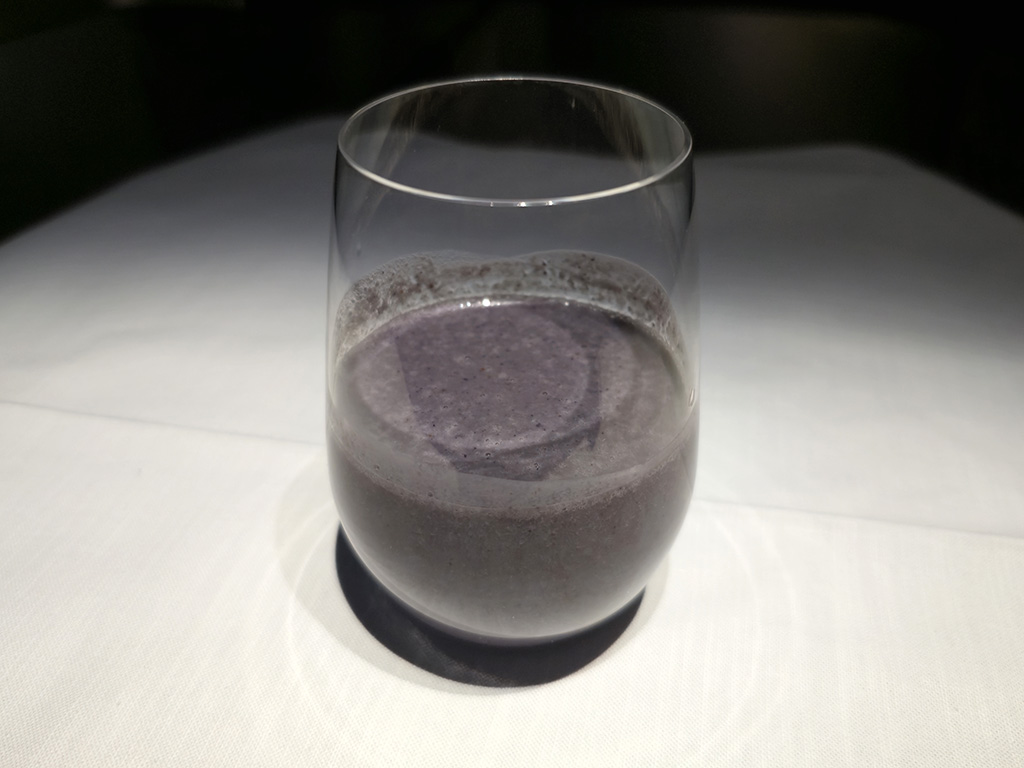
After being woken up by the cabin lights illuminating, the flight attendants went around distributing a smoothie as a morning refreshment.

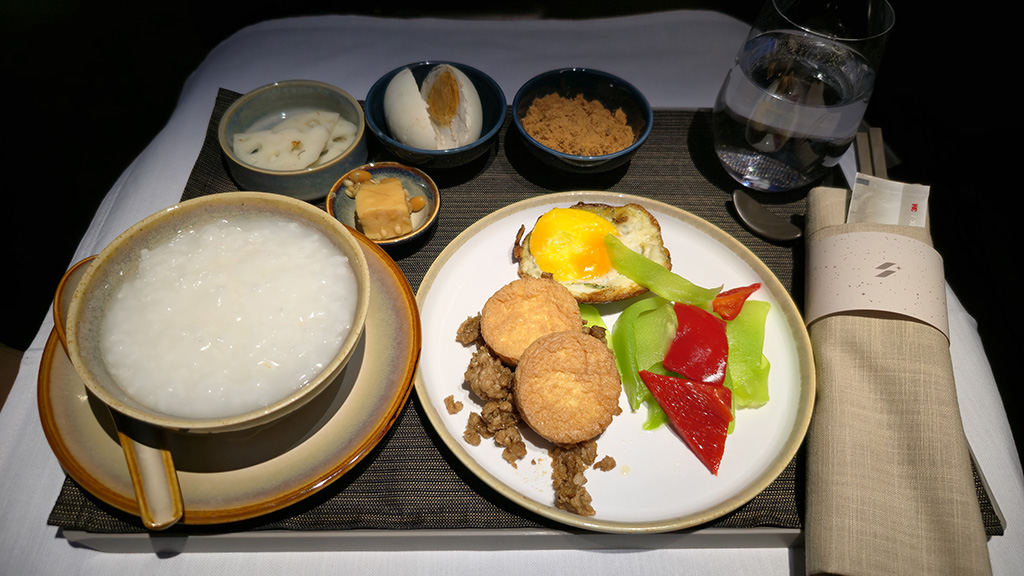
Contrary to dinner, breakfast had both an Asian option and an international option. I asked for the Asian breakfast, which was plain Taiwanese congee with a bunch of sides. The main plate of sides consisted of pan-fried egg with broccoli, stir-fried celtuce, braised egg tofu with soy sauce, and minced pork. The supplemental sides were osmanthus lotus root, salted duck egg, pork floss, and tofu curd.

This was a cozy, comfortable-feeling meal. It made me feel quite warm and pleasant.

In addition to the cup of water, I asked for a peach sparkling mocktail to go along with my breakfast. Water ended up working best with the congee, so I ended up just saving the peach drink for later and sipping it after I was done with the congee.

After the flight attendant cleared my breakfast tray, she brought me some more fresh fruit, this time a different assortment than before—some grapes, a slice of melon, a slice of apple, a latitudinal slice of orange, and two slices of kiwi.

After finishing my plate of fruit, I reclined back again and relaxed until landing time. About an hour or so after breakfast, we arrived without incident and pulled into our gate at Taiwan Taoyuan International Airport.

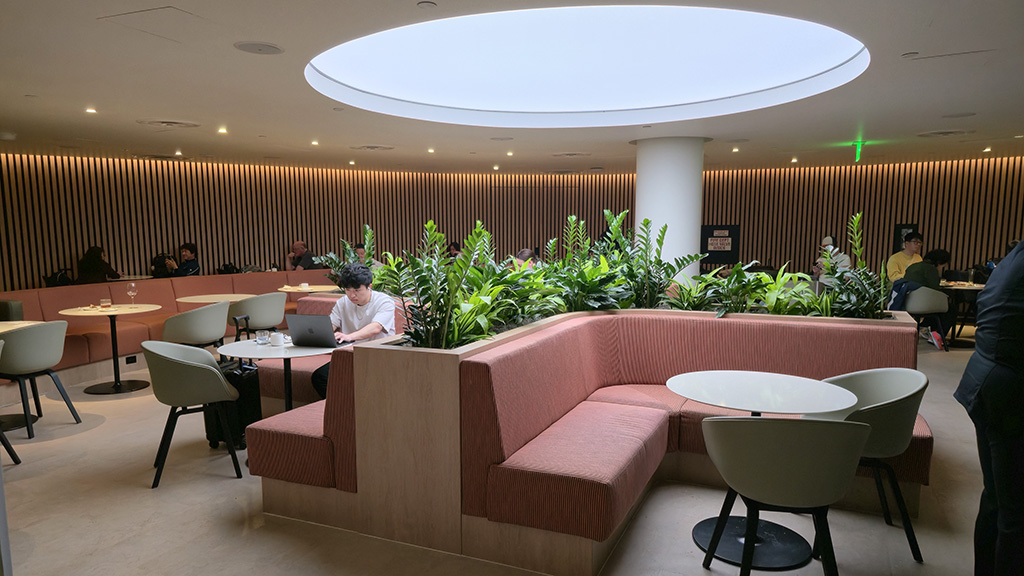
After deplaning, I made my way over to the Galactic Lounge in terminal 2. It was quite a bit smaller than I had expected.

I sat at one of the tables for a bit, but realized that there wasn’t really much of a reason for me to be there. I was already full from my first flight and was looking forward to yet again another meal on my connecting flight, so I didn’t want to take anything from the buffet. There were shower facilities, but I only had a handful more hours left to go before arriving in Hong Kong and wanted to just wait to shower at my hotel.

It was quite busy in the Galactic Lounge—literally busier than it was out in the main airport area—so I headed out early.

I like how human the Taiwan Taoyuan International Airport is. In the United States, it looks like airports were facilities constructed for the purpose of relocating Homo sapiens. On the contrary, Taiwan Taoyuan International Airport (and a lot of Asian airports in general) feel like they are communal spaces built for real human beings to go on trips.

The fact that this airport is so nice makes it so you don’t actually really need business class airport lounge access unless you’re going there specifically to use the amenities (e.g., food or shower). I enjoyed myself just walking around the airport and going up and down the aisles looking at the decorations by the gates.

I am about 98% sure that I took way more photographs of the airport than this, primarily because I specifically remember capturing some shots looking out the window, and I was going on a photographing spree because of how visually pleasing everything was. But, for some reason, those pictures seem to have literally disappeared off my phone and I have no idea why.

After sightseeing around the airport, I routed myself towards the boarding gate for the next leg of my trip. After a short wait and a quick passport check, I was invited on board their Airbus A321neo.

Upon boarding and settling into Seat 3K, I was welcomed with another small glass of juice as my pre-departure beverage.

Because the Airbus A321neo is a narrower, single-aisle aircraft, the business class seats are arranged in a 2-2 configuration. This meant that I didn’t have my own little cubicle, and I had a next-seat neighbor. This was fine though, as the in-air time for this leg was anticipated to be less than two hours.

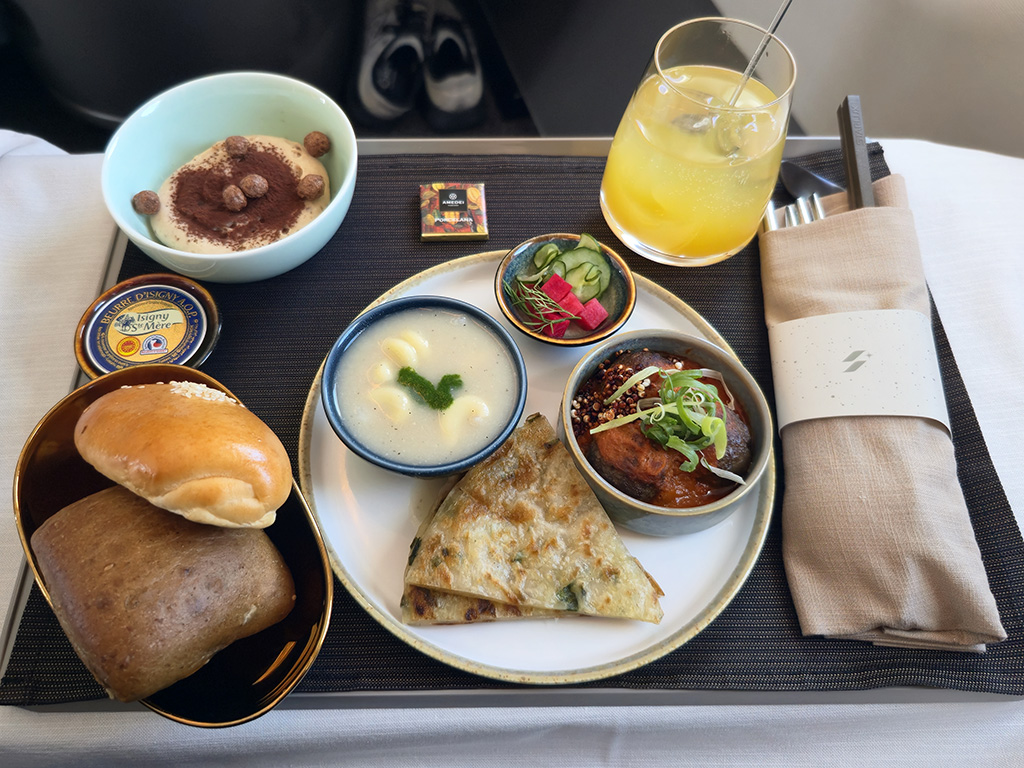
Because of the short flight time, my entire in-flight meal was served on a single tray instead of being split into multiple courses. I selected the Asian menu again, so I received some scallion pancakes, meatballs, soup, bread, and chestnut mousse. For my beverage, I went with an orange sparkling mocktail.

Throughout and after my meal, I noticed that the man sitting next to me was sneakily taking creep shots of one of the flight attendants with his phone. There were a few different flight attendants tending to the business class cabin, but there was one in particular who he was consistently targeting with his photographing. These ranged anywhere from zoomed-in photos of her face when she was in view talking with other passengers, all the way to pictures of her bending over. Fortunately, she had a long skirt on and the material was thick enough that he wasn’t able to catch her in any moments of vulnerability, but I was still irked.

In disgust, I told one of my Chinese friends about this over text using in-flight wifi. I half-jokingly but also sort of half-seriously asked her how to say “stop being such a pervert” in Mandarin so I could say it to the man sitting next to me. Unfortunately, she replied “no don’t say that, I’m not teaching you that 😭”…

Nearing the end of our flight, he asked a flight attendant for a piece of paper and a pen. He started writing something on the paper, but it was in Chinese, so I couldn’t figure out what he was up to. Then, unexpectedly, he folded the piece of paper and gave it back to the cabin crew, specifically to the woman he was photographing. I peeked at it right before he handed it off, and it was just a bunch of Chinese characters without any indication that there was a phone number or other contact information on it. This implies that this man just randomly wrote a love letter to this flight attendant solely for the love of the game…

Not long after “the incident,” we landed safely at Hong Kong International Airport. After a quick deplaning, I breezed through immigration and customs due to my United States citizenship status.

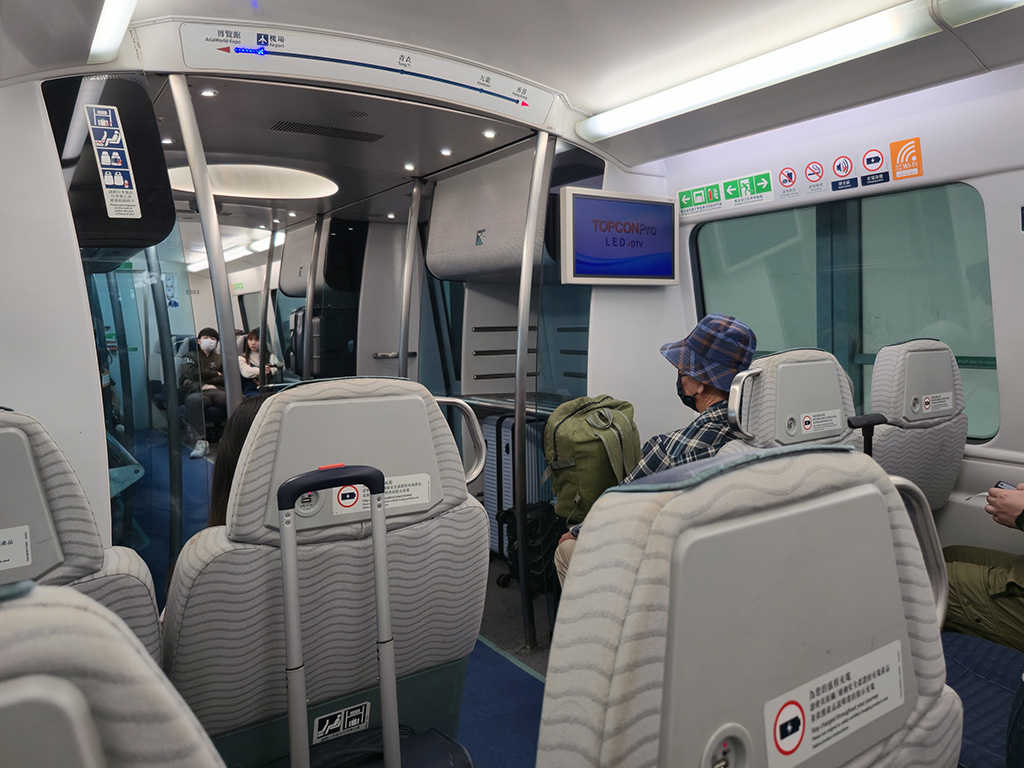
Upon exiting to landside, I easily found the entrance to the Mass Transit Railway’s Airport Express Service. I had pre-loaded my Octopus app with money already to use on transit, so I didn’t have to stand in any lines to buy one-off tickets; instead, I hopped right on the train, stowed my luggage in the designated area, and relaxed for a little over half an hour.

The Airport Express took me to Hong Kong Station, where I got off the train and scanned my Octopus express transit pass to pay for my ride. From there, I used the underground walkways to go to Central Station, where I scanned back into the paid area and boarded the Island Line to finish my trip to Admiralty Station.

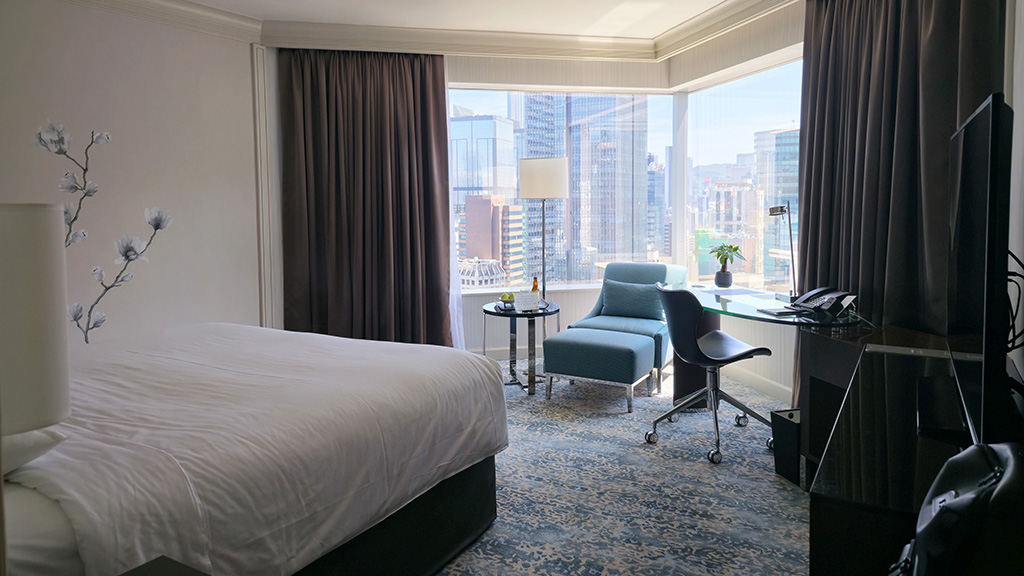
My hotel of choice for my first handful of days was the JW Marriott Hong Kong.

I picked it as my arrival hotel because Admiralty Station is known to be a very well-connected station in terms of lines serviced, and I’m able to get to pretty much anywhere from that station with minimal transfers. It is also connected directly to Pacific Place, the complex containing the JW Marriott. I figured that having this level of convenience would be helpful at first while I’m still getting used to the transit system.

The room was quite small, but I guess that is to be expected, as Hong Kong has limited space to build and they need to get as much value as possible out of the limited land they have.

The service was absolutely stellar, but it was too good for my preference. Keep in mind that I used to literally live for over 350 days a year out of hotel rooms when I first became a digital nomad, and even now, I still spend somewhere around half the year in hotels. As someone for whom hotels have completely lost their novelty value, it was very weird feeling like the staff was just following me around everywhere and acting like servants. Even when I clearly and explicitly asked for self-service when getting food from the lounge, the staff was still intrusive and wouldn’t leave me alone.

That concludes the overview from my travel day from the United States to Hong Kong. Hong Kong wasn’t quite as activity-filled and action-packed as my trip to Japan was, but I still visited a lot of tourist destinations and ate at a lot of great restaurants. More blog posts should be coming up soon…


—§—


Hello, All Nippon Airways flight 6 from Narita to Los Angeles

For the past two and a half weeks, I have been blogging daily about my visit to Tokyo, Japan to share my thoughts and photographs from various activities I did during my trip.

In case you missed the context of it, I decided to go to Japan because I had some friends I trust who were also going to be in Japan during some of the days that overlapped with my itinerary, so even though I was basically going on a solo trip, I wouldn’t entirely be alone because I would have people to meet up with on a case-by-case basis upon my arrival.

I had a chance to travel under this structure before, but I opted not to do so because I wasn’t sure I could go to a country that doesn’t speak English and be able to get the most out of my vacation. However, after going to Vietnam and having the trip turn out to be a success, I had more confidence to go to Japan and manage just fine on my own. Thus, I seized this opportunity.

If you haven’t been keeping up with my blog since late November, you’re in luck—with this blog post being the concluding post of the “Japan series,” I figured I’d give a preliminary table of contents here in case you want to do some chronological reading prior to this blog post about my flight back to the United States.

(Just to clarify, this is chronological on the basis of when I published the blog posts; I didn’t necessarily do the tourist activities in this order, and I sometimes scrambled up the ordering intentionally so that there would be more variety in the flow of blog posts, e.g., so there wouldn’t be back-to-back museums or back-to-back parks.)

The final verdict from the trip is that I loved it. Tokyo quickly became my second favorite city of all time, only losing first place to Las Vegas, which is literally the city I voluntarily picked as my home and isn’t really a fair comparison.

Everything just makes sense in Tokyo. I love going outside and walking around in big cities, and I like being able to blend in with a crowd and feel like I am just one regular person who is a component of a larger, bustling society. With that perspective in mind, I’m sure it’s easy to tell why I call Las Vegas home and why I decided to live on the Las Vegas Strip. Tokyo reminds me a lot of the Las Vegas Strip, but instead of being composed of degenerate drunk gamblers, Tokyo gives off a well-educated and professional vibe.

All of Tokyo feels highly efficient and optimized. The culture emphasizes the importance of not causing a disruption to others, so you can generally go about your life uninterrupted and gain full benefits from the various systems that are put into place. For example, the public transit system is highly reliable and makes it very easy to get around without a vehicle. Everything is highly intuitive and orderly, so as long as you’re paying attention, you should generally be able to pick up on things and fit in fairly easily.

Everyone I met in Japan was very kind and considerate. Being of Korean ethnicity, I was always told growing up that Japan is supposed to be my “enemy” because of the two countries’ past history, and I was always warned how Japanese people would be racist against me. I’m not necessarily trying dismiss the struggles and hardships that older Korean people faced, but on this trip, I personally found out first-hand that all the Korean people in my life were horrifically wrong about Japan. Although I am thoroughly an American, I am still visually Korean; even then, every single Japanese person I encountered was still very welcoming and respectful.

The food literally everywhere in Japan is just categorically better than the food in the United States. I’m sure a lot of it just has to do with personal preferences, especially considering that Japanese is my favorite cuisine, but even the worst possible food in Japan was above average to American standards, and the average in Japan was on par with some of the best restaurants I’ve been to in the United States. One of my friends who was with me in Japan said that one of her favorite snacks in Japan is to get an egg sandwich and freshly-heated chicken filet from 7-Eleven and combine the two; I tried this, and it was quite literally better than any chicken sandwich I remember ever having in the United States.

Within days of arriving in Tokyo, I was already looking up long-term housing options for my next trip. Because of my loyalty to Marriott, I stayed at the AC Hotel Ginza this time around, but that ended up being pretty pricey. I was willing to spend the extra money because I felt like I would be able to rely on the staff in case something went wrong, but then I realized that I can basically rely on literally anyone in Japan because of how willing everyone is to help out someone in need. I am looking forward to my next visit to Tokyo, and the next time I go, I’m hoping I can find a good serviced apartment so I can stay for longer without having to check out with a very expensive lodging bill.

 
So with that trip summary out of the way, here is an overview of the flight I took back to the United States. I opted for All Nippon Airways flight 6, cross-listed as United Airlines flight 7946, from Narita International Airport to Los Angeles International Airport.

As a side note, I intentionally booked two different airlines of the same alliance—United Airlines on the way out and All Nippon Airways on the way back—so I could experience two different long-haul business class flights serviced by two different carriers. I flew in and out of Narita International Airport because flights to Haneda International Airport were more expensive enough that it wasn’t worth the time savings on the shorter train ride. I flew from and to Los Angeles International Airport because Harry Reid International Airport back at home didn’t have any non-stops to Tokyo.

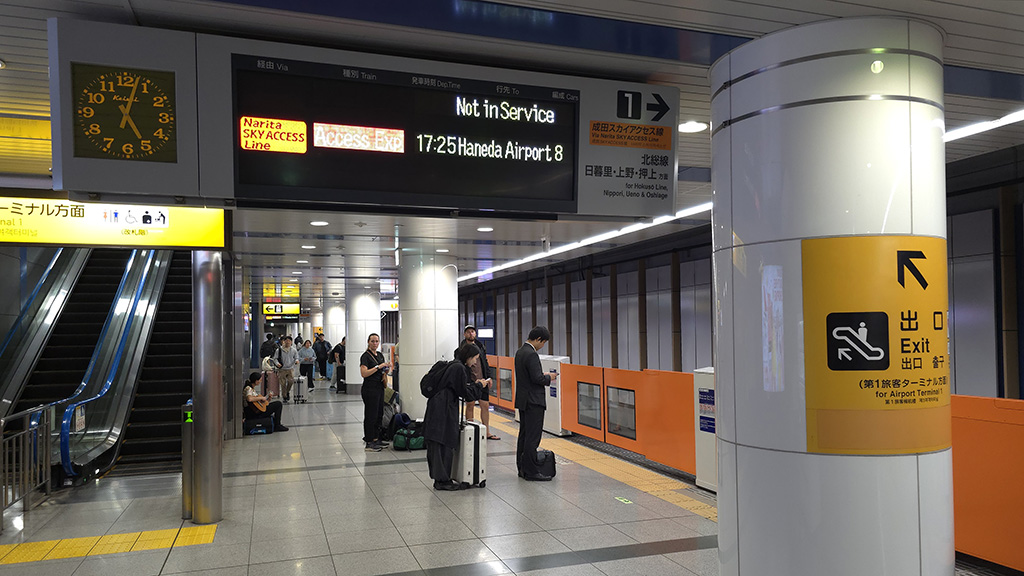
On the way to Narita International Airport, the timing didn’t quite work out for me to take the Keisei Narita Skyaccess line back to the airport like I took on my way to Ginza, so I instead rode the Asakusa line, which became the Keisei line. Although it took about half an hour longer, I’m glad I got the experience, because this line went through and had stops in the less populated areas between Tokyo and Narita, so I got a glimpse at what “country life” is like in Japan.

Upon arrival, I had a smooth entry into the airport. The lines at both immigration and security were short and quick, and I cleared both without incident.

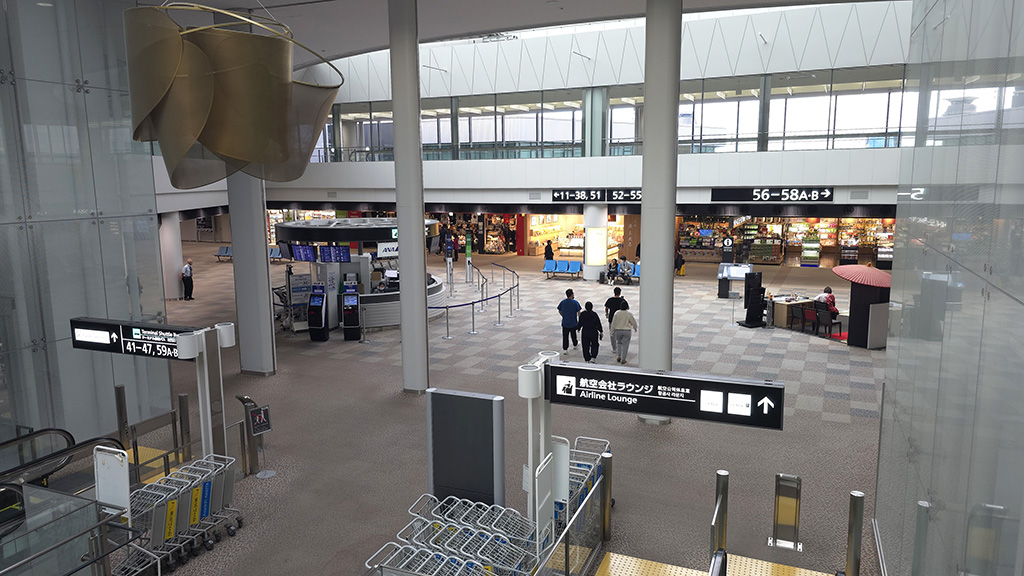
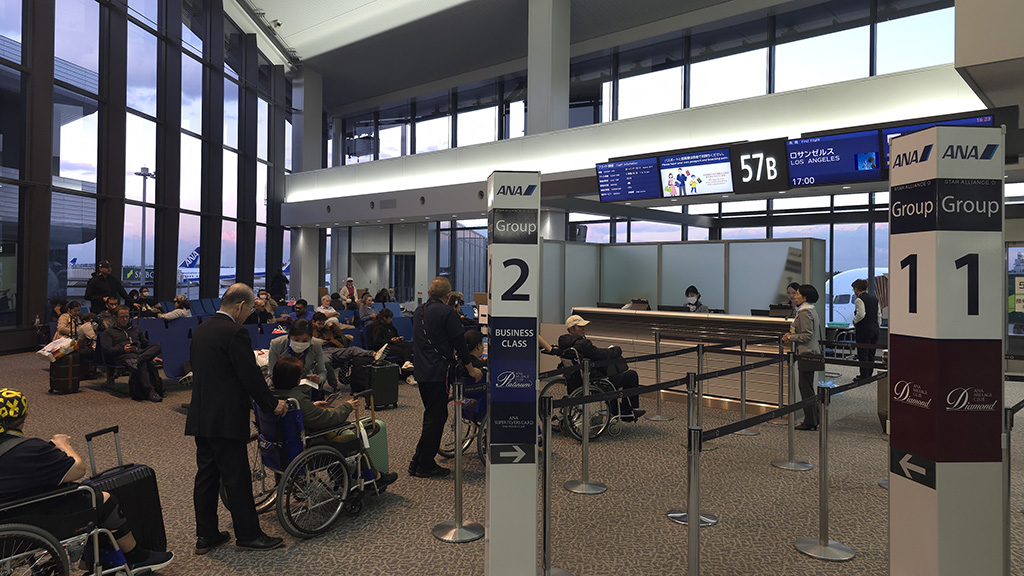
After arriving at Satellite 5 of Terminal 1, I found an escalator to the upper floor with the airline lounges.

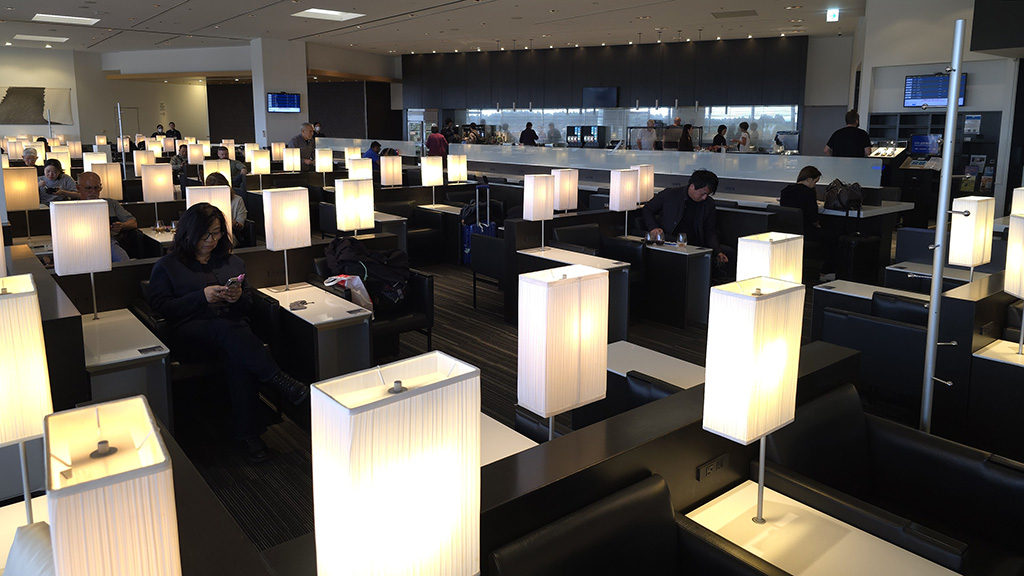
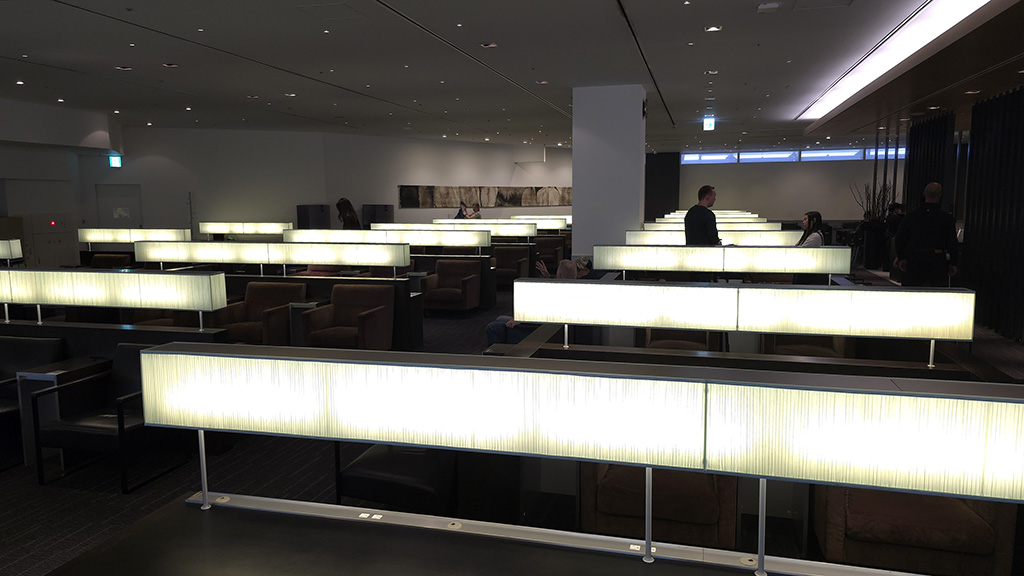
As part of my ticket, I was able to enjoy the ANA Lounge prior to departure. It wasn’t too busy when I arrived, though it did fill up pretty quickly over the next couple hours.

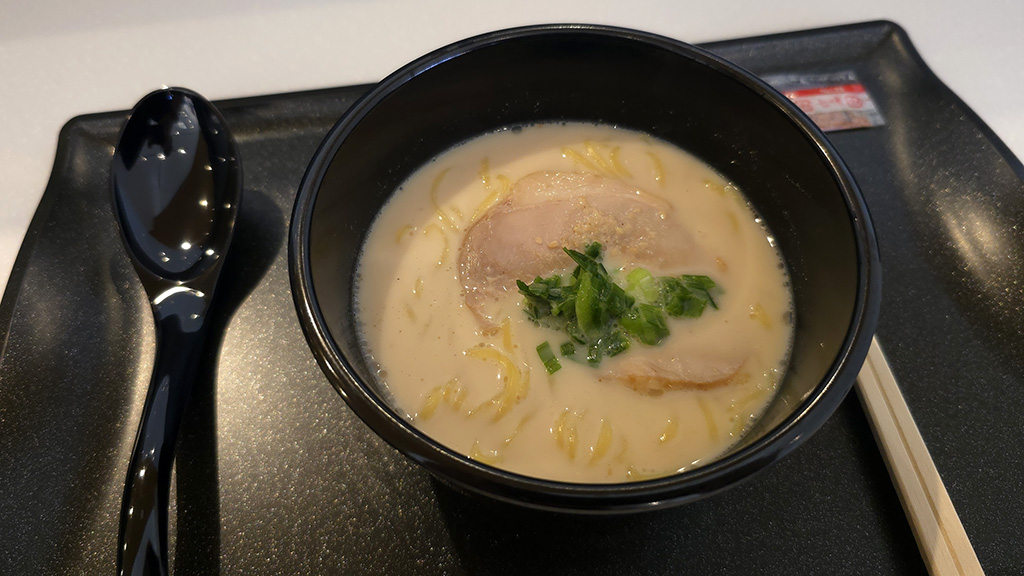
In addition to a standard buffet area that you’d expect to see in an airport lounge, the ANA Lounge also had a noodle bar. I ordered a nice, warm bowl of ramen.

After eating a decent amount of food and getting a good chunk of work done in the lounge, my departure time was approaching, so I headed down to my boarding gate.

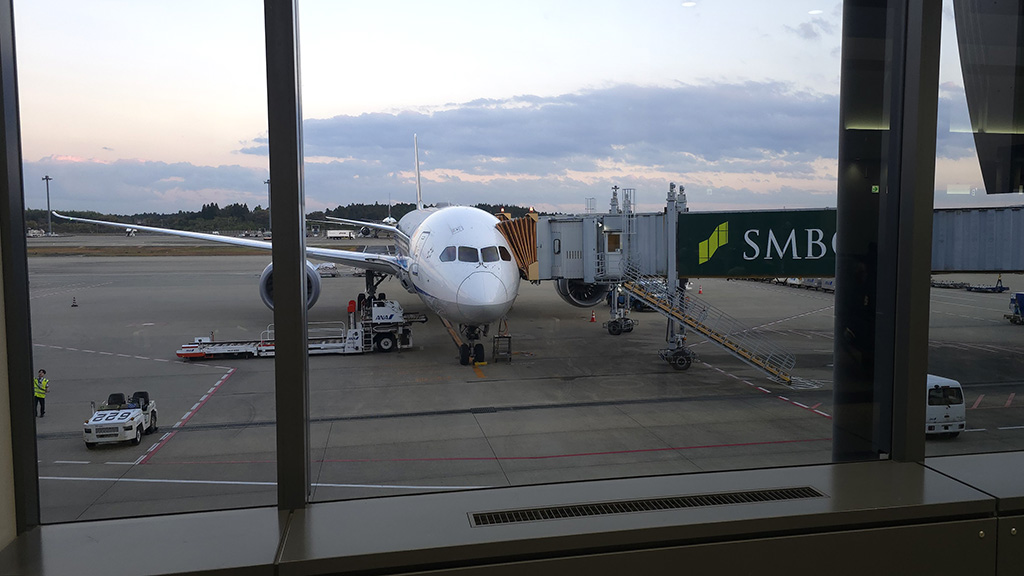
After a short additional wait for the pre-boarding passengers, I was able to embark our Boeing 787-9.

Unfortunately, this plane had the older staggered configuration, so I wasn’t able to try ANA’s new The Room seats. If I wanted to fly in The Room, I would’ve had to take a layover in San Francisco first and pay a higher fare on the ticket. Even though I visited and spent time with friends in Los Angeles prior to my departure, it still technically counted as a “layover” from Las Vegas; I didn’t want to then take yet again another layover before flying across the ocean, so I just settled with the staggered business class seats.

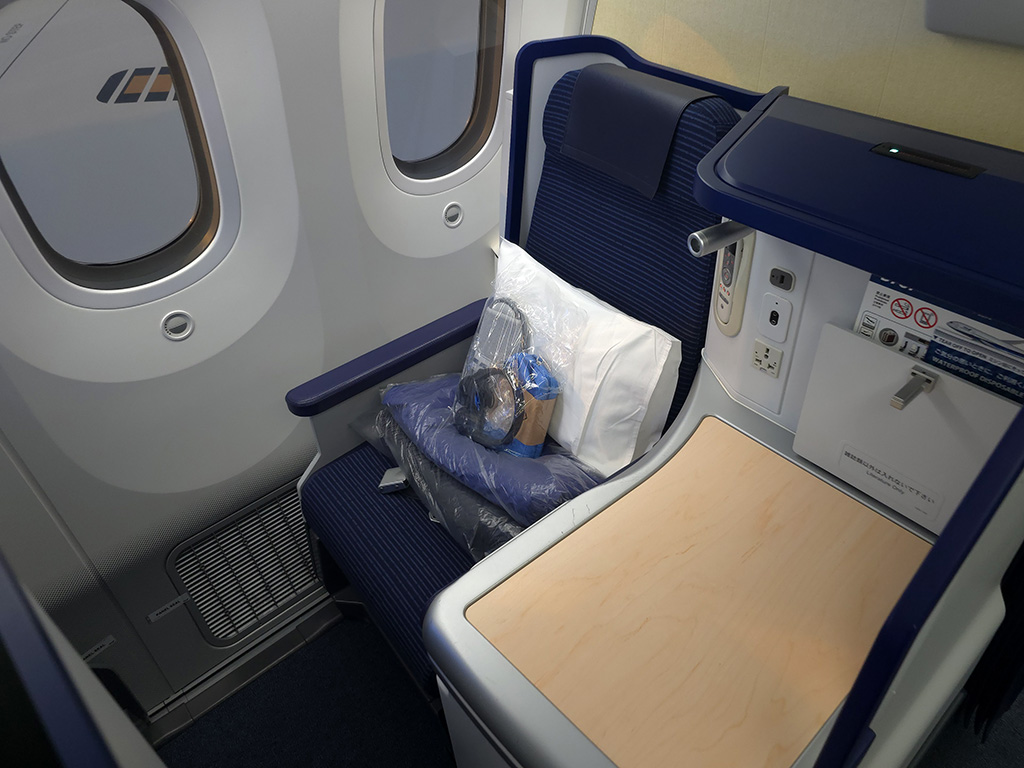
With that being said, I was able to secure what is, in my opinion, the best seat of the aircraft: 13K. This seat is the last row of the business class cabin, so it has the most privacy, as nobody is behind you staring at the back of your head. Excluding during takeoff and landing, there is a curtain that blocks the pathway to the premium economy cabin, which adds to the privacy. This segment of the cabin only has six rows of seats, while the front segment has seven, which means there are fewer passengers in this cluster, thus adding to the feeling of peace.

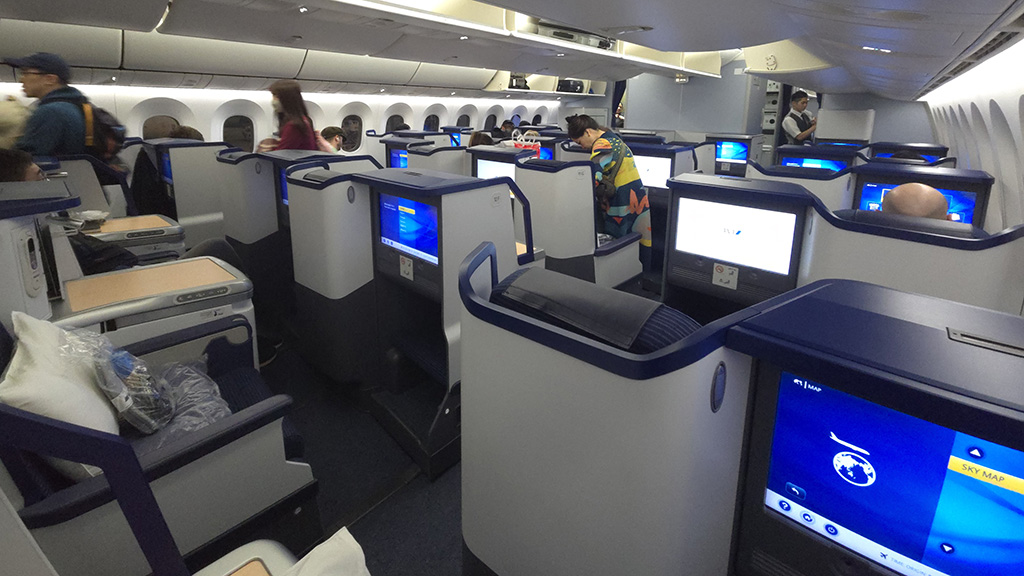
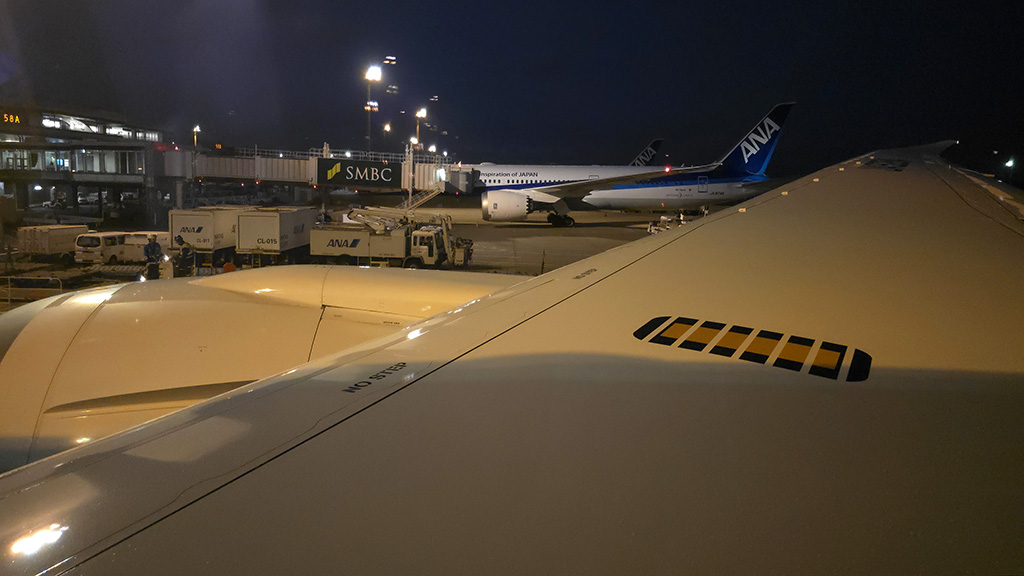
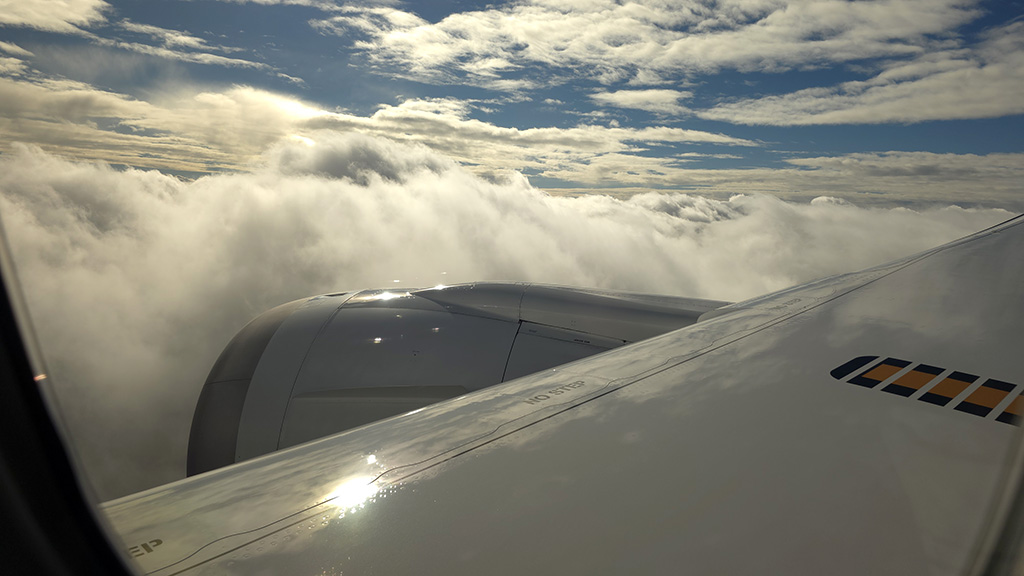
The seat itself is an “inside” seat, meaning the table separates the seat from the aisle; these configurations alternate, so an even-numbered row would have the seat closer to the aisle, creating less distance from those walking by. It is situated on top of the wings for a more stable ride, and it is close to the engines so the engine noise can act as white noise and drown out any potential disruptive passengers. Some people say they don’t like the wing acting as an obstruction in their photographs, but I don’t mind; in fact, I personally like having the wing there, because I take horizontal photos, so I think the wing just adds an artistic element to the picture.

Here is what the rest of the cabin looks like. From this wide shot, you can tell what I mean by a seat being an “inside” seat, and how the seats and tables alternate depending on what row you’re in.

After boarding the flight and settling in, I took out my laptop and squeezed in even more work; I had been spending a lot of time out and about being a tourist, and I hadn’t been getting as much work done as I wanted to over the prior two weeks, so I had a decent chunk to catch up on.

After about half an hour, the boarding process was complete and I stowed my laptop away in the overhead bin to prepare for take-off. During that time, the sun had set and it was already pretty dark outside.

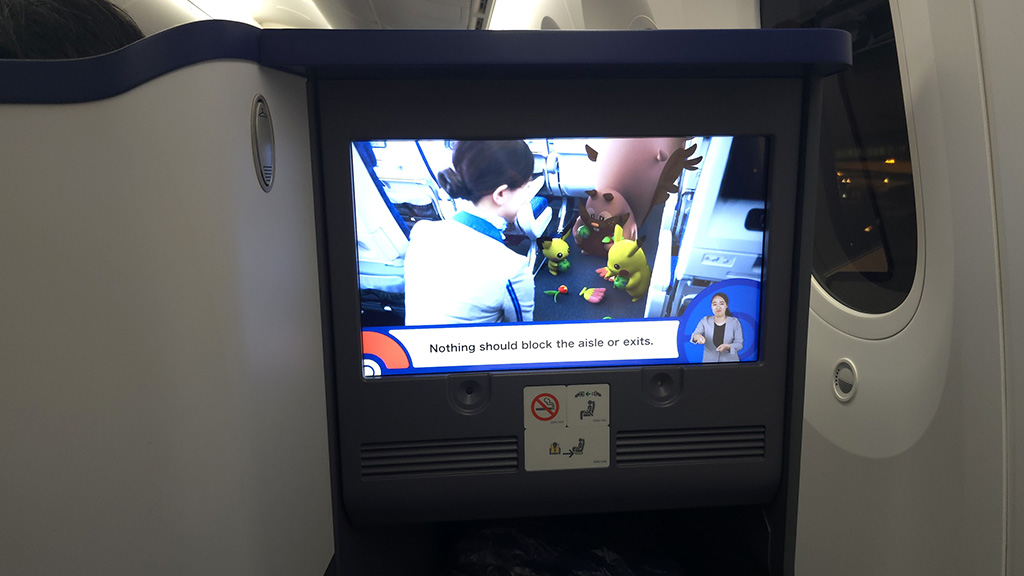
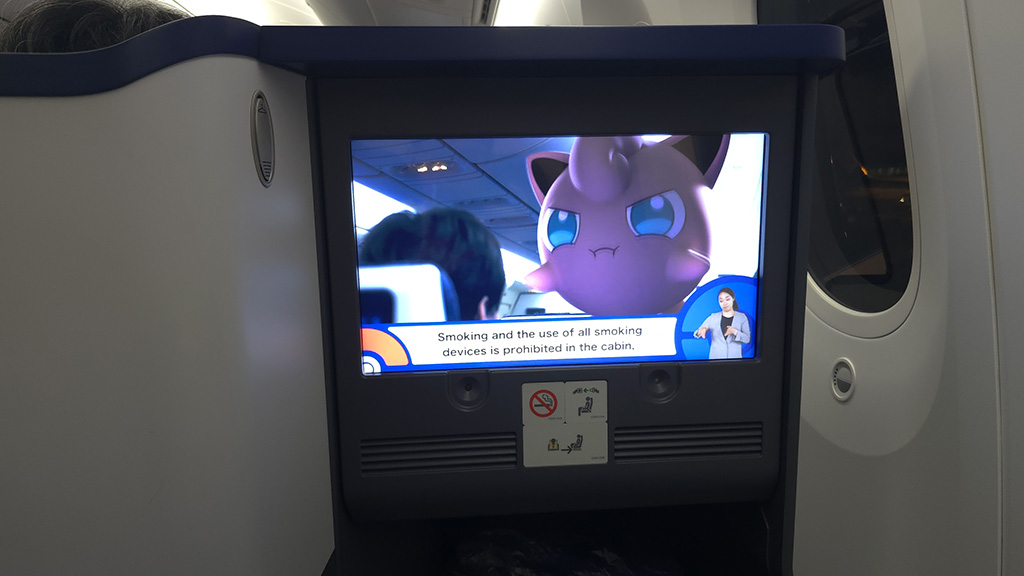
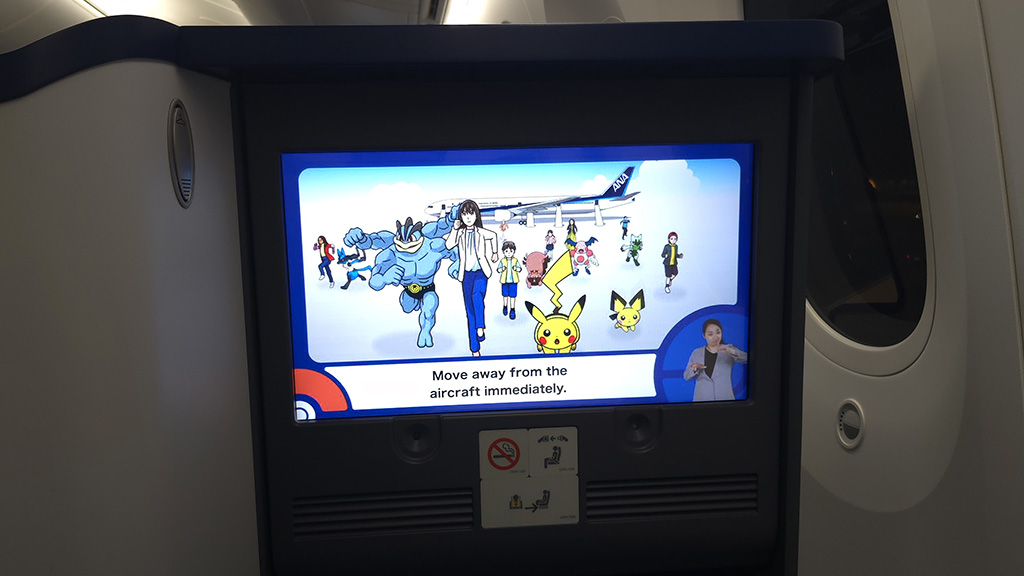
I was not aware of this, but I found out that ANA has a partnership with Pokémon and integrates Pokémon’s intellectual property into their safety videos. This was fun to see, as Pokémon is one of the franchises that I’m actually pretty familiar with because I grew up playing early-generation Pokémon games and watching the cartoons.

As part of the safety video, there was a note about how, if an emergency evacuation ever becomes necessary, photography is prohibited during the process. It might not necessarily be the case this instance, but really specific warnings or rules like this are often rooted in real-life events. It amuses me to think that there is technically a non-zero chance that someone forgot to get off the plane in an emergency because they were too busy taking pictures of everyone else deplaning instead.

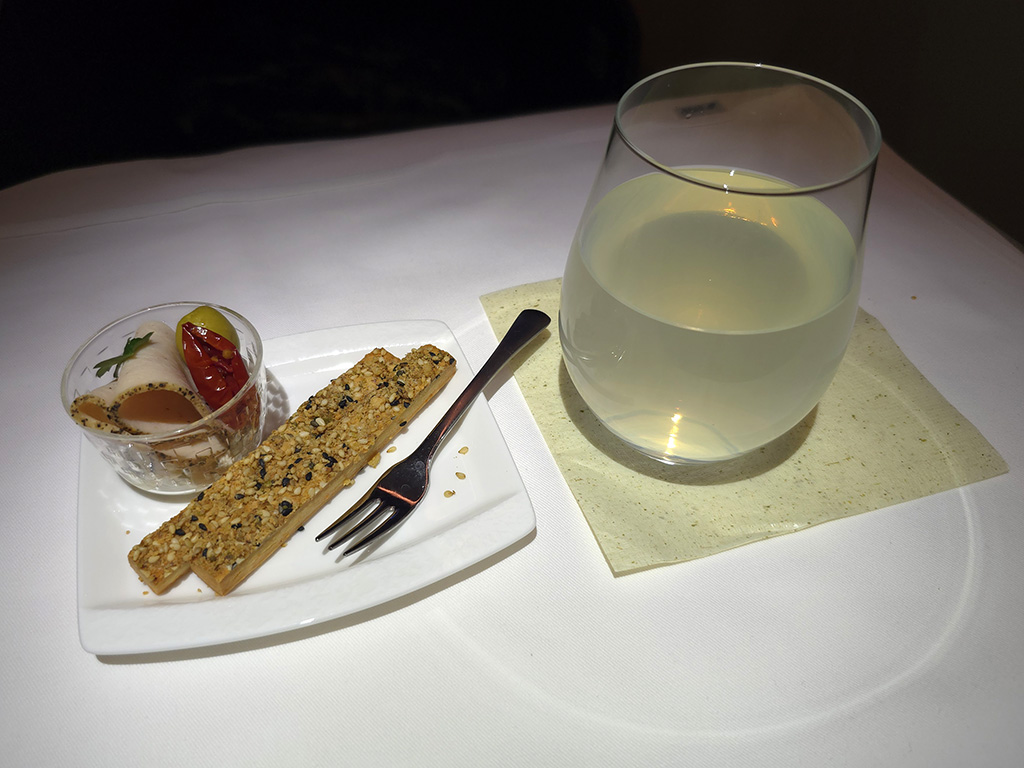
After getting airborne, we received our amuse-bouche—pastrami chicken, cheese, and olive in a bowl, accompanied by two black sesame and walnut pistachio sticks. For my beverage, I ordered ANA’s original aromatic kabosu drink.

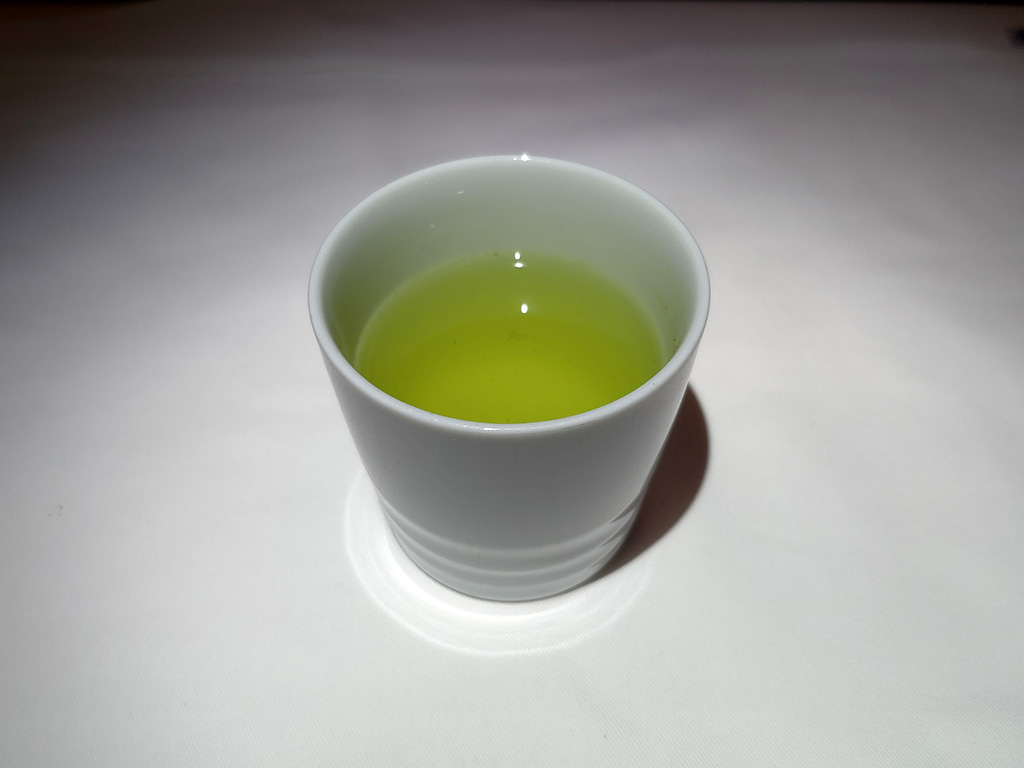
While waiting for meal service to begin, I also ordered a cup of ANA’s original Shizuoka-cha green tea matcha blend.

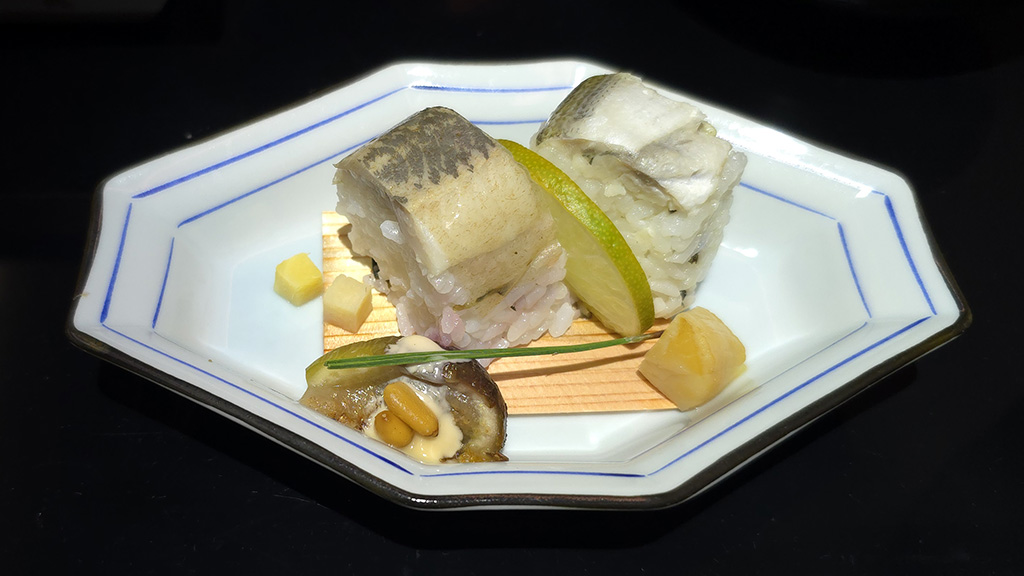
After a little while, the first dish of meal service was served—the “selection of morsels.” This consisted of barracuda sushi, herring sushi, vinegar-pickled ginger, fig with sesame cream, and smoked scallop.

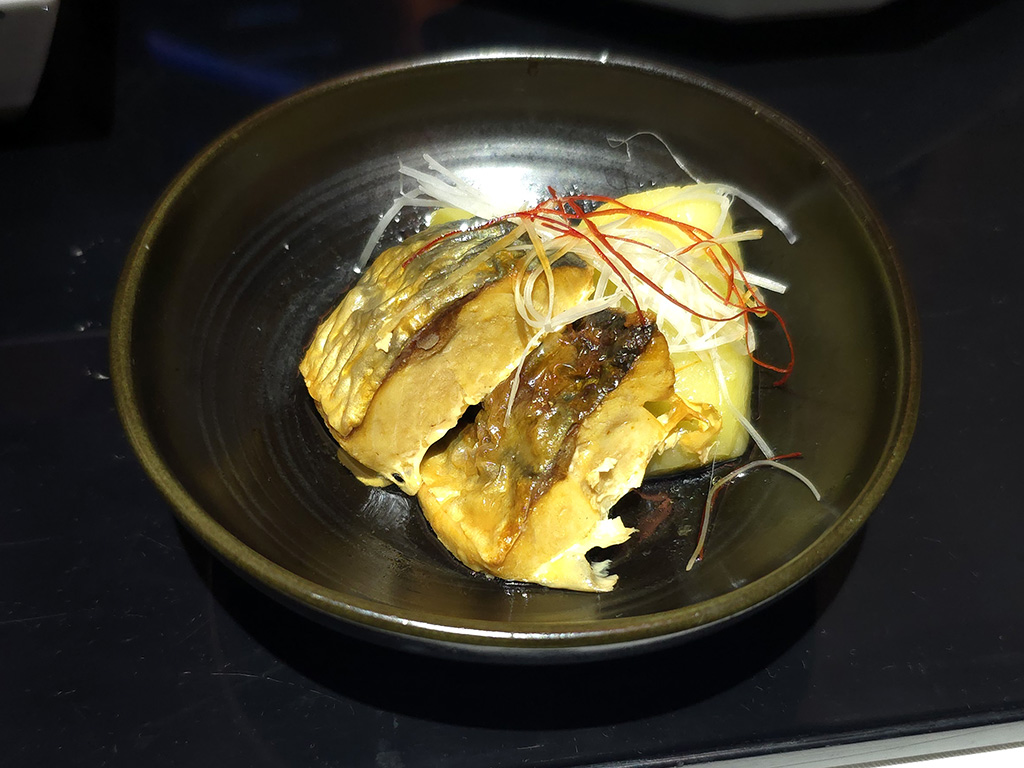
Next was the first of two tidbits, marinated grilled mackerel in soy-based sauce with eggplant, green onion, and chili pepper.

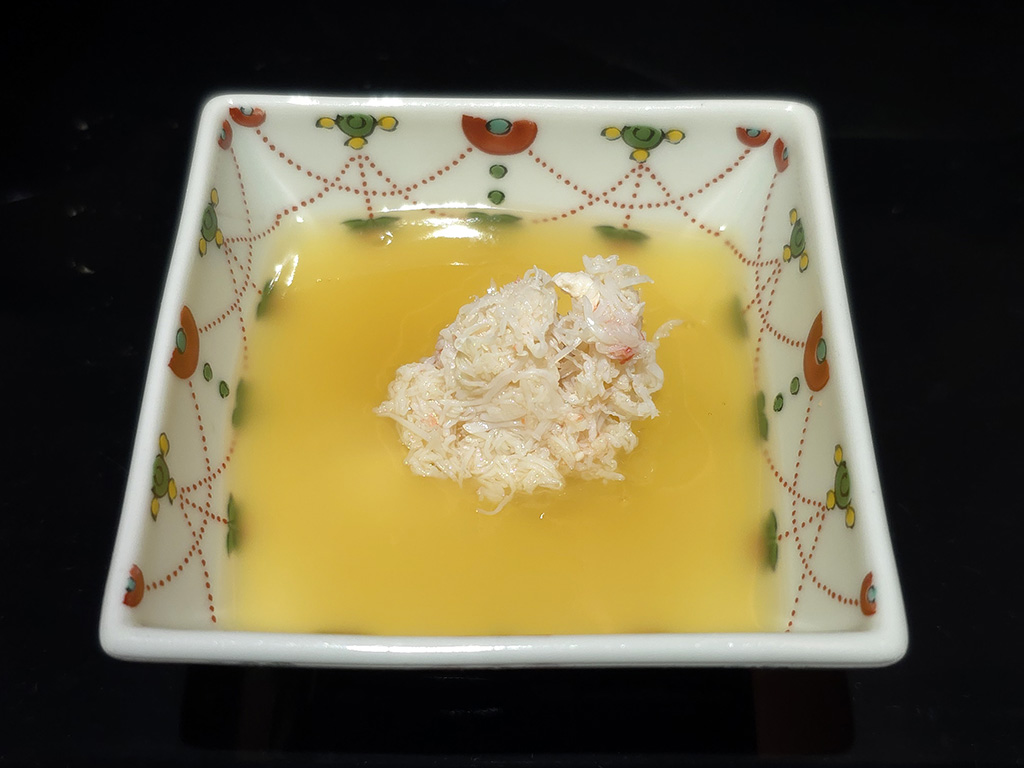
The second tidbit was savory steamed egg custard with snow crab meat.

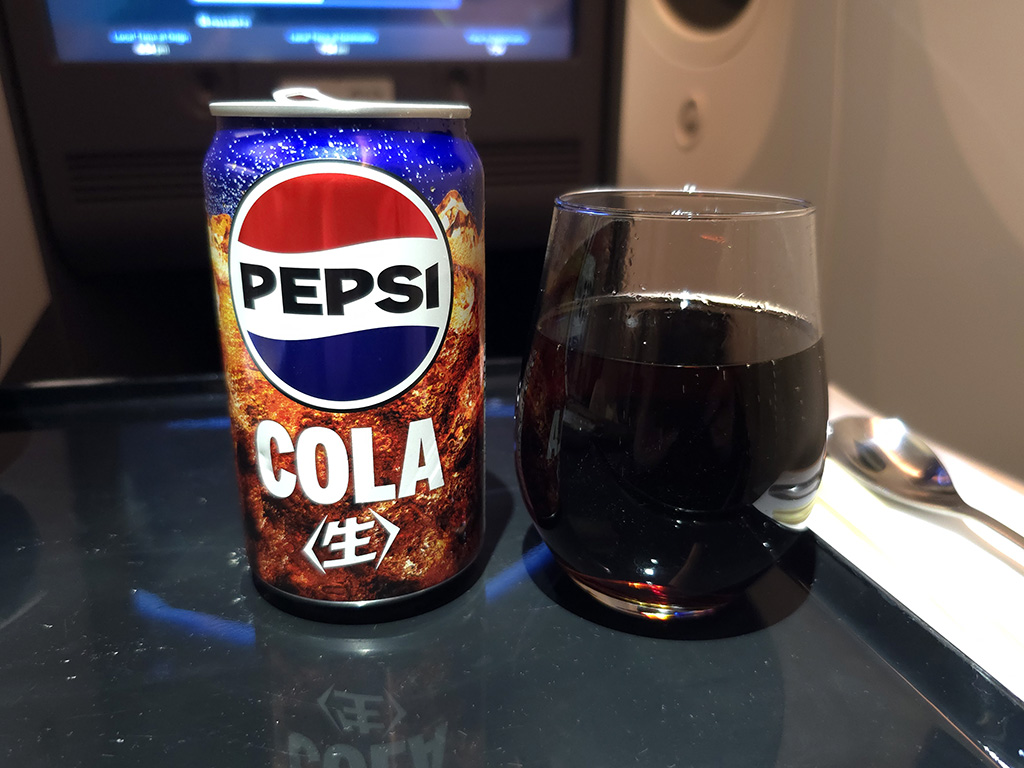
For my beverage to go along with my meal, I ordered some sugar-free cola. They brought out a regular Pepsi rather than a Diet Pepsi or Pepsi Max, which wasn’t to my preference, but wasn’t that big of a deal. The design on the can was unique and did not resemble anything I had seen in the United States before.

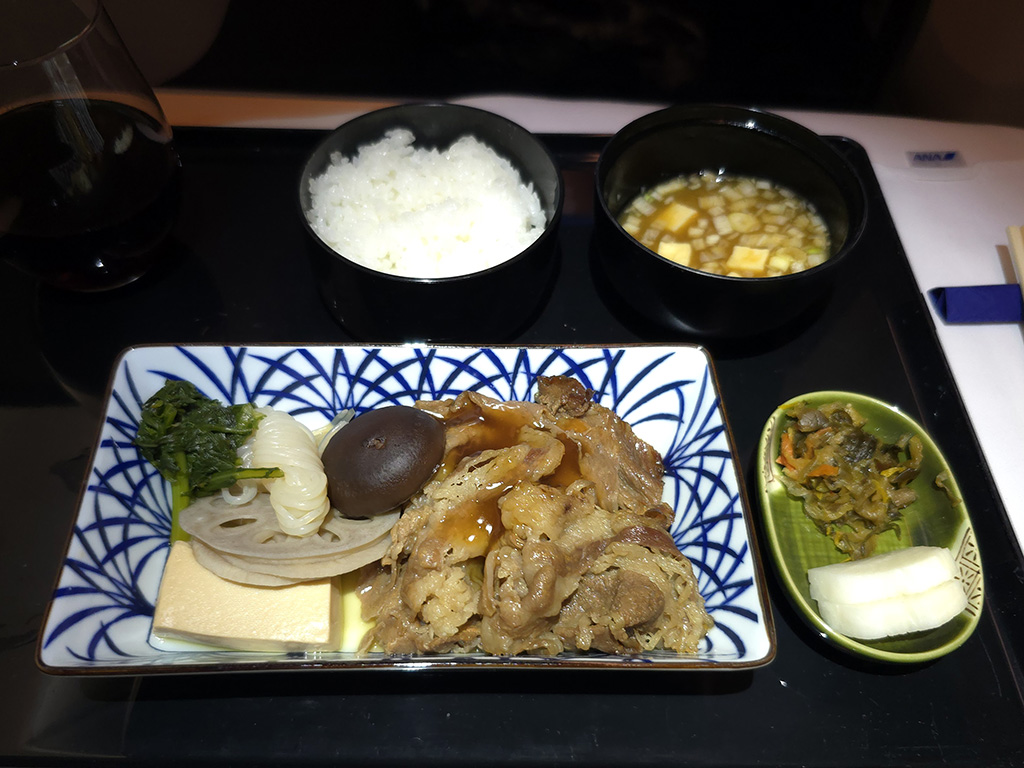
Afterwards was the main entrée, beef sukiyaki, served with a side of steamed rice, miso soup, and Japanese pickles.

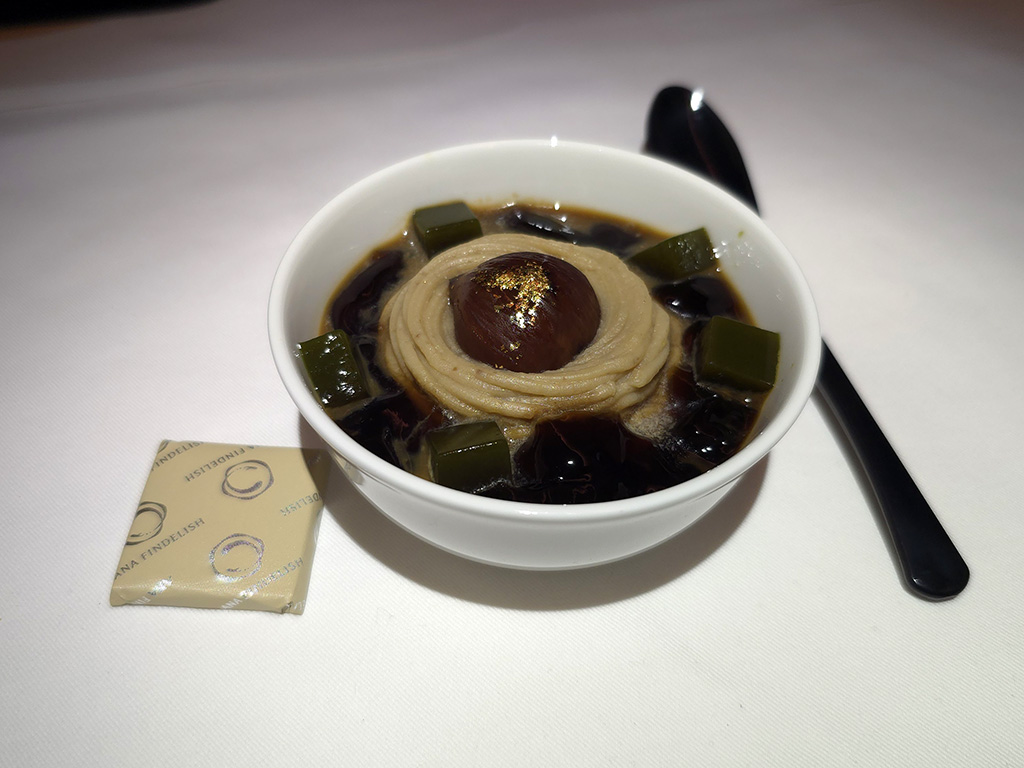
For dessert, we had three options, two of which included a cheese plate or a fruit bowl. The one I decided on was chestnut mousse with cream and coffee jelly. This also came with a small square of white chocolate.

Although the portion sizes were relatively small, it still ended up being a fairly hearty-feeling meal considering how much food I had already eaten at the lounge. After relaxing for a bit and letting my stomach digest, I got tired enough to lean back and go to sleep for the night.

… Or so I thought.

Usually, long-haul flights will wake you up with about two hours left to go so that they can serve breakfast before landing. However, for some reason, this flight woke me up with a little over three hours prior to arrival. I technically could’ve just kept sleeping, but the cabin lights illuminating and the flight attendants moving around was enough of a distraction that I couldn’t stay asleep.

Eventually, the pilot made an announcement that the second meal service will be beginning earlier than normal due to some expected turbulence coming up about an hour before landing. Reasonably, they didn’t want a bunch of plates, cups, and silverware out on the tables during rough air. Although grumpy from early rising, the rationale was reasonable, so I switched my seat from bed mode to relax mode and waited for breakfast.

My meal this time came out all at once, instead of as separate courses. For breakfast, my main dish was grilled salmon with sake lees and steamed rice with a side of steamed chicken and marinated mizuna greens in sesame sauce, miso soup, and Japanese pickles.

In addition to some plain water, my flight attendant also brought me ANA’s original “Coffee Journal in the Sky.” I’m not enough of an enthusiast to know whether or not this was any special kind of coffee, but I did appreciate that I was able to try all of ANA’s signature beverages on the flight.

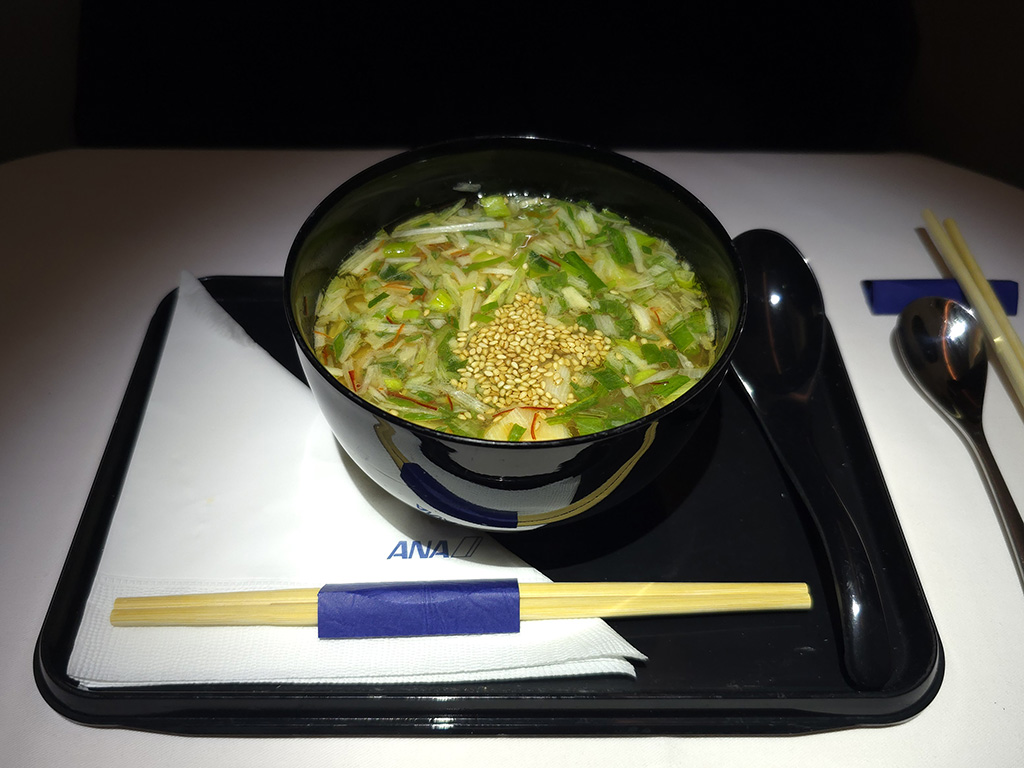
For the sake of getting some more value out of my flight, I asked for a second breakfast—negi miso ramen from Megumino, Hokkaido. This was a special soup blend containing medium-thick noodles, onions, sesame paste, and ginger. It was served warm and not hot, so I was able to enjoy it without worrying too much about temperature. This was filling and rounded out my breakfast well.

After finishing all my food, I reclined back and waited for the severe turbulence to begin.

… It never came.

Better safe than sorry though, I guess.

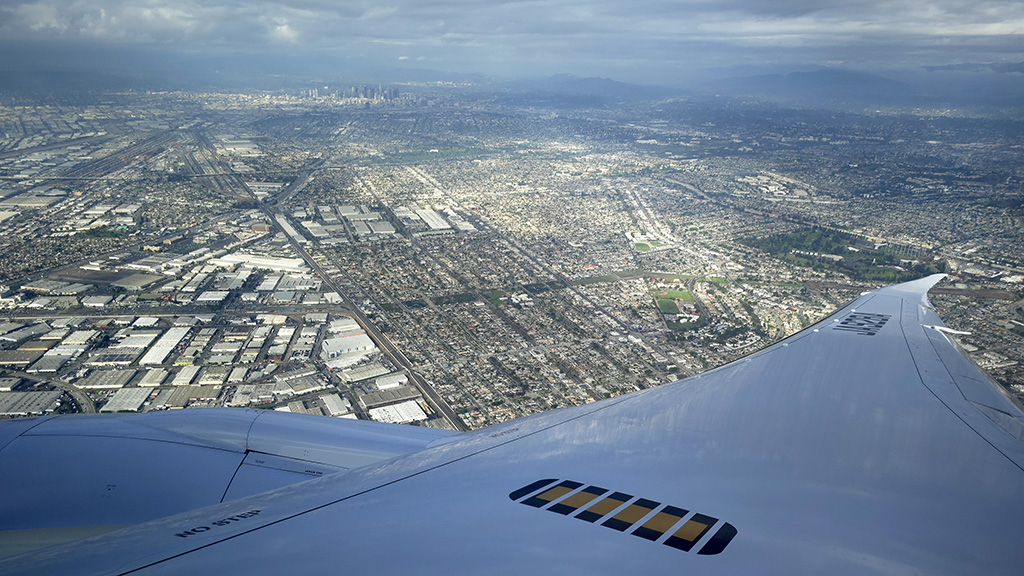
After about nine hours, we made it to Los Angeles airspace. Our runway was longitudinal going westbound, so we had to fly east out to the San Gabriel Valley first before looping around back to LAX. This allowed me to get a nice view of downtown Los Angeles during our descent.

After just shy of nine and a half hours of travel time, we pulled into our gate.

While the aircraft was preparing to deplane, an arrival video played on the screens, and I was welcomed back home to the United States by Pikachu.

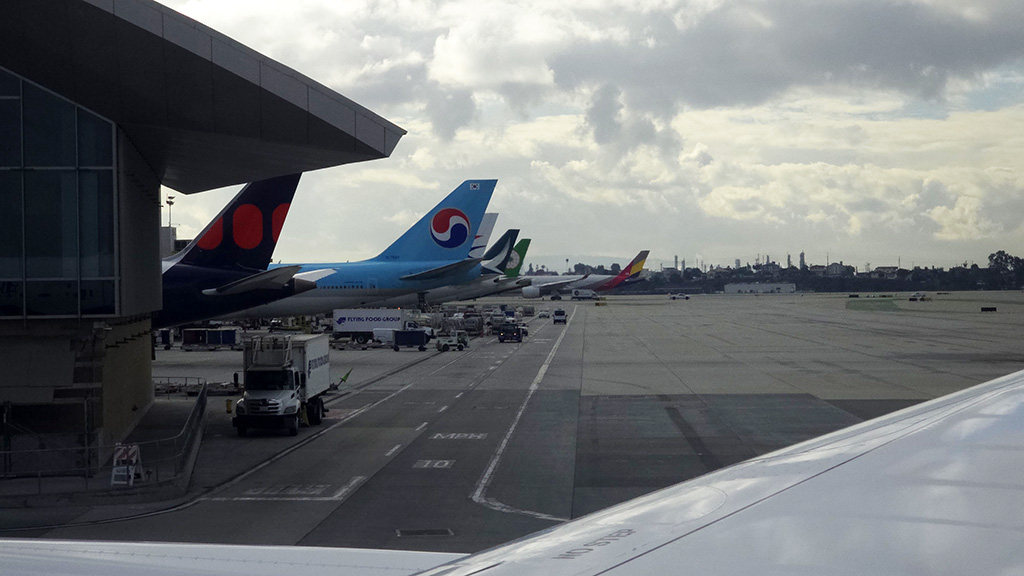
After a very brief wait, I deplaned to the familiar sight of the Tom Bradley International Terminal at Los Angeles International Airport.

I don’t know if this observation was exacerbated by having just arrived from a country that is so accommodating as Japan, but I began seeing Terminal B at LAX with a different perspective and noticed how tricky it might be to foreigners. I noticed that everything was written in only English, which I found to be comparable to if I had landed in Japan and all the signs were in only Japanese. That would’ve obviously been a tremendous struggle for me, which implies that foreign tourists entering the United States are actually facing that struggle as a very real scenario.

I’m enrolled in Global Entry, which is a very convenient service for United States citizens that allows me to re-enter the country very quickly by just looking at a few identity-verifying cameras and walking through without any questioning. This is only for people who have enrolled in the service, passed a background check, and attended an in-person interview.

Unfortunately, non-English-speaking foreigners who had stood in the same line as me were getting rejected at the checkpoint over and over again, presumably because they were following everyone else around them and ended up in the wrong line without even realizing it. If having a bunch of common translations is not feasible, then I think it would still be nice to at least have some visual representation on where people are supposed to go upon arrival, e.g., mark the Global Entry line with a gigantic American flag, and then put a sign next to it with a picture of a bunch of different flags of other large countries across the world and draw an arrow to the other checkpoint.

I fly with only a carry-on bag, so I didn’t have to wait for luggage. This meant I was able to get off the plane and make it outside in a matter of only several minutes.

I like walking and getting blood circulation back in my legs after a flight, so I walked around half a mile from Terminal B to the end of Terminal 7 and called rideshare service to whisk me away from the airport. As a secondary reason, I like getting picked up at Terminal 7 instead of Terminal B so that I don’t have to sit in the car in traffic in the LAX horseshoe, and my driver can just take the East Way shortcut from Terminal 1 to Terminal 6 to come get me instead, upon which we can immediately leave airport property and be on our way.

I don’t think I have much more to add beyond the general overview I gave at the top of this blog post, in addition to the various thoughts and comments I shared throughout my 16 previous blog posts. I am very glad I decided to take this trip to Tokyo, and I will definitely be taking such an opportunity again if something comparable were to ever arise in the future.

In addition to revisiting Japan, I have two more countries on my near-future “want to go” list: Singapore and Taiwan. For a long time, Antarctica was the only place outside of the United States that I really wanted to visit, but with these successful Vietnam and Japan trips, I am much more inclined to expand my tourism into more areas of Asia.


—§—


Hello, United Polaris on United Airlines flight 32 from Los Angeles to Narita

When I travel, I like to blog in realtime as I explore new places and go on tourist activities. Usually within a few days of doing something interesting, I will have finished preparing the associated photographs, writing about my experience, and publishing the post on my website. I’ve found success in this particular system because it helps me organize my thoughts while they’re still fresh, and it also acts as a way for me to unwind and reflect on my day before going to sleep.

For the first time in as long as I can remember, I broke this aforementioned habit by going on a two-week trip to Japan without releasing a single new blog post the entire duration. There were a few reasons why, but the main one is because I enjoyed Tokyo so much that I wanted to get the most out of my limited time there. I packed my schedule completely full with activities—so much so that, when I was done for the day, I was completely exhausted and couldn’t stay up for much longer before falling asleep.

As of today, I am back in the United States. I have a lot of work and rest to catch up on, but in my free time, I plan on spending the next couple weeks going back through my photos from Japan and writing blog posts for all the interesting things I did while I was there. Functionally, it will be very similar to when I blog in realtime, with the only difference being that every post will be going live two weeks late relative to the actual timing of when I did all this adventuring and sightseeing.

So, that brings us to the beginning.

For my flight outbound from the United States, I took United Airlines from Los Angeles International Airport to Narita International Airport. I know that Asian airlines tend to have a much better reputation than American airlines, but I decided to take United Airlines for one leg of my trip anyway because I wanted to experience United Polaris and compare it to the business class offering on All Nippon Airways. United Airlines flight 32 is still cross-listed with All Nippon Airways as their flight 7019, but the actual service is provided entirely by United.

As for the cities, I flew out of Los Angeles instead of my home airport in Las Vegas because LAX offered non-stop service while LAS required a layover; I flew into Narita instead of Haneda because flights were cheaper to NRT, so much so that I deemed it worth it to deal with the associated longer train ride into Tokyo.

The morning of my flight, I called rideshare service to bring me to the airport. I ended up getting so carsick in the traffic that, even though I was supposed to board my flight from Terminal 6, I asked my driver to drop me off in Terminal 1 as soon as possible at the beginning of the horseshoe because I felt like I would vomit if I stayed in the vehicle any longer.

After getting out of the car, I took the escalator up to use the new pedestrian skybridge to the other side of the airport, only to discover that it was still under construction and not yet open to the public. I went back down the escalator and wandered my way to Terminal 7 by cutting through the parking garage. I’m glad I had a chance to walk around for a bit, because helped alleviate some of the motion sickness and I no longer had a pressing urge to throw up.

International flights at LAX often depart from the Tom Bradley International Terminal, but because I was taking United Airlines outbound, I was departing from Terminal 6 instead. This was very convenient because the United Polaris lounge is in Terminal 7, so I was able to get the full United Airlines business class experience rather than needing to use a partner lounge in Terminal B.

Upon arriving at Terminal 7, I had a quick and easy time getting through security using the Transportation Security Administration’s new TSA PreCheck Touchless ID system where you just look into a camera and get allowed through. After only a few minutes, I made it to airside and walked down past Gate 73 where I took an elevator up another floor to the entrance of the lounge.

Even though I wasn’t about to vomit, I was still pretty carsick, so I didn’t eat a full meal like I normally would have in an airport lounge. Instead, I sipped on some Diet Coke and walked around the lounge to take some photographs.

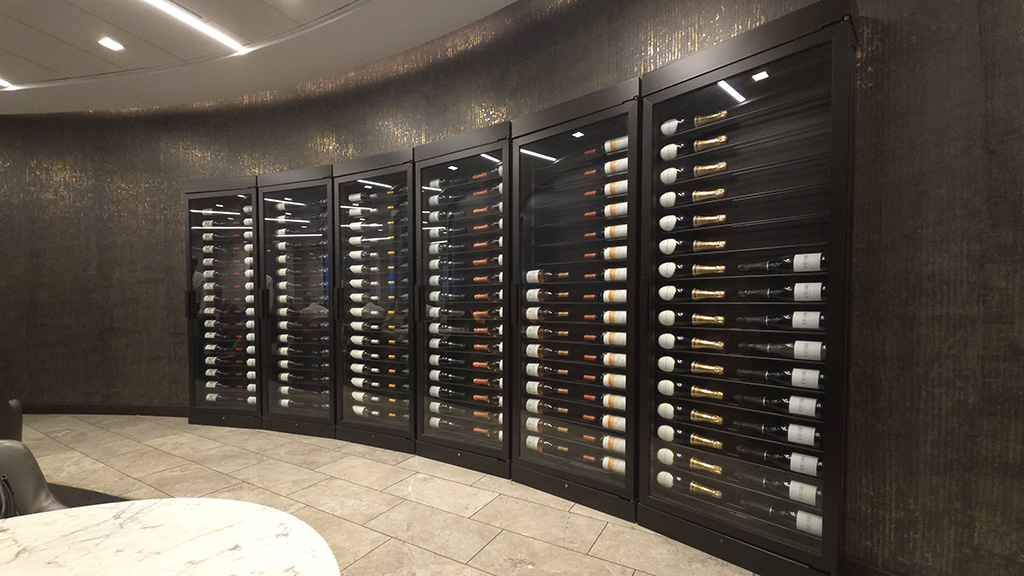
It was pretty busy in the lounge, but I managed to find a relatively quiet and peaceful area in the rear of the lounge near a giant cabinet of alcohol.

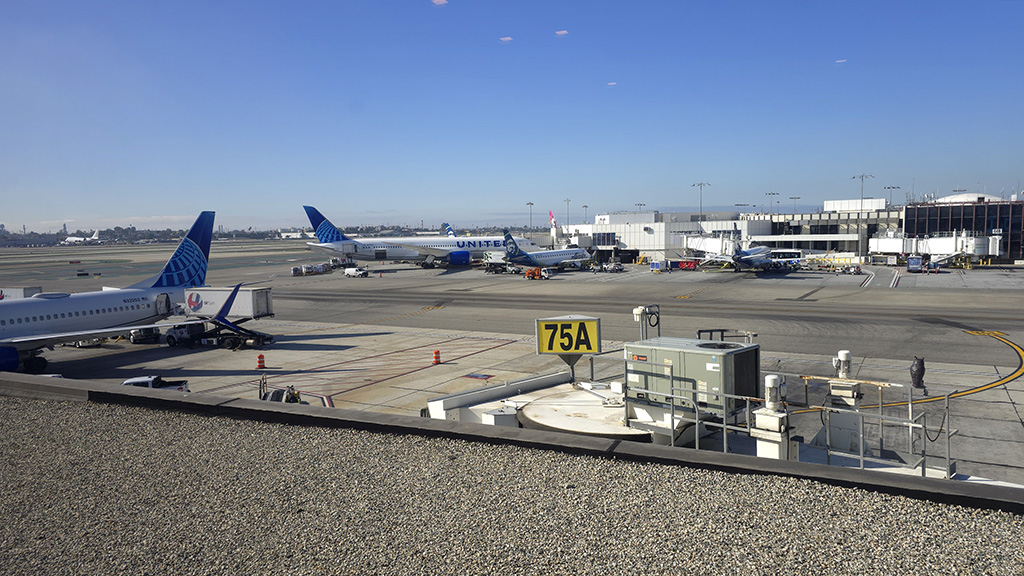
After relaxing for a little over half an hour, I started making my way over to my boarding gate. The United Polaris lounge is in between Gates 73 and 75, but I was boarding from Gate 68B, which meant I had to walk to the entrance of Terminal 7, take a long hallway to Terminal 6, then walk all the way to the deepest edge of Terminal 6… literally, because Gates 68B and 69B are the final two gates of the concourse.

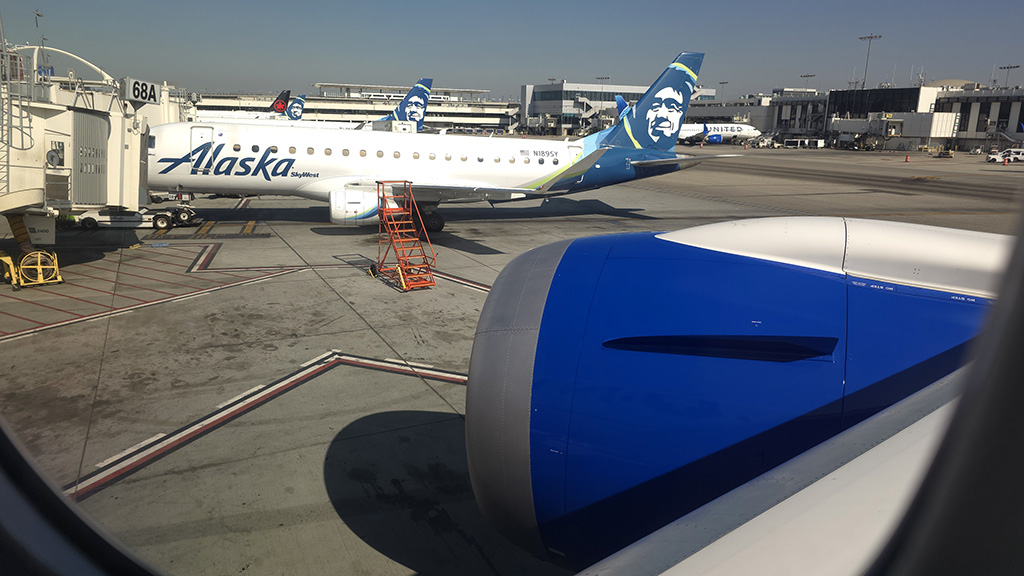
I left the lounge a little early to make sure I had plenty of time and wouldn’t be late if I ran into any issues on my trek there. Luckily, there were no problems, so after loitering for a bit between Gates 68A and 68B to wait for boarding to begin, I embarked our Boeing 787-9 Dreamliner without incident.

I almost always take the rear-most window seat in the last row of the cabin because it usually ends up being the seat that offers the most privacy.

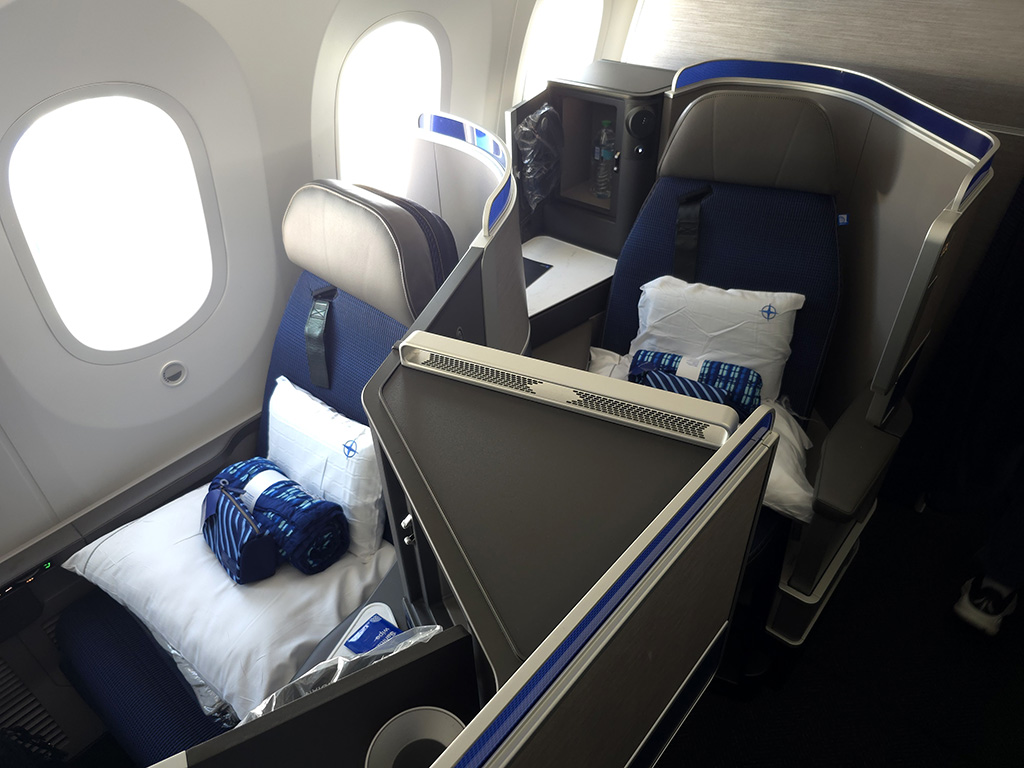
However, on this United Airlines flight, I reviewed the seat map ahead of time and realized that the staggered configuration makes it so that the final window seat in the cabin has the seat facing out towards the aisle instead of in towards the window. Because of that, I reserved the second-to-last seat for myself for this leg of my trip. This ended up being a wise decision, as it was much more cozy having a table separating myself from the aisle.

Another perk of picking a rear seat is that, although it depends on the configuration of the aircraft, the final seats of the business class cabin are usually next to the wing of the plane. I prefer this because it is closer to the center of gravity and results in a smoother ride that is less affected by turbulence, and its proximity to the wing-mounted engine means the loud noise of the engine fans and exhaust will act as white noise and help drown out any disturbances from auditorily disruptive passengers.

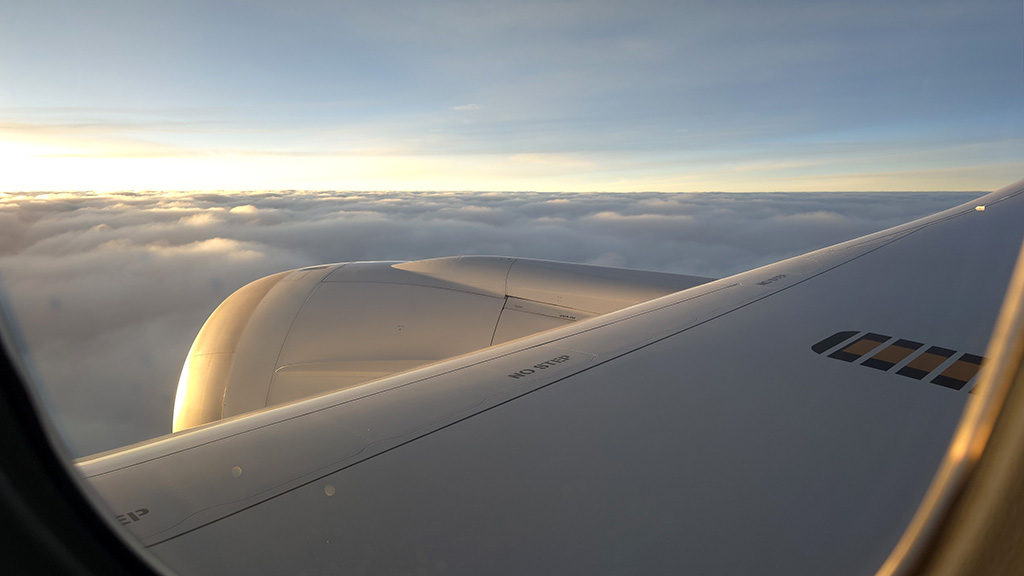
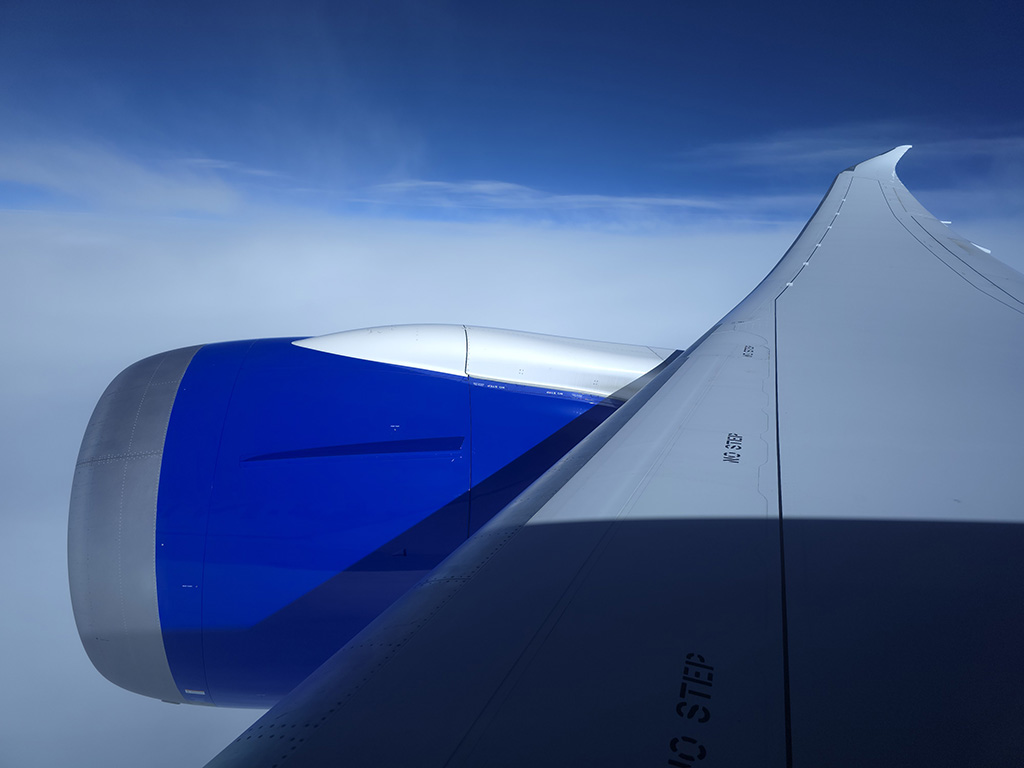
Less importantly, and more as a point of personal preference, I think photographs out of plane windows look nicer when there is a little bit of wing or engine in the shot so that it gives some context about the origin of the photograph.

Luckily, my second-to-last seat was still close enough to the wing and engine that I still got all of these perks like I would have if I was in the last seat.

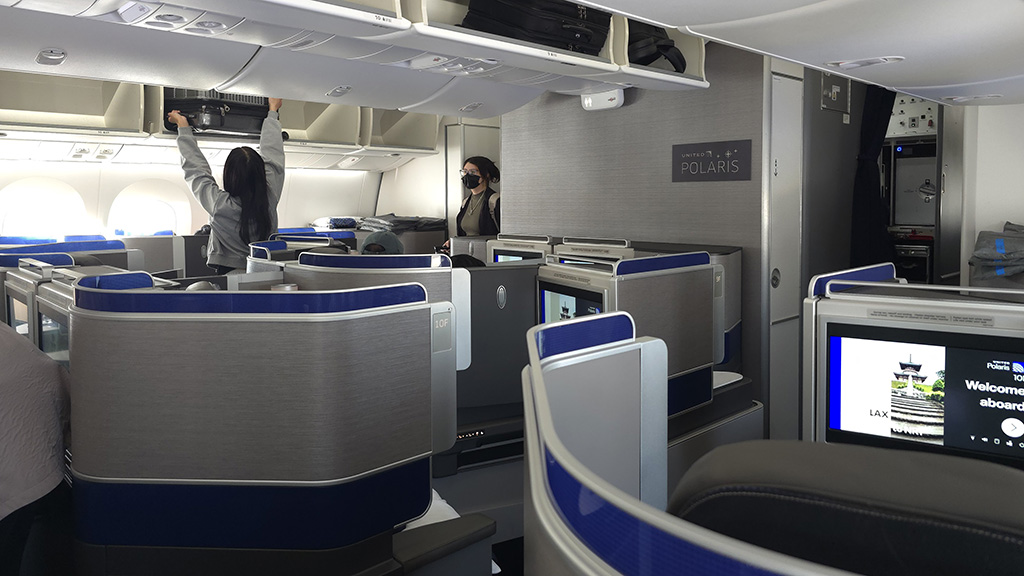
The business class cabin is split up into two subsections. The main section has rows 1 through 8, followed by a divider for the galley and restrooms. Behind that is rows 9 through 12, before a curtain separates the Polaris cabin from the Premium Plus cabin. This means that there are half as many passengers in my section compared to the front section, which adds to the feeling of peace and serenity.

Because I was one of the first people to board the plane, I had an opportunity to pull out my laptop, recline back a bit, and get some last-minute work in prior to our on-time departure.

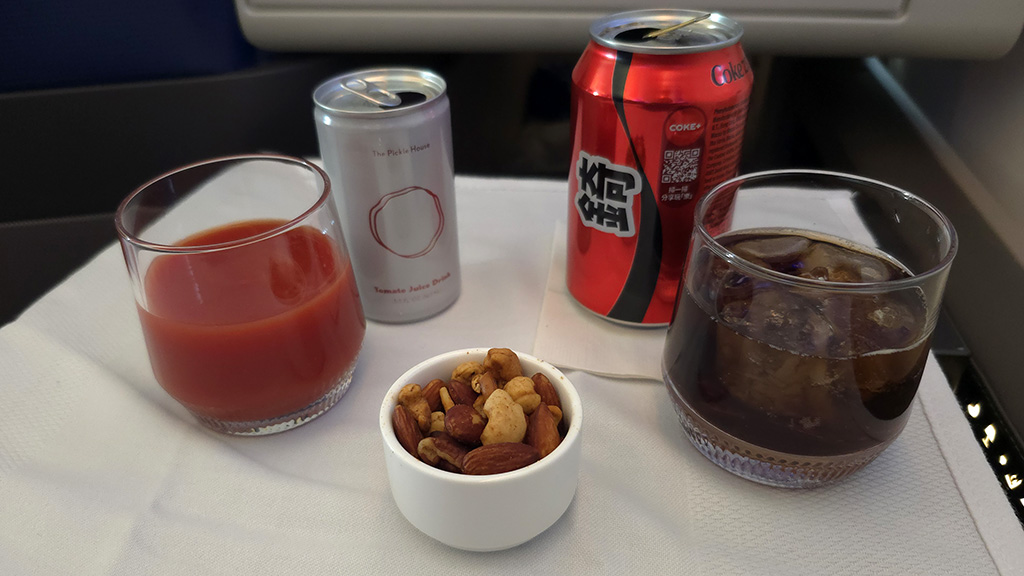
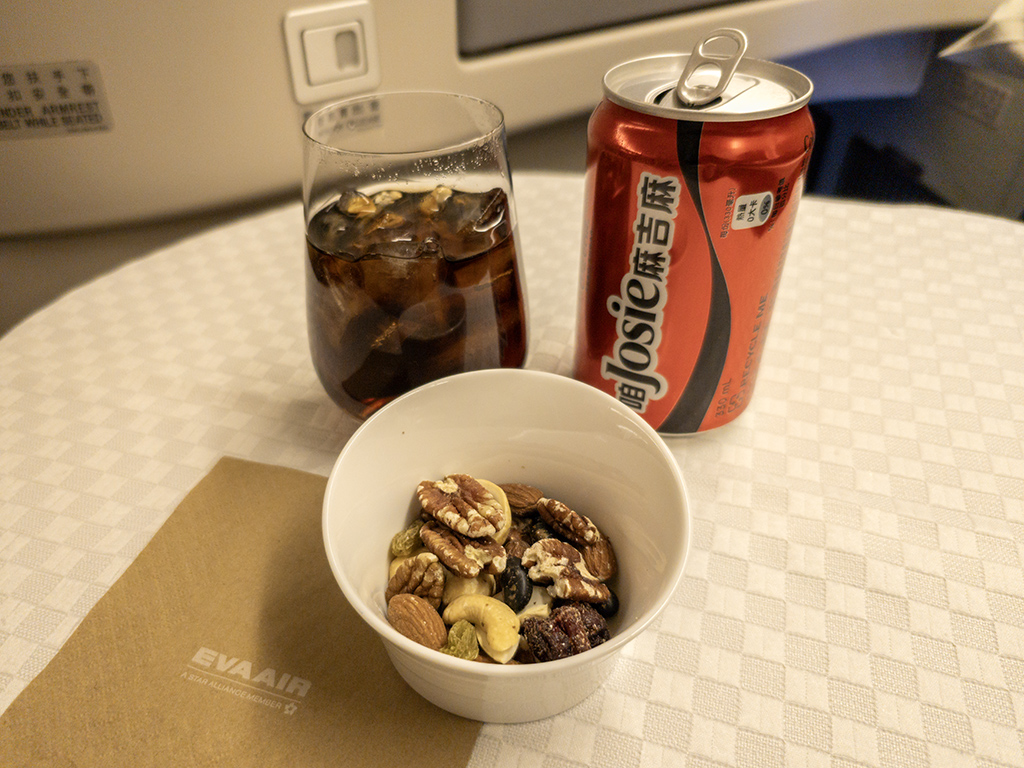
After taking off, we were offered some warm assorted nuts and beverages to enjoy while the flight attendants prepared dining service. I opted for a can of The Pickle House tomato juice and Coca-Cola Zero Sugar.

My can of Coke had 錡 printed on it. I couldn’t quite figure out what it meant in this context, but my guess is that this can is part of the “Share a Coke with” campaign, and the name of the person you’re supposed to share this can of Coke with is Qí.

During online check-in, I pre-selected the Japanese menu for my meal.

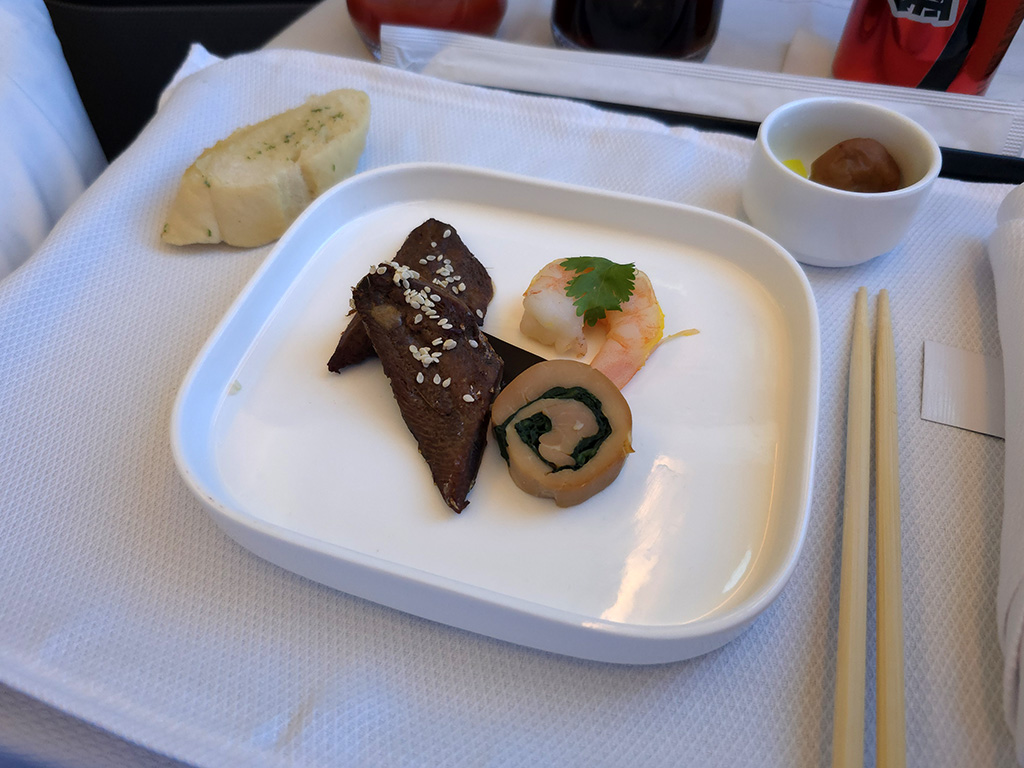
For my first course, I received a curated sampling of Japanese appetizers—Kenchin vegetable-stuffed chicken, sweet soy caramelized sardines, and boiled shrimp with egg yolk vinegar.

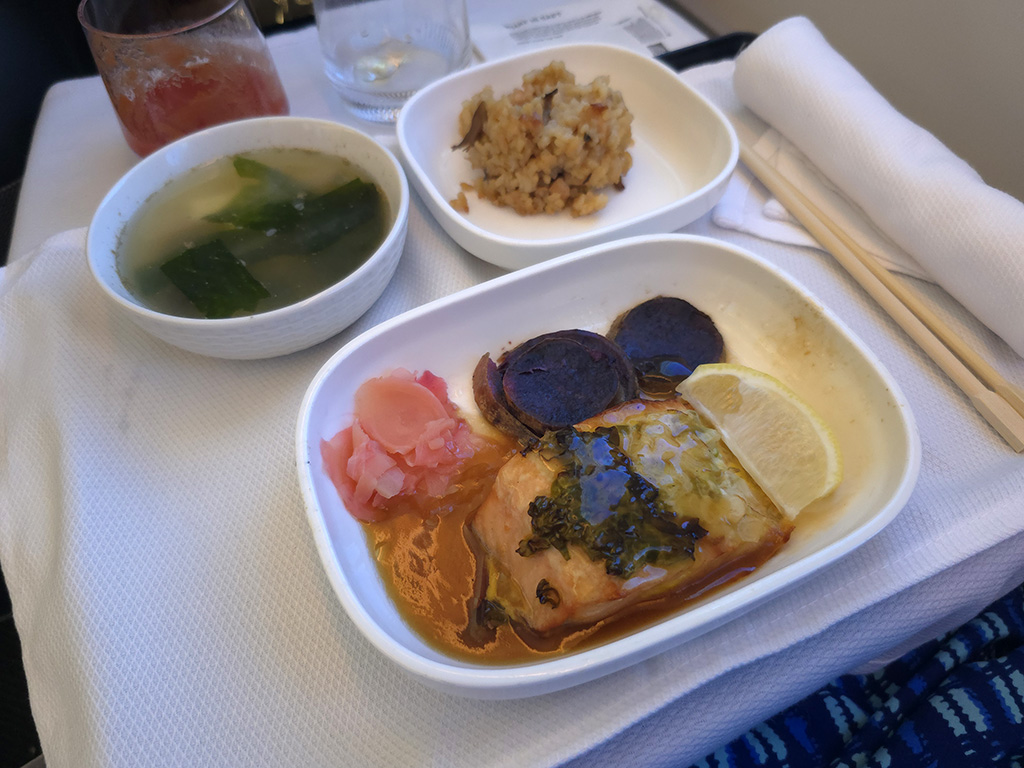
My main entrée was United’s salmon Namba grill with purple sweet potato, myoga pickles, and gin-an sauce; mushroom pilaf with Japanese pickles; and red miso soup.

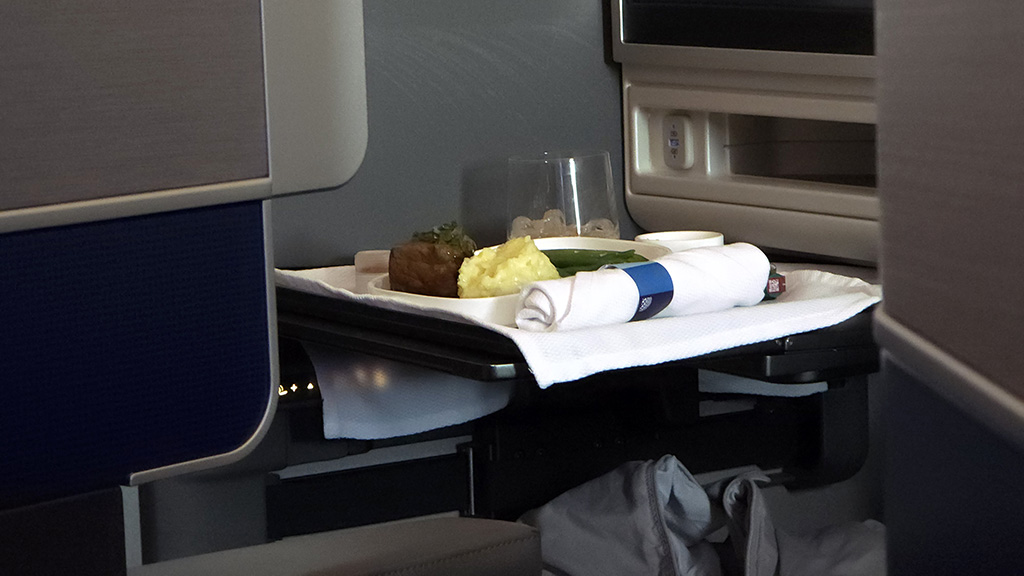
In addition to the Japanese menu, United also offered an international menu as well. There was a Japanese family seated in front of me; I assume that they eat Japanese food all the time and wanted to try Western cuisine on an American airline, so they selected the international menu. While one of them was in the restroom, I snuck this photograph of what they were served—it looks like a filet mignon with mashed potatoes and vegetables.

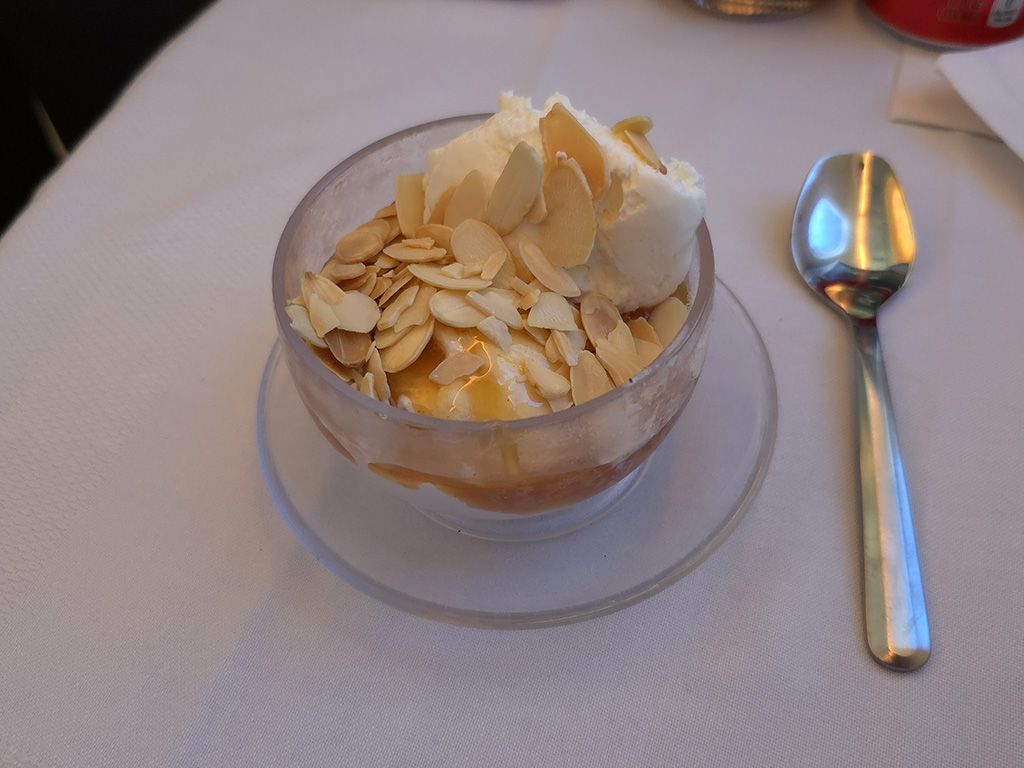
For dessert, the flight attendants came around with United Airlines’ signature sundae cart where you can custom-order your own sundae. For mine, I requested Tillamook vanilla bean ice cream with caramel sauce, freshly-whipped cream, and sliced nuts.

It was delicious, though I wish they had put a bit less caramel sauce on it so it wasn’t quite as sweet. Basically every YouTuber who does a review of United Polaris raves about this ice cream, and now I can confirm with first-hand experience that it is indeed very good.

After meal service concluded, I reclined back to relax and unwind.

One thing I liked about this plane was that they had dimming windows instead of physical shades. This meant that I could darken my windows to the point where the sunlight wouldn’t be disruptive to other passengers trying to sleep, yet I could still enjoy the view of the sky and clouds out the periphery of my vision.

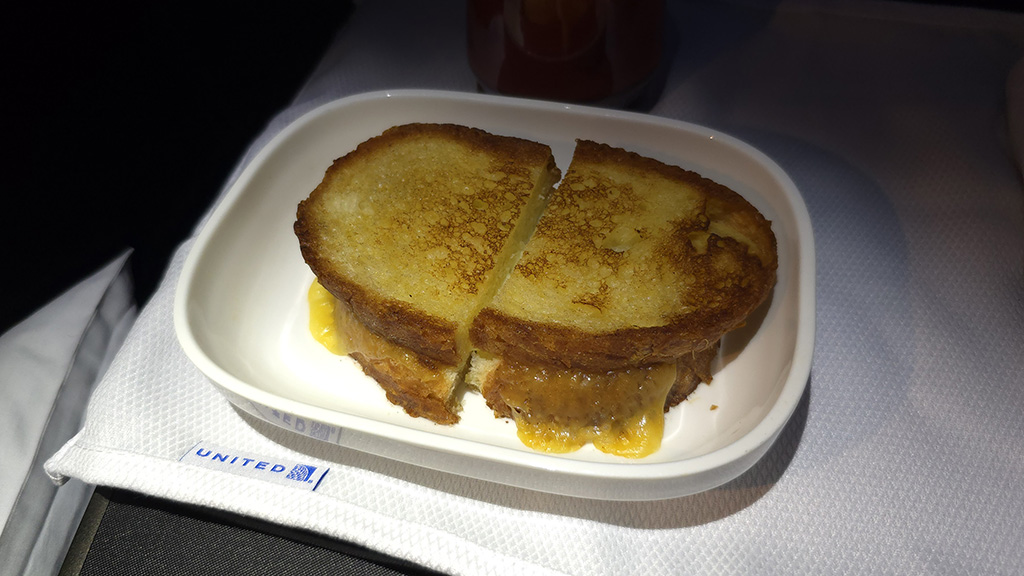
After a quick nap, I got back up and snacked on a grilled aged cheddar cheese sandwich alongside another glass of tomato juice. It was mediocre at best, but I hadn’t eaten a grilled cheese sandwich for a really long time, so I figured I’d seize the opportunity when I had a chance, considering that I wouldn’t otherwise go out of my way to seek out a grilled cheese.

Not long later, breakfast service started, which was very funny, because it was 10 PM PST and 3 PM JST. A lot of flights from the United States to Asia depart late at night, fly overnight, and land in Asia during the local morning, so for those flights, a breakfast as the final meal would make sense. However, I feel like for United flight 32, it would’ve made more sense to serve breakfast or brunch as the first meal, and then save the dinner for the second meal.

Anyway, I had also picked the Japanese menu for this, but without any additional notice or information, I was given the international menu instead, which I assume means that they either ran out or did not properly account for my dining preference.

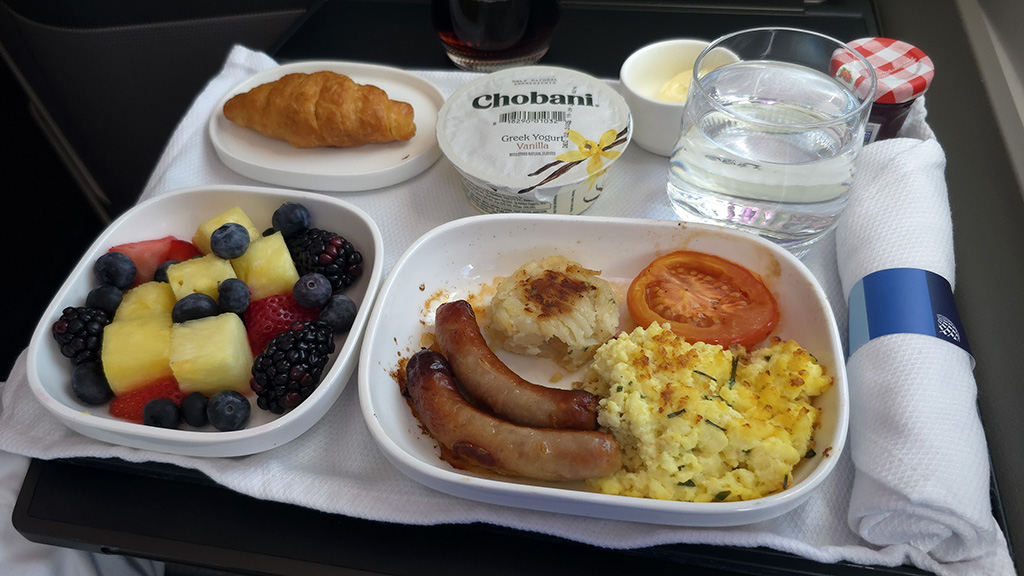
For my Western breakfast, I received some sausage, scrambled eggs, hash browns, a roasted half tomato, a fruit bowl, some Greek yogurt, and a croissant. I found it to be an overall pretty acceptable breakfast, but I particularly liked the fruit. They also provided a side container of jam, which I mixed in with the Greek yogurt; I thought that made it a lot better, and it ended up being my second favorite item of the breakfast.

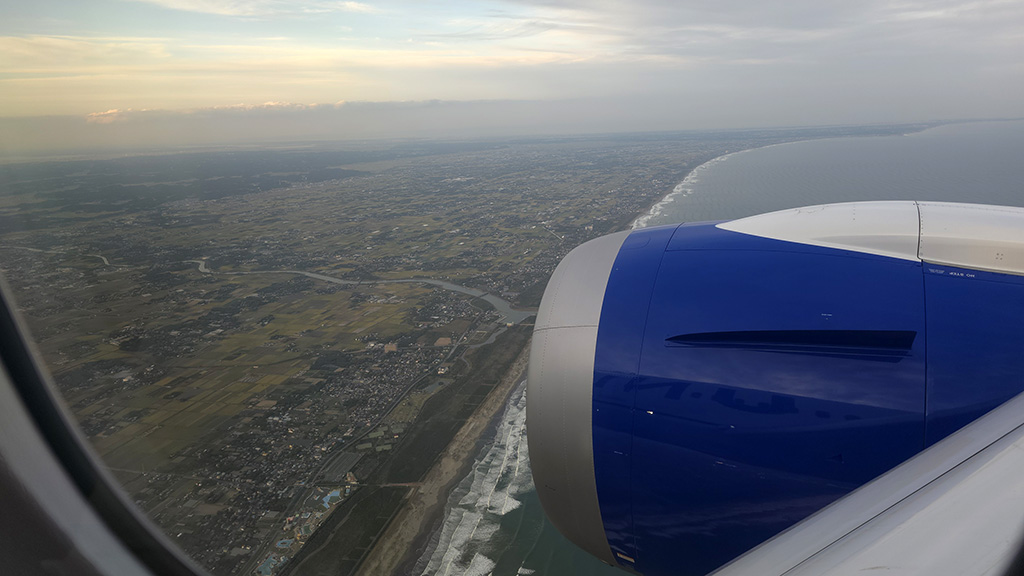
Not long afterwards, we approached Japan’s coastline.

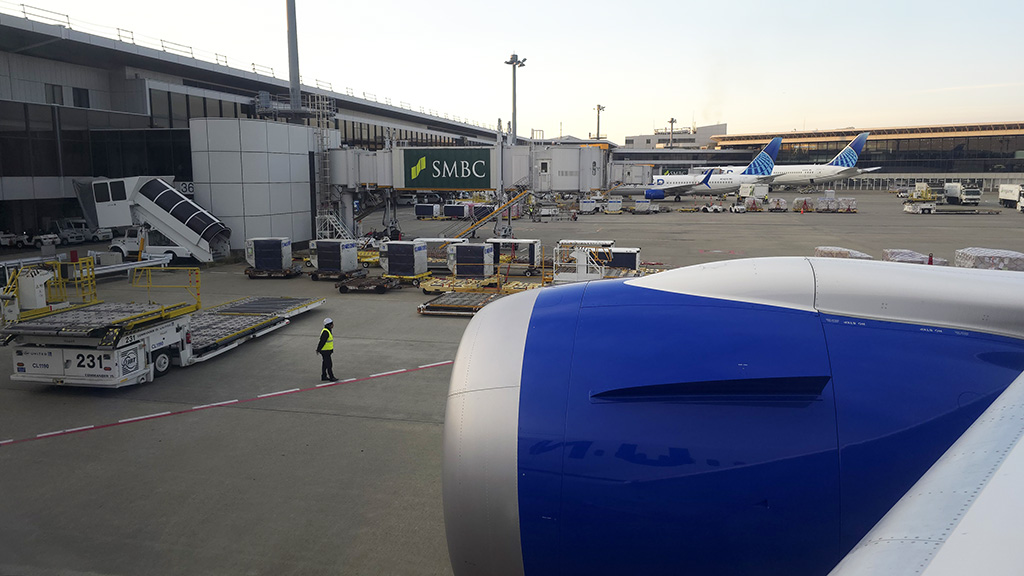
After just over 12 hours of total travel time (which was a little bit longer than scheduled due to needing to take a slightly inefficient flight path to avoid some weather events), we pulled into Gate 38 in Terminal 1 of Narita International Airport.

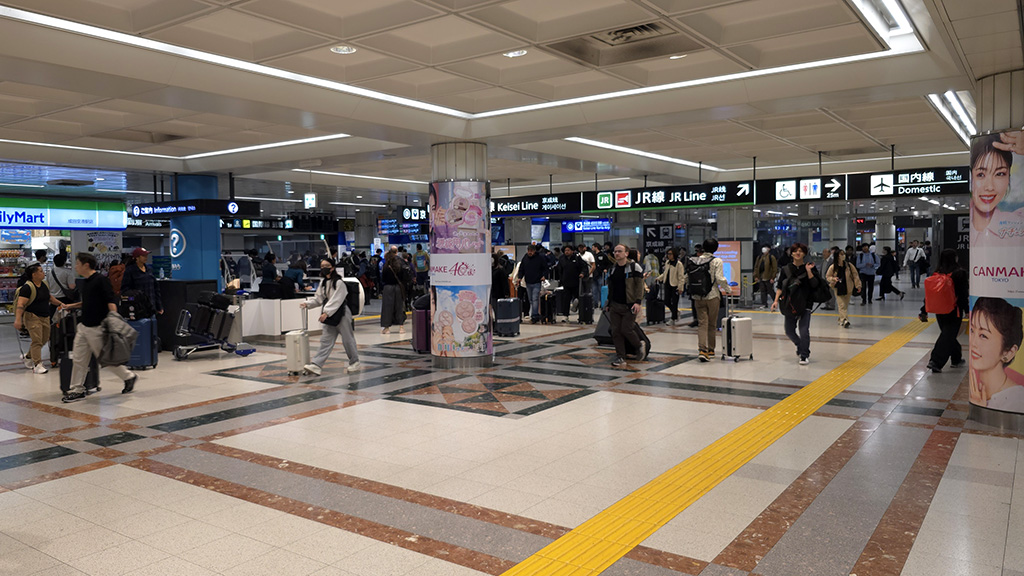
Being from the United States, I generally just drive everywhere in my pickup truck and don’t really take public transportation. The only time I’ve ever taken public transportation in the past is when I was still a student at the University of Wisconsin-Madison and sometimes took the bus between my apartment and the main university campus. Thus, when I went downstairs to the train station under Narita International Airport, it was quite an overwhelming experience.

After carefully reading all the signs and referring to Google Maps for instructions on which train line to take to get to my lodging in Tokyo, I boarded the Keisei Narita Skyaccess, which conveniently converted to the Asakusa Line without needing a transfer and dropped me off at the Higashi-Ginza Station only a couple hundred meters away from my hotel.

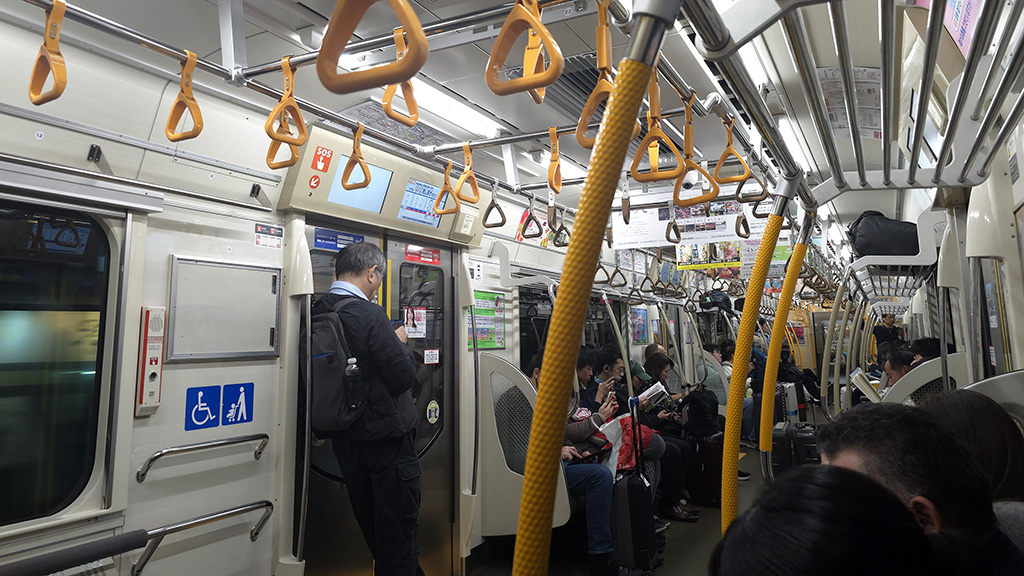
At first, the train wasn’t too crowded, but as we got closer to Tokyo, the cabin filled up pretty quickly and ended up fairly packed due to me having landed right around rush hour. Regardless, I still managed to keep a careful eye on the location of the train and got off at the right stop without incident.

As for the flight on United Polaris, it wasn’t bad, but I think it was literally leagues behind the service offered on the flights I took on EVA Air, both outbound from Los Angeles to Taoyuan to Hanoi, as well as inbound from Hanoi to Taoyuan to Los Angeles. I had an American flight attendant tending to my area of the United Polaris cabin, and she didn’t really seem particularly attentive or caring and mostly just had a “I’m just doing my job” kind of attitude. Once in a while, the Japanese flight attendants would come to my area to help out and make up for shortcomings because it seemed like the American one couldn’t really keep up with the level of service that the Japanese flight attendants wanted to provide.

As I mentioned at the beginning of this blog post, I’m already back in the United States, and I already experienced the All Nippon Airways counterpart to this flight back from Narita to Los Angeles… but I won’t spoil it yet and I will continue posting things in chronological order. Check back in a few days—I’ll be pumping out blog posts soon.


—§—


Hello, EVA Air flights 398 and 12 from Hanoi to Taoyuan to Los Angeles

My time in Hà Nội, Việt Nam has come to an end. I gave some more context about the trip in my blog post reviewing my EVA Air flights outbound from Los Angeles to Hanoi, but long story short, this was a good opportunity for me to go be a tourist in Asia for the first time while also overlapping it with checking out “Catch the Cash” by PK Gaming, the very first community-run in-person esports event for my company Tempo’s video game The Bazaar.

I’ve published several blog posts during my trip showing some of what I’ve been doing—learning about Vietnamese history at the Ho Chi Minh Museum, petting animals at the Baby Elephant Animal Park, looking at art in the Vincom Center for Contemporary Art, immersing myself in the lights of the HLC Starry Sky Art Museum, walking around inside the Vincom Mega Mall Royal City, and taking a serene stroll through the JW Marriott Lakeside Gardens, to name a handful. I also did some general sightseeing in the Ba Đình and West Lake Districts of Hanoi.

Although I’m usually a spontaneous and unstructured one-way flight kind of traveler, I booked a round-trip flight for this itinerary, not only because my Vietnamese travel visa prompted me for return flight details, but also because international round-trips end up algorithmically costing materially less than the identical flights booked as two one-ways. Because of that, I had my flights out of Hanoi already set—EVA Air flight 398 from Nội Bài International Airport in Hanoi to Taiwan Taoyuan International Airport servicing the Greater Taipei Area, and then EVA Air flight 12 from Taiwan Taoyuan International Airport to Los Angeles International Airport—the exact mirror flights that I took on my way to Hanoi.

Thanks to the concierge team at the JW Marriott Hotel Hanoi, I had a transport car waiting for me the morning of my day of departure. I had generally just used Grab to call rideshare services throughout my stay in Hanoi, but I figured I wanted to be extra safe in case there were issues with Grab (I had read some horror stories online of people trying to call a ride but having drivers chain-cancel on them), so that I wouldn’t miss my flight, be stranded in Vietnam, and accidentally overstay my visa. After about 40 minutes, we made it to Nội Bài International Airport and I was dropped off at departures.

After a very smooth, quick, and uneventful check-in and security process, I walked into the terminal and went upstairs to enter the SH Premium Lounge. Apparently the “SH” used to stand for Sông Hồng, which means “Red River” in Vietnamese, but at some point, they changed it to stand for “Service from the Heart” instead. … I think I like Sông Hồng better.

As boarding time approached and I was about to leave the lounge, I saw a sign by the exit saying that EVA Air flight 398 was delayed by about an hour. However, when I checked the EVA Air website, there was no such update posted online. In my paranoid fear of somehow missing my flight and being stranded in Vietnam on a visa expiring that same day, I still made my way downstairs to the gate to make absolute certain that I would not be left behind. Once I got there, I was able to confirm that my flight was indeed delayed.

To apologize for the delay, a staff member brought over a ton of complementary meal kits to distribute to the affected passengers. I had just finished eating a meal and a half’s worth of free food at the airport lounge, so I passed on the meal and just accepted a bottle of water, in hopes that a different, extra hungry person would be able to take two meals instead. In my past decade of very frequent travel, I have never seen a United States airline do this, so it was a very pleasant surprise seeing this gesture from EVA Air.

The delay was extended by a bit and I ended up having to wait at the gate for about an hour and a half, but eventually, our Boeing 777-300ER aircraft arrived and was ready for boarding.

I mentioned this in the blog post that I wrote about my outbound flight, but I feel the need to mention this again. Yes, I flew business class for these flights. However, I paid out-of-pocket for my business class ticket. Even though I went to an event related to Tempo, I am not going on luxury trips and expensing the cost of them to Tempo. The company’s revenue is being reinvested back into further development of The Bazaar.

I settled into seat 11K in the final row of the business class cabin, which I selected because I think that it’s the seat that gives the most peace and privacy.

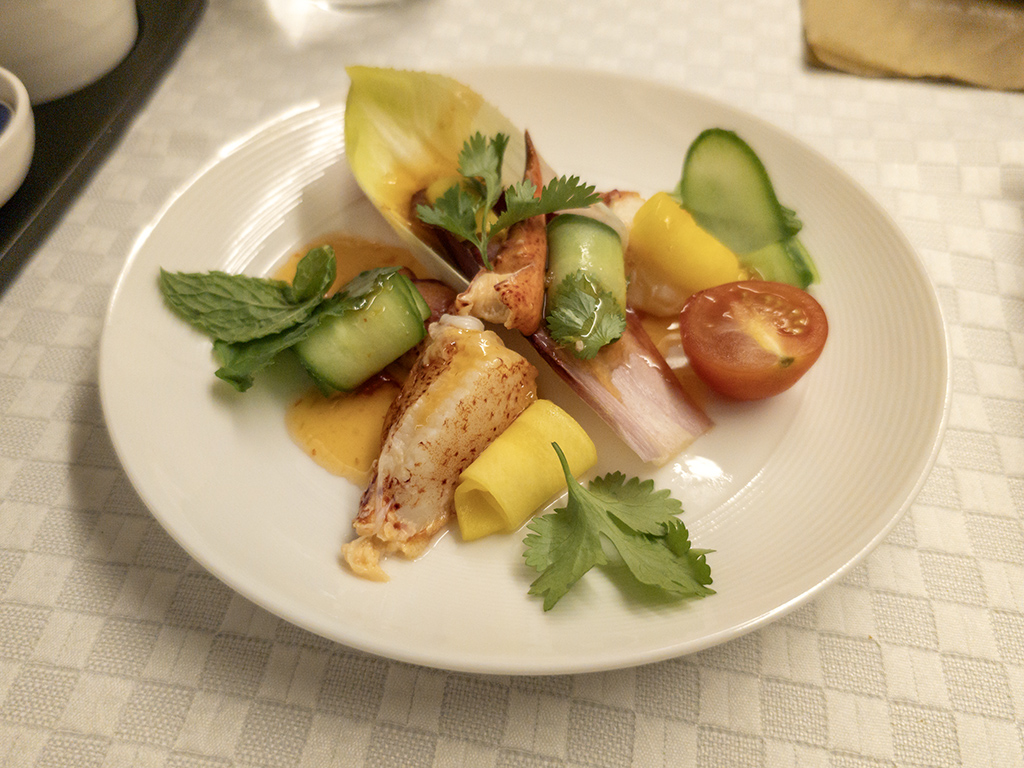
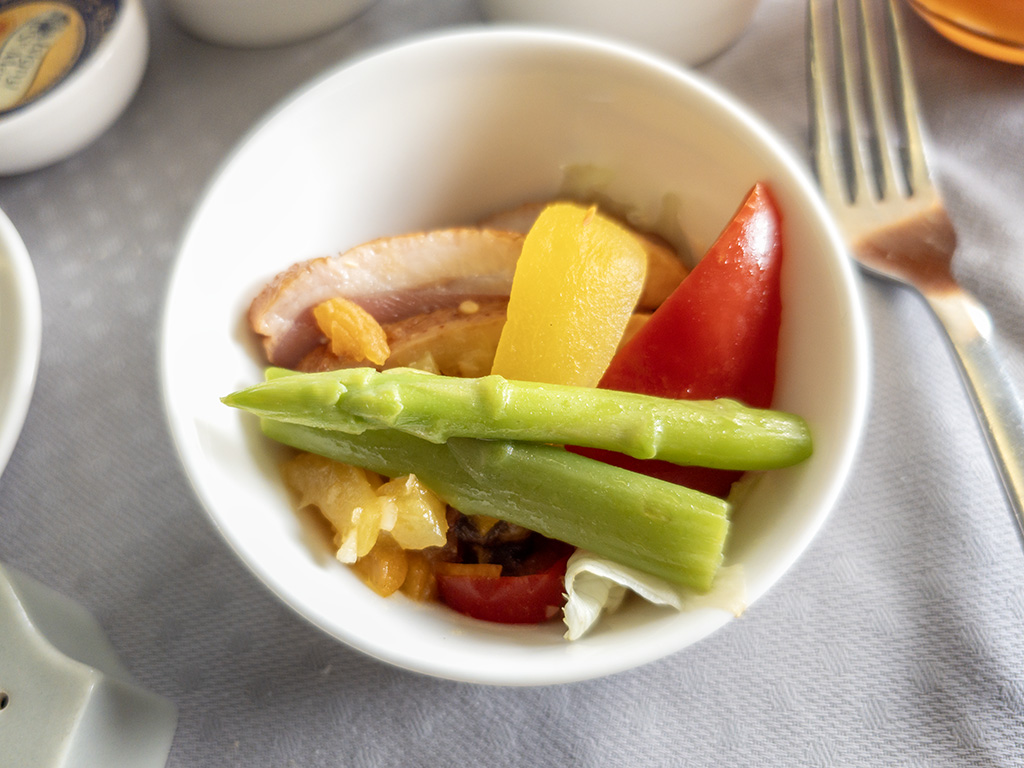
Because this was a relatively shorter flight, meal service started relatively promptly. As my hors d’oeuvre, I received a smoked duck, fruit, and vegetable salad.

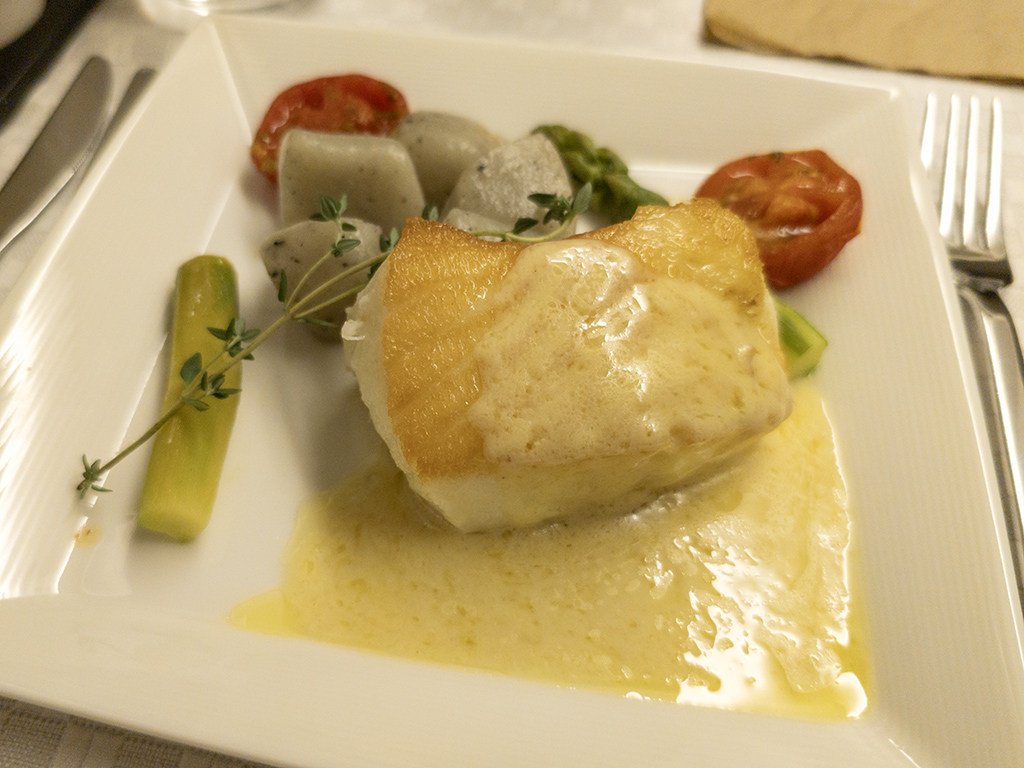
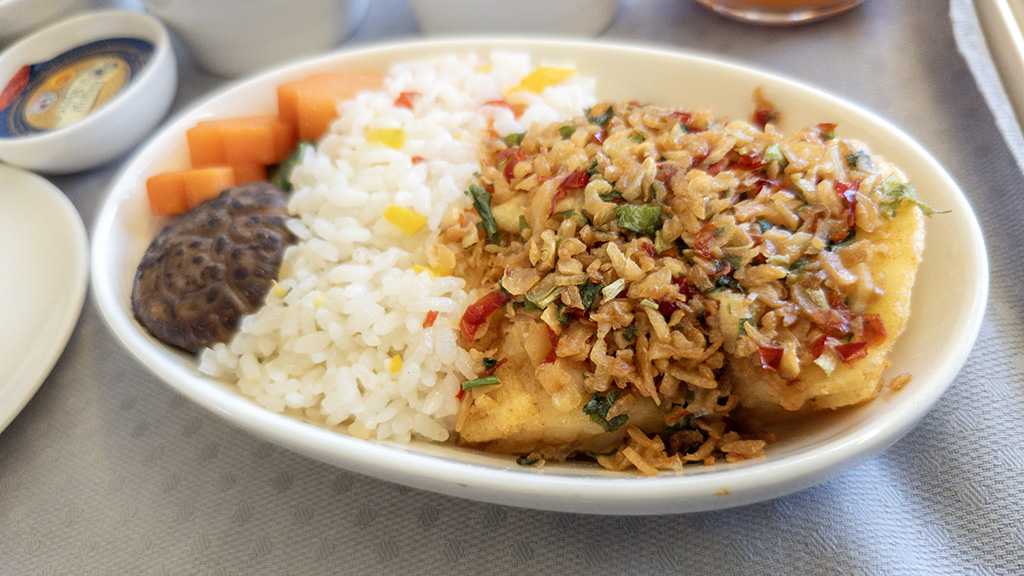
For my main entrée, I opted for wok-fried Nile perch topped with crispy garlic and capsicums prepared Hong Kong style, with a side of rice and vegetables.

I picked two beverages to go along with my meal. From their mocktail menu, I ordered a non-alcoholic Amber Dream, made from apple juice, ginger ale, and cranberry juice. I also got a glass of Vigor Dong Shih (VDS) mixed carrot and fruit juice.

One thing I liked about Vietnam was that their juice selection includes a lot of options that are not available in the United States. I was glad to see that the trend continued into Taiwan; this carrot and fruit juice was probably one of the best juices I’ve ever had.

As a palate cleanser after my fish entrée, I received a cup of fresh fruit.

Finally, for dessert, the flight attendants distributed chocolate apricot cake.

After finishing my meal, I put in my earbuds so I could listen to music and relax for the remainder of the flight.

After a little over two and a half hours of travel time, we arrived at our gate at Taiwan Taoyuan International Airport.

Because this is the same airport in which I had my previous layover, I was more familiar with the layout and didn’t walk around aimlessly in circles this time. I went straight upstairs to the lounge area, passing by the Oriental Club Lounge that I was previously in on my way to Hanoi. To be clear, there was nothing bad about the Oriental Club Lounge; I just wanted to try a different lounge this time to expand the breadth of my experiences.

Because my flight from Hanoi to Taoyuan was delayed, my layover wasn’t quite as long as it would have been, but I still had about an hour to relax and get some snacks in the EVA Air: The Infinity lounge.

With about half an hour to spare before departure, I made my way downstairs to the gate. After a smooth and uneventful boarding process, I sat down in seat 11A, again in the last row of the business class cabin.

The sun had already set over an hour prior to the departure of this flight; it was on the tail end of astronomical twilight, and was already pretty dark outside. Presumably to match the outdoors, the cabin lights were dimmed for takeoff, showing the sparkling ceiling lights resembling a starry night sky.

For my meal, I picked the “celebrity chef’s banquet,” a multi-course tasting menu designed by Wen-Kuang Hsu, an executive chef with a Michelin guide recommendation.

The prelude came with two small bites: a spicy sausage and mushroom tomato tart, and smoked salmon with avocado mousse.

The starter consisted of lotus root and okra with Sichuan pepper sauce, scallop and vegetables with passion fruit sauce, and Chaozhou-style crab aspic.

Next up was chicken soup with apple, dried scallop, and white jelly ear.

The first of the main course was braised abalone with shiitake mushroom in soy and oyster sauce.

The second plate of the main course was steamed lotus leaf rice with braised pork belly and preserved mustard greens.

For the sweets course (which is different than dessert), I was served a sakura blossom encased in Aiyu jelly.

And finally, for dessert, I got some ice cream. The menu said that this was Häagen-Dazs, but it was served in its own miniature glass bowl, so I guess I technically can’t fully confirm what brand it was.

After this hearty and filling meal, I reclined back in my lie-flat seat, replied to some emails and messages (because, by this point, it was already the morning in the Pacific time zone and people were waking up in the United States), and got a solid seven and a half hours of surprisingly restful sleep.

As I was about to complete my eighth hour of sleep, the cabin lights gently illuminated with an orange, red, and blue hue of colors that I imagine were designed to emulate a natural sunrise. This was actually quite pleasant, and I appreciated EVA Air’s nice touch to try and encourage passengers’ bodies to find a new circadian rhythm for the new continent.

To help me wake up, my flight attendant delivered a caffè latte with a crystallized brown sugar stick. I don’t get affected by caffeine so this didn’t quite work as she intended, but I was already pretty well-rested from my session of sleep anyway, and it was a nice warm beverage to sip on while meal service was being prepared.

For breakfast, I was served Chinese plain congee with wok-fried diced chicken and cashew nuts, green bean frittata, and other traditional delicatessens.

To wrap up my meal, I was served a plate of fresh fruit.

After about twelve and a half hours, we approached Los Angeles County. We were approaching eastbound, but our runway faced westbound, so we did a loop around the airport first; during the loop out, I looked out my window and snapped a photograph of the Sawtelle, Westwood, and Century City areas.

We landed about half an hour later than scheduled due to the flight path we had to take over the Pacific Ocean, but I obviously didn’t mind the delay, considering the relative comfort of business class seats.

Overall, I’d consider my trip to Vietnam to be pretty successful. I had originally been hesitant to travel by myself to a country where English is not spoken as the primary language. However, things went a lot more smoothly than I expected, and the language barrier didn’t really cause much of an issue. All the staff in my hotel spoke English, which obviously made things easier, but another major factor that helped a lot was just the advancement of technology. With mobile apps for rideshare and translation, I felt like I was able to handle pretty much any situation, albeit with a little bit of patience.

I had been eyeing a trip to Japan and Singapore at some point in the future, but I did not seize my latest opportunity to go to Japan because I wanted to wait until I was able to travel together with someone reliable, and preferably someone who spoke at least some amount of Japanese, who I could depend on if something were to go wrong. However, considering how well my solo trip to Vietnam went, basically all of my reservations have been relieved and I am far more inclined to take more spontaneous international trips now.

And with that, here is my updated travel map:

I made this map somewhere around a decade ago now, and as you can probably clearly tell, it was designed specifically to keep track of how many states I’ve been to in my home country of the United States of America. I obviously need to update this framework at some point, but until I find a chance to do that, I guess this will have to suffice.


—§—


Hello, EVA Air flights 15 and 397 from Los Angeles to Taoyuan to Hanoi

I mentioned this a few times in previous blog posts, but the reason I was still around Los Angeles County, even though I hate it and avoid it as much as I can, is because I had an international flight scheduled out of Los Angeles International Airport. My home airport of Harry Reid International Airport in the Las Vegas Valley has great coverage for many destinations, but for the particular route I was flying, LAX worked a bit better.

So where exactly am I going? Hà Nội, Việt Nam.

Yes, that does indeed sound like a pretty random place, especially for someone like me who generally stays within the United States and doesn’t travel internationally much, but there is a reason for going to Hà Nội in particular—my company Tempo’s video game The Bazaar is having its very first community-run in-person esports event at PK Gaming’s facility in the Ngoại Giao Đoàn neighborhood.

However, I’m not going for work, per se. Even though it’s my company’s game, I’m basically attending the event as a tourist (and then also being a tourist in other areas of Hà Nội while I’m there). I work on the corporate side of Tempo and pretty much never directly touch the development of The Bazaar itself, and have gone as far as to have never even played a single round of The Bazaar before, so I am quite literally just going into this as simply a spectator.

With that being said, coordinating this trip to overlap with an event for The Bazaar made the trip feel more meaningful, as opposed to arbitrarily picking a completely random city and country in Asia to visit for no underlying reason. Thus, late last night, I made my way over to LAX for my very long travel day.

(As you will immediately notice, yes, I did indeed fly business class for these flights. However, to be clear, I paid out-of-pocket for my business class ticket. Before anyone asks, no, I am not going on luxury trips and expensing it to Tempo. The company’s revenue is being reinvested back into further development of The Bazaar and is not being used to sponsor my premium travel itineraries.)

My night started at the Tom Bradley International Terminal with a smooth and uneventful check-in process due to having no checked baggage and being an enrollee of TSA PreCheck. After making my way airside, I navigated my way to the Star Alliance Lounge, the designated lounge for EVA Air due to EVA not having a dedicated lounge at LAX.

This lounge had an outdoor area with fire pits and a nice view of the tarmac. As far as I can recall, I think this is the one and only lounge I’ve ever been in that had an outdoor portion where you could get some fresh outside air.

The lounge also had a balcony area that overlooked the rest of the TBIT. This basically captures my favorite part about this lounge—it had so many different kinds of environments (even including a dim theater room) that pretty much anyone could have a comfortable time at the lounge, no matter what their preferences are.

I opted to relax in the balcony area while eating some food and people-watching.

The convenient thing about being in a Star Alliance lounge while flying on a Star Alliance airline was that they did announcements for Star Alliance flights, including one for mine. Once boarding time was imminent, they notified the lounge-goers that it was now time to start heading to the boarding gate.

After getting my travel visa verified and embarking the Boeing 777-300ER, I walked over to my seat, 11K. I picked this seat because it’s the last seat in the corner of the business class cabin, and there is usually a curtain that separates the business class and premium economy cabins, so seats 11A and 11K end up being the most private seats on the aircraft.

To make things even more private for me on this flight, I got lucky enough that all three seats adjacent to mine were empty.

While the flight attendants were preparing passenger meals, we were given a hot towel, beverage, and snack to keep us occupied while we wait. For my drink, I asked for a Coca-Cola Zero Sugar.

My flight attendant, whose name is Josie, came back with a can from the “Share a Coke with” series that had “Josie 麻吉麻” printed on the front. I’m not sure if this was a remarkable coincidence or not, but if it was intentionally arranged so that your Coca-Cola can has the name of your flight attendant on it, that’s some pretty impressive attention to detail.

For my appetizer, I received a lobster salad. The lobster was fresh, there was a satisfying ratio of seafood to vegetables, and everything was covered in a delicious sauce that had a perfect balance of spiciness and sweetness.

My main entrée was Chilean sea bass covered in a butter sauce and with a side of truffle gnocchi, asparagus, and tomatoes. The fish was extremely tender and flaky, and was comparable to something I’d find at a high-end seafood restaurant.

As a refresher, I got a small fruit plate containing cantaloupe, orange, and grapes.

Dessert was a lemon tart atop a berry sauce. This was the least remarkable part of the meal, as it just tasted like a generic pastry, but I still enjoyed it.

Shortly after meal service was over, they cleared everyone’s tables and dimmed the lights so we could go to sleep. The ceiling was illuminated with small lights resembling a starry night sky, which was a nice touch.

The lie-flat seat wasn’t the most comfortable I’ve ever felt, but they offered a mattress pad which was very helpful, and was still more than enough for a good night’s rest. I actually managed to get a nearly full eight hours of sleep, which I wasn’t expecting.

With just a couple hours left in the flight, the flight attendants started breakfast service. Josie brought me a cup of coffee with brown sugar to try and help me wake up (even though caffeine doesn’t affect me) (but I did not tell her that and just enjoyed the caffè latte).

For breakfast, I had Chinese plain congee with a side of cold delicatessens, black beans, pan-fried egg with shrimp, and braised pork ribs.

This was probably my all-time favorite airline meal. It wasn’t as delicious as the Chilean sea bass from earlier, but for some reason, this congee tasted very nostalgic, which is really funny, because I never had Chinese-style congee as a kid (my parents are Korean, not Chinese). This was an incredibly cozy-feeling meal, and it made me feel warm inside, not just from the warmth of the congee, but also from the sense of comfort that this flavor profile mysteriously brought to me.

For dessert, I received another fruit plate, this time with a bit more artistic presentation.

We soon flew over Taipei and approached the Taiwan Taoyuan International Airport.

After deplaning, I made my way over to the Oriental Club Lounge to wait out my layover until the second leg of my trip.

I wanted to be very cautious and not accidentally leave airside so I wouldn’t have to go through security again, and in my diligence, I happened to inadvertently avoid the area I needed to traverse through to get to the lounge. It was fine though; I walked two big circles around the airport for no reason, but at least I got my exercise in after the nearly 13-hour flight from Los Angeles.

The Oriental Club Lounge is apparently an award-winning lounge. It wasn’t the most impressive lounge I’ve ever seen, but it was definitely much better than average. I was very full by this point (and knew I had another in-flight meal coming up), so I opted not to get any food; instead, I just sipped on some Coca-Cola Zero throughout my stay in order to maintain my hydration.

With about 40 minutes to go until departure, I made my way to gate B7 to board my connecting flight. Unfortunately, there was a bit of a boarding delay, so I had to stand there for about half an hour in the unusually high heat and humidity.

Eventually, we made it on the plane, which was another Boeing 777-300ER. We had a different painting hung up at the front of the business class cabin on this aircraft, which made me curious how many people there are out there who travel on EVA Air so frequently that they keep track of which paintings they’ve seen and collect photographs of them as if they’re trading cards.

Here’s a view of TPE out my window. My plane didn’t have any special livery, but the plane parked at the neighboring gate had some Sanrio characters on it.

Not long after take-off, meal service began. As our appetizer, we received a shrimp cocktail.

For my main entrée, I picked Chef Huang Ching-Biao’s steamed pork ribs with chestnuts and vegetables atop fried Cantonese noodles. On the side, I had a piece of garlic bread. The pork ribs were unbelievably tender and took “melt in your mouth” and “fall right off the bone” to a whole new level.

This was just as delicious as the Chilean sea bass, and the three meals that I had on EVA Air landed squarely as the top three best in-flight meals I’ve ever had.

For dessert, I got another lemon tart, but this one was slightly different. Again, this tasted pretty close to a generic well-made pastry.

For my beverage, I ordered a non-alcoholic drink from their “mocktail” menu—a pineapple, cranberry, and ginger ale cocktail.

After finishing all my food, I reclined back, put in my earbuds, listened to music, and relaxed for the remainder of the flight.

After a little over three hours on board, we touched down at Nội Bài International Airport. Upon landing and deplaning, I stood in line to get through immigrations, which was smooth and uneventful. When passing through customs, I stood in the “goods to declare” line so that I could disclose the vitamins and supplements I had brought with me, but after sending my backpack and luggage through an x-ray machine, the customs officer waved me through without further questioning.

I am now at my hotel and concluded the longest travel day I’ve ever had in my life. If you include the time I spent ridesharing to LAX, waiting in the lounge, flying to TPE, waiting in the lounge some more, flying to HAN, standing in line, and ridesharing to my hotel, my overall total travel time clocked in at right around 26 hours.

That sounds like an excruciatingly long time, and I probably normally would have been completely exhausted, but upgrading myself to business class was absolutely worth it and made the day much easier. Thanks to the nice lounges and immaculate in-flight service on EVA Air, everything was made far more comfortable, and I feel well enough that I don’t think I will even need a rest and recovery day before getting started with my Hà Nội adventures.


—§—