One of the things that I found incredibly convenient during my trip to Tokyo was how easy the public transportation system was to use. Apart from one singular instance when my friend called a taxi and I just joined her, I exclusively took public transportation throughout the entire two weeks I was in Japan.
There are a lot of train stations and a lot of different train lines that have great coverage of the entire Tokyo Metropolis. However, obviously, not every train line goes to every station. Even though Ginza, the neighborhood I was staying in, has access to many train stations nearby, it doesn’t always have direct, non-transfer service to every single small station. Now, taking transfers isn’t that huge of a deal—the train stations are usually intuitive and easy enough to navigate that you can easily make transfers. With that being said, sometimes, if you just walk a kilometer or so (or less), you can make it to a different train station that does have direct service to Ginza.
On one of the days when I was out being a tourist, I faced this exact same scenario where I could take a ride from the closest train station, transfer part-way to Ginza, then take a different line to my destination… or, I could walk a bit and take a direct line instead. Because of how nice it is to just walk around and sightsee in Tokyo, I opted to walk to a different, further-away train station instead.
On my way there, I noticed an area where people were going through a security checkpoint. I figured that whatever was on the other side was important enough that it needed security, so I spontaneously decided to stand in line. After a short wait, I made it to some metal detectors, so I emptied my pockets and walked through. After passing the checkpoint and emerging into a little opening, I was guided to a ticket booth to purchase admission to the premises.
This is when I finally found out that the place I entered through was 迎賓館赤坂離宮 西門, which translates to the West Gate of the State Guest House, Akasaka Palace. Unfortunately, I arrived too close to closing and didn’t have enough time to go inside the building, but I was welcomed in to explore the outdoor garden area instead.
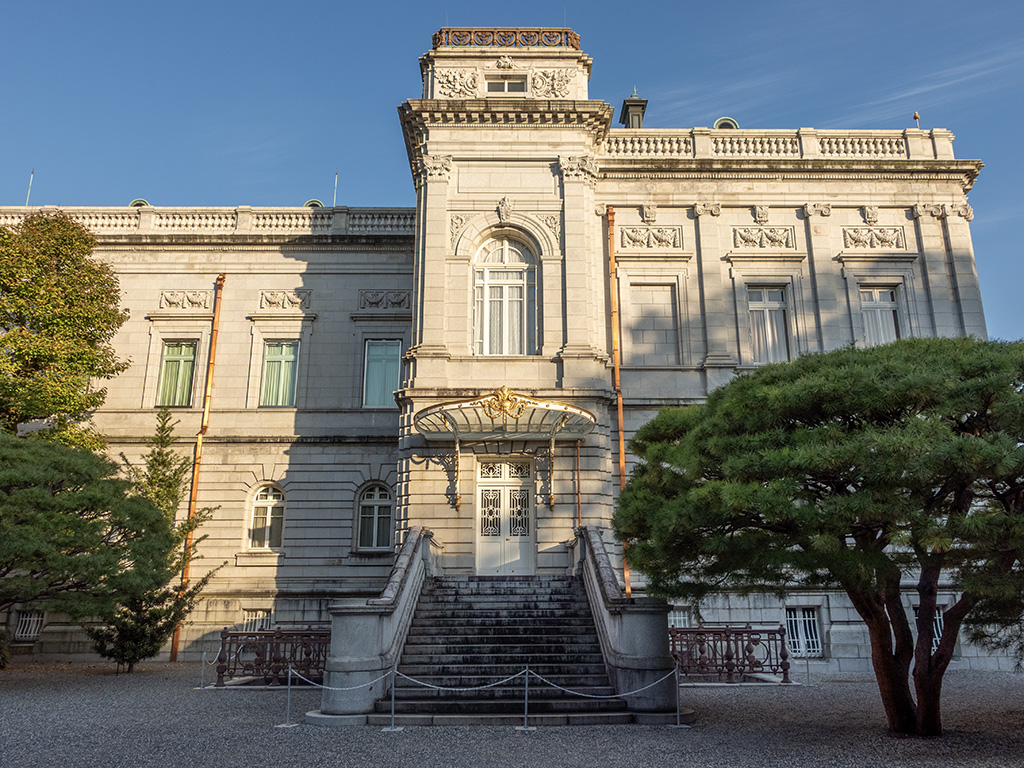
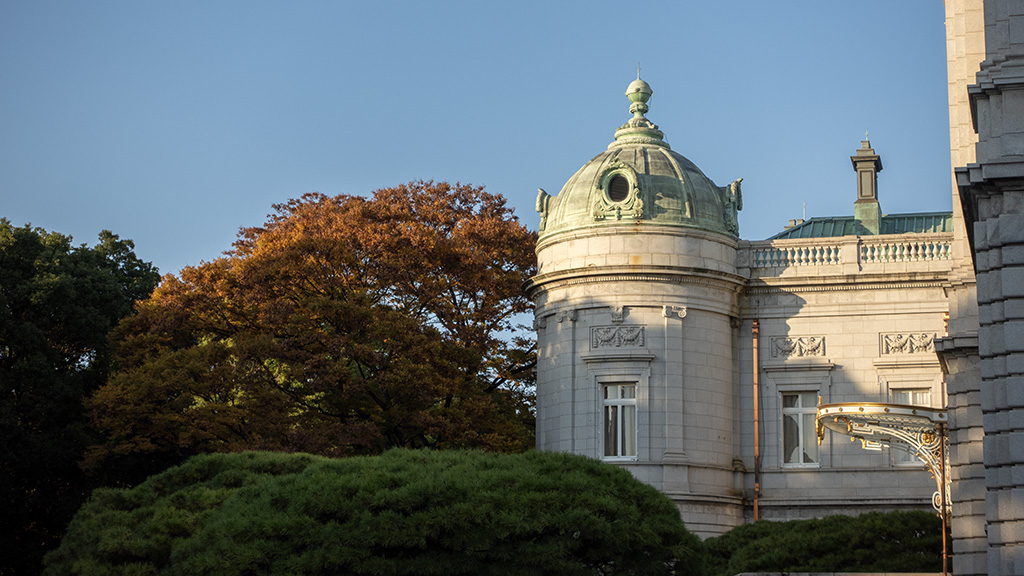
After I continued walking south alongside the western facade of the building, I saw the 迎賓館 主庭, which is the Main Garden of the State Guest House.
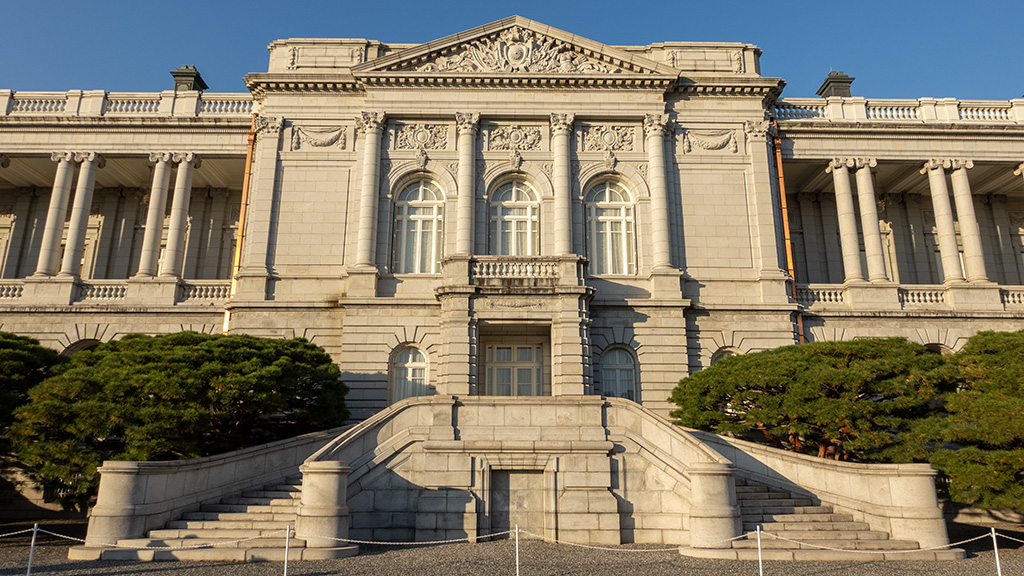
The main garden area allowed me to face northwards and capture a photograph of the south entrance to the state house.
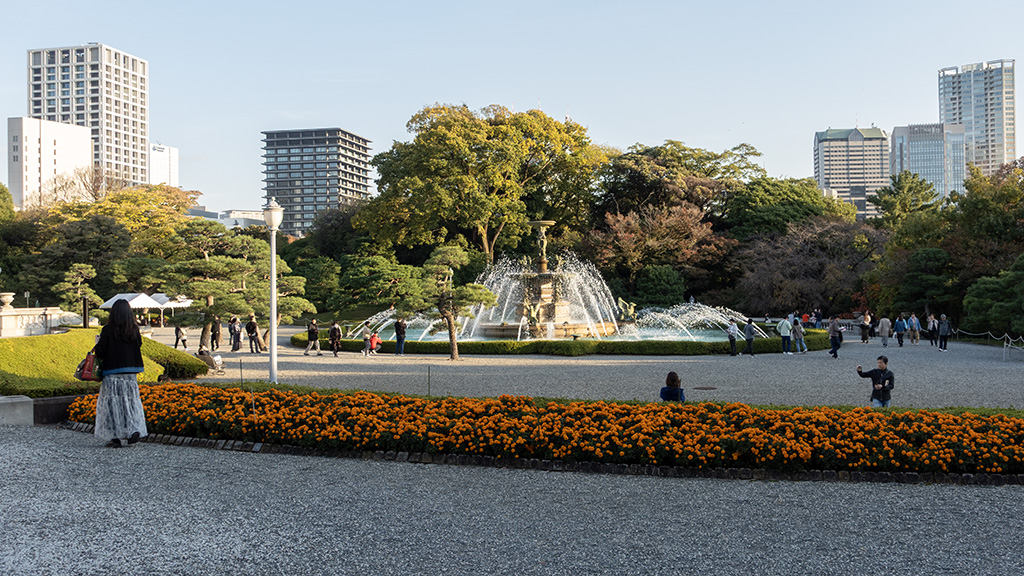
The main garden was a very popular spot for people to congregate, which made sense due to the nice fountain that was situated in the center.
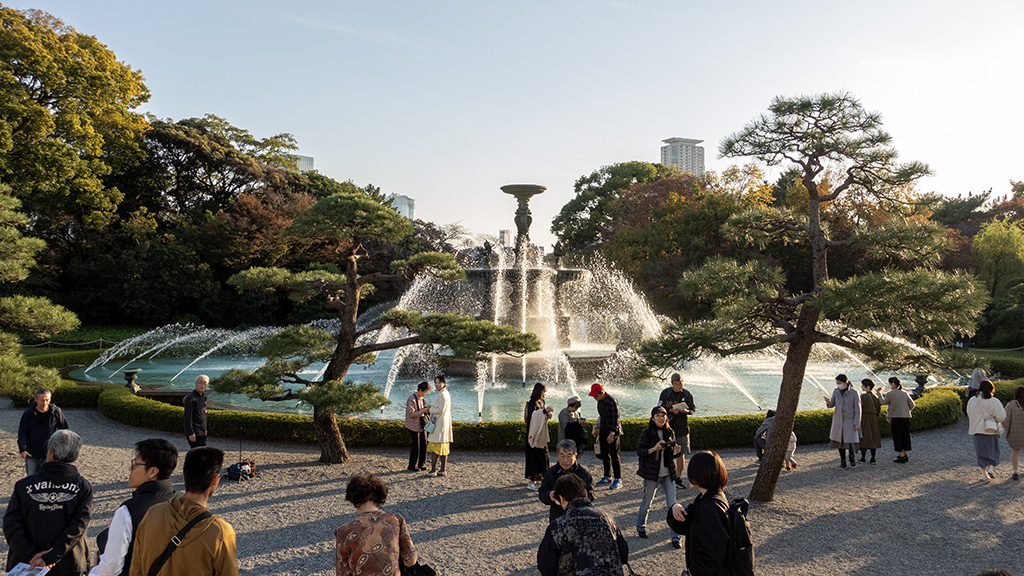

The fountain had statues of griffins and turtles surrounding the basin. The griffins were carrying a shield, which I imagine implies that they are defenders and protectors of the palace. As for the turtles, I am guessing they are supposed to symbolize longevity, wisdom, and stability.
It’s possible that they were apposed beside each other to visualize balance, as griffins are more active in their strategy compared to turtles. Or, due to the history and purpose of Akasaka Palace as it pertains to its usage in welcoming important guests as a diplomatic center, the griffin represents the West while the turtle represents the East. … Alternatively, I might just be overthinking all of it and there isn’t that deep of a meaning to it.


After capturing plenty of photos of the fountain, I continued walking eastbound and snapped one final picture of the southern facade of the building from an eastern vantage point.

I saw on the map that there was another building to the east—迎賓館赤坂離宮 和風別館「游心亭」, which is the “Yushintei” Japanese-style annex of the State Guest House, Akasaka Palace. I wanted to take a look at that as well, but the path to reach it was blocked off and the signage near the annex implied that a special tour reservation was required for entry.
So instead, I took a photograph of the flower bed nearby, then retraced my steps back to the west towards where I originally came in.

At the fork in the path, instead of going south, I continued east into the front yard. From here, I was able to get some nice photos of the northern side of the guest house.


There were some statues of birds atop some of the structural pillars of the guest house. They look similar to eagles, but they seem to be wearing little hats, so maybe my speculation isn’t entirely correct.
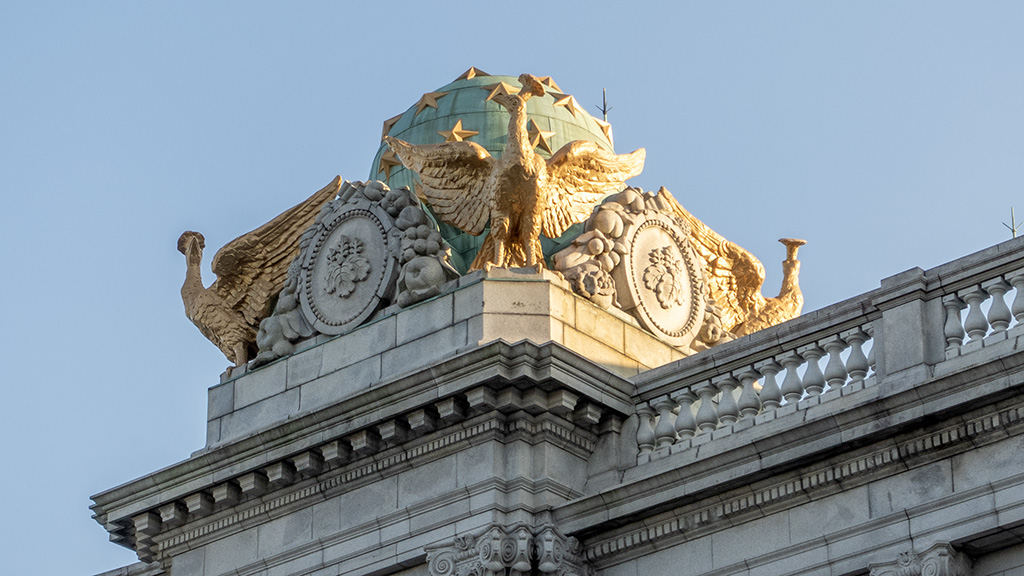
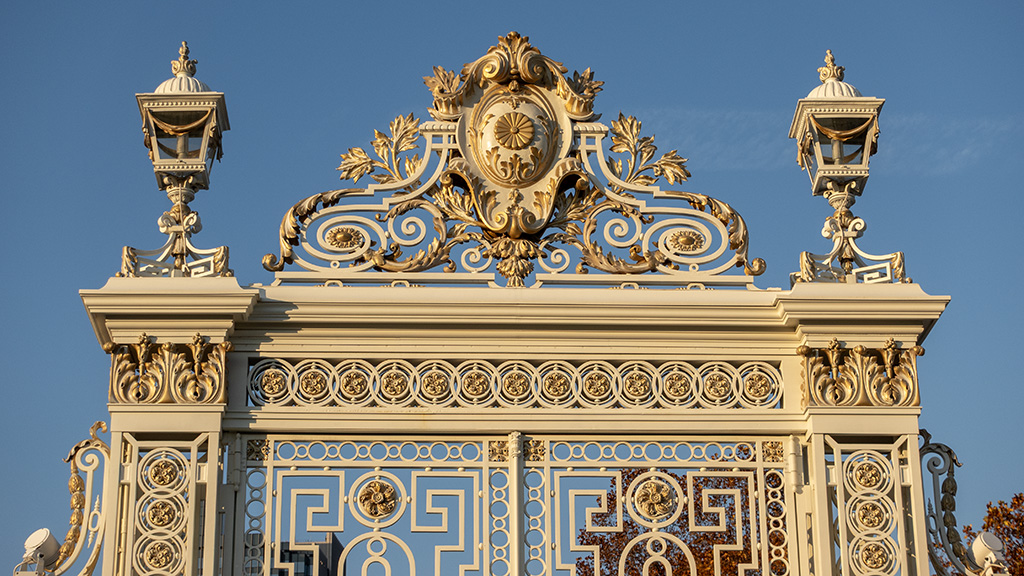
A lot of people were taking photographs near the front north entrance to the state house; after the group cleared up a bit, I walked up so I could get a close-up shot of the decorations adorning the gate.

The building had a section to its northwest and northeast that jutted out a bit; the doors in these sections had a white and gold canopy overhead that resembled the design of the gate.

There was another nice flower bed near the aforementioned door and steel awning.
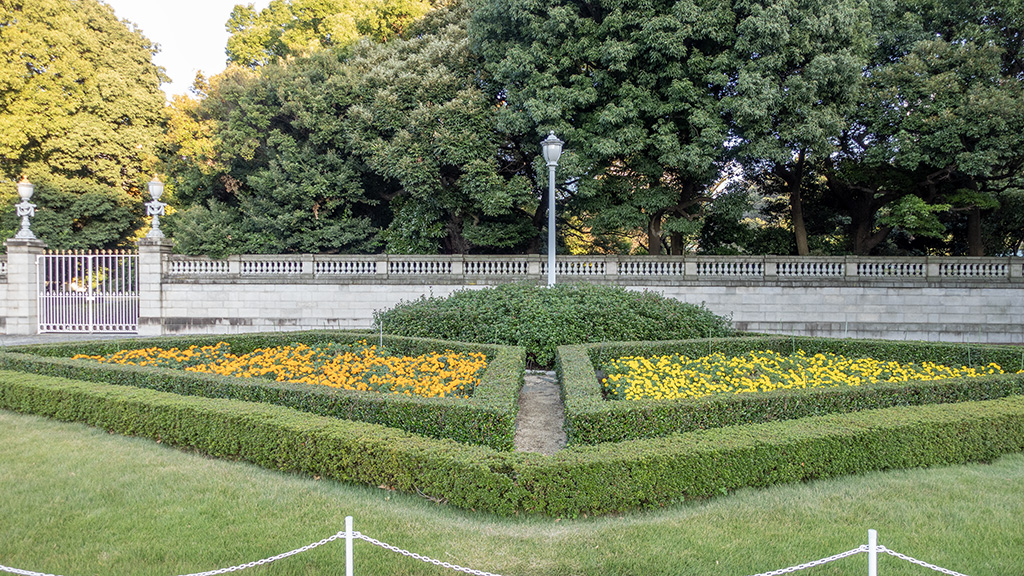
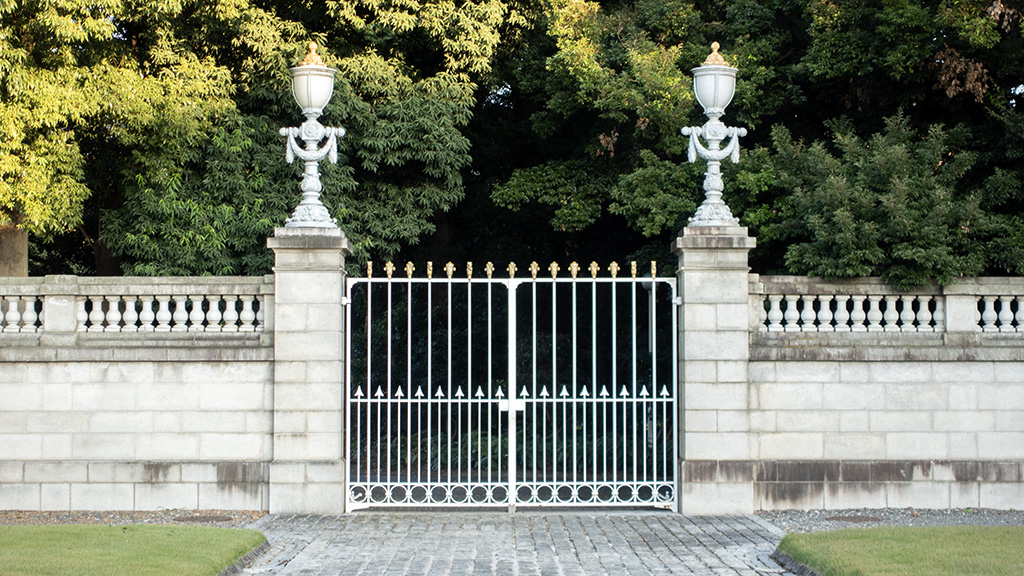
I noticed that there was a closed gate on the eastern side of the front yard, which I imagine is there to allow guests in from the East Gate, the opposite counterpart to the West Gate through which I had entered the property.
Here is another shot of the guest house’s north facade from a northeastern vantage point, with the setting sun peeking through above.

In this “courtyard” area (if you consider fences to be sufficient surroundings to define the boundaries of a courtyard), I saw on the map that there was a restaurant called パークカフ, or the Park Café. It seemed to take up the entire northern half of the stone-paved section of the front yard.

Food in Japan was so good that I had been taking basically every single chance possible to try different snacks and meals whenever the opportunity arose. However, I had just finished eating at this time, so I opted to pass on dining at the Park Café and just took a photograph of the umbrella tables instead, which were a nice shade of dark red.

On the opposite side of the café was another nice gate, this one being gold and light blue.
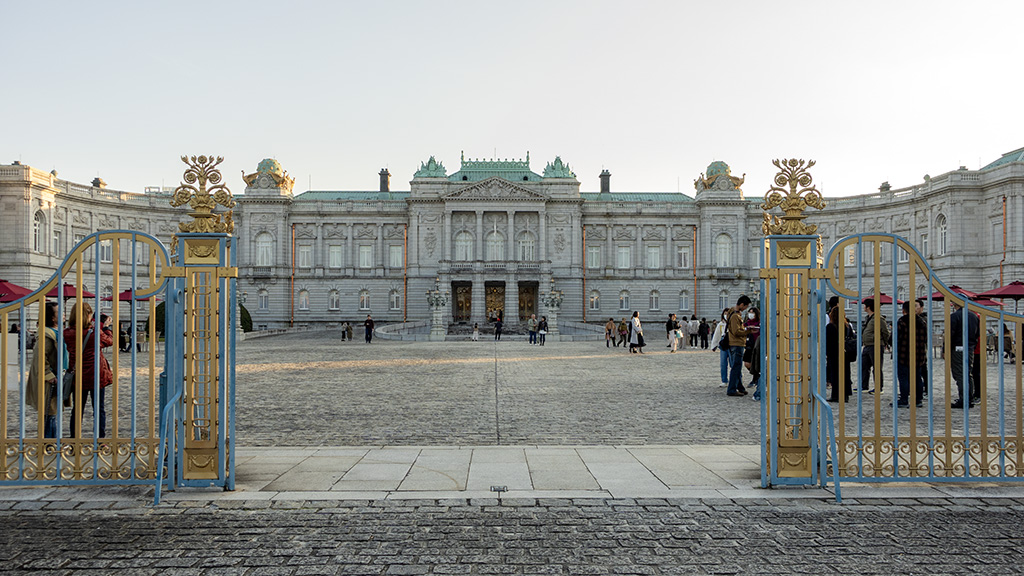
This is a photo I took at the threshold of the aforementioned gold and blue gate, facing north in the direction of 若葉東公園, or Wakaba East Park.
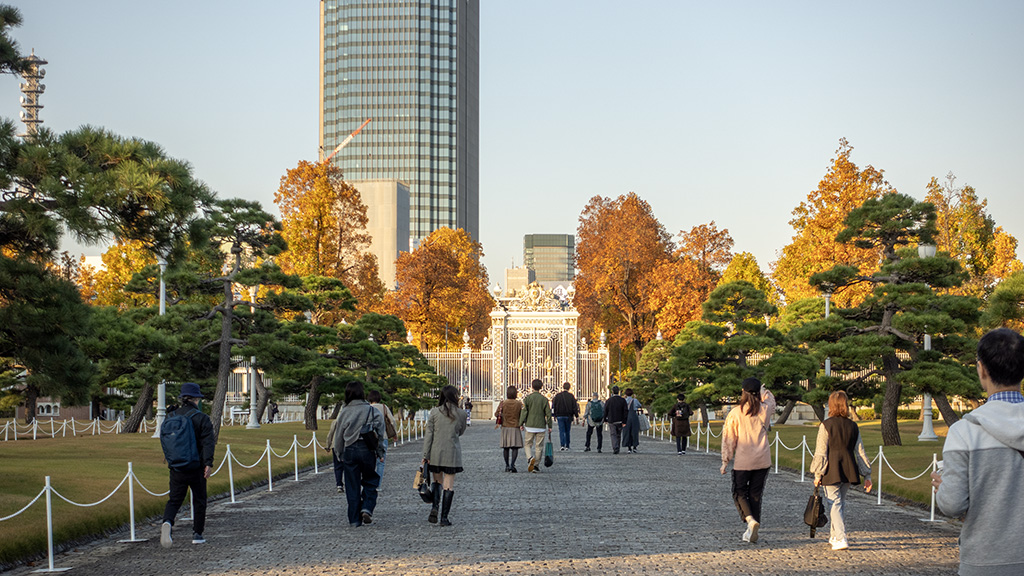
Continuing north, I saw another fountain and building to my east. It wasn’t labeled on the map, so I wasn’t able to figure out what it was, but considering that there was a guard patrolling the area, I deduced that it wasn’t open to the public.

After making it all the way north, I turned around and took one final shot of the state house.
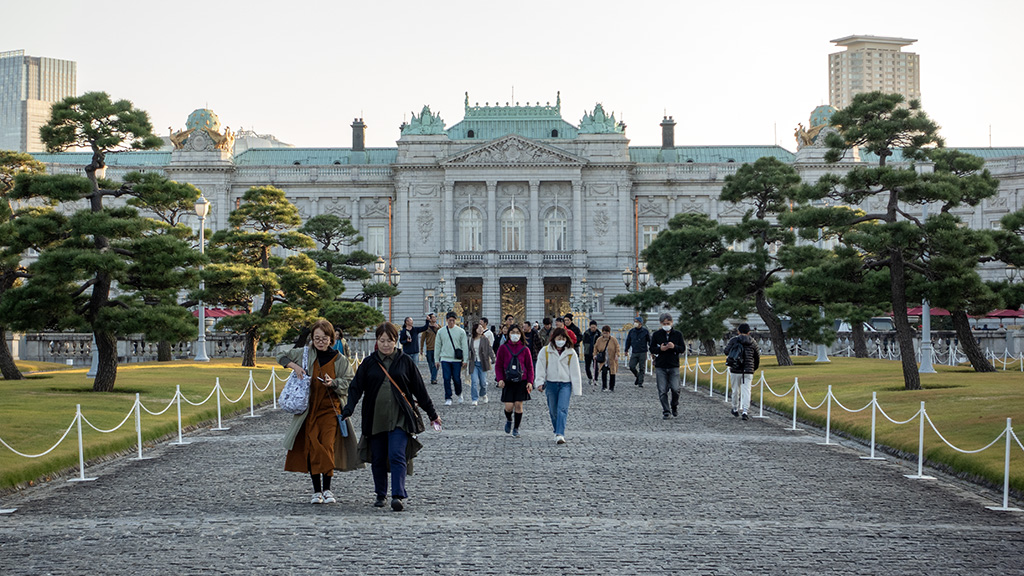
This is the gate protecting the northern entrance to the grounds, just north of 記念品販売所, which basically translates to the palace’s souvenir store.
I wanted to be diligent and make sure I saw everything I was allowed to see, so upon noticing that a side pathway near the souvenir store wasn’t blocked off, I doubled back about 50 meters. I saw the western equivalent of the fountain and building I saw from the east; this one didn’t have a patrolling guard, but it did have stanchions at the intersection of the footpath, so I didn’t take my chances to get closer.

As I was wrapping up my visit to Akasaka Palace, a plane flew overhead and left behind a condensation trail, so I seized the opportunity to juxtapose this street lantern in front of it and snap a photo.

And finally, this is the northern gate of the front yard, which was being used as an exit only, presumably due to the security checkpoints and ticket stations only being set up at the West Gate.

Admission to see all this was only 300円 for an adult ticket, which, as of today, is less than US$2.00. I’m very glad I randomly stumbled upon this during my walk to the train station; even though I didn’t get to tour inside the State Guest House, I think the sightseeing outside Akasaka Palace was still well worth it.