For the past three weeks, I’ve been blogging little by little about my trip to Hong Kong, a special administrative region of China.
For the past couple of years, I’ve been far more open to international travel outside the United States and Canada; this started with a trip to New Zealand, which was then followed by trips to Vietnam, Japan, and Mexico. I especially enjoyed my time in Asia, so when I had another opportunity to join some friends on a trip across the Pacific, I decided to tag along.
At first, we all flew into Hong Kong (albeit on separate flights—I took Starlux Airlines while my friends flew United). After exploring the region together for a little while, my friends continued their multi-city itinerary by heading into mainland China while I stayed behind to continue enjoying Hong Kong. I could’ve joined them into mainland China if I wanted to, but there are some extra logistics that I hadn’t finished taking care of ahead of time (such as applying for a visa, downloading Chinese mobile apps, and securing special network tools that would allow me to continue doing my USA-based work remotely), so I decided to postpone my introduction to mainland China for another time.
I published a handful of blog posts detailing various things I did and ate in Hong Kong; in case you missed them, here is a quick overview (in chronological order on the basis of when I published the blog post, not of when I actually did the activity):
Overall, I’d say that I had a very positive experience in Hong Kong. Compared to the two countries that I’d previously visited in Asia—Vietnam and Japan—Hong Kong felt like a balanced combination of the two. Vietnam was a bit too chaotic for my preference, while Japan seemed like it was operated and occupied by robots; Hong Kong was still nice and very efficient, but had enough of a human element to it such that it felt like there were real people there.
One thing that trolled me repeatedly throughout my trip was the currency conversion. When I first checked the exchange rate for United States dollars to Hong Kong dollars, I saw that one USD was about seven and a half HKD. Then my brain continued that train of thought by thinking that seven and a half is almost eight, and eight is almost ten, so I could take a shortcut and convert HKD to USD by moving the decimal point one spot to the left.
Spoiler: That is not a good way to handle the mental calculation of currency conversion from HKD to USD.
Taking my dinner at VEA as an example, I saw that the tasting menu was HK$2,280, so I went into it expecting to end the night having spent somewhere in the mid- to upper-200s USD after the non-alcoholic beverage pairing. Instead, my bill ended up being over US$400—more than US$100 above what I expected. Take that and then repeat it over and over again for two weeks, and I actually ended up spending a few thousand USD more in Hong Kong than I thought I did. (To be clear, I am not upset about this, and it is entirely my own fault that I inted myself with smooth-brain math.)
In terms of weather, I went into Hong Kong expecting a slightly milder version of what I experienced in Hanoi, Vietnam, but I’m glad to report back that it was nowhere near as bad. Of course, the obvious reason is because I went to Hanoi in August and Hong Kong in March; however, while Hanoi regularly reached a climate where I literally had difficulty breathing because of the humidity, Hong Kong just felt like a regular hot and humid Midwestern day in the United States. Miraculously, I only had a couple two-shower days in Hong Kong (while it was an ongoing and regular occurrence in Hanoi).
Before I start the overview of my flight, I do feel the need to share my one negative observation about Hong Kong, for the sake of transparency and balance. First, it needs a little bit of context.
I don’t understand people who film everything, especially in places where you’re meant to enjoy a special, gated event. For example, when I see professionally-filmed videos of concerts nowadays, it is a bit saddening to see so many people in the crowd being so focused on recording the show with their phone when there are literally multiple US$50,000+ cameras with US$10,000+ lenses already handling it. I am aware that plenty of people have valid reasons for doing so, such as filming a more personalized perspective for a friend who couldn’t make it… but it is difficult to believe that everyone has a really good reason to record the whole set, the entire time.
A lot of people in Hong Kong are like this, but for everything around them. It’s almost like half the population of Hong Kong is trying to become an online influencer. Everything is filmed, and if it can’t be filmed yet, then people stand in long lines to wait their turn to get their own recording of it. I have blogged for around two decades now, and if you look at the number of pictures I take and compare it to the number that everyone else around me takes, you’d think they’re all running their own blogs and social media platforms a hundred times bigger than mine.
As a side note, I also know I’m not the only one who feels this way, because in the most congested tourist areas, there are literally posted signs asking people not to put on performances in public for personal recording (i.e., telling them not to make TikToks in the middle of the path and get in others’ way).
Adjacent to this, many people seem to have their eyes completely glued to their phones. It seems like people don’t look up to see what’s around them anymore, and the most egregious ones don’t even care where they’re walking and just hope that others will navigate around them. Even worse, a subset of people randomly stop walking in the middle of the street, presumably a subset including those who are unable to text and walk at the same time, or are unable to veer off to the edge of the path so they’re not in anyone’s way. Even even worse, I saw a bunch of people give up on walking and just stop in the middle of the sidewalk for no reason… and they didn’t even have their phone out!
My point is, I wish people in Hong Kong would be more present and aware of their surroundings. Hong Kong is a nice place with a lot to see, and believe it or not, you can learn a lot just by people-watching and observing those around you. I heard that our newest, youngest generation is embracing a movement away from living in a digital world, and is instead aiming to shift towards “dumber” technology so they can connect more with the real world. That sounds like great news to me, and I look forward to seeing if that can have a positive impact on Hong Kong’s day-to-day environment.
And finally, one more positive thing before I go into my day of travel: the public transit system in Hong Kong is impeccable. I was very impressed at how accessible Tokyo was because of their transit, and somehow, Hong Kong seemed even better. It’s difficult to precisely articulate what I liked more about it, and it’s more of a feeling than it is a concrete thing. However, believe it or not, even with people in Hong Kong being more disorganized and less orderly than people in Japan, the Hong Kong system itself felt more efficient. I felt like transfers between different lines were easier, and there were fewer instances of everything happening at once and just being completely bombarded by information.
Partway through my stay, I transferred from the JW Marriott Hotel Hong Kong to the Park Lane Hong Kong, Autograph Collection. I’m not as intense of a hotel hopper as the people who check into a new hotel every single day, but I did still want to experience two different neighborhoods during my stay. The JW Marriott gave me a good idea of what the upscale shopping district was, while Park Lane was deeper into the bustling action.
This is what my room looked like at the Park Lane.
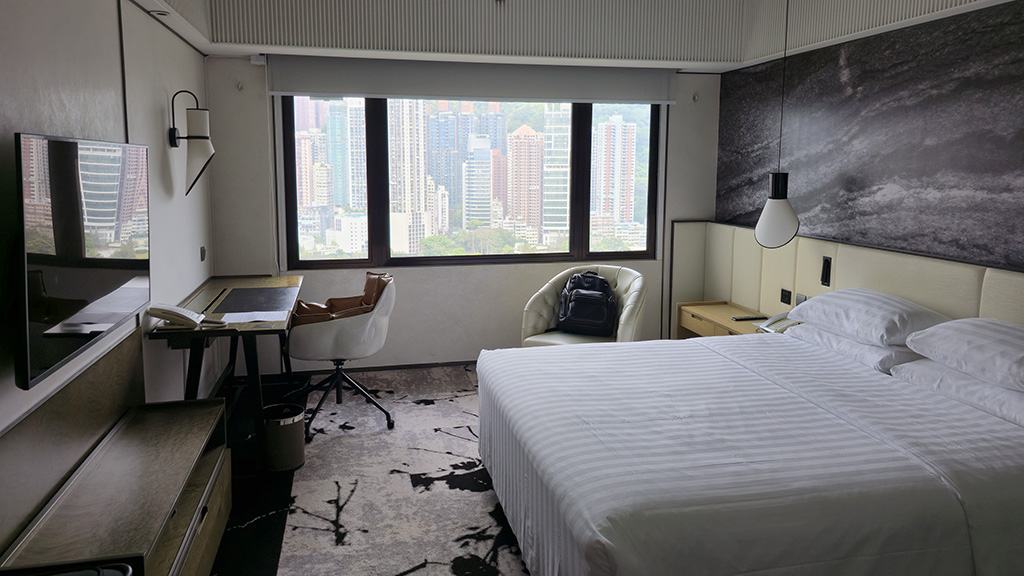
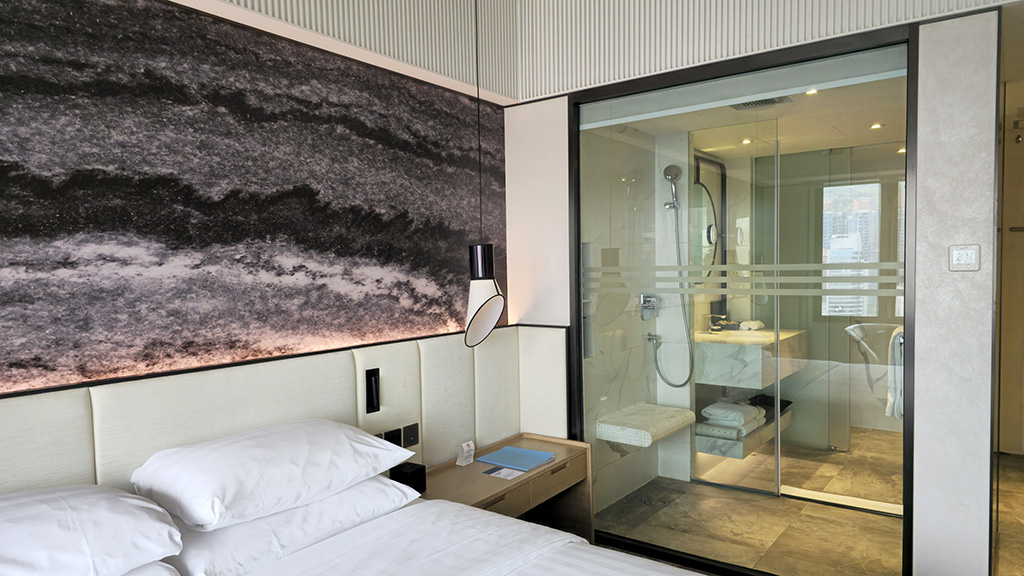
Because of my Ambassador Elite status with Marriott’s loyalty program, I was offered a free upgrade to a suite at check-in and was shown photographs of different available suites I could pick from. Funny enough, all the suite options had a bathtub in the middle of the showering area such that it seemed like just using the standing shower would be inconvenient. I would’ve taken the upgrade if I was sharing my room with a friend because I have a lot of friends who enjoy taking baths, but because I was in this room alone for this trip, I declined the upgrade and just took a standard guest room (albeit with the best available view).
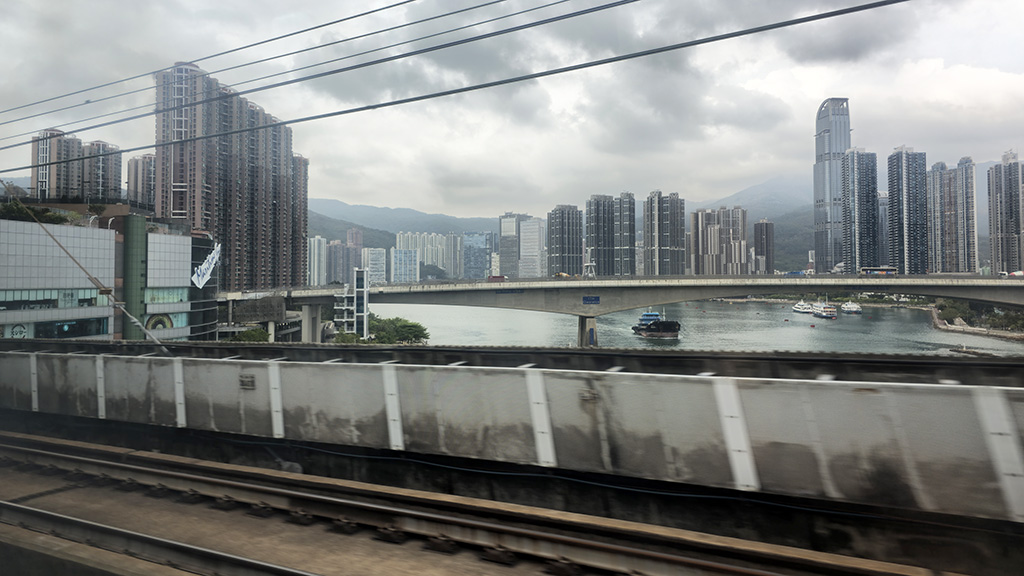
After checking out, I ventured down into the subway, took a quick ride on the Island Line from the Causeway Bay Station to the Central Station, connected via foot to the Hong Kong Station, then took the Airport Express to Hong Kong International Airport.
I allocated about an hour and a half for transport, but due to a mixture of walking quickly and the Airport Express being ahead of schedule, I managed to walk out of my hotel and walk into the airport in a matter of under one hour.
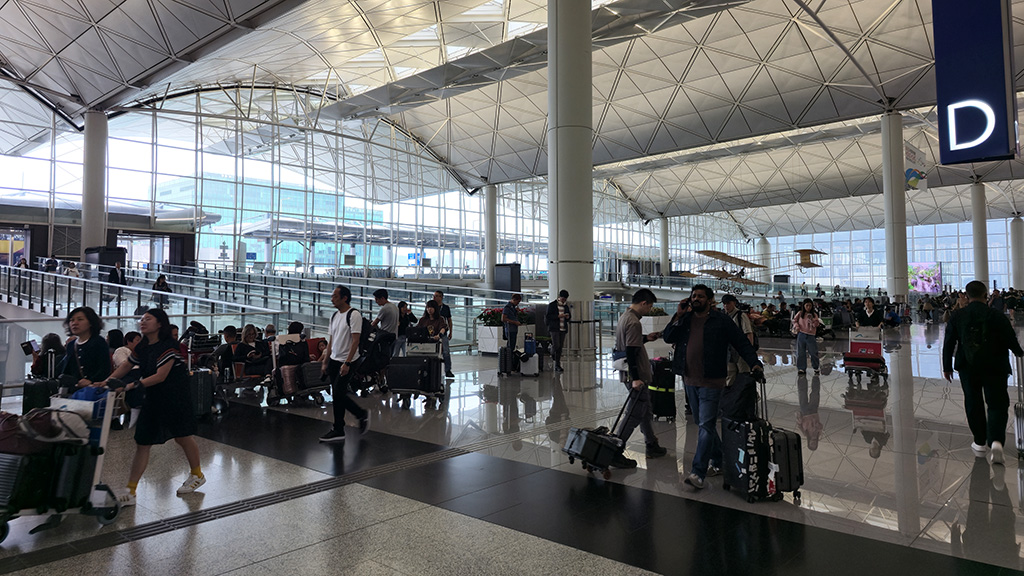
I also allocated about an hour and a half for check-in, security, and immigration. I’m used to all of this being quick in the United States because of my enrollment in both TSA PreCheck and Clear, but I figured that it would take much longer in Hong Kong due to me being a foreigner and not being able to use their expedited systems.
Well, I was wrong. Hong Kong International Airport is extremely efficient. I had already started my check-in process online, and because I did not have any checked luggage, I was able to go directly to the security checkpoint with my QR code instead of finishing the check-in with a desk agent. The security lines were short, and the efficiency of standard security in Hong Kong seemed to be even better than the TSA PreCheck lines in the United States. The immigration lines were also short, and the officer glanced at my passport for just a few seconds before waving me in.
Overall, it took just shy of 15 minutes for me to walk off the train and walk into the secured area airside. Upon my entry, I was greeted by a live band, which is the first time I’d ever seen that in an airport.
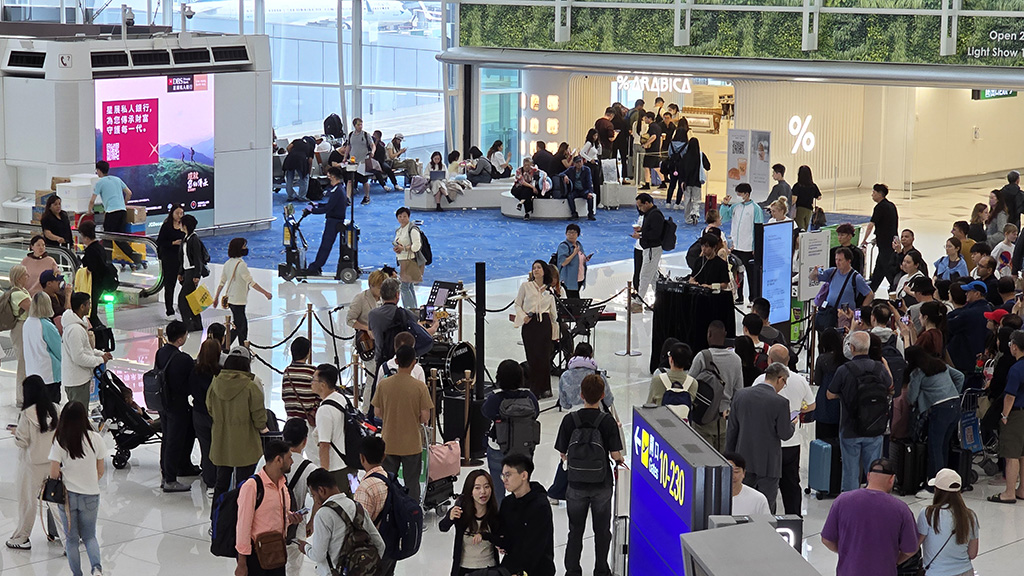
Funny enough, I spent more time looking for my designated airline lounge than I did getting through security and immigration. The lounge I was trying to find was upstairs in this area, but all the elevators were broken, I couldn’t find any stairs, and an escalator in the far corner didn’t actually lead to the front door of the lounge.
If you told me that I walked back and forth for an entire mile trying to figure out how to get up there, I wouldn’t be surprised.
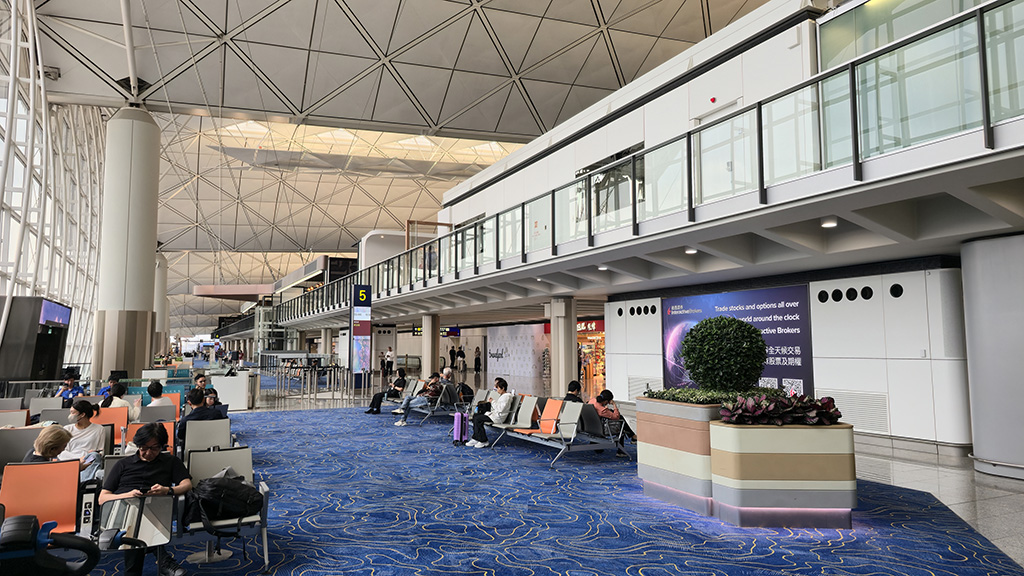
Because Starlux Airlines doesn’t have their own lounge and isn’t part of a major airline alliance, they partner with Qantas Airways to accommodate their business class passengers in the Qantas Hong Kong International Lounge. One of the downsides of having done my entire check-in process online is that I didn’t receive a formal lounge invitation ticket that is usually provided at the check-in desk, but when I showed up, the lounge attendant tentatively admitted me anyway while he contacted Starlux customer service and verified my eligibility.
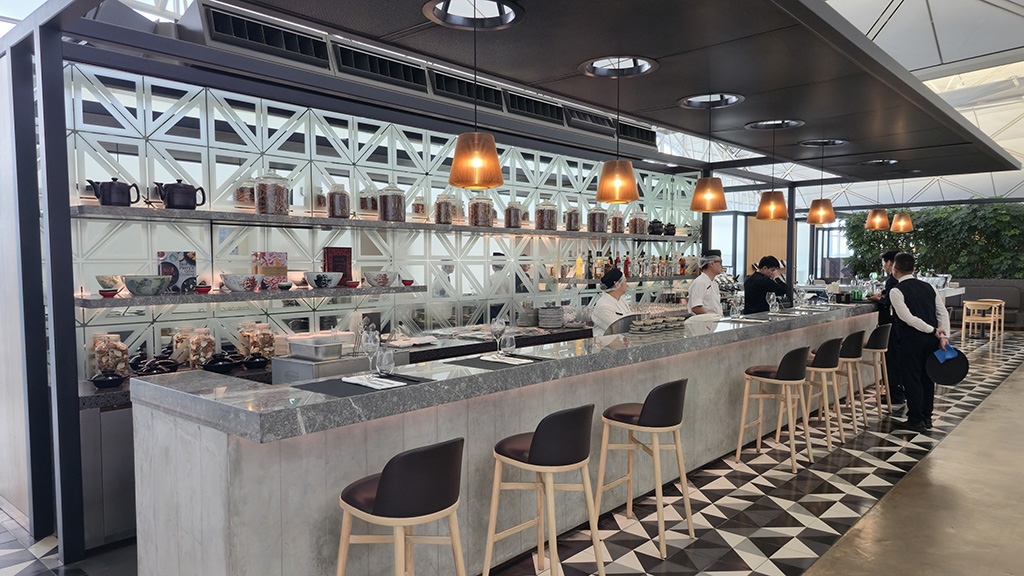
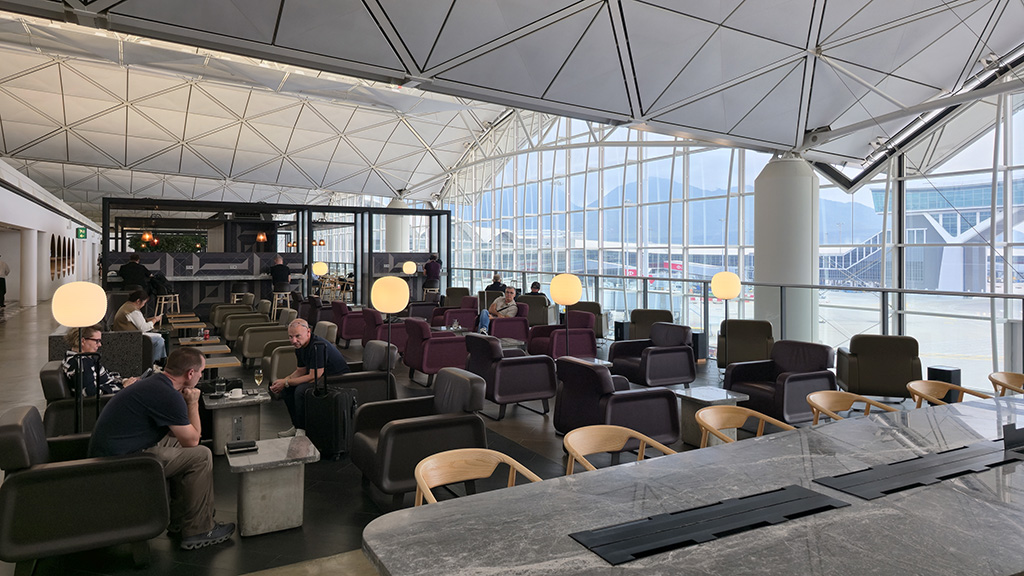
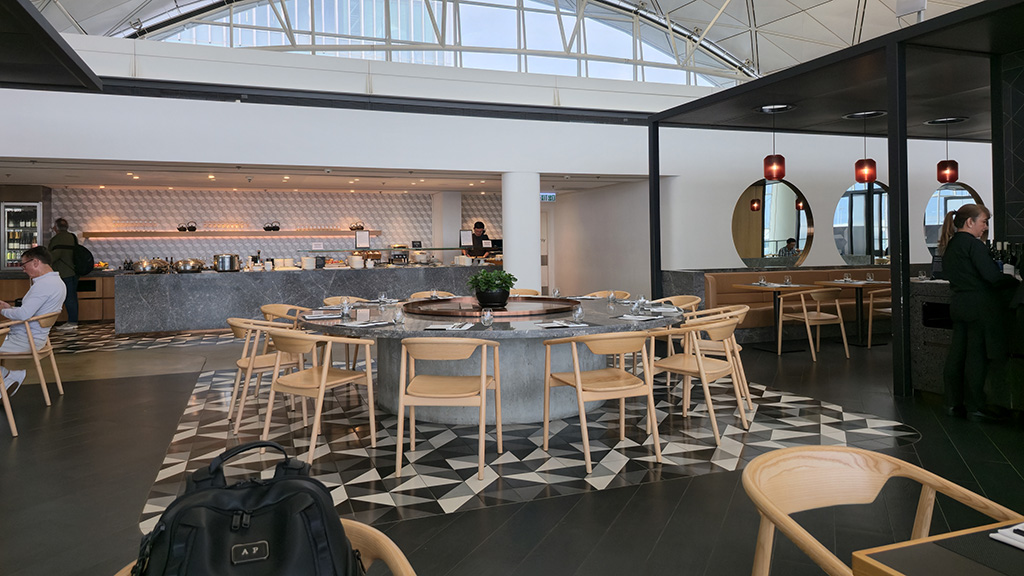
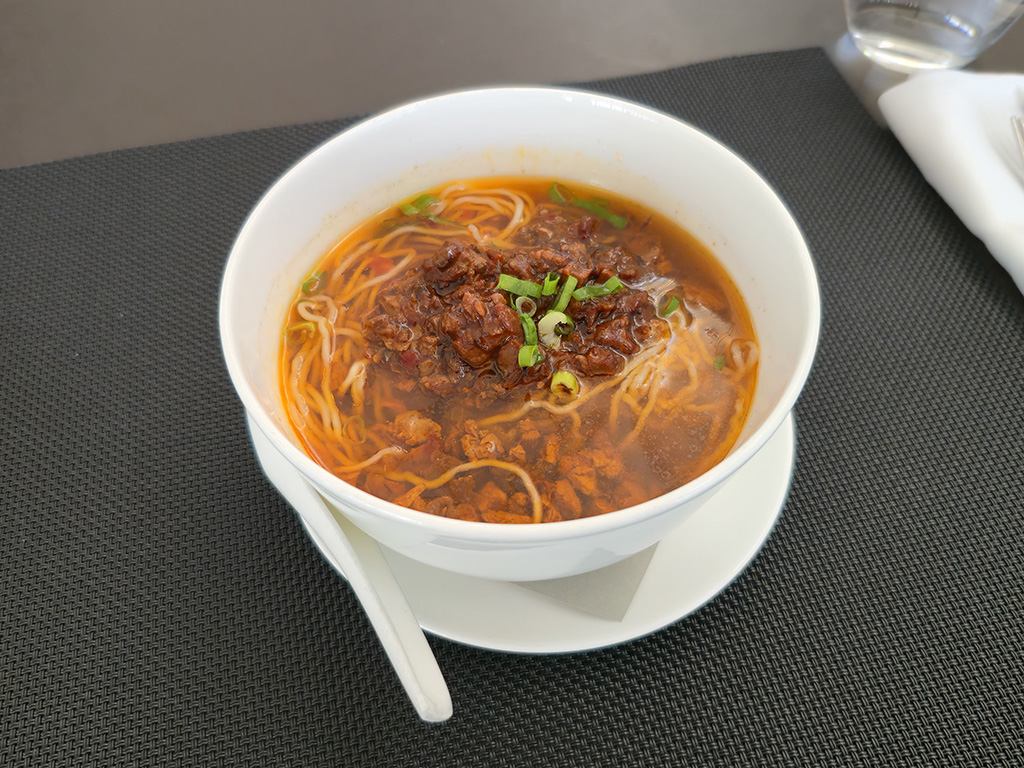
There was an à la carte menu in addition to a buffet. I grabbed a plate of food from the buffet, but I saw that there were some dandan noodles on the menu, so I ordered a bowl of that as well.
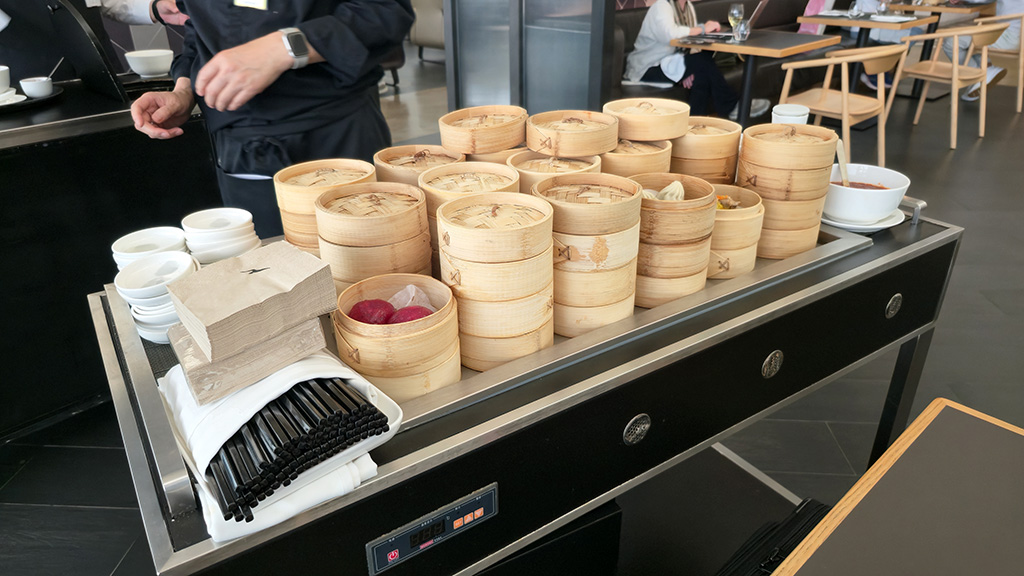
As I was finishing my food, a man came around with a literal dim sum cart and asked if I wanted some dim sum. I was trying to limit the amount of food I was eating at the lounge because I knew there were a lot of meals coming up on the plane, but there is no way I could deny dumplings from a dim sum cart in an airport lounge.
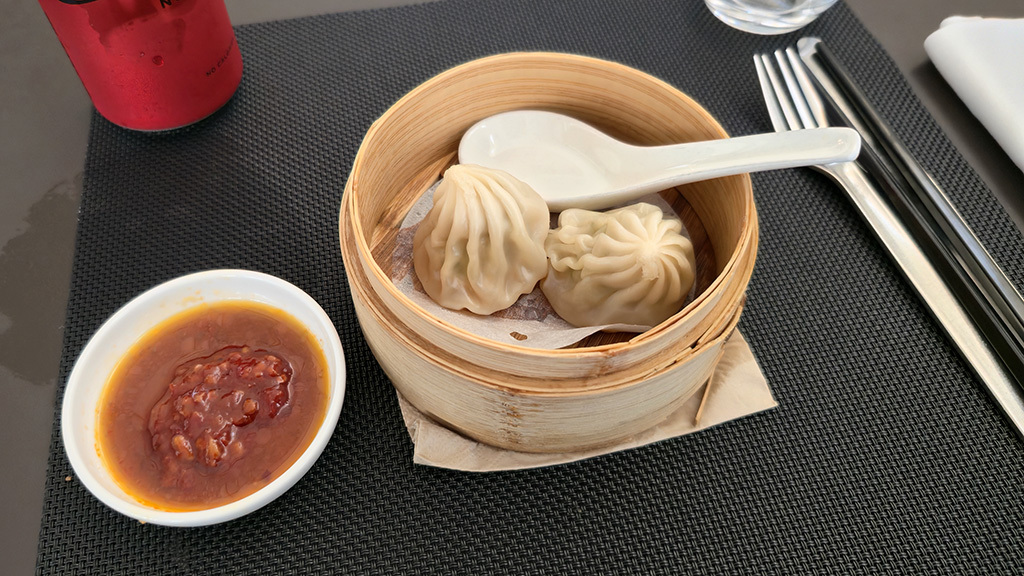
I asked for one bamboo steamer basket of soup dumplings, with a side of chili sauce.
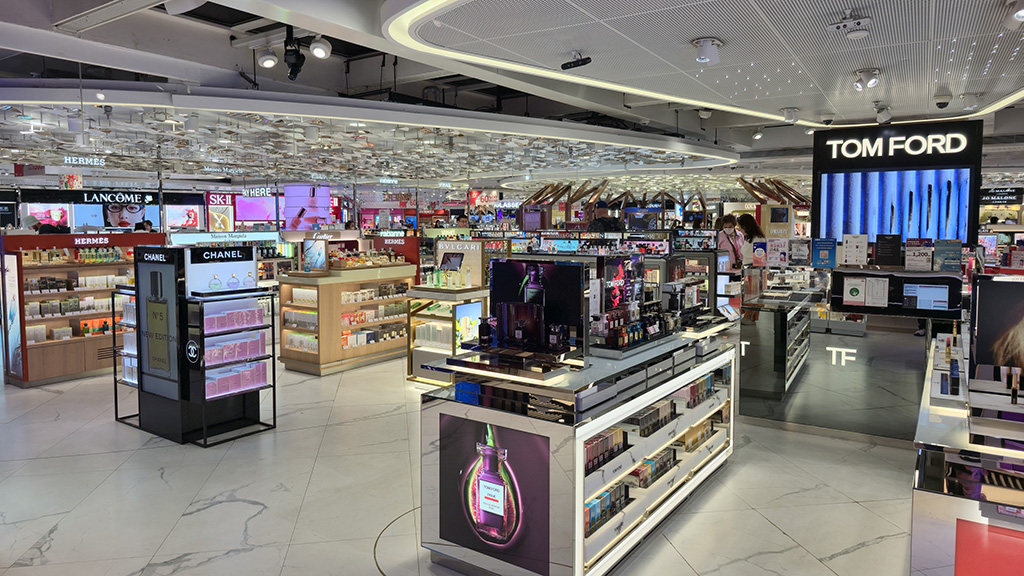
After a peaceful three hours in the lounge (which was longer than I anticipated due to my unexpectedly quick travel to and into the airport), I left to start heading over to my gate. Similar to the other Asian airports I’ve been to, Hong Kong International Airport had a lot of very large general retail areas airside, which is not common to see in airports in the United States.
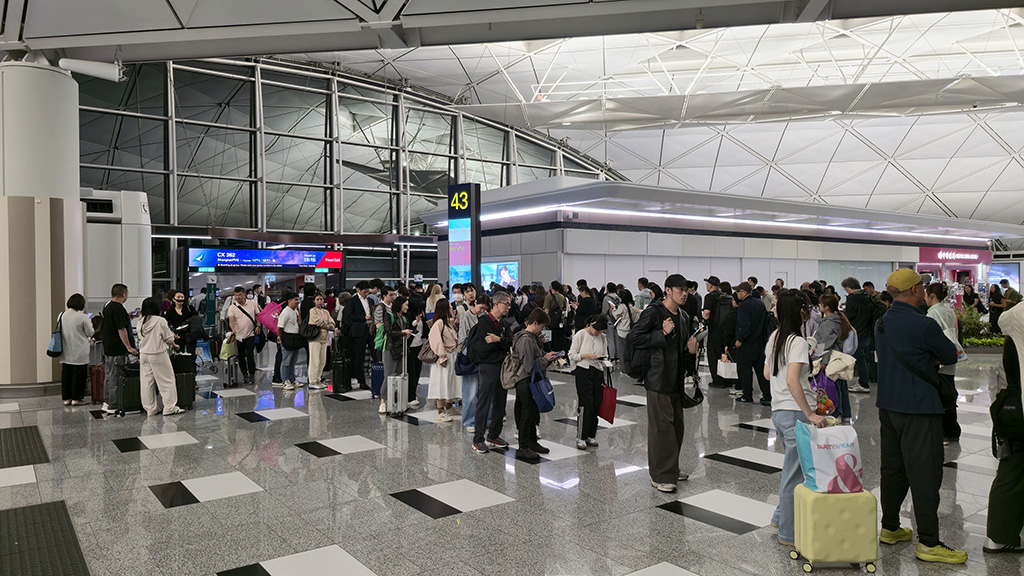
When I arrived at my gate, I saw a gigantic line snaking back and forth and got incredibly confused. I checked the time to verify that I still had about ten minutes left before boarding began, but it looked like economy passengers were already in the process of boarding.
Then I realized that was the wrong gate, and those passengers were going to Shanghai.
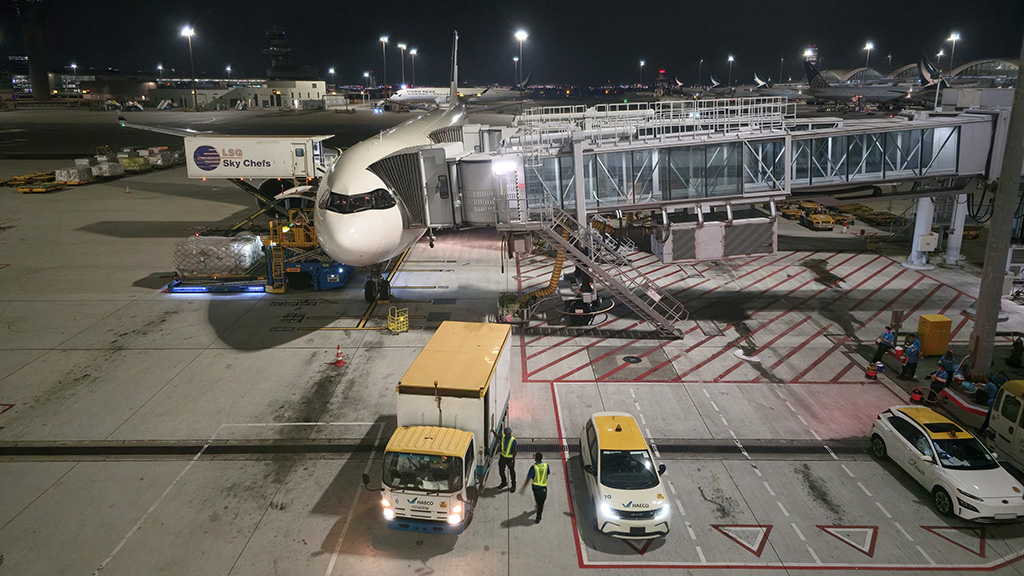
After walking a little bit further to the correct gate, I peeked out the window and saw our Airbus A330-900neo waiting for us outside.
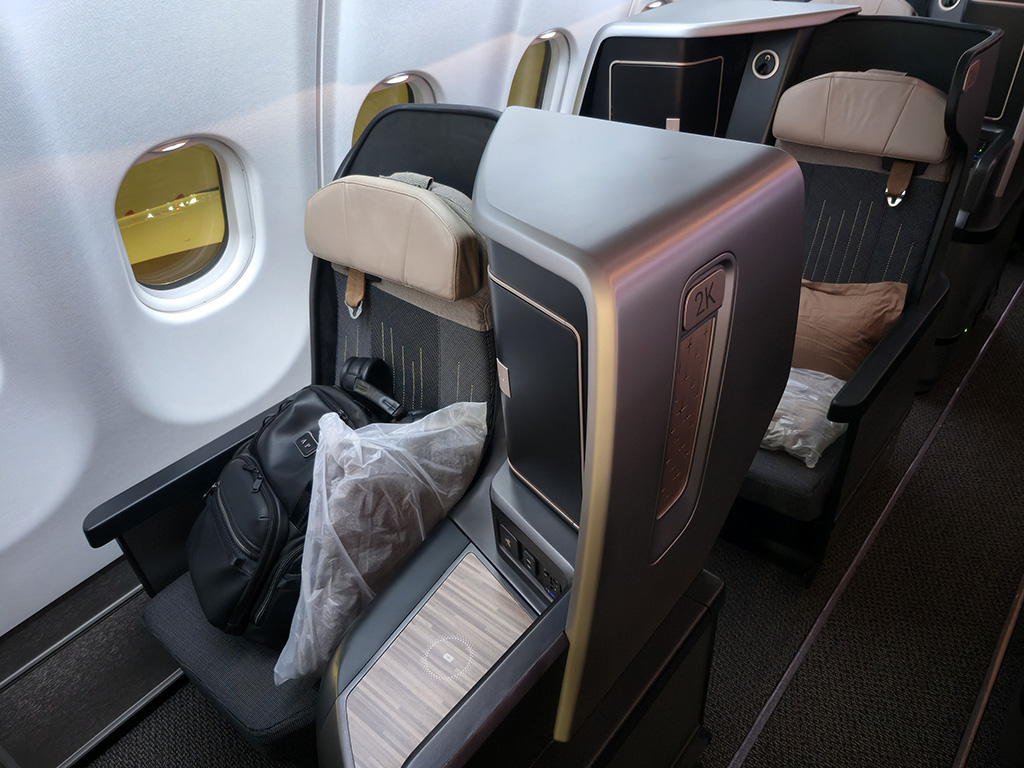
For this leg of the flight, I selected Seat 2K. Because the Starlux Airlines version of the Airbus A330neo only has business class seats in the forward cabin, I picked the first seat in the first row (there is no row 1 on this aircraft) in the window side of the staggered configuration to be furthest away from the lavatories and get the most privacy possible.
After relaxing with a cup of juice and watching the ground crew load checked baggage into the underbody compartment, we left Hong Kong for a timely departure.
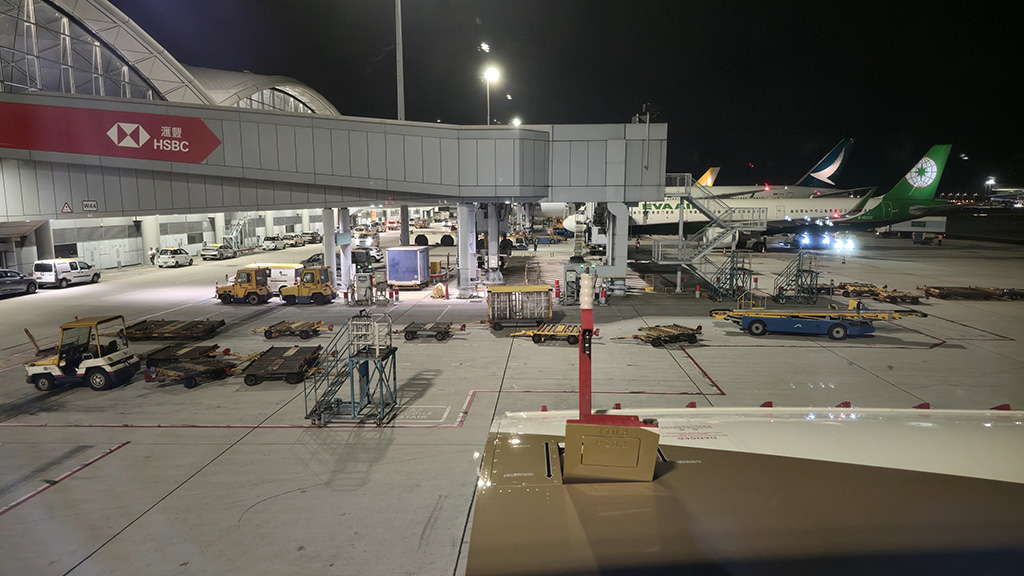
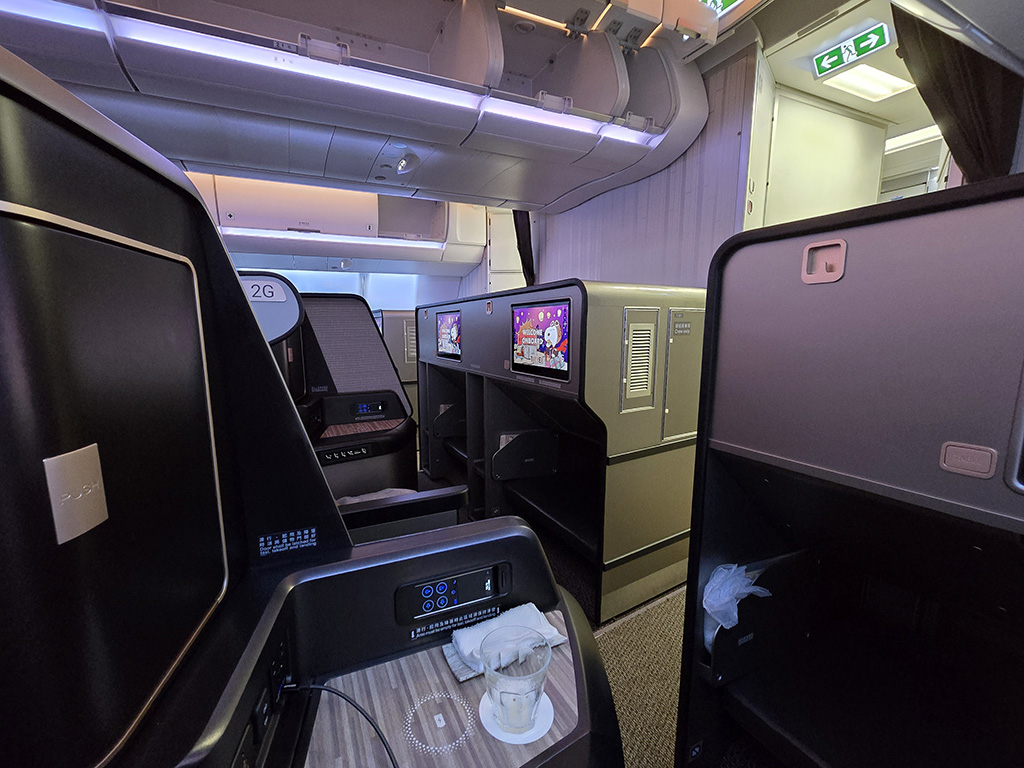
By this point, I had flown on three out of Starlux’s four aircraft currently in service: the Airbus A321, A350-900, and now the A330 (with the only one I hadn’t been on being the A350-1000). Out of the three I had tried so far, my favorite was this A330-900neo.
The A330 was obviously better than the A321 because the A330 had direct aisle access and a 1-2-1 configuration, but I think it even felt better than the A350 because the overhead compartments over the middle seats made the cabin feel much more cozy and private.
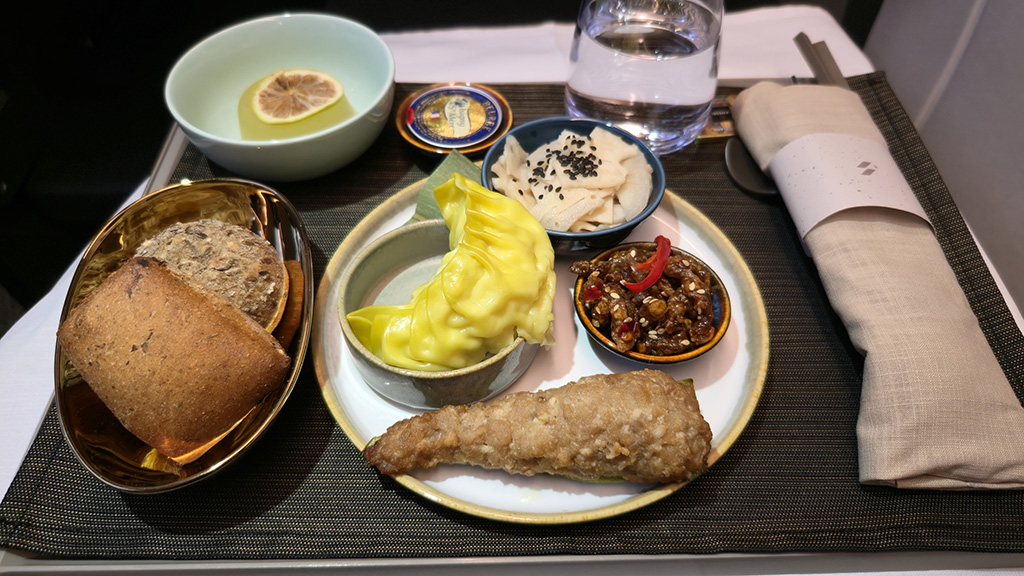
Because this was the shorter leg of my flight to my layover in Taiwan Taoyuan International Airport, meal service was done on a single tray. I didn’t have a menu or course list explaining what each item was. Instead, the flight attendant came around at the beginning of the flight and asked whether we wanted the Taiwanese meal or the international meal; I, of course, picked the Taiwanese one for a more authentic experience.
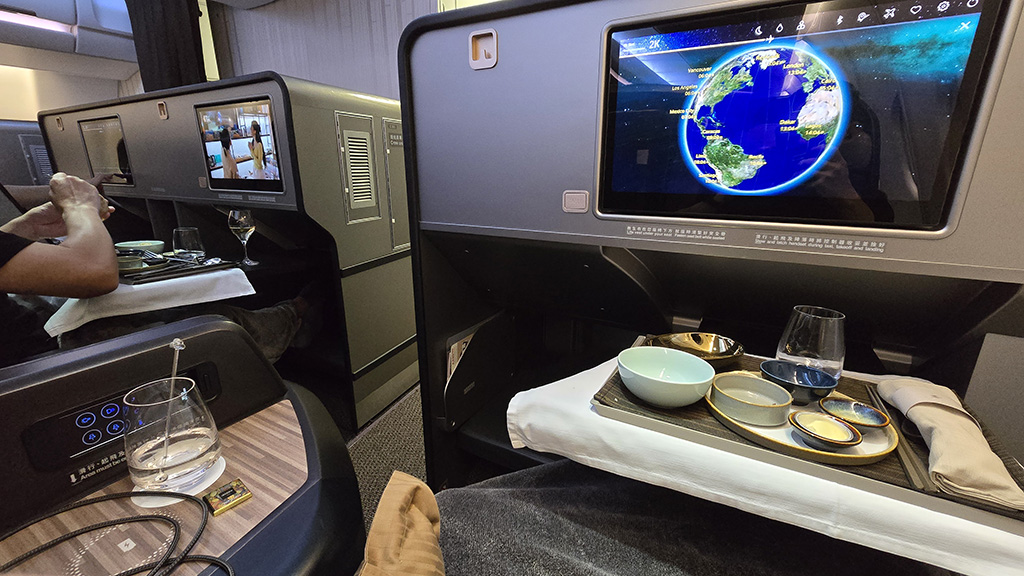
Another small thing I liked about this cabin was the way the seat tray tables were designed—they articulated forwards and backwards relative to your body, so I was able to push it away and have a little space through which I could leave my seat to go to the washroom without needing to wait for the flight attendant to take my tray away first (or alternatively, perform an acrobatics maneuver to navigate above the tray table).
After only about two hours on board, it was already time to deplane. It would have been very nice if it was the A330 that took me all the way back to the United States, rather than being only for the shorter leg of my trip.
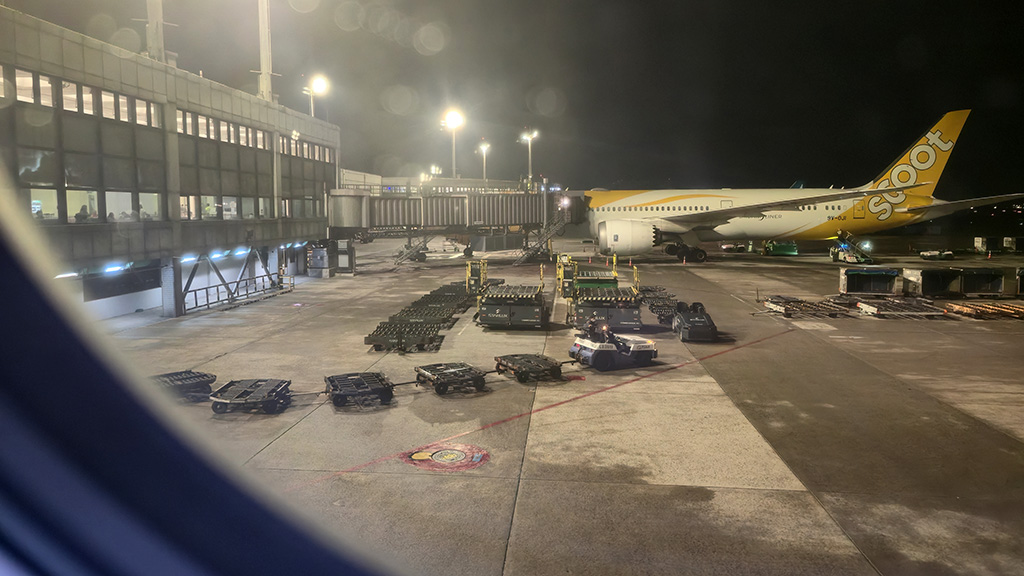
I was about to get on another plane for around twelve hours soon, so I took this two-hour layover opportunity to go for a walk and check out some of the retail areas and other points of interest inside Taoyuan International Airport.
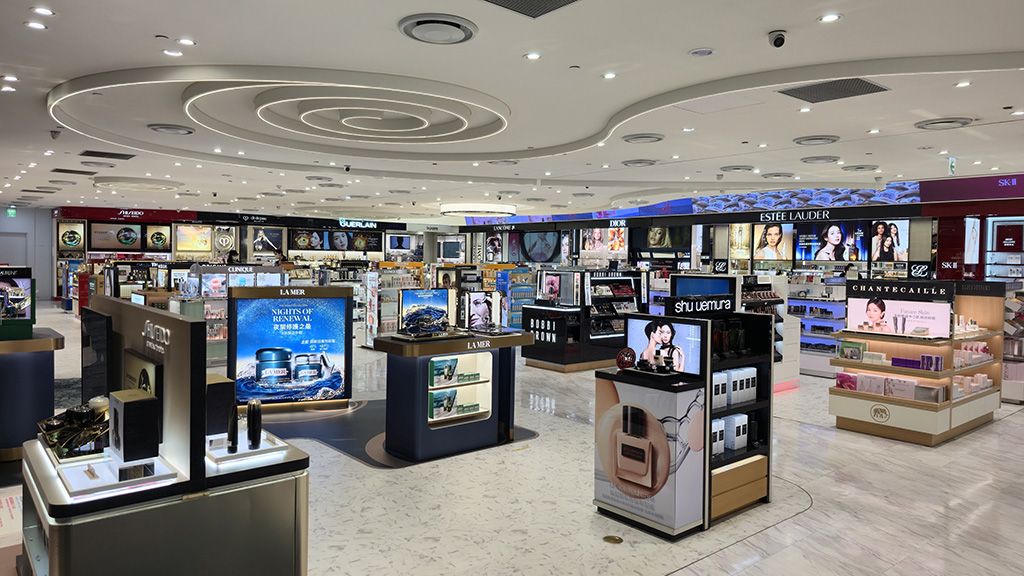
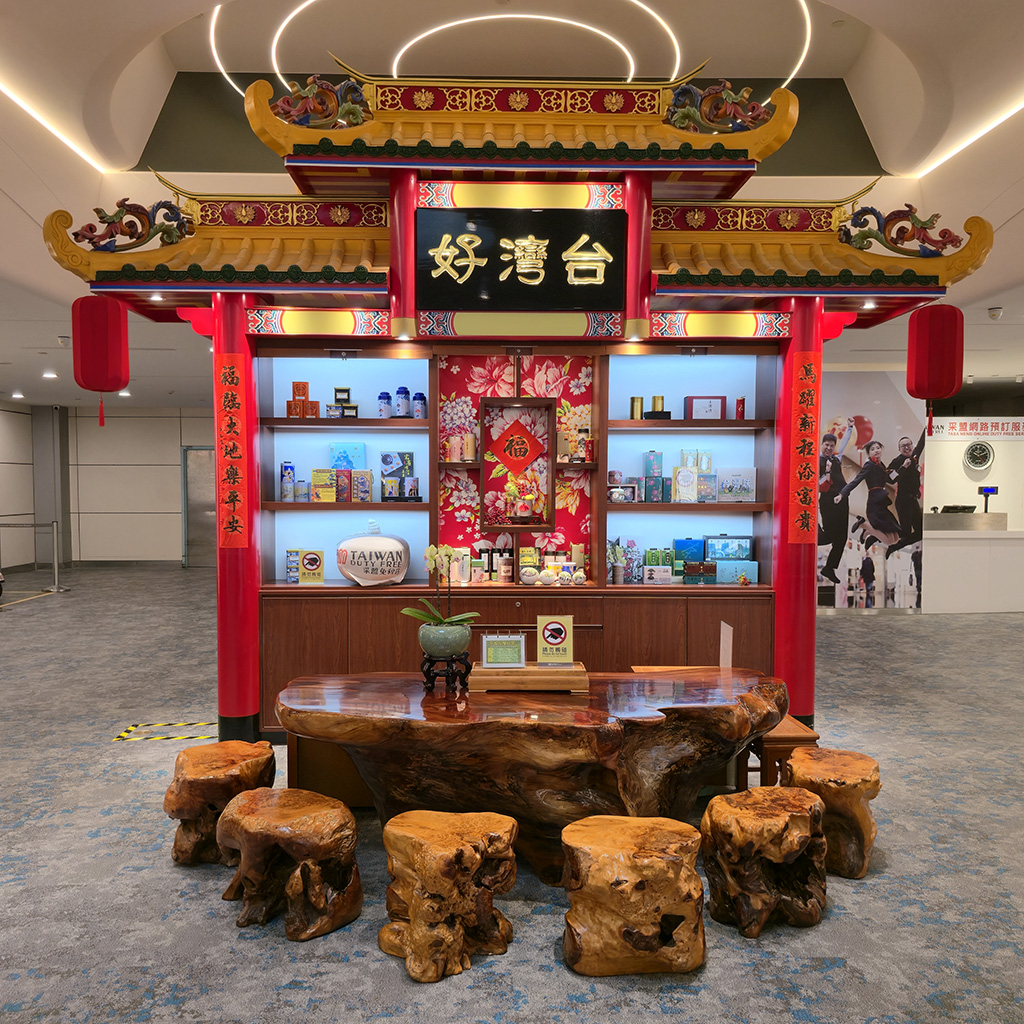
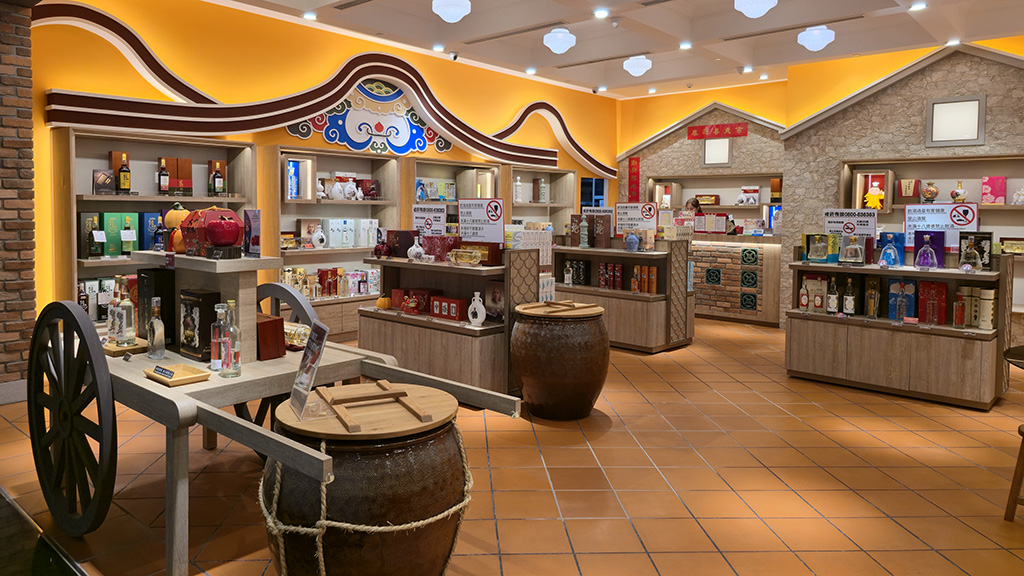
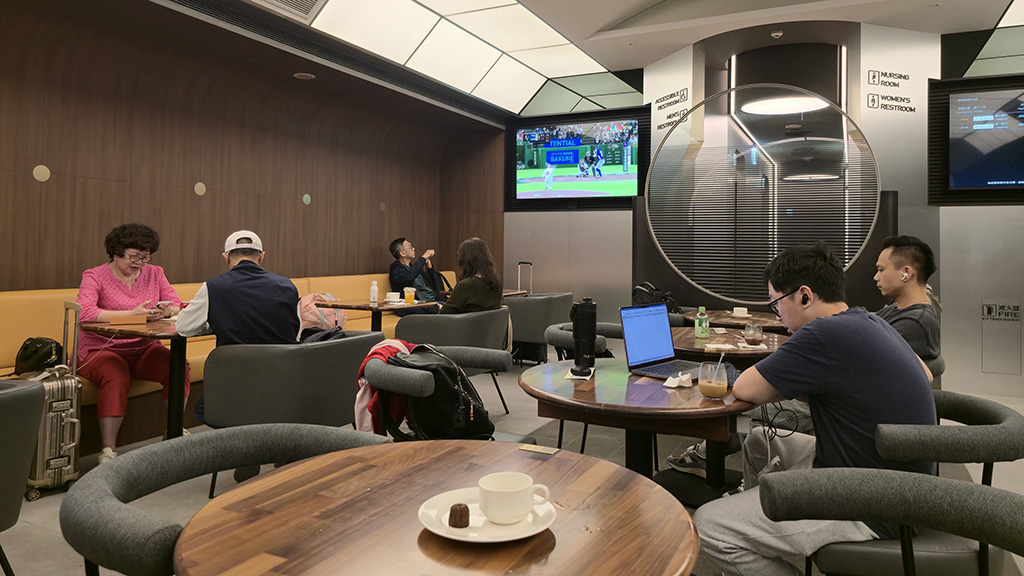
After getting my steps in, I took a quick stop at the Starlux Galactic Lounge for a short break.
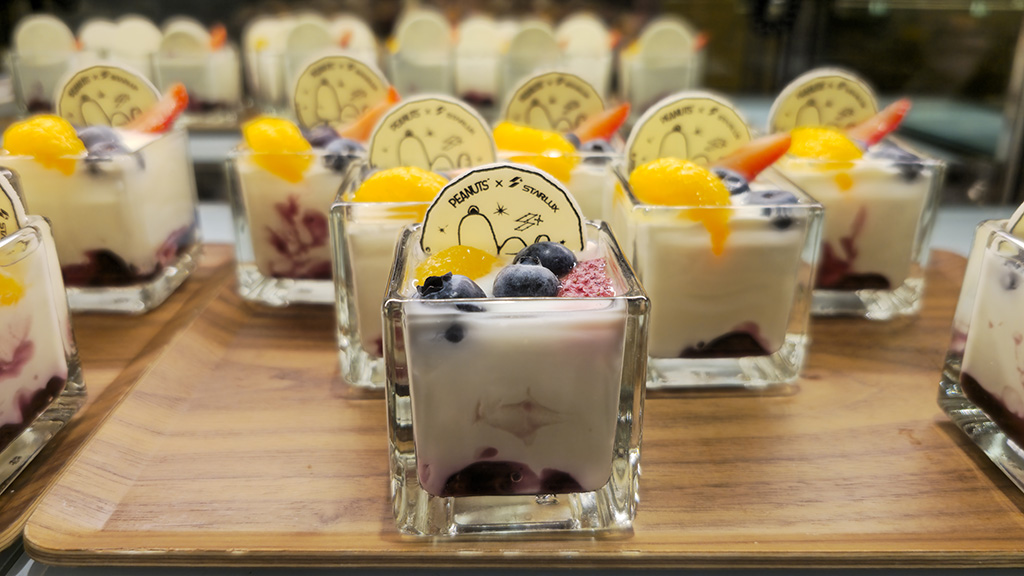
I had already seen Starlux’s partnership with Peanuts on the in-flight entertainment screens, but in the lounge, I saw that they also had themed food. To be clear, I don’t know why this is a Peanuts-partnered parfait instead of a regular parfait, but it’s still nice to see the scope of these collaborations reaching more depth.
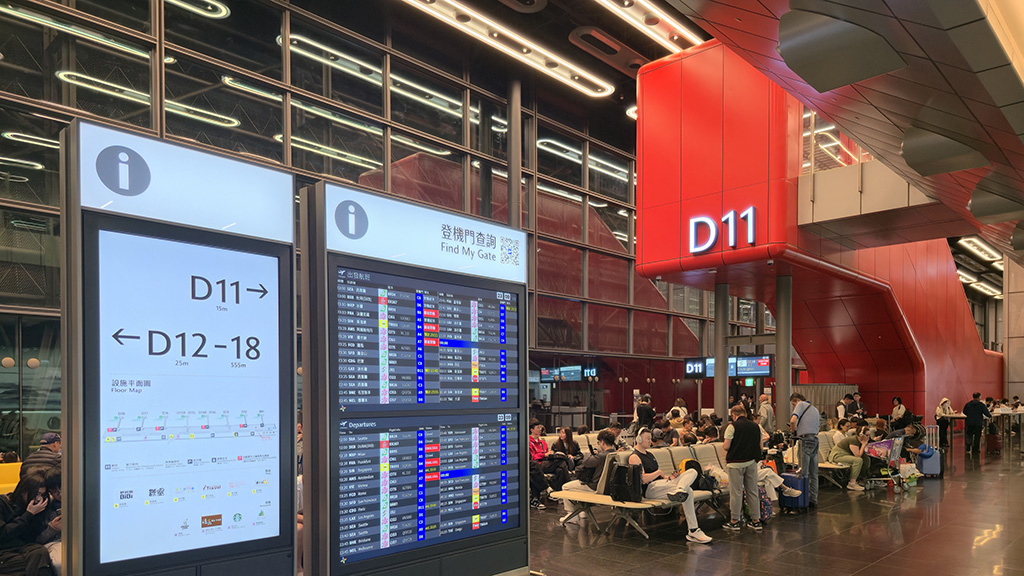
Soon afterwards, I walked over to my gate in Terminal 3. The styling of this area was very different, and it made me wonder whether Taoyuan International Airport just decided to build it like this, or if these were dedicated Starlux gates and the theming had to do with Starlux’s focus on space.
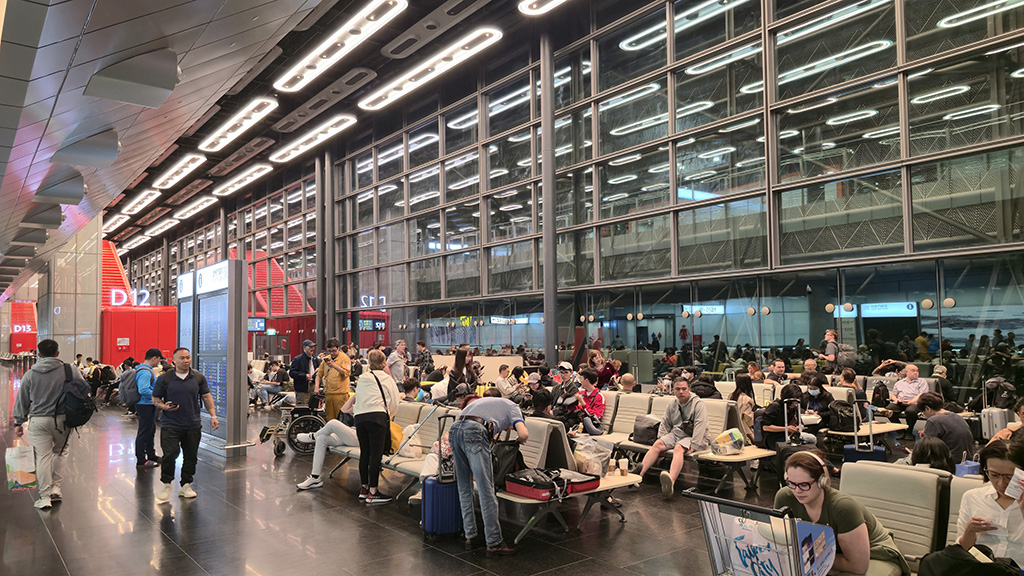
This area was quite disorganized and very uncharacteristic of what I now come to expect from Asian airports and Asian airlines. Instead of using the proper gate desks, there were gate agents set up on plastic folding tables just randomly in the middle of the seating area, checking passports and asking questions to passengers.
The employee who intercepted me smelled like he had just finished laying out in the sun after running a marathon. He checked my passport and boarding pass, and then he tried to get me to do something else. Unfortunately, his English was so poor that I couldn’t figure out what he was asking me to do (and this is coming from someone who is generally stellar at understanding Asian accents, especially Chinese ones).
I pulled out my phone, opened my translator, set it to Chinese, then asked him to speak into it. He proceeded to speak into my translation app… again in broken English. Of course, the app thought he was speaking Mandarin, so it tried to map his English to Mandarin, then translated that and informed me that the gate agent wanted to “retreat with the substances while killing the troops.”
I solved this predicament by saying “no thank you,” smiling, giving him a quick bow, waving, then just walking away. Whatever he wanted me to do clearly wasn’t important, because I was able to board the aircraft with my electronic boarding pass with no issues.
By the time I booked this return flight, Seats 2A and 2K were already occupied, and I was ineligible to pick anything in row 1 because it was first class. I saw that Seats 3A and 3K had obstructed views out the window, so I opted for Seat 4K instead. Row 4 was still far enough away from the lavatories that I wasn’t bothered.
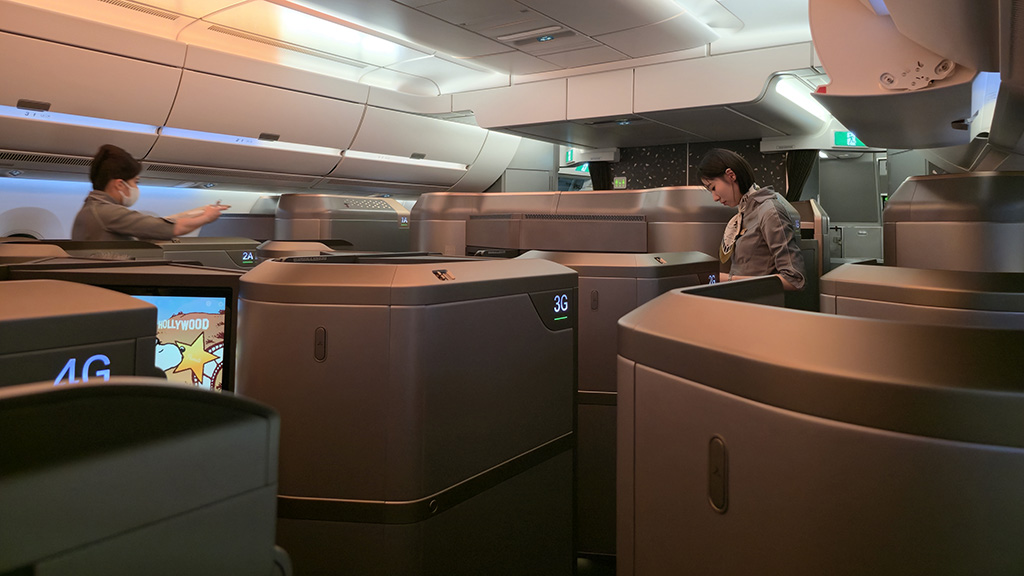
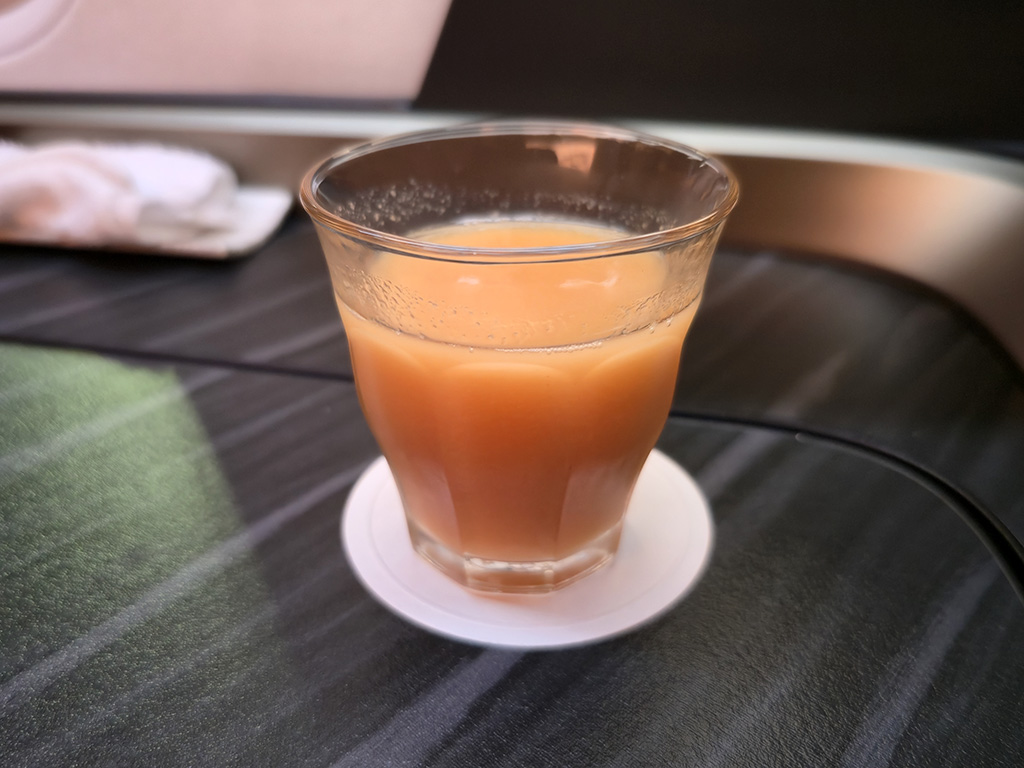
For my pre-departure beverage, I received a small cup of juice.
I also informed my flight attendant that I would like the Star Gourmet option for my meal, which was a tasting menu developed in collaboration with a high-end contemporary Taiwanese restaurant called YUENJI (formally, 元紀 台灣菜), located in Taichung.
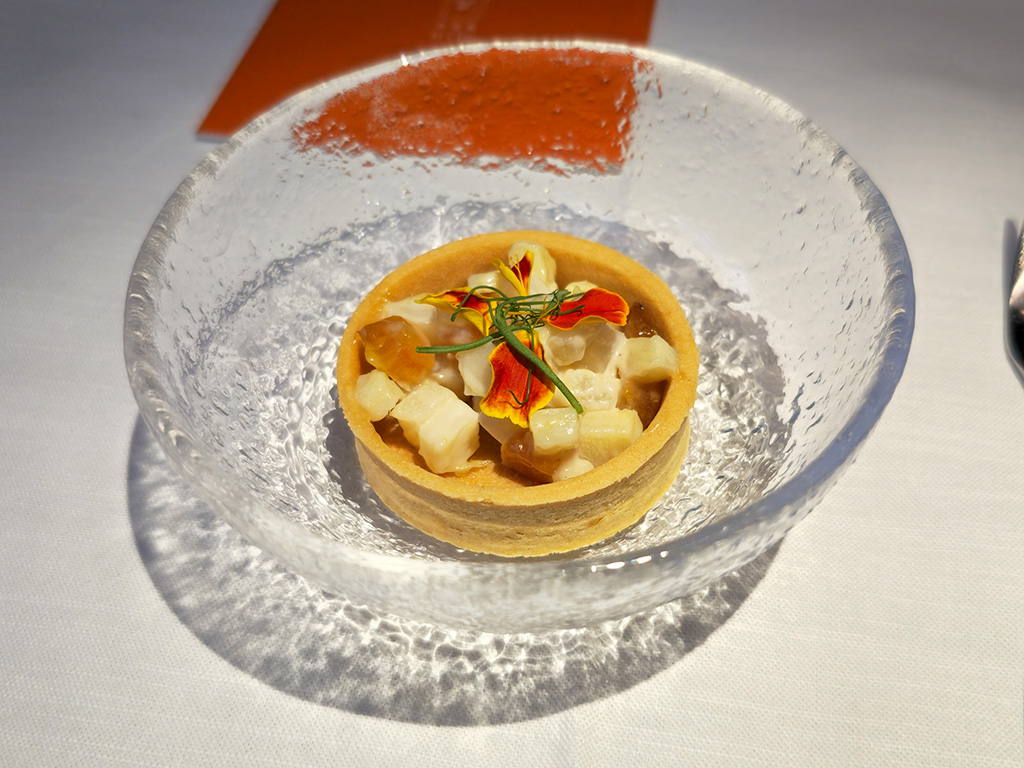
The meal started with a savory tart containing grilled Lukang wild sliced mullet roe (better known in Taiwan as karasumi) and green bamboo shoots.
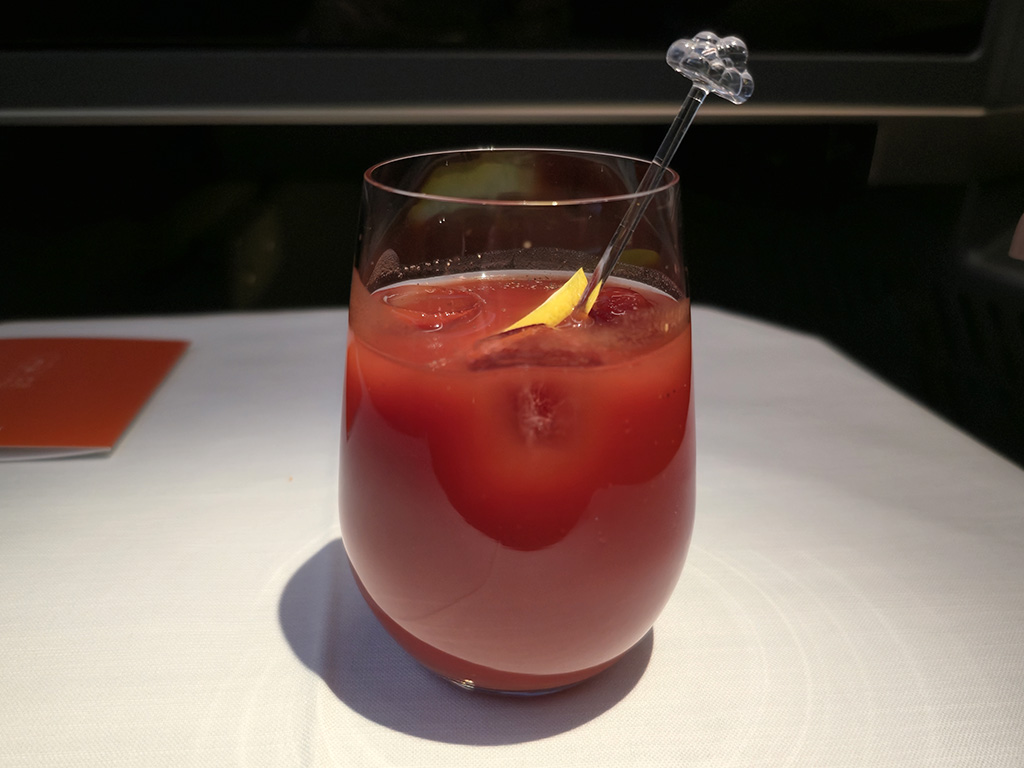
For my beverage, I ordered a Virgin Mary, which is a non-alcoholic version of the Bloody Mary.
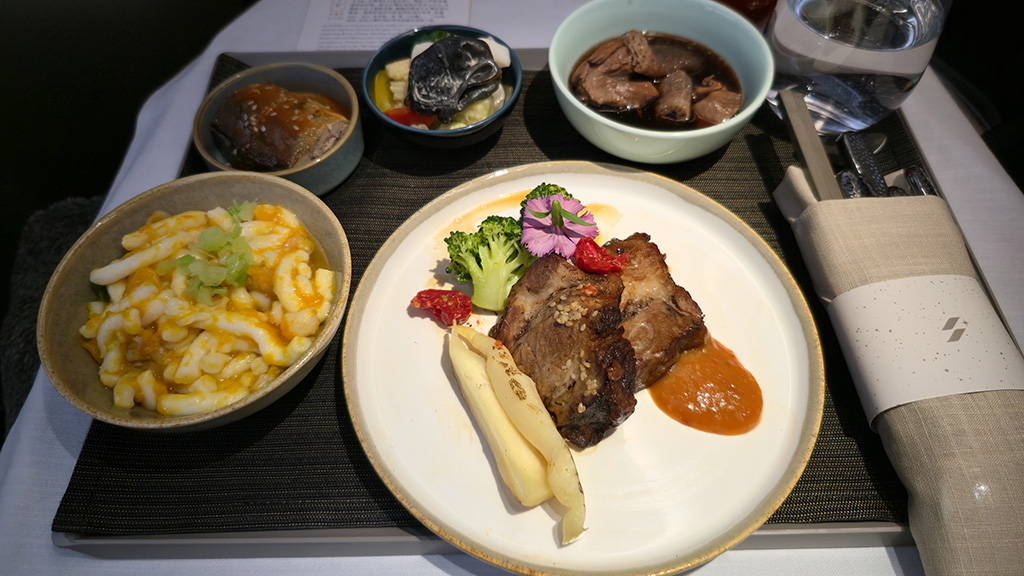
The main entrée was tea-smoked Iberico pork collar and stir-fried Penghu rice noodles. This came with a side of vinegared squid with seasonal vegetables, braised sweetfish in soy sauce, and aged pu’er tea chicken soup with bamboo fungus.
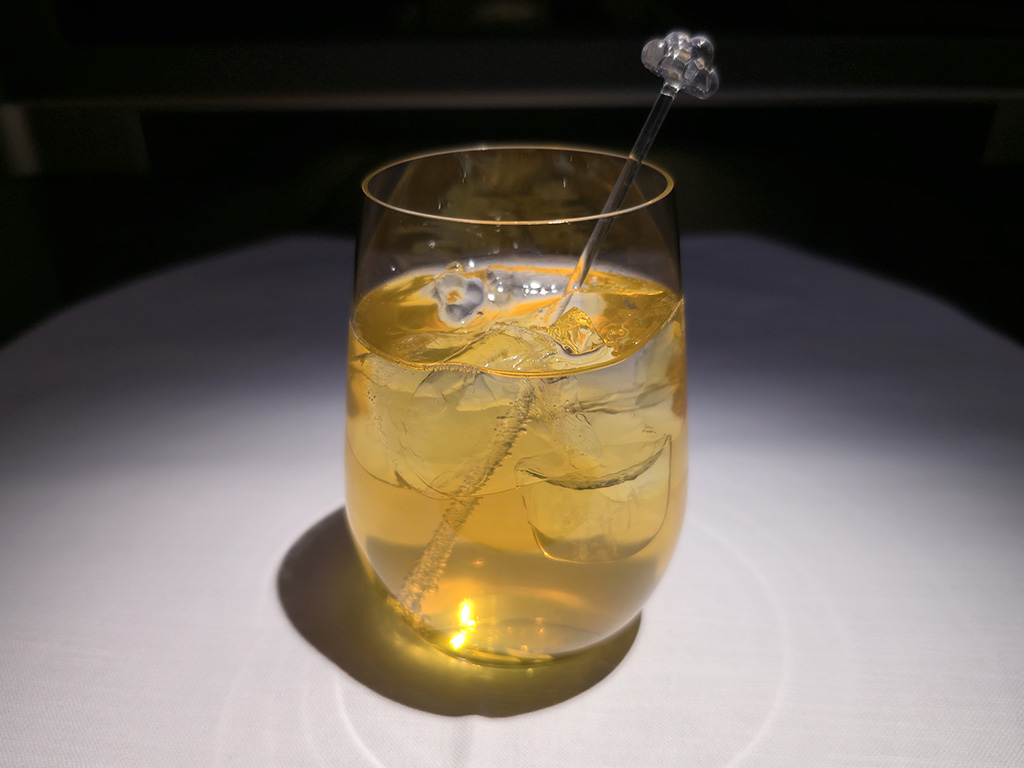
For my second beverage, I got a green tea special; I think the thing that made it “special” was that it was lightly carbonated.
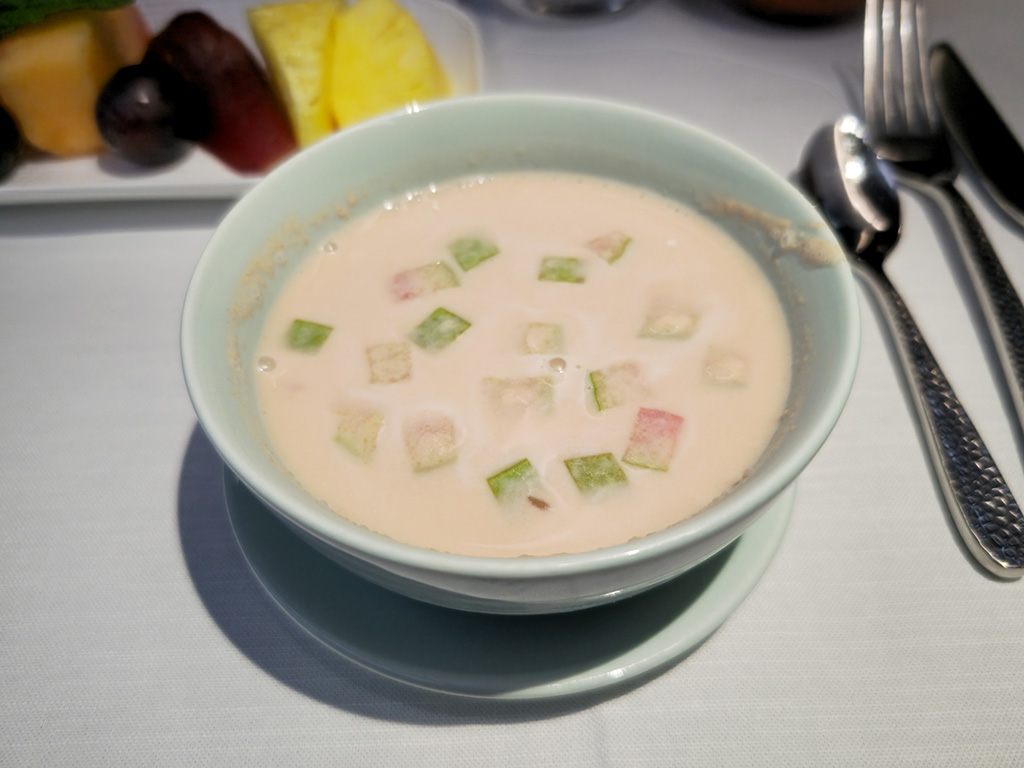
Dessert was guava sago with pomelo and palm seeds, along with a plate of assorted fruit.
Flying eastbound back to the United States is quicker than flying westbound out to Asia because of the jet stream. So, due to the shorter flight duration, I wasn’t able to get a full eight hours of sleep after finishing my dinner and then relaxing for a bit and watching some YouTube videos while digesting. However, the lie-flat seat was comfortable enough that the sleep I did get was pretty restful.
With a couple hours left in the flight, the cabin lights were illuminated and the flight attendants came around to serve breakfast. Interestingly though, although this made sense for Taiwan’s time zone, it was already around 6 PM Pacific time.
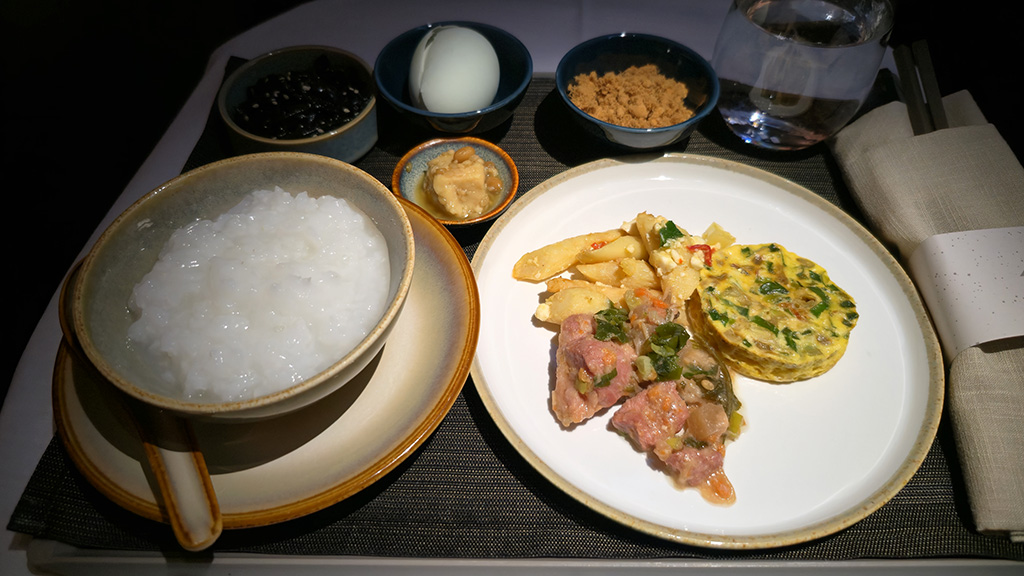
For my evening breakfast, I received a bowl of plain congee with some sides of steamed pork with winter melon, fried water bamboo with salted egg yolk, silver mullet and green onion frittata, black fungus tsukudani, salted duck egg, pork floss, and tofu curd.
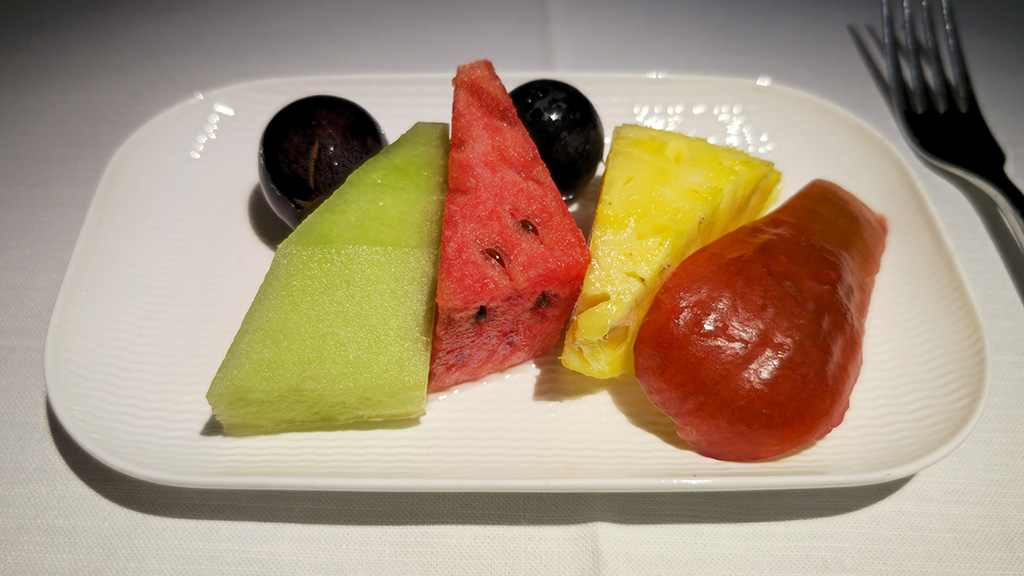
To wrap up my breakfast, I received another plate of fruit, which was refreshing and helped rehydrate me after several hours in the dry air of the plane.
Although we took off from Taiwan on time, there was a short air delay, which implies that we might have had to take an inefficient flight path due to weather. I’m not complaining though, of course; I think a lot of people in long-haul business class actually appreciate delays so that they can enjoy the amenities for longer.
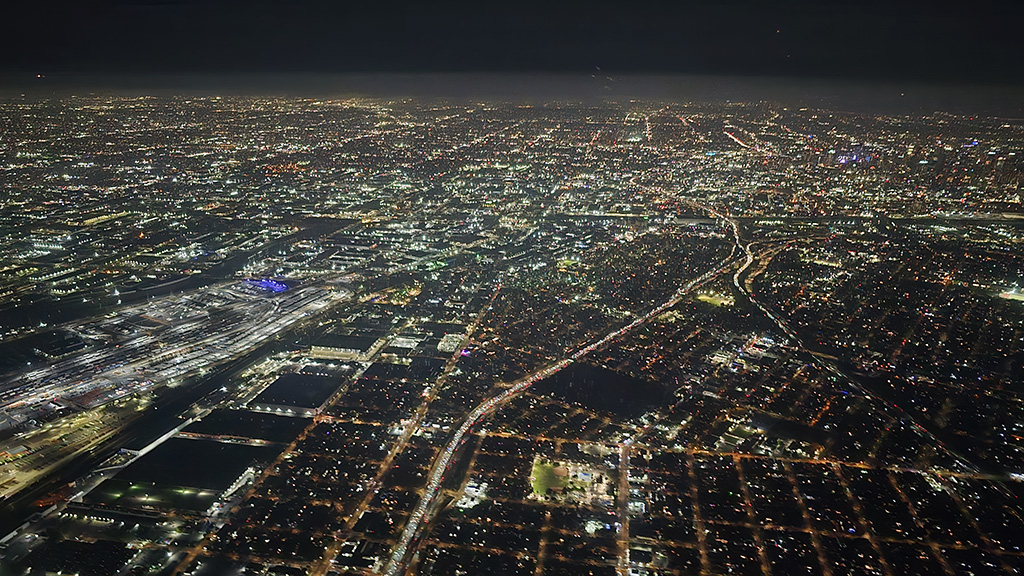
We soon touched down at Los Angeles International Airport for a nighttime arrival of 8:36 PM PDT.
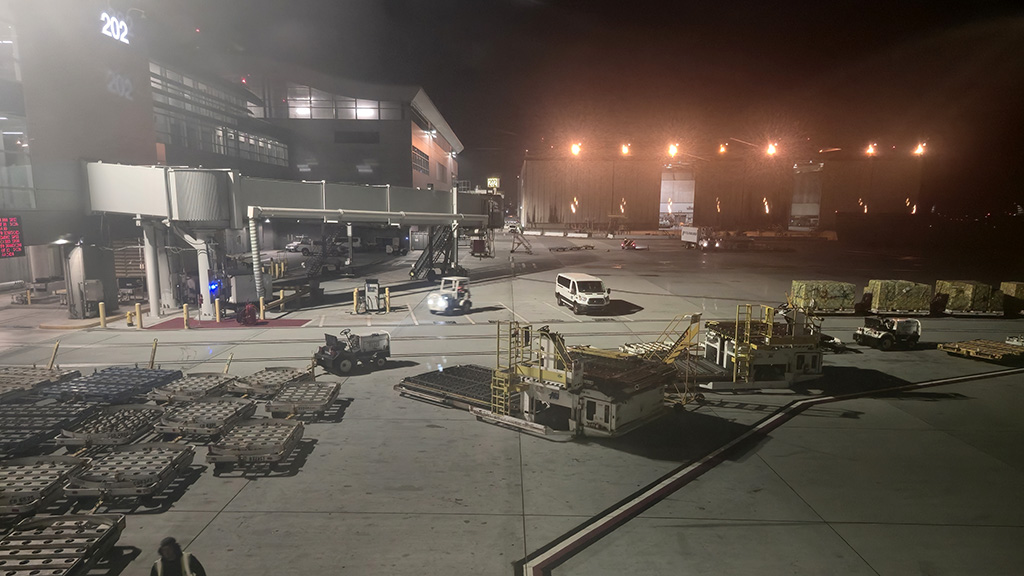
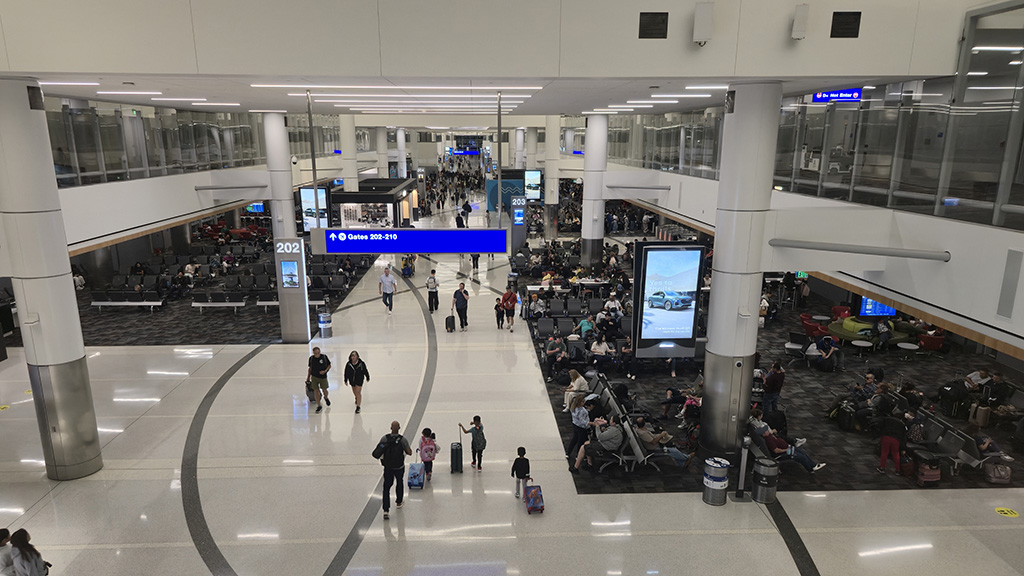
After deplaning and walking into the Tom Bradley International Terminal, I was quickly reminded how inefficient and unwelcoming airports generally are in the United States compared to Asia.
This was around the time that there were some major problems with staffing due to a government shutdown caused by politicians’ inability to agree on a new budget, but luckily, Global Entry was still operational and I was able to clear immigration and customs relatively quickly.
Like usual, I walked from Terminal B to Terminal 7 so that I can stretch my legs after a long flight and I don’t have to sit in bumper-to-bumper traffic while my rideshare driver tries to drive out of LAX’s horseshoe. After calling my car, I hopped in and went on my way.
That concludes my Hong Kong blog posts. I covered so much in the introduction that I guess I don’t have much else to conclude on.
… ok bye.