I mentioned in my most recent previous blog posts that I was in Los Angeles County in preparation for an international trip departing from Los Angeles International Airport, but I never clarified to where. As of today, I am back from my trip and am revealing the destination: Hong Kong.
Similar to the trip that I took to Japan in November 2025, I took a break from blogging while I was in Hong Kong; this is contrary to how I often try to publish blog posts in real time while traveling. I opted to gather all these for after I returned to the United States because, not only were they not time-sensitive, but I also wanted to maximize the amount of time I had going out and being a tourist, as opposed to spending time sitting indoors editing photos and writing.
So, it would make sense to start at the beginning: my outbound flight. Like usual for international trips, I decided to fly out of Los Angeles instead of from my home airport of Harry Reid International Airport in the Las Vegas Valley due to pricing from LAX being more competitive. With that being said, even though I had some good non-stop options to Hong Kong International Airport, I booked a flight with a layover.
I am someone who highly recommends taking non-stop flights to your destination, even if it is a little bit more expensive or requires you to fly to an alternative nearby airport. Going straight to where you want to go will help reduce the number of opportunities for things to go wrong, such as missing a connecting flight due to a delay in your first leg, or having the airline make a mistake during your baggage transfer and losing your luggage. However, for this trip, I chose not to take my own advice, though I think it was for a good reason.
Ever since I saw YouTubers reviewing Starlux Airlines when it first started flying in 2020, I’ve always wanted to try it out. I liked how unique it was with its futuristic styling and full commitment to the space theme. At first, this trip to Hong Kong might not seem like the optimal route to try out Starlux, but if you think more about it, I would argue that it’s actually better. If I’m flying an airline specifically to experience the service and amenities, it would make more sense to fly more segments in your itinerary so you can spend more time on the plane and see different aircraft types. In addition, if I’m going to take a layover, I’d rather that layover fall in the middle of a personal leisure trip, rather than a business trip where I need to actually make sure I get to my destination on time.
With that in mind, I passed on the available non-stop on Cathay Pacific (though Cathay is definitely also an airline that I’d like to try out in the future). I also passed on a non-stop on United Airlines, which is actually extra funny because I had friends who were flying on United with whom I coordinated overlapping days on my trip, yet I literally abandoned them to fly Starlux instead.
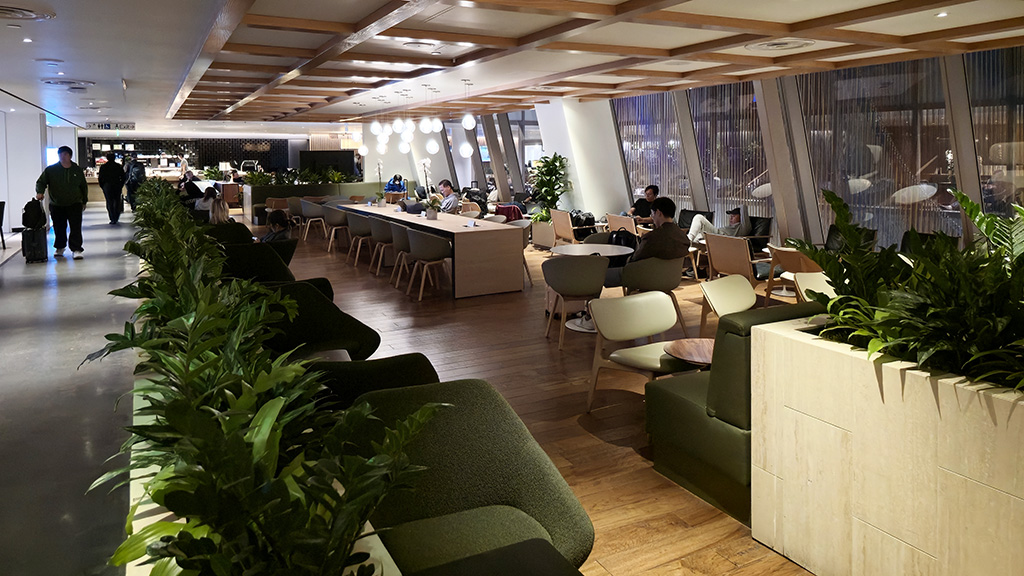
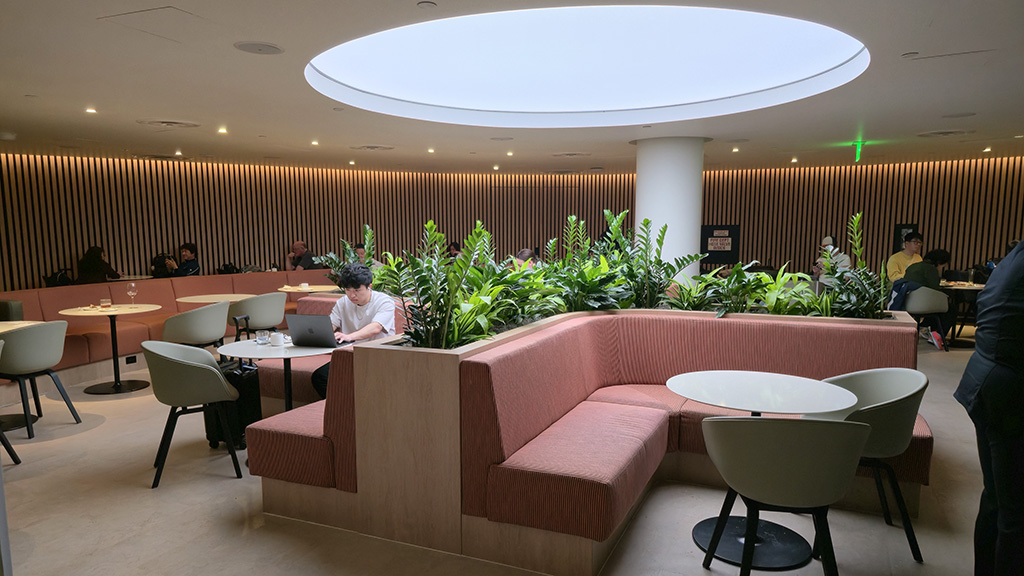
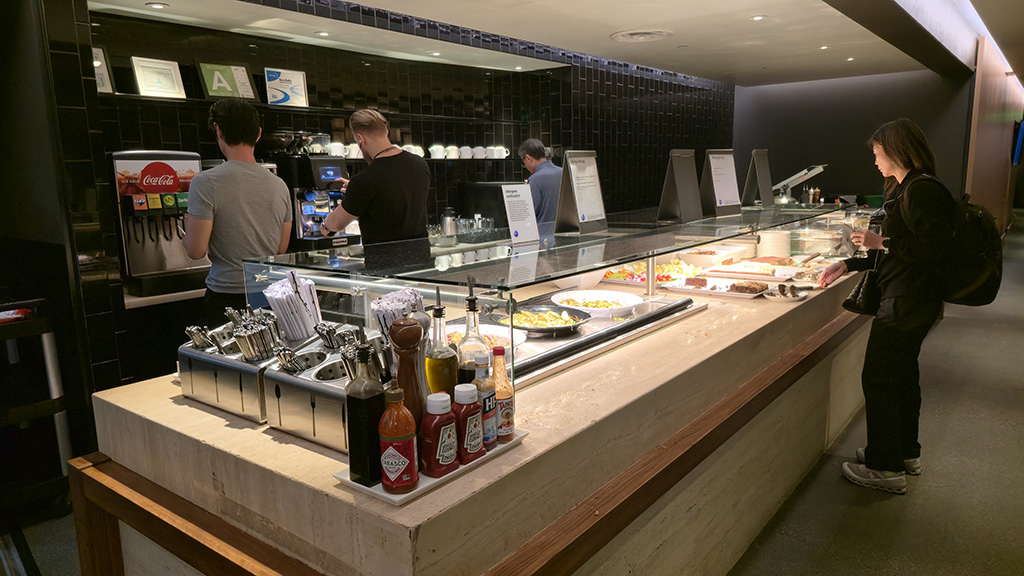
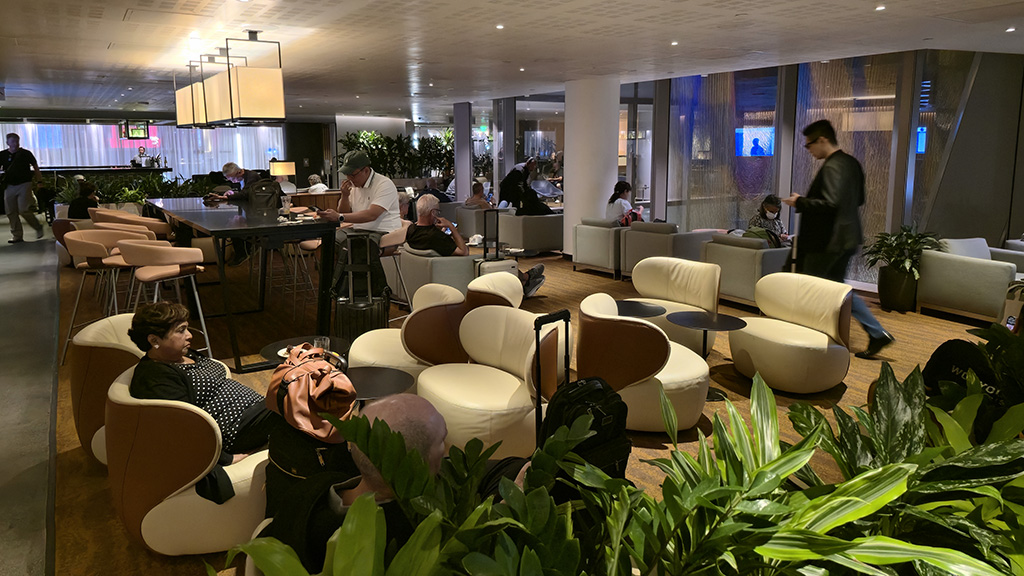
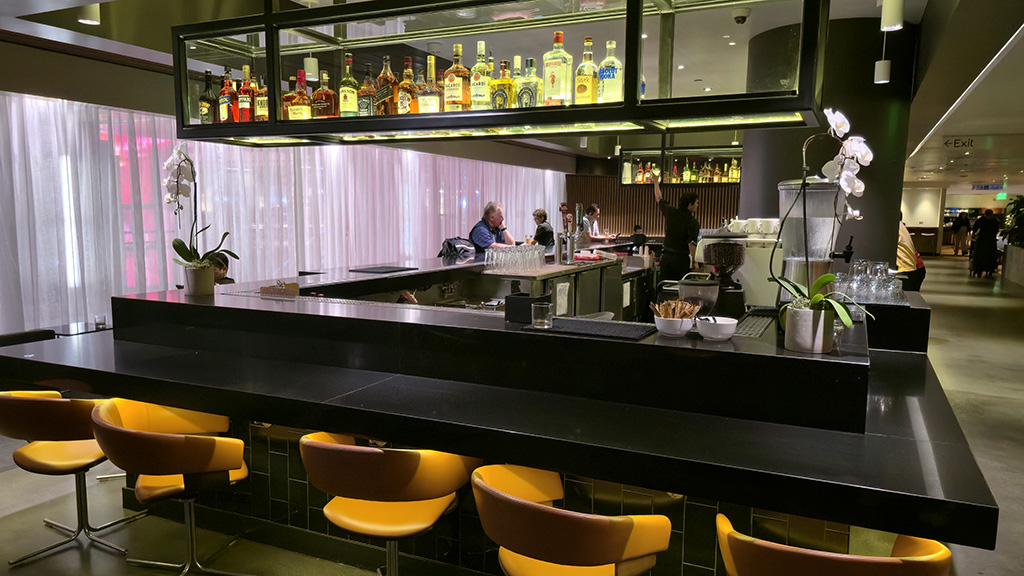
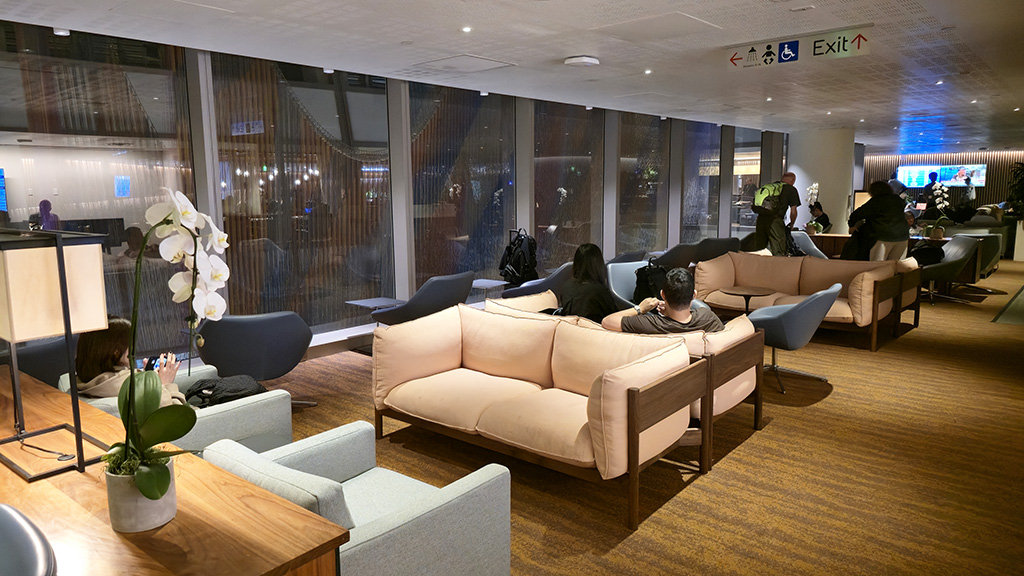
The best available route on Starlux Airlines that I was able to find started with a late night departure from Los Angeles International Airport. Because Starlux isn’t part of an airline alliance and doesn’t have their own lounge in Los Angeles, business class passengers were instead directed to use Starlux’s partner airport lounge owned by the Australian Qantas Airways, the Los Angeles Business Lounge.
The lounge was decently large. The food options weren’t spectacular, but still satisfactory. One thing that stood out to me was that it felt like each section of the lounge was “themed” differently. The style of furniture in each area was different enough that it felt like the lounge was a collection of about four different miniature rooms merged together into a lounge. It was surprisingly busy when I first arrived so I ended up finding a seat in a distant spot far away in the corner, but as the night went on, more people left to catch their flights and it became less packed.
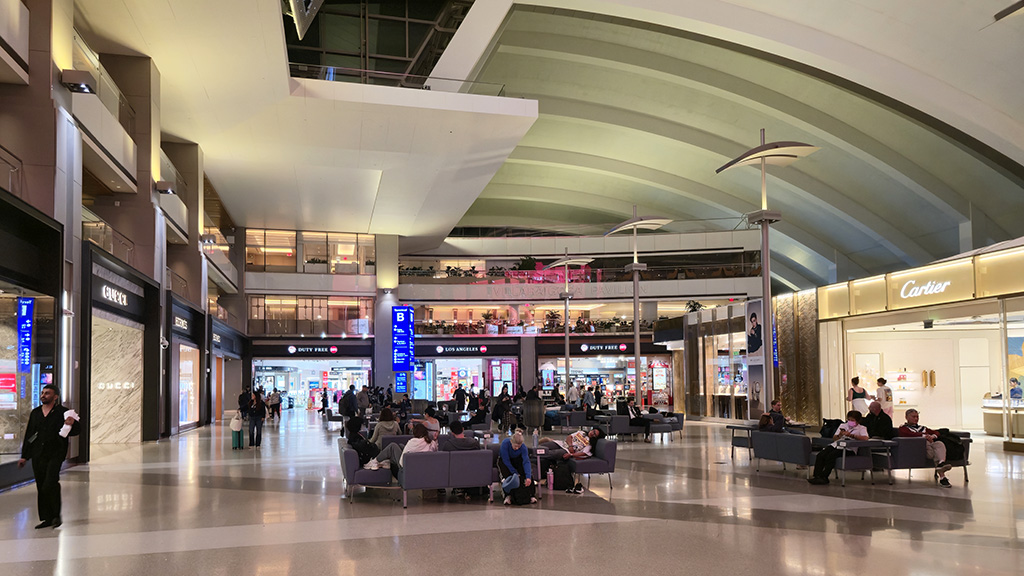
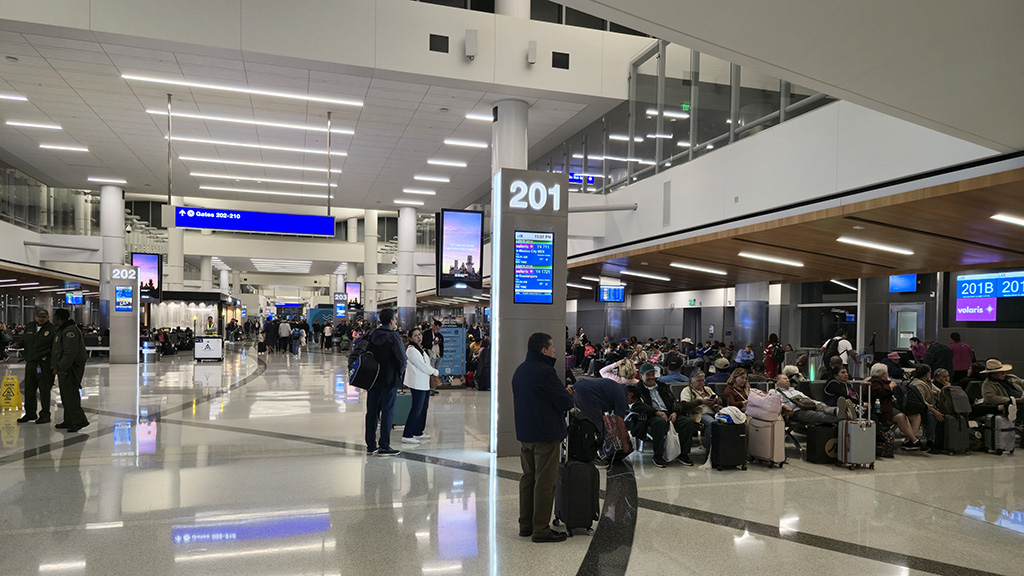
I noticed that my boarding gate was in the western building of the Tom Bradley International Terminal. Getting there from the Qantas lounge involves quite a bit of walking, so with plenty of time to spare, I headed out and started marching my way over to the 200 Gates.
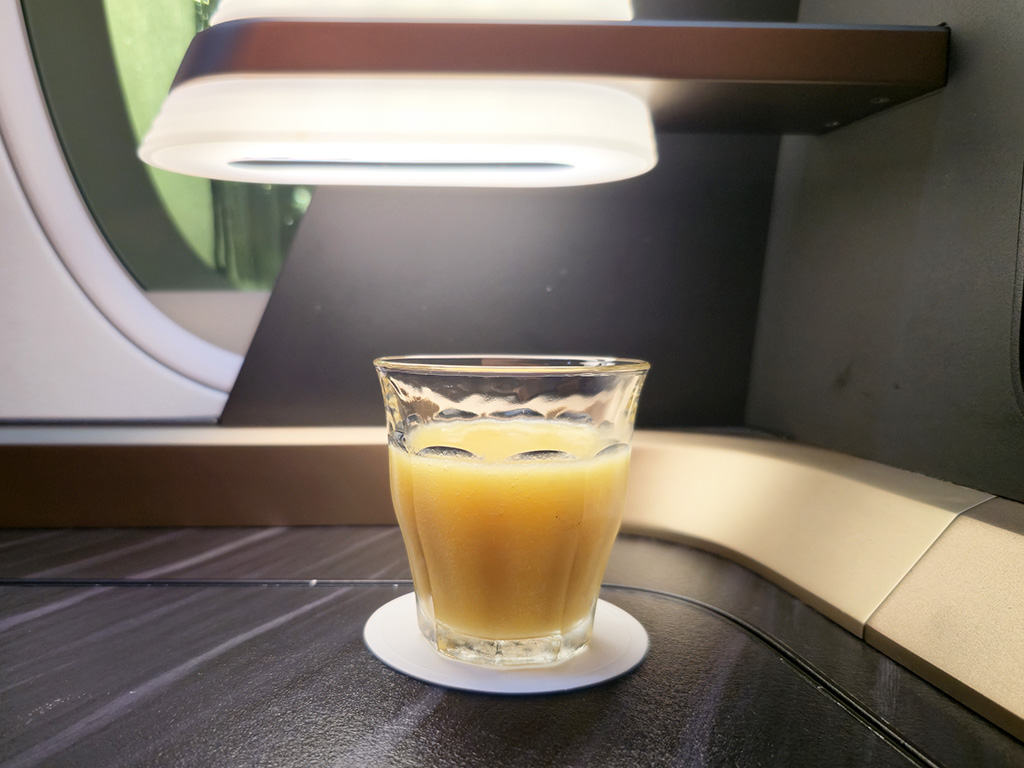
Upon boarding, I received a small glass of juice as my pre-departure beverage.
One of the things I found particularly memorable about flying with All Nippon Airways was their collaboration with Pokémon and the integration of Pokémon characters in their pre-flight safety briefing. It was nice to see that Starlux had their own special collaboration too—some characters from Peanuts were waiting for me on my in-flight entertainment screen.
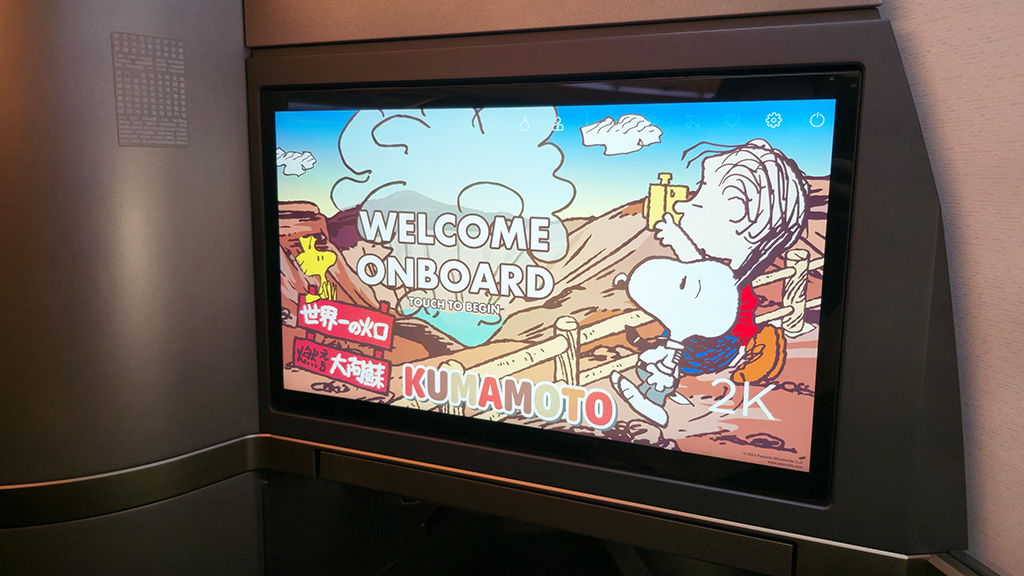
On this Airbus A350-900, I opted for Seat 2K.
If you’ve read some of my previous flight reviews, you might remember that I usually prefer securing a window seat in the final row of the rear business class cabin. The reason I didn’t do that on Starlux’s version of the Airbus A350-900 is because the “rear business class cabin” section is actually occupied by a small premium economy section, and then the entire remainder of the plane is filled with economy seats.
Unfortunately, due to the placement of the lavatories, sitting in the final row of the front section of the business class cabin will mean that people will constantly be walking past you and sometimes standing and hovering over you while they wait for the bathroom to vacate. I instead took the front-most available business class seat in the front corner of the aircraft that does not have a bathroom by it (Row 1 is a miniature first class section, so I was not eligible to pick Seat 1K instead).
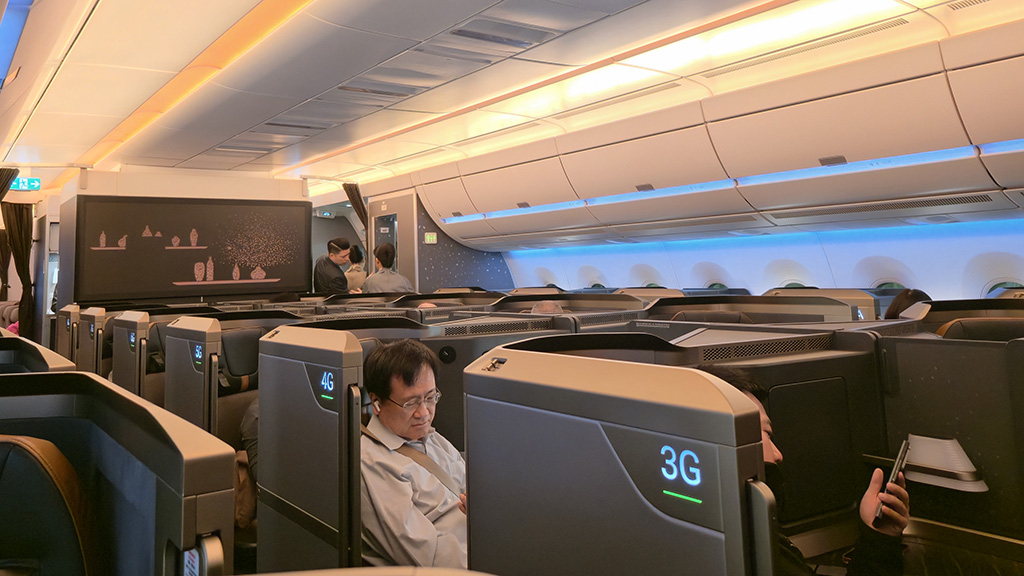
One thing I found unusual about Starlux’s business class cabin was the lack of overhead bins in the center of the aircraft. I personally didn’t like this because it introduces two inconveniences.
First, everyone, including people with inner seats, has to use the overhead bins above the window seats to store their luggage. We had issues finding space for everyone’s stuff, even with me trying to help the passengers around me and rearranging people’s baggage in the optimal orientation so there’s the most space possible. Compounding on this issue was the fact that, as is typical for lie-flat business class seats, there was no under-seat stowage, so even personal items had to be Tetrised into the limited room above.
Second, the center of the aircraft felt bare and exposed. I think an unintended positive side effect of having the overhead bins above the inner seats is that it feels cozier and more private. Having the lower ceiling means that the seats are more like little cubicles with overhead “walls.” In addition, people standing up in one of the aisles wouldn’t be able to see as clearly across the middle and to the other side, which adds to the feeling of privacy.
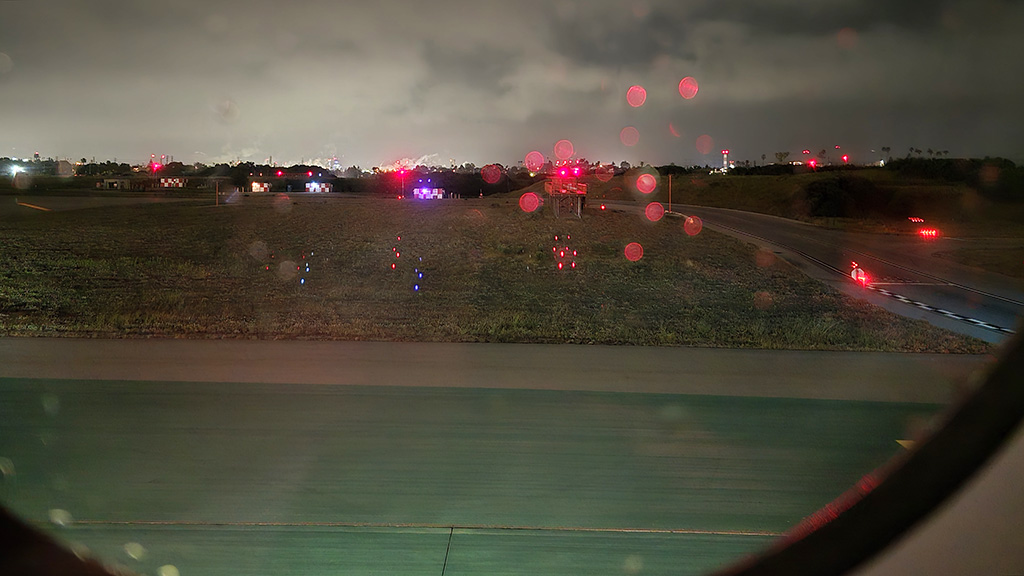
After a very minor delay, we taxied out onto the runway.
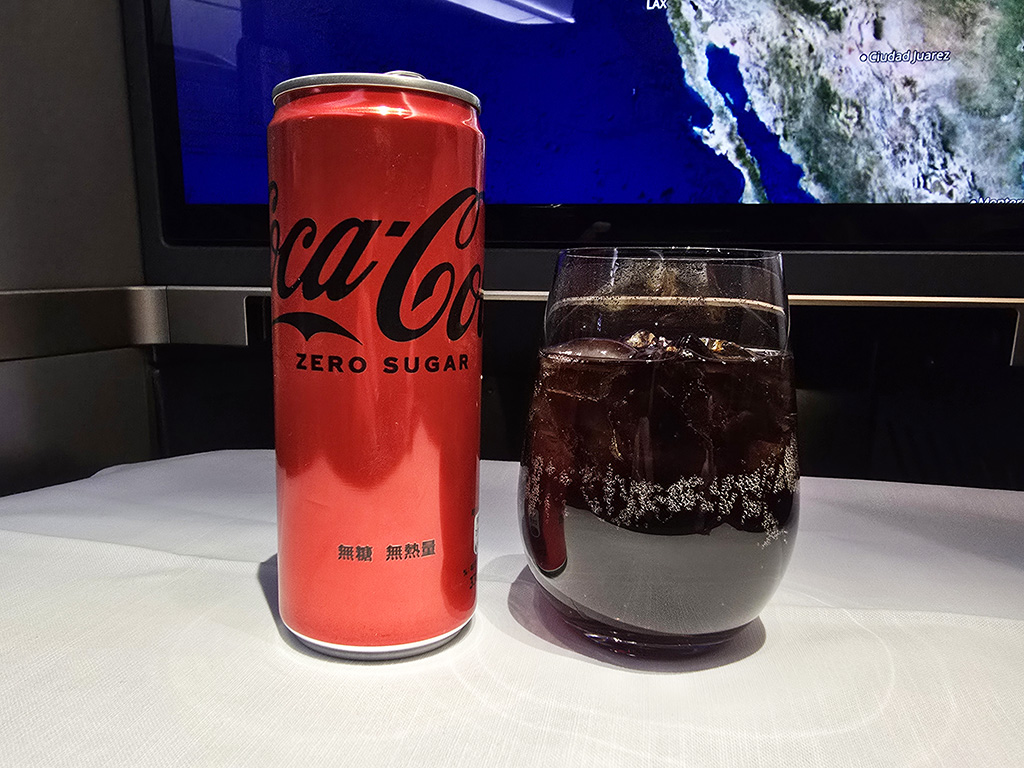
After reaching 10,000 feet, the in-flight wifi activated and the flight attendant served me a Coca-Cola Zero to sip on while waiting for meal service to begin. Even though it was around 1 AM already, it was still a decent time for dinner for me because I was already adjusted to Asian waking hours (i.e., I had already been falling asleep in the United States around the time that the sun comes up).
Asian airlines usually have two menus—an Asian menu based on the cuisine of the home country of the airline, and an international menu with more Western food options. I always opt for the Asian menu, but for this flight, when I was pre-selecting my meals a few days before departure, the international menu was the only available dinner option.
For my starter, I received crispy rice topped with almond shrimp salsa with a splash of lemon vinaigrette, as well as a side of some greens.
To accompany the food, I received a piece of sweet potato curry bread, a basil cheese roll, and a diamond roll. This came with some Isigny Sainte-Mère butter, extra virgin olive oil, and balsamic vinegar.
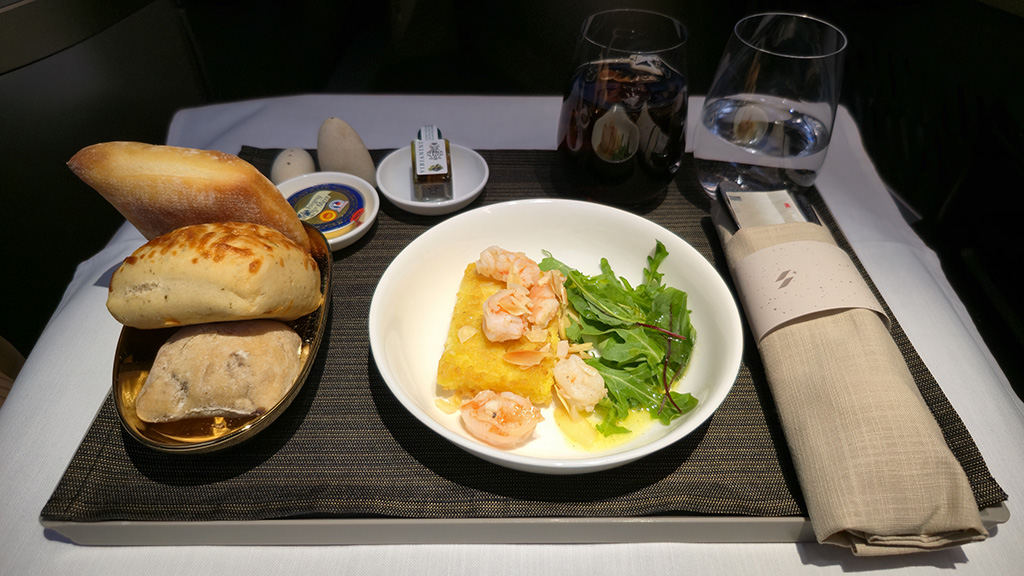
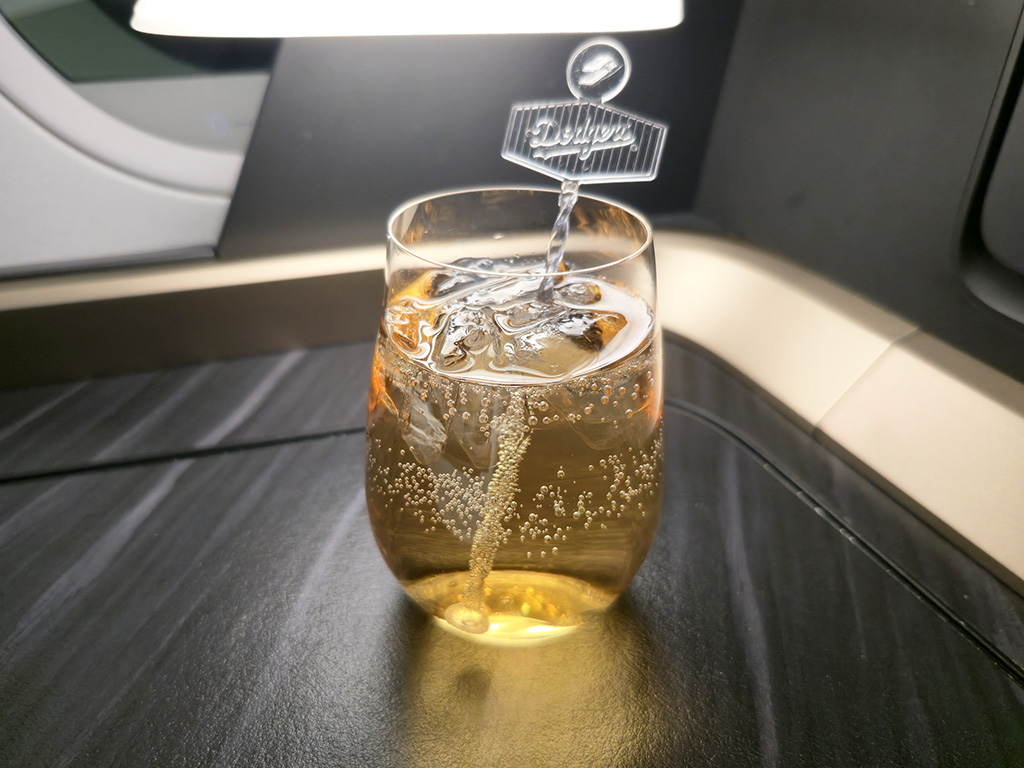
In addition to a glass of water and the Coke Zero I already had, I also ordered an apple sparkling mocktail. I liked this because, although it basically looks like carbonated juice, it basically wasn’t sweet at all, so the apple tasted more “earthy,” if that is even a valid descriptor for an apple.
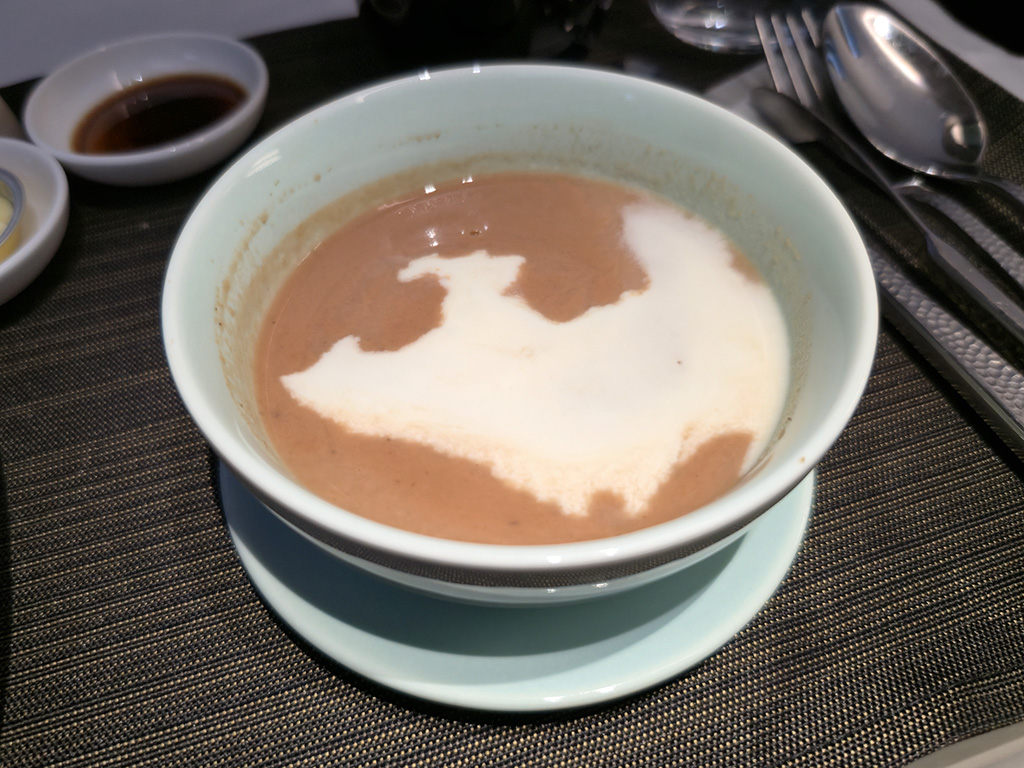
Next up was the soup course. The menu described this as potato and beetroot cream soup, but I am pretty sure that was an error; this had a very strong chestnut flavor instead.
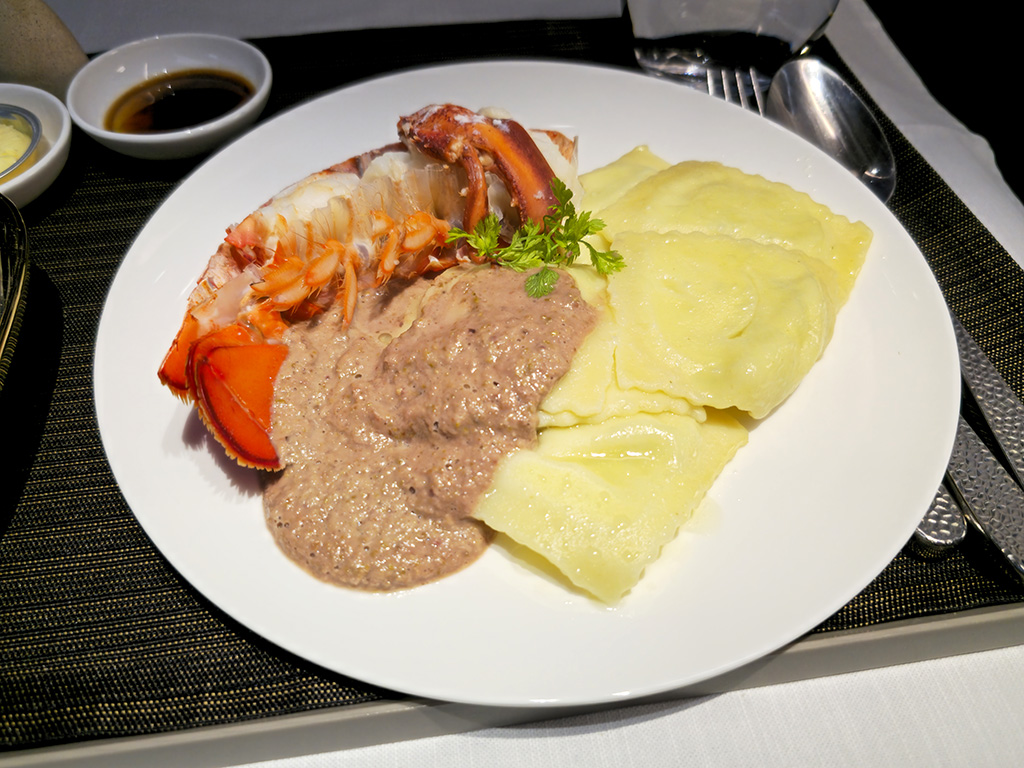
My main entrée, which I pre-ordered as an online exclusive, was a lobster tail with ravioli. This was a decent and straightforward dish—not particularly memorable as an amazing dish, but also not bad at all.
The other available main courses that I passed on in lieu of the lobster were braised beef cheek in red wine sauce, roasted rosemary chicken thigh, braised pork shoulder in Thai red curry, and mushroom risotto.
I’m still trying to be conscious of heart health due to my hereditarily high cholesterol, so I still try to prefer eating dishes with seafood or poultry. I avoid chicken on planes because it is so easy to dry it out by overcooking, so it naturally left lobster as my top choice.
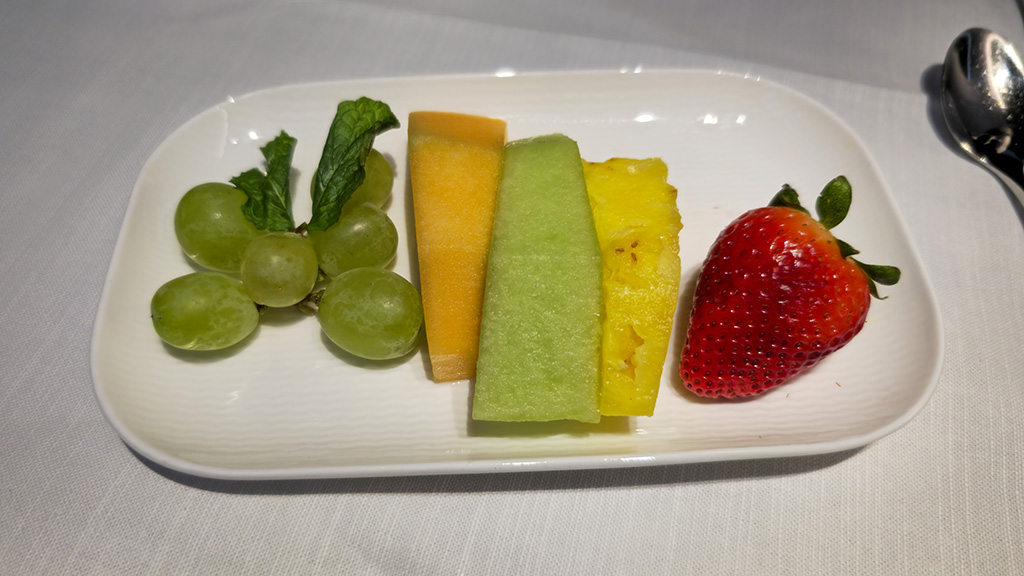
To serve as a palate cleanser after my meal, my flight attendant brought me a plate of fruit with some grapes, a couple slices of melon, a slice of pineapple, and a strawberry.
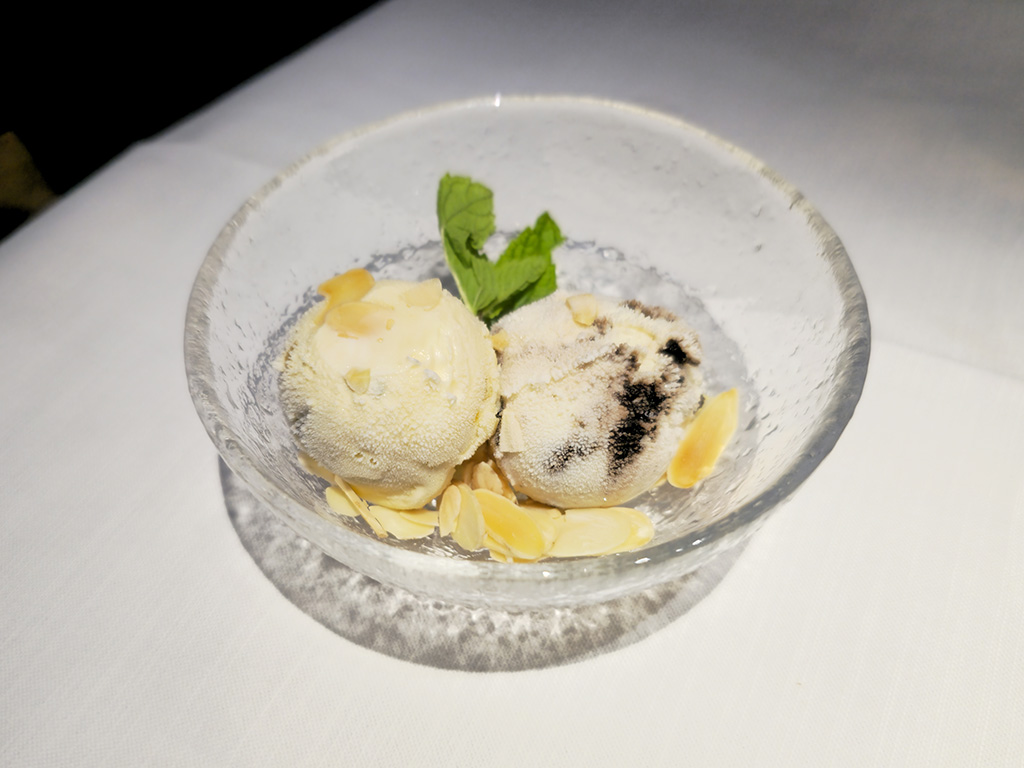
And finally, for dessert, I went with the assorted ice cream with sliced almonds.
After finishing my dinner, I wanted to relax for a little bit before going to sleep, so I reclined back in my seat.
I’ve always stood by my belief that, even in a lie-flat seat, it’s better to keep the seat slightly up rather than flattening it all the way down if you’re just relaxing and not knocking out for a full night of sleep. Even if you are planning on an entire night’s worth of sleep, I think raising your chair a very tiny amount is still better than going all the way flat.
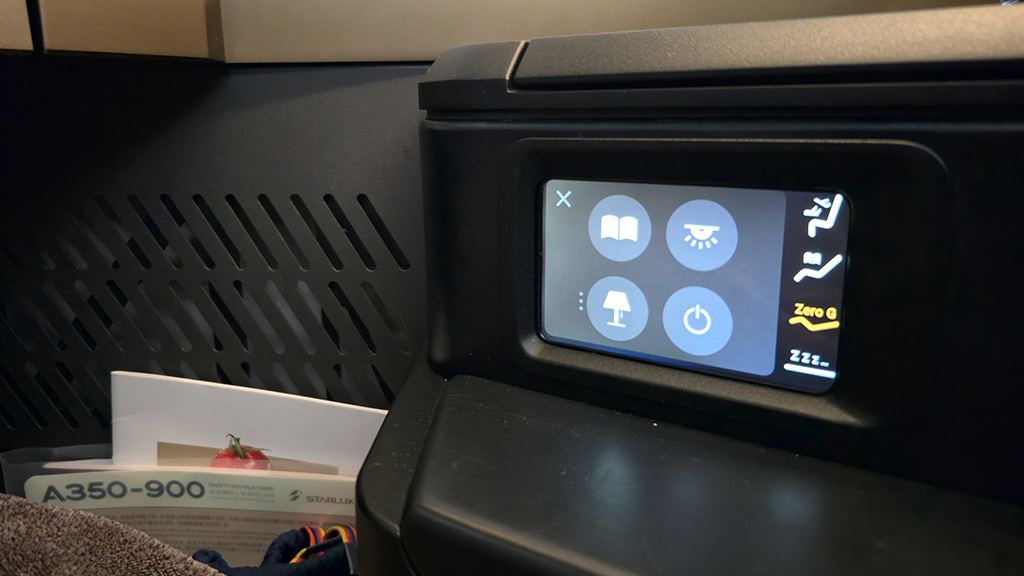
I feel validated in this observation, because Starlux has a “Zero G” mode that brings you to a position that is very close to what I recommend and use. The flight attendant explained this to me, and she said that it is a scientifically proven way to minimize the impact of gravity on your body and distribute your weight as evenly as possible as to not create any undesirable pressure points.
If dinner wasn’t enough food, I also had the option of getting a snack. The options were a braised beef noodle soup, grilled chicken burger with smoked bacon, and nachos with tomato salsa and guacamole. The nachos were a Los Angeles route exclusive, and you know how much I like restricted-access or limited-edition things, so it would’ve been nice to try it out… but I was at a reasonable fullness level and didn’t want to overdo it, especially with a lot of great meals coming up starting from the first day upon landing in Hong Kong.
After spending some time digesting while watching YouTube videos using the free in-flight wifi, I let my flight attendant know that I was ready to go to sleep for the night. While I was gone taking a quick bathroom break, my seat was converted and set up with a thicker mattress pad so I could lay down and have more cushioning for a more comfortable night of rest.
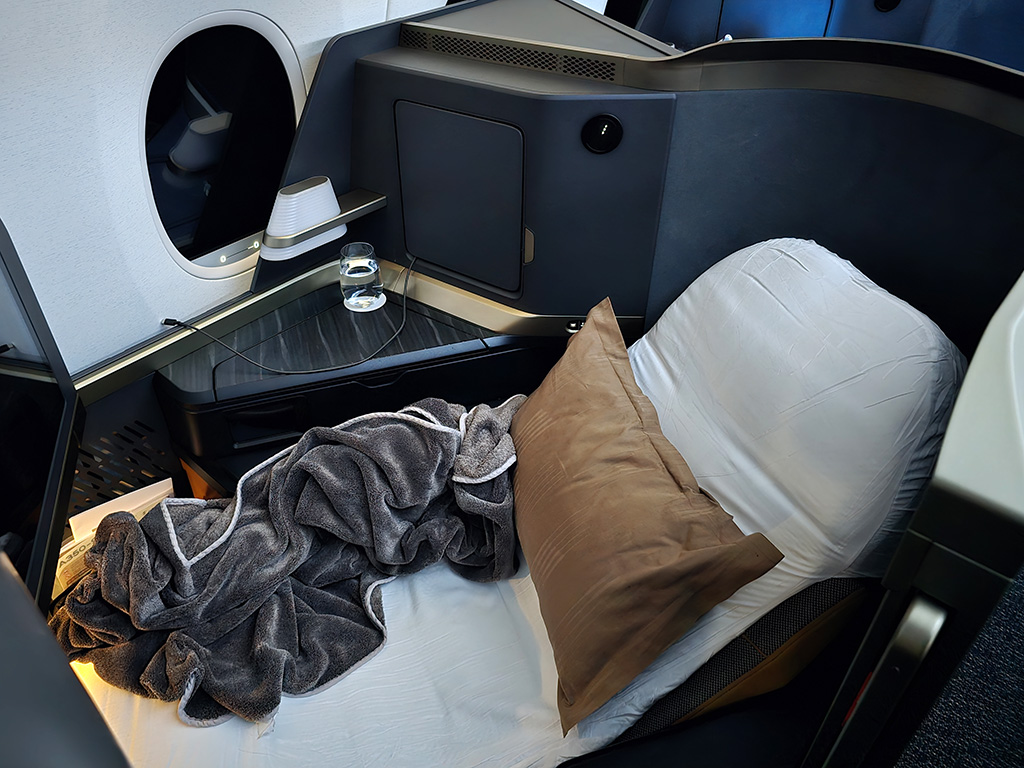
I ended up getting very close to a full eight hours of sleep.
The seat itself wasn’t extra comfortable or anything—basically every other lie-flat seat I’ve slept in was pretty comfortable (except for some of JetBlue’s older aircraft, which had Mint seats that felt unusually bouncy in lie-flat mode). However, the sleeping experience as a whole was definitely the best I’ve ever had on a plane.
The reason for that was less about the seat and more about an extremely convenient placement of a height-adjustable armrest. I was able to raise it to the perfect elevation so that I could prop up my arm onto it while laying down. This helped leave my chest area “opened up” so it was almost as if it felt easier to breathe. I think it also helped align my spine better when side-sleeping, because with one of my knees folded as well, everything felt like it was in better alignment.
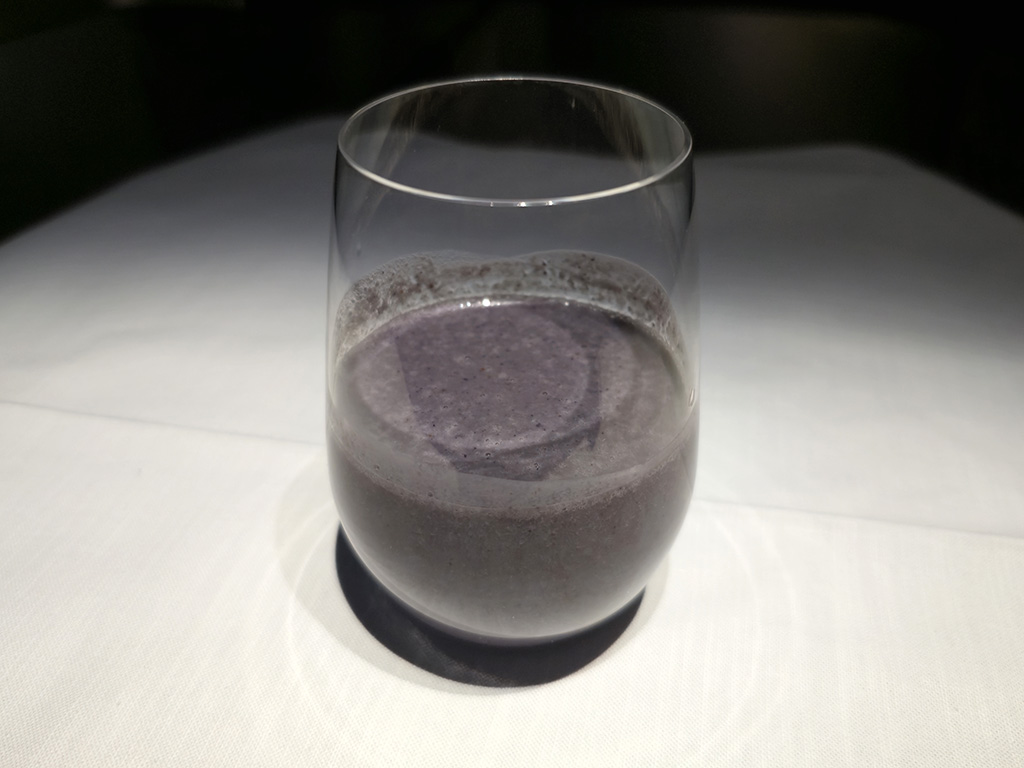
After being woken up by the cabin lights illuminating, the flight attendants went around distributing a smoothie as a morning refreshment.
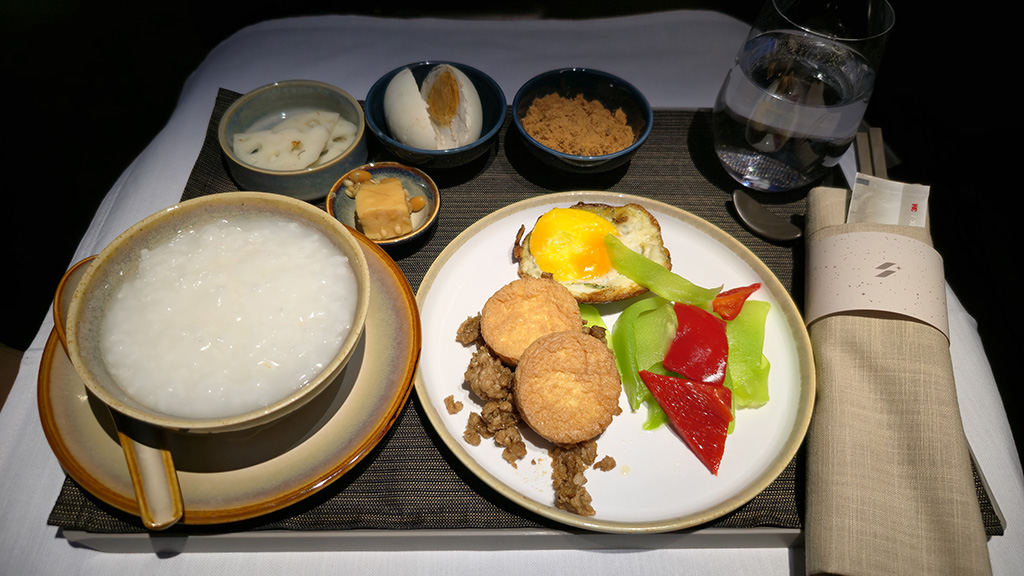
Contrary to dinner, breakfast had both an Asian option and an international option. I asked for the Asian breakfast, which was plain Taiwanese congee with a bunch of sides. The main plate of sides consisted of pan-fried egg with broccoli, stir-fried celtuce, braised egg tofu with soy sauce, and minced pork. The supplemental sides were osmanthus lotus root, salted duck egg, pork floss, and tofu curd.
This was a cozy, comfortable-feeling meal. It made me feel quite warm and pleasant.
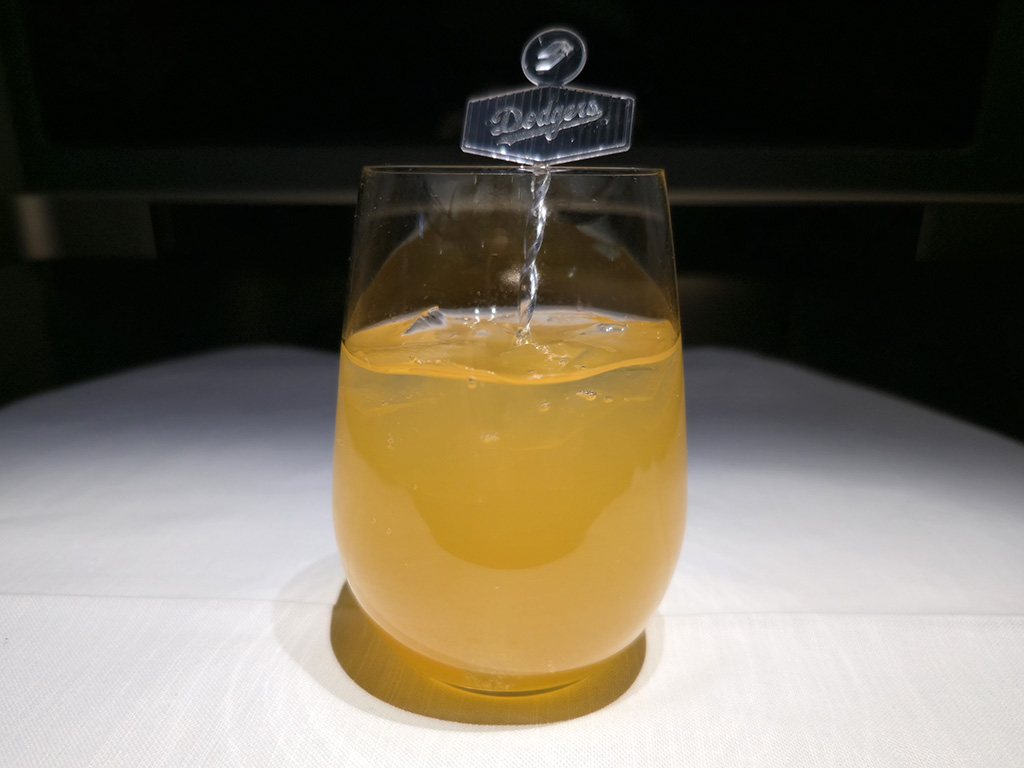
In addition to the cup of water, I asked for a peach sparkling mocktail to go along with my breakfast. Water ended up working best with the congee, so I ended up just saving the peach drink for later and sipping it after I was done with the congee.
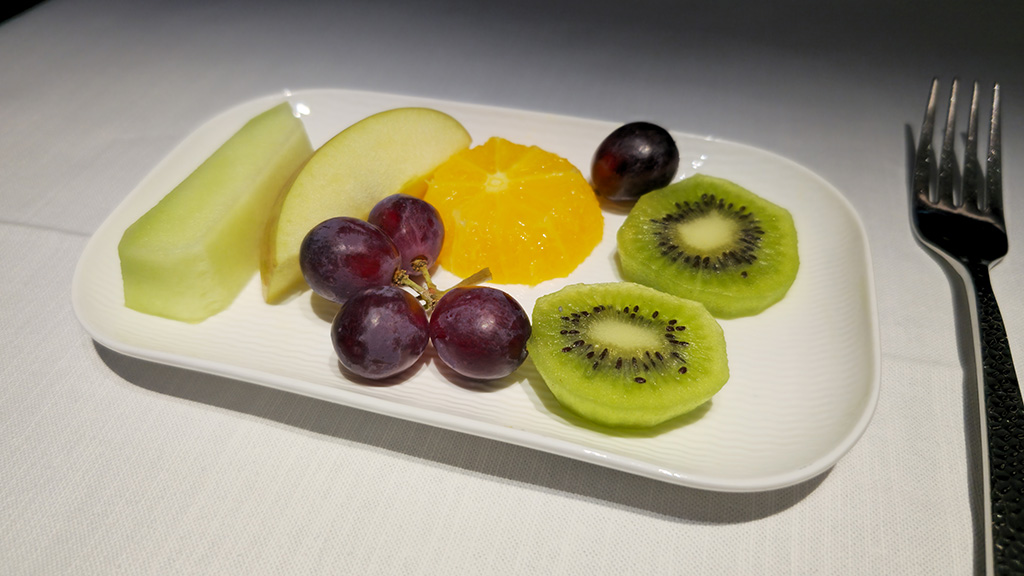
After the flight attendant cleared my breakfast tray, she brought me some more fresh fruit, this time a different assortment than before—some grapes, a slice of melon, a slice of apple, a latitudinal slice of orange, and two slices of kiwi.
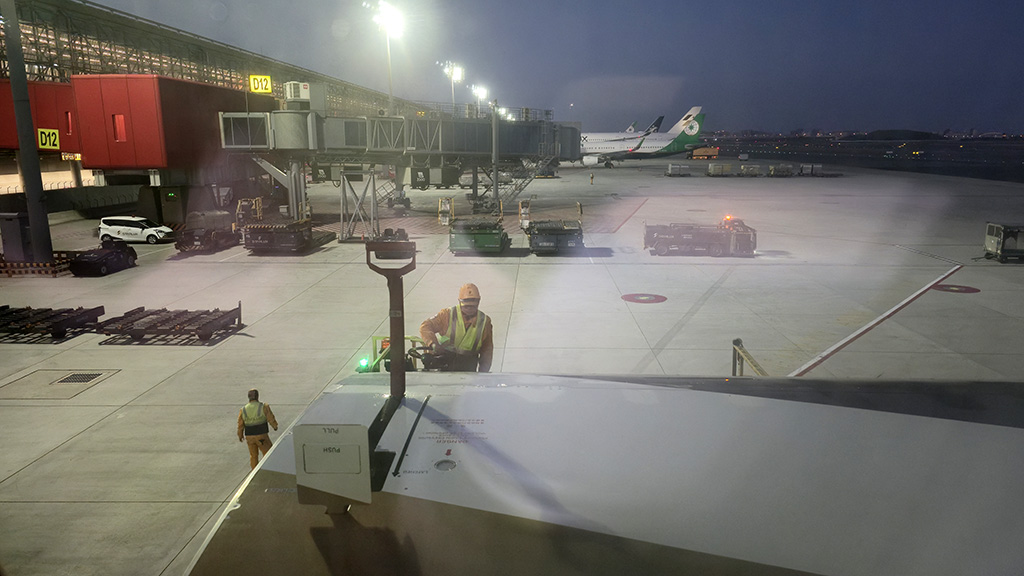
After finishing my plate of fruit, I reclined back again and relaxed until landing time. About an hour or so after breakfast, we arrived without incident and pulled into our gate at Taiwan Taoyuan International Airport.
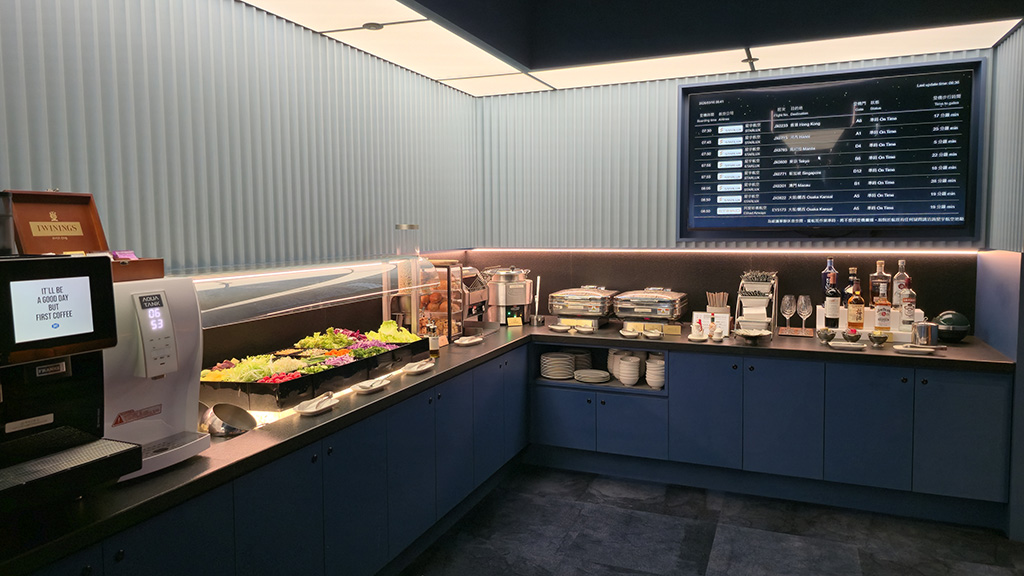
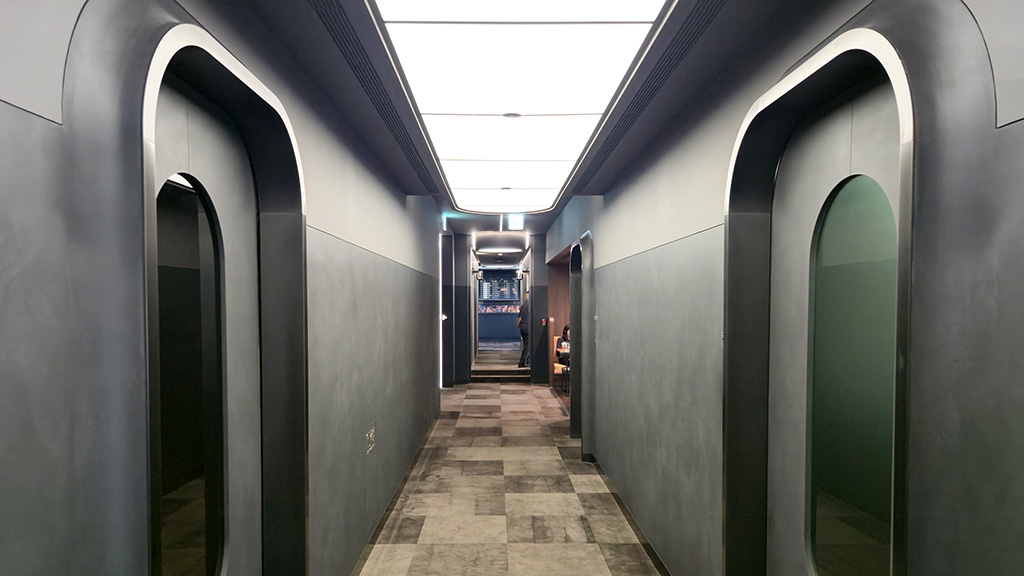
After deplaning, I made my way over to the Galactic Lounge in terminal 2. It was quite a bit smaller than I had expected.
I sat at one of the tables for a bit, but realized that there wasn’t really much of a reason for me to be there. I was already full from my first flight and was looking forward to yet again another meal on my connecting flight, so I didn’t want to take anything from the buffet. There were shower facilities, but I only had a handful more hours left to go before arriving in Hong Kong and wanted to just wait to shower at my hotel.
It was quite busy in the Galactic Lounge—literally busier than it was out in the main airport area—so I headed out early.
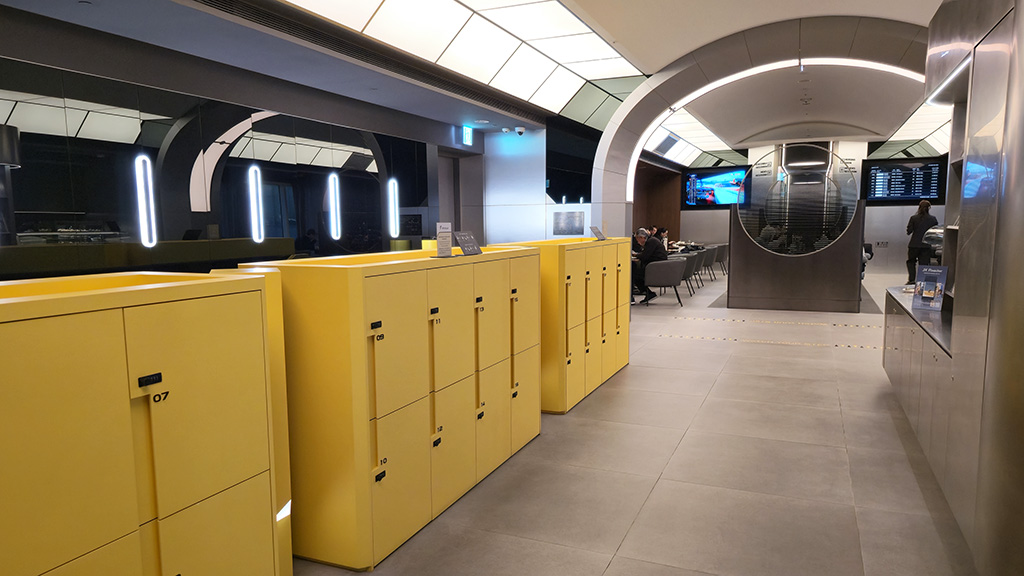
I like how human the Taiwan Taoyuan International Airport is. In the United States, it looks like airports were facilities constructed for the purpose of relocating Homo sapiens. On the contrary, Taiwan Taoyuan International Airport (and a lot of Asian airports in general) feel like they are communal spaces built for real human beings to go on trips.
The fact that this airport is so nice makes it so you don’t actually really need business class airport lounge access unless you’re going there specifically to use the amenities (e.g., food or shower). I enjoyed myself just walking around the airport and going up and down the aisles looking at the decorations by the gates.
I am about 98% sure that I took way more photographs of the airport than this, primarily because I specifically remember capturing some shots looking out the window, and I was going on a photographing spree because of how visually pleasing everything was. But, for some reason, those pictures seem to have literally disappeared off my phone and I have no idea why.
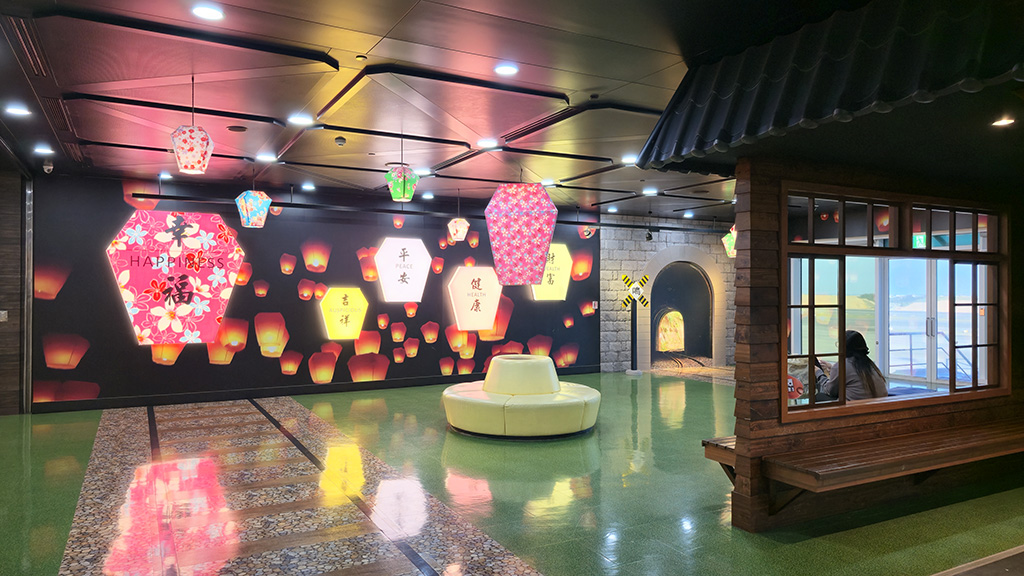
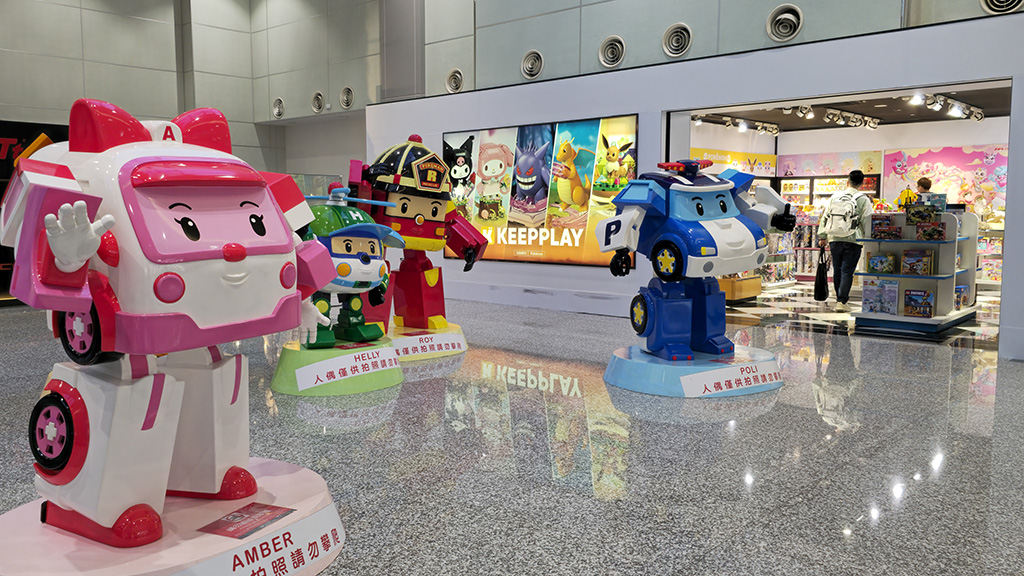
After sightseeing around the airport, I routed myself towards the boarding gate for the next leg of my trip. After a short wait and a quick passport check, I was invited on board their Airbus A321neo.
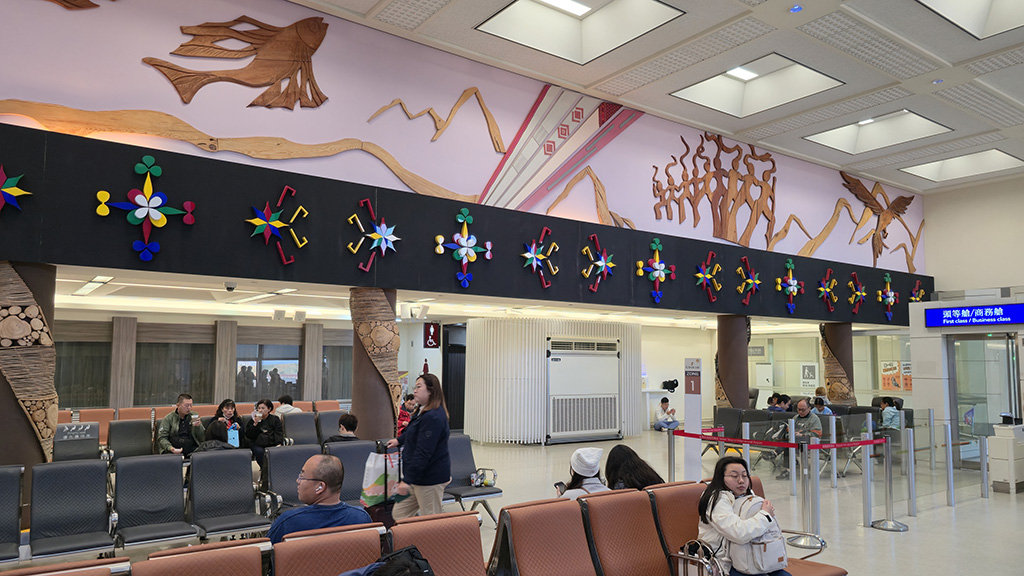
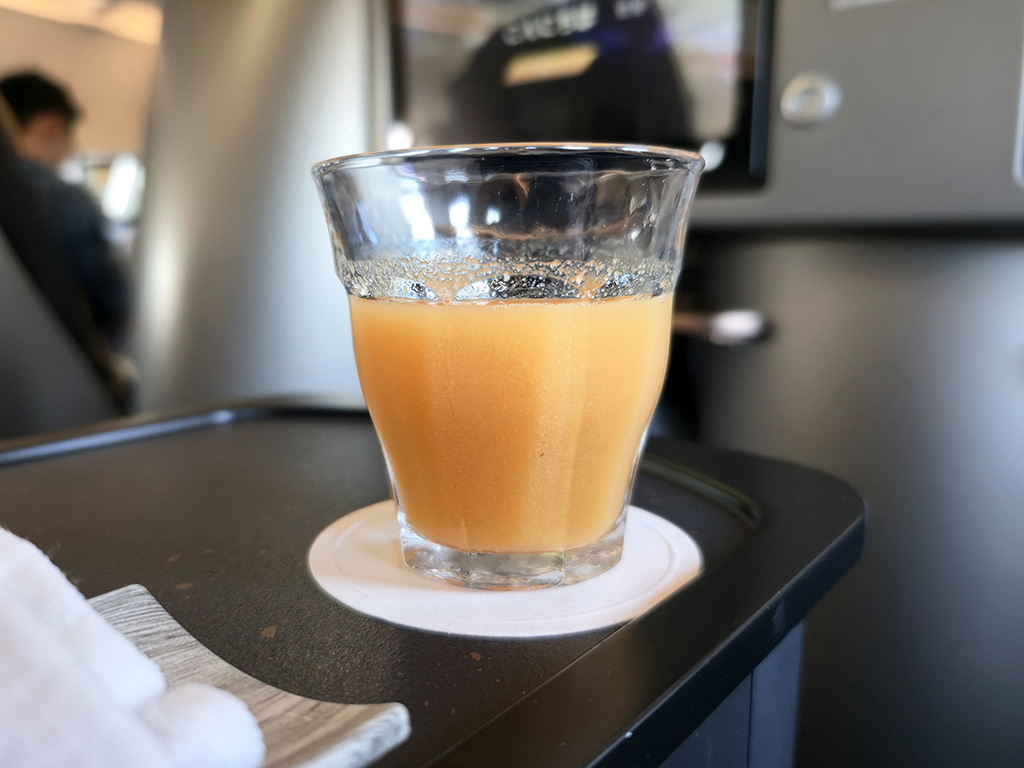
Upon boarding and settling into Seat 3K, I was welcomed with another small glass of juice as my pre-departure beverage.
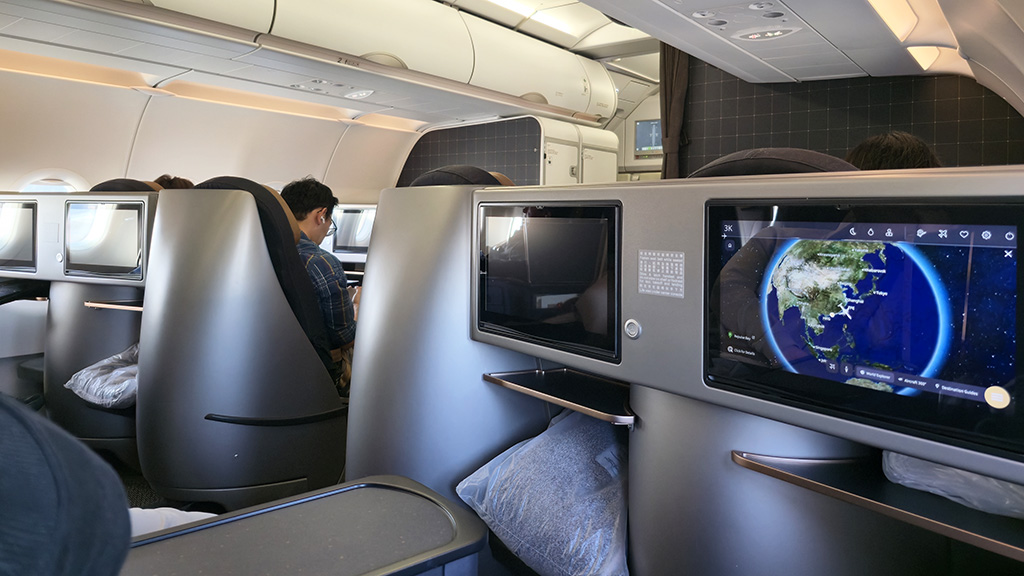
Because the Airbus A321neo is a narrower, single-aisle aircraft, the business class seats are arranged in a 2-2 configuration. This meant that I didn’t have my own little cubicle, and I had a next-seat neighbor. This was fine though, as the in-air time for this leg was anticipated to be less than two hours.
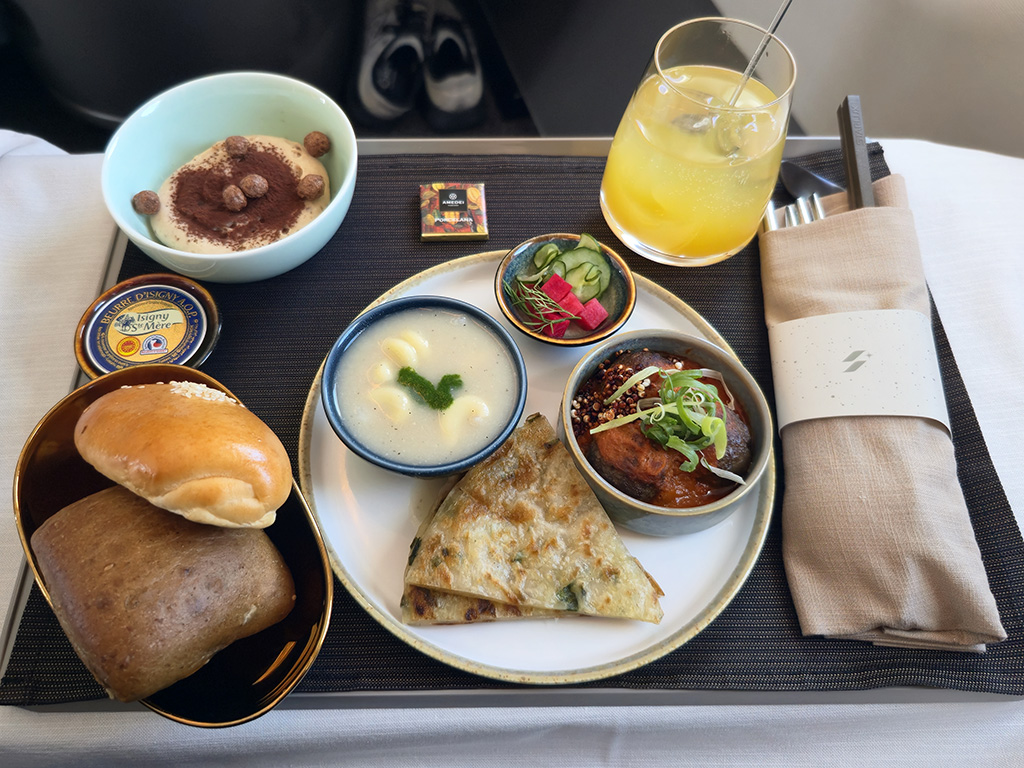
Because of the short flight time, my entire in-flight meal was served on a single tray instead of being split into multiple courses. I selected the Asian menu again, so I received some scallion pancakes, meatballs, soup, bread, and chestnut mousse. For my beverage, I went with an orange sparkling mocktail.
Throughout and after my meal, I noticed that the man sitting next to me was sneakily taking creep shots of one of the flight attendants with his phone. There were a few different flight attendants tending to the business class cabin, but there was one in particular who he was consistently targeting with his photographing. These ranged anywhere from zoomed-in photos of her face when she was in view talking with other passengers, all the way to pictures of her bending over. Fortunately, she had a long skirt on and the material was thick enough that he wasn’t able to catch her in any moments of vulnerability, but I was still irked.
In disgust, I told one of my Chinese friends about this over text using in-flight wifi. I half-jokingly but also sort of half-seriously asked her how to say “stop being such a pervert” in Mandarin so I could say it to the man sitting next to me. Unfortunately, she replied “no don’t say that, I’m not teaching you that 😭”…
Nearing the end of our flight, he asked a flight attendant for a piece of paper and a pen. He started writing something on the paper, but it was in Chinese, so I couldn’t figure out what he was up to. Then, unexpectedly, he folded the piece of paper and gave it back to the cabin crew, specifically to the woman he was photographing. I peeked at it right before he handed it off, and it was just a bunch of Chinese characters without any indication that there was a phone number or other contact information on it. This implies that this man just randomly wrote a love letter to this flight attendant solely for the love of the game…
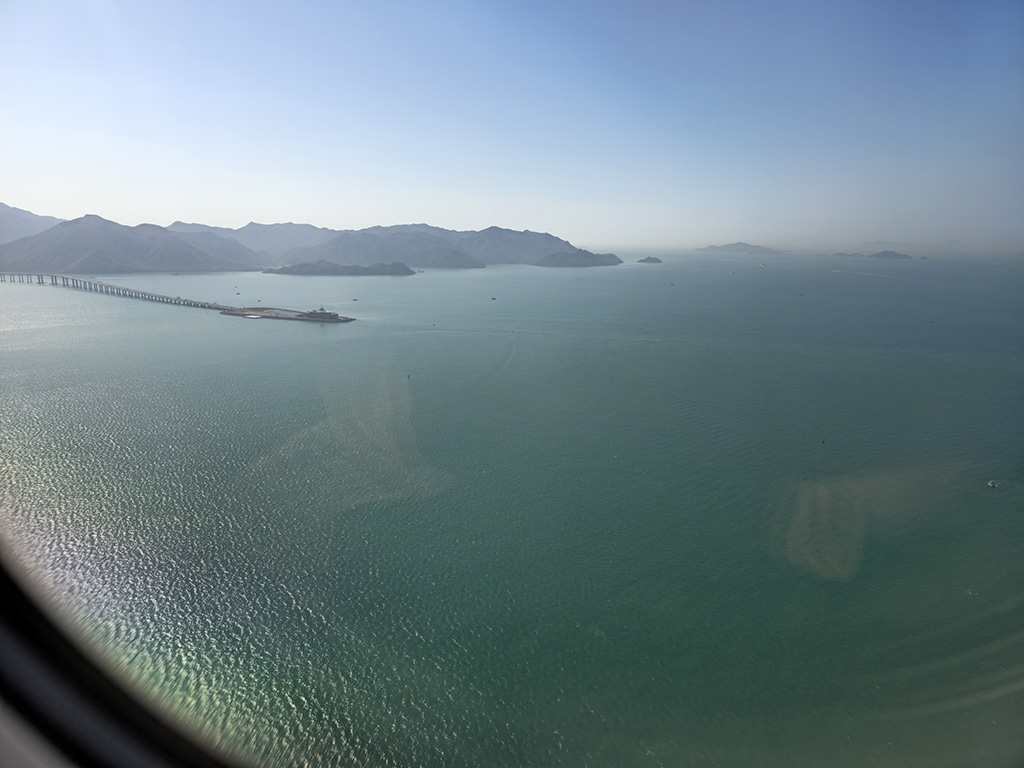
Not long after “the incident,” we landed safely at Hong Kong International Airport. After a quick deplaning, I breezed through immigration and customs due to my United States citizenship status.
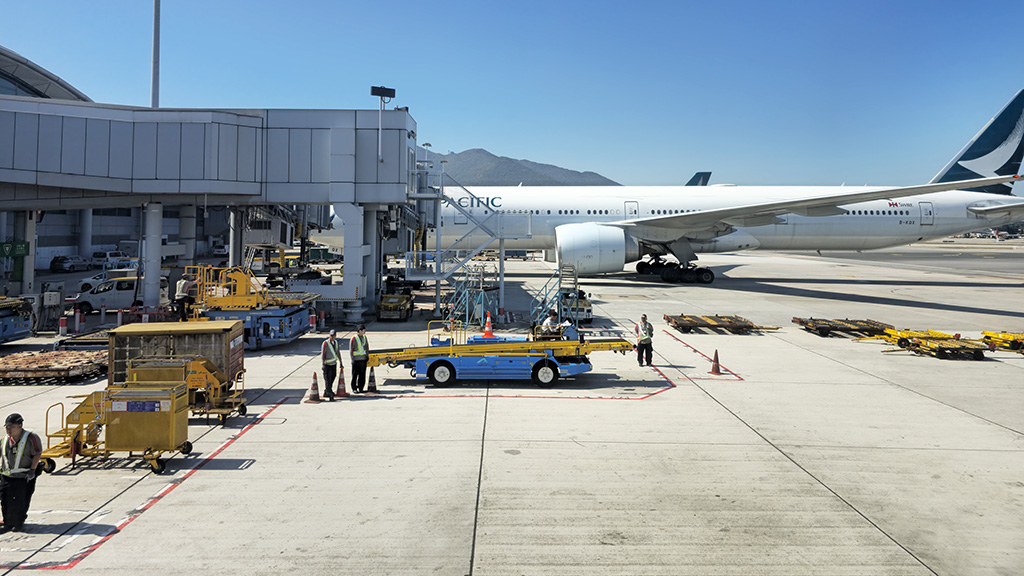
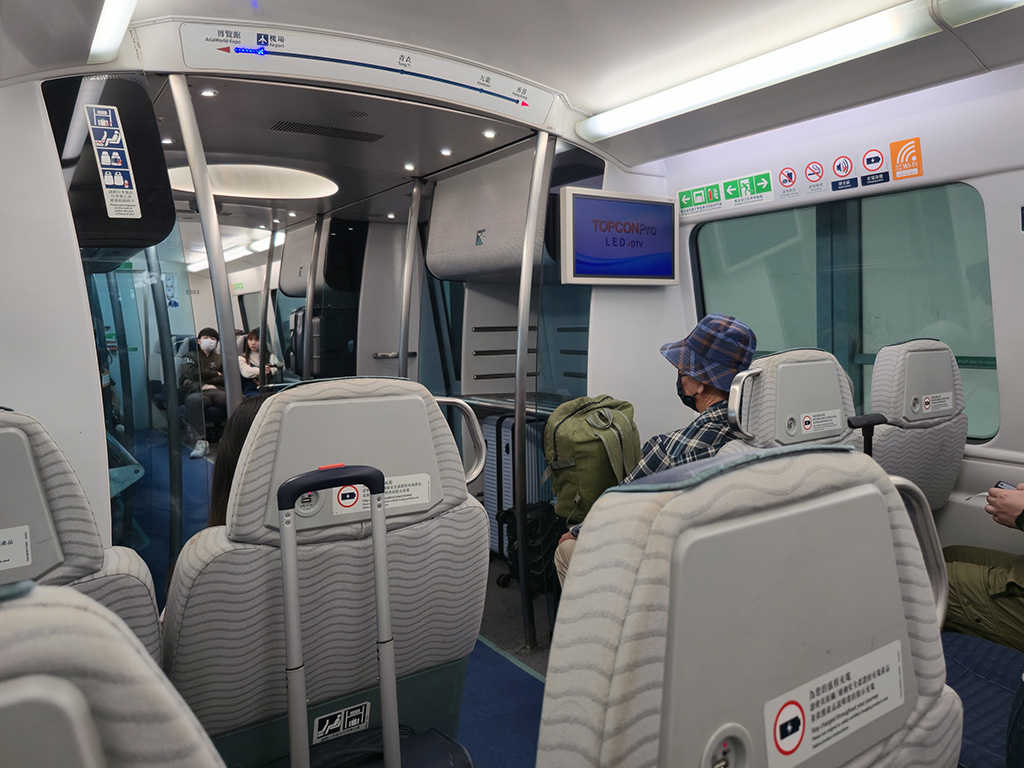
Upon exiting to landside, I easily found the entrance to the Mass Transit Railway’s Airport Express Service. I had pre-loaded my Octopus app with money already to use on transit, so I didn’t have to stand in any lines to buy one-off tickets; instead, I hopped right on the train, stowed my luggage in the designated area, and relaxed for a little over half an hour.
The Airport Express took me to Hong Kong Station, where I got off the train and scanned my Octopus express transit pass to pay for my ride. From there, I used the underground walkways to go to Central Station, where I scanned back into the paid area and boarded the Island Line to finish my trip to Admiralty Station.
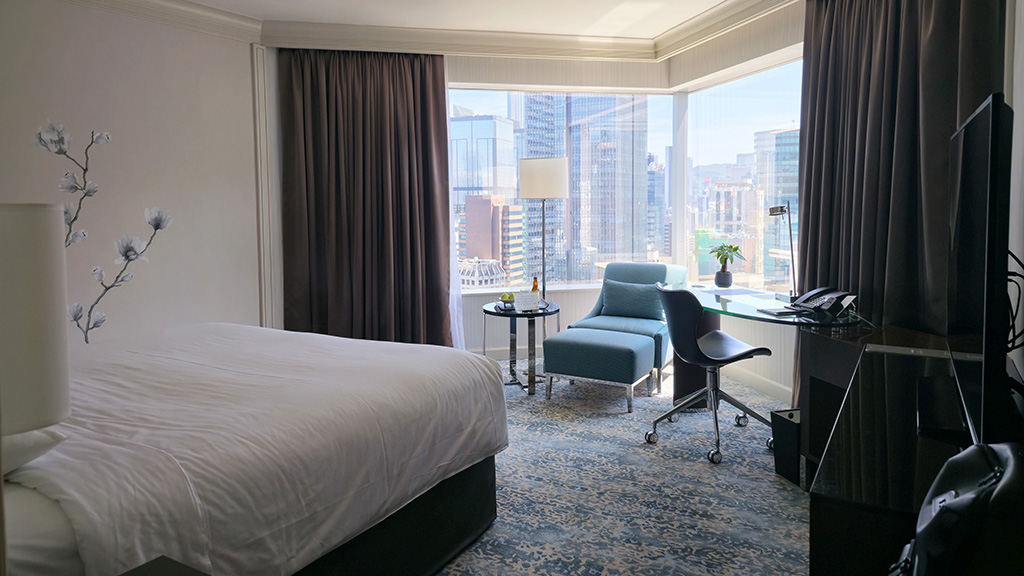
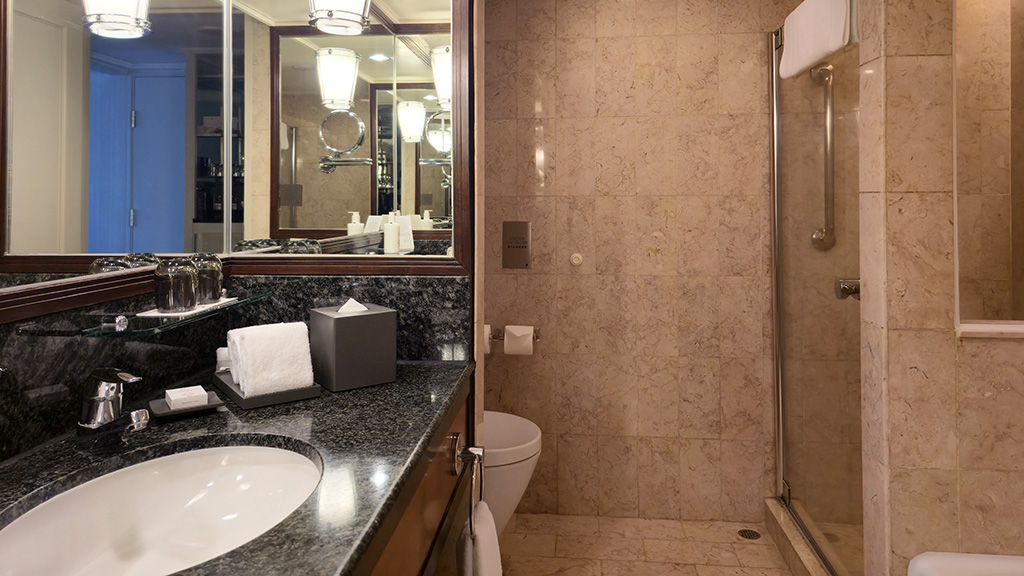
My hotel of choice for my first handful of days was the JW Marriott Hong Kong.
I picked it as my arrival hotel because Admiralty Station is known to be a very well-connected station in terms of lines serviced, and I’m able to get to pretty much anywhere from that station with minimal transfers. It is also connected directly to Pacific Place, the complex containing the JW Marriott. I figured that having this level of convenience would be helpful at first while I’m still getting used to the transit system.
The room was quite small, but I guess that is to be expected, as Hong Kong has limited space to build and they need to get as much value as possible out of the limited land they have.
The service was absolutely stellar, but it was too good for my preference. Keep in mind that I used to literally live for over 350 days a year out of hotel rooms when I first became a digital nomad, and even now, I still spend somewhere around half the year in hotels. As someone for whom hotels have completely lost their novelty value, it was very weird feeling like the staff was just following me around everywhere and acting like servants. Even when I clearly and explicitly asked for self-service when getting food from the lounge, the staff was still intrusive and wouldn’t leave me alone.
That concludes the overview from my travel day from the United States to Hong Kong. Hong Kong wasn’t quite as activity-filled and action-packed as my trip to Japan was, but I still visited a lot of tourist destinations and ate at a lot of great restaurants. More blog posts should be coming up soon…