For the past two and a half weeks, I have been blogging daily about my visit to Tokyo, Japan to share my thoughts and photographs from various activities I did during my trip.
In case you missed the context of it, I decided to go to Japan because I had some friends I trust who were also going to be in Japan during some of the days that overlapped with my itinerary, so even though I was basically going on a solo trip, I wouldn’t entirely be alone because I would have people to meet up with on a case-by-case basis upon my arrival.
I had a chance to travel under this structure before, but I opted not to do so because I wasn’t sure I could go to a country that doesn’t speak English and be able to get the most out of my vacation. However, after going to Vietnam and having the trip turn out to be a success, I had more confidence to go to Japan and manage just fine on my own. Thus, I seized this opportunity.
If you haven’t been keeping up with my blog since late November, you’re in luck—with this blog post being the concluding post of the “Japan series,” I figured I’d give a preliminary table of contents here in case you want to do some chronological reading prior to this blog post about my flight back to the United States.
(Just to clarify, this is chronological on the basis of when I published the blog posts; I didn’t necessarily do the tourist activities in this order, and I sometimes scrambled up the ordering intentionally so that there would be more variety in the flow of blog posts, e.g., so there wouldn’t be back-to-back museums or back-to-back parks.)
The final verdict from the trip is that I loved it. Tokyo quickly became my second favorite city of all time, only losing first place to Las Vegas, which is literally the city I voluntarily picked as my home and isn’t really a fair comparison.
Everything just makes sense in Tokyo. I love going outside and walking around in big cities, and I like being able to blend in with a crowd and feel like I am just one regular person who is a component of a larger, bustling society. With that perspective in mind, I’m sure it’s easy to tell why I call Las Vegas home and why I decided to live on the Las Vegas Strip. Tokyo reminds me a lot of the Las Vegas Strip, but instead of being composed of degenerate drunk gamblers, Tokyo gives off a well-educated and professional vibe.
All of Tokyo feels highly efficient and optimized. The culture emphasizes the importance of not causing a disruption to others, so you can generally go about your life uninterrupted and gain full benefits from the various systems that are put into place. For example, the public transit system is highly reliable and makes it very easy to get around without a vehicle. Everything is highly intuitive and orderly, so as long as you’re paying attention, you should generally be able to pick up on things and fit in fairly easily.
Everyone I met in Japan was very kind and considerate. Being of Korean ethnicity, I was always told growing up that Japan is supposed to be my “enemy” because of the two countries’ past history, and I was always warned how Japanese people would be racist against me. I’m not necessarily trying dismiss the struggles and hardships that older Korean people faced, but on this trip, I personally found out first-hand that all the Korean people in my life were horrifically wrong about Japan. Although I am thoroughly an American, I am still visually Korean; even then, every single Japanese person I encountered was still very welcoming and respectful.
The food literally everywhere in Japan is just categorically better than the food in the United States. I’m sure a lot of it just has to do with personal preferences, especially considering that Japanese is my favorite cuisine, but even the worst possible food in Japan was above average to American standards, and the average in Japan was on par with some of the best restaurants I’ve been to in the United States. One of my friends who was with me in Japan said that one of her favorite snacks in Japan is to get an egg sandwich and freshly-heated chicken filet from 7-Eleven and combine the two; I tried this, and it was quite literally better than any chicken sandwich I remember ever having in the United States.
Within days of arriving in Tokyo, I was already looking up long-term housing options for my next trip. Because of my loyalty to Marriott, I stayed at the AC Hotel Ginza this time around, but that ended up being pretty pricey. I was willing to spend the extra money because I felt like I would be able to rely on the staff in case something went wrong, but then I realized that I can basically rely on literally anyone in Japan because of how willing everyone is to help out someone in need. I am looking forward to my next visit to Tokyo, and the next time I go, I’m hoping I can find a good serviced apartment so I can stay for longer without having to check out with a very expensive lodging bill.
So with that trip summary out of the way, here is an overview of the flight I took back to the United States. I opted for All Nippon Airways flight 6, cross-listed as United Airlines flight 7946, from Narita International Airport to Los Angeles International Airport.
As a side note, I intentionally booked two different airlines of the same alliance—United Airlines on the way out and All Nippon Airways on the way back—so I could experience two different long-haul business class flights serviced by two different carriers. I flew in and out of Narita International Airport because flights to Haneda International Airport were more expensive enough that it wasn’t worth the time savings on the shorter train ride. I flew from and to Los Angeles International Airport because Harry Reid International Airport back at home didn’t have any non-stops to Tokyo.
On the way to Narita International Airport, the timing didn’t quite work out for me to take the Keisei Narita Skyaccess line back to the airport like I took on my way to Ginza, so I instead rode the Asakusa line, which became the Keisei line. Although it took about half an hour longer, I’m glad I got the experience, because this line went through and had stops in the less populated areas between Tokyo and Narita, so I got a glimpse at what “country life” is like in Japan.
Upon arrival, I had a smooth entry into the airport. The lines at both immigration and security were short and quick, and I cleared both without incident.
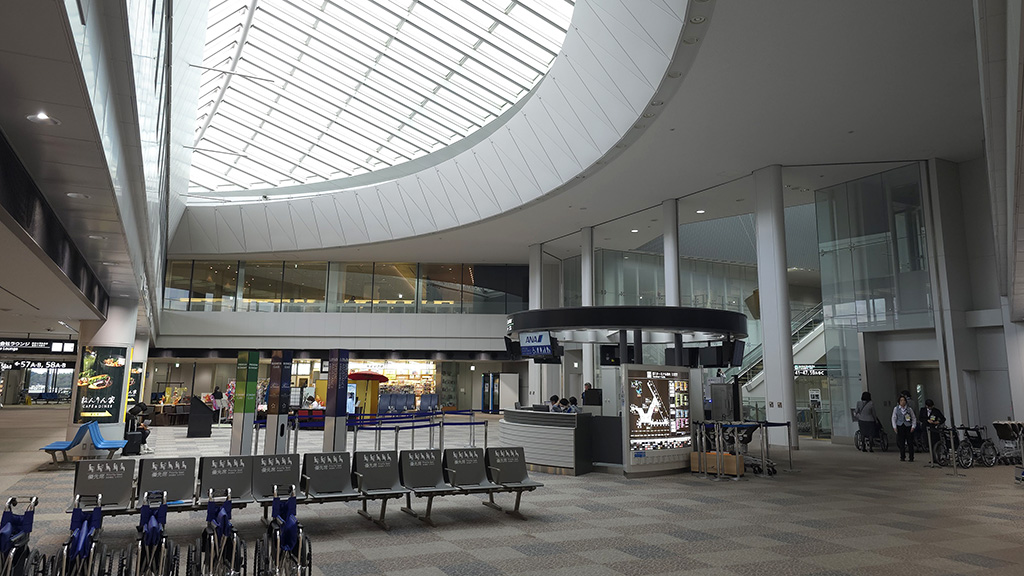
After arriving at Satellite 5 of Terminal 1, I found an escalator to the upper floor with the airline lounges.
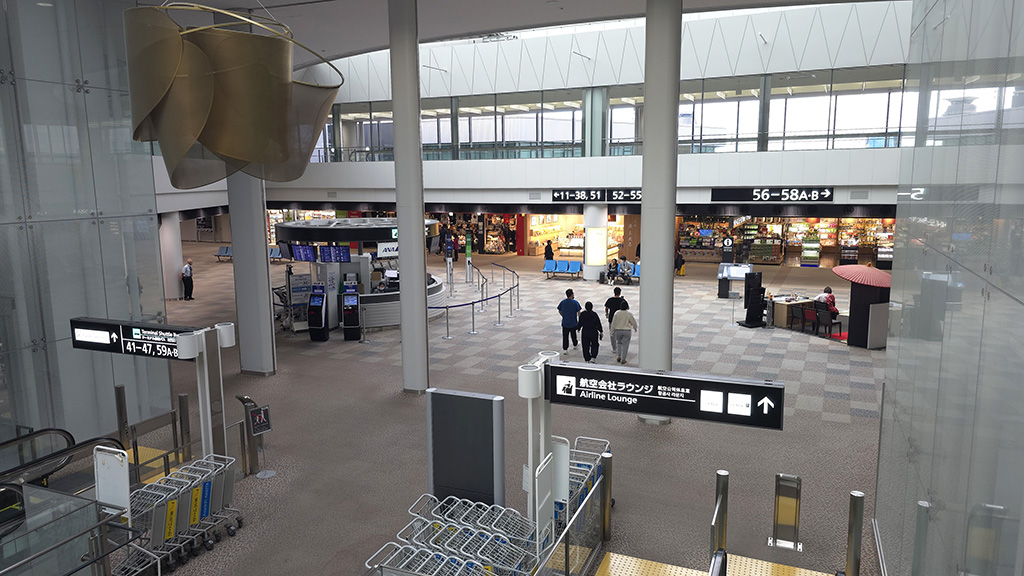
As part of my ticket, I was able to enjoy the ANA Lounge prior to departure. It wasn’t too busy when I arrived, though it did fill up pretty quickly over the next couple hours.
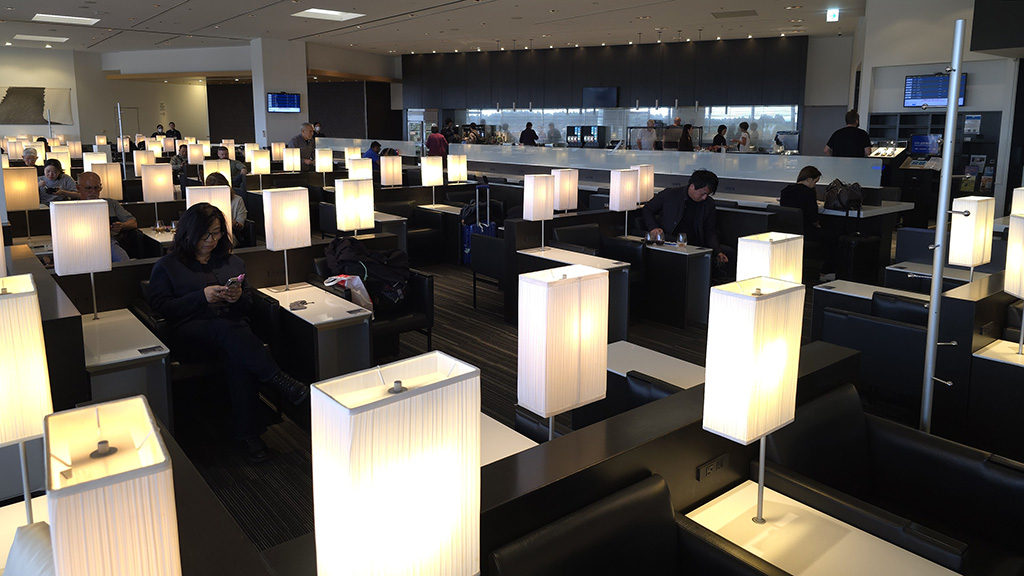
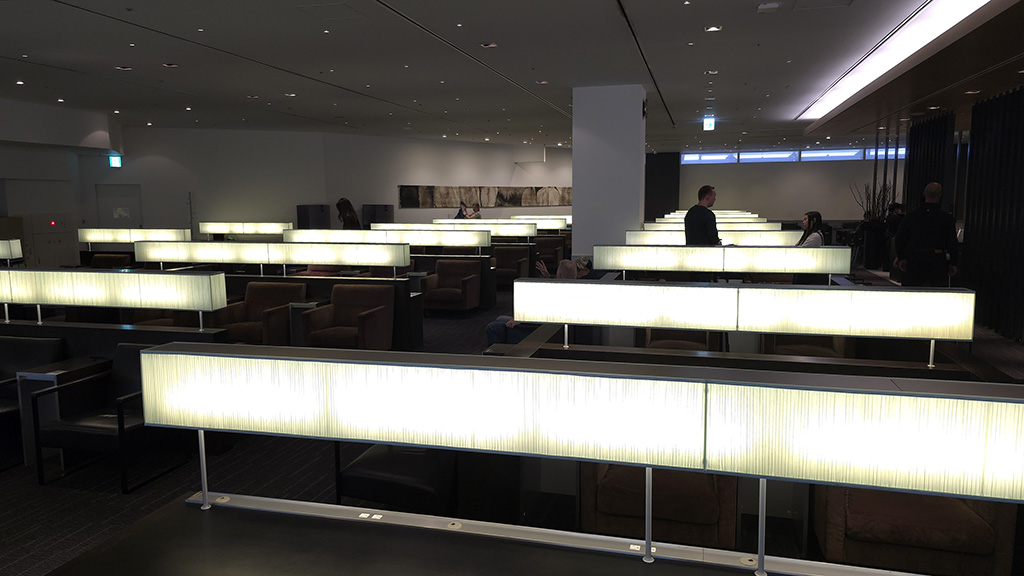
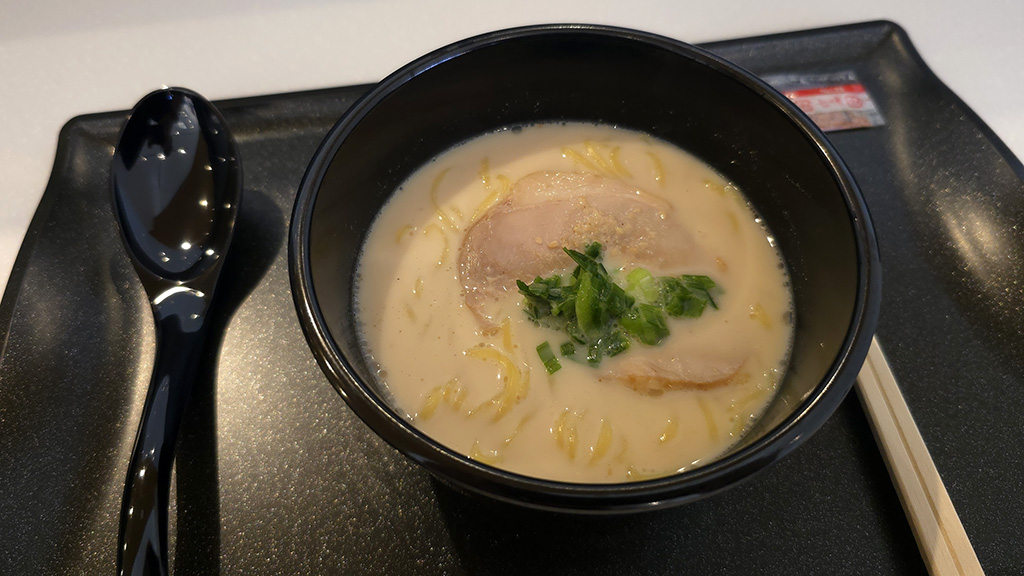
In addition to a standard buffet area that you’d expect to see in an airport lounge, the ANA Lounge also had a noodle bar. I ordered a nice, warm bowl of ramen.
After eating a decent amount of food and getting a good chunk of work done in the lounge, my departure time was approaching, so I headed down to my boarding gate.
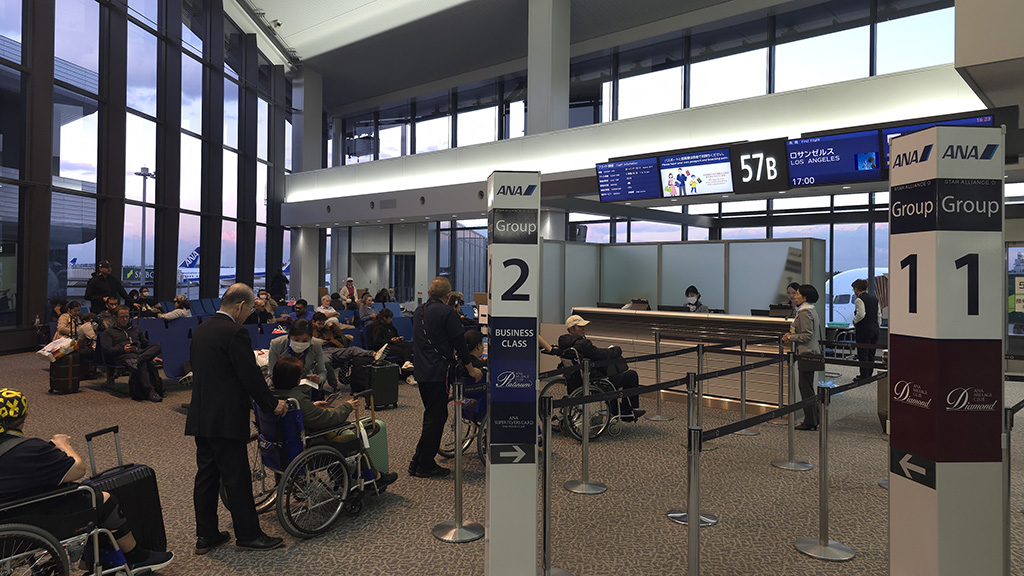
After a short additional wait for the pre-boarding passengers, I was able to embark our Boeing 787-9.
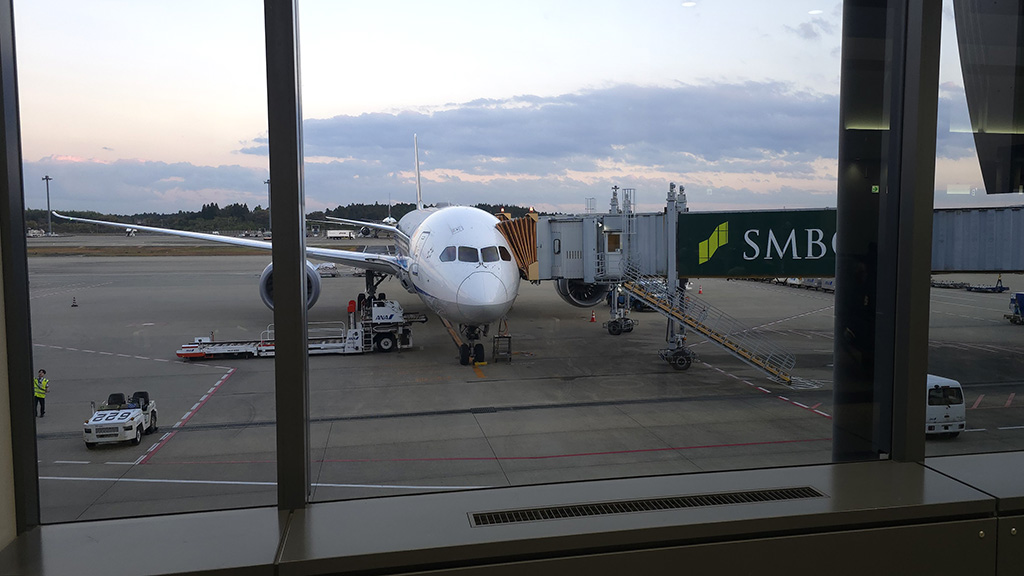
Unfortunately, this plane had the older staggered configuration, so I wasn’t able to try ANA’s new The Room seats. If I wanted to fly in The Room, I would’ve had to take a layover in San Francisco first and pay a higher fare on the ticket. Even though I visited and spent time with friends in Los Angeles prior to my departure, it still technically counted as a “layover” from Las Vegas; I didn’t want to then take yet again another layover before flying across the ocean, so I just settled with the staggered business class seats.
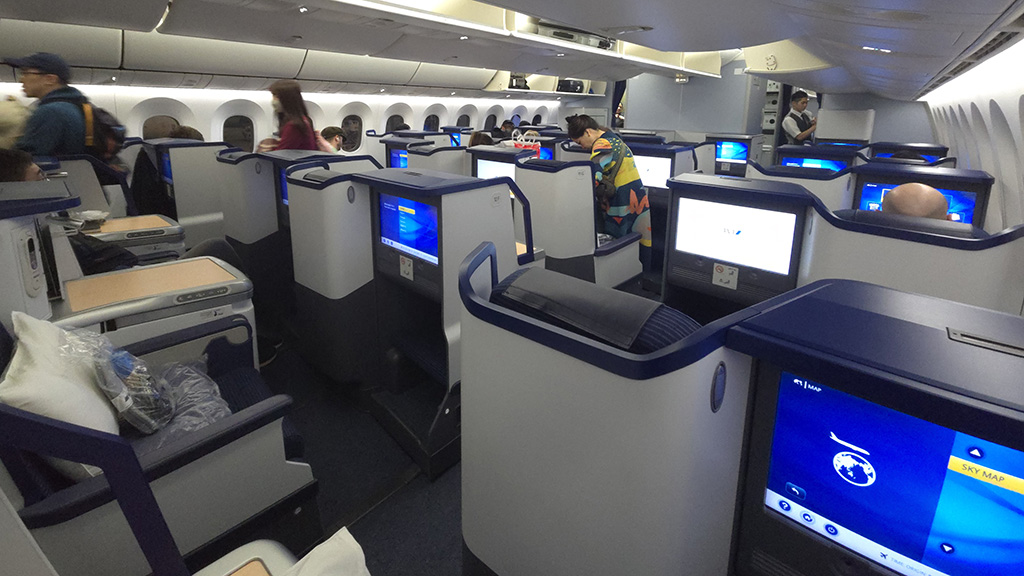
With that being said, I was able to secure what is, in my opinion, the best seat of the aircraft: 13K. This seat is the last row of the business class cabin, so it has the most privacy, as nobody is behind you staring at the back of your head. Excluding during takeoff and landing, there is a curtain that blocks the pathway to the premium economy cabin, which adds to the privacy. This segment of the cabin only has six rows of seats, while the front segment has seven, which means there are fewer passengers in this cluster, thus adding to the feeling of peace.
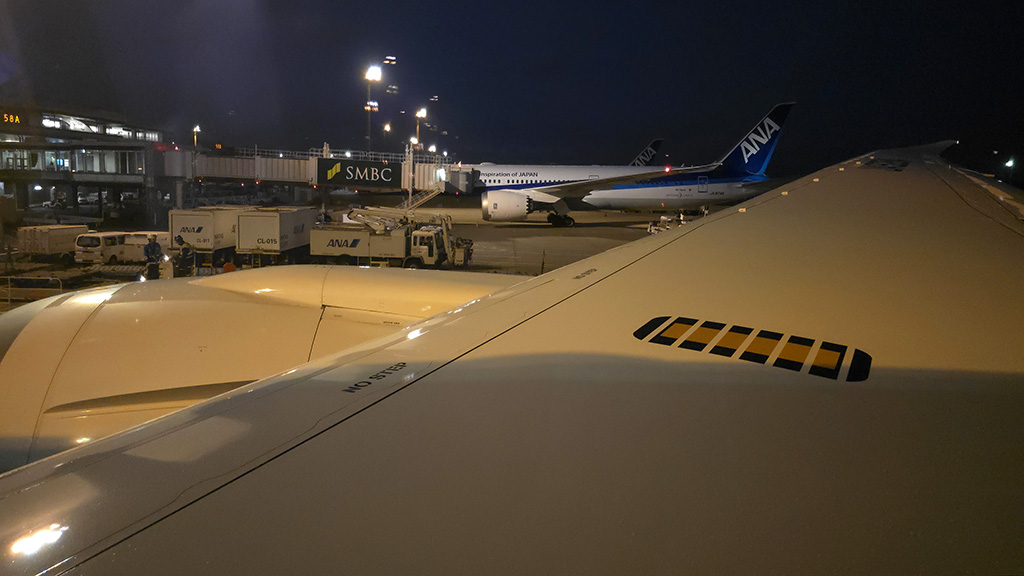
The seat itself is an “inside” seat, meaning the table separates the seat from the aisle; these configurations alternate, so an even-numbered row would have the seat closer to the aisle, creating less distance from those walking by. It is situated on top of the wings for a more stable ride, and it is close to the engines so the engine noise can act as white noise and drown out any potential disruptive passengers. Some people say they don’t like the wing acting as an obstruction in their photographs, but I don’t mind; in fact, I personally like having the wing there, because I take horizontal photos, so I think the wing just adds an artistic element to the picture.
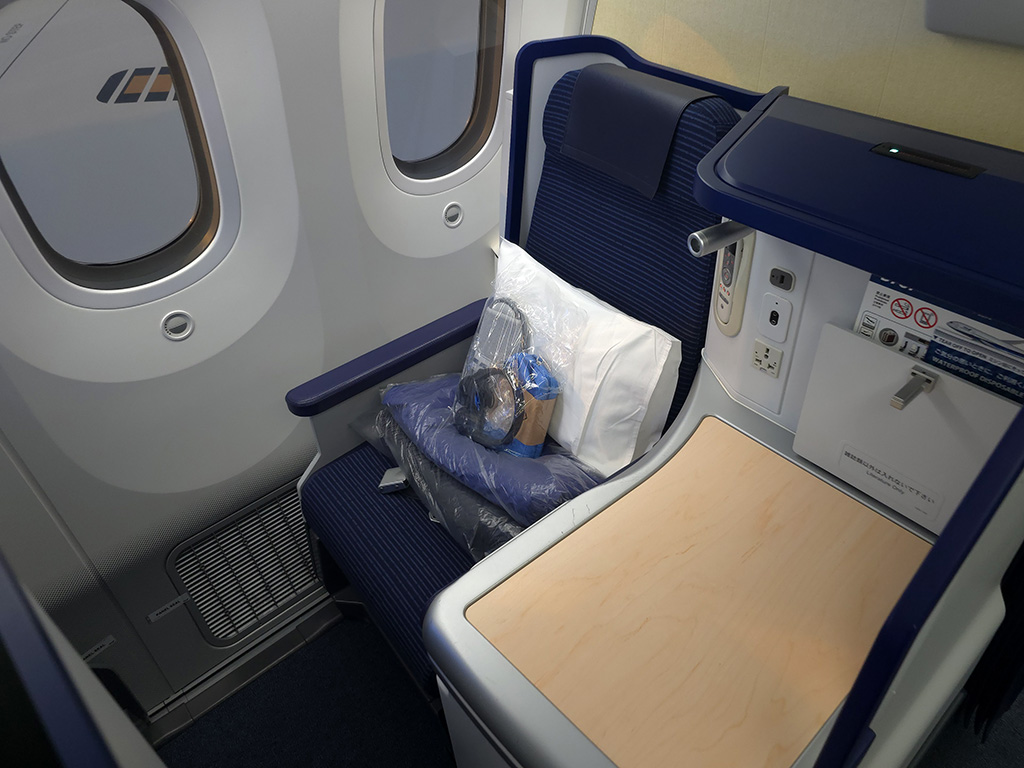
Here is what the rest of the cabin looks like. From this wide shot, you can tell what I mean by a seat being an “inside” seat, and how the seats and tables alternate depending on what row you’re in.
After boarding the flight and settling in, I took out my laptop and squeezed in even more work; I had been spending a lot of time out and about being a tourist, and I hadn’t been getting as much work done as I wanted to over the prior two weeks, so I had a decent chunk to catch up on.
After about half an hour, the boarding process was complete and I stowed my laptop away in the overhead bin to prepare for take-off. During that time, the sun had set and it was already pretty dark outside.
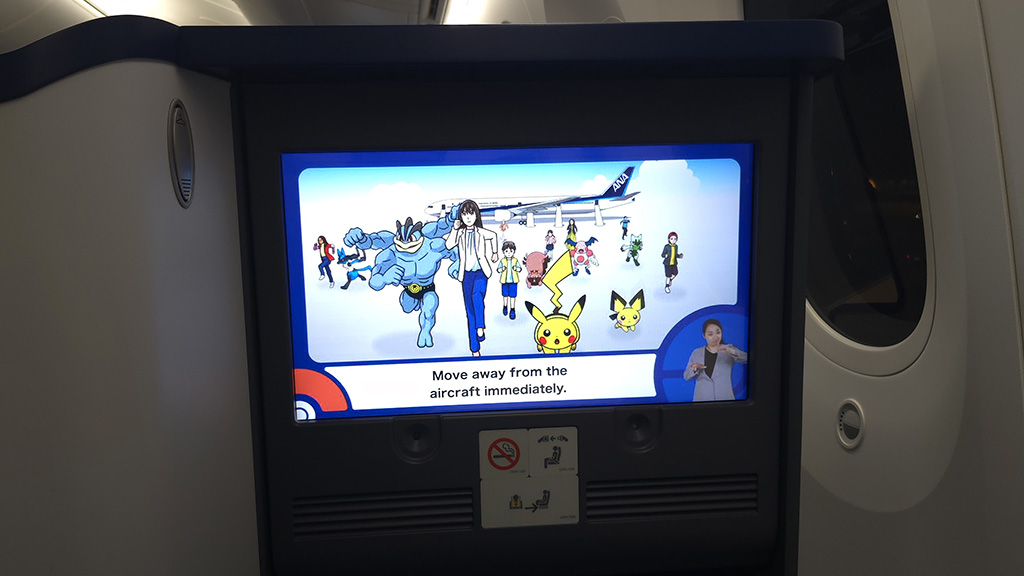
I was not aware of this, but I found out that ANA has a partnership with Pokémon and integrates Pokémon’s intellectual property into their safety videos. This was fun to see, as Pokémon is one of the franchises that I’m actually pretty familiar with because I grew up playing early-generation Pokémon games and watching the cartoons.
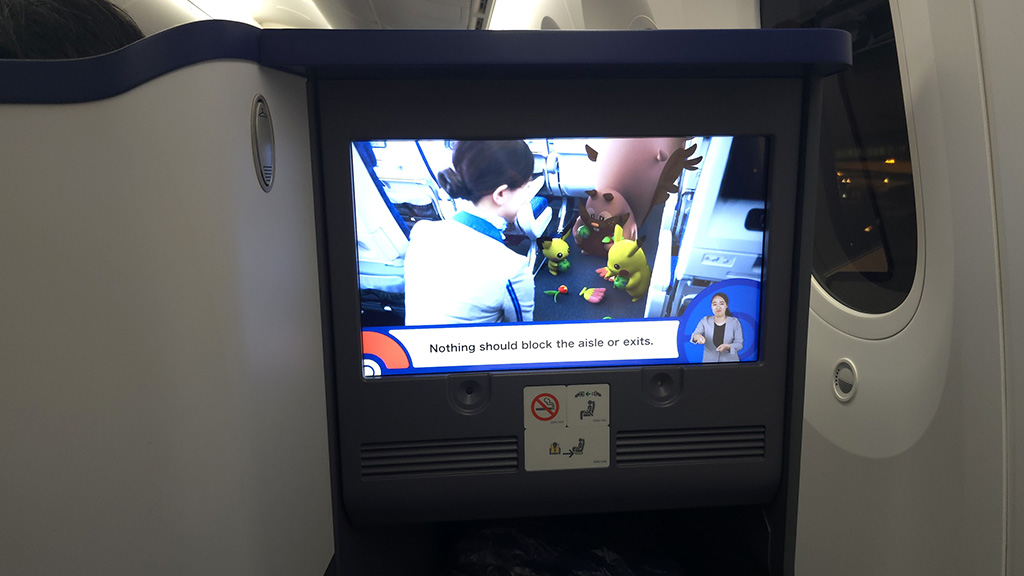
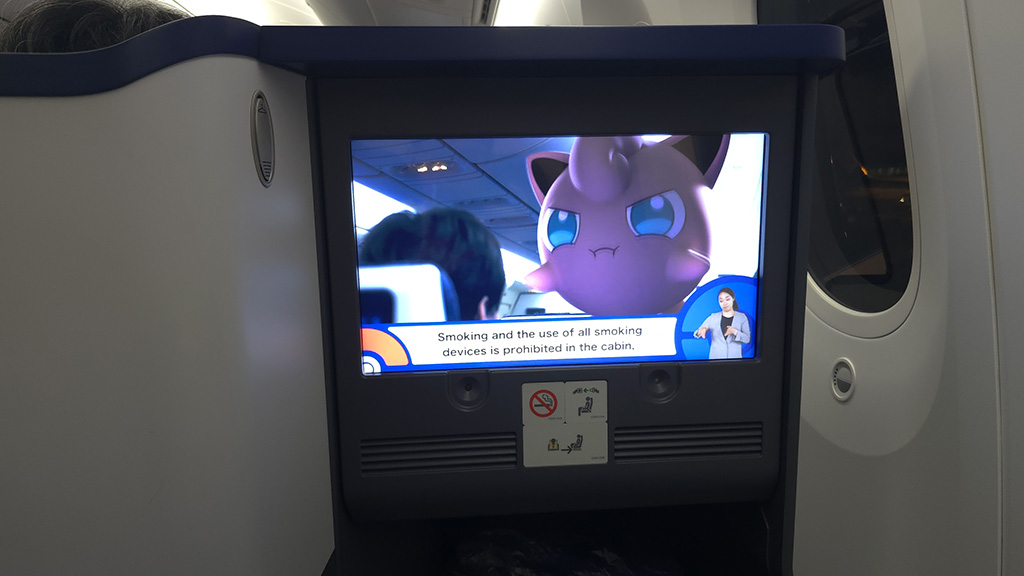
As part of the safety video, there was a note about how, if an emergency evacuation ever becomes necessary, photography is prohibited during the process. It might not necessarily be the case this instance, but really specific warnings or rules like this are often rooted in real-life events. It amuses me to think that there is technically a non-zero chance that someone forgot to get off the plane in an emergency because they were too busy taking pictures of everyone else deplaning instead.
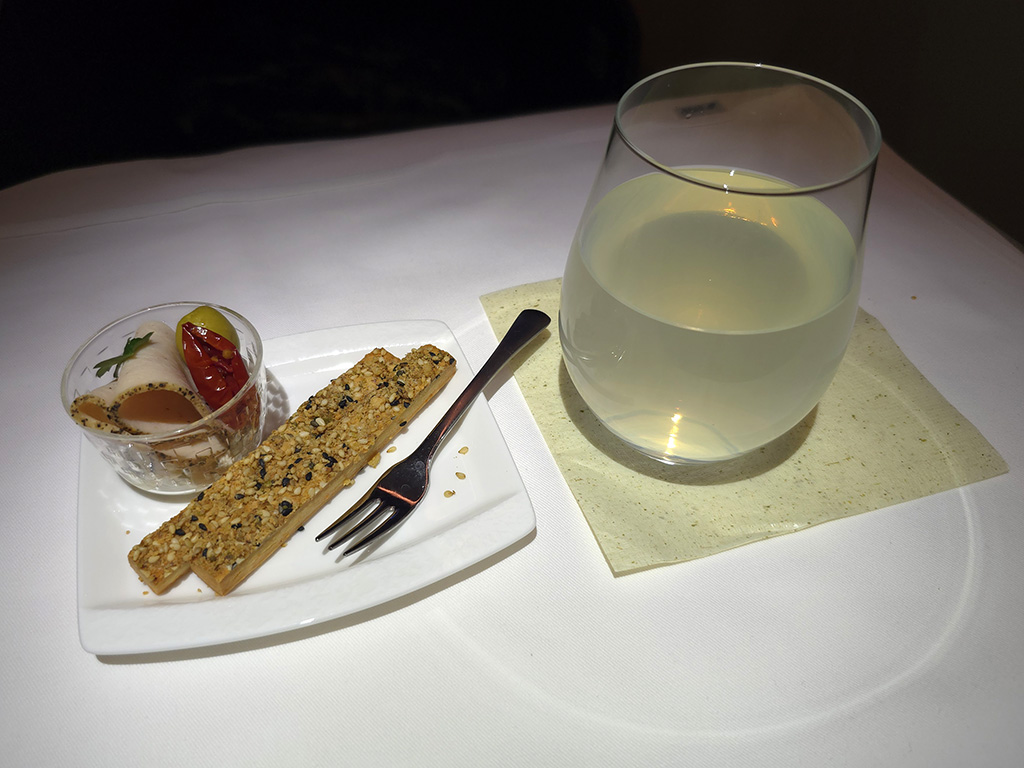
After getting airborne, we received our amuse-bouche—pastrami chicken, cheese, and olive in a bowl, accompanied by two black sesame and walnut pistachio sticks. For my beverage, I ordered ANA’s original aromatic kabosu drink.
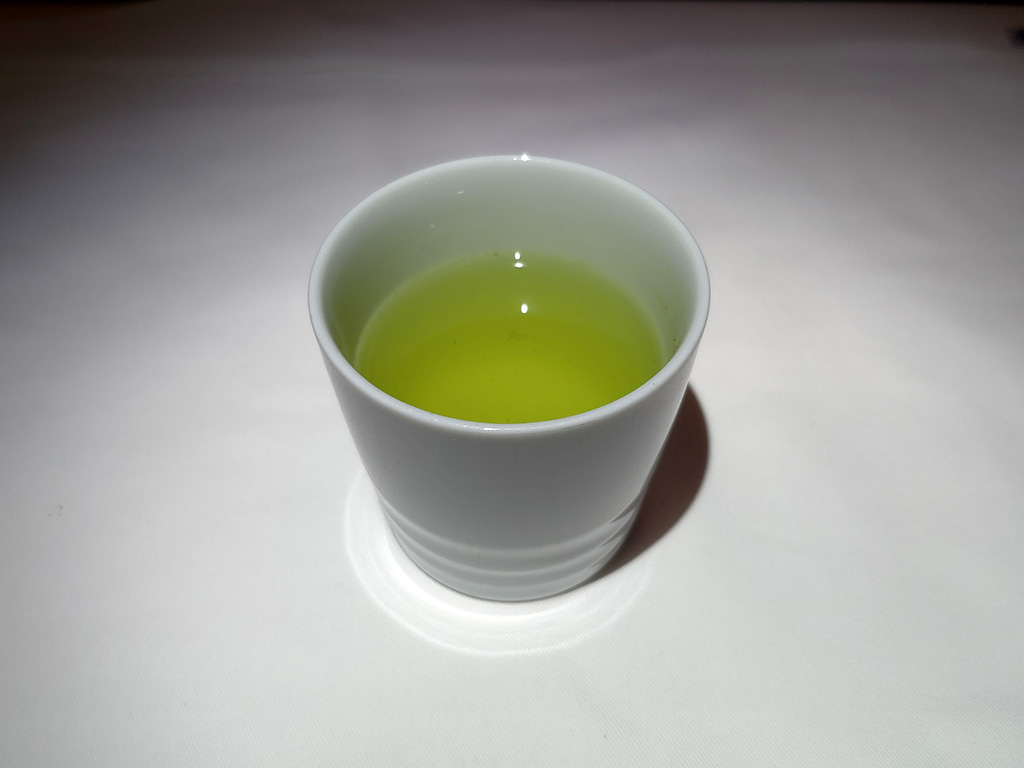
While waiting for meal service to begin, I also ordered a cup of ANA’s original Shizuoka-cha green tea matcha blend.
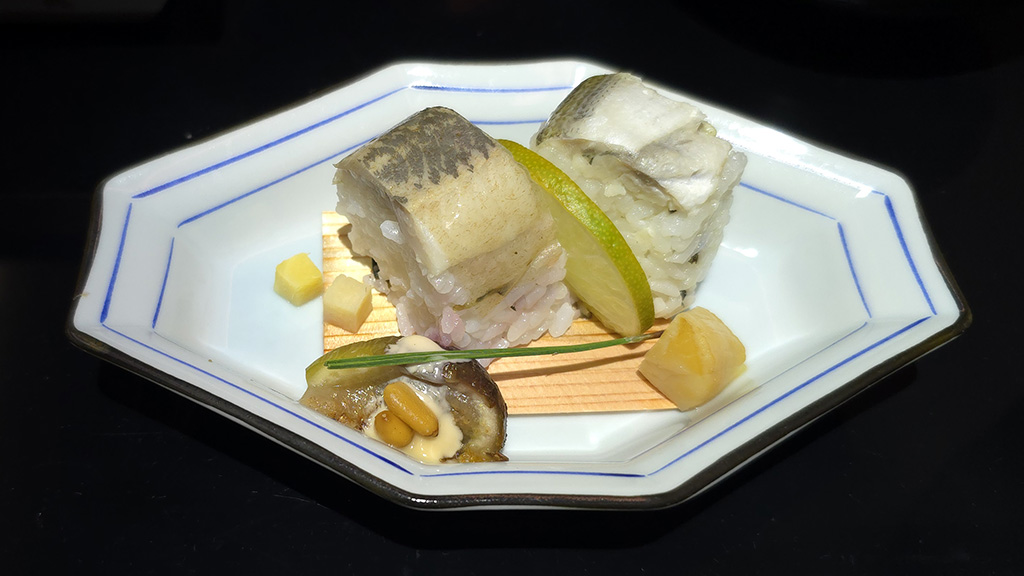
After a little while, the first dish of meal service was served—the “selection of morsels.” This consisted of barracuda sushi, herring sushi, vinegar-pickled ginger, fig with sesame cream, and smoked scallop.
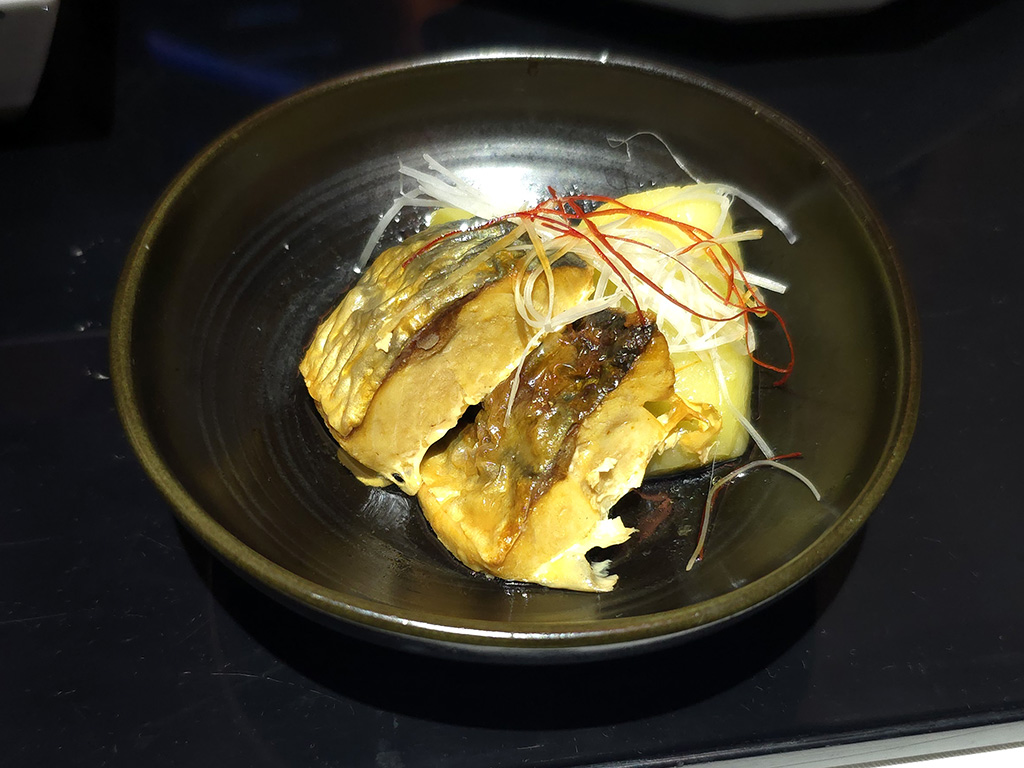
Next was the first of two tidbits, marinated grilled mackerel in soy-based sauce with eggplant, green onion, and chili pepper.
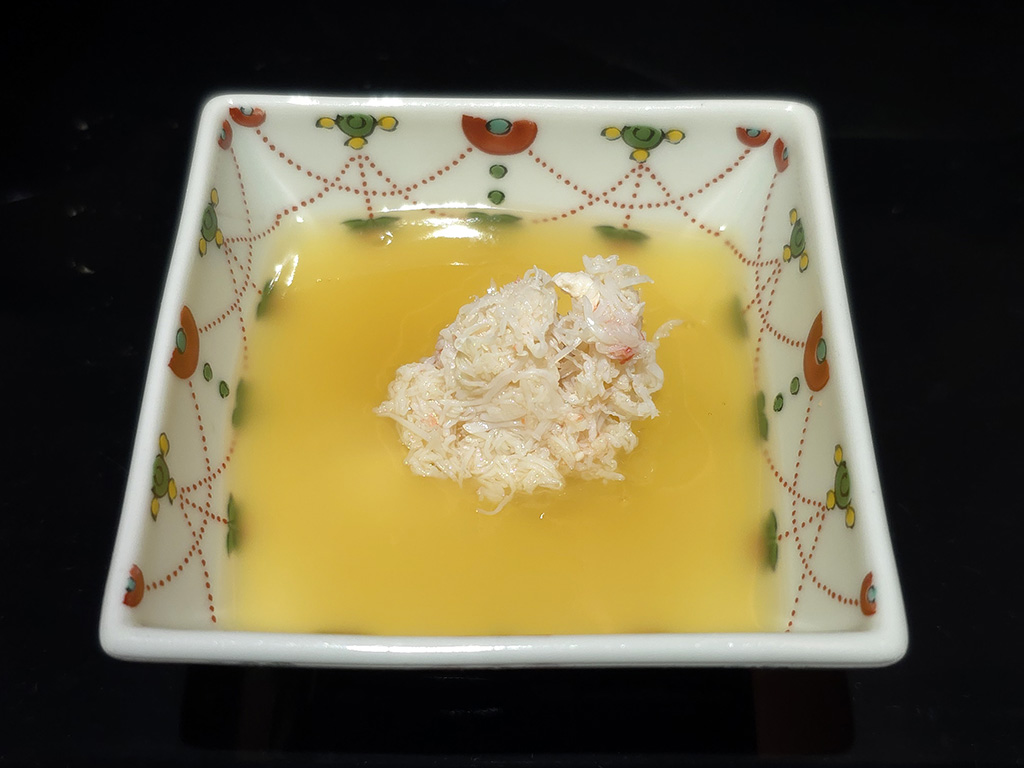
The second tidbit was savory steamed egg custard with snow crab meat.
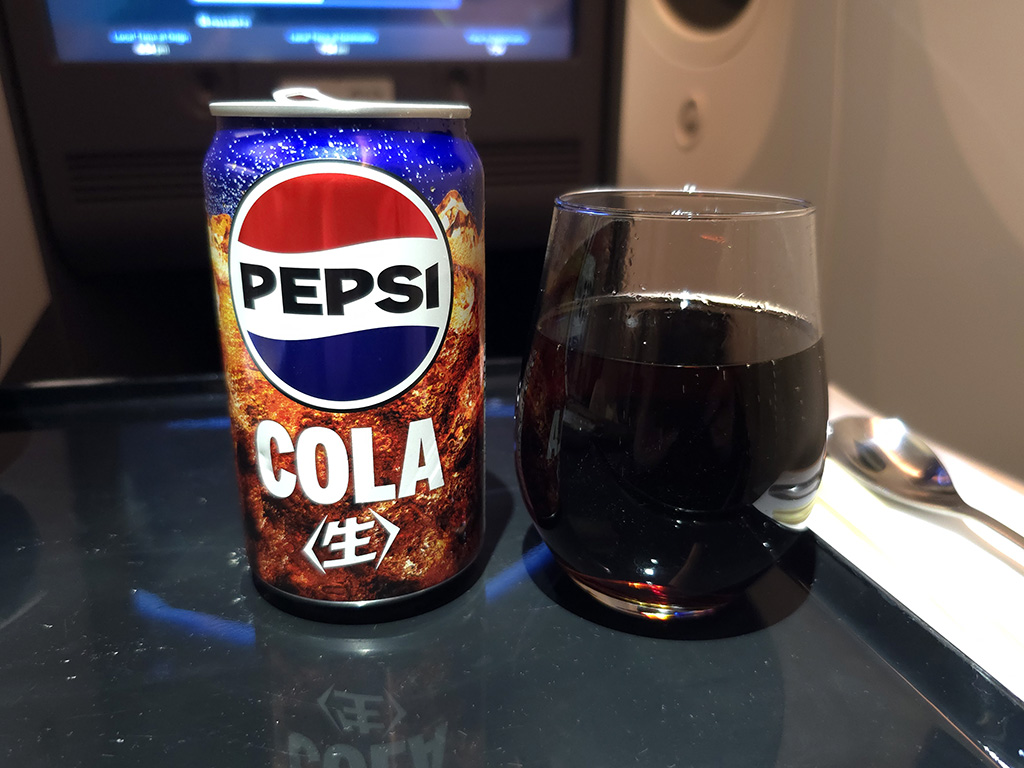
For my beverage to go along with my meal, I ordered some sugar-free cola. They brought out a regular Pepsi rather than a Diet Pepsi or Pepsi Max, which wasn’t to my preference, but wasn’t that big of a deal. The design on the can was unique and did not resemble anything I had seen in the United States before.
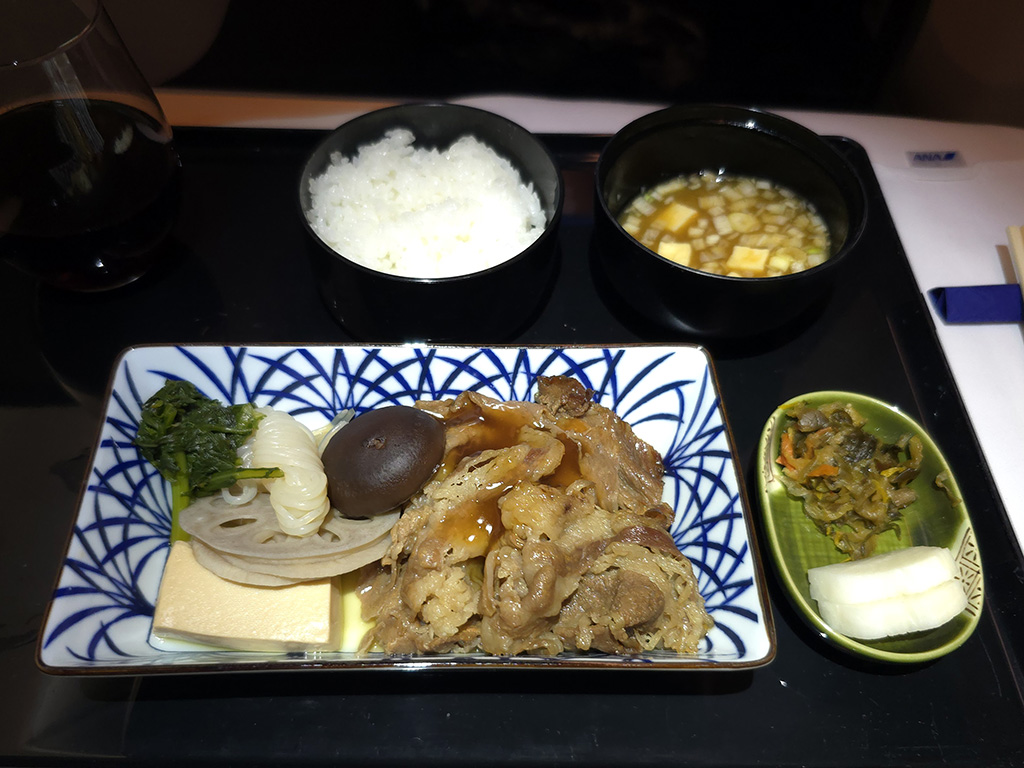
Afterwards was the main entrée, beef sukiyaki, served with a side of steamed rice, miso soup, and Japanese pickles.
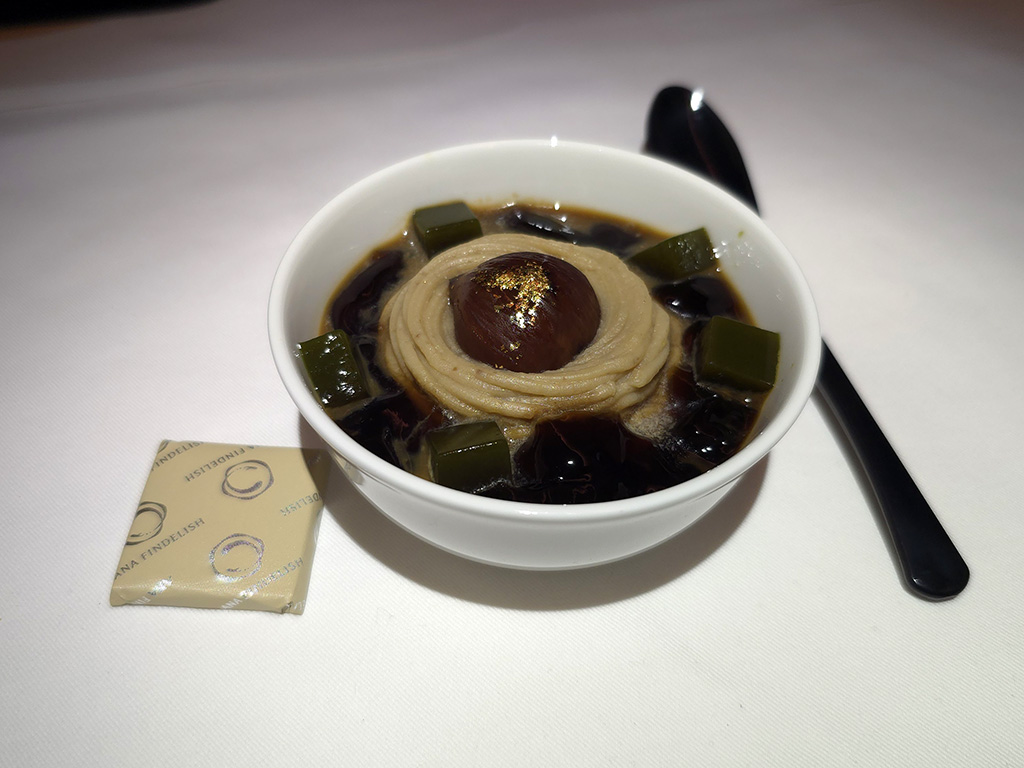
For dessert, we had three options, two of which included a cheese plate or a fruit bowl. The one I decided on was chestnut mousse with cream and coffee jelly. This also came with a small square of white chocolate.
Although the portion sizes were relatively small, it still ended up being a fairly hearty-feeling meal considering how much food I had already eaten at the lounge. After relaxing for a bit and letting my stomach digest, I got tired enough to lean back and go to sleep for the night.
… Or so I thought.
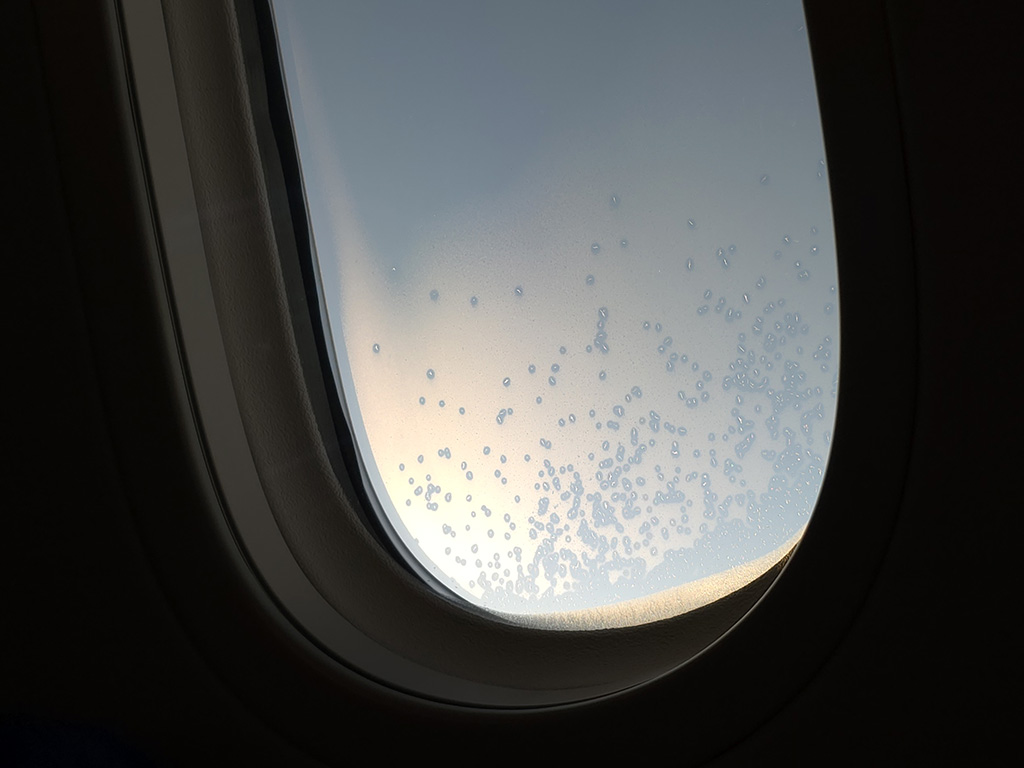
Usually, long-haul flights will wake you up with about two hours left to go so that they can serve breakfast before landing. However, for some reason, this flight woke me up with a little over three hours prior to arrival. I technically could’ve just kept sleeping, but the cabin lights illuminating and the flight attendants moving around was enough of a distraction that I couldn’t stay asleep.
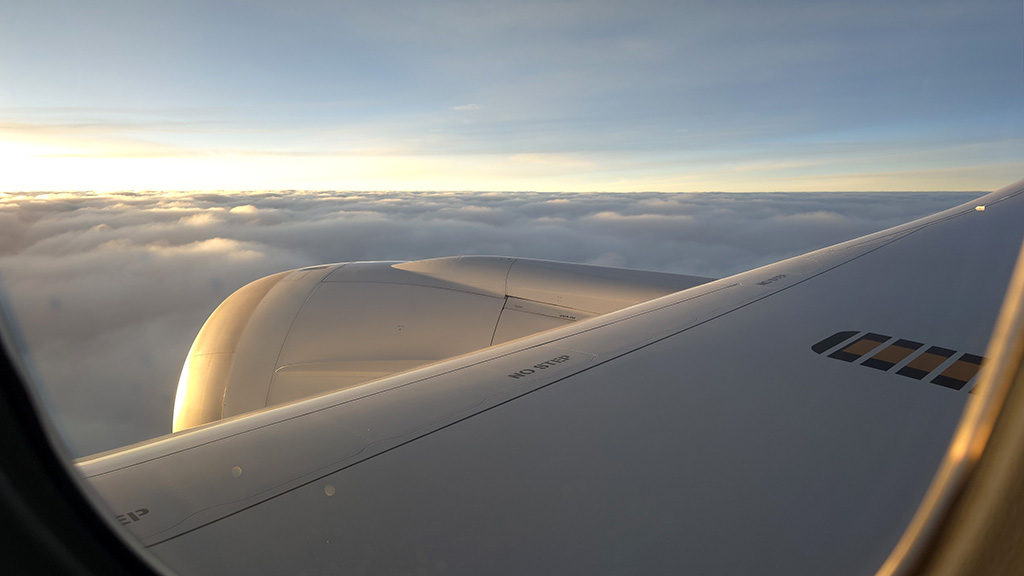
Eventually, the pilot made an announcement that the second meal service will be beginning earlier than normal due to some expected turbulence coming up about an hour before landing. Reasonably, they didn’t want a bunch of plates, cups, and silverware out on the tables during rough air. Although grumpy from early rising, the rationale was reasonable, so I switched my seat from bed mode to relax mode and waited for breakfast.
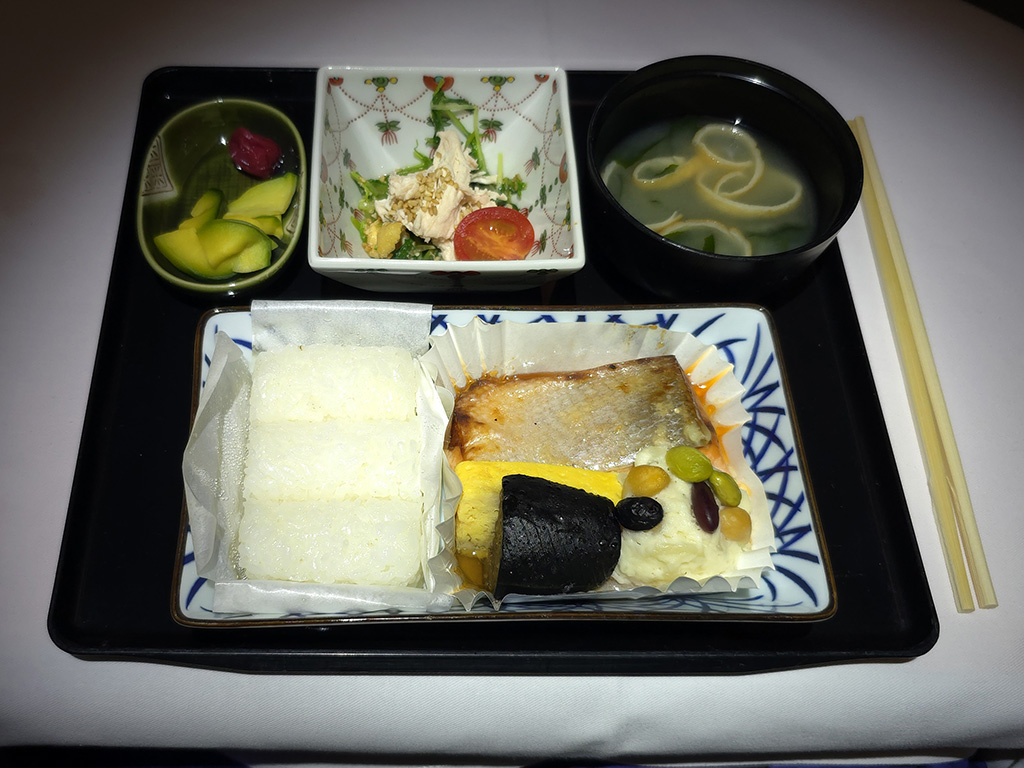
My meal this time came out all at once, instead of as separate courses. For breakfast, my main dish was grilled salmon with sake lees and steamed rice with a side of steamed chicken and marinated mizuna greens in sesame sauce, miso soup, and Japanese pickles.
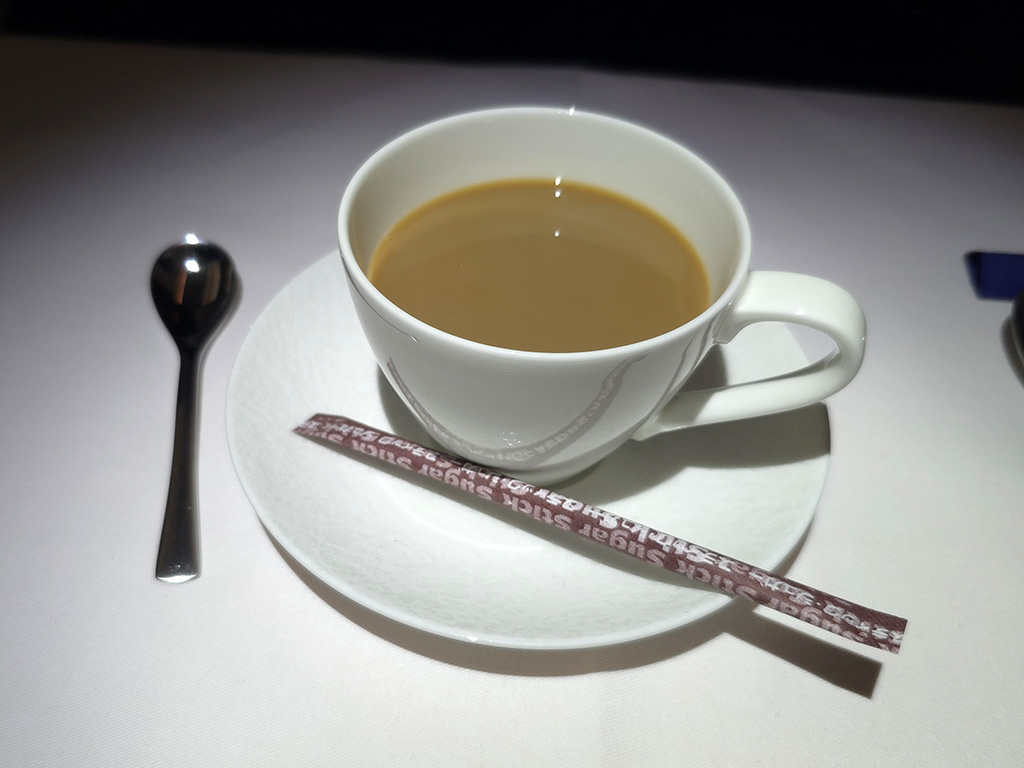
In addition to some plain water, my flight attendant also brought me ANA’s original “Coffee Journal in the Sky.” I’m not enough of an enthusiast to know whether or not this was any special kind of coffee, but I did appreciate that I was able to try all of ANA’s signature beverages on the flight.
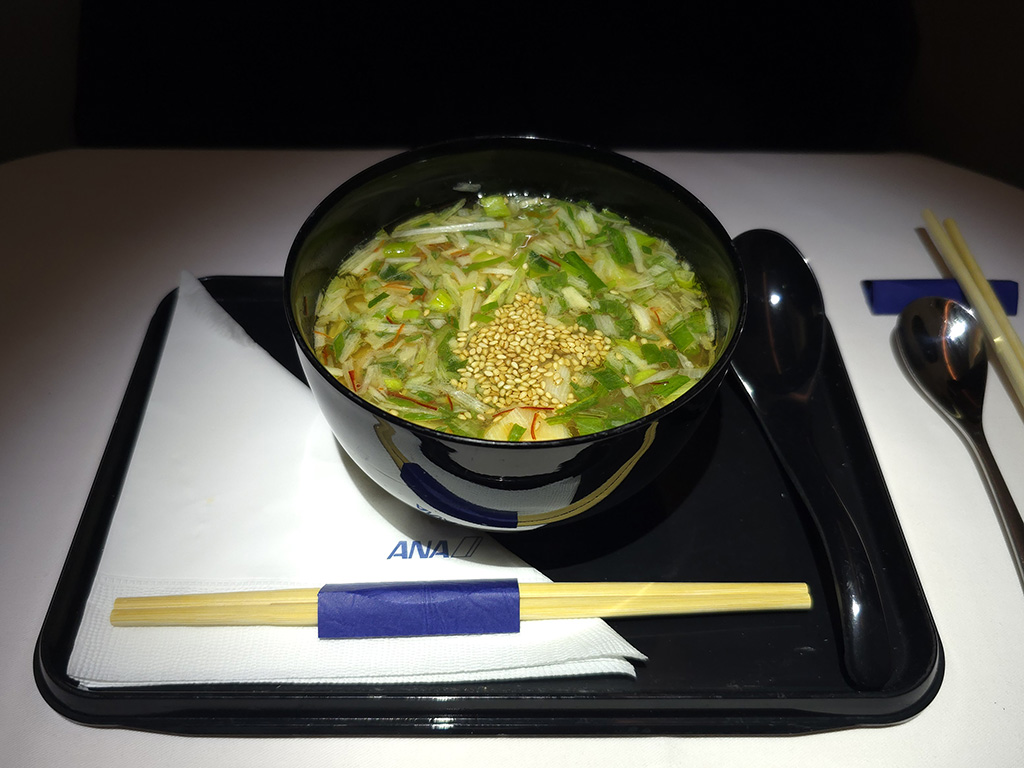
For the sake of getting some more value out of my flight, I asked for a second breakfast—negi miso ramen from Megumino, Hokkaido. This was a special soup blend containing medium-thick noodles, onions, sesame paste, and ginger. It was served warm and not hot, so I was able to enjoy it without worrying too much about temperature. This was filling and rounded out my breakfast well.
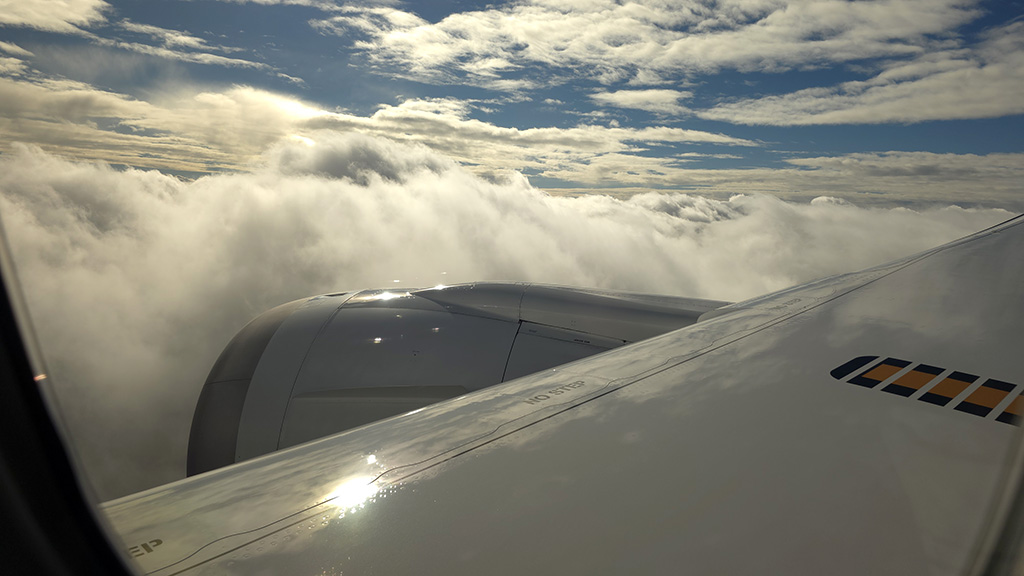
After finishing all my food, I reclined back and waited for the severe turbulence to begin.
… It never came.
Better safe than sorry though, I guess.
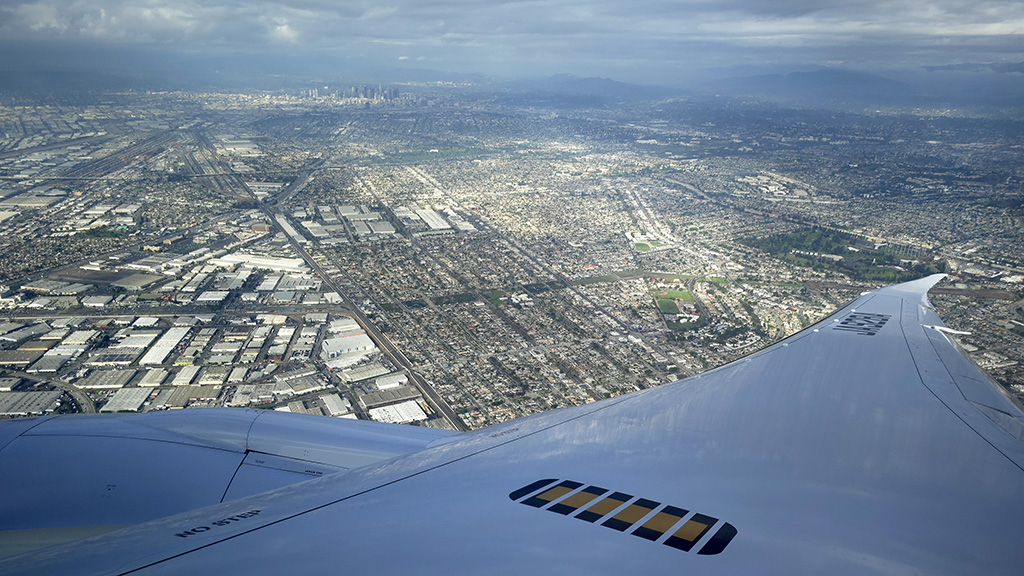
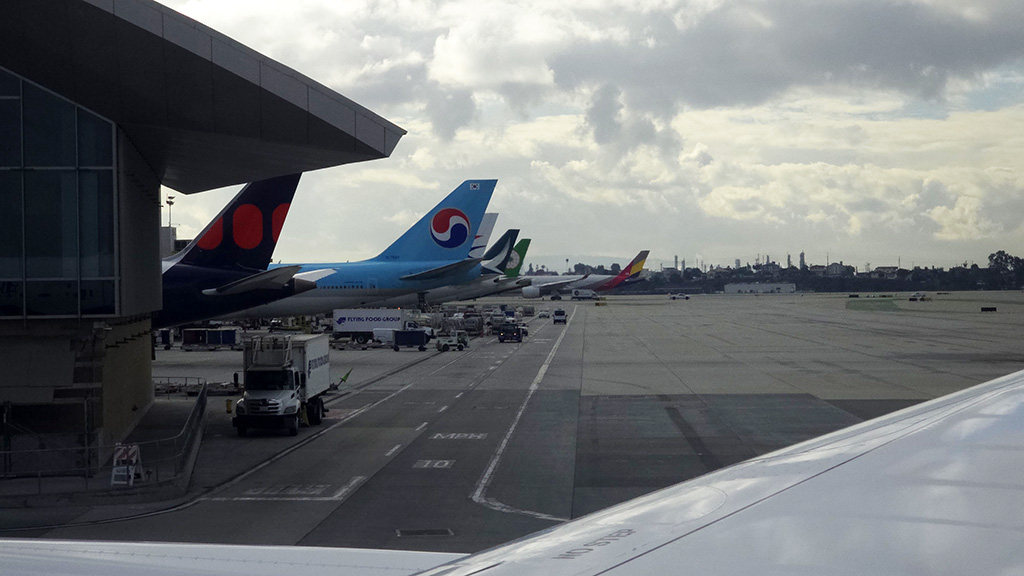
After about nine hours, we made it to Los Angeles airspace. Our runway was longitudinal going westbound, so we had to fly east out to the San Gabriel Valley first before looping around back to LAX. This allowed me to get a nice view of downtown Los Angeles during our descent.
After just shy of nine and a half hours of travel time, we pulled into our gate.
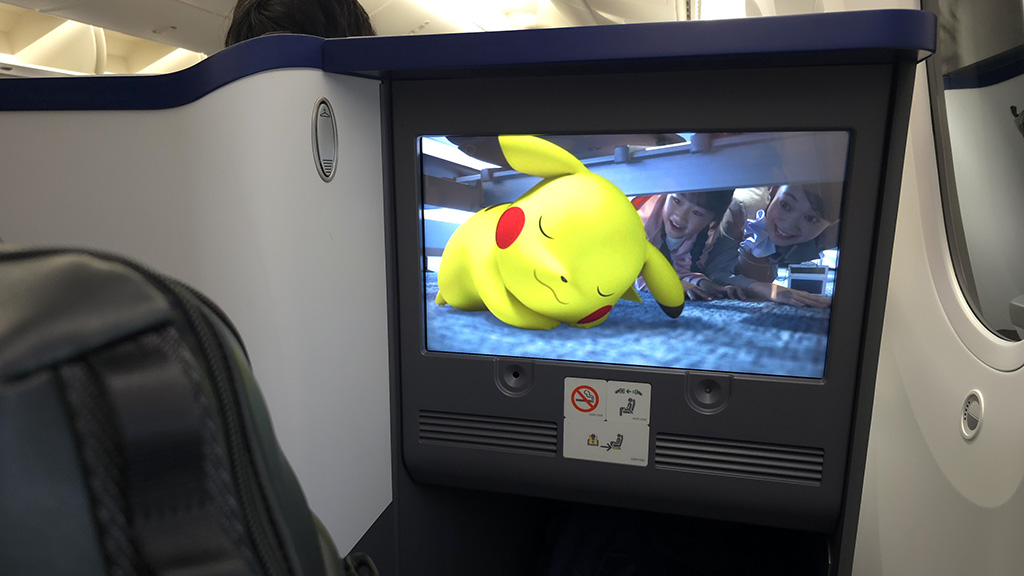
While the aircraft was preparing to deplane, an arrival video played on the screens, and I was welcomed back home to the United States by Pikachu.
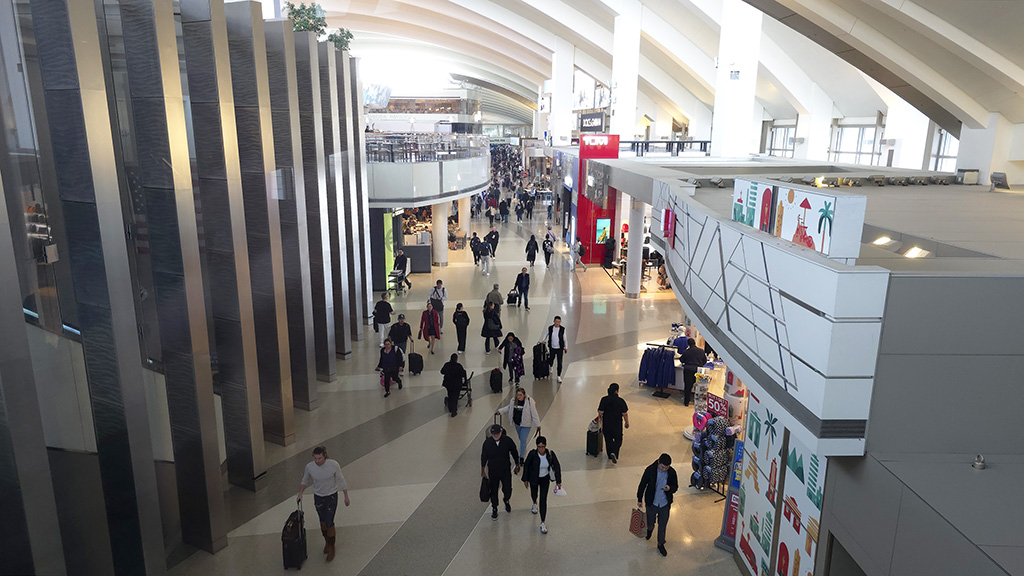
After a very brief wait, I deplaned to the familiar sight of the Tom Bradley International Terminal at Los Angeles International Airport.
I don’t know if this observation was exacerbated by having just arrived from a country that is so accommodating as Japan, but I began seeing Terminal B at LAX with a different perspective and noticed how tricky it might be to foreigners. I noticed that everything was written in only English, which I found to be comparable to if I had landed in Japan and all the signs were in only Japanese. That would’ve obviously been a tremendous struggle for me, which implies that foreign tourists entering the United States are actually facing that struggle as a very real scenario.
I’m enrolled in Global Entry, which is a very convenient service for United States citizens that allows me to re-enter the country very quickly by just looking at a few identity-verifying cameras and walking through without any questioning. This is only for people who have enrolled in the service, passed a background check, and attended an in-person interview.
Unfortunately, non-English-speaking foreigners who had stood in the same line as me were getting rejected at the checkpoint over and over again, presumably because they were following everyone else around them and ended up in the wrong line without even realizing it. If having a bunch of common translations is not feasible, then I think it would still be nice to at least have some visual representation on where people are supposed to go upon arrival, e.g., mark the Global Entry line with a gigantic American flag, and then put a sign next to it with a picture of a bunch of different flags of other large countries across the world and draw an arrow to the other checkpoint.
I fly with only a carry-on bag, so I didn’t have to wait for luggage. This meant I was able to get off the plane and make it outside in a matter of only several minutes.
I like walking and getting blood circulation back in my legs after a flight, so I walked around half a mile from Terminal B to the end of Terminal 7 and called rideshare service to whisk me away from the airport. As a secondary reason, I like getting picked up at Terminal 7 instead of Terminal B so that I don’t have to sit in the car in traffic in the LAX horseshoe, and my driver can just take the East Way shortcut from Terminal 1 to Terminal 6 to come get me instead, upon which we can immediately leave airport property and be on our way.
I don’t think I have much more to add beyond the general overview I gave at the top of this blog post, in addition to the various thoughts and comments I shared throughout my 16 previous blog posts. I am very glad I decided to take this trip to Tokyo, and I will definitely be taking such an opportunity again if something comparable were to ever arise in the future.
In addition to revisiting Japan, I have two more countries on my near-future “want to go” list: Singapore and Taiwan. For a long time, Antarctica was the only place outside of the United States that I really wanted to visit, but with these successful Vietnam and Japan trips, I am much more inclined to expand my tourism into more areas of Asia.