Later on towards the tail end of my two-week visit to Tokyo, I noticed that I did a lot of activities in the cities north and northwest of where I was staying in Ginza, but I hadn’t really spent much time adventuring south. In response to that realization, I decided to spend a day adventuring to Koto City, during which I stopped by Small Worlds to check out their miniature museum.
As you can probably speculate from its name, Small Worlds is a museum filled with small worlds built from miniature models of real-world scenes. In other words, it’s basically a museum filled with massive-scale, professionally-designed dioramas. This is what I assumed as well, on my way there, I had a bit of an … incident.
A lot of websites have AI integration now, and although it can be convenient sometimes, it’s not quite at a stage of development yet where it is particularly reliable all of the time. To get to Small Worlds from Ginza, I took the Yurakucho Line to Toyosu Station and walked the rest of the way there. While on the train, I did some further research about what I was going to see at Small Worlds, when I came across an AI summary that made it seem like Small Worlds was actually an amusement park.
At that point, I was obviously very confused. I had gotten on the train expecting to look at advanced dioramas, but was then convinced that I was going to a theme park. I then wondered whether the “Small” part of “Small Worlds” meant that I was the small thing, and that I was going to a place where everything was disproportionately large and it was the exact opposite of what I had mentally pictured.
Upon arriving at the museum, I found out that my original expectation of what Small Worlds is was correct, and that I had just gotten trolled by AI.

The museum was divided into multiple different sections, with each section following a certain theme. The first area by the entrance was the Space Center.


The Space Center had a simulated rocket launch that happened once every half hour. I was lucky enough with my timing that the launch happened only a few minutes after my arrival, so I got to see it without having to come back and time it.

Next was the Global Village.


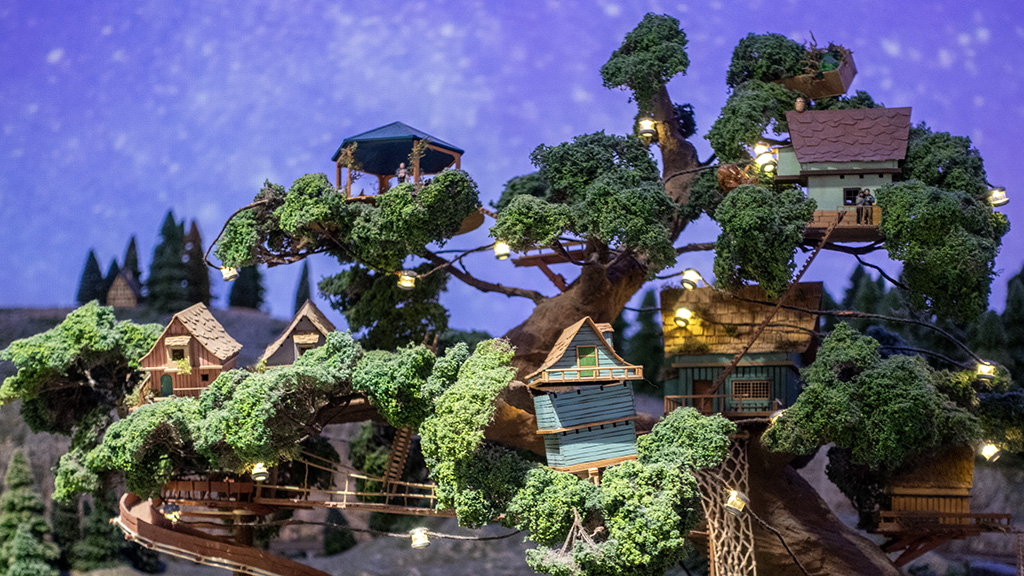


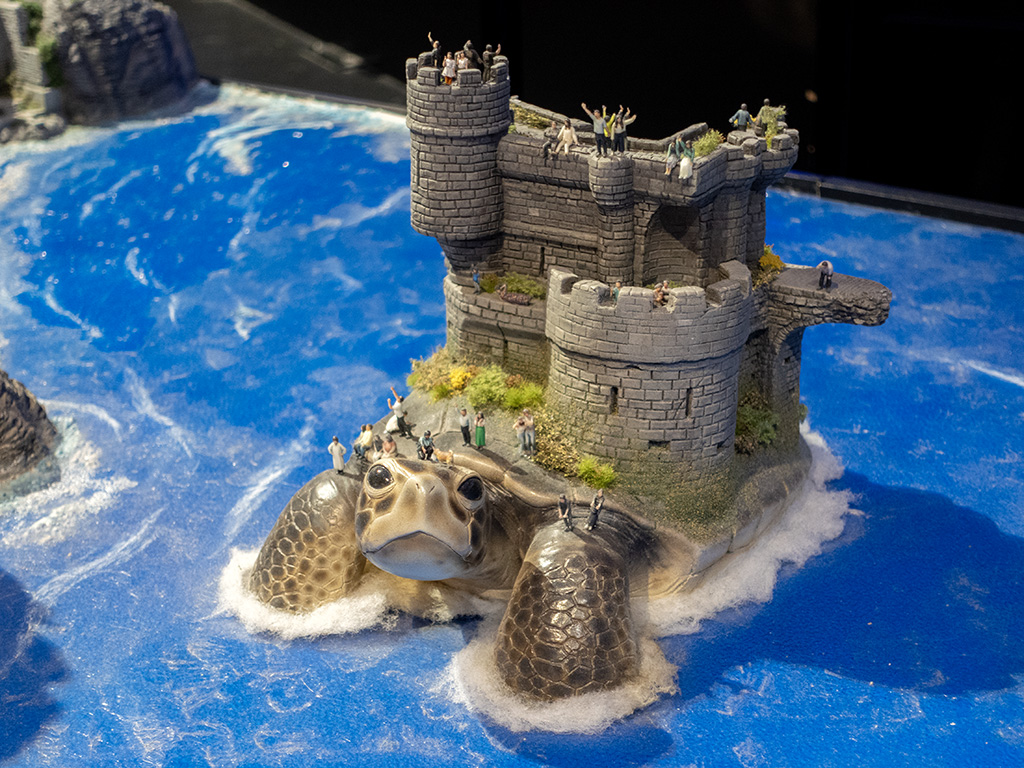


After that was the Creators Gallery.

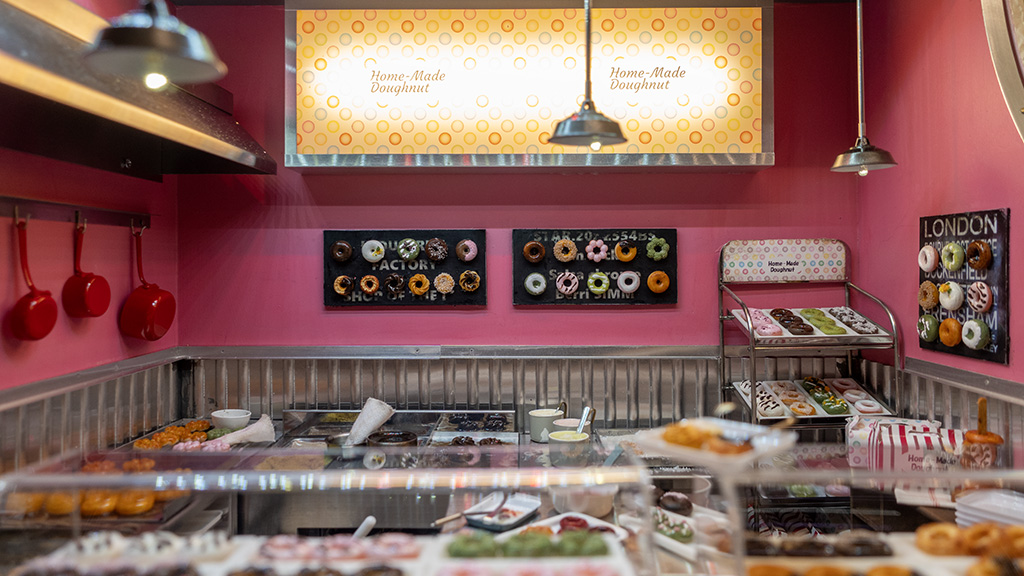
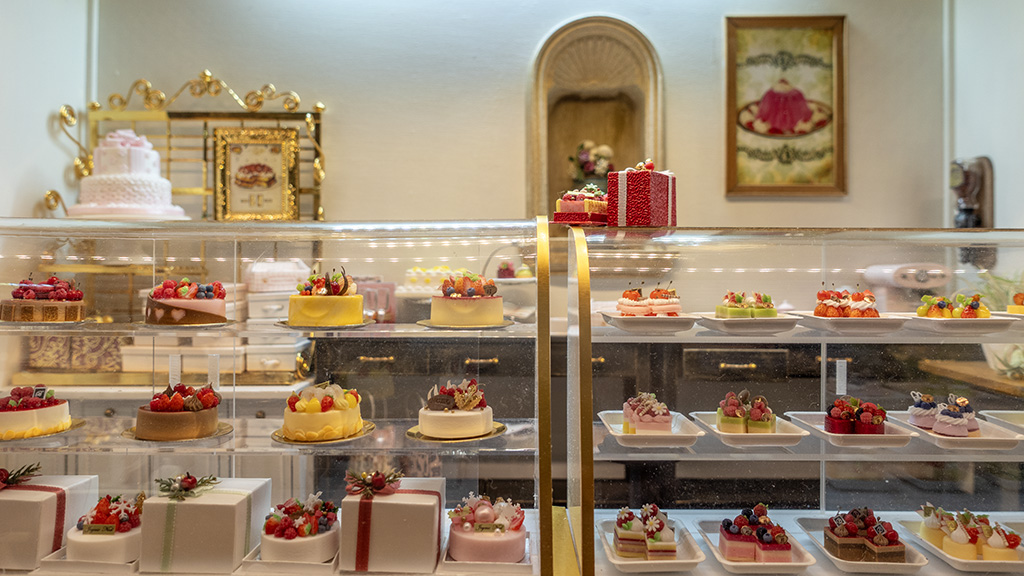
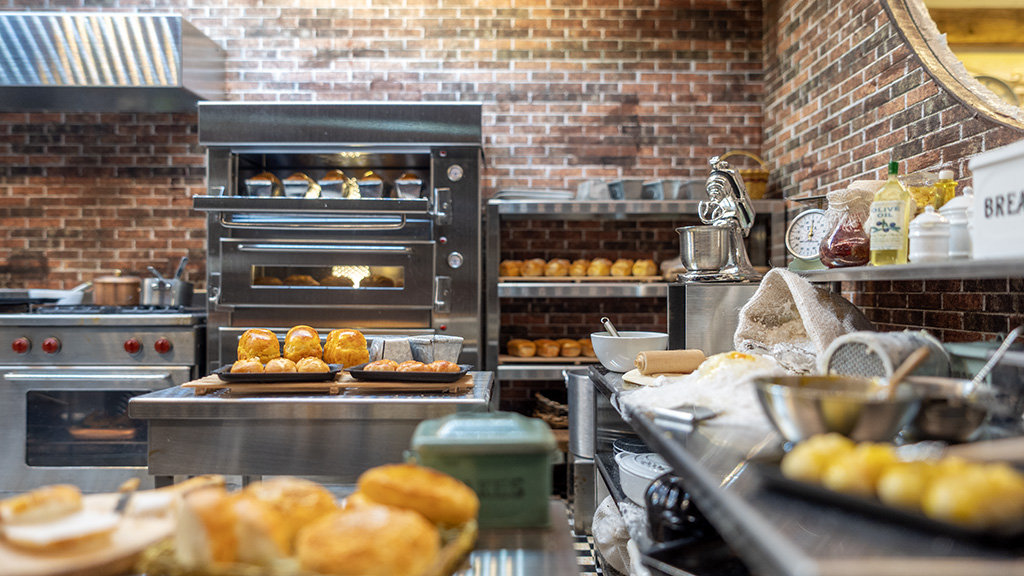

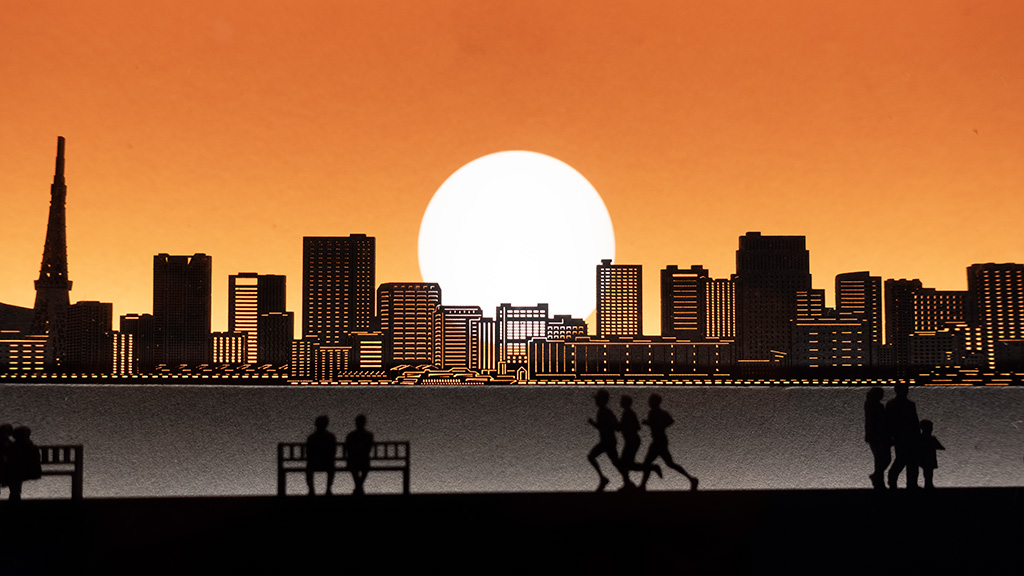


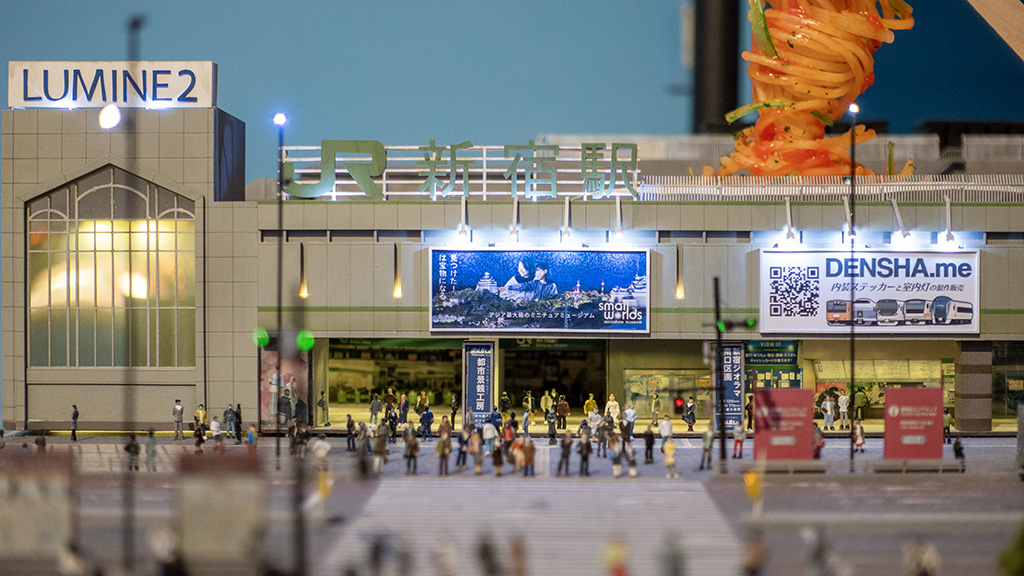

In between two main exhibits, there was a miniature display and a wall full of screens. I didn’t realize this, but apparently, there were small hidden cameras placed inside some of the dioramas with live feeds going to these TVs. I guess a bunch of people probably saw me getting really close and scrunching my nose and squinting to see the miniature models better, without realizing that someone else is getting a nice close-up shot of my face.

Opposite of the screen was a model of Kansai International Airport. There was an “airport lounge” behind it, and the area was built with a bunch of runways and planes driving around the airport. This section had little openings in the runways which were accessible by tunnels; if you get on your hands and knees and crawl your way through the tunnel, you can pop your head out through these holes to get a more close-up view of the aircraft models.

If I remember correctly, these are more of the miniature displays that were in between the primary exhibit areas.


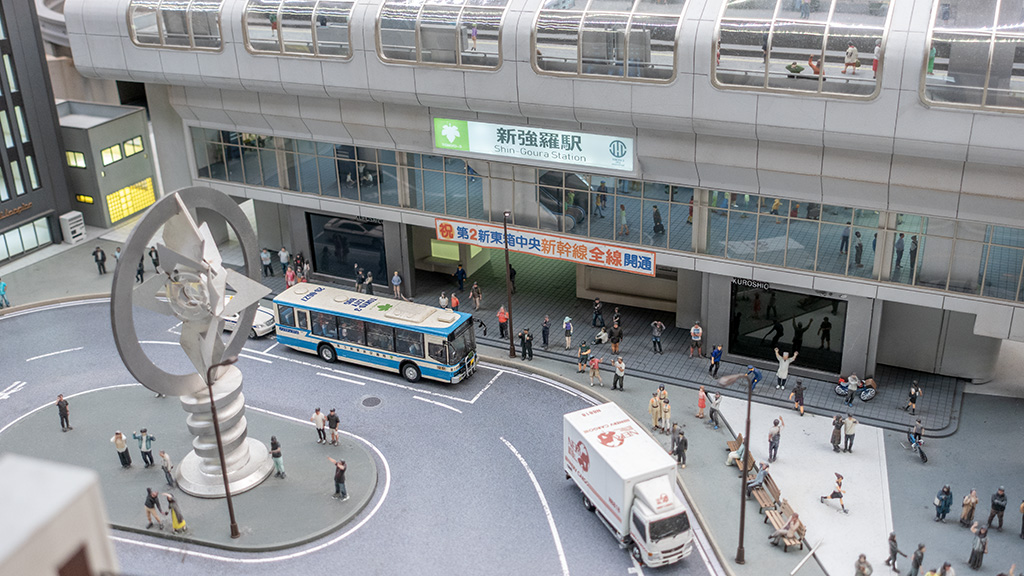
Similar to the Tokyo City View, Small Worlds also had a section featuring Evangelion. They had an Evangelion Hangar, which I imagine means that the robots are like aircraft and are stored in areas where they can be launched.


There was also an Evangelion Tokyo-III area; I’m not sure how this was different than the city of Tokyo and what connection it had with Evangelion, but I am guessing that it has something to do with the lore of the anime.

At the end of Gallery A on the third floor was the creative studio and workshop area. It was too late in the day for me to be able to start my own miniature model project in the workshop, but I did still get to see some of the staff members working on building some models.
In addition to this, there was also a 3D figure studio (not pictured) that I didn’t fully participate in. They had a section where you could get a free 3D model of your body, but if you wanted to turn it into an actual physical figure, it required extra payment. I got the virtual 3D model done, and it was actually quite impressively accurate; I’ve gotten 3D body models done before, and the one here at Small Worlds was overwhelmingly the most accurate and high-detail.

Gallery B was downstairs on the second floor. This was a substantially smaller gallery, with most of the exhibits just being one-off items in small glass enclosures.

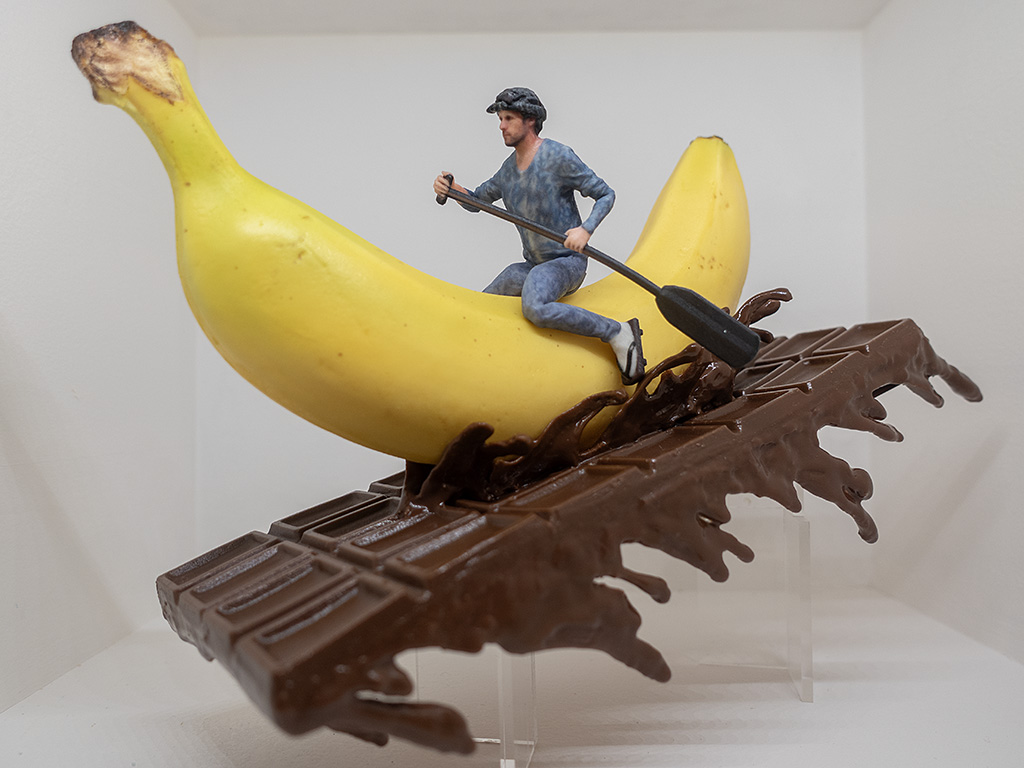
Instead, the second floor was primarily occupied by the museum café. It was quite large, and because it had its own little stage and screen, my guess is that this area served as a hybrid of both the café and as a presentation room in which people can host meetings and special events.

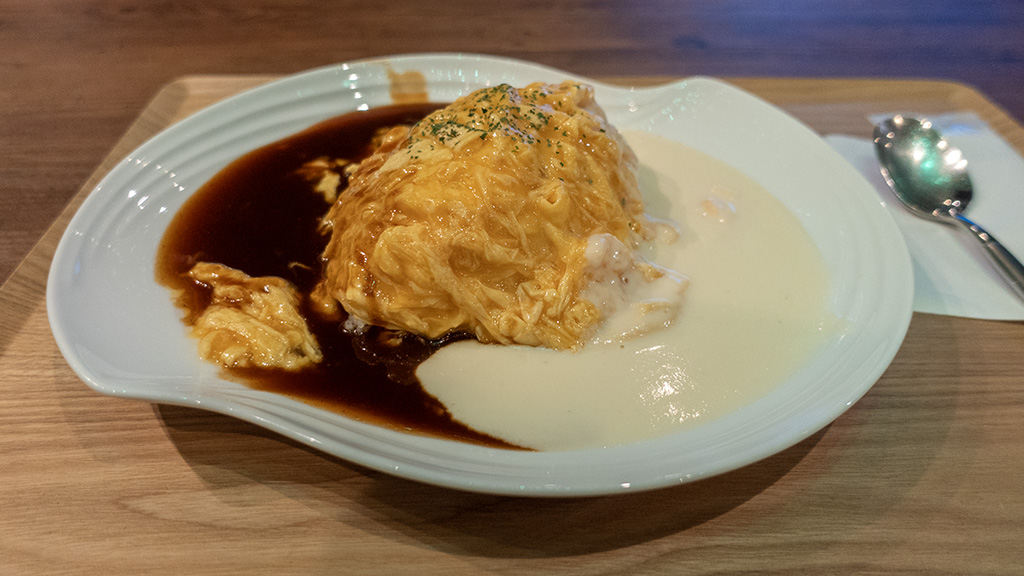
To get the full Small Worlds experience, I ordered a small meal off their menu—a two-sauce omurice. The egg was tender and delicious, but I wasn’t really a fan of either of the two sauces—the brown sauce tasted too much like generic steak sauce, and I thought the white sauce had too much creaminess without there being sufficient underlying flavor to support it.
With that being said, I still thought it was quite tasty overall, especially compared to something you might find in a museum café in the United States.
It was particularly fun taking photographs at Small Worlds. It was as if I was doing tilt shift photography, except everything was already small so I didn’t have to use any special lenses or do any intensive after-the-fact editing.

My admission ticket was 3,200円, which is right around US$20. This is pretty pricey compared to Japanese standards, but is at a reasonable pricepoint for the United States, and actually pretty cheap compared to what you might find for something of this caliber in a major city in the United States.
I’m glad I found out about this and spend a couple hours checking it out. I haven’t really come across anything similar to this in the United States (and upon doing some additional research after-the-fact, it seems like there are only a handful of full-blown dedicated miniature museums in the United States, many of which are in relatively smaller cities), so it was a pleasant and novel experience for me.