Throughout a majority of my stay in Japan, I maintained the general sleep schedule that I have in the United States. I tend to sleep pretty late back at home already anyway, so it wasn’t too bad—I would fall asleep during the evening in Tokyo, then be awake by about 5 AM JST. On one of the days, after relaxing in my hotel room, getting a bit of work done, and taking a shower, I was out by 9 AM JST just in time for doors to open at 浜離宮恩賜庭園, which is the Hamarikyu Gardens.
At that point, I did not have any cash on me because none of my United States debit cards worked at any Japanese ATMs. Although I use a Chase Sapphire Reserve as my primary credit card, which I’ve blogged about before in terms of the value I get from the card, I have a checking account with a different, non-Chase bank that is far less widely accepted internationally. After my debit card got denied at three different ATMs, I gave up and realized that I would just have to go cashless and just rely on my friends if I ever need cash.
Sightseeing at the Hamarikyu Gardens was one of my solo activities that I did alone, so just in case I would show up not be able to gain entry due to them being cash-only, I did some research online and pre-purchased an admission ticket. Admission was 300円, which is less than US$2.00.
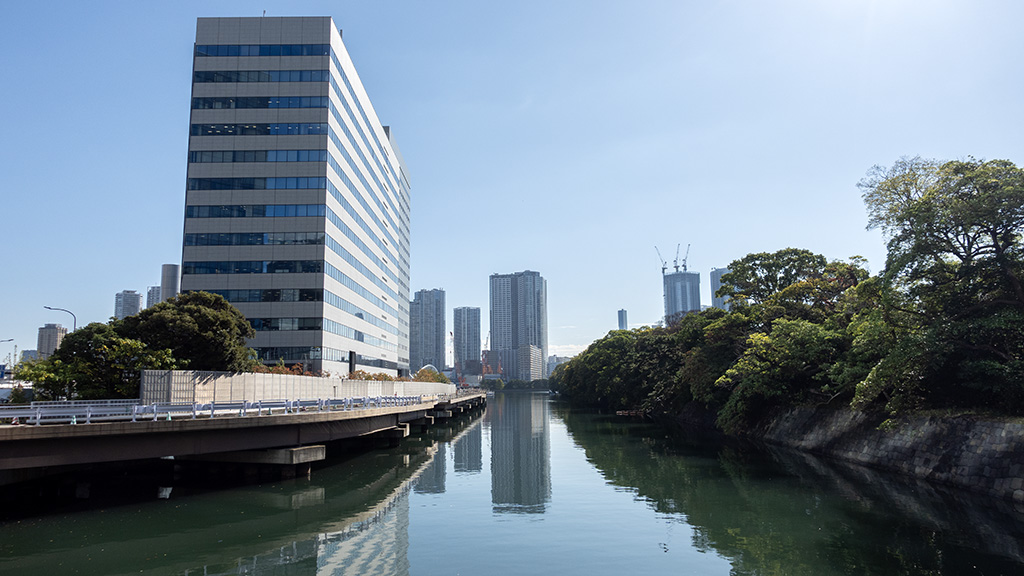
The Gardens were a relatively quick walk from my hotel in Ginza. I entered the grounds via 大手門橋, or the Otemon Bridge, and snapped a photo facing southeast from the bridge.
Upon arriving at the entrance, I found out that they do indeed take credit card and other cashless payment methods, but regardless, I was glad I had pre-purchased a ticket, because that allowed me to just show my QR code to the attendant and get very quick entry without needing to wait in line (though, I had arrived so early that there wasn’t really a line anyway).

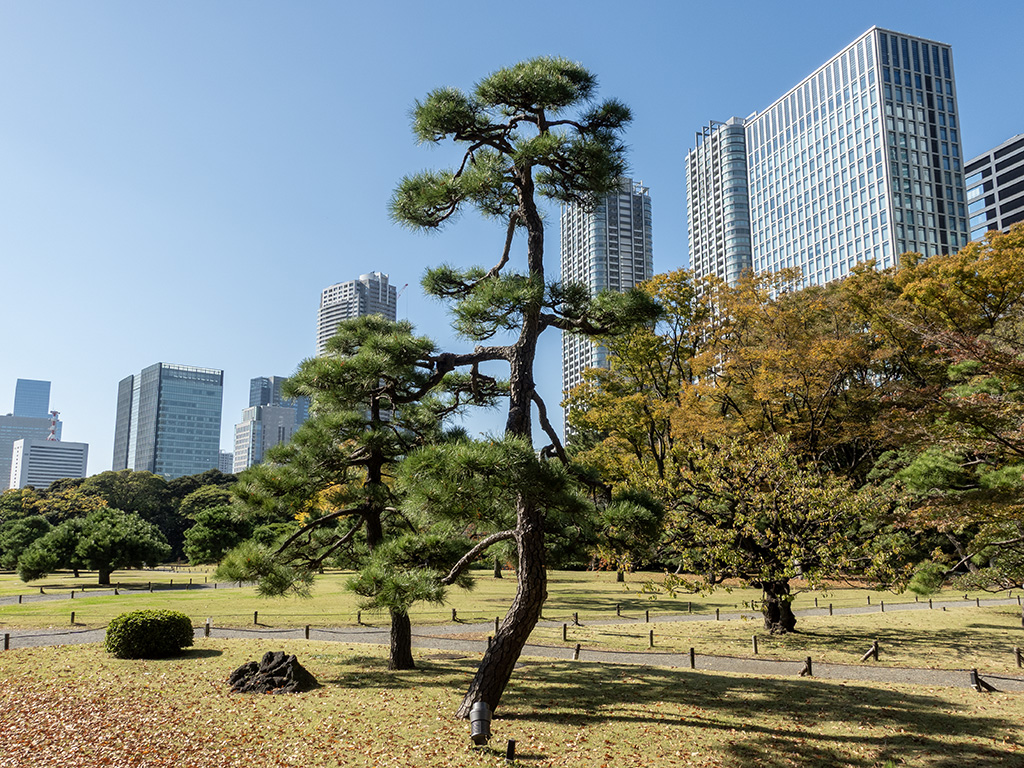
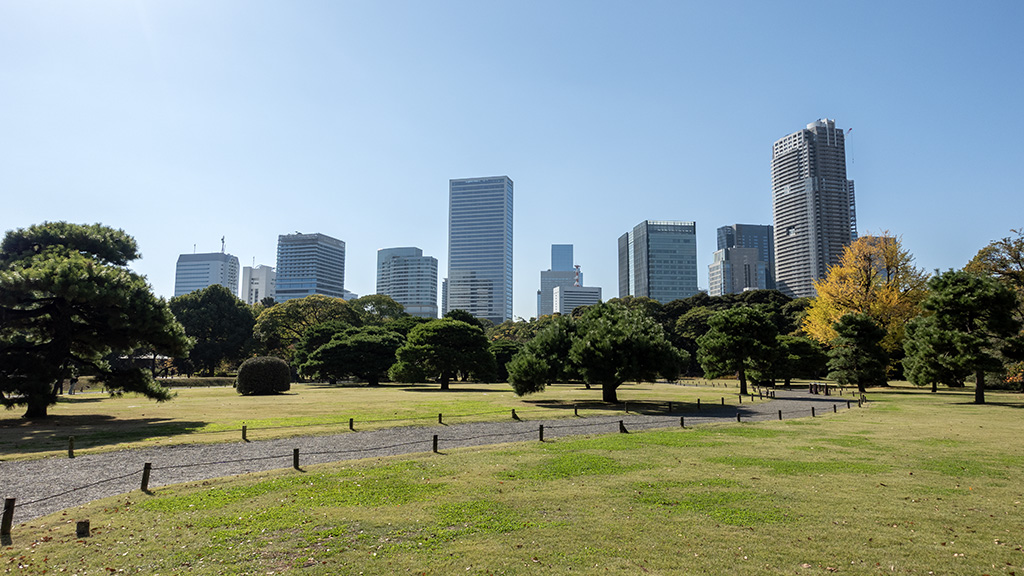
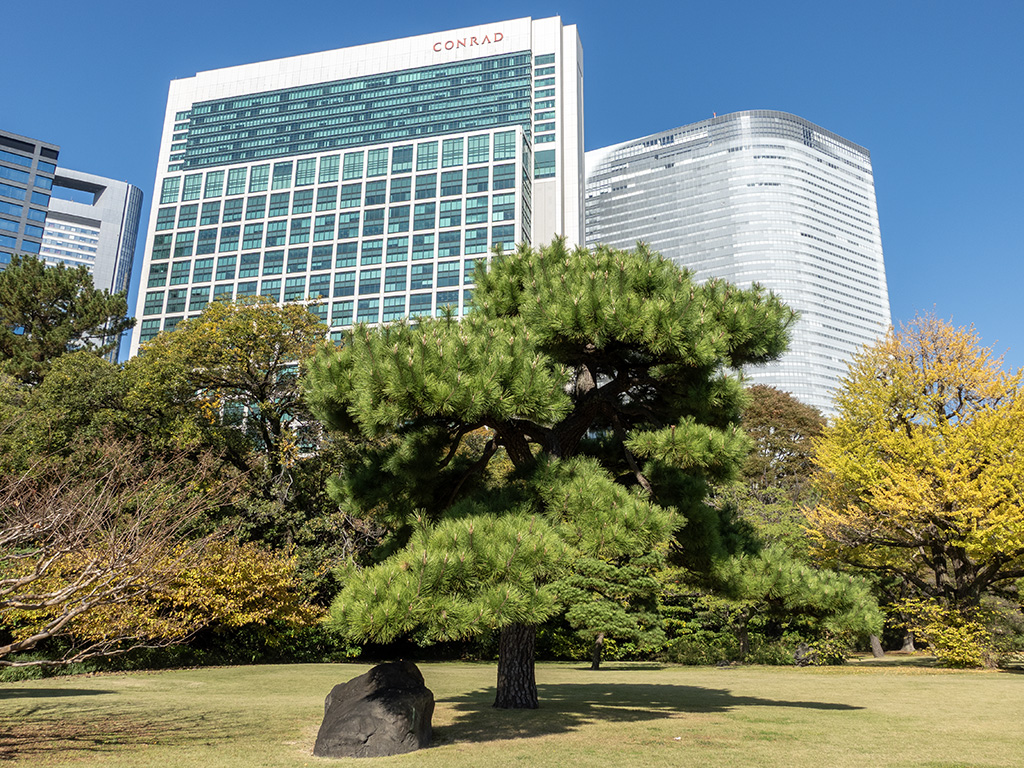
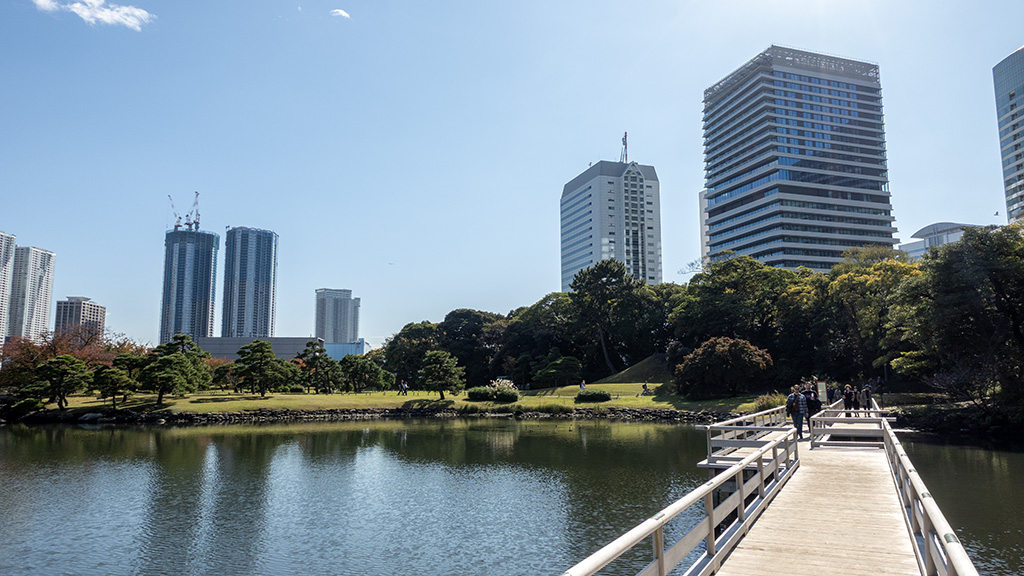
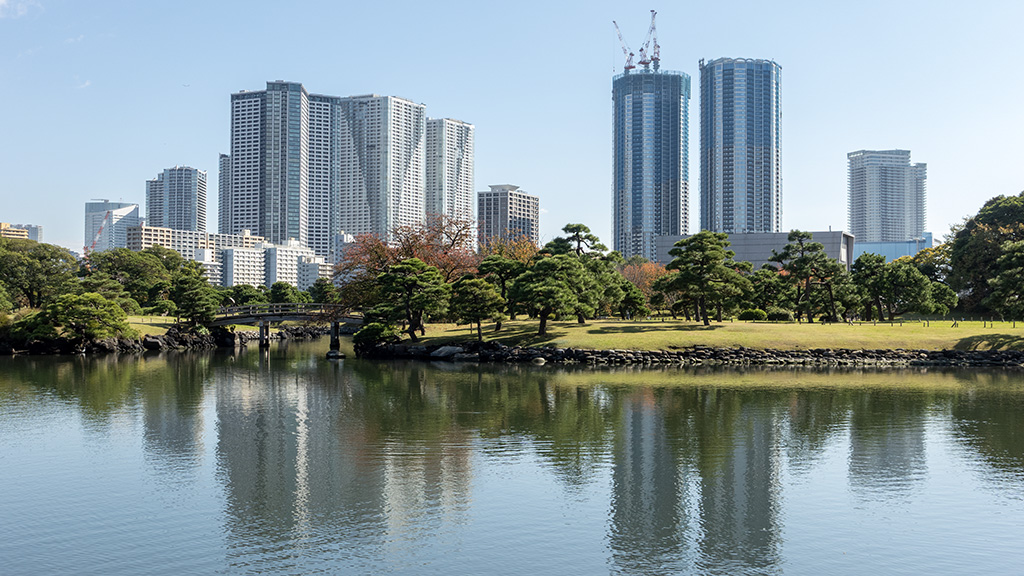
After entering, I first explored the northern corner and northwestern edge of the Gardens. The thing I particularly liked about this area was how the tall buildings served as a backdrop to the trees. Tokyo is a very busy and bustling city, and having a visual representation of the contrast between the densely-packed city and the serene oasis of nature was nice to see.
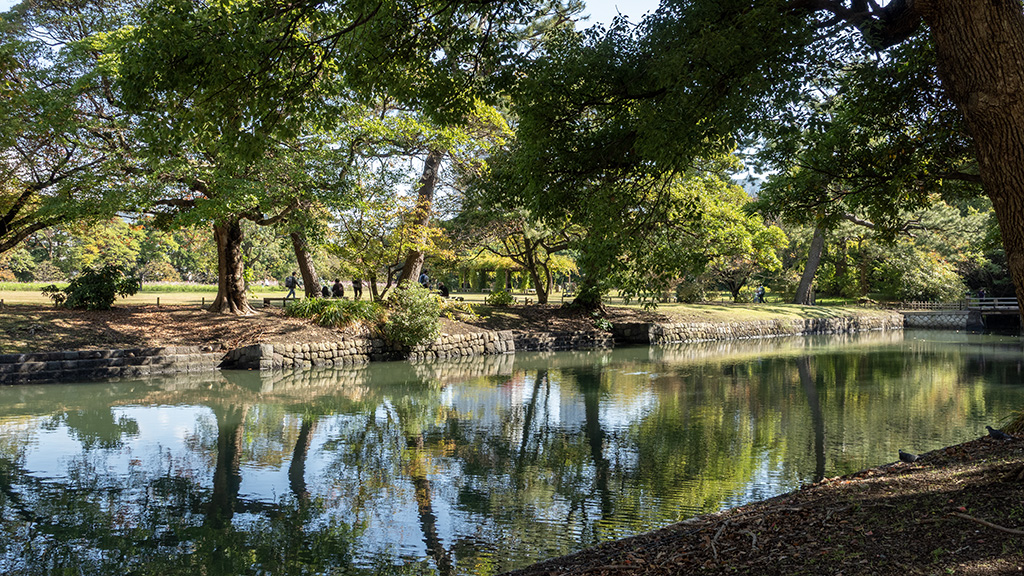
I made it over to 中の御門橋, or the Nakanogomon Bridge, but noticed that it appeared to be an exit, so I retraced my steps and walked back inside. Eventually, I made it to 内堀, which was the inner moat of the Gardens.
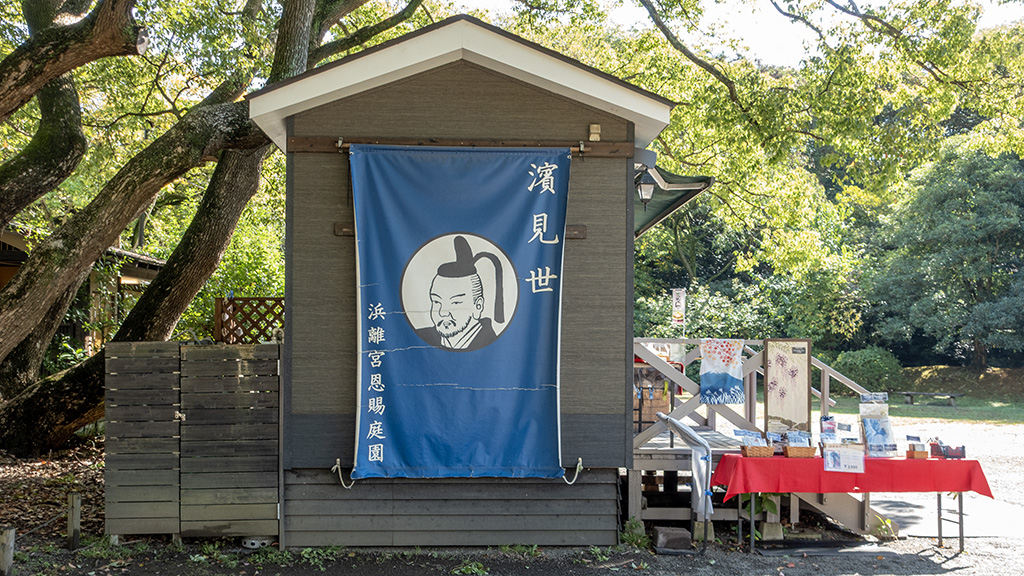
Over in this area was 濱見世, which looked like a snack and souvenir shop.
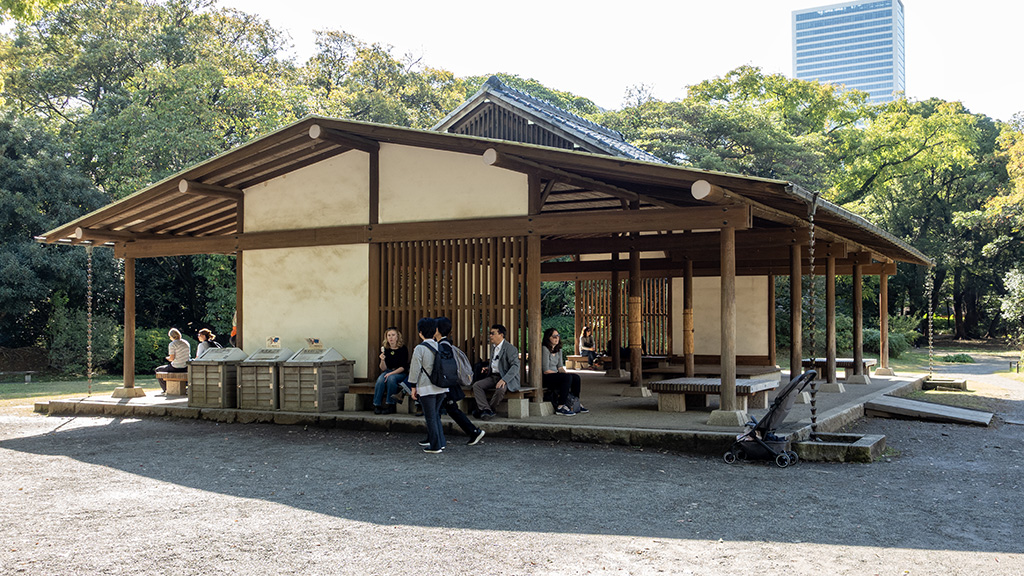
Across from that was a rest area.
I noticed that a lot of Japanese tourist attractions have rest areas. I don’t see them often in the United States, and I was able to devise two potential reasons for it—the first being that tourist activities in the United States usually aren’t as large and thorough as the ones in Japan, so there isn’t really a need for people to rest part-way through; and the second being that it’s generally considered undesirable in the United States for people to just loiter around without having much purpose in their activity.
I appreciated that Japan had rest areas in a majority of places I visited. Because Japan’s tourist hotspots have so much to take in and explore, especially if you’re patient and diligent about seeing everything, it’s nice to know that you can walk around and sightsee for a couple hours, retreat to the rest area to eat a snack and sit for a while, and then finish sightseeing without feeling too exhausted by the end. As for the matter of loitering, because Japan’s culture puts such emphasis on being considerate to others, it seems like people pointlessly loitering isn’t ever really much of a problem.
I wasn’t ready to take a break yet though, so I resumed southbound. I came across this structure called 鷹の御茶屋, which is read as Taka-no Ochaya and translates to Hawk Tea House.
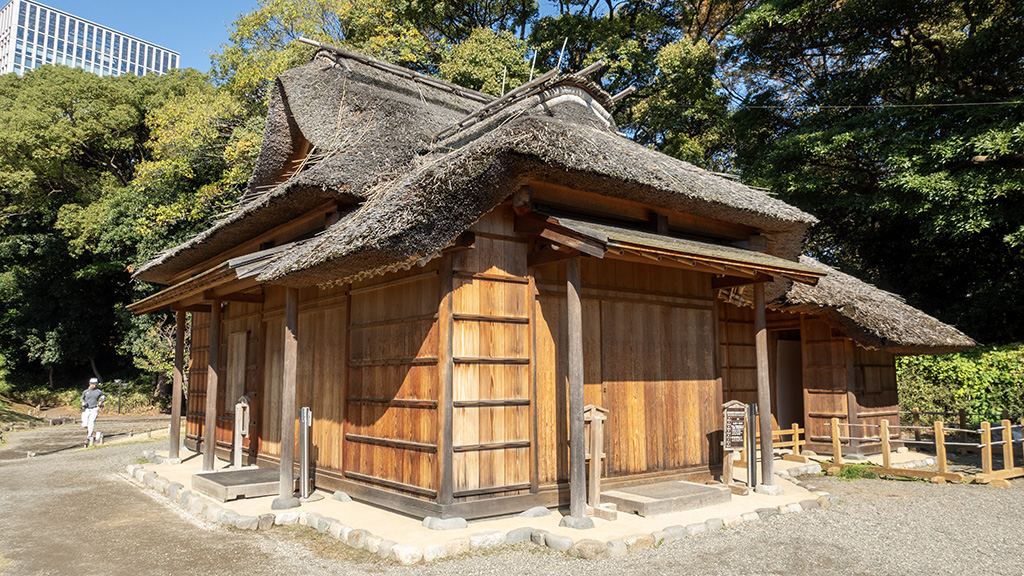
I also saw this building called 松の御茶屋, which is read as Matsu-no Ochaya and translates to Pine Tea House.
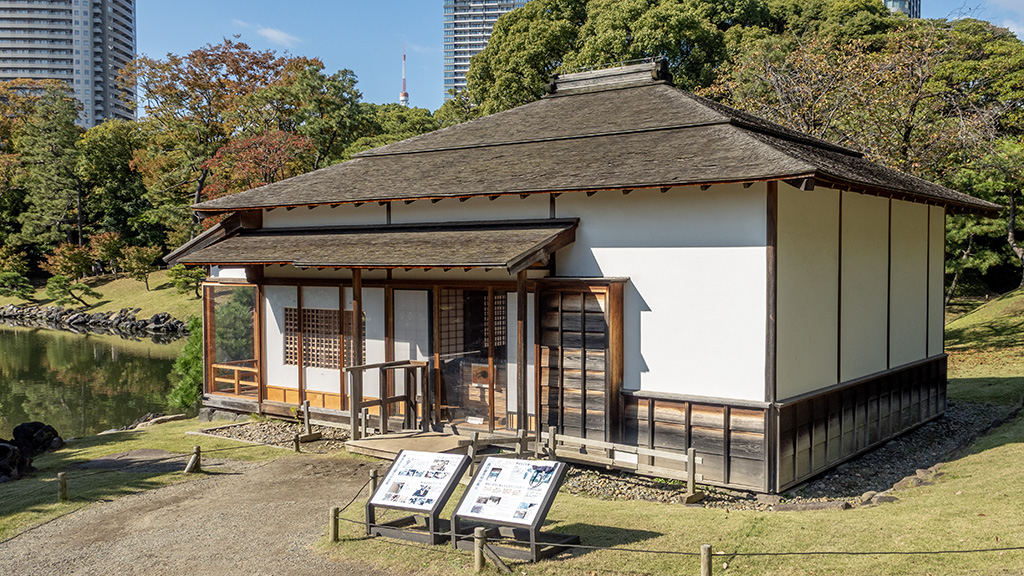
This is a photograph I took while standing on 三間橋, or the Mitsuma Bridge, facing southward.
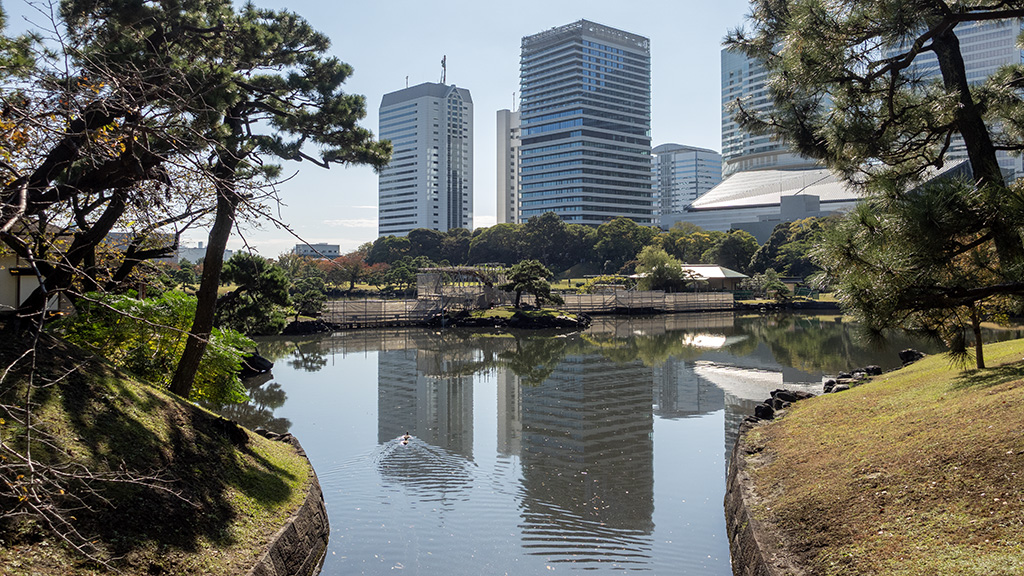
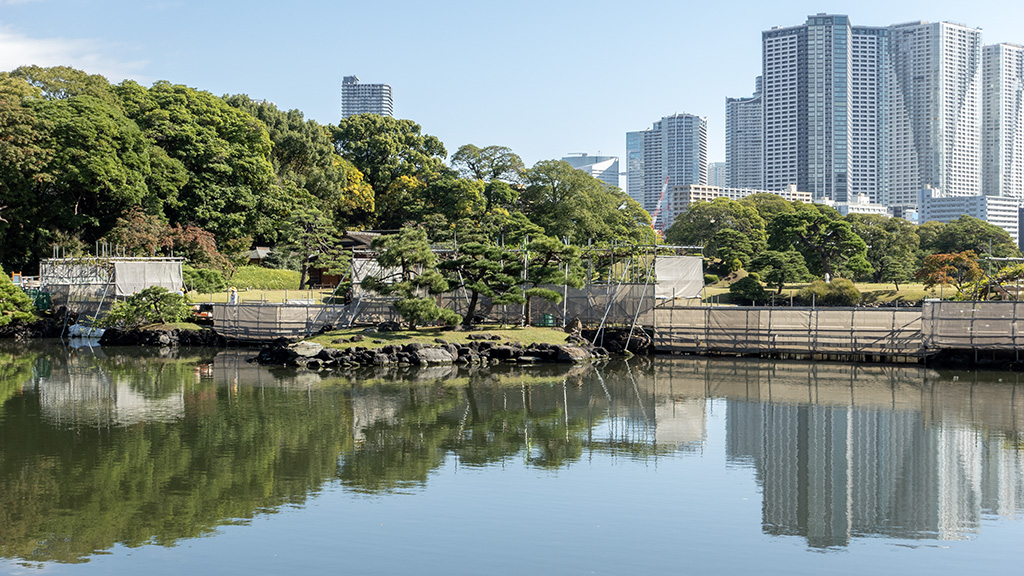
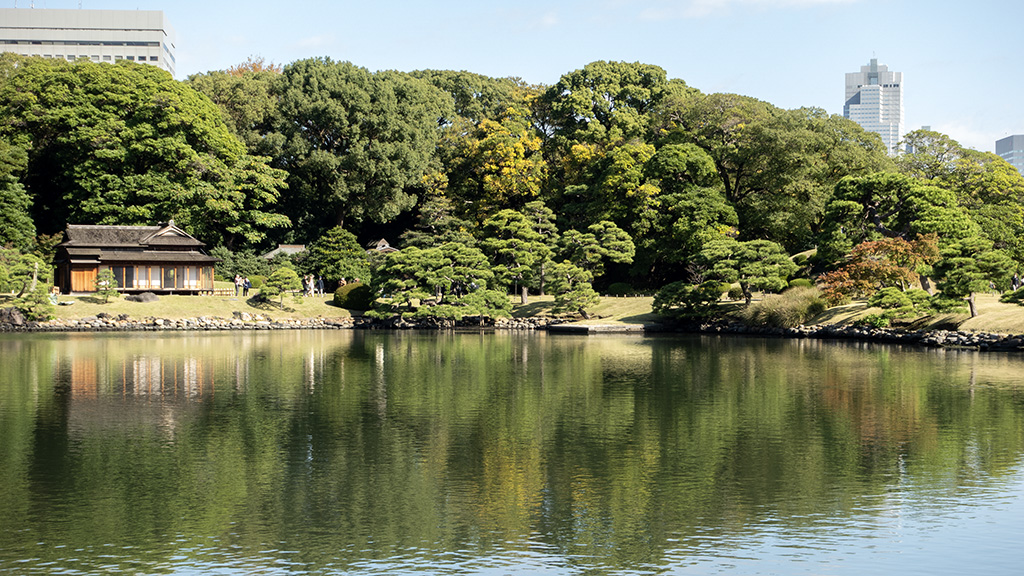
From here, I took the path circling 潮入の池, which is the Tidal Pond. There was some construction on one of the northern bridges, but there were a lot of other pathways and bridges through and around the pond, so I captured a lot of photographs from a lot of different perspectives and vantage points.
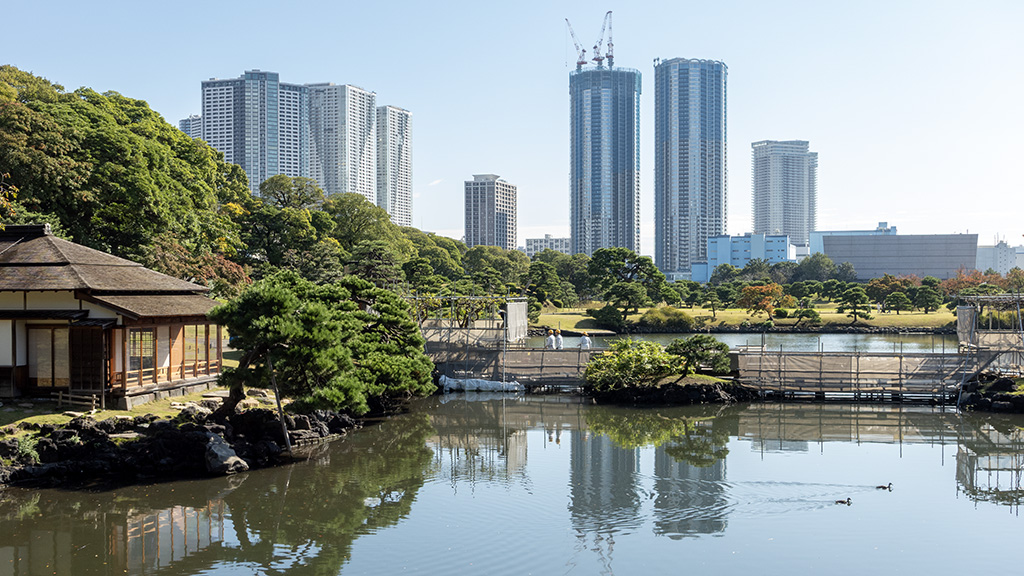
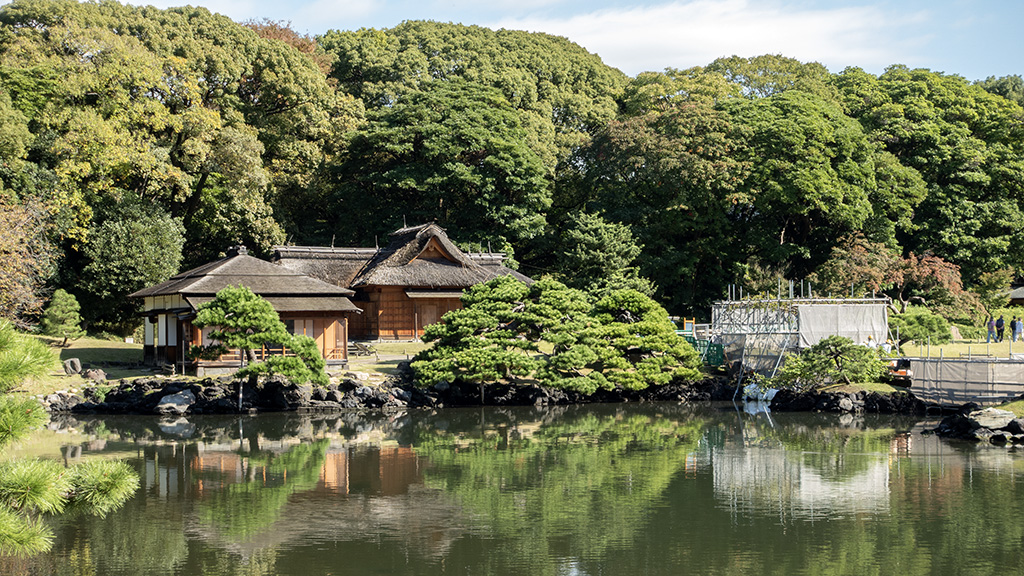
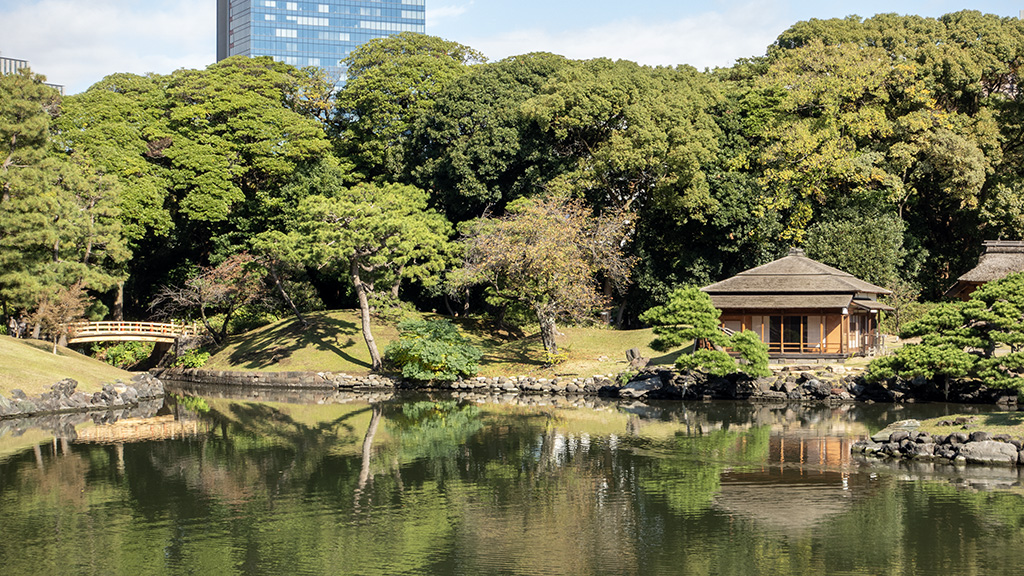
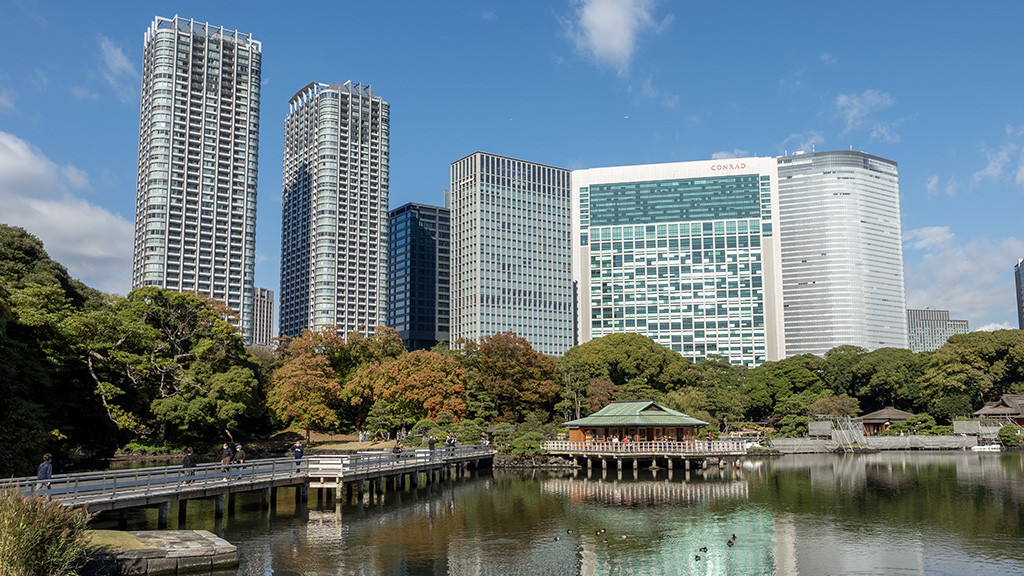
The building in the center here (below the Hilton Conrad Tokyo) is 中島の御茶屋, or the Nakajima Tea House. It was still pretty early in the morning, but the tea house was already filling up pretty quickly with customers.
By this point, I had made it to the southern side of the Gardens.
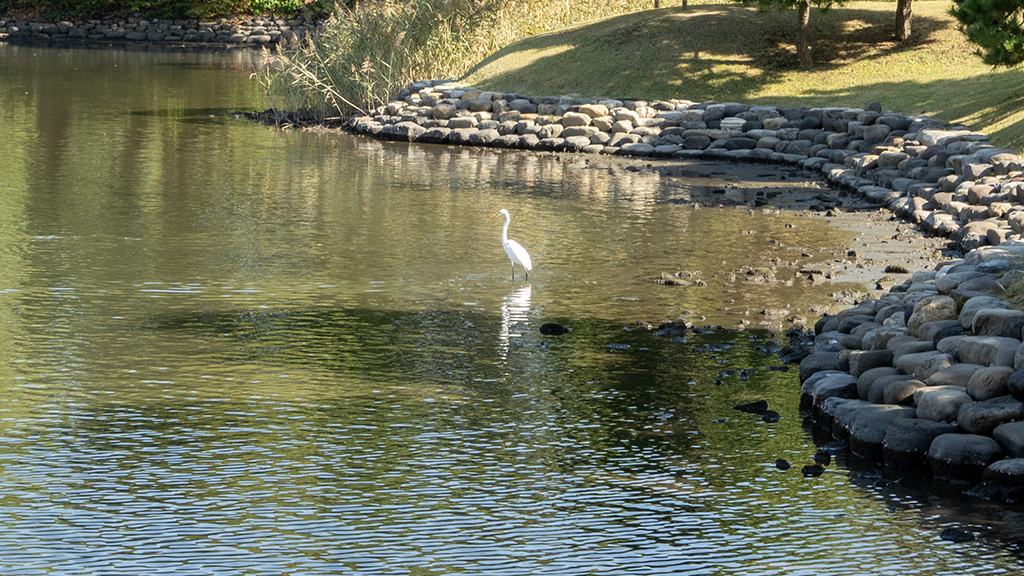
On the map, I saw that there was a paved path that went along right up to the edge of the water, so I decided to walk all the way south to check it out. The start of the path had a view of 汐留川水門, or the Shiodome River Water Gate.
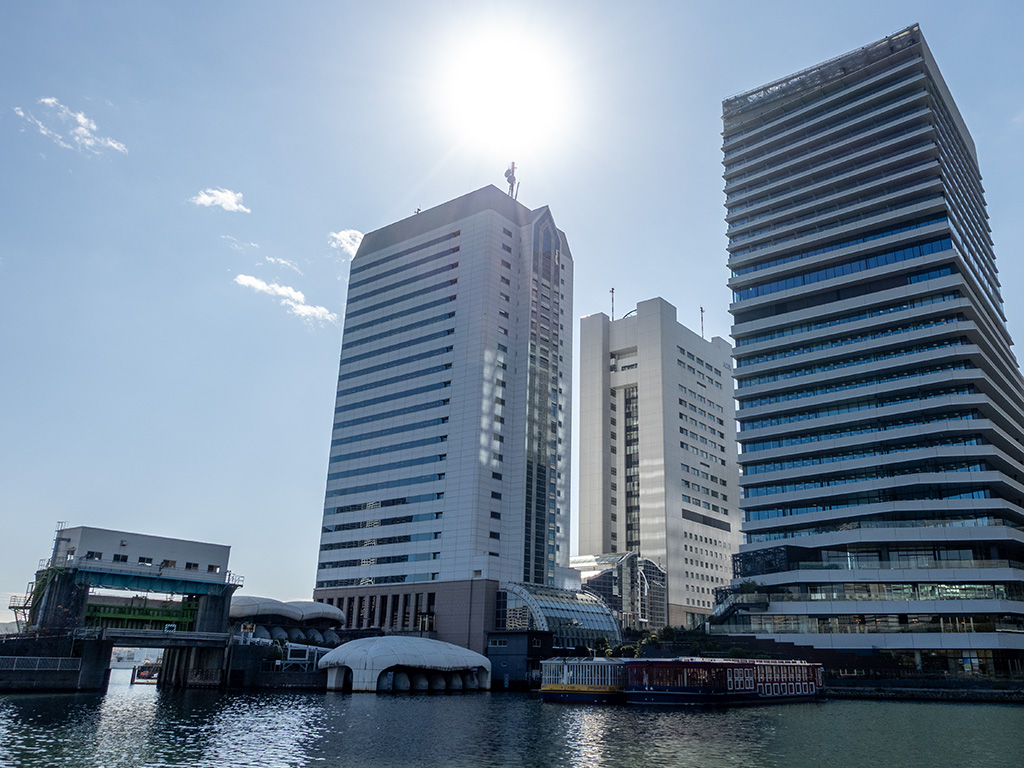
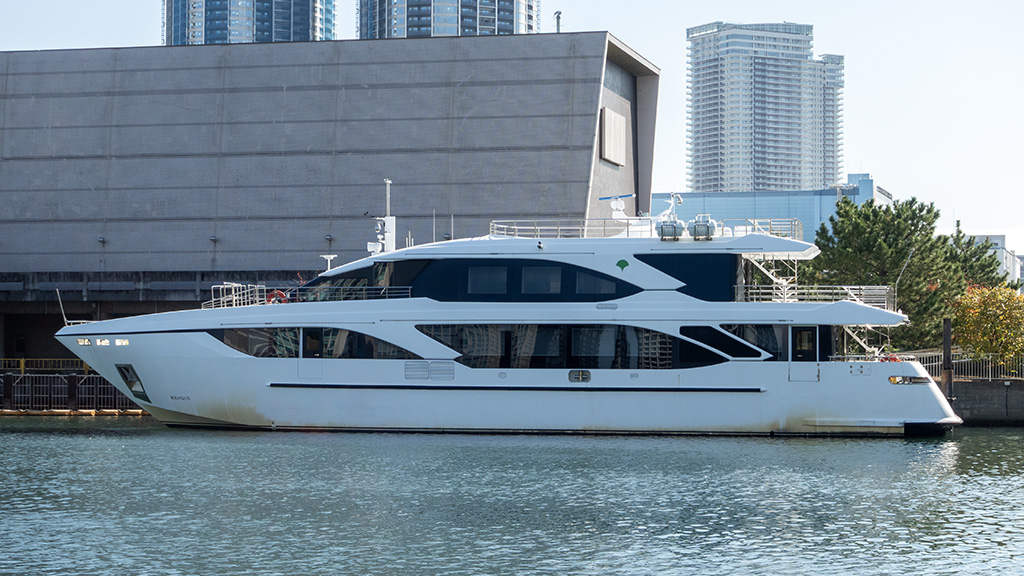
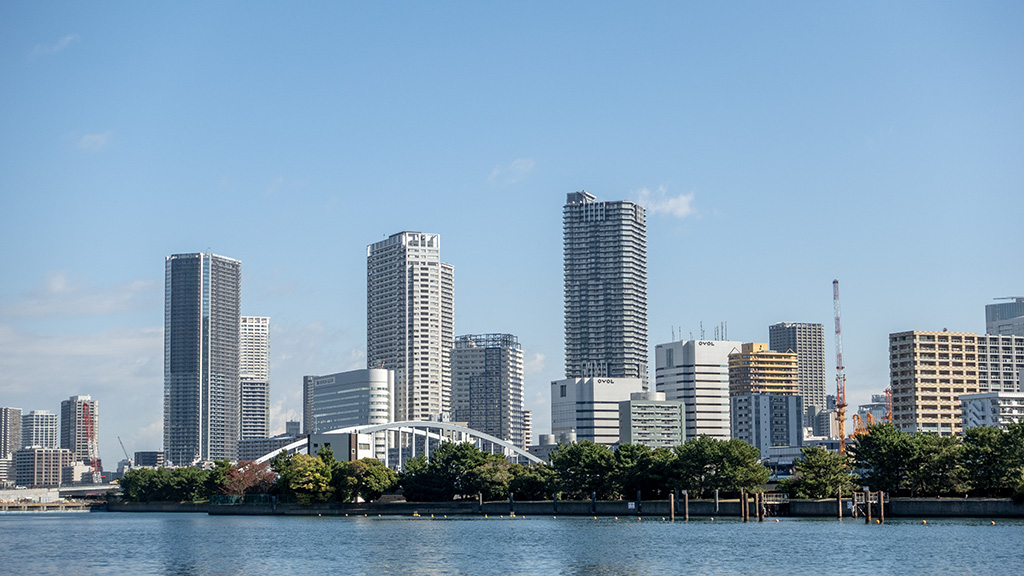
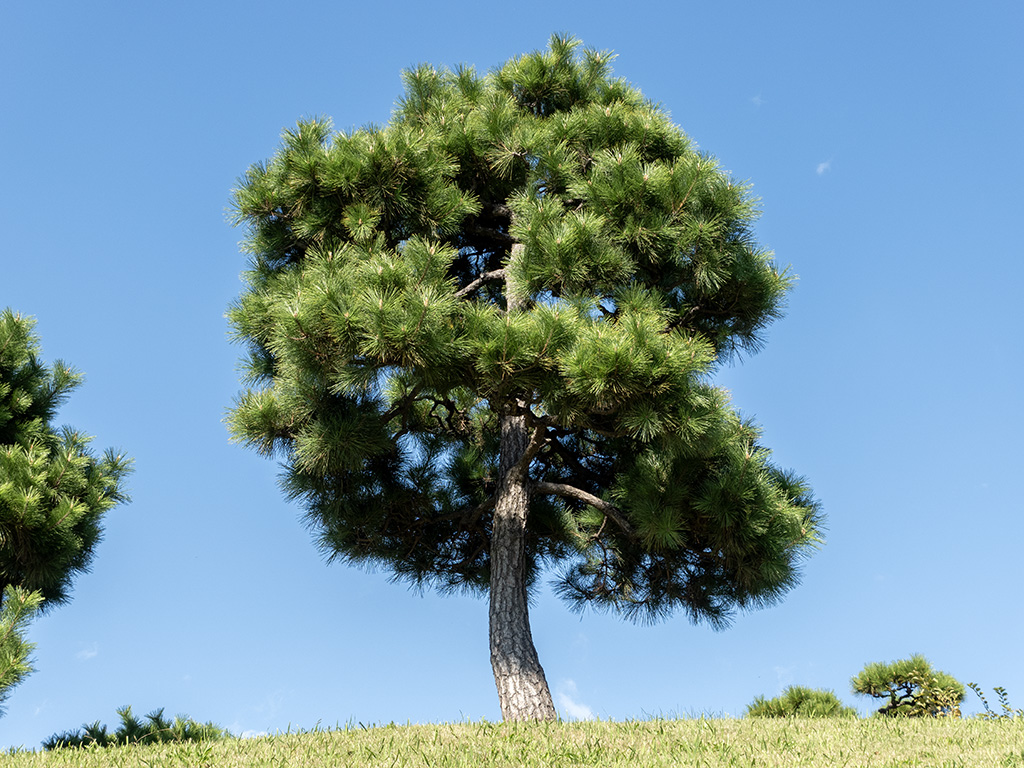
As expected from a path that goes along a waterway’s edge, the elevation there was lower than the elevation of the rest of the garden. This made for some fun new perspectives when photographing trees growing at the top of a hill.
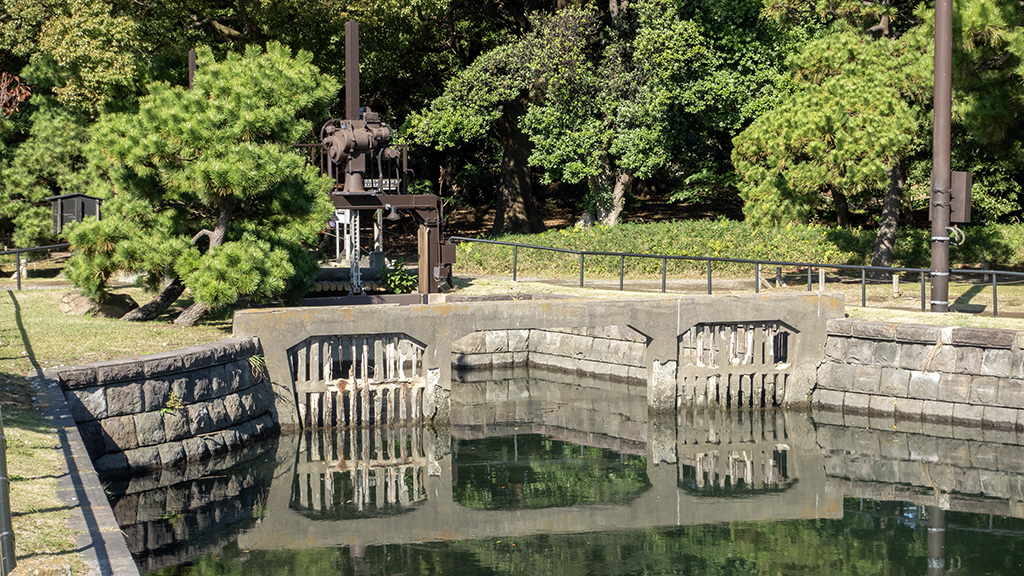
This is 横堀水門, or the Yokobori Water Gate.
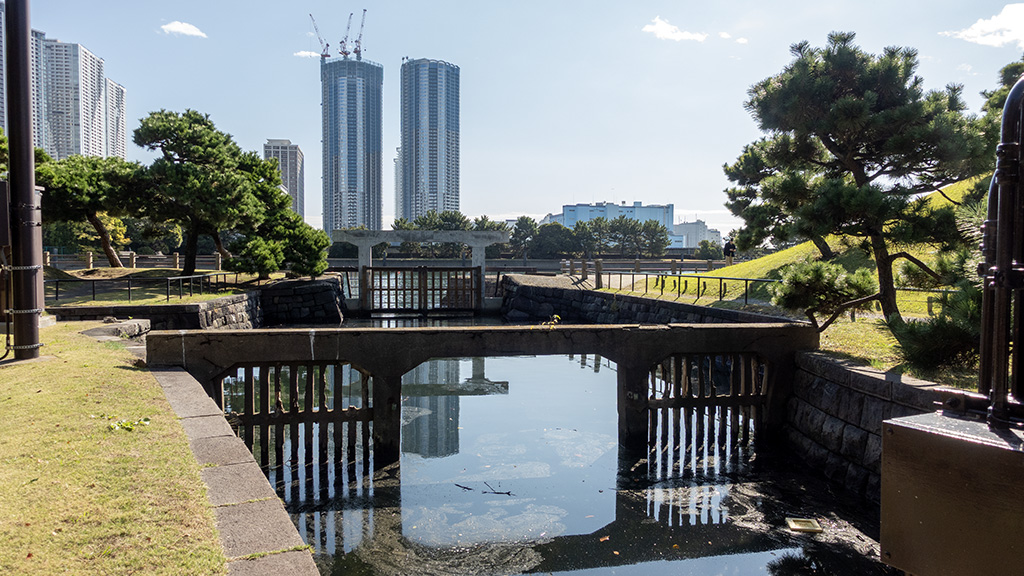
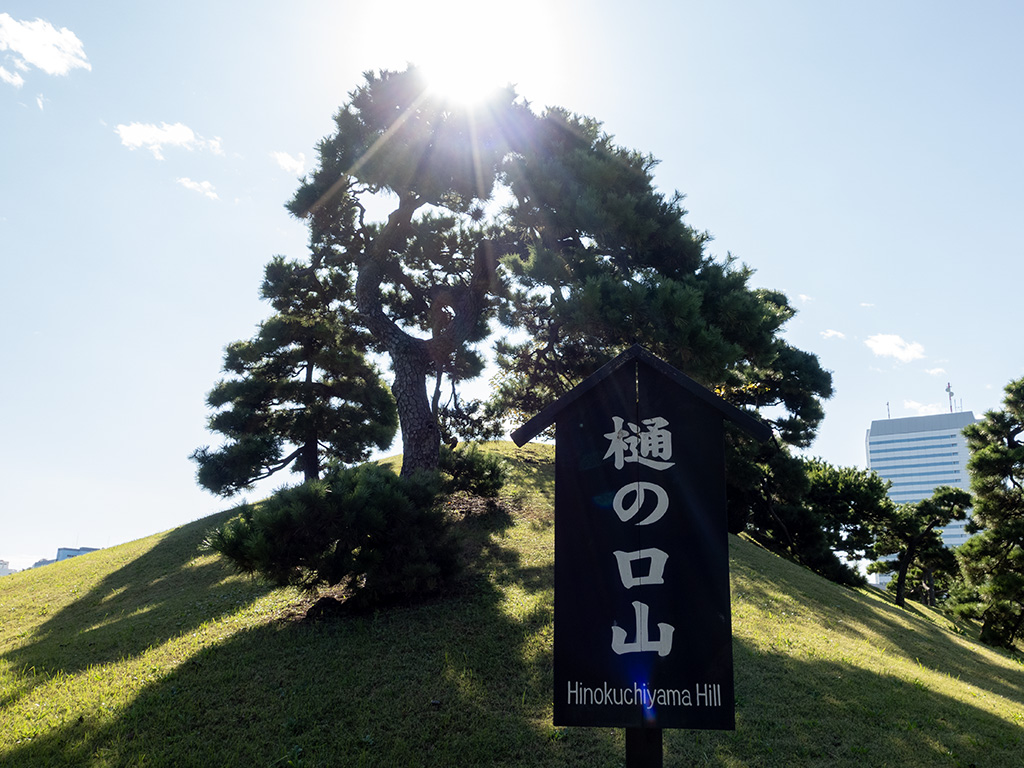
This is 樋の口山, or the Hinokuchi-yama Hill. There was a sign labeling it so I assume it has some kind of importance, but there was no other plaque or other information posted about it, so I wasn’t able to find out why the hill was labeled and partitioned off.
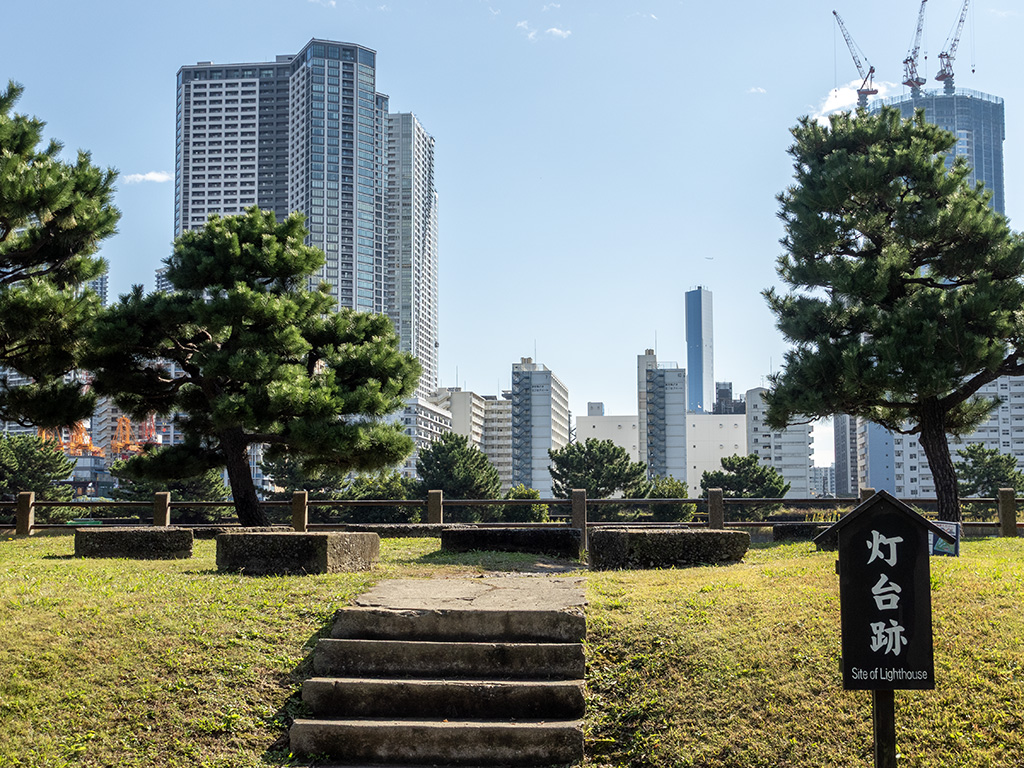
This is 灯台跡, or the Lighthouse Ruins. Apart from the sign labeling it as the site of a former lighthouse, the only other information around it was a sign asking people not to sit on the grass and to use the designated open spaces elsewhere in the Gardens instead. However, I feel like this one is a bit more self-explanatory; I imagine there used to be a lighthouse here to help watercraft navigate the nearby Sumida River.
After walking the full path alongside the southeastern edge of the Gardens, I continued northwestbound and saw the Hamarikyu Ferry Terminal. It was not in service on the day of my visit, and there was some signage that implied that it might be closed for the season, but there was still enough equipment around the area that made me suspect that it was still capable of conducting standard operations if needed.
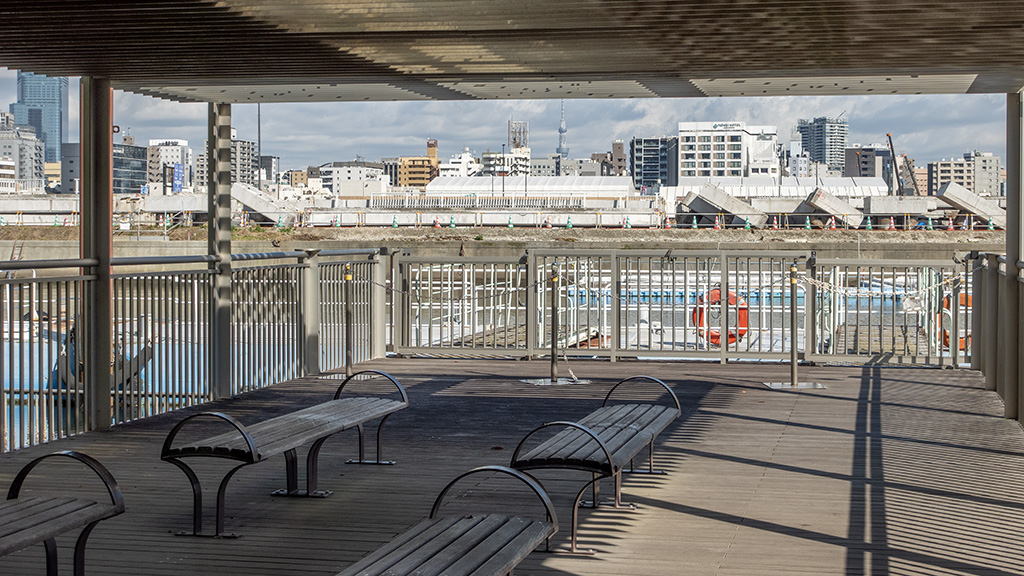
Before continuing on my way, I stopped at the toilets. This is probably the most one I have been with nature while urinating in a public bathroom.
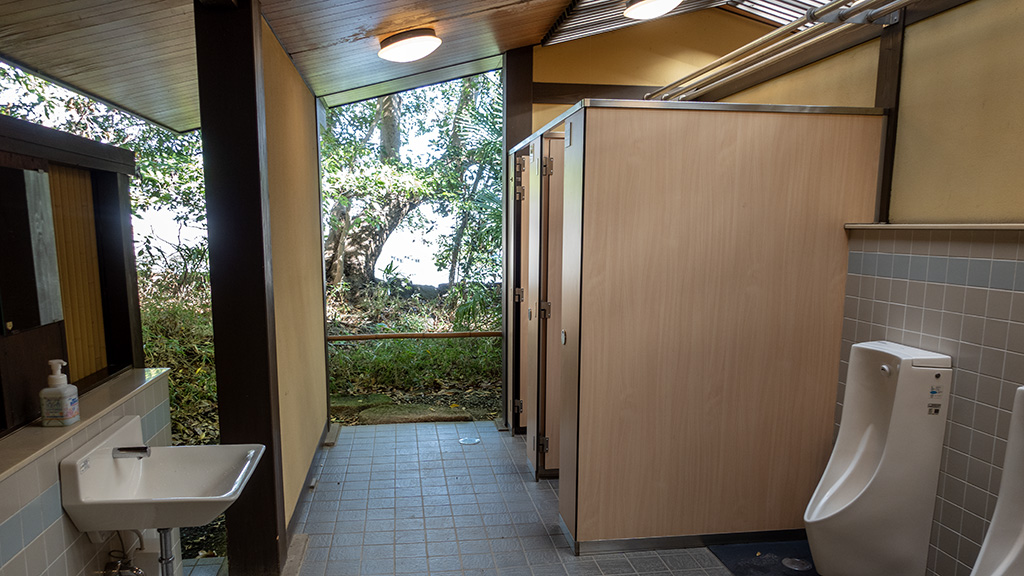
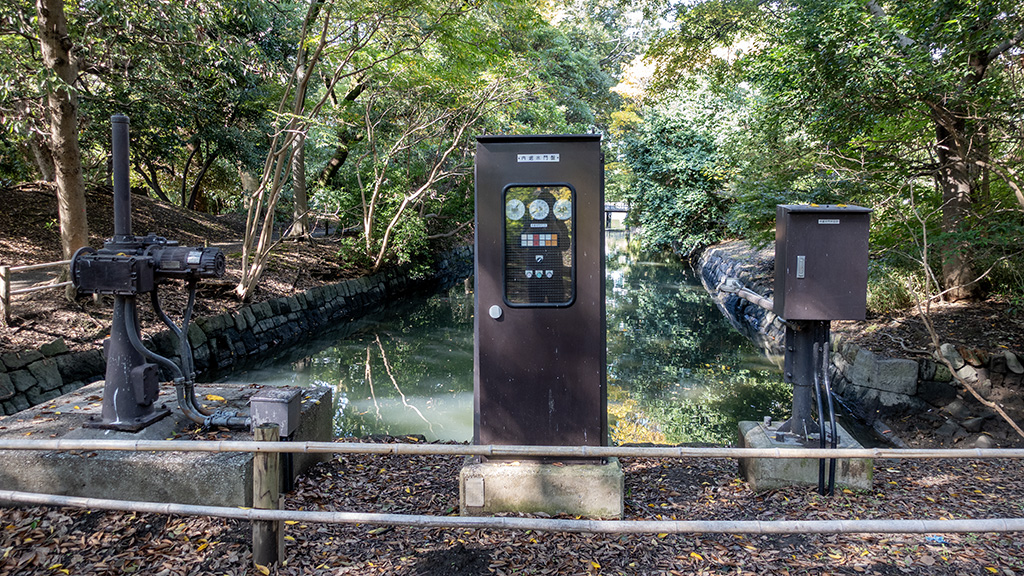
After concluding the volumetric reduction of my bladder, I continued deeper into the foresty area and came across this device near what was labeled on the map as 庚申堂鴨場, or the Koshin-do Duck Hunting Site.
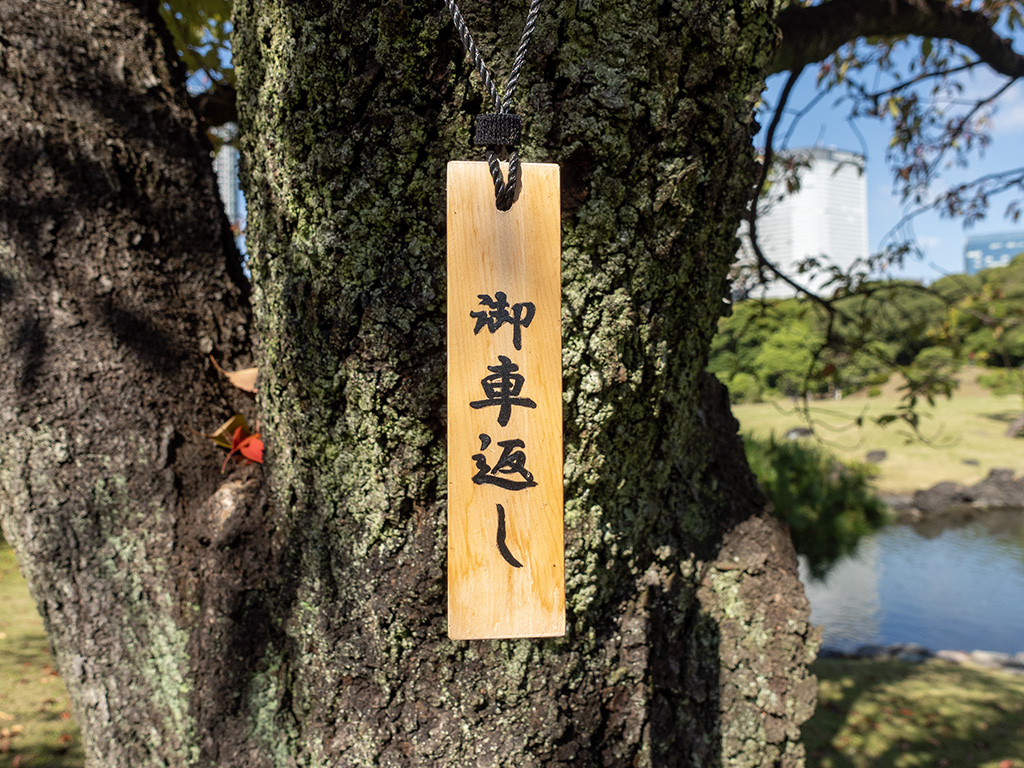
The device was labeled as 內盤水門盤, which roughly translates to “inner water gate plate,” so I am guessing that this might have had more to do with the moat I saw earlier, rather than the duck hunting field.
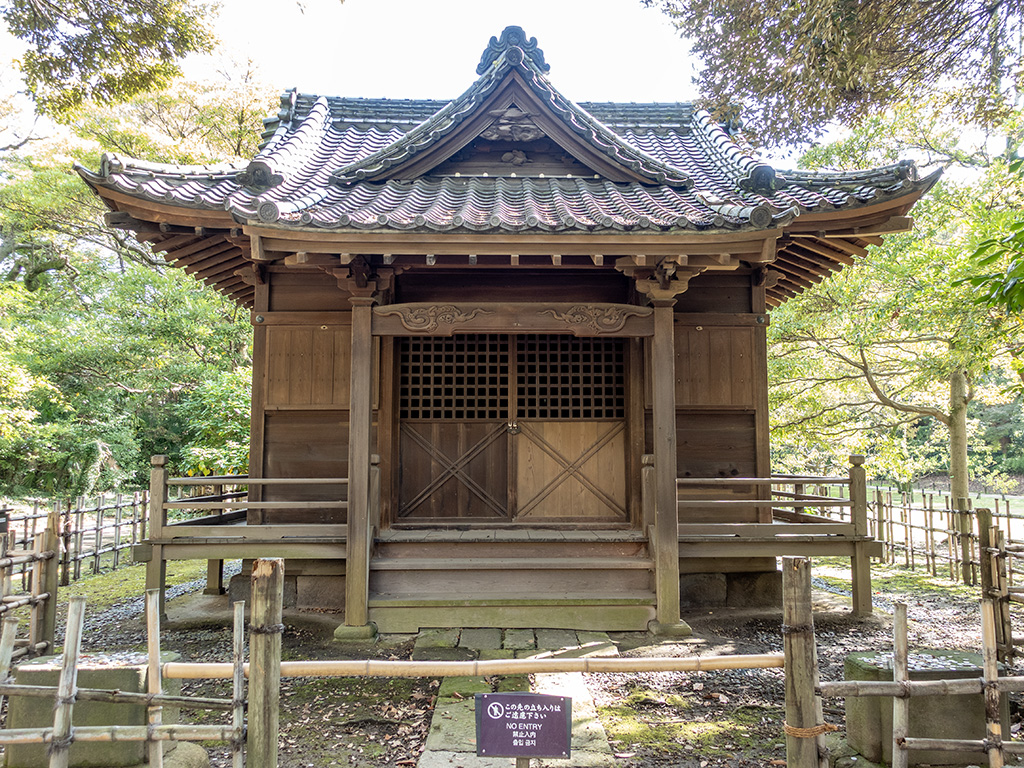
Also in this general vicinity was 旧稲生神社, which reads as the Kyu-ino Jinja and translates to the Former Inari Shinto Shrine.
Upon emerging from the denser foresty area, I saw a flower field. My trip was during November so the flowers weren’t quite fully in bloom, but I imagine that this entire area becomes very colorful during the spring and summer.

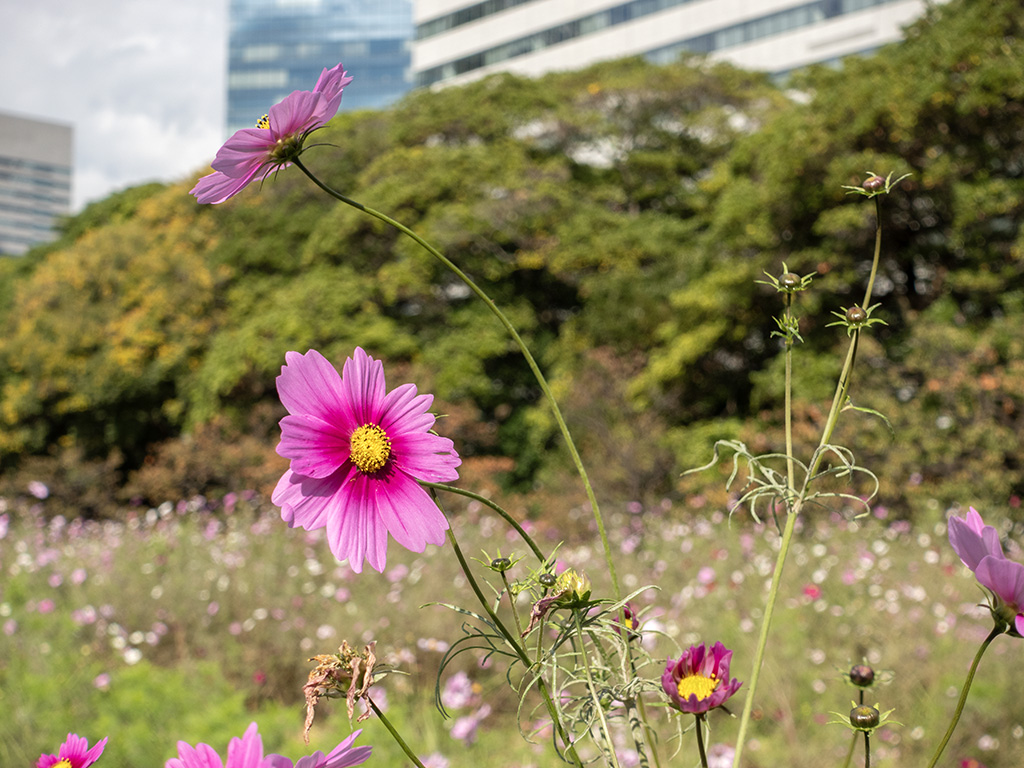
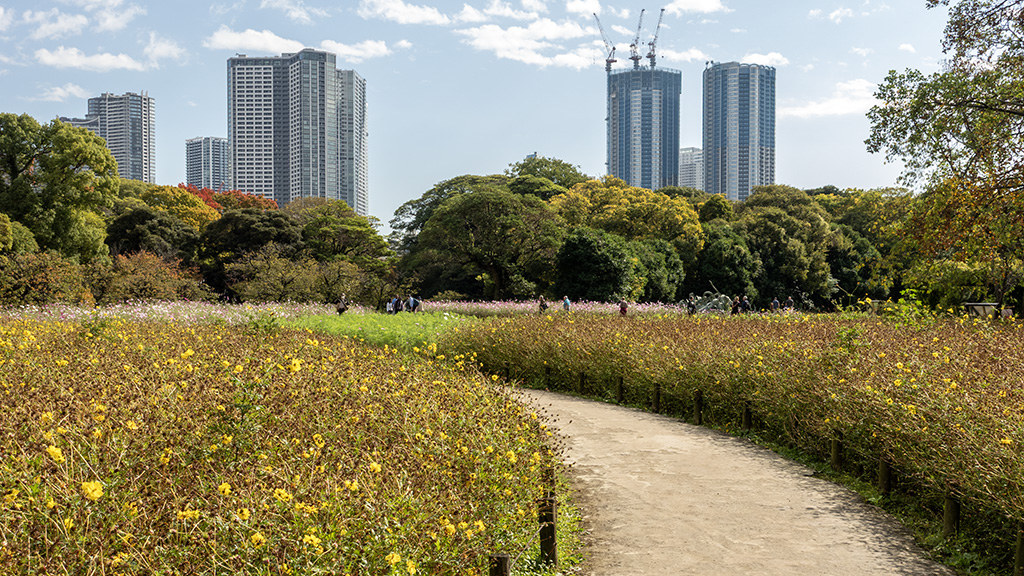
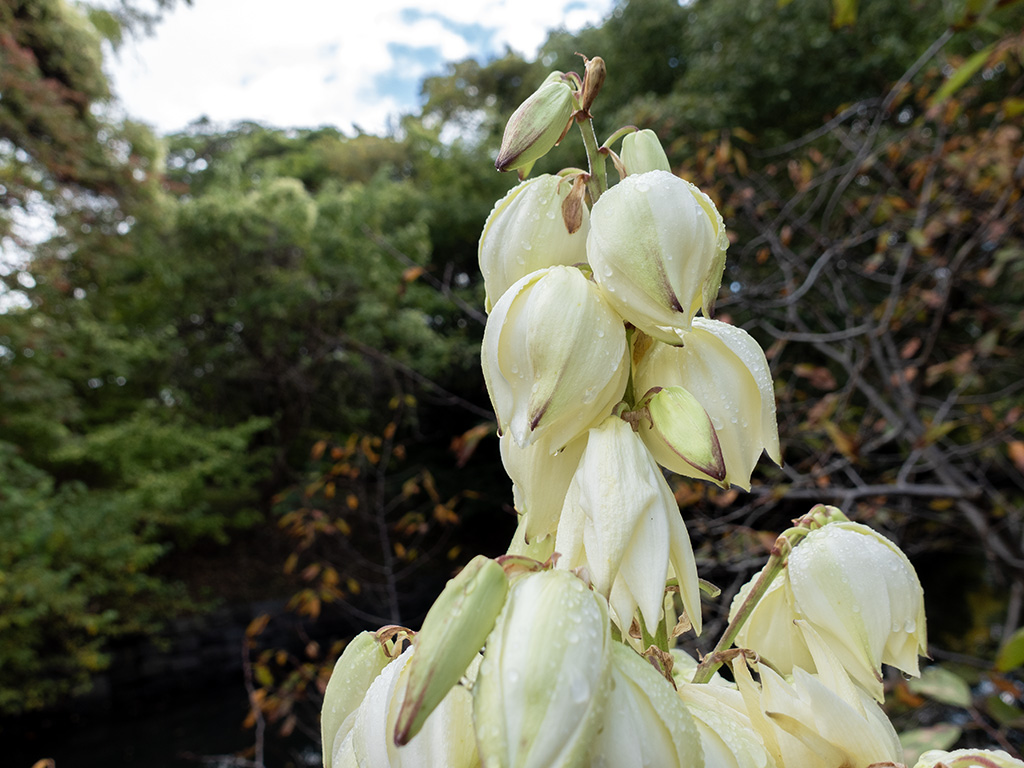
After taking multiple paths through and around the flower fields, I continued northwest and back to where I had entered.
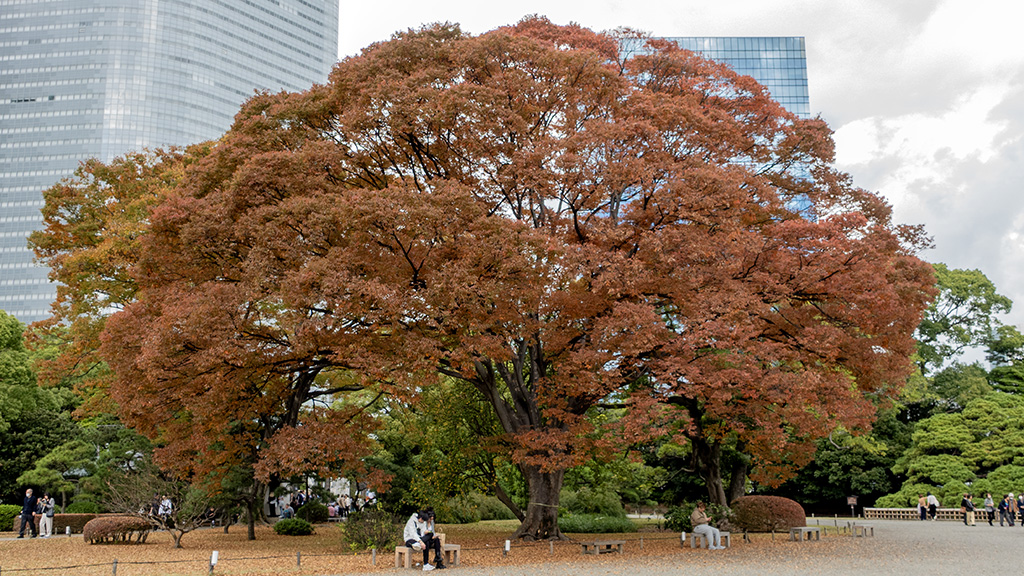
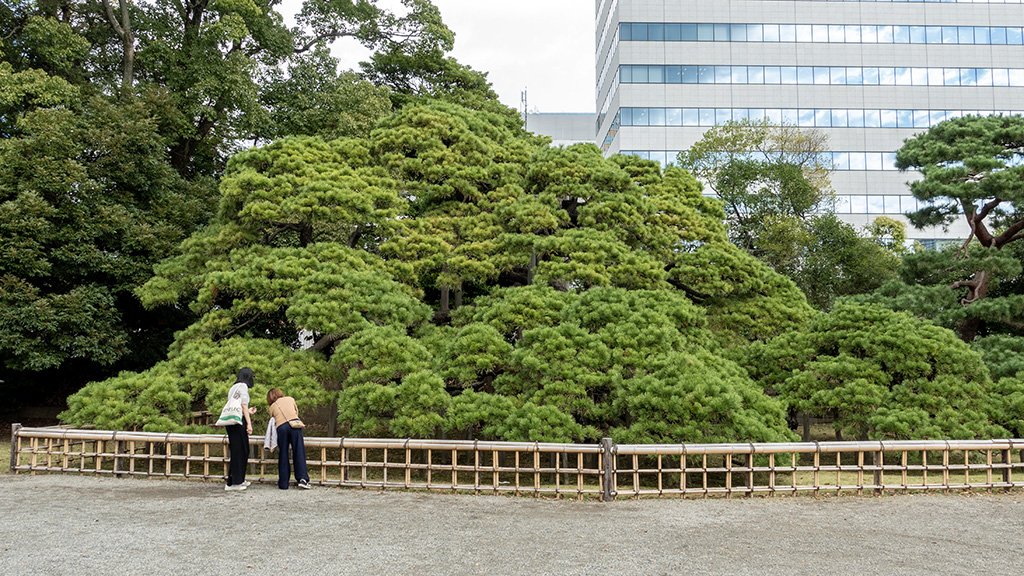
I had missed this earlier when I came in, but the 三百年の松, or the 300-Year-Old Pine, was fenced off and to the side of the main pathway.
This is what the Otemon entrance to the Gardens looks like. In case you’re curious, the text on the orange banner above the name of the Gardens says 特別史跡 and 特別名勝, which roughly translates to describing the Gardens as a special historic site of scenic beauty.

The Hamarikyu Gardens were very pleasant and served as a great way to spend a few hours sightseeing. Similar to Yoyogi Park, which I blogged about a handful of days ago, I especially like that Tokyo has these big public parks, gardens, and other pockets of nature integrated nicely into surrounding blocks of concrete, steel, and glass buildings.
The admission fee for the Gardens being less than US$2.00 is insane to me, as something like this in the United States would likely be about US$25.00 in populated cities and probably never be less than around US$15.00 even in the most suburban and rural areas. I thought this was amazing value for money and overall a great use of my time.