During one of the days I was in Tokyo, I met up with some of my friends, one of whom has lived in Japan for a while now and speaks Japanese fairly well. We went together to a more “hidden” sushi restaurant that doesn’t cater as hard to tourists—it is called 磯, which translates to Iso. This was basically my opportunity to try a much more authentic Japanese dining experience that I otherwise might not have been able to uncover on my own as an English-speaker.
As you’ll quickly see, I am very glad I went to Sushi Iso, and I consider this omakase meal to be one of the prime highlights of my entire trip.
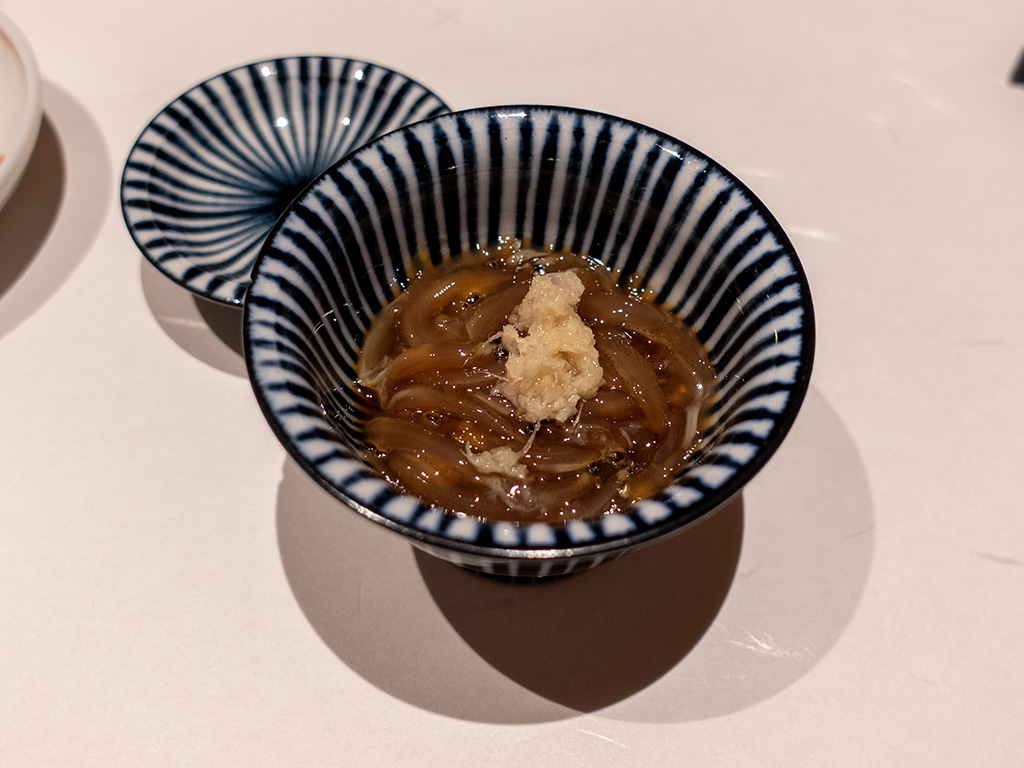
The meal started with a small bowl of shirasu no okizuke, which is soy-marinated baby sardines.
This was my first time ever having baby sardines, and it was a very interesting texture. They were very small, and the way they were prepared made it so they separated from each other fairly easily and had a bit of sliminess to them, but the individual sardines were still large enough that I could get a few bites in of the soft body of the fish before it was ready to swallow.
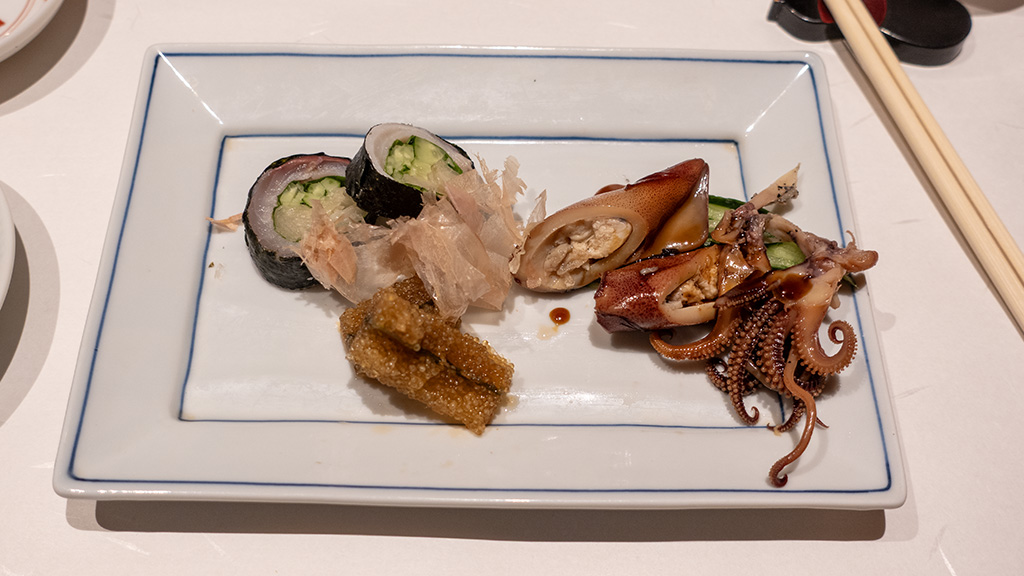
Next was otsumami, which is a collection of small appetizers.
The left-most appetizer in the photograph is a few pieces of a fish and cucumber roll, though I don’t remember exactly what kind of fish it was. In the center is komochi konbu, which is herring roe on kelp; this was particularly fun to eat due to the texture. All the way to the right is hotaru ika, which is firefly squid; I especially liked the flavor combination of the chewy squid along with the rich and creamy innards.
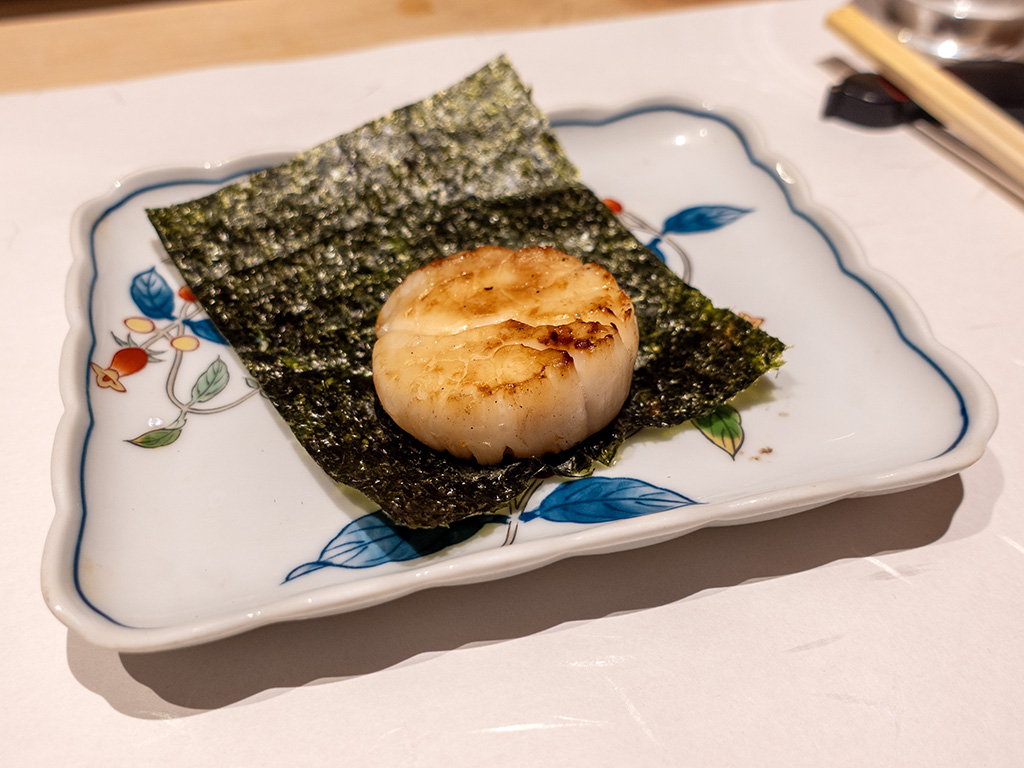
Next was a scallop on seaweed. The scallop was very tender, and the seaweed was mild enough that it complemented the scallop’s flavor without overpowering it.
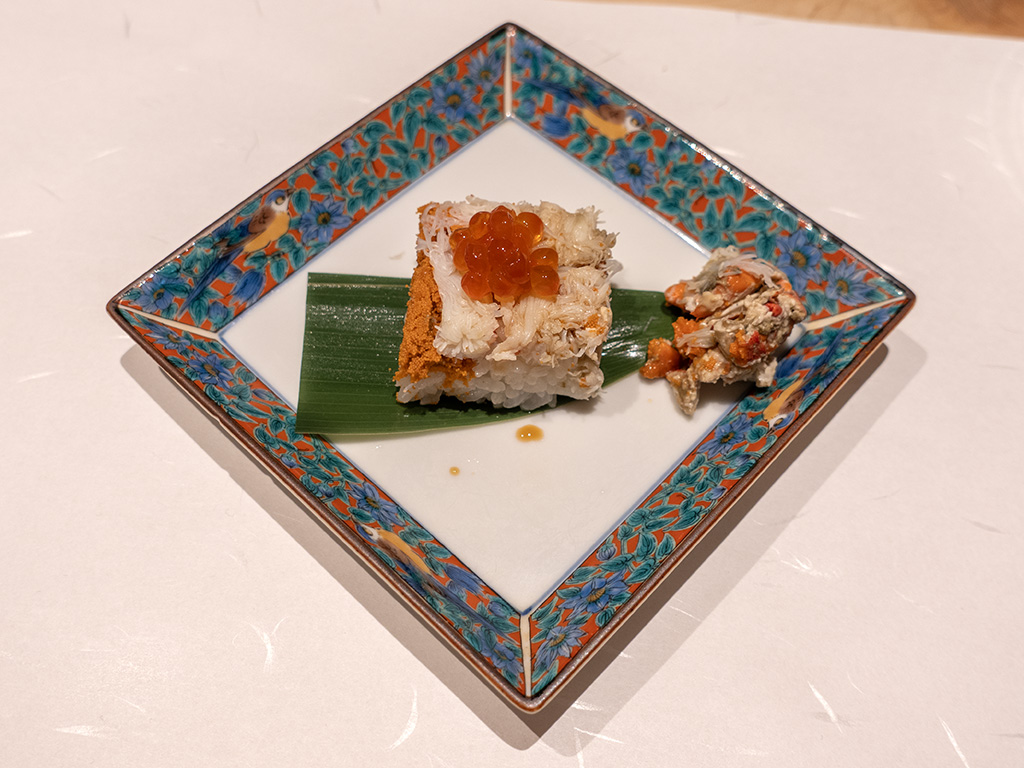
That was followed by seiko gani zushi, which is female Japanese snow crab pressed sushi, a very seasonal dish and one that is very tedious to prepare.
This had all the components of the snow crab—the unspawned eggs layered on top of the rice, the regular meat on top of that, and the crab innards off to the side. The pressed sushi piece also had some salmon roe as a topping to add a bit more pop to the texture (literally).
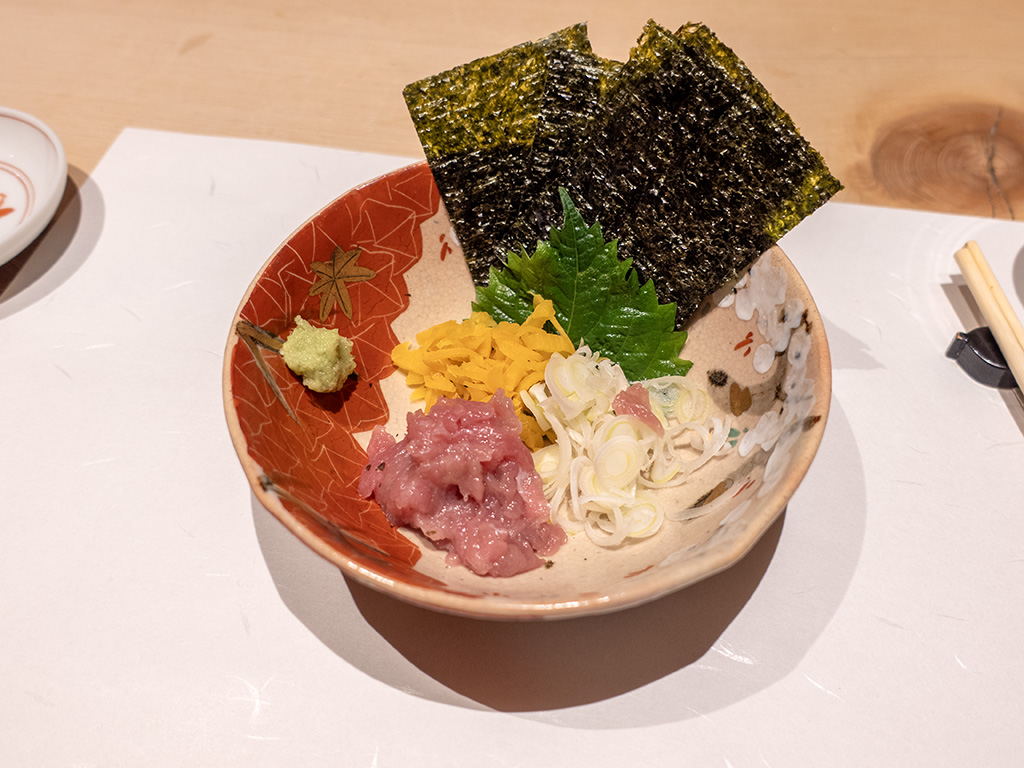
Next was basically a build-your-own negitoro hand roll bowl. A “do it yourself” kind of interactive experience with your meal is very rare in omakase (at least from the Japanese restaurants in the United States that I’ve been to in the past), so I thought this was a fun way to make the dinner more interesting.
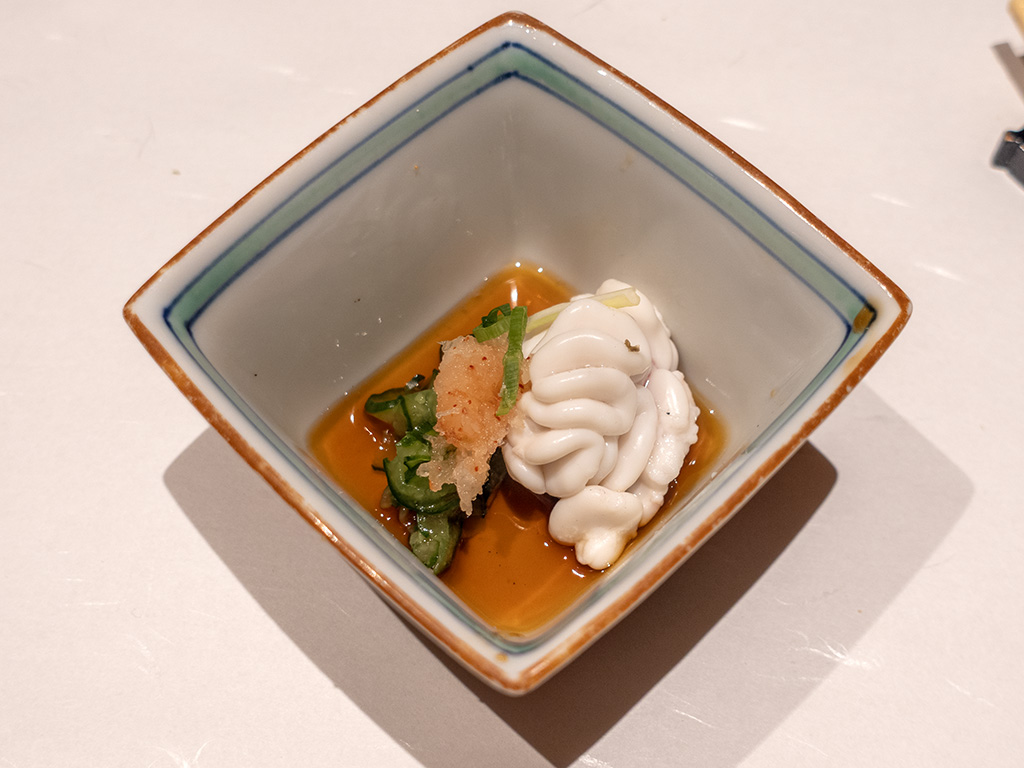
Up next was shirako, or milt, which is fish sperm sac. Shirako is my second-favorite dish at sushi restaurants, only behind uni, which is sea urchin. Thus, I was pretty excited when I noticed that our chef was preparing shirako. This one was served with some sliced lightly-pickled cucumber and radish inside a ponzu sauce mixture.
This would have been my favorite dish of the meal, if it wasn’t for the oyster that you’ll see later.
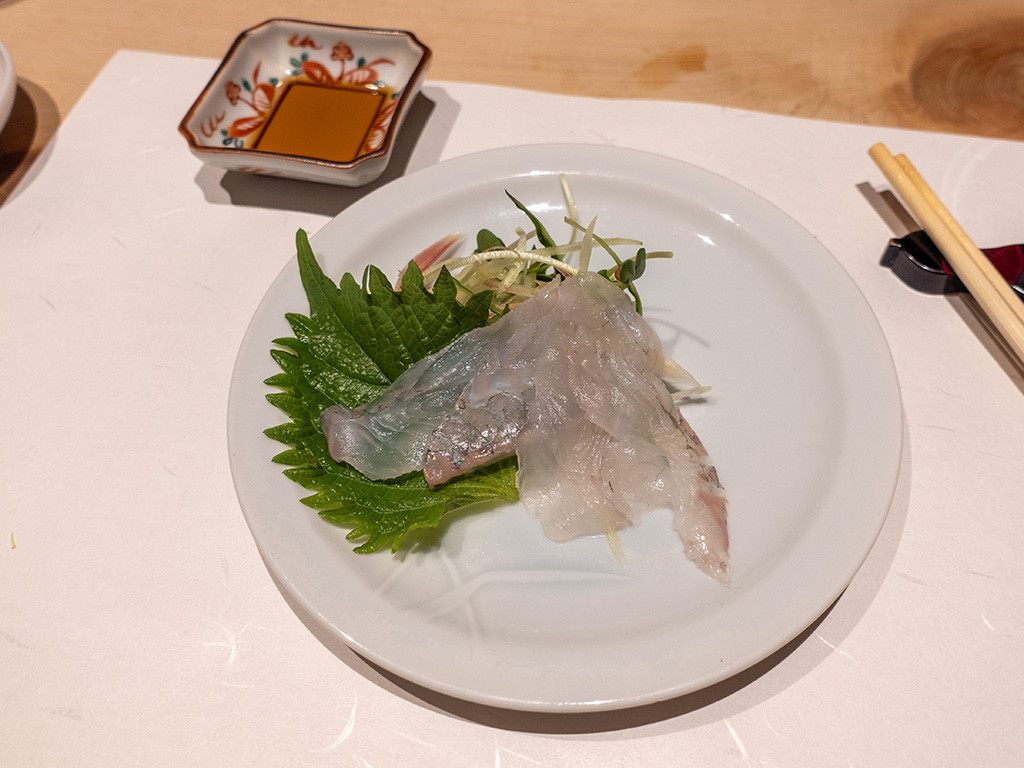
After the intense creaminess of the shirako, we toned it down a bit with some shiromi sashimi, which is raw white-fleshed fish (I don’t remember specifically which type of white-fleshed fish it was). It was cut very thin, but when rolled up around some of the greens with which it was served, it was bunched up enough that it had a nice bite to it while mixing well with the greens.
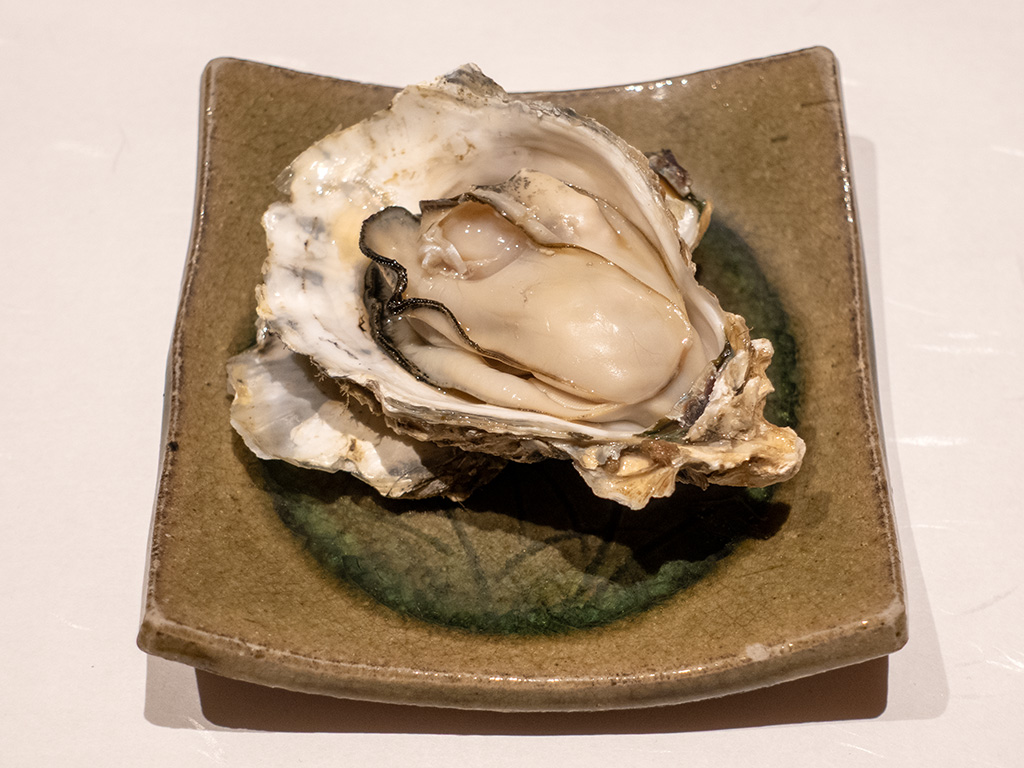
Next was literally the best oyster I have ever had in my entire life. It was insanely large and fleshy, and had the perfect texture combination of tender and chewy. It had the strongest oyster flavor I’ve ever tasted, yet it had absolutely no gaminess that is often associated with highly intense animal meats. It was prepared perfectly, with the salt extracting and enhancing all the oyster flavor, and the juices tasting pure and clean.
I rate this oyster a 9.9/10, and that is coming from someone who considers a food rated 5/10 to be good enough for me to happily eat on a routine basis as one of my regular meals. Functionally, you could say that this oyster got a 9.9/9.9, because I’m one of those types of people who doesn’t give 10/10s simply off the principals that (1) the world is constantly evolving and improving, and (2) there is so much out there I don’t know about, even about my own self and my own preferences, that I am unwilling to declare something as unimprovably perfect.
After successfully recovering from the utter shock that was eating the most delicious oyster in existence to my knowledge, we went on to another amazing dish. I forgot specifically what type of fish this was, but I believe this was either chin or shoulder meat of the fish. With that being said, this was so amazingly fatty that, if the chef didn’t clarify otherwise, I would’ve assumed this was from the fish’s belly. This was as if I was eating the fish equivalent of Japanese A5 wagyu beef.

From here, we started the nigiri service phase of the omakase.

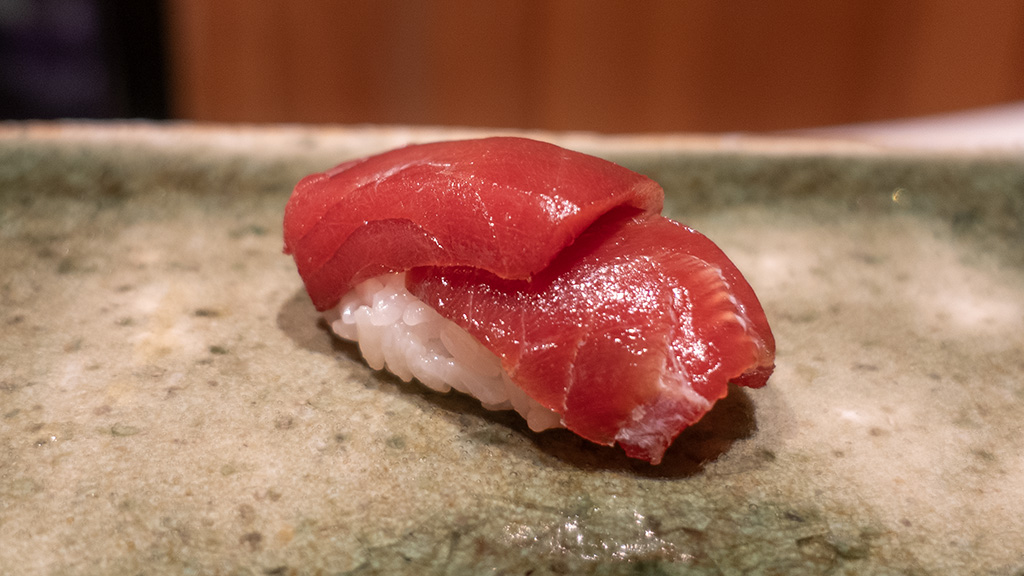
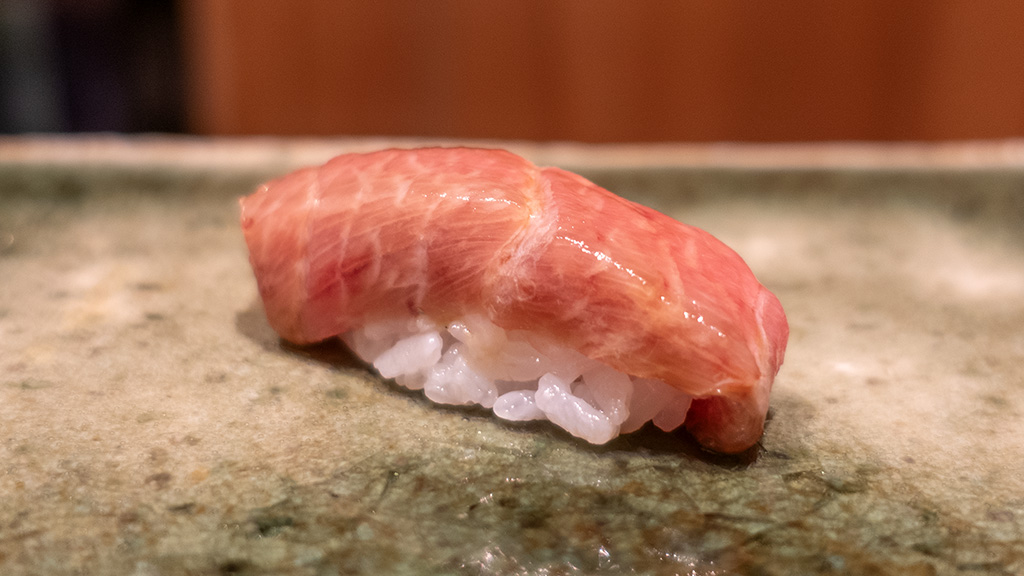
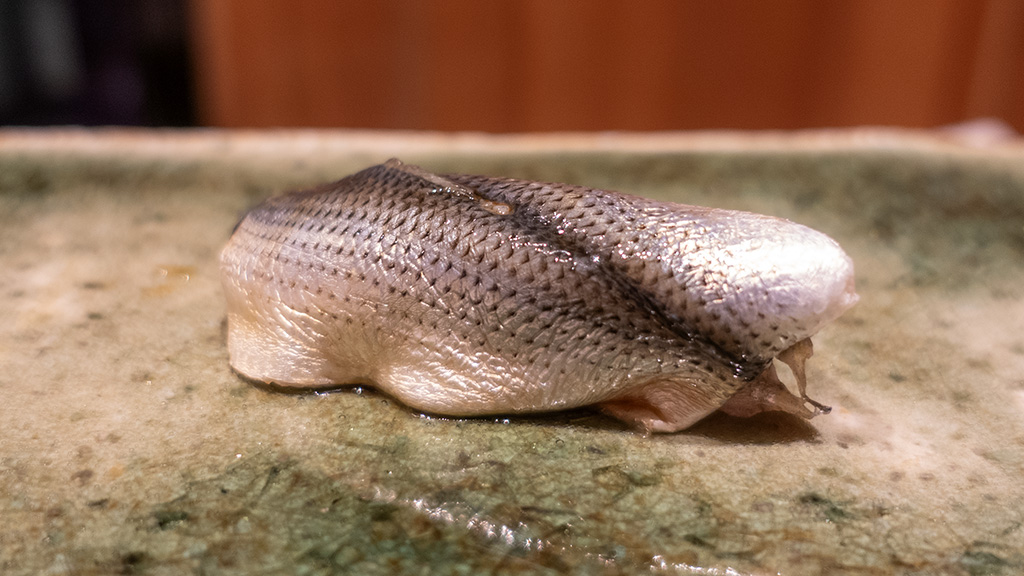
The shrimp nigiri also came with the shrimp head, which I perched atop the nigiri for the photograph. I believe this was kuruma ebi, which is Japanese tiger prawn. I usually prefer sweet shrimp (ama ebi) or peony shrimp (botan ebi), but this tiger prawn had an incredible fun texture to it when I bit into it, and I liked it just as much as the other premium shrimp cuts.

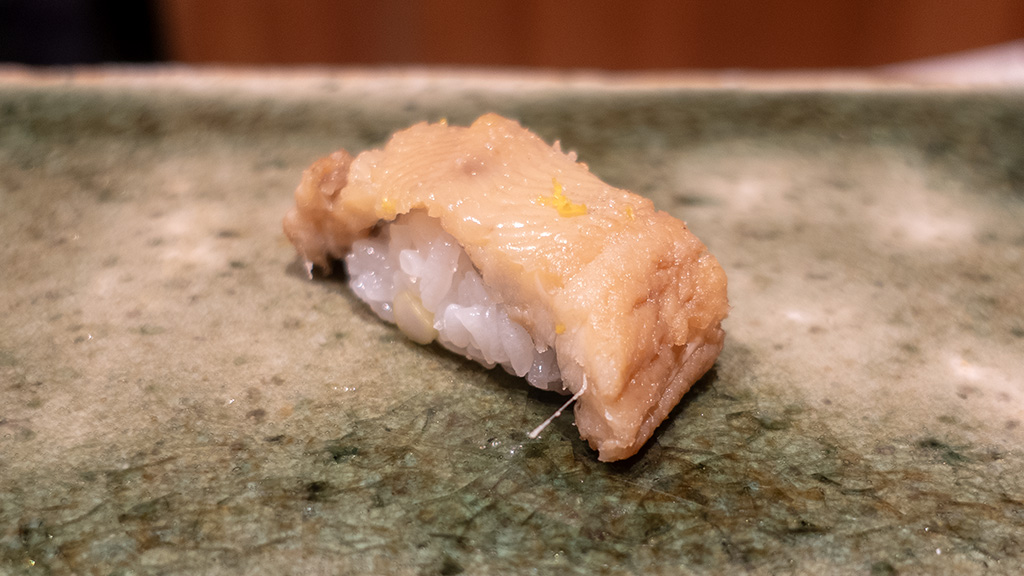
Nigiri service concluded with some eel.
At the beginning of nigiri service, we received miso soup to go along with our sushi. I liked this miso soup in particular because it had a clam in it, which added an element to the flavor profile that I liked.

For dessert, we received some unbelievably sweet pear and melon. This was easily on par with some of the best fruit I’ve ever had.

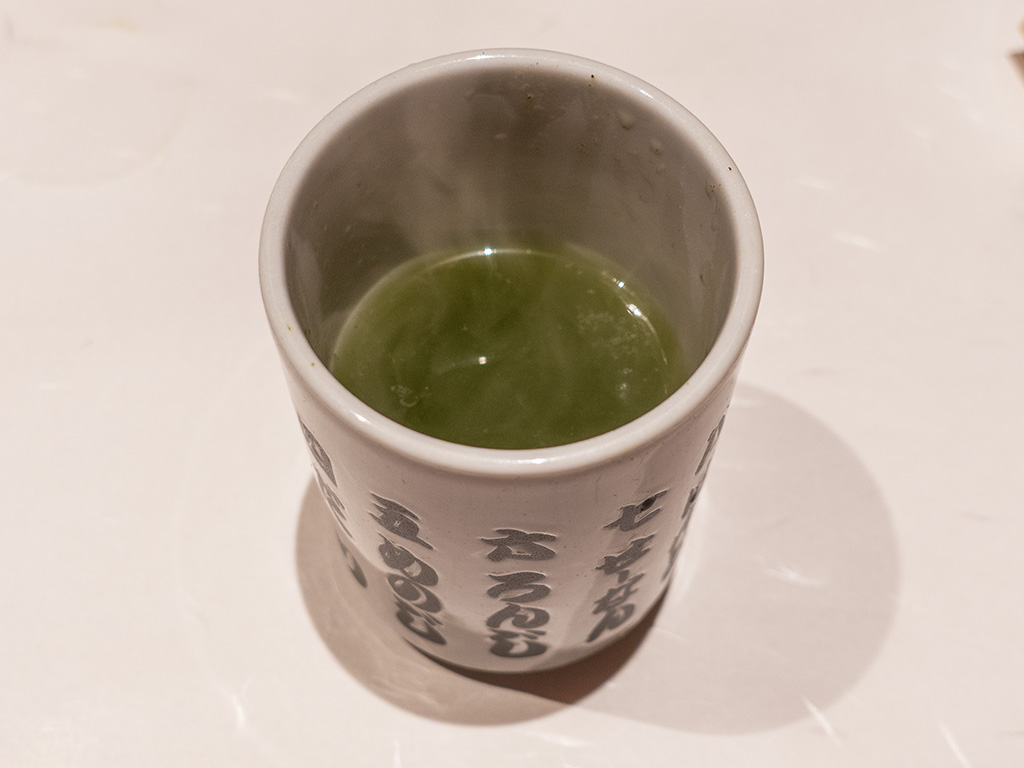
To complement the sweet fruit, we also received a small cup of mild green tea to go along with our dessert.
As is expected from a traditional Japanese omakase experience, we were seated bar-side, close enough so we could watch the chefs preparing our dishes while we ate.
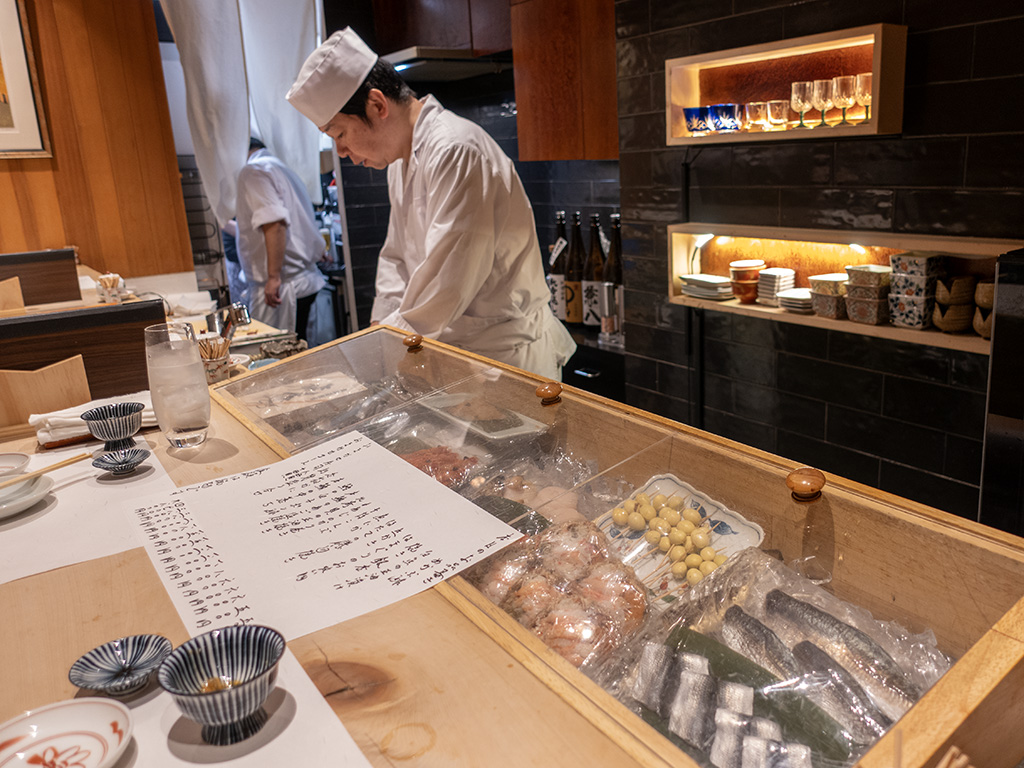
This was a relatively small restaurant, and the only other dining area apart from the sushi bar was a small table nestled in the corner near the door.

Sushi Iso easily joins the top of the tier list as one of my favorite restaurants of all time. All the food was delicious and very high in quality, and the small plates that we were served prior to nigiri service were unique and uncommon relative to what I’m used to having at Japanese restaurants in the United States.
Another interesting element to this was the price. Something of this caliber could easily have a starting cost of about US$200.00 in the United States, and it could still be justified at the US$250.00 or US$300.00 price point simply because of how great the meal is. With that being said, this was only ~US$70.00 per person at Sushi Iso.
(I don’t have the exact price in Japanese yen because my friend paid for the meal and the chef just wrote the total price on a piece of paper instead of giving an itemized receipt, but when I saw the grand total, I thought it was suspiciously low, so I converted it to USD on my phone and saw that each person’s meal was right around $70.)
This was the favorite meal I had throughout my entire two-week stay in Tokyo. If you are in Tokyo and it is within reason to travel to Nakano City, I highly recommend this restaurant.