During my two-week trip to Japan, I stayed in a hotel in the Ginza neighborhood of Chuo City. Tokyo is so well-organized and intuitive that I was able to get a general idea of where things were in Ginza around my hotel pretty quickly, but whenever I was going to a different area, I opened Google Maps every time because of how good it is at planning subway and train routes for me with realtime transit information.
Every time I would open Google Maps from Ginza, I would get a glimpse of 皇居, which is the Imperial Palace, the big, grassy, foresty area to the northwest. It seemed like a nice place to go on a tourist activity, so eventually, I set aside time during the early afternoon of a random day to check it out.
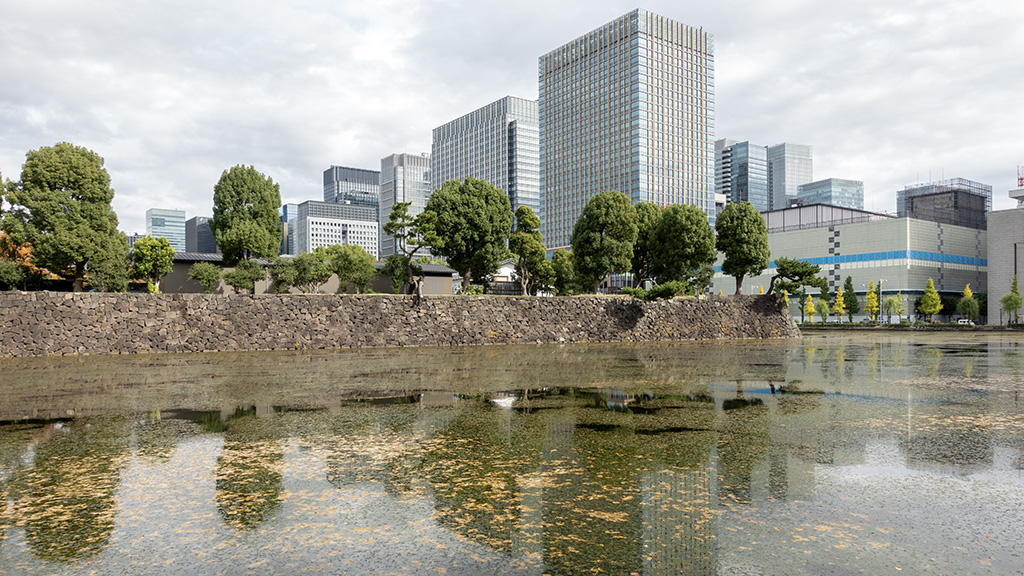
The walk to the Imperial Palace from my hotel was a little over 2 kilometers, or a bit under a mile and a half. Shortly after walking from Chuo City to Chiyoda City, I approached 凱旋濠, which is pronounced Gaisenbori and translates to the Triumphal Moat. I used one of the pathways to cross the water and get onto the main grounds.
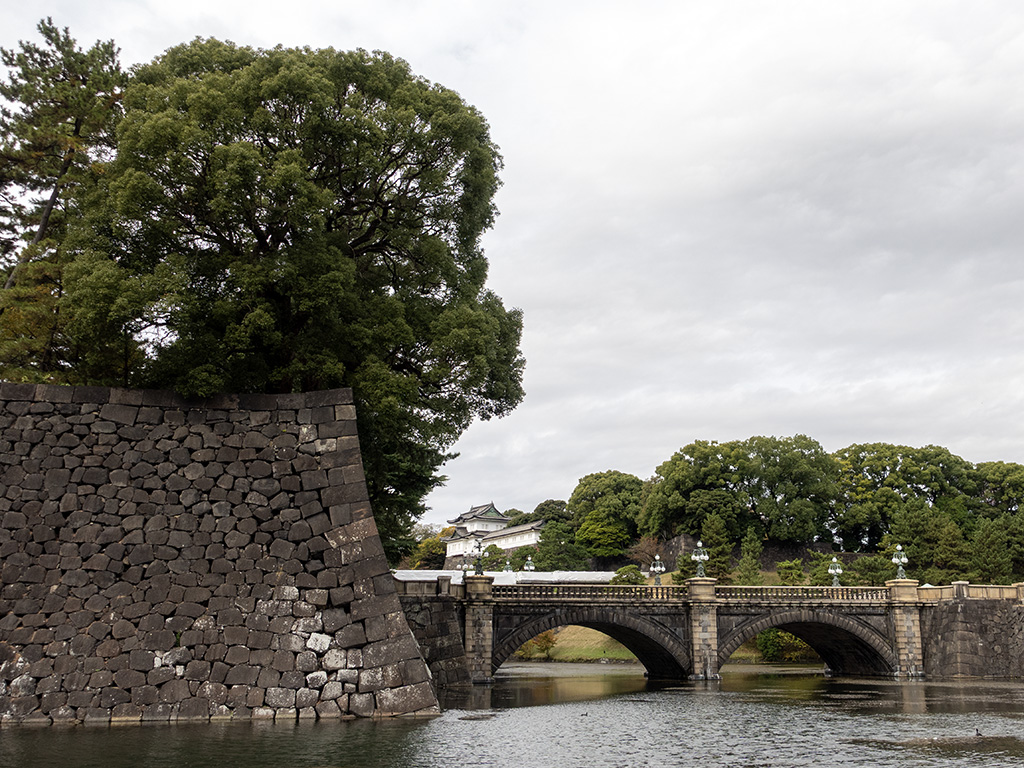
I didn’t really plan anything prior to showing up, so I didn’t quite know what I was supposed to do to actually tour the Imperial Palace. This resulted in me not actually realizing that I was simply in 皇居外苑, or Kokyogaien, and not actually on the Imperial Palace grounds like I had originally thought I was. That was fine, though, because the Kokyo Gaien National Garden was also nice to walk around.
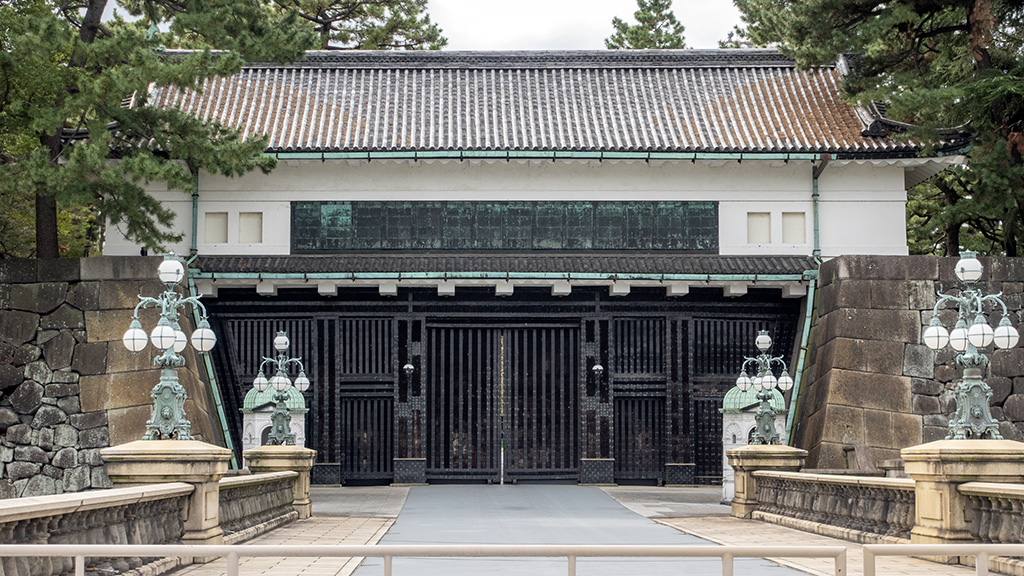
I believe this photo shows 二重橋, or the Nijubashi Bridge, which leads to the Nishinomaru Gate.
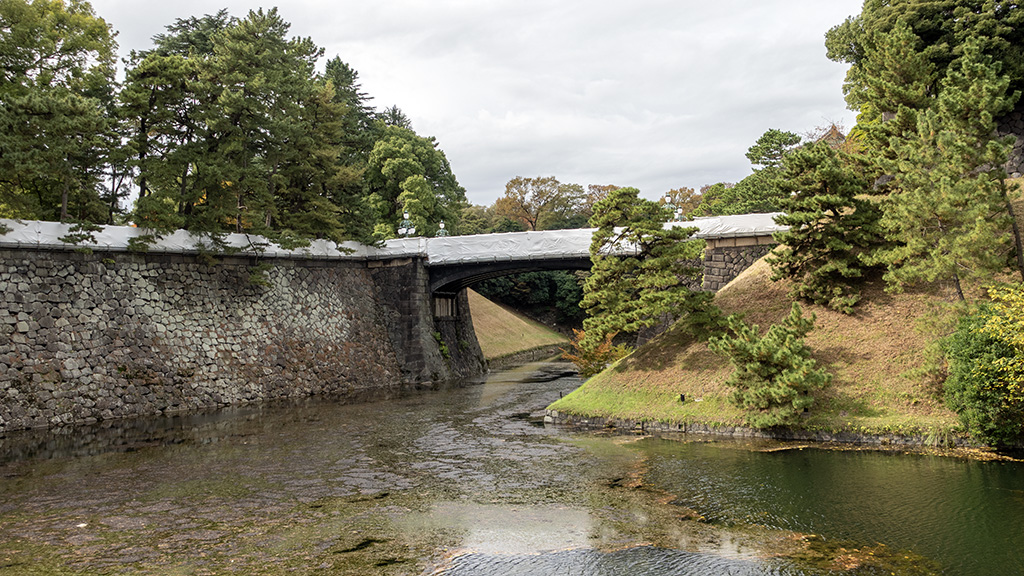
Northeast of that was 二重橋濠, or the Nijubashi Moat.
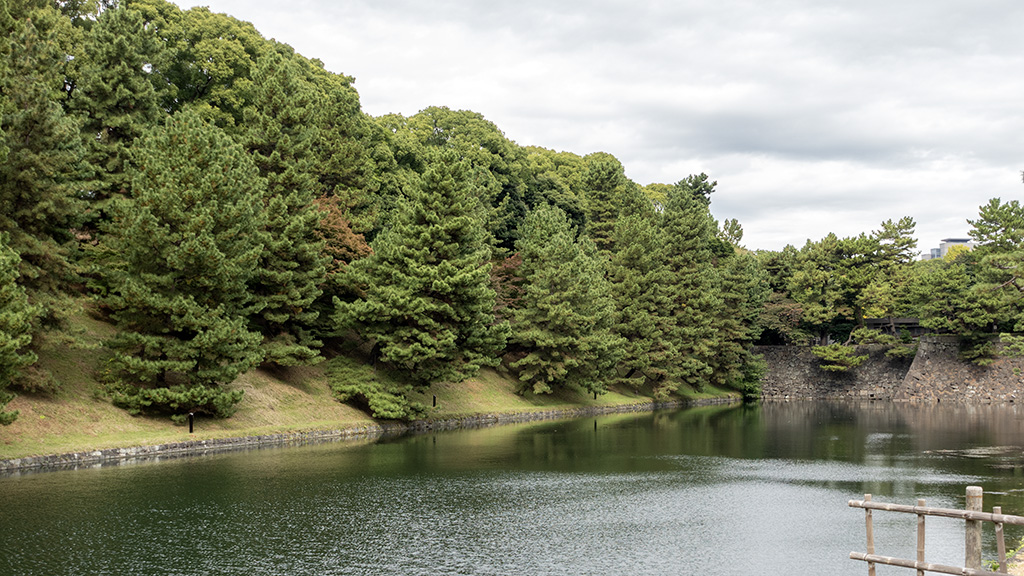
There were a lot of tourists in this area, many of which appeared to be part of large tour groups that were being guided around the area.
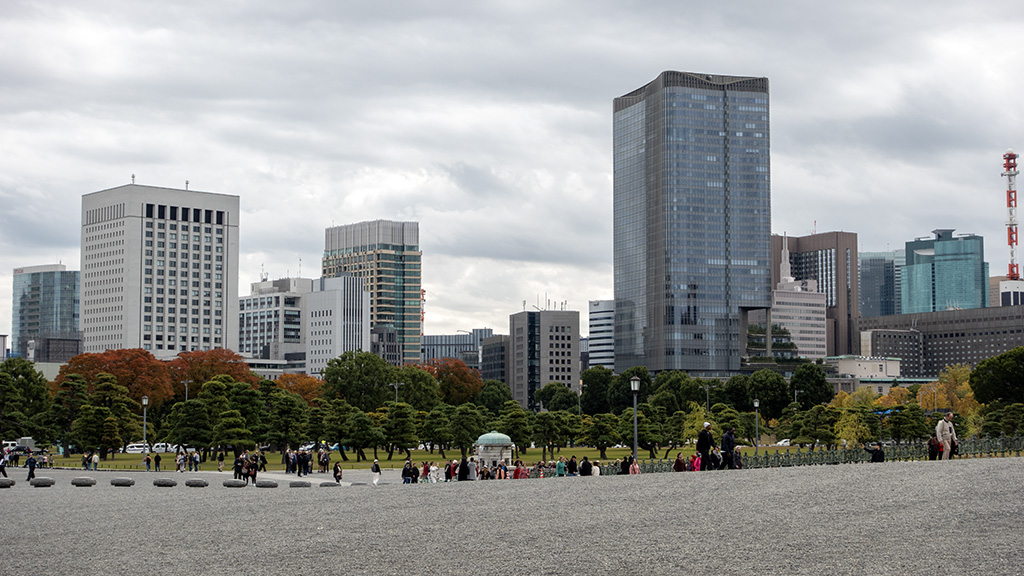
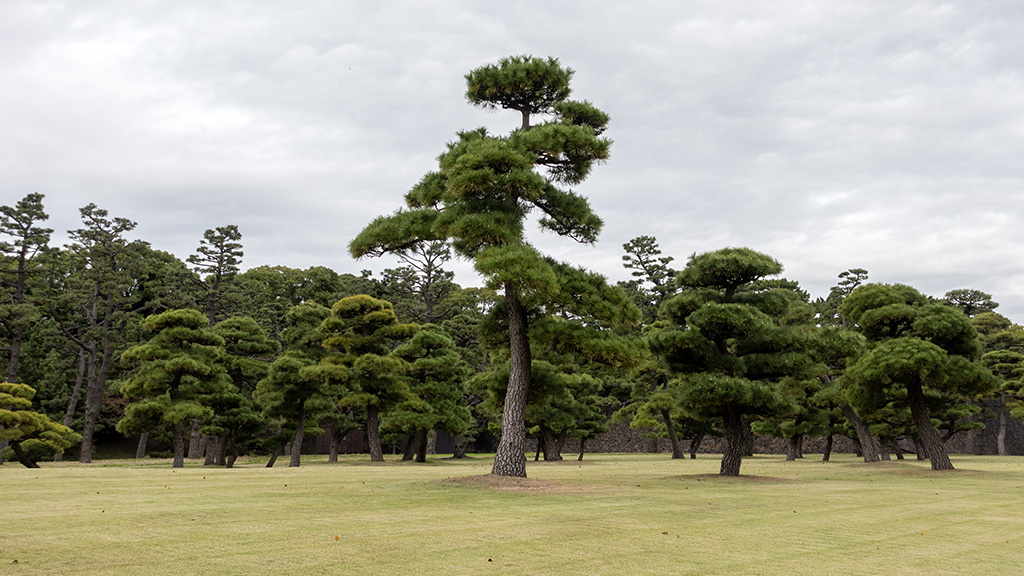
In my attempt to try and get closer to the Imperial Palace, I approached 坂下門, or Sakashita Gate. Even though I saw activity beyond the gate, the pathway to get there was barricaded off and supervised by security guards.

Continuing in my efforts to try and get onto the main Imperial Palace property, I followed the path and saw a building in the distance. I later found out that this was 宮内庁, which is the government office building for the Imperial Household Agency.
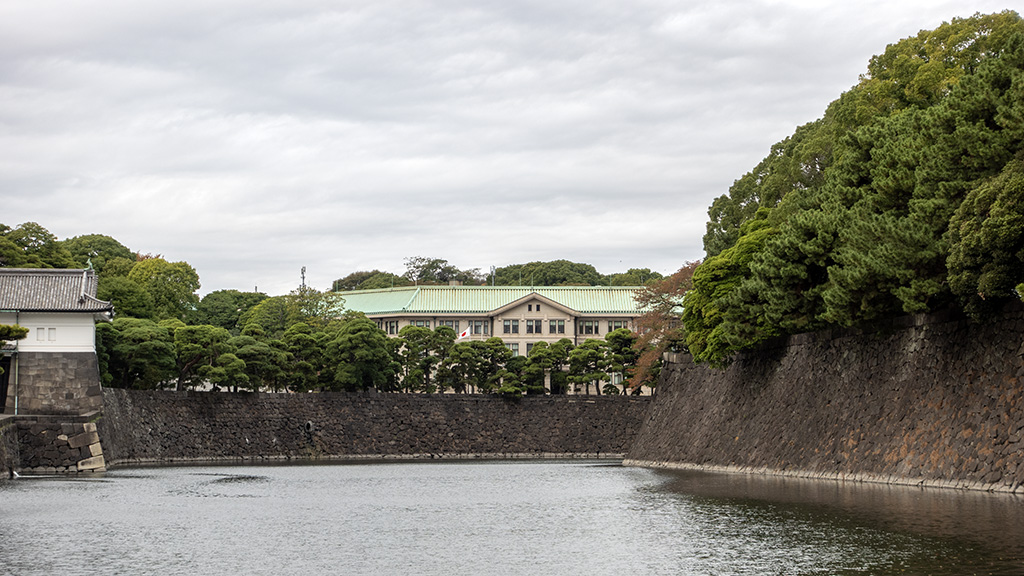
Around the corner was 桔梗門, or the Kikyō-mon Gate. This was guarded by a police checkpoint, and some vehicles were being authorized to enter, but it seemed like the area was not open to the general public. Several steps away from the checkpoint, I noticed some signs that said that tours for the day were at capacity.
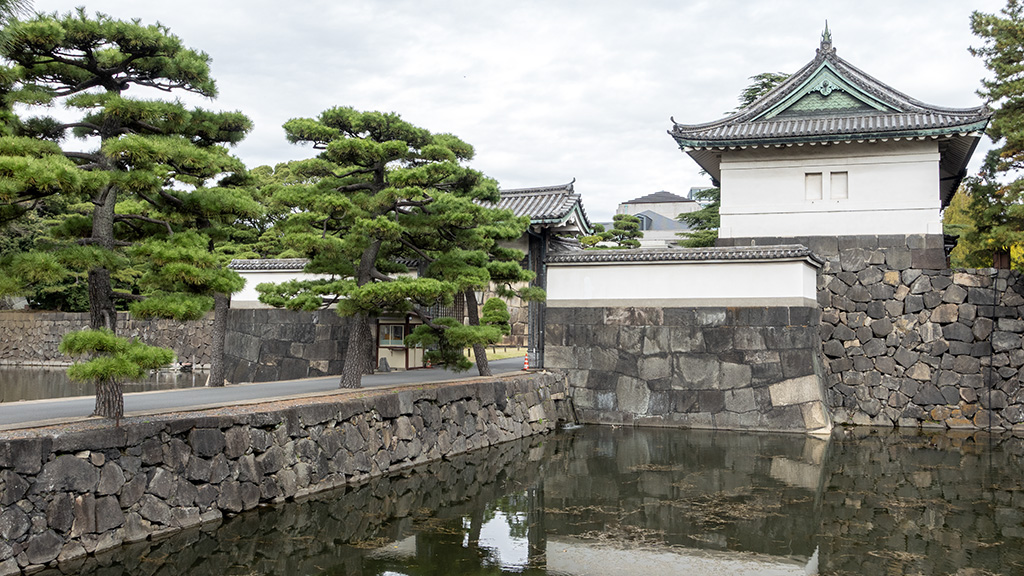
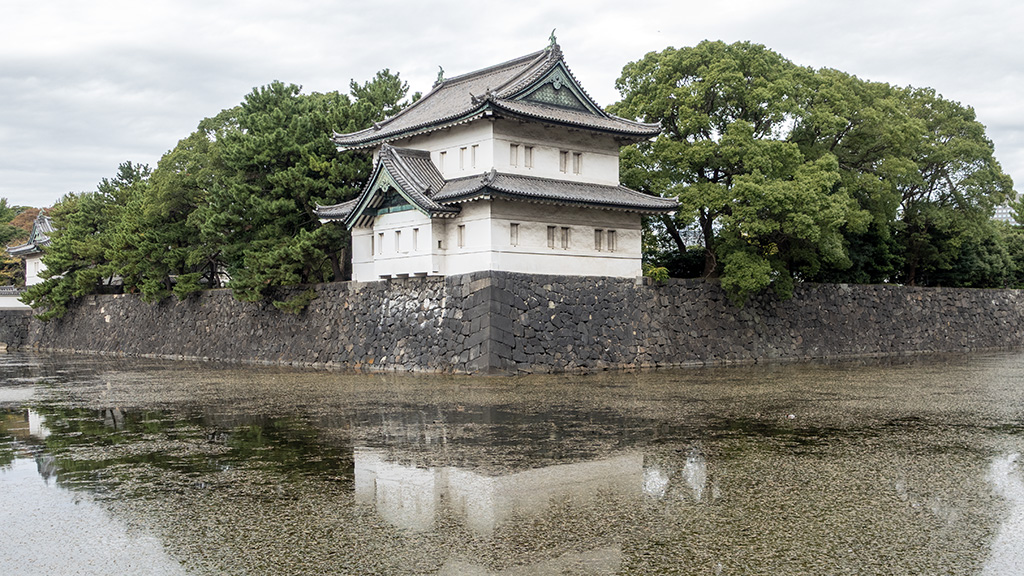
I continued walking alongside 桔梗濠, or the Kikyō-bori Moat. At the edge of one of the turns, there was a nice corner view of 巽桜田二重櫓, or the Sakurada Tatsumi Tower.
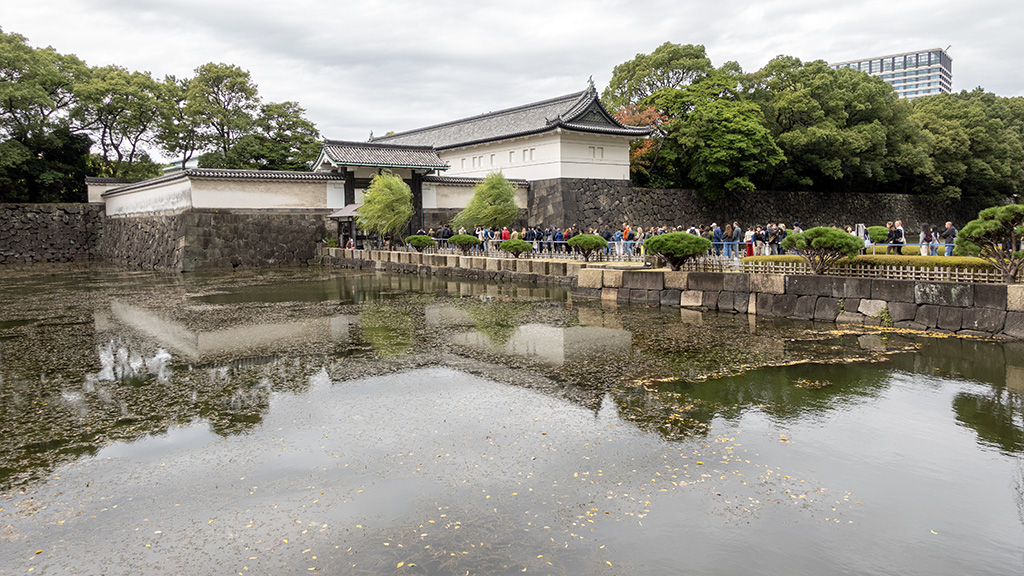
After walking more than an additional kilometer from 祝田橋, or the Iwaida Bridge, across which I first entered, I finally made it to the actual entry point to the Imperial Palace—大手門, which is the Ōte-mon Gate.
I stood in a long security line to get checked, but once I got closer to the front of the line, I realized that I had been standing in a bag check line that I might have potentially been able to skip because I was not bringing any bags in with me.
The reason this took so long is because a surprising number of people brought entire suitcases of their luggage with them; I assume these were people who booked flights that landed in the morning and went straight to tour the Imperial Palace before checking into their hotel and dropping off their belongings.
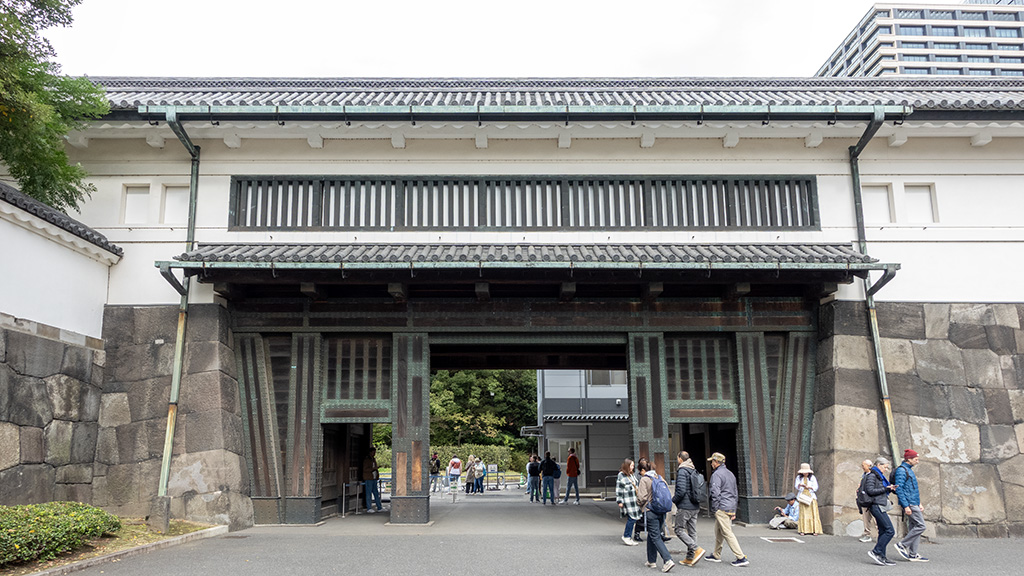
I did not have to purchase an admission ticket or pay an entry fee. Upon entering, I started walking around.
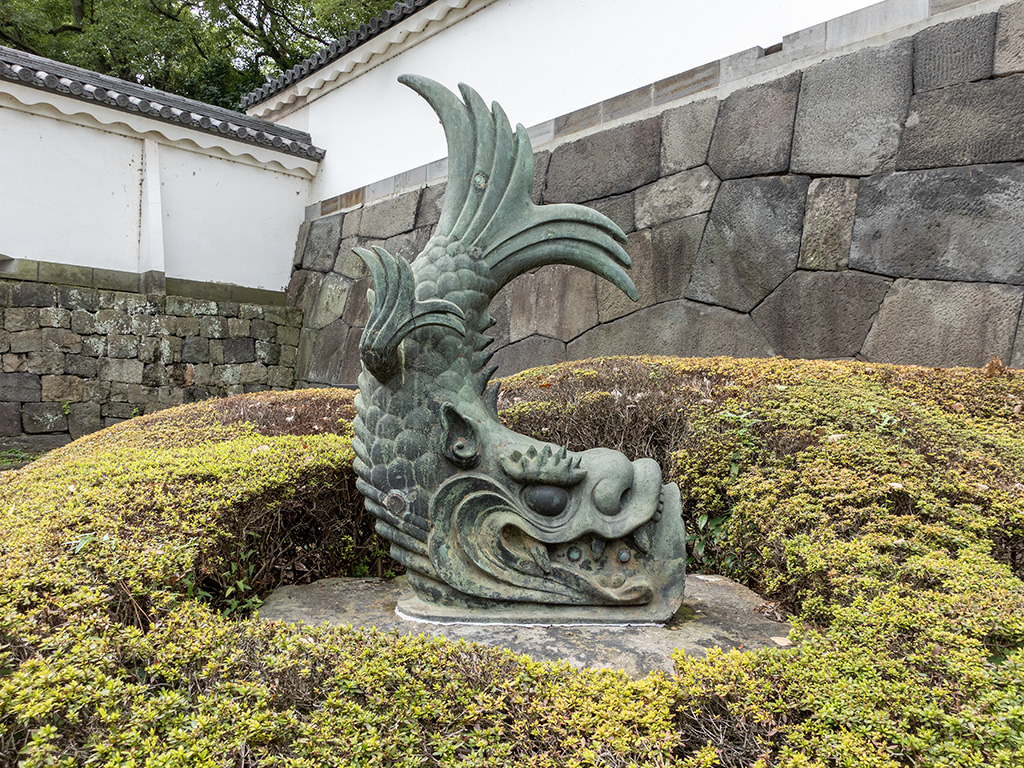
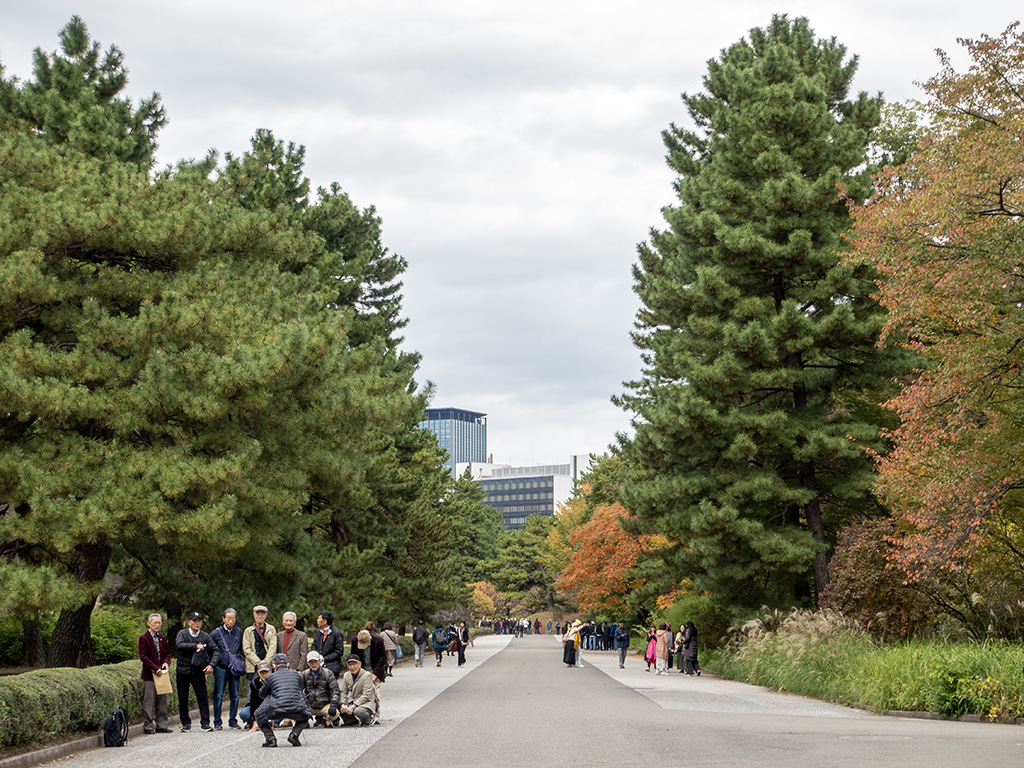
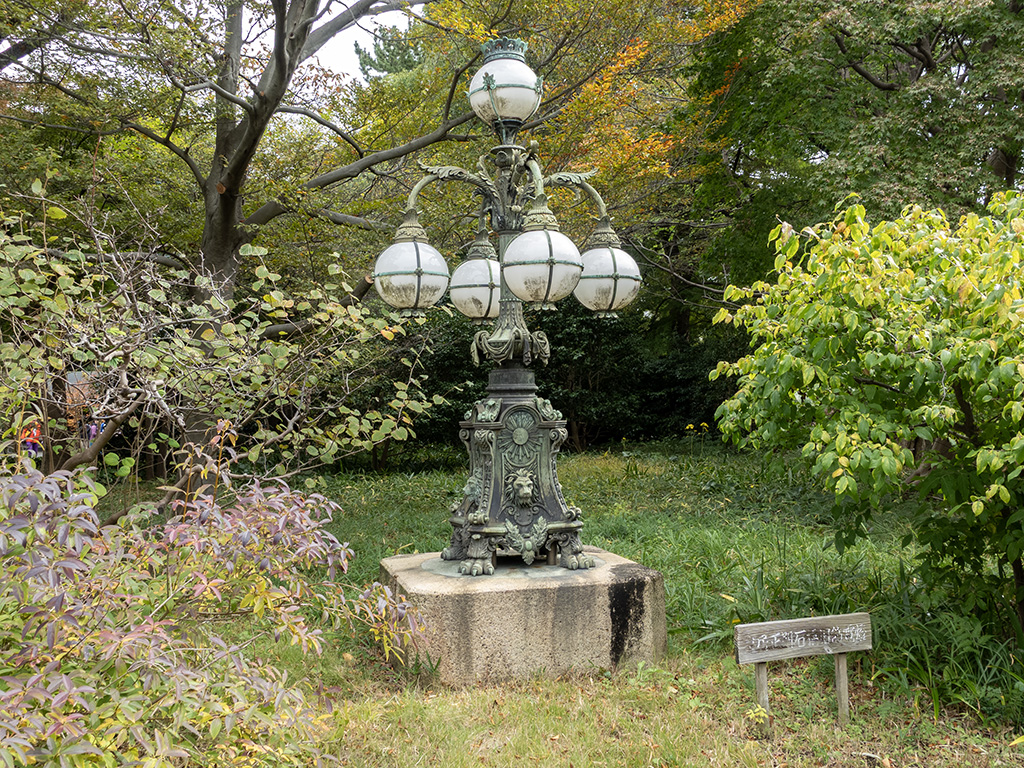
After traversing a bit northbound, I made it to 二の丸庭園, or the Ninomaru Garden.
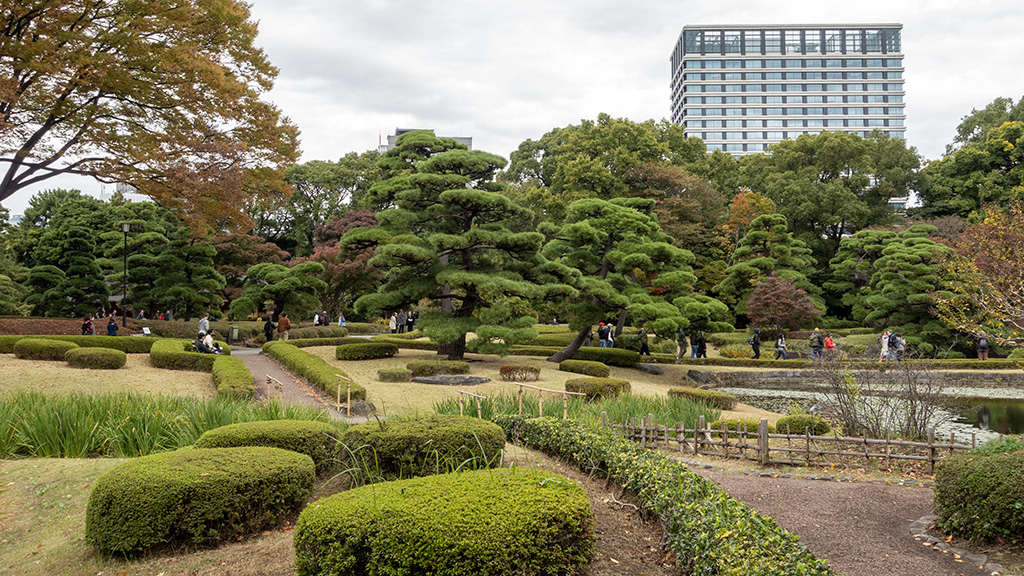
This garden contained 二の丸池, or the Ninomaru Pond. There were a lot of people huddled around this body of water taking photographs.
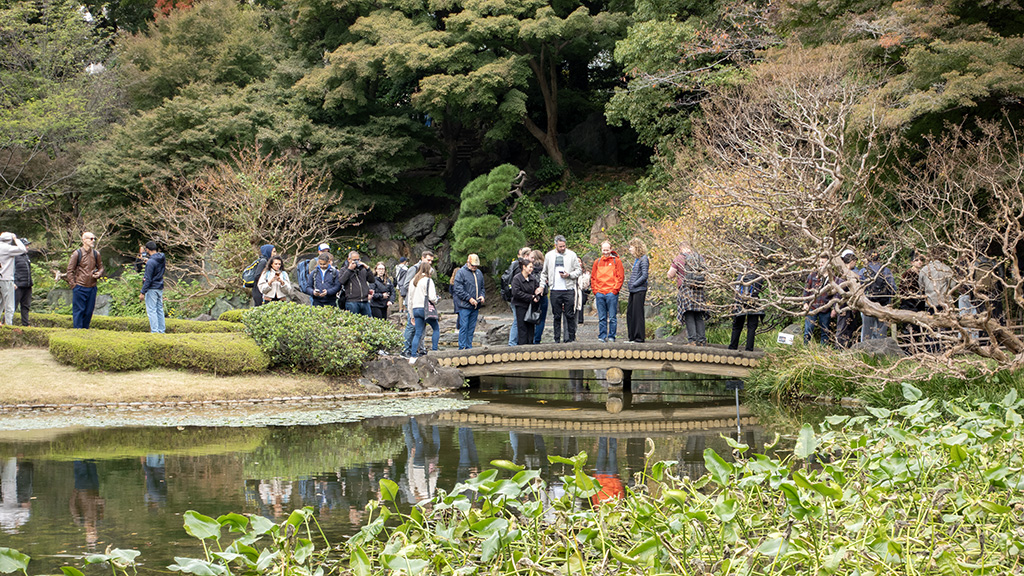
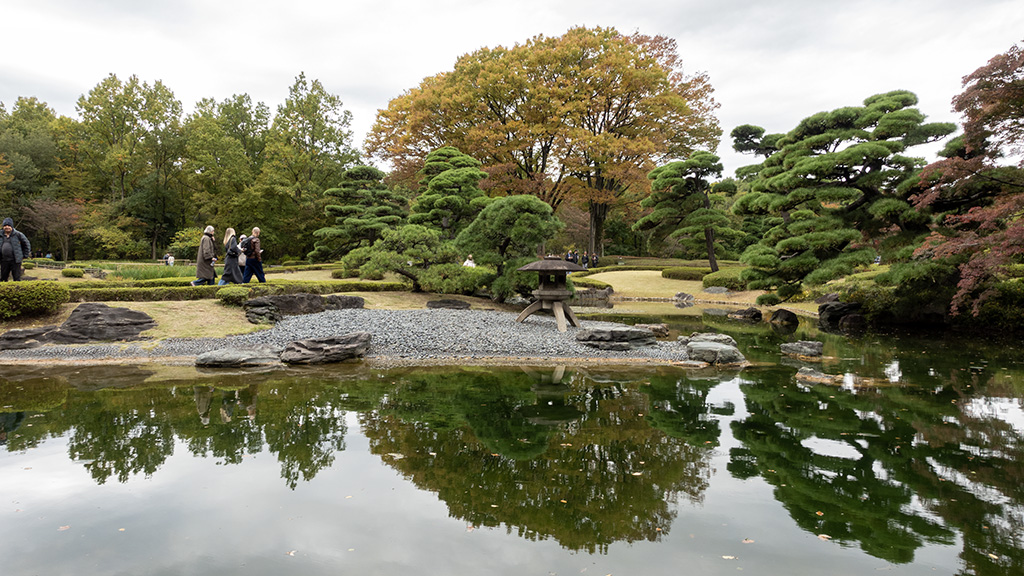
It seemed like this pond was sourced by this small waterfall.
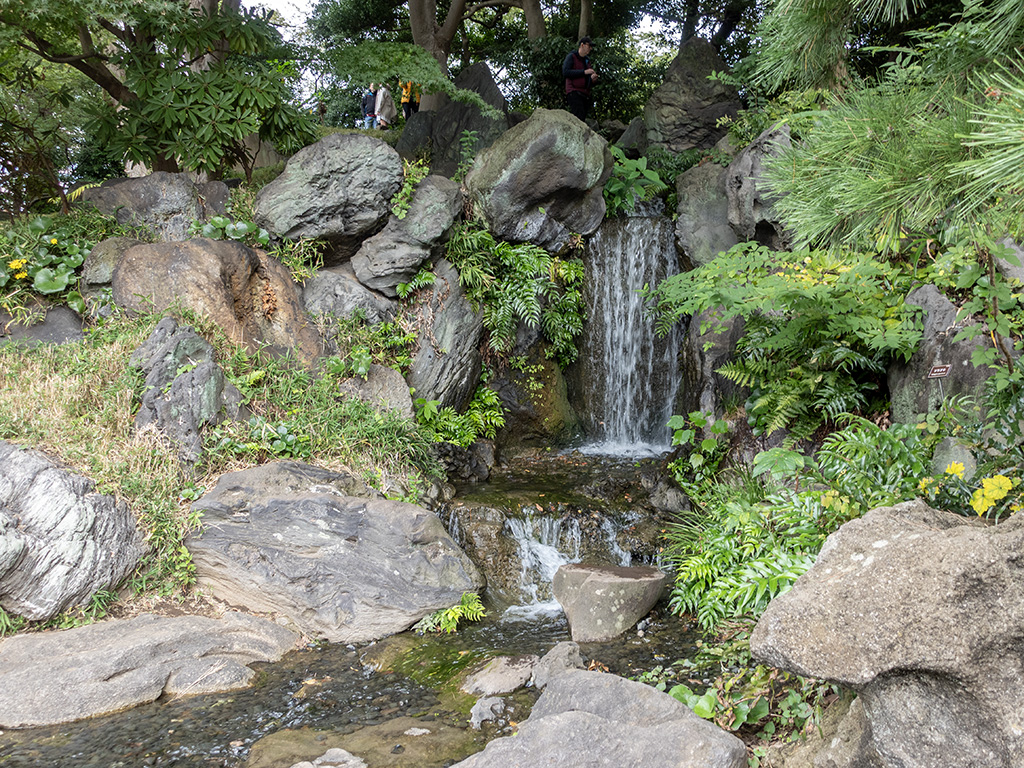
There was a pathway to climb the rocks and get to the top of the waterfall. I walked up and got this nice photo of the garden from an elevated vantage point.
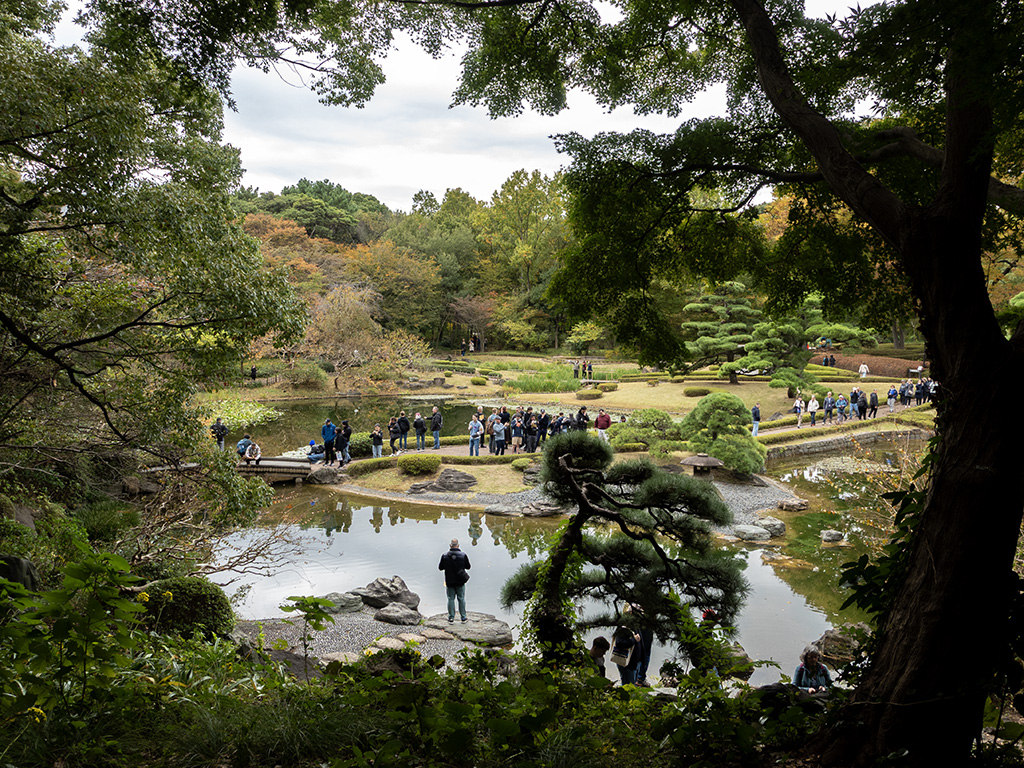
After taking in the sights of the garden and pond, I continued west to 二の丸雑木林, or the Ninomaru Grove.
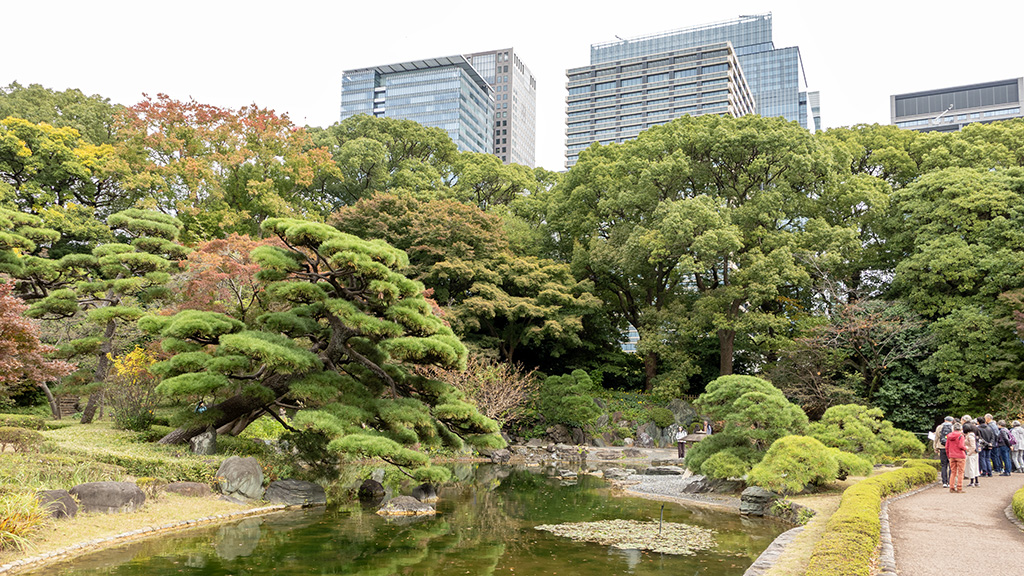
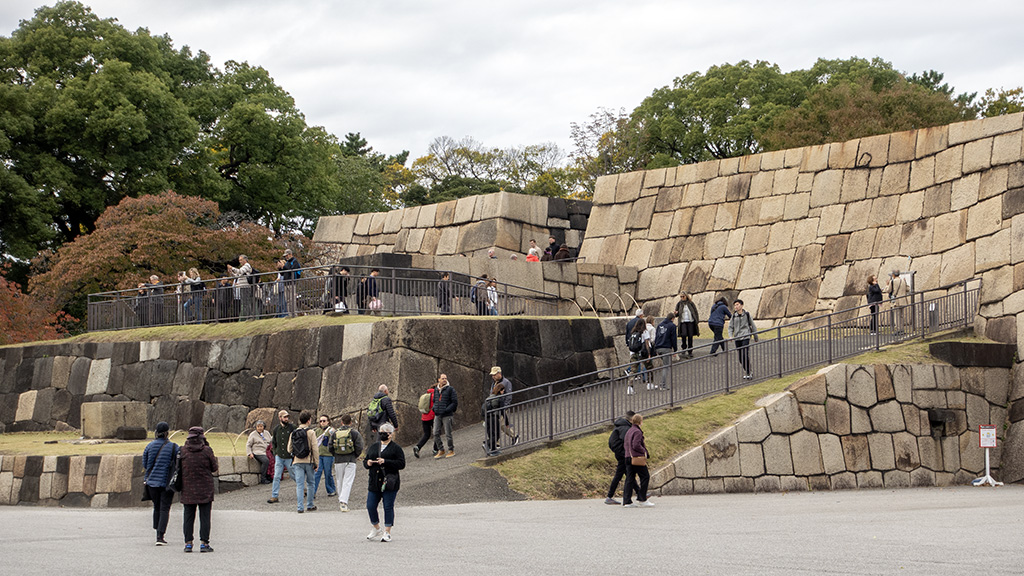
Upon walking even further west, I came across 江戸城跡, or the Edo Castle Ruins.
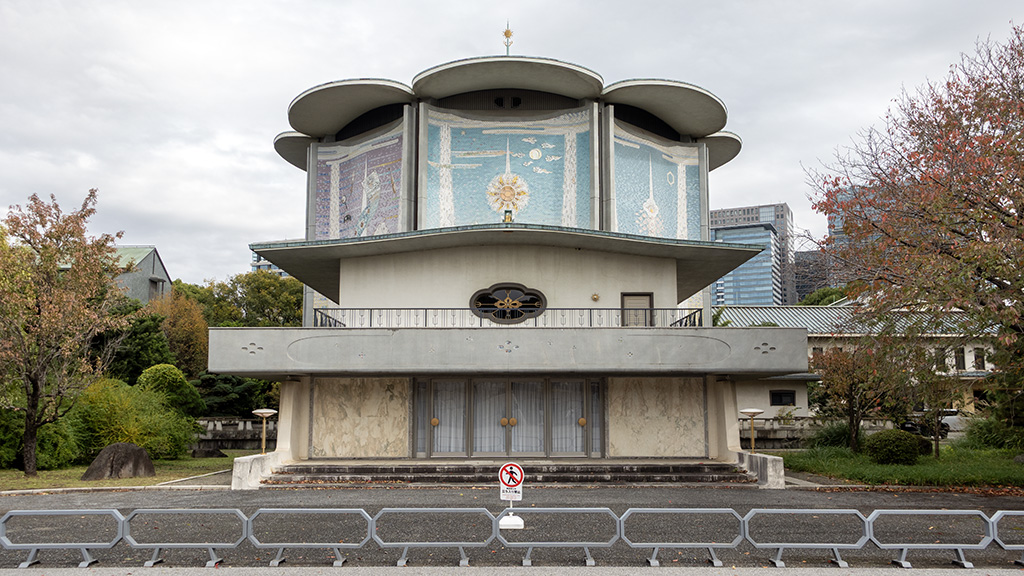
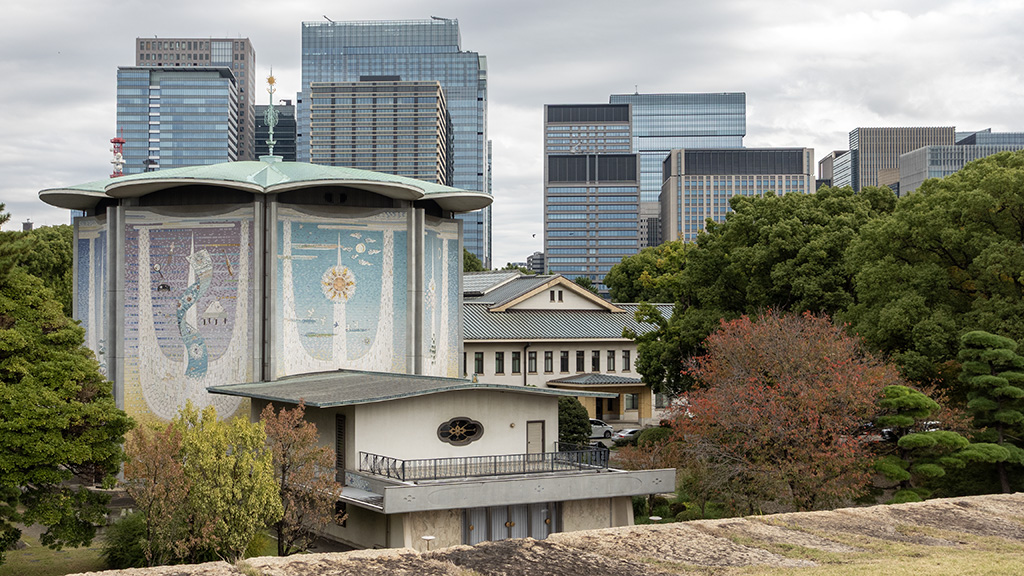
Beside it, I saw 桃華楽堂, or the Touka Gakudo, which is a concert hall.
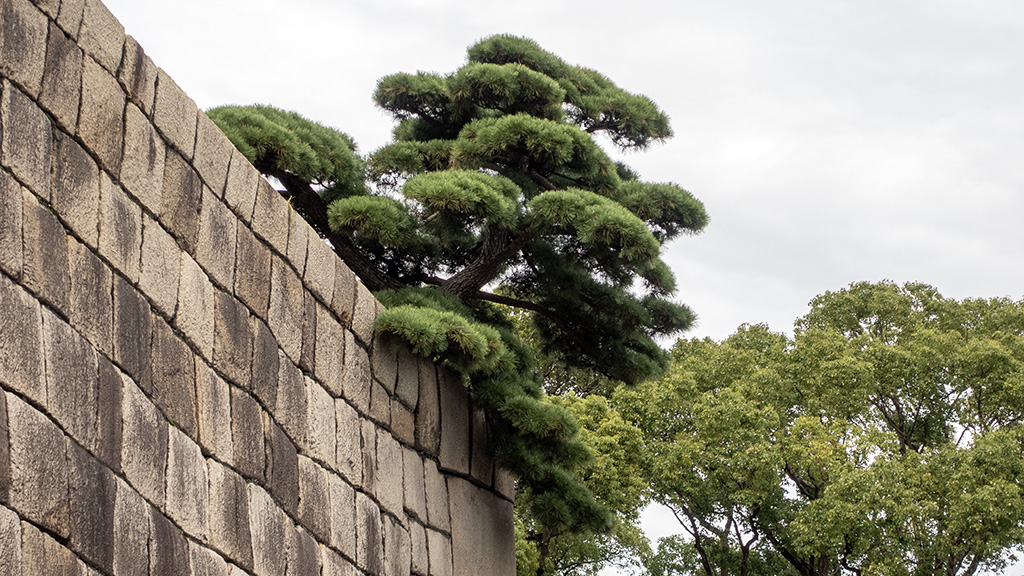
I saw this tree spilling over the edge of one of the walls of the ruins, which I thought looked interesting and would make a nice photo opportunity.
The ruins had a ramp and stairway up to the top, so I climbed up and got a view of a field.
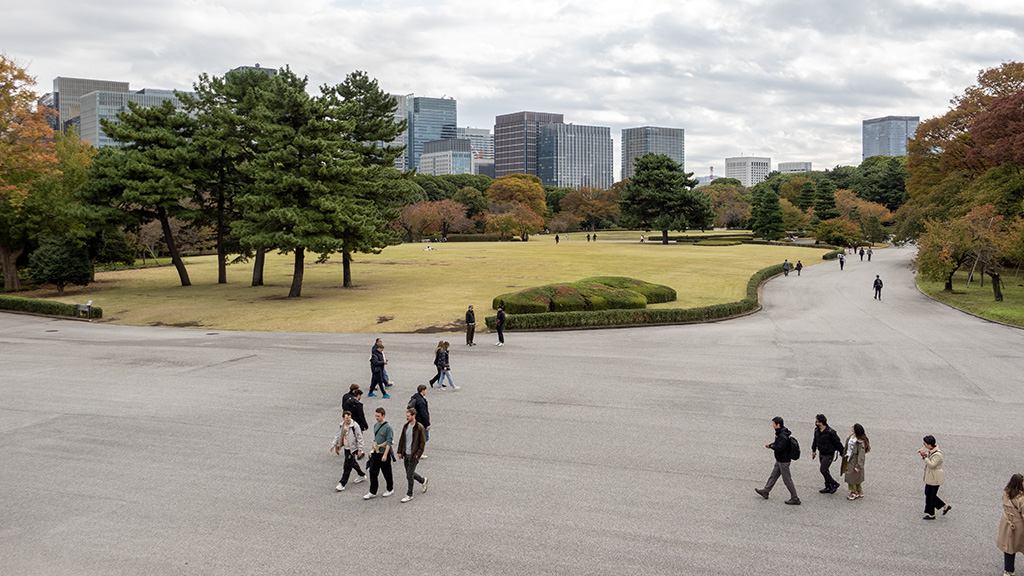
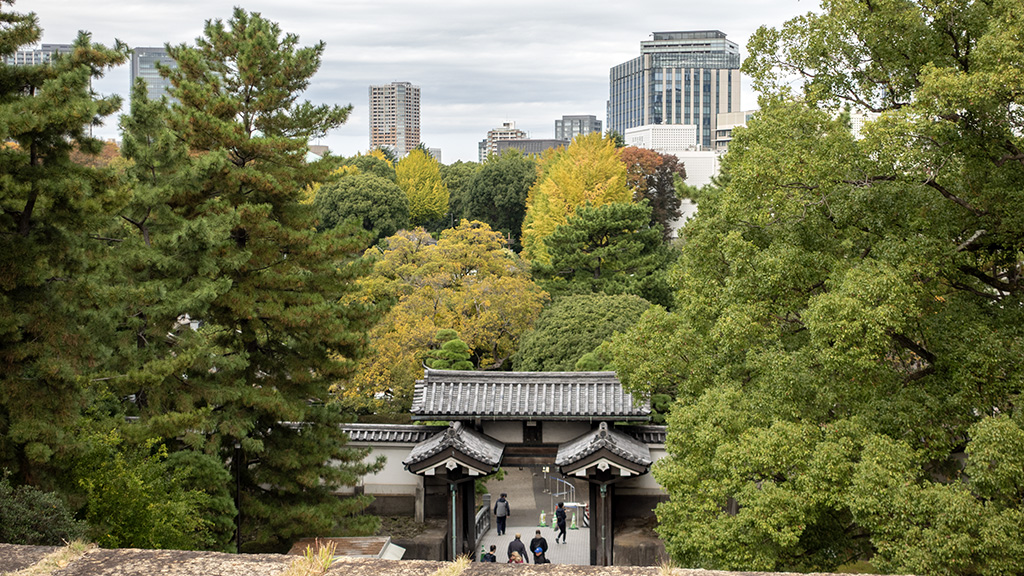
On the reverse side was a view of 北桔橋門, or the Kita-Hanebashi Gate.
To the east was the Touka Gakudo again, along with the Ōtemachi skyline as a backdrop.
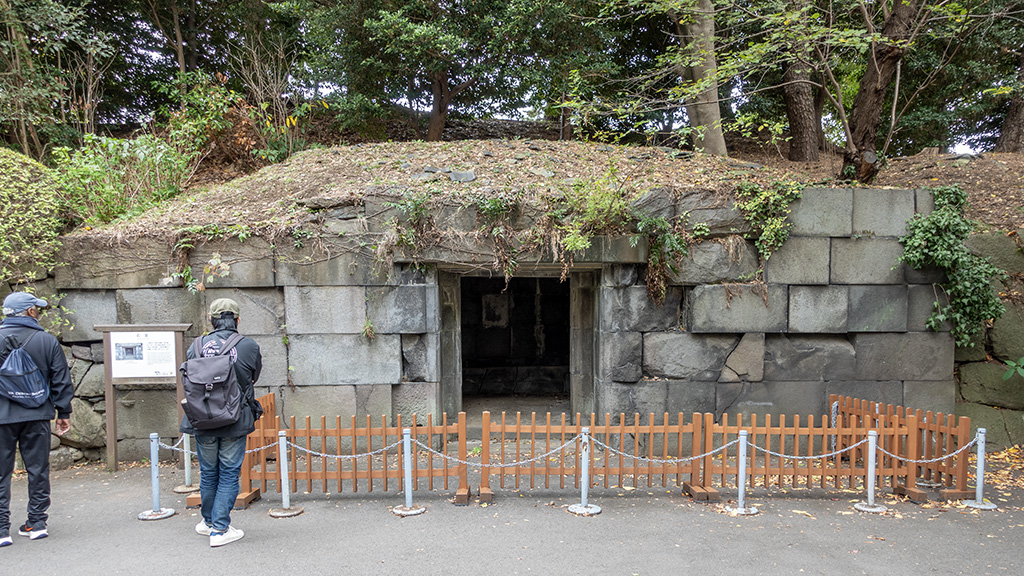
After descending from the ruins, I continued walking south and came across 石室, which is a stone hut.
A little bit further south of the hut was 富士見多聞, or the Fujimi-tamon Defense House. This was open to the public to walk through and basically served as a very small museum.

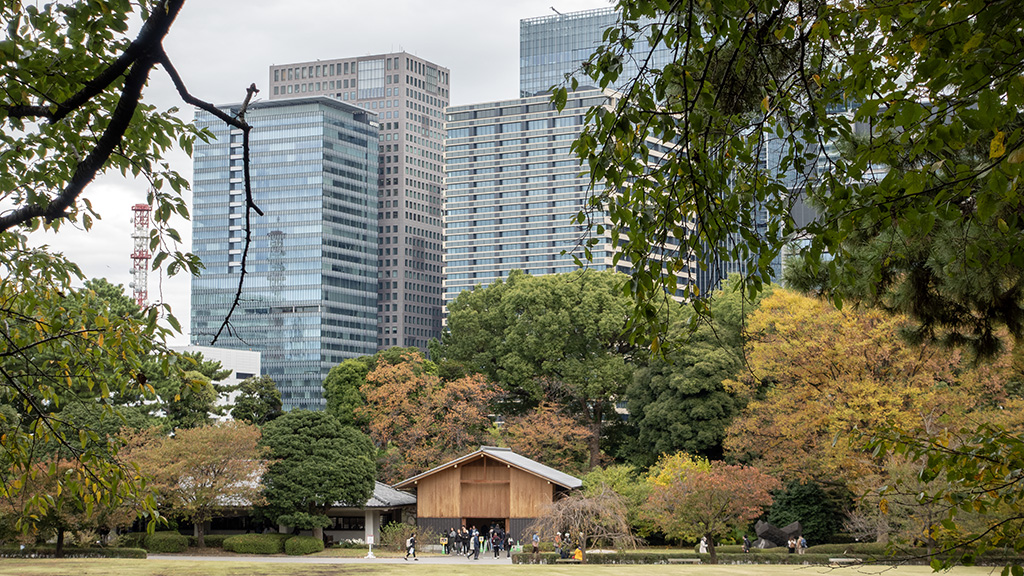
Across the field from the museum was 本丸休憩所, or the Honmaru Goten Rest House.
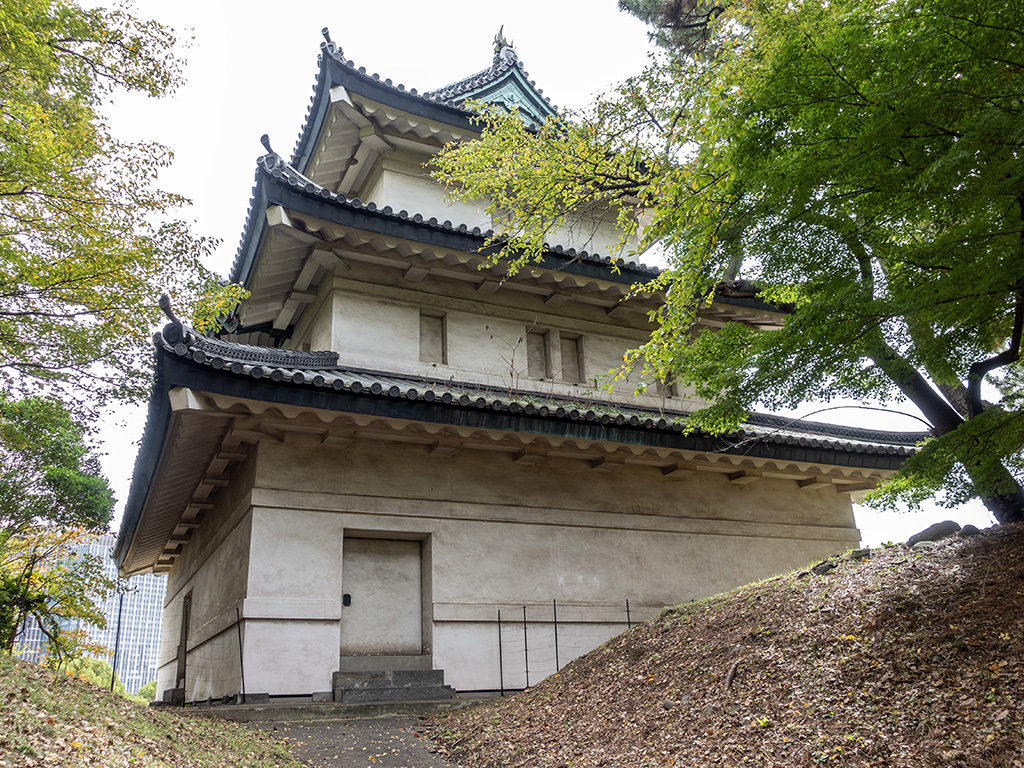
The far southern corner had 富士見櫓, or the Fujimi Tower. This was fenced off and not accessible to the public, but I was still able to get close enough to snap a nice picture.
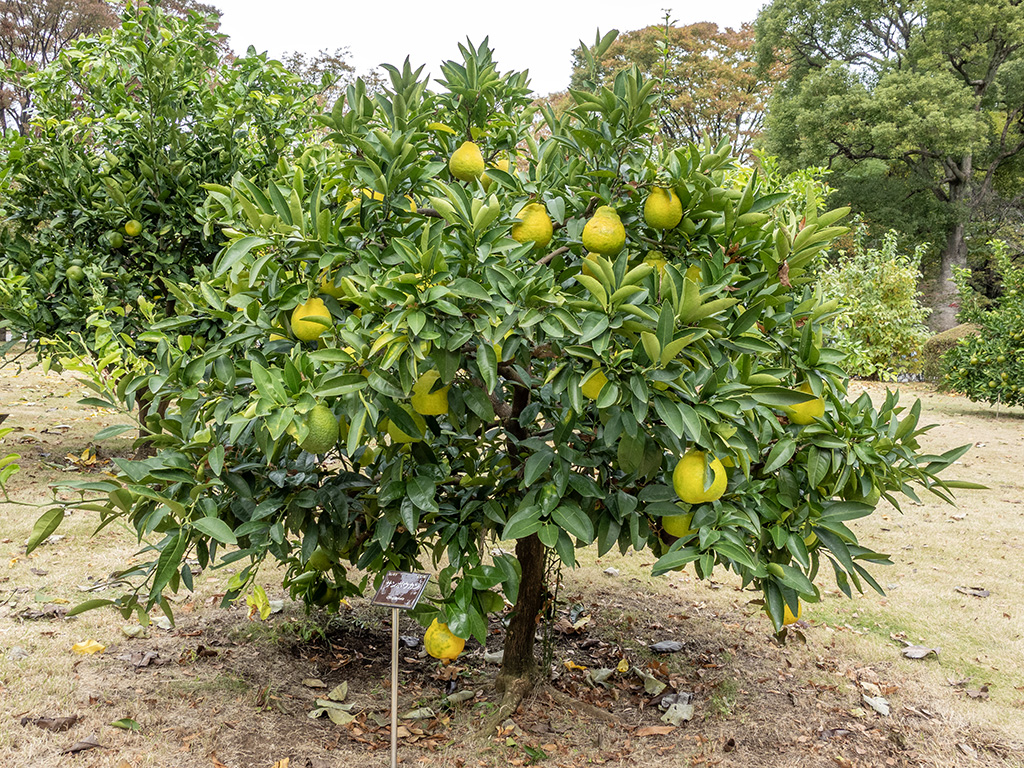
I believe this is a pomelo tree. I don’t ever see these in the United States, so I took a picture. The last time I had seen one of these was in the Lakeside Gardens at the JW Marriott Hanoi in Vietnam.
After checking the map to make sure I saw everything, I circled back around and out through where I entered.
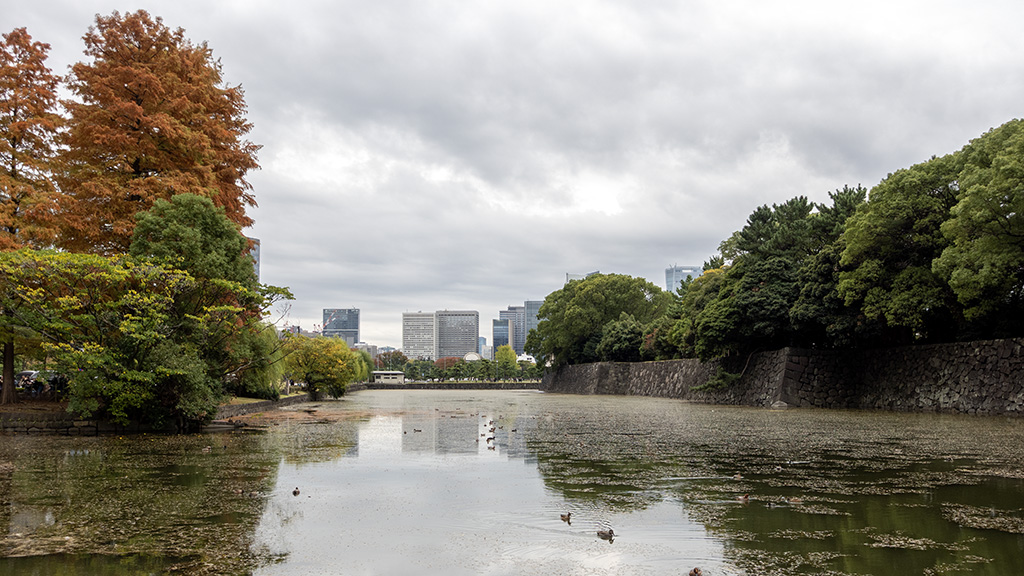
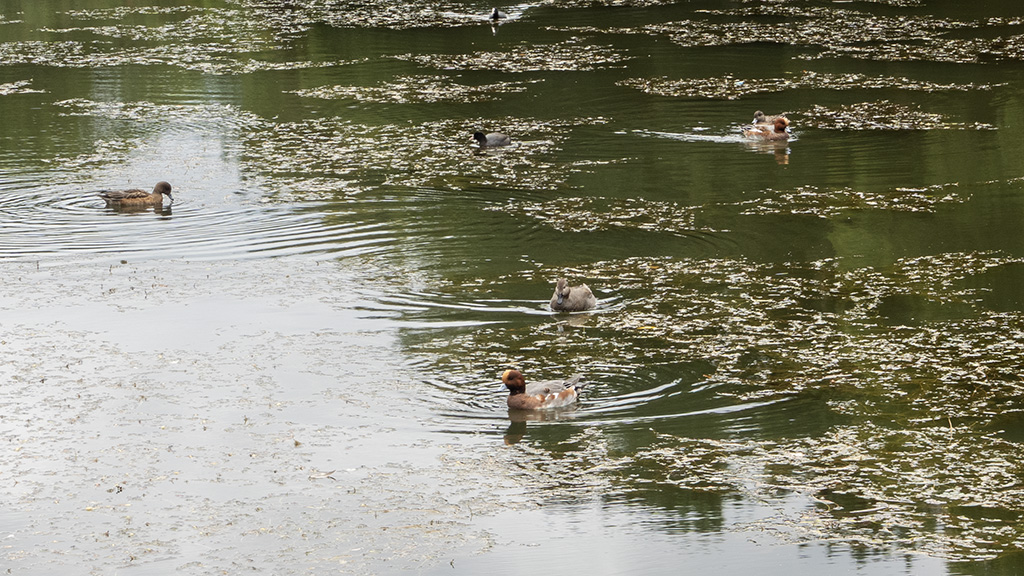
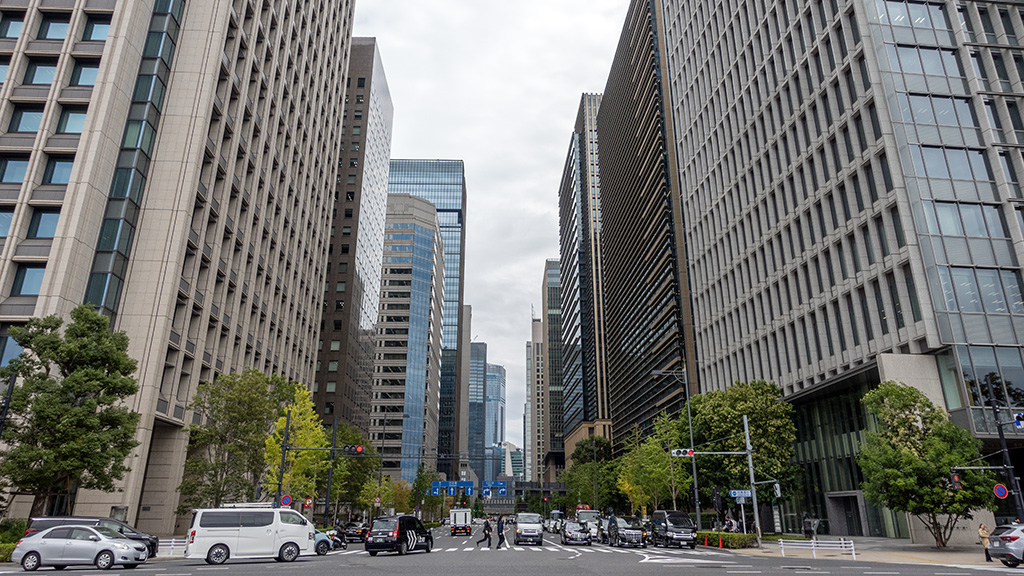
After popping back out of the gate, I was back in the bustling city looking down Eitai-dori Avenue.
I ended up spending about two hours here, and that was even without having a chance to see the inside of the Imperial Palace. On top of that, 皇居三の丸尚蔵館, or the The National Museum of the Imperial Collections, Sannomaru Shozokan, was temporarily closed, so I missed out on that as well.
I feel like a big part of seeing the Imperial Palace is to see the palace itself, so I feel like I can’t give a particularly meaningful recommendation on whether or not you should go to check it out. However, what I can say is that walking around was a pleasant experience that also served as decent exercise due to how large the site was. It wasn’t quite as peaceful and serene as some of the other outdoor activities I did due to how many more tourists there were here compared to other spots, but it was still a great way to get some fresh air in the middle of the day.