One of my favorite things about Japan is how densely everything is packed. I heard that there are a handful of reasons for this, the primary ones being the scarcity of land due to Japan being an island country and a lot of it being mountainous and unbuildable, as well as plots of land frequently needing to be split into smaller plots and sold off for descendants of landowners to be able to afford the inheritance tax.
As a side effect of these aforementioned matters, a lot of buildings in Japan are fairly tall and don’t take up much lateral space. This means that you can walk past a lot of different buildings in a short distance, so you’ll end up running into a lot of different stores, offices, and museums even within just a couple blocks, just to name a few examples.
While I was walking between Shinjuku City and Shibuya one day, I randomly ran into a large stadium that had many long lines of children walking in front of it. I figured that they were on some kind of field trip for their school and they were receiving a tour of the stadium. After checking the map, I discovered that it was 国立競技場, the Japan National Stadium.

I browsed the stadium’s website to see if there was a way for me to join on this tour, but it seemed like there were no public tours available for that day. However, I saw that a related building—日本オリンピックミュージアム, which is the Japan Olympic Museum—had regular operating hours during which it was open to the public. It was not too far away, just on the other side of スタジアム通り, which is pronounced Sutajiamu-dōri and roughly translates to Stadium Street.
After a quick walk to the museum, I paid the very low 500円 admittance fee, which is the equivalent of just over US$3.00.
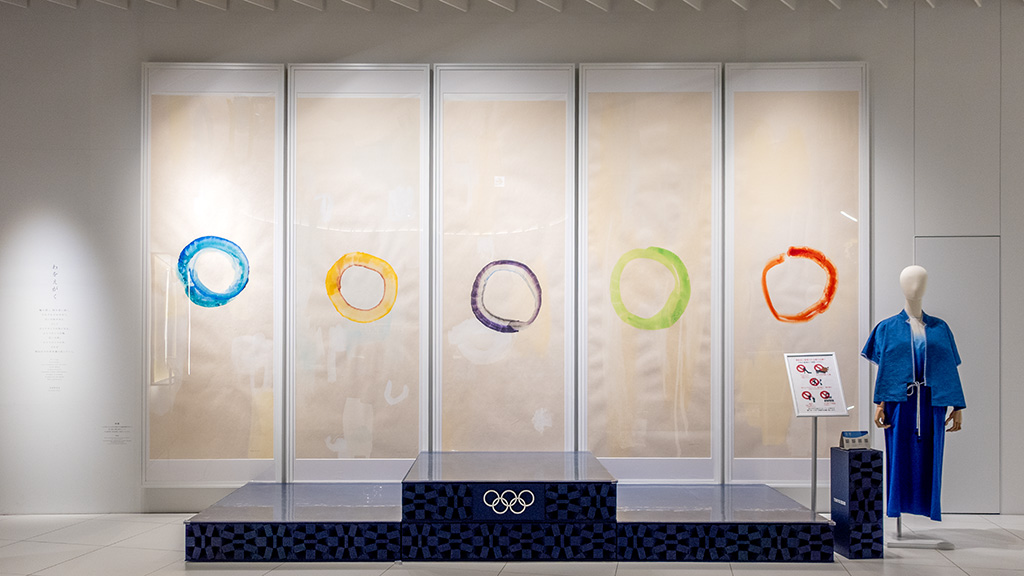
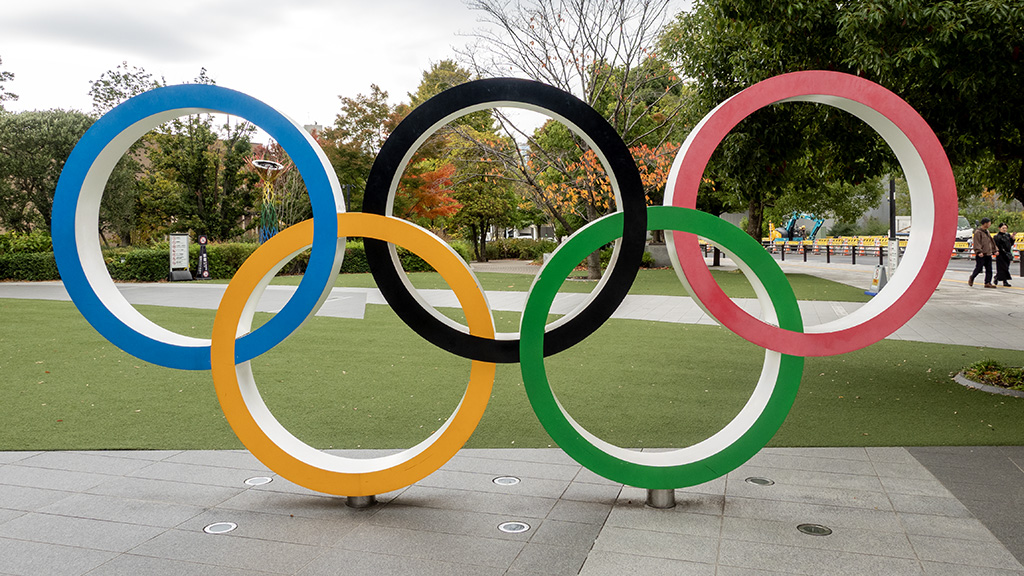
Right by the entrance of the museum, there was an art piece with the Olympic rings constructed with various different materials and various different sculpting methods. There were also some fun signs next to it to be used by people who wanted to take advantage of the photo opportunity.

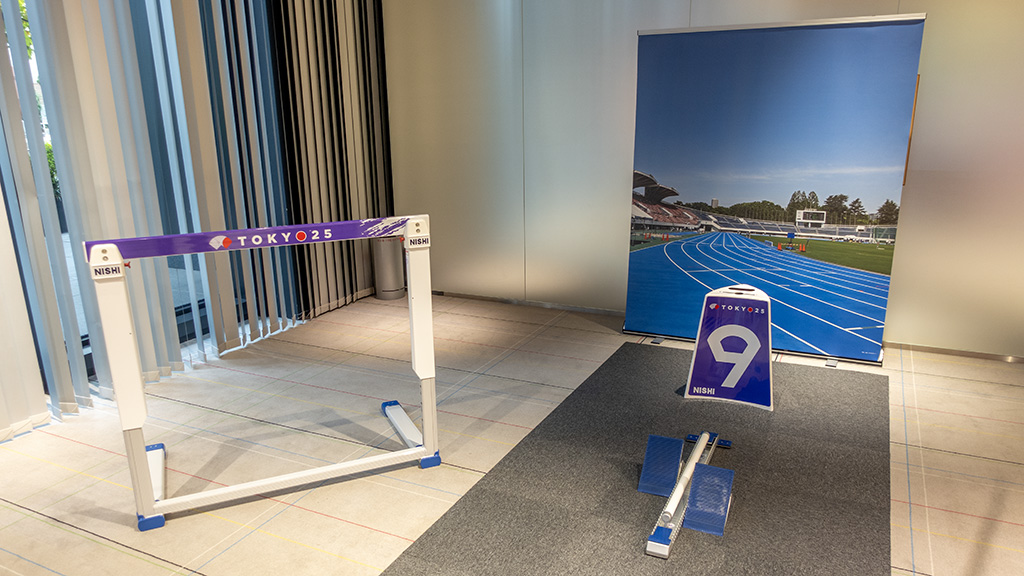
A few steps deeper into the museum was the track and field section with some equipment on display—batons, a hurdle, a starting block, and a javelin.


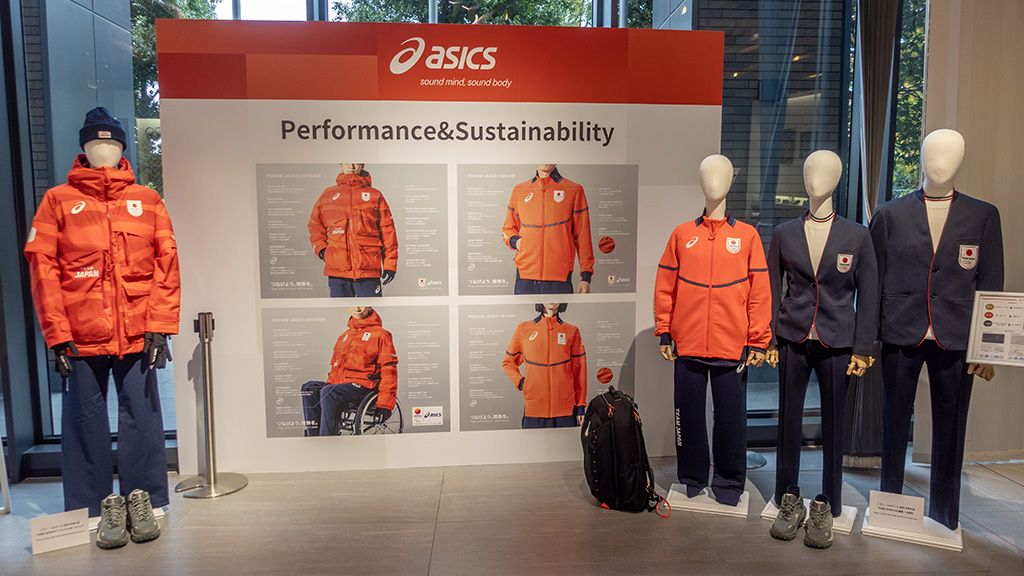
The next section covered apparel.
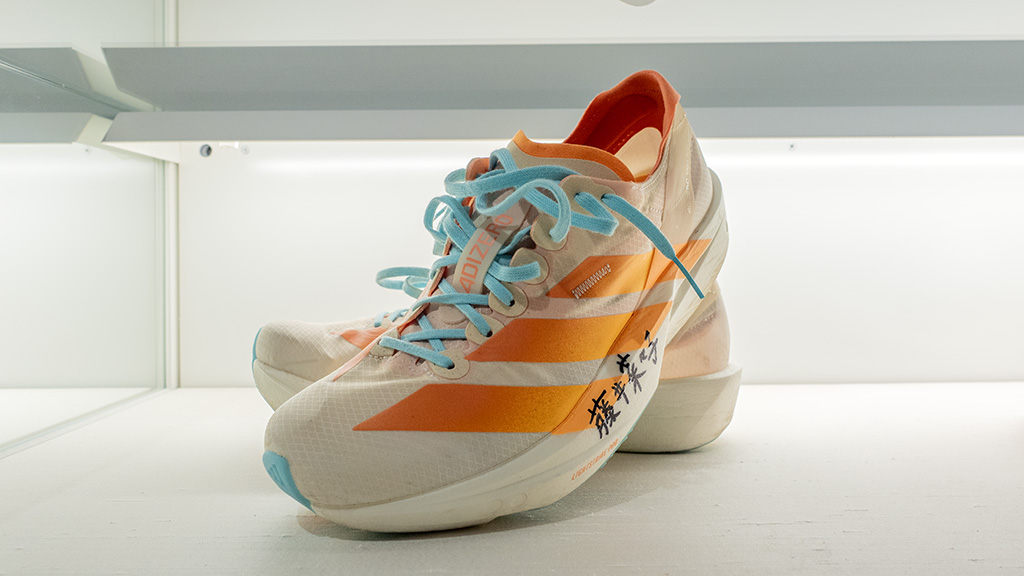
The apparel section had a glass-protected display case that had a row of shoes that had actually been worn at Olympic events by Olympic athletes. Most of them also had notes written on them, presumably by the competitors who wore them.

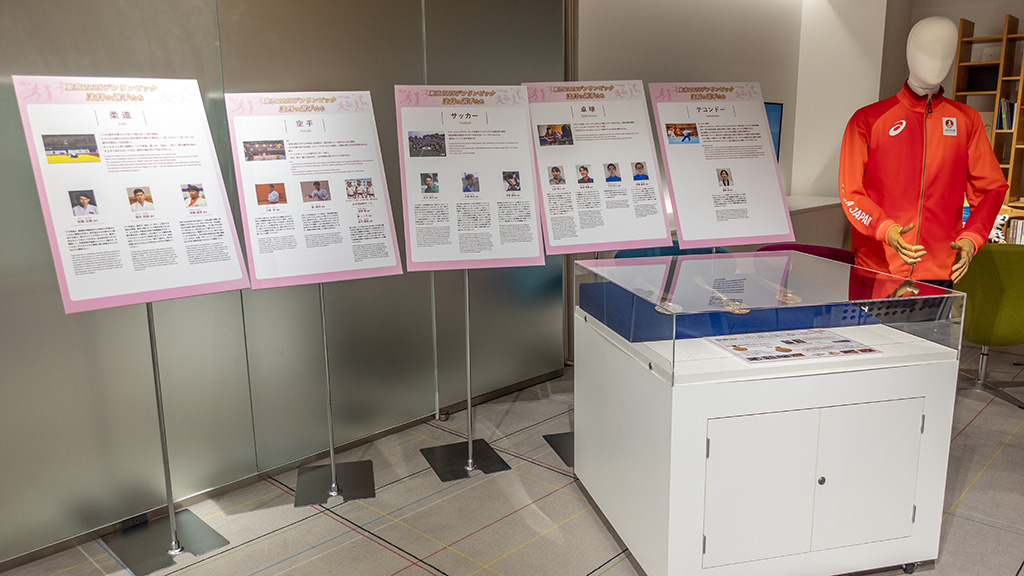
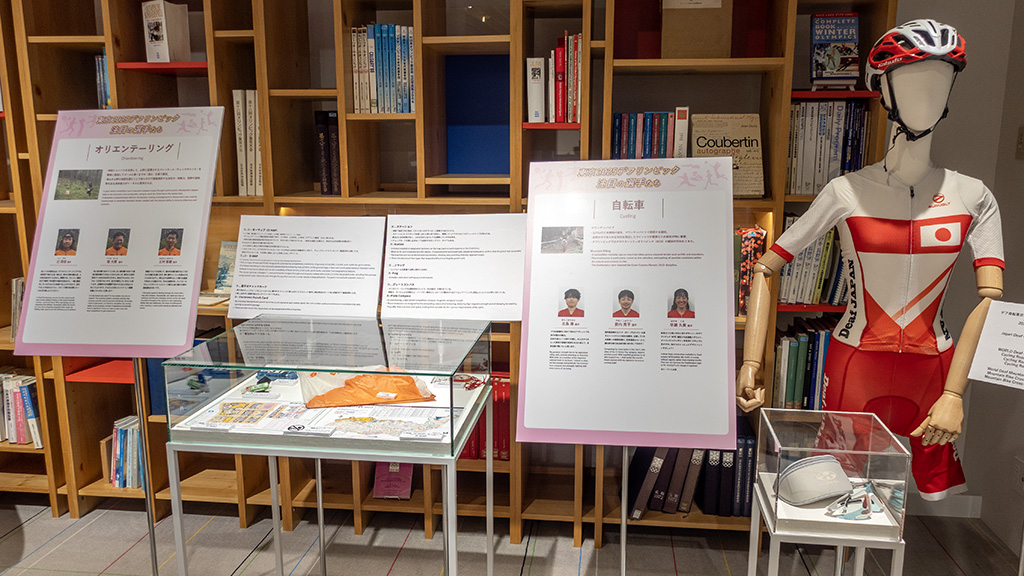
Beyond the apparel section was an area dedicated to the Deaflympics. Prior to my visit here, I did not know that there were more variants of the Olympics beyond the Paralympics, so I learned something new because of this exhibit. From what I gathered from these informational posters, the idea of the Deaflympics is for athletes to not use any hearing aids or implants so that everyone is on a level playing field without their sense of hearing, and their performance is strictly determined by their mastery of their other senses, primarily their visual acuity.
To go on a somewhat related tangent, one of the things that I really liked about Japan is how elegantly accessibility-friendly it is.
In the United States, I’m used to accessibility features sticking out like a sore thumb. More specifically, accessibility and accommodations for the disabled always seems like an afterthought, where infrastructure was built without accessibility in mind, and then accessibility was tacked on as a secondary consideration solely for the purpose of complying with ADA laws.
Adjacent to that, I’ve started to see and feel that some of the more extreme liberals and progressives in today’s political climate will use the concepts of accessibility and accommodations for the disabled as a way to virtue signal and feel good about their own selves, while in reality, they’re just causing more discomfort. I have always seen those with disorders or disabilities to be regular people just like everyone else, but they simply happen to have an extra set of challenges to address in their day-to-day lives. Thus, it is unsettling to me when activists pretend like they’re standing up for a good cause, but it only just ends up objectifying and drawing more unwanted attention to those who have a disability.
In Japan, it feels like everything was built with accessibility in mind from the ground up. Everything is very well-integrated, and it feels like it’s a part of everyone’s baseline culture to be considerate and accommodating to those who might need a bit more help with whatever tasks they happen to find challenging… but most importantly, they do it without thinking it’s anything special or honorable.
Connecting this back to the Olympic Museum, although there was this section dedicated to the Deaflympics, it seems like it was only separated out like this due to the 2025 Summer Deaflympics taking place in Tokyo. Beyond this, mentions of the Paralympics or other variants of the Olympics were just integrated in with everything else like normal, which I thought was nice.

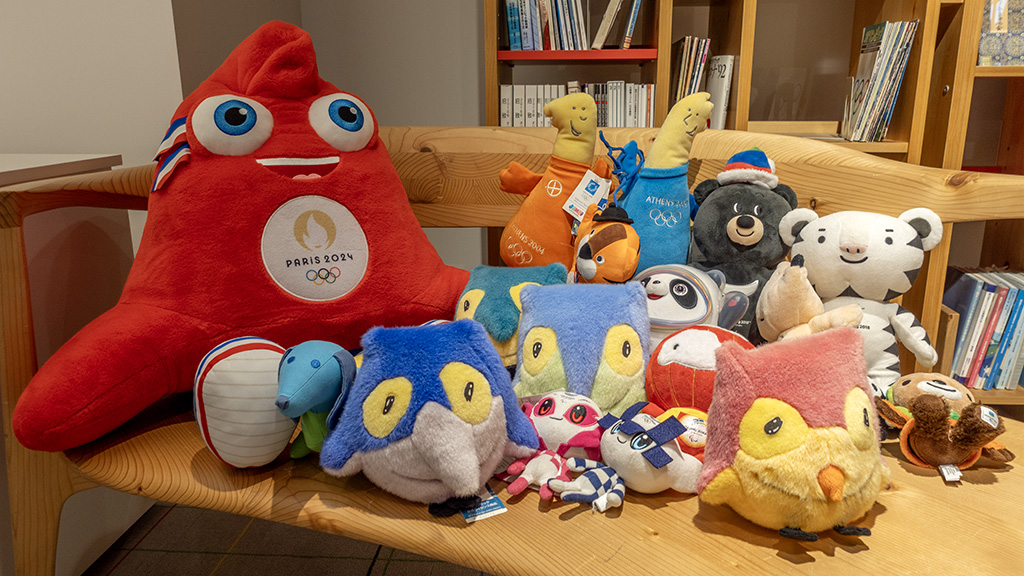
In the corner of the first floor, there was a little library section with a bunch of books. This area had some seating that you could use if you wanted to read any of the available literature. One of the seats was occupied by a set of Olympic-themed plush toys.
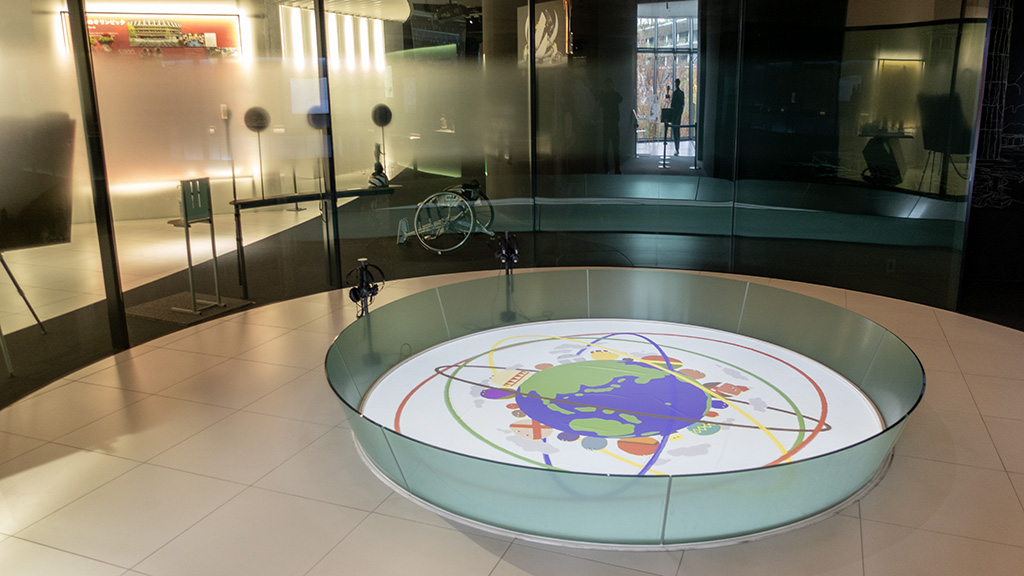
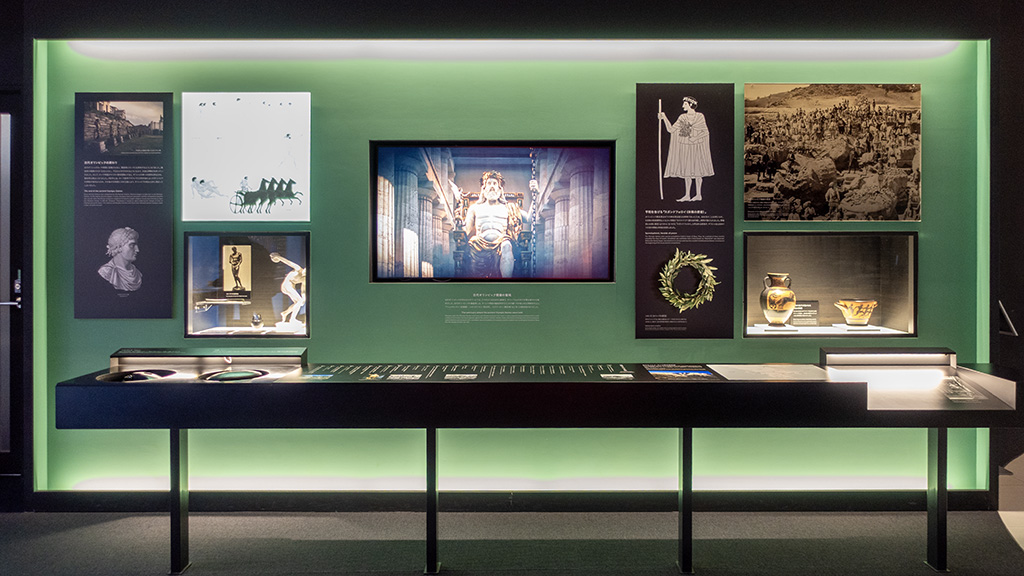
After seeing everything on the ground floor, I went up to the second floor. At the entrance to the new area was a projection screen with multimedia covering the history of the Olympics, which was accompanied by some more traditional museum exhibits and displays further explaining how the Olympics became what it is today.


As an American, of course, I had to find the USA pin.

Hanging on one of the walls was a bunch of torches. At first I thought they were just replicas, but after doing some more research later on, I found out that they were most likely authentic torches used for the Olympic Torch Relay. Apparently they manufacture a lot of these for each relay, so it would make sense that each country would be able to keep the ones they used.


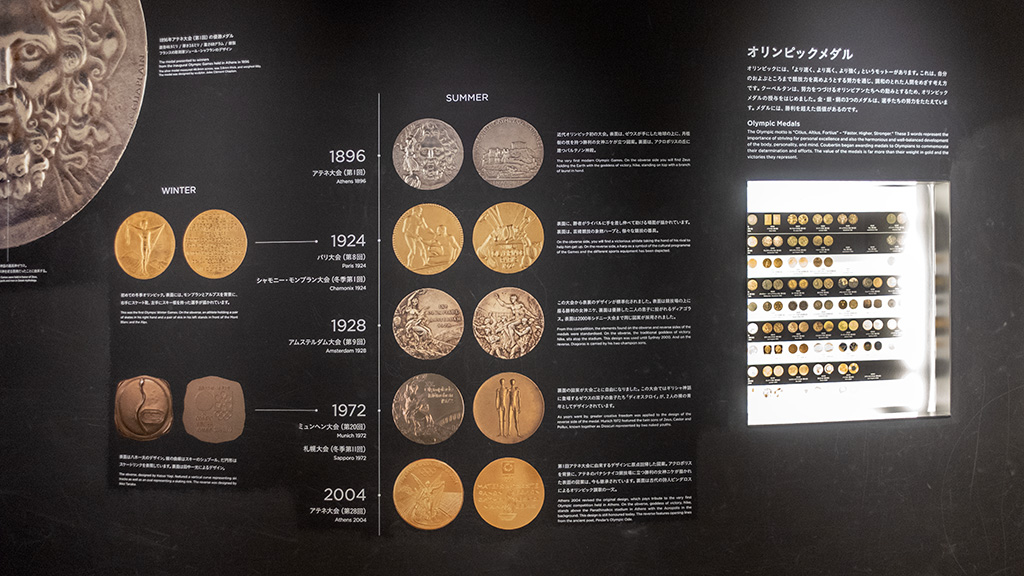
One section was dedicated to showing the evolution of the gold medal. There were a set of medals on display that definitely were replicas, but there were also a few authentic ones on display in a glass case.

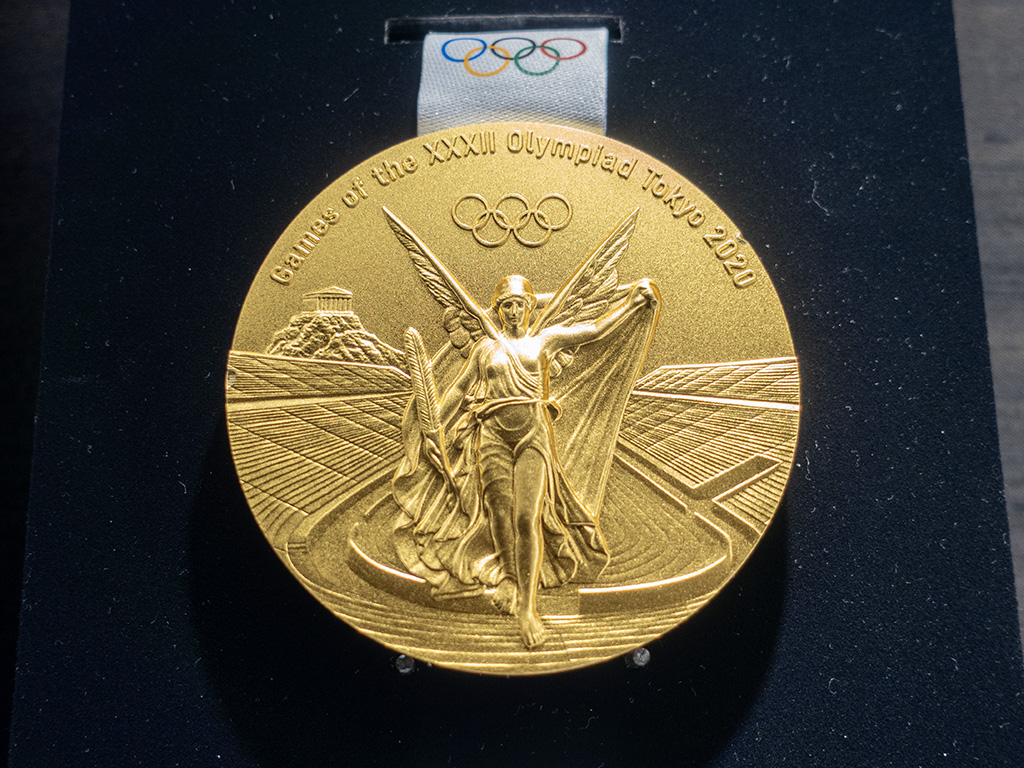
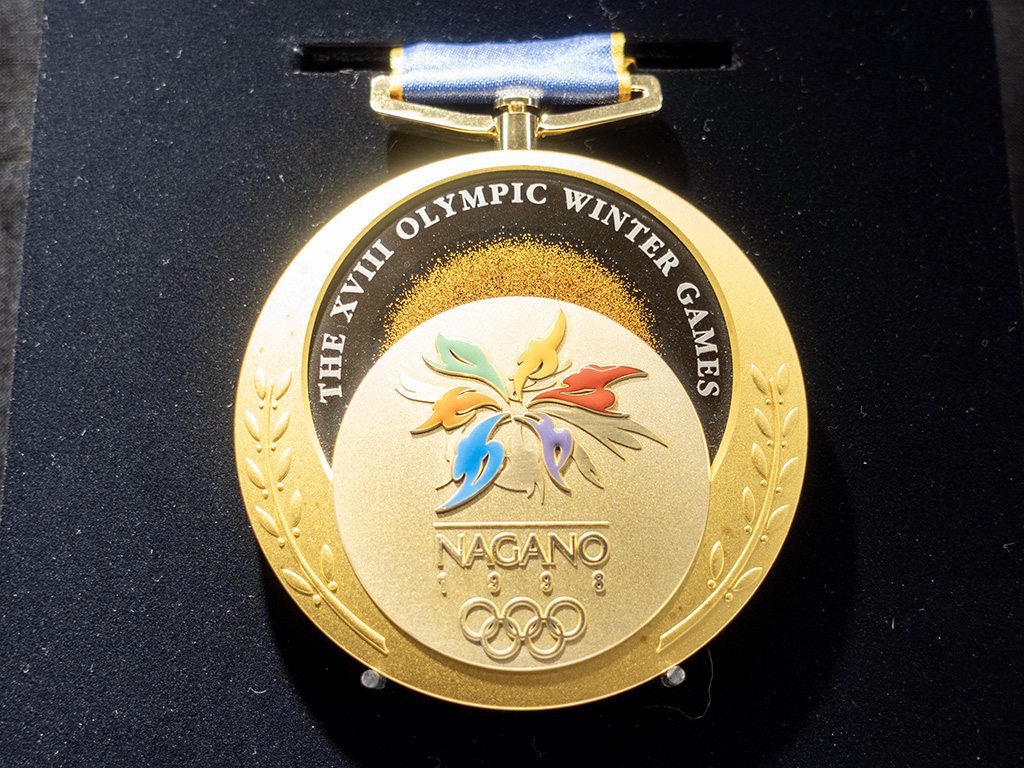
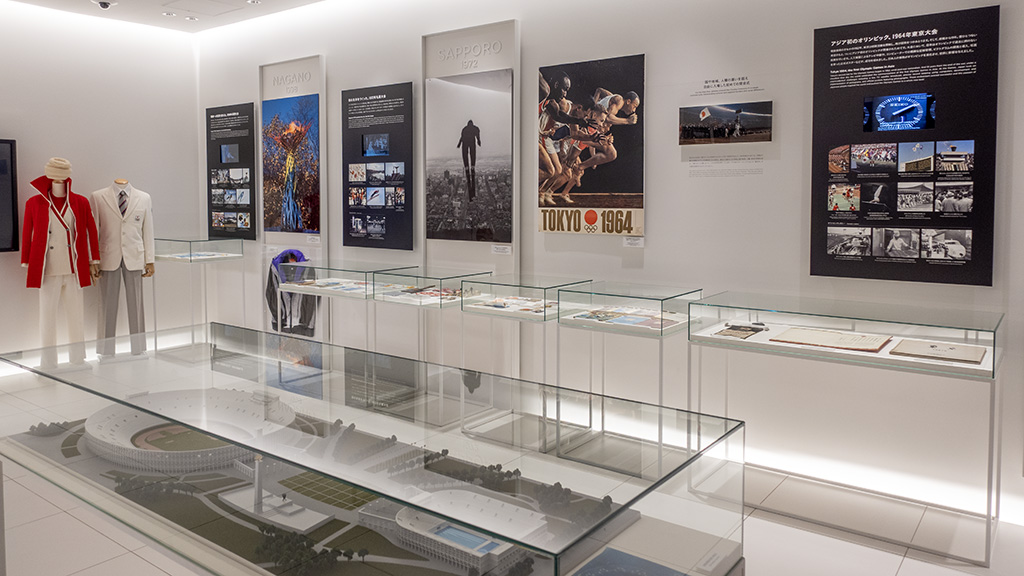
The next section was split off into its own room and was dedicated to the various different ways Japan participated in the Olympics as a host. There were dioramas of past stadiums, maps showing the route of past torch relays, and even artifacts from past events.

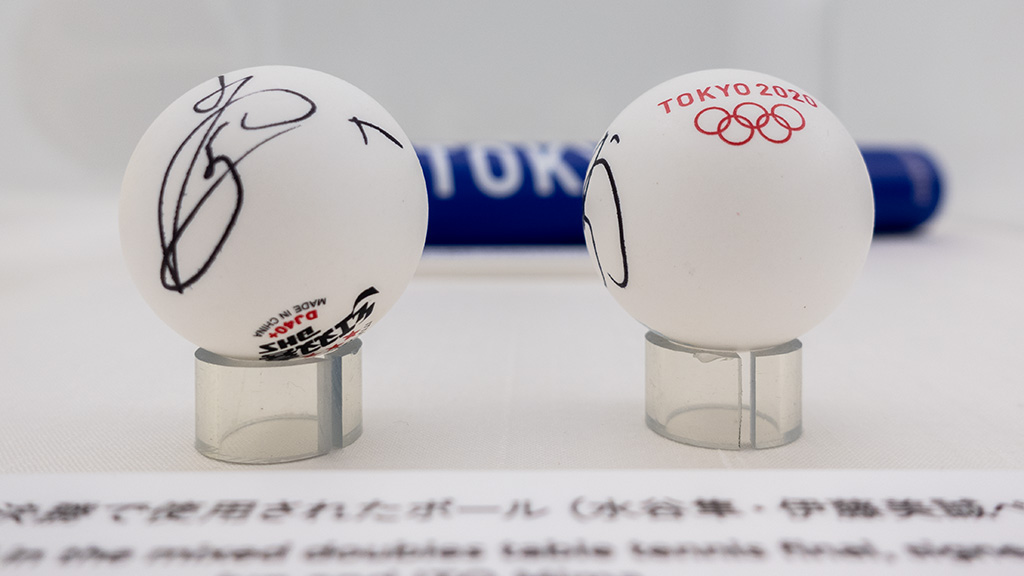
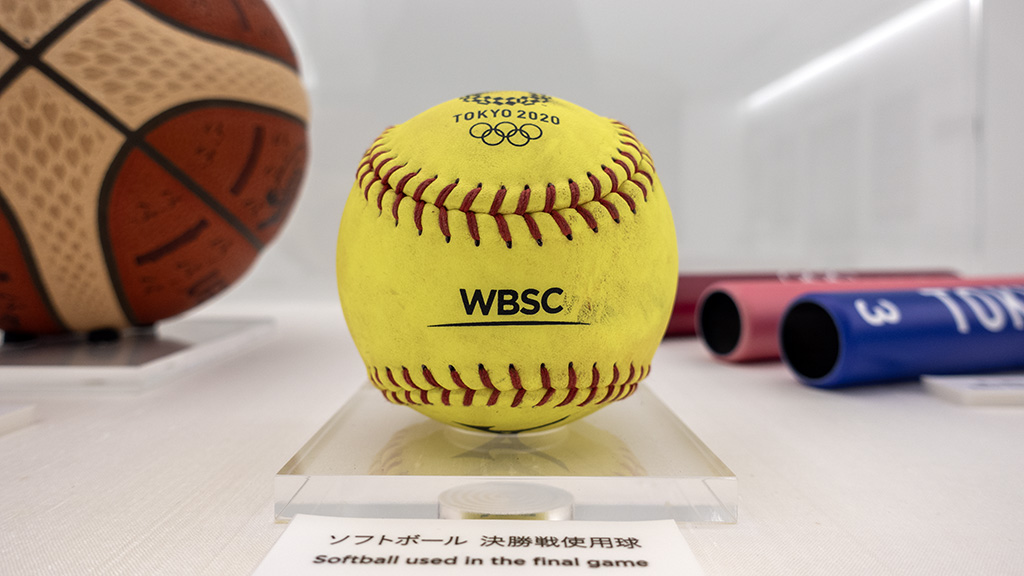
This next area was my favorite due to its interactivity—the simulation room. There were a handful of stations set up in front of large screens and overhead projectors where you could try short segments of various different Olympic sports to see just how inhumanly incredible the trained athletes actually are at these events.
The far back section had a simulation of the pistol shooting event, which I of course had to try out. I tried it once, and it said that I was only about 70% as accurate as an Olympic athlete, which I thought was catastrophically horrific. … Then I watched someone else try it out and her score was 4%, which I guess made me feel less bad about myself.

Nearby, there were a couple displays showing how much goes into building an Olympic athlete. It shows and acknowledges each athlete’s support system that is critically important to making sure the athlete performs their best.


Next up was a little theater room where I could take a quick sitting break and watch a short film about the Olympics. I didn’t take any photos here because it was just a video, but the theater room had a very wide screen that wrapped around the room in a crescent, so it was nice and immersive.
After the show was over, I headed back out to the main museum area to finish checking out the final handful of exhibits and items on display before heading out.
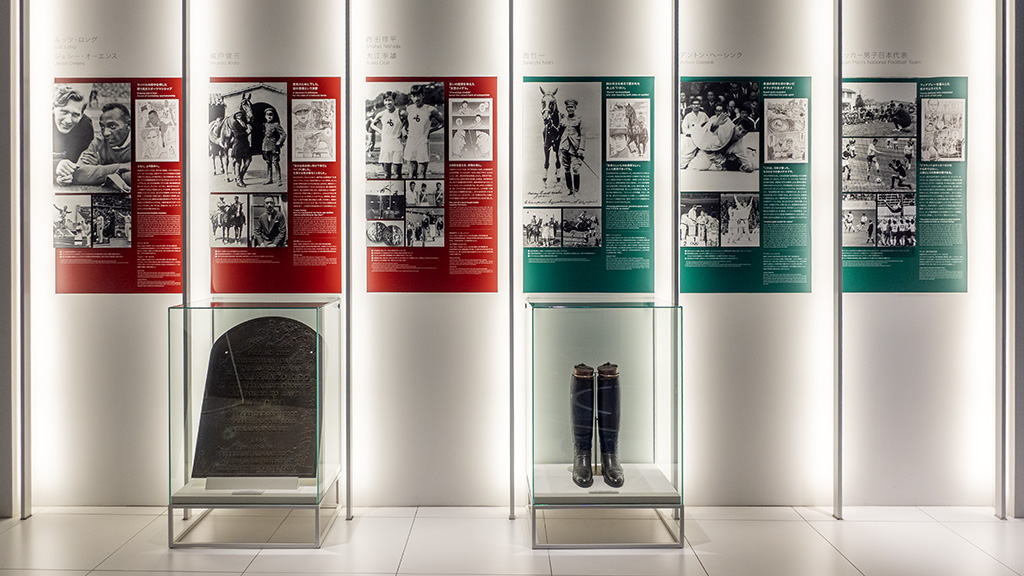

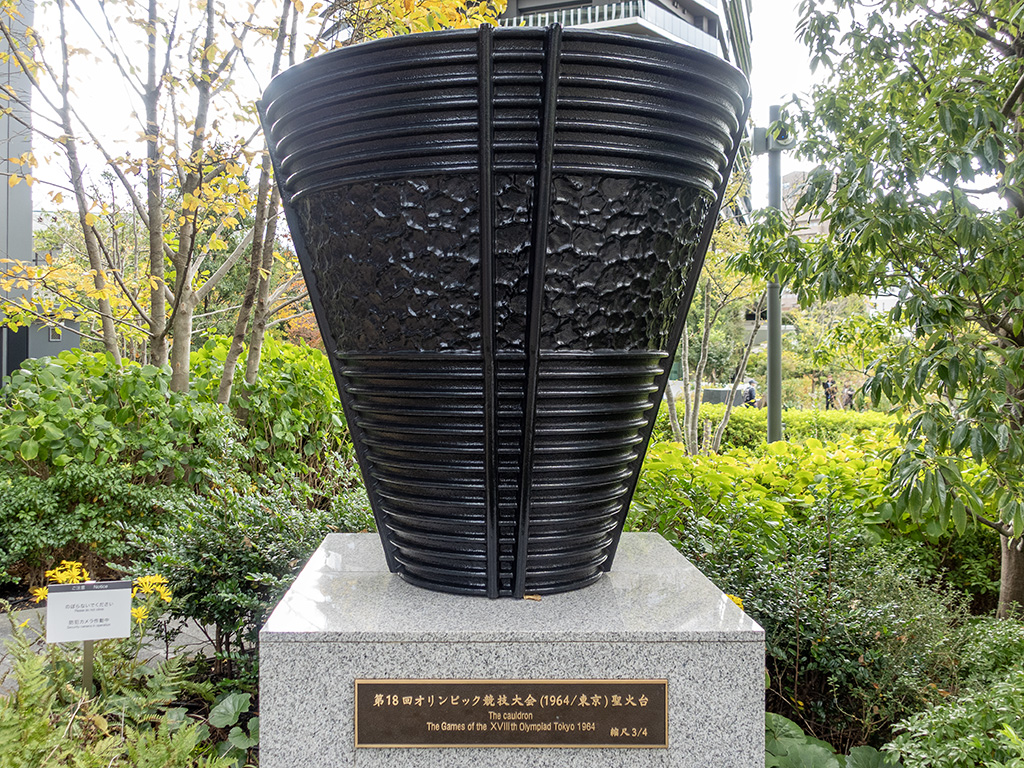
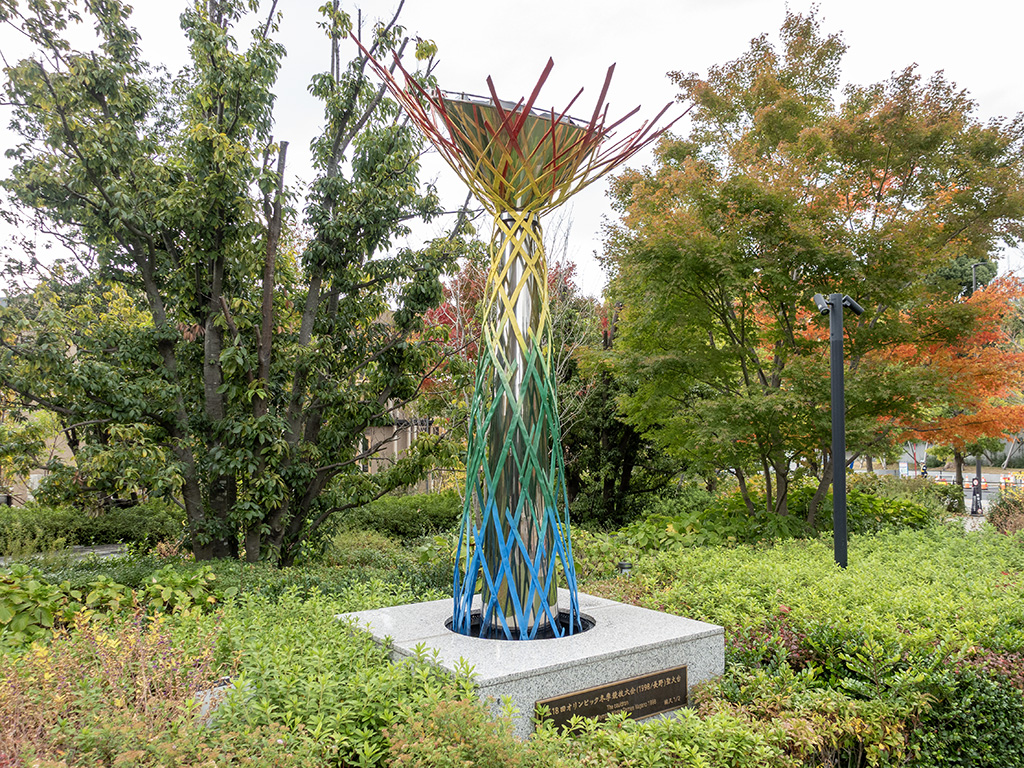
Outside the museum, there were a final few items on display that were more weather-resistant and a bit too big to reasonably keep inside in the indoor museum space.
I thought this was a pleasant museum well worth and exceeding the value of the admission ticket, and I’m glad I stumbled across this area and decided to check it out. I especially liked learning about the Tokyo 2020 Summer Olympics due to how unique it was as a consequence of taking place in the middle of the COVID-19 pandemic—first enduring a postponement, and then later needing to conduct the events without spectators, both first-in-history occurrences.
It would’ve been neat to pair this with a tour of the stadium as well, but considering the misalignment of availability, just being able to see the museum was plentifully satisfactory.