While browsing for more activities in Ginza within quick walking distance from my hotel that I can do to fill a few-hour mid-day break during my trip to Tokyo, Japan, I came across アートアクアリウム美術館, which is the Art Aquarium Museum Ginza. Admission was 3,000円, which was right around US$20.00—reasonable for United States standards for a tourist activity like this, but a bit pricey compared to other tourist activities in Japan. With that being said, I browsed some other people’s photographs and I thought it looked unique and interesting, so I figured it was still worth it to check it out.
The premise of this museum is to make art using goldfish. Each art piece had one or more live goldfish (or other kinds of small fish) inside, contributing a very uncommon “alive” element to each display that other art museums don’t really have.
With that being said, I feel like I’d be at least a little bit remiss not to point out the fact these small fish still count as live animals. Although I am not entirely opposed to integrating animals into human-made and designed-for-humans entertainment like circuses, zoos, and aquariums (and in this case, art museums), I think it comes with a reasonable ethical and moral consideration for such animals.
Many of the exhibits on display at the Art Aquarium Museum Ginza were the equivalent of very large fish tanks, which weren’t materially different than any residential fish tank that someone may keep in their home to house pet fish. However, some of them were extremely small, overcrowded, or both, as you will see in some of my photographs. Compounding on the problem was the fact that many of these goldfish, albeit small, were still fairly large compared to a household goldfish you’d find at the pet store.
I thought this museum was visually stunning and I enjoyed my time visiting. However, I do feel the need to provide a general warning that those who are passionate about animal rights might find some of the habitats upsetting, and if you are someone who votes with your wallet, this may be a spot you pass on in order to not spend your money with a company that may conduct business practices that may not be in alignment with your standards.
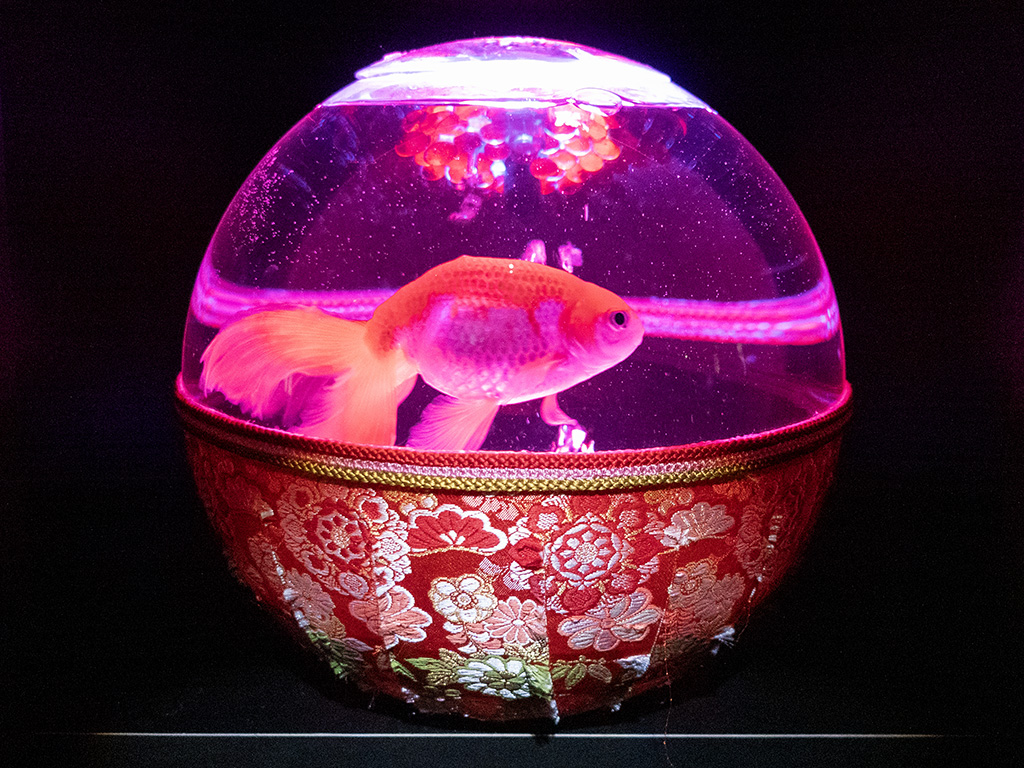
Upon entering the museum, the first display was 手毬リウム, or the “Temari-rium,” a play on words combining “temari” (a traditional Japanese ball-shaped toy) and “-rium” (a Latin prefix meaning “a place,” similar to how it’s used in the words “terrarium” or “auditorium”).
The bottom part of each temari was embroidered and sewn with thread and fabric. Each temari had a different design, with a fish swimming around inside.
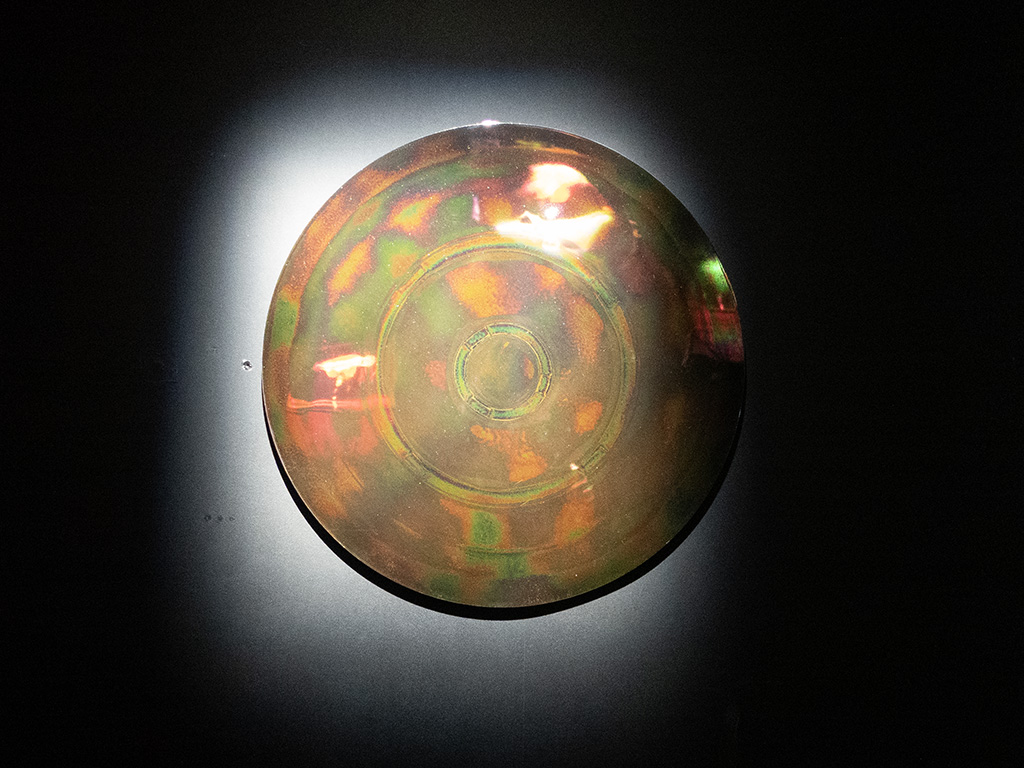
On the opposite side of the wall of temari was some other non-fish art pieces.
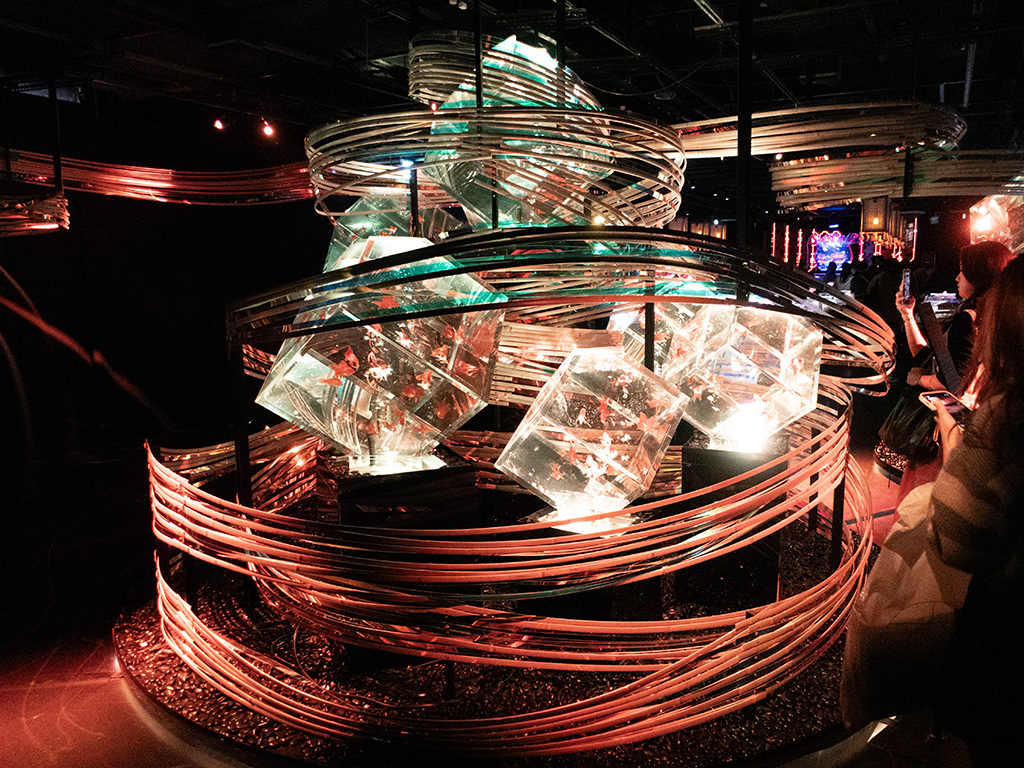
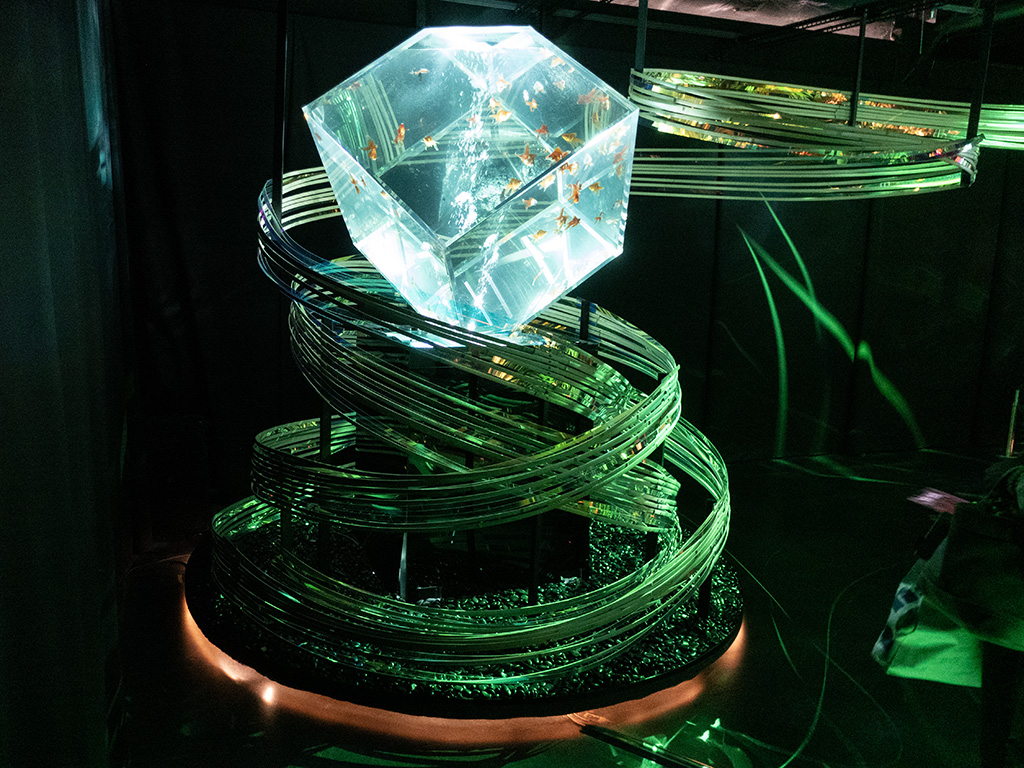
The next area was 金魚の石庭, or the goldfish rock garden. According to the signs, this was made in collaboration with the architect Kengo Kuma and was a modernized reimagination of the karesansui, the traditional Japanese rock garden.
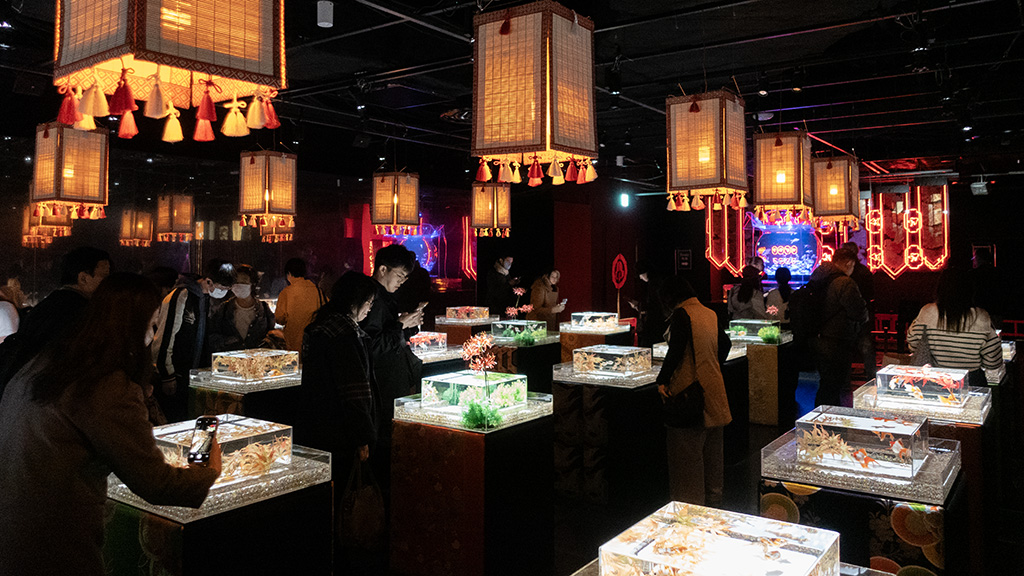
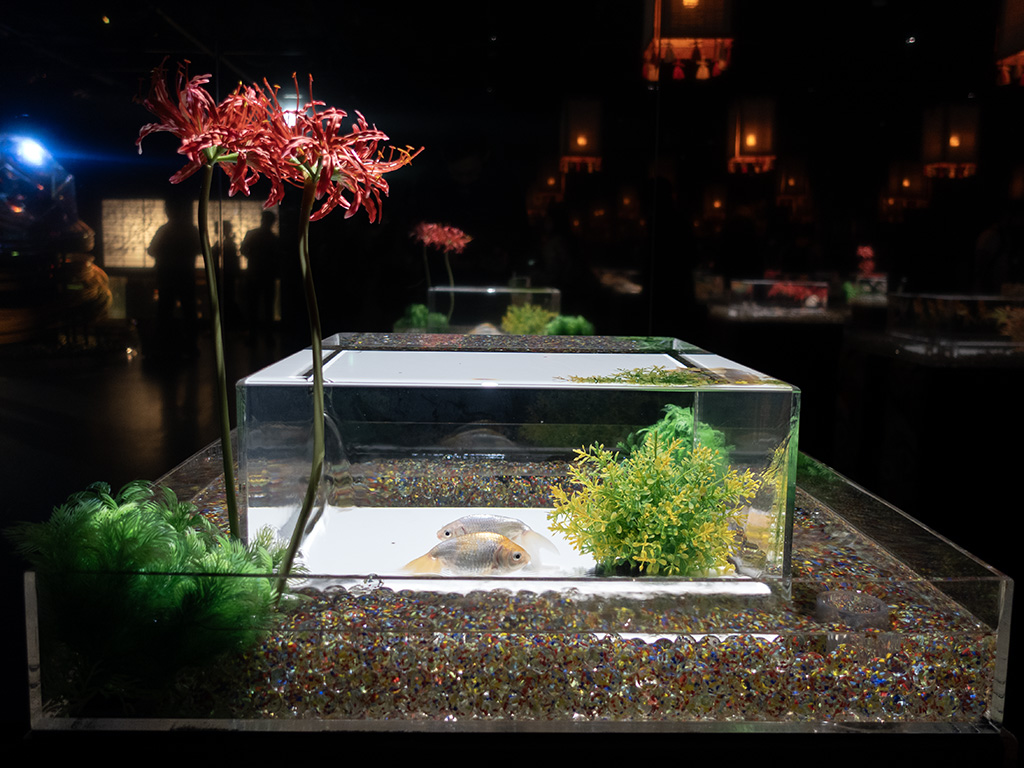
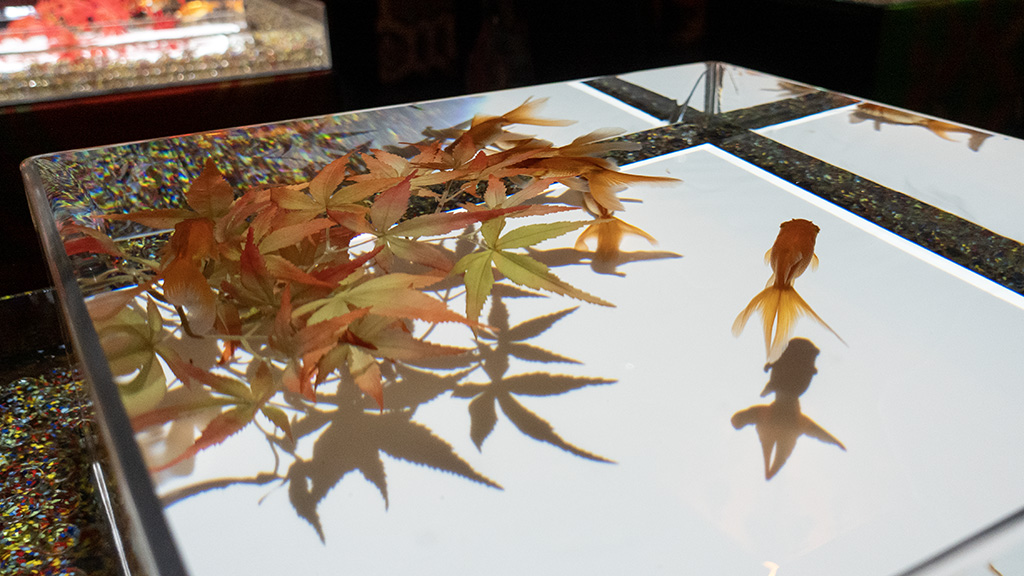
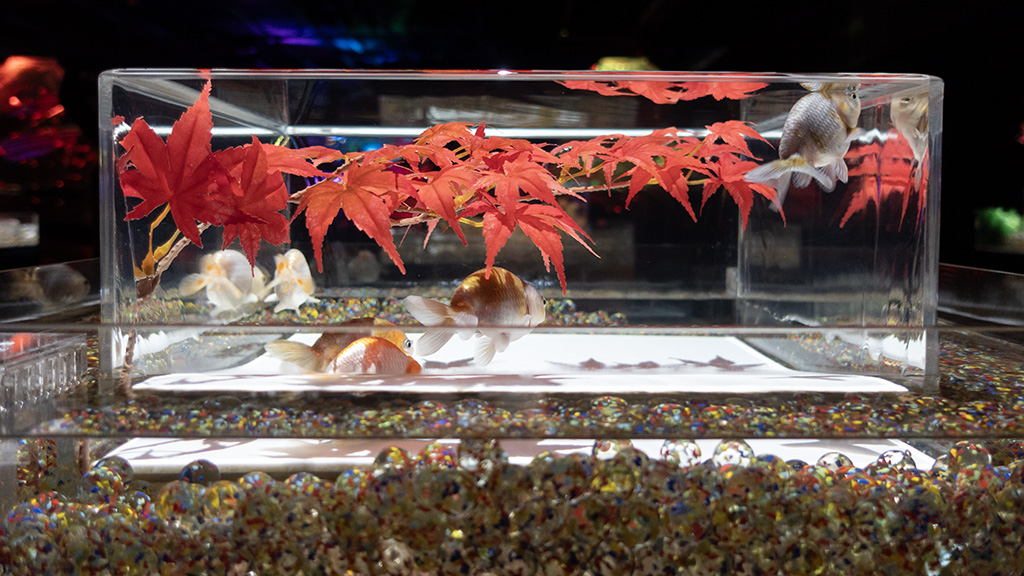
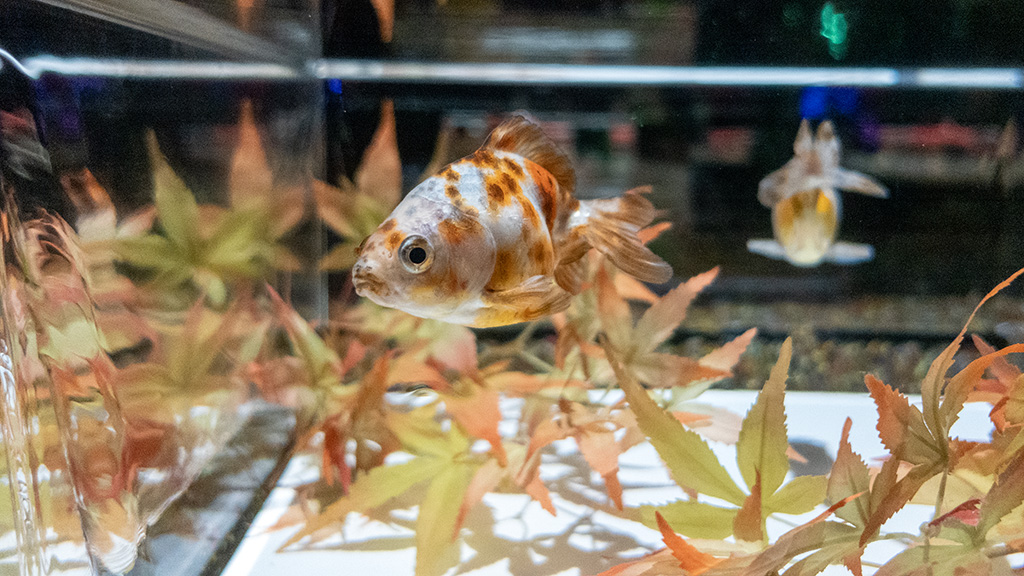
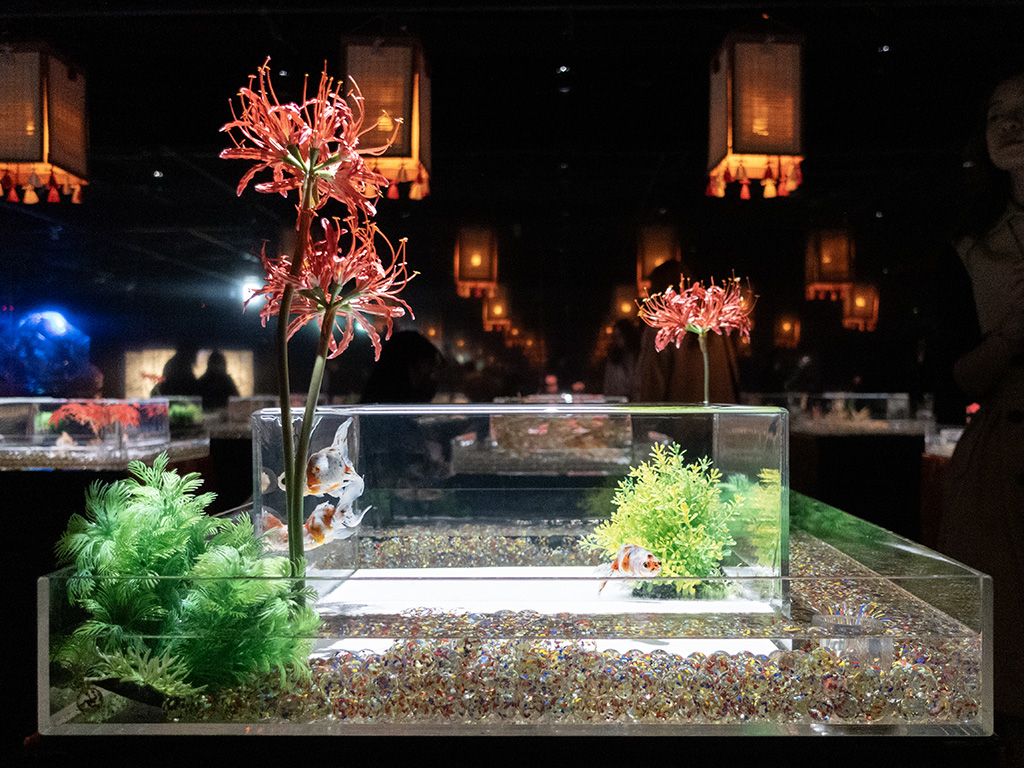
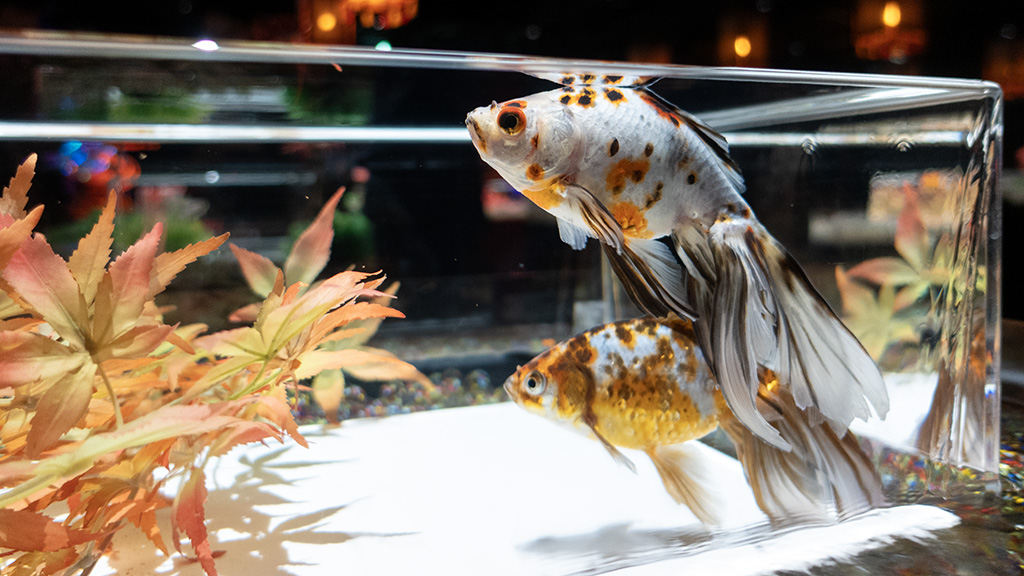
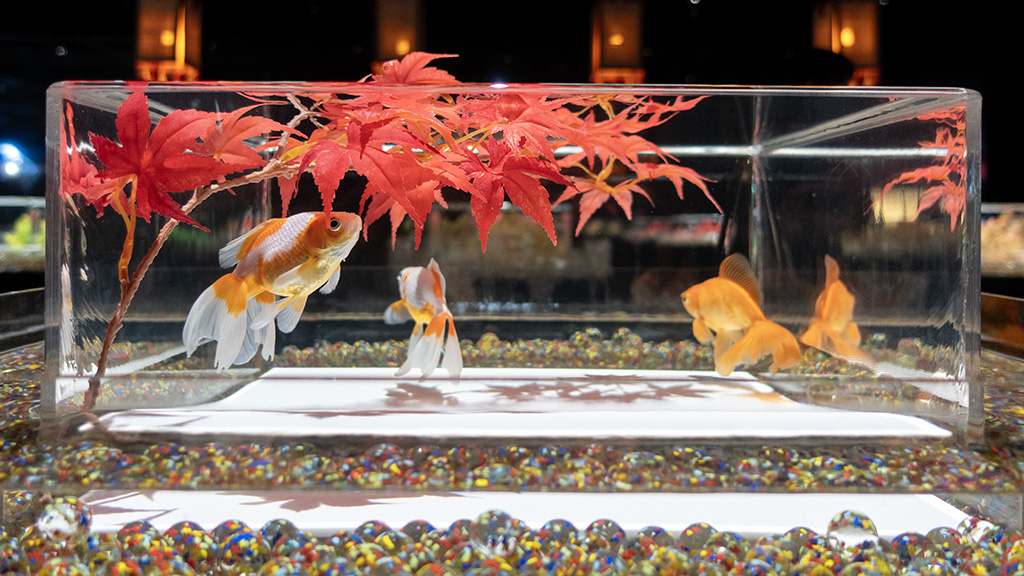
The next section, 新金魚品評, or “A Show of Kingyo,” was a collection of miniature glass fish tanks decorated as if they were little dioramas. Each tank had somewhat of a theme to it, and it seemed like they tried to match the kind of fish in the tank to the objects that were placed in and around the tank.
My favorite part about this exhibit was how you could see the fish from all angles, including from the top when they would occasionally peek their heads up.
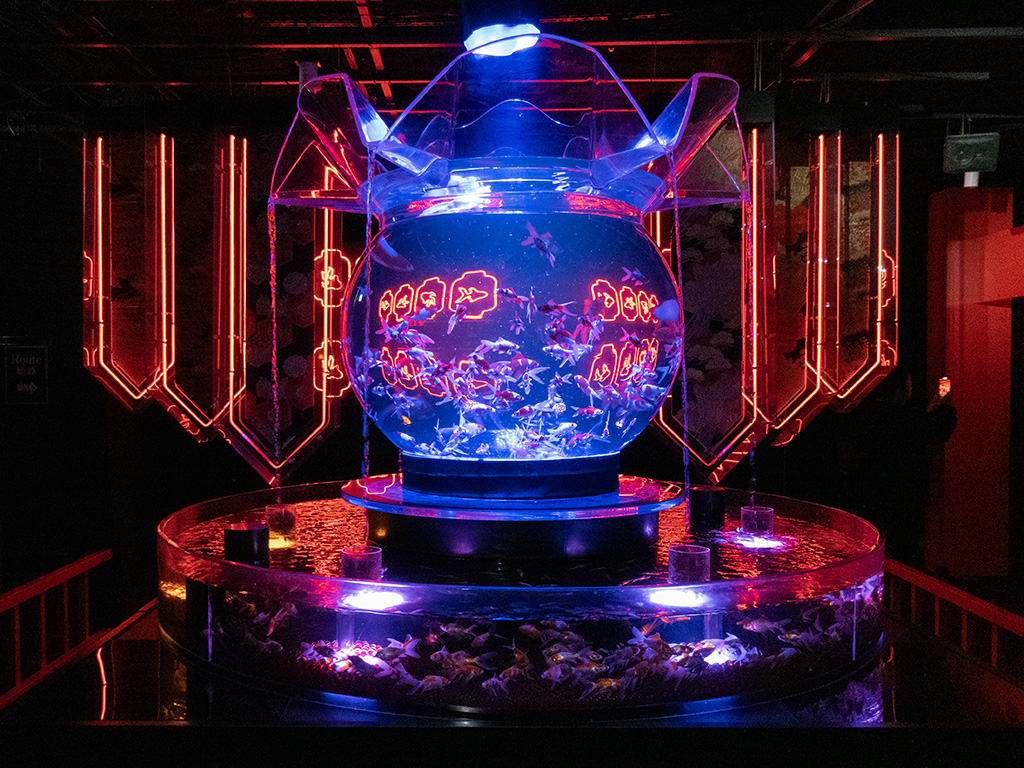
Behind the large array of tanks was NEO花魁, or the “NEO Oiran,” the aquarium’s signature art piece.
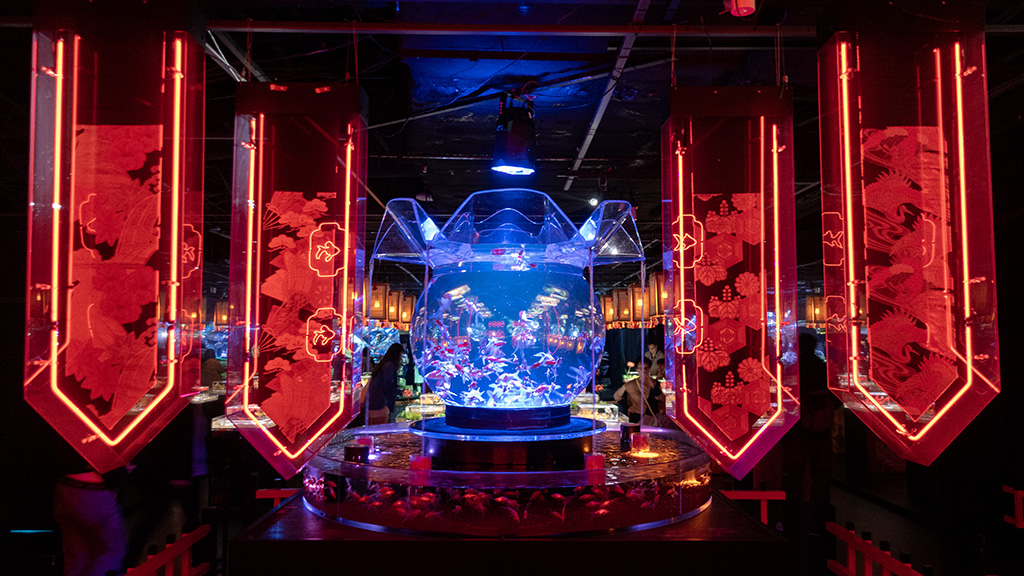
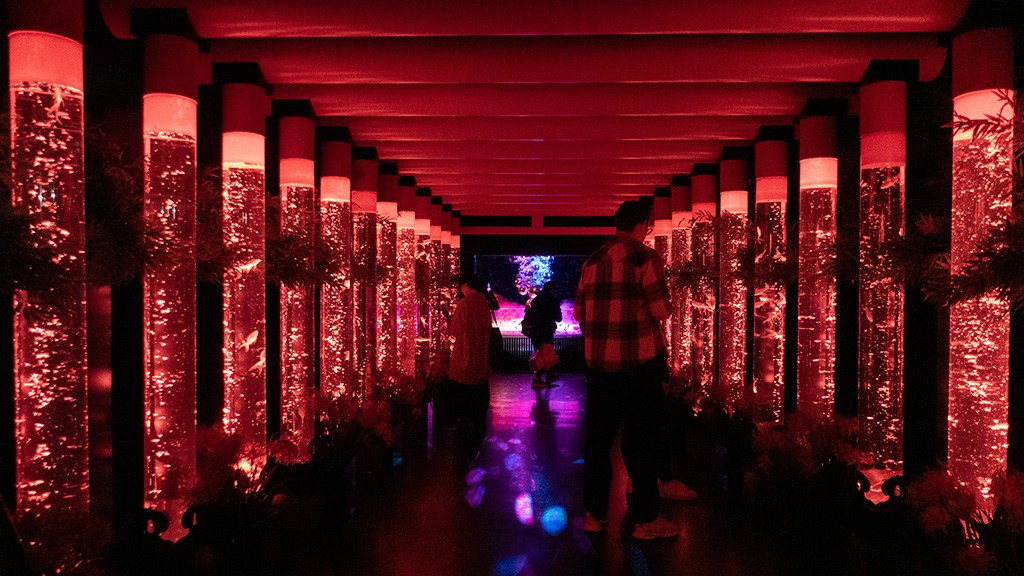
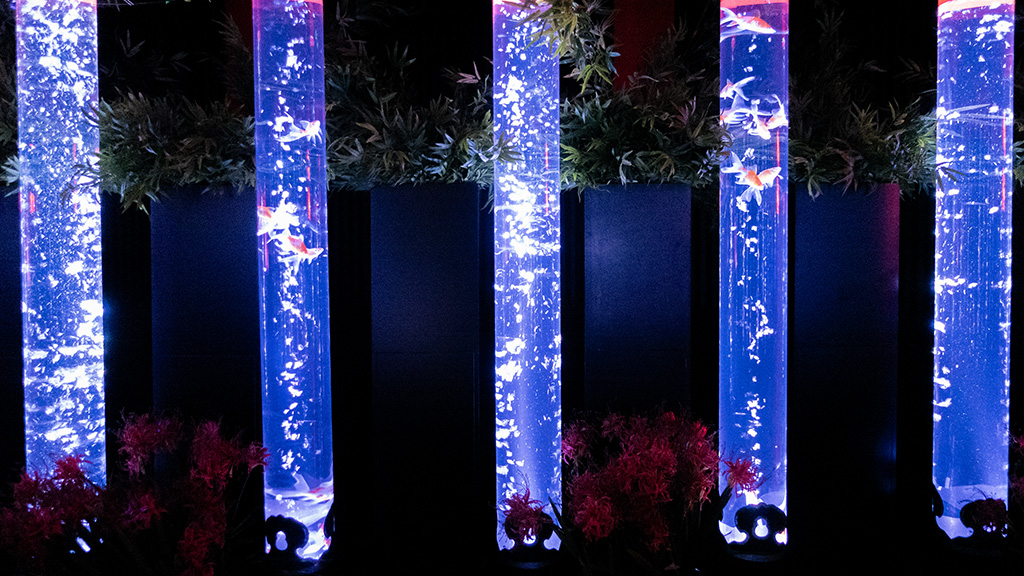
Around the corner was 金魚の参道, or the goldfish path, an aisle wrapped with vertical water-filled pipes containing goldfish swimming vertically up and down.
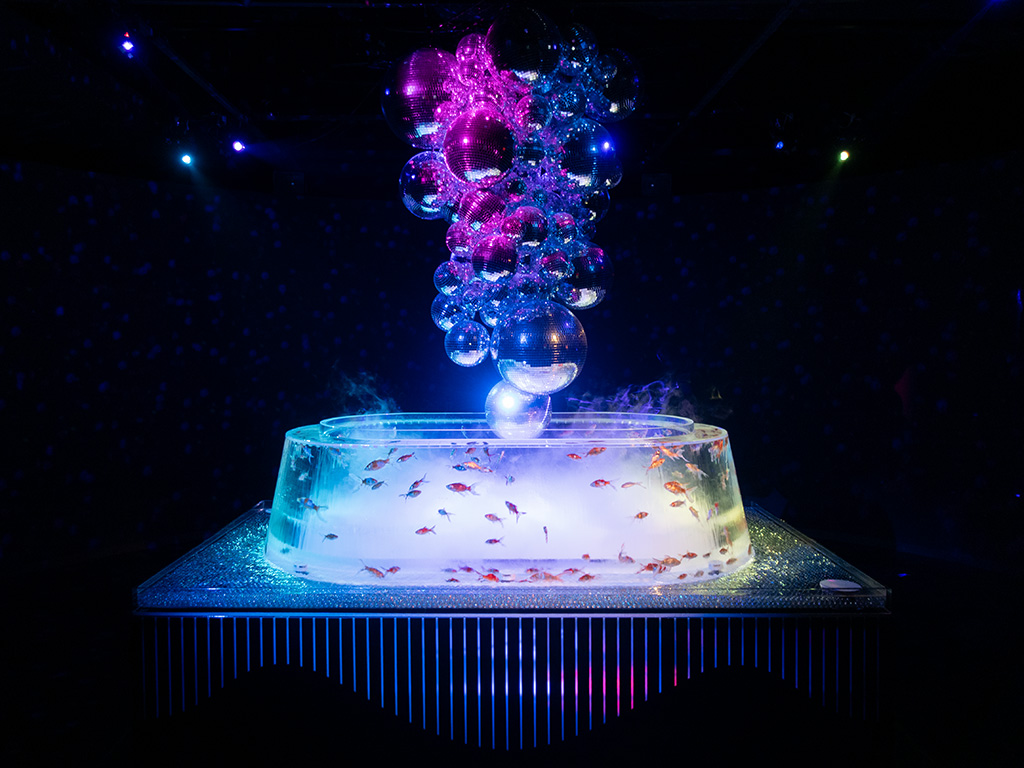
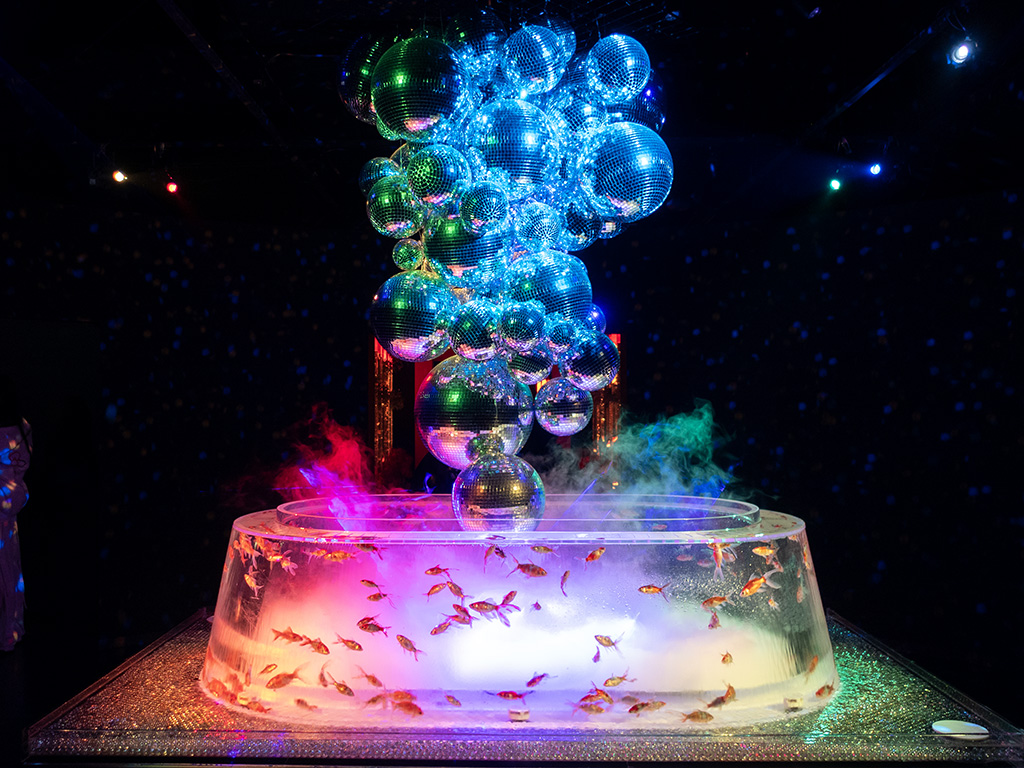
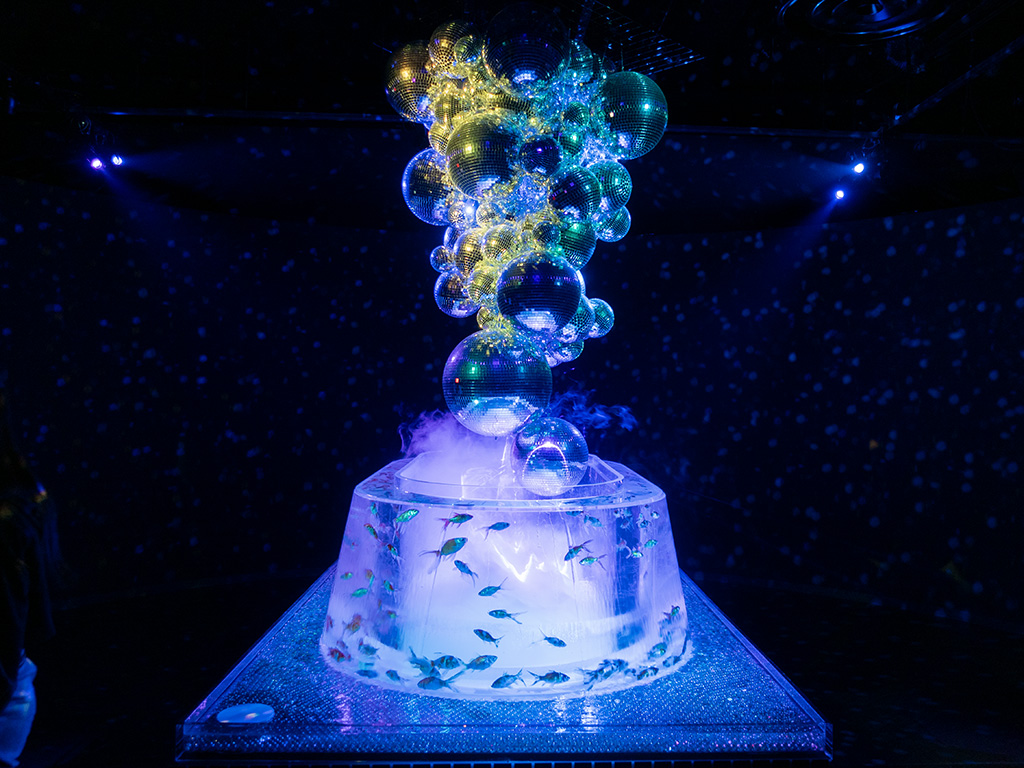
At the end of the goldfish path was 金魚の湧泉, or the goldfish spring. It’s difficult to do this art piece justice with just still photographs because of the light show on the multi-faceted reflective structure on the top and the white smoke coming from the bottom. The best I could do was to capture it from three different angles at three different points of the rotating light display.
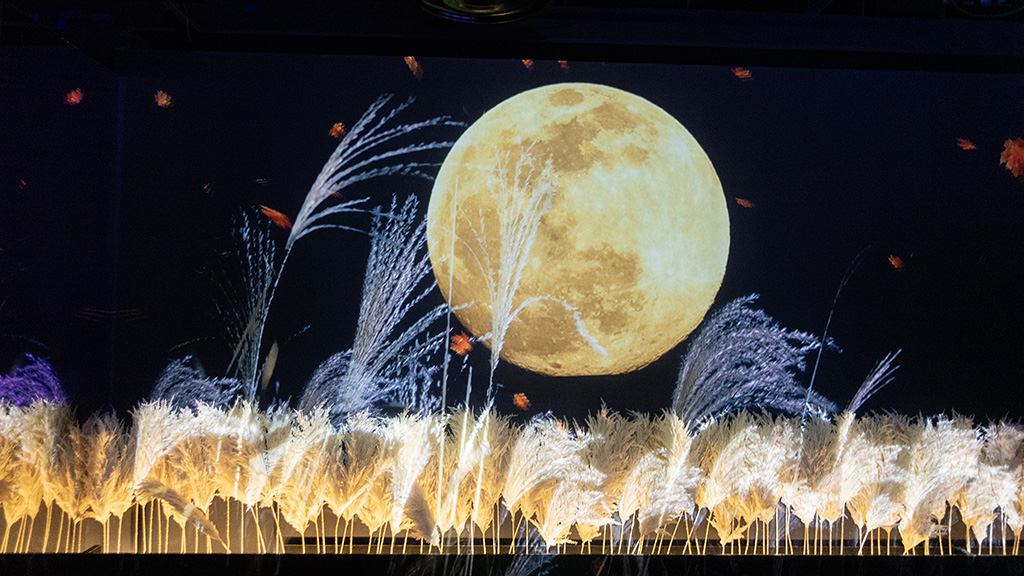
I don’t quite remember what this was, and I don’t think this was a named art piece; I believe it was just a projection on the wall, but it was visually unique enough that I still decided to capture a picture of it.
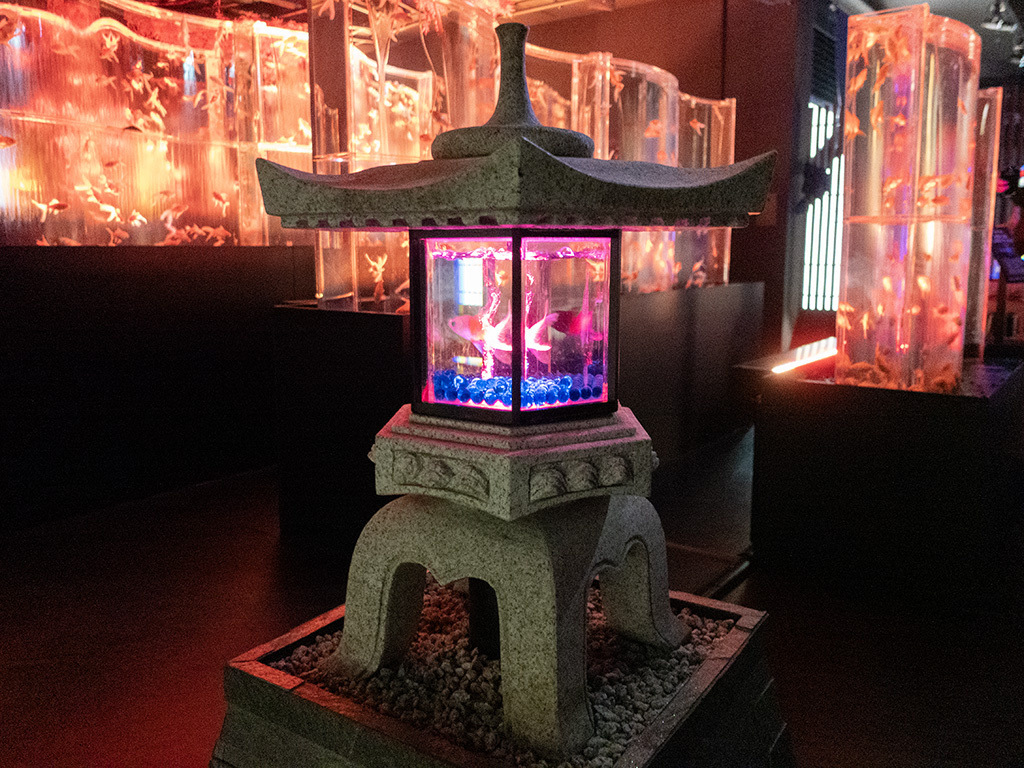
This is 金魚の石灯籠, or the goldfish stone lantern. Behind it is 金魚の滝, or the goldfish waterfall.
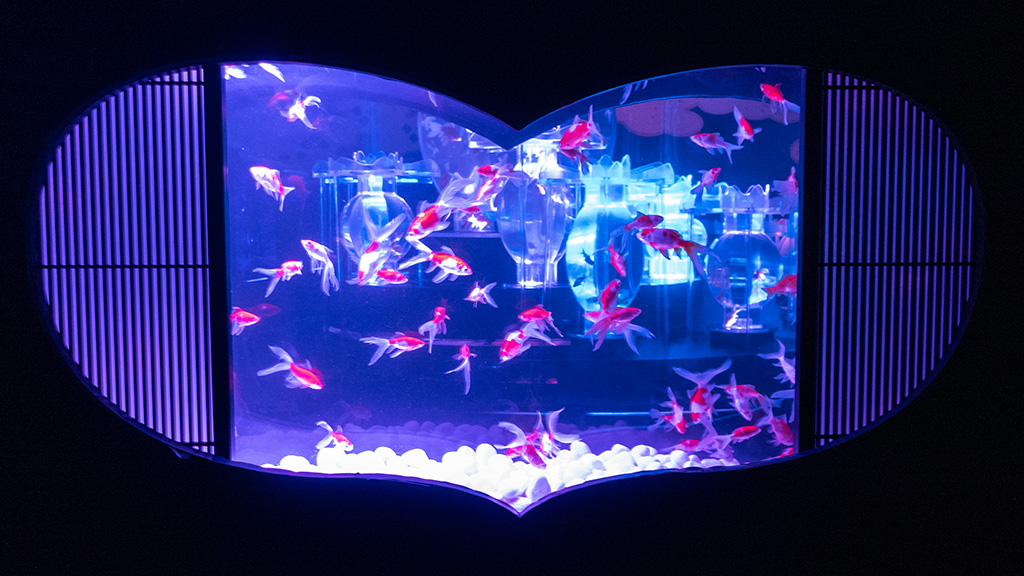
This is 猪目リウム, or the “Inome-rium.” The “-rium” suffix doesn’t quite work as well in this situation as it did in the “temari-rium,” but the “Inome” represents a heart-shaped traditional Japanese pattern that symbolizes warding off evil and attracting good luck.
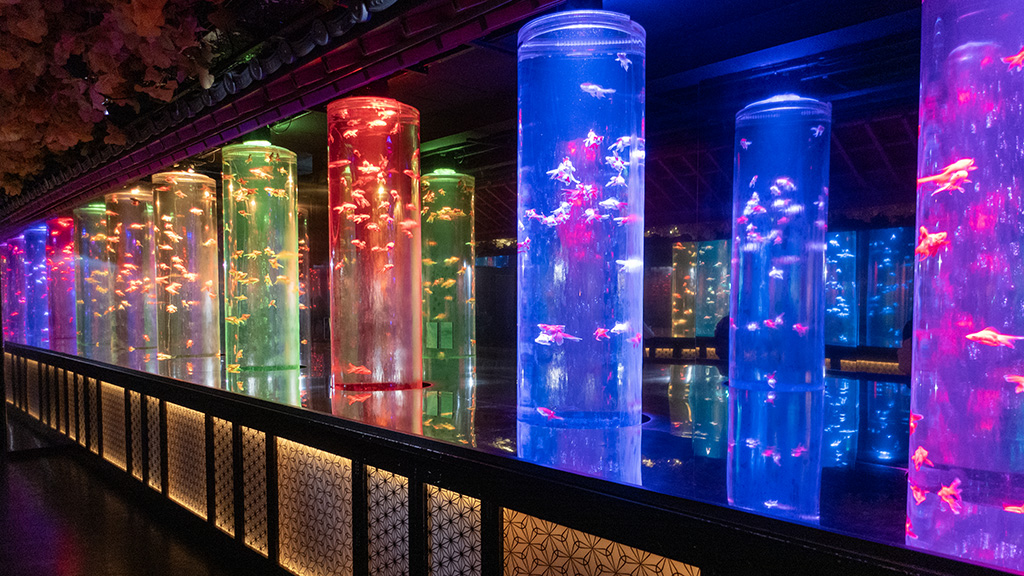
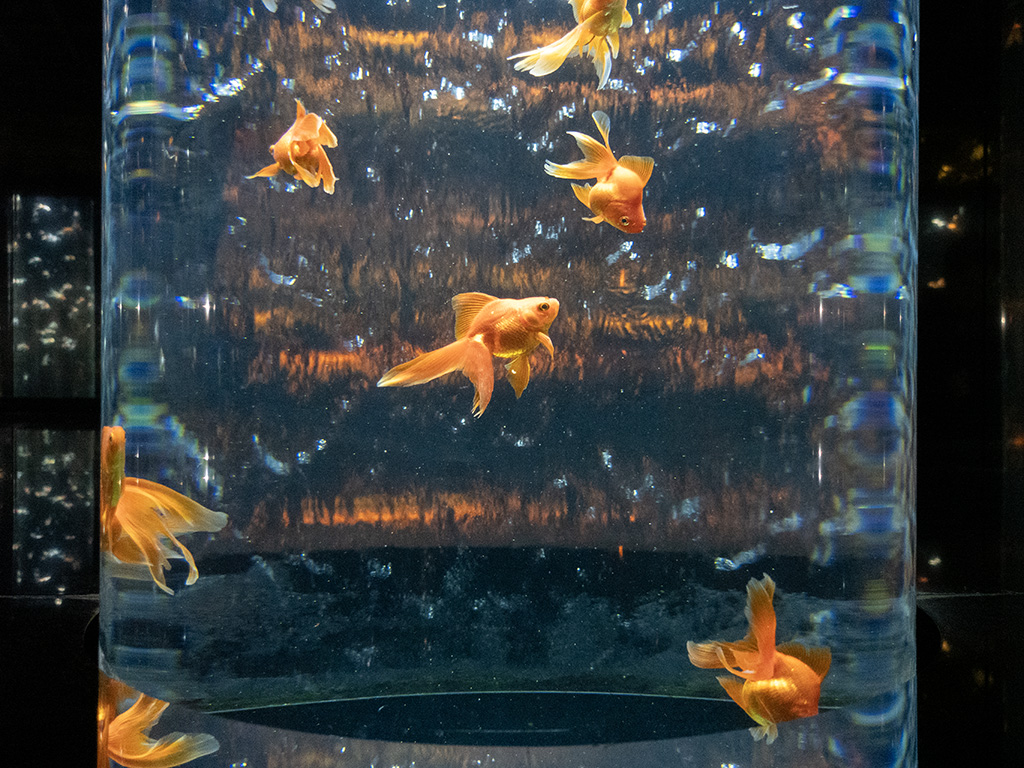
Behind the goldfish waterfall was 金魚の回廊, or the goldfish corridor. This was similar to the goldfish path, but more colorful. The goldfish corridor also integrated mirrors and used angles to make the pillars look taller than they actually were.
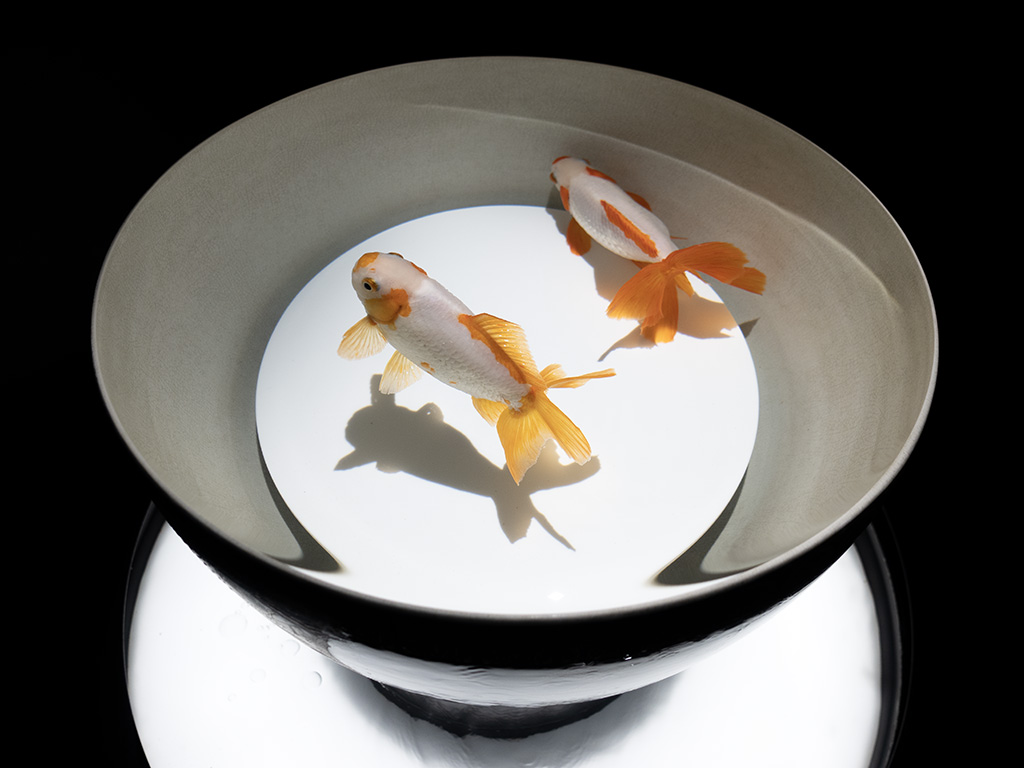
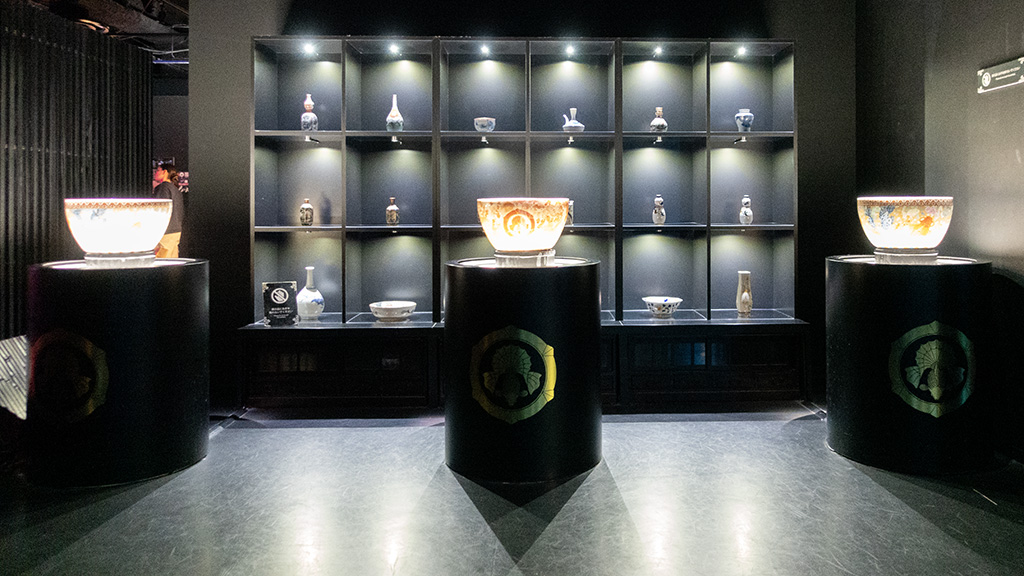
Down the corridor, the next room was 九谷金魚品評, which roughly translates to the “Kutani goldfish evaluation.” I didn’t really understand what this name symbolized, but the display had ceramics crafted in a traditional Japanese style, three of which were uncovered and housed swimming goldfish.
Lining the wall opposite to the ceramics was 金魚蒐集, or the goldfish collection. This was similar to the Temari-rium, but with each orb being fully transparent and having environmental elements inside the tank. According to the information provided, this selection was dedicated to showcasing rarer fish breeds.
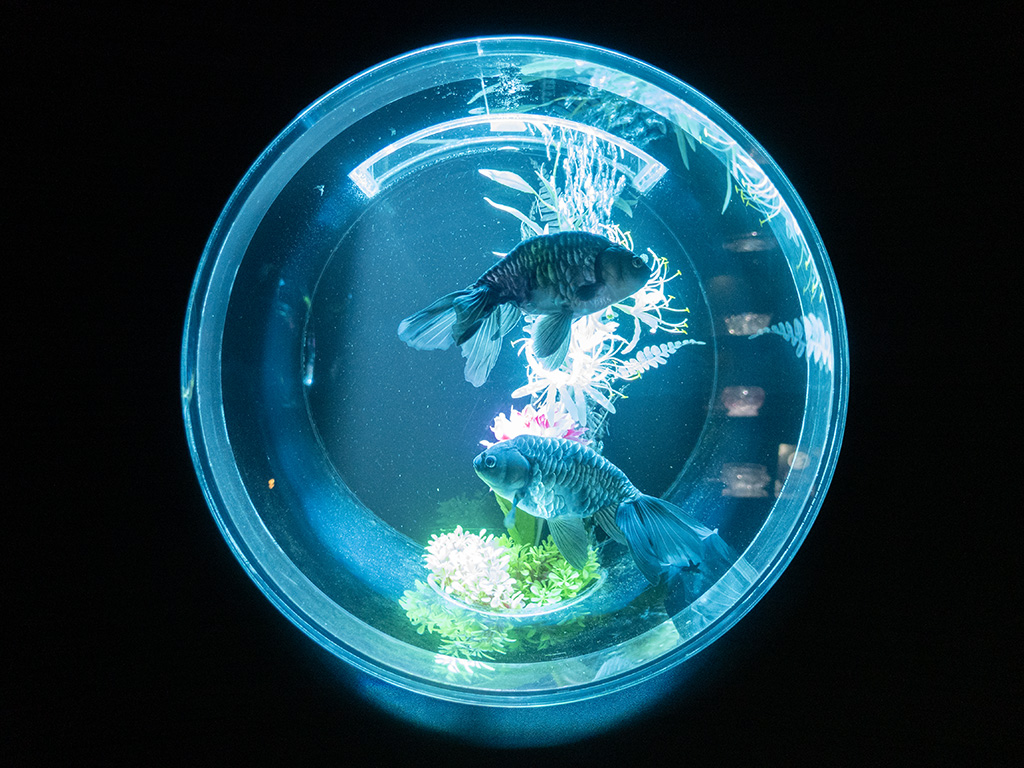
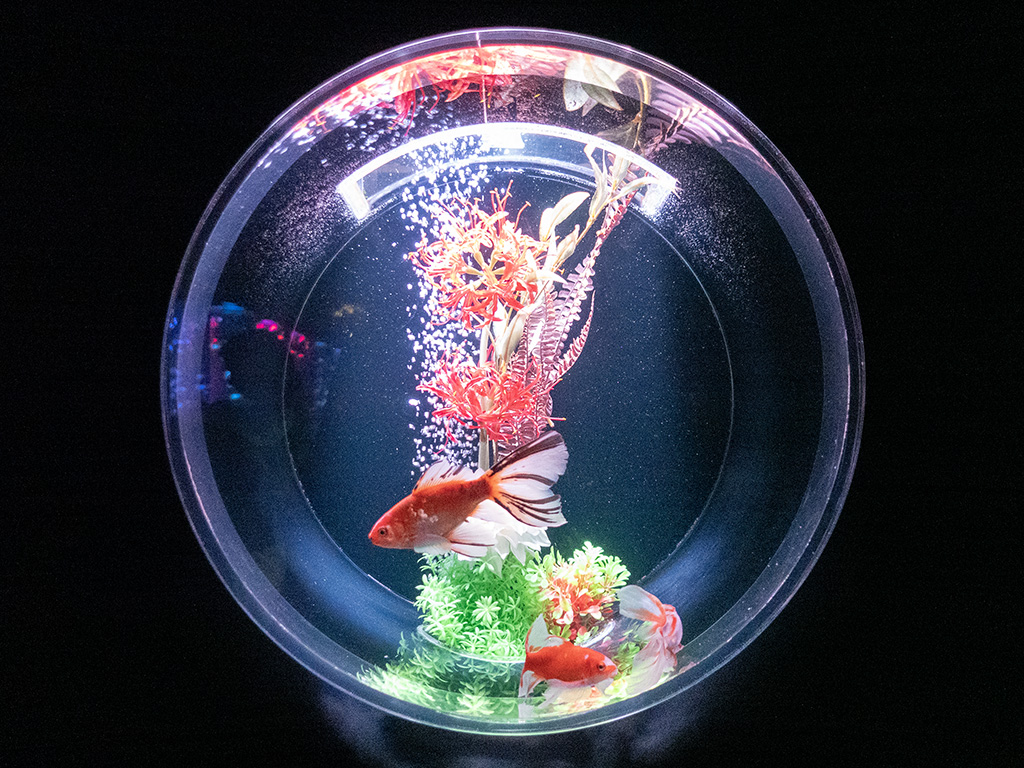
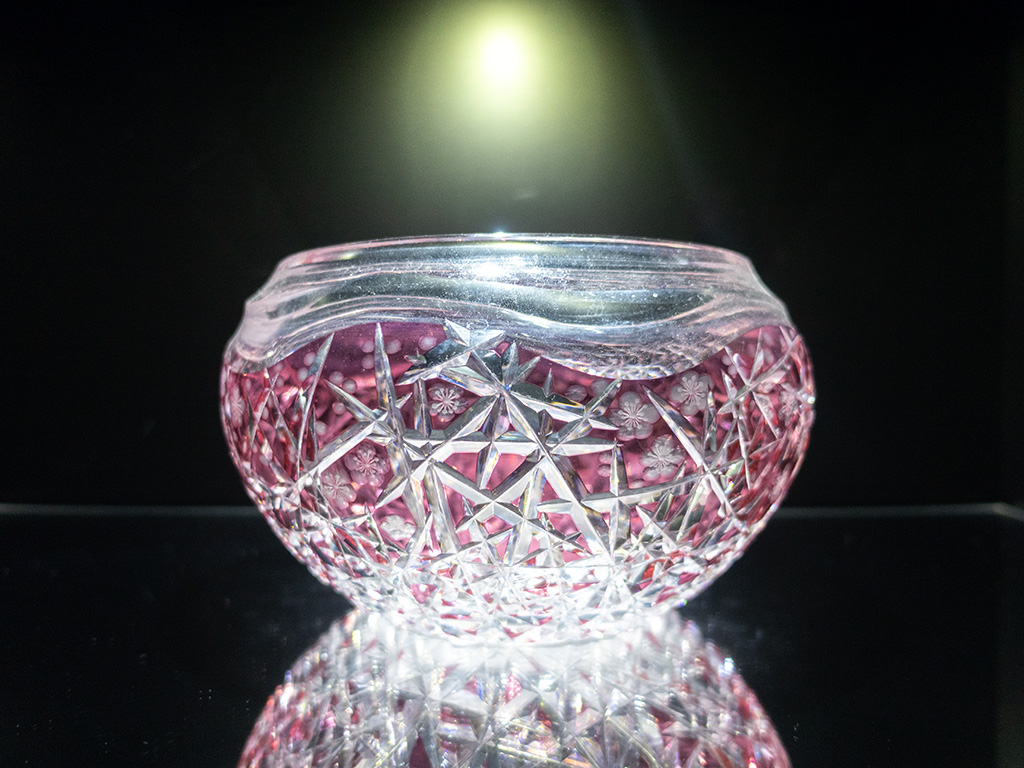
Also around this area was a display of crystalware.
The next exhibit was 花魁花舞, or the Oiran flower dance. This was basically a collection of miniature NEO Oirans from before, but with flowers hanging overhead and adorning the pedestals holding each tank.
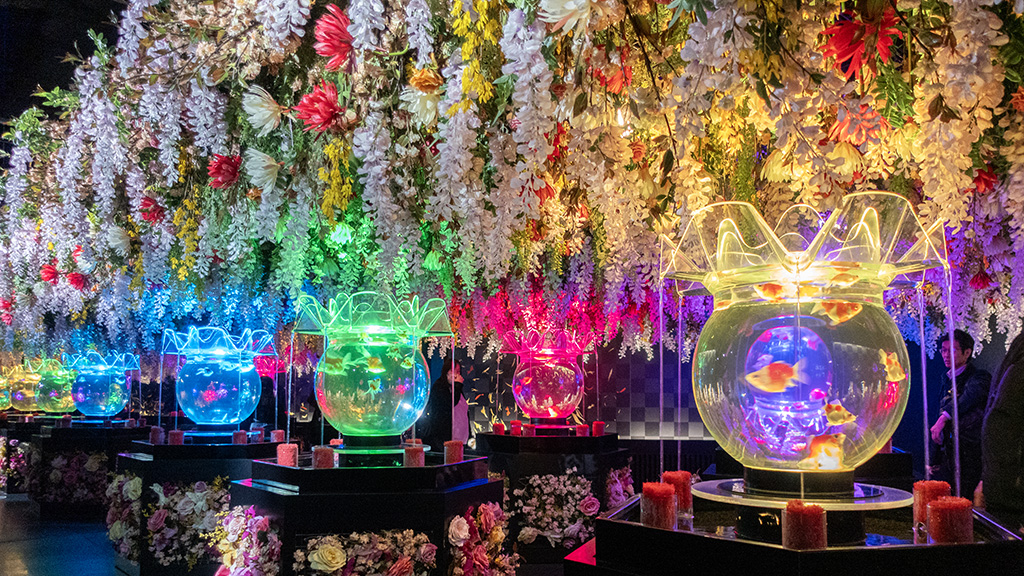
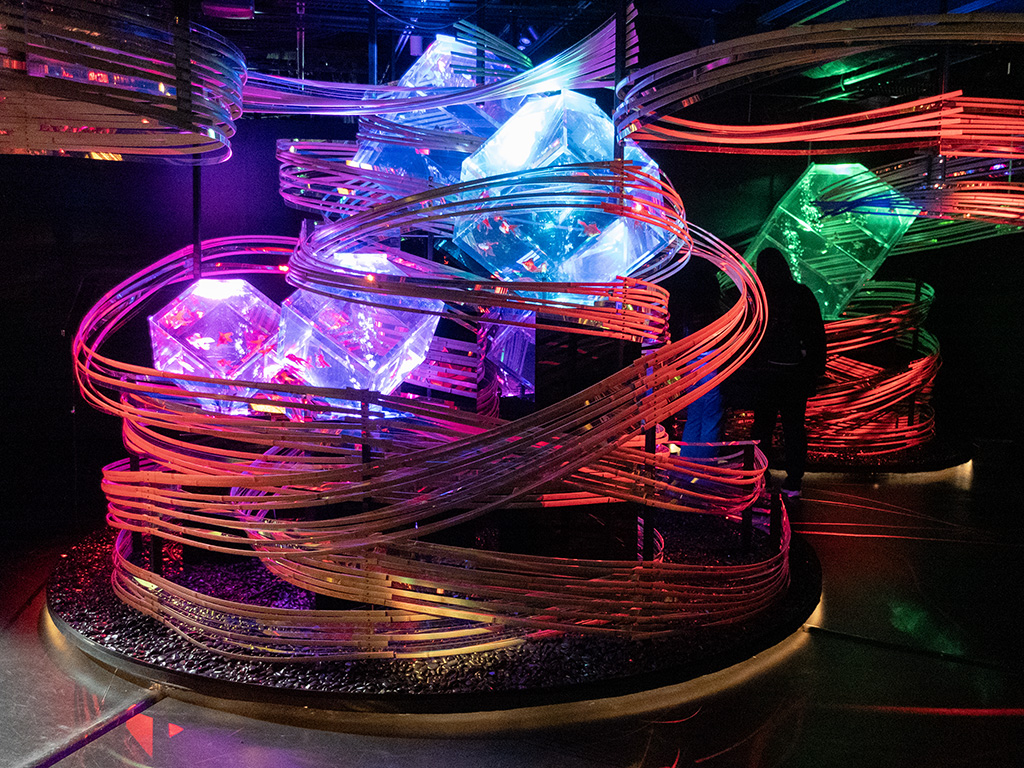
That was followed by 天空リウム, or the “Tenku-rium.” This art piece consisted of a large tank in the middle with what appeared to be flower pedals blooming on top, surrounded by smaller tanks, all containing a varying number of goldfish.
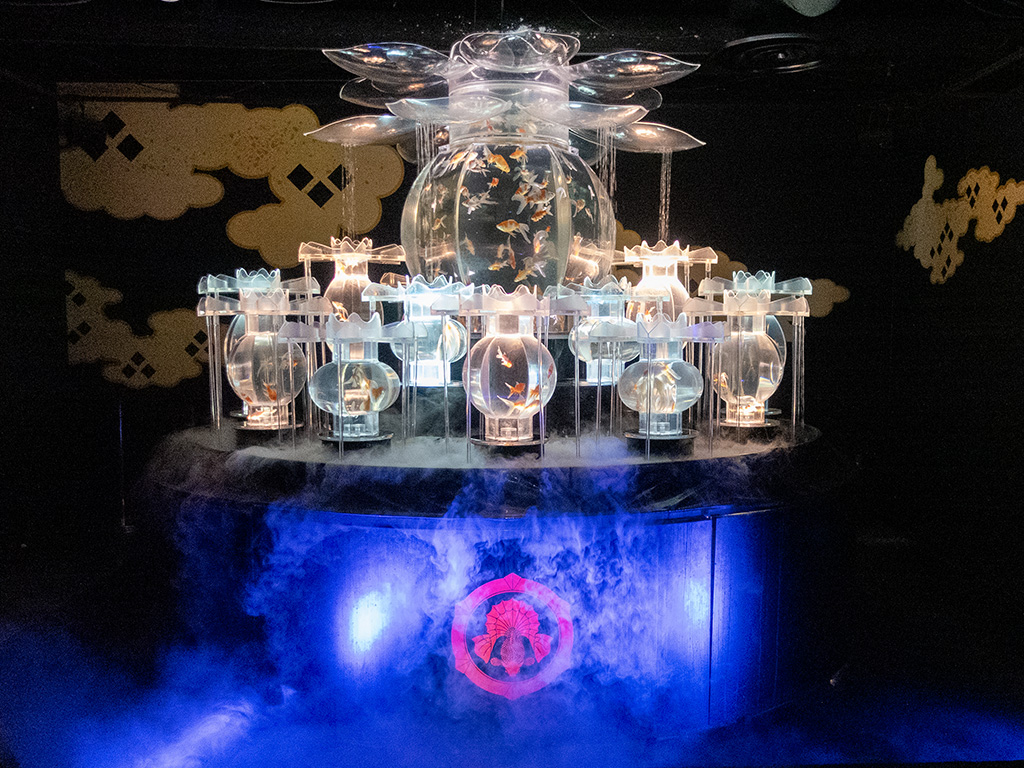
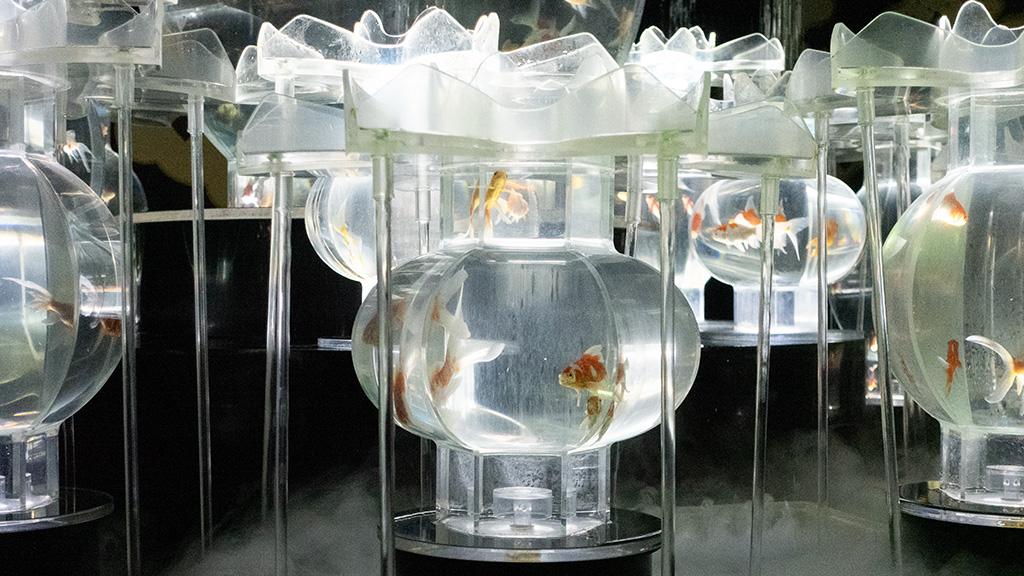

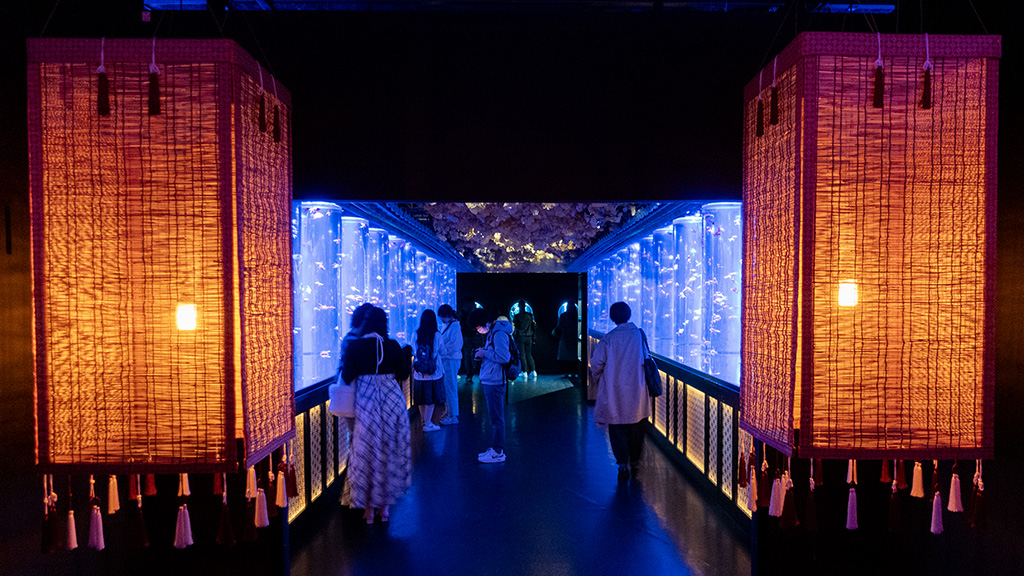
At the end of all the exhibits, there was a hallway with lanterns hanging overhead that led patrons to the art gallery and gift shop.
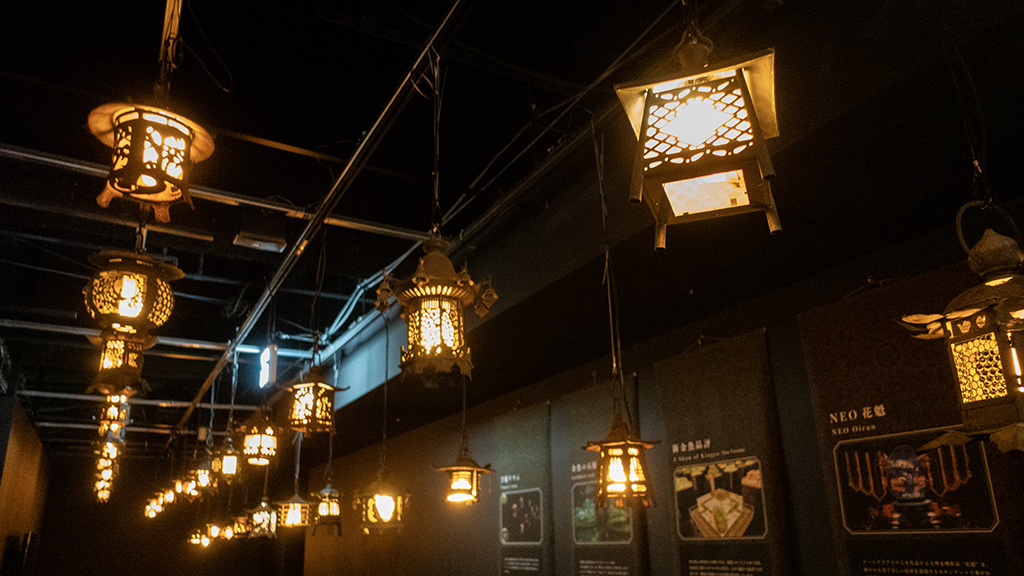
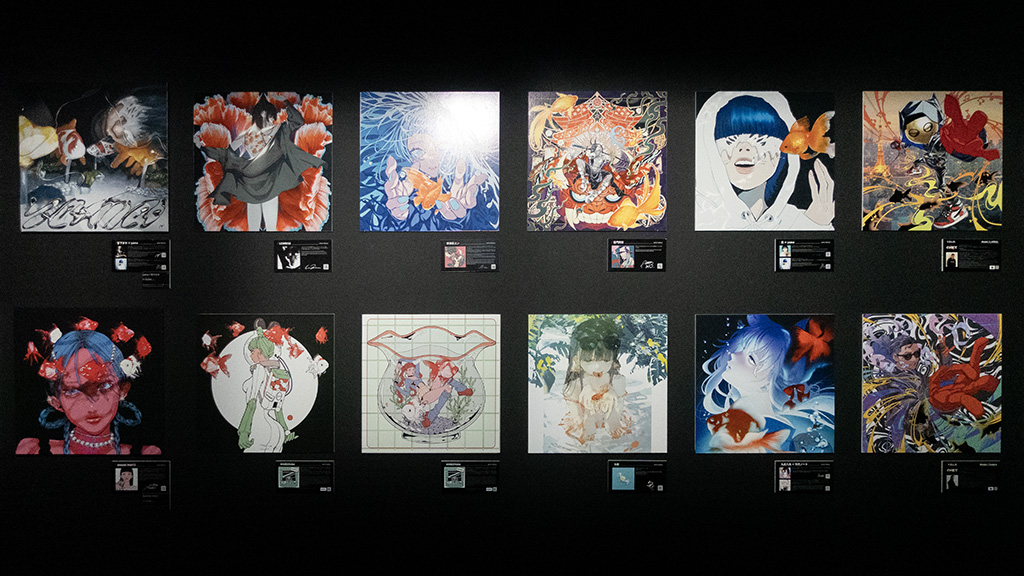
One side of the art gallery had 歌川国芳コレクション, or the Ukiyoe Collection by Utagawa Kuniyoshi. Perpendicular to this was コラボアート, or the collaboration art.
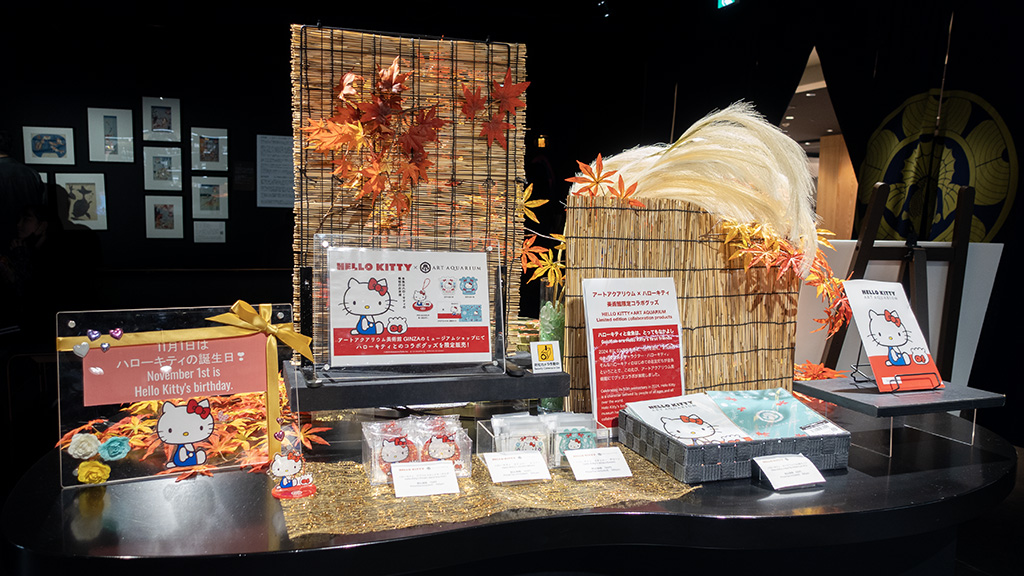
Past the art gallery was the gift shop. It was still November when I went to the Art Aquarium Museum Ginza, so they still had some Hello Kitty collaboration materials set up in celebration of Hello Kitty’s birthday month.
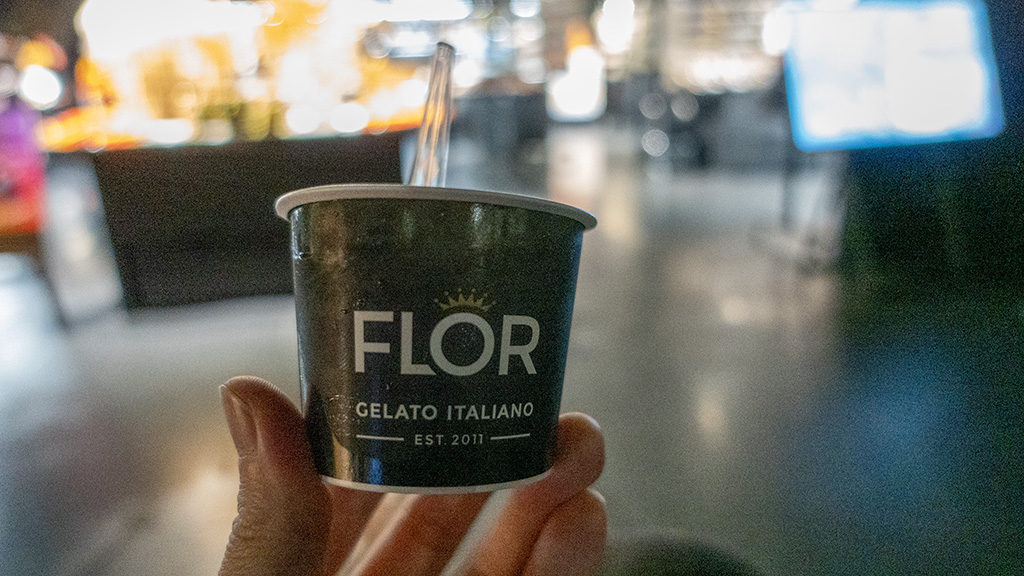
As part of my admission ticket, I received a small container of FLOR gelato. I was given a selection of available flavors, and I ended up picking pear because it’s not common to find pear-flavored sweets in the United States. This wasn’t quite as delicious as some of the fresh sweets I had at Japanese restaurants, but it was still much better than something you’d expect in a pre-packaged container.
The introduction to this blog post pretty much covers most of my thoughts on the Art Aquarium Museum Ginza. As long as you feel properly informed about the relatively high pricepoint of admission and the potentially questionable animal ethics pertaining to some of the enclosures, this is a very unique and one-of-a-kind tourist hotspot with thoughtful and well-polished presentation that I think is worth considering for a visit if you’re in the area.