While on my trip to Hong Kong, I wanted to try as many authentic Cantonese or Cantonese-fusion restaurants as possible. After doing some research, I found a restaurant called One Harbour Road at the Grand Hyatt Hong Kong that was highly-rated and frequently recommended online. They seemed to have a decent number of reservation slots open, so I was able to get a short-notice booking for a dinner on one of the days when I didn’t already have plans.
As my reservation was approaching, I got on the MTR and rode a train over to Wan Chai. From there, it was a quick half-kilometer walk up north towards Victoria Harbour before reaching the correct building. Afterwards, it took a bit of searching, as there are multiple entrances and multiple different establishments in the same structure, but after asking a few staff members for some instructions, I was able to find my way to the Hyatt.
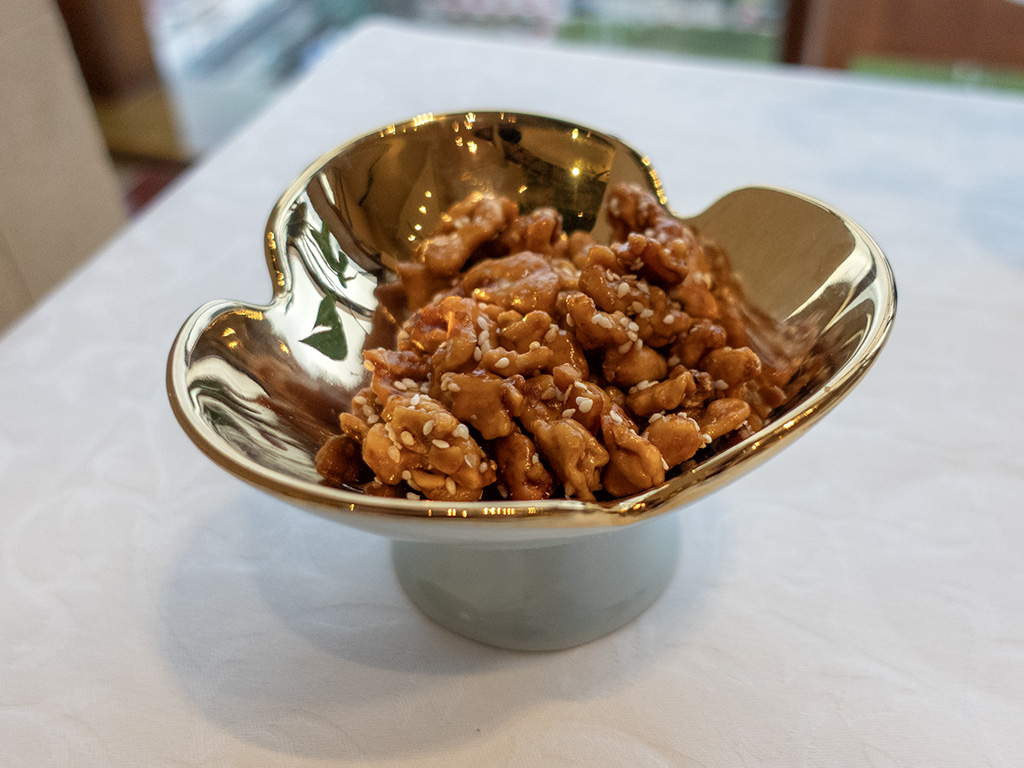
Upon arrival, I was promptly greeted and seated at a small table in a very private and peaceful area of the restaurant. I was given two menus—one for food and one for drinks. I was also provided with a small bowl of candied walnuts to snack on while I was making my decisions on what I wanted to eat that day.
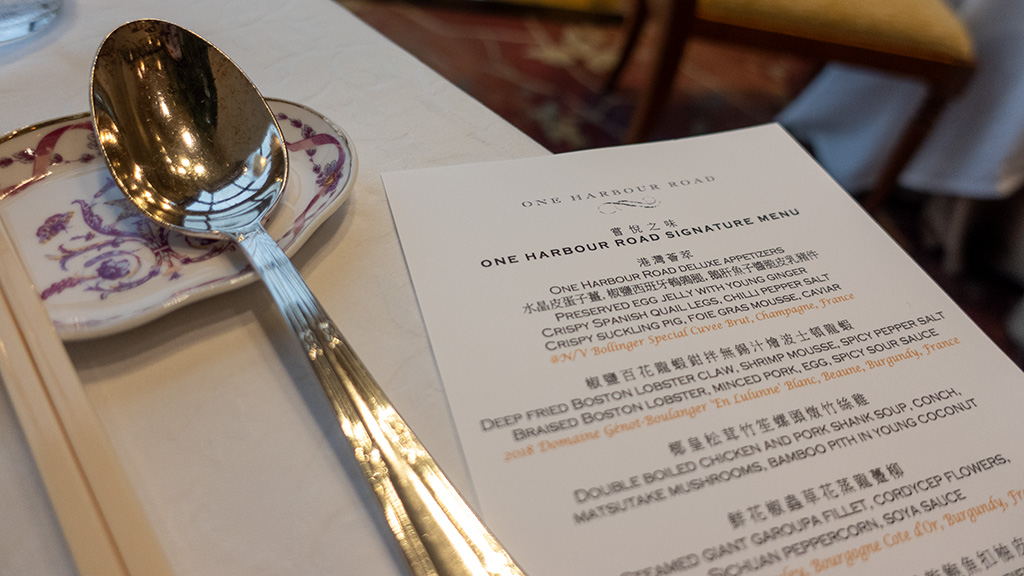
I am a fan of tasting menus because I like the idea of someone who knows food better than I do (i.e., the chef) building a multi-course meal for me. Thus, I specifically wanted to try either the seasonal set menu or the signature menu.
The seasonal set menu was appealing to me because I like trying limited-edition dishes, while the signature menu was appealing because it was named after the restaurant and namesake items are usually the restaurant’s best offerings. I ultimately went for the One Harbour Road signature menu.
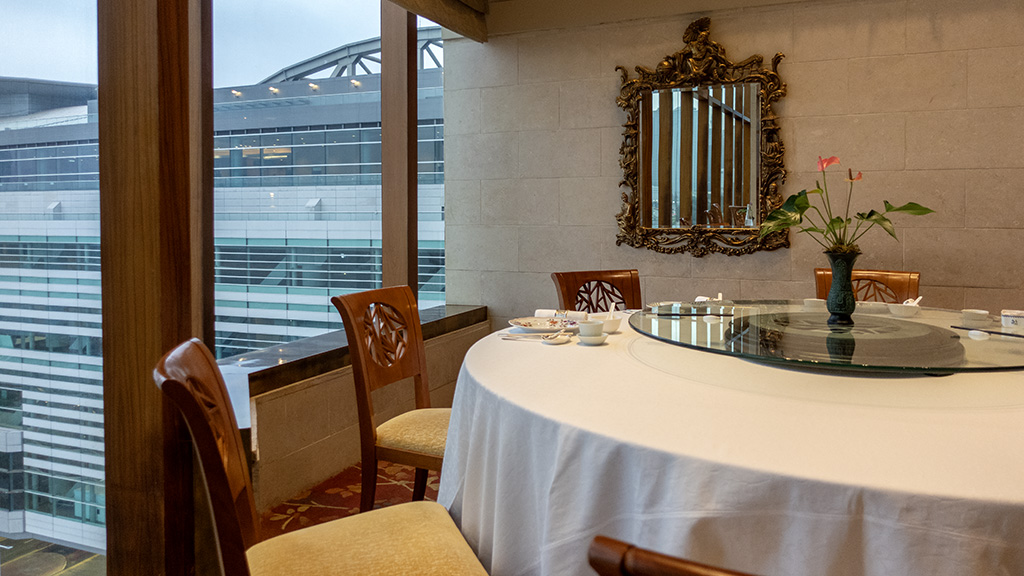
A little bit earlier, I mentioned how I was in a very private area of the restaurant. There was a structural pillar near me, and the only other table in this area was a large family-style dining table with a glass revolving server in the center. I was very pleased to be in this corner because I wouldn’t have to interface with other diners, and I also knew that my intense photographing of all my food wouldn’t be disruptive to others.
With that being said, later on, I realized that there might be a different reason I was seated in the corner. This restaurant had a “smart casual” dress code, but it seemed like everyone else in the restaurant had voluntarily dressed up much more than smart casual. I traveled to Hong Kong with only plain black t-shirts, so I didn’t have a collared shirt to wear.
Smart casual can be flexible, especially in a place where tourism is high, so I figured I would just give it a shot and wear my regular black t-shirt without going shopping for more clothing. On top of that, my appearance definitely looked more intentional. There were no graphics on my t-shirt, I had dark black pants that looked like a mix between jeans and dress pants, I was wearing black leather boots, and everything was form-fitting. My outfit looked specifically as if I was purposely going for a smart extra-casual all-black look.
With that being said, in comparison to other diners, I definitely looked underdressed. I had a very funny after-the-fact realization that maybe the hostess seated me in this far back corner in order to quarantine me away from the well-dressed patrons and try to stop my t-shirt from being an eyesore in their dining experience.
That is completely reasonable, and I am glad that they seated me anyway and didn’t even make me rent a dress jacket from them in order to meet the dress code. If this really was why I was put in the corner, I also appreciate their social awareness and their efforts in preserving the higher-class dining experience of other customers. As I mentioned before, it fortunately ended up being a win-win situation for the both of us.
My point is, if you also plan on dining at One Harbour Road, I definitely recommend dressing up a little bit and not wearing a t-shirt like I did…
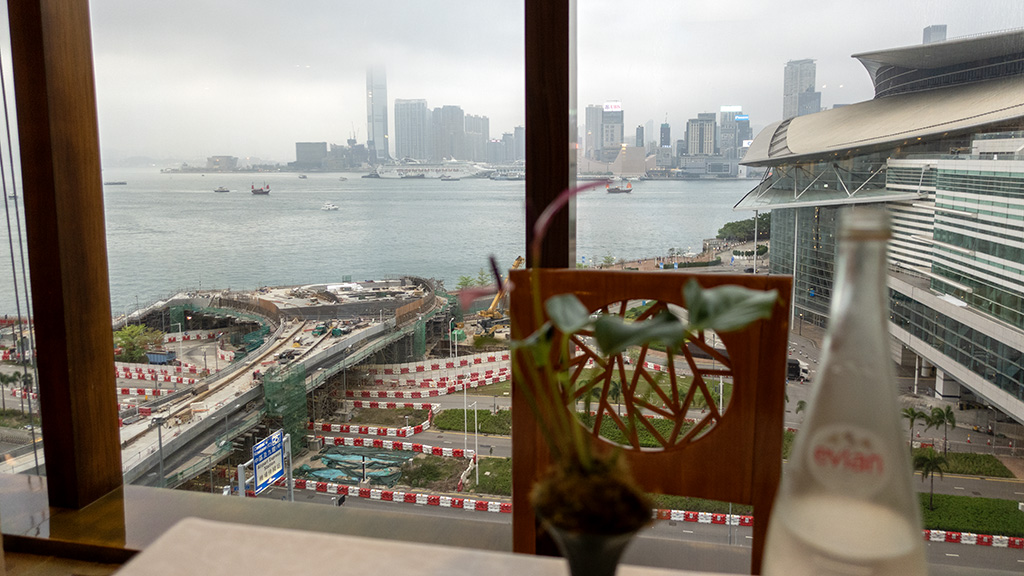
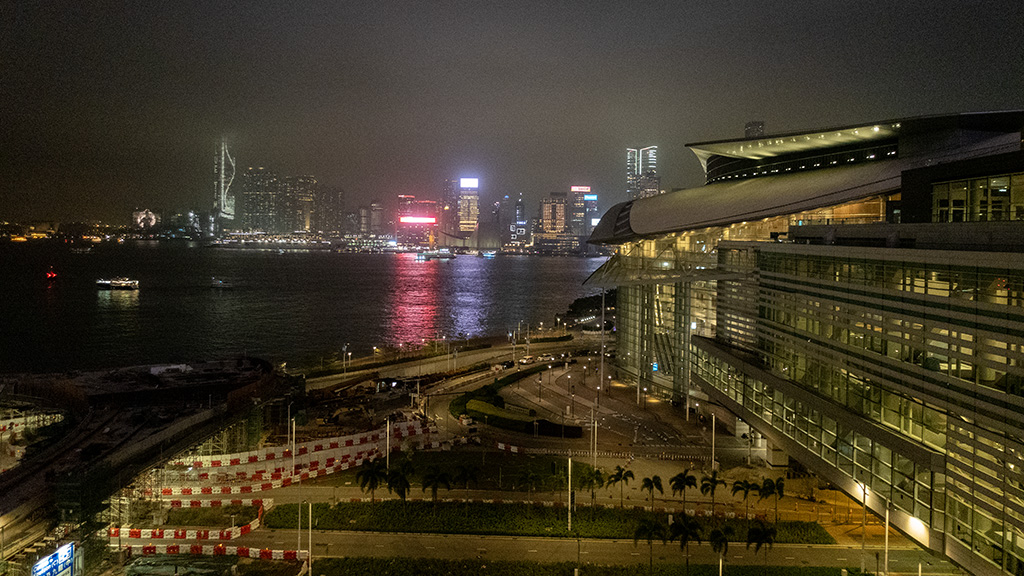
My seat had an amazing view of Victoria Harbour, the Tsim Sha Tsui skyline, and the Hong Kong Convention and Exhibition Centre.
In addition to the One Harbour Road signature menu, I also added on a non-alcoholic beverage pairing.
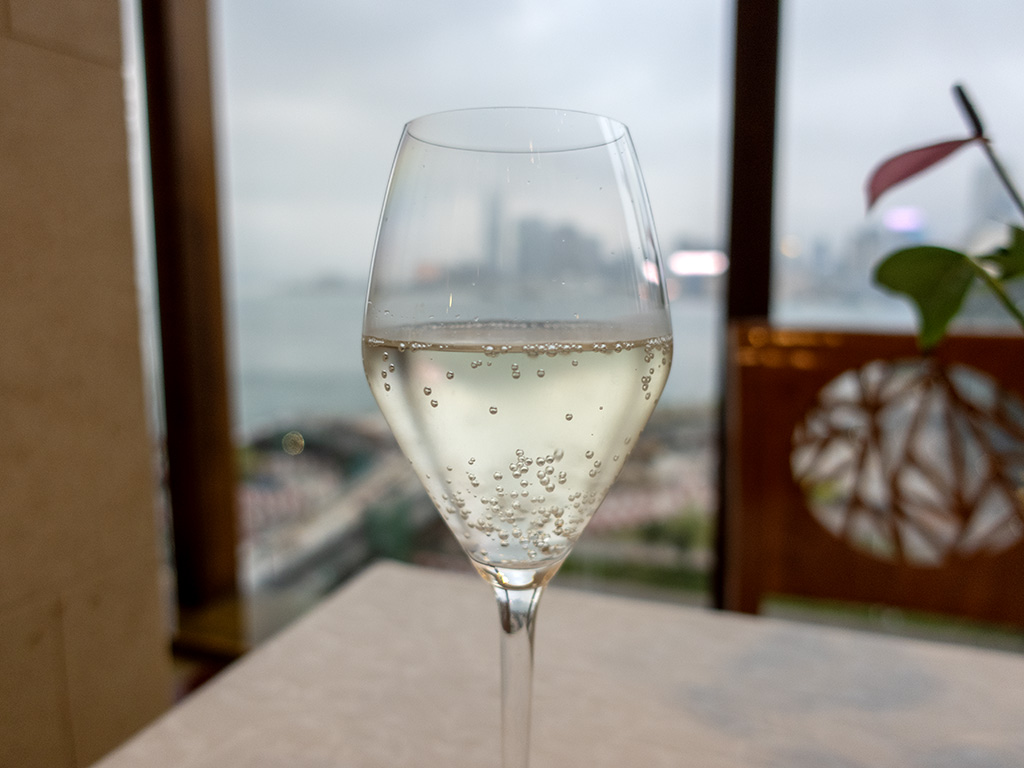
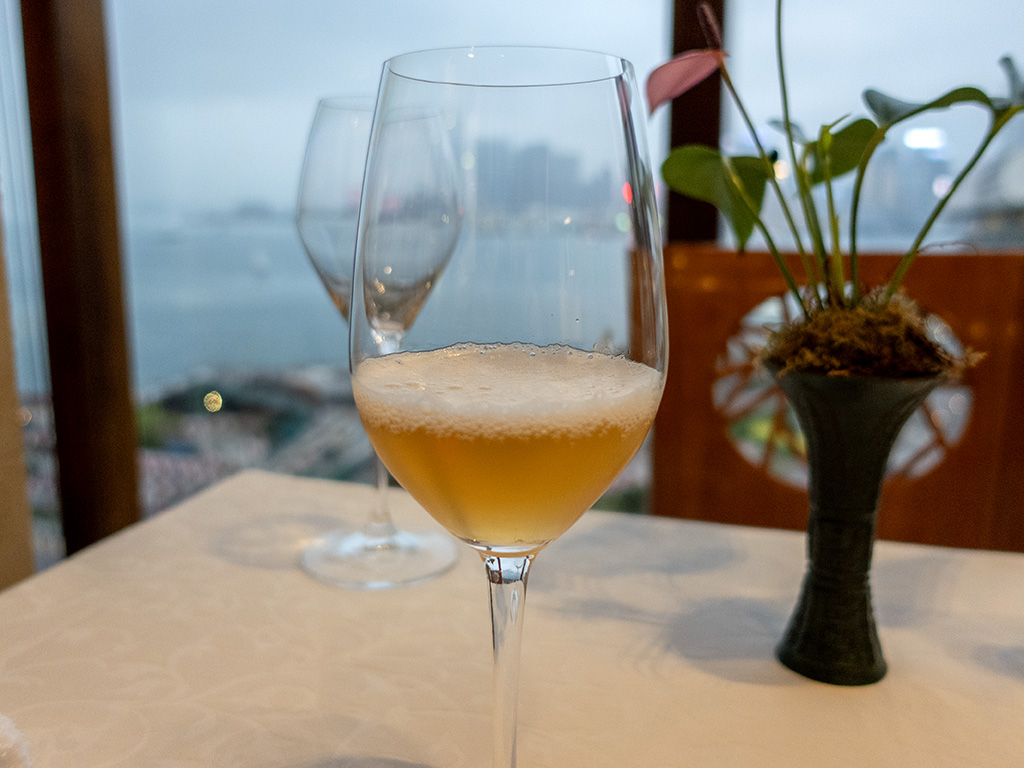
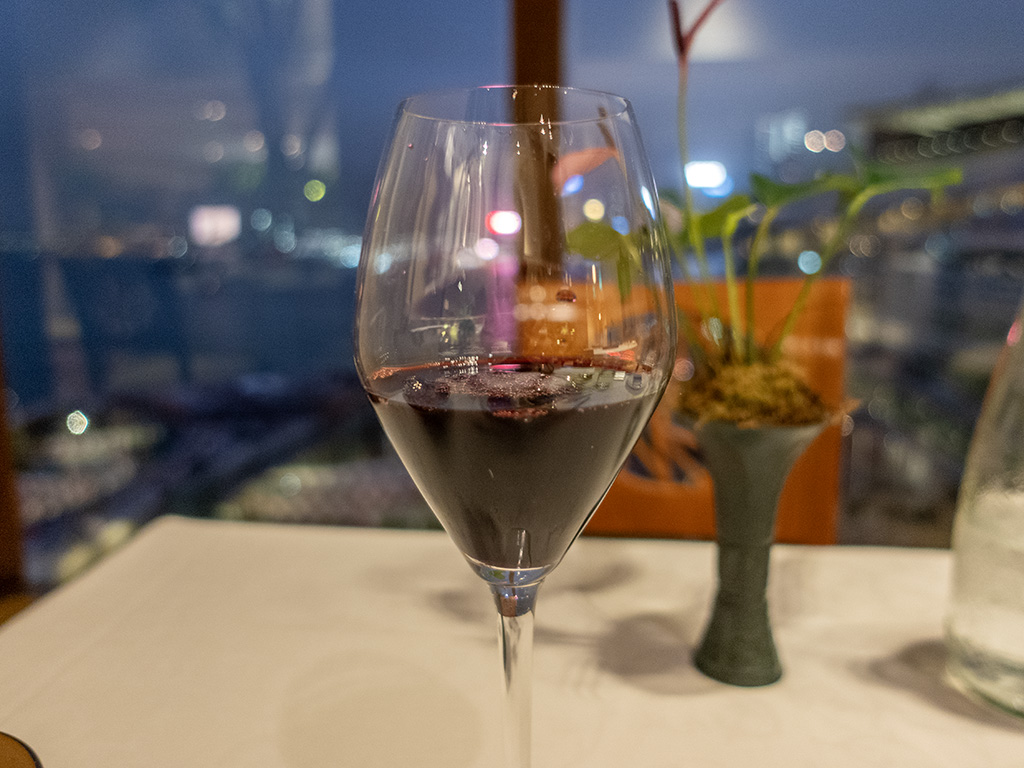
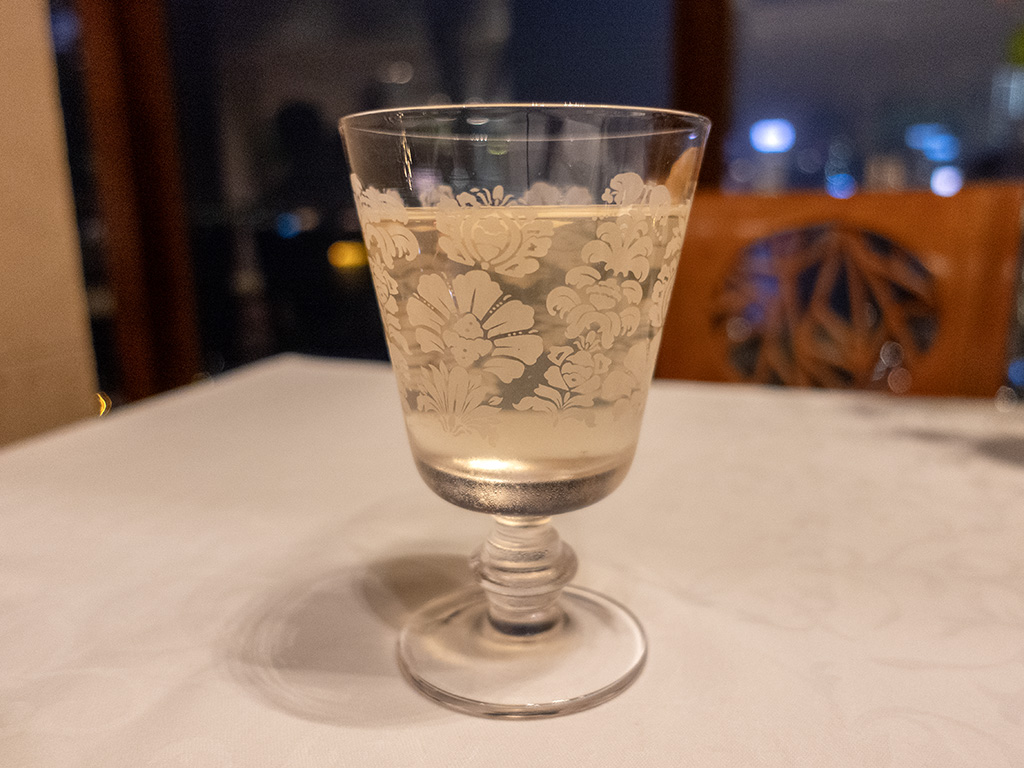
My first drink, which accompanied the appetizers, was Lyre’s Classico Grande, Glera from New South Wales, Australia.
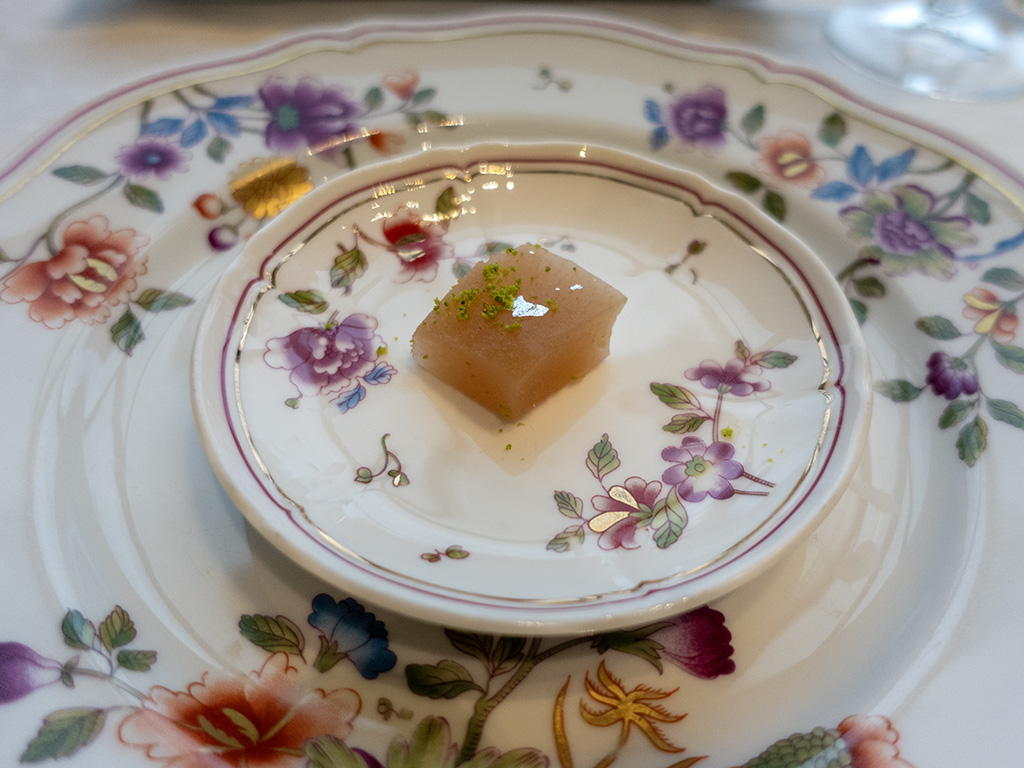
While the deluxe appetizers were coming out, I was served a small bite as the amuse-bouche. I don’t remember what this was, but it had a moist, spongy texture to it.
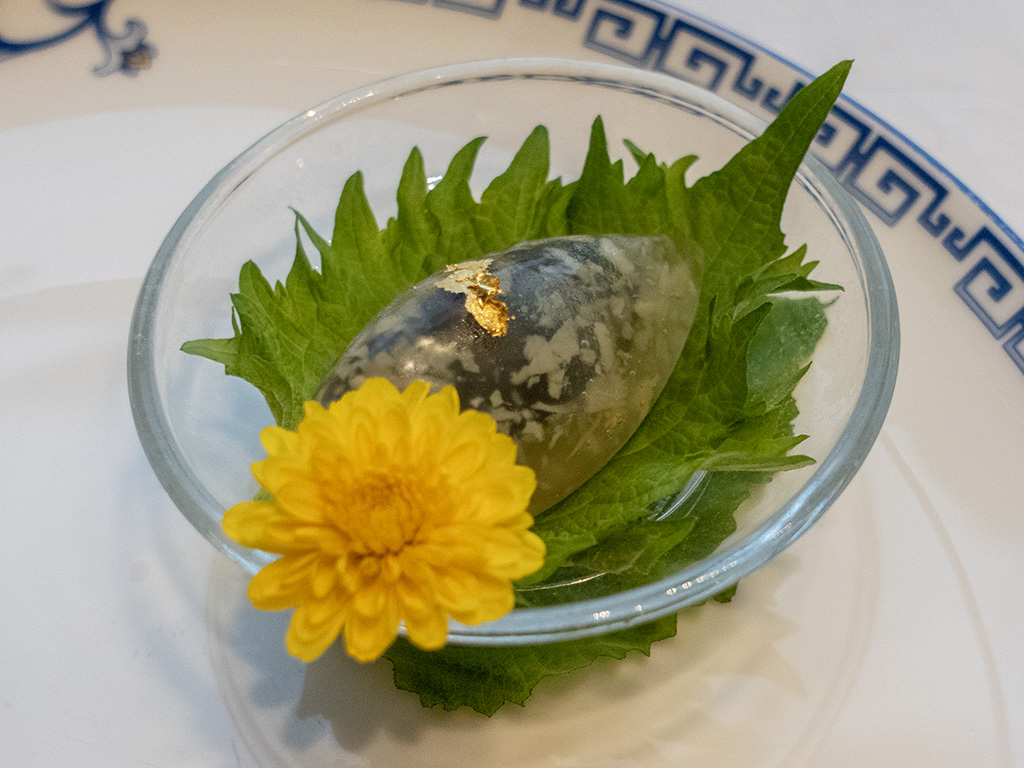
The first appetizer was preserved egg with young ginger.
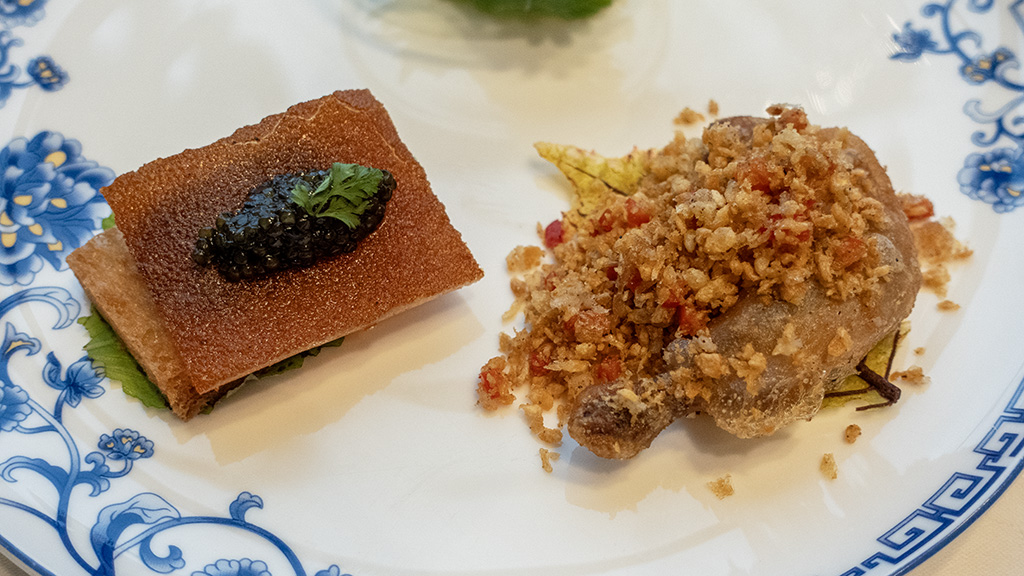
Next was crispy suckling pig topped with foie gras mousse and caviar (pictured on the left) and crispy Spanish quail leg with spicy pepper salt (pictured on the right).
By this point, I wasn’t impressed. I think it was because of the extra crispy and fried nature of the items, but this didn’t really taste gourmet. I liked the flavor of the suckling pig, but the quail leg basically felt like I was eating a slightly more premium fried chicken cooked extra-crispy.
Next up on the non-alcoholic beverage pairing was LYSEGRØN Sparkling Tea, with notes of sencha, green tea, and citrus, from Copenhagen, Denmark.
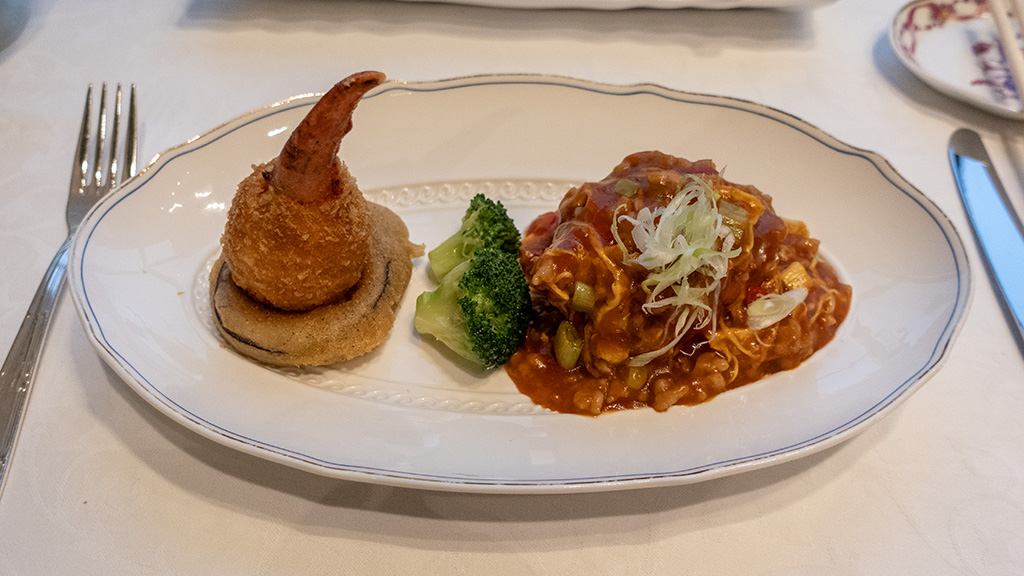
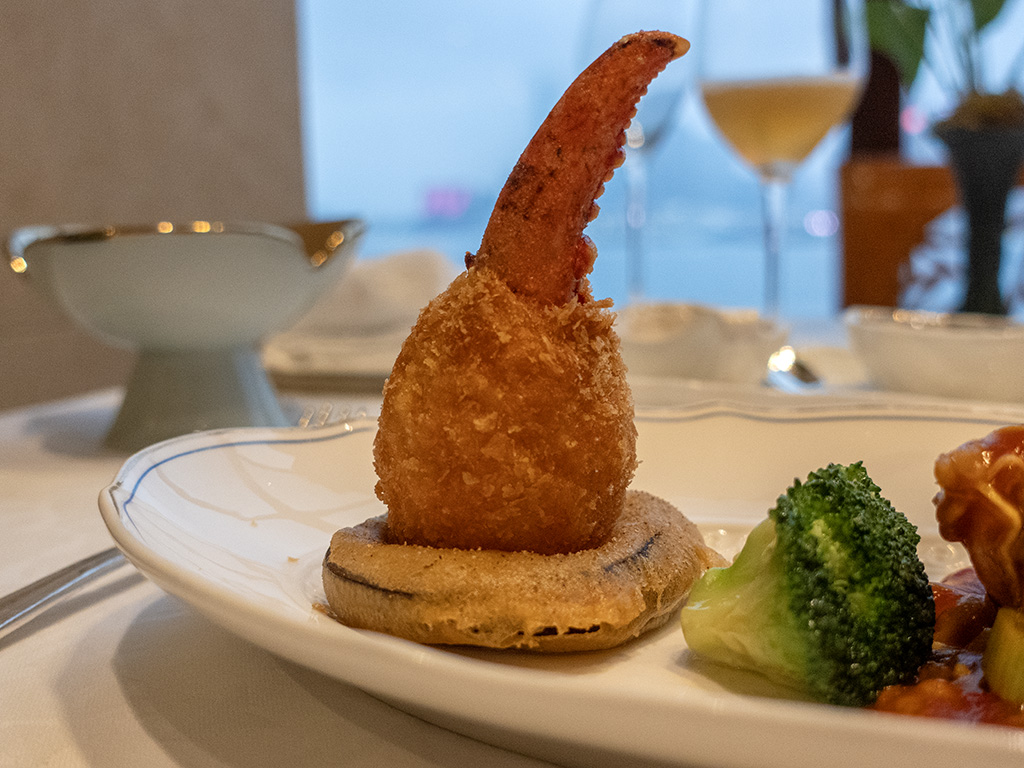
Next up was the lobster course. This had two components to it: deep-fried Boston lobster claw with shrimp mousse and spicy pepper salt (pictured on the left) and braised Boston lobster with minced pork, egg, and spicy-sour sauce (pictured on the right).
This was strange. Again, because the lobster claw was fried, it didn’t really taste gourmet. The braised lobster was covered in so much sauce that I could barely tell that the lobster was there at all, and it was almost like I was just eating spaghetti’s cousin.
This is a bit sad to say, but my favorite component of this dish was the broccoli, due to it being the only part that wasn’t fried or overseasoned.
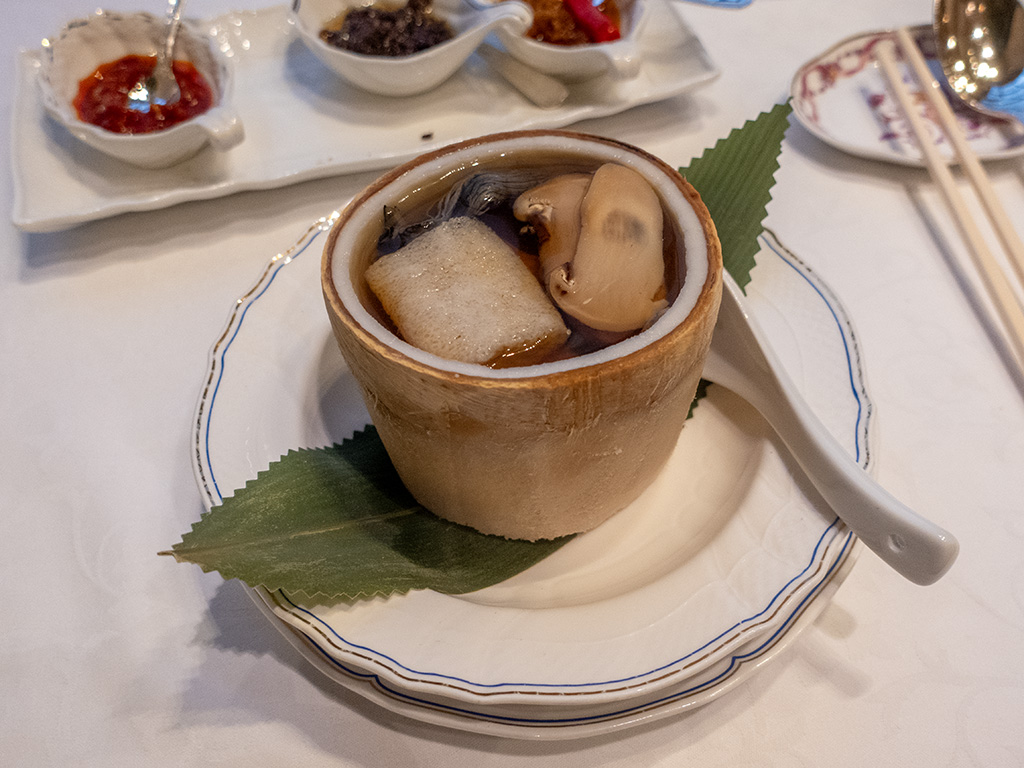
After the lobster, I had double-boiled chicken and pork shank soup with matsutake mushrooms and bamboo pith, all served inside a young coconut.
This is where things were improving. This soup had a deep, rich flavor that relied primarily on the ingredients to shine, and less so on external seasoning or flavoring.
I also liked the fact that it was served inside a coconut, and I think that added a subtle enhancement to the flavor of the soup. By the time I was done, the soup had softened the coconut, so I gently scraped some of it off the outer shell and enjoyed a small layer of the coconut flesh as well.
The menu said that there was an upsell to get this with fish maw as a supplement; I did not go for that option, and just got the regular preparation of the soup.
By this point, I got to watch the sun set and it was getting darker.
Next on my non-alcoholic beverage pairing menu, selected to go along with all the main entrées, was van Nahmen premium cherry juice from Germany.
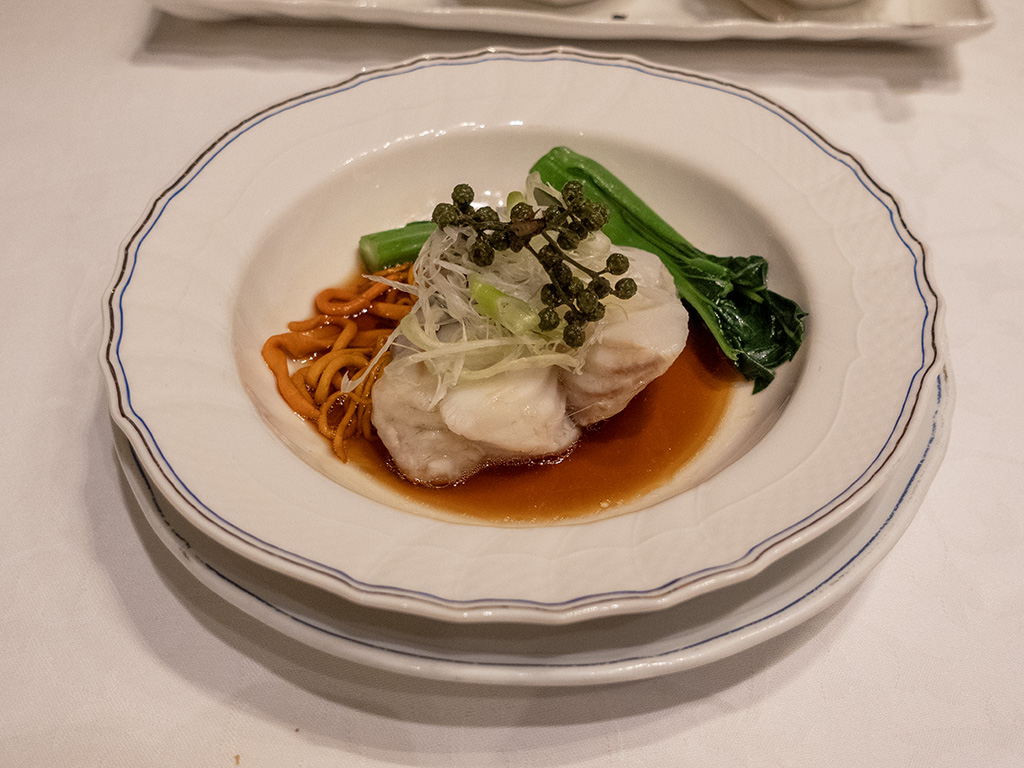
The next dish was steamed giant garoupa fillet with cordycep flowers and Sichuan peppercorn atop soy sauce.
This was my favorite dish of the dinner. It had a clean, straightforward flavor. The vegetables were refreshing, and the soy sauce was diluted enough that it added a tasty soy sauce flavor without making the overall dish too salty. I also really enjoy the type of spice that comes along with Sichuan peppercorn, so in addition to submerging it in the soy sauce and under the fish to extract as much of the flavor as possible, I also took little nibbles of it to add a sharp kick to every other bite of fish.
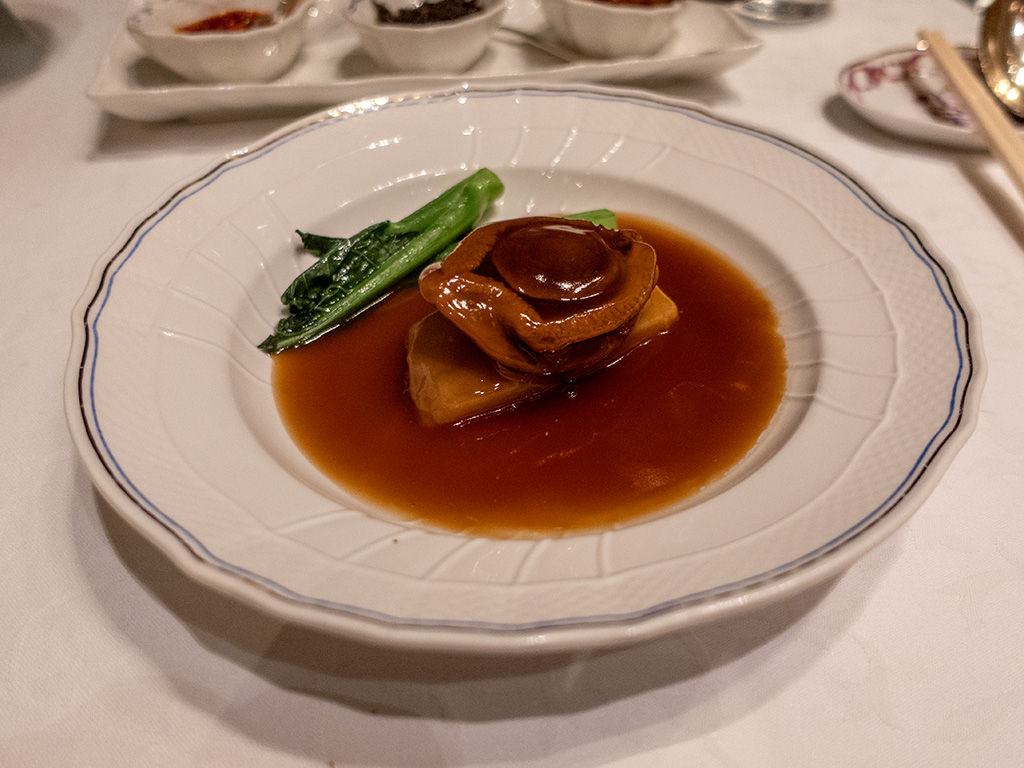
After the fish came out a braised whole South African premium dried abalone with vegetables, pomelo peel, and oyster sauce.
Unlike the soy sauce, the oyster sauce was not well-diluted. I have a feeling that I would’ve enjoyed this abalone, but I couldn’t really taste it because of the sauce. I think if they had provided the sauce as a drizzle on top (rather than as a sauce bath), the abalone would be able to speak for itself and serve as a great dish.
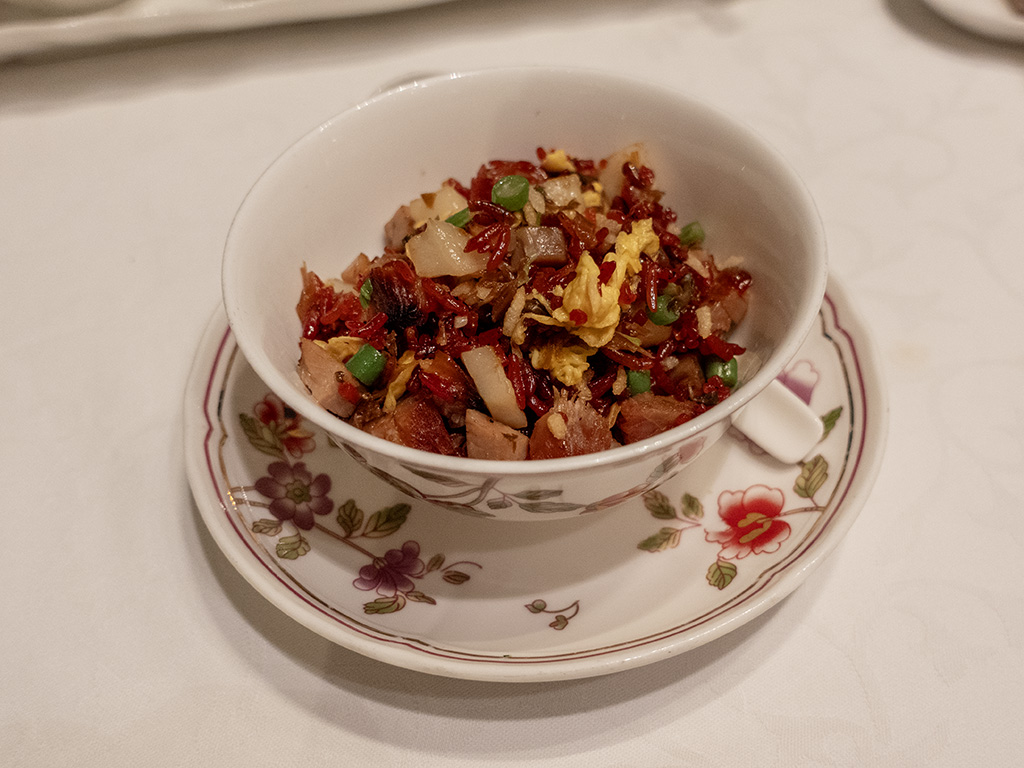
Finally, the last main entrée of the meal was fried rice with scallops, barbecued pork, beetroot, green beans, egg, and preserved vegetables.
This was an extremely premium-tasting fried rice. I don’t know if this is just me, but I often associated fried rice with just throwing together a bunch of different leftovers before they go bad so that you don’t have to waste food. However, this fried rice tasted like it was made with high-quality ingredients and was crafted as gourmet fried rice.
One thing that I found particularly notable about it was the pork flavor. I am not really a fan of bacon; I think it is just very low-quality meat, and its high saturated fat content directly conflicts with my efforts at consuming a heart-healthy diet to counteract my hereditary high cholesterol. With that being said, this fried rice tasted like it had ultra-premium bacon in it, even though it was just regular barbecued pork. I think the way it was prepared extracted a bacon-like flavor from it without adding in the other negative aspects of bacon.
The final beverage of the non-alcoholic pairing was a house special—homemade cold brew dried rose bud and jasmine dragon pearl tea.
The previous three drinks in the beverage pairing were decent, but none of them really stood out as perfectly complementing any of the dishes. This cold brew tea, however, fit extremely well together with the dessert courses. The plain, unsweetened flavor of the tea synergized well with the sweetness of the desserts.
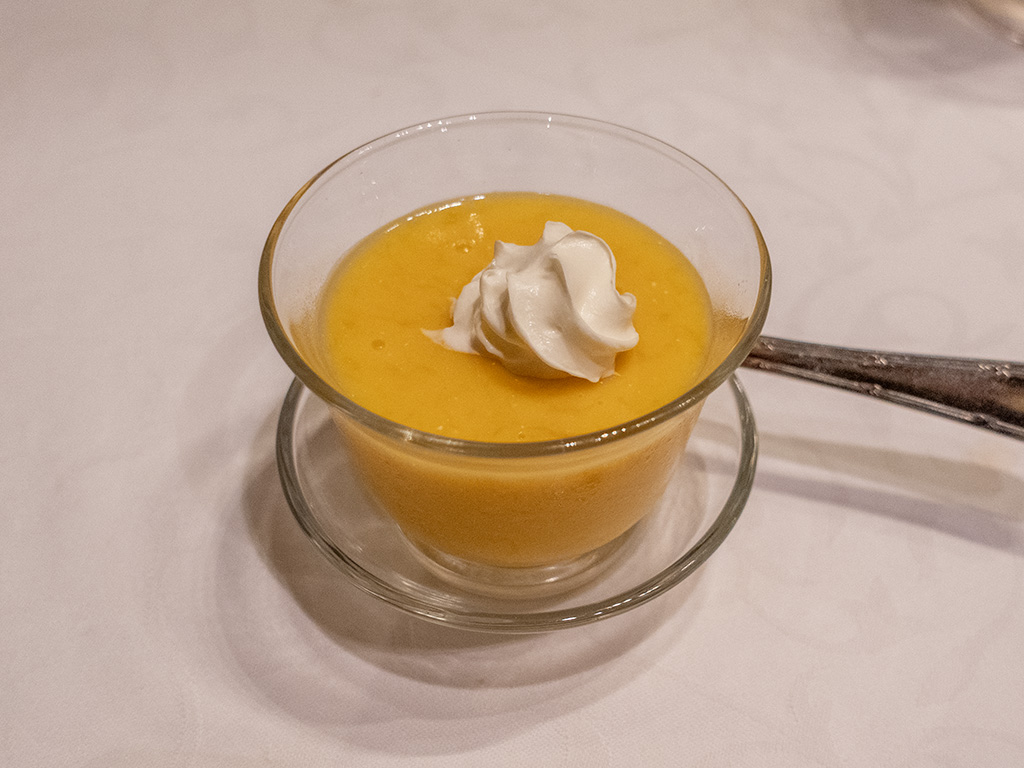
The first dessert was chilled mango pudding.
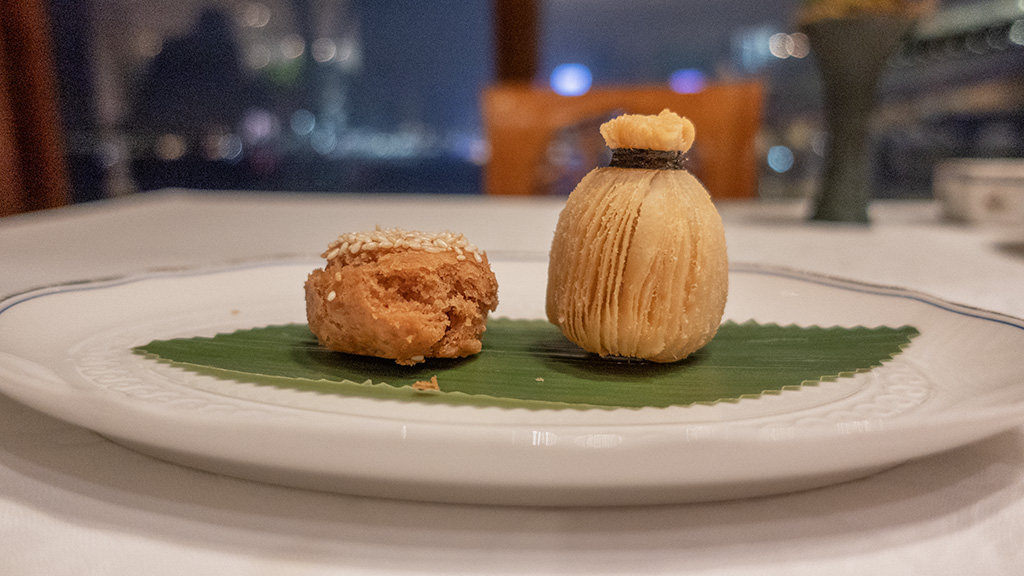
The next two desserts were deep fried fermented beancurd pastry with lotus paste (pictured on the left) and baked pineapple puff pastry with milk custard (pictured on the right).
I was already feeling pretty full by this point. I am guessing that this had something to do with the fact that an unusually high number of items I was served at this restaurant were intensely fried. I can eat a lot of food if it is prepared with refreshing ingredients and minimal seasoning, but once things get too fried or too salty, it’s as if my stomach sort of tries to block out any more from entering and signals that it is too full.
Both of these were heavily fried again. I did end up finishing both, but it became a bit of a struggle near the end.
By the end of my meal, it had gotten dark, so I was able to see the buildings lit up in the distance.
Here are some photographs I captured of some other areas of the interior of the restaurant:
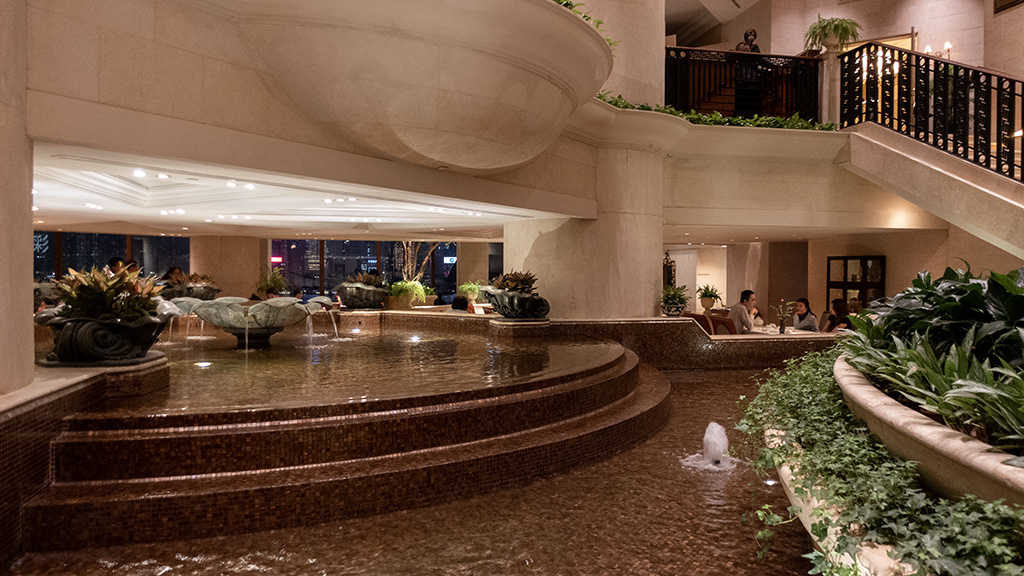
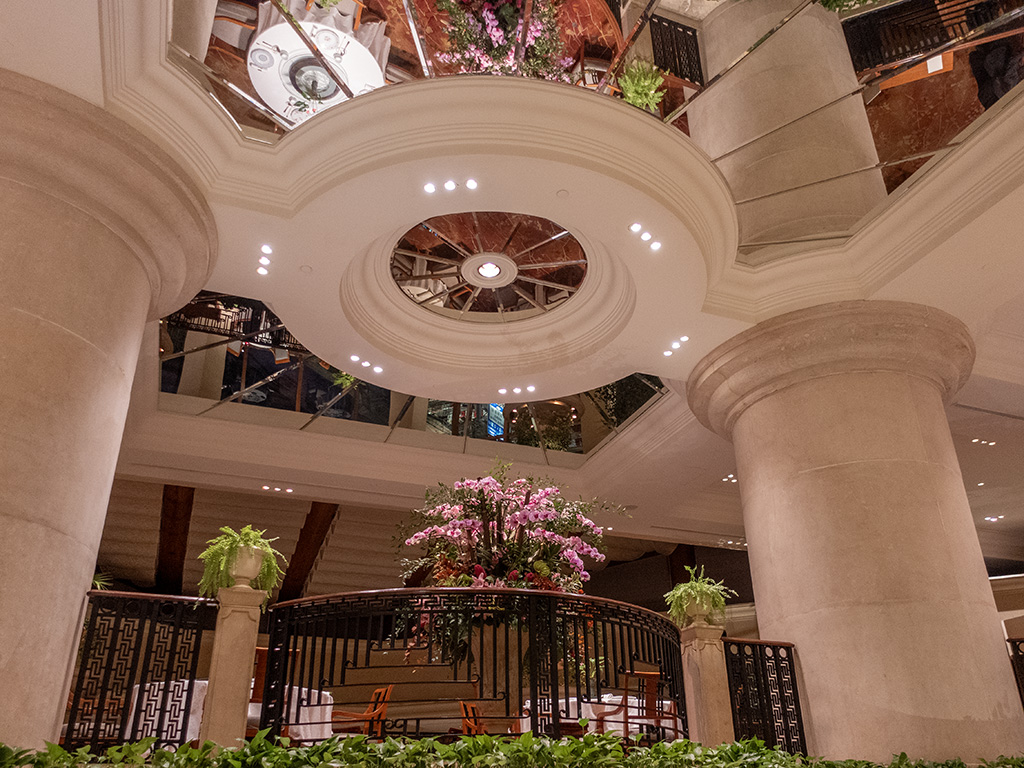
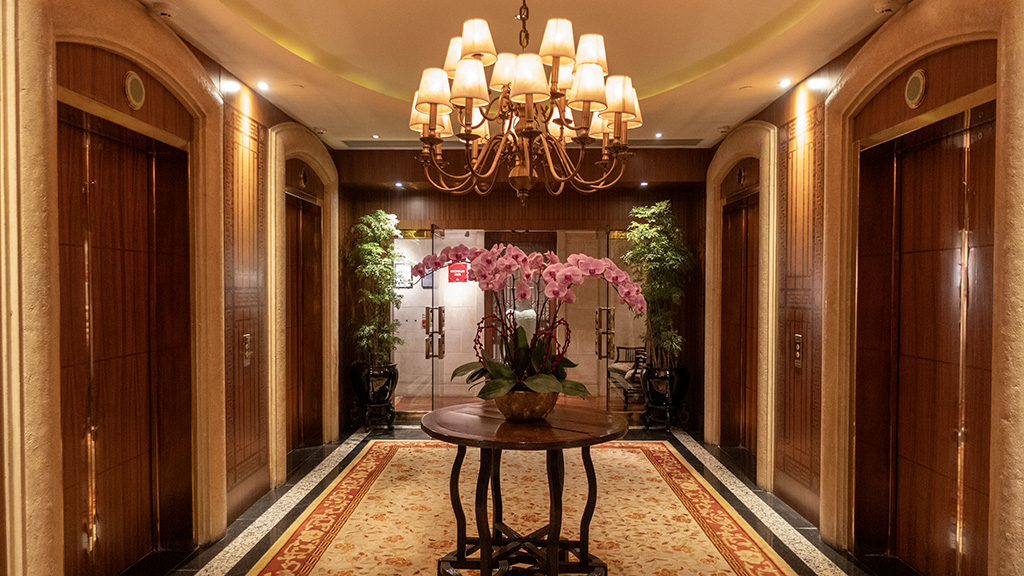
And this is what the elevator lobby looked like:
| One Harbour Road signature menu | HK$ 1,738.00 |
| Non-alcoholic beverage pairing | HK$ 400.00 |
| Evian glass-bottled water (750 mL) | HK$ 95.00 |
| Service charge (10%) | HK$ 223.30 |
| Restore with ZFPA Fund (1%) | HK$ 22.33 |
| Total | HK$ 2,478.63 |
| Converted to United States dollar | US$ 328.68 |
Overall, I thought that this meal was not worth the money I paid. If I’m paying a base price of over US$200.00 for a meal, I expect that meal to be very high-quality or otherwise have some degree of novelty or innovation to make it stand out. Unfortunately, the dishes at One Harbour Road were a hit or miss, and it had too many “miss” dishes in my opinion to justify a high price point.
Furthermore, I don’t know if this makes it better or worse, but I feel like a lot of these dishes would’ve turned out great if only they had just slightly adjusted a small component of the preparation process (e.g., braising or grilling instead of frying, reducing the amount of sauce, etc.).
In case you are curious, if I had gotten the seasonal menu instead of the signature menu, this is what I would have been served instead:
- Smoked threadfin with ginger and spring onion sauce
- Honey-barbecued pork
- Braised sliced pumpkin, taro, winter melon, caramelized pineapple, and strawberry in hawthorn sauce
- Braised fish maw and fish head soup
- Steamed blue cod fillet wrapped in lotus leaf, shredded Iberico pork, and preserved vegetables in soy sauce
- Steamed Australian scallop, prawn, and crab meat in sea urchin sauce and egg whites
- Braised e-fu noodles with sliced abalone, black mushroom, and vegetables
- Lotus seed cream with dried longans and sago
Looking back, I definitely should’ve gotten the seasonal menu instead, as it seems like there is nothing in there that is fried. On top of that, the seasonal menu was cheaper: HK$1,428 instead of HK$1,738. I don’t know what my thought process was at the time that I made the decision to get the signature menu (or if there was even a thought process at all), but I assume I just wanted the namesake tasting menu and put all my trust in the chef to prepare something excellent.
Based solely on my experience at this particular dining session, I cannot recommend One Harbour Road’s signature menu at its current preparation style and price point. I think they might also be charging extra-premium pricing, not only because it is part of a Grand Hyatt and they want to portray themselves as luxurious, but also because they have been designated by Michelin as a selected restaurant.
With that being said, it’s very possible that a different tasting menu would be much better, which is why I clarified that I can’t recommend the signature menu, rather than not recommending the entire restaurant.