My blog posts from my trip to Hong Kong are coming to an end, and I saved the best for last. Out of the many different restaurants I went to, most of which were tasting menus and other curated dining experiences, my favorite one from my Hong Kong travels was Feuille, located on the fifth floor of The Wellington in Central.
Feuille is the French word for “leaf.” This restaurant picked it as their name because they specialize in creating innovative dishes with vegetables. To clarify, it wasn’t a vegetarian restaurant, but they did avoid red meat throughout the whole tasting menu and instead used only seafood and poultry.
There were two options for the tasting menu: the discovery menu and the signature menu. At a lot of restaurants, the tasting menus have different items and follow a different flavor storyline. However, upon reviewing the two course lists, I realized that the discovery menu was just a shorter version of the signature menu. The discovery menu was HK$1,288 per person; the signature menu was only HK$400 more for what seemed like quite a lot more food. Thus, I ended up going with the signature menu.
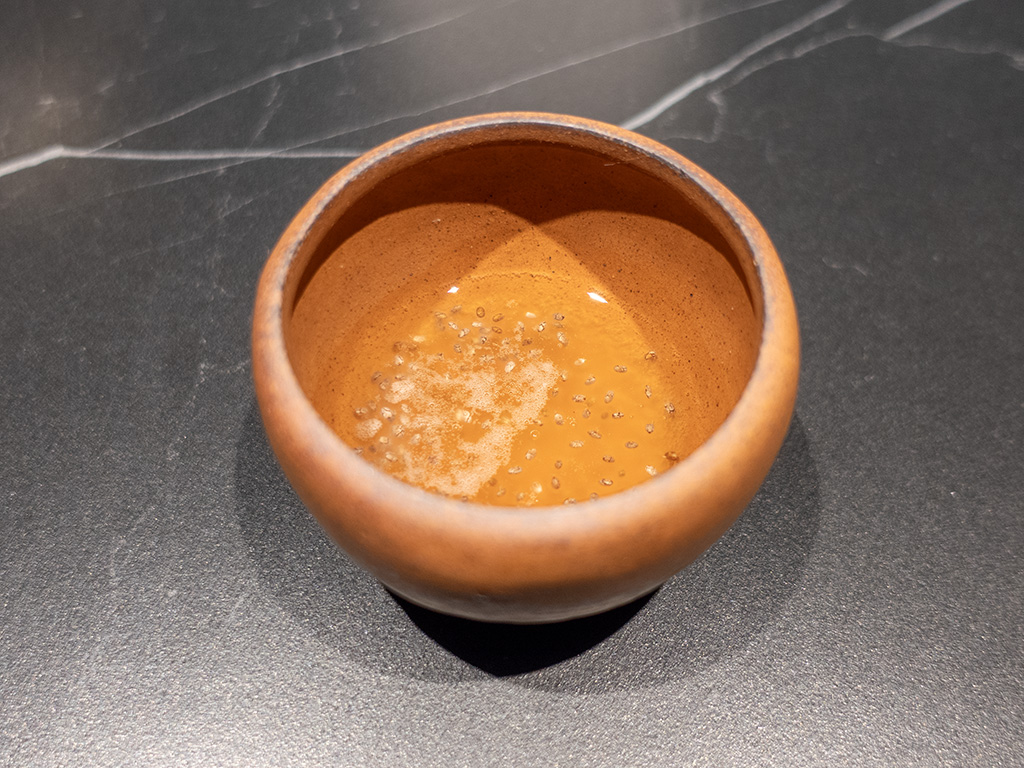
The first appetizer was lamiaceae seed kombucha. I’m usually not that big of a fan of kombucha because it just tastes like I’m drinking vinegar and I don’t particularly like vinegar, but this kombucha was much milder than expected. It gave a nice, refreshing kick to start the meal, and it wasn’t so sour that it made me pucker.
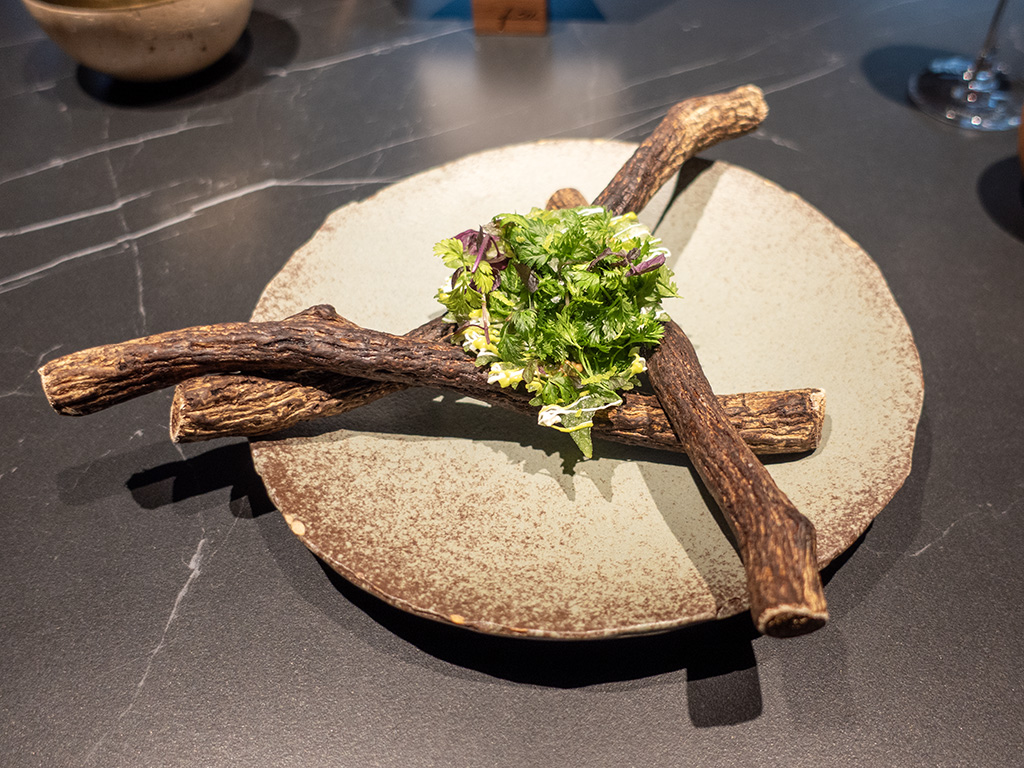
Next was mustard seed and sea grape atop a shiso leaf. I think the leaf was dehydrated, because it had a very brittle texture to it, and it tasted “leafy,” but had less of the iconic shiso flavor than I expected. Overall, it felt like I was eating a miniature garden, which was fun.
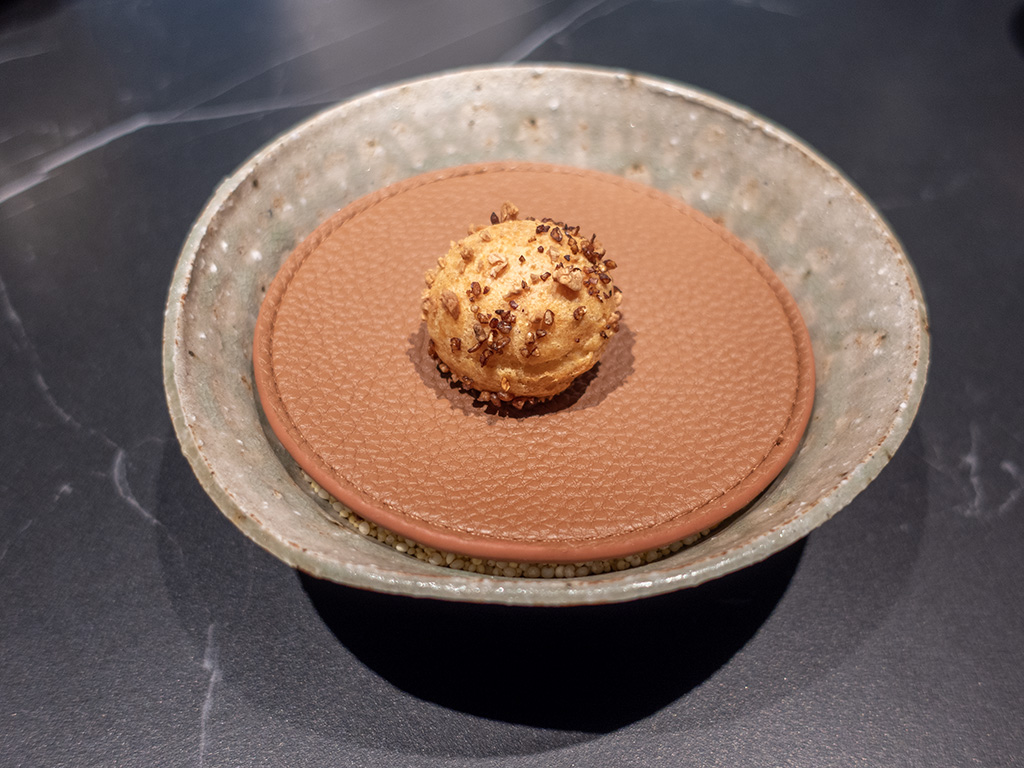
Afterwards was a yeasty pastry with sobacha and comté. This tasted like a deeply earthy and satisfyingly nutty bread.
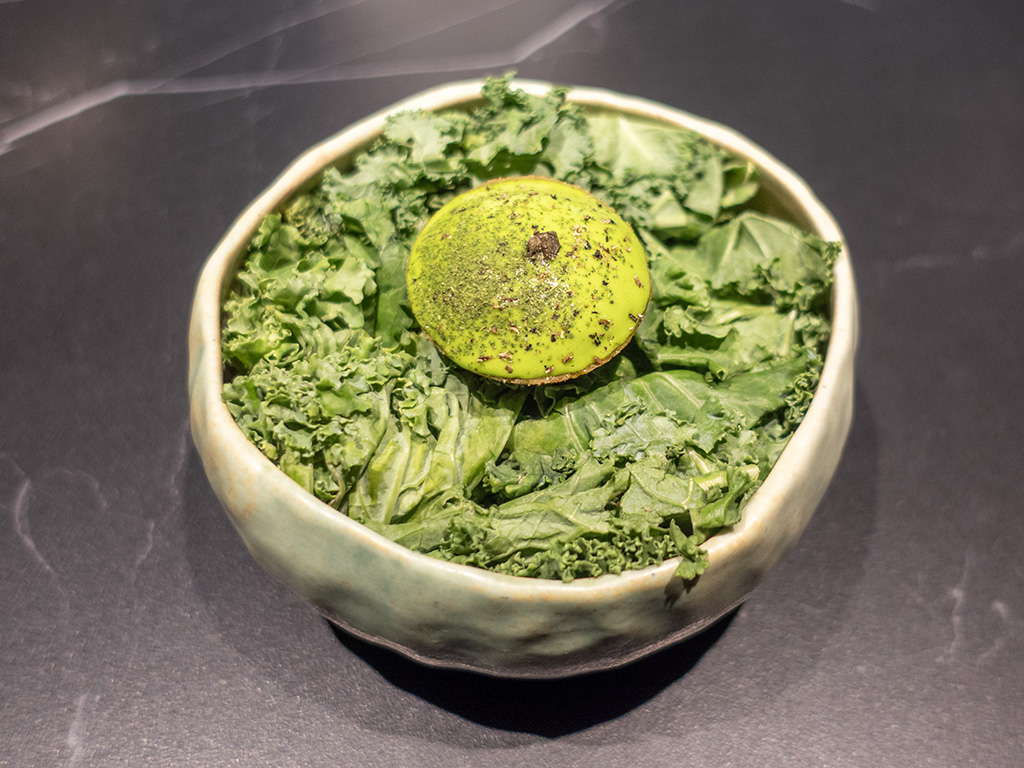
The menu said the next item had pointed cabbage, watercress, and nutmeg in it, but it was difficult to identify exactly what I was eating. I imagine those vegetables were mixed into the light, creamy substance placed atop the carb that served as a base for this bite.
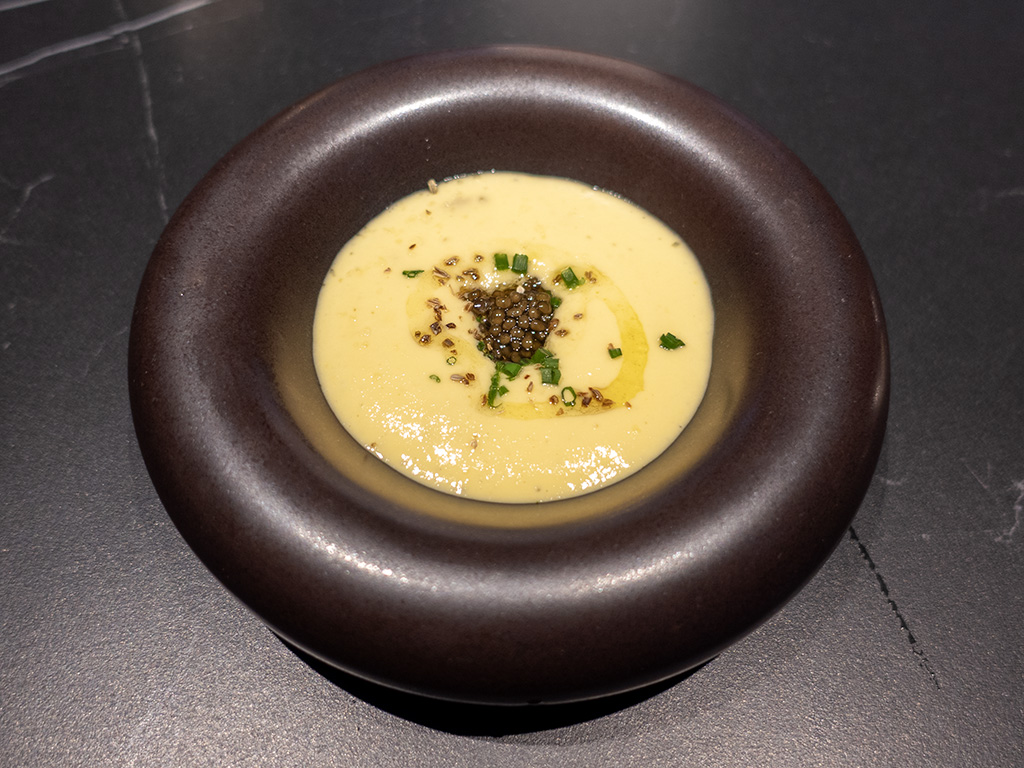
Next was a creamy substance with a consistency in between custard and soup, made from chives, corn, and hazelnut. There was a small dollop of caviar included in the center.
The best way for me to describe all these grain and seed dishes is that they captured and extracted the essence of the entirety of each vegetable that they used as an ingredient.
Vegetables usually have a lot of natural water content in them, but all these dishes tasted like the vegetables were dehydrated so that you only capture the true crux of the vegetable flavor without it being diluted or watered down. On top of that, some vegetables come with an element of bitterness, but for all these dishes, it was as if that bitterness was pinpointed and surgically omitted. And finally, each flavor profile tasted more “complete” with all elements of the vegetable, rather than just the part that is sold in mass market (i.e., there was a perfect amount of flavor from what would basically be considered the entire plant, rather than just the popular vegetable portion).
Although Feuille had a wine pairing (four glasses for HK$688 or seven glasses for HK$988), they did not have a non-alcoholic pairing.
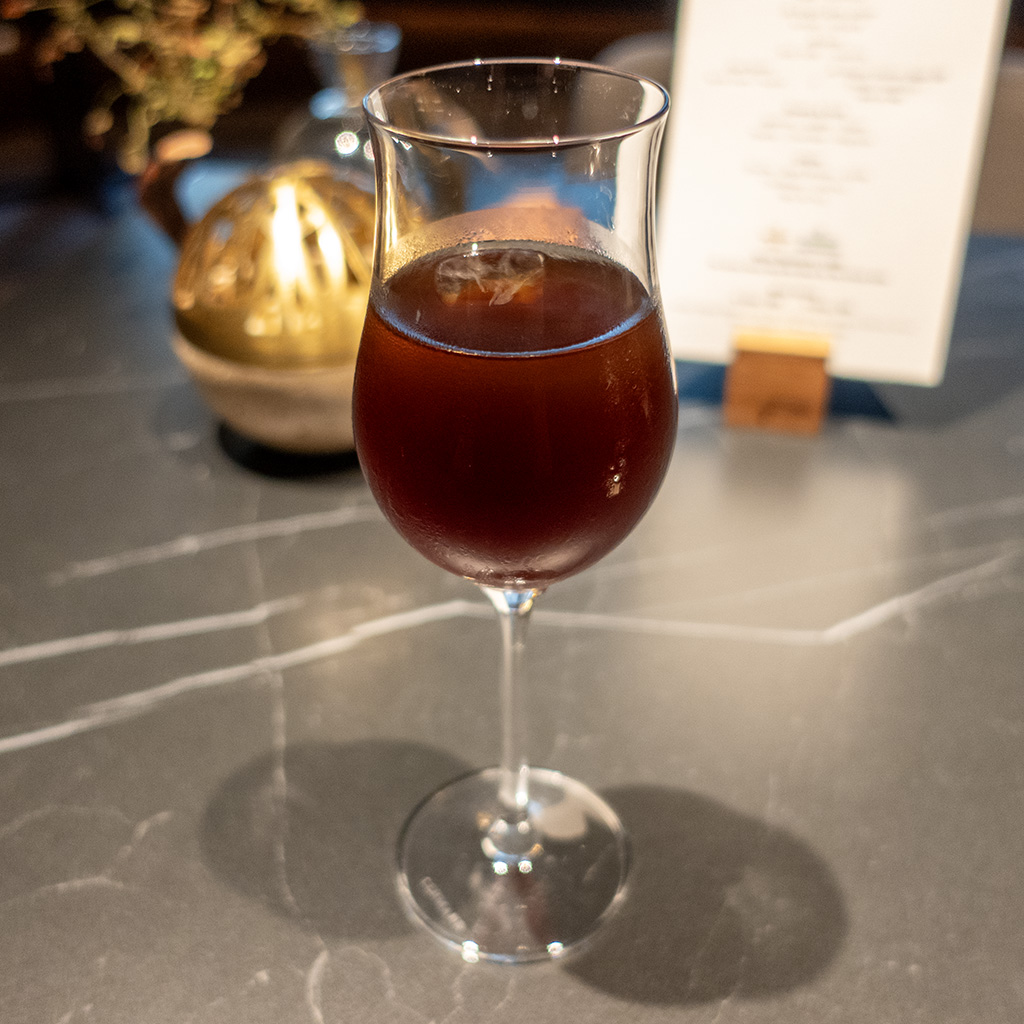
When I browsed their à la carte drink menu, there was one mocktail that caught my eye as something that is locally significant: 涅盤遊記, or the Voyage à Nirvana. This was made with lapsang souchong—a smoked Chinese black tea—and monk fruit.
This flavor profile and combination was very new to me, and it was not something I recall ever having tried in the past. It was quite a bit more strong and intense than I expected; I accommodated by just taking small sips to enjoy it throughout my entire meal, and then just drinking water as my primary beverage to go along with it.
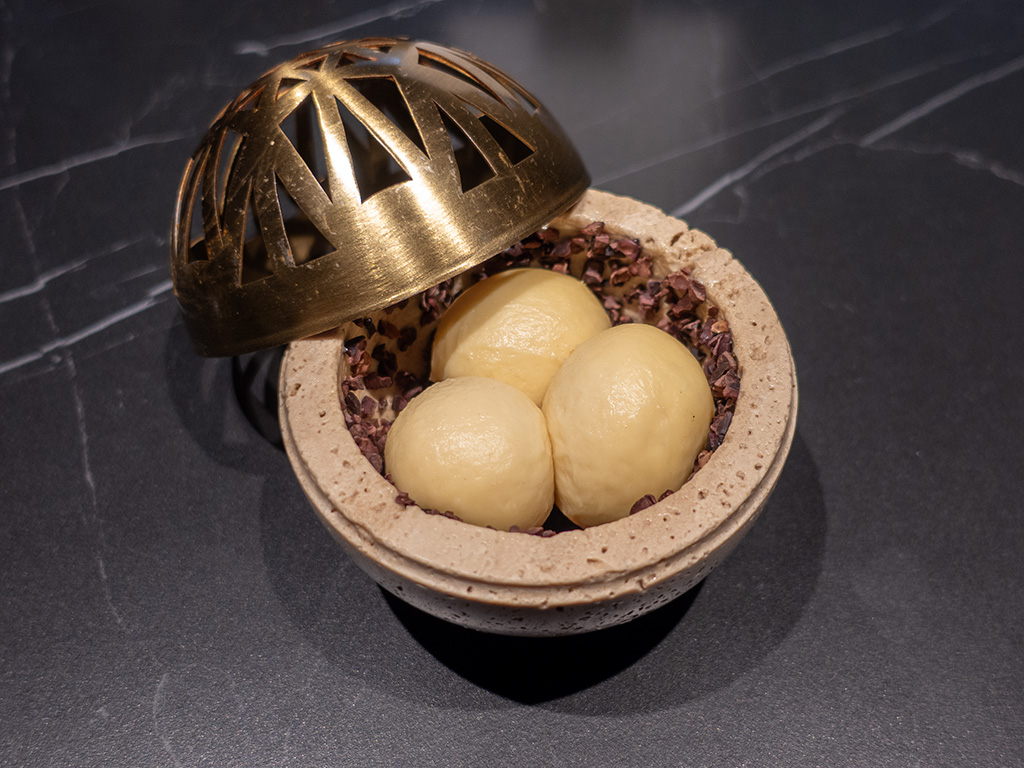
Before the next set of courses, the waiter brought out some dough and set it within view on the corner of the table. This dough was going to become bread that I would eat later on during my meal, but it was freshly made so the yeast hadn’t risen yet. While we were waiting for it to finish rising, it was placed on the table so I could keep an eye on it and monitor its progress as a form of entertainment.
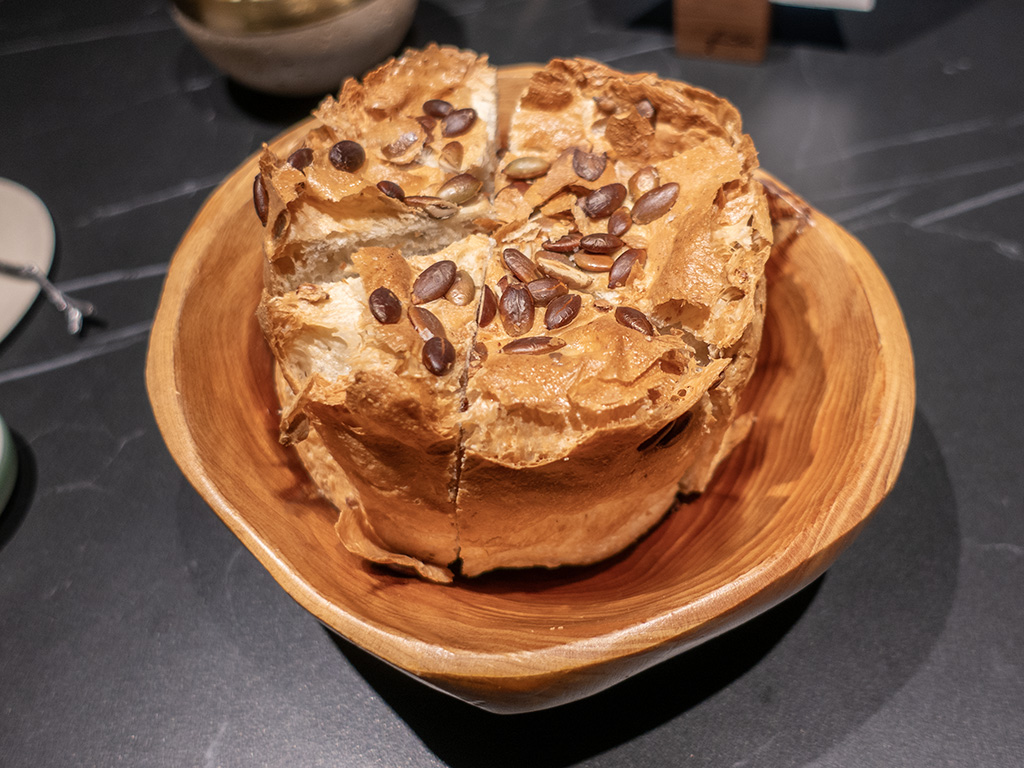
While that bread was in progress, the waiter also brought out some other bread that was already ready to eat. This was labeled on the menu as Feuille bread. I didn’t see any leaves on it, so I imagine it was just their signature bread that was named after the restaurant.
This was some great bread. The outside was crispy, crunchy, and firm, but not so much so that it was dry. The inside was very soft. The contrast in texture made the bread more interesting to eat, and the seeds sprinkled on top added an extra depth to its flavor that I liked.
The bread was served with a side of dill pil-pil sauce topped with edible flowers. There was a creamy element to it, but it was extremely light and refreshing, almost as if they had used a slightly thicker fat but then somehow extracted the fattiness from it and only left behind the texture.
I used a generous portion of this sauce with each bite of bread because it was so crisp and light. The best way for me to describe this flavor profile is as if I was eating a gourmet plant, but the only parts of the plant that hit your taste buds are the parts with brighter notes. It wasn’t bright in the sense of it being citrusy or anything; it maintained its core earthy identity, yet it had a very bright twist.
I had a lot of bread left over after finishing all this dill pil-pil sauce, but that was fine; I was already expecting future dishes to also come with great sauces, and I was anticipating finishing any leftover sauce by using this bread as an absorbent.
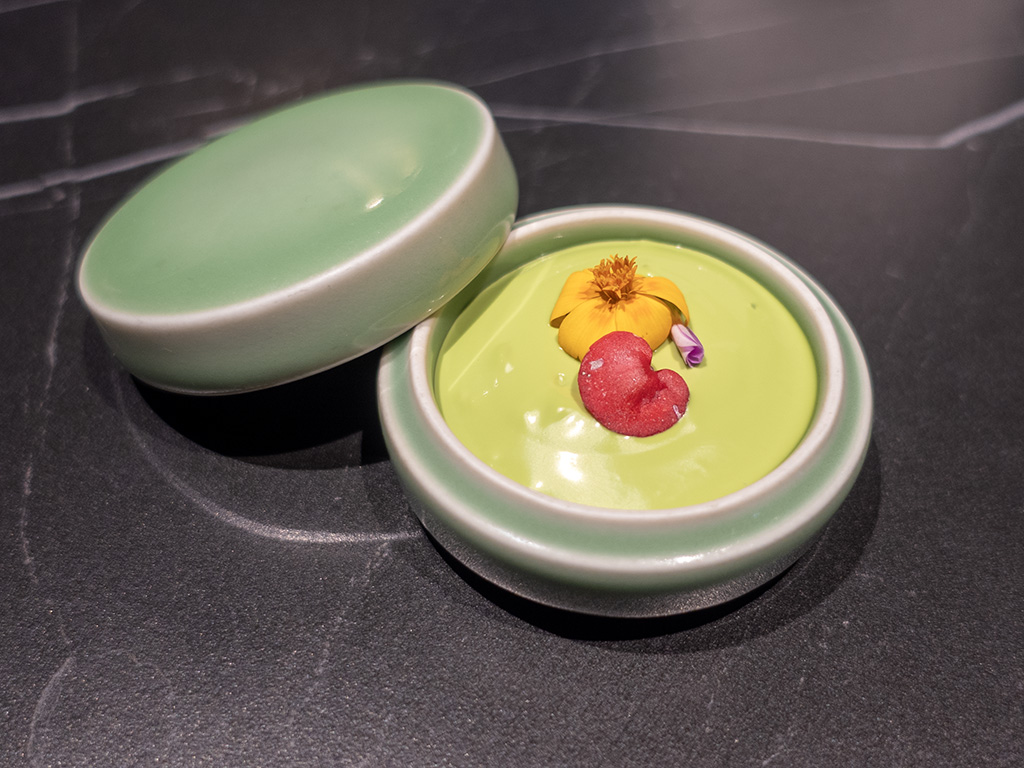
This is the point in the menu where things are a little fuzzy in my memory, considering that I am writing these blog posts after the fact and it’s already been almost three weeks since I actually had this dinner. I’m trying to cross-reference some of these dishes with what the menu says, but I have a suspicion that they didn’t follow the course list exactly.
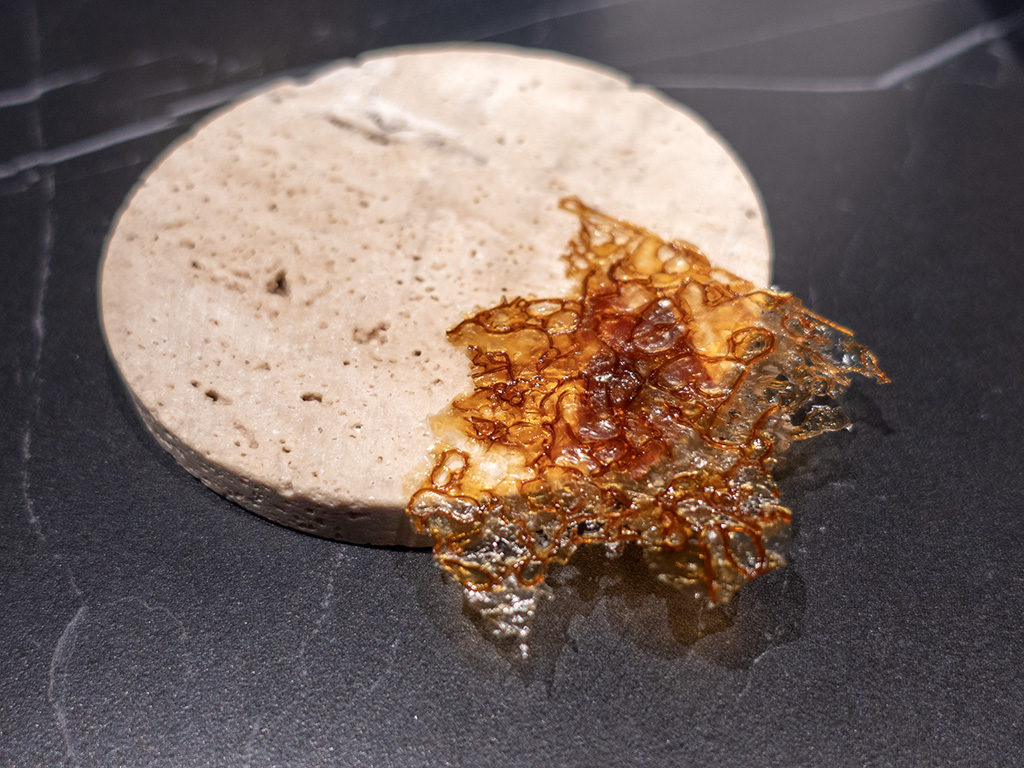
The first thing that confuses me is what this is. The waiter briefly explained it to me, but I don’t quite remember what he said. This tasted very intensely of seafood, so I think it might have been something from the sea that was dehydrated and flattened.
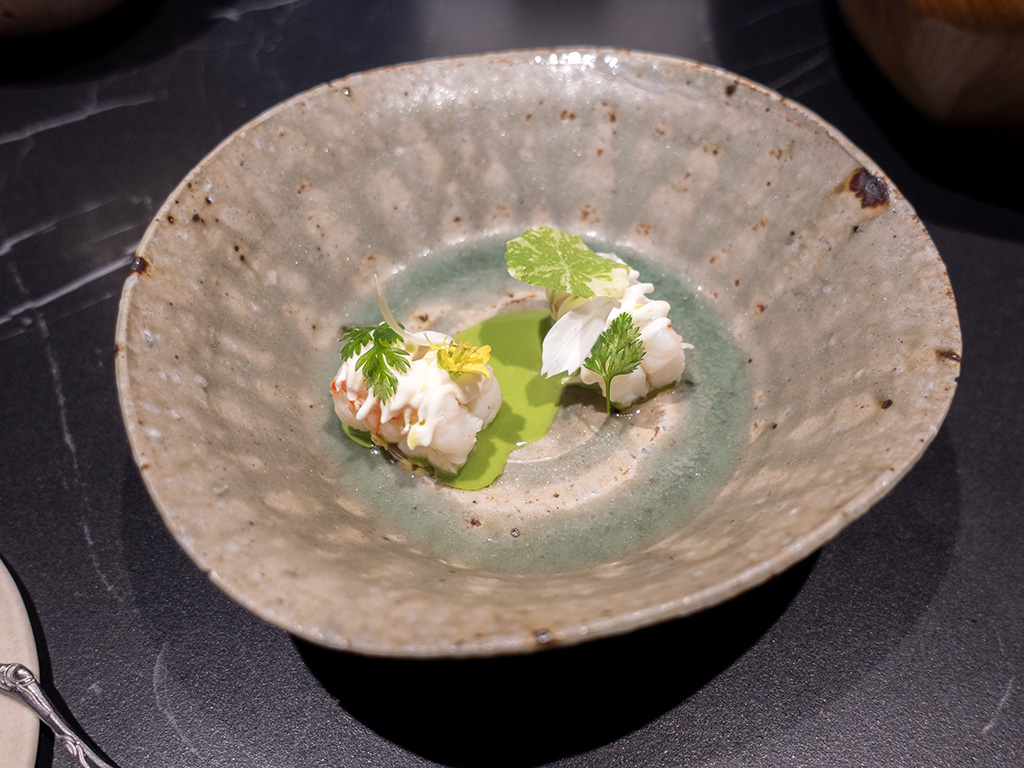
Next was some kuruma prawn. This came with a little more of the dill pil-pil sauce that was served with the bread. The prawn had a perfect texture—firmer on the outside, and unbelievably tender on the inside.
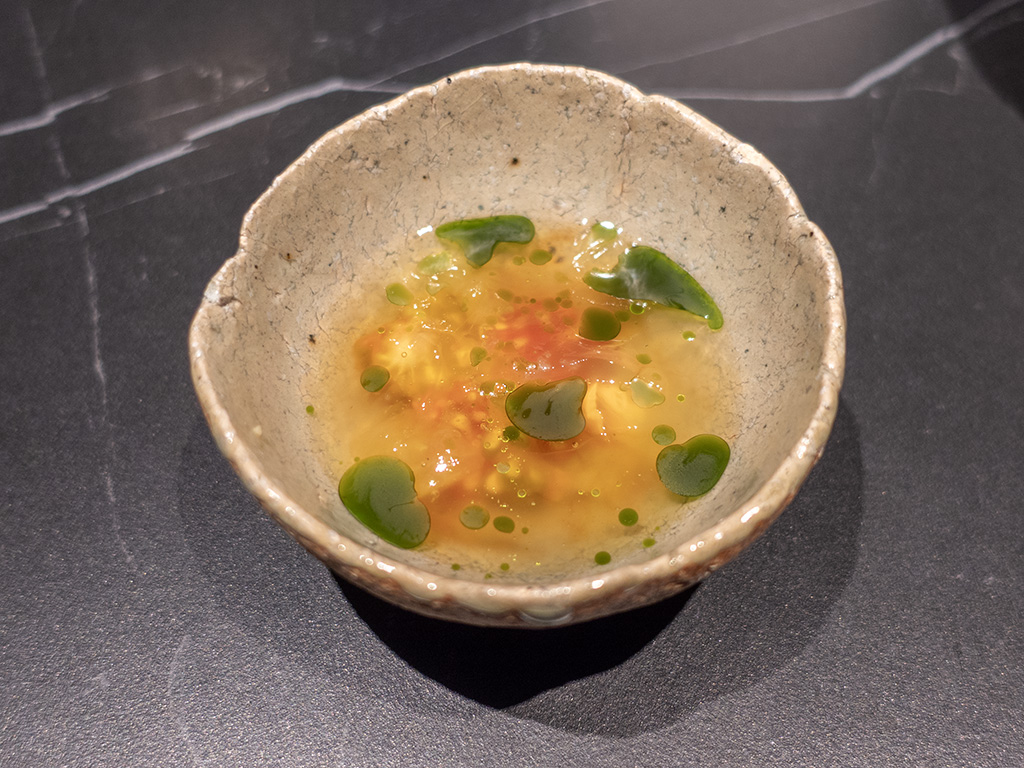
The menu listed two components under the kuruma prawn dish, so I am guessing that these were supposed to contribute to the overall flavor profile of the prawn. The first was tomato water.
In the same spirit as how I described the vegetables above, this tomato water tasted like they took only the pleasant essences of tomato and got rid of everything else. I have no issues eating tomatoes as part of a dish, but I don’t often just snack on tomatoes like I would for different fruits like apples or oranges because, for some reason, I seem to sense the sourness of tomatoes far more acutely than the average person. This tomato water had absolutely no sourness to it, so it was as if they had, again, zeroed in on any undesirable elements of the dish and zapped it away.
The second component to go along with the kuruma prawn was celery. I am fairly certain that this was the celery dish (albeit, very unconventionally prepared)… but I think this might have also been the wild fish dish, which is listed as its own separate plate to be served along with algae and romanesco. You can only barely see it in the photograph, but the wild fish was under the sauce.
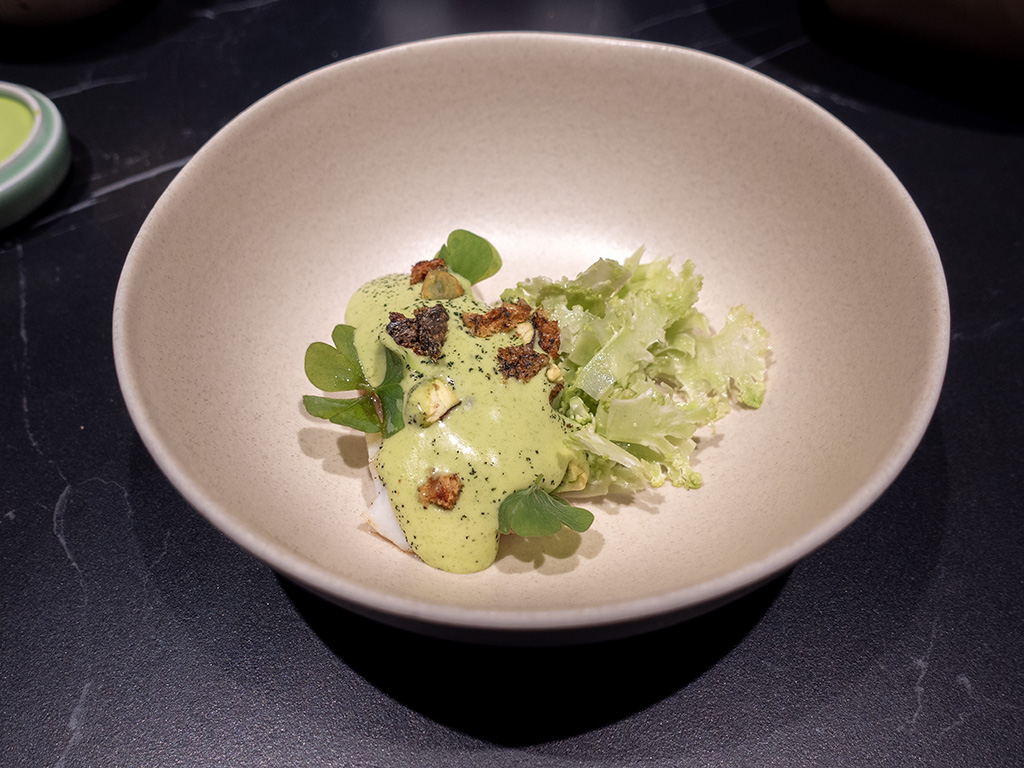
Next was Sai Kung’s spiny lobster with pumpkin and marigold. I liked this clean switch from green vegetables to orange vegetables; it served as a clear progression in the flavor storytelling, both in a visual sense and with the way it tasted.
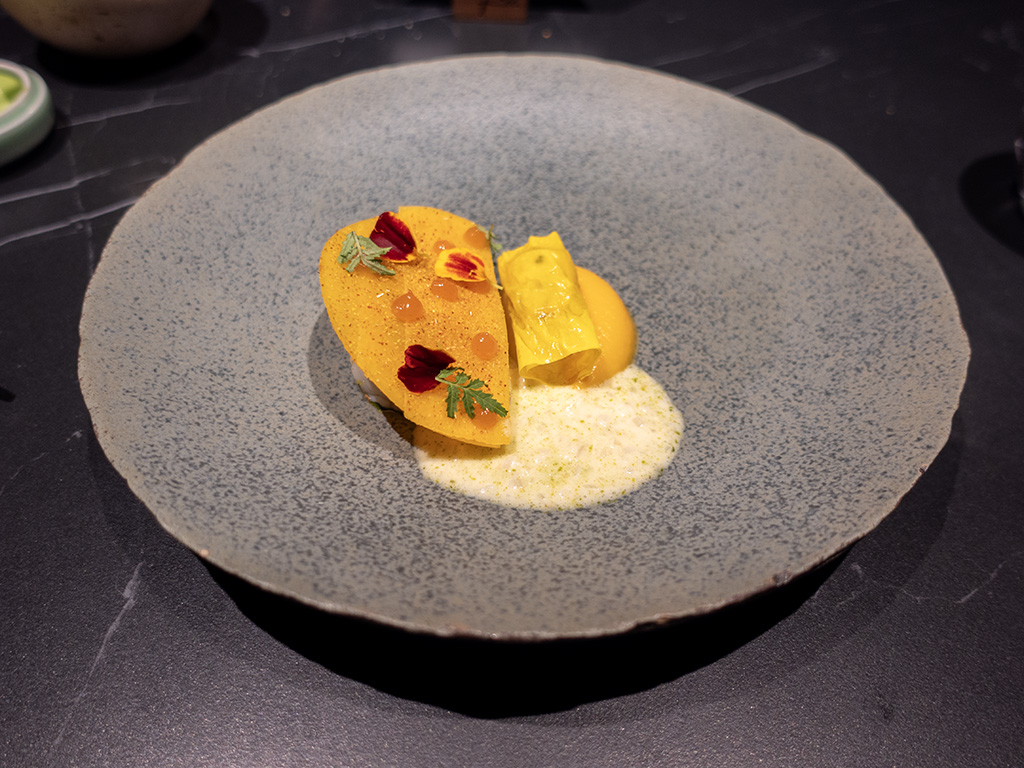
The lobster was hiding underneath, so I lifted its cover and took another photograph from a different angle. Similar to the prawn from earlier, this lobster had a perfect texture—a balanced firmness and softness on the outside, along with extreme tenderness on the inside.
I’ve never had this kind of sauce to go along with lobster before, and I liked it much better than the general clarified butter that usually accompanies lobster. I felt like the pumpkin in particular was neutral enough that it didn’t really interfere with or alter the flavor of the lobster.
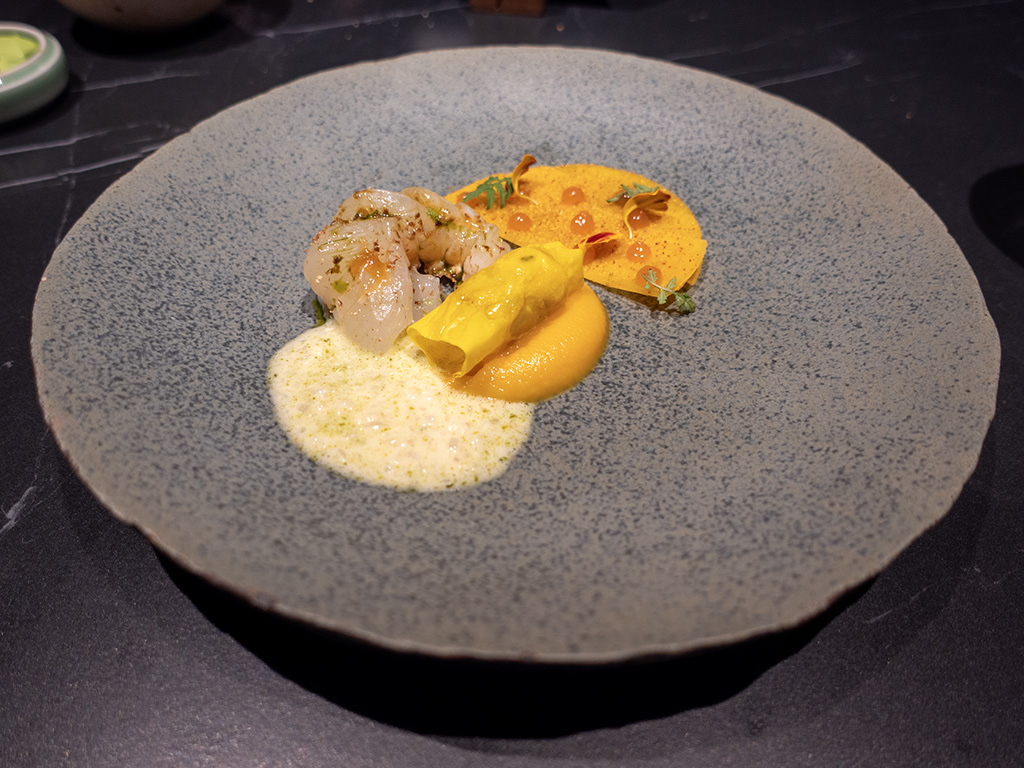
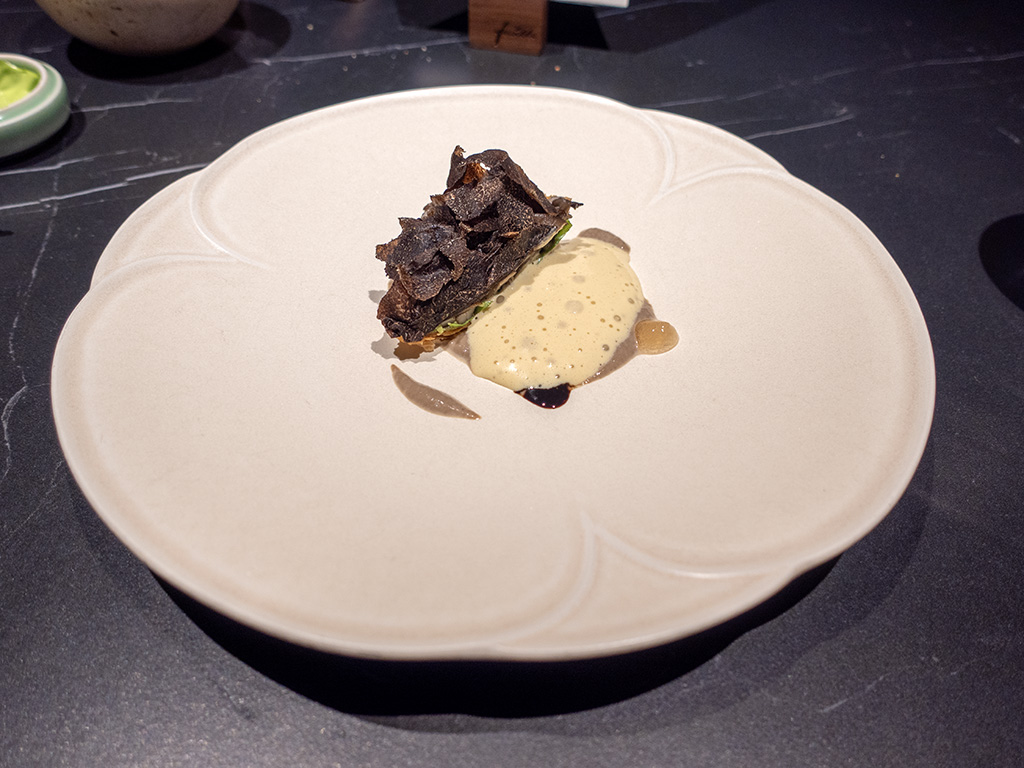
Next up was their fungus dish, a delicate pastry topped with a heaping portion of black truffle.
They brought out this plate to show it to me first, before taking it back to the kitchen to finish preparing it for my consumption.
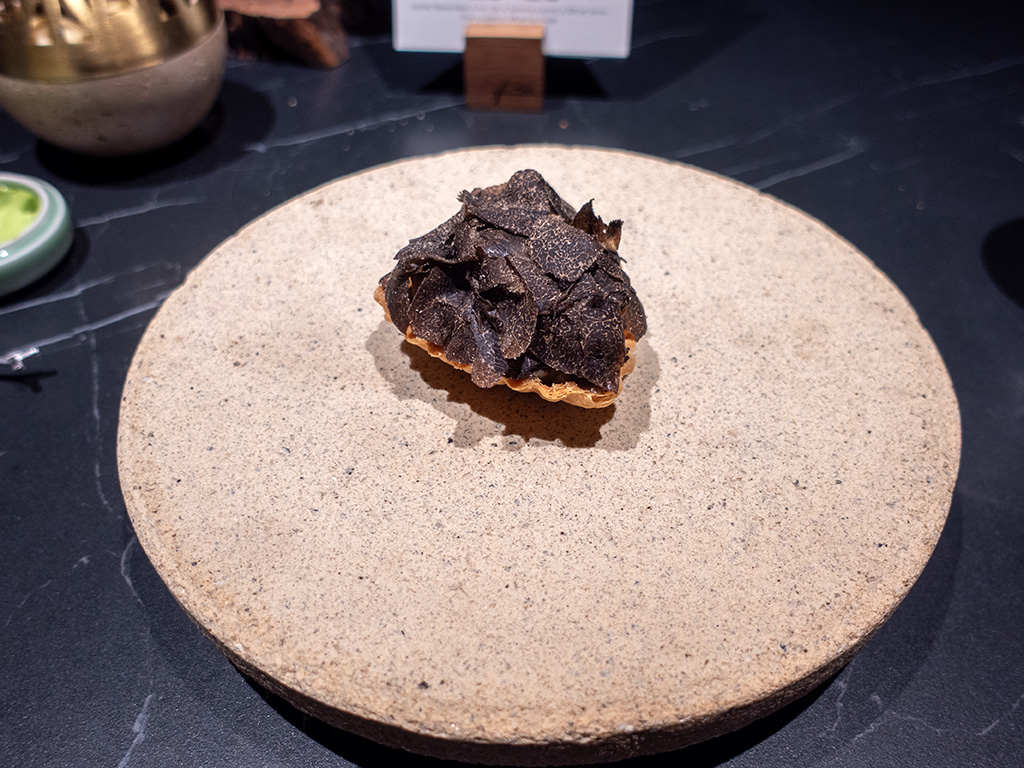
I thought it was going to come out much more different, but the only final touches they seemed to have made were to cut it in half and add a small pool of sauce to the side, which the menu says is derived from shaoxing wine.
I like black truffle, so I was glad to see this on the menu. As expected from high-quality truffle, this had a mild, deep, earthy, nutty flavor that was enhanced and complemented by the sauce and the pastry underneath.
It was time for the main entrée.
This came with an optional supplement for some A4 wagyu striploin; diners could either replace the provided main entrée with the wagyu for HK$388, or they could add it on as a separate, second entrée for HK$488. I ended up passing on this, not only because the standard entrée was something that is not common in the United States and I wanted to try it while I had the chance to in Hong Kong, but also because I already had a lot of food high in saturated fat so far during my trip, so I wanted to be conscious of my heart health and not overdo it on highly-marbled red meat.
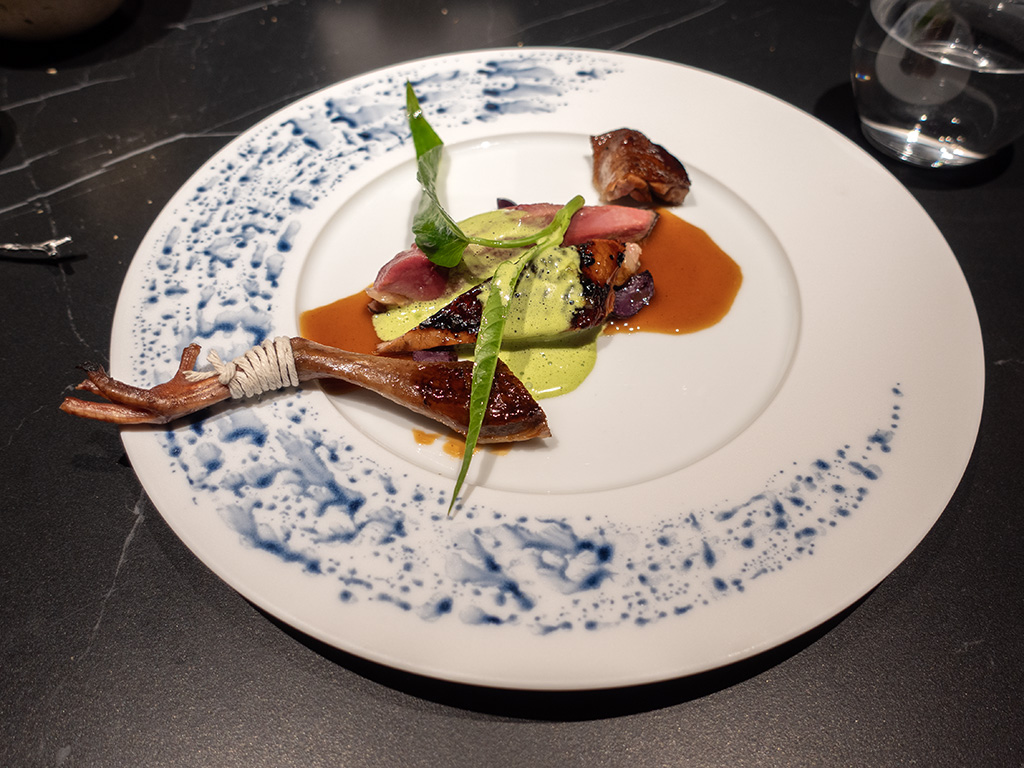
So, the main entrée I got was Shiqi pigeon served with Kyoho grape and arugula.
I really appreciated the creative presentation with the pigeon leg, though I’m sure it has spooked some people in the past if they are not as adventurous with their dining habits. Also, it’s not often that you get to eat poultry cooked medium-rare in the United States, so I savored the opportunities in which I was able to do so in Hong Kong.
This is probably the best pigeon I’ve ever had in my life. I guess that’s not really a difficult title to earn, considering that I almost never eat pigeon, but regardless, this pigeon was prepared very well. I’m the type of person who eats steak rare or blue rare and loves beef tartare, and that preference for seeking out that distinct texture of raw or undercooked meat extended to pigeon as well.
I’m not really a huge fan of eating chicken feet, so I assumed I probably wouldn’t really like pigeon feet either. The part of the foot that was on the opposite side of the string grip was the only section I left alone, though; I chewed the skin and meat directly off the thigh, which had a stronger flavor than the fleshy part of the breast.
Next came a beetroot.
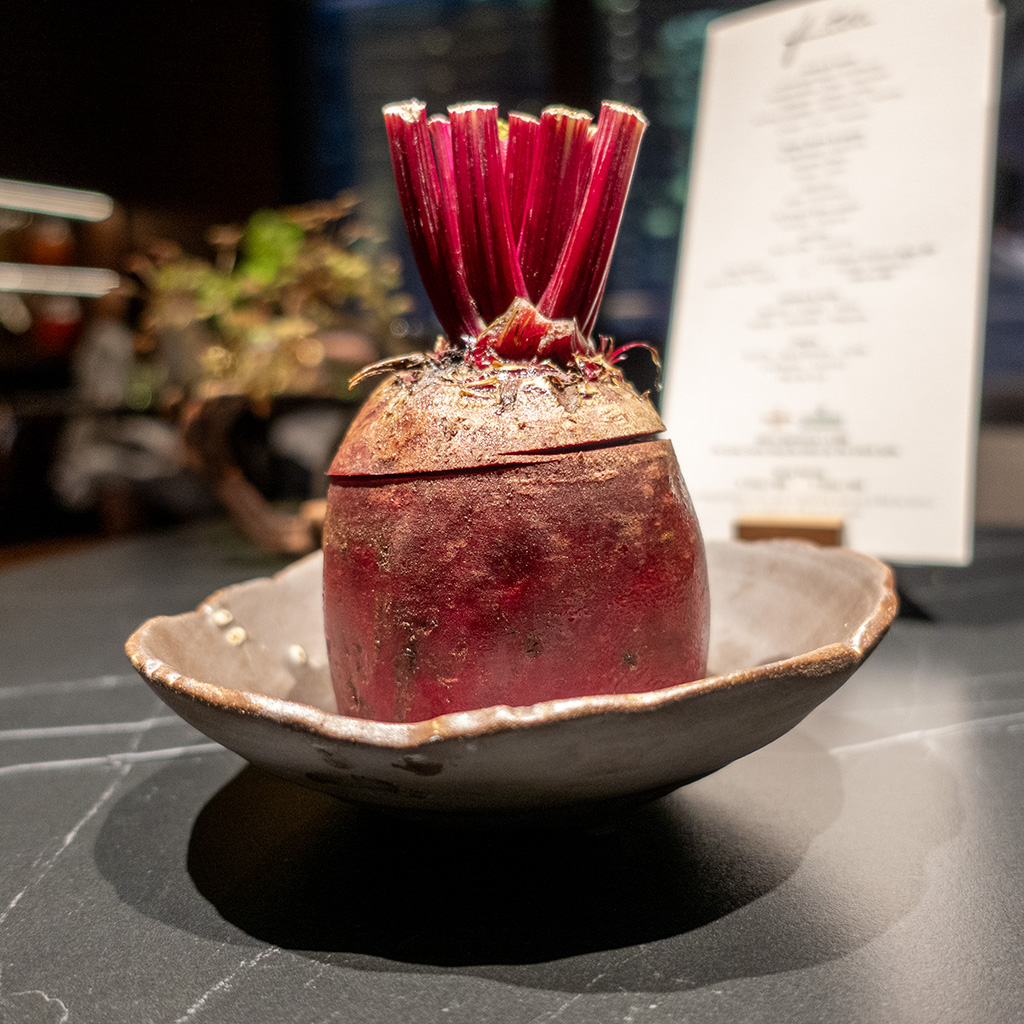
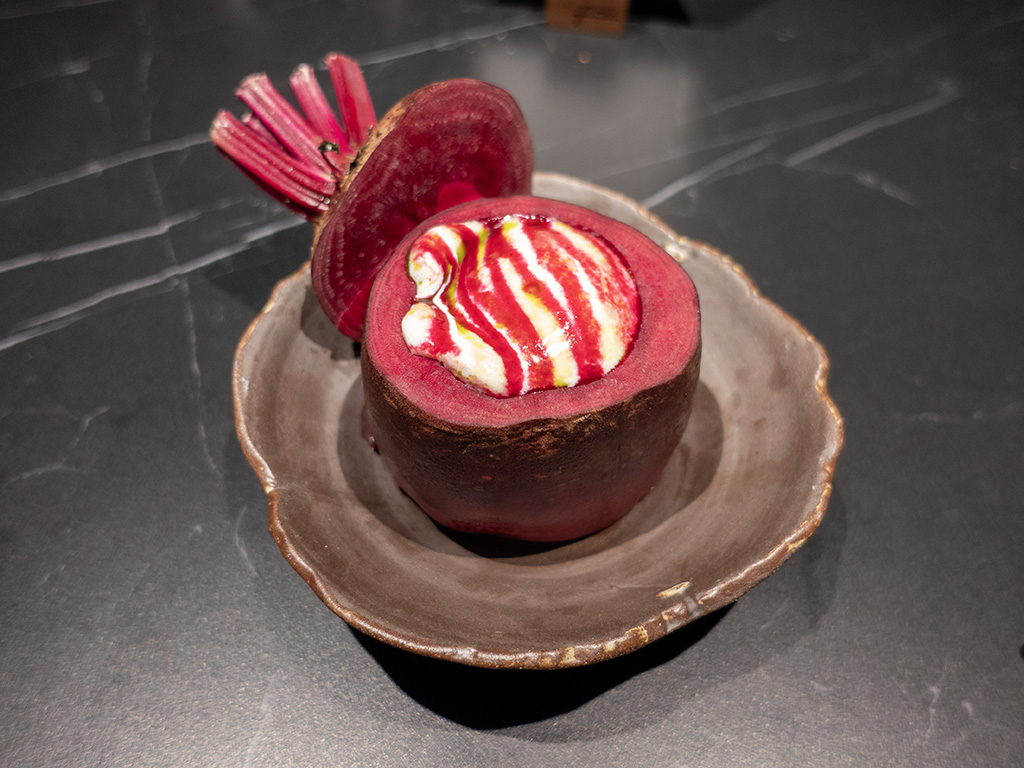
Of course, the actual part I was supposed to eat wasn’t the entire beetroot. Instead, the inside was carved out and had a creamy substance made from beetroot, juniper, and roses.
I don’t think this was intended to be a dessert yet, but it had a nice natural sweetness to it, which signaled the beginning of the winding-down process of the culinary adventure. I like when foods are used as containers like this; although the beet wasn’t soft enough to eat and was only there to serve as a cup, it had absorbed some of the cream and gotten softer, so I scraped that part and ate that too for a stronger beet flavor.
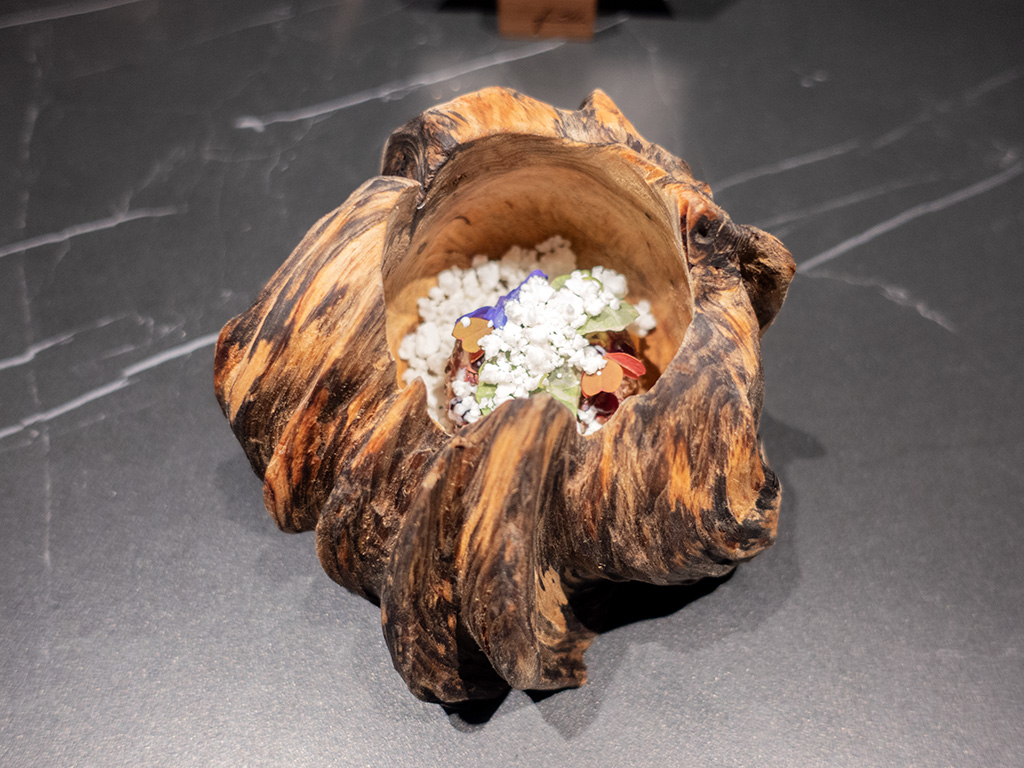
This was the final confusing area of the menu. The course list said that the next dish was made from rosella, chocolate, and magnolia. I am guessing this was supposed to be a two-part item, but it didn’t really match the description too closely.
This first item was a frozen treat sprinkled atop edible flower. The texture was like eating aerated ice cream that was flash frozen using liquid nitrogen. That brittle texture paired with the flower petals made for a fun chewing experience.
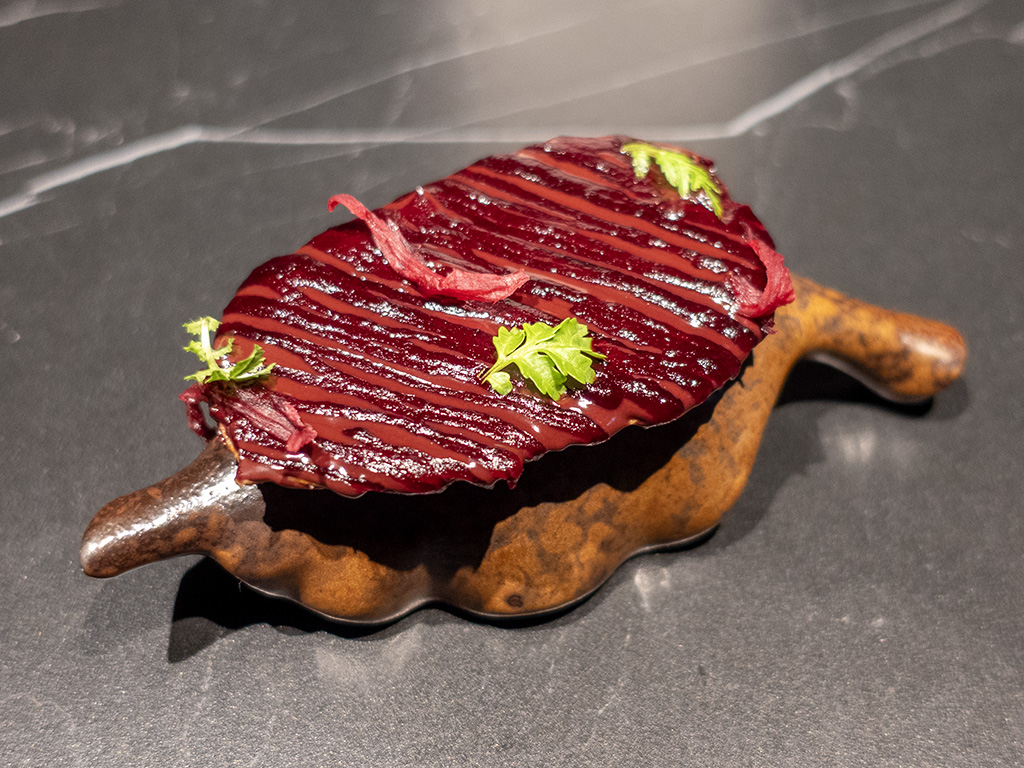
This second item was a complete mystery. As you can probably tell, it was a vegetable-based “chip,” for a lack of a better way to describe it. It had a combination of a floral/fragrant and an earthy aroma.
Apart from that, I have no idea what it was made from. I guess one possibility is that the chocolate, which was missing from the prior serving, might have been reimagined somehow in a flowery way and served like this.
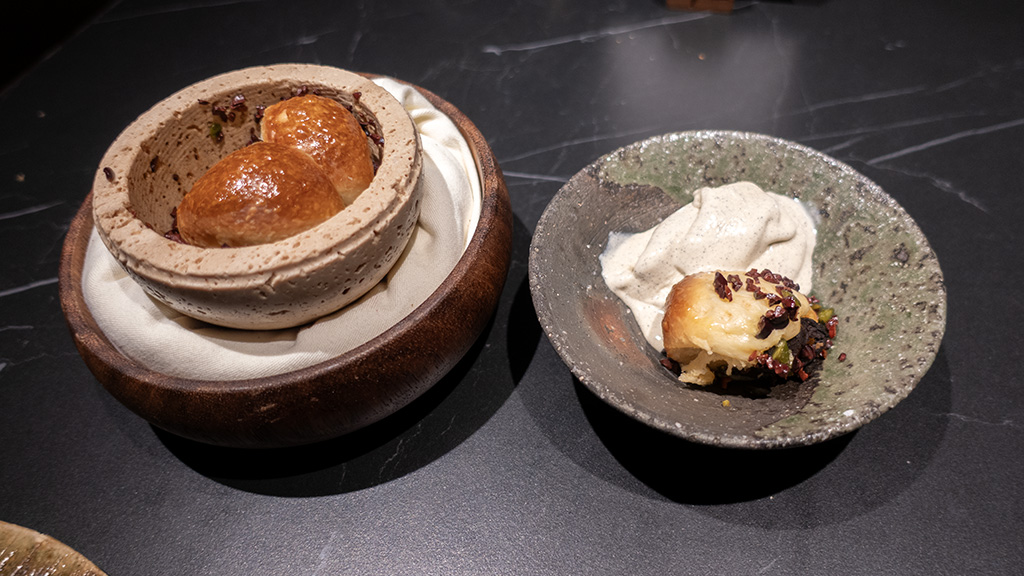
Remember the dough from earlier? Partway through my meal, the waiter came back to check on it, and after confirming that it had risen enough, he brought it back to the chef to turn into actual bread. I didn’t realize it, but this was actually part of the dessert—the bread was baked to accompany some black banana and vanilla ice cream.
Funny enough, even though there were some absolutely incredible seafood dishes as part of this tasting menu, this bread and ice cream ended up being my favorite dish strictly on a metric of how much it triggered my “wow, that is delicious” radar.
I usually don’t like black (i.e., overripe) bananas because I think it tastes like fermentation gone brutally wrong. One of the reasons I never drink alcohol, beyond just the fact that it is bad for your health, is that I think it tastes horrific; when I taste black bananas, I sense some of that alcohol flavor in it (along with a splash of acetone). With that being said, going along with the theme of the rest of the food items at this restaurant, this black banana and vanilla ice cream tastes like it precisely extracted only the good part of black bananas while completely cleansing it of all the chemical tastes of real black bananas.
To make things even better, the bread was cooked with some kind of nut lining the bowl. Because the nuts themselves were also cooked, there was an incredible Maillard reaction that gave it somewhat of a charred flavor, but without any bitterness. It tasted like the bread also absorbed some of that flavor, because the softer, inside part of the bread had a nutty element to it as well.
All of these elements combined—the soft, hot bread; the hard, warm nuts; and the smooth, cold ice cream—worked together to make this a truly orgasmic dish.
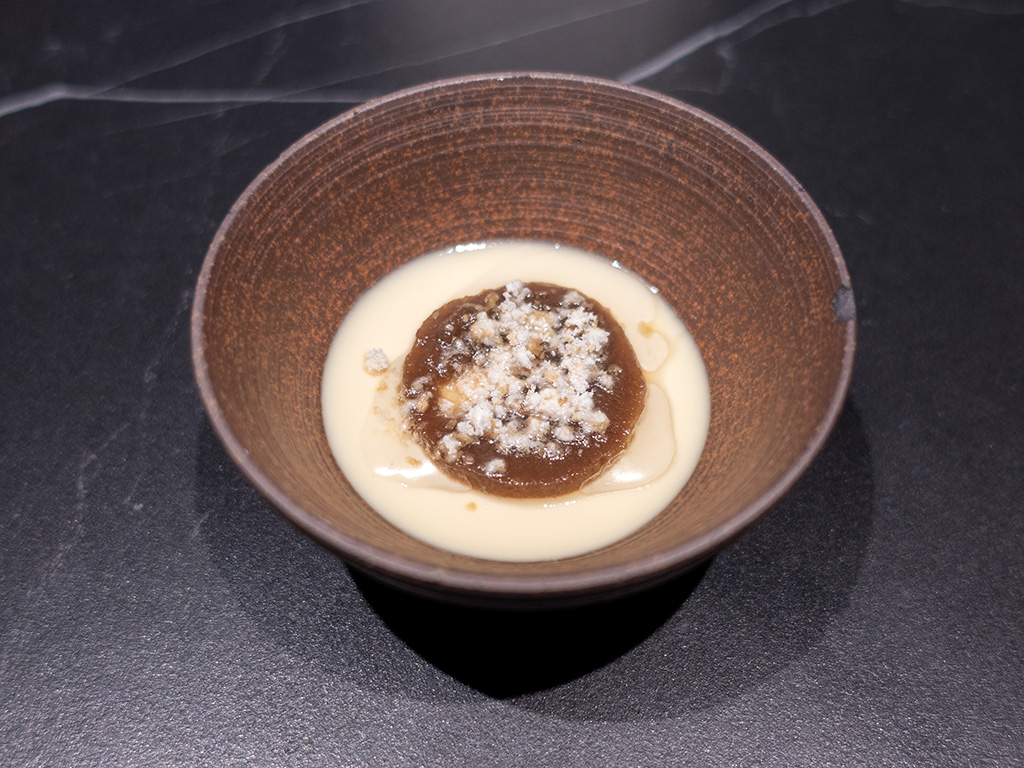
And finally, for the last dish of the dinner, I received a custard with cauliflower and coconut.
Because this came out at the same time as the other dessert, I tried sampling it with the bread. However, I realized that the chef had controlled the flavor profile of the bread and ice cream combo to such perfection that this custard made it seem underwhelming. So, instead, I had this standalone and on its own, which made both dishes much better.
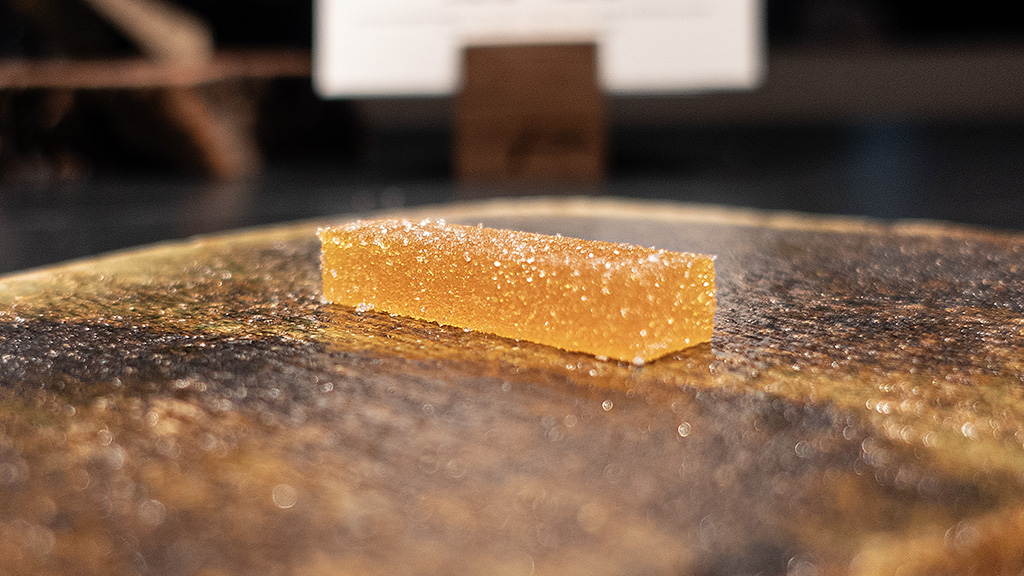
The last bite, provided after the conclusion of the meal, was pâte de fruit. It was flavored with orange, which I guess is not too difficult to guess just from the fact that it is also the color orange, but I think there might have been some other fruits mixed in as well.
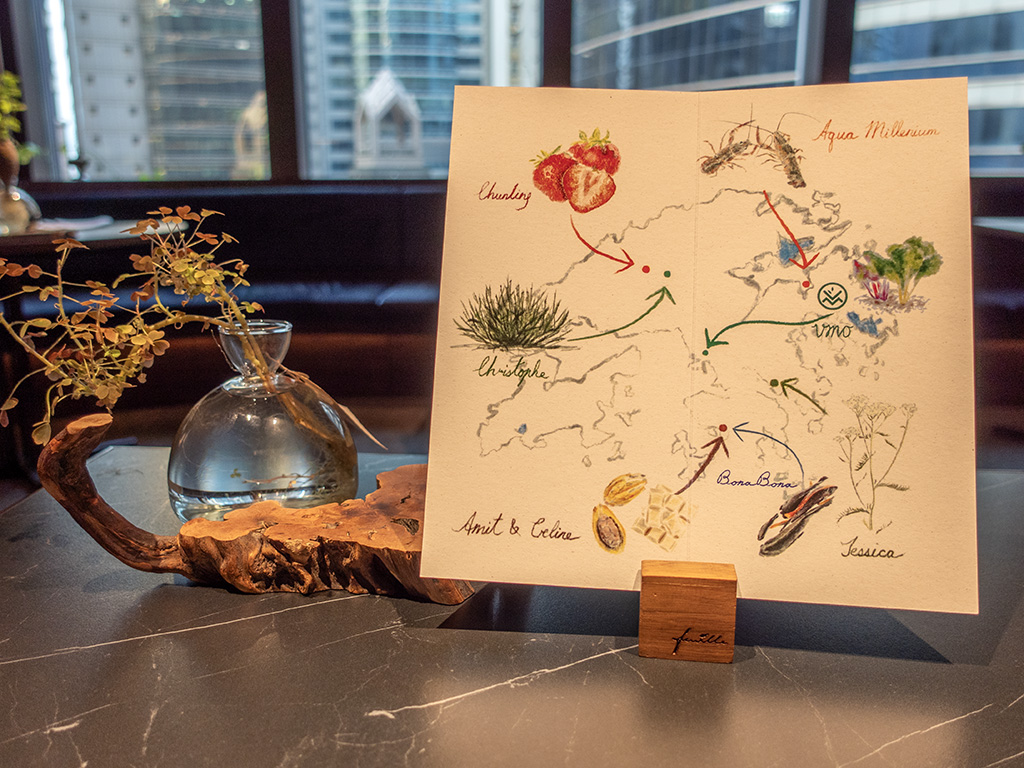
On the back of the course list, there was a map that showed the location from which each of the main ingredients of the dinner were sourced.
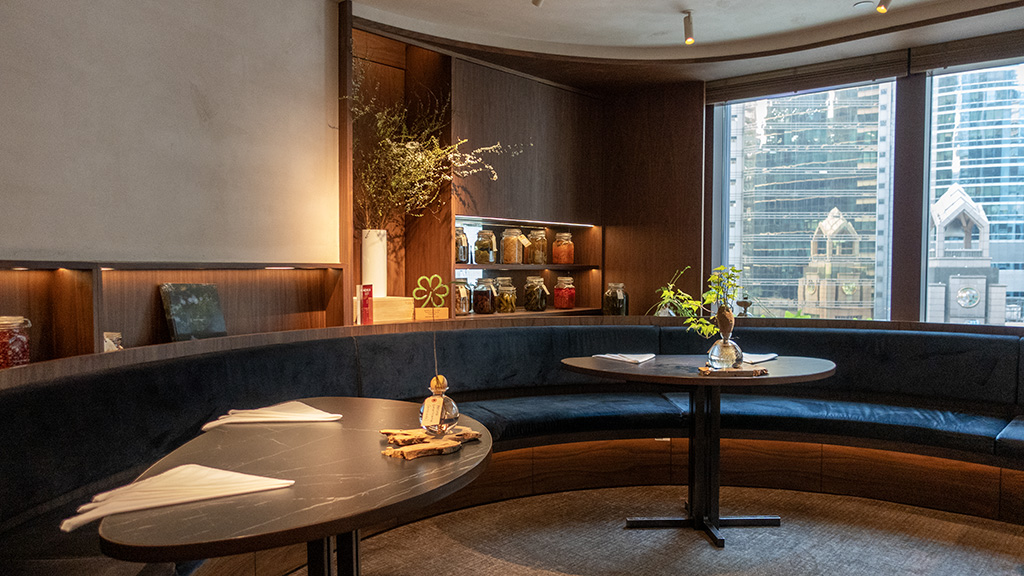
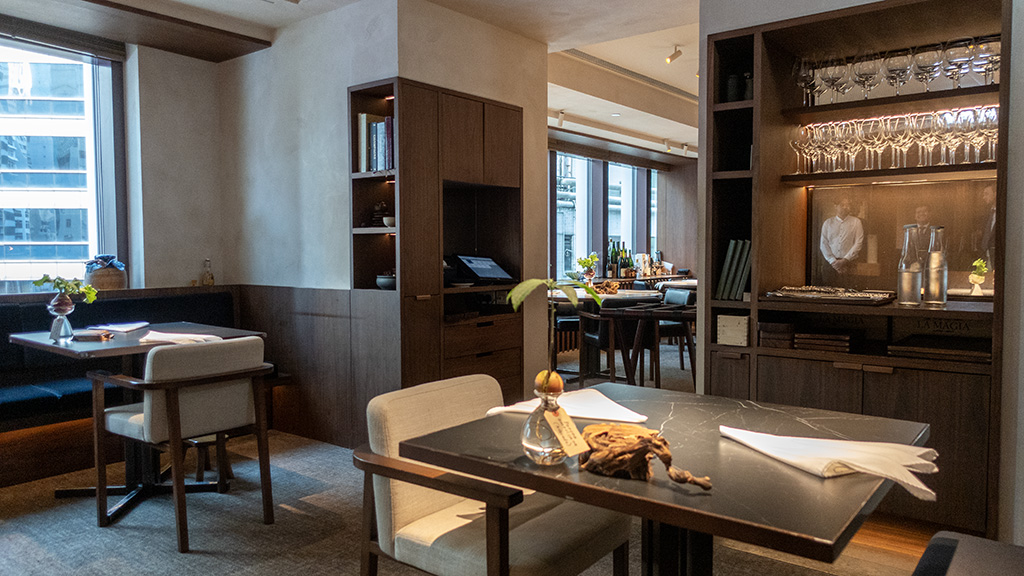
Here are some photographs of the dining area.
Considering that I was aiming for a bedtime of around 10 PM HKT during my trip (which is the equivalent of 7 AM PDT), I booked a reservation for the earliest time slot they had for dinner, which was 6 PM HKT. I was the first person to show up that day, so I managed to get some shots of the restaurant with no other customers having arrived yet.
| Signature tasting menu | HK$ 1,688.00 |
| Voyage à Nirvana | HK$ 128.00 |
| Still water | HK$ 38.00 |
| Service charge (10%) | HK$ 185.00 |
| Total | HK$ 2,039.00 |
| Converted to USD | US$ 260.63 |
If you’ve followed my blog with at least a little bit of interest, you most likely realized that I like experiencing new and different things in basically all aspects of my life, including with food. Thus, I get pretty allured when a restaurant does something novel with their dining, such as adding in their own special twist or coming up with experimental and/or uncommon dishes.
If you’ve followed my blog, you might have also noticed that I am very descriptive and precise when sharing what I’ve eaten at restaurants. Even though I am not a good cook and I have no formal culinary background, I can usually figure out what I’m eating just based on the broad background I’ve built. Even if the menu or course list is inaccurate or has mistakes (which, believe it or not, happens more frequently than you’d expect), I can easily identify that and fix it before writing about it on my blog.
The reason I loved Feuille so much is that it threw me off a lot in both of those aspects. I don’t actively seek out vegetarian restaurants (or restaurants that do fine dining with a focus on vegetables) because I find vegetables to be somewhat boring. However, Feuille took vegetables and made them fun, exciting, and delicious. On top of that, while eating these innovative dishes, I had a very hard time figuring out (and remembering) what they were made of and how they were prepared, as is probably apparent by the unusually vague and confusing way I wrote my review in this blog post.
Another thing I appreciated about Feuille is their philosophy. The waiter told me about how they try to minimize waste by using as much of the whole ingredient as possible, and how they make their logistics more efficient by sourcing ingredients from as local as possible. I think that consuming (or at least utilizing) the entirety of an ingredient is how we are “meant” to interact with the world around us. Restaurants end up having a shocking amount of perfectly usable food products discarded as waste, so it is intrinsically satisfying to me when an effort is made to optimize this.
This is obviously a pretty high price for a single meal, but if you analyze it within the context of fine dining, I think that Feuille offers extraordinarily high value for money. The food was top-tier, the experience was captivating, and the service was functionally flawless. If you are seeking a meal within this price range, I highly recommend Feuille.