My trip to Hong Kong was split into two “segments.” For the first portion, I went to restaurants and did tourist activities together with friends. We didn’t literally travel together—we took separate flights and stayed in different hotels—but after we all arrived in Hong Kong, we spent a lot of our time together. For the second portion, my friends left for mainland China while I stayed behind to continue exploring Hong Kong before flying directly back to the United States.
Several years ago, I selected Marriott as my hotel brand of choice due to the large number of brands under their portfolio, the reliability of finding a Marriott-family hotel pretty much anywhere and even out in the middle of nowhere, and the fact that the highest tier of their elite status seemed better than other hotel chains. However, my friends are not quite as loyal to a singular brand as I am, so they select hotels on a case-by-case basis. For their stay in Hong Kong, they selected the Langham.
Shortly before leaving, one of my friends told me that she saw signs around her hotel about a Michelin-starred restaurant nearby and asked me to try it out and review it. I personally don’t care much about the Michelin Guide, and if anything, I often avoid Michelin-starred restaurants because earning the star often prompts restaurants to attract more customers and raise their pricing up accordingly. That’s great, but sometimes, restaurants cannot scale up their service offering proportionally, so I’ve noticed that Michelin-starred restaurants are too often a hit or miss.
With that being said, because my friend specifically requested that I try out the restaurant near her hotel, I decided to use the search feature on Michelin’s website for the first time ever. Unfortunately, that did not go well, because their default sorting options are not very conducive to actually finding the restaurants that have stars on the first try. If you fiddle around with the filters, you can eventually figure it out, but if you don’t have a prior knowledge of the different kinds of distinctions, then it can get tricky.
After struggling with the website for a bit, I managed to finally get it to zoom in near where her hotel was. However, I did not know this at the time, but there was a limit on the number of results, and that filter did not prioritize showing the top-awarded restaurants first. In fact, I have no idea how it selects which restaurants to show, but it does not show all the pins when you first go to an area, and you have to scroll through the results or narrow it down yourself to curate your own results.
So as to not drag on the story for too long, I will spoil it: The restaurant she wanted me to try was a Michelin 3-star Cantonese restaurant called T’ang Court. It wasn’t just near her hotel; it was in her hotel. Comically, this restaurant was not in the first page of results when searching for restaurants near the Langham.
Instead, the only pin that showed up near the Langham was Udatsu Sushi. Because there were literally no other results within a few blocks of the Langham on the first page of results (even though I had zoomed in pretty tight around the Langham), I assumed that Udatsu was the restaurant she was referring to. The best part is that Udatsu doesn’t even have a Michelin star; it was simply Michelin-selected. I didn’t know that at the time though. I booked a reservation and tried their omakase dining experience.
So now with that long story explaining how I ended up at Udatsu wrapped up, here is what my dinner was like.
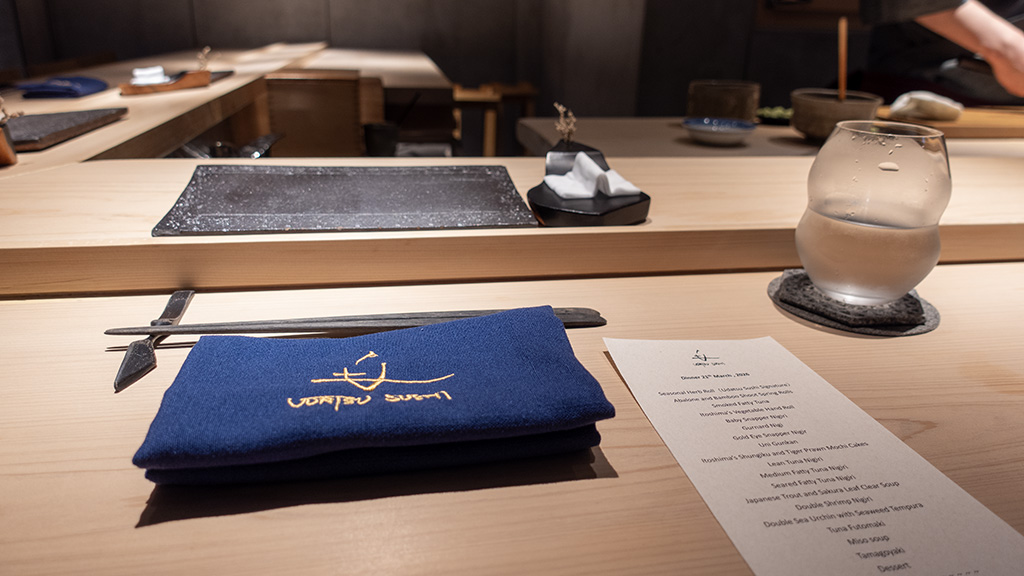
There were two omakase seatings available, which is normal for omakase restaurants—they often do one early in the evening when they open (usually around 5 PM), and then another one later on at night (usually around 8 PM). However, the unusual thing about Udatsu was that their two seats were at… 7:00 PM and 7:30 PM.
This is the first time I have ever seen a staggered seating system like this at an omakase or chef’s tasting menu restaurant before. Staggering people’s meals like this seems like it would cause undue hassle on the chef and kitchen staff due to not being able to complete each course in its entirety before moving onto the next. Half the customers are always going to be behind, which means that they can never fully “wrap up” a course one-by-one before moving onto the next.
The only thing I can think of is that this system might relieve entry pressure, i.e., the wait staff getting everyone seated and getting drink orders in all at the same time. With that being said, making the entire remainder of the dinner service more difficult just in exchange for releasing a bit of stress right at the beginning seems inefficient to me.
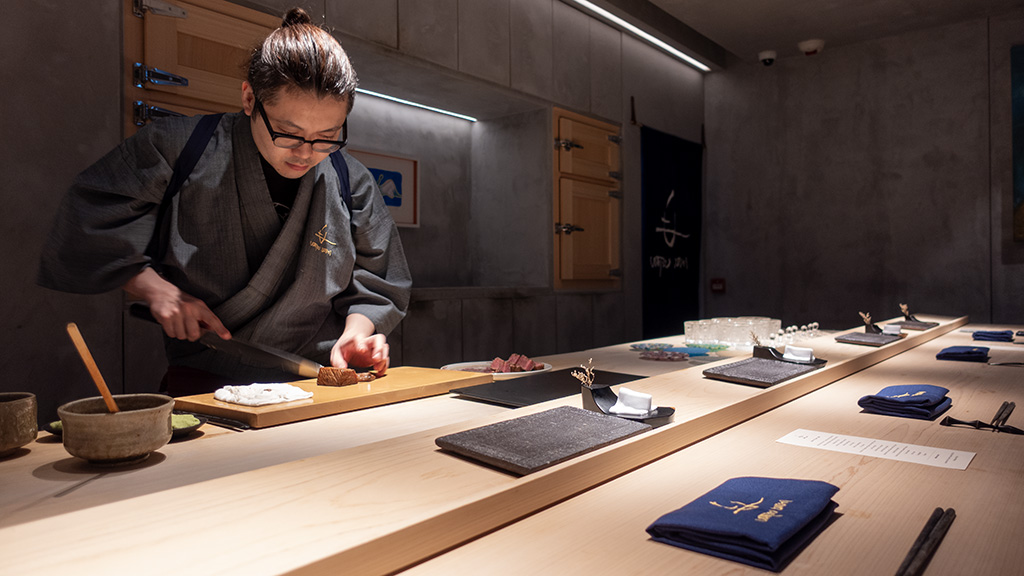
The omakase was prepared by Head Chef Hiroki Nakamura. He leads operations in the Hong Kong location, while Chef Hisashi Udatsu is primarily stationed in Tokyo, Japan. The restaurant’s website says that Chef Udatsu visits Hong Kong often, but it seems like he was not in town during my visit, as I did not see him at the restaurant.
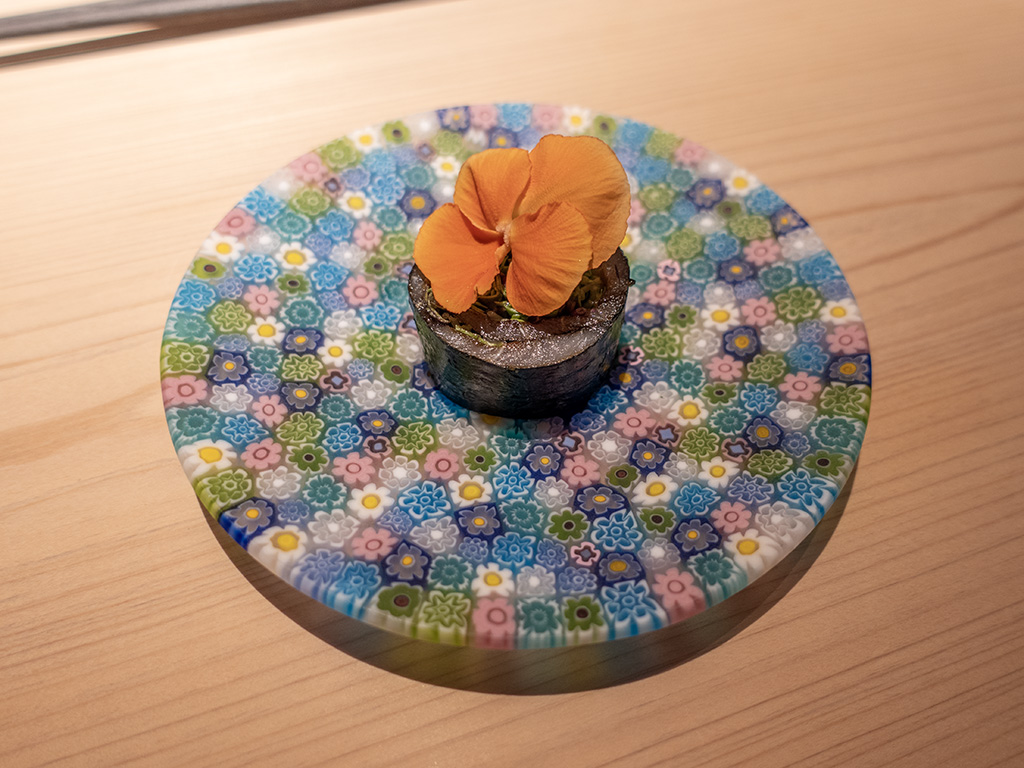
Not long after being seated, I received a piece of seasonal herb roll as the opener.
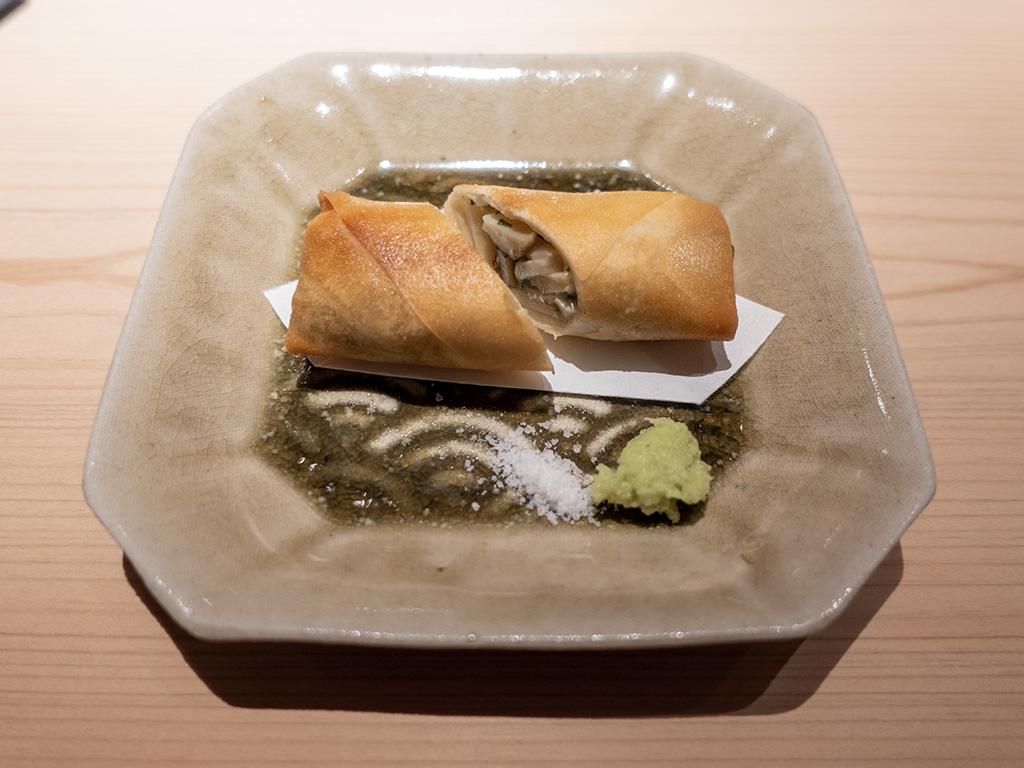
Next was an abalone and bamboo shoot spring roll. This one has an interesting story to go along with it…
I am usually a very diligent chewer. I think chewing your food thoroughly and for a long time is an important part in extracting as much flavor as possible from the dish. Sometimes, certain dishes have interesting phenomena where the dominant taste in the flavor profile slowly changes as you chew for longer.
A side effect of chewing a lot is that big chunks of food don’t often get past you. However, a piece of abalone in this spring roll somehow managed to dodge my teeth without me knowing. When I went to swallow, the abalone got stuck in my throat where only half of it went down. For the medical or culinary enthusiasts out there who are more familiar with the biological mechanics of consuming food, the exact thing that happened was that my upper esophageal sphincter closed on the piece of abalone.
I tried getting it down by drinking some water, but that did not help. I kept trying to gulp it down, but it was very securely stuck in my throat. For a good minute or so, I kept on struggling with it, and it wasn’t going anywhere. By this point, the waitresses noticed that something might be going on.
The abalone had been stuck for so long at this point that I think my body was starting to send more urgent signals telling me to do something about it faster. I started having a small coughing fit, but that still didn’t help.
The waitresses were getting more worried now, but there was a communication barrier. They asked me if I was okay in English, to which I of course gave the most literal possible answer of “not really, there is abalone stuck in my throat.” Then they started asking me something in Cantonese, but I don’t understand Cantonese; in a desperate attempt to get through to me, they started speaking to me in Japanese, but I don’t understand Japanese either.
I realized that I wasn’t going to solve this elegantly, so I just decided to take drastic action. I grabbed my handkerchief, prepared my stomach, and then made as dramatic of a gagging motion as possible. That, of course, also made me make a gagging sound, but it worked. My esophageal sphincter released and pushed the abalone back into my mouth. I calmly finished chewing it, swallowed it again, and was fine. I quietly sat waiting for my next dish.
The waitresses seemed incredibly confused that I literally just looked like I was about to die, and then I was suddenly sitting there as if nothing had happened.
Anyway, this was a good spring roll. It was very lightly fried, and the abalone had a good flavor that was enhanced very well by the salt and wasabi.
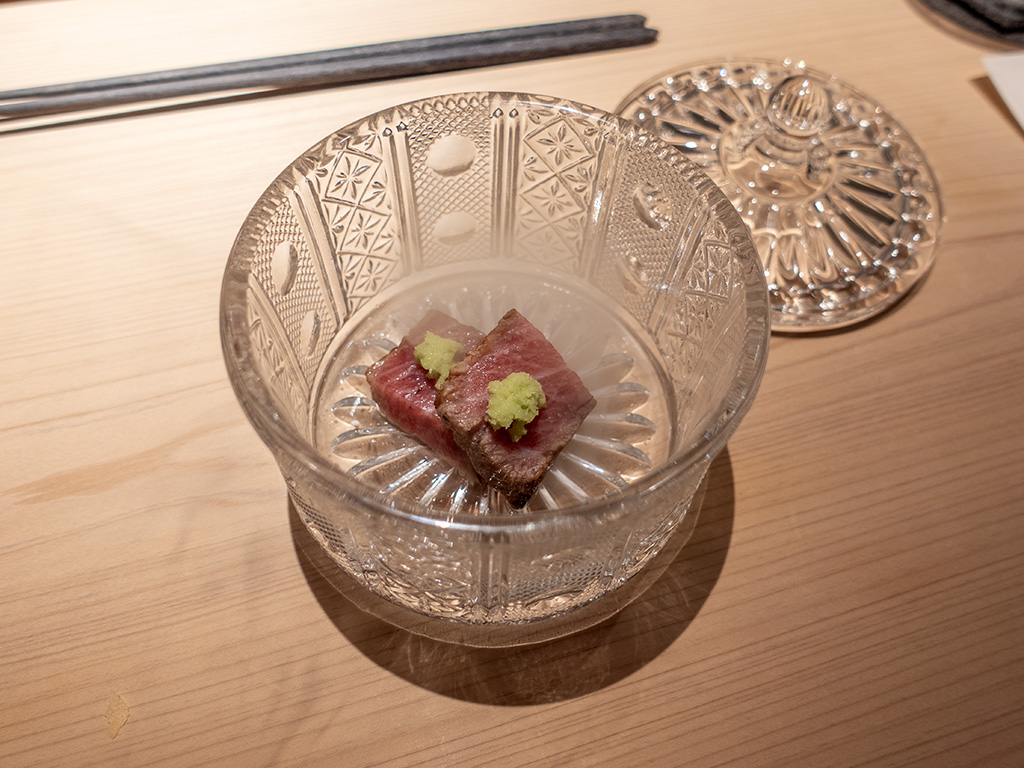
Next was smoked fatty tuna. This came out in a little glass container with the smoke trapped in, and the lid was opened at my seat.
For some reason, I thought this was smoked wagyu, even though it clearly said it was smoked fatty tuna on my course list. That made for an interesting surprise when biting into it because I was expecting a beef flavor and got tuna instead, but otherwise, this was delicious.
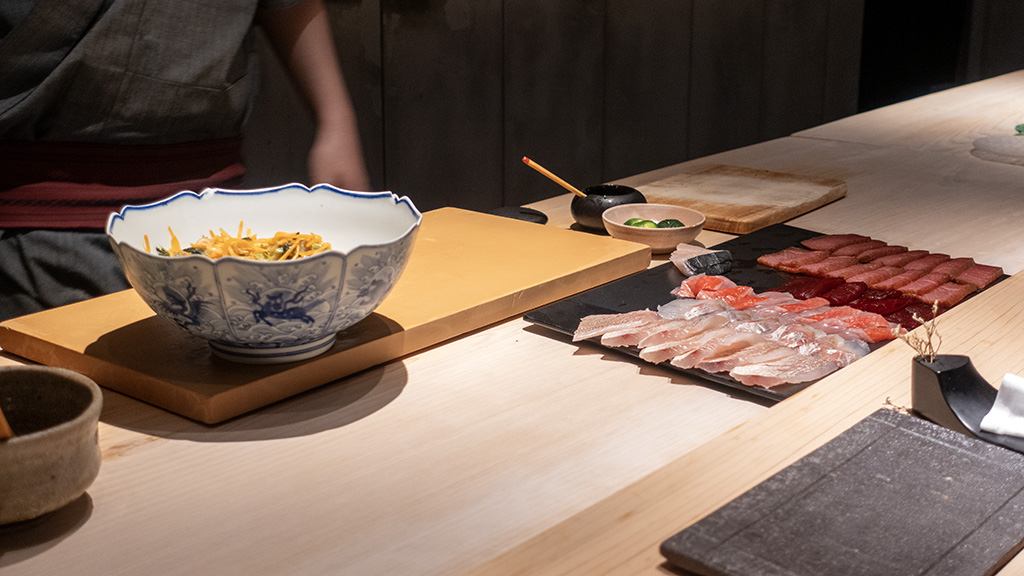
While we were eating the previous two dishes, Chef Nakamura was busy preparing the slices of fish for our nigiri.
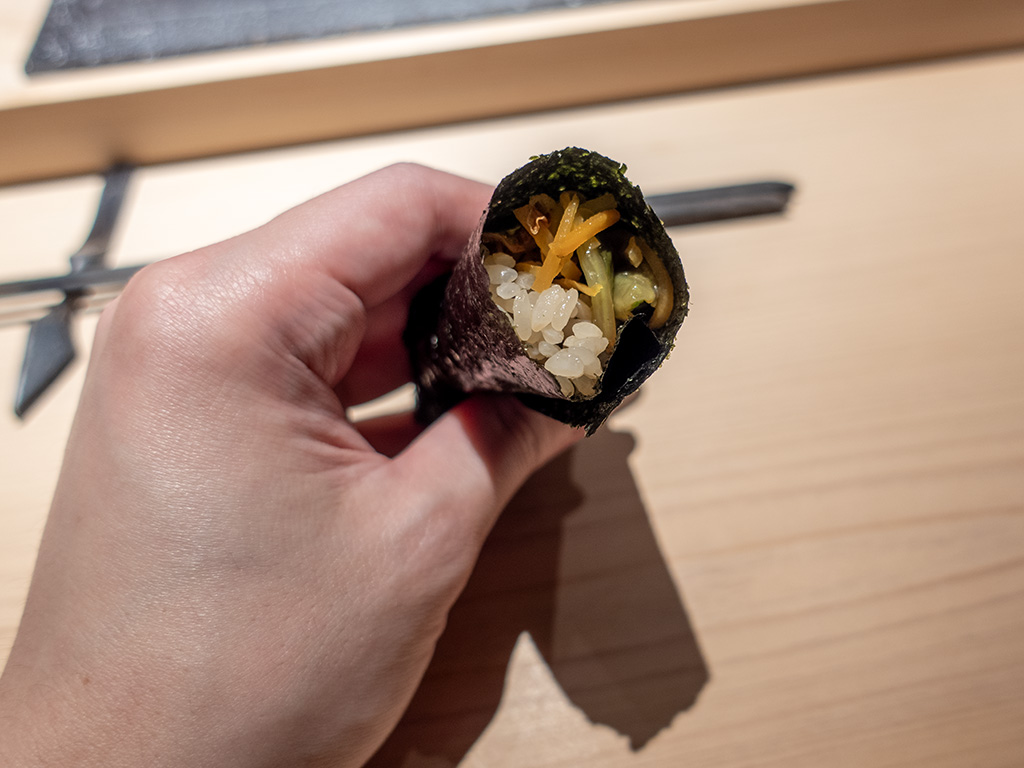
Before nigiri service started, we received a vegetable hand roll.
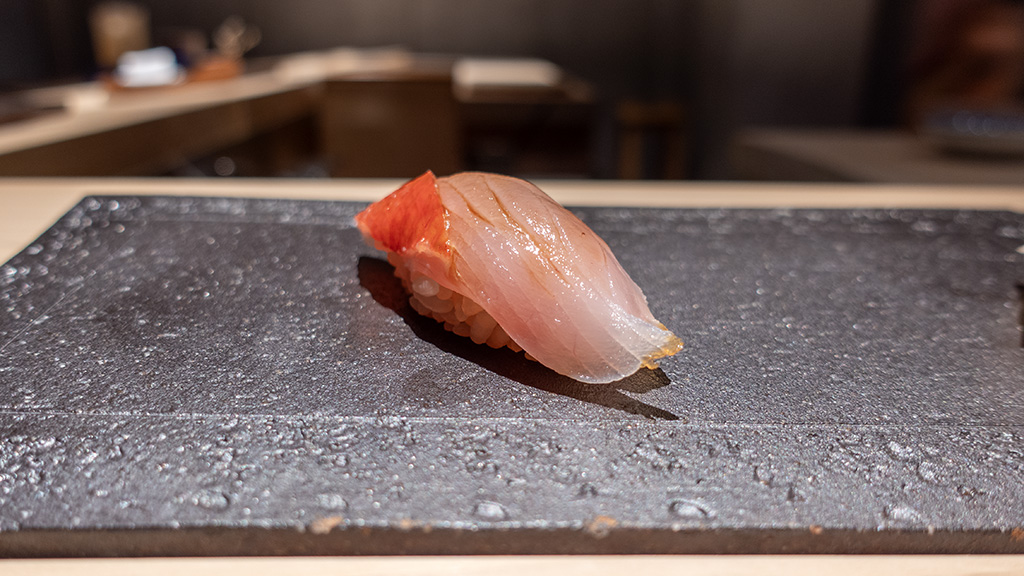
The first small set of nigiri consisted of baby snapper…
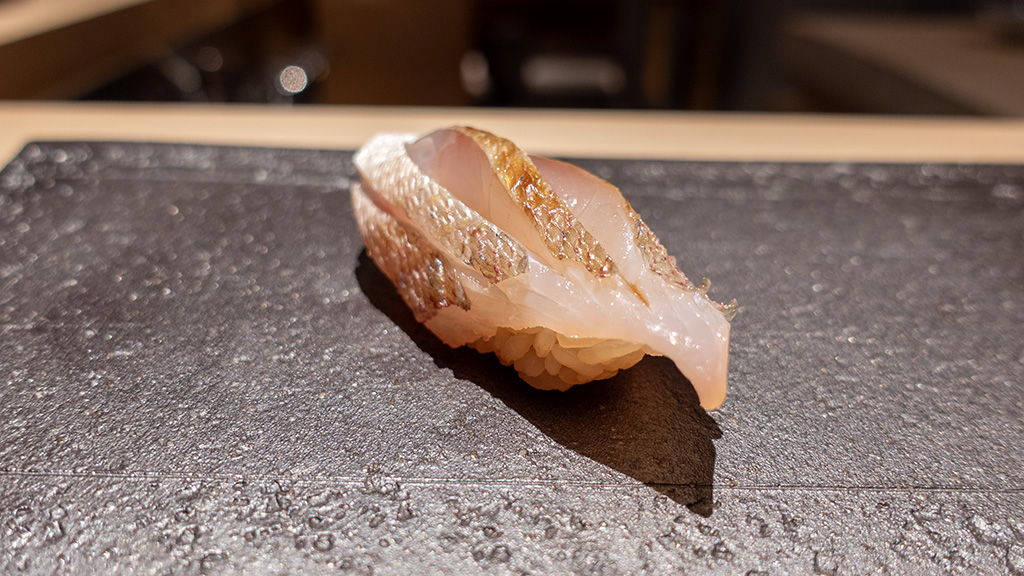
… gurnard…
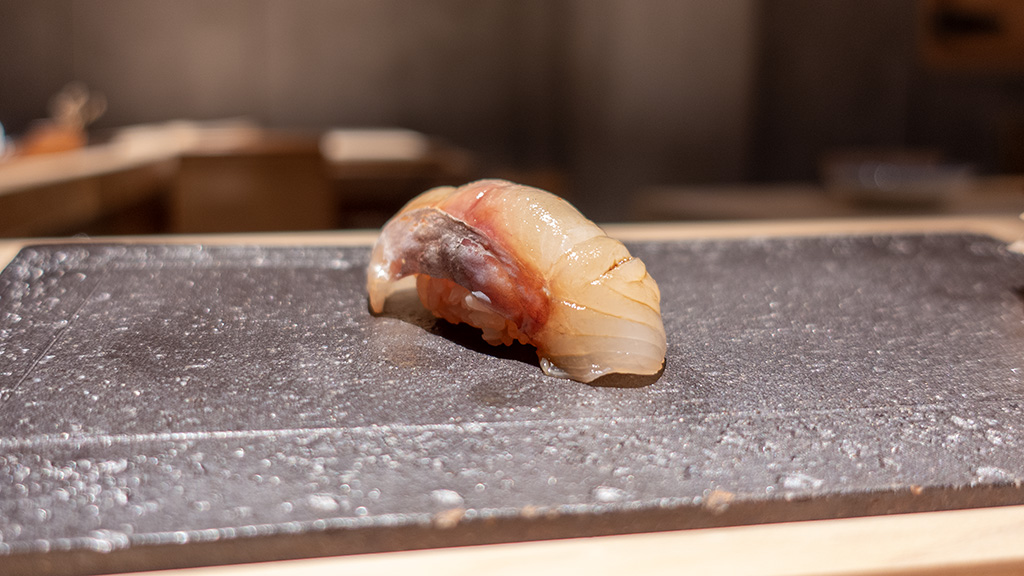
… and golden eye snapper.
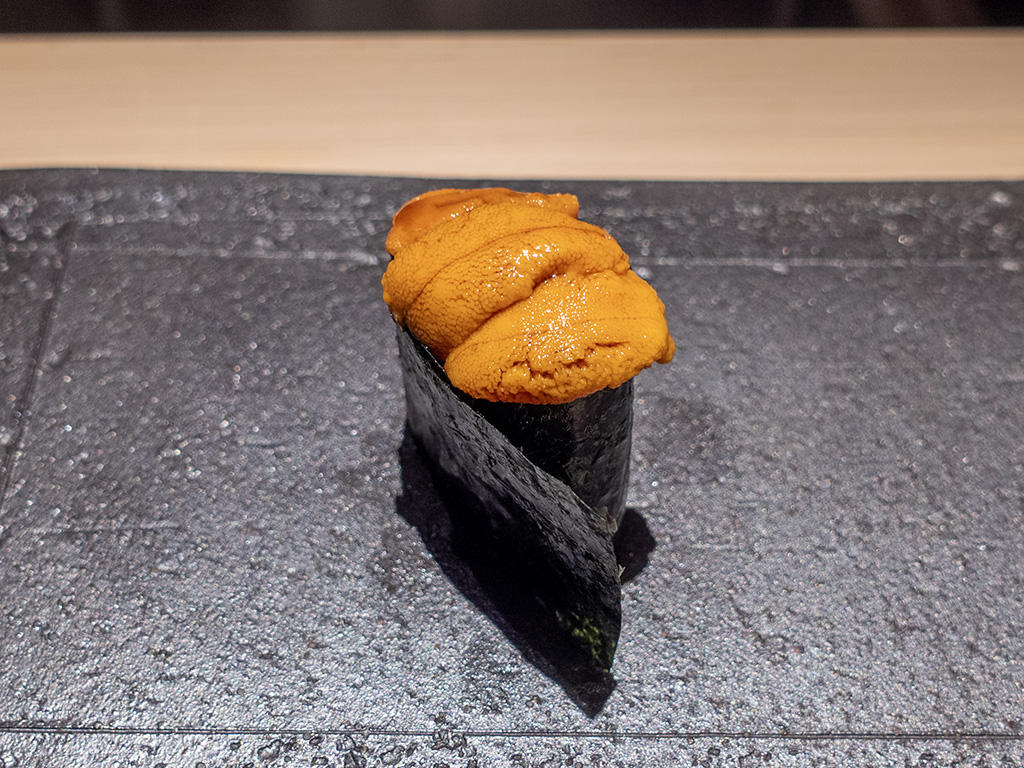
We took a quick break from nigiri to have uni (sea urchin) gunkan.
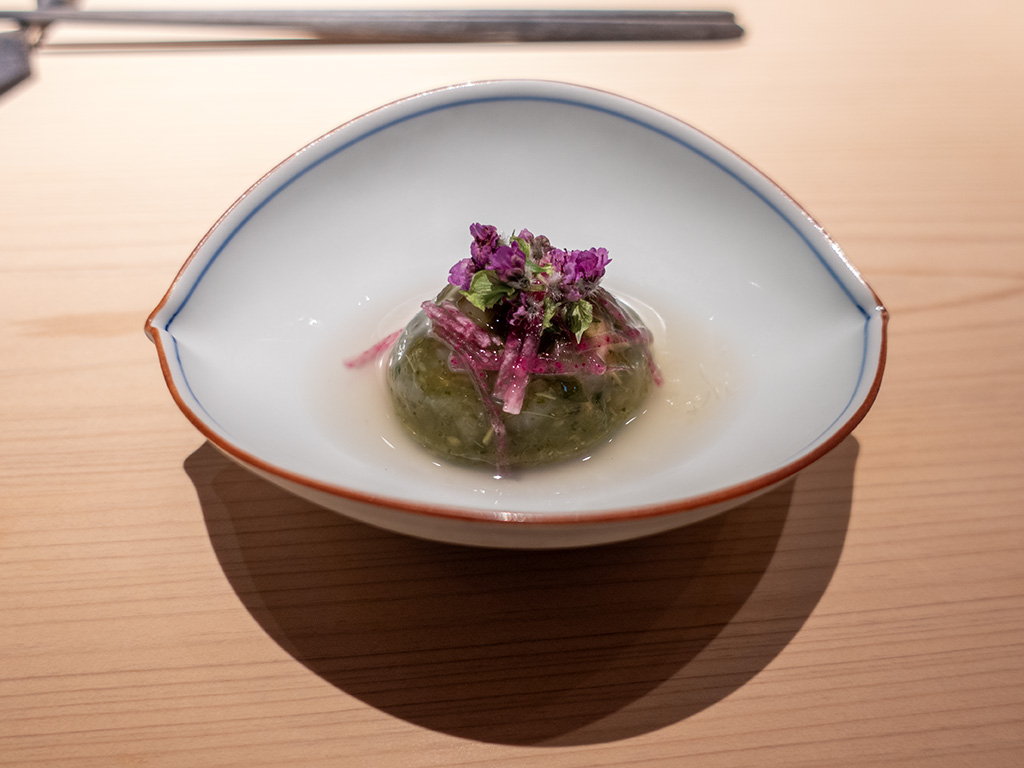
Next up was a specialty dish: Itoshima’s shungiku and tiger prawn mochi cake.
Afterwards, nigiri service continued with lean tuna…
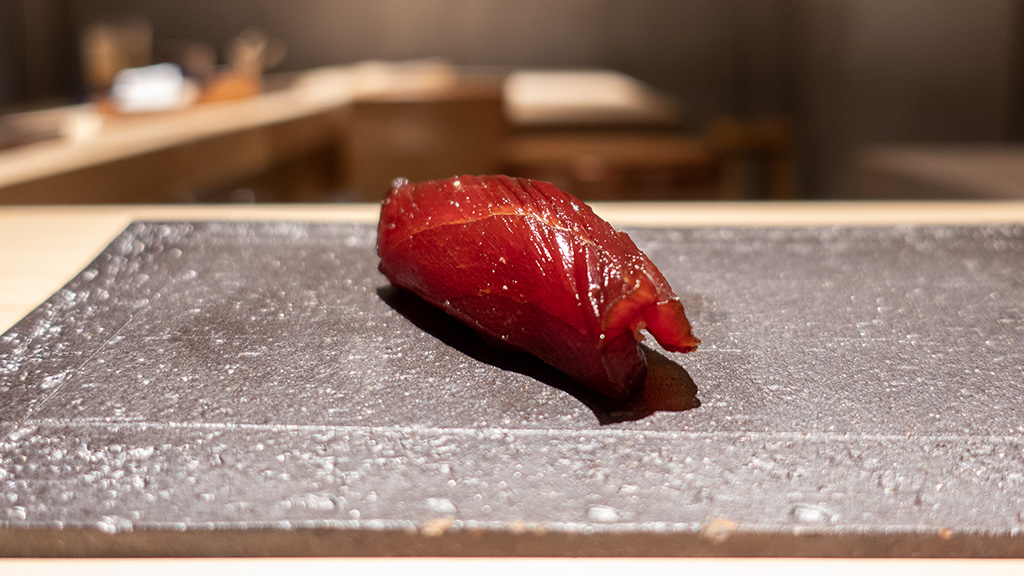
… medium-fatty tuna…
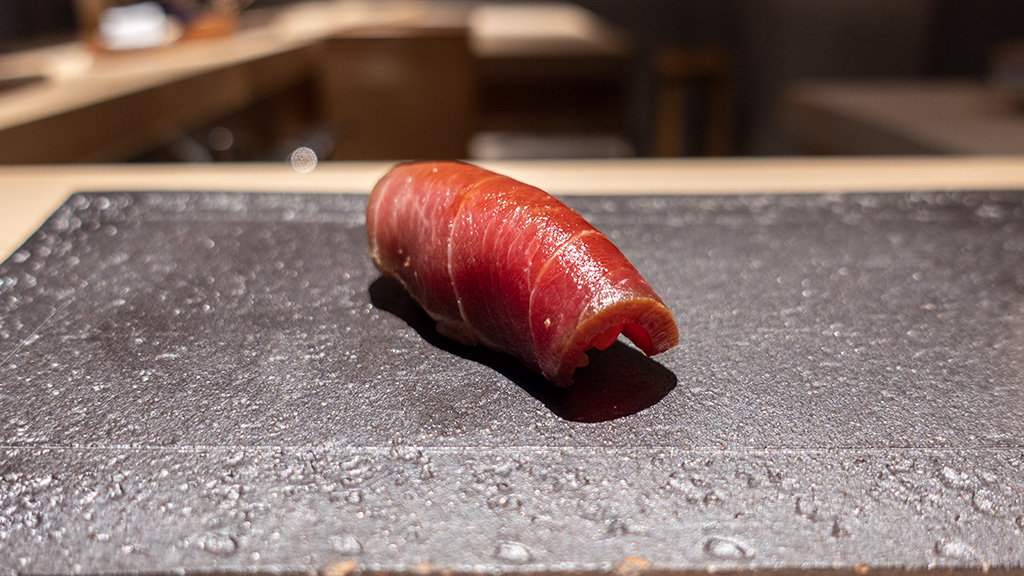
… and seared fatty tuna.
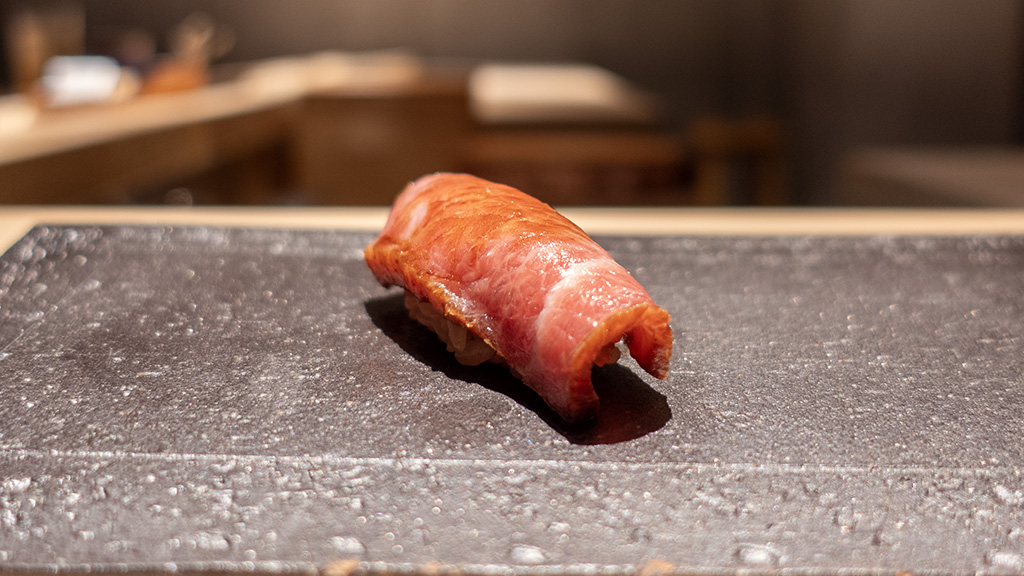
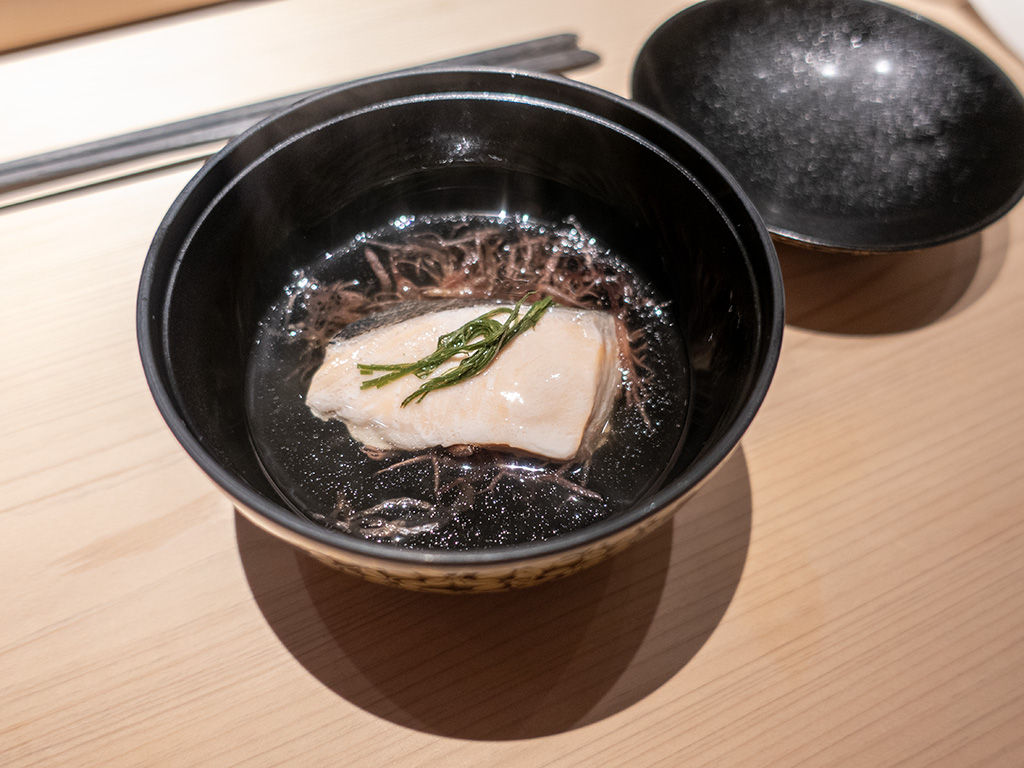
To break up the nigiri again, we received Japanese trout and sakura leaf soup. The fish was incredibly tender and basically fell apart in my mouth just by gently rustling around my tongue a little bit.
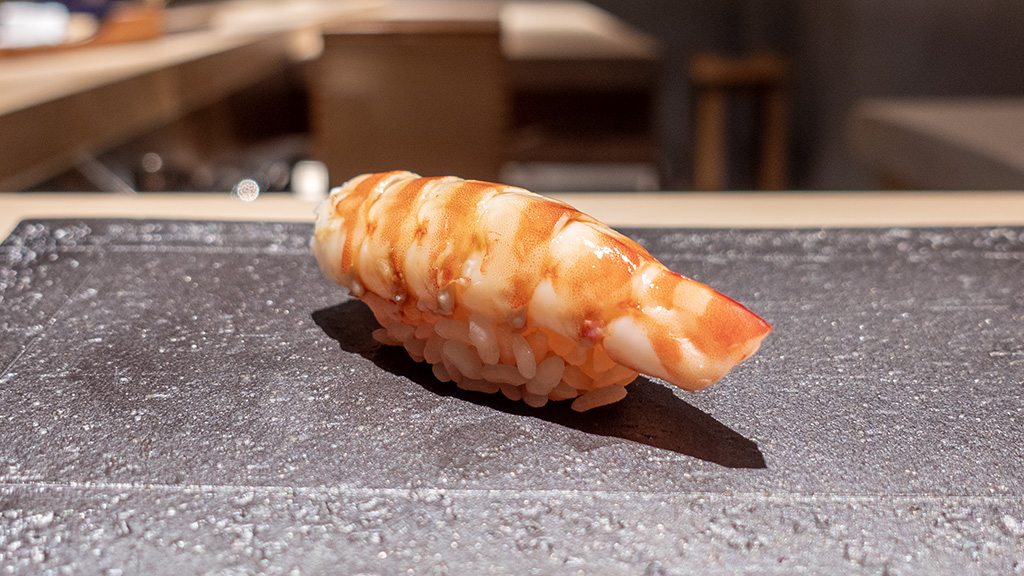
Our second-to-last piece of nigiri was what the course list called “double shrimp” nigiri. The outside was kuruma ebi (Japanese tiger prawn), but there was also a small piece of amaebi (sweet shrimp) tucked inside between the top layer and the rice.
I have obviously had a lot of kuruma ebi and amaebi before, but only separately; this is the first time that I ate it together. I wouldn’t say that it was a completely new flavor profile or anything, but the best way for me to describe it was that it was “high impact” shrimp, i.e., it was very shrimp.
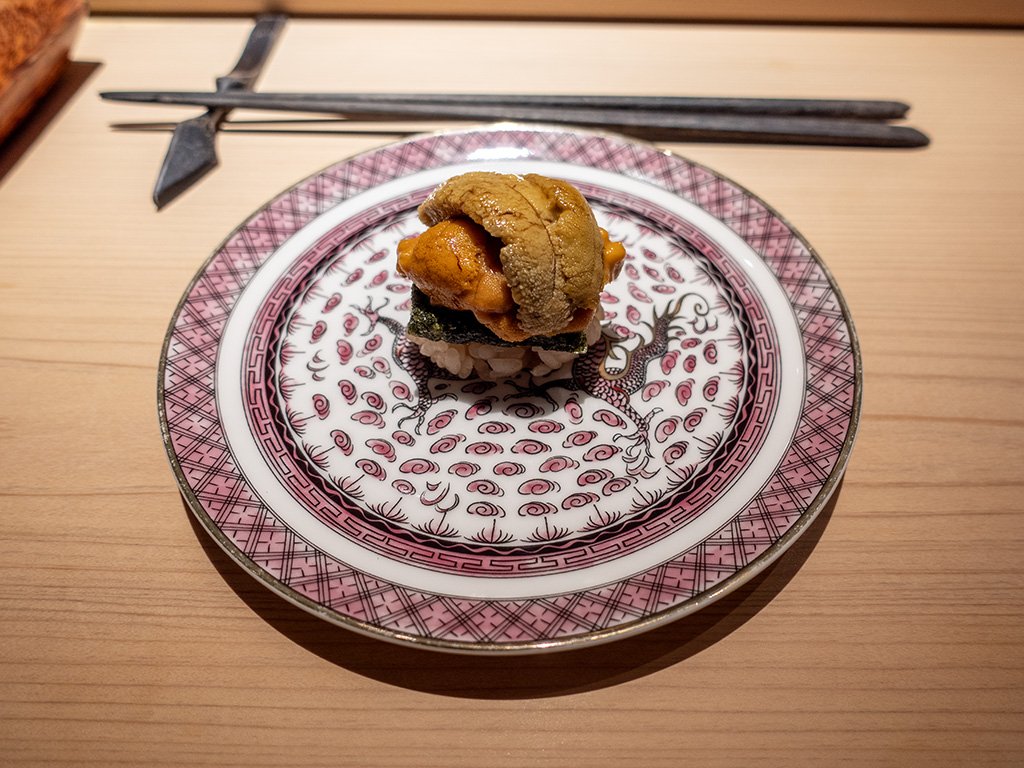
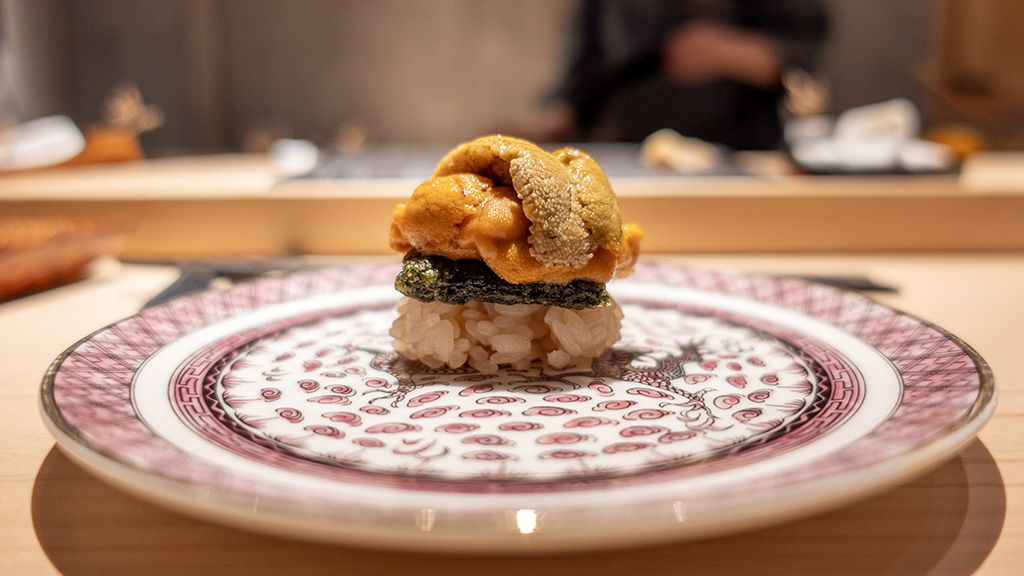
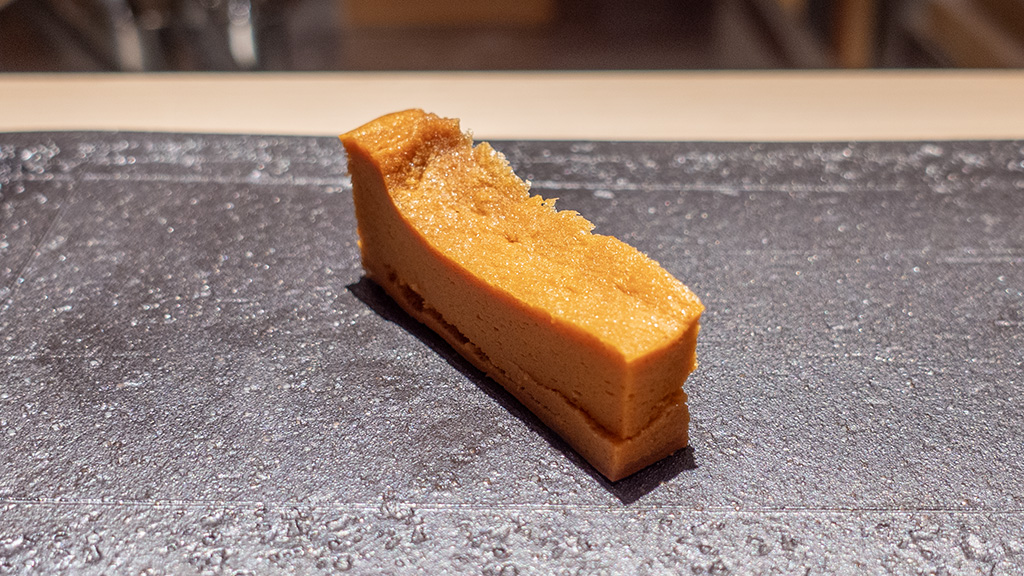
Following the “double shrimp” methodology, next was “double sea urchin” with seaweed tempura. I guess this is technically still considered nigiri, as all of it was served atop a pillow of rice.
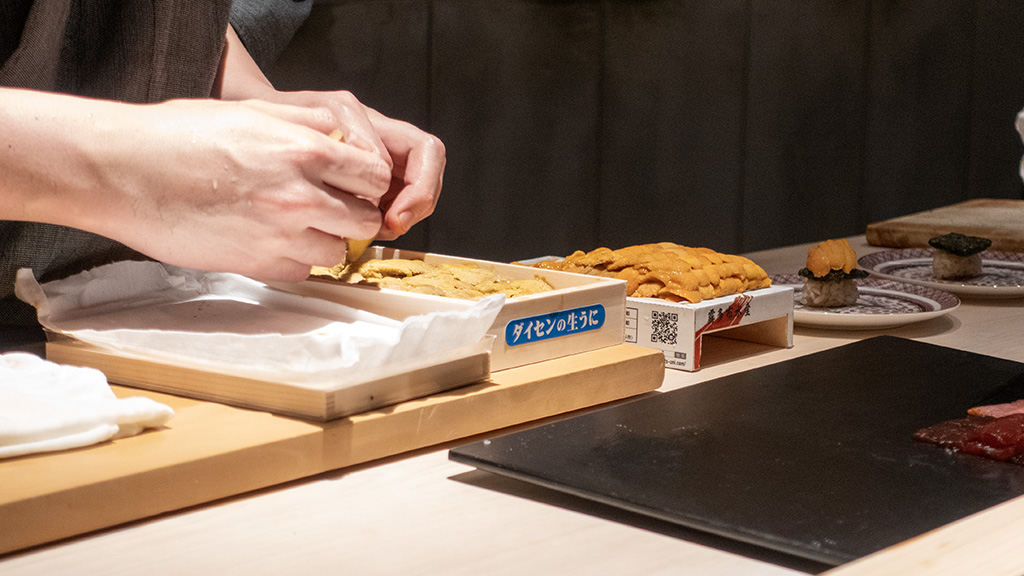
This was my favorite item of the dinner.
Sea urchin my favorite food, so it was amazing getting this big of a portion of high-quality sea urchin at once. It had a high amount of natural sweetness to it, and I was actually able to tell apart the taste difference between the two different kinds of sea urchin.
The seaweed tempura also added a nice depth of flavor and texture to the piece. It was fried to the perfect level such that it was firm on the outside, but the original seaweed was thick enough in layers that it had a satisfying bite to it and it didn’t just crumble apart.
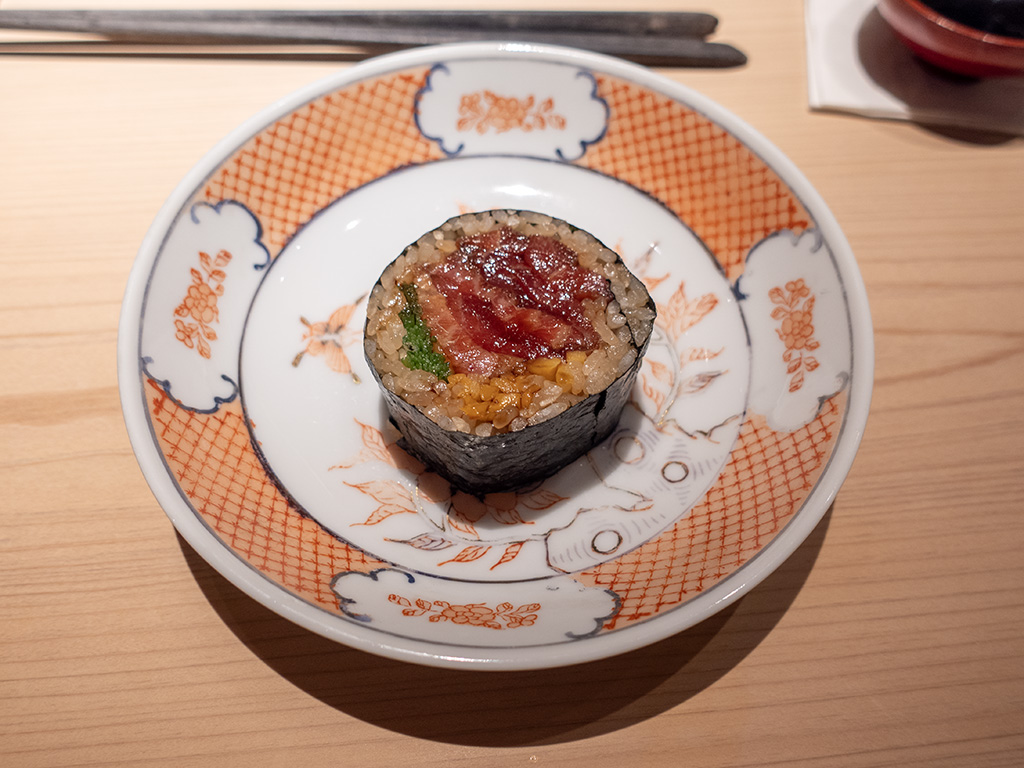
The final main dish of the omakase was tuna futomaki. The chef basically made a roll filled with a ton of different kinds of tuna all at once.
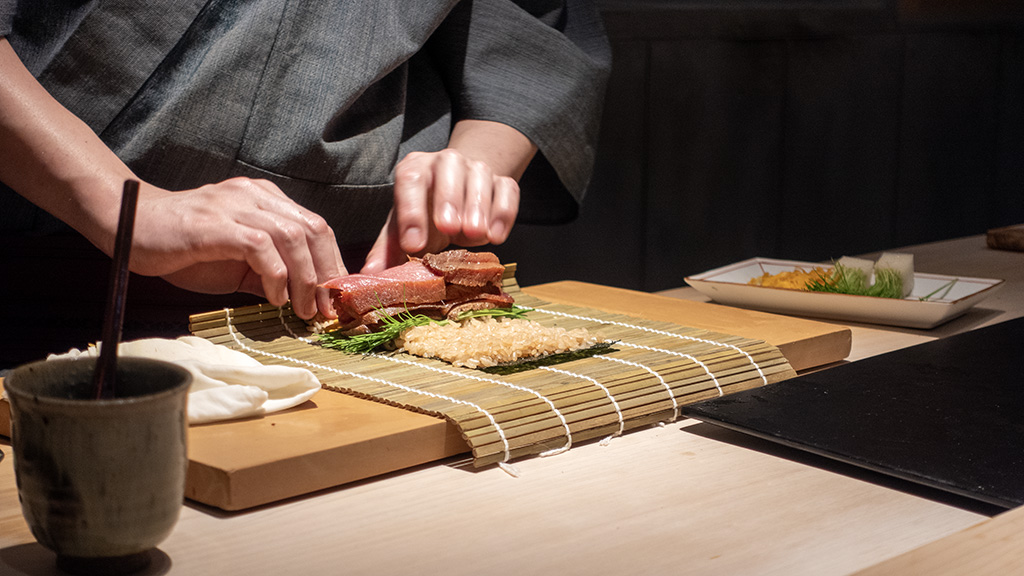
The roll was then cut in half, and each half was intended to serve one couple. Because I was dining alone, the chef asked me whether I wanted the larger piece or the smaller piece; I of course picked the larger portion.
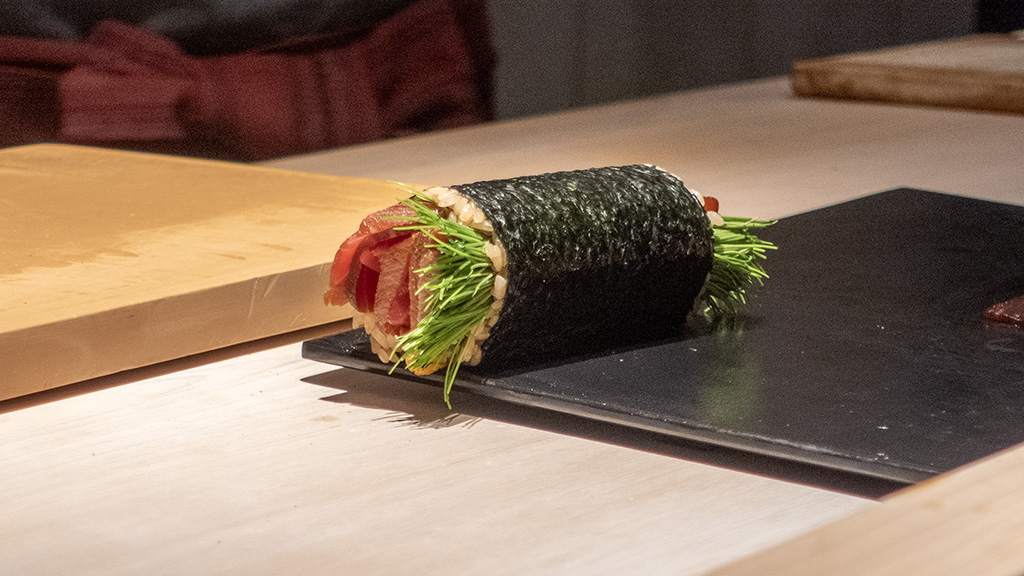
At this point, I realized that the “special thing” that this sushi restaurant does is mix together very high-end cuts of certain fish in slightly different varieties as combination dishes—they did it with tuna too after having done it with shrimp and sea urchin. Futomaki in general is already supposed to be a thick roll, but it is usually primarily centered around one kind of fish or meat with the other components being vegetables and toppings.
I think most other Japanese restaurants want to preserve minimalism and purity in their dish preparation, so I don’t recall something like this ever having been done at other high-end sushi restaurants. With that being said, I like restaurants that innovate and create unique culinary experiences, so I’m glad I had an opportunity to try out these “double” and combo dishes.
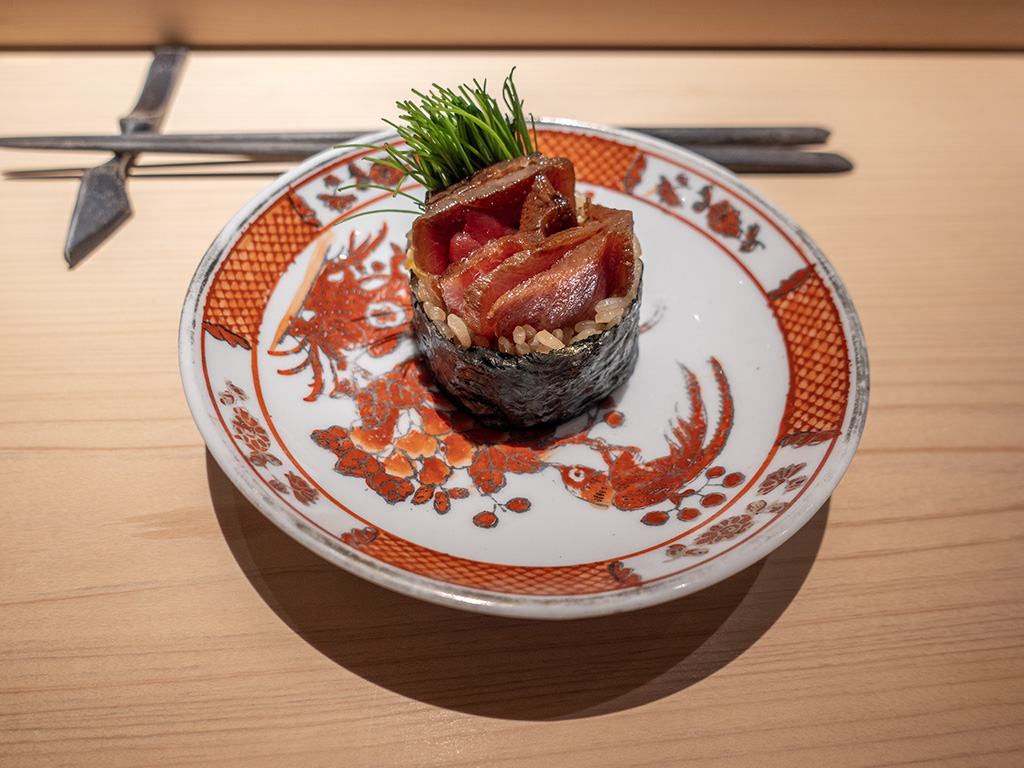
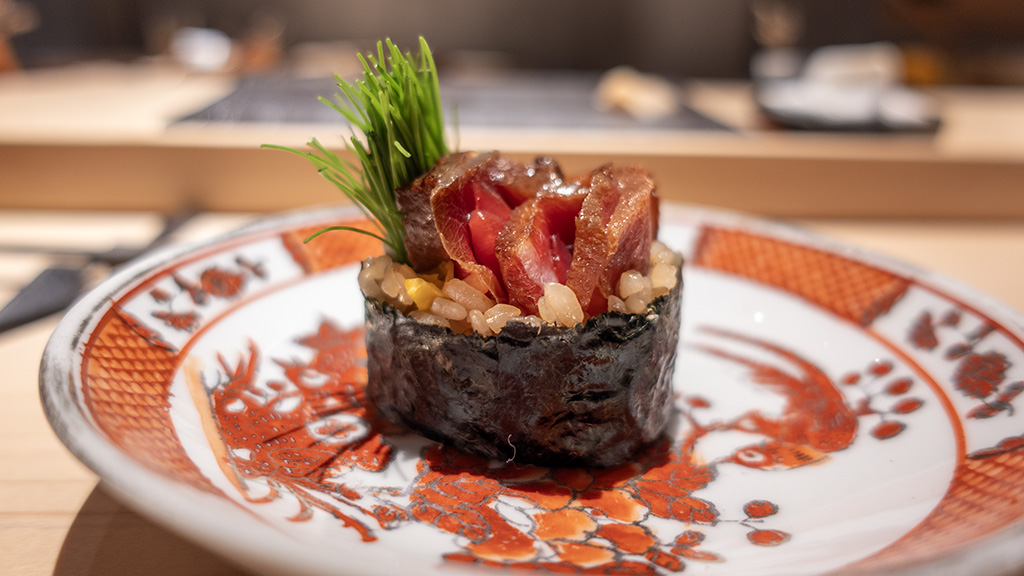
There was such a wide variety of tuna in this that it was a bit more difficult to pinpoint each different type like it was possible with the double shrimp and double sea urchin nigiri. I don’t think there is a better way to describe this apart from saying it is very tuna.
At the time of eating this, I didn’t know what the greens were, but I expected them to be a little bit bitter, presumably because it looked like grass. However, after I bit into them, they had a very clean and mild flavor that I really liked. Later, I did some research and discovered that it is likely menegi, or young green onion shoots, which is common to use to garnish highly fatty fish.
After those three wilder dishes, we toned it down with some simple and straightforward miso soup.
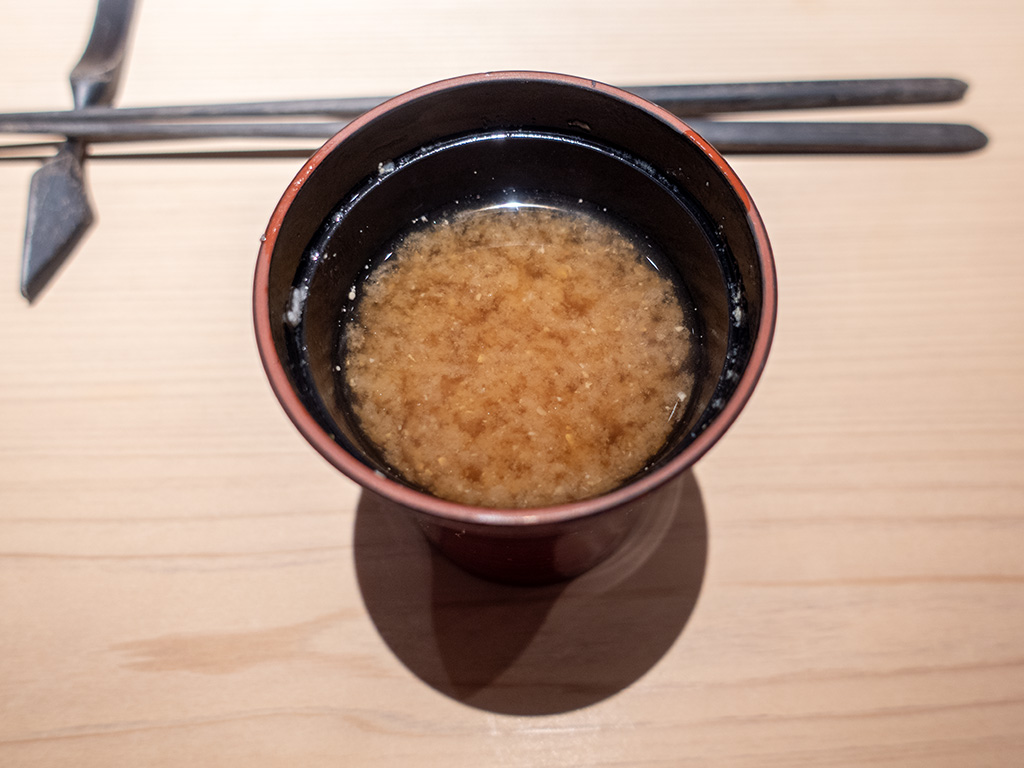
Remember how I said that each futomaki is cut in half, and each couple receives one half to split between themselves? Because I was dining alone, I didn’t have anyone to share the futomaki with. When I was asked whether I wanted the bigger or smaller portion, I assumed that the other piece would be served to a staff member in the kitchen or something.
However, while I was sipping on my miso soup, the chef asked if I wanted the other portion of my half of the futomaki as well. Of course, I said yes, so I ended up with a second piece of the tuna futomaki.
The second to last item, which served as a transition from the main entrées to the dessert, was tamagoyaki.
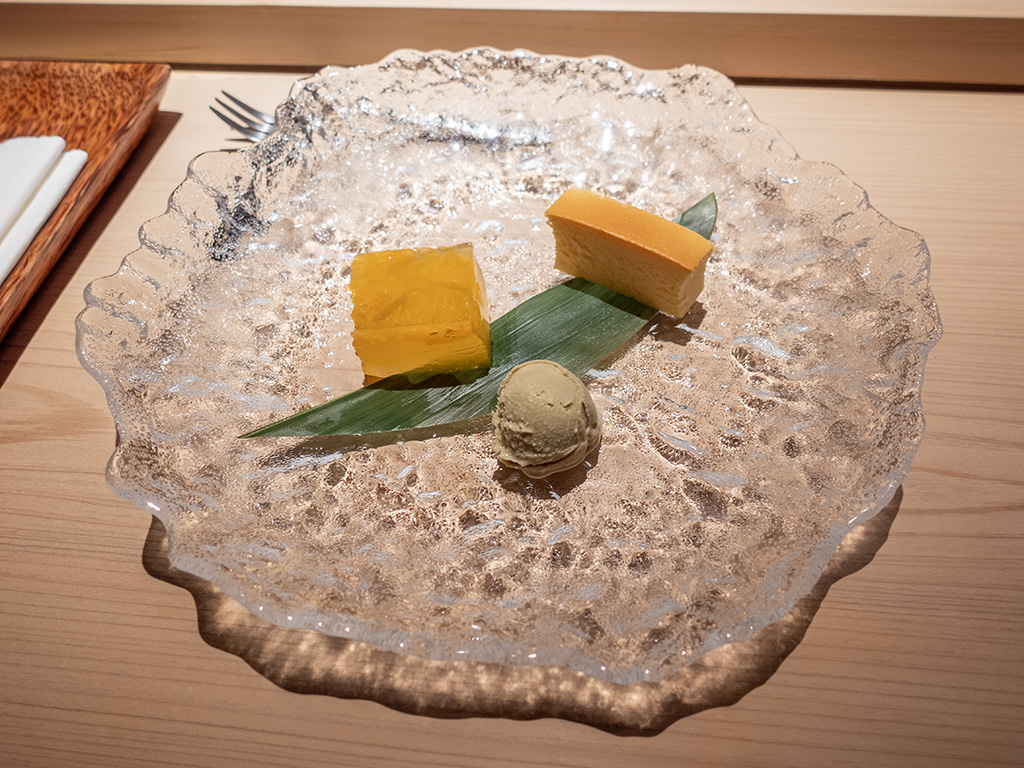
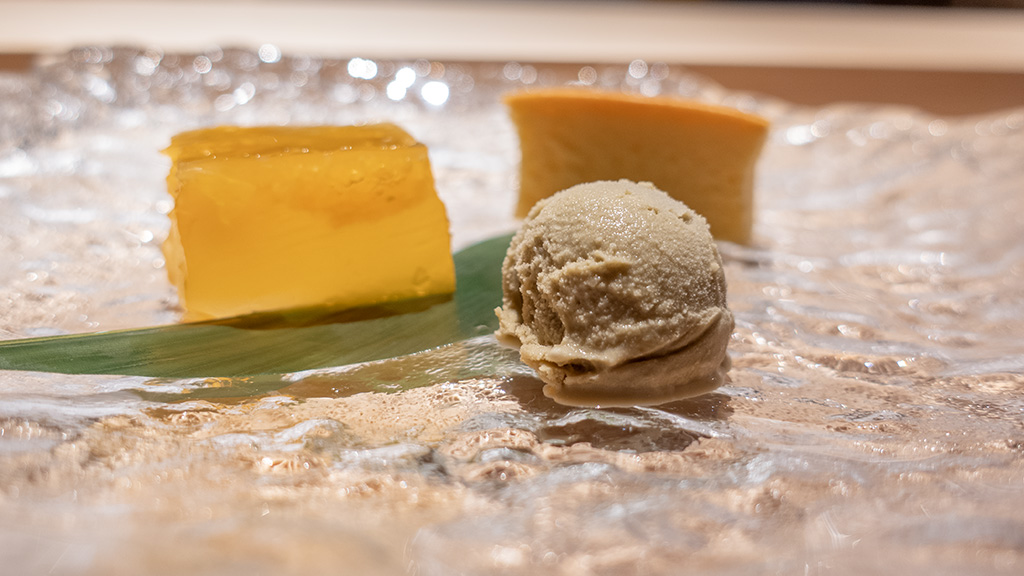
And finally, to conclude the meal, I was served a plate with three small desserts.
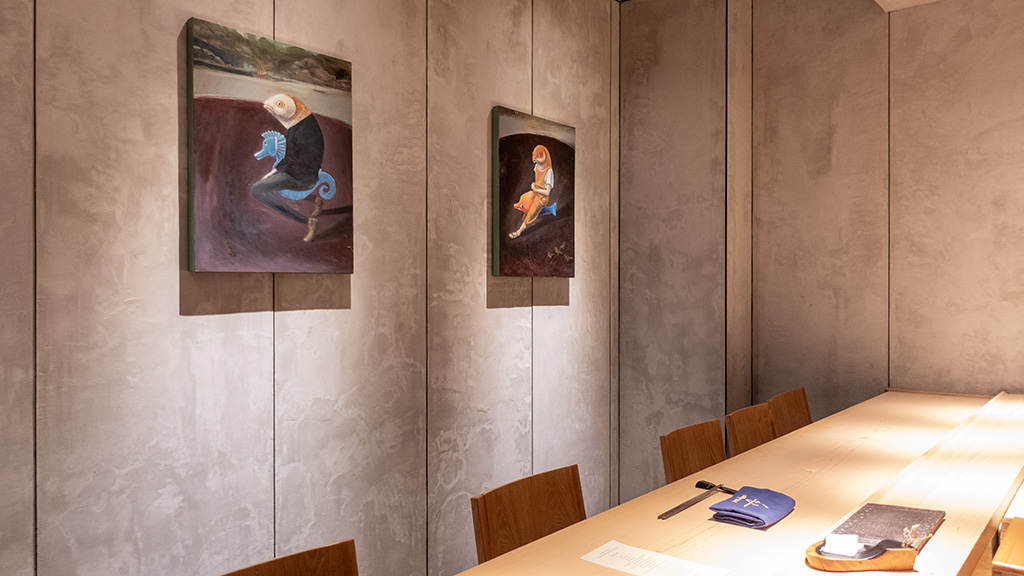
I liked the funny anthropomorphism art that was around the dining area. Somehow, this blended in with the walls enough that I didn’t notice it at first, but once I did see it, it was one of those things that you just cannot unsee. It was very uncharacteristic of and very amusing to see in a high-end dining establishment, and I found it very enjoyable.
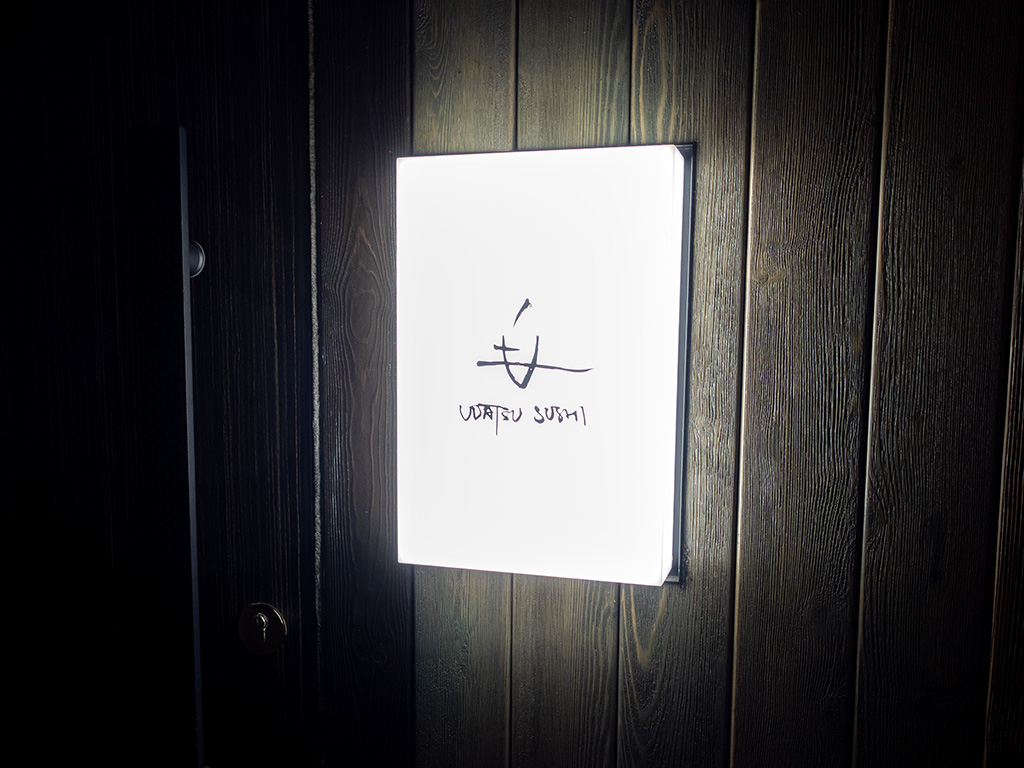
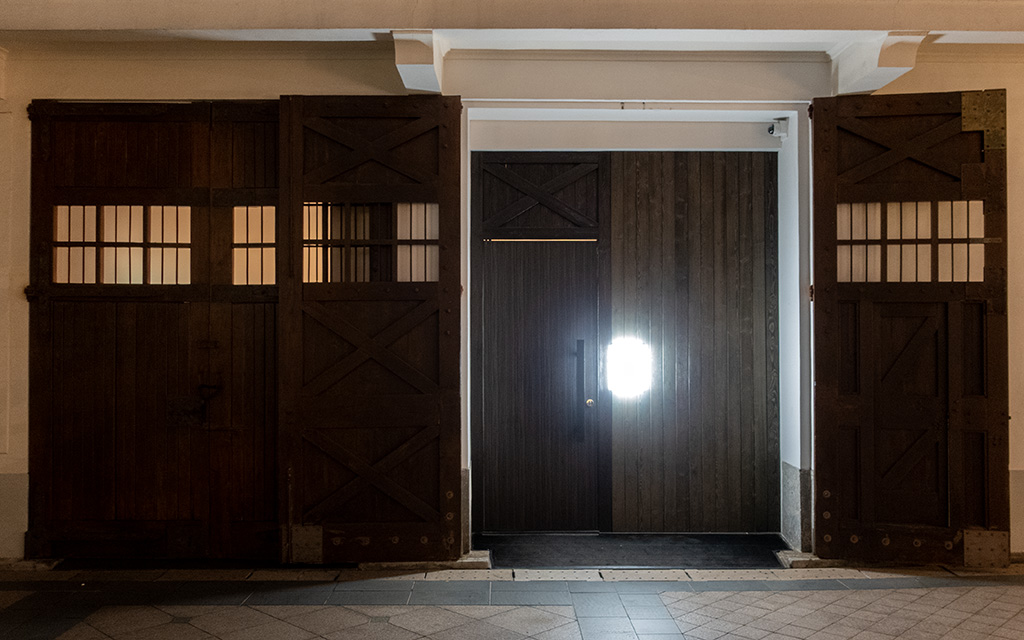
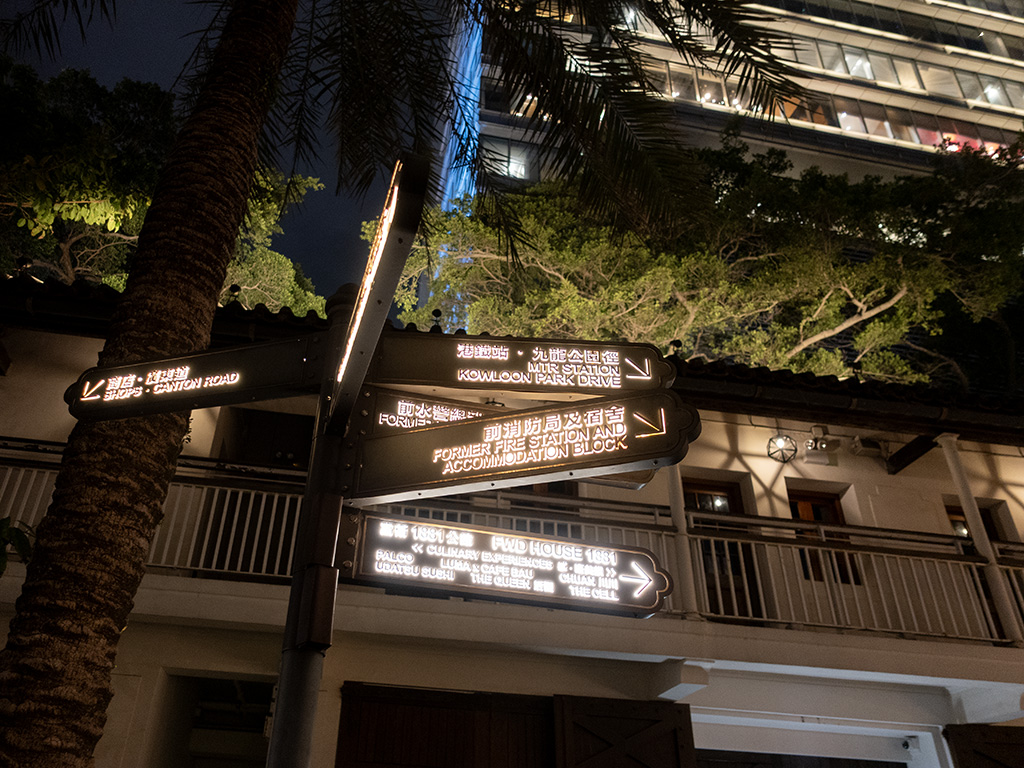
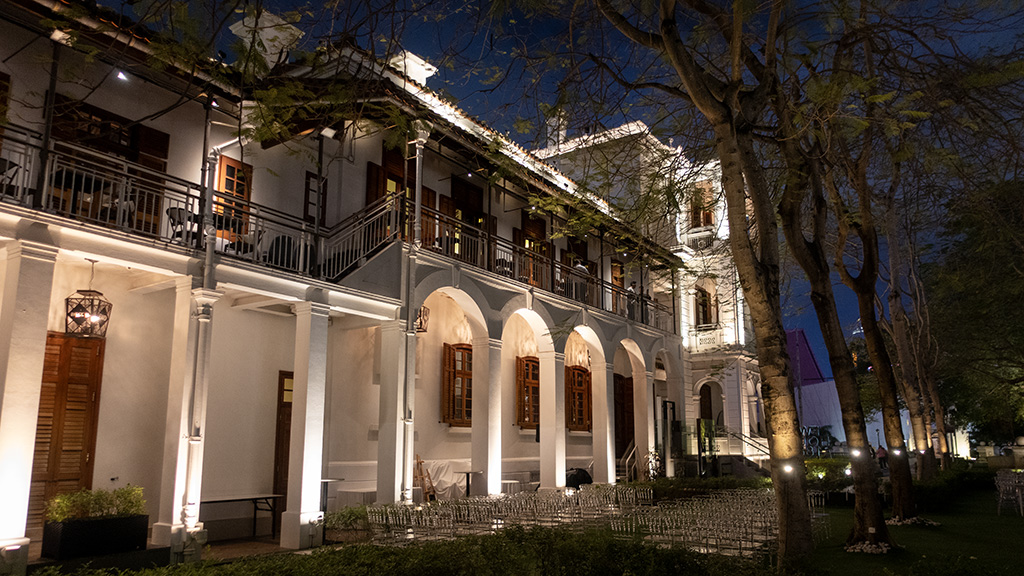
Here are some photographs taken outside. Udatsu Sushi is part of FWD House 1881, a hotel in Tsim Sha Tsui.
| Omakase | HK$ 2,380.00 |
| Service charge (10%) | HK$ 238.00 |
| Unknown charge | HK$ 86.00 |
| Total | HK$ 2,704.00 |
| Converted to USD | US$ 345.32 |
I did not receive an itemized receipt for my meal, and instead, was just given a total amount to pay. Because of that, I didn’t realize that I had been overcharged an extra HK$86 until I had already left and did some calculations after-the-fact. I didn’t order any supplements, so my guess is that the extra fee was for the cost of glass-bottled water, as I noticed that many high-end restaurants in Hong Kong don’t serve regular water and their still water is bottled water only.
The meal was great overall, and I especially liked the unique combination items. However, I think the value for money wasn’t quite there. Even with being able to eat both halves of the abalone spring roll and both halves of the tuna futomaki due to dining alone, it still didn’t feel like a satisfyingly filling meal. Some omakase restaurants will ask if you want some extra scoops of sushi rice at the end in case you are still hungry and want to fill yourself up a bit more before leaving, but I was not offered that at Udatsu.
Interestingly, there is an Udatsu Sushi in Los Angeles too, and it is quite a bit cheaper than the Hong Kong equivalent—US$225.00 base for the omakase, a 20% service charge of US$45.00 in lieu of gratuity, and 9.75% combined California state and Los Angeles county sales tax of US$21.94, for a total of US$291.94. Los Angeles isn’t exactly known for being cheap, and the cost of living in Hong Kong isn’t exactly considered to be low, but still, I found this difference to be surprising.
If money is not an issue for you, then I think Udatsu Sushi Hong Kong will make for a peaceful, soothing, traditional Edomae-style omakase dining experience that still adds in a couple fun twists with the menu. However, if you are budget-conscious, then I think you’ll be able to find some luck getting a comparable experience at some other omakase restaurants too for a lower price.