The West Coast feels like home

I’m not sure if this feeling is just amplified by the fact that I have spent the past month in an extremely humid climate, but after taking another week-long trip to SoCal and Las Vegas, the West Coast makes me feel at home.

No, this doesn’t mean I’m softening up to SoCal—I still hate California and think it should be ejected from the United States of America—but the en­vi­ron­ment there feels a lot more comfortable than the East.

As for the actual feeling of home, I’m glad that I selected Las Vegas as my city of residency, and after coming back again to take care of some errands dur­ing my road trip, I know for sure that my ultimate, final destination upon the conclusion of my voluntary homelessness is going to be Las Vegas. A lot of people told me that I’m going to realize how underwhelming Las Vegas is after seeing so many other cities across the country, but I’ve experienced the opposite effect—Las Vegas looks even better after all these experiences.

 
I decided to drive from Charleston to Atlanta so I could take a non-stop flight from ATL to LAX, as flying out of CHS would’ve required a layover. This obviously was also productive to my road trip, as I was continuing west anyway, so if anything, making it to Atlanta now rather than later helped break up the longer drive.

Hartsfield-Jackson Atlanta International Airport

My system so far for air travel is to park my pickup truck at the airport parking lot for a week while I travel, then it will be there in walking distance of the terminal waiting for me when I return so I can continue my road trip. This has worked out great so far, as the cost of the parking is usually mostly off-set by the price I would’ve had to pay anyway to figure out an alternative parking solution and then rideshare to the airport. The extra cost ends up being negligible in exchange for the convenience of being able to take off on my own accord right upon arrival.

Now of course, this only works if there is actually affordable parking at the airport. For whatever reason, on the day I was scheduled to depart from Atlanta to Los Angeles, I drove to the south daily lot to park… and it was full. Unfazed at the minor setback, I looped around the airport to the north side to park at the north daily lot… and discovered that that was full as well.

Now slightly more concerned, I figured that the volume of cars flowing in and out of the parking garages must be massive, so if I loop back around to the south daily lot, some spaces might have opened up by then. … I was wrong. I once again looped back around to the north daily lot, and it was still full.

Now, you probably read all that in several seconds, but keep in mind that actually getting from one cardinal lot to the other takes about 5 or so minutes, considering that they’re on opposite ends of the terminal, and there’s almost always decent traffic congestion at the airport during the day. After going back and forth a few times, I realized that I couldn’t keep doing this, because I usually cut it fairly close for my flight, so wasting more time finding park­ing would put me at risk of missing my flight.

I ended up paying 50% more to park in the hourly lot instead.

Never lucky.

GMC Canyon at Hartsfield-Jackson Atlanta International Airport

After making it to Los Angeles, I went to pick up my rental, which was a Ford F-150 XLT with the 302A package (which comes with the 12-inch screen). This is the same pickup truck that I received while I was in Oklahoma City, but it seemed like the visitors of Los Angeles didn’t treat this particular truck as nicely as those who traveled to Oklahoma City. It had a horrible, horrible transmission problem where it would lurch and jerk every time it down­shifted from sixth gear, all the way down until it got to second gear.

That was obviously incredibly annoying for city driving, especially in Los Angeles traffic, but the truck still had a very smooth ride on the highway on my trip to and from Las Vegas. I usually like to use Avis’ “mystery car” option so I can get a better deal, but in anticipation for the long drive, I spe­cif­i­cally requested a full-size pickup truck so I can be more comfortable.

Ford F-150

I spent the first few days of my week staying at the Tempo company headquarters in Long Beach.

Naples Yacht Club

Afterwards, I drove to Las Vegas to take care of some errands, like getting a haircut, going to the chiropractor, checking my PO box, and exchanging some stuff from my storage unit.

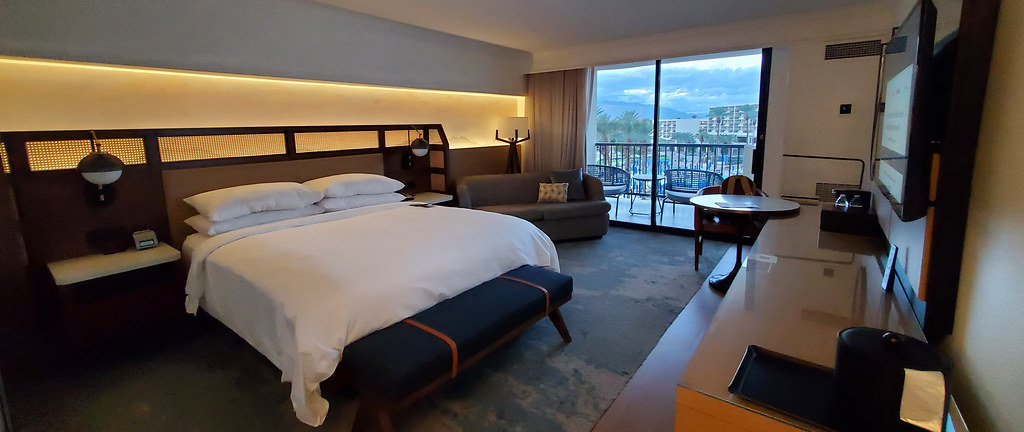
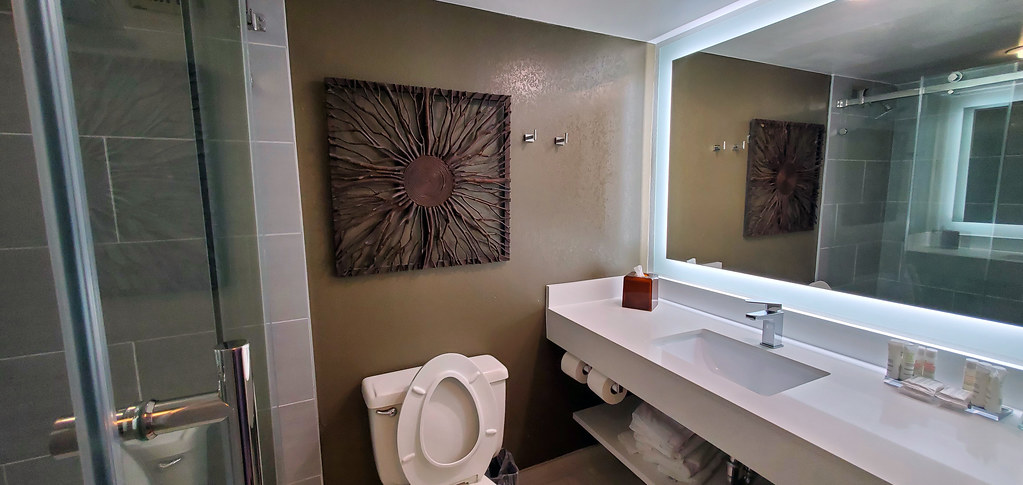
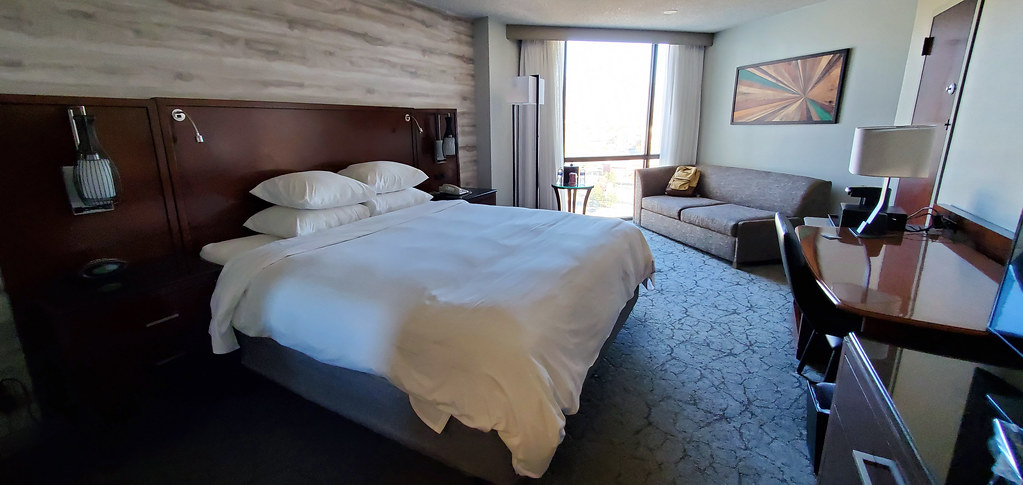
While in Las Vegas, my hotel of choice was the Residence Inn by Marriott Las Vegas South/Henderson, and the room I got was a king studio. It looked like a fairly newly constructed hotel based off the design and condition of the room. I didn’t use the kitchen at all, but everything was clean, the furniture was modern, and the hotel had everything I needed for a pleasant stay.

Residence Inn by Marriott

Of course, it wouldn’t be a proper trip to Las Vegas without visiting my former roommate’s cats. I took a few photos, but for some reason, all of them except one came out blurry; here is the one that is in focus.

Pudding the Persian

For dinner the day before my return to Los Angeles, I met up with a few friends and went to an Italian restaurant at Tivoli Village called Al Solito Posto.

Apparently this was supposed to be a great, top-tier restaurant, but I must’ve just picked an unlucky dish, because I thought it was pretty under­whelm­ing. I selected Emily’s Sunday Gravy, which was spaghetti that came with braised shortrib, house meatballs, and veal breast. If you were to ask me “how did it taste,” my response would be, “I don’t know,” because it was so overwhelmingly salty that I literally couldn’t really taste anything. I’m some­what of a meat enthusiast who can distinguish the subtle different flavors of different meats and different cuts of the same type of meat, but this was so salty that all the meat tasted about the same. By the end of the meal, it felt like I had pickled the inside of my mouth.

My friends apparently love this restaurant and go there regularly, so I’m more than willing to give it another chance… but I’m definitely going to ask for something far more bland next time.

Spaghetti

For my final activity of my trip to Las Vegas, one of my friends wanted me to accompany him to the Halloween Town Pumpkin Patch, a seasonal carnival and festival taking place at Boca Park. After a quick glimpse, it was obvious that it was a very traditional carnival with rigged carnival games, but he insisted on playing.

Now of course, for those who are not familiar with Las Vegas, it gets excruciatingly hot dur­ing the daytime over the summer, but it gets fairly cold dur­ing the nighttime as it approaches winter. This festival trip just ended up being my friend losing an astronomical amount of money failing at pretty much every single carnival game, and his girlfriend and me following him around, freezing to death, wondering why he is basically just donating money to a place that isn’t even a tax-deductible 501(c)(3) charity.

Halloween Town Pumpkin Patch

After returning to Southern California, I took a trip to Orange County for a business meeting, went back to the company headquarters in Long Beach for some more business meetings, then headed back to Atlanta after the conclusion of my week.

American Airlines

I don’t want to drive for long distances on the same day that I fly, so I’m spending a night in Lithia Springs, a census-designated area on the western side of Metro Atlanta. Tomorrow, I head off to Birmingham, Alabama to begin exploring the cluster of four southeastern states that I have yet to visit.


—§—


Goodbye Charleston, South Carolina

As I mentioned in my previous blog post, although I already departed Charleston a few days ago on the 13th, there are still a handful of photos left that I wanted to share from my experience in the city.

First up, of course, are some food photos. When my co-worker flew in from Los Angeles to Charleston on the day of the pre-party of the wedding we were going to attend, I picked him up from the airport and we went close to downtown Charleston to get some brunch. He picked Florence’s Low­coun­try Kitchen, and I think this was one of my first experiences with truly Southern food. He got shrimp and grits, while I had the quiche of the day with a side of potatoes.

Florence's Lowcountry Kitchen

Florence's Lowcountry Kitchen

I took a bite of his shrimp and grits and I thought it was actually pretty good—it wasn’t excessively flavored, and the texture was very interesting and satisfying. My quiche wasn’t really what I was expecting (though I also didn’t really know what I was expecting to begin with); it wasn’t anything par­tic­u­lar­ly special, but it was surprisingly filling. Afterwards, we went to the South Carolina Aquarium, which I already shared in my blog previously.

The day after this was the day of the actual wedding. We went a bit early because we wanted to explore downtown Charleston a bit. The wedding took place on Market Street, so while they were setting up, we crossed the street and walked down the Historic Charleston City Market.
Market Street in Charleston

Afterwards, we continued southeast to the Waterfront Park Pier.

Charleston

I usually don’t post photos of personal or private things, but I felt like I had to make an exception for this. At the wedding, the couple’s Bichon Frise Mochi was the maid of honor, and she was an active part of the wedding, walking around and interacting with guests. However, social interaction can get tiring, so Mochi decided that she needed a place to rest. After searching far and wide, she found a soft surface—the bride’s wedding dress—to use as her bed.

Mochi getting comfortable on Janice's wedding dress

The day after the wedding, we went to Husk Restaurant on Queen Street. I think this was the point in time that I started concluding that Southern food might not be my favorite type of food. The wedding had a lot of Southern-style food, some of which was good, and some of which was questionably sour and salty. After eating a three-course meal at Husk with proudly Southern ingredients and having a similar experience as the wedding, I realized that my taste buds might be a little bit too sensitive to properly appreciate Southern food.

The starter was Heritage pork lettuce wraps with marinated cucumber and red onion, glazed with Kentuckyaki and topped with Togarashi. It had an ex­tremely strong and piercing flavor such that I could barely tell that it was wrapped in lettuce, and even the pork taste was difficult to pick up.

Husk Restaurant in Charleston

For my main course, I asked the waiter what he recommended as one of the most iconic dishes of the restaurant, and he recommended cornmeal-fried catfish. It came with summer squash, fennel, and green tomato, sitting inside some Louisiana hot sauce.

Long story short, everything tasted like it was pickled to the extreme, and the vegetables were so salty and sour that the only way I was able to tell them apart was because they were different shapes and colors—otherwise, everything just tasted the same. By the end of the dish, it almost felt like I had just pickled the inside of my mouth, and I’m not sure if I was just imagining it, but I’m pretty sure the texture of my mouth had changed to what happens when you soak your fingertips in water for too long.

Husk Restaurant in Charleston

For dessert, I got peanut butter pie layered with dark chocolate ganache, topped with peanut brittle, and with a side of buttermilk ice cream. The pie was great and ended up being my favorite dish of my meal, but for some reason, even the ice cream was a little bit sour. I haven’t really ever heard of sourness being a Southern characteristic, so I’m not sure why over half the things I put in my mouth in Charleston were unbearably sour, but it was definitely not what I was expecting or hoping for.

Husk Restaurant in Charleston

The day before my drive out of Charleston, I decided to go on a hike, as I hadn’t really had a chance to exercise much due to all the festivities. I picked the Wannamaker North Trail, which seemed to be one of the only moderate-difficulty trails I could find in the Charleston area without having to drive too far out.

It was a terrible, terrible mistake.

I got spoiled hiking in mountainous areas in other parts of the country, so I forgot how different walking a trail through a forest would be. Namely, be­side the heavy layer of humidity that felt like it was constantly pushing down on me, there were an insane amount of bugs. I got over 10 mosquito bites be­fore I realized that we had reached disaster levels and tried to figure out a way to get out of the forest as soon as possible.

Wannamaker North Trail

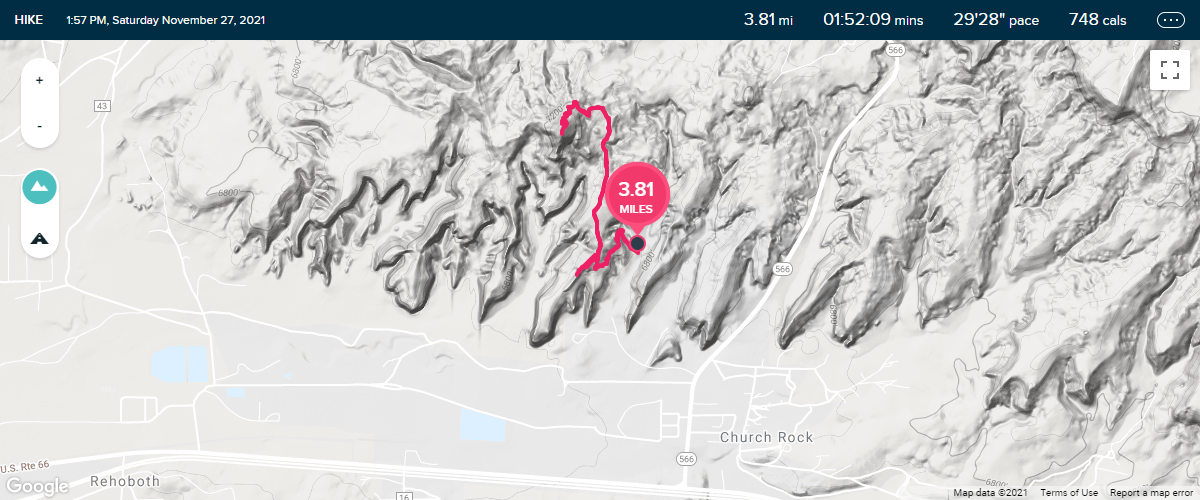
Luckily, this forest wasn’t very dense, so I was able to cut through some sections and make my way back onto a path straight back to the entrance. If you look at my GPS tracker, you’ll see that I completely skipped the entire eastern side of the trail after having gone through the west side.

Wannamaker North Trail

And with that, here is an updated look at my United States travel map. (Keep in mind that this is my historical map; these are not limited only to the places I’ve visited during my road trip this year.)

Adam Parkzer's travel map

My plan now is to fly over to the West again for a week to take care of some errands and visit our company headquarters to get some in-person work done. Afterwards, I’ll fly back and continue my journey through the remaining cluster of four states in the southeast that I have yet to visit.


—§—


Hello, USS Yorktown (CV-10) at Patriots Point Naval & Maritime Museum

I saved the best for last—for the third and final blog post of my trip to Patriots Point Naval & Maritime Museum, here’s the USS Yorktown.

USS Yorktown at Patriots Point

When my co-worker told me that we’re going on an aircraft carrier, it didn’t quite immediately click in my mind as to how large of a watercraft we would be visiting. After arriving at Patriots Point, I had a moment of just staring at the USS Yorktown in amazement at its size. It slowly sunk in that it was an aircraft carrier, as in, it carried aircraft… which meant it had to be big enough for planes to fit on—and take off from—it.

After entering, we spent some time just walking around the main deck and looking at all the aircraft.

USS Yorktown at Patriots Point

Our first tour was named “Living & Working Spaces, and the Engine Room Experience” (which I think is fairly self-explanatory). This took us through the more “active” areas of the Yorktown so we could see what life was like aboard the watercraft when it was still in service.

USS Yorktown at Patriots Point

USS Yorktown at Patriots Point

USS Yorktown at Patriots Point

USS Yorktown at Patriots Point

USS Yorktown at Patriots Point

Although this was nowhere near as cramped as the submarine, it’s still impressive how people would be able to live on the watercraft for extended pe­ri­ods of time in such close proximity without going insane.

After completing the loop of the first tour, we returned to the main deck and looked at some more aircraft and other exhibits on our way to the entrance to the second tour.

USS Yorktown at Patriots Point

USS Yorktown at Patriots Point

USS Yorktown at Patriots Point

The second tour was called “The Flight Deck & Bridge.” After navigating through a short path, we made it out to the upper level of the aircraft carrier to actually see some of the aircraft that it was carrying.

USS Yorktown at Patriots Point

USS Yorktown at Patriots Point

USS Yorktown at Patriots Point

USS Yorktown at Patriots Point

USS Yorktown at Patriots Point

I go into far greater detail about this in the blog post I already wrote covering the USS Clamagore and Laffey (and you should definitely read that if you want my thoughts), but in summary, this is how history should be taught. Walking through the USS Yorktown was an extremely intriguing and in­ter­est­ing experience, and as someone who has absolutely hated history classes in the past, I thought my visit to Patriots Point was a very valuable ex­pe­ri­ence.

As I mentioned before, we had a late start to our day, so there were actually two entire tours aboard the USS Yorktown that we were unable to complete—the “Yorktown Wardroom, Catapult Room, & Brig” and “WWII Carrier Rooms.” In addition to that, my co-worker and I only got general admission tickets; there were also some upgrade options available, one of which was an add-on for a captain’s guided tour, and another one that included a five-minute flight motion simulator experience.

Charleston is fairly out of the way and I’m not sure if I’ll have a reason to return anytime soon, but if I do, I’m definitely making another stop at Patriots Point. Not only do I still need to actually finish seeing everything that the museum has to offer, but this is also one of those spots where having a prior visit under your belt will enhance your future visits and allow you to notice things the second time that you didn’t notice the first.

And with that, my time in Charleston comes to an end. I have a handful of pictures that I still want to post as a photo dump, but my journey now con­tin­ues to the next destination.


—§—


Hello, Medal of Honor Museum and the Vietnam Experience Exhibit

As a continuation of yesterday’s blog post about the USS Clamagore and Laffey from visiting Patriots Point Naval & Maritime Museum, today’s spot­light is on the Medal of Honor Museum and the Vietnam Experience Exhibit.

The Medal of Honor Museum was inside the USS Yorktown (which I’ll show tomorrow). The Medal of Honor is the United States government’s highest award, and it is given to members of the military who distinguished themselves from others through great valor during combat.

Medal of Honor Museum at Patriots Point

Medal of Honor Museum at Patriots Point

Medal of Honor Museum at Patriots Point

Medal of Honor Museum at Patriots Point

As I mentioned in my previous blog posts, I don’t really have much background knowledge in history, so I didn’t really know anything going into this museum. My co-worker did, though, and he said that this museum was fairly biased—which is unfortunate, but also expected, seeing as this is an A­mer­i­can award in a museum in the South, and featuring Medal of Honor recipients of ethnicities of past United States war enemies might not yield the best reactions from some people.

For the final exhibit before closing time, we walked through the Vietnam Experience Exhibit. This was a hybrid indoor and outdoor exhibit, with the in­door section resembling a traditional museum with items on display, and the outdoor portion being modeled to try and emulate what it actually looked and felt like during the Vietnam War. They had speakers set up in inconspicuous locations to pump “war sounds” into the area, there were a hand­ful of huts that were designed to look like the ones in Vietnam, and a lot of the aircraft and vehicles were accessible so visitors could see inside.
The Vietnam Experience Exhibit at Patriots Point

The Vietnam Experience Exhibit at Patriots Point

The Vietnam Experience Exhibit at Patriots Point

The Vietnam Experience Exhibit at Patriots Point

The Vietnam Experience Exhibit at Patriots Point

The Vietnam Experience Exhibit at Patriots Point

The Vietnam Experience Exhibit at Patriots Point

There was a photo opportunity at the top of the watchtower; my co-worker eagerly told me to get in position and man the machine gun.

The Vietnam Experience Exhibit at Patriots Point


—§—


Hello, Cold War Memorial in the USS Clamagore (SS-343), and the USS Laffey (DD-724)

For the next tourist activity of Charleston, I was joined again by my co-worker to go to Patriots Point Naval & Maritime Museum. The museum is ba­sically four museums in one, with three ships and an experiential exhibit.

We attended a wedding over the weekend; I didn’t join in on the afterparty, but my co-worker did. This meant that he slept in and had a late start, so we only had about four hours to experience everything. The museum(s) is/are massive, and four hours wasn’t enough to see everything, even though we weren’t standing there reading all the information on all the placards. If you also want to go, I’d recommend a 4-6 hour trip at the minimum; if you’re an enthusiast who loves the topic, this is honestly an amazing place to spend the entire day from open to close.
Because the museum was so large, I decided to split it up into a few separate blog posts. The first two museums we went to were the Cold War Memorial inside the USS Clamagore (which is a submarine), as well as the USS Laffey DD-724.

Patriots Point Naval & Maritime Museum

Patriots Point Naval & Maritime Museum

The submarine exhibit outlined what underwater life was like during the Cold War so we could see it first-hand.

Patriots Point Naval & Maritime Museum

Patriots Point Naval & Maritime Museum

Patriots Point Naval & Maritime Museum

Patriots Point Naval & Maritime Museum

Patriots Point Naval & Maritime Museum

Patriots Point Naval & Maritime Museum

The main takeaway I got from walking through the entirety of the length of the submarine was how large and small it was at the same time. I had never been on a submarine before, and I’m not sure where I got this impression, but I assumed that a submarine would be more like a smaller boat, but capable of being completely underwater. I imagined the interior would reflect something like a private jet. I’m sure there may be some submarines that exist that are like this, but the USS Clamagore was quite literally an entire house crammed into a watercraft.

As I walked through all the different rooms, I realized that this was built for people to live in here for extended periods at a time—all the essentials were directly in the submarine. However, it was also extremely space-efficient, meaning, there was very little open space that wasn’t already being used for some important purpose. The one long hallway stretching across the length of the submarine required a good amount of flexibility and agility to nav­i­gate because of how narrow and short it was.

My co-worker asked me whether or not I thought I could survive in one of these for a long period of time. I do well with small spaces, so that wouldn’t be much of a problem, but I know for a fact that I wouldn’t be able to tolerate the smell and heat. The submarine had a section where it showed the en­gine and had a speaker emitting the sound of one engine… and apparently during normal operation, there are ten of them running at the same time, resulting in ten times the volume. They also produce an insane amount of heat, and it would be normal for it to be ~120°F (~48°C) in that room.

 
Next up was the USS Laffey, nicknamed “The Ship That Would Not Die” due to how resilient it was during the most relentless suicide air attack in his­to­ry during the Normandy landings on June 6, 1944, better known as D-Day.

Patriots Point Naval & Maritime Museum

Patriots Point Naval & Maritime Museum

Patriots Point Naval & Maritime Museum

Patriots Point Naval & Maritime Museum

Patriots Point Naval & Maritime Museum

Patriots Point Naval & Maritime Museum

During the tour, I found my locker.

Patriots Point Naval & Maritime Museum

You might not know this about me, but while I was still in school, I passionately hated history. It was my least favorite subject, I failed my Advanced Place­ment exam in history during high school, I took no history courses as an undergraduate university student while earning my Bachelor’s degree, and I quit my graduate program for my Master’s degree because their breadth of knowledge requirement forced me to take eight history courses to make up for my lack of exposure to history.

My opinion on the topic of history is slowly changing. I started feeling this way when I started going to more historical museums during my road trip, but I think the USS Laffey was the “tipping point” that made me realize that history isn’t actually really that bad, and the thing that’s bad is actually just the American education system.

After watching all the videos on the ship about what happened to it, seeing all the rooms and some of the equipment that the military used to fight to defend the United States, and literally standing in the same watercraft as the veterans with my own two feet, it somehow just occurred to me in a very surreal manner as to how “real” everything was.

This isn’t to say that I was doubting that any of these historical events happened; it was just that, when I learned about it by reading out of a textbook and taking exams, I felt many degrees of separation from the topic. By seeing all this in-person, it hit me as to how important and significant all this was, and how relevant this actually still is to modern-day life.

These museum exhibits were built in a way such that both history enthusiasts (like my co-worker) and history idiots (like I) could learn something new and have a nice experience. What made it even better for me was that, as someone who grew up in the middle of nowhere in the Chicagoland suburbs, and then lived east of the Santa Ana Mountains in California before moving to the middle of the desert in Las Vegas, I didn’t really have much exposure to water. The fact that I was just even on a tremendously large boat to begin with was an exciting experience, so being able to walk through both these watercraft was amazing.


—§—


Hello, South Carolina Aquarium in Charleston

After a few more days of catching up on work and staying indoors to escape the humidity, I emerged from my hotel room to go on my first tourist ac­tiv­i­ty of Charleston. One of my co-workers flew in to Charleston in preparation for the wedding that we will be attending this coming weekend, so I went with him to the South Carolina Aquarium.

I’ve been to the Shark Reef Aquarium at the Mandalay Bay in Las Vegas, the Seattle Aquarium, and the Henry Doorly Aquarium in Omaha, so this was my fourth aquarium experience (as far as I can recall).

The first area we walked through was the turtle hospital, where they were nursing injured turtles back to health. This was an interactive experience where recovering turtles were visible along the walls, and there were exhibits showing what it’s like being a doctor treating a turtle.

South Carolina Aquarium

After the turtle hospital, we moved onto the main section of the aquarium. Like all the others I’ve been to, it is particularly difficult to take good-quality photographs in aquariums due to all the reflections on the glass.

South Carolina Aquarium

South Carolina Aquarium

South Carolina Aquarium

South Carolina Aquarium

South Carolina Aquarium

South Carolina Aquarium

There was a section of the aquarium where you could reach into the water and pet some of the fish. I personally am not really the biggest fan of dipping my hand in water touched by hundreds of different people during a pandemic, and I also didn’t want my hand to come out smelling fishy, so I opted not to participate, but I took a photo.

South Carolina Aquarium

The aquarium also had a random area near the escalators that housed a bald eagle. The photo looks a little weird because the eagle’s body was facing me, but it had turned its head nearly 180° so it looks like its head is facing away from me.

South Carolina Aquarium

I have extremely bad eyesight, so when I saw this tiny bird eating something, I just assumed it was a worm, though I was wondering how the worm was so short and fat. Well, after opening the files on my camera and reviewing my photographs, I found out why—the bird wasn’t actually eating a worm, but rather, what appears to be a mouse fetus.

South Carolina Aquarium

Next up was the reptile and amphibian section.

South Carolina Aquarium

South Carolina Aquarium

The last area of the aquarium we went to was the outdoor section.

South Carolina Aquarium

There as a bird sitting outside that I think was a pelican, and it kept on dipping its beak into the water and trying to snap at the pufferfish. Needless to say, it wasn’t very successful.

South Carolina Aquarium

There was a lot of boat activity that was visible from the aquarium, so I snapped a photo of the largest boat.

South Carolina Aquarium

It took right around two hours for us to get through everything at the South Carolina Aquarium, and that’s without reading all the text, so if you’re a marine life enthusiast, this could easily become a 3- or 4-hour trip. This was one of the more interactive and education-centric aquariums I’ve been to, and there are many opportunities to learn new things through kinesthetic means.


—§—