Goodbye Charlotte, hello Charleston

My week in North Carolina is already over, and as of yesterday, I’ve arrived on the coastline of South Carolina in the city of Charleston. Apart from a few hiking trips, I’d say North Carolina was also somewhat uneventful. One of my favorite parts of the state was driving through the Appalachian Mountains when I was traveling in from Tennessee, but otherwise, I spent a lot of this time catching up on more of the “mundane” parts of my life.

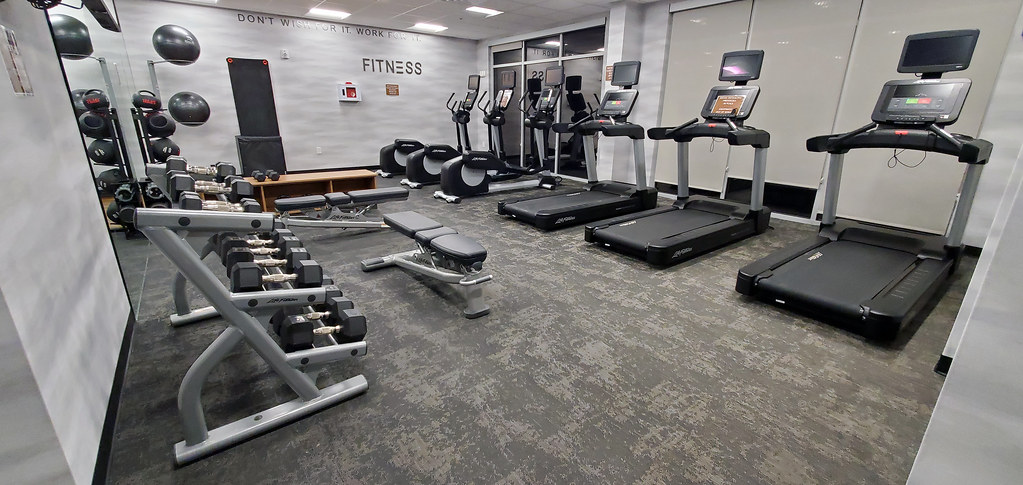
My hotel of choice in Charlotte was the SpringHill Suites by Marriott Charlotte Huntersville. I’d say it was probably my favorite hotel room so far throughout my road trip. As you might already know, I’m not really the biggest fan of flashy or fancy hotel rooms, and SpringHill Suites gave me all the es­sen­tials and none of the extras. The hotel was new, the room was large, the location was great, the gym was decent, and the staff was friendly and help­ful.

SpringHill Suites by Marriott Charlotte Huntersville

SpringHill Suites by Marriott Charlotte Huntersville

The first week of each month is usually the busiest time for me, and my time in Charlotte basically coincided nearly perfectly with the first week of Oc­to­ber. I had to get end-of-month finance tasks done for September, including cash flow transaction itemization and independent contractor payroll, and I also had a few special legal projects that I needed to wrap up leading into the launch of the closed beta testing period for The Bazaar coming up soon.

Usually, I like to go to the most popular tourist attractions in each city, specifically focusing on what the city is particularly known for. Charlotte is best known for NASCAR and is home to its Hall of Fame, which acts as a museum. However, seeing as I’m not really that much of a racing enthusiast, and I also recently went to the Indianapolis Motor Speedway, I decided to pass on the NASCAR Hall of Fame in lieu of going on another hiking trip.

Clarks Creek Greenway

Clarks Creek Greenway

This was at the Clarks Creek Greenway, which was nestled in more of a residential area and was an out-and-back type of trail. I ended up parking at a local middle school near one of the trailheads, walked all the way out to the edge of the path, and came back.

Clarks Creek Greenway

After arriving in Charleston, there was basically only one thought I had in my mind, and it was how unbearably and debilitatingly humid it was. The rain was obviously making things worse, but the weather apparently said that the relative humidity was 98%, which is literally the highest I have ever seen in my life. The worst part is that my hotel is in North Charleston by Charleston International Airport, so I can’t imagine how bad it’s going to be in the actual city of Charleston, closer to the Atlantic Ocean.

Although nowhere near as nice as the newly-constructed SpringHill Suites I mentioned above, my hotel for this week of my trip is still pretty good—I’m in the Courtyard by Marriott Charleston-North Charleston. The room is definitely much smaller, but the good news is that the cost per night is much more affordable than being in Charleston, and even better, air conditioning works very well, so the humidity is actually bearable inside my room. (Though, if I literally just open the door to my room and step out into the hallway, the humidity becomes overwhelming again.)

Courtyard by Marriott Charleston-North Charleston

Courtyard by Marriott Charleston-North Charleston

Because of the rain, I’m not quite sure how viable it’s going to be for me to squeeze in some hiking trips to what I imagine will be extremely muddy trails. However, I’ll be attending a wedding in Charleston this coming weekend, and another one of the attendees is one of my co-workers, so we will probably be going on some indoor tourist activities before and after the event.


—§—


Hello, Latta Nature Preserve in Huntersville near Charlotte, North Carolina

Continuing my trend of outdoor activities, I decided to explore the Latta Nature Preserve after arriving in Huntersville, just north of Charlotte, North Carolina. The Latta Nature Preserve is a large nature preserve that supposedly has 1,460 acres of land and 16 miles of trails. I obviously couldn’t explore it all in one day, so I took two hiking trips spread across two separate days to see as much of it as I could.

Latta Nature Preserve in Huntersville, NC

I started by going to the waterfront near the Historic Latta Plantation and hiked the Buzzard Rock Trail. At the end was Buzzard Rock and a little plat­form that had a nice view of Mountain Island Lake.

Latta Nature Preserve in Huntersville, NC

Latta Nature Preserve in Huntersville, NC

After retracing my steps for a bit, I continued onto Laura’s Trail which led me to Wash Rock, another lookout spot that had a view of Mountain Island Lake from a different angle.

Latta Nature Preserve in Huntersville, NC

Latta Nature Preserve in Huntersville, NC

From there, I got a little lost and started taking any trail I could find, which ended up being the Shady Trail up to the Carolina Raptor Center, then back via Catawba Trail. After returning to my parking spot at the waterfront, I continued going south to check out the beachy area.

Latta Nature Preserve in Huntersville, NC

Latta Nature Preserve in Huntersville, NC

On the second day, I started at the Latta Plantation Nature Center and headed north on Hill Trail before connecting onto Cove Trail and returning via Split Rock Trail. This particular route didn’t have as many spots with nice views, but I did catch some of the Catawba River from the Cove Trail at the tip of one of the peninsulas.

Latta Nature Preserve in Huntersville, NC

Latta Nature Preserve in Huntersville, NC

In total, my adventure spanned across just over eight and a half miles and took right around three hours to complete.

Latta Nature Preserve in Huntersville, NC

By the way things are looking now, it seems like I might not have time to go on any other tourist activities, but at the very least, I’m hoping I can squeeze in another hike on a different trail before I head to my next city.


—§—


Investment allocation breakdown for 2021 Q3

The last time I did a breakdown like this, I hinted at the fact that I might want to start doing this on a quarterly basis, depending on how much I’ve shuf­fled around my investment allocation. I figured I would follow through with that and do a breakdown for the third quarter of 2021.

Like usual, keep in mind that I am not a registered investment advisor, and even if I was, I would not be your advisor—I am nothing more to you than a guy on the Internet writing on his website. This blog post is intended to be strictly anecdotal, and I am in no way suggesting or implying that you should copy my strategy. Everyone’s situation is uniquely different, so be sure to consult with a certified professional if you have any questions or need any guid­ance.

 
With that being said, here is a revised breakdown of my investment allocation:

Cash

I like to hover around 5-10% in cash reserves, so 12% is a tiny bit over my target.

This quarter’s cash reserves are about the same as last quarter’s. As a reminder, “cash” here includes stuff like my savings and checking account, but also includes settlement funds, i.e., money waiting to be used to purchase stocks, or money set aside in a cash reserve mutual fund in case I need to use my HSA debit card.

Since I set off on my cross-country road trip, I also keep a few hundred dollars of paper cash with me in case I run into a situation where credit cards are not accepted (such as exchanging for quarters to use a washing machine), which is not something I have ever done before until now.

 12.75%

Index funds – Domestic

I have put a marginal amount of more money into United States domestic index funds, but overall have avoided doing so because I spent this past quarter focusing on other investment objectives. You’ll notice that the percentage that domestic index funds take up in my portfolio has decreased because I have put a substantial amount of additional money in other categories.

Within domestic index funds, 39.48% of it is in the total stock market, 36.31% in stocks geared specifically towards growth, and 24.21% in stocks geared specifically towards high dividend yields.

 30.97%

Index funds – International

If you scour the Internet for investment advice, there’s a lot of speculation out there. One thing that I do believe is that the United States stock market is unusually high right now, and I am slightly concerned about putting more money into domestic index funds in case there is a sudden crash. However, I also believe in the fact that you should not try to time the market, because even professionals will miss more often than not.

With that being said, I still wanted to keep a steady stream of money going into investments, so I decided to diversify a little bit more by opting to put more money into international index funds. My allocation went up from 6.28% to just shy of 10%.

  9.99%

Target retirement funds

I make marginal tweaks to target retirement funds based off projected income, and I incrementally add more money throughout the year depending on how much I think I will be able to put into my SEP-IRA. However, this category generally only gets a hefty in­crease twice a year—on January 1, when I dump several thousands of dollars in for the new year, and when taxes are due, once I know precisely what my net income was and how much in qualified SEP-IRA contributions that translates to.

 24.03%

Real estate investment trusts (REITs)
This category was my biggest increase, up from just 2.56% last quarter. In a similar vein to the topic I touched in the section about international index funds, I want to diversify and not commit too hard to domestic index funds.

In a stock market crash or a recession, there are a few categories of investments that are more resistant to the drop than others, and real estate is one of them. No matter how bad the economy is, you still need a place to live, and REITs will continue to pay dividends as long as people continue paying their rent and transacting in real estate.

Buying actual real estate (i.e., a physical property) is something I considered, but I decided I wasn’t ready for that yet, so I concluded REITs are the next best thing for my current situation. I mentioned websites like Fundrise last quarter and how I didn’t follow through with using their platform; I’ve maintained that same strategy for this quarter as well, and have my exposure through the Vanguard Real Estate Index Fund Admiral Shares (VGSLX) instead.

 15.15%

Cryptocurrency

I’m not one of those religious believers in cryptocurrency, but I think that’s mainly because I don’t really know that much about it, so a lot of it still seems borderline foreign to me. I’m also not a non-believer either, so I’m continuing to invest a small slice of my port­fo­lio into crypto.

Since last quarter, cryptocurrency prices have recovered a noticeable amount. Since last quarter, I also invested into a new crypto­cur­ren­cy, Ethereum Classic, which now composes 1.44% of my cryptocurrency allocation (i.e., a microscopic sliver). The remainder of my cryptocurrency allocation is composed of 58.54% Bitcoin and 40.02% Ethereum.

  5.23%

Speculative stocks

I’ve more than doubled my investment allocation in speculative stocks, but it’s still a tiny portion of my total portfolio—not even 2%. If anything, this should be considered my “gambling budget,” where I pick stocks that I think will do well, and trade them more for fun than for profit. Like last quarter, a majority of these holdings remain mostly with companies in the travel industry.

  1.75%

Private companies

I bundle together the shares of publicly-traded companies that I hold in the “speculative stocks” category, but there are a few private companies whose stock I have purchased as an early investor.

Again, this should mostly be considered my “gambling budget,” but this specifically is on the extreme end of “high risk, high reward.” This is money that I am pretty much expecting to lose, and if one of these companies happens to make it big, I will get back an as­tro­nomic return.

One thing to note is that this does not include stock options for my current employer; I have opted not to include those stock options at all as part of this investment portfolio breakdown, and will likely continue to avoid doing so unless the company hits some mile­stone where they become liquid. I’d say this is sort of like how I don’t include the value of my paid-off pickup truck in this either—I don’t really consider either of those assets as something I would include in an investment portfolio.

  0.13%

I can’t promise that I actually will end up doing this every single quarter, but if I have any notable portfolio changes, I’ll make another breakdown… if anything, mainly for me to be able to look back and see how my investment strategy has evolved over the years.


—§—


Hello, House Mountain and Calloway Ridge in Greater Knoxville

Ever since arriving in Knoxville, I’ve mostly been taking it easy, catching up on work, exercising at the hotel gym, and otherwise just relaxing.

While in the city, I wanted to go see the Sunsphere Tower, but apparently that is closed right now. Knoxville also has a zoo, but I’ve already been to a bunch of zoos in the past year or so and wasn’t really in the mood; there’s also an art museum, but I just went to a really big art museum in Indianapolis and also wasn’t too interested in that at the moment either.

Instead, I decided to go on some nature adventures. I haven’t had a chance to go hiking lately ever since leaving the West, considering how flat the Mid­west is, but the terrain here is much more dynamic as I approach the Appalachian Mountains. I looked up some trails of moderate difficulty and se­lect­ed House Mountain as my first trip.

House Mountain

There are two initial impressions that I had upon arriving. The first is that it was a lot rockier than I thought it would be—there were a lot of large boul­ders laying around, and the path was littered with smaller rocks. The second is that I really appreciated how foresty it was and how many trees were tightly wrapping the trail—this blocked out a lot of the sun and made the hike much more comfortable.

House Mountain had a strange layout. Usually when you’re hiking a mountain, the summit is all the way at the edge of the path, and is the highest point in elevation. For House Mountain, the main summit appeared to be towards the middle of the trail, where I was able to get a nice, sweeping view of the north.

House Mountain

House Mountain

There was also a secondary summit, also somewhat in the middle of the trail. This one was actually a bit difficult to find, because this one involved walk­ing away from the main path a bit and going on a side path that wasn’t obvious on the satellite imagery from Google Maps.

House Mountain

Apart from that, the far edges of the trail weren’t really that interesting—there were so many trees that it was impossible to get a nice view from the northeastern-most or western lookout points.

According to information I found online, it appears like I hiked a total of about four miles, with an overall elevation gain of 1,017 feet.

 
A few days later, I went on a significantly easier trail, the Concord Quarry Trail on Calloway Ridge. This one had a less clear-cut path and was instead a bunch of winding loops that interconnected.

Calloway Ridge

I started off by going on the southern loop that had a nice view of of the Fort Loudoun Lake, which I wasn’t able to see from elsewhere on the trail due to the dense forest.

Calloway Ridge

On the loop back in, I also came across this small lake near the entrance of the west trails.

Calloway Ridge

Apart from that, the rest of the trail was fairly straightforward. The length of all the trails (if you go on all the paths and do all the loops) was right around 3 miles, with a total elevation gain of 262 feet.

Calloway Ridge

During my hike, I saw a sign that said “Rocky Point” was approaching. I thought this would be a high point where I’d be able to take in a nice view, but was disappointed when I realized it just pointed to a dead end.

I later found out that the sign was technically right, but wasn’t very useful—it was pointing towards the general direction of Rocky Point Park, but there was no feasible way to get from the sign to Rocky Point without going through dense forest and crossing a street. If I had known this beforehand, I would’ve made a stop at the park to see the northeastern sound of Fort Loudoun Lake.

 
And with that, I wrap up my week in Knoxville. This was probably the least eventful city I’ve visited, but it wasn’t bad, and I also appreciated how vi­su­al­ly nice Tennessee is.

My next destination will be Charlotte, North Carolina. When I first drove through the Virgin River Gorge and other mountain ranges in the West for the first time, I was impressed by the scenery. I will be cutting through the Appalachian Mountains on my way to North Carolina, so I’m very much looking forward to being hugged by tall mountains again during my drive, but this time by mountains that will be much greener.


—§—


Goodbye Louisville, Kentucky; hello Knoxville, Tennessee

I mentioned that the Louisville Slugger Museum and Factory was going to be my final tourist activity of Louisville, but it ended up being so un­der­whelm­ing that I decided to tack on one more activity before I left—the Big Four Bridge.

The Big Four Pedestrian Bridge spans across the Ohio River and connects Kentucky to Indiana. It stretches alongside the two vehicular bridges, one of which I took to get from Indiana to Kentucky.

Big Four Bridge

Big Four Bridge

Big Four Bridge

Abraham Lincoln Bridge

After making it to the other side, I explored the Big Four Station a bit, which was a small park with a little manmade waterfall and some sculptures. I also walked to a very small local frozen yogurt shop and got myself some dessert—a swirl of candied apple and salted caramel, topped with some gummy bears and whipped cream.

Big Four Station

After enjoying my treat, I walked back on the bridge to the Kentucky side.

Big Four Bridge

After wrapping up my week in Louisville, I drove to Knoxville, Tennessee.

When selecting my hotel in each city, I usually look at things like location, price, guest ratings, and year of construction. I like to find a good balance of a low rate at a new hotel not too far away from the main tourist attractions that also doesn’t have too many complaints by former guests.

As you can see, one of the things I don’t consider is the type of room and what’s inside it. This is because there is a baseline of what I expect from a hotel room—a parking lot for my truck, clean sheets and towels, disposable bath amenities like shampoo and conditioner, and a desk where I can set up my computer workstation. I have never seen a hotel where I wasn’t able to have this, so I never really considered it as something I had to keep in mind.

Until now.

Aloft Knoxville West

Aloft Knoxville West

This is my hotel room at the Aloft Knoxville West. It has very hip decor that may appeal to a zoomer, but you may notice it is missing one very critical piece of furniture: a desk.

I went back down to the check-in desk and informed the customer service representative that I am currently living out of hotel rooms and need to set up a full computer workstation in my room. I asked if they had any foldable tables I could bring into my room, or any other suggestions for my situation. Her response was that they had no tables or desks they could let me borrow, but I could use the tables in the lobby.

I did a double-take, wondering if she was actually so stupid as to imply I should set up a computer tower, two monitors, a keyboard and mouse, a web­cam, dual speak­ers with a subwoofer, and a microphone in a public area. I was considering making a comment, but decided against it, and went back to my room to strategize.

That little coffee table ended up being larger than I expected, and if I set my monitors up so a third of the stand is hanging off the edge of the table, I can erect my monitors side-by-side. I also set up my keyboard and mouse on the coffee table, but it’s not very stable, so every time I type, the table shakes and it gave me motion sickness looking at my monitors. I removed the coffee maker from the little compartment that houses the refrigerator, removed the refrigerator, and moved the compartment over to the seating area to use for my keyboard and mouse.

This is obviously extremely uncomfortable, but the only alternative seemed to be to use the bathroom countertop (which in that case, I would have no chair). I considered switching hotels, but because it would be a short-notice booking, I wasn’t able to find many good rates.

I learned my lesson, though—I definitely want to stick with my regular Fairfield Inns, SpringHill Suites, Courtyards, and Residence Inns from now on, with Elements being a decent alternative if the price is right. After this experience, I am definitely going to be avoiding brands like Aloft and Moxy that try to make my stay more fun and social. I’ve found that hotels with just the core essentials with no extra bells and whistles are the best ones.


—§—


Hello, Louisville Slugger Museum and Factory

For my final tourist activity of Louisville, I went to the Louisville Slugger Museum & Factory. If you’re not familiar, the Louisville Slugger is a baseball bat formerly owned by the Hillerich & Bradsby Company, and now owned by the Wilson Sporting Goods Company. H&B still does the manufacturing of the baseball bats in Louisville, and also runs the museum.

For whatever reason, I was a massive baseball fan when I was a very young child. I followed the Chicago Cubs very closely, knew the names of an un­health­y number of baseball players, and watched almost all their games. And then, one year, I sort of… stopped being a baseball fan. I stopped watching baseball, I lost track of all the games and players, and I have absolutely no recollection as to why.

To put this into perspective, I believe this happened almost two decades ago, and since then, I haven’t really cared at all about baseball. I would play catch with friends once in a while, but because of my bad depth perception, I have a tough time catching balls (I usually have to stand at a little bit of an angle, then mostly go off timing in order to be able to effectively catch a ball), and I can almost never consistently successfully hit a baseball with a bat.

With that being said, it seemed like I was the only one at this museum who was this indifferent about baseball, because everyone had their favorite teams and were eager to see bats used by those players. It was interesting to see the Louisville Slugger Factory in-person, but it wasn’t really that special or magical of an experience.

Louisville Slugger Factory

Louisville Slugger Factory

Professional baseball players are fairly picky about the bats they use, so they often show up in-person at the factory to pick out a specific type of wood and design for their bats. We weren’t allowed to touch these because of the ongoing pandemic, but there was a large cabinet of baseball bat stocks se­lected by professional players.

Louisville Slugger Factory

We got to watch a CNC machine create a bat as well. Apparently this one had a bunch of famous baseball players’ signatures on the panels.

Louisville Slugger Factory

Louisville Slugger Factory

We then moved over to the branding section of the factory. Some are done by machine, while others are printed by hand by workers.

Louisville Slugger Factory

Louisville Slugger Factory

The final part of the factory had a section for painted bats. Apparently there are restrictions on the color of the bat for professional play, but obviously, for everyone else, they can get different-colored bats, and some people even order special novelty bats with special printing. Needless to say, this section of the factory smelled horrible because of all the paint, and I quickly got a headache.

Louisville Slugger Factory

Louisville Slugger Factory

After the guided tour was over, we were released into the main museum area and got to look at the exhibits at our own pace. I don’t know if this was main­ly because the Kentucky Derby Museum I went to yesterday was comparatively such a great museum, but the Louisville Slugger Museum felt in­cred­i­bly underwhelming. There weren’t that many exhibits, and the exhibits they did have were fairly non-interactive and relied on a lot of text and re­cre­ated models.

It seemed like there might have been a second floor of exhibits, but I couldn’t figure out a way to get up there—there were no easily-accessible stairs, and when I took the elevator, the upper area was blocked off by an “employees only” sign.

Louisville Slugger Museum

Louisville Slugger Museum

Right outside the museum exhibits, there was an area where you could swing in a miniature batting range, but you had to pay extra for that. The walls were covered with miniature plaques with hall of famers, but that probably won’t really be interesting to someone unless they are passionately dedicated to baseball and can recognize the names.

The guided walking tour through the factory was nice, and especially during the beginning portion of the factory, I really enjoyed the fresh processed wood smell. Funny enough, my second favorite part about going to this museum was the parking garage. When I park at a tourist hotspot, I always like to go on the upper-most floor of the parking garage in order to get a good view of the surrounding area; I parked on the fifth floor and took some photos of downtown Louisville.

Downtown Louisville, Kentucky

Downtown Louisville, Kentucky

My admission ticket was US$16.00, and I have a suspicion that the ticket price only covered the guided tour through the manufacturing factory, because that was the only time my ticket was checked (i.e., nobody was there to check my ticket when I wandered into the museum exhibit area). That price point is something you should expect to pay to go to one of the most popular tourist hotspots in a city, but comparatively, I don’t think you really get that much value out of this unless you’re a baseball fanatic.

That concludes my week in Louisville, Kentucky; next up is Knoxville, Tennessee.


—§—