Hello, Reunion Tower in Dallas, Texas

For our second tourist activity of Dallas, Monica and I went to Reunion Tower.

When we traveled together to Seattle a little over a year ago, we went to something similar—the Space Needle. Reunion Tower wasn’t quite as tall as the Space Needle, but I still got some good views of the Dallas–Fort Worth metroplex.

Reunion Tower

Reunion Tower

Reunion Tower

Reunion Tower

Reunion Tower

We intentionally timed it so we went right around sunset, so we would able to see the orange sunlight flooding across the city, as well as the night lights from the buildings downtown about half an hour later.

Reunion Tower

Reunion Tower

You might have noticed that some of the photos have bars in them. In case you would be curious, I took a photo of what the bars were from—Reunion Tower has a bunch of lights circling the observation deck that are held up by these bars, and they illuminate for some light shows on special occasions.

Reunion Tower

As a bonus piece of content, I managed to capture a marriage proposal, acceptance, and engagement between an unknown couple out on the outdoor portion of the observation deck.

An unknown couple gets engaged at Reunion Tower

I have no idea who they are, but if you do, then let them know—they had a videographer already recording, but I’m sure they would appreciate the ad­di­tion­al photos I captured as well.


—§—


Hello, Dallas Zoo in Texas

After spending around four days in my hotel room almost non-stop working, I emerged out into the open for my first tourist activity of Dallas.

A little over a year ago, my friend and former assistant Monica joined me for a trip to Seattle, where we visited the Woodland Park Zoo. Since that time, Tempo withdrew from esports and pivoted to game development, so Monica and her team found a different home. She also got a full-time job outside of esports, and she works as an executive assistant to a CEO of a company in the Dallas–Fort Worth metroplex.

For this trip, we reunited over the weekend to continue our exploration of the country, with our first stop being the Dallas Zoo.

Towards the beginning of the zoo exhibits were some tamarins. There was a special section later called “Tamarin Treetops,” but for some reason, they split out a few of the tamarins and placed them near the entrance too.

Dallas Zoo

Afterwards, we looped into the Lacerte Family Children’s Zoo and visited the alpacas.

Dallas Zoo

Right next to the alpacas was the goat yard.

Dallas Zoo

In the center of the Children’s Zoo, there was a large pool of koi fish. Of course, there was a section where we could pay a quarter to get some koi food and feed the fish.

The magic of this exhibit being in the Children’s Zoo, though, is that you don’t actually need to pay money to get food to feed the fish. That’s because, if you look on the ground around the food dispenser, you’ll see a ton of pellets of food just laying there, because after children purchase food to feed the fish, they will drop a portion of it on the ground because their hands are too small to hold it all. … I should be charging you a fee for this extremely valuable information.

Dallas Zoo

Outside the Children’s Zoo was the flamingo pond.

Dallas Zoo

We continued on the path north and walked past Primate Place and towards the tiger-viewing building. There was a “Tiger Classroom” where you could learn about the tiger, and then there was one single tiger who was just hiding in the corner. I managed to catch him roaming around on the edge of his enclosure, but whomever decided to plant massive bamboo plants to obscure the view of the tiger probably shouldn’t keep working at zoos.

Dallas Zoo

Next up was the Otter Outpost. I’ve seen a lot of otters, and I’ve attempted to take a lot of photos of otters, but they never really end up that great be­cause otters are very fast swimmers, and they usually don’t sit still. Miraculously, I managed to capture the best otter photo I’ve ever taken in my life, of this otter peacefully laying on a rock observing those who were observing him.

Dallas Zoo

After the otters, we continued on the path to the Herpetarium, which is an exhibition space for reptiles and amphibians. This was my favorite part of the zoo, not only because the animals here were the easiest to photograph, but also because there were so many of them in such a wide variety.

Dallas Zoo

Dallas Zoo

Dallas Zoo

Dallas Zoo

The next area on the northern side of the zoo, cleverly named ZooNorth, had some anteaters, sloths, and Galápagos tortoises. This area also had the Wings of Wonder exhibit with a bunch of birds, but I wasn’t able to capture any good photographs of the birds because, not only were most of them just far away and nestled in the trees, but it was very sunny out, so it was difficult to get my camera to focus on the birds instead of the shining sky.

Dallas Zoo

Just south of Wings of Wonder was Bug U!, a section with… you guessed it, bugs. I thought it was intriguing, and this was Monica’s favorite part of the zoo because she is a bug enthusiast, but I opted not to include any photos of this section here because, not only did the photos not turn out too well due to glass glare and the difficulty of focusing in on small bugs, but also because people tend to get irrationally grossed out by bugs.

After going through a tunnel to the western side of the zoo, we visited the penguins. The penguin exhibit had a glass viewing area on the side, so I was able to capture an action shot.

Dallas Zoo

Next to the penguins were the cheetahs.

Dallas Zoo

This is when tragedy struck. Right as we reached the intersection to go to the Wilds of Africa and the Giants of the Savanna, we were met by two zoo em­ploy­ees who said that both sections were closed for the remainder of the day due to a private event. Yes, this literally meant that we weren’t able to ex­pe­ri­ence half of the zoo because of unlucky timing.

After they said that, I vaguely remembered that, while I was in the process of entering the zoo and paying for parking, the attendant did mention that something-something “Africa” was closed today. I figured that it was just a single really popular exhibit that was closed, so I told her that it was fine and entered the zoo anyway. Little did I know that she actually meant the entire western half of the zoo was closed.

Because of my limited time in Dallas, and the fact that Monica works during normal business hours on the weekdays so she only has time to go ex­ploring the city during the weekends, I decided this was fine and we went on to our next tourist attraction. It’s unfortunate that I missed so much, but I guess it’s just something to look forward to if I ever end up returning to the Dallas Zoo.


—§—


The southeast round-up

As I mentioned in my previous blog post, I moved through the southeastern states fairly quickly, and now I’m in Texas. I have some miscellaneous pic­tures from the southeast that didn’t fit in any particular blog post, so I decided to do a quick round-up as an opportunity to do a random photo dump.

After flying back from my visit to the West Coast, I drove from Atlanta to Lithia Springs, Georgia after landing to bring myself a little bit closer to my next destination and break up the drive a bit for the following day. My hotel of choice was the Courtyard by Marriott Atlanta Lithia Springs.

Courtyard Atlanta Lithia Springs

Courtyard Atlanta Lithia Springs

Courtyard Atlanta Lithia Springs

After departing Lithia Springs, my next destination was Birmingham, Alabama. I’m guessing that there was an event happening in the area, because it was difficult to find some cheap hotels (even with my promotional discounted rate), so I opted to stay at the Marriott Birmingham.

Because of my Titanium Elite status, I got upgraded to a corner room on a high floor, which was great. Unfortunately, their M Club Concierge Lounge was still closed and they were still blaming the pandemic for it, which meant I wasn’t able to get unlimited snacks and beverages like the highest elite members usually do at full-service corporate-run Marriott hotels.

Marriott Birmingham

Marriott Birmingham

Marriott Birmingham

After Birmingham, I made my way to Jackson, Mississippi. I decided to stay in Ridgeland, a northern suburb of Jackson. My hotel of choice there was the SpringHill Suites by Marriott Jackson Ridgeland/The Township at Colony Park.

This was a very pleasant hotel; the staff here was particularly professional, and I got assigned a room with a nice view. The location was also fantastic—it was easy to get in and out of the hotel parking lot, and there were a lot of nice shops and restaurants nearby. I also really liked the architecture of the buildings nearby in the area—they had almost a classic charm to them, but didn’t look old or run down.

SpringHill Suites Jackson Ridgeland

People sometimes get a little bit confused when I say that I literally bring my entire computer with me and set up my entire workstation at hotels if I’m staying for longer than one night, in order to make sure the quality of my work is not being affected by my travel. To provide a visual on what this ac­tu­al­ly means, I decided to take a picture of my room in Ridgeland after getting everything set up, rather than before.

SpringHill Suites Jackson Ridgeland

In my blog post about the Mississippi Civil Rights Museum, I mentioned that the other half of the building contained the Museum of Mississippi His­tory. I ended up running out of time and didn’t really get an opportunity to go through it as slowly and thoroughly as I wanted to, so I figured I would just post one of the photos I captured from there in this round-up.

Mississippi Museum of History

After Mississippi, I drove through Louisiana and made my way towards Texarkana, a city that is split between Arkansas and Texas. My hotel of choice in Texarkana was the Fairfield Inn and Suites by Marriott Texarkana.

This hotel wasn’t really the best, and the person who installed the curved shower curtain rod in my room didn’t use both halves of their brain on the day they were installing it and drilled it in curving down instead of to the side, so the shower curtain literally wouldn’t stay extended all the way. At least I got a nice view of the car wash next door, I guess?

Fairfield Inn Texarkana

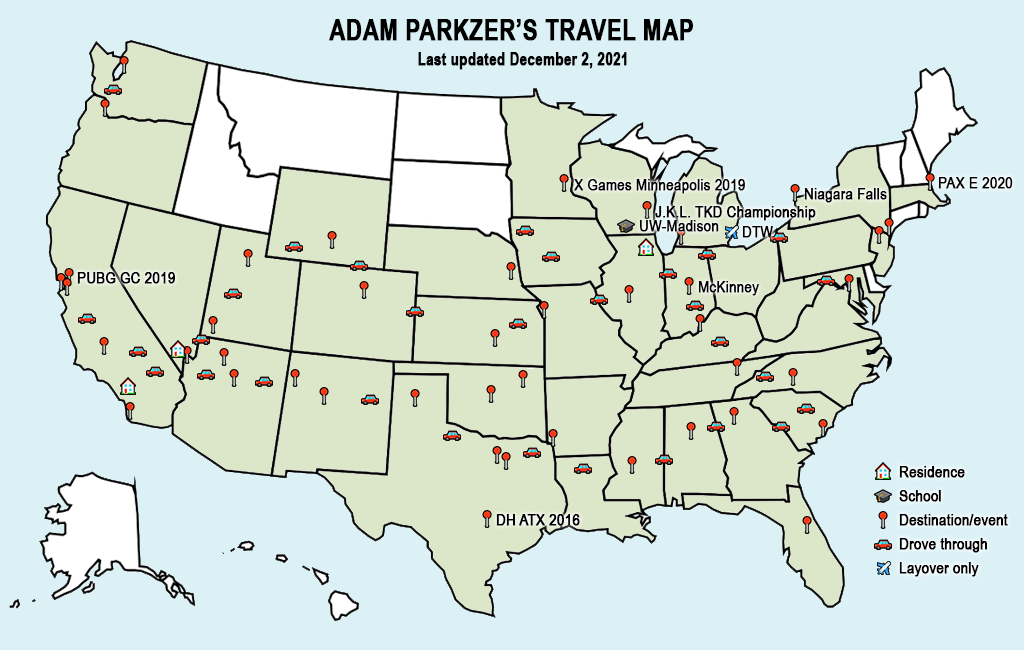
And with that, I’ve conquered a visit to all the southeastern states, filling in the blank spot I had in that corner of the country.

Adam Parkzer's Travel Map

For the next week and a half, I’ll be in the Dallas–Fort Worth metroplex. It’s the beginning of a new month, so I have quite a bit of end-of-month finance tasks to wrap up for work from October. Afterwards, I’m meeting up with my friend and former assistant Monica to go exploring Dallas, so there’s more to come soon…


—§—


Hello, Mississippi Civil Rights Museum in Jackson

In order to stay on schedule, I’m moving through the southeastern states a bit more quickly than anticipated. I’m only staying three nights in Ridgeland, Mississippi, a northern suburb of Jackson, the capital of Mississippi—one for travel, one for work, and one for a tourist activity. The most popular and highly-rated tourist attraction in Jackson seemed to be the Mississippi Civil Rights Museum, so that’s where I decided to spend my off day.

The museum opened with a section called the “Mississippi Freedom Struggle,” which gave a broad overview of the Civil Rights Movement and provided a general timeline of its progression.

Mississippi Civil Rights Museum

Afterwards, the exhibits started with “Mississippi in Black and White,” which spotlighted the African-American leaders of the Civil Rights Movement.

Mississippi Civil Rights Museum

Also in this section were five monoliths listing, honoring, and memorializing lynching victims. These monoliths were my favorite part of the museum—not only did they just provide raw data for you to interpret on your own, but I did not realize that so many people were lynched for such mild “crimes,” many of which were not even proven. Intertwined in the lists were excerpts of news articles that covered some of these lynchings.

Mississippi Civil Rights Museum

In the center of all these sections was a circular area that housed a light structure called “This Little Light of Mine,” which was built to honor the civil rights activists who gave up their lives to further the cause. It also had music from the era playing that civil rights activists used to rally morale and faith from supporters.

Mississippi Civil Rights Museum

Next up was “A Closed Society,” a section that explored how the experiences of Black Mississippians who had served in World War II catalyzed the Civil Rights Movement.

Mississippi Civil Rights Museum

Within this section were two short films, the first of which was in a small classroom. The film showed how Mississippi refused to honor equality among races and would separate whites from those with colored skin. It also displayed a lot of statistics about how Black children were at a substantial dis­ad­van­tage when it came to educational resources compared to their white counterparts.

Mississippi Civil Rights Museum

The next feature short film was about the lynching of Emmett Till, a Black child who had been killed by white men. This film showed that, even though the nation was this far into the Civil Rights Movement, whites could still get away with killing Blacks. Apparently, Emmett Till’s slaying was a big part of driving the Movement forward because his mutilated face was printed in media outlets so people could see for themselves just how brutal the killing was.

Mississippi Civil Rights Museum

In “A Tremor in the Iceberg,” the museum showed how a new generation of leaders gave the Movement a fresh sense of urgency and drive.

Mississippi Civil Rights Museum

The short film in this section covered Medgar Evers’ assassination, and how, somehow, a white man could still get away with killing a Black man. Be­cause of the systemically racist nature of jury selection and how it was based on voter registration, the jury was hung, and the assassin wasn’t con­vict­ed until decades later.

Mississippi Civil Rights Museum

In the next section, “I Question America,” things really picked up in the Movement as it garnered more support, but it still wasn’t easy. The two feature films in this section were one in a church that showed the efforts of the Student Nonviolent Coordinating Committee and the Council of Federated Organizations, and another about three activists who had gone missing after an encounter with the police.

Mississippi Civil Rights Museum

As the timeline creeps closer to present day, “Black Empowerment” highlighted the triumphs of the Movement that ultimately led to the Voting Rights Act of 1965. This section also housed some artifacts from the period.

Mississippi Civil Rights Museum

Finally, “Where Do We Go From Here?” featured some of the stories from the people of the Movement. This was also a place where museum participants could contribute their own thoughts on what’s next for civil rights.

Mississippi Civil Rights Museum

As a general overview of the museum, this was another one of those spots where I unexpectedly spent a lot more time than I anticipated. This museum had a way of pulling you in and keeping you hooked on finding out what happened next.

I think one of the reasons the museum had this effect on me goes hand-in-hand with something else I found out, which is, how little I actually knew about the Civil Rights Movement. I was obviously aware that this had happened in the past, but after reading through a lot of the exhibits and displays, I realized that I had confused a lot of what happened in the mid-1900s with what had happened in the mid-1800s. More specifically, a lot of events that I thought happened in the 1850s and 1860s actually took place in the 1950s and 1960s, but I just wasn’t aware of it.

I can definitely attribute this to the fact that I never took history seriously during school so I probably never retained any of this when I learned it, but learning it now and having it completely challenge my existing understanding of the Civil Rights Movement definitely made me feel very ignorant.

This was also very eye-opening, in the sense that all of this was happening not too long ago. When my grandmother was my age, there were Black people getting shot and killed just for being a nuisance, and there would be a jury of people who would look at the case and say “eh, the white guy’s innocent,” which is mind-blowing to me. This in particular is an example of one of those things that I misunderstood by a factor of a century—I expected stuff like this to happen in the 1850s, but not in the 1950s.

I thought this was a great museum. The way it was organized made me hungry for more knowledge, and it kept my attention throughout a bulk of the ex­hibits, which I personally think is impressive for someone who has historically hated learning about history.

The short films were also unique in the sense that their presentation always included some extra dimension and element of display—either using mul­ti­ple screens, having differently-shaped screens, or having physical light-up artifacts in the background of the films. The museum took it a step beyond just playing videos that you otherwise would just be able to watch on YouTube.

Note that the Mississippi Civil Rights Museum is part of the “Two Mississippi Museums” experience, with the other half containing the Museum of Mis­sis­sip­pi History. Because I spent so much time on the Civil Rights Museum side, I didn’t really have much time to go through the Museum of Mis­sis­sip­pi History, so I ended up just photographing everything on that half so I could look back through it later.

If you plan on scheduling a visit here, which I would highly recommend as a must-do activity if you’re ever in the Jackson area, then this is an all-day, open-to-close kind of museum.


—§—


Hello, Barber Vintage Motorsports Museum in Birmingham, Alabama

For my second activity in Birmingham, I decided to go to the Barber Vintage Motorsports Museum. I don’t really know anything about motorcycles, so I don’t really have too much commentary on these photos—I just took a ton of pictures of everything that looked shiny and fancy, then picked out the most unique ones to feature here.

Barber Vintage Motorsports Museum

Barber Vintage Motorsports Museum

Barber Vintage Motorsports Museum

Barber Vintage Motorsports Museum

Barber Vintage Motorsports Museum

Barber Vintage Motorsports Museum

Barber Vintage Motorsports Museum

Barber Vintage Motorsports Museum

Barber Vintage Motorsports Museum

Barber Vintage Motorsports Museum

Barber Vintage Motorsports Museum

Barber Vintage Motorsports Museum

Barber Vintage Motorsports Museum

The museum also had an outdoor area that I was able to access through a rear door on the first floor. I was lucky enough that, on the date of my visit, there were a few cars prac­ticing on the track. I was able to watch them do a few rounds from the pedestrian bridges, then I managed to find my way down to the main racetrack so I could watch from just meters away.

Barber Vintage Motorsports Museum

Barber Vintage Motorsports Museum

This museum was overwhelmingly rated as the top tourist attraction in the city, so I decided to go, even though I don’t really have that much of an in­ter­est in motorcycles. This is the general system I’ve been using for other cities as well—rather than seeking out things that I already know I enjoy, I’m just trusting other tourists and going to see things that they say were great. I figured this is also an efficient way to expand my breadth of knowledge and experiences.

I’m very glad that I used this system and came across Barber Vintage, because this museum was amazing.

I usually rate museums based on the variety of different kinds of exhibits they have. For example, I thought that the Kentucky Derby Museum was one of the best museums because it had a little bit of everything—a walking tour, a 360° theater, regular videos, displays, text, interactive experiences, and more. The Barber Vintage Motorsports Museum basically had none of that—it was almost entirely just displays. However, if you take just one thing and do it ex­cep­tion­ally well, that’s sometimes enough, and this museum was an example of that.

I would’ve never expected myself to do this, but I spent right around four hours just looking at motorcycles, and that was just with the self-guided general admission ticket, which didn’t even include access to the entire basement floor. The way that this museum organized the motorcycles, set them up on racks and displays, and sorted them by type, region, and era was extremely satisfying. Even the aesthetics of the architecture of the building was nice.

If you’re ever in the Birmingham area, I agree with all the tourists and highly recommend that you check out this museum. It’s an amazing museum for people who aren’t motorcycle enthusiasts, and it’s probably going to feel like heaven for people who are.


—§—


Hello, King’s Chair at Oak Mountain State Park in Pelham near Birmingham, Alabama

After arriving back to Atlanta upon the conclusion of my one-week trip to the West Coast, I picked up my truck, spent one more night in Atlanta to rest up, then drove to Birmingham, Alabama to continue on my road trip. For my first adventure in Birmingham, I drove to the adjacent neighborhood of Pelham to visit the Oak Mountain State Park.

I didn’t really do the best job in planning interesting activities along this path—I mainly scheduled things out with a plan to get back to Las Vegas via vehicle by early December so I can wrap up some classes for one of my continuing education certifications—so I based the remainder of my road trip on that, rather than looking at what interesting things are along the way. That ended up being unfortunate for Birmingham, because if I had known there was such a nice state park, I would’ve spent more days here.

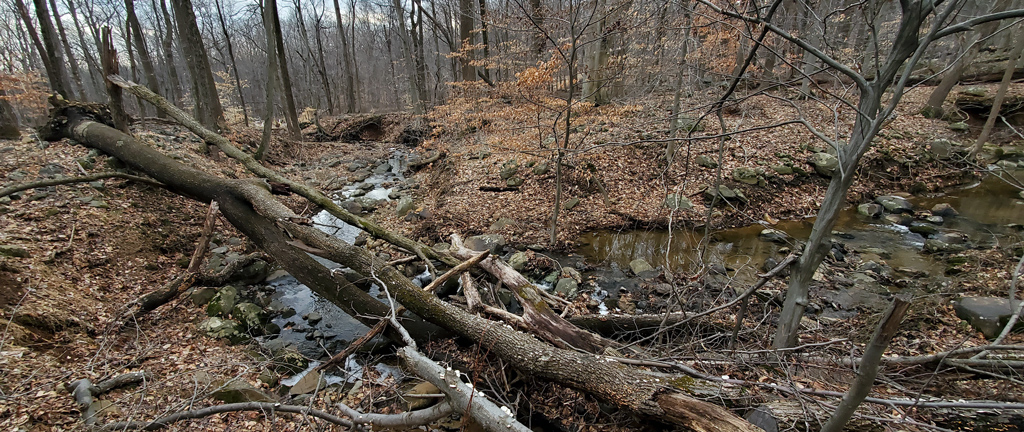
I wanted to hike an intermediate trail and selected King’s Chair on the eastern side of the state park. The trip to the summit was fairly stereotypical for a moderate hike like this, with nice elevation gain, scattered simple obstacles, and plenty of fresh air.

Oak Mountain State Park

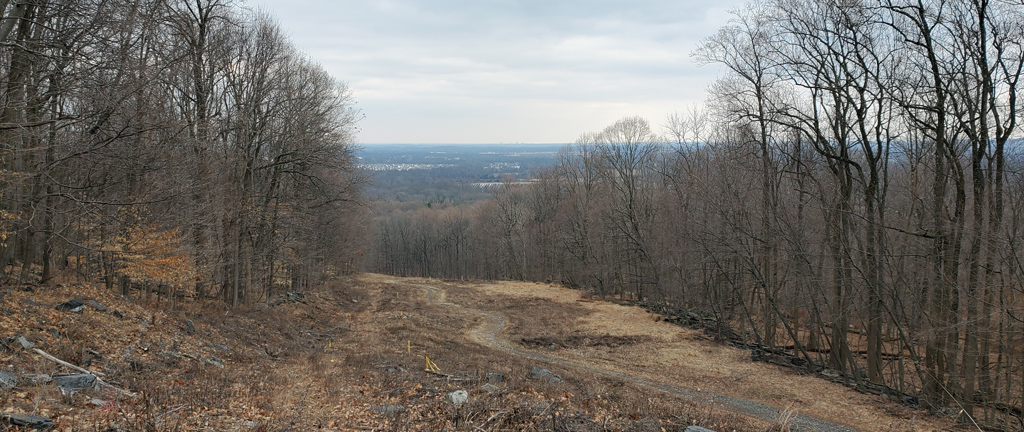
Once you get to the top of the mountain, there is a relatively flatter portion along the ridge with a few pseudo-summits before hitting King’s Chair. The first, which I found out from another hiker, is called Queen’s Chair.

Oak Mountain State Park

A little farther down was another opening, which I originally thought was King’s Chair, but later discovered that it wasn’t. There was a little platform where you could sit down, so maybe we can call it King’s Bench.

Oak Mountain State Park

And finally, all the way at the end of the trail was King’s Chair.

Oak Mountain State Park

Oak Mountain State Park

I’ve touched on this a few times in the past, but people out in the “middle of nowhere” areas (and yes, I know that Birmingham technically isn’t the middle of nowhere, but I’ve historically seen everything outside of Chicago, Los Angeles, New York City, and, to some extent, Las Vegas, as the “middle of nowhere”) are much kinder and more caring. The culture in big cities is to ignore everyone around you and just do your own thing, but as I started vi­sit­ing smaller cities and exploring out into the country, I’ve had much more pleasant interactions.

Oak Mountain State ParkI’m not really that social of a person in general, but after I realized that it is nor­mal to interact with each other in these areas, and that I might actually be mak­ing people feel uncomfortable by having a “city attitude,” I’ve been much more receptive of social interaction and light conversation with random people I meet in public.

I’ve learned a lot about the world by taking this more open approach to others, and I think I’ve also taught a lot to others by sharing my own stories of what busy city life is like. A lot of my most interesting encounters have been the most unexpected, and I think my interaction here at the summit of King’s Chair tops the charts in unexpectedness.

I met a guy named Hunter who was hiking with his friend. Apparently Hunter used to be an aspiring professional gamer, and he was familiar with Tempo Storm and our past esports endeavors. He’s doing photography now, and offered to take a picture of me, which I obviously accepted.

The top of a mountain in the middle of Alabama is probably one of the last places I would’ve anticipated meeting an esports fan, but I’m glad that we talked for long enough to figure that out, because this experience definitely made my visit to the state much more memorable.

After parting ways with my new friends, I walked across the ridge in the opposite direction, then took a different path down to the trailhead.

Oak Mountain State Park

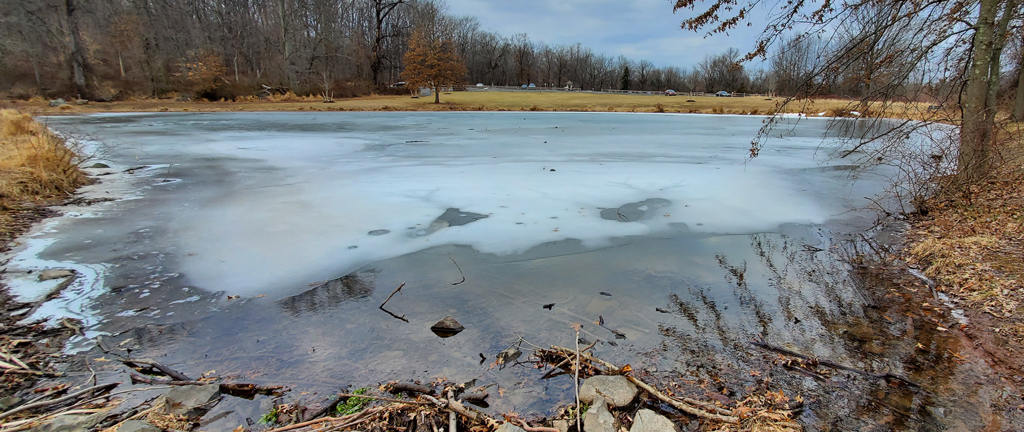
Apart from the novelty of my conversation at the summit, the rest of the hike was fairly routine. Oak Mountain State Park is a decently large recreation area, and if I was staying in Birmingham for longer, I definitely would’ve come back at least a couple more times to hike a few more trails.

Oak Mountain State Park


—§—