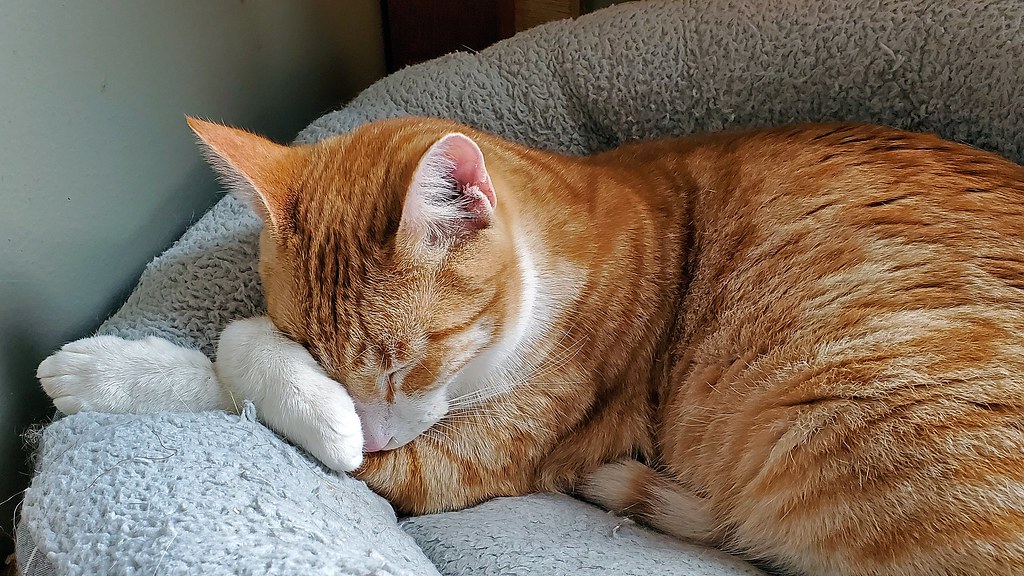
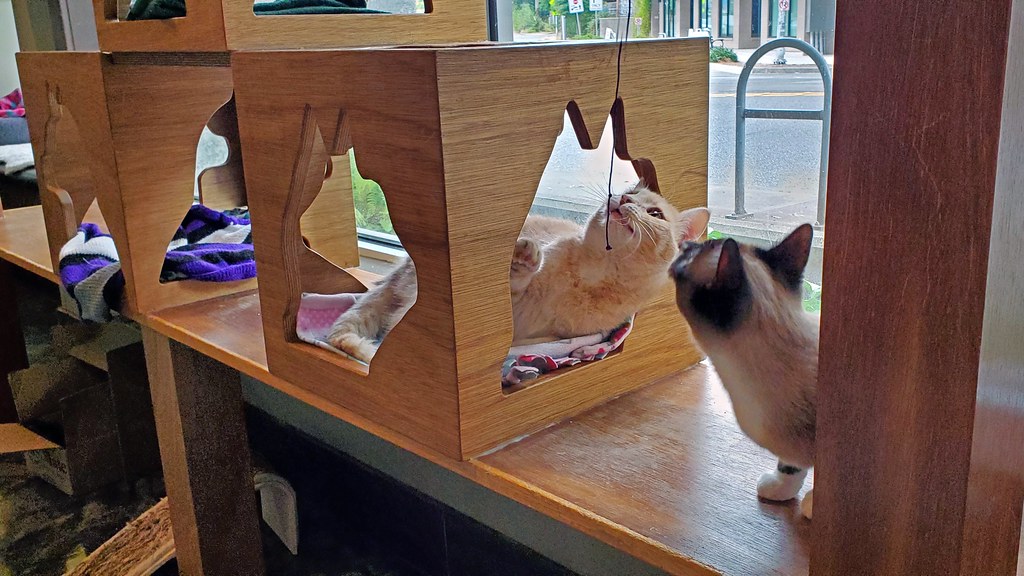
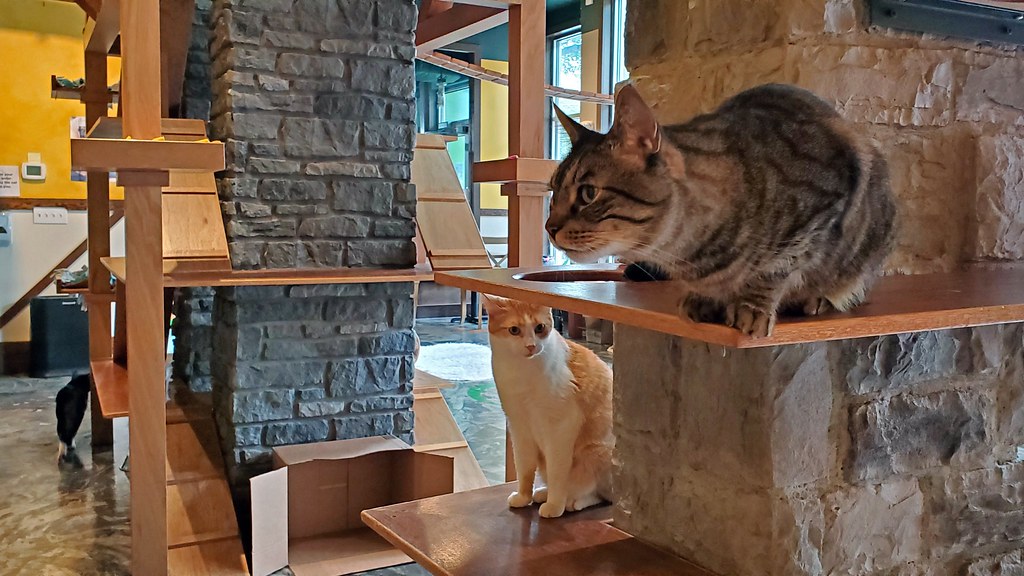
Hello, Louisville Slugger Museum and Factory

For my final tourist activity of Louisville, I went to the Louisville Slugger Museum & Factory. If you’re not familiar, the Louisville Slugger is a baseball bat formerly owned by the Hillerich & Bradsby Company, and now owned by the Wilson Sporting Goods Company. H&B still does the manufacturing of the baseball bats in Louisville, and also runs the museum.

For whatever reason, I was a massive baseball fan when I was a very young child. I followed the Chicago Cubs very closely, knew the names of an un­health­y number of baseball players, and watched almost all their games. And then, one year, I sort of… stopped being a baseball fan. I stopped watching baseball, I lost track of all the games and players, and I have absolutely no recollection as to why.

To put this into perspective, I believe this happened almost two decades ago, and since then, I haven’t really cared at all about baseball. I would play catch with friends once in a while, but because of my bad depth perception, I have a tough time catching balls (I usually have to stand at a little bit of an angle, then mostly go off timing in order to be able to effectively catch a ball), and I can almost never consistently successfully hit a baseball with a bat.

With that being said, it seemed like I was the only one at this museum who was this indifferent about baseball, because everyone had their favorite teams and were eager to see bats used by those players. It was interesting to see the Louisville Slugger Factory in-person, but it wasn’t really that special or magical of an experience.

Louisville Slugger Factory

Louisville Slugger Factory

Professional baseball players are fairly picky about the bats they use, so they often show up in-person at the factory to pick out a specific type of wood and design for their bats. We weren’t allowed to touch these because of the ongoing pandemic, but there was a large cabinet of baseball bat stocks se­lected by professional players.

Louisville Slugger Factory

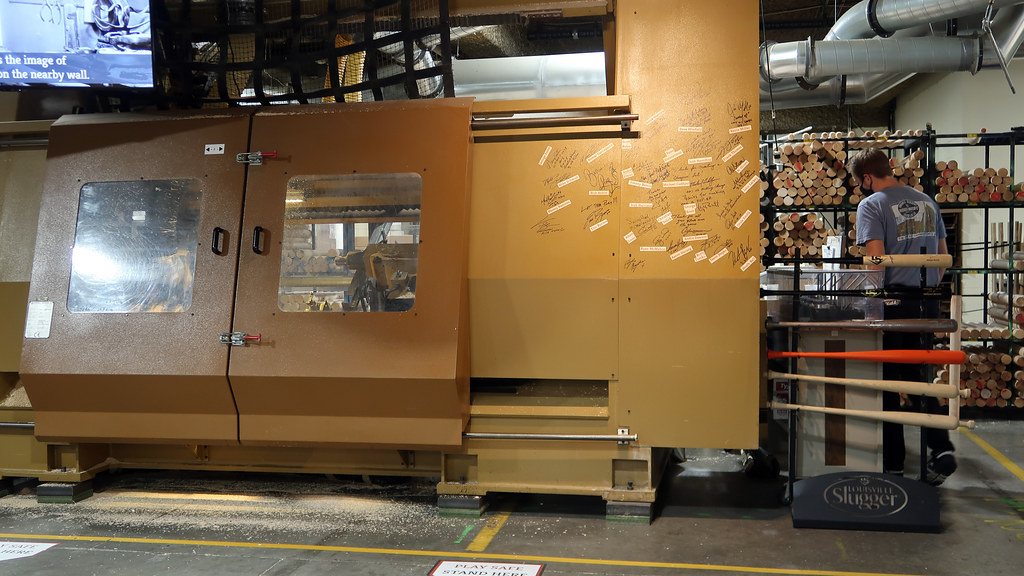
We got to watch a CNC machine create a bat as well. Apparently this one had a bunch of famous baseball players’ signatures on the panels.
Louisville Slugger Factory

Louisville Slugger Factory

We then moved over to the branding section of the factory. Some are done by machine, while others are printed by hand by workers.

Louisville Slugger Factory

Louisville Slugger Factory

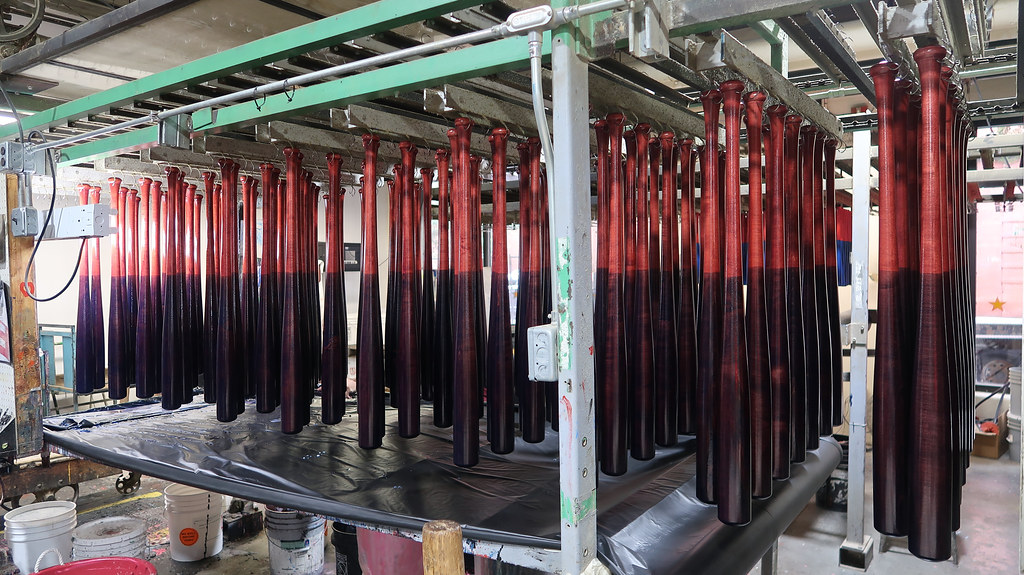
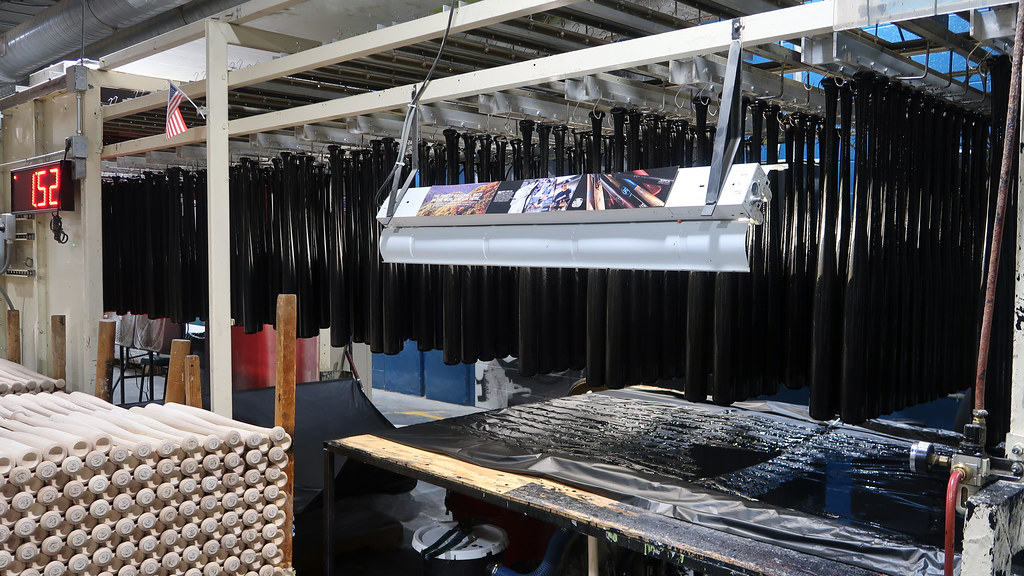
The final part of the factory had a section for painted bats. Apparently there are restrictions on the color of the bat for professional play, but obviously, for everyone else, they can get different-colored bats, and some people even order special novelty bats with special printing. Needless to say, this section of the factory smelled horrible because of all the paint, and I quickly got a headache.
Louisville Slugger Factory

Louisville Slugger Factory

After the guided tour was over, we were released into the main museum area and got to look at the exhibits at our own pace. I don’t know if this was main­ly because the Kentucky Derby Museum I went to yesterday was comparatively such a great museum, but the Louisville Slugger Museum felt in­cred­i­bly underwhelming. There weren’t that many exhibits, and the exhibits they did have were fairly non-interactive and relied on a lot of text and re­cre­ated models.

It seemed like there might have been a second floor of exhibits, but I couldn’t figure out a way to get up there—there were no easily-accessible stairs, and when I took the elevator, the upper area was blocked off by an “employees only” sign.

Louisville Slugger Museum

Louisville Slugger Museum

Right outside the museum exhibits, there was an area where you could swing in a miniature batting range, but you had to pay extra for that. The walls were covered with miniature plaques with hall of famers, but that probably won’t really be interesting to someone unless they are passionately dedicated to baseball and can recognize the names.

The guided walking tour through the factory was nice, and especially during the beginning portion of the factory, I really enjoyed the fresh processed wood smell. Funny enough, my second favorite part about going to this museum was the parking garage. When I park at a tourist hotspot, I always like to go on the upper-most floor of the parking garage in order to get a good view of the surrounding area; I parked on the fifth floor and took some photos of downtown Louisville.

Downtown Louisville, Kentucky

Downtown Louisville, Kentucky

My admission ticket was US$16.00, and I have a suspicion that the ticket price only covered the guided tour through the manufacturing factory, because that was the only time my ticket was checked (i.e., nobody was there to check my ticket when I wandered into the museum exhibit area). That price point is something you should expect to pay to go to one of the most popular tourist hotspots in a city, but comparatively, I don’t think you really get that much value out of this unless you’re a baseball fanatic.

That concludes my week in Louisville, Kentucky; next up is Knoxville, Tennessee.
 

—§—


Hello, Kentucky Derby Museum in Louisville

For my second tourist activity of Louisville, I went to the Kentucky Derby Museum. The Kentucky Derby is an annual horse race and is often considered the “biggest” horse race in the world. It doesn’t have anywhere close to the biggest prize pool, but the passion and festivity that goes into the Kentucky Derby, as well as the amount of betting done on the race, definitely makes it the most popular.

I’m personally not really a big fan of horse racing, so I went into this museum fairly clueless. With that being said, I think the Kentucky Derby Museum is actually the best museum I’ve visited so far. It has high-quality exhibits, there are a lot of interactive things to do, there is a lot of variety in terms of what is available to do, and it was very effective in teaching me about the Kentucky Derby in a fun and memorable way.

My visit started with a walking tour of Churchill Downs, the race track. It was raining, but I obviously have limited time in Louisville, so I grabbed a hoodie, bundled up, and went anyway. Apparently rain isn’t really that big of a deal in Louisville, because there were a lot of other people in attendance at the museum, and apparently the race itself still goes on in the rain as well. In fact, the wetness and condition of the track is something that is recorded along with every race.

Kentucky Derby Museum in Louisville

Kentucky Derby Museum in Louisville

Kentucky Derby Museum in Louisville

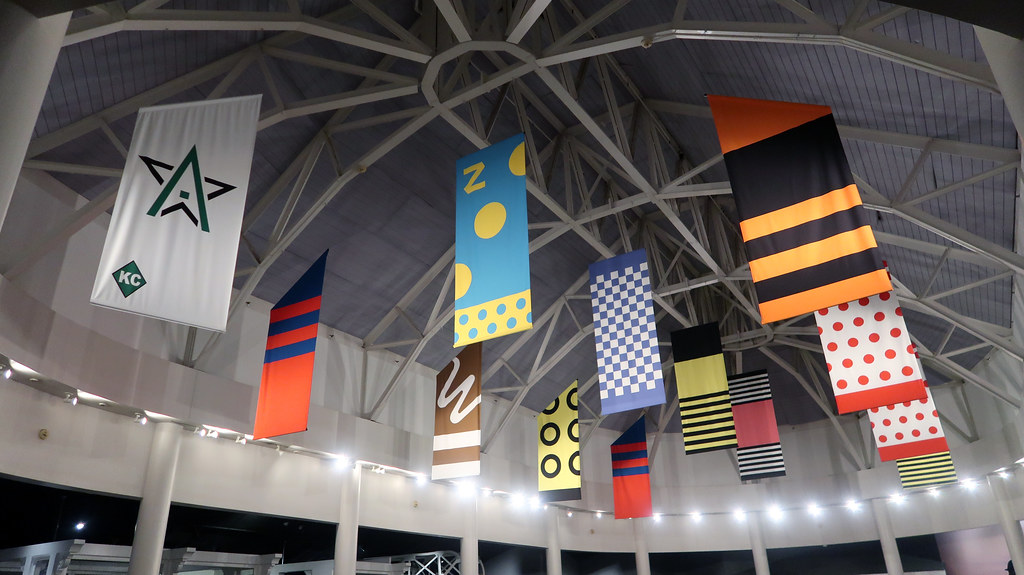
Next up was the showing of “The Greatest Race,” a short film about the Kentucky Derby presented on a 360° screen that wraps around an oval theater. It gave further details about the Kentucky Derby that the walking tour guide didn’t mention, and also showed some footage of the process of raising horses and training to participate in the Kentucky Derby. Above the theater, they had banners of the emblems of all the Triple Crown winners.

Kentucky Derby Museum in Louisville

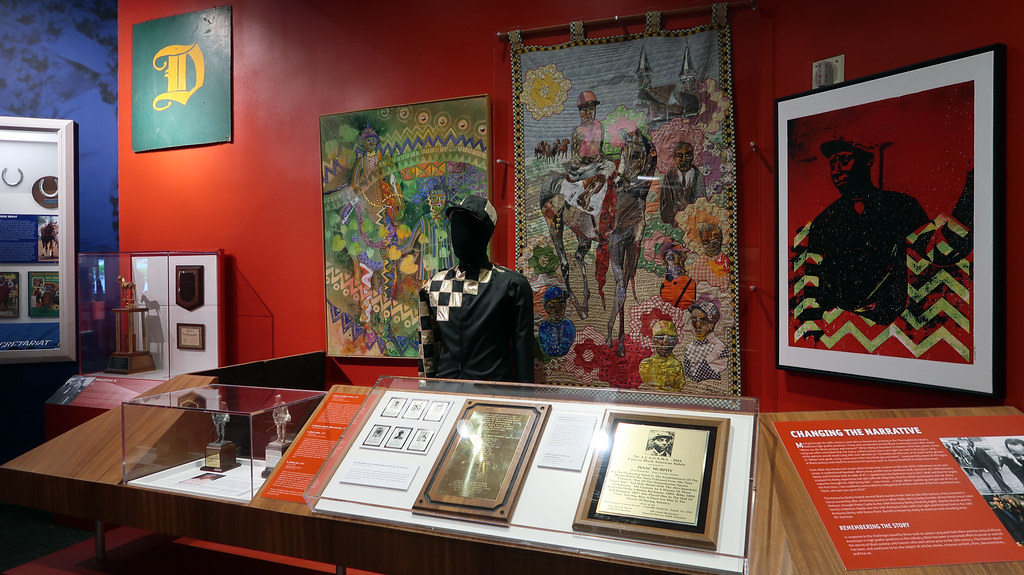
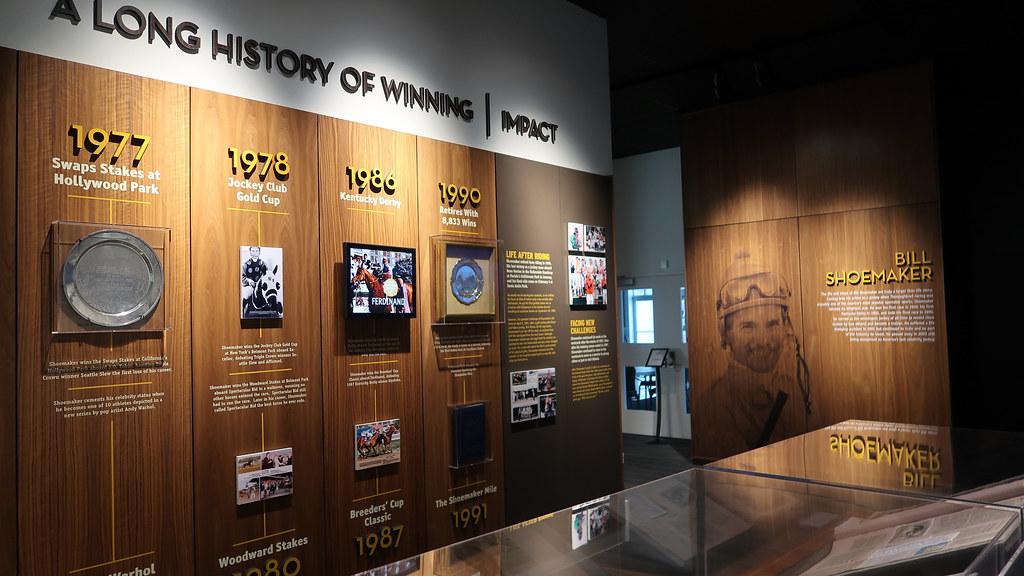
This short film was one of a few spread out throughout the museum; there were some other spotlights about other racing-related themes, such as a bi­og­ra­phy of one of the most successful jockeys, and a history of how women fought to compete alongside men in top-tier horse races. The “Ladies of the Derby” and “Right to Ride” exhibits were actually my favorites—there were life-sized cut-outs of the women so you could see how tall they were, and hearing their stories of successfully bringing lawsuits against arrogant men on the basis of the Civil Rights Act was very satisfying.

There was also a section of the museum where you could watch every single Kentucky Derby race available on video. I think just the nature of the Ken­tucky Derby makes for a great after-the-fact spectator sport, because all the videos are no longer than three minutes each, and it’s an insane surge of a­dren­al­ine and excitement, one after the other. The museum also set up a “betting booth” where you could pretend like you would input a theoretical $2, pick out your favorite horses, then watch the race and scan your ticket to see how much you would’ve theoretically won.

Another interactive part of the museum was a horse riding simulator, similar to one that you would see at an arcade. There was a kid already trying it out so I didn’t hop on myself, but it basically looked like a video game.

In addition to all of this, there were obviously also some traditional museum exhibits, with text, props, and audio. But, even then, I feel like the Kentucky Derby Museum takes traditional museum exhibits to the next level as well; for example, there was a decoy weight scale in the section about the size of the average jockey so people could step on and see just how much more they weighed than these athletes.

Kentucky Derby Museum in Louisville

Kentucky Derby Museum in Louisville

Kentucky Derby Museum in Louisville

Kentucky Derby Museum in Louisville

Kentucky Derby Museum in Louisville

Kentucky Derby Museum in Louisville

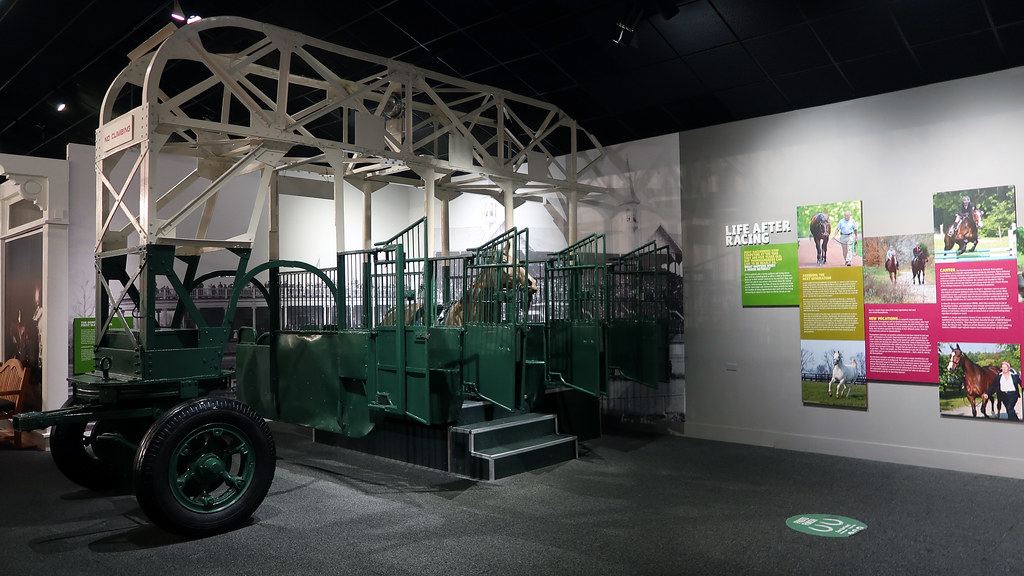
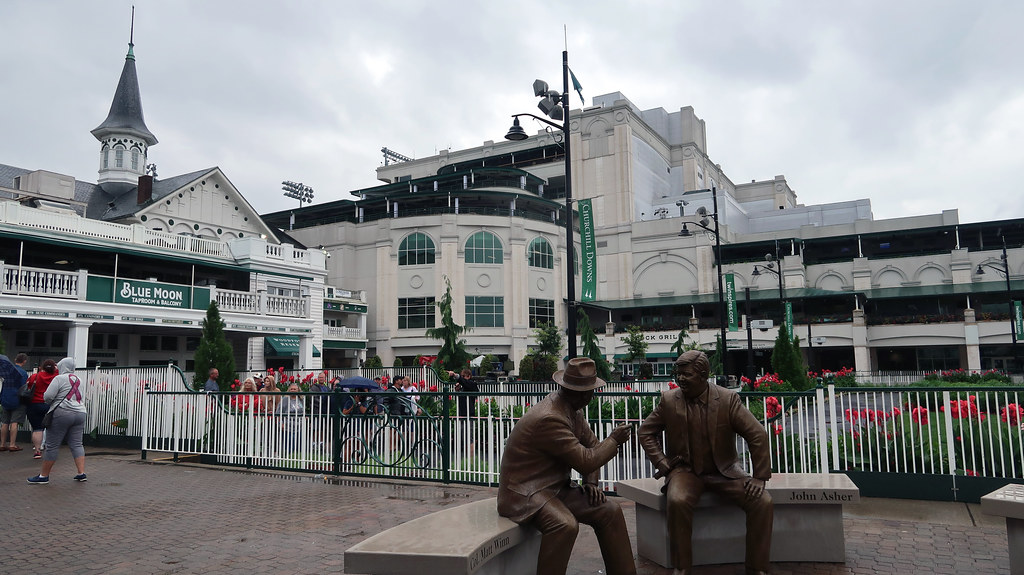
After enjoying everything in the museum, I took a look at the statue of Barbaro right outside the racetrack on my way out.

During the walking tour, the tour guide let us know that undefeated horse Barbaro had a tragic leg injury during his final race. Many people poured all their time and effort into treating Barbaro and assisting in his recovery. The process went on for over half a year, with surgery after surgery trying to address all the unexpected complications arising.

Apparently, horse leg injuries are not quite as simple as other four-legged mammals; although dogs can walk on three legs, horses cannot because of their weight, and lacking strength in one leg can result in too much weight being put on the other legs and further injuries forming. This is eventually what happened to Barbaro, and shortly before his death, he reached a point where he could not put his weight on any of his legs.

Barbaro was a fan favorite and there were a lot of people cheering on for his recovery. Upon his death, he was cremated and his remains were placed right outside Churchill Downs so fans could pay their respects without having to purchase an admission ticket.

Kentucky Derby Museum in Louisville

My impression of horse racing has historically been negative due to the fact that I believed horse racing was abusive and exploitative of the horses.

Now of course, I’m not going to change my opinion based solely on going to a horse racing museum, obviously because the museum is going to be heav­i­ly bi­ased in favor of supporting horse racing. But, I did learn a lot more about the process behind the race, and it made me feel like raising the horses and rac­ing them is somewhat like a traditional owner-pet relationship (like playing fetch with your dog), but just on a much larger scale—a scale fitting of a horse.

The whips that they use are also apparently not a normal whip that you’d see that is designed to inflict pain. Apparently, horse racing whips are made out of a different material, are designed specifically to make a lot of noise, and are used as a controlling device in more ways than just striking the horse.

It is allegedly common knowledge in the equestrian community that punishing a horse with pain is not very effective, and could actually make the horse perform worse due to learned helplessness. On top of that, there is also supposedly legislation limiting the number of times a horse can even be hit with a whip at all during a race, so a lot of jockeys don’t actually ever make harsh contact with the horse using the whip.

It’s unfortunate that I didn’t actually get to see any real horses during this trip, but I’d say that this museum is very much worth it at a US$16.00 ad­mis­sion price, just based off the walking tour, movie, and museum exhibits. There are some pricier options available that offer you an inside look at the more exclusive aspects of horse racing, but for a normal civilian, I’d say that general admission is plenty.


—§—


Hello Louisville, Kentucky; and the Conrad-Caldwell House Museum

After flying back to Indianapolis International Airport after my one-week trip to Seattle, I spent a night at the SpringHill Suites by Marriott Indianapolis Airport/Plainfield then set off to my next destination, Louisville, Kentucky.

I took Interstate 65 south, but the section of the highway that crosses the Ohio River just after Indiana is a toll bridge. In an attempt to save a few dollars on the toll, I decided to take an alternative route and exited onto George Rogers Clark Memorial Bridge, another way to get across the Ohio River. What I did not realize was that this would plop me directly at the edge of down­town Louisville.

From this point ensued a 16-minute adventure of sitting in unrealistically narrow lanes, bumper-to-bumper traffic, and gridlock to get through down­town Louisville and back on the toll-free portion of the interstate to continue down southbound towards my hotel near the airport. … I should’ve just paid the few dollars.

 
I’ve been in Louisville since Thursday, so I’ve had a little bit of time to drive around and get some initial impressions of Louisville.

The first thing I noticed about it was how small it is—it seems like down­town quickly turns into old downtown, which then transitions into the u­ni­ver­si­ty area, which is right by the airport, and is followed very closely by the wider suburbs. I feel like if I take the distance I would usually drive to get from my condo on the Las Vegas Strip to the edge of Summerlin, that same distance would take me across the entirety of Louisville and put me in the next city over. That was a bit unexpected, because I came to Louisville knowing it was the largest city in Kentucky.

The next thing I noticed is just how old Louisville feels. I’ve been to Virginia, West Virginia, and Maryland before, and I’d say that the vibe of Louisville resembles those three states (which I guess makes sense, seeing as Kentucky is a neighboring state, and they’re all part of the older East of the United States).

 
In the spirit of looking at old things, my first tourist activity was visiting the Conrad-Caldwell House Museum. I had never heard of this before, but the ratings on TripAdvisor were disproportionately high (which I later found out was because the tour guide asks people to leave reviews). I’m not really the biggest fan of history, but for the sake of using my road trip as an opportunity to increase my breadth of knowledge, I purchased tickets online for this museum.

Conrad-Caldwell House Museum in Louisville, Kentucky

The museum itself wasn’t exactly the best, but I believe a majority of the experience has more to do with the history lesson that the tour guide gives you, as opposed to actually seeing stellar exhibits. The house had weak air conditioning and everything had a fairly musty smell, so I got a headache pretty quickly and lost track of what the tour guide was saying halfway through the tour.

The first room was the parlor, which is apparently the room where everyone used to spend as much money as possible to impress their guests. Honestly, it seems like things haven’t really changed; in the Victorian era, people show off by overdecorating their houses, just like how people show off today on social media by posing with material possessions they cannot afford.

Conrad-Caldwell House Museum in Louisville, Kentucky

We then moved onto the library.

Apparently the reason this house is named the Conrad-Caldwell House is because those are the only two families that inhabited the property (it was later turned into a retirement home or something, before becoming a museum). Of course, there was some drama with the original family that owned the house, so there were some will conflicts where the house itself was left to one person but all the possessions inside the house was left to another, so the person who possessed the possessions ended up selling everything, and the museum has been working to reacquire the house’s original stuff.

That’s why the library looks so empty—apparently the person who bought the bookcases refuses to sell them back.

Conrad-Caldwell House Museum in Louisville, Kentucky

Next up was the dining room. There was a funny story about the salt serving containers, as apparently salt was considered a commodity and only the rich would be able to afford to salt their food. Salt was corrosive, so instead of putting real salt in the serving containers for display, they used to put sugar… except it wasn’t actually sugar, it was quartz. The tour guide let us know that she at one point had tasted it out of curiosity (which she was prompted to do so because the grains of sugar were too large to be real sugar), and she let us know that she had just tasted rock.

Conrad-Caldwell House Museum in Louisville, Kentucky

From here is where my memory started getting a bit fuzzy. I don’t recall anything particularly interesting about these rooms, partially because I was getting a little bored of listening to a history lesson of a family I didn’t know, and partially because I was beginning to drip sweat and get a headache from the odor of the house.

Conrad-Caldwell House Museum in Louisville, Kentucky

Conrad-Caldwell House Museum in Louisville, Kentucky

Conrad-Caldwell House Museum in Louisville, Kentucky

This long ago, there were a lot of ailments and diseases that would end people’s lives early, so death wasn’t really treated with as much gravity as it is to­day. Apparently post-mortem photography and art was commonplace; this room allegedly had a dead woman propped up against the furniture with her eyes open as if she was still alive, and photographs would be taken of her with her children next to her.

Conrad-Caldwell House Museum in Louisville, Kentucky

Now that I’m traveling solo again, I don’t have someone else around me all the time to take photos of me, so I included this photo because my reflection is visible in the mirror.

Conrad-Caldwell House Museum in Louisville, Kentucky

One of the final rooms was the room that the man of the family would use as his office.

Conrad-Caldwell House Museum in Louisville, Kentucky

Like usual, I’ve been spending the weekend staying at my hotel catching up on work because I don’t want to go to crowded tourist attractions when everyone else is there because they’re off from work. I have a few more places planned for the Monday and Tuesday before my week in Louisville is over and I head out to my next destination.


—§—


Goodbye Seattle

After a good week visiting friends and sightseeing, my week in Seattle comes to an end. I have dedicated blog posts for the more notable things I did while in Washington, but for everything else, here’s a photo dump.

After my travel incident with a missed lay­o­ver and delayed flights, I decided that the best course of action for this trip would be to put Delta Air Lines on a temporary break take Alaska Airlines non-stop from IND to SEA instead.

An Alaska Airlines plane painted black

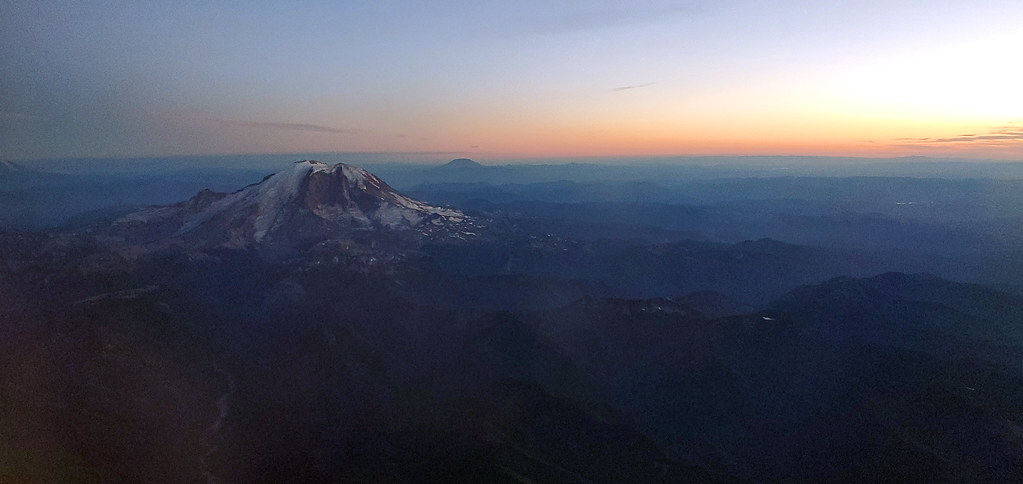
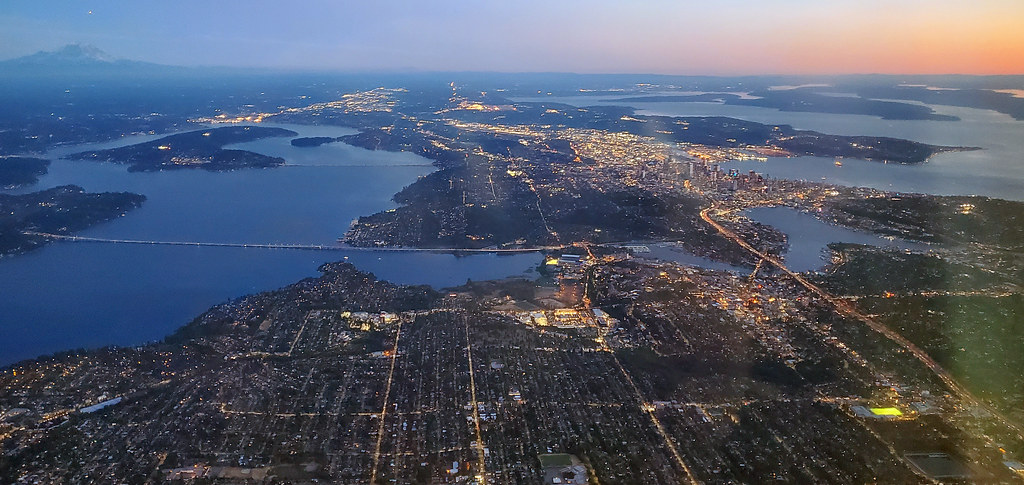
The flight went smoothly, I got my usual scenic photos that I always do from the air, and arrived safely and early without needing to worry about lay­o­vers.

Mt. Rainier from a plane

Seattle Metropolitan Area from a plane

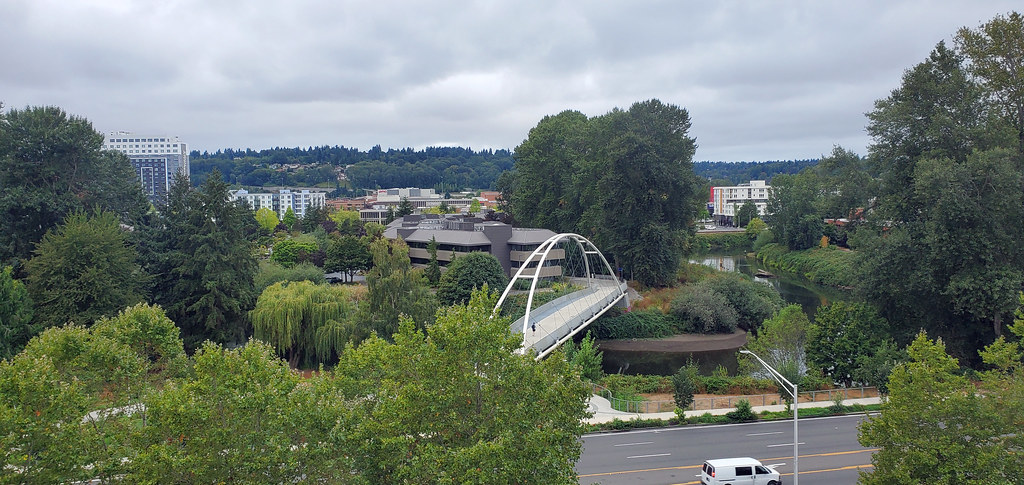
During one of the earlier days, I spent a night in a hotel near the airport because it had the cheapest rate and also offered free parking for my rental car, which is very rare for hotels in the Seattle area. I snapped a photo from my window of the view and a nice bridge that connected both halves of the street.

Tukwila, WA

While meeting up with Doug and Allie, we also did some sightseeing at Lake Union and Dyes Inlet. I’ve seen Lake Union before because I went to Gas Works Park last year with our production crew to get some b-roll footage for our documentary, but this was my first time seeing Dyes Inlet.

Lake Union

Dyes Inlet

One of the perks of having my own rental car throughout my trip is that we were able to get from place to place without having to rideshare everywhere or walk excessive distances. However, one of the downsides of having a rental car… is intersections like this.

To be clear, this is taken from the left turn lane of a two-lane road, i.e., there was only one more lane to my right. This traffic light had three lights, a sign that said I can only take sharp left turns, a sign that said I cannot turn left, and a sign that said I can also take a slight left, but make sure you don’t turn on red.

A very confusing intersection

This sounds like a great opportunity to do a rental car review.

If you’re unfamiliar, I usually rent pickup trucks because I like the ride of a body-on-frame vehicle, and I find pickup trucks to be much more man­age­a­ble and navigable because my personal vehicle is a pickup truck and I’m much more used to it. However, sometimes, renting a pickup truck is just too un­realistically expensive, or they don’t have any left available in stock, so I end up with a different vehicle. When I do, I like to review them.

This time around, I ended up with a Mazda CX-5, a compact crossover with a 2.5-liter inline-four engine with 187 horsepower and 186 pound-feet of torque.

I’m usually not a fan of Asian car manufacturers. I acknowledge that they usually make very reliable ve­hi­cles, but I like a balance of reliability and fun factor, and Asian cars tend to be very boring. However, I’d say that the Mazda CX-5 was the least bad of all the low-trim Japanese cars I’ve driven.

The interior was decently nice, the screen was unexpectedly large, and the materials didn’t feel cheap. The engine was obviously struggling and acceleration was much slower than what I’m used to, but it still got me around town.

One specific thing I noticed with this crossover was that the brakes were unusually sensitive. This tends to be a recurring theme with Asian cars, where the accelerator is slow to respond but even the slightest tap on the brakes will lurch the car. It felt like this Mazda was a particularly severe offender of this, so it made for a bit of an uncomfortable ride if I wasn’t putting extra focus and effort into smooth braking.

Apart from that, it was a fairly average compact crossover—it had the perks of fitting into small street parking spaces and squeezing into narrow parking lot spaces, but it also had the downside of being lower to the ground, having lots of road noise due to the unibody composition, and feeling like all the other bigger vehicles on the road were about to run you over because of how short you felt.

And on that note, here is the continuation of another trend I’ve started on my website—my co-worker Erin, who I visited the second half of my week in Seattle, has a lifted Ford F-150, so I hugged it.

Hugging a Ford F-150

This trip was also the first time I had ever been on a ferry. I took a round-trip to and from either side of Puget Sound, and the motion sickness I felt from the ferry was much more manageable than the motion sickness from whale (fin) watching.

Funny enough, my second time on the ferry, my brain seemed to have adjusted very well to the boat, because I had little-to-no seasickness. But then, strange­ly, the moment we stopped and docked at the destination, I felt an overwhelming wave of motion sickness, almost as if my brain had gotten so used to the boat that it was now very confused and angry that we weren’t moving anymore.

Here is a photo I took of Seattle while departing on the ferry.

Departing Seattle on a ferry

As I mentioned earlier, I thought this was a good trip. My trip to Seattle last time was good as well, and I’m thinking this has more to do with the people I spend time with while I’m in Seattle that has made it pleasant.

A majority of my thoughts and takeaways from my previous “Goodbye Seattle” blog post still stand, but there’s one more thing I noticed from this trip. Seattle isn’t quite as busy as New York City or Los Angeles, but it’s still pretty busy. However, it’s almost as if it’s a different type of busy.

When I’m driving around in Los Angeles or New York City, the traffic and congestion is borderline debilitating. If I’m trying to get from one place to another, I feel like I literally can’t, and if I try, I’m at the mercy of everything around me to sort of nudge me in a random direction, and I just have to hope that it’s the direction I want to go—sort of like being in the middle of a massive mob of people and being pushed the general direction of the mob’s movement.

Seattle, on the other hand, is also congested and has pretty bad traffic, but it’s still manageable. I can still make my own decisions on where I want to turn, and if I need to find someone who just got off the ferry and is wandering around downtown, we are actually able to coordinate and meet up at an intersection in a reasonable amount of time—something that is literally absolutely impossible in Los Angeles without having angry people honking at you and threatening your life.

I’m not quite sure why this is the case with Seattle, but I definitely appreciate it.

And with that, I am back in the eastern side of the country, ready to resume my homeless journey. I have a tentative plan to return to Seattle in mid-November, but until then, my road trip adventure is taking me to Louisville, Kentucky as my next destination. More tourism blog posts coming soon…


—§—


Meet Bullet, Kaya, and Drake

After spending the first half of my Seattle trip as somewhat of a personal vacation with friends, I spent the second half visiting Erin, one of my new co-workers, and getting some work done in-person with her. I stayed at her house in the Seattle suburbs, and that meant I got to meet her three pets.

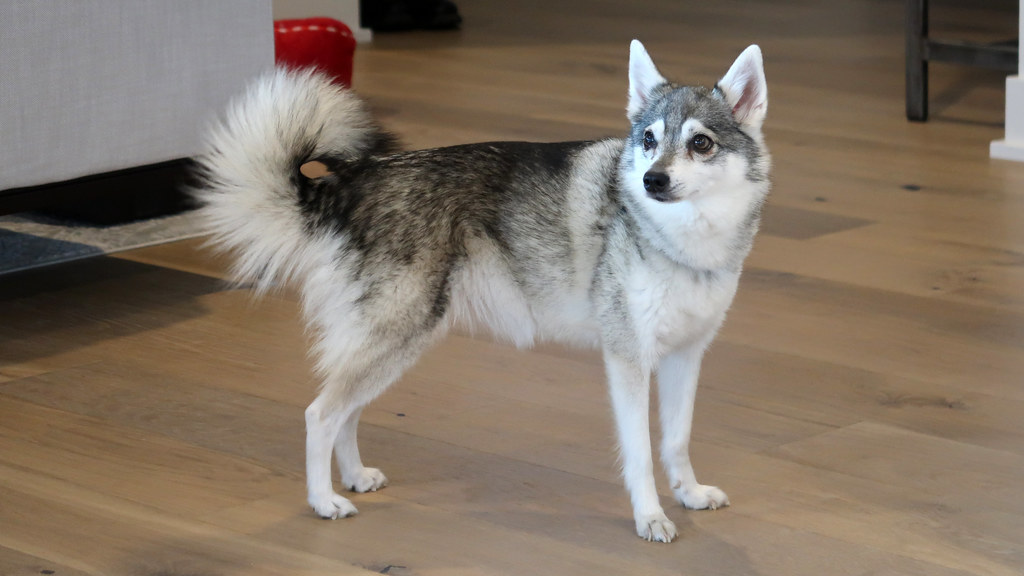
First up is Bullet, an Alaskan Klee Kai. He was the most energetic, and also the most photogenic—he had glowing white hair, and he seemed to enjoy the attention of me warping my body in strange positions to put myself in weird angles to get the perfect picture of him.

Bullet the Alaskan Klee Kai

Bullet the Alaskan Klee Kai

Bullet the Alaskan Klee Kai

Bullet the Alaskan Klee Kai

Bullet the Alaskan Klee Kai

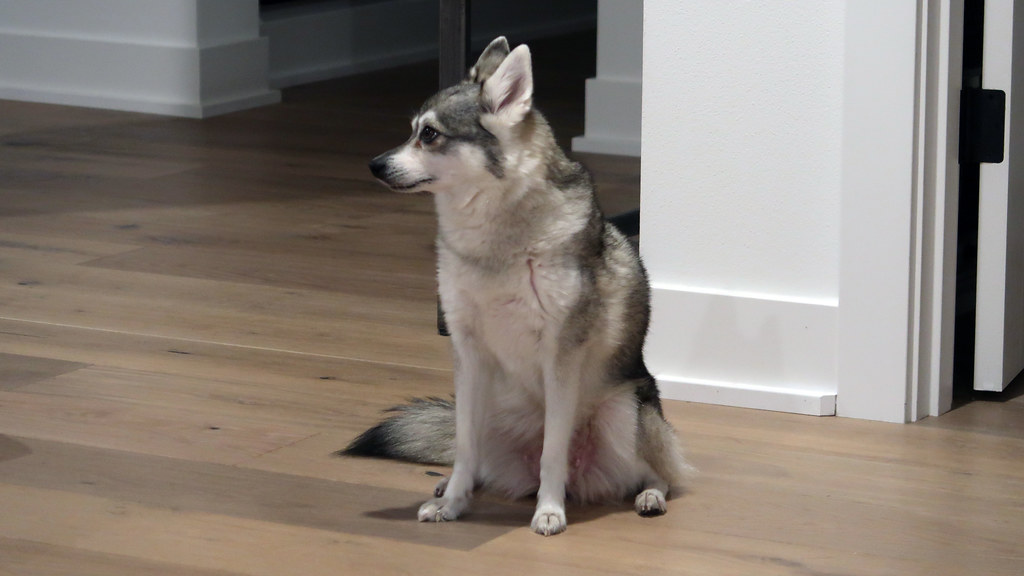
If you look in the background of that last photo, you’ll see another dog in the background—that’s Kaya, also an Alaskan Klee Kai. She was much more shy than Bullet, so I don’t have as many good photos of her. I could tell that she also wanted to play and be pet like Bullet, but she was also much more reserved and cautious.

It didn’t seem like she was the biggest fan of posing, so the only two shots I have of her are candid ones where she was distracted and I managed to snap a picture before she noticed.

Kaya the Alaskan Klee Kai

Kaya the Alaskan Klee Kai

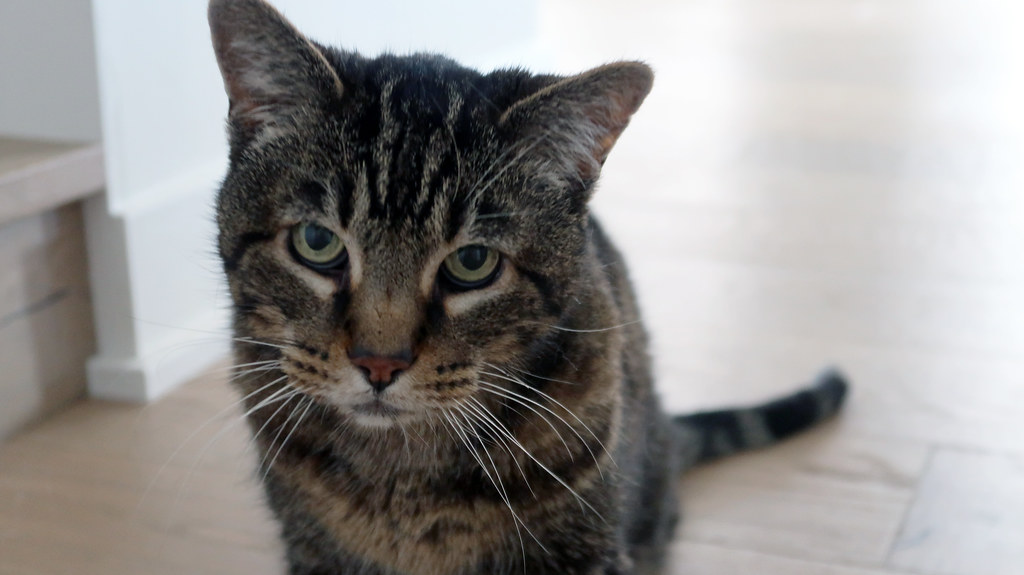
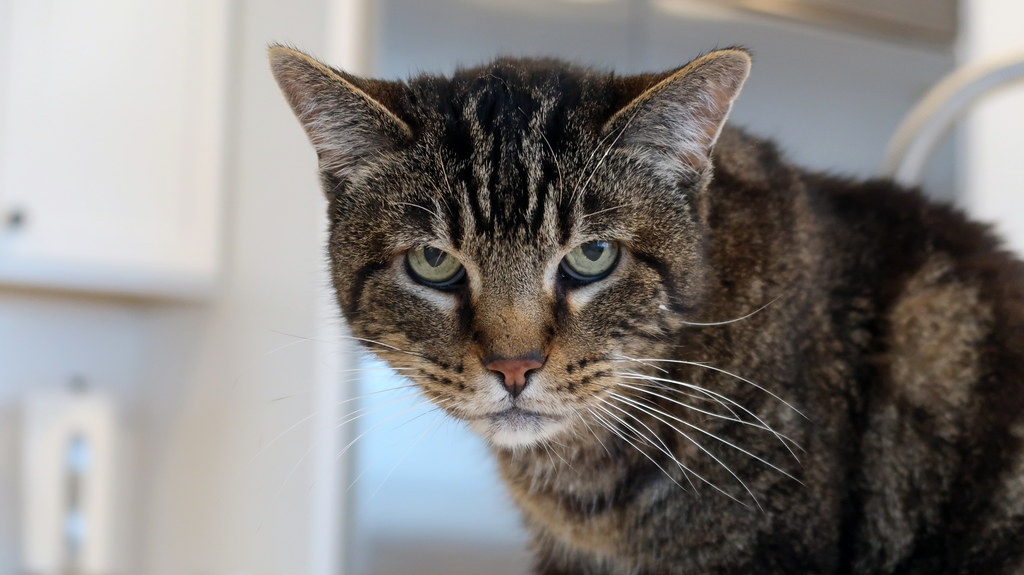
And of course, my favorite was Drake the domestic longhair. My first impression of Drake was that he was particularly elegant and graceful with his move­ment, and he gave off an aura of wisdom and knowledge, if that’s even possible for a cat to do. I later found out that he is 18 years old, so I’m guessing he possessed these traits due to his old age and life experience.

Drake was just like a lot of the other well-socialized cats I’ve met—he was very affectionate and liked rubbing his face on my hands. When I would be sitting on a couch somewhere getting some work done on my laptop, Drake would eventually wander his way to me and sit down next to me to take a nap.

Drake the domestic longhair

Drake the domestic longhair

Drake the domestic longhair

Drake the domestic longhair

I managed to do something with Drake that I’ve never been able to do with any other cat, which may be surprising considering how much time I’ve spent around cats photographing them—I’ve never caught a picture of a cat yawning before. That changed with Drake, so here is a picture of the inside of his mouth (and of his teeth, which are pretty clean considering his old age):

Drake the domestic longhair

If you’re not familiar with cats, you may be surprised to notice the little white spikes in Drake’s tongue. Those are called papillae, and are made out of keratin, a fibrous protein best known for forming human hair and nails. Those little spines are responsible for keeping the cat extra clean when it grooms itself—the way they all point in a single direction makes it very easy for the cat to remove unwanted substances from its hair, untangle knots, and eject collected hair from its mouth.

I obviously don’t have spiny papillae like cats do… but I have a close alternative. I usually use an electric razor to shave my facial hair every morning, but sometimes, when I don’t shave, I have enough stubble to make my chin feel like a cat’s tongue. When I rub my unshaven chin on a cat, they seem to al­ways be very pleased because they think I’m licking and grooming them.

I used to do this all the time with my old roommate’s cats, and I often get satisfied purs from every cat I do this to, Drake included.

So yes, this does mean that, if I ever meet your cat(s) and I happen to have not shaved yet that day, I will probably “groom” them with my chin to make them happy.


—§—


Hello, Seattle Meowtropolitan

I was a dog person growing up, but after meeting a lot of amazing cats, and then living with my most recent roommate Winnie (and her three cats) for nearly a year, I realized that my personality style is much more compatible with cats than with dogs.

My friend Allie, one of the people I’m visiting while in the Seattle Metropolitan Area, is also a big fan of cats, so she, Doug, and I went to a cat café. The one we selected was the Seattle Meowtropolitan, which is in the Wallingford neighborhood near the Woodland Park Zoo.

Seattle Meowtropolitan

Seattle Meowtropolitan

Seattle Meowtropolitan

Seattle Meowtropolitan

Seattle Meowtropolitan

Seattle Meowtropolitan

Seattle Meowtropolitan

Seattle Meowtropolitan

I’ve generally been told that cat cafés are a hit-or-miss depending on the demeanor of the cats. Often, people go to cat cafés and come back to me letting me know that it was less of a cat café and more of a regular café where you sit and drink coffee and there just happens to be sleeping cats around you.

I think I either just got lucky with Meowtropolitan, or they are a good cat café that creates a great environment for their cats so they’re more comfortable being active, but I had an amazing time.

The unfortunate part was that, due to the pandemic, appointments were required and they were limited to 30-minute time slots that begin at the top of each hour, so we weren’t able to stay for a satisfying amount of time. By the time I went around meeting all the cats, gave each one some pets, and start­ed taking photos, there were just a few minutes left, which I used to video call one of my friends who loves cats, then we had to leave.

Allie also enjoyed the cat café, and said she missed the cats a few minutes after we left, so I think we’ll definitely be going back the next time I’m in town. Hopefully by that point, we’ll be able to stay for longer than half an hour, and I won’t forget my regular camera so I can do a miniature photo shoot with as many cats as I have time for.


—§—