Hello, Cold War Memorial in the USS Clamagore (SS-343), and the USS Laffey (DD-724)

For the next tourist activity of Charleston, I was joined again by my co-worker to go to Patriots Point Naval & Maritime Museum. The museum is ba­sically four museums in one, with three ships and an experiential exhibit.

We attended a wedding over the weekend; I didn’t join in on the afterparty, but my co-worker did. This meant that he slept in and had a late start, so we only had about four hours to experience everything. The museum(s) is/are massive, and four hours wasn’t enough to see everything, even though we weren’t standing there reading all the information on all the placards. If you also want to go, I’d recommend a 4-6 hour trip at the minimum; if you’re an enthusiast who loves the topic, this is honestly an amazing place to spend the entire day from open to close.

Because the museum was so large, I decided to split it up into a few separate blog posts. The first two museums we went to were the Cold War Memorial inside the USS Clamagore (which is a submarine), as well as the USS Laffey DD-724.


Patriots Point Naval & Maritime Museum

Patriots Point Naval & Maritime Museum

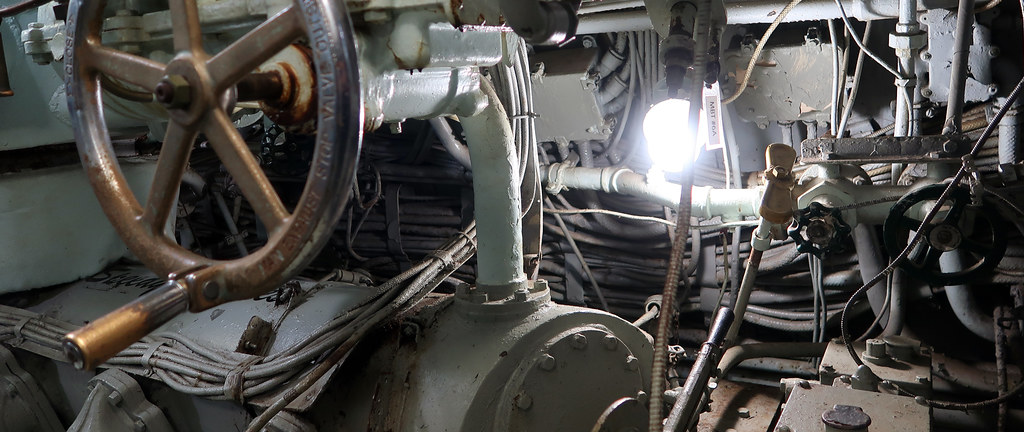
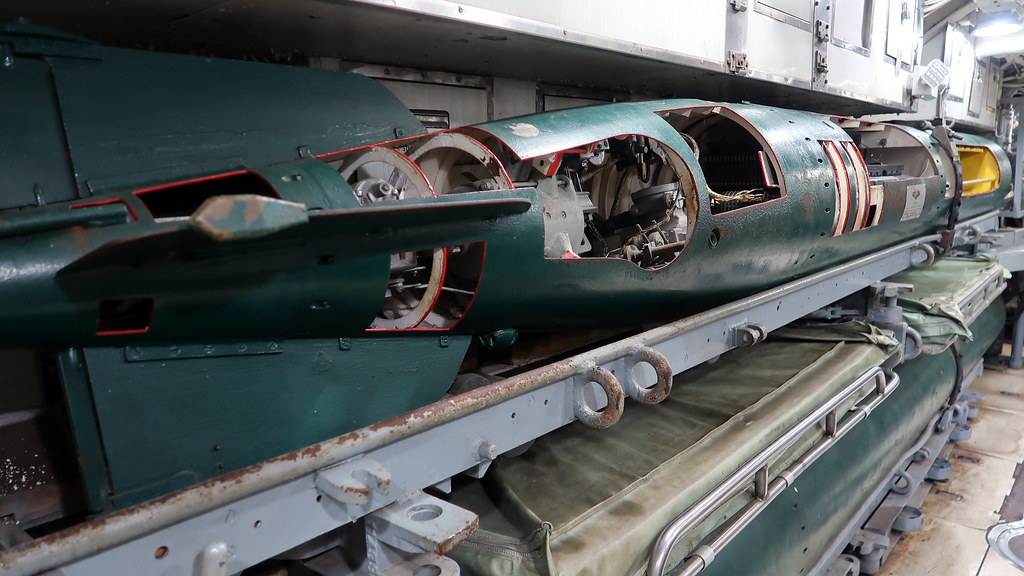
The submarine exhibit outlined what underwater life was like during the Cold War so we could see it first-hand.

Patriots Point Naval & Maritime Museum

Patriots Point Naval & Maritime Museum

Patriots Point Naval & Maritime Museum

Patriots Point Naval & Maritime Museum

Patriots Point Naval & Maritime Museum

Patriots Point Naval & Maritime Museum

The main takeaway I got from walking through the entirety of the length of the submarine was how large and small it was at the same time. I had never been on a submarine before, and I’m not sure where I got this impression, but I assumed that a submarine would be more like a smaller boat, but capable of being completely underwater. I imagined the interior would reflect something like a private jet. I’m sure there may be some submarines that exist that are like this, but the USS Clamagore was quite literally an entire house crammed into a watercraft.

As I walked through all the different rooms, I realized that this was built for people to live in here for extended periods at a time—all the essentials were directly in the submarine. However, it was also extremely space-efficient, meaning, there was very little open space that wasn’t already being used for some important purpose. The one long hallway stretching across the length of the submarine required a good amount of flexibility and agility to nav­i­gate because of how narrow and short it was.

My co-worker asked me whether or not I thought I could survive in one of these for a long period of time. I do well with small spaces, so that wouldn’t be much of a problem, but I know for a fact that I wouldn’t be able to tolerate the smell and heat. The submarine had a section where it showed the en­gine and had a speaker emitting the sound of one engine… and apparently during normal operation, there are ten of them running at the same time, resulting in ten times the volume. They also produce an insane amount of heat, and it would be normal for it to be ~120°F (~48°C) in that room.

 
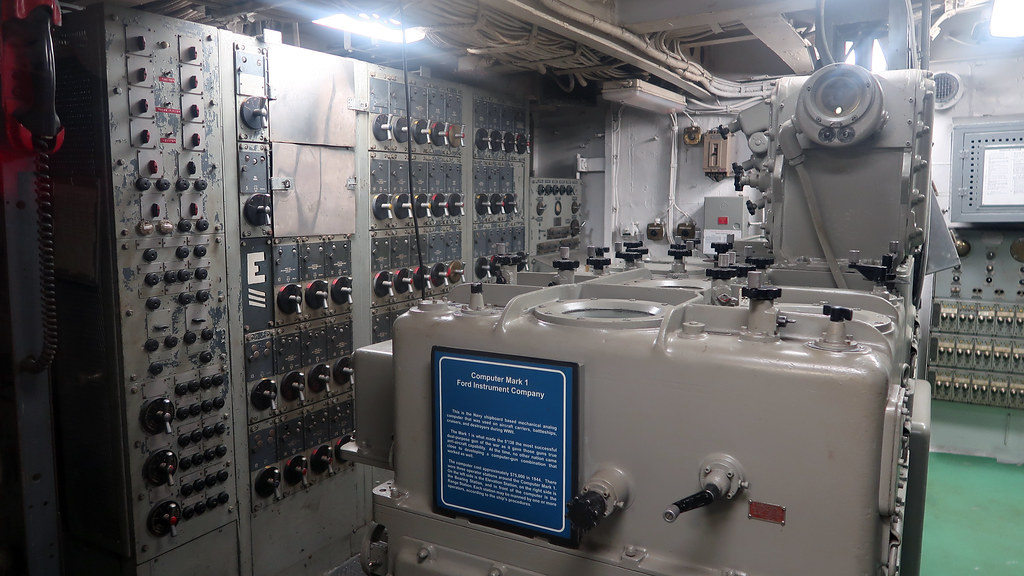
Next up was the USS Laffey, nicknamed “The Ship That Would Not Die” due to how resilient it was during the most relentless suicide air attack in his­to­ry during the Normandy landings on June 6, 1944, better known as D-Day.
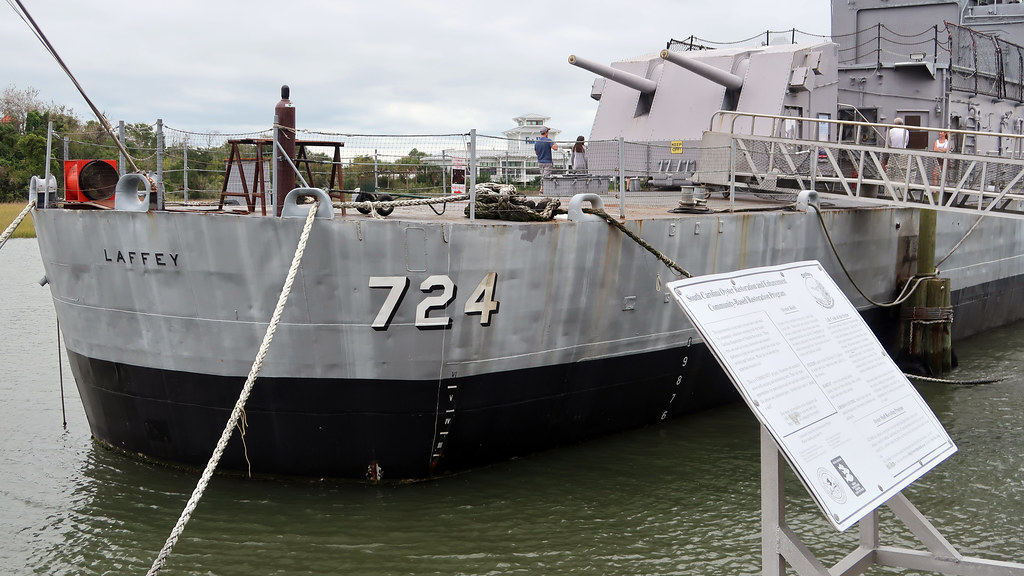
Patriots Point Naval & Maritime Museum

Patriots Point Naval & Maritime Museum

Patriots Point Naval & Maritime Museum

Patriots Point Naval & Maritime Museum

Patriots Point Naval & Maritime Museum

Patriots Point Naval & Maritime Museum

During the tour, I found my locker.

Patriots Point Naval & Maritime Museum

You might not know this about me, but while I was still in school, I passionately hated history. It was my least favorite subject, I failed my Advanced Place­ment exam in history during high school, I took no history courses as an undergraduate university student while earning my Bachelor’s degree, and I quit my graduate program for my Master’s degree because their breadth of knowledge requirement forced me to take eight history courses to make up for my lack of exposure to history.

My opinion on the topic of history is slowly changing. I started feeling this way when I started going to more historical museums during my road trip, but I think the USS Laffey was the “tipping point” that made me realize that history isn’t actually really that bad, and the thing that’s bad is actually just the American education system.

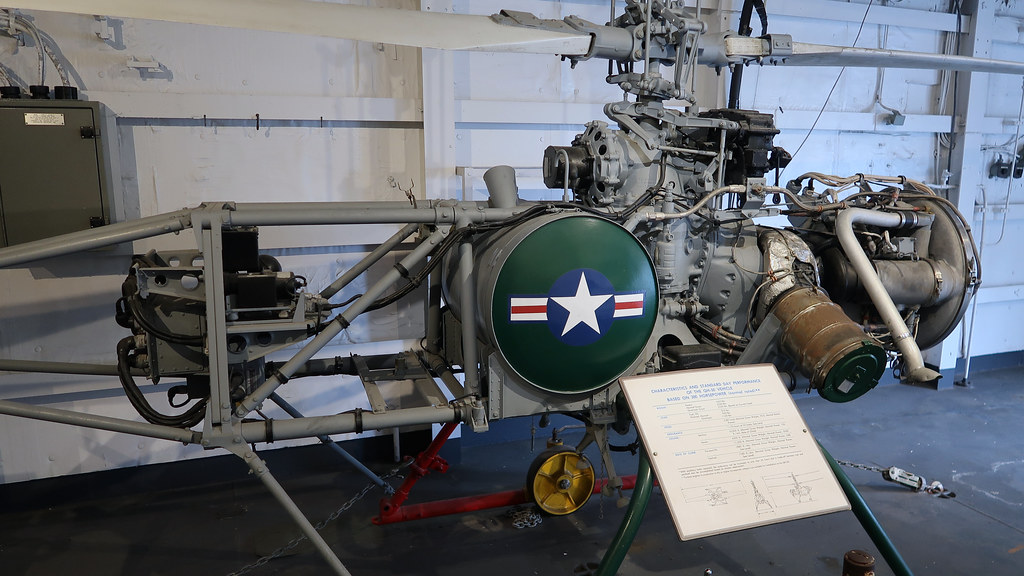
After watching all the videos on the ship about what happened to it, seeing all the rooms and some of the equipment that the military used to fight to defend the United States, and literally standing in the same watercraft as the veterans with my own two feet, it somehow just occurred to me in a very surreal manner as to how “real” everything was.

This isn’t to say that I was doubting that any of these historical events happened; it was just that, when I learned about it by reading out of a textbook and taking exams, I felt many degrees of separation from the topic. By seeing all this in-person, it hit me as to how important and significant all this was, and how relevant this actually still is to modern-day life.

These museum exhibits were built in a way such that both history enthusiasts (like my co-worker) and history idiots (like I) could learn something new and have a nice experience. What made it even better for me was that, as someone who grew up in the middle of nowhere in the Chicagoland suburbs, and then lived east of the Santa Ana Mountains in California before moving to the middle of the desert in Las Vegas, I didn’t really have much exposure to water. The fact that I was just even on a tremendously large boat to begin with was an exciting experience, so being able to walk through both these watercraft was amazing.

 

—§—


Hello, South Carolina Aquarium in Charleston

After a few more days of catching up on work and staying indoors to escape the humidity, I emerged from my hotel room to go on my first tourist ac­tiv­i­ty of Charleston. One of my co-workers flew in to Charleston in preparation for the wedding that we will be attending this coming weekend, so I went with him to the South Carolina Aquarium.

I’ve been to the Shark Reef Aquarium at the Mandalay Bay in Las Vegas, the Seattle Aquarium, and the Henry Doorly Aquarium in Omaha, so this was my fourth aquarium experience (as far as I can recall).

The first area we walked through was the turtle hospital, where they were nursing injured turtles back to health. This was an interactive experience where recovering turtles were visible along the walls, and there were exhibits showing what it’s like being a doctor treating a turtle.

South Carolina Aquarium

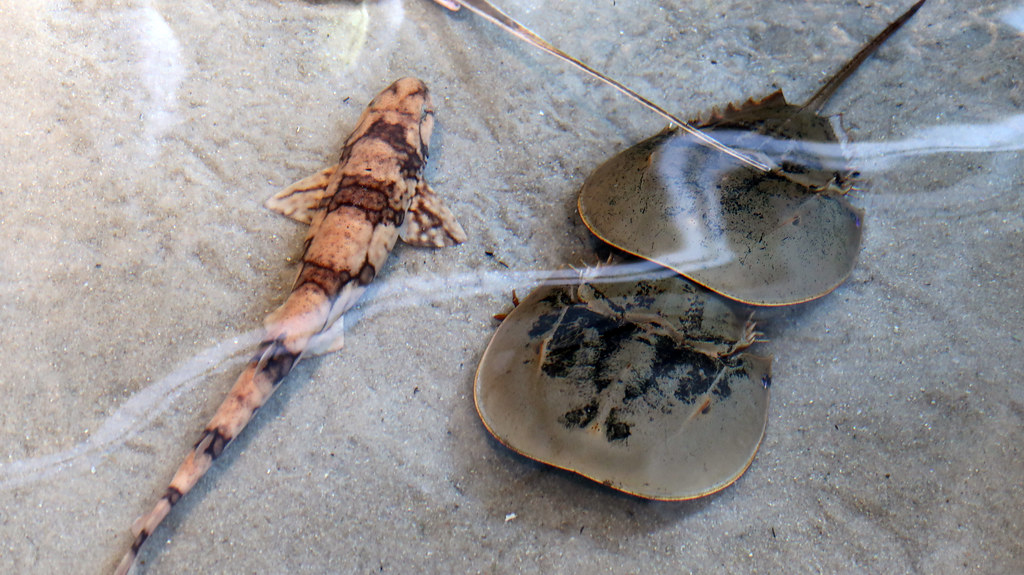
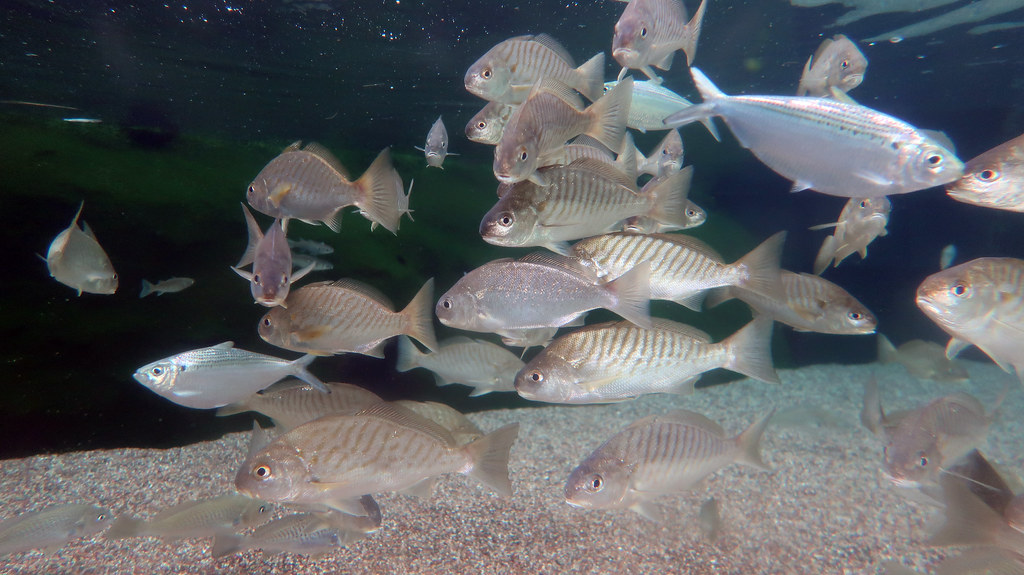
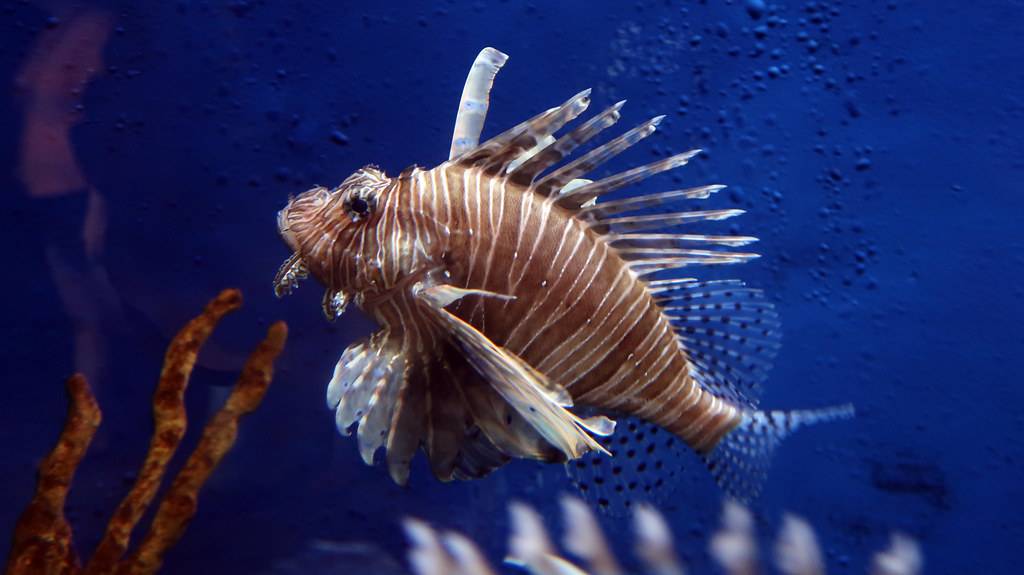
After the turtle hospital, we moved onto the main section of the aquarium. Like all the others I’ve been to, it is particularly difficult to take good-quality photographs in aquariums due to all the reflections on the glass.

South Carolina Aquarium

South Carolina Aquarium

South Carolina Aquarium

South Carolina Aquarium

South Carolina Aquarium

South Carolina Aquarium

There was a section of the aquarium where you could reach into the water and pet some of the fish. I personally am not really the biggest fan of dipping my hand in water touched by hundreds of different people during a pandemic, and I also didn’t want my hand to come out smelling fishy, so I opted not to participate, but I took a photo.

South Carolina Aquarium

The aquarium also had a random area near the escalators that housed a bald eagle. The photo looks a little weird because the eagle’s body was facing me, but it had turned its head nearly 180° so it looks like its head is facing away from me.

South Carolina Aquarium

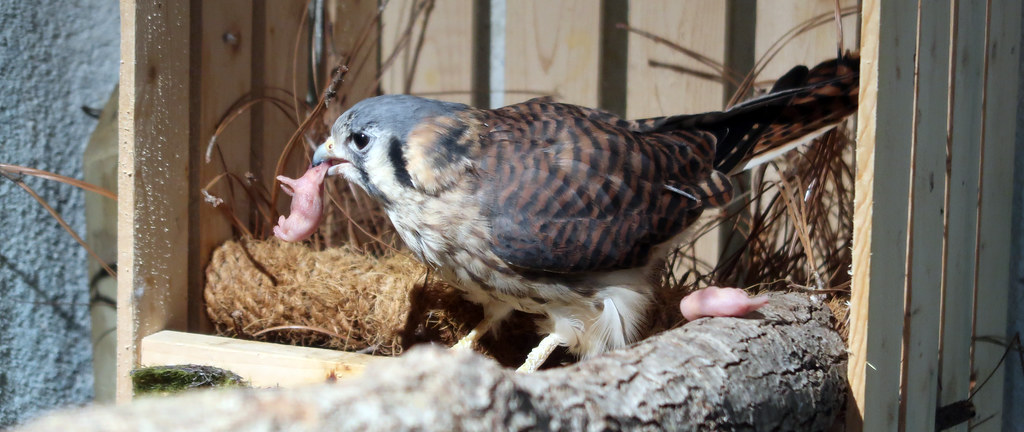
I have extremely bad eyesight, so when I saw this tiny bird eating something, I just assumed it was a worm, though I was wondering how the worm was so short and fat. Well, after opening the files on my camera and reviewing my photographs, I found out why—the bird wasn’t actually eating a worm, but rather, what appears to be a mouse fetus.

South Carolina Aquarium

Next up was the reptile and amphibian section.

South Carolina Aquarium

South Carolina Aquarium

The last area of the aquarium we went to was the outdoor section.

South Carolina Aquarium

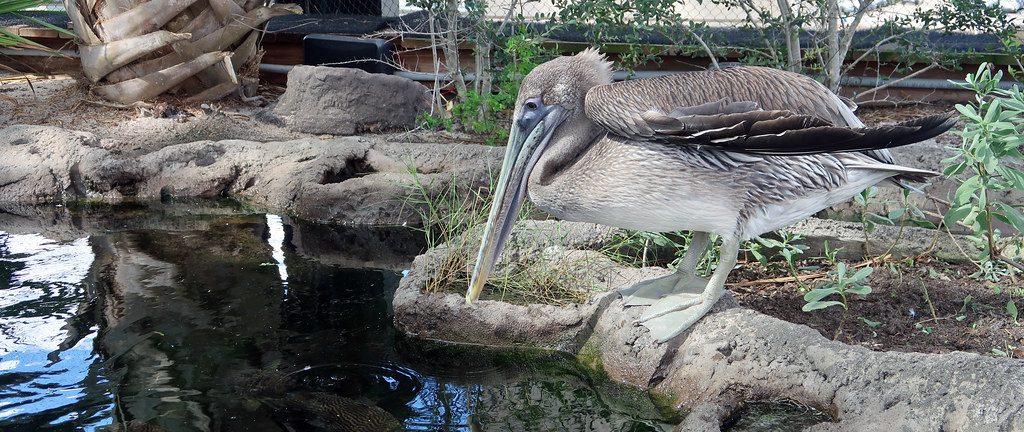
There as a bird sitting outside that I think was a pelican, and it kept on dipping its beak into the water and trying to snap at the pufferfish. Needless to say, it wasn’t very successful.

South Carolina Aquarium

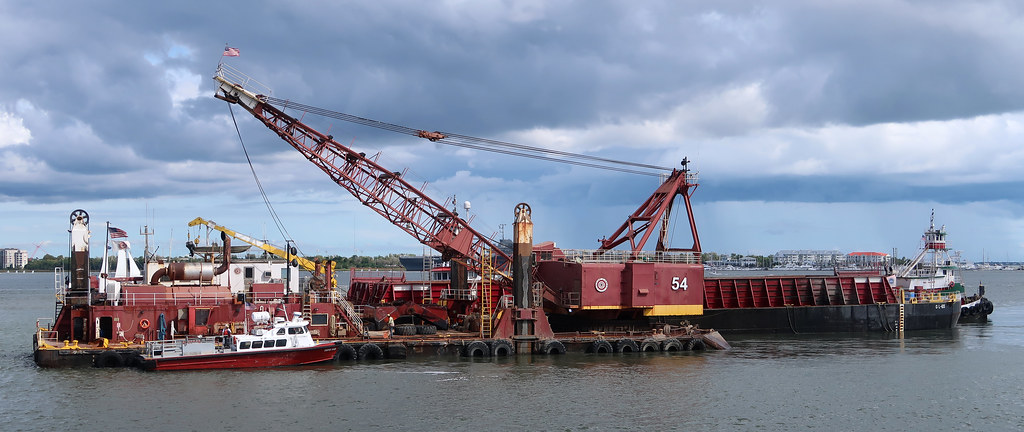
There was a lot of boat activity that was visible from the aquarium, so I snapped a photo of the largest boat.

South Carolina Aquarium

It took right around two hours for us to get through everything at the South Carolina Aquarium, and that’s without reading all the text, so if you’re a marine life enthusiast, this could easily become a 3- or 4-hour trip. This was one of the more interactive and education-centric aquariums I’ve been to, and there are many opportunities to learn new things through kinesthetic means.


—§—


Goodbye Charlotte, hello Charleston

My week in North Carolina is already over, and as of yesterday, I’ve arrived on the coastline of South Carolina in the city of Charleston. Apart from a few hiking trips, I’d say North Carolina was also somewhat uneventful. One of my favorite parts of the state was driving through the Appalachian Mountains when I was traveling in from Tennessee, but otherwise, I spent a lot of this time catching up on more of the “mundane” parts of my life.

My hotel of choice in Charlotte was the SpringHill Suites by Marriott Charlotte Huntersville. I’d say it was probably my favorite hotel room so far throughout my road trip. As you might already know, I’m not really the biggest fan of flashy or fancy hotel rooms, and SpringHill Suites gave me all the es­sen­tials and none of the extras. The hotel was new, the room was large, the location was great, the gym was decent, and the staff was friendly and help­ful.

SpringHill Suites by Marriott Charlotte Huntersville

SpringHill Suites by Marriott Charlotte Huntersville

The first week of each month is usually the busiest time for me, and my time in Charlotte basically coincided nearly perfectly with the first week of Oc­to­ber. I had to get end-of-month finance tasks done for September, including cash flow transaction itemization and independent contractor payroll, and I also had a few special legal projects that I needed to wrap up leading into the launch of the closed beta testing period for The Bazaar coming up soon.

Usually, I like to go to the most popular tourist attractions in each city, specifically focusing on what the city is particularly known for. Charlotte is best known for NASCAR and is home to its Hall of Fame, which acts as a museum. However, seeing as I’m not really that much of a racing enthusiast, and I also recently went to the Indianapolis Motor Speedway, I decided to pass on the NASCAR Hall of Fame in lieu of going on another hiking trip.

Clarks Creek Greenway

Clarks Creek Greenway

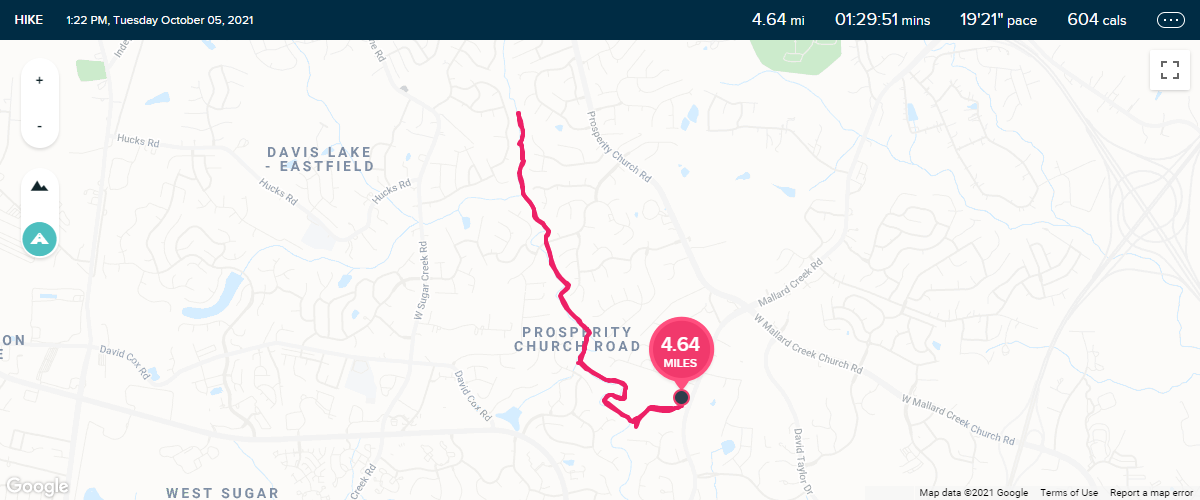
This was at the Clarks Creek Greenway, which was nestled in more of a residential area and was an out-and-back type of trail. I ended up parking at a local middle school near one of the trailheads, walked all the way out to the edge of the path, and came back.

Clarks Creek Greenway

After arriving in Charleston, there was basically only one thought I had in my mind, and it was how unbearably and debilitatingly humid it was. The rain was obviously making things worse, but the weather apparently said that the relative humidity was 98%, which is literally the highest I have ever seen in my life. The worst part is that my hotel is in North Charleston by Charleston International Airport, so I can’t imagine how bad it’s going to be in the actual city of Charleston, closer to the Atlantic Ocean.

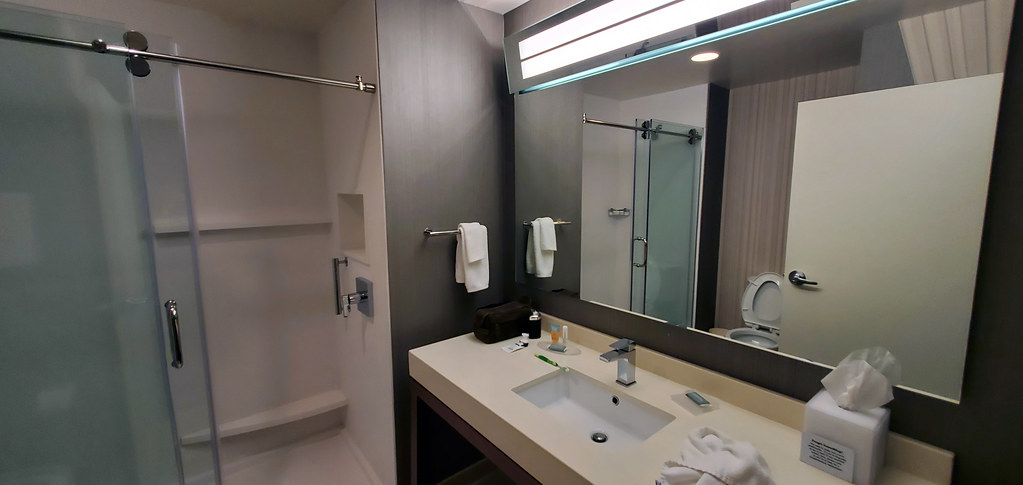
Although nowhere near as nice as the newly-constructed SpringHill Suites I mentioned above, my hotel for this week of my trip is still pretty good—I’m in the Courtyard by Marriott Charleston-North Charleston. The room is definitely much smaller, but the good news is that the cost per night is much more affordable than being in Charleston, and even better, air conditioning works very well, so the humidity is actually bearable inside my room. (Though, if I literally just open the door to my room and step out into the hallway, the humidity becomes overwhelming again.)

Courtyard by Marriott Charleston-North Charleston

Courtyard by Marriott Charleston-North Charleston

Because of the rain, I’m not quite sure how viable it’s going to be for me to squeeze in some hiking trips to what I imagine will be extremely muddy trails. However, I’ll be attending a wedding in Charleston this coming weekend, and another one of the attendees is one of my co-workers, so we will probably be going on some indoor tourist activities before and after the event.


—§—


Hello, Latta Nature Preserve in Huntersville near Charlotte, North Carolina

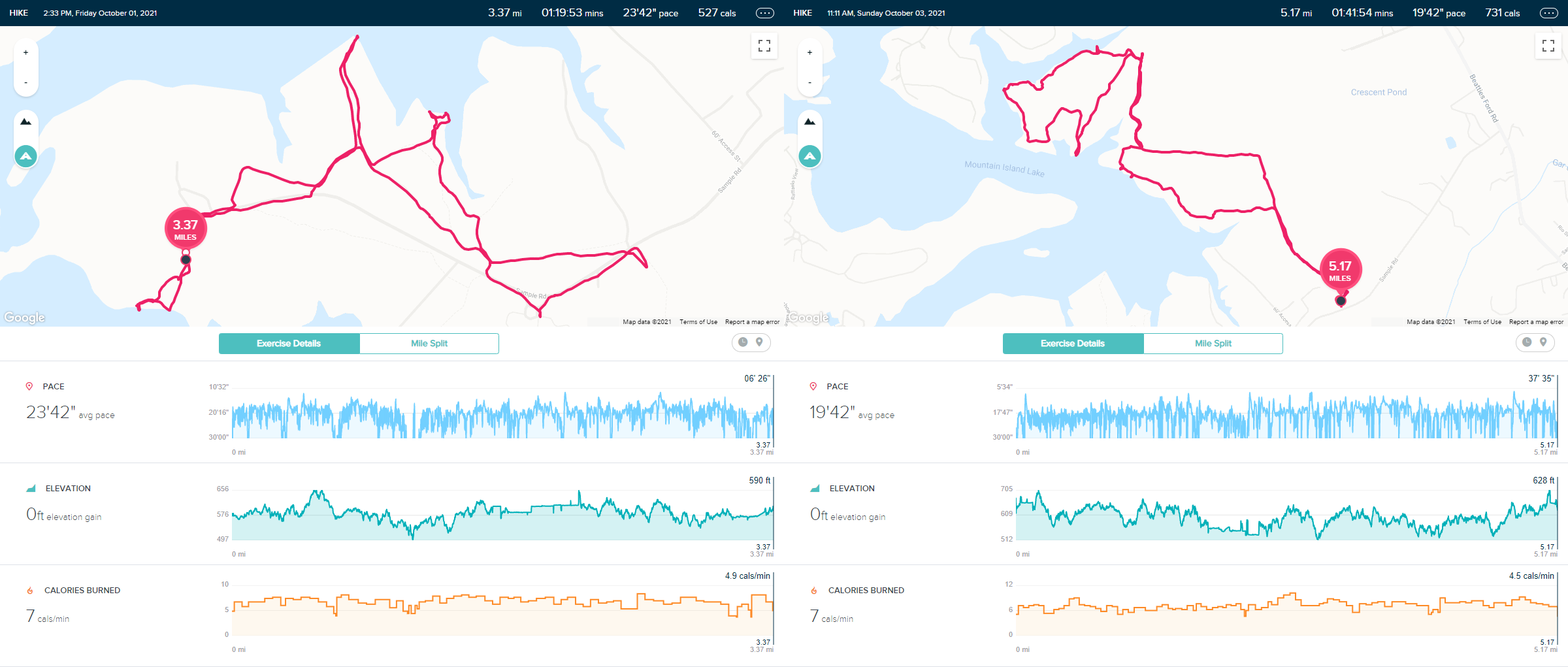
Continuing my trend of outdoor activities, I decided to explore the Latta Nature Preserve after arriving in Huntersville, just north of Charlotte, North Carolina. The Latta Nature Preserve is a large nature preserve that supposedly has 1,460 acres of land and 16 miles of trails. I obviously couldn’t explore it all in one day, so I took two hiking trips spread across two separate days to see as much of it as I could.

Latta Nature Preserve in Huntersville, NC

I started by going to the waterfront near the Historic Latta Plantation and hiked the Buzzard Rock Trail. At the end was Buzzard Rock and a little plat­form that had a nice view of Mountain Island Lake.

Latta Nature Preserve in Huntersville, NC

Latta Nature Preserve in Huntersville, NC

After retracing my steps for a bit, I continued onto Laura’s Trail which led me to Wash Rock, another lookout spot that had a view of Mountain Island Lake from a different angle.

Latta Nature Preserve in Huntersville, NC

Latta Nature Preserve in Huntersville, NC

From there, I got a little lost and started taking any trail I could find, which ended up being the Shady Trail up to the Carolina Raptor Center, then back via Catawba Trail. After returning to my parking spot at the waterfront, I continued going south to check out the beachy area.

Latta Nature Preserve in Huntersville, NC

Latta Nature Preserve in Huntersville, NC

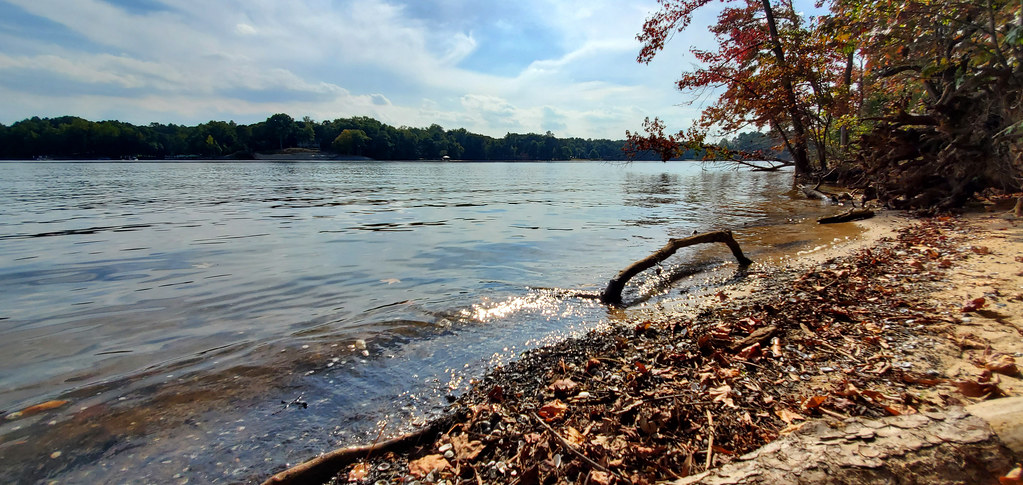
On the second day, I started at the Latta Plantation Nature Center and headed north on Hill Trail before connecting onto Cove Trail and returning via Split Rock Trail. This particular route didn’t have as many spots with nice views, but I did catch some of the Catawba River from the Cove Trail at the tip of one of the peninsulas.

Latta Nature Preserve in Huntersville, NC

Latta Nature Preserve in Huntersville, NC

In total, my adventure spanned across just over eight and a half miles and took right around three hours to complete.

Latta Nature Preserve in Huntersville, NC

By the way things are looking now, it seems like I might not have time to go on any other tourist activities, but at the very least, I’m hoping I can squeeze in another hike on a different trail before I head to my next city.


—§—


Hello, House Mountain and Calloway Ridge in Greater Knoxville

Ever since arriving in Knoxville, I’ve mostly been taking it easy, catching up on work, exercising at the hotel gym, and otherwise just relaxing.

While in the city, I wanted to go see the Sunsphere Tower, but apparently that is closed right now. Knoxville also has a zoo, but I’ve already been to a bunch of zoos in the past year or so and wasn’t really in the mood; there’s also an art museum, but I just went to a really big art museum in Indianapolis and also wasn’t too interested in that at the moment either.

Instead, I decided to go on some nature adventures. I haven’t had a chance to go hiking lately ever since leaving the West, considering how flat the Mid­west is, but the terrain here is much more dynamic as I approach the Appalachian Mountains. I looked up some trails of moderate difficulty and se­lect­ed House Mountain as my first trip.

House Mountain

There are two initial impressions that I had upon arriving. The first is that it was a lot rockier than I thought it would be—there were a lot of large boul­ders laying around, and the path was littered with smaller rocks. The second is that I really appreciated how foresty it was and how many trees were tightly wrapping the trail—this blocked out a lot of the sun and made the hike much more comfortable.

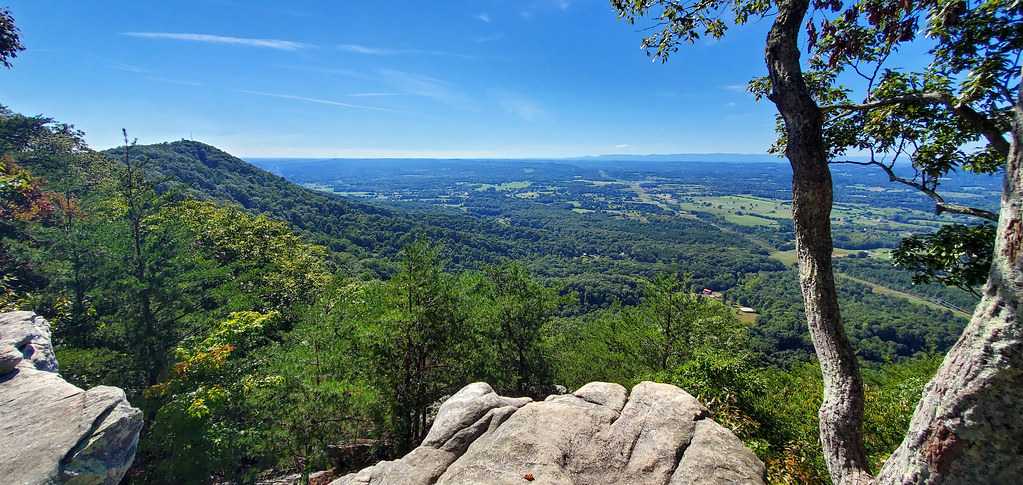
House Mountain had a strange layout. Usually when you’re hiking a mountain, the summit is all the way at the edge of the path, and is the highest point in elevation. For House Mountain, the main summit appeared to be towards the middle of the trail, where I was able to get a nice, sweeping view of the north.

House Mountain

House Mountain

There was also a secondary summit, also somewhat in the middle of the trail. This one was actually a bit difficult to find, because this one involved walk­ing away from the main path a bit and going on a side path that wasn’t obvious on the satellite imagery from Google Maps.

House Mountain

Apart from that, the far edges of the trail weren’t really that interesting—there were so many trees that it was impossible to get a nice view from the northeastern-most or western lookout points.

According to information I found online, it appears like I hiked a total of about four miles, with an overall elevation gain of 1,017 feet.

 
A few days later, I went on a significantly easier trail, the Concord Quarry Trail on Calloway Ridge. This one had a less clear-cut path and was instead a bunch of winding loops that interconnected.

Calloway Ridge

I started off by going on the southern loop that had a nice view of of the Fort Loudoun Lake, which I wasn’t able to see from elsewhere on the trail due to the dense forest.

Calloway Ridge

On the loop back in, I also came across this small lake near the entrance of the west trails.

Calloway Ridge

Apart from that, the rest of the trail was fairly straightforward. The length of all the trails (if you go on all the paths and do all the loops) was right around 3 miles, with a total elevation gain of 262 feet.

Calloway Ridge

During my hike, I saw a sign that said “Rocky Point” was approaching. I thought this would be a high point where I’d be able to take in a nice view, but was disappointed when I realized it just pointed to a dead end.
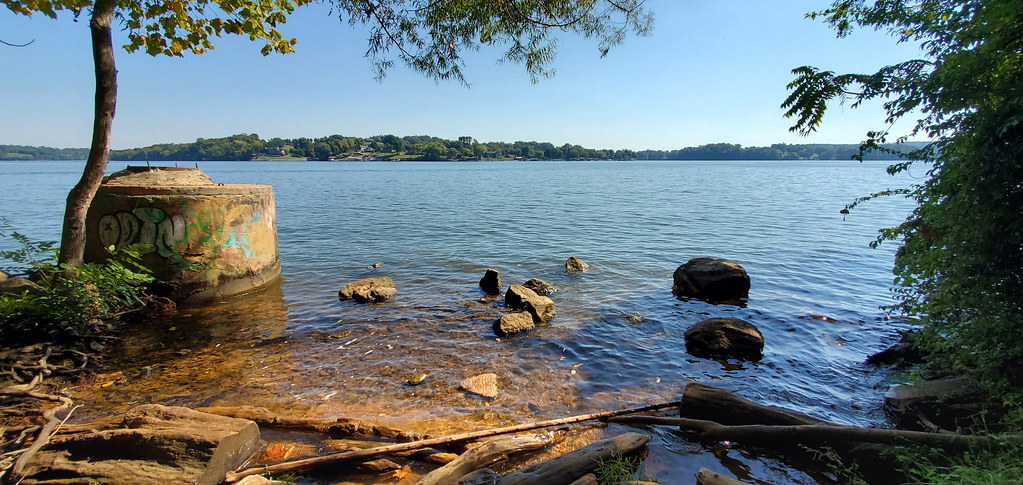
I later found out that the sign was technically right, but wasn’t very useful—it was pointing towards the general direction of Rocky Point Park, but there was no feasible way to get from the sign to Rocky Point without going through dense forest and crossing a street. If I had known this beforehand, I would’ve made a stop at the park to see the northeastern sound of Fort Loudoun Lake.

 
And with that, I wrap up my week in Knoxville. This was probably the least eventful city I’ve visited, but it wasn’t bad, and I also appreciated how vi­su­al­ly nice Tennessee is.

My next destination will be Charlotte, North Carolina. When I first drove through the Virgin River Gorge and other mountain ranges in the West for the first time, I was impressed by the scenery. I will be cutting through the Appalachian Mountains on my way to North Carolina, so I’m very much looking forward to being hugged by tall mountains again during my drive, but this time by mountains that will be much greener.


—§—


Goodbye Louisville, Kentucky; hello Knoxville, Tennessee

I mentioned that the Louisville Slugger Museum and Factory was going to be my final tourist activity of Louisville, but it ended up being so un­der­whelm­ing that I decided to tack on one more activity before I left—the Big Four Bridge.

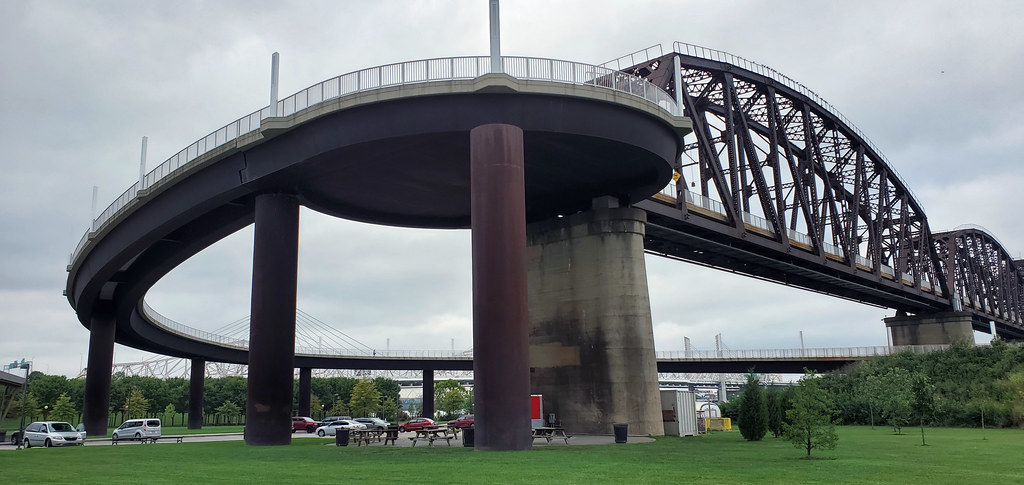
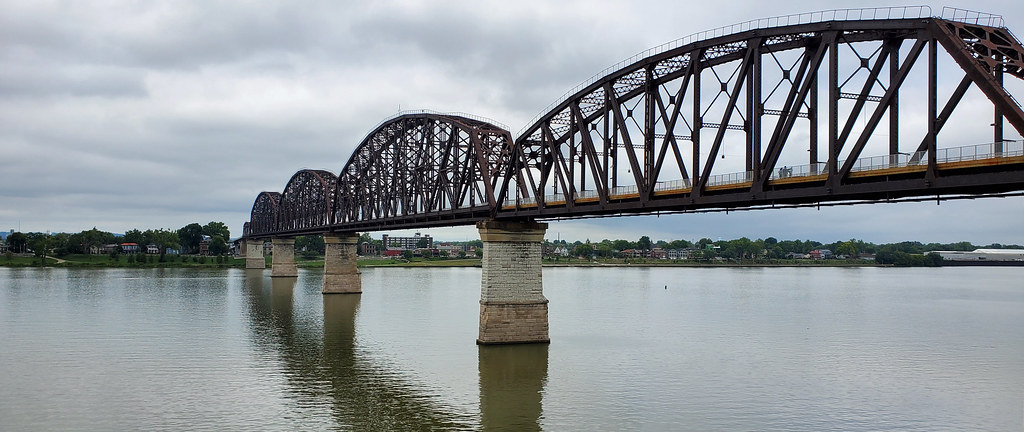
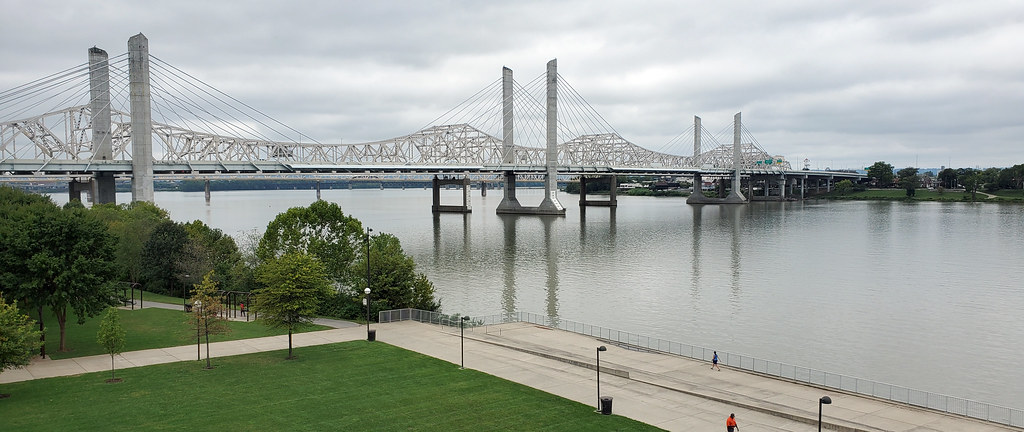
The Big Four Pedestrian Bridge spans across the Ohio River and connects Kentucky to Indiana. It stretches alongside the two vehicular bridges, one of which I took to get from Indiana to Kentucky.

Big Four Bridge

Big Four Bridge

Big Four Bridge

Abraham Lincoln Bridge

After making it to the other side, I explored the Big Four Station a bit, which was a small park with a little manmade waterfall and some sculptures. I also walked to a very small local frozen yogurt shop and got myself some dessert—a swirl of candied apple and salted caramel, topped with some gummy bears and whipped cream.

Big Four Station

After enjoying my treat, I walked back on the bridge to the Kentucky side.

Big Four Bridge

After wrapping up my week in Louisville, I drove to Knoxville, Tennessee.

When selecting my hotel in each city, I usually look at things like location, price, guest ratings, and year of construction. I like to find a good balance of a low rate at a new hotel not too far away from the main tourist attractions that also doesn’t have too many complaints by former guests.

As you can see, one of the things I don’t consider is the type of room and what’s inside it. This is because there is a baseline of what I expect from a hotel room—a parking lot for my truck, clean sheets and towels, disposable bath amenities like shampoo and conditioner, and a desk where I can set up my computer workstation. I have never seen a hotel where I wasn’t able to have this, so I never really considered it as something I had to keep in mind.

Until now.

Aloft Knoxville West

Aloft Knoxville West

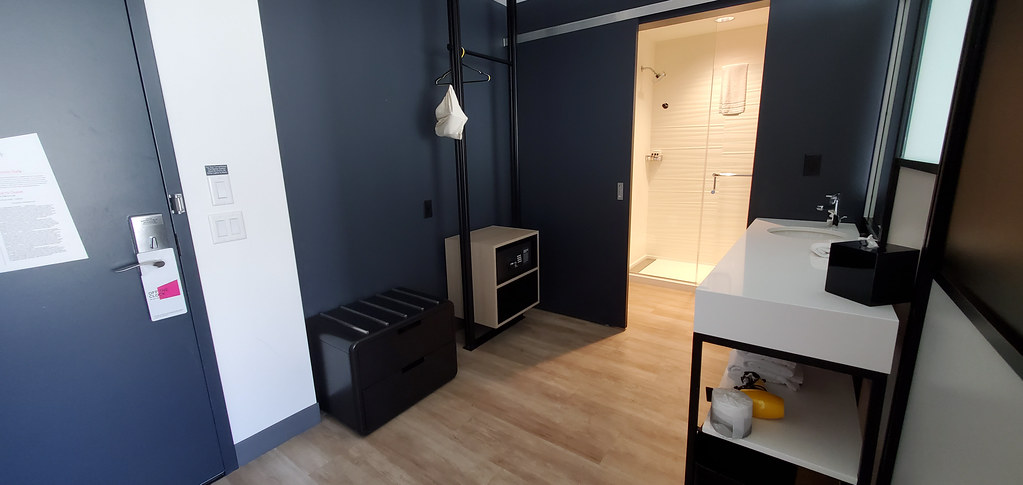
This is my hotel room at the Aloft Knoxville West. It has very hip decor that may appeal to a zoomer, but you may notice it is missing one very critical piece of furniture: a desk.

I went back down to the check-in desk and informed the customer service representative that I am currently living out of hotel rooms and need to set up a full computer workstation in my room. I asked if they had any foldable tables I could bring into my room, or any other suggestions for my situation. Her response was that they had no tables or desks they could let me borrow, but I could use the tables in the lobby.

I did a double-take, wondering if she was actually so stupid as to imply I should set up a computer tower, two monitors, a keyboard and mouse, a web­cam, dual speak­ers with a subwoofer, and a microphone in a public area. I was considering making a comment, but decided against it, and went back to my room to strategize.

That little coffee table ended up being larger than I expected, and if I set my monitors up so a third of the stand is hanging off the edge of the table, I can erect my monitors side-by-side. I also set up my keyboard and mouse on the coffee table, but it’s not very stable, so every time I type, the table shakes and it gave me motion sickness looking at my monitors. I removed the coffee maker from the little compartment that houses the refrigerator, removed the refrigerator, and moved the compartment over to the seating area to use for my keyboard and mouse.

This is obviously extremely uncomfortable, but the only alternative seemed to be to use the bathroom countertop (which in that case, I would have no chair). I considered switching hotels, but because it would be a short-notice booking, I wasn’t able to find many good rates.

I learned my lesson, though—I definitely want to stick with my regular Fairfield Inns, SpringHill Suites, Courtyards, and Residence Inns from now on, with Elements being a decent alternative if the price is right. After this experience, I am definitely going to be avoiding brands like Aloft and Moxy that try to make my stay more fun and social. I’ve found that hotels with just the core essentials with no extra bells and whistles are the best ones.


—§—