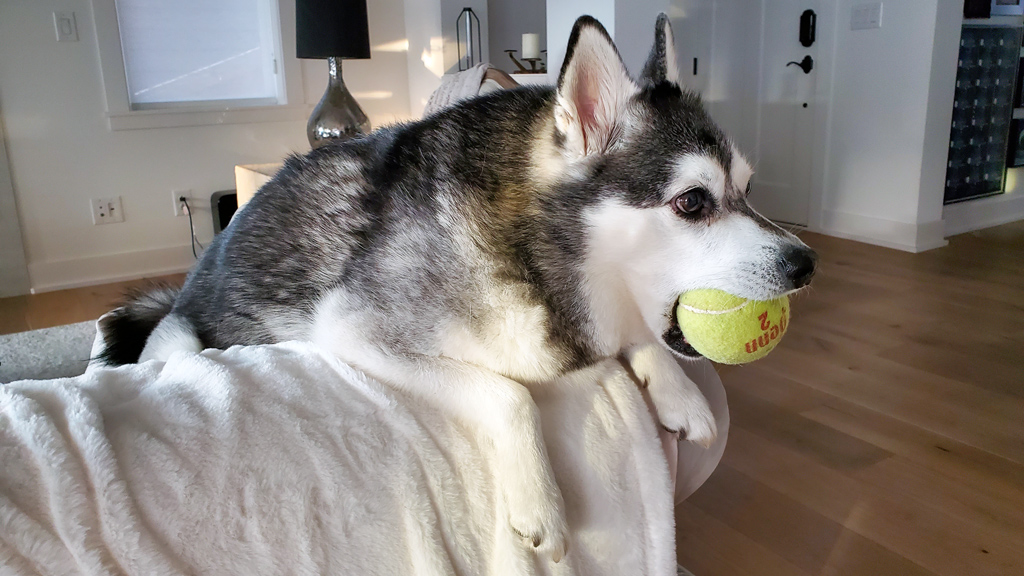
I was a victim of burglary

If you’ve been reading my recent blog posts, you’re probably already aware that I recently made a quick trip to the San Francisco Bay Area. Considering I am temporarily staying in the residential quarters of the Tempo company facility, I had a convenient non-stop flight available via Southwest Airlines from Long Beach Airport up to Oakland International Airport.

Upon arrival, I picked up my rental pickup truck—a 2021 Toyota Tacoma—and enjoyed my week-long visit.

 
I am probably one of the most anti-California people you’ll ever meet. I hate California and almost everything about it. For example…

Much of California’s newest legislation is counterproductive for the people, serving more to make political statements than to help the state’s residents. Cal­i­for­nia claims to help the disadvantaged and marginalized population, but statistics show that is not the truth. California’s legislators have a long track record of being unable to learn from history—both their own and that of other states’—and constantly make easily-avoidable mistakes. California’s state a­gen­cies make it increasingly difficult for businesses to operate effectively and efficiently, thus creating limits to innovation and advancement. Cal­ifornia’s taxes are ridiculously high, but their gov­ern­ment services are cripplingly incompetent compared to other states’.

As you can imagine, that list only scratches the surface of my issues with California. The only reasons I even continue to maintain any relations with Cal­i­for­nia at all are because Tempo is a California corporation (though that may be changing soon) and I have a decent number of friends and family mem­bers who choose to call California their home.

Branching off my prior point of California using their policies for politics, California’s cities are absolutely infested with crime right now due to its “soft on crime” attitude in response to the recent social activism surrounding police and racism. Because of this, I frequently preach about the importance of per­son­al safety in California, especially in Greater Los Angeles and the San Francisco Bay Area. The police there do not have the same kind of staffing as de­part­ments in the suburbs or in other states, and they often do not have the resources to respond in a timely manner to non-life-or-death calls, so you need to protect and look out for your own self.

The San Francisco Bay Area in particular has or­gan­ized crime groups that commit seamless, highly efficient thefts in broad daylight. These thieves use spe­cial­ized equipment integrated directly into their gloves to shatter car windows in less than a second and take valuables from inside. Each squad has their own rotating route on which they memorize which cars are owned by locals so that they can instead target the more vulnerable tourists. Other less or­gan­ized thieves do not discriminate and hit every vehicle in an area. Because of the strain on law enforcement resources, the criminals are becoming in­creas­ing­ly brazen.

Locals have tried to combat this by emptying their vehicles, posting signs on their windows pleading for the thieves not to tamper, leaving their doors un­locked as to disincentivize window break-ins, and sometimes even leaving their trunks and hatchbacks wide open. It sometimes works… and some­times doesn’t.

 
The late morning of the day of my departure, I checked out of my hotel and went to refuel my rental pickup truck so I wouldn’t be charged an e­gre­gious­ly high refueling fee. I was staying at the Courtyard by Marriott Oakland Airport, so I picked a convenient gas station nearby and on the way to the ren­tal car facility—the Shell at 285 Hegenberger Road. I placed my backpack on the front passenger seat, threw my luggage in the back seat, and set off with­out bothering to put the address into my GPS—it was just a u-turn and a few blocks away.

I turned right into the gas station, drove up to a fuel pump, put my rental vehicle in park, and stepped outside. I used my credit card to pay at the pump, authorized the transaction, in­serted the nozzle into my gas tank, and locked the trigger. While fuel was flowing, I started walking a circle around the ren­tal pickup truck to inspect for damage ahead of its return.

I made my way around and behind the pickup truck over to the opposite side and noticed that the front passenger side door was slightly ajar. Confused as to how I managed to drive from the hotel to the gas station without noticing, and wondering why the truck didn’t alert me, I pushed the door securely shut and continued my walkaround.

One second later, I realized what happened.

I peered in through the window and noticed my backpack was gone.

 
I had fallen victim to the organized theft rings in the San Francisco Bay Area, culprits of the very crime that I warn people about all the time.

More as a formality than anything else, I walked into the convenience store after I was done refueling, upon which the clerk and a customer, both of whom had witnessed the crime, said it happened “right under [my] nose.” They said it was over in a matter of seconds while I had my back turned to the truck and was paying for fuel—a white Jeep Compass had driven up, opened the passenger side door, snatched my backpack, and drove away. I always ad­vise people to keep their head on a swivel, but it seems like even that wouldn’t have helped in this situation, considering how quickly and ef­fi­cient­ly the theft was ex­e­cuted.

To make matters worse, I basically telegraphed that I was a tourist, i.e., an easy target. My rental pickup truck had Washington plates, which indicated I was a visitor—if not a rental car, then probably an out-of-state road tripper. On top of that, I noticed that the people in that area were pre­dom­i­nant­ly Black, so being the one and only Asian person functionally announced that I wasn’t familiar with the neighborhood and most likely was not a resident.

However, notwithstanding any of the above, the thieves accessed my passenger side door without breaking the window. So what happened?

After thanking the witnesses for the information, I headed back out to my rental pickup truck and did a bit of testing. I started the engine, placed the truck in drive, ensured all the doors were locked, then reverted it back to park. The instant I shifted to park, all the doors automatically unlocked, pre­sum­a­bly as a convenience feature. When I had exited the vehicle earlier to refuel, I did not manually re-lock all the doors (nor did I realize I even had to).

Considering that this kind of theft happens in this area all the time, and no vehicles or firearms were stolen, I didn’t bother calling the police—it’s not like they will or can do anything in this situation anyway. Instead, I just drove over to the rental car facility to return the pickup truck and ensure I would be at the airport on time as to not miss my flight.

 
So what was the damage?

A Lenovo Legion 7 Series laptop I purchased on sale for ~$1,600 that retails for ~$1,850. A Canon PowerShot G7X Mark II digital camera I pur­chased on a no-warranty discount for ~$550 that normally retails for $629. Two SanDisk Extreme PRO SDXC cards, a 512 GB one in the camera and a 256 GB one for backup, I purchased for a combined ~$150. A custom-designed zirconium pen with titanium damascus hardware I pur­chased for ~$300. A dis­con­tin­ued classic Red Bull Signature Series backpack I received for free from Red Bull but was also available for sale at the time for ~$150. RayCon Eve­ry­day earbuds I purchased on sale for ~$70 which now retails for $90. And some other odds and ends with a cu­mu­la­tive value not exceeding $150.

The total of actual losses, without accounting for retail or resale prices, was ~US$2,820.

 
As sadistic as this may sound, I’m sort of glad this happened. Things could have gone much, much worse, and they didn’t.

First, I’ve learned that this is one of those things where, you can study the criminology, theories, and data all you want, but it’s hard to truly understand it until it’s happened to you. Even as someone who has formerly worked in law enforcement and has seen this happen all the time, it’s definitely a wake-up call and a learning experience when it happens directly to you.

I also only got my backpack stolen, and not my phone or wallet, which were both directly on my person at the time of the theft. If I had gotten either of those stolen, I am fairly certain I would not have been able to make my flight back, or if I did, there would have been many complications. My wallet had my only form of identification. My phone had my electronic boarding pass. I did not know how to navigate to the rental car facility without GPS as­sis­tance. I needed rideshare service to return to the place I’m staying at after I land.

Unrelated to the travel issues, my wallet also contained credit cards with a cumulative credit limit of over US$120k, which I would not have been able to immediately freeze if I didn’t have my phone. Even though I personally would not have been liable for unauthorized purchases, that is still an as­tro­nom­i­cal amount of money for a merchant to lose if someone used my cards and the store handed over the merchandise to the thief.

I also had minimal to no threat to my personal safety. It happened behind my back before I had any opportunity to react, and I had no direct interaction with the thieves (i.e., it was not a robbery). I did not have a deadly weapon brandished at me. That is definitely a relief, because I generally do not carry my firearm with me when I am traveling by plane (due to the extra hassle it takes to properly secure it in a special container and transport it through checked baggage), so if there was a threat to my life, it’s not like I would’ve even been able to fight back and defend myself.

After returning to Long Beach, I went straight to my personal pickup truck and did some testing, upon which I learned that it also had this “convenience feature.” I guess it is convenient for people who travel as a group, but considering that I almost always travel alone, I turned off auto-unlock for all ex­cept the driver’s door.

This means that, during my last 4.5 years of truck ownership and somewhere upwards of 150 refueling sessions, my pickup truck doors had always been left unlocked at the gas station. That’s a little scary to think about, considering that sometimes, when I am hiking or wearing workout shorts that are not compatible with a holster, I will carry my gun in my backpack. I am very fortunate that my backpack did not get stolen during any of those times when my gun was inside, and I am also very fortunate that my gun was not inside in this instance when my backpack did get stolen.

Ultimately, this was a very simple financial loss of ~$2,820 on my end. There were no credit cards stolen that could’ve caused further damage to mer­chants, no firearms stolen that could’ve been used to commit aggravated crimes or take others’ lives, and no personal injury to my own health or well-being. Obviously, $2,820 is quite a bit of money, but I am very fortunate to have a great job where I can maximize the use of my strengths to bring high value to the company and be compensated very well, so it won’t be difficult for me to recover.

 
Upon arriving at the airport, I used my phone to remote log out, change passwords, and deauthorize account and software licenses from my freshly-stolen laptop. Except for the most recent 10 or so pictures, everything else was already backed up from my camera to the cloud, so I didn’t lose any photo mem­o­ries from the trip (as you can see from the restaurant blog posts I already published).

After returning to Long Beach, I filled out an online police report with the Oakland Police Department. This incident happened back on Tuesday, Jan­u­ar­y 24, 2023 a few minutes after noon Pacific time. I filled out a police report around 10:30 PM that same night. It has now been over two weeks and my report still has not been processed, so I still do not have a formal report number.

As you can probably tell from my website, one of my favorite things to do is to capture photographs and share my life with others on my blog, so my cam­er­a was the very first thing I replaced—I purchased a new Sony ZV-1. It is lacking a few convenience features that my old Canon camera had, but the auto-focus is extremely fast and accurate, and it’s nice trying out a new brand to get a broader perspective of the available technology on the market.

I didn’t buy a new laptop, and instead fished out my old Chromebook I bought around 8 or so years ago. It’s slow, but it still works. I can’t play games on it or do advanced photo editing, but I can still check my emails, write blog posts, browse the web, and use cloud apps like Google Docs/Sheets and Mi­cro­soft 365 for Web. Considering how I basically do everything on my desktop computer and barely use my laptop, I figured there’s no rush to buy an­oth­er laptop.

I replaced my lost earbuds with the JBL Tune 125TWS. I use desktop speakers with my computer and literally only ever wear earbuds when I’m on a plane, so I didn’t go too overboard doing research on earbuds before making a purchase—I just picked one that was not too cheap, was in stock, and had quick shipping available.

I don’t care what backpack I use, so I went to the garage of Tempo‘s HQ and grabbed a backpack from a huge pile of old equipment that probably would have gotten thrown out anyway; it is more satisfying to me that I am recycling potential waste, rather than having a nice backpack. I didn’t replace my zirconium pen because that thing was way too heavy anyway and probably would’ve served better as a paperweight than a pen. Everything else I either replaced in-kind (like the SD cards) or did not replace (like my phone charger, because I already have plenty).

 
And with that, I leave you with one actionable step and one piece of advice.

Newer vehicles are all coming with more and more convenience features. I personally don’t like them. For example, I have an old-school pickup truck bed where you need a physical key to get in, and the only way to breach is either to pick the lock or take an angle grinder to the steel cover. This gives me a lot of peace of mind when storing things in my truck bed. On the contrary, newer pickup trucks have electronic tailgates where you can press a button or hot-wire an electronic signal to open them.

If you have a vehicle that was manufactured in the past several years, check your convenience feature settings in the instrument cluster and infotainment system. If you often drive alone, make sure these “features” aren’t leaving you vulnerable to theft.

And finally, don’t get complacent. I, a former member of law enforcement, a former mixed martial arts coach, someone who holds an academic degree with a focus on crime, and someone who is generally highly aware of my surroundings, still fell victim to professional thieves. It’s never good to be so anx­ious and paranoid that you can’t think clearly, but it’s also dangerous to be complacent. Stay humble and alert.
 

—§—


I visited the University of Southern California

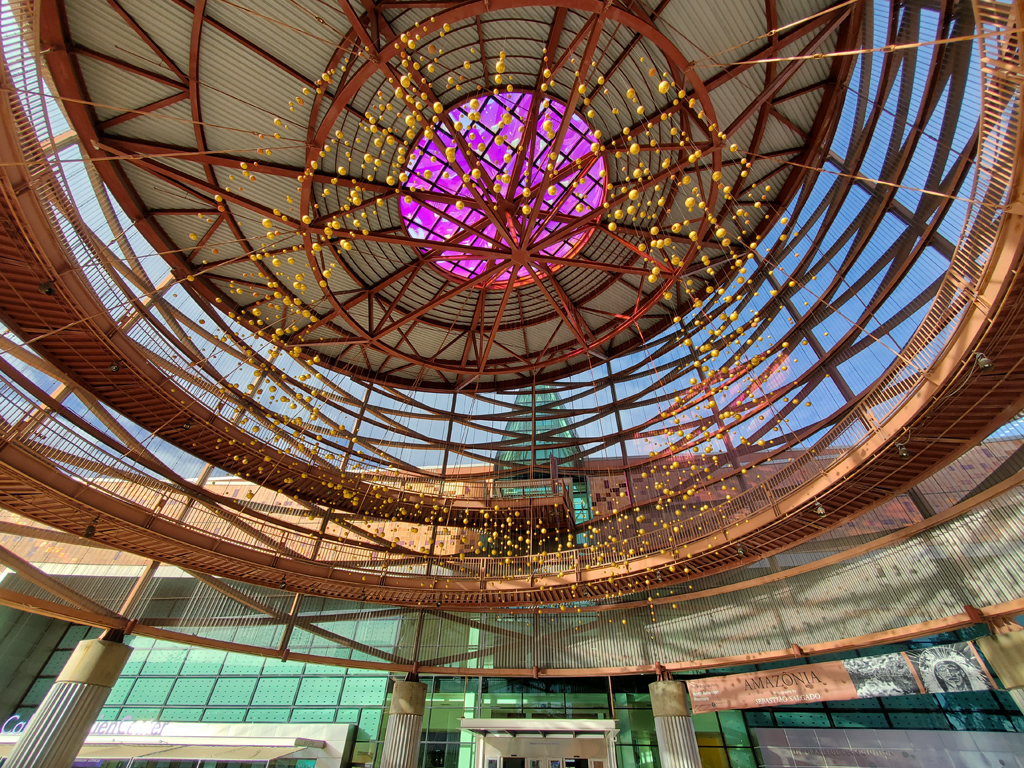
After spending a lot of time with my friend Doug Wreden in the Seattle Metropolitan Area this past summer, I headed out for the next leg of my road trip journey in September. Two months later (i.e., earlier this month), we were reunited in Los Angeles, California after I had arrived in town to set up my temporary base camp for the winter at the Tempo headquarters in Long Beach, and Doug flew in for a few days for an unrelated matter to attend an in-person event at the Galen Center at the University of Southern California.

We met up in Hollywood to get lunch together at a ramen restaurant with two of our mutual friends, then headed over to the University of Southern California campus so we would be nearby and he wouldn’t be late for his event. Event parking was US$40.00 in the main lot, but we managed to get the best luck possible by finding a side street with free weekend street parking.

We headed into the USC campus and wandered into the California Science Center, a museum with free admission.

This was one of the strangest museums I’ve ever been to, and I probably would not have been too happy if I had to pay to get in.

After we went up the escalator, one of the first things we saw was an exhibit dedicated to COVID-19. It already wasn’t exactly the most exciting thing to see in a museum, especially considering that we had just finished surviving a pandemic and most people probably want to take their minds off of it and want to resume normal life, but the mood and tone of the exhibit was a bit apocalyptic. It had the number of deaths prominently displayed on a digital screen, and the messaging still strongly pushed masking and social distancing. Confused, Doug and I chuckled a bit and went to the next section of the museum.

Next up was a section that was designed as if you were walking into a woman’s reproductive organs. Deep into the “uterus,” there was a video playing de­picting a woman giving birth in graphic detail with great clarity. There were a few small children eagerly watching. Further confused, Doug and I de­cided that was enough learning about reproduction for one day, and we walked through a tunnel (which I imagine represented a fallopian tube) to exit that sec­tion.

On the way to the next section, we took an intermission to watch a short film. The longer we watched, the more confused we got (as if we weren’t in­com­pre­hen­si­bly confused at this museum already). We realized that the film wasn’t actually a film, but rather, just a bunch of stock footage stitched to­geth­er with random words (like “water,” “desert,” “mountains,” “life,” etc.) overlayed on top of the footage. This is one of those “you had to be there to get it” moments, but if you have any experience editing video and you caught onto this, you probably would’ve also found it ridiculous.

If you thought it ended there, you would be sorely mistaken. The next exhibit was about avian life, and there was an interactive game I tried out where you would feed a ball into a tube and use a lever to shoot it out, and it was supposed to reflect something related to birds and how they evolved to sur­vive. I never found out what that was, though… because the ball just got stuck in the tube and I couldn’t get it out.

By this point, I had solidly awarded this the worst museum I have ever been to, and during my year-and-a-half road trip, I have been to a tremendous num­ber of museums.

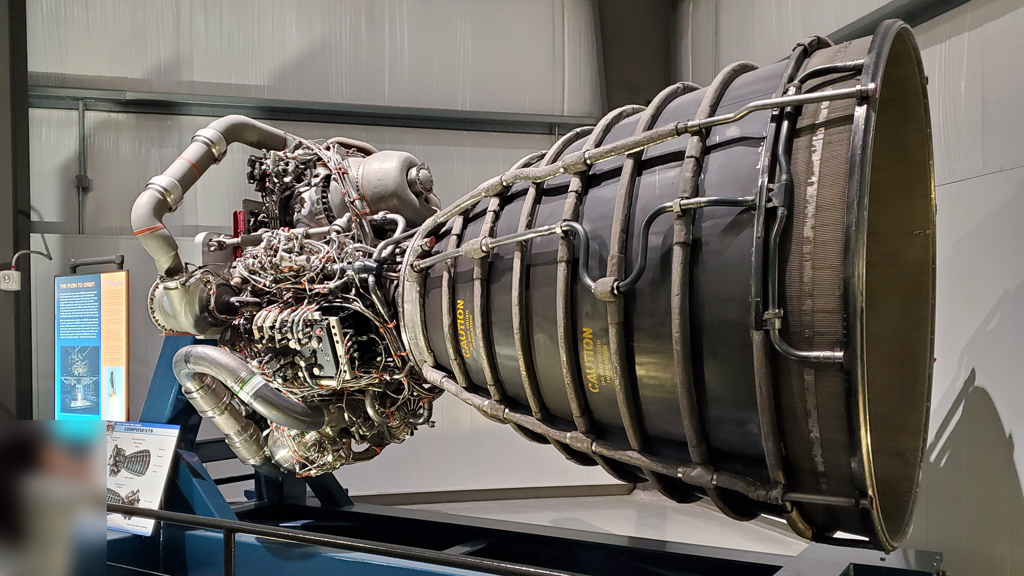
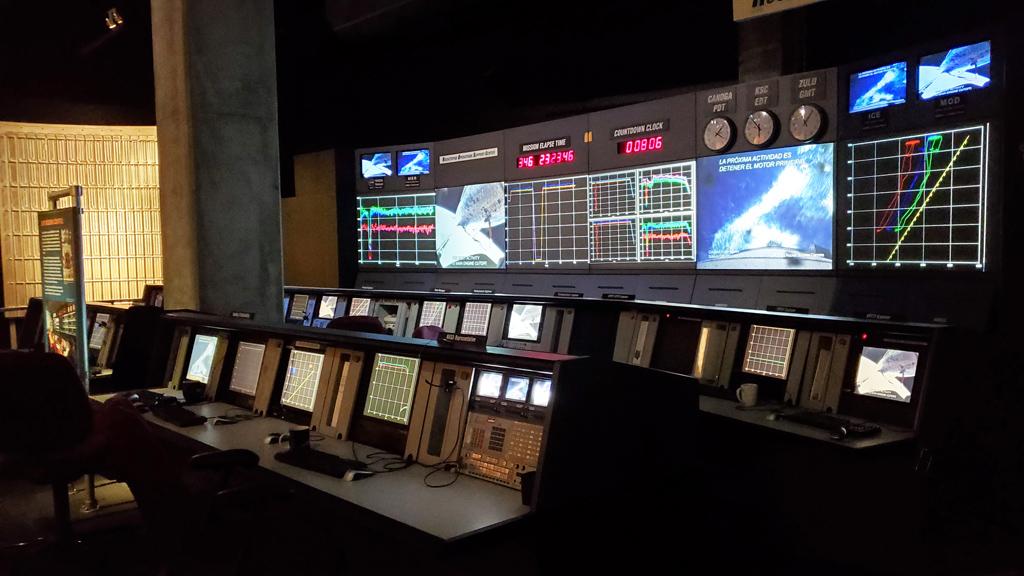
It seemed like the main attraction of this museum was the area about space, and even this wasn’t that incredible.

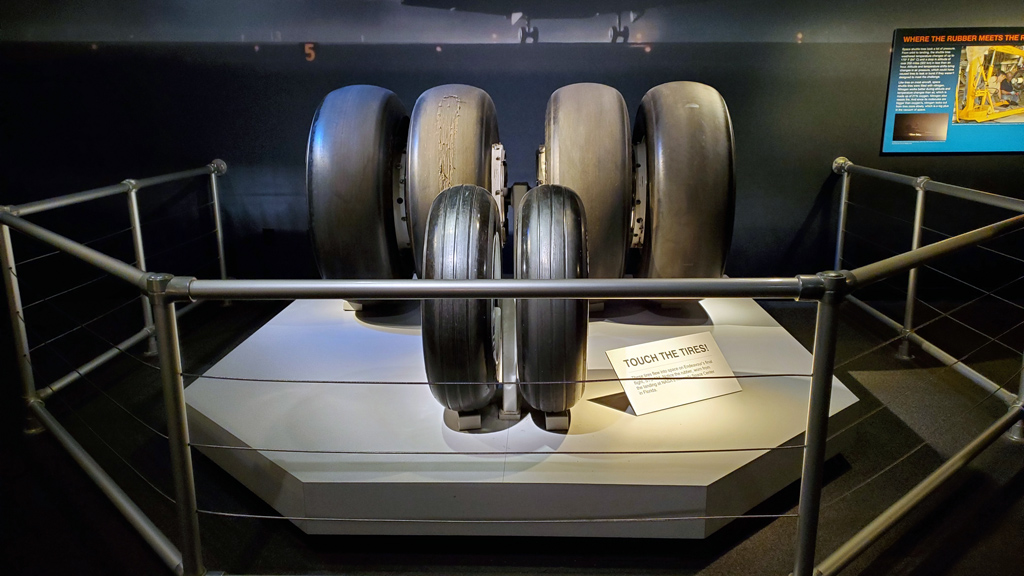
The weirdness also didn’t end. There were a set of worn-down tires on display and a sign that said “Touch the tires!” but it was safely behind a barricade. The most prominent display of this entire area, directly in the middle of the space, was a movie and explanation of how astronauts defecated in space, as well as a physical model where you could climb up some steps and see what it would feel like to use a space toilet.

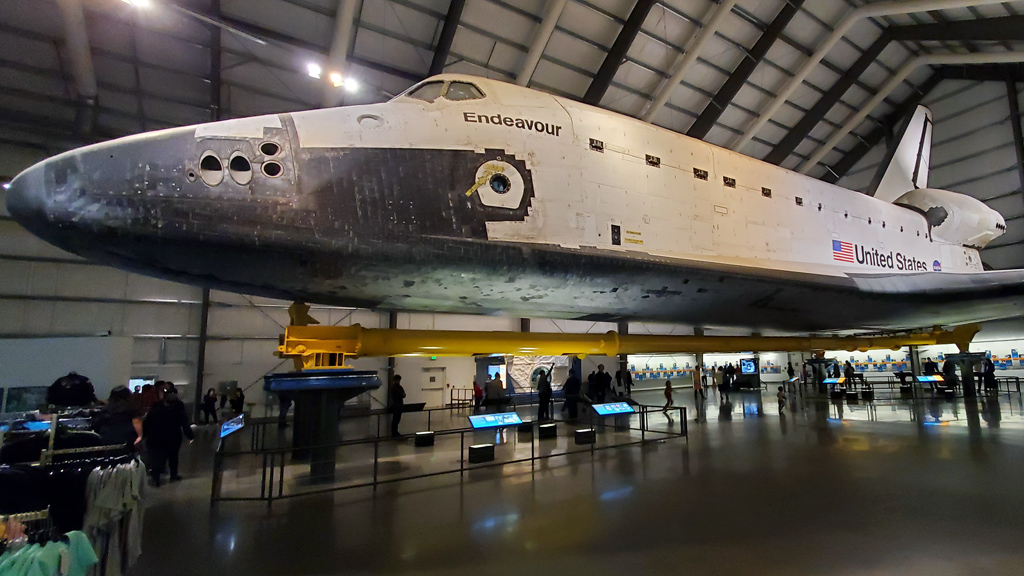
In a neighboring building, the Endeavour was on display. It was interesting to me that, as a space shuttle adorned with United States flags that was part of the National Aeronautics and Space Administration, an agency associated with United States federal government, they decided to spell Endeavor with a “u.” My best guess is that it was named in honor of or named after something British, but I never found out for sure.

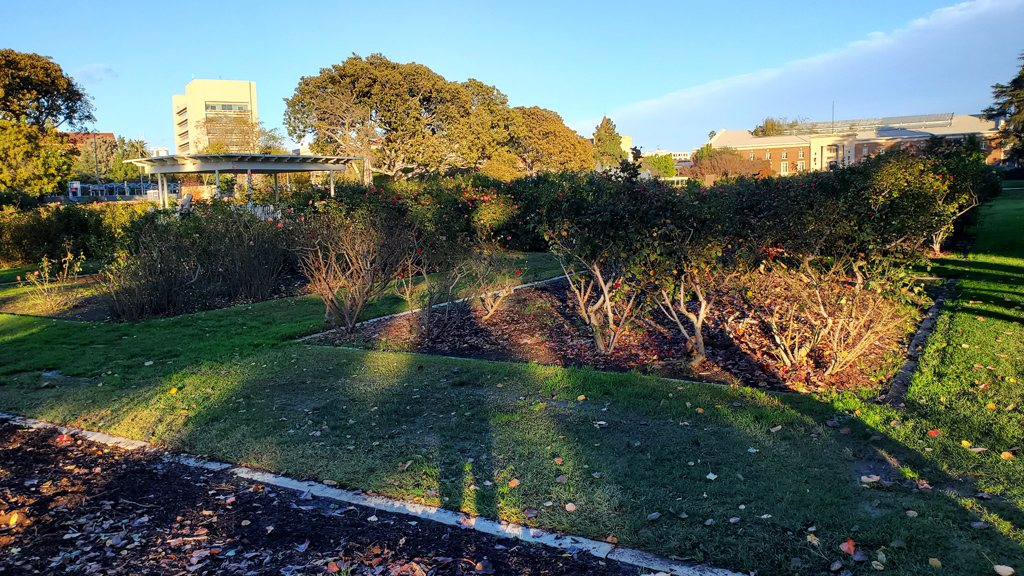
After we decided we had enough of this museum, we decided to go for a walk around the campus some more, first taking a stroll through some rose gar­dens that were not in bloom because it is December, and then walking through a field with a ton of chipmunks. It seemed like the university students treated them well and fed them a lot, because when I stooped down and extended my fingers, the chipmunks walked right up to me, presumably because they thought I had food.

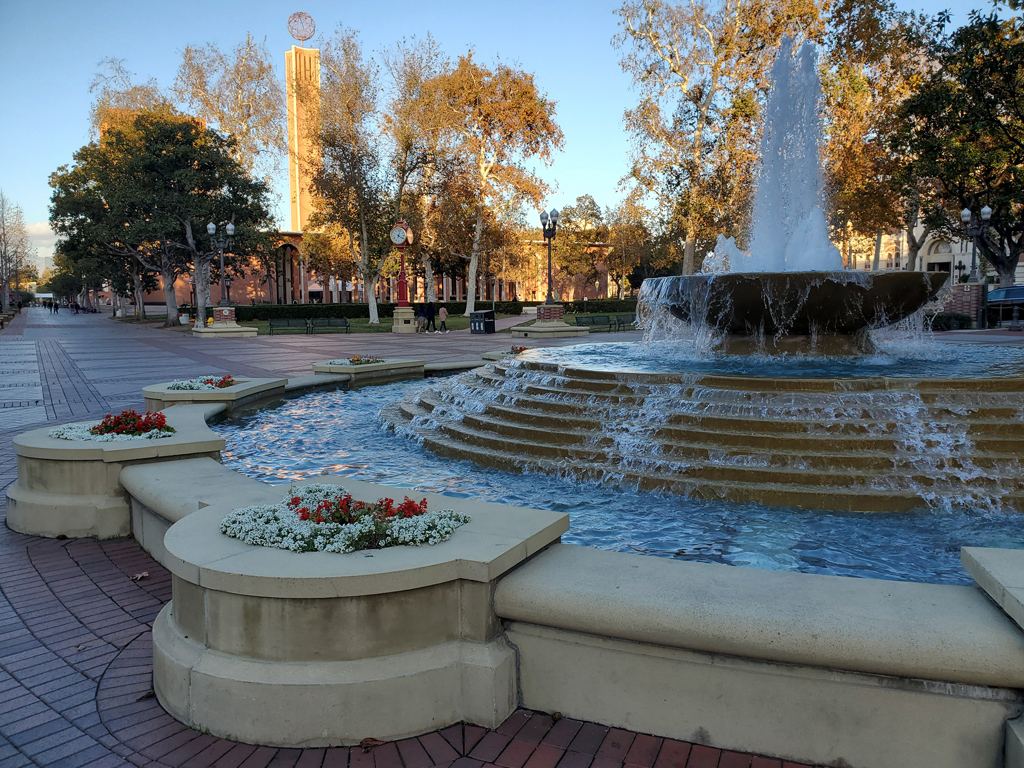
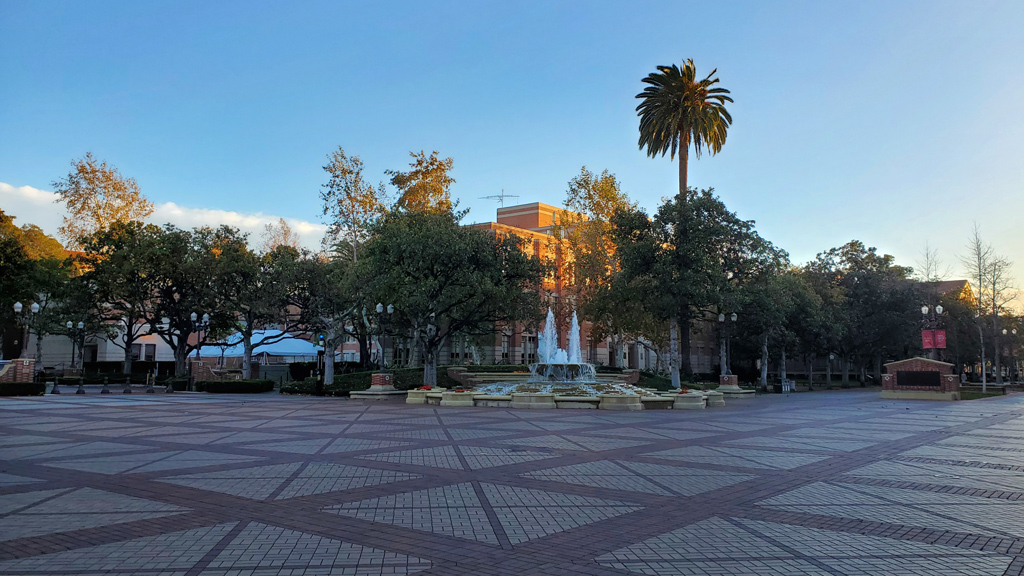
Here is a fountain. (I like fountains and waterfalls.)

Something I found intriguing about the USC campus was how there were random single palm trees planted in random places, at an average density of one palm tree per few blocks. Usually, you’ll see a row of palm trees lined up along pathways or organized in a cluster in open areas, but USC seems to have decided to put single palm trees right in the middle of other trees and buildings.

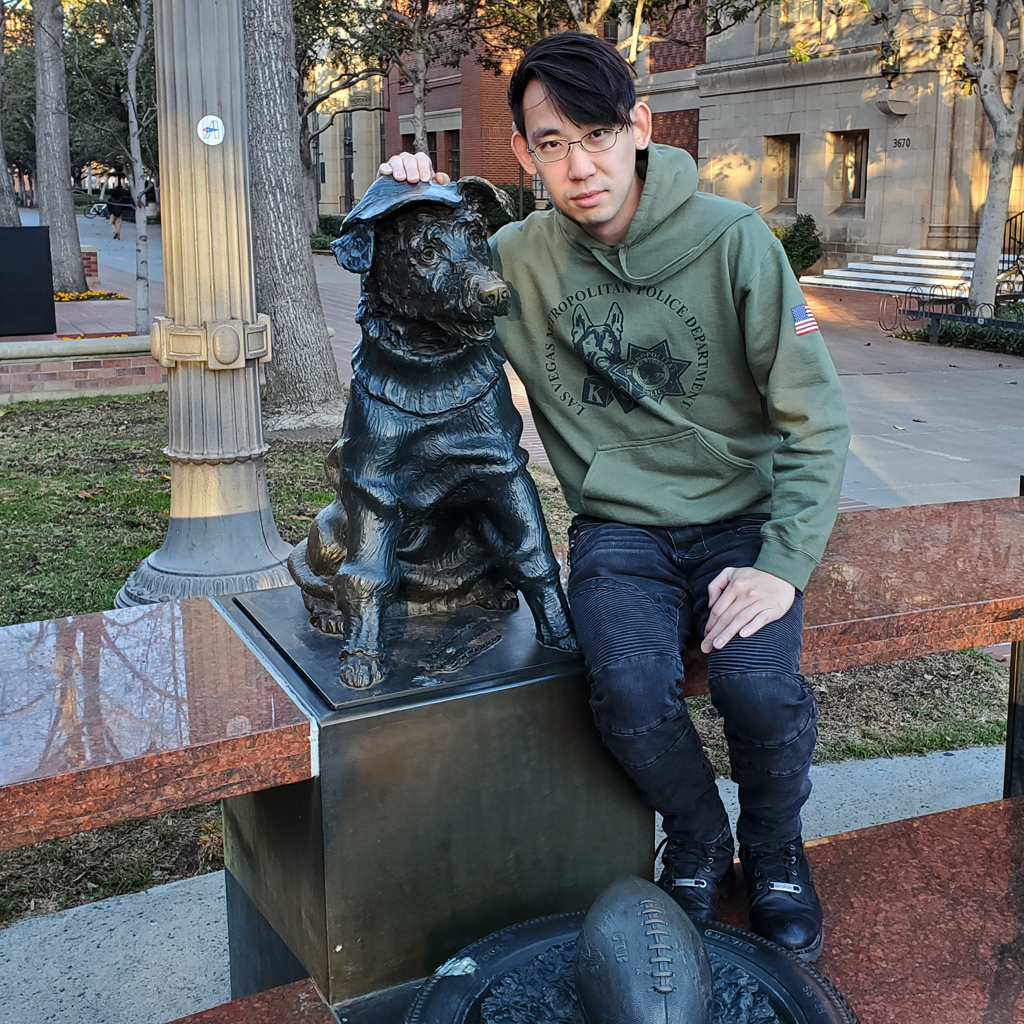
With my adoration of dogs, I of course had to take a picture with George Tirebiter. This is a bronze statue of the dog located at the intersection of Bloom Walk and Trousdale Parkway, just off West Exposition Boulevard, in between the Marshall School of Business and Zumberge Hall of Science. It was erected in 2006 by Michael Davis and is titled “Mascot/Fan.”

By coincidence, I had great synergy with the dog because I was wearing a Las Vegas Metropolitan Police Department K-9 hoodie.

Adam Parkzer sitting next to a dog statue

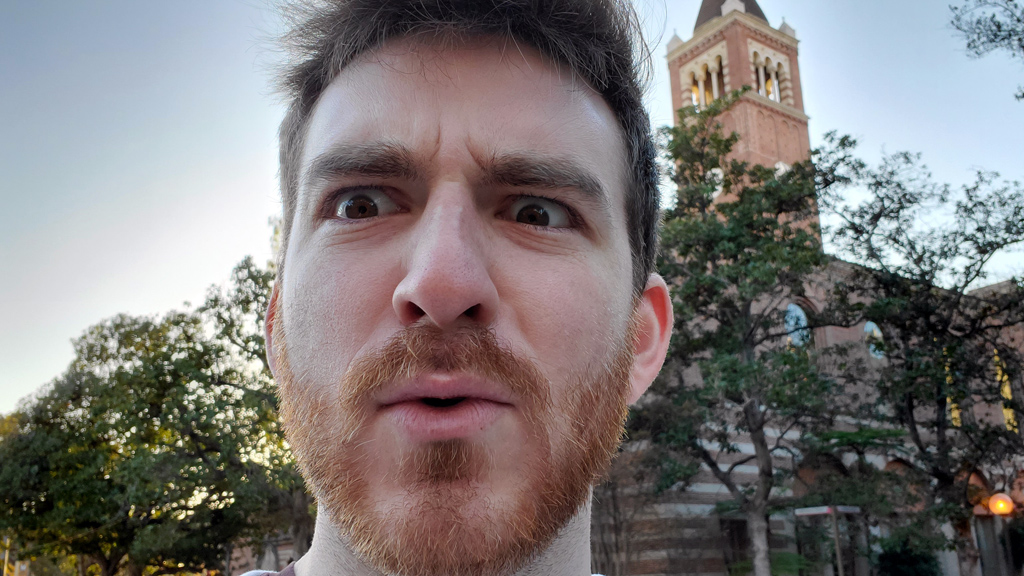
Oh, and here is Doug who, after I passed my phone to him and asked him to take a photo of me with George, instead used the wrong-facing camera and ended up taking a selfie of himself (though, knowing Doug, I am guessing it wasn’t entirely a mistake).

After our adventure, we walked towards the Galen Center together so I could bid Doug farewell and head back to my truck. Of course, with my fantastic luck, the route we took led us onto West 34th Street, and we did not realize that its intersection with Figueroa Street right in front of the Galen Center was blocked with a closed vehicular gate and a locked pedestrian gate. … We solved this problem by just climbing over the fence.

I wasn’t really a fan of my undergraduate university years, and I feel like my exposure to the University of Southern California was probably the worst it could’ve possibly been considering the circumstances, but I still enjoyed spending time with Doug and exploring the campus, and it still brought back a bit of the nostalgia of being a younger college student.


—§—


The final stretch

After wrapping up my trek through Utah, I cut through the northwestern corner of Arizona on my way to Southern California for the winter.

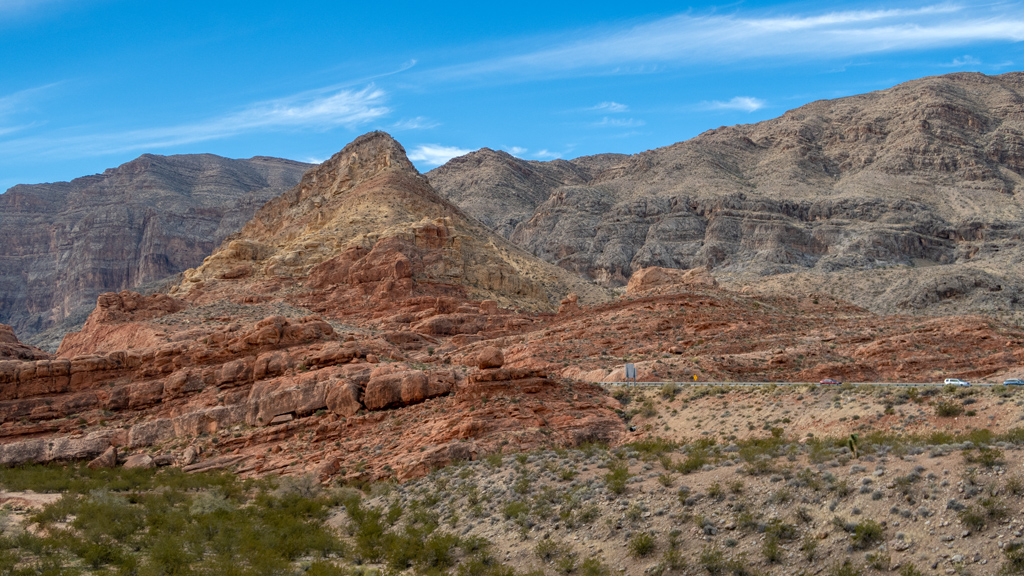
This stretch of I-15 from Mesquite, Nevada to St. George, Utah, known as the Virgin River Gorge, was the first time I had ever driven through a moun­tainous area back in June 2021 when I first started my long road trip journey. The views were stunning, the road was hugged by cliffs on both sides, and it literally felt like the intro to the wild movie my life was about to be for the next year and a half.

Because of the route I took, I returned to Las Vegas last winter from the southeast via U.S. Route 93. However, this year, because I came back from Utah, I got to drive the Virgin River Gorge in the opposite direction, as if concluding my “movie” and wrapping it up full circle.

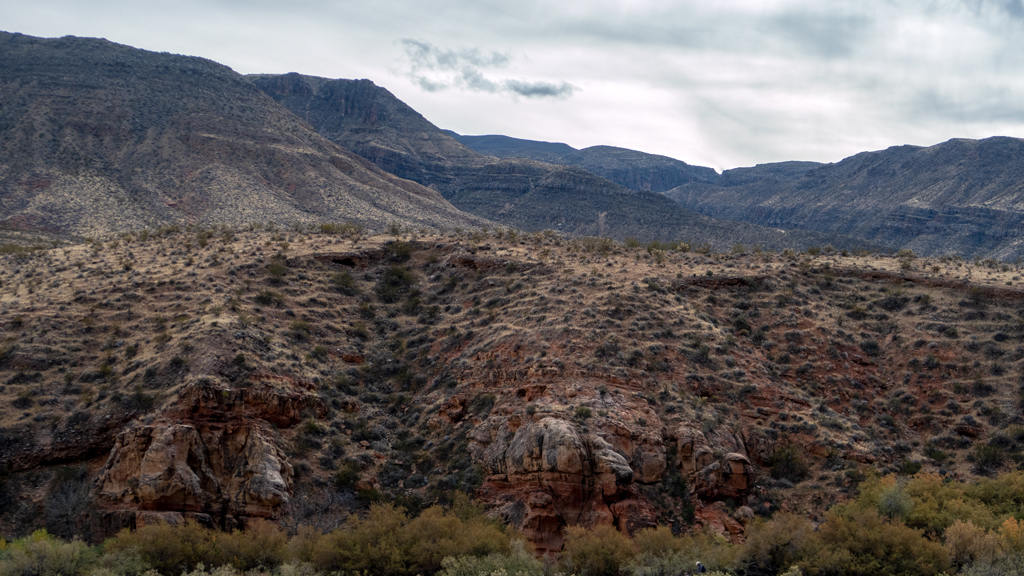
Because of the time zone difference be­tween Utah’s Mountain Standard Time and Nevada’s Pacific Standard Time, I had an additional hour to spare in between check-out time in St. George and check-in time at Lake Las Vegas. I decided to use this time to make a stop at the Virgin River Canyon Camp­ground to go for a quick walk and take in the views.

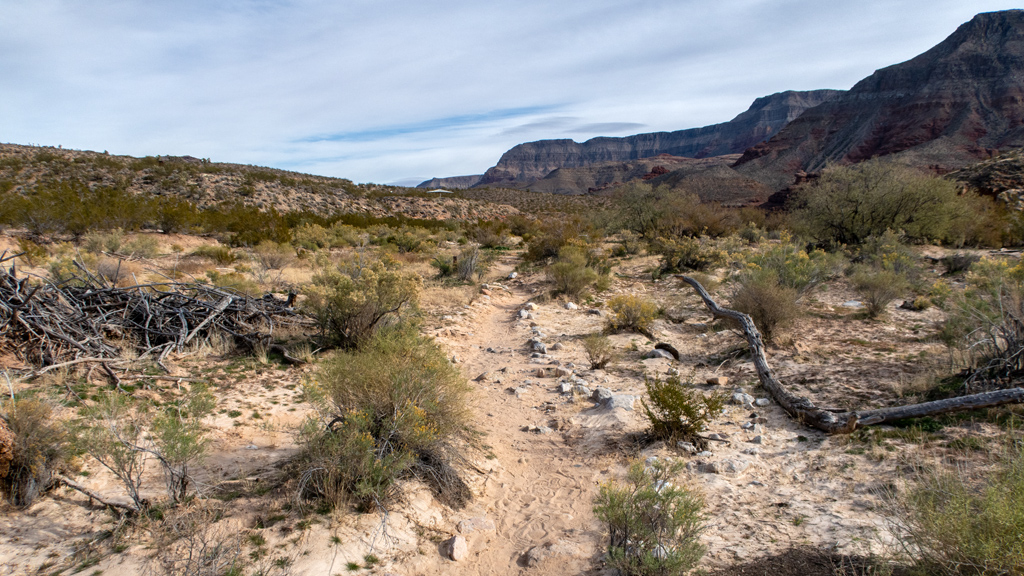
I parked in an open spot on the western camping area and headed southwest down Sullivan’s Canyon Trail.

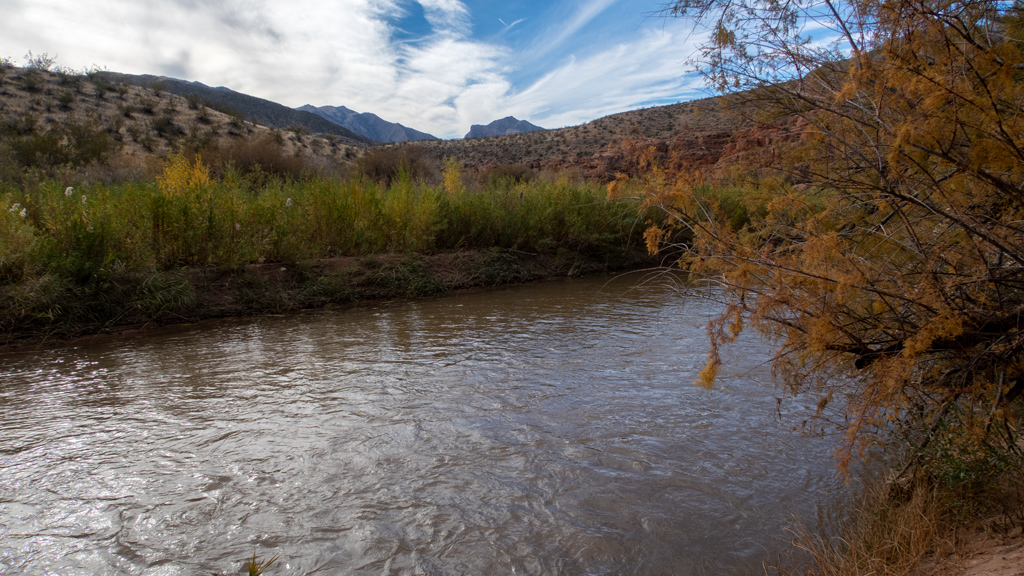
I went down to the base of the hill before deciding to cut my walk short after realizing that the Sullivan’s Canyon Trail intersects the Virgin River. I was wearing long pants and regular boots, and I didn’t want to get wet, so I snapped a photo of the river and turned around.

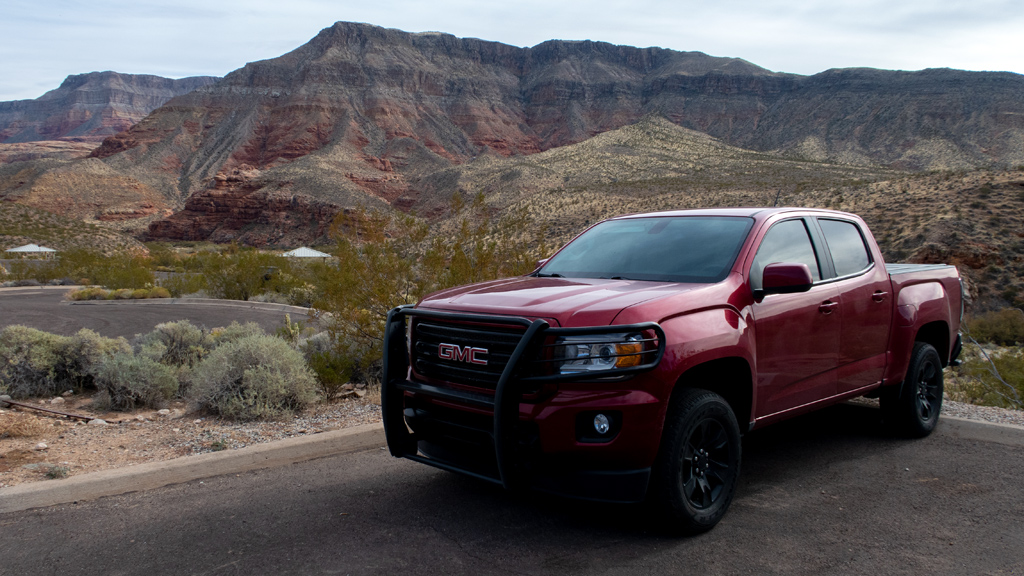
Before continuing the rest of the way to Nevada, I snapped a photo of my truck with the mountains serving as a nice backdrop.

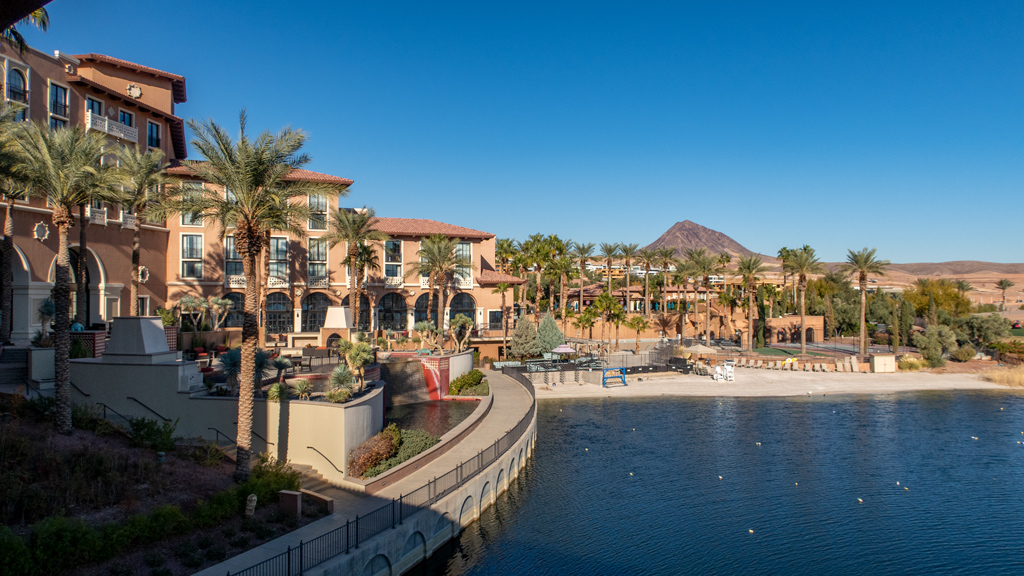
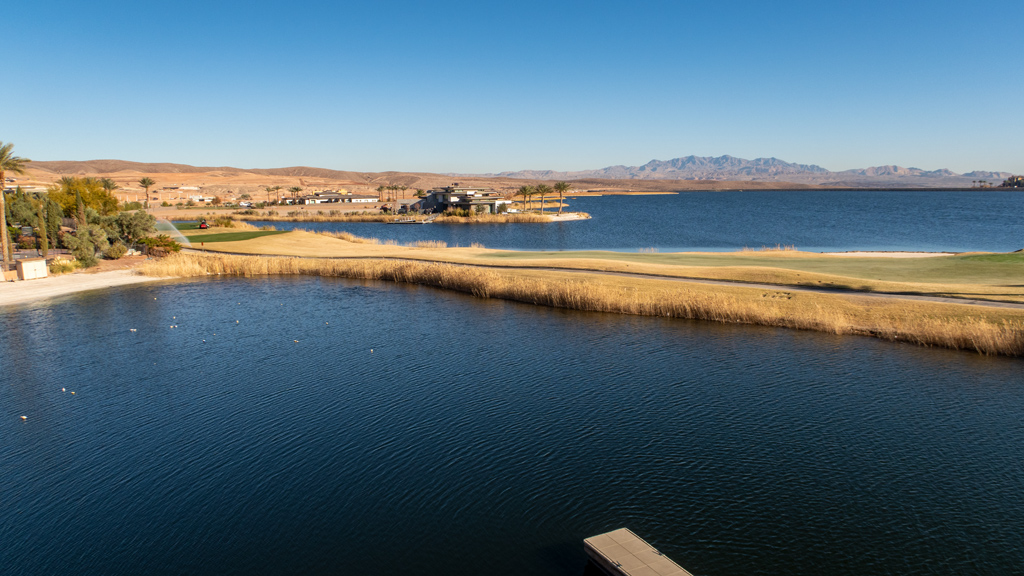
My hotel in the Las Vegas Valley was The Westin Lake Las Vegas Resort and Spa in Henderson, Nevada. They were kind enough to upgrade me to one of the suites facing east towards the lake. The suite itself wasn’t exactly the best maintained, and it had a bit of a mildew smell, but I had gotten the room at a discounted rate to begin with, so I was just appreciative of the fact that I was given a free upgrade anyway.

After attending the final class for my Continuing Education management certification at the University of Nevada at Las Vegas, checking my PO box, ex­changing some belongings in my storage unit, getting a haircut, stopping by the dentist for a routine cleaning, and taking care of all my other errands, an­other successful Las Vegas trip came to a close, and I continued southbound on Interstate 15 for Southern California.

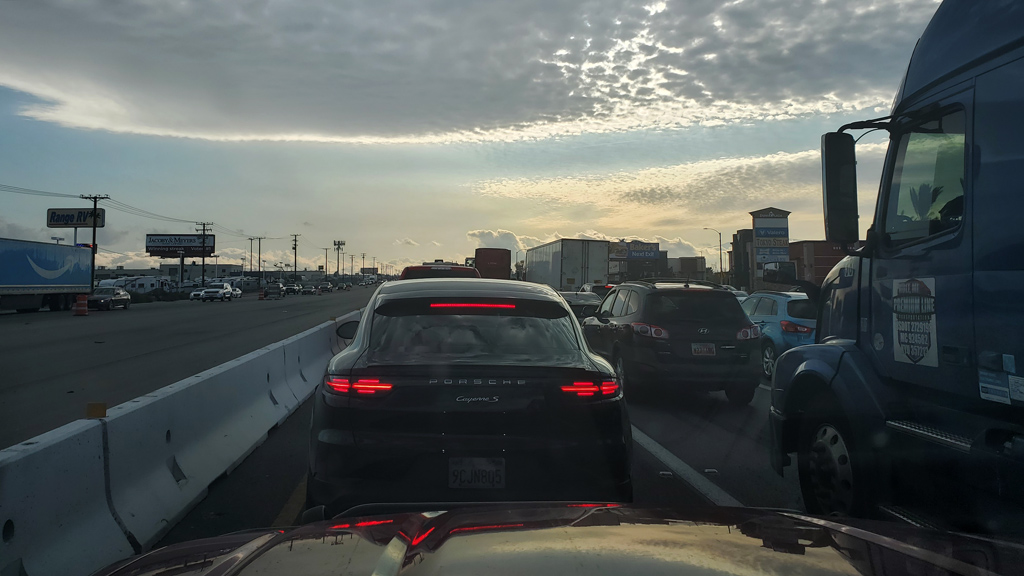
Of course, it wouldn’t be California without a clown fiesta of traffic. I found myself in a construction zone in the middle of the desert where about two lanes’ worth of road was barricaded off due to construction. This area of the highway also had no right shoulder.

There was a collision.

Traffic was backed up for literally several miles. Emergency medical services couldn’t get through because there was bumper-to-bumper traffic and there were no shoulders on either side of the interstate. The travel lanes were so narrow that, even if the drivers were coordinated enough (which, in the U­nit­ed States, they’re not), they wouldn’t even be able to hug one side of their lane to make enough space in the middle for an ambulance.

First responders ended up having to off-road in order to bypass the traffic, which looked terrifying, because they were basically driving at almost a 45° an­gle and looked like they were about to tip over and roll into the ditch. Because the number of lanes were already reduced due to construction, eve­ry­one had to funnel into the single right-most lane in order to drive past the site of the accident. This segment alone added almost an hour to my drive.

With that, I’ve completed my third big loop of my road trip (or second, depending on how you look at it)—the first being the horizontal one taking me as far east as South Carolina, the second being the vertical one across the Mountain States and up to the Seattle Metropolitan Area, and the third being a small one through western Canada that was appended onto the second loop.

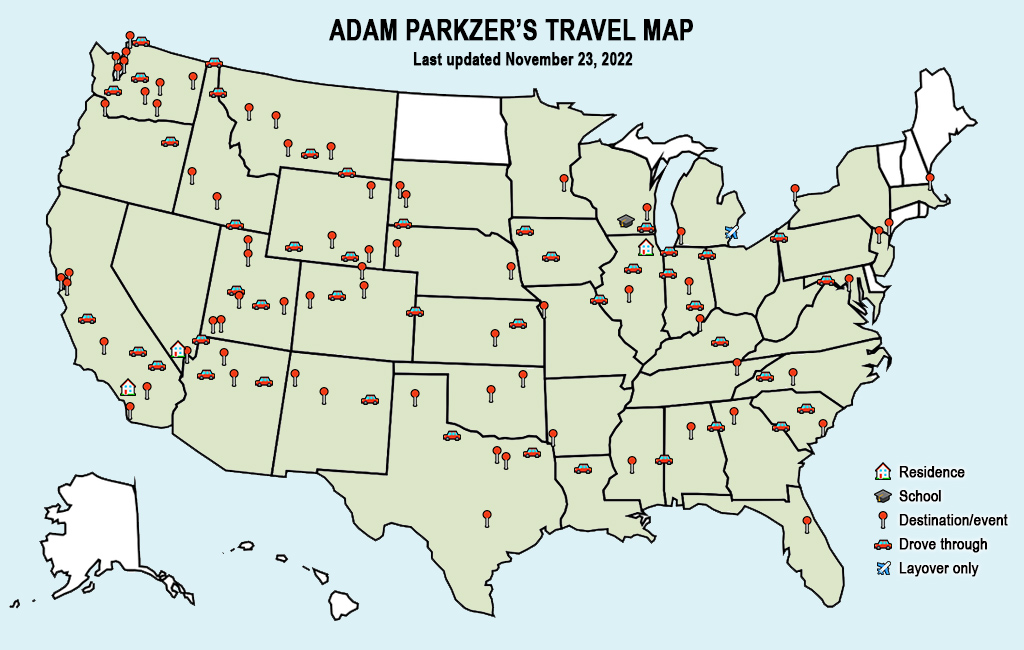
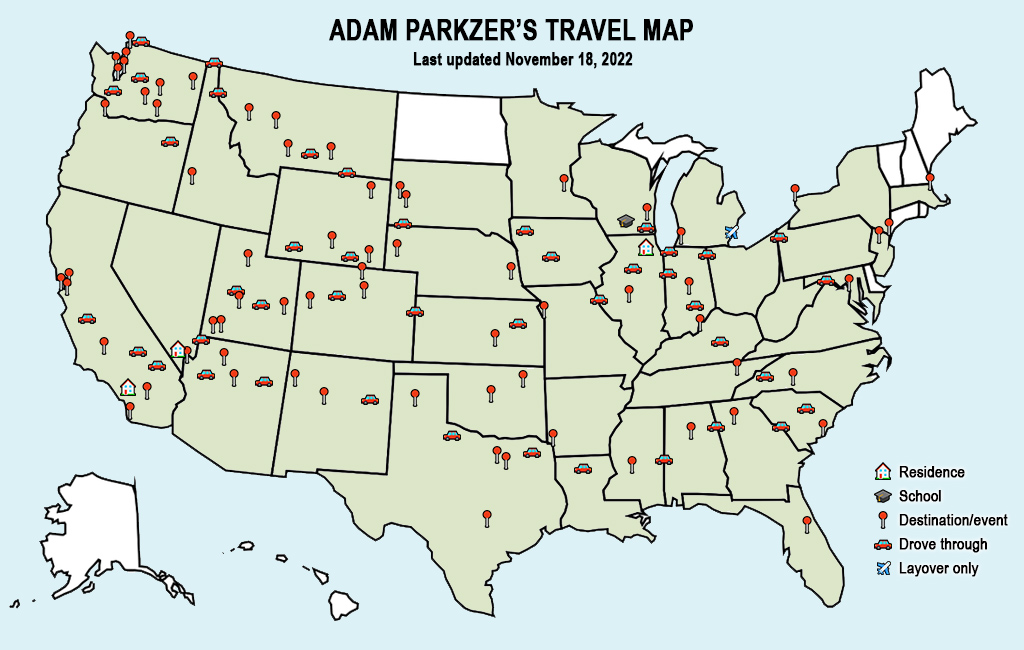
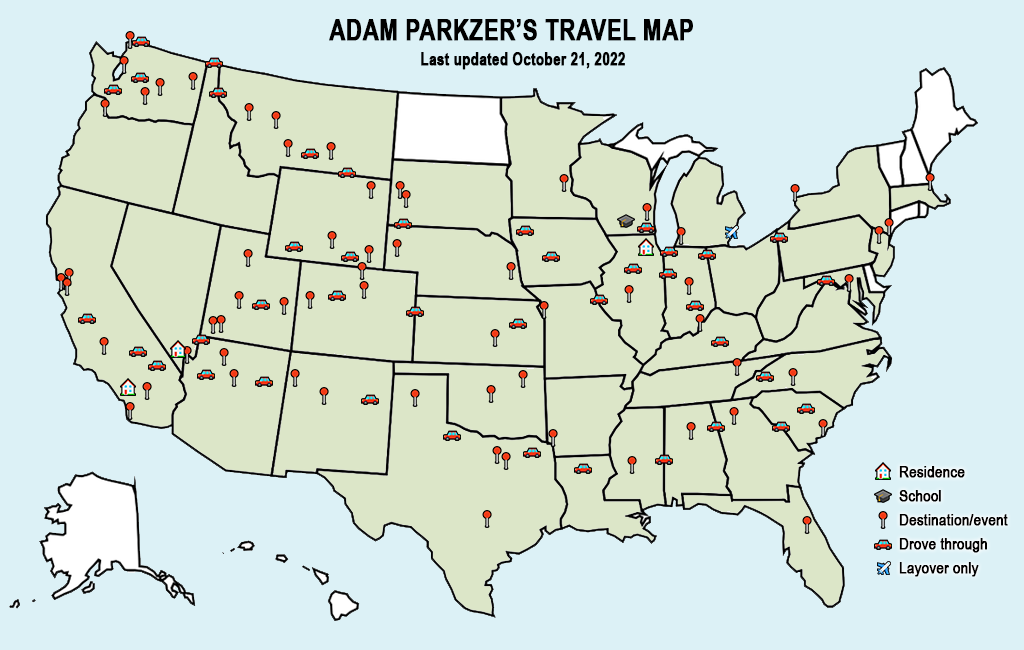
As it stands now, I have step foot in (or, in the case of a very few, just driven through) 41 of the 50 states in the United States of America. The only ones I have left now to visit are Alaska, Hawaii, North Dakota, Maine, New Hampshire, Vermont, Connecticut, Rhode Island, and Delaware.

I’m in Southern California now, at Tempo‘s hybrid office and residential facility in Long Beach. I’ll be staying here on-and-off for the next few months while I rest up and recover.

I’m looking forward to potentially doing a trip on the southern edge of Arizona and New Mexico so I can make a stop in El Paso, Texas and then cross the border to visit Mexico. I’m also thinking about making a drive up to Monterey, California to visit the Monterey Bay Aquarium, the non-profit for which my friend Doug Wreden raised over US$100k and had me dress up in a bunny suit with him to eat a whole salmon as a stretch goal. (Of course, I would make multiple stops along the way, and also visit more than just the aquarium in Monterey.)

However, until then, I plan on relaxing and staying in one spot semi-long-term to take a break from constant travel.


—§—


The Utah round-up

I was on a schedule to get back to Las Vegas by a certain date to make sure I was there in time to attend an in-person class for one of my continuing ed­u­ca­tion certifications, so I didn’t quite get to spend as much time in Utah as I wanted to. On top of that, I got snowed in for a few days, and also had a few busy days of work at Tempo, so it felt like my stay was a bit shorter than it actually was. Because I had a disproportionately low number of Utah posts, I de­cided to put together a state round-up like I sometimes do.

 
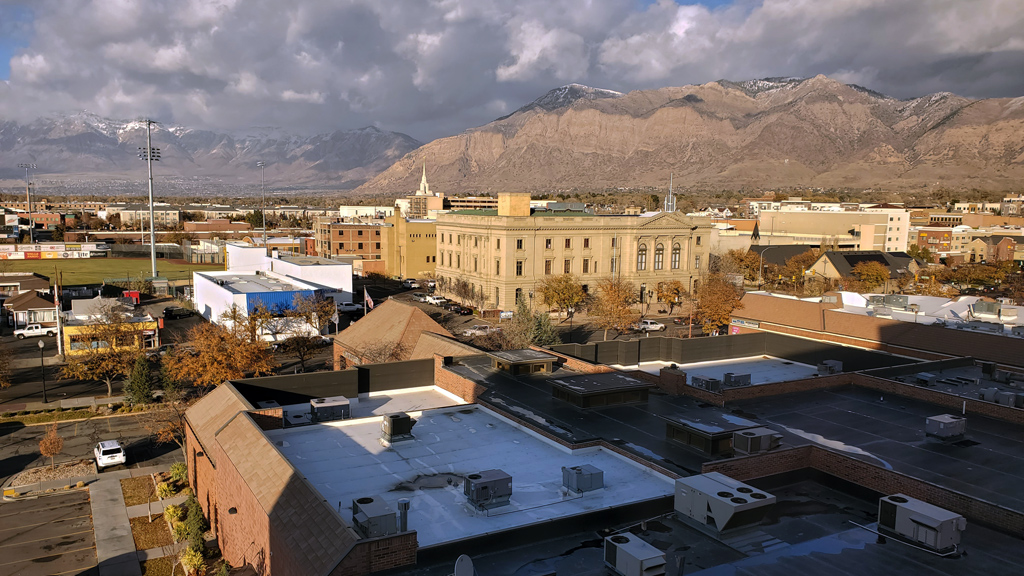
I like to break up my drive as much as possible, so as long as there is a convenient hotel along the way, I’ll try to avoid driving more than a few hours at a time. On my way from Twin Falls to Salt Lake City, I decided to spend a night in Ogden, about an hour or so north of my next destination in the eastern suburbs of Salt Lake City.

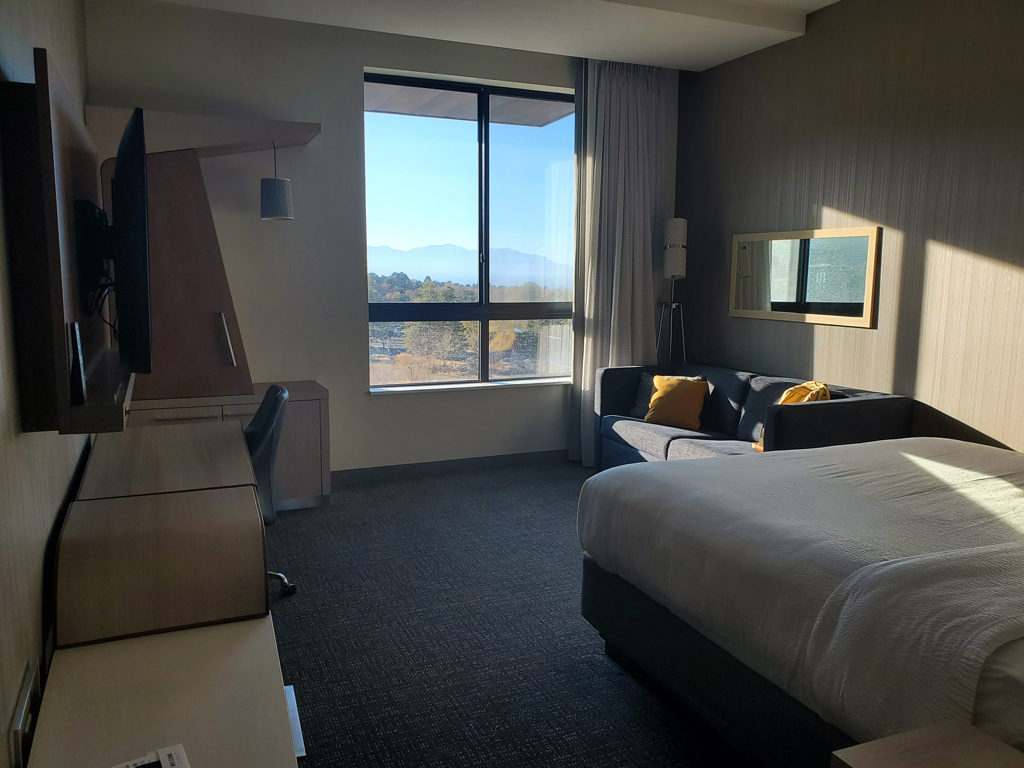
After resting up for the night, I finished my way down to the Courtyard by Marriott Salt Lake City Cottonwood in Cottonwood Heights, Utah.

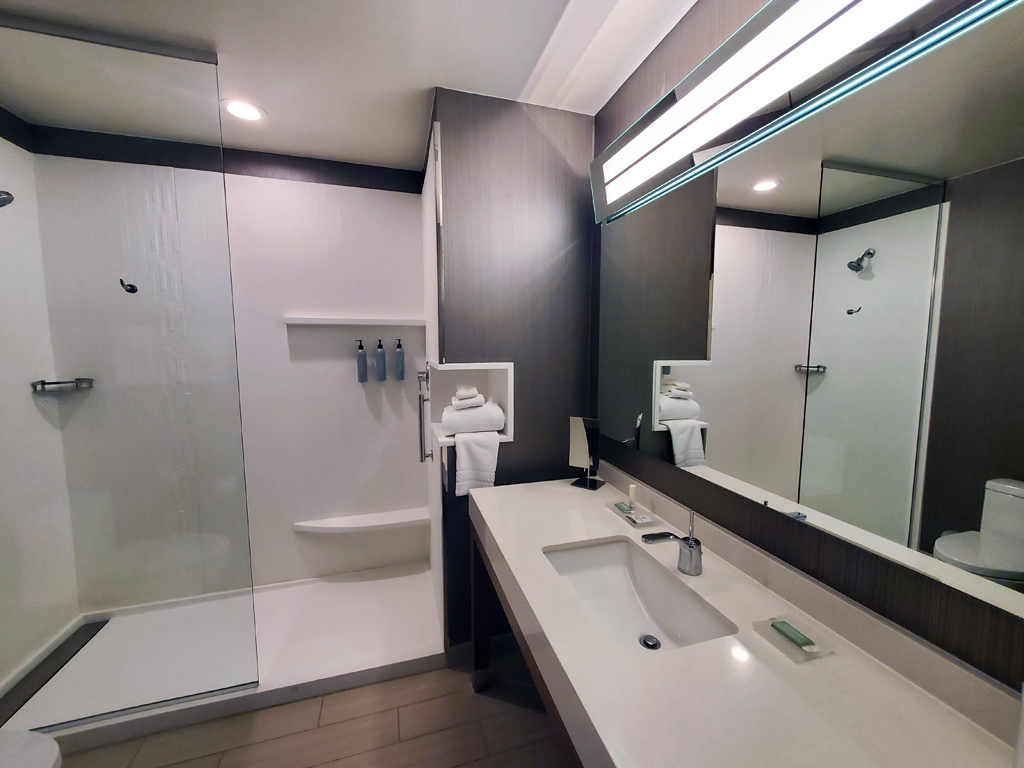
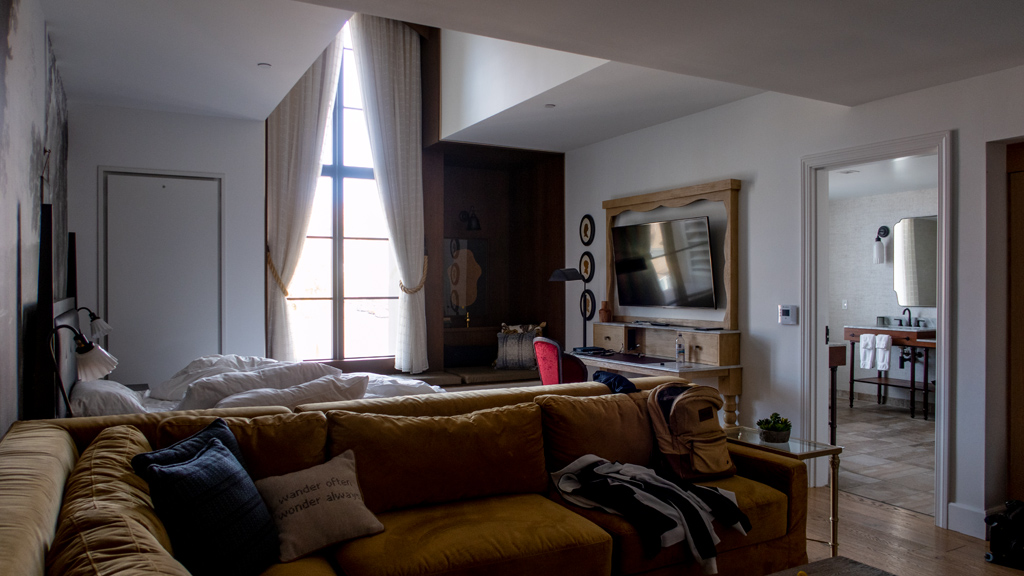
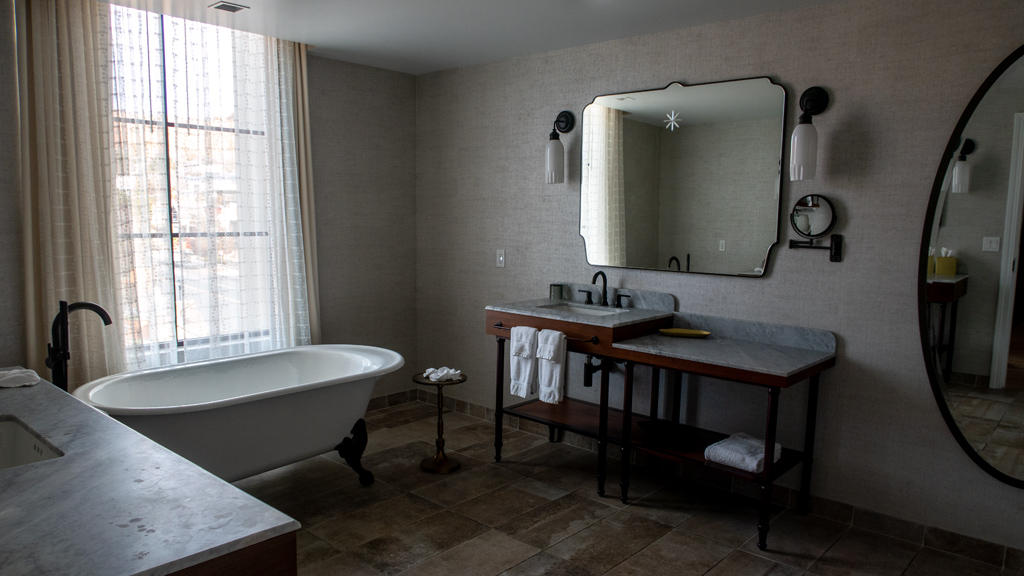
I haven’t been posting hotel room photos as much anymore because I consistently stay in the same franchised brands and all the rooms look very similar, but I figured it’s been long enough that I’d share again what the newer Courtyards look like, and what my temporary “home” in the Salt Lake City met­ro­pol­i­tan area was like.

Earlier this year when I was traveling through Colorado, I encountered some snow but refused to buy a snow brush because I knew that, with my luck, I would only use it once, then it would stop snowing and I would never have to use it again. This proved troublesome, because it snowed quite a bit, so I ended up having to come up with some very creative solutions to remove the snow from my pickup truck every time I needed to drive it somewhere. Still, I remained headstrong, because I knew that the day I bought a snow brush would be the day it stopped snowing for the year.

If I had known that I was staying so long in the Seattle Metropolitan Area and would be headed back down through Idaho and Utah during the late fall, I would’ve bought a snow brush back in March with the assumption that I would be using it in November. However, I didn’t think that far ahead, so I end­ed up just never purchasing a snow brush.

After seeing snow in the Idaho weather forecast, I didn’t want a repeat of what happened in Colorado, so I immediately bought the largest and most expensive snow brush with the most features I could possibly find after arriving in Idaho. That was a wise decision, because the following day, I used my snow brush.

And that’s it. The curse came through. I never had to use my snow brush again after the very first time. Yes, it snowed a lot in Utah, but when it did, I was parked in an underground parking structure. On days when I was at hotels where there was only surface lot parking, it never snowed.

Now I just have an egregiously high-tech snow brush sitting idly in the back seat footwell of my truck.

Never lucky.

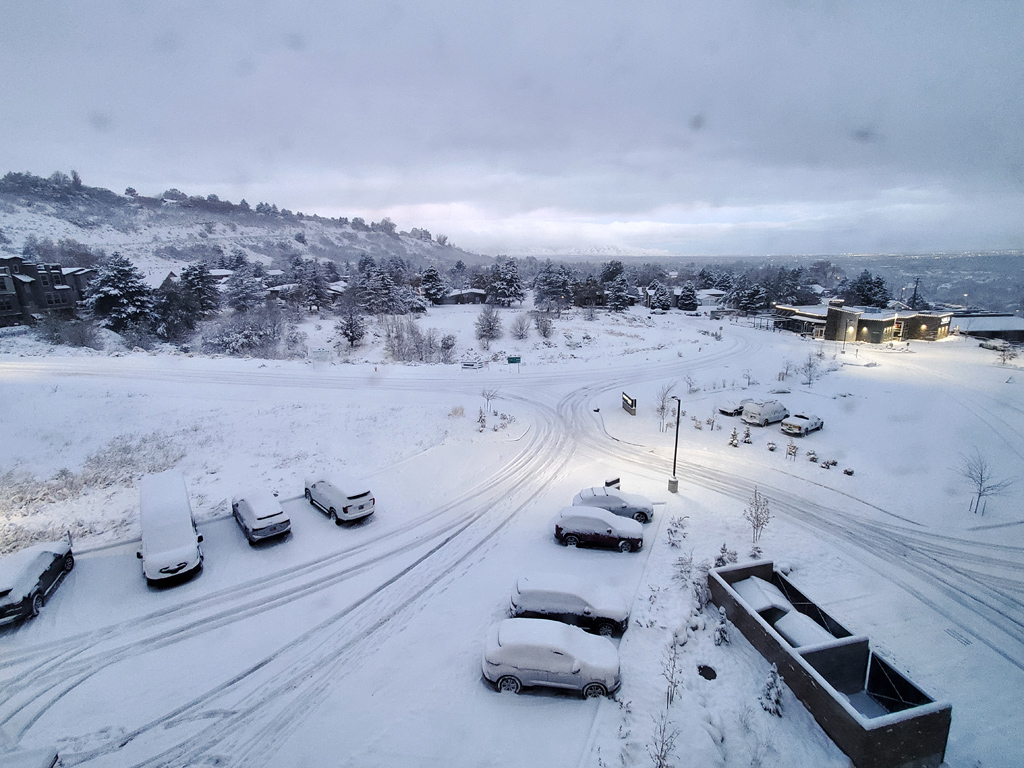
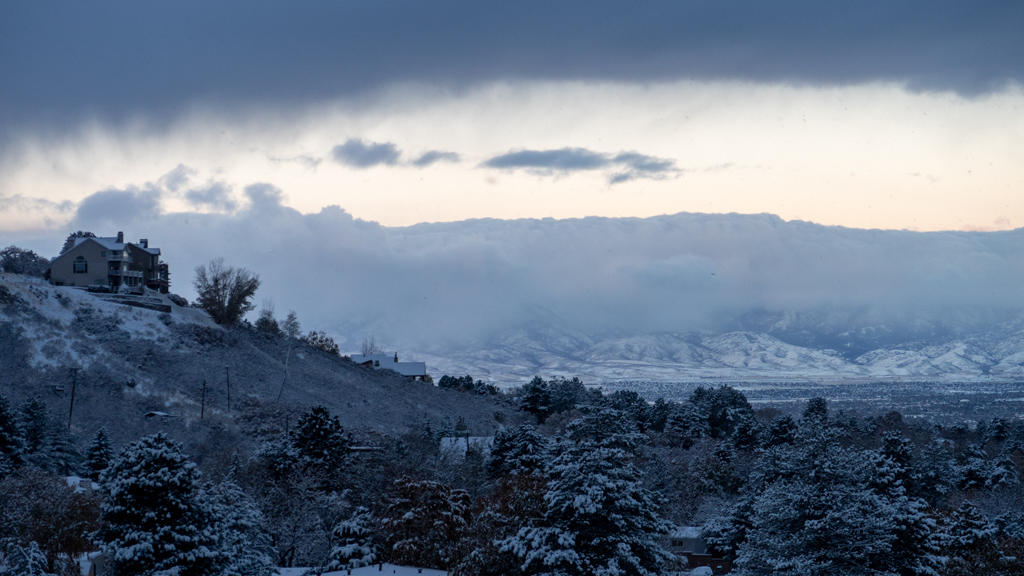
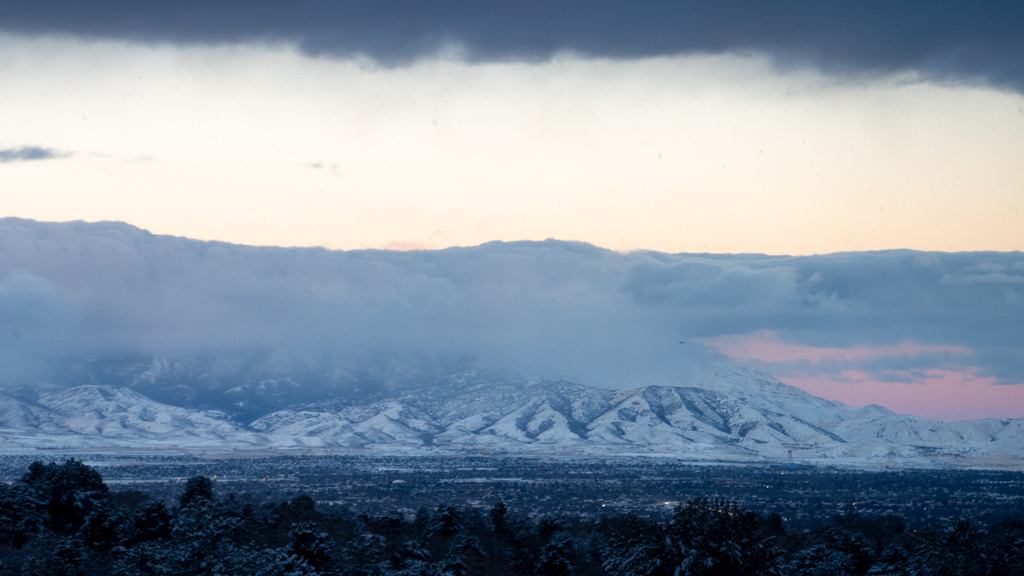
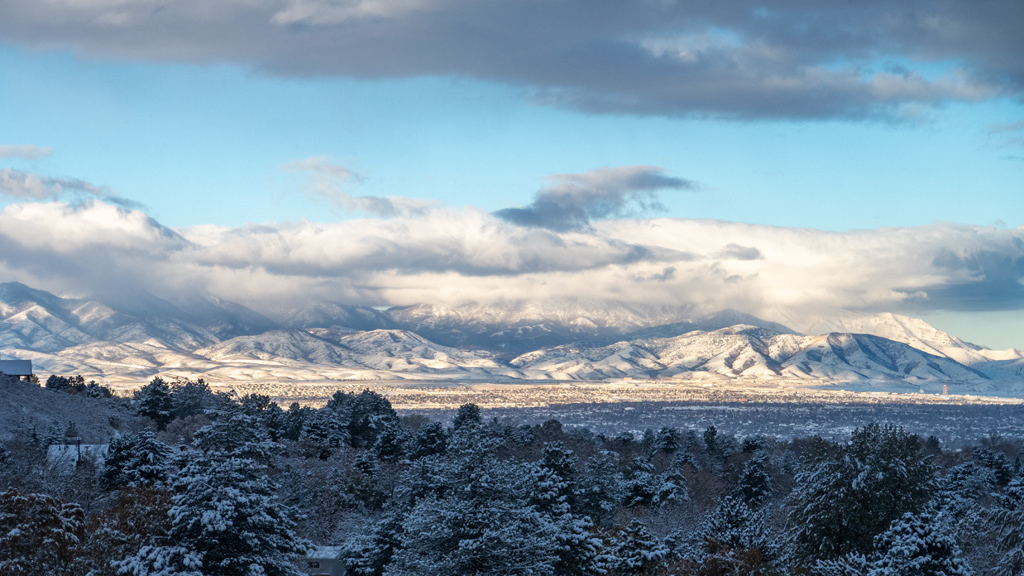
Regardless, the view from my hotel room of the snowy mountains were awesome. Here are three different shots from three different days with varying time proximity to the snowstorm and varying amounts of sunlight.

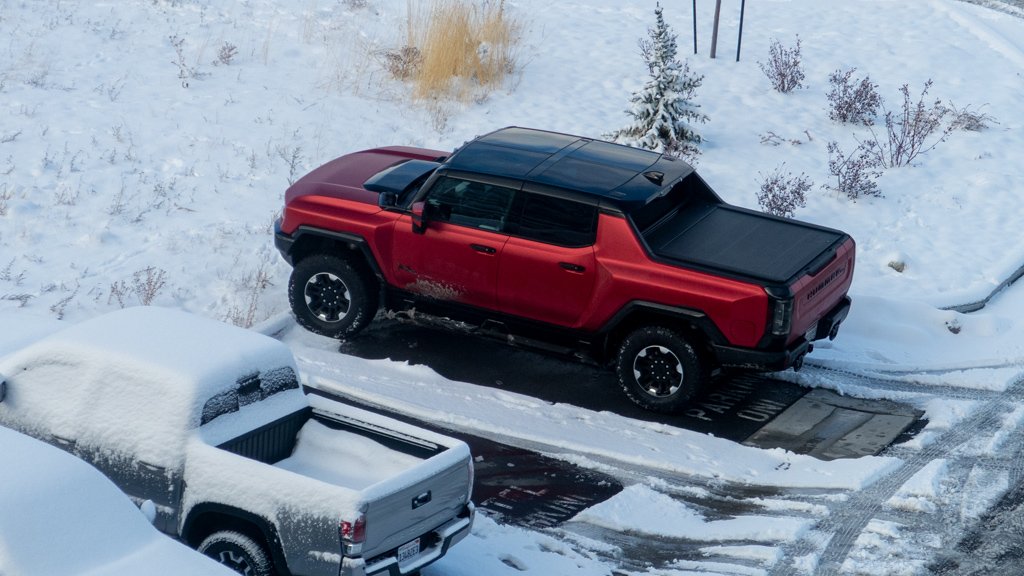
I was actually very surprised at how many electric pickup trucks were in the Salt Lake City metropolitan area—I saw more Rivian R1Ts during my week and a half here than I had seen anywhere else, combined and tripled. I guess that makes sense then that my very first time ever seeing a GMC Hummer EV pickup truck was also here, in the parking lot of my hotel.

I pretty much almost never post photographs of vehicles that are not my own, but I figured I had to post this one because of how much I like the Hum­mer EV, as well as the fact that this had an amazing matte dark red wrap on it, which is probably the exact same color I would pick if I wanted to get my own vehicle wrapped.

I’m not the biggest fan of the bed design of the Hummer EV, because I like the upright blockier style (like my personal pickup truck, a 2018 GMC Can­yon) more than the smoother angle of the C pillar on the Hummer EV, but the overall technology, innovation, functionality, and luxury of the Hum­mer EV immediately made it my favorite new electric pickup truck reveal when it first came out.

On my way back to Las Vegas, I decided to spend a night in St. George, Utah so I wouldn’t be driving for too long in a single day.

Because of my elite status with the Marriott Bonvoy program, I get to pick rewards each qualifying year via the Annual Choice Benefit. Most travel an­a­lysts say that the suite night awards are highest in value, so I always end up picking them. Unfortunately, because I generally stay at select-tier hotels, the suite night awards aren’t as meaningful to me because there usually aren’t very many suites even available at all on the property, and if there are, they’re not that much better in quality than a regular guest room, apart from just being a bit bigger in square footage.

Suite night awards via the Annual Choice Benefit expire in one year, and I have a bunch expiring on December 31, 2022, so in St. George, I decided to stay at a nicer hotel where I could use the suite night upgrade and actually get a big upgrade—the Advenire Hotel, part of the Autograph Collection.

One reason why I avoid nicer hotels, though, is that it actually gets pretty inconvenient. Fairfield Inns, SpringHill Suites, and Residence Inns generally have straightforward building structures, parking is almost always free, and there are multiple entrances for quick access to the interior. However, the fancier you go in hotels, the more inconveniences arise.

For example, at the Advenire, parking was valet-only for US$18.00 per night. If I didn’t want to use valet, I had to either street park or use a structure on the other side of the street. I’ve had way too many bad experiences with valet parking service, and I just don’t like the idea of having valet touch my ve­hi­cle at all to begin with, so I unloaded my stuff at the front and went searching for this off-site parking garage.

Of course, I took the wrong turn three times, proceeded to drive in circles around the wrong city blocks, had to take detours because of streets closed for construction, and the entire time regretted not just staying at a Courtyard or SpringHill Suites only 2-4 miles away.

By around this time last year, I was pretty set on Colorado being my favorite state, and Utah being second. After visiting Montana, those two states got bumped down to #2 and #3, but the sequence of them remained the same.

I think my last visit to Salt Lake City wasn’t very fair, not only because I picked an older, not-so-well-maintained, past-generation Fairfield Inn, but also be­cause I had the broken glasses fiasco that ate up a lot of my time.

After having driven through Utah again at the beginning of this year, and then again recently, I think Utah has caught up to, or maybe even surpassed, Colorado in the ranking. I still think Colorado is amazing, but Utah has more variety to it, while Colorado seems to stick to a “theme.”

If I’m able to stick around in Las Vegas like I want to when I pick a long-term residence again, that would be good news for the sake of visiting Utah a­gain, considering that it is right next door and on the way to anything towards the east.


—§—


Goodbye Boise, Idaho

After two weeks, my stay in Boise, Idaho comes to an end. Unfortunately, I lost a few days to getting food poisoning from eating lobster soup, and an­oth­er few days because I had a small work-related emergency come up that I needed to help resolve immediately, but I still got to go out and explore the cit­y a lot.

The hotel I stayed at was the Fairfield Inn & Suites by Marriott Boise West. It’s a newly-constructed hotel at Town Square, which the locals apparently call “the mall” (because apparently there is only one major mall in Boise). The location was extremely convenient, and I probably would’ve walked a­round the area some more if it wasn’t so cold. There were plenty of restaurants nearby so I could eat something different every day.

Like pretty much all new-generation Fairfield Inns, this hotel was perfectly to my liking. Everything was clean and modern, the desk was nice and large, the breakfast offering was decent, the hot coffee station in the lobby was available 24/7, there was convenient stair and side door access, parking was am­ple, and everything was simple and peaceful (though the walls were a bit thin, so during a few nights, I heard my next door neighbor snoring).

It will probably be a disappointment for people looking for a resort hotel while on vacation, but for a long-term traveler like me, I don’t think I could’ve asked for anything better.

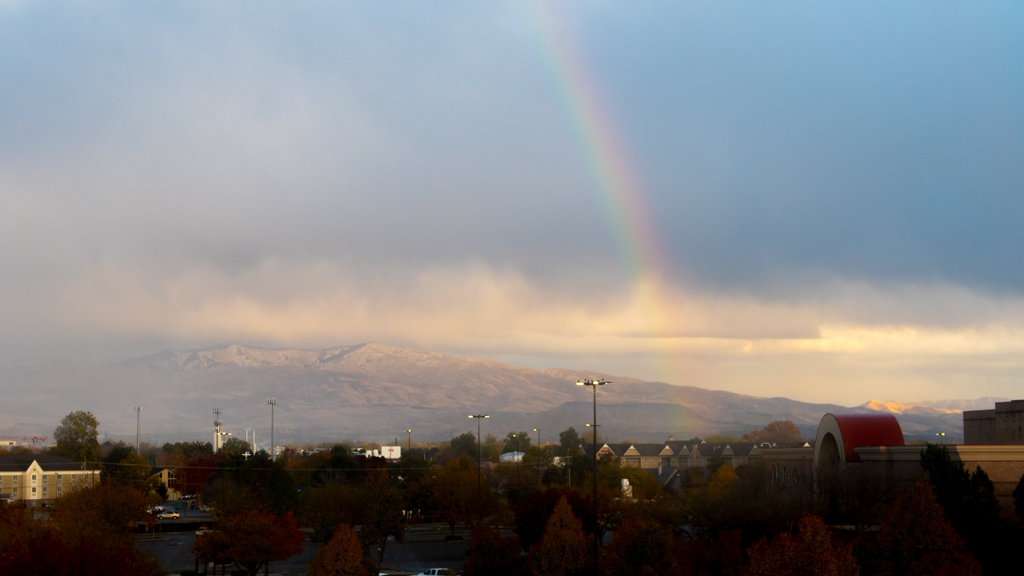
On the day of my arrival, it was a bit rainy, but after I had brought all my stuff inside and set up my workstation, I was welcomed with a nice rainbow.

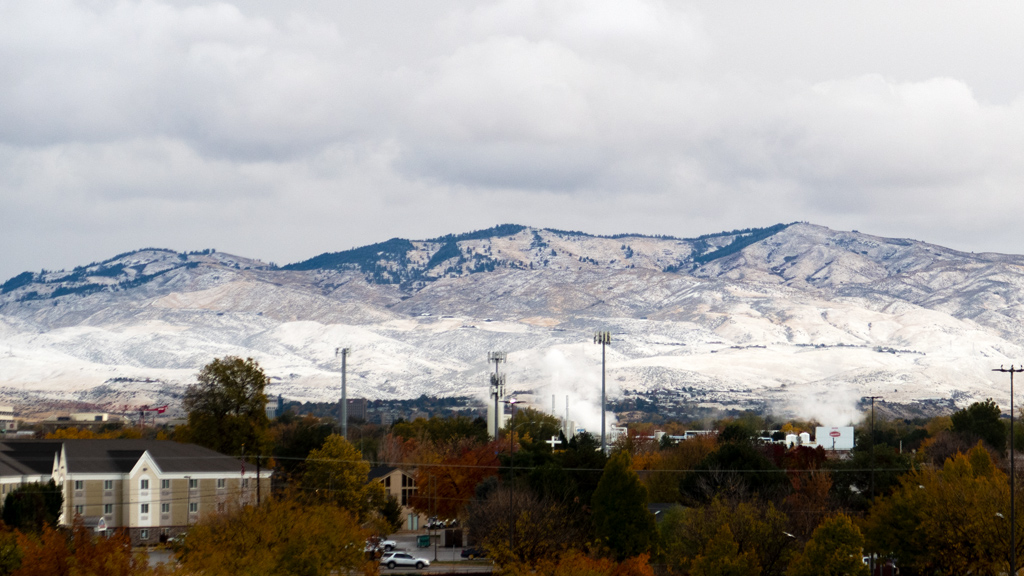
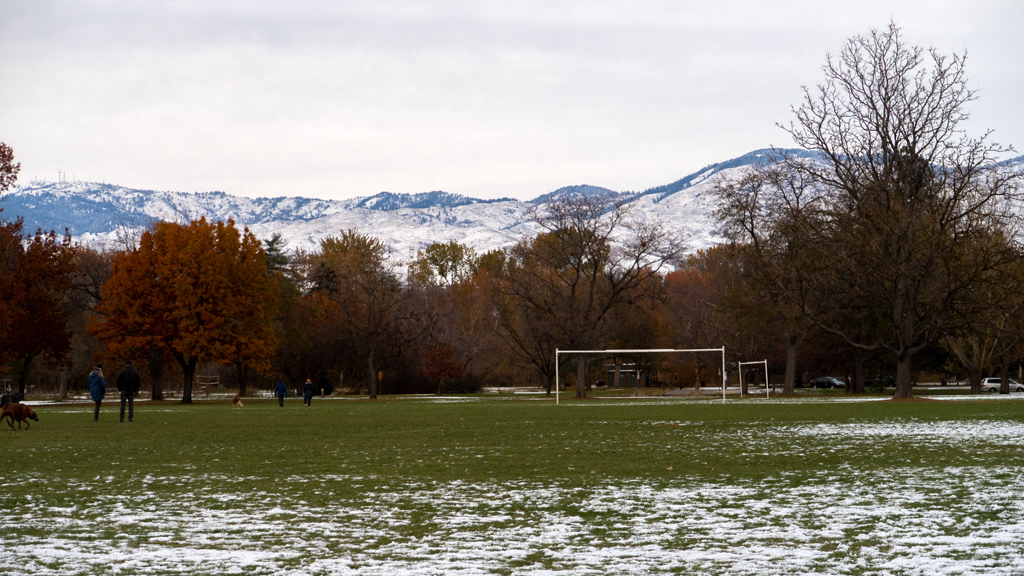
The day after that, there was some light snowfall. There wasn’t enough for it to accumulate too much on the ground beyond just a thin blanket on the grass, but it was enough to cover the mountains in white.

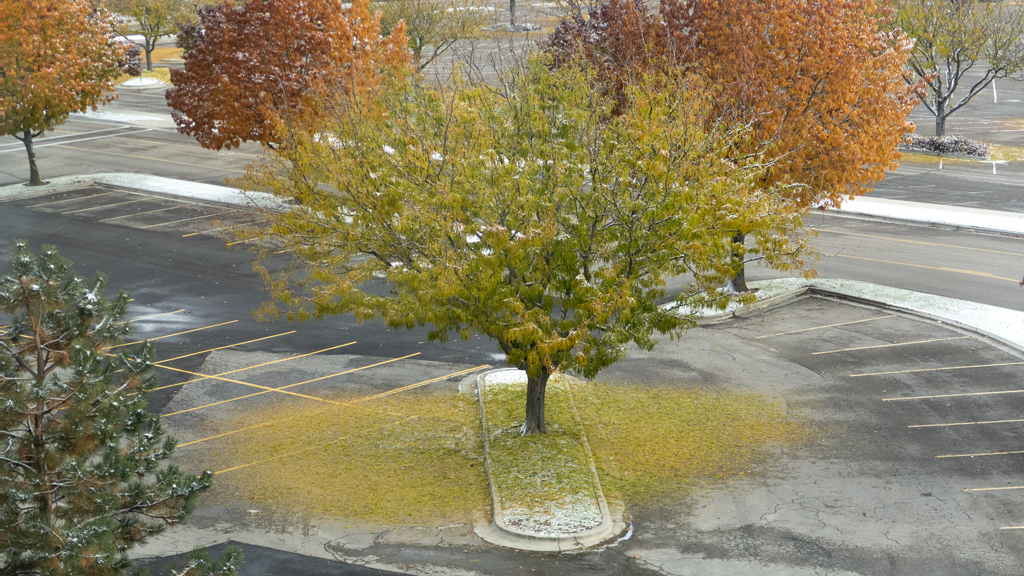
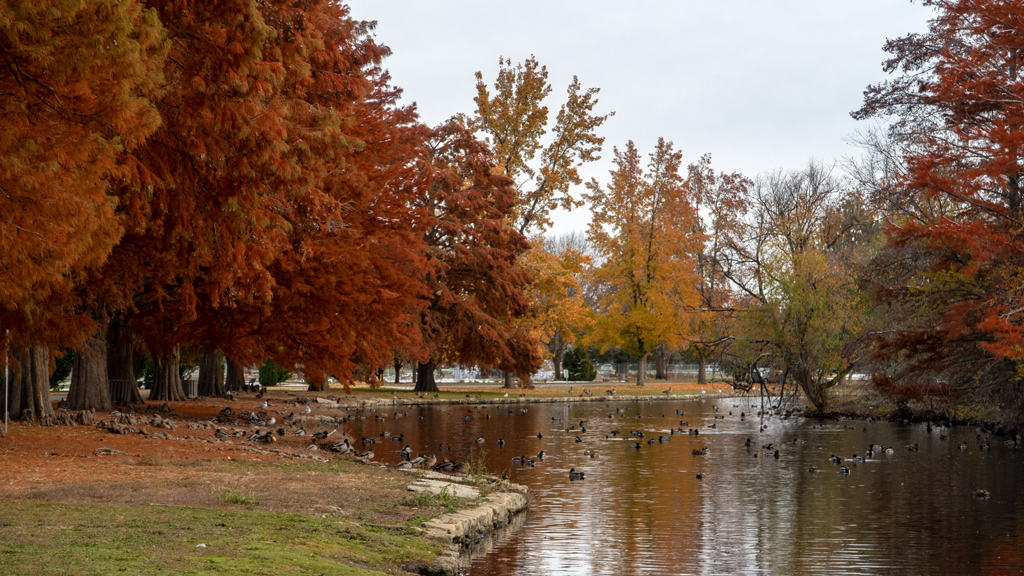
There was a particular tree that was visible from my hotel room window. It seems to have gotten extremely surprised by the snowfall… so much so, that it for­got to turn its leaves orange prior to dumping all of them onto the ground.

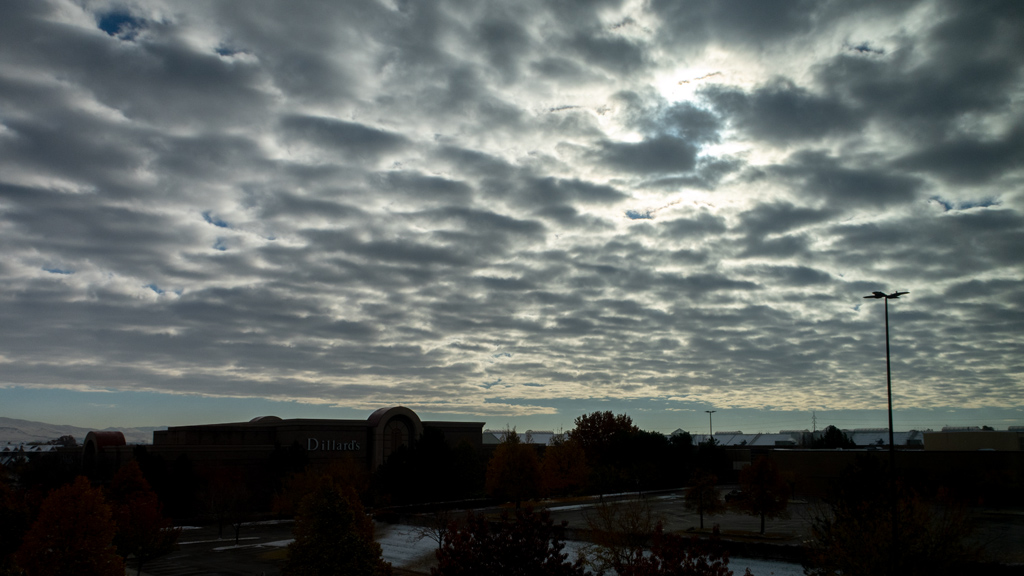
I don’t remember what the context was for this photo, but I imagine I took it because of how interesting the cloud coverage looked. This was during the middle of the day, and the sun was out bright, but the clouds were so thick that it almost felt like it was already the evening.

One of the places I visited that I didn’t write a blog post about was the Boise Art Museum. The reason it didn’t get its own standalone blog post, and is just being bundled into this round-up… is because photography was not permitted. If I had known this, I would’ve just spent the day going to the Idaho State Museum next door instead, but the front desk attendant didn’t tell me about the no-photography rule until after I had already purchased my ticket.

At first, the Boise Art Museum was incredibly underwhelming. There was a ton of neon art, but I wasn’t really able to understand the significance or im­por­tance of it. Shaped neon tube lights are mass-produced, so I’m not sure if I’m just desensitized to it, but it wasn’t particularly impressive. Another strange thing I noticed about the neon section was that some of the descriptions blatantly said that some of the items were purchased off eBay. This tech­ni­cal­ly means that the “art” aspect of it was the juxtaposition of the items, rather than the items themselves…? I wasn’t really able to pinpoint any­thing spe­cial about this exhibit.

After that, there were an insane number of sketches displayed everywhere—I’m talking about probably in the hundreds. They looked like rough drafts that came out of someone’s sketch book, and again, I wasn’t really able to understand why they were special or appealing. Later, I Googled the artist, Jacob Hashimoto; the art I saw pop up on Google Images were visually complex, multi-layered, and overall very awesome. This made me realize that this art museum probably didn’t have the funding to get Hashimoto’s full art pieces, but they still wanted to make an exhibit of his work, so instead, they just put up a ton of his sketches.

The middle section of the art museum was very traditional and just felt like a normal museum—not bad, but also not too revolutionary or inspiring.

Things got a bit better at the end. One of the final exhibits near the back was a recreated piece of Félix González-Torres’, a Cuban-American artist. One of the themes of his art was replenishment and audience participation.

The art museum’s messaging alongside this piece was that, during the COVID-19 pandemic, the community drifted apart due to the quarantines im­ple­mented to minimize the spread of the coronavirus, but now that things have returned to normal, it is time for people to come back together. One of the ways to do this is for visitors to interact with art pieces together. Titled “Untitled,” the art piece was an “endless supply” of individually-wrapped apple-flavored green candies that together form a shape, and visitors were permitted to take a piece of candy.

If you’re a huge fan of art museums, you may like the Boise Art Museum, but if you’re just a general tourist exploring Boise and don’t have unlimited time, I highly recommend visiting something else. It is also very unfortunate that they don’t permit personal photography, so you won’t be able to cap­ture memories and trigger them later in life when you look back at old pictures.

 
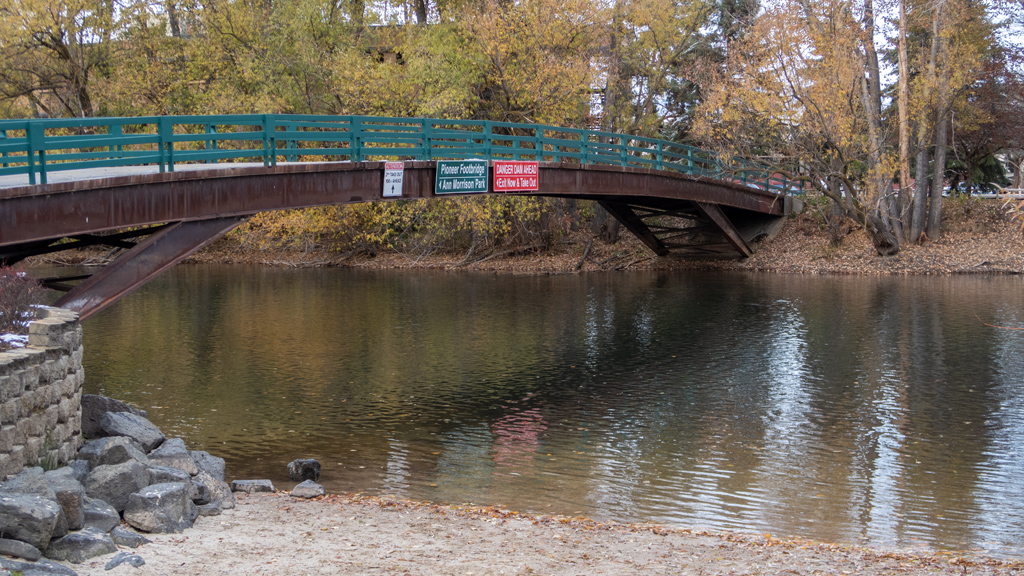
Another place I visited that I didn’t write a dedicated blog post about was Ann Morrison Park. I wouldn’t say there was anything particularly stunning about this park, but it was still nice. There were quite a few other people just going for walks or playing with their kids, and the park gave off family-friendly and community-bonding vibes.

The park hugged the Boise River, so I walked a trail alongside the water.

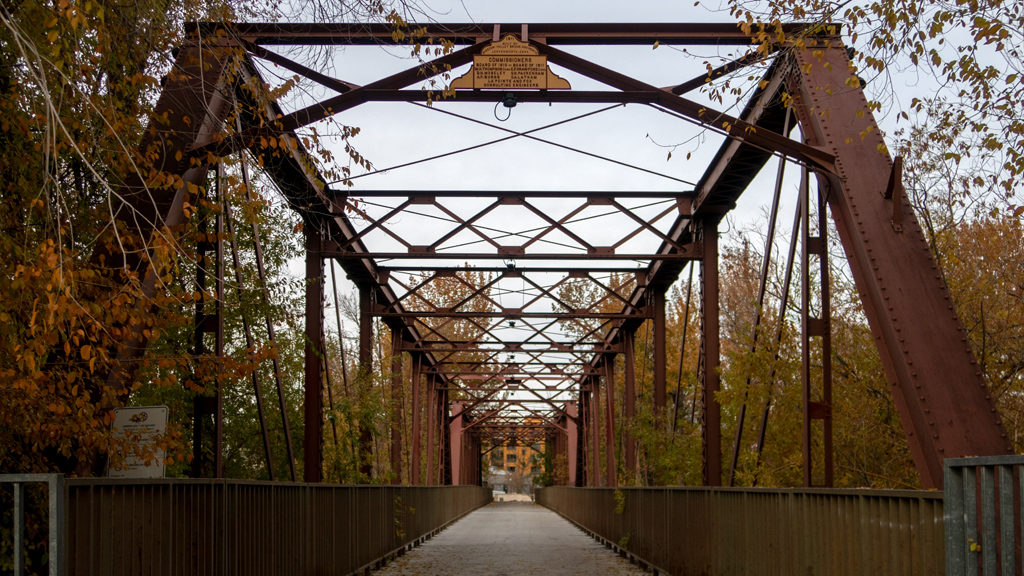
I kept walking down the unnamed trail towards Boise State University, and before entering the campus, I took the Ninth Street Bridge to the other side.

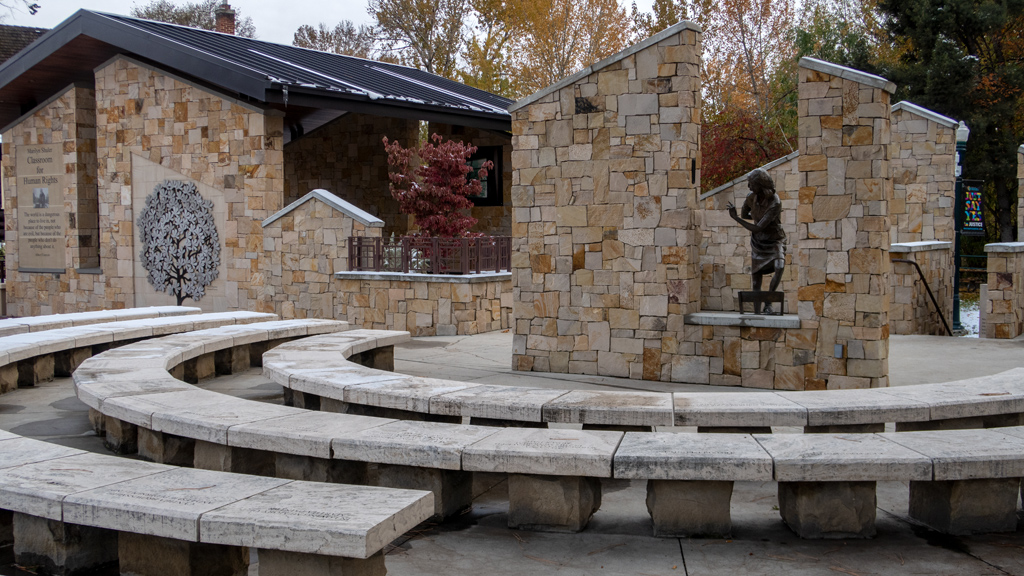
Directly on the other side was the Idaho Anne Frank Human Rights Memorial, which seemed to be either under construction or getting renovations. There were a few monuments that symbolized various aspects of human rights.

After walking around for a bit more, I made my way back to Ann Morrison Park.

Taking a brief intermission for a contextual story… Google Maps has a location sharing feature, and while I was staying long-term with my friend Doug Wreden, I gave him access to my shared location. After I left, I kept his access permission intact so he could see where I was in my travels.

He finds this very amusing, and once in a while, he will text me saying “I hope you are enjoying…” with a particular business name, which usually hap­pens while I am driving and simply just happen to be passing in front of the building (as opposed to actually being at that place).

One day, Doug texted me excitedly telling me to look to my right at “Dog Island.” I, like usual, was just driving past the area, but later on, I looked it up and found the island he was talking about. While returning to my truck from Ann Morrison Park, I decided to make Doug happy and cut through To­geth­er Treasure Valley Dog Island.

Unfortunately, the island wasn’t a real island—it was just a peninsula—but the edge of the peninsula that was connected to the rest of the land was attached directly to a cliff, so it was practically an island. As for why it is called “Dog Island,” it is basically a massive no-leash dog park. You have to open two sets of sequential gates to get in, and they are secured using no-key locks that can only be opened using opposable thumbs, but once you’re in, you’re surrounded by dogs happily running around everywhere and having fun.

I enjoyed my stay in Boise. It isn’t quite as stunning as Canada or some parts of Montana, and it’s not as strange and quirky as where I usually live in Las Vegas, but it’s a solid, well-rounded city, and I can definitely see why so many people have been moving there lately.

There are a lot of interesting things to do (more so than other much bigger cities, it seems), and I feel like I could’ve continued to keep myself occupied with more tourist activities even if I had booked my stay to be an entire month instead of just two weeks. The culture also reminded me a bit of Montana in the sense that the people here were very friendly and had a “be self-sufficient, but also look out for each other” kind of attitude, but it also had a sprin­kle of medium-sized city culture as well.

My stay in Boise doesn’t add another state to my travel map because I had already previously driven through the Idaho panhandle, but it does change I­da­ho from just a drive-through state to a destination state.

Since the last time I posted a copy of my travel map, I also made a few adjustments to Washington—I decided to treat the Seattle Metropolitan Area like I did the San Francisco Bay Area and add more destination pins, considering that a lot of the cities I stayed at were far-enough away from each other that it would sometimes take an hour or more to get back to the city of Seattle.

Next up is a quick stop in Twin Falls, Idaho, then onward to Utah.


—§—


Goodbye, Seattle Metropolitan Area

Since the middle of May, I’ve been using the Seattle Metropolitan Area as my “temporary home base.”

Shortly after arriving, I flew to Las Vegas to take care of some errands after a long journey through South Dakota, Montana, and eastern Washington. Af­ter returning and resting up for a week and a half, I set off on the Canadian leg of my road trip.

Immediately upon my return, I petsat, then for the next few months, I rotated around visiting and staying in friends’ homes, exploring the Seattle suburbs, doing more petsitting, spending time with friends, and flying out of SEA to get to places I needed to be, including two more Las Vegas trips and a visit to TwitchCon.

Now, five months later, I’m ready to set off on the next—and potentially final—leg of my transcontinental road trip.

 
Earlier today, I arrived in Yakima, a city in south-central Washington. I was considering going from Seattle southbound alongside the Pacific coastline, but I still hate California, and I want to avoid Portland at all costs now after what has happened to it in the past few years. (I’ve also already been to Port­land; this was before it got really bad and it was still a bit underwhelming.)

Instead, I decided to route myself through southern Idaho and back across Utah, then stop by Las Vegas again on the way to living at the Tempo facilities in Long Beach, California for the winter again like I did last year.

Here is how my progress is looking so far:

Having spent so much time in and around Seattle, there were a lot of photos I took, many of which I published on my website in their dedicated blog posts. However, some were publication-worthy but never made it online. I figured this round-up post would be a good place to share some of my final shots from the Seattle Metropolitan Area.

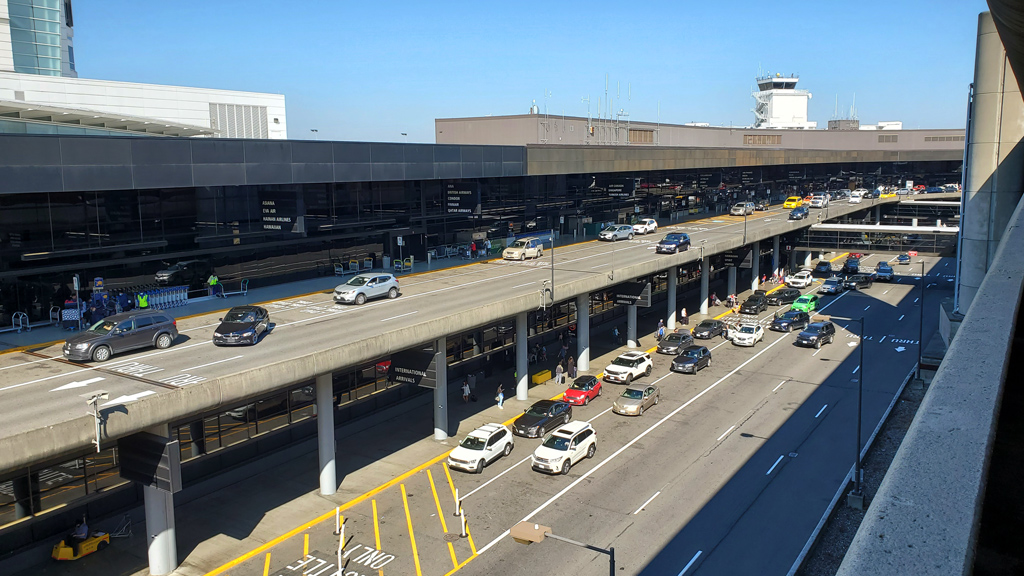
I think a nice place to start is the Seattle-Tacoma International Airport. Throughout my road trip, whenever I needed to fly somewhere, I would park my vehicle at the local airport, take care of business, come back round-trip, then pick up my truck and continue on my road trip. Sometimes, I would end up in very small airports and have to take inefficient flight paths to get where I needed to go, but SeaTac’s great coverage made travel very easy while I was there.
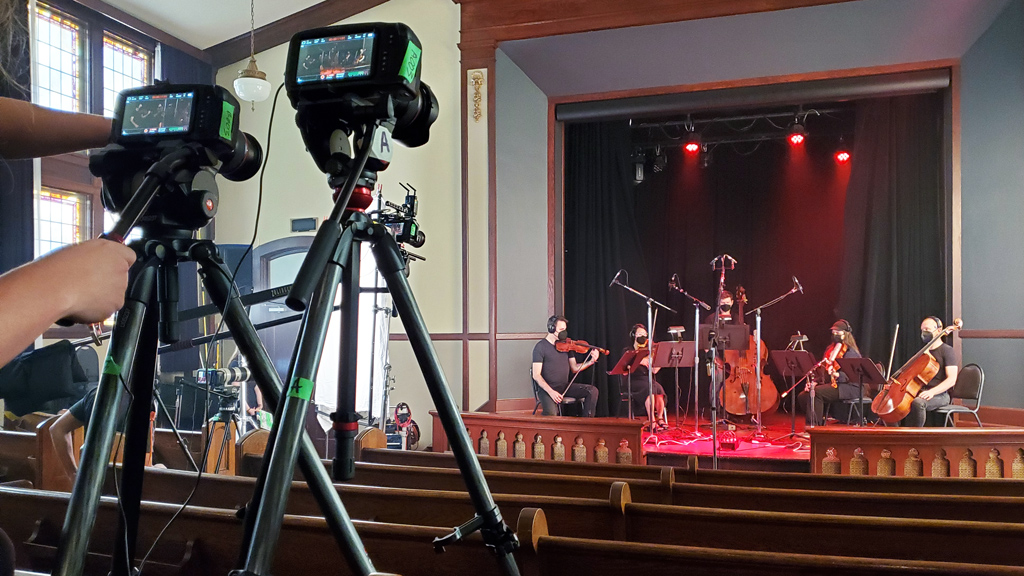
Back in July, Tempo Games filmed an orchestral performance for The Bazaar. I play a ton of different instruments, including the piano and cello, and I’ve been a fan of music in performance ever since I was a little kid, so it was nice being able to stop by to watch and listen to the musicians.

Even though I spent a very large amount of time in the Seattle Metropolitan Area, I don’t actually really like it here that much (I only stayed here for this long because I have a lot of friends and co-workers who live here, so there was a lot for me to do).

The suburbs aren’t as bad, but I think the local Seattle government has devolved into a dangerous echo chamber of extremist liberal viewpoints. My per­sonal belief is that a balance of government is critically important to properly run a city. A diverse governmental structure encourages discussion and de­bate of differing perspectives, which is conducive to considering all the possible options and selecting the best one, rather than one party’s mission snow­balling unmanageably out of control.

With that being said, if I was absolutely forced to live in the Seattle Metropolitan Area, the place I would pick is Bellevue.

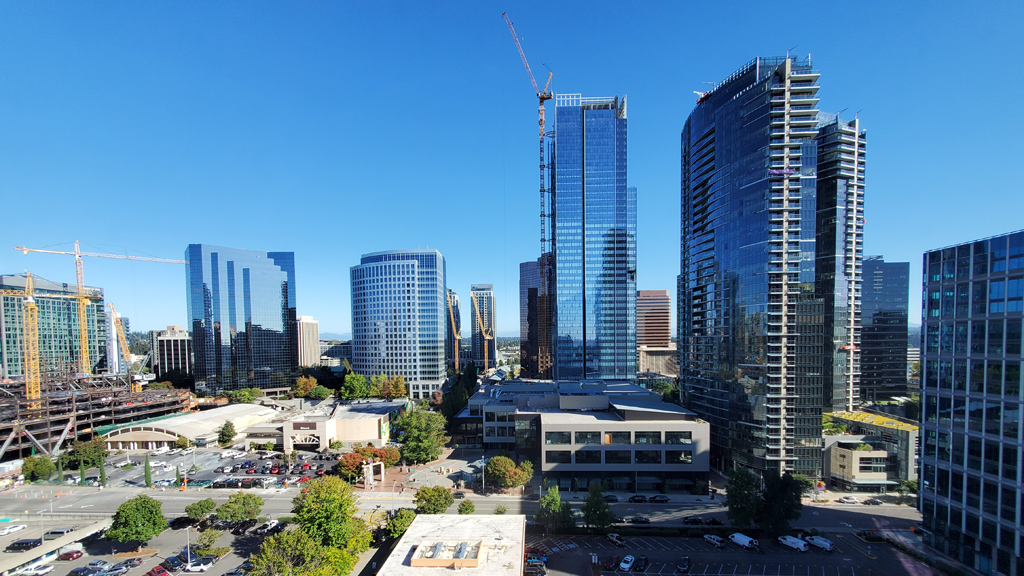
Downtown Bellevue is an amazingly-planned city. It has ample parking, yet still, many interesting things are all within walking distance. It is very well-maintained and clean, the environment is upbeat and welcoming, and it is clear that there is still ongoing development to make it even better.

I like the idea of living in a downtown area, but in a practical and realistic sense, I hate almost all of the actual downtowns. This is why I lived on the Las Vegas Strip instead of downtown Las Vegas—it was sort of an “artificial” downtown where it had the bustle and allure of what a downtown area would be, but without the downsides. Downtown Bellevue is sort of like a Las Vegas Strip, but for business professionals and normal people (as opposed to tourists coming to gamble and drink way too much alcohol).

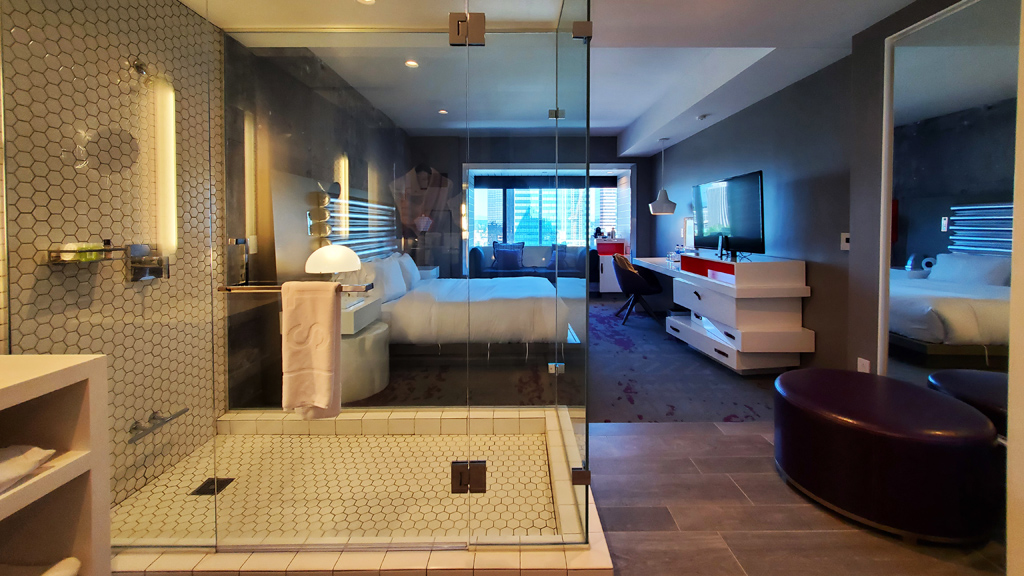
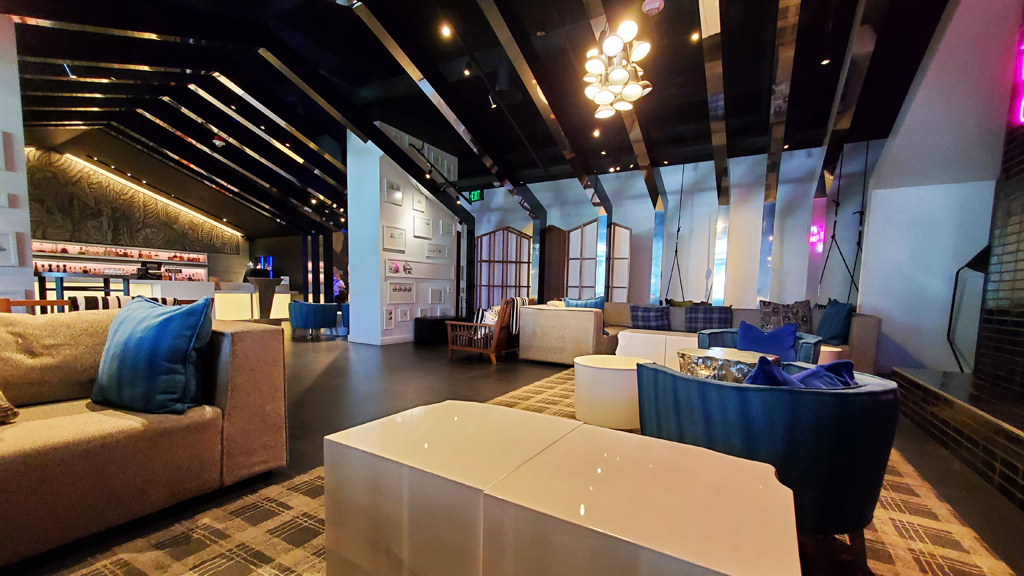
While visiting downtown Bellevue, I stayed at three different hotels, including The Westin Bellevue and the Courtyard Seattle Bellevue/Downtown. The third, which was my favorite, was the W Bellevue.

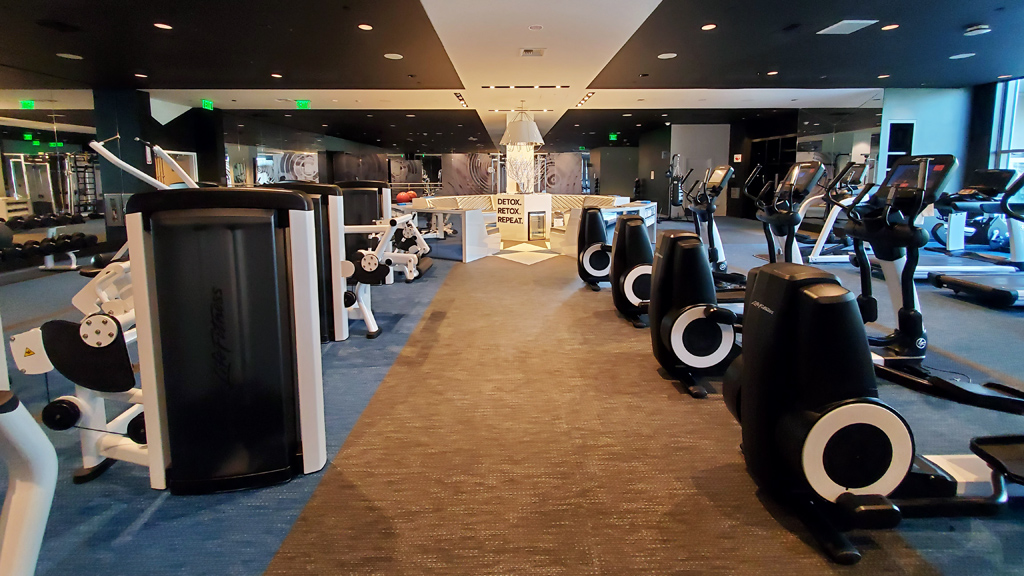
Funny enough, I’d say my favorite part of this hotel was the fitness facility. It was the largest and nicest hotel gym I’ve ever seen, and it literally even has a lounge area in the center to rehydrate and rest up between sets or after your workout. There was some very unique weight machines that I rarely ever see at other gyms, and it even had a punching bag.
I stayed at the W on a few separate occasions throughout the past five months, so I got to experience a few different rooms on all sides of the building—both with a Lake Washington view, as well as a city skyline and suburb view.

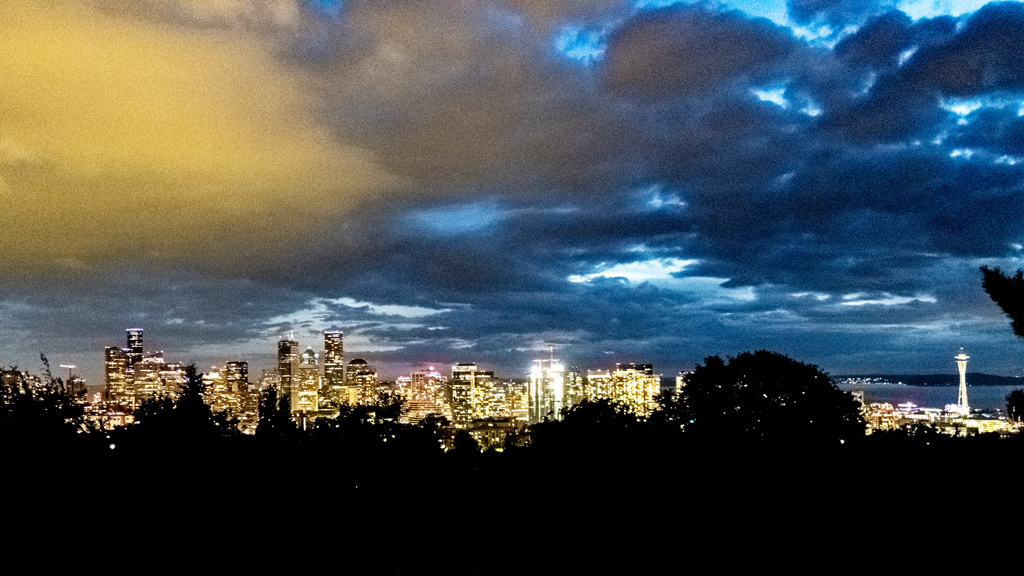
While in Seattle, I was introduced to Dani, who is the owner of Mina the cat. Before those pictures were taken, we walked around Vol­un­teer Park. Unfortunately, we mistimed our trip and it was dark by the time we had arrived, so I don’t have many good photos, but I did capture one after we had climbed to the top of the Water Tower Observation Deck.

It’s very grainy because I zoomed in on the Seattle skyline and it was dark outside, but after enhancing some of the raw camera sensor data, it was able to extract a lot of texture from the sunset and clouds, which I thought looked interesting.

Tacoma is generally seen as the more dangerous part of the Seattle Metropolitan Area. However, having survived walking through Capitol Hill in down­town Seattle, I felt confident that I was fit for Tacoma, so I scheduled a visit and explored the city for a little under a week.

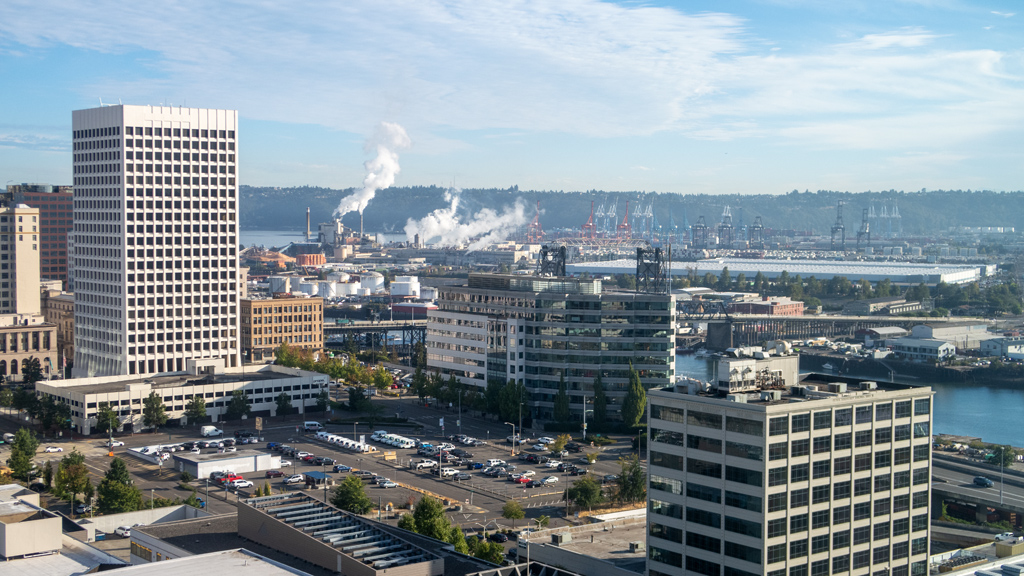
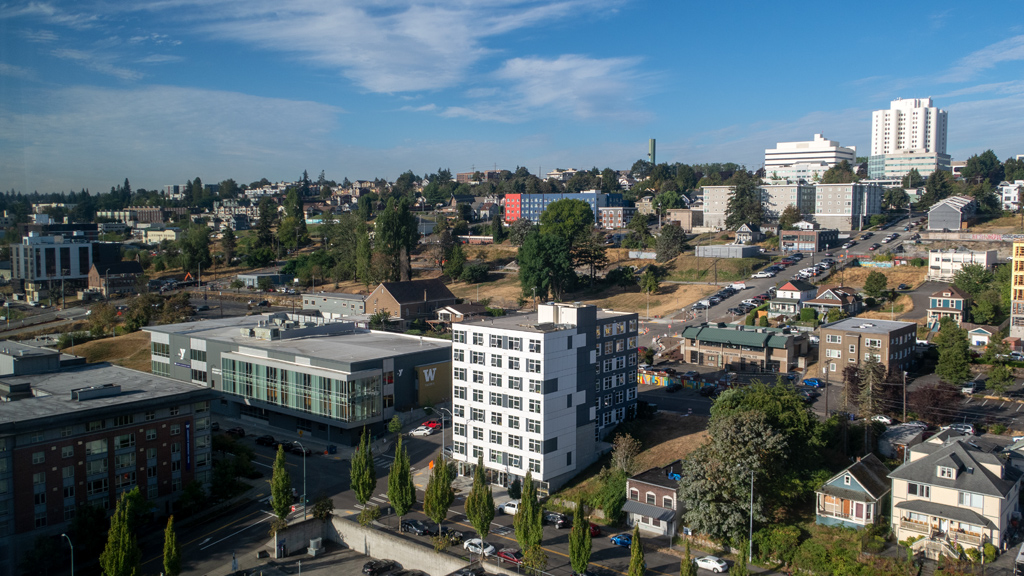
I’m not sure if it was just because I stayed mostly around the touristy areas along the water, but I thought Tacoma was actually pretty nice. I was lucky in that I got a corner hotel room on the 20th floor so I had great 180° views, but the location of the hotel was also convenient so I got to walk to most of my exploration activities instead of driving.

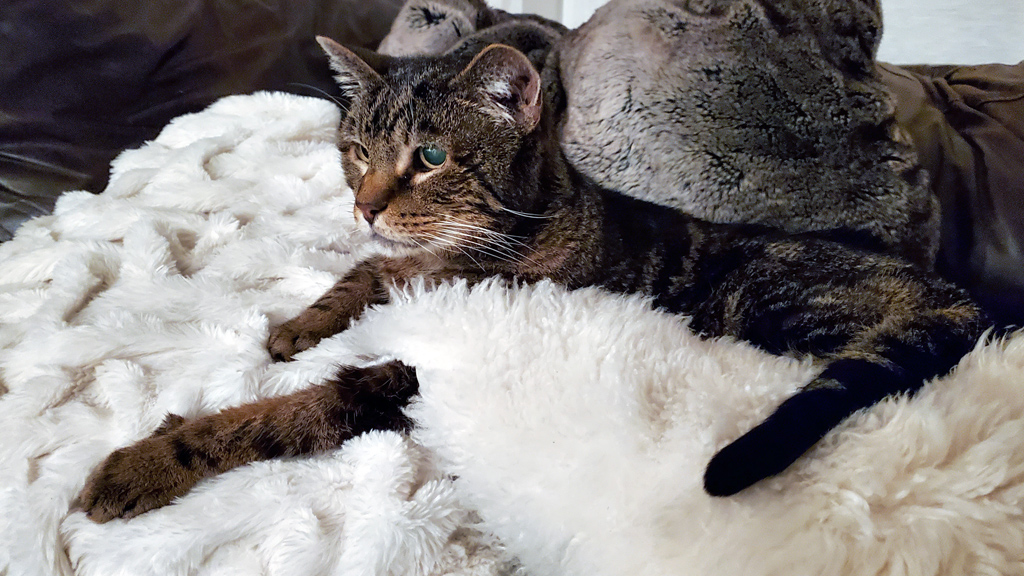
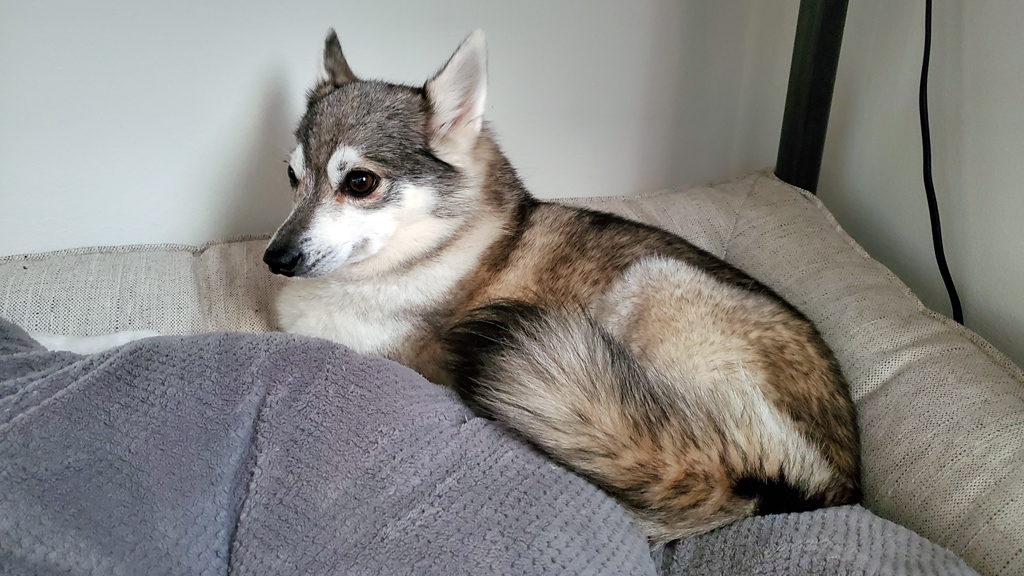
And finally, I already have three blog posts featuring photos of Drake, Kaya, and Bullet, the three animals I’ve petsat on multiple occasions while I was in town, but here are three more, one of each, to close out my trip.

The drive to Yakima was only about two hours, but it was nice being back on the road, driving through mountains and sightseeing new areas. More to come soon…


—§—