Hello, Land Cruiser Heritage Museum in Salt Lake City, Utah

After traveling across the United States and a portion of Canada for about a year and a half now, it feels like I’ve seen most of what there is to see.

When I go to a new city, I like to go to something that the city is known for (like the Indianapolis Motor Speedway in Indianapolis, or the Kentucky Derby Mu­se­um in Louisville), but some areas don’t really have anything that iconic. Yes, most places will have some sort of regional history museum, but it’s not nec­es­sar­i­ly going to be something with nationwide prestige.

Alternatively, I try to look for specialty museums—museums that might not be tied to a specific place, but are so unique and one-of-a-kind that I likely won’t see a variant of it again anywhere else.

While visiting Salt Lake City, Utah, I found a great example of something exactly like that: the Land Cruiser Heritage Museum, a museum dedicated to Toyota Land Cruisers and other related Toyota vehicles.

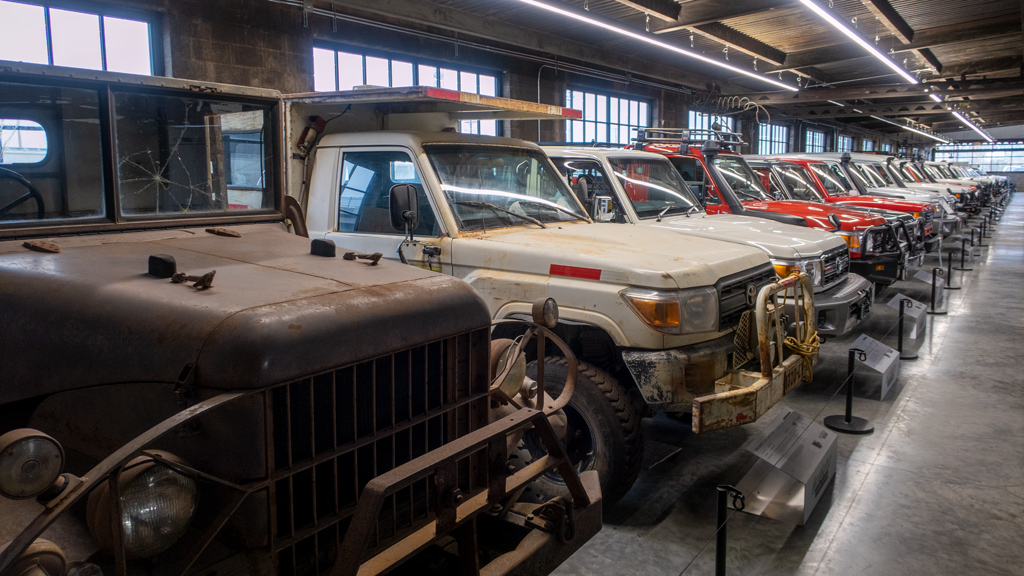
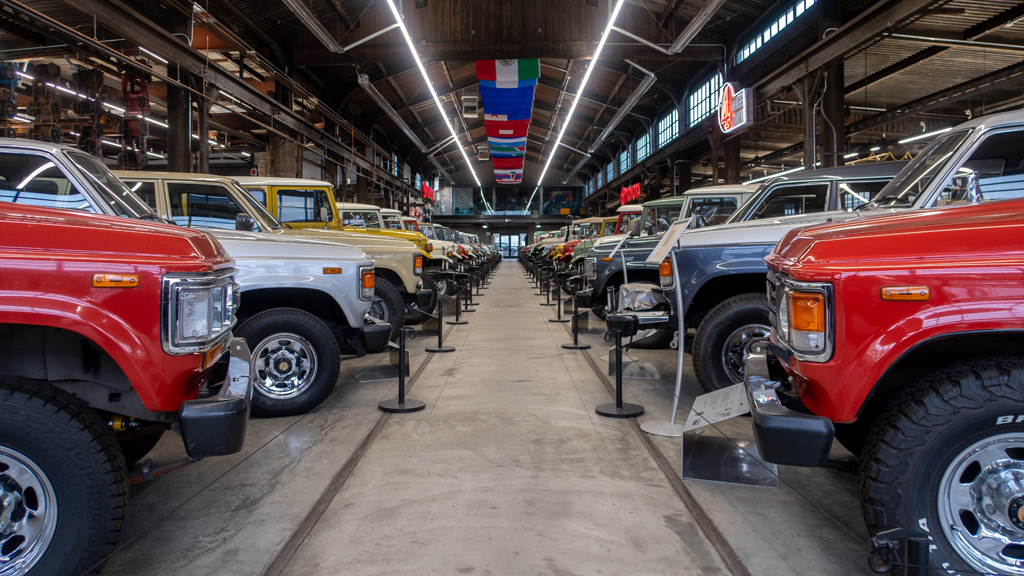
This museum had multiple rows of Land Cruiser trucks and SUVs ranging from models from 1953 all the way to 2021. Beside each vehicle was a very thor­ough description that provided specifications, gave a summary of the general model, and shared a history of that particular vehicle (i.e., what it did dur­ing its lifetime and how it ended up at the museum).

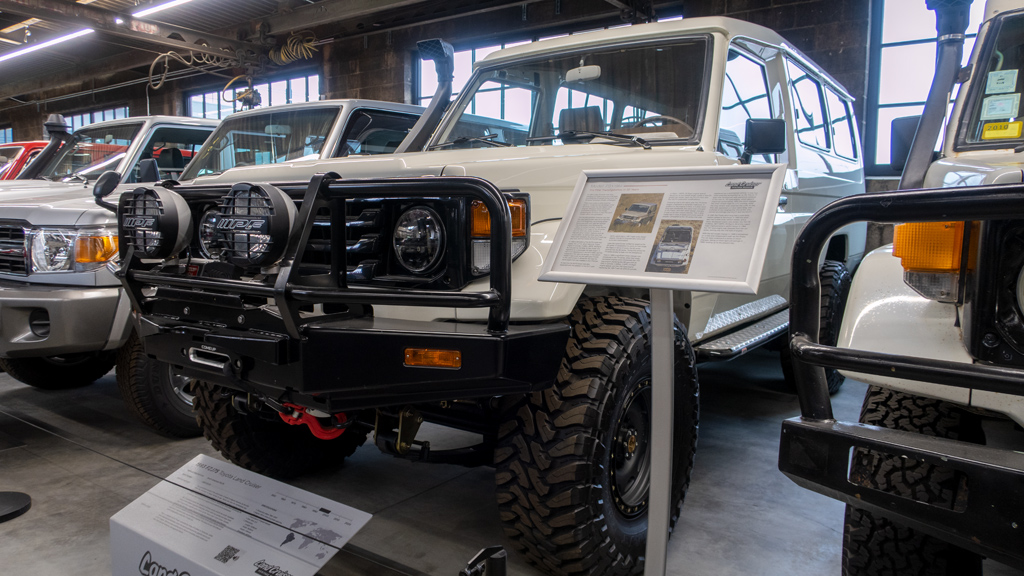
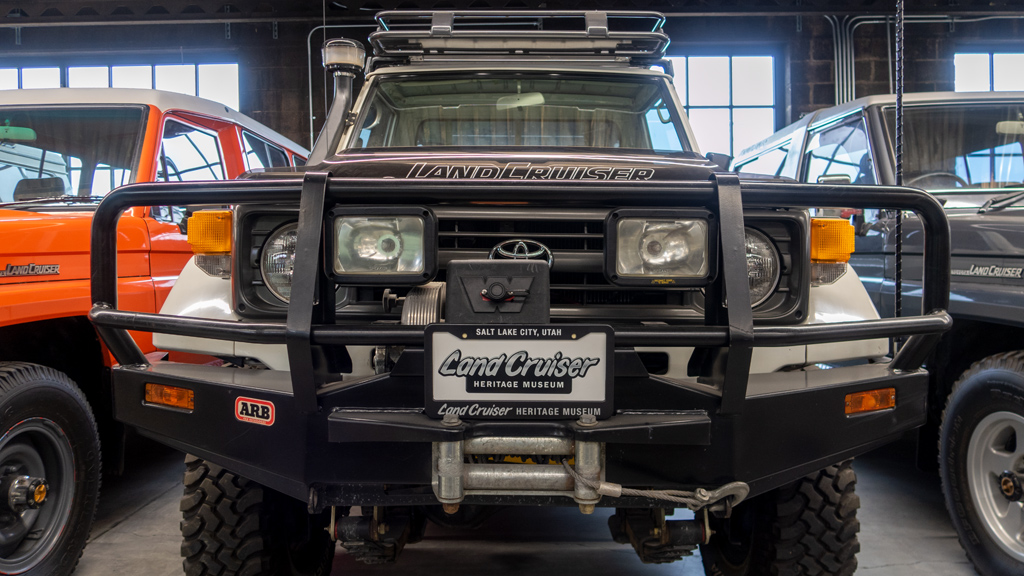
Many of the Land Cruisers had modifications for functionality. One of my favorite things about pickup trucks and body-on-frame SUVs is their easy mod­ability and how owners can change specific parts to their liking to serve their own unique and personalized purpose. It’s fun looking at various up­grades and making the connection of how it was relevant to the vehicle’s story.

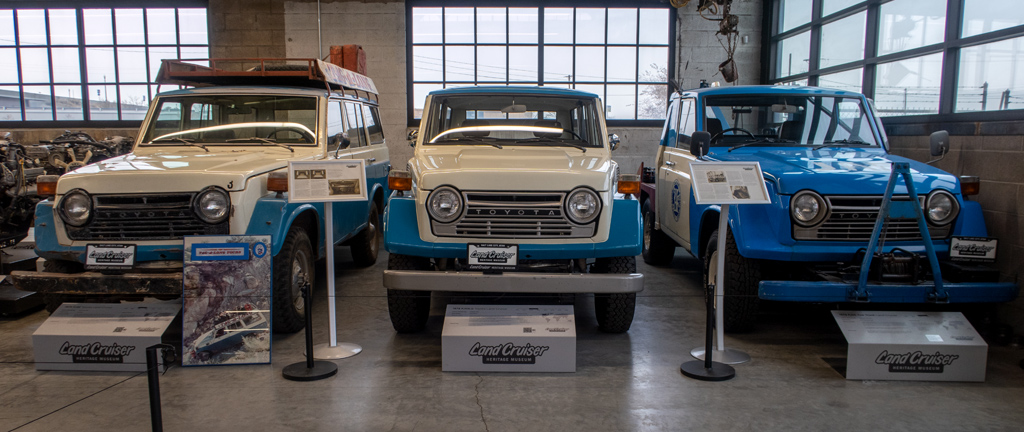
These dark baby blue and white Land Cruisers were FJ models. If I remember correctly, the one on the right was used as a tow truck.

As I looped around one row of Land Cruisers, I turned around the bend and looked down two more parallel rows of even more Land Cruisers.

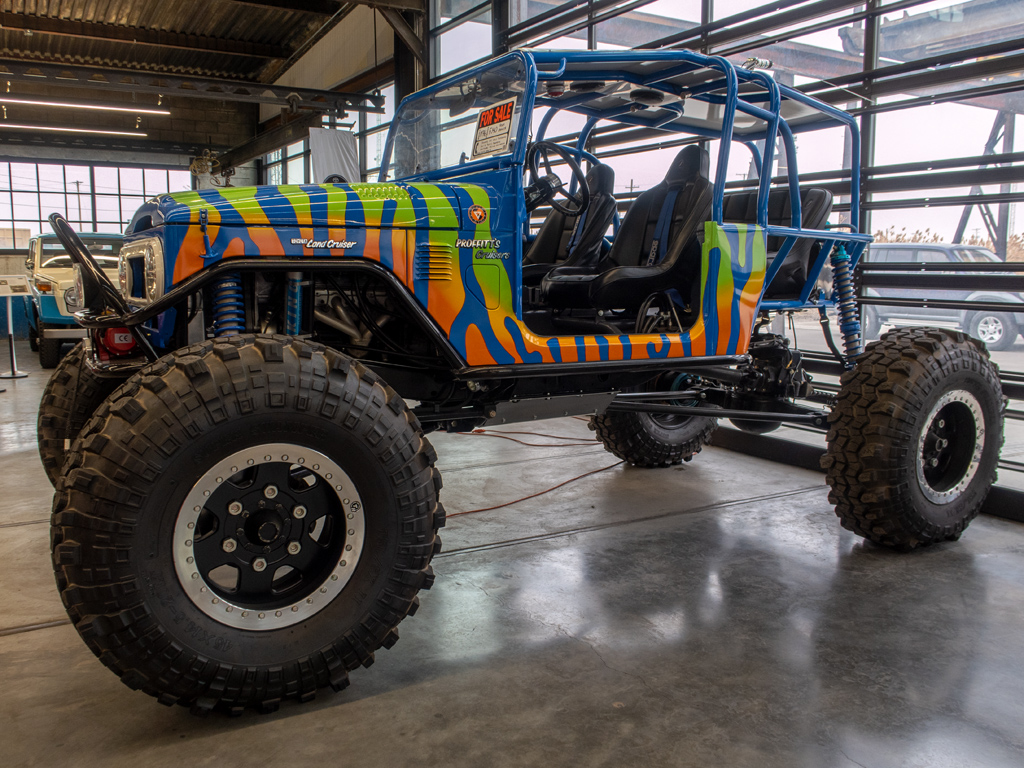
Apparently this monster truck version of a Land Cruiser was for sale.

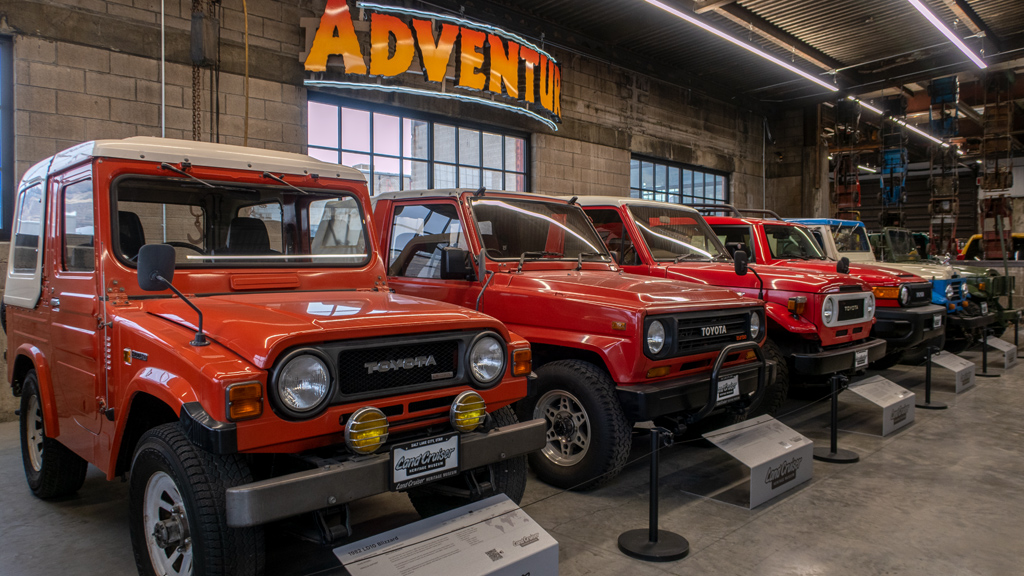
Here are some more FJ models, these from the “Adventure” section. The one thing I remember from this section was that, I’m not sure why, but one of these vehicles had never been used and was straight out of the factory. This meant that a dealership didn’t even have the opportunity yet to remove any of the protective plastic and prepare it for sale. You see the protective plastic film on electronics all the time, but it was very unexpected to see it on the outside of a motor vehicle.

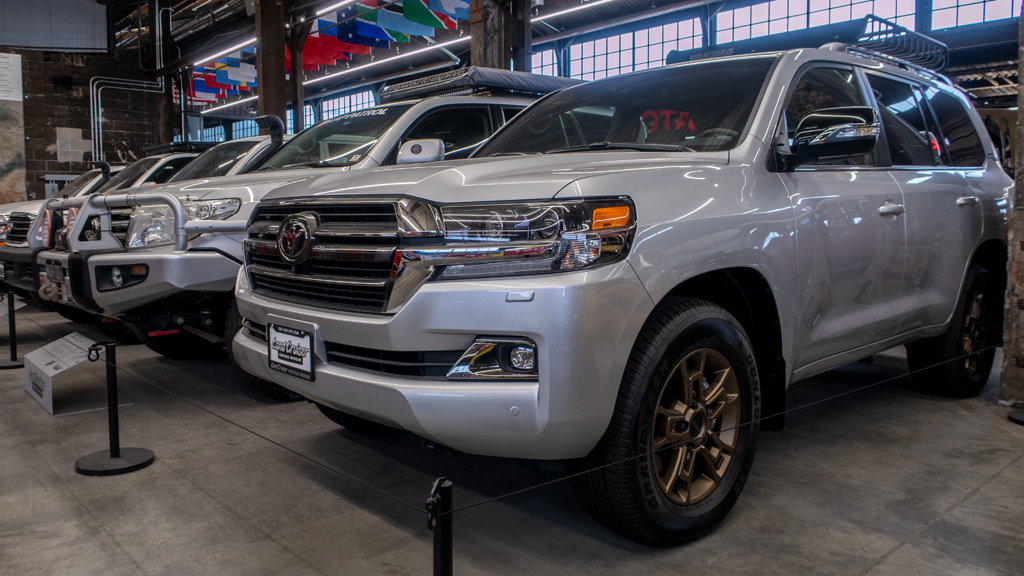
Of course, a Land Cruiser collection wouldn’t be complete without the latest 2021 model. For those who don’t keep up with trucks and SUVs, Toyota de­cid­ed to discontinue the Land Cruiser, so this will be the last model made. I’m curious how this museum is going to react to that—whether they will start bringing in some Sequoias instead, or just focus purely on historical models.

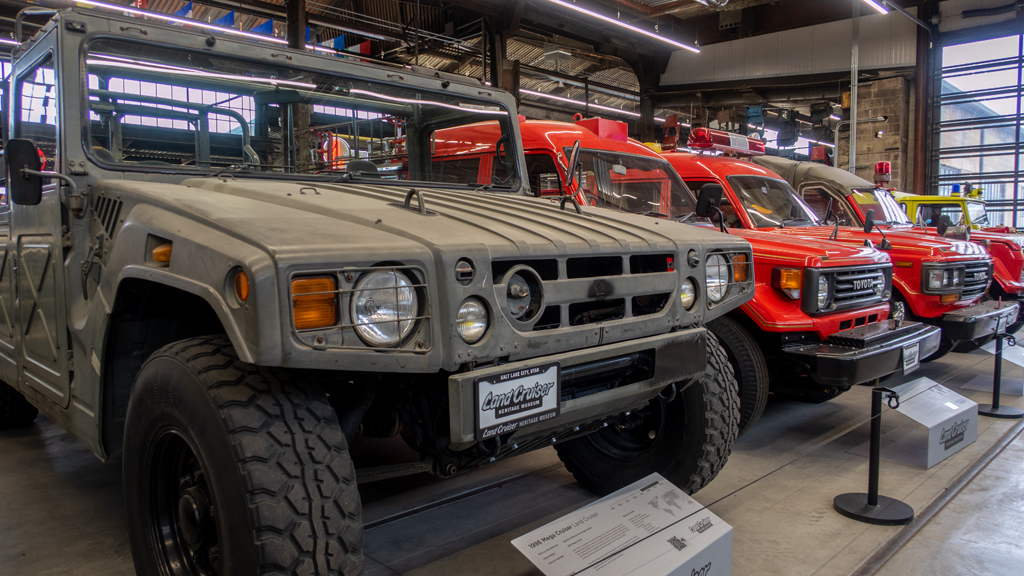
This is a Mega Cruiser from the 1990s designed to be a military vehicle. It is extremely boxy, so it looks unmanageably gigantic. Funny enough, though, I checked the specifications on the info placard and discovered from the dimensions that the width of this Mega Cruiser is actually narrower than the Ram TRX and Ford F-150 Raptor.

This reminded me of when Tesla first unveiled the Cybertruck and people thought it was massive… without realizing that the published dimensions made it nearly identical in size to a traditional full-size pickup truck like a Ford F-150 or Chevrolet Silverardo. This goes to show how much body lines and other aesthetic factors have a play in a vehicle’s perceived size.

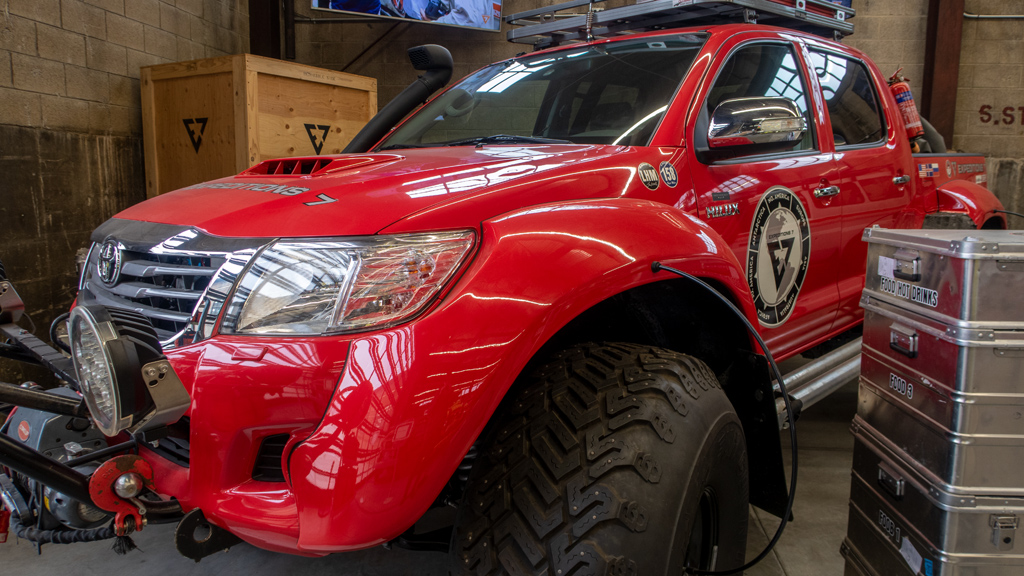
This is clearly a Toyota Hilux and not a Land Cruiser, but the reason it was included in this museum, and the reason I included it in my blog post, is due to its incredible story. This Hilux was part of the “Arctic Trucks” collection and served on some of the harshest expeditions across Antarctica and Green­land.

There was a lot of information posted about these expedition vehicles, and reading through all of them made me gain a lot of respect for the people who decide to conquer the most remote areas of the planet in a small group, and along the way, demonstrating great self-reliance by overcoming catastrophic levels of vehicular damage inflicted by unexpected obstacles.

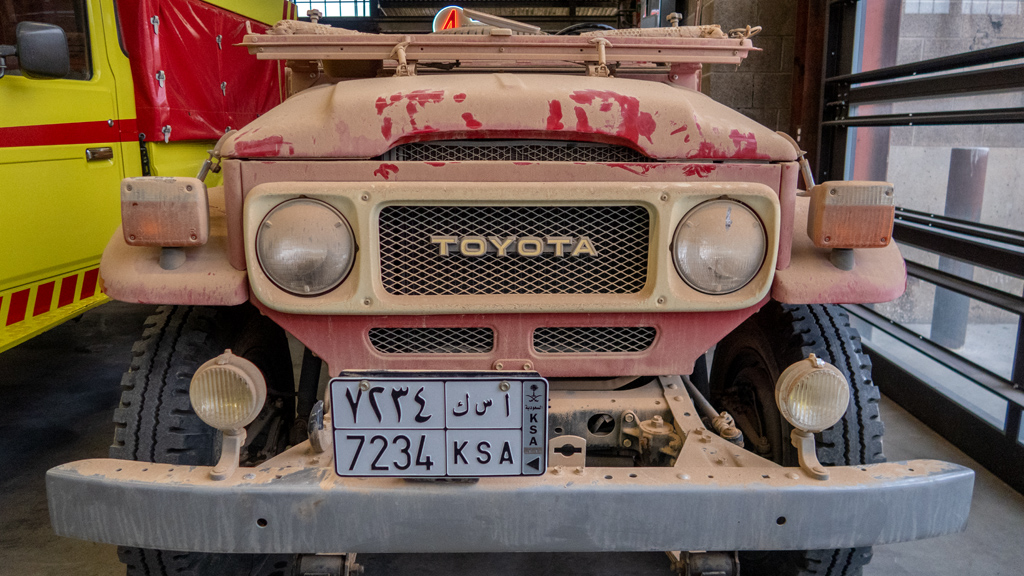
I took a picture of this vehicle because I found it funny that it arrived at the museum with all its Middle Eastern dirt and dust intact. You can see where people had touched it, which I imagine is what prompted the museum to further place an additional sign reminding people not to touch it.

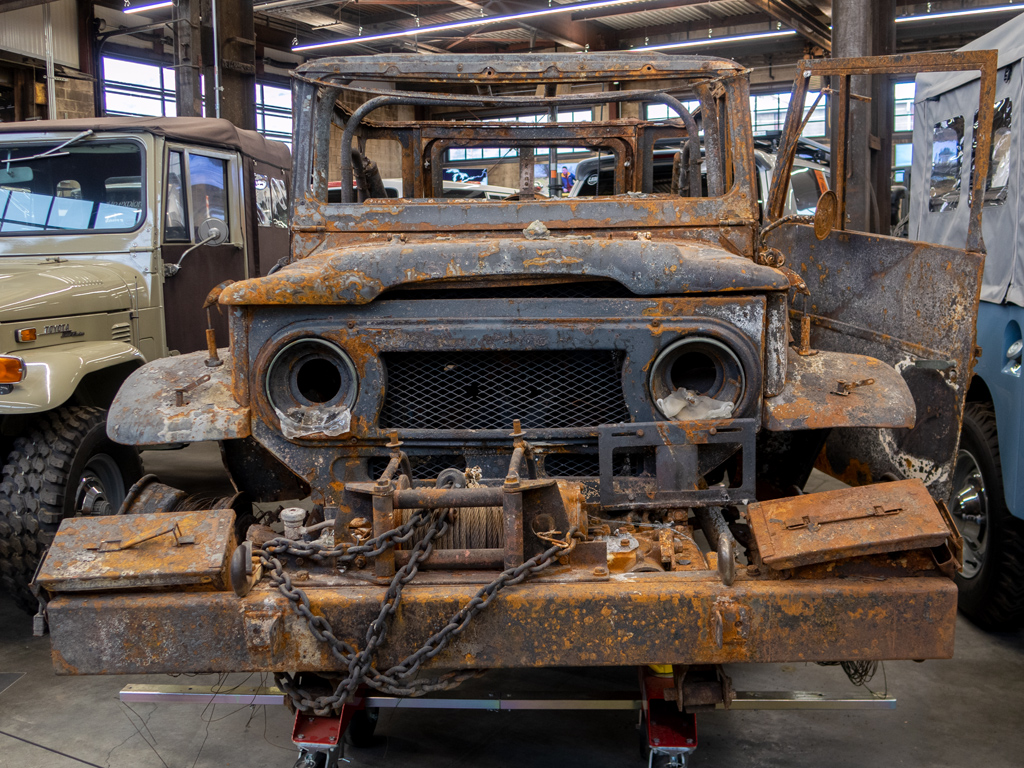
This charred FJ Land Cruiser had my favorite story behind it, albeit a sad one. Owned by a former Butte County sheriff, this Land Cruiser was engulfed in flames during the 2018 Camp Fire in Paradise, California—a fire that I specifically remember hearing and reading about as it was happening four years ago. It is the most destructive Californian wildfire to date, and it took about three weeks for the fire to be fully contained.

This Land Cruiser sits in the museum to remind us of the fragility of life, the speed at which things can be abruptly taken from us, and the importance of cherishing and appreciating the people and belongings we love.

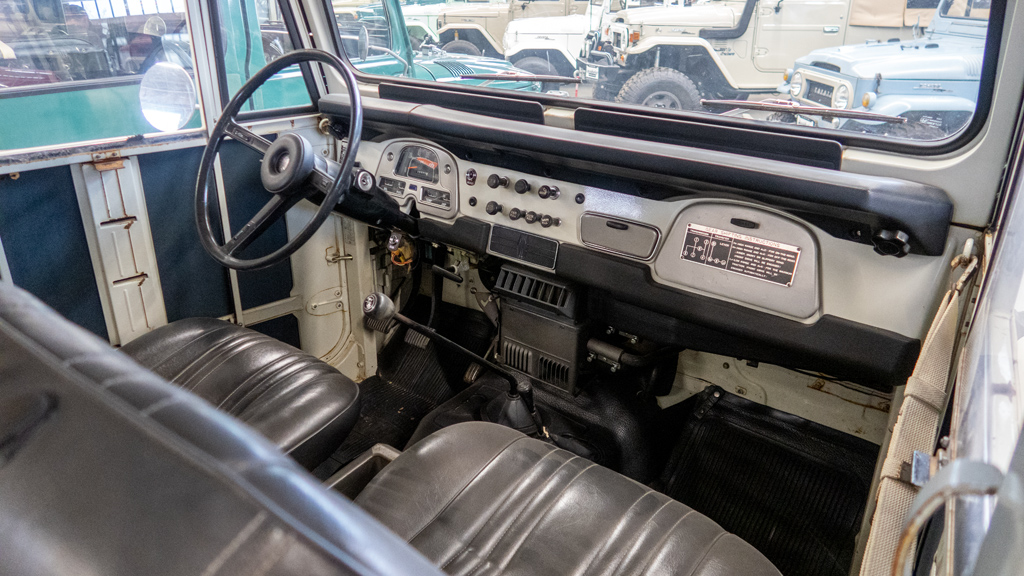
It was difficult to get any interior shots because of how the museum was organized and how cramped the vehicles were placed alongside each other (which was sort of a necessity due to the vast quantity of vehicles on display and the limited space in the building), but I was able to peek into some of the Land Cruisers that were on the corner edges by the aisles.

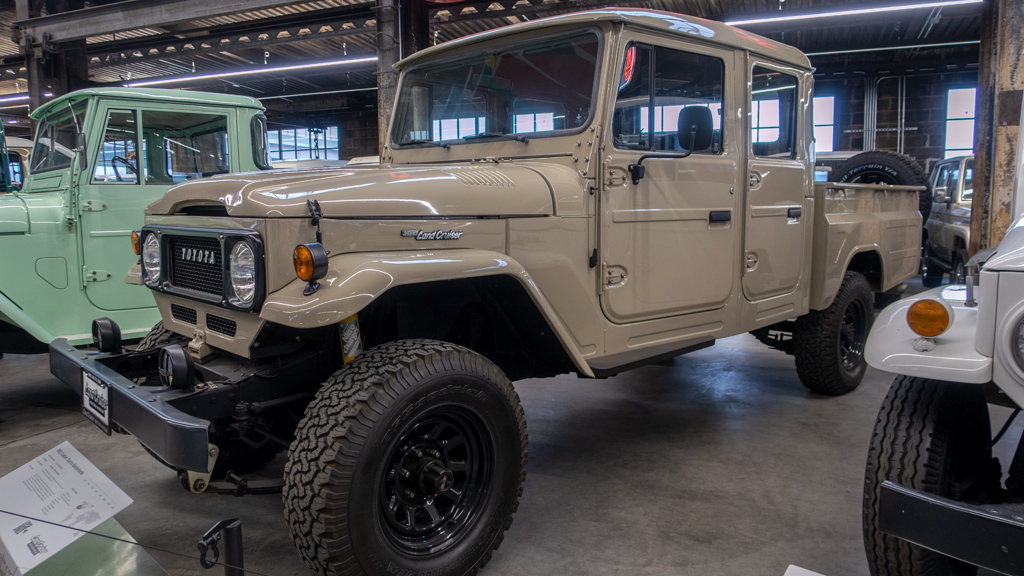
Of course, being a pickup truck fan, I had to post at least one photo of a pickup truck—this is a Bandeirante concept prototype that ultimately became the FJ Cruiser.

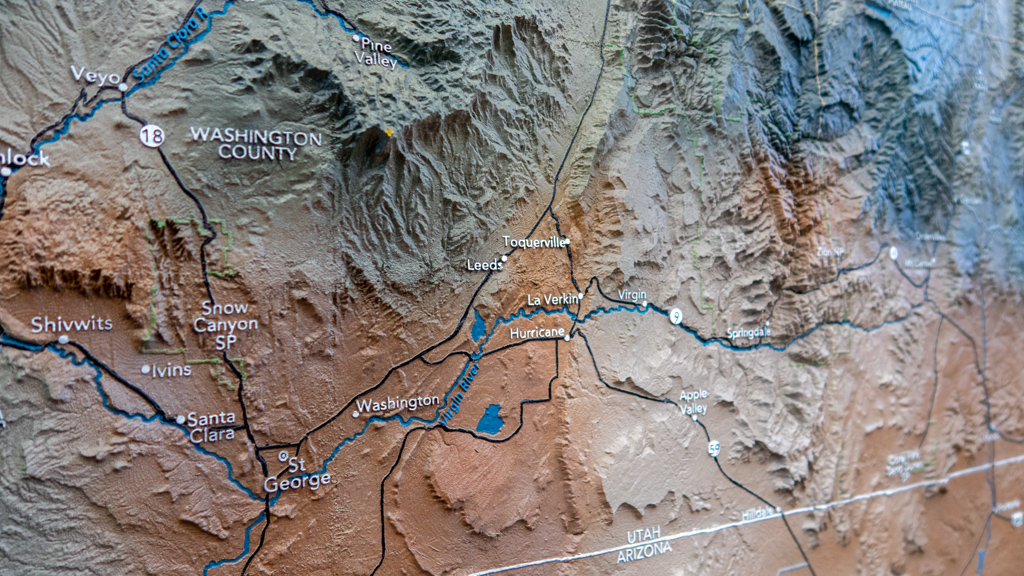
On the theme of the off-road potential of Land Cruisers, the museum had a very intricate and detailed topographical map of the state of Utah on display on one of the walls. I thought it was extremely well-built, so I snapped a photo of the southwest corner of Utah near St. George, my next destination after Salt Lake City.

If you don’t care at all about cars, this is absolutely not the museum for you. Admission was US$18.00, and someone who is not actually interested in Land Cruisers will probably stroll through in 20 minutes or less, and it won’t be worth the price to get in.

However, if you are a fan of trucks, SUVs, and/or off-roading, this museum is probably going to be a dream come true for you. I personally spent a few hours slowly going through every vehicle, reading almost every single vehicle’s story, and revisiting some aisles twice. There were also some videos play­ing in the ad­ven­ture section, and I stuck around watching decent portions of them to see the brutal expeditions that the trucks sitting directly in front of me had been on.

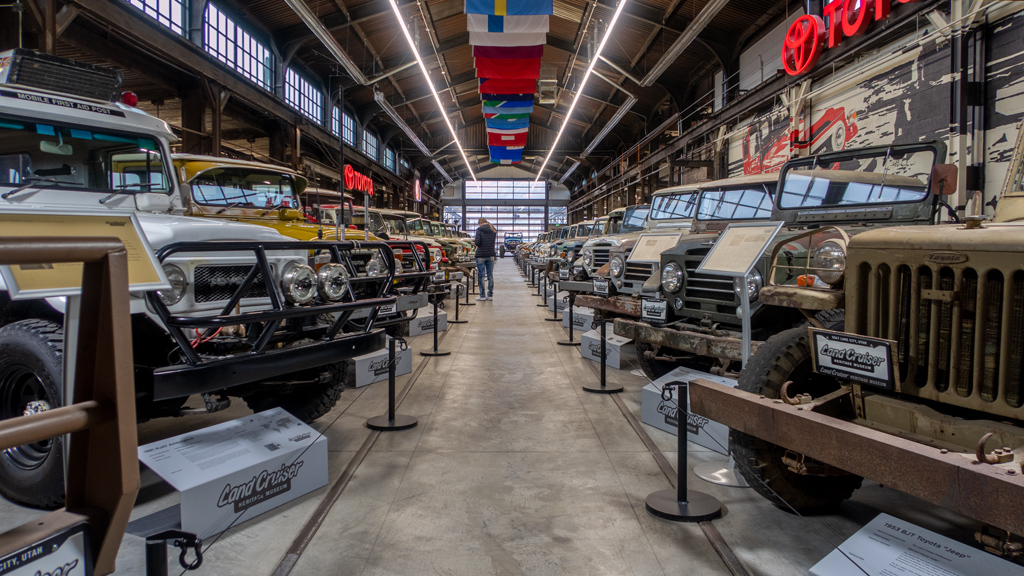
And there above is the final shot I took down the center of the museum from the entrance/exit.

I’m not really sure where this museum gets the funding to be able to afford all these Land Cruisers and cover the upkeep and maintenance for the fa­cil­i­ty, but I sure hope they can keep it going, because this was definitely a one-of-a-kind experience.


—§—


Hello, Shoshone Falls in Twin Falls, Idaho

On my way from Boise, Idaho to Utah, I made a quick stop part-way there in Twin Falls, Idaho for a few days.
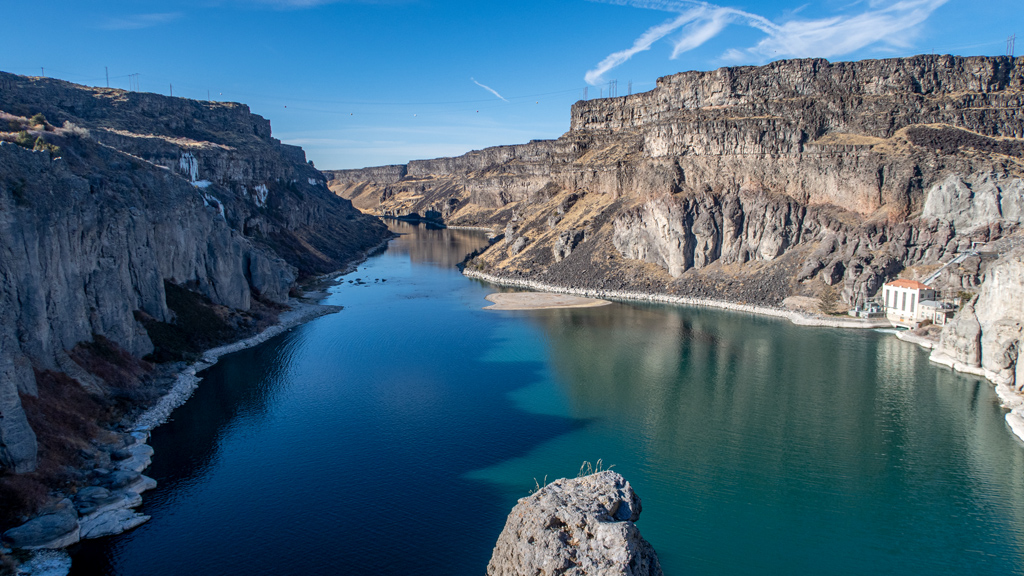
This stop coincided with an eventful few days for my Corporate Op­er­a­tions Department at Tempo. On top of that, I wanted to play through the World of Warcraft Dragonflight pre-expansion patch con­tent be­fore re­lease day coming up (I don’t plan on binging and rushing through the new expansion right after it comes out, but I still want to experience the pre-patch storyline in its “To be continued…” state before that op­por­tu­ni­ty expires). And finally, it was also de­bil­i­tat­ing­ly cold outside most of the time.

The fact that my stay was relatively short, along with all these other rea­sons combined, meant that I only got to do one major tourist ac­tiv­i­ty in Twin Falls. I decided to pick the spot that Twin Falls is best known for: Shoshone Falls.

Back when I was still in Boise, I met someone who is originally from Twin Falls, and she claimed that Shoshone Falls can sometimes have wa­ter volume greater than Niagara Falls. That set my expectations pret­ty high, but I was also rational enough to realize that that’s prob­a­bly on­ly the case during the late spring when all the snow from the north is melt­ing and flowing down.

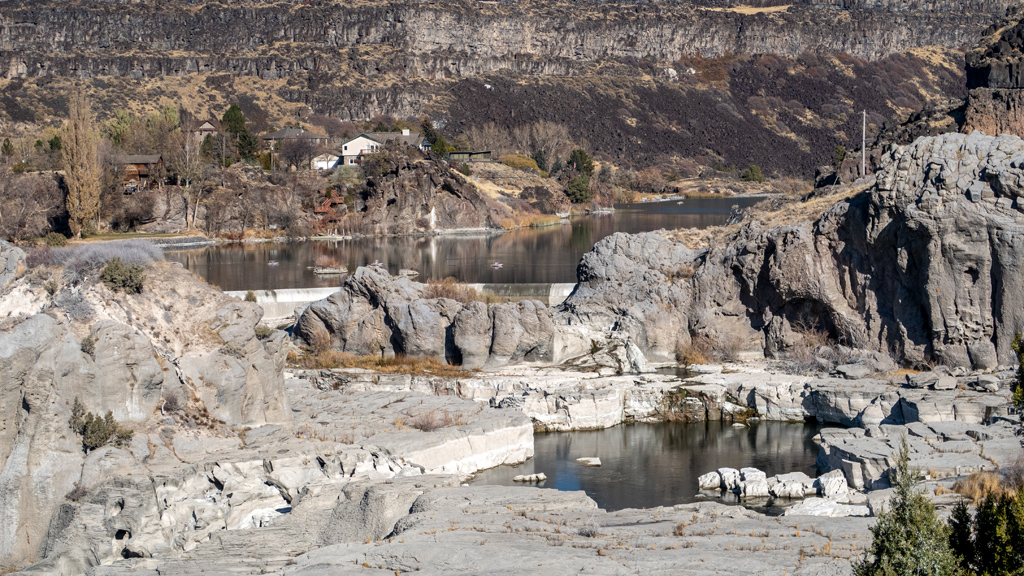
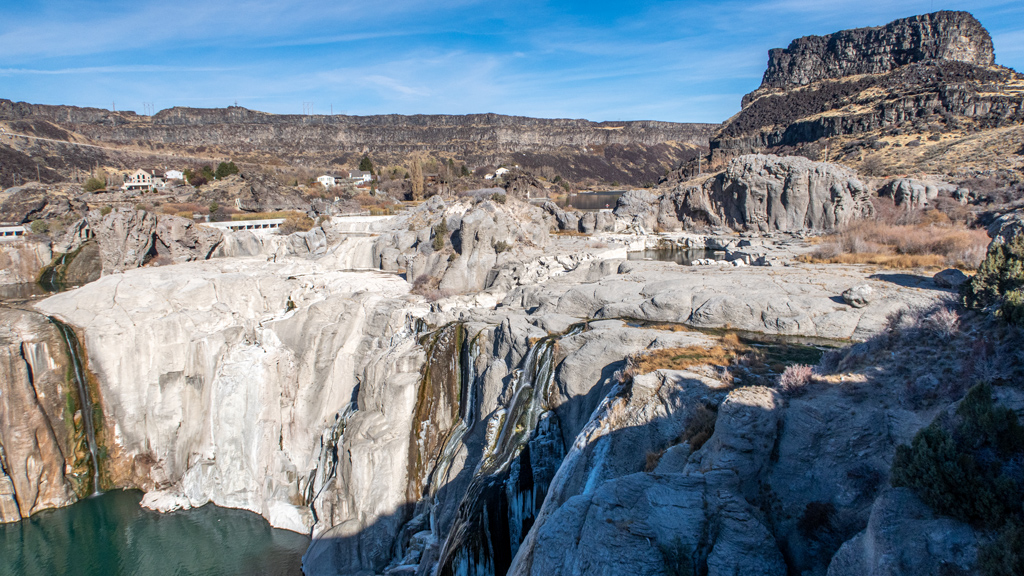
Needless to say, I was pret­ty disappointed at Shoshone Falls. The wa­ter­fall was a trickle at best. If it’s any consolation, at least I was able to en­ter for free, when otherwise there is usually a US$5.00 en­trance fee.

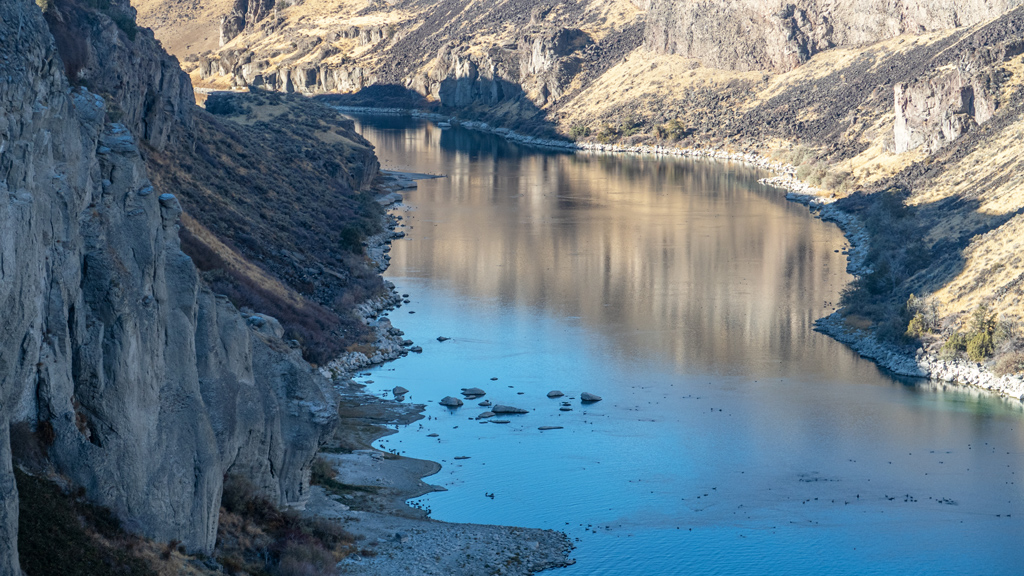
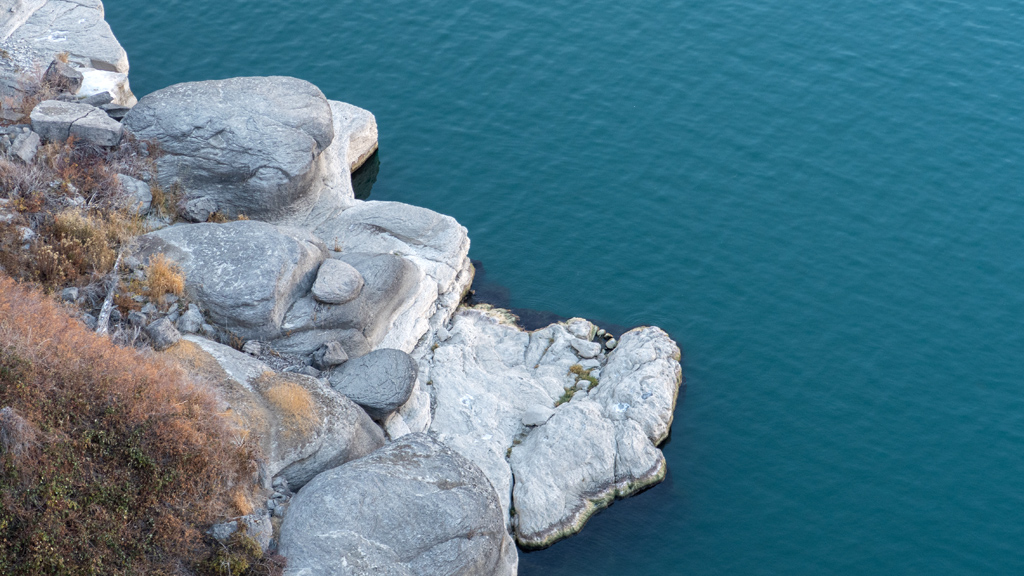
After observing from the main area, I made my way around to the side, where I found a short trail which led to a small clearing with nice views of the Snake River from a different angle.

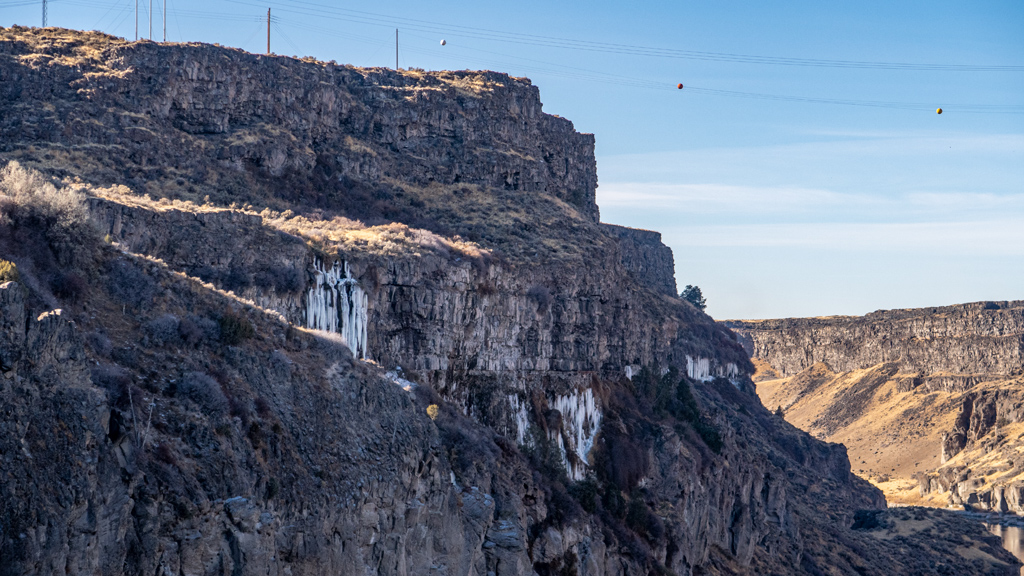
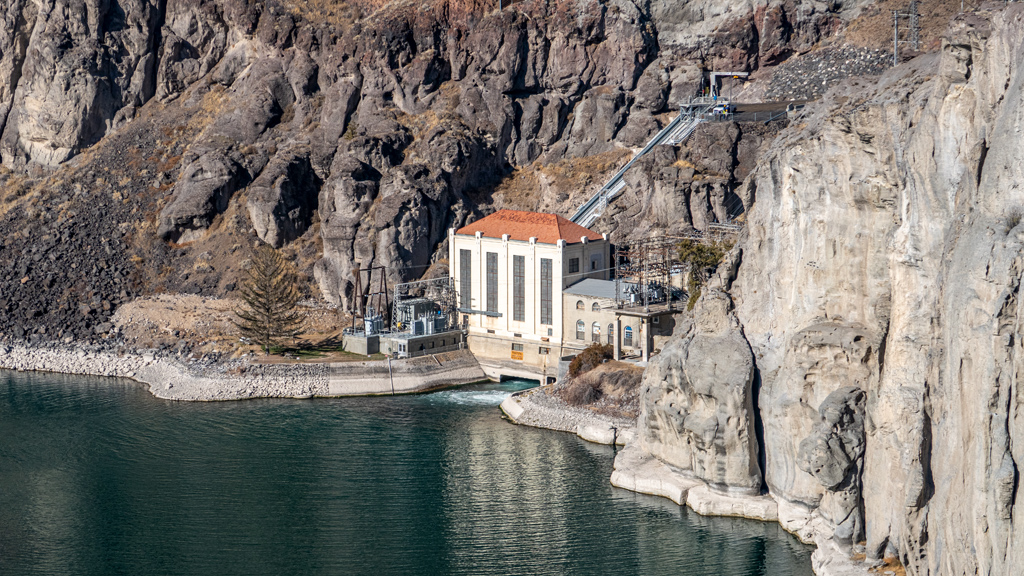
The most interesting part about this alternative angle is that it seemed like portions of waterfall were deep inside the rocky cliffsides, and where there were openings, the water splashed out enough that it created icicles.

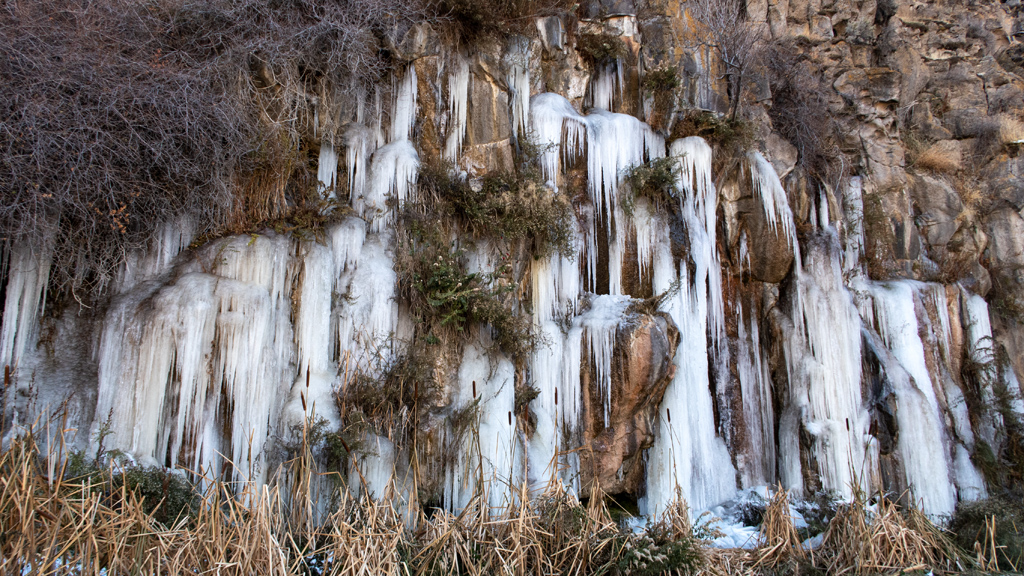
After enjoying what I could of Shoshone Falls, I made my way back onto Champlin Road and drove up the grade. The cliffs hugging the side of this road had a similar situation as the bluffs pictured above, where a smaller waterfall blanketed the rocks with icicles.

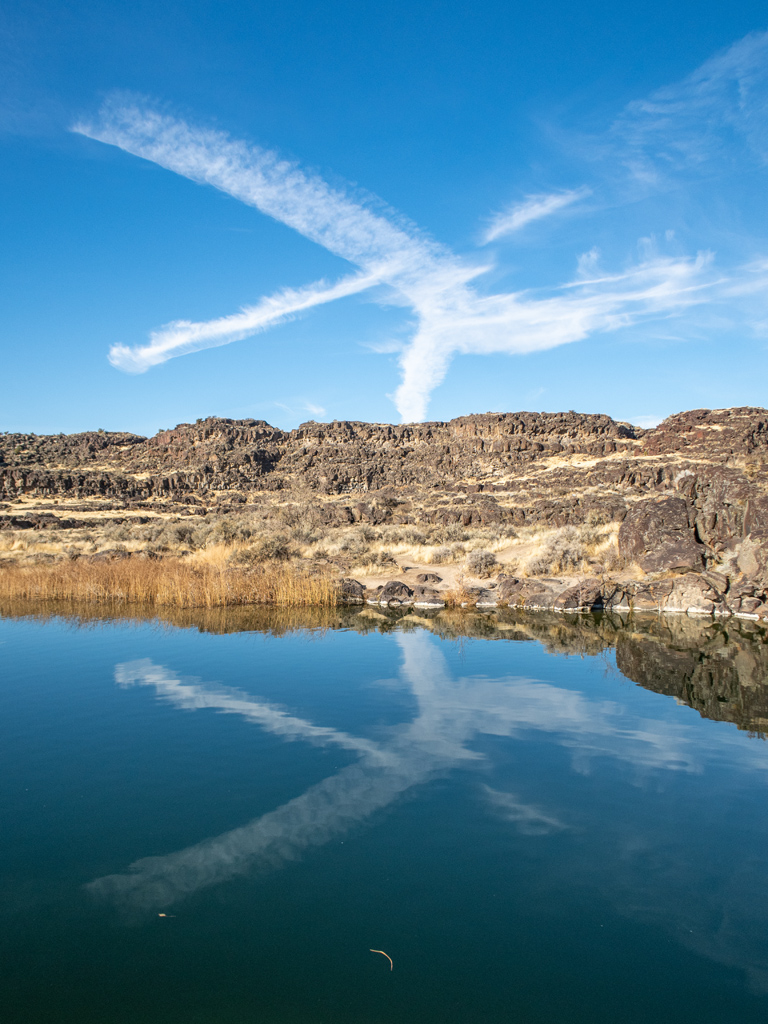
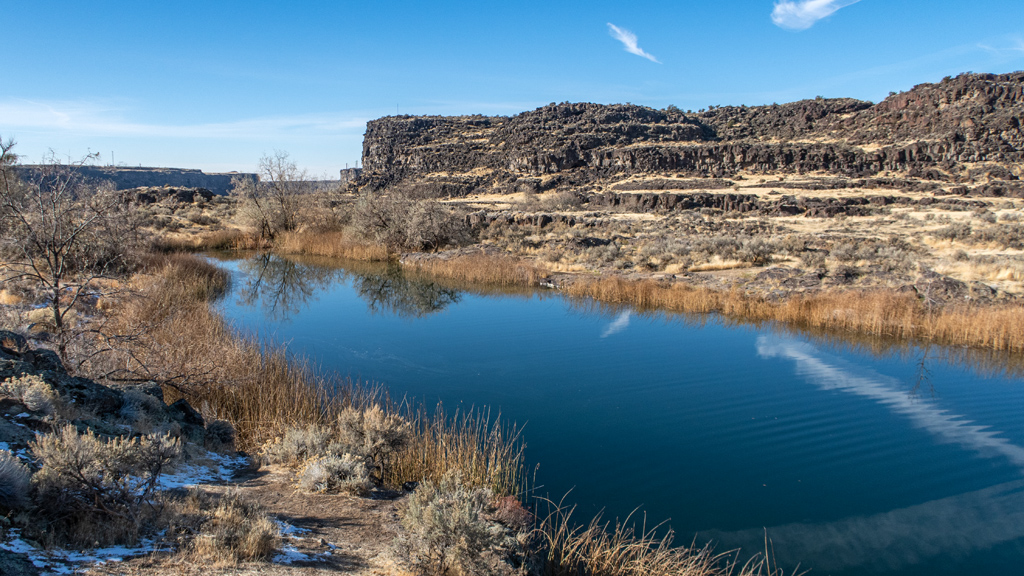
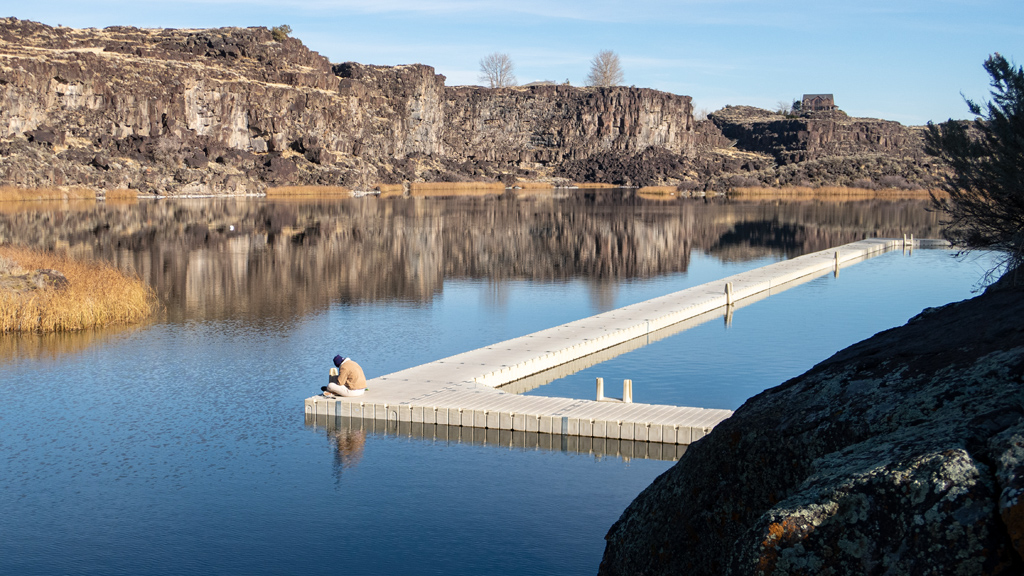
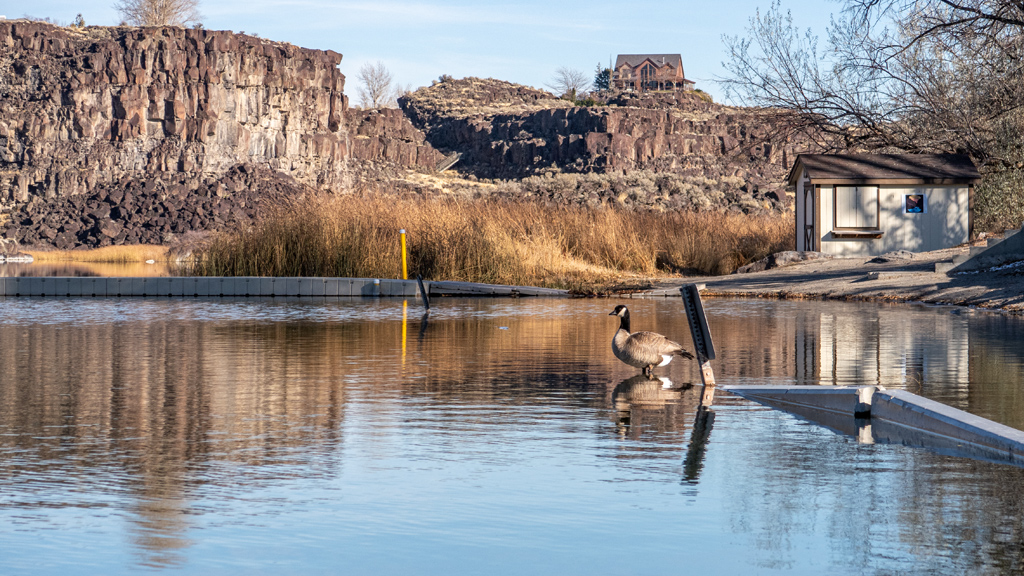
Wanting to see a bit more before leaving, I continued on East 3400 North eastbound to Dierkes Lake.

I like exploring the outdoors, and Twin Falls was conveniently located close to Interstate 84, so it was definitely worth it for me. However, if you’re planning a special trip to this area and want the best experience, it’s looking like late spring (or maybe even early summer) is going to be the optimal time to go for the most impressive sights.


—§—


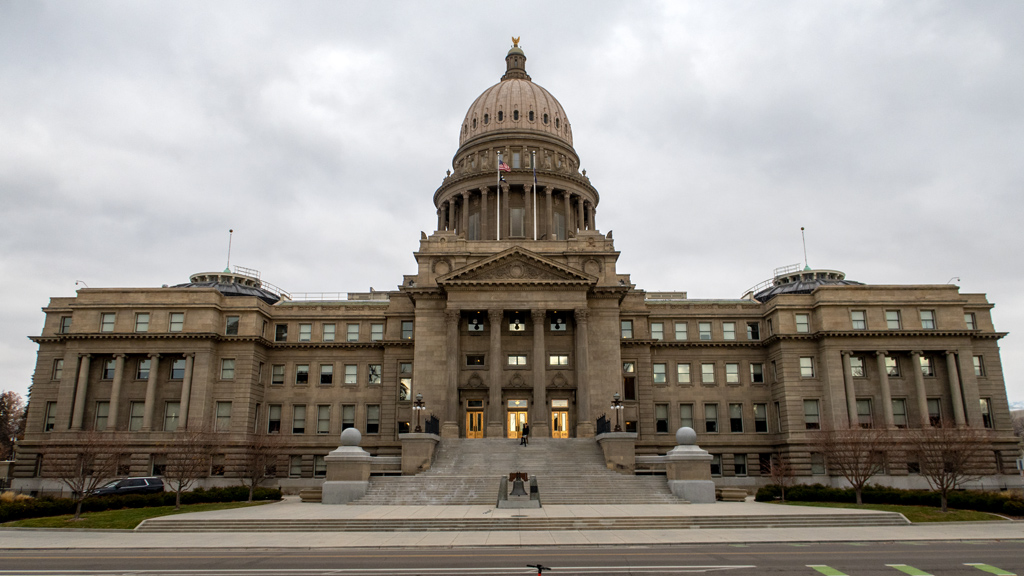
Hello, Idaho State Capitol Building in Boise

When deciding what cities to visit, I generally look at bigger cities with larger metropolitan areas that are easily accessible off major interstate highways. This ensures I have a wider selection of hotels to pick from, which means the competition keeps nightly rates low. It also increases the like­li­hood of there being plen­ty of good tourist activities for me to do during my stay.

Capitals aren’t necessarily the biggest or most attractive city in the state, so I don’t always end up visiting each state’s capital. Out of my road trip since June 2021, the only capital cities I’ve actually visited were Salt Lake City, Utah; Denver, Colorado; Springfield, Illinois; Indianapolis, Indiana; Atlanta, Georgia; Cheyenne, Wyoming; and Helena, Montana. Out of those seven, the only capitol building I’ve toured was in Springfield.

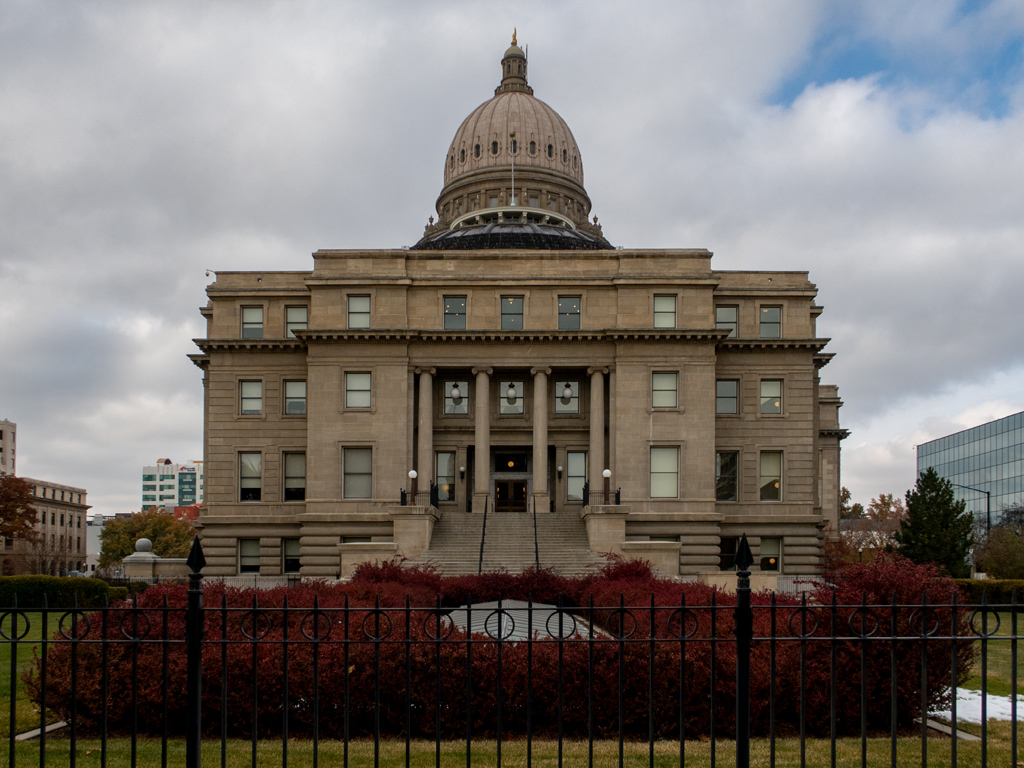
My current visit in Boise, Idaho is the eighth city to be added to that list, and also became the second capitol I toured. Interestingly, the Idaho State Cap­i­tol was one of the higher-rated attractions that I saw on travel websites, so I added it to my list of things to check out while in town.

I entered through the main entrance and was assisted by a canine officer who recommended I start my tour at the bottom-most floor. I climbed down the stairs and went to the visitor area, but the help desks and gift shop were empty, so I grabbed one of the self-tour booklets and started walking a­round.

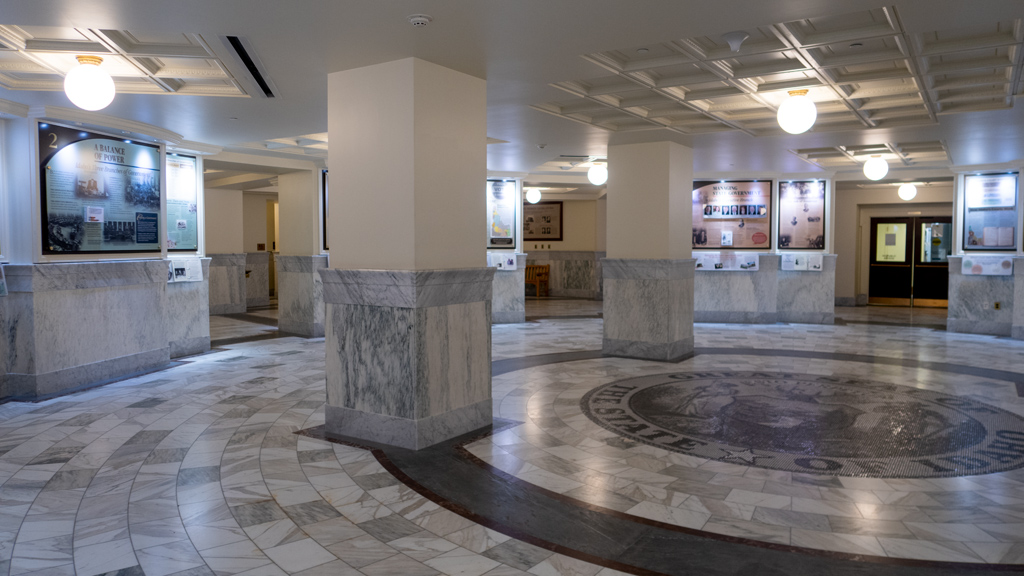
This was called the “garden level.” The center had a lot of posters and a few interactive placards that explained how the government works. It also showed diagrams of how the three branches of government keep each other in check to ensure a balance of power, as well as a timeline of how new bills are passed into law.

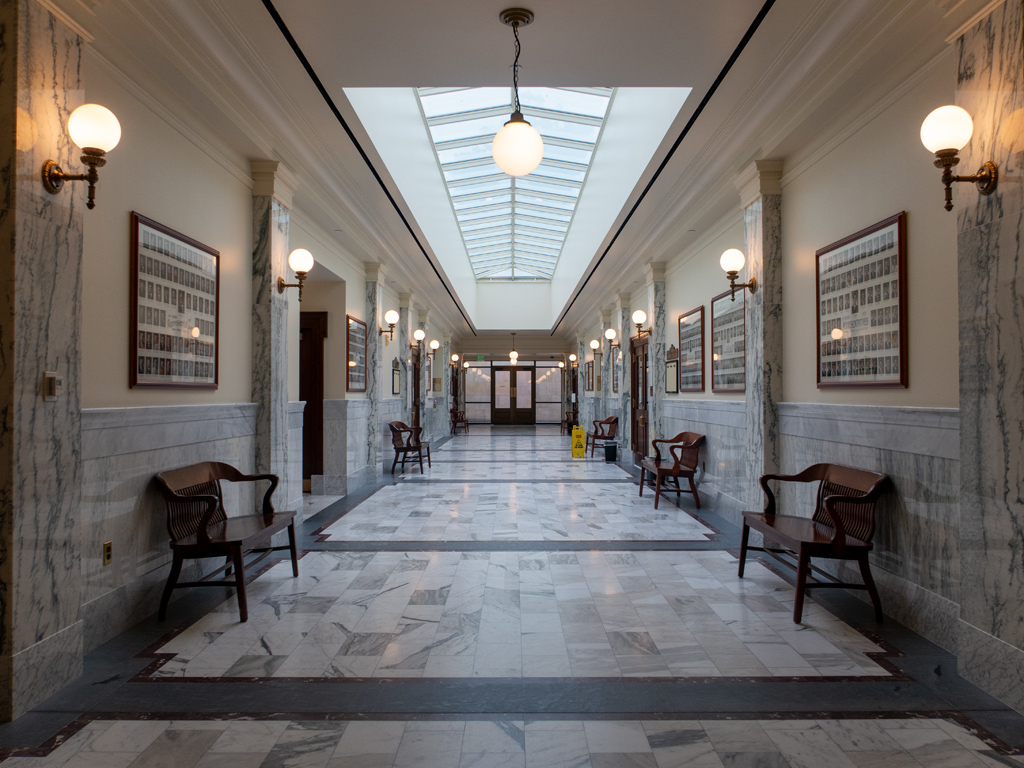
On either side of the informational exhibit were the Senate Wing and the House Wing. These hallways mostly just had rooms and offices, as well as pho­to­graphs of past Senate and House members.

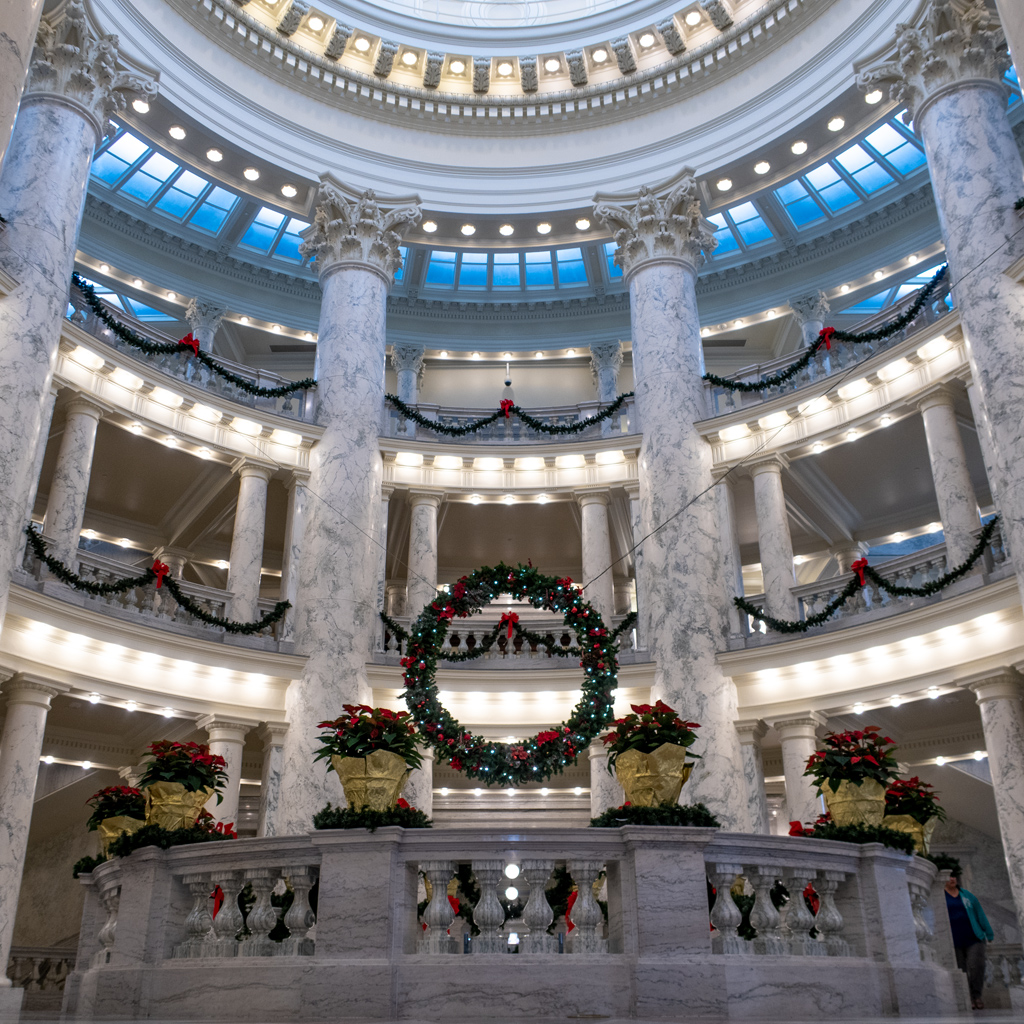
I continued upstairs to the rotunda and interior of the dome, which was nicely decorated for the holiday season.

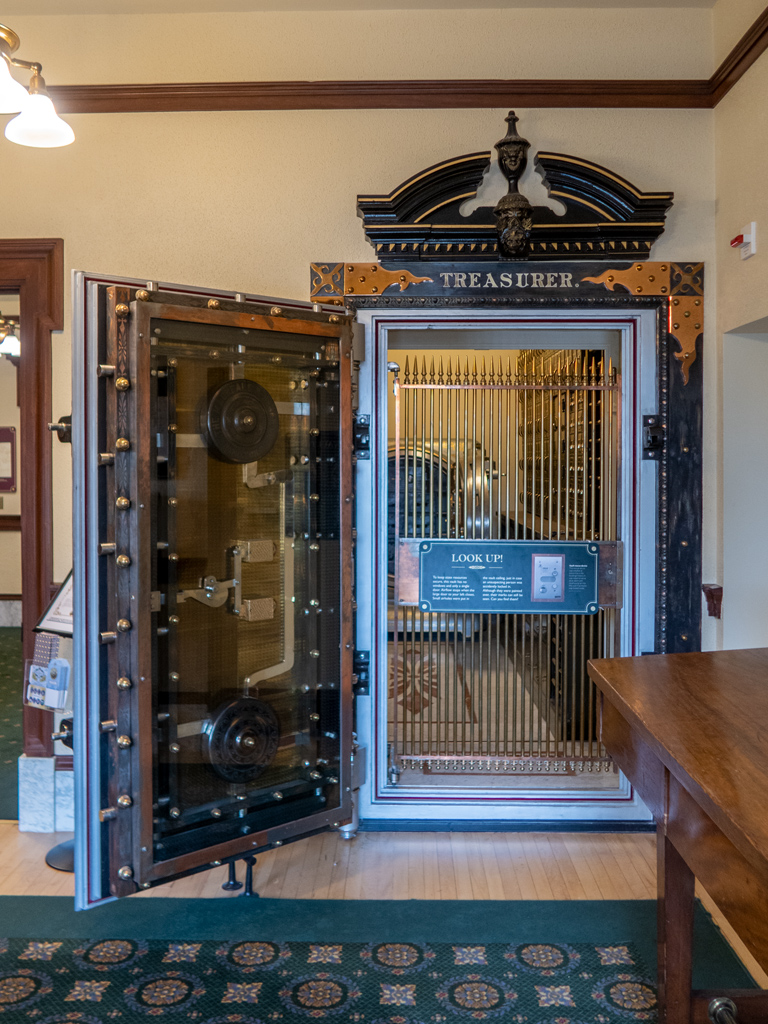
A majority of the first floor was occupied by the Legislative Services Offices, but the south­eastern corner housed the Treasurer’s Office. This area was turned into more of a museum exhibit area, and one of the vaults was left open so visitors could see how the doors work.

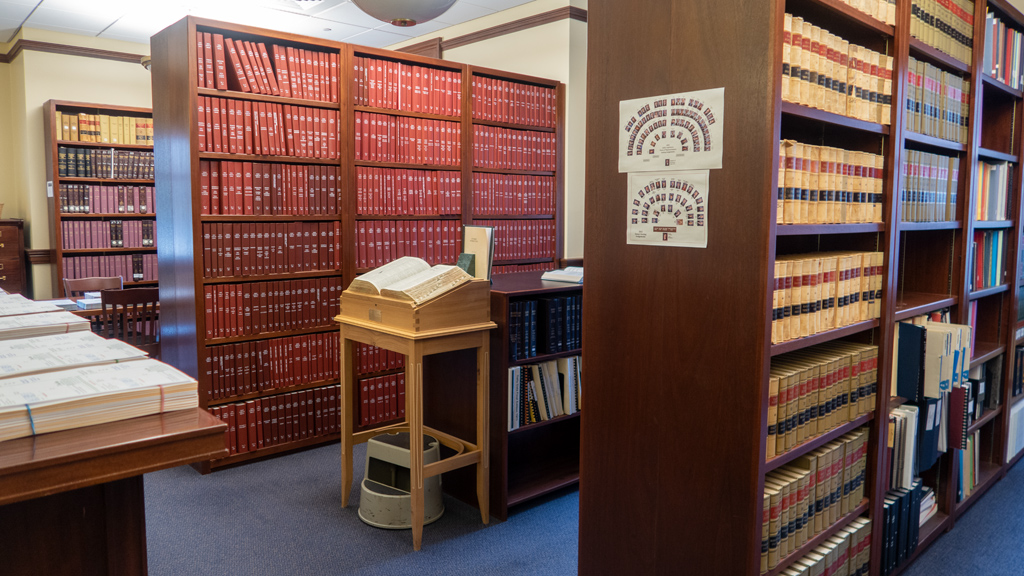
The Legislative Services Offices had sections for administration, research, and audits on the western and eastern wings. When I headed to the north, I came across an employee who asked if I was on a self-guided tour, then offered to show me around a bit in the ref­er­ence li­brar­y.

On the way into the library, we saw an antique elevator, which was apparently used to pri­vately transport judges directly to the Idaho Supreme Court Chamber two floors up.

The reference library was very interesting to me, and it brought back memories of when I used to work for the police department. Because I was so efficient, I frequently ran out of things to do during my working hours, and would end up going to other areas of my vil­lage’s government services to assist there. One of the tasks I did was digitizing a lot of the old papers in the Village Hall.

When I told the state employee this story, and about how all these books and archives reminded me of my first real job, he took me to the back room and showed me hand­written bills and meeting minutes that looked nearly identical to what I had been tasked to scan nearly a decade ago.

Something unusual I noticed, not only in the library but also throughout the capitol build­ing in general, was how much they seemed to trust the public. There was minimal security present, visitors were allowed to just wander and roam around, and the library had im­por­tant written pieces of history just laying around and accessible to anyone who happens to stumble in.

I spoke quite a bit with the various state employees working in and around the reference library; I shared a lot of anecdotes from my travels, and we talked in-depth about the differences in culture between a place like Boise and a busier major city in a place like California… though Boise is also very rapidly increasing in population.

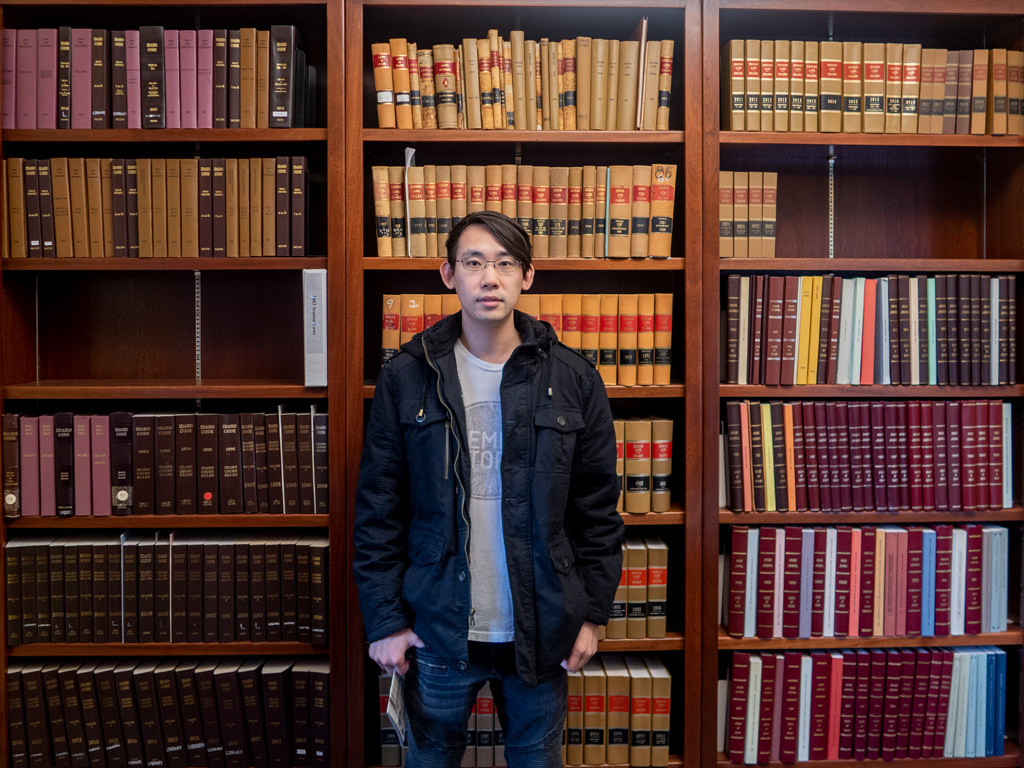
On my way out of the library and to the second floor, one of the employees offered to take a picture of me in front of the session law books from the late 1800s and throughout the 1900s, which is apparently something that is popular to do among new law school graduates.

Adam Parkzer standing in front of a shelf of legal books

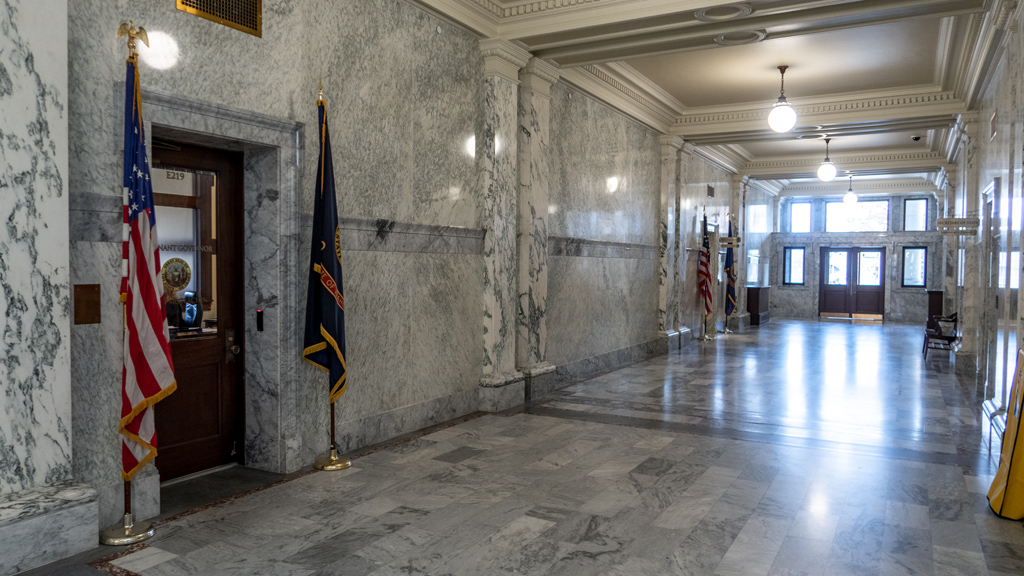
For the next part of my self-guided tour, I worked my way up to the Executive Branch floor, which had the offices of the Attorney General, Secretary of State, and Lieutenant Governor.

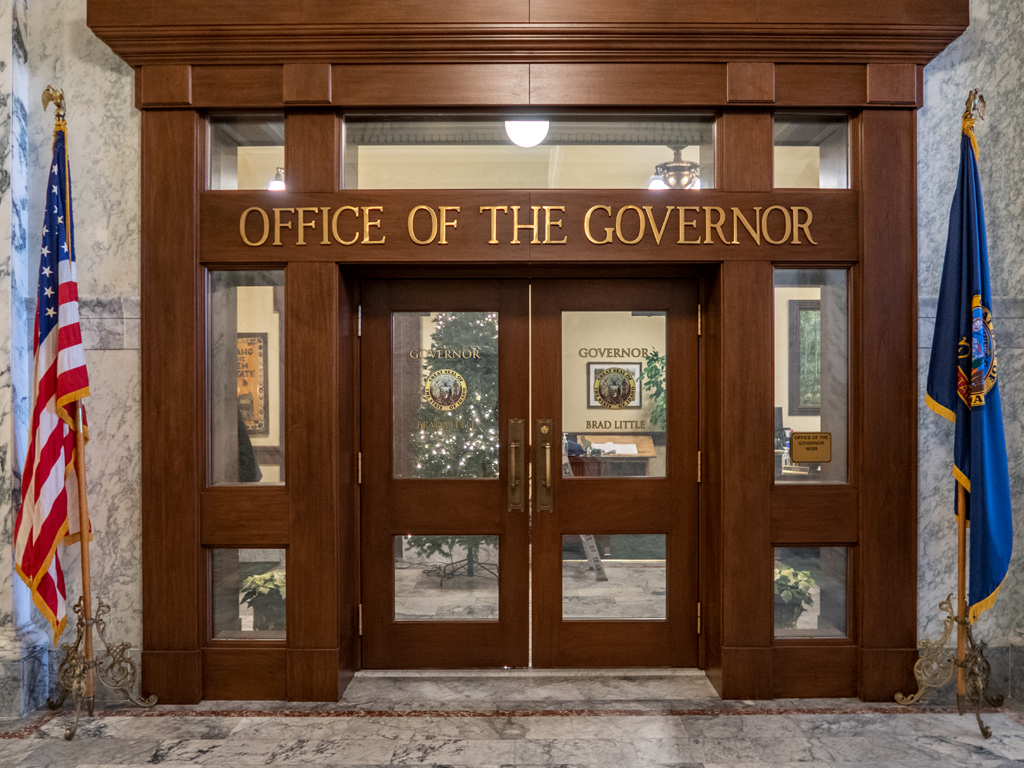
And of course, an Executive Branch floor wouldn’t be complete without the Governor and his support staff. The current governor of Idaho is Bradley Jay Little, who has been serving as the 33rd governor since January 2019. Prior to being the governor, he also served as the lieutenant governor and a mem­ber of the Idaho Senate as well.

Unfortunately, the third and fourth floors weren’t that interesting. The third floor had the Joint Finance-Appropriations Committee and the Senate and House Chambers, all of which were closed to the public. The fourth floor had public galleries from which you could look down on the chambers… but those were also closed.

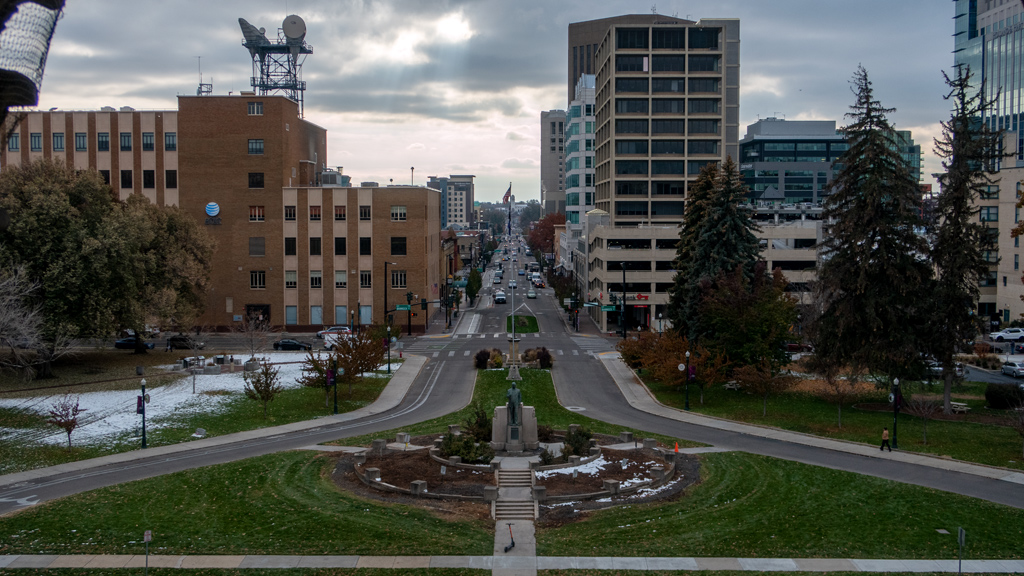
While on the fourth floor, I peeked out some windows from Statuary Hall towards the Frank Steunenberg Statue for a nice view straight down Capitol Boulevard.

I know I regularly make fun of the United States government because of how inefficient government agencies tend to be, and I usually don’t have too many positive things to say about government, but I thought this visit to the Idaho State Capitol was great. All the people I met were very pleasant and looked like they wanted to go out of their way to answer my questions, teach me something new, and make sure I enjoyed my stay in Boise.

Some of the staff did mention that, with the growth of Boise, access to some areas of the Capitol were being restricted from the general public (which I guess was already going into effect on the upper floors). If you’re interested in learning how the state of Idaho is run (or just want to get a general idea of the baseline structure of how any state government is run), I think now is a great time to do it—better sooner than later.

I was originally expecting this to be a quick half-hour stroll, but because of all the great conversations I was having with everyone, my visit ended up lasting a few hours.

Oh, the two people you see on the steps? The man was taking photos of the woman, who seemed to be an influencer posing for thirst traps. 🤦


—§—


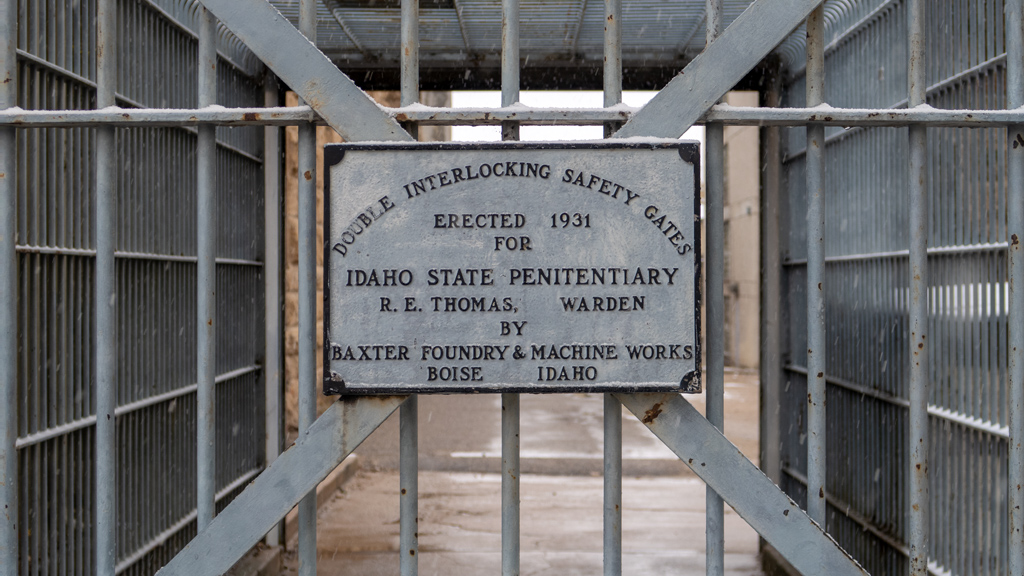
Hello, Old Idaho Penitentiary State Historic Site in Boise

Back when I visited Gillete, Wyoming, I stopped by the Wyoming Frontier Prison Museum, which I found to be particularly intriguing. Having pre­vi­ous­ly studied criminal justice and worked in law enforcement, it was interesting to see what incarceration was like decades ago when prisons had min­i­mal to no creature comforts.

Because of my positive experience back then, I was excited when I saw the Old Idaho Penitentiary was rated as one of the better tourist attractions in Boise, Idaho, and penciled a visit into my schedule.

Admission was US$8.00, which I think was an $8 well spent. I was originally offered a US$2.00 add-on service for a guided tour, which I didn’t take be­cause the start time was, if I recall correctly, about an hour and a half away. They apparently usually run more guided tours, but tuned back the fre­quen­cy temporarily because there was recently a snowstorm and tourism wasn’t exactly booming.

Well, I ended up spending more than an hour and a half there. I guess I technically could’ve joined in on the tour, but by that point, I had already seen a large portion of the penitentiary, so I figured I would just finish walking through the rest myself.

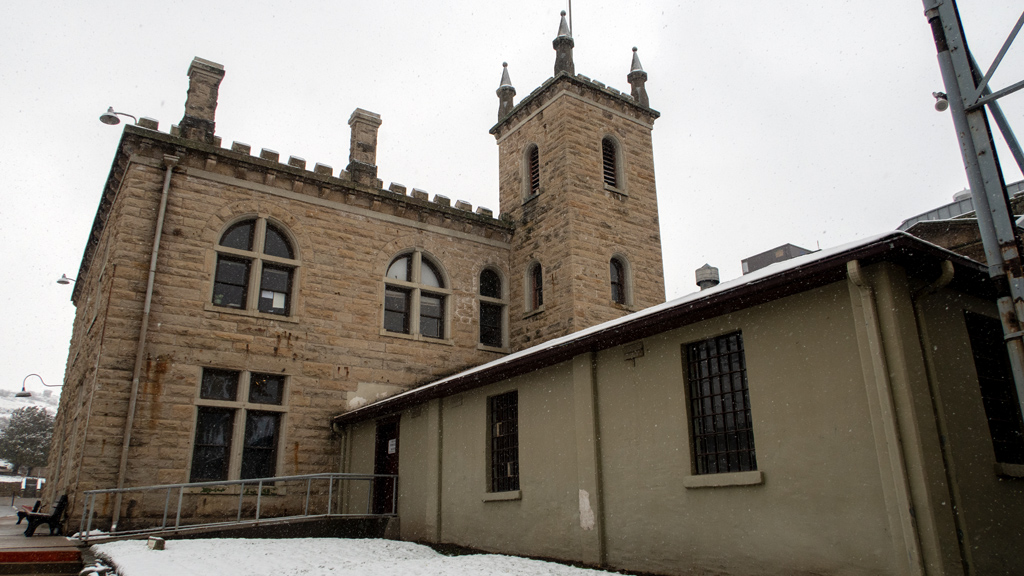
It was freezing cold and still actively snowing when I went to visit. Although there was little snow accumulation on the sidewalks, everything else was covered by a blanket of white. The snow made my visit a lot more surreal and immersive, as it really exemplified how harsh life was like here during the colder months of Idaho weather.

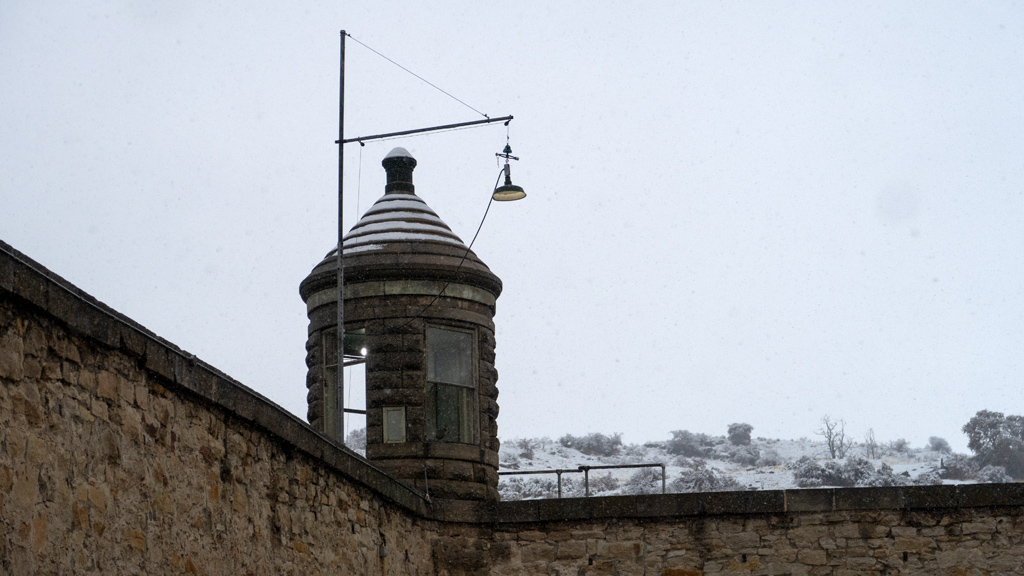
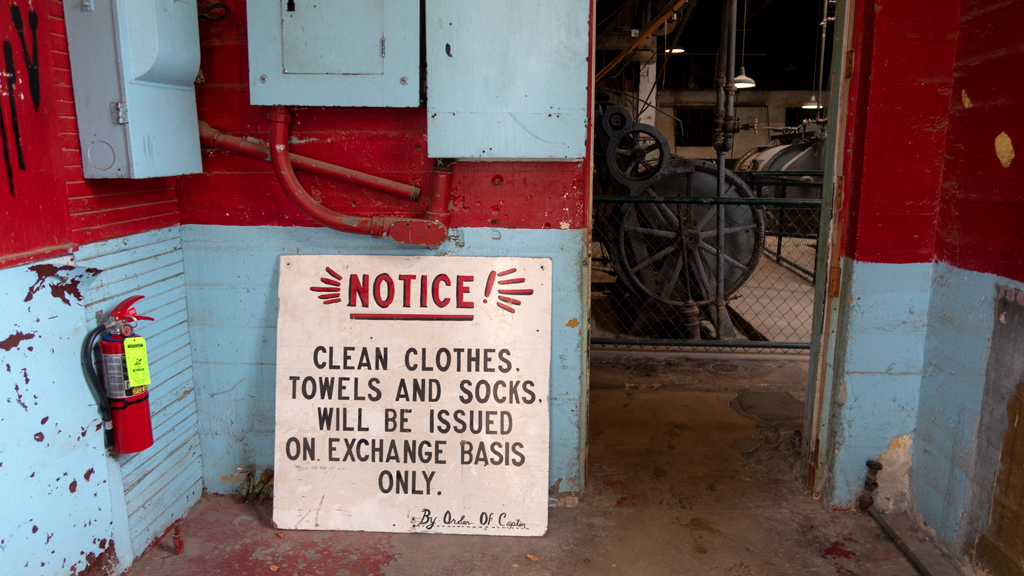
For some reason, I had trouble interpreting the self-guided tour map at first (even though it’s not actually really that confusing of a map). Because of this, after I left the administration building, I started walking around randomly and arbitrarily until I saw everything there was to see. One of the first things I took a look at was one of the watchtowers stationed in the northeast corner of the property.

A few buildings were left in their demolished state from the riots in the early 1970s. I don’t quite remember if the picture below is of the dining hall, commissary, chapel, or cell house, but all four of those buildings fell victim to angry prisoners at some point prior to the prison closing in 1973.

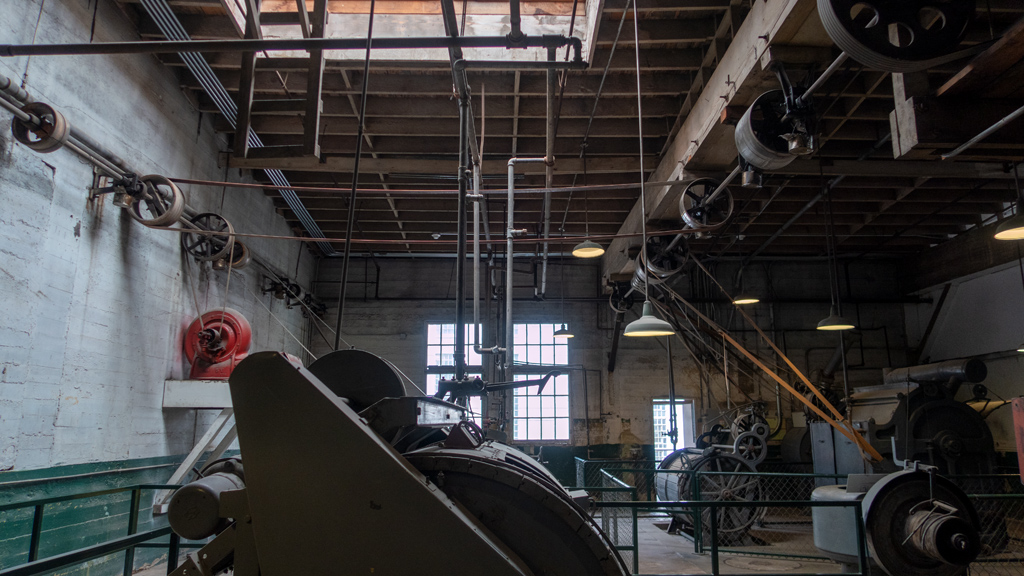
The shirt factory and loafing room building was accessible from multiple entry points, and it was the only structure that had working heat in some areas. This building still had the old laundry room (which was not one of the heated sections), and it still had all the old laundry equipment inside.

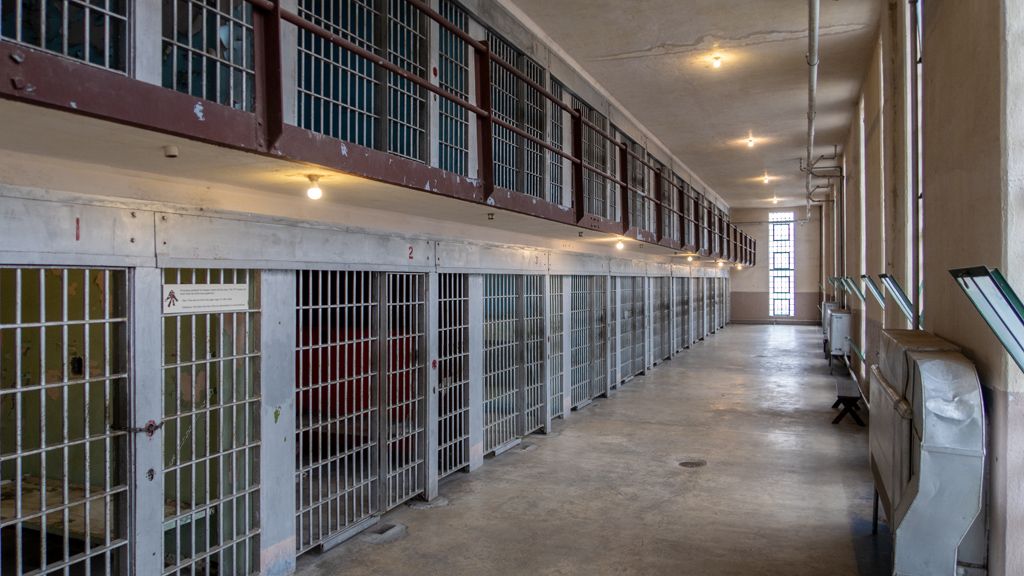
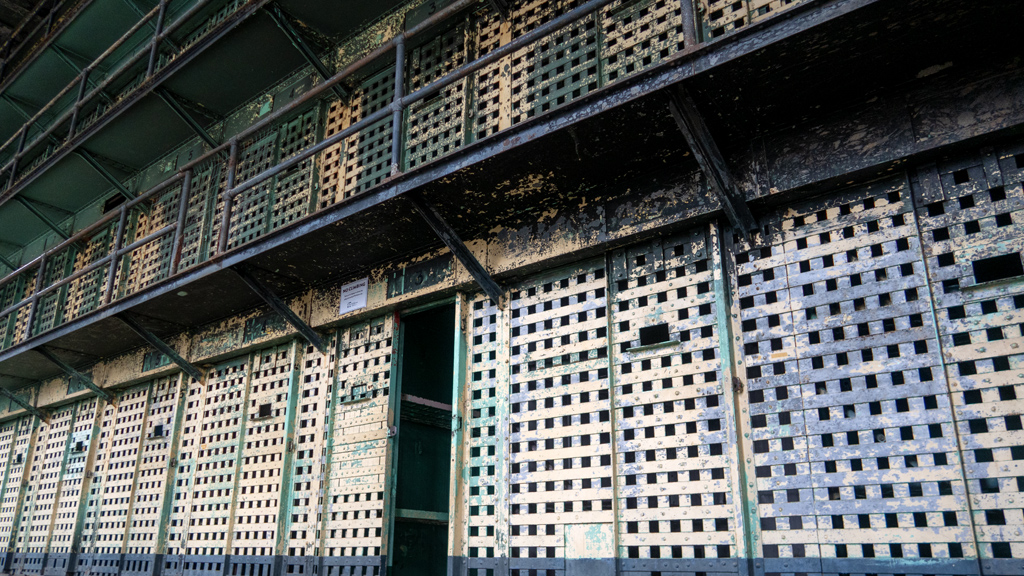
This is the “4 House,” which was the largest building that housed prison cells. There is also the “3 House” and “2 House,” which are smaller buildings, as well as the “5 House,” which I will show below.

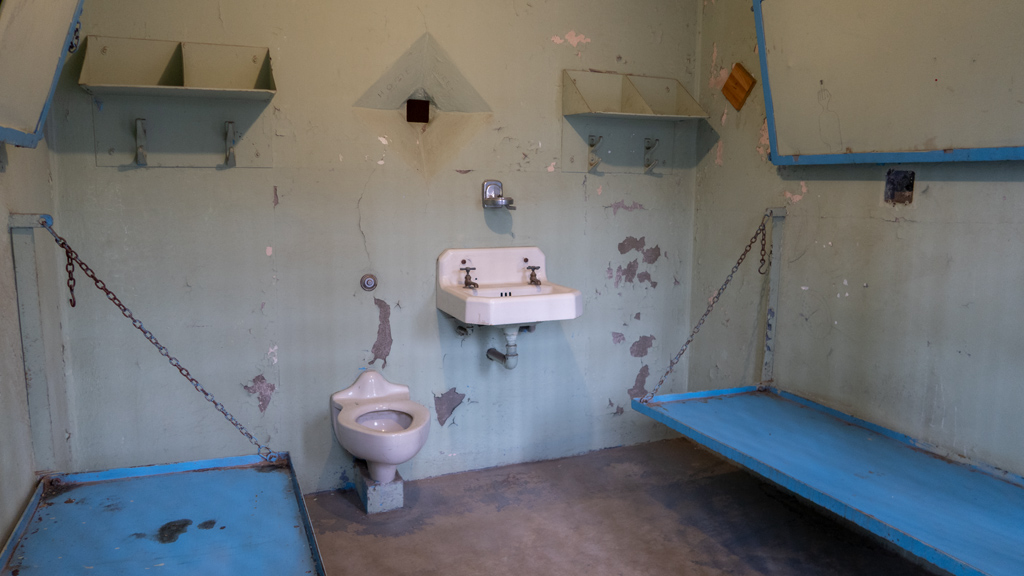
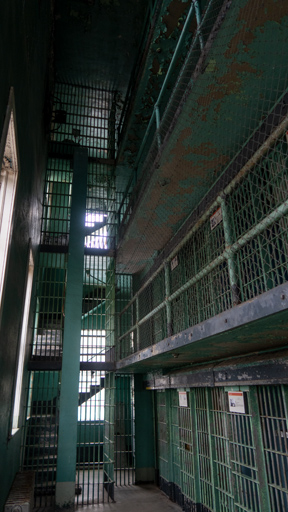
The inside of these cells looked very similar to what I recall seeing at the Wyoming Frontier Prison Museum. If the cell wasn’t so filthy and the paint wasn’t so tattered, I guess it isn’t too far off from modern-day cells as well… though that’s probably because there are only so many different ways you can arrange a bed, toilet, and sink in a small area.

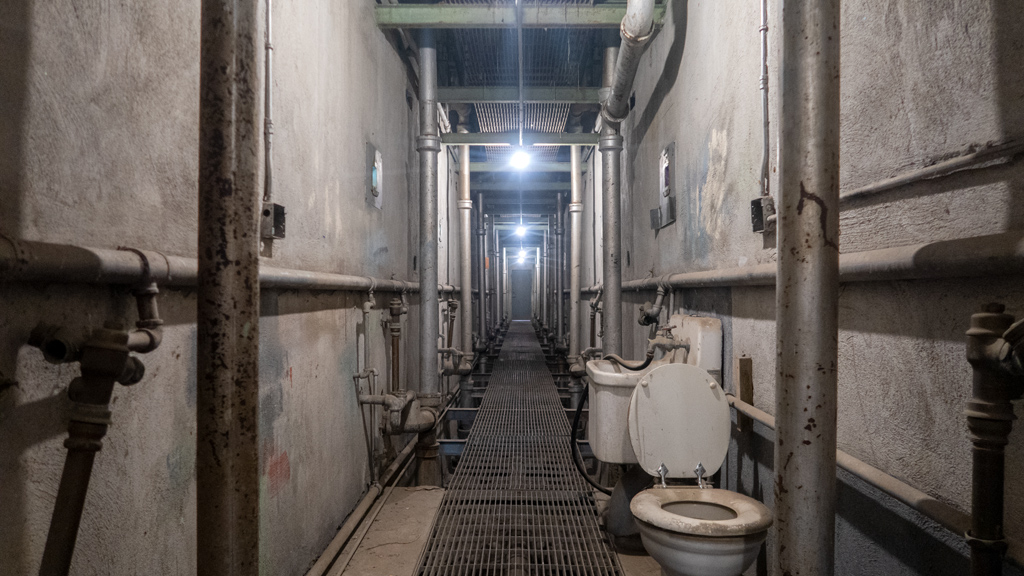
The rear hallway behind the rows of prison cells was also open for viewing; this allowed prison guards to easily monitor inmates on both sides of the build­ing effectively without having to walk in the front of the cell bars on one half of the building at a time.

I don’t remember exactly why these cells were separated out, or why they were special enough for me to photograph, but my guess is that these might have been the dedicated cells for inmates who were on death row awaiting execution.

This is the “5 House,” also known as maximum security. (Or, there is also the possibility that I am getting my photographs mixed up, and I am just im­ag­ining that this is maximum security simply because the cells look more secure. Keep in mind that I didn’t follow a certain path and just kept wan­der­ing around until I saw everything, so it’s very possible that I am misremembering the route I took to visit all the buildings.)

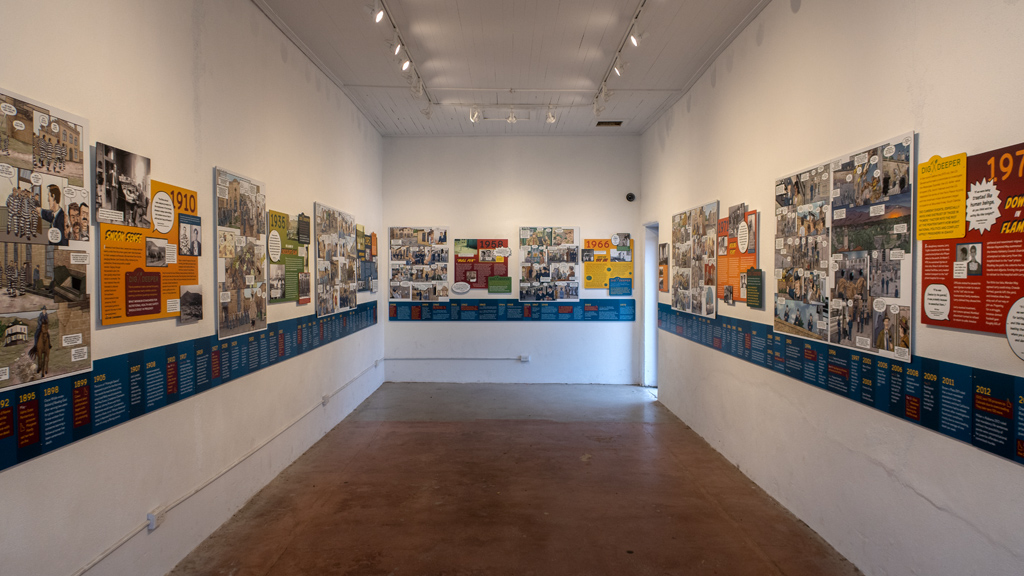
Over on the east side of the site, the barber shop was repurposed to display a timeline of the history of what happened at the penitentiary. I found this to be very interesting, and the medium of information transfer was great—there were comics threaded in between more text-heavy posters so that you could get drawn in by the visual representation of the most notable events, then be able to read more details right next to it.

The general idea of the story that was told through the comics was that conditions at the prison were horrid, and after losing patience with just dealing with it, prisoners tried to express their concerns to the prison management. After they realized their voices were basically being projected into the void, they started using violence and rioted in order to catalyze the changes the prison needed to be fit for human life.

Not pictured here were two additional attractions inside the heated building that I mentioned above. The first was an event space, which did not have an active event going on, but still housed a few interesting vehicles from what I imagine was the 1970s or so, around the time that the prison closed.
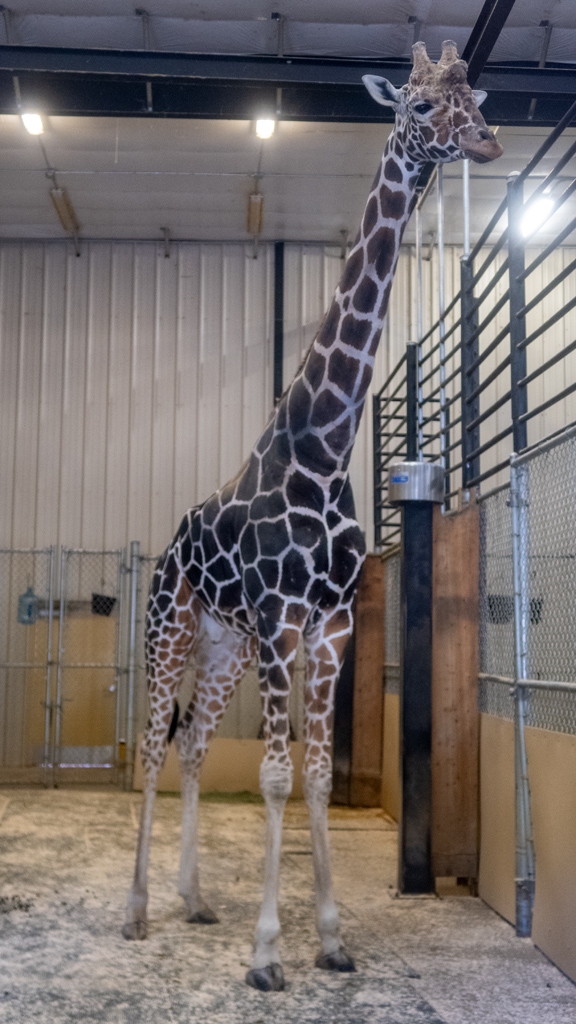
The second was the J.C. Earl Weapons Exhibit, which was basically like a very traditional museum that was not related specifically to the penitentiary, but had (as you’d expect from the name) many weapons on display from a wide range of notable historical periods.

I had a great time visiting the Old Idaho Penitentiary State Historic Site. I’m sure at least some of it had to do with my background and my personal interest in criminal justice, but I think a lot of it also had to do with the fact that the presentation was done very well.

I was fortunate to stumble across the “comic room” early, so I read through everything and was able to get some solid baseline knowledge of the history so I could then use that to understand what I was looking at around the site.

Even outside the dedicated “information buildings,” there were placards posted at notable hotspots that ex­plained why the area I’m standing in or the artifacts I’m looking at were relevant and important. One of the buildings (I don’t remember if it was the “2 House” or “3 House”) even labeled each of the cells with the name of the prisoner who lived there and a brief description of the crime they committed, which made it feel even more immersive.

Unfortunately, it seems like I missed visiting one building, which was the women’s ward—I originally didn’t notice it because it was outside the fenced area, and only realized it existed after I looked back on the map later to organize my photos.

I definitely acknowledge that visiting a prison as a tourist activity isn’t for everyone, but if you don’t get grossed or weirded out too easily, I would recommend checking it out if you’re ever in the Boise area. It’s not something that I’ve noticed a lot of other cities have available, so it could be a rare opportunity to experience something that you might not otherwise have a a chance to do elsewhere.


—§—


Hello, Zoo Boise in Idaho

I’ve been to quite a few zoos now all across the United States. There have been some nice ones and not-so-nice ones, but usually, they all seem fairly well-maintained and cared for.
As my first tourist activity in Boise, Idaho, I decided to go to Zoo Boise, and it was a very unexpected ex­pe­ri­ence. It is currently late autumn and nearly wintertime, so it’s definitely off-season, but I didn’t ex­pect it to be quite so… “aban­doned.”

Pretty much every zoo and aquarium that I’ve been to before has been fairly busy and bustling with peo­ple, and oftentimes, there are a lot of children running around. Zoo Boise was completely different—there were barely any other people there, and throughout my whole time exploring the premises, I saw a grand total of three other groups.

The animals didn’t look neglected or anything, but they definitely didn’t look happy or excited. Most of them were just sitting around idly and appeared completely unstimulated by their environment (except for one baboon that I’ll show later).

There were also very few staff members around. Usually in zoos, there are many employees present tak­ing care of the animals and interacting with visitors to teach them about the animals, but throughout my whole visit, I only saw two employees who, at the time, were transporting some equipment to a different area in a wheel­barrow and cart.

The upside of all this is that, with almost nobody else around, I had a substantial amount of freedom to stick around at the exhibits waiting for great photo opportunities without feeling like I am interfering with the experience of others. On top of that, with pretty much no staff members around to enforce the rules, I was able to climb over wooden and mesh fences to get extremely close to the animals and capture even better pictures.

 
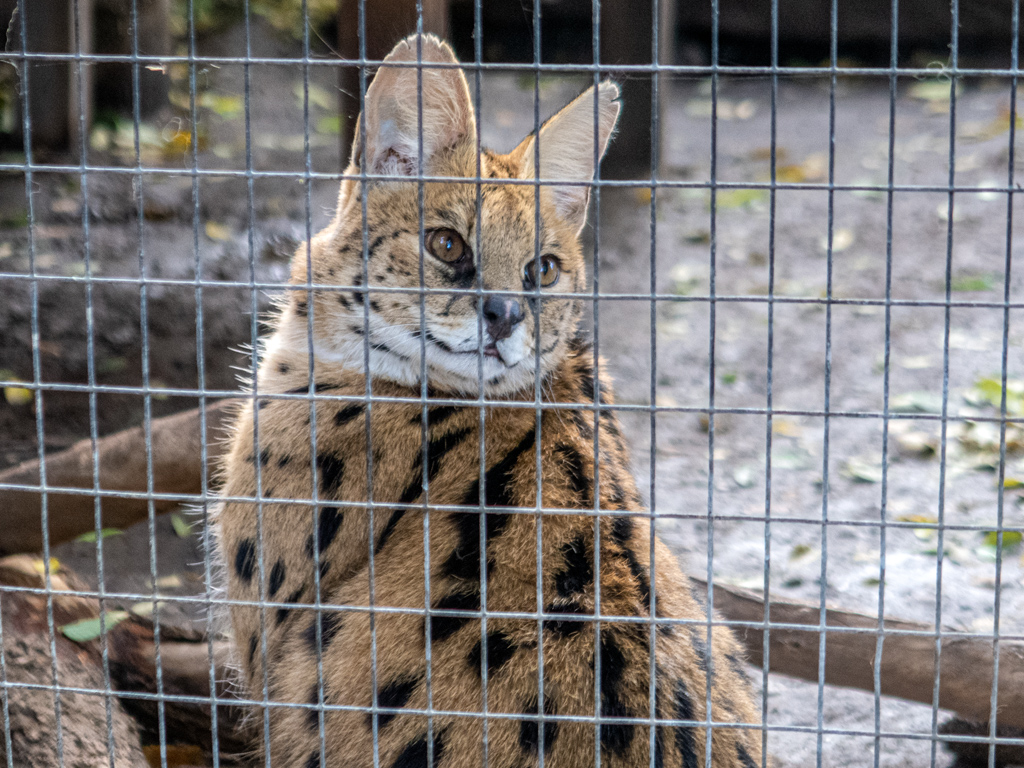
Near the entrance was a serval. He turned around to look back at me when I approached, but after he realized that I’m not there to feed him, he turned back around and just stared into a corner.

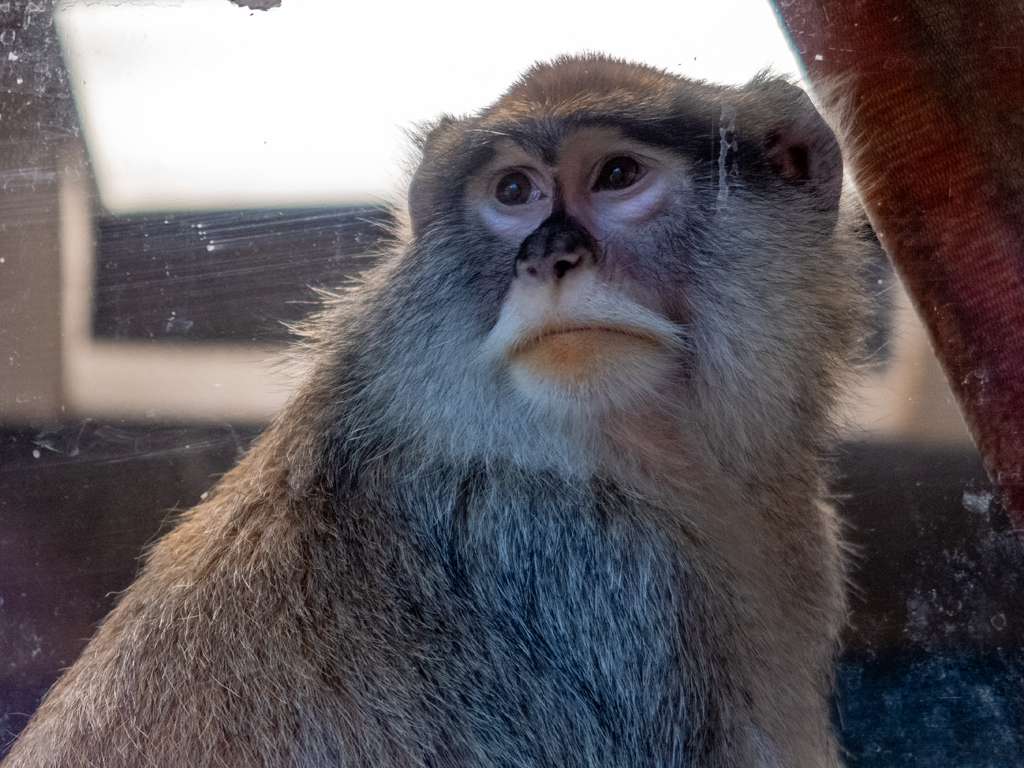
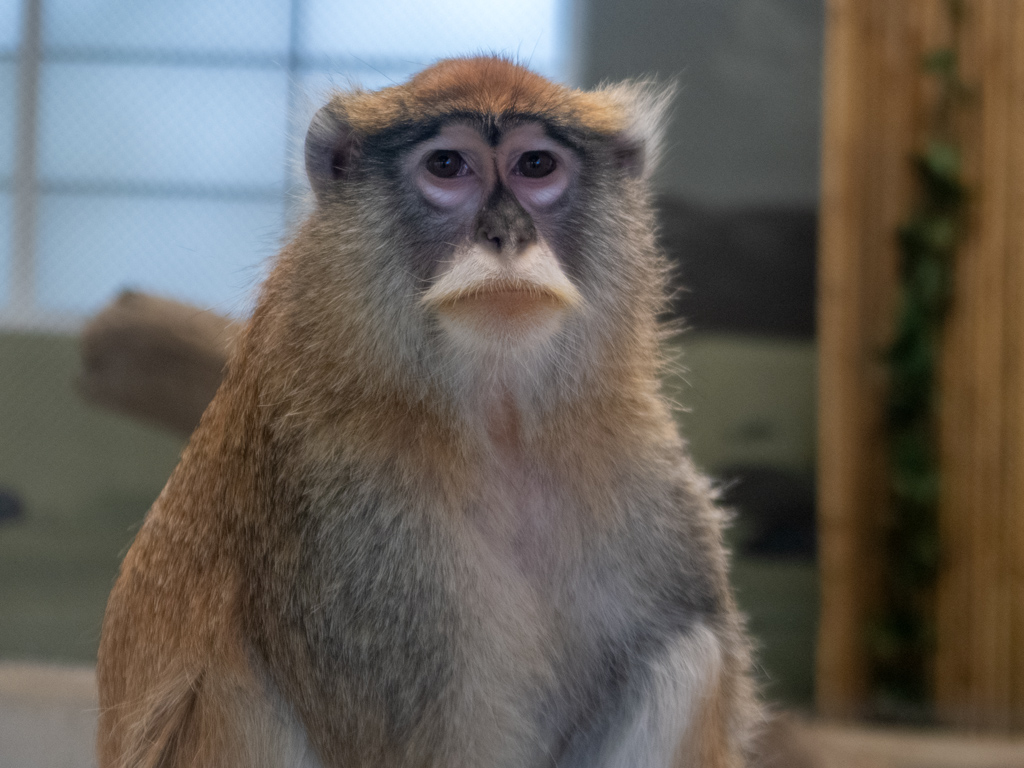
Across a bridge were a pair of monkeys. They had a somber look, staring off into the distance.

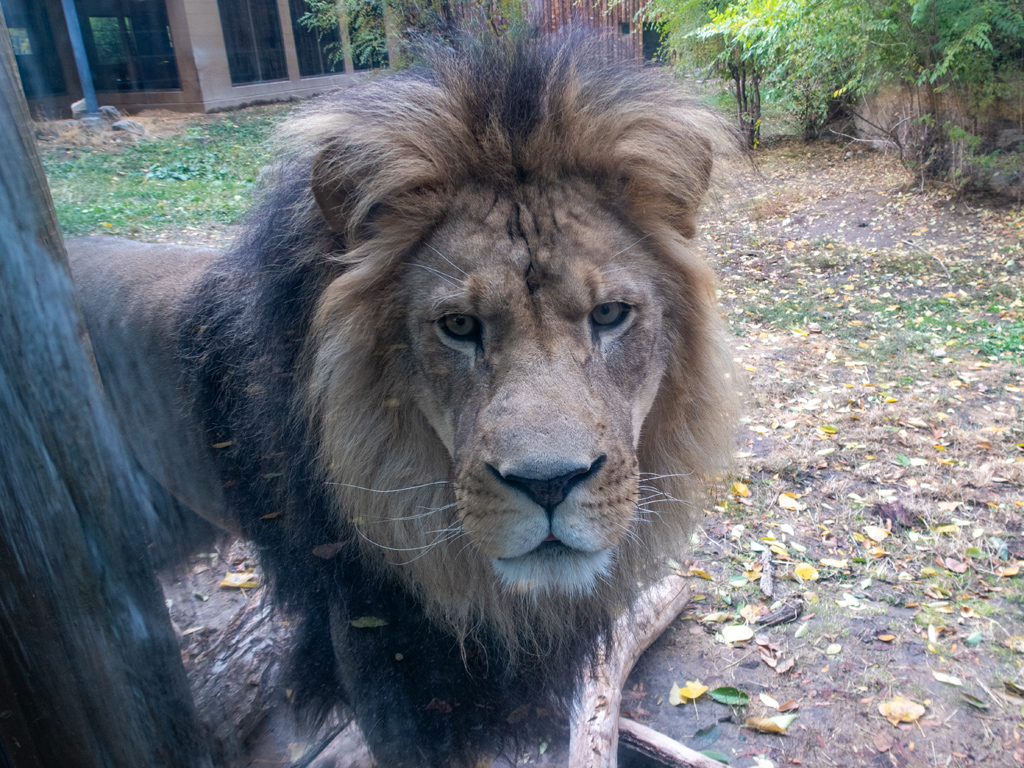
Next up was the lion. The map implied that there was more than one, but I only saw one pacing back and forth by the glass looking pane.

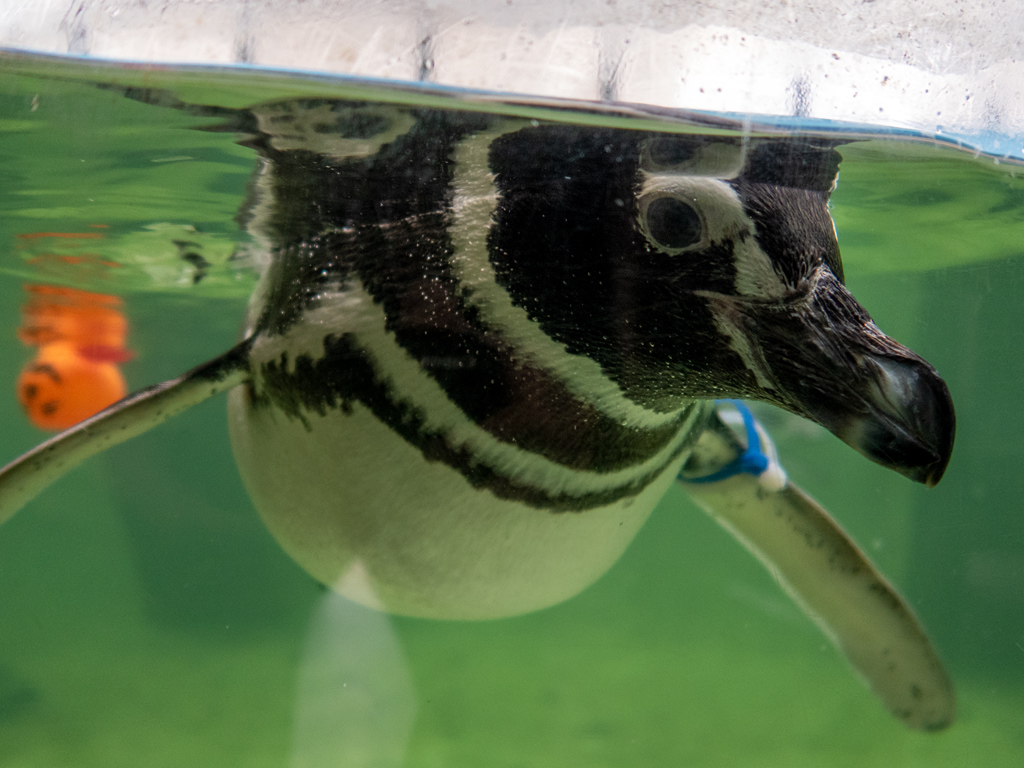
Near the lion was the penguin pavilion, where I patiently waited until a penguin swam right up to the glass.

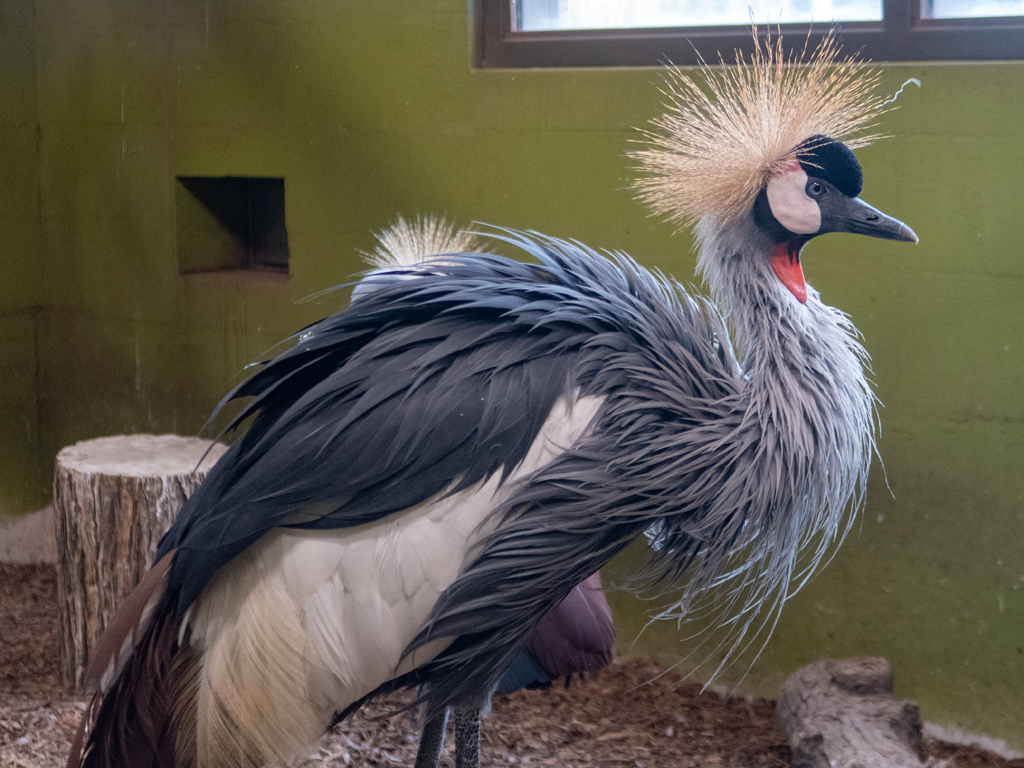
There was an indoors section called the African Schoolhouse where there were some exotic birds.

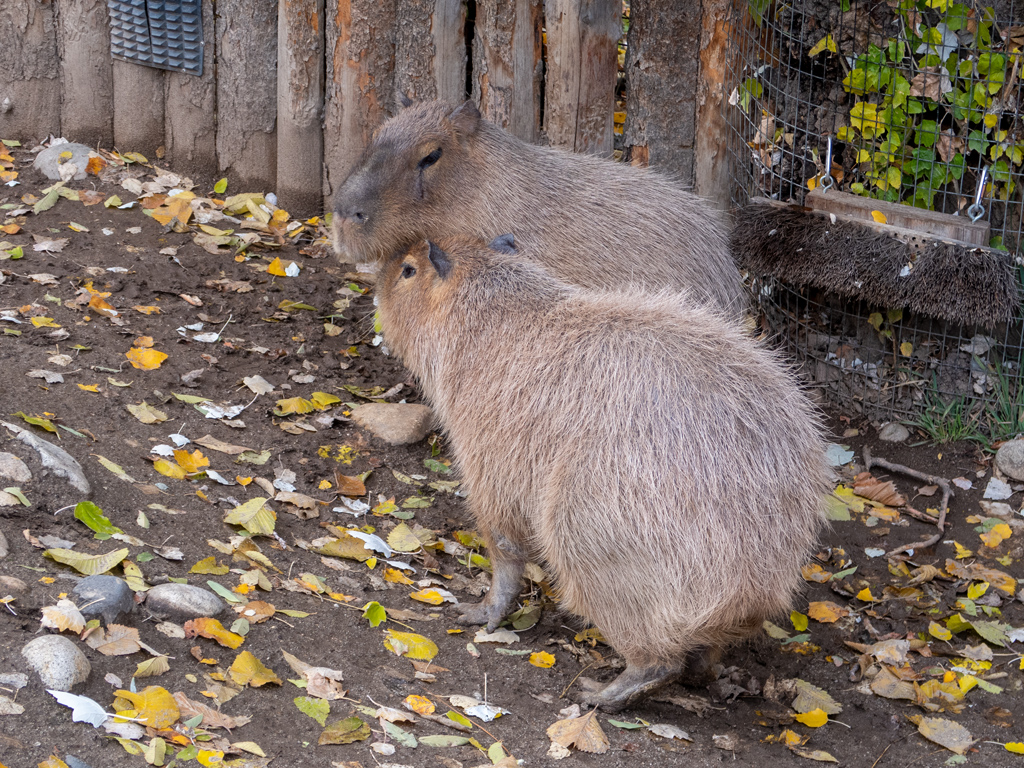
This is Nyala and Hornbill, two capybaras. I know their names because, on the map, they labeled this area of the zoo with their names, rather than using their generic species name like they did for every other animal.

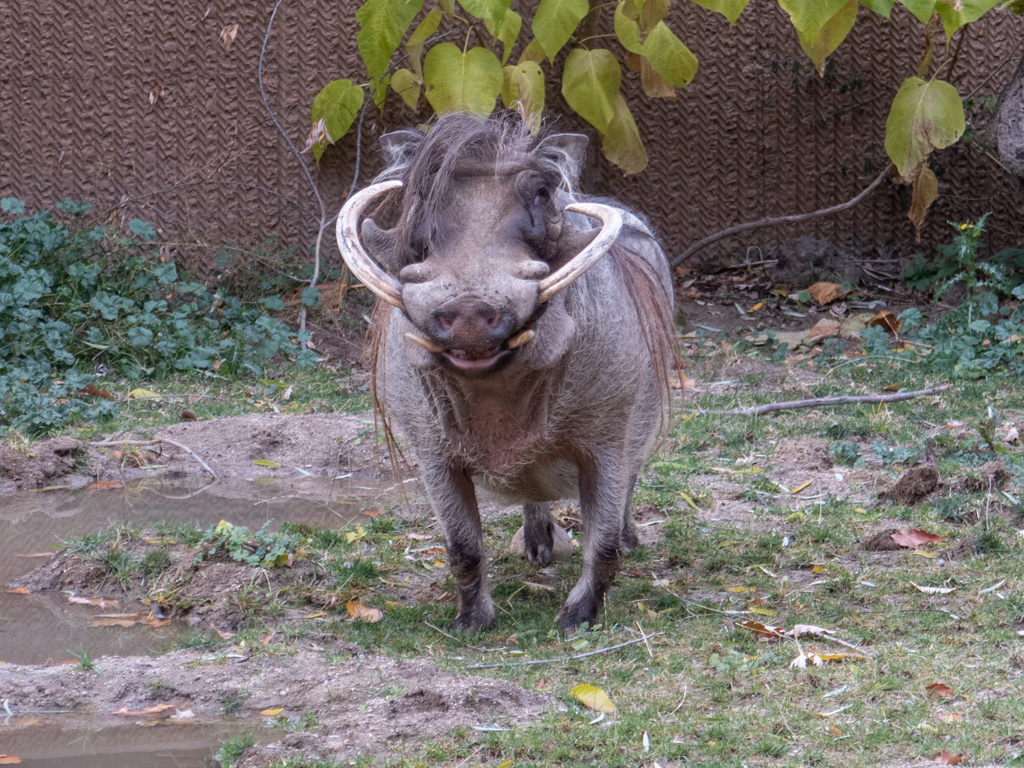
Nearby was the warthog area. The warthog was very far away, so I got as close as I could to the fence, zoomed all the way in, and snapped a bunch of pho­tos in hopes that at least one of them was in focus. I don’t know if the warthog was doing this on purpose, but in the final photo of the sequence, he was smiling.

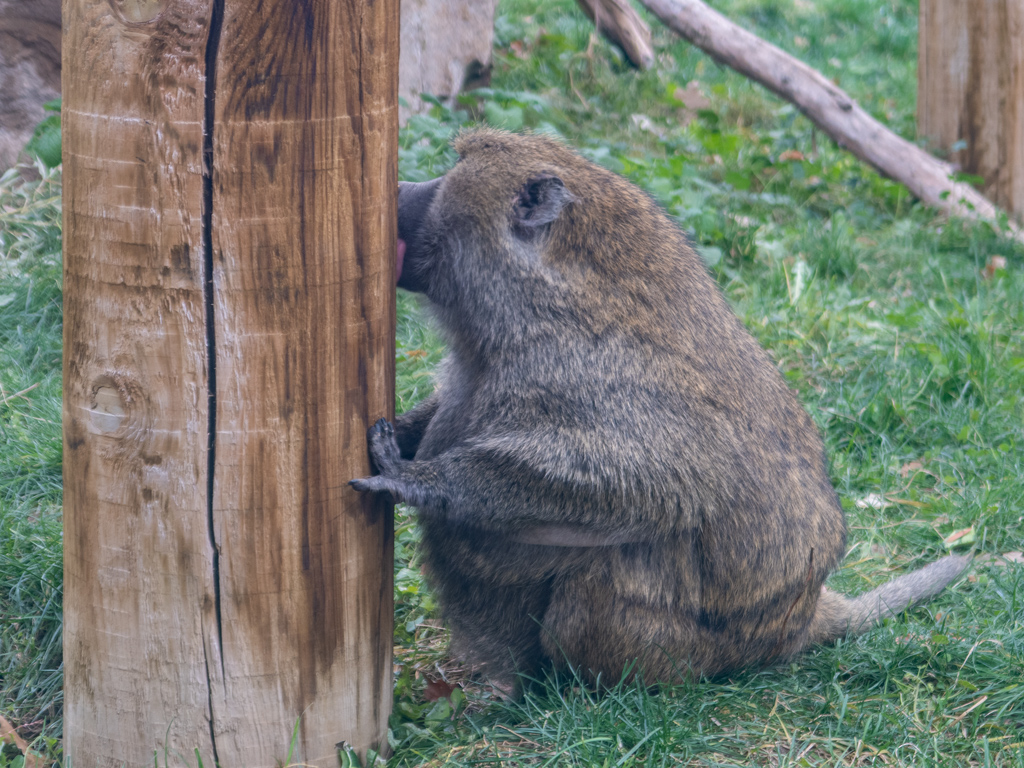
Here is a baboon licking a wooden pole. This was the only animal I saw that was actually interacting with its environment, as opposed to just idly sitting or laying around.

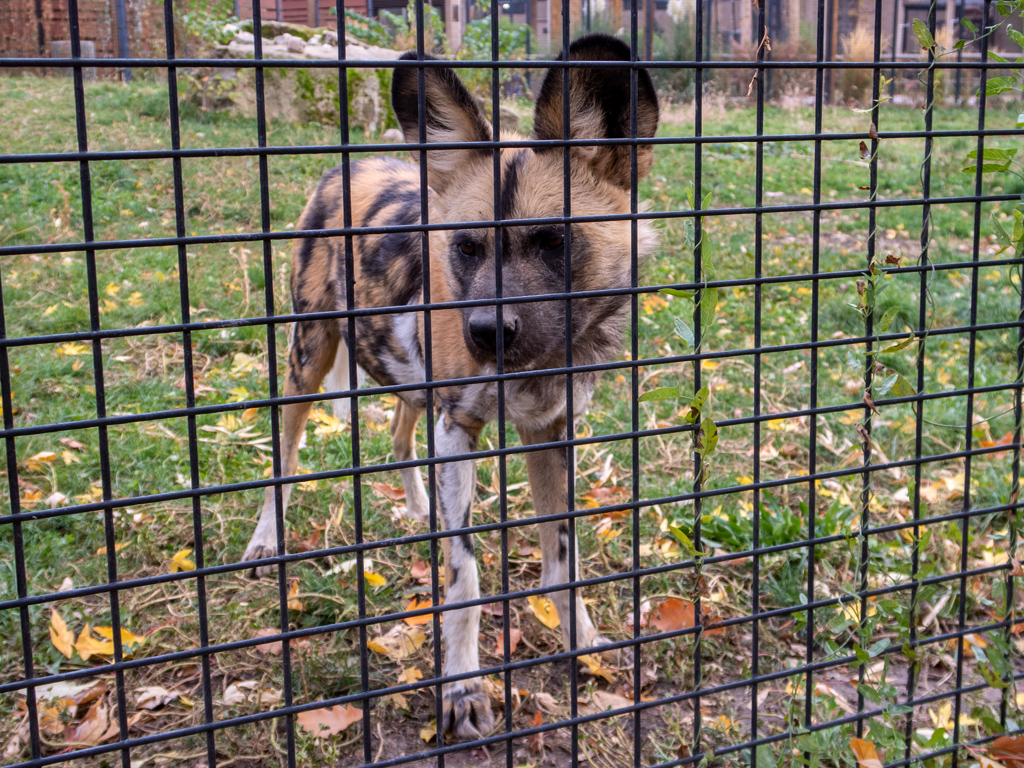
The hyenas were a bit more fun to watch—there were a group of four of them, and they walked around a bit in between laying down on the grass and on top of rocks. One of them got brave enough to separate from the group and come approach me.

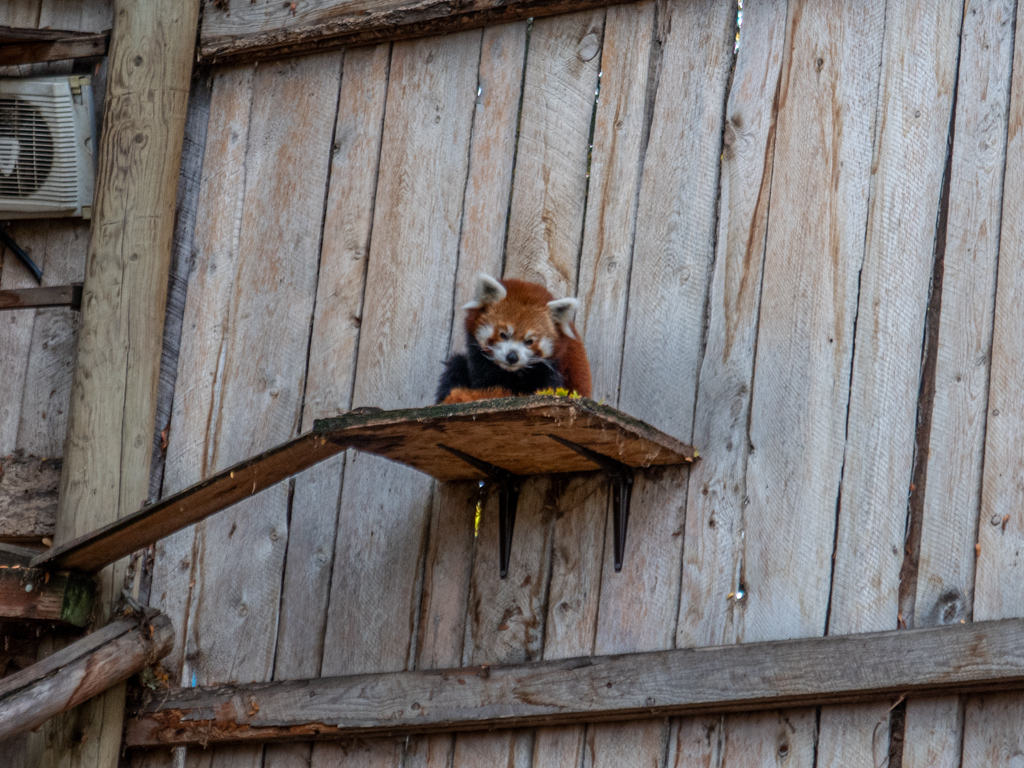
While walking through the final section of the zoo, I saw a sign for a red panda enclosure. There were many enclosures that were empty, and I couldn’t im­me­di­ate­ly find the red panda, so I assumed this one was empty as well, but after closer inspection, I saw one perched in the far back corner.

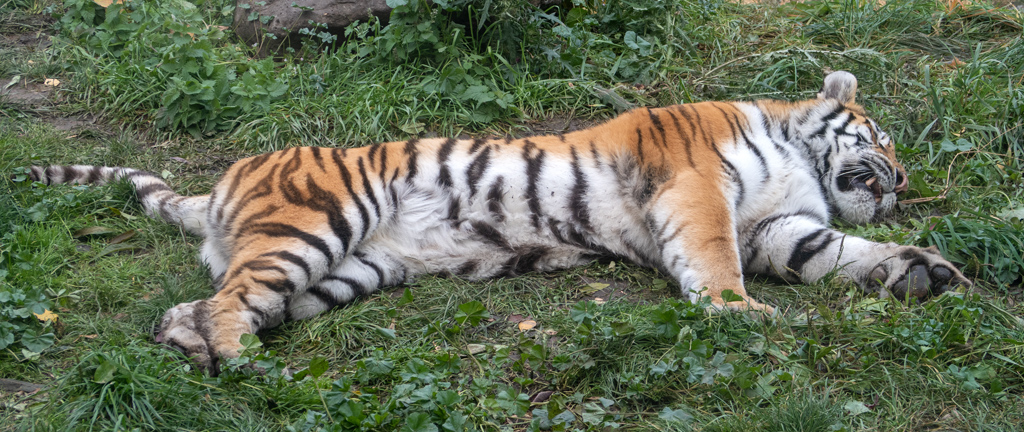
And finally, I concluded my zoo trip by watching this tiger taking a nap in the grass.

Although the zoo was a bit disappointing, I feel like I was able to effectively make the best of the situation. Admission was only US$9.00, which is, on av­er­age, less than half the price of other zoos I’ve visited (and even less if you consider the huge spike in inflation lately).

It was almost as if I was able to have a self-guided private experience. Even though I wasn’t able to see a wide variety of different animals, I got to have extended observation, and capture many good photos, of the ones that I did have an opportunity to see.


—§—


Hello, Warhawk Air Museum in Nampa, Idaho

My original plan was to stay for a bit longer in Tri-Cities, Washington, but staying flexible is one of the most important ways to ensure you remain safe dur­ing a winter road trip. I always keep an eye on the weather, and I noticed that my planned trip from Tri-Cities, Washington to Boise, Idaho through northeastern Oregon would’ve taken place during a snowstorm.

Not wanting to drive through mountains in my rear wheel drive pickup truck without snow chains, I left Washington early and booked a shorter stop in Nampa, Idaho before my long-term stay in Boise. This impromptu adjustment to my schedule gave me an opportunity to visit the Warhawk Air Mu­se­um, one of the top-rated attractions in the city.

I made my visit to the museum on November 6, which happened to be the same day as the Veterans breakfast. I didn’t get to participate in the breakfast because I didn’t know it was happening; I arrived several minutes after noon, shortly after the event had ended.

The fact that this event had just happened was both unlucky and lucky for me—unlucky because they had cleared out some of the exhibits in the center of the hangars to make room for the event, but lucky because there were quite a few veterans still at the museum. I suspect that many of these veterans had attended the breakfast with their children and grandchildren, and they were still telling them stories about their time serving in the military, so I was able to overhear some of their interesting wartime anecdotes.

As for the museum itself, if you’re an American history fan, this museum will probably be a dream come true for you. There are sections on all the major wars, in addition to some special sections on specific military-related topics. However, that’s not what makes this museum special.

This museum has a library’s worth of reading material available to browse scattered throughout the hangars. Some of the booklets and binders were just printouts of Wikipedia pages, which I thought was a bit silly, but it also had some very special and exclusive literature, including many original doc­u­ments that came from the respective wars’ eras. I didn’t spend too much time in the reading areas, but someone passionate on the topic could spend lit­er­al­ly weeks here non-stop and still have plenty to enjoy.

Whether or not you’re a history enthusiast, I think this museum is worth a visit.


—§—