How I keep my assets safe from bank and brokerage insolvency

I have gotten a lot of messages today—far more than I expected, from both friends and co-workers—regarding today’s breaking news of Silicon Valley Bank’s insolvency. If you’re not familiar with what happened, an oversimplified summary is that Silicon Valley Bank overleveraged their assets and were un­able to fulfill customer withdrawals, creating a feedback loop of panic and further withdrawals, resulting in the California Department of Fi­nan­cial Pro­tec­tion and Innovation shutting down the bank and the Federal Deposit Insurance Corporation taking over operations.

Before I get into things, I want to point out that neither I nor any of my companies were affected by Silicon Valley Bank’s collapse. Neither I nor any en­ti­ty over which I have financial oversight had a Silicon Valley Bank account, and no funds were lost or locked as a result. However, it is devastating to hear that many tech startups had their entire treasuries in Silicon Valley Bank and lost everything. What is even more concerning is that Silicon Valley Bank had an extremely high percentage of customer deposits—allegedly over 95%—that were not covered under FDIC insurance.

In short, FDIC insurance protects up to US$250,000.00 in deposits per insured bank, per owner, per account category. As you can imagine, tech startups with venture capital funding likely have far more than $250k in funds that they hold in their bank, which means everything over $250k was not insured.

With that being said, there are a lot of well-written resources available online that can explain FDIC insurance, as well as the similarly-purposed Se­cu­ri­ties Investor Protection Corporation (SIPC) insurance. I recommend conducting your own research before continuing so you can have a background ba­sis upon which to analyze my post. The purpose of my blog post is to provide an example and explanation of how I apply this information to my per­son­al financial situation.

As a disclaimer, I am not a registered financial advisor, and even if I was, I would not be your advisor. This information is being provided strictly as an anecdote to provide insight into my life, and it does not imply that you should blindly copy my strategy. If you have any questions or need guidance with your own financial situation, make sure you consult a certified professional.


  1. This is less of an actionable step and more of a way of thinking, but I believe that stuff is better than money. Money is nothing more than some fancy cotton paper, metal coins, or a number on a digital screen. “Stuff” is everything else—things you can use to live your day-to-day life. You can’t eat money, but you can eat food. You can’t ride money, but you can ride a bike. You can’t live in money, but you can live in a house.

    Obviously, I do not waste my money recklessly, and I am careful to ensure I do not overspend on depreciating assets (like cars). However, because I have enough of a savings buffer, if I ever encounter a situation where I can either (1) purchase an item that will be very useful in my life in many cir­cumstances and will generally retain its value, or (2) save even more money, then I will usually err on the side of making the purchase.

    The best example of this is real estate. Although I personally do not own a physical property at this time, I always keep an eye out for good deals and closely monitor real estate trends. If the biggest banks unexpectedly fail or the value of the dollar goes to zero, there isn’t much that can give you more peace of mind than owning your own house and having guaranteed shelter.

    Just make sure you appropriately consider property insurance coverage from a private carrier, if applicable.

  2. I keep most of my assets in… well, assets. As long as you are not just holding your money at your brokerage in cash, and are instead actually pur­chas­ing stocks, securities, and funds, then your SIPC insurance coverage is US$500,000.00 per owner, per account category. For the sake of not need­less­ly compromising financial structural information about my companies, I am going to just focus on my individual self in this blog post, but keep in mind that if you own companies, each duly-formed company counts as its own separate “customer.”

    I personally hold brokerage accounts on Fidelity and Vanguard. On Fidelity, I have an individual brokerage account and Health Savings Account. On Vanguard, I have two individual brokerage accounts, a Roth IRA, a SEP-IRA, and a Traditional IRA. On Vanguard, my two individual bro­ker­age accounts count as one single account type, but all the retirement accounts count as separate account categories. As a result, with $500k in SIPC in­surance coverage for each account type at each brokerage, if I spread out my money optimally, I can get $3 million in potential coverage.

  3. I have checking and savings accounts with both Discover Bank and U.S. Bank. Although checking and savings count as one account category, the fact that I have my money spread between two separate banks means I have separate FDIC insurance coverage for both, totaling $500k across the two. I can further increase coverage by creating revocable or irrevocable trusts, as well as by creating joint accounts with other people, but for now, I only have the two basic accounts.

  4. I have brokered certificates of deposit through Vanguard. Certificates of deposit (CDs) usually aren’t the most attractive investment vehicle, but with interest rates soaring lately and the stock market’s near future still uncertain, CDs have recently become a much more reasonable option. Brokered CDs are CDs that are owned by a different financial institution but purchased through your brokerage firm.

    As you saw above, the fact that I have distributed cash between two banks increased my FDIC insurance coverage. In theory, I can open even more bank accounts for even more coverage, but at some point, it becomes a hassle to keep track of all your different bank accounts. Instead, you can purchase brokered CDs through a single account and keep everything organized on one screen with one single log-in, thus taking advantage of the offering bank’s FDIC insurance coverage without having to have a direct customer account with them.

    You can get a wide range of CDs—as short as 1 month for funds you may need soon, and usually all the way up to 5 years if you want to take ad­van­tage of the high interest rates and don’t need the money for a while. Vanguard has brokered CD options from reputable institutions like JP Mor­gan, Charles Schwab, Morgan Stanley, and Wells Fargo, just to name a few. In theory, you could use this trick to get as much FDIC insurance cov­er­age as there is banks offering CDs on your brokerage’s platform.

  5. I have been annually purchasing the maximum-allowed Series I Bonds to take advantage of their high interest rates as a result of recently-spiking inflation. Although these don’t have FDIC or SIPC insurance, they are fully backed by the United States government.

 
There are a few things to note here. First, don’t panic if you have more than the SIPC insurance limit in assets in a particular account at a particular bro­ker­age. Your assets are still your assets, and they are probably still out there somewhere. SIPC insurance only needs to kick in if your assets are actually gone due to misappropriation or other misconduct by the brokerage and cannot be recovered.

Next, at some point, solely optimizing for insurance coverage will quickly give you diminishing returns in terms of priority. For example, if you are using highly stable and reputable financial institutions and they all become insolvent with several millions of your dollars, then at that point, you probably have bigger worldly problems than worrying about the extra amount of your money that wasn’t FDIC- or SIPC-insured.

Finally, the intensity to which I have prepared for doom is a definitely on the high end. I don’t think I’ve gone so far as to reach the point of insanity by optimizing it to this degree, but you usually don’t have to worry this much about your money potentially disappearing into thin air. Make sure you don’t enter a state of paranoia by overestimating the gravity of this situation.


—§—


Hello, Gladstone and Shoreline Park in Long Beach, California

Ever since arriving in SoCal after the most recent leg of my road trip, I haven’t really been getting out to do much. I’ve gone on a few out-of-town trips since then, but while in SoCal, I’ve mostly just been staying put indoors—a stark difference from going on tourist activities, hiking, and exercising at the ho­tel gym during my travels.

When I do go out, though, it’s usually because someone invites me to do something. Prompted by one of my friends and former co-workers, I de­cid­ed to head over to the downtown Long Beach area near the convention center to make a visit to the aquarium.

Unfortunately, it seemed like there was an event going on and there was an unusually high volume of tourists in the area, so the aquarium didn’t have any walk-in tickets available, and the next open time slot wasn’t for another few hours. Instead of waiting, we de­cid­ed to stop by a restaurant and walk around the bay.

 
The restaurant we chose was Gladstone’s. They started us with a very large portion of free bread.

As the appetizer, I ordered a half-dozen oysters. The size of each oyster was unexpectedly small, so the portion size wasn’t very satisfying. But, at the very least, they didn’t pre-season the oysters and instead put all the sauces on the side, so I was able to eat the oysters plain and enjoy the deep, rich, un­tar­nished fla­vor of just the oysters themselves.

My friend ordered a Caesar salad with chicken breast.

For my entrée, I selected Hawaiian swordfish.

I feel like it’s difficult to prepare swordfish in a way that makes it particularly unique, but I feel like this restaurant still did a decent job at it. The sword­fish tasted like normal swordfish, and the texture was great—it was a good mixture of firm and tender that you expect from nicely-cooked swordfish. However, the uniqueness came from the rice, which had a subtle but noticeable tang to it, which was well balanced by the slight bitterness of the broccolini.
 
Here are some shots from Shoreline Park and the surrounding areas near the restaurant:


—§—


Hello again, Bullet and Kaya

As part of my week-long visit to the Seattle Metropolitan Area, I had another chance to petsit for my friend and co-worker Erin.

I first met her dogs in September 2021, then petsat a few times since then; I posted more photos of them back in July 2022 and August 2022. I hadn’t seen them in over four months, but I was happy to be reunited and take care of them again while Erin and her husband were out traveling.

Bullet is usually the one who likes to be in front of the camera, while Kaya is generally more shy, but this time around, Kaya was particularly photogenic.

I had to capture this last photo with my phone instead of my camera so I wouldn’t miss the moment, which is why it’s a bit lower in quality; on the day that Erin was returning from her trip, the dogs somehow sensed her impending arrival and perched up by the window waiting for her to come back.


—§—


Hello, Shiro’s Sushi in Seattle, Washington

After recovering from my week of travel in the San Francisco Bay Area, I took a trip to the Seattle Metropolitan Area again to visit some friends.

While there, I met up with my friends Doug and Dani and went to a sushi restaurant for an omakase experience. There weren’t enough reservation slots a­vail­a­ble for actual omakase with the chef, so instead, we booked a seat at the regular tables for a chef’s choice four-course sushi meal with 19 pieces of as­sort­ed sushi. We also ordered a few appetizers.

Just as a disclaimer, this is my first time using my new camera for close-up macro shots since getting my old camera stolen while in Oakland, California; as a result, some of these photos are a bit blurry while I get accustomed to some of the settings, though I am already progressively getting better.

 
The first course consisted of albacore tuna from Oregon, shima aji (striped jack) from Japan, kanpachi (amberjack) from Japan, madai (sea bream) from Ja­pan, and kurodai (black snapper) from Greece.

After our first course, two of our appetizers were ready. The first was black cod kasuzuke broiled with Shiro’s original recipe.

The photo makes it look a bit small, especially because I accidentally angled the shot in a way where not much of the fish is in focus, but it was a sat­is­fy­ing­ly large filet. It tasted great—it was so tender that just poking at it with chopsticks made it fall apart, and the texture was fantastic.

The second appetizer was assorted vegetable tempura. Because it was something that was fried, it felt a little out of place eating it between fish courses due to the oils bringing out more of the “ocean-ey” taste in raw fish. It would have been nice if it came out first or last, but we still had plenty of ginger to cleanse our palates before the next course.

The second course had six pieces: katsuo (bonito) from Japan, botan ebi (sweet shrimp) from Alaska, sawara (king mackerel) from Japan, hotate (scal­lop) from Japan, Atlantic salmon from Canada, and sockeye salmon from Alaska.

The shrimp nigiri also came with a shrimp head. I wanted to seize the opportunity to get a picture of my head next to the shrimp’s head… though the pho­to didn’t really turn out as interestingly as I had hoped.

The actual botan ebi was delicious—it was thicker than most oth­er shrimp I’ve tried, the flavor was stronger and richer than usual, and the texture was very satisfying.

Adam Parkzer holding up a shrimp head next to his own head

Our third and final appetizer came out—Shiro’s chawanmushi, steamed egg custard with shrimp, chicken, whitefish, shiitake mushroom, and mitsuba leaf topped with Hokkaido sea urchin and salmon roe. It had a lot of flavors going on at once, but most of them were complementary. As you can prob­a­bly guess, the sea urchin was my favorite part of this dish.

The third course was called “Bluefin Tuna 4 Ways,” and as you’d expect from the title, it was four different variants of bluefin tuna—one akami, one chū­toro, one otoro, and one prepared in a special way with a marinade.

The otoro, or the “wagyu of the sea” as some people call it, was as melt-in-your-mouth as you’d expect from tuna belly. The specially-prepared and mar­i­nated tuna was also surprisingly tasty; tuna is generally known for having a fairly basic, simple, and straightforward taste, but the marinade added in a nice bit of supplementary flavor to the fish.

The fourth and final course was negitoro (chopped fatty tuna) from Mexico, uni (sea urchin) from Santa Barbara, unagi (freshwater eel) from Japan, and tamago (egg omelet).

Although sea urchin is one of my favorite types of sushi, my favorite out of this particular lineup was actually the freshwater eel—it was a lot more fla­vor­ful and tender than what I usually expect from eel.

The tamago was very disappointing. It wasn’t prepared traditionally; there were no layers of egg, and it resembled a dessert more than it did actual ta­ma­go that you’d expect from a sushi restaurant.

After we were done with our appetizers and tasting menu, the waiter brought out a special order menu in case we wanted a second portion of anything, or if we wanted to try anything we didn’t get to taste during the four-course meal. There was one item on that list that I had never had before and that I had also never seen on a menu before, so I figured this would be a great opportunity to try it: ankimo, or monkfish liver.

It tasted very similar to kani miso, often nicknamed “crab brains.” Kani miso is not actually entirely brains—it’s just a mixture of the crab’s organs and oth­er innards. The texture was also very interesting, and difficult to describe—it was both firm and supple at the same time; both powdery and solid at the same time; both dry and pasty at the same time.

Although I probably wouldn’t go out seeking monkfish liver at a restaurant as one of my top dishes, it was actually pretty good. The unfortunate part is that it seemed to be a bit pricey, and apparently it is also only seasonally available during the winter according to the waiter, but if this is included as part of a “pick your own” kind of sushi experience (like revolving sushi or something), I would definitely have it again.

Dani and I wanted to split a Shizuoka matcha ice green tea, but they ran out, so we just drank water. I also wanted to try the mizu shingen mochi—rain­drop jelly served with kinako (soybean powder) and brown sugar syrup—but they didn’t have any of that left either, so we passed on dessert.

Here is a breakdown of what we paid:

Chef’s choice four-course sushi meal ×3 $ 255.00
Black cod kasuzuke $  18.00
Assorted vegetable tempura $  16.00
Chawanmushi $  20.00
Ankimo ×2 $  26.00
Tax (10.25%) $  34.34
Gratuity $  75.00
Total $ 444.34

Overall, I thought this was a decent restaurant, especially considering that the price per person of US$85.00 is a bit less than what you’d probably expect from a high-end sushi restaurant.

For me personally, I think the chef could have done more with flavor storytelling. I feel like the objective here might have been to give a unique, stand­alone character or “plot” to each course, so each “category” of sushi was able to have its own plate. This is definitely a valid way to do it, but it was dif­fer­ent than what I was expecting going into this—I was hoping for a bit more flavor micro-progressions piece-by-piece, as opposed to going purely off macro-progressions.

With that being said, a side effect of this above point is that, I think this restaurant would be especially good for sushi beginners. None of the nigiri pieces from the four-course meal were particularly adventurous or pungent, and I think one of the only “hit-or-miss,” “love it or hate it” items was the sea urchin. Having each plate broadly categorized by theme is also probably less “chaotic” for someone who just wants to have a good time eating good fish.


—§—


I was a victim of burglary

If you’ve been reading my recent blog posts, you’re probably already aware that I recently made a quick trip to the San Francisco Bay Area. Considering I am temporarily staying in the residential quarters of the Tempo company facility, I had a convenient non-stop flight available via Southwest Airlines from Long Beach Airport up to Oakland International Airport.

Upon arrival, I picked up my rental pickup truck—a 2021 Toyota Tacoma—and enjoyed my week-long visit.

 
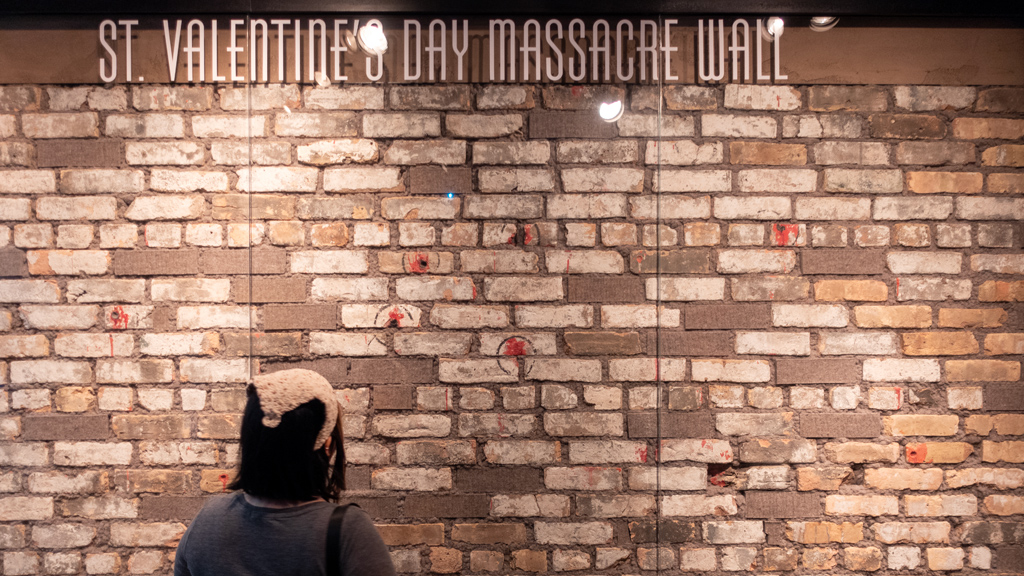
I am probably one of the most anti-California people you’ll ever meet. I hate California and almost everything about it. For example…
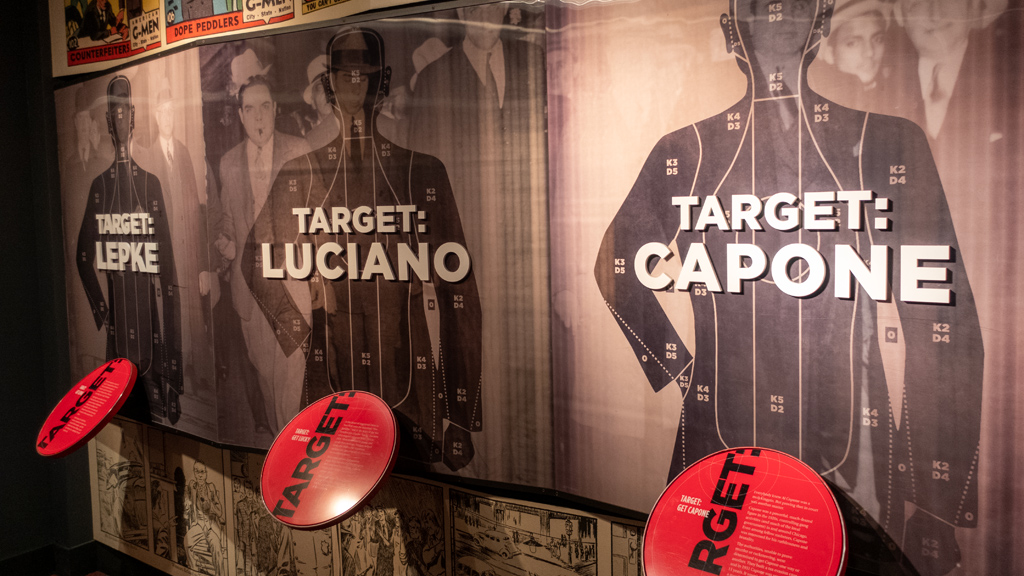
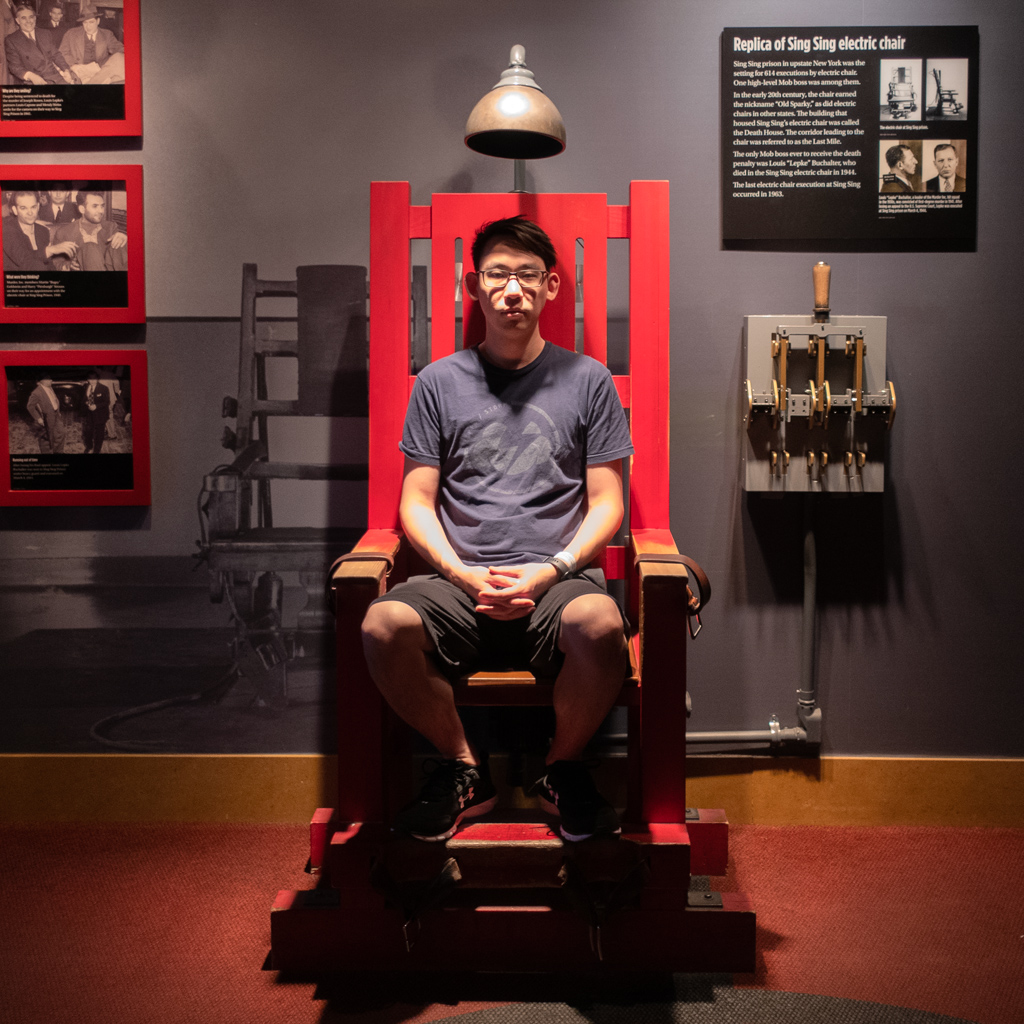
Much of California’s newest legislation is counterproductive for the people, serving more to make political statements than to help the state’s residents. Cal­i­for­nia claims to help the disadvantaged and marginalized population, but statistics show that is not the truth. California’s legislators have a long track record of being unable to learn from history—both their own and that of other states’—and constantly make easily-avoidable mistakes. California’s state a­gen­cies make it increasingly difficult for businesses to operate effectively and efficiently, thus creating limits to innovation and advancement. Cal­ifornia’s taxes are ridiculously high, but their gov­ern­ment services are cripplingly incompetent compared to other states’.

As you can imagine, that list only scratches the surface of my issues with California. The only reasons I even continue to maintain any relations with Cal­i­for­nia at all are because Tempo is a California corporation (though that may be changing soon) and I have a decent number of friends and family mem­bers who choose to call California their home.

Branching off my prior point of California using their policies for politics, California’s cities are absolutely infested with crime right now due to its “soft on crime” attitude in response to the recent social activism surrounding police and racism. Because of this, I frequently preach about the importance of per­son­al safety in California, especially in Greater Los Angeles and the San Francisco Bay Area. The police there do not have the same kind of staffing as de­part­ments in the suburbs or in other states, and they often do not have the resources to respond in a timely manner to non-life-or-death calls, so you need to protect and look out for your own self.

The San Francisco Bay Area in particular has or­gan­ized crime groups that commit seamless, highly efficient thefts in broad daylight. These thieves use spe­cial­ized equipment integrated directly into their gloves to shatter car windows in less than a second and take valuables from inside. Each squad has their own rotating route on which they memorize which cars are owned by locals so that they can instead target the more vulnerable tourists. Other less or­gan­ized thieves do not discriminate and hit every vehicle in an area. Because of the strain on law enforcement resources, the criminals are becoming in­creas­ing­ly brazen.

Locals have tried to combat this by emptying their vehicles, posting signs on their windows pleading for the thieves not to tamper, leaving their doors un­locked as to disincentivize window break-ins, and sometimes even leaving their trunks and hatchbacks wide open. It sometimes works… and some­times doesn’t.

 
The late morning of the day of my departure, I checked out of my hotel and went to refuel my rental pickup truck so I wouldn’t be charged an e­gre­gious­ly high refueling fee. I was staying at the Courtyard by Marriott Oakland Airport, so I picked a convenient gas station nearby and on the way to the ren­tal car facility—the Shell at 285 Hegenberger Road. I placed my backpack on the front passenger seat, threw my luggage in the back seat, and set off with­out bothering to put the address into my GPS—it was just a u-turn and a few blocks away.

I turned right into the gas station, drove up to a fuel pump, put my rental vehicle in park, and stepped outside. I used my credit card to pay at the pump, authorized the transaction, in­serted the nozzle into my gas tank, and locked the trigger. While fuel was flowing, I started walking a circle around the ren­tal pickup truck to inspect for damage ahead of its return.

I made my way around and behind the pickup truck over to the opposite side and noticed that the front passenger side door was slightly ajar. Confused as to how I managed to drive from the hotel to the gas station without noticing, and wondering why the truck didn’t alert me, I pushed the door securely shut and continued my walkaround.

One second later, I realized what happened.

I peered in through the window and noticed my backpack was gone.

 
I had fallen victim to the organized theft rings in the San Francisco Bay Area, culprits of the very crime that I warn people about all the time.

More as a formality than anything else, I walked into the convenience store after I was done refueling, upon which the clerk and a customer, both of whom had witnessed the crime, said it happened “right under [my] nose.” They said it was over in a matter of seconds while I had my back turned to the truck and was paying for fuel—a white Jeep Compass had driven up, opened the passenger side door, snatched my backpack, and drove away. I always ad­vise people to keep their head on a swivel, but it seems like even that wouldn’t have helped in this situation, considering how quickly and ef­fi­cient­ly the theft was ex­e­cuted.

To make matters worse, I basically telegraphed that I was a tourist, i.e., an easy target. My rental pickup truck had Washington plates, which indicated I was a visitor—if not a rental car, then probably an out-of-state road tripper. On top of that, I noticed that the people in that area were pre­dom­i­nant­ly Black, so being the one and only Asian person functionally announced that I wasn’t familiar with the neighborhood and most likely was not a resident.

However, notwithstanding any of the above, the thieves accessed my passenger side door without breaking the window. So what happened?

After thanking the witnesses for the information, I headed back out to my rental pickup truck and did a bit of testing. I started the engine, placed the truck in drive, ensured all the doors were locked, then reverted it back to park. The instant I shifted to park, all the doors automatically unlocked, pre­sum­a­bly as a convenience feature. When I had exited the vehicle earlier to refuel, I did not manually re-lock all the doors (nor did I realize I even had to).

Considering that this kind of theft happens in this area all the time, and no vehicles or firearms were stolen, I didn’t bother calling the police—it’s not like they will or can do anything in this situation anyway. Instead, I just drove over to the rental car facility to return the pickup truck and ensure I would be at the airport on time as to not miss my flight.

 
So what was the damage?

A Lenovo Legion 7 Series laptop I purchased on sale for ~$1,600 that retails for ~$1,850. A Canon PowerShot G7X Mark II digital camera I pur­chased on a no-warranty discount for ~$550 that normally retails for $629. Two SanDisk Extreme PRO SDXC cards, a 512 GB one in the camera and a 256 GB one for backup, I purchased for a combined ~$150. A custom-designed zirconium pen with titanium damascus hardware I pur­chased for ~$300. A dis­con­tin­ued classic Red Bull Signature Series backpack I received for free from Red Bull but was also available for sale at the time for ~$150. RayCon Eve­ry­day earbuds I purchased on sale for ~$70 which now retails for $90. And some other odds and ends with a cu­mu­la­tive value not exceeding $150.

The total of actual losses, without accounting for retail or resale prices, was ~US$2,820.

 
As sadistic as this may sound, I’m sort of glad this happened. Things could have gone much, much worse, and they didn’t.

First, I’ve learned that this is one of those things where, you can study the criminology, theories, and data all you want, but it’s hard to truly understand it until it’s happened to you. Even as someone who has formerly worked in law enforcement and has seen this happen all the time, it’s definitely a wake-up call and a learning experience when it happens directly to you.

I also only got my backpack stolen, and not my phone or wallet, which were both directly on my person at the time of the theft. If I had gotten either of those stolen, I am fairly certain I would not have been able to make my flight back, or if I did, there would have been many complications. My wallet had my only form of identification. My phone had my electronic boarding pass. I did not know how to navigate to the rental car facility without GPS as­sis­tance. I needed rideshare service to return to the place I’m staying at after I land.

Unrelated to the travel issues, my wallet also contained credit cards with a cumulative credit limit of over US$120k, which I would not have been able to immediately freeze if I didn’t have my phone. Even though I personally would not have been liable for unauthorized purchases, that is still an as­tro­nom­i­cal amount of money for a merchant to lose if someone used my cards and the store handed over the merchandise to the thief.

I also had minimal to no threat to my personal safety. It happened behind my back before I had any opportunity to react, and I had no direct interaction with the thieves (i.e., it was not a robbery). I did not have a deadly weapon brandished at me. That is definitely a relief, because I generally do not carry my firearm with me when I am traveling by plane (due to the extra hassle it takes to properly secure it in a special container and transport it through checked baggage), so if there was a threat to my life, it’s not like I would’ve even been able to fight back and defend myself.

After returning to Long Beach, I went straight to my personal pickup truck and did some testing, upon which I learned that it also had this “convenience feature.” I guess it is convenient for people who travel as a group, but considering that I almost always travel alone, I turned off auto-unlock for all ex­cept the driver’s door.

This means that, during my last 4.5 years of truck ownership and somewhere upwards of 150 refueling sessions, my pickup truck doors had always been left unlocked at the gas station. That’s a little scary to think about, considering that sometimes, when I am hiking or wearing workout shorts that are not compatible with a holster, I will carry my gun in my backpack. I am very fortunate that my backpack did not get stolen during any of those times when my gun was inside, and I am also very fortunate that my gun was not inside in this instance when my backpack did get stolen.

Ultimately, this was a very simple financial loss of ~$2,820 on my end. There were no credit cards stolen that could’ve caused further damage to mer­chants, no firearms stolen that could’ve been used to commit aggravated crimes or take others’ lives, and no personal injury to my own health or well-being. Obviously, $2,820 is quite a bit of money, but I am very fortunate to have a great job where I can maximize the use of my strengths to bring high value to the company and be compensated very well, so it won’t be difficult for me to recover.

 
Upon arriving at the airport, I used my phone to remote log out, change passwords, and deauthorize account and software licenses from my freshly-stolen laptop. Except for the most recent 10 or so pictures, everything else was already backed up from my camera to the cloud, so I didn’t lose any photo mem­o­ries from the trip (as you can see from the restaurant blog posts I already published).

After returning to Long Beach, I filled out an online police report with the Oakland Police Department. This incident happened back on Tuesday, Jan­u­ar­y 24, 2023 a few minutes after noon Pacific time. I filled out a police report around 10:30 PM that same night. It has now been over two weeks and my report still has not been processed, so I still do not have a formal report number.

As you can probably tell from my website, one of my favorite things to do is to capture photographs and share my life with others on my blog, so my cam­er­a was the very first thing I replaced—I purchased a new Sony ZV-1. It is lacking a few convenience features that my old Canon camera had, but the auto-focus is extremely fast and accurate, and it’s nice trying out a new brand to get a broader perspective of the available technology on the market.

I didn’t buy a new laptop, and instead fished out my old Chromebook I bought around 8 or so years ago. It’s slow, but it still works. I can’t play games on it or do advanced photo editing, but I can still check my emails, write blog posts, browse the web, and use cloud apps like Google Docs/Sheets and Mi­cro­soft 365 for Web. Considering how I basically do everything on my desktop computer and barely use my laptop, I figured there’s no rush to buy an­oth­er laptop.

I replaced my lost earbuds with the JBL Tune 125TWS. I use desktop speakers with my computer and literally only ever wear earbuds when I’m on a plane, so I didn’t go too overboard doing research on earbuds before making a purchase—I just picked one that was not too cheap, was in stock, and had quick shipping available.

I don’t care what backpack I use, so I went to the garage of Tempo‘s HQ and grabbed a backpack from a huge pile of old equipment that probably would have gotten thrown out anyway; it is more satisfying to me that I am recycling potential waste, rather than having a nice backpack. I didn’t replace my zirconium pen because that thing was way too heavy anyway and probably would’ve served better as a paperweight than a pen. Everything else I either replaced in-kind (like the SD cards) or did not replace (like my phone charger, because I already have plenty).

 
And with that, I leave you with one actionable step and one piece of advice.

Newer vehicles are all coming with more and more convenience features. I personally don’t like them. For example, I have an old-school pickup truck bed where you need a physical key to get in, and the only way to breach is either to pick the lock or take an angle grinder to the steel cover. This gives me a lot of peace of mind when storing things in my truck bed. On the contrary, newer pickup trucks have electronic tailgates where you can press a button or hot-wire an electronic signal to open them.

If you have a vehicle that was manufactured in the past several years, check your convenience feature settings in the instrument cluster and infotainment system. If you often drive alone, make sure these “features” aren’t leaving you vulnerable to theft.

And finally, don’t get complacent. I, a former member of law enforcement, a former mixed martial arts coach, someone who holds an academic degree with a focus on crime, and someone who is generally highly aware of my surroundings, still fell victim to professional thieves. It’s never good to be so anx­ious and paranoid that you can’t think clearly, but it’s also dangerous to be complacent. Stay humble and alert.


—§—


Hello, Pomet in Oakland, California

My third restaurant reservation during my trip to the San Francisco Bay Area was at Pomet on Piedmont Avenue in Oakland, California. The previous two restaurants I went to were both omakase experiences, so I added in an American restaurant to mix in some variety into the roster.

We started our dinner with four appetizers, the first two being two different kinds of Tomales Bay Miyagi oysters. The first pair had Fuji apple cider mi­gnon­ette and sansho, and the second pair was roasted with Shared Cultures urfa chili miso… at least that’s what the menu said.

I’m a big fan of raw oyster, so it’s probably not a mystery that I like the actual fla­vor of oyster. Unfortunately, both of these dishes had over­whelming fla­vors that completely masked the oyster, and I could barely tell that I was even having oysters.

The first was sour, as you’d expect from the mi­gnon­ette; I would have much rather preferred the mi­gnon­ette to be served on the side, but instead, the oysters were drowning in it. The second was greasy and almost cheesy, and the flavor completely conflicted with the oyster.

Our third appetizer wasn’t much better. We ordered the San Pedro yellowfin tuna mixed in with smoked mushroom tamari koji and a medley of citrus.

For me, this was no better than a glorified miniature overpriced poke bowl. The tuna was fleshy, the ratio of fish to fruit was way too low, and I almost couldn’t even distinguish the flavor of the tuna from the fruit.

The presentation of the dish was also incredibly disappointing. Using the greens as a bed, ornating the citrus in alternating types around the edge, and having the tuna in the center would have probably made the dish pop a lot more and allow people to realize that they actually got the tuna they ordered.

Once we got to the fourth appetizer, I started enjoying the food—it was smoked Zuckerman potatoes mixed in with trout roe beside house-made ranch and black garlic sauce.

The trout roe was an add-on, and I do not recommend getting it—none of it stuck to the potatoes, so the roe was basically just left behind every bite and accumulated at the bottom, and the richness of the ranch overwhelmed any roe flavor anyway.

As for the rest of the dish, the potatoes were cooked nicely with a crispy crush but soft center, and the sauces had strong but clean flavors that nicely complemented the potatoes.

For my main course, I ordered the McFarland trout with Rancho Gordo beans, carrots, and mustard.

The fish was nicely cooked, but my favorite part of this dish is how clean and “natural” the rest of dish tasted. There wasn’t too much seasoning, so the beans, carrots, and other vegetables were able to shine through and add their own flavors to the fish, creating a “the whole is greater than the sum of its parts” effect.

My friend got a Liberty duck confit with noodles, sweet potato, nettles, and herb salsa. I only had one bite of her dish, but my assessment of it is the same as my dish—the chef let the core ingredients do most of the work, so it had a clean flavor without being disrupted by excessive or in­tru­sive sea­son­ing.

For dessert, my friend ordered a chocolate crepe cake with Wonderful pomegranates. This is the same friend who joined me at Utzutzu in Alameda, California who had just celebrated a birthday last week, and this restaurant also added a candle to her dessert.

My dessert was a satsuma creamsicle pie. I thought it was a fairly normal slice of pie, though I do appreciate that they added some sort of sear to the top of the whipped cream, which added a nice contrast of flavor to the fattiness of the cream and pie.

To end our meal, we each got a complimentary slice of Asian pear.

Here is a breakdown of what we paid:

Tomales Bay miyagi oysters with Fuji apple cider mignonette $  10.00
Tomales Bay miyagi oysters with Shared Cultures urfa chili miso $  12.00
San Pedro yellowfin tuna $  14.00
Smoked Zuckerman potatoes with trout roe $  17.00
Liberty duck confit and noodles $  25.00
McFarland trout $  30.00
Chocolate crepe cake $  12.00
Satsuma creamsicle pie $  12.00
Service charge (20%) $  26.40
Tax (10.25%) $  16.24
Total $ 174.64

This is much cheaper than the omakase restaurants we went to, but I think it was proportionally less food and less special of an experience.

One thing I want to point out—there is a 20% service charge, in lieu of gratuity, which is mandatorily added to your bill. Also note that the sales tax is charged after the service charge (which is not customary, as gratuity generally does not get taxed), so in practice, this restaurant requires you to tip 22%. I’m sure you can negotiate this down if you’ve had a particularly bad experience, but I accepted this stipulation when I made a reservation, and I had no problem paying it.

Pomet apparently has a great reputation and is allegedly considered one of the best restaurants in Oakland, but based on my experience, I think it’s sort of a hit-or-miss. The entrées were excellent, and the potatoes and desserts were good, but the oysters and tuna were a big miss. I don’t know if my per­cep­tion is a bit biased simply because I had just finished eating at two high-end sushi restaurants, but I think my analysis is still fairly sound with re­gards to the seafood dishes.

The reason we got so many starters is because there were actually more appetizers than entrées, and the starters were presented far more prominently on the menu. Pomet had an extremely limited entrée menu with only six dishes total: two vegetarian, two duck (one with noodles and one without), one trout, and one short rib. Based on this observation, we assumed that this is one of those restaurants where you’re supposed to order a bunch of different starters so that you can try out a wider variety of foods.

Overall, I’d still recommend this restaurant, as long as you avoid the seafood dishes. I think this restaurant’s specialty is being able to prepare American-style dishes in a way that emphasizes the underlying flavors of the ingredients; their specialty is definitely not seafood. In fact, I wouldn’t be sur­prised if I found out they intentionally tried to cover up the taste of the tuna and oysters under the premise that those who like seafood would go to a real seafood restaurant, and that people who show up at Pomet are probably there for foods more friendly towards traditional American palates.

This concludes my short “high-end restaurant crawl” in the Oakland area for this trip (the other days, we went to regular restaurants, cooked meals ourselves, or got take-out). This was my first time going to some nice restaurants in a while, because when I’m traveling alone, I usually prioritize con­ven­ience over luxury; it was pleasant having a companion for a week so I had a good reason to do things I wouldn’t otherwise bother planning.


—§—