This past weekend, I went to the Sea-Meow Convention, which, as you might be able to tell by its name, is a cat convention in Seattle, Washington.
I do a lot of traveling and I’ve been to a lot of conventions, but all the conventions I’ve been to so far have been work-related, or at the very least, industry-related—all of them have been focused on video gaming or technology. This may come as a surprise, because I live in Las Vegas and there are a lot of conventions hosted in Las Vegas, so you’d imagine that I would’ve had many chances to go to a wide variety of different conventions… but I guess I never really seized any opportunities.
When I received an email encouraging me to attend Sea-Meow, I took it as a calling to finally go to a fun event completely unrelated, and not even adjacent, to my work. I did a bit of research first to make sure that it was actually a cat convention and not a furry convention in disguise, and when I confirmed that the organizations running and sponsoring the convention were cat cafés, cat shelters, and veterinarians, I bought tickets.
Con-goers were allowed to bring their own cats to the convention. Not too many people did, but I got some photos of a few of the cats that attended.
There were also cats that had been brought in by cafés and shelters, which con-goers could pet after making a donation to their cause.
There was a balcony-like area on the sides of the exhibition center from which I was able to look down onto the main floor. Here is what it looked like from the top-down perspective.
Here are photos I took of some of the booths on the convention floor. It was interesting and different than most other conventions I’ve been to in that, instead of it being filled with companies trying to promote their product, a majority of booths were run by independent artists trying to sell their art, custom-made cat toys, or other creations.
On one end of the convention floor, there was a stage that had a handful of panels scheduled. I didn’t watch any of them, but they seemed to have taken a fairly educational approach for their topics.
I got a VIP ticket, which came with free drink refills. Unfortunately, the website did not disclose that the only drinks that are free are hot coffee and hot tea—all specialty drinks were excluded, and even regular iced beverages didn’t count. I don’t really prefer hot drinks, so I didn’t really get much value out of that perk.
Here are some cat-shaped macarons:
The convention was interesting, but small. I don’t know if it’s because I’m just used to conventions of a much greater scale, but there didn’t really seem to be that many booths, and there wasn’t really much to do. I got a VIP ticket for full access on both days of the convention, but I think getting a one-day general admission ticket is more than enough to experience everything.
In the convention’s defense, I feel like there might’ve been more activities in which I could have participated if I combed through everything more carefully and was more willing to wait in line for things. I also went together with a friend who I had not seen in almost three years, and she wanted to spend time walking around and exploring downtown Seattle with me as well while I was in town, so we didn’t stay until convention closing time on either of the days.
Based on my experience, if you own cats and/or are a fan of cats and you already live in or around the Seattle Metropolitan Area, this could be a fun one-day trip to check out a bunch of cat-related artistic creations, buy your cat some new toys, and support independent artists and small businesses.
The VIP ticket I got was US$99.00, but there is a much more affordable US$27.00 one-day general admission ticket, which I think would be worth it for regular cat enthusiasts.
I’m in Seattle again for a convention coming up this weekend, but I flew in a few days early to spend time with my friend Dani while I’m in town. One of the things we decided to do was get a guided tour of the Smith Tower in Pioneer Square.
Unfortunately, our timing was unlucky and the tower was closed for a private event shortly after our guided tour, so we didn’t have an opportunity to spend additional time after our tour walking around the exhibits. (They invited us for complimentary general admission for a self-guided tour to finish exploring the tower on a later date to make up for it, though.)
Here are some photos I took during our tour:
On the observation floor, there was a chair that is said by legends to cause young, single women who sit in it to soon find and marry their future husband. Dani insisted I sit in it so she could take a picture of me.
Here are some photos of Seattle from the wrap-around observation balcony:
Before we left, we used the photo station on the observation floor to take a few souvenir pictures. As usual, I am ecstatic to be there, as you can tell.
I enjoyed our guided tour. Dani and I were the only ones who attended for that time slot, so we got a very personalized experience.
Dani loves the architecture of the building, so our tour guide focused on the history of the construction of the Smith Tower, the unique elements and components of its construction, and its various structural improvements implemented throughout the years. He also took us to areas outside of where the museum signs were pointing, so I suspect that we might have gotten access to some exclusive areas that are not usually shown to regular visitors.
With my background in law enforcement and interest in criminology, our tour guide also focused on the crimes that used to take place in the offices of Smith Tower and their impact in current wiretapping technology. I’ve always found the concept of double agents, re-doubled agents, and triple agents to be very interesting, and I found those aspects of the crimes to be particularly intriguing. I was also impressed at the ciphers used to transmit information over radio signals disguised as nightly bedtime stories.
On top of the topics being aligned with our interests, I think we also rolled a good tour guide who excelled at storytelling, as he was able to relay all that information in a compelling and captivating manner.
Last week, on Monday, October 21, I had an opportunity to attend Michelle Khare’s red carpet premiere event for her first feature-length episode of Challenge Accepted, “90-Day Black Belt,” at a movie theater in Hollywood, California.
I was already familiar with Michelle Khare from seeing her past Challenge Accepted episodes where she tried various different academies for the San Diego Police Department, Federal Bureau of Investigation, and Secret Service. Having a professional background in criminal justice and law enforcement, I enjoyed watching her training and thought she portrayed her experience as well as she could in those half-hour episodes. Thus, as you’d expect, when I had a chance to screen her latest episode, I was eager to join in for it to find out what she did next.
I was pleasantly surprised when I found out that the most recent challenge she tackled was to get a taekwondo black belt in 90 days. I’ve trained martial arts and combat sports on-and-off for two and a half decades now, and my very first black belt was awarded to me in taekwondo by Kukkiwon, the South Korean government’s taekwondo governing organization, when I was 8 years old. It took me two years to earn it, and even that was considered to be pretty quick, so I was looking forward to seeing whether she was able to do it in three months.
I didn’t publish this blog post right away after the event because I didn’t want to leak anything too early, but the episode is out now on Michelle Khare’s YouTube channel as of this morning. I’m going to share some of my thoughts about it, so if you don’t want me to spoil anything, don’t scroll past the five photographs until you’ve watched the episode.
Here are some photos I took from the theater—of Michelle doing her introduction before the premiere, and a Q&A session after the viewing:
I ended up liking the show more than I expected. I thought the editing was done well, the story was told in a captivating manner, and the build-up to the final result made me get invested in her success.
From the beginning, I was wondering if her master would actually assess her ability seriously, or if he had gone into this knowing that it was “impossible” but just wanted to entertain her for the challenge. A lot of martial arts schools like to “gatekeep” black belts in a sense because they don’t want to make it seem like it is achievable in such a short period of time, and I wondered if Michelle would be victimized by that notion. And sure, that is gatekeeping is reasonable for a majority of people—most taekwondo students start as true beginners and are only able to attend a few classes a week, so requiring a few years to achieve any level close to mastery makes sense. However, it seems like, not only did Michelle have a strong fitness and combat sport background already, but she was fairly dedicated and spent far more time training than the average new student.
In exchange for giving her the opportunity to take promotion tests in such rapid succession, it seems like her master ramped up the difficulty of the exams to ensure that she absolutely did deserve it every time she passed. Her color belt tests were noticeably more intensive than what I remember from my own taekwondo journey, and her black belt test was orders of magnitude more difficult than what I had to do for my black belt.
I think the way she failed her black belt test was very gimmicky. Yes, I too had to break a brick to earn my black belt, and yes, there is validity in requiring that as a component of the exam—it demonstrates strength, but there is also a material mental aspect of it where you are overcoming the hurdle of using your body to break an extremely hard object. However, there is far too much variability in brick-breaking to be able to consider it as any sort of reliable indicator of any metric.
There are different kinds of bricks, and for taekwondo, you often use cement slabs of controlled density—these are the rectangular gray blocks that you’ll see if you search online for taekwondo breaking demonstrations. The thickness of these slabs can also be controlled, and they are usually made in half-inch increments, with lighter-mass testers (like Michelle) getting thinner slabs, while higher-mass testers would either get two-inch-thick slabs or have to break multiple thinner slabs at once.
Note that I said earlier that a big aspect about brick breaking is the mental component of it. Your body will naturally not go full-force if you are about to throw your hand into an object that it knows is extremely hard, and part of the brick-breaking test is to determine whether you are able to overcome that obstacle in your mind. Having the strength to actually break the brick in half is of secondary importance, so when you have custom-made cement slabs designed for taekwondo usage, they’re not going to be as strong as landscaping bricks you buy from the hardware store. I used to coach martial arts and have handled many of these cement slabs before, and on more than one occasion, I have accidentally broken them in half because I wasn’t gentle enough with them.
I’m going to put on my tin foil hat here, and this is obviously entering conspiracy levels of speculation, but I wonder whether Michelle ended up with the thickest possible landscaping brick because they wanted her to fail. She was clearly extremely good at everything else, but I think there would have still been a lot of backlash from the taekwondo community if she had actually been awarded a black belt, especially from those who spent years working on their own black belts but are unable to view things from a more neutral and objective perspective for others in different circumstances. So, although it is unlikely, I think it is technically not impossible that her training school did this to her to have an excuse to fail her and save their reputation.
During her post-screening Q&A, Michelle said that it’s been over three months since filming concluded and she still had not earned her black belt yet. I think there is still a lot of room for improvement in her brick-breaking technique. During her black belt test, she was trying to break the brick with just her arm, as opposed to angling her body in a way that the mass of her torso drives her hand into the brick. That kind of adjustment can make a huge difference simply due to the basic laws of physics, so if she refines her strategy in that way, I have faith that she’ll pass her black belt re-test.
FTC Disclosure: I was not asked to write this blog post, I was not compensated cash for this review, and no third parties had an opportunity to review or request changes to this piece prior to its publication. However, I did receive material incentive to attend the event by way of an exclusive pre-release tour invitation and VIP access. The public retail value of VIP access is worth US$65.00. All other expenses, including travel and lodging, were self-funded.
I’ve played Minecraft twice in my life—once to try it out over a decade ago close to back when it was first released, and once last year to participate in a charity event that had one segment of the associated show take place in-game. Both times, I got pretty severe motion sickness because my brain doesn’t do too well with first-person perspective games with fast movement and warped field of view around the edges.
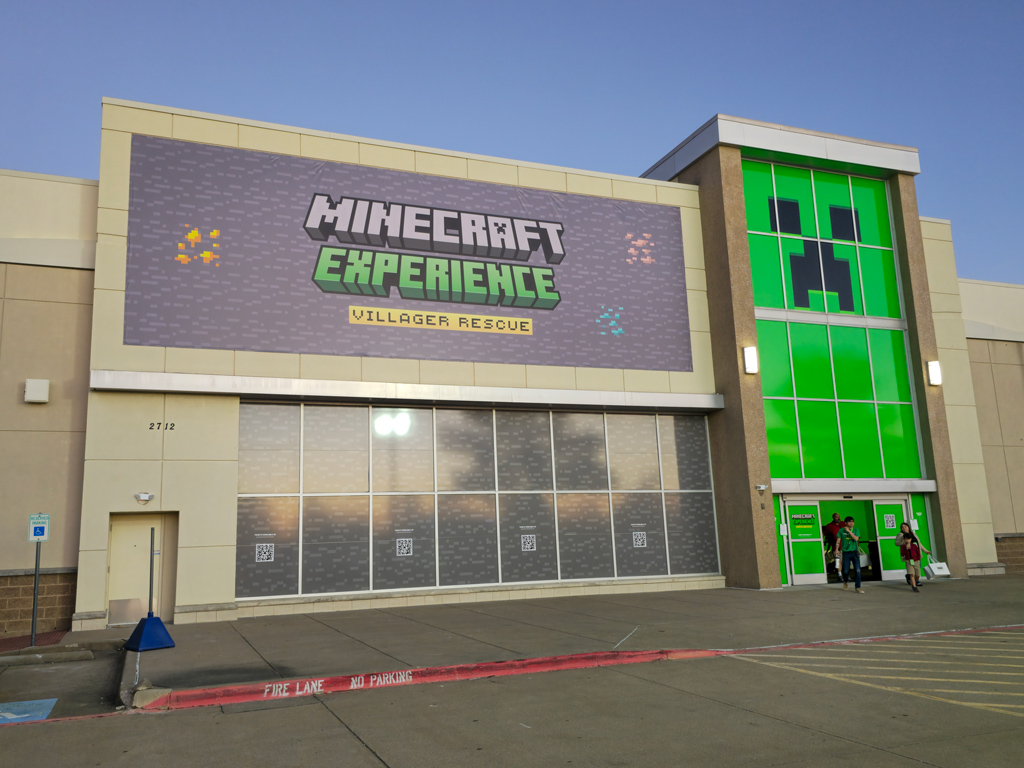
Knowing that, you’re probably surprised to find out that I flew to the Dallas–Fort Worth Metroplex in Texas and headed over to the city of Plano… for a Minecraft event.
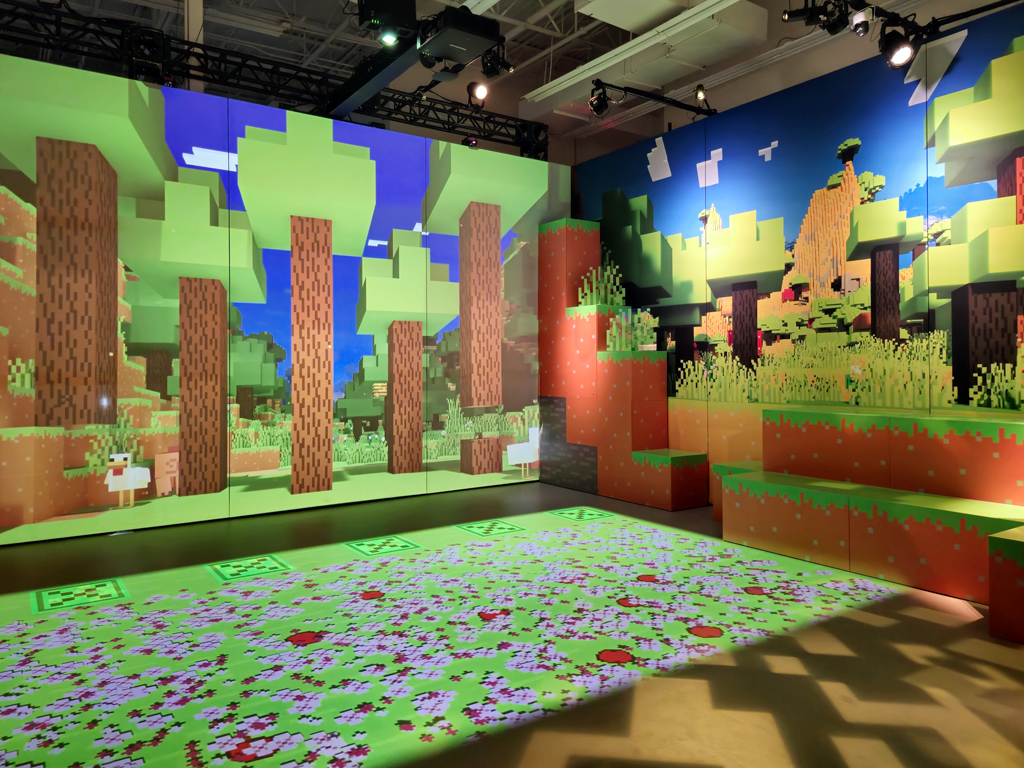
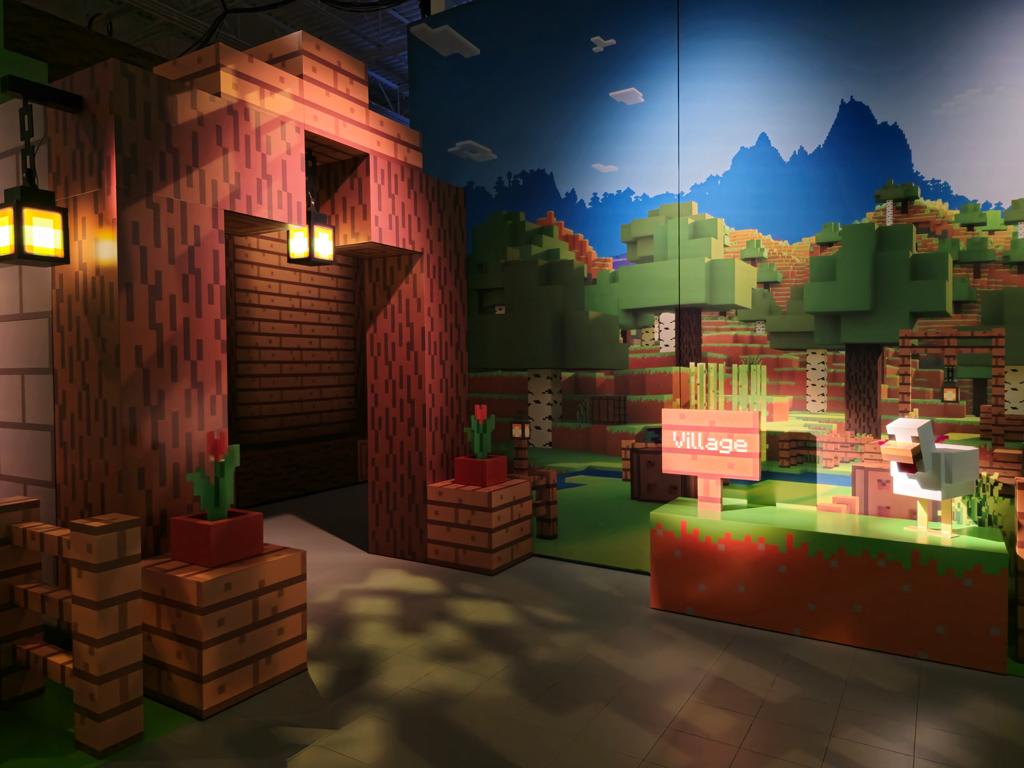
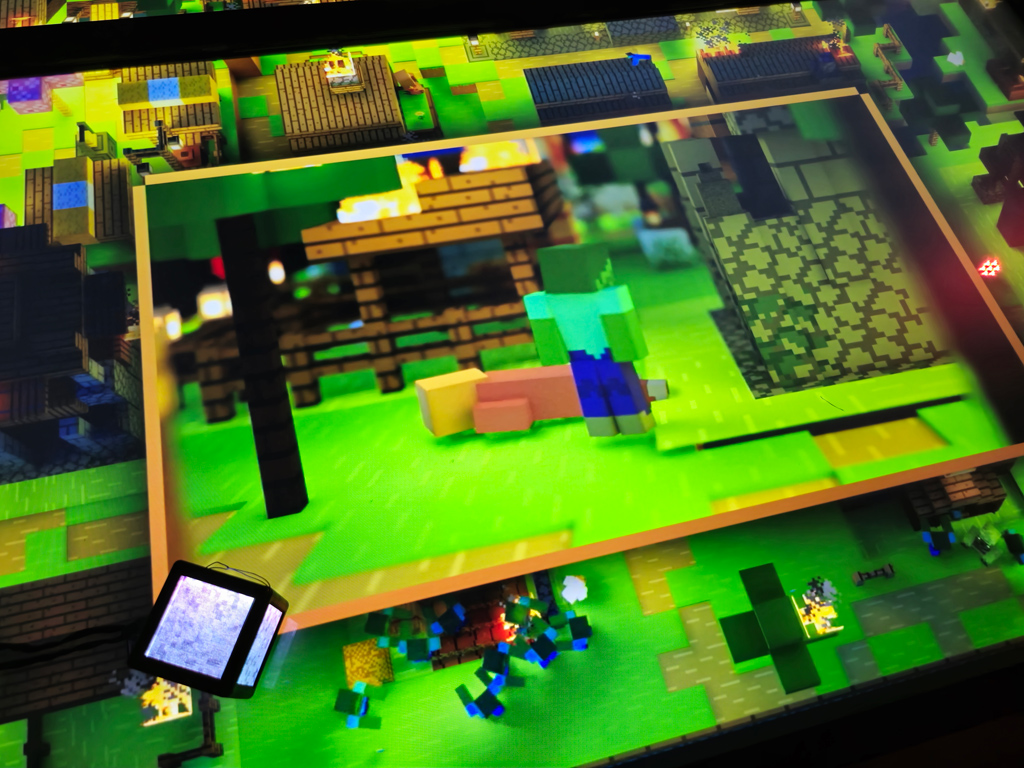
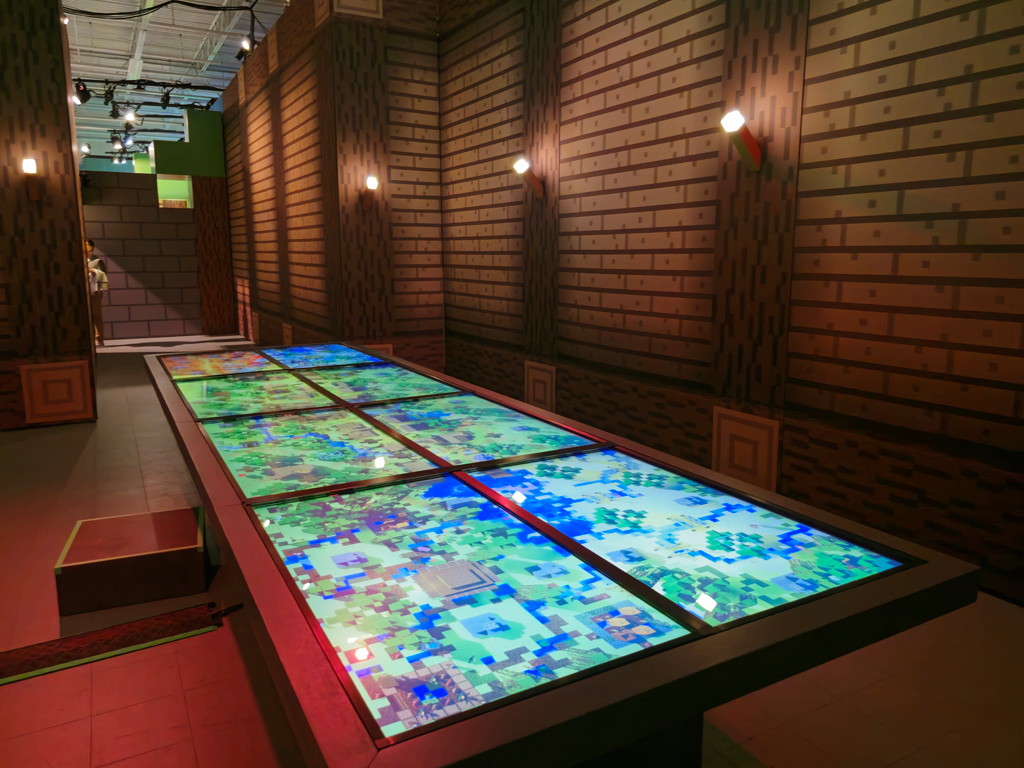
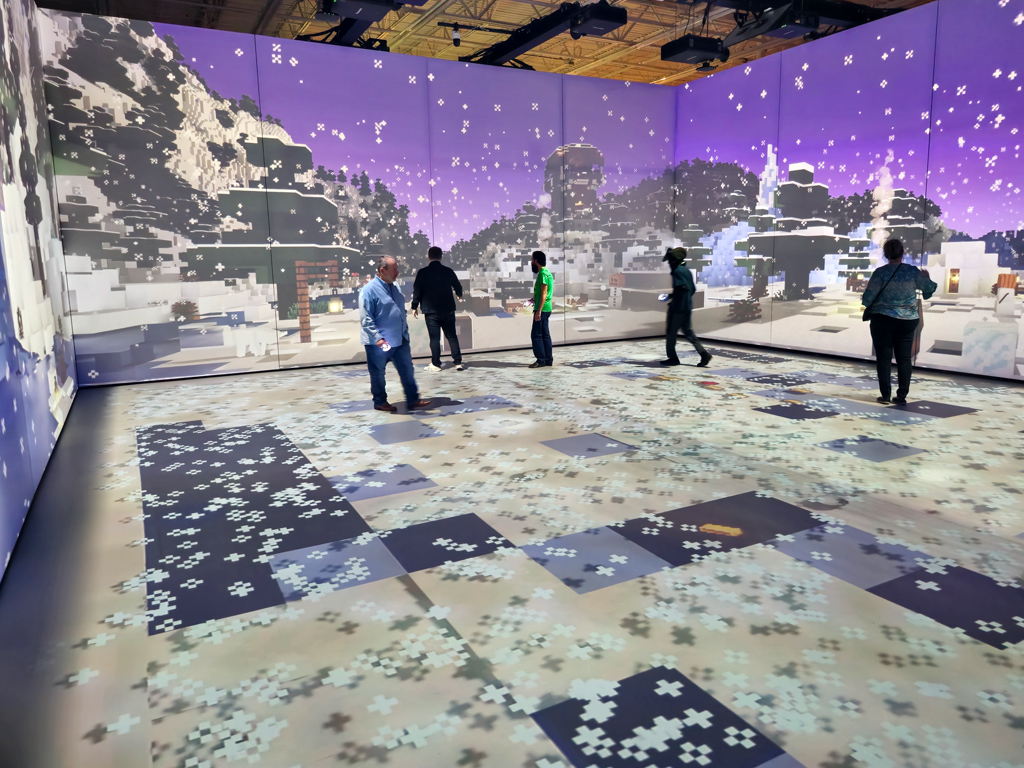
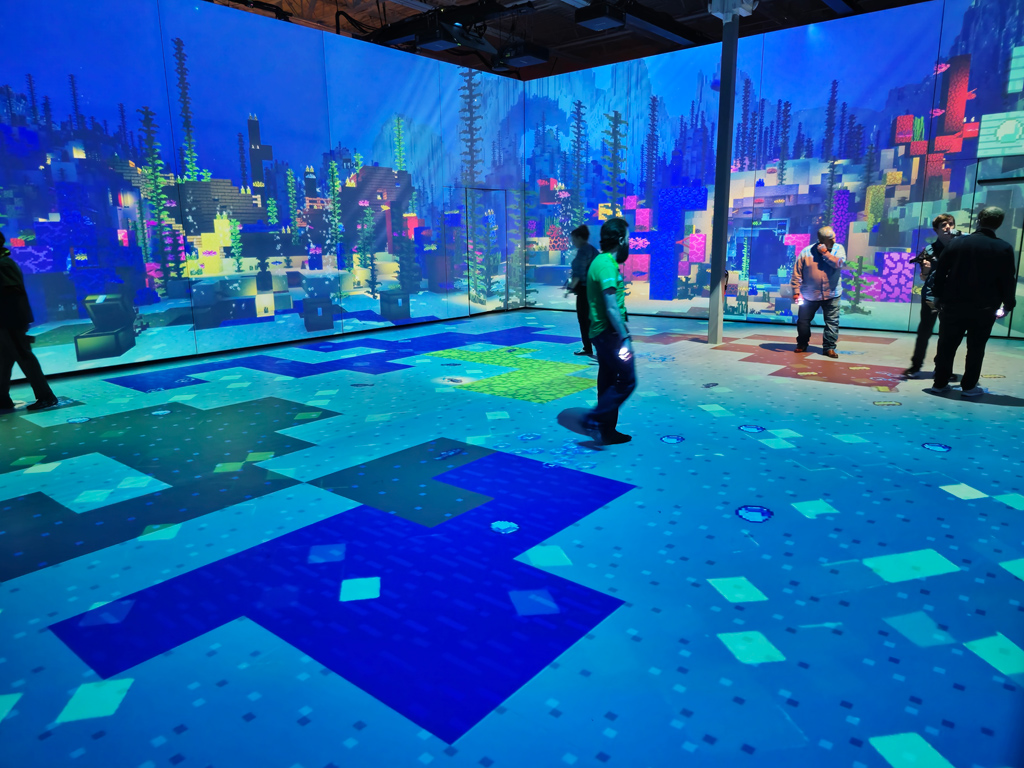
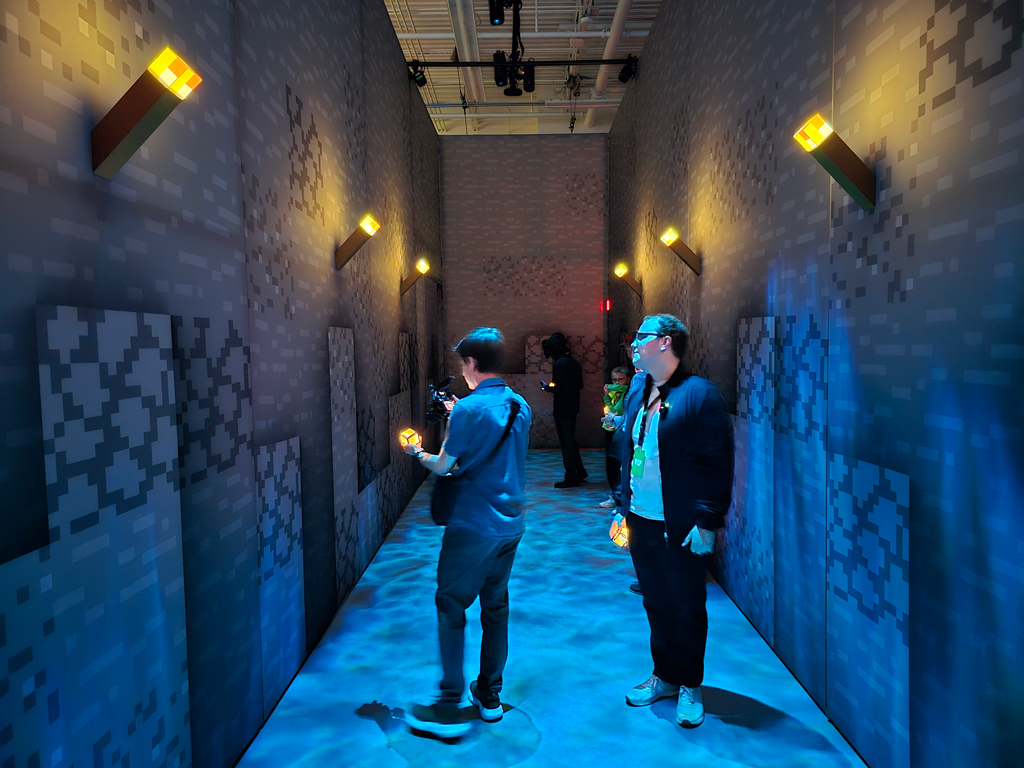
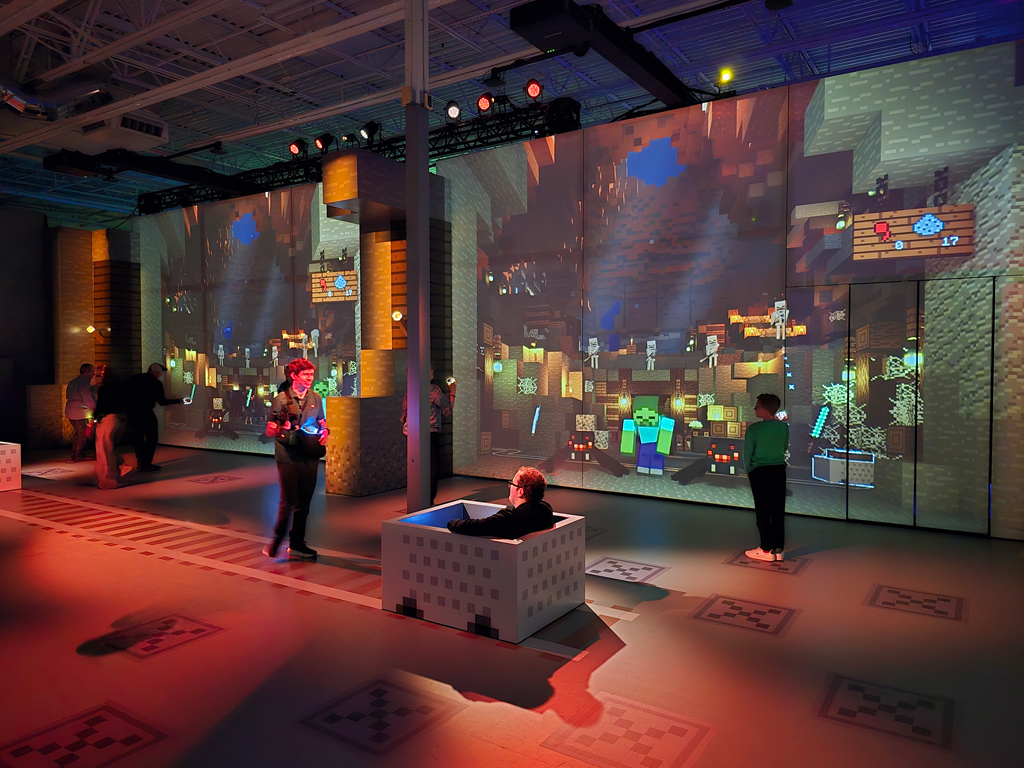
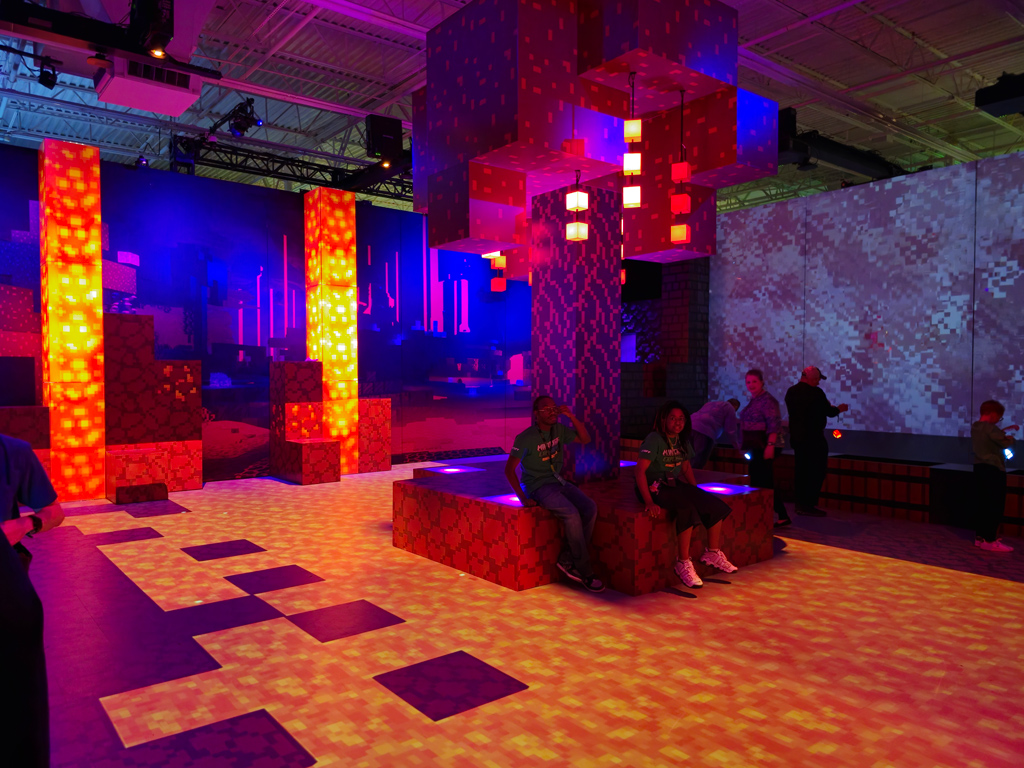
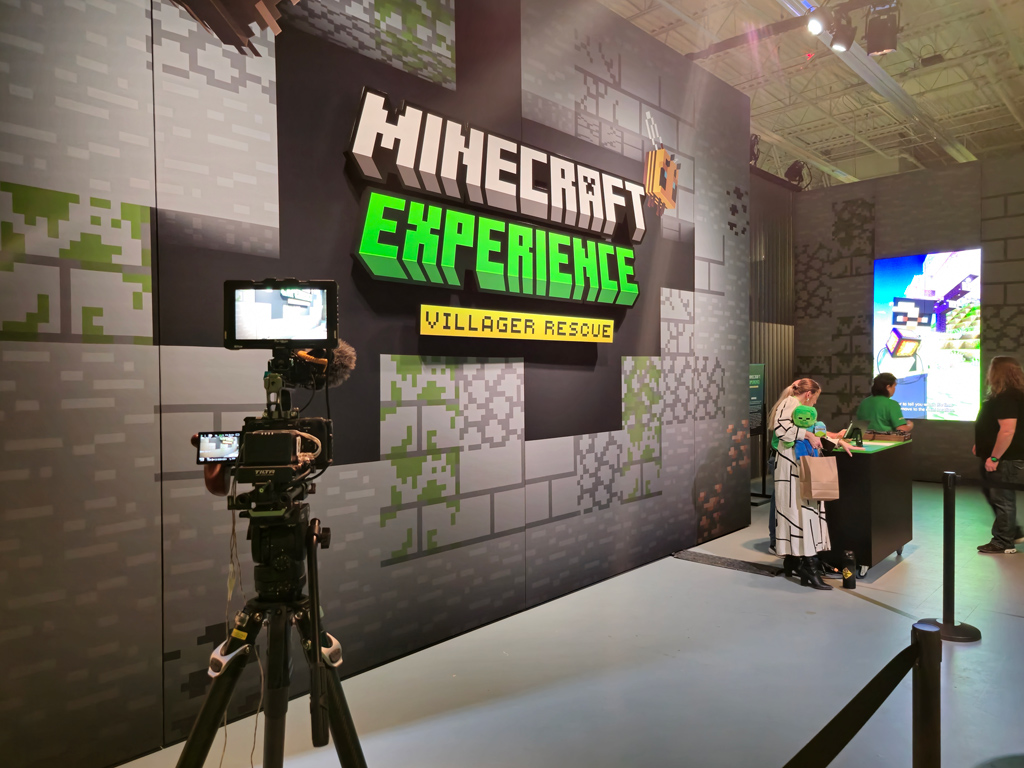
Together with my friend Aidan, who runs the Skip the Tutorial channel on YouTube, I had an opportunity to try “Minecraft Experience: Villager Rescue” two days before it opened to the general public. Minecraft Experience is an interactive experience taking place in the Minecraft world during which you navigate in succession through ten different rooms ranging from the spawn point to the underworld and ending at the trading post (i.e., gift shop).
I feel silly saying this, especially because I’m known to be fairly critical and difficult to please, and because this entire thing looks like it was made for small children… but I actually had a great time.
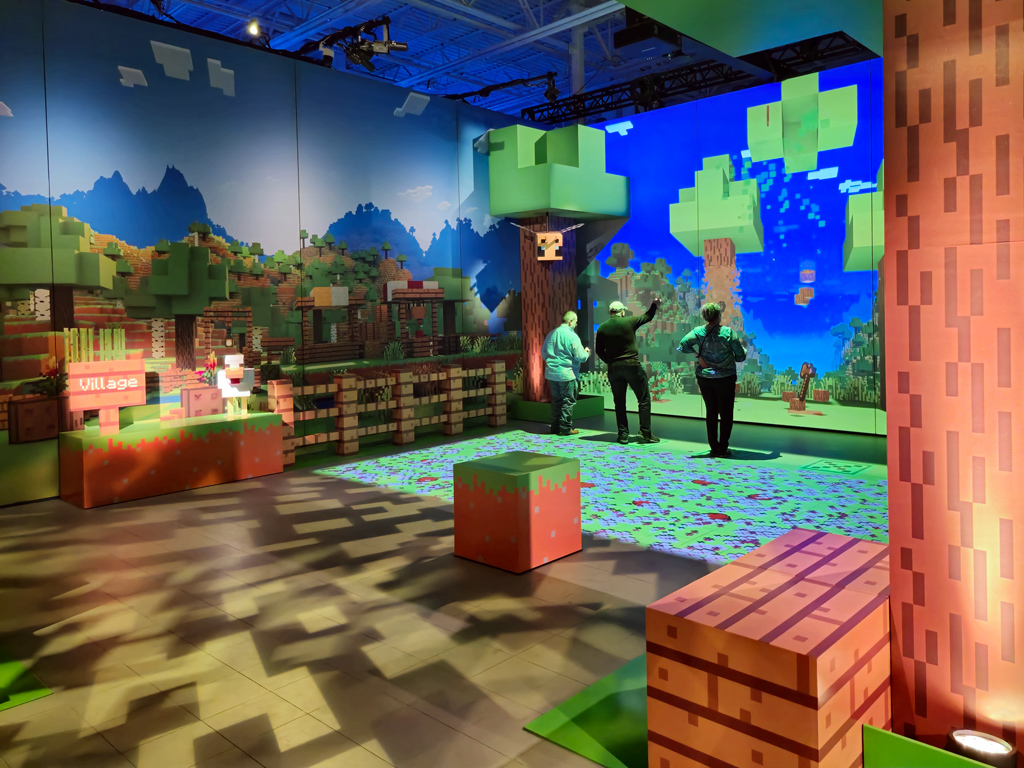
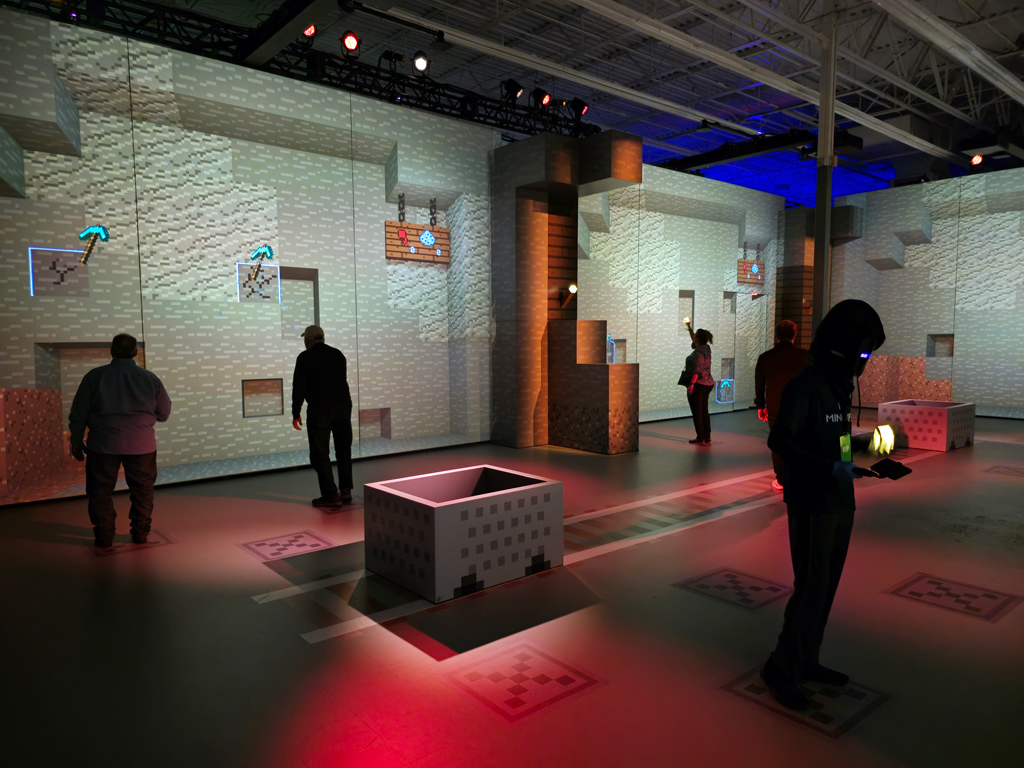
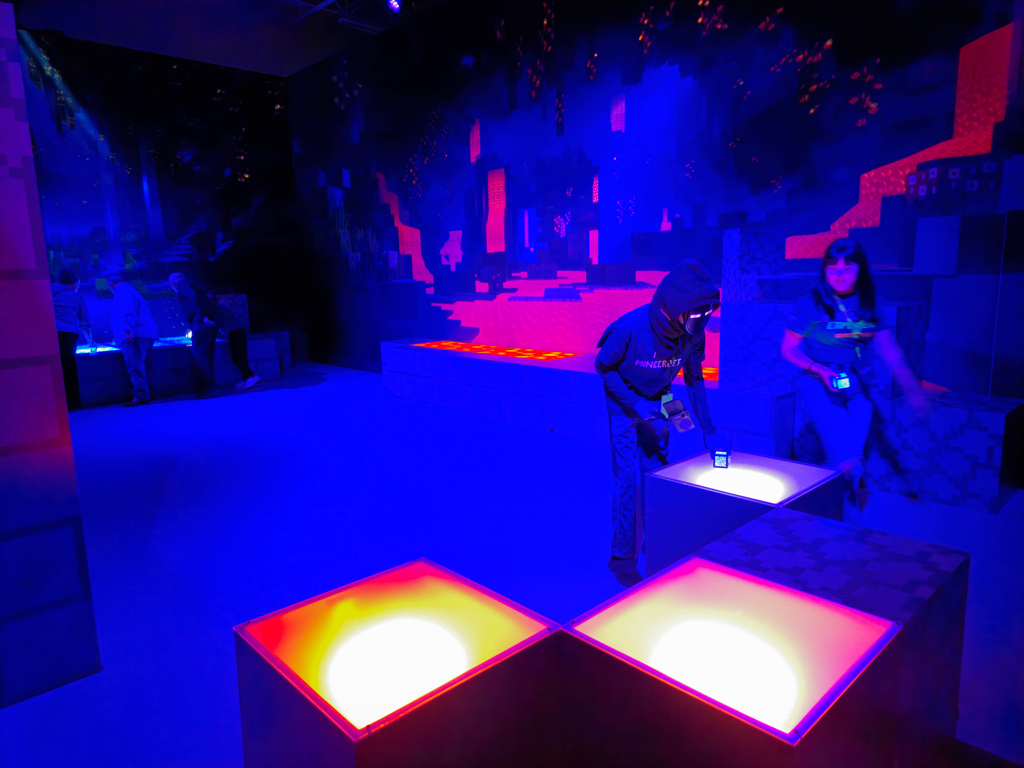
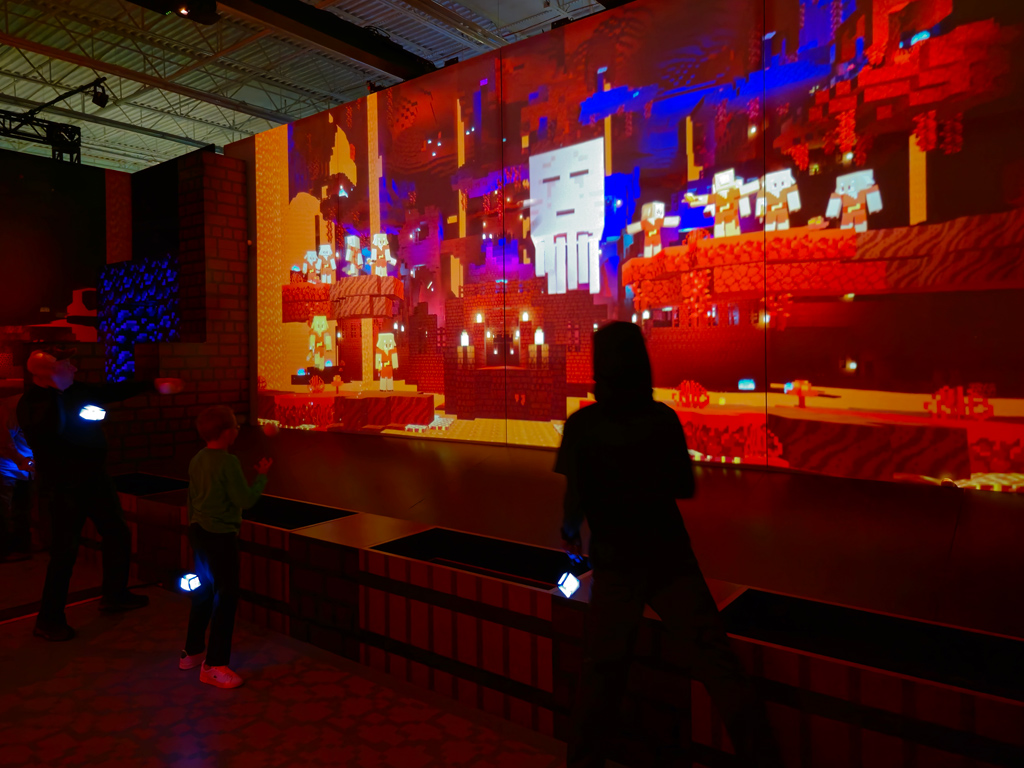
The interactive experience revolves around an Orb of Interaction, a little cube that acts like a dynamic remote-control extension of your body that allows you to send commands via movement to the sensors placed throughout the rooms. You use this device, along with your body, to influence the Minecraft world around you in ways that resemble actual gameplay within Minecraft.
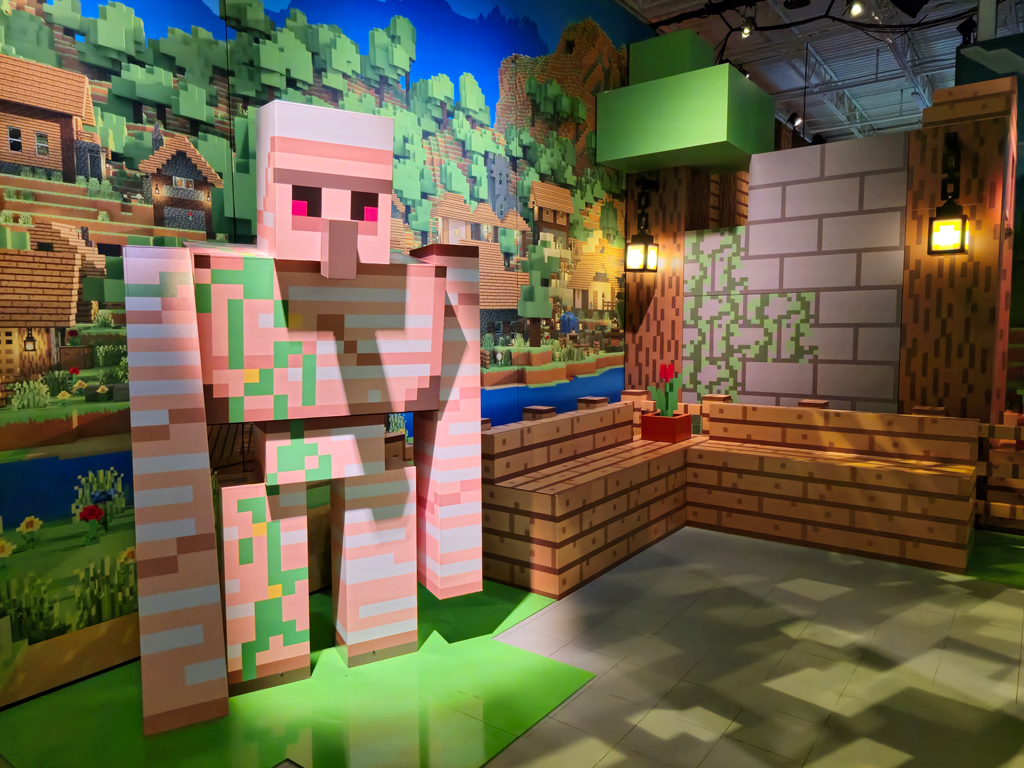
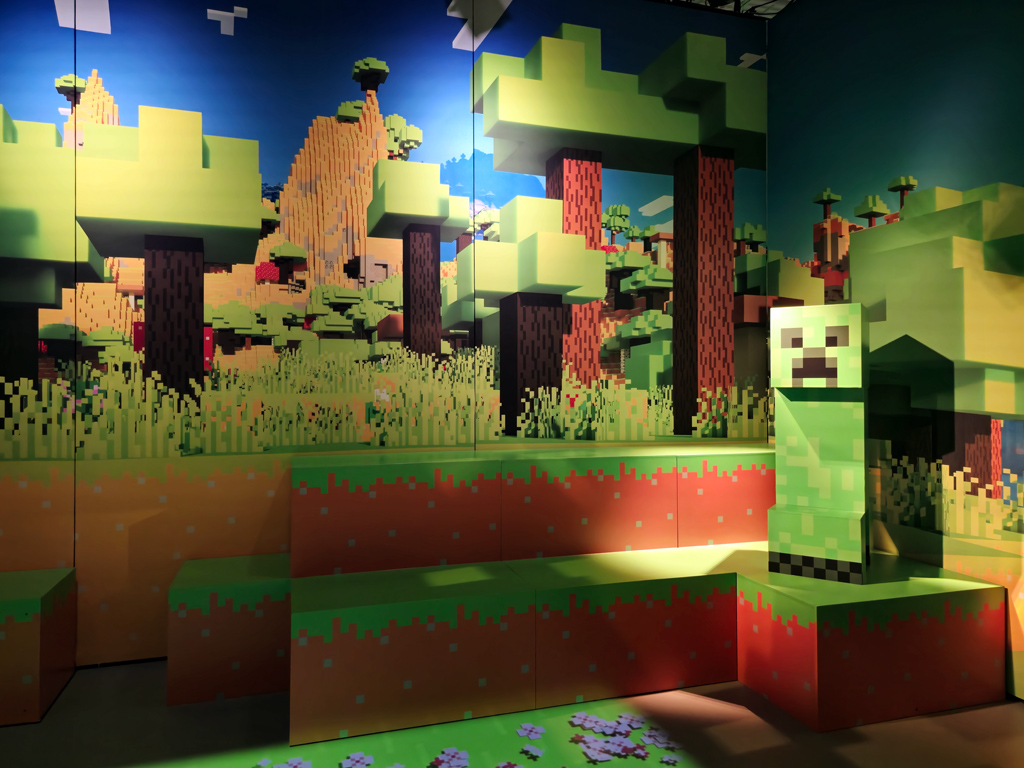
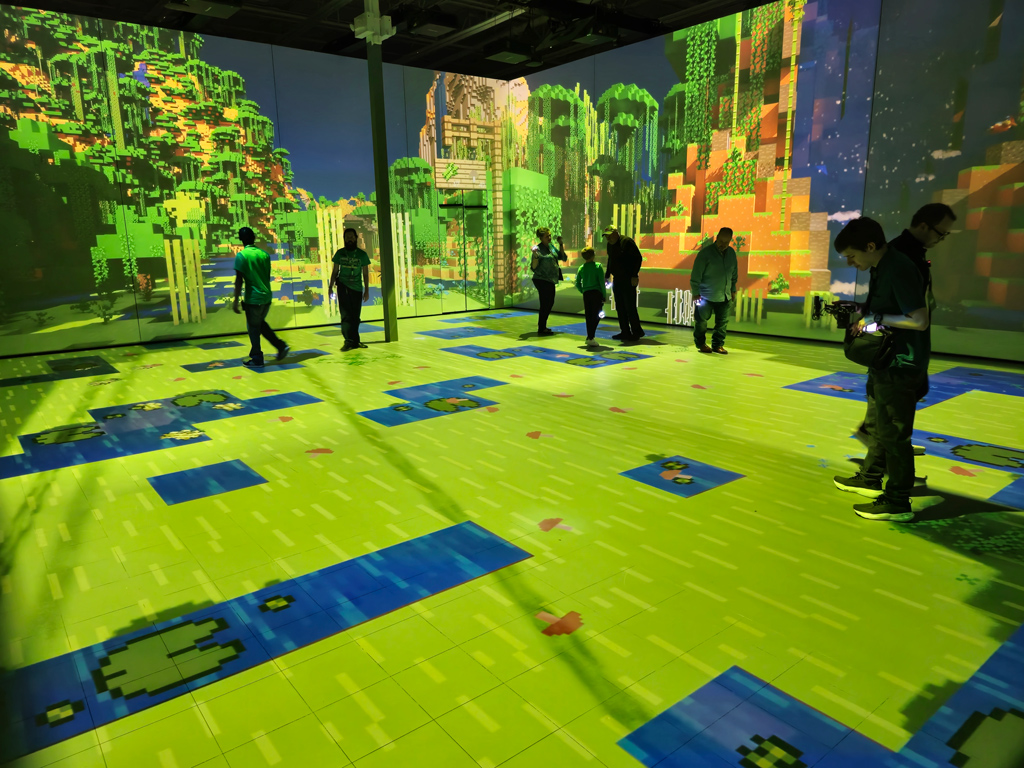
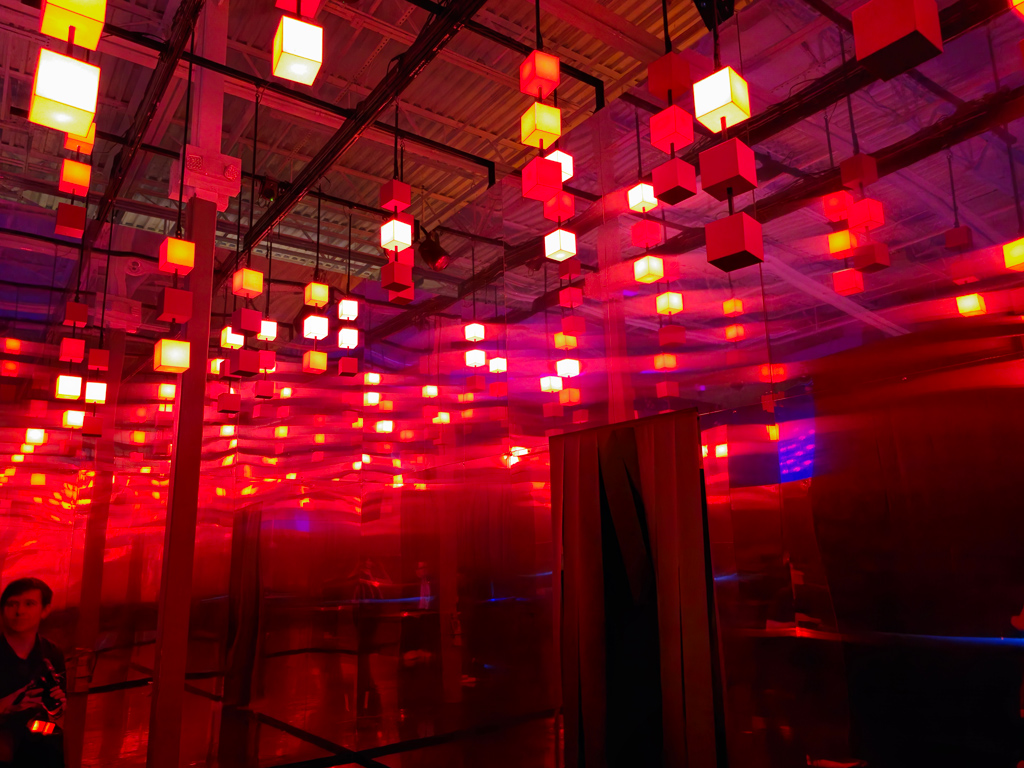
Each room has a different way to interact with your surroundings. The spawn point limits you to just the basics so that there is a smooth learning curve, while later rooms will require you to use the orb in conjunction with your feet to gather resources. Every room was also very immersive—it was clear that all the sets were built out with a 360° perspective in mind.
At first, I was a little bored and didn’t really know what was going on because of how unfamiliar I was with Minecraft, but within the first few rooms, I hilariously managed to get very invested into the storyline. My friends and I ended up doing three total rounds through the experience; each time, I would notice new small things that made me appreciate the production team’s attention to detail.
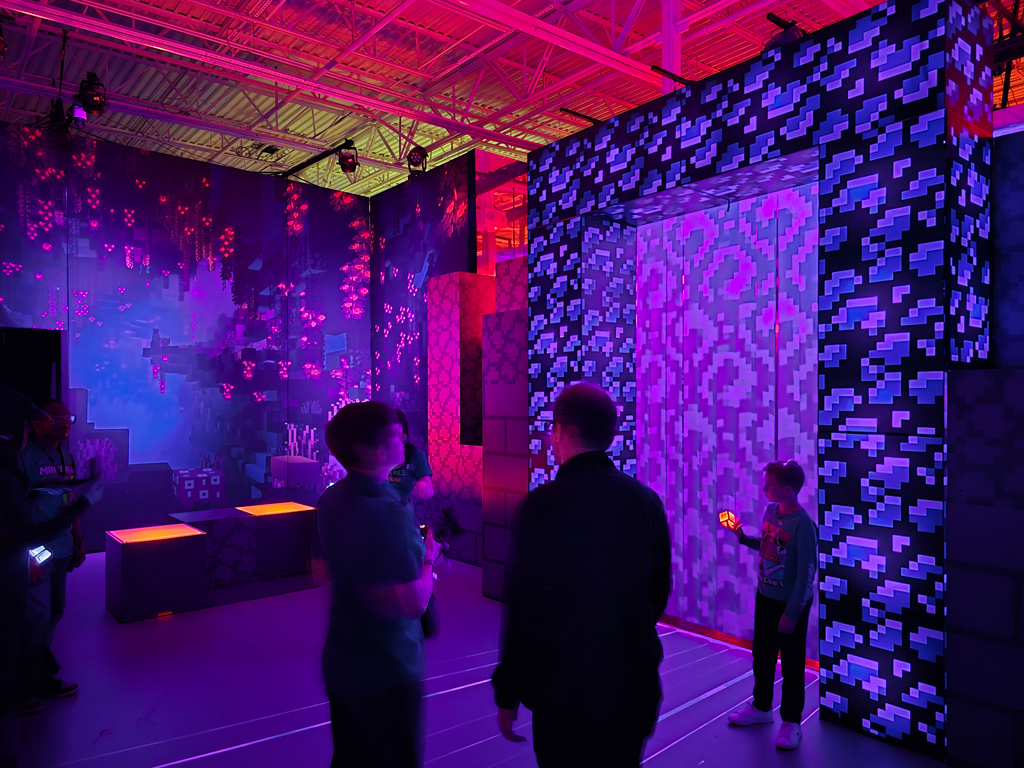
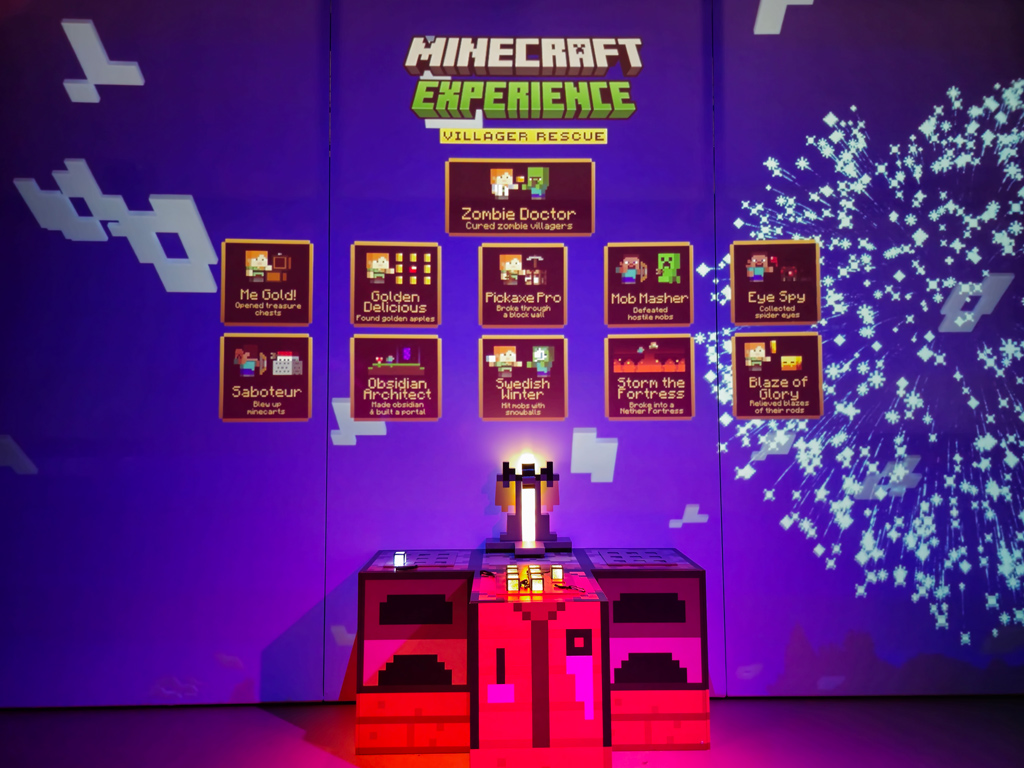
My favorite part of the experience was a room where you had to combine certain raw materials in a certain sequence in order to produce building blocks necessary for the construction of a gateway. The difficulty of this room had ramped up substantially relative to the spawn point, and albeit fairly easy to intuit, you still had to pay attention to what was going on if you wanted to participate properly. The part I loved the most about this is that the recipe for the building blocks was apparently something that actually exists in Minecraft, so this is an opportunity for children to feel good about their gaming knowledge and possibly teach their parents what to do to emerge from the room victorious.
I also liked how much physical activity was integrated into the experience. I had to constantly move my Orb back and forth throughout a majority of the rooms, and near the end during the final boss fight, I nearly broke a sweat throwing felt “snowballs” at the screen to help deal damage to the enemy.
I went into this expecting it to be something like an exhibit hall out of BlizzCon, where there would just be some life-sized models of in-game assets, some important and notable relics on display, and maybe some gaming stations to play some exclusive Minecraft content. As you would imagine, my expectations were far exceeded when I realized this was actually a real experience and not just a miniature museum.
Even though I had a great time, it was clear that I wasn’t really the intended target audience. I’m sure some adult Minecraft superfans would love this too, but I think the main demographic for this experience is children and their parents. I think most young Minecraft players would find Minecraft Experience to be absolutely magical, feeling like a real-life video game protagonist. This is also an opportunity for parents to get more involved in their children’s lives and deepen their connection through one of their kids’ hobbies.
It looks like the most affordable general admission ticket costs US$32.00 per person on a weekday, with bulk-purchase discounts knocking down the ticket price by a few dollars per person for groups of four or more. Everyone’s financial situation is different so I can’t really broadly comment on whether this would be worth it, but compared to some other similar attractions like this in other major cities, I think this pricepoint is definitely within reason.
Here are some photographs I took during the experience:
We decided to go to Spoon & Pork, a Filipino comfort food restaurant. They have a location in Silver Lake, but we decided to go to the one in Sawtelle, a neighborhood near Santa Monica. I wanted to try as many different dishes as possible, so we opted for the Kanin Club, a 90-minute unlimited menu tasting experience for US$65.00 per person.
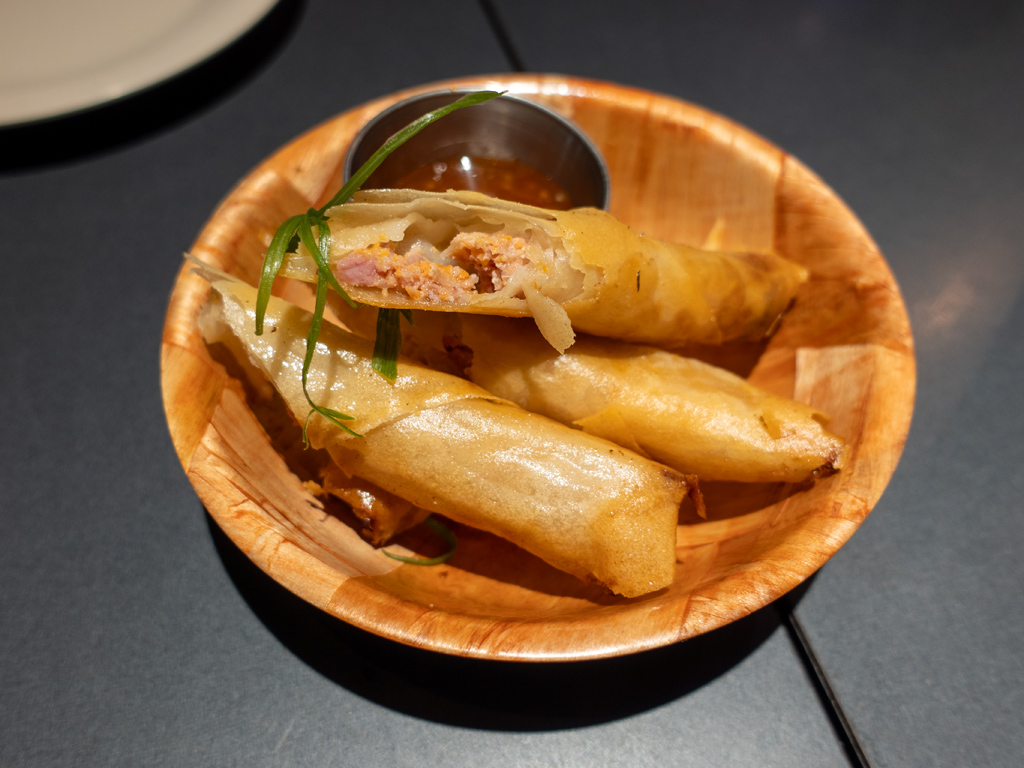
Our first appetizer was lumpia shanghai, also known as Filipino spring rolls, with pork, shrimp, and sweet chili lime sauce.
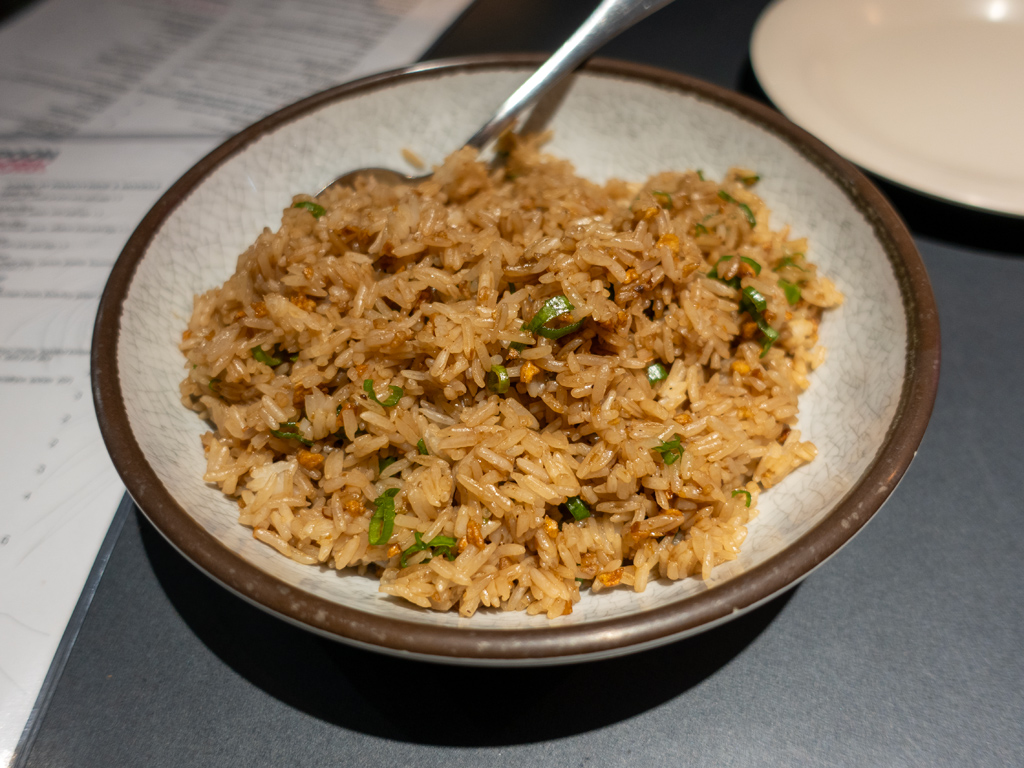
Our plate of carbohydrates that we ate little-by-little throughout our meal was rice with fried garlic confit oil. I’m a big fan of garlic, so as you’d expect, I was a big fan of this fried rice.
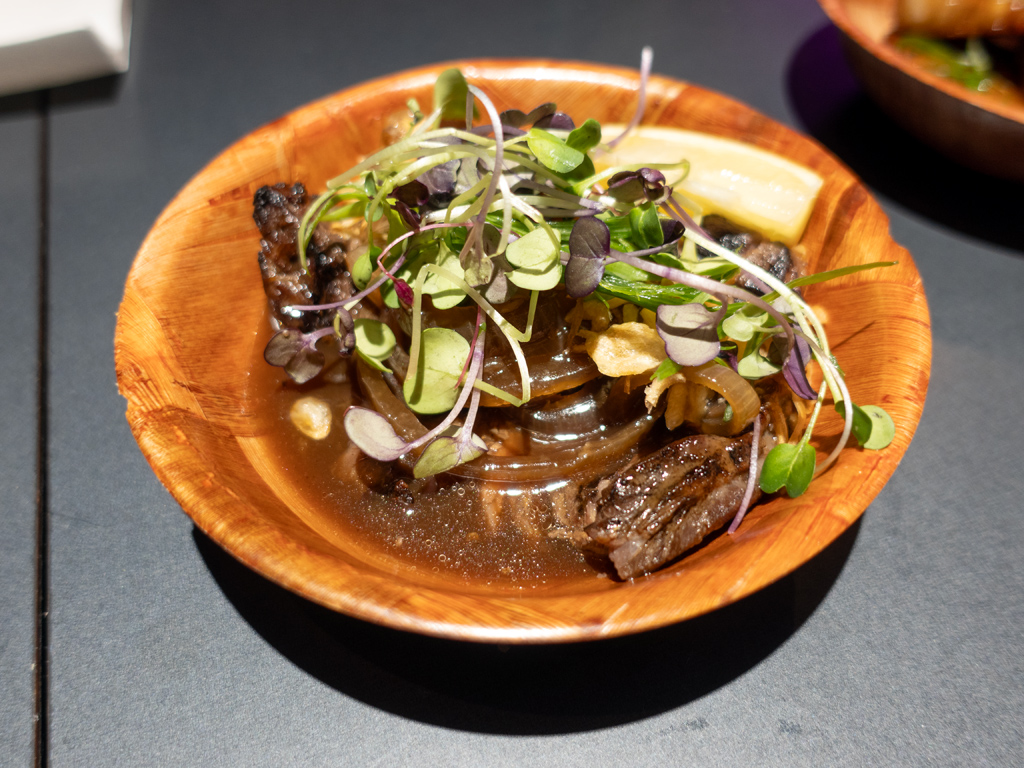
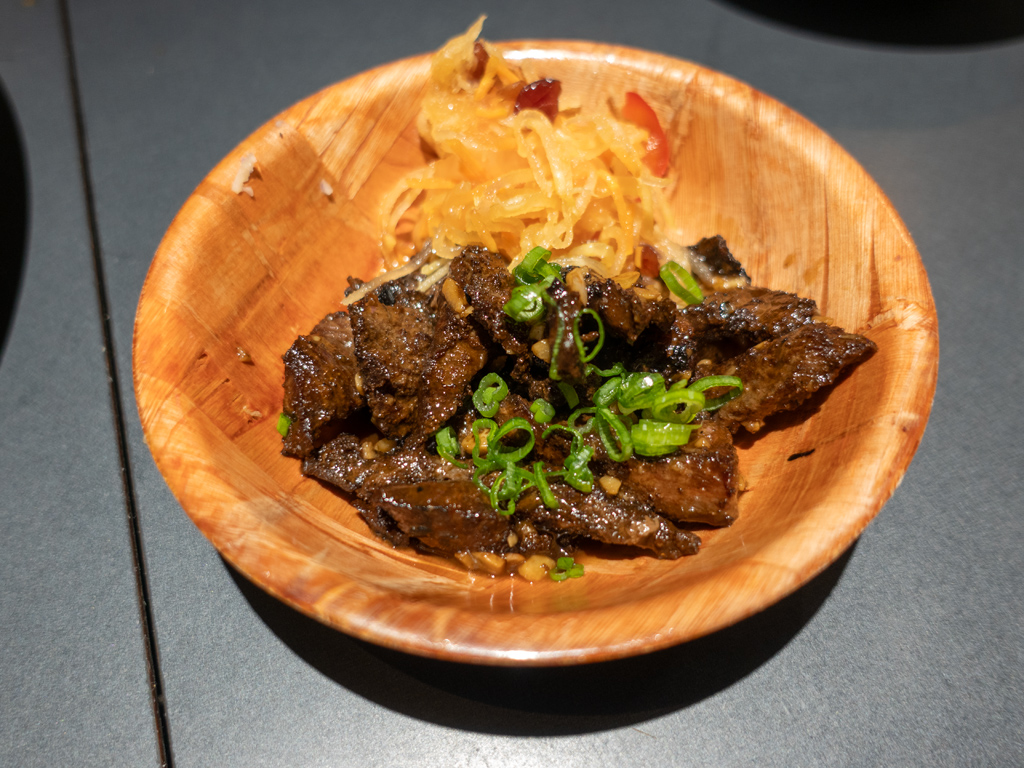
Our first small plate was bistek with skirt steak, sweet onions, and lemon-soy gravy. The steak was incredibly tender and flavorful, and this ended up being my favorite dish of the meal.
Our second small plate was tocino, which is apple-cured grilled pork belly with atchara. I usually don’t like pork belly because of how fatty it is, but this pork belly was amazing. The flavor of the fat was nice and smooth, and although the texture was that of what you’d expect from pork belly fat, it seemed to mix well with the meat, more quickly than what I’d expect.
Our first large plate was patita, which is slow-cooked deep-fried pork shank with chili garlic glaze. This portion was much larger than I expected. It wasn’t quite as good as the pork belly, but it was still tender and had a good kick of flavor to it. The left-on pork rind added some good variety through its crispy texture.
Next was twice-cooked patatas bravas with datu puti aioli. They came out blisteringly hot and I think I scorched my tongue a bit on them, but they were still a solid potato dish—crispy on the outside and very soft on the inside.
Lately, I’ve been watching quite a few YouTube videos by Jessica Lee Seul, a former K-pop star turned content creator. A few months ago, I saw a video of her trying different sisig dishes at various different price points, and the memory of that video inspired me to also try sisig for the first time, at this restaurant.
… I hate it. It’s basically extremely salty pig scraps.
As our final dish, I ordered another beef dish. I think this was tapa, or beef sirloin strips, but I don’t exactly remember. This was good, but not quite to the level of bistek.
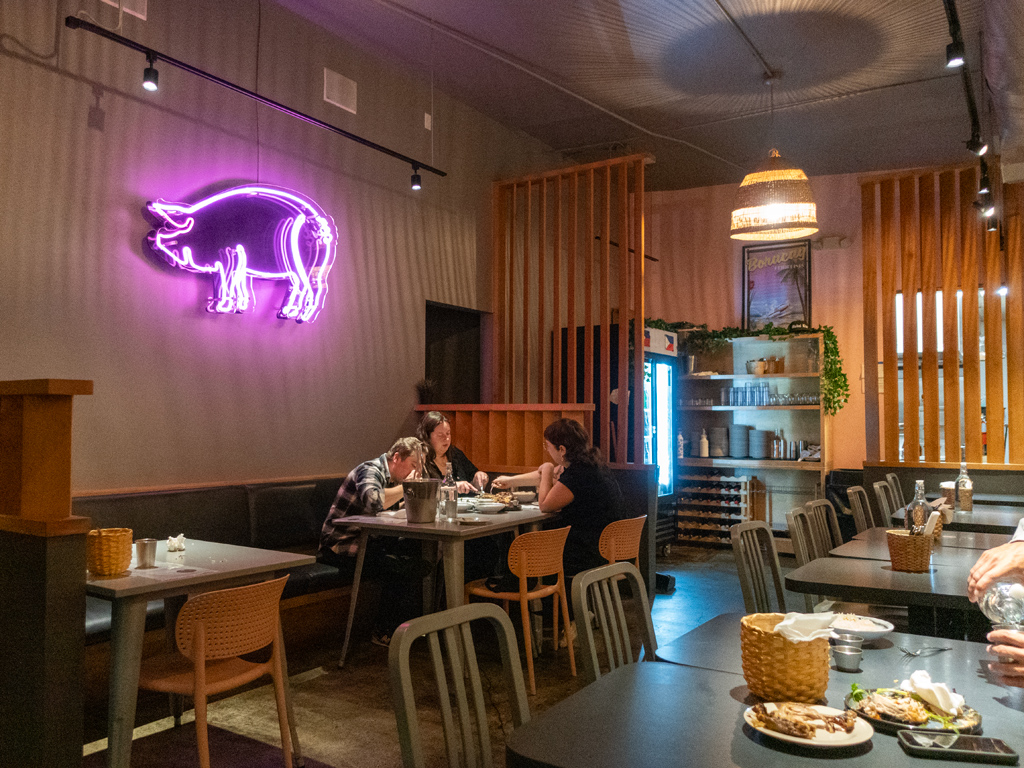
Here’s a shot of the restaurant’s interior.
I’m not really sure how the math adds up exactly because I forgot to take a picture of the in-store menu and the prices associated with the different portion sizes, but from what I felt, the all-you-can-eat seemed a bit overpriced. It was a bit more expensive than other all-you-can-eat places you’d see of this nature, and on top of that, the regular menu prices are actually pretty affordable, so it made the AYCE look extra high. I have a suspicion that we might have actually saved money if we just ordered everything à la carte.
The garlic rice, bistek, and tocino were amazing, and I would add this restaurant to my regular rotation if it wasn’t so deep west and far away from the places where I usually stay when I’m in Los Angeles County.
In case you missed it from my previous… nine blog posts, I spent the last week and a half exploring New Zealand with my friend Doug Wreden.
We originally went on the trip to fulfill an inside joke among his live streaming community as a reward for achieving a stretch goal of over half a million dollars raised for charity during Doug’s annual fundraising event supporting the Monterey Bay Aquarium Foundation. One of the jokes was to go purchase Burberry Hero cologne; the other was to be a tourist at the Auckland aquarium, on theme with the ocean conservation efforts of the Foundation.
Our time in New Zealand has now come to an end, and we just flew back to the United States. Because of the drastic time zone difference, we left New Zealand during the afternoon and landed back in the United States the morning of the same day. Our flight back… was interesting.
Throughout the trip, Doug and I vaguely split most of the expenses, but the travel costs themselves were almost entirely covered by Doug, i.e., he paid out-of-pocket for both of our premium economy seats. Premium economy on long international flights are different than shorter domestic flights—on domestic flights, you usually just get a little bit of extra leg room, but on international flights, premium economy comes with noticeably larger seats (with more width, pitch, and legroom) with footrests. The point is, they’re already pretty nice.
However, I know that there are even nicer and shinier business class seats further up in the front of the plane. Unfortunately, upgrading to business class would’ve been an additional ~US$4,000.00 per person, and considering that we had already spent thousands of dollars on our premium economy seats, it didn’t seem practical to pay for business class seats. Unless…
Air New Zealand has this interesting feature called OneUp™ where you can bid for discounted seats in a higher class that hadn’t been purchased. This piqued my interest, because it meant that we might be able to fly in business class without spending an additional ~US$8,000.00. I started doing some research on travel forums to see the optimal bid amount for upgrades between Los Angeles and Auckland.
Considering that Doug had purchased both of our tickets, I thought it would be reasonable to spend my own money to pay for our upgrades. I put in a bid for US$640.00 per person per leg, for a total of US$2,560.00. If this got accepted, we would be getting business class upgrades for a ~68% discount. Unfortunately, the business class cabin was full on the way to Auckland, so my bid was declined for our outbound flight… but luckily, my bid did get accepted for our inbound flight back to the United States.
Because of our upgrade, we got to enjoy priority check-in and express security, then relax at the Air New Zealand Auckland International Lounge before our flight. I’m a Priority Pass member so I’ve been to a lot of these before, but this was Doug’s first time in an airport lounge. He brought back and enjoyed a plate containing a gigantic mound of broccoli from the lounge buffet, then took a shower in the lounge so that he can say he has showered in an airport before.
The lounge had a nice view of the gates from its floor-to-ceiling windows.
Air New Zealand’s business class cabin is… strange, to say the least. I have never seen a business class cabin in this layout where everyone is basically all facing into the aisle and looking at each other. Fortunately, I looked up some YouTube videos of Air New Zealand’s Boeing 777-300s ahead of time and found this out, so when we reserved our seats, I made sure to grab seats in the 12th and final row of business class by the bulkhead and curtain so that we would have as much privacy as possible and everyone else in business class wouldn’t be staring at the back of our heads the entire flight.
Once we boarded, we got some beverages as pre-departure service.
Because of the angle of the seats, looking out the window was difficult; I had to turn my body about 120° to the right to snap this photograph of the tarmac.
After a short half-hour departure delay, we took off from Auckland Airport.
Meal service began right around an hour into the flight. We started with an amuse-bouche of confit potato with onion crème fraîche whip and chives.
As the appetizer, I was served crayfish bisque with chive crème fraîche and croutons. I also received a side of garlic bread and a roll.
Hello, Douglas Douglas.
As my main entrée, I opted to get seared New Zealand snapper with escabeche vegetables, smoked mussels, white beans, and fresh dill.
For dessert, I had warmed pear pudding with ginger caramel and spiced custard sauce.
After finishing our meal, we discovered an app on our in-flight entertainment system called SeatChat. Prior to using the app, you had to accept their terms of service, which explicitly stated that the platform should not be used for inappropriate communications. Of course, Doug’s very first message after sending the initial invite message immediately breached the terms of service by implying that there is a bomb.
For the past few weeks, my friend Billie-Rae has been insistent that I should play World of Warcraft in random and irrelevant places out in public. The thing is, I can’t play World of Warcraft unless I am at my desk setup because all my games are installed on an external SSD that I plug into my dock, into which I plug my laptop.
Regardless, I decided to feed into her joke by whipping out my laptop on the plane and using in-flight wifi to go on Google Images and search for “World of Warcraft gameplay” so I could take this photo and make it look like I was gaming at 33,000 feet in altitude. I sent it to her and managed to trick her for a few seconds, even though the screenshot I picked was terrible because it had black bars around the edges that I didn’t notice at the time.
Afterwards, I put away my laptop and asked the flight attendant to assist with converting my seat into lie-flat mode so I could go to sleep for the night.
… I only got an hour and a half of sleep. Not because the bed was uncomfortable or anything; in fact, this was probably the most comfortable lie-flat seat I’ve ever experienced on a plane.
The reason I couldn’t sleep is because THE WOMAN IN THE SEAT NEXT TO ME KEPT FARTING, AND IT SMELLED SO BAD THAT THE STENCH WOKE ME UP EVERY TIME I FELL ASLEEP.
Anyway, good morning. With about two and a half hours left to go on the flight, breakfast service started.
To start, I was served a croissant…
… some granola with milk and apple juice…
… and a fruit bowl with strawberry, pineapple, cantaloupe, melon, and orange.
My main entrée was banana waffles with roasted apple, boysenberry yogurt, and apple cinnamon butter.
After just shy of 12 hours travel time, we made it back to the United States and landed in foggy Los Angeles.
This was an unexpectedly nice trip. At first, I approached this as more of an obligation rather than a vacation, but after Doug and I started planning our activities, I realized it could actually be pretty enjoyable. Once I got there and started adventuring, it was very pleasant. The business class upgrade on our return flight obviously added a memorable luxurious touch to the conclusion, but even without it, New Zealand was a good experience.