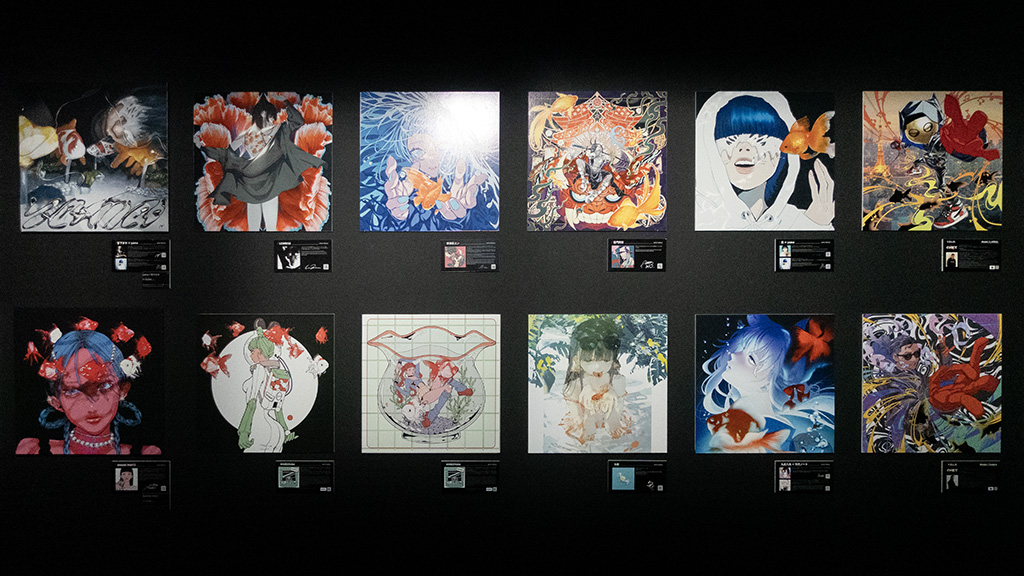
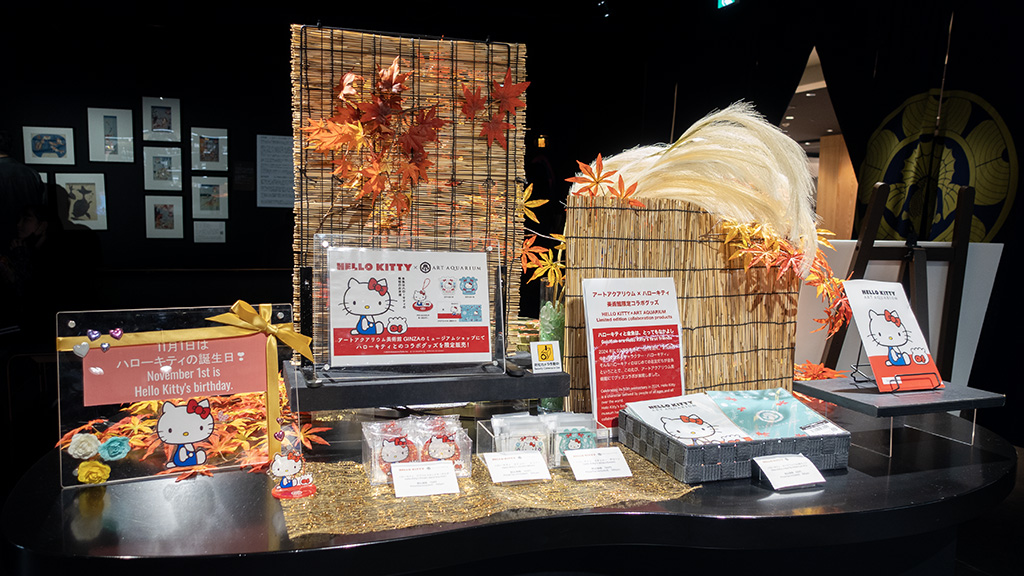
Playing IRL bingo in a random Tokyo neighborhood

When I decided to go on a trip to Japan, I picked the dates to overlap with the travel dates of a few friend groups of mine who were also visiting Japan from the United States. However, although I wanted to spend time and do activities together with them, I didn’t want to formally join as a member of any travel groups because I wanted to retain a degree of personal freedom. As a result, the underlying nature of my trip was basically a solo trip.

More specifically, I wanted to make sure I would have agency over my own schedule, rather than feeling an obligation to do everything together with the same group of people, i.e., I wanted to be able to split off from the group and do my own thing if something else piqued my interest better. I also wasn’t a fan of lodging together in a gigantic Airbnb, sharing rooms, and splitting the cost; instead, it was important that I had my own hotel room so I could feel like I had my own private and uninterruptable space.

Upon taking all that into consideration and carefully planning dates together with a bunch of different people, I finalized the two-week period during which I would be traveling to Japan on my own. Then, my friends would be able to invite me out to do things on a day-by-day basis, and I would join whichever group was doing the more interesting activity… or just be a lone tourist if I wanted to do something different.

After booking my flight and hotel, I later found out that another one of my friends, and someone who I had not coordinated travel dates with at all, would also happen to have a few overlapping days with me in Japan—Doug Wreden. We figured that it would be fun to meet up and spend a day together in Tokyo when we were both free, so we tentatively penciled that into our calendars.

Up until this point, I had experienced a fairly organized and structured trip. My other friends wanted to eat, see, and experience the best that Japan had to offer, so they diligently conducted research ahead of time and picked out activities that they thought would maximize their happiness. Even I did this to a mild extent—I leisurely browsed Google Maps using in-flight Wi-Fi during my flight to Narita International Airport and tagged interesting spots as “want to go.”

On the other hand, my friend Doug has been to Japan many times before, so he approached his trip in a more relaxed fashion. He wanted to be more spontaneous and do something that most other people would never do, while also experiencing the more “normal” side of Tokyo away from the concentrated, tourist-centric areas. Doug is a creative person who is great at gamifying everyday life, so he proposed that we do “IRL Bingo” where we make a Bingo board and then walk around a neighborhood of Tokyo we’ve never been to before to sightsee and check off items from our grid.
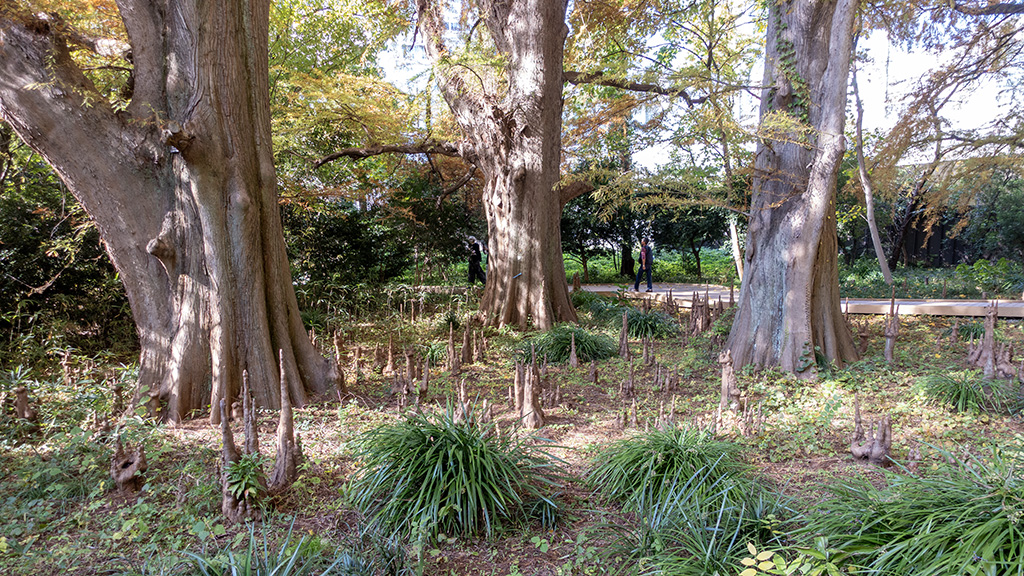
I was very on board with this. I’m someone who doesn’t pick “favorite things” as often as other people; instead, I like having a broad breadth of experiences and will prefer to do a wide variety of new things that I haven’t done before. This spontaneous IRL Bingo idea was great because the uncertainty of its outcome was a stark contrast from how I had spent my previous days in Tokyo, so it was a fantastic way to mix things up and keep things fresh.

In order to get to a new neighborhood to start our journey, we met up at Shinjuku Station, got on a random train, and got off at a random stop.

After exiting the station, we walked around the corner into a residential area so that we wouldn’t be in the middle of the sidewalk.

From there, Doug and Alex started coming up with ideas and assembling them together into a Bingo board.

One of the spaces was to see a car with a siren, but they further added a stipulation that the siren-bearing vehicle had to pass by in front of us. We almost checked it off right away, but unfortunately, the truck turned away from us and drove in the opposite direction.
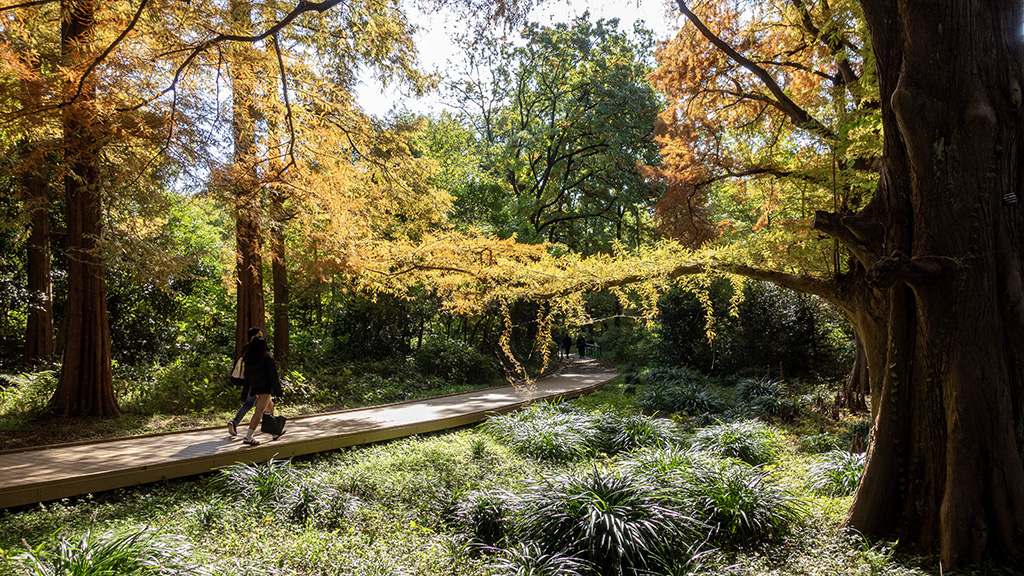
From here, we turned into a residential area again and walked deeper into the neighborhood.
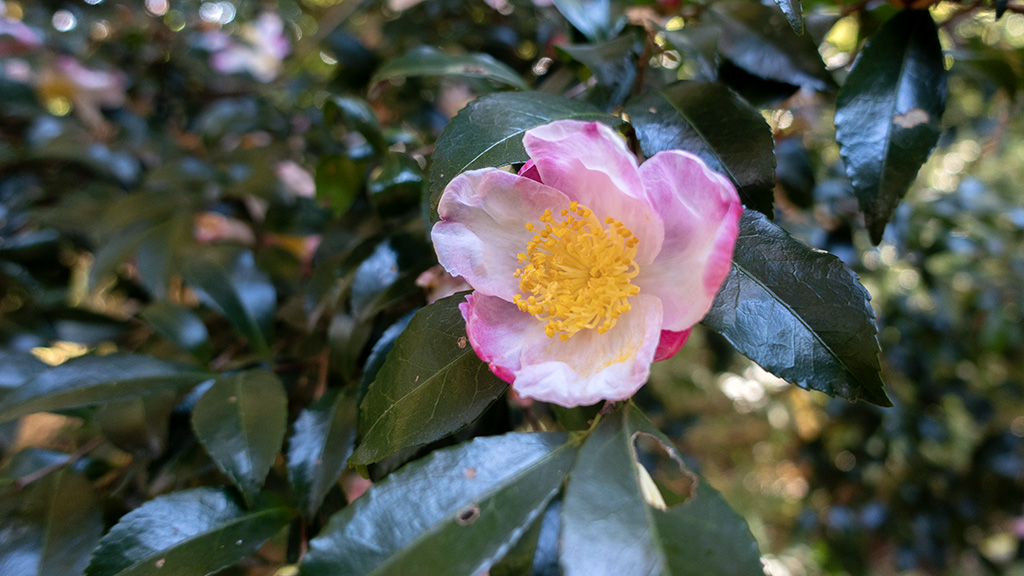
As a point of editorial commentary, I included a lot of random photographs in this blog post that don’t showcase anything particularly notable or special. This is because, just like how we wanted to see what “real” Tokyo was like away from the tourist zones, I wanted to showcase a more accurate representation of an average neighborhood of Tokyo. People share memorable experiences all the time—both positive and negative—but often don’t post about the mediocre. In the spirit of trying to portray realism, I made sure to mix in a lot of mundane pictures so I can ensure that I’m not accidentally sensationalizing anything.

One of the spots on the Bingo board was to find people playing baseball. We stumbled across a baseball field, so that was easy, but we were hoping to be able to check off two spaces by also seeing someone wearing Los Angeles Dodgers apparel. Unfortunately, everyone here was wearing their own uniforms.

Apparently my camera decided to focus on the chain link fence instead of the baseball gameplay, but I guess it looks sort of artistic, so I included it anyway.

We used this sign here for our “incorrect English” space. We suspect that they intended to write “landmark” instead of “randmark,” but because Asian languages often merge together their “r” and “l” sounds, this unfortunate error was born.

Upon doing some more research after-the-fact, I found out that this building is called ランドマーク宮澤, which reads as Rando-māku Miyazawa and translates to Landmark Miyazawa.

Here are some more photographs of the surrounding neighborhood.

Compared to the United States, these power lines were pretty chaotic. However, Doug and Alex didn’t want to count this for the botched power line space because apparently power lines in Japanese neighborhoods can get substantially worse than this.

With that being said, even though the power lines seem disheveled, I noticed that they were somehow still organized, just in a very messy way. When I followed each line, I realized that they were all orderly; it just happened to be that the power company seems to have not put in any extra effort into aesthetic cable management.

One of my favorite things about Tokyo was the abundance of convenience stores, and how convenient they actually are. In the United States, convenience stores are very inconvenient because they tend to just overcharge for everything, they are often fairly dirty, and they sometimes have suspicious individuals loitering around the property. In Japan, convenience stores are basically like miniature high-quality grocery stores that are reliable for taking a rest stop whenever you’re on a long walk.

In a 7-Eleven, I found this Super Mario gummy candy, which checked off the “Mario” spot on our Bingo board. I never really figured out how to do the “build your own level” activity that the wrapper advertised, but the candy itself tasted pretty good.

After a quick snack and water break, we ventured back out into the street.

One of the Bingo board spots was to find a Japan flag. In the United States, you’ll see national flags everywhere all the time, but in Japan, we did not see a single one. What was extra funny was that we found a US flag before we ever encountered a Japan one.

This store in itself was also amusing, considering that they advertise selling gun shooting gear, even though guns are generally broadly illegal to have in Japan.

By this point, we had been steadily achieving spaces on our Bingo board during our walk. For example, we saw an advertisement featuring a white man, we saw a Black construction worker, and we found an Indian restaurant.

You may have also noticed that one of the spaces involved me correctly identifying a police officer. This is because I kept on confusing construction workers and security guards for police officers, because I never quite found out what police uniforms look like. However, even a broken clock is correct for two minutes a day, and eventually, I was able to point out a real Japanese police officer.

We came across this gym that teaches martial plarts. At first I thought this was another tragic case of an incorrect English translation, but then I realized from the tagline that it was intentional—it was martial arts, with plants. Although that is a reasonable play on words, I don’t think they quite understand how goofy the word “plarts” sounds to a native English speaker…

One of the items on the Bingo board was to see a torii gate. I believe we had already seen a few by this point, but I found this one that was a gateway to a statue instead of to a temple.

By this point, it was starting to get darker.

I took a picture of this gas station because it was the first gas station I had seen since arriving in Japan. I had spent a majority of my time during the prior days in the denser cities of Tokyo, so I had seen a ton of convenience stores (which are often associated with gas stations in the United States because the retail section of gas stations are often convenience stores), but I had not seen an actual gas station yet.

At this point, we were only one space away from our first two Bingos—we would get a Bingo if either (1) we saw a McDonald’s, or (2) Doug gets jouzued. To be jouzu (jōzu, 上手)ed means to be told by a native Japanese speaker that one is skilled at speaking Japanese. Apparently this had become a meme in Japan, and it is now sometimes used more as a sarcastic statement than to actually tell someone that they’re genuinely skilled.

Out of nowhere, I saw a Harley-Davidson store. This was amusing, because I wear a lot of Harley-Davidson boots, so it was nice to see something familiar in Japan. I have comically wide feet that aren’t compatible with many shoe brands, but Harley-Davidson boots fit me well because their wide sizes tend to run extra wide, and they’re made out of real leather so they stretch and mold around my strangely-shaped feet.

We stagnated with only one space to go for Bingo for a while. After we wondered if all hope was lost, we suddenly saw a McDonald’s in the distance. In perfect storyline fashion, the train barriers lowered moments before we were going to cross the street to add to the suspense, but after a couple trains passed and we waited out the brief delay, we walked up to the McDonald’s and marked off the final square we needed for our first Bingo.

Our dinner reservation time was rapidly approaching, and we thought that we might need to call a taxi to get to the restaurant on time. However, as if the plot was pre-written, there was a bus that just happened to be parked right around the corner that was headed to Nakano Station, perfectly in the direction of where we need to go.

After a brief bus ride, we made it to Nakano Station. I had never seen this kind of indoor/outdoor hybrid mall before, which I thought was pretty neat.

After finishing dinner, we continued walking around the area. Because Nakano was far more densely populated than the residential area we were in earlier, we were able to check off a lot more squares on our Bingo board back-to-back.

We randomly stopped by an arcade, and I noticed that one of the machines had Fanta in it as a prize. I have never seen that before in the United States, and I thought that was a brilliant idea that American arcades should adopt.

I’m not a fan of claw machines because I know how they work—there is a way to set up the strength of the claw so that, even if you get a perfect grip, you won’t get the prize unless the machine rolls the proper number to activate the appropriate pressure to retain the prize all the way to the dispensing funnel. If you check the owner’s manual of these claw machines, you can see that operators can set a profit margin to make sure that they’re not losing too much money. There are some machines that can be cheesed, but for a majority of the straightforward claw machines, they almost all work in this configurable way.

With that being said, even if I was a fan of claw machines, I still wouldn’t play them because I don’t care for any of the prizes. I don’t really like stuffed animals, and I usually only want physical possessions if they have some kind of useful function or sentimental value. So, having soft drinks or food items as prizes for claw machines is brilliant, and I think it is a great way to potentially convince people like me to try it out a few times. I’m sure that winning a beverage from an arcade machine will be extra satisfying if you’re thirsty after a long walk and want a drink.

Alex remembered that there was an ice cream shop in the basement, so we went down to check it out. Unfortunately, the store was already closed (as was most of the other spots in the area), but there was a little bench area that was still open and not blocked off by a metal door, which I found to be amusing.

Eventually, in desperation, Doug decided to go to a bakery right before getting on our train and started speaking in Japanese to the cashier to try and get jouzued. He said exaggerated statements like “I’ve only been learning Japanese for one year” and otherwise pointing out how bad he was at Japanese, in order to fish out the jouzu compliment. After much of his embarrassment, he succeeded, and we were able to secure our second Bingo.

This is what our Bingo board looked like at the end of the day. We managed to be one square away from three more Bingos beyond the two we achieved.

Overall, this was actually one of the more fun days I had during my trip to Japan.

Although I enjoyed pretty much every single thing I did in Tokyo throughout the entire two weeks, I especially liked IRL Bingo because it felt like I was able to get a more authentic and unfiltered look at what Tokyo was like. At one point, I had been enjoying Tokyo so much that I was concerned whether I was accidentally going to only well-curated tourist hotspots that were manicured just to look nice to tourists, but after seeing everything I encountered during my day of IRL Bingo, it reinforced and helped make me feel more secure in my broad appreciation for Tokyo.


—§—


Hello, Yoyogi Park and Meiji Jingū in Yoyogikamizonochō, Shibuya, Tokyo, Japan

Yesterday, I wrapped up a trip to Japan and returned to the United States. In case you missed it, the blog post in which I review my flight and travel experience also has a lot of relevant context surrounding my trip. I’m in the process of going through my photographs now and catching up on blog posts.

One of the first tourist activities I did in Tokyo was visiting 代々木公園, or Yoyogi Park. Yoyogi Park is a very large public park in Shibuya in the Yoyogikamizonochō district, or 代々木神園町. This is the same district housing 明治神宮, or Meiji Jingū, a Shinto shrine.

I went together with some of my friends who are more familiar with Japan, and throughout my visit to the park, I mostly just followed them around and allowed them to lead the way. Unfortunately, after browsing some online resources while putting together this blog post and editing photographs, I realized that the park was quite a bit larger than I thought, and there was a decent amount of stuff that I seem to have missed out on. I definitely could’ve taken more agency to be more diligent in exploration, but because I was still a very new arrival to Japan at that time, I was a bit overwhelmed and wasn’t as meticulous as I could have been.

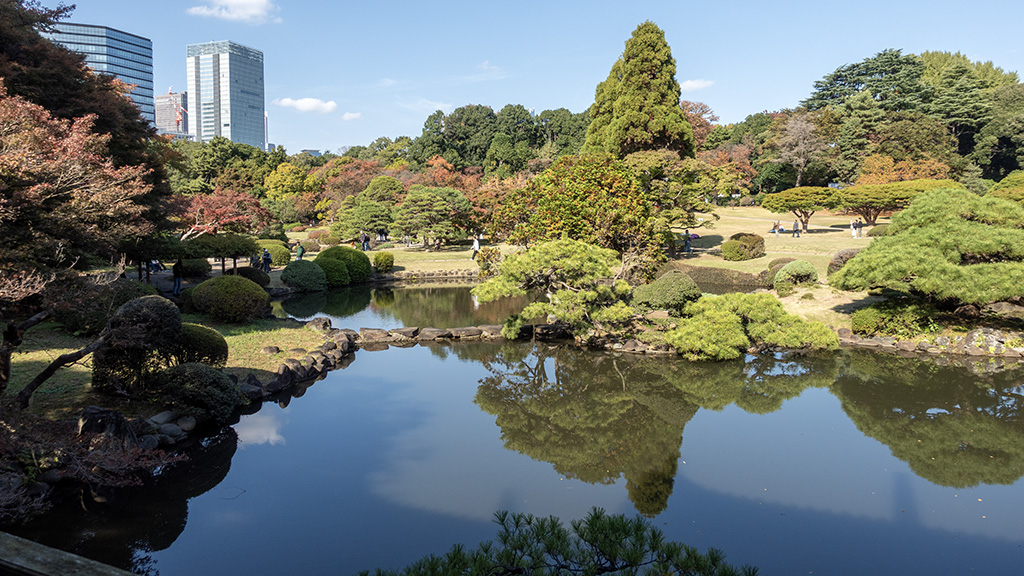
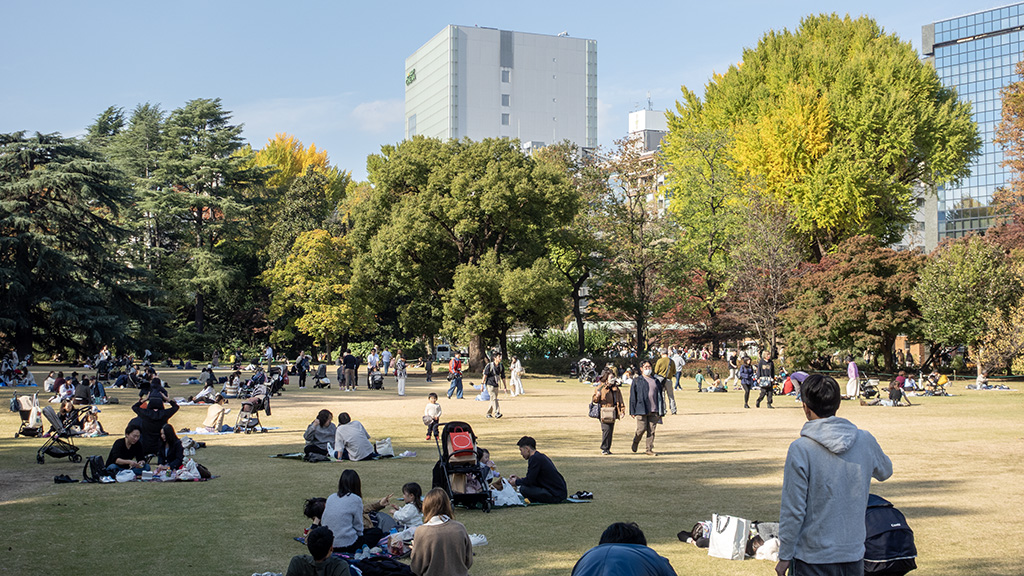
With that being said, I still enjoyed my time seeing Yoyogi Park and Meiji Jingū. Having grown up in the Chicagoland suburbs and now living in Las Vegas, it’s not common for me to see what is functionally a gigantic manicured forest in the middle of a dense city. I think that made it feel even more special—the park was important enough that they took space in an area that demonstrated how scarce the land was, and still built a very serene and soothing piece of nature on it.

After taking the Chiyoda Line from my hotel in Ginza to Harajuku Station, I met up with my friends and we entered the park through one of the side entrances.

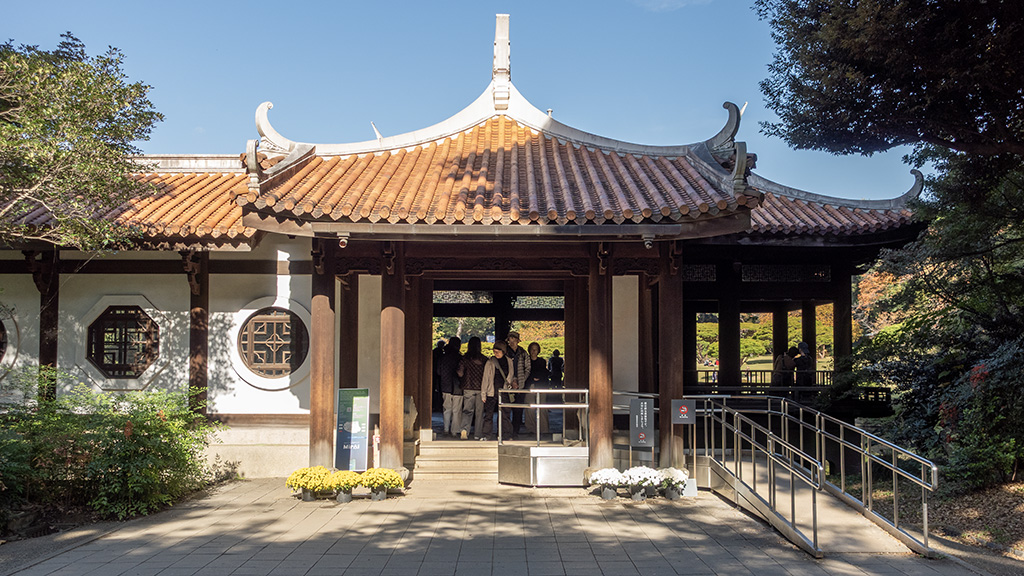
This area had what appeared to be a series of special installments. They had flower arrangements…

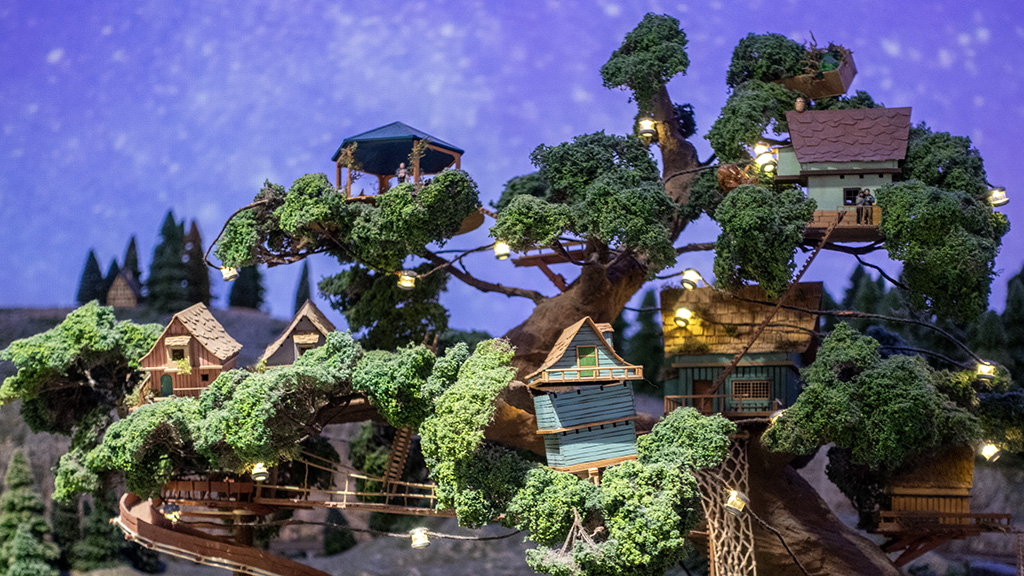
… miniature dioramas…

… and bonsai trees.

After walking down a long path with these exhibitions, we made it closer to the temple.

There was a nice flower arrangement at the entrance of the temple.

Close to the temple, there was what I believe was the roundest tree I’ve ever seen, if you consider it as a ratio of its size.

It made me wonder whether this tree is somehow just naturally this perfectly spherical, or if it is pruned and maintained to be as such. I think it’s fairly impressive either way—it’s both amazing if a tree manages to grow in such a pristine shape, and it’s just as amazing if there are groundskeepers who put in the effort to climb to such elevations to trim the branches and leaves.

Unfortunately, the interior area of the temple had signs asking people not to take pictures, so the best I could do was to capture this from a distance in a way that didn’t show the photo-free area.

I also did a round around the stone-paved area to grab photographs of the surrounding buildings.

I couldn’t quite confirm for sure, but this appeared like an area where people could write messages and leave them hanging in the designated areas to dedicate them to the shrine.

While walking around this area (and the park in general), I noticed that the birds were particularly vocal. It was quite amusing, and it sounded like the birds were making squawking and shrieking noises rather than more subtle chirping and cheeping sounds that I’m used to hearing from American avians.

After exploring the temple, we exited through one of the gates and found this hand-washing station. There wasn’t one by the gate through which we had originally entered, but according to the signage near this one, I believe the idea is that you are supposed to cleanse yourself using this provided water prior to entering the temple.

After a bit more walking, we made it to the southern side of Yoyogi Park.

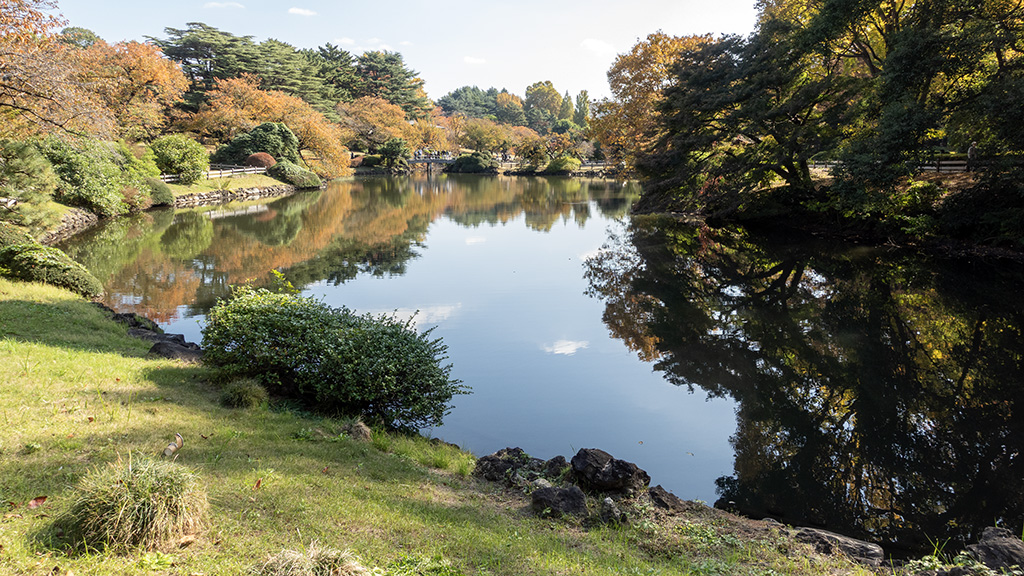
A lot of this area was basically a forest with very tall trees. It reminded me of some of the forests I hiked through in Washington, Idaho, and Montana, except these trees in Yoyogi Park felt more surreal after remembering that literally only a few hundred meters away, there were mid- and high-rise buildings densely packed together.

After finishing a very peaceful and calming walk, we made it to what I believe was intended to be the main entrance, and the path through which most tourists would start their visit to Yoyogi Park.

We started navigating our way away from the park and towards a restaurant to get some dinner, and in the process, I got a chance to ascend some stairs to a pedestrian skybridge, which allowed me to get an elevated view of the city around the park and snap some nice photos.

As you were probably able to tell, I very much enjoyed my time in Yoyogikamizonochō. The best part was that this isn’t even the only park of its type in the Tokyo Metropolis—there are a lot of “oasis in the middle of a bustling city” kind of spots spread throughout the various cities in Tokyo (and I ended up visiting a few more of them, as you will see in future blog posts).


—§—


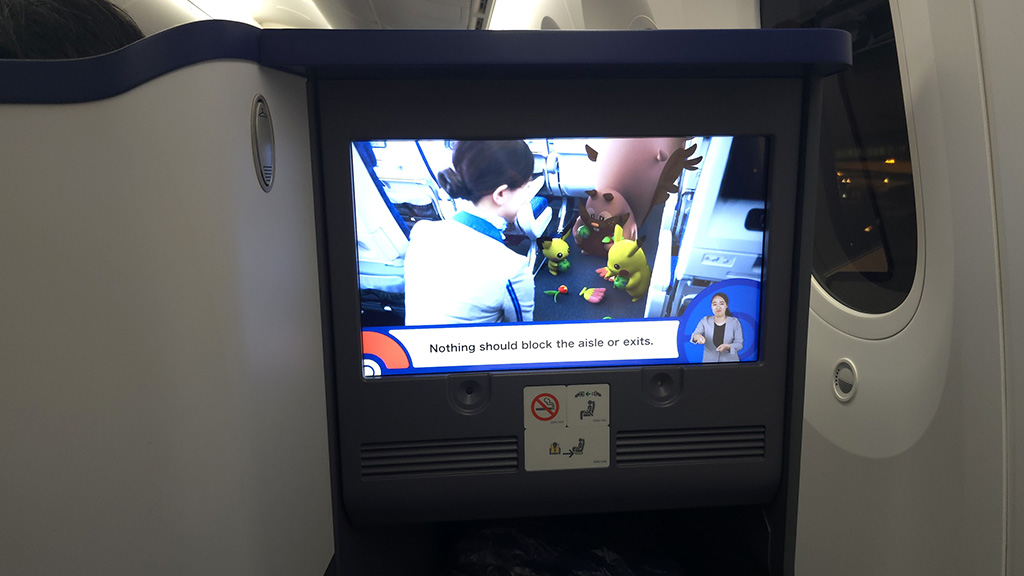
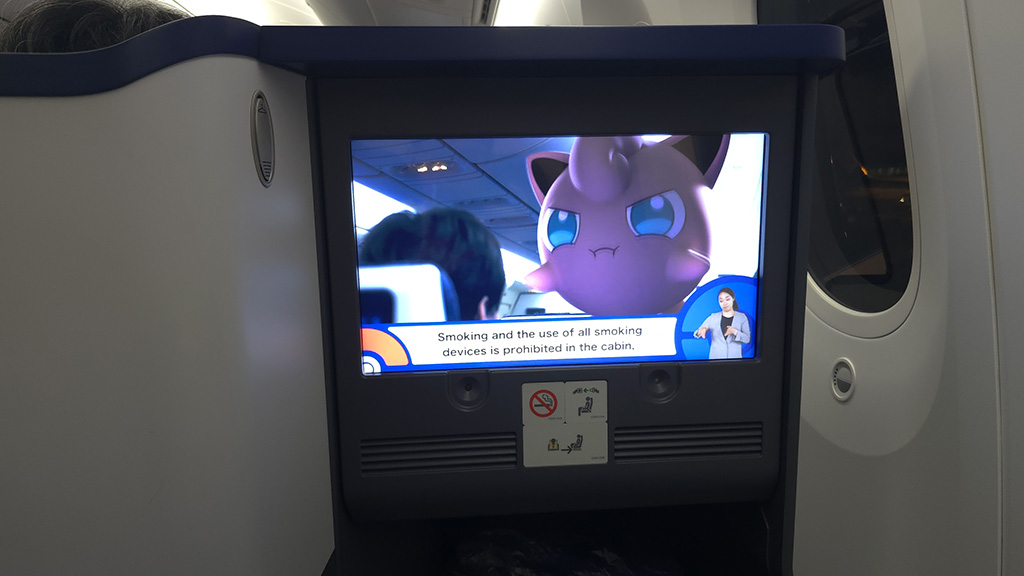
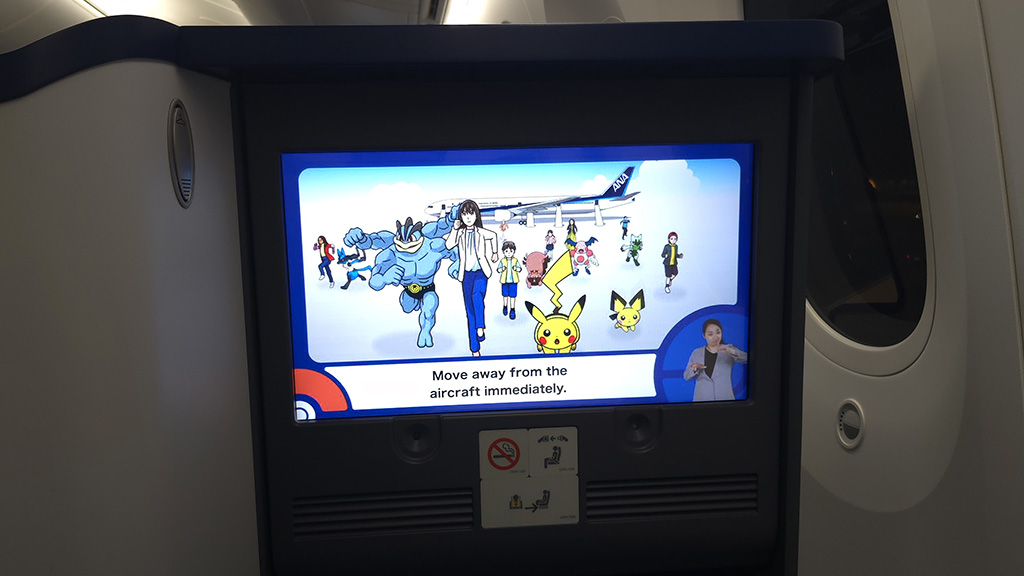
Hello, United Polaris on United Airlines flight 32 from Los Angeles to Narita

When I travel, I like to blog in realtime as I explore new places and go on tourist activities. Usually within a few days of doing something interesting, I will have finished preparing the associated photographs, writing about my experience, and publishing the post on my website. I’ve found success in this particular system because it helps me organize my thoughts while they’re still fresh, and it also acts as a way for me to unwind and reflect on my day before going to sleep.

For the first time in as long as I can remember, I broke this aforementioned habit by going on a two-week trip to Japan without releasing a single new blog post the entire duration. There were a few reasons why, but the main one is because I enjoyed Tokyo so much that I wanted to get the most out of my limited time there. I packed my schedule completely full with activities—so much so that, when I was done for the day, I was completely exhausted and couldn’t stay up for much longer before falling asleep.

As of today, I am back in the United States. I have a lot of work and rest to catch up on, but in my free time, I plan on spending the next couple weeks going back through my photos from Japan and writing blog posts for all the interesting things I did while I was there. Functionally, it will be very similar to when I blog in realtime, with the only difference being that every post will be going live two weeks late relative to the actual timing of when I did all this adventuring and sightseeing.

So, that brings us to the beginning.

For my flight outbound from the United States, I took United Airlines from Los Angeles International Airport to Narita International Airport. I know that Asian airlines tend to have a much better reputation than American airlines, but I decided to take United Airlines for one leg of my trip anyway because I wanted to experience United Polaris and compare it to the business class offering on All Nippon Airways. United Airlines flight 32 is still cross-listed with All Nippon Airways as their flight 7019, but the actual service is provided entirely by United.

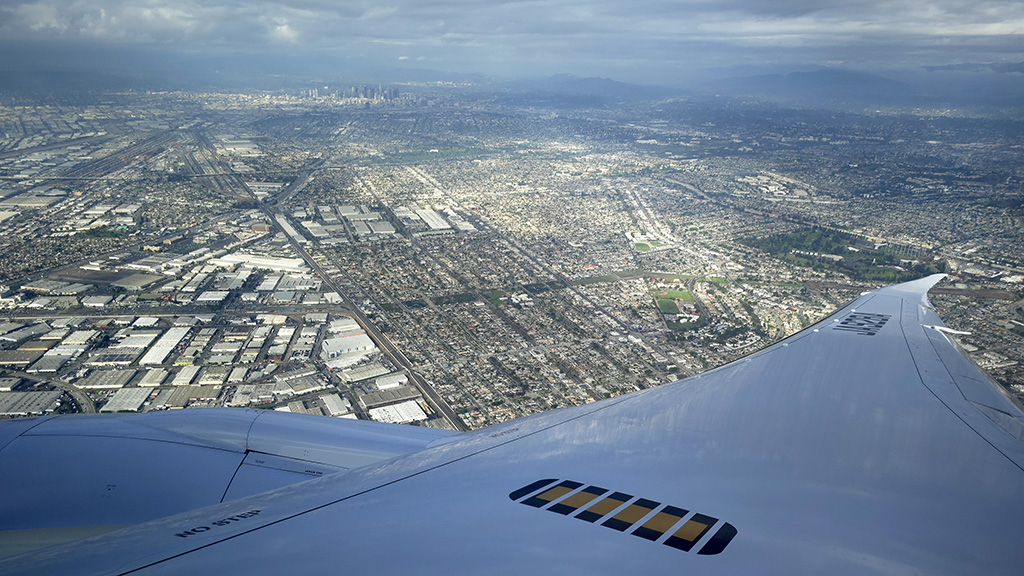
As for the cities, I flew out of Los Angeles instead of my home airport in Las Vegas because LAX offered non-stop service while LAS required a layover; I flew into Narita instead of Haneda because flights were cheaper to NRT, so much so that I deemed it worth it to deal with the associated longer train ride into Tokyo.

The morning of my flight, I called rideshare service to bring me to the airport. I ended up getting so carsick in the traffic that, even though I was supposed to board my flight from Terminal 6, I asked my driver to drop me off in Terminal 1 as soon as possible at the beginning of the horseshoe because I felt like I would vomit if I stayed in the vehicle any longer.

After getting out of the car, I took the escalator up to use the new pedestrian skybridge to the other side of the airport, only to discover that it was still under construction and not yet open to the public. I went back down the escalator and wandered my way to Terminal 7 by cutting through the parking garage. I’m glad I had a chance to walk around for a bit, because helped alleviate some of the motion sickness and I no longer had a pressing urge to throw up.

International flights at LAX often depart from the Tom Bradley International Terminal, but because I was taking United Airlines outbound, I was departing from Terminal 6 instead. This was very convenient because the United Polaris lounge is in Terminal 7, so I was able to get the full United Airlines business class experience rather than needing to use a partner lounge in Terminal B.

Upon arriving at Terminal 7, I had a quick and easy time getting through security using the Transportation Security Administration’s new TSA PreCheck Touchless ID system where you just look into a camera and get allowed through. After only a few minutes, I made it to airside and walked down past Gate 73 where I took an elevator up another floor to the entrance of the lounge.

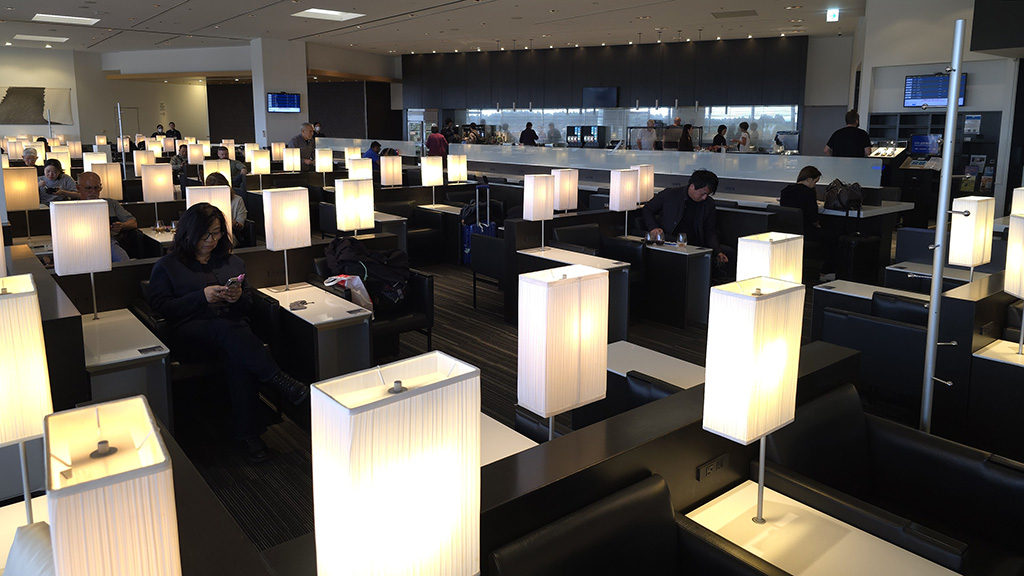
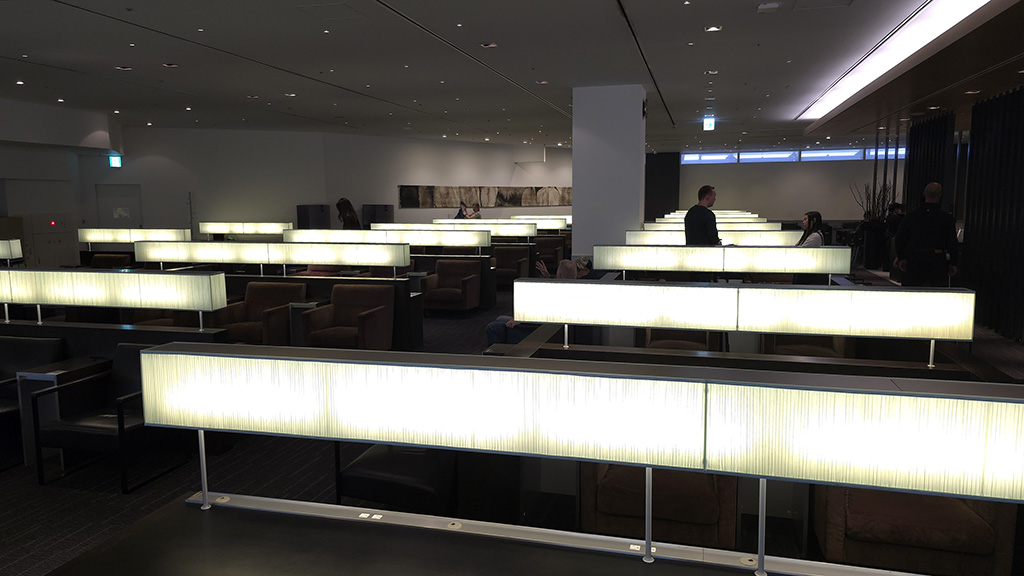
Even though I wasn’t about to vomit, I was still pretty carsick, so I didn’t eat a full meal like I normally would have in an airport lounge. Instead, I sipped on some Diet Coke and walked around the lounge to take some photographs.

It was pretty busy in the lounge, but I managed to find a relatively quiet and peaceful area in the rear of the lounge near a giant cabinet of alcohol.

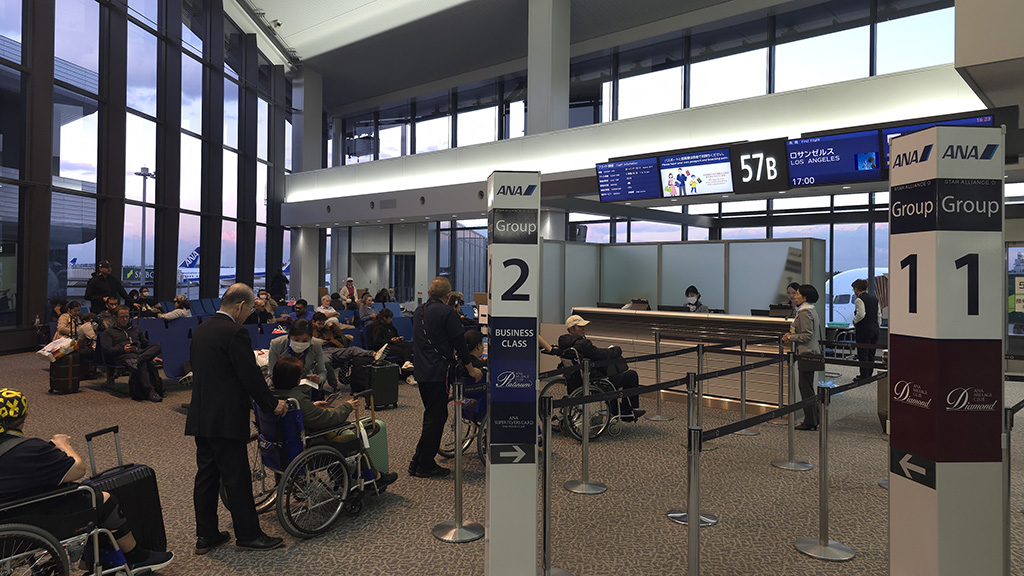
After relaxing for a little over half an hour, I started making my way over to my boarding gate. The United Polaris lounge is in between Gates 73 and 75, but I was boarding from Gate 68B, which meant I had to walk to the entrance of Terminal 7, take a long hallway to Terminal 6, then walk all the way to the deepest edge of Terminal 6… literally, because Gates 68B and 69B are the final two gates of the concourse.

I left the lounge a little early to make sure I had plenty of time and wouldn’t be late if I ran into any issues on my trek there. Luckily, there were no problems, so after loitering for a bit between Gates 68A and 68B to wait for boarding to begin, I embarked our Boeing 787-9 Dreamliner without incident.

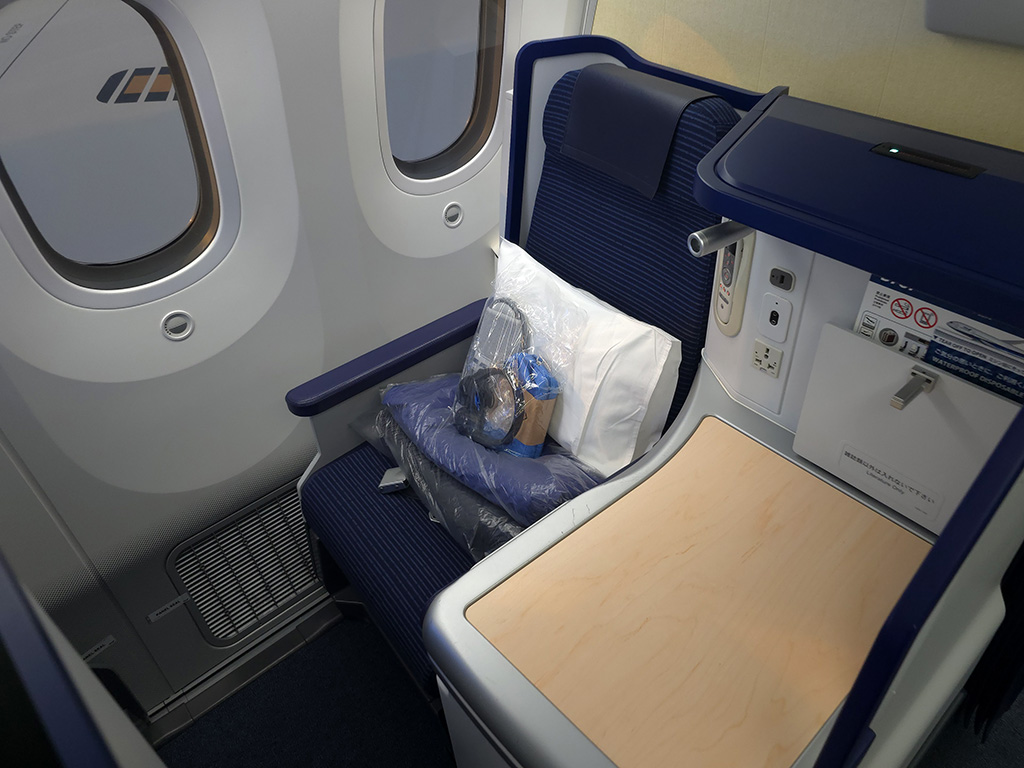
I almost always take the rear-most window seat in the last row of the cabin because it usually ends up being the seat that offers the most privacy.

However, on this United Airlines flight, I reviewed the seat map ahead of time and realized that the staggered configuration makes it so that the final window seat in the cabin has the seat facing out towards the aisle instead of in towards the window. Because of that, I reserved the second-to-last seat for myself for this leg of my trip. This ended up being a wise decision, as it was much more cozy having a table separating myself from the aisle.

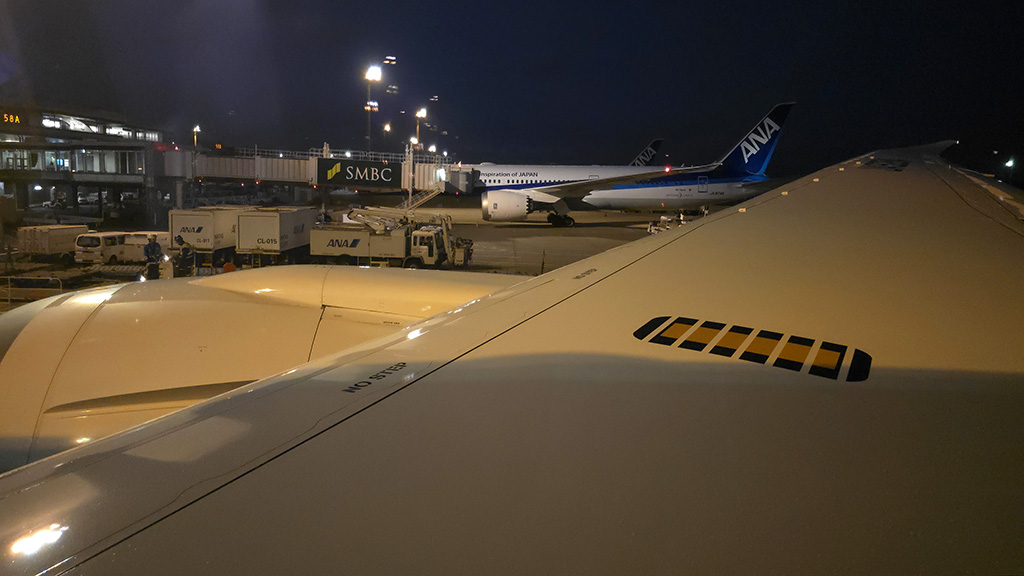
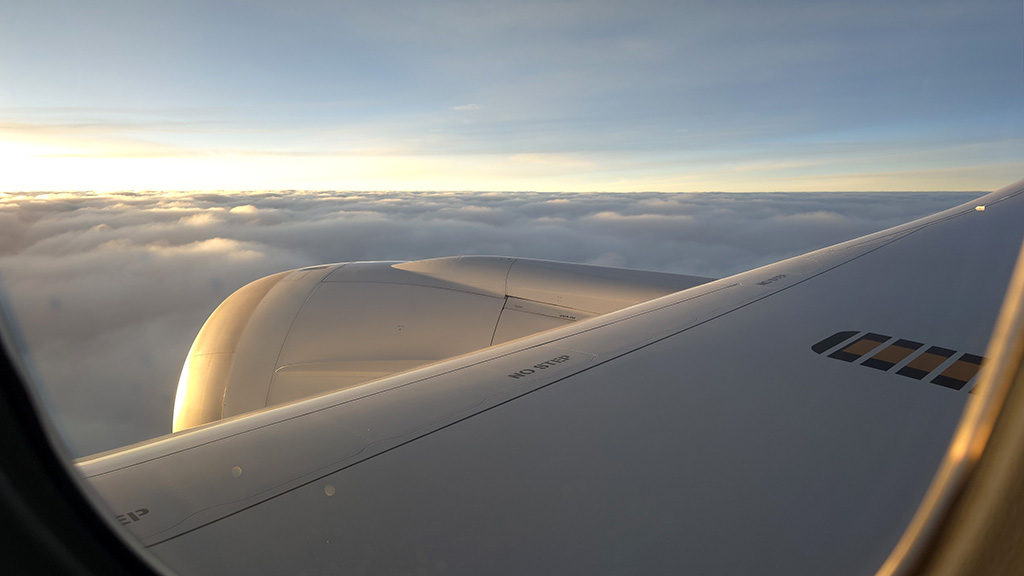
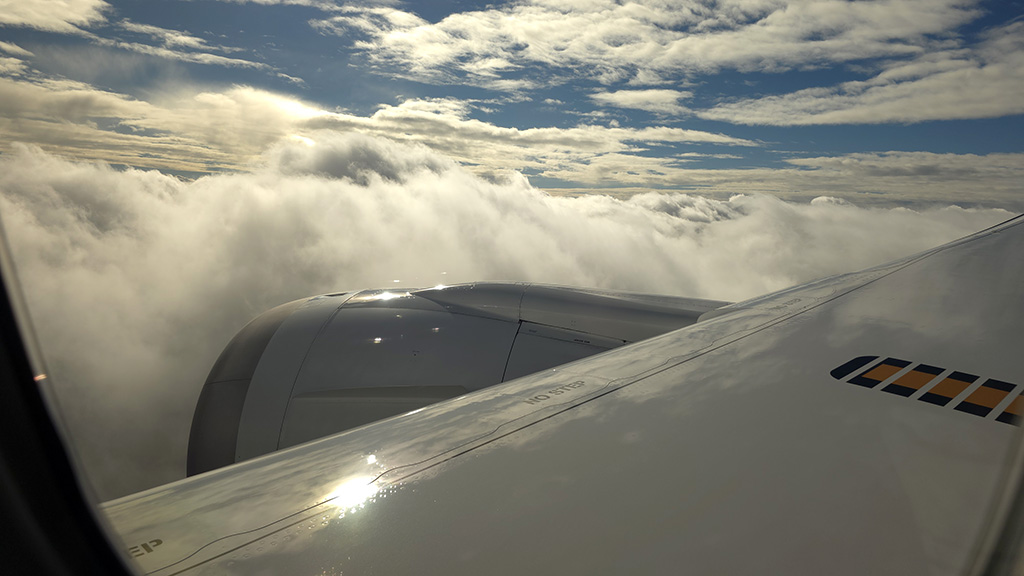
Another perk of picking a rear seat is that, although it depends on the configuration of the aircraft, the final seats of the business class cabin are usually next to the wing of the plane. I prefer this because it is closer to the center of gravity and results in a smoother ride that is less affected by turbulence, and its proximity to the wing-mounted engine means the loud noise of the engine fans and exhaust will act as white noise and help drown out any disturbances from auditorily disruptive passengers.

Less importantly, and more as a point of personal preference, I think photographs out of plane windows look nicer when there is a little bit of wing or engine in the shot so that it gives some context about the origin of the photograph.

Luckily, my second-to-last seat was still close enough to the wing and engine that I still got all of these perks like I would have if I was in the last seat.

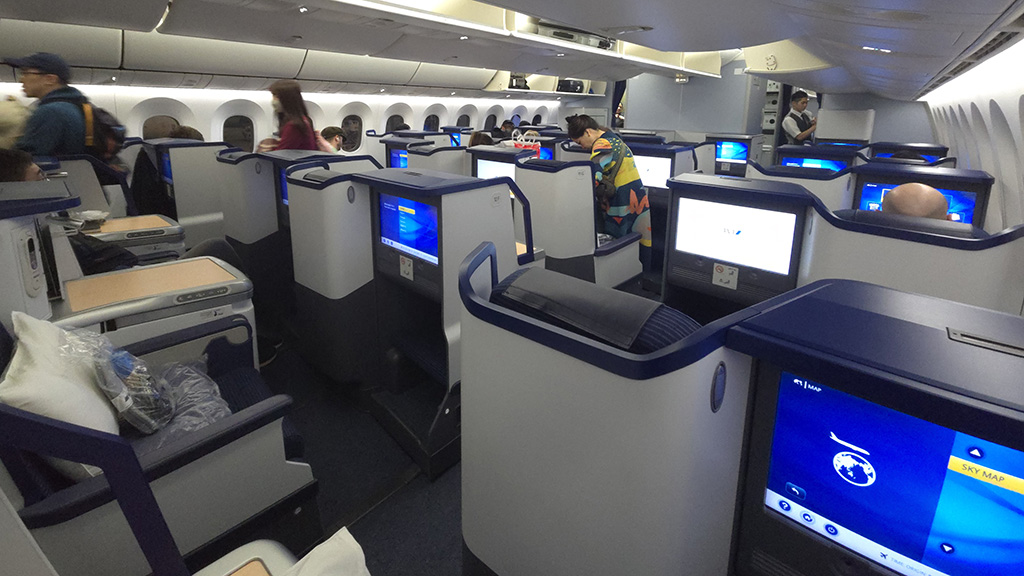
The business class cabin is split up into two subsections. The main section has rows 1 through 8, followed by a divider for the galley and restrooms. Behind that is rows 9 through 12, before a curtain separates the Polaris cabin from the Premium Plus cabin. This means that there are half as many passengers in my section compared to the front section, which adds to the feeling of peace and serenity.

Because I was one of the first people to board the plane, I had an opportunity to pull out my laptop, recline back a bit, and get some last-minute work in prior to our on-time departure.

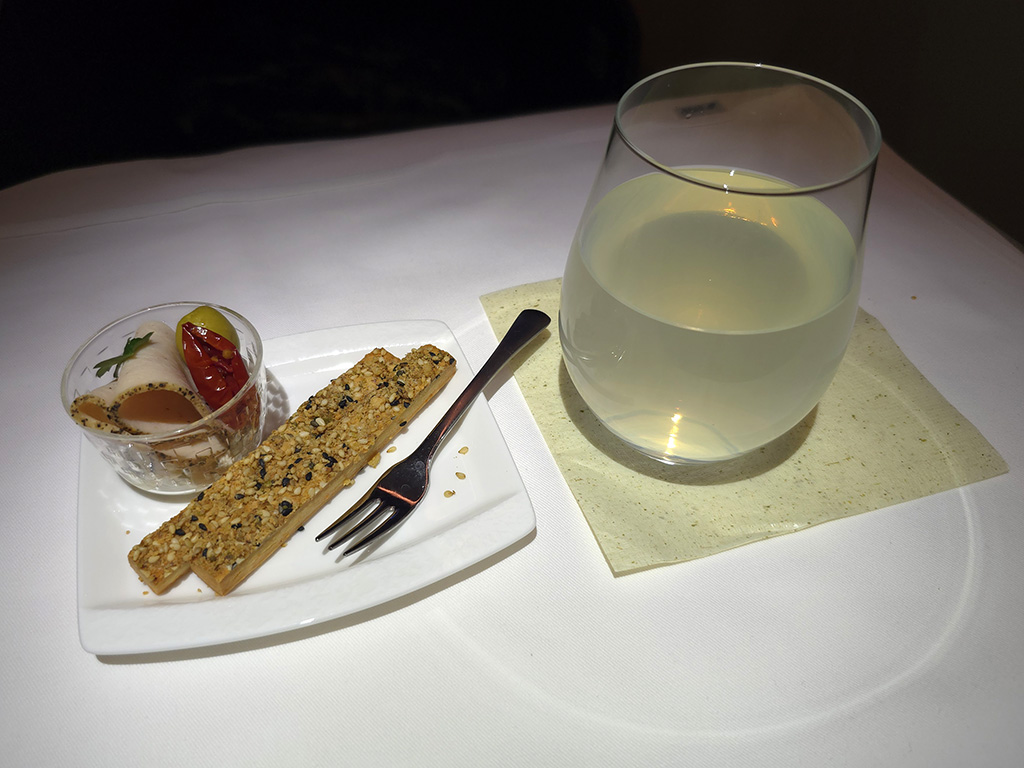
After taking off, we were offered some warm assorted nuts and beverages to enjoy while the flight attendants prepared dining service. I opted for a can of The Pickle House tomato juice and Coca-Cola Zero Sugar.

My can of Coke had 錡 printed on it. I couldn’t quite figure out what it meant in this context, but my guess is that this can is part of the “Share a Coke with” campaign, and the name of the person you’re supposed to share this can of Coke with is Qí.

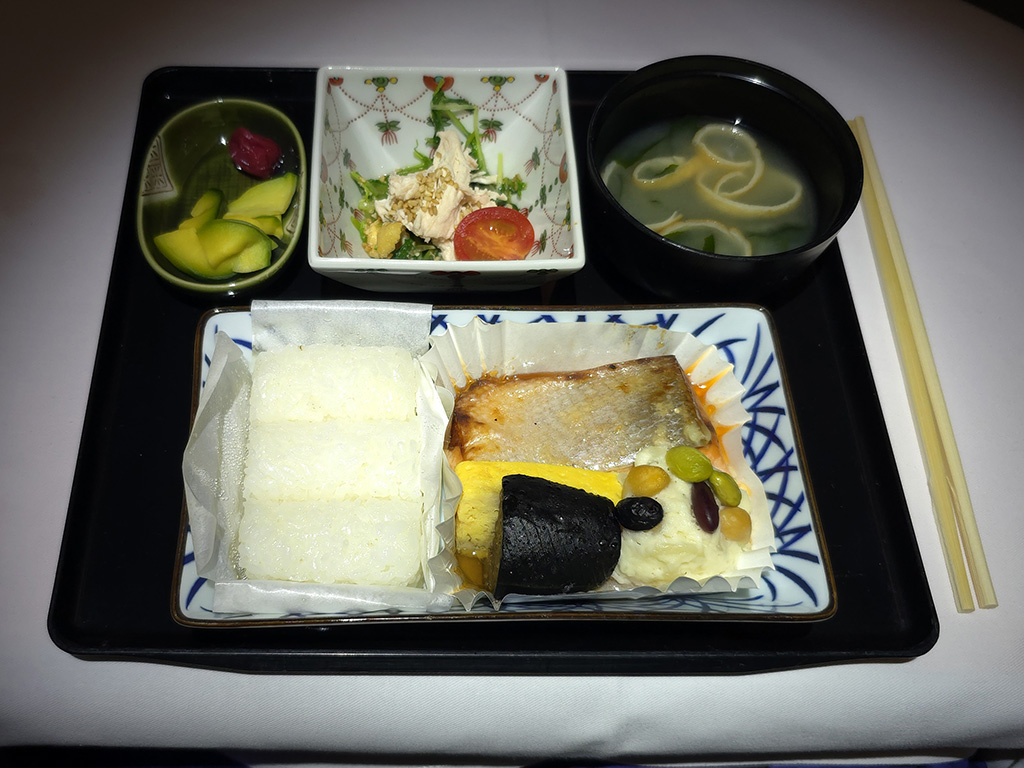
During online check-in, I pre-selected the Japanese menu for my meal.

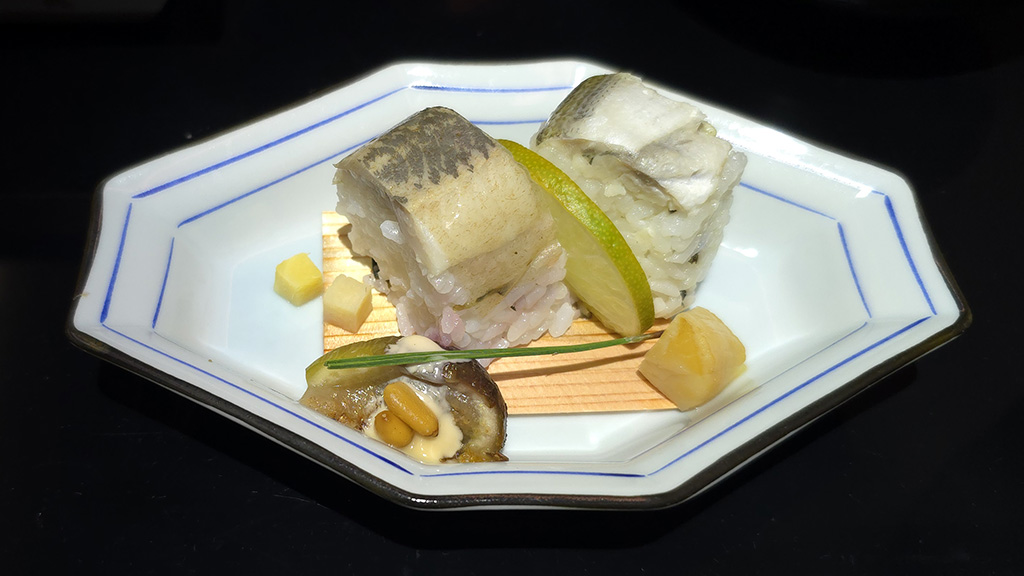
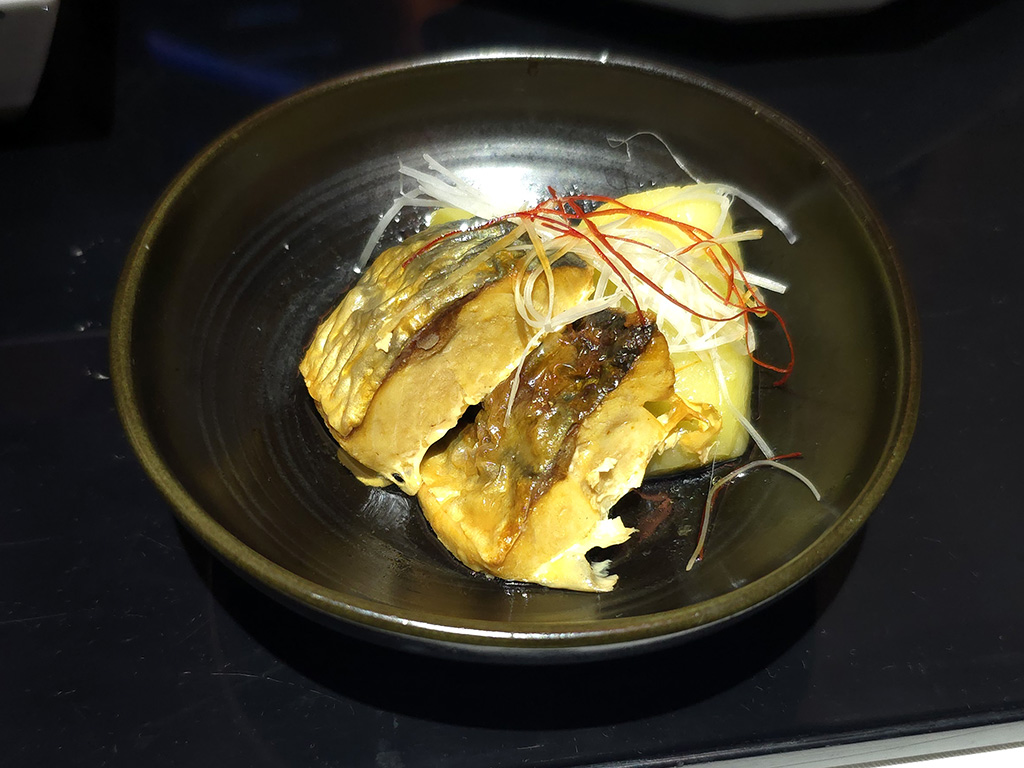
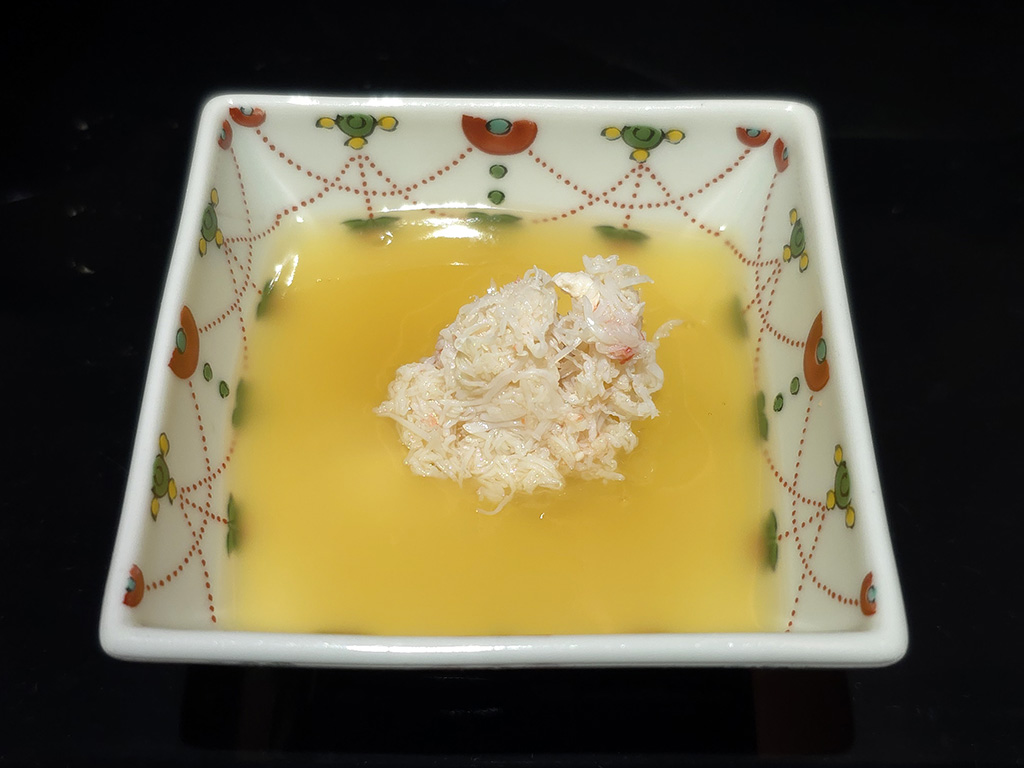
For my first course, I received a curated sampling of Japanese appetizers—Kenchin vegetable-stuffed chicken, sweet soy caramelized sardines, and boiled shrimp with egg yolk vinegar.

My main entrée was United’s salmon Namba grill with purple sweet potato, myoga pickles, and gin-an sauce; mushroom pilaf with Japanese pickles; and red miso soup.

In addition to the Japanese menu, United also offered an international menu as well. There was a Japanese family seated in front of me; I assume that they eat Japanese food all the time and wanted to try Western cuisine on an American airline, so they selected the international menu. While one of them was in the restroom, I snuck this photograph of what they were served—it looks like a filet mignon with mashed potatoes and vegetables.

For dessert, the flight attendants came around with United Airlines’ signature sundae cart where you can custom-order your own sundae. For mine, I requested Tillamook vanilla bean ice cream with caramel sauce, freshly-whipped cream, and sliced nuts.

It was delicious, though I wish they had put a bit less caramel sauce on it so it wasn’t quite as sweet. Basically every YouTuber who does a review of United Polaris raves about this ice cream, and now I can confirm with first-hand experience that it is indeed very good.

After meal service concluded, I reclined back to relax and unwind.

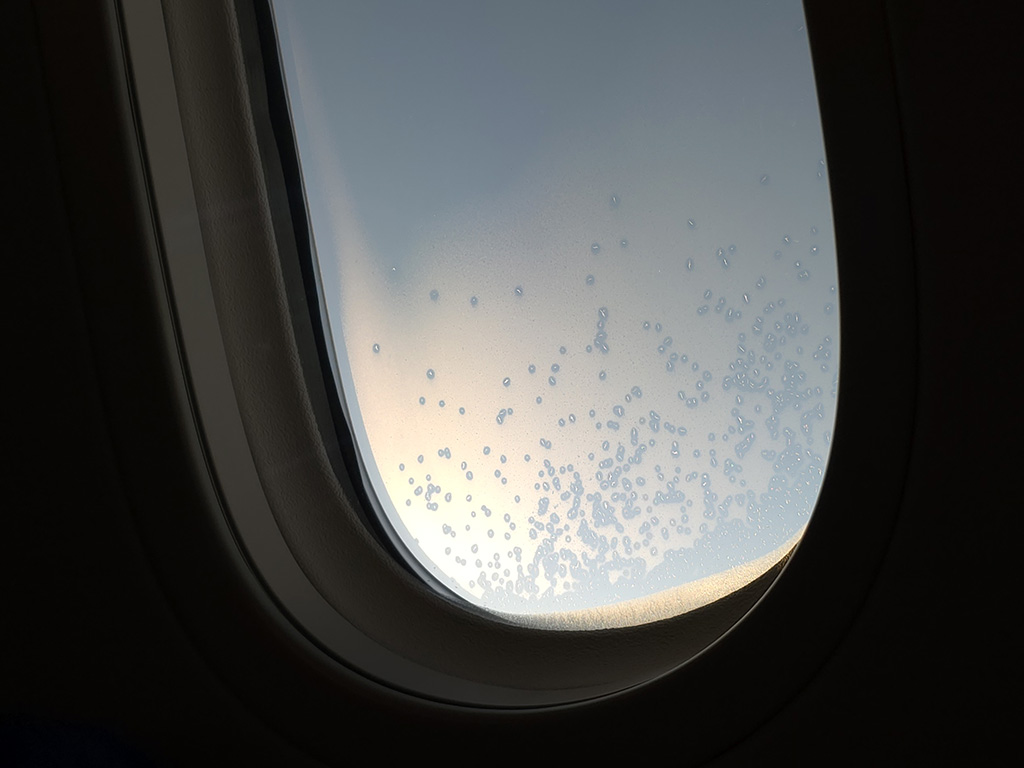
One thing I liked about this plane was that they had dimming windows instead of physical shades. This meant that I could darken my windows to the point where the sunlight wouldn’t be disruptive to other passengers trying to sleep, yet I could still enjoy the view of the sky and clouds out the periphery of my vision.

After a quick nap, I got back up and snacked on a grilled aged cheddar cheese sandwich alongside another glass of tomato juice. It was mediocre at best, but I hadn’t eaten a grilled cheese sandwich for a really long time, so I figured I’d seize the opportunity when I had a chance, considering that I wouldn’t otherwise go out of my way to seek out a grilled cheese.

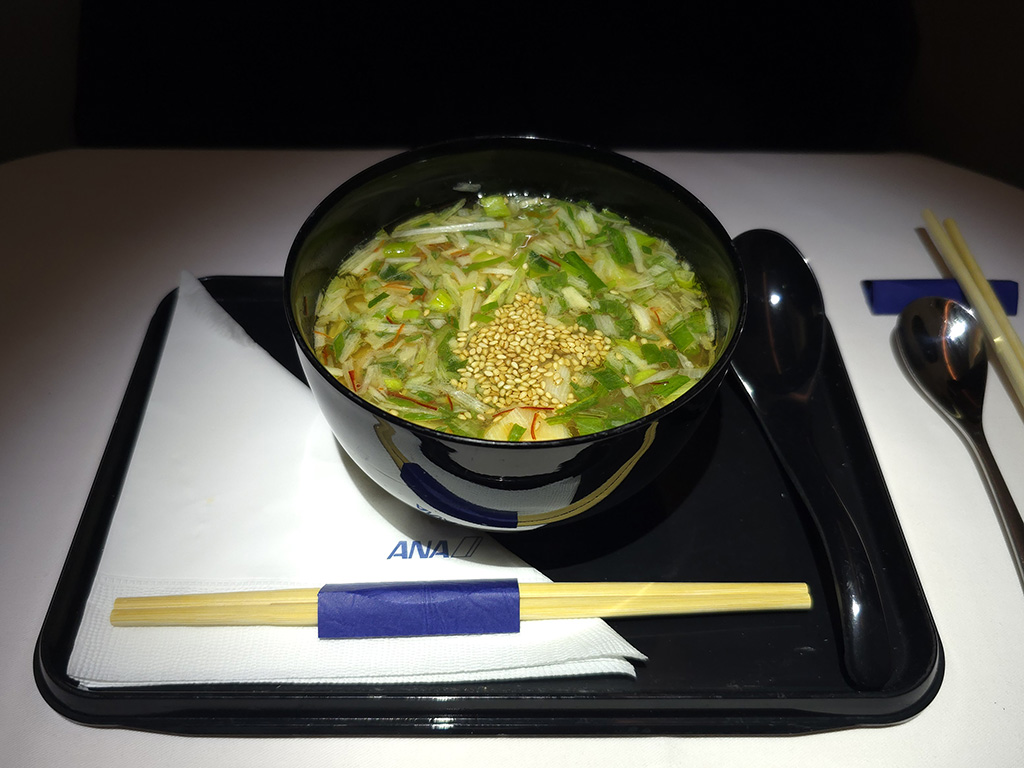
Not long later, breakfast service started, which was very funny, because it was 10 PM PST and 3 PM JST. A lot of flights from the United States to Asia depart late at night, fly overnight, and land in Asia during the local morning, so for those flights, a breakfast as the final meal would make sense. However, I feel like for United flight 32, it would’ve made more sense to serve breakfast or brunch as the first meal, and then save the dinner for the second meal.

Anyway, I had also picked the Japanese menu for this, but without any additional notice or information, I was given the international menu instead, which I assume means that they either ran out or did not properly account for my dining preference.

For my Western breakfast, I received some sausage, scrambled eggs, hash browns, a roasted half tomato, a fruit bowl, some Greek yogurt, and a croissant. I found it to be an overall pretty acceptable breakfast, but I particularly liked the fruit. They also provided a side container of jam, which I mixed in with the Greek yogurt; I thought that made it a lot better, and it ended up being my second favorite item of the breakfast.

Not long afterwards, we approached Japan’s coastline.

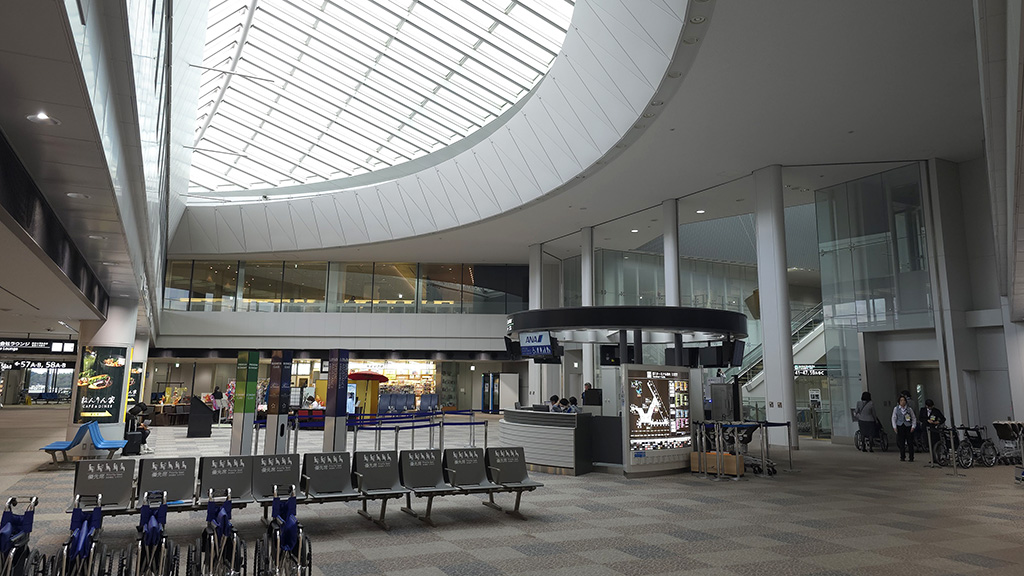
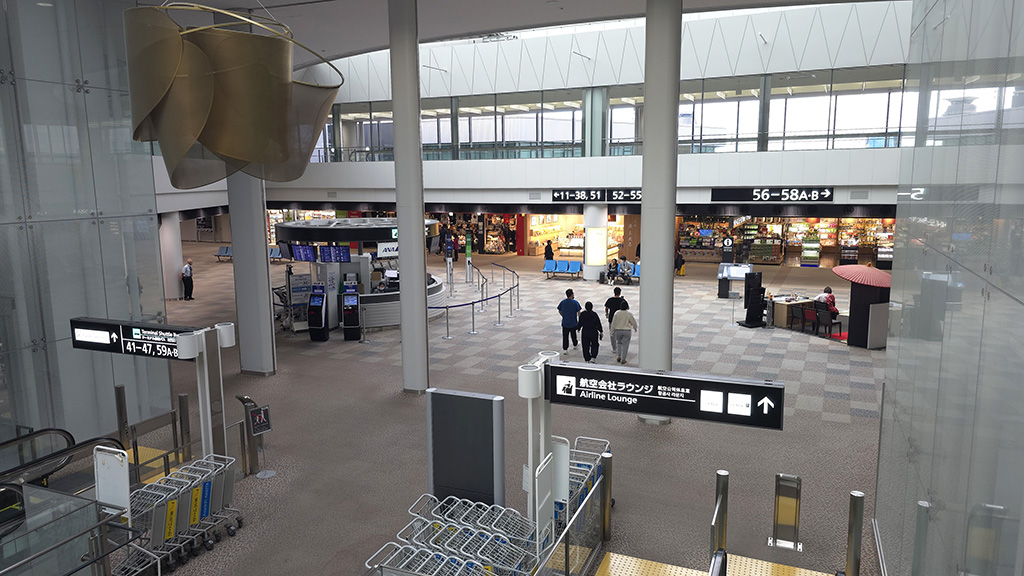
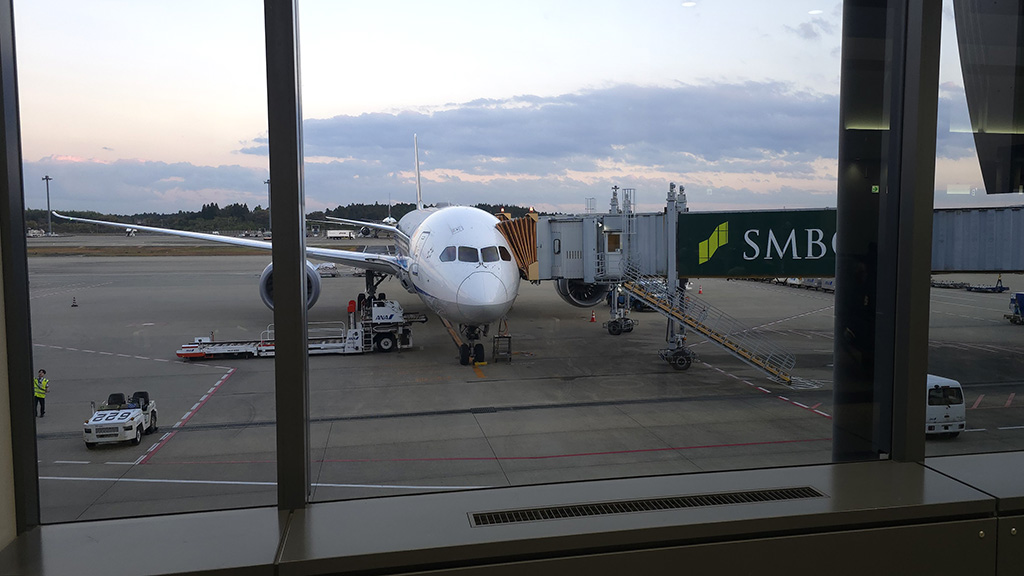
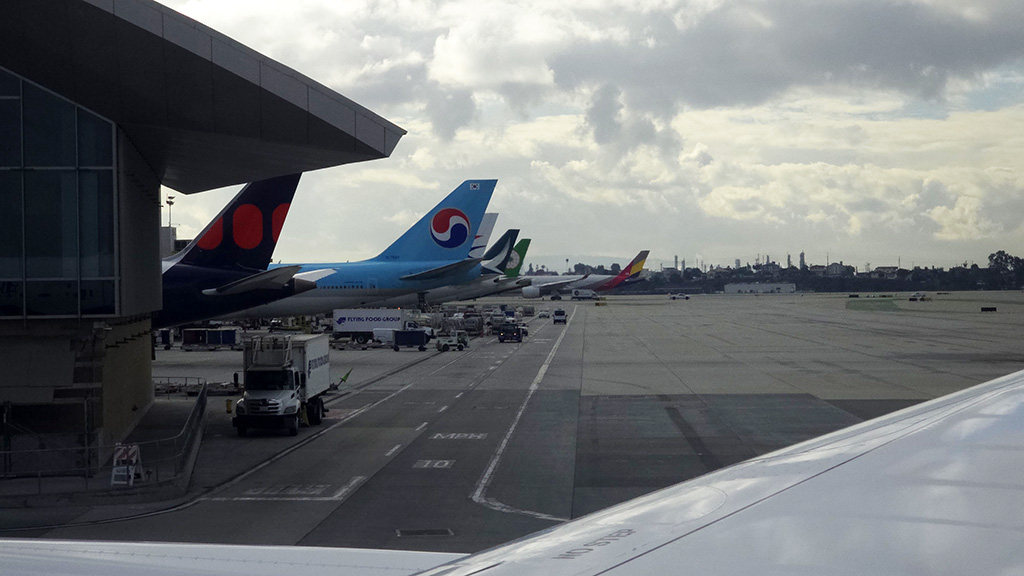
After just over 12 hours of total travel time (which was a little bit longer than scheduled due to needing to take a slightly inefficient flight path to avoid some weather events), we pulled into Gate 38 in Terminal 1 of Narita International Airport.

Being from the United States, I generally just drive everywhere in my pickup truck and don’t really take public transportation. The only time I’ve ever taken public transportation in the past is when I was still a student at the University of Wisconsin-Madison and sometimes took the bus between my apartment and the main university campus. Thus, when I went downstairs to the train station under Narita International Airport, it was quite an overwhelming experience.

After carefully reading all the signs and referring to Google Maps for instructions on which train line to take to get to my lodging in Tokyo, I boarded the Keisei Narita Skyaccess, which conveniently converted to the Asakusa Line without needing a transfer and dropped me off at the Higashi-Ginza Station only a couple hundred meters away from my hotel.

At first, the train wasn’t too crowded, but as we got closer to Tokyo, the cabin filled up pretty quickly and ended up fairly packed due to me having landed right around rush hour. Regardless, I still managed to keep a careful eye on the location of the train and got off at the right stop without incident.

As for the flight on United Polaris, it wasn’t bad, but I think it was literally leagues behind the service offered on the flights I took on EVA Air, both outbound from Los Angeles to Taoyuan to Hanoi, as well as inbound from Hanoi to Taoyuan to Los Angeles. I had an American flight attendant tending to my area of the United Polaris cabin, and she didn’t really seem particularly attentive or caring and mostly just had a “I’m just doing my job” kind of attitude. Once in a while, the Japanese flight attendants would come to my area to help out and make up for shortcomings because it seemed like the American one couldn’t really keep up with the level of service that the Japanese flight attendants wanted to provide.

As I mentioned at the beginning of this blog post, I’m already back in the United States, and I already experienced the All Nippon Airways counterpart to this flight back from Narita to Los Angeles… but I won’t spoil it yet and I will continue posting things in chronological order. Check back in a few days—I’ll be pumping out blog posts soon.


—§—


Hello, Matsumoto in Los Angeles, California

I have an international trip coming up soon. While booking my flight, I wasn’t able to find any non-stop service to my destination out of my home airport of Harry Reid International Airport in Las Vegas, Nevada; rather than taking an itinerary with a layover, I decided to head over to Los Angeles, California ahead of time on my own to visit some friends for a little while before departing out of Los Angeles International Airport instead.

While in LA, I met up with one of my friends who had just gotten back from her own international trip. Her mom was in town too and had never dined at an omakase restaurant before, so we decided on going to Matsumoto together for dinner.

When I tried to book a reservation, I ran into some issues on their website. Rather than fighting with an online inanimate object, I decided to call the restaurant to see if they could just hold a reservation slot for me instead. The person who picked up the phone pretended like she was engaging in a conversation with me, but would answer my questions and statements with completely inapplicable responses and meaningless fragments. This would’ve been completely fine if she had just said that she doesn’t speak English—that isn’t an issue for someone running an authentic Japanese restaurant—but instead of disclosing her communication barrier, she just kept on pretending like she knew what I was saying. After I discovered that she was literally trolling, I bid her farewell and went back to the online booking system. I ended up resolving my problem by booking my reservation in two separate transactions.

Luckily, on the day of our dinner, everything went far more smoothly. I don’t know if the person who had previously answered the phone was there that day, but the service was great, both when we arrived and throughout our entire meal.

An overwhelming majority of the time, omakase restaurants I go to will charge a predetermined price for the meal. Sometimes, they will have different tiers of omakase experiences (i.e., starting with an entry-level tier with more basic sushi, all the way up to a very premium tier that has more desirable cuts of fish), but ultimately, you know what you’re getting yourself into before committing to the meal.

Matsumoto, on the other hand, left the omakase completely open-ended. Rather than charging a “bulk,” “discounted” rate for getting the full omakase, they basically charged everything a la carte. The reason I know this is because, when we received our check at the end of our meal, every single piece of nigiri we ate was itemized out with its associated price (which I will share throughout my blog post). This is obviously less optimal in terms of the cost-to-value ratio, but on the other hand, it allows for the maximum possible amount of customizability for your meal.

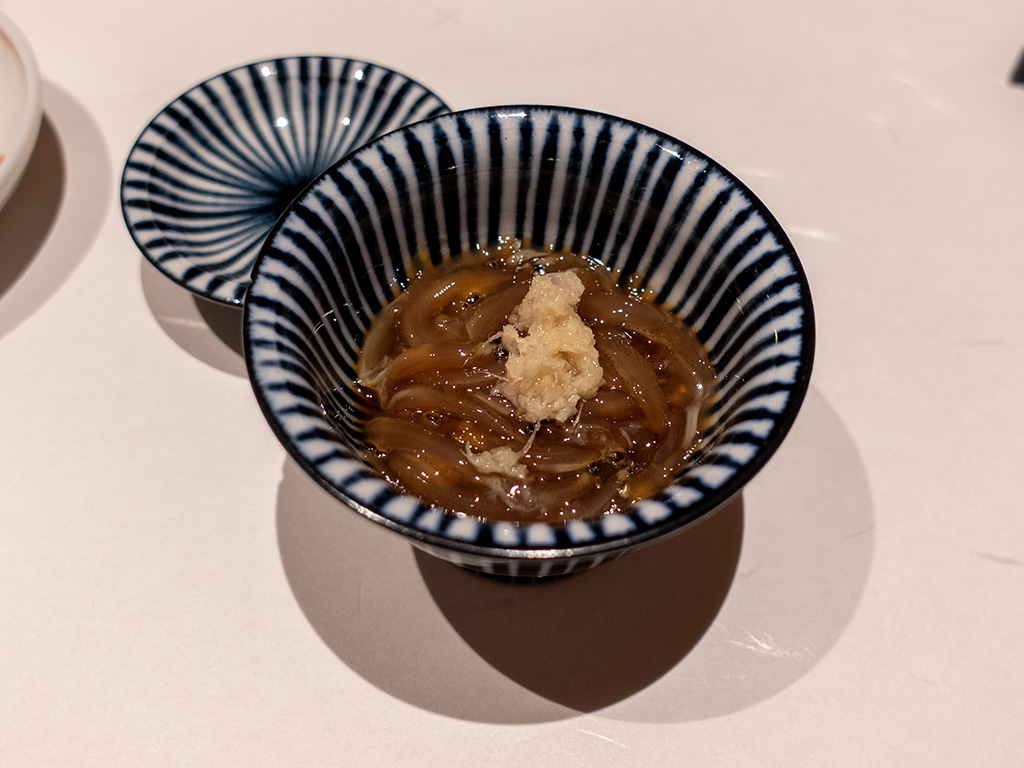
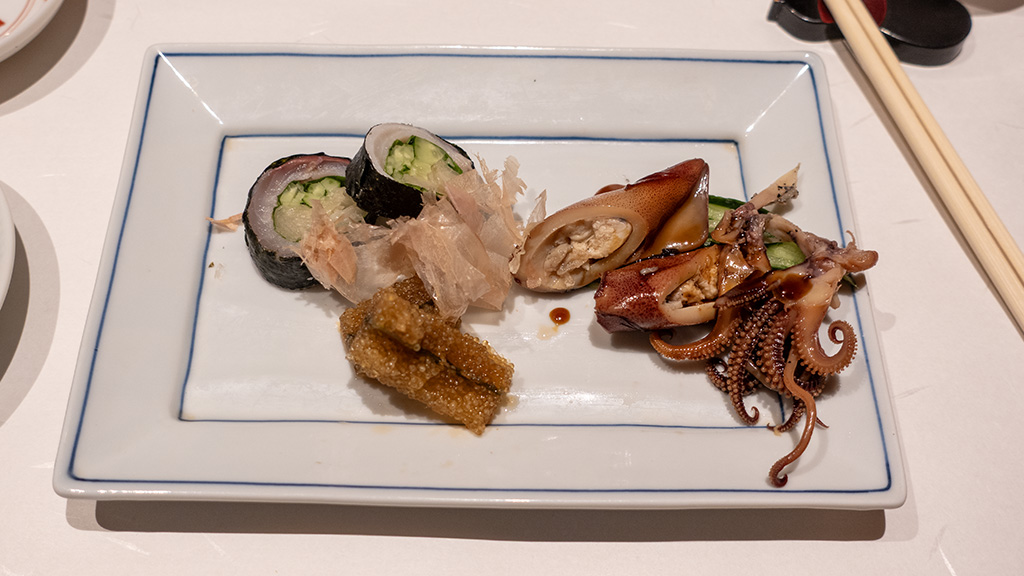
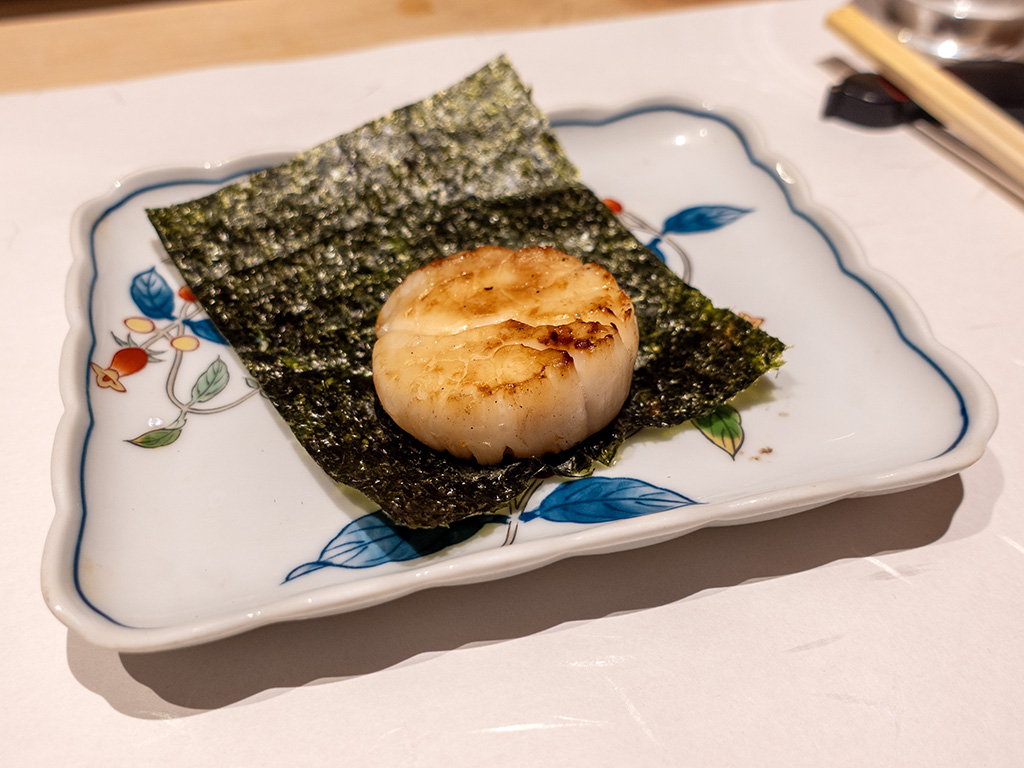
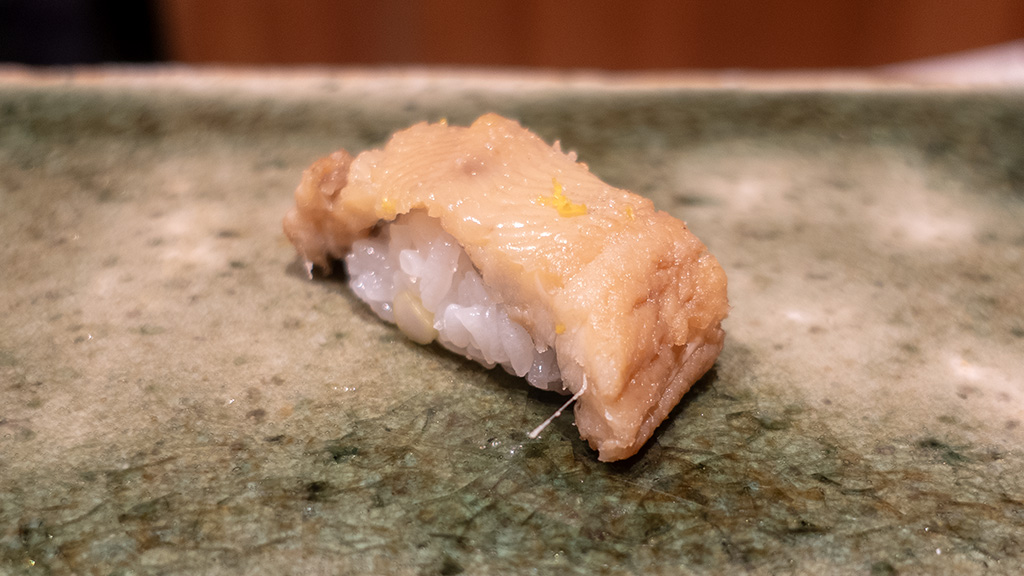
The nigiri came out in sets of two. For our first plate, we got bigfin reef squid (aori ika) atop a shiso leaf for US$9.00, and young sea bream (kodai) for US$7.00.

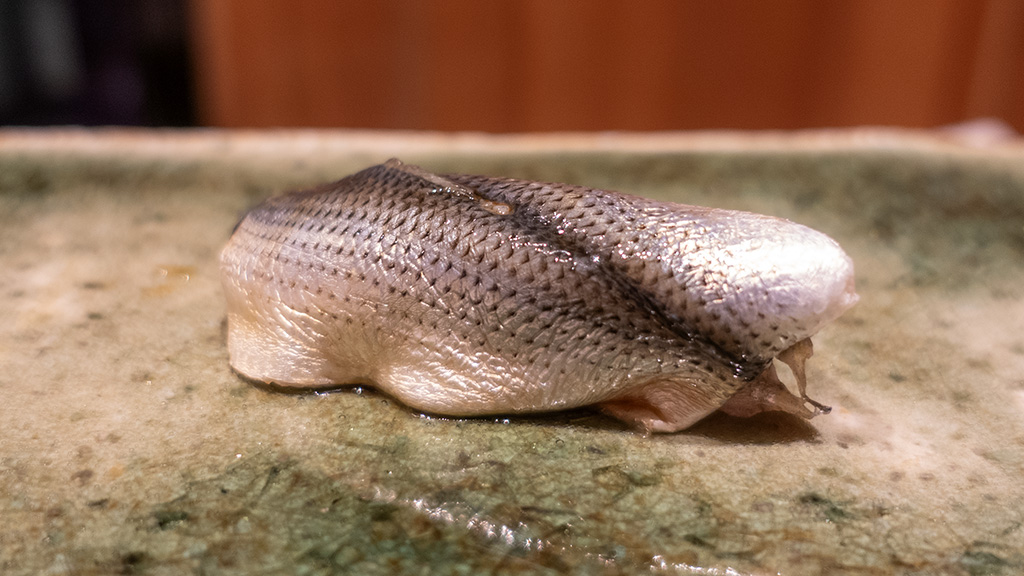
Next was Japanese halfbeak (sayori) for US$9.00, and horse mackerel (aji) for US$7.00.

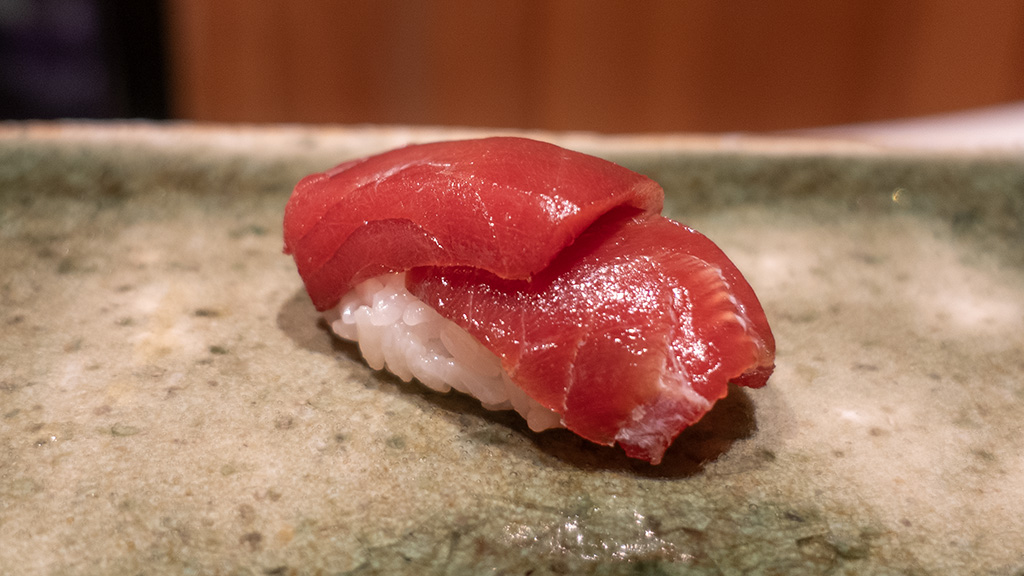
Following that was soy-marinated tuna (zuke maguro) for US$9.00, and greater amberjack (kampachi) for US$6.50.

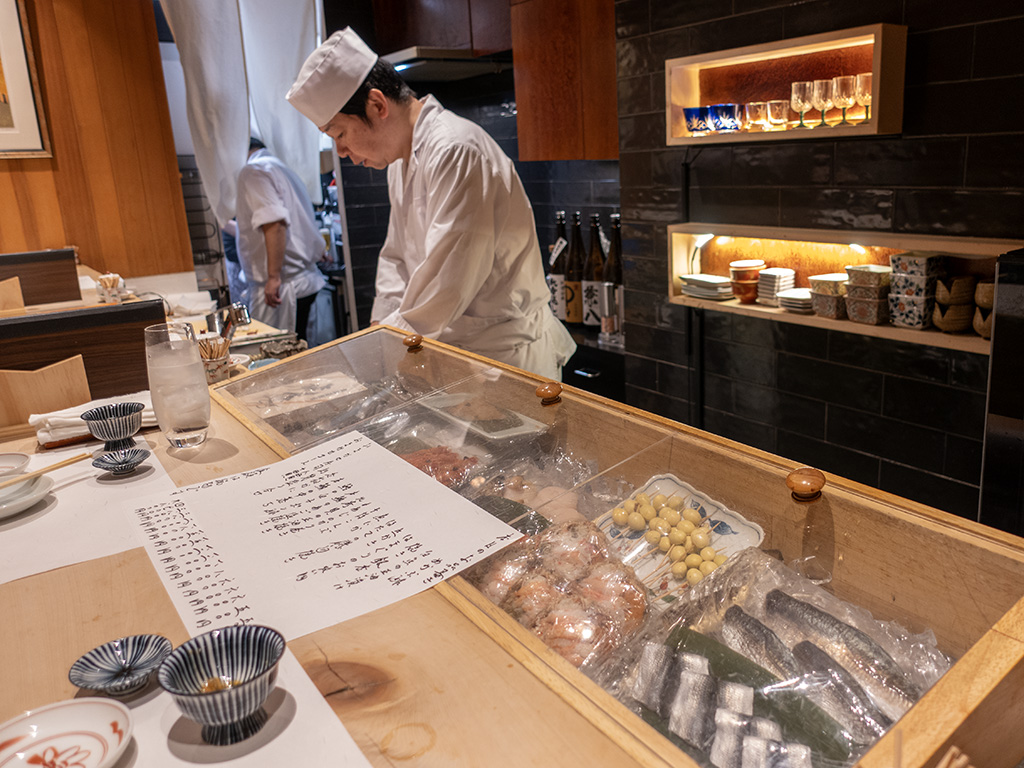
This was a traditional omakase experience at the restaurant’s sushi bar, which meant that we were able to watch the chef prepare our dishes throughout our meal.

Next was Japanese Spanish mackerel (sawara) for US$7.00, and Japanese barracuda (kamasu) for US$8.50.

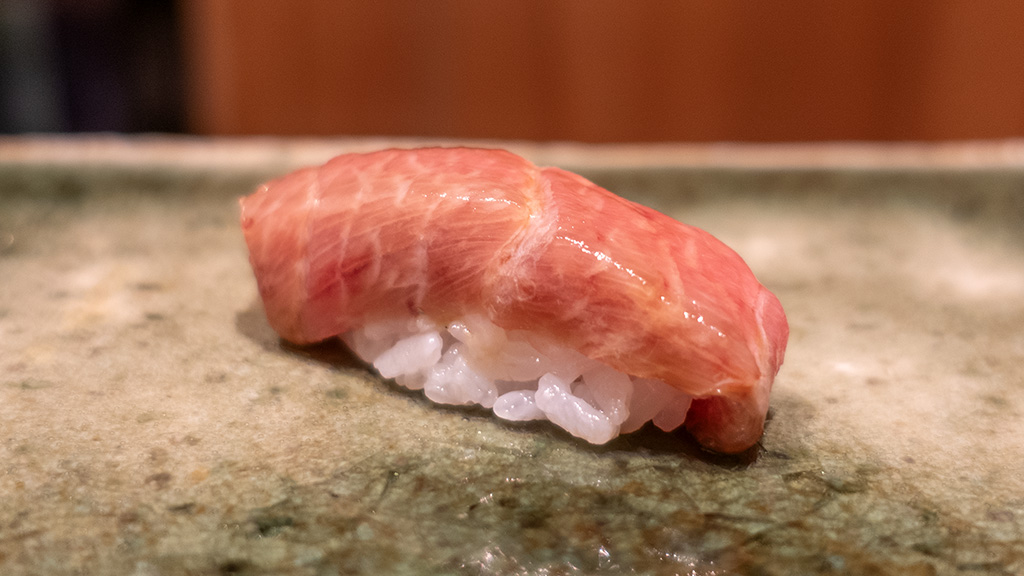
The subsequent plate had medium-fatty tuna belly (chutoro) for US$11.00, and golden eye snapper (kinmedai) for US$9.50.

Afterwards, we got sweet shrimp (ama ebi) for US$11.00, and horsehair crab (kegani) for US$12.00.

Our second-to-last plate of the regular omakase had extra-fatty tuna belly (otoro) for US$13.00, and blackthroat sea perch (nodoguro) for US$12.00.

Here is a shot of the chef preparing the final pair of the regular omakase.

Our final plate consisted of two types of sea urchin (uni)—Bafun for US$17.00, and Mursaki for another US$17.00.

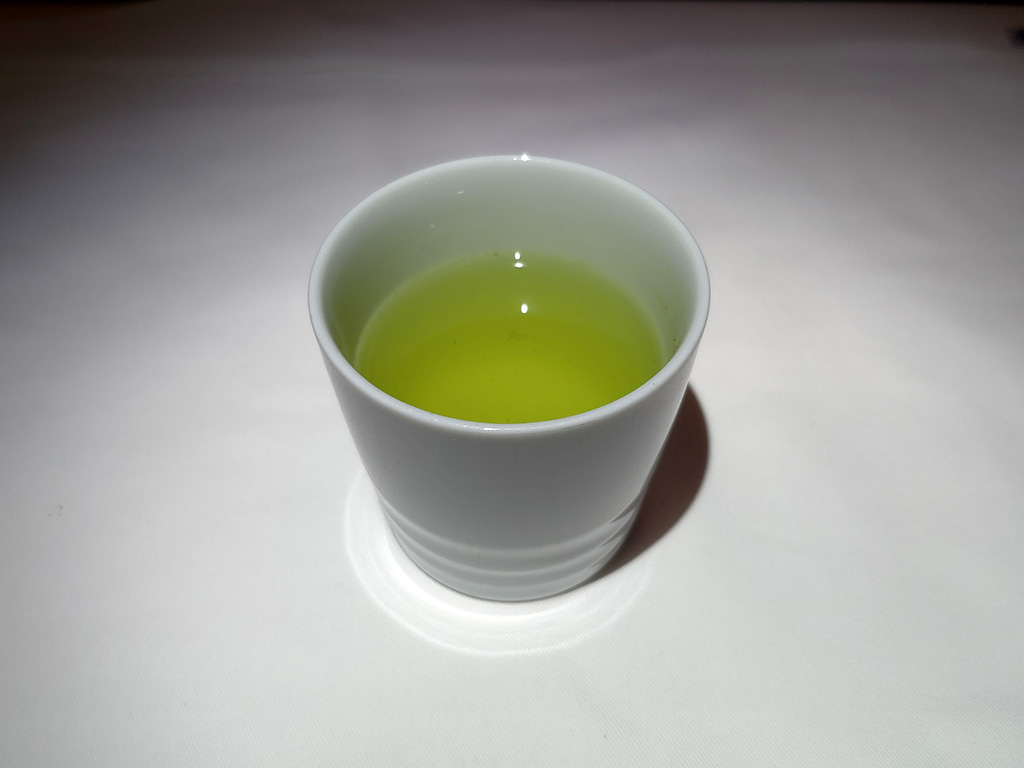
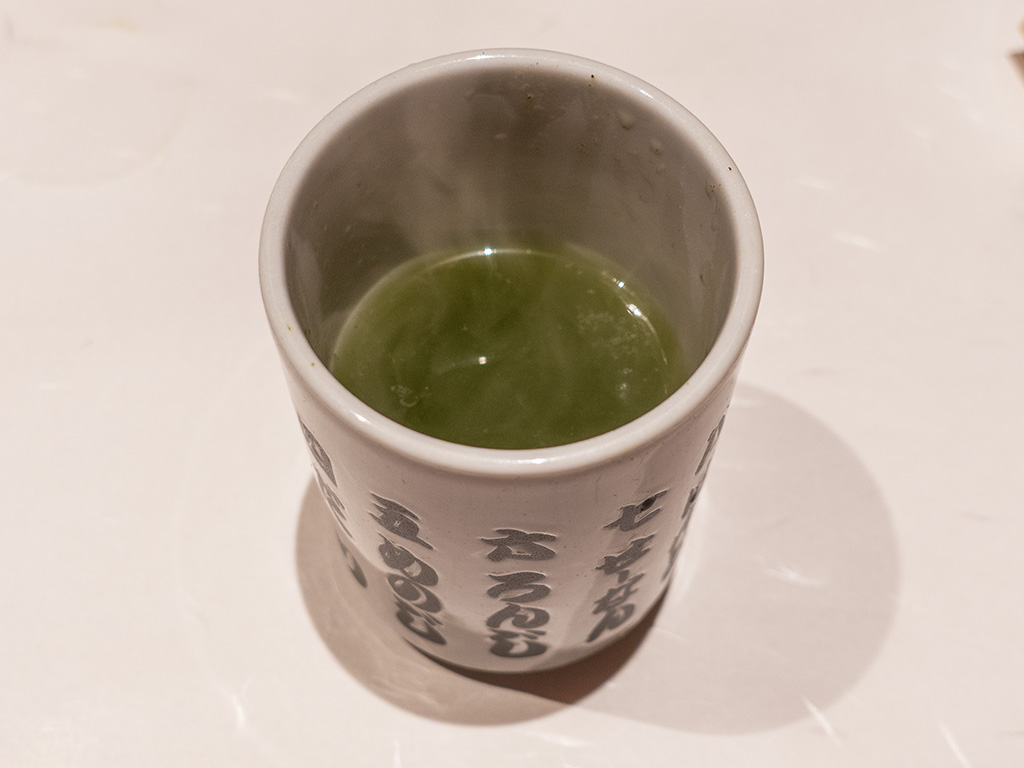
I’m a fan of colder beverages, but my friend likes to get hot tea whenever we go to a Japanese restaurant; this was her hot green tea, for US$3.00.

By this point, if you’re either familiar with sushi restaurants or have read a lot of restaurant reviews on my blog, you might have noticed that the fish we got served was fairly uncommon and unusual… which was one of my favorite things about the meal. As you can see, Matsuomoto did not serve any of the basics, i.e., no salmon, no yellowtail, and no lean tuna. All basics-adjacent fish was prepared in a way that was special, such as the fleshy tuna (akami) being soy-marinated, or the shrimp being sweet shrimp (ama ebi) instead of regular shrimp (ebi). This meant that I was able to eat an amazing variety of fish, some of which I had the opportunity to try for the very first time.

From here, we had the option of ending our meal or continuing. Each piece of nigiri was designed to be eaten in one bite, so we technically only had 16 “bites” of food so far. Although I was satisfied, I wasn’t anywhere close to full. I was having so much fun seeing so many intriguing different kinds of fish and trying new flavors that I told the chef I was happy to continue for at least a few more plates.

Our first bonus plate had jumbo clam (mirugai) for US$12.00, and baby white shrimp (shiro ebi) for US$11.00.

That was followed by kelp-cured Japanese horsehead tilefish (amadai kobujime) for US$8.50, and Pacific saury (sanma) for US$7.50.

Our actual final sushi plate of the meal had round clam (aoyagi) for US$9.00, and marinated salmon roe (ikura okizuke) for US$7.00.

As our meal came to an end, our chef began focusing on other diners. Here is a shot of him preparing a plate for some people seated at the tables behind us.

For dessert, my party shared one purple yam Yōkan for US$7.00, and one matcha pudding for US$9.00.

After finishing our meal and prior to departing, I snapped a photograph of the interior of the restaurant.

Cost-wise, this was a bit on the pricier end—just the 22 pieces of sushi came out to US$220.50 per person, excluding dessert, tax, and gratuity. With that being said, I’m very glad I got a chance to dine at Matsumoto because it exposed me to a lot of new types of fish that I think I otherwise would not have been able to try at other restaurants. The fact that sushi is my favorite food and I have gone to a lot of different sushi restaurants nationwide, yet still tried some cuts of fish at Matsumoto for the first time ever, should be a good indication of how unique of an omakase experience it provided.

I think if you’re relatively new to sushi, there are other restaurants that will offer much better value for your money by way of lower prices and larger portion sizes with comparable fish quality. However, if you’ve already been to a lot of sushi restaurants and are hoping to experience something fresh and novel, I think Matsumoto is definitely worth considering if you happen to be around the Koreatown neighborhood of Los Angeles.


—§—


Hello, Rita Deanin Abbey Art Museum in Las Vegas, Nevada

Flexibility and adaptability are two traits I value highly in myself, so I often don’t really have a set schedule or routine to my life; instead, I keep my daily agenda fluid and handle things as they come up in the order of my perceived priority of such tasks. With that being said, one thing that has still stayed fairly consistent during my adult life is that I tend to stay indoors and work during weekends so I can avoid large crowds, especially in tourist-heavy cities like Las Vegas.

However, once in a while, I will be summoned outside on a Saturday or Sunday for various different reasons. For instance, if some of my friends are in town visiting for the weekend, I will venture outdoors to meet up and spend time with them. Another example is when certain attractions have free day promotions.

That recently happened with the Rita Deanin Abbey Art Museum, an art museum located near the Centennial Hills neighborhood in the northwest Las Vegas Valley. This is a museum that I’ve had on my “want to go” list for a while now because of how unusual it is for there to be any kind of attraction like this so far and deep into the outskirts of the Valley. Admission is usually US$20.00 per person, but I noticed lately that they were running free admission promotions during the first Saturday of every month, so I seized the opportunity and headed over to redeem my complimentary visit.

After arriving at the museum, I promptly found out the rationale behind the location—this used to be Rita Deanin Abbey’s property, and during the final years of her life, she oversaw the construction of the museum on her plot of land. After her death in early 2021, construction was wrapped up and the museum opened to the public a few years ago in 2022.

This is probably one of the most unexpectedly and surprisingly nicest art museums I’ve ever been to. I assumed it would just be a small, cozy spot that showcased a limited collection of art pieces created by a local artist, but instead, it was a very professional and full-blown art museum with multiple galleries (with even an outdoor exhibit) and a wide variety of art. It had a very clean and modern theme to it, and I actually found it to be even nicer than many of the major well-funded city-namesake art museums found in a lot of large metropolitan areas across the United States.

When I was there, it was sparsely populated, even though it was on a free admission promotion day; I imagine that means that it’s even less busy on normal days, and this overall probably isn’t too popular of an art museum. I find that both surprising and unsurprising—surprising because this is a very high-quality art museum that I think deserves much more traffic and appreciation, but unsurprising because it’s so far away from all the other popular attractions in Las Vegas that it’s probably rare for people to make the trek all the way out there unless they are true art enthusiasts.

If you’re visiting Las Vegas and primarily staying on the Las Vegas Strip, then I think it’s unrealistic to thread in a visit to this art museum. However, if you’re staying closer to Summerlin or are making a trip to Mount Charleston to go on a hike, you’ll be closer to the Centennial Hills neighborhood, which in that case, I think the Rita Deanin Abbey Museum definitely deserves a spot on your list of places to consider visiting, even at the full US$20.00-per-adult ticket price.

Here are some photographs I took in the museum during my visit:


—§—


Hello, Best Friend at the Park MGM on the Las Vegas Strip in Nevada

No matter how strong my love is for Las Vegas, one of the things I adamantly hate about it is how it is commonplace and acceptable to smoke cigarettes inside casino buildings on the Las Vegas Strip. Basically every other area of the United States has justifiably banned smoking inside buildings (and even within a certain distance of the entrance of buildings), but casinos seem to be be the anomaly and are okay with jeopardizing the health of their visitors in order to satisfy smokers.

Fortunately, there is one property on the Strip that has banned smoking indoors—Park MGM. (As a side note, the Vdara also bans smoking, but it is just a resort and spa and doesn’t have a casino, and it also doesn’t have a Las Vegas Boulevard address.) In the spirit of voting with my wallet, I like to support businesses that support my beliefs, so for dinner, I decided to dine at Best Friend, a restaurant inside Park MGM.

I dined with two friends, which made us a group of three. All three of us decided to get the chef’s tasting menu for US$75.00 per person.

The first round of food came out, and as expected from a Korean restaurant, it consisted of a lot of 반찬, pronounced as “banchan” and meaning “side dish.” In addition, it also came with a side of buns, which is less common for Korean cuisine.

One thing that you might notice is that the buns came out as a set of four instead of a set of three. This is going to be a recurring theme that you’ll notice on an ongoing basis throughout this meal, which I will point out during my review whenever it was relevant.

As the first main entrée, we got slippery shrimp. This had a great balance of crispiness and tenderness. The flavor of the sauce was great, and it had a relatively light and reasonable amount of breading, which meant that the shrimp flavor was not overpowered. This was my favorite dish of the meal.

The slippery shrimp came out as two plates instead of three, so we thought that one plate was missing. However, when we pointed this out to the waiter, he replied that the chef’s tasting menu at Best Friend is more of a communal, family-style situation, as opposed to the neat, well-presented, singular dishes that you might find in a traditional chef’s tasting menu or omakase experience. Thus, he said that the slippery shrimp came out in a way where it was intended to be shared by the entire table.

Although that was unusual compared to what I am used to or was expecting, it was understandable, and it made a decent amount of sense considering that the family-style sharing of food is indeed something that is common in Asian cultures.

On top of that, the waiter said that a group of three is a fairly unusual group size for them to see, and that their tasting menu is often sized to be compatible for pairs. Thus, he said that, in situations where they can accommodate a portion size for three people, they would do it, but otherwise, we would end up getting portion sizes intended for groups of four.

Now back to the slippery shrimp. With all that being said above, there was another funny facet to this situation. In our group of three diners, we had one person who does not eat fish or seafood. This meant that this slippery shrimp entrée, which I now noticed was definitely intended for a group of four, is now being split between only two people. Luckily, it was very delicious and I was happy to eat a large portion of it, but it was quite satisfyingly filling.

Next up were Kogi tacos from Roy Choi’s Kogi BBQ Taco Truck. Because these were individual tacos, we got our proper serving of three tacos. I thought these were solid tacos, and I was not surprised when I later found out that they were made to resemble food truck tacos, as it definitely gave off that impression.

Next up was the meat. One of the plates was garlic chicken; the other was 갈비, pronounced “galbi,” which is Korean barbecued short rib.

These were gigantic portion sizes, and again, I think we got the amount of meat that was supposed to go to four people instead of just three. The galbi was good, albeit a bit heavy on large chunks of fat. The garlic chicken was passable, with decent flavor but a bit dry in texture.

With that being said, this is the point where I was getting extremely full and realized that I was getting some amazingly great value for my money, considering just how much food I was getting and the fact that I was on the Las Vegas Strip where everything is upcharged for tourists. Even though the meat wasn’t the utmost highest of quality, I couldn’t really complain about it, because it was still tasty meat, and I felt like I was getting it for way cheaper than it deserved to be.

Along with the meat, we also got kimchi fried rice. I left most of this for my friends to eat, especially the one who wasn’t quite as full as I was due to him not having eaten any of the slippery shrimp dish earlier in the meal.

Finally, it was time for dessert. I believe this is another area where we got four people’s portions instead of just two, as I think each dessert dish is designed with two people’s portion size in mind, and our waiter gave us one of each.

The first dessert was date cake. I couldn’t really tell that it was date cake; to me, it just tasted more like a chocolately cake with some good ice cream on the side.

The second dessert was what they called a “strawberry shortie,” though from what I could tell, it looked like a generic grocery store ice cream pop adorned with some sorbet and cream on the side.

Both of these desserts were fine, but at this point, all three of us were struggling to keep eating, as we were all very full.

From the outside when walking through the casino, the restaurant looks tiny because the only area you can see from the storefront windows is the front “retail and bar” area. However, once you go through a hallway, there is a much larger dining area.

Here are some photographs I took of the inside dining area and kitchen, which includes its own bar:

And here are some photographs I took of the aforementioned retail and bar area, which does actually seem to sell merchandise, as well as have some bar dining options for people who just want a quick and more casual meal:

If you weren’t able to tell already, I have one very obviously and very important recommendation: if you want to try the chef’s tasting menu at Best Friend, go as a group of three instead of a group of two or four. Surely at some point they are going to address this loophole and figure out a way to not have to give an extra portion of food to every group of three, but until then, I think Best Friend is probably the one restaurant on the Las Vegas Strip where you will absolutely get top value for your money.

With that being said, even if they do patch this loophole, I still think Best Friend is a pretty good restaurant.

For context, I’m personally not a huge fan of Korean cuisine because I usually find it to just be way too salty and greasy for my preferences, and I think Korean cuisine tends to just overload your taste buds with primitive satisfaction (i.e., through egregious amounts of salt, sugar, and fat) rather than focusing more on refined, pure flavors that are considered desirable in fine dining. Also, my parents are Korean and I grew up eating a lot of Korean food that my mom made, but she was not a good cook, so my brain sort of has the idea ingrained in it that Korean food in general is not that good.

With all that in mind, and even as someone who might be biased and predisposed to not liking this restaurant because it’s Korean, I still liked Best Friend.

Now obviously, a US$75.00-per-person meal isn’t necessarily cheap either, but prices have gotten absolutely wild on the Las Vegas Strip lately, so comparatively, $75 is not bad. Considering that they’re basically serving you enough calories in a single meal to last you an entire day (or more, if you do the three-person hack), if you take into consideration the amount of food along with the unique atmosphere and dining experience that comes along with the restaurant, I think it is absolutely worth my recommendation.


—§—