Hello, Medal of Honor Museum and the Vietnam Experience Exhibit

This post is over 5 years old and may contain information that is incorrect, outdated, or no longer relevant.
My views and opinions can change, and those that are expressed in this post may not necessarily reflect the ones I hold today.
 

As a continuation of yesterday’s blog post about the USS Clamagore and Laffey from visiting Patriots Point Naval & Maritime Museum, today’s spot­light is on the Medal of Honor Museum and the Vietnam Experience Exhibit.

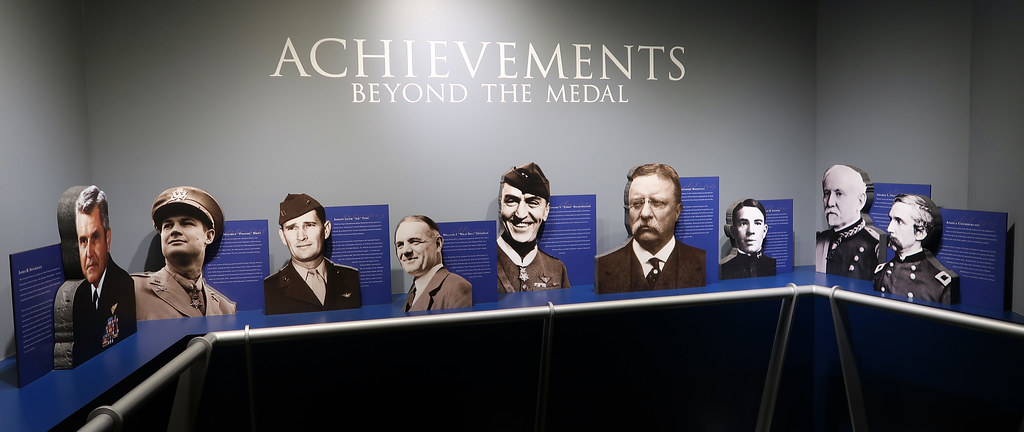
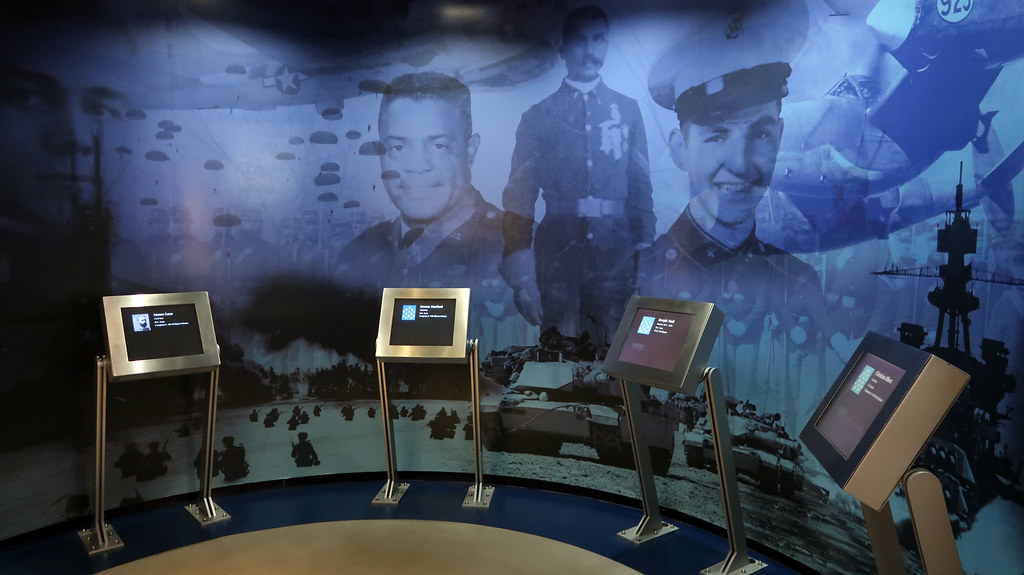
The Medal of Honor Museum was inside the USS Yorktown (which I’ll show tomorrow). The Medal of Honor is the United States government’s highest award, and it is given to members of the military who distinguished themselves from others through great valor during combat.

Medal of Honor Museum at Patriots Point

Medal of Honor Museum at Patriots Point

Medal of Honor Museum at Patriots Point

Medal of Honor Museum at Patriots Point

As I mentioned in my previous blog posts, I don’t really have much background knowledge in history, so I didn’t really know anything going into this museum. My co-worker did, though, and he said that this museum was fairly biased—which is unfortunate, but also expected, seeing as this is an A­mer­i­can award in a museum in the South, and featuring Medal of Honor recipients of ethnicities of past United States war enemies might not yield the best reactions from some people.

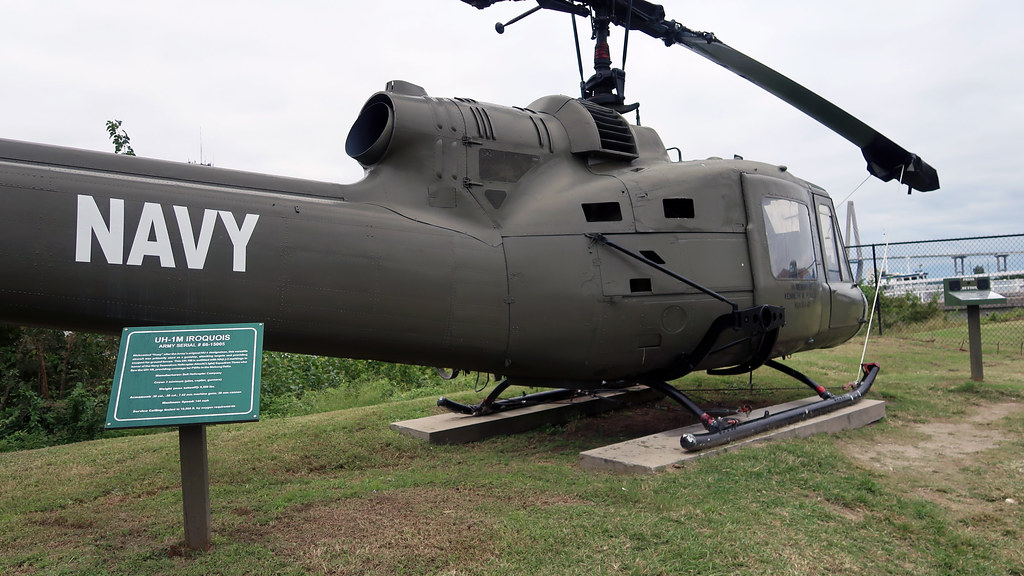
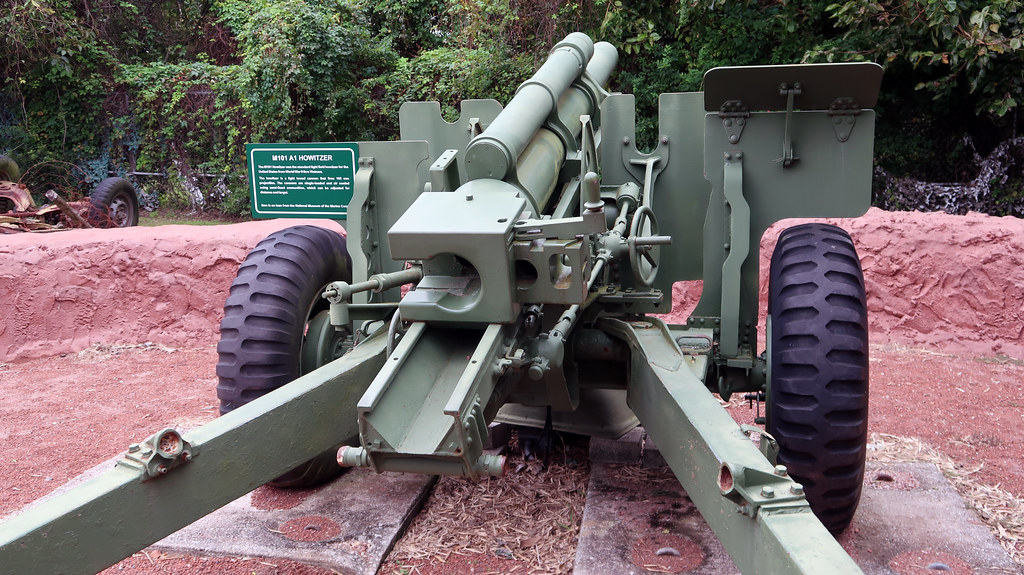
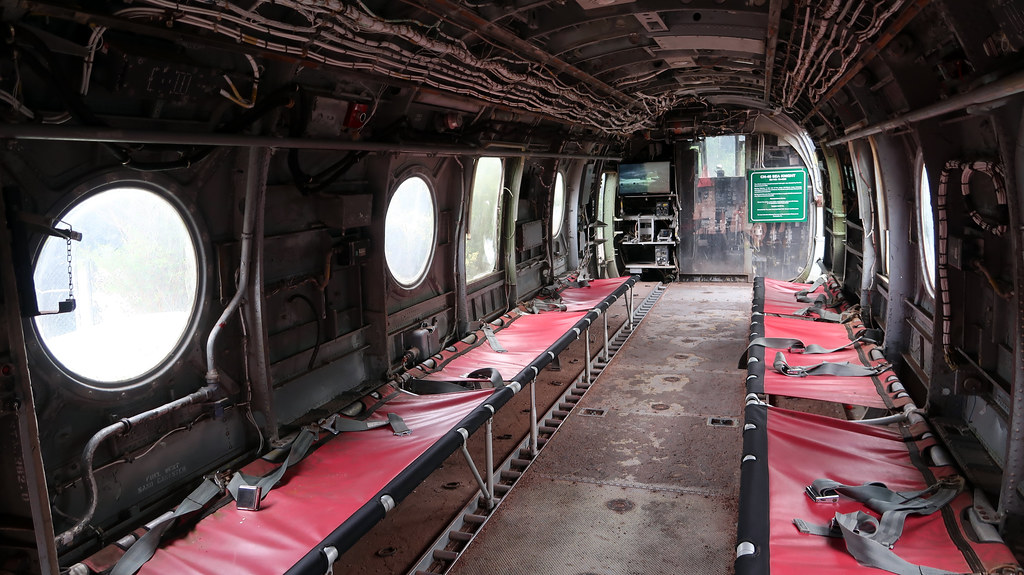
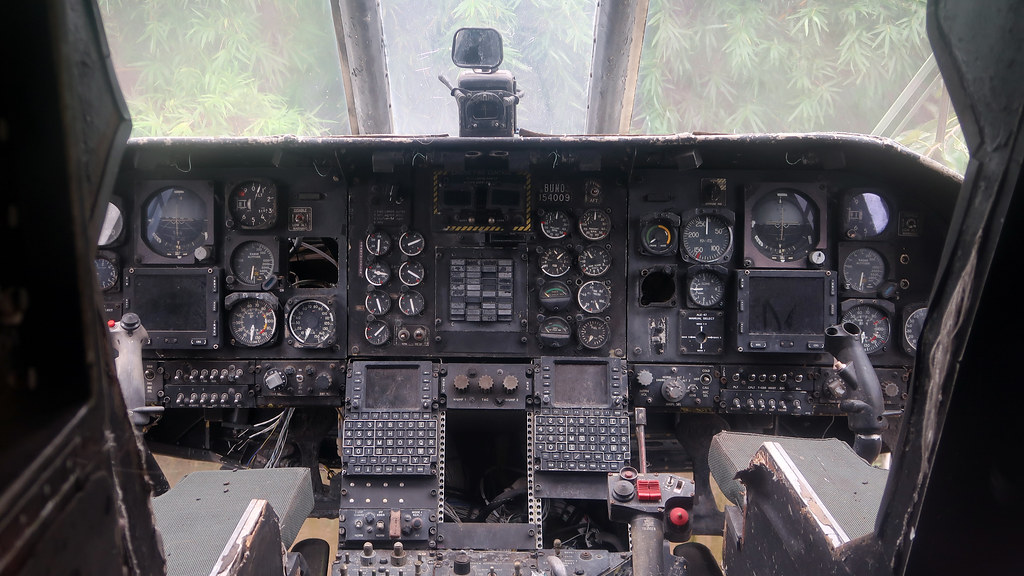
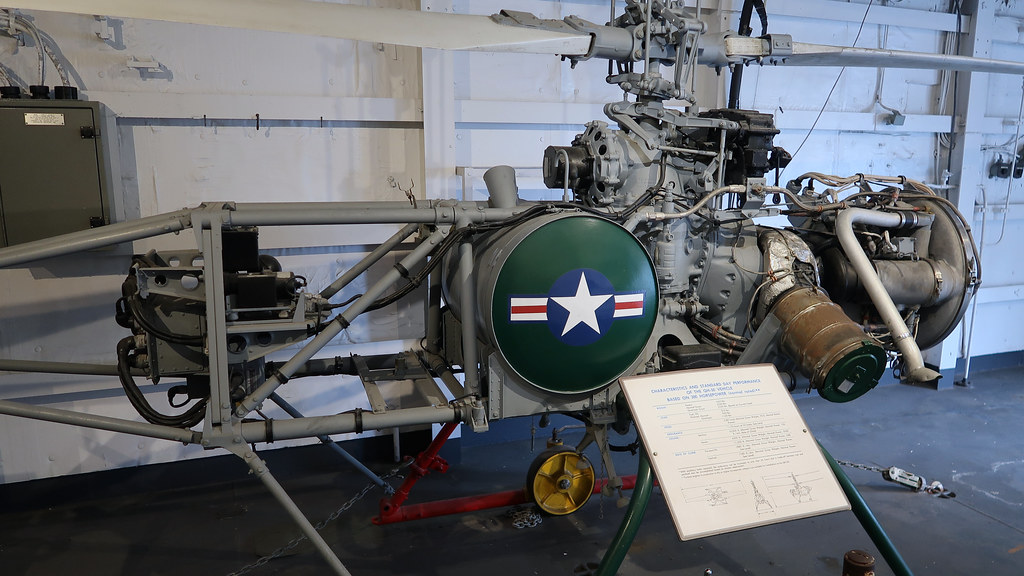
For the final exhibit before closing time, we walked through the Vietnam Experience Exhibit. This was a hybrid indoor and outdoor exhibit, with the in­door section resembling a traditional museum with items on display, and the outdoor portion being modeled to try and emulate what it actually looked and felt like during the Vietnam War. They had speakers set up in inconspicuous locations to pump “war sounds” into the area, there were a hand­ful of huts that were designed to look like the ones in Vietnam, and a lot of the aircraft and vehicles were accessible so visitors could see inside.

The Vietnam Experience Exhibit at Patriots Point

The Vietnam Experience Exhibit at Patriots Point

The Vietnam Experience Exhibit at Patriots Point

The Vietnam Experience Exhibit at Patriots Point

The Vietnam Experience Exhibit at Patriots Point

The Vietnam Experience Exhibit at Patriots Point

The Vietnam Experience Exhibit at Patriots Point

There was a photo opportunity at the top of the watchtower; my co-worker eagerly told me to get in position and man the machine gun.

The Vietnam Experience Exhibit at Patriots Point


—§—


Hello, Cold War Memorial in the USS Clamagore (SS-343), and the USS Laffey (DD-724)

This post is over 5 years old and may contain information that is incorrect, outdated, or no longer relevant.
My views and opinions can change, and those that are expressed in this post may not necessarily reflect the ones I hold today.
 

For the next tourist activity of Charleston, I was joined again by my co-worker to go to Patriots Point Naval & Maritime Museum. The museum is ba­sically four museums in one, with three ships and an experiential exhibit.

We attended a wedding over the weekend; I didn’t join in on the afterparty, but my co-worker did. This meant that he slept in and had a late start, so we only had about four hours to experience everything. The museum(s) is/are massive, and four hours wasn’t enough to see everything, even though we weren’t standing there reading all the information on all the placards. If you also want to go, I’d recommend a 4-6 hour trip at the minimum; if you’re an enthusiast who loves the topic, this is honestly an amazing place to spend the entire day from open to close.

Because the museum was so large, I decided to split it up into a few separate blog posts. The first two museums we went to were the Cold War Memorial inside the USS Clamagore (which is a submarine), as well as the USS Laffey DD-724.

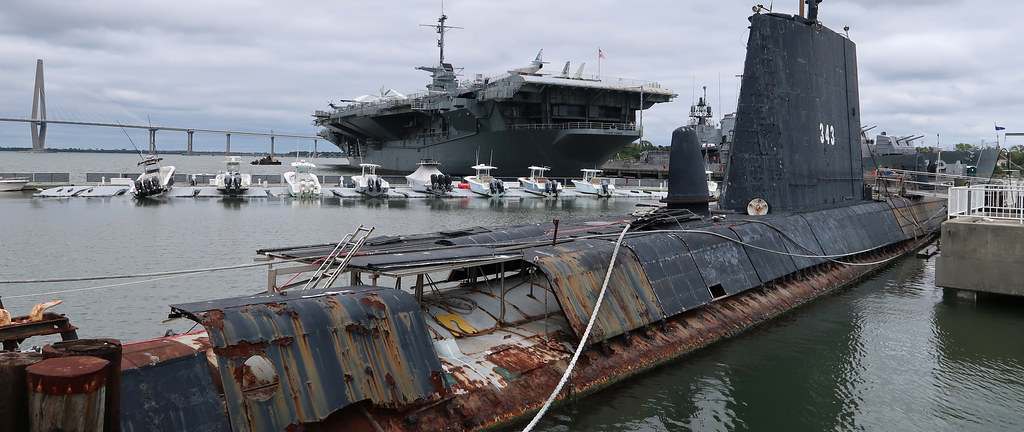
Patriots Point Naval & Maritime Museum

Patriots Point Naval & Maritime Museum

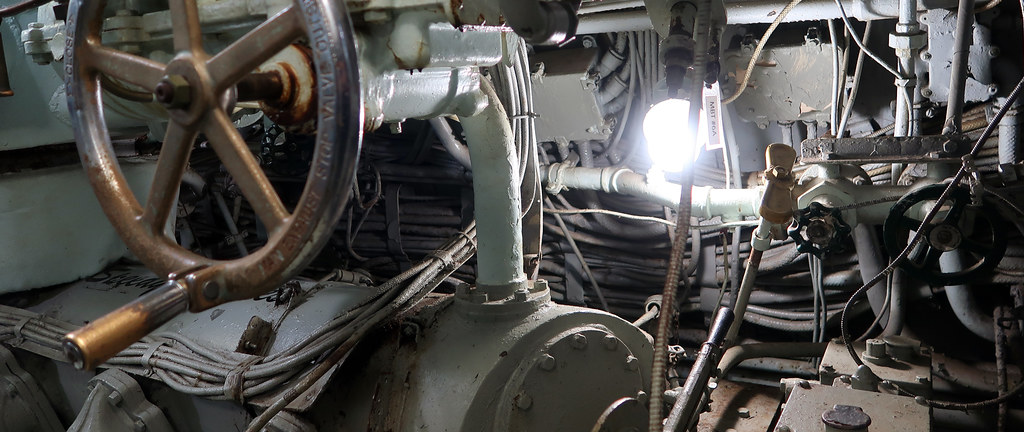
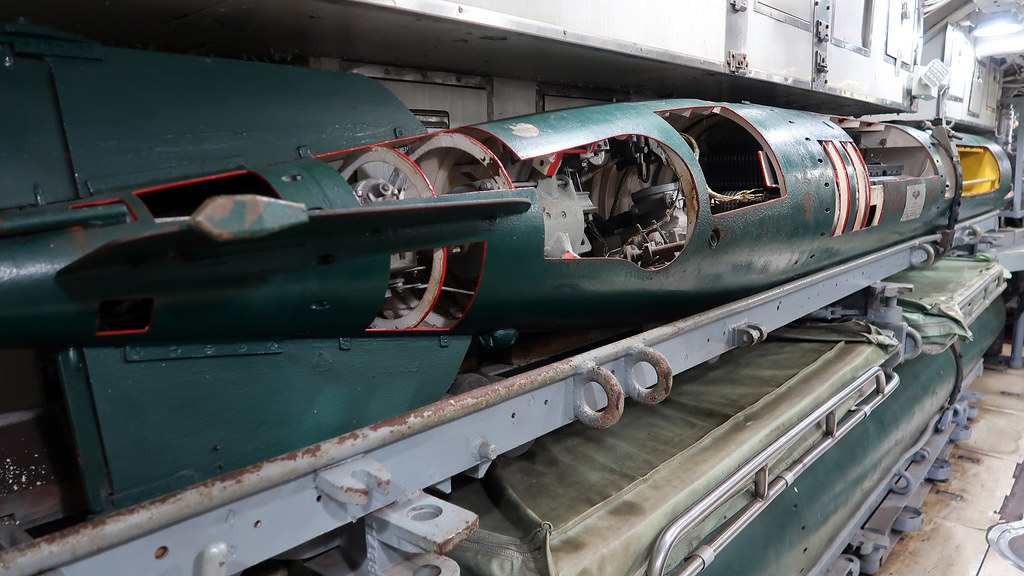
The submarine exhibit outlined what underwater life was like during the Cold War so we could see it first-hand.

Patriots Point Naval & Maritime Museum

Patriots Point Naval & Maritime Museum

Patriots Point Naval & Maritime Museum

Patriots Point Naval & Maritime Museum

Patriots Point Naval & Maritime Museum

Patriots Point Naval & Maritime Museum

The main takeaway I got from walking through the entirety of the length of the submarine was how large and small it was at the same time. I had never been on a submarine before, and I’m not sure where I got this impression, but I assumed that a submarine would be more like a smaller boat, but capable of being completely underwater. I imagined the interior would reflect something like a private jet. I’m sure there may be some submarines that exist that are like this, but the USS Clamagore was quite literally an entire house crammed into a watercraft.

As I walked through all the different rooms, I realized that this was built for people to live in here for extended periods at a time—all the essentials were directly in the submarine. However, it was also extremely space-efficient, meaning, there was very little open space that wasn’t already being used for some important purpose. The one long hallway stretching across the length of the submarine required a good amount of flexibility and agility to nav­i­gate because of how narrow and short it was.

My co-worker asked me whether or not I thought I could survive in one of these for a long period of time. I do well with small spaces, so that wouldn’t be much of a problem, but I know for a fact that I wouldn’t be able to tolerate the smell and heat. The submarine had a section where it showed the en­gine and had a speaker emitting the sound of one engine… and apparently during normal operation, there are ten of them running at the same time, resulting in ten times the volume. They also produce an insane amount of heat, and it would be normal for it to be ~120°F (~48°C) in that room.

 
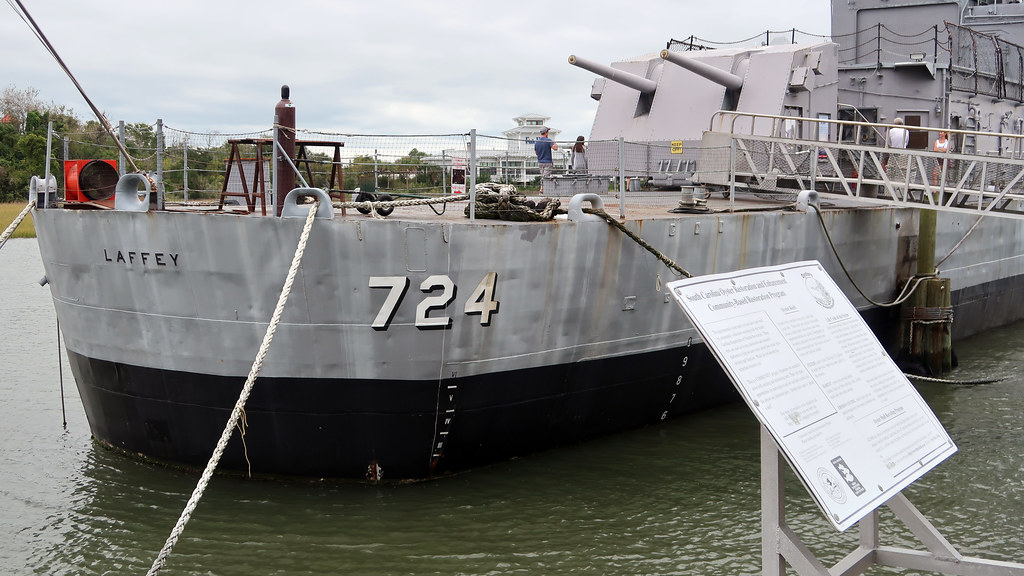
Next up was the USS Laffey, nicknamed “The Ship That Would Not Die” due to how resilient it was during the most relentless suicide air attack in his­to­ry during the Normandy landings on June 6, 1944, better known as D-Day.

Patriots Point Naval & Maritime Museum

Patriots Point Naval & Maritime Museum

Patriots Point Naval & Maritime Museum

Patriots Point Naval & Maritime Museum

Patriots Point Naval & Maritime Museum

Patriots Point Naval & Maritime Museum

During the tour, I found my locker.

Patriots Point Naval & Maritime Museum

You might not know this about me, but while I was still in school, I passionately hated history. It was my least favorite subject, I failed my Advanced Place­ment exam in history during high school, I took no history courses as an undergraduate university student while earning my Bachelor’s degree, and I quit my graduate program for my Master’s degree because their breadth of knowledge requirement forced me to take eight history courses to make up for my lack of exposure to history.

My opinion on the topic of history is slowly changing. I started feeling this way when I started going to more historical museums during my road trip, but I think the USS Laffey was the “tipping point” that made me realize that history isn’t actually really that bad, and the thing that’s bad is actually just the American education system.

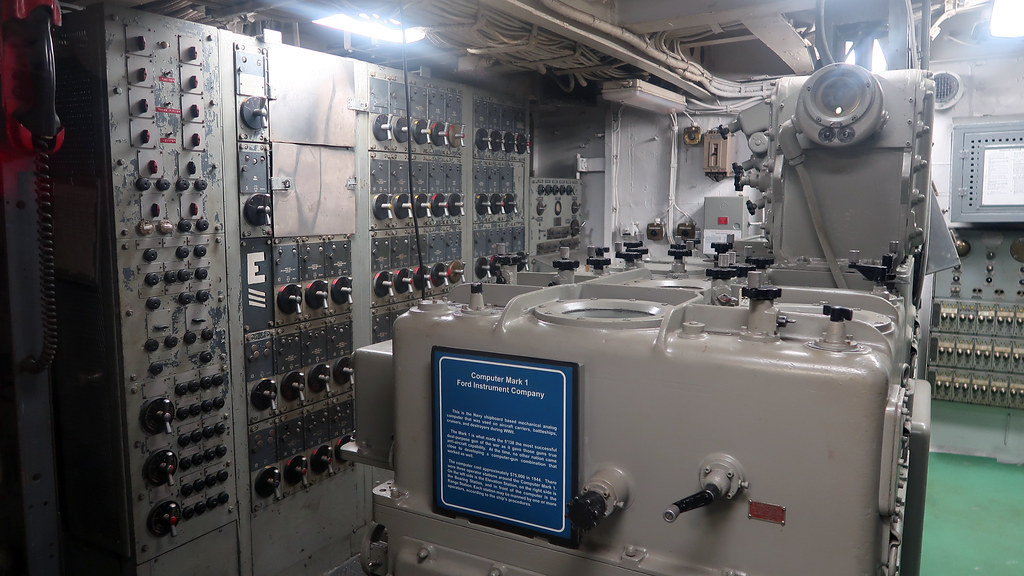
After watching all the videos on the ship about what happened to it, seeing all the rooms and some of the equipment that the military used to fight to defend the United States, and literally standing in the same watercraft as the veterans with my own two feet, it somehow just occurred to me in a very surreal manner as to how “real” everything was.

This isn’t to say that I was doubting that any of these historical events happened; it was just that, when I learned about it by reading out of a textbook and taking exams, I felt many degrees of separation from the topic. By seeing all this in-person, it hit me as to how important and significant all this was, and how relevant this actually still is to modern-day life.

These museum exhibits were built in a way such that both history enthusiasts (like my co-worker) and history idiots (like I) could learn something new and have a nice experience. What made it even better for me was that, as someone who grew up in the middle of nowhere in the Chicagoland suburbs, and then lived east of the Santa Ana Mountains in California before moving to the middle of the desert in Las Vegas, I didn’t really have much exposure to water. The fact that I was just even on a tremendously large boat to begin with was an exciting experience, so being able to walk through both these watercraft was amazing.


—§—


Goodbye Seattle

This post is over 5 years old and may contain information that is incorrect, outdated, or no longer relevant.
My views and opinions can change, and those that are expressed in this post may not necessarily reflect the ones I hold today.
 

After a good week visiting friends and sightseeing, my week in Seattle comes to an end. I have dedicated blog posts for the more notable things I did while in Washington, but for everything else, here’s a photo dump.

After my travel incident with a missed lay­o­ver and delayed flights, I decided that the best course of action for this trip would be to put Delta Air Lines on a temporary break take Alaska Airlines non-stop from IND to SEA instead.

An Alaska Airlines plane painted black

The flight went smoothly, I got my usual scenic photos that I always do from the air, and arrived safely and early without needing to worry about lay­o­vers.

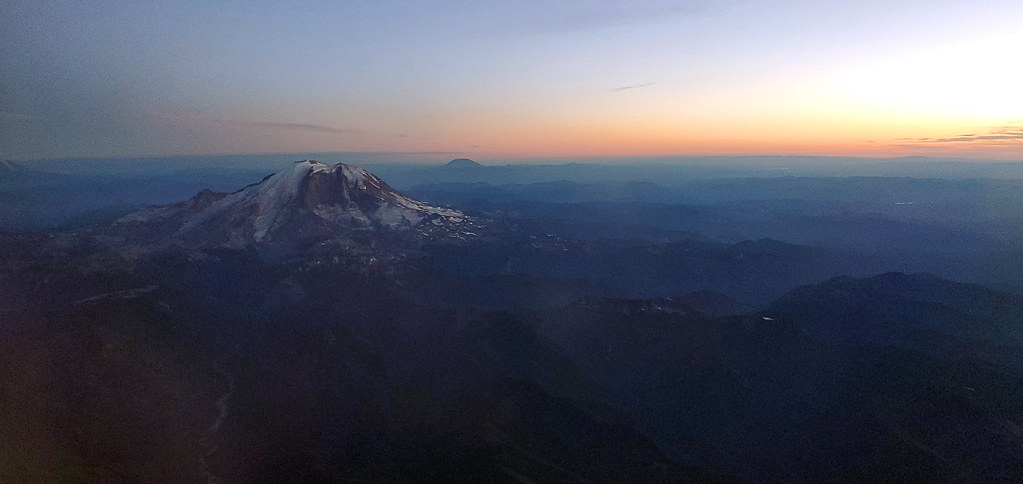
Mt. Rainier from a plane

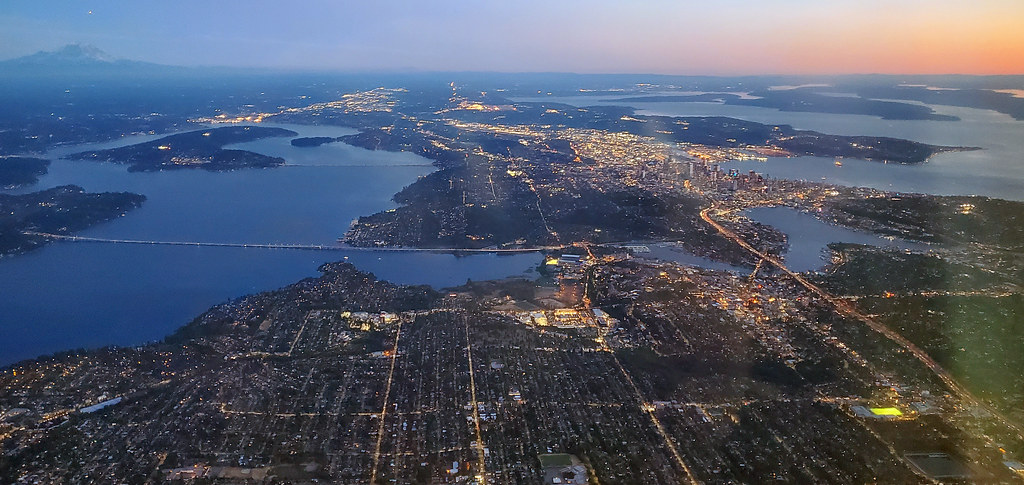
Seattle Metropolitan Area from a plane

During one of the earlier days, I spent a night in a hotel near the airport because it had the cheapest rate and also offered free parking for my rental car, which is very rare for hotels in the Seattle area. I snapped a photo from my window of the view and a nice bridge that connected both halves of the street.
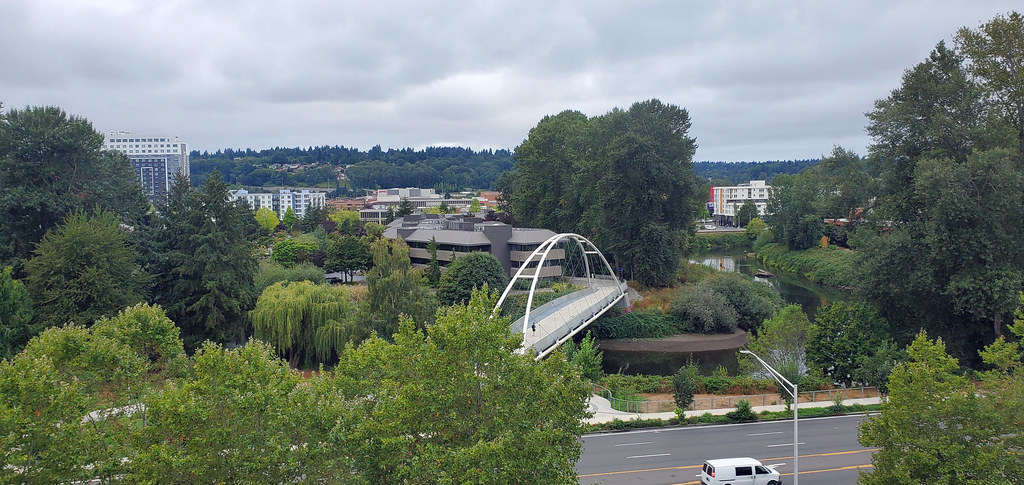
Tukwila, WA

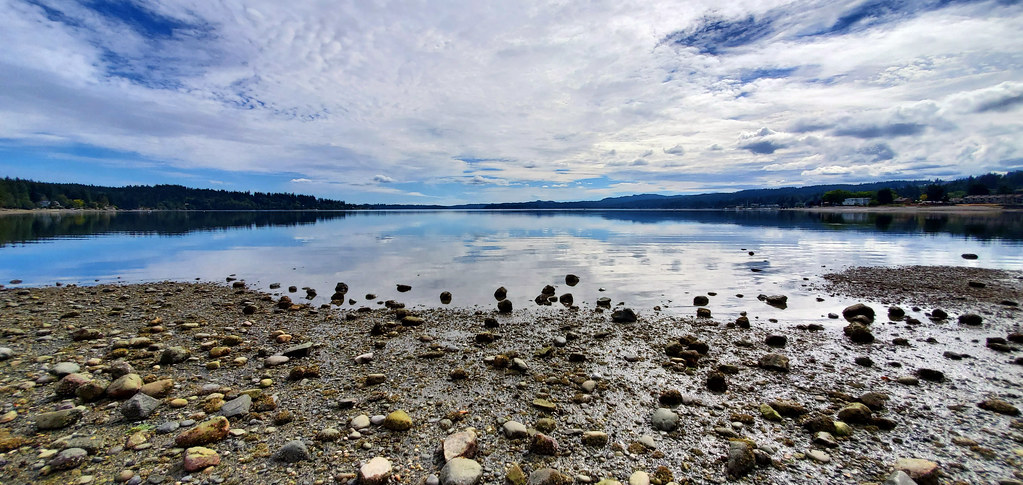
I also did some sightseeing with friends at Lake Union and Dyes Inlet. I’ve seen Lake Union before because I went to Gas Works Park last year with our production crew to get some b-roll footage for our documentary, but this was my first time seeing Dyes Inlet.

Lake Union

Dyes Inlet

One of the perks of having my own rental car throughout my trip is that we were able to get from place to place without having to rideshare everywhere or walk excessive distances. However, one of the downsides of having a rental car… is intersections like this.

To be clear, this is taken from the left turn lane of a two-lane road, i.e., there was only one more lane to my right. This traffic light had three lights, a sign that said I can only take sharp left turns, a sign that said I cannot turn left, and a sign that said I can also take a slight left, but make sure you don’t turn on red.

A very confusing intersection

This sounds like a great opportunity to do a rental car review.

If you’re unfamiliar, I usually rent pickup trucks because I like the ride of a body-on-frame vehicle, and I find pickup trucks to be much more man­age­a­ble and navigable because my personal vehicle is a pickup truck and I’m much more used to it. However, sometimes, renting a pickup truck is just too un­realistically expensive, or they don’t have any left available in stock, so I end up with a different vehicle. When I do, I like to review them.

This time around, I ended up with a Mazda CX-5, a compact crossover with a 2.5-liter inline-four engine with 187 horsepower and 186 pound-feet of torque.

I’m usually not a fan of Asian car manufacturers. I acknowledge that they usually make very reliable ve­hi­cles, but I like a balance of reliability and fun factor, and Asian cars tend to be very boring. However, I’d say that the Mazda CX-5 was the least bad of all the low-trim Japanese cars I’ve driven.

The interior was decently nice, the screen was unexpectedly large, and the materials didn’t feel cheap. The engine was obviously struggling and acceleration was much slower than what I’m used to, but it still got me around town.

One specific thing I noticed with this crossover was that the brakes were unusually sensitive. This tends to be a recurring theme with Asian cars, where the accelerator is slow to respond but even the slightest tap on the brakes will lurch the car. It felt like this Mazda was a particularly severe offender of this, so it made for a bit of an uncomfortable ride if I wasn’t putting extra focus and effort into smooth braking.

Apart from that, it was a fairly average compact crossover—it had the perks of fitting into small street parking spaces and squeezing into narrow parking lot spaces, but it also had the downside of being lower to the ground, having lots of road noise due to the unibody composition, and feeling like all the other bigger vehicles on the road were about to run you over because of how short you felt.

And on that note, here is the continuation of another trend I’ve started on my website—my co-worker Erin, who I visited the second half of my week in Seattle, has a lifted Ford F-150, so I hugged it.

Hugging a Ford F-150

This trip was also the first time I had ever been on a ferry. I took a round-trip to and from either side of Puget Sound, and the motion sickness I felt from the ferry was much more manageable than the motion sickness from whale (fin) watching.

Funny enough, my second time on the ferry, my brain seemed to have adjusted very well to the boat, because I had little-to-no seasickness. But then, strange­ly, the moment we stopped and docked at the destination, I felt an overwhelming wave of motion sickness, almost as if my brain had gotten so used to the boat that it was now very confused and angry that we weren’t moving anymore.

Here is a photo I took of Seattle while departing on the ferry.

Departing Seattle on a ferry

As I mentioned earlier, I thought this was a good trip. My trip to Seattle last time was good as well, and I’m thinking this has more to do with the people I spend time with while I’m in Seattle that has made it pleasant.

A majority of my thoughts and takeaways from my previous “Goodbye Seattle” blog post still stand, but there’s one more thing I noticed from this trip. Seattle isn’t quite as busy as New York City or Los Angeles, but it’s still pretty busy. However, it’s almost as if it’s a different type of busy.

When I’m driving around in Los Angeles or New York City, the traffic and congestion is borderline debilitating. If I’m trying to get from one place to another, I feel like I literally can’t, and if I try, I’m at the mercy of everything around me to sort of nudge me in a random direction, and I just have to hope that it’s the direction I want to go—sort of like being in the middle of a massive mob of people and being pushed the general direction of the mob’s movement.

Seattle, on the other hand, is also congested and has pretty bad traffic, but it’s still manageable. I can still make my own decisions on where I want to turn, and if I need to find someone who just got off the ferry and is wandering around downtown, we are actually able to coordinate and meet up at an intersection in a reasonable amount of time—something that is literally absolutely impossible in Los Angeles without having angry people honking at you and threatening your life.

I’m not quite sure why this is the case with Seattle, but I definitely appreciate it.

And with that, I am back in the eastern side of the country, ready to resume my homeless journey. I have a tentative plan to return to Seattle in mid-November, but until then, my road trip adventure is taking me to Louisville, Kentucky as my next destination. More tourism blog posts coming soon…

 

—§—


Hello, Indianapolis Motor Speedway

This post is over 5 years old and may contain information that is incorrect, outdated, or no longer relevant.
My views and opinions can change, and those that are expressed in this post may not necessarily reflect the ones I hold today.
 

My second tourist activity of Indianapolis was visiting the Indianapolis Motor Speedway, the race track best known for hosting the Indianapolis 500, or just the “Indy 500.” I wasn’t too interested in seeing a live race (and was too late for it anyway), but I want to see the notable points of interest that each of my road trip cities are known for, so I wanted to at least check out the track and the museum.

My tour started with a guided lap ride around the race track.

Indianapolis Motor Speedway

Indianapolis Motor Speedway

Indianapolis Motor Speedway

The race track used to be made out of brick, but has since been covered with multiple layers of asphalt. However, there is one strip of the original brick still visible near the starting point of the race. Apparently, professional race car drivers kiss this portion of the race track, so the tourists were also al­lowed to swoop down and kiss the brick for photos. I personally thought that concept was repulsive, so instead, I just asked Ed to take a photo of me sit­ting next to the brick.

Indianapolis Motor Speedway

After the tour, we went back into the museum for the self-guided portion of our trip.

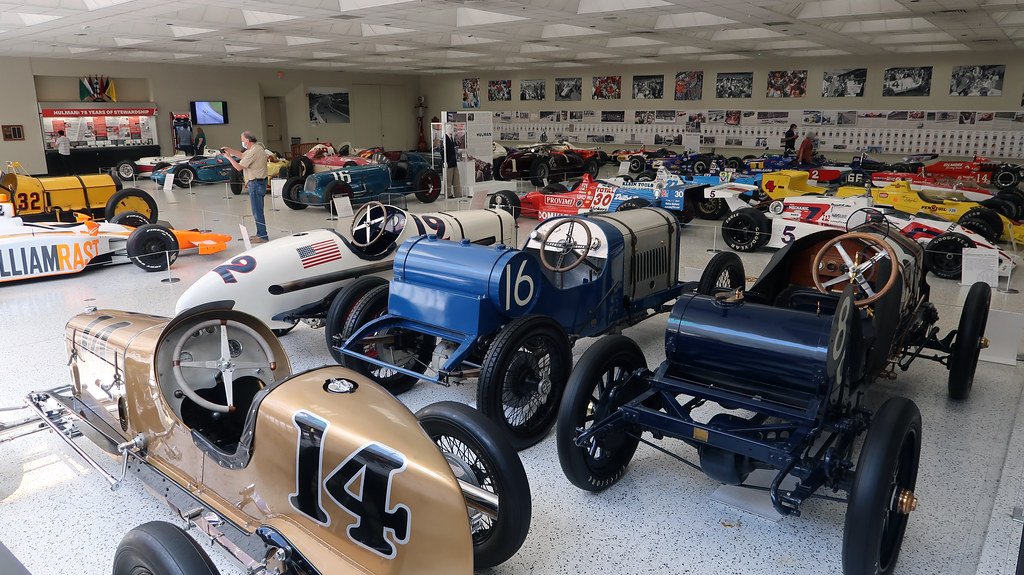
Indianapolis Motor Speedway Museum

Indianapolis Motor Speedway Museum

Indianapolis Motor Speedway Museum

Indianapolis Motor Speedway Museum

Indianapolis Motor Speedway Museum

Indianapolis Motor Speedway Museum

Indianapolis Motor Speedway Museum

Indianapolis Motor Speedway Museum

I usually don’t really have pictures of myself when I go to tourist attractions, but seeing as Ed was here with me, he took a few shots of me sitting inside the race cars designed for photos.

Indianapolis Motor Speedway Museum

Indianapolis Motor Speedway Museum

Indianapolis Motor Speedway Museum

I’m one of the people who have always thought the Indy 500, and every other professional racing event, was fairly boring, because I didn’t really see the appeal of watching a bunch of people drive their cars in a circle and continue turning left over and over again.

After visiting the Motor Speedway, I still wouldn’t consider myself a racing fan, but I did have two takeaways that changed my view of the sport:

  • Racing is just another outlet for the drivers and their teams to showcase their skill. It takes a lot of top-tier science, engineering, intellect, talent, and control to be able to drive at racecar speeds. It is also a perfectionist’s sport, because a single unnoticeable error could result in catastrophic disaster for the driver.
  • A lot of fans like the Indianapolis 500 as an observer’s sport, but that’s just a portion of it—a lot of the fans love it more for the heritage and tra­di­tion, as well as the strong patriotism that the Indy 500 represents.


—§—


Hello, Newfields: The Indianapolis Museum of Art

This post is over 5 years old and may contain information that is incorrect, outdated, or no longer relevant.
My views and opinions can change, and those that are expressed in this post may not necessarily reflect the ones I hold today.
 

For my first real tourist activity of Indianapolis, I went to Newfields: The Indianapolis Museum of Art. Newfields is 152 acres and contains over 50,000 items in their collection. I noticed that Newfields is also one of the most highly-rated art museums in general across the United States.

Throughout my road trip, when I go to a tourist attraction, I usually go in the late morning or early afternoon so I will have a good chunk of time to ex­plore before the exhibits close, then I can pick up food on the way back to my hotel. However, for Newfields, I went with Ed, so unfortunately, I had to do some schedule coordination and didn’t make it into the museum until 5 PM. The museum closed at 8 PM, which meant we only had three hours to view everything; usually, three hours would be enough for a museum, but due to the sheer size of this museum (and because of the fact that it was driz­zling rain), we missed out on all of the outdoor gardens and exhibits.

Here are some highlights from my trip from the various different sections on display:

Newfields: The Indianapolis Museum of Art

Newfields: The Indianapolis Museum of Art

Newfields: The Indianapolis Museum of Art

Newfields: The Indianapolis Museum of Art

Newfields: The Indianapolis Museum of Art

Newfields: The Indianapolis Museum of Art

Newfields: The Indianapolis Museum of Art

Newfields: The Indianapolis Museum of Art

Newfields: The Indianapolis Museum of Art

Newfields: The Indianapolis Museum of Art

Newfields: The Indianapolis Museum of Art

Newfields: The Indianapolis Museum of Art

Newfields: The Indianapolis Museum of Art

Newfields: The Indianapolis Museum of Art

Newfields: The Indianapolis Museum of Art

Yes, that is me in the final photo standing in front of a really big cloud thingy. Unfortunately, the cloud was a little bright and the rest of the museum was dark at that point because there was dim lighting by the entrance, the sun had set, and it was almost closing time… so even with a lot of editing in post, I still look sort of like a silhouette.


—§—


Goodbye SoCal

This post is over 5 years old and may contain information that is incorrect, outdated, or no longer relevant.
My views and opinions can change, and those that are expressed in this post may not necessarily reflect the ones I hold today.
 

My two weeks in Southern California are coming to an end—tonight will be my final night here, and tomorrow I’ll be headed to Lake Las Vegas.

When I first arrived here, I stayed in a spare bedroom at the company headquarters in Long Beach, but once we had two game designers fly in for work, I relocated to off-site lodging so our two staff members could stay at the house.

I originally relocated to TownPlace Suites Anaheim Maingate Near Angel Stadium, but that was an absolute disaster. The room I got felt old and un­main­tained, it smelled horrible, housekeeping did an awful job, and the fitness center was closed. I’ve become a Marriott fanboy at this point (and am also a shareholder), and I’ve come to expect a very high standard of quality from Marriott; this Towneplace was nowhere near that standard. Luckily, e­ven though the property was terrible, the staff was great and understanding, and the front desk manager let me shorten my stay to one night without incurring a penalty (e­ven though it was pre-booked at a discounted rate for one week with no cancelations permitted).

I was able to rebook myself to a newly-constructed hotel nearby, the Fairfield Inn & Suites Anaheim Los Alamitos. While checking in, the front desk rep­re­sentative asked me what brought me to Los Alamitos; I told him a brief version of my story of being a nomad for the next half year, and he was amused and impressed. He voluntarily upgraded me to a larger suite so I would have more space to set up my workstation. The quality of the room was an astronomical difference from Towneplace. This Fairfield had everything I needed and nothing I didn’t need (i.e., it had all the essentials that I wanted with­out having any needlessly fancy things that end up being an inconvenience).

Fairfield Inn & Suites by Marriott Anaheim Los Alamitos

Fairfield Inn & Suites by Marriott Anaheim Los Alamitos

My past week has, in its majority, consisted of working and spending time with Tempo staff members while I still have a chance to do so prior to setting off on my journey. When I wasn’t using my desktop computer setup in my hotel room to get work done as efficiently as possible, I tried to spend a lot of time at the team house. One of the days, one of our managers invited me on a walk through Naples Island, which was good for sightseeing.

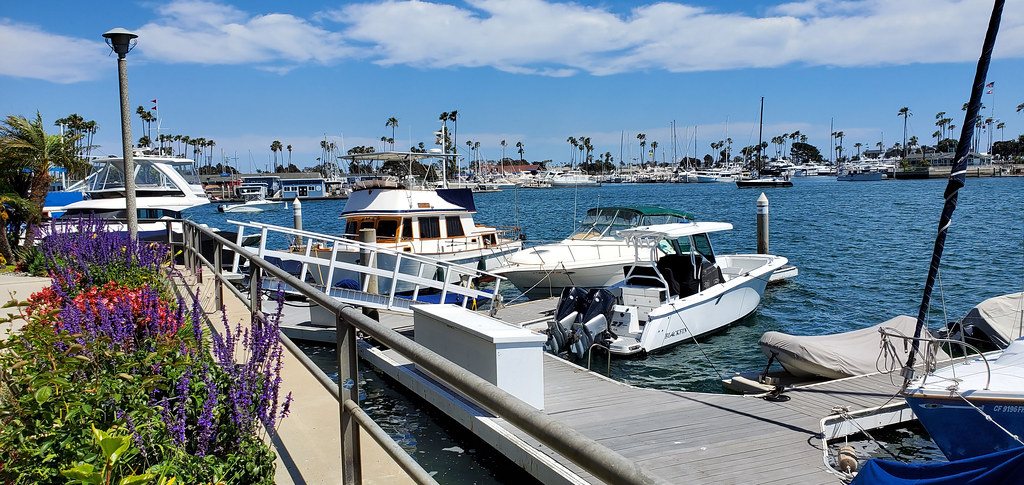
Naples Island in Long Beach, CA

While on our walk, I noticed a black crab on the ground. I pointed at it and asked for confirmation that it was indeed a crab.

My employee confirmed, then swooped down to try and pick it up. After trying for literally a minute and a half, he finally managed to grasp it, then told me he was going to transfer it to my palm. I immediately declared that this was an absolutely terrible idea, and that I was probably going to drop the crab. He handed it off to me anyway, so, in concern for the crab’s life, I moved my hand over the grass so that, if the crab were to fall, it would at least land on the grass.

Unsurprisingly, the crab sprinted off my palm and flew straight off my hand. … It missed the grass and landed on the concrete sidewalk.

It died.

…

Okay, it didn’t actually die. It walked away just fine. But for a fraction of a second, as the crab was plummeting towards the earth, I thought that I had ac­tu­ally committed reckless crabslaughter.

Naples Island in Long Beach, CA

Naples Island in Long Beach, CA

Holding up an anime shirt at tsun scoopsAnother one of our adventures was going to an ice cream shop called tsun scoops. The thing is, this wasn’t just any ice cream shop… it was an anime-themed ice cream shop.

Being a fan of anime and Japanese culture is quite commonplace within the esports industry, so I’m used to being exposed to this subculture often, but I never realized that it would actually manifest into an entire ice cream shop.

The exterior of the restaurant seemed fairly unsuspecting, but once you step inside, you are immersed in an anime world. The flavors are named after references to popular anime series (such as “I-it’s not like I like you or anything, Baklava”; “Notice Me Apple Sen-Pie”; and “The Meloncholy of Honeyhi Dewzumiya”), there is anime art throughout the whole shop, and there is even a little section with anime merch.

They split up the ice cream flavors into “tsun,” which was more sorbet and fruity, and “dere,” which was more dairy and traditional ice cream. I tried a sample spoon of Ramune and yuzu; neither of them were bad, but I didn’t think I could down an actual portion of each one of them. So, in the end, I went with a trusty scoop of honeydew and a scoop of lemon with poppy seeds, topped with mochi.

And no, I did not purchase the shirt.

tsun scoops

For one of my final adventures, I accompanied our CEO reynad to Scott Robinson Chrysler Dodge Jeep Ram, a car dealership, to help him purchase a new Jeep.

Even though they were branded as a generic Fiat Chrysler Automobile dealership, they didn’t really have too many Ram pickup trucks. They had a spe­cial 75th Anniversary edition of the Ram 2500 Power Wagon inside the showroom, which I immediately went up to and hugged (if you’re not yet aware, the Ram off-road trucks are my favorite vehicles, and if I didn’t live in a city, I would have either a Ram Rebel or Ram Power Wagon instead of my GMC Canyon).

I also found a Ram 1500 EcoDiesel out in the lot, which I also hugged.

Hugging pickup trucks

reynad ended up following through with the vehicle purchase, so he is now the proud new owner of a Jeep Wrangler Sahara.

reynad's new Jeep Wrangler Sahara

I’m generally never this active and social, and this trip was far more draining to me than usual because I’m on the extreme end of introversion, but it was definitely also more fun than usual. I’ll have plenty of time to recharge over the next month while I’m traveling alone, and once I make it to my parents’ in the Chicagoland suburbs, I’ll find a week in August to make a routine trip back to Tempo headquarters.


—§—