Hello, Chef’s Table on Royal Caribbean’s Quantum of the Seas

I am now back on land after finishing my first cruise on Royal Caribbean’s Quantum of the Seas, and I’m working on catching up on blog posts. (While still on the ship, I wrote about my experience leading up to, during, and shortly after embarkation day, and a few days ago, I published a review of Wonderland, a specialty dining venue on the ship.)

While purchasing my ticket, I added in an unlimited premium dining package that allowed me to go to any specialty restaurant on board without needing to pay the extra cover charge. However, even with that package, there was one dining experience that still had an upcharge—the Chef’s Table.

Upon doing some more research, I found out that the Chef’s Table is the highest-tier dining experience on Royal Caribbean cruises and is basically an interactive prix fixe chef’s tasting menu experience served to a limited number of guests per night. Considering that I have become somewhat of a food enthusiast over the past several years and especially like unique and personalized experiences, the Chef’s Table aligned perfectly with what I was looking for in a nice dinner.

If you read my embarkation blog post, you already know this, but as a quick summary, I had a disappointing experience with the food quality at Izumi Sushi, so I canceled all my future reservations there and looked for other options instead. I replaced one of the Izumi nights with the Chef’s Table. Chef’s Table normally requires an additional US$118.00 payment per person, but because of my unlimited dining package, the cover charge got reduced to US$59.00—a base price of US$50.00 for the experience, plus a mandatory 18% gratuity of US$9.00.

I didn’t see a way to book the reservation on the Royal Caribbean app in a way that would link it to my unlimited dining package, so I went to Guest Services for assistance. I heard that the Chef’s Table is in pretty high demand and often sells out before departure; I was wondering whether that was part of the reason I was having issues with the app, but fortunately, the representative at Guest Services was able to get me a spot for that same evening as the 13th of a maximum of 16 diners.

At 6:25 PM, I went down to the designated check-in spot at the Schooner Bar to wait for everyone to arrive and be walked over to the Chef’s Table. After a brief wait, all the diners showed up and our waiter (who was also the sommelier) led us to the table.

The format of this was quite different than what I’m used to. This felt more like a family Thanksgiving dinner than it did a restaurant. Everyone was seated together around a single large dining table, which made the experience very communal and conducive to conversation among everyone.

The dinner was a multi-course meal that also came with a wine pairing, so everyone’s placemat had wine glasses lining the edge. I don’t drink alcohol, so the waiter took away my wine glasses and said he would provide a special non-alcoholic beverage pairing to go along with my dinner instead.

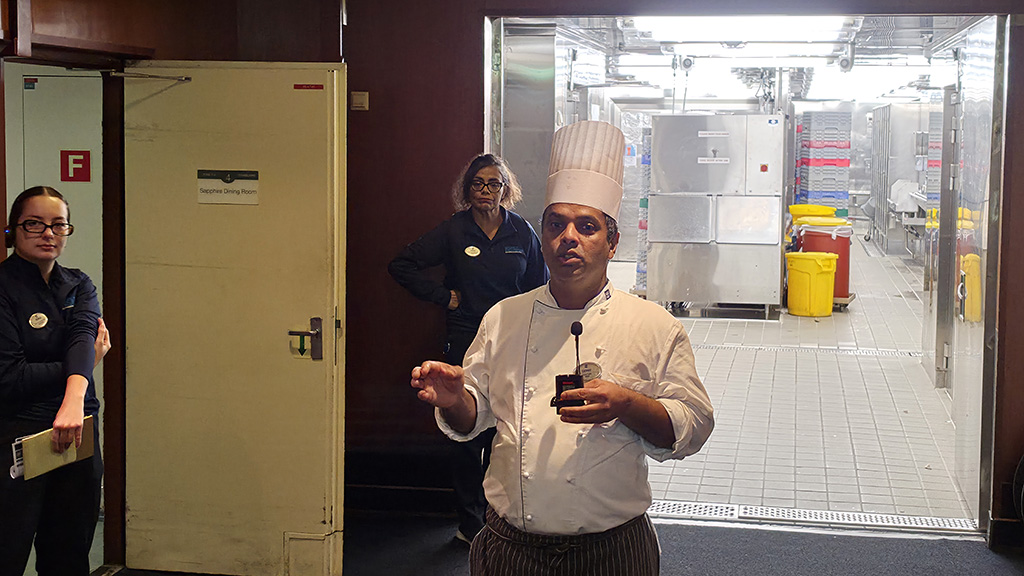
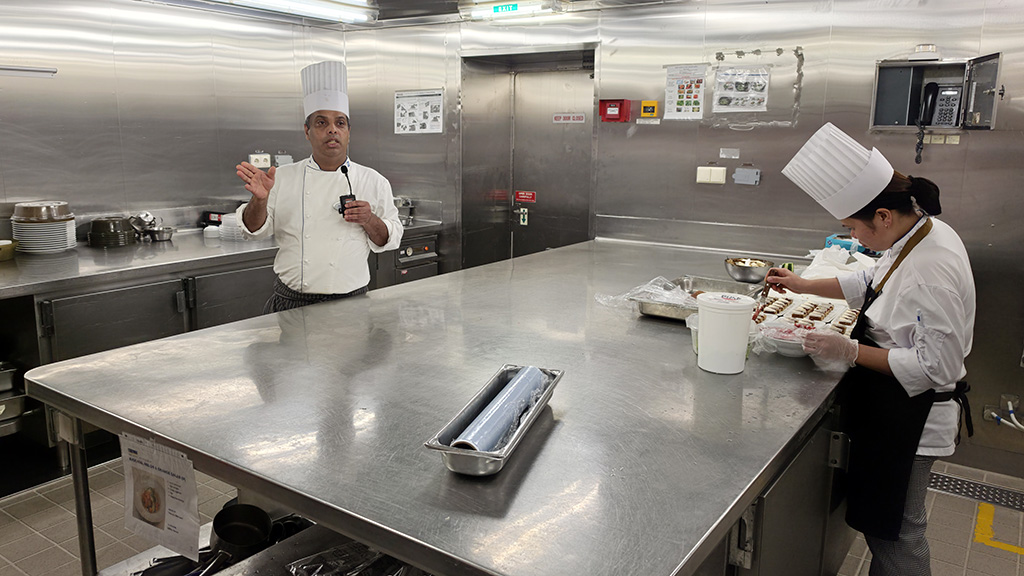
After our waiter and sommelier explained the basic idea behind the Chef’s Table, the chef also came out from the kitchen to introduce himself. This was apparently his first cruise for which he was the chef for the Chef’s Table.

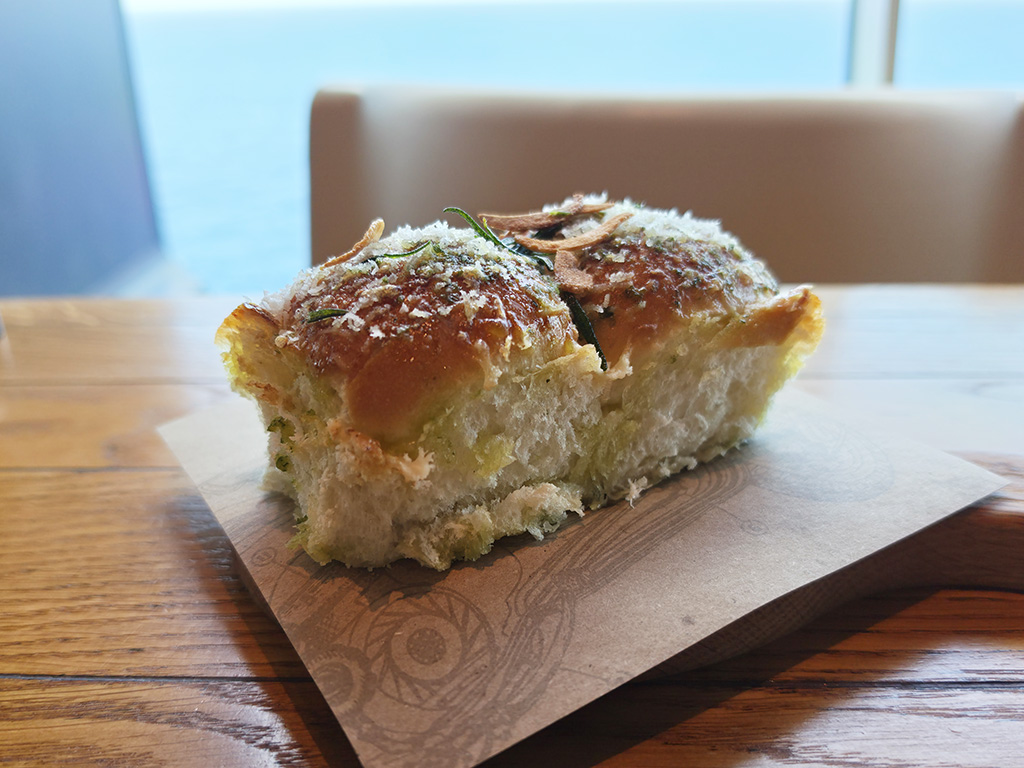
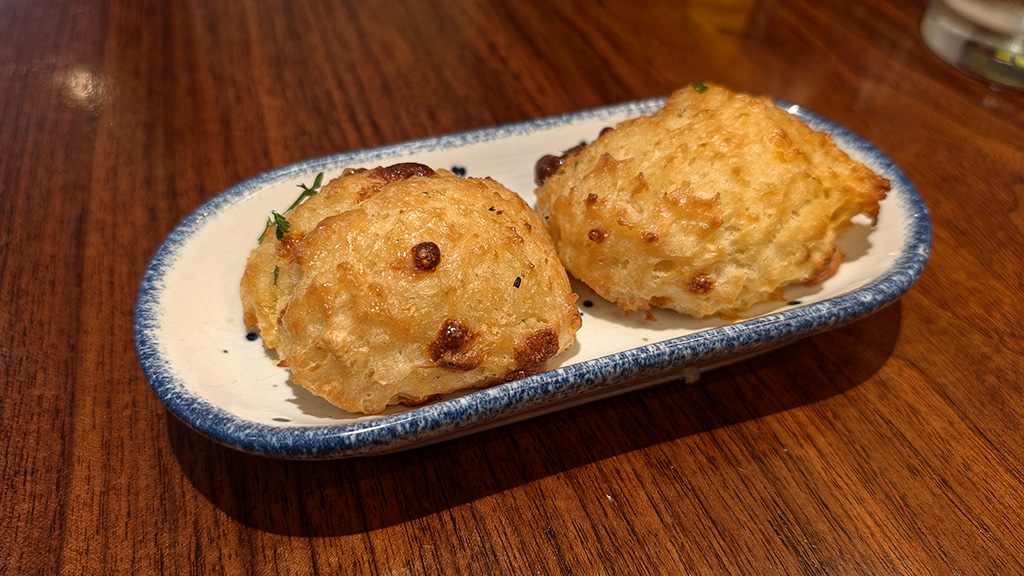
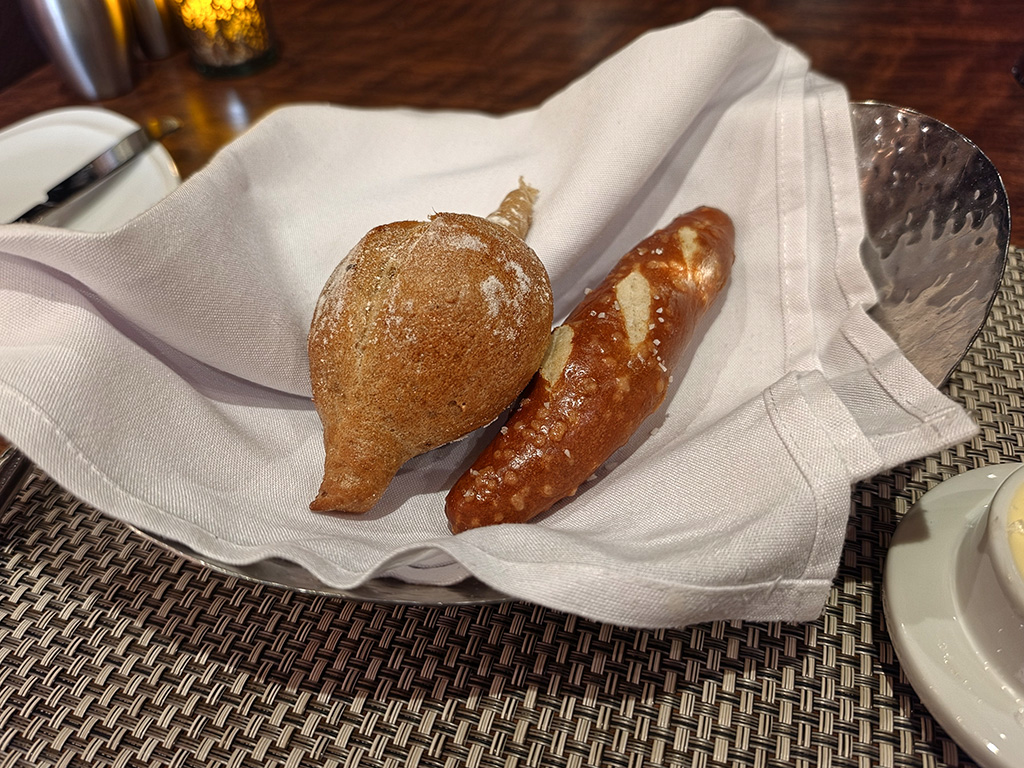
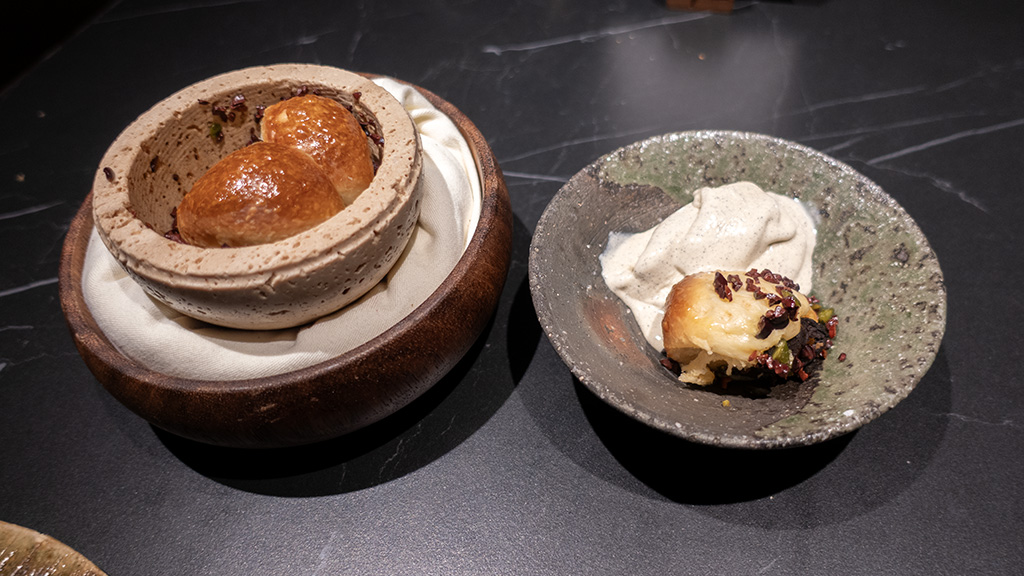
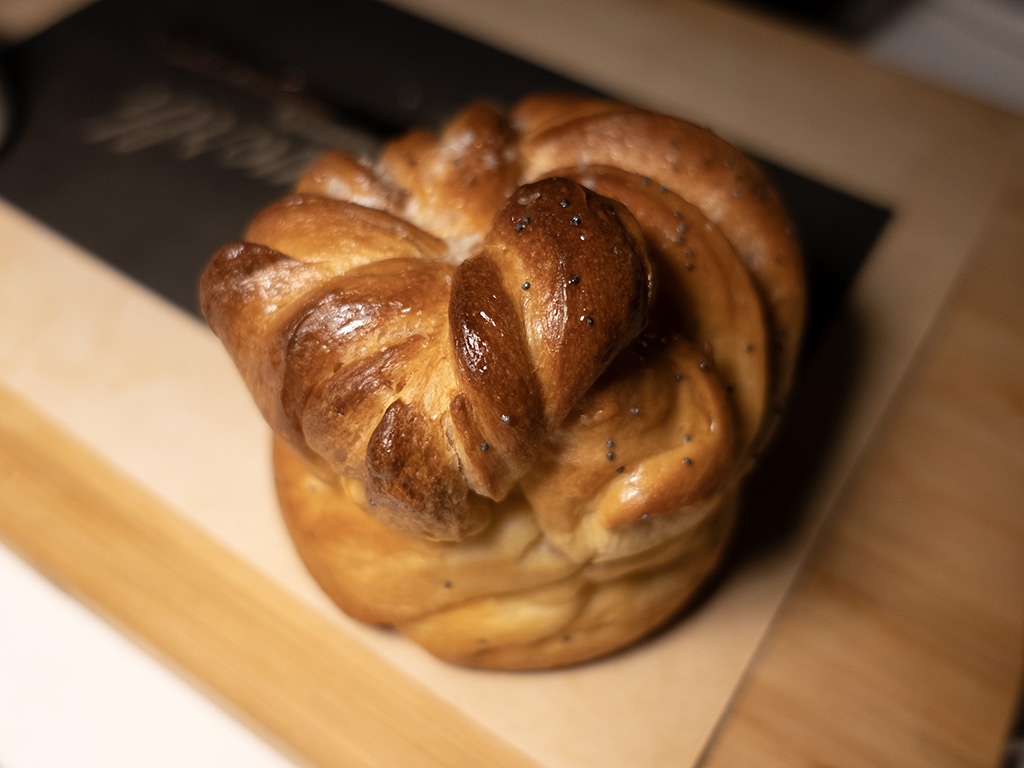
While we were talking amongst ourselves and waiting for the first dish, the waiter came out with some bread. Each pair got one large portion of blooming bread, but because I was alone, I got to have an entire one by myself. I ate half of it as an appetizer, then saved half of it to use as dipping bread for any leftover sauces that I assumed I would have with some of the dishes.

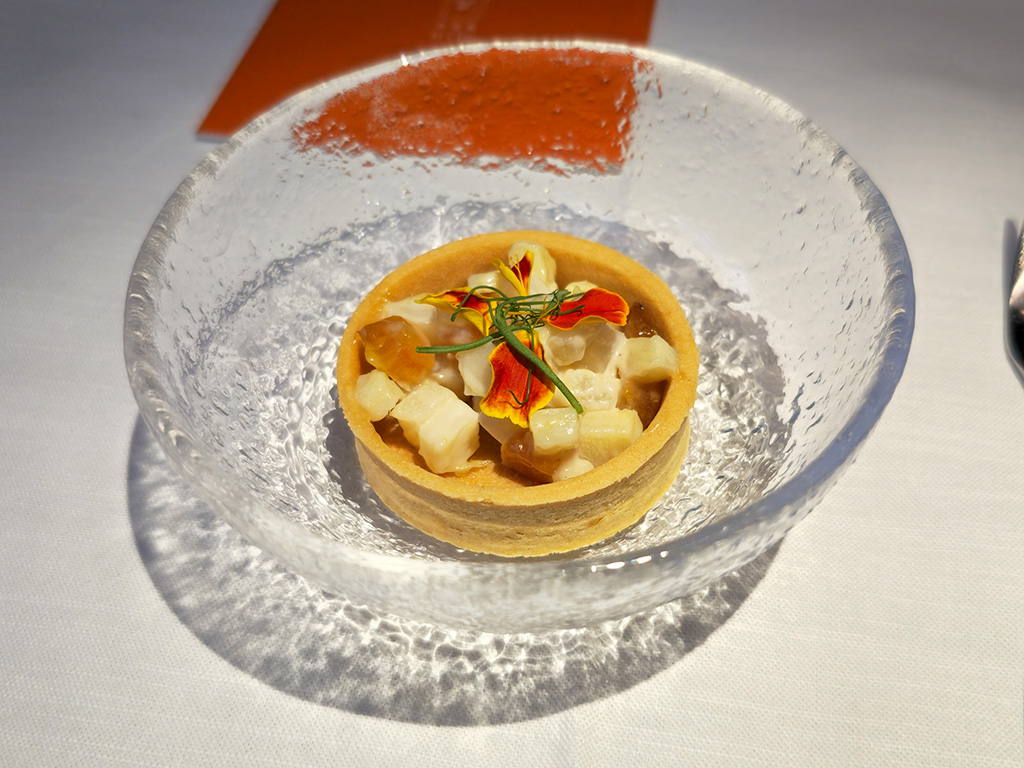
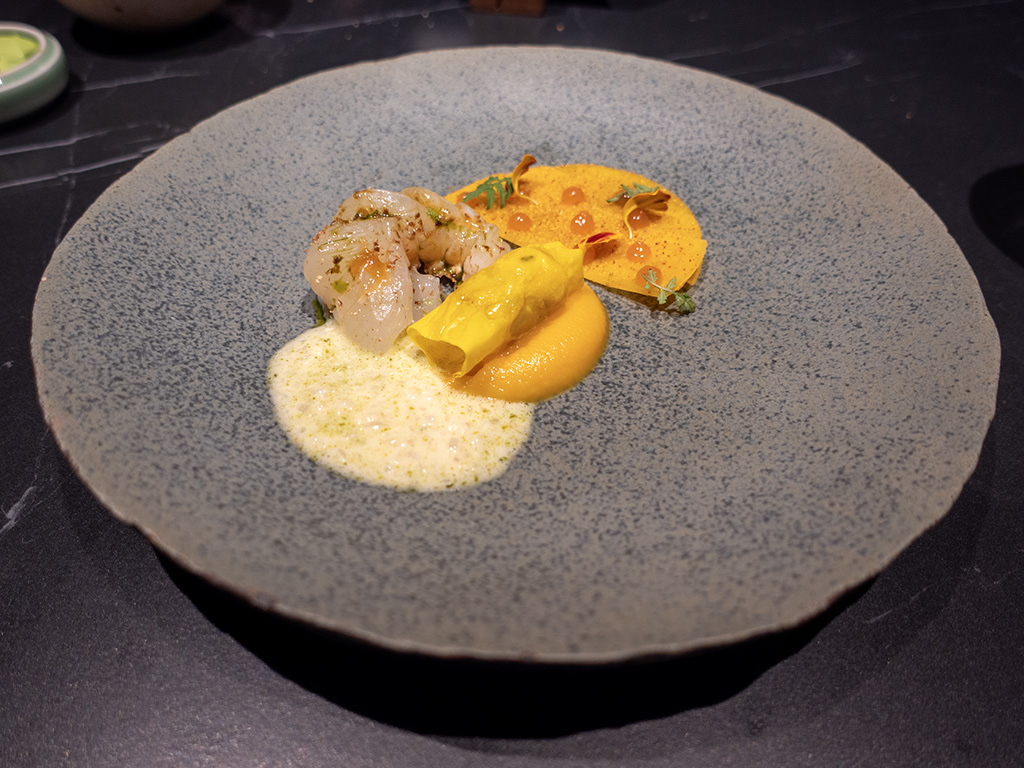
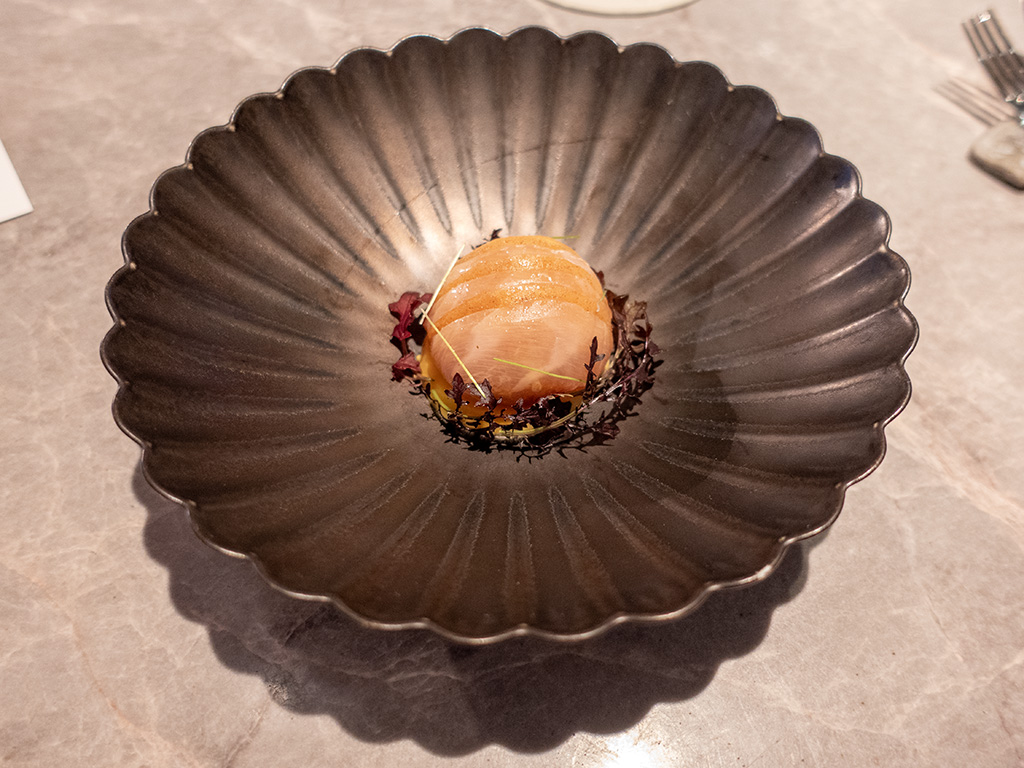
The first course was scallop carpaccio with crispy quinoa and yuzu vinaigrette.

I understand that the premise of carpaccio is to thinly cut the meat or fish, but I still would’ve preferred for the scallop to be cut a bit thicker so that it had more of a bite. The way that I adjusted for this was that I rolled up each slice of carpaccio into a little tube so that it felt like I had more material to chew down into. I liked the textural contrast between the soft scallop and the crispy quinoa, and dipping each tube into the yuzu vinaigrette added a nice splash of citrus that enhanced the overall flavor profile.

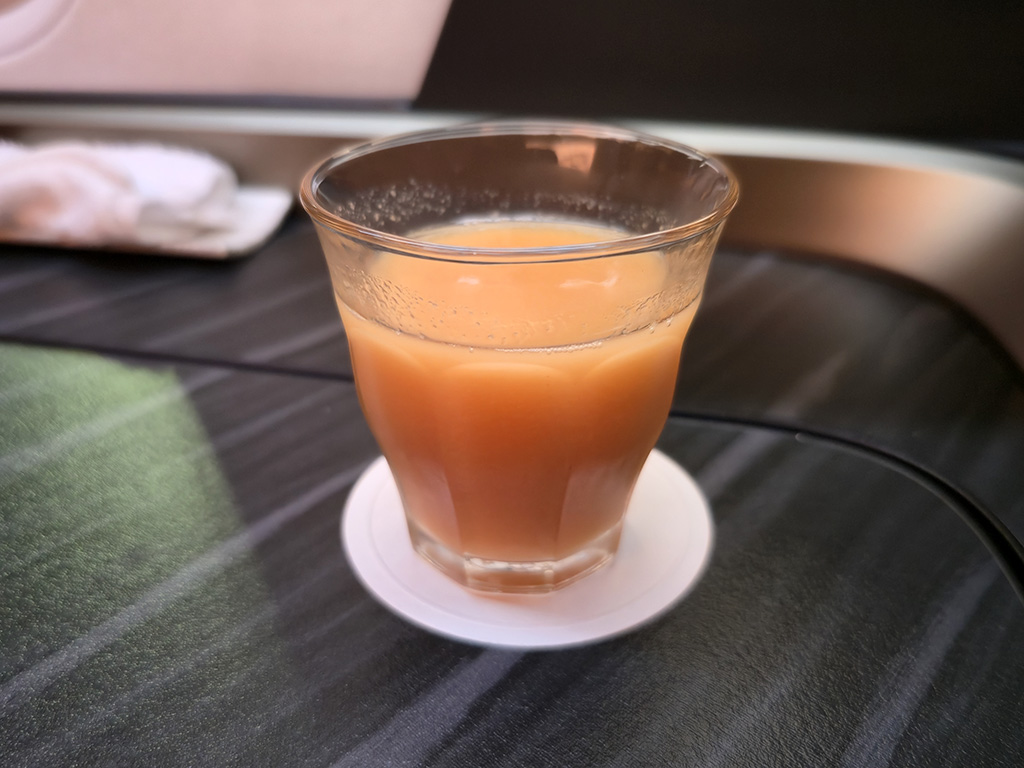
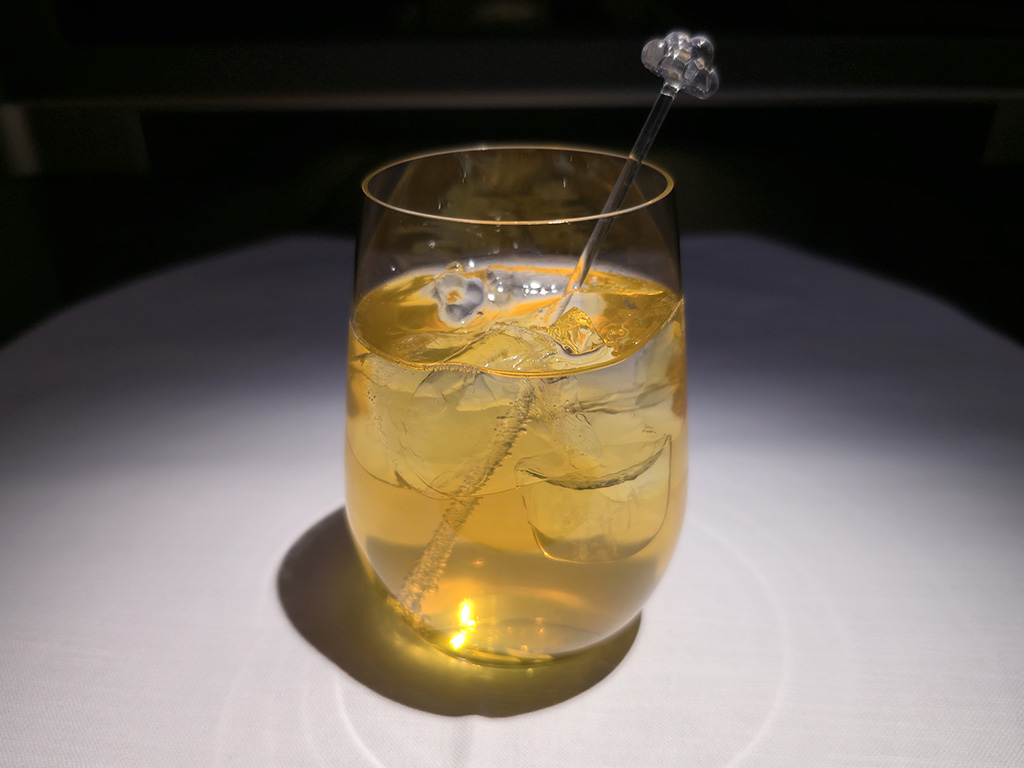
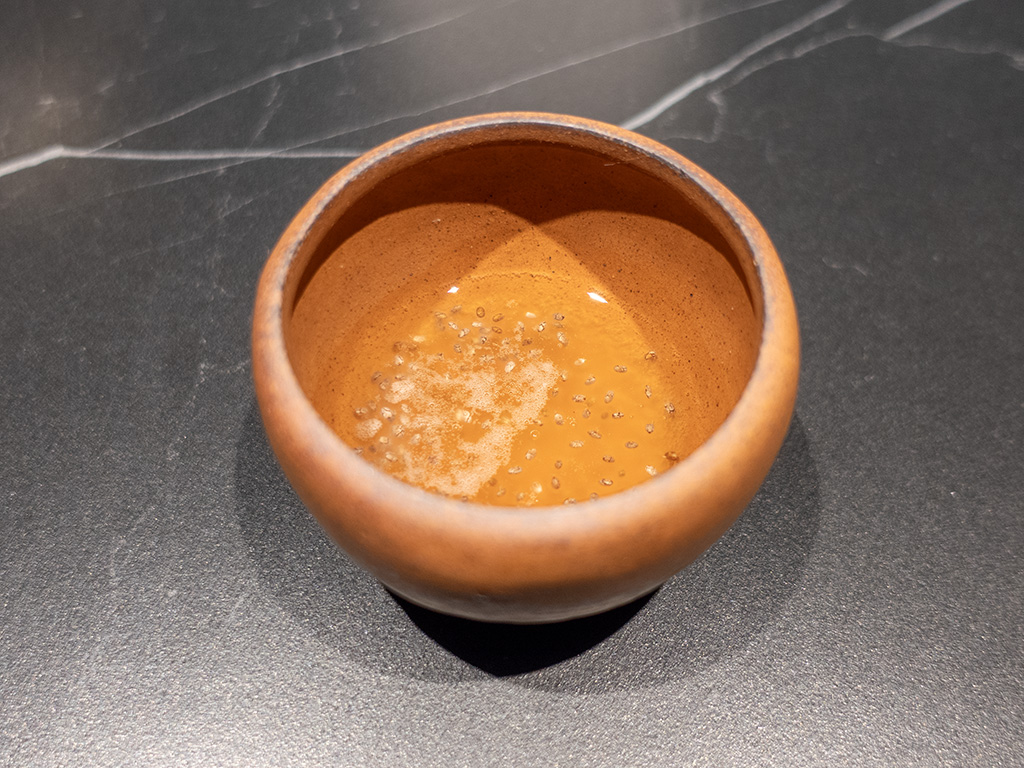
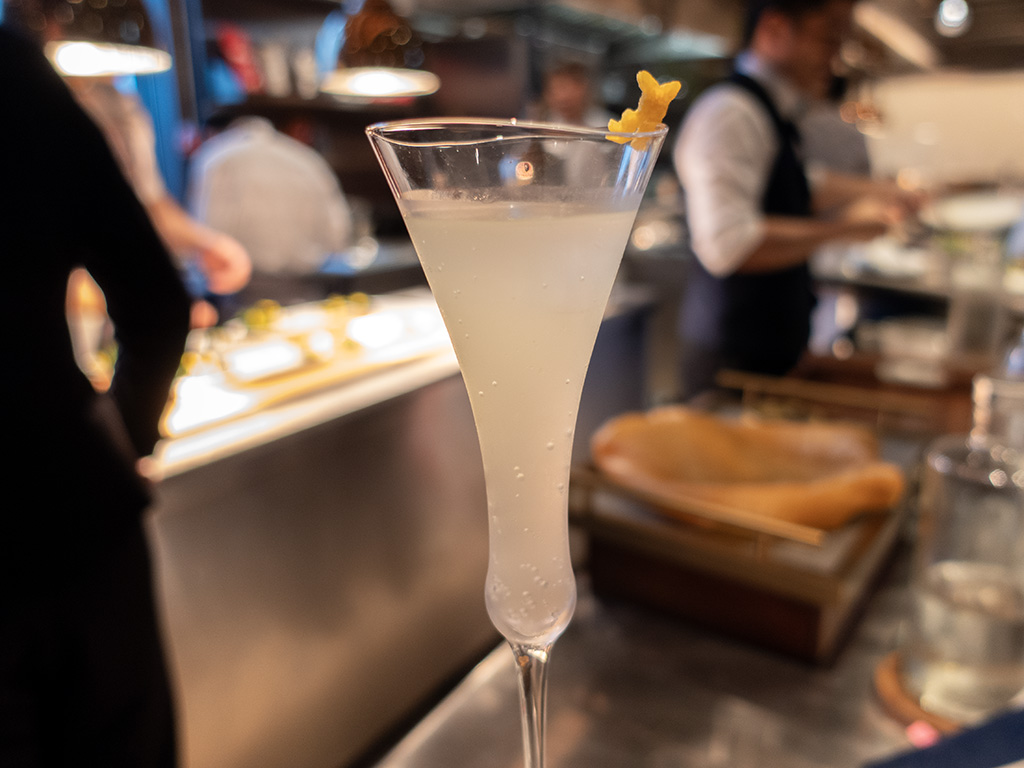
There wasn’t a separate non-alcoholic beverage menu that had all the ingredients of all the drinks listed, so I don’t quite remember what exactly was in every drink, but this first one was (as you can probably tell from the photograph) an orange citrus drink.

To go along with our second course, we received what the menu called garlic focaccia croutons. As you can tell from the photograph, it was definitely just a focaccia and not so much a crouton. The toppings were refreshing, and this served as a great side for the upcoming soup.

The actual second course was smoked tomato soup. I couldn’t really distinctly identify the smoke, but it did taste noticeably more earthy than what you’d expect from normal tomato soup.

The chef came out with a pitcher of cream and individually added a swirl to each of our bowls. Interestingly, the cream maintained its coagulated shape, and even when agitated with my spoon, it didn’t really separate much. I ended up “cutting” the cream with my spoon and including some in each spoonful, which was quite interesting.

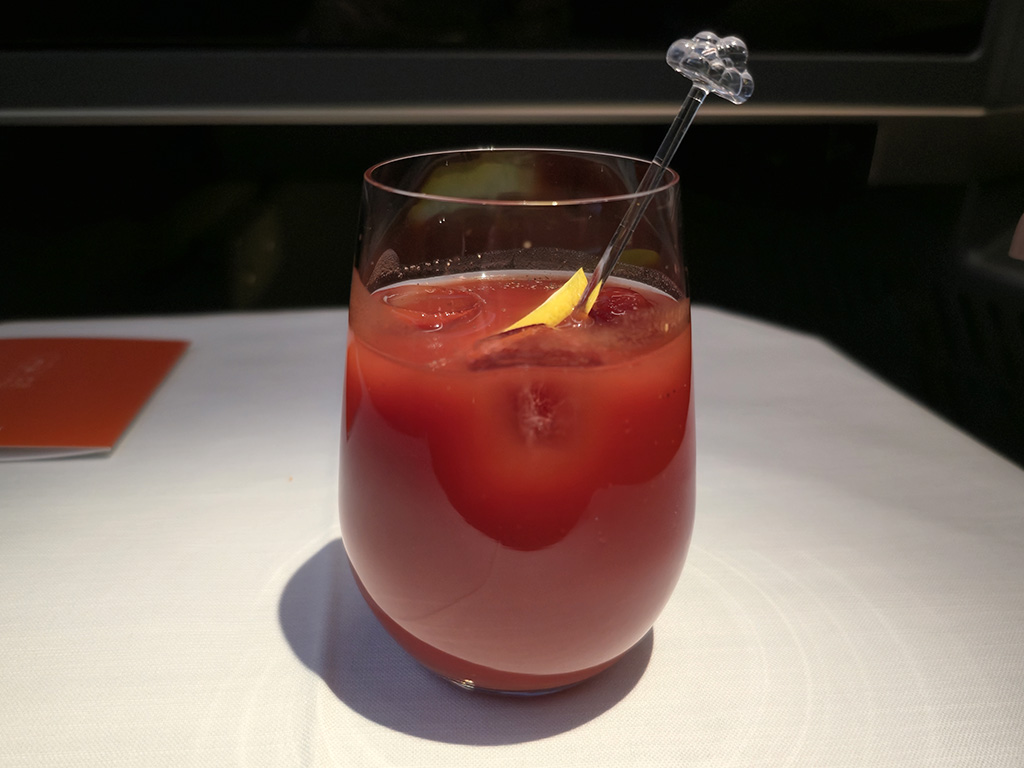
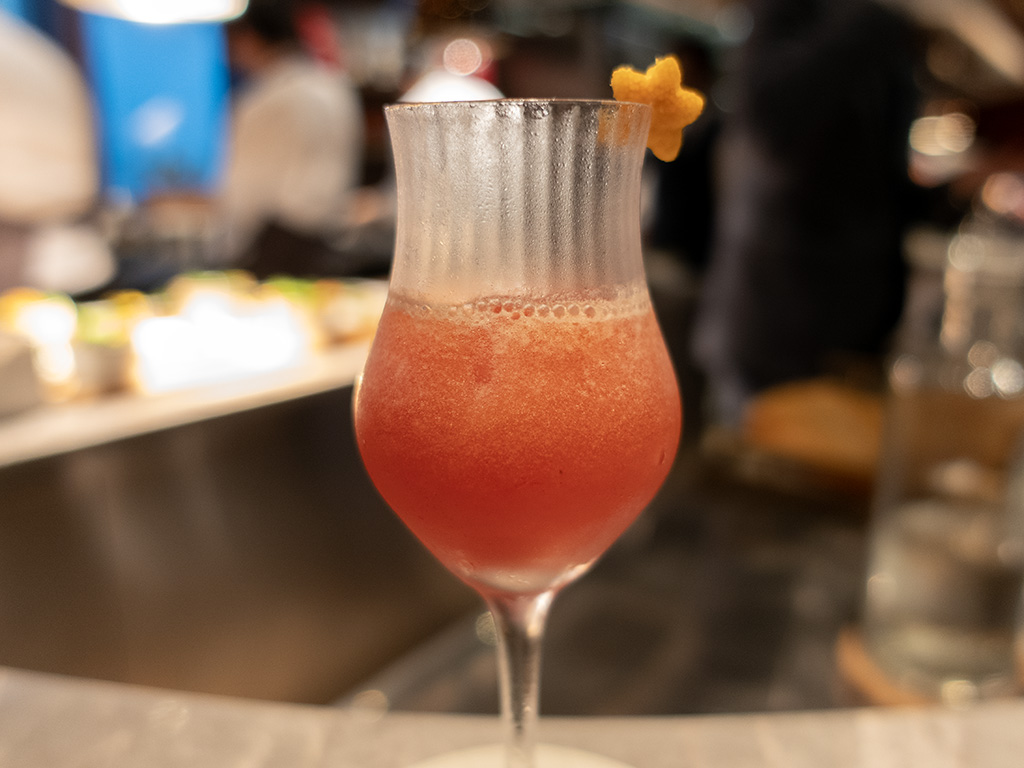
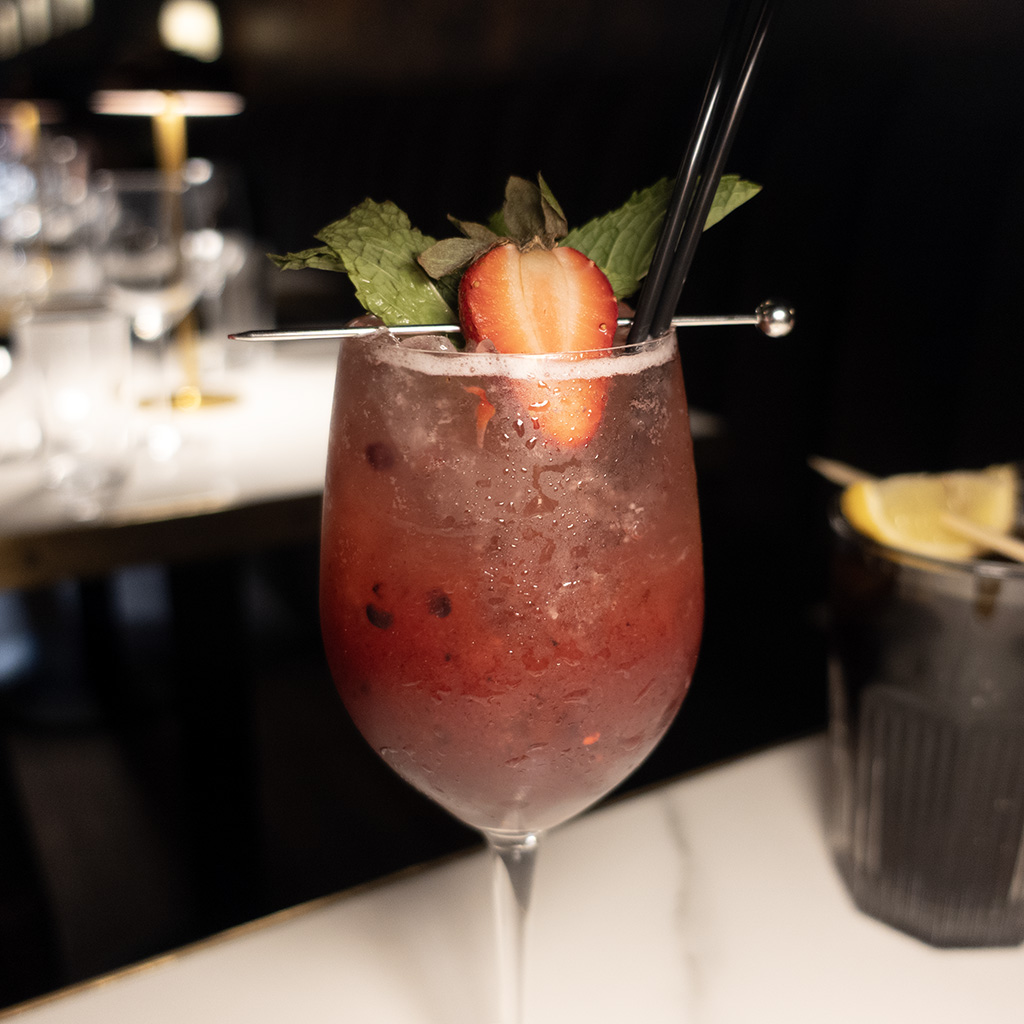
The next drink of the beverage pairing was a blueberry nojito, the non-alcoholic version of a mojito.

The third course was Maine lobster salad with hearts of palm, pineapple, cilantro, and vanilla dressing.

This dish was an example of pristine simplicity. The lobster was incredibly tender and very strong in clean, pure lobster flavor. The vegetables added a nice crunch to the texture but did not materially affect the flavor of the lobster. The dressing was incredibly light and also did not affect the core taste of the lobster. If someone wanted to eat lobster because they love the lobster itself, then I think the way that this was prepared is the best cooking method possible to achieve that goal.

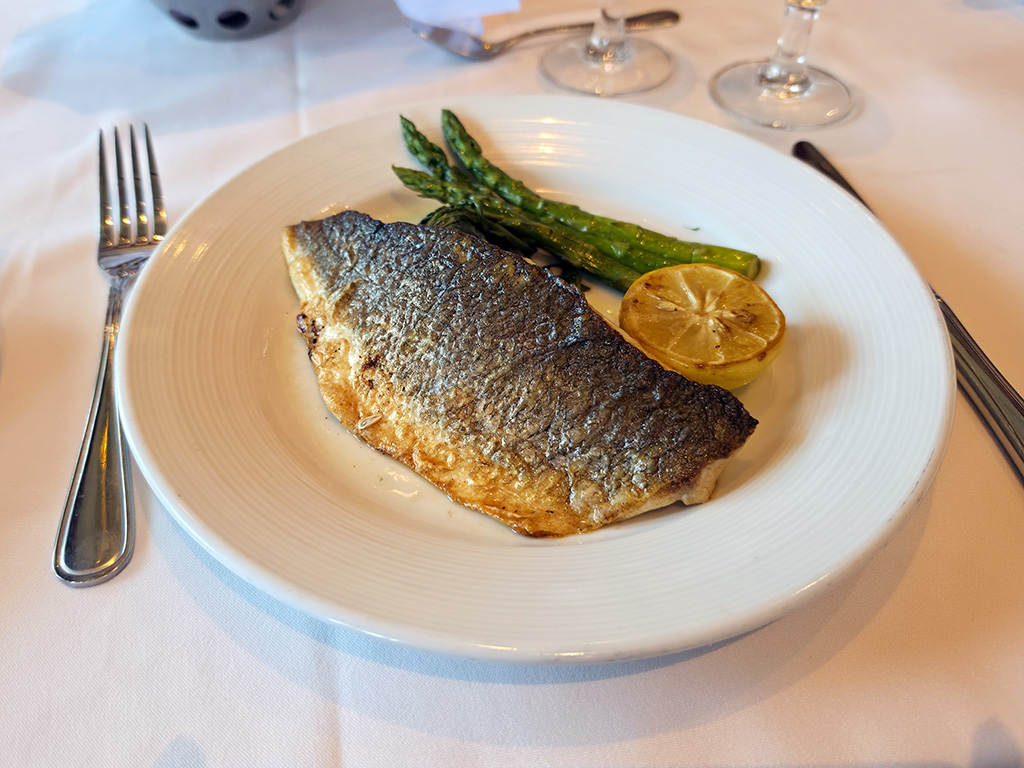
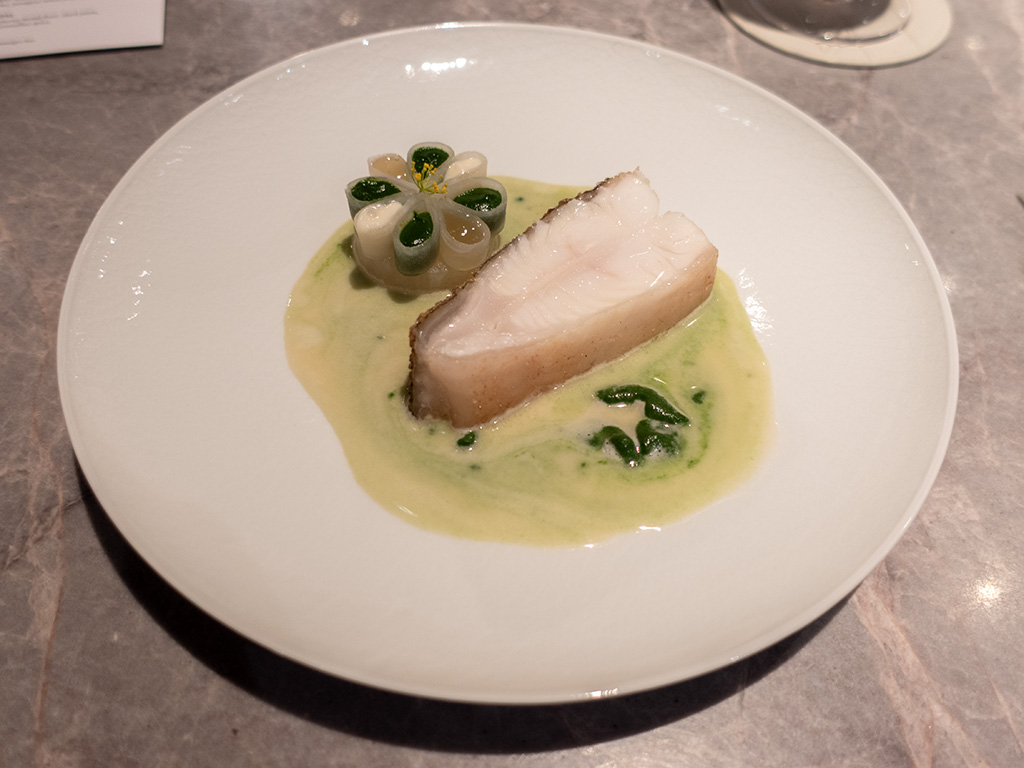
The fourth course was roasted branzino with grilled zucchini, peppers, carrot, lemon confit, and pesto.

Similar to the lobster, this was prepared in a very simple and straightforward way that emphasized the natural flavor of the whitefish without having anything else alter or overwhelm it. The skin was cooked very well in the sense that it was a great balance of both chewy and crispy at the same time. Although not listed on the ingredient list, it also came with a slice of citrus that basically acted as a superior substitute for squeezing a bit of fresh lemon on the fish.

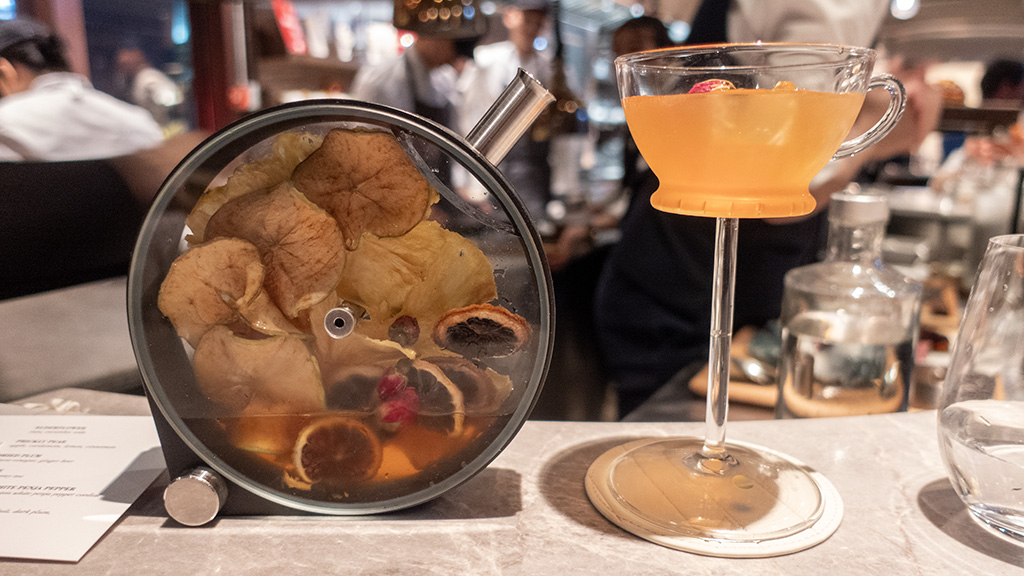
Because I don’t consume alcohol, I haven’t really had any high-end wine experiences, and the only things I know about wine come from observing others ordering and drinking wine. That was applicable during my Chef’s Table meal where I saw the usage of a centrifugal wine aerator for the first time, by our sommelier while he was serving the other guests.

He later explained that it was a decanter, though I’m wondering if that was just a language barrier, because I am fairly certain that is just an aerator (and yes, I do recognize the irony here of attempting to correct a sommelier, especially considering that I just disclosed my general lack of wine knowledge). He was using that tool to serve Sequoia Grove Winery’s Cabernet Sauvignon from Napa Valley, California.

For the third installment of my non-alcoholic beverage pairing, I received a fruity pineapple smoothie.

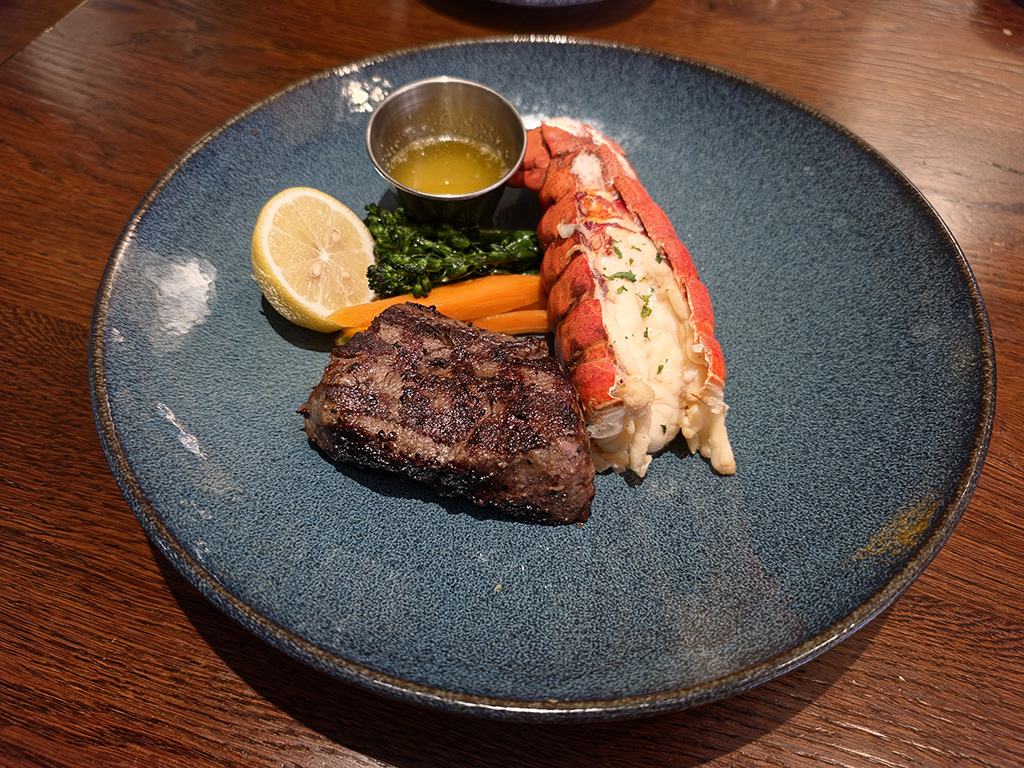
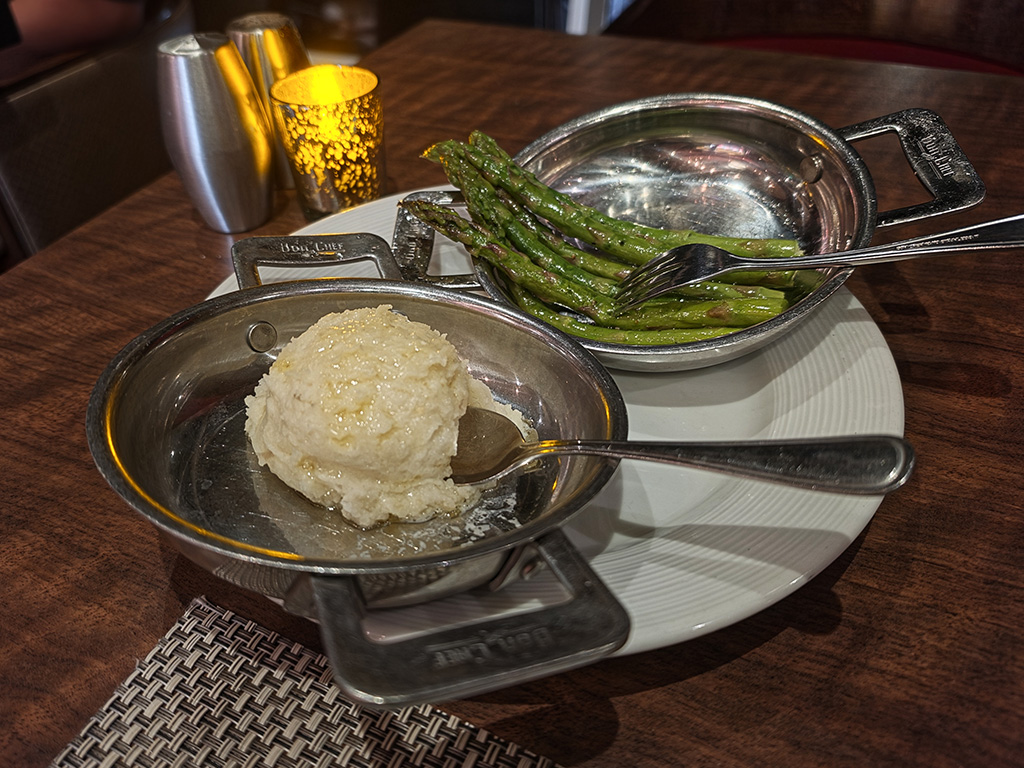
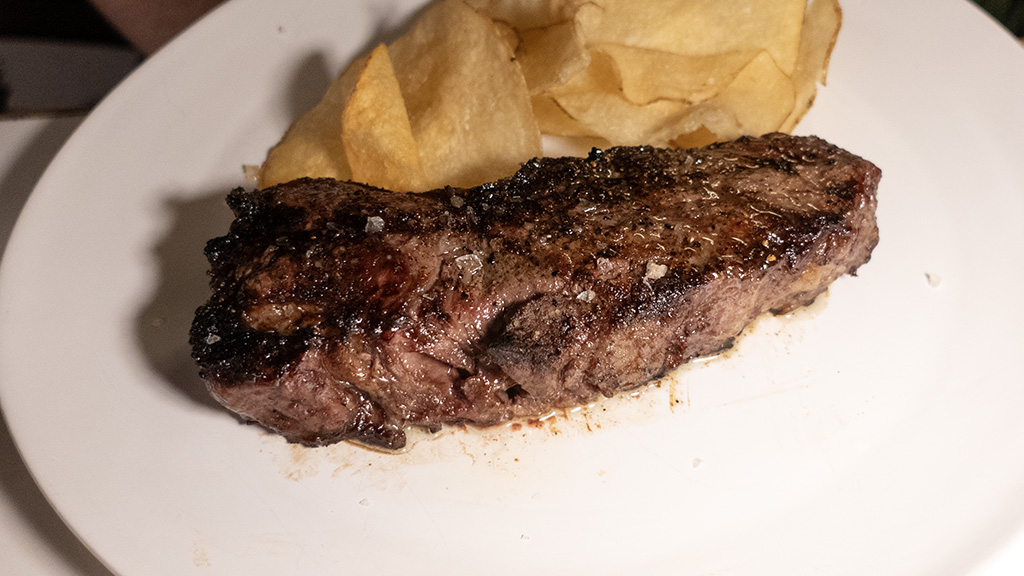
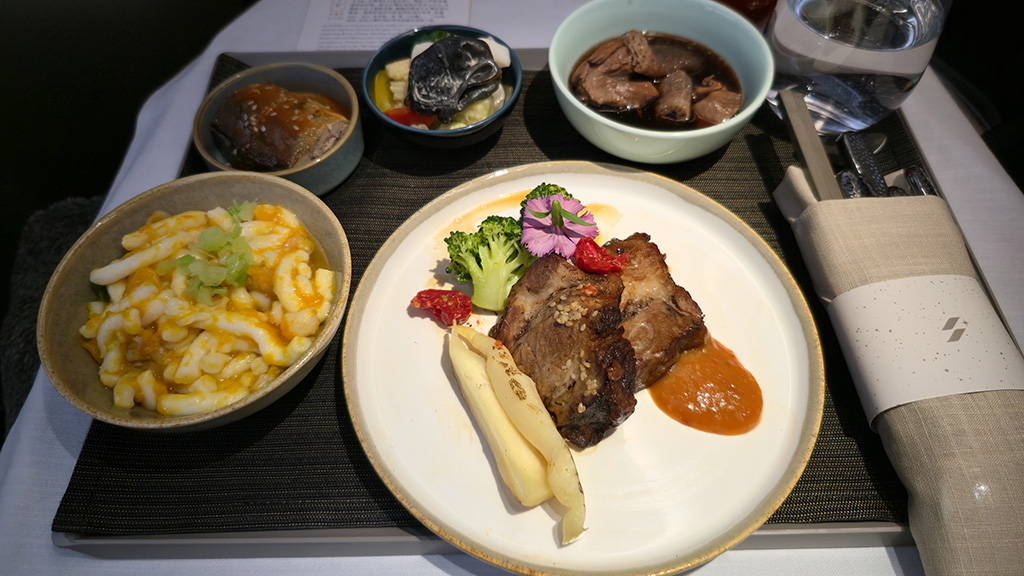
The pineapple went along great with the fifth course, a grilled filet mignon with truffle potato purée, asparagus, and bordelaise sauce.

The waiter went around the table asking people their doneness preference for their steak. I ordered mine rare, and I am relieved to share that nobody at the table requested well-done. I was mindful to cut against the grain for each bite, and the steak was incredibly tender and flavorful.

I liked that there were two variants of the potato purée—one regular, and one with truffle. I especially liked the truffle potato purée because it had a more subtle and earthy truffle flavor (as opposed to a more greasy truffle taste that you find when people just use truffle oil for flavoring). I also noticed that the potato purée here was quite a bit firmer than what I usually get at high-end restaurants, which I actually found to be a good thing; I think that indicates that there is a higher ratio of potato to butter, which I personally prefer because I actually like potatoes.

I also appreciated that there were two additional tiers of textural enhancements. The vegetables were lightly boiled so they were softer but still maintained a good crunch, and it fulfilled the traditional “steak and veggies” archetype. However, the dish was also served with miniature potato chips, which added an unusual but fun extra crisp to some bites.
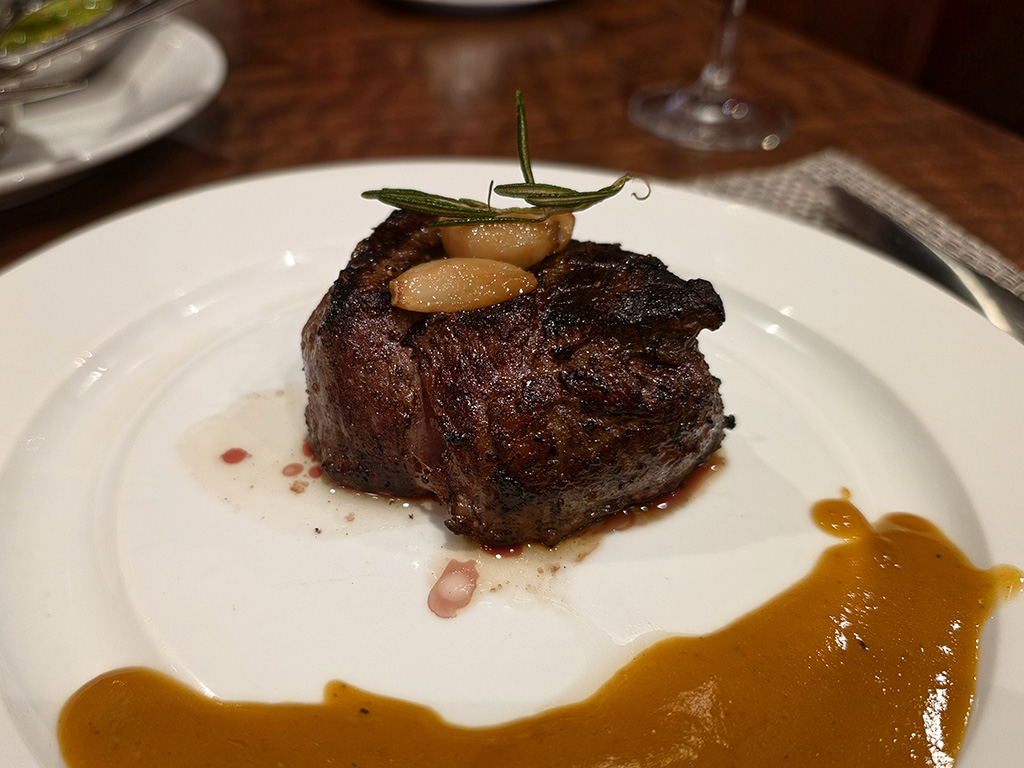
(The reason the sauce is not pictured in any of the photographs is because the chef came out after everyone received their plates and individually asked whether they wanted the sauce on the steak or in the moat, then served it to the diner’s preference.)

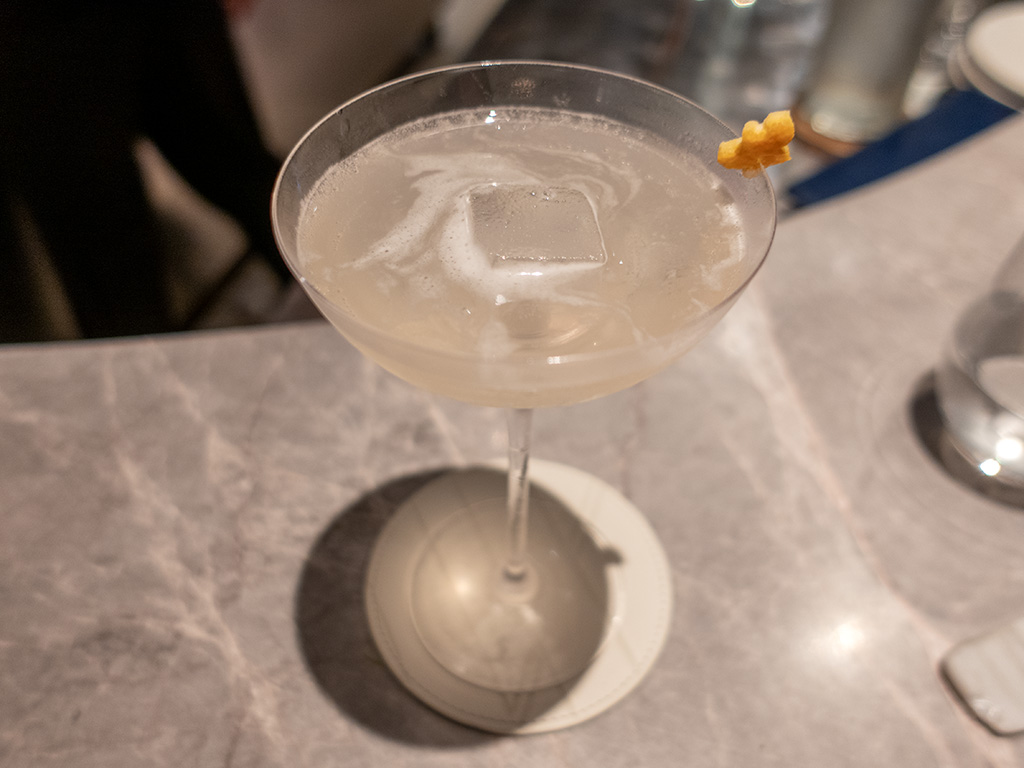
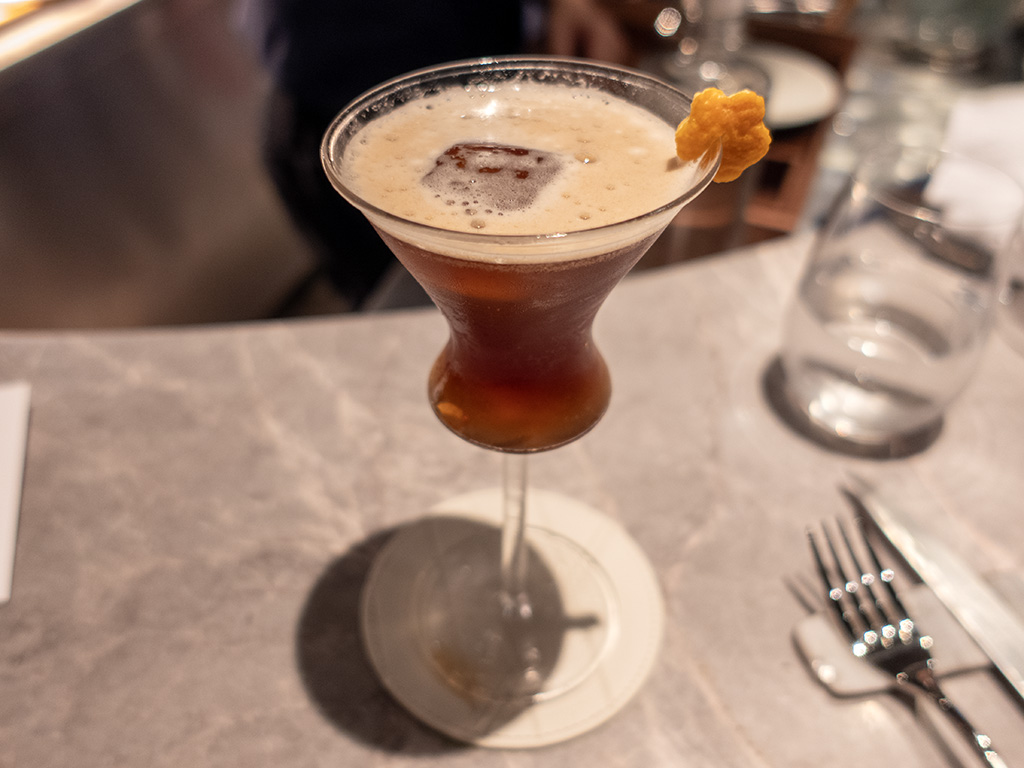
For the final drink of the night, everyone received a salted caramel espresso martini. Because mine was non-alcoholic, I guess it was just a salted caramel espresso coffee.

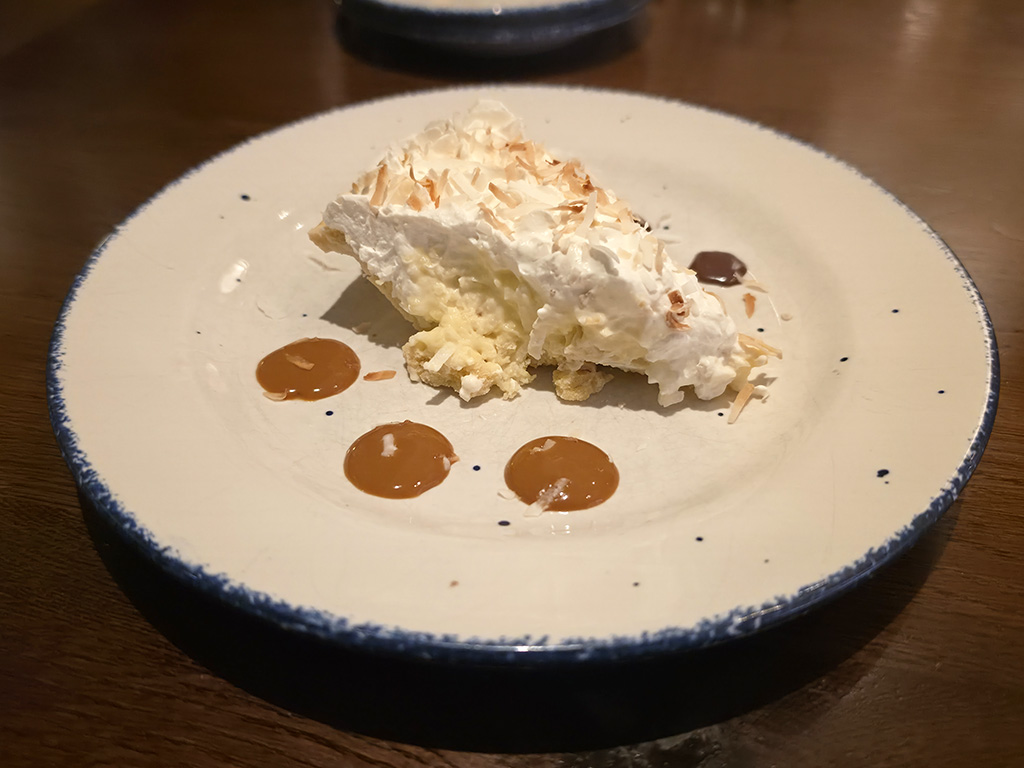
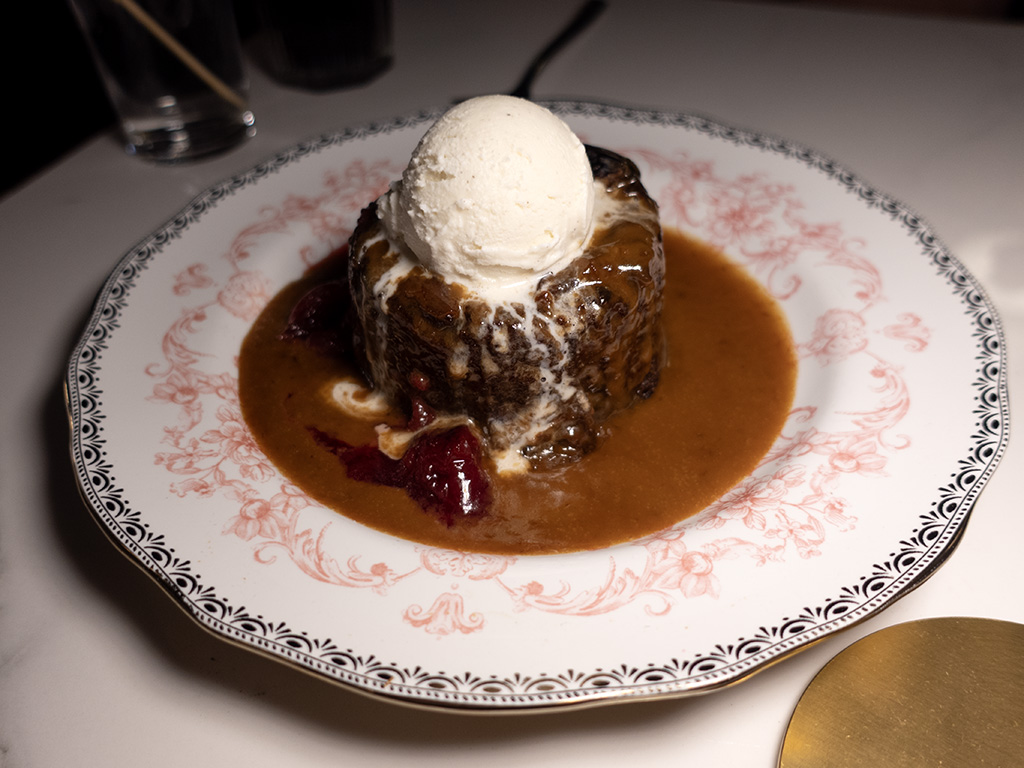
Dessert was the grand finale of the dinner. They call it the World, and it is a hollowed spherical chocolate orb with peanut butter ganache, Valrhona chocolate mousse, and salted caramel gelato, topped with warm caramel sauce. Surrounding the World were small pieces of caramel popcorn, strawberry, and mint.

For the presentation, the waiter goes to each plate and pours the warm caramel sauce on top so that it melts away the top shell of the chocolate sphere and reveals its inner contents.

This was the only dish of the dinner that I wasn’t able to finish. The inside of the World was delicious, but unfortunately, the chocolate outside was far too sweet. When I supplemented each bite of chocolate with the espresso, that helped balance out the intensity of the sweetness, but after I ran out of salted caramel espresso, I couldn’t down the rest of the chocolate shell.

During the dinner was also when they did special celebrations. One person across the table from me was celebrating his birthday, and a couple sitting to my right was celebrating their six-year wedding anniversary. They each got a little plate with caramel text hoping well wishes for their special occasion, along with a candle planted in an arrangement of strawberry, blackberry, mint, and whipped cream.

And with that, the Chef’s Table concluded. The overall experience took a bit over three hours. The waiter treated us to a quick magic trick to end the night, and then the chef came out from the kitchen to thank us all for our attendance.

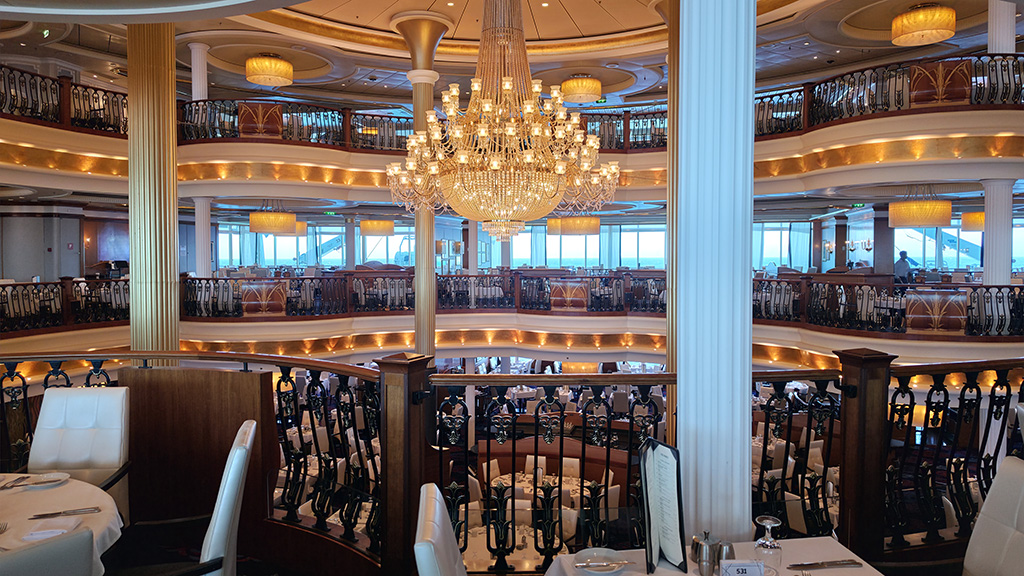
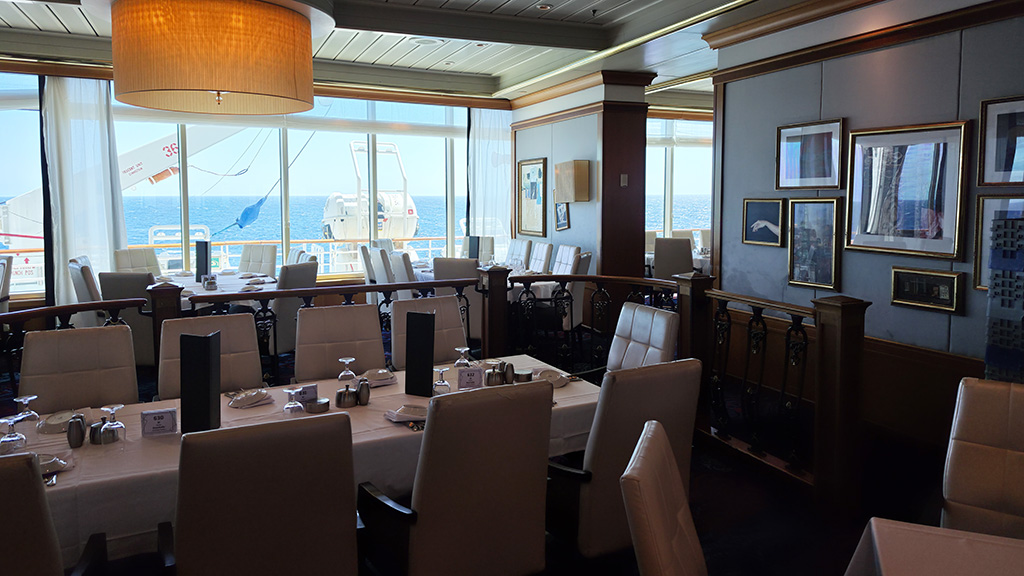
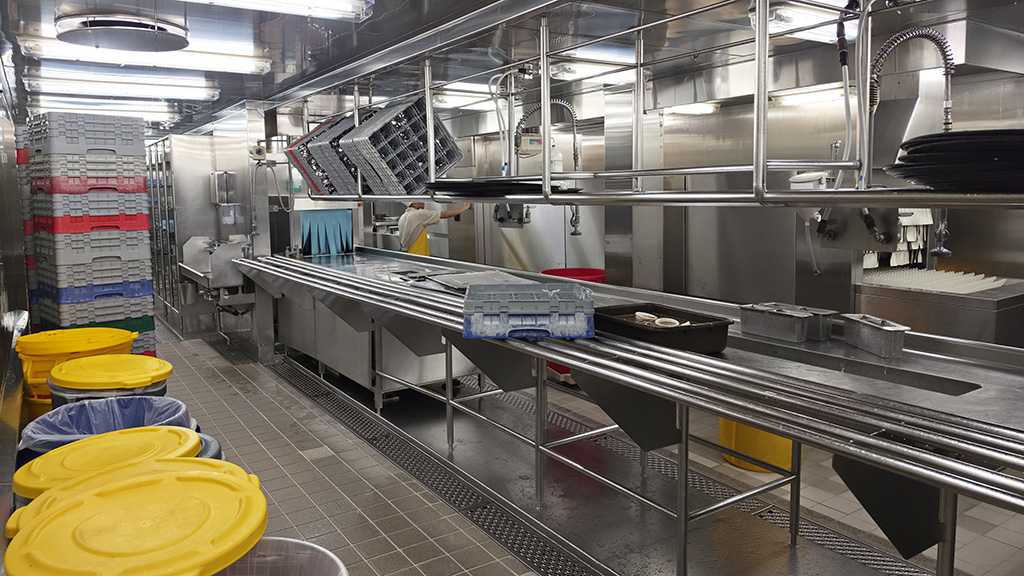
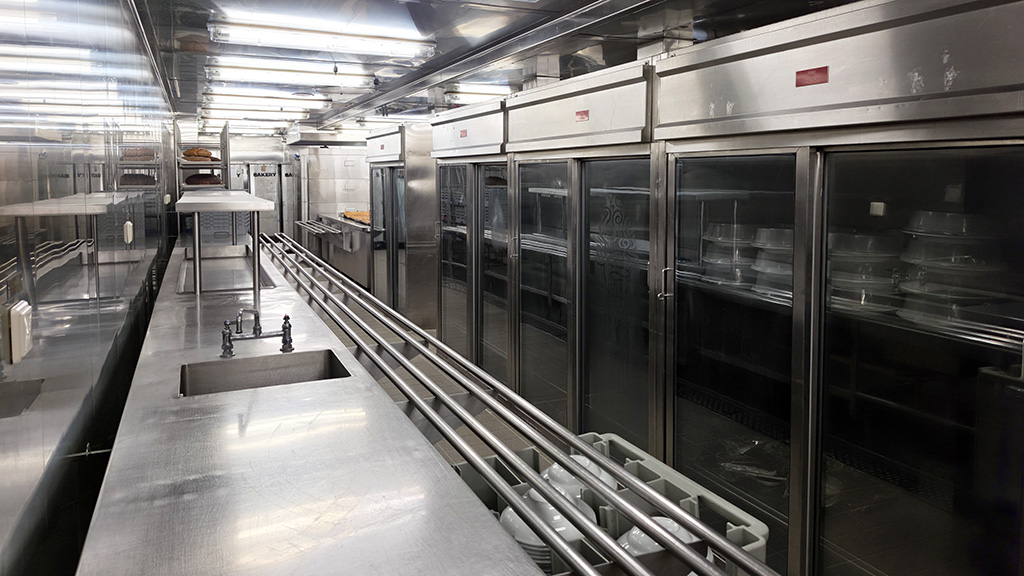
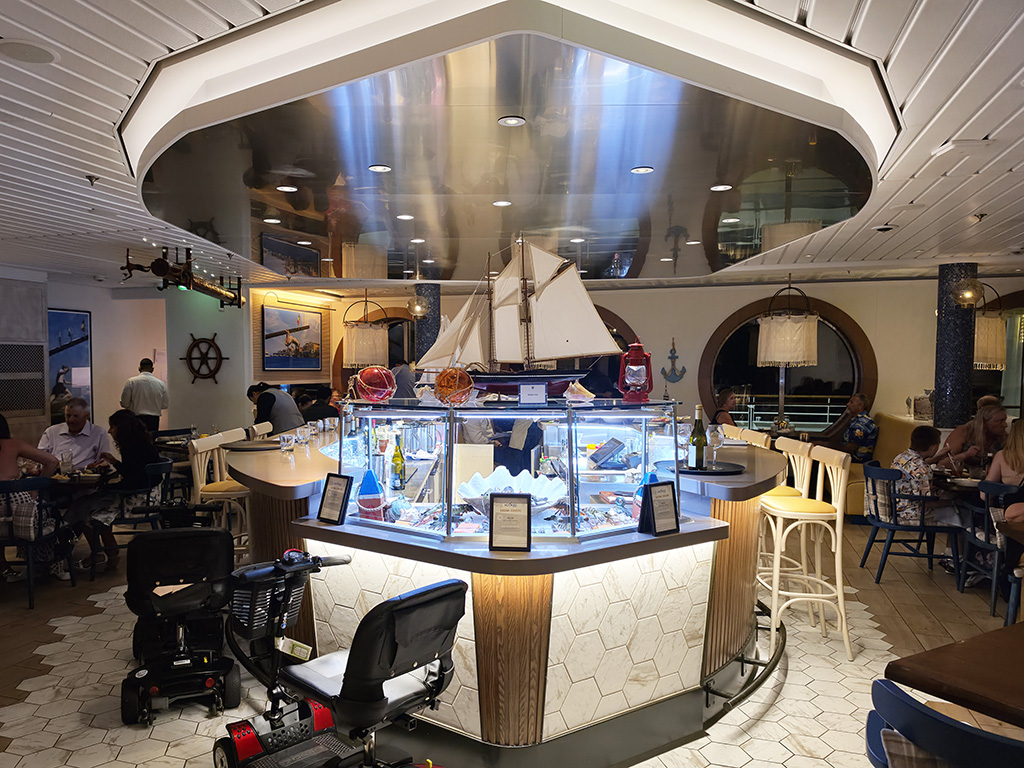
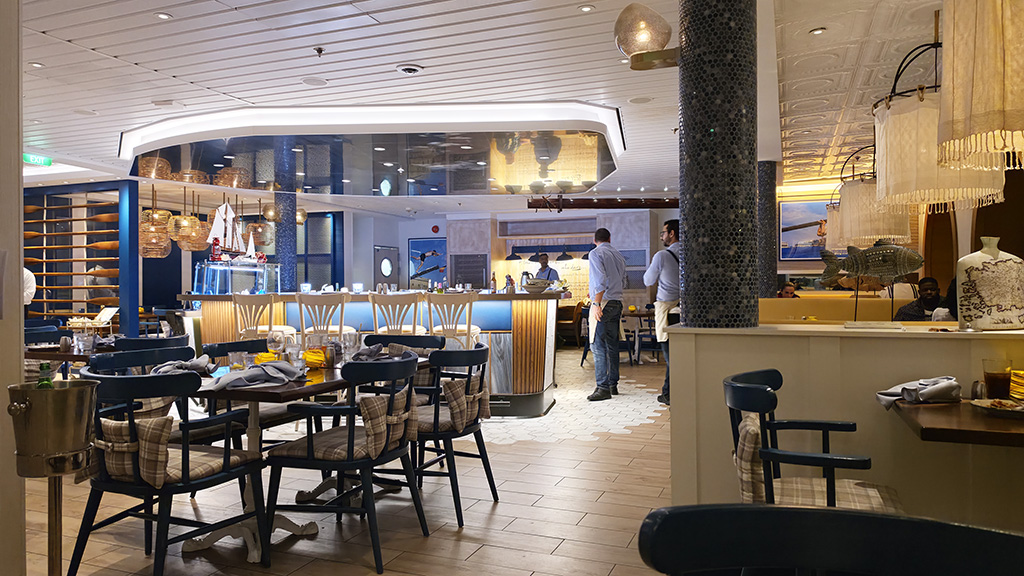
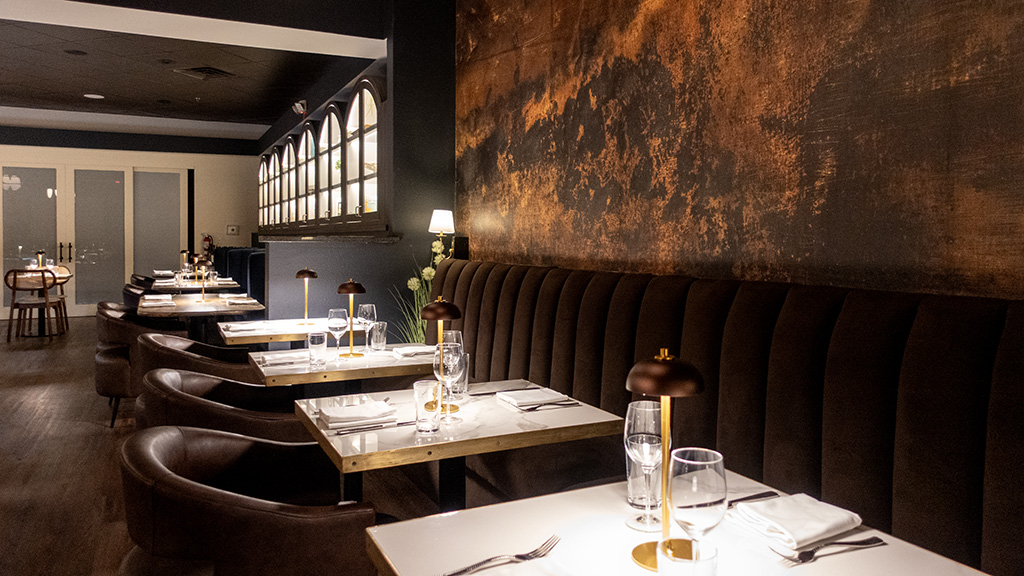
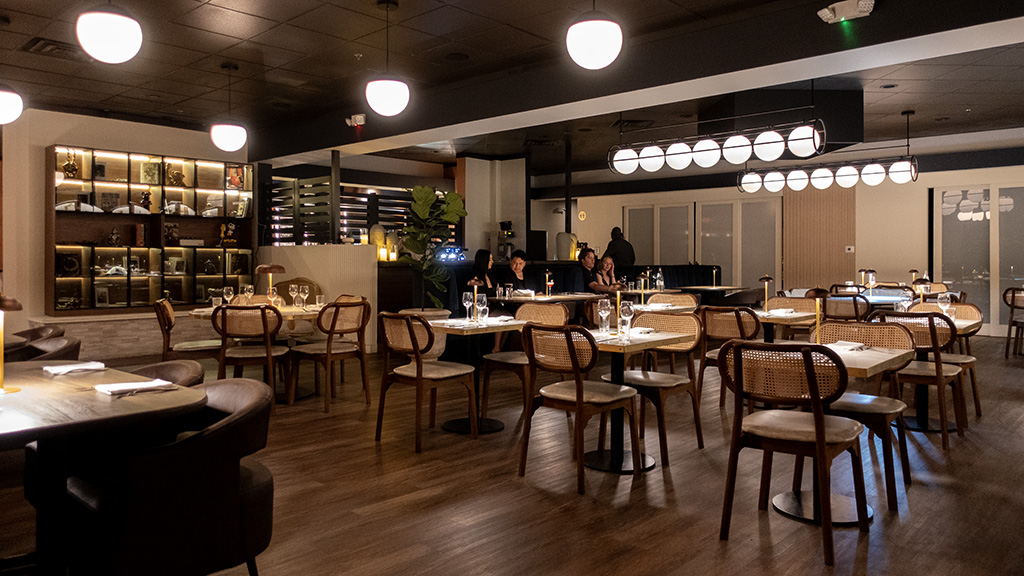
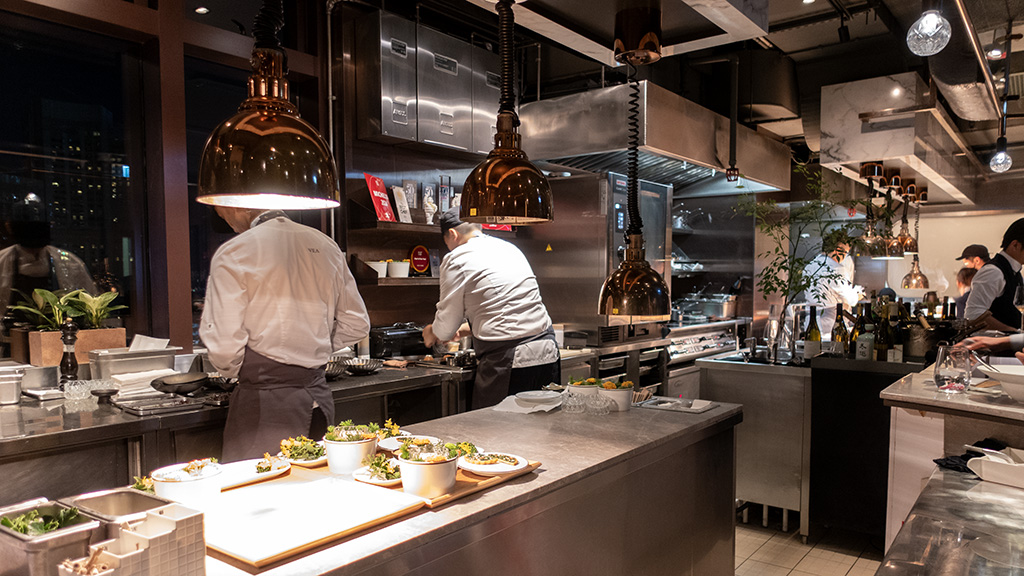
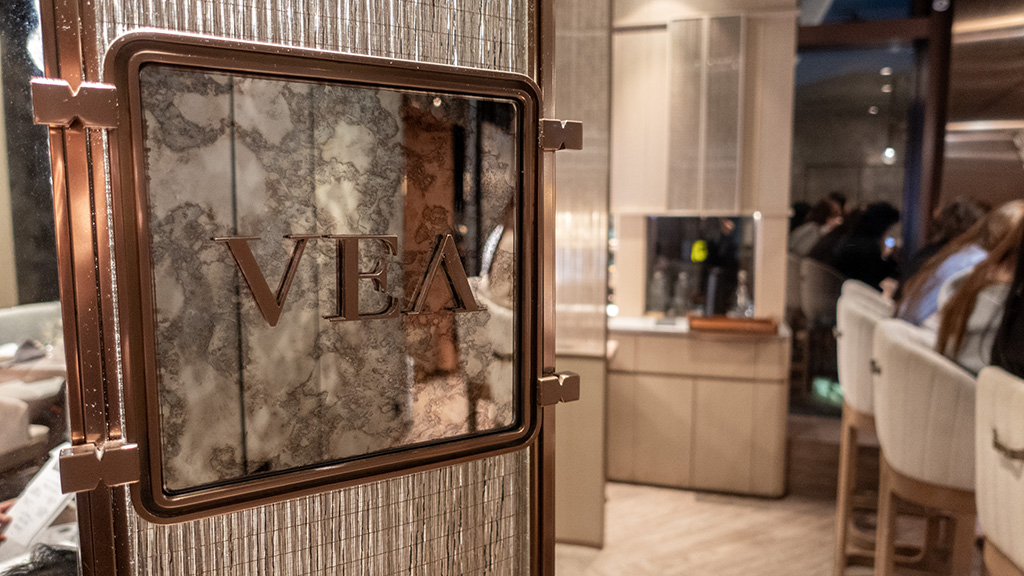
This is what the other part of the dining area looked like, which would be the “back side” behind the photographs that I took. This might give a bit more perspective on how exclusive of an experience this was due to its secluded location and limited availability.

The room itself was nestled far in the rear of Chops Grille, an American steakhouse that is part of the specialty dining restaurant collection on the ship.

I had a great time at the Chef’s Table. I go to a lot of chef’s tasting menus and other special multi-course dining experiences, but in terms of atmosphere and environment, I think this Chef’s Table ended up being my all-time favorite.

A lot of omakase or other chef-led dining experiences will seat you at a bar so you have a view of the kitchen and can watch the chef and cooks prepare your food. If they don’t have bar seating available, each party generally gets their own private table. Royal Caribbean’s Chef’s Table is the first time that I have ever been seated at what is basically a residential dinner table that you would usually only share with your extended family for holiday meals.

This may potentially sound like an introvert’s nightmare, especially if that introvert is named Adam Parkzer and decided to go on the cruise by himself. However, I think the interactions and conversations with the other diners are what made this dinner so pleasant and memorable.

Except for the couple directly to my right who were in their mid-30s like I am, everyone else was an older person. They all seemed intrigued and fascinated by my ambitious nomadic lifestyle, especially because of how different it is compared to how they lived their 30s decades ago. Them wanting to learn more about me and my life served as a good conversation starter that carried on throughout the entire dinner.

With that being said, I think I also just got lucky with the people with whom I shared my Chef’s Table dinner slot. Everyone had a laid-back, relaxed, welcoming, and warm attitude that made the experience feel much more cozy and wholesome.

As for whether or not I would recommend the Chef’s Table, this may be shocking considering the fact that I just spent an entire blog post explaining why I loved it, but I actually would not recommend it for most cruisers. Keep in mind that it comes with an additional US$118.00 upcharge per person, so that can add up pretty quickly when you’ve already paid quite a bit for your ticket, and considering the fact that most of the other food options on the cruise are included in your fare. Furthermore, if you have young children, I would actually specifically request that you do not go to the Chef’s Table, because I think your child would feel sorely out of place, and the presence of children may spoil the experience for others.

With that being said, if money is not an issue and you want a high-class, elegant dining experience shared with like-minded strangers who enjoy a premium meal and great conversation, then the Chef’s Table would be a good fit for you. Even though everyone else in attendance came as a couple, I did not feel out-of-place as a solo diner. Furthermore, the waiter was engaged with us throughout the meal, so if you get unlucky and everyone else you end up getting grouped with is extra shy, then it seems like the waiter is trained to take initiative to get the conversation flowing as a backup.

I have one final cruise blog post coming up soon, in which I will share my overall concluding thoughts about the experience.


—§—


Hello, Wonderland on Royal Caribbean’s Quantum of the Seas

I just wrapped up my first ever cruise, which was on Royal Caribbean’s Quantum of the Seas for a round-trip itinerary departing from the World Cruise Center at the Port of Los Angeles in San Pedro, California and making stops in Cabo San Lucas and Ensenada, Mexico.

Last week, while I was still on the cruise ship, I published a blog post outlining my experience with embarkation day; at the end, I explained how seasick I was, and I questioned whether I would just be bedridden the entire trip. I am happy to share that my seasickness mostly went away starting from the second day, and I deem the cruise to be a success. I have a few more cruise-related blog posts planned for publication over the next week: two from specialty restaurants (including this one), and one giving an overall overview and concluding thoughts about the cruise.

This one covers Wonderland, a restaurant focusing on imaginative and experimental dishes with an integration of molecular gastronomy. Being classified as a specialty dining venue, Wonderland usually bills an additional cover charge of US$55.00 per person per dinner. However, because I purchased the unlimited specialty dining package prior to sailing, I was able to eat at Wonderland for no extra fee. Wonderland had the kind of unique dining experience I enjoy, so I had two dinners at Wonderland; this blog post includes both of them.

 
Upon arrival, I was given a blank menu, a paint brush, and a small jar of water. In order to reveal the menu, I had to wet the paint brush and draw strokes on the white piece of paper, which dampened the surface and caused the ink to appear. The menu was split into five different elements: sun, described as “radiant vegetables playfully reinvented”; ice, “chilled to exhilarate the palate”; fire, “emanating wonderful warmth”; earth, “dishes grounded in whimsy”; and sea, “oceanic inspirations from the tide of the imagination.”

When my waiter arrived during my first dinner, I asked him how the system works, i.e., how many dishes I am allowed to order. At first, the waiter replied that he would pick the dishes for me. Confused, I asked him if this was a prix fixe tasting menu designed by the chef, to which he replied that it was not. He then clarified that I was able to pick one item from each of the elements. When I went through and made my selections, he told me that two of my selections were incompatible because they were both considered larger dishes. After some more confusion, I ended up skipping an earth dish and ordering two sea dishes instead so that my meal would fit their requirements.
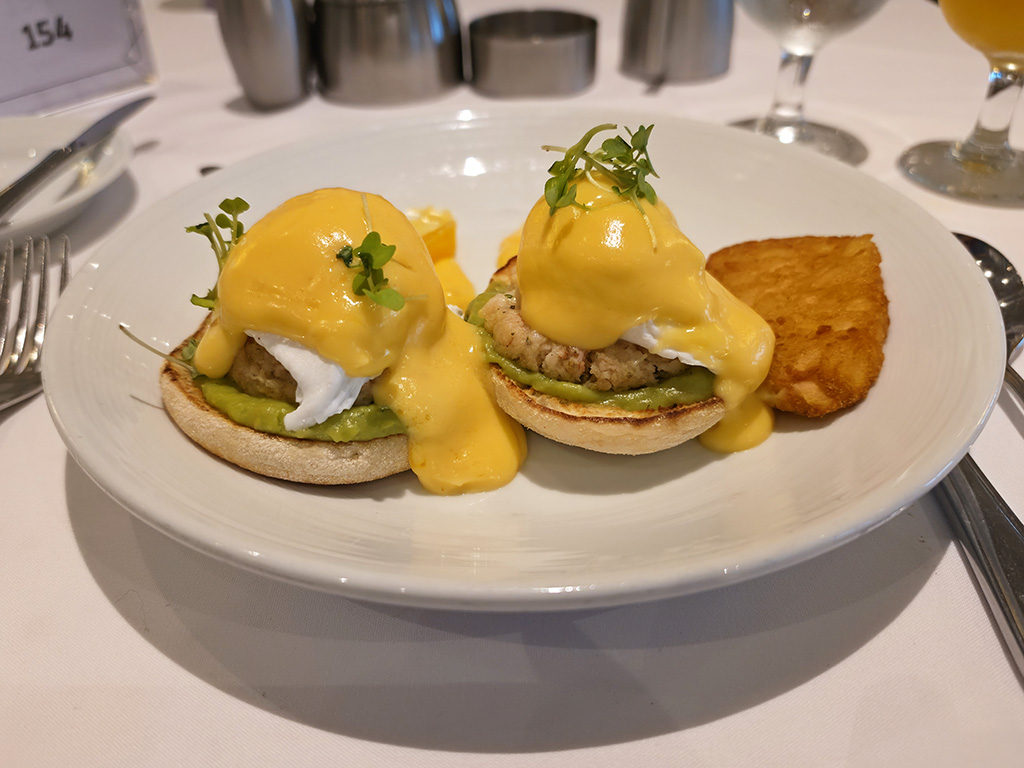
During my second dining experience, I let the waiter know that I had already been to Wonderland before, and I picked out dishes that I did not have during my first meal a few days prior. Both this waiter, as well as the waiter from my first dinner, did not write anything down when I made my selections. Both of them apparently had lacking short-term memory, because in both instances, they mixed up some items, did not give me a few things I ordered, and gave me a few things I did not order.

From the fire menu, this was the Mad Hatter’s Purple-Potted Shrimp. This was basically a jumbo fried shrimp wrapped with more crispy breading shaped as thick straw. This had all the positives of fried food without tasting greasy, and the shrimp was still juicy and tender. It came with a scotch bonnet sauce, which went well with the shrimp.

Also from the fire menu, this was the Bird’s Nest, a smoked deviled egg topped with a few drops of hot sauce. This is one of the items that I did not order, but received anyway.

The menu said that this has blue cheese, but it did not, which is great, because the smell of blue cheese makes me want to vomit. It came with a lid that trapped in the smoke, which the waiter removed after he brought it to my table. Funny enough, the smoke was incredibly intense and heavy, and the smell lingered around my table a lot and made me cough, but the deviled egg seems to not really have absorbed much of the smoky flavor, because it just tasted like a straightforward deviled egg.

Last from the fire menu was the wonton soup with asparagus and jelly noodles. The dumpling was good, the asparagus was decent, and the noodles were interesting because they were extra smooth and slippery, so it made for an intriguing eating experience. However, the soup was unpalatably salty to the point where it was borderline bitter. I think the soup could’ve been diluted with two parts of additional water and it still would’ve been salty.

Moving onto the sun menu, the first item was Baby Vegetables in the Garden with “soil” and “pebbles.” The vegetables were fine, but the waiter poured an insane amount of what appeared to be a variant of very salty ranch atop the dish, so that completely overwhelmed any of the vegetable flavor. The “soil” had a very strange texture, and I couldn’t quite figure out what exactly it actually was. It was both soggy and crumbly at the same time. When drenched in ranch, it clumped up a bit, but it still maintained the crumbly component of its texture, which felt weird in my mouth.

The next item from the sun menu was the Reconstructed Caprese with a gelatin-like tomato, cheese, liquid olives (made with reverse spherification), ricotta powder, and basil paste. This was actually surprisingly delicious. I’m usually not a fan of cheese because I think it smells like mold, but the cheese provided with this dish was mild and clean in flavor.

The presentation of this dish was incredibly confusing. The bulk of the food was crammed inside a small sliver running down the center of the plate, while the largest two portions of the plate were occupied by two droplets of marmalade on one side, and the “soil” from before on the other side. I wasn’t sure how I was supposed to eat this effectively, but considering that this was supposed to be a reconstructed caprese salad, I cut up the tomato into smaller pieces, moved everything over ton one of the larger compartments, and mixed it all together.

The third and final sun menu item was Tomato Water with pepper spherification and bread foam, served in a test tube. I wasn’t really sure how to consume this either, so at first I took a sip of the tomato water, then later jostled the test tube around so the liquid pepper and bread foam would mix with the tomato water without overflowing. It made sense that this was named tomato water, because it literally tasted like what a tomato would taste like if it was in water form.

Along with this came an item from the ice menu, a crispy crab cone with avocado mousse. The menu said that it was also supposed to come with cilantro and ohba leaf, but I wasn’t able to taste either of those. Overall, I thought this was a solid and straightforward avocado and crab fried cone, and I enjoyed it.

Next is what I believe to be the Citrus Seas Shhhh, which was supposed to be spicy tuna along with a floral yuzu granité. However, the spicy tuna was not spicy, and it came inside a gutted lime. Flavor-wise, it was still good.

During my first dinner, I ordered the Sashimi of Red and White Tuna. When this came out, I wondered whether they didn’t quite know what “sashimi” was supposed to mean, and prepared it like this instead. I looked at the other menu options and didn’t think that it matched the Citrus Seas Shhhh because it was not spicy, so I was thoroughly confused.

For the second dinner, I thought I had gotten the Sashimi of Red and White Tuna for the first dinner, so I ordered the Citrus Seas Shhhh to add variety, only to find out that I got a repeat of what I got during my first dinner. I suspect that this means that my first waiter brought out the wrong item for me.

From the sea menu, I got liquid lobster with bone marrow and caviar. This was an explosion of umami flavor and was probably my favorite dish from Wonderland.

For my main entrée for my first dinner, I got Halibut Cooked in Clear Paper. I assume that the “clear paper” was just a heat-resistant transparent cooking film (or, alternatively, I guess it is technically not impossible that they just used a regular clear bag and served the dish with a side of mushrooms, potato, and microplastics).

I’ve never had fish prepared like this before, and it does seem logical as to why someone might want to cook it this way, but flavor-wise, I couldn’t really tell much of a difference from regular poached fish. The juices were also way too salty and detracted from the overall flavor profile of the dish.

For the main entrée for my second dinner, I got the Chicken and the Egg, served alongside some crispy chicken skin, vegetables, and potato purée. The chicken was extremely dry and underwhelming.

I did not receive a dessert menu, so I was at the mercy of my waiter. For my first dinner, I got The World, a chocolate sphere that melts after the waiter pours warm caramel sauce on top of it.

The caramel sauce and the contents of the chocolate sphere were good, but the chocolate itself was excruciatingly sweet.

During my second dinner, I let my waiter know that I had previously tried The World and requested something different. He came out with the Forbidden Apple, which was basically like an apple gelatin shaped into a small apple, served alongside some pie crust crumbs, a ball of whipped cream, and a few small portions of fruit. This wasn’t exactly bad, but I’d say that the apple gelatin was somewhat unremarkable and didn’t really have a strong apple flavor to it.

Here are some photographs of the interior of the restaurant.

This is what the pathway to the entrance of Wonderland looks like. There was a professional photographer posted in front of this throne under the Wonderland sign who was offering to take photos. I declined because I heard that actually accepting your photographs costs somewhere around US$20.00 per shot, even if you only retrieve the digital versions. If they haven’t already, I am guessing that they will need to start decreasing those prices soon, considering that high-end cameras are much more accessible nowadays and people will likely want to just take their own photos instead.

And now, for a strange story.

For some context, Royal Caribbean forces you to pay extra gratuity on almost everything. I purchased a specialty dining package, and during checkout, I had to pre-pay a mandatory 18% gratuity on top of the cost of the package. To be clear, that is absolutely not how the concept of “gratuity” works. Royal Caribbean also nonconsensually adds a daily US$18.50 gratuity per person that gets added to your daily running SeaPass bill. This gets distributed to all staff, including your stateroom attendant and other service team staff.

At the end of my first dinner at Wonderland, the waiter brought me my check after dessert. Because I got the unlimited specialty dining package, my grand total for the meal was $0, but they still need to receive my signature to confirm that I dined there. However, the waiter added a bit of commentary—he clarified that the gratuity I already paid goes towards the staff, and (his literal words) “not to me.” He specified that if I want to tip him, I will need to add an extra amount to the “additional gratuity” line of the check.

I was confused but didn’t really care enough to think more deeply about this, so I added an extra US$10.00 tip to the check and signed off on it.

Later that day, I thought back to what the waiter told me, and it clicked in my head that he was either being extremely misleading or straight-up lying. I did some research online about how Royal Caribbean’s gratuity system works, and I confirmed that my waiter would absolutely count as the “staff” towards whom the pre-paid gratuity gets distributed. I realized that I got scammed by this man who mixed up my order and couldn’t even properly explain how the Wonderland menu selection system worked.

During this research process, I also found out that you are allowed to adjust the US$18.50 daily gratuity if you speak with Guest Services. I marched straight downstairs and asked them to remove the daily gratuity from my SeaPass bill.

Not only did I permanently have the “do not disturb” sign on my door and skipped housekeeping services for the entirety of my cruise, but I also technically paid double for my cruise because I sailed solo. (If you’re not familiar with how cruise pricing works, they market the cost as “per person,” but when you go to buy the cruise, the expectation is that there will be two people per room, and if you mark that you are going solo, the price doubles because you are basically paying for two people’s worth of a cruise by yourself.) I had already given Royal Caribbean plenty of my money and already pre-paid my mandatory dining gratuity, so I had no issue “retaliating” against this waiter’s lies by removing all the extra fees from my cruise that I could.

 
Anyway, I’m glad I checked out Wonderland on my cruise. As you can tell from my split reviews, the food items were sort of a hit-or-miss, but overall, I like restaurants that are brave enough to experiment with their dishes and try something new, strange, or unusual.

They obviously need better wait staff, both in the sense of integrity and training, but other than that, if you are a food enthusiast, I would lean towards the extra specialty upcharge being worth it for trying out Wonderland one time.


—§—


Hello, embarkation day on Royal Caribbean’s Quantum of the Seas from San Pedro to Cabo

For those who are not aware, I have spent a majority of the past four and a half years being voluntarily homeless and living out of hotel rooms while traveling full-time. There was a period of one year in the middle of that where I rented a condo in Las Vegas again, but apart from that, I have been living a fully nomadic lifestyle. It is probably one of the best decisions I’ve ever made for myself, and constantly exposing myself to new places and environments has been a very good learning experience.

The fact that I fully committed to living in temporary lodging means that I don’t have rent to pay on an apartment, which makes the financials of non-stop, back-to-back travel a lot more manageable. However, this does mean that I don’t have a home where I “go back to” in between trips, so I usually look for places where I can stay for more than a week at a time so that I don’t have to move around as frequently. One option I had previously looked into as an extended stay solution was a cruise ship.

Going on a quick tangent… I get motion sick very easily. It is difficult for me to ride in friends’ vehicles because I get very easily carsick if I’m not in a larger truck or SUV and deeply reclined back. When I fly, I book domestic first class and long-haul lie-flat business class seats not because I am uncontrollably drowning in money, but because I get airsick if I’m not in a seat that can recline far back, and sitting upright in a standard economy seat causes me to feel unwell and lose a day or two of my trip to recovering from travel. As for watercraft, I cannot ride small boats at all, or else I will get severely seasick within the first five minutes.

However, similar to how I can be mostly okay in large trucks and SUVs, I’ve noticed that I am somewhat okay on large ships as well. I’ve ridden the ferry across Puget Sound a handful of times before in Washington, and I felt generally fine during that. I figured that, considering the very large size of cruise ships and the latest stabilization technology, there is a decent chance I will be fine on a cruise ship as well.

The nice thing about cruise ships is that they act not only as an entertainment experience, but also as a hotel room for the duration of the itinerary. I figured that this would be a relatively cost-effective lodging option, so I added a cruise to the list of things I wanted to eventually try out. Afterwards, if I was able to confirm that I did not get severe seasickness on a cruise ship, I could consider doing a multi-week cruise (or back-to-back shorter cruises) and call a ship my home for a little bit as part of my nomadic adventure.

 
A few days ago, I was in Los Angeles County visiting some friends when I noticed that Royal Caribbean had a cruise to Mexico departing from the World Cruise Center at the Port of Los Angeles in San Pedro, California, on sale for a decently discounted rate. The timing of this cruise lined up pretty well with my schedule and slotted in during a free week I had, so I decided to buy myself an impromptu ticket and figure out once and for all whether I will get seasick, or if living on a cruise ship is a viable strategy for my future.

The day before the cruise was scheduled to depart, I relocated from northern Los Angeles County to southern Los Angeles County. I spent a night at the Marriott Long Beach Downtown so I could be a quick 15-minute ride away from the terminal and wouldn’t have to sit in an hour and a half of traffic the morning of my cruise. My company Tempo’s former office was in Long Beach, so it was a little bit nostalgic being back in town and seeing the city again.

I wanted something simple, straightforward, and reliable for my hotel before my cruise, so I opted for a regular Marriott instead of a resort or anything fancier. I also wanted a property that had an M Club executive lounge so I could get free snacks and soft drinks throughout the day, and regular Marriotts have the most consistency in having lounges available.

Unfortunately, I found out after arrival that this is a property with a mandatory US$34.80 destination fee. Out of that destination fee, US$25.00 of it is returned back to you as a food and beverage credit at their on-site restaurant, Local Current. Along with the additive US$10.00 food and beverage credit from my Ambassador Elite welcome gift, I managed to grab an almost-free dinner entrée to go along with my free hors d’oeuvres, snacks, and beverages from the lounge.

The following morning, I woke up much earlier than usual because I needed to make it to the cruise terminal no later than 11:30 AM PST. (Lately, I’ve been functioning on an Asian time zone schedule even while in the United States, so I end up going to sleep very late and waking up after noon.) After a quick shower, I drove west on Interstate 710, also known as the Seaside Freeway, across the very scenic Port of Long Beach and Terminal Island. Upon arrival, I discovered that the Los Angeles World Cruise Center was temporarily suffering from a power outage.

Nobody was able to board because Royal Caribbean’s systems were down, so we had to wait until power was restored. Fortunately, because I upgraded myself to The Key program, I was eligible to wait in the sheltered VIP line with other priority members. Once the power was working again, the line moved very quickly, and we were the first ones on board.

The first thing I did was get my safety briefing out of the way. I had to read some safety information and watch a few quick videos, then check in with a staff member at my muster so I would know where to go in case of emergency. Once that was all sorted, I headed down into the VIP dining area for my special welcome lunch that came as part of The Key upgrade.

I was one of the first people in the VIP restaurant, presumably because I went straight to the restaurant after the safety briefing without first exploring the rest of the ship. This meant that I got a prime windowside table with a nice view of the port.

My waitress brought over some onion bread and pretzel bread for me to munch on while I was reviewing the menu and picking out my courses.

For my appetizer, I went with some jumbo shrimp with cocktail sauce.

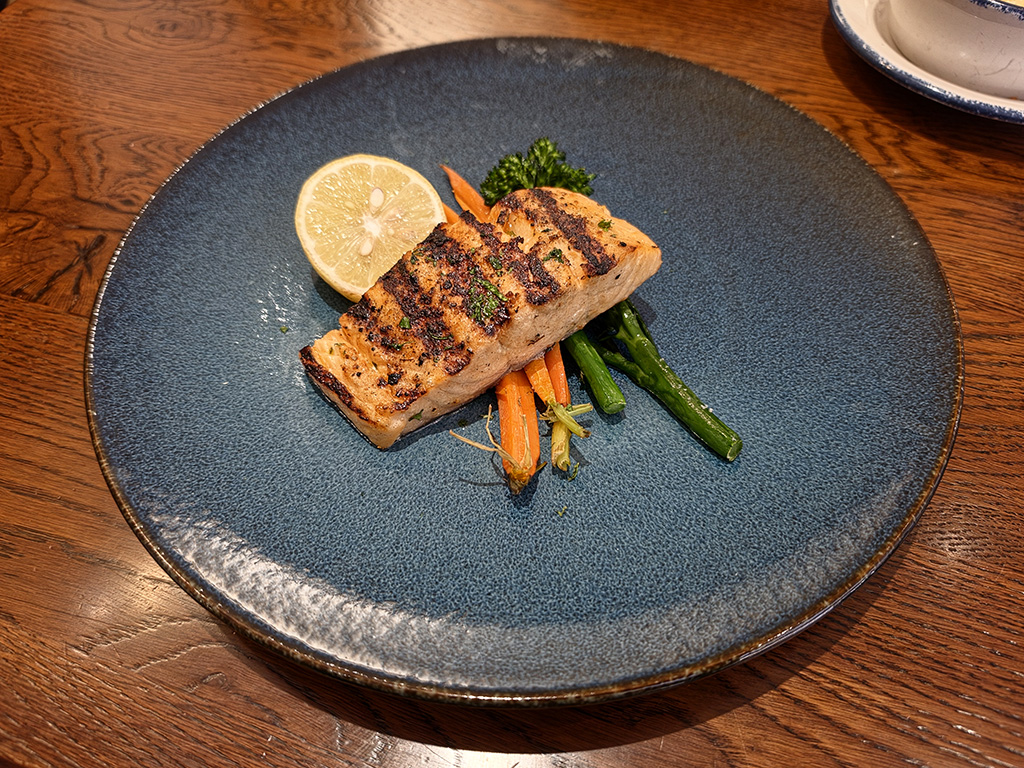
For my main entrée, I ordered some salmon. This picture makes it look very sad and disappointing and colorless, but believe it or not, it was actually unexpectedly quite delicious. I also particularly liked the texture of the salmon skin—it was a great combination of crispy and chewy such that I was able to cut through it with my knife, but it maintained its form enough while I was chewing it to add a deeper textural element to each bite.

To conclude my meal, I got two scoops of strawberry ice cream. There wasn’t anything particularly special about this; it was just simple and decently good ice cream.

I finished lunch just in time for all the staterooms to be ready. I headed out of the restaurant and up to Deck 6 to check out my ocean-view balcony room in which I’d be spending the next week.

It was both larger and smaller than I expected. I understand that cruise ships have limited space and the rooms tend to be small, but I found the “living room” area to be fairly spacious. On the other hand, I found the bathroom to be microscopically and borderline unusably small.

It would be nice if they took several square feet out of the living area and put it into the bathroom instead. To put things into perspective, the bathroom was so small that taking three steps means you already walk straight out of the bathroom. Every time I showered, I left the door open because the space was so small that I assumed the accumulating steam from the hot water would make it so humid that I would suffocate and drown from breathing in too much water if I closed the door.

After unpacking, setting up my laptop, and getting a little bit of time-sensitive work done, I left my stateroom and started walking around the ship to get a better idea of what the layout was and where I would need to be to see the most interesting things. I eventually made it to what I personally thought was the most interesting part of the ship, which is the open deck on Deck 15. This floor had a running track, so I did a few laps around and took some photographs while walking.

At 4 PM PST, we left the berth for an on-time departure. I watched and enjoyed the music from the sail-away party for a little bit, but from the upper open deck so I wouldn’t have to be so close to the smelly pools and partially-naked people.

One of the big perks of having a balcony room is that you have a view of the ocean, so as we were getting further away from San Pedro, I returned to my stateroom to have my own private, quiet, peaceful, solo sail-away party. I watched the waves as the land slowly shrank into the horizon.

It wasn’t long until I started getting a mild headache. The seasickness wasn’t anywhere near as bad as what it is on smaller boats, because I usually feel like vomiting within about five minutes of riding on smaller watercraft. However, I could definitely feel seasickness slowly setting in, and I was progressively feeling worse and worse.

As I mentioned before, my solution to motion sickness on cars and planes is usually either reclining back or laying down. Lucky for me, my room has an entire bed in it, so in order to combat the seasickness, I changed into my pajamas and laid down in bed with my laptop to get some more work done. It helped a little bit, but as we sailed deeper into the Pacific Ocean and the waters got rougher, nothing seemed to help. I got extremely dizzy and felt very unwell.

I put away my laptop and started watching YouTube on my phone before getting even more sick. Wondering if looking at screens was causing this, I put away my phone too and took a nap. I woke up after a few hours and felt just as bad as I did when I had first fallen asleep. It was late at night and the specialty dining restaurants were about to close soon, so I forced myself out of bed and went to Izumi Sushi for dinner, in case getting some calories in my body would help make me feel better.

It didn’t.

Izumi’s sushi was pretty bad. I don’t know if I just have unrealistically high standards for sushi, or if it tasted worse because I was feeling sick, but the food quality was pretty bad, especially considering that this was a specialty dining venue where you have to pay an upcharge if you didn’t pre-order a special premium dining package like I did.

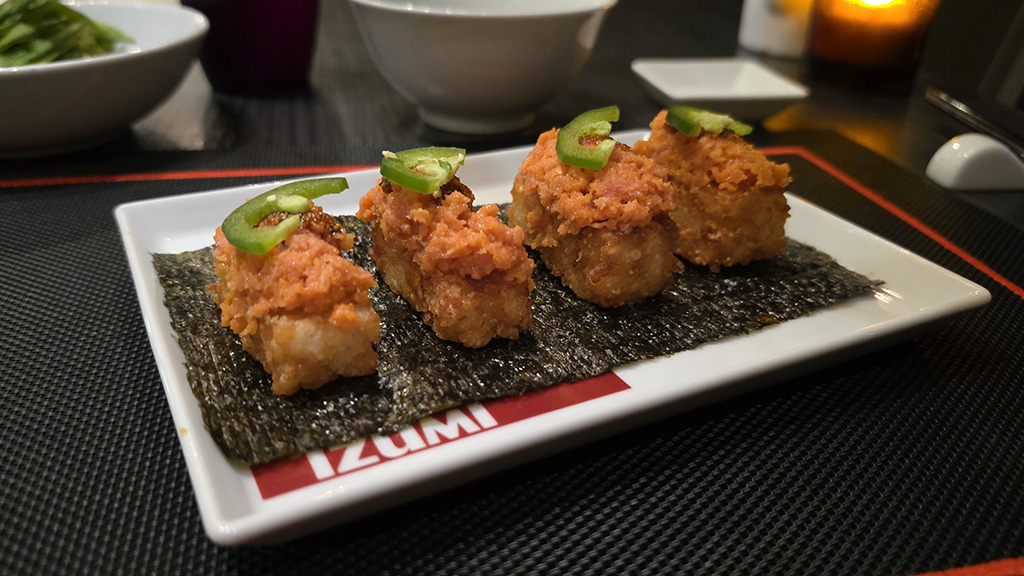
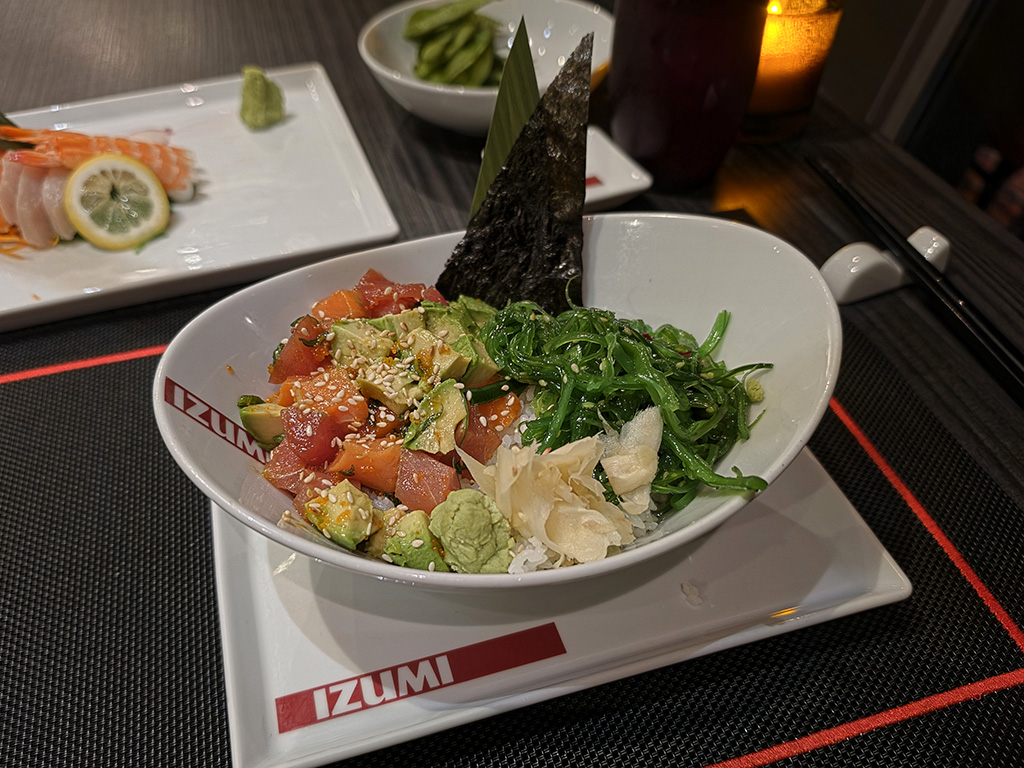
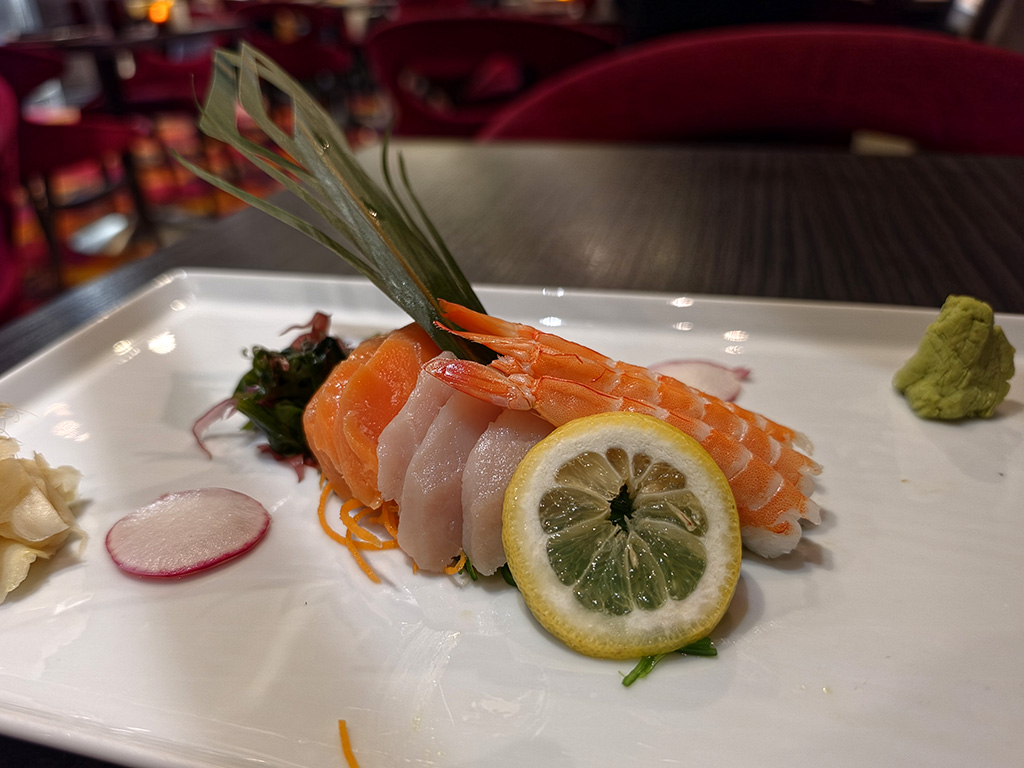
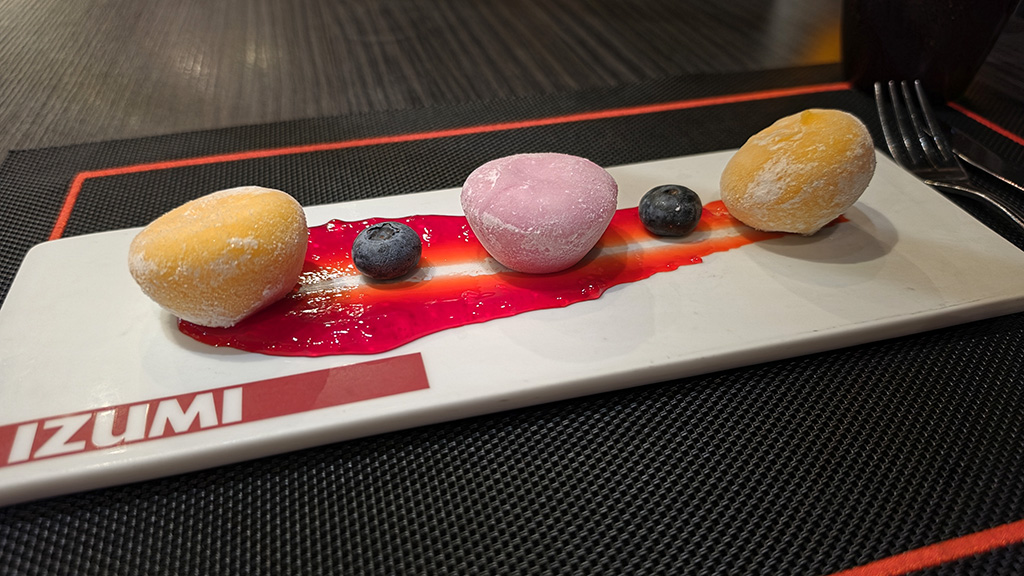
Their shrimp spring roll wasn’t a spring roll at all, but instead, was basically like one of those heavily-processed fried snacks that you would find in the frozen foods section of the grocery store (and to make things worse, it was also loaded with cream cheese that smelled like mold). The poke bowl had about ten small cubes of akami tuna, and was ~70% rice. The salmon and yellowtail nigiri that came as part of the chef’s sushi selection was cut very thin and had a unpleasantly fishy taste. The texture of the fish made me suspect that it was not flash frozen properly, because it was sort of mushy. I asked for assorted mochi ice cream for dessert, but instead was served a single scoop of regular green tea ice cream.

I love sushi, so prior to embarking on the ship, I had already put in a bunch of reservations for meals at Izumi Sushi. This dinner was so disappointing to me that, after getting back to my stateroom, I literally canceled every single future reservation at Izumi and replaced it with other specialty dining venues available on the ship. I heard that ginger was good for combating seasickness though, so before leaving, I finished eating all the ginger that came with the sushi.

I made it back to my stateroom without vomiting from seasickness. I changed back into my pajamas, climbed back into bed, and took another nap.

After another few hours, I woke up shortly after midnight. Miraculously, even though I still had a headache and still felt somewhat unwell, I was surprisingly feeling better than I did after dinner. I got up, washed my face, brushed my teeth, stretched for a bit, and replied to some emails and messages. After confirming that my condition had stabilized, I headed out into the cruise ship to do some exploring.

Going for a walk seems to have helped as well. When I’m just sitting inside my stateroom, it seems like my brain is incredibly confused as to why it senses motion, and then triggers an emergency alert to let me know that something is horribly wrong. However, if I’m walking around, it seems like my brain attributes the ship’s motion to assuming that my legs are just roleplaying as a crippled man who doesn’t know how to walk, and it doesn’t send panic signals anymore.

Because it was so late, almost everyone had gone to sleep already and the ship was nearly empty apart from the maintenance crew cleaning.

I started my walk on Deck 3 in the casino.

I then went up to Deck 4 into the two-story Music Hall and looked down on the stage.

Outside the Music Hall was the Royal Esplanade.

I ascended the stairs from the Royal Esplanade to Deck 5 and checked out some of the art installations.

I proceeded further to the aft of Deck 5 to check out the café and art gallery.

At the far end of Deck 5 was Two70, an entertainment venue.

Upstairs on Deck 6 above Two70 was the library.

Back down on Deck 5 near the stairs up to my stateroom was the Schooner Bar.

This ship also has the Bionic Bar, two robotic arms that take your drink order and prepare it for you using the vast collection of alcohol bottles hanging from the ceiling.

I guess even Royal Caribbean isn’t immune from those pesky Activate Windows alerts.

Many of the floors above this only had mostly staterooms, until I got to the upper-most floors. I tried taking the elevator, but that vertical motion mixed in with the side-to-side roll of the ship nearly sent my brain back into panic mode, so I stuck with the stairs for the rest of my walk.

From Deck 15, I peered down into the indoor pool and pool bar.

After getting the rest of my steps in for the day, I went back into my stateroom, transferred the photographs I took into my laptop, and started blogging.

… And now we’re here.

I’m honestly not sure how this cruise is going to go. Hopefully I continue to get better and the rest of the trip is fine, but I am also somewhat prepared to just be bedridden from seasickness for the rest of the week-long cruise and then never step foot on another ship ever again. After doing some brief research online, I found out that Guest Services will often supply passengers with complimentary motion sickness medication, so if things are still bad tomorrow, I will go claim some Meclizine and hope that I’m not already vomiting so much that I can’t keep it down.

I browsed through the Royal Caribbean app and it seems like there are a lot of things to do on the cruise ship, and along with the unlimited premium dining package I have that allows me to check out all the specialty restaurants, I will likely have a packed schedule for the next week (either packed with activities, or packed with laying in bed trying not to throw up).

Because of the limited time I have on the ship, I plan on finishing the rest of my cruise blog posts after-the-fact rather than in realtime, so I’ll be back to give another cruise update in about a week or so, after I’m back on solid land. Until then, you can go make a bet on your favorite new prediction market website to gamble on how many times I vomit or something, I guess.


—§—


Hello, “Lunar New Year: Year of the Horse” at the Bellagio Conservatory on the Las Vegas Strip

Before departing the Las Vegas Valley again for my next trip, I squeezed in another seasonal visit to the Bellagio Conservatory & Botanical Gardens inside MGM Resorts’ Bellagio Resort & Casino on the Las Vegas Strip in Paradise, Nevada. This time around, the rotating exhibit on display was “Lunar New Year 2026: Year of the Horse.”

The Lunar New Year exhibits are the “bonus” fifth seasonal exhibits that they slot in between winter and spring, and as such, they end up having the shortest live periods. This one for the Year of the Horse opened to the public on January 10, 2026 and will stay up for about three more weeks as of today, concluding on February 28, 2026 and entering dark dates on March 1, 2026 in preparation for the spring installment.

One special thing I noticed about this installation that I don’t recall seeing before recently is that they relocated the Garden Table. Usually, this prix fixe chef’s tasting menu experience is situated across the aisle from Sadelle’s Café in the northwest corner of the Conservatory, but for Lunar New Year 2026, they moved it to the opposite, southeast corner instead. I still have never dined at the Garden Table, though one day I imagine I will overcome the feeling of strangeness at the idea of literally thousands of people walking by and looking at me while I eat in the middle of a botanical garden.

Here are some photographs I took of the installment:

Here is a bonus Year of the Horse decoration that was set up right outside of Harvest, a restaurant in the southwestern quadrant of the Bellagio and on the path to the walkway between the Bellagio and the Vdara Hotel & Spa.

If you liked these photographs and want to see more from past installations, I also have blog posts from “Lunar New Year 2025: Year of the Snake,” “The Birds and the B’s,” “Glam Menagerie: Surrealist Summer,” and “All Aboard for Holiday Bells and Whistles.”


—§—


January 2026 investment portfolio breakdown

Disclaimer: I am not a registered investment advisor, and even if I was, I wouldn’t be your advisor. The information contained in this blog post is strictly anecdotal and should not be construed as financial advice. Everyone’s situation is uniquely different, so if you are seeking guidance, consult a licensed and certified professional for personalized assistance.

 
Another year, another investment portfolio breakdown. My overall investment strategy has remained consistent over time (i.e., dumping a majority of my money into very safe index funds), but compared to last year, there are still a handful of noticeable changes.

As a side note, I used to post updates every quarter, but as of the past few years, I have changed it to just doing annual breakdowns instead. When I did more frequent updates, I would build on previous blog posts and list those as prerequisite reading to supply the needed context, but after I lowered the frequency to once per year, I started writing them as standalone pieces. This means that you won’t have to go back and read an older blog post to understand what I’m talking about, but this also means that you might notice some repeated information here if you’ve read previous investment breakdowns.

 
Before I begin with the breakdown, I figured I would start with a quick story and a broader financial change that would not be apparent just from my categorical allocation breakdown.

On a random day, I received a phone call from someone claiming to be from Fidelity Investments, a financial services company I use as one of my brokerages. My immediate assumption was that it was a scammer trying to gain access to my Fidelity account by pretending to be an employee. Regardless, for my amusement, I still listened to what they had to say.

Rather than asking me for my address or social security number or any other personal information, the employee instead told me that he saw my Fidelity account and reached out to let me know that they have an investor center in Henderson of the Las Vegas Valley in Nevada, close to my home address. He wanted to invite me to stop by in-person for a visit at any time during business hours. That’s it.

I was now even more suspicious at this point, because obviously, the only thing more suspicious than a scammer is an actual real financial services employee trying to be genuinely helpful and welcoming. I thanked him for the call and let him know that I would stop by if I’m in the area or if I have any questions. Afterwards, I checked the phone number on the caller ID and confirmed that it did match up with that Fidelity branch.

Funny enough, this simple single phone call actually had a decent effect on me.

Historically, I only ever used Fidelity to manage my Health Savings Account, charitable giving account, and over-the-counter trades—all services that Vanguard did not offer. However, recently, I set up a regular individual brokerage account on Fidelity and started putting more money into it so I could split my assets more evenly between Vanguard and Fidelity as to serve as a form of risk mitigation in case I were to lose access to one of my accounts or get hacked.

The fact that there now seems to be a “human touch” on Fidelity’s end, with potentially an account manager with eyes on my portfolio, makes me quite a bit more willing to put more money into my Fidelity account while limiting my Vanguard account to just retirement contributions for now. That has been the strategy I’ve stuck with over the past year, so when I do security-by-security breakdowns in some of these categories, you might notice more Fidelity funds popping up.

 
With all that said, here is the percentage breakdown of how I distribute my money in my investment portfolio:

Cash

I have always said this, and I will continue to say it: I always prioritize time in the market over timing the market. As a result, I always encourage people to hold onto somewhere around 3-6 months’ worth of core living expenses, and then put the rest into investments right away, as soon as possible. It doesn’t always matter which investments you pick; the most important part is that you are not just holding it in deflating cash.

I personally err on the side of safety and lean closer to a buffer of six months’ worth of living expenses held in cash. Especially now with my company Tempo going through an uncertain and volatile financial period, I have been giving the company loans and delaying my personal compensation so that the corporation can have more working capital, so it is more important now than usual for me to have a cash buffer in my bank account.

(And in case you’re wondering, no, I did not just leak some exclusive insider information; because AVY Entertainment, Inc., d.b.a. Tempo had a Regulation CF offering, it has to file yearly Form C-ARs available for public viewing on the SEC’s website, so it is public knowledge by this point that our financial state is anything but stable.)

Most of the cash I hold as my emergency fund is inside a savings account at Discover Bank, which was recently acquired by Capital One. A limited amount of it is also inside my brokerage accounts’ settlement funds—Vanguard Federal Money Market Fund (VMFXX) on Vanguard and the Fidelity Government Money Market Fund (SPAXX) on Fidelity.

  1.408%

Domestic broad market index funds

Like usual, an overwhelming majority of my portfolio is still invested in domestic broad market index funds, a very boring but very safe category. Nothing much has changed here—I put little bits of money into interesting investments as I see the opportunities arise, but otherwise, the rest of my money goes into these index funds.

During the COVID-19 pandemic, I bought a lot of Vanguard High Dividend Yield Index Fund Admiral Shares (VHYAX) to try and weather out the uncertainty of the market, as dividend funds were not as unpredictable as growth funds. Before and after the pandemic, I mainly bought Vanguard Total Stock Market Index Fund Admiral Shares (VTSAX). As I mentioned above in the introduction, I haven’t been buying much Vanguard non-retirement funds and have been investing in Fidelity funds instead, so the shares of VHYAX and VTSAX I own are pretty old.

As for the new money I’ve been putting into domestic broad market index funds, it’s all been going into the Fidelity ZERO Total Market Index Fund (FZROX). One of the downsides of this Fidelity ZERO fund is that it is non-transferrable, so if I ever need to move this out to a different brokerage, I would have to have a gigantic taxable event to realize all my gains, as there are no in-kind securities at other brokerages. With that being said, I don’t foresee a major scenario where I would have to do that anytime soon, so that is a risk I was willing to take in exchange for the 0% expense ratio.

 43.056%

International broad market index funds

One of my main investment goals during 2025 was to invest more in the international market, and I definitely succeeded at that. During my end-of-2024 investment breakdown, I shared that my allocation in international broad market index funds was only just barely over 5%. Since then, I have doubled that to over 10%.

In 2025, I finished selling my entire position in Vanguard Total International Stock Index Fund Admiral Shares (VTIAX) for the purposes of tax loss harvesting. After waiting out the wash sale period, I put all that money (and more) back into the international market via the Fidelity ZERO International Index Fund (FZILX). (And yes, a lot of resources have told me that VTIAX and FZILX likely do not count as substantially similar enough to trigger a wash sale, but I wasn’t in a rush and preferred to just be safe.)

Although I am happy with how much progress I’ve made towards shifting my domestic vs. international ratio in the direction I wanted, I still think I need more exposure to international markets relative to the amount of belief I have in international markets. Thus, throughout this year as well, I will continue investing more into FZILX while not putting as much into FZROX.

 10.078%

Bonds

Back during the COVID-19 pandemic, I purchased Series I Savings Bonds from the United States Department of the Treasury as a hedge against the rampant inflation that was happening as a result of the government printing an insane amount of new money. Although the returns aren’t as crazy right now, I remember the annual rates exceeding 9% during the peak of pandemic relief efforts.

I haven’t sold my Series I Savings Bonds yet because there is a penalty on the interest if you sell it when the bond is less than five years old. However, in case you haven’t been keeping track, it’s already 2026, so my bonds’ five-year maturity dates are either approaching very quickly or have already passed. This is going to be one of my upcoming projects—checking the exact dates when I purchased the bonds, then coming up with a plan on when to sell them and how to reinvest the proceeds.

Apart from that, I also finished selling my entire position in Vanguard Total Bond Market Index Fund Admiral Shares (VBTLX) in 2025 for tax loss harvesting. After (again, potentially unnecessarily) waiting out the wash sale period, I put that money back into bonds via the Fidelity US Bond Index Fund (FXNAX).

For now, I’m unsure how I’m going to proceed with regards to purchasing more bonds. I am getting older, but I’m still not that old. I would consider myself as having a medium risk tolerance, which is high enough that I don’t want to doomsday prep by pulling out of the stock market and dumping everything into bonds. I will think on this a bit more over the next year and report back during my next investment portfolio breakdown.

  5.127%

Target date funds

I split my target date funds off into a separate category because they are a combination package of different kinds of index funds and bonds that automatically adjust based on which target year you pick. For example, if you elect a fund for 2030, it means that you are retiring soon and need stability (i.e., bonds) in your portfolio; if you elect a fund for 2070, it means that you’re a recent addition to the workforce and won’t be retiring for a long time, so you need growth (i.e., stocks) in your portfolio.

Considering how active of an investor I am, it may be strange to see that I take advantage of these “set it and forget it” kind of funds in exchange for paying a higher expense ratio. The reason I do it is a form of diversification in the sense that, if I ever become incapacitated up to the point where I am no longer able to manage my investment portfolio anymore, target date funds end up being a hedge against my money still being in highly volatile funds at the time of my retirement and potentially tanking due to a neglectful absence of response to a falling market.

When I first started buying target date funds, I bought shares of the Vanguard Target Retirement 2060 Fund (VTTSX). Over time, I realized that I am doing quite well financially, so I foresaw an earlier retirement and put new money into the Vanguard Target Retirement 2055 Fund (VFFVX) instead. Then, with even more time passing, I realized that I am doing better financially than I would’ve ever imagined, so now I’ve been putting all new retirement money into the Vanguard Target Retirement 2050 Fund (VFIFX).

As of today, VFIFX is composed of 51.9% Vanguard Total Stock Market Index Fund Institutional Plus Shares (VSMPX), 37.7% Vanguard Total International Stock Index Fund Investor Shares (VGTSX), 7.3% Vanguard Total Bond Market II Index Fund Investor Shares (VTBIX), and 3.1% Vanguard Total International Bond II Index Fund Institutional Shares (VTILX). The further-out VFFVX and VTTSX are both composed of 52.3% VSMPX, 38.1% VGTSX, 6.7% VTBIX, and 2.9% VTILX.

Note that I am only buying these inside my Roth IRA and SEP-IRA.

 22.253%

Real estate investment trusts (REITs)

I’m still keeping an eye out for good real estate purchase opportunities, but until something comes up, my only real estate exposure is through real estate investment trusts. Realistically, I foresee my first major real estate investment being an self-occupied property, but I’m having a great time being a nomad right now and not rushing to wrap up that chapter of my life yet. I can of course just become a landlord, but that comes with a lot of obligations and locks up a chunk of my capital that I could instead reserve as more liquid securities.

My position in Vanguard Real Estate Index Fund Admiral Shares (VGSLX) is still negative at the moment, so I’ve been selling it off little by little for tax loss harvesting and reinvesting it in other funds. For example, in early January 2026 when my tax-advantaged retirement account limits reset, I sold US$7,000.00 of VGSLX and did a Vanguard-to-Vanguard transfer into my Roth IRA account as a contribution, then purchased VFIFX with that balance.

I do still want to maintain real estate exposure though, so for whatever amount of VGSLX I sell, I end up buying a comparable amount of Fidelity Real Estate Index Fund (FSRNX) at some point in the future (after the wash sale period). In the further future where I finally jump on a property purchase opportunity, I will likely sell my REITs (to whatever extent is reasonable in a capital gains tax sense) and apply it towards a down payment on my mortgage.

  4.482%

Individual stocks and private companies

I had a phase during the COVID-19 pandemic during which I had a lot of fun trading individual stocks, but since then, that interest has faded. As of today, I only own individual stocks in Marriott International, Inc. (MAR), T-Mobile US, Inc. (TMUS), and TKO Group Holdings, Inc. (TKO).

Most notably, I finally sold off my position in Nxu, Inc. (NXU). For those missing the lore, I contributed US$564.80 during one of Atlis Motor Vehicles’ early funding rounds because I thought their electric pickup trucks seemed cool. Since then, the company became an absolute disaster, rebranded, and was fighting a constant struggle against being delisted because their stock price tanked so much. After holding on for a long time, I eventually gave up and sold my ownership for US$0.92, resulting in an overall loss of US$563.88.

For my next individual stock purchase, I’m looking at companies that give discounts or other perks to shareholders. For example, I learned that some cruise lines like Royal Caribbean International will give on-board credits to cruisers who own 100 shares of Royal Caribbean Cruises, Ltd. (RCL). Beyond travel, I also found out that companies like Ford offer special X-Plan Partner Pricing to people who own 100 shares of Ford Motor Company (F). A hundred shares of RCL is a commitment of over US$30,000.00 as of today, so that is something I would only buy if RCL completely crashes, but 100 shares of F is only a little over a thousand dollars, which I think is very manageable and could be useful if I ever end up wanting to buy a Ford or Lincoln vehicle later.

As a side note, I am not including my equity ownership of AVY Entertainment, Inc., d.b.a. Tempo in this portfolio breakdown, not only because it is a private company and pinpointing an accurate and up-to-date valuation is relatively tricky, but also because my ownership in the company is large enough that it would probably skew this breakdown and make it less useful from the general public’s perspective.

  2.416%

Debt instruments

New as of 2025, I diversified my portfolio even more by investing into debt instruments. In simpler terms, I have basically become a lender for people’s loans. Of course, I’m not going out there and literally letting people borrow money; instead, I purchased shares of the Fidelity Investment Grade Securitized ETF (FSEC).
I’ve noticed that people are borrowing a lot of money. After hearing stories that my friends in Los Angeles tell me, it seems like everyone is just buried in debt because they want to pretend like they’re rich and show off to their friends, and people are basically drowning under uncontrollable waves of interest payments. I’ve also noticed the rise of easy-approval “buy now, pay later” platforms that give out no-friction micro-loans for basic, day-to-day purchases that facilitate people going deeper into debt.
I think this is a problem, and I would like educational institutions to teach students more about personal finance so that people do not fall into these debt traps. With that being said, I’m also not going to simply pass on this category of investment. Although FSEC isn’t going to hold a substantial percentage of volatile short-term loans per se, it is still a way for me to try and make some profit from the lending industry.

  0.428%

Cryptocurrency

My cryptocurrency holdings are just as volatile as ever. As I write this, I am looking at the price of Bitcoin that has fallen to lows that have not been seen since April of last year. Fortunately, my cryptocurrency investment started as basically a gambling fund, and in the big-picture scope of things, I still have gargantuan returns from cryptocurrency.

I still have a little bit of cryptocurrency self-custodied in a cold hardware wallet, but my holdings are primarily in the form of the Grayscale Digital Large Cap Fund (GDLC), Grayscale Bitcoin Trust ETF (GBTC), Grayscale Bitcoin Mini Trust ETF (BTC), Bitwise 10 Crypto Index Fund (BITW), Bitwise Trendwise Bitcoin and Treasuries Rotation Strategy ETF (BITC), and ProShares Bitcoin ETF (BITO). As you can see, even within cryptocurrency, my holdings are decently diversified—I have exposure to Bitcoin, Bitcoin futures, and other smaller coins.

Although holding as much of my cryptocurrency as possible as actual tokens in my personal wallet is the most cost-efficient in terms of avoiding management fees, I still have all these in a traditional brokerage for two main reasons. The first is because I have a substantial amount of unrealized gains on my holdings, and selling all this off to repurchase it as actual coins would trigger a huge taxable event. The second is that most people still don’t know how to manage hardware wallets, so if I ever become incapacitated to the point where someone else has to manage my portfolio, I can rest easy that that’s easy to do on Fidelity, as opposed to my caretaker needing to fiddle around with what is basically a little USB drive.

  7.796%

International currency

As part of my efforts to increase my exposure to international investments, I also started purchasing international currency trusts alongside the aforementioned international broad market index funds. I started dabbling in currency in 2024, then expanded my holdings during 2025.

Right now, I own some shares in each of the Invesco CurrencyShares Euro Trust (FXE), Invesco CurrencyShares Japanese Yen Trust (FXY), Invesco CurrencyShares British Pound Sterling Trust (FXB), and Invesco CurrencyShares Australian Dollar Trust (FXA). There wasn’t really a whole lot of research or a solid foundational methodology behind selecting those currencies in particular; they just sounded familiar enough to me that I bought some. I didn’t feel the need to put a particularly deep amount of thought into it, considering that this only composes a very small percentage of my portfolio.

  1.657%

Precious metals

During the COVID-19 pandemic when I wanted to diversify my portfolio and invest in assets that could hedge against the volatile and crashing market, I bought some shares of Fidelity Select Gold Portfolio (FSAGX) and let it sit in my Fidelity brokerage account without thinking much about it.

Since then, I got some more motivation to look into investing in precious metals, only to discover that FSAGX technically counts as gold exposure, but isn’t quite as gold as it can get. I do have a vague memory of having wanted to invest in actual gold back in 2020 and 2021; I remember buying FSAGX because I wanted it to be a substitute to buying literal gold bars or gold nuggets and storing them in my closet. Thus, I technically made a mistake by investing in a precious metals mining and processing fund instead. Once I had that realization, my thirst for knowledge kicked in and I started doing more research.

I ultimately decided on selling my position in FSAGX and buying SPDR Gold Shares (GLD) instead. Unlike FSAGX, GLD actually holds physical gold bars, even though the shareholder ownership is structured as a paper proxy. As an individual retail investor, I can’t exactly “cash in” my shares of GLD in exchange for the aforementioned gold bars, but for my purposes, it seemed like the most reasonable and reliable way to get exposure to the price of physical gold.

FSAGX and GLD are not substantially identical securities, so I did not have to wait for any wash sale periods; the instant I sold FSAGX, I used that money to buy GLD. I’m glad I did, because gold has been skyrocketing throughout 2025, and my decision to buy exposure to gold has been quite a wise financial decision.

  1.053%

Fine art, and other collectibles

In 2022, I participated in StartEngine Collectibles Fund I, LLC’s Regulation A+ offering as a way to gain exposure to fine art and collectibles. Since then, StartEngine has been horrible to work with, and there has been little to no movement or development in their collectibles department. Even just holding onto this investment is just an administrative burden at this point.

I may subject this to the same fate as my shares in Nxu, Inc. (i.e., liquidating them entirely), but until I make that decision and work on executing the logistics of it, I guess this will just sit here collecting dust.

  0.246%

That concludes another investment portfolio breakdown, as well as an overview of what I’ve been up to investment-wise over the past year. If all goes as planned, I’ll see you again in early 2027 with some more juicy financial updates.


—§—


Hello, L’Atelier de Joël Robuchon at the MGM Grand on the Las Vegas Strip

Joël Robuchon is often considered to be one of the best restaurants you can find in Las Vegas when it comes to high-end dining. Their dégustation (i.e., their tasting menu, but in French because it is a French restaurant) is frequently described as one of the best culinary experiences in town, and I know of a few people who dine there annually to celebrate their favorite special events.
I want to go there at some point, but in the meantime, I decided to dine at the more casual version of the restaurant—L’Atelier de Joël Robuchon at the MGM Grand on the Las Vegas Strip in Paradise, Nevada. Their version of the dégustation is the menu découverte, or the seasonal discovery menu.

Because I was dining alone, I opted for a seat at the bar so that I wouldn’t be occupying a full table by myself, and so I could see the cooks and chefs in action.

Promptly upon my arrival, I was shown the menus and was served a basket of bread. Throughout my meal, I finished this entire basket of bread on my own, and also ate a few more with a refill.

There were three different types of bread, and each of the various dishes had a certain kind of bread with which it seemed to pair the best. For example, I had the miniature baguettes with the richer and fattier dishes, I ate the croissant with the lighter dishes, and I used the cheese bread to dip into any remaining sauces.
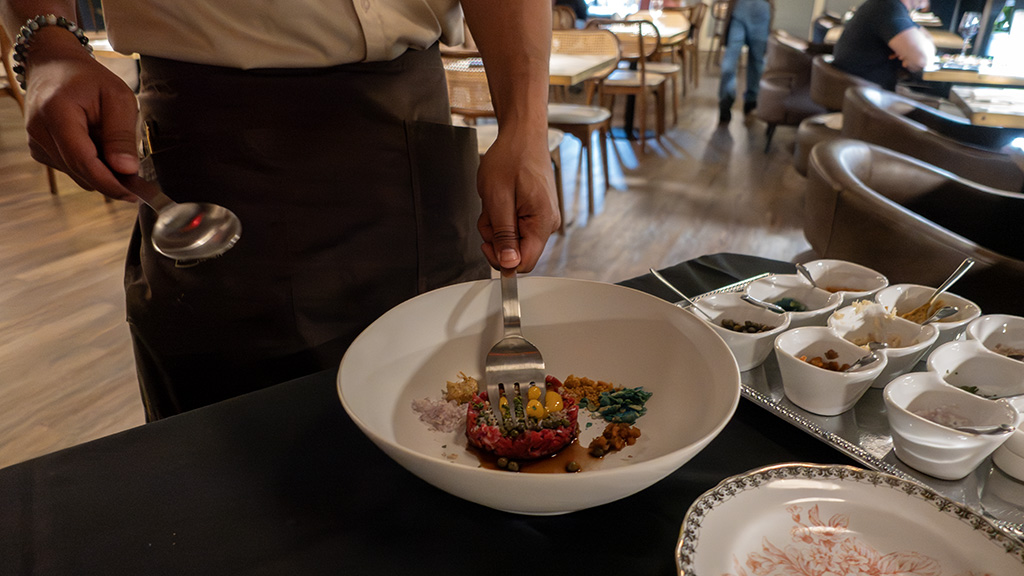
I also just generally appreciated that there was a gigantic portion of unlimited bread to go along with the meal.

One of the complaints that I hear from friends who go to omakase or tasting menu restaurants is how they sometimes leave hungry, which adds an unnecessary sense of disappointment to an otherwise great meal. With that being said, restaurants obviously can’t be expected to serve huge portion sizes to satisfy even the most starving diners. Even though prices are partially set by demand, they’re also set by the cost of the underlying ingredients, so the chef needs to find a good balance between portion size and the overall affordability of the meal.

One way to address this is to give cheap carbohydrates as a bonus filler dish for those who are still hungry. For example, some omakase restaurants will ask if you want more food, and if so, they will give you complimentary scoops of sushi rice until you are satisfied. The way L’Atelier de Joël Robuchon gave me a ton of bread reminded me of the scoops of sushi rice from Japanese restaurants, which I liked. The bread is going to be relatively cheap for them to make, but the return on investment in customer happiness will be huge.

I mentioned this in my recent review of Gordon Ramsay Hell’s Kitchen, but I’ve been short of time lately because I once again did my annual “12 Days of Christmas” live streaming marathon around Christmas and New Year’s time in late 2025. I’m finally getting around to catching up on blog posts, so these photos from L’Atelier are also a few weeks old.

When I dined there, they had winter season decorations set up everywhere, which was a nice, festive touch.

Once I let them know that I wanted to try the seasonal discovery menu and picked my preference of main dish, I was given an amuse bouche to sip on while waiting for my first item. I don’t quite remember what the individual components were, but I recall that it was pretty good.

The appetizer was la salade de pommes, which translates to apple salad, with fingerling potatoes, tomato confit, truffle vinaigrette, and fresh shaved black truffle. This was a nice, refreshing start to the tasting menu.

My waiter mentioned that they were offering a special truffle add-on where I could have more freshly shaved black truffle added to additional future dishes for a supplement. Although the truffle on this had a nice, mild, soothing flavor to it, I still opted not to get the supplement so that I could taste the other dishes in the way that the chef originally intended.

The discovery menu had a wine pairing, but because I don’t drink alcohol, I asked for a custom non-alcoholic pairing instead.

For my first drink, I was served their Blushing Mule made from Seedlip Grove 42 non-alcoholic spirit, lime, house-made raspberry syrup, and ginger beer.

I enjoyed this drink, and I thought it went along nicely mainly with the umami dishes. The intensity of the flavor was quite high, and it pierced through the fattiness very well. I’m also a big fan of ginger, so I thought having that familiar zing of ginger enhanced the overall flavor profile of the drink.

The next dish was la homard royale, which translates to lobster royale. This was a Maine lobster dish served under daikon radish marinated in a honey vinaigrette.

To my limited understanding of French cuisine, I was under the impression that the lobster being called “royale” usually means that it is particularly rich, buttery, and/or creamy. Funny enough, I would consider this lobster dish to be quite crisp and clean, rather than creamy. The lobster itself was lightly coated in a somewhat creamy sauce, but paired with the daikon radish, the overall dish was very refreshing.

Next was la châtaigne, which was light chestnut velouté flavored with cardamom and lardons.

Although it tasted good, this was probably my least favorite dish of the night. That is probably unsurprising considering that I’m not the biggest fan of bacon, and lardons are strips of fatty pork, which is basically bacon. I particularly appreciated the miniature baguettes and the the Blushing Mule to go along with this soup, as both helped subdue and offset the intense fattiness.

The pacing of the dinner was a bit slower than I would have hoped. Usually when you’re dining solo, dishes feel like they’re coming out slower because you don’t have a conversation with any dining companions to distract you from the wait; with that being said, I go to restaurants by myself with decent frequency, so even after accounting for that factor, I thought it was still a bit slow.

Fortunately, because I was seated at the bar, I had the entertainment factor of watching the cooks preparing other diners’ dishes.

After the soup came la noix de Saint-Jacques, which translates to scallop; it was prepared seared in a kumquat and coconut sauce, and came topped with a portion of caviar.

I thought this was a great scallop. It was cooked to a great level of tenderness where each bite was soft, but the outside had a nice firmness to it from the sear. The caviar had a strong saltiness you’d expect from good caviar, and that saltiness enhanced and intensified the overall flavor profile of the dish. After finishing the scallop, I dipped some bread into the leftover sauce and finished that as well.

Following the scallop was la morue noire, which translates to black cod, prepared à la plancha and served with mushroom velouté and champagne foam.

I thought the way this fish was cooked made its textural perks similar to the scallop—the inside was soft and flaky, and the outside had a firmer crispiness to it that made the fish taste very good.

At this point, my second beverage of the non-alcoholic beverage pseudo-pairing came out. It was the café noix de coco, which translates to coconut coffee, made with espresso and coconut syrup. This may be shocking considering how much I like fruity drinks, but I actually liked this coffee better than I did the Blushing Mule.

I would describe this more like a dessert drink than what you’d expect from coffee. Although it was overall pretty sweet, it still retained a good balance of both sweetness and bitterness. When I drank it along with a regular dish, the sweetness was emphasized; when I sipped it with my desserts, the bitterness was emphasized, thus creating a great balance in flavor profile with the sweeter desserts.
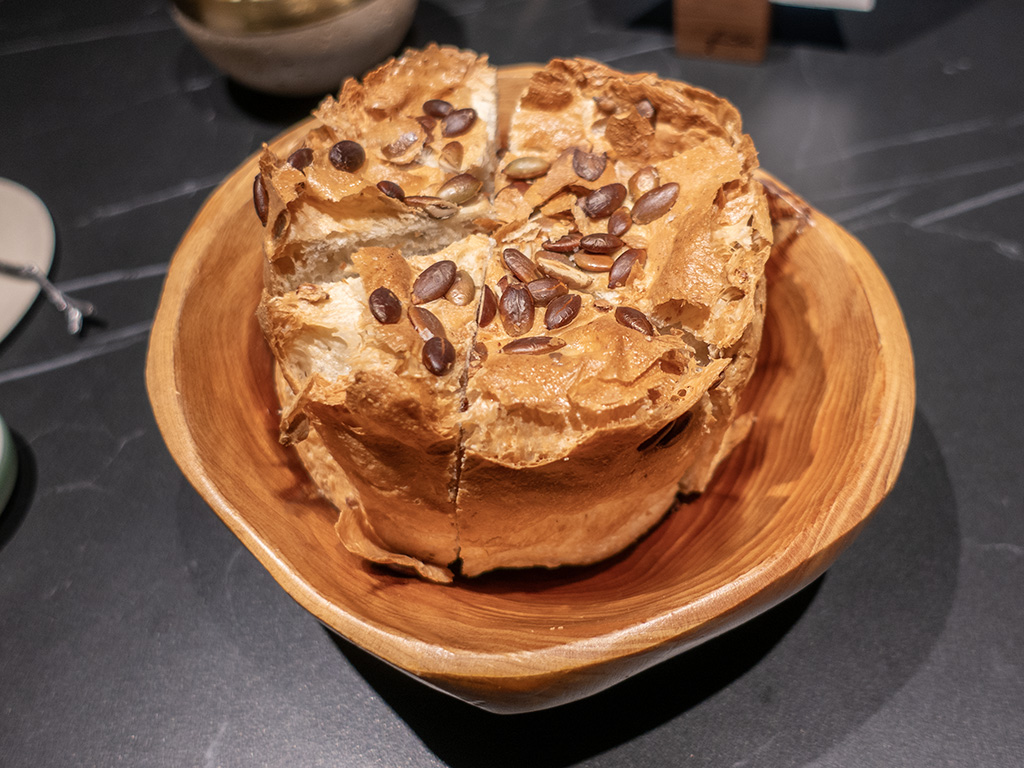
For my main dish, I opted for la caille, which translates to quail, prepared caramelized and filled with foie gras, along with a side of potato purée. There was a very small portion of potato purée served directly on the plate, but they also gave me an additional hearty portion of it on the side in a separate bowl.

The quail was cooked to perfection. The inside was already tender, but the fact that they stuffed it with foie gras made it even better. The outside had a subtle crispiness to it that enhanced the texture profile.

This potato purée might have been the best potato purée or mashed potatoes I’ve ever had. Usually, restaurants will just overload their potatoes with butter so that it tastes better, but if you’re someone who doesn’t eat much butter, the excessive butteriness becomes pretty obvious and off-putting. This potato purée had the deliciousness of a butter-loaded potato purée, but it didn’t taste insultingly fatty and it still had a strong potato flavor.

If it wasn’t for this, then the other option for the main entrée would’ve been le boeuf, which translates to beef, and was a Jack’s Creek New York Strip steak with braised endive, comté, and jambon.

Throughout my meal, some of the waiters who would come to clear my finished plates would also ask how the food was, and I gave them frank and unfiltered feedback each time. The level of detail of my feedback presumably led them to believe and conclude that I have a decent level of familiarity with food, and thus, we developed some rapport over the evening.

Part-way through eating the quail, a waiter checked in on me, and I let him know how much I liked it so far. After hearing my response, it sounded like he was eager to tell me a story that he had been holding in for the past hour or two. Earlier that evening, there was apparently a woman who ordered the quail, was shocked at how small the portion was, and started complaining about how they deceived her. He added on, “maybe she was expecting an entire chicken!”

I chuckled, but was a bit confused, so I looked down at my own plate. I confirmed that they had only served a quail leg and thigh, which is like a quarter of the bird. I looked back up and was about to suggest that maybe she was just anticipating receiving more components of the quail, but by that point… the waiter had already disappeared.

That concluded the main part of the meal, and we were now left with two final desserts. The first dessert was la figue en sorbet, which translates to fig sorbet, served with blackberry panna cotta and fig confit.
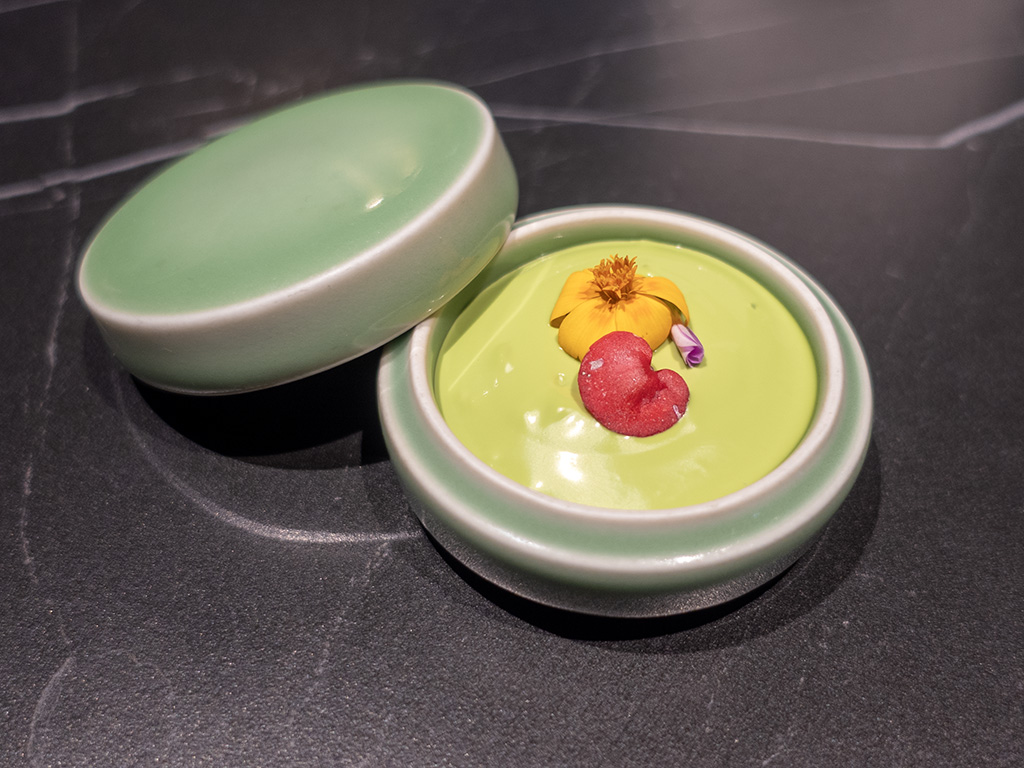
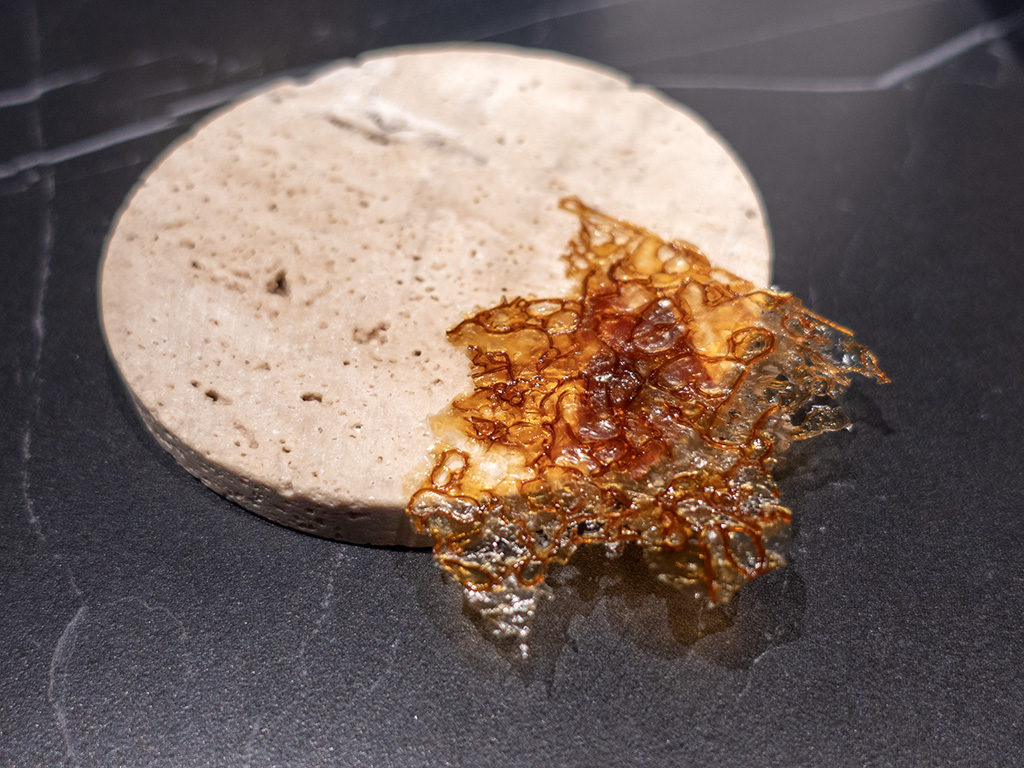
I don’t know if I’ve just been eating low-quality or underwhelming fig my entire life, but this fig sorbet and fig confit actually tasted like a naturally sweet fruit. Mixed with the coconut coffee drink I mentioned earlier, this was probably my all-time favorite fig dish.

The second dessert was la citrouille, which strangely translates to “pumpkin.” The dish was actually cinnamon ice cream with caramelized honeynut squash and pecan streusel.

I like nutty flavors, so as expected, I liked this dessert. The cinnamon ice cream flavor went along nicely with the streusel, and the crumbly texture of it made the ice cream more fun to eat.

Upon the conclusion of my meal and along with my check, I was given a macaron as my mignardise, also sometimes referred to as a petit four.

After biting into this macaron, it occurred to me that L’Atelier de Joël Robuchon did an overall fantastic job at textures on everything they served me. The macaron was soft on the inside and crispy on the outside as you’d expect from a good macaron, but there was also a ring around the edge of the shell that was extra crispy that added even more depth to the contrast in texture.

I thought all the dishes played around with texture in a more “advanced” way like this, which was nice.

I was seated at the main bar with a view of the kitchen, but there was a separate alcohol bar in the corner; this is what it looked like:

And finally, here is a shot of a flower arrangement situated outside the restaurant:

Seasonal discovery menu$ 255.00
Blushing Mule$  18.00
Café noix de coco$  18.00
Sales tax (8.375%)$  24.37
Gratuity$  45.00
Total$ 360.37
This table to the right shows how much I paid.

Although this was a very good restaurant, it wasn’t quite at the level of being a particularly stand-out experience. To be clear, the quality of the food was far better than many restaurants I’ve been to, and my taste buds had a great time eating everything. However, there wasn’t anything notably crazy, gimmicky, or memorable about it (which is not inherently a bad thing, and could be considered a positive for some).

This reminded me a lot of Jeune et Jolie, another French restaurant I went to when I was visiting Southern California. I was under the impression that French cuisine fundamentally relies heavily on butter, cream, cheese, and other fatty ingredients to serve as a foundation for their flavor profiles. However, both L’Atelier and Jeune et Jolie had cleaner and more refreshing dishes. This could potentially be attributed to local differences specific to regional specializations within France; if that is the case, then this region of French food is something that I much prefer over other French food I’ve had in the past.

Although I would say that I do recommend this restaurant, it isn’t such a strong recommendation that I would suggest prioritizing it if you have a limited number of days and a limited number of meals to try in Las Vegas. Also, keep in mind that this is quite a high pricepoint for a meal. Even without the two non-alcoholic beverages, this seasonal discovery menu exceeds US$300.00 per person after tax and gratuity.

With all that being said, I think this was a successful “trial” for me for the full-blown dégustation at Joël Robuchon. If I was being really picky about value for money, it might not be worth it, but in that case, I guess a lot of other fine dining restaurants also probably wouldn’t be worth it either. I heard that the complete dégustation can take up to four hours; my experience at L’Atlier took about two and a half hours, and I enjoyed it enough that I would not mind a four-hour version of it in the future as well.


—§—