I am now back on land after finishing my first cruise on Royal Caribbean’s Quantum of the Seas, and I’m working on catching up on blog posts. (While still on the ship, I wrote about my experience leading up to, during, and shortly after embarkation day, and a few days ago, I published a review of Wonderland, a specialty dining venue on the ship.)
While purchasing my ticket, I added in an unlimited premium dining package that allowed me to go to any specialty restaurant on board without needing to pay the extra cover charge. However, even with that package, there was one dining experience that still had an upcharge—the Chef’s Table.
Upon doing some more research, I found out that the Chef’s Table is the highest-tier dining experience on Royal Caribbean cruises and is basically an interactive prix fixe chef’s tasting menu experience served to a limited number of guests per night. Considering that I have become somewhat of a food enthusiast over the past several years and especially like unique and personalized experiences, the Chef’s Table aligned perfectly with what I was looking for in a nice dinner.
If you read my embarkation blog post, you already know this, but as a quick summary, I had a disappointing experience with the food quality at Izumi Sushi, so I canceled all my future reservations there and looked for other options instead. I replaced one of the Izumi nights with the Chef’s Table. Chef’s Table normally requires an additional US$118.00 payment per person, but because of my unlimited dining package, the cover charge got reduced to US$59.00—a base price of US$50.00 for the experience, plus a mandatory 18% gratuity of US$9.00.
I didn’t see a way to book the reservation on the Royal Caribbean app in a way that would link it to my unlimited dining package, so I went to Guest Services for assistance. I heard that the Chef’s Table is in pretty high demand and often sells out before departure; I was wondering whether that was part of the reason I was having issues with the app, but fortunately, the representative at Guest Services was able to get me a spot for that same evening as the 13th of a maximum of 16 diners.
At 6:25 PM, I went down to the designated check-in spot at the Schooner Bar to wait for everyone to arrive and be walked over to the Chef’s Table. After a brief wait, all the diners showed up and our waiter (who was also the sommelier) led us to the table.
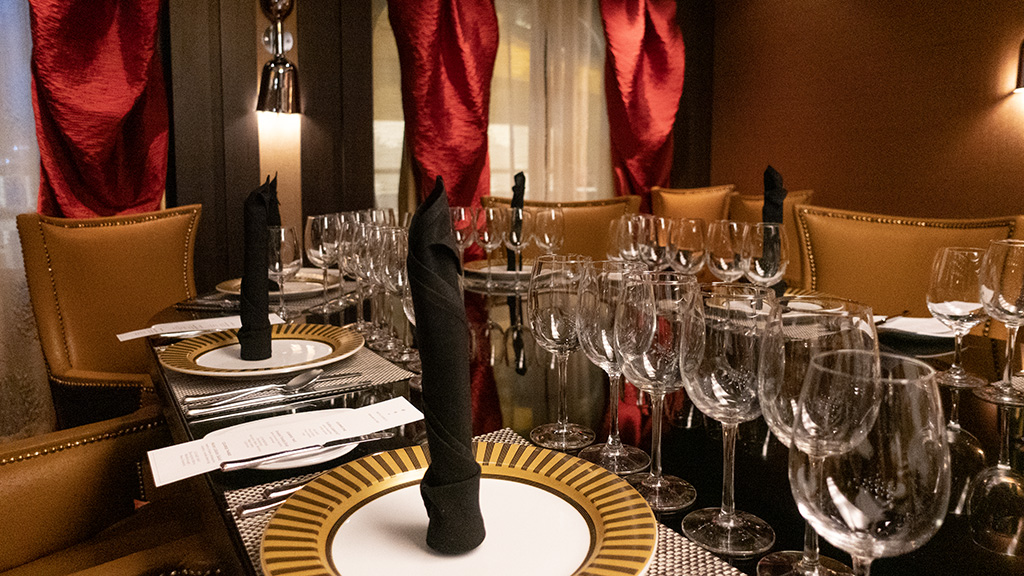
The format of this was quite different than what I’m used to. This felt more like a family Thanksgiving dinner than it did a restaurant. Everyone was seated together around a single large dining table, which made the experience very communal and conducive to conversation among everyone.
The dinner was a multi-course meal that also came with a wine pairing, so everyone’s placemat had wine glasses lining the edge. I don’t drink alcohol, so the waiter took away my wine glasses and said he would provide a special non-alcoholic beverage pairing to go along with my dinner instead.
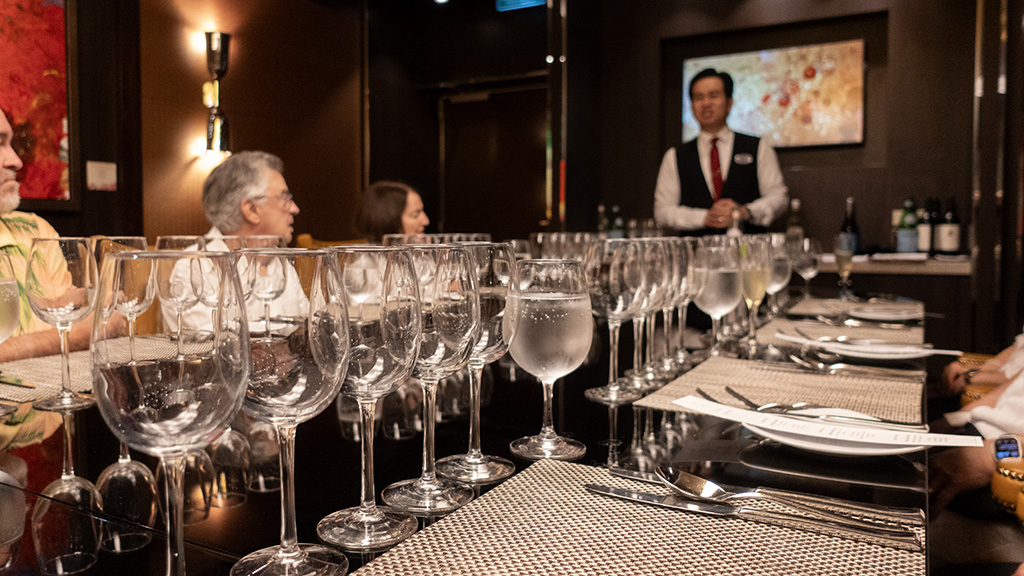
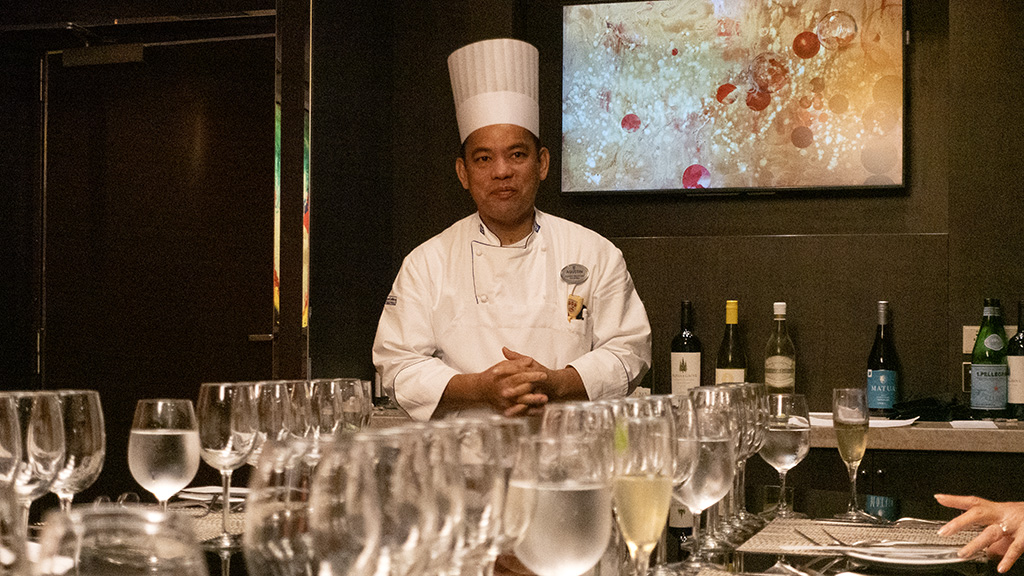
After our waiter and sommelier explained the basic idea behind the Chef’s Table, the chef also came out from the kitchen to introduce himself. This was apparently his first cruise for which he was the chef for the Chef’s Table.
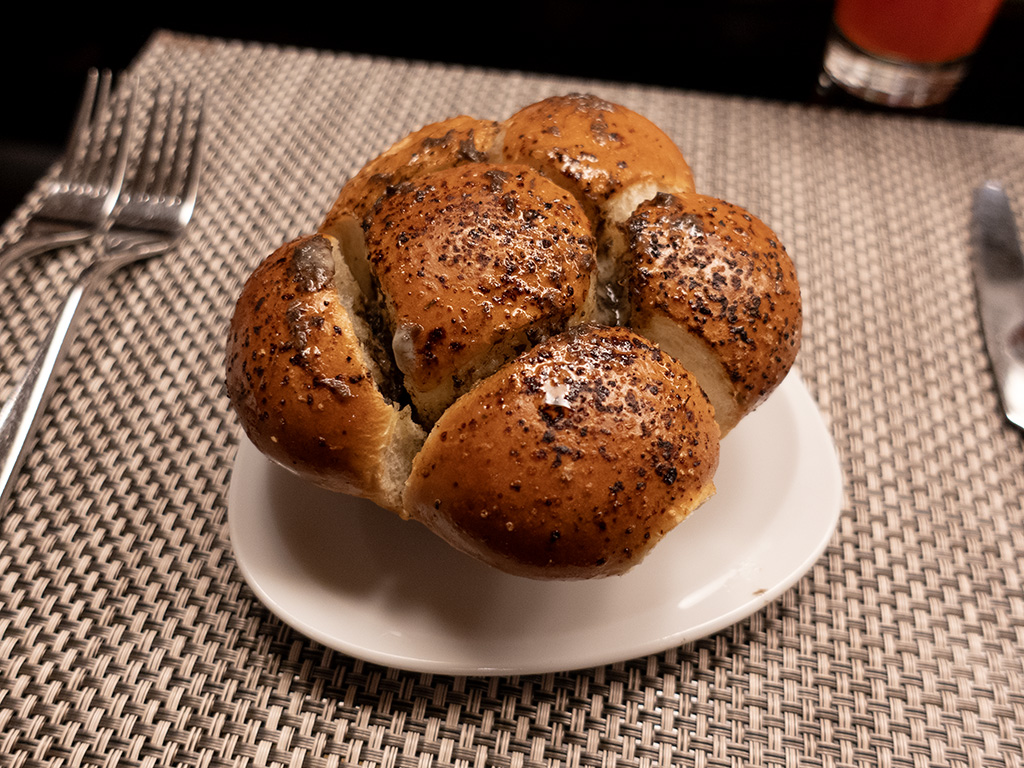
While we were talking amongst ourselves and waiting for the first dish, the waiter came out with some bread. Each pair got one large portion of blooming bread, but because I was alone, I got to have an entire one by myself. I ate half of it as an appetizer, then saved half of it to use as dipping bread for any leftover sauces that I assumed I would have with some of the dishes.
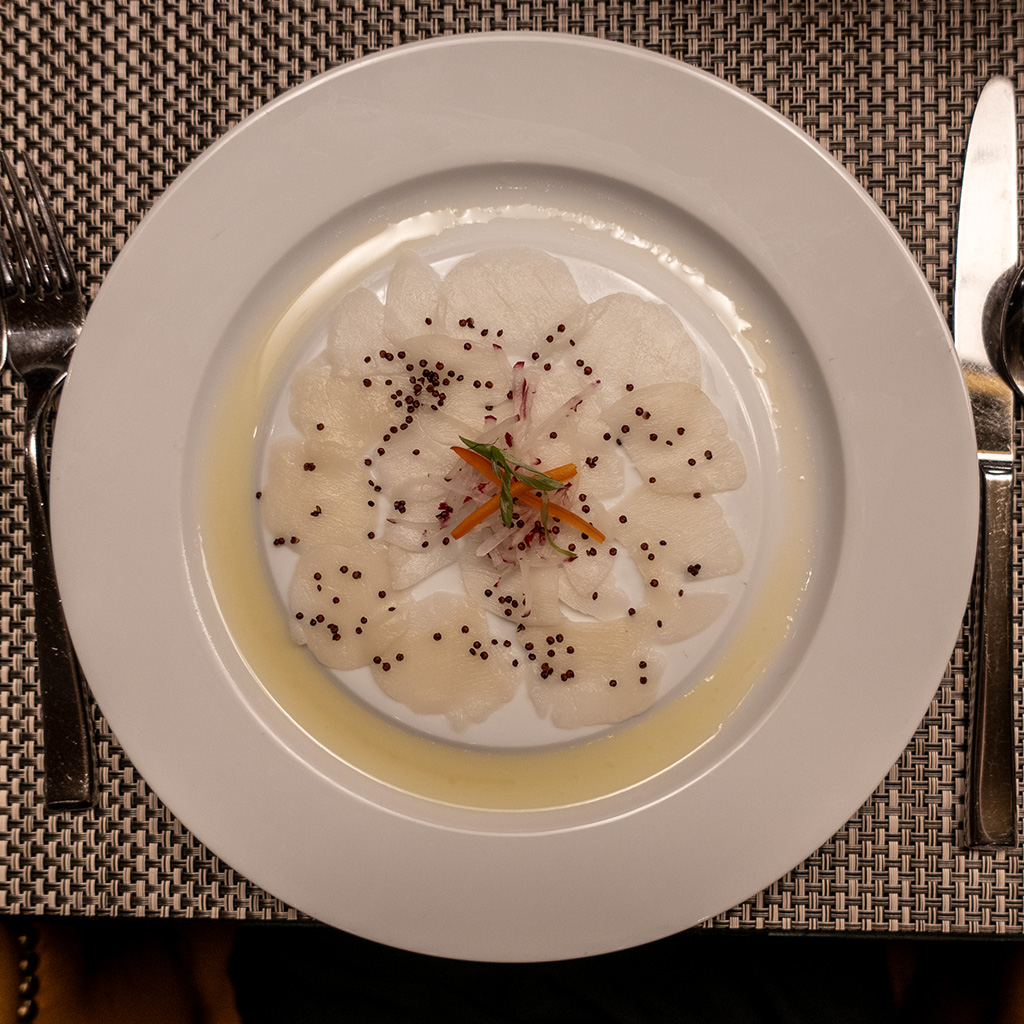
The first course was scallop carpaccio with crispy quinoa and yuzu vinaigrette.
I understand that the premise of carpaccio is to thinly cut the meat or fish, but I still would’ve preferred for the scallop to be cut a bit thicker so that it had more of a bite. The way that I adjusted for this was that I rolled up each slice of carpaccio into a little tube so that it felt like I had more material to chew down into. I liked the textural contrast between the soft scallop and the crispy quinoa, and dipping each tube into the yuzu vinaigrette added a nice splash of citrus that enhanced the overall flavor profile.
There wasn’t a separate non-alcoholic beverage menu that had all the ingredients of all the drinks listed, so I don’t quite remember what exactly was in every drink, but this first one was (as you can probably tell from the photograph) an orange citrus drink.

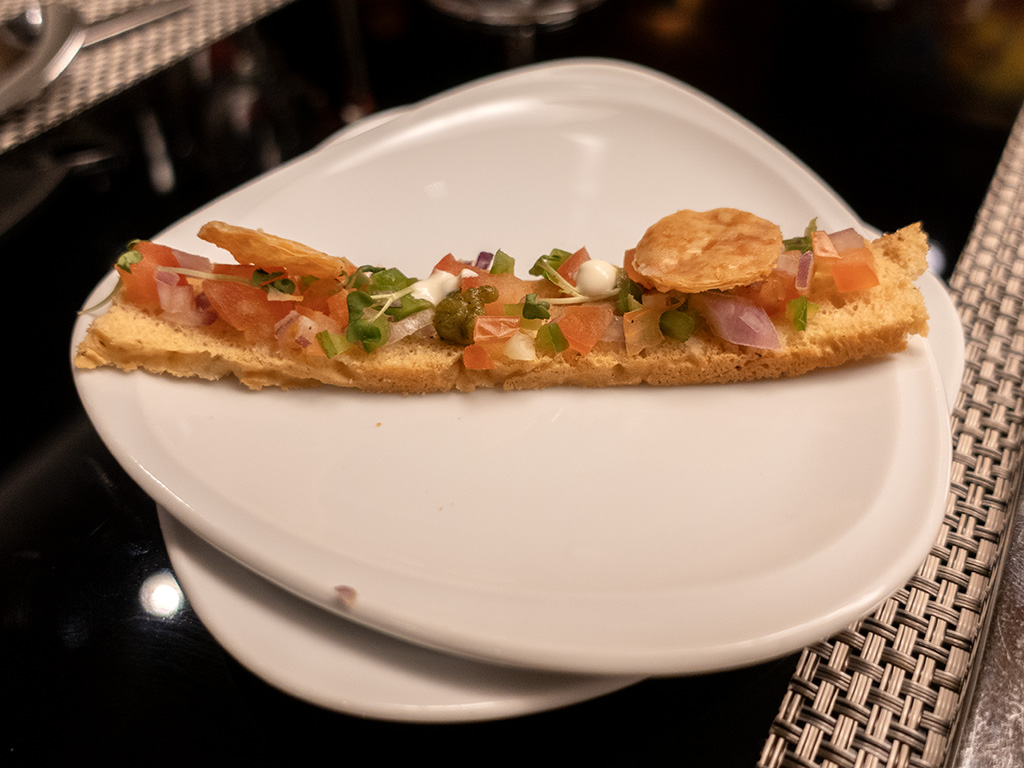
To go along with our second course, we received what the menu called garlic focaccia croutons. As you can tell from the photograph, it was definitely just a focaccia and not so much a crouton. The toppings were refreshing, and this served as a great side for the upcoming soup.
The actual second course was smoked tomato soup. I couldn’t really distinctly identify the smoke, but it did taste noticeably more earthy than what you’d expect from normal tomato soup.
The chef came out with a pitcher of cream and individually added a swirl to each of our bowls. Interestingly, the cream maintained its coagulated shape, and even when agitated with my spoon, it didn’t really separate much. I ended up “cutting” the cream with my spoon and including some in each spoonful, which was quite interesting.

The next drink of the beverage pairing was a blueberry nojito, the non-alcoholic version of a mojito.

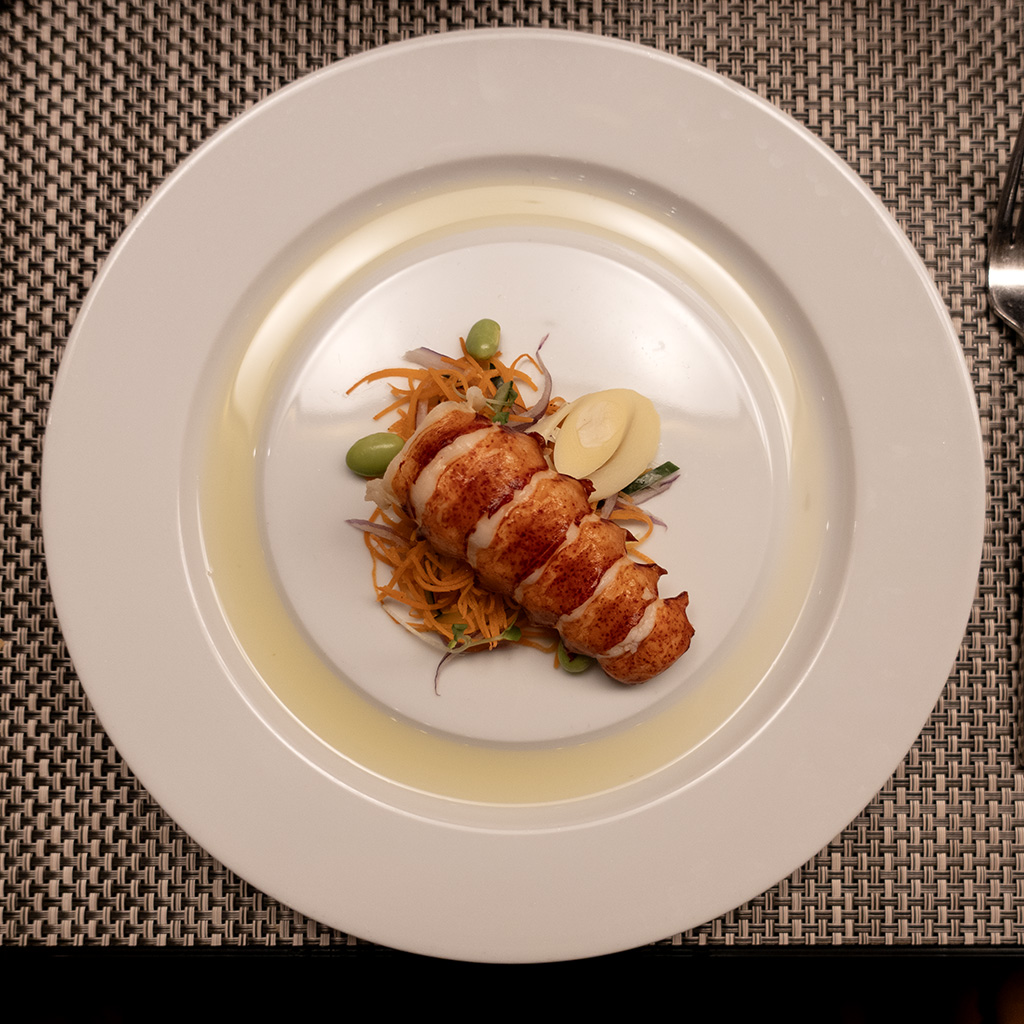
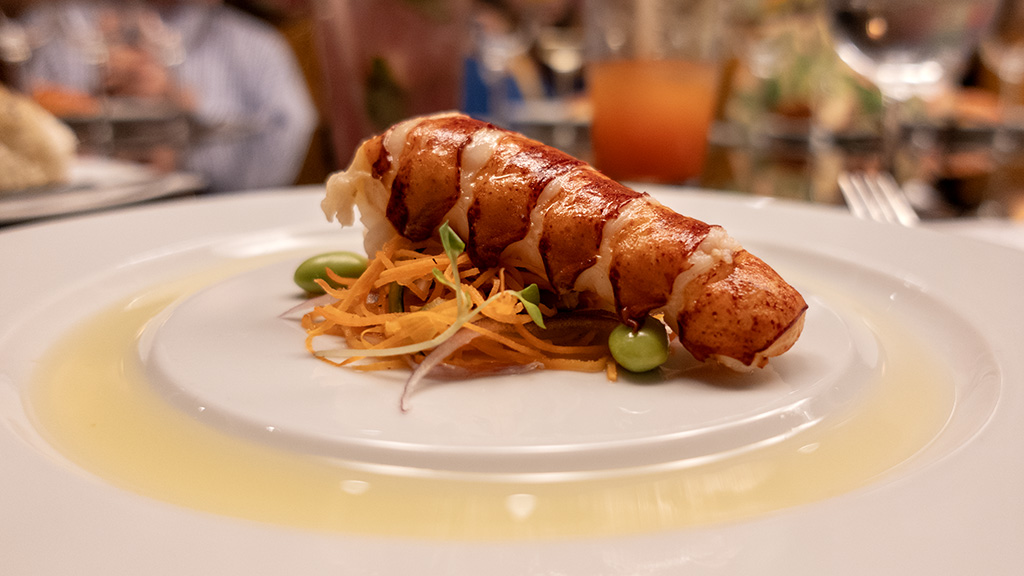
The third course was Maine lobster salad with hearts of palm, pineapple, cilantro, and vanilla dressing.
This dish was an example of pristine simplicity. The lobster was incredibly tender and very strong in clean, pure lobster flavor. The vegetables added a nice crunch to the texture but did not materially affect the flavor of the lobster. The dressing was incredibly light and also did not affect the core taste of the lobster. If someone wanted to eat lobster because they love the lobster itself, then I think the way that this was prepared is the best cooking method possible to achieve that goal.
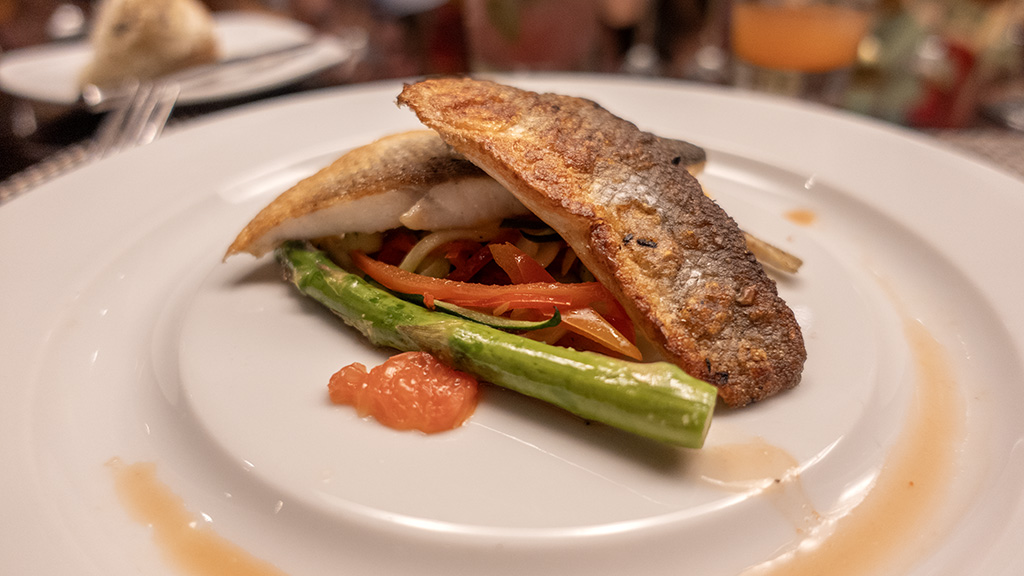
The fourth course was roasted branzino with grilled zucchini, peppers, carrot, lemon confit, and pesto.
Similar to the lobster, this was prepared in a very simple and straightforward way that emphasized the natural flavor of the whitefish without having anything else alter or overwhelm it. The skin was cooked very well in the sense that it was a great balance of both chewy and crispy at the same time. Although not listed on the ingredient list, it also came with a slice of citrus that basically acted as a superior substitute for squeezing a bit of fresh lemon on the fish.

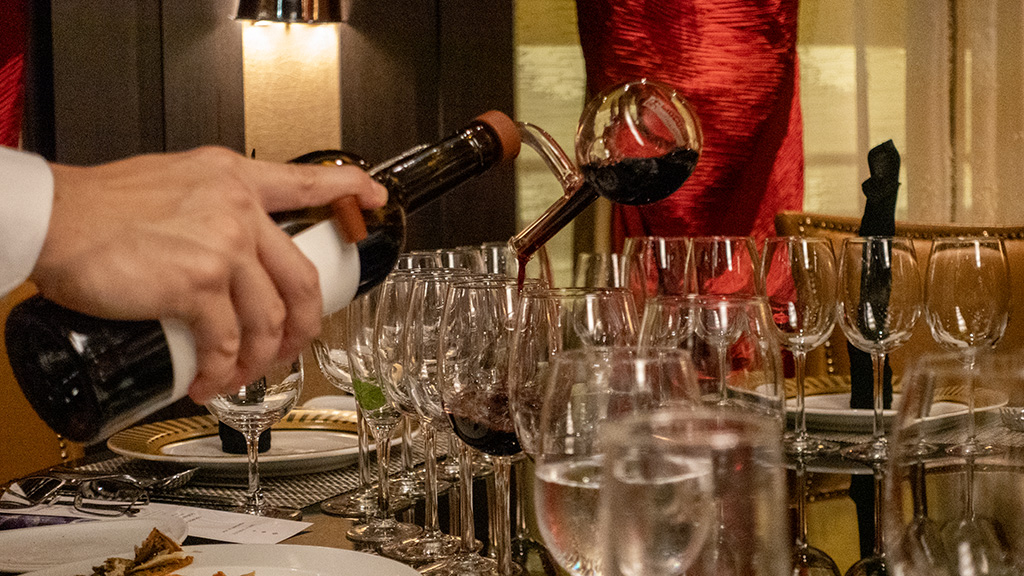
Because I don’t consume alcohol, I haven’t really had any high-end wine experiences, and the only things I know about wine come from observing others ordering and drinking wine. That was applicable during my Chef’s Table meal where I saw the usage of a centrifugal wine aerator for the first time, by our sommelier while he was serving the other guests.
He later explained that it was a decanter, though I’m wondering if that was just a language barrier, because I am fairly certain that is just an aerator (and yes, I do recognize the irony here of attempting to correct a sommelier, especially considering that I just disclosed my general lack of wine knowledge). He was using that tool to serve Sequoia Grove Winery’s Cabernet Sauvignon from Napa Valley, California.
For the third installment of my non-alcoholic beverage pairing, I received a fruity pineapple smoothie.
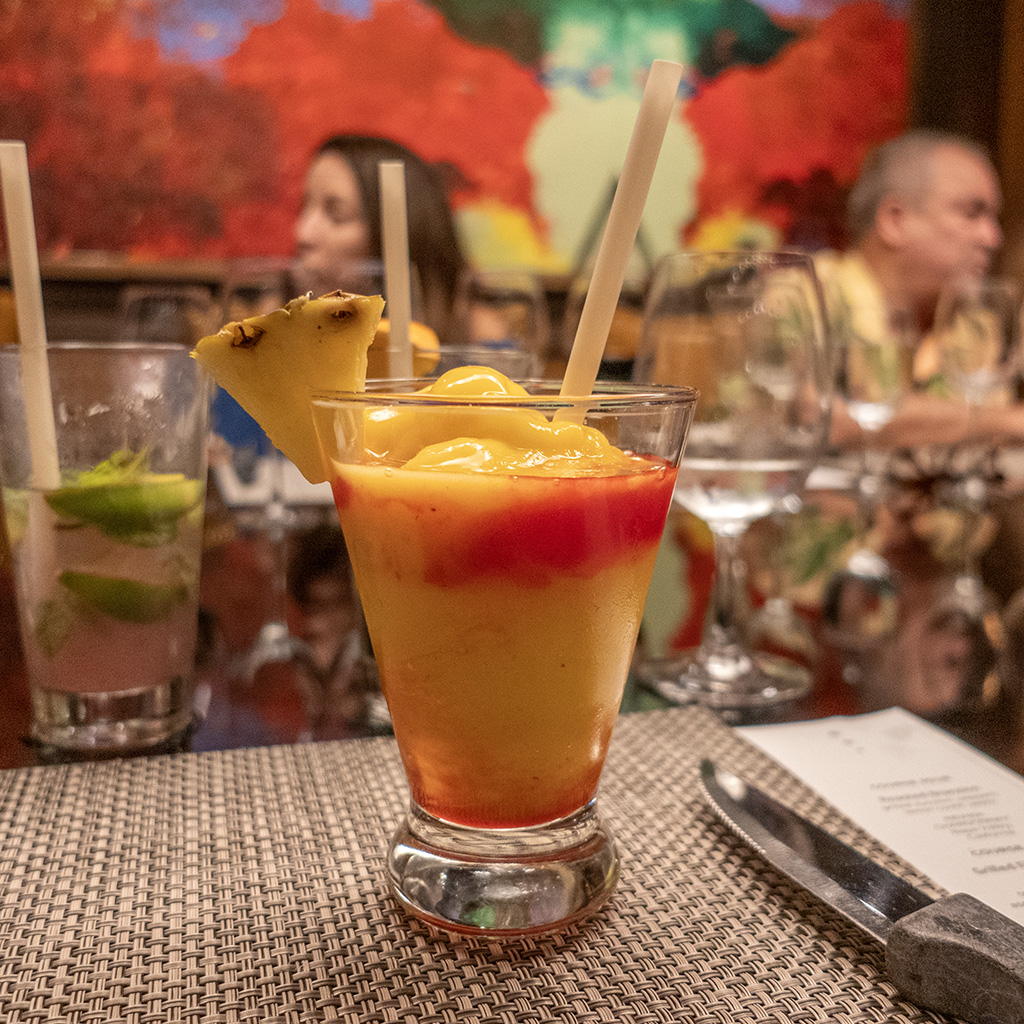
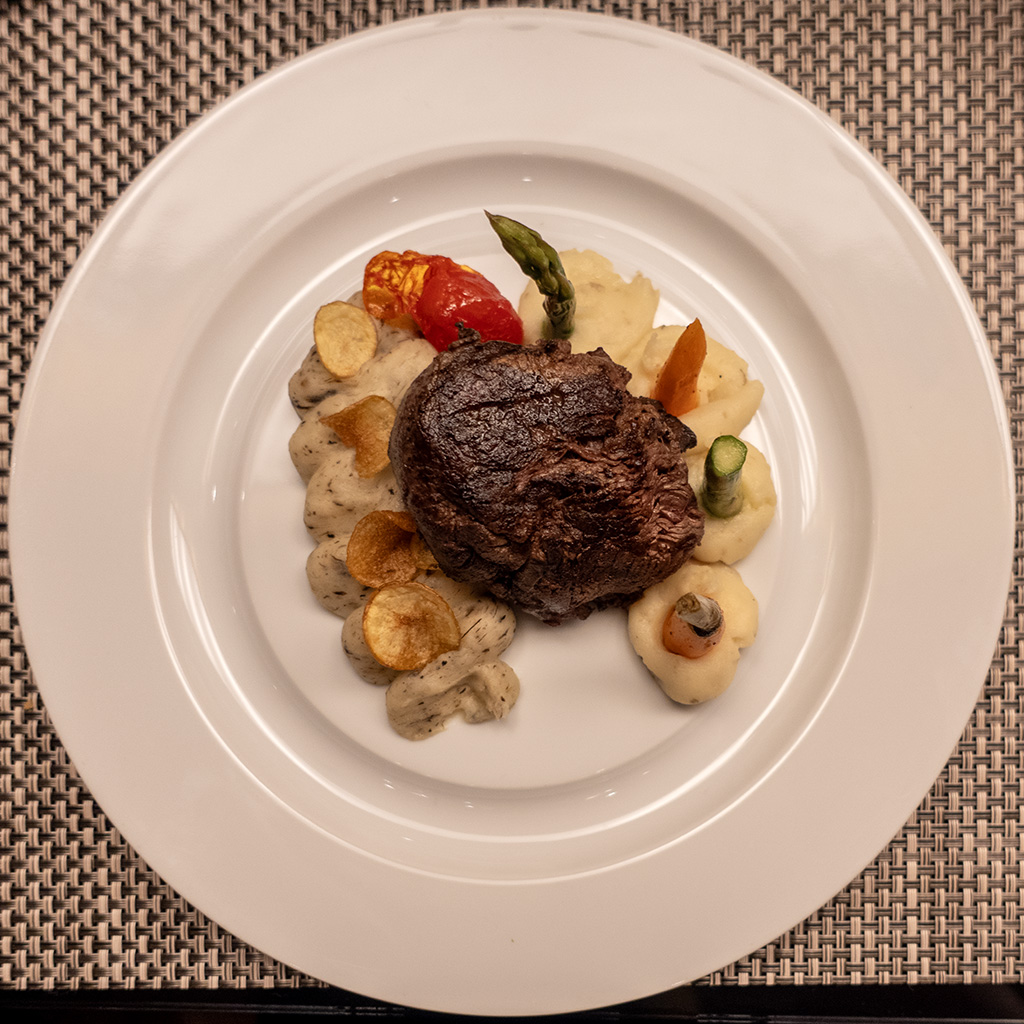
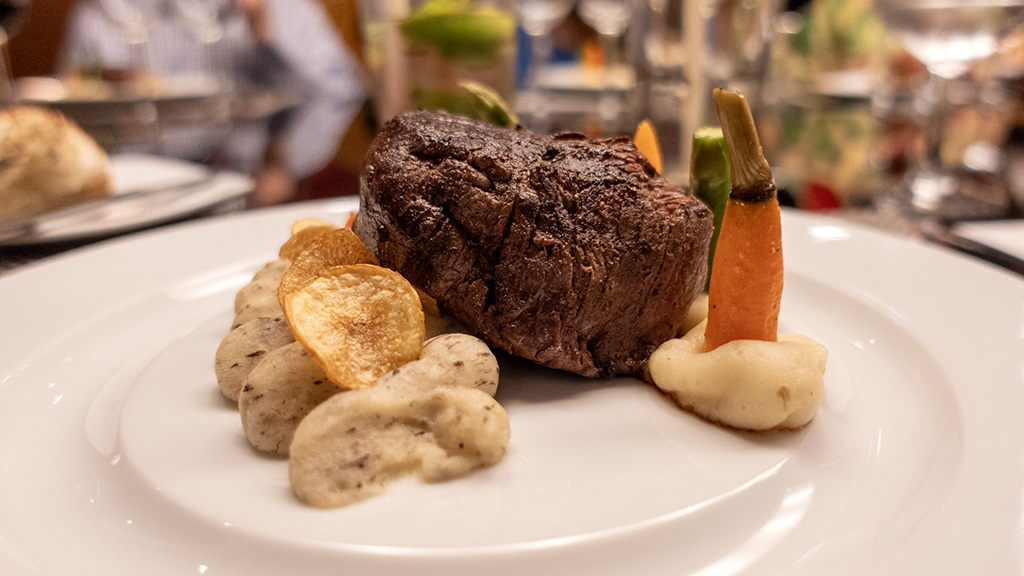
The pineapple went along great with the fifth course, a grilled filet mignon with truffle potato purée, asparagus, and bordelaise sauce.
The waiter went around the table asking people their doneness preference for their steak. I ordered mine rare, and I am relieved to share that nobody at the table requested well-done. I was mindful to cut against the grain for each bite, and the steak was incredibly tender and flavorful.
I liked that there were two variants of the potato purée—one regular, and one with truffle. I especially liked the truffle potato purée because it had a more subtle and earthy truffle flavor (as opposed to a more greasy truffle taste that you find when people just use truffle oil for flavoring). I also noticed that the potato purée here was quite a bit firmer than what I usually get at high-end restaurants, which I actually found to be a good thing; I think that indicates that there is a higher ratio of potato to butter, which I personally prefer because I actually like potatoes.
I also appreciated that there were two additional tiers of textural enhancements. The vegetables were lightly boiled so they were softer but still maintained a good crunch, and it fulfilled the traditional “steak and veggies” archetype. However, the dish was also served with miniature potato chips, which added an unusual but fun extra crisp to some bites.
(The reason the sauce is not pictured in any of the photographs is because the chef came out after everyone received their plates and individually asked whether they wanted the sauce on the steak or in the moat, then served it to the diner’s preference.)
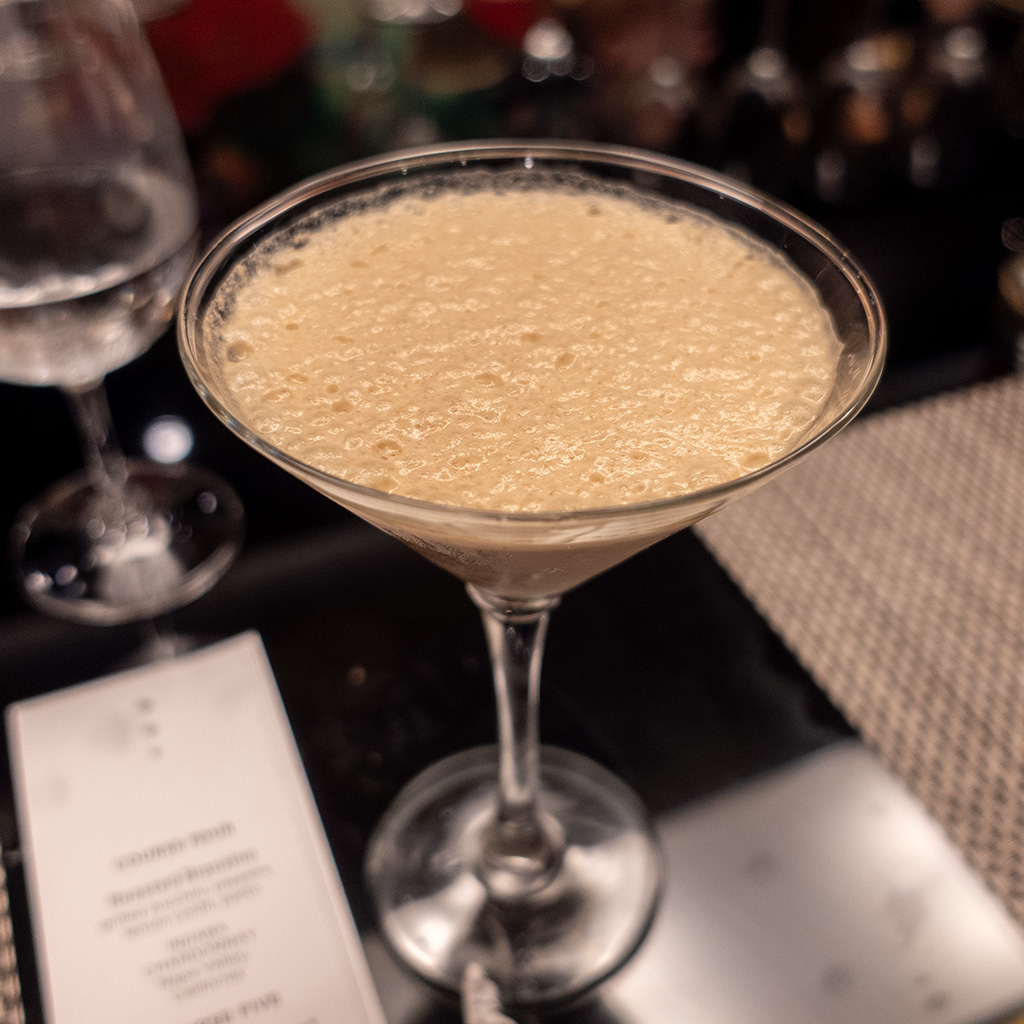
For the final drink of the night, everyone received a salted caramel espresso martini. Because mine was non-alcoholic, I guess it was just a salted caramel espresso coffee.
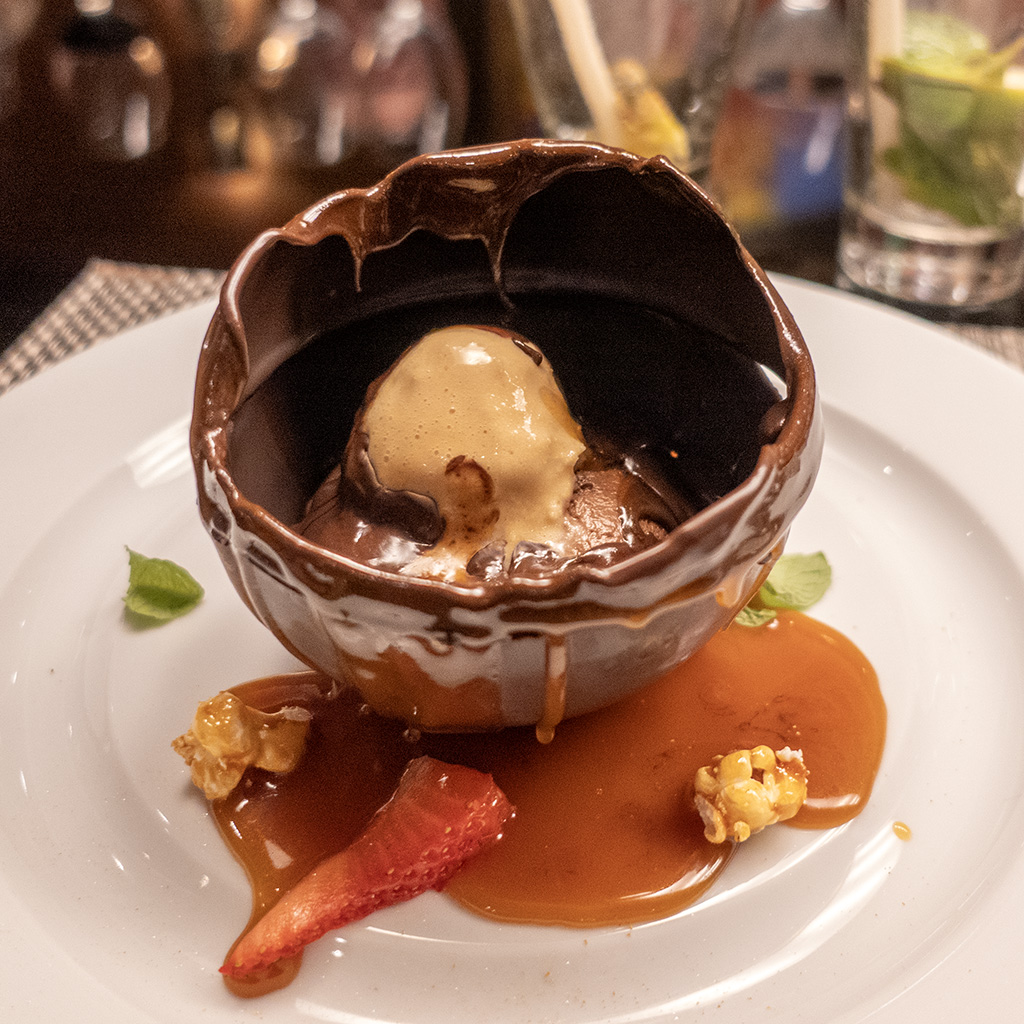
Dessert was the grand finale of the dinner. They call it the World, and it is a hollowed spherical chocolate orb with peanut butter ganache, Valrhona chocolate mousse, and salted caramel gelato, topped with warm caramel sauce. Surrounding the World were small pieces of caramel popcorn, strawberry, and mint.
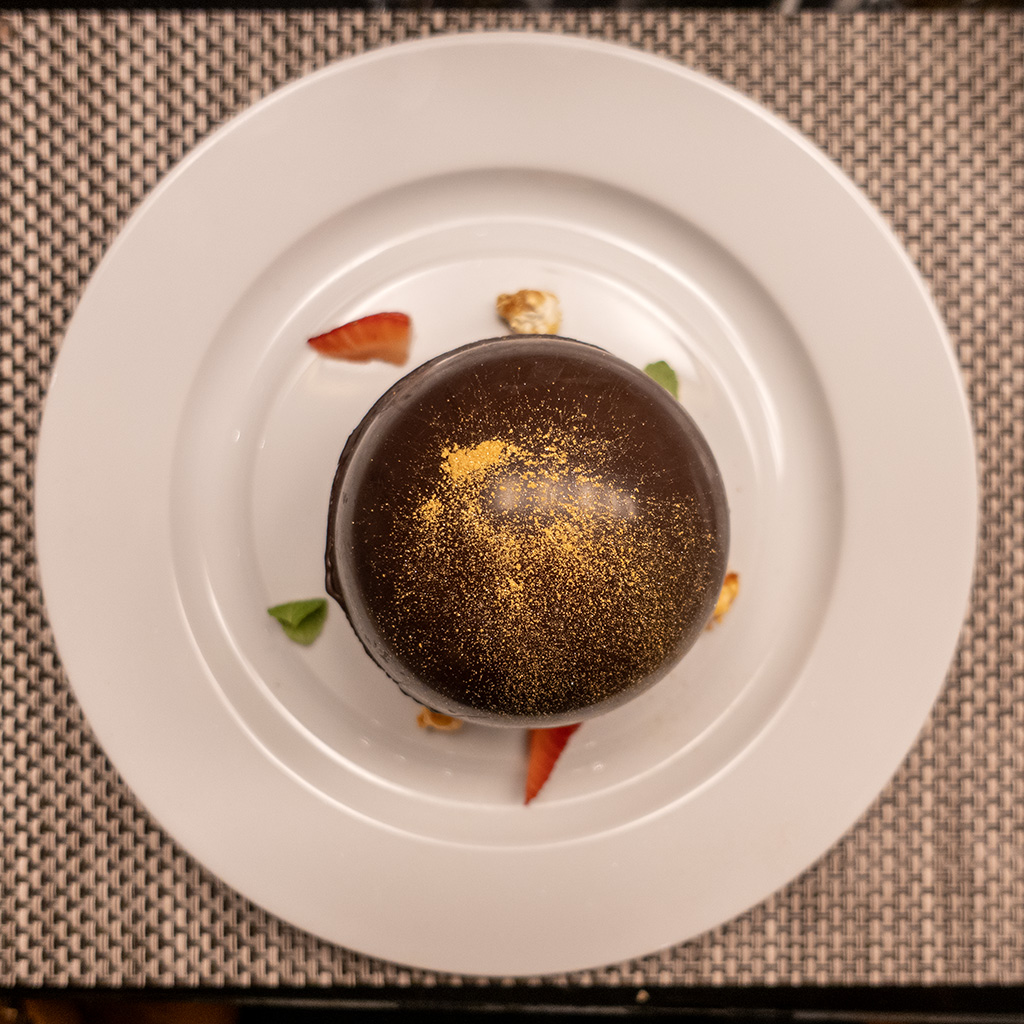
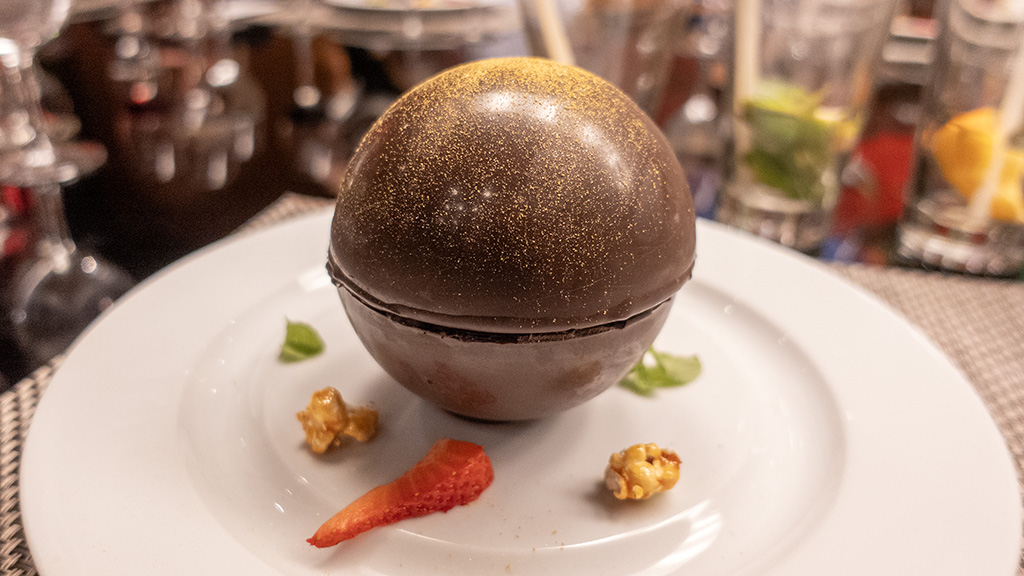
For the presentation, the waiter goes to each plate and pours the warm caramel sauce on top so that it melts away the top shell of the chocolate sphere and reveals its inner contents.
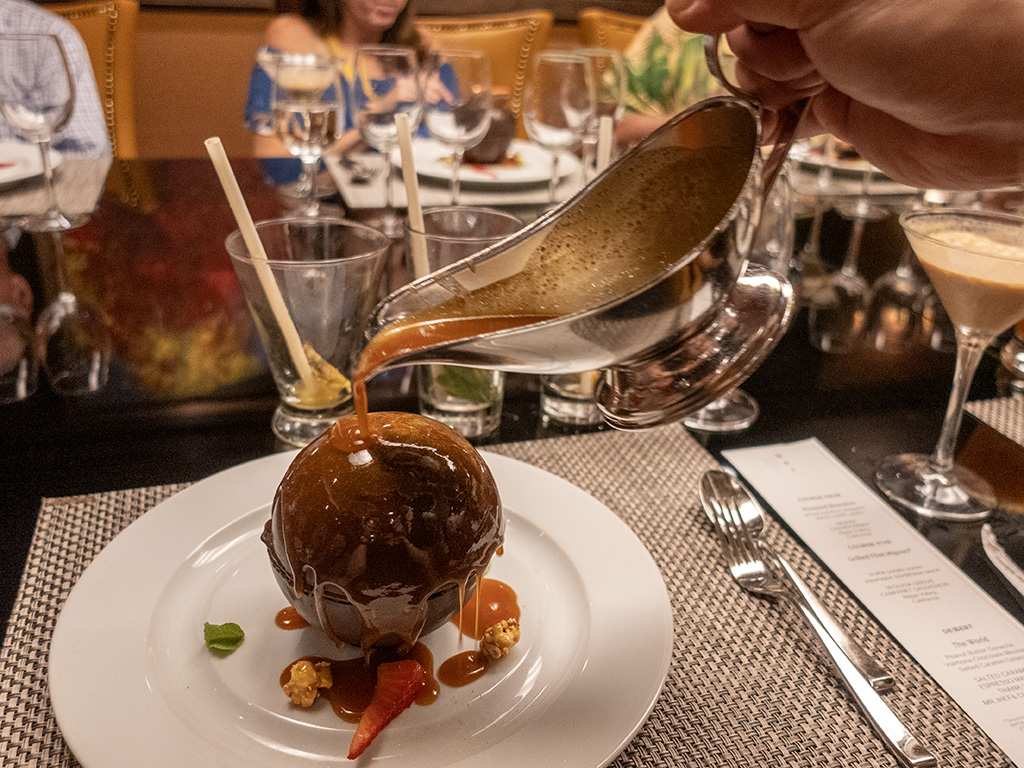
This was the only dish of the dinner that I wasn’t able to finish. The inside of the World was delicious, but unfortunately, the chocolate outside was far too sweet. When I supplemented each bite of chocolate with the espresso, that helped balance out the intensity of the sweetness, but after I ran out of salted caramel espresso, I couldn’t down the rest of the chocolate shell.
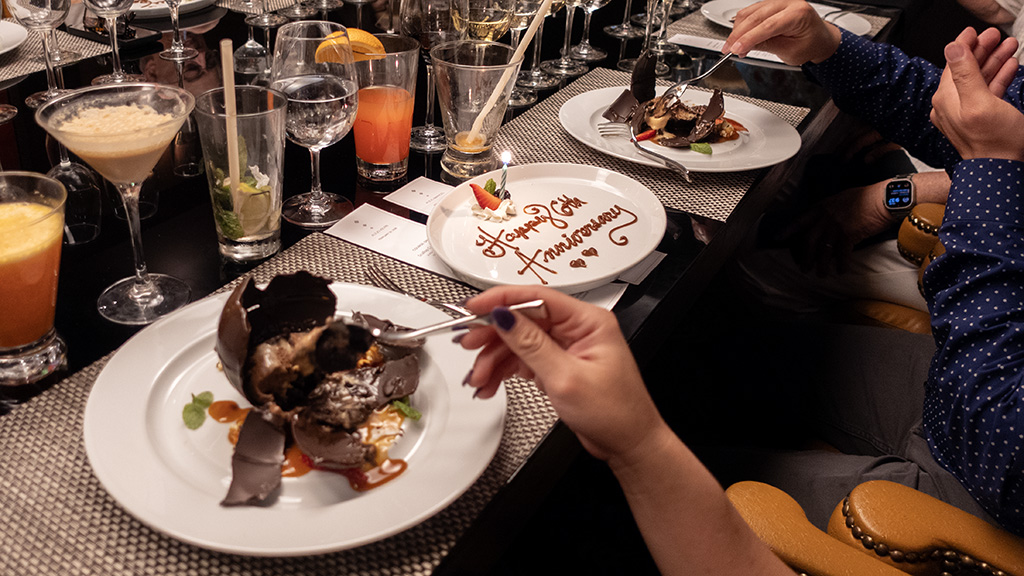
During the dinner was also when they did special celebrations. One person across the table from me was celebrating his birthday, and a couple sitting to my right was celebrating their six-year wedding anniversary. They each got a little plate with caramel text hoping well wishes for their special occasion, along with a candle planted in an arrangement of strawberry, blackberry, mint, and whipped cream.
And with that, the Chef’s Table concluded. The overall experience took a bit over three hours. The waiter treated us to a quick magic trick to end the night, and then the chef came out from the kitchen to thank us all for our attendance.
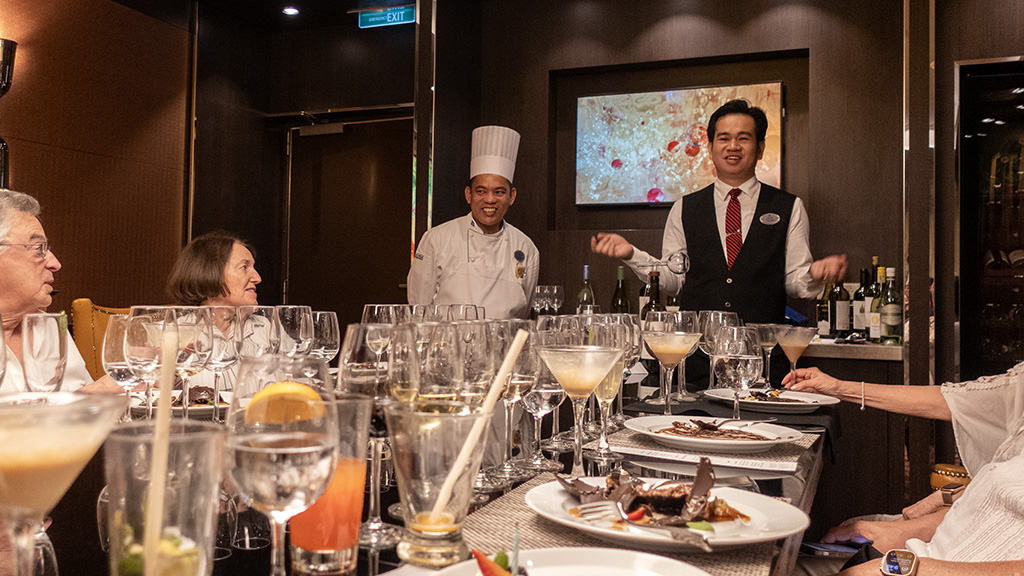
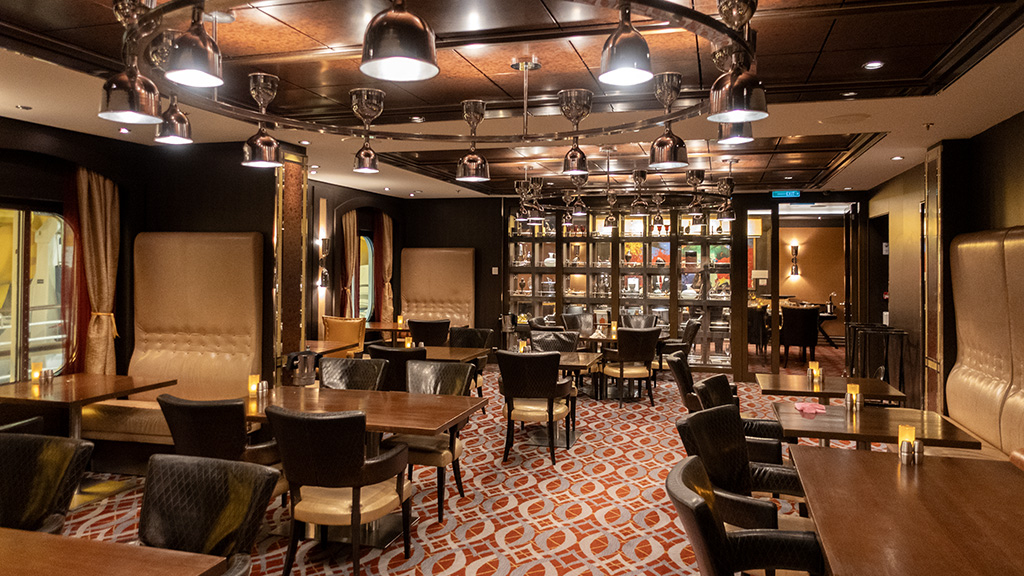
This is what the other part of the dining area looked like, which would be the “back side” behind the photographs that I took. This might give a bit more perspective on how exclusive of an experience this was due to its secluded location and limited availability.
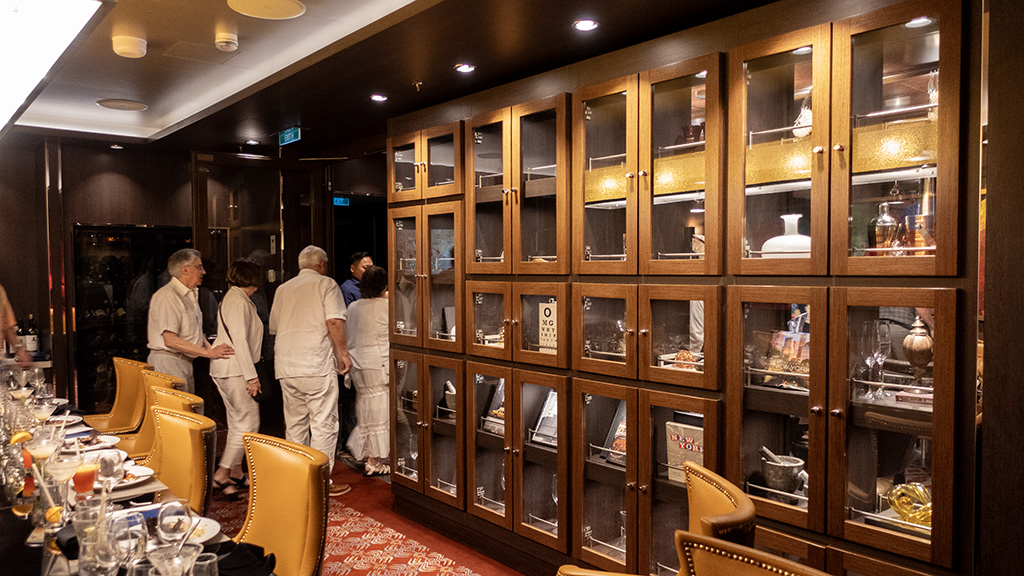
The room itself was nestled far in the rear of Chops Grille, an American steakhouse that is part of the specialty dining restaurant collection on the ship.
I had a great time at the Chef’s Table. I go to a lot of chef’s tasting menus and other special multi-course dining experiences, but in terms of atmosphere and environment, I think this Chef’s Table ended up being my all-time favorite.
A lot of omakase or other chef-led dining experiences will seat you at a bar so you have a view of the kitchen and can watch the chef and cooks prepare your food. If they don’t have bar seating available, each party generally gets their own private table. Royal Caribbean’s Chef’s Table is the first time that I have ever been seated at what is basically a residential dinner table that you would usually only share with your extended family for holiday meals.
This may potentially sound like an introvert’s nightmare, especially if that introvert is named Adam Parkzer and decided to go on the cruise by himself. However, I think the interactions and conversations with the other diners are what made this dinner so pleasant and memorable.
Except for the couple directly to my right who were in their mid-30s like I am, everyone else was an older person. They all seemed intrigued and fascinated by my ambitious nomadic lifestyle, especially because of how different it is compared to how they lived their 30s decades ago. Them wanting to learn more about me and my life served as a good conversation starter that carried on throughout the entire dinner.
With that being said, I think I also just got lucky with the people with whom I shared my Chef’s Table dinner slot. Everyone had a laid-back, relaxed, welcoming, and warm attitude that made the experience feel much more cozy and wholesome.
As for whether or not I would recommend the Chef’s Table, this may be shocking considering the fact that I just spent an entire blog post explaining why I loved it, but I actually would not recommend it for most cruisers. Keep in mind that it comes with an additional US$118.00 upcharge per person, so that can add up pretty quickly when you’ve already paid quite a bit for your ticket, and considering the fact that most of the other food options on the cruise are included in your fare. Furthermore, if you have young children, I would actually specifically request that you do not go to the Chef’s Table, because I think your child would feel sorely out of place, and the presence of children may spoil the experience for others.
With that being said, if money is not an issue and you want a high-class, elegant dining experience shared with like-minded strangers who enjoy a premium meal and great conversation, then the Chef’s Table would be a good fit for you. Even though everyone else in attendance came as a couple, I did not feel out-of-place as a solo diner. Furthermore, the waiter was engaged with us throughout the meal, so if you get unlucky and everyone else you end up getting grouped with is extra shy, then it seems like the waiter is trained to take initiative to get the conversation flowing as a backup.
I have one final cruise blog post coming up soon, in which I will share my overall concluding thoughts about the experience.