I used to go to the Seattle Metropolitan Area relatively frequently because a member of Tempo‘s executive team used to live up there, so I would visit her for work and for fun, and it was also a good way to visit some other friends while I was in the area. However, since her move out-of-state, the “kill two avians with one stone” concept didn’t work when it came to threading in a free personal trip while I was already in town for work, so I haven’t been going as frequently.
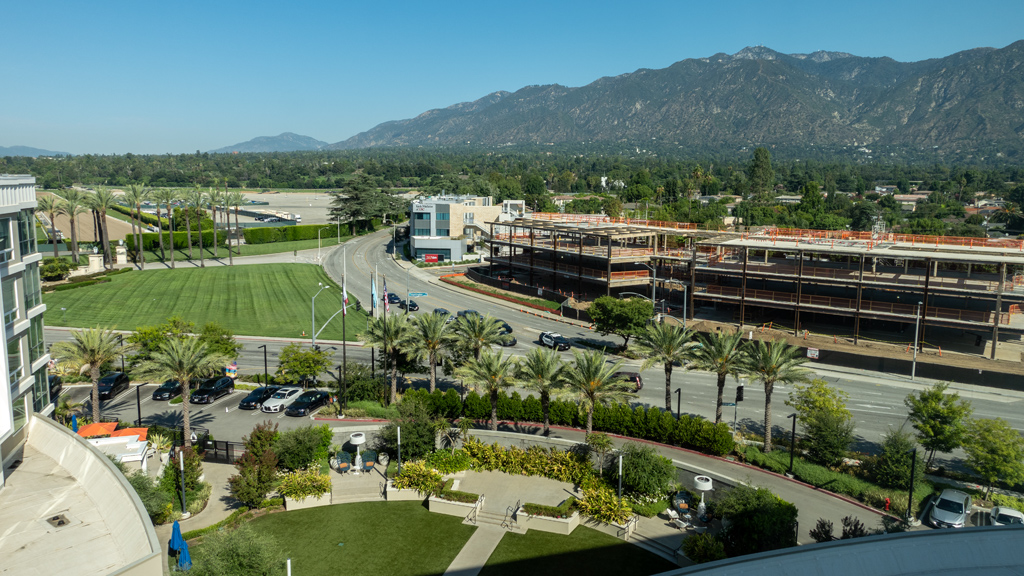
This past week, I decided to take a trip to Seattle anyway. One of the places I toured was Deception Pass State Park, a Washington state park in Oak Harbor. It actually reminded me a lot of my prior visit over one year ago to the Larrabee State Park, but Deception Pass was brighter and had much more water.
After a very brief stop at the Skagit Valley Food Co-op in Mount Vernon on our way there, we drove to the Deception Pass State Park Administration Offices to purchase a pass (upon which we found out were actually sold elsewhere, at the Entrance Station). We eventually made our way to the North and West Beach Parking Lot at the state park and started our hike on Pacific Northwest Trail.
From the trail, we were able to see the bridge in the distance.
We continued all the way down Pacific NW Trail up to its intersection at Washington State Route 20, where we were able to get a direct view of the underside of the bridge.
After crossing over to the other side, we connected onto Goose Rock Perimeter Trail. After continuing eastbound, we found an interesting sight—a house on top of a rock on Ben Ure Island.
Continuing on the perimeter trail, we made it towards the bottom where we got some nice views of the Deception Pass Marina, Cornet Bay, and the Cornet Bay County Park.
Here is a random very fuzzy tree.
Goose Rock Perimeter Trail eventually turned into Goose Rock Summit Trail. After some switchbacks and a lot of elevation gain, we made it to a spot where I got a nice view of Deception Island in the background and Victoria, British Columbia, Canada in the far distance.
Here are some photos of me at Goose Rock Summit.
Fun fact, I didn’t bring enough t-shirts in my luggage, so the shirt I’m wearing was actually the shirt I was using as my pajama shirt for the prior 4 days.
Because the variant of Goose Rock Trail we took was a loop, we made it back to the intersection at Washington State Route 20. We decided to climb up the stairs onto the bridge and do a down-and-back to take in some of the nice views of Pass Island and the actual “pass” portion of Deception Pass.
Here is a random humongous spider web that I found stretched across some branches on our way back to the parking lot.
And finally, here is one of the last photos I took as we were retracing our steps westbound on Pacific Northwest Trail. I believe this is of the North Beach at Macs Cove, close to the Scenic Vista Parking Lot.
Overall, our hike clocked in at 5.36 miles (8.63 kilometers) and took a little over three hours (though I believe that includes breaks, chatting with other hikers, and snacking at the summit). My elevation gain on my fitness tracker wasn’t fully accurate because I was also taking the stairs up and down my hotel that day, but my hiking companion’s fitness tracker said our climb was right around 103 stories in height.
I haven’t been on a good, long hike in a while, so this was a very pleasant and refreshing experience. Apparently Deception Pass is the most popular state park in Washington, and based on my experience, it definitely made sense why.
If you like boating or camping, Deception Pass can be a great multi-day trip, but if you’re more of a hiker and beach-goer, I think this state park is just big enough that you can head over in the morning, fill the day with activities, and return in the evening.
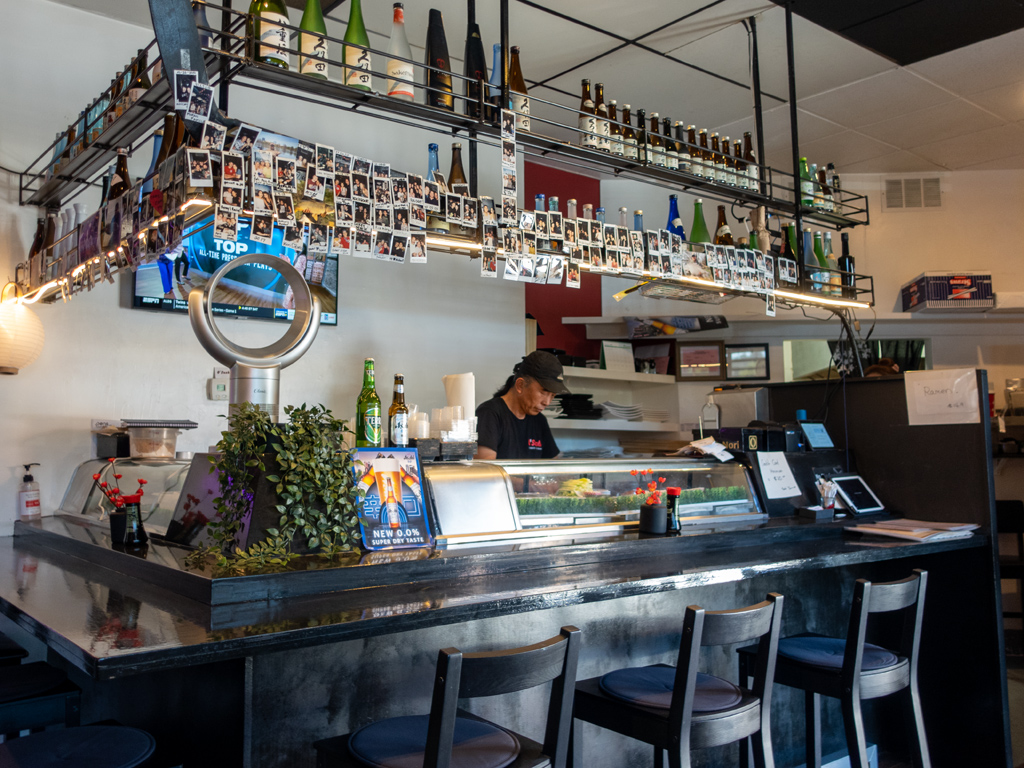
I go to a lot of high-end restaurants, and a lot of people seem to enjoy seeing what food is like at tasting menu, chef’s choice, and omakase restaurants, but I’ve also received a few requests to show some spots that are within a more reasonable price range. To fulfill that request, I made a quick lunch trip last week to Jjanga Steak & Sushi in the southwest suburbs of the Las Vegas Valley for some all-you-can-eat sushi.
They have two variants of their all-you-can-eat offering, a cheaper option for lunch and a slightly pricier option for an all day menu. The all day menu had a much broader selection that included many of my preferred sushi and seafood dishes, so I opted for the all day menu.
My first dish was amaebi topped with flying fish roe. It was a nice, thick, broad piece with a well-balanced amount of seasoning. It had the same juicy and satisfying texture as you’d expect from high-quality sweet shrimp.
Each day of the week, they have a rotating special menu. I tried a bunch of items from their special menu, and the first item that came out was bulgogi inari. It was very average, and I liked it—it was pretty much exactly what you’d expect from bulgogi and rice with a bit of crispy onion at the top for texture.
I also ordered a different beef dish, but I don’t remember what this was, as I can’t seem to find it on either the special nor the regular AYCE menu. It was almost as if it was a beef dumpling, but the fried crust was thicker and it was much creamier on the inside. This item was definitely leaning heavily towards the “steak” side of the “steak and sushi” coverage of the restaurant. I think this would’ve been a better entrée to eat as a closer to counteract a long chain of raw fish.
Next up was was salmon belly sashimi. As you can probably see from the photo, they put way too much screaming orgasm sauce (which is usually made with some mayonnaise, vinegar, fish sauce, and other sauces used in Japanese cuisine). I scraped a majority of it off—as much as possible without removing too much of the flying fish roe. Salmon belly is one of my favorite cuts of sushi, and I think this would’ve been much, much better if served without so much sauce.
Next up was an oyster. It was mysteriously disconnected from the shell, so I’m not sure if this is one of those situations where restaurants only use the shell for show and actually just put the oyster into an empty shell manually. Regardless, the oyster was very large and very flavorful.
After finishing my round of daily special menu items, I ordered a sashimi salad. The photo didn’t focus properly and didn’t come out too well, but I decided to post it anyway because I enjoyed the theme that this restaurant had of broad, thick pieces of shrimp.
I also got a screaming orgasm—the actual entrée, not just the sauce. It was strips of tuna sashimi topped with some flying fish roe (which, I discovered, they really enjoy using on many different dishes as a topping).
I was curious and wanted to try out a few more items from the grill side again, so I ordered a mini chicken katsu. The portion size was much, much larger than I expected, and I definitely regret ordering this because of how much sushi I could’ve had in its stead. The chicken quality was mediocre, it was slightly overcooked, and the breading was a bit excessive.
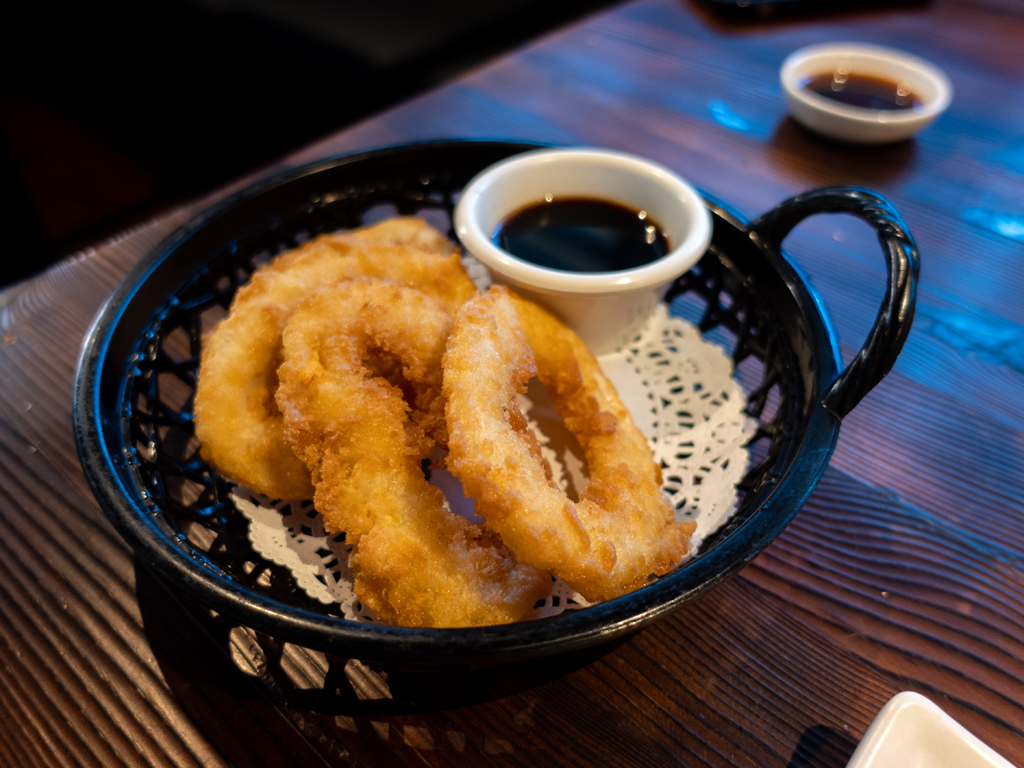
I also tried an octopus skewer. I thought it would come out raw, but it was deep fried instead. Again, it was larger than I expected, and again, it was fairly mediocre.
After eating all that fried food, I went back to some sushi. I had a lot more nigiri than is pictured here, but one of my favorite selections from this restaurant was the escolar, commonly known as white tuna.
For dessert, I finished with a small piece of mango mochi.
Here is a breakdown of what I paid:
All-you-can-eat, all-day menu
$ 31.99
Tax (7.65%)
$ 2.64
Gratuity (18%)
$ 6.23
Total
$ 40.86
Overall, I’d say that I had a decently satisfying experience. If you also decide to pay a visit to Jjanga for all-you-can-eat and you like sushi, I highly recommend avoiding their grill menu and just sticking with their specials and sushi menu items to get maximum value for your money.
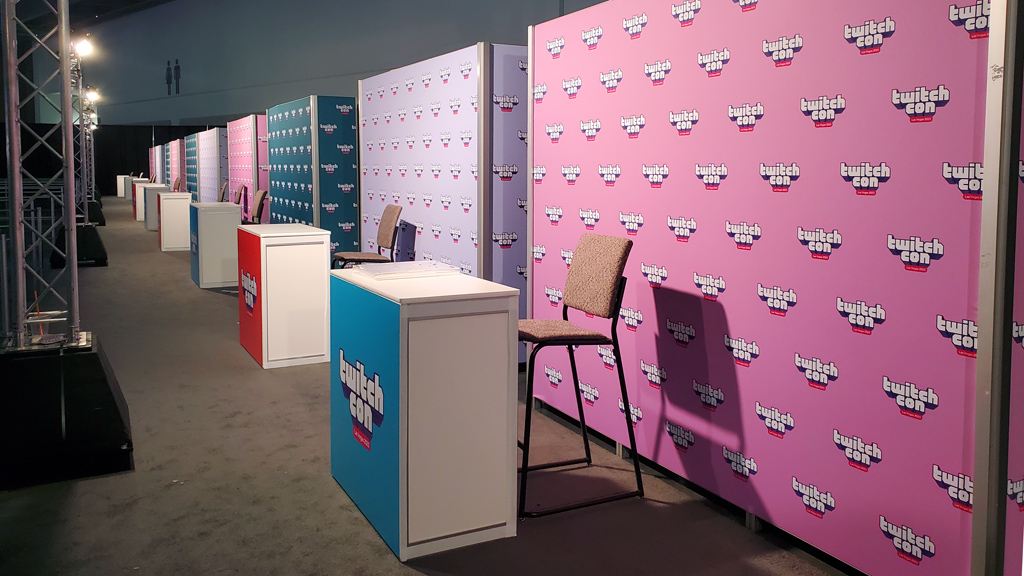
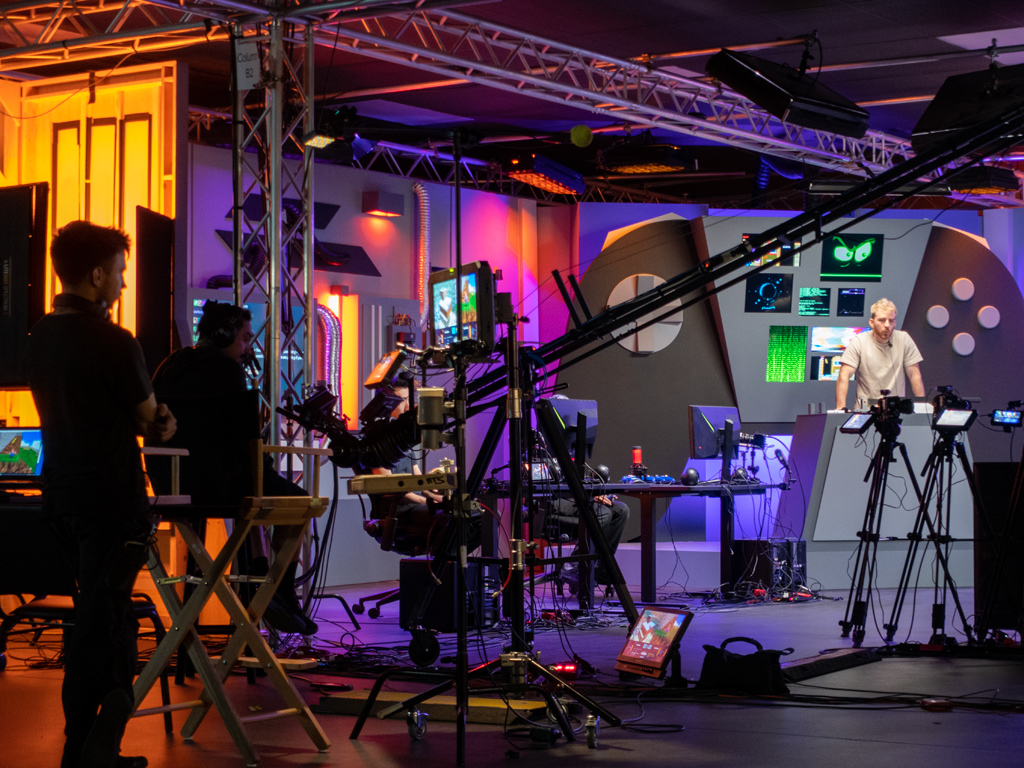
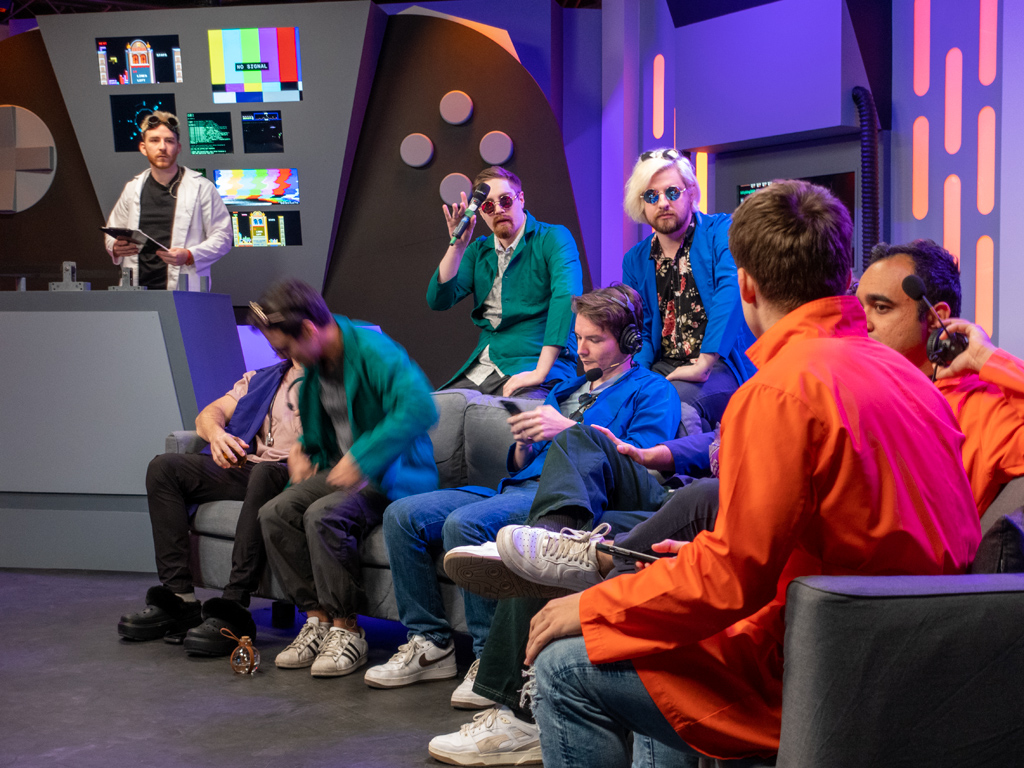
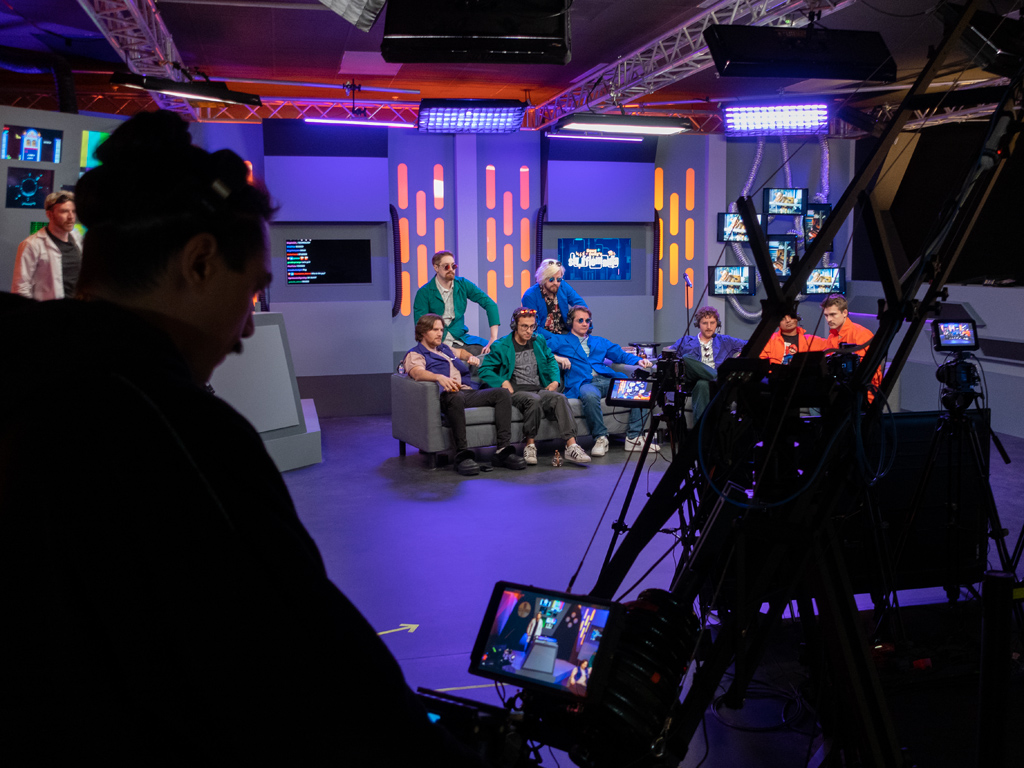
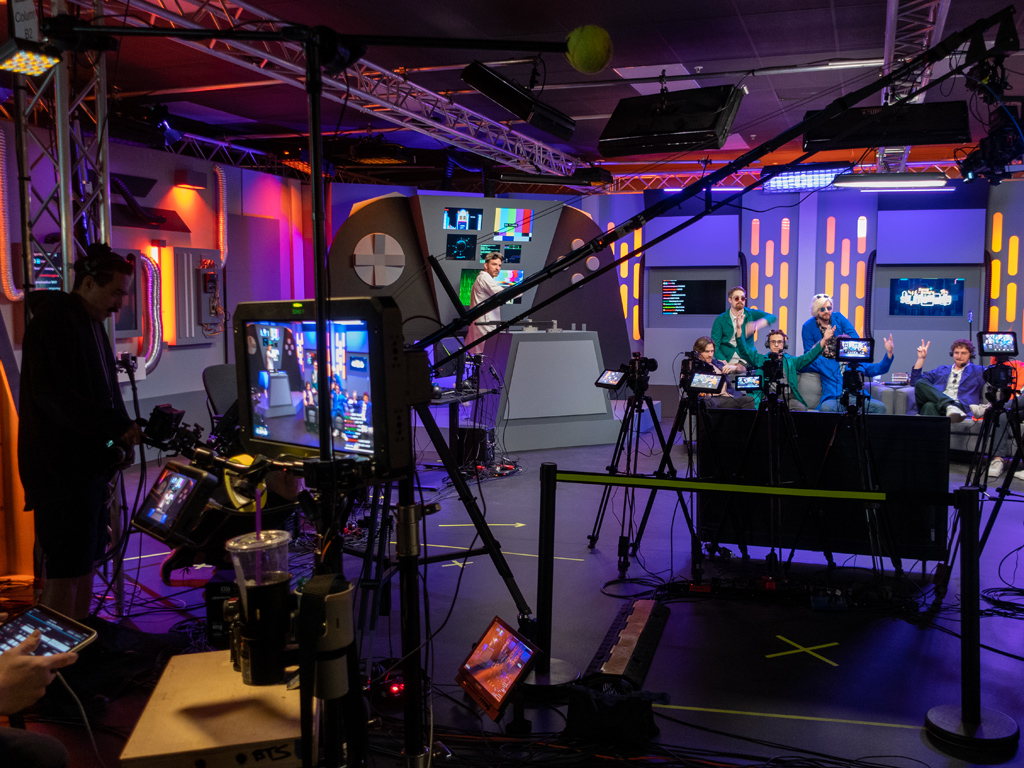
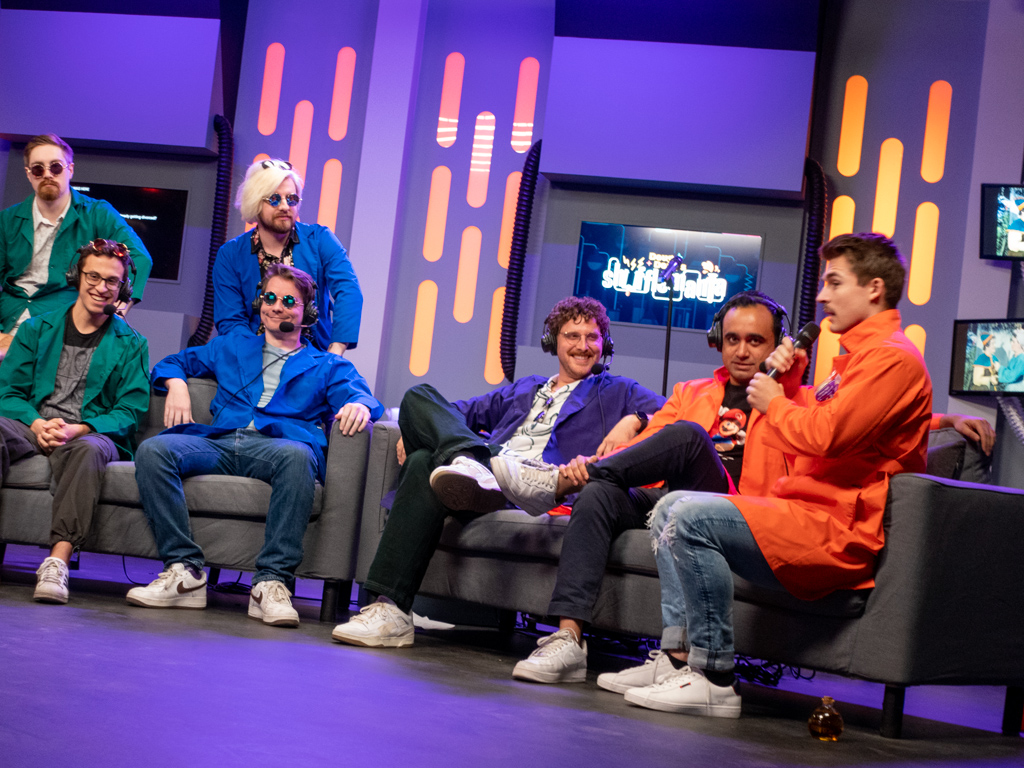
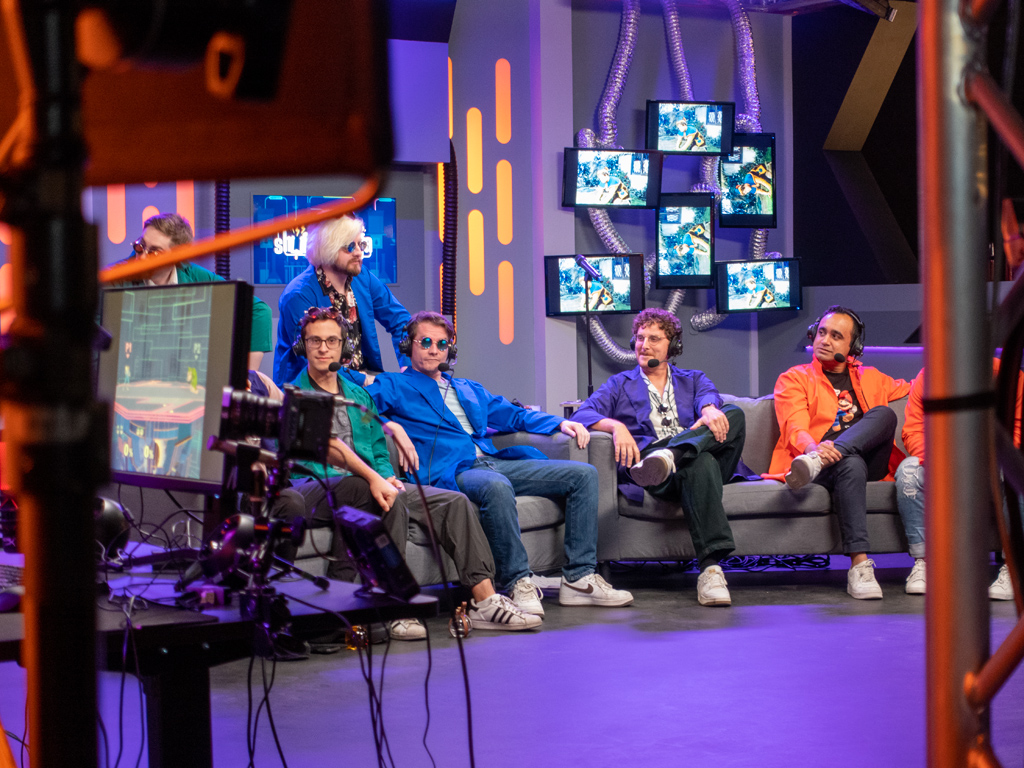
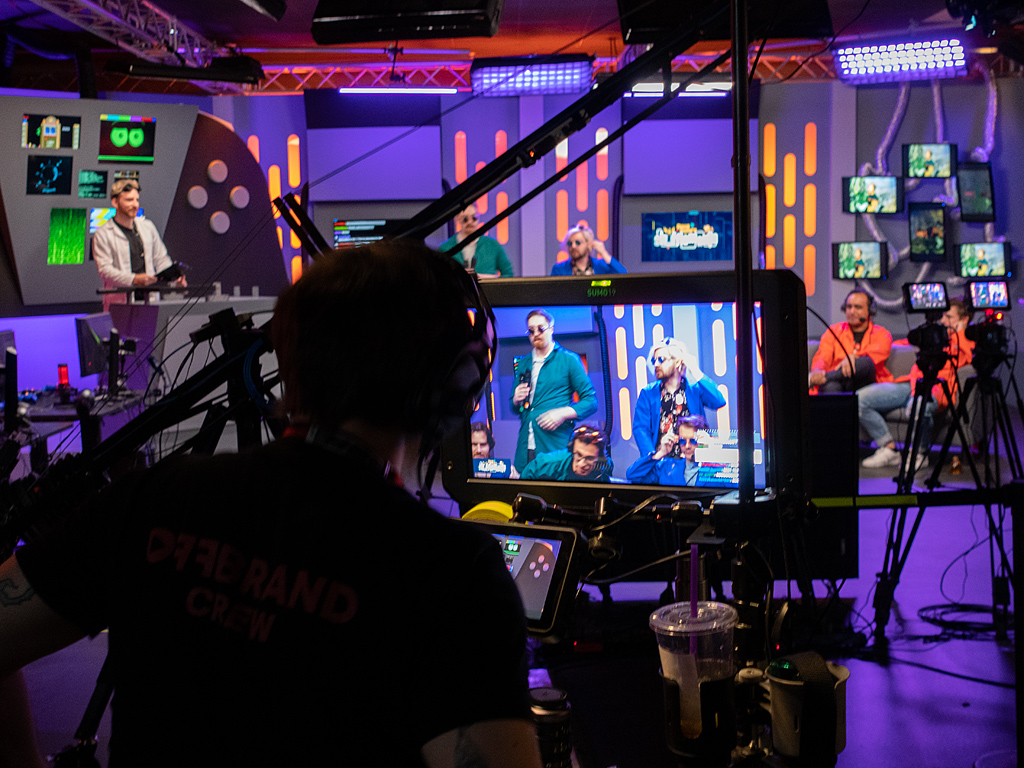
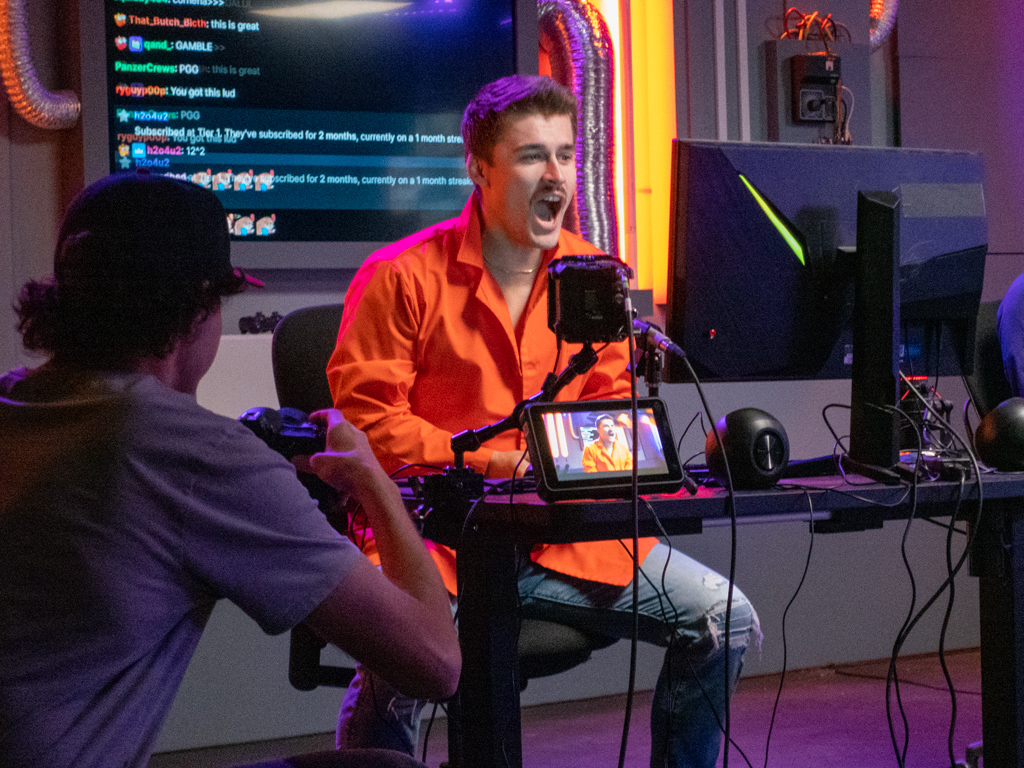
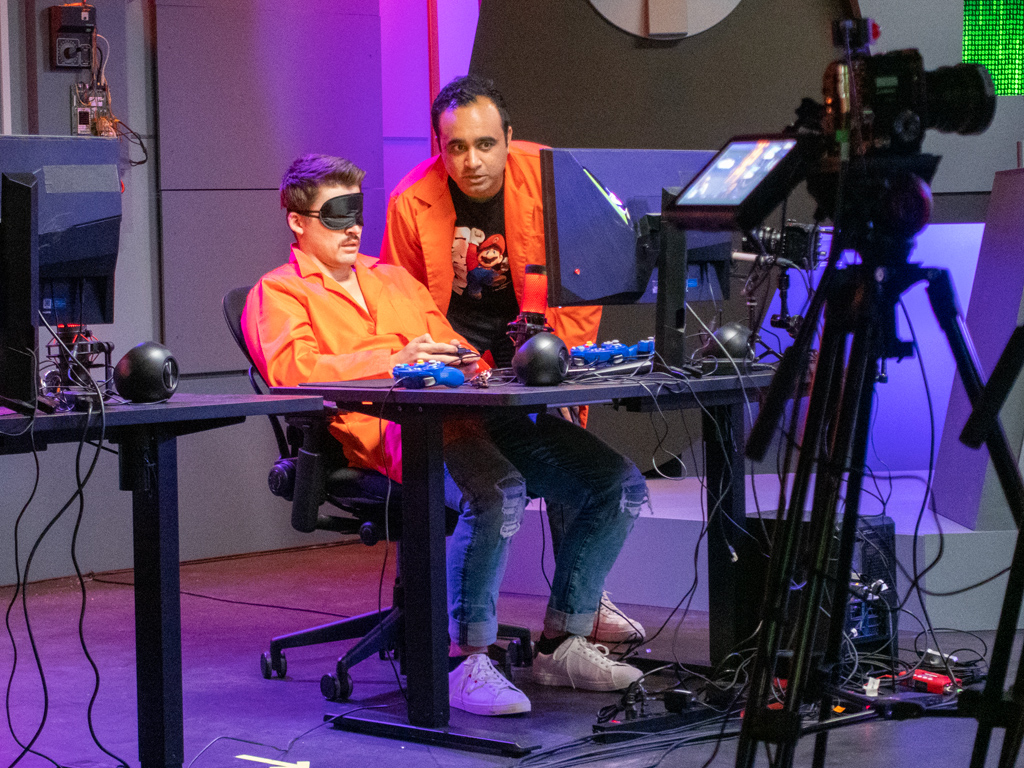
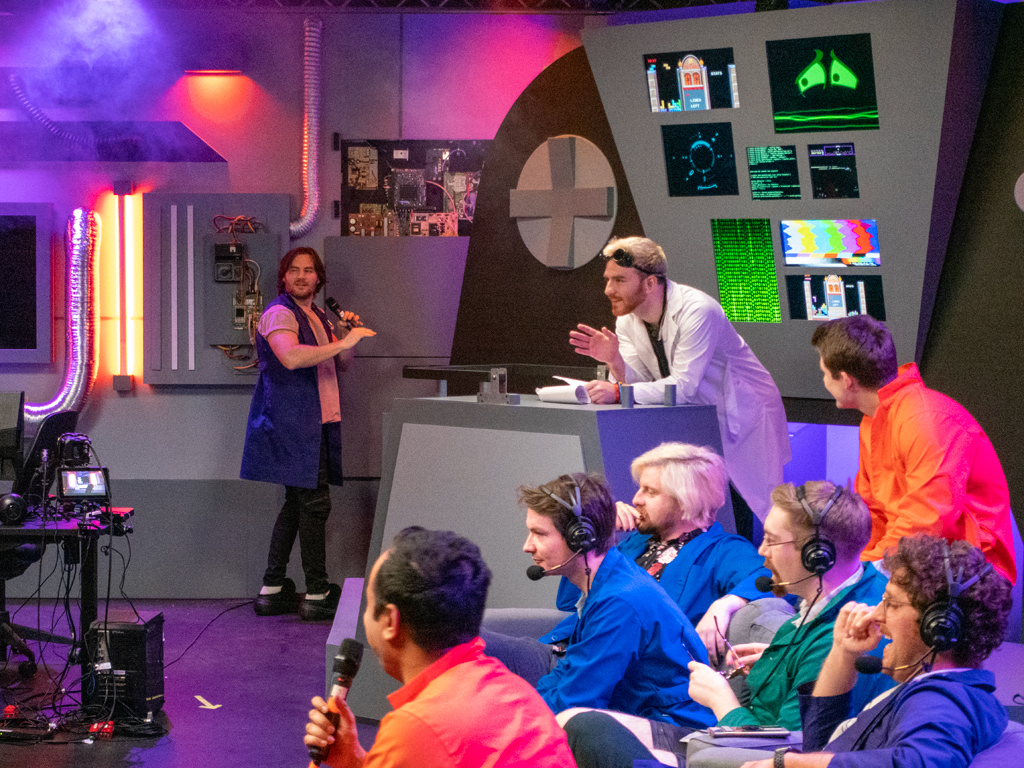
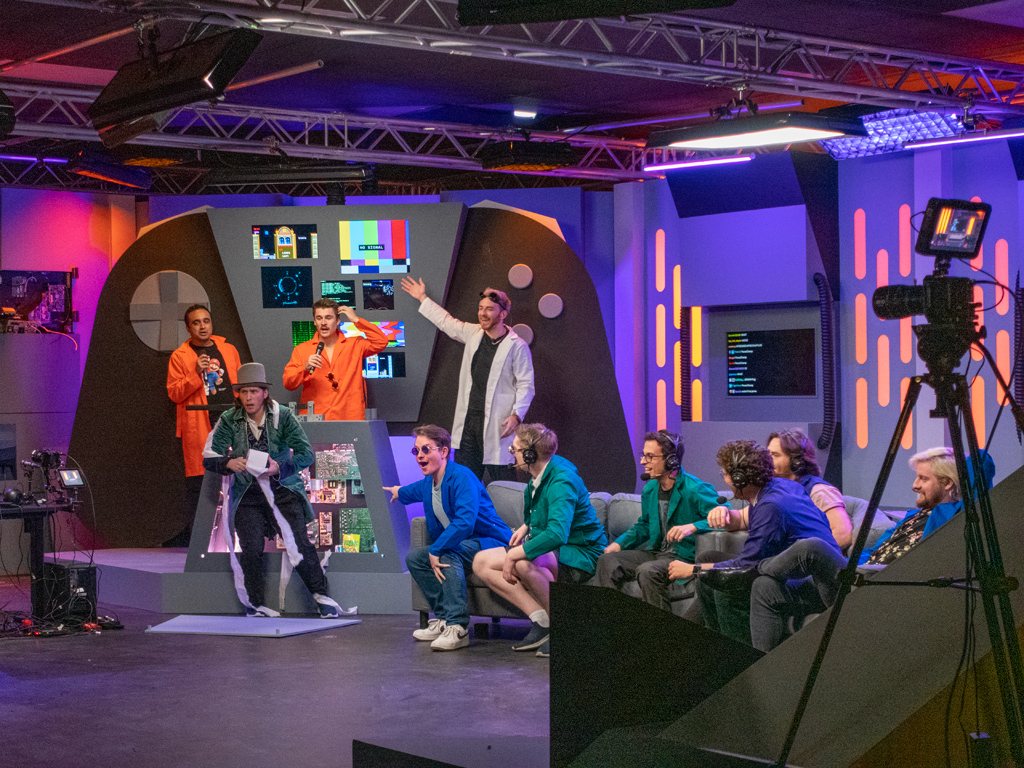
On Saturday, May 20, 2023, I joined my friend Doug Wreden on his DougDoug Twitch channel for a live stream with his friends and staff members Berry and Parry. For the broadcast, we drove around the San Fernando Valley in Los Angeles County doing the “I’ll have what he’s having” challenge.
This was a popular trend a little while back, and I already participated in a few of these with some other friends a handful of years ago, but if you’re not familiar with the concept, the idea is that you go to various different fast food restaurants and order the same thing as what the previous vehicle in the drive-through lane ordered.
Yesterday, the recording of the live stream was cut and edited into a highlight video that was released on the DougDoug YouTube channel. The audience of Doug’s YouTube channel is far greater than the audience of Doug’s Twitch channel, so this brought the fast food challenge content in front of many more eyes and resulted in a relatively large influx of questions.
There’s been relative consistency in the questions that have been asked, and there is a bit of “lore” that I think fans would find fun and interesting, so I decided to take some time to write this as a supplement to Doug’s video content.
“How much did you actually end up eating?”
Doug’s video editor calculated the nutrition facts of everything we ate and it came to a total of 20,435 calories. However, people were curious exactly how much I personally contributed to consuming that amount. From the footage, it seemed like I ate the least… but it was not by as large of a margin as it may seem.
Food
Restaurant
Calories
Fat (g)
Carbs (g)
Na (mg)
Protein (g)
Honey walnut shrimp, ⅘ portion
Panda Express
300
18.5
22.0
381
11.5
Mushroom chicken, ⅘ portion
Panda Express
185
12.0
9.0
707
10.0
Fried rice, ⅕ portion
Panda Express
112
3.5
18.5
183
2.5
Chow mein, ⅓ portion
Panda Express
174
7.0
27.0
293
4.5
Veggie egg roll
Panda Express
180
9.0
19.0
390
7.0
Cheddar quesadilla, ⅘ portion
Del Taco
366
20.5
24.5
676
17.5
Caramel cheesecake bites, 1 stick
Del Taco
460
28.0
43.0
310
6.0
Chocolate fudge sundae
Burger King
280
7.0
47.0
220
6.0
Sourdough patty melt, ¾ portion
Jack in the Box
488
28.5
28.5
975
28.0
French fries, medium, ½ portion
Jack in the Box
215
10.0
29.0
390
2.5
Cherry Coca-Cola, 2 fl. oz.
Jack in the Box
25
0.0
6.5
5
0.0
Raspberry-filled jelly doughnut
Krispy Kreme
340
21.0
36.0
125
3.0
Chocolate iced doughnut with cream filling
Krispy Kreme
340
17.0
42.0
140
4.0
Baked potato with chives
Wendy’s
137
0.0
31.5
15
3.5
Natural-cut French fries, medium, ½ portion
Wendy’s
210
9.5
28.0
210
3.0
Pink lemonade, 28 fl. oz.
Wendy’s
308
0.0
77.0
105
0.0
Nitro cold brew coffee, ½ each of 2 drinks
Starbucks
70
1.5
13.0
45
3.0
Fried chicken thigh, small
KFC
144
8.5
4.5
150
11.0
Total
4,334
201.5
536.0
5,320
123.0
While we were working through our order at Kentucky Fried Chicken, Doug’s moderator Eddie showed up to help with a large portion of the bucket of fried chicken. Fried chicken is extremely calorically dense, and a bucket has a lot of pieces of chicken; I think it is reasonable to assume that Eddie relieved about 1,800 calories’ worth of our food burden, considering that he ate most of the bucket.
That brings the total for the four of us down to 18,635 calories. At my 4,334 calories, I ate about 23.26% of the calories, very close to the 25% needed for an even split. Of course, calories isn’t the only metric to calculate contribution, and there are many other important factors like how volumetrically filling the food is or how undesirable the meal is, but in general, I feel like I definitely carried my own weight.
“Did Doug really just find you at the hotel?”
The simplest possible answer… is actually, yes. But obviously, there is more to it than that.
Doug and I had plans during the Sunday afternoon following the day of the broadcast—plans that involved being in Los Angeles County together. Doug thought I was going to be flying in Sunday morning, but I like to have a buffer day to make for a more relaxing and less rushed travel experience, so I flew in a day early on Saturday instead.
For convenience, Doug and I booked rooms in the same hotel. However, we both like having our own separate rooms to minimize interruptions and improve sleep quality, so we had separate reservations. This meant that Doug did not know when my check-in date was, and he did not realize that I would be arriving on Saturday instead of Sunday.
The timing was uncanny. After landing from my flight, I walked to the rental car facility, picked up my vehicle, and drove to the hotel. However, the pick-up process took longer than expected because the front license plate of the vehicle was held up by a single screw and was on the verge of falling off, so they had to go find a special screwdriver to remove it so it wouldn’t fly off while the vehicle was in motion. This added about 12 minutes of delay to the pick-up process.
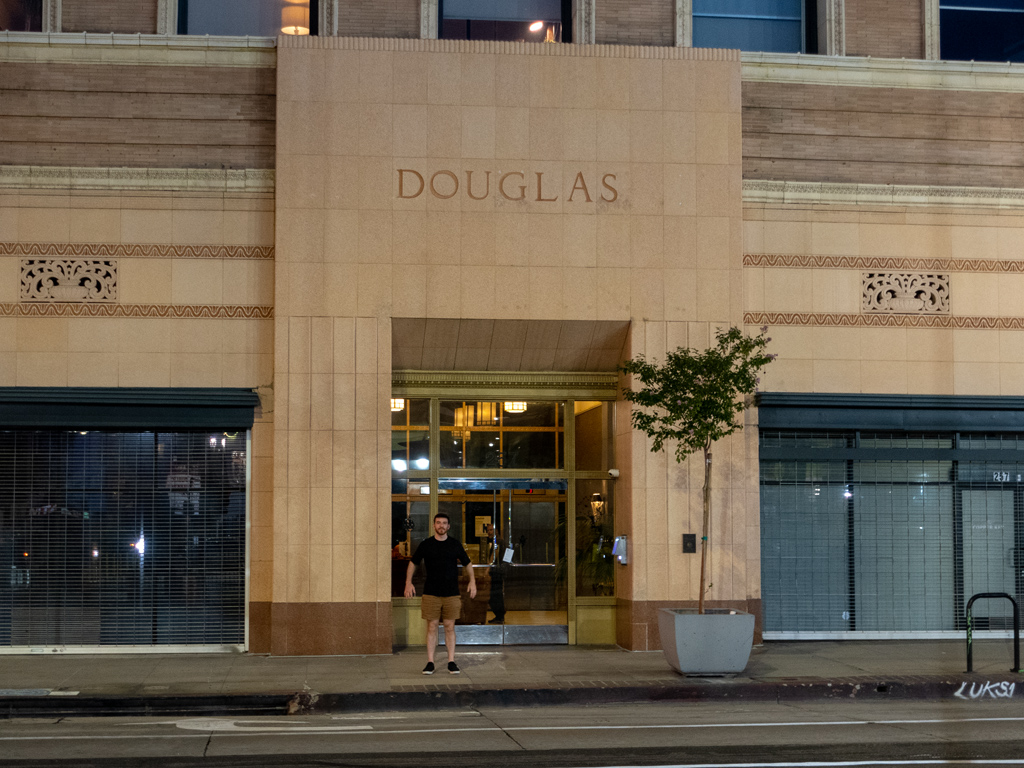
If everything went smoothly during vehicle pick-up, I would’ve arrived at the hotel 12 minutes sooner, walked into the hotel too early to be seen by Doug, and none of this would have happened. Instead, because of the delay, the moment I was walking into the hotel happened to perfectly coincide with Berry and Parry picking up Doug from the front of the hotel, which allowed Doug to notice me.
As a reminder, keep in mind that Doug did not know I would be there on Saturday. Thus, from his perspective, I miraculously just spawned in front of him at the hotel entryway, and the fact that our paths had crossed wasn’t far off from seeming like a force majeure event.
“How did you end up also becoming the driver?”
The original plan was for Berry to be the driver. However, with me now in the picture, we had an alternative.
When I travel and rent a vehicle, I will always opt to get a pickup truck (if one is available) for a variety of reasons. My personal daily driver at home is a pickup truck, so I am used to driving pickup trucks now. The better visibility and higher ride height makes the driving experience much more comfortable. I also easily get motion sickness, and driving a larger vehicle, especially one with a body-on-frame structure like pickup trucks, helps mitigate that.
Furthermore, for the past several years, pickup trucks have gotten much, much nicer. They used to be considered work vehicles, but the newest trucks now often have astronomically better convenience and luxury features than regular sedans. To top it all off, rental car companies usually only have one or two rental tiers for pickup trucks, while they have upwards of 12 or more classes just for sedans. This means, if you book a low-tier sedan, you for sure are going to get a pretty bad sedan, and if you want a nicer one, you have to pay for upgrades. However, if you book a pickup truck, in their system, a pickup truck is a pickup truck, so you may end up with a basic truck, but you could also end up with a really nice one, like we did for this fast food adventure.
I ended up with a Nissan Titan Platinum Reserve this time around. Being a full-size pickup truck, it is much more spacious than Berry’s car, which made it much more comfortable for four adult men to sit in for several hours. The higher ride height also meant that we would be eye-to-eye with the fast food staff, making it easier for them to hand over our food, as opposed to needing to reach down at an angle if we were in a sedan.
Because I was the only one on the rental contract, I had to be the driver. We technically could’ve just violated the rental terms of service and had someone else drive anyway, but Los Angeles isn’t exactly known for having wide roads, and the drive-through lanes are pretty tight. If you were watching the live broadcast, you might have heard a lot of beeping when we were going through the drive-throughs; the beeping was the collision sensors warning me that we were about to hit something. Considering that I have the most experience driving big, wide, long vehicles, we decided it would be safest for me to drive the entire time.
Some other frequently-asked questions…
“Did you play up your reaction to the baked potato because you knew Doug hates potatoes?” No, I did not. In fact, I did not even realize that Doug hated potatoes. I was relieved to see a baked potato because it was finally some food that wasn’t offensively greasy or salty, so it was a way that I would be able to continue helping without putting my health in increasing jeopardy.
“Did you get stream sniped at any of the restaurants?” I highly doubt it. Although it was fairly obvious to some people where we were because we drove right past Hollywood Burbank Airport at the beginning of the stream, the rest of the guys made a conscious effort to try and obscure our location by claiming we were in random states across the United States. The most likely possibility of getting sniped was the KFC bucket at the end, but the woman who ordered it was already ordering before we arrived, and she looked like she was just buying a big meal to feed her family.
“Did you feel sick during the subsequent days?” No, there was hardly any visible difference in my health. The same night, my body woke itself up four or five times in the middle of the night in extreme thirst, and I drank about one and a half 16.9 fl. oz. bottles of water overnight, but beyond that, everything was back to normal the following morning.
“Are you quitting fast food for the rest of your life?” Absolutely not. I love fast food, I’ve saved a ton of time because of the convenience, and fast food isn’t always bad—it is usually inevitably very high in sodium, but if you pick the right menu items, there are ways to piece together some pretty decent meals low in saturated fat and high in protein. I also don’t really get “sick” of foods from overeating; I think that’s more of a mindset thing, and I had no problem eating some chicken sandwiches from McDonald’s a few days after finishing this challenge.
“What happened in the bathroom of Jack in the Box?” I defecated. I did not vomit, and I did not have diarrhea. A simple bowel movement was sufficient enough that it made me feel better and allowed me to consume over 1,500 more calories afterwards.
“Do you regret agreeing to join for the challenge?”
No. Not even a little bit.
The older I get, the more I realize that relationships with other people are the most important things in life. I’ve historically optimized for other things, like maximizing personal comfort, or making as much money as possible, or finding the most luxurious things to buy and places to live… but ultimately, it’s the people in your life who matter the most.
This is probably some of the most fun I’ve had, ever. I am literally going to remember this day for the rest of my life. Sure, I had an upset stomach by the time we got to Jack in the Box, and yes, my health probably took a little bit of a hit from eating so much saturated fat and sodium, but in a big-picture sense, it was absolutely worth it.
Several years ago when I was researching pickup trucks to decide which one to purchase as my daily driver, I saw that the Ford F-150 Raptor had a special high-performance version modified by Shelby American. Although it was tempting, I decided to make a much more reasonable selection of pickup truck and purchased a GMC Canyon instead.
Funny enough, when I moved into a luxury high-rise condominium on the Las Vegas Strip in 2019, one of my neighbors owned a Shelby Raptor, so I got to look at it every day in the parking garage whenever I drove in and out.
Since moving out of that tower, I hadn’t seen too many Shelby Raptors on the road. After I found out that Shelby American had their headquarters in Las Vegas, I decided to make a quick visit during my midday break today in hopes of seeing the newest model of Shelby Raptor.
Their facility also housed their modification shop. A paid guided tour for US$59.00 included a tour of the shop, but I opted to go for the free self-guided tour instead. Fortunately, there were windows looking into the bays, so I was still able to take a look at some of the vehicles they were working on.
The rest of the museum had a variety of different Shelby vehicles on display with a wide range of different models and model years.
Notably missing from all the displays… was any pickup trucks. At all.
I looped back around just to make sure I didn’t miss anything, nosily peeked in through some dark hallways in case there was anything hidden, then checked the modification bays to see if there were any trucks being worked on. Shelby has an F-150, F-150 Super Snake, F-150 Super Snake Sport, F-150 Raptor, F-250 Super Baja, and F-150 Centennial Edition, so I feel like it was reasonable to expect to see at least one single truck … but there were none.
There was, however, a huge merchandise section.
I paid nothing for my visit, so I guess I can’t be too disappointed (though, if I did choose to purchase the $59 guided tour, I imagine I still wouldn’t have seen any of their wide selection of pickup trucks, and would have still left somewhat disappointed).
I decided to give them the benefit of the doubt and assume that all the pickup trucks are just so insanely popular that they all sell at a huge mark-up immediately upon production, so they don’t have an opportunity to leave any on display due to the queue of enthusiasts eagerly waiting for the day they can accept delivery of their new Shelby truck.
As consolation, I decided to just take a picture of my own pickup truck in the parking lot instead. And yes, that is indeed a humongous model of a bottle of Corona Extra beer in the background. Very Las Vegas. 🤷
The warehouse is about a mile south of the Welcome to Fabulous Las Vegas sign on the Las Vegas Strip, so if you’re already in the area and are a car enthusiast, it’s a neat place to check out. However, if you don’t care much about classic and sports cars, you’ll probably feel like you’re just walking through a car dealership, with the museum area being the showroom and the modification bays being the service center, so it might not be too special for you.
My brain doesn’t understand gambling on pre-determined disadvantaged odds.
I think a reasonable type of gambling is event betting—like on sports, or political elections, or other major world events. Betting has had its plentiful fair share of scandals, but in general, it’s relatively controlled randomness—you’re considering past statistics, calculating the likeliness of a future outcome, and wagering your money.
Betting has actually been one of the most reliable indicators of certain outcomes of events; listening to “industry experts” is often pointless, but if you look at betting odds, the combined wagers from thousands upon thousands of people frequently calibrate the odds to reflect the actual likelihood of a certain event playing out in one way or another.
I think an unreasonable type of gambling is participating in things where there is a certainly disadvantaged pre-determined outcome. For example, in roulette, if you bet on either black or red, there is a guaranteed 18/38 chance of winning and 20/38 chance of losing. Is the promise of losing over 5% of your money over time truly worth the “thrill” of… placing casino chips on a table?
A similar premise applies to slots. Even the loosest RTP at major casinos in Las Vegas is about 92%. Is the promise of losing around 8% of your money over time truly worth the “thrill” of watching a slots animation play over and over again? Why not just watch a video of a slot machine on YouTube for free and save the 8% cut you’re donating to the casino?
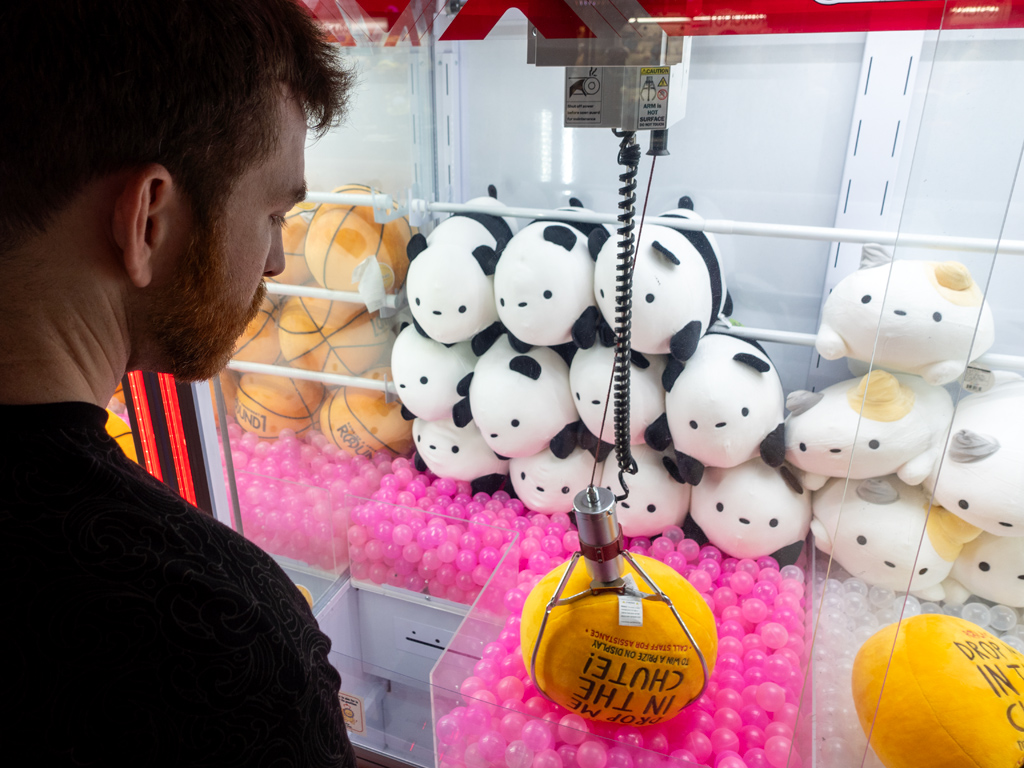
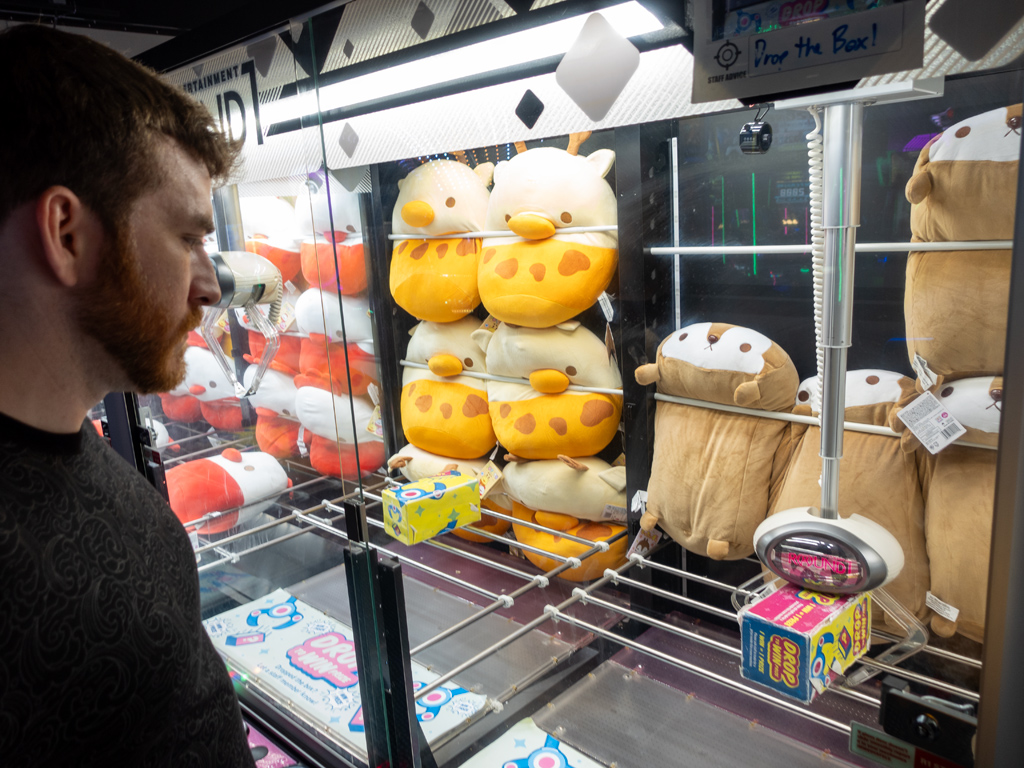
You can probably guess where this is going. A similar premise also applies to claw machines. There is an element of skill with claw machines, because you have to line up the claw properly. There is also an element of cheese with claw machines, because some have intrinsic issues with their mechanics and you can abuse those exploits to consistently win. However, assuming that you are the world’s best claw machine player with perpetually perfect drops and you’re not relying on a bug, the success of your pull is strictly up to chance.
The machine controls the strength of the grip. It will look like you firmly grabbed the prize, but on the way up and over to the payout chute, the machine’s algorithm will determine whether or not you actually get to have what it’s holding. If you get unlucky, the grip will be too loose and your reward will fall back into the pile before it ever makes it into your hands.
This algorithm is controlled by software in the machine. If you look up the owner’s manual for pretty much any claw machine, you will almost always see a section titled “margin” or something substantially similar. This allows the owner to control the profit margin of the machine—they input the price of each prize and the cost of play, and the machine will control the flow of prizes to make sure the owner makes their desired revenue. This means that, if the machine decides it’s not time to pay out yet because it hasn’t met the appropriate profit margin numbers, you won’t get the prize, no matter how good you are.
… I still accompanied my friend Dani to an arcade dedicated to claw machines.
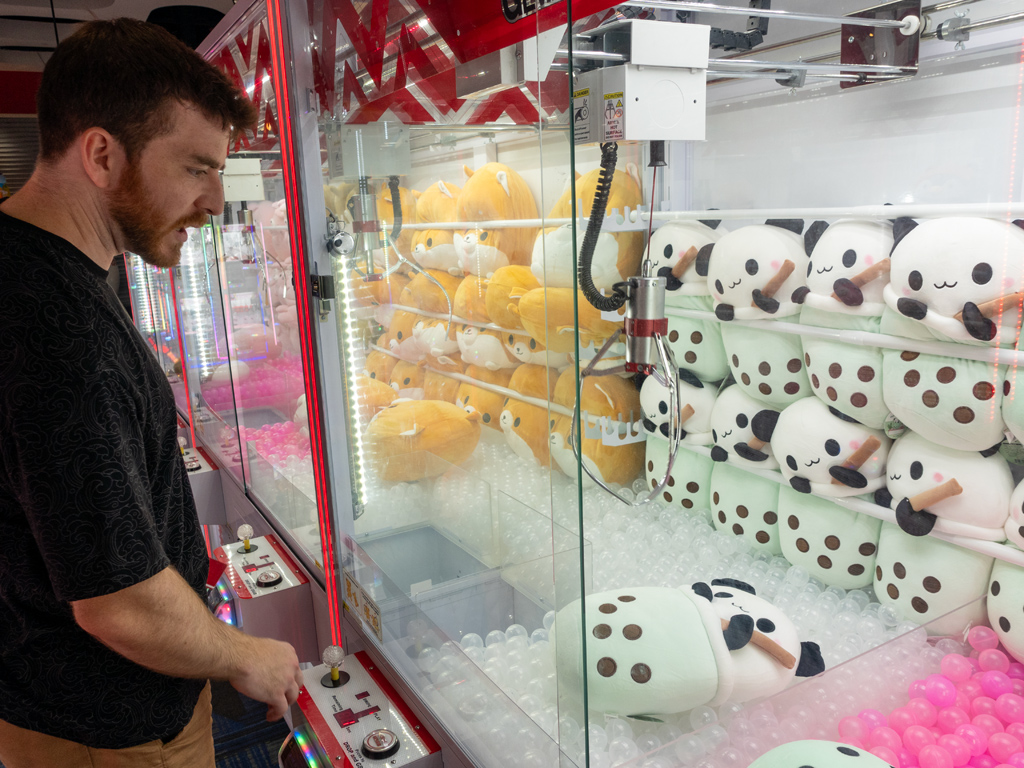
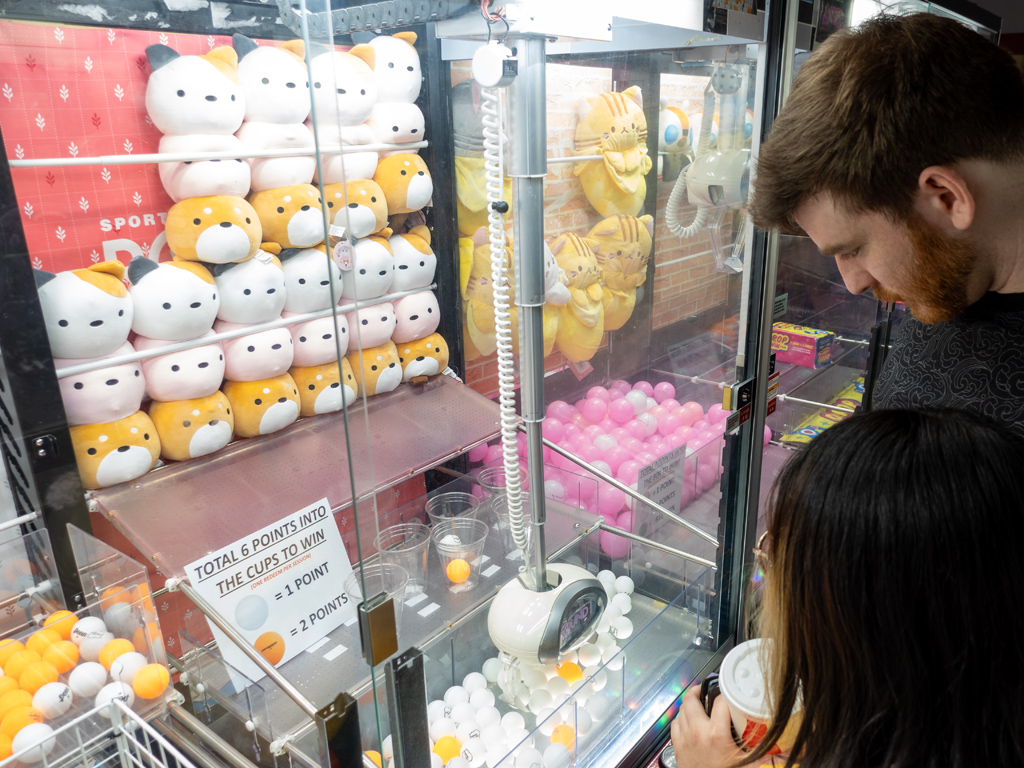
We went on a Sunday, so it was absolutely packed. The building was also much smaller than I had originally anticipated, so we were literally shoulder-to-shoulder with other people the entire time and frequently had to wait for machines to free up. The quantity of people made it so the air conditioning had trouble keeping up, and with the noise of the kids, it was very overstimulating.
With that being said, it was definitely a very interesting place; I’m glad I stopped by for a visit, because I have never seen anything even remotely close to this before.
I’ve been to plenty of regular arcades before, but because of the compactness and linear layout of THE CLAW, it felt like you were stepping into an entirely different world—almost like a movie set—and being “hugged” by the rows of machines with their bright lights. All the arcade features were lavishly exaggerated, and if there hadn’t been so many people, I think it would’ve been easy to just get lost in the spirit of the arcade.
I did not participate, but Dani purchased US$70.00 of tokens, which yielded five plushies’ worth of spoils.
Yes, I have to be “that guy” who does the math now.
Dani practically purchased these plushies for $14 each. (In theory, it is technically less than $14 each, because we also purchased the “fun” that was included in that $14, though it is not realistically viable to assign a dollar amount to that right now, so we will simplify that and omit it from the calculation.)
The cost to the owner for each plushie is highly dependent on things like physical plushie size, bulk order size, and the trademark licensing of the characters, but as an overgeneralized average, you can expect each plushie to go at-cost for about $3.50 from a wholesale supplier. That means that the owner’s profit margin is 300%, i.e., for every $1 spent on plushies, the $1 is made back and another $3 goes into the owner’s pocket (excluding labor and other operating costs, of course).
The $70 of tokens took about half an hour or so to use up. With a very rough and vague estimate of about 15 people continuously playing (there were more people, but many of them were just parents accompanying their kids), that’s about $2,100 per hour and $18,900 for a 9-hour day. After deducting $4,725 for plushies, $810 for paying six employees $15/hr. for nine hours, $300 for a day’s worth of rent for a spot like that, $300 for a day’s worth of utilities, a generous $500 for a day’s worth of miscellaneous business operating expenses like insurance and repairs, and another few hundred for buffer, that leaves just over $12,000 in net profit after a busy day.
Keep in mind that my math could be off by literally several thousands of dollars, considering that I am just using very generic numbers and don’t truly know the ins and outs of running an arcade.
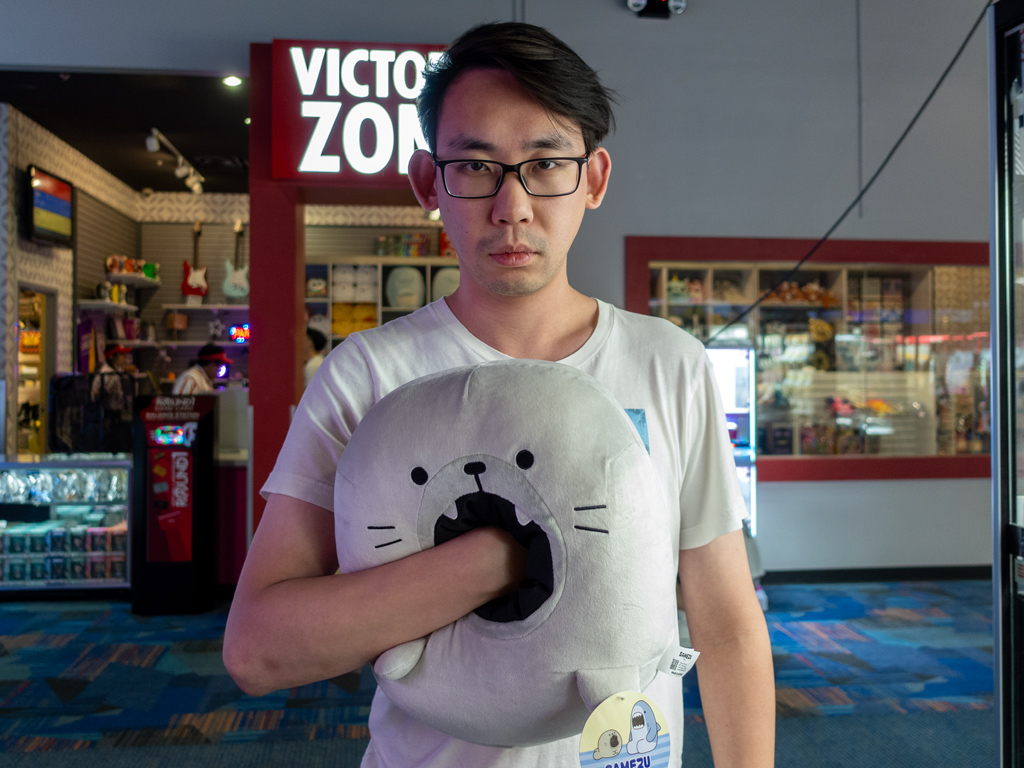
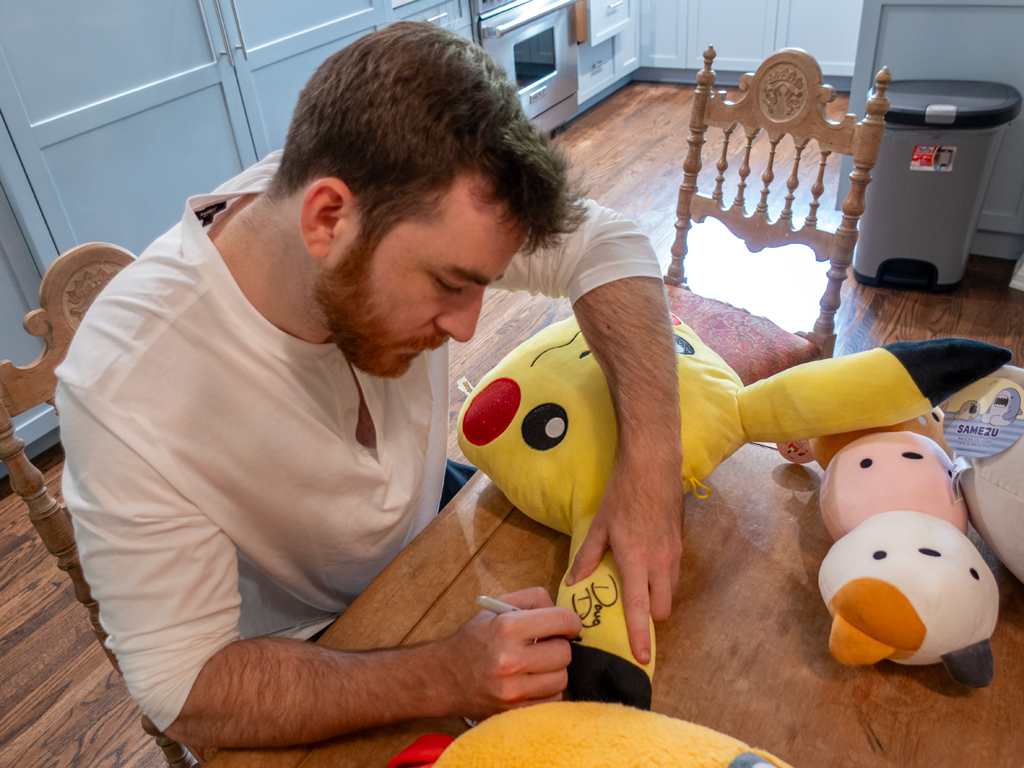
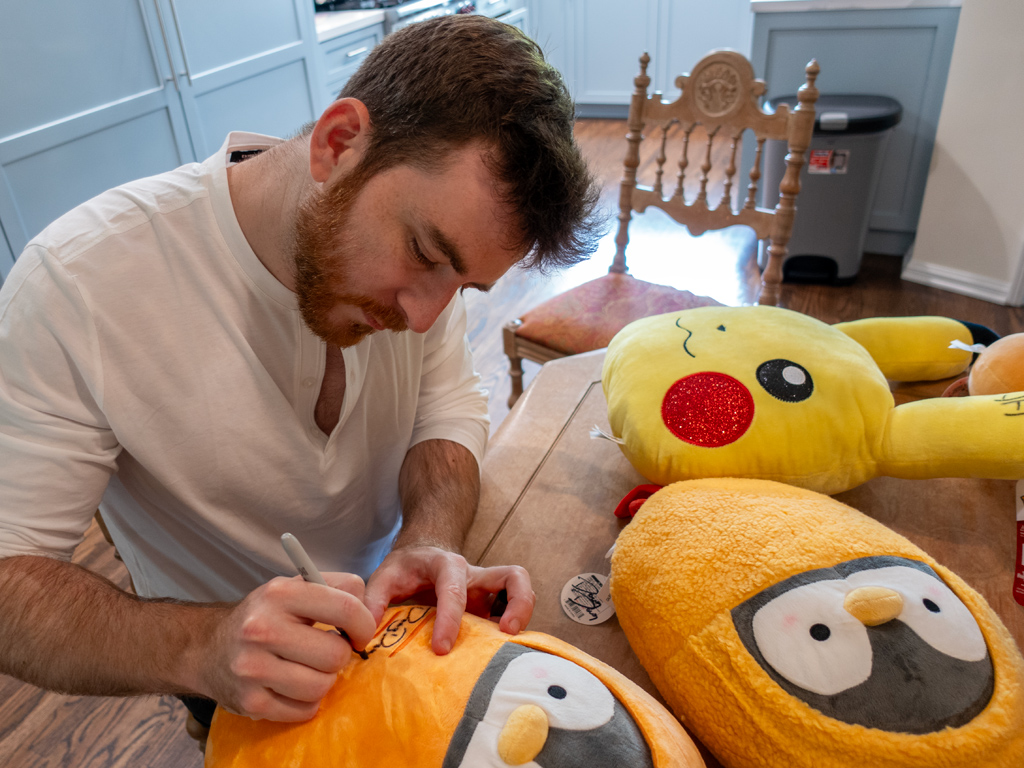
With that being said, now that I have made my attempt at ruining claw machines for you by giving an example scenario of how much money is being farmed off of you by arcades, here is a photo of the five plushies Dani won:
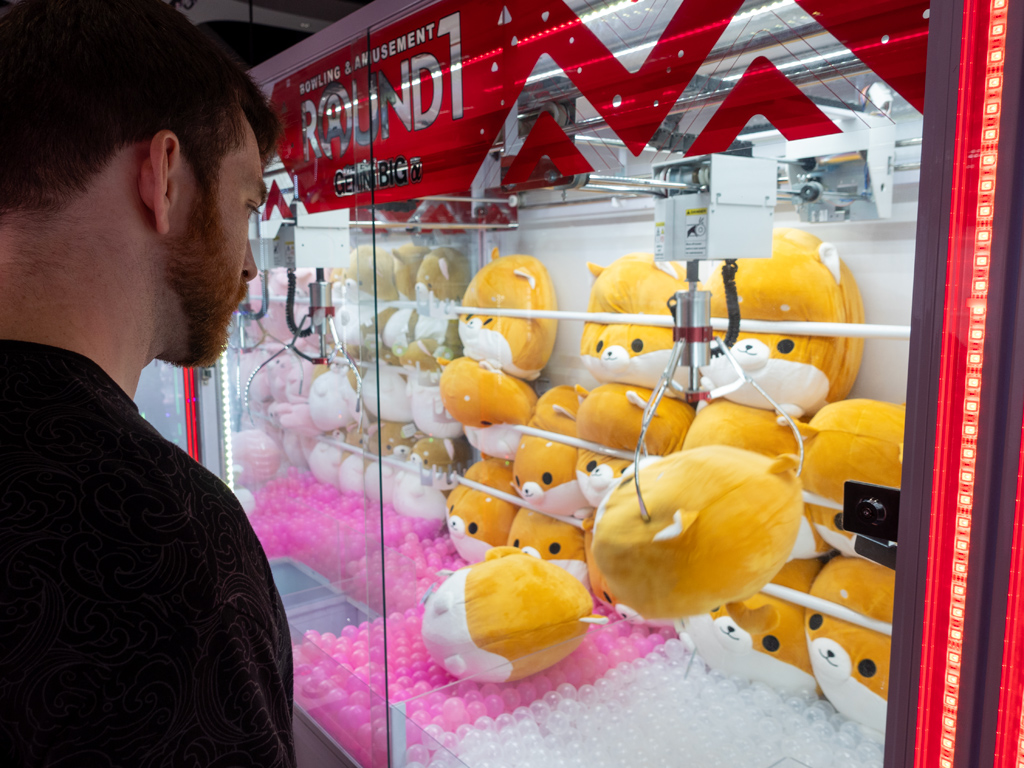
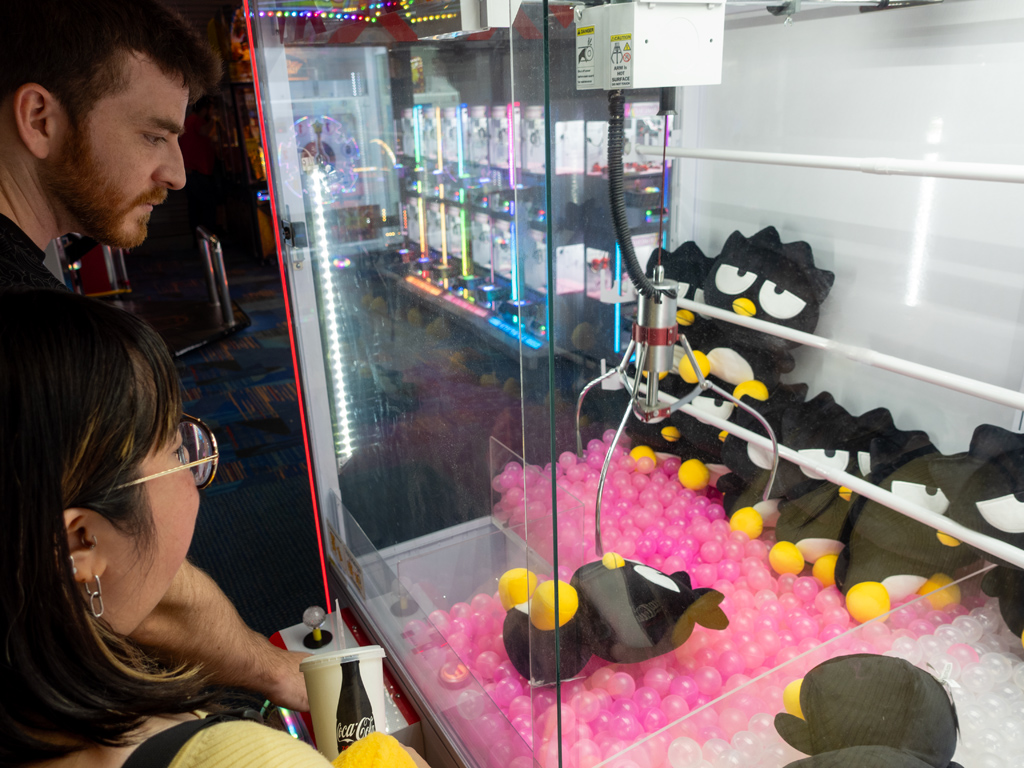
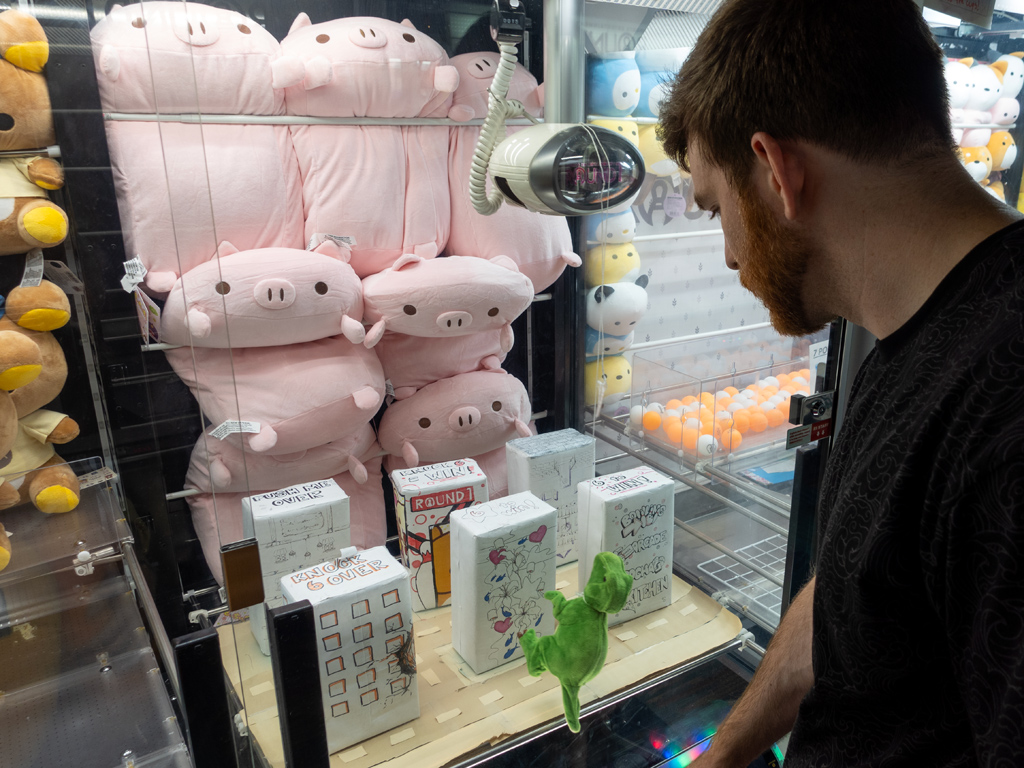
If you can’t tell by now, she really likes arcades. The night before going to THE CLAW, we also made a stop at Round1 Bowling & Amusement. I don’t know how much money she spent there, but she seemed to have better luck at Round1 than at THE CLAW.
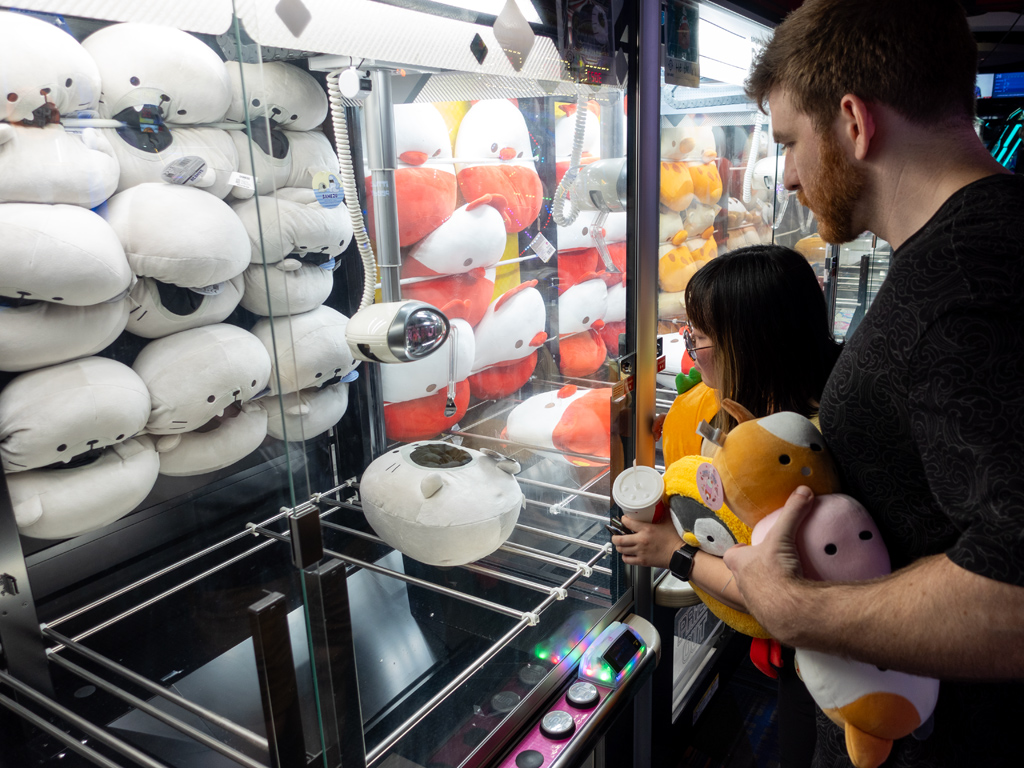
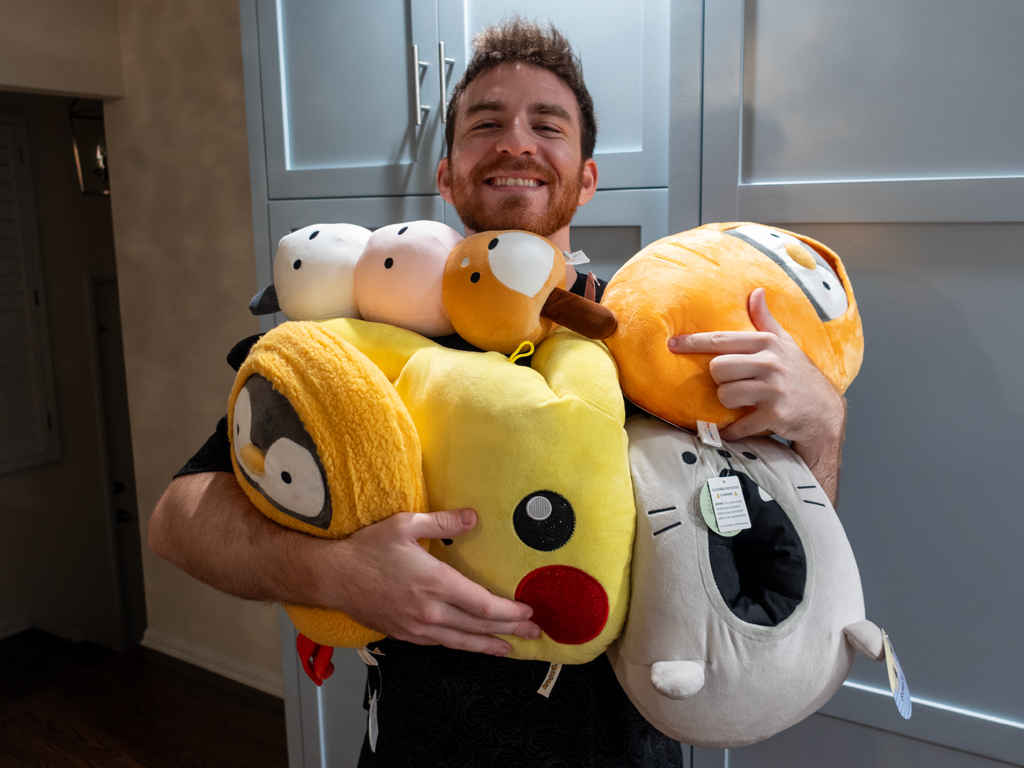
She won four large plushies and was eager to make me hold them for her for the photo opportunity, the results of which I have reluctantly agreed to post here as a bonus picture… under the condition that nobody misconstrues this as a sign that I have been won over by the psychological warfare waged against you by arcades. 🤨
While my friend Dani was in town this past weekend, she had a list of places she wanted to visit, one of which included a nice restaurant in Chinatown. Unfortunately, it was an extremely popular spot with walk-ins only and the wait time was about two hours, so instead, we drove a mile west and went to Chanko Shabu and Izakaya.
Overall, my experience was pretty “meh,” with the good dishes being counteracted by the bad dishes.
Dani ordered shabu-shabu with spicy pork broth, Mugifuji pork, assorted vegetables, garlic chili, and house special sauce. I tried some of her meat and vegetables, and it was my second favorite dish of the meal.
I usually don’t like all-you-can-eat “cook your own food” restaurants because the service is (sometimes, intentionally) slow so they limit the amount of food you end up being able to eat. However, because this was an à la carte experience unlike many other shabu-shabu restaurants, that downside wasn’t relevant. The upside, however, was relevant, because restaurant food often comes out too salty, so by being able to cook the meat ourselves, we were able to limit the saltiness and allow the rich flavor of the meat to stand out.
Something we ordered that is not pictured here was Japanese fried oysters with tartar sauce, from the agemono menu. They were fairly traditional and straightforward, and were exactly what you’d expect from fried oysters.
Similarly, I also ordered some baked green mussels from their hot appetizer menu, which were also exactly what you’d expect from baked green mussels.
My next dish was tako wasabi, i.e., raw octopus. This tasted great and the texture of the octopus was very satisfying, but I think they overdid it a bit with the wasabi sauce, because my nose was stinging every time I took a bite. I took some of Dani’s rice to mitigate some of it, which made it taste a lot better, but the intensity was still pretty strong.
Next up was a quarter dozen of Pacific oyster with ponzu, scallion, wasabi, and ikura. It wasn’t anything particularly revolutionary or orgasmic, but the portion size of each piece was pleasantly large and they tasted straightforward and refreshing, which made it my favorite dish of the meal.
I also ordered two plates of kushiyaki. I wanted to get an A5 wagyu skewer, but they said they did not have any left, so I decided to try yakitori instead, which is a mixture of chicken and vegetables. I received two skewers, one of which was saliva-suckingly dry, and for the other, it tasted like they somehow managed to put more chicken fat than actual chicken on the skewers.
I also got an Angus beef skewer. I originally didn’t get the dish when I first ordered it, so I asked about the missing plate, and the waitress brought it out near the end of our meal. I only got one skewer instead of two like I did with the chicken, but I didn’t bother asking about it, because it was horrible.
The meat was cooked beyond well-done so it was unchewably tough, it had a very gamey smell to it, and the only way to make it remotely palatable was to dunk it into Dani’s shabu-shabu broth to attempt to tenderize it a bit.
I wouldn’t necessarily say the restaurant was high-end, but the pricing wasn’t exactly on the cheap end either. The shabu-shabu was nice, and the raw dishes weren’t bad, but because of the hard misses with the quality of the skewers, I can’t really recommend this restaurant.