When brand loyalty goes a little bit too far

I am extremely loyal to brands. I study and analyze all the available options, then I pick the best one and commit to their services. For brands that are ex­tra favorites of mine, I even go as far as to purchase their publicly-traded stock. The most obvious brand I’ve committed to that is apparent from my re­cent cross-country road trip is Marriott. I stay only in Marriott hotels, I am Titanium Elite in their Bonvoy loyalty program, and I own thousands of dol­lars’ worth of stock of Marriott International, Inc.

Delta has recently become one of these brands too. I also own thousands of dollars’ worth of stock of Delta Air Lines, Inc., and if possible, I always take a Delta flight instead of a flight with a different airline. For my recent trip from LAX to ORD, I had the option of flying non-stop via American Airlines. Instead, I chose to fly Delta Flight 937 from LAX to MSP, take a layover, and fly Delta Flight 3582 from MSP to ORD.

The connection was a little bit tight, but I was fairly confident I could make it. Flight 937 would arrive at MSP at 6:44 PM CDT. Flight 3582 departs MSP at 7:25 PM CDT. Boarding doors generally close 15 minutes prior to take-off. That would mean I have a 26-minute window to deplane, go to the next gate, and board my next flight. Hashtag doable.

An interesting flight path from LAX to MSPThat is, unless the crew is late, and then the pilot decides to take a very strange flight path. A 1:05 PM PDT on-time departure turned into a 1:14 PM PDT late departure, and a 6:44 PM CDT on-time arrival turned into a 7:04 PM CDT late arrival. Instead of taking a nice, smooth arc from LAX to MSP (or a straight line, if you’re a flat-earther, I guess), the pilot started flying due east out of LAX, presumably to avoid some California wildfires, then went off-angle for a bit, decided to add a nipple to his flight path (probably to avoid a storm in Iowa), then approached MSP from the wrong side and did a circle around the airport.

We deplaned out of the D gates, and my connecting flight was boarding from Gate C20. With a 20-minute arrival delay, that gave me a 6-minute window to make it to my next gate before boarding doors closed. I’ve pulled off some pretty incredible feats at airports, like running two-thirds of a mile with a backpack and luggage in six minutes at Detroit Metropolitan Wayne County Airport. The unlucky part is that, you’d expect the D gates to start when the C gates end, i.e., it goes from C1 to C25, then D is after C25… but that’s not the case. The D gates are before Gate C1, so getting to C20 is a bit of a trek.

But I wasn’t discouraged. This was still doable.

Flying into Minneapolis–St. Paul International Airport

… My entire six minutes was used up by the flight crew opening the doors and letting us out. We arrived at the gate at 7:04 PM, but the doors didn’t ac­tu­al­ly open until a few minutes afterwards, and I wasn’t off the plane until a few more minutes on top of that. I checked the Delta app hoping for a de­lay on my connecting flight, but it showed an on-time departure. There was no way I was going to make this one. I didn’t even bother running.
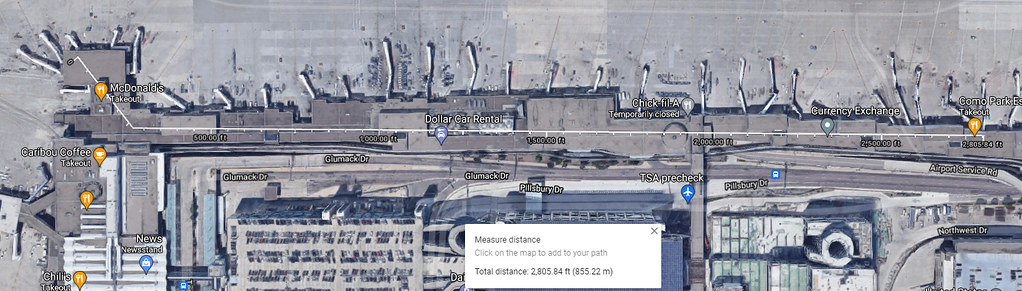
Walking from Gate D4 to Gate C20 at MSP

I made it to Gate C20 by 7:24 PM CDT, just in time for the gate agent to tell me that the plane had already left several minutes ago for an on-time de­par­ture. I sort of shrugged it off and asked her where the closest Delta customer support desk was, but others didn’t handle it as well as I did. A couple showed up moments after me; they clearly didn’t understand that boarding doors close prior to the scheduled departure time, and were infuriated that they had made it “just in time,” but the plane was already gone. In their rage, they pulled off their face coverings and started yelling at the gate agent. Did you know that the COVID-19 pandemic stops existing if you’re mad about missing your connecting flight?

Anyway, I managed to find my way to a Delta customer support desk between Gates C1 and C2. There was no representative at the desk so I used the support phones to get my replacement flight booked and sorted; by the time I was done with that, a representative had shown up, so I asked her for a hotel voucher and a toiletry/amenity baggie. I made my way downstairs to ground transportation and hopped on a hotel shuttle bus to the DoubleTree by Hilton Hotel Bloomington – Minneapolis South, my assigned complementary hotel.

 
It was a packed shuttle going to the DoubleTree. After about 20 minutes (a bit longer than expected because we went to the other terminal too to pick up more passengers), a group of ~8-10 parties exited the shuttle and walked into the hotel with vouchers for check-in. Ahead of this group were a few guests who had already checked in and needed assistance with their stay.

One of these guests was a man who went up to the counter with two ice cream bars. He had apparently just purchased them for $4 each, but noticed on his receipt that he was overcharged and wasn’t quite sure where (I imagine the receipt wasn’t itemized). The Hilton representative looked up the trans­ac­tion and let him know that, although the sign said the ice cream bars were $4 each, one of them was actually $5 and the other was $8 (even though they were both the exact same ice cream bar).

The guest requested a refund of the difference in price, and justifiably so—if the ice cream bars are labeled as $4 on the refrigerator, it would make sense that he should only pay $4. The representative tapped on his keyboard a bit, then said “I will refund you $1.52.”

That clearly was not enough to make up for the difference in price, so the guest sort of stood there in confusion and didn’t say anything. Moments later, the representative said “you have been provided with a full refund, please return the ice cream bars back to the refrigerator” … which is obviously not what he just said he would do, and is not what was requested.

The guest clearly had enough. He had mentioned earlier that he was down here to check on the price because he was sick of getting screwed over by this hotel, so I imagine this was not his first incident with the Hilton. I don’t necessarily agree with his methodology, but I definitely don’t blame him for what he did next. In a fury of rage, he crushed the ice cream bars, walked over to the refrigerator, threw them back in, slammed the door, tore off the “$4 each” sign, and slammed it on the check-in desk, pointing out that it was false advertising. He then went to the elevators and returned to his room.

The Hilton representative’s bald head began shining with sweat and his panic ensued. The representative paced back and forth for a bit, then grabbed the phone and called who I presume to be the security office. He acted like there was an active threat, even though the guest had already left. He hung up, picked up the phone again, and made some more calls. Eventually, a few more Hilton staff members, one of whom appeared to be dressed the part for being a manager, came out from the back to see what was going on.

The representative who was involved in the incident pulled up the irate guest’s personal information on file and started reading it aloud in front of the 8-10 parties still awaiting check-in—the ones who had just gotten off the shuttle with me—presumably so another employee could write it down. He then began explaining to the manager what was going on, pointing out that he had basically been assaulted by this guest.

I couldn’t help myself.

I, as the witness closest to the incident, informed the manager that the representative effectively provoked the guest by overcharging him for his pur­chase, then literally saying he would do one thing to resolve the problem (which wasn’t even an appropriate resolution) and then proceeding to do some­thing completely different. Needless to say, the representative was not happy.

Things eventually settled down. After the manager deescalated the situation (and by “the situation,” I mean “the representative,” because the angry guest had been long gone by this point, and there wasn’t really a situation to deescalate anymore), I was next in line to check in.

Seeing as I had just ratted out this representative to his boss, I wasn’t expecting much. I let him know that I’m Titanium Elite with Marriott Bonvoy, and asked if he would be able to do a status match in benefits for this stay, to which he said “no.” I asked him if I could at least get a complementary bottle of water or something, to which he replied “no.”

My response was, “this is why I stay at Marriotts.”

With an ever-so-barely visible scowl on his face, he put me on the lowest guest room floor of a 22-story building with a nice view of concrete.

 
After a passable night’s rest, I woke up in time to catch the 8:30 AM shuttle to the airport. I don’t know what I was expecting, but it was full, and it was on a first-come, first-served basis, so I was out of luck. My rebooked flight was at 10:30 AM; the hotel’s airport shuttles operated once every hour, and I didn’t want to take the risk of waiting for the 9:30 AM shuttle, so I just called an Uber.

Five minutes into my Uber ride, I got an email from Delta saying that my flight was delayed, with a new departure time of 11:37 AM. That obviously would’ve been nice to know before I had already left the hotel, but it was fine. I’d just spend an extra hour at the airport eating some breakfast and people-watching. … Shortly after I arrived at the airport, I got another email saying the departure had been delayed again, this time to 12:09 PM.

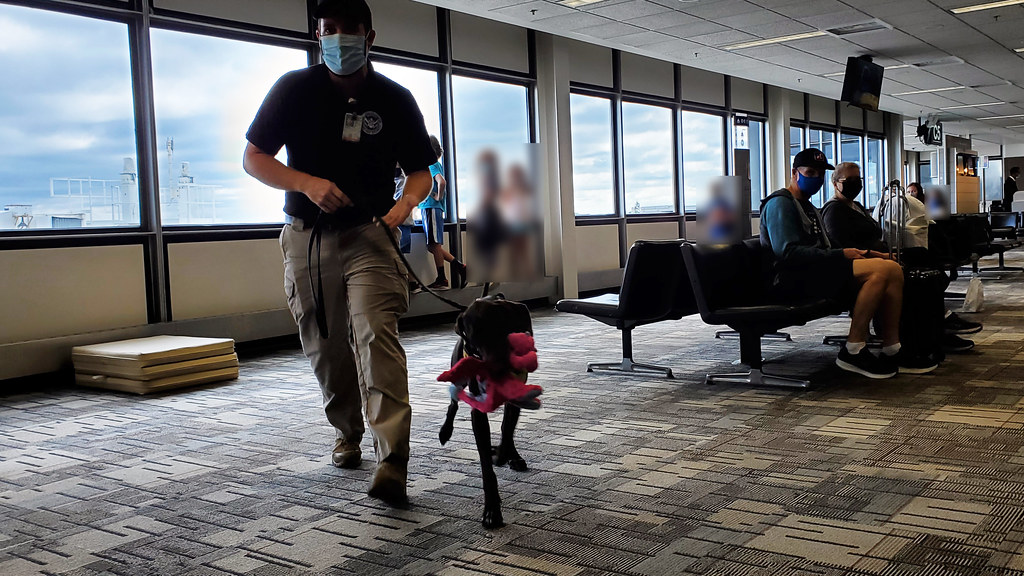
I bought a protein shake and went to an empty gate with nobody around so I could take off my mask and enjoy my drink. I got very lucky with my gate selection, because I happened to pick one where they were running training exercises for the airport bomb-sniffing dogs.
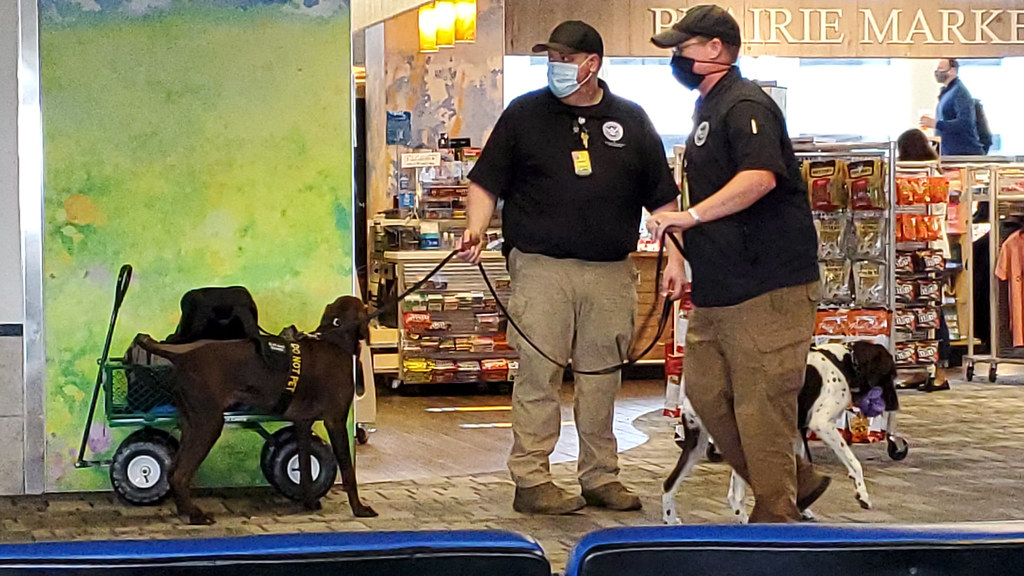
Bomb-sniffing dogs under training

Bomb-sniffing dogs under training

Bomb-sniffing dogs under training

Upon the conclusion of my entertaining dog show, Delta emailed me yet again informing me that my flight had been delayed to a 1:07 PM departure. I looked up the inbound flight for the plane that was sup­posed to take us to ORD, and apparently it was still grounded at OKC, hours after it was sup­posed to take off. I assumed it was some sort of mechanical problem with the aircraft (which I later confirmed was correct), so I walked around MSP un­til I found a power outlet, pulled out my laptop, plugged in, and started getting some work done.

Delta must have thought that this was a great idea, because they delayed the flight again to 2:16 PM.

As the time approached closer to 1 PM, I took another look at the status of the inbound flight and saw that it was en route. I realized that this is likely go­ing to end up being the last delay, and I will finally make it to Chicago. At 1:46 PM, I packed up my laptop and made my way to Gate C14 for boarding. I scanned my boarding pass and got on the plane. Everyone else boarded, the flight attendants closed the boarding doors, the airport crew retracted the jet bridge, and we were ready to leave. My travel day was finally coming to an end.

Awaiting departure from Minneapolis–St. Paul International Airport

Then the pilot announced that ORD was grounding all inbound flights at their origin until at least 3 PM due to severe thunderstorms.

Honestly, it would be more surprising if I was surprised.

I pulled out my tablet, opened my Kindle app, loaded up a Stephen King book that I’m in the process of reading, and re­clined all the way back in my seat, thank­ful that I got upgraded to first class.

Awaiting departure in a Bombardier CRJ900

I was fully prepared and expecting to be told that ORD extended the postponement of inbound flights, but we were actually cleared to depart at 3 PM. We set off, and in under an hour of air time, we arrived safely at ORD. I’m sure you can guess how excited everyone was when we flew into Chicago and saw no trace of the thunderstorms that delayed us for an additional 44 minutes on the Minnesotan tarmac.

Flying into Chicago O'Hare International Airport

Delta is still my favorite airline, and if possible, I will continue to always fly Delta Air Lines. Prior to the past two days, Delta has provided me with no­ta­bly smooth and high-quality service for years.

However, after this experience… I may possibly consider taking American Airlines in the future if they have a non-stop flight available while Delta does not. 🙂

 

—§—


Re: “How is it financially viable to live out of Marriott hotel rooms for half a year?”

I’ve had a lot of positive feedback regarding my decision to become homeless for half a year and roam around the country. The general consensus is that people are happy I’m finally taking time to myself (as opposed to constantly grinding work), and many are keeping up with my travel blog posts and liv­ing vicariously through me.

There have been a few people, though, who think this is a terrible idea, and most of them believe this for financial reasons. I’ve had one person point out that I must be “filthy rich at this point that [I] don’t even know what to do with all my money,” while another has more bluntly stated that I’m a hyp­o­crite for pushing theories of financial responsibility and then proceeding to go do something as “reckless” as this.

I thought a great way to address this and explain just how it’s actually financially viable for me to do something like this is to do a breakdown of how much money I am and would be spending in each of the two living situations.

 
As a precursor to this, I want to point out that, no, I am not actually filthy rich. I am satisfied with the volume of my various income sources and I am much better off than an overwhelming majority of Americans, but I am in no way considered “rich.”

Also note that I am only 29 years old, and have a Bachelor’s degree and half of an incomplete Master’s degree. This means:

  1. I’ve only been in the workforce for a handful of years, not only because I’m still fairly young, but also because I spent a lot of years in school;
  2. I entered the workforce with an overwhelming amount of student loan debt, a lot of which had relatively high interest rates that I wanted to pay off as soon as possible; and
  3. I’m still busy saving up for retirement, as I want to get as much of that as possible taken care of now so I don’t have to worry about it later.

 
With that being said, let’s start with a breakdown of what my housing expenses would be had I stayed in Las Vegas. I was originally planning on moving to a studio in the Veer Towers, an all-residential high-rise condominium complex at CityCenter. The main reason I ended up not going this route is be­cause I had some lease agreement conflicts with the property management company and ended up walking away from the contract. But, for this ex­am­ple, we can pre­tend like this lease went through.

For the past year, real estate in Las Vegas has been absolutely insane—prices have been climbing faster than they’ve ever gone up before. Many rich Cal­i­fornians came into town as a result of work-from-home arrangements during the pandemic, and even though Las Vegas cost of living is still much cheap­er than California, it is nowhere near as cheap as it used to be when I moved to Las Vegas in 2018.

The list price for the studio I was looking at was US$1,600.00 per month in rent, which was reasonable relative to the going market rate. I was able to get a small discount off that price, down to $1,550. Note that there is extremely low inventory right now, so I consider that discount to be unreasonably luck­y, but I’m still using the discounted rate, seeing as I managed to secure it.

These luxury high-rises on the Strip all have homeowners’ associations, and the HOA dues paid by the owner/landlord cover most utilities. The only ad­di­tion­al expenses I would have on top of that would be ~$50/mo. in electricity and ~$100/mo. in Internet service.

Thus, my monthly housing expenses would total $1,700, which averages out to $56.67 per day.

 
Next, my Marriott hotel situation.

To begin, I want to clarify that Marriott is a massive brand. Marriott is the largest hospitality provider in the world; if you narrow it down to the United States, they’re the hotel chain with the second most locations, just behind Wyndham. With this many properties, there is quite a noticeable range of op­tions when you take a look at all their hotels.

When I say I’m staying at Marriotts across the country, I do not mean I’m staying at places like the Ritz-Carlton, St. Regis, or even the JW Marriott. In­stead, I’m staying almost entirely at brands like the Courtyard, Fairfield Inn, and Residence Inn. Marriott’s luxury hotels are designed to pamper you with amenities and give you a vacation experience you’ll never forget. Marriott’s “select” collection, as they call it, is designed to give you bare­bones lodg­ing at an affordable price that still meets the Marriott standard of quality, cleanliness, and safety.

Obviously, the nightly rate can vary substantially depending on where and when I’m staying. If I snag a spot with a promotion and/or an extended stay discount, I could get a room as low as $50 per night. On the other hand, if it’s the weekend and I’m passing through a tourist destination or just happen to be unlucky and am caught in the middle of a big event or convention, sometimes the cheapest I can get is $150 per night.

With all things being con­sid­ered, I would say that a fairly liberal estimate for an average cost of a night’s stay at a hotel is $75. If I scale that up to a 30-day month, the e­quiv­a­lent rate is $2,250. (Note that this is an all-inclusive rate that already includes taxes and fees, and obviously, there are no extra u­til­i­ty charges at a hotel.)

 
However, there are two extra things to account for here, the first being percentage-based rewards that functionally act as a discount.

Although you generally cannot pay rent with a credit card (or if you do, you incur an extra processing fee), it is commonplace and often highly en­cour­aged to pay for hotel stays with a credit card. I have a Chase Sapphire Reserve, a card geared specifically towards rewarding those who travel. The Sap­phire Reserve gives you 3 reward points for every $1 you spend on travel, and each reward point can be redeemed for 1.5¢ cash value using the new “Pay Yourself Back” promotion. Even outside of the promotion, you can still get a redemption rate of 1.5¢ per point if you redeem your rewards on even more travel. This functionally acts as a 4.5% discount.

I am also a member of Marriott Bonvoy, Marriott’s loyalty program. Through this program, you get reward points derived from how much you spend on Marriott hotel rooms and services (excluding taxes). For each stay, I get a base number of reward points, plus an additional percentage-based bonus due to my high loyalty tier qualification. This, again, can depend on where I stay and what tier of status I happen to be at the time of the stay, but overall, this can functionally translate to being about a 10% discount, as a conservative estimate.

Combining the two rewards programs, I get back a­bout 14.5% of the cost of the hotel room. Using the previous estimate of $75 per night, I get back a­bout $10.88 of value per night, resulting in an effective nightly rate of $64.12, or an effective monthly equivalent rate of $1,923.75.

 
But it doesn’t end there. The second thing to account for here is that I am not spending the entire seven months, from June 1 to December 31, in hotel rooms. If I’m traveling for work or staying with friends and family, I have to keep paying rent if I’m committed to a residential lease agreement, but for hotel rooms, I simply stop paying for hotel rooms during that period.

During the seven-month period, I will be spending a total of about a month and a half at Tempo‘s company headquarters, spread out in intervals of a week or two. I generally make a routine visit every month or two, and will continue to do so during my travels. While I am in Southern California, I will stay at the residential sector of our offices and will not need to pay for hotel rooms out-of-pocket.

I will also be spending a total of about a month and a half with my parents at their house in the Chicagoland suburbs where I grew up.

As for staying with other friends and family, although I anticipate spending about a month or so with “free” lodging, I will still be purchasing them gro­cer­ies, restaurant meals, and/or gifts throughout my stay in order to show my appreciation for them hosting me at their home, and I anticipate the cost of this to be comparable to staying at a hotel room. As such, I will not be deducting any expenses for staying with friends or non-parental family mem­bers.

If I account for the free lodging at my company headquarters and with my parents, I subtract three months of lodging expenses from the seven months of travel. That calculates out to each night costing 4/7th of its rate, which brings the $64.12 down to $36.64 per night.

 
We’re almost done, but there’s one more thing to factor in. I’m driving my personal pickup truck to each destination, and there is an additional cost to op­er­ate my vehicle beyond what I normally would just by staying put in Las Vegas. I’m not going to count the mileage of going out and getting food or going on tours, but I will count the mileage of going from city to city.

After mapping out my tentative road trip route, I think I am going to drive approximately 7,000 extra miles (11,265 kilometers) over the span of the sev­en months. According to the IRS standard mileage rate, it costs an average of 56¢ per mile to op­er­ate the average vehicle (which includes things like fuel, maintenance, and depreciation).

Although my pickup truck is a mid-size model with a tonneau cover for improved fuel economy and is more efficient than the average pickup truck, it is still slightly more costly than the average vehicle. On the other hand, the standard mileage rate includes stuff like insurance, which I would’ve had to pay for anyway. I’m going to consider those factors as balancing themselves out, and just stick with the standard mileage rate.

The cost to operate a vehicle 7,000 miles is approximately $3,920. Dividing that by 7, we get a monthly rate of $560. Divide that again, this time by 30, and we get a daily rate of $18.67. This needs to be added to the $36.64 nightly rate, bringing it up to $55.31.

 
And before we come to the final conclusion, I want to address two more miscellaneous points.

First is my food situation. Yes, I won’t be able to cook while I’m on the road… except I haven’t really been cooking much lately anyway. Ever since the pan­demic happened and I got a lot of relief funding from the government, I’ve been going out of my way to ensure I support local businesses and res­tau­rants. Ever since March 2020, I have been eating almost exclusively at family-owned local res­tau­rants (as opposed to going grocery shopping and cook­ing for myself). I will continue to do so during my travels, and the cost of that will be net-neutral relative to pre-travel.

Second is the time it will take me to get from city to city, and the opportunity cost associated with that time. I did not factor this into the calculation be­cause I feel like I am putting in my time and effort of driving in exchange for receiving amazing experiences visiting new cities across the country. On top of that, driving, to some extent, is therapeutic to me, so I don’t mind sitting in my truck for a few hours at a time just listening to music and ob­serv­ing the scenery.

 
So the final verdict.

Renting a place in Las Vegas and living a “normal” life would cost me ~$56.67 per day, $1,700.00 per month, or $11,900.00 for the full seven-month period. Traveling the country and being a nomad would cost me approximately $55.31 per day, $1,659.20 per month, or $11,615.00 for the full seven-month period. (The num­bers don’t line up perfectly to their fractional counterparts due to rounding and decimals.)

Yes, in my unique situation, I am literally saving a tiny bit of money by doing things the way I am.

If you truly thought I didn’t account for the financial implications and consequences of my decision, then you don’t know me very well.


—§—


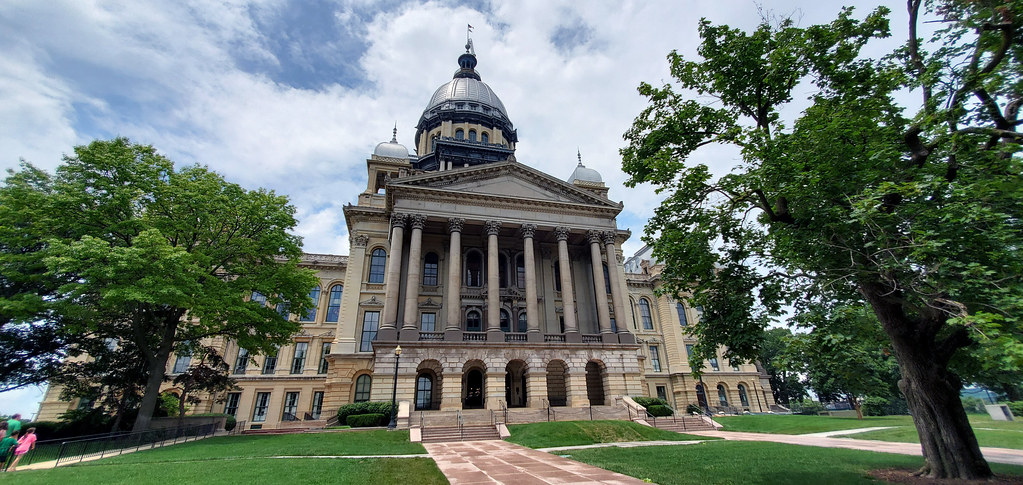
Hello, Illinois State Capitol in Springfield

I am nearing the end of the first segment of my road trip from Southern California to the Chicagoland suburbs to visit my parents. For my final stop, I de­cided to visit Springfield, the capital of Illinois, the state that contains Chicago.

Springfield has the Capitol building, along with a handful of other historic sites linked to historic figures. I figured a visit to the State Capitol was iconic and symbolic enough that it would be worth a stay in the city. However, I’m not really much of a history buff, and most other tourist attractions here are generally for history enthusiasts, so I only booked my stay for two nights.

Illinois State Capitol in Springfield

Illinois State Capitol in Springfield

The outside of the building was pretty nice, with serene landscaping, two large fountains, and various different statues spread across the plot.

Illinois State Capitol in Springfield

Due to the pandemic, it seemed like the Capitol had reduced operations, and three out of the four doors were closed. But, I managed to find my way a­round to the north entrance and arrived just in time for a guided tour of the interior.

Illinois State Capitol in Springfield

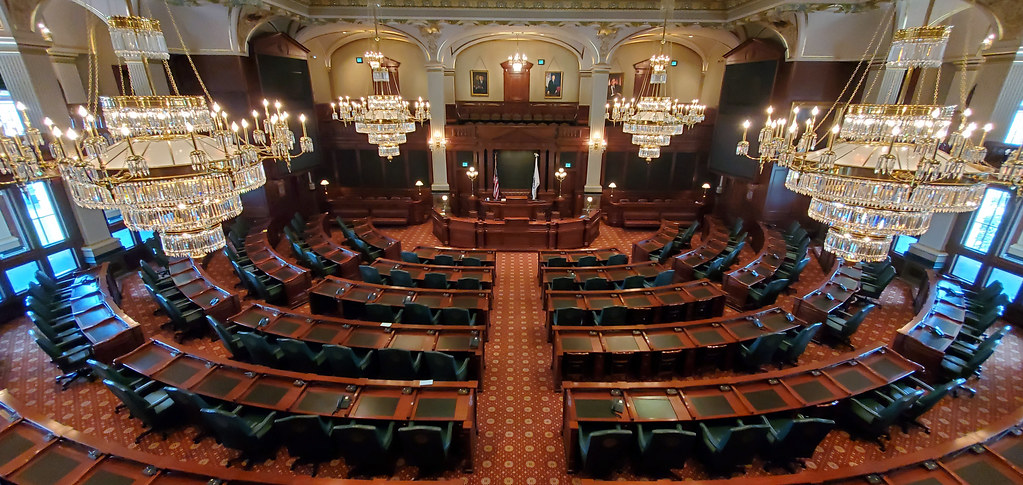
Our first stop was the House of Representatives. Apparently this room was used as a set in the filming of Legally Blonde 2: Red White & Blonde. The tour guide explained that the director loved the chandeliers in this room so much that they did a wide shot for the movie… which proceeded to shatter the sense of immersion that they worked so hard to achieve throughout the rest of the movie, because they wanted to make it look like it was filmed in Washington, D.C., and that House doesn’t have chandeliers.

The tour guide shared some other fun facts as well. For example, the smaller chairs mark the desks that are currently unoccupied. The desks with phones indicate the desks of the leaders. The little devices at the corner of each desk are the voting machines, where you press a button to vote yes or no, and al­so have access to summon assistance if needed.

Illinois State Capitol in Springfield

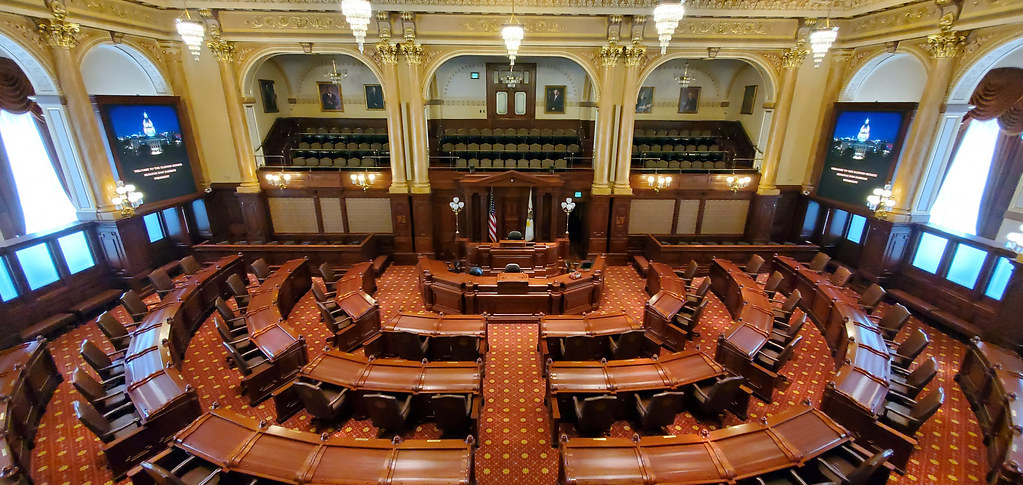
Next was the Senate. This room wasn’t quite as exciting as the House, but nevertheless, an important component of the legislative branch of the Illinois gov­ern­ment.

Illinois State Capitol in Springfield

The Capitol building is three stories tall. The ground floor was originally called the basement, and the first floor was the middle floor, but after the ar­chi­tect was requested to make some adjustments to accommodate more office space, the stairs to the previous first floor were removed and replaced with additional offices, and the main entrance was rerouted to the basement, which ended up becoming the new first floor.

Illinois State Capitol in Springfield

After seeing the legislative branch, we moved on to the executive branch. Most of that section of the building were rows of doors leading to offices, but there was a special separate section for the governor’s office. The glass office is where the public enters and goes through initial processing by the ad­min­is­tra­tive staff, then once they’re ready to speak with the governor, they are led through the brown doors to the left.

Illinois State Capitol in Springfield

I had a few other photos of some of the statues and art, but unfortunately, there were four children in my tour group who always seemed to get in the way of my pictures, and I don’t want to post photographs of minors on my blog.

This concludes my one-month journey starting in Long Beach and going through Lake Las Vegas, Salt Lake City, Rawlins, Denver, Wichita, Kansas City, and Springfield. Tomorrow, I make the final three-and-a-half hour drive to the northwest suburbs of Chicago to visit my parents.


—§—


Goodbye Wichita; hello Kansas City, Kansas/Missouri

After spending five days in Wichita, I’ve moved on to my next destination. I mentioned in a previous blog post that I had a nice view from my hotel room where I could see a lot of fireworks shows at once, but didn’t post a photograph; here is the view I had from the 11th floor of the Wichita Marriott:

Wichita Marriott

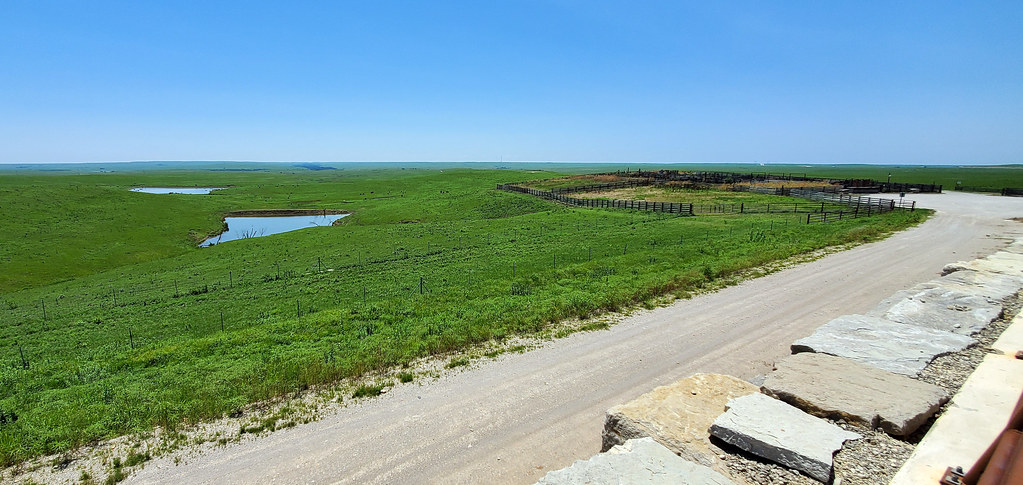
On my way driving from Wichita to Kansas City, I made a stop at the Bazaar Cattle Pens, a tourist attraction located right off the I-35 Kansas Turnpike tollway in Matfield Green. I didn’t really have much of an idea as to what exactly it was or why it was there, but I saw a bunch of cows very far off in the dis­tance, so I snapped a photo.

Bazaar Cattle Pens

After just shy of a three-hour drive, I arrived in Leawood of Johnson County in the Kansas City metropolitan area. I heard that this is one of the nicer ar­e­as of Kansas City, and Leawood contains some of the wealthiest neighborhoods in the country. My hotel of choice was the Element Overland Park, a newly-constructed hotel under the Marriott brand.

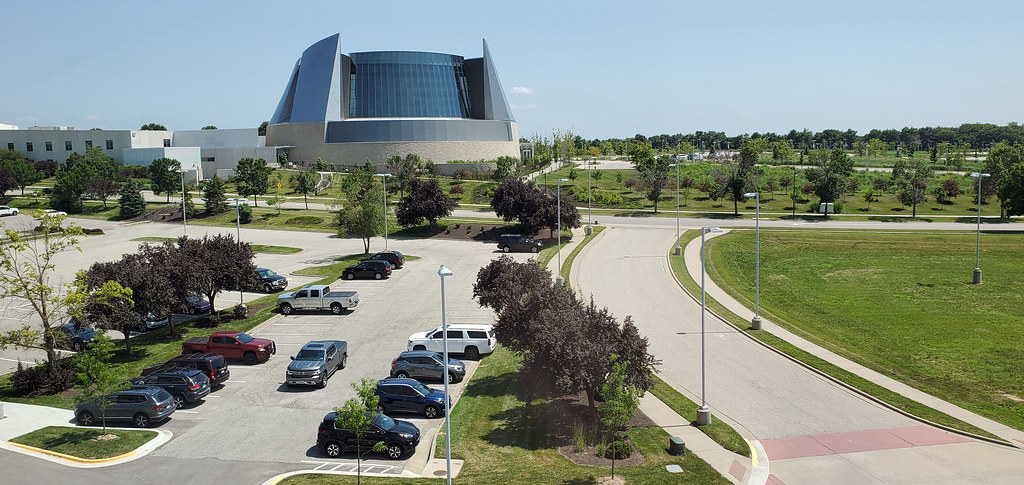
I had a south-facing room, but I still got blinded by the sunlight due to a funny building nearby; the United Methodist Church of the Resurrection, al­leg­ed­ly nicknamed the “spaceship,” had some interesting architecture that would reflect the sunset directly into my hotel room.

View from Element Overland Park

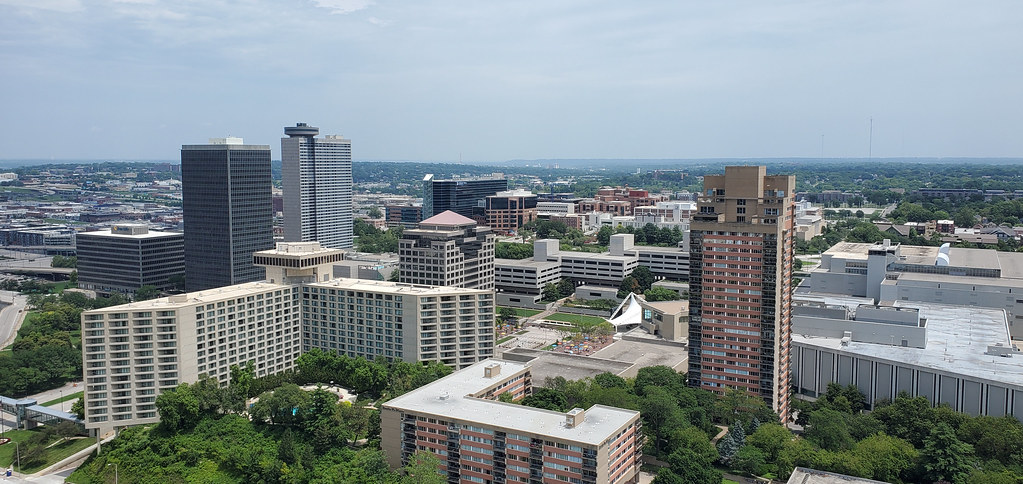
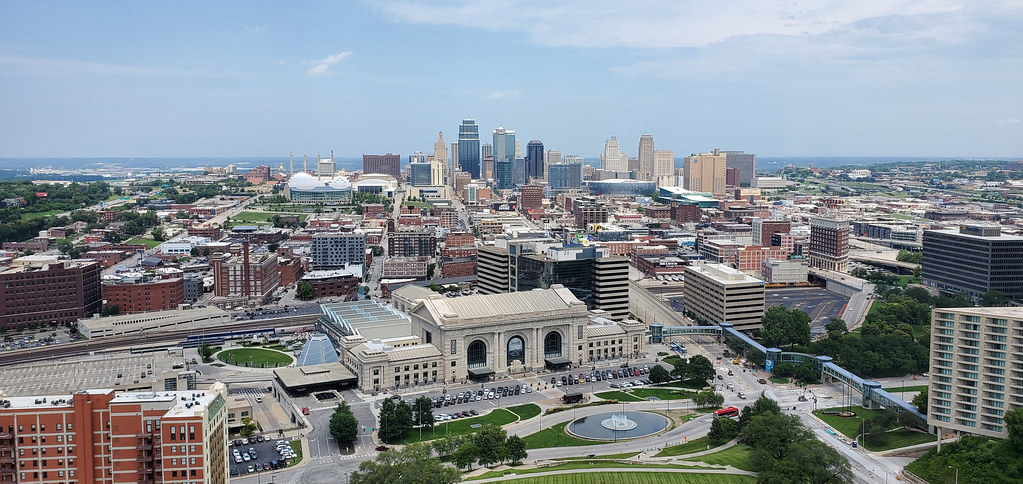
I only allocated two days to the Kansas City portion of my trip, so I had to choose wisely as to which tourist activity I wanted to do on the one full day I had here. One of my friends used to live in Kansas City and recommended the Liberty Memorial Tower for some nice views of Kansas City.

National WWI Museum and Memorial

National WWI Museum and Memorial

National WWI Museum and Memorial

National WWI Museum and Memorial

National WWI Museum and Memorial

The Liberty Memorial Tower was a part of the National World War I Museum and Memorial, so I figured I would also explore the museum while I was there. That was a bit uncharacteristic of me because I’m not really a fan of history (I literally quit my Master’s degree program because they required me to take too many history classes as part of my required curriculum), but museums usually teach information in a fun and interactive way, so I decided to give it a shot.

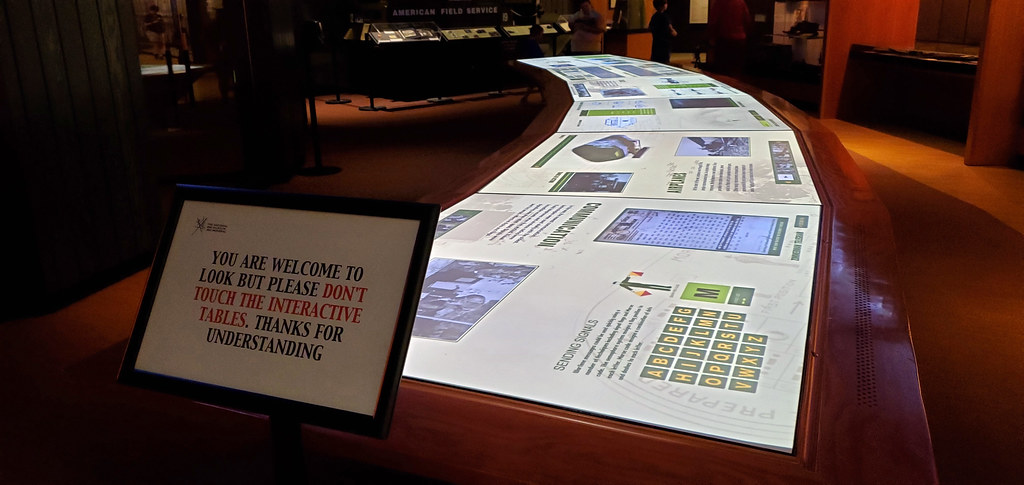
Unfortunately, it wasn’t quite as exciting as I had hoped. The exhibits were extremely text-heavy, and it basically felt like I was just reading a massive over­sized textbook with some three-dimensional illustrations. I took some pictures, but there were a ton of children there, and I don’t want to post pho­to­graphs containing minors. However, I do have one photograph I can post that I think captured my experience fairly well:

National WWI Museum and Memorial

Yes, that is indeed a sign asking you not to interact with the interactive table.

The few short films that the museum had were interesting, and I did learn quite a bit about World War I (which isn’t a surprise, because I’m an idiot when it comes to history and it’s very easy to teach someone something if they have next to zero prior knowledge about the aforementioned thing).

 
And of course, for every meal so far, I’ve had barbecue, which is the food that Kansas City is apparently known for. I still think Oklahoma City had the best barbecue I’ve ever tasted, but all my Kansas City barbecue meals come in at a comfortable second place. (I also think I just got really lucky with the BBQ restaurant I picked in Oklahoma City, because they had magical melt-in-your-mouth meat that I didn’t know was possible.)

My original plan was to go to Des Moines next, but for some reason, the cheapest hotels, even at promotional rates, were about double what I expected if I didn’t want to stay about 50 miles out from the city (my best guess is that they have some special event going on right now).

So, instead, I decided to reroute my path to Springfield, the capital of Illinois, because I figured that, having lived in the state for around two decades growing up, it would seem reasonable to visit the Capitol at least once.


—§—


Hello, Kansas Aviation Museum in Wichita

Wichita is known as the Air Capital of the World. About a hundred years ago, a handful of aircraft manufacturing companies were originally established in Wichita, and to this day, a lot of leading aerospace corporations still operate out of Wichita.

The Wichita Metropolitan Area also has a lot of airports relative to its size, including the Wichita Dwight D. Eisenhower National Airport, McConnell Air Force Base, Beech Factory Airport, Cessna Aircraft Field, and Colonel James Jabara Airport.

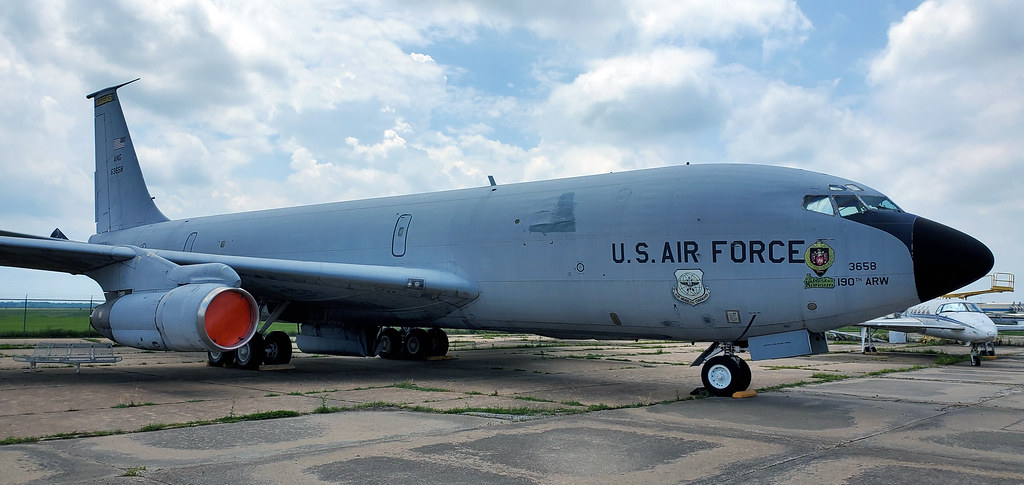
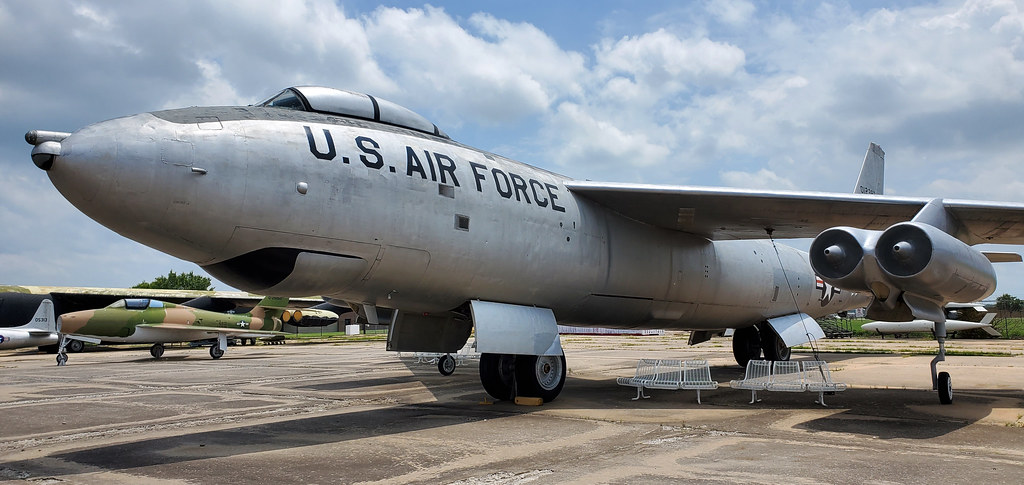
Naturally, I decided it would be a good idea to check out the Kansas Aviation Museum, a three-story indoor and outdoor hybrid museum with various aircraft, aircraft parts, and informational exhibits on display.

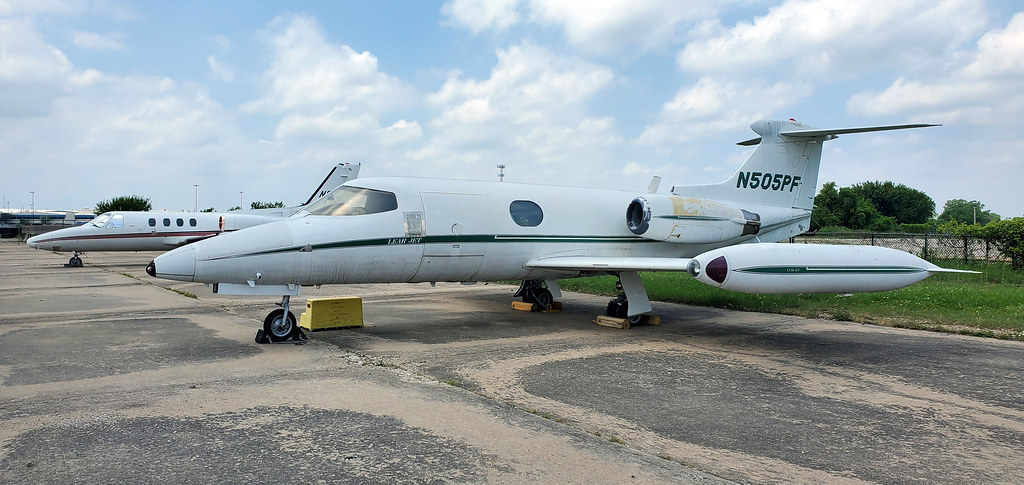
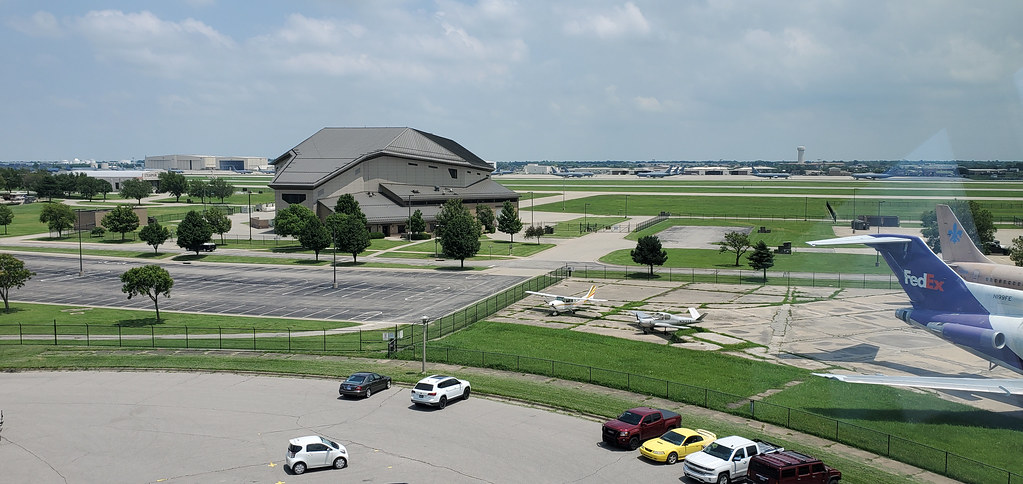
It was getting progressively hotter into the afternoon, so I decided to check out the outside area first. There were a lot of aircraft parked on the concrete, many of which were from the United States Air Force.

Kansas Aviation Museum

Kansas Aviation Museum

Kansas Aviation Museum

Kansas Aviation Museum

There were also some smaller aircraft assembled and set up indoors as well; that area of the museum seemed relatively new and still under development.

Kansas Aviation Museum

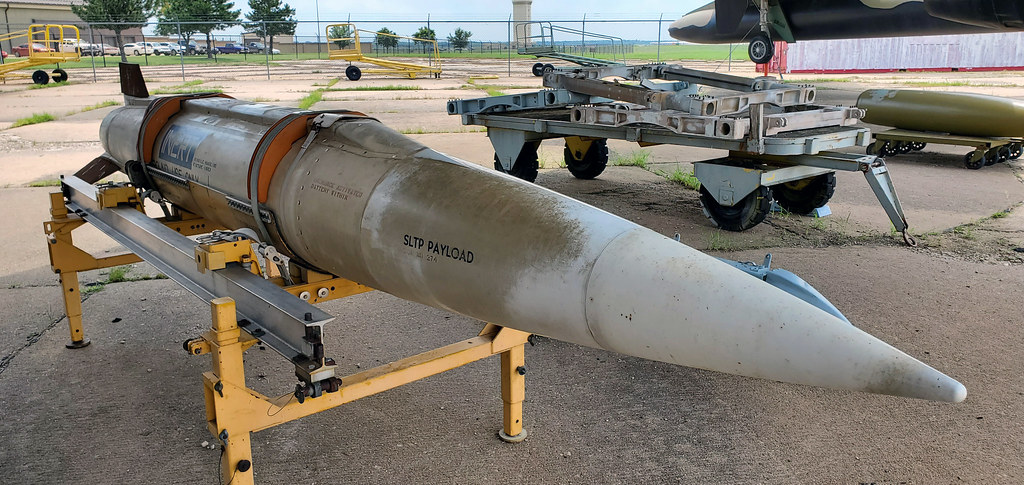
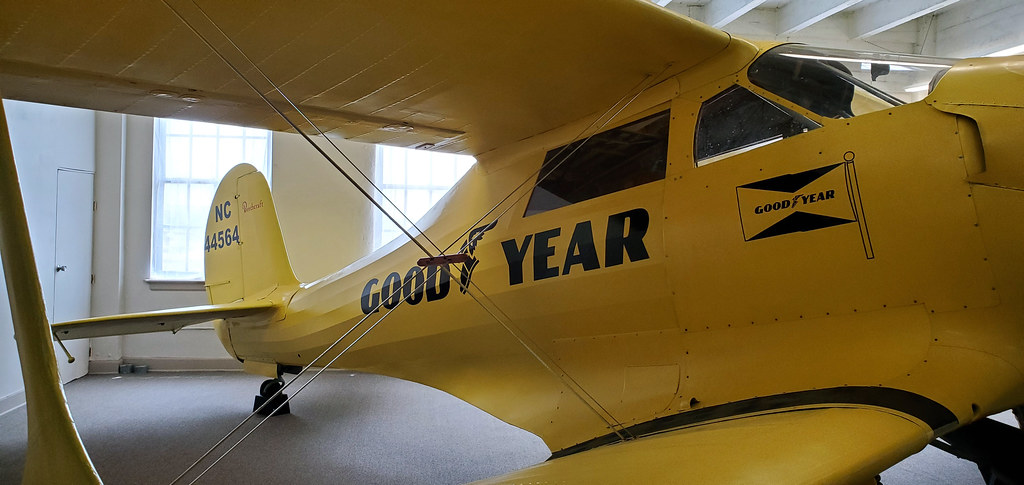
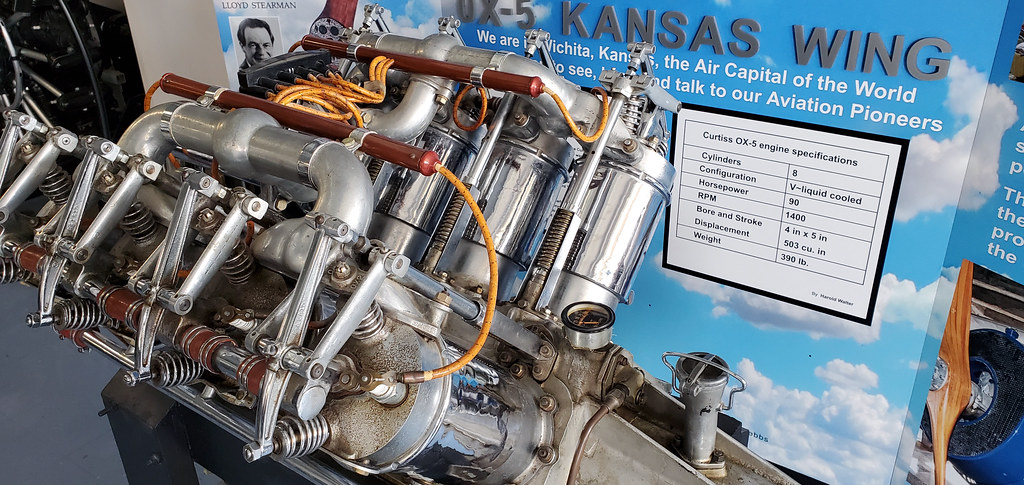
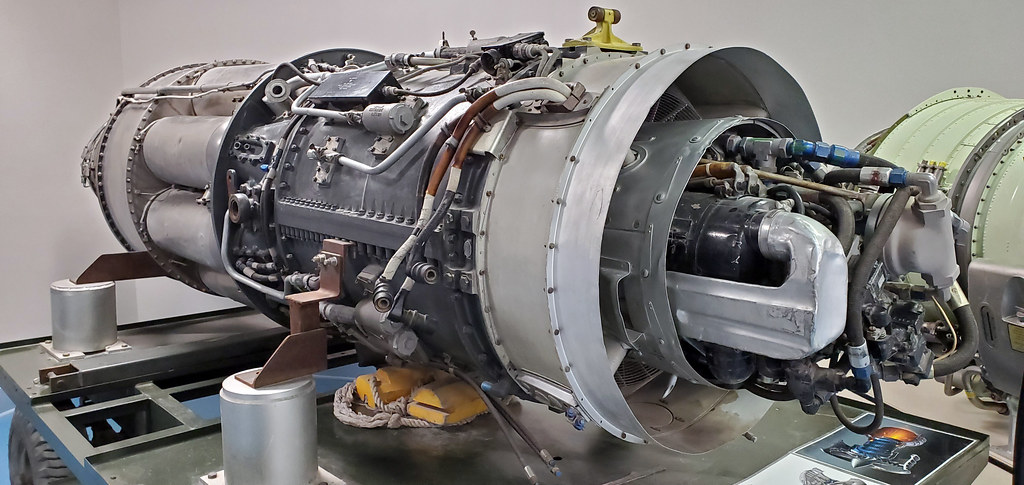
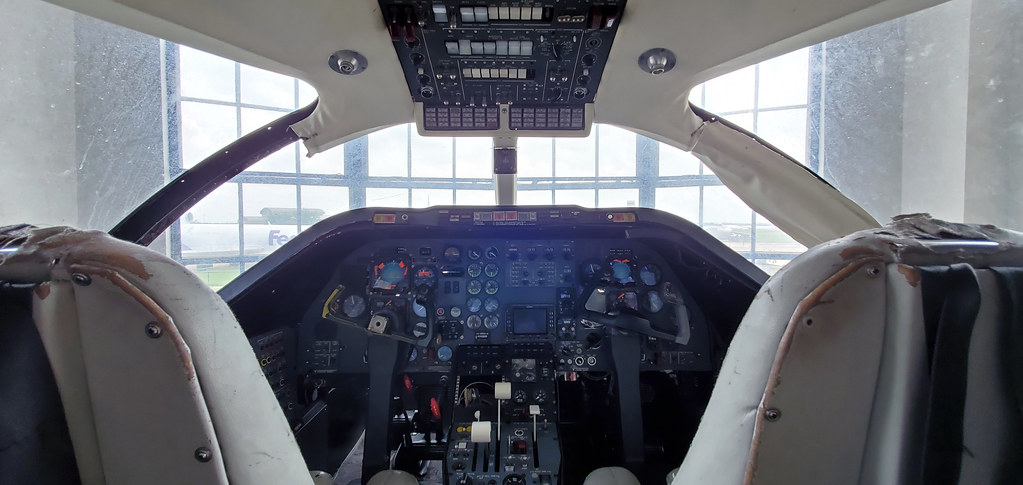
I don’t know too much about the inner workings of aircraft, but a lot of the iconic components were extracted and individually put on display as well.

Kansas Aviation Museum

Kansas Aviation Museum

Kansas Aviation Museum

My favorite part of the museum was actually the children’s area, because it’s where most of the hands-on exhibits were housed. Although it was a little too cramped for me to step in, there was a miniature model of an aircraft cabin set up. There were also some simulation stations where you could use a con­trol­ler and joystick to emulate flying a plane.

Kansas Aviation Museum

And of course, it wouldn’t be the United States of America without a machine gun.

Kansas Aviation Museum

The last area of the museum I visited was the control room, which you could access by going up a few flights of narrow stairs from the third floor. It gave sweeping views of the area to emulate what an air traffic controller would see.

Kansas Aviation Museum

I was also able to see Spirit AeroSystems’ south hangar, which had long rows of aircraft parts lined up, presumably for Boeing planes.

Kansas Aviation Museum

The extent to which I know about planes is the names of the models of the commercial aircraft that I usually fly in, and the areas and seats of the plane that are most comfortable and don’t have limited recline… so going to an aviation museum wasn’t exactly the most insightful or stimulating experience. Regardless, it was nice to see some of the inner workings of aircraft up-close, and I’m glad I got to see something that Wichita is known for.

That wraps up this leg of my trip; tomorrow, I head over to Kansas City, on the border of Kansas and Missouri.


—§—


Hello, Botanica, The Wichita Gardens

After right around seven hours of driving—the most I’ve ever done in a single day—I departed Denver, Colorado and arrived in Wichita, Kansas on July 3. I didn’t do much else on that day—I got in a full-body workout in the hotel gym to try and counteract a day of sedentariness, then ate some lamb sha­war­ma for dinner and relaxed for the rest of the day.

As I’ve mentioned before, I quit my lease but I didn’t quit my job, and I don’t like doing touristy things on the weekends because I want to avoid crowds, so I spent July 4 catching up on some work. Independence Day was great, because I’m on the highest floor of my hotel, about 140 or so feet up in the air, so I have a nice, clear view of a large portion of Wichita and was able to watch several fireworks shows at once. I got my Independence Day dinner from a local deli and ate a three-quarter pound corned beef and pastrami sandwich with Swiss cheese over toasted rye, along with a side of steamed veg­e­ta­bles.

July 5, or Independence Day Observed, was also a day of work and relaxation for me. After another full-body workout in the hotel gym and eating a chick­en, shredded beef, and ground beef enchilada platter from a local Mexican restaurant, I took care of some legal and corporate operations work for Tempo, then squeezed in a few video games for the first time in a little while.

That brings us to today, my first day being an active tourist in Wichita. Seeing as I got rained out in Denver when I visited the botanic gardens there, I de­cid­ed to give it another shot and visit Botanica, The Wichita Gardens. The one here was noticeably smaller than the one in Denver, but it was still a nice, pleasing experience (apart from the fact that it was blisteringly hot and humid).

Botanica, The Wichita Gardens

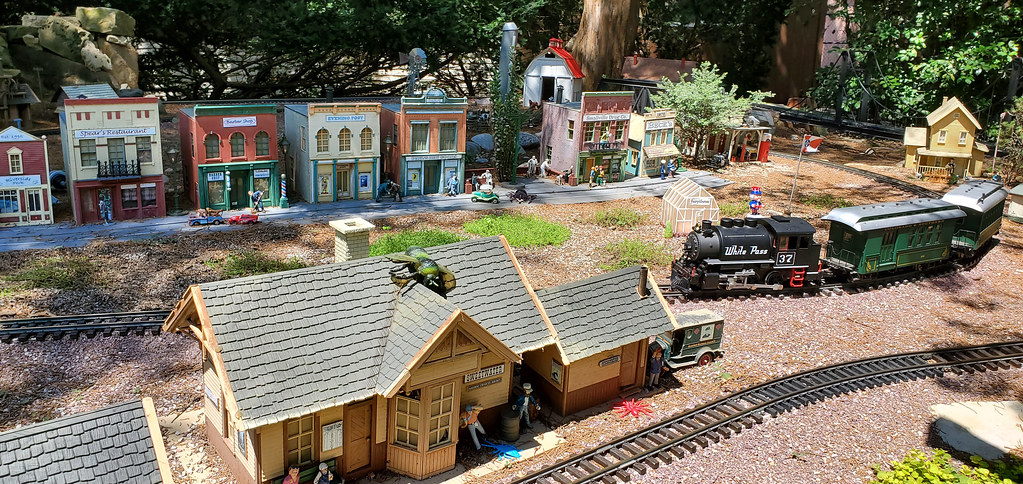
There was a little train station model set up near the entrance. I’m not quite too sure why it was there or what the story was behind it, but I snapped a photo.

Botanica, The Wichita Gardens

Near the train station was the “sensory garden,” a garden specifically designed for those with sight impairments. I checked it out and I wasn’t quite sure how it was any different than the rest of the gardens, but it was definitely a nice touch.

Botanica, The Wichita Gardens

I continued on towards the center of the Gardens, and there was an abundance of water—not something I see too often back at home in Las Vegas.

Botanica, The Wichita Gardens

Botanica, The Wichita Gardens

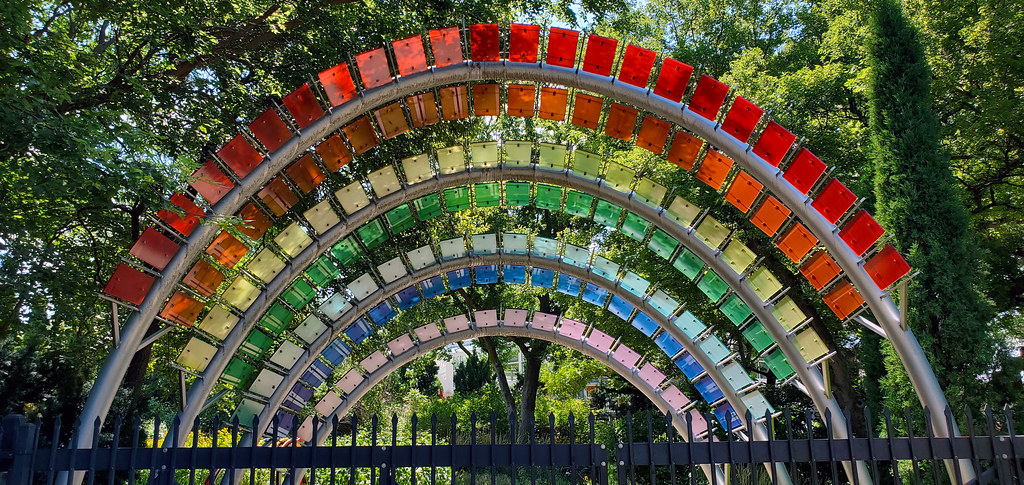
There was a bright, rainbow arch near the entrance to the Children’s Museum. Unfortunately, that area was blocked off for construction, but I snuck a­round the barricade to get a photo anyway.

Botanica, The Wichita Gardens

Past the Children’s Museum was a wellness trail with signs posted along the way to encourage wellness. Some areas were designated for stretching, while others made you more aware of your senses. After I went through the entire trail, I discovered that I accidentally did it backwards. Heh.

Botanica, The Wichita Gardens

The main centerpiece of the Gardens appeared to be a large fountain with an array of circular paths surrounding it.

Botanica, The Wichita Gardens

Botanica, The Wichita Gardens

One of my favorite areas was the butterfly exhibit. There was a separate building that housed what appeared like hundreds of butterflies. I didn’t have a princess moment with butterflies landing on my finger or anything, but I did get to snap some photos of them. (Unfortunately, I forgot my actual cam­er­a for this trip, so all of these are pictures from my phone’s camera.)

Botanica, The Wichita Gardens

One of my other favorite areas was the Chinese garden. The funniest part was the area to feed the koi fish—it was a great example of operant con­di­tion­ing, because the fish swarmed the edge of the platform when I stood there to look down, even if I didn’t have food, because to the fish, “human being on the edge” clearly means “feeding time.”

Botanica, The Wichita Gardens

Botanica, The Wichita Gardens

More Wichita tourist activities to come tomorrow.


—§—