Re: “What does your backup architecture look like?”

When I went on a nostalgic streaming binge while I had some extra time during my company’s holiday recess between Christmas and New Year’s Day, I got asked a lot of times whether I still had recordings of my streams from over a decade ago when I used to stream nearly full-time hours. The answer, to some people’s surprise, is actually yes—I do indeed have VODs saved of pretty much every stream, as well as original source files of every video I’ve published.

A handful of people then followed up by asking what kind of backup and storage architecture I have that allows me to so reliably retain all this data, es­pe­cial­ly old data from before there were large advancements in storage solutions. My backup strategy has evolved over the years, starting from just keep­ing one copy of everything on my laptop and hoping that it doesn’t die, all the way to what I have implemented today.

One of the simplest ways I can think of to describe my current setup is that everything is organized into tiers. Tier 1 is where I actively use files, tier 2 con­sists of my primary storage lo­ca­tions, tier 3 has my backup storage solutions, and tier 4 is my secondary backup options.

Tier 1 Tier 2 Tier 3 Tier 4
Local internal hard drives Synology DS1821+ WD Elements external hard drive YouTube
Google Drive   Amazon S3 Glacier Deep Archive Adobe Creative Cloud
      Amazon Photos
      Microsoft OneDrive

As is probably the case for most people, my first line of storage is just the internal drives in my computer. My boot drive is a Toshiba OCZ RD400 PCIe NVMe M.2 128 GB SSD, which holds my operating system and some software (its capacity is that small because I’ve been using the same one for 8 years now, and a 128 GB PCIe NVMe drive back then was pretty good). My SATA drive was originally a 1 TB HDD, but a few years ago, I upgraded to a West­ern Digital Blue 4 TB SSD and a Samsung 870 EVO 4 TB SSD. I use one as my primary drive and one as a storage drive.

On one of the 4 TB SSDs I use as my primary drive, I have a folder that is synced with Google Drive using Backup and Sync from Google. I used to use Google Drive a lot more, but over the past handful of years, I’ve toned down my usage of third-party service providers in general because I’ve become less trusting of them due to privacy and control concerns (e.g., I don’t want a company to be able to track everything I do, and I don’t want them to have the sole and absolute discretion to terminate my account and lock me out of my data without my input).

Everything in the Tier 1 column, as well as any other data I have that is not in Tier 1, is all in Tier 2, my Synology DS1821+ network-attached storage. This is basically my master vault of data, and close to everything I have ever created in my life exists on this NAS. It’s constantly humming, taking local backup copies of pretty much everything that exists in all my cloud service provider accounts, as well as for some of my friends and clients.
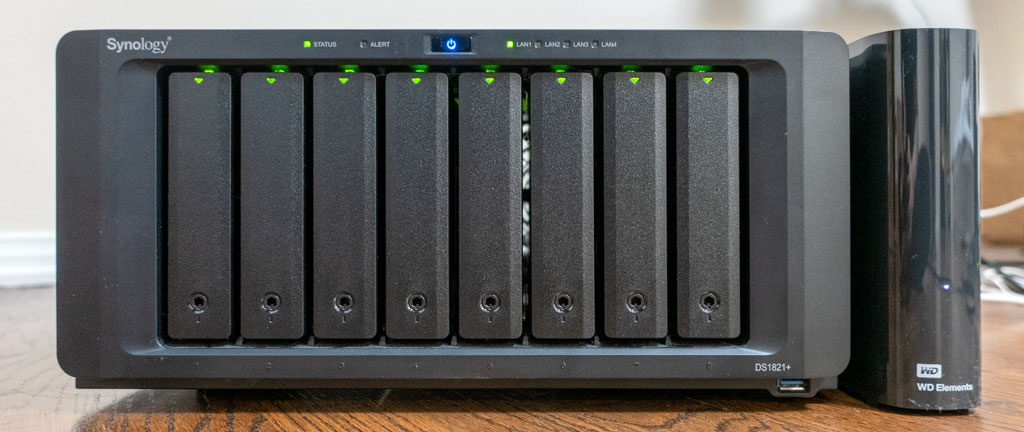
It is loaded with eight Seagate Exos X16 16 TB HDDs and two Samsung 980 Pro PCIe NVMe 2 TB SSDs. The HDDs are organized as a Synology Hybrid RAID (SHR) with two-drive fault tolerance, and the SSD cache is organized as RAID 1 with one-to-one data protection redundancy. The overall capacity for the storage pool is 87.3 TB.

It’s upgraded with a Synology D4ECSO-2666-16G 16 GB memory module, which is installed alongside the original 4 GB memory stick that came with the NAS.

It’s also upgraded with a Synology E25G30-F2 dual-port 25 GbE SFP28 to PCIe 3.0 adapter card… which was not actually the model I was intending to get, but I did not notice until I was done installing the card after it had arrived and was sitting on my desk for a few months. (If you want to avoid the same mistake as me, there might be a chance that the card you’re actually looking for is the Synology E10G30-T2.)

If you’re familiar with tech specs, you may be looking at this and wondering why I have something so powerful, and you’re not wrong—for my purposes, this is comparable to defending your house with a tank instead of just a rifle. Ultimately, it comes down to the fact that I do actually end up using a lot of the features of the NAS and I run enough containers in DiskStation Manager (DSM) to the point that it ends up sort of just being a miniature computer that is working on something 24/7. The second reason is because I like to do things right the first time around, so I wanted to build something that was robust and scalable in preparation for a situation where I would need to make upgrades.

Everything in Tier 2 is then backed up using at least one method in Tier 3. I have a WD Elements desktop external hard drive that is plugged into my NAS via USB and automatically backs up certain files on a routine basis; after sync, this hard drive is kept in a separate physical location as my NAS. I also have a lot of the data uploaded on Amazon Simple Storage Service (S3), a cloud object storage service, under the Glacier Deep Ar­chive storage classification.

The point of Tier 3 is to have redundancy of my data off-site in case a severe natural disaster destroys my residence and everything in it, including my com­pu­ter and NAS. My external hard drive’s file tree is set up so it is as close to a click-and-drag as possible to a new NAS. Amazon S3 Glacier Deep Ar­chive comes with its own set of issues, such as massive access and egress fees if I ever actually need to retrieve the data, but the storage is basically as cheap as you’ll ever find for cloud storage nowadays, at about a US dollar per terabyte.

Finally, some stuff is also backed up in Tier 4, which consist entirely of free or no-charge third-party services. If I have a video file I want to keep safe, I will upload it to YouTube for free and set it as private or unlisted. A lot of the files I work with in Adobe Creative Cloud and Microsoft 365 are au­to­mat­i­cal­ly synced to their respective servers using whatever storage space comes with my subscription fee for a software license. I upload most of my pho­tos in raw format to Amazon Photos, where I have unlimited storage thanks to my existing Amazon Prime subscription.

The point of Tier 4 is to protect my data if there is some kind of unprecedented, multi-scope destruction of data that somehow hits my computer, NAS, backup external hard drive, and even Amazon Web Services‘ servers at the same time. In that case, I can hope that some of my videos on Google’s servers and some of my files on Adobe’s and Microsoft’s servers survived, but realistically, I don’t think I will ever have a need to resort to recovering data from Tier 4, and if it ever gets to that point, I think there are going to be much more severe problems with the world to deal with.

Before I end this blog post, I do want to disclaim that I am not an IT professional and you should not blindly copy what I’ve put in this blog post—this is intended to be anecdotal so you can learn more about me, and is not to be construed as a guide on how to build the best backup architecture. Fur­ther­more, I have bought some pretty pricey pieces of hardware in exchange for some of the convenience of the products, and there are a lot of meth­ods out there where you can achieve what I did for lower cost. If you want to take some steps to enhance your data protection, there are a lot of great re­sources available online and I encourage you to conduct your own research.


—§—


Re: “If you were in the Pokémon games, what would you pick as your team?”

I’ve had somewhat limited exposure to video games as a kid—there were a few games that I played a ton of, but I didn’t play a wide variety of different games. Out of the games I did play, Pokémon is one of the games that I played a lot—my first Pokémon game was Yellow Version, I’ve played the games fairly seriously up until Generation IV, and I’ve at least had some degree of gameplay exposure up until Generation VI.

After people find out that I like Pokémon and even collect Absol cards of every type, variant, and language I can find, a lot of people ask what team I would have if I was a gym leader or another NPC in the Pokémon games.

I don’t think I would be the type of person to run a Pokémon Gym. I’m not really the type of person to look up to someone like people look up to gym leaders, or otherwise place people on a pedestal and respect them more than any other human being simply because of their status. Naturally, that means that I don’t want other people to do that to me either—I firmly believe that I am just a regular person who doesn’t need special treatment.

In alignment with that philosophy, I wouldn’t necessarily want to be a gym leader. However, I do like the idea of being in a Pokémon game as somewhat of a random encounter, similar to how you hunt Suicune, Raikou, and Entei in Pokémon Gold, Silver, and Crystal—I am simply out exploring the lands like any other trainer, but with some luck, you can run into me and battle me out in the wild.

Scizor

Moves: U-Turn, Bullet Punch, Swords Dance, False Swipe
Ability: Technician
Nature: Adamant

I think Scizor would be a good lead for my party. It has a priority same-type attack bonus (STAB) move in Bullet Punch to quick­ly clear out wild encounters, Swords Dance to buff attack for longer battles, and U-Turn if he’s in trouble and needs to switch out.

I also like the idea of having False Swipe in the moveset, a move that otherwise would make no sense except for lore purposes. When I was younger and played Pokémon Gold on the Game Boy Color, Scizor was literally the Pokémon I used to catch wild Pokémon by bringing them down to 1 HP using False Swipe, and I think leaving that in acts as a nod to the practicality of my team and an indication that I am just a regular Pokémon trainer out catching and training Pokémon like everyone else.

Togekiss

Moves: Air Slash, Tri Attack, Flamethrower, Fly
Ability: Serene Grace
Nature: Timid

Back when I used to play Pokémon Showdown, I ended up picking Togekiss as my special attack sweeper (and I don’t quite re­mem­ber why). The Togepi evolution line isn’t particularly my favorite or anything, but I guess Togekiss has grown on me up to the point that I’d want to include it in my team.

Similar to False Swipe being on Scizor above, I like the idea of just randomly having Fly on Togekiss, as that would make sense lore-wise that I am a random encounter because I’m out adventuring. However, if I were to be implemented in a static location any­where, I would probably replace Fly with something like Ominous Wind to fully commit to the Serene Grace gimmick.

Espeon

Moves: Psychic, Hidden Power (Ice), Grass Knot, Substitute
Ability: Synchronize
Nature: Modest
Gender: Female

My second favorite Pokémon is Eevee. I like the fact that Eevee just looks like a normal pet that you could have in real life. I also like potential, i.e., the capacity and power of being able to do many things and/or whatever you want is very appealing to me. Eevee obviously has a lot of potential, considering that it can evolve into several different Pokémon of different types and stat dis­tri­bu­tions.

I like the idea of having a “pair” in my party, and Eevee evolutions seem like the best way to do that. Espeon and Umbreon also represent balance—light and dark, offensive and defensive—another one of my core values.

Espeon is strong but fragile. Umbreon is “there to protect her,” but I also like the idea of Espeon being able to stand up for her­self when needed, so I have her built as a special attacker with Substitute for a bit more durability.

Umbreon

Moves: Curse, Payback, Protect, Wish
Ability: Synchronize
Nature: Careful
Gender: Male
Item: Leftovers

I wouldn’t really consider myself an avid shiny hunter, but after I finish the storyline and have beaten the Elite Four a countless number of times, I do end up looking for some new things to do in-game. Umbreon would be a shiny on my team, not nec­es­sar­i­ly be­cause I’m enthralled to shiny hunt an Eevee, but mainly simply because I like the visuals of the blue in the sprite.

As you’d expect, Umbreon is on the team to break up the opponent’s momentum and try to put a stop to any sweepers that may have had an opportunity to set up. In theory, Umbreon could also support his partner Espeon by casting Wish for her to help her recover from the health penalty of using Substitute.

Empoleon

Moves: Aqua Jet, Swords Dance, Metal Claw, Earthquake
Ability: Torrent
Nature: Adamant

I like having a bit of chaos and unpredictability in my life. I know it’s become a meme now to “never let anyone know your next move,” but I do think there is real value in doing things in an unconventional way.

Empoleon is generally used as a special attacker (and sometimes a bulky one), so being a Swords Dance attack sweeper with a priority STAB water-type move that also gets boosted by its ability, a STAB steel-type move that can even further increase attack, and an all-around solid move in Earthquake is very powerful.

Absol

Moves: Night Slash, Psycho Cut, Stone Edge, Superpower
Ability: Super Luck
Nature: Adamant
Item: Scope Lens

My team wouldn’t be complete with my favorite Pokémon, Absol. Considering it is my favorite, if I were to spend time shiny hunting anything, Absol would be first in line, so I decided to put a shiny variant on my team.

In addition to its looks, another aspect of Absol I really like is its lore. It is often referred to as the Disaster Pokémon because it comes down from the mountains to warn people of upcoming disasters, but because of the timing, many people think it is Absol it­self that is bringing the doom. Because of this, I’ve specifically built my Absol around the theme of luck—both its ability and item increase its critical hit ratio, and three out of its four attacks inherently have higher critical hit rate.

Absol would be my signature Pokémon, and if the game allows me to have an overworld sprite, Absol would be the one standing by my side.

If you’d like to make a fan game or write fan fiction themed around Pokémon that includes me, keep in mind that you do not have to ask public figures for permission prior to including them in works of parody or transformative content, as long as you are not infringing on their right of publicity or com­mitting com­mer­cial appropriation.

With that being said, I actually enjoy seeing creative fan-made content, as long as it is not intended to falsely discredit my reputation, spread false in­for­ma­tion construed as statement of facts, imply any commercial endorsement or agreement, or otherwise be made in bad faith. If you plan on in­clud­ing me in your personal projects, you may use my team and lore from above, but also feel free to modify it in any way you’d like to fit the format of your work.


—§—


Re: “Why don’t you post on social media?”

Since June 1, 2021, the date on which I began my homelessness and roamed across the United States and Canada as a nomad, I’ve published 115 blog posts, 94 of which were related to my travel in some way. I like taking photographs of everything around me, not only because I want to save them as mem­o­ries, but also because I want to share them with the rest of the world so they can see what I see from my perspective, and I think blog posts are a great way to achieve this.

Naturally, one of the questions I regularly receive is why I do this on my own website and not on social media. In a broader sense, I get asked once in a while as to why I tend to just avoid using much social media in general. After getting my fair share of “you could have a cool Instagram account with all these travel pictures,” I decided to address why I have been running a personal website since 2003, blogging regularly since 2007, and avoiding social me­di­a platforms.

 
I do not want to give free content to other companies.

I’m not a particularly money-hungry person. You may have noticed that my website (at least as of today) does not have any advertisements or pro­mo­tion­al content, because I want my readers to be able to enjoy my content without interruption. I’m also willing to do things for friends without charg­ing them—for example, I’ll give them rides to places or run errands for them without an expectation of mileage reimbursement or payment, just as a way for me to have an excuse to go outside, move my body, and get some fresh air.

With that being said, I do not give anything for free to people who do not deserve it, and especially not to companies that do not deserve it.

If I upload content to social media, I perceive that as giving my content to massive social media corporations for free. A majority of social media plat­forms would not pay me for my content, and even if some of them did, the amount of money I would receive from them is so negligible that I’d rather just decline it and keep full ownership of my own content.

Sure, you could look at it as the social media plat­forms paying me with exposure by promoting my content to a wider audience, but my objective here is not to try and get famous off my content—all I want to do is leave behind a memoir of my life and share it with those who care enough to come search­ing for it on my personal website.

 
Social media doesn’t last forever.

I pretty much do not delete anything. Ever since around the middle of high school, I have obsessively kept everything that I’ve ever created from that point forward, and also went back and archived a lot of content I created as a younger kid. I believe in keeping as comprehensive of a library of my cre­a­tions as possible, so I make sure to keep backups and never put the “primary” copy of things anywhere it could be easily lost.

The stuff from high school that I mentioned above? It literally still exists, live, on this very website. I have intentionally made the navigation to older con­tent pretty difficult in order to avoid people from uncovering some of my cringey content from my past, but it’s still technically all there for the par­tic­u­lar­ly dedicated detectives who want to see what I was like as a teenager.

Imagine if I had written all that content on social media instead. Back then, I guess I would’ve been writing blog posts on MySpace. After MySpace ba­si­cal­ly died, I imagine I would’ve transitioned onto Facebook. Nowadays, Facebook is sort of falling out of favor… and there isn’t really even a great plat­form to write long-form content anymore. Would I post my photos on Instagram now, then write 3,000-word captions to the photos?

Not only would this make my work spread out all over the place, but if any of these social media platforms go out of business, my work that was o­rig­i­nally published there would be lost unless I go manually transfer them over… but it wouldn’t be a one-to-one transfer, because then that would mod­ern­ize the date stamps.

There are plenty of examples of companies going out of business and nuking their users’ content along with it. In a milder-case scenario, even if your content doesn’t get deleted, these websites could force you to pay to continue using their services—which is exactly what happened to Flickr, and pre­cise­ly why I no longer use them and instead just decided to stop worrying about bandwidth and start hosting all my media in-house now.

 
I want to have full control over the presentation of my content.

If I want to write something short and make it look artistic, I want to be able to do that. If I want to post photos of varying different dimensions and wrap text around it, I want to be able to do that. If I want to do a massive personal finance breakdown with charts and tables, I want to be able to do that. If I want to publish a humongous block of text like I am today, I want to be able to do that.

Social media platforms heavily restrict the amount of personalization and customization you can implement into your publications. In the old days, I re­member social media platforms being far more liberal with the types of HTML and CSS you could integrate into your profiles—I remember going ma­jor­ly overboard on my Neopets and MySpace profiles—but with so many web exploits nowadays, it’s not really safe or practical anymore.

Instead, all I can do is type plain text or BBCode markup at most, and conform to the existing permissible structure of the social media platform. I find that to be boring and restrictive, and would prefer to have my own space where I can literally code any PHP, HTML, CSS, JavaScript, and whatever other features I want directly into the page.

For example, in the website theme I’m using today, you might think that it’s just plain black text on a white background. However, that’s not actually true—the text is a very dark charcoal, and the background is slightly off-white to resemble paper. These extremely subtle color changes are supposed to make the website subconsciously look a bit classier without a majority of readers even realizing why, and it’s something that I can do because I have the full power to do whatever I want to with my website.

 
I want to stay true to my own voice without falling into the trap of optimizing to an algorithm.

No matter how stubborn someone may be, the number of interactions on social media posts eventually gets to almost everyone’s head. Low interactions can make a creator feel like they’re doing something wrong, while high interactions can lead the creator astray from what they truly want to do.

The most dangerous kind of bias is one that you don’t know exists. I don’t want to become overconfident and assume that I’m able to ignore the peer pres­sure from social interactions, only to be betrayed by myself.

The target audience for my blog is … myself. I literally create content on my website to please myself first, and to please everyone else second. Because of this, I don’t see any reason to put myself in a situation where I may subconsciously change my core objective by trying to satisfy a social media algorithm to earn the approval of people who I consider to be less important than myself when it comes to the scope of my website.

The best part about this is that this is usually the best way to retain long-term followers and supporters. Optimizing your content just for the surge of views and interactions by conforming to the latest trend will help you in the short-term, but those people will come and go. Staying true to yourself and consistently putting out content that you think is great content will result in slower growth but more reliable retention.

In a similar vein, I have noticed that social media platforms nowadays have become dangerously liberal, as opposed to remaining neutral. I have per­son­al­ly seen instances where people who wish to debate liberal and progressive viewpoints have been shut down and removed from the platform un­der the guise of being “hateful” or “spreading misinformation.” I, as someone who is non-partisan and moderate, have opinions that lean in both di­rec­tions of the liberal-to-conservative spectrum, and I do not want to have to think twice about what I write out of fear that the social media platform may unjustly ban me and lock me out of my account.


—§—


Re: “How is it financially viable to live out of Marriott hotel rooms for half a year?”

I’ve had a lot of positive feedback regarding my decision to become homeless for half a year and roam around the country. The general consensus is that people are happy I’m finally taking time to myself (as opposed to constantly grinding work), and many are keeping up with my travel blog posts and liv­ing vicariously through me.

There have been a few people, though, who think this is a terrible idea, and most of them believe this for financial reasons. I’ve had one person point out that I must be “filthy rich at this point that [I] don’t even know what to do with all my money,” while another has more bluntly stated that I’m a hyp­o­crite for pushing theories of financial responsibility and then proceeding to go do something as “reckless” as this.

I thought a great way to address this and explain just how it’s actually financially viable for me to do something like this is to do a breakdown of how much money I am and would be spending in each of the two living situations.

 
As a precursor to this, I want to point out that, no, I am not actually filthy rich. I am satisfied with the volume of my various income sources and I am much better off than an overwhelming majority of Americans, but I am in no way considered “rich.”

Also note that I am only 29 years old, and have a Bachelor’s degree and half of an incomplete Master’s degree. This means:

  1. I’ve only been in the workforce for a handful of years, not only because I’m still fairly young, but also because I spent a lot of years in school;
  2. I entered the workforce with an overwhelming amount of student loan debt, a lot of which had relatively high interest rates that I wanted to pay off as soon as possible; and
  3. I’m still busy saving up for retirement, as I want to get as much of that as possible taken care of now so I don’t have to worry about it later.

 
With that being said, let’s start with a breakdown of what my housing expenses would be had I stayed in Las Vegas. I was originally planning on moving to a studio in the Veer Towers, an all-residential high-rise condominium complex at CityCenter. The main reason I ended up not going this route is be­cause I had some lease agreement conflicts with the property management company and ended up walking away from the contract. But, for this ex­am­ple, we can pre­tend like this lease went through.

For the past year, real estate in Las Vegas has been absolutely insane—prices have been climbing faster than they’ve ever gone up before. Many rich Cal­i­fornians came into town as a result of work-from-home arrangements during the pandemic, and even though Las Vegas cost of living is still much cheap­er than California, it is nowhere near as cheap as it used to be when I moved to Las Vegas in 2018.

The list price for the studio I was looking at was US$1,600.00 per month in rent, which was reasonable relative to the going market rate. I was able to get a small discount off that price, down to $1,550. Note that there is extremely low inventory right now, so I consider that discount to be unreasonably luck­y, but I’m still using the discounted rate, seeing as I managed to secure it.

These luxury high-rises on the Strip all have homeowners’ associations, and the HOA dues paid by the owner/landlord cover most utilities. The only ad­di­tion­al expenses I would have on top of that would be ~$50/mo. in electricity and ~$100/mo. in Internet service.

Thus, my monthly housing expenses would total $1,700, which averages out to $56.67 per day.

 
Next, my Marriott hotel situation.

To begin, I want to clarify that Marriott is a massive brand. Marriott is the largest hospitality provider in the world; if you narrow it down to the United States, they’re the hotel chain with the second most locations, just behind Wyndham. With this many properties, there is quite a noticeable range of op­tions when you take a look at all their hotels.

When I say I’m staying at Marriotts across the country, I do not mean I’m staying at places like the Ritz-Carlton, St. Regis, or even the JW Marriott. In­stead, I’m staying almost entirely at brands like the Courtyard, Fairfield Inn, and Residence Inn. Marriott’s luxury hotels are designed to pamper you with amenities and give you a vacation experience you’ll never forget. Marriott’s “select” collection, as they call it, is designed to give you bare­bones lodg­ing at an affordable price that still meets the Marriott standard of quality, cleanliness, and safety.

Obviously, the nightly rate can vary substantially depending on where and when I’m staying. If I snag a spot with a promotion and/or an extended stay discount, I could get a room as low as $50 per night. On the other hand, if it’s the weekend and I’m passing through a tourist destination or just happen to be unlucky and am caught in the middle of a big event or convention, sometimes the cheapest I can get is $150 per night.

With all things being con­sid­ered, I would say that a fairly liberal estimate for an average cost of a night’s stay at a hotel is $75. If I scale that up to a 30-day month, the e­quiv­a­lent rate is $2,250. (Note that this is an all-inclusive rate that already includes taxes and fees, and obviously, there are no extra u­til­i­ty charges at a hotel.)

 
However, there are two extra things to account for here, the first being percentage-based rewards that functionally act as a discount.

Although you generally cannot pay rent with a credit card (or if you do, you incur an extra processing fee), it is commonplace and often highly en­cour­aged to pay for hotel stays with a credit card. I have a Chase Sapphire Reserve, a card geared specifically towards rewarding those who travel. The Sap­phire Reserve gives you 3 reward points for every $1 you spend on travel, and each reward point can be redeemed for 1.5¢ cash value using the new “Pay Yourself Back” promotion. Even outside of the promotion, you can still get a redemption rate of 1.5¢ per point if you redeem your rewards on even more travel. This functionally acts as a 4.5% discount.

I am also a member of Marriott Bonvoy, Marriott’s loyalty program. Through this program, you get reward points derived from how much you spend on Marriott hotel rooms and services (excluding taxes). For each stay, I get a base number of reward points, plus an additional percentage-based bonus due to my high loyalty tier qualification. This, again, can depend on where I stay and what tier of status I happen to be at the time of the stay, but overall, this can functionally translate to being about a 10% discount, as a conservative estimate.

Combining the two rewards programs, I get back a­bout 14.5% of the cost of the hotel room. Using the previous estimate of $75 per night, I get back a­bout $10.88 of value per night, resulting in an effective nightly rate of $64.12, or an effective monthly equivalent rate of $1,923.75.

 
But it doesn’t end there. The second thing to account for here is that I am not spending the entire seven months, from June 1 to December 31, in hotel rooms. If I’m traveling for work or staying with friends and family, I have to keep paying rent if I’m committed to a residential lease agreement, but for hotel rooms, I simply stop paying for hotel rooms during that period.

During the seven-month period, I will be spending a total of about a month and a half at Tempo‘s company headquarters, spread out in intervals of a week or two. I generally make a routine visit every month or two, and will continue to do so during my travels. While I am in Southern California, I will stay at the residential sector of our offices and will not need to pay for hotel rooms out-of-pocket.

I will also be spending a total of about a month and a half with my parents at their house in the Chicagoland suburbs where I grew up.

As for staying with other friends and family, although I anticipate spending about a month or so with “free” lodging, I will still be purchasing them gro­cer­ies, restaurant meals, and/or gifts throughout my stay in order to show my appreciation for them hosting me at their home, and I anticipate the cost of this to be comparable to staying at a hotel room. As such, I will not be deducting any expenses for staying with friends or non-parental family mem­bers.

If I account for the free lodging at my company headquarters and with my parents, I subtract three months of lodging expenses from the seven months of travel. That calculates out to each night costing 4/7th of its rate, which brings the $64.12 down to $36.64 per night.

 
We’re almost done, but there’s one more thing to factor in. I’m driving my personal pickup truck to each destination, and there is an additional cost to op­er­ate my vehicle beyond what I normally would just by staying put in Las Vegas. I’m not going to count the mileage of going out and getting food or going on tours, but I will count the mileage of going from city to city.

After mapping out my tentative road trip route, I think I am going to drive approximately 7,000 extra miles (11,265 kilometers) over the span of the sev­en months. According to the IRS standard mileage rate, it costs an average of 56¢ per mile to op­er­ate the average vehicle (which includes things like fuel, maintenance, and depreciation).

Although my pickup truck is a mid-size model with a tonneau cover for improved fuel economy and is more efficient than the average pickup truck, it is still slightly more costly than the average vehicle. On the other hand, the standard mileage rate includes stuff like insurance, which I would’ve had to pay for anyway. I’m going to consider those factors as balancing themselves out, and just stick with the standard mileage rate.

The cost to operate a vehicle 7,000 miles is approximately $3,920. Dividing that by 7, we get a monthly rate of $560. Divide that again, this time by 30, and we get a daily rate of $18.67. This needs to be added to the $36.64 nightly rate, bringing it up to $55.31.

 
And before we come to the final conclusion, I want to address two more miscellaneous points.

First is my food situation. Yes, I won’t be able to cook while I’m on the road… except I haven’t really been cooking much lately anyway. Ever since the pan­demic happened and I got a lot of relief funding from the government, I’ve been going out of my way to ensure I support local businesses and res­tau­rants. Ever since March 2020, I have been eating almost exclusively at family-owned local res­tau­rants (as opposed to going grocery shopping and cook­ing for myself). I will continue to do so during my travels, and the cost of that will be net-neutral relative to pre-travel.

Second is the time it will take me to get from city to city, and the opportunity cost associated with that time. I did not factor this into the calculation be­cause I feel like I am putting in my time and effort of driving in exchange for receiving amazing experiences visiting new cities across the country. On top of that, driving, to some extent, is therapeutic to me, so I don’t mind sitting in my truck for a few hours at a time just listening to music and ob­serv­ing the scenery.

 
So the final verdict.

Renting a place in Las Vegas and living a “normal” life would cost me ~$56.67 per day, $1,700.00 per month, or $11,900.00 for the full seven-month period. Traveling the country and being a nomad would cost me approximately $55.31 per day, $1,659.20 per month, or $11,615.00 for the full seven-month period. (The num­bers don’t line up perfectly to their fractional counterparts due to rounding and decimals.)

Yes, in my unique situation, I am literally saving a tiny bit of money by doing things the way I am.

If you truly thought I didn’t account for the financial implications and consequences of my decision, then you don’t know me very well.


—§—


Re: “Why do you think Las Vegas is the greatest city in the world?”

This post is over 6 years old and may contain information that is incorrect, outdated, or no longer relevant.
My views and opinions can change, and those that are expressed in this post may not necessarily reflect the ones I hold today.
 

In March 2018, a little over a year after moving from the Chicagoland suburbs to Southern California, I moved, by myself, to Las Vegas. I rented a mini­van with lay-flat second and third row seating from Enterprise Rent-a-Car, packed it literally to the brim with my belongings, and drove from Corona, CA to my new apartment in Summerlin South, a census-designated place in the Las Vegas Valley.

Two months after I moved, I wrote a blog post titled “Re: ‘Why did you move to Las Vegas?'” where I addressed… you guessed it, why I moved to Las Vegas. In that post, I pointed out why I decided to relocate, then busted some myths about Las Vegas. A lot of what’s in that post still stands, but I decided to do a follow-up post, now that I’ve been living here for over two years.

In those two years, it’s become a meme among my friends and co-workers that I am one of the most avid proponents of the greatness of Las Vegas. To be clear, that being a meme is well-labeled. I definitely do not think that Las Vegas is objectively the greatest city in the world. In fact, I think it could very well be one of the worst cities for many, many people to live in. Obviously, the greatness of a city is highly subjective, and my belief of Las Vegas’ great­ness is subjective to my own unique situation.

With that being said, Las Vegas is what I believe to be my best place to live, and I decided to list off some of my personal favorite things about the city.

  • It’s the perfect combination of a city and a suburb.

    I hate the unnavigable congestion of packed cities, but I also don’t want to live in the middle of nowhere like the small village where I grew up in the Chicagoland suburbs. I don’t want to be in a bustling city of millions where I’m constantly shoulder-to-shoulder with other people and have to pay to park at the grocery store, but I also want things to be accessible.

    I think Las Vegas is a perfect combination of both a city and a suburb. There are no stretches of forest or empty land separating things, but things also aren’t so packed that it’s excessively dense. I value the fact that it feels like I can get from place to place without having to traverse through nothingness, while also feeling like I can drive somewhere and I can actually get there faster than just giving up and walking.

  • I can live in luxury without paying luxury prices.

    I currently live in a studio on one of the upper-most floors of a high-rise condo on the Las Vegas Strip. My building has dedicated security and all amenities you’d expect from a luxury hotel. Depending on your preference, this is basically one of two living situations that you could classify as the “best” in this city, the other being a mansion on the outskirts of the Valley by the mountains, if you like that over high-rise living.

    My housing expenses, including rent and all utilities, total less than US$1,500.00 per month. I personally have an unbelievably great deal, but literally anyone, even the worst negotiators, could live this lifestyle in Las Vegas for less than US$2,000.00 per month. Search for something com­pa­ra­ble in Los Angeles and you’re look­ing at an absolute minimum of US$4,000.00 per month.

    And it’s not like I have to make “sacrifices” for it being in Las Vegas. I live on the northern end of the Strip with a north-facing view, so I’m not constantly bombarded by the flashing lights and ground-shaking music of Las Vegas Boulevard. There’s occasionally a loud train horn, but other­wise, it’s just the basic hum that you’d expect from any bustling city.

  • A vast majority of anything that I would possibly want to do is within a half-hour drive.

    Las Vegas is built as a tourist hotspot, and as such, it has pretty much anything and everything you could possibly want to do. Of course, a lot of it feels forced or artificial (because a lot of it is), but I’m not too picky, and something that feels fake will still often meet my relatively low standards of satisfaction. (To be clear, I am known to have unrealistically high standards for things I truly care about, but for everything else, I’m mostly in­different because I take all the “care” that I would allocate to those “other things” and just hone them in on a few select important things.)

    There are also nature-y things to do in and around the Las Vegas Valley as well, with Red Rock Canyon, Mt. Charleston, the Hoover Dam, available on the outskirts. A “desirable” thing that is obviously missing is the ocean, but I go to California enough already, and I personally am not really too compatible with big bodies of water anyway.

    In a similar vein, actually getting to all of these unique things you want to do isn’t a pain. My central location on the Strip means that everything is relatively close-by, but even if it wasn’t, Las Vegas traffic isn’t that terrible (at least not yet). Even when traffic gets “bad,” you still feel like you’re getting to your destination, albeit a bit slower; it’s not like California where you just feel stuck in an endless stretch of jammed freeway.

  • There is little to no risk of natural disaster.

    I’m a bit of a control freak. I like to account for everything that could go wrong and minimize any risks that could be a consequence of unattended or unexpected variables.

    As you can imagine, this means that I particularly do not get along well with natural disasters, and specifically, with earthquakes. It makes no sense to me that you would willingly put yourself in a scenario where your living situation could be thrown completely off balance by something you cannot predict and something you have no control over. I don’t think I will ever understand people who choose to move to Los Angeles voluntarily (meaning, they don’t already have family there and it’s not for work), then proceed to pay inflated prices to purchase real estate, only to be at per­pet­ual risk for your overpriced property to collapse without notice.

    Las Vegas occasionally gets earthquakes, but it’s only when the actual earthquake itself happens elsewhere, and the magnitude of said earthquake is high enough that Las Vegas is within the affected area. Las Vegas also takes the concept of avoiding natural disasters a step further by not really having natural disasters or severe weather effects in general.

    A lot of tech companies are moving their servers to Las Vegas to minimize the chances of their data being lost to something unexpected. I ob­vi­ous­ly value my own life more than tech companies value their data, so I think it’s only reasonable that I think the safety of the Las Vegas Valley is one of its big pros.

  • I save money by not paying state income tax.

    This one is pretty straightforward. The state of Nevada doesn’t have state income tax, so that is literally money that I pocket each tax year just because I decided to live in Las Vegas.

    The impact of this can be made a bit more obvious with a mathematical comparison. Someone filing taxes as a single individual living in California who has an annual salary of US$100,000.00 pays over $6,000 in state income tax. If that individual instead chose to live in Nevada, they would pay $0. That means that they would pocket an extra $6,000 every year.

    Of course, that’s oversimplified, because if they lived in Las Vegas (a city with a lower cost of living), then their annual salary might be adjusted down. Or, the same kind of high-paying Californian career opportunities might not even be offered in Nevada. However, for someone like me who works full-time remotely, this actually literally functionally becomes a “free” $6,000 every year.

  • McCarran International Airport provides great accessibility to the rest of the country for business travel.

    I travel for business quite a bit. If it isn’t going back and forth between Las Vegas and Los Angeles to take care of in-person work with Tempo, then it’s usually flying to random places across the country for events, conventions, and meetings.

    Because Las Vegas is a tourist hotspot, the airport has a great selection of affordable, non-stop flights from a lot of destinations to incentivize people to come visit. That’s obviously good for me as well, because those tourist flights can be the same flights that get me where I need to be for business.

  • I like the hot weather.

    I think snow is a magical thing. Waking up one day and seeing everything covered in a pretty blanket of white sets you up for a great day.

    That is, until the snow keeps falling, day after day, foot after foot, until you’re sick of seeing white everywhere and you can’t get where you need to be because everything is buried in snow. Living in the Chicagoland suburbs dumped too much of a good thing on me (often continuing on into the spring), and it took away the magic of snow.

    Ever since moving to the Pacific Coast, snow has become magical to me again. It’s so rare in the Las Vegas Valley that seeing it after waking up in the morning brings back that childhood awe and that feeling of knowing that it’s going to be a special day.

    Also, just in general, I prefer warmer and drier weather. I hate humidity because I feel like it makes the air feel heavier and more difficult to breathe, and it leaves an unsavory weight on your body where you always have an urge to shower throughout the whole day. The dry air in Las Vegas feels crisp and clean, and I never get that unsettling feeling on my skin.

  • Nuisances that I’ve had to deal with my whole life, like mosquitoes and allergies, are no longer a thing.

    This one is pretty self-explanatory. I can actually leave my sliding glass door open during the evenings without worrying about a swarm of mos­qui­toes leaving behind 50 red bumps on my skin. When I lived in the Chicagoland suburbs, I had the worst bout of seasonal allergies that would cripple me between August and October, but that’s completely gone in Las Vegas.

    There hasn’t really ever been a thing where I would look at it and think “wow, that’s annoying” that was exclusive to the Las Vegas Valley.

  • I feel like I’m “cheating” at real life.

    I have a stereotypical “ruthless businessman” kind of mentality. I have a strong foundation of morals and ethics, but as long as I believe I am abiding by those standards I have set for myself, I often do not show much mercy. This also means that I will do unusual things and employ non-traditional strategies—things and strategies that some people may consider questionable—in order to get ahead in life.

    By having a remote job with a company headquartered in Southern California, I almost feel like I’m “cheating” the system. A massive portion of Las Vegas revolves around the service industry, so the “health” of the city is based heavily on tourism. When the tourism industry is prospering, the city prospers; when the tourism industry suffers (like during the COVID-19 pandemic), the city also suffers.

    By maintaining a non-service job from outside of Las Vegas, I am able to remain completely financially stable, even through the ups and downs of Las Vegas. This means that when the city dips down to a low, it actually ends up serving as an opportunity for me to swoop in and take advantage of the situation. For example, if real estate prices go down because people are moving out after losing service-related employment, that’s a chance for me to come in and get a property at a great deal, even if I would’ve been able to afford it at the non-discounted price anyway.

    I am under the firm belief that you cannot become the top 0.1% in the United States by doing things the traditional, “normal” way. Making net-positive business decisions like this adds up, and with enough of them, I can get closer to joining America’s elite and setting myself and my family up for a great future.

As I said before, these are my reasons why Las Vegas is the best city for my situation. My situation is obviously very unique and unusual, so for the sake of providing clearer information catered towards the general public and presenting both sides of the argument, I’ll be covering the cons of Las Vegas as well in a future Q&A post.

If you’ve read this because you were one of the people who were just curious as to why I rave about Las Vegas so much, hopefully this was a satisfying-enough response. If you’re here because you’re seriously considering also moving to Las Vegas, be sure to keep an eye out for my cons post as well, in addition to doing additional research and collecting information from multiple reliable sources before making a final decision.


—§—


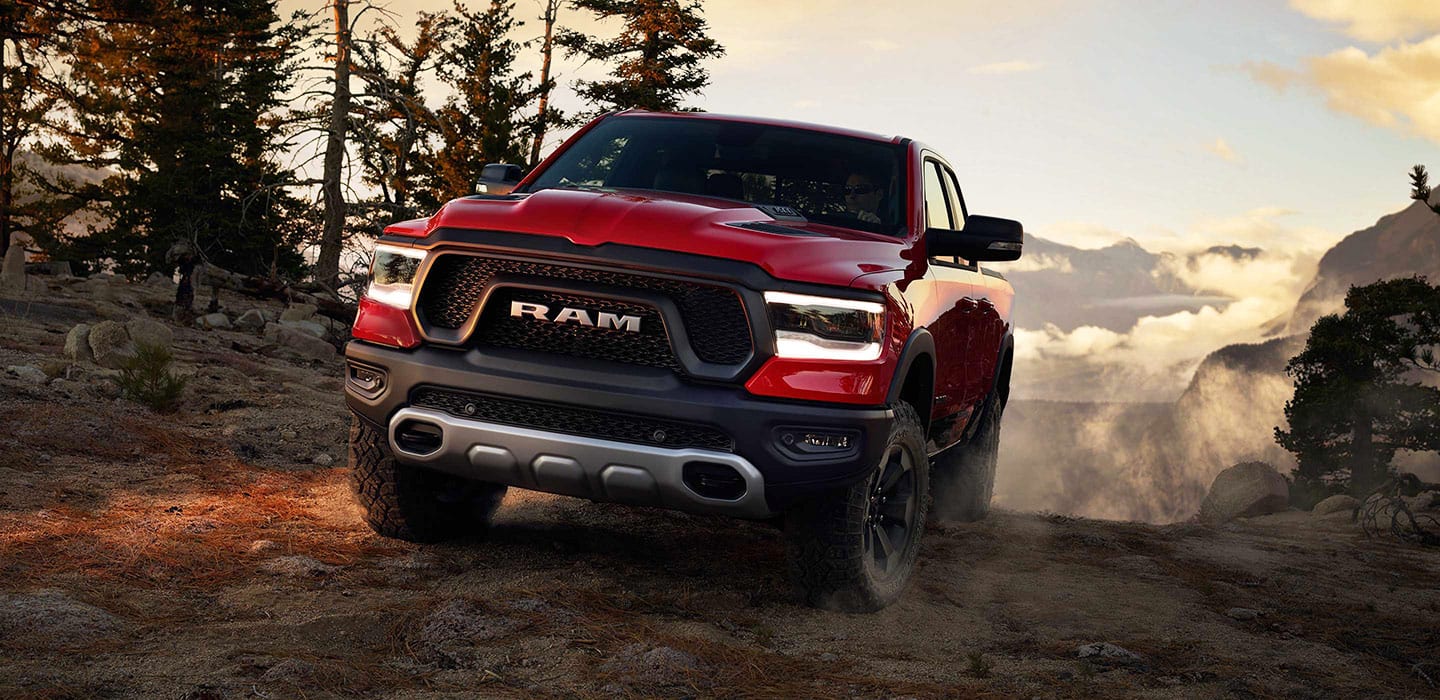
Re: “Why haven’t you bought a Ram Rebel yet?” & “Are you going to buy the new Ram Rebel TRX?”

This post is over 6 years old and may contain information that is incorrect, outdated, or no longer relevant.
My views and opinions can change, and those that are expressed in this post may not necessarily reflect the ones I hold today.
 

There’s been a lot of news popping up lately about the new Ram 1500 Rebel TRX, a new off-road pickup truck that’s supposed to compete with the Ford F-150 Raptor. Because my favorite vehicle is the Ram Rebel, and because I’ve spoken out in the past about how overrated the Raptor is, I’ve had an in­creas­ing number of people coming to me lately asking why I haven’t bought a Rebel yet, and if it was because I was waiting for the TRX to come out.

I figured this would be a good time for me to lay out the four main reasons why I haven’t bought a Rebel yet:

  1. Ram Rebels are inconveniently large as a daily driver.

    Even though this might not make much sense to most people, I’ll start with the raw numbers. Right now, I have a GMC Canyon, a mid-size pickup truck with stock dimensions of 212″ L × 74″ W × 71″ H. With the grille guard and leveling kit I have installed, the modified dimensions are ~220″ L × 74″ W × 73″ H. In comparison, a stock Ford F-150 of the same base configuration (basically, the “normal” family pickup truck you see on the street) would be 232″ L × 80″ W × 75″ H. A stock Ram Rebel measures 233″ L × 82″ W × 78″ H. If I were to even go as far as to get a conservative leveling kit, the height would hit 80″.

    In a language that can be understood by normal people and not just truck fanatics who are also mathematicians, trucks are big. Compared to the Toyota Corolla, the most popular car of all time, the Rebel is more than four feet longer, a foot wider, and almost two feet taller. Having a longer vehicle means a higher chance of swiping things with your sides while turning. Having a wider vehicle makes maneuvering more difficult; anything over 80″ is basically considered a commercial vehicle and requires extra clearance lighting to be installed. Having a taller vehicle means you might not fit in every parking garage.

    I live on the Las Vegas Strip and I drive to Los Angeles relatively often; neither of those places are too friendly towards huge pickup trucks. You generally won’t face any problems if you drive a Rebel out in the suburbs, but once you get into the bustling city, navigating narrow roads and trying to slide into parking spaces becomes a big hassle.

    To be clear, these hassles aren’t just theoretical; I’ve personally faced these issues first-hand, even when driving just a regular pickup truck. There are some hotel parking garages on the Strip with insanely low ceilings, and I’ve gotten dangerously close to maxing out the clearance, even in my mid-size pickup truck. I’ve ridden in a Ford F-150 through an Orange County parking garage and the antenna kept scraping up against the ceiling. Trying to get into the Tempo team house garage requires a five-point turn with a full-size pickup truck even with the “perfect” angle, and parking at the Tempo studio requires taking up two parking spots. U-turns at city intersections become k-turns. Imagine how worse all of this would be with an even bigger truck.

    If I lived somewhere out in the Midwest suburbs and had no reason to ever drive into the city, I might’ve already gotten a Rebel, but with my cur­rent living and work situation, my adoration of the truck doesn’t outweigh how inconvenient my life will become. Realistically, I only ever see my­self getting an oversized off-road pickup truck after I get married, assuming my wife will have a smaller vehicle and I can take her’s when I know I need to drive somewhere cramped.

  2. Fiat Chrysler is notorious for reliability issues.

    I had to think very long and very hard before deciding to buy a GMC Canyon over a Toyota Tacoma, because one thing I prioritize very highly is reliability. Toyota Tacomas are known for basically running forever, and that’s definitely something I want.

    Unfortunately, Fiat Chrysler Automobiles, the group behind the Ram brand, is notorious for having severe reliability issues. Recent reports have shown that they’ve improved their build quality substantially, but I’m still very hesitant to jump into a Ram truck until I wait it out for a few more years and see if critics of the future still agree that Ram is getting better.

    I also know a handful of people who own Ram Rebels who have been complaining about a lot of problems coming up. Most of the issues are (rel­a­tive­ly) minor, like the back-up camera showing up as a blank blue screen or the infotainment system not booting up at all, but some of them are also pretty significant, like clunking sounds coming from the powertrain. What’s even worse is that I’m hearing people are hav­ing trouble even getting the dealership to fix the problems at all—they would put in a work order and get the truck returned in “fixed” condition, but the problem would just come back days (or even hours) later.

  3. All-electric pickup trucks are coming out soon.

    I have enough to say about all-electric pickup trucks that this could be its entirely own blog post, but long story short, I want my next pickup truck to be an electric one. Definitely not a Cybertruck, but still an electric truck.

    In summary, I think the pros of electric trucks already outweigh the cons, but for my situation in particular, the cons aren’t even that bad, so it becomes a no-brainer to snatch one of these up once they’re in production.

    The timing of electric pickup trucks entering the market is actually perfect with the schedule of me having bought my GMC Canyon in 2018. I’ve been having some severe transmission issues with the Canyon, so I definitely want to get rid of it before the five-year powertrain warranty runs out. That puts us at mid-2023, which is about a year or two after electric trucks should already be on the market; that will give manufacturers enough time to troubleshoot any problems they find in the first couple years. So, I’ll be getting a new truck, but not a so-new-that-it’s-broken truck.

    I’m actually very happy with how this timeline turned out and love when things fall into place, so I’m definitely not going to go out of my way to mess it up.

  4. I’m not rich enough to get a new vehicle after less than two years.

    Just because you can afford something doesn’t mean you should buy it. I bought my GMC Canyon in late 2018, so already trading it in now for a new truck would be an absolutely devastating depreciation hit. If my truck were new and I counted the value of all the modifications, it would MSRP for over US$40,000.00. If I try to sell it now, I’m fairly certain I wouldn’t be able to get more than US$30,000.00.

    I’m still relatively young and there’s a lot that I want to save for. Going $10,000 negative on a truck, then proceeding to buy another new truck and going another $15,000+ negative again in the next two years… that sounds like financial suicide.

I think it’s clear now that I’m not opting not to buy a Ram Rebel yet just because I’m waiting for the Ram Rebel TRX. Not only is the TRX going to be even wider and taller than the regular Rebel—so it’s even more impossible for me to use it as a daily driver—but it’s speculated to have a 707 horsepower Hellcat engine, so it’s not going to be an electric truck.

With that being said, I am equally as excited for the TRX as anyone else, even if there’s basically a 0% chance I’m going to get it. Just last week, there was some footage released online of what appeared to be a camouflaged TRX out in the wild in the Las Vegas desert. A few days ago, there was also a spy shot of the console area where there’s a graphic of a tyrannosaurus rex dwarfing a truck—this is suspected to be Ram throwing shade at Ford because of how much larger a T-Rex (“TRX”) is compared to a raptor.


—§—