Re: “What is your dream five-car garage?” answered by someone who hates supercars

This post is over 6 years old and may contain information that is incorrect, outdated, or no longer relevant.
My views and opinions can change, and those that are expressed in this post may not necessarily reflect the ones I hold today.
 

I post pictures of my truck on my website once in a while, and with my recent ravaging rant about the Tesla Cybertruck, people began to pick up on the fact that I might be a car guy. Unfortunately, they would be terribly wrong, because I just happen to like pickup trucks a little bit and am not really that knowledgeable about cars… but that didn’t stop people from asking me the age-old question, “What is your dream five-car garage?”

When other people are asked this, they list off their five favorite supercars. What’s interesting about asking me this question though, as opposed to anyone else, is that I actually hate supercars. I think they’re some of the most non-functional and non-practical machines in existence, and I would never buy a supercar unless I was provided one such that I could sell it and make a profit.

With that being said, in order to maximize my profits, my dream five-car garage would be a Bugatti La Voiture Noire, Rolls-Royce Sweptail, Bugatti Centodieci, Mercedes-Maybach Exelero, and Koenigsegg CCXR Trevita. At today’s market rates, I would sell all of them for just shy of US$50 million, instantly retire, and set myself up for the rest of my life. … Yes, I literally just Googled “the most expensive cars in the world.”

That would be a very boring way to answer that question, though, so I’m going to follow along with the spirit of the question and give you the per­spective of what five vehicles would compose a dream five-car garage of a not-car-guy and someone who hates supercars.


#1. RAM 1500 Rebel

Right off the bat, a vehicle that is notably missing from this list is the GMC Canyon, the truck that I currently drive. When I first bought my truck, I thought it was the best truck ever, then a bunch of problems kept coming up, culminating in me discovering that there’s literally a class-action lawsuit against General Motors in regards to a defective transmission that my truck has. That, combined with the fact that every GMC service center that I’ve been to so far in Las Vegas seems to be wildly incompetent, and, even though I think GMC and Chevrolet trucks have the nicest exteriors, I never want to deal with GM ever again.

Instead, I want to swap out my daily driver with a RAM Rebel. I’ve always been a fan of this truck, and after I randomly got it as a rental vehicle when I went to Nebraska to meet up with Jordan King and go on a road trip to Minneapolis and basically test drove it for 1,000 miles, I received confirmation that the RAM Rebel is an awesome truck.

RAM 1500 Rebel

Similar to my current GMC Canyon, I would probably modify the RAM Rebel a moderate amount—enough to make it stand out from other RAM Rebels, but not so much that it looks like a ricer. I’d start with the functional essentials: a tonneau cover so I can use my bed for storage, bed liner so the stuff I keep in my bed doesn’t slide around too much, and ceramic tint on all windows so I don’t melt to death in the Las Vegas sun.

Something else I consider a borderline essential is a grille guard, which I ideally would get in the form of a full brush guard. I noticed that there aren’t really any grille guards available for the RAM Rebel (and I imagine that you can’t just stick a normal RAM 1500 brush guard on because the Rebel is wider), so I’m not sure how I would proceed there.

As for visual improvements, I’d stick with a conservative leveling kit (I think massive lifts look a bit silly and just put you at greater risk of rollovers); and get my tow hooks, brake calipers, and badges painted in matte gold (I initially thought about red tow hooks and calipers, but I realized that red is a bit overdone).

I’m actually more of a fan of the RAM 2500 Power Wagon than the Rebel, but the Power Wagon is just a bit too big to be realistically usable as a daily driver. Even my current mid-size truck is 220″ long with a crew cab configuration and an additional ~8″ of grille guard; when I park in parking lots, I can usually hang my bed over a divider or something, but when I park in parking garages, I back into the spot with literal inches to spare and I’m still dangerously close to jutting out into the road. The Rebel is almost 10″ longer than my GMC Canyon, and the Power Wagon is almost another 10″ longer than the Rebel… so it becomes safe to assume that I would have a lot of trouble managing the vehicle as a daily driver.


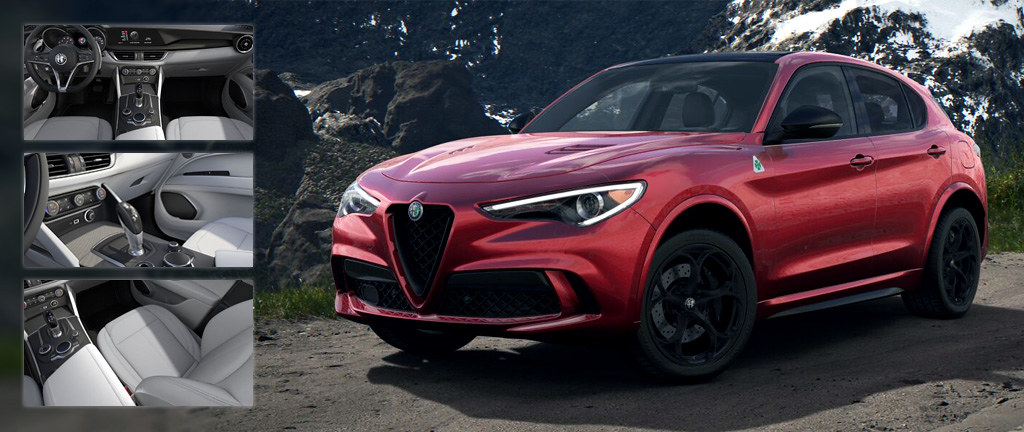
#2. Alfa Romeo Stelvio Quadrifoglio

For some reason, I’m absolutely obsessed with the front fascia of modern-day Alfa Romeos. I love it so much that I almost bought an Alfa Romeo Giulia as my first vehicle back in 2018 before realizing that trucks are far more functional and useful, and got a pickup truck instead.

Even though I would use a RAM Rebel as my daily driver, there are still instances when having a much smaller vehicle is nice. Even in my narrow-body mid-size pickup truck, I’ve still had instances of trouble navigating in and out of small parking spaces in downtown areas of heavily-populated cities with small roads and tight parking lots. So, if I know I’m going somewhere where I know I’ll have troubles, I would use an Alfa Romeo Stelvio.

Alfa Romeo Stelvio

One of the reasons I’m going with a Stelvio instead of a Giulia is because I’m notoriously bad at avoiding obstacles in the road. That’s also one of the very many reasons why I got a pickup truck—having enough ground clearance and suspension travel means that I don’t have to worry too much about my apparent inability to see what’s in front of me. (To be clear, this is stuff like curbs and dips in the road; I’m not rampaging over literal solid obstructions in my path.) I wouldn’t say the Stelvio has a lot of ground clearance, but it’s definitely more than a sedan, which is helpful.

… And that’s about it. Those are the only two vehicles that I really need—one fun pickup truck and one nice-looking crossover. Of course, if I just end the list here, it would almost be as un-fun as just listing off the five most expensive cars in the world and saying that I would sell them all, so I’m going to continue… but the next one is a little unconventional.


#3. Mercedes-Benz Sprinter Airstream Atlas Touring Coach

One of the best parts of my job is that I get to work from anywhere I want. A fun fact about me that most people don’t know is that I was considering buying a Chevrolet Suburban, stripping out the second and third rows of seats, and converting the back into a little livable area with a mattress and desk. I would then live in my SUV, traveling the country and avoiding paying rent. I planned on booking an Airbnb once in a while if I wanted to settle down for a week or two, but otherwise, I would constantly be on the road, taking showers at public gyms and eating almost exclusively at restaurants.

After thinking more carefully about it, I realized that that kind of lifestyle doesn’t really fit my personality style. I also discovered how great of a city Las Vegas was (I had been living in Los Angeles prior to that point), decided to make Las Vegas my new home, and also received some housing benefits from my employer that would allow me to break even with housing costs. I ultimately settled down and lived a normal life, and just got a small pickup truck instead.

A part of me still wants to travel the country and live out of a vehicle, because I’m a very curious person who gets bored a lot and likes experiencing new things. I think the biggest part of that lifestyle that conflicted with my personality would be that I would always be going in and out of public places for food and hygiene; because I’m a very private person, I would feel uncomfortable doing so. The thing that would make it okay for me is if there was more to my vehicle than just a mattress and a desk. That is to say, if I lived out of an RV instead of just an SUV, then I think the mobile lifestyle would be fun.

Thus, the third “car” I would get as part of my dream garage would be an Airstream Atlas Touring Coach built on the Mercedes-Benz Sprinter chassis.

Mercedes-Benz Sprinter Airstream Atlas

Being a Class B+ RV, the Airstream Atlas would come with a complete bathroom with a stand-up shower, toilet, and sink built straight into the vehicle. I’m actually very comfortable with being in small spaces, so I feel like getting one of these RVs and experiencing something new everyday would make me very happy.


#4. Lexus GX

At this point, I feel like I’m really pushing it to come up with more ideas, but the final vehicle that I think is reasonable enough for me to want is a Lexus GX.

Lexus GX

Lexus is famous for its amazing reliability, and I presume it would be nice to have a seven-seater three-row SUV as a family hauler some day. I obviously do not have kids today, but when the day comes and my kids have friends who want to go on trips with us, I feel like there’s no better indestructible vehicle than a Lexus to go on road trips for vacation.

Not only do neither the RAM Rebel nor Alfa Romeo Stelvio have as many seats as the Lexus GX (and the Airstream Atlas is large, but it technically only “fits” two people), but RAM and Alfa Romeo are also both part of the Fiat Chrysler Automobiles Group, which has historically been notorious for having poor reliability. And having your car break down while on vacation sounds very not-fun.


#5. Genesis GV70/GV80

And now, I am completely out of ideas. I’m not a greedy person, and I find greater pleasure in optimization and efficiency than I do in just having more possessions. Thus, as my fifth and final car, I would get an upcoming Genesis crossover and give it to my parents.

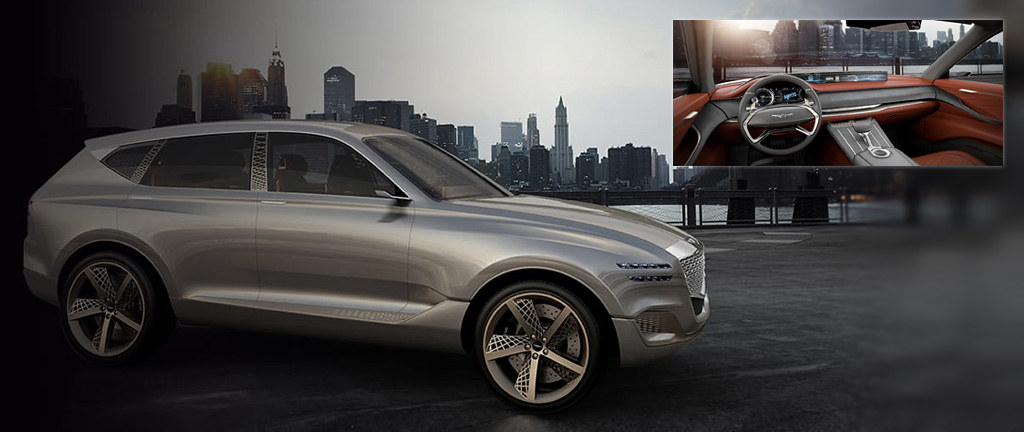
Genesis GV80

Pictured above is the concept model for the Genesis GV80, but I would likely end up getting them a GV70 instead (which doesn’t have a revealed prototype yet, as far as I’m aware), because my parents aren’t like me and they prefer medium-sized vehicles rather than massive ones.

Genesis isn’t really one of the most popular car manufacturers, so for those who don’t know, Genesis is the luxury brand of Hyundai, similar to how Lexus is the luxury brand of Toyota and Acura is the luxury brand of Honda. The “Genesis” name started as a model under the Hyundai make, but it split off into its own make and has expanded to a small line of luxury vehicles.

My parents have great Korean pride, but before Genesis, there haven’t really been very many luxury vehicle selections from Korean manufacturers that they could buy. I realize that this may be bending the rules of the “five-car dream garage” a bit, but I would get a Genesis crossover and just let my parents use it full-time as their daily driver.

 
And that wraps up my five-car garage. It might be strange to most people that my selection of “fast car” was an Alfa Romeo Stelvio, not even a Maserati Levante or a Lamborghini Urus, but I guess that’s the perspective that someone has when they don’t really care too much about exotic name brands or explosively powerful engines.

Honestly, I’d just be happy with a RAM Rebel and that’s it… but I haven’t just gone out and bought one in real life because (1) that would mean trading in a truck that’s less than 2 years old and I’m not rich enough to be able to take that kind of depreciation hit, and (2) I’m still too scared about Fiat Chrysler’s uncertain reliability ratings.

Maybe in about 3 more years when my current truck’s depreciation plateaus and if Fiat Chrysler’s reliability ratings go up, I might actually get myself a RAM Rebel.


—§—


I got myself a new stingray wallet

This post is over 6 years old and may contain information that is incorrect, outdated, or no longer relevant.
My views and opinions can change, and those that are expressed in this post may not necessarily reflect the ones I hold today.
 

If you’ve spent any time with me in-person recently, you may have noticed that I’ve been using a Louis Vuitton wallet for a little while. The wallet I had in particular was the Louis Vuitton Gaspar Wallet in Monogram Macassar canvas, which goes for about US$500.00 today on Louis Vuitton’s website.

I wanted to switch wallets for a few reasons:

  1. My Louis Vuitton wallet drew too much unwanted attention.

    I’m usually someone who wants to go unnoticed so people don’t bother me, and I failed to realize that having a Louis Vuitton wallet draws at­ten­tion from people who have an interest in designer goods. It also draws at­ten­tion from people who don’t have an interest in designer goods, and they don’t realize that having a canvas Louis Vuitton wallet is probably one of the most entry-level designer pieces anyone can own, so they instead assume that I’m too rich for my own good.

  2. After using a Louis Vuitton wallet, I realized that I no longer want to support the brand.

    Louis Vuitton is an extremely overrated brand for the products they make and the price point at which they sell them. Some people don’t realize this, but Louis Vuitton canvas is literally a cotton canvas that’s coated with a type of plastic called polyvinyl chloride, better known by its abbre­vi­a­tion, PVC. The company claims that it’s more durable, but I’ve faced issues of the canvas cracking, while I’ve never faced an issue like that with full-grain leather. Even the quality of the edge glaze is poor and peels off too easily with normal use.

  3. I wanted to use an actual nice wallet, and one that was custom-designed and unique.

    I don’t really spend that much money, so when I do, I like to buy high-quality products that are long-lasting, luxurious, and nice to the touch. There’s no doubting that a nice, well-treated, full-grain leather product is far more pleasant to feel than PVC-coated canvas, so I wanted something made out of top-tier leather. I also wanted something that was custom-made specifically for me so I would know that nobody else in the world has something exactly like mine (which obviously wouldn’t be possible by just buying a pre-made Louis Vuitton wallet).

After making this decision, I had to decide on two things before moving forward: what kind of leather I wanted, and which leatherworker I wanted to make my wallet for me.

For the type of leather, I decided on stingray. Stringray skin is extremely durable, often considered to be about 25 times stronger than regular cowhide leather that most people’s normal leather wallets are made of. Stringray has a very unique texture, and most people don’t own anything made out of stringray. Stringray—especially polished stingray—is also one of the most difficult skins to counterfeit, so it decreases the chances of someone else having a “fake version” of the wallet that I have.

As for the leatherworker, this discovery process basically just involved me going online and researching as many leatherworkers and leatherworking shops as I could find until I came across one that had experience working with stingray skin. I realized that even finding someone willing to work with stingray at all was difficult enough to begin with, as stingray is a tougher skin to craft so most people don’t even try, so finding someone well-versed at it was nearly impossible.

Eventually, I came across a father/daughter/son-in-law family of leatherworkers who run a company called Wilburn Forge. I noticed that they already had some stingray products on their store, and when I zoomed into the high-resolution photos, the attention to detail was fantastic. The exterior was made with polished stingray, the interior was made out of kan­ga­roo, and the whole thing was stitched together with Ritza Tiger thread, allegedly the best thread in the world.

I reached out to Francesca Wilburn-Ritchie and asked for a custom version of the stingray wallet available on the website. I requested black polished stingray, black kan­ga­roo, and black thread; I wanted the wallet to have six credit card slots, two hidden pockets, one cash slot with no divider, and a side-swinging ID slot. The price we agreed on was US$359.00, which I think was an absolutely amazing deal for me.

Because this was a special order with custom color requests, Francesca had to reach out to her leather and skin supplier in Thailand to custom-order the materials, which meant I had to wait almost two months to actually receive the wallet. But, it was definitely worth it. The wallet arrived about a month or so ago, and I’ve been using it since then. It’s actually somehow been better than what I expected.

Stingray wallet

Stingray wallet

Stingray wallet

So, to get the two obvious questions out of the way:

I mentioned that I wanted black stingray, so why is it white? Well, the stingray skin started as all black, but stingray skin has calcium deposits on it, which is what gives it the beady feel. When the stingray is polished, the calcium deposits are sanded down so it’s smooth, and the white calcium gets exposed. The skin is not re-dyed after the sanding and polishing process, which is what gives the polished stingray skin that texture.

What does stingray feel like? The closest comparison I can give is that polished stingray skin feels like flexible glass. It is extremely reflective of light, and when you bend the skin, it literally feels both rigid and flexible at the same time.

Overall, I’m extremely satisfied with my purchase. It’s insane to me that this wallet is literally ~US$150.00 cheaper than the Louis Vuitton Gaspar Wallet, yet it is constructed with incomparably better materials. Also, with both stingray and kan­ga­roo being some of the strongest leathers available (with kan­ga­roo having one of the best ratios of being lightweight and being durable), I can expect this wallet to last basically a lifetime, as opposed to Louis Vuitton canvas wallets barely lasting a handful of years.

As for my old Louis Vuitton wallet, I decided to give it to a family member who is much more of an enthusiast for designer goods than I am, so it’s in better hands now.


—§—


How much value I got from my Chase Sapphire Reserve in the first year

This post is over 6 years old and may contain information that is incorrect, outdated, or no longer relevant.
My views and opinions can change, and those that are expressed in this post may not necessarily reflect the ones I hold today.
 

Most people are hesitant to sign up for credit cards with annual fees because they never know if it will be worth it. Back in July 2018, I signed up for the Chase Sapphire Reserve because, after a quick calculation, I knew for a fact that I would get way more value out of it than a regular, no-annual-fee credit card.

Now that one year has passed, I decided to do a deep dive on all the spending I’ve done on my Chase Sapphire Reserve to see just how much value I got out of it.

Before we begin, I want to separate this benefit from everything else: I received 50,000 rewards points as a sign-up bonus, which is equivalent to $750 worth of travel redeemed through the rewards portal. All monetary value calculations of points will be done at the 1.5¢ per point rate, as I actually use all my points to their fullest extent (then usually still run out of points and end up buying more travel out-of-pocket).

According to my account’s spending report, here is what I bought between August 2018 and July 2019 (I don’t think all these categories are accurate; I’m just going off what Chase thinks each purchase is):

CategorySpendingRewards
Automotive$ 324.72$ 4.87
Bills & utilities$ 7,272.35$ 109.09
Entertainment$ 386.00$ 5.79
Food & drink$ 4,025.55$ 181.15
Gas$ 1,664.72$ 60.38
Groceries$ 2,061.33$ 30.92
Health & wellness$ 2,240.28$ 33.60
Home$ 1,759.77$ 26.40
Personal$ 445.01$ 6.68
Professional services$ 2,955.82$ 44.34
Shopping$ 6,715.17$ 100.73
Travel$ 4,678.49$ 210.53
Total$ 34,529.21$ 814.47

With that being said, here are the key points:

  • The annual fee is $450, but the card comes with a $300 travel credit that I am guaranteed to redeem each year, so the effective annual fee is actually $150.
  • If I had spent $34,529.21 on a 1% cash back credit card, I would’ve earned $345.29 in rewards. By using the Chase Sapphire Reserve instead, I accrued $814.47 in rewards points during the year. That is $469.18 more than if I had stuck with a regular credit card.
  • I am enrolled in Global Entry, but I enrolled one year prior to getting a Chase Sapphire Reserve, so I haven’t used the card’s Global Entry credit yet. However, over the span of the five-year renewal period, this benefit is equivalent to a value of $20 per year.
  • In regards to Priority Pass Select, my travel tendencies tend to fluctuate a lot, but if taking a very rough average, I travel about once a month and often enter an airport lounge 2 times per trip, for 24 visits per year. The cheapest way to enter an airport lounge this frequently is through Priority Pass Prestige, which is $429 per year. Now of course, if I didn’t have Priority Pass Select with the Chase Sapphire Reserve, I just wouldn’t use airport lounges, so the weight put on this benefit is different than the raw monetary value of other benefits. However, I do get free food in lounges, and if I were to assign a conservative value of $5 worth of food eaten per lounge visit that I otherwise would’ve had to buy elsewhere, the benefit is worth about $120.
  • The card comes with various elements of travel insurance, like for flights and rental vehicles, but I’ve never needed to use this insurance, neither during the 1 year I’ve had the Chase Sapphire Reserve, or at all throughout my entire life of travel. Thus, because it is so difficult to predict when emergencies and inconveniences will happen, I’m not going to assign a concrete value to travel insurance.

This is a lot of information, a lot of which is situational. But if you want a raw number without having to account for the arbitrary value of benefits, it is $319.18. I will passively make about $319.18 each year just for using the Chase Sapphire Reserve instead of a no-annual-fee credit card.

With benefits considered (including the introductory offer), that number goes up to $1,189.18 earned in the first year (non-repeatable, of course).


—§—


Things you can buy instead of the 2020 Jeep Gladiator Launch Edition

This post is over 7 years old and may contain information that is incorrect, outdated, or no longer relevant.
My views and opinions can change, and those that are expressed in this post may not necessarily reflect the ones I hold today.
 

Ever since suddenly being very interested in pickup trucks out of nowhere, I’ve been following pickup truck and truck modification news pretty closely, and I get excited when something fresh comes into the market. When Jeep announced that they would be releasing a pickup truck of their own, I was pretty excited; even though I personally would never buy a Jeep myself because it just really isn’t my style, having more mid-size trucks available in the market ramps up the competition and encourages other automakers to improve their own vehicles.

Then, I saw the 2020 Jeep Gladiator Launch Edition pricing. On April 4, they went on sale to celebrate the new pickup truck, and only 4190 Launch Editions are being made (that is paying homage to the 419 area code of Toledo, Ohio, the home of the Gladiator). The price? MSRP US$62,310.00.

… I like going to automobile manufacturers’ websites once in a while to load up the vehicle builder/configurator and see what kinds of options are available. I thought this would be a great time to do that just so I could see exactly what else you can buy instead of a $62,310 mid-size pickup truck.

  • 2019 Ford F-150 Raptor with 801A – $60,540

    Probably the truck that is given most frequently as the answer to the question “what is your favorite pickup truck,” the Ford F-150 Raptor with the 801A equipment package (which includes everything included on the standard 800A package, plus 10-way power heated leather-trimmed seats, power-adjustable pedals, and a power-sliding rear window) is $1,770 cheaper than a 2020 Jeep Gladiator Launch Edition.

    Yes, the Ford F-150 Raptor, the truck that most truck enthusiasts would call their “dream truck,” and then follow it up by saying “but it’s way too expensive to actually buy,” is cheaper than the Launch Edition. Now sure, a lot of dealerships actually sell the Raptor at prices higher than MSRP, but if you want to maintain the example, you can just take the 801A upgrade down to the standard 800A, then there’s nothing more you can say.

  • 2019 Ram 1500 Rebel, fully optioned – $60,290

    Not a fan of the Ford Raptor? Go to the Ram 1500 Rebel configurator and click on literally every single available option for a fully-optioned truck, and you can get it for $2,020 cheaper than a 2020 Jeep Gladiator Launch Edition. This includes options like the 5.7L V8 HEMI MDS VVT eTorque engine, air suspension, the Rebel 12 package (which comes with the 12″ tablet-like display), Level 2 equipment group, bedliner and tonneau cover, and power sunroof… and literally everything else, because I actually mean fully optioned.

    Remember that Ram was the first manufacturer to introduce the oversized center console display. That, combined with the black leather interior with tastefully attractive red contrast stitching and accents throughout the cabin, and the fully-loaded Ram Rebel feels like you’re driving a top-tier luxury vehicle off-road.

  • 2019 Ram 2500 Power Wagon with Level 2 Equipment Group and 12″ display – $62,385

    Don’t forget that the Jeep Gladiator is a ¼-ton, mid-size pickup truck, and the two examples I gave above are ½-ton, full-size pickup trucks. But is that still not enough for you? Then take a look at the ¾-ton Ram 2500 Power Wagon – you even have the luxury of tacking on a Level 2 Equipment Group and the iconic Ram 12″ display and only exceed the cost of the Jeep Gladiator by $75.

    All of these trucks are still very off-road-capable vehicles – that’s not unique to the Jeep Gladiator. But, beyond the obvious increase in payload and towing, keep in mind that the Power Wagon actually feels like a luxury vehicle on the inside, as opposed to the Jeep Gladiator that seems a bit too committed to the off-road look-and-feel.

  • 2019 GMC Canyon Denali… AND A 2020 TOYOTA COROLLA – $62,245

    Being the owner of a 2018 GMC Canyon, I felt like it would be appropriate to include it as an example in my list. A 2019 GMC Canyon Denali with 4WD is currently $43,240, and the starting MSRP on a 2020 Toyota Corolla is $19,500; combined, they are $65 cheaper than the Jeep Gladiator Launch Edition.

    Yes, this does indeed mean that you can get a Denali, the sub-brand recognized among pickup truck enthusiasts as the “luxury GMC,” as well as a small daily driver sedan that gets over 30 MPG in fuel efficiency, and you’ll still have money left over for a little cargo tote for your trunk straight from the Toyota dealership.

  • A 20% down payment on a $311,550 house

    … You get the point.

Honestly, Jeep has to know that the Gladiator Launch Edition is overpriced. They might have been able to pull off something like this for the Jeep Wrangler, because the only “competition” to the boxy off-road vehicle is basically the Mercedes-Benz G-Class, and those two aren’t really that com­pa­ra­ble. With no competition comes market control, and a Jeep Wrangler Rubicon Launch Edition at the $60k+ price point might have worked.

But entering the already-very-competitive pickup truck market, then proceeding to price themselves to compete against full-size trucks as well… they’re really preying on Jeep fanatics who like driving with the doors off and top down, because once capitalism kicks in, I foresee unbelievably high dealer discounts off MSRP for the Jeep Gladiator.


—§—


I just finished moving for the 7th time in the past 2.5 years

This post is over 7 years old and may contain information that is incorrect, outdated, or no longer relevant.
My views and opinions can change, and those that are expressed in this post may not necessarily reflect the ones I hold today.
 

View from a high-rise condo on the Las Vegas Strip

  1. 2016-11: Hometown in Chicagoland suburbs → Tempo Storm’s 1st SoCal team house, to start my full-time esports journey
  2. 2016-12: → Tempo’s 2nd SoCal team house (I was setting up these team houses while I was living in them)
  3. 2017-01: → apartment in SoCal, because the team houses were full with players
  4. 2018-01: → back to Tempo’s 2nd SoCal team house, after the conclusion of my one-year apartment lease
  5. 2018-03: → penthouse at The Mercer Las Vegas, because I wanted to live in Las Vegas
  6. 2018-08: → Tempo’s Las Vegas team house, because H1PL Split 2 was postponed and the players moved out
  7. 2019-03: → high-rise condominium complex on the Las Vegas Strip, after the conclusion of the team house lease

I’m hoping I’ll be able to stay at my new location for more than just a short duration, because the view out of my unit is pretty amazing. My unit itself is extremely efficient and fits what I need perfectly.

Yes, I realize that if you’re familiar with Las Vegas, I’ve essentially given away exactly where I live, because there’s literally only one building that could possibly have that exact view from the photograph. But, considering just how many units are packed into this building, even if you already know that I live on an upper floor, you’re still looking at a number of possibilities that almost rivals the size of an average American subdivision… so I’m not too concerned.

Right around two months ago, I posted a blog post titled “My desire to live in a high-rise condo has been rekindled,” after my co-worker Jordan King and I went to visit our lawyer’s office in a high-rise building in Los Angeles.

Well, if you know me, you know that there aren’t many things that I want, but when I really want something, I get it. So that’s how I ended up here, and I’m glad I did.


—§—