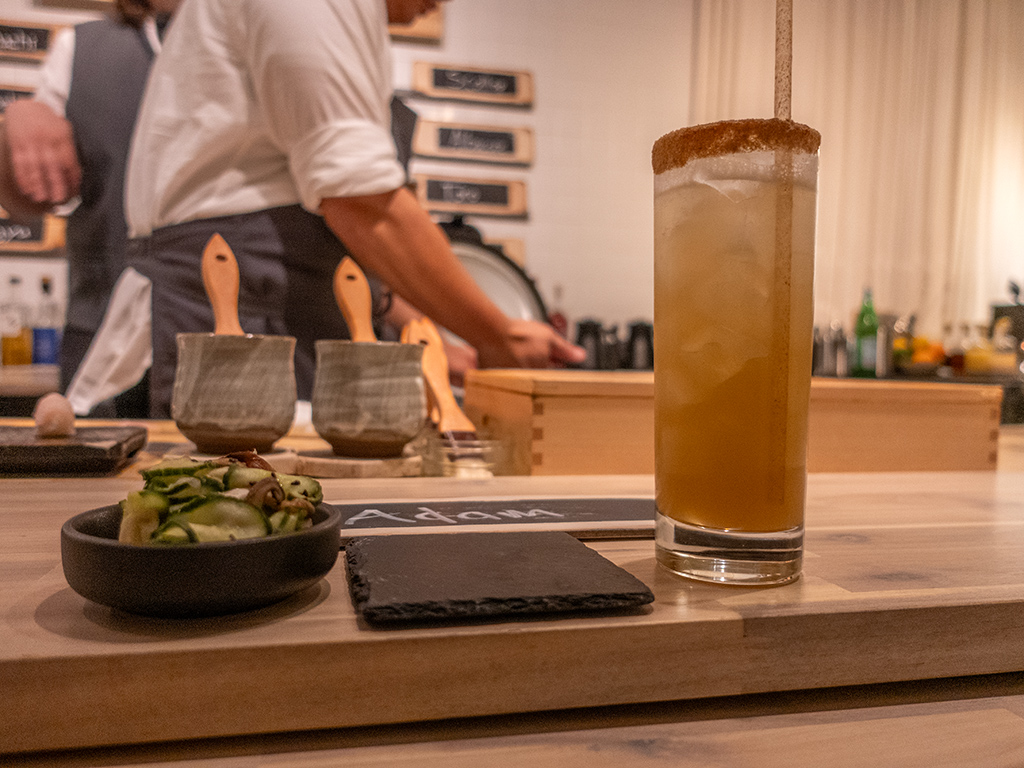
Hello, Chef’s Table with Frank DeLoach at Bello by Sandro Nardone in Newport Beach, CA

After my quick trip to the East Coast earlier this month, I flew back to Southern California in preparation for my two-year Twitch moderator anniversary dinner with @PhummyLW. If none of that has any meaning to you, I have a very detailed explanation in last year’s blog post about dining at the Capital Grille in Costa Mesa, California that may serve as prerequisite reading if you’re interested in the backstory of what has now become an annual tradition.

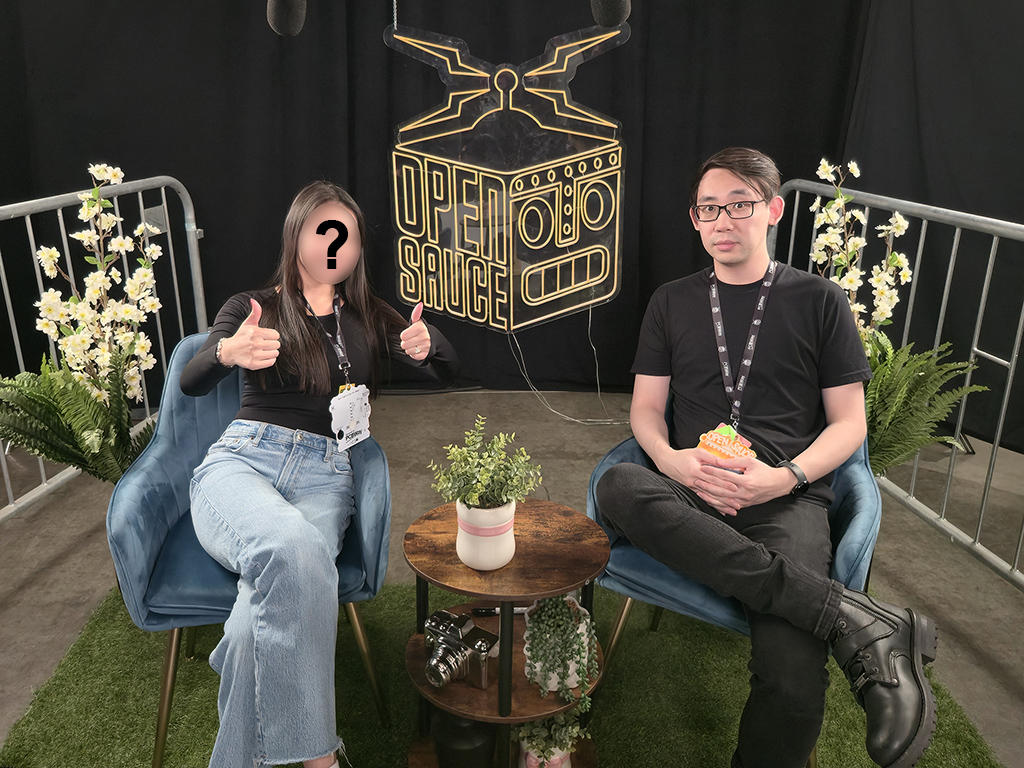
This year, Phummy asked me to take him to Bello by Sandro Nardone, an Italian restaurant in Newport Beach, Orange County, California. They had apparently been experimenting with a newer format of their chef’s tasting menu, and after trialing it for a few weeks, they came up with a system that works best for them—two weekly seatings of up to six people each, every Friday at 6 PM and 8 PM. The first session of this finalized chef’s tasting menu was today, Friday, May 23, 2025 at 6 PM, so I got Phummy and myself booked as their very first customers for this iteration.

We were fortunate enough that, out of the six available seats, Phummy and I were the only two attendees, so we got a very personalized experience with Chef Frank DeLoach. On top of that, I realized that their system in general was very unique, and part-way through our meal, I realized why they called it their chef’s table instead of just a regular tasting menu.

Chef’s tasting menus are often composed of a set number of courses that come out in a certain order as predetermined by the chef. This allows you to experience a culinary story through the food, as told by the chef, in the chef’s style. I love chef’s tasting menus (and omakase experiences, which are the Japanese counterpart), and I scout out the best-rated ones whenever I’m in search for a good restaurant.

On the contrary, a chef’s table, as explained by Chef Frankie, focuses on the diner rather than the chef. There are dishes that the chef will suggest, but otherwise, it is more of a freestyle experience where the chef makes realtime adjustments with the food offerings depending on the feedback and preferences of the diners. Thus, it functionally ends up being less of a traditional chef’s tasting menu experience and more of just having a private chef custom-curating you a multi-course meal over the span of a couple hours.

 
I was headed over to the restaurant from deep into Los Angeles County, so the estimated travel time was about an hour and a half. In typical Southern California fashion, the traffic got increasingly worse the longer I drove, and while originally anticipating arriving 15 minutes early, I ended up being 12 minutes late.

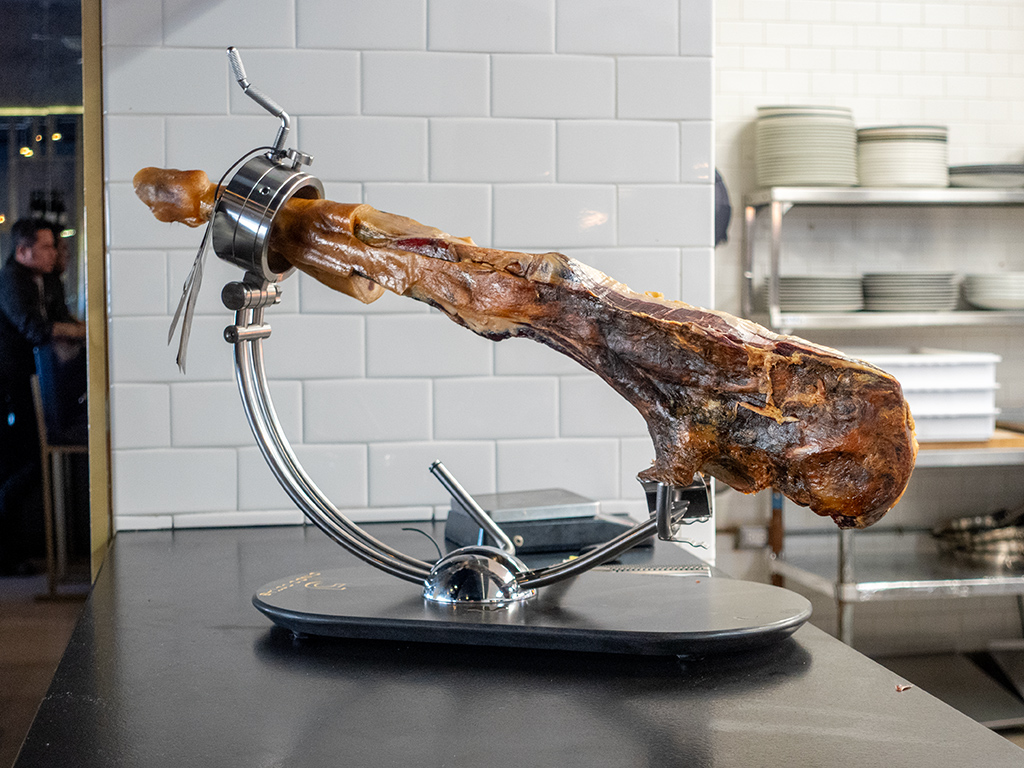
Upon my entrance, Phummy had already been seated and was nibbling on some prosciutto. I joined in and ate my portion. I don’t particularly like prosciutto, especially when it is just the dry-cured ham on its own without anything else to go along with it, but with that being said, this prosciutto still had a very rich, intense, clean flavor that I think fans of prosciutto would enjoy and appreciate a lot.

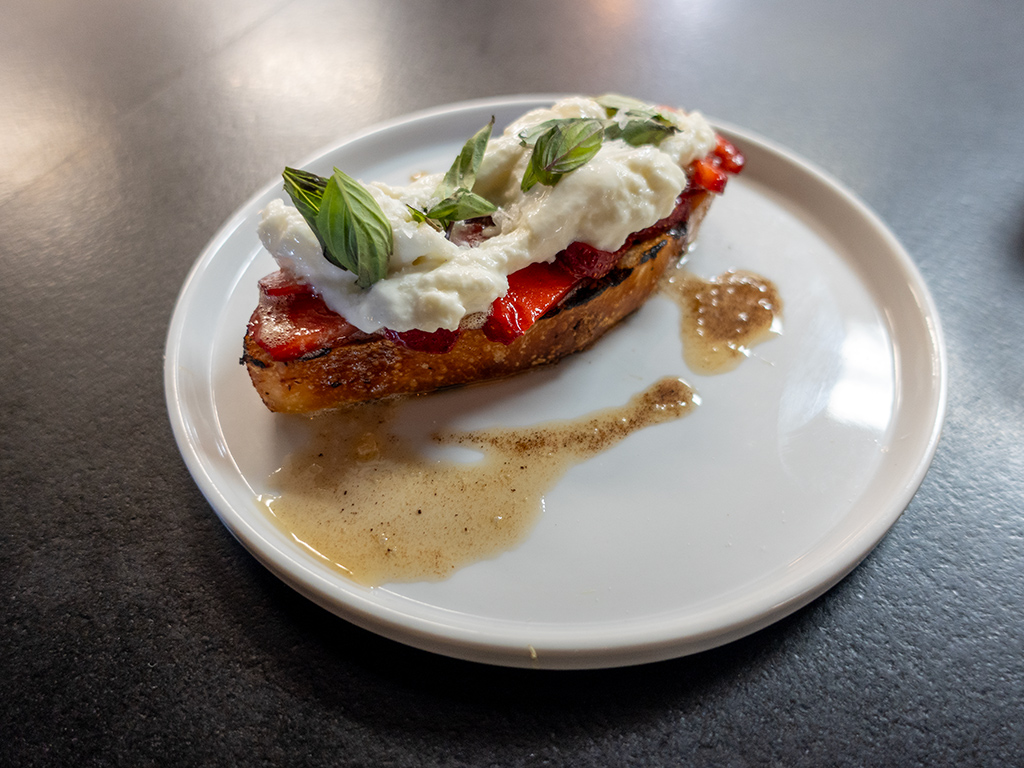
Our first antipasto dish was a bruschetta topped with strawberries, cheese, and herbs. This is literally the best bruschetta I have ever had in my entire life.

I’m generally not a fan of cheese because my taste buds love to pick up and focus on only the moldy flavor of cheese, but this cheese atop the bruschetta was gloriously delicious. It was smooth and creamy, and the flavor only had the “nice” parts of the cheese without any of the pungency, intensity, or moldiness. The texture was soft and delicate, and it coated the inside of my mouth in a way that contributed its flavor uniformly across every time I bit down to chew.

The bread was prepared to perfection. To me, bruschetta doesn’t have the best reputation because the bread usually comes out at such an inconvenient texture where it’s not exactly the consistency of a cracker, but it’s still hard and sharp enough that it cuts the inside of your mouth. This bruschetta’s bread had the perfect amount of resistance given to each bite where it added a great balance of firmness and softness.

Lately, I’ve seen some viral online videos about egregiously expensive but orgasmically delicious strawberries, and although I have not tried those strawberries, I feel like they would be on par with the ones on this bruschetta. These strawberries tasted like nature-made candy, but rather than pure sweetness, it was somehow like a combination of sweet and umami.

Next was some crudo topped with macadamia nuts, cucumbers, red onions, and other greens, bathing inside a coconut sauce.

With how much sushi I eat, I have obviously eaten a lot of crudo. Crudo at Japanese restaurants is often a hit-or-miss, and rather than hamachi crudo, I have almost always just preferred plain yellowtail sashimi instead because of how sour crudo ends up being.

This crudo had none of the downsides that I have experienced in the past with crudo. The coconut sauce was mild but still flavorful, and the vegetables were only pickled to a point where they had a subtle kick, so neither the sauce nor the toppings pierced through or overwhelmed the flavor of the raw fish.

Next was a minced chicken dish wrapped in some leaves (I forgot what kind of leaves, and I also forgot what other ingredients were included in the dish).

This had a balanced meaty and earthy flavor, but unfortunately, it was so overwhelmingly salty for me that it distracted and detracted from some of the flavor. I mentioned that to the chef, and I am pretty sure he took that into consideration for future dishes, as nothing else served later during the dinner was too salty anymore.

Next up was our pasta dish. I think this shape of pasta is called strozzapreti, but I don’t recall with certainty.

The sauce was made with a mixture of seafood and other portions of leftover ingredients that would otherwise not make it into main entrées. It had somewhat of a nostalgic flavor to it that reminded me of homemade stew.

Some people take their leftover scraps from home cooking and throw it all into a simmering soup; this dish’s sauce was basically similar to that. When restaurants prepare dishes for presentation, a significant portion of perfectly-fine ingredients don’t make the final cut due to their physical appearance, so it is great when it ends up being used in a sauce rather than being wasted. With that being said, when this dish’s sauce was prepared, it seems like it was aiming for that “scrap stew” kind of flavor, but the quality of the ingredients were so high that you could easily tell it wasn’t just scraps.

This is probably unsurprising if you know how much I like fish and seafood, but this pasta dish ended up being my second favorite course of the meal (behind the bruschetta).

After our pasta, we were served some fish alongside tomatoes, cucumbers, fennel fronds, and olive oil.

I was impressed at the preparation of the tomatoes and cucumbers—the chef managed to reduce it down to only the tomato and cucumber flavor, without any of the other tanginess, tartness, or sourness that you might find with some fruits. It was almost as if these tomatoes and cucumbers were real-life examples of what flavor you would aim for if you were manufacturing a perfect tomato and cucumber flavor in a laboratory.

The fish was unremarkable, but in a good way. It was a clean, straightforward, smooth, untarnished fish flavor that I could happily eat everyday and would enjoy it every single time.

I also appreciated the temperature difference between the slightly chilled fruit and the warm fish—that added a fun dynamic to the consumption experience.

Coming up next was a beef entrée.

As what was supposed to be our final entrée, we were served steak with beet sauce topped with leek and pistachio.

This is some of the strongest beef flavor in a steak that I’ve ever had. Normally, steak with this level of intensity also usually comes with some gameyness, but this steak was very clean and pure in flavor. The ratio of fat cap to lean meat was perfect. Adding a bit of leek to each bite served as a decorative but subtle enhancement to the texture. The beet sauce helped amplify the beefiness of the steak, making it taste even deeper and richer.

The presentation was also quite unique, in that it basically came out like a piece of abstract art. I don’t see that too often because it’s tricky to properly straddle the line between a dish appearing as abstract art as opposed to just a mess, but I think this one pulled it off decently well.

While eating our steak, I asked Phummy if this was his favorite dish of the night, which he confirmed. I figured as much, because it was one of the more basic dishes without too many complicated flavors; it just took the concept of steak and took it far, doing it in the best way possible without any extra fanciness added to it.

Of course, preferring basic flavors is not inherently a negative thing. Just because you like simple dishes does not mean that you’re not able to discern the quality of the ingredients and the excellence in culinary preparation. With that being said, the chef made sure Phummy understood as such, and let him know that there is no problem with the steak being his favorite dish.

This evolved into a conversation where the chef mentioned how some people just really love pizza and will ask for pizza at the chef’s table, and Phummy pointed out that he too loves pizza. Chef Frankie was happy to hear that, and made us a Neapolitan pizza for us as a complimentary supplement to the regular tasting menu.

This was a great pizza. I would describe it as pristine simplicity—it used only the core and minimum ingredients needed to make a pizza, so there were no distracting flavors. With each bite, all you got was pure, blissful pizza, and nothing else. The crust was also a perfect consistency that made chewing it satisfying.

From what I noticed, I think there was very minimal seasoning on it. Instead, the char on the crust and base of the pizza served as a substitute for seasoning, adding a more natural-tasting enhancement to the overall pizza flavor profile.

For dessert, we got a piece of cake and some mashed pineapple with roasted almond ice cream on top.

Even now, I’m unsure how I feel about this dessert. Pineapple is my second-favorite fruit behind kiwi, so I obviously liked that. However, I couldn’t really pinpoint how I felt about the cake. On top of that, this was the first time I had ever had roasted almond ice cream, so this was a very new flavor combination for me.

Here is a wider shot of the kitchen; at the chef’s table, we were able to get a clear view of everything going on during our meal.

Here is a photo of the front of the restaurant—just an unassuming building in the Newport North Shopping Center.

Chef’s Table ×2$ 370.00
Service charge (20%)$  74.00
Sales tax (7.75%)$  28.68
Tock booking fee$   5.00
Total$ 477.68
The table to the right shows what I paid.

Each ticket to the Chef’s Table cost $185. They charged a 20% service fee in lieu of gratuity, which was prominently disclosed during booking by way of just adding that 20% directly onto the marketed price when selecting the Chef’s Table. There are some restaurants that say a service fee is charged and that tips are not expected, yet they give you a receipt at the end of your meal to add on an optional tip anyway; Bello by Sandro Nardone did not do that, and they did not even give us the possibility of adding an extra gratuity at the end. The booking fee was charged by Tock and did not go to the restaurant.

Everything was prepaid at the time of booking the reservation. Pricing-wise, this was one of the most refreshing and honest payment experiences I’ve ever had at a restaurant. It’s always annoying when a restaurant advertises a certain per-person price for a multi-course meal or special dining experience, but because of optional add-ons and mandatory fees, you end up paying double what you expected. Because of having to regularly deal with that, I especially appreciated Bello by Sandro Nardone’s transparency.

This is probably some of the best service I’ve ever received at a restaurant. I’m used to receiving personalized attention from chefs when sitting at sushi bars for omakase, but Bello took it to an entirely new level. It was blatantly obvious that they wanted to ensure we had a great time, and they were querying and keeping track of our preferences to maximize our satisfaction with the meal.

The overall quality of the food was amazing. The portion sizes were also refreshingly large and filling. I felt like I concluded my dinner full of only great food, with no “filler dishes.”

This is definitely an expensive meal, but if this is within your budgetary means, I highly recommend the Chef’s Table with Chef Frank DeLoach at Bello by Sandro Nardone. I don’t know what the à la carte menu is like, and I did not have an opportunity to meet Sandro Nardone himself, but Chef Frankie (and one other staff member whose name I regretfully forgot) gave us a top-tier experience.


—§—


Hello, Sushi by Scratch at the SLS Beverly Hills in Los Angeles, California

For my final dinner in Southern California before heading out for my next trip, I dined with Sushi by Scratch at the SLS Beverly Hills in Los Angeles, California.

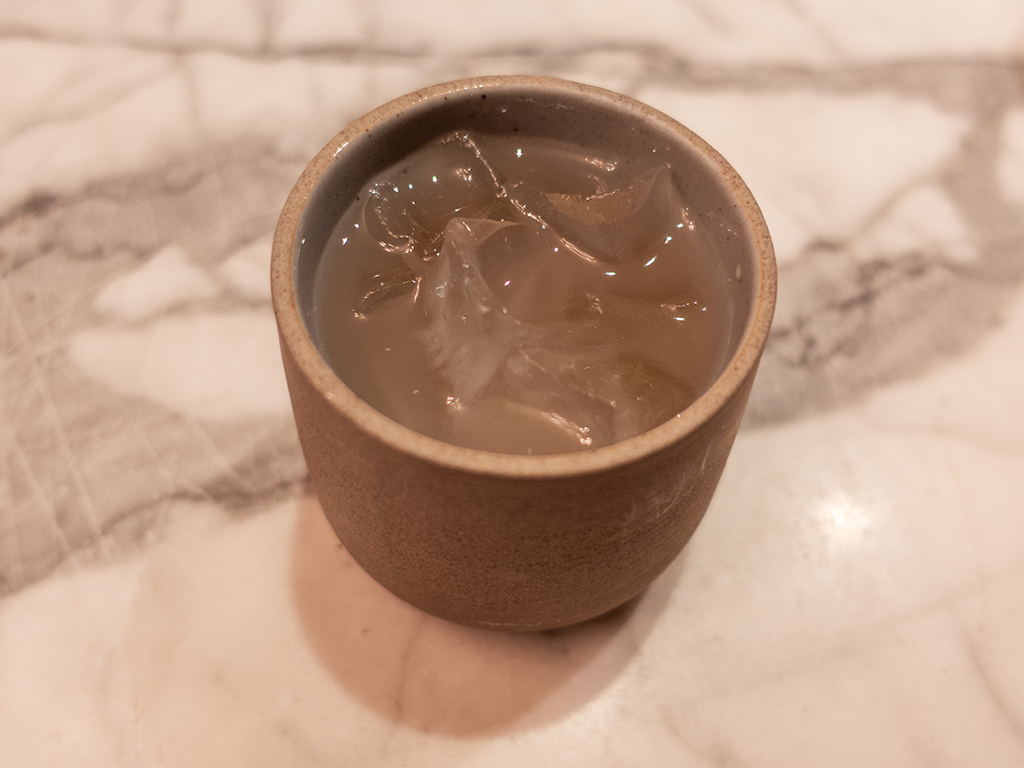
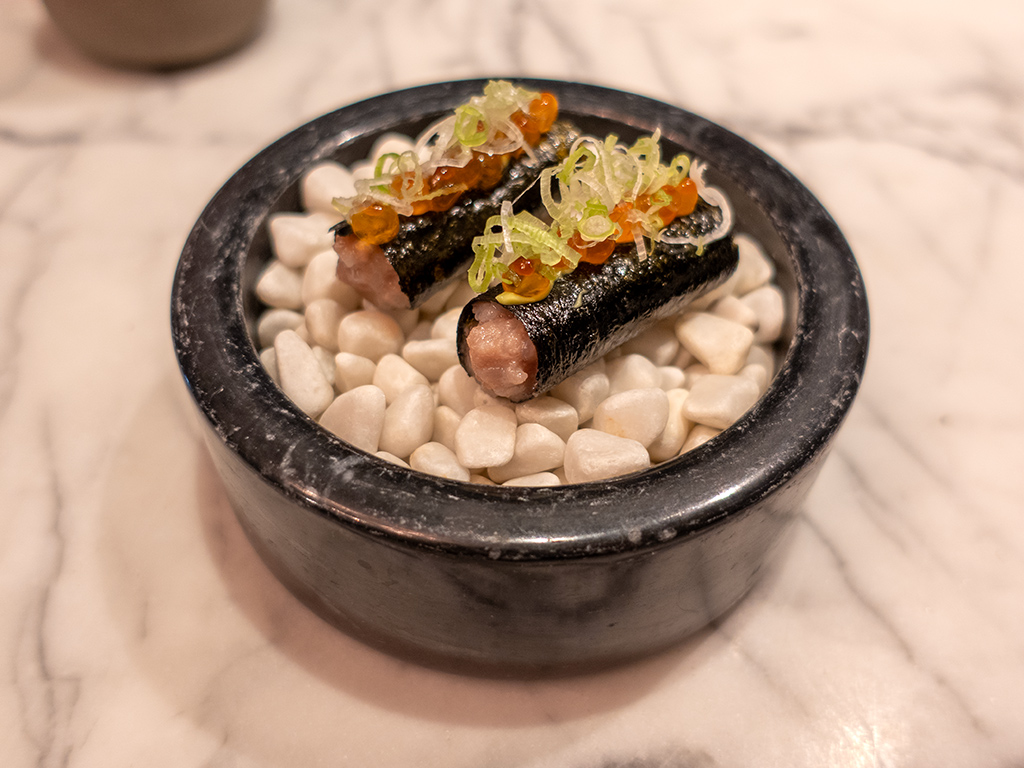
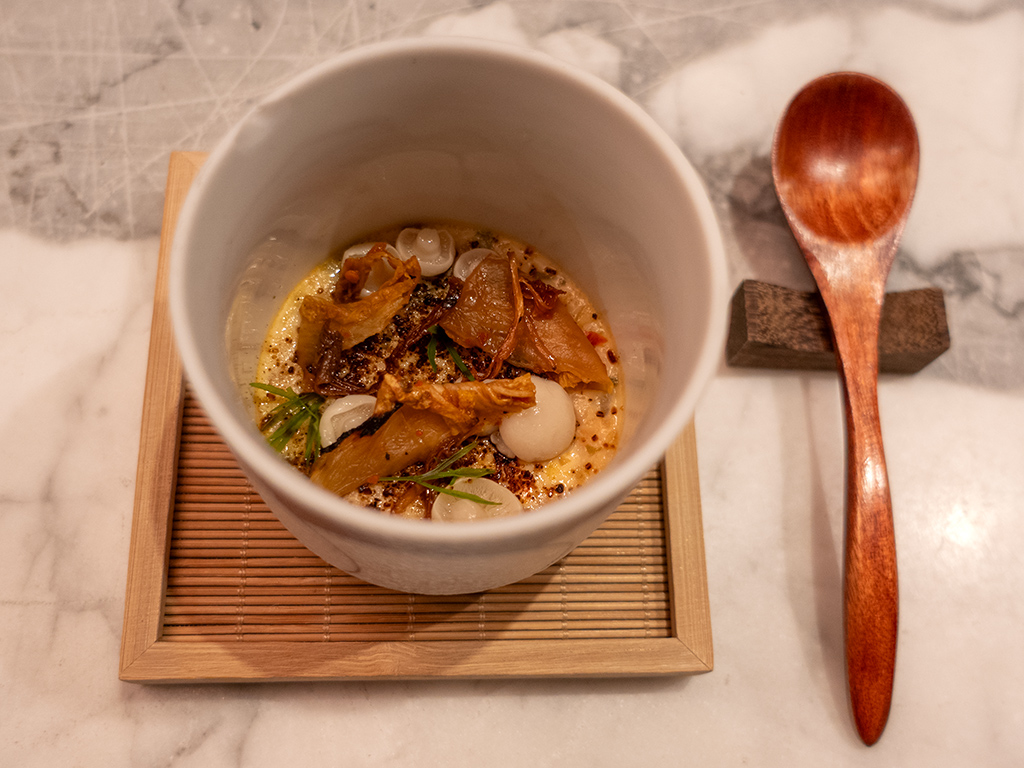
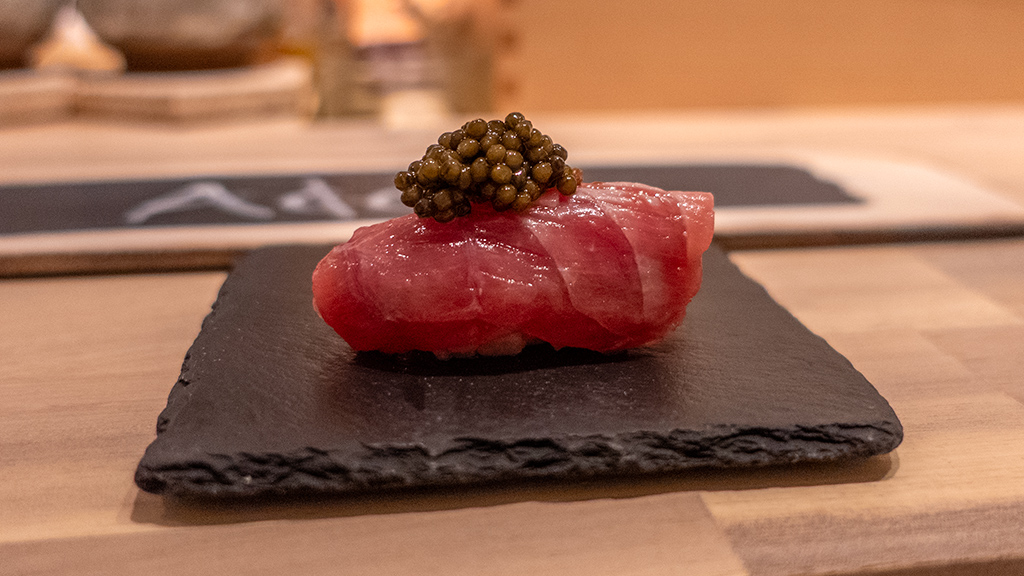
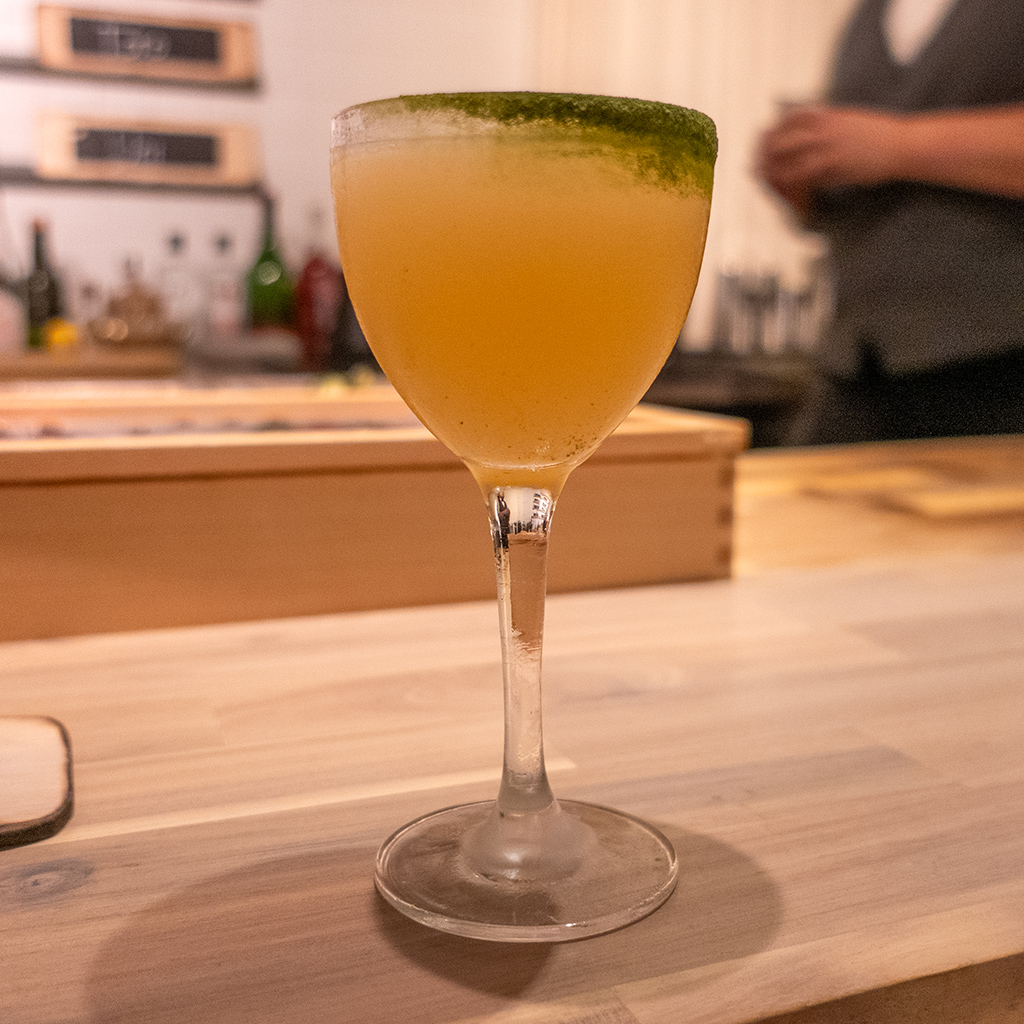
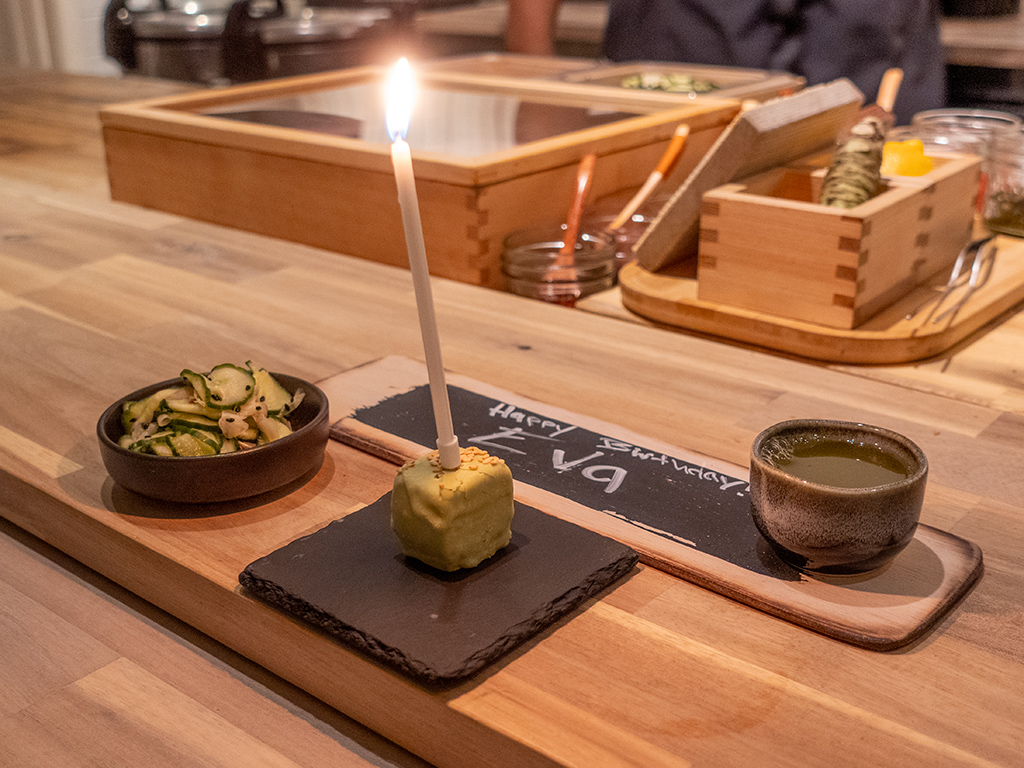
While the chefs were preparing for dinner service, we were provided with a welcome beverage and canapé service. Our beverage was a minty iced tea; our first small bite was a miniature tuna hand roll topped with salmon roe, and our second item was a very decorated chawanmushi (Japanese egg custard).

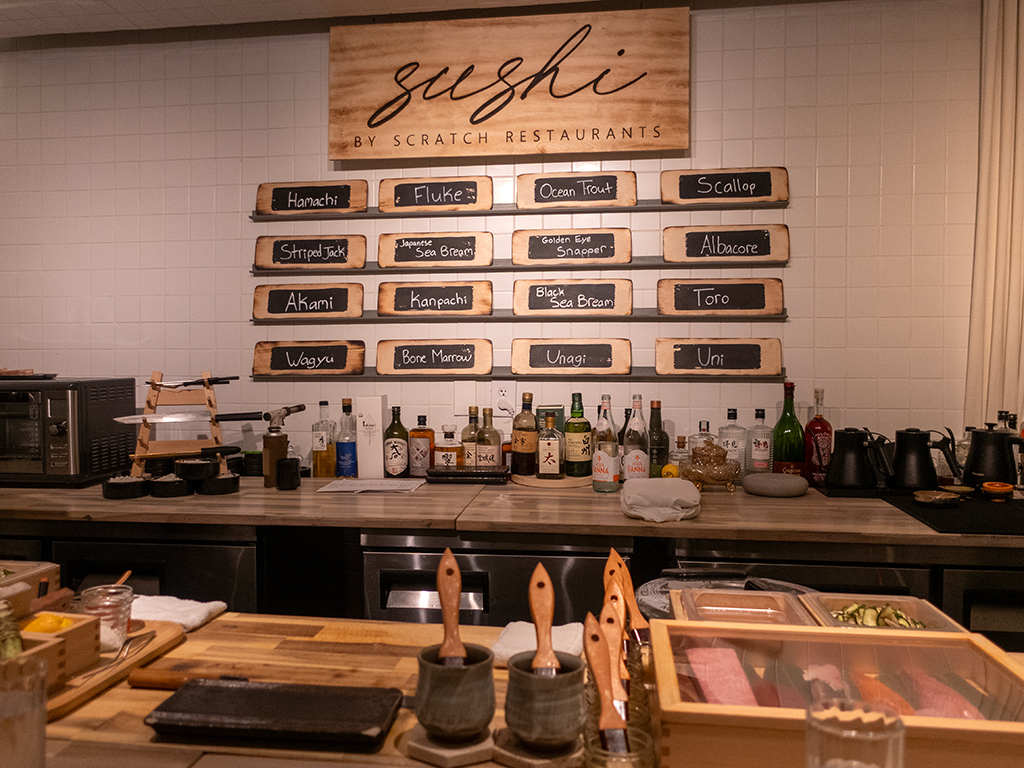
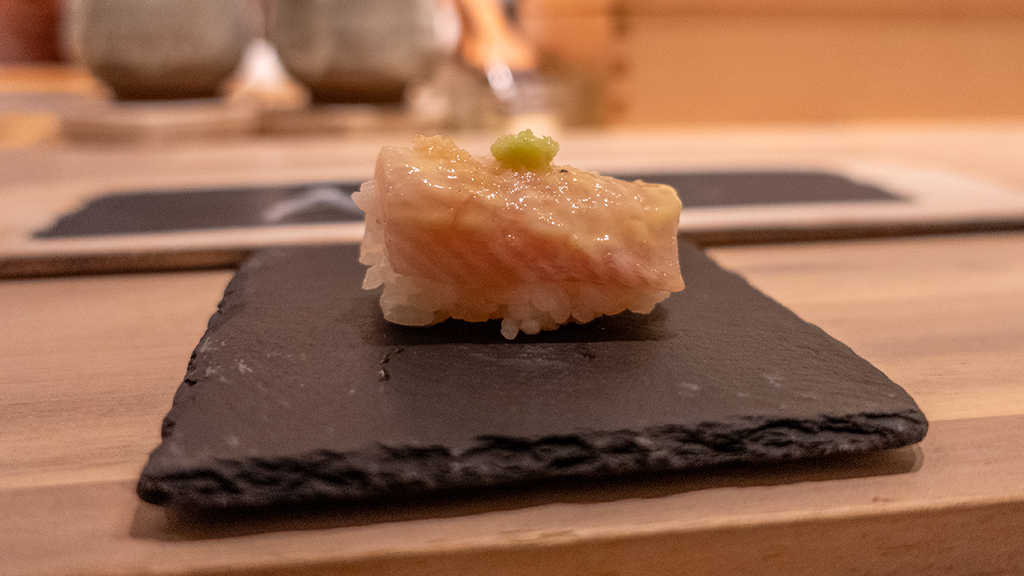
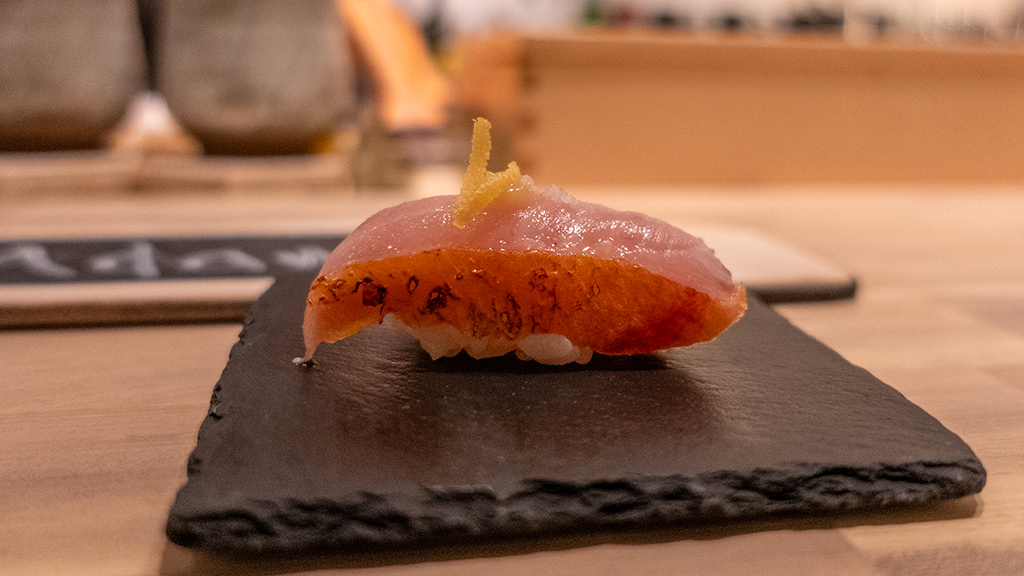
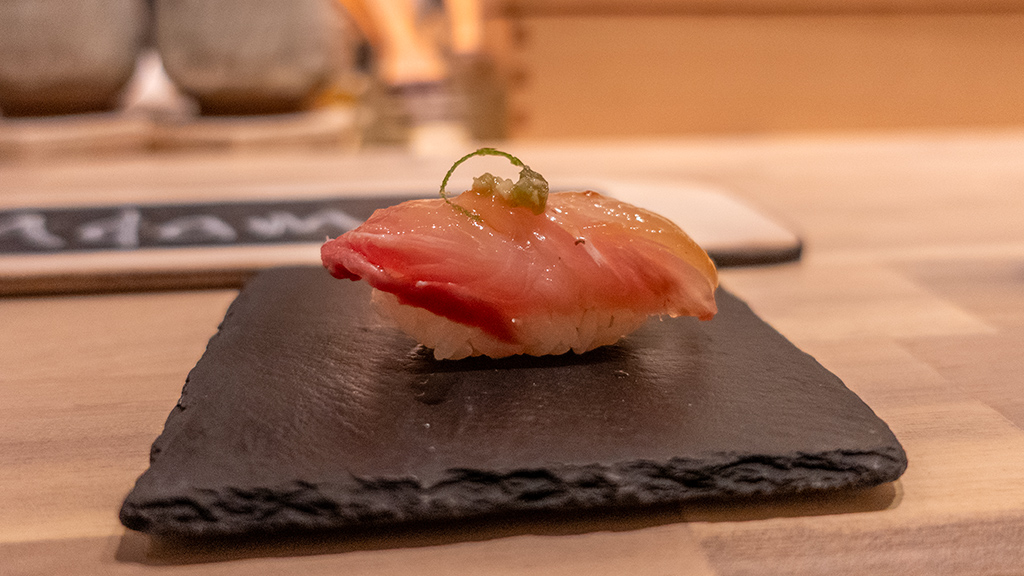
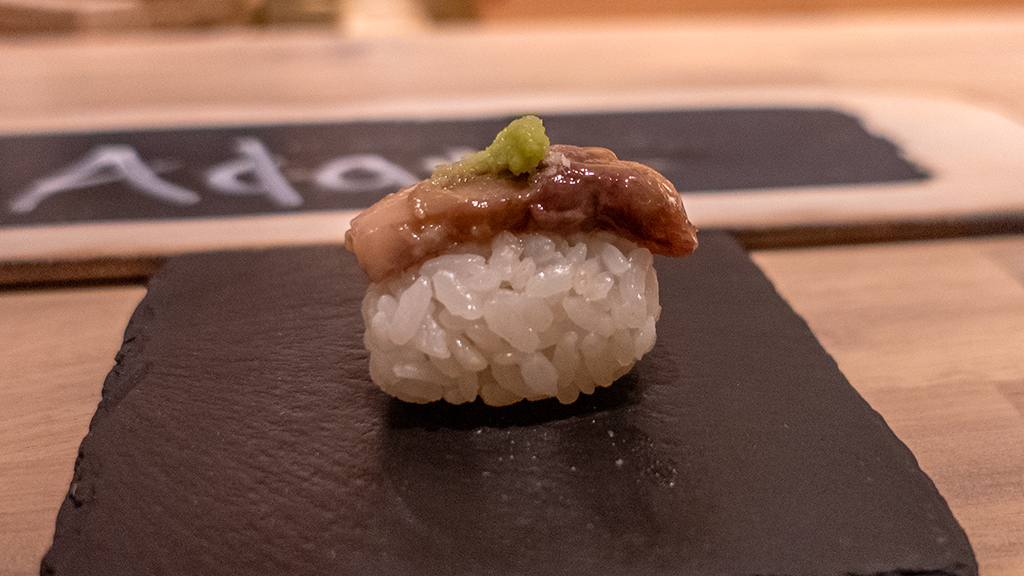
Afterwards, we were brought into the main dining area. Sushi by Scratch’s omakase experience is composed of 16 pieces of nigiri: yellowtail, fluke, ocean trout, scallop, striped jack, Japanese sea bream, golden eye snapper, albacore, tuna, amberjack, black sea bream, tuna belly, wagyu, bone marrow, eel, and sea urchin.

We also got a non-alcoholic beverage pairing to go along with the omakase, which came with three unique drinks spread out across our meal between every 5-6 pieces of nigiri.

After our 16 bites of sushi, our meal concluded with a dessert. My friend had celebrated a birthday the prior week, so I wrote a short note of that in the reservation details; we didn’t get any complimentary extras, but they did put a little celebratory candle in her dessert for the occasion.

After this meal, Sushi by Scratch joined my small set of all-time favorite restaurants.

If you were paying attention to the photographs, you may have noticed that each piece of nigiri had some sort of unique sauce, topping, and/or garnish. This is what made Sushi by Scratch stand out from any other sushi restaurant I’ve been to.

All the fish they used obviously had a baseline of being very high-quality, but the extras they added on to each bite made it truly stand out. These combinations were novel enough that I, as someone who eats an insanely large amount of sushi on a regular basis, still found every single bite to be a completely new experience. I could obviously taste and recognize most of the individual ingredients, but each bite’s combined flavor profile as a whole was always something new that I had never had before.

At first, I thought the portion sizes were a bit small, but after the first few pieces of nigiri, I realized that a lot of the value you get from what you’re paying for at Sushi by Scratch is not just the amount of food, but the ability to experience the chefs’ innovative recipes and flavor combinations. It is common to go to an omakase experience and try a few experimental dishes, but it is rare to near-impossible to find a spot that adds a facet of originality and inventiveness to literally every single thing they serve.

What made this meal extra special, which ultimately just came down to luck, was that my friend and I were fortunate enough to be the only two people being served during our particular time slot. This obviously made for a much more private and cozy experience. It also allowed us to interact with the chefs on an ongoing basis throughout our meal, helping us learn more about their background and the items they were serving.

If you’re familiar with my food blog posts, you know that I usually put a cost breakdown of what I paid. Unfortunately, when I paid for the meal, I was only provided with a final transaction confirmation rather than a fully itemized receipt, so I don’t have exact prices. With that being said, I can come up with some reasonable estimates.

The base price for omakase was $185 per person. We opted to do a caviar add-on, which I believe got us extra caviar on three additional pieces of nigiri that wouldn’t have otherwise had caviar, for $65 per person; I thought this was reasonable, considering that a lot of restaurants in major cities sell caviar bumps for $20 each. I’m not sure how much the beverage pairing was, but my guess is that it was approximately $50 per person. There was a mandatory 20% service fee in lieu of gratuity, and sales tax in Los Angeles should be 9.75%. The final total charge was US$780.06.

That is definitely a big number, but don’t let that scare you away—just opting for the core omakase experience for $185 per person, which would end up being $240 per person after the mandatory service fee and sales tax, is already an amazing meal. I like caviar in general, and the drinks were delicious, but even without them, you’ll still get to fully enjoy the crux and soul of the meal.

As a side note, as I mentioned at the beginning, the Beverly Hills location of Sushi by Scratch is inside the SLS hotel, which offers valet parking only and charges $20 for it. We avoided this by going to the nearby Beverly Center first, parking inside their parking garage, doing some shopping, then walking a couple blocks to the restaurant afterwards. I didn’t confirm whether Beverly Center has dynamic pricing, but for us, we only had to pay $4 by the time we made our way back and headed out. I think this is a good alternative if you are not a fan of other people touching and driving your vehicle, want to get in a short walk to stay active and healthy, and/or want to save a little bit of money (maybe to put it towards that caviar upsell).

Overall, I highly recommend Sushi by Scratch… but with a caveat. For lack of a better way to put this, I think Sushi by Scratch is an “intermediate-level” restaurant. Anyone—even sushi first-timers—can obviously have an enjoyable meal here, but I think you need at least a little bit of sushi experience to truly conceptualize, understand, and internalize why Sushi by Scratch is so special.


—§—


January 2025 investment portfolio breakdown

Disclaimer: I am not a registered investment advisor. The information contained in this blog post is strictly anecdotal and should not be construed as financial advice. If you are seeking guidance, consult a licensed and certified professional.

It’s been over a year since I’ve last done an investment portfolio breakdown—my most recent one was on January 1, 2024 to cover my end-of-2023 portfolio. I figured one year is enough time for there to be enough changes in my portfolio to make it worth doing another breakdown, so I decided to write this one for the beginning of 2025.

Cash

At just a percent and a half, this is a significantly lower amount of cash than you would see in my portfolio compared to if I had pulled the numbers on December 31, 2024 like I usually do for end-of-year portfolio breakdowns, instead of January 6, 2025 like I did for this one. I did this intentionally because I didn’t want to make it seem like I hold onto more cash than I actually do.

I have a lot of cash in my savings account and settlement funds on December 31 because I have it ready to go for when contribution limits for tax-advantaged accounts (e.g., Roth/Traditional IRAs, SEP-IRA, HSA, etc.) reset on the 1st of the calendar year; a few days into the year, I’ve invested it all via those aforementioned accounts and have minimal cash left.

I am mostly a believer of maximizing your gains by way of maximizing the amount of time you are in the market, so on an ongoing basis, I only hold onto about 6 months’ worth of core living expenses as an emergency fund, then put the rest in investments as soon as possible. The way I hold this cash has not changed since last year—I use a Discover Bank savings account as my main bank account, then keep my settlement funds in the Vanguard Federal Money Market Fund (VMFXX) on Vanguard and the Fidelity Gov­ern­ment Money Market Fund (SPAXX) on Fidelity.

  1.519%

Domestic broad market index funds

As you might have expected, domestic broad market index funds account for the largest portion of my portfolio, and was also the category into which I invested the most new money in 2024 alongside international broad market index funds. Even though I like exploring fun new investment opportunities and partaking in risky new ventures once in a while, an overwhelming majority of my portfolio is in safe investments.

During the COVID-19 pandemic, I opted to buy Vanguard High Dividend Yield Index Fund Admiral Shares (VHYAX) because it seemed to historically tend to be safer during times of high turmoil and instability, but now I’m back to buying almost exclusively Vanguard Total Stock Market Index Fund Admiral Shares (VTSAX) in this category. Ratio-wise as of right now, for every ~$3 I have invested in VHYAX, I have ~$7 invested in VTSAX.

For money I have in Fidelity for my Health Savings Account and Fidelity Charitable account, my broad market index fund of choice is the Fidelity ZERO Total Market Index Fund (FZROX).

 44.264%

International broad market index funds

Two years ago, I ended up selling a very large portion of my exposure to international broad market index funds by way of Vanguard Total International Stock Index Fund Admiral Shares (VTIAX) for tax-loss-harvesting purposes. After waiting out the appropriate wash sale period, I started buying back into international broad market index funds to re-diversify my portfolio.

Along with domestic broad market index funds, this was the category in which I invested the most new money in 2024. My fund of choice throughout 2024 was the Fidelity ZERO International Index Fund (FZILX).

This allocation percentage is better than last year, but I still think it’s a little bit low; this will continue to be the category into which I invest the most throughout 2025.

  5.094%

Bonds

During the pandemic, I purchased Series I Savings Bonds from the United States Department of the Treasury due to their very high inflation-tracked interest rates. Since then, I’ve sort of just let them sit in my TreasuryDirect account to accrue interest and haven’t really given them much attention. Beyond that, everything else lumped into this category that isn’t with the Treasury is in Vanguard Total Bond Market Index Fund Admiral Shares (VBTLX).

I’m still young and I have decently high risk tolerance, so I’m probably not going to be buying any more bonds outright. However, it still acts as a form of portfolio diversification and stability, so I likely won’t actively sell and reallocate this money anytime soon either.

  4.274%

Target date funds

I split my target date funds into their own separate category because their compositions change depending on the current year. Target date funds are intended to be a hands-off investment fund where you pick one with the closest year available to the date you anticipate on retiring, and the fund will automatically adjust risk to minimize the likelihood of you losing a substantial amount of money close to retirement due to market volatility.

I use target date funds in my tax-advantaged retirement accounts because it’s a way for me to further diversify my portfolio, but from a different angle: in the extremely unlikely but non-zero chance that I become completely unable to manage my own investments in the future, presumably through some unpredictable severe mental and/or physical incapacitation, and if my caretaker ends up being someone who is financially illiterate, then at least the money in my retirement accounts will remain steady, even if the markets fall into mass turmoil right before I reach 59½ years old. Of course, this only applies to my retirement accounts; I personally self-manage all my other assets everywhere else.

Right now, most of this is split across the Vanguard Target Retirement 2060 Fund (VTTSX), Vanguard Target Retirement 2055 Fund (VFFVX), and Van­guard Target Retirement 2050 Fund (VFIFX). As you can see by the names of the funds, I have it split across three different target years. This is because I am doing far better financially than I had ever imagined I would be when I was in my 20s, and I am foreseeing an earlier and earlier retirement year as I get older, so I shifted from buying the 2060 fund to the 2055 fund and now the 2050 fund. I plan on continuing to buy more into 2050, while leaving my 2060/2055 allocation alone, and not touching a 2045 fund due to it being too soon to make sense for the purposes of a government-regulated retirement account.

According to Vanguard’s website, as of December 31, 2024, my target funds are roughly distributed as 55% domestic total market index funds, 35% international total market index funds, 7% domestic total market bonds, and 3% international total market bonds.

 20.860%

Real estate investment trusts (REITs)

There haven’t really been any interesting developments on the real estate side of my portfolio. All my real estate exposure is still held via Van­guard Real Es­tate Index Fund Admiral Shares (VGSLX).

I don’t really use social media anymore, but that doesn’t make me immune to doom scrolling—I’ve caught myself losing track of time and getting sucked into Zillow on several occasions. I think that’s productive though, as it means I’ve been looking for good real estate purchase opportunities and keeping tabs on the state of the real estate market in general.

I will likely end up selling my allocation in this category to use as a down payment if I end up purchasing a property (which will also help me do some tax loss harvesting, as this REIT hasn’t been performing too well), but until then, I don’t think I will be taking great initiative or otherwise doing anything majorly proactive in the foreseeable future when it comes to real estate.

  6.570%

Individual stocks and private companies

In 2024, all of my tax loss harvesting came out of this category. I sold my down positions in Stellantis, N.V. (STLA), Cloudflare (NET), and Under Armour (UAA). Keep in mind that this does not mean I’ve lost faith in these companies; it just means the timing was right for me to use these companies’ stock for tax benefits. Ram still makes my favorite pickup trucks, and Cloudflare still has a huge part in allowing you to read this very page on my website.

I’m still holding onto stock in Marriott International, Inc. (MAR), T-Mobile US, Inc. (TMUS), and TKO Group Holdings, Inc. (TKO). Comically, I am also still holding onto my single share of Nxu, Inc. (NXU), which is down to about one-tenth of one percent of what I bought in at when they were still Atlis Motor Vehicles, Inc. I guess leaving it in my brokerage account acts as a continued reminder of the risks of investing in individual securities. And of course, I still have my unsponsored American depository receipts of Nexon Co., Ltd. (NEXOY); you can read the silly story behind that one in my previous investment breakdown.

As a side note, in case it was not clear already, I am not including my equity ownership of AVY Entertainment, Inc., d.b.a. Tempo in this portfolio breakdown, not only because I own a combination of stock options and common stock (and no preferred stock) so it would be tricky to pinpoint a proper valuation on it anyway, but also because it would greatly skew the percentages in the breakdown. As a consolation prize, I present to you a fun fact: later in 2025, I will be celebrating my ten-year anniversary working at Tempo.

  2.739%

Cryptocurrency

What originally started as my “gambling fund” ended up becoming a significant component of my investment portfolio. I first bought into cryptocurrency as a way to learn about it hands-on, only putting in money I was okay with losing entirely. Since then, and especially over the past two years, cryptocurrency has spiked substantially in value such that it had the biggest increase in my portfolio allocation percentage, even with me barely buying any more of it.

Although I have some cryptocurrency in a self-custodied hardware wallet, I actually have a substantial part of my cryptocurrency exposure via funds with my brokerage. Namely, I have varying amounts of shares of the Grayscale Digital Large Cap Fund (GDLC), Grayscale Bitcoin Trust ETF (GBTC), Grayscale Bitcoin Mini Trust ETF (BTC), Bitwise 10 Crypto Index Fund (BITW), and ProShares Bitcoin ETF (BITO). As you can see, my collection of funds is fairly diverse, ranging from broad market funds to Bitcoin to Bitcoin futures. An overwhelming majority of these have just been positions I’ve sat on for years, and will continue to sit on for the foreseeable future as a form of portfolio diversification.

A question I get asked occasionally is why I don’t just convert all of my holdings into actual cryptocurrency held in my hardware wallet. I have two major reasons: The first is that selling shares of these funds to use the proceeds to purchase actual cryptocurrency would trigger a capital gains taxable event, and I would like to postpone that to a point in the future that could potentially be more tax-favorable to me. The second is that knowing how to manage hardware wallets is not quite mainstream yet, so in the extremely unlikely but non-zero chance that I suddenly die and my assets get passed on to my beneficiaries, I don’t want to burden them with having a substantial amount of money mysteriously locked behind what appears to be a USB drive.

 12.795%

International currency

This is a new investment category as of 2024, inspired by a handful of people recommending that I look into expanding my international exposure not only by purchasing more broad market index funds, but also by buying currency funds. I’m still not too knowledgeable about international matters, but I figured that, if I’m going to invest so much into cryptocurrency, I might as well also invest in foreign currency.

After a (somewhat brief) session of research, I decided on purchasing shares of the Invesco CurrencyShares Euro Trust (FXE) and Invesco CurrencyShares Japanese Yen Trust (FXY). As of today, Invesco also has ETFs for the Australian dollar, British pound sterling, Canadian dollar, and Swiss franc; I may look into buying some shares of those in the near future as well.

  0.962%

Precious metals

I bought shares of Fidelity Select Gold Portfolio (FSAGX) during the COVID-19 pandemic as a way to get gold exposure without physically purchasing and storing gold bars in my closet. Since then, I’ve been fairly uninterested in diving deeper in this area, so it has just existed in my Fidelity account without receiving any of my attention.

  0.599%

Fine art, and other collectibles

A few years ago, I participated in StartEngine Collectibles Fund I, LLC’s Regulation A+ as a unique way to get exposure to the fine art and collectibles market without having to physically buy and store any of it myself.

Since then, StartEngine has been horrible to work with. They refunded portions of my investment money, presumably because they did not meet minimum funding goals for certain items, but they did so without ever communicating anything about it (and still have not to this day), so as far as I’m aware, it could’ve basically been that I just inadvertently gave them thousands of dollars as a free loan.

I saw that they had a secondary market open on their platform, so I’m wondering if I can just dump this at-cost and be done with it, but this is such an insignificantly small amount of money that I have not been motivated to do anything about it yet.

  0.324%

That concludes my portfolio breakdown and summary of what I’ve been up to investment-wise over the past calendar year.

To wrap up, I want to reiterate that I am simply sharing how I invest my money, and I am in no way saying you should copy my strategy. Keep in mind that I am not a financial expert, and be aware that some of my investment decisions are rooted in me doing what I think would be fun or interesting at the time, rather than any rational or logical thought. Everyone’s situation is uniquely different, so you should not make changes to your own portfolio’s investment class distributions to match my own. Instead, consider consulting a licensed financial advisor so you can come up with a plan that works for you.


—§—


Hello, Yakiniku Shodai in San Francisco, California

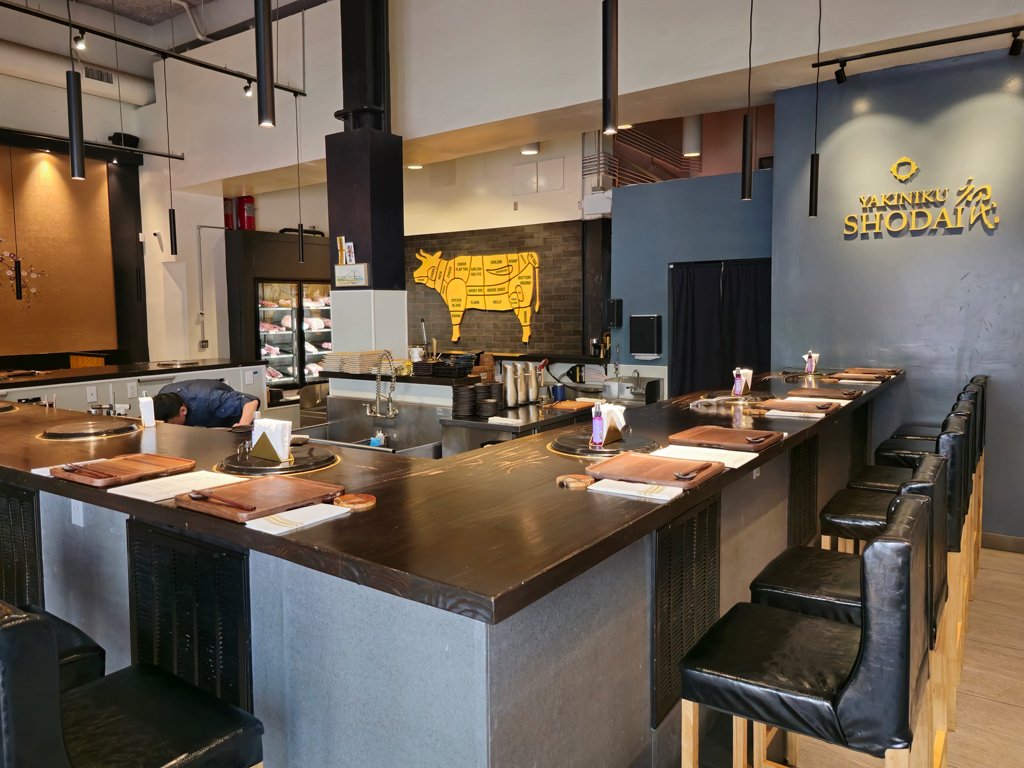
For my final night in San Francisco, my friend and I had dinner at Yakiniku Shodai, a high-end Japanese restaurant in the Civic Center area southeast of the Fillmore District.

Known for its wagyu, Yakiniku Shodai has two different tasting menu options—a basic one for US$150 per person and a full experience for US$225 per per­son. We opted to go for the full set because, not only was I hungry, but I also figured I might as well go all-in while I’m in town and have the op­por­tu­ni­ty to do so, as I don’t really ever visit the San Francisco Bay Area unless it is for a very compelling reason.

My friend works remotely on East Coast hours and wanted an early dinner, so we booked the first available reservation slot at 5:30 PM PDT and were the first ones in the restaurant.

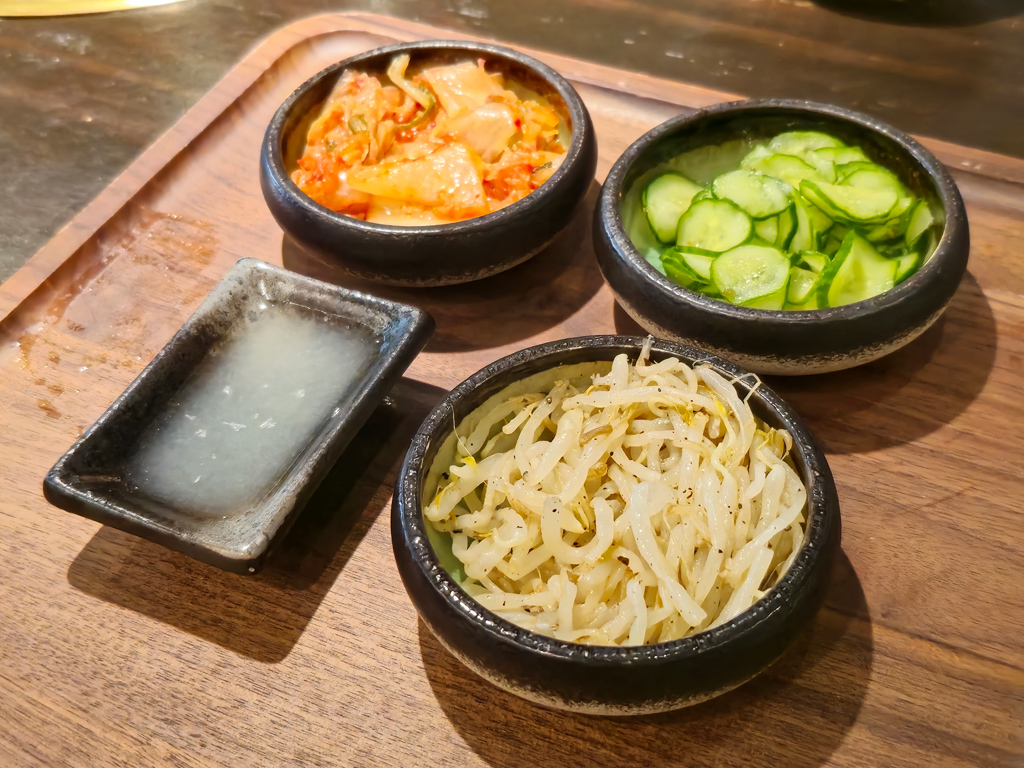
After being seated, the chef explained how the tasting menu process works. We then received a set of sides—pickled cucumbers, seasoned bean sprouts, and kimchi. We also got a small dish of lemon juice, used to offset some of the fattiness of the wagyu to come.

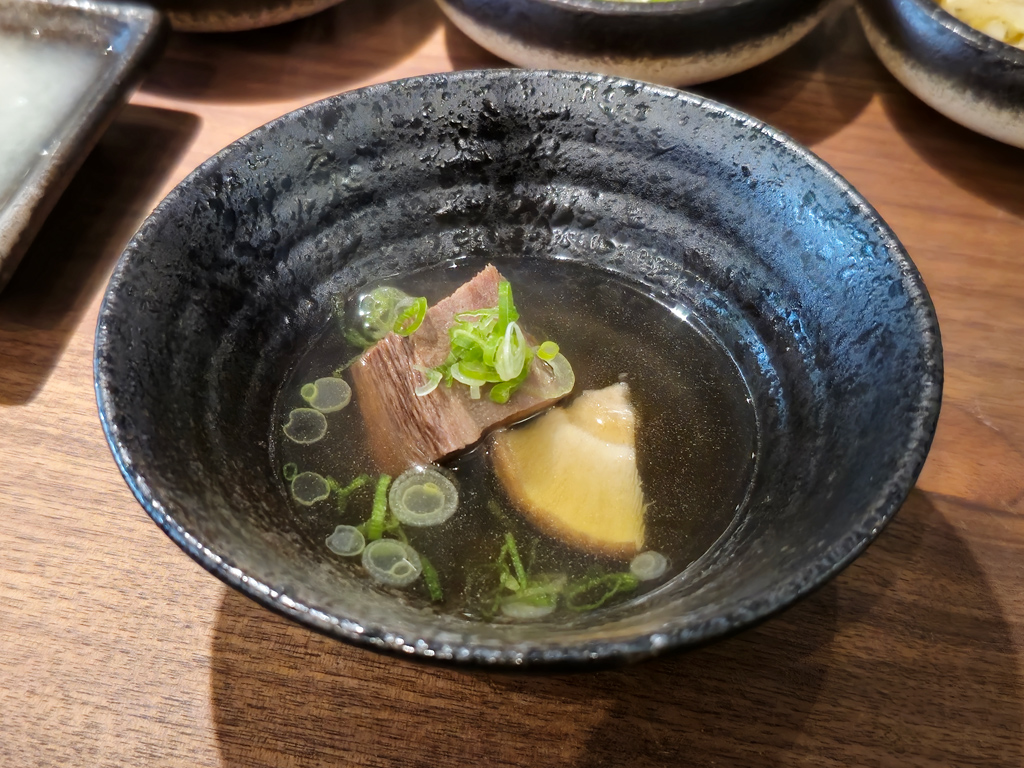
We also received a small bowl of beef broth with mushroom and green onion.

We were seated at the end of the side of the eating area, as close to a “command” position as possible, which allowed us to clearly spectate what the chefs and cooks were doing (as well as observe the other guests, once they arrived).

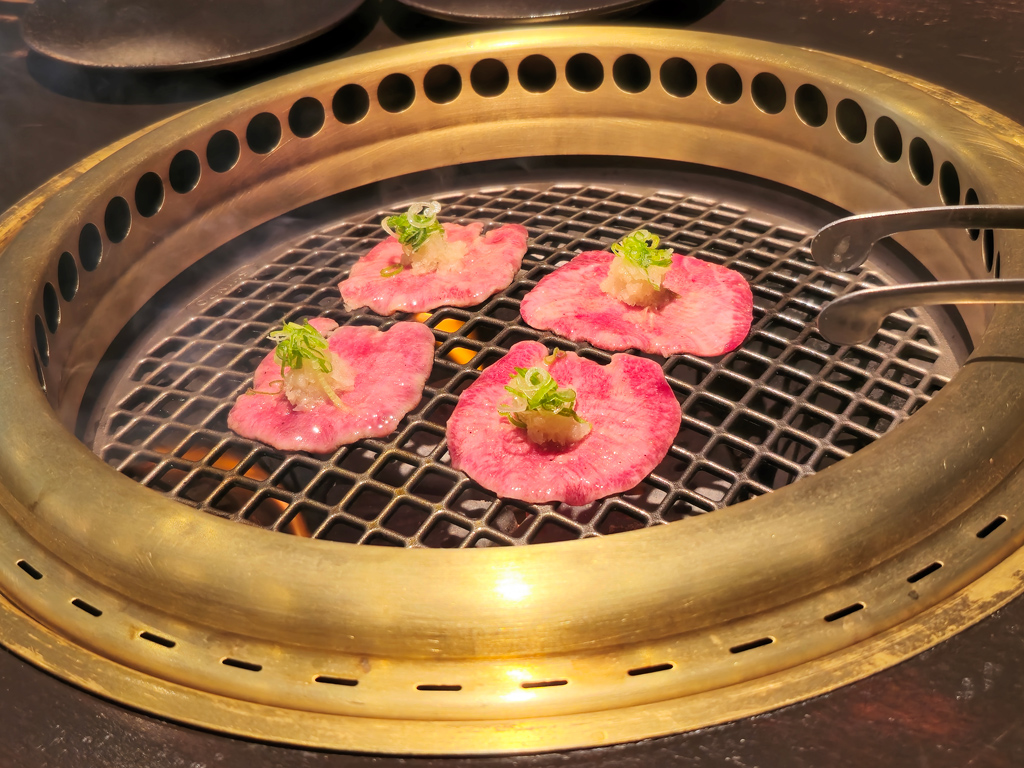
Our first meat was thin-sliced Australian wagyu beef tongue, served with seasoned onions and green onions.

The chef cooked only one side of the beef tongue and took it off the grill when it still appeared blue rare, but the heat momentum continued cooking it to a perfect rare by the time it was ready to eat.

Beef tongue is my favorite cut of beef, and this exceeded my expectations. It was the most tender and delicious beef tongue I’ve ever tasted.

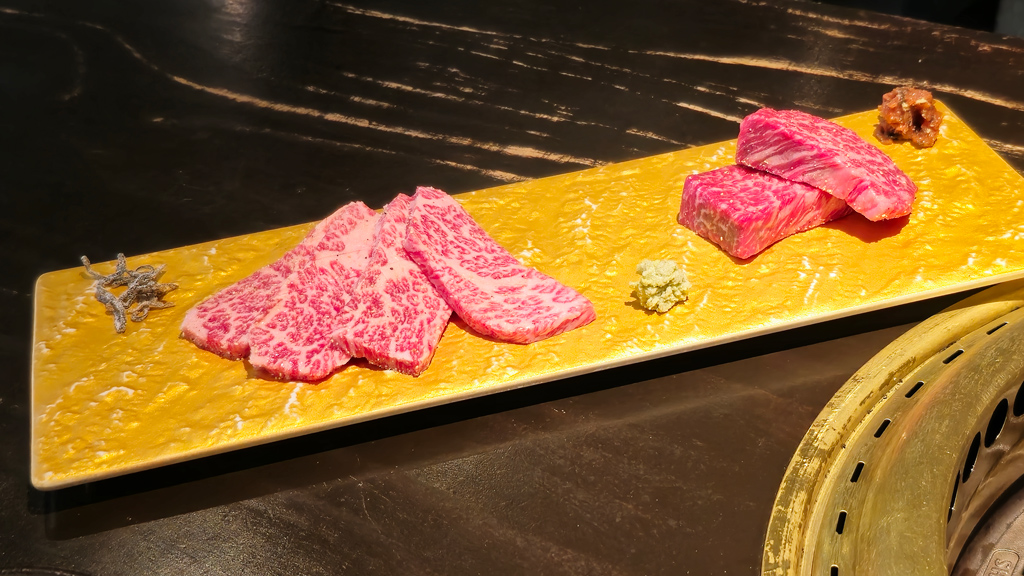
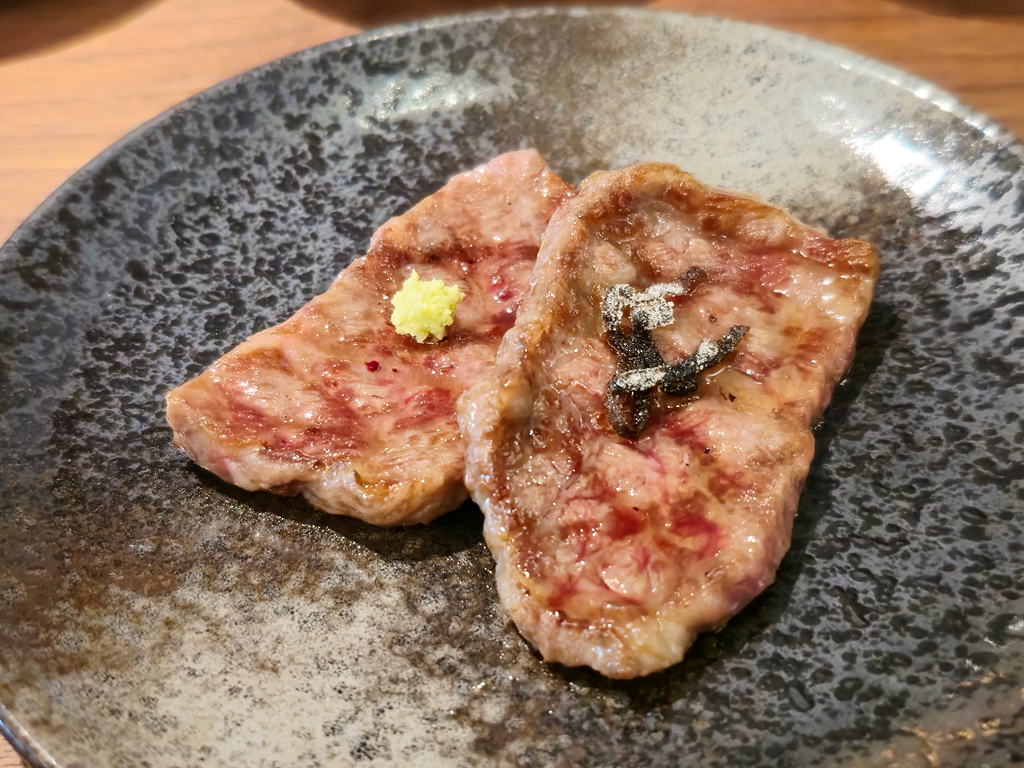
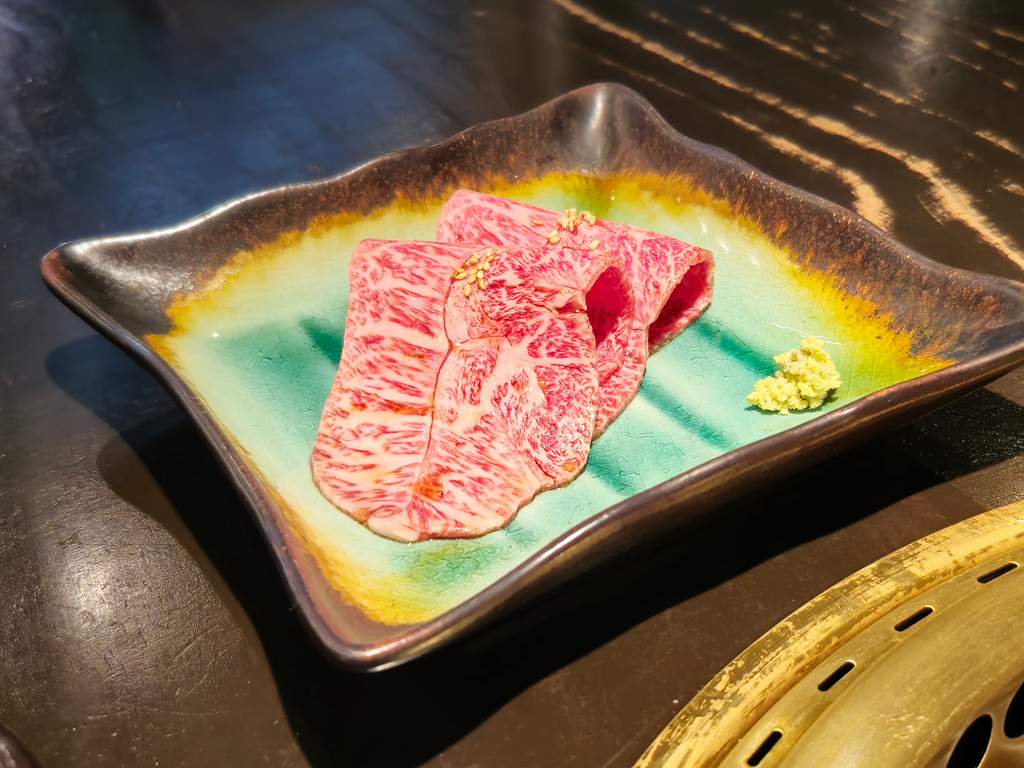
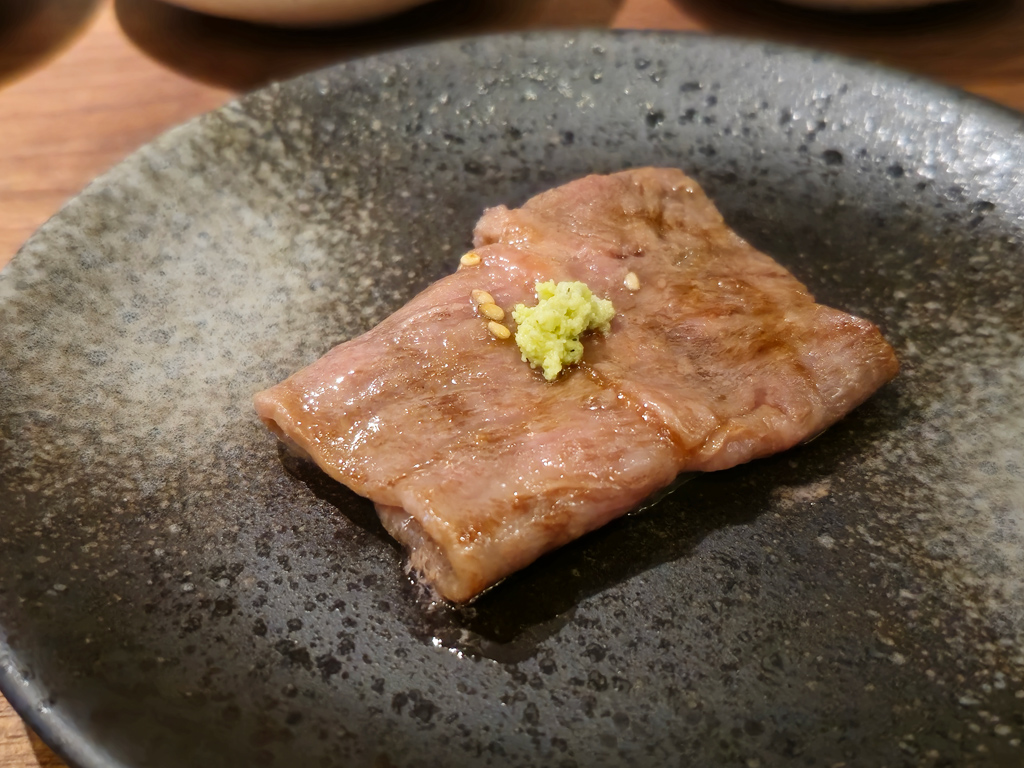
Next was thin-cut American wagyu short rib with fresh wasabi and seasoned kelp strips, and thick-cut American wagyu zabuton topped with plum paste.

I had never tasted anything like this plum paste before, and it was incredible. There was definitely plum in it, but it wasn’t just plum—there was an in­de­scrib­a­ble additional flavor in there that made it uniquely sweet, and I cannot for the life of me pinpoint what it could’ve possibly been.

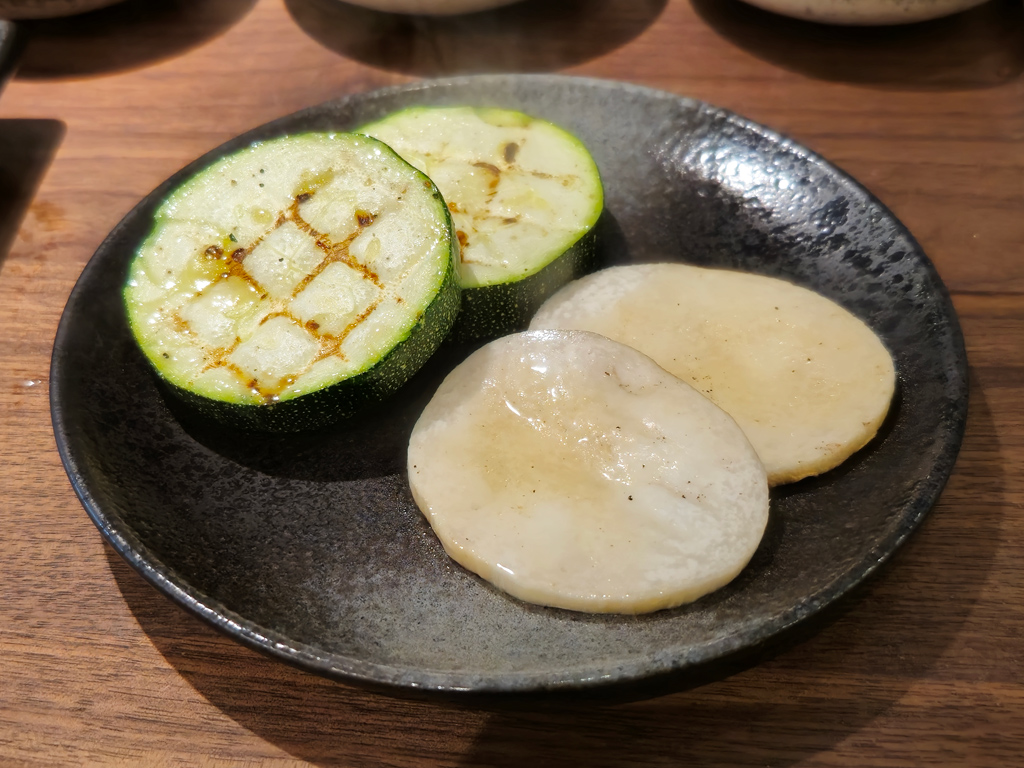
Eating back-to-back cuts of wagyu can feel very filling due to the extremely high fat content, so we were regularly served palate cleansers. For this in­ter­mis­sion, we were given some zucchini and mushrooms seasoned with salt and pepper.

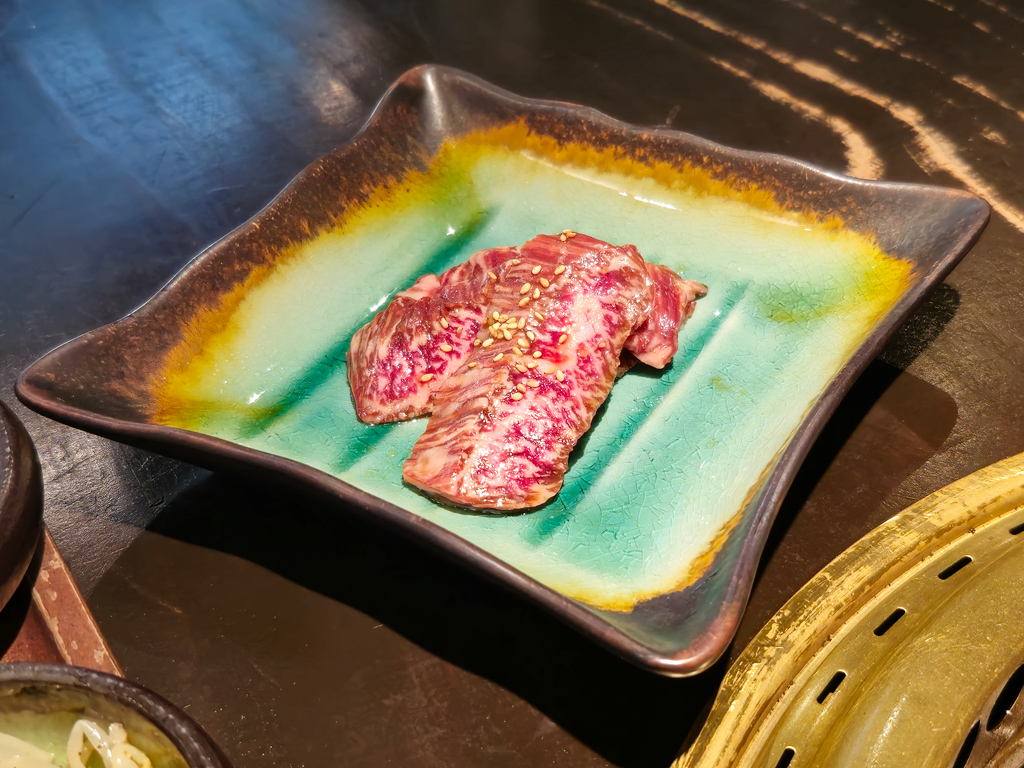
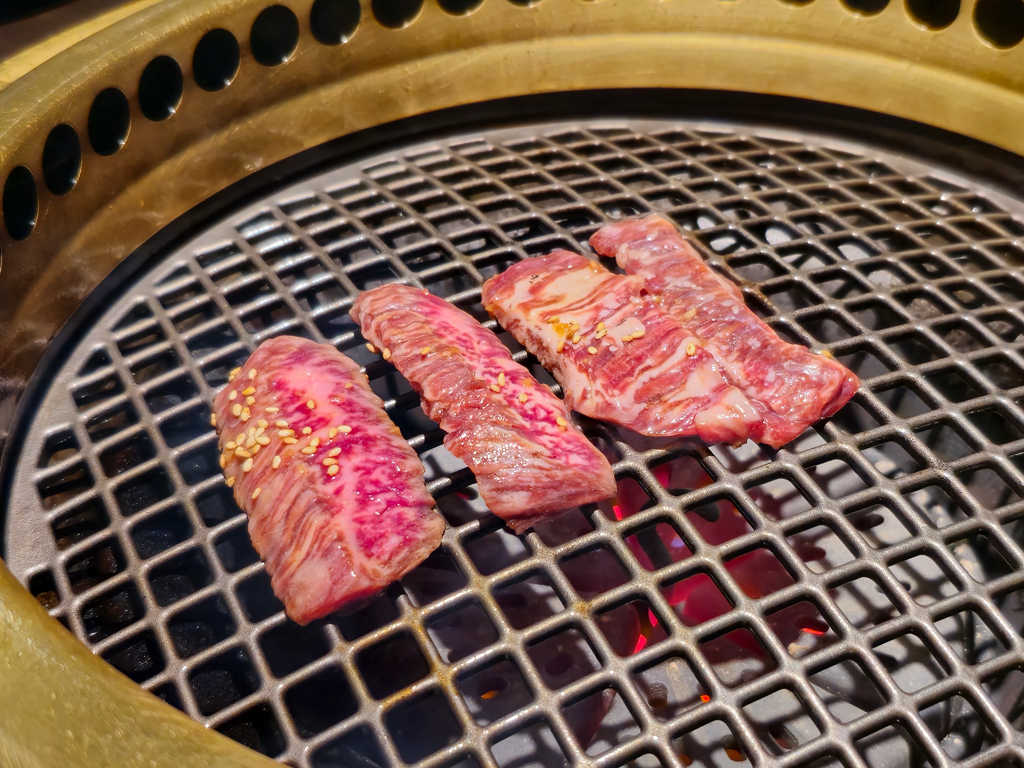
Our next portion of meat was thick-cut Australian wagyu harami skirt steak with barbecue sauce.

Note that this was a very light Japanese-style barbecue sauce, not the type of thick American BBQ sauce you’d find in the United States.

Our next palate cleanser was the house special salad. I really appreciated the frequency with which they mixed in vegetable dishes, as it really helped bal­ance out the overall flavor storyline.

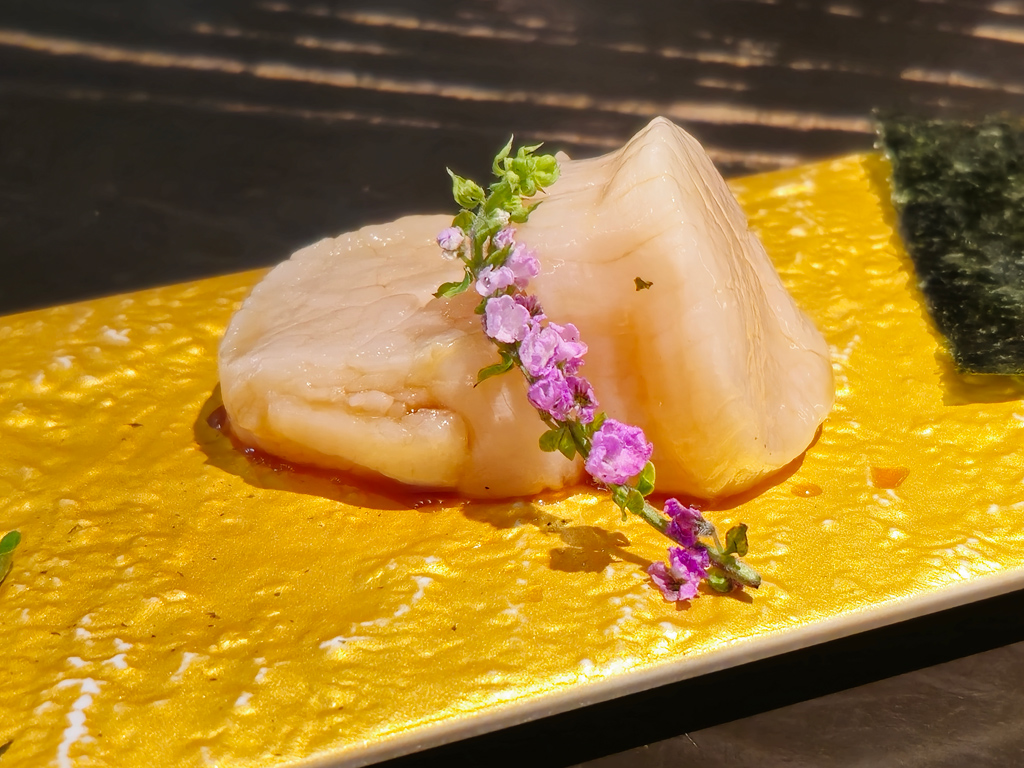
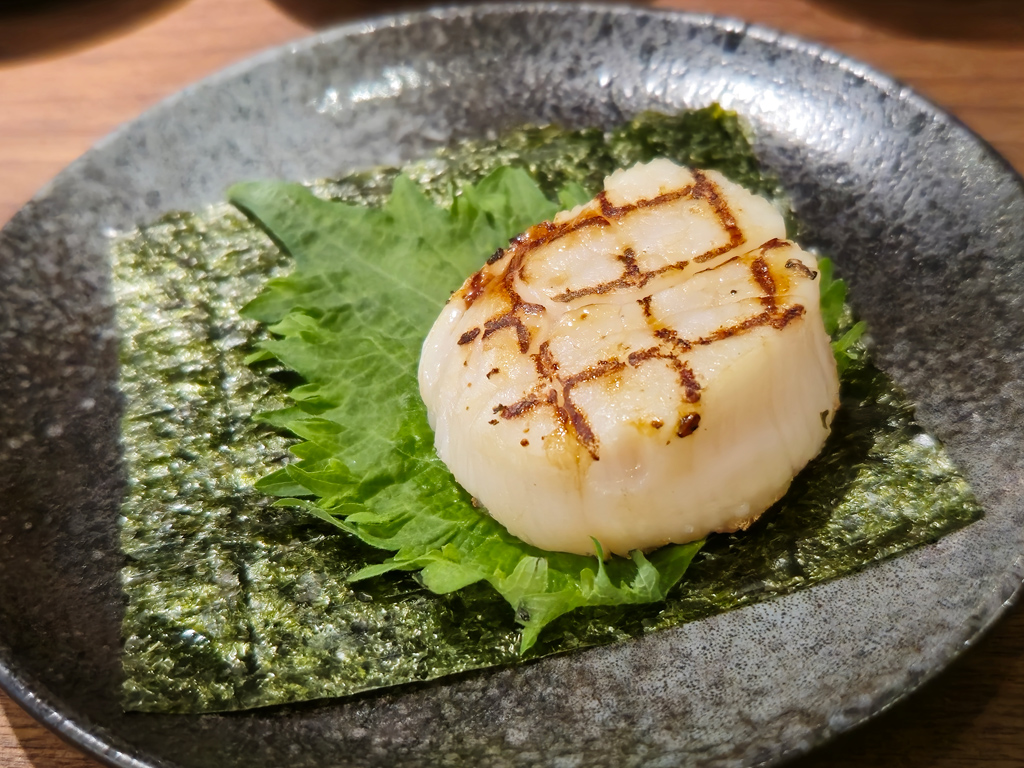
The chef took us on a brief detour with some seasonal seafood—scallop. This was the thickest, juiciest, most tender, and most flavor-rich piece of scallop I’ve ever tasted in my life.

It was time to go back to the meat. Next up was thin-sliced Japanese A5 wagyu oyster blade, served with barbecue sauce and wasabi.

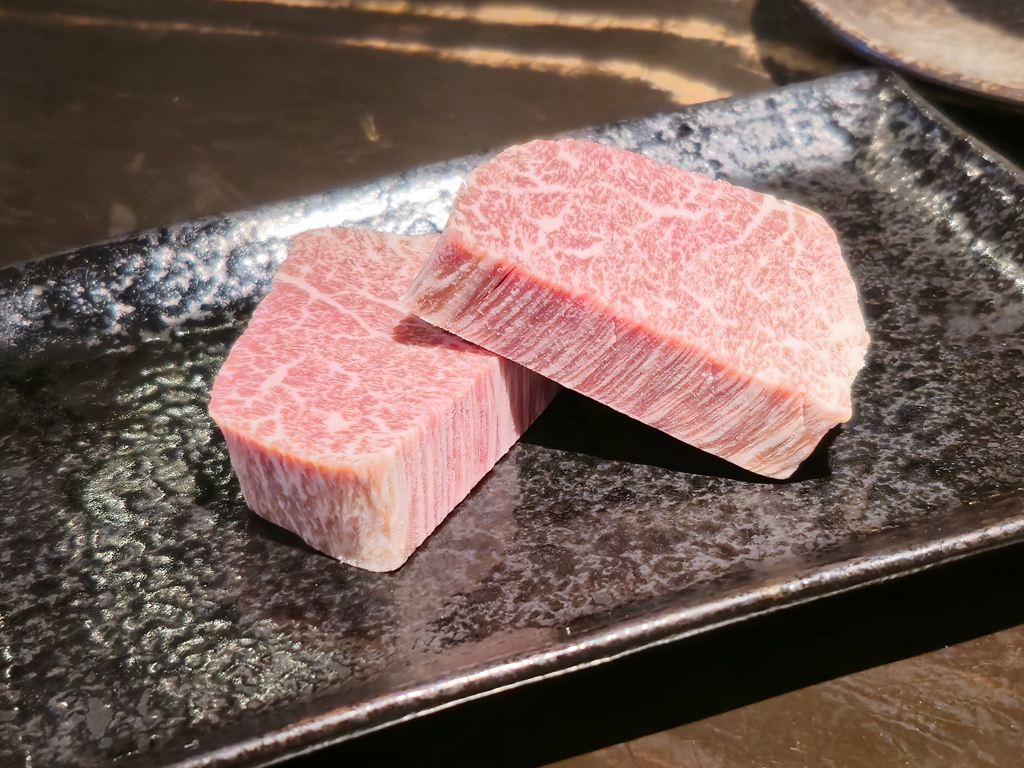
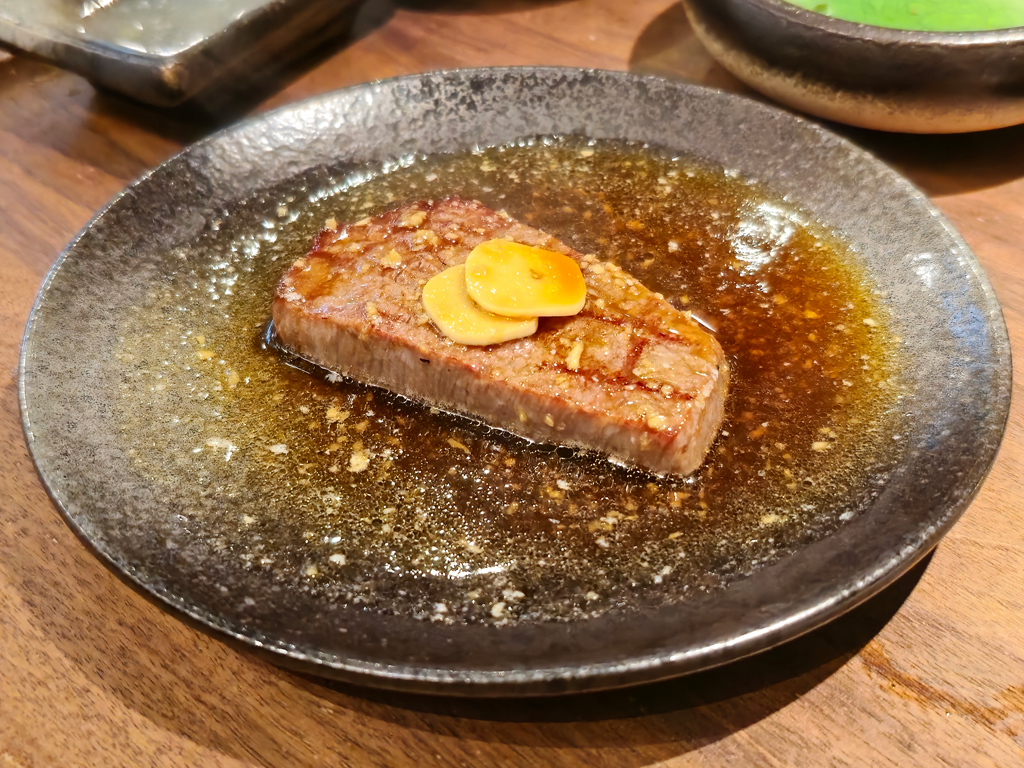
Our second portion of Japanese A5 wagyu was thick-cut tenderloin, seasoned with garlic sauce.

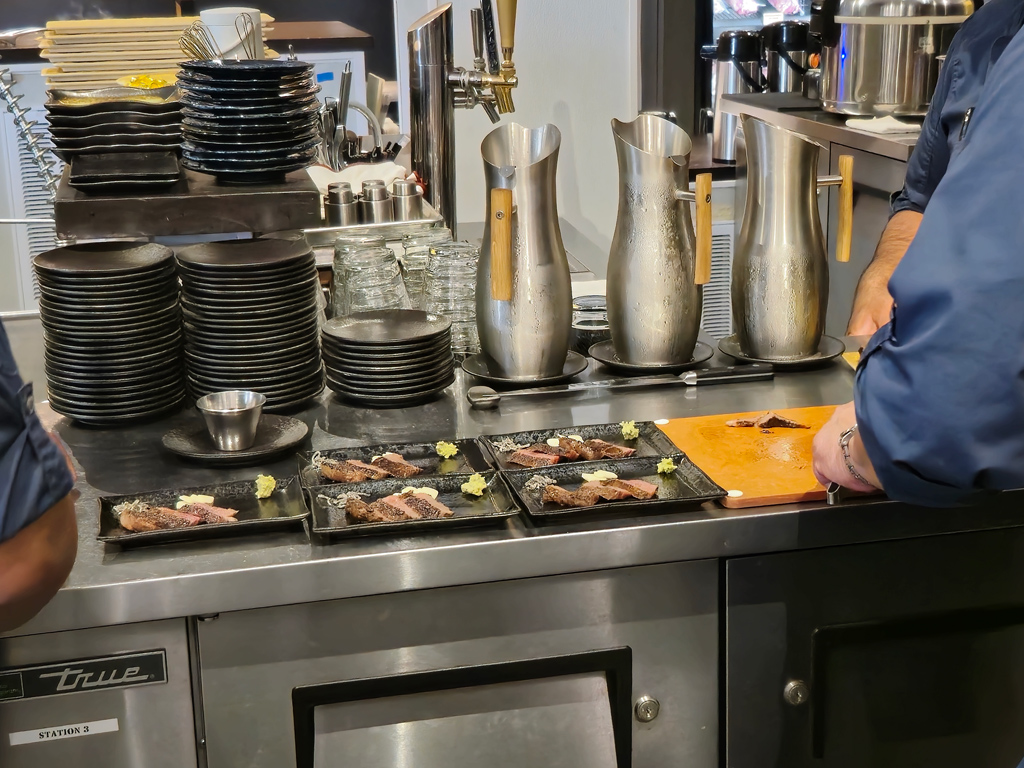
Although my friend and I opted for the full set, some of the other diners who had arrived after us were opting for the smaller menu. While enjoying my meal, I was able to watch the chefs prepare their dishes, which served both as extra entertainment as well as a good learning opportunity.

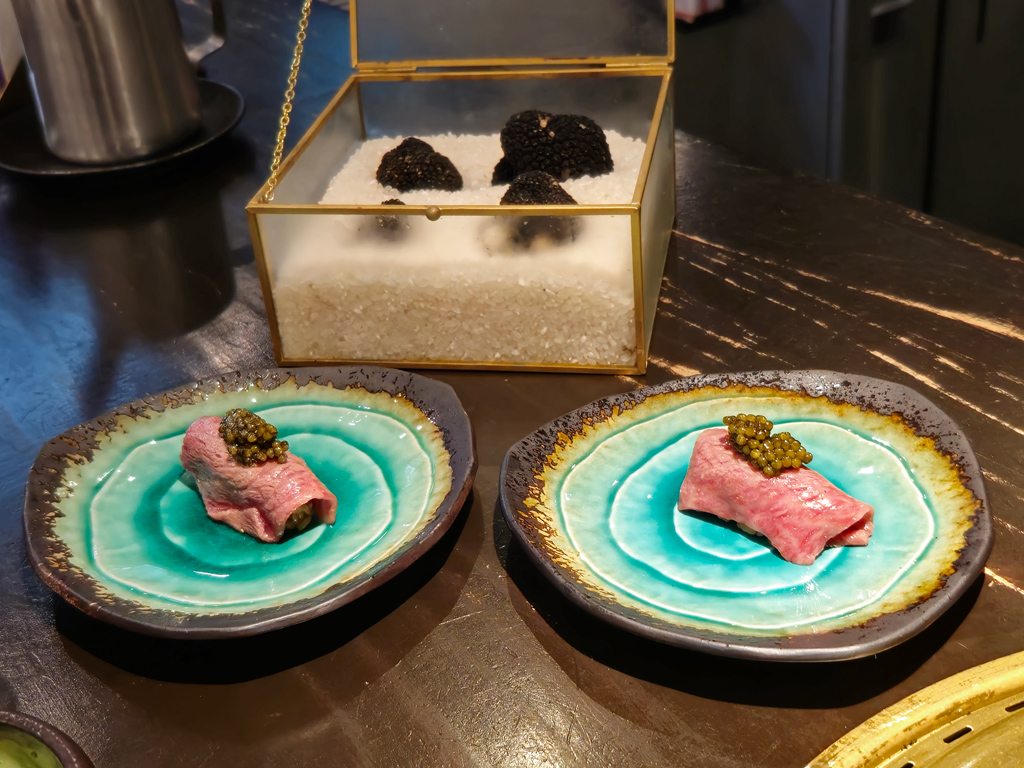
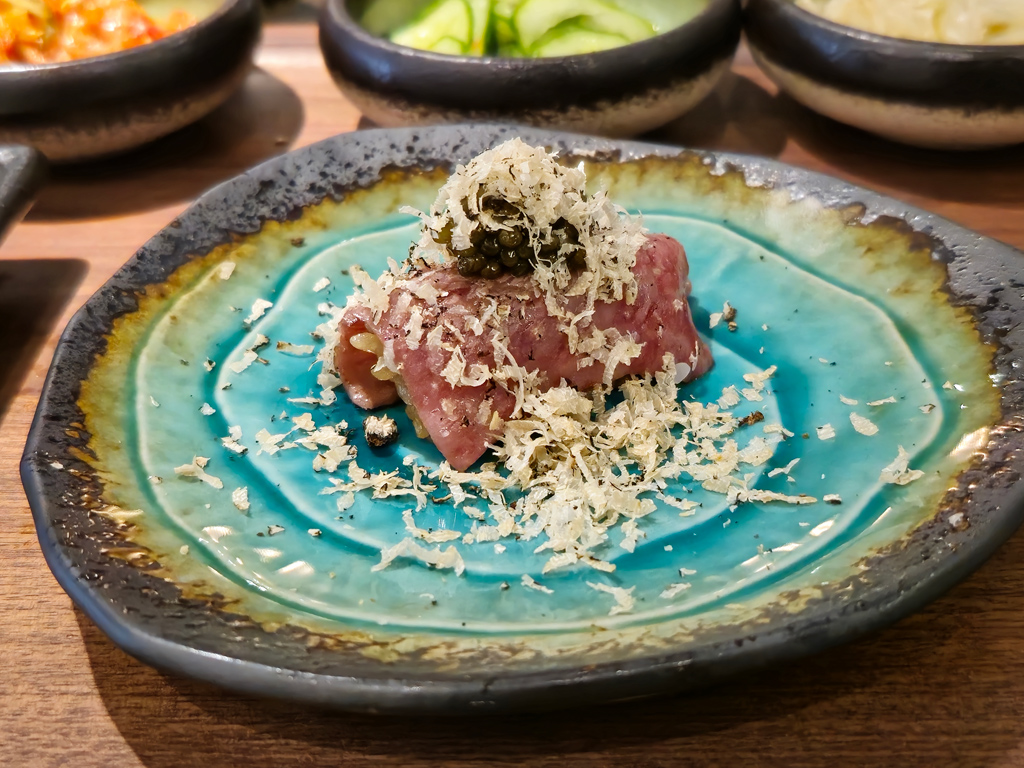
Next up was what ended up being my second favorite item of the dinner—Japanese A5 olive wagyu ichibo served thin-sliced nigiri style with caviar and truffle.

I’ve always known truffle to have a very strong flavor, but the truffle used on this wagyu nigiri was very mild.

The flavor bal­ance of this nigiri was incredible—the intensity of the wagyu, caviar, and truffle was perfectly equal, and no single flavor was o­ver­whelm­ing, so it truly felt like you could taste the richness of every single individual flavor depending on what you were mentally focusing on.

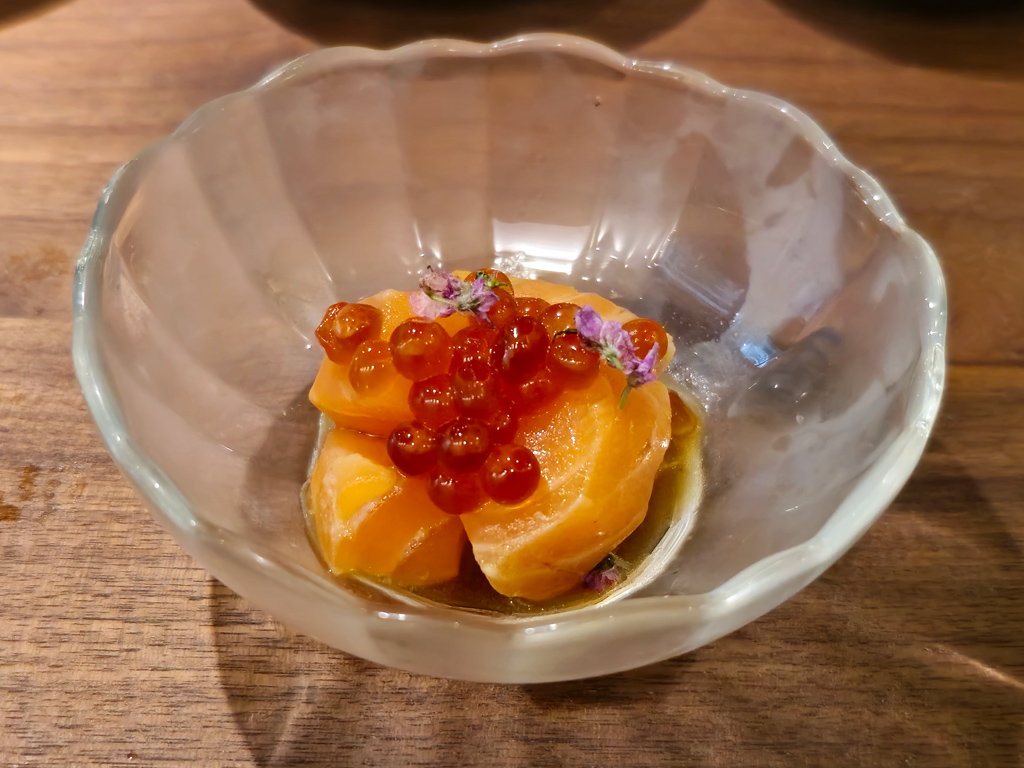
We were slowly approaching the end of our meal. Our second-to-last main dish was salmon and ikura with a small sprinkling of edible flower.

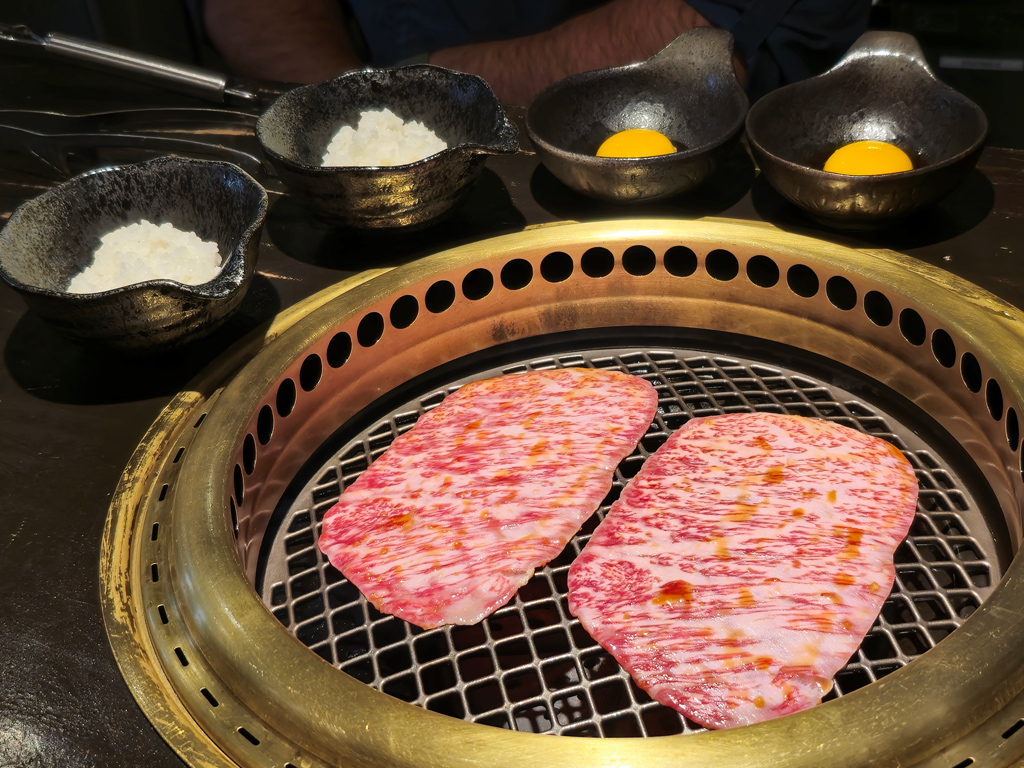
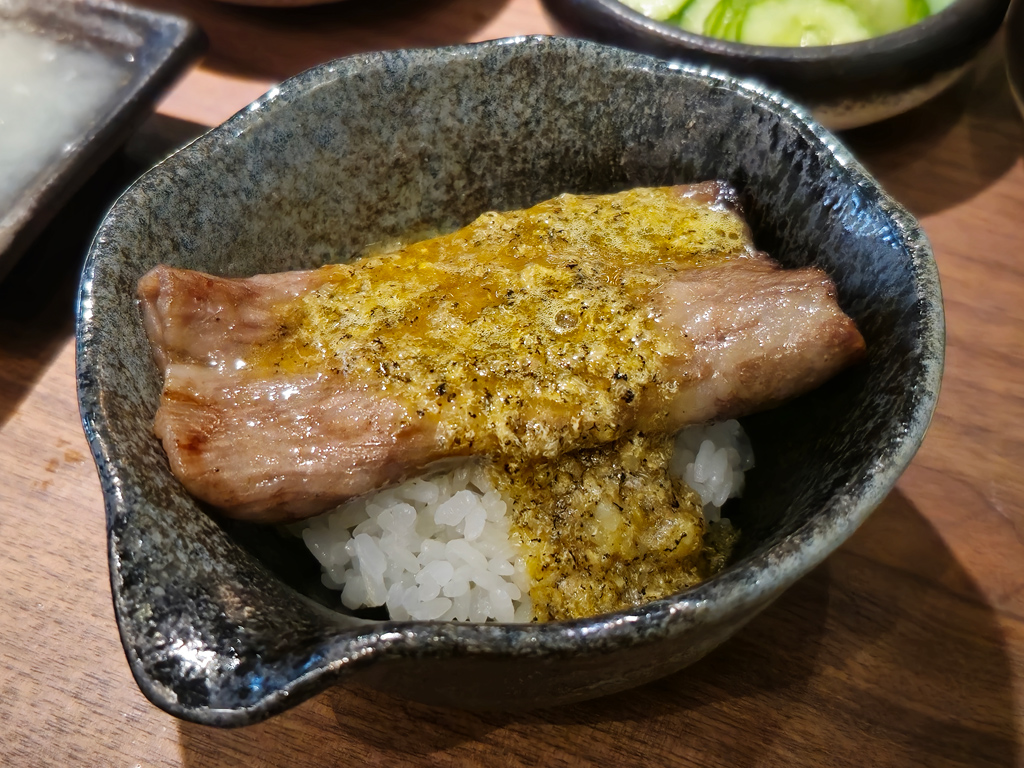
The grand finale dish was yakishabu don, made with thinly-sliced Japanese A5 wagyu striploin over rice, topped with raw egg yolk and truffle.

This combination manifested as a beautifully shimmering golden sauce over the wagyu rice bowl.

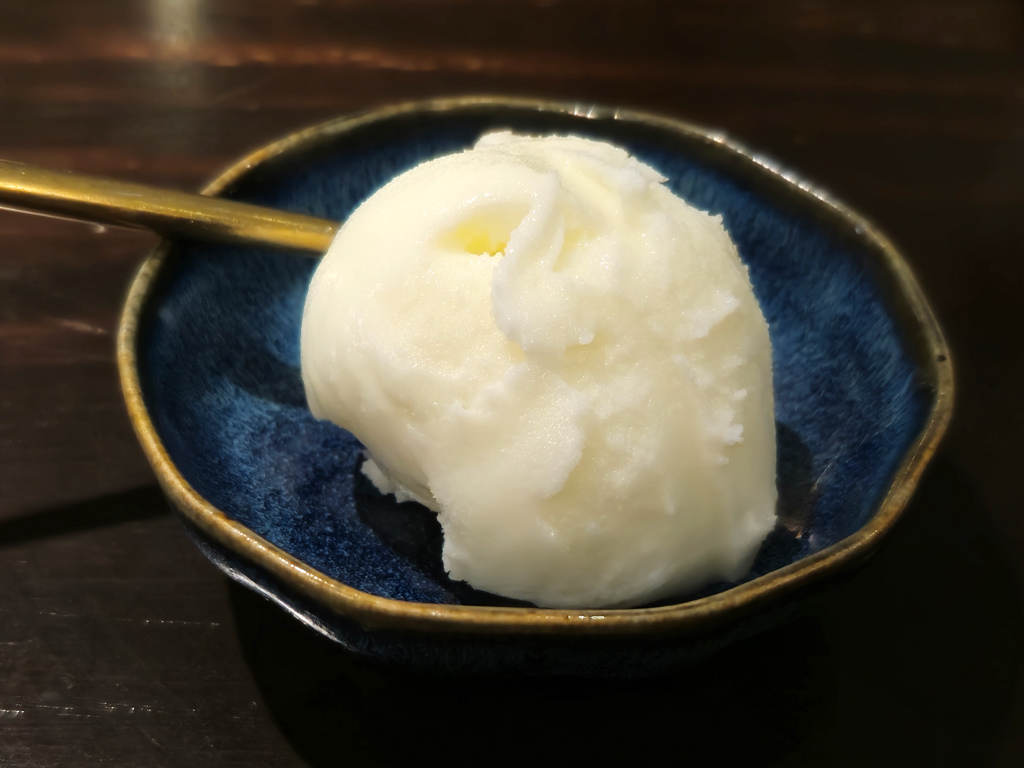
Our dessert was a refreshing frozen yogurt. It was only subtly sweet, which allowed the yogurt flavor to really shine.

Shodai Set ×2$ 450.00
Mandatory gratuity (20%)$  90.00
SF HCSO surcharge (4.8%)$  21.60
Sales tax$  48.44
Total$ 610.04
The table on the right shows how much we paid.

You might have noticed that I didn’t really give many thoughts on the various cuts of wagyu. The rea­son for that is… my thoughts are basically the same for all of them. Pretty much every single piece of meat I ate during this meal ranked as a top best cut of meat I have ever tasted in my life.

I don’t eat anywhere near enough Japanese A5 BMS 12 or Australian MSA 1100+ grade 9 wagyu in or­der to compare it on an appropriate scale, and if you compare any meat of that quality to anything else, that ultra-high-end wagyu is just going to be indisputably better by a chasmic margin.

I cannot put in words how much I was impressed by our chef Chris Yuen. He managed to cook every single piece of meat to absolute perfection, and he appeared to do it effortlessly. I would be overjoyed at myself if I had even 5% of his cooking ability.

I’m not too happy about the 20% mandatory gratuity. I would have preferred for them to just set the price at $270 per person instead of $225 and make themselves a no-tipping establishment—that would’ve felt much better than making it look like there was a nearly hundred dollar hid­den fee. Gratuity is meant to allow diners to show gratitude, and it just doesn’t feel the same when it’s forced. This would also probably be particularly unsettling for in­ter­na­tion­al guests who may come from cultures where the concept of tipping does not exist.

Regardless, this restaurant has easily landed itself in my top three favorite restaurants of all time, alongside Utzutzu and Masamitsu. A meal coming in at $270 per person before taxes and fees is obviously unrealistic for most people, but if you’re ever in the San Francisco area and this pricepoint is man­age­a­ble for you (remember that there is a lower-cost option as well), I highly recommend Yakiniku Shodai.


—§—


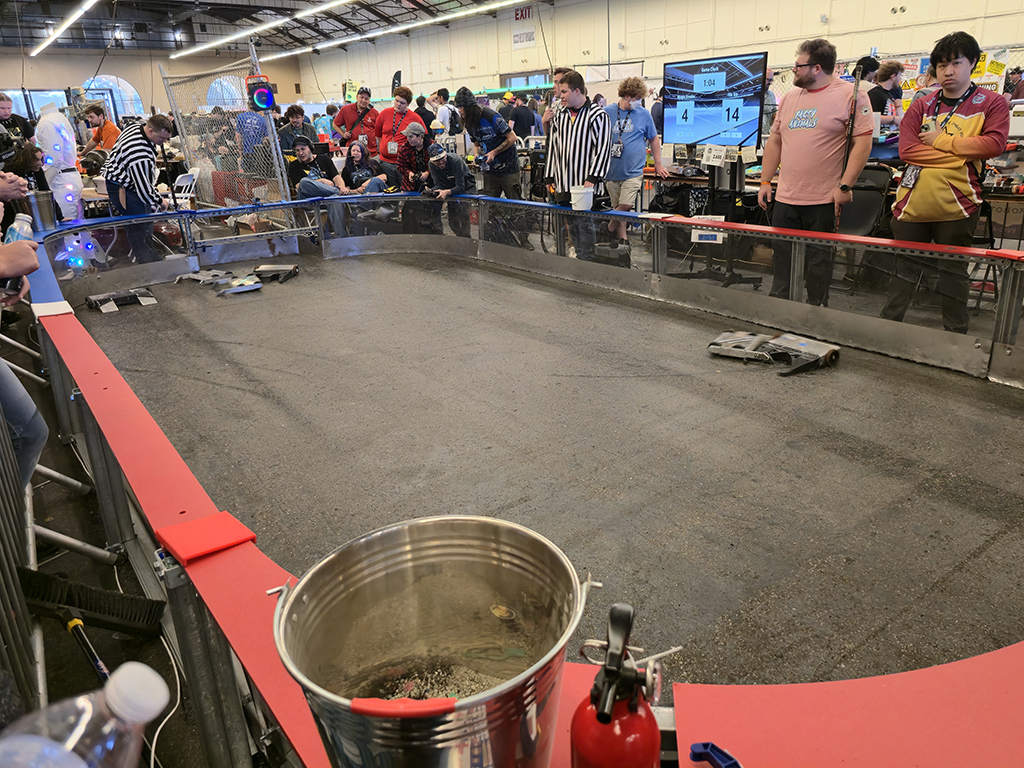
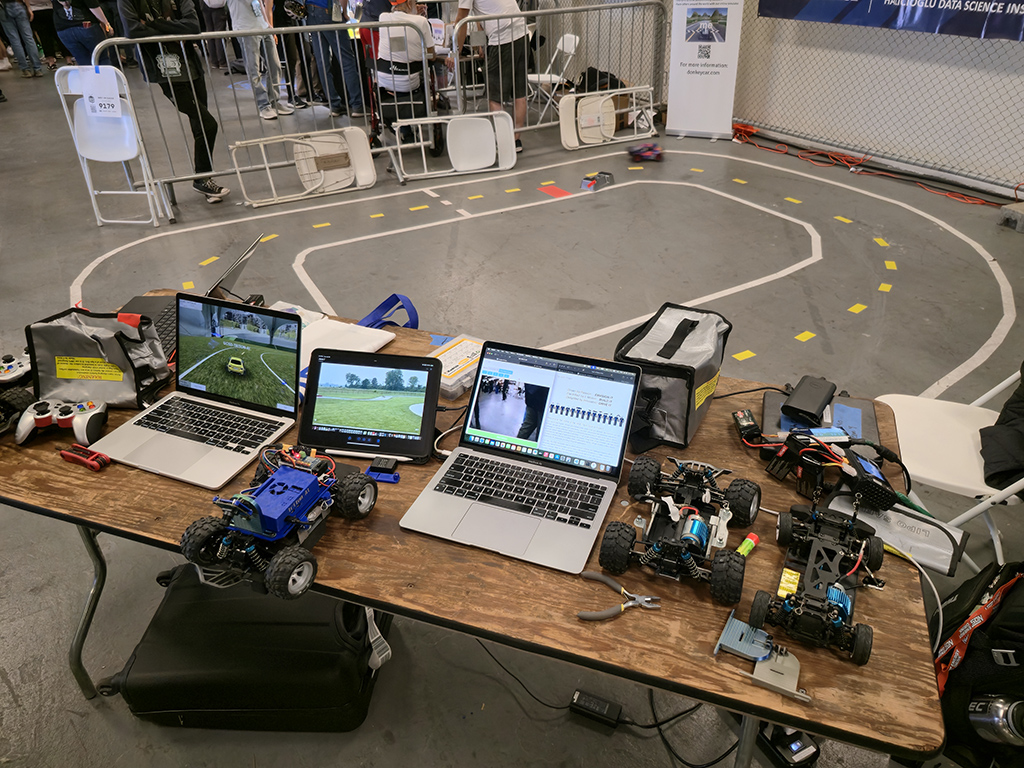
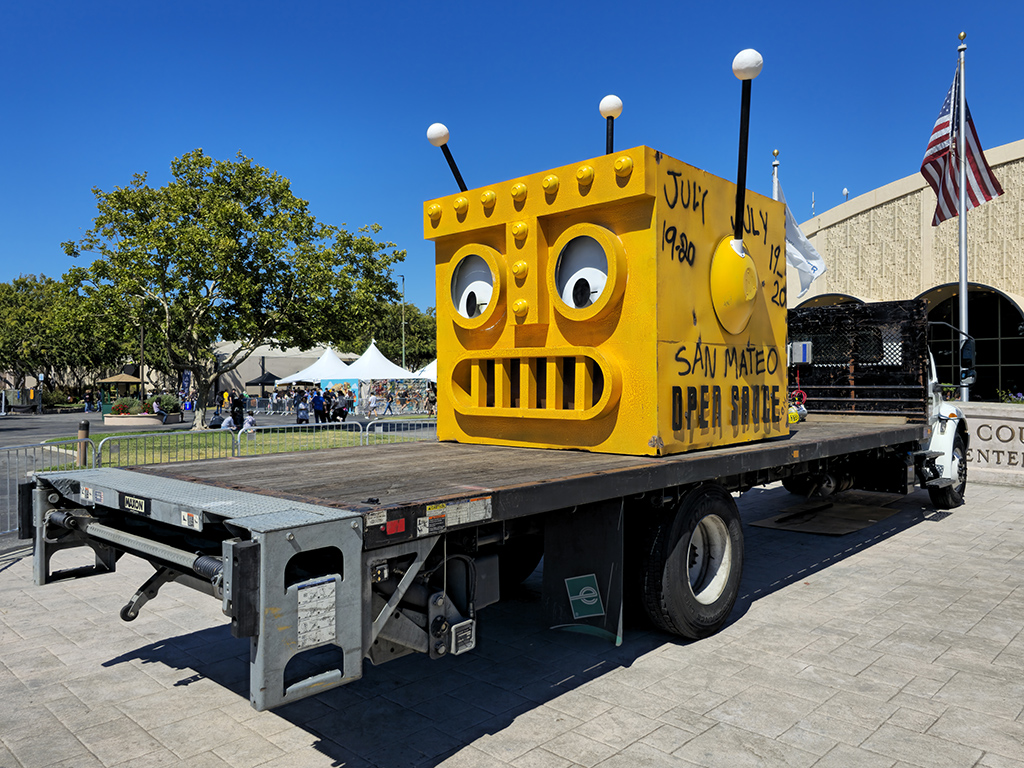
Hello Open Sauce 2024

FTC Disclosure: Open Sauce, Inc. did not ask me to write this blog post, did not pay me cash for this review, and did not have an opportunity to review or request changes to this piece prior to its publication. However, I did receive material financial incentive to attend Open Sauce 2024 by way of free VIP admission and free lodging. The public retail value of such incentives amounts to a VIP ticket worth US$1,499.00 and a hotel stay worth approximately US$600.00. All other expenses beyond the aforementioned items were self-funded.

 
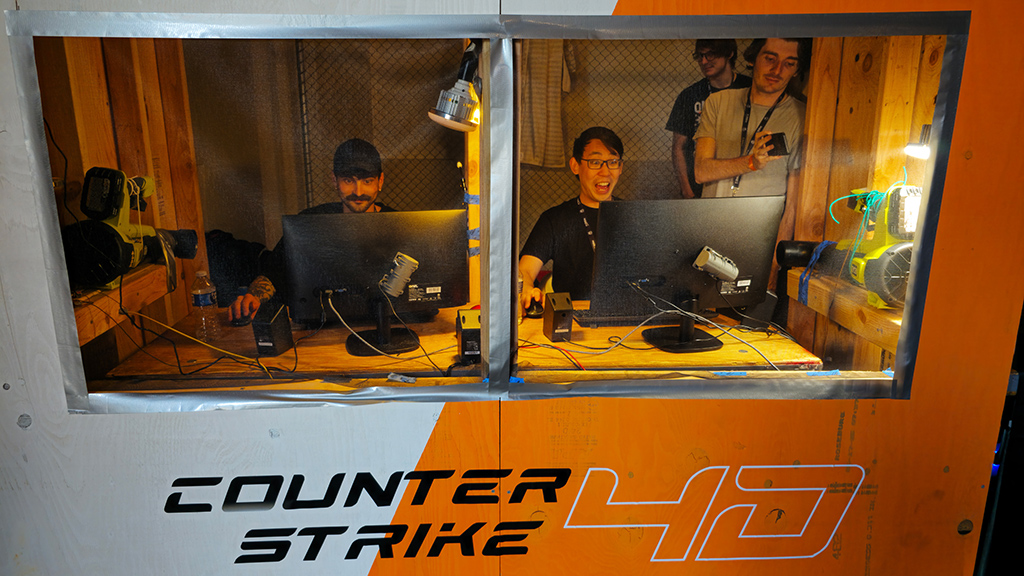
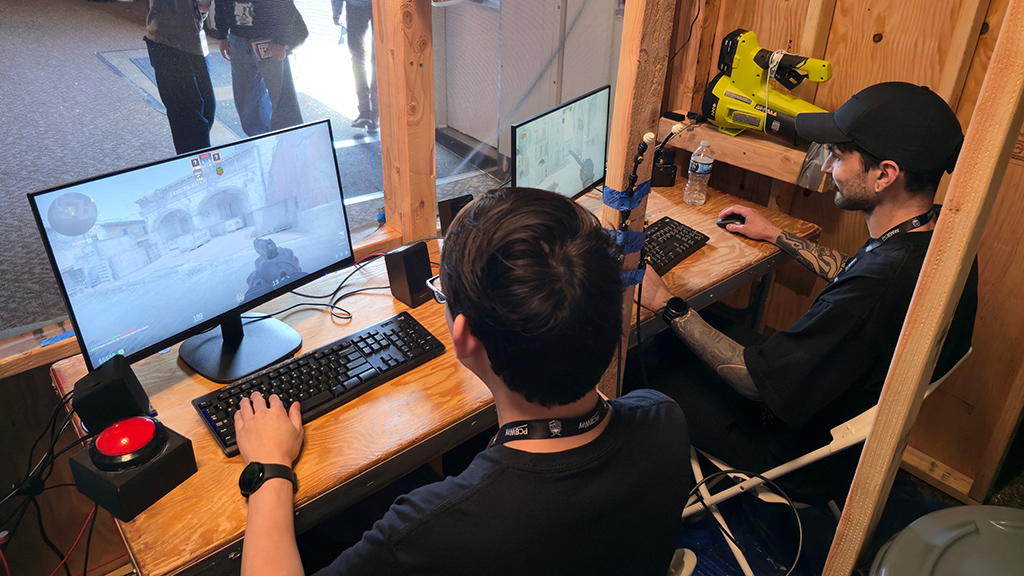
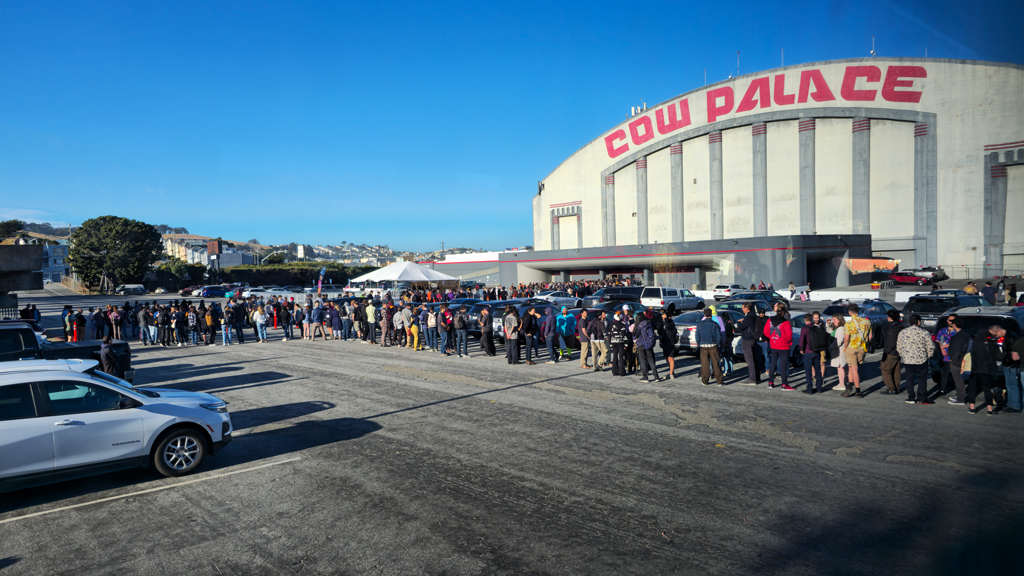
I’m not really the biggest fan of the San Francisco Bay Area in California (which should be unsurprising to you if you’ve read my blog post about how I got ~US$3,000.00 of stuff burglarized from me the last time I was here), but my friend Billie-Rae invited me to attend Open Sauce, a science and tech­nol­o­gy convention taking place at the Cow Palace in Daly City. Billie-Rae is a full-time employee at the company that runs the convention, so I de­cid­ed that was enough of a reason to support her work and check it out last week between June 14-16.

I’ve been to a lot of events and conventions of all different kinds over the past decade. I’ve attended as various roles, including an organizer, staff mem­ber, host, tournament competitor, exhibitor, media, broadcast talent, and plain old con-goer. Many conventions and brands have compensated me (or have tried to compensate me) in the past with high-end luxury accommodations worth several thousands of dollars, as well as hefty cash payments.

With all that being said, I can confidently say that Open Sauce 2024 was my favorite convention of all time.

Yes, I understand that people probably think my opinion doesn’t mean much because I got a special invite from my friend who works there. However, long-time readers know that I take my reputation very seriously and would never write an intentionally inflated or exaggerated review just to help out a friend. I have been very honest and transparent about disclosing everything up to this point, and I feel that I am being objective and unbiased with every­thing else in this blog post as well.

 
Open Sauce had a very different feel to it than any other convention I’ve ever been to, which made me enjoy it a lot more; upon some thought, I’ve con­clud­ed that that can be attributed to a handful of factors:

  • It does not feel commercialized.

    Revenue from ticket sales are pretty much never enough to run a large-scale convention. A convention center will have limited space for attendees, and consequently, there will be a limited number of tickets available for sale. If the ticket price is scaled to cover all expenses, it would be pro­hib­i­tive­ly high and cause fewer people to attend, thus reducing revenue. There is a sweet spot of balancing ticket price with attendance, and that sweet spot is usually nowhere close enough to cover expenses associated with venue rental, attractions, experiences, staffing, utilities, equip­ment, dec­o­ra­tions, marketing, etc.

    For this reason, conventions will sell space in their exhibition hall to sponsors, and these sponsors will promote their brand and products at their booth. Every other convention I’ve been to has had its exhibition hall feel like a gigantic three-dimensional billboard of endless advertisements with logos plastered everywhere. Companies furnish their booths with plush carpeting and nice fake walls to attract con-goers and incentivize them to get ex­po­sure to their brand.

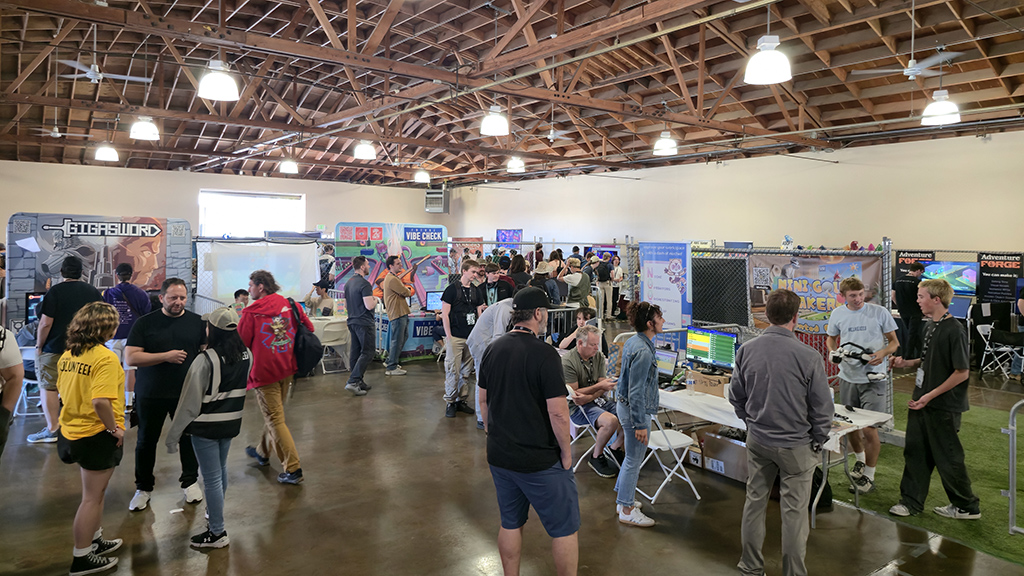
    Open Sauce did not feel like this whatsoever. There were four exhibition halls, and all of them looked like massive empty warehouses with no love or care given to their presentation… which fit the convention perfectly, because it made it feel more genuine and authentic. All the focus of Open Sauce was on the science and technology of the cre­a­tions that people brought to the convention. Each booth was run by passionate scientists and inventors, not salespeople. There was nothing fancy in any of the booths—it was just the creator and the creation, and nothing else there to distract you from taking in their work.

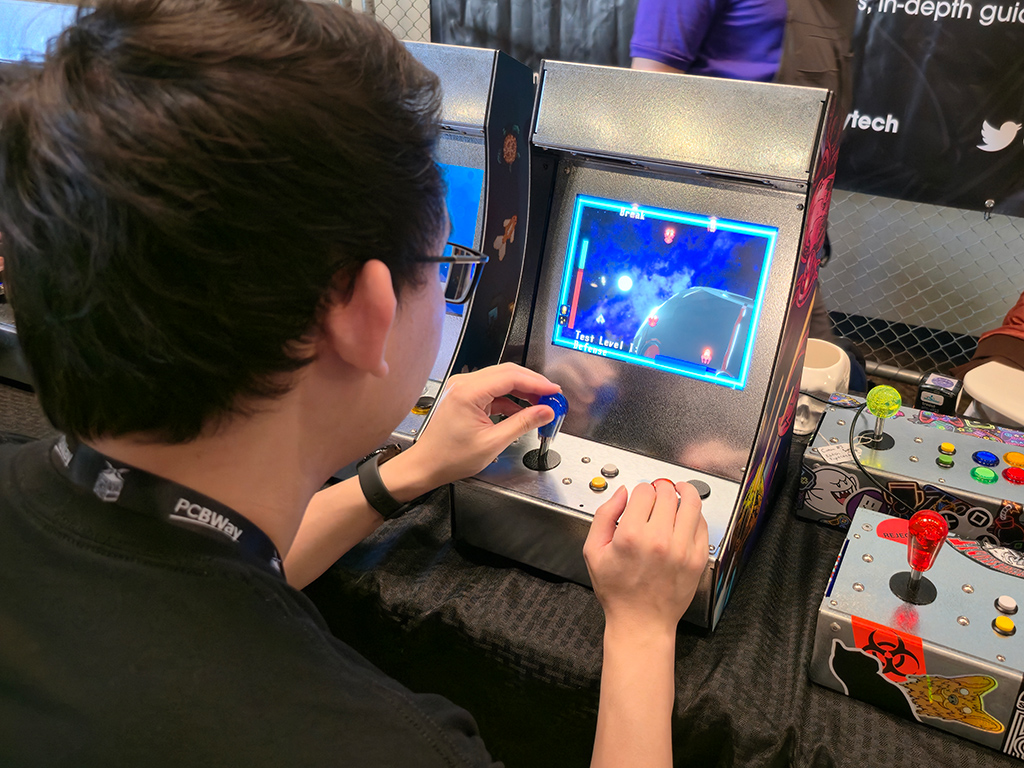
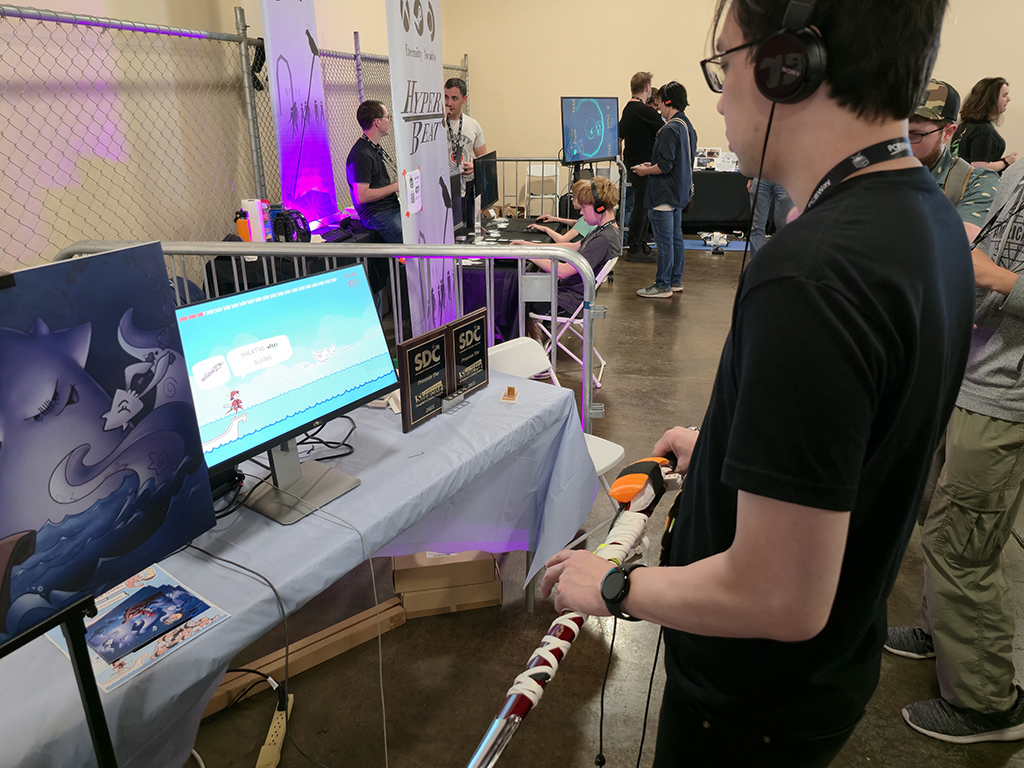
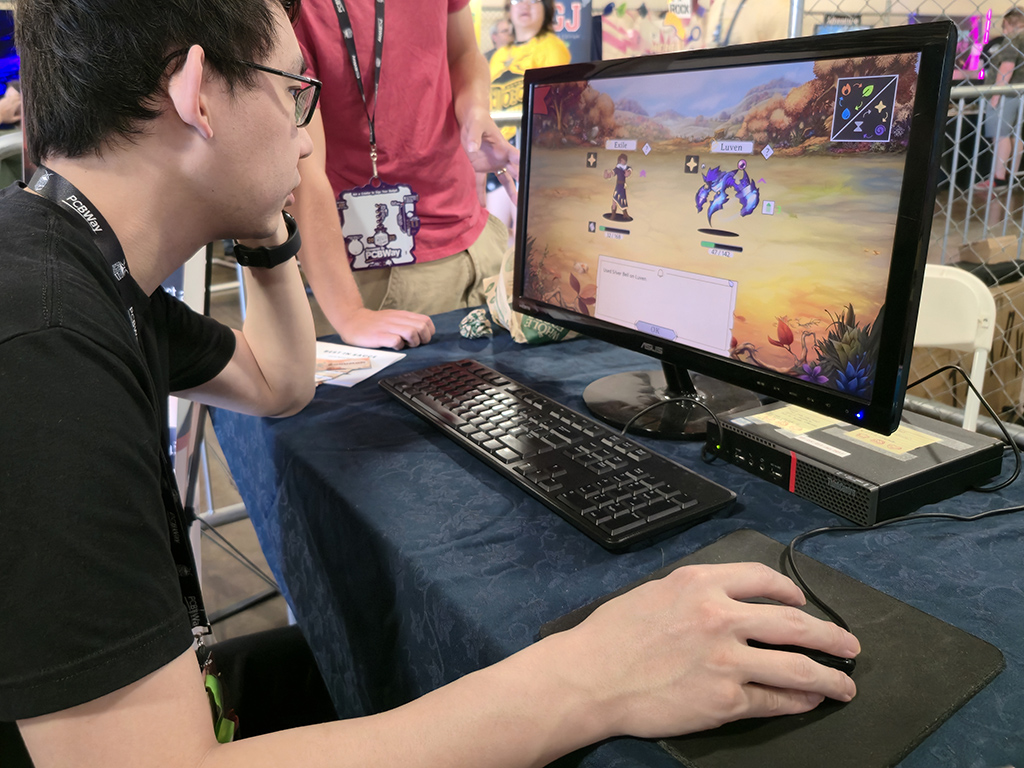
    This doesn’t mean there were no sponsors at Open Sauce. However, the sponsors they did have were extremely well-integrated. For example, PCBWay sponsored the admission credentials for the convention, so everyone’s badge was a thin metallic circuit board (as opposed to just a flimsy piece of laminated paper like every other convention does). At their booth, you could finish soldering the connection with a battery and LED and make it light up. Formlabs also appeared to be a sponsor, and they brought high-end 3D printers that people could experiment with and try out. Both of these were directly relevant to the theme of the con­ven­tion and were actual interesting interactive things, as opposed to just ads.

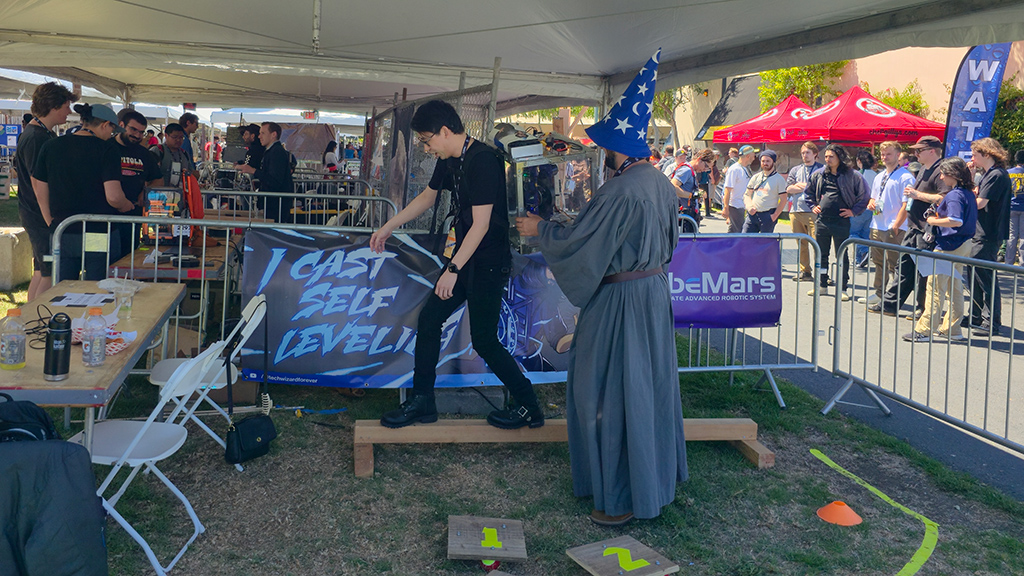
    I diligently went up and down every aisle in all the exhibition halls, and I thoroughly enjoyed every moment of it. This is the one and only con­ven­tion where I regularly stopped at many booths to try out their activity because of how inherently fun all the creations looked. I heard from a mu­tu­al friend that Michael Reeves (who was also in attendance) calls it a “science fair” instead of a convention, and I think that is a pretty accurate de­scrip­tion.

  • The special guests were pleasant people.

    Due to the nature of my work at Tempo during our prior esports and influencer marketing era, I’m used to interacting with stereotypical content cre­a­tors and broadcasters, especially those related and adjacent to Twitch live streaming. I’m fairly outspoken about my dislike of most of these peo­ple due to how disconnected they are with reality—many of them have a false and egregiously inflated sense of ego and self-importance com­pared to the rest of the world, which manifests in them coming off as extremely vain, arrogant, ignorant, lazy, and irresponsible.

    Open Sauce also had content creators in attendance, but the attitudes of these content cre­a­tors were very different. They all acted like normal people, and they all treated me like a normal person. I have had my fair share of encounters with meeting Twitch streamers during which they acted genuinely insulted that I didn’t already know who they were, but all the content creators at Open Sauce introduced themselves to me with a clear intent to meet new people and make new friends. I imagine there was a fairly thorough vetting process to decide who was and was not invited as a special guest, and this vetting process was well done, because I felt comfortable around everyone who was there.

  • I personally liked how the panels were scheduled.

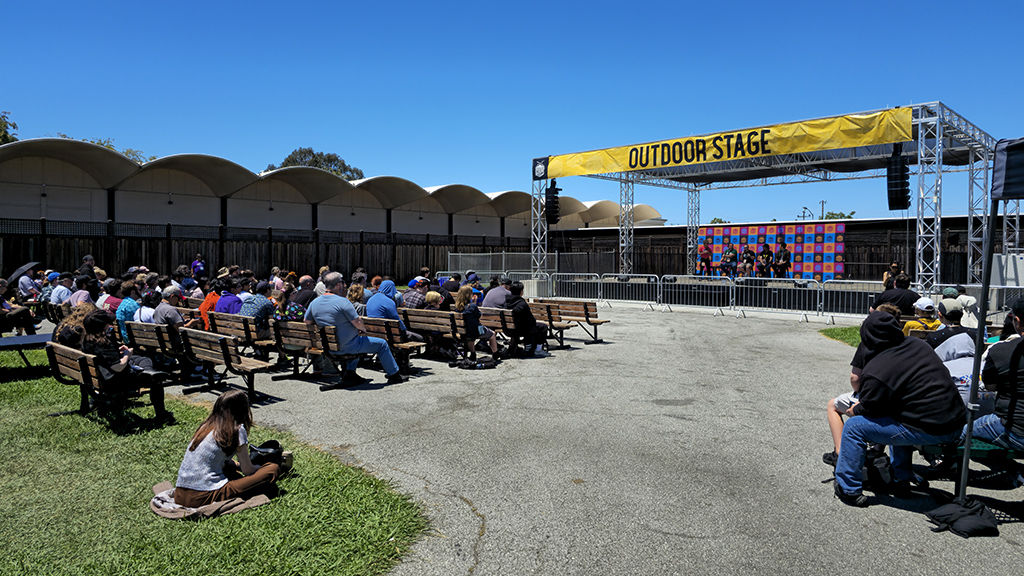
    Most conventions have many panels scheduled and happening at once, and attendees have to pick which ones they want to go to, oftentimes hav­ing to miss out on some panels they want to watch in lieu of others. Open Sauce seemed to have a fairly limited number of panels, and there were only two places where panels were taking place—the main stage and secondary stage.

    This had two interesting effects. First, the panels that it did have were higher-impact panels that appealed to a broader audience, as opposed to having a lot of more specialized or niche topics. Second, because there were limited options of panels to watch, the audience was naturally bigger for each of the panels. Because the main stage was in a sporting arena and the massive amount of arena seating was used for the panel audience, it actually felt nice enjoying panels together with a large group of people.

    In a similar vein, I think Open Sauce realized that, although some people attend panels to listen to the topic, many of them go just to watch their fa­vor­ite content creators and broadcast personalities speak. I heard that most panelists held small meet-and-greets after speaking, so what the pan­els functionally ended up being was an opportunity for fans to know when and where to find their favorite creator, so they can meet them af­ter­wards.

    I heard that some people didn’t like this format, but I personally think this was a very efficient and practical way to run the schedule.

  • The activities for special guests were fun and relevant.

    When I am invited as a special guest or otherwise receive VIP treatment during conventions, the “exclusive access” usually just ends up being a lounge and a networking party. Although Open Sauce also did that, they further scheduled two fun activities that really stood out to me.

    The first was a visit to “The Cave,” Adam Savage’s workshop. The second was a visit to CrunchLabs, Mark Rober’s facility. Considering that both Adam and Mark are well-known personalities in the science field, being able to see their offices was very meaningful and interesting. I didn’t watch MythBusters when it was on TV, but I do watch all of Mark Rober’s YouTube videos, so I loved being able to see in-person the things he built for his channel.

    In a not identical but still similar vein, I enjoyed the fact that there was a hotel fully booked out exclusively for special guests. At first, the staff por­trayed this as being done for “security” reasons, which made me chuckle—I’m from Las Vegas where even A-list celebrities walk the casino and ho­tel floors alongside everyone else, so the fact that YouTubers would need that level of security was funny to me. However, I realized that having this kind of hotel was a good idea for a different reason.

    What was nice about the booked-out hotel was that everyone knew everyone else there was a science-related or science-adjacent person. In a reg­u­lar hotel, if you saw a stranger, you wouldn’t know if they were there for the same convention as you, or for something else entirely unrelated. How­ever, for Open Sauce, you knew that, if someone was inside that hotel, they were definitely there for Open Sauce. This encouraged people to be much more social and approach and initiate conversation with strangers because they are going into the interaction knowing that they share some degree of interests.

The second and fourth points obviously will not be relevant if you are just a general admission attendee, but for the sake of thoroughly sharing an an­ec­dote of my own experience, I decided to still include them.

 
So, if it wasn’t blatantly clear by now… if you are interested in science and technology and want a fun and high-value convention to attend, I highly rec­om­mend Open Sauce based on my experience that I had this year. The general admission ticket for 2024 was US$200.00, which I think is a very rea­son­a­ble price for a two-day convention that has so much to do that you’ll probably fill both days from open to close with interactive experiences. Their web­site currently shows early bird purchases for 2025 coming soon at US$99.69, which I find to be insanely cheap for what you get.

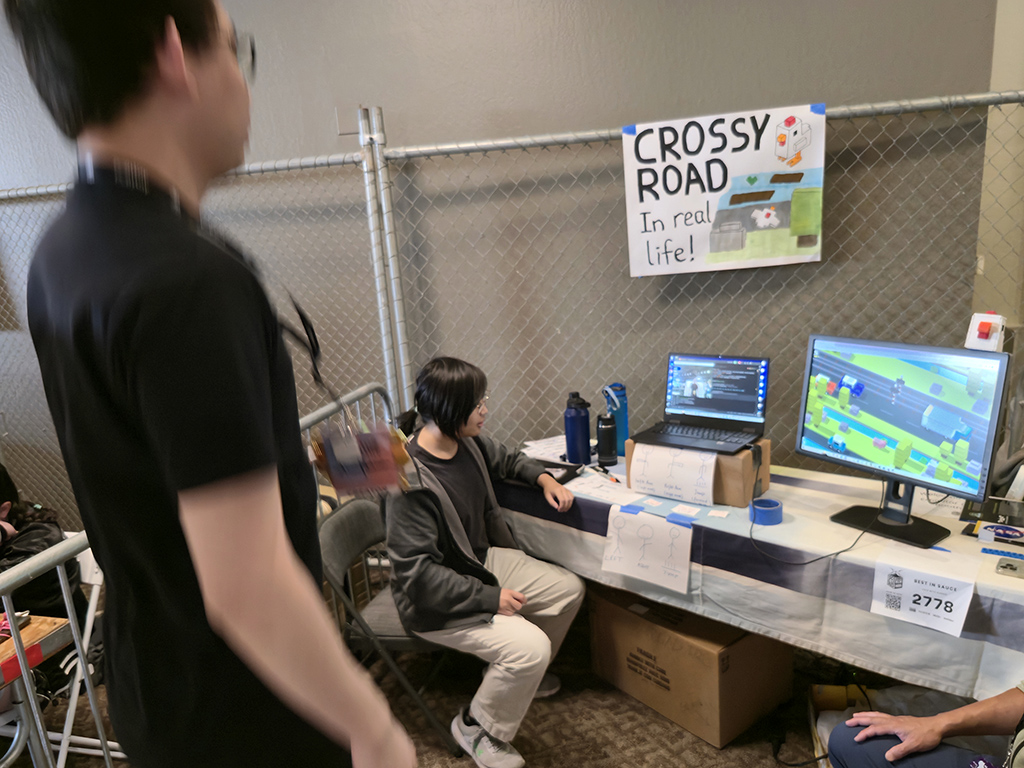
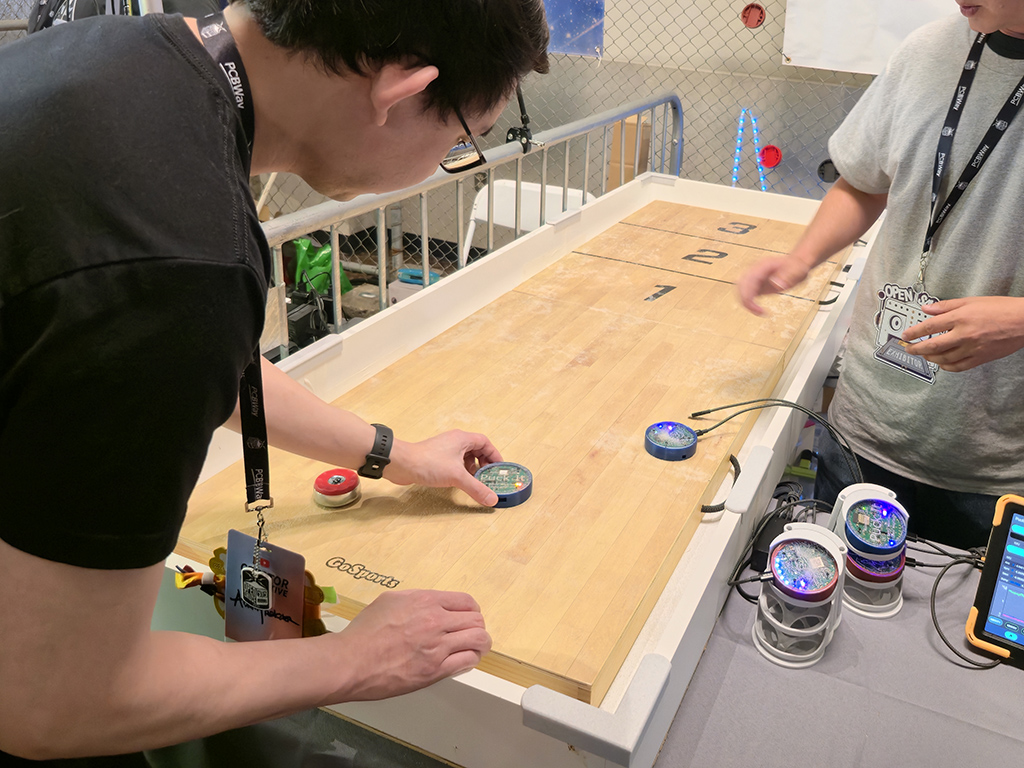
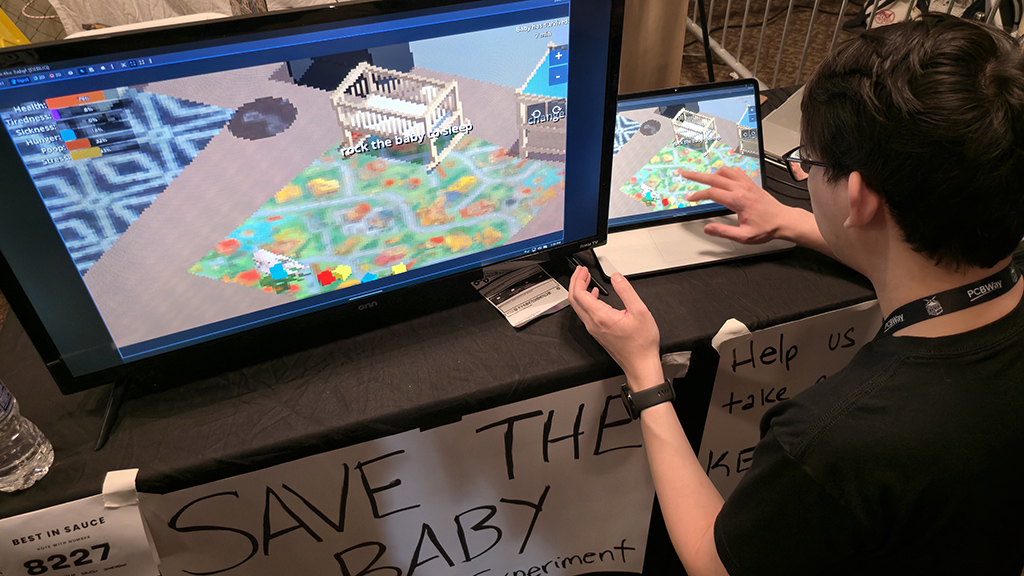
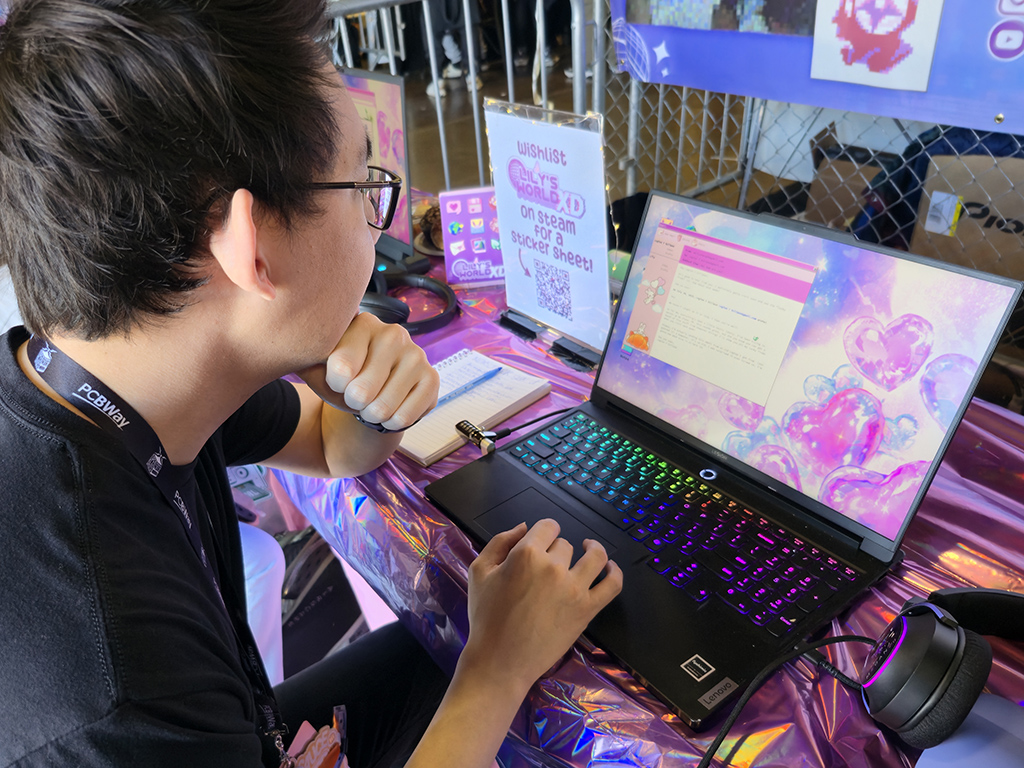
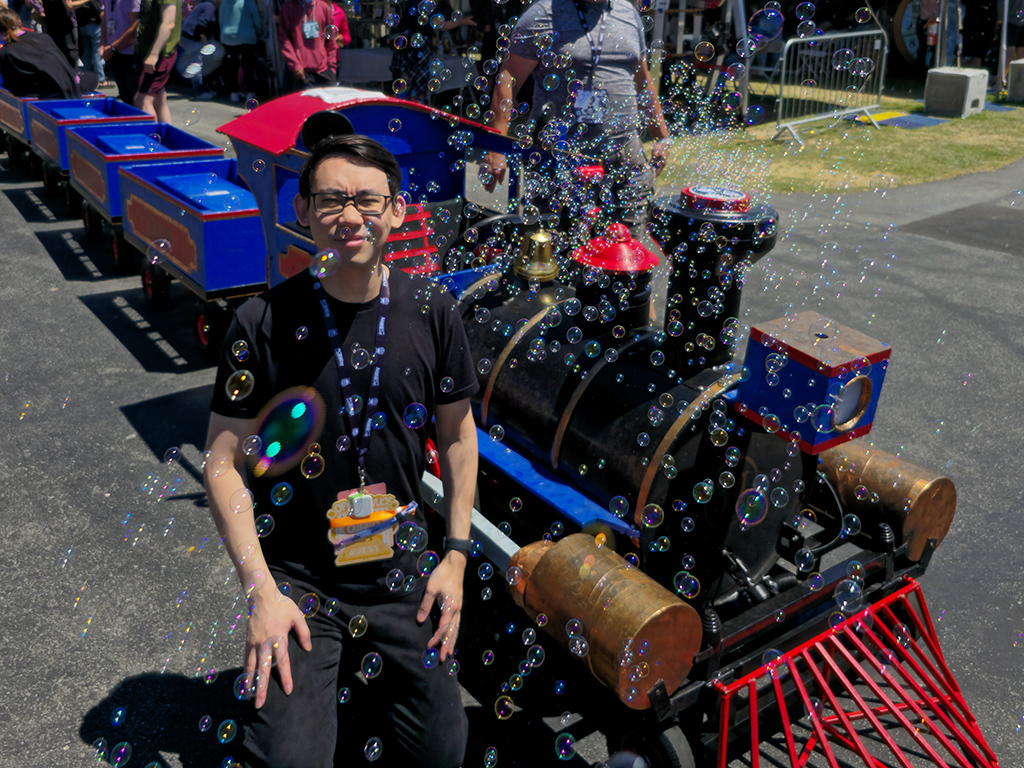
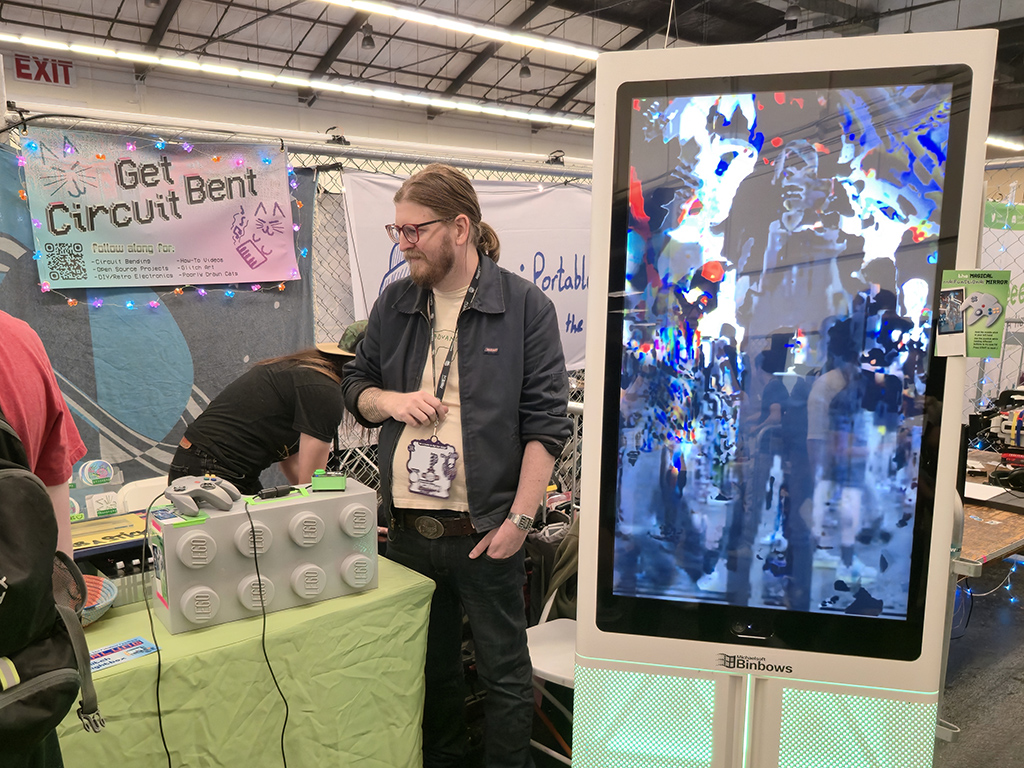
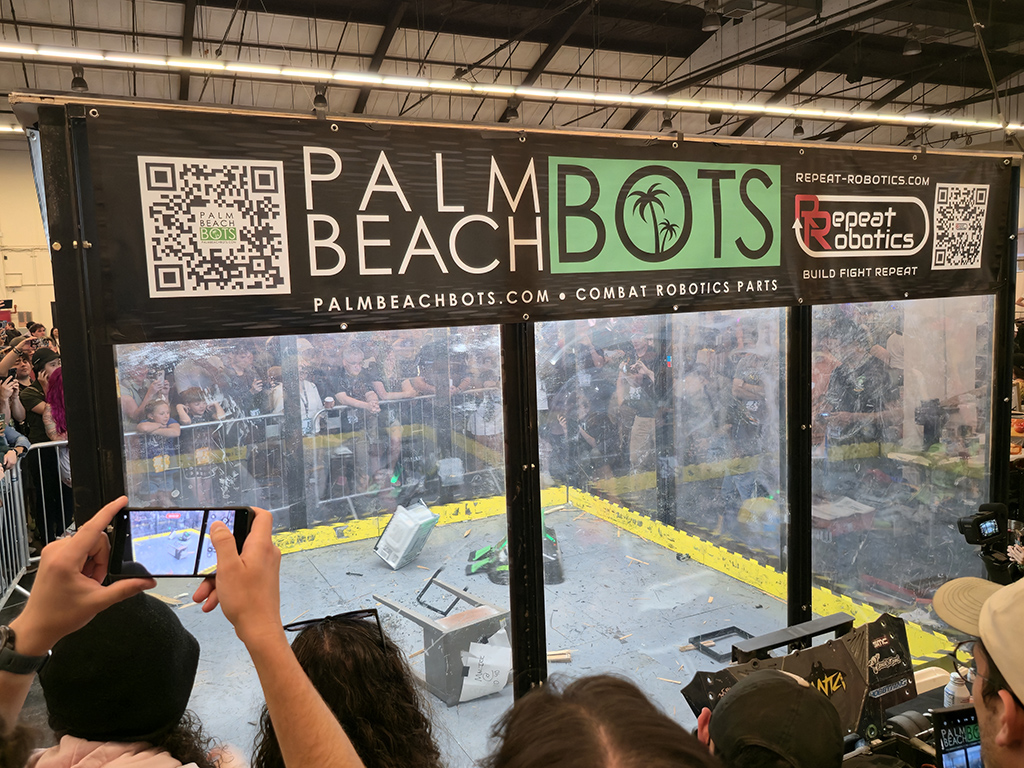
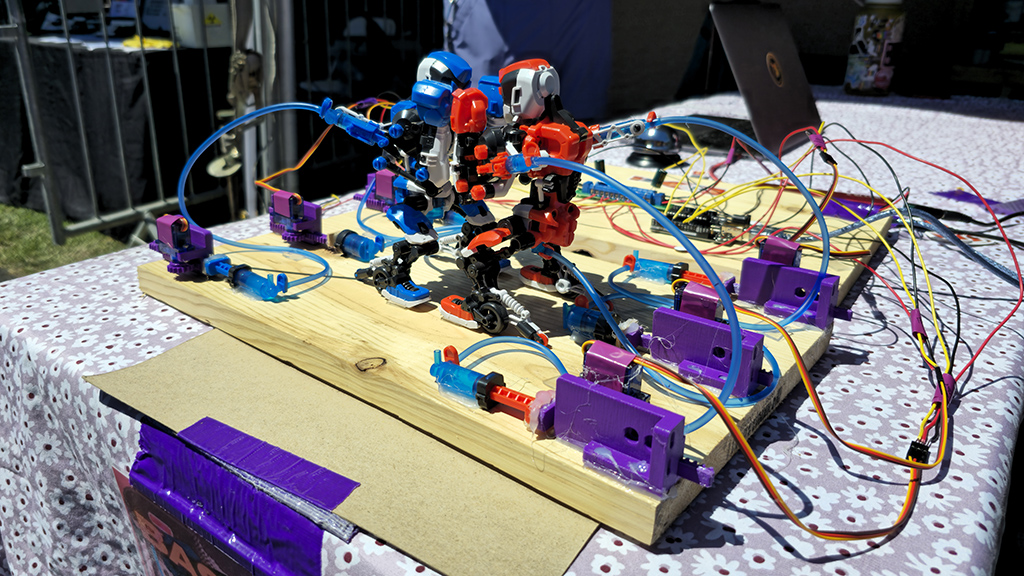
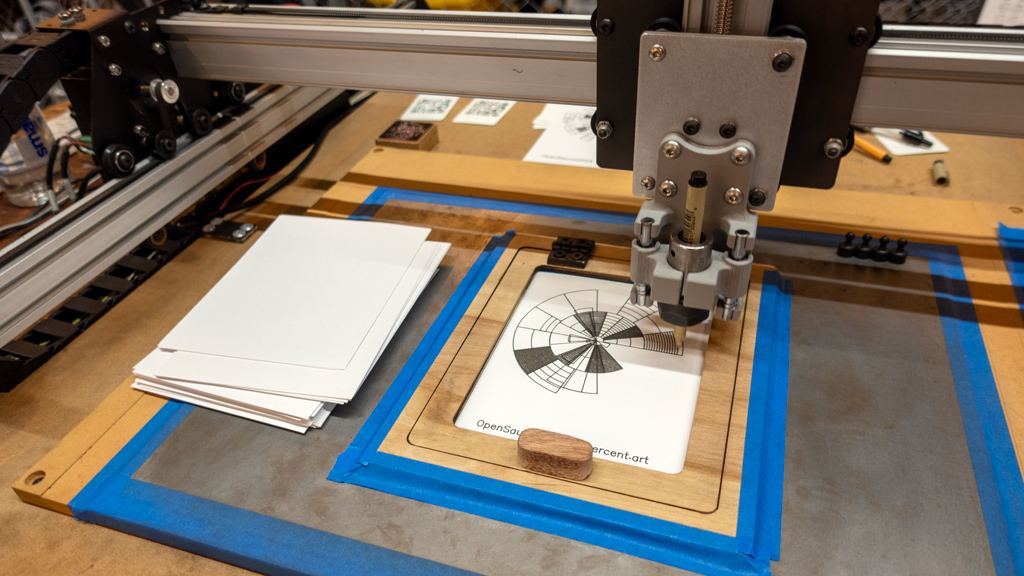
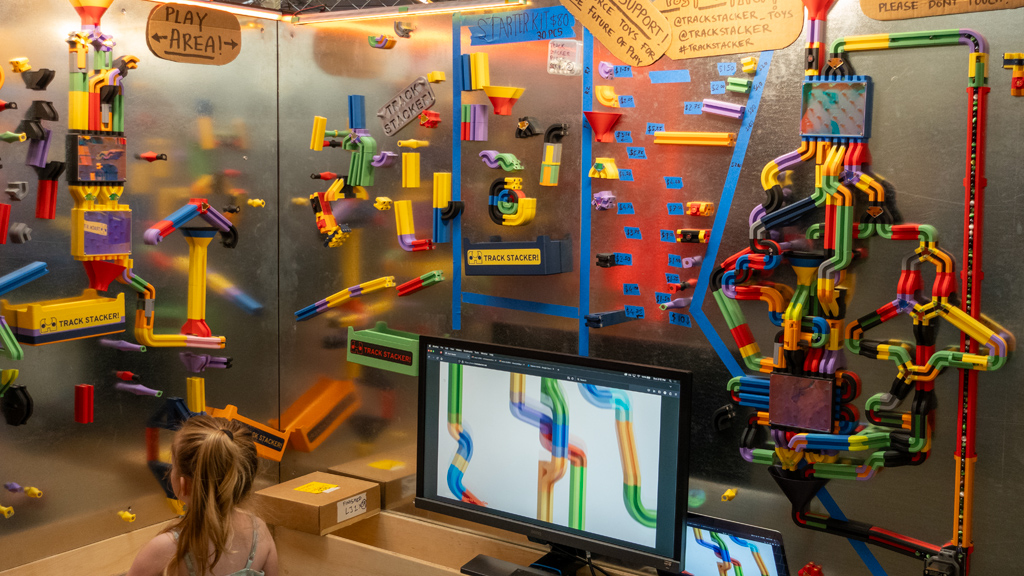
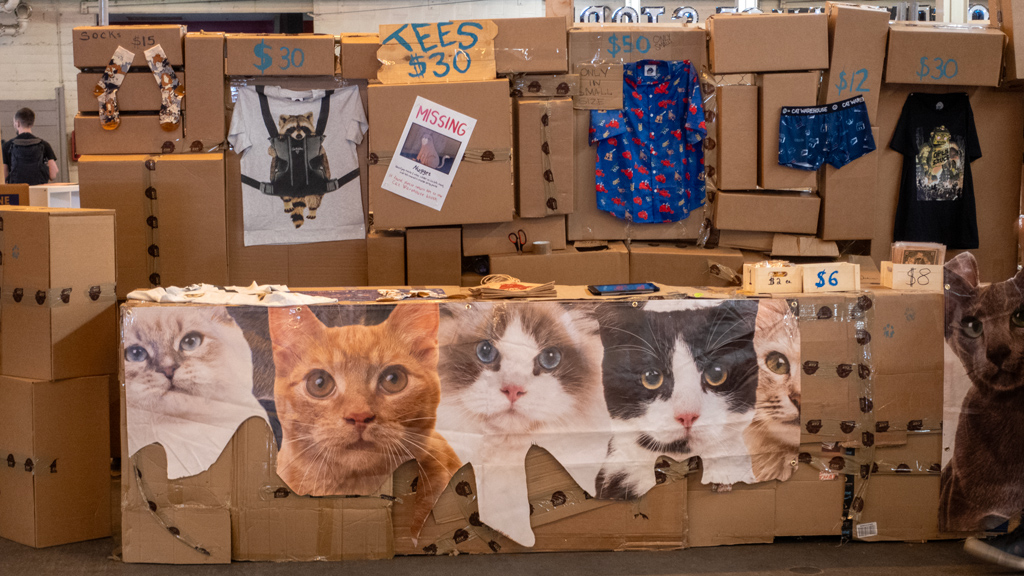
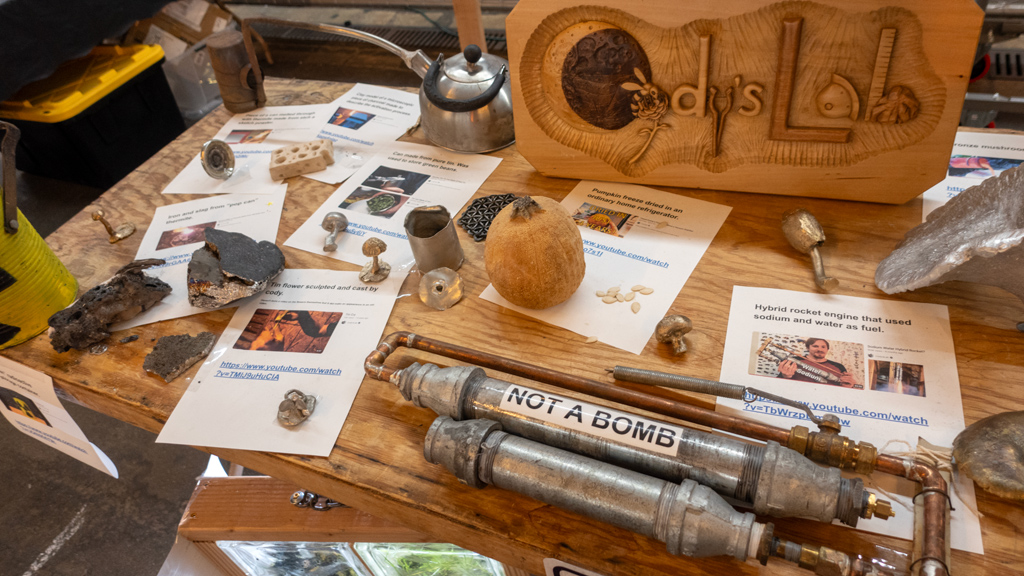
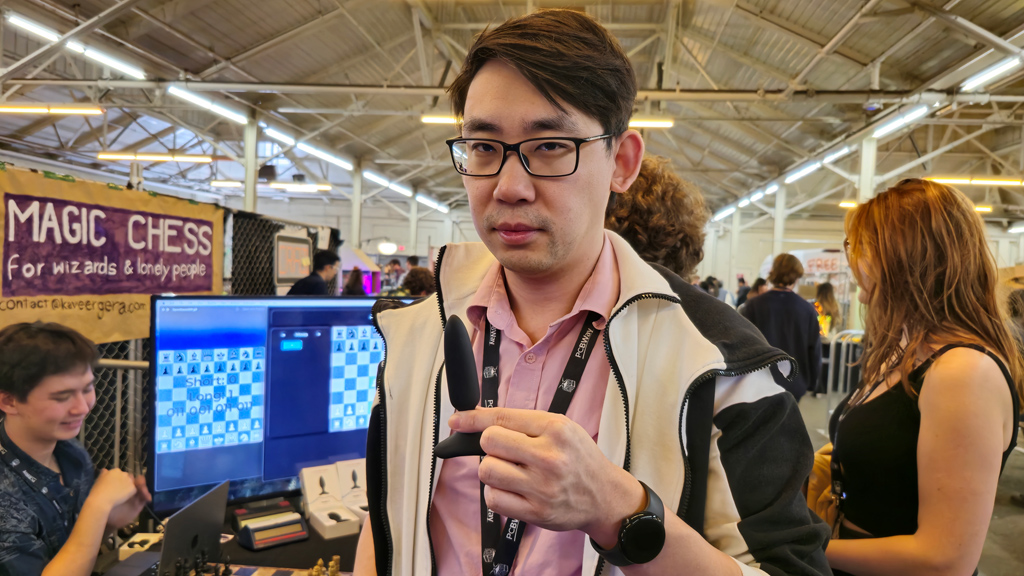
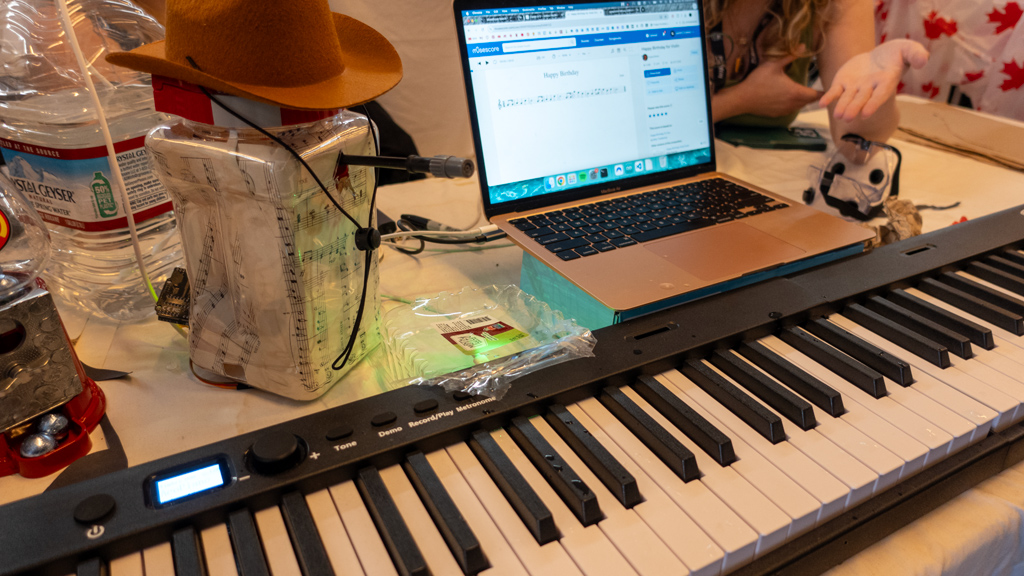
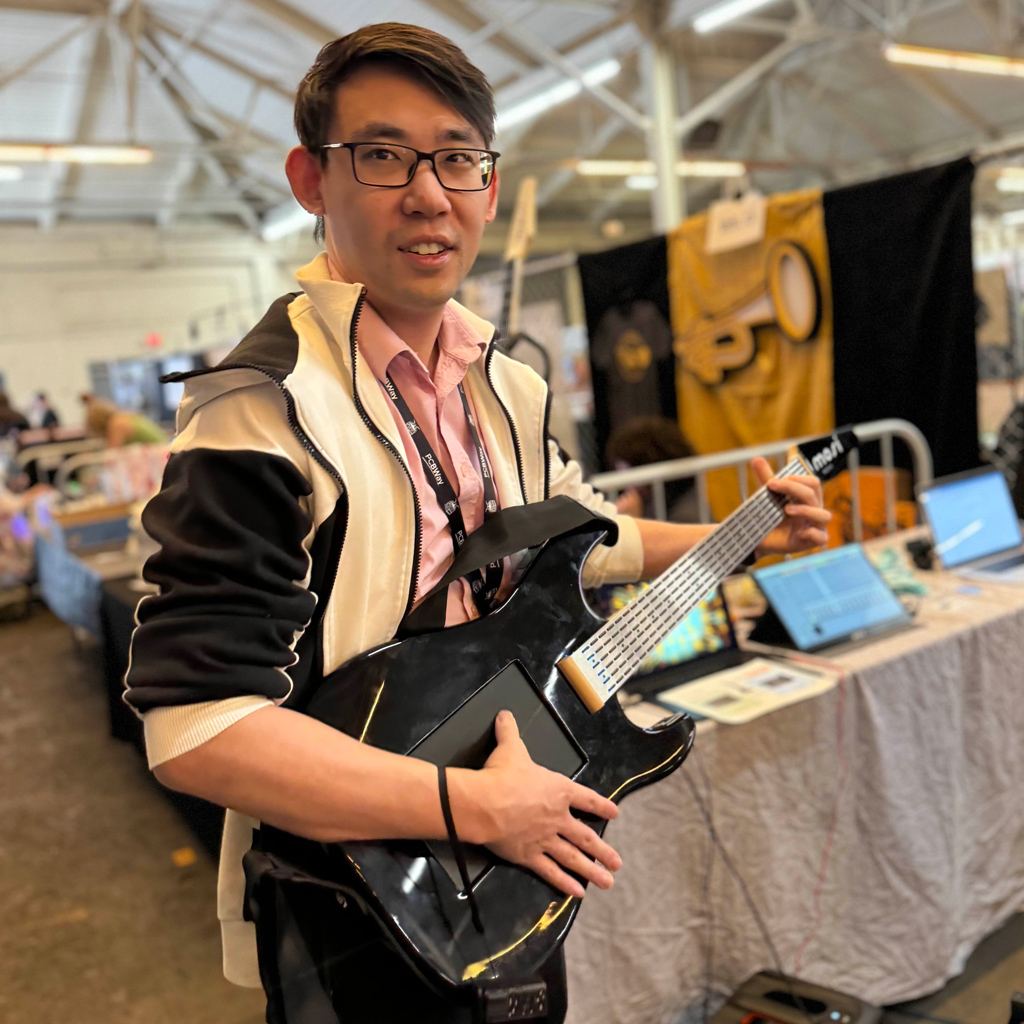
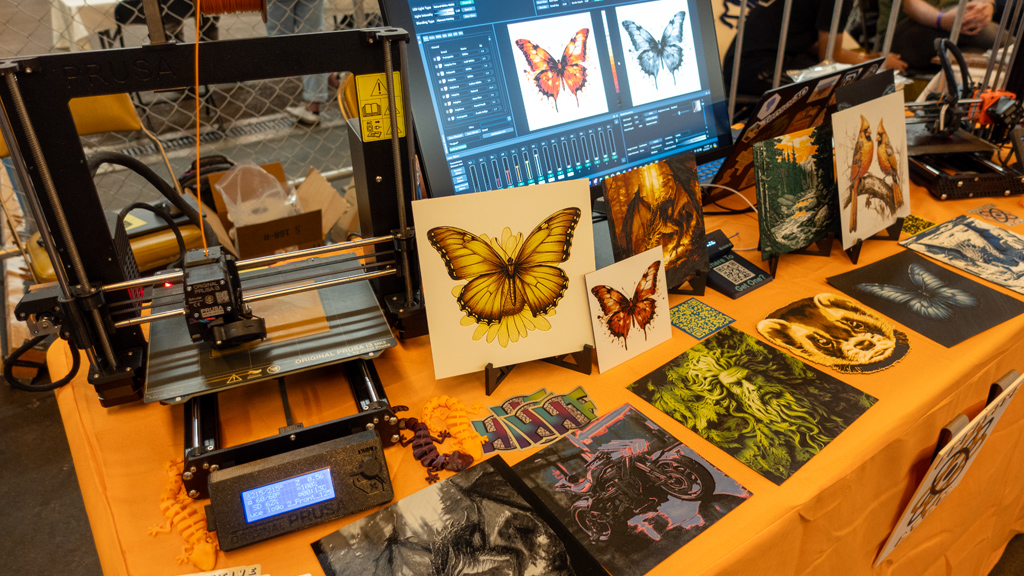
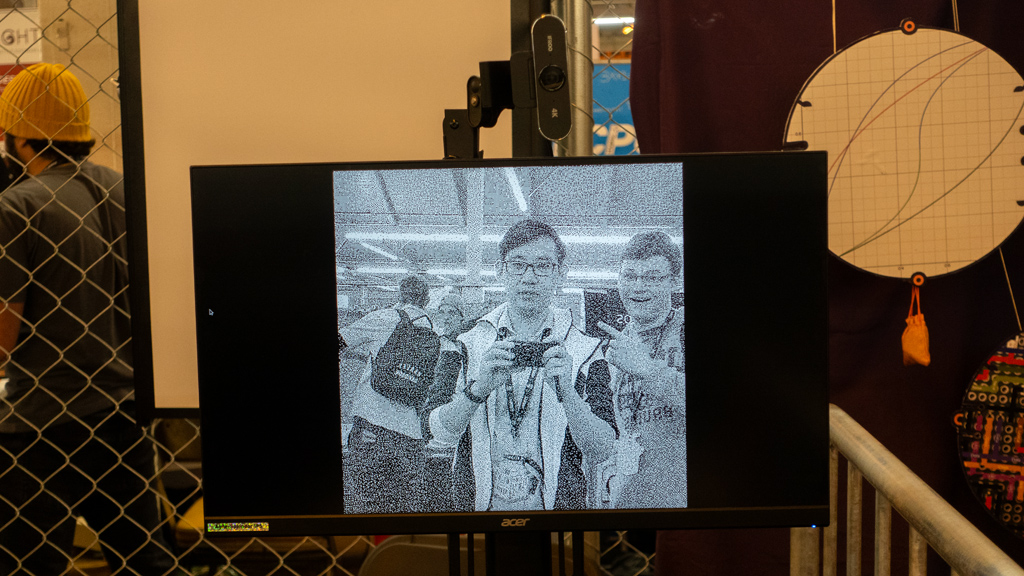
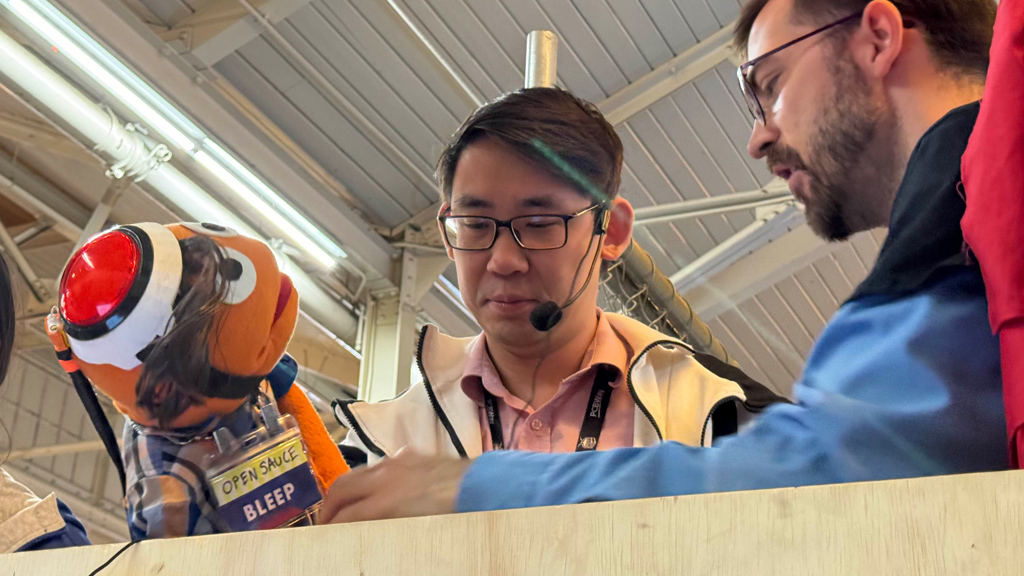
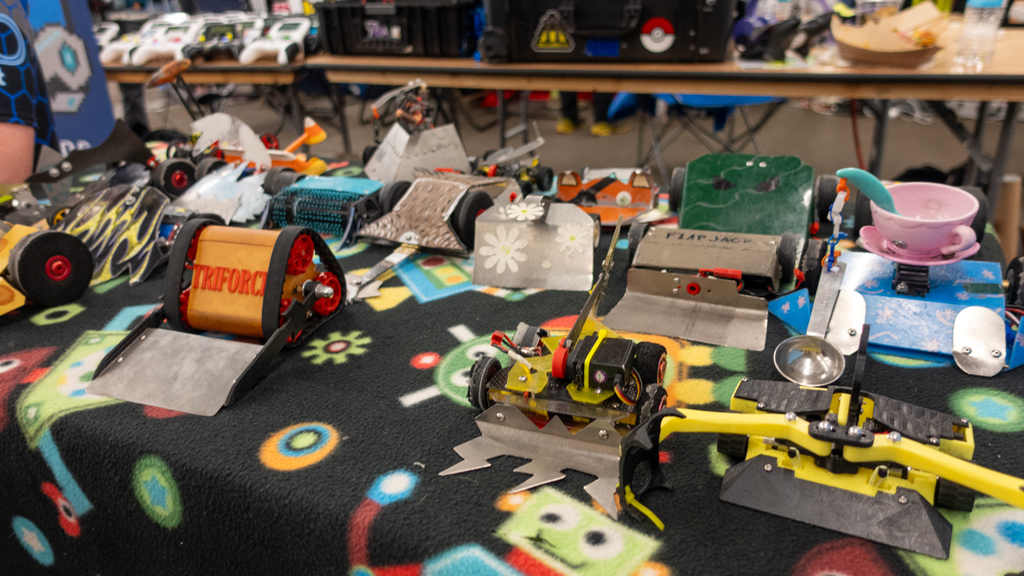
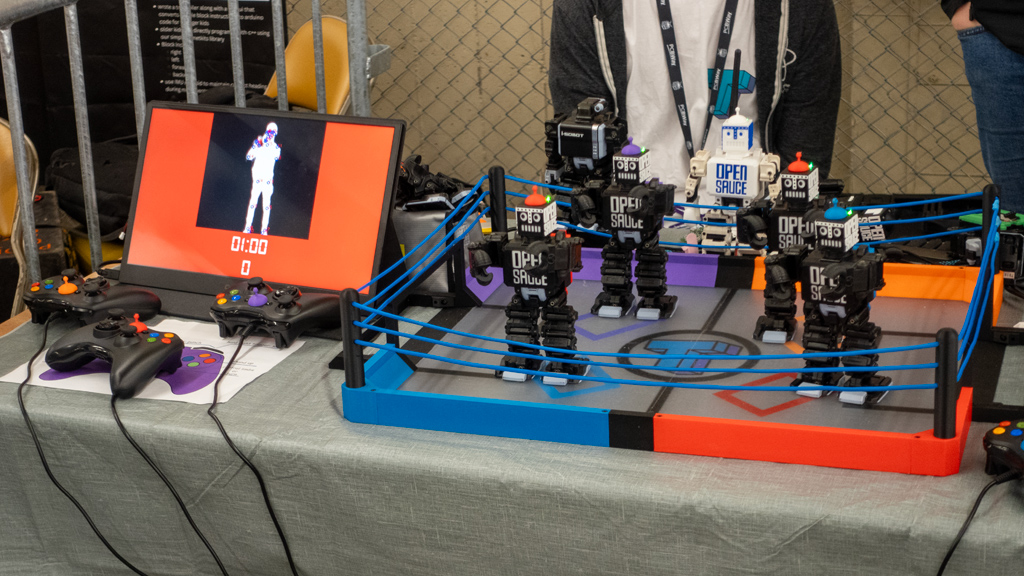
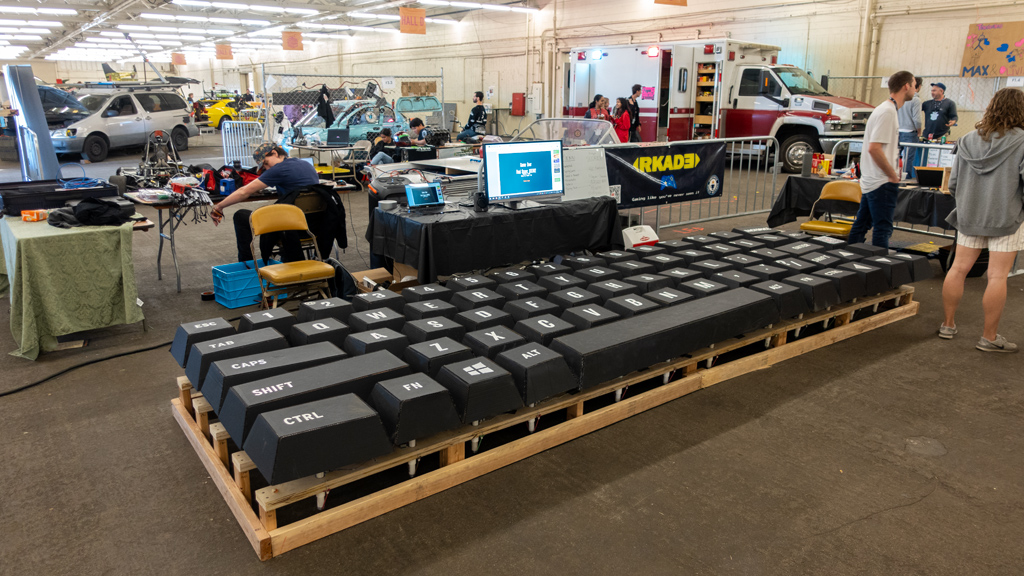
Below are some photos I took (and some that others took of me) during the convention:


—§—


Hello, The Capital Grille in Costa Mesa, California

This one… requires a little bit of backstory.

Over a decade ago, I used to stream a lot on Twitch, a live broadcasting platform serving as the gaming arm of Justin.tv. Since then, I stopped streaming consistently, but I do still hit that coveted “Start Streaming” button once in a while, most frequently when I’m making a guest appearance on a show, but some­times when I’m just gaming with friends.

May 12, 2023 was one of those days. After a long and treacherous journey through the first 20 levels of World of War­craft: Classic in hardcore mode with my friend Doug Wreden, we managed to make it to the first pair of dungeons and I streamed footage of us clearing Wailing Caverns. During that stream, I gave moderator privileges to a user named @PhummyLW so he could use Twitch’s Channel Points Predictions feature to make the broadcast a bit more interactive. I picked him because Doug recognized his name as an active member of his own Twitch community.

Since then, I’ve been streaming once in a while, and Phummy kept returning to watch and chat. Moderators are usually responsible for ensuring com­pli­ance with the broadcaster’s rules, but considering that the only rule I have for my viewers and chatters is to follow the Twitch Terms of Service and Com­mu­ni­ty Guidelines, and I use AutoMod to automatically moderate my chat, there is very little for my human moderators to do. So, Phummy con­tin­ued to stick around to run Channel Points Predictions where relevant.

To go on a tangent for a little bit, I am not a fan of the traditional streamer-moderator relationship. I don’t know if this is just because I ended up build­ing a lot of friendships with female Twitch streamers throughout the years as a consequence of my industry of work, but when I see my friends’ mod­er­a­tors, a lot of them give off the impression of matching a lot of the negative stereotypes—a lonely man who is socially awkward and is dedicating a sub­stan­tial amount of time supporting and moderating for these women due to developing a parasocial relationship and holding onto the non-existent chance that the streamer will reciprocate their love after seeing how much the moderator has done for the streamer. I think this is extremely unhealthy, and I go out of my way to call it out when I see it—not only because I want it to stop before it goes too far and my friends end up with resentful stalkers with motives rooted in unrequited love, but also because I don’t want these men to be exploited and suffer through inevitable pain once something hap­pens that snaps them back into reality.

One of the reasons I liked having Phummy around is that he just seemed like a very normal guy with a normal and healthy lifestyle who also just hap­pens to have a hobby of watching Twitch streams once in a while. He also seemed to be aligned with my opinion on being strongly against unhealthy parasocial relation­ships—so much so that he would joke about it and create satirical situations pretending like he and I had some deep bond and lifelong close friendship, using comedy to exaggerate how absurd some of these situations with other streamers and moderators have gotten.

Not too long ago, Phummy started counting down the days in my Discord server (which, if you’re not familiar, is sort of like a real-time forum and chat channel which is reserved for paid subscribers to my Twitch channel). I didn’t know what he was counting down to, but I knew he was cooking up some kind of joke.

Yesterday, May 13, 2024, I got my answer. In the morning, he messaged me wishing me a happy anniversary of him becoming my Twitch moderator. He sent a bunch of heart emojis and even translated a portion into Korean about how he looks forward to the next year ahead. I figured he was going to come up with some prank like this, so I just replied “ok” and went back to sleep.

A few hours later, I realized there was a big problem. Remember how I said earlier that my World of Warcraft: Classic stream was on May 12, 2023? Phummy was one day late to wish me a happy anniversary. At first I couldn’t have been any more indifferent about this entire situation, but now that I had found out that Phummy messed up his own prank, I was ex­tremely invested.
I let Phummy know of his critical error, and he replied in due sarcasm, profusely apologizing and asking if the anniversary was ruined and whether he should cancel the celebration dinner reservation. Of course, there was never a dinner reservation, but I decided I would stonewall him and take his joke in the most literal way possible. I told him that if he books a dinner reservation for us tonight at a high-end restaurant of his choice, I would show up for our “anniversary date.”

So he did.

… So I did too.

 
When Phummy booked the reservation, he wrote in the comments that this dinner was for a special occasion—an anniversary. Apparently this restaurant took that note very seriously, because when we arrived, they had our table… specially prepared.

The funny part is that they gave us a yellow rose, which often symbolizes friendship, but still scattered red heart confetti over our table and drew red hearts on the note.

While we were browsing through the menu, we received a bowl of complimentary bread with a side of butter. The variety of bread in this bowl was nice, and it was a lot better than the average bowl of free bread that you get from other restaurants.

Our first appetizer was fresh oyster on half shells atop ice and with a side of mignonette sauce and lemon. There was nothing particularly remarkable about these oysters, but sometimes, that’s a good thing—they tasted crisp and clean, and served as a solid start to our meal.

Next was steak tartare with capers, chives, sweet onion, hard-boiled egg, and brioche toasts.

I had never had beef tartare before with hard-boiled egg in it, and today I discovered that I really like that flavor combination. I’m a big fan of onions, so I ob­vi­ous­ly liked that ingredient too. The capers added a nice touch to the flavor—they’re usually a bit too sour, but these were milder and balanced the umami of the steak well.

I wish there was a little bit of mild oil to help mix together the ingredients, but overall, this was one of my favorite tartare dishes I’ve ever had.

For my entrée, I ordered seared tenderloin with butter-poached lobster tails.

I ordered the tenderloin cooked rare, and it was prepared perfectly. I made sure to slice against the grain, and it ended up being the most tender steak I’ve ever had, up to the point where the first bite was actually surprising. It took “melt in your mouth” to a whole other level.

The lobster tails were also great. Something I dislike about lobster is how butter is often overused during its preparation, but this restaurant used just enough butter that the added flavor was recognizable but subtle.

Phummy ordered a 10 oz. filet mignon.

For dessert, we got a crème brûlée with seasonal berries. As you can see from the photograph, they continued the festivities by writing “Happy An­ni­ver­sa­ry” in chocolate on the plate.

I found this to be the most mediocre dish out of our entire meal. It didn’t really taste like what I’d expect from a crème brûlée, and the layer of hardened caramelized sugar didn’t have the satisfying crunch that people come to expect from crème brûlée.

Here are some shots of the dining area and exterior of the restaurant:

Oysters $  23.00
Steak tartare $  20.00
Tenderloin and lobster $  74.00
Filet mignon $  65.00
Mashed potatoes $  15.00
Sales tax (7.75%) $  15.27
Gratuity $  45.00
Total $ 257.27
I treated Phummy to the meal; the table to the right shows how much I paid.

I had an amusingly good time. In case it wasn’t clearly implied from the story, I have only ever interacted with Phummy through the Internet and this was my first time ever meeting him in-person. I’m known to be someone to do some unexpectedly chaotic and impromptu things, and I feel like driving a round-trip of almost a hundred miles relative to where I was staying in Los Angeles County and spending over $250 on dinner seems characteristic of some of the strange things I would do.

With that being said, I think this exceeded my threshold of comfort because Phummy does still keep an eye out on chat for me when I’m streaming and takes care of removing spammy advertising bots and other egregiously intrusive chatters that AutoMod does not catch, so I was far more willing to treat him to a nice din­ner as a gesture of appreciation, considering that he doesn’t formally accept payment from me.

On top of that, Phummy also occasionally live streams on Twitch himself for fun, so I had enough footage of him online for me to watch and determine that he wasn’t some unstable and dangerous person. In fact, he was very sociable, and if anything, he was the one carrying our conversation while I was basically busy role playing as a professional competitive eater and stuffing my mouth with good food.

The restaurant he picked was great. I did not expect the food quality to be that high, and I feel like this whole joke ended up coming to a best-case pos­si­ble conclusion.

… I guess this may be the birth of a new annual tradition.


—§—