Re: “What does your backup architecture look like?”

When I went on a nostalgic streaming binge while I had some extra time during my company’s holiday recess between Christmas and New Year’s Day, I got asked a lot of times whether I still had recordings of my streams from over a decade ago when I used to stream nearly full-time hours. The answer, to some people’s surprise, is actually yes—I do indeed have VODs saved of pretty much every stream, as well as original source files of every video I’ve published.

A handful of people then followed up by asking what kind of backup and storage architecture I have that allows me to so reliably retain all this data, es­pe­cial­ly old data from before there were large advancements in storage solutions. My backup strategy has evolved over the years, starting from just keep­ing one copy of everything on my laptop and hoping that it doesn’t die, all the way to what I have implemented today.

One of the simplest ways I can think of to describe my current setup is that everything is organized into tiers. Tier 1 is where I actively use files, tier 2 con­sists of my primary storage lo­ca­tions, tier 3 has my backup storage solutions, and tier 4 is my secondary backup options.

Tier 1 Tier 2 Tier 3 Tier 4
Local internal hard drives Synology DS1821+ WD Elements external hard drive YouTube
Google Drive   Amazon S3 Glacier Deep Archive Adobe Creative Cloud
      Amazon Photos
      Microsoft OneDrive

As is probably the case for most people, my first line of storage is just the internal drives in my computer. My boot drive is a Toshiba OCZ RD400 PCIe NVMe M.2 128 GB SSD, which holds my operating system and some software (its capacity is that small because I’ve been using the same one for 8 years now, and a 128 GB PCIe NVMe drive back then was pretty good). My SATA drive was originally a 1 TB HDD, but a few years ago, I upgraded to a West­ern Digital Blue 4 TB SSD and a Samsung 870 EVO 4 TB SSD. I use one as my primary drive and one as a storage drive.

On one of the 4 TB SSDs I use as my primary drive, I have a folder that is synced with Google Drive using Backup and Sync from Google. I used to use Google Drive a lot more, but over the past handful of years, I’ve toned down my usage of third-party service providers in general because I’ve become less trusting of them due to privacy and control concerns (e.g., I don’t want a company to be able to track everything I do, and I don’t want them to have the sole and absolute discretion to terminate my account and lock me out of my data without my input).

Everything in the Tier 1 column, as well as any other data I have that is not in Tier 1, is all in Tier 2, my Synology DS1821+ network-attached storage. This is basically my master vault of data, and close to everything I have ever created in my life exists on this NAS. It’s constantly humming, taking local backup copies of pretty much everything that exists in all my cloud service provider accounts, as well as for some of my friends and clients.

It is loaded with eight Seagate Exos X16 16 TB HDDs and two Samsung 980 Pro PCIe NVMe 2 TB SSDs. The HDDs are organized as a Synology Hybrid RAID (SHR) with two-drive fault tolerance, and the SSD cache is organized as RAID 1 with one-to-one data protection redundancy. The overall capacity for the storage pool is 87.3 TB.

It’s upgraded with a Synology D4ECSO-2666-16G 16 GB memory module, which is installed alongside the original 4 GB memory stick that came with the NAS.

It’s also upgraded with a Synology E25G30-F2 dual-port 25 GbE SFP28 to PCIe 3.0 adapter card… which was not actually the model I was intending to get, but I did not notice until I was done installing the card after it had arrived and was sitting on my desk for a few months. (If you want to avoid the same mistake as me, there might be a chance that the card you’re actually looking for is the Synology E10G30-T2.)

If you’re familiar with tech specs, you may be looking at this and wondering why I have something so powerful, and you’re not wrong—for my purposes, this is comparable to defending your house with a tank instead of just a rifle. Ultimately, it comes down to the fact that I do actually end up using a lot of the features of the NAS and I run enough containers in DiskStation Manager (DSM) to the point that it ends up sort of just being a miniature computer that is working on something 24/7. The second reason is because I like to do things right the first time around, so I wanted to build something that was robust and scalable in preparation for a situation where I would need to make upgrades.

Everything in Tier 2 is then backed up using at least one method in Tier 3. I have a WD Elements desktop external hard drive that is plugged into my NAS via USB and automatically backs up certain files on a routine basis; after sync, this hard drive is kept in a separate physical location as my NAS. I also have a lot of the data uploaded on Amazon Simple Storage Service (S3), a cloud object storage service, under the Glacier Deep Ar­chive storage classification.

The point of Tier 3 is to have redundancy of my data off-site in case a severe natural disaster destroys my residence and everything in it, including my com­pu­ter and NAS. My external hard drive’s file tree is set up so it is as close to a click-and-drag as possible to a new NAS. Amazon S3 Glacier Deep Ar­chive comes with its own set of issues, such as massive access and egress fees if I ever actually need to retrieve the data, but the storage is basically as cheap as you’ll ever find for cloud storage nowadays, at about a US dollar per terabyte.

Finally, some stuff is also backed up in Tier 4, which consist entirely of free or no-charge third-party services. If I have a video file I want to keep safe, I will upload it to YouTube for free and set it as private or unlisted. A lot of the files I work with in Adobe Creative Cloud and Microsoft 365 are au­to­mat­i­cal­ly synced to their respective servers using whatever storage space comes with my subscription fee for a software license. I upload most of my pho­tos in raw format to Amazon Photos, where I have unlimited storage thanks to my existing Amazon Prime subscription.

The point of Tier 4 is to protect my data if there is some kind of unprecedented, multi-scope destruction of data that somehow hits my computer, NAS, backup external hard drive, and even Amazon Web Services‘ servers at the same time. In that case, I can hope that some of my videos on Google’s servers and some of my files on Adobe’s and Microsoft’s servers survived, but realistically, I don’t think I will ever have a need to resort to recovering data from Tier 4, and if it ever gets to that point, I think there are going to be much more severe problems with the world to deal with.

Before I end this blog post, I do want to disclaim that I am not an IT professional and you should not blindly copy what I’ve put in this blog post—this is intended to be anecdotal so you can learn more about me, and is not to be construed as a guide on how to build the best backup architecture. Fur­ther­more, I have bought some pretty pricey pieces of hardware in exchange for some of the convenience of the products, and there are a lot of meth­ods out there where you can achieve what I did for lower cost. If you want to take some steps to enhance your data protection, there are a lot of great re­sources available online and I encourage you to conduct your own research.


—§—


Hello, Naked Fish’s Sushi & Grill in Spring Valley, Las Vegas, Nevada

I have another trip to Southern California coming up, so for my last nice meal in Las Vegas before heading out, I decided to go to Naked Fish’s Sushi & Grill in Spring Valley, an unincorporated town in Clark County, Nevada.

They didn’t have any all-you-can-eat options, but upon browsing their menu, I found a seven-course dinner that I thought would be nice to try out. I expected the dishes to arrive omakase style, but they delivered five of the courses all at once and fairly quickly after ordering.

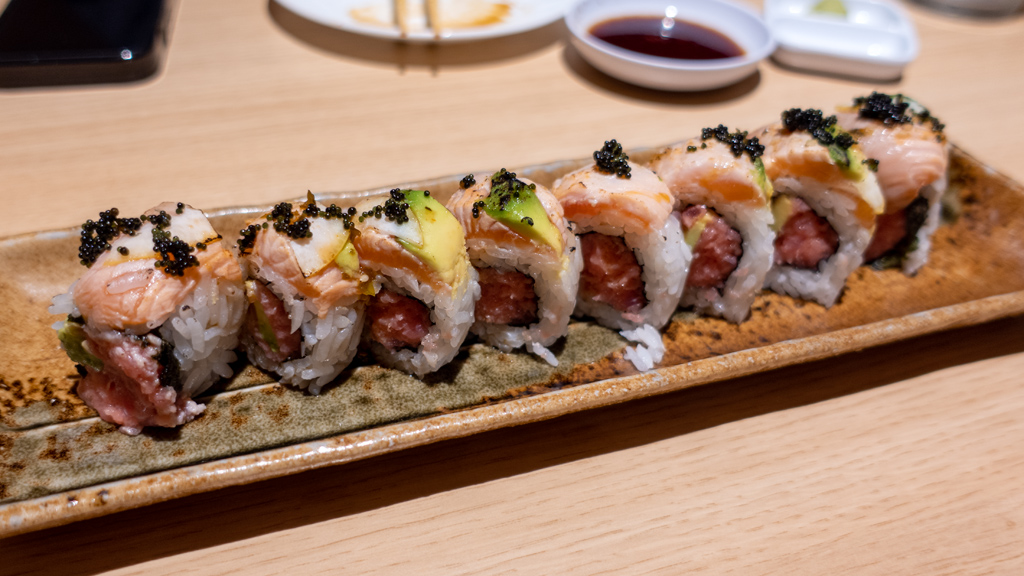
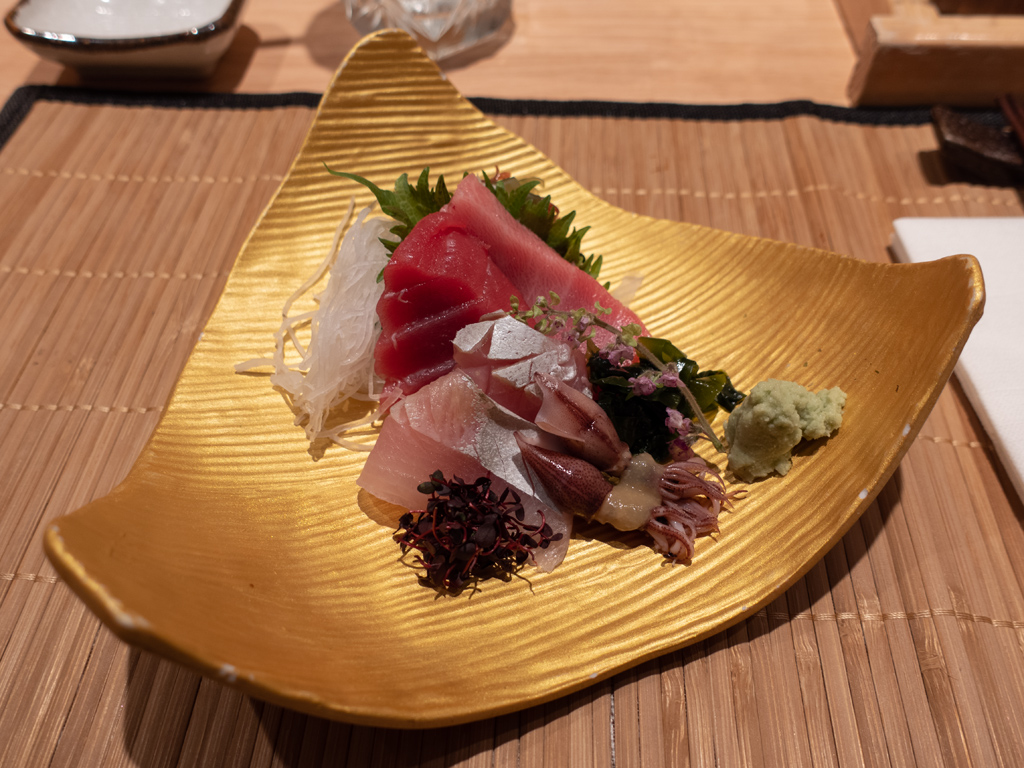
First was yuzu salmon. This was prepared as rolls of salmon belly sashimi topped with some garnish. The fish quality was incredible, the salmon fat had a powerful flavor, and the texture was some of the smoothest salmon belly I’ve ever had. The cuts of salmon were fairly thin, but because they were rolled into cylinders, it gave the effect of falling apart in your mouth but still having enough depth to it that it was satisfying.

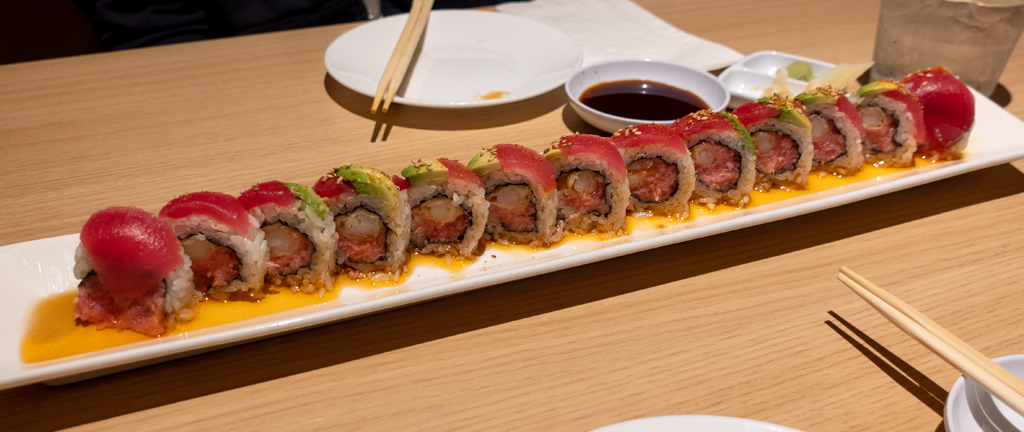
Next was my choice of sushi roll. I picked a tiger roll, but my other options were a Lisa Lisa roll and Japanese lasagna. The tiger roll I received was a little bit different than what I’m used to getting at other sushi restaurants, but it was for the better—it had plenty of fish and a good balance of all ingredients such that no single flavor was overpowering.

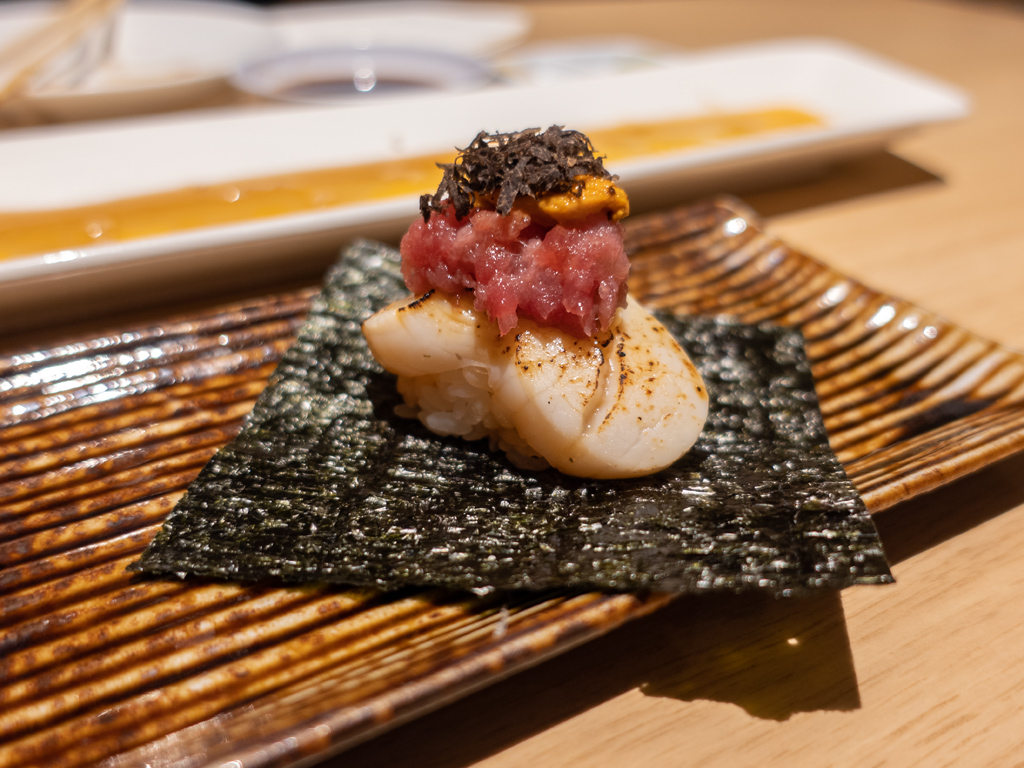
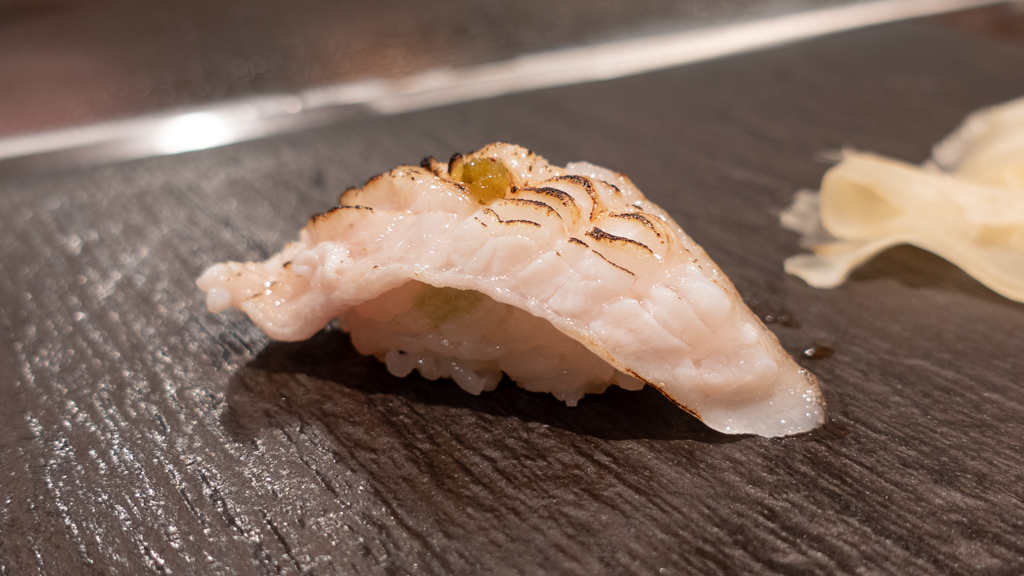
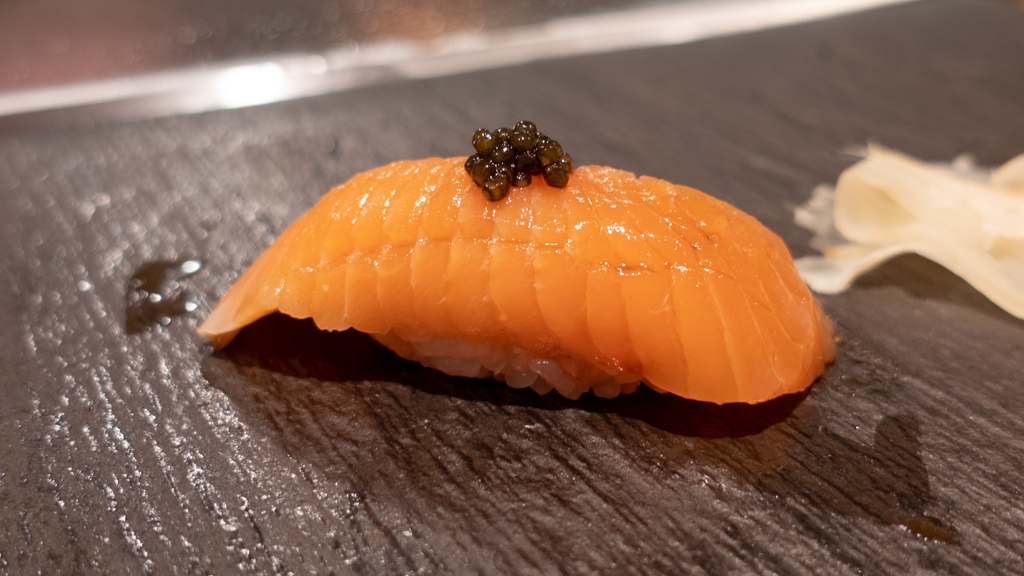
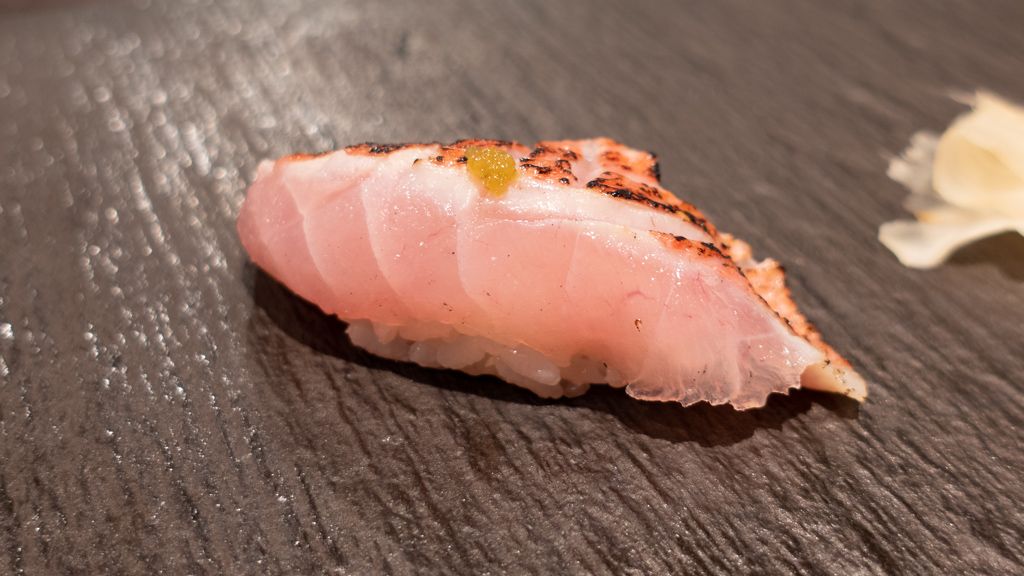
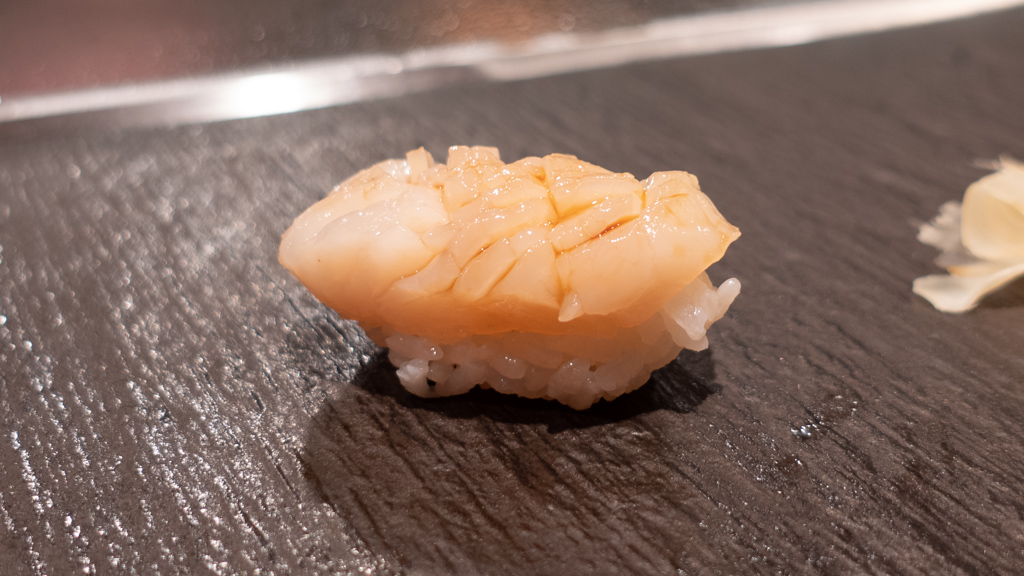
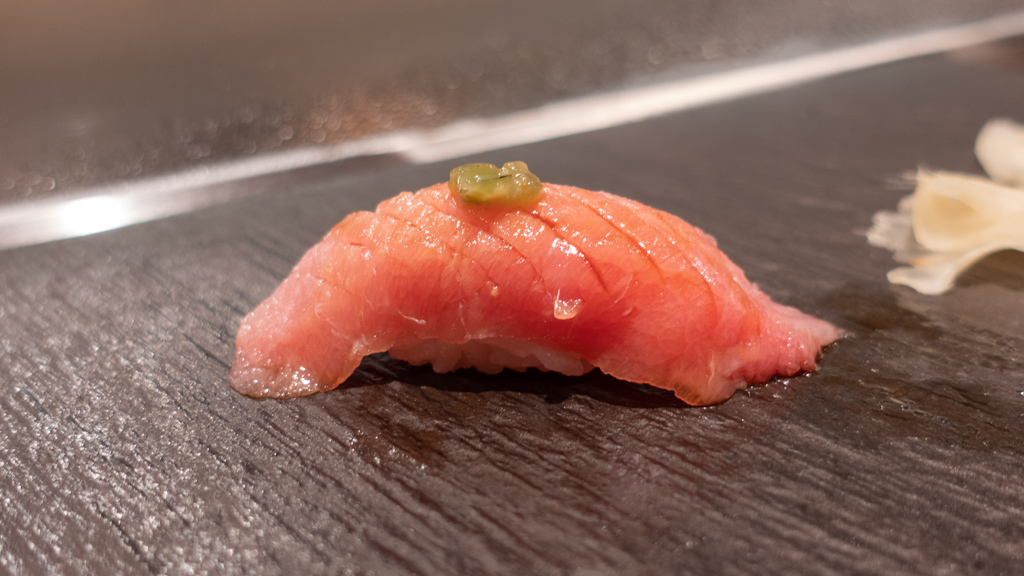
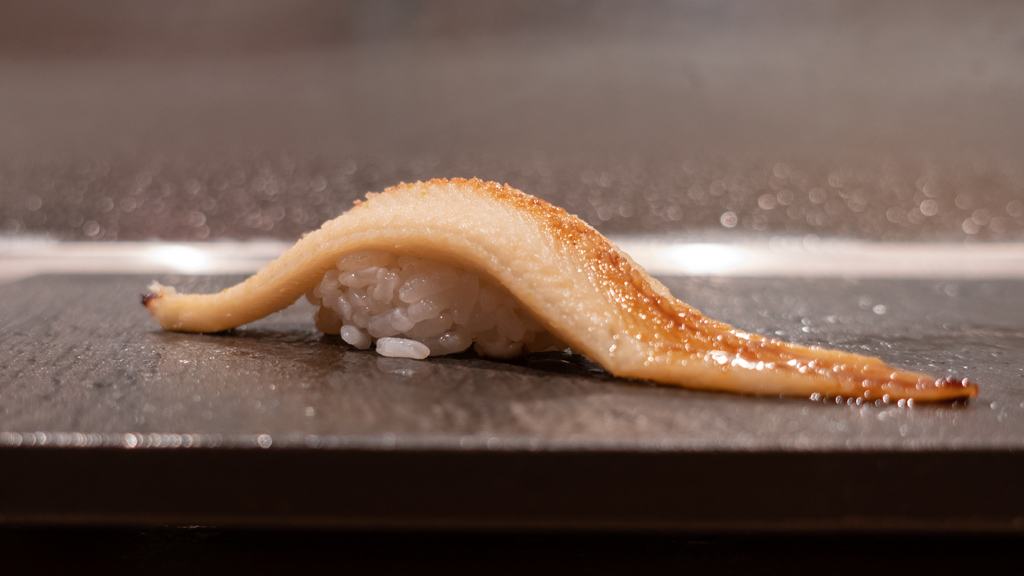
Following the roll was six pieces of nigiri: bluefin tuna belly, tuna, salmon belly, yellowtail, scallop, and eel. Every single piece of nigiri was made with very high quality cuts of fish, and the ratio of fish to rice was perfect.

For sushi of this grade, I am used to the chef having already added a small smear of wasabi between the fish and rice so that they can control the potency; these pieces of nigiri did not have that, so I added in the wasabi myself (which obviously is not an issue, but I think is still worth mentioning, considering that the restaurant might want to raise the class of service and account for small luxuries to match the quality of the fish).

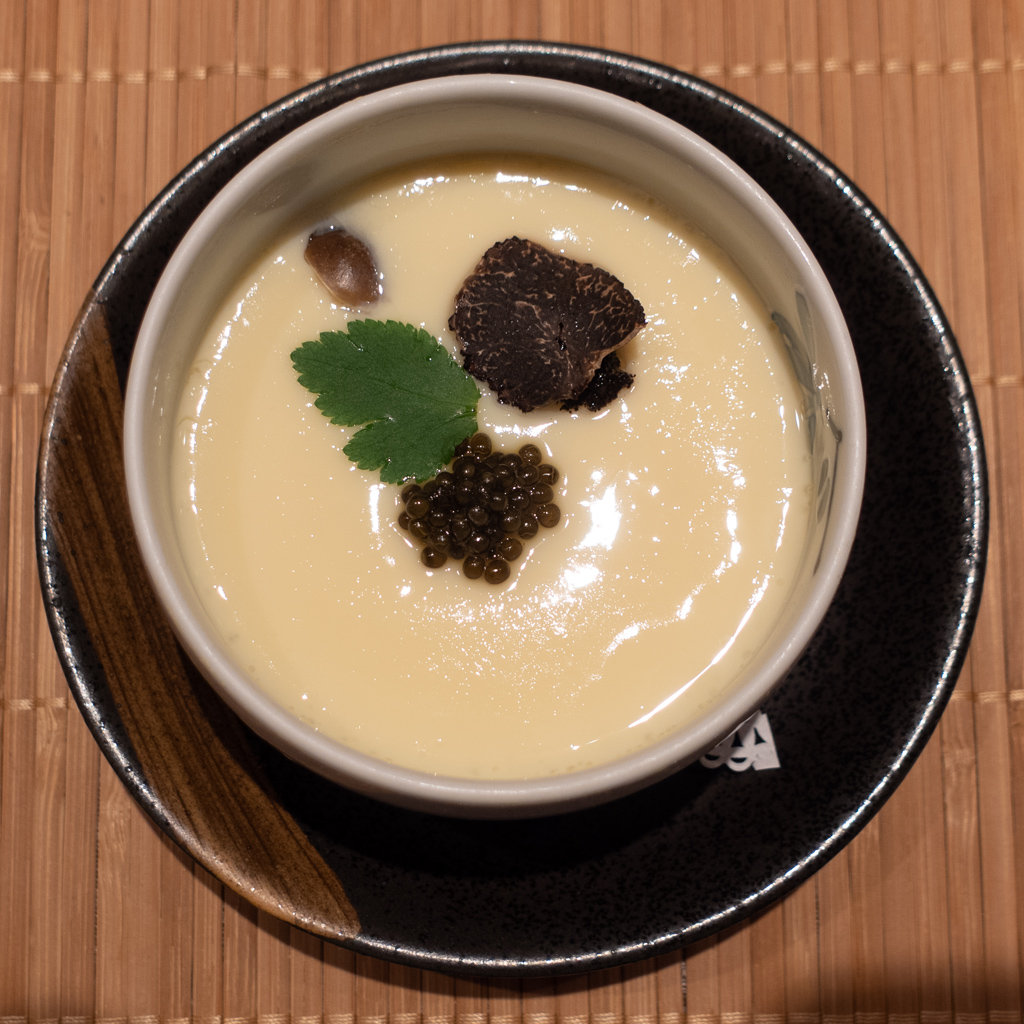
After having a lot of rich, fatty sushi, I was able to balance out my taste buds with some miso soup and tempura.

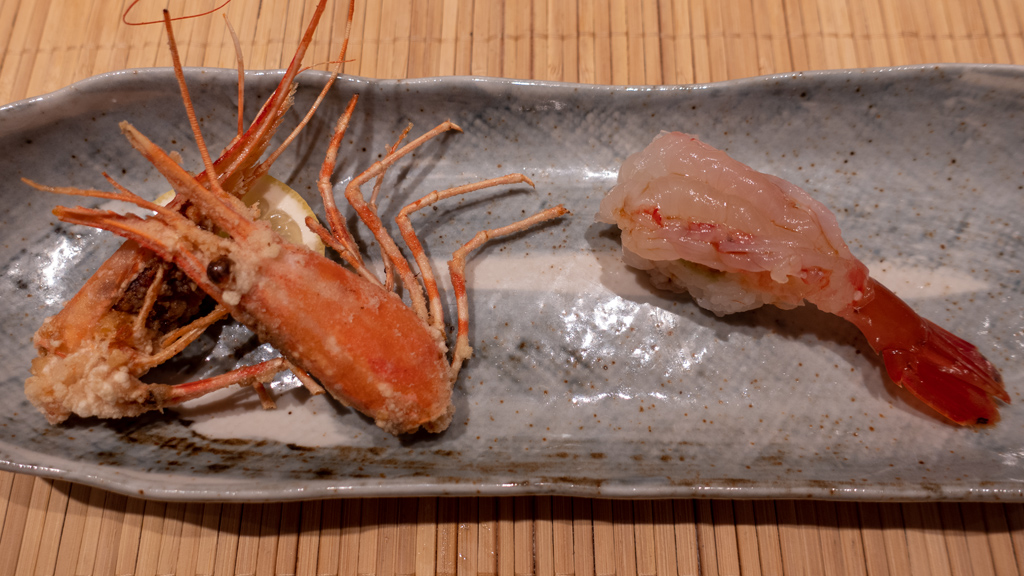
There were seven pieces of tempura: three shrimp, two different kinds of potato, one mushroom, and one onion.

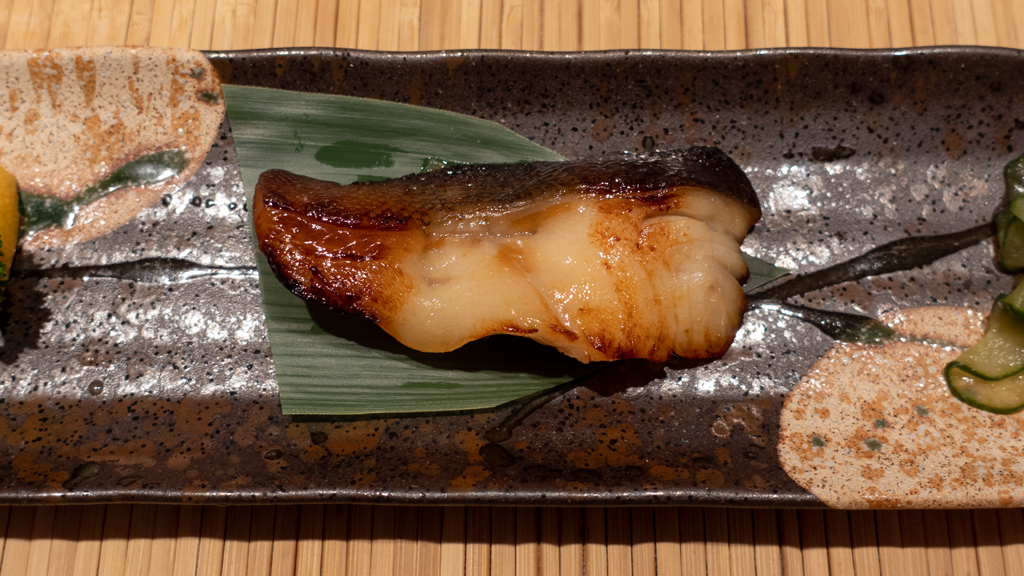
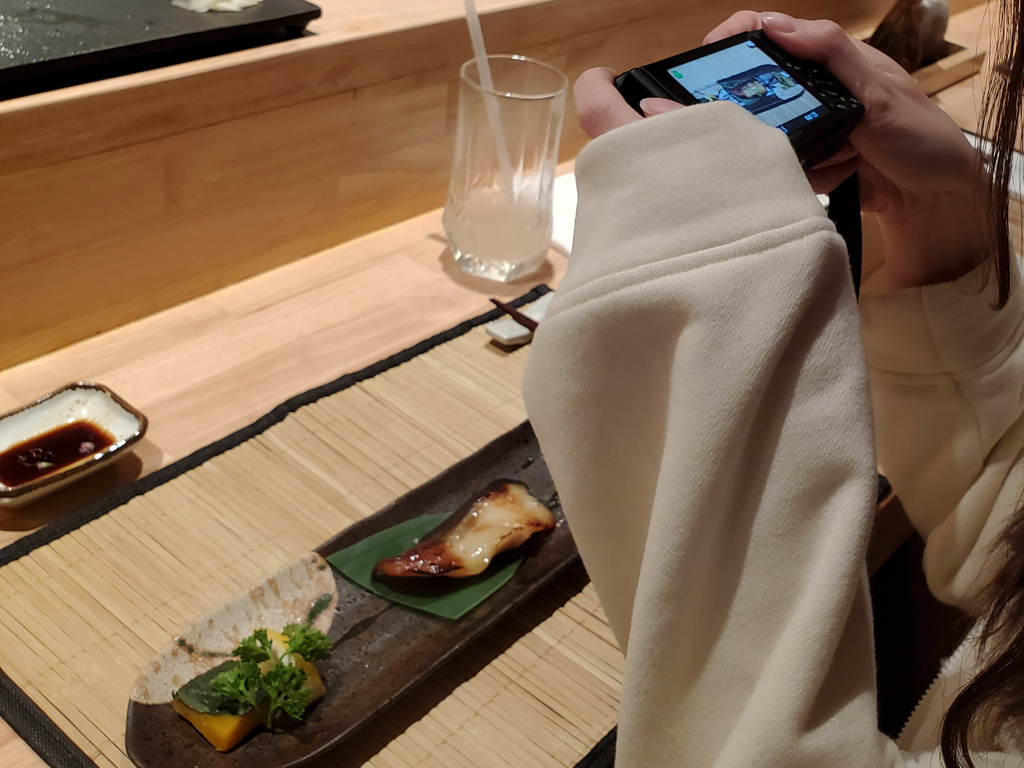
For my final dish, which came out after I was close to finishing the prior five courses, I received grilled salmon collar. I usually think collar is overrated because of how difficult it is to eat and how little meat you get relative to the pricepoint at most restaurants, but this was the best salmon collar I’ve ever had. There was basically an entire salmon filet still attached to it that was perfectly cooked rare with a nice, crispy sear on the outside. This was also an extremely fatty cut, which made me happy that I was eating plenty of omega-3 fatty acids and improving my heart health.

For dessert, I got two pieces of mochi, one mango and one strawberry. This was very generic mochi and tasted about the same as the mochi you get from pretty much every other sushi restaurant.
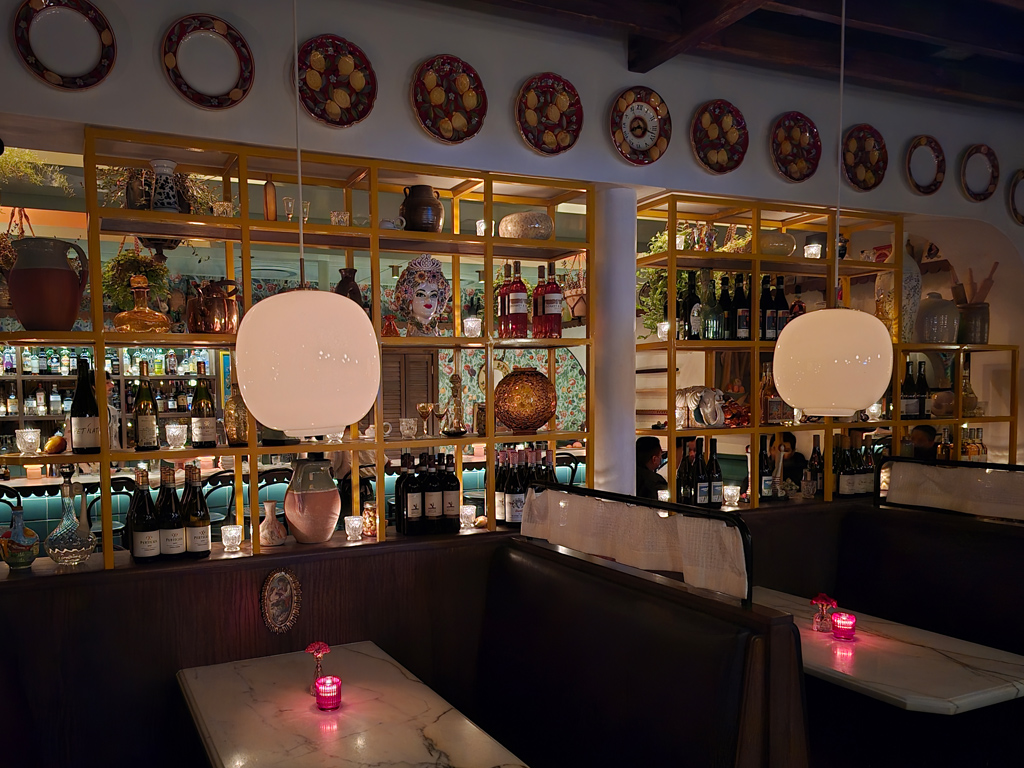
There were a few other parties seated while I was eating, but I managed to snap a photo of the vibe of the restaurant between guests. Unfortunately, because of how dim it was, all of them ended up somewhat blurry, so this is the best shot I have.

Seven-course dinner $ 68.00
Water $  0.00
Sales tax $  5.70
Gratuity $ 13.30
Total $ 87.00
The table to the right shows how much I paid.

High-end, multi-course dinners usually have portion sizes designed for the average person. I eat a lot, and this was actually my first meal of the day, so I was pretty hungry. Even then, after getting through all seven courses, I was pretty full up to the point where I probably wouldn’t have been able to finish the salmon collar if it wasn’t so delicious.

The tiger roll was pretty big and packed, there was a lot of tempura, and the filet attached to the salmon collar was large enough that someone with a small stomach might be able to eat just the salmon col­lar with a side of rice and call it a meal. Someone who only eats a normal and reasonable amount of food per meal will almost certainly take some of this to-go.

The service I received was very good. When I finished each course and pushed the empty dish to the edge of the table, it was always removed within a few minutes. When I set my empty water glass by the edge of the table, it was refilled within a few minutes or less. Occasionally throughout the meal, I had various different people checking in on me and making sure I didn’t want to order anything else or put in any special requests.

If you plan on going to this restaurant and trying out the seven-course dinner, I highly recommend letting your server know first so you can be seated at the bar to better emulate an omakase experience. I was fine seated alone at a booth because I had my laptop and I was getting some work done while eating, but this could absolutely act as an entry-level omakase for beginners or for budget-conscious diners who don’t want to spend over $120 for a single dinner.


—§—


Re: “If you were in the Pokémon games, what would you pick as your team?”

I’ve had somewhat limited exposure to video games as a kid—there were a few games that I played a ton of, but I didn’t play a wide variety of different games. Out of the games I did play, Pokémon is one of the games that I played a lot—my first Pokémon game was Yellow Version, I’ve played the games fairly seriously up until Generation IV, and I’ve at least had some degree of gameplay exposure up until Generation VI.

After people find out that I like Pokémon and even collect Absol cards of every type, variant, and language I can find, a lot of people ask what team I would have if I was a gym leader or another NPC in the Pokémon games.

I don’t think I would be the type of person to run a Pokémon Gym. I’m not really the type of person to look up to someone like people look up to gym leaders, or otherwise place people on a pedestal and respect them more than any other human being simply because of their status. Naturally, that means that I don’t want other people to do that to me either—I firmly believe that I am just a regular person who doesn’t need special treatment.

In alignment with that philosophy, I wouldn’t necessarily want to be a gym leader. However, I do like the idea of being in a Pokémon game as somewhat of a random encounter, similar to how you hunt Suicune, Raikou, and Entei in Pokémon Gold, Silver, and Crystal—I am simply out exploring the lands like any other trainer, but with some luck, you can run into me and battle me out in the wild.

Scizor

Moves: U-Turn, Bullet Punch, Swords Dance, False Swipe
Ability: Technician
Nature: Adamant

I think Scizor would be a good lead for my party. It has a priority same-type attack bonus (STAB) move in Bullet Punch to quick­ly clear out wild encounters, Swords Dance to buff attack for longer battles, and U-Turn if he’s in trouble and needs to switch out.

I also like the idea of having False Swipe in the moveset, a move that otherwise would make no sense except for lore purposes. When I was younger and played Pokémon Gold on the Game Boy Color, Scizor was literally the Pokémon I used to catch wild Pokémon by bringing them down to 1 HP using False Swipe, and I think leaving that in acts as a nod to the practicality of my team and an indication that I am just a regular Pokémon trainer out catching and training Pokémon like everyone else.

Togekiss

Moves: Air Slash, Tri Attack, Flamethrower, Fly
Ability: Serene Grace
Nature: Timid

Back when I used to play Pokémon Showdown, I ended up picking Togekiss as my special attack sweeper (and I don’t quite re­mem­ber why). The Togepi evolution line isn’t particularly my favorite or anything, but I guess Togekiss has grown on me up to the point that I’d want to include it in my team.

Similar to False Swipe being on Scizor above, I like the idea of just randomly having Fly on Togekiss, as that would make sense lore-wise that I am a random encounter because I’m out adventuring. However, if I were to be implemented in a static location any­where, I would probably replace Fly with something like Ominous Wind to fully commit to the Serene Grace gimmick.

Espeon

Moves: Psychic, Hidden Power (Ice), Grass Knot, Substitute
Ability: Synchronize
Nature: Modest
Gender: Female

My second favorite Pokémon is Eevee. I like the fact that Eevee just looks like a normal pet that you could have in real life. I also like potential, i.e., the capacity and power of being able to do many things and/or whatever you want is very appealing to me. Eevee obviously has a lot of potential, considering that it can evolve into several different Pokémon of different types and stat dis­tri­bu­tions.

I like the idea of having a “pair” in my party, and Eevee evolutions seem like the best way to do that. Espeon and Umbreon also represent balance—light and dark, offensive and defensive—another one of my core values.

Espeon is strong but fragile. Umbreon is “there to protect her,” but I also like the idea of Espeon being able to stand up for her­self when needed, so I have her built as a special attacker with Substitute for a bit more durability.

Umbreon

Moves: Curse, Payback, Protect, Wish
Ability: Synchronize
Nature: Careful
Gender: Male
Item: Leftovers

I wouldn’t really consider myself an avid shiny hunter, but after I finish the storyline and have beaten the Elite Four a countless number of times, I do end up looking for some new things to do in-game. Umbreon would be a shiny on my team, not nec­es­sar­i­ly be­cause I’m enthralled to shiny hunt an Eevee, but mainly simply because I like the visuals of the blue in the sprite.

As you’d expect, Umbreon is on the team to break up the opponent’s momentum and try to put a stop to any sweepers that may have had an opportunity to set up. In theory, Umbreon could also support his partner Espeon by casting Wish for her to help her recover from the health penalty of using Substitute.

Empoleon

Moves: Aqua Jet, Swords Dance, Metal Claw, Earthquake
Ability: Torrent
Nature: Adamant

I like having a bit of chaos and unpredictability in my life. I know it’s become a meme now to “never let anyone know your next move,” but I do think there is real value in doing things in an unconventional way.

Empoleon is generally used as a special attacker (and sometimes a bulky one), so being a Swords Dance attack sweeper with a priority STAB water-type move that also gets boosted by its ability, a STAB steel-type move that can even further increase attack, and an all-around solid move in Earthquake is very powerful.

Absol

Moves: Night Slash, Psycho Cut, Stone Edge, Superpower
Ability: Super Luck
Nature: Adamant
Item: Scope Lens

My team wouldn’t be complete with my favorite Pokémon, Absol. Considering it is my favorite, if I were to spend time shiny hunting anything, Absol would be first in line, so I decided to put a shiny variant on my team.

In addition to its looks, another aspect of Absol I really like is its lore. It is often referred to as the Disaster Pokémon because it comes down from the mountains to warn people of upcoming disasters, but because of the timing, many people think it is Absol it­self that is bringing the doom. Because of this, I’ve specifically built my Absol around the theme of luck—both its ability and item increase its critical hit ratio, and three out of its four attacks inherently have higher critical hit rate.

Absol would be my signature Pokémon, and if the game allows me to have an overworld sprite, Absol would be the one standing by my side.

If you’d like to make a fan game or write fan fiction themed around Pokémon that includes me, keep in mind that you do not have to ask public figures for permission prior to including them in works of parody or transformative content, as long as you are not infringing on their right of publicity or com­mitting com­mer­cial appropriation.

With that being said, I actually enjoy seeing creative fan-made content, as long as it is not intended to falsely discredit my reputation, spread false in­for­ma­tion construed as statement of facts, imply any commercial endorsement or agreement, or otherwise be made in bad faith. If you plan on in­clud­ing me in your personal projects, you may use my team and lore from above, but also feel free to modify it in any way you’d like to fit the format of your work.


—§—


Hello, Sushi-Mon in Las Vegas, Nevada

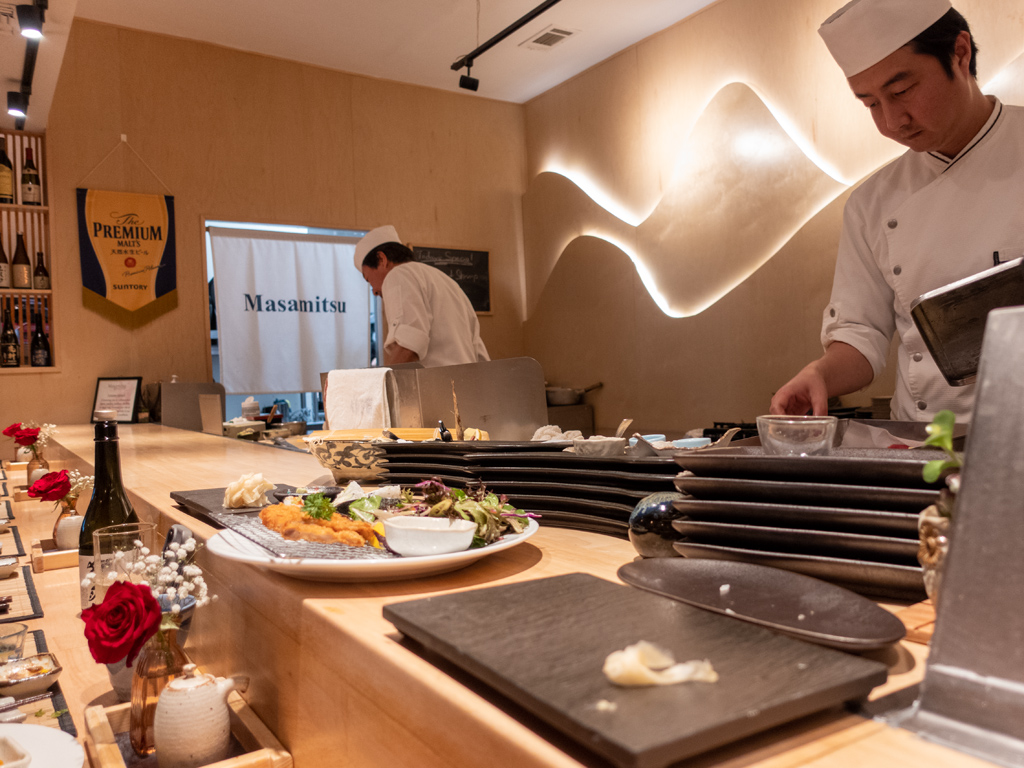
For my next all-you-can-eat sushi adventure, I decided to try out Sushi-Mon on West Sahara Avenue in Las Vegas. I like going to restaurants by myself with my laptop so I can eat at a leisurely pace while I get some work done. Upon arrival, because I was alone, I agreed to be seated at the bar so I wouldn’t take up a table that could be used by a group, and so I could watch the chefs prepare sushi.

All-you-can-eat menus usually have a set of premium items that are limited to one order per person. These are usually the better sashimi items that are more expensive with bigger portions of fish and less rice. I put in my first round of dishes by picking their tuna poke salad, spicy seafood salad, and scream­ing orgasm. All of these were great—the cuts of fish were nice and thick, so the texture was very satisfying to bite through.

Next up were two appetizers, soft shell crab and two fresh oysters. The soft shell crab was about average and what you’d expect from soft shell crab. I’d say the oysters were a little above average; they were nice and refreshing, and the garnishments weren’t overpowering so they complemented the flavor of the oysters well.

The third round consisted of three different types of carpaccio: yellowtail, salmon, and seared pepper tuna. The yellowtail carpaccio was my favorite—the fish quality was good, and it had a nice smooth zest to it from the yuzu.

With the premium sashimi dishes done, I went on to order some nigiri. Each order comes with two pieces; I ordered one each of yellowtail, salmon, sweet shrimp, scallop, and escolar. The ratio of rice to fish was a little on the high side, but still within reason. Again, like the sashimi, the fish quality was great. The scallop was particularly noticeably more tender than average.

The grand finale was sea urchin gunkan. Sea urchin is my favorite type of sushi, so if a restaurant has it, I will almost always order it. The sea urchin at Sushi-Mon was decent, but unfortunately, the seaweed that wrapped the sea urchin and rice was unusually pungent and detracted from the flavor of the sea urchin.

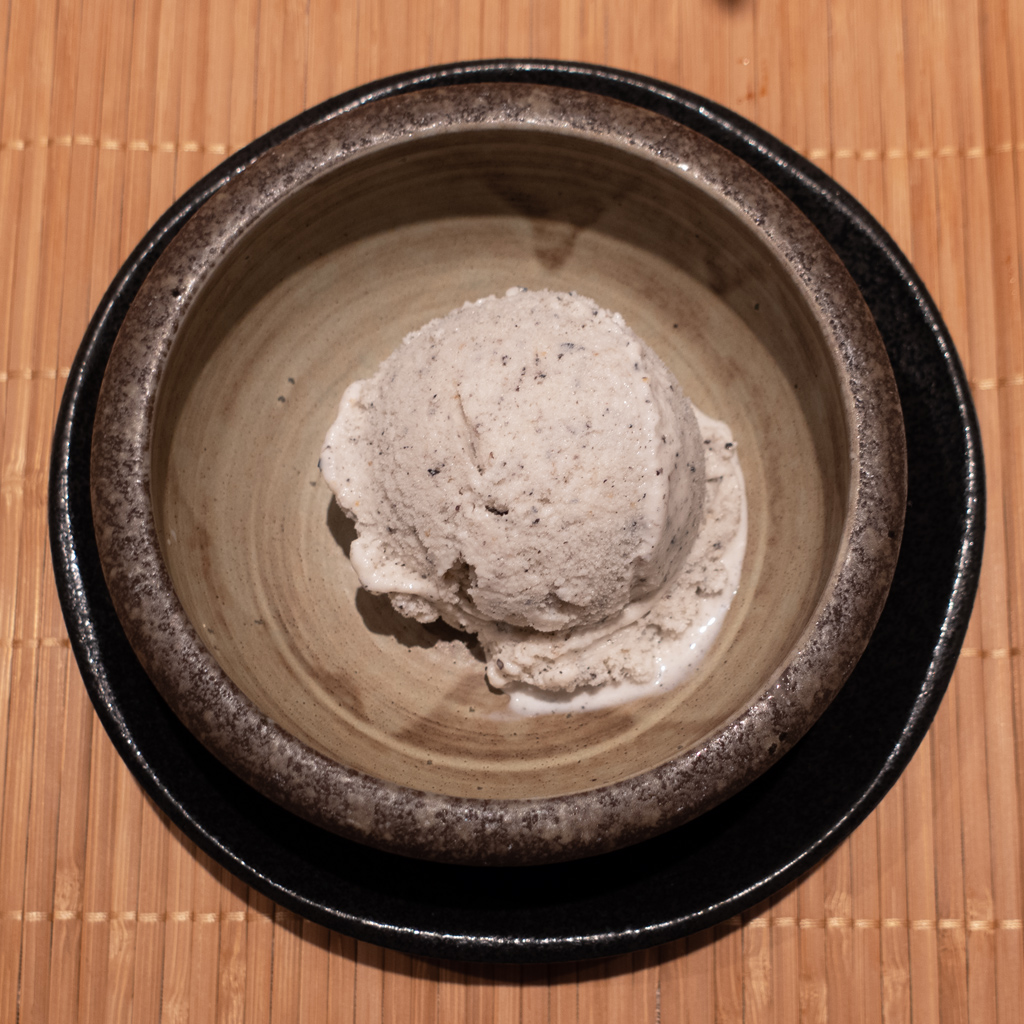
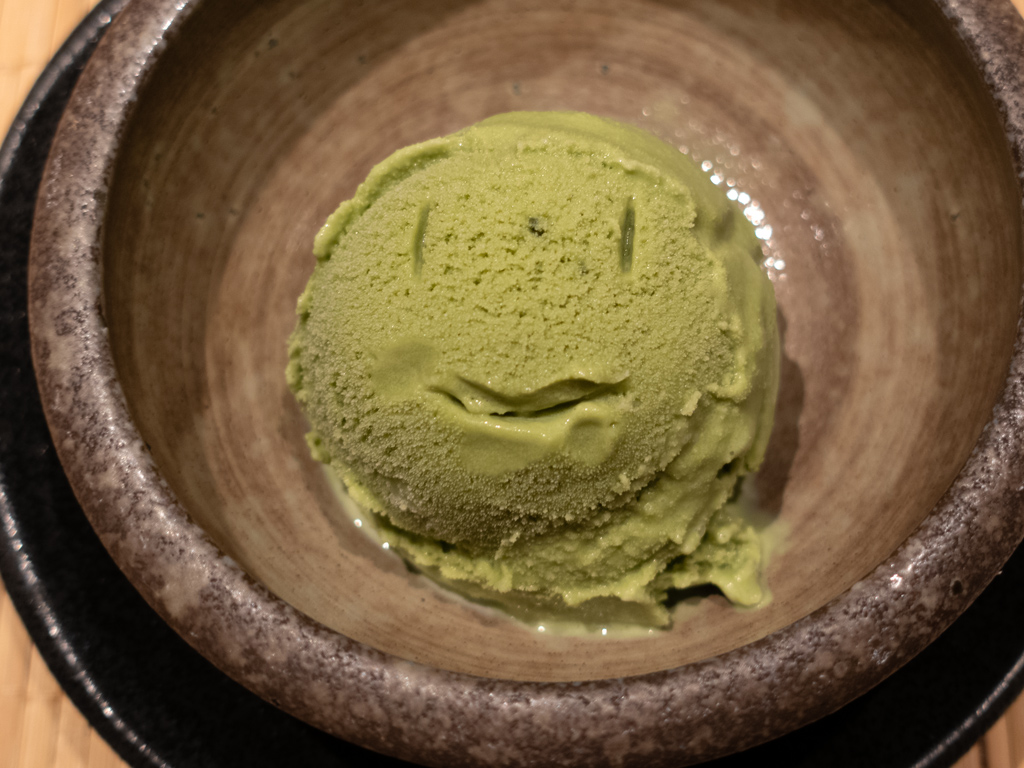
To close out my meal, I got two desserts—one mango mochi and one scoop of green tea ice cream. The mochi tasted the same as the mochi you get from pretty much every sushi restaurant, but the green tea ice cream was better (though “better” is subjective here—I think it might have just been extra sweet, so it blocked a lot of the subtle bitter undertones you usually get from tea-flavored ice cream).

All-you-can-eat $ 35.99
Water $  0.00
Sales tax $  3.01
Gratuity $ 11.00
Total $ 50.00
The table to the right shows how much I paid.

Compared to other all-you-can-eat spots I’ve been to in the Las Vegas Valley at this price point, I’d say Sushi-Mon is the winner so far.

The service was stellar. Both the server and the chef regularly checked in on me to ask if there was any­thing else I wanted to order. Many all-you-can-eat restaurants will intentionally delay checking in on you in hopes that you get full while waiting and order less, but Sushi-Mon did not do that. I usually only see this level of service at AYCE spots if it was almost empty, but Sushi-Mon maintained that level of ser­vice even though there were a bunch of other parties at the tables.

The fish quality was comparable to a more high-end sushi restaurant. The fish tasted fresher, the flavors were stronger, and the sauces and garnishments were made in a way that they let the fish speak for itself (as opposed to making it stronger as to cover up any flavor imperfections in the fish).
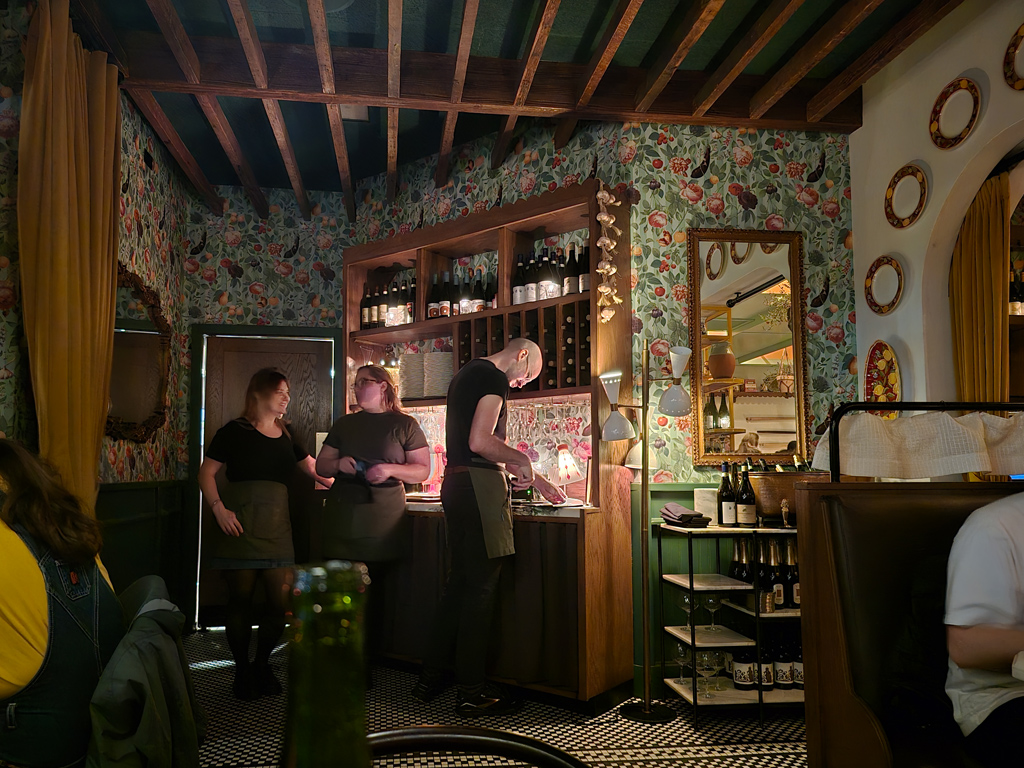
The environment was also pleasant. There were TVs playing in the background, the vibe was cozy, and all the staff members were friendly. I was doing some corporate law work while I was eating, and my waitress asked me about it, mentioning that she had previously studied law—a much more mean­ing­ful and interesting conversation than the usual small talk with other servers. Even the background music was to my preference—they were play­ing pop and pop-punk hits from a decade or two ago.

Usually I will recommend restaurants on an if-then basis, i.e., if you like a specific thing or don’t mind about a certain thing, then then restaurant is worth a visit. However, if you like sushi in general and want an all-you-can-eat sushi experience, Sushi-Mon is an unconditional recommendation for everyone from me.

To be clear, you can obviously get better sushi from a high-end omakase experience. However, for under $50, I think you’re going to have a very tough time finding something better.


—§—


Hello, Viva Mooo in Henderson, Nevada

While I had some extra free time because of the holidays, I met up with a lot of friends. One of our visits together was to Viva Mooo in Henderson of the Las Vegas Valley.

This spot was formerly known as one of the two locations of Kang’s Kitchen Korean BBQ (or 강식당), with the other one being at the Rio Hotel & Ca­si­no. I wasn’t able to confirm this for sure, but due to the abundance of Kang’s branding still in the restaurant, as well as the new owner out on the din­ing floor interacting with customers, I am guessing that the restaurant was recently sold to new management.

We ordered the premium all-you-can-eat dinner. While our raw meats were being brought out, we ordered some pre-cooked Korean fried chicken to keep our mouths occupied.

Usually, at all-you-can-eat spots, they’ll bring out the meats very slowly in hopes that you’ll get full during the wait time. Because of this, there is a cer­tain strategy you have to employ where you have to leave meats permanently in the queue and put in replacement orders prior to the previous round ful­ly being served. It gets annoying, but it is the reality of AYCE business practices.

Something I loved about Viva Mooo is that they were not at all like other AYCE restaurants. All our orders came out quickly, suddenly, and all at once. We ordered beef brisket, ribeye, seasoned rib, beef tongue, and seasoned short rib; not long after, our table was drowning in raw meat. It’s possible that this was because the restaurant didn’t look too busy while we were there, but it was definitely a refreshing experience.

The portion sizes at Viva Mooo were also very satisfying—the cuts were much larger and thicker than what you’d expect from an AYCE restaurant.
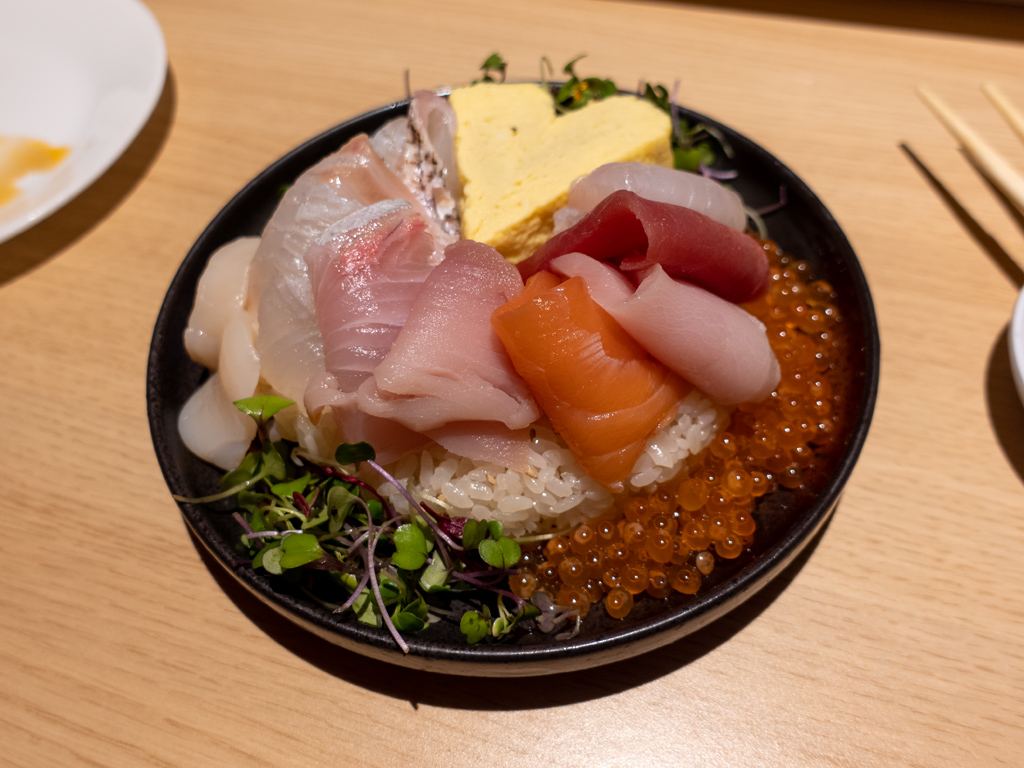
I completely understand why other AYCE restaurants do what they do—not everyone goes to restaurants like this often and not everyone knows what they’re doing, so there are probably a lot of wasted leftovers of diners accidentally ordering too much or ordering something they don’t like and not fin­ish­ing it. Regardless, it is still a much better ex­pe­ri­ence when you chew down on the meat and there is actually something there, rather than just fall­ing apart as stringy strips because the cut was way too thin.
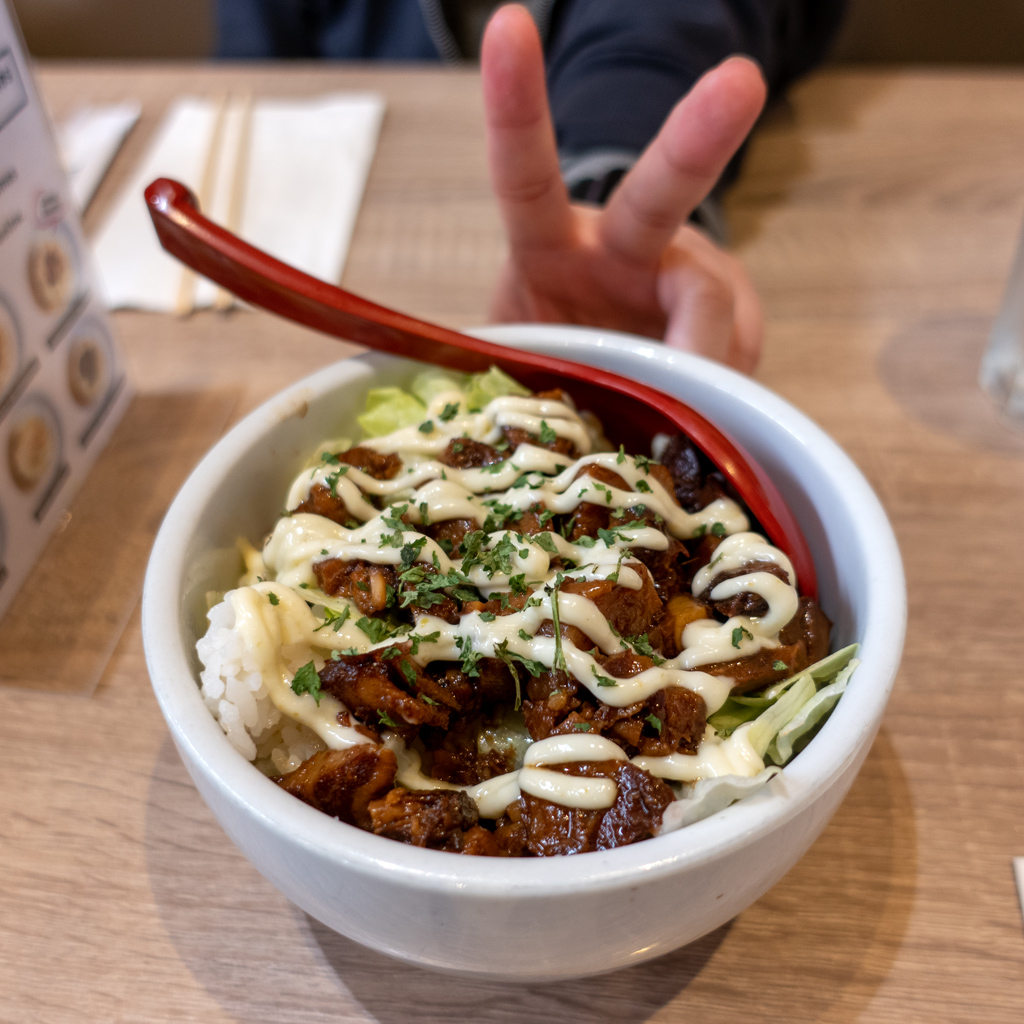

Last was the “grand finale” and the signature dish of the restaurant—the “B3ST Burger.” The owner of the restaurant, who is named Victor if I remember correctly, came over to chat with us during our meal. He let us know that he was hoping to get a Michelin star on this burger, and he shared his story of his past restaurant experiences and how he got to this point with this particular burger dish.

The presentation, as you can clearly see from the photograph below, was an absolute disaster. I don’t know if it just suffered from a casual magnitude-7 earthquake while being carried from the kitchen to our table, but the burger skewer was inserted sideways for goodness’ sake. The lettuce was not shaped or rounded, and the vegetables inside the burger were all over the place. Half the top bun apparently couldn’t get through to the suicide hotline and is about to jump off the edge.

Flavor-wise, the first bite was orgasmic. It had a stronger explosion of flavor than almost any burger I had ever tasted. The sauce was also one-of-a-kind, and something I had never seen on a burger before. It almost tasted like a mixture of jam and sauce—sweeter and tangier than usual, but not fully to the level of pure jam.

The next few bites were very good. I think it could’ve used some more vegetables, and the bun wasn’t special whatsoever, but the meat shone through. I finished half the burger and it was amazing.

Then came the second half. The more I ate, the more my perception of the taste declined. The flavor went from “extremely savory” to “good but a little too rich” to “too heavy.” I went back to hoping that the burger had more vegetables, and I wondered how many weeks’ worth of saturated fat I was con­suming in this single burger. I noticed a thin layer of fattiness coating the entire inside of my mouth. I rotated my tongue around my mouth in hopes that it would scrape off some of that new lining of fat on my inner cheeks, but it didn’t help.

There is a reason extremely fatty cuts of meat are served in moderation—they are great at first, but eating too much at once makes many people’s stom­achs uncomfortable. Most burgers use ground meats ranging from 90-95% lean and 5-10% fat, often called ground sirloin, all the way to 70% lean and 30% fat, the highest ratio of fat content permissible under the U.S. Code of Federal Regulations, Title 9, §319.15. I’ve heard many chefs call 80% lean and 20% fat to be the “magic ratio.”

Because the B3ST Burger is a custom-designed and -made dish at a restaurant that isn’t just pre-packaged ground beef for sale, the aforementioned law does not apply. However, I think restaurants should still use this as a guideline, otherwise the meat will probably be way too fatty, and I suspect that the fat content of this burger at Viva Mooo might have actually been greater than 30%.

Serving something like this will probably have good results for the first few bites as diners get shocked by the unexpected burst of flavor, but it’s not some­thing sustainable throughout an entire burger. People who have more acute taste buds will notice this as an “easy way out” method to make your dish seem better, and I can’t imagine that this burger is close to earning a Michelin star any time soon.

To be clear, I still liked the burger. But, if you go to this restaurant and want to try it out, I recommend only ordering one and sharing it with someone else, at least until the owner makes some adjustments to the formula.

There was also something called a K-Burger Steak on the menu; I ordered this just to try it out, and I think it was basically the same beef patty as the B3ST Burger, but without the sauce and bread. I managed to get through about half of it, simply for the sake of not wasting food, before I was about to feel sick from the fattiness and had to stop.

For dessert, we received a cup of rice punch, called 식혜 in Korean. I’d say this was pretty average taste-wise, but the ice wasn’t blended well, so the bev­er­age wasn’t as smooth and refreshing as it could have been.

In total, I paid $56.72 for my portion of the meal, with $44.88 being the dinner AYCE base price and the rest going towards tax and gratuity. It’s pricier than other AYCE Korean BBQ restaurants, but I think the cost premium is definitely worth it considering the quality of the meats and service.


—§—


Hello, Fontainebleau Las Vegas in Winchester, Nevada

On December 13, 2023, one week after the grand opening of the Durango Casino & Resort in the Las Vegas suburbs, another luxury hotel opened—the Fontainebleau Las Vegas on the Las Vegas Strip, formally in the unincorporated town of Winchester in Clark County, Nevada.

I actually was in town for the grand opening of the Fontainebleau, but I chose not to attend on opening day because I didn’t want to deal with the chaos on the Strip. However, a week and a half later around Christmastime, I stopped by to check it out.

Fontainebleau Las Vegas has quite the history. When I used to live in a residential high-rise condo on the Las Vegas Strip, I was on the north end of the Strip, very close to the Fontainebleau. The Fontainebleau broke ground in 2007 and was topped off in 2008. No, that is not a typo—this building was erected over 15 years ago. Since then, because of financial troubles, the building remained a closed and incomplete eyesore on the Strip with broken win­dows and exposed foundation. It also caused a bit of unrest with the Turnberry Place high-rise luxury condominiums next door, as the gargantuan height of the parking garage blocked the view of residents on the lower floors at the Turnberry.

In 2018, it was announced that the building, which was called The Drew at the time, would partner with Marriott. Being a loyal user of Marriott’s hotels and as an Ambassador Elite member in their loyalty program, I was excited that Marriott would expand their presence on the Las Vegas Strip. Un­for­tu­nately, Marriott decided to withdraw from the partnership three years later, and Fontainebleau decided to self-operate.

Now, finally, construction is complete and the hotel is open to the public. About a week and a half ago, I decided to visit and walk around.

As I completed my tourist session and looped back out into the parking structure, I peeked out and snapped a photo of the building where I used to live a few years ago, about 400 feet up in the air.

The food court was interesting. I had already eaten just a couple hours prior so I didn’t get anything, but it was visually nice—it was basically like a large food court in a shopping mall, but much more upscale and luxurious. If I ever live on the northern end of the Strip again, within walking distance of the Fontainebleau, it actually wouldn’t be a bad place to head over for a quick lunch once in a while.

The decor is posh and makes you feel like you are a business professional or an otherwise classy person, as opposed to a degenerate gambler about to lose their life savings. It is fairly apparent that the hotel is catered specifically towards convention attendees, not only because of the vibe, but also be­cause of its obvious location across the street from the Las Vegas Convention Center West Hall.

There weren’t too many people around when I visited, but I imagine things will pick up massively once conventions start ramping up. The hotels on Par­a­dise Road are still going to be more convenient for conventions taking place in the North and South Halls, but it looks like Fontainebleau might end up becoming the go-to option for the West Hall for those who might have a more flexible budget.

The thing I’m looking forward to the most at the Fontainebleau is ITO, a sushi restaurant on one of the upper floors. Reservations aren’t open yet, but they’ll be offering a twelve-seat omakase experience soon, so I’ll definitely be stopping by once it becomes available.


—§—