A few days ago, I returned to Partage, a French restaurant in the Chinatown neighborhood of the Las Vegas Valley in Nevada, for another helping of their tasting menu. If you missed the context of it from last time, I went to Partage for the first time in late September 2026; after enjoying the food and finding out that they change the menu in its entirety every month, I decided to become a regular and return monthly to try the new rotation of dishes.
This month, the theme was that the chef returned to his Polish roots and made a tasting menu inspired by Polish cuisine.
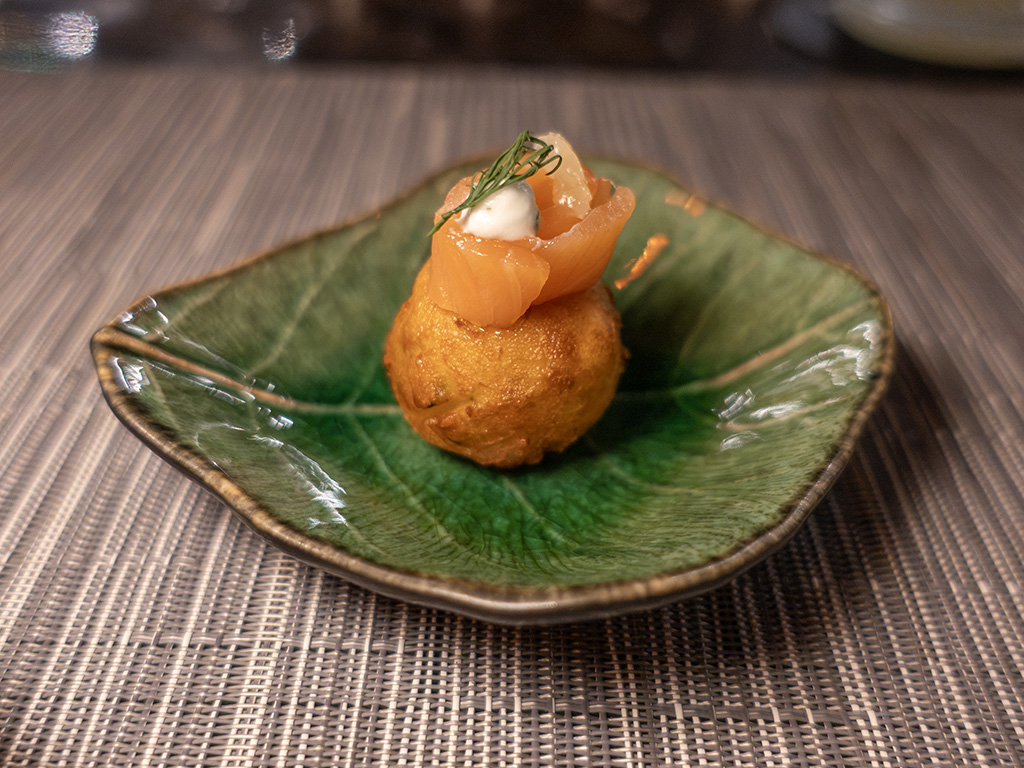
For the amuse-bouche, I was given a fried pastry topped with salmon and crème fraîche. This tasted like a more premium and umami bagel and lox. It was richer and heavier because the base was fried, but the crème fraîche was much lighter than cream cheese, so overall, it actually maintained the vague identity of a bagel and lox fairly well.
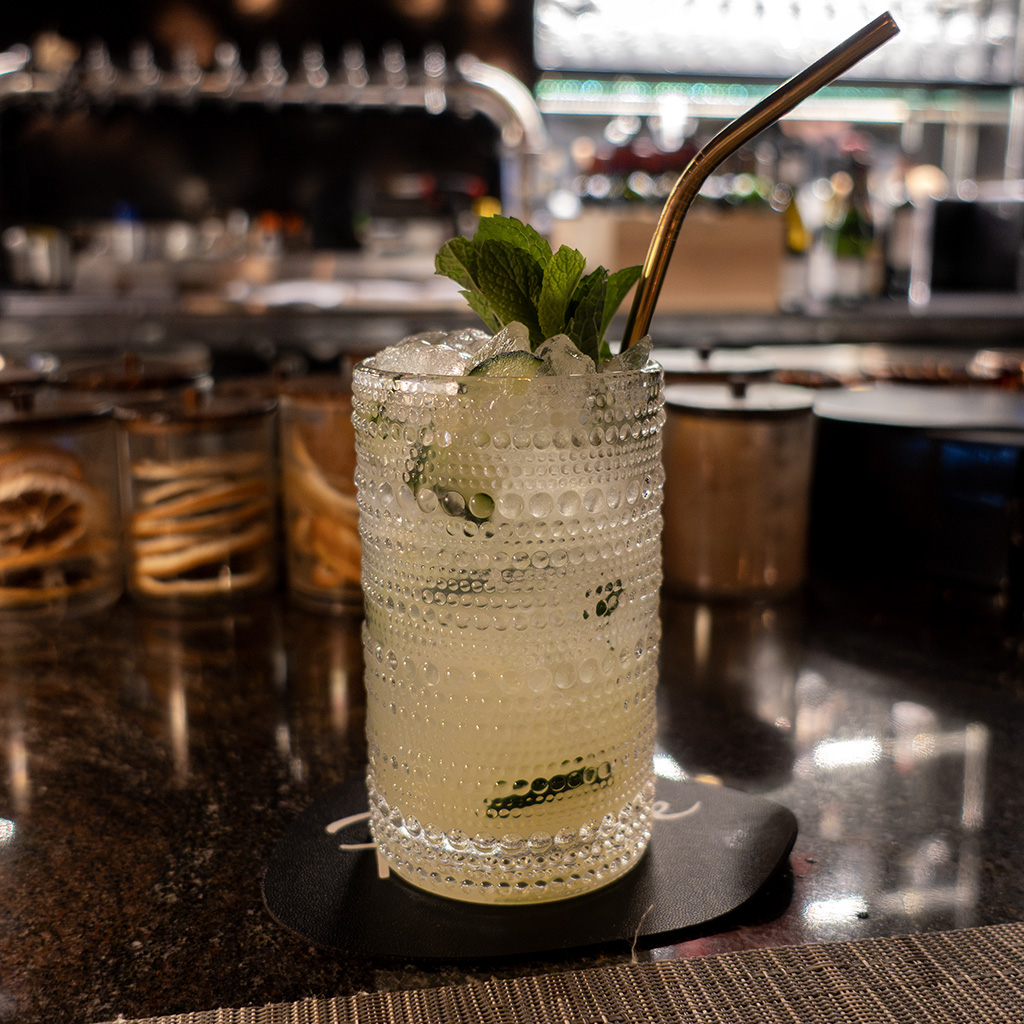
For my beverage, I browsed through their non-alcoholic beverage menu of three drinks and picked out the Garden Mule, made with cucumber and mint atop a Fever-Tree sparkling lime and yuzu base.
I was a little bit disappointed at how simple the flavor profile of the drink was last time, so I considered just sticking with water and not getting a drink for future visits. However, because of how limited the non-alcoholic beverage menu is, I figured I would at least give each one a try once, and then on my fourth dinner with them, I would only get a drink when a new one was added to the menu.
Compared to the one I picked last month, the Garden Mule fit my preference a lot better. I like the flavor of yuzu in general, but the addition of cucumber and mint made it fairly unique. Interestingly, as part of this drink, the cucumber didn’t really taste like what you’d expect from the vegetable, but rather, it just added an overall crisp and refreshing lift to the overall drink.
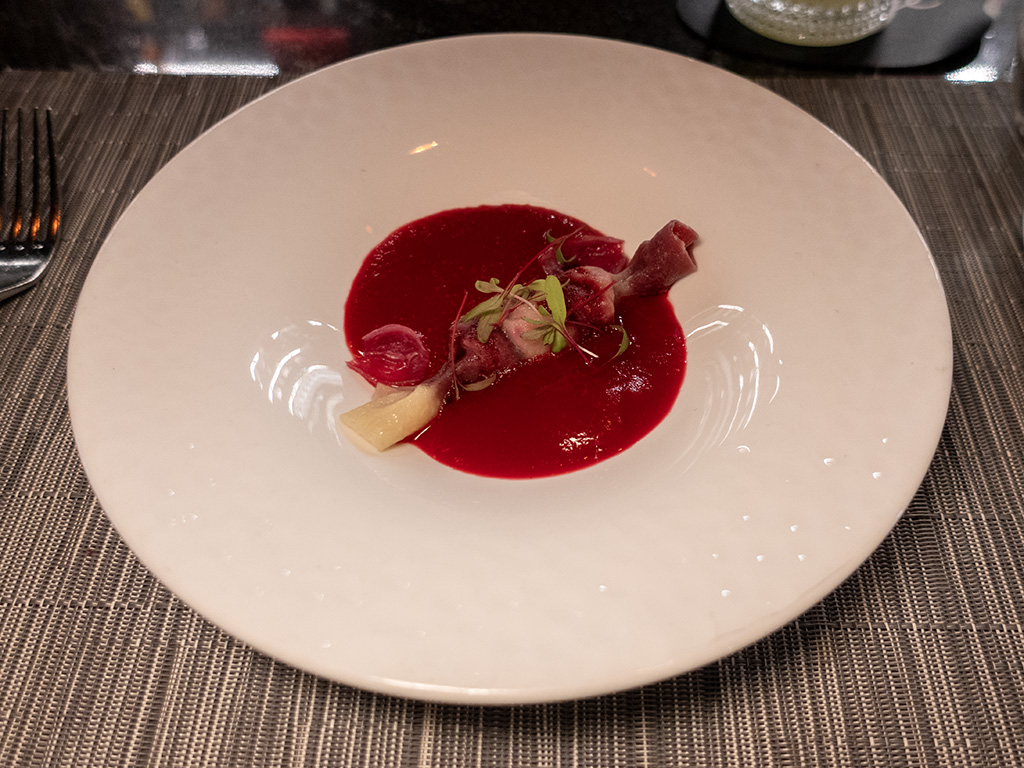
The first course was hot borscht with beet pierogi, creamy egg yolk, cheese and onion, pickled pearl onion, and spicy beet oil.
I think dishes that focus on vegetables and package them in a nice and gourmet way are underrated and too uncommon. As I have consumed increasing numbers of tasting menus, I begun to notice that, although seafood is still my favorite kind of food, a rapidly-approaching second is when a chef takes a vegetable and extracts the core essence of the flavor while getting rid of any diluted or bitter aspects of the taste.
This dish did that perfectly with beets. The only way I can come up with to describe this dish is that it was “extremely beets.” It was complemented very well by the doughy portion of the pierogi.
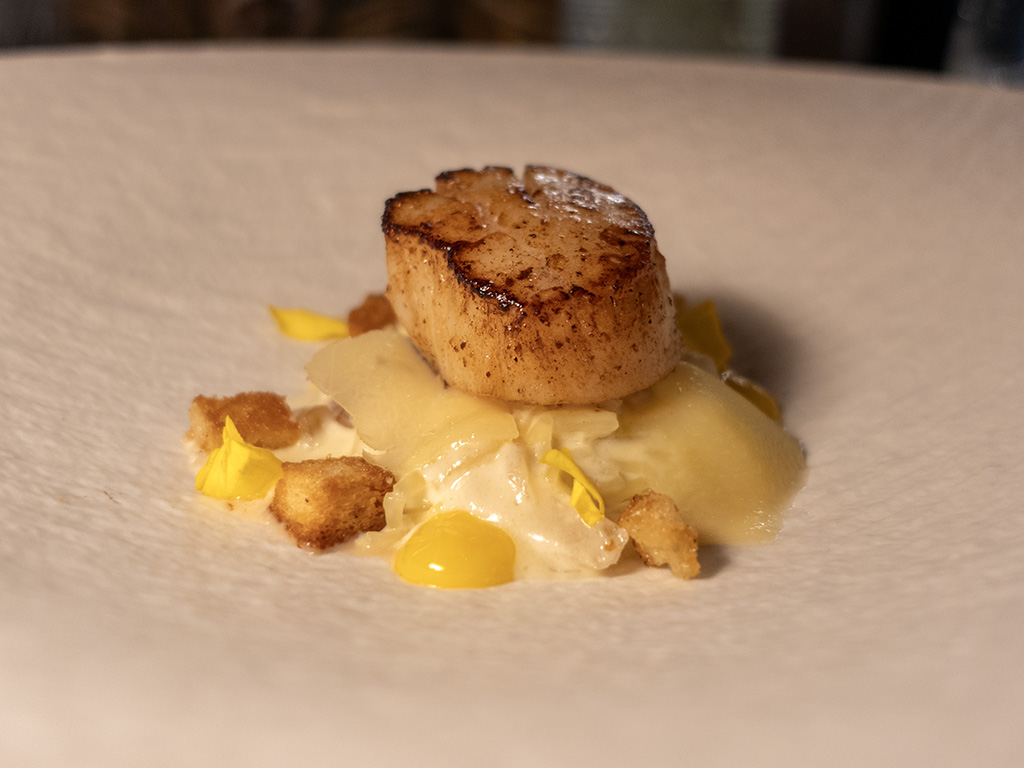
The next course was scallop carbonara with seared scallop, spaghetti squash, guanciale, egg yolk pearls, and croutons.
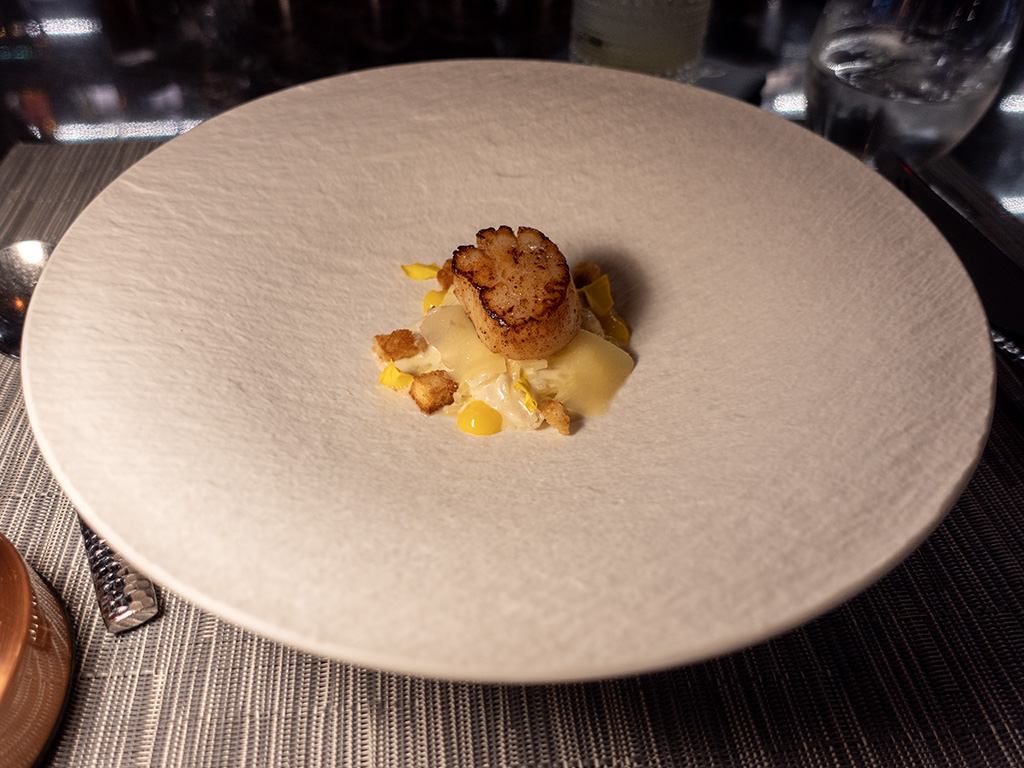
This scallop dish was interesting because I couldn’t really tell whether I thought it was normal and straightforward, or unique and different.
The scallop itself was a very no-frills standard scallop cooked to perfection with a fantastic sear on the outside and tender enough on the inside to have just enough resistance to be pulled apart with a fork and spoon with a little bit of effort. My initial impression of the sauce and pasta was that this was similar to just a regular scallop carbonara, but the more I had it, the more I noticed random things that set it apart from a regular carbonara. I’m somehow even undecided whether I think the sauce leaned more towards thick and creamy, or light and refreshing.
Regardless, I liked the dish. I think this balance of “regular carbonara” vs. “special carbonara” might have actually been intended, i.e., the chef might have purposely walked the line between the two so that the dish feels both familiar and novel at the same time.
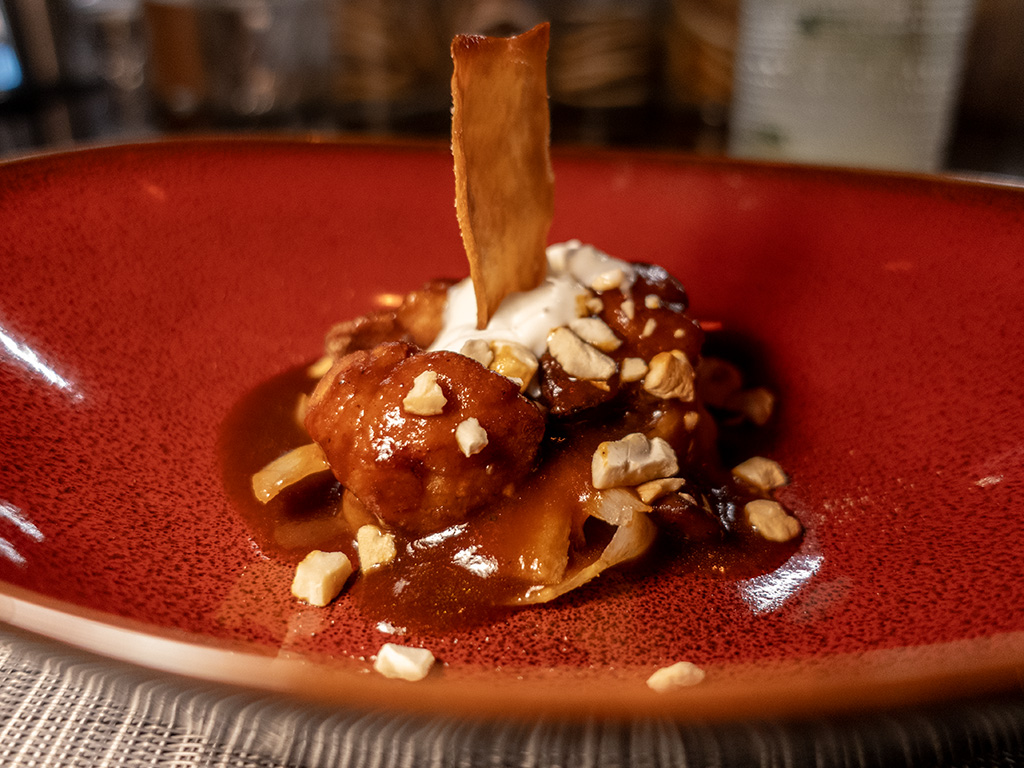
Course number three was sweetbread bourguignon with crispy sweetbread, parsnip tagliatelle, porcini mushrooms, crème fraîche, toasted cashew, and bourguignon sauce.
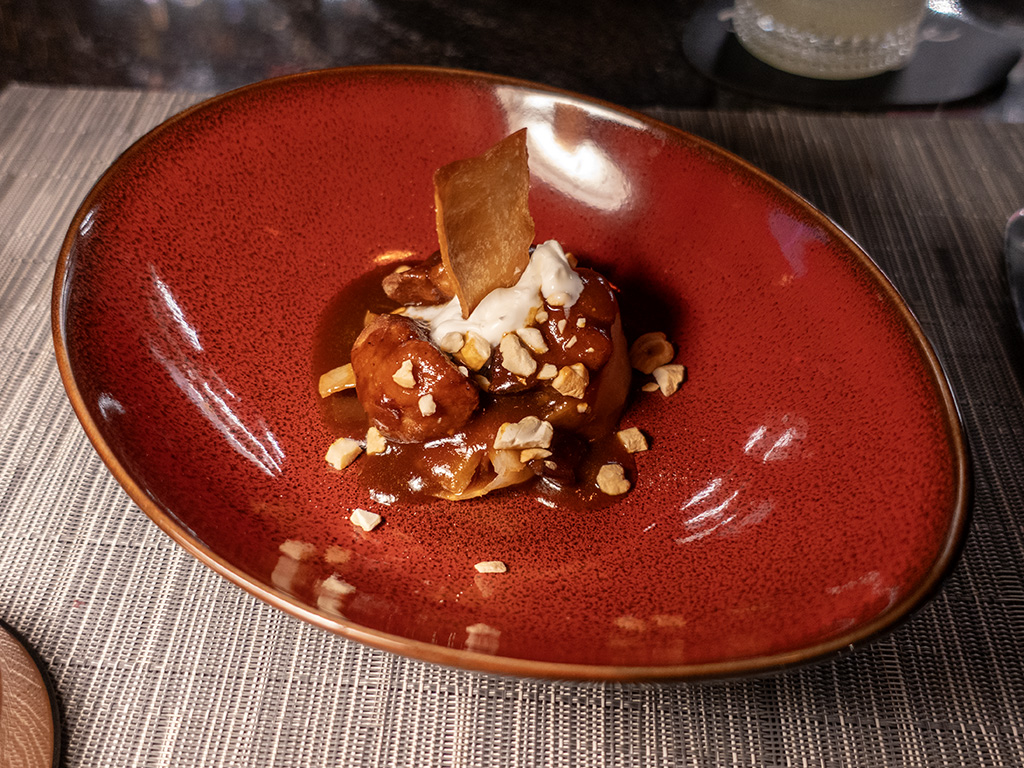
I literally don’t even know where to start describing this one. This wasn’t a dish where I took a bite and thought it was delicious in a traditional sense, but it was so intriguing that I kept wanting more and more, and I would say that I ultimately ended up liking it. The overall flavor profile is not something I have ever even remotely had before in my entire life.
After finishing the dish, I am pretty sure I just stared into the void for a few minutes trying to process what I had just eaten. When the bartender took away my plate, he asked what I thought of the dish; I had not gotten anywhere close to figuring out what my thoughts were yet, so I stammered for a bit as if I had sudden onset speech fluency disorder, then let him know that I liked it, but was very confused about it.
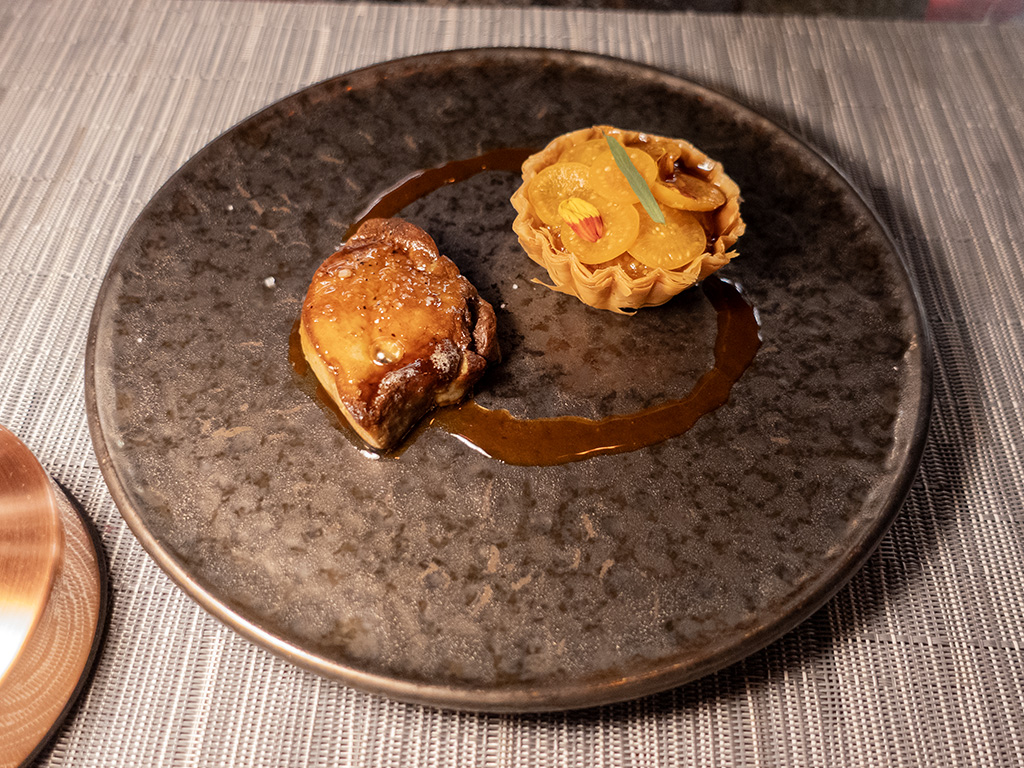
Next was the foie gras course: seared foie gras with a gooseberry crispy phyllo tart atop duck jus.
This was interesting because of how the foie gras was served on the side, completely separately from the gooseberry tart, rather than being combined with or integrated into the tart somehow. Realistically, this is fine; the foie gras was delicious on its own, and the gooseberry tart was delicious on its own. However, the point of this dish is obviously to combine the two.
Eventually, the process I landed on was to cut small pieces of foie gras off the large portion, place a small piece on top of one of the gooseberries, and eat a bite of the tart so that everything entered my mouth at once. This made it so the fruitiness of the tart cut through and balanced the richness of the foie gras very well.
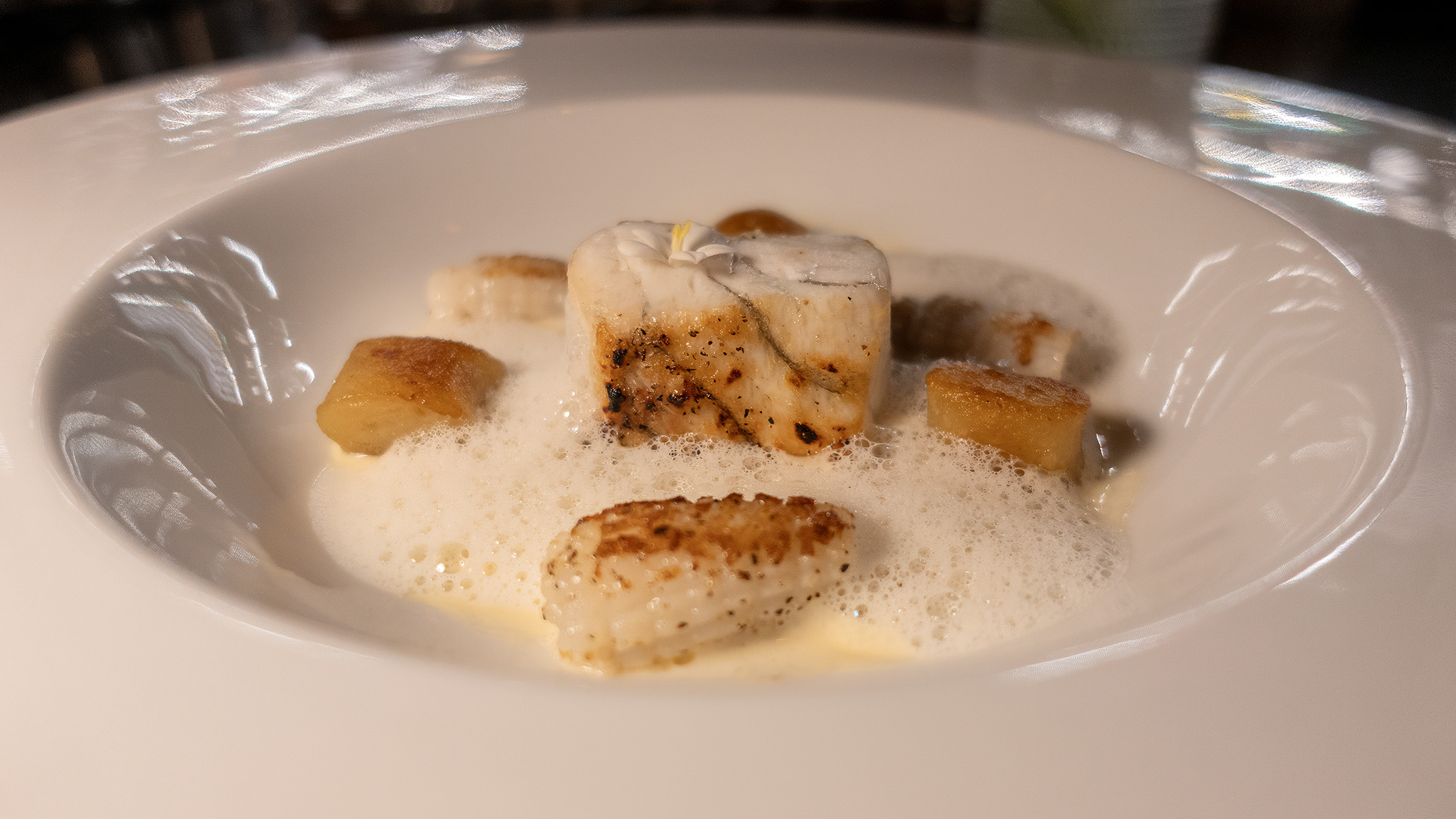
The fifth course was binchōtan-grilled barramundi served alongside grilled calamari and Polish kluski in marjoram pickle sauce and jasmine foam.
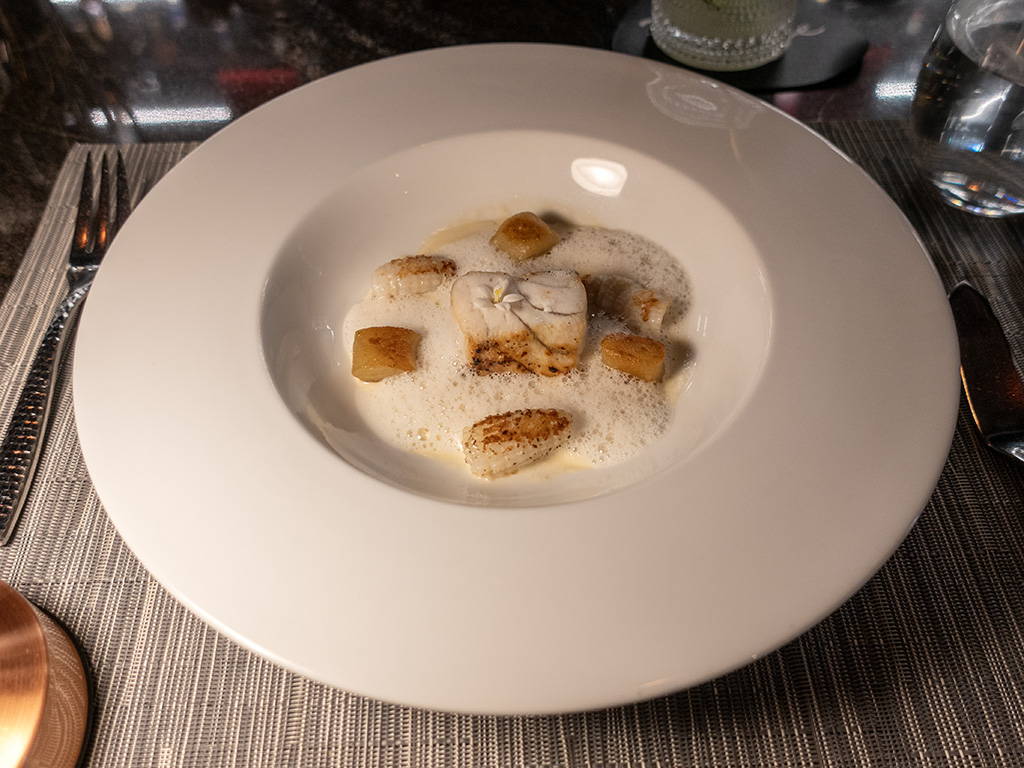
This was my favorite dish of the dinner (which probably isn’t surprising, considering that it was the seafood dish). The barramundi was nice and flaky. I couldn’t really taste the binchōtan flavor in the fish, but it was grilled very well. I also liked the jasmine foam—it added a very subtle floral note to the fish, without overpowering it with fragrance like some edible flowers do.
However, my favorite part of this dish was the calamari. I am fairly certain this is the best calamari I have ever had in my entire life. Not only was it just incredibly delicious, but the texture had a perfect balance of soft, chewy, and bouncy. I could eat an entire meal of just this calamari and be happy.
The kluski was the perfect component in the trio to round out the dish. It also had a well-balanced soft, chewy, and bouncy texture to it, but one you’d expect from dough instead of squid.
The next course in the signature tasting menu would have been the oxtail croque-monsieur, which I ate last month. As a reminder, it is made from braised oxtail and bone marrow, and is topped with shallot and parsley. However, if you remember from last month’s blog post, although I thought the croque-monsieur was good, it got a bit cloying for me at the end of the dish. So, for this dinner, I opted for their seven-course tasting menu with a foie gras add-on (functionally bringing it up to a custom eight-course tasting menu), rather than their signature nine-course tasting menu. Thus, I skipped the croque-monsieur this time around.
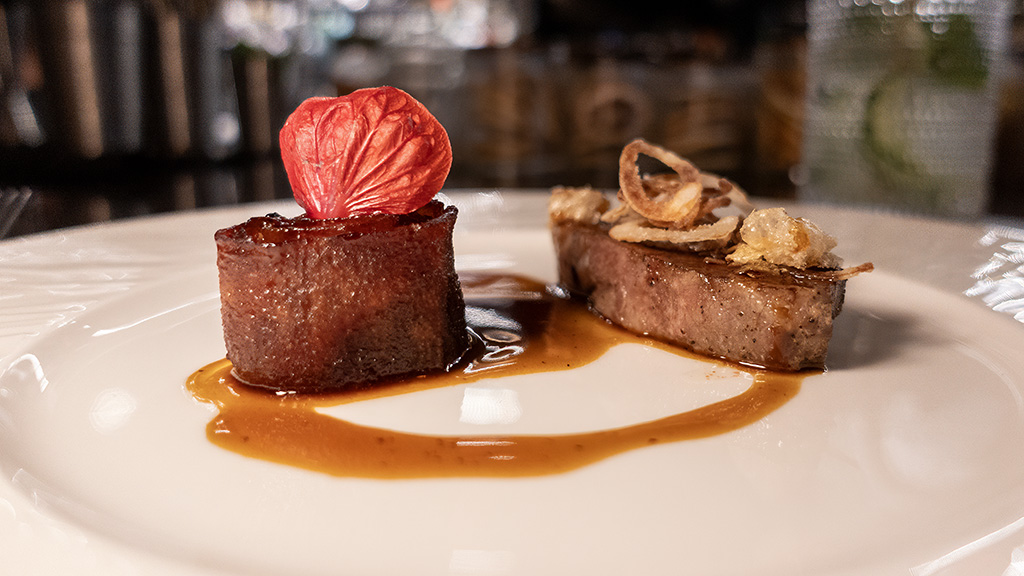
For my actual sixth course, I was served sweet and sour pork secreto and a quince and hibiscus Tatin with quince chips, crispy pork skin, and pork jus.
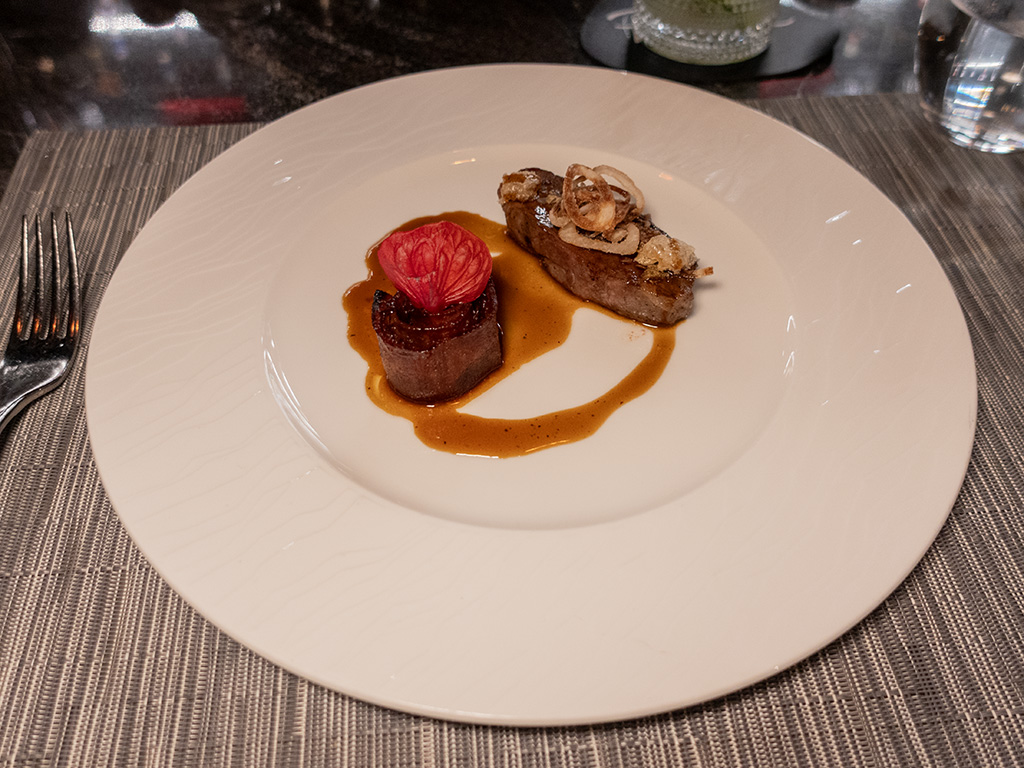
I thought this was fine. Every dish up until this point was basically a slam dunk when it came to tasting great, meeting my personal taste preferences, introducing me to a new flavor profile, or a combination of such, so maybe this pork secreto seemed underwhelming compared to that.
To be clear, this was not bad at all, and I still thought it was good. I would say that this served the role well of a solid, straightforward meat dish that is high in protein and doesn’t overdo it with fat. However, for me, I’d say this was probably the least memorable dish this month.
And now, for some great news… I can get bread with my tasting menu.
For a little bit of context: Sometimes, tasting menus end up giving small portion sizes because they have to price the meal somewhere reasonable, but they also need to account for the high cost of ingredients, labor, rent, and other expenses to run the restaurant sustainably. There is a balance at some point, where in order to make the tasting menu affordable to more people, they have to reduce the portion sizes and use fewer expensive ingredients.
In scenarios where tasting menus end up on the smaller end, I always recommend for restaurants to offer some kind of carbohydrate—such as bread or rice—to help bridge the gap and increase the chances of diners leaving full. I recently complimented L’Atelier by Joël Robuchon on their bread basket; I always leave their restaurant full after their tasting menu.
I brought this up with my bartender during this meal, specifically within the context of how I would appreciate some bread so I could use it to soak up leftover liquids from courses. For example, using bread to finish the liquid fat from the foie gras and the marjoram pickle sauce from the fish would’ve been great. When I mentioned this, he said that he would go ask the chef if he could get some bread made for me.
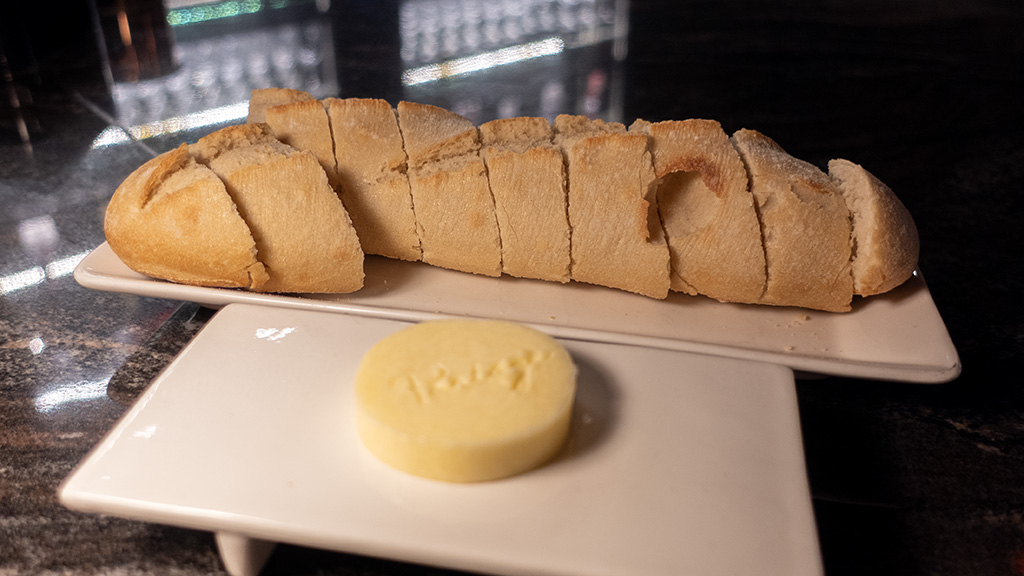
This baguette came out during the pork secreto course, so I was able to use it to finish the pork jus. The bread was absolutely perfect for these purposes—it had a very mild and plain flavor, so it tasted like it was literally custom-made to be able to go along with any dish and not alter its flavor profile, and then be used as a tool to finish the sauces while not detracting or diluting any of the sauce’s flavor.
Now that I know that the chef can just make me a miniature baguette, I am definitely going to ask for this at the beginning of my meals for future monthly tasting menus. Even though this particular bread came out somewhat late, I still ended up finishing about two-thirds of it by the end of my meal. I am very glad that I brought this up, and I am also glad that this basically guarantees that I will leave every Partage visit very full.
As a side note, the bartender explained that they usually don’t include bread as a baseline default for tasting menus because a lot of people actually find just the regular courses to be quite filling (and that’s also why they even offer a smaller five-course tasting menu too). I can eat a substantial amount in one sitting, and I’m also pretty sure that I have a pretty stretchy stomach, so this bread definitely serves a very positive role for me for my dinners.
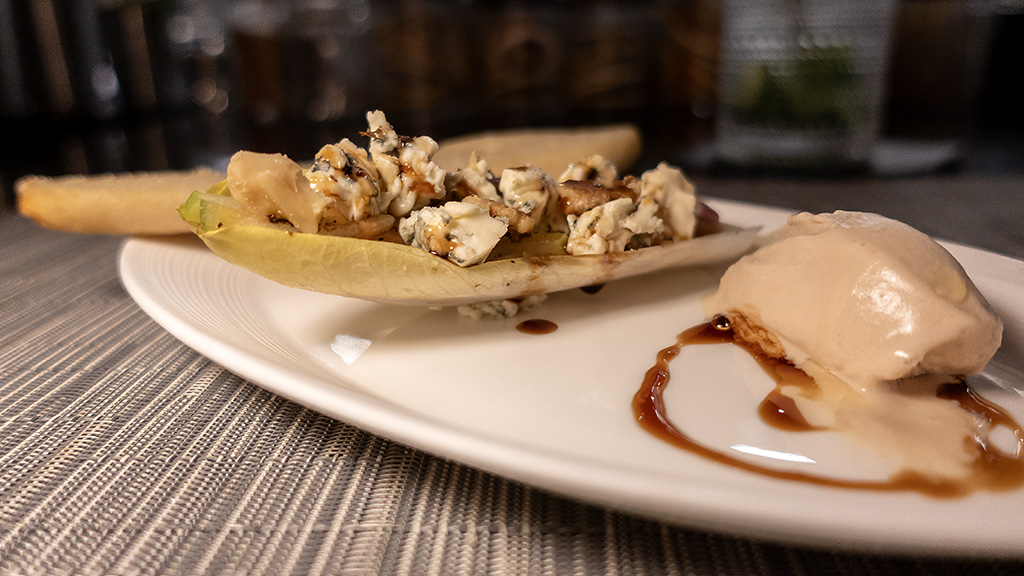
The final course before dessert was the cheese course: Fourme d’Ambert with endive, walnut ice cream, fresh Granny Smith apple, and caramelized walnuts.
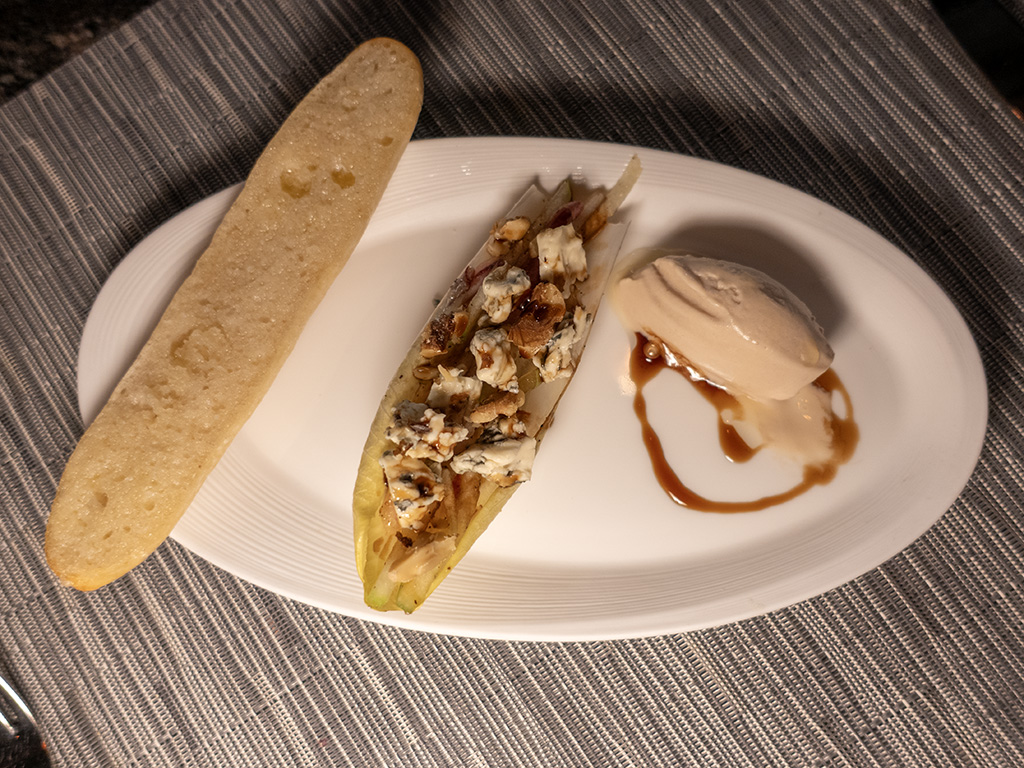
When the bartender brought this dish out for me, he explained that this is a type of blue cheese. That made me slightly concerned, because I’m usually not that big of a fan of cheese, and I think that most cheeses smell and taste like mold and/or vomit, and I think that blue cheese in particular is extra bad. With that being said, the cheese course from last month was unexpectedly incredible, so I had high hopes that this would also be unexpectedly great.
If I was not told the name of this cheese and it was not disclosed that it was a type of blue cheese, I would have never known. There was absolutely no funk in this cheese at all. It tasted as if they had somehow attacked this cheese at a molecular level and zapped away every single bad-smelling and bad-tasting molecule. Instead, it was deeply creamy, earthy, and savory, with only a tiny bit of tang that was mostly neutralized and balanced out by the apple and walnuts.
If all cheeses in the world were as high-quality as the cheeses served at Partage, I would never complain about cheese ever again.
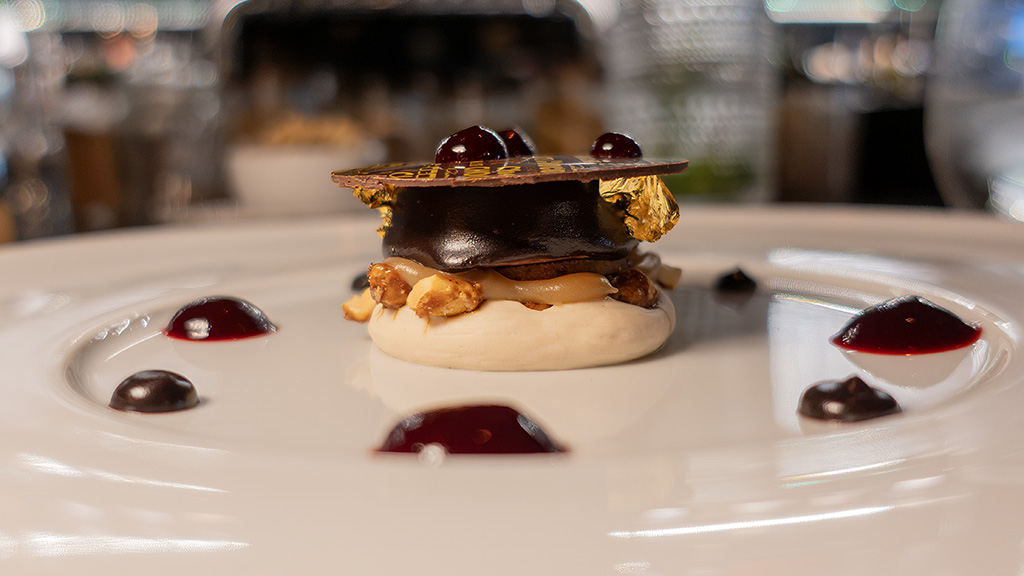
Finally, for dessert, I was served Snickers d’automne with chocolate mousse and soufflé, peanut and chestnut crispy, and huckleberry gel.
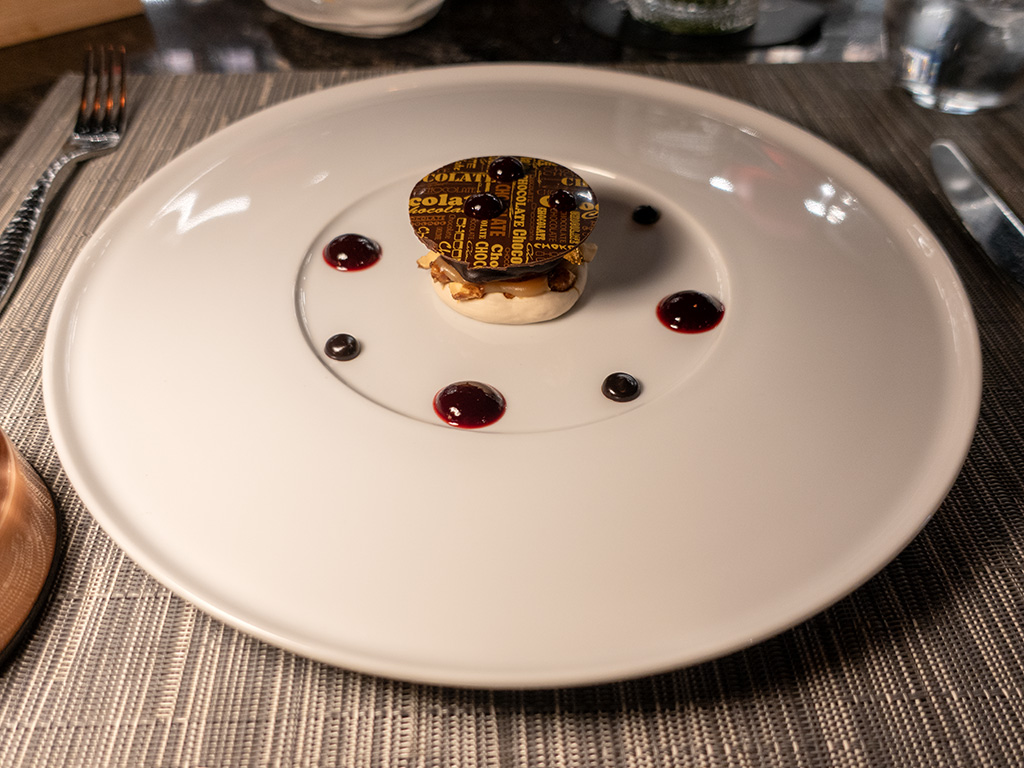
Does this look familiar? It should if you read last month’s blog post about Partage. One thing that I was incredibly baffled by last month was how this was a pear dessert; I shared what the course list claimed it was, but ultimately just said that this was a gourmet s’more. Well, I solved the mystery.
Last month’s dessert was this same Snickers d’automne, minus the huckleberry gel. That’s because, apparently, they switch the dessert course over to the next cycle before they rotate out the rest of the menu, so because I went on the final day of September, I ended up receiving October’s dessert instead. As you can see, they since then added a fruity element with the huckleberry; I liked this version better. I also now know that I should give my reservation bookings a few days’ worth of leeway before the end of the month so I can make sure I show up while that month’s dessert is still in service.
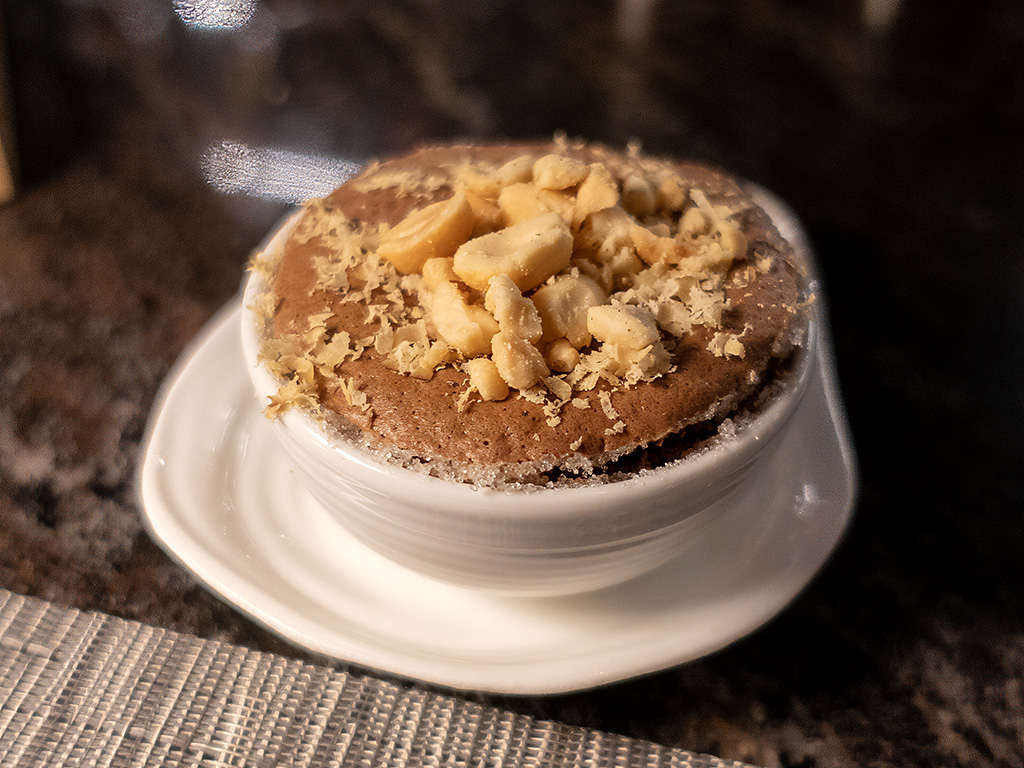
This is the chocolate soufflé; they added a much more generous portion of nuts atop it this time, which I liked.
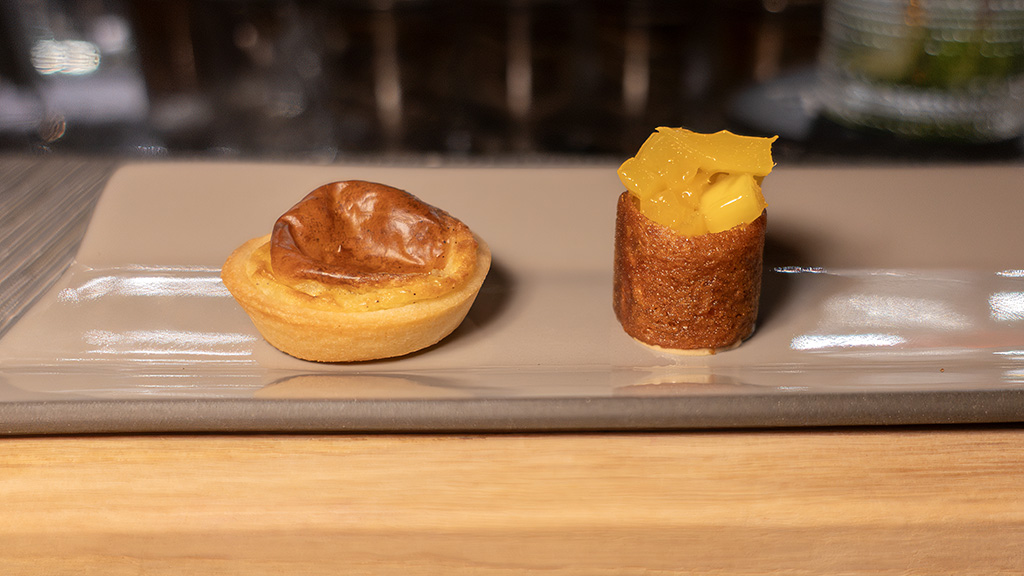
Along with my check, I was given two petits fours to conclude my meal.
| Seven-course tasting menu | $ 160.00 |
| Foie gras add-on | $ 33.00 |
| Garden Mule | $ 12.00 |
| Sales tax (8.375%) | $ 17.17 |
| Gratuity | $ 40.00 |
| Total | $ 262.17 |
Since last month, they raised the price on the tasting menus by a little bit. I’m not sure if this is an overall price increase, or if it is just because they used more expensive ingredients this time and needed to make a small adjustment. For comparison, the signature nine-course tasting menu was US$198.00, while it was listed at US$210.00 this month.
I believe I said last month that this seemed a little bit pricey considering the fact that it was not on the Las Vegas Strip and they don’t have the extra premium rent rates and overhead expenses involved in operating on the Strip. With that being said, I’m not sure if I just got completely wooed by the bread and how satisfyingly full I got this time, but after this dinner, I walked away from it thinking that the price wasn’t actually that high for what you get.
I didn’t take any photographs of the interior like I usually do at restaurants because I already shared a bunch of pictures last month. Like always, because I am a local and want to have as minimal of an impact on restaurant operations as possible, I booked my reservation for the first available time slot on a weekday so that I am not showing up when it’s congested and so I am not taking away a dining opportunity from a weekend tourist. So, like usual, it was empty when I arrived (though more people trickled in during my two-hour meal), and the restaurant looked the same as it did last month.
And finally, one last note about the timing of these Partage blog posts. For both tasting menus, I published the blog post during the subsequent month—during early October for my late September meal, and today on November 1 for my late October meal. The reason I do this is because part of the magic of Partage is that it’s always a surprise what you get. I do get a course list with the name of all the dishes and all the key ingredients that were used, but I receive that after my meal, not before or during it. Partage does end up doing some amount of marketing on social media, so if you’re going out of your way to look for it, then you’ll see previews of some of the dishes. However, the spirit of the tasting menu is that you are not supposed to know what’s coming. Thus, in order to not disrupt their system, I decided to only publish the blog post after the corresponding month is over.
I’ll see you again in my early December blog post, once I get a chance to try Partage’s November 2026 tasting menu.