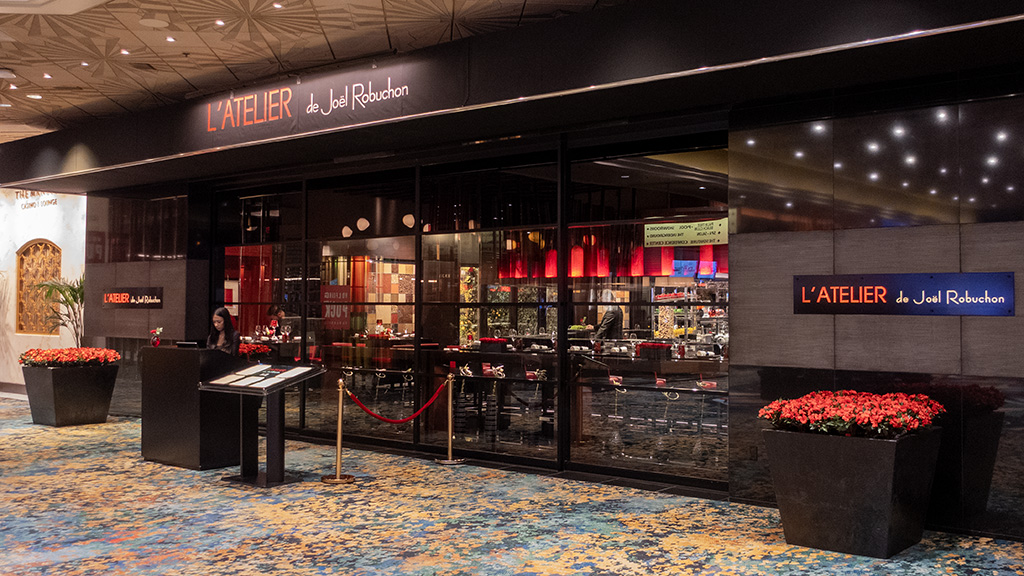
Back in winter, I went for the first time to L’Atelier de Joël Robuchon at the MGM Grand on the Las Vegas Strip in Paradise, Nevada.
My original intention was to try it out as a gateway restaurant to the full-scale Joël Robuchon next door. Since then, I have not yet had an opportunity to go to Joël Robuchon (the high price point of it makes me want to go together with someone else for a special occasion or something, rather than showing up alone on a random weekday for a regular dinner), but in the meantime, I decided to go back to L’Atelier to try out their updated seasonal signature menu (alone on a random weekday for a regular dinner).
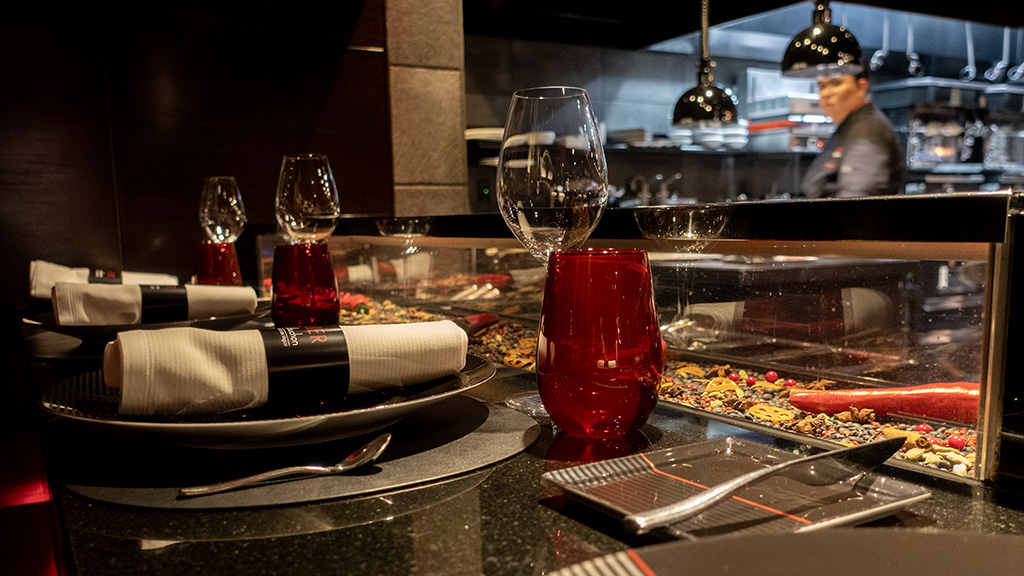
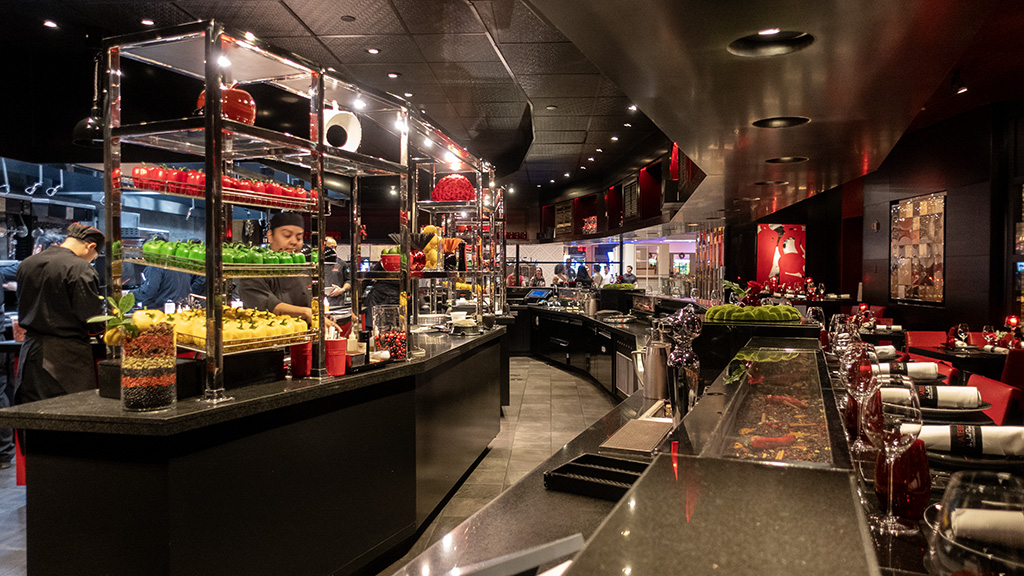
I had a reservation right at opening time and was the first one checked in and seated. My seat was at the far back end of the kitchen bar in a cozy corner that allowed me to have a full view of the entire restaurant, while being very out of the way so I could have maximum privacy. I didn’t make a special request for this seat or anything, though I obviously appreciated being able to eat my dinner from there.
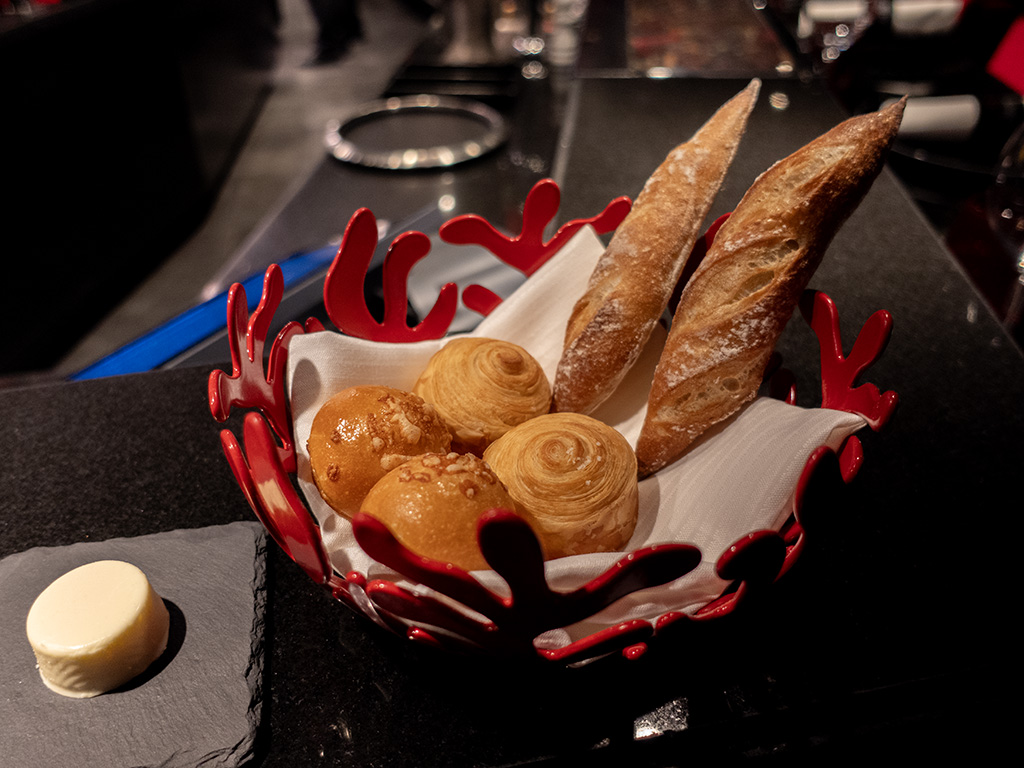
Shortly afterwards, one of the servers brought over a basket of bread with some butter. There were three different types of bread—one that had a little bit of cheese melted on top of it, one that resembled a flaky pastry, and one that was basically a miniature baguette.
I complimented the bread a lot last time, and I’ll do it again this time: I think this simple bread basket is a huge deal when it comes to customer satisfaction.
When I go to chef’s tasting menus or omakase experiences where they use a lot of high-quality and expensive ingredients, the cost of the dinner can get extremely high. In order to make pricing manageable and marketable, some restaurants cut down on the portion sizes a lot. This means that I will walk away from my dinner still hungry.
L’Atelier solves this entirely by giving not only a generously portioned bread basket, but also offering refills (at least they did for me both times). Obviously, very well-made bread like this is going to be more expensive than regular buns and rolls, but comparatively speaking, it is still cheap to make. The amount of return on investment you get on customer happiness is astronomical compared to not having a filling carb like this at all. Throughout my meal, I ate a ton of bread, used it to dip into and finish all the leftover sauces on my dishes, and walked out of the restaurant with a blissfully bloated stomach.
I hope that L’Atelier continues doing this forever, and I also hope that other tasting menu restaurants learn from this and start offering bread if they lean towards smaller portion sizes on their dishes.
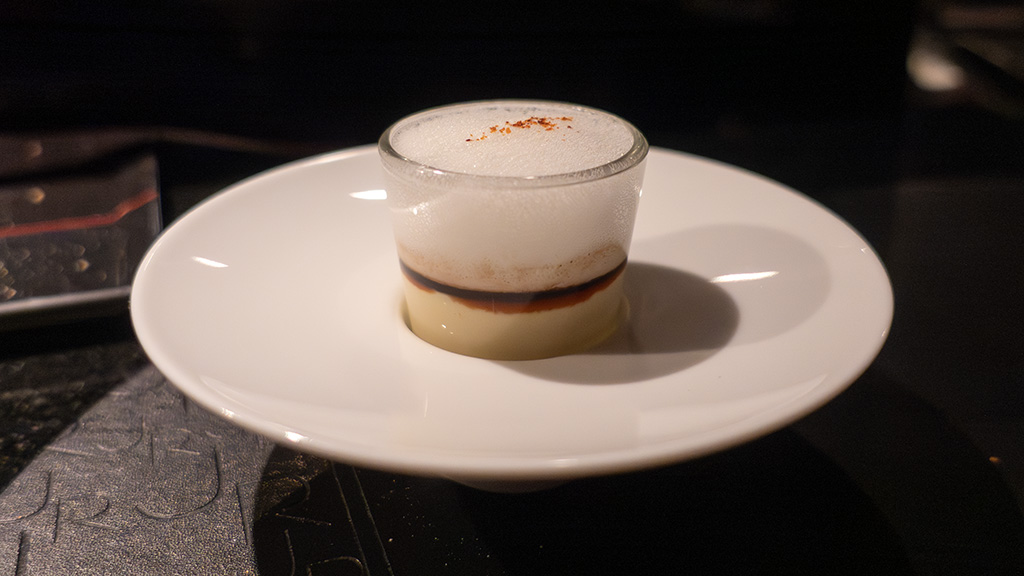
To start the meal, I was served an amuse bouche. I don’t remember exactly what all the ingredients were, but it was a three-layer creamy, custardy, foie-gras-based dish.
I was given a spoon so I could scoop deep into the shot glass and get all three layers at once per bite. This worked extra well with me nibbling on some bread in between scoops; it tasted like I had spread some extra rich, ultra-premium butter on the bread.
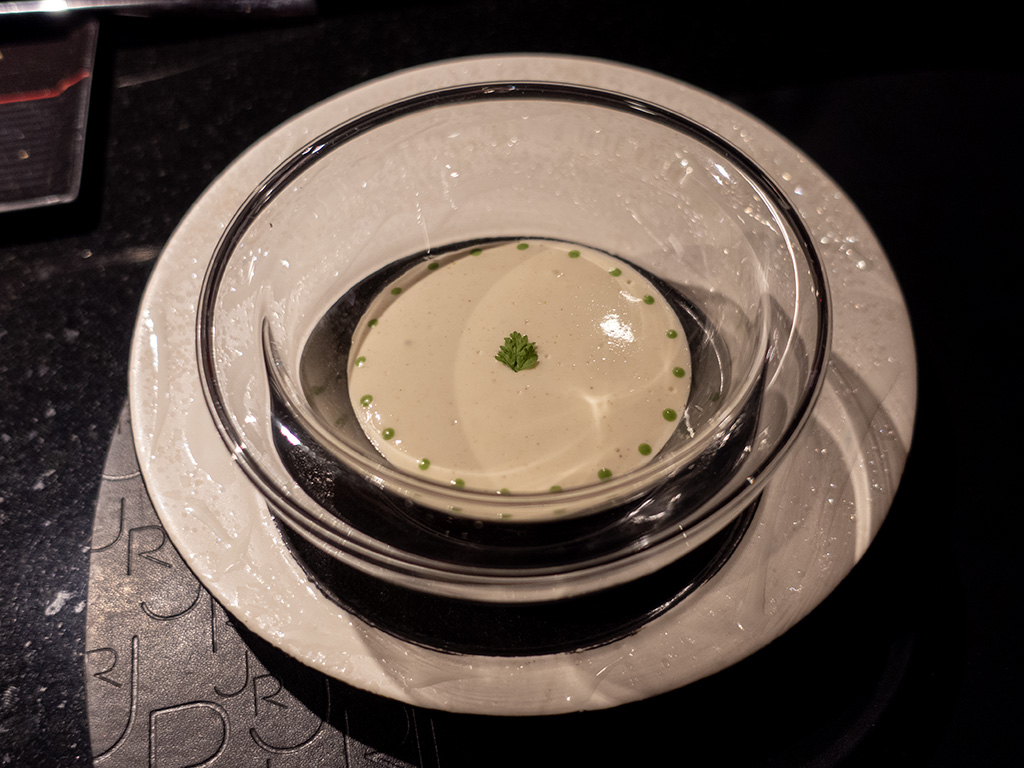
The first dish was la fameuse gelée de caviar de Joël Robuchon, which translates to Joël Robuchon’s famous gelée de caviar, served with cauliflower purée and Ossetra caviar. (The menu wrote it as le fameuse gelée de caviar, which, to my understanding, contains a grammatical error, and is unexpected to see from such a high-end French restaurant. … Or maybe I am just wrong and will make a fool out of myself to any French speaker reading this blog post.)
There was a generous portion of caviar layered under the gelée. I tried to scoop up some of the caviar and take a second picture, but the consistency of the purée made it so the caviar immediately got covered in white, so it made for a not-very-photogenic situation. However, taste-wise, it was great. The gelée and purée were quite rich, so the saltiness of the caviar also helped enhance the rest of the dish as well.
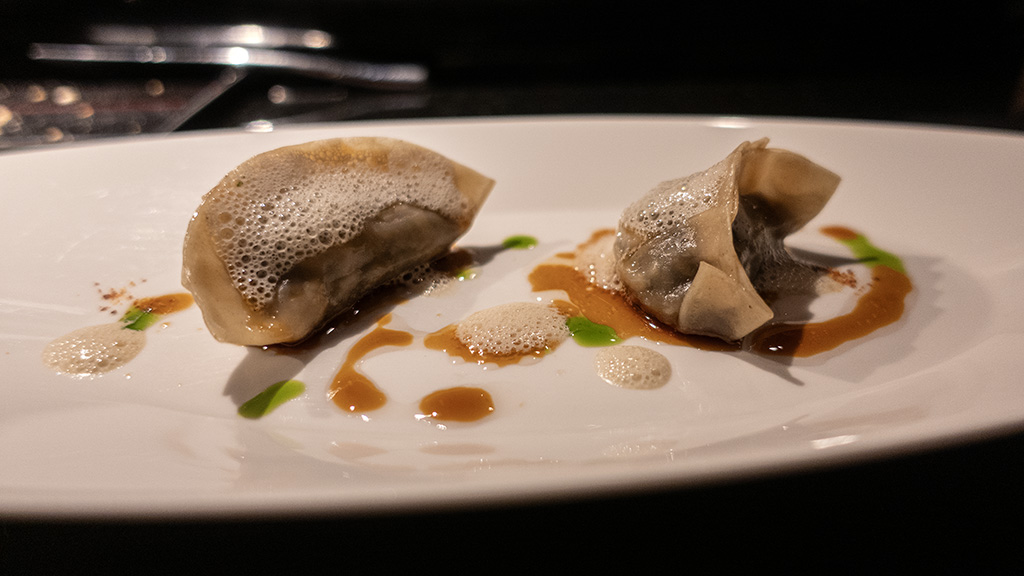
Next was le gyoza, which were dumplings made with foie gras, duxelles, artichoke, and ham.
This was probably my least favorite dish of the tasting menu. It tasted like upscale dumplings, but they were so salty that I couldn’t really distinguish any of the individual ingredients, and the inside registered to my taste buds as just a generic meaty and vegetable mixture. I could obviously tell that they were much better than the average dumpling, but all the other dishes of the dinner seemed to dwarf the dumplings in almost every metric for me.
With that being said, I have never seen a high-end restaurant try to make extra gourmet dumplings before, so I appreciated the novelty of it.
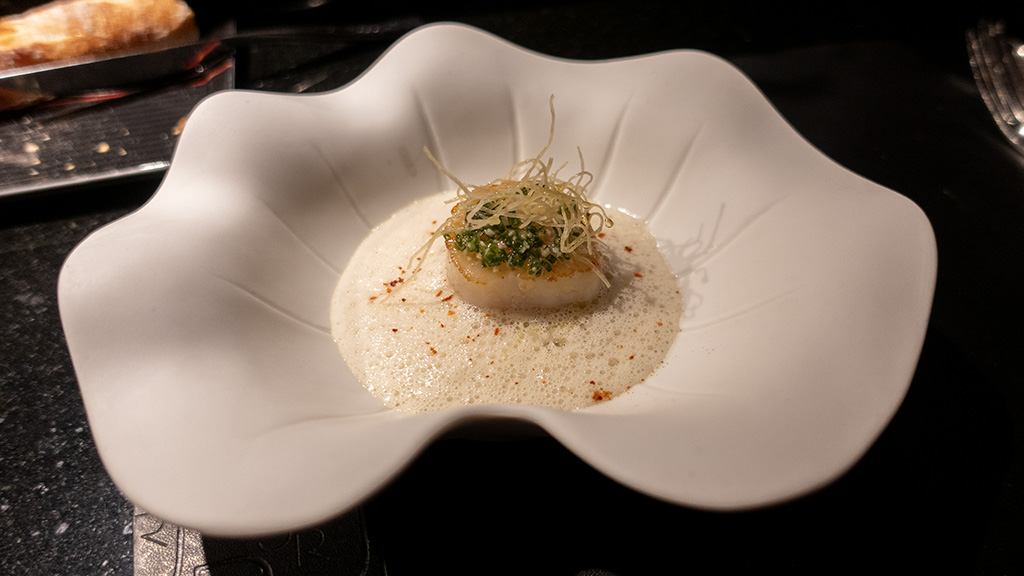
The third course was la Saint-Jacques, which was a seared scallop with steamed leeks and a ginger champagne emulsion.
The scallop was cooked to a perfect doneness level that perfectly balanced firmness and tenderness. The seared top of the scallop added a nice, subtle crisp to it, and the garnish on top added a fun element of depth to the texture in addition to the flavor.
However, my favorite thing about the dish was actually the ginger champagne emulsion. In cuisine, there are some ingredients that are known to be particularly and disproportionately polarizing in nature among diners; a few examples are garlic, onion, cilantro, and, of course, ginger. I love all four of those foods. I love garlic and onion so much that I sometimes just eat them raw as snacks. And for someone who eats as much authentically-prepared sushi as I do, I imagine it is a given that I eat a ton of ginger.
I saw from the ingredient list that the sauce had ginger, but I guess it didn’t actually register in my brain as to what it would be like. When I took a first taste of the scallop, I was elated at the sauce. I made sure to add generous scoops of the sauce to each bite of scallop, then used the miniature baguette to soak up and finish all the remaining sauce after I was done with the scallop.
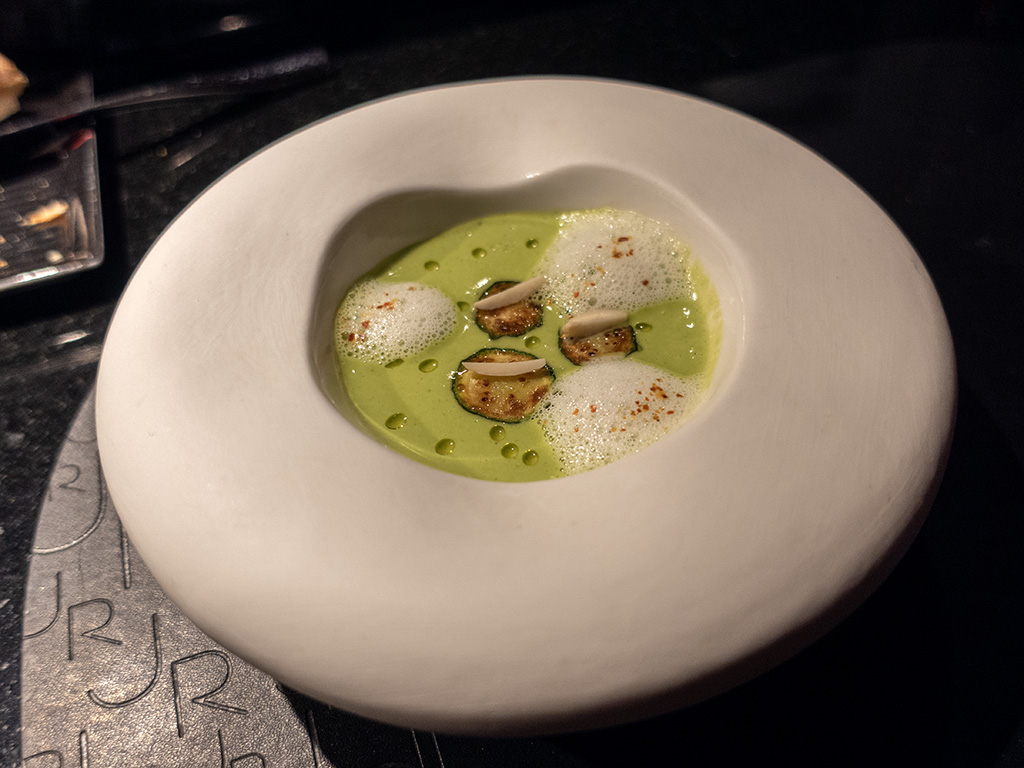
As a bonus that was not mentioned on the course list, a zucchini dish was added in.
I think extremely good vegetable dishes are underrepresented at fine dining restaurants, so I always like when great dishes are centered around vegetables. I especially like when the vegetables are prepared in such a way that it captures all the core flavor of the vegetable, but it eliminates all of the bitter elements and the “watered down” elements of the flavor. This zucchini dish did that to my satisfaction and pleasure.
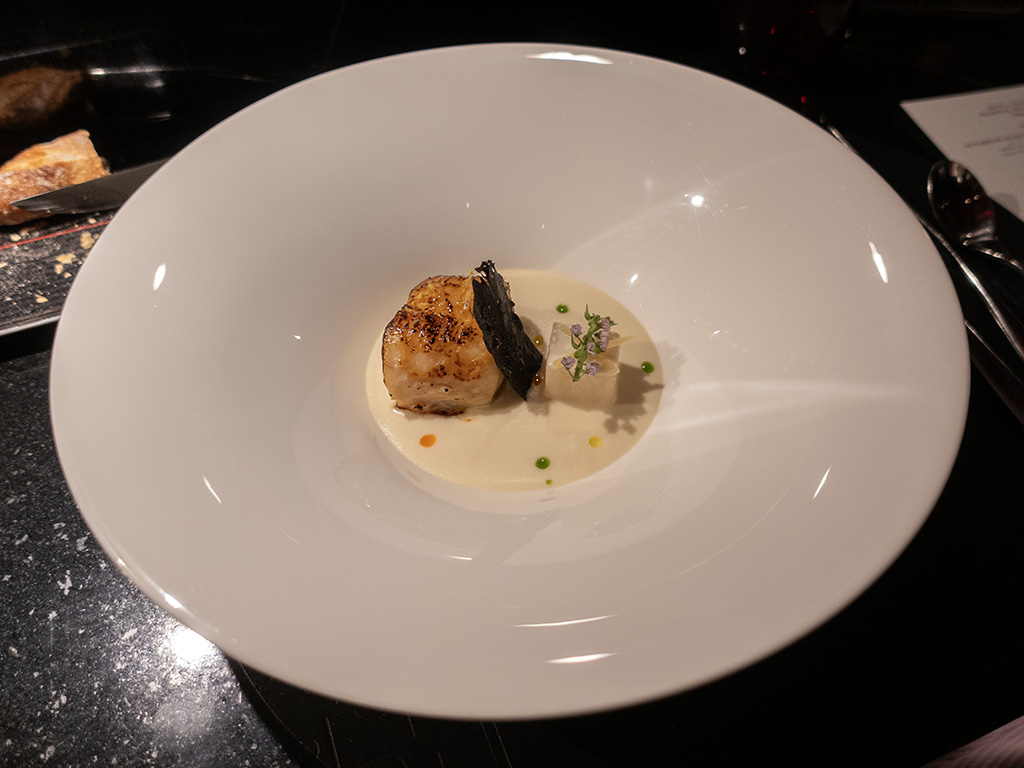
Up next was la morue charbonnière, which was caramelized black cod with daikon velouté and yuzu.
The fish was pretty straightforward and tasted good, but funny enough, it was actually the daikon radish that was the star of this dish. They had somehow managed to completely saturate this daikon with the flavor of the sauce, but still maintain a reasonable level of firmness so that it wasn’t mushy.
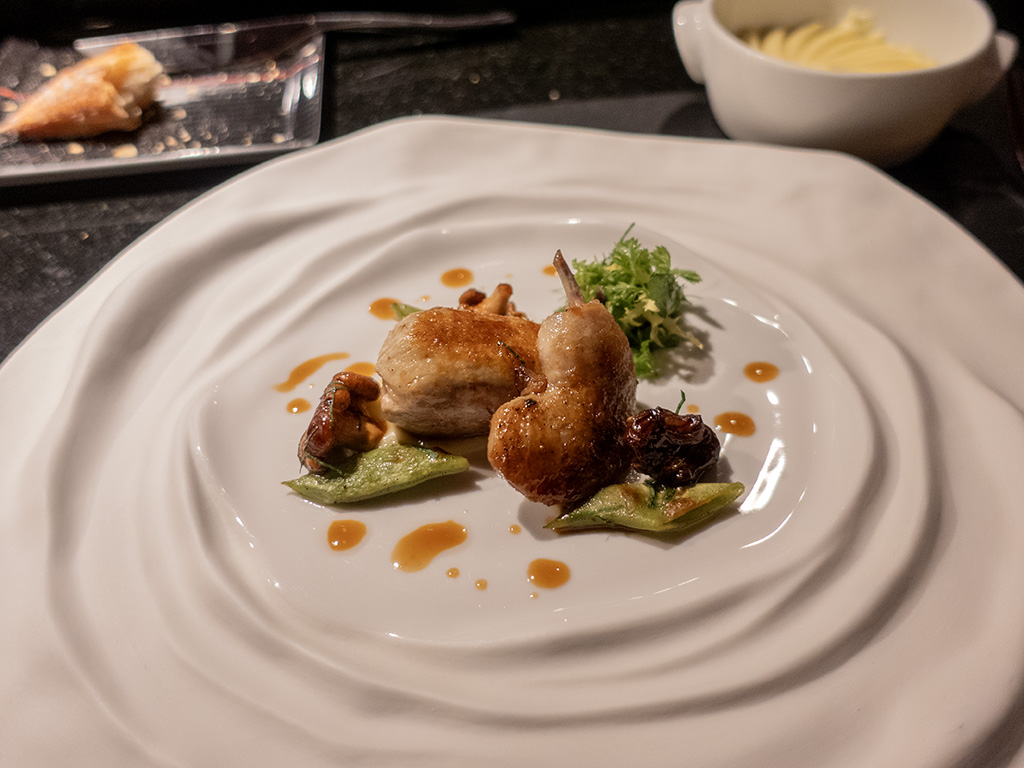
As the main entrée and the final savory dish of the night, I had la caille, which was a duo of quail and foie gras with chanterelles and romano beans. This came served atop a small bed of la fameuse pomme purée de Joël Robuchon, which is Joël Robuchon’s famous mashed potatoes, with a generous portion of extra mashed potatoes also served on the side in a bowl.
The portion size of the quail was a bit smaller than I had hoped. I also had the quail dish as my main entrée the last time I was at L’Atelier (though it was prepared in a different way), and for some reason, I remember it being a bit bigger back then. Regardless, the preparation was done well. I also liked the mashed potatoes because they actually tasted like mashed potatoes and not just butter purée like it does at a lot of other restaurants on the Las Vegas Strip.
There were two other options for the main entrée: l’entrecôte, which is Jack’s Creek ribeye with matsutake and salsify; or, for a US$38.00 supplement, le wagyu, which is A4 wagyu tenderloin from the Kagoshima prefecture. I opted to get the poultry dish and not the red meat in my continued efforts to reduce my saturated fat consumption in response to my hereditary predisposition to heart health issues.
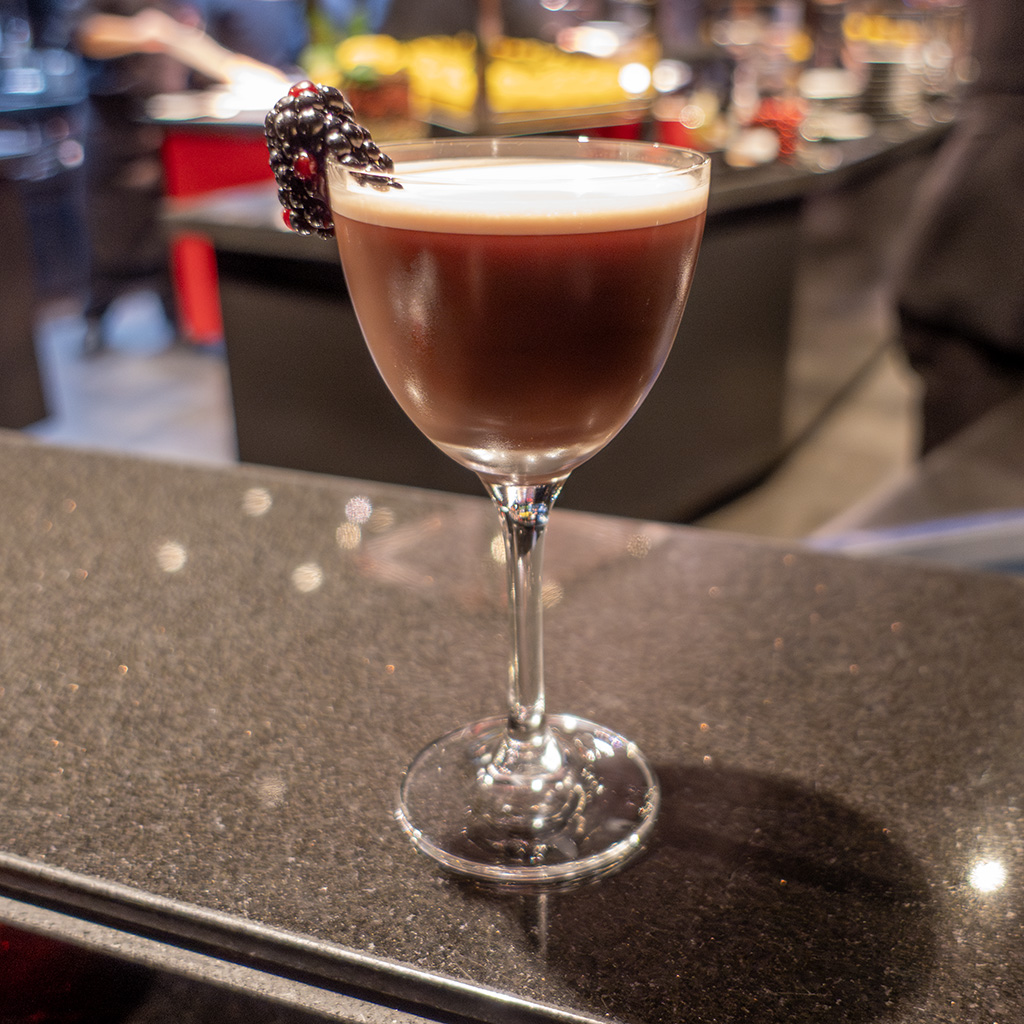
At the beginning of my meal, I browsed through the list of specialty non-alcoholic cocktails. The menu indicated that these weren’t just regular mocktails, but rather, the list contained a thoughtful collection of botanicals, nutrients, and functional ingredients selected for wellness.
Out of the six different options, their Blackberry Café caught my attention the most. The ingredient list said it contained blackberry, espresso, whole egg, and cane sugar; the egg induced a silky texture and served as a natural source of protein. I saw “whole egg” and, in my head, visualized a drink that would have like an entire yolk floating at the top or something. Out of intrigue, I ordered this drink and asked the bartender to serve it to me at whatever point of the meal he thought it would fit best.
Well, apparently, this was a dessert drink, because it finally came out after all the appetizers and main courses, and right before dessert. To my disappointment, it did not have an egg yolk floating at the top, and I actually couldn’t even tell that there was an egg in it at all. However, taste-wise, it was amazing. It went literally perfectly with both desserts.
The first dessert was la figue, which was fig sorbet served with blackberry panna cotta and fig confit.
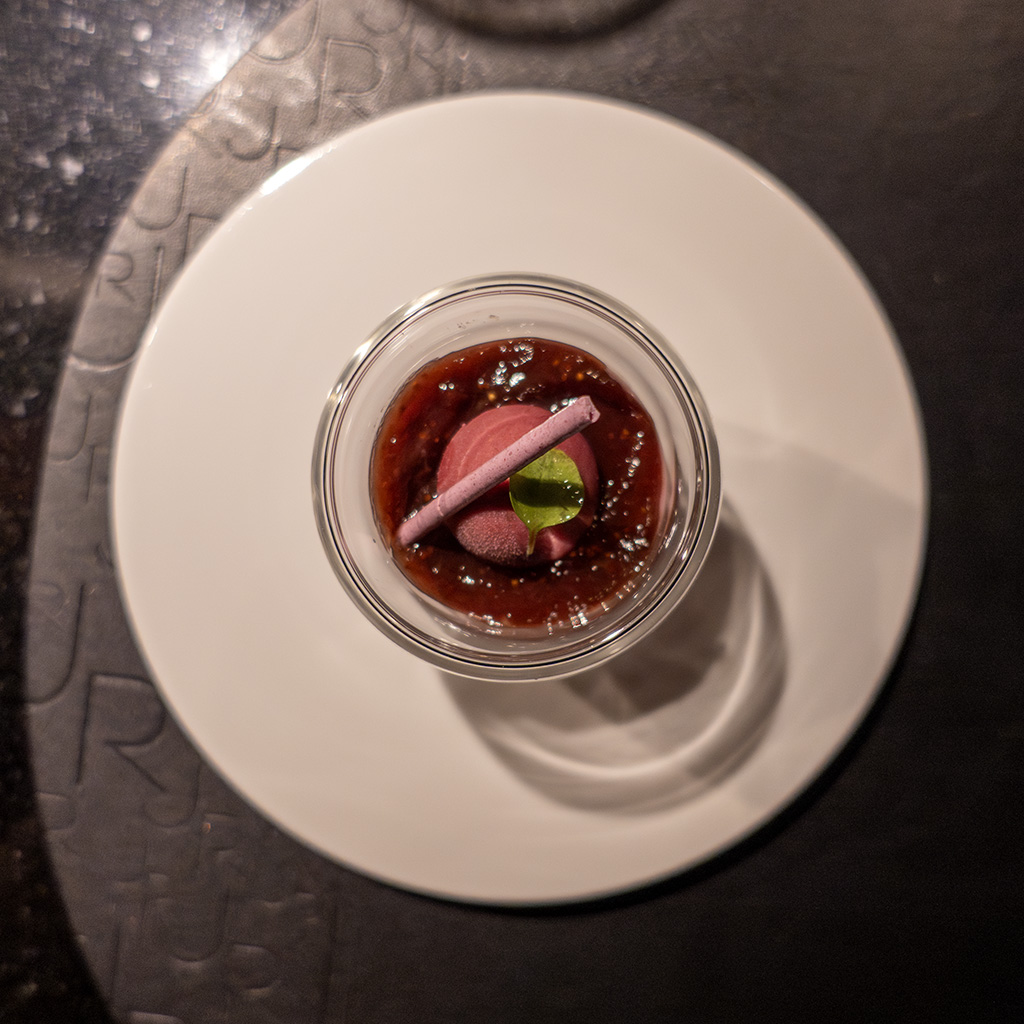
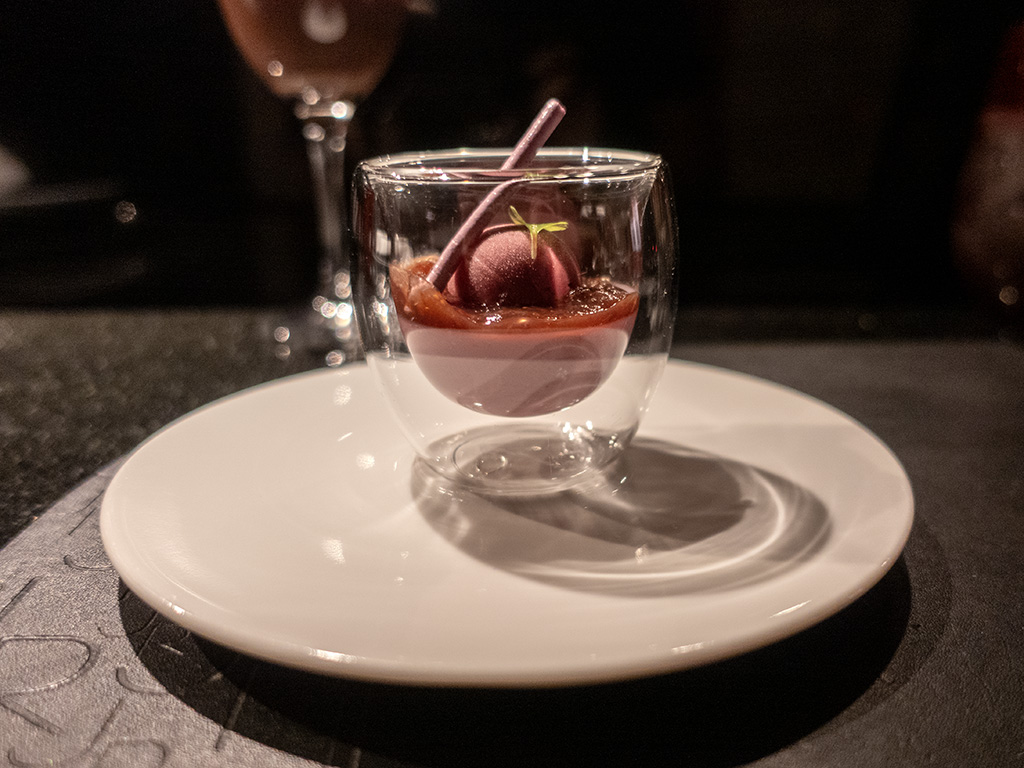
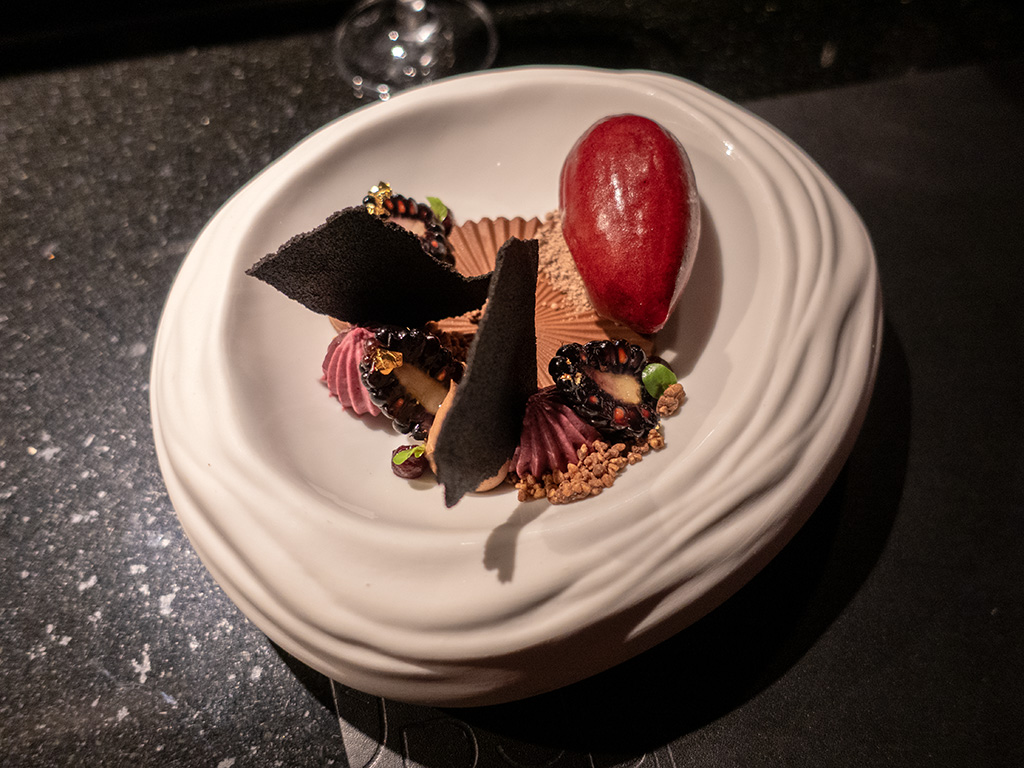
The second dessert was la mûre, made with smooth Manjari crémeux, cocoa crumble, and blackberry sorbet. (For the record, the course list wrote it as la mure, which means something different; based on the context of this dessert, I am pretty sure they meant mûre.)
Here is a view of the interior of the restaurant. As I previously mentioned, my seat was all the way in the back, so I had a commanding view of the entire rest of the restaurant.
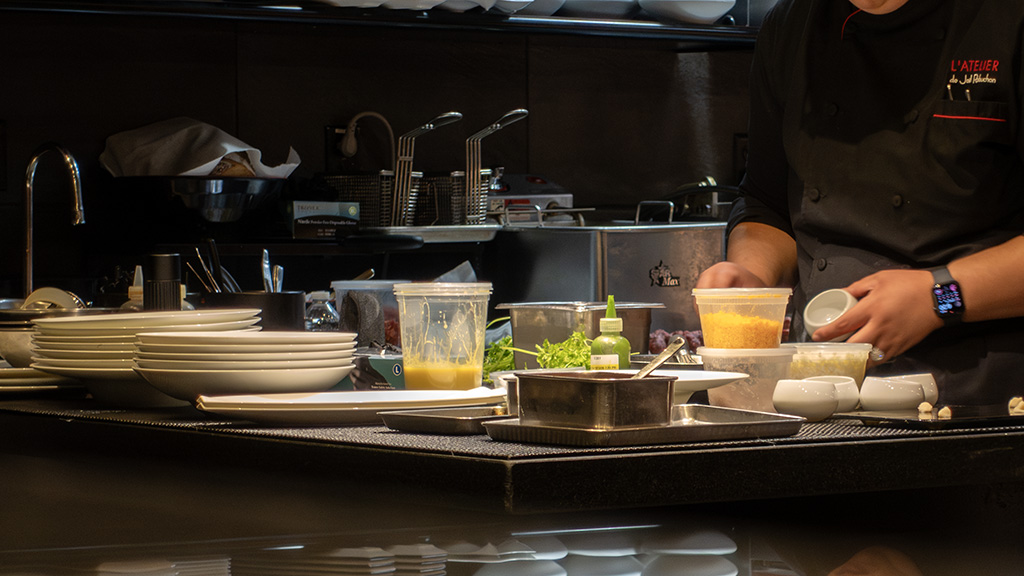
Unfortunately, the angle of the kitchen workstations meant that I didn’t have as good of a view as I did last time of the kitchen staff preparing the dishes. However, there was a small table out of the way in the corner that was close to me, and I had a decent sight line to that counter.
This is what the front of the restaurant looks like.
| Seasonal signature menu | $ 255.00 |
| Blackberry Café | $ 16.00 |
| Sales tax (8.375%) | $ 22.70 |
| Gratuity (18%) | $ 48.78 |
| Total | $ 342.48 |
Although the meal was fantastic overall, I have a sneaking suspicion that I might have found this a little bit overpriced if it wasn’t for the bread that helped fill me up. There was obviously a great share of heavy-hitting high-end dishes like foie gras, seafood, and generous portions of caviar, but the value for money wasn’t quite at a level where I would religiously go back every single season.
Funny enough, my favorite item of this dinner was actually the Blackberry Café. Not only was it just a very delicious drink, but the way that it added even more depth to the fruit flavor profiles of the desserts was amazing. Thinking back, la mûre was actually a bit more bitter than what you’d expect from a dessert due to the chocolate flavors leaning more towards the darker side. I think it still would’ve worked well as a standalone treat, but combined with the Blackberry Café, it morphed into a very well-balanced level of sweetness.
Because L’Atelier gives print-outs of the course list, people sometimes photograph it and upload it online, so I can get a preview of what I’m about to eat during a particular season before going in. For now, my plan is to keep an eye out for that and return for another meal at L’Atelier either when they overhaul the main entrée (because I had quail twice in a row and would like to try something different that isn’t just steak) or during the summer 2027 seasonal menu, whichever comes first.