Joël Robuchon is often considered to be one of the best restaurants you can find in Las Vegas when it comes to high-end dining. Their dégustation (i.e., their tasting menu, but in French because it is a French restaurant) is frequently described as one of the best culinary experiences in town, and I know of a few people who dine there annually to celebrate their favorite special events.
I want to go there at some point, but in the meantime, I decided to dine at the more casual version of the restaurant—L’Atelier de Joël Robuchon at the MGM Grand on the Las Vegas Strip in Paradise, Nevada. Their version of the dégustation is the menu découverte, or the seasonal discovery menu.
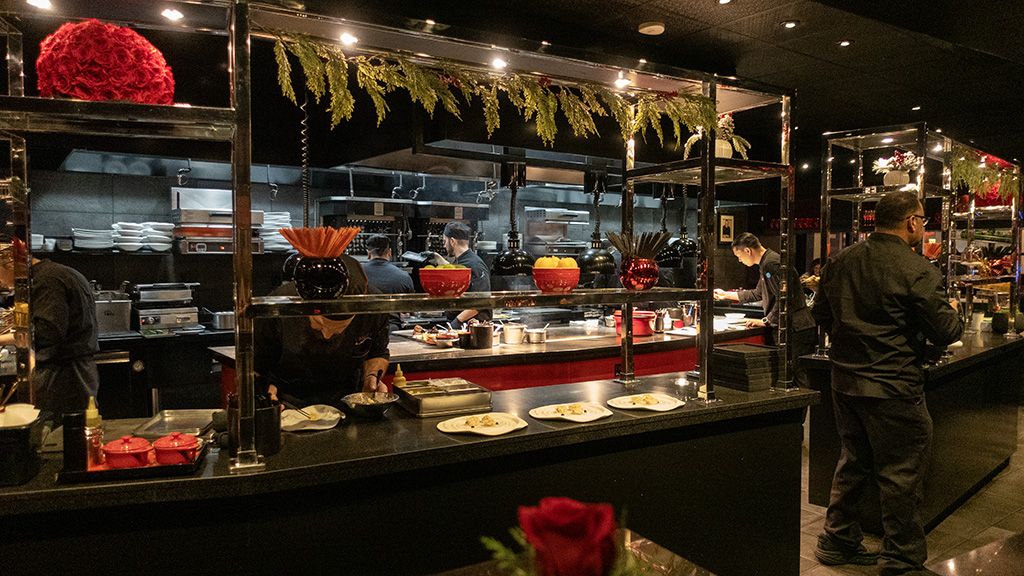
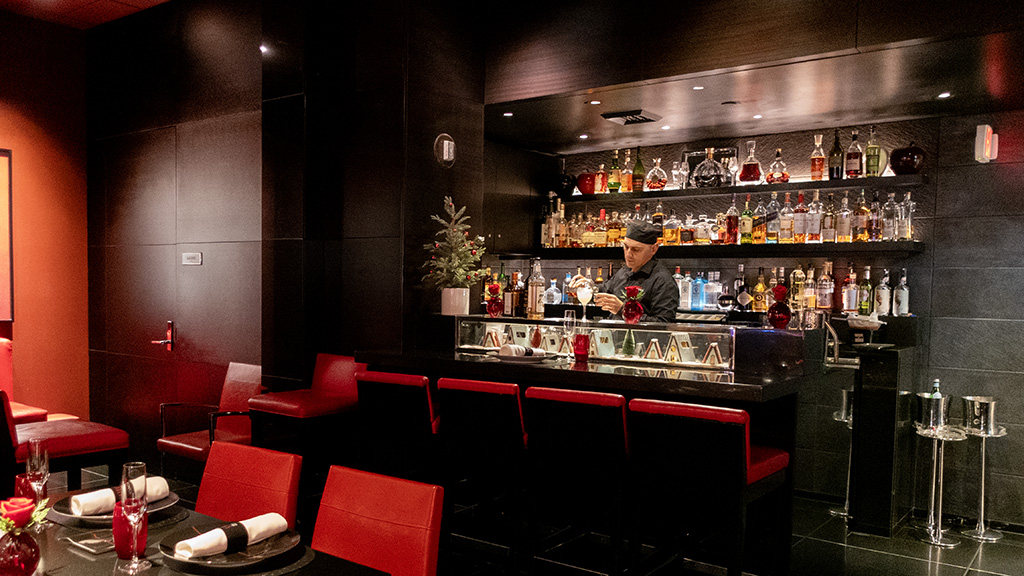
Because I was dining alone, I opted for a seat at the bar so that I wouldn’t be occupying a full table by myself, and so I could see the cooks and chefs in action.
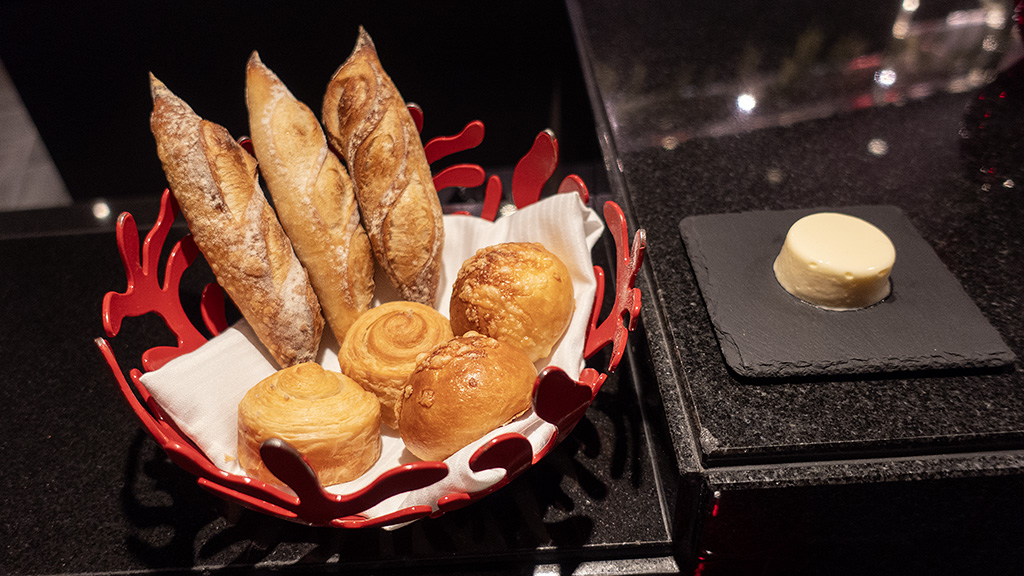
Promptly upon my arrival, I was shown the menus and was served a basket of bread. Throughout my meal, I finished this entire basket of bread on my own, and also ate a few more with a refill.
There were three different types of bread, and each of the various dishes had a certain kind of bread with which it seemed to pair the best. For example, I had the miniature baguettes with the richer and fattier dishes, I ate the croissant with the lighter dishes, and I used the cheese bread to dip into any remaining sauces.
I also just generally appreciated that there was a gigantic portion of unlimited bread to go along with the meal.
One of the complaints that I hear from friends who go to omakase or tasting menu restaurants is how they sometimes leave hungry, which adds an unnecessary sense of disappointment to an otherwise great meal. With that being said, restaurants obviously can’t be expected to serve huge portion sizes to satisfy even the most starving diners. Even though prices are partially set by demand, they’re also set by the cost of the underlying ingredients, so the chef needs to find a good balance between portion size and the overall affordability of the meal.
One way to address this is to give cheap carbohydrates as a bonus filler dish for those who are still hungry. For example, some omakase restaurants will ask if you want more food, and if so, they will give you complimentary scoops of sushi rice until you are satisfied. The way L’Atelier de Joël Robuchon gave me a ton of bread reminded me of the scoops of sushi rice from Japanese restaurants, which I liked. The bread is going to be relatively cheap for them to make, but the return on investment in customer happiness will be huge.
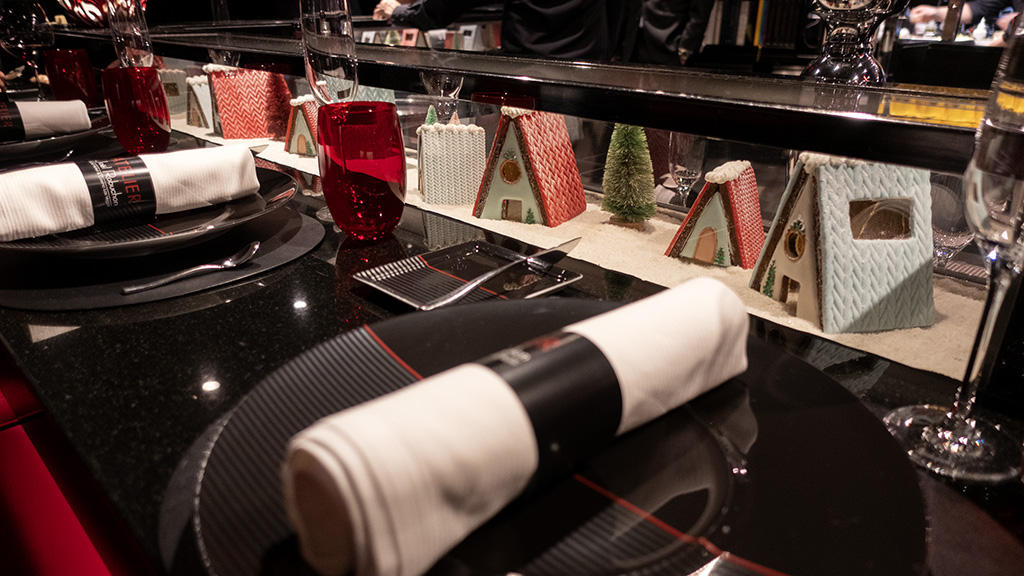
I mentioned this in my recent review of Gordon Ramsay Hell’s Kitchen, but I’ve been short of time lately because I once again did my annual “12 Days of Christmas” live streaming marathon around Christmas and New Year’s time in late 2025. I’m finally getting around to catching up on blog posts, so these photos from L’Atelier are also a few weeks old.
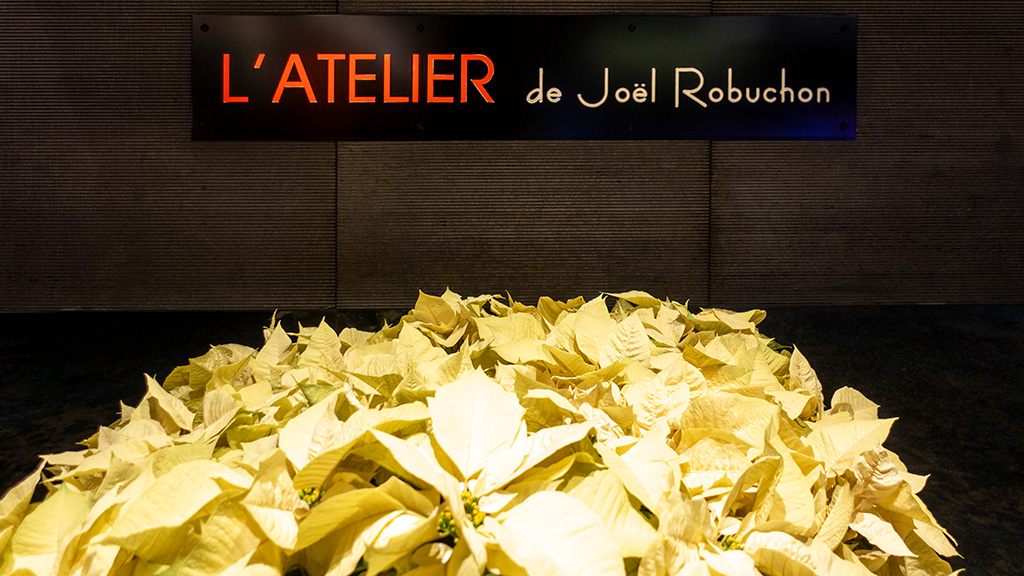
When I dined there, they had winter season decorations set up everywhere, which was a nice, festive touch.
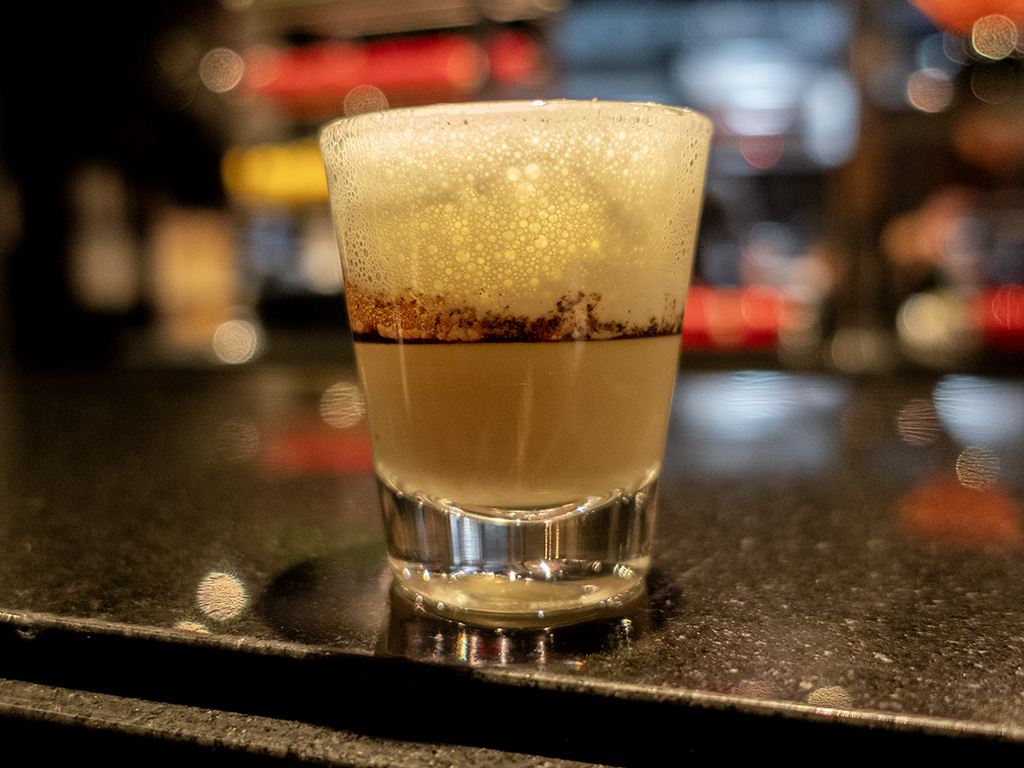
Once I let them know that I wanted to try the seasonal discovery menu and picked my preference of main dish, I was given an amuse bouche to sip on while waiting for my first item. I don’t quite remember what the individual components were, but I recall that it was pretty good.
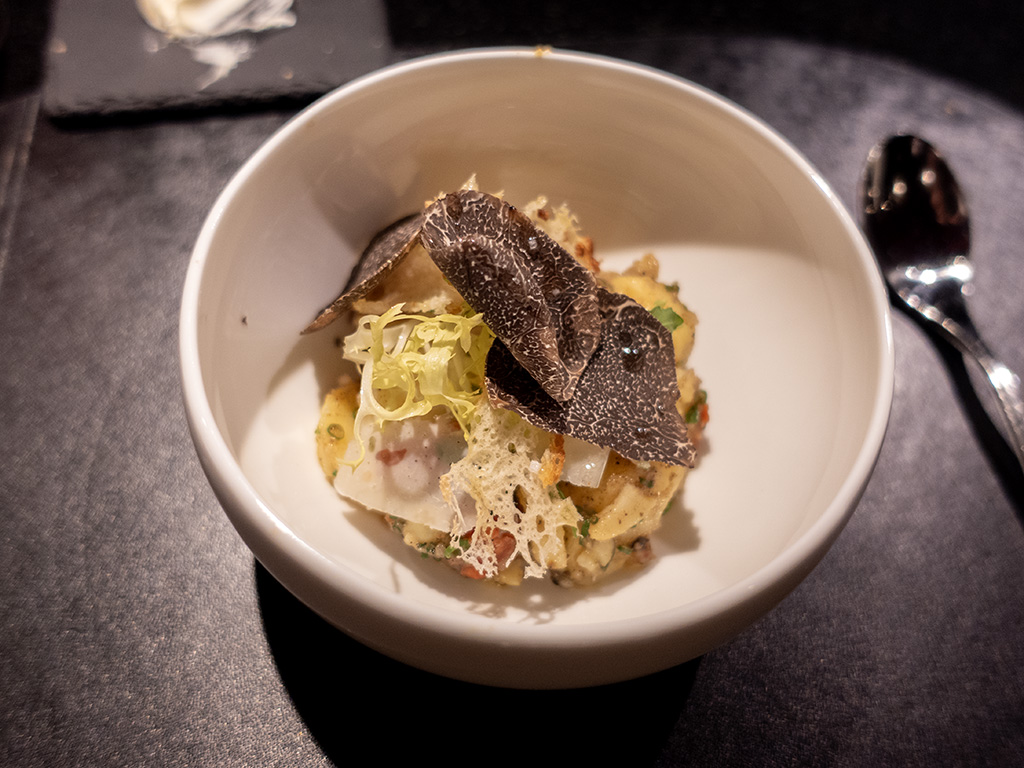
The appetizer was la salade de pommes, which translates to apple salad, with fingerling potatoes, tomato confit, truffle vinaigrette, and fresh shaved black truffle. This was a nice, refreshing start to the tasting menu.
My waiter mentioned that they were offering a special truffle add-on where I could have more freshly shaved black truffle added to additional future dishes for a supplement. Although the truffle on this had a nice, mild, soothing flavor to it, I still opted not to get the supplement so that I could taste the other dishes in the way that the chef originally intended.
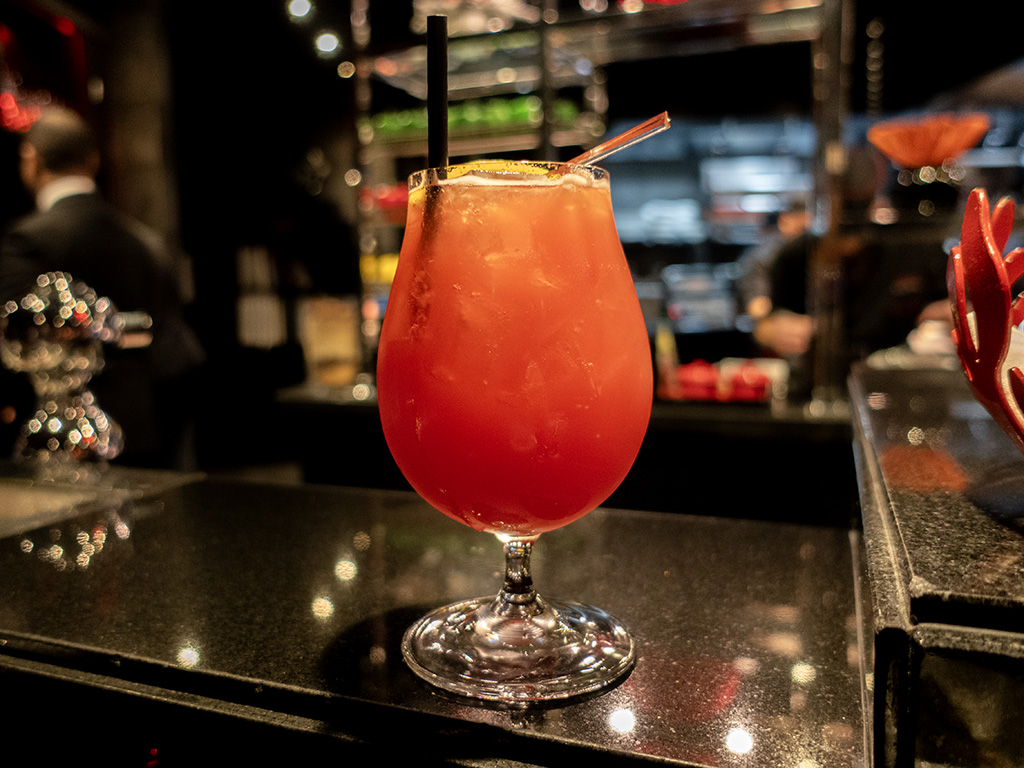
The discovery menu had a wine pairing, but because I don’t drink alcohol, I asked for a custom non-alcoholic pairing instead.
For my first drink, I was served their Blushing Mule made from Seedlip Grove 42 non-alcoholic spirit, lime, house-made raspberry syrup, and ginger beer.
I enjoyed this drink, and I thought it went along nicely mainly with the umami dishes. The intensity of the flavor was quite high, and it pierced through the fattiness very well. I’m also a big fan of ginger, so I thought having that familiar zing of ginger enhanced the overall flavor profile of the drink.
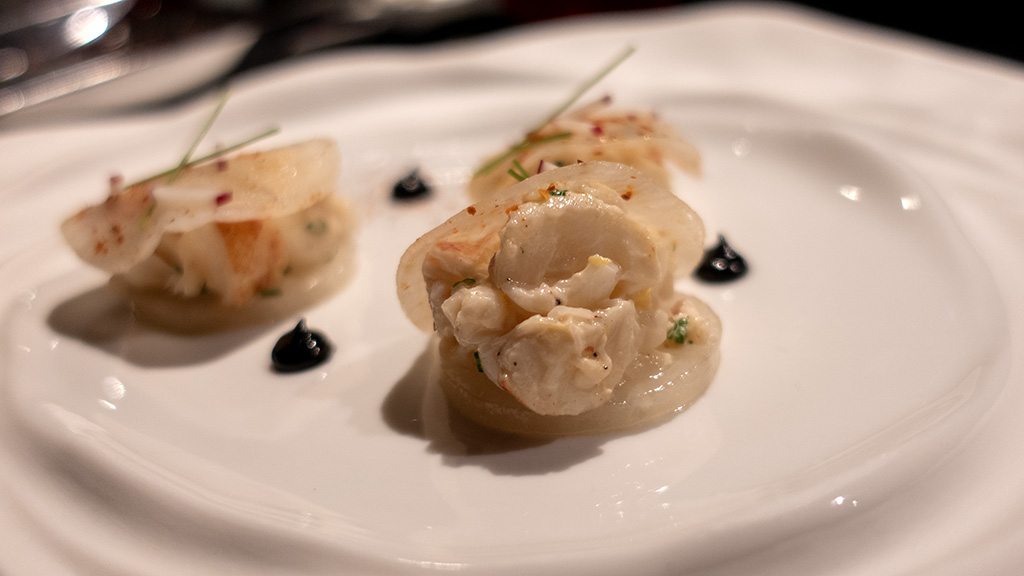
The next dish was la homard royale, which translates to lobster royale. This was a Maine lobster dish served under daikon radish marinated in a honey vinaigrette.
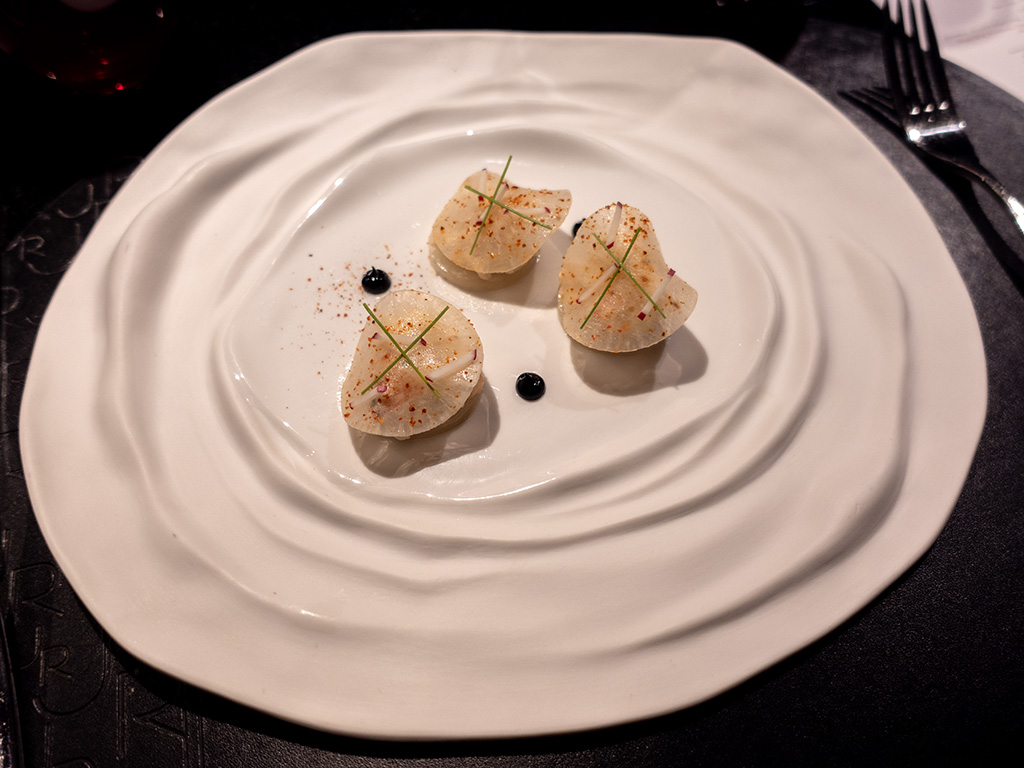
To my limited understanding of French cuisine, I was under the impression that the lobster being called “royale” usually means that it is particularly rich, buttery, and/or creamy. Funny enough, I would consider this lobster dish to be quite crisp and clean, rather than creamy. The lobster itself was lightly coated in a somewhat creamy sauce, but paired with the daikon radish, the overall dish was very refreshing.
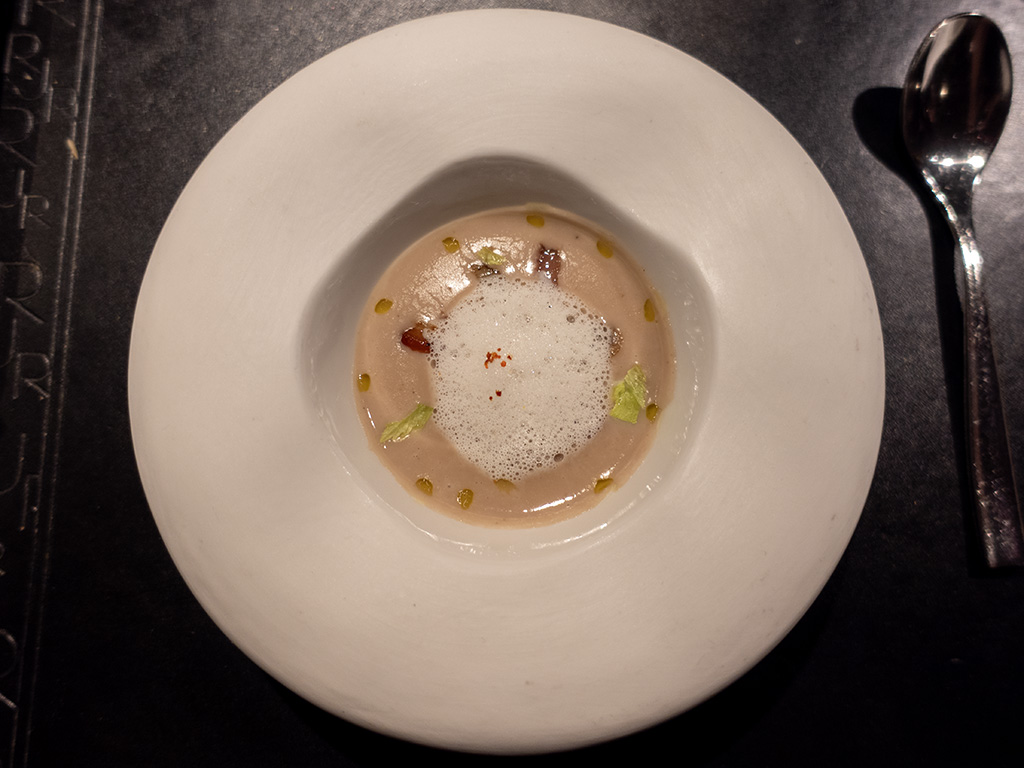
Next was la châtaigne, which was light chestnut velouté flavored with cardamom and lardons.
Although it tasted good, this was probably my least favorite dish of the night. That is probably unsurprising considering that I’m not the biggest fan of bacon, and lardons are strips of fatty pork, which is basically bacon. I particularly appreciated the miniature baguettes and the the Blushing Mule to go along with this soup, as both helped subdue and offset the intense fattiness.
The pacing of the dinner was a bit slower than I would have hoped. Usually when you’re dining solo, dishes feel like they’re coming out slower because you don’t have a conversation with any dining companions to distract you from the wait; with that being said, I go to restaurants by myself with decent frequency, so even after accounting for that factor, I thought it was still a bit slow.
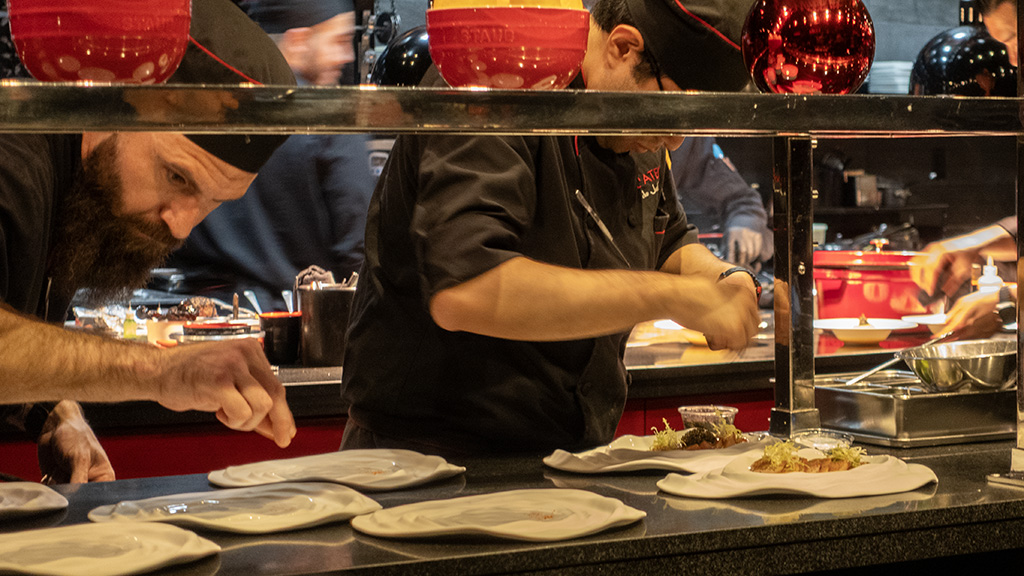
Fortunately, because I was seated at the bar, I had the entertainment factor of watching the cooks preparing other diners’ dishes.
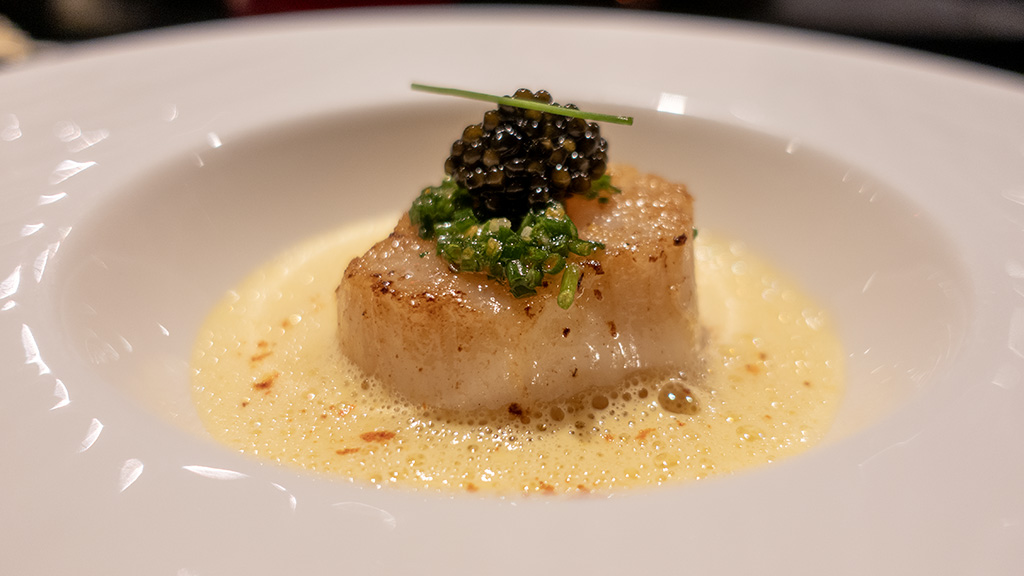
After the soup came la noix de Saint-Jacques, which translates to scallop; it was prepared seared in a kumquat and coconut sauce, and came topped with a portion of caviar.
I thought this was a great scallop. It was cooked to a great level of tenderness where each bite was soft, but the outside had a nice firmness to it from the sear. The caviar had a strong saltiness you’d expect from good caviar, and that saltiness enhanced and intensified the overall flavor profile of the dish. After finishing the scallop, I dipped some bread into the leftover sauce and finished that as well.
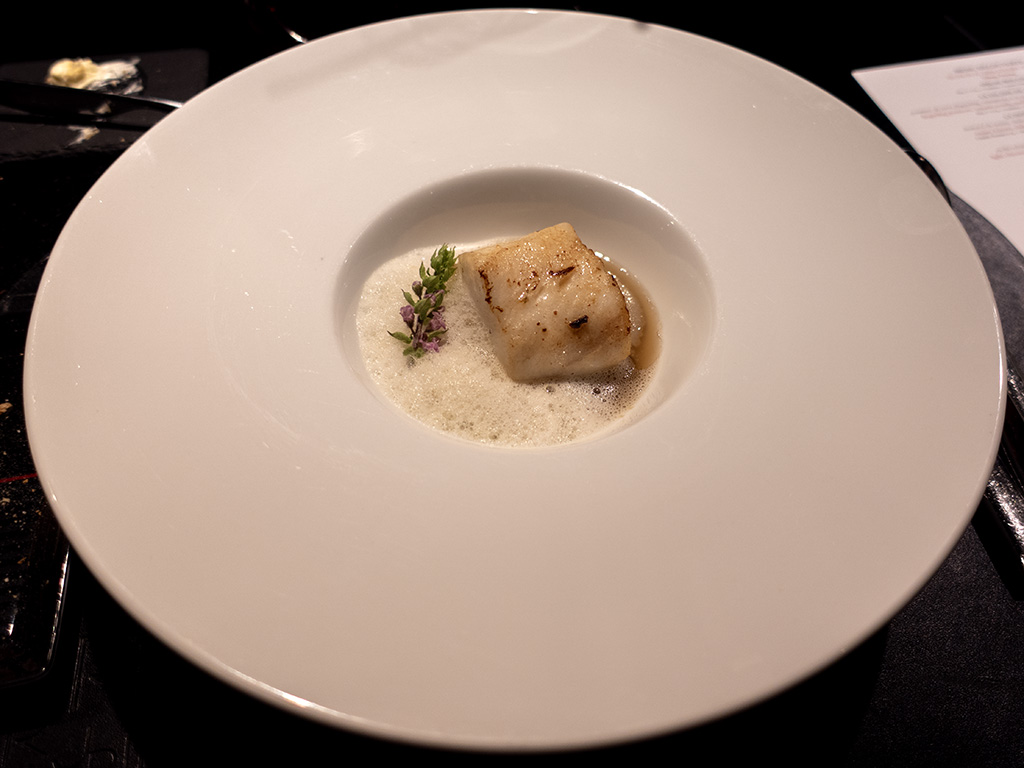
Following the scallop was la morue noire, which translates to black cod, prepared à la plancha and served with mushroom velouté and champagne foam.
I thought the way this fish was cooked made its textural perks similar to the scallop—the inside was soft and flaky, and the outside had a firmer crispiness to it that made the fish taste very good.
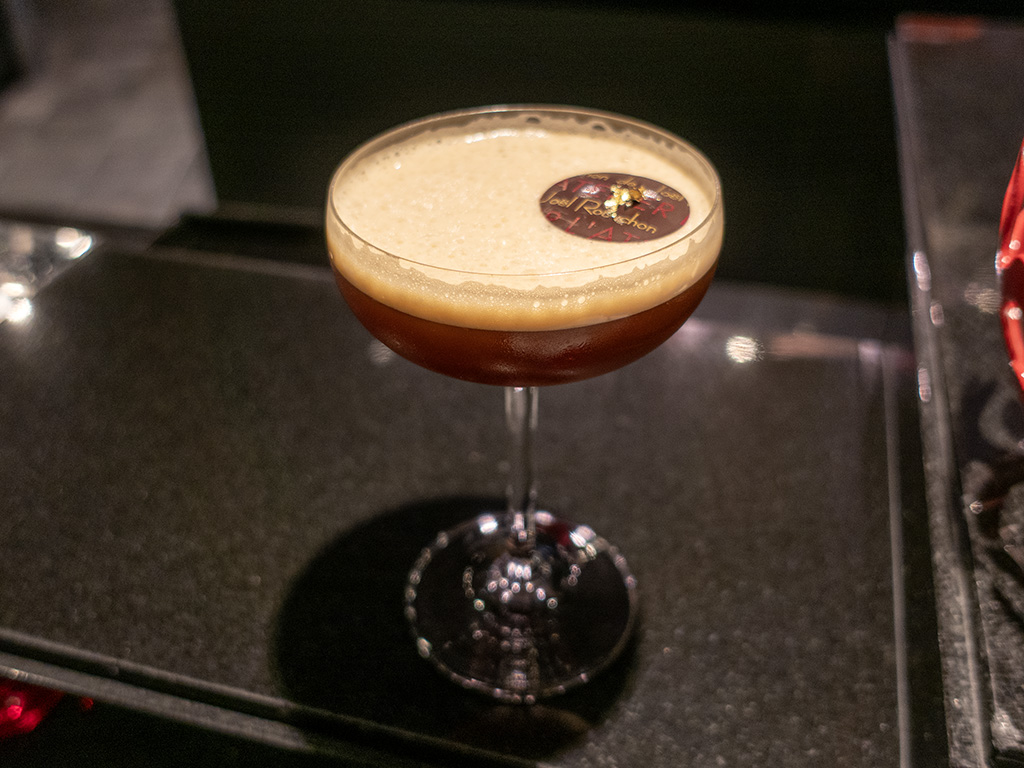
At this point, my second beverage of the non-alcoholic beverage pseudo-pairing came out. It was the café noix de coco, which translates to coconut coffee, made with espresso and coconut syrup. This may be shocking considering how much I like fruity drinks, but I actually liked this coffee better than I did the Blushing Mule.
I would describe this more like a dessert drink than what you’d expect from coffee. Although it was overall pretty sweet, it still retained a good balance of both sweetness and bitterness. When I drank it along with a regular dish, the sweetness was emphasized; when I sipped it with my desserts, the bitterness was emphasized, thus creating a great balance in flavor profile with the sweeter desserts.
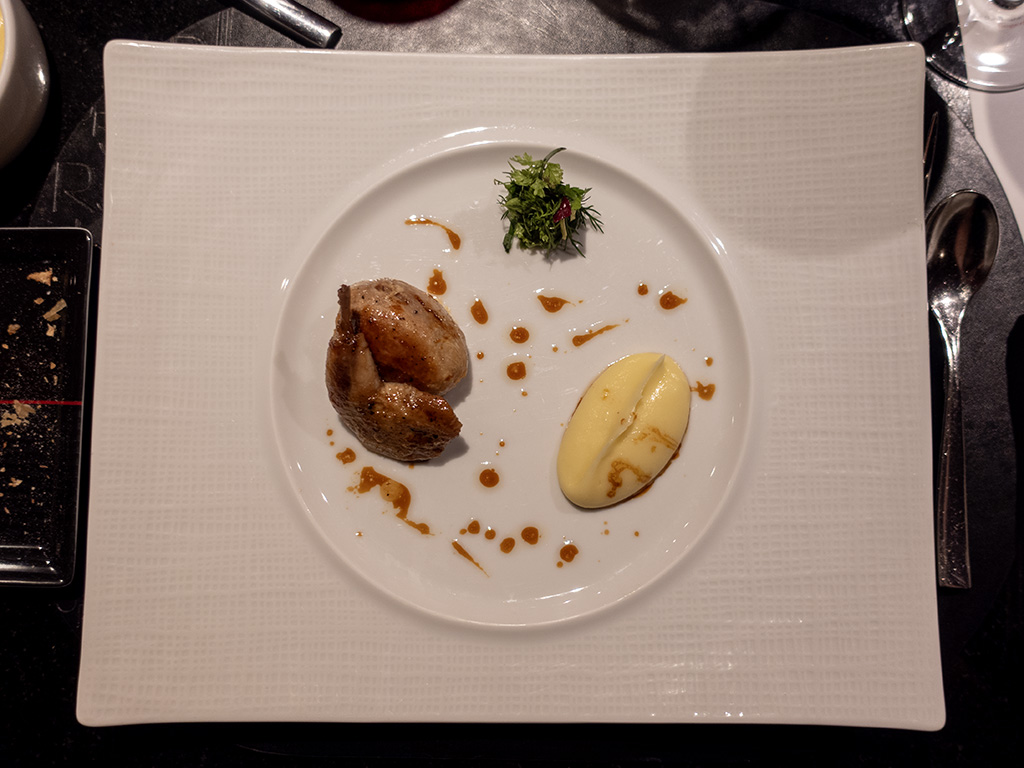
For my main dish, I opted for la caille, which translates to quail, prepared caramelized and filled with foie gras, along with a side of potato purée. There was a very small portion of potato purée served directly on the plate, but they also gave me an additional hearty portion of it on the side in a separate bowl.
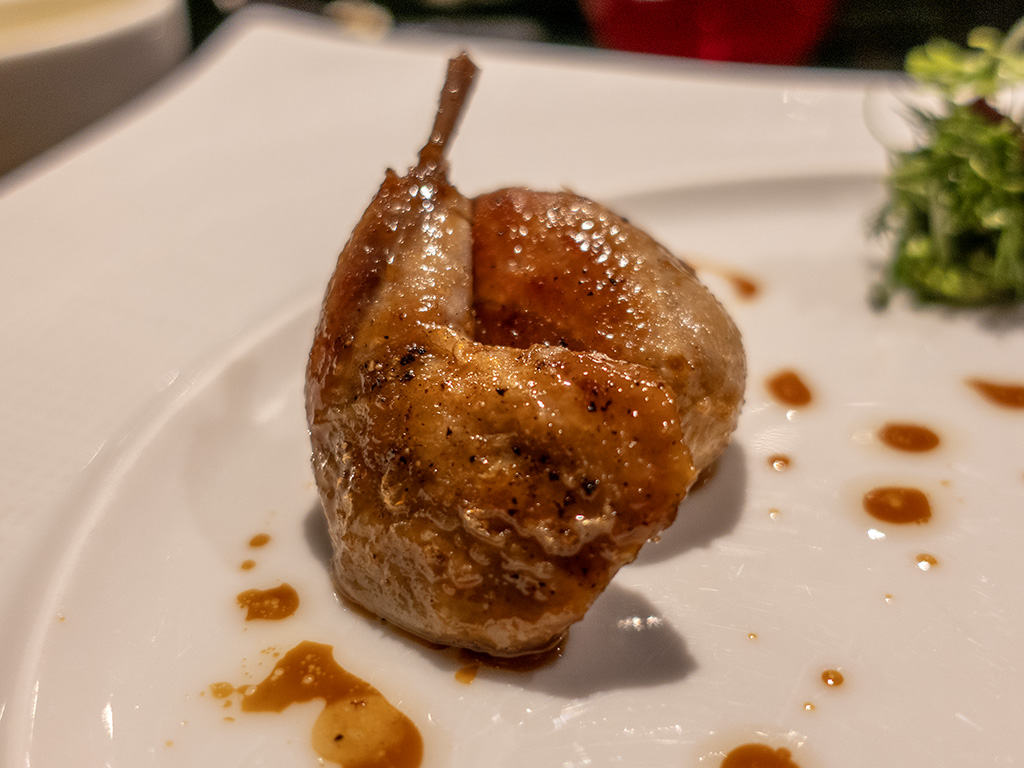
The quail was cooked to perfection. The inside was already tender, but the fact that they stuffed it with foie gras made it even better. The outside had a subtle crispiness to it that enhanced the texture profile.
This potato purée might have been the best potato purée or mashed potatoes I’ve ever had. Usually, restaurants will just overload their potatoes with butter so that it tastes better, but if you’re someone who doesn’t eat much butter, the excessive butteriness becomes pretty obvious and off-putting. This potato purée had the deliciousness of a butter-loaded potato purée, but it didn’t taste insultingly fatty and it still had a strong potato flavor.
If it wasn’t for this, then the other option for the main entrée would’ve been le boeuf, which translates to beef, and was a Jack’s Creek New York Strip steak with braised endive, comté, and jambon.
Throughout my meal, some of the waiters who would come to clear my finished plates would also ask how the food was, and I gave them frank and unfiltered feedback each time. The level of detail of my feedback presumably led them to believe and conclude that I have a decent level of familiarity with food, and thus, we developed some rapport over the evening.
Part-way through eating the quail, a waiter checked in on me, and I let him know how much I liked it so far. After hearing my response, it sounded like he was eager to tell me a story that he had been holding in for the past hour or two. Earlier that evening, there was apparently a woman who ordered the quail, was shocked at how small the portion was, and started complaining about how they deceived her. He added on, “maybe she was expecting an entire chicken!”
I chuckled, but was a bit confused, so I looked down at my own plate. I confirmed that they had only served a quail leg and thigh, which is like a quarter of the bird. I looked back up and was about to suggest that maybe she was just anticipating receiving more components of the quail, but by that point… the waiter had already disappeared.
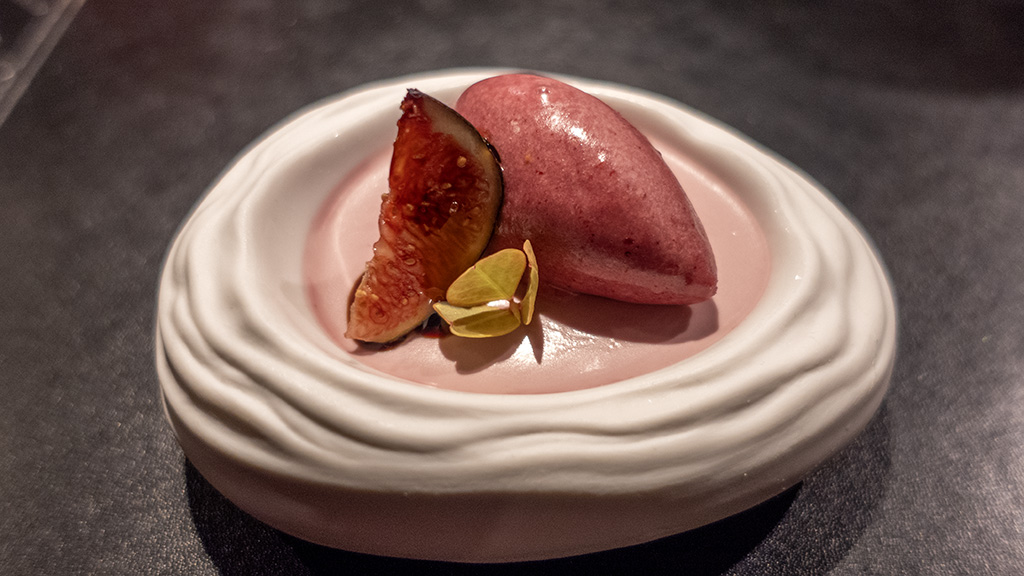
That concluded the main part of the meal, and we were now left with two final desserts. The first dessert was la figue en sorbet, which translates to fig sorbet, served with blackberry panna cotta and fig confit.
I don’t know if I’ve just been eating low-quality or underwhelming fig my entire life, but this fig sorbet and fig confit actually tasted like a naturally sweet fruit. Mixed with the coconut coffee drink I mentioned earlier, this was probably my all-time favorite fig dish.
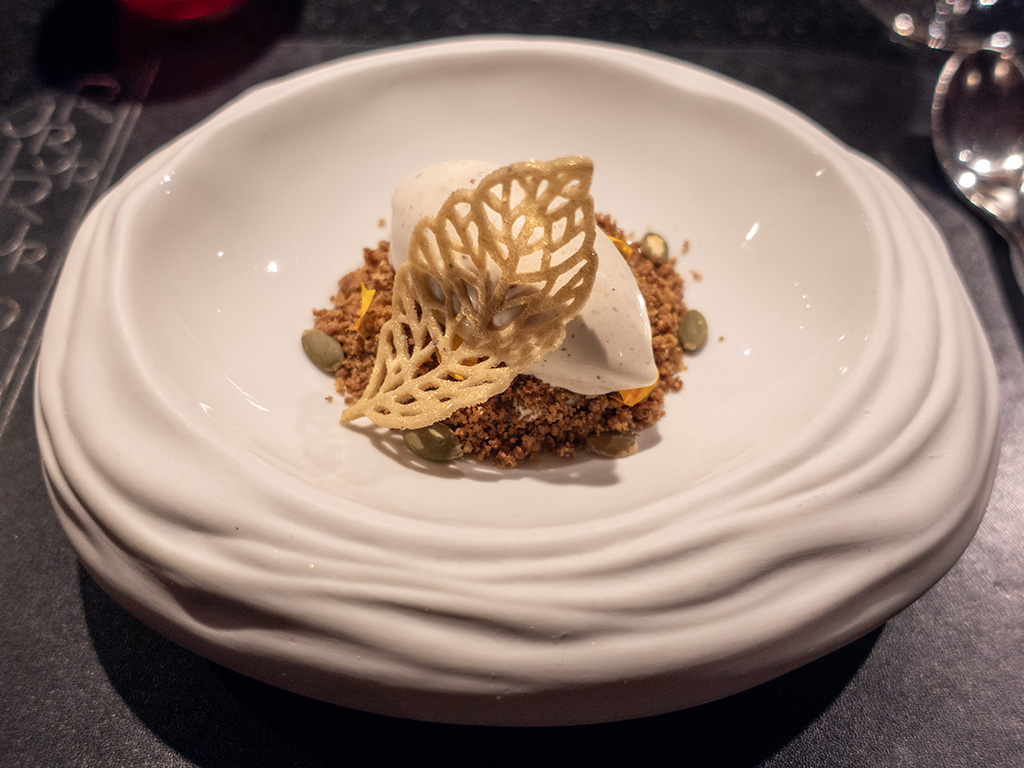
The second dessert was la citrouille, which strangely translates to “pumpkin.” The dish was actually cinnamon ice cream with caramelized honeynut squash and pecan streusel.
I like nutty flavors, so as expected, I liked this dessert. The cinnamon ice cream flavor went along nicely with the streusel, and the crumbly texture of it made the ice cream more fun to eat.
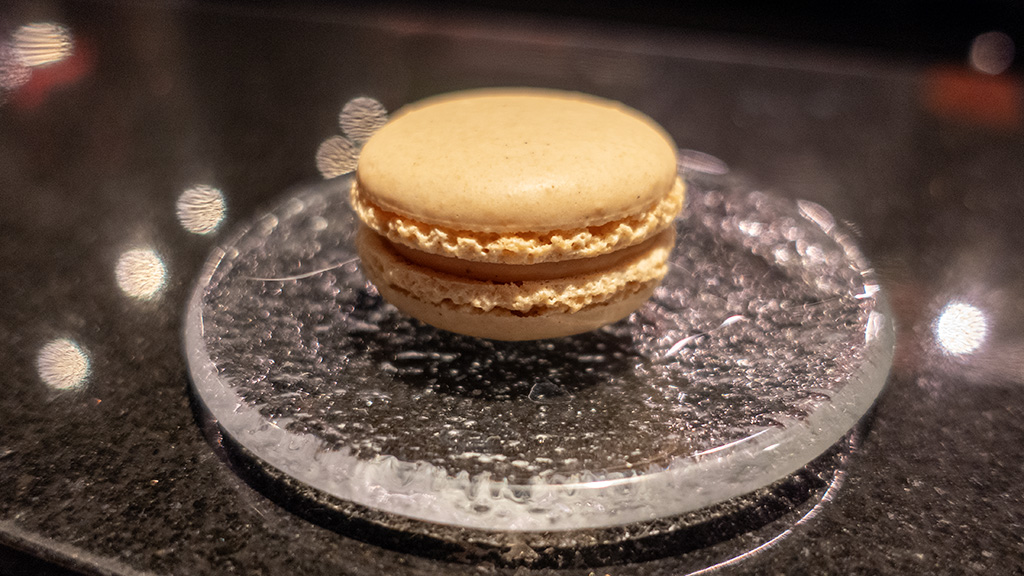
Upon the conclusion of my meal and along with my check, I was given a macaron as my mignardise, also sometimes referred to as a petit four.
After biting into this macaron, it occurred to me that L’Atelier de Joël Robuchon did an overall fantastic job at textures on everything they served me. The macaron was soft on the inside and crispy on the outside as you’d expect from a good macaron, but there was also a ring around the edge of the shell that was extra crispy that added even more depth to the contrast in texture.
I thought all the dishes played around with texture in a more “advanced” way like this, which was nice.
I was seated at the main bar with a view of the kitchen, but there was a separate alcohol bar in the corner; this is what it looked like:
And finally, here is a shot of a flower arrangement situated outside the restaurant:
| Seasonal discovery menu | $ 255.00 |
| Blushing Mule | $ 18.00 |
| Café noix de coco | $ 18.00 |
| Sales tax (8.375%) | $ 24.37 |
| Gratuity | $ 45.00 |
| Total | $ 360.37 |
Although this was a very good restaurant, it wasn’t quite at the level of being a particularly stand-out experience. To be clear, the quality of the food was far better than many restaurants I’ve been to, and my taste buds had a great time eating everything. However, there wasn’t anything notably crazy, gimmicky, or memorable about it (which is not inherently a bad thing, and could be considered a positive for some).
This reminded me a lot of Jeune et Jolie, another French restaurant I went to when I was visiting Southern California. I was under the impression that French cuisine fundamentally relies heavily on butter, cream, cheese, and other fatty ingredients to serve as a foundation for their flavor profiles. However, both L’Atelier and Jeune et Jolie had cleaner and more refreshing dishes. This could potentially be attributed to local differences specific to regional specializations within France; if that is the case, then this region of French food is something that I much prefer over other French food I’ve had in the past.
Although I would say that I do recommend this restaurant, it isn’t such a strong recommendation that I would suggest prioritizing it if you have a limited number of days and a limited number of meals to try in Las Vegas. Also, keep in mind that this is quite a high pricepoint for a meal. Even without the two non-alcoholic beverages, this seasonal discovery menu exceeds US$300.00 per person after tax and gratuity.
With all that being said, I think this was a successful “trial” for me for the full-blown dégustation at Joël Robuchon. If I was being really picky about value for money, it might not be worth it, but in that case, I guess a lot of other fine dining restaurants also probably wouldn’t be worth it either. I heard that the complete dégustation can take up to four hours; my experience at L’Atlier took about two and a half hours, and I enjoyed it enough that I would not mind a four-hour version of it in the future as well.