While I was refilling the vending machines yesterday, I found this liquid candy that you’re supposed to spray in your mouth. I opened it to try it but I ended up closing it and putting it back in my pocket because I got distracted.
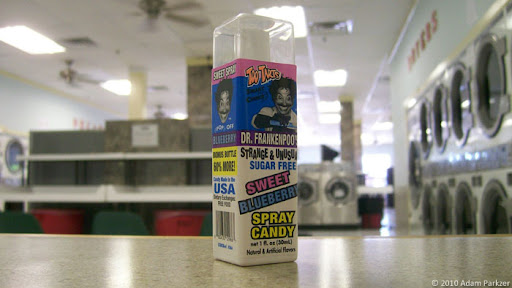
I found it again earlier today, so I decided to try it.
One spray in my mouth and I thought my tongue was going to shrivel up.
The liquid candy was so sweet that it tasted bitter.
I have no clue why or how this candy is one of our best selling products.
The Daily Shoot Assignment of the DayMake a photo with the number 4 in it one way or another. Maybe 4 items. Maybe a written number. Maybe more abstract.
 What I’m Reading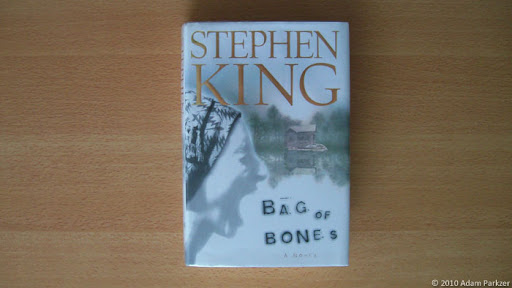
I have to bring the unfortunate news today that for the first time this summer, I gave up on reading a book.
Believe it or not, I have never read a single book written by Stephen King before. I heard that
Bag of Bones was a book that would leave a lasting impression in my mind, so I thought that it would be a good book to start with. Apparently, that was a mistake.
The first thing that made me unhappy with the book was the extremely small text and the extremely large pages (yes, I’m serious). Even at my insanely-fast reading speed, I think it took around three minutes to finish reading a single page.
After getting through roughly fifty pages of the book, where the main background of the plot was introduced and a majority of the main characters and their histories were established, I became bored with the storyline.
I guess I wasn’t feeling very patient on the day I read this (which was a few days ago), so I put the book down, never got a chance to get back to it, and returned it with the remainder of my books to the library and checked out some other ones.
Keep in mind, though, that I have a tendancy to dislike books that a lot of other people thought were incredible. The most recent occurrence of this prior to
Bag of Bones was when I read a book about an African boy that went to war and did a project on it for my World Literature class. I emphasized how boring and pointless the book was, but my instructor and other classmates that had read the book all said that it was an excellent book.
Don’t let my input discourage you from reading this book, because I’m sure it gets better eventually, or else Stephen King wouldn’t be such a famous author. I’ll end up going back and reading another one of Stephen King’s books in the future, but for now, I still have a lot of other books left to read that were recommended to me by my friends based on my interests and personality.
Question of the DayThis question was submitted to me anonymously approximately a month ago on my Formspring account, and I thought it was an interesting question that seems to be a simple Yes or No question, but reveals something about an individual’s personality and their view on social status. I thought it was worthy enough of being featured as the question of the day for today, so here it is: “Would you give a homeless man CPR if they were dying on the side of the road?”
If I was asked that question ten to fifteen years ago, I would probably immediately say “of course not.” My childhood was when I struggled for independence, not helping anyone and not accepting help from anyone; this primarily rooted from my mom caring too excessively for me.
But as I got older, even though my mom’s care was still excessive and still annoying, I came to a conclusion that for all the positive energy that I expel into the environment, I receive an equal amount of positive energy in return. With that being said, I guess helping a homeless man would be a positive act, so it would be the better thing to do.
A lot of people say that if I’m selfish enough to only help someone else because I expect positive things to happen to me in the future, I should take a look at
helper’s high, an apparent feeling that makes the helper happy after helping. Unfortunately, after much scrutiny, I concluded that I am immune to helper’s high and don’t feel euphoria after helping someone.
I think I’m unintentionally making myself sound like the devil now.
Another thing that would influence my decision to give a homeless man CPR is the fact that I’m CPR certified. During my senior year in high school, I became CPR certified as part of the process of becoming a physical education leader, or an upperclassman that works in correlation with a staff member and leads a class of underclassmen during their gym period. Even though there are plenty of people that are CPR certified, and even more that aren’t certified but still know how to use CPR, I still feel a slight obligation to use what I’ve learned, seeing as others took the effort to teach it to me.
So for my final answer, if a homeless person was dying on the side of the road, I would administer chest compressions, but would not administer rescue breaths.
And that goes for anyone that I don’t know, not just for homeless people.
I have no idea what you humans put in your mouths these days, and whatever infections are growing in your mouths as a result, I don’t want it in mine.
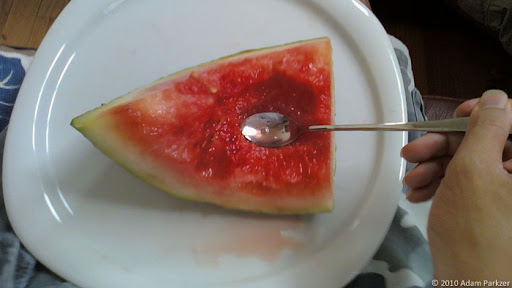
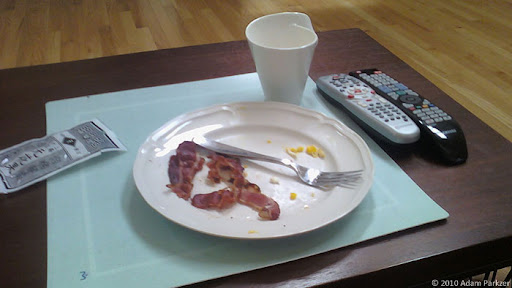 This is the weirdest watermelon I’ve ever eaten in my life. Not only does it look like it’s bleeding, it was also impossible to actually eat. The fact that I was trying to scoop chunks of it up with a coffee stirring spoon didn’t help either.
 And here’s my friend intensely gaming. Sort of. His name is Edward Lam, he one day aspires to be famous and wishes to be known across the world, even in Antarctica.
 We then tried registering me for a PlayStation Network account. It asked for my address, so I put something random in, and it kept rejecting it. Apparently, 608 Djhk Dr in Washington, DC is not a valid address.
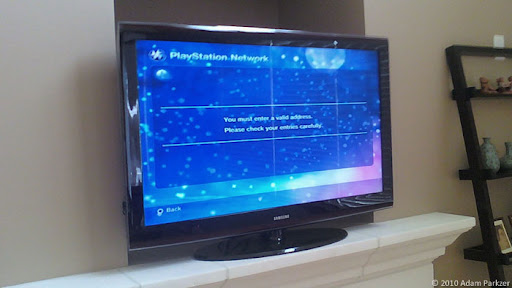 After I finally managed to put a fake address in, it took me another six or so tries to pick out a valid password.
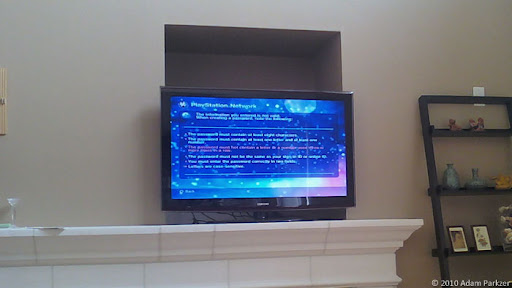 After what seemed like 15 minutes, I finally finished registering for an account. Unfortunately, when I went to sign in, it rejected my log-in info.
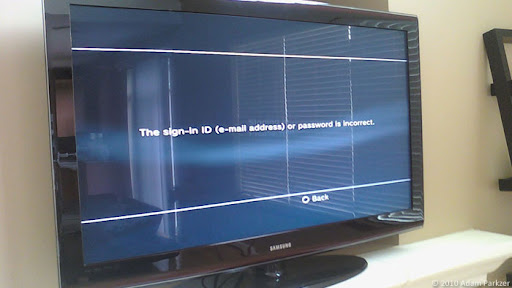 After somehow getting signed in, I played a little Call of Duty for the first time, and stopped when I got dizzy from the rapidly rotating screen. Then we switched over to a fighting game, and I managed to get my first victory over a Level 4 player. The second round, however, I wasn’t that fortunate.
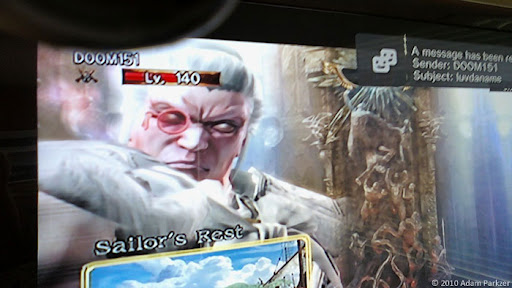 Yes, the second player that I faced was Level 140. I lost miserably.If you haven’t realized already, I’m not much of a gamer.That was my short adventure at Edward Lam’s house. The Daily Shoot Assignment of the DayFocus on a fragment of an object today. Make a photograph that only shows part of an object, not the whole thing.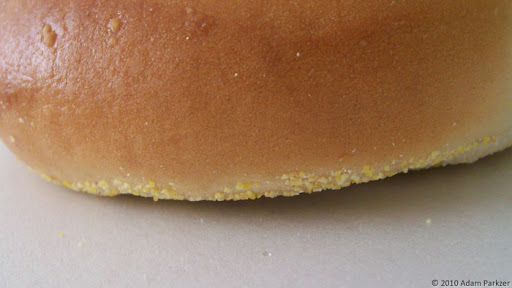
 What I’m ReadingA little while ago, I finished reading a book titled Deception Point by Dan Brown.
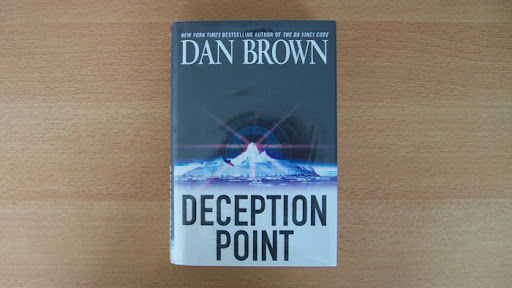 After finishing four of Dan Brown’s other books, I knew that this book was going to be a good read. Dan Brown has built an excellent reputation in my mind, and Deception Point only solidified his standpoint. Like his other books, Dan Brown wrote Deception Point as a thriller mystery, with multiple different conflicts occurring at the same time. The chapters switch back and forth from different scenes of the plot, putting equal emphasis on the importance of each of these events. This style of writing also helps the reader understand how the events occur chronologically.The main character in this book is Rachel Sexton, the daughter of a senator running to become the next president of the United States. As the novel begins, Sexton finds herself in the Artic Circle observing the extraction of a massive rock, supposedly identified as a meteorite from outer space. As NASA investigates the meteorite, they find that there are fossils embedded in the meteorite, proving that extraterrestrial life exists.Before the world has an opportunity to celebrate, Rachel Sexton and a few other civilian scientists discover some flaws with the meteorite, and begin to question its authenticity. As NASA’s discovery takes a sharp turn in the other direction, Sexton and her friends find their own lives in danger when they find out three mysterious individuals are out hunting for their lives.In addition to being a good read, this book comes with lots of factual information interlaced in a fictional storyline, making it educational as well as entertaining. All of the technologies described in the book are real and could be used today for the same purposes as they are used in the book.Also, this is an excellent book for the readers who don’t like finishing a book because they want the story to continue longer. When it seemed like the story was about to come to a conclusion, I checked how far I had gotten and noticed that I was only about half way through the book. With plenty of unexpected twists and turns creating new problems and magnifying old ones, this is a book that will definitely keep you alert and thinking. Question of the DayToday is a combination of various different questions I’m asked about my choice of drink: “What is your favorite thing to drink?”As a direct answer to the question, I would have to say my favorite thing to drink is either lemonade or Mountain Dew. No, it does not matter if the lemonade is yellow or pink.Some variations of the question are “this or that” questions: Coke or Pepsi? 7-Up or Sprite? Gatorade or Powerade? Honestly, although I will pick one or the other if I’m asked, I don’t really care what my two options are. I am one of those people that are able to taste distinct differences between similar products with different brand names (such as the comparisons mentioned above), but any drink is good, as long as it’s not bitter or alcoholic. Which leads me to the next two questions…… the first one being, “What is your favorite type of coffee?” If you’re expecting a normal Parkzer answer with sugar measured down to the last milligram and cream measured down to the last quarter ounce, you’re wrong. I hate coffee. Unless I’m stranded and dying on a desert with nothing else to drink, I always pass when offered coffee.The second is, “What’s your favorite alcoholic beverage?” First of all, I have to mention that in order to have a favorite of a particular item, one has to try various different types of the item in question and identify which type he or she favors most. Seeing as the legal drinking age in the United States of America is 21, and I have lived in the United States all my life, stating my favorite type of alcohol would essentially be a public announcement that I have broken the law. I have no desire to announce myself as a criminal on my own public blog, so the question remains unanswered.Either way, my theory is that drinking alcohol is the equivalent of committing suicide, just that it’s a lot slower than methods such as shooting yourself in the head or
 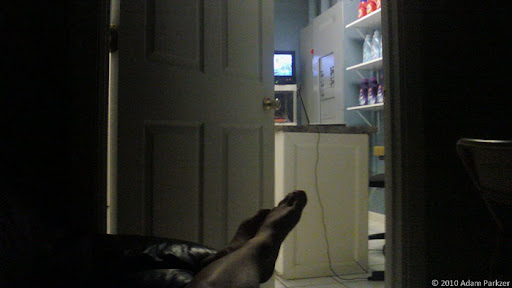 This picture will probably be pointlessly boring to everyone except for those little kids that always try to sneak into our office, but there really isn’t anything else for me to blog about. I’ve been the person on duty in our business a lot lately, and this is basically what I’m seeing for a majority of the day. Quote of the Day“I learned today that tennis rackets do not make good fly swatters.”Who would’ve thought. Question of the DayThis question is a recurring question that is generally asked by people that watch my YouTube videos: “Are you ever going to put your song covers back up?”For everyone left in the dark, at one point a long time ago, I used to have guitar covers of popular songs up on my YouTube channel on a separate playlist. (If you look now, you will notice that II have a main playlist named “Uploaded Videos” that displays by default, then have videos of a specific theme only visible in a separate playlist so it doesnât interfere with my main uploads.) The songs I covered were mostly requests and were songs by artists such as Taylor Swift, NeverShoutNever, and Sum 41. Shortly after uploading them, and after I was sure that at least the people that specifically requested the videos saw the videos, I deleted them from my channel entirely. What I did not know was that people were sharing the link to my videos and telling each other to watch them (and probably telling each other to laugh at how bad I was too). When people suddenly started seeing an error message telling them that the videos have been deleted by the uploader, they came to me asking questions.The main reason I deleted the videos was because I thought the videos were poor quality. The microphone on my camera isnât very good, and at the time of uploading, I had not dubbed over sound from a better microphone, let alone record just the audio on a better microphone at the same time as filming myself. In order to save myself from further public humiliation, I decided to remove the videos temporarily until I got enough time and motivation to rerecord them with better technology.So as a direct answer to the question, yes, I am going to put my song covers back up eventually. Depending on circumstances, it could be very soon or it could be months away. So you donât have to keep checking back on my YouTube channel, I suggest you create an account if you donât already have one and subscribe to my channel.
 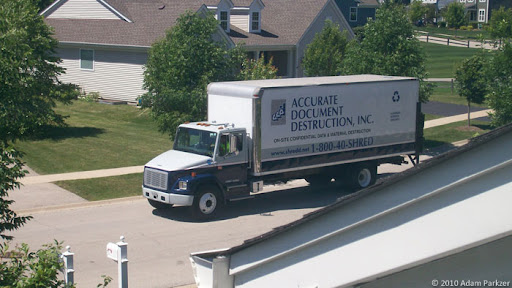 I visited the website on that truck, and that company generally does mass document shredding for businesses that want to save money by giving their documents to a third party instead of wasting money on employee income while the employees spend their time at work shredding documents.So if a tiny residential house calls one of these massive shredder trucks to their house, they must have top-secret documents that must be obliterated. They could have originally outlined a destructive plot that apparently failed.Such as sending a herd of cows dressed as pirates stampeding through the White House.
  What I’m ReadingNote: I have stopped placing copyright notices on pictures I take of the books that I’m reading. Apparently, some people thought the copyright notice on the bottom right-hand corner of the image was me claiming copyright of the actual book, not only the picture. To avoid all confusion, I will no longer place my copyright information on photographs of specific products created or manufactured by other people.
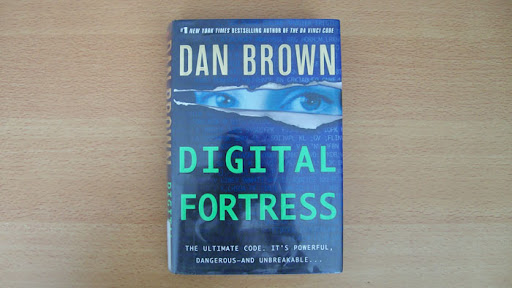 Not long ago, I finished this book, Digital Fortress by Dan Brown. I originally decided to read this book because my three favorite books are Angels & Demons, The Da Vinci Code, and The Lost Symbol, all of which are written by Dan Brown. I went to the fiction section of my local public library and found Dan Brown’s area, and grabbed the two books he wrote that I had not read yet: Digital Fortress and Deception Point.Digital Fortress‘ main conflict occurs within a secret area of the government dedicated to cracking codes and keeping an eye on the American people by intercepting their electronic communications and making sure no terrorist activity is found.Obviously, in modern times, a majority of us are concerned about our privacy. We’re worried that people are spying on us and finding out pesonal information that we would rather keep to ourselves. Many people become furious when told that the government can track an individual’s location by their cell phone, and tap in to an individual’s phone and electronic mail conversations. This issue of privacy intricately weaves itself into the main plotline, affecting both the heroes and the villians.I managed to finish this book in one day, and I thought it was a good read. I particularly liked this book because of its close connection with modern-day technologies and issues of the modern-day electronic world. Anyone with an interest in and general background knowledge of computers should love this book, as they will have an insight as to what is going on.
 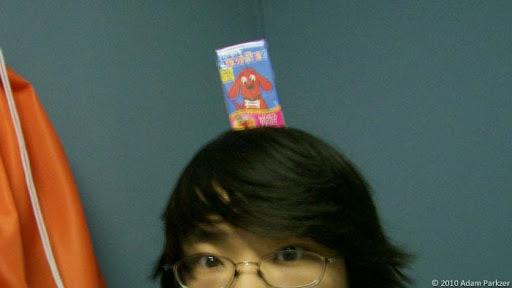 I remembered reading a book about this big red dog about fifteen years ago, and I thought long and hard to try to remember the name of this peculiar dog.After much trouble, I finally concluded that its name was Charlie.Then I looked at the juice box again and saw that the big red dog was wearing a big white name tag with the word “Clifford” on it.The dog’s name is Clifford.Not Charlie.I so knew that. What I’m ReadingAbout a week or so ago, I finished reading the seventh and final installment of the Harry Potter series, Harry Potter and the Deathly Hallows.
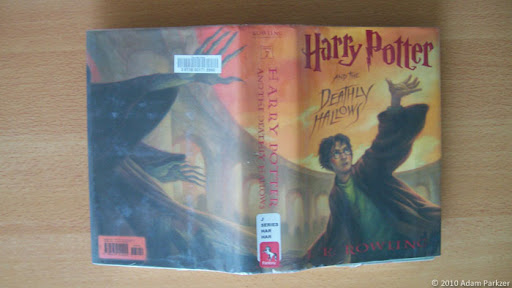 Although managing to get a hold of the book and reading it over three years after its long-awaited release, and hearing from other sources about what had happen in the seventh book, the storyline still captivated me enough that I was able to finish the entire book in two days.Ever since I was a first grader, I have been reading J.K. Rowling’s Harry Potter books with interest and amazement, and the books have only gotten better as the years progressed. Although an intimidating 759 pages and about two inches in thickness, every minute I spent reading it was well worth the time.In this final piece of Harry’s epic journey, the reader learns the struggles Harry and his two best friends go through as they search for and destroy the Horcruxes, an action required to put a final end to the evil Lord Voldemort.As expected, and like any other fantasy novel, our hero succeeds; but at what cost? Harry inadvertently places the lives of others around him in mortal danger as he attempts to kill the man responsible for both his parents’ deaths. Who will live and who will die? And what is the ultimate fate of Harry Potter?Finishing this book gave me a sense of relief as it put a close to a journey I have been following for more than ten years. My two favorite things about this book are the fact that it reveals the true story behind Snape (who has secretly been my favorite character all along, as I knew there was more to him than just a mean professor), and the epilogue at the end.The movie of the seventh book will come out in two parts, Harry Potter and the Deathly Hallows: Part I and Harry Potter and the Deathly Hallows: Part II; the first part will be released on November 19, 2010, and the second part will be released on July 15, 2011. I can’t wait to see both parts of the movie, and they will be the final visual addition to Harry Potter, the story about a boy that I will remember for the rest of my life.