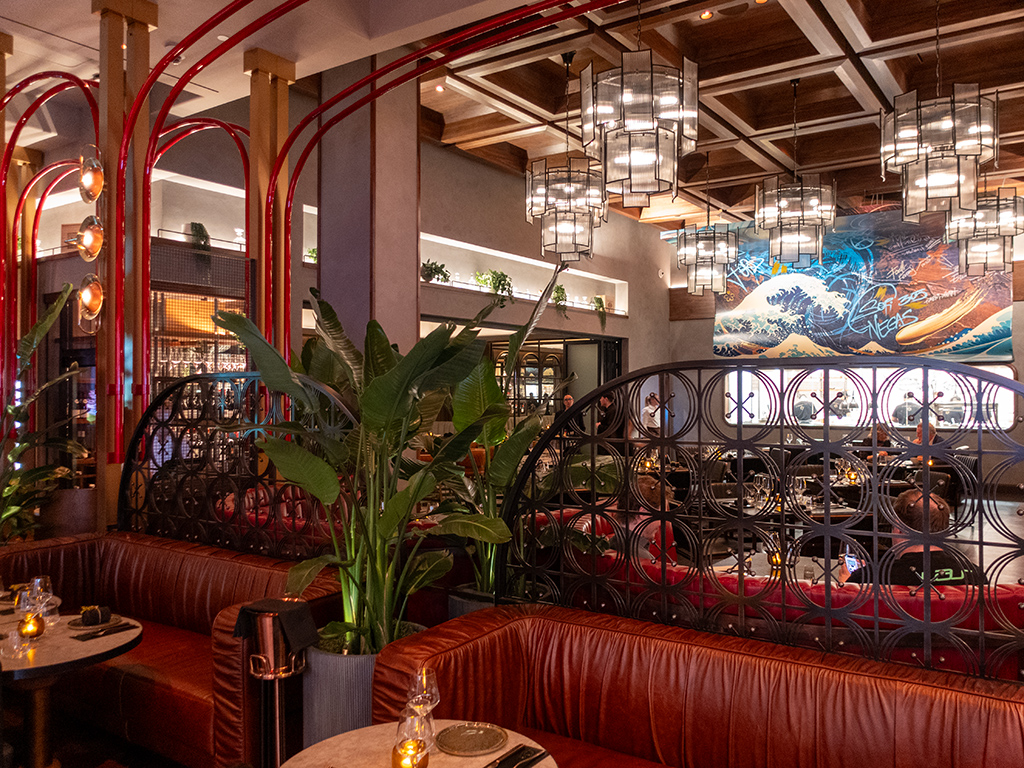
Hello, Chef’s Table with Frank DeLoach at Bello by Sandro Nardone in Newport Beach, CA

After my quick trip to the East Coast earlier this month, I flew back to Southern California in preparation for my two-year Twitch moderator anniversary dinner with @PhummyLW. If none of that has any meaning to you, I have a very detailed explanation in last year’s blog post about dining at the Capital Grille in Costa Mesa, California that may serve as prerequisite reading if you’re interested in the backstory of what has now become an annual tradition.

This year, Phummy asked me to take him to Bello by Sandro Nardone, an Italian restaurant in Newport Beach, Orange County, California. They had apparently been experimenting with a newer format of their chef’s tasting menu, and after trialing it for a few weeks, they came up with a system that works best for them—two weekly seatings of up to six people each, every Friday at 6 PM and 8 PM. The first session of this finalized chef’s tasting menu was today, Friday, May 23, 2025 at 6 PM, so I got Phummy and myself booked as their very first customers for this iteration.

We were fortunate enough that, out of the six available seats, Phummy and I were the only two attendees, so we got a very personalized experience with Chef Frank DeLoach. On top of that, I realized that their system in general was very unique, and part-way through our meal, I realized why they called it their chef’s table instead of just a regular tasting menu.

Chef’s tasting menus are often composed of a set number of courses that come out in a certain order as predetermined by the chef. This allows you to experience a culinary story through the food, as told by the chef, in the chef’s style. I love chef’s tasting menus (and omakase experiences, which are the Japanese counterpart), and I scout out the best-rated ones whenever I’m in search for a good restaurant.

On the contrary, a chef’s table, as explained by Chef Frankie, focuses on the diner rather than the chef. There are dishes that the chef will suggest, but otherwise, it is more of a freestyle experience where the chef makes realtime adjustments with the food offerings depending on the feedback and preferences of the diners. Thus, it functionally ends up being less of a traditional chef’s tasting menu experience and more of just having a private chef custom-curating you a multi-course meal over the span of a couple hours.

 
I was headed over to the restaurant from deep into Los Angeles County, so the estimated travel time was about an hour and a half. In typical Southern California fashion, the traffic got increasingly worse the longer I drove, and while originally anticipating arriving 15 minutes early, I ended up being 12 minutes late.

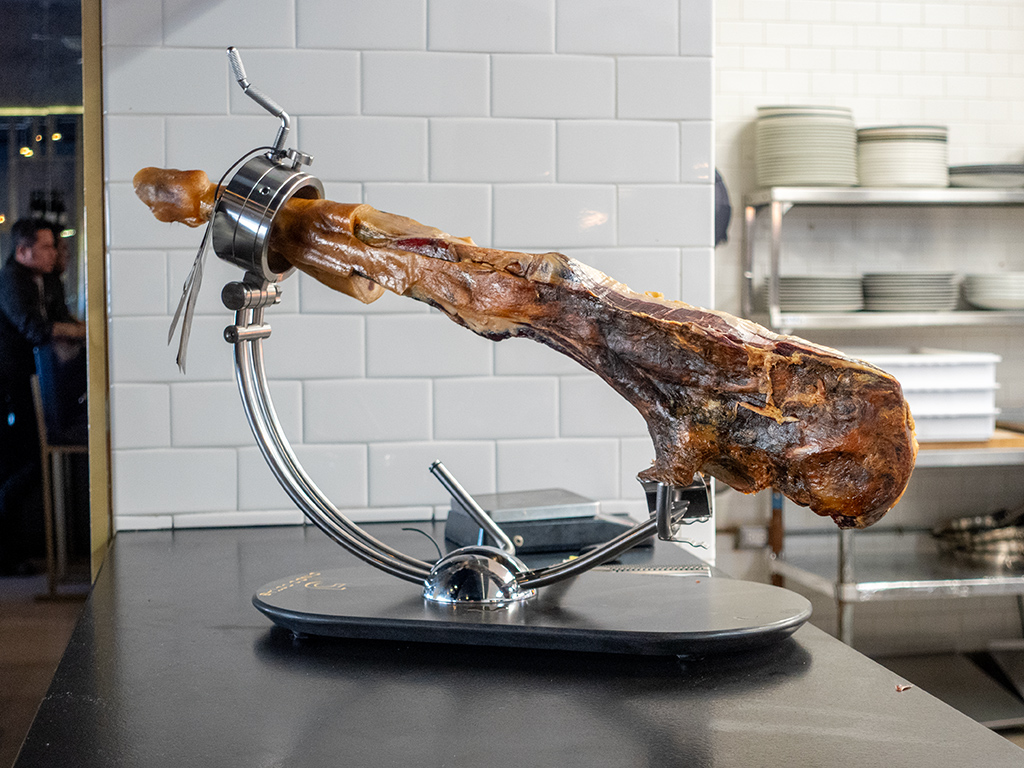
Upon my entrance, Phummy had already been seated and was nibbling on some prosciutto. I joined in and ate my portion. I don’t particularly like prosciutto, especially when it is just the dry-cured ham on its own without anything else to go along with it, but with that being said, this prosciutto still had a very rich, intense, clean flavor that I think fans of prosciutto would enjoy and appreciate a lot.

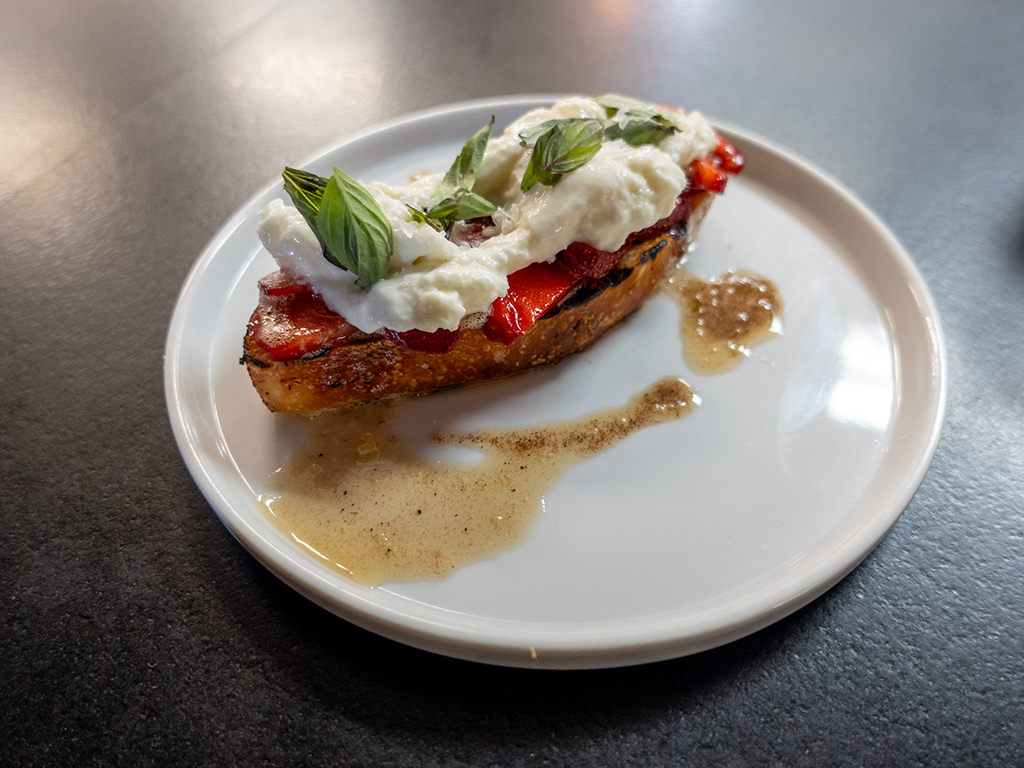
Our first antipasto dish was a bruschetta topped with strawberries, cheese, and herbs. This is literally the best bruschetta I have ever had in my entire life.

I’m generally not a fan of cheese because my taste buds love to pick up and focus on only the moldy flavor of cheese, but this cheese atop the bruschetta was gloriously delicious. It was smooth and creamy, and the flavor only had the “nice” parts of the cheese without any of the pungency, intensity, or moldiness. The texture was soft and delicate, and it coated the inside of my mouth in a way that contributed its flavor uniformly across every time I bit down to chew.

The bread was prepared to perfection. To me, bruschetta doesn’t have the best reputation because the bread usually comes out at such an inconvenient texture where it’s not exactly the consistency of a cracker, but it’s still hard and sharp enough that it cuts the inside of your mouth. This bruschetta’s bread had the perfect amount of resistance given to each bite where it added a great balance of firmness and softness.

Lately, I’ve seen some viral online videos about egregiously expensive but orgasmically delicious strawberries, and although I have not tried those strawberries, I feel like they would be on par with the ones on this bruschetta. These strawberries tasted like nature-made candy, but rather than pure sweetness, it was somehow like a combination of sweet and umami.
Next was some crudo topped with macadamia nuts, cucumbers, red onions, and other greens, bathing inside a coconut sauce.

With how much sushi I eat, I have obviously eaten a lot of crudo. Crudo at Japanese restaurants is often a hit-or-miss, and rather than hamachi crudo, I have almost always just preferred plain yellowtail sashimi instead because of how sour crudo ends up being.

This crudo had none of the downsides that I have experienced in the past with crudo. The coconut sauce was mild but still flavorful, and the vegetables were only pickled to a point where they had a subtle kick, so neither the sauce nor the toppings pierced through or overwhelmed the flavor of the raw fish.

Next was a minced chicken dish wrapped in some leaves (I forgot what kind of leaves, and I also forgot what other ingredients were included in the dish).

This had a balanced meaty and earthy flavor, but unfortunately, it was so overwhelmingly salty for me that it distracted and detracted from some of the flavor. I mentioned that to the chef, and I am pretty sure he took that into consideration for future dishes, as nothing else served later during the dinner was too salty anymore.

Next up was our pasta dish. I think this shape of pasta is called strozzapreti, but I don’t recall with certainty.

The sauce was made with a mixture of seafood and other portions of leftover ingredients that would otherwise not make it into main entrées. It had somewhat of a nostalgic flavor to it that reminded me of homemade stew.

Some people take their leftover scraps from home cooking and throw it all into a simmering soup; this dish’s sauce was basically similar to that. When restaurants prepare dishes for presentation, a significant portion of perfectly-fine ingredients don’t make the final cut due to their physical appearance, so it is great when it ends up being used in a sauce rather than being wasted. With that being said, when this dish’s sauce was prepared, it seems like it was aiming for that “scrap stew” kind of flavor, but the quality of the ingredients were so high that you could easily tell it wasn’t just scraps.

This is probably unsurprising if you know how much I like fish and seafood, but this pasta dish ended up being my second favorite course of the meal (behind the bruschetta).

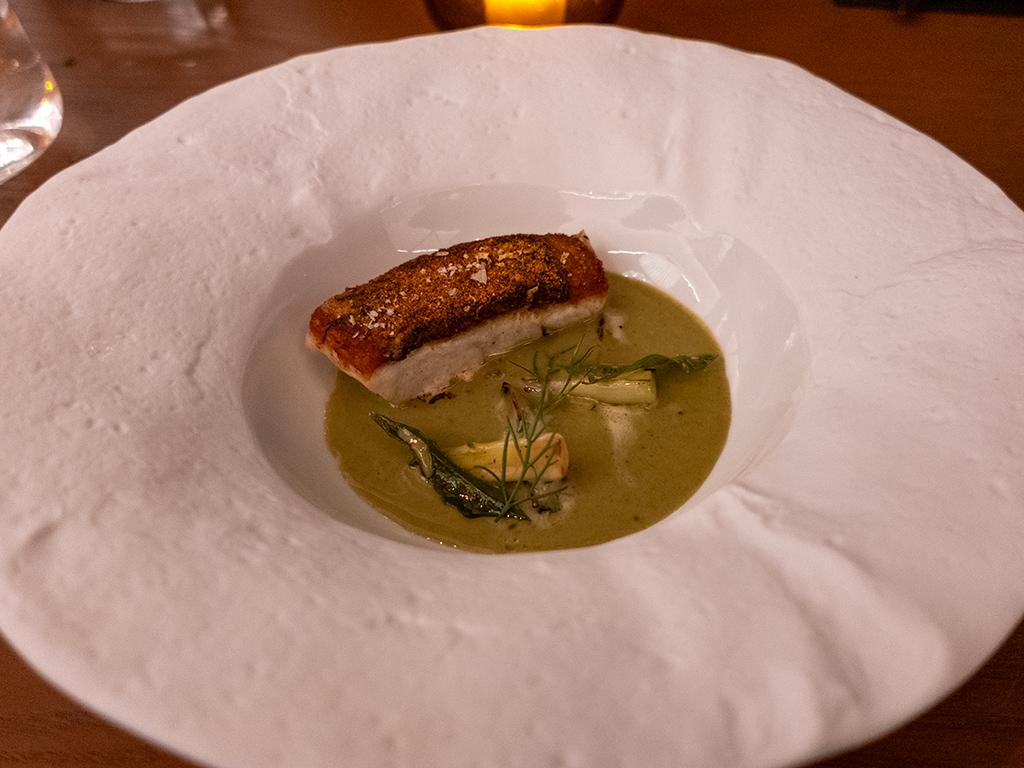
After our pasta, we were served some fish alongside tomatoes, cucumbers, fennel fronds, and olive oil.

I was impressed at the preparation of the tomatoes and cucumbers—the chef managed to reduce it down to only the tomato and cucumber flavor, without any of the other tanginess, tartness, or sourness that you might find with some fruits. It was almost as if these tomatoes and cucumbers were real-life examples of what flavor you would aim for if you were manufacturing a perfect tomato and cucumber flavor in a laboratory.

The fish was unremarkable, but in a good way. It was a clean, straightforward, smooth, untarnished fish flavor that I could happily eat everyday and would enjoy it every single time.

I also appreciated the temperature difference between the slightly chilled fruit and the warm fish—that added a fun dynamic to the consumption experience.

Coming up next was a beef entrée.

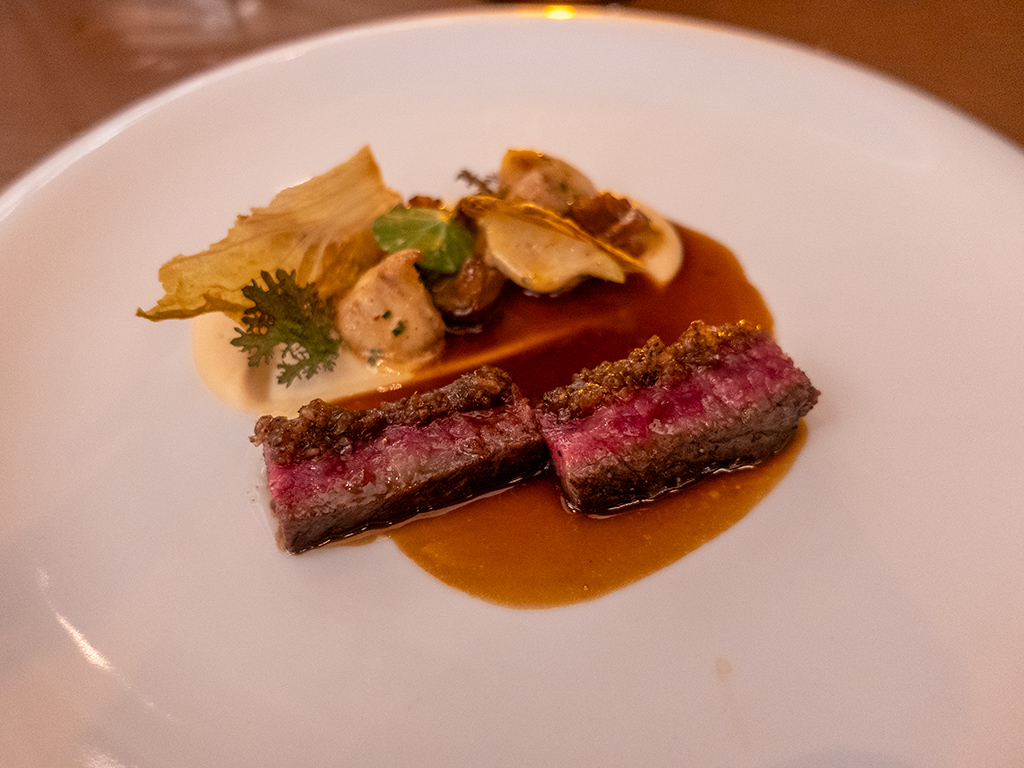
As what was supposed to be our final entrée, we were served steak with beet sauce topped with leek and pistachio.

This is some of the strongest beef flavor in a steak that I’ve ever had. Normally, steak with this level of intensity also usually comes with some gameyness, but this steak was very clean and pure in flavor. The ratio of fat cap to lean meat was perfect. Adding a bit of leek to each bite served as a decorative but subtle enhancement to the texture. The beet sauce helped amplify the beefiness of the steak, making it taste even deeper and richer.

The presentation was also quite unique, in that it basically came out like a piece of abstract art. I don’t see that too often because it’s tricky to properly straddle the line between a dish appearing as abstract art as opposed to just a mess, but I think this one pulled it off decently well.

While eating our steak, I asked Phummy if this was his favorite dish of the night, which he confirmed. I figured as much, because it was one of the more basic dishes without too many complicated flavors; it just took the concept of steak and took it far, doing it in the best way possible without any extra fanciness added to it.

Of course, preferring basic flavors is not inherently a negative thing. Just because you like simple dishes does not mean that you’re not able to discern the quality of the ingredients and the excellence in culinary preparation. With that being said, the chef made sure Phummy understood as such, and let him know that there is no problem with the steak being his favorite dish.

This evolved into a conversation where the chef mentioned how some people just really love pizza and will ask for pizza at the chef’s table, and Phummy pointed out that he too loves pizza. Chef Frankie was happy to hear that, and made us a Neapolitan pizza for us as a complimentary supplement to the regular tasting menu.

This was a great pizza. I would describe it as pristine simplicity—it used only the core and minimum ingredients needed to make a pizza, so there were no distracting flavors. With each bite, all you got was pure, blissful pizza, and nothing else. The crust was also a perfect consistency that made chewing it satisfying.

From what I noticed, I think there was very minimal seasoning on it. Instead, the char on the crust and base of the pizza served as a substitute for seasoning, adding a more natural-tasting enhancement to the overall pizza flavor profile.

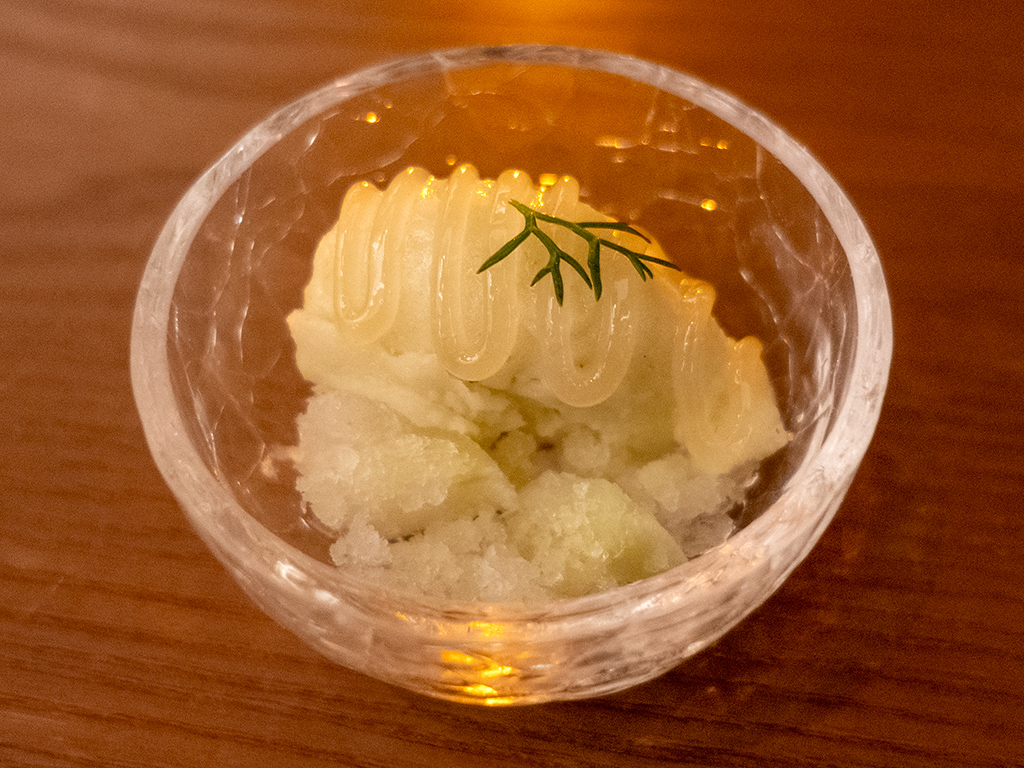
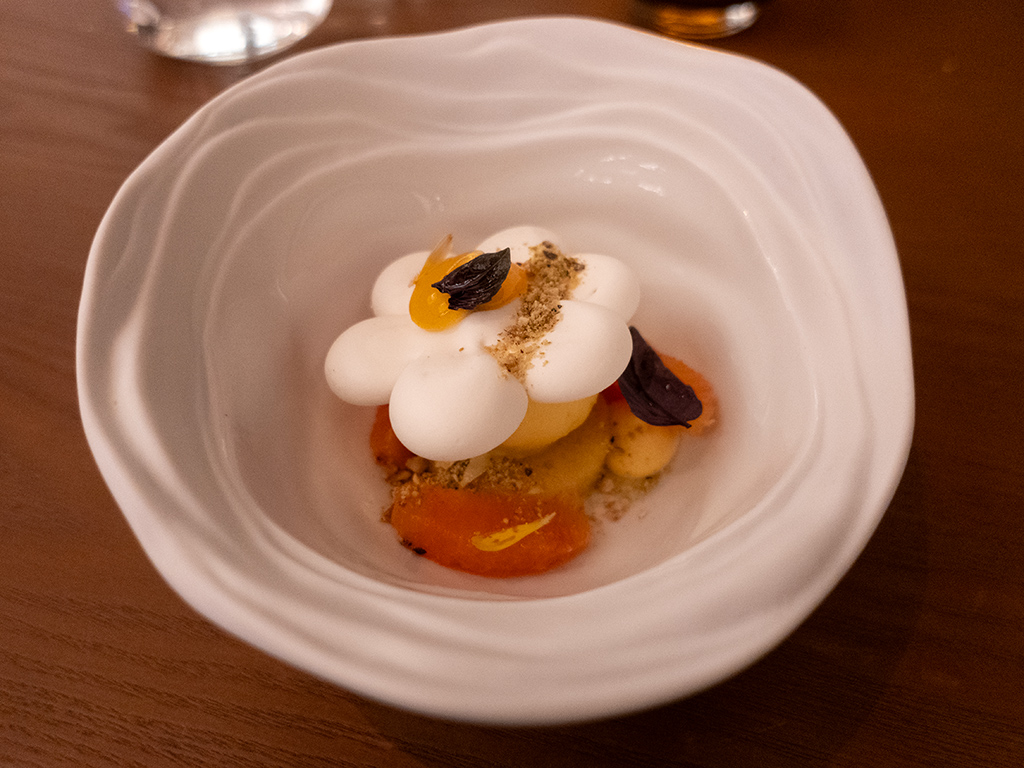
For dessert, we got a piece of cake and some mashed pineapple with roasted almond ice cream on top.

Even now, I’m unsure how I feel about this dessert. Pineapple is my second-favorite fruit behind kiwi, so I obviously liked that. However, I couldn’t really pinpoint how I felt about the cake. On top of that, this was the first time I had ever had roasted almond ice cream, so this was a very new flavor combination for me.

Here is a wider shot of the kitchen; at the chef’s table, we were able to get a clear view of everything going on during our meal.

Here is a photo of the front of the restaurant—just an unassuming building in the Newport North Shopping Center.

Chef’s Table ×2$ 370.00
Service charge (20%)$  74.00
Sales tax (7.75%)$  28.68
Tock booking fee$   5.00
Total$ 477.68
The table to the right shows what I paid.

Each ticket to the Chef’s Table cost $185. They charged a 20% service fee in lieu of gratuity, which was prominently disclosed during booking by way of just adding that 20% directly onto the marketed price when selecting the Chef’s Table. There are some restaurants that say a service fee is charged and that tips are not expected, yet they give you a receipt at the end of your meal to add on an optional tip anyway; Bello by Sandro Nardone did not do that, and they did not even give us the possibility of adding an extra gratuity at the end. The booking fee was charged by Tock and did not go to the restaurant.

Everything was prepaid at the time of booking the reservation. Pricing-wise, this was one of the most refreshing and honest payment experiences I’ve ever had at a restaurant. It’s always annoying when a restaurant advertises a certain per-person price for a multi-course meal or special dining experience, but because of optional add-ons and mandatory fees, you end up paying double what you expected. Because of having to regularly deal with that, I especially appreciated Bello by Sandro Nardone’s transparency.

This is probably some of the best service I’ve ever received at a restaurant. I’m used to receiving personalized attention from chefs when sitting at sushi bars for omakase, but Bello took it to an entirely new level. It was blatantly obvious that they wanted to ensure we had a great time, and they were querying and keeping track of our preferences to maximize our satisfaction with the meal.

The overall quality of the food was amazing. The portion sizes were also refreshingly large and filling. I felt like I concluded my dinner full of only great food, with no “filler dishes.”

This is definitely an expensive meal, but if this is within your budgetary means, I highly recommend the Chef’s Table with Chef Frank DeLoach at Bello by Sandro Nardone. I don’t know what the à la carte menu is like, and I did not have an opportunity to meet Sandro Nardone himself, but Chef Frankie (and one other staff member whose name I regretfully forgot) gave us a top-tier experience.
 

—§—


Hello, Sushi by Scratch at the SLS Beverly Hills in Los Angeles, California

For my final dinner in Southern California before heading out for my next trip, I dined with Sushi by Scratch at the SLS Beverly Hills in Los Angeles, California.

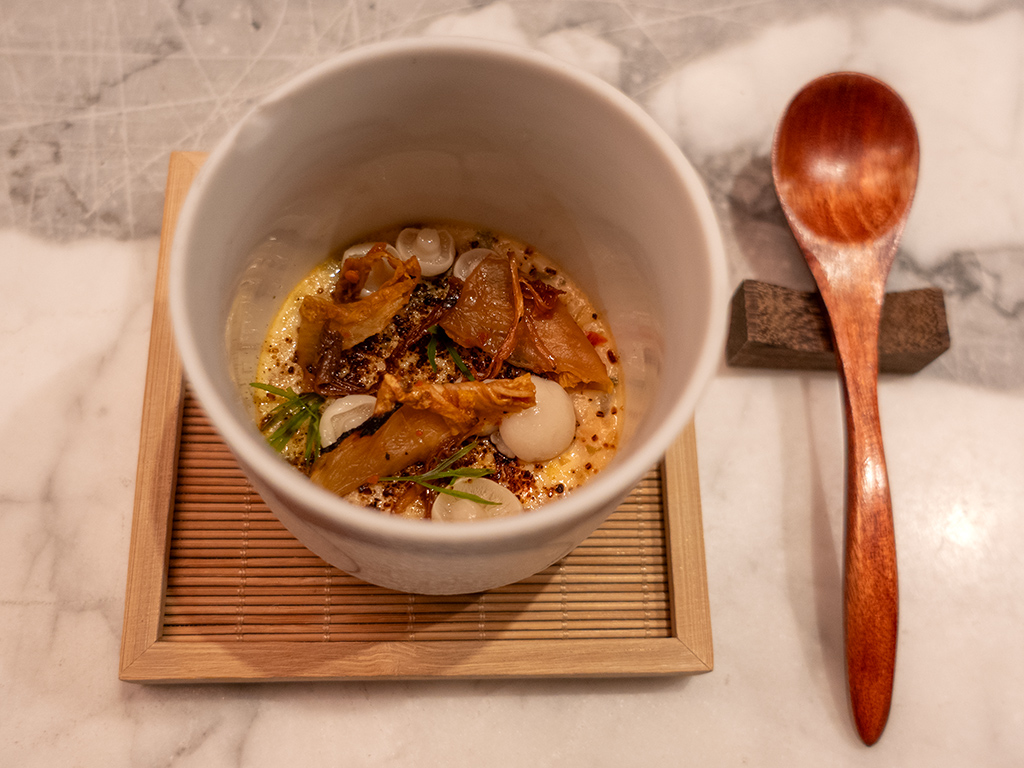
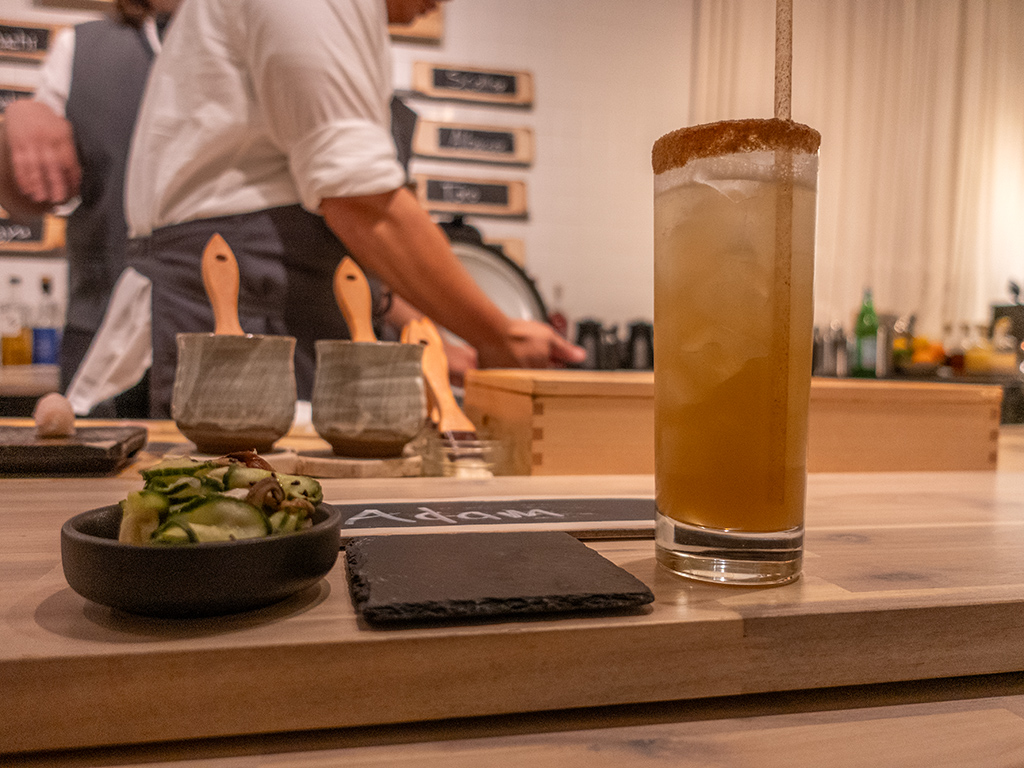
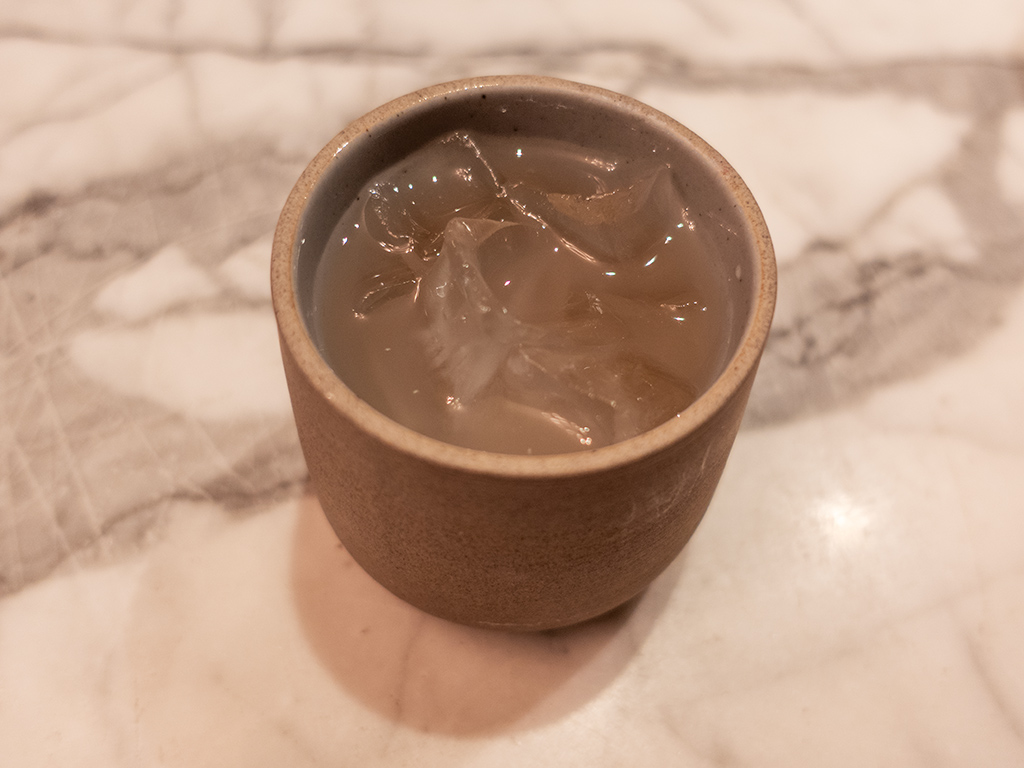
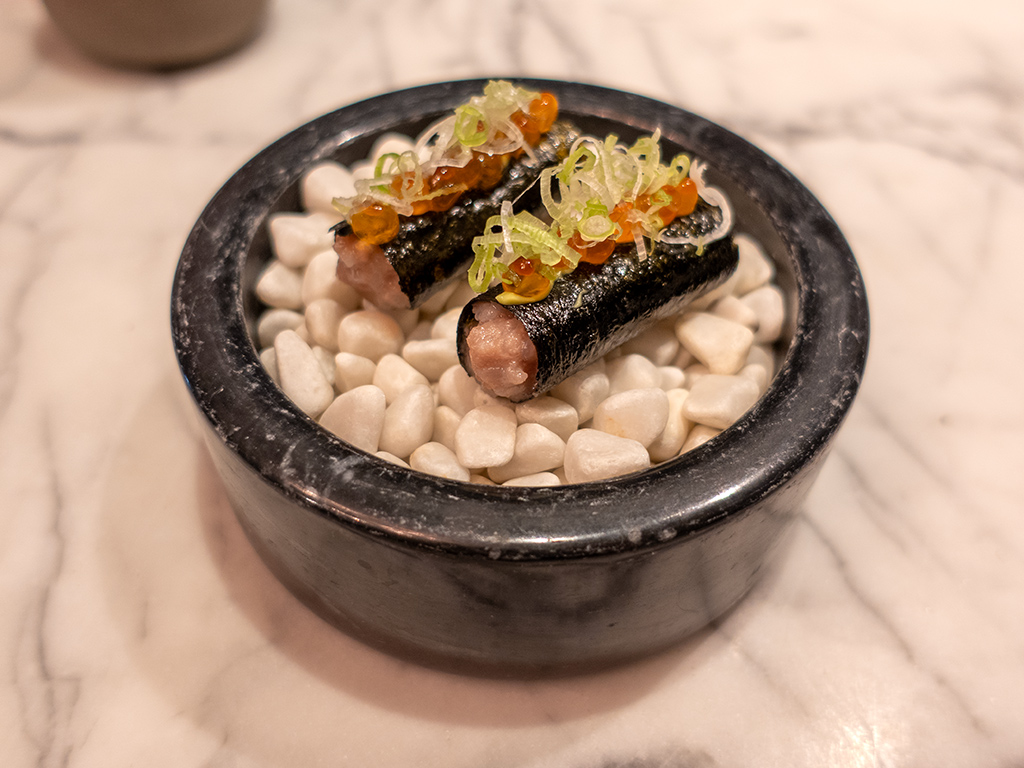
While the chefs were preparing for dinner service, we were provided with a welcome beverage and canapé service. Our beverage was a minty iced tea; our first small bite was a miniature tuna hand roll topped with salmon roe, and our second item was a very decorated chawanmushi (Japanese egg custard).

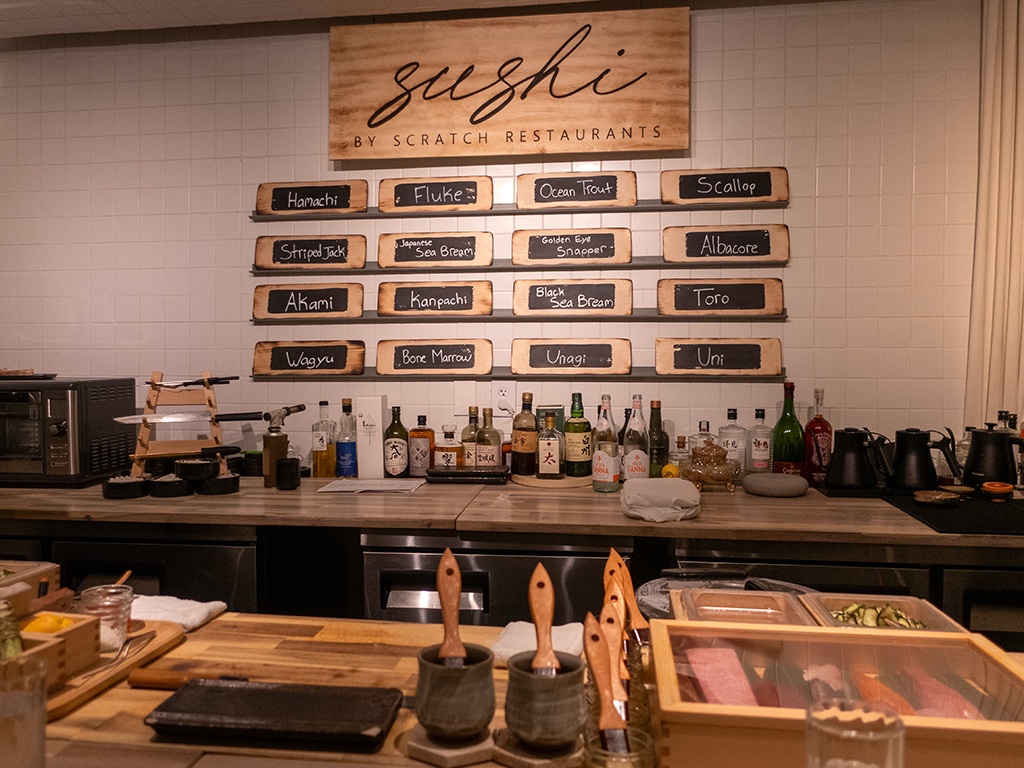
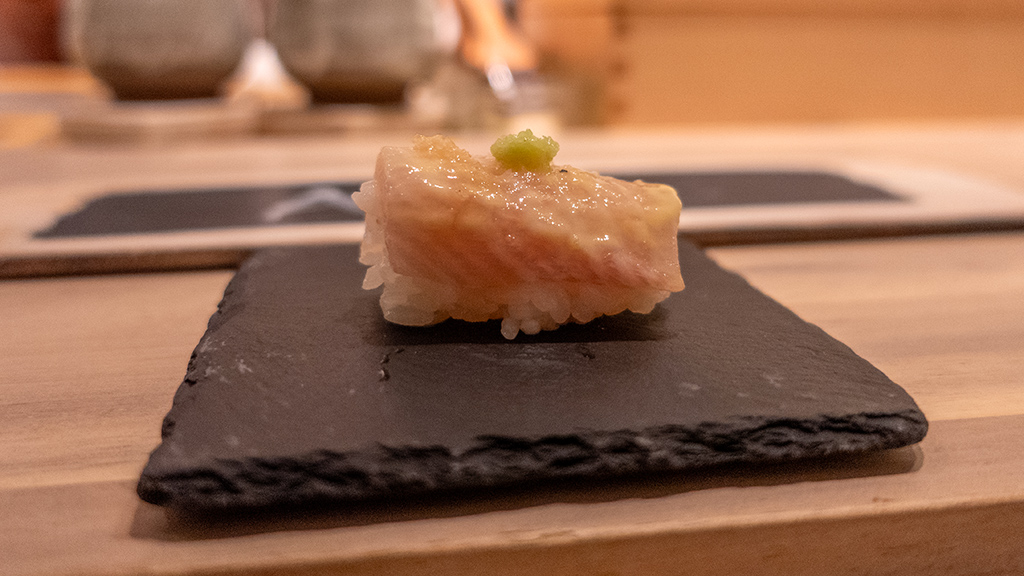
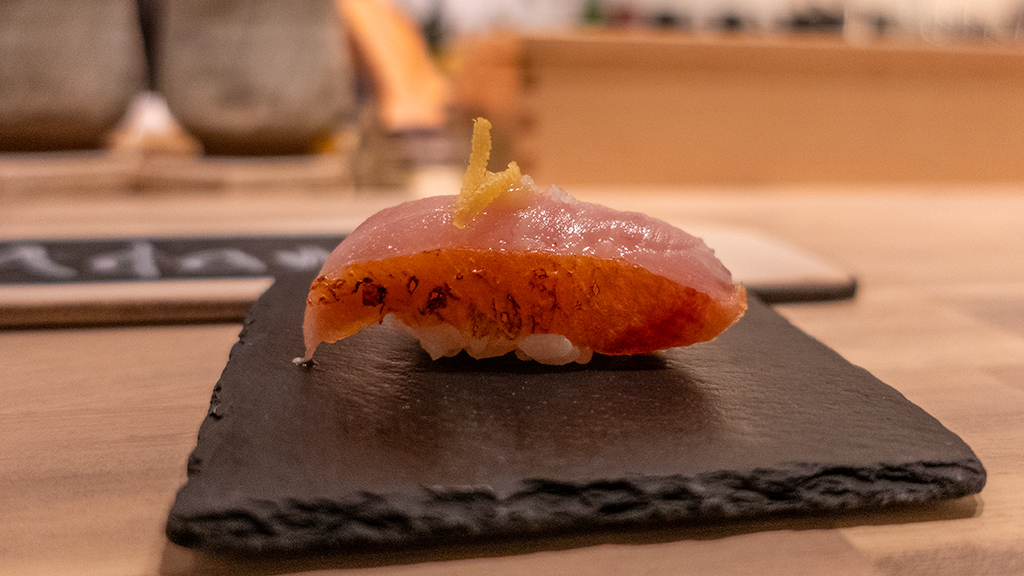
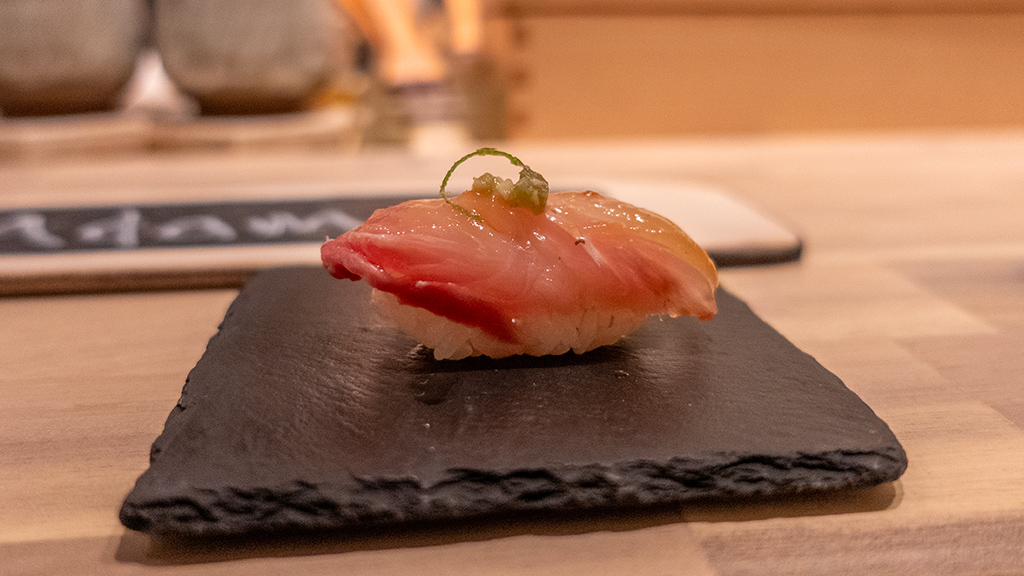
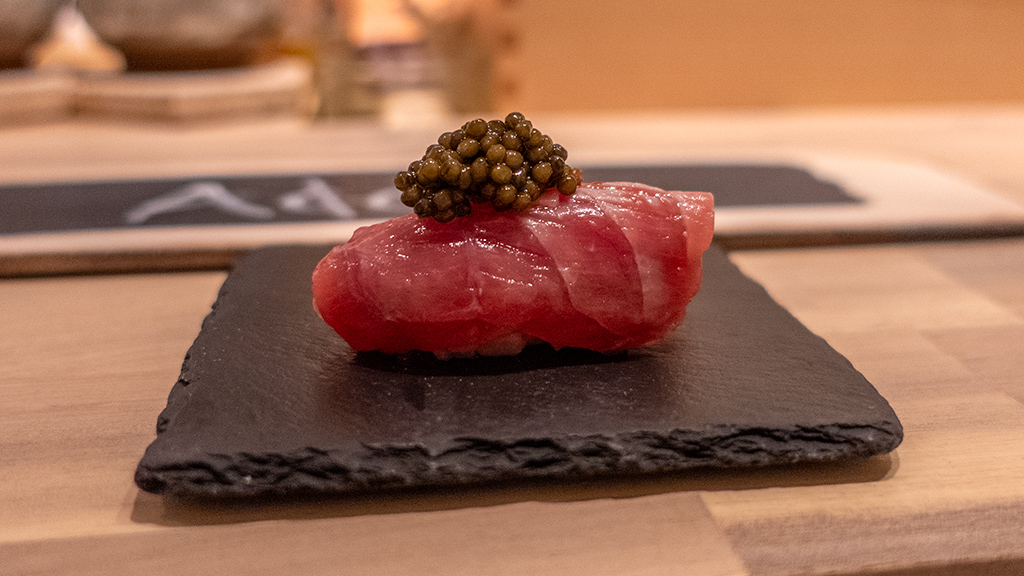
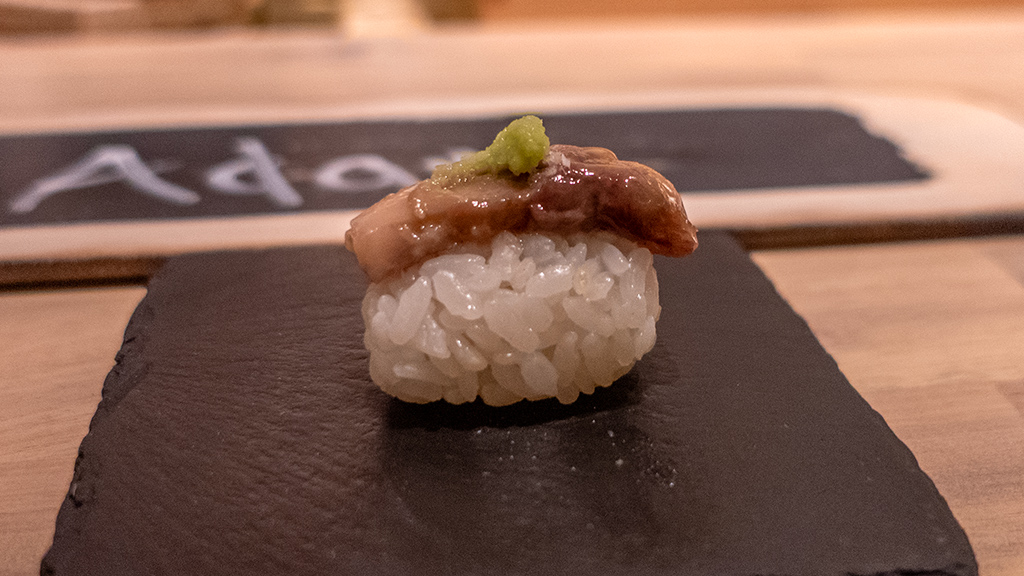
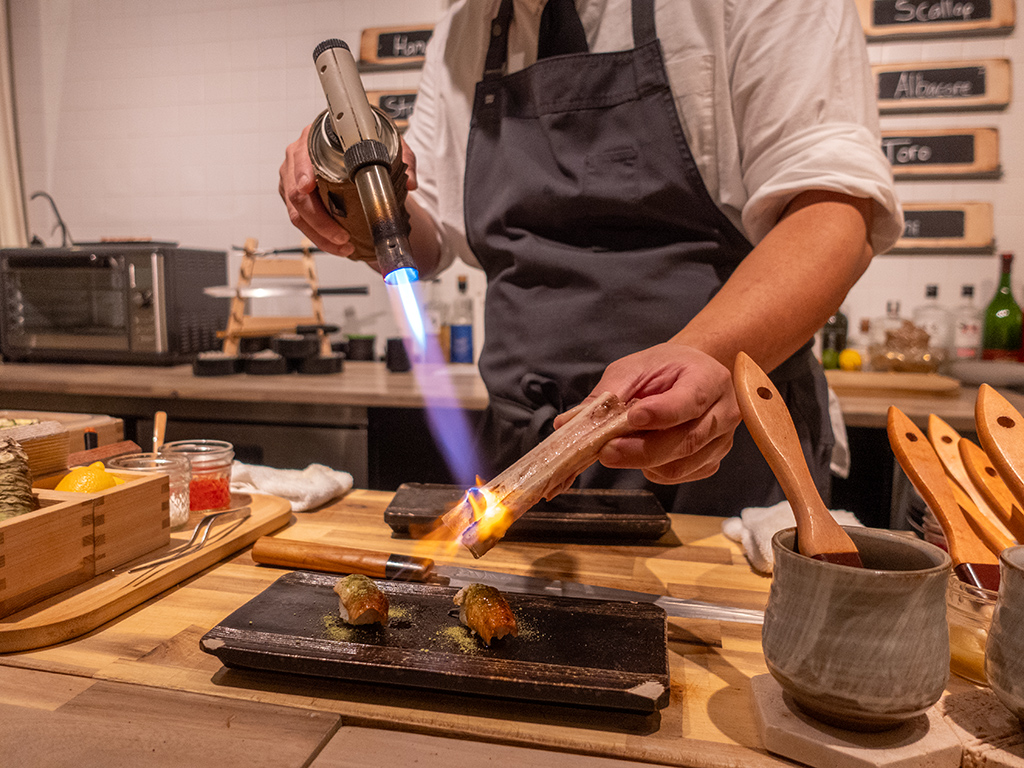
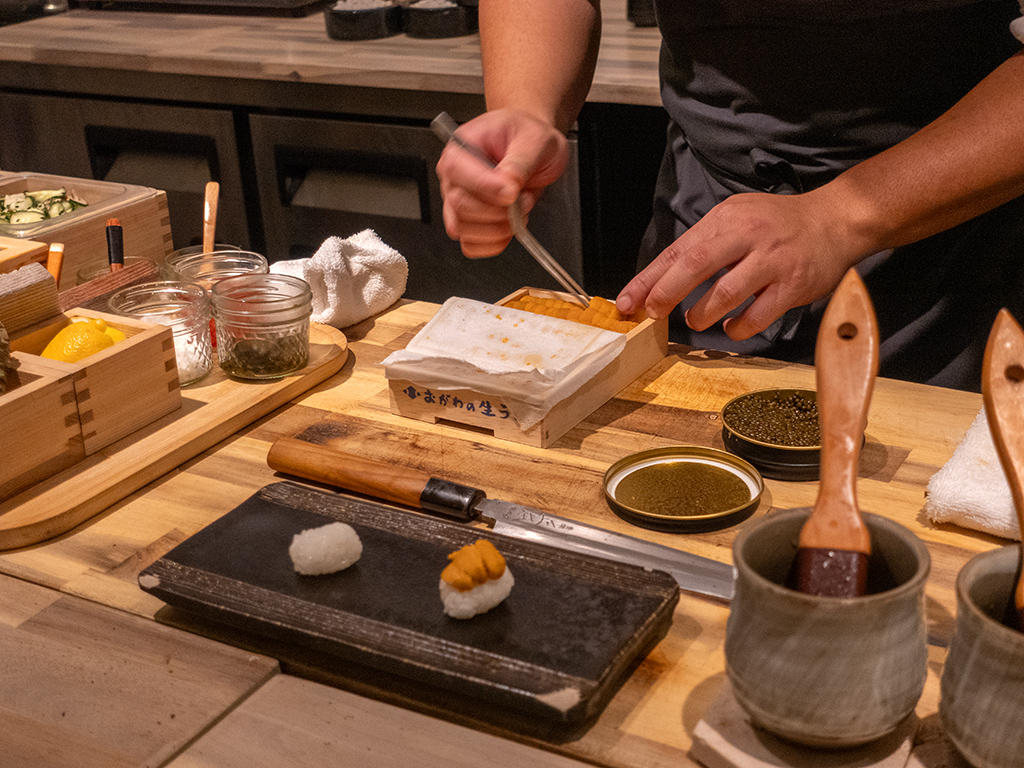
Afterwards, we were brought into the main dining area. Sushi by Scratch’s omakase experience is composed of 16 pieces of nigiri: yellowtail, fluke, ocean trout, scallop, striped jack, Japanese sea bream, golden eye snapper, albacore, tuna, amberjack, black sea bream, tuna belly, wagyu, bone marrow, eel, and sea urchin.

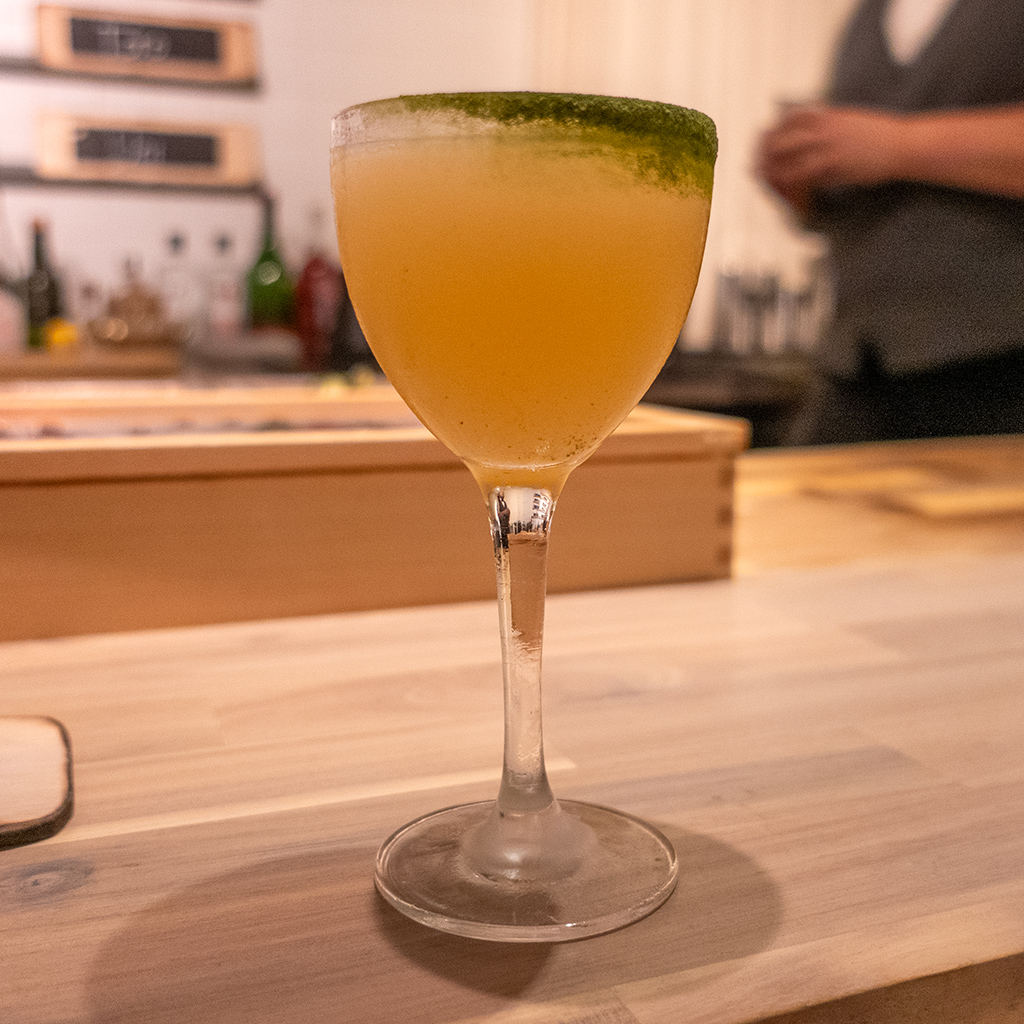
We also got a non-alcoholic beverage pairing to go along with the omakase, which came with three unique drinks spread out across our meal between every 5-6 pieces of nigiri.

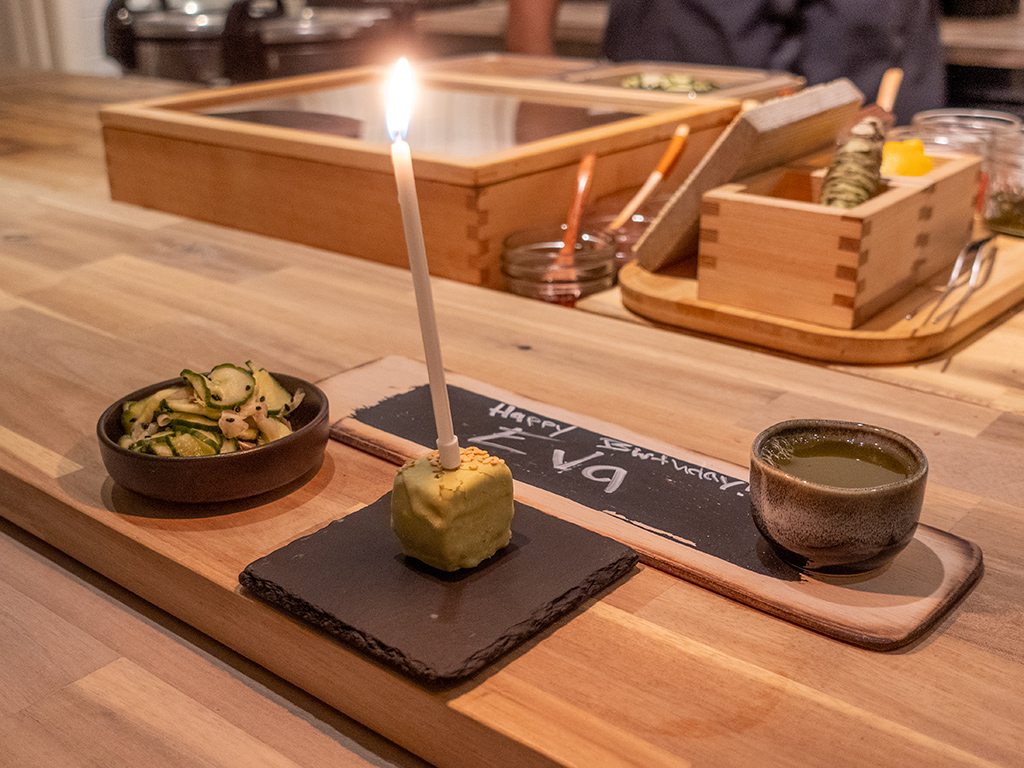
After our 16 bites of sushi, our meal concluded with a dessert. My friend had celebrated a birthday the prior week, so I wrote a short note of that in the reservation details; we didn’t get any complimentary extras, but they did put a little celebratory candle in her dessert for the occasion.

After this meal, Sushi by Scratch joined my small set of all-time favorite restaurants.

If you were paying attention to the photographs, you may have noticed that each piece of nigiri had some sort of unique sauce, topping, and/or garnish. This is what made Sushi by Scratch stand out from any other sushi restaurant I’ve been to.

All the fish they used obviously had a baseline of being very high-quality, but the extras they added on to each bite made it truly stand out. These combinations were novel enough that I, as someone who eats an insanely large amount of sushi on a regular basis, still found every single bite to be a completely new experience. I could obviously taste and recognize most of the individual ingredients, but each bite’s combined flavor profile as a whole was always something new that I had never had before.

At first, I thought the portion sizes were a bit small, but after the first few pieces of nigiri, I realized that a lot of the value you get from what you’re paying for at Sushi by Scratch is not just the amount of food, but the ability to experience the chefs’ innovative recipes and flavor combinations. It is common to go to an omakase experience and try a few experimental dishes, but it is rare to near-impossible to find a spot that adds a facet of originality and inventiveness to literally every single thing they serve.

What made this meal extra special, which ultimately just came down to luck, was that my friend and I were fortunate enough to be the only two people being served during our particular time slot. This obviously made for a much more private and cozy experience. It also allowed us to interact with the chefs on an ongoing basis throughout our meal, helping us learn more about their background and the items they were serving.
If you’re familiar with my food blog posts, you know that I usually put a cost breakdown of what I paid. Unfortunately, when I paid for the meal, I was only provided with a final transaction confirmation rather than a fully itemized receipt, so I don’t have exact prices. With that being said, I can come up with some reasonable estimates.

The base price for omakase was $185 per person. We opted to do a caviar add-on, which I believe got us extra caviar on three additional pieces of nigiri that wouldn’t have otherwise had caviar, for $65 per person; I thought this was reasonable, considering that a lot of restaurants in major cities sell caviar bumps for $20 each. I’m not sure how much the beverage pairing was, but my guess is that it was approximately $50 per person. There was a mandatory 20% service fee in lieu of gratuity, and sales tax in Los Angeles should be 9.75%. The final total charge was US$780.06.

That is definitely a big number, but don’t let that scare you away—just opting for the core omakase experience for $185 per person, which would end up being $240 per person after the mandatory service fee and sales tax, is already an amazing meal. I like caviar in general, and the drinks were delicious, but even without them, you’ll still get to fully enjoy the crux and soul of the meal.

As a side note, as I mentioned at the beginning, the Beverly Hills location of Sushi by Scratch is inside the SLS hotel, which offers valet parking only and charges $20 for it. We avoided this by going to the nearby Beverly Center first, parking inside their parking garage, doing some shopping, then walking a couple blocks to the restaurant afterwards. I didn’t confirm whether Beverly Center has dynamic pricing, but for us, we only had to pay $4 by the time we made our way back and headed out. I think this is a good alternative if you are not a fan of other people touching and driving your vehicle, want to get in a short walk to stay active and healthy, and/or want to save a little bit of money (maybe to put it towards that caviar upsell).

Overall, I highly recommend Sushi by Scratch… but with a caveat. For lack of a better way to put this, I think Sushi by Scratch is an “intermediate-level” restaurant. Anyone—even sushi first-timers—can obviously have an enjoyable meal here, but I think you need at least a little bit of sushi experience to truly conceptualize, understand, and internalize why Sushi by Scratch is so special.


—§—


Hello, ikigai in Eagle Rock, Los Angeles, California

I’m back in Los Angeles, California for a little bit to spend time together with friends in the area. I haven’t been blogging much lately since my trip to the East Coast because everything I’ve been doing so far in LA has either been a private event or not blog-worthy, but I managed to squeeze in a catch-up dinner with one of my friends at a sushi restaurant with a multi-course meal.

We decided on ikigai in the Eagle Rock neighborhood. I saw that they had an option for omakase, so I ordered the premium omakase for US$120.00. My friend wasn’t quite as hungry as I was and opted for the standard omakase for US$80.00 instead.

Our meals started with some miso soup.

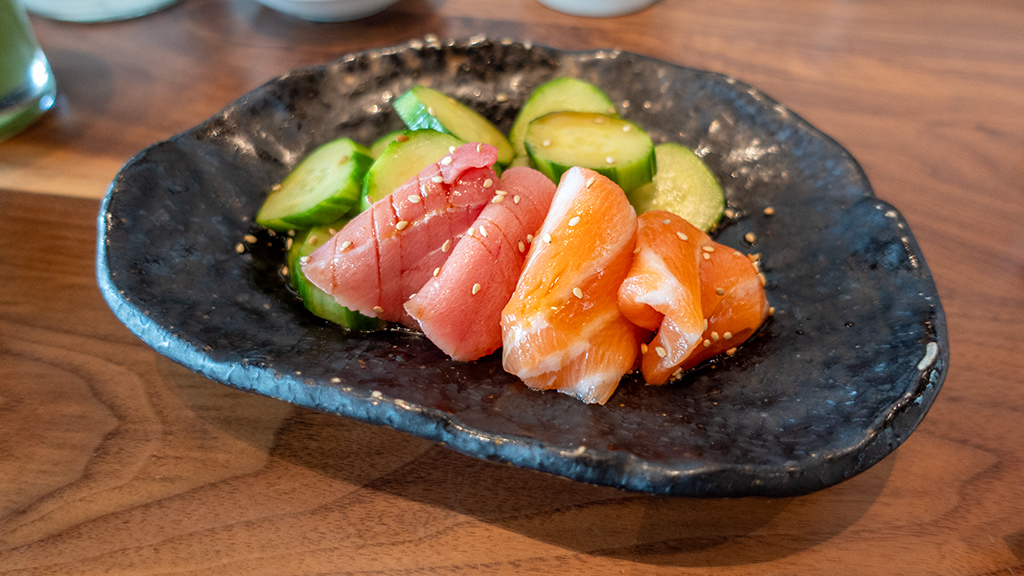
As my appetizer, I received cucumber salad with two large slices of tuna sashimi and two large slices of salmon sashimi.

For my beverage, I ordered a matcha oat milk latte for US$6.50.

My friend received all 12 of her nigiri pieces at once on a wooden tray. I assumed that my 16-piece main entrée would be served the same way, so I didn’t take a picture of hers because I figured that mine would look the same, but bigger. However, when I realized that mine was being served four at a time, I quickly snapped a photo of hers, though not before she had already finished a third of it.

My first set of nigiri had fluke, snapper, and striped jack. I don’t quite remember what the fourth piece was, and I can’t seem to tell precisely from the photograph, but what I do recall is that there was a shiso leaf underneath the fish and atop the pillow of rice. This was a good opener, as it had solid middle-of-the-pack flavors—not too mild, but also not too intense.

My second plate was the rich and fatty set—seared sea perch, seared mackerel topped with wagyu, and seared salmon belly. Again, I don’t quite remember what the fourth piece was, but it fit the theme of intense umami. I also liked the generous portion of salt on the nigiri, in addition to the extra sprinkle of salt on the plate; salt is great at enhancing rich flavors, and there was a lot of flavor in all four of these pieces of nigiri.

The third collection was a much milder set compared to the second plate. It had scallop and yellowtail surrounding two pieces of whitefish (I don’t remember what exactly the whitefish were).

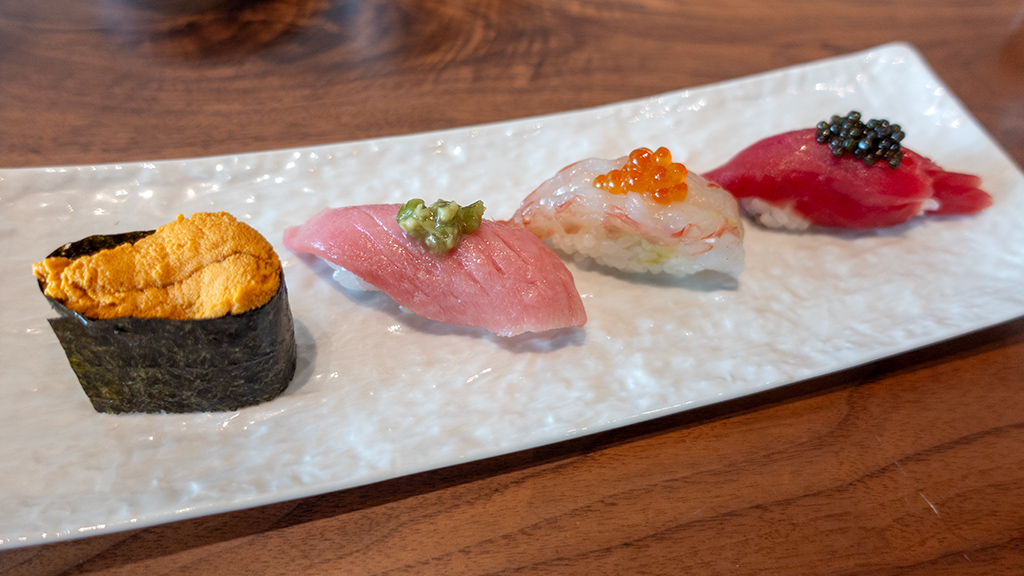
As the grand finale, and my favorite set of the nigiri service, I was served four pieces of very “iconic” sushi—sea urchin, tuna belly topped with chopped wasabi stem relish, sweet shrimp topped with salmon roe, and tuna topped with sturgeon caviar.

As the final course of the omakase before dessert, I was served an eel hand roll.

For dessert, I had the opportunity to pick among some ice cream and sorbet flavors, so I selected mango.

Here is a photo of the bar area.

I usually sit at the sushi bar when experiencing omakase service so I can watch the chef preparing my food and sometimes get a chance to listen to them tell stories from their time in culinary arts, but I opted for a table this time due to it being an easier environment to have a conversation with my dinner companion.

With that being said, if you’re ever at a Japanese restaurant knowing you are getting omakase, I always highly recommend the sushi bar for the full experience.

One thing I particularly liked about this sushi restaurant is the fact that they integrated combinations, both with multiple fish options and garnishes, and did so in a way that worked well. For example, I think putting caviar on a milder and fleshier cut of fish like akami was good because the flavor of the fish did not overwhelm the caviar; and adding the intensely fatty flavor of wagyu atop a very fishy mackerel allowed both strong flavors to work together without one overshadowing the other.

Cost-wise, I thought this was a very reasonable pricepoint considering the quality of the fish and the cost of living in Southern California. My waiter accidentally added an 18% large party service fee to my bill, which would’ve acted as a mandatory gratuity for groups of six or greater. He apologized for the mistake and said he would remove it, but for logistical ease, I told him to leave it on there in lieu of an extra tip.

If you’re looking for a relatively lighter and lower-commitment omakase experience in Los Angeles County, I think ikigai is worth considering.


—§—


Hello, American Dream in East Rutherford, New Jersey

During one of the days on my trip to the East Coast, I went together with my friends to American Dream, the second largest shopping mall in the United States.

Because of my abnormal sleep schedule, I wasn’t able to wake up in time to carpool together with them from Burlington County to Bergen County, so I drove over on my own after I was ready to start my day. My GPS directed me to the Pearl Lot, so I parked there and started making my way to where my friends were, taking some photographs along the way.

They were playing Angry Birds Mini Golf, so I joined them and helped them capture footage of their gameplay for a video.

After finishing all 18 holes, we headed back out into the mall.

Our next activity was the Nickelodeon Universe Theme Park. It had an eerie vibe to it, which was probably attributed to the fact that there were not very many people there and a lot of the rides were out of service. My friends also apparently had some issues with management because their filming permit for American Dream allegedly does not extend to the theme park due to it being a separate and independent entity from the mall.

After a fairly underwhelming theme park experience, we headed back out into the mall once again to walk to our next destination.

Apparently American Dream has the one and only physical Mr. Beast Burger location, and my friends wanted to make a video of them trying every item on the menu.

I ordered a Nashville hot chicken tender sandwich for myself. The lettuce was shriveled, the pickles lacked juice, and the bun resembled a bun you’d find on the clearance shelf at your local grocery store because it is about to expire at the end of the day. With that being said, the chicken itself was unexpectedly passable. I probably would’ve actually enjoyed this meal if it was just served as standalone chicken tenders instead.

There was one final thing my friends wanted to see before the end of the day, so we headed back out into the mall.

My friends are video game YouTubers, so they wanted to see the Minecraft installation and take a picture in front of this tall, angry-looking shrub.

After a long day of filming and exploration, we parted ways and I headed back to the Pearl Lot on the opposite side of the mall to return to my rental vehicle, again, taking more photographs of interesting things along the way.

American Dream was strange. Maybe it was because we were there during the daytime on a weekday, and maybe it’s because I’m just used to stores back at home on the Las Vegas Strip always being pretty busy all the time, but American Dream felt way too empty compared to its size.


—§—


Hello, Nemours Estate in Wilmington, Delaware

I’m currently in the New Jersey suburbs east of Philadelphia, Pennsylvania traveling together with some friends. I’ve been to both Pennsylvania and New Jersey before, but Delaware, which is fairly nearby, was one of the handful of states that I still had not visited. Because of my proximity to being able to check off another state from my goal of eventually visiting all 50, I decided to split from my group for a day to drive down south and be a tourist in Wilmington.

While in Wilmington, I decided to visit the Nemours Estate, composed of a mansion, garage, and garden.

Being a resident of Las Vegas and having spent a majority of the past few months in either Pacific or Mountain Standard/Daylight Time, heading all the way over to New Jersey was a bit of a time zone jump. To make things worse, the day I decided to visit Delaware was my first full day in Eastern Daylight Time, so I hadn’t had an opportunity to adjust. On top of that, I have already been falling asleep pretty late while in Pacific Time, so my late-riser status was amplified even more. Needless to say, I had a fairly late start on my Delaware day.

After a one-hour drive from Burlington County in the New Jersey suburbs, I arrived at Nemours Estate at approximately 2:00 PM EDT. It was later than I had hoped, but I figured that was still enough time—I would have two and a half hours to explore the mansion and garage before they closed at 4:30 PM EDT, then an extra half hour to walk around the garden before it closed at 5:00 PM EDT.

Nemours Estate is wildly overstaffed. The mansion allegedly had 77 rooms, and I am fairly certain that at least 1 in 3 rooms had a staff member inside. This is great if you have a genuine interest in the backstory and lore of the mansion, but if you just got there at 2:00 PM and want to see everything before the premises close, you tend to be less excited to have an impromptu ten-minute guided tour in every third room. Either way, these staff members seemed genuinely passionate about sharing their knowledge of the history of the mansion with me and reciting a circularly-repeating version of the information that was already printed on the informational placards, so I decided to be nice and entertained their conversation.

The mansion has three floors (let alone the off-site garage), and by the time that I had finally finished working my way through the ground floor and talking with everyone, it was past 3:30 PM. I still had the upper floor, basement, and garage to get through, so for the remaining two floors, I aggressively went out of my way to avoid eye contact with any staff members so that I could see everything and take all the photographs I wanted without getting stunlocked in discussion. It got so bad that I was planning on just pretending that I didn’t know how to speak English, but I decided against it because I felt like I would just be easily exposed by the fact that I was standing in front of and reading all the plaques.

Strangely, starting from about 4:00 PM, the staff members started thanking me for visiting, as if they were implying that it was time for me to leave. I disregarded their confusing actions because I knew that I still had until 4:30 PM as per the hours posted on their website and at the ticketing office, so I resumed my tour, and at 4:15 PM, I left the mansion and started walking towards the garage.

The instant I stepped into the garage, an old man briskly walked towards me saying that he is closing soon. I replied “ok,” checked my watch to confirm that it was not past 4:30 PM, then started looking at the vintage cars. When he realized that I was not leaving, he started anxiously following me around, saying that he is closing the garage and repeatedly announcing that I had to exit the building. When I clarified with him that the garage closes at 4:30 PM, he proudly bellowed “that’s right!” I checked the time again, but for the sake of not causing this old man to have a ruptured aneurysm, I chose to peacefully leave at 4:24 PM.

I was taking a refreshingly brisk walk around the garden, but at 4:48 PM, a security guard began approaching me. He said that it was time for me to wrap up and start heading back to the gate. When I mentioned that I still had the northwestern corner of the garden to get through and let him know that I was going to take a look at that first before leaving, he said that he had to respectfully stop me from doing that because he had been tasked with clearing out the grounds. I started walking towards the exit and was off-property by 4:52 PM.

The portions of the Nemours Estate I was actually able to see were fine, but I think I would have had a much more pleasant experience if I wasn’t constantly interrupted by staff members or asked to leave early. If their closing time represents a time at which all the staff members have finished clearing and securing the premises, then they should publish their closing times as 4:15 PM for the buildings and 4:45 PM for the garden, not 4:30 PM and 5:00 PM. The security guard was calm and professional when asking me to leave, but the guy overseeing the garage definitely needs to settle down if he doesn’t want to die of a sudden stroke from yelling angrily at a customer.

Here are some photographs I took in and around the mansion, garage, and garden:


—§—


Hello, Stubborn Seed Las Vegas at Resorts World in Paradise, Nevada

I usually don’t go to restaurants on the Las Vegas Strip because of the relatively higher prices as a result of the “tourist mark-up,” but I decided to make an exception to check out Stubborn Seed at Resorts World Las Vegas on the Las Vegas Strip in Paradise, Nevada.

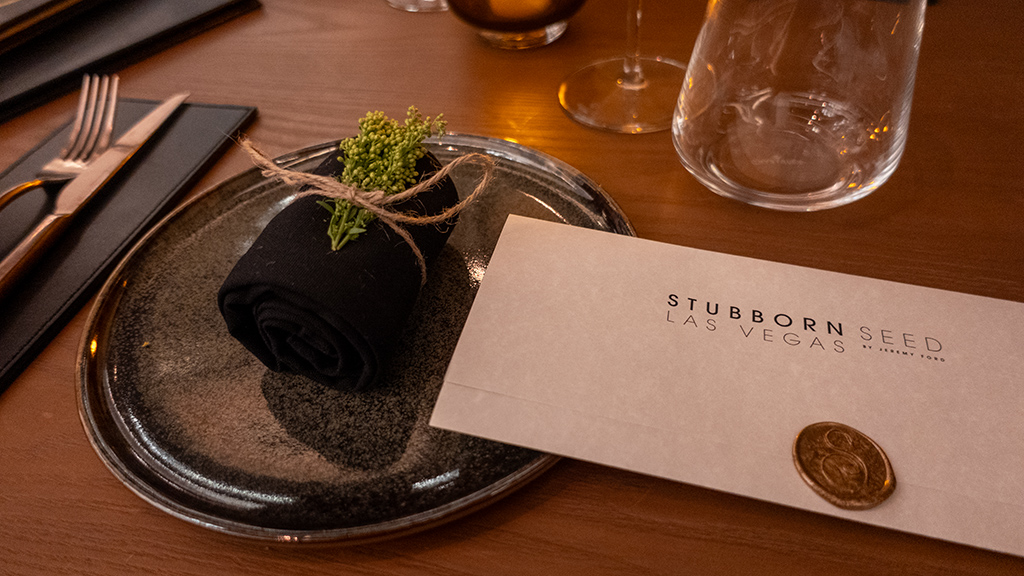
I opted to get the chef’s tasting menu at US$135.00 per person. I went this past Saturday, and it seems like they hadn’t swapped over to the spring rotation yet, as my menu was labeled as still being a winter menu. Each menu was custom-printed and wax sealed, and the inside had a special note welcoming my party by name.

I opted for the elevated experience for an additional US$40.00, which came with three additional appetizers.

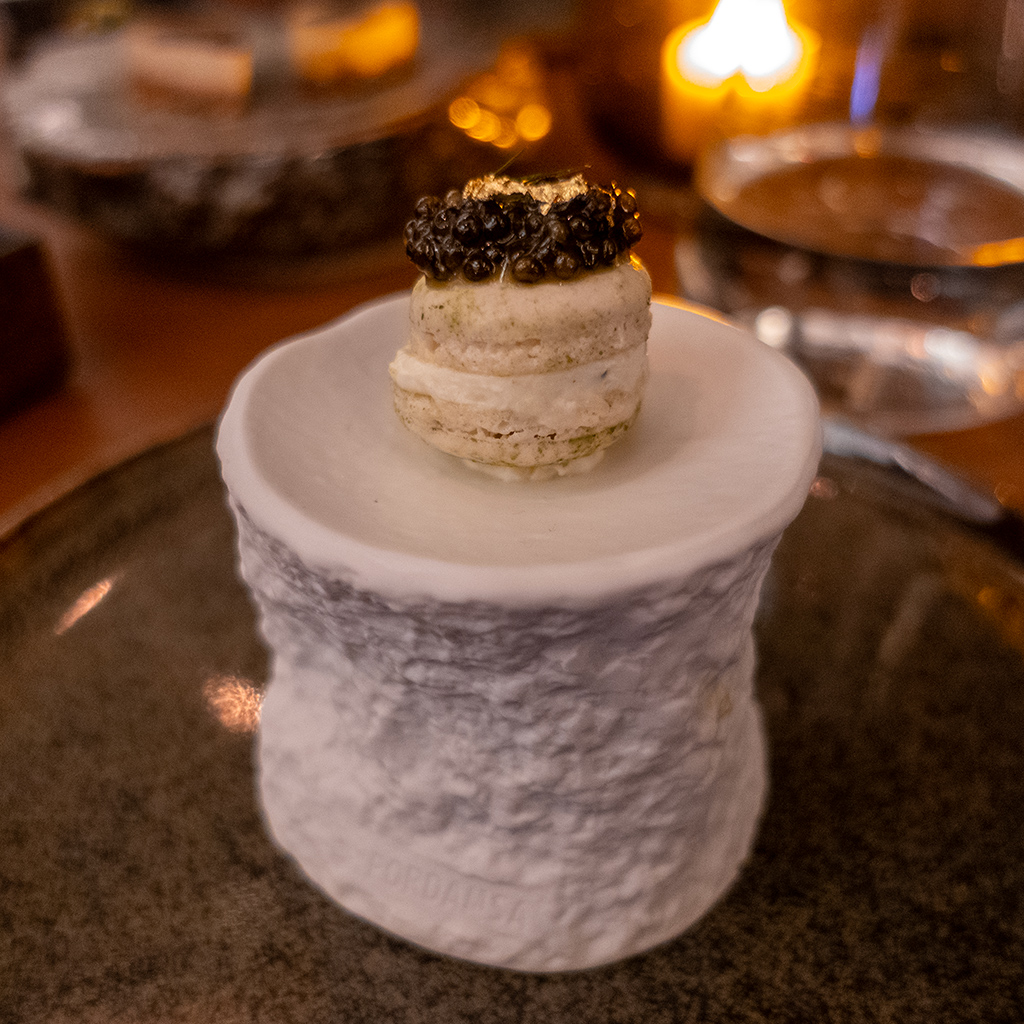
The first was a Kaluga caviar macaron with champagne citrus crema and dill, topped with edible gold leaf.

The macaron was delicious, but I think combining it with the caviar was a bit of a waste of caviar. The macaron had a strong and sweet flavor that you’d expect from a high-quality macaron, but that flavor completely overwhelmed any semblance of caviar. I think I personally would’ve probably appreciated this more if this was separated into a standalone caviar bump to start, and a standalone macaron for dessert.

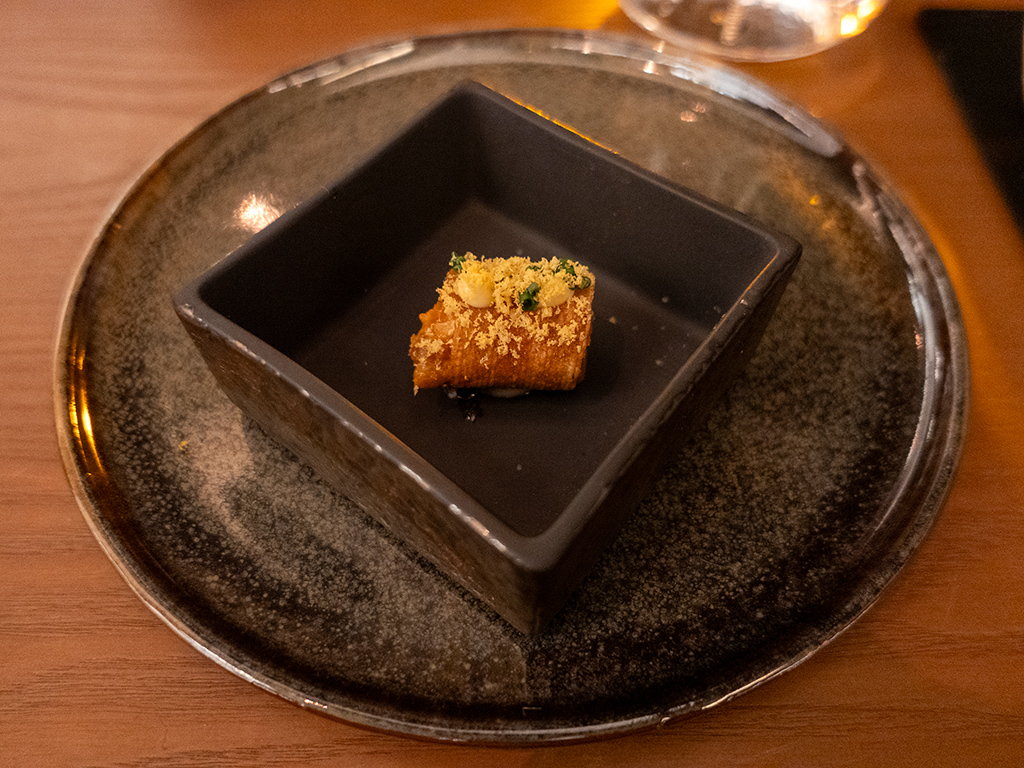
Next was a wagyu beef tartare canneloni with papaya kimchi and cured egg yolk.

This was a flavor combination that I’ve never had before. The portion size was very small, so it was sort of just gone before I had enough time to chew for a while and really take in and process the full flavor profile, but from what I did get of it, I liked it.

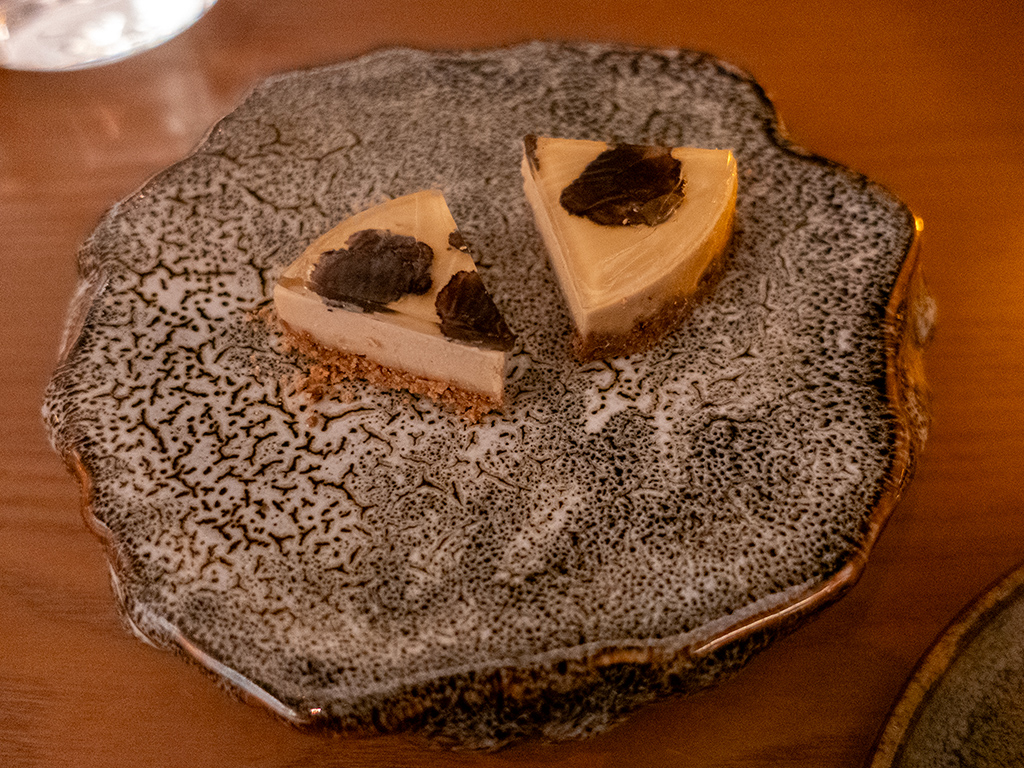
The third and final elevated experience appetizer was a Hudson Valley foie gras tart with fuji apple gelee, pine nut, and feuillentine.

The pailleté feuilletine was unexpectedly bitter. On paper, I think it’s reasonable to add feuilletine to foie gras for the textural variety, as well as to prepare it on the more bitter side to balance out the smooth fattiness of foie gras. But, in practice, I think the way that this particular tart was executed wasn’t the best. As a disclaimer, I’m not really the biggest foie gras enthusiast, so it might just be a matter of inexperience on my end, but I’d say this was one of my least-preferred dishes from the dinner.

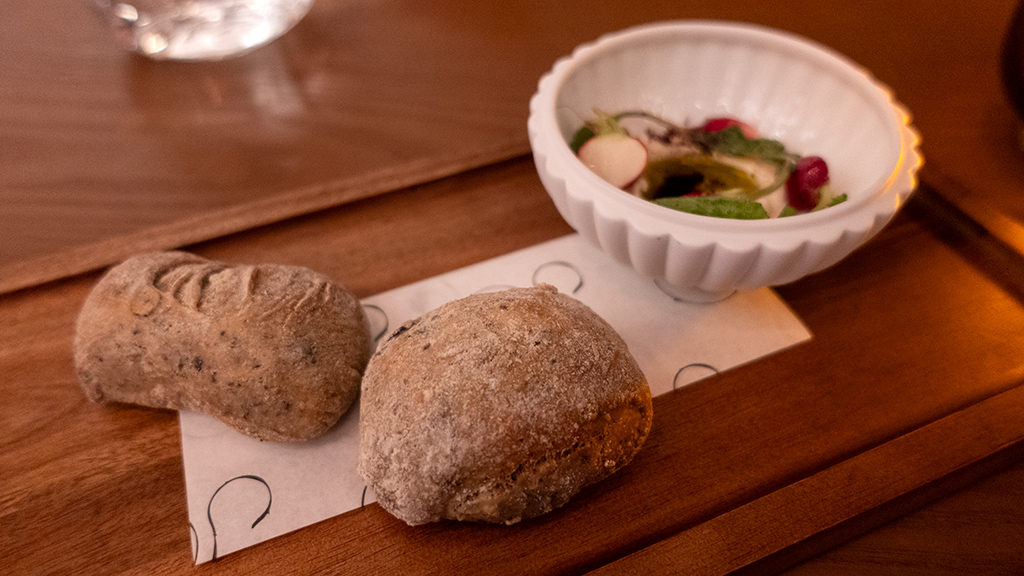
With the additional appetizers from the elevated experience over, we received the first regular appetizer from the base tasting menu, Kalamata olive ciabatta with whipped feta, Kalamata dust, and pickled baby radish.

The pieces of bread were comically small, and we each only got one piece, but the little amount of bread I was able to eat was good. I’m not the biggest fan of cheese, but I didn’t sense as strong of a moldy flavor from this whipped feta like I usually do from most cheeses.

Next was uni panna cotta with yuzu gelee and orange kombu granita.

The flavor of the sea urchin was pretty mild here, and the citrus flavor basically fully masked the sea urchin. Sushi is my favorite food, and sea urchin is my favorite kind of sushi, so it’s probably unsurprising that I love it when the sea urchin flavor is intense. With that context in mind, my personal preference may have affected how I perceived the flavor profile balance of this dish; for someone who doesn’t obsess as much over sea urchin as I do, this uni panna cotta might actually be a good balance with the uni being just an accent.

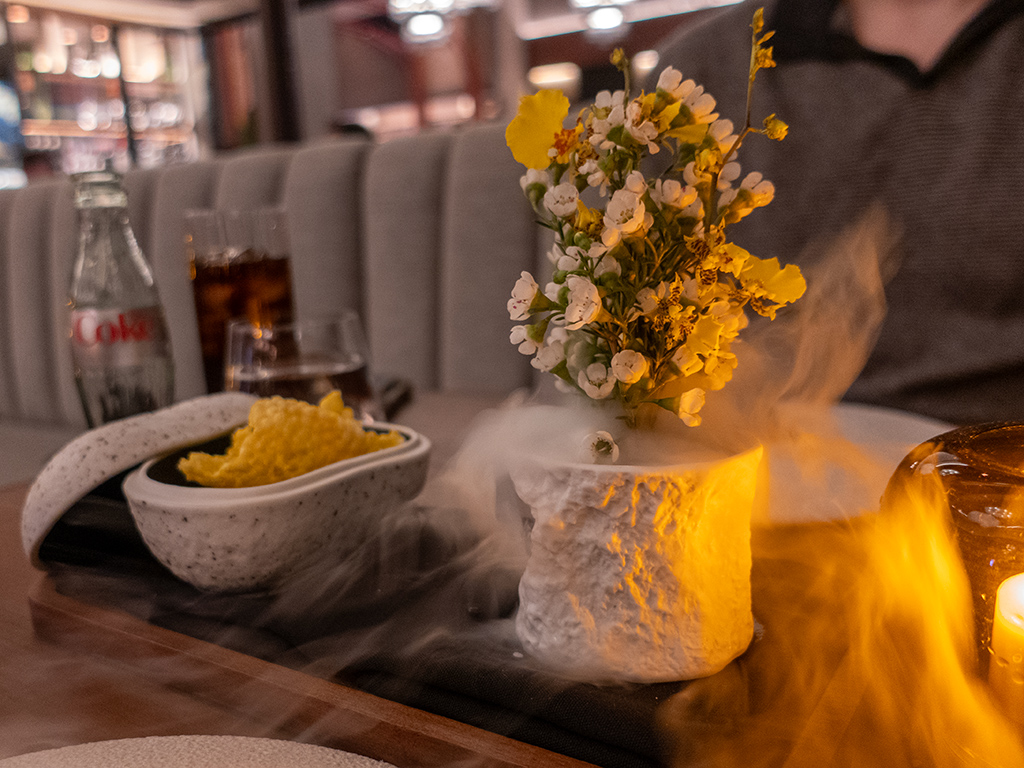
After taking away our bowls, the waiter and his assistant brought out this flower and said that the next dish would be a multi-sensory experience. He poured what I assume is liquid nitrogen into the vase, saying that it would catalyze the emission of a scent. I took a good sniff, and even with my highly sensitive sense of smell, I didn’t notice any special aromas.

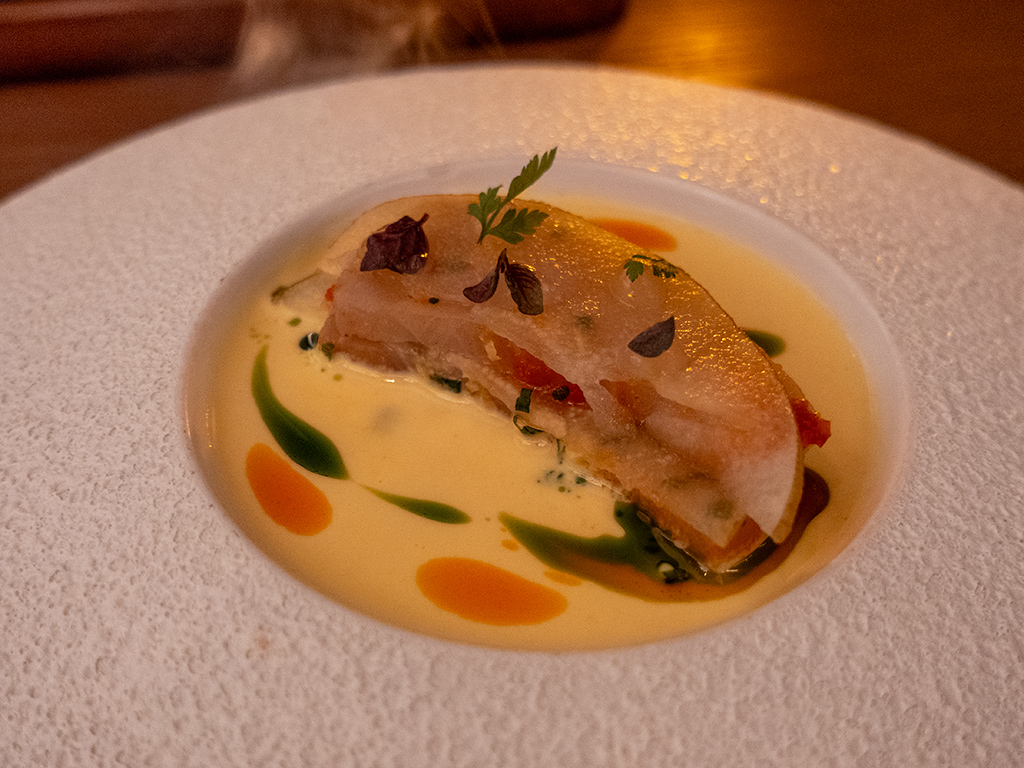
The dish that accompanied the scent was sake- and citrus-cured Japanese yellowtail with chili ferment, crispy tapioca, compressed Asian pear, and passion fruit buttermilk emulsion.

This was a bit too tangy and tart for my preference. I like high-fat cuts of fish, and I think all the citrus in the sauce and layered in between the yellowtail pierced too sharply through the desirable umami of the fish.
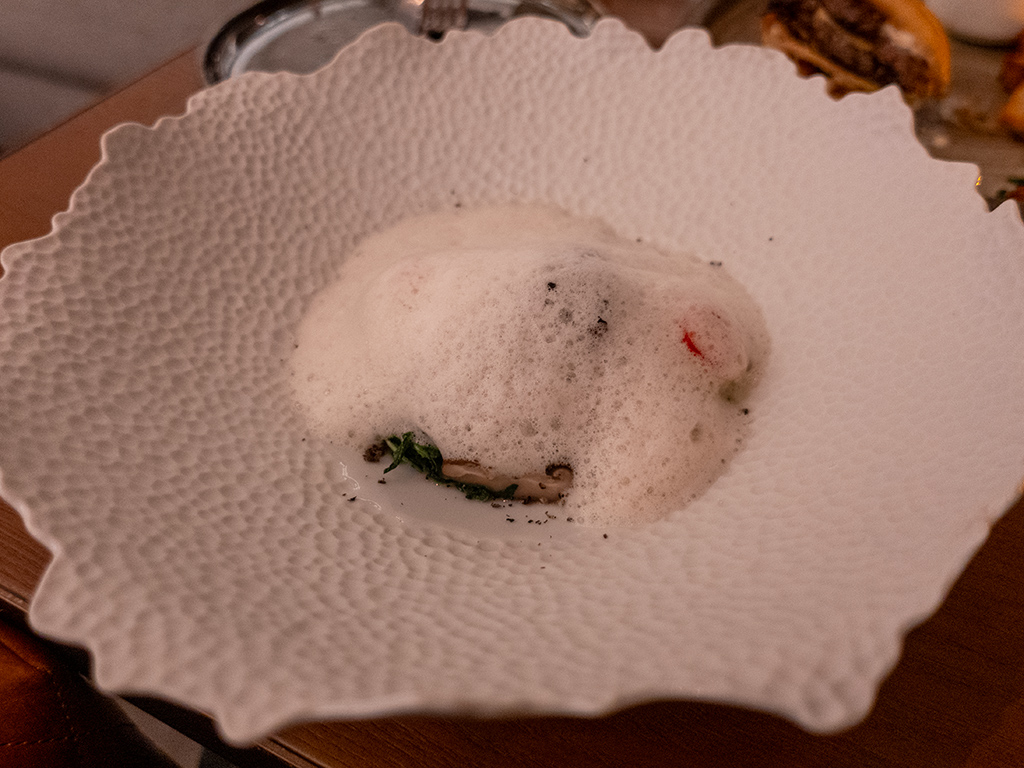
Our next dish was winter truffle ricotta gnudi with maitake mushroom, pine nuts, buttery greens, and winter black truffle.

As you can see from the photograph, this was completely buried in a thick layer of foam, so I couldn’t actually see what I was eating. I started working on whatever I could catch with my fork, and it ended up just being really bitter vegetables. Eventually, after making it over half way through the dish, I accidentally stabbed through my first piece of gnudi, all of which had apparently been arranged alongside the edge of the dish, but I couldn’t tell because of the foam.

After mixing the vegetables with the gnudi, it was far more palatable, and I would even go as far as to say that it was a good dish. But, with this comically horrific presentation, you may also end up eating only bitter vegetables for a while, then get confused during the middle of your meal as to whether you suddenly turned into a cow eating slop out of its trough.

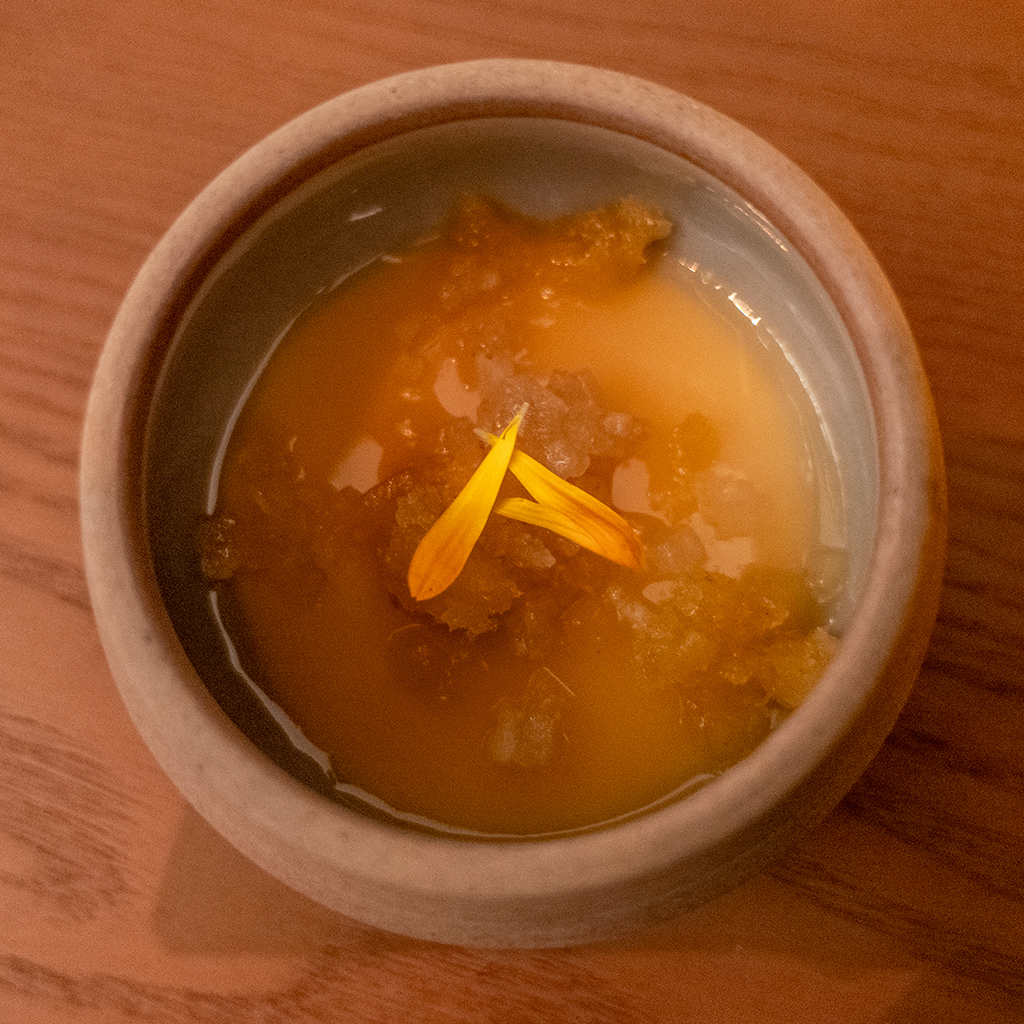
After that miniature adventure, we reached the intermezzo of the tasting menu and received sour apple sorbet with fennel granita and rosemary gel.

This was a sweet, refreshing, delicious dessert. In the middle of our meal.

I guess the gnudi was technically our first entrée, but because of how wrong that dish went, my brain interpreted this next dish as the real first entrée: pan-roasted barramundi with baby leeks, fennel, and shiitake sofrito galangal green curry.

The fish skin was a bit tough and difficult to cut up and chew, but otherwise, the rest of the dish was amazing. The flesh of the fish was extremely tender and had a “melt in your mouth” texture. The curry had an intricate and storied taste that had a lot of deep and complex elements to its flavor profile, yet it was not overwhelming. This was my favorite dish of the dinner.

Our final entrée was Westholme Australian wagyu striploin with brown butter soubise, desert moon mushrooms, Marcona almond fermented soybean, crispy miso cabbage, and natural chicken jus.

Although this was a perfectly acceptable piece of steak, it was comparatively underwhelming considering the level of quality I was expecting from a restaurant like this. This striploin also demonstrated how meaningless the “wagyu” label has become at this point without a rating indicated after it; this had little to no marbling, and it didn’t taste any different than an average steak you’d get from an average butcher.

I think what made the steak taste even cheaper was the large amount of sauce served alongside it that closely resembled steak sauce. I often say that the only purpose steak sauce serves on steak is to cover up an underwhelming steak, because a great steak will shine on its own. The bed of sauce reminded me of what a more sophisticated version of steak sauce from the grocery store would probably be like.

To conclude our tasting menu experience, we received our real dessert, winter citrus pavlova with olive oil cake, yuzu pastry cream, and caramelized pistachios.

There was a lot going on at once here, with a bunch of different textures and multiple variants of flavors, but overall, I liked it. It wasn’t too overwhelmingly sweet, which allowed me to recognize and appreciate the contributions of the individual components of the dish.

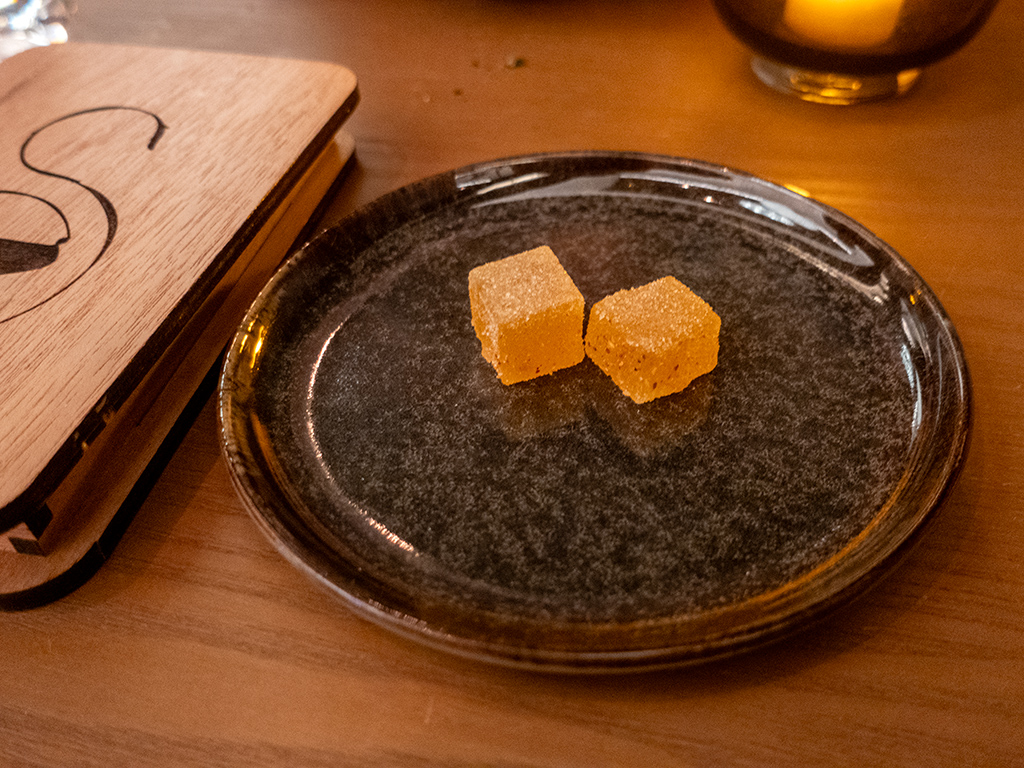
And finally, along with our check, we each received a piece of mandarin pate de fruit.

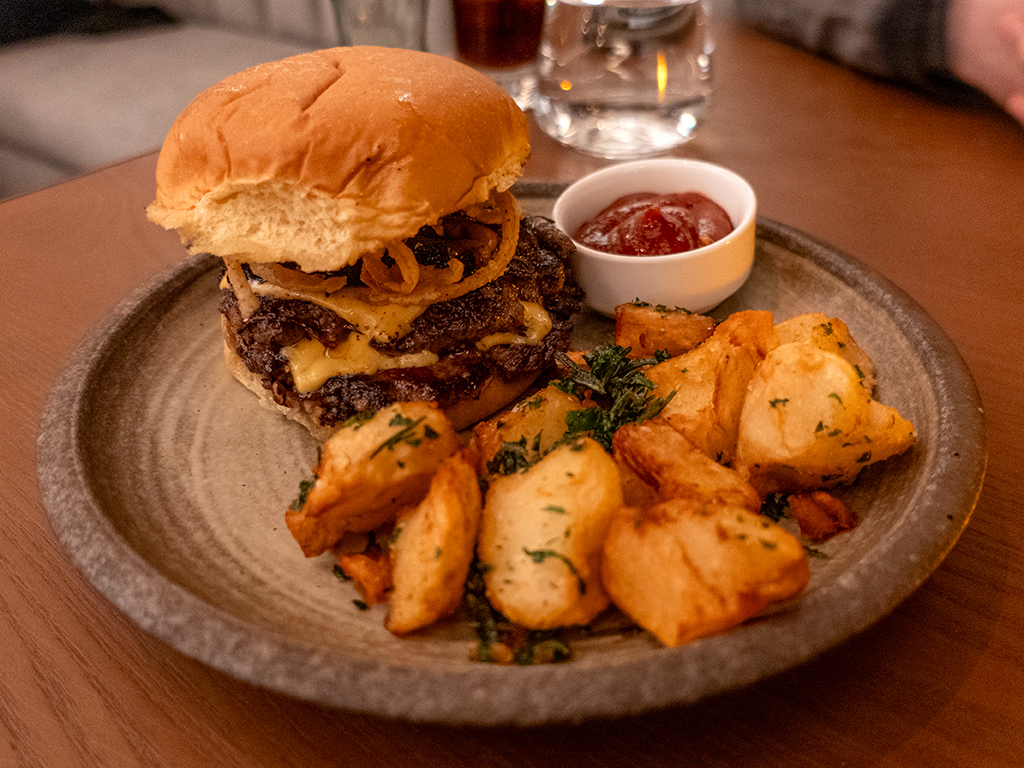
So you may be wondering, why in the world do I have a photograph of this cheeseburger?

I usually only ever go to chef’s tasting menu or omakase experience restaurants with foodie friends who like to eat pretty much anything and everything. That’s the magic of leaving it up to the chef—you never know what you’re going to get. That’s the fun of it, and you get to listen to the chef’s story as told with the food.

Well, just like how I made an exception to my “avoid restaurants on the Las Vegas Strip” rule, I also made an exception to my “don’t go to tasting menu restaurants with picky eaters” rule. I regret doing that, because the friend who I went with… doesn’t eat fish or seafood. I ended up eating his portion of any dish that had fish or seafood in it, i.e., the Kaluga caviar macaron, uni panna cotta, cured Japanese yellowtail, and pan-roasted barramundi.
That’s quite a large portion of the meal, so to make up for it, he ordered JJ’s Guilty Pleasure Burger, a double wagyu onion smash burger with smoked beef bacon, American cheese, crispy onions, and beefy crave sauce with a side of herb bravas. I sampled a small portion of it, but I found it to be a fairly unremarkable burger, so I didn’t have more than a fraction of a bite as to not tarnish the flavor flow of the tasting menu.

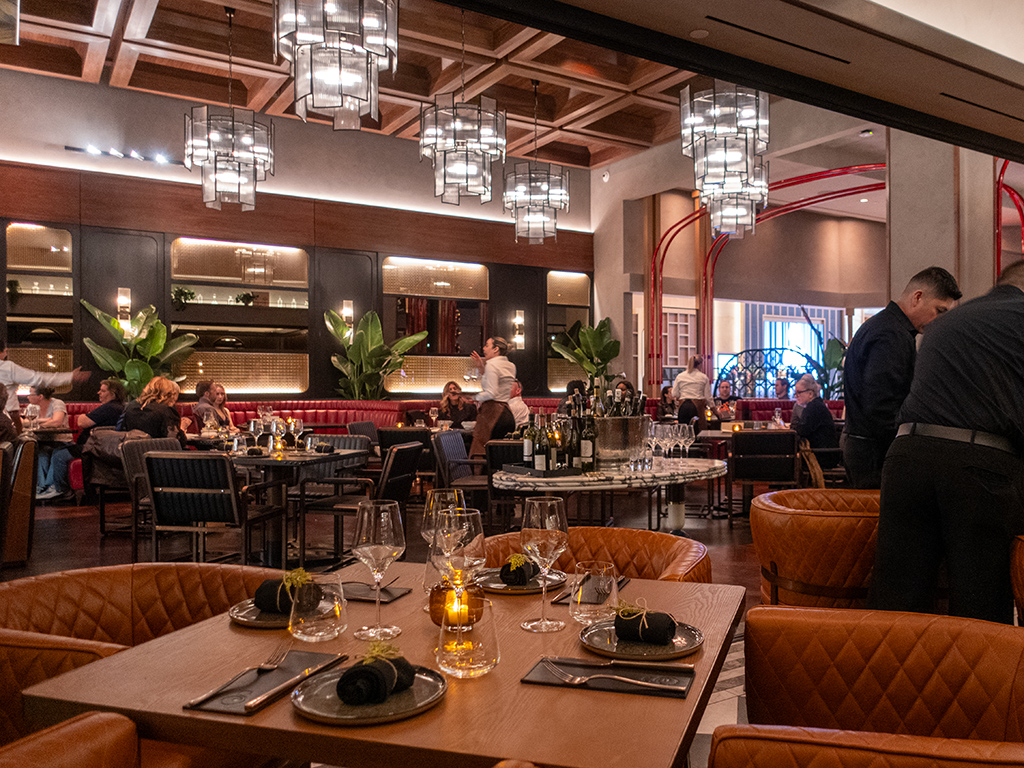
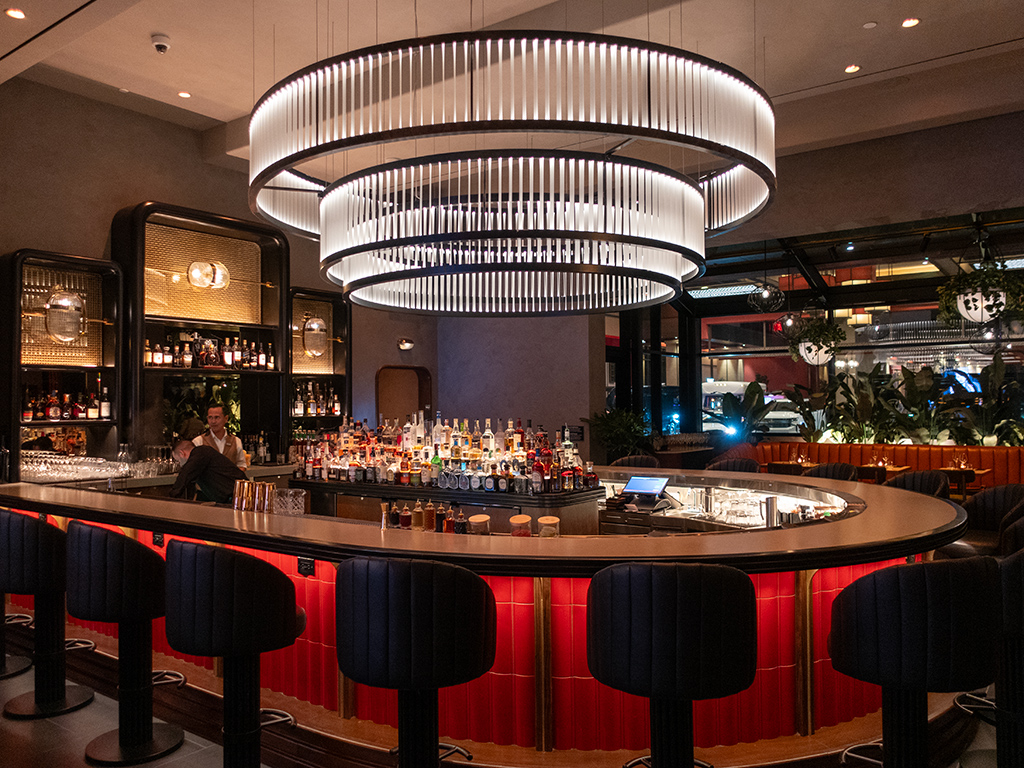
Here are some photographs I took around the interior of the restaurant.

So, the final verdict? At US$175.00 per person before taxes and gratuity for the full elevated and enhanced tasting menu (without a wine pairing), I think it was underwhelming overall, but probably still fine compared to other Strip restaurants.

My perception of it might be biased because I ate so much extra food from my friend’s portion, but if it hadn’t been for that, the total amount of food given throughout the dinner felt a bit small. I personally thought the dishes were sort of a hit-or-miss, and if I were ever to go back, I would just order à la carte, start with a round of oysters, get a full portion of the barramundi, and close with a dessert to build my own meal at a much lower pricepoint.


—§—