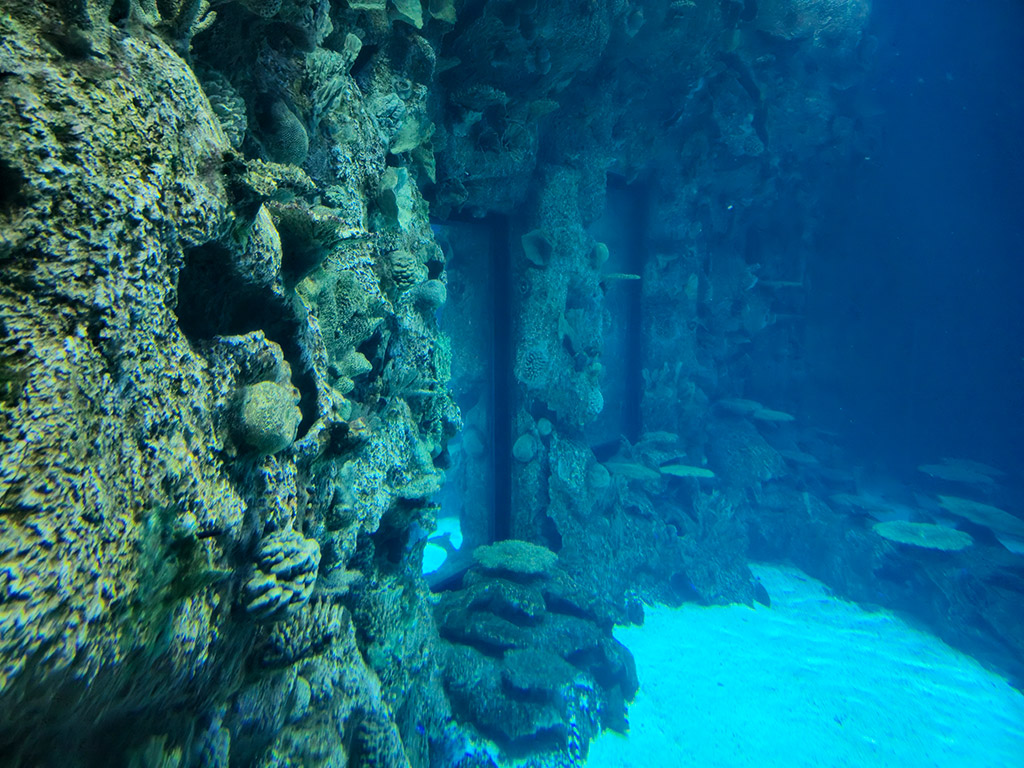
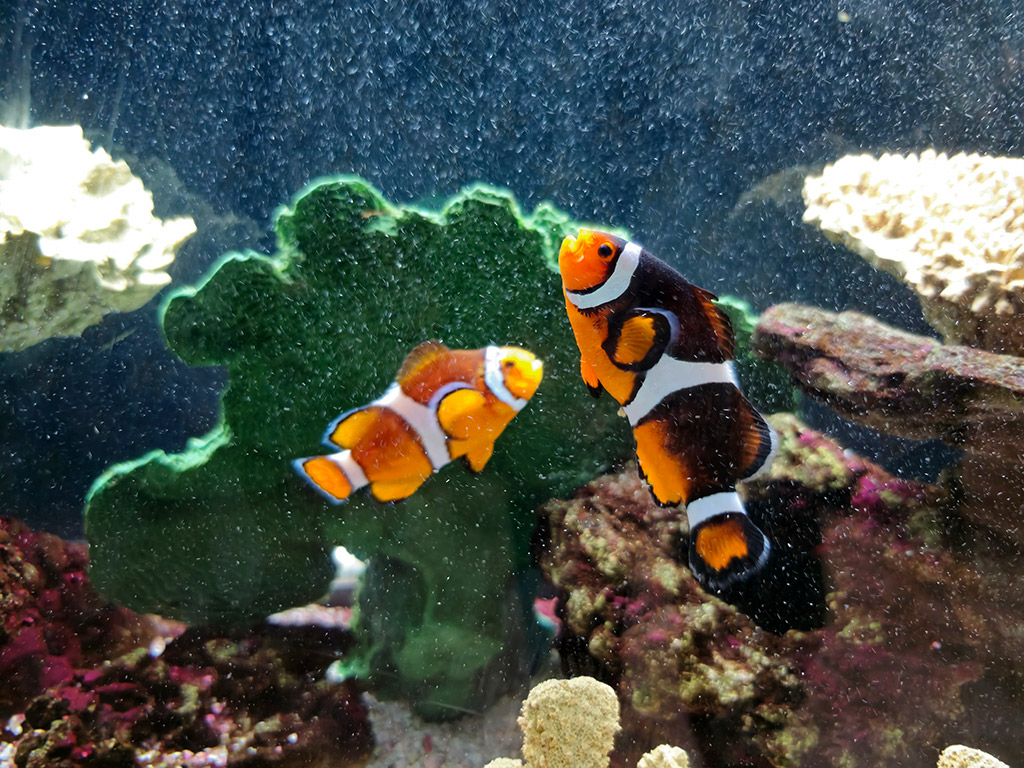
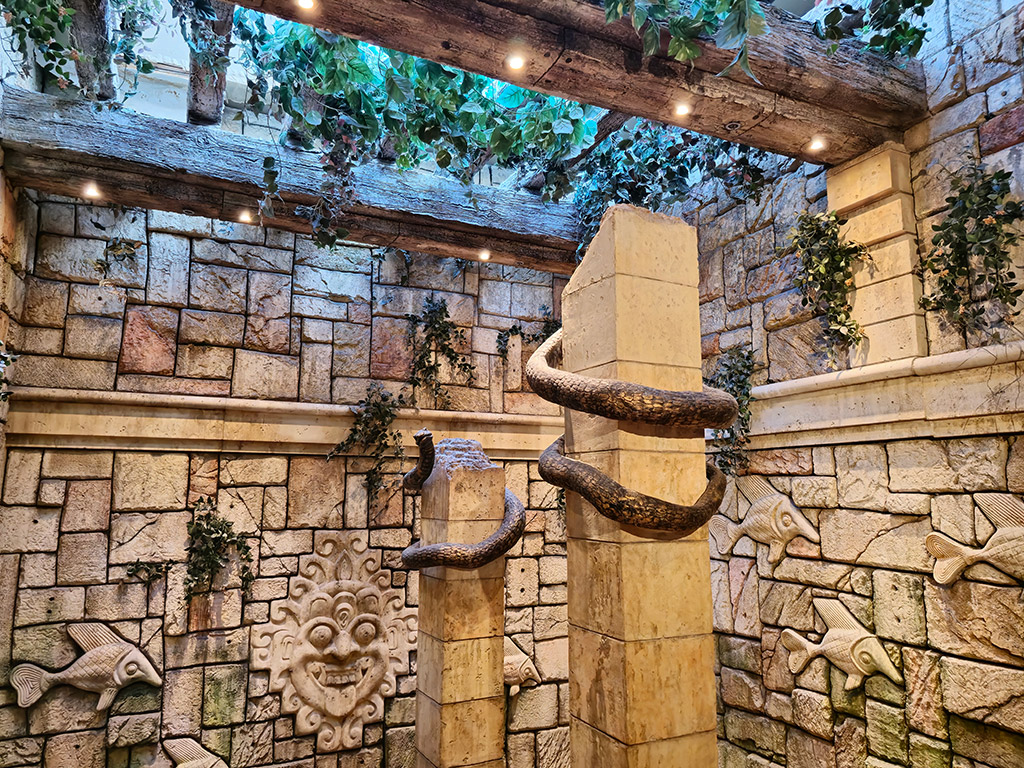
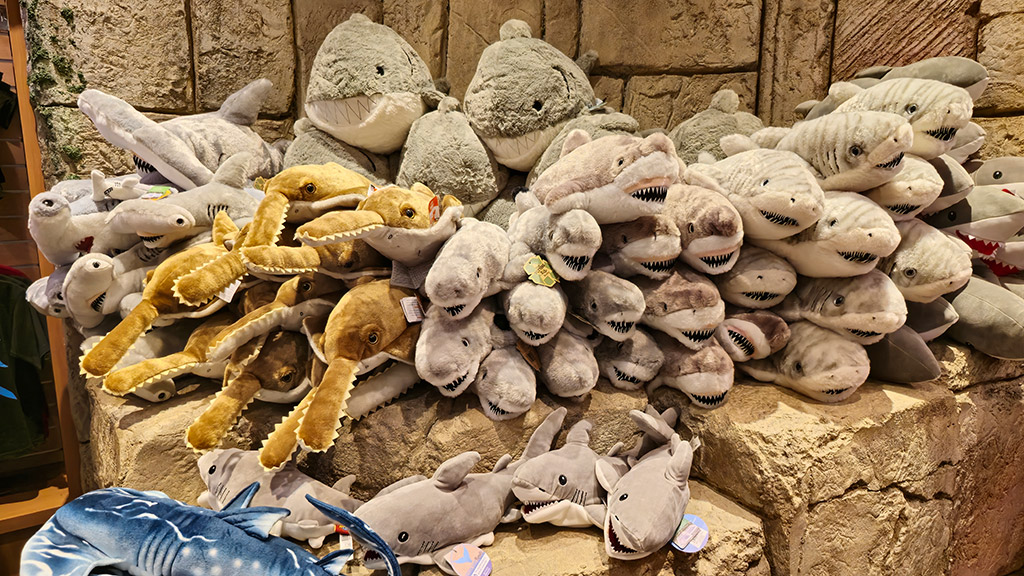
Hello, Arte Museum Las Vegas in Paradise, Nevada

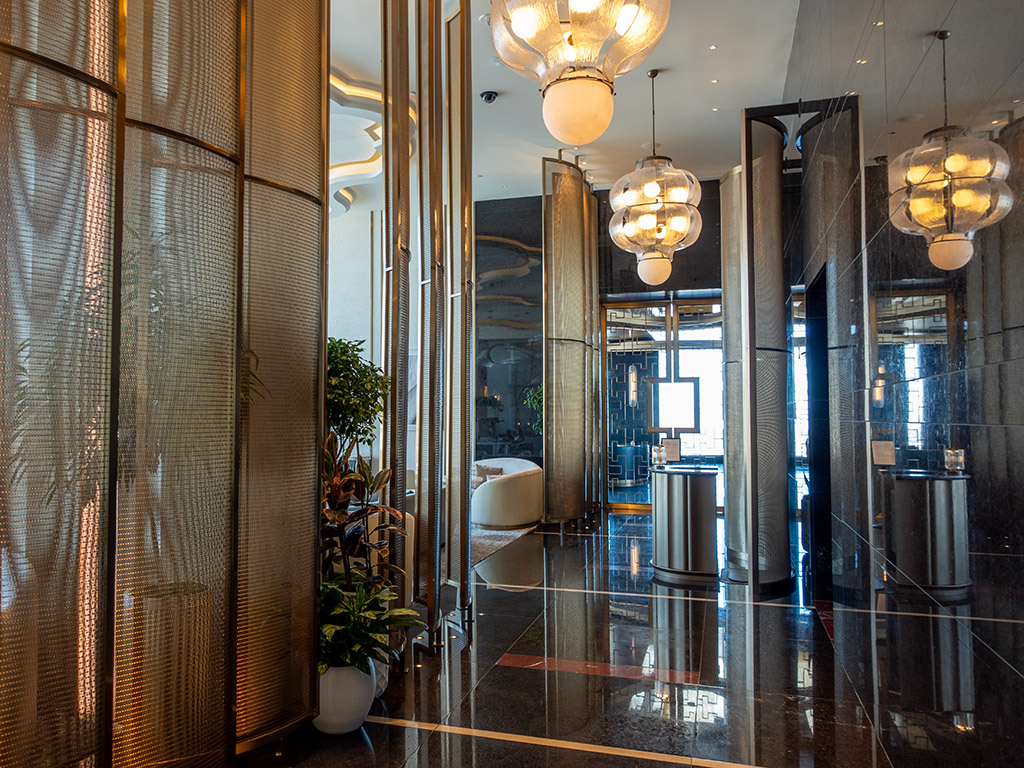
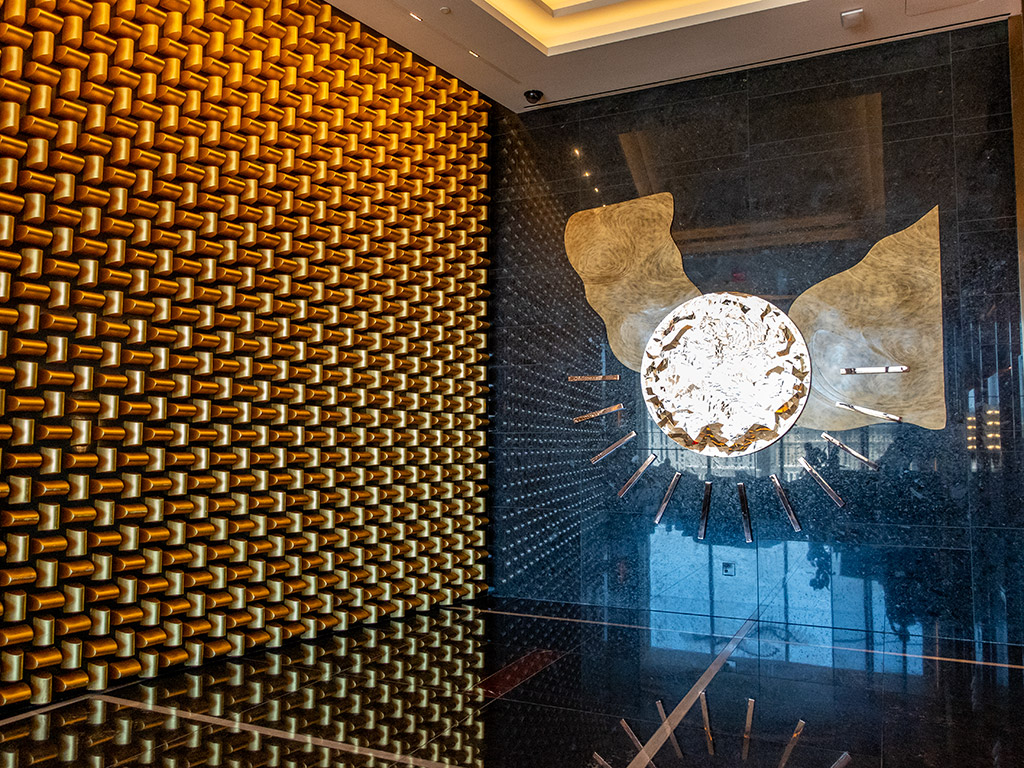
I had some free time this evening, so I decided to go check out Arte Museum Las Vegas at CityCenter on the Las Vegas Strip in Paradise, Nevada.

My ticket was US$45.00, which included admission to the museum and a drink at the Arte Café experience. That was after a US$10.00 locals’ discount for being a Las Vegas resident; those without a Nevada identification would need to pay US$55.00 for the same access.

To put it simply, the Arte Museum was a light show experience with a combination of visuals, sounds, and scents. There were a bunch of different rooms, and although not many of them were literally interactive per se, it was interactive in the sense that you could immerse yourself into the exhibits and feel fully surrounded by the varying kinds of stimulation.

The first room was called “Waterfall Infinite.”

The second area was called “Flower.” This had a few subsections: “Rose,” “Roses – Vincent van Gogh,” and “Camellia Underwater.”

Next was “Whale,” a dancing whale surrounded by the waves of the sea. I’m not sure if this was an intentional part of this room or if it was just a coincidence, but I believe even the walls were shaking and vibrating in this room in synchronization with the crashing waves.

Down the hall and through an aisle in the corner was “Star: Raindrops,” a collection of color-changing paper lanterns of different sizes hung at different heights.

Outside of “Star” was “Giant Camellia,” another flower display, but all my photos of it somehow unfortunately came out blurry, so that is unpictured here. Next to “Giant Camellia” was “Live Sketchbook: Light Safari,” an interactive exhibit where you could draw and scan animals to make them appear on the screen.
The path led up to the upper floor where I entered “Starry Beach.”

The room I spent the most time in was “Garden,” a large space with screens or mirrors on all the walls, floors, and central structures. “Garden” had three different displays on rotation: “Threads of Connection,” “Beach Aurora,” and “Light of Las Vegas.”

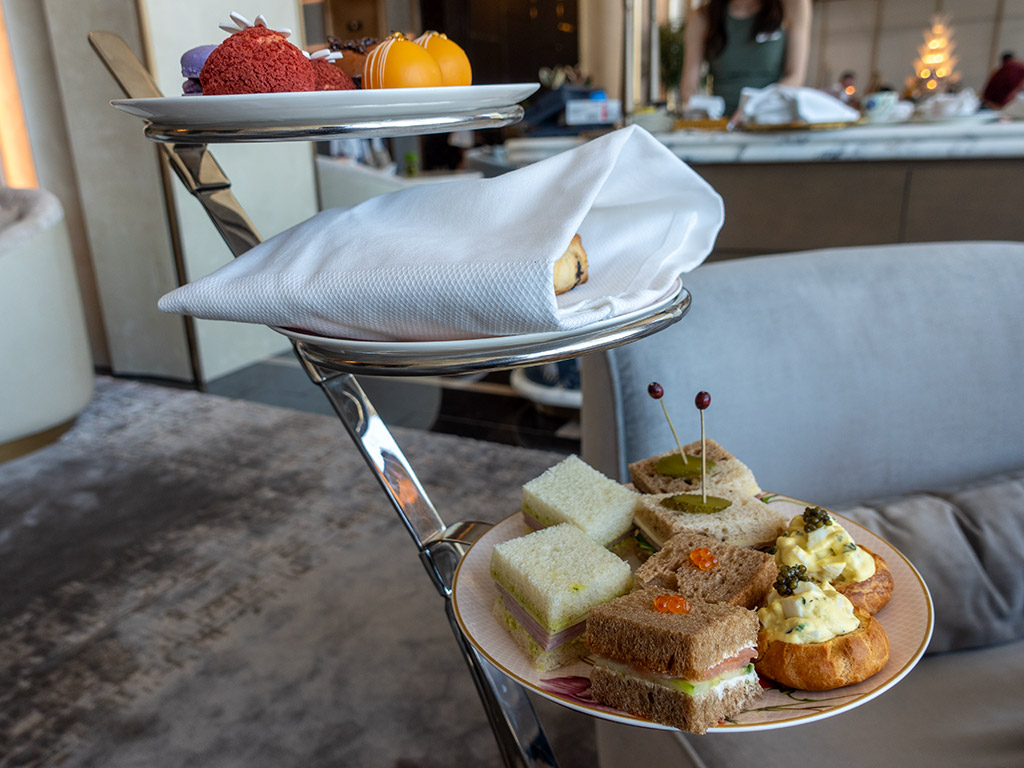
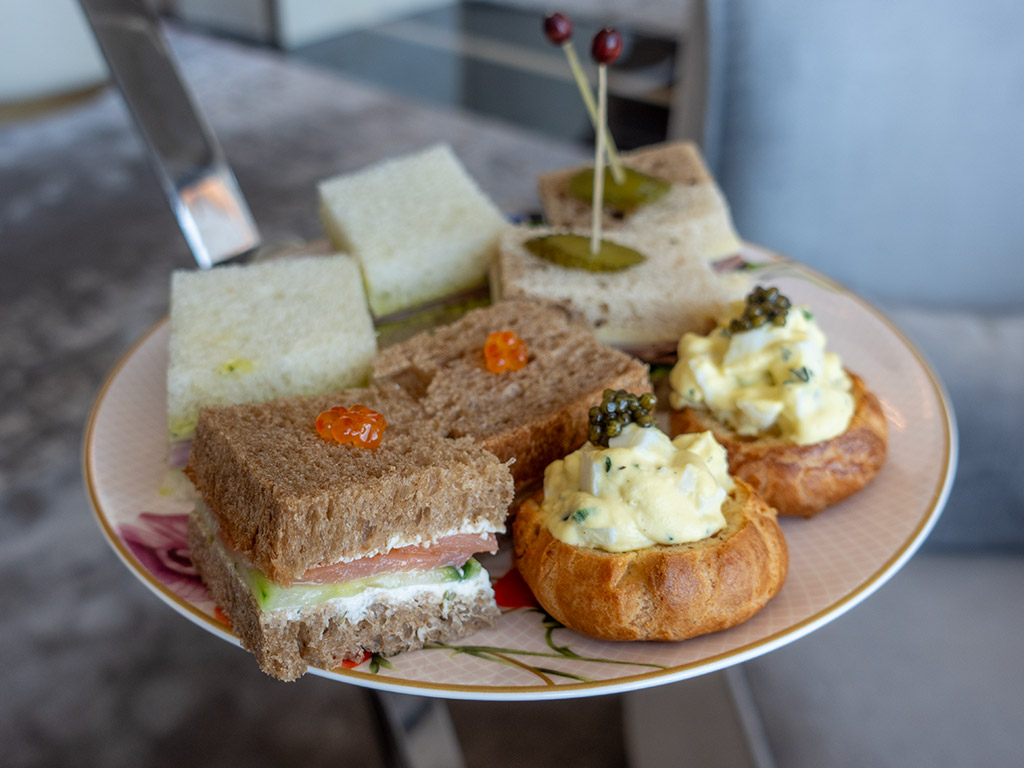
As the series of museum exhibits neared the end, it was time to take a short break at the café. As part of my extended access ticket, I was able to order a free drink, so I selected the seasonal lavender milk tea. I enjoyed my drink at a special table with a projector overhead that detected and followed my drink cup around with a label containing my name.

The final display was “Jungle: Glow.”

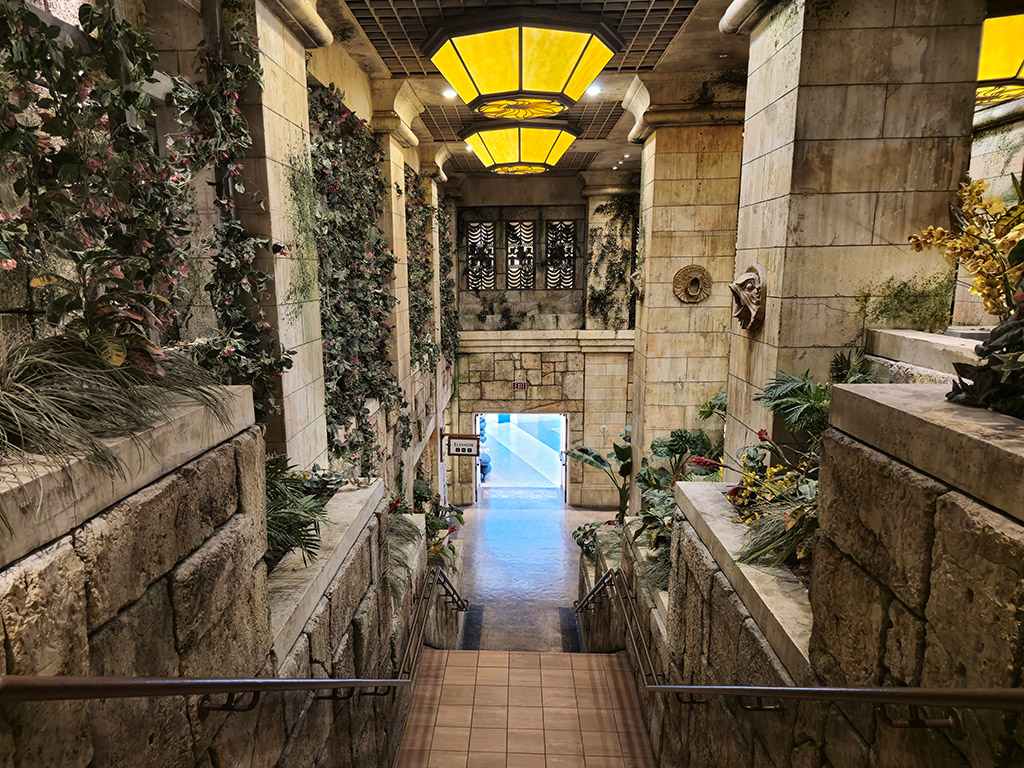
They turned the exit of the museum into an exhibit as well—it was called “Sunset” and showed the transition of colors throughout sundown as you descended the stairs.

Each of the major rooms had a special scent tied to it to make patrons’ experience more immersive. Not many museums take advantage of all your senses like Arte Museum does, and that was one of my favorite aspects of this museum. After descending “Sunset” and making it into the gift shop, I was pleased to find that the scents used in the rooms were actually for sale, so that if there was one you particularly liked, you could bring it home with you.

I think US$55.00 for a non-locals ticket for the full experience is very pricey. I obviously don’t know what their finances look like, so maybe there are enough visitors that the steep pricepoint is justifiable, but compared to other museums I’ve been to, US$55.00 seems pretty high. I went on a weekday two hours before closing time and spent an hour and a half going through everything, and it was relatively empty and peaceful.

If you want this kind of experience, then a show at the Sphere may be something to also consider and research—even though it won’t have the scents and the movement-based interactivity and immersion, the light show aspect will be comparable.

With that being said, I had a good time at Arte Museum. I think the photographs I shared here don’t really do it justice, because they’re all zoomed out as far as my camera would let me go; in-person, the displays tower over you and truly make you feel surrounded.

As a side note, if you end up visiting, make sure to actually experience the exhibits in full. The animations and light shows are on a cycle and they have a beginning and end; I saw a lot of people casually walking through the exhibits without seeing the whole thing, so if you want maximum value out of your ticket, make sure you stick around until you’ve watched the full loop for each room.


—§—


Photo dump from the Phoenix Metropolitan Area, Arizona

My trip to Phoenix, Arizona and the surrounding cities and suburbs has come to an end. I already published a bunch of blog posts over the past couple weeks showing some of the tourist activities I’ve done; here is an index, in case you missed them:

Like usual, I have some miscellaneous photos from my travels for which it wouldn’t make sense to have individual dedicated blog posts, so as a wrap-up to my time in Phoenix, here is a dump of my remaining pictures.

When I arrived in Phoenix Sky Harbor International Airport, I saw on Google Maps that there was a museum inside the airport. On my way out of the terminal and while walking towards the PHX Sky Train, I made a quick stop at the Phoenix Airport Museum.

One of my favorite things about Phoenix Sky Harbor International Airport is the fact that there is a free transit system that moves you off of the main airport terminal area. I appreciate airports that do this because it reduces landside congestion a substantial amount—it lets people choose whether to get curbside pickup or spend a few extra minutes getting off-property to save a higher ratio of time with ground transportation.

When I first started traveling a lot, I was intrigued trying out different hotel brands under the Marriott family and taking pictures of different rooms. However, after having lived full-time out of hotel rooms during my multi-year road trip, they got less interesting to me.

A long time ago, I used to post photos of my hotel rooms, but since then, I’ve stopped; a few people have asked me to resume, so here is the room I stayed in at the AC Hotel by Marriott Phoenix Downtown.

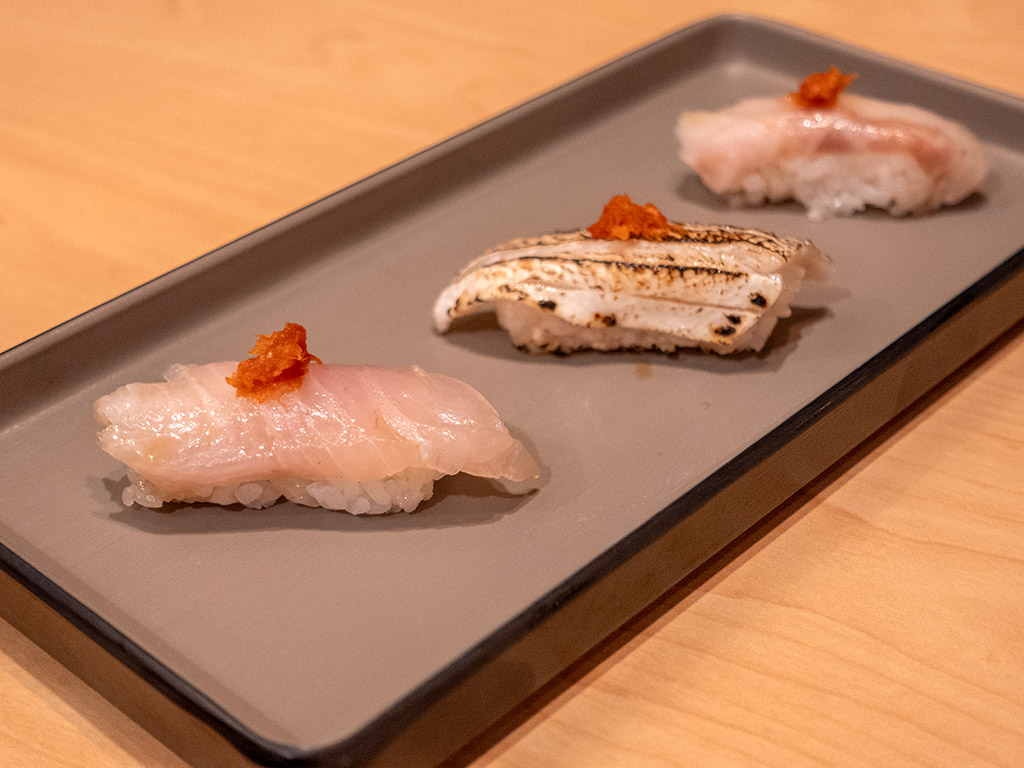
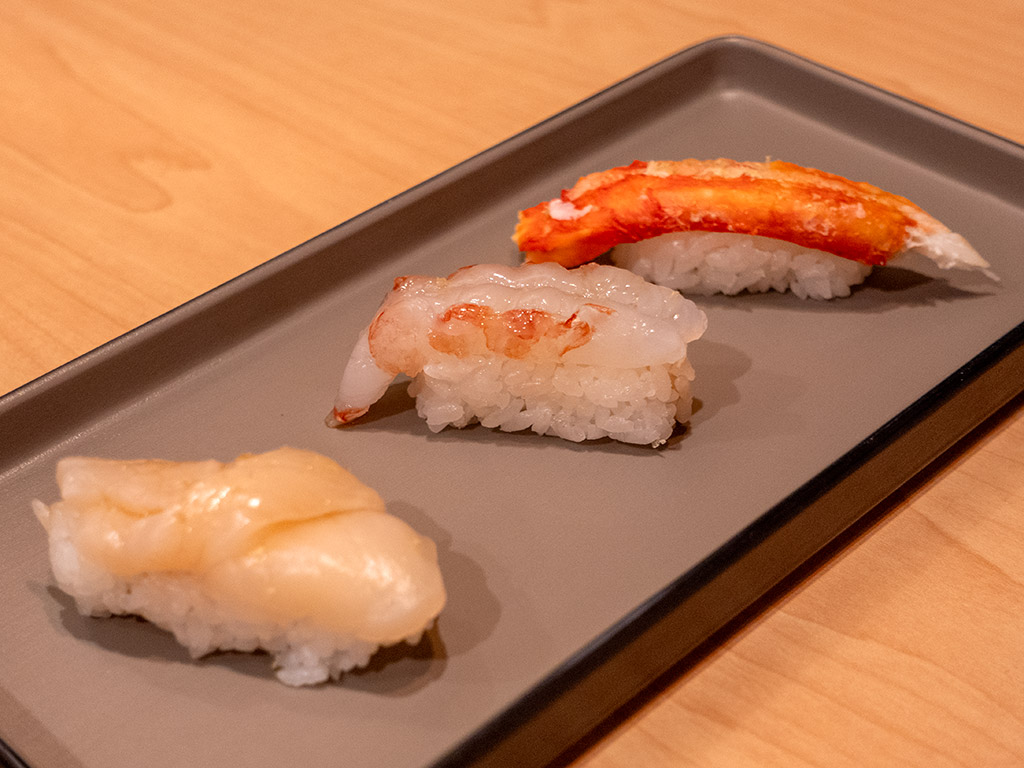
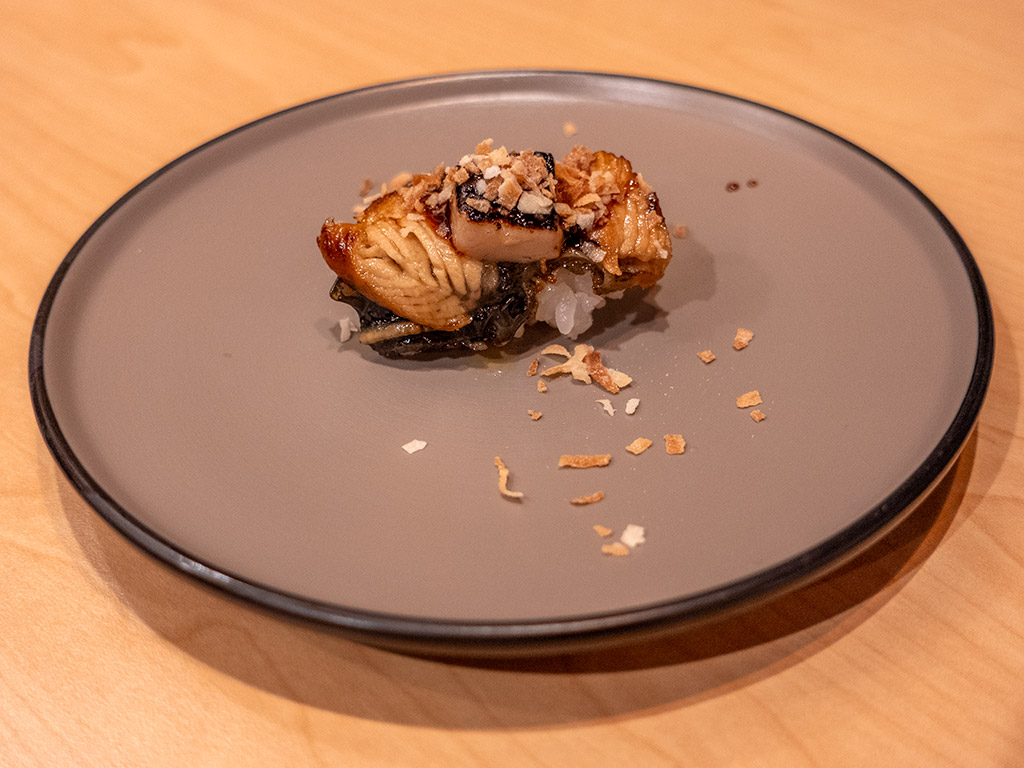
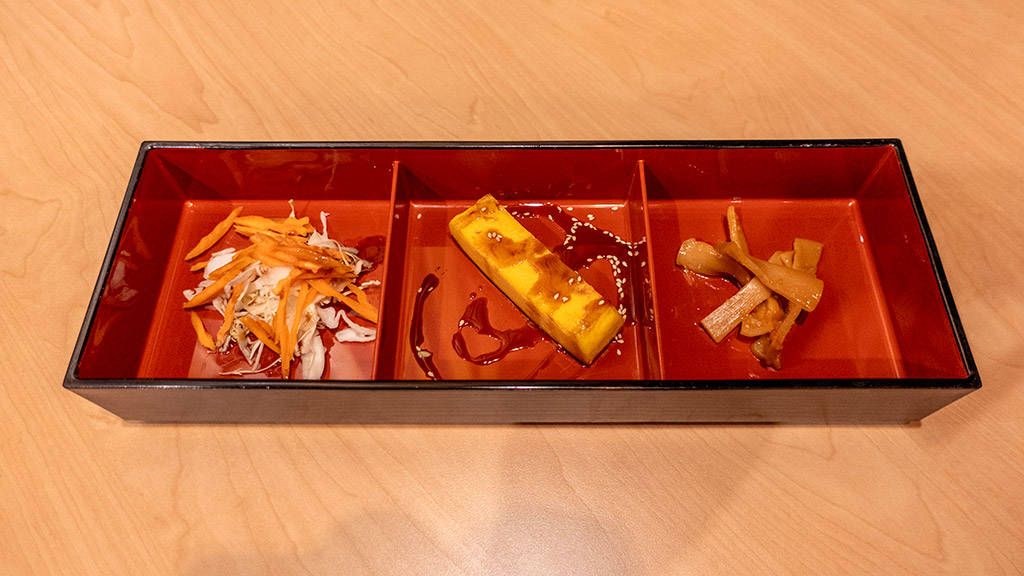
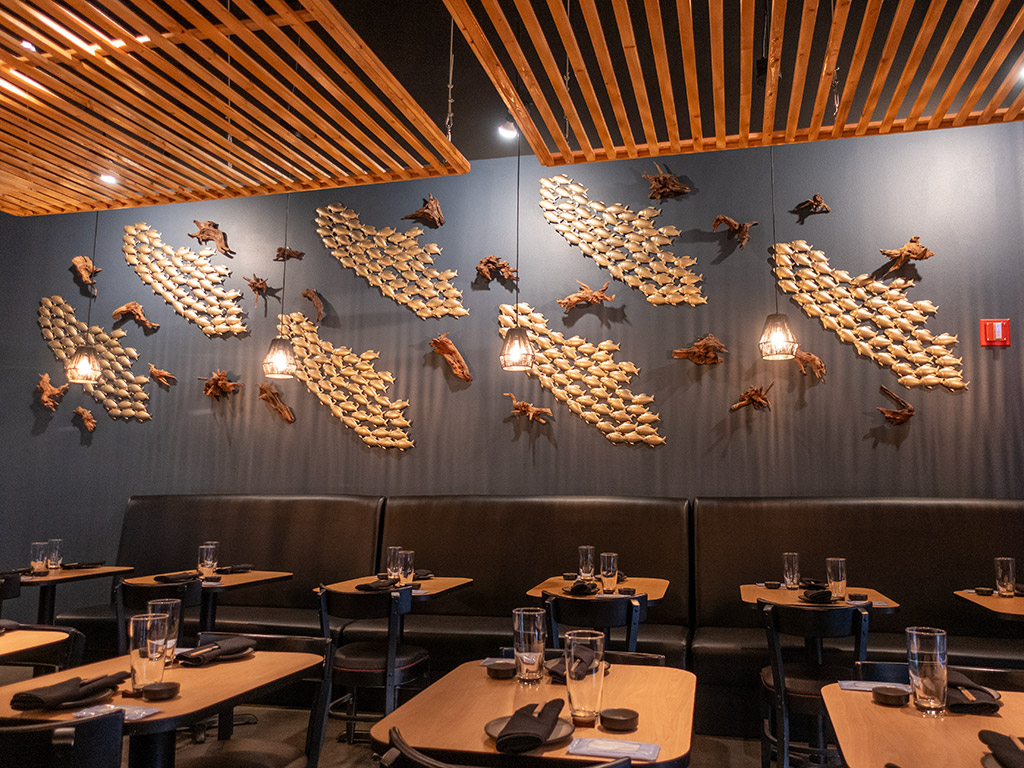
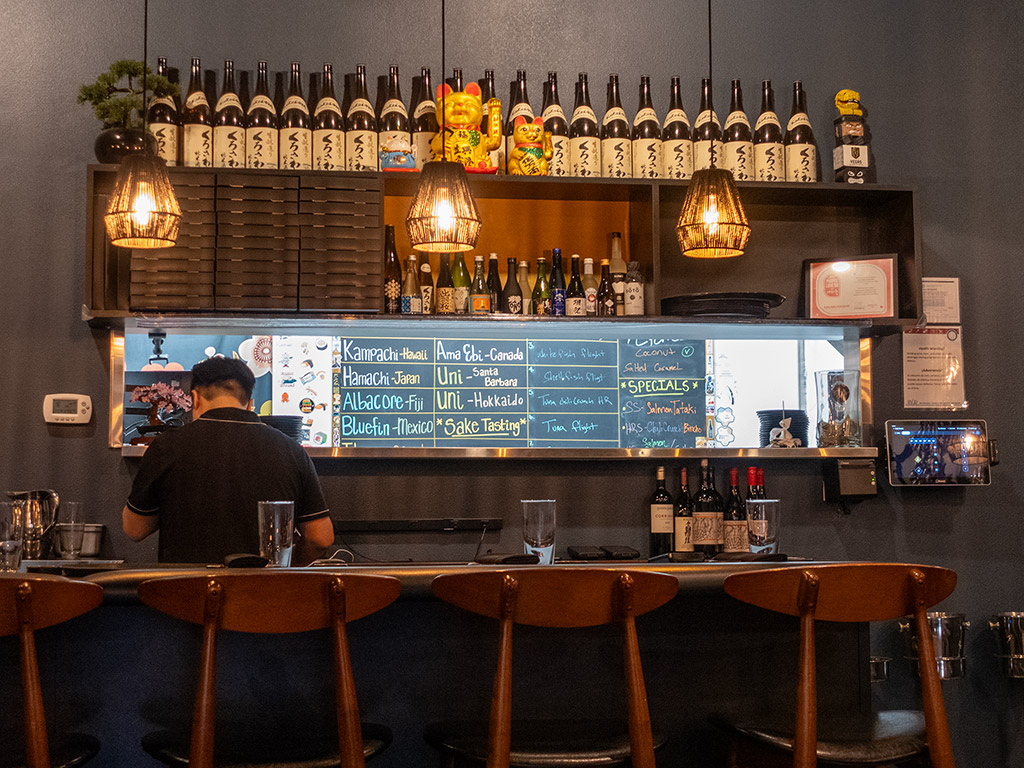
On the night of my arrival, I had dinner at the Moira Sushi Bar & Kitchen on East McKinley Street.

I ordered a chirashi bowl, my go-to sushi dish when I go to a new restaurant because of how uniquely different it can be across different restaurants and how well it captures the style of each individual chef.

Having stayed in downtown, a lot of things were in walking distance for me, so I did a lot of walking during my trip. There are some interesting buildings and structures in Phoenix; here are a few that I thought were nice or interesting enough to photograph.

For one of my dinners, I met up with some friends and went to Guiseppe’s on 28th (which, funny enough, technically isn’t on 28th, but on East Indian School Road due to the direction its front door faces).

As our appetizer, we got a medley of four variants of their bruschetta: fresh tomato and basil, creamy gorgonzola cheese and honey, brie with Tuscan salami vino cotto, and house-made pesto and fresh tomato.

My friends got gnocchi and butternut squash ravioli as their main entrées. The gnocchi was mixed in with a cream and tomato cardinale sauce, and the ravioli was tossed in sage brown butter.

I decided to order a signature dish and got spaghetti neri—house-made squid ink pasta with shrimp, calamari, and clams in tomato broth.

For dessert, we shared a tiramisu with cocoa, espresso, and mascarpone cheese.

During one of my late afternoons and evenings, I went for a walk at Papago Park. I hiked up to the Hole-in-the-Rock and was able to enjoy some nice, panoramic views of the surrounding area.

And with that trip complete and a new city achieved, I updated my travel map.

I started this travel map several years ago when I first started traveling for esports events with Tempo Storm, and I didn’t really expect it to get this dense, so I didn’t exactly build it in a particularly scalable way (even the resolution is so low that I have to use Photoshop’s resizing algorithm to generate a higher-resolution version to render on 4K monitors).

I may make a new, more robust and expandable travel map in the future, but until then, here is where I’ve been in the United States so far.


—§—


Hello, Desert Botanical Garden in Phoenix, Arizona

After I went for a hike around Papago Park during my trip to Phoenix, Arizona, I continued walking about a mile north that same day through the desert and along the Galvin Bikeway to check out the Desert Botanical Garden.

I intentionally timed my visit to start at twilight and continue past sunset because I saw that they have a special exhibit called LIGHT BLOOM by HYBYCOZO until the end of March, and I figured it would be best viewed when dark. That was a wise decision—this meant that I was able to check out the desert vegetation and scenery, then stay for when the geometric light installations came on and cast intricate shapes across the ground.

I paid US$32.95 for general admission, which I thought was comparatively reasonable considering the size of the botanical garden, density of plant volume, and number of unique elements.

Here are some photos I captured during my visit:


—§—


Hello, S’eḏav Va’aki Museum in Phoenix, Arizona

I’ve done a lot of traveling over the past handful of years, and I’m creeping ever closer to “I’ve seen it all” territory, at least in the United States. To be clear, I’m not actually close to having seen it all, but I have reached a point where a lot of tourist hotspots feel redundant because I have most likely already visited a variant of it in a different location.

Because of this, when I travel now, I go out of my way to make sure to explore spots that are unique to that location. For example, if I’m going to an area with particularly beautiful scenery, I will make sure to go on as many hikes as possible, as opposed to going to a national history museum that doesn’t have a local twist to it.

I’ve been following this approach for my trip in Phoenix, Arizona by seeking out tourist attractions related to Native tribes, which are heavily concentrated in the Arizona and New Mexico area. I checked out the S’eḏav Va’aki Museum, formerly known as the Pueblo Grande Museum, over in eastern Phoenix by Sky Harbor International Airport. I haven’t had many opportunities to explore a museum like this, so this was a unique experience for me.

The S’eḏav Va’aki Museum had three components to it: the main exhibits, the seasonal/rotating exhibits, and an outdoor exhibit. One of the rotating exhibits during my visit was a section about the old Pueblo Grande name and how the museum collaborated with the O’odham to come up with a new name that was more fitting for the relics, artifacts, stories, and teachings contained in the museum. I particularly liked the outdoor trails, which wound around some replica structures that visually demonstrated what life was like for the Natives.

Below are some photographs I took around the Museum:


—§—


Hello, Wren & Wolf in Phoenix, Arizona

For one of my meals while visiting downtown Phoenix, I went to Wren & Wolf for dinner with a couple friends. We picked this restaurant because it was one of the few high-end restaurants that had short-notice reservation slots available, and because the reviews were good for both the quality of the food and for the dining experience.

As our appetizer, we ordered a Renaissance Tower from the raw bar. This came with six oysters on the half shell with cocktail sauce, pomegranate mignonette, horseradish, and hot sauce; four tomatillo and Calabrian chili shrimp; a half lobster with crab stuffing; and a quarter pound of king crab.

This was amazingly high-quality seafood. Everything had a very strong, intense, pure, and clean flavor. I think the oysters could’ve had a little bit more salt to extract and enhance more of the oyster flavor, but in general, this is probably some of the best seafood I’ve ever had (and I eat a lot of seafood).

One of my dinner companions doesn’t like seafood, so to accompany the Renaissance Tower, we also ordered German potato dumplings with gouda, manchego, and brown butter sage sauce. I tried one and this was a bit too cheesy for my preference, but I still thought it was good, and my friends seemed to enjoy these a lot.

For my beverage, I ordered a non-alcoholic version of a drink called “I Love You, But I Love Me More” made with black currant and berries, blood orange, and lime topped with a skewer of raspberries. This had a nice, deep fruity flavor without being tangy or sour. The fresh raspberries were also nice, as they served as a palate cleanser in between our different main entrées.

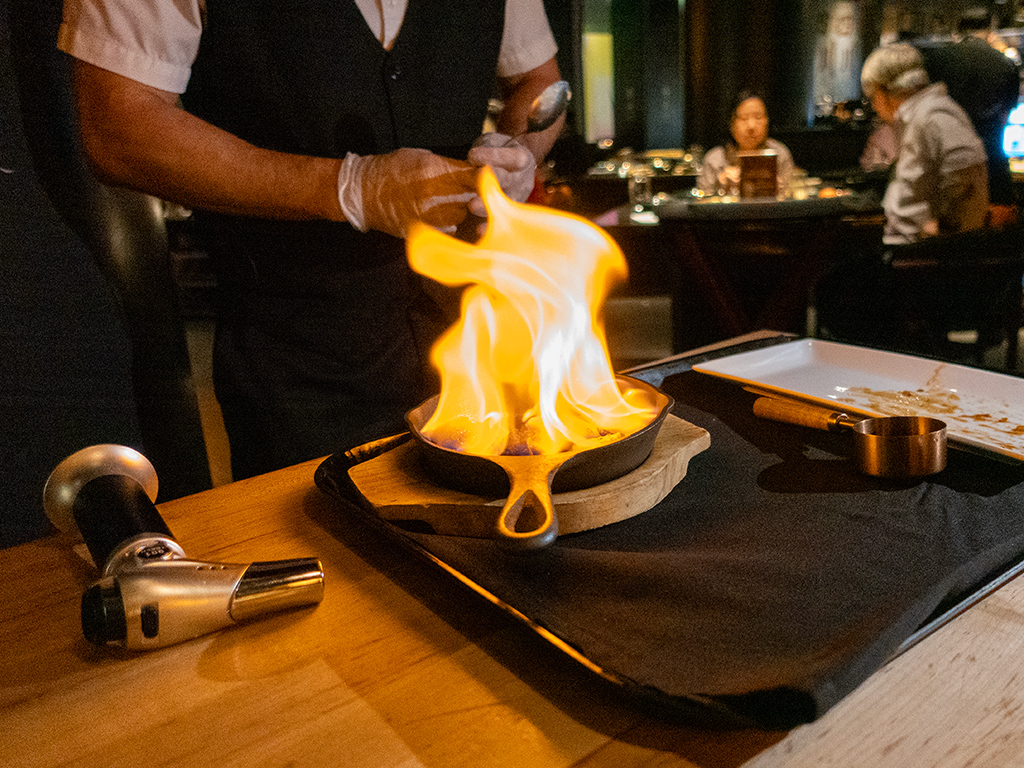
After wrapping up our appetizers, we got our first entrée, Japanese A5 wagyu cooked tableside over binchō-tan charcoal. My friends told me that they’ve never had Japanese A5 wagyu before, so I figured this would be a good opportunity for them to try it for the first time, especially with the added experience of tableside preparation.

As expected, this was incredibly flavorful, especially after covering it with a generous amount of the provided flaky salt.

After splitting four ounces of Japanese A5 wagyu amongst ourselves, we ordered some more steak, but this time a cut that was more reasonable to have in a larger portion—a 10-ounce filet of beef tenderloin cooked medium rare with a side of whipped Parmesan potatoes and roasted baby carrots.

This was very tender and flavorful, and by adding a bit more of the flaky salt we had left over from the wagyu, I was able to enjoy even more of the rich beefy flavor.

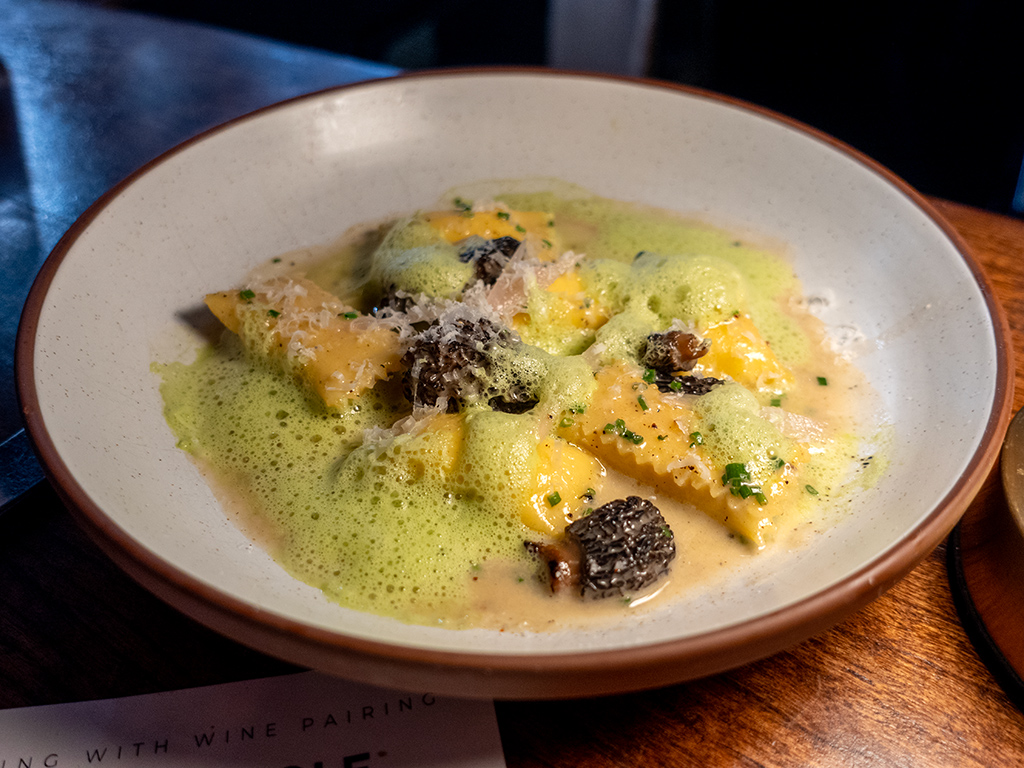
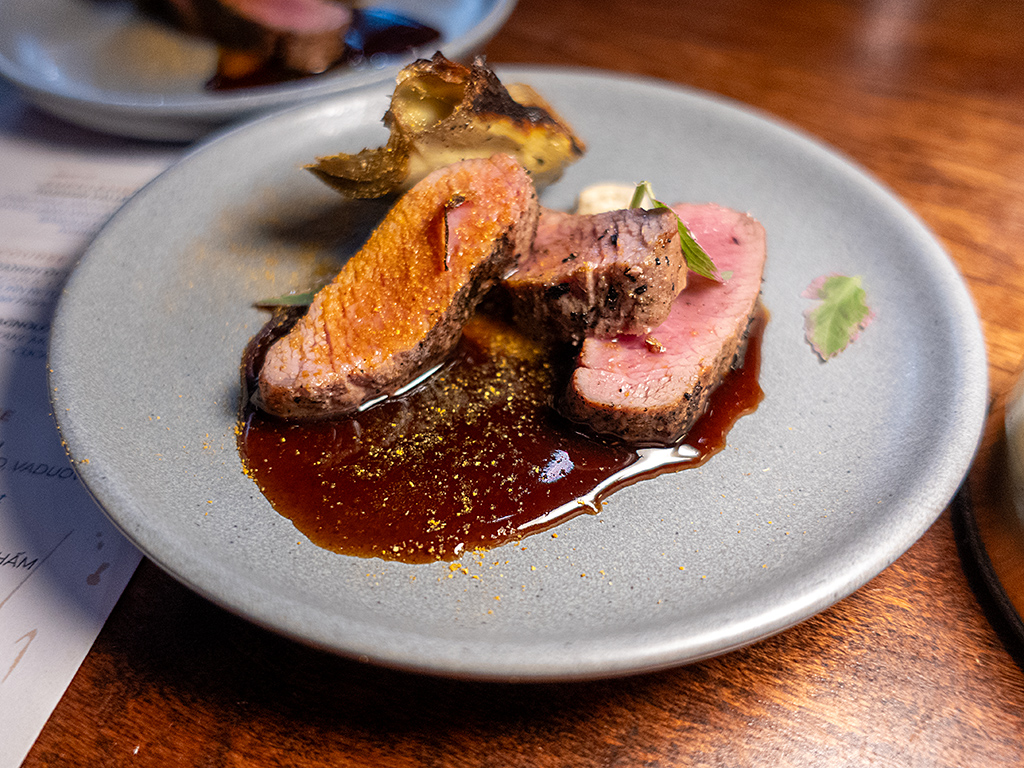
Our next entrée was duck breast á l’orange served with harissa atop a bed of forbidden rice.

As far as I can remember, this is the best duck I’ve ever had. It was thick and meaty with a smooth and clean duck flavor. The duck skin was cooked perfectly and added a pleasant textural contrast to the breast meat. The forbidden rice was also incredible—it tasted like gourmet rice infused with a well-proportioned blend of vegetables.

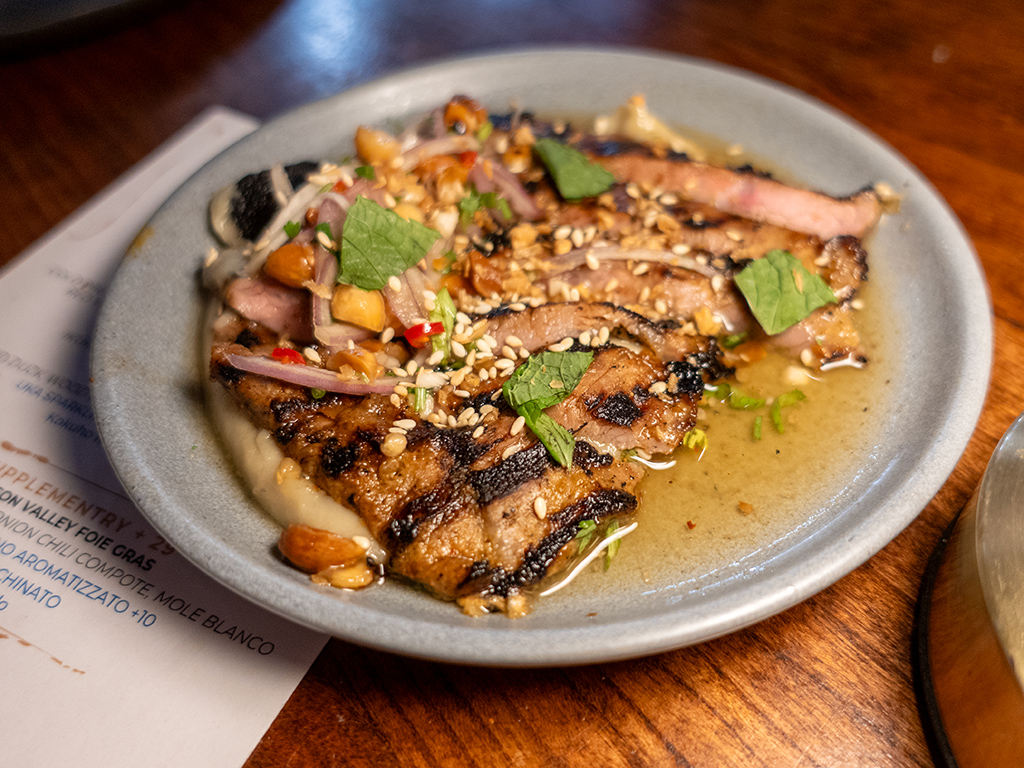
Our final dish of the meal was pistachio-crusted pork tomahawk schnitzel, topped with apple and fennel, served with herb crème fraîche and a side of demi-glace.

I didn’t have too much of this because I was busy working on the duck and forbidden rice, but I did have a small slice of this, and I liked it. There was a perfect ratio of crust to meat, and the pork was unexpectedly very juicy. I was the one who ended up cleaning the final bits of meat straight off the bone, and the pork was tender enough that it was very easy to nibble everything off.

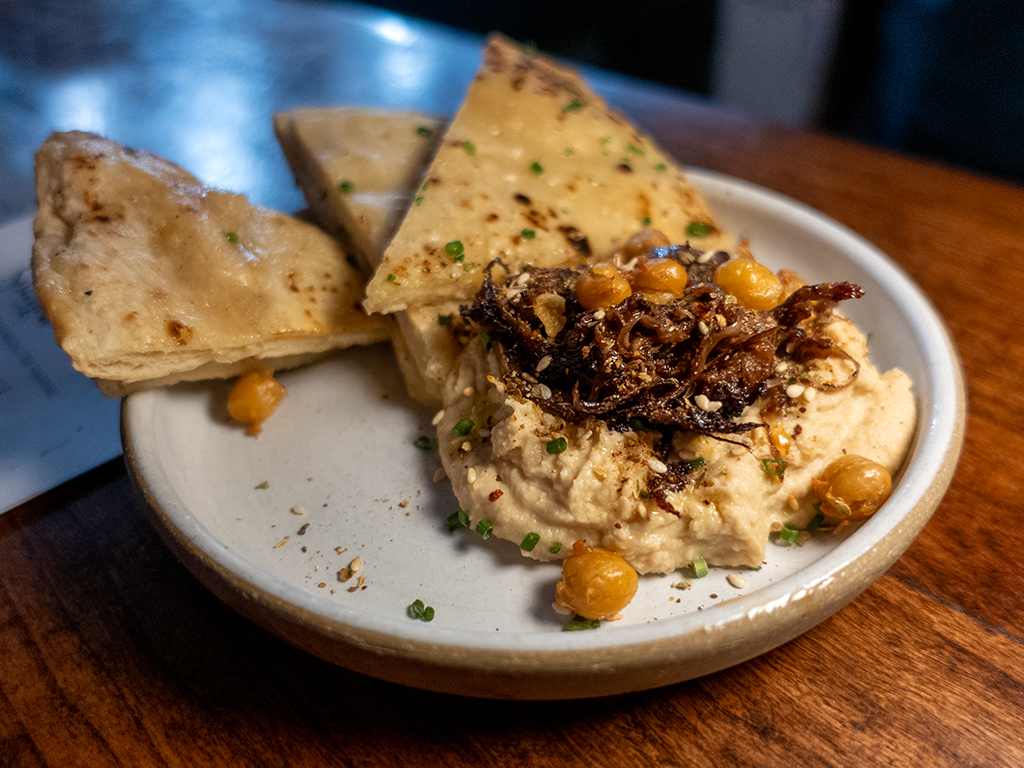
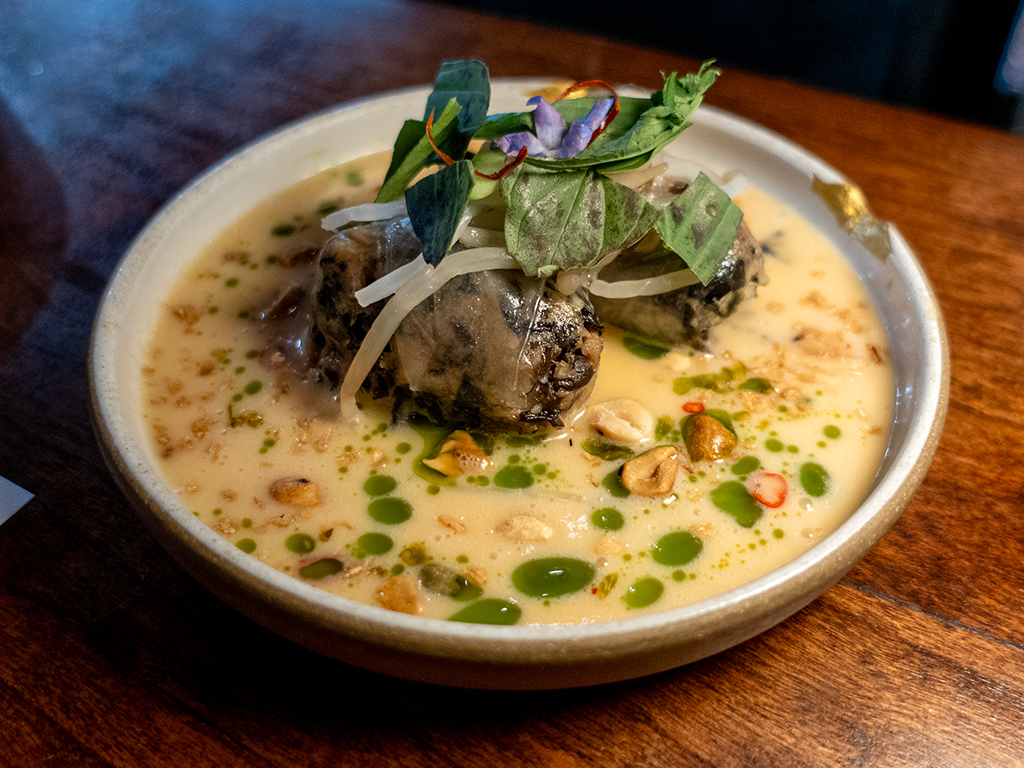
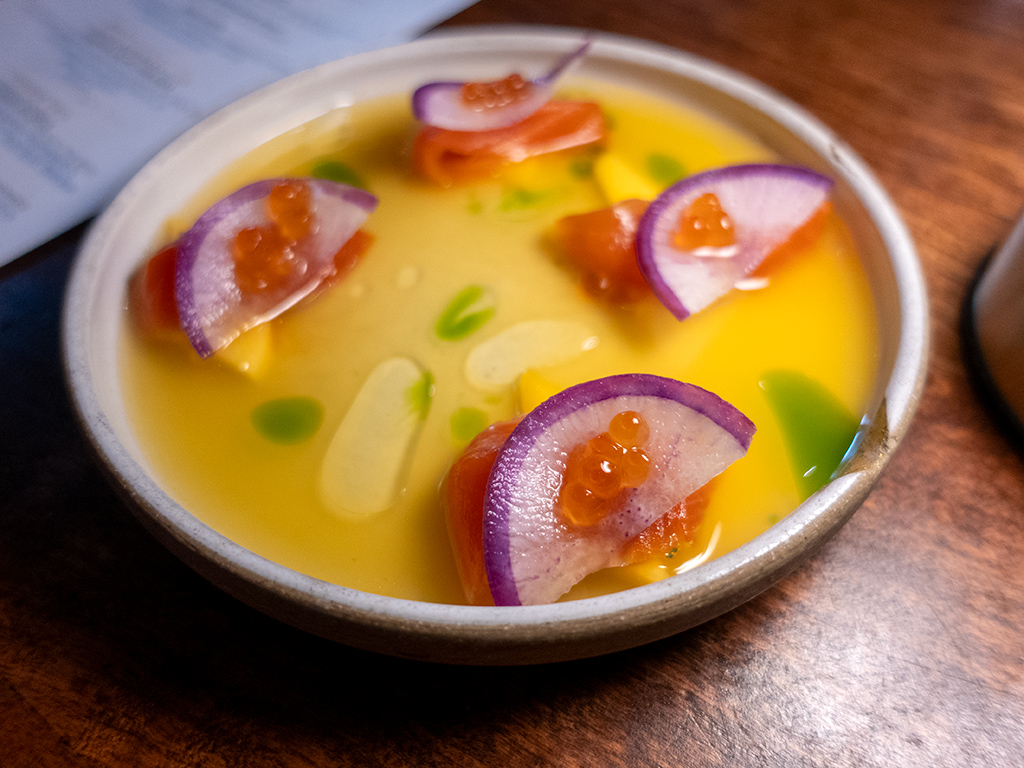
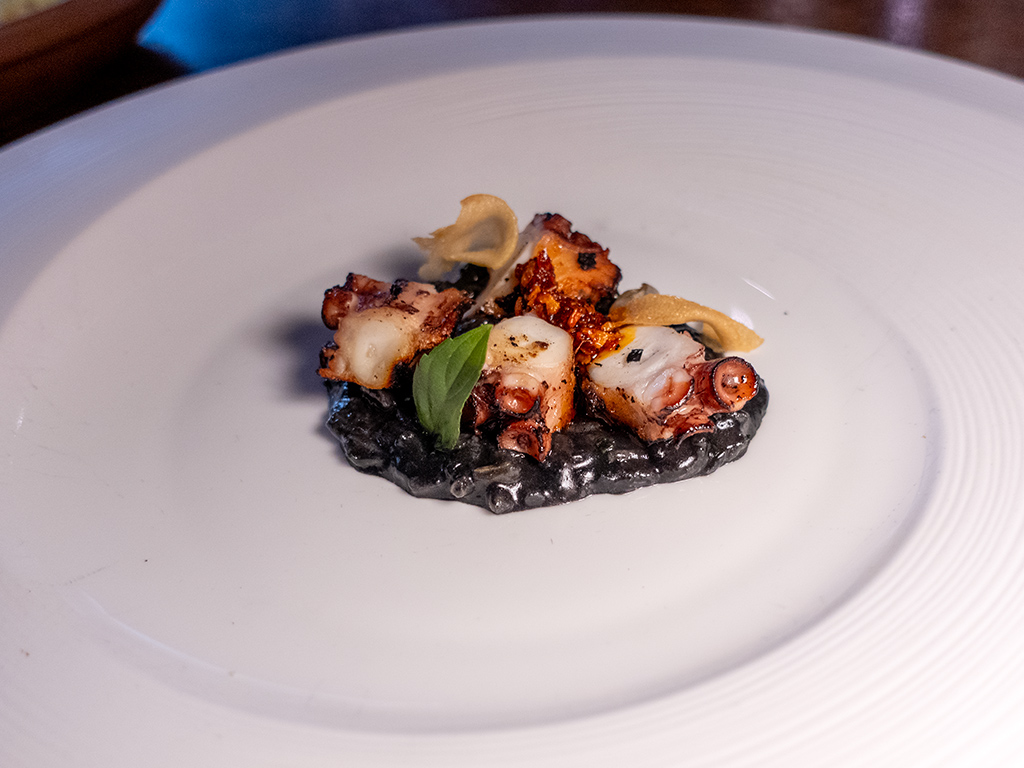
Here are some photos I took from around the restaurant:

Renaissance Tower I$ 120.00
4 oz. Japanese A5 wagyu steak$ 125.00
10 oz. beef tenderloin filet$  68.00
Duck breast à l’orange$  34.00
Pork tomahawk schnitzel$  57.00
German potato dumplings$  14.00
“I Love You, But I Love Me More” ×3$  30.00
Sales tax$  38.53
Gratuity$  80.00
Total$ 566.53
The table on the right shows how much we paid for our meal.

I went into this dinner without really knowing what to expect apart from Wren & Wolf having a good reputation for fine dining. I ended up being very pleased throughout my entire dining experience.

The service was excellent. Our waitress was very attentive to our needs, and when my friends told her that they were unfamiliar with some of the dishes and beverages on the menu, she took extra time and care explaining everything thoroughly.

One subtle thing that contributes to the indication of the level of fine dining of a restaurant is the way in which they serve kitchenware. We ate our food “family style” and split all our dishes, and as our entrées were coming out, we were also always served a fresh set of plates and utensils. That is an indication that the restaurant wants to make sure you are getting the full experience of each dish as the chef intended, without flavor profiles from different dishes inadvertently mixing and affecting each other.
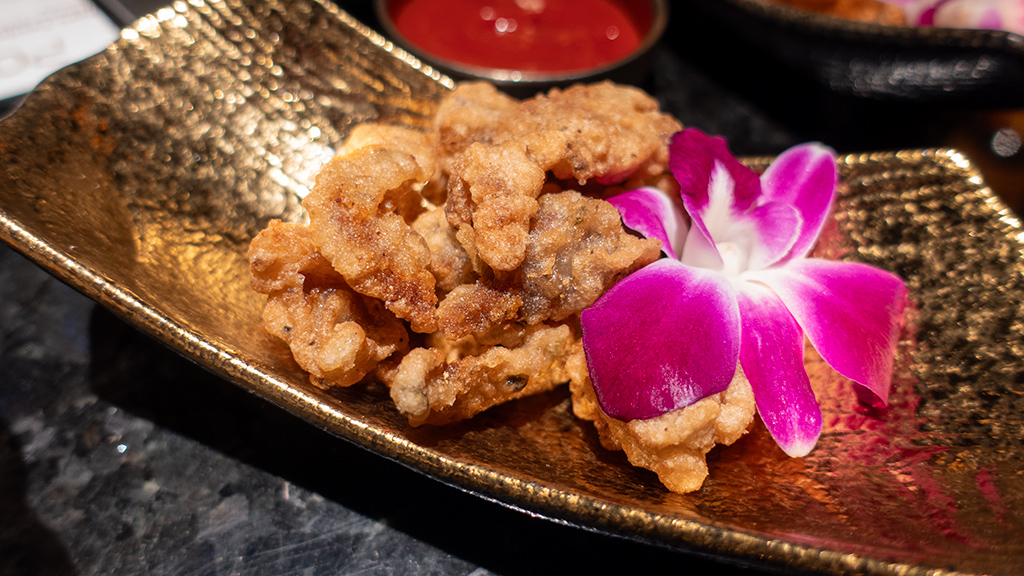
The food was amazing. I’m not really the biggest fan of cheese, but even the cheesy dishes were delicious. It was blatantly obvious that the ingredient quality across the board was very high. The dishes weren’t oversalted or overseasoned, which allowed the ingredients to speak for themselves.

We all left the restaurant very full and very satisfied. The food definitely was expensive, but was still a very competitive and reasonable price considering the large portion sizes, high quality of the dishes, unique ambiance, and nice dining experience. In terms of value for money, I think not too many other places can offer substantially more than what we got at Wren & Wolf.
The menu changes routinely/seasonally and has a wide selection of offerings, so if this is within your budget for a nice meal, I think this would be a great spot to check out in downtown Phoenix.


—§—


Hello, Japanese Friendship Garden of Phoenix in Arizona

I usually get my work done during the evening and night, but sometimes, there are some unavoidable midday meetings I have to attend that overlap with when I usually go out to be a tourist. When that happens, I still try to squeeze in a quick activity afterwards, which was the case for when I went to the Japanese Friendship Garden of Phoenix on a work day shortly before sunset.

As you can probably guess from the name, the Japanese Friendship Garden is a curated outdoor garden themed around elements traditional to Japanese culture. It’s located on the northern side of downtown Phoenix—situated north of the Portland Parkway Park, just south of Margaret T. Hance Park, and above Interstate 10.

I’ve been to a lot of amazing botanical gardens before, so I don’t know if my perception is a bit skewed at this point because of that, but I thought the Japanese Friendship Garden of Phoenix was a bit underwhelming. It was definitely a nice garden, but it felt small, and it had some areas that appeared to not be fully maintained and manicured. I think a notable element of this Garden is the fact that it is basically an oasis in the middle of Phoenix, a city surrounded by the Sonoran Desert, and because it serves as a reprieve from the otherwise bustling downtown area.

Here are some photographs I captured:

There was a building in the eastern rear section of the Garden that was gated off. My guess is that the tea tours take place in that building, but that is a separate scheduled event, so I was only able to take a look at the exterior.

The building containing the bathrooms was also themed accordingly, both in architecture as well as the decorations adorning and surrounding it.

Near the gift shop, there was a small collection of bonsai trees.

This is the entrance to the Garden. It is gated off in the photograph because I was there right up until closing time.

After you purchase admission, the staff gives you a bright neon sticker to wear on your shirt to indicate that you are a paid visitor. I deposited mine into the trash can on my way out of the building, but apparently some people decided to use theirs to decorate the bike rack in the parking lot instead.

The Garden had some interesting rules. There is a wide open grassy field near the pond, but apparently the grass is off limits; I was sitting on the grass while I was responding to some time-sensitive messages on my phone so that I would be out of the way of the pedestrian footpath, but a staff member promptly approached me saying that I was not permitted to be on the grass. There were also some stepping stones installed alongside a concrete path that I used to get a better angle for some photographs, but I was once again approached by a staff member to be informed that I was not allowed to step on the stepping stones.

Otherwise, checking out the Garden was a nice way to go for a walk and get some fresh air. My general admission ticket was US$14.00, and I spent about an hour and a half there (though if you only want to do one loop around the path, you could potentially be able to see everything in about half an hour).


—§—