PhantomL0rd’s “chill day”
This post is over 12 years old and may contain information that is incorrect, outdated, or no longer relevant.
My views and opinions can change, and those that are expressed in this post may not necessarily reflect the ones I hold today.
If you talked with me at all yesterday, you may have noticed that I was fully immersed in keeping up with a massive electronic attack, manned by a group called DERP Trolling. To keep things simple, they used DDoS attacks to shut down a bunch of different popular game servers. The methodology used to determine which games to attack involved PhantomL0rd.
James Varga, better known by his online identity PhantomL0rd, is a very popular independent League of Legends streamer and online entertainer. During the time of these DDoS attacks, PhantomL0rd was one of the top streamers broadcasting League of Legends. The League of Legends servers went down, and PhantomL0rd’s game disconnected, just like everyone else’s.
PhantomL0rd decided to play different games, but he realized that all of these games were being targeted as well (even a game site as obscure as Club Penguin). After noticing that all of his games of choice were being targeted, he accepted DERP Trolling’s attempts to reach out to him and communicate with him. They hopped around Ventrilo and IRC and had some short broken conversations for as long as they could until someone would attack the Ventrilo or IRC server they were using to shut it down.
This is where things get a little bit confusing, and is the reason why I am making this post to help people understand exactly what happened.
While in the loading screen of a game of League of Legends, PhantomL0rd randomly disappeared. Then, someone else who had possession of his Twitch account’s log-in credentials (likely his brother Nick) signed in and stated that the police were at PhantomL0rd’s house due to a “hostage situation.” Many people believe that DERP Trolling called the police to PhantomL0rd’s house, but that is not true.
On December 30, 2013 at 5:04 PM PST, PhantomL0rd’s personal information was leaked on to the Internet through a Pastebin post (which still has not been removed due to the incompetence of the Pastebin staff). The supposed motive behind this posting is because someone was dissatisfied at the fact PhantomL0rd was publicizing DDoSers and “raking in the cash.” PhantomL0rd was labeled as pathetic, and his information was released to the public.
After this happened, a troll called the police, falsely accusing PhantomL0rd of having four hostages inside his house. Again, this was NOT DERP Trolling who made the call, it was someone else who found out his address through the posting. While this was happening, DERP Trolling was posting from their Twitter account showing their concerns for PhantomL0rd.
PhantomL0rd’s house was thoroughly searched by the police while he sat in the back of a police vehicle. When the police found out that it was clearly a false alarm, they let PhantomL0rd go with no criminal charges. Since then, PhantomL0rd has been constantly receiving text messages, phone calls, and pizzas delivered to his house.
The most ironic part about this stream is that, when he began streaming, PhantomL0rd titled his broadcast as being a “chill day.” I don’t think he could’ve had a day any less chill.
PhantomL0rd streamed, telling this story from his own perspective. If you’d like to learn more about this with greater detail, you can check out his video replay.
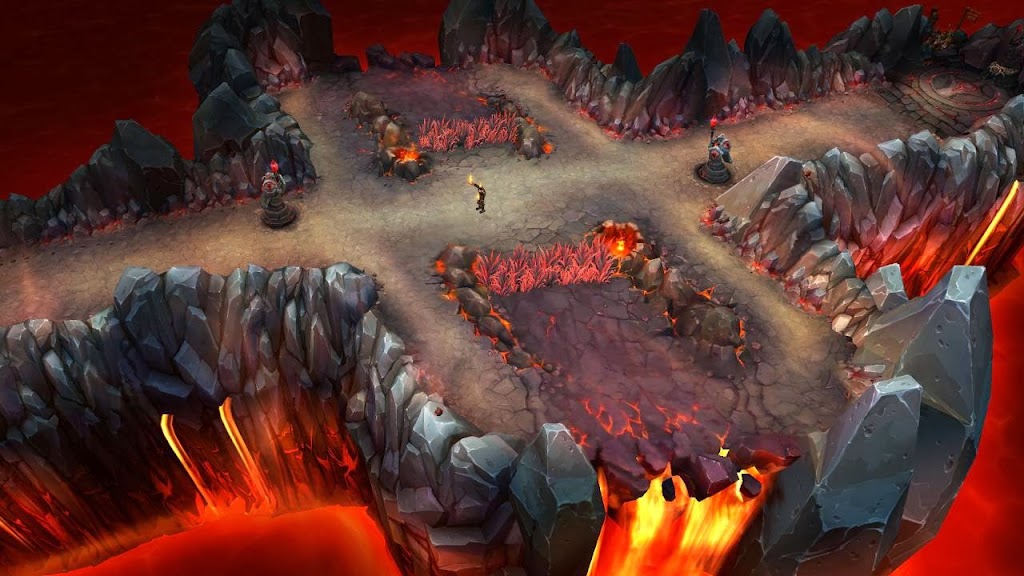 If you can’t tell from the image, Magma Chamber is a map designed to look like middle lane, but much smaller. There is only one turret (because once one turret is destroyed, the owner of that turret loses the game). The rest of the map (including all jungle camps) is also gone.
I was particularly interested and looking forward to the release of Magma Chamber because in 5v5 games on Summoner’s Rift, I always get set back by the enemy jungler. I can have complete, dominating control over my lane, then the enemy jungler shows up and makes me instantly lose my lane. I play extremely aggressively, so I usually don’t get much help from my own jungler because I am pushed up so far.
In Magma Chamber, I wouldn’t have to worry about another random person interfering with my winning lane, so I felt like I would excel at it. Unfortunately, I found out today that the 1v1 and 2v2 map they released was not Magma Chamber, but instead a modified version of the all random all mid (ARAM) map.
The worst part about this map is that the lane resembles top lane, with two bushes placed inside the actual lane. I tried playing 1v1s on the map, and my only two losses so far have been when the enemy player bush juked me about 6 times in a row before I finally died to enemy minions. The worst part is that you can’t even buy wards on this map, so the only real counter play for bush juking is gone.
Overall, I’m extremely dissatisfied with this update. I think it’s literally so rushed and bad that Riot was better off just not releasing this update and delaying it some more. Some might claim that I’m being harsher than I should because I have a bias in favor for mid lane, seeing as I’m a mid laner and I basically got ripped off by top lane, but either way, this isn’t up to par with the quality I hope from League of Legends.
If you can’t tell from the image, Magma Chamber is a map designed to look like middle lane, but much smaller. There is only one turret (because once one turret is destroyed, the owner of that turret loses the game). The rest of the map (including all jungle camps) is also gone.
I was particularly interested and looking forward to the release of Magma Chamber because in 5v5 games on Summoner’s Rift, I always get set back by the enemy jungler. I can have complete, dominating control over my lane, then the enemy jungler shows up and makes me instantly lose my lane. I play extremely aggressively, so I usually don’t get much help from my own jungler because I am pushed up so far.
In Magma Chamber, I wouldn’t have to worry about another random person interfering with my winning lane, so I felt like I would excel at it. Unfortunately, I found out today that the 1v1 and 2v2 map they released was not Magma Chamber, but instead a modified version of the all random all mid (ARAM) map.
The worst part about this map is that the lane resembles top lane, with two bushes placed inside the actual lane. I tried playing 1v1s on the map, and my only two losses so far have been when the enemy player bush juked me about 6 times in a row before I finally died to enemy minions. The worst part is that you can’t even buy wards on this map, so the only real counter play for bush juking is gone.
Overall, I’m extremely dissatisfied with this update. I think it’s literally so rushed and bad that Riot was better off just not releasing this update and delaying it some more. Some might claim that I’m being harsher than I should because I have a bias in favor for mid lane, seeing as I’m a mid laner and I basically got ripped off by top lane, but either way, this isn’t up to par with the quality I hope from League of Legends.