I am a Chase Sapphire Reserve cardholder. Unfortunately, as of the past year or two, it feels like it is changing from a premium credit card to a hassle-ridden coupon book. In order to get maximum value out of the card in exchange for the steep annual fee, you have to chase down a bunch of credits, one of which includes a semi-annual OpenTable credit. I already used it last semester at Meteora while visiting a friend in Los Angeles, but it refreshes starting from July, so I’ve been keeping an eye out for a good opportunity to go to another qualifying restaurant soon.
I’m always looking for unique, creative, innovative, and limited-edition dining opportunities. While browsing for options near me, I came across the Caesars Palace 60th Anniversary Teppan Experience at Nobu on the Las Vegas Strip in Paradise, Nevada. This was great news because, not only would I be able to try a special teppanyaki dining experience that was concluding at the end of September (I had this meal approximately one week ago), but I also remembered off the top of my head that Nobu was a qualifying restaurant for the OpenTable credit.
After I found it, I promptly booked the reservation for the same day, and then showed up at 5 PM for the first seating. I finished my dinner, paid for my meal, then checked my Chase app to confirm that the charge had gone through properly as “Nobu” instead of just a generic “Caesars Palace food and beverage” so Chase would know to award me the credit. Somewhere along this process, I found out that, about three months ago, Chase removed Nobu from the eligible OpenTable credit restaurants. And of course, they didn’t release a proper press release about it; out of all places they could’ve picked, they announced it on reddit.
It is entirely my fault. There was an absence of the Chase Sapphire Reserve logo on the OpenTable booking page for Nobu, but it didn’t register in my head that it was gone when I opened it to make the booking. Chase also gave a two-month grace period after they removed Nobu (in addition to a bunch of other restaurants), and my dinner fell outside of even that grace period. And of course, Chase and OpenTable reserve the right to change qualifying restaurants at any point, and it is up to me to check for participating status at the time of booking.
Regardless, it is obviously disappointing going into a meal expecting a US$150.00 discount and then finding out that you have to pay full price. Luckily for me, I dine at restaurants a lot, so it won’t be an issue for me to go to another restaurant—this time, one that is actually on the list of participating restaurants—to spend the credit that I wasn’t able to use at Nobu.
With all that being said, I’m still glad I got the opportunity to try this special tasting menu. Was it a high-value experience for the money? No, not really, as you will see later on. But was it still a good experience? Yes.
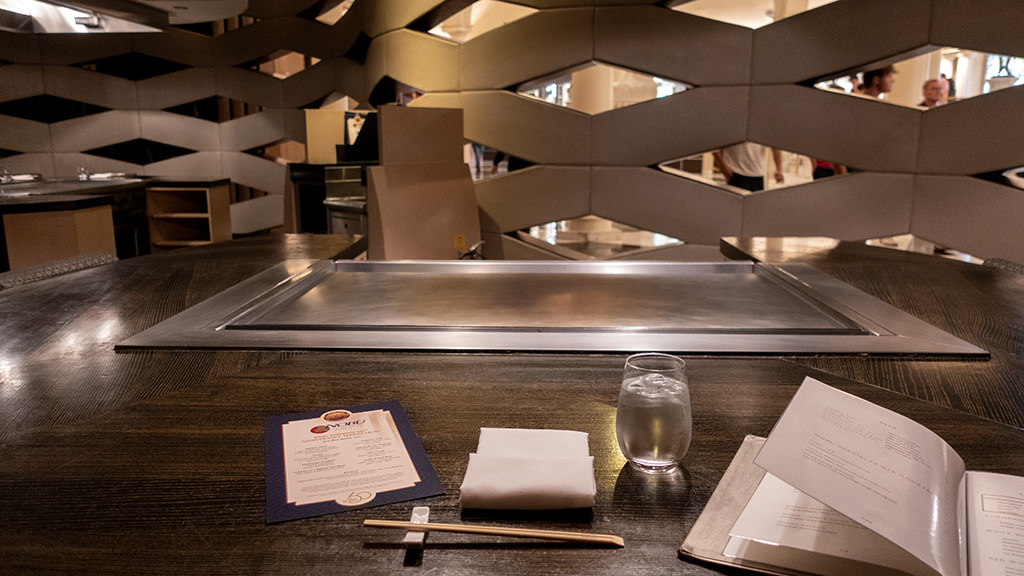
What made the experience extra good was the fact that apparently I was the only one who booked a reservation for that particular time slot on that particular day. When I showed up at the restaurant, I was a little bit early and they hadn’t opened yet, so I waited about ten minutes in the lobby; once they were ready, the hostess walked me to the teppan table, and I noticed that only one of the spots was set with a linen napkin and chopsticks. When I pointed with a confused look and asked if I was the only one, she said “yes.”
Sadly, the positioning of the teppan grill was very unfortunate. Because Nobu is inside Caesars Palace, it is directly connected to the hotel. The far back walls of Nobu are not solid, and instead have diamond-shaped spaces that show a view out into the hall. Because of the casino, cigarette smoking is legal inside Caesars Palace. This meant that I would occasionally get repulsive waves of cigarette smoke odor coming into the restaurant, and being so close to the back wall, my table was the first one hit. This alone is enough for me to never return to Nobu for another teppan meal again.
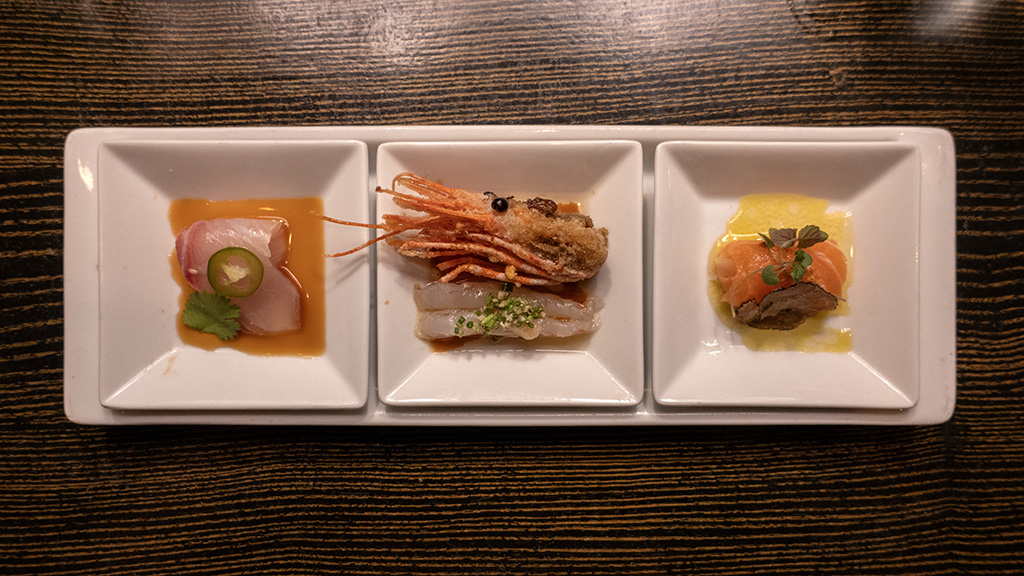
The meal started with a collection of sashimi: kanpachi jalapeño, ama ebi, and salmon nashi pear with sliced truffle.
The greater amberjack was solid, but there was nothing particularly special about it. The sweet shrimp was incredibly delicious, but the shrimp head that came with it was fairly average. The salmon was my favorite bite; the pear sauce and truffle to go along with the salmon made for an amazing combination.
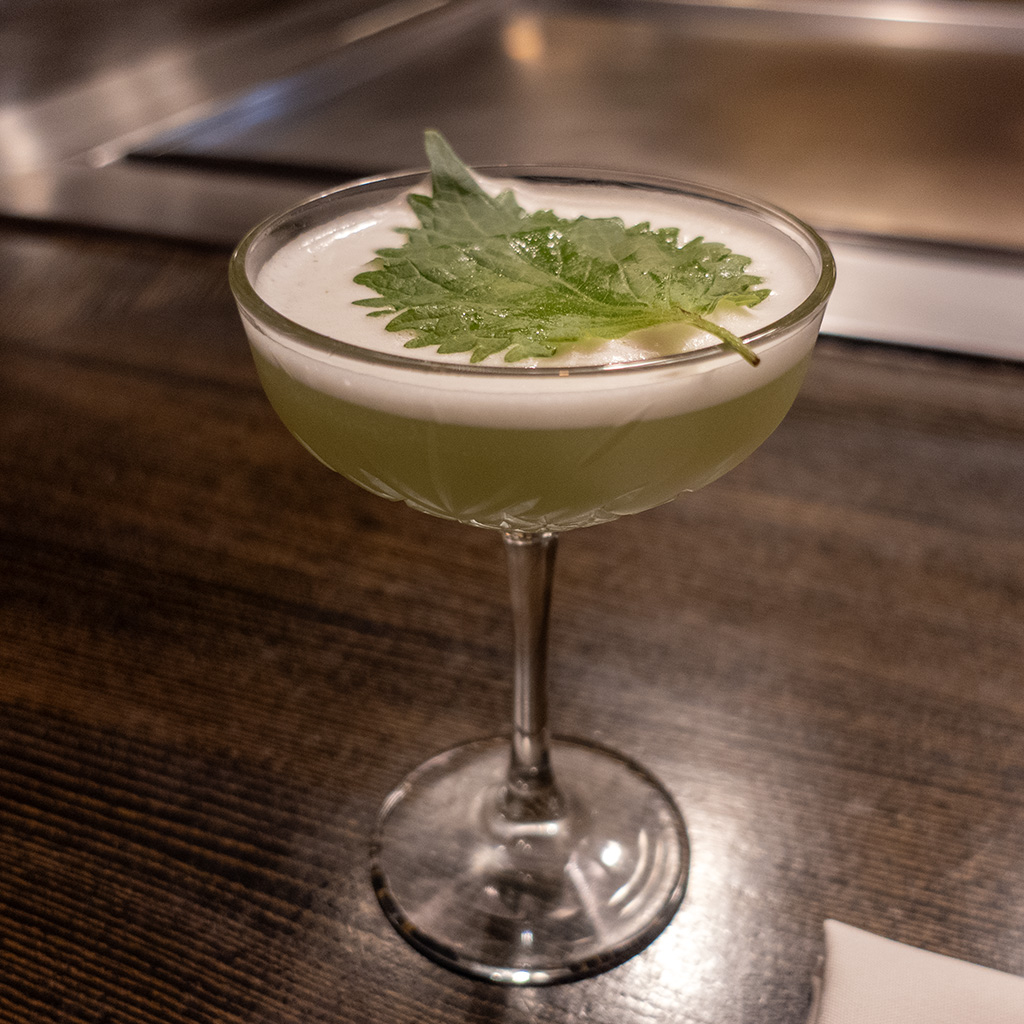
Whenever I go to a restaurant, I like to browse their non-alcoholic mocktail menu to see if there’s anything interesting that I might want to try. At Nobu, the drink that stuck out to me was their Shiso Peachy, made from white peach Calpico, aloe juice, simple syrup, lemon, and Fever-Tree soda, topped with a shiso leaf.
This actually ended up being one of the best drinks I’ve ever had. It was a very unique flavor profile that I’ve never had before. It had a smooth and subtle fruitiness to it that was sweet, but not too sweet. I think shiso leaves can be tricky to use because their flavor can very easily pierce through and overwhelm other flavors, but the fact that this leaf was just gently placed on top made it so that it only had a gentle contribution to the overall flavor profile to the extent that it matched, but did not overpower, the rest of the drink.
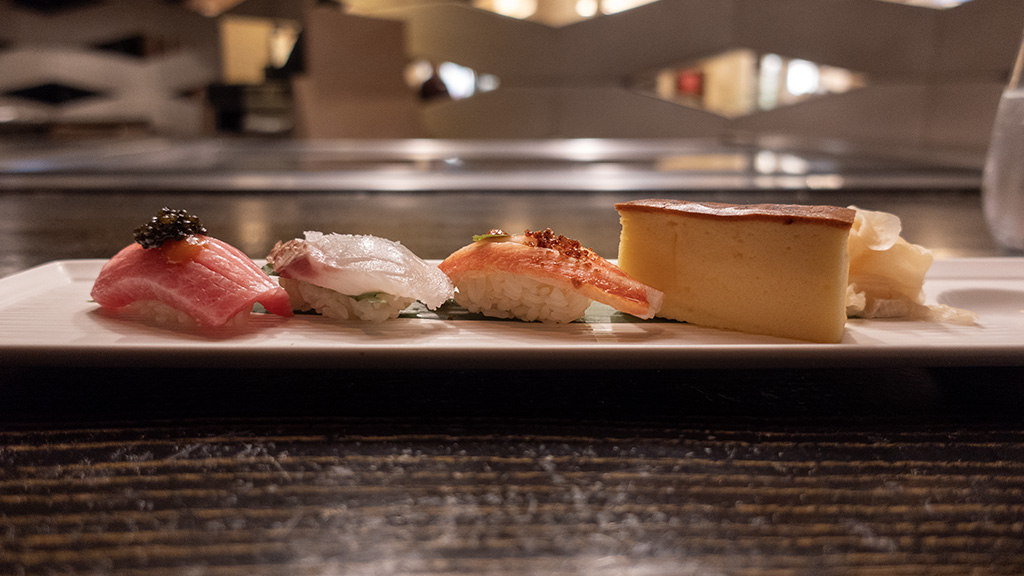
Next up was the nigiri. The three pieces included toro with miso and caviar, Japanese snapper with shiso and lemon, and snow crab tiradito. This was also accompanied by atsuyaki tamago.
All of this was pretty good, but I particularly liked the snow crab nigiri. The crunchy garnish on top gave it a fun texture and added a very slight kick of mild spice.
After the first two courses, the chef came out and prepared the teppan grill.
He seemed to have no reaction whatsoever to the fact that I was the only one dining that round. I asked him how often this happens, and he said that it has actually been occurring a lot more frequently lately. I guess the fact that I showed up on a weekday and early on in the evening (as opposed to the weekend during the late evening dinner rush) also contributed to it as well.
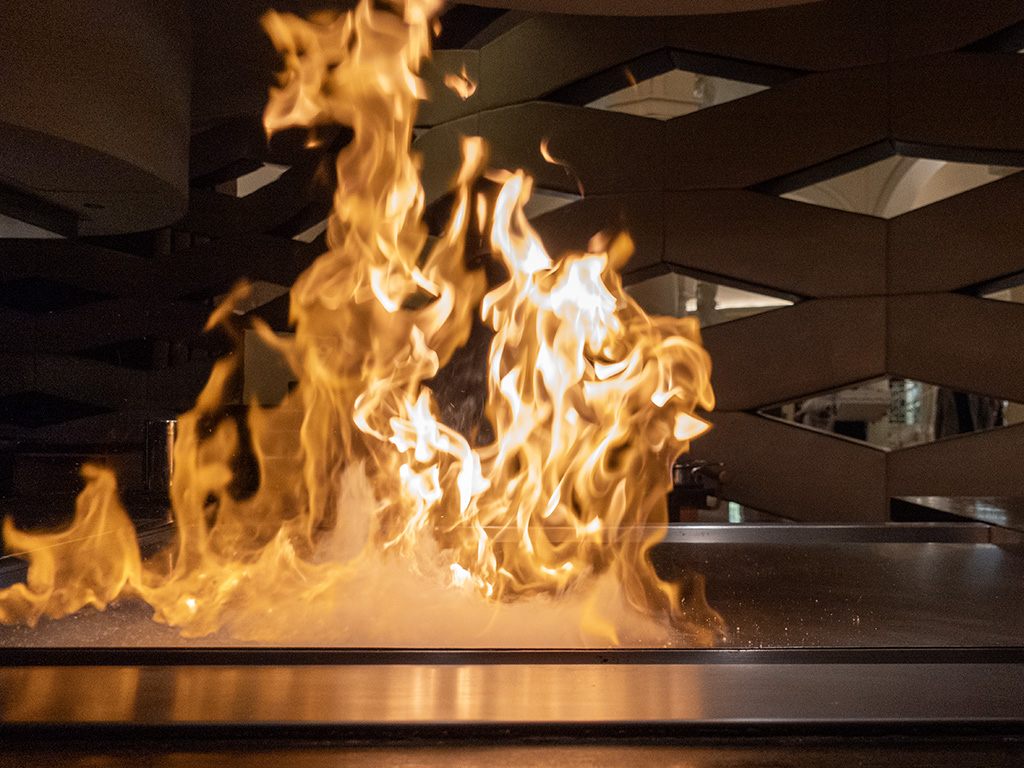
After doing a little juggling show with his cooking tools to show his agility, the chef started cooking my meal.
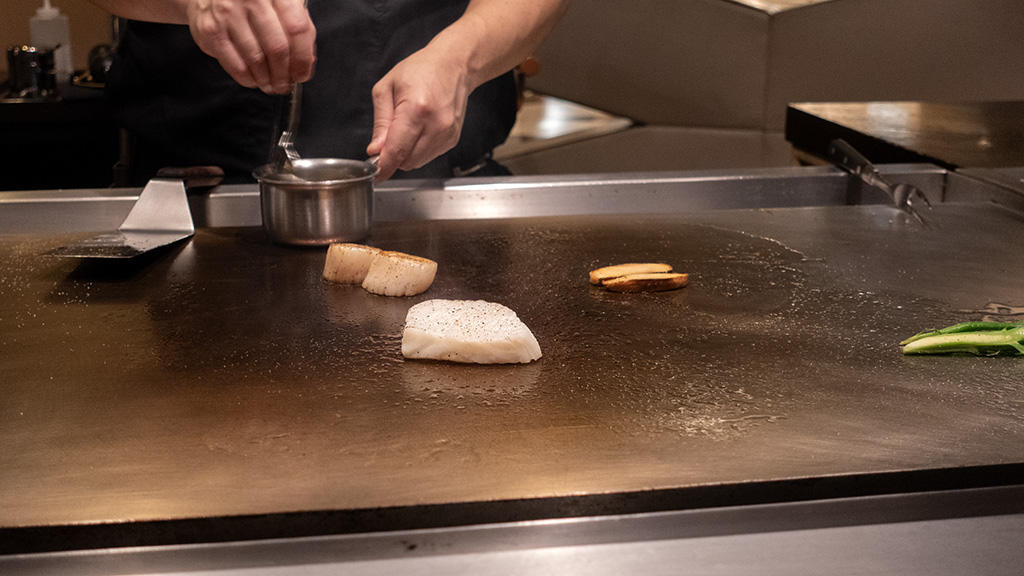
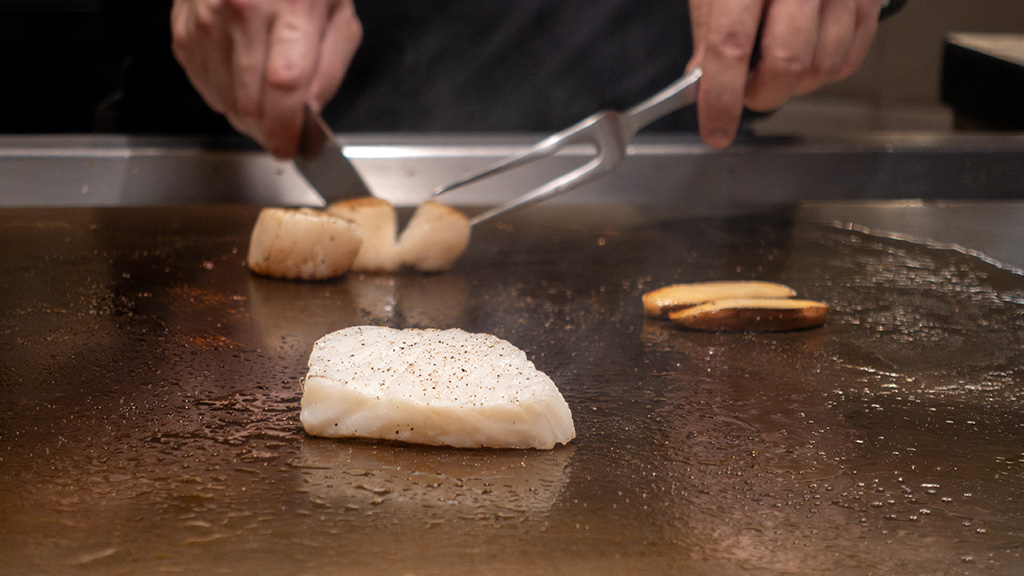
First off the grill was Hokkaido scallop with charred negi goma, sesame chili oil, and shiitake mushrooms.
The quality of the scallop was great, and the accompanying sauce was fantastic. I often don’t prefer over-garnished scallop because it’s easy to overpower the milder flavor of scallop. However, this sauce had the perfect intensity such that it got right up to the limit of flavor while just barely not overwhelming the scallop. The mushrooms also worked great with this, as they were charred and almost crispy on the outside, while being soft and tender on the inside.
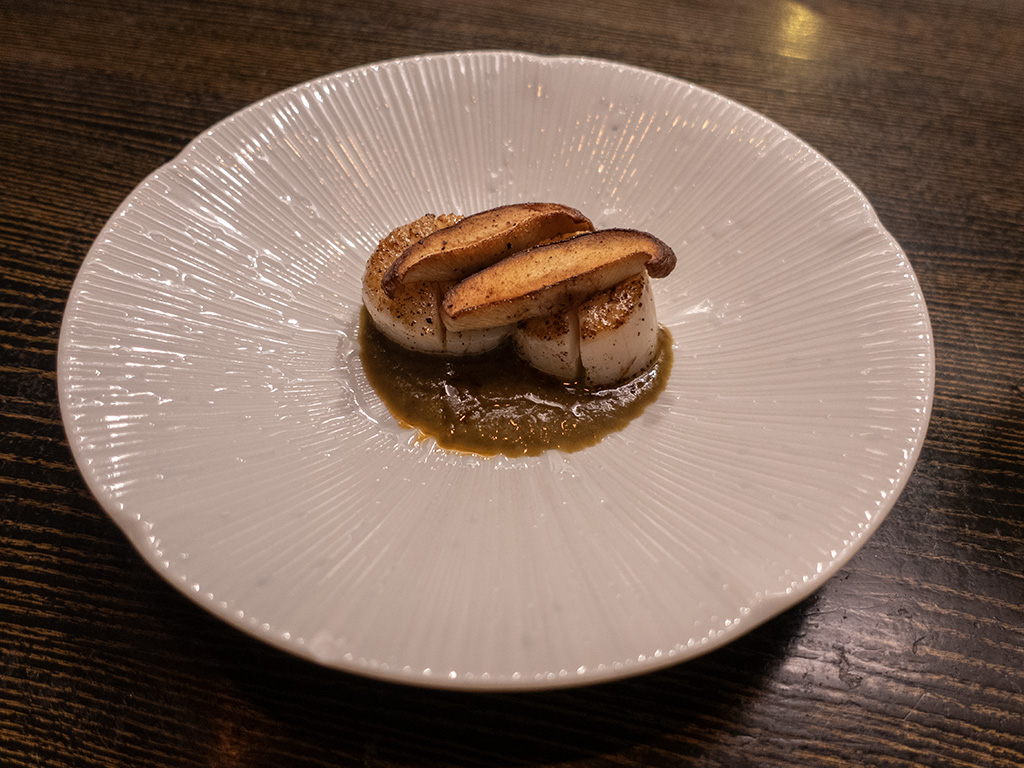
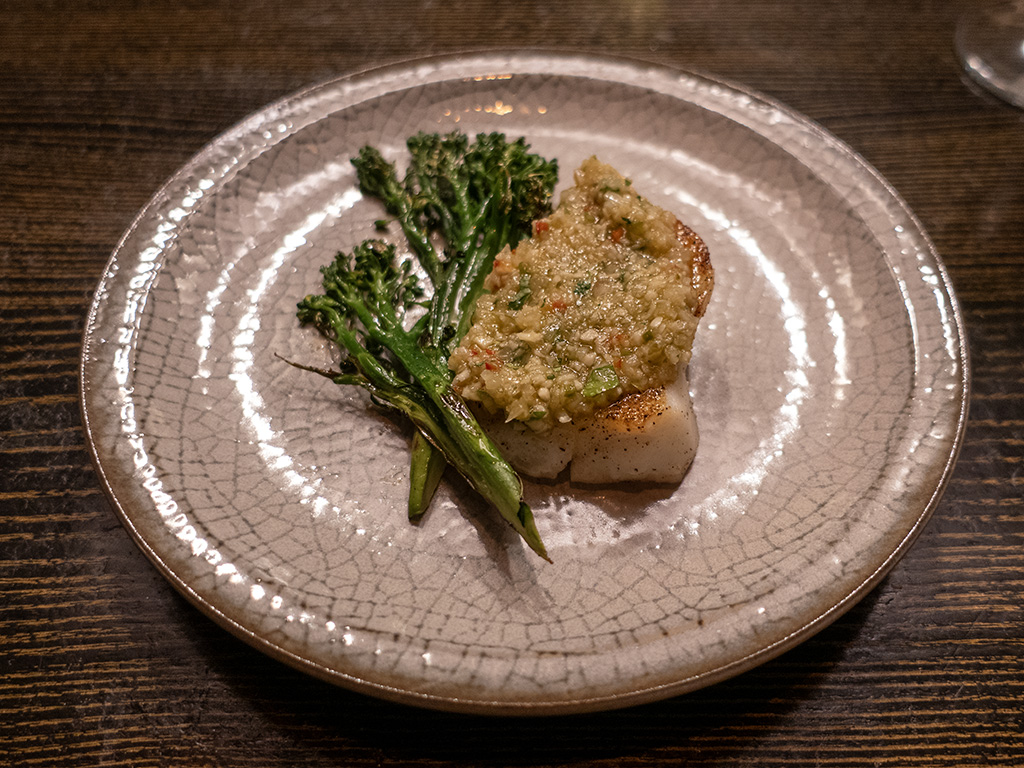
Next up was Glacier 51 Chilean sea bass with yuzu kosho chimichurri and broccolini.
This was an interesting take on chimichurri. I often see chimichurri paired with steak and other red meats, but this was infused with a more citrus-heavy twist, and it complemented the fish well. It had an element of spiciness to it, but it was more of a “throbbing” kind of satisfying spicy aftertaste, rather than it being a front-loaded spiciness that is often associated with spicy foods.
While I was enjoying the sea bass, the chef started working on my next dish.
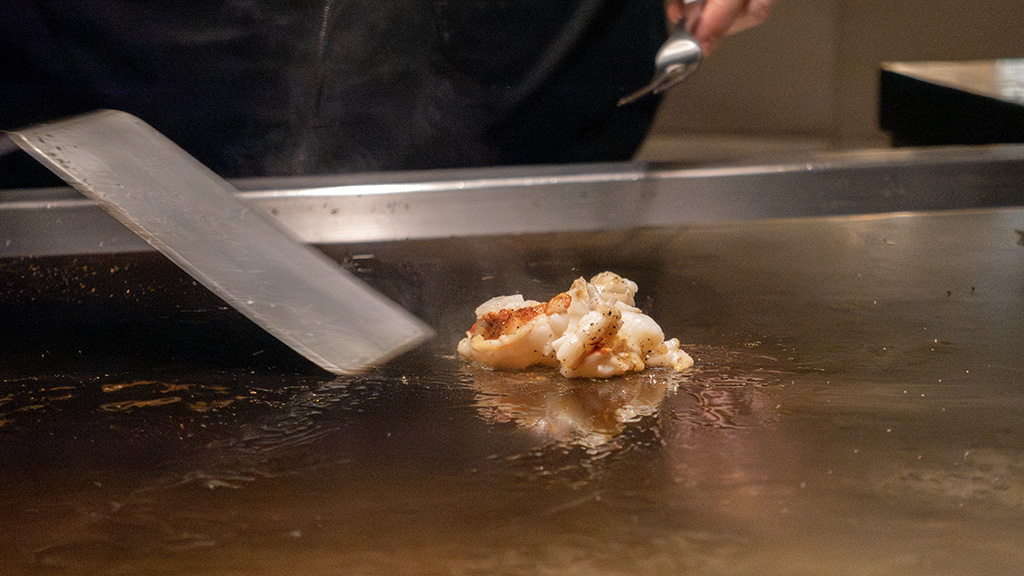
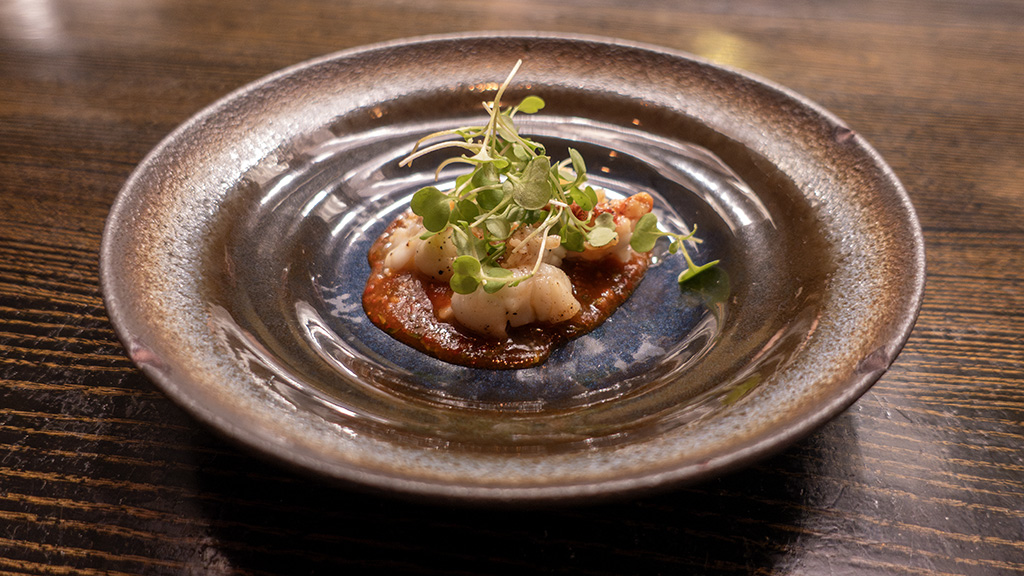
For the next course, the chef cooked some lobster tail and served it atop some rocoto sweet chili garlic miso and micro arugula.
I like lobster, so I appreciated this dish. I suspect that the sauce here was quite special, but I think the highly innovative and unique nature of the sauces of the previous two dishes made it so that, in comparison, this rocoto sweet chili garlic miso didn’t stand out as much as it otherwise would have had I eaten this as a separate entrée.
With back-to-back-to-back seafood dishes done, it was time for some beef.
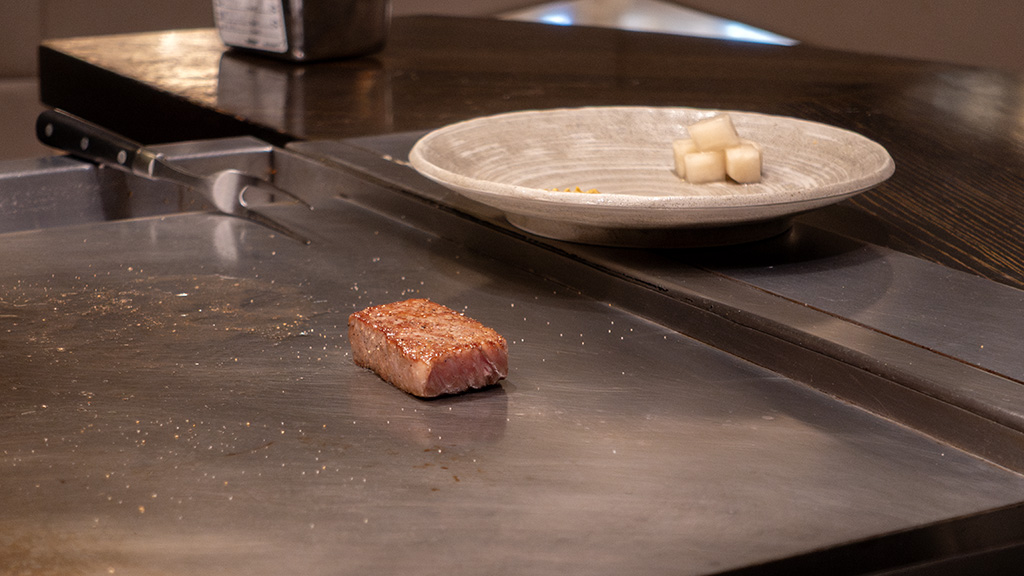
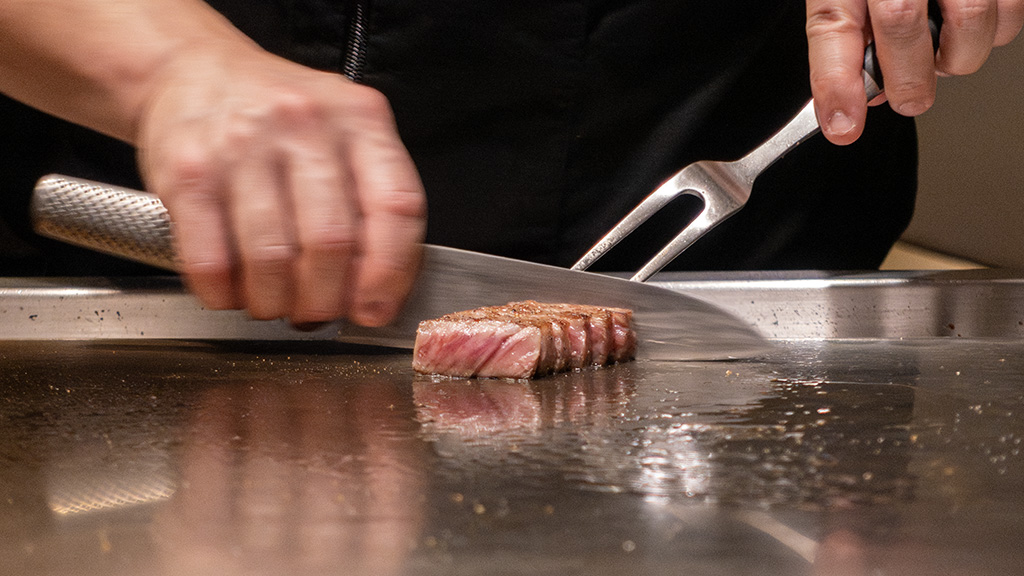
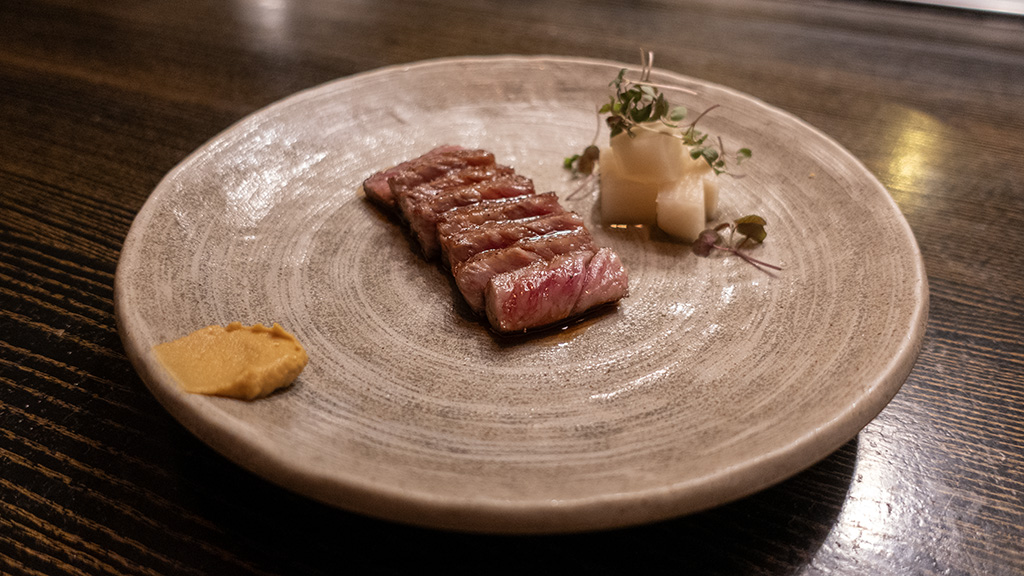
The chef’s next plate was Miyazaki A5 wagyu drizzled with soy mirin reduction served with pickled daikon and a dollop of karashi.
This was delicious wagyu beef and matched the quality I would expect from a cut graded A5. However, the thing that stood out most to me about this was actually the spicy mustard. Wagyu is often served with flaky salt and pepper so that the beef flavor is enhanced, but there is nothing diluting or altering the flavor profile. Even though I’ve eaten quite a lot of A5 wagyu at this point in my life, I think this is actually the first time that I ever had it served with karashi.
For my first bite, I accidentally put way too much of it on the beef, so all I ended up tasting was the spicy mustard. However, for subsequent bites, I used the spicy mustard far more conservatively, and with a small dot of it on the wagyu, it made it much better. The best way for me to describe it was as if the wagyu was served with a more unique variant of wasabi.
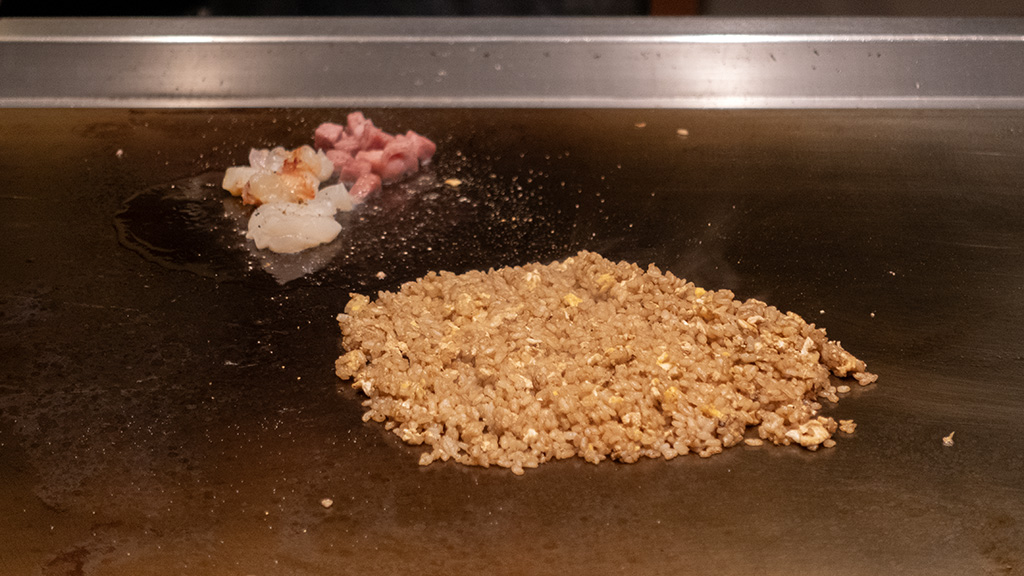
While I was enjoying the wagyu, the chef started preparing a bunch of different ingredients for my final savory course before dessert.
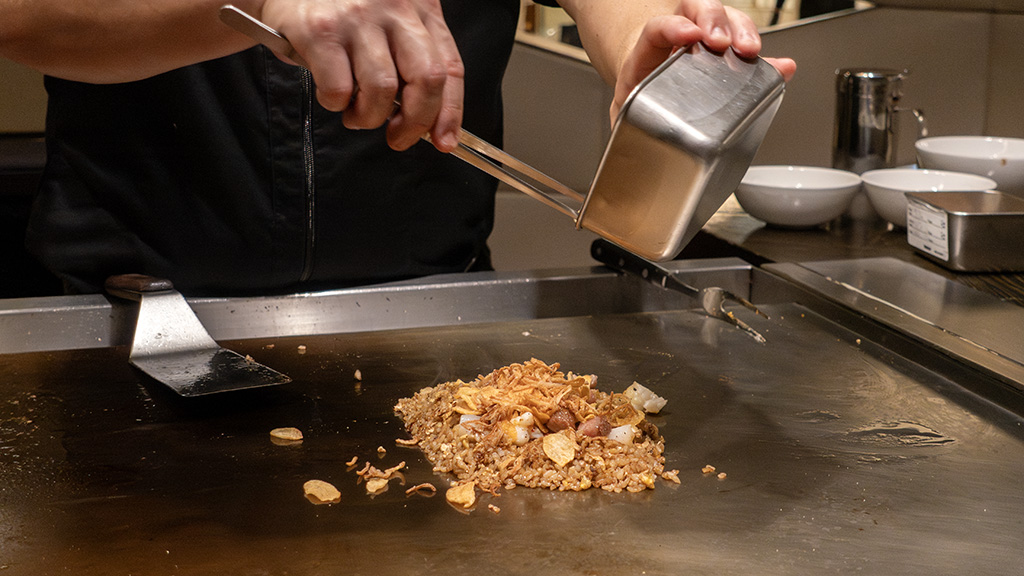
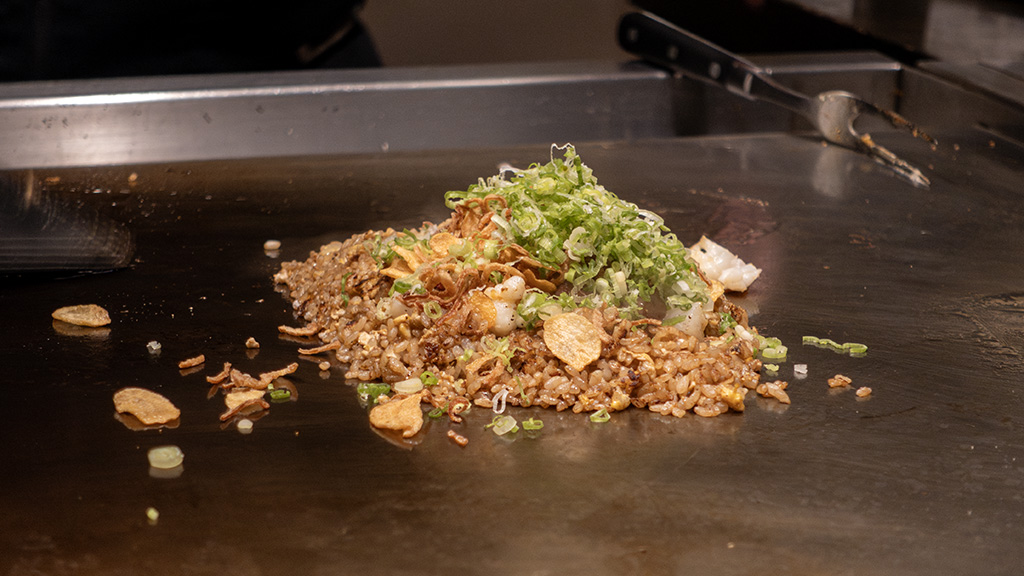
After I finished all the wagyu, a waiter came over to take away my empty plate and drop off a bowl of miso soup.
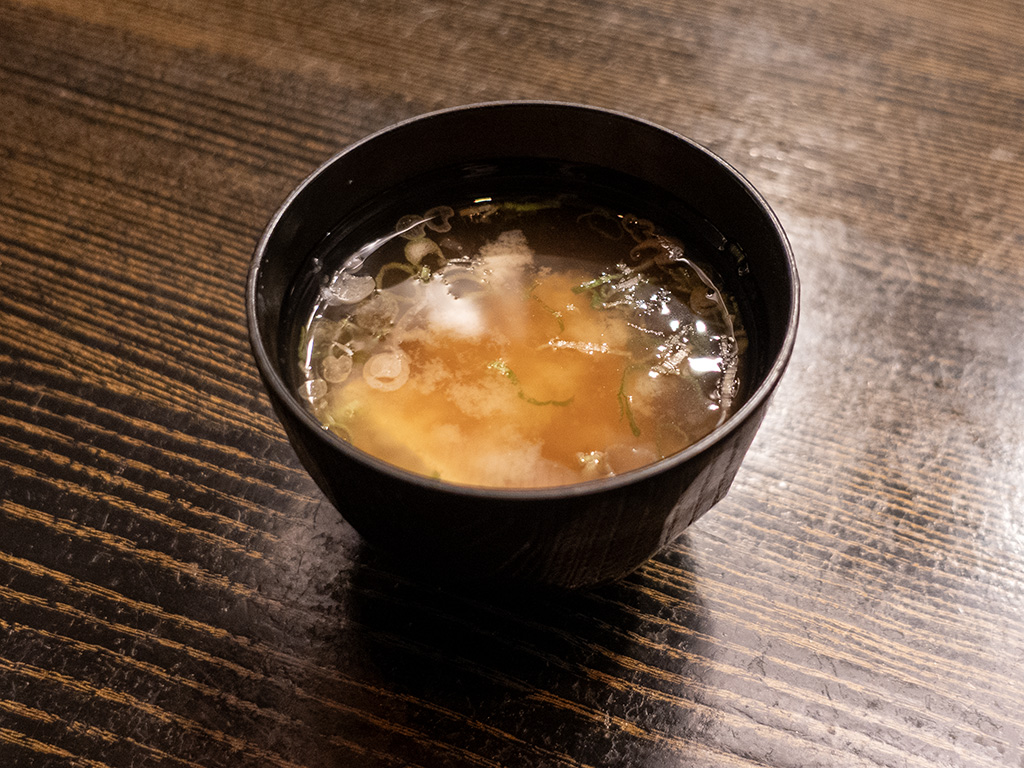
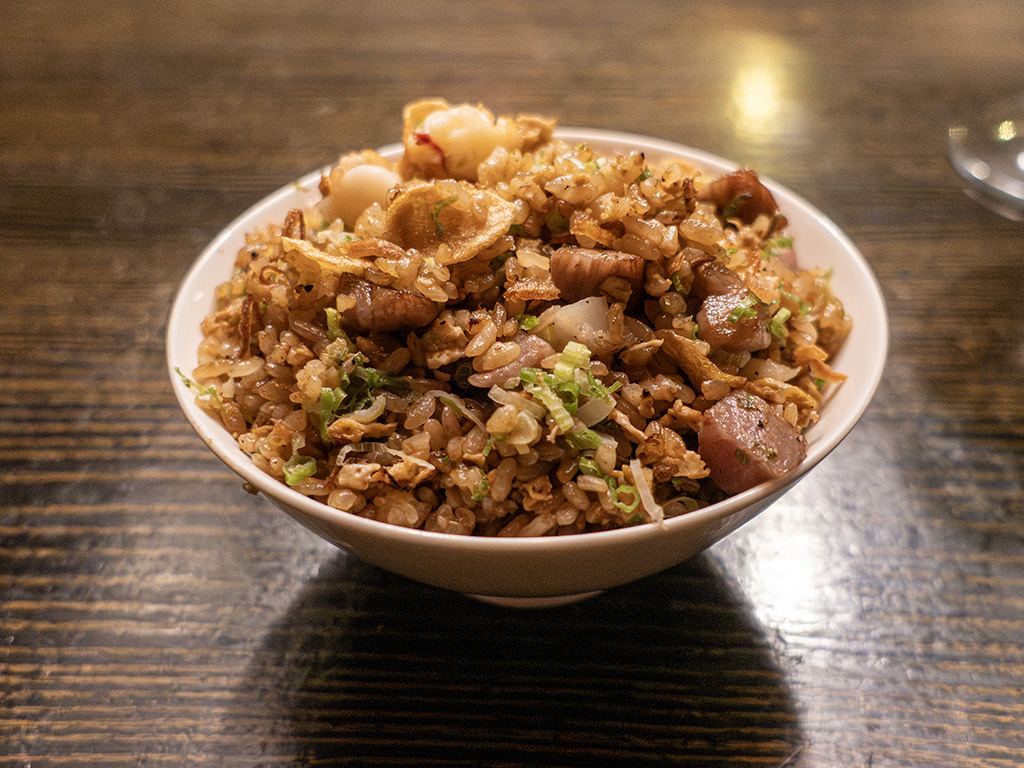
I sipped the soup to go along with my bowl of Nobu fried rice, made from lobster, wagyu, scallop, black garlic, and crispy allium.
Up until this point, I was noticing how small the portion size of each dish was, and the limited number of overall courses offered in the tasting menu. Although this fried rice didn’t single-handedly “fix” the problem, the fact that the chef prepared a large, heaping bowl of rice did definitely help lift me out of continued hunger and into the “fine” territory.
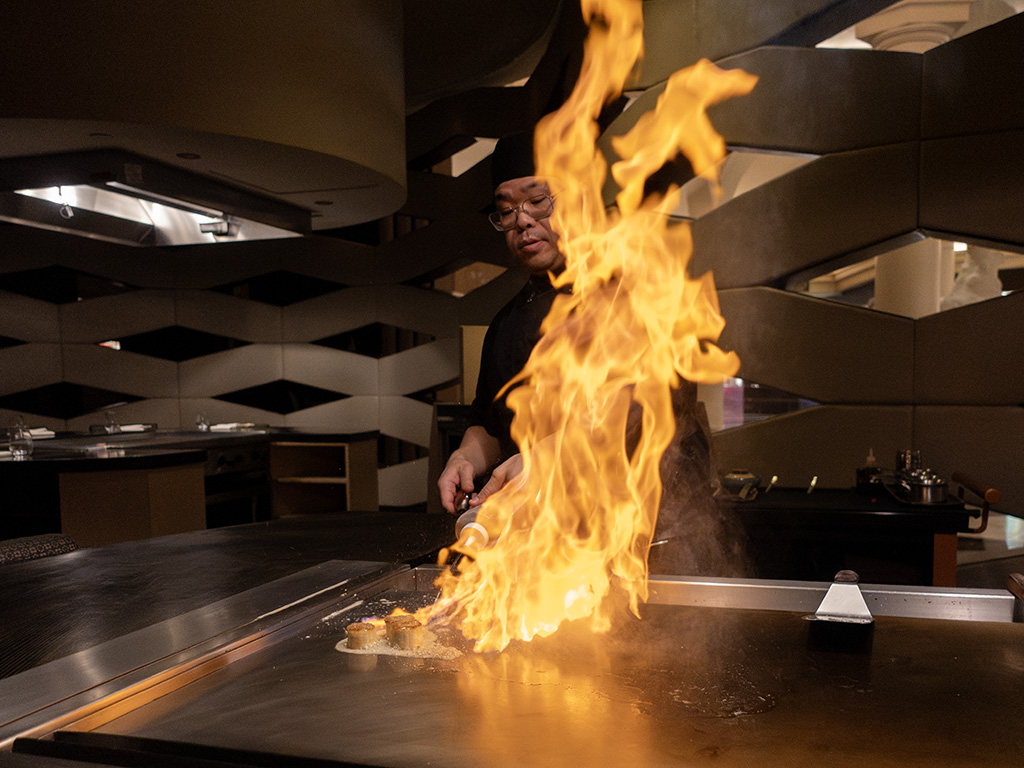
For his final act of the meal, the chef seared a crust on some banana slices and then lit them ablaze to flambé them.
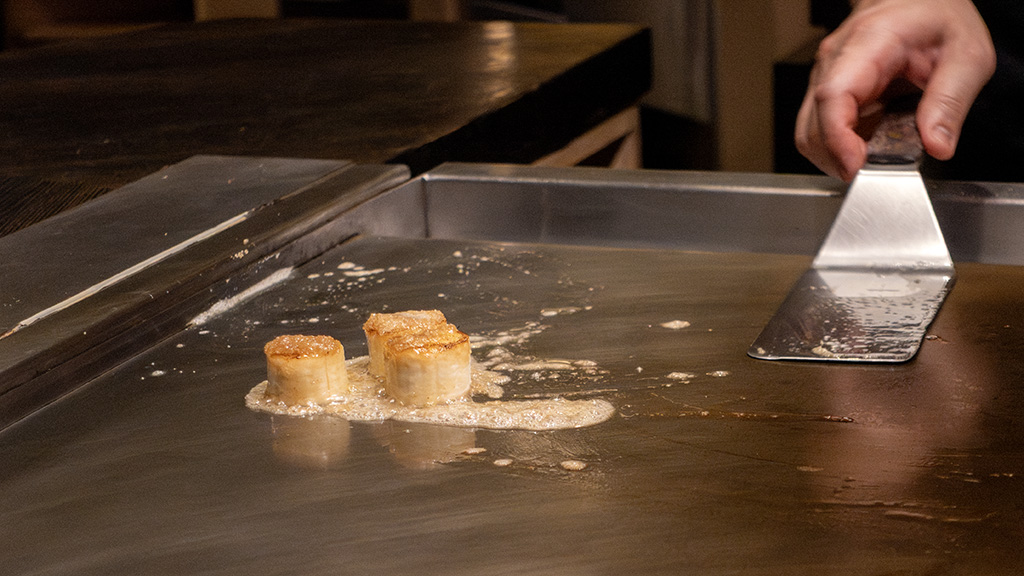
When I saw him do that, I told him an abridged version of the story of my friend’s botched pineapple rum flambé upside-down cake at STRIPSTEAK and let him know that I’m glad he knows how to properly use the technique. He seemed to have found the anecdote quite amusing and funny.
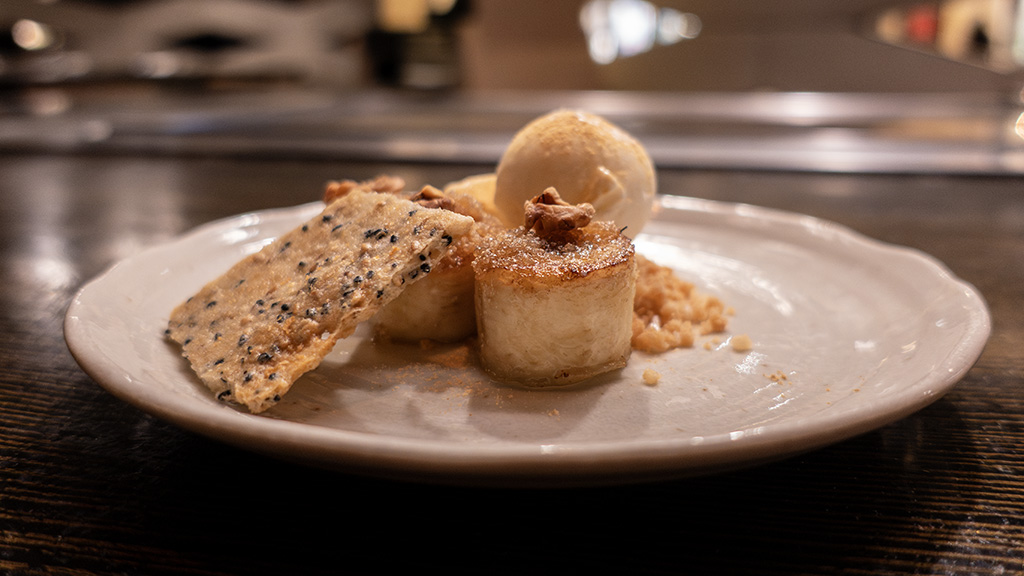
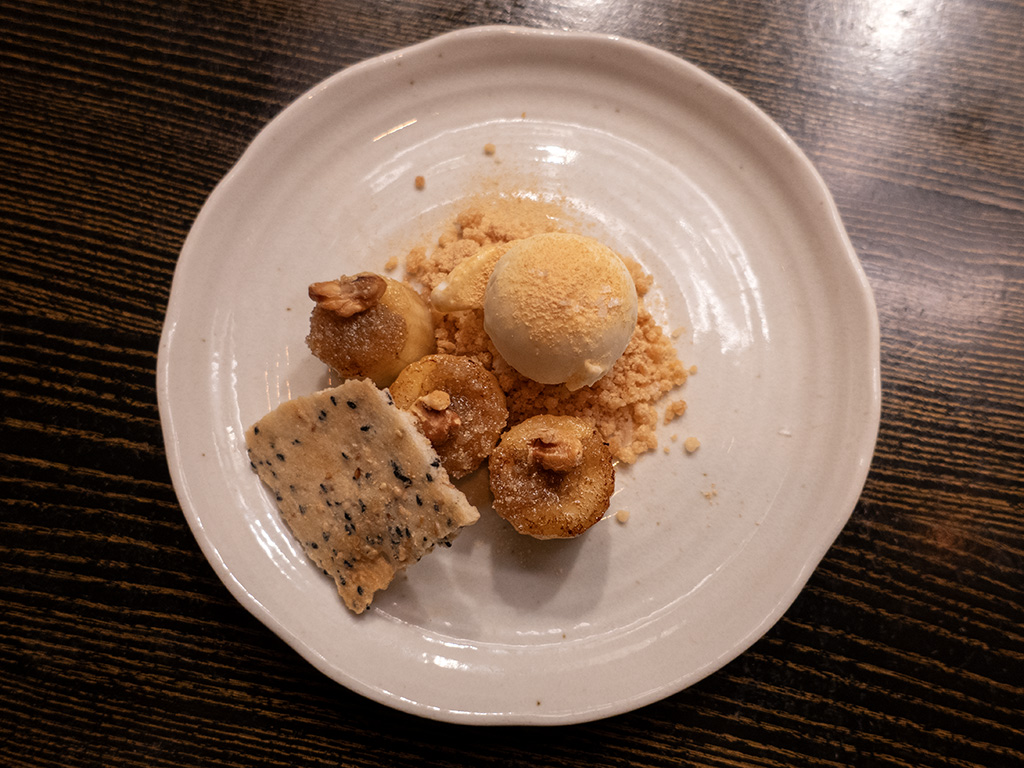
The bananas were brought back to the kitchen, where the pastry chefs finished preparing the dessert. This is the final product that came out: banana kinako with nougatine, walnut, and Maldon salt, served with a scoop of milk gelato. According to the description on the menu, this is inspired by Bananas Foster.
This was great. It was fun combining all the individual elements into cohesive bites, and I particularly enjoyed the nuttiness and how it complemented the baseline banana flavor.
This is a picture of the front of the restaurant near the hostess’ podium.
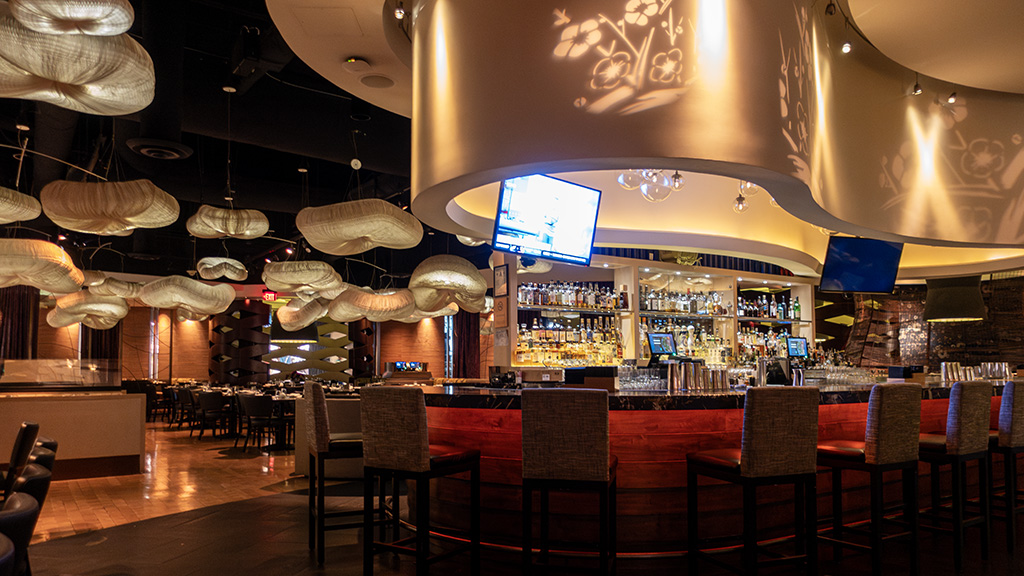
I didn’t have an opportunity to capture any other photos inside Nobu because of how far back I was seated. The teppan grill tables are tucked away in a little alcove, so it’s fantastic for privacy, but not the best if you want to take pictures. The restaurant also filled up pretty quickly after I arrived, so I didn’t want to go for a walk taking pictures when a ton of diners were already getting settled in for their meals.
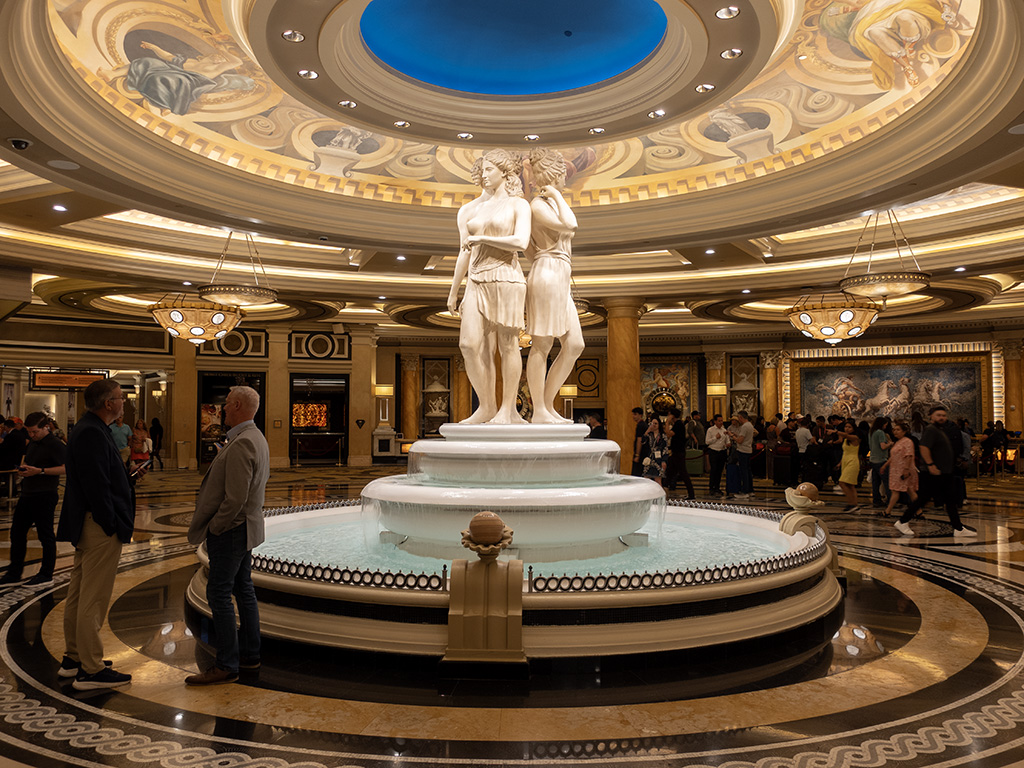
Instead, here is a photo of the statues and fountain near the hotel registration desk at Caesars Palace. I passed through here on my way out of the building after finishing dinner.
| Teppan Menu | $ 266.00 |
| Shiso Peachy | $ 15.00 |
| Sales tax (8.375%) | $ 23.53 |
| Gratuity | $ 50.00 |
| Total | $ 354.53 |
As I mentioned before, I enjoyed the meal and I enjoyed the experience. However, I think this price is quite steep for what you get.
Nobu is a very reputable brand. After this dinner, I do think that Nobu is deserving of praise and acclaim. However, with that being said, I think Nobu is overrated. I think the way that people perceive Nobu as some kind of ultra high-end luxury brand is a bit overblown for what you actually get. Again, to be clear, the food was fantastic. However, you can also get food of comparably high quality at other high-end, authentic Japanese restaurants for substantially less money and larger portion sizes.
Obviously, restaurants on the Las Vegas Strip charge quite a bit more than regular restaurants out in the suburbs, or compared to restaurants in other cities that aren’t designed to attract high rollers. However, even with that in mind, I think the US$266 price point is still too high. In my opinion, I think the “Nobu mark-up” here is somewhere around the US$60-70 range, i.e., if this exact experience did not have the Nobu name attached to it and was instead given to you at some generic “Mr. & Mrs. Lee’s Teppanyaki” restaurant on the Strip, it would probably be priced closer to a flat US$200.
So, my final verdict of whether or not I would recommend it? It depends. If you’re taking a gold digger out on a date, or if you yourself are a gold digger and want to milk good value from your date, and you care about the prestige of dining at Nobu, then I think this is a great place not only to stroke your ego, but also to actually eat very good food. However, if you’re just a normal person and you want to dine at a restaurant that will give you more bang for your buck, then I think it makes sense to pass on Nobu (at least the one at Caesars Palace on the Las Vegas Strip).