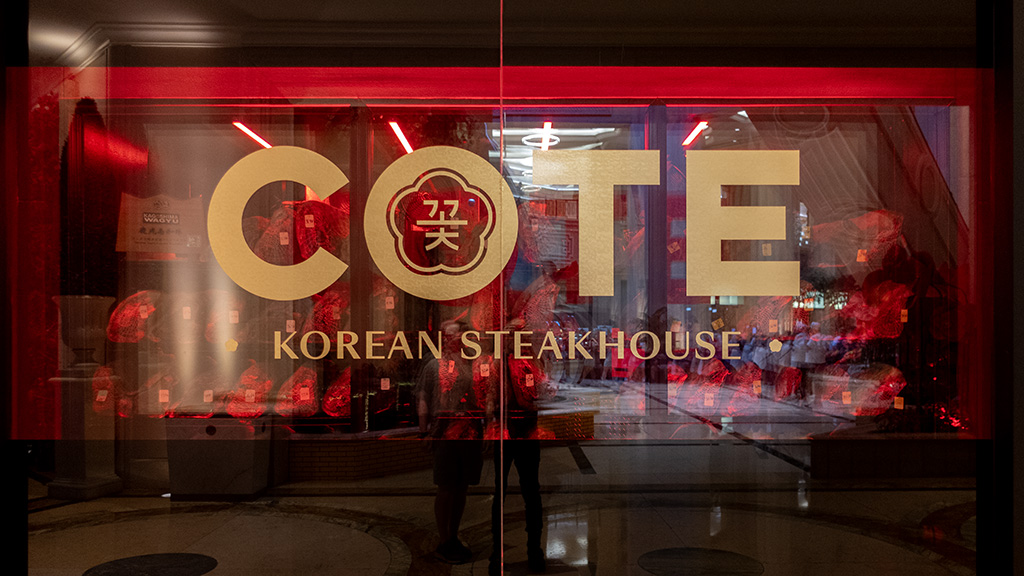
Following a recommendation from a friend, I decided to join in for dinner not too long ago at COTE Korean Steakhouse at The Venetian Resort Las Vegas in Paradise, Nevada. I haven’t been going to too many barbecue restaurants lately that revolve around red meats with high saturated fat content because I’m still being conscious about my high cholesterol and heart health. However, I saw that COTE wasn’t a typical all-you-can-eat Korean BBQ restaurant, and instead offered some tasting menus, so I figured that if I’m going to go to a KBBQ restaurant, COTE would be a good candidate. Upon arriving at the restaurant, I saw from the logo that COTE is styled with 꽃 placed in the hole of the O, which is Korean for “flower.”
Out of the tasting menus, they had one called “Welcome to the Fabulous Butcher’s Feast,” also written in Korean on the menu as “모둠 고기한상,” for US$88.88 per person. The English name is obviously a play on the “Welcome to Fabulous Las Vegas” catchphrase, while the Korean name roughly translates to “assorted meat feast.” The other tasting menu was simply called “Steak Omakase™: The Grand Tour” for US$225.00 per person. The Steak Omakase is what my friend and I ended up getting.
Of course, when someone puts a trademark symbol beside a name, I always get curious enough to do some snooping, partially to see if they actually did trademark it, and partially to see if there is an interesting story behind it. I guess this is also one of the quirks of reading restaurant reviews on my website, because I imagine that not too many other food bloggers have enough of a background and an intrinsic interest in legal matters to go off on a trademark and intellectual property tangent in the middle of their review.
So anyway, during my search, I found that the first attempt to trademark Steak Omakase was made by Cote IP LLC, a Delaware limited liability company, back in January 2019. Unfortunately, it seems like they ran into some issues; they successfully responded to an office action in April 2019, but failed to overcome the subsequent office action in October 2019.
Rather than responding to the office action in October 2019, they instead abandoned the initial application and filed a new one under Gracious Hospitality Management LLC, a New York limited liability company with a foreign registration in Nevada, in November 2019. That application also received an office action in February 2020, and then again in August 2020, which caused the company to once again abandon the application.
Third time’s a charm, though, because in March 2024, Gracious Hospitality Management LLC made yet again another attempt to trademark Steak Omakase. They received an office action in September 2024, responded to it successfully in early December 2024, and finally received their registration certificate in late December 2024.
Thus, that confirms that this review is officially for COTE’s Steak Omakase®.
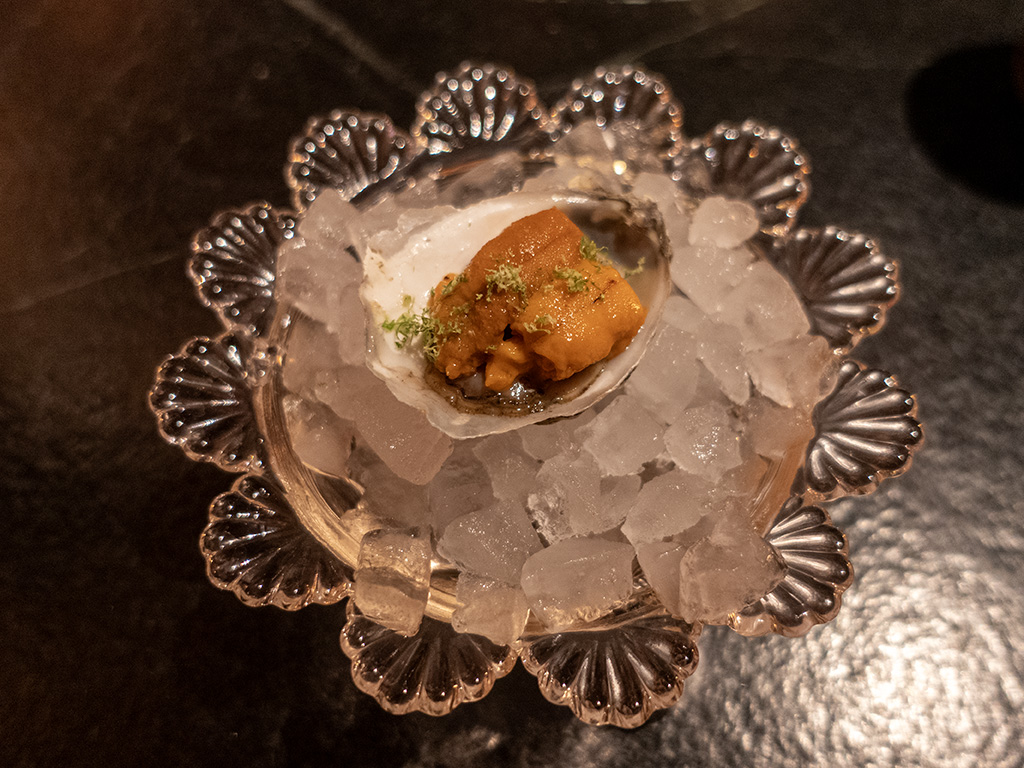
The omakase started with an ice-chilled oyster topped with some sea urchin. This was a very generous portion of sea urchin, but I felt like the explosion of flavor wasn’t quite as intense as what I expected for this size of sea urchin. Regardless, overall, it was still very delicious, and considering that sea urchin is my favorite food and I really like oysters, this was a very satisfying appetizer for the meal.
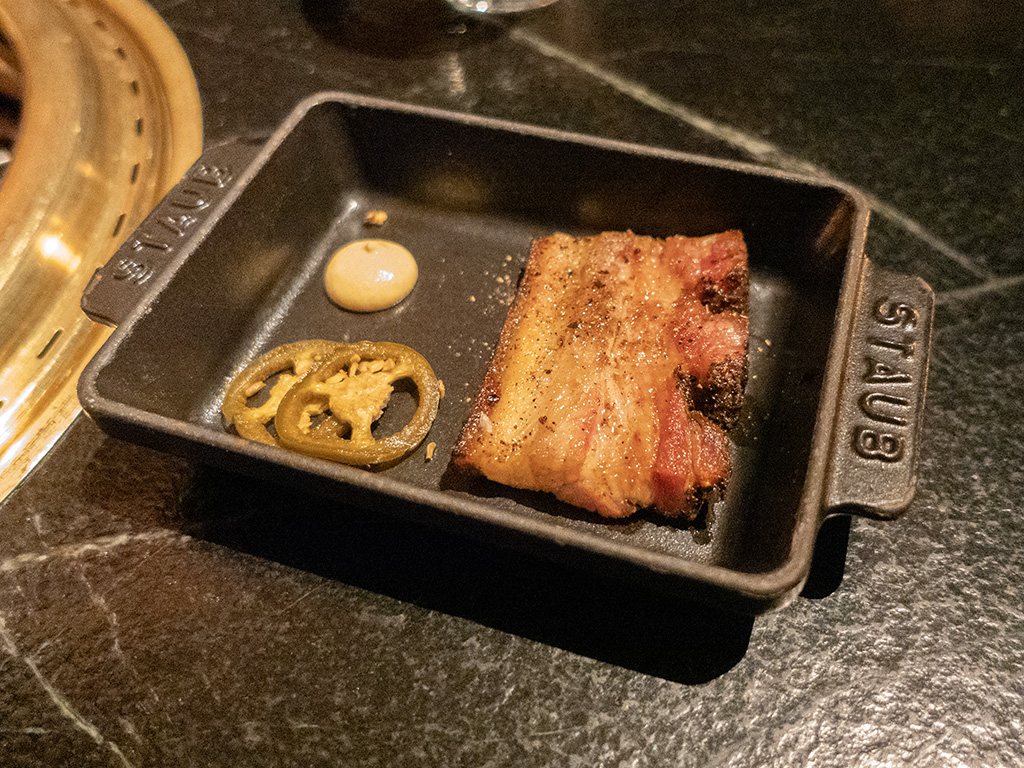
The friend with whom I went to this restaurant is the friend who doesn’t eat seafood, whom I’ve talked about previously on my blog. As a substitution for the oyster and sea urchin, the waiter instead brought out 바삭한 통 삼겹살구이, translated to English on the menu as “Korean ‘bacon,'” composed of house-smoked crispy heritage pork belly and pickled jalapeño.
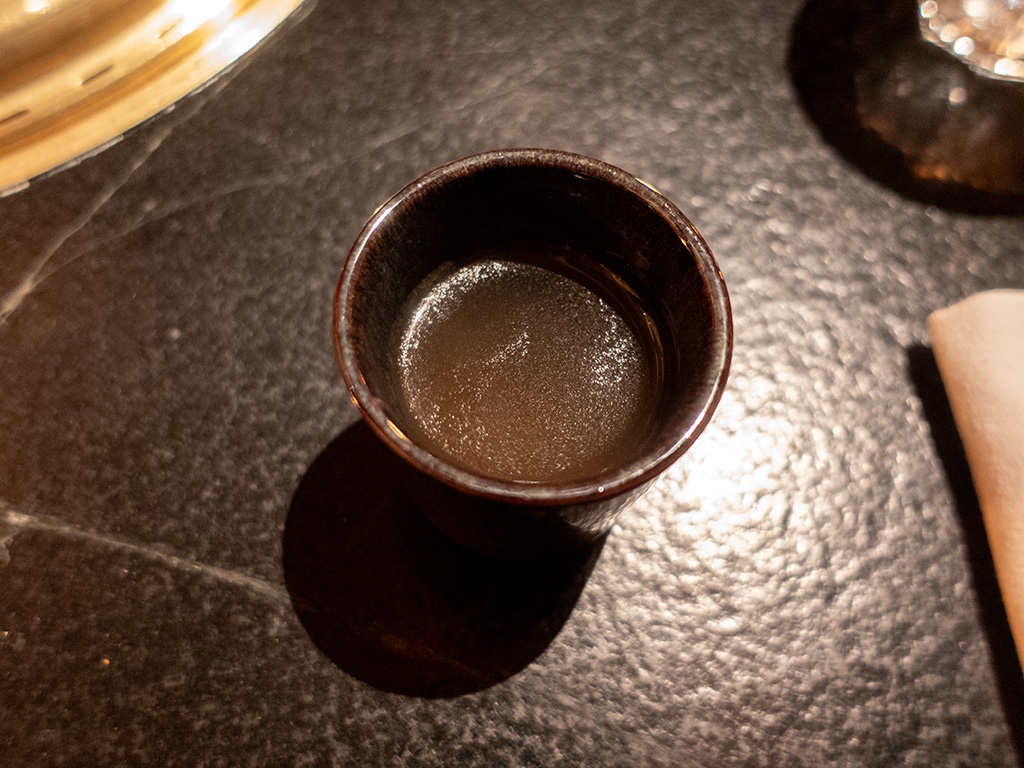
We were also served a cup of broth. This was intensely and borderline overwhelmingly salty, but the broth had so much rich, deep, umami flavor in it that the salt did a great job enhancing and amplifying the deliciousness of the broth.
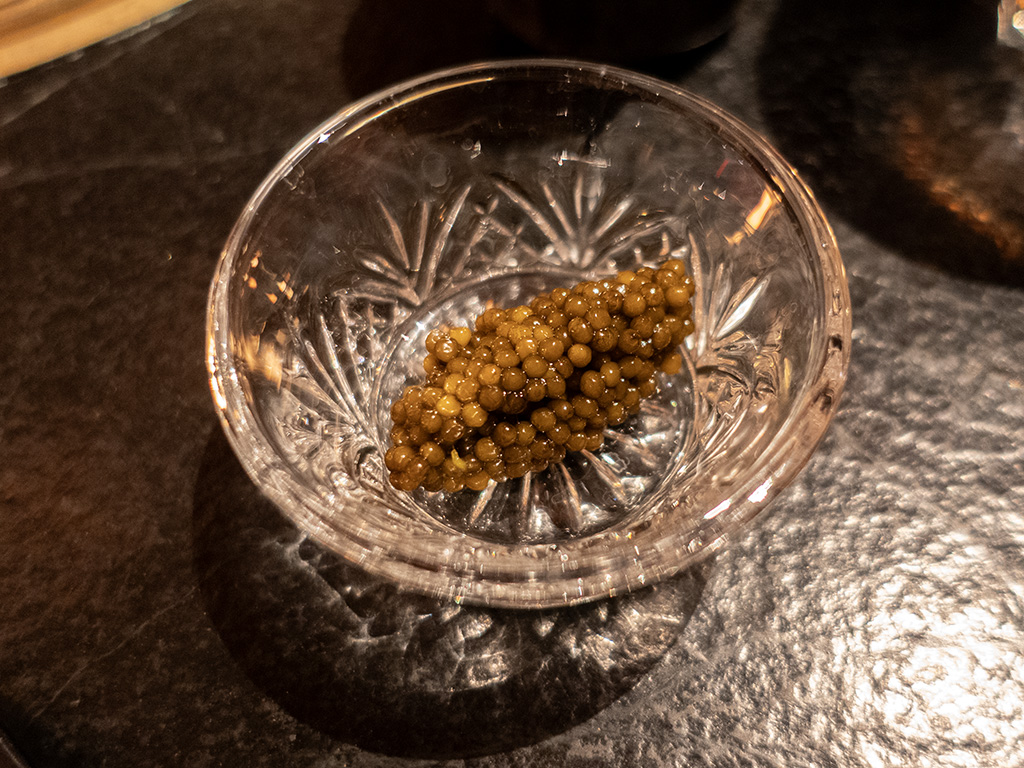
Next was some steak tartare with local grass-fed top-round beef, pear, and crispy tendon puffs. This was topped with a small portion of caviar, though I don’t remember exactly what kind of caviar it was.
This was amazing. I liked this combination, and this came with the “flavor explosion” that I expect from high-quality steak tartare and caviar. To make the beef flavor even stronger, this tartare came with crispy tendon puffs instead of bread. I’m impressed that they managed to shape the tendon puffs so neatly. This was perfectly complementary with the steak, and I wish more restaurants would serve tartare like this (though I imagine the reason they don’t is because this is far more resource-intensive than just serving bread).
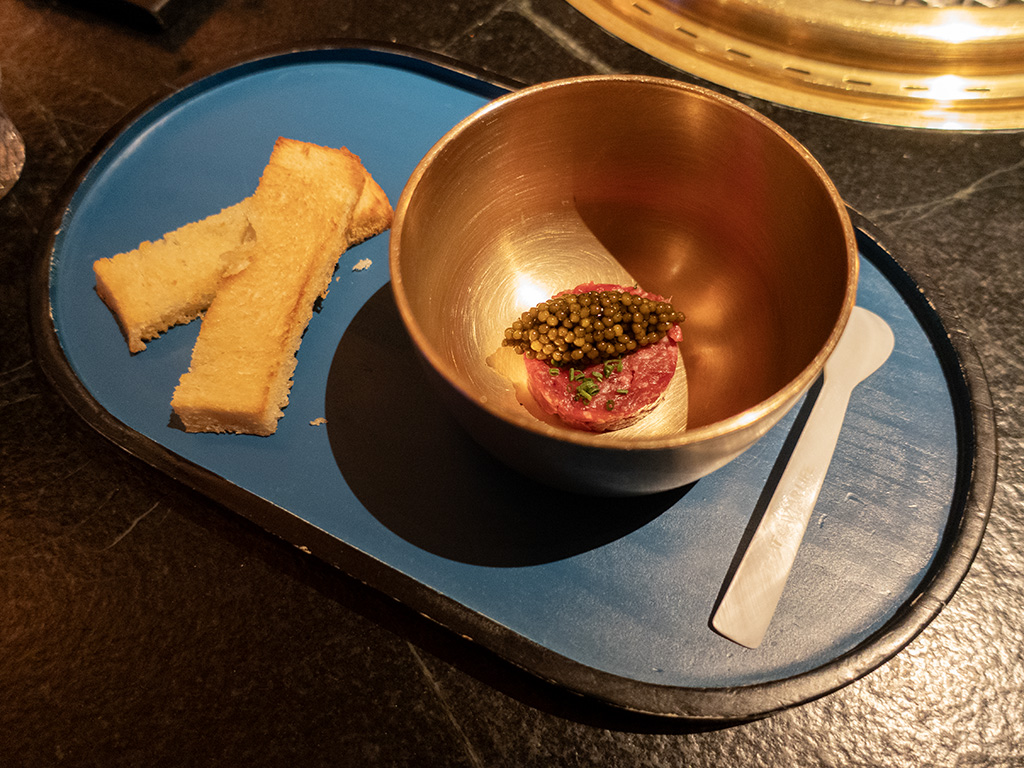
When our waiter was told that my friend dislikes seafood but I love seafood, he took a caring step to ensure that the caviar went to me, and wasn’t just omitted from my friend’s tartare and “wasted.” My friend’s portion of caviar was separated into a small bowl on the side, so I was able to blissfully enjoy even more caviar to make sure we were getting our full money’s worth.
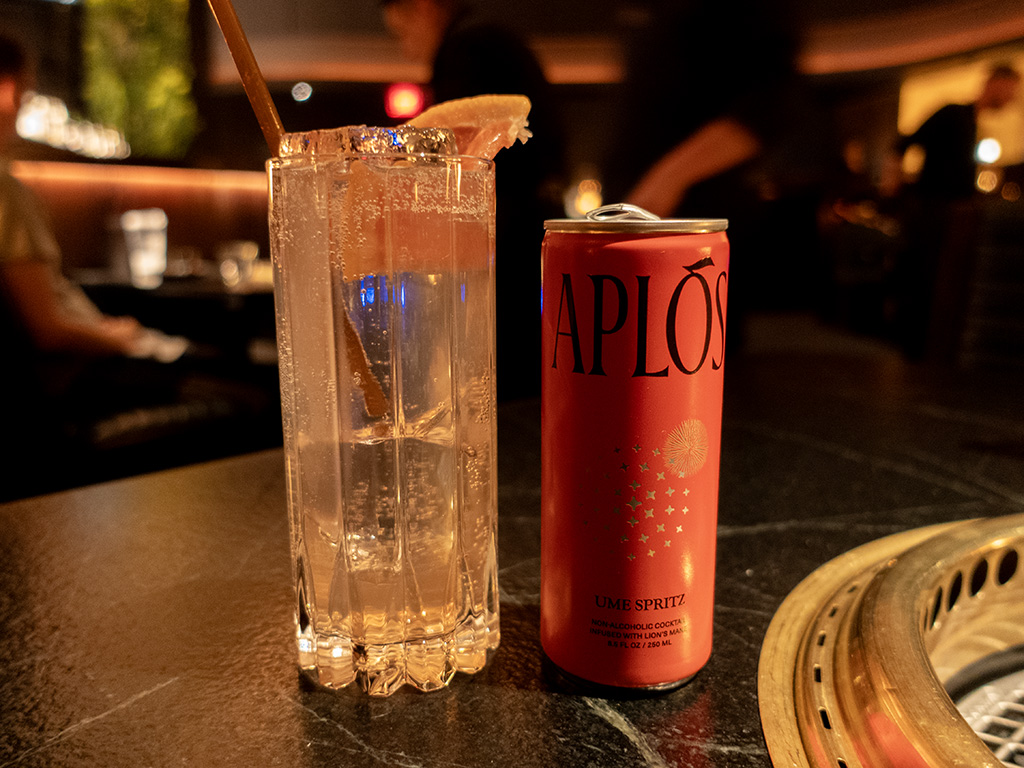
For my beverage, I ordered an Aplós Ume Spritz for US$15.00. I saw it on the non-alcoholic beverage menu and had never heard of it before, and it said that it came with an infusion of lion’s mane, which I thought sounded interesting, so I picked it. I was expecting some kind of fancy specialty drink from their bar. Unfortunately, when it came out, I realized that it was just a canned drink that I paid $15 for.
When I looked it up on their website after the fact, I found out that you can order this directly from Aplós for US$6.00 per can, or as low as ~$3.44 a can if you buy in bulk packs of 48 cans and enroll in their no-commitment subscription. It was actually pretty tasty and had a very interesting flavor profile, but it starts tasting less fantastic when you find out that, if you include the fact that you tip the waiter to carry this can to your table for you, the restaurant is taking over a 400% profit margin on the drink. (Yes, I understand that profit margins on fountain drinks are even higher, but at least for that, there is an up-front capital cost of the machinery, as well as ongoing maintenance and repairs.)
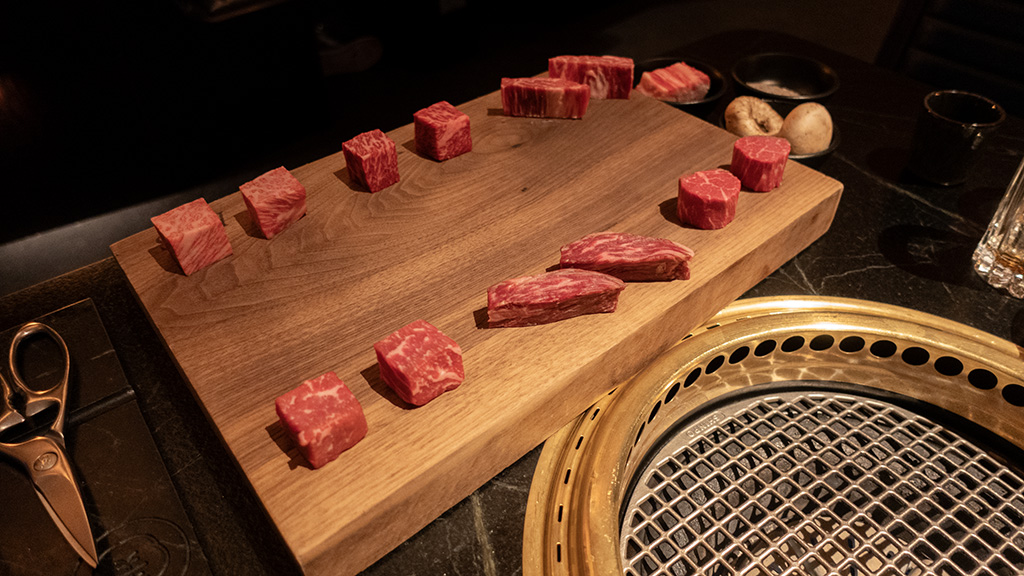
Not long after we finished both our appetizers, the waiter brought out the meat. There were six different kinds, and one piece of each for each person. The waiter explained that they were generally grouped into pairs—two wet-aged, two dry-aged, and two high-grade wagyu.
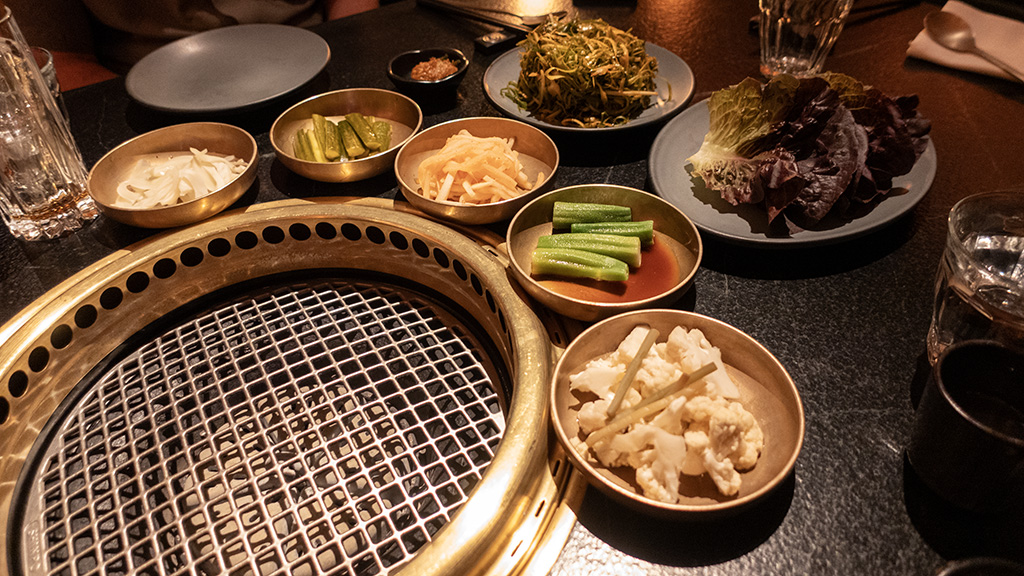
In traditional Korean fashion, we were also given a broad selection of side dishes. However, these were not the generic, stereotypical Korean side dishes. Instead, we were brought out a very unique selection of sides, some of which I have never seen at a Korean restaurant before. For example, the green sticks that you see next to the cauliflower are okra.
Another notable thing about the preparation of these side dishes is that a lot of them were pickled. I’m usually not a fan of pickled vegetables because I don’t like the taste of vinegar, I find pickled foods to be too sour for my preference, and I’d rather just eat vegetables raw. However, these pickled vegetables had all the positive flavors of the pickling process without there being any sourness. I ended up eating a substantial amount of these sides.
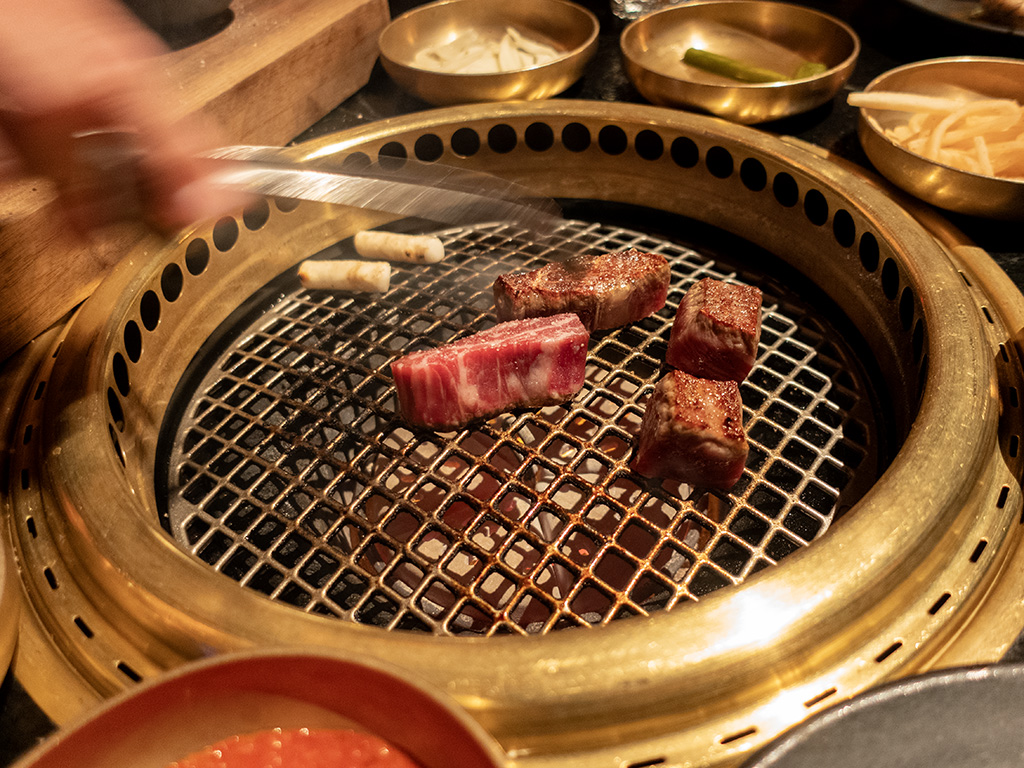
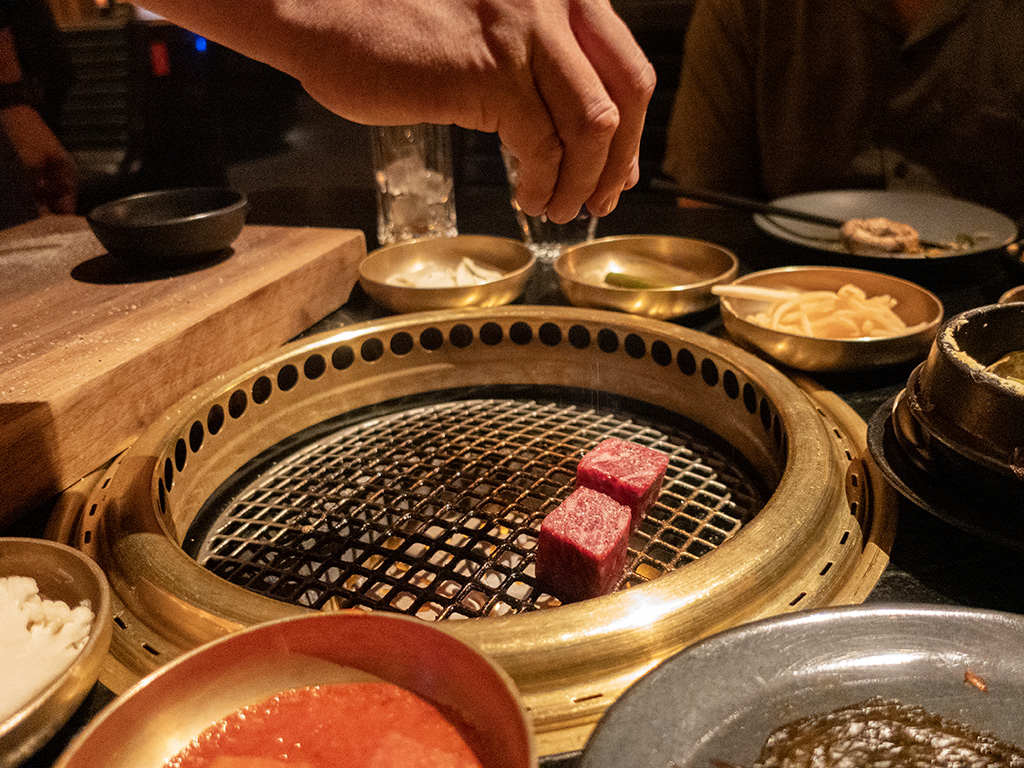
Unlike all-you-can-eat Korean barbecue restaurants where you cook the meat yourself, COTE’s waiters cook your meat for you at your table. This is a huge plus considering that these waiters most likely have far more skill and training at grilling meat than I do, so it’s a great way to maximize the flavor of each cut of meat while minimizing the possibility of it being overcooked or cooked with an unbalanced doneness level.
Here is a series of photographs of our waiter salting, preparing, grilling, and serving the first few cuts of meat.
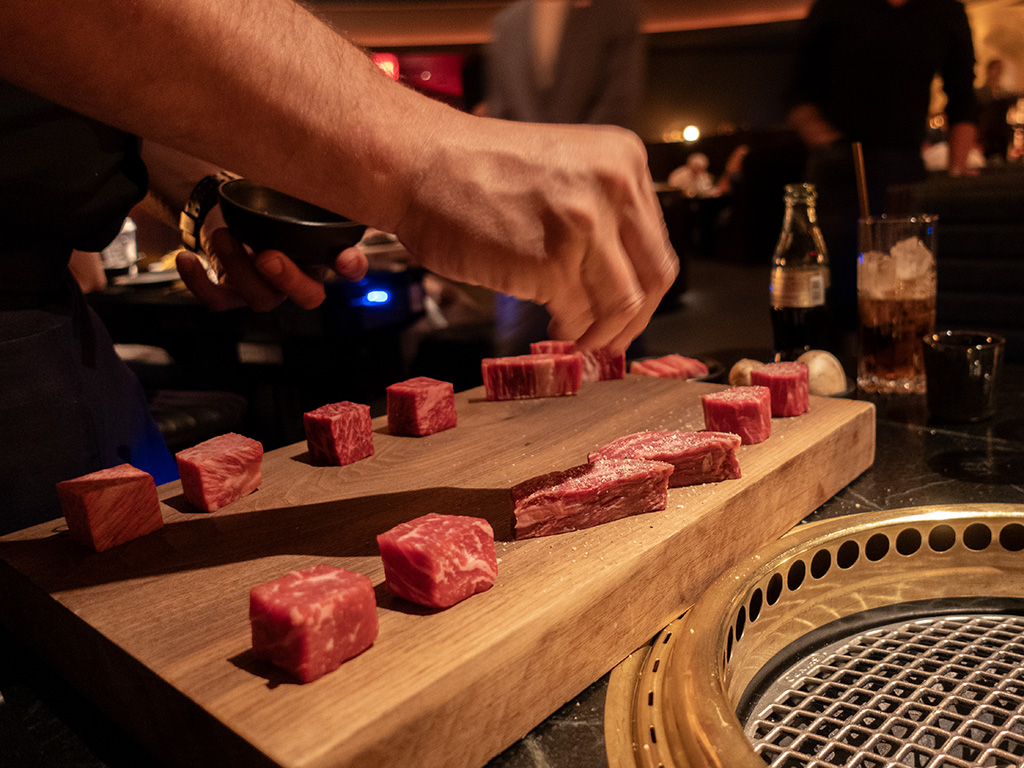
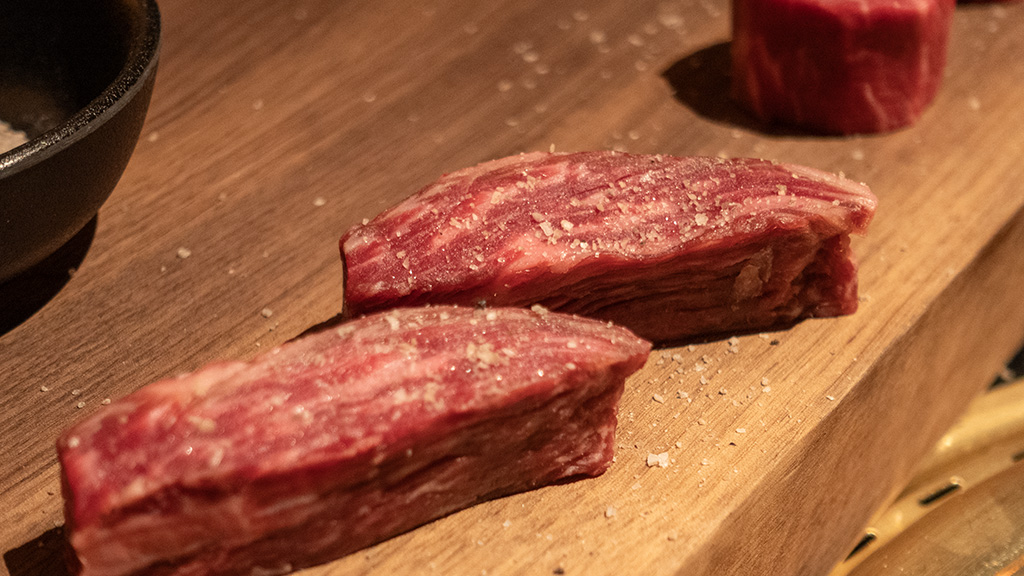
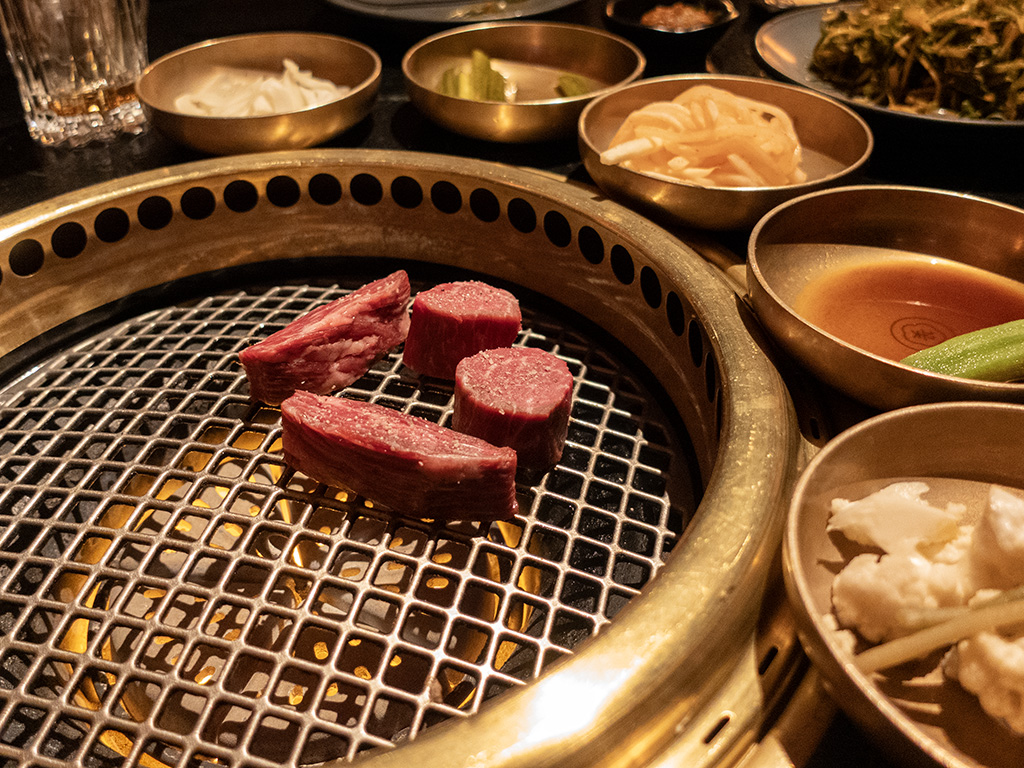
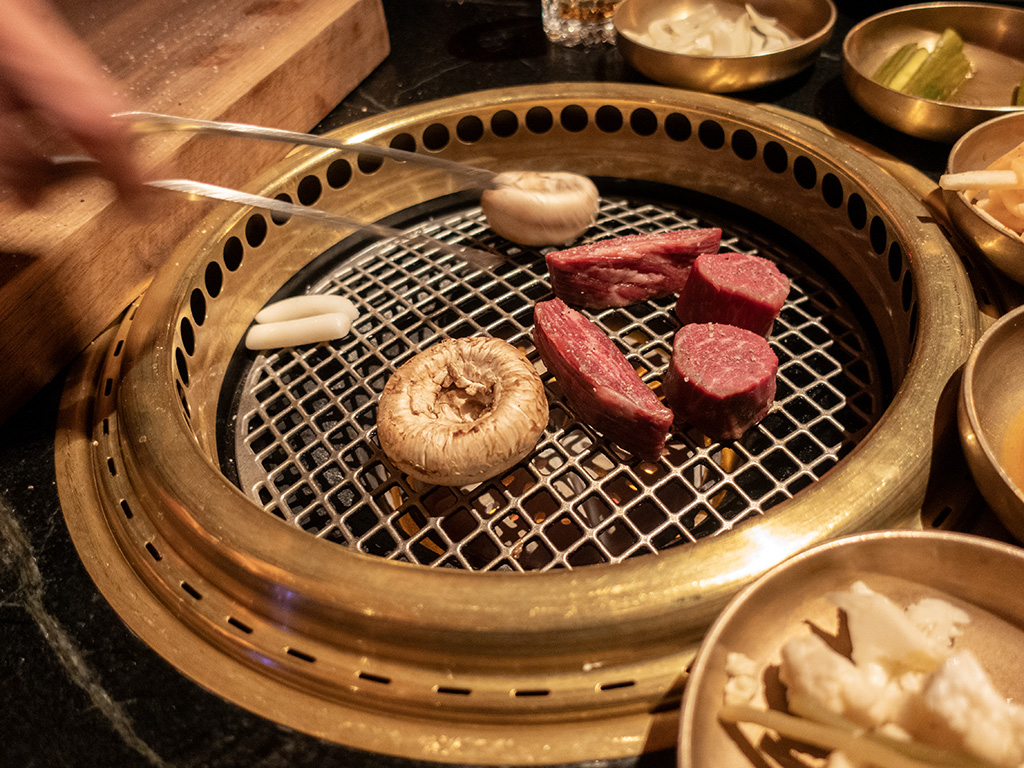
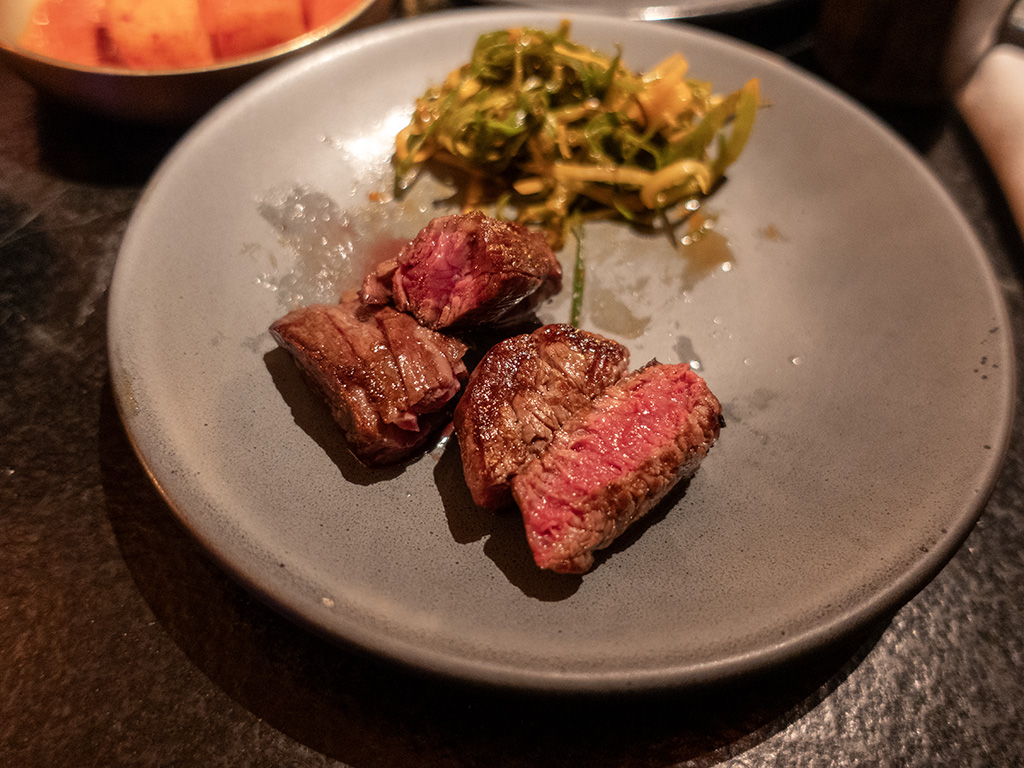
While the meat was being cooked and served to us, we continued to get more side dishes throughout the meal. I liked that they did this because I enjoy breaking up the continuity of meat with additional flavors. I think eating beef non-stop, especially cuts that have high levels of fat and marbling, can get cloying; mixing in other flavor profiles makes it so your taste buds can “reset” a bit, which allows you to fully appreciate each bite of meat without their flavors just merging together.
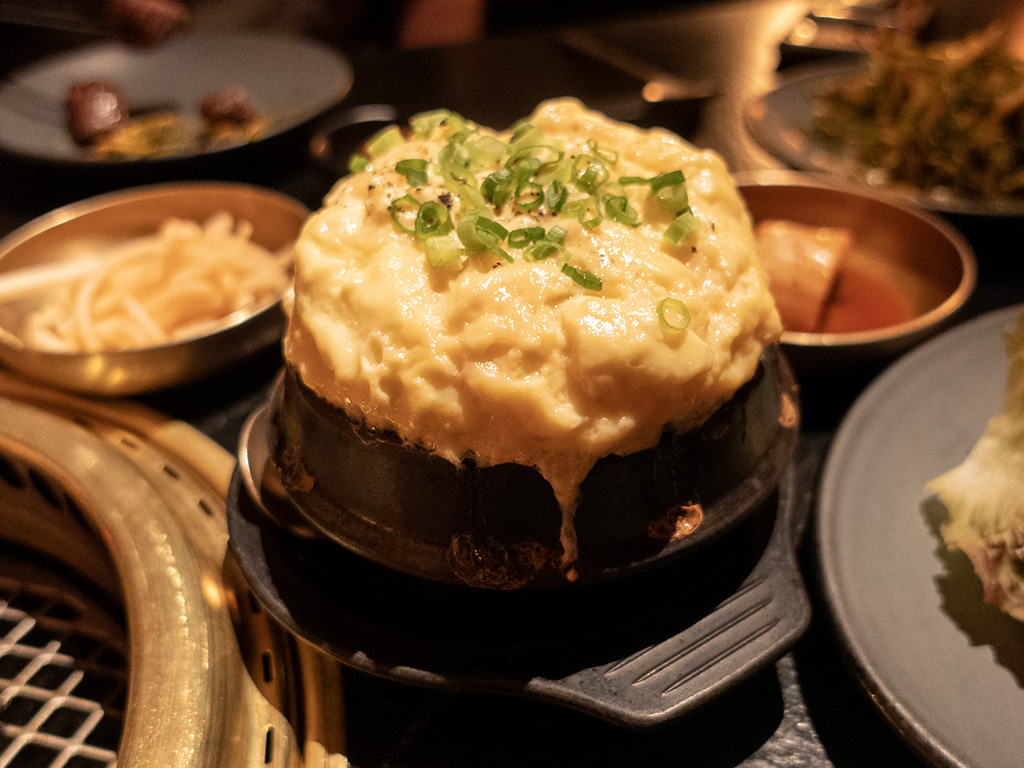
Here is some 계란찜, which is Korean-style steamed egg.
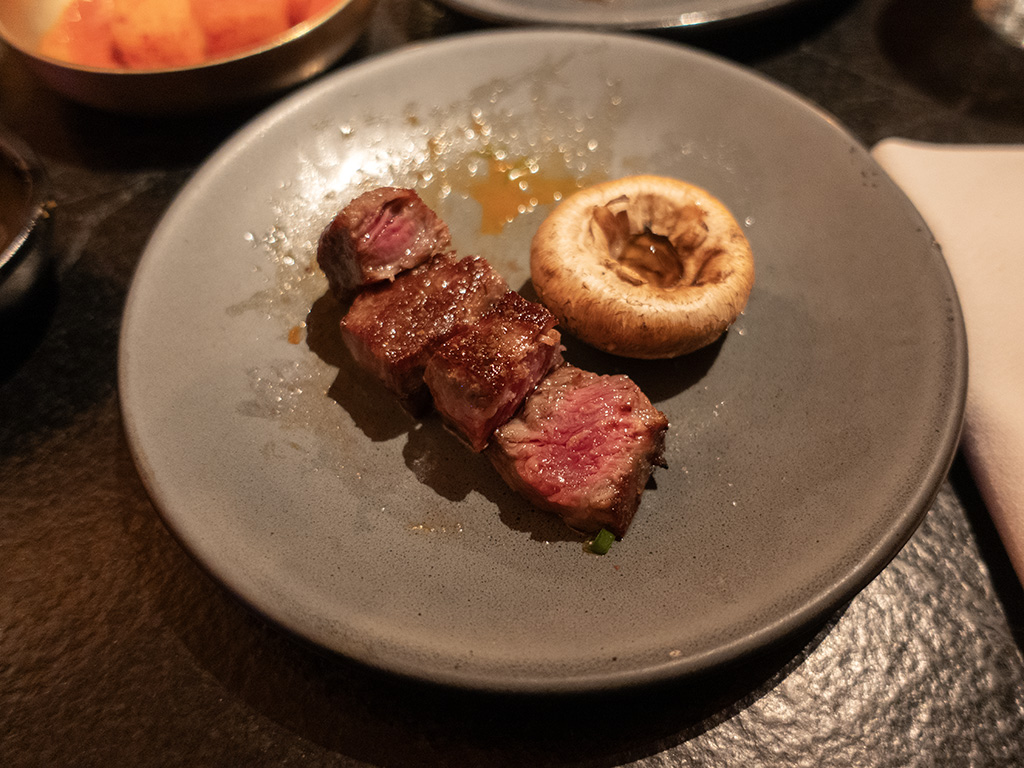
Here are some more photographs of our waiter salting, grilling, and serving more cuts of meat. He threw in a mushroom with some of them, which I thought did a great job at adding an earthy element to the rich fattiness and making the overall flavor profile more complex and desirable.
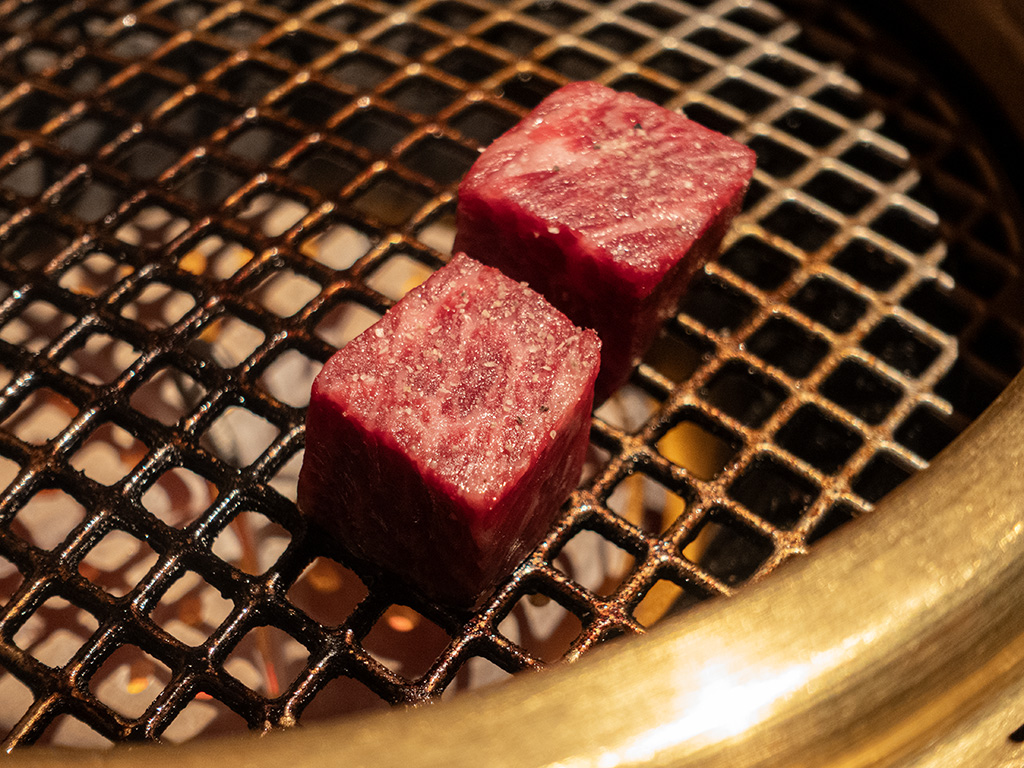
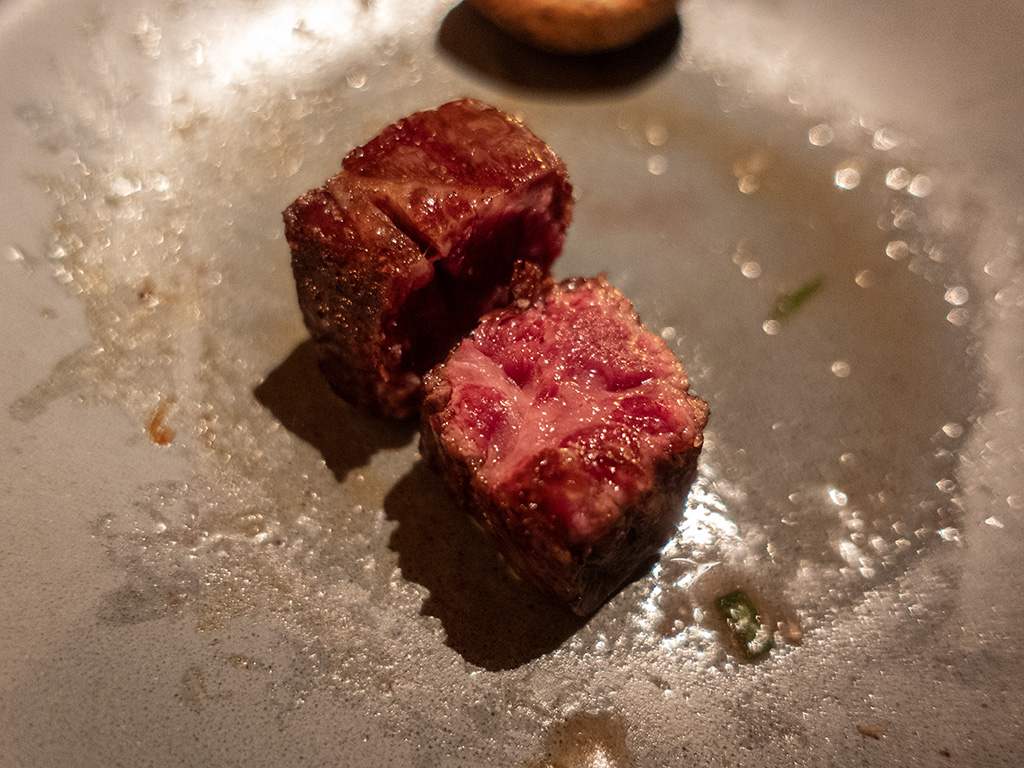
As we were approaching some of our final pieces of meat, they brought out two noodle dishes.
The first one was 상큼한 비빔국수, described on the menu as cold and refreshing Korean angel hair noodles with apples, iceberg lettuce, and gochujang vinaigrette. I ate this cold noodle dish a lot as a kid, so eating this again was quite nostalgic. However, as you can imagine, COTE prepared these noodles far better than anything that my mom made me as a kid, so that added an additional layer of euphoria.
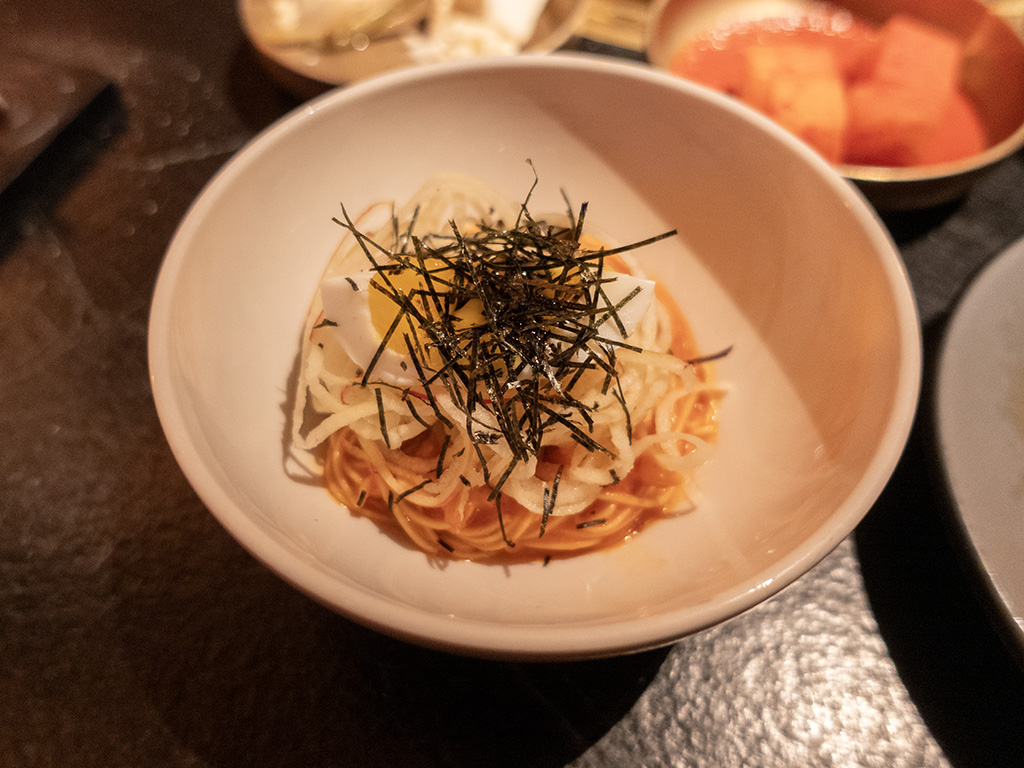
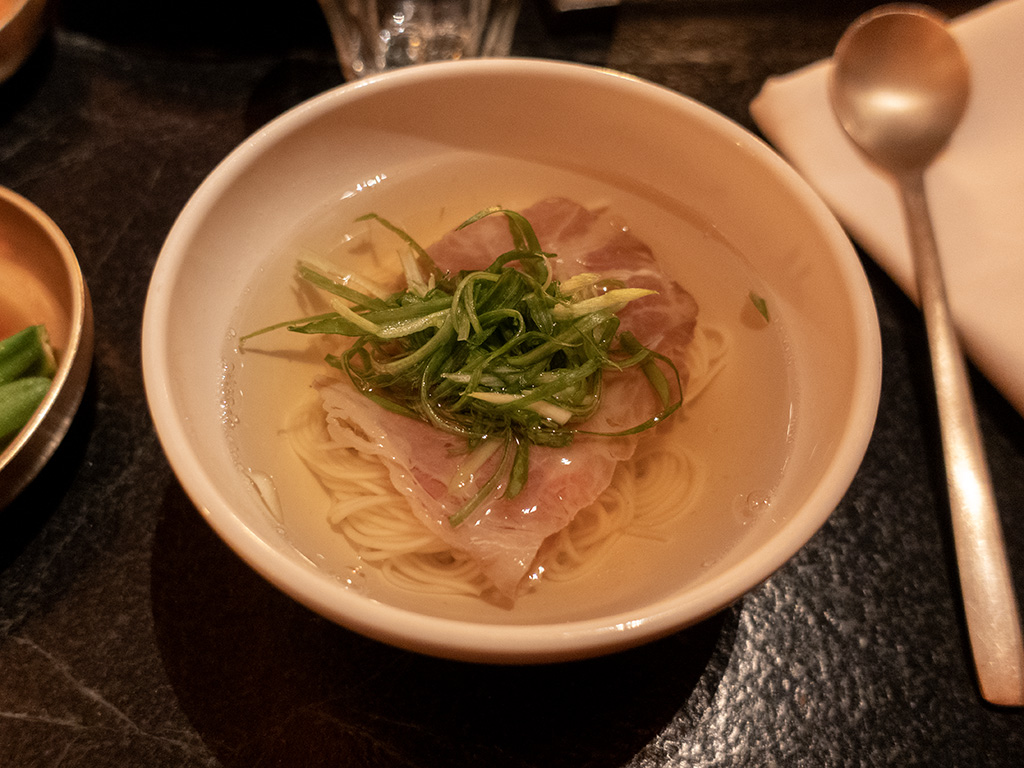
The second bowl of noodles was 뜨끈한 잔치국수, described on the menu as Korean angel hair noodles with piping hot clear anchovy consommé.
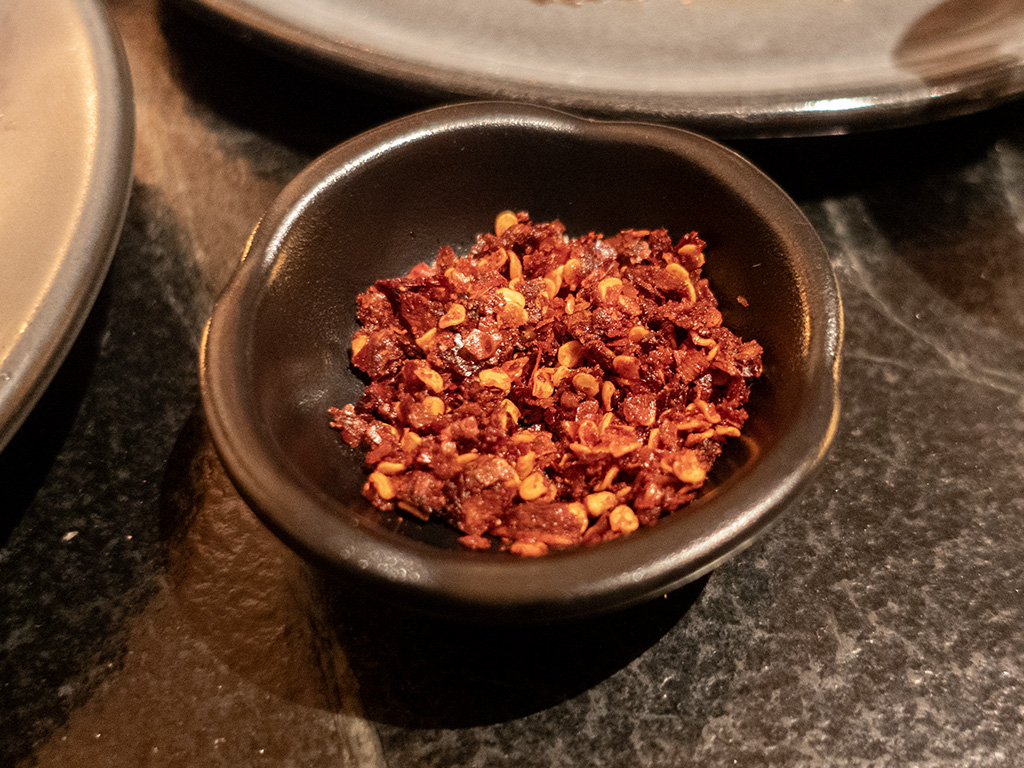
I thought this was so funny that I had to take a photograph of it. If you’re familiar with Korean cuisine, you may recognize this as roasted chili flakes. These are extremely spicy. I immediately knew what these were because I have had instances in the past where I put way too much of this in my food, had a mild emergency in my mouth, and started sweating enough that I could’ve been added to Google Maps as a fire hydrant.
I smartly only added a very small pinch of this to the warm noodle dish, which brought it up to my perfect preferred heat level. I found it absolutely hilarious that they served this much of it for such a tiny bowl of noodles. Surely, at least once in the history of the restaurant, someone thought “they must’ve given me this much because this is how much I’m supposed to use,” dumped this entire thing into their bowl of noodles, and then proceeded to think that they had to go to the hospital.
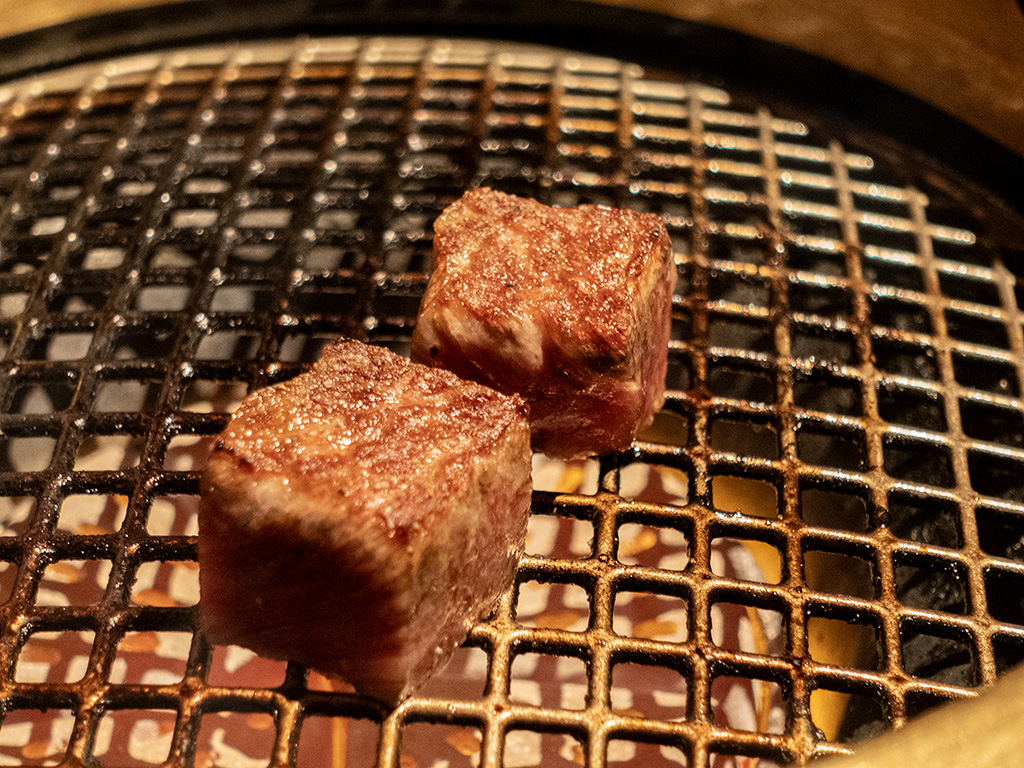
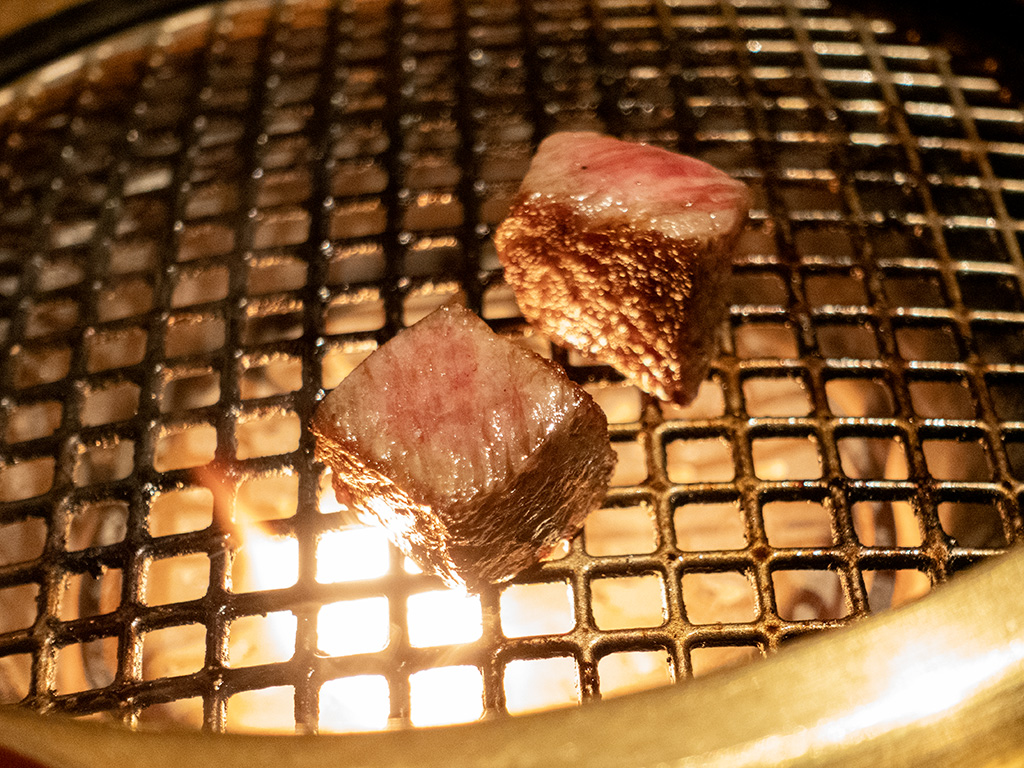
Here are some photographs of our final pieces of meat. These were the high-grade cuts of wagyu. The waiter was so far doing a fantastic job making sure that the flame wasn’t flaring up, but because of how rich and fatty these cuts were, it was inevitable that the fire started dancing under the grate.
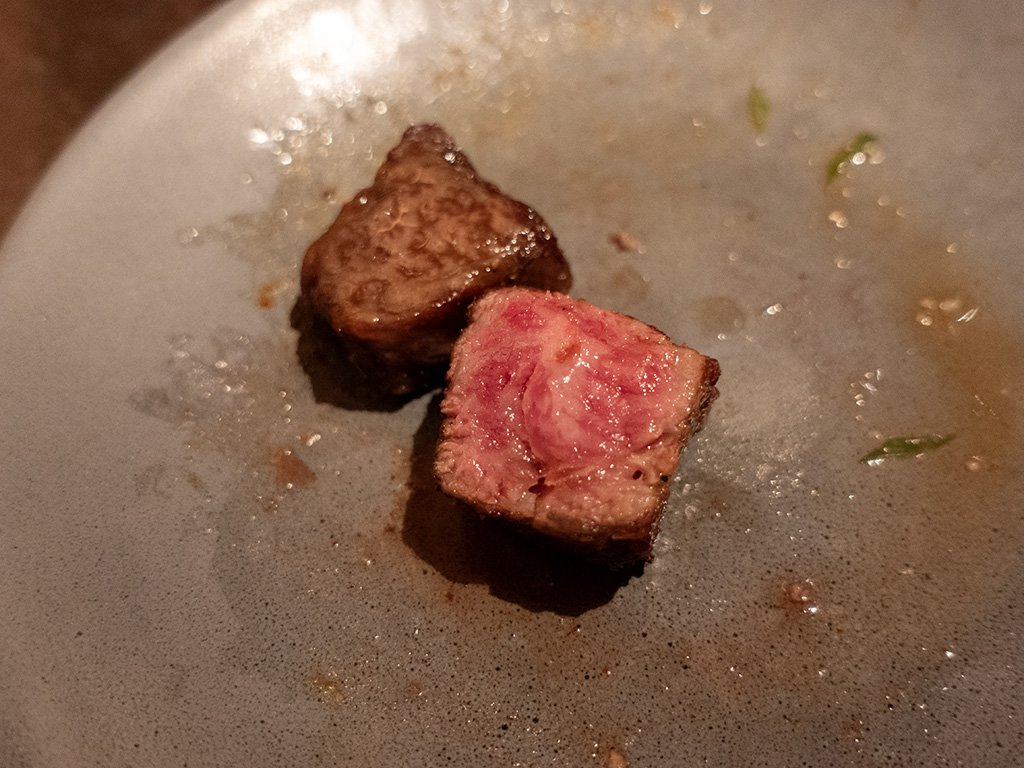
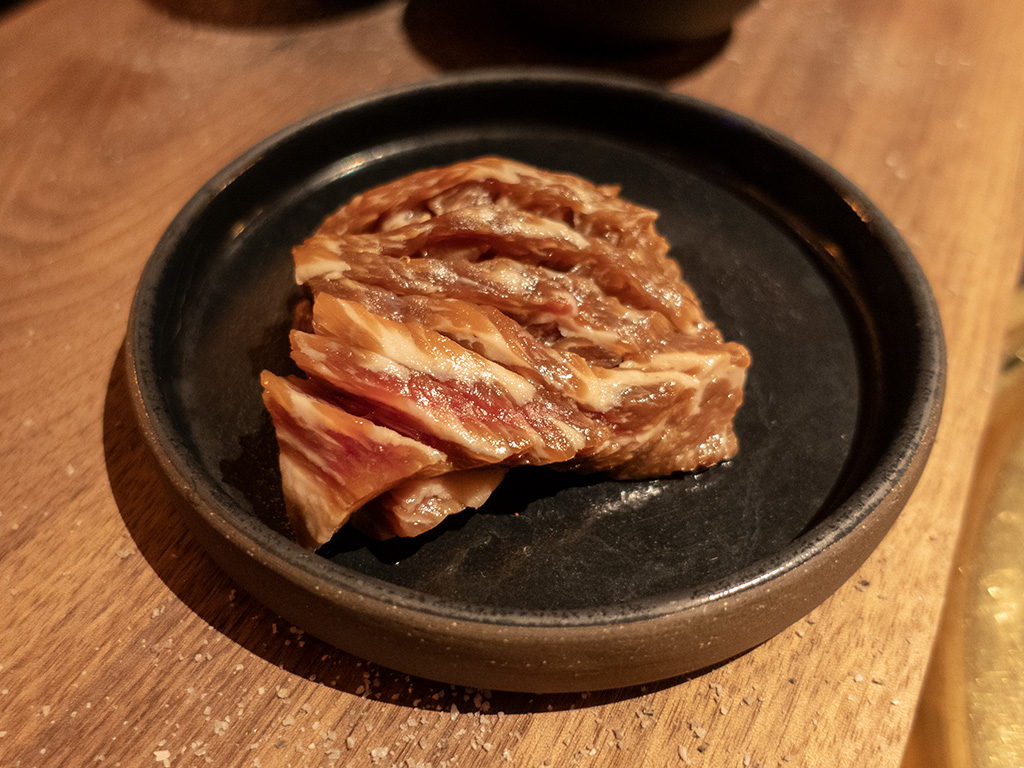
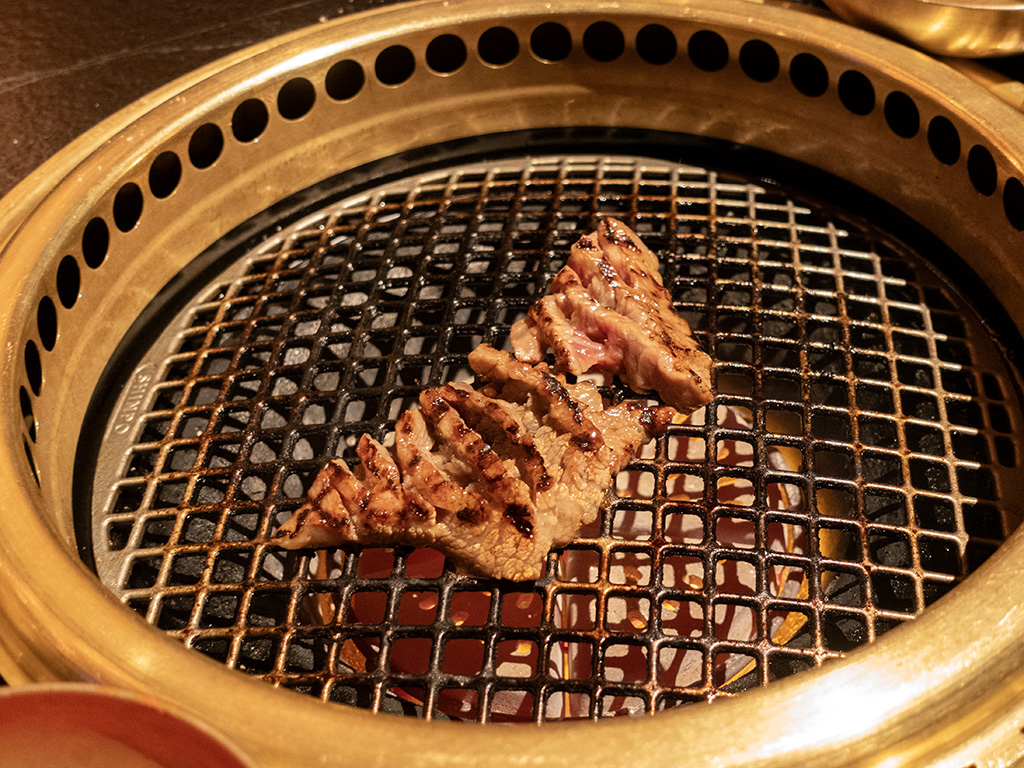
After we were finished with our wooden platter of meat, the waiter brought out a bonus plate of pre-marinated meat. He called this the “dessert meat.” This cut of beef isn’t actually eaten as a dessert, but it made sense why he would call it that, because the marinade usually has a nice sweetness to it. This is different than the more straightforward cuts of meat that we just finished eating that rely primarily on the flavor of the aging, the high fat content, and the accompanying salt to carry their naturally amazing flavors.
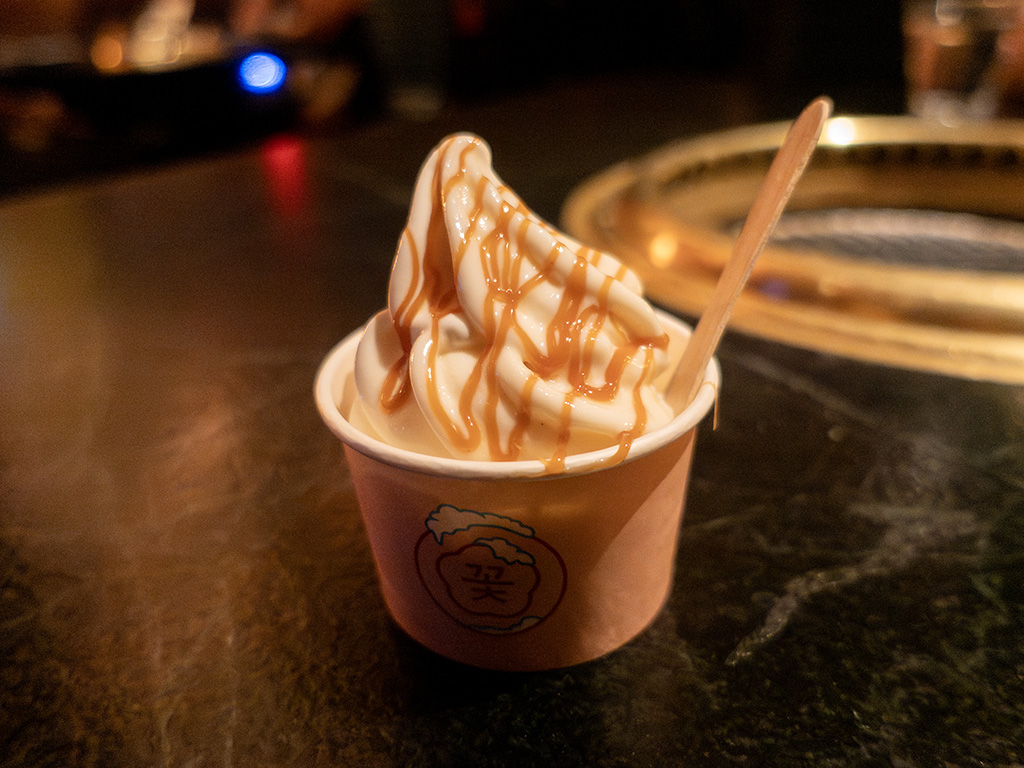
For our actual dessert, we were served some ice cream with a soy sauce glaze. The soy sauce glaze tasted very similar to caramel, but it had a deeper and more complex flavor to it. I actually liked this a lot, and if this was served à la carte at an ice cream shop near me for a reasonable price, this is something that I would deem worth getting for dessert on a relatively routine basis.
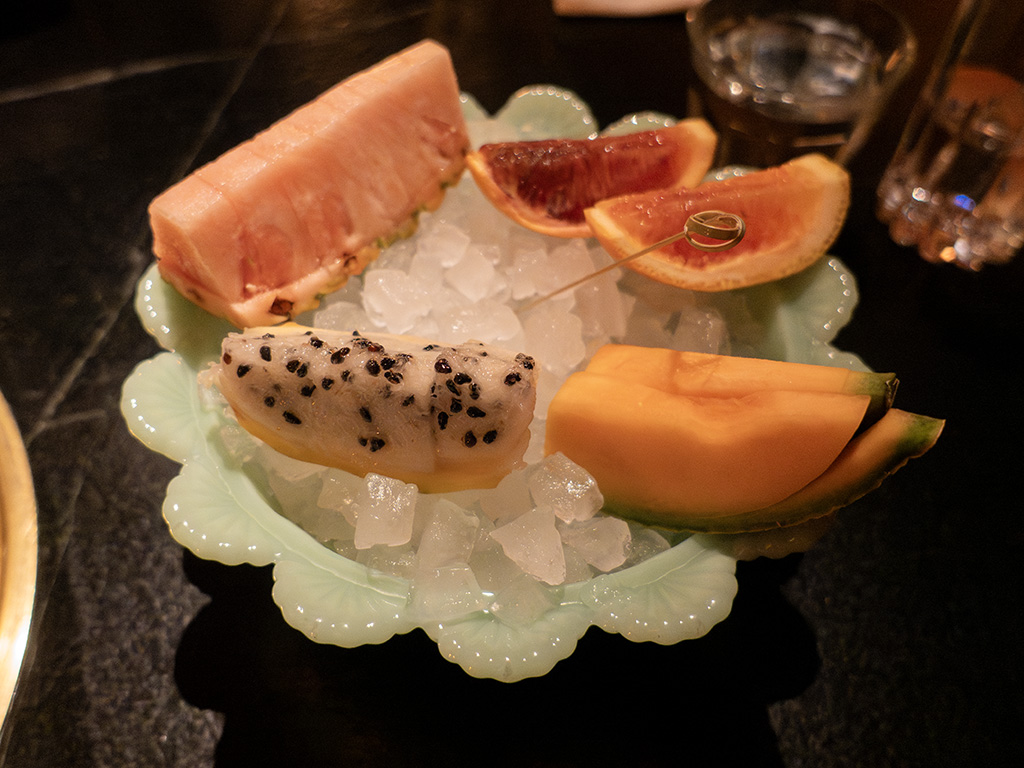
To close out our meal, we received a bowl of fruit. The pink pineapple was absolutely incredible and might have been some of the best fruit I’ve ever had in my entire life.
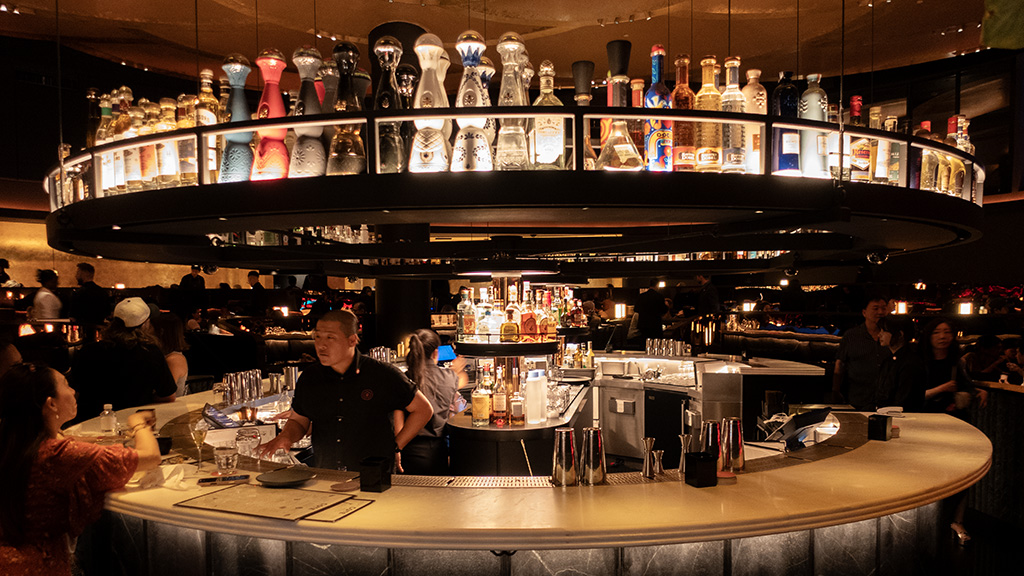
This is a photograph of the bar area in the center of the restaurant.
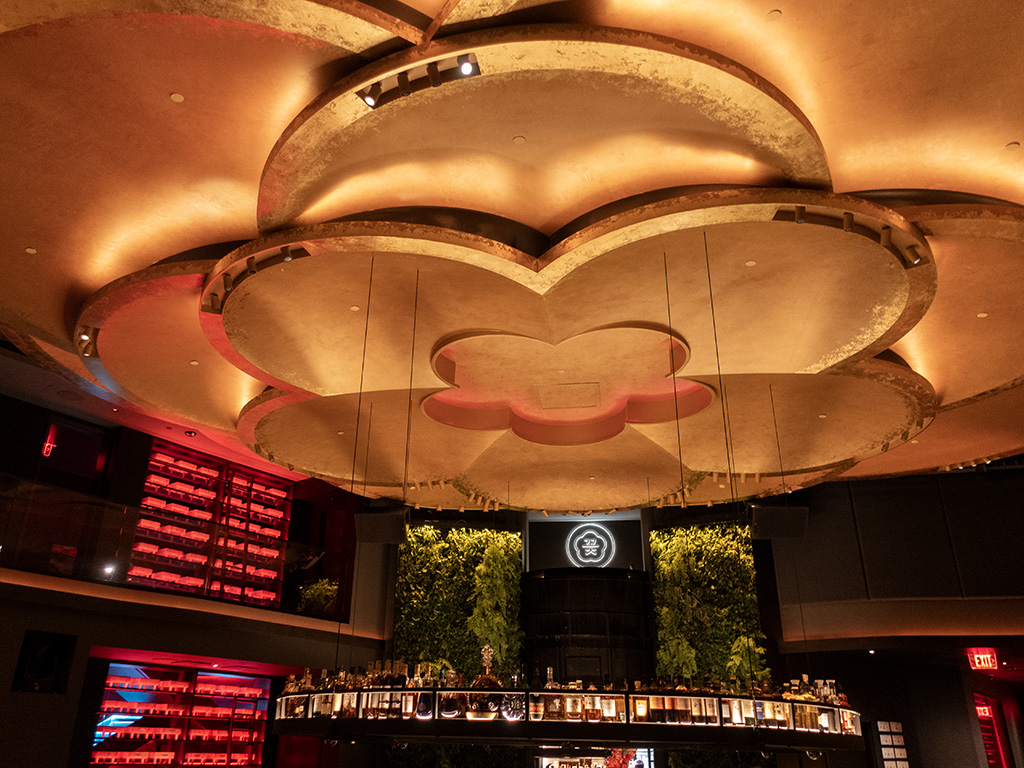
In alignment with the flower theme pursuant to the 꽃 in the middle of the COTE wordmark, the ceiling had a floral design on it.
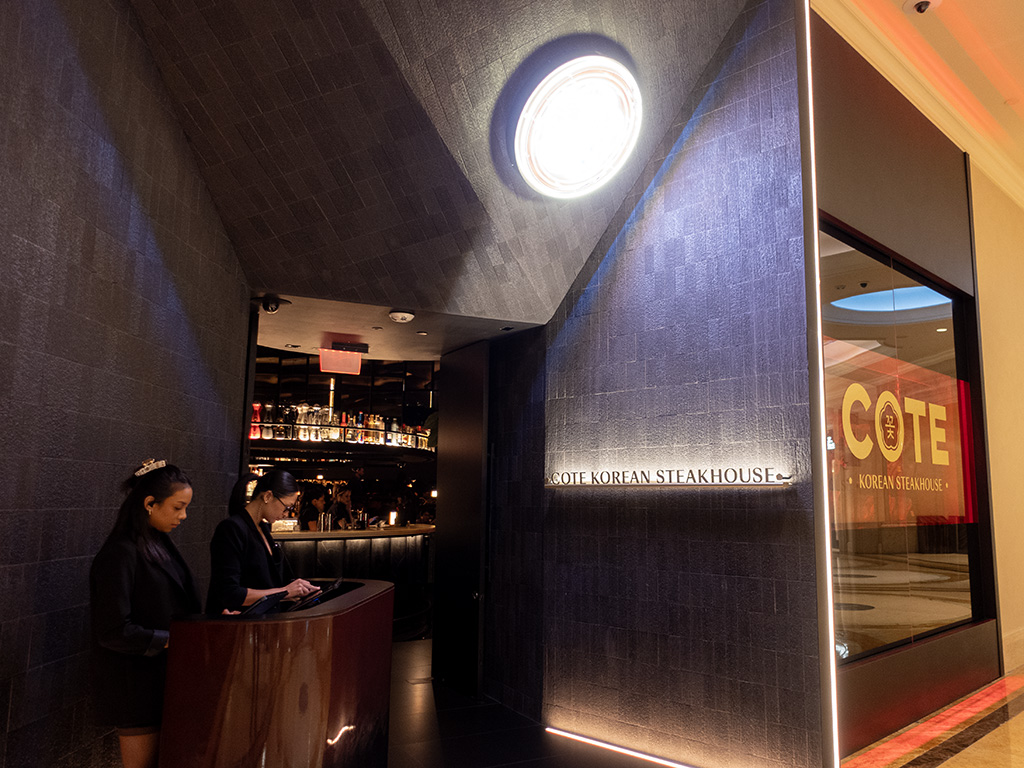
This is the wordmark on the glass at the front of the restaurant.
This is the hostess’ podium at the entrance of the restaurant.
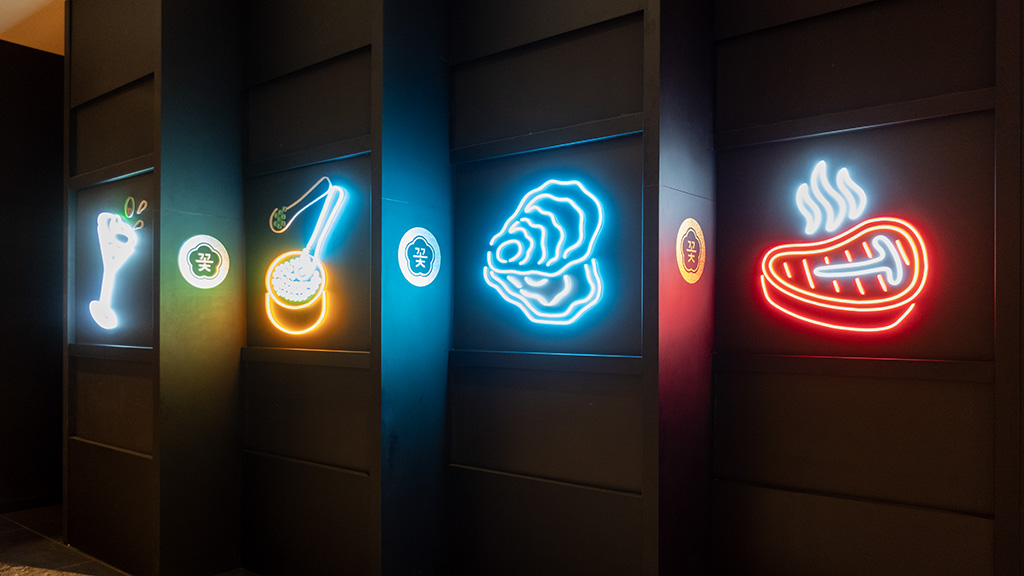
These are some animated LED signs just outside the restaurant that showed various different items served at COTE.
The omakase and non-alcoholic beverage came to a subtotal of US$240. After sales tax and gratuity, the total for my portion of the meal came to US$300.
I had a fantastic dining experience at COTE, and I highly recommend it as one of the top-tier and higher-priority options for someone looking for a meal at that price point. The meat was very high quality, their special twist on Korean cuisine noticeably elevated the food, the service was attentive and skillful, and the environment was classy and pleasant.