I’m in Los Angeles County again in preparation for flying out of Los Angeles International Airport (LAX) for an upcoming international trip. While in the area, I met up with some friends who I regularly visit when I’m around Los Angeles, and we decided to try the omakase dining experience at Hilo Beverly Hills.
This restaurant was so unique that I feel the need to mention this right away: Chef Hilo’s omakase is not a traditional Edomae-style omakase. It is a modern-day “fusion” omakase that combines traditional Japanese elements with a more performative, conversational, experiential dinner. If you go into this expecting a traditional omakase, you will probably be disappointed; you might even find Chef Hilo to be abrasive and end up finishing your dinner feeling slighted and insulted. However, if you go into it with a relaxed and open mind, it could end up being one of the most fun dinners you’ve had.
Edomae-style omakase involves chefs who embody the concept of “shokunin,” which translates to being a master craftsman or artisan. There is a further implication in the word, though—shokunin in Japan are known to be stoic, quiet, and minimalistic in communication. This is not because they are shy or antisocial, but rather, they are demonstrating that they have their full focus on preparing your meal to perfection without any distractions. Thus, if you go to a lot of high-end Edomae-style omakase restaurants, you will find that the atmosphere is often very calm and peaceful.
Chef Hilo, on the other hand, finds a balance between mastering his craft, but also being a welcoming host who facilitates a memorable and stand-out experience. Throughout our entire meal, he asked us questions about ourselves so he could get to know us better, joked around with us, teased us in a way that usually only long-time friends do, and tried to establish a genuine bond with us. This restaurant doesn’t feel like you’re going to a professional establishment and ordering professional services; instead, it feels like you hired a friend to cook dinner for everyone and you’re all just spending time together for fun.
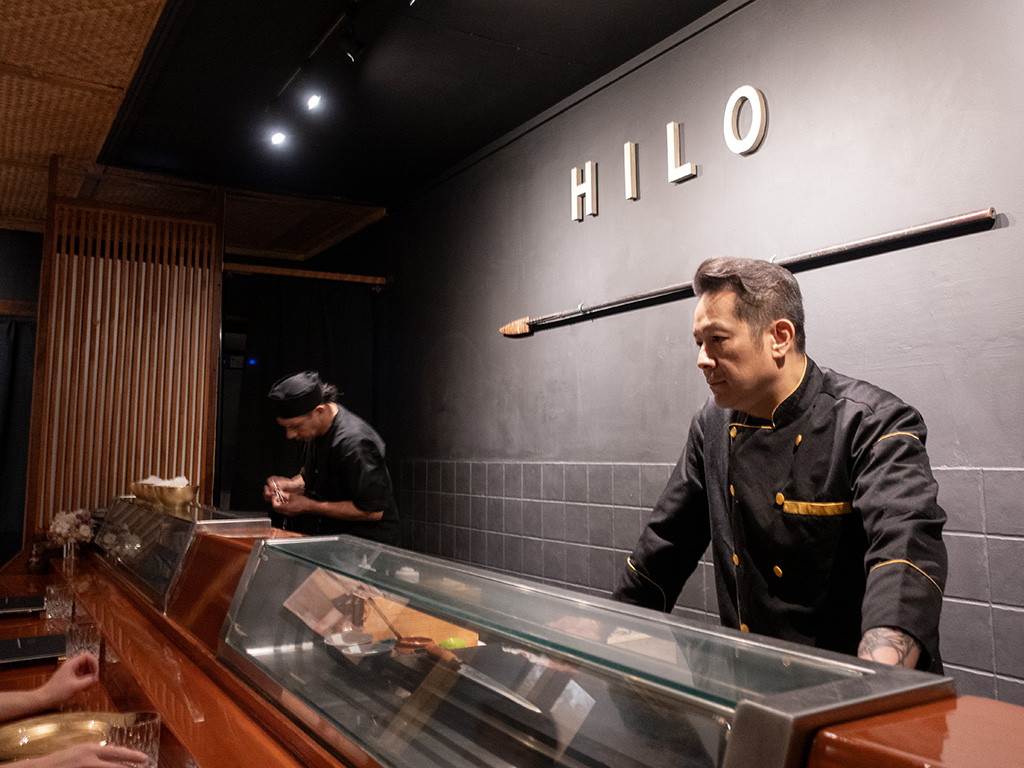
We went as a group of four; three of us got the full omakase dinner for US$250.00 each, while the remaining one of us got an abridged version for US$150.00 because she wasn’t hungry enough for all the courses.
Omakase, or お任せ, literally translates to “I leave it up to you.” Lately, omakase at a lot of restaurants has sort of turned into a more flexible version of what is actually called kaiseki, or a chef’s choice meal that follows a series of different courses. However, Hilo Beverly Hills serves an actual genuine omakase—no menu, no course list, and on-the-fly adjustments to what is served.
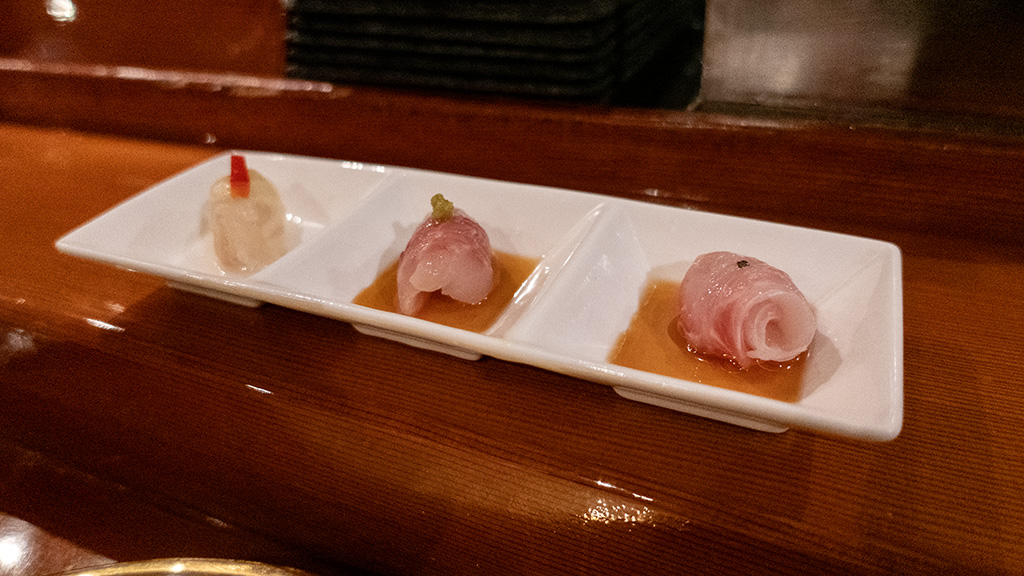
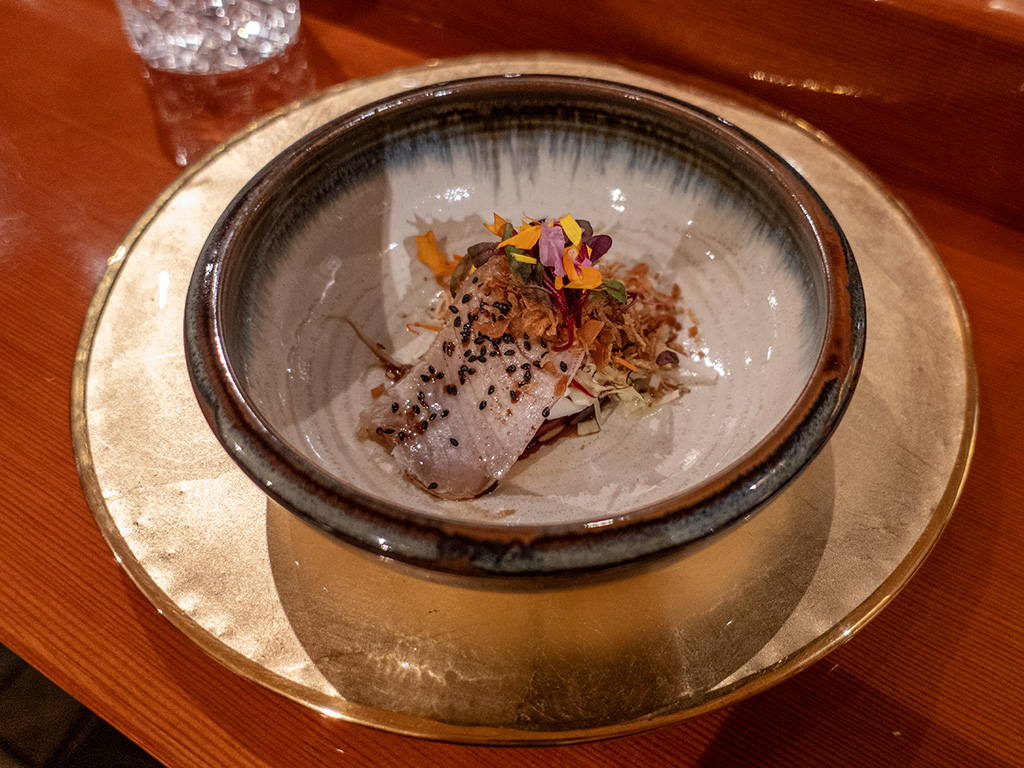
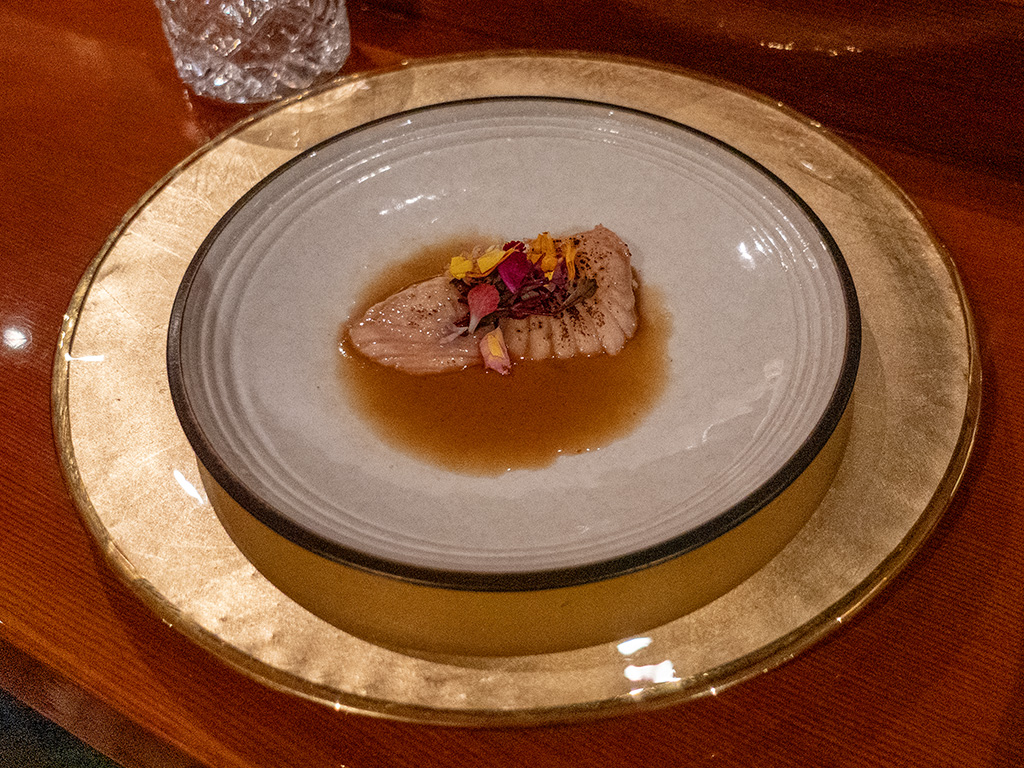
To start, we received three types of sashimi in sour sauce as appetizers, two oysters, a small shot glass of what I think was a different kind of sauce with oyster derivatives, and two cold fish dishes.

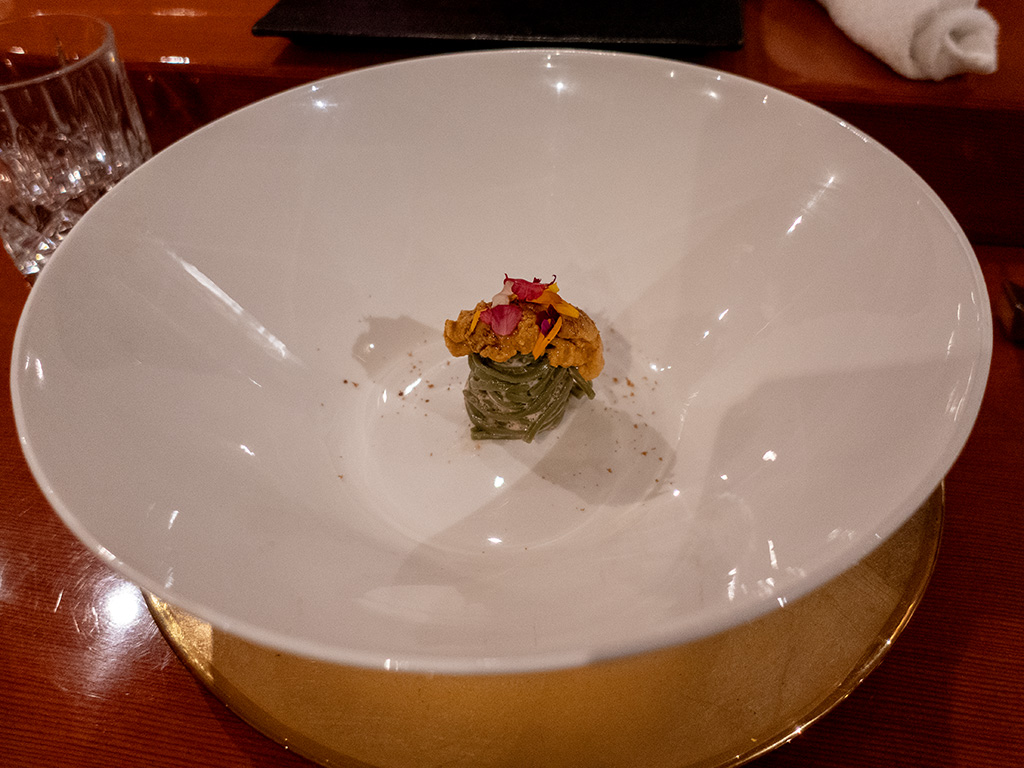
Next was sea urchin pasta.
The pasta had an incredible texture to it, and it was almost like it was cooked perfectly al dente (“to the tooth”) and morbido (“soft”) both at the same time. I mixed together the sea urchin and the pasta with each bite, but thinking back, I guess it is also possible that the textural phenomenon was caused by a firmer consistency of sea urchin mixing in with the pasta (considering that firm sea urchin is probably comparable in bite resistance to soft pasta).
This was my favorite dish of the dinner, which is probably expected if you are aware that sea urchin is my favorite food.
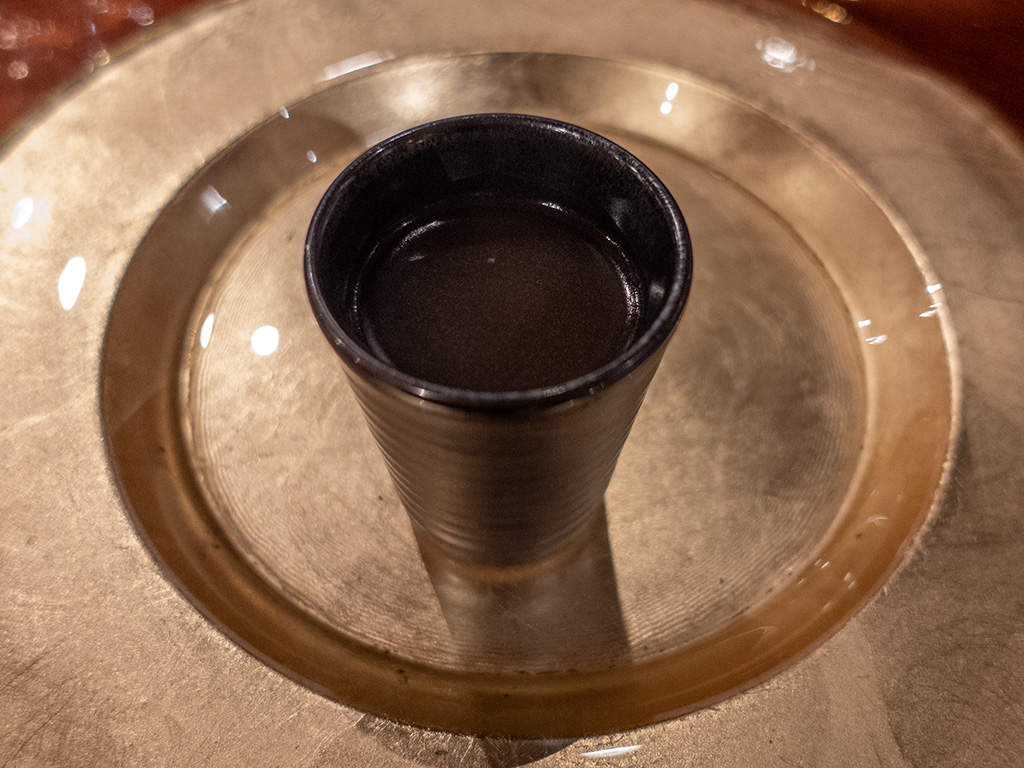
After those dishes, we were served a cup of bone broth.
I like restaurants that serve this because this is an indication that they have a “no waste” philosophy. Rather than discarding the unused portions of the fish, they will boil it in a broth and serve it so they can get as much value out of the fish as possible.
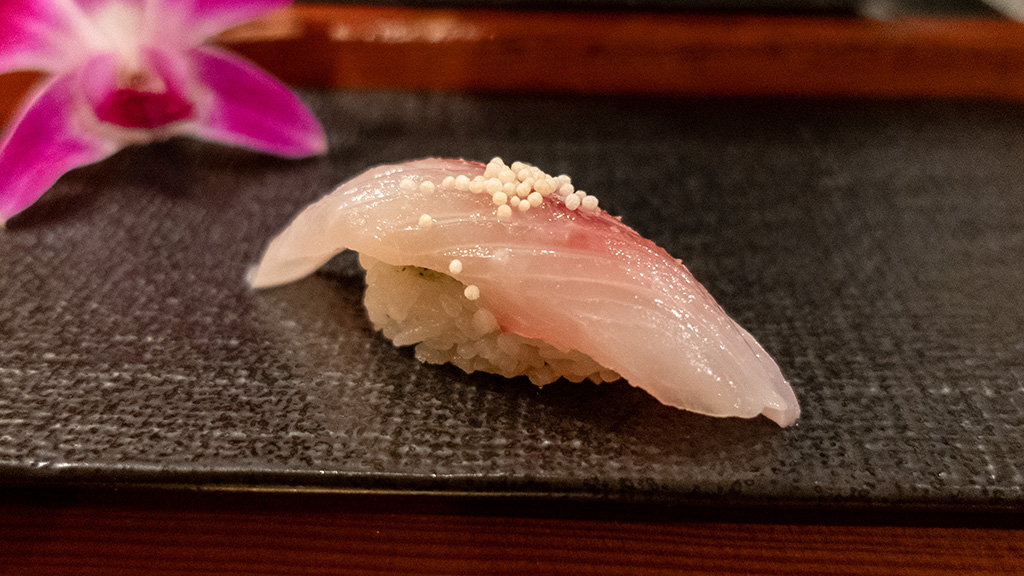
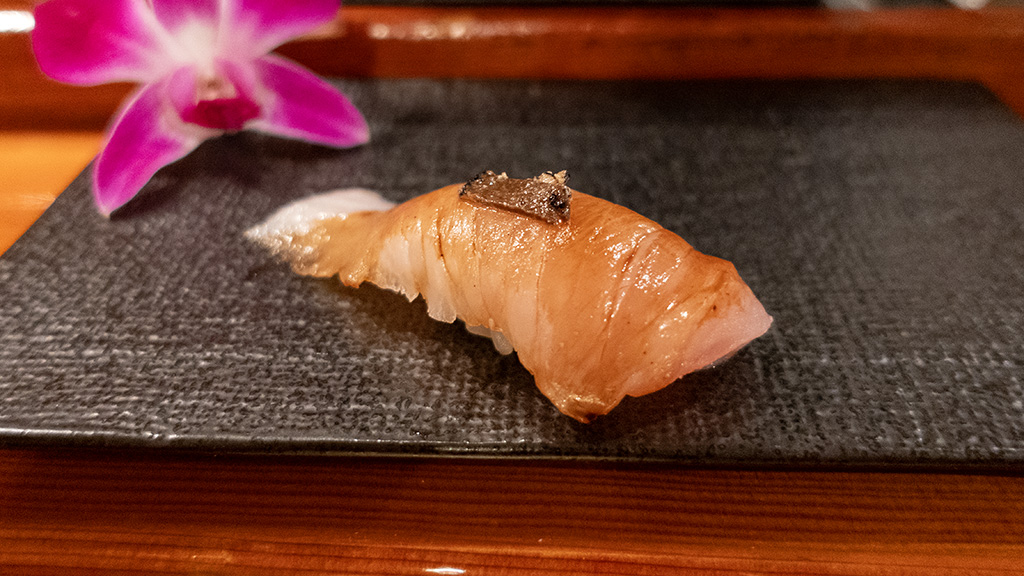
Following this was nigiri service.
For all the cuts of fish, a recurring theme was that the texture was some of the best I’ve had in fish. For example, the squid was extra firm on the outside, but still soft enough that each bite was very satisfying. The scallop took “melt in your mouth” to a whole new level. The shrimp had an intense sticky and slimy layer to it, which might sound bad, but actually makes the feeling in your mouth much more unique and fun.

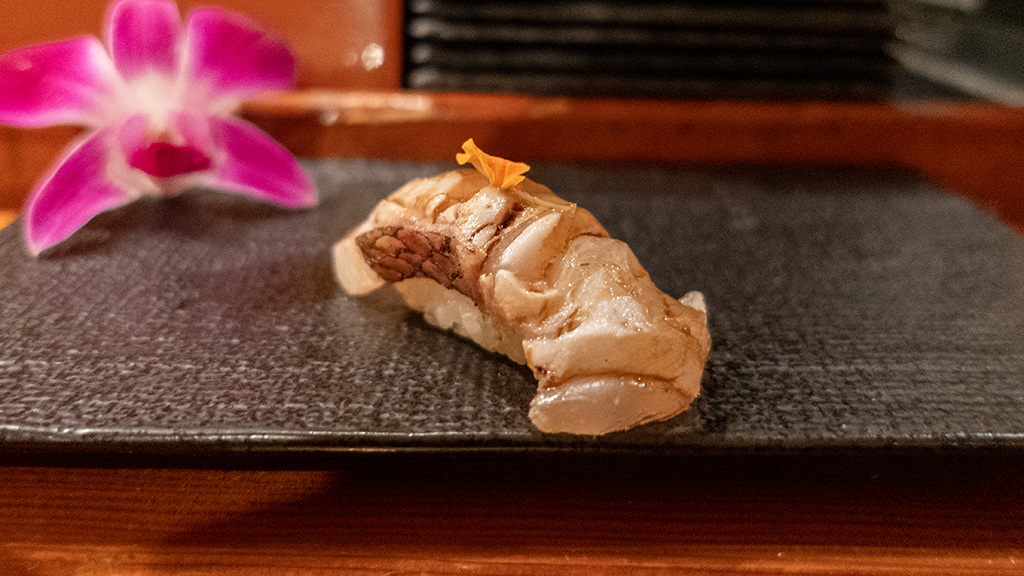

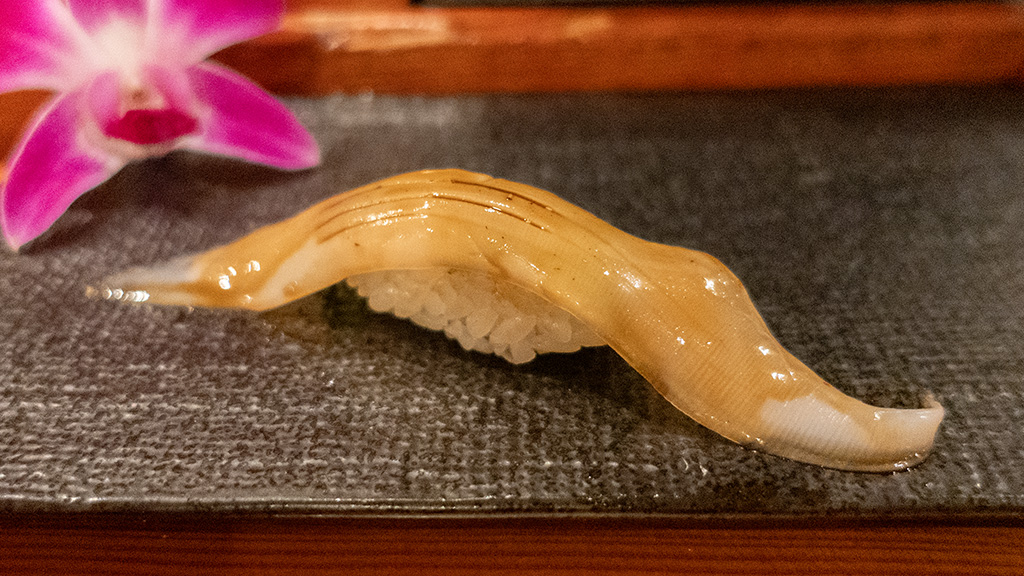


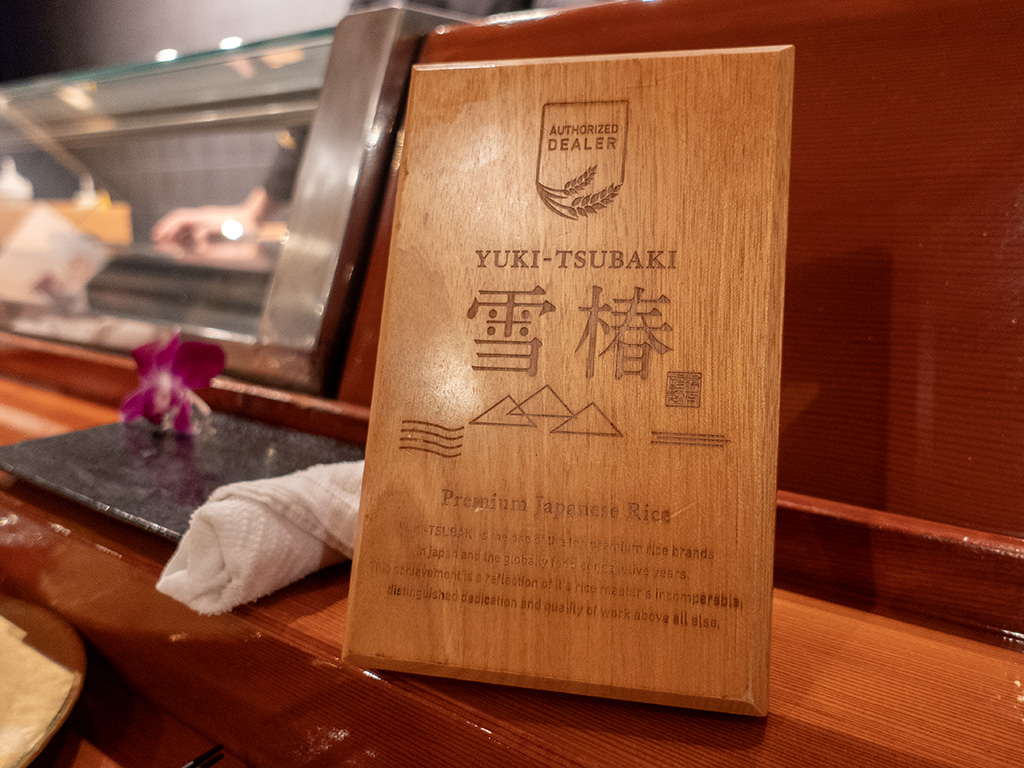
During nigiri service, Chef Hilo showed us a plaque certifying him as an authorized dealer of Yuki Tsubaki (雪椿) rice.
I’m not really a rice expert, so I don’t know too much about the unique characteristics of different kinds of premium rice. Every single piece of nigiri I ate was delicious and noticeably high in quality, but I can’t quite pinpoint whether that was because of the fish or the rice (though I imagine it was realistically a combination of both).
That said, I did notice that there was a consistent hint of natural sweetness to each piece of nigiri that came out more the longer I chewed, so my speculation is that the rice was responsible for adding that element to each piece of nigiri.
Our next dish was abalone served inside a shell.
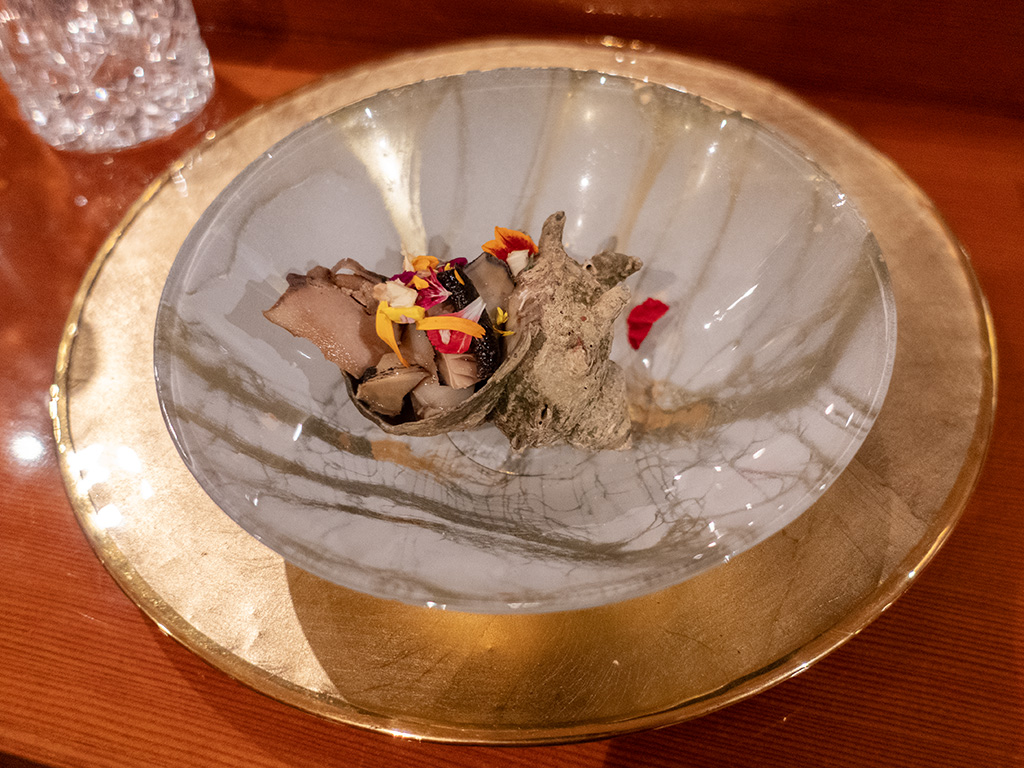
Remember the one friend I mentioned earlier who was the only one to get the shorter omakase? The abalone was one of the dishes that was only included in the full omakase experience, but Chef Hilo didn’t want her to feel too left out, so he put some of the excess abalone in a small bowl and gave her a miniature portion so she could try it too.

As we were nearing the end of our dinner, one of our final pieces was a spicy tuna roll.
In my head, “spicy tuna” is often associated with lower-quality sushi because of how often restaurants oversauce the tuna and how the excessive mashing of the tuna makes it feel unsubstantive in your mouth. However, Chef Hilo reimagined spicy tuna in a gourmet way. The sauce was light and complementary to the fish, and you could actually taste the flavor of both the tuna flesh and fat. The wrapping was also perfect in texture—it was firm enough that it held the rice and tuna together well, but was penetrable enough that it was easy to bite through and didn’t cause the “rip apart the seaweed and scrape the insides out with your teeth” phenomenon that a lot of spicy tuna rolls have.

Just by watching us, I think Chef Hilo concluded that I was the most experienced out of the group when it comes to dining at sushi restaurants (which is accurate). So, he came to me at the end and asked me to request my favorite kind of sushi as the grand finale of our meals.
My favorite sushi is uni (sea urchin), but we already had a sea urchin dish earlier with the pasta. My second favorite is escolar, but escolar is very much not a beginner-friendly sushi and can have some very unpleasant side effects if you’re not used to eating it or eat too much of it. My third favorite is shirako, but that is out of season.
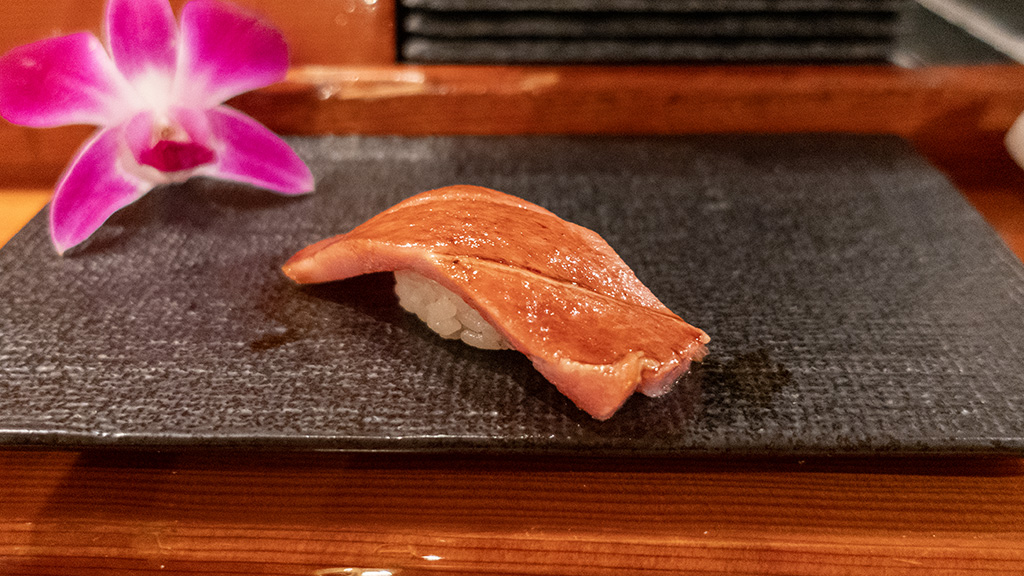
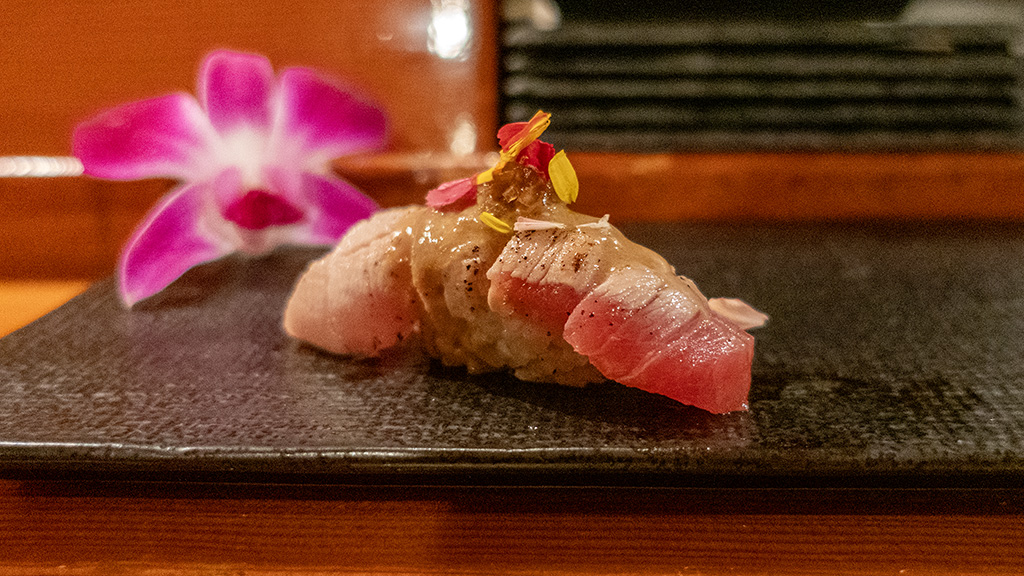
I ultimately told him that I would like him to decide on a type of fish or cut that is relatively rare and I wouldn’t frequently have an opportunity to eat at other sushi restaurants. In response, he prepared seared tuna cheek for us.
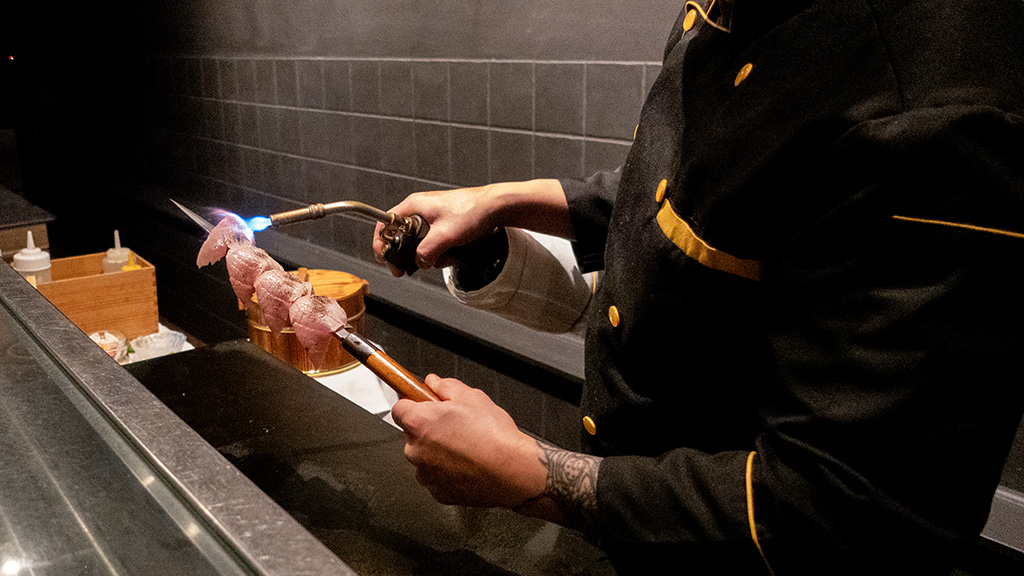
Tuna cheek is a relatively small portion of a tuna fish, so this is definitely something that is not common at regular sushi restaurants. Cheek is often referred to as the wagyu-equivalent cut on a tuna due to how meaty and umami it is.
Our tuna cheek nigiri was prepared with a blow torch sear on the outside to help tenderize the connective tissue in the cheek.
One of my favorite things about fish with tougher connective tissue on the inside is that, when I finish “paring” it in my mouth with my tongue and eating just the flesh, the connective tissue remains, and I keep chewing it for a long time as if it is gum. I love that I can get a good minute or two of additional flavor extracted from the tissue when I chew for even longer.
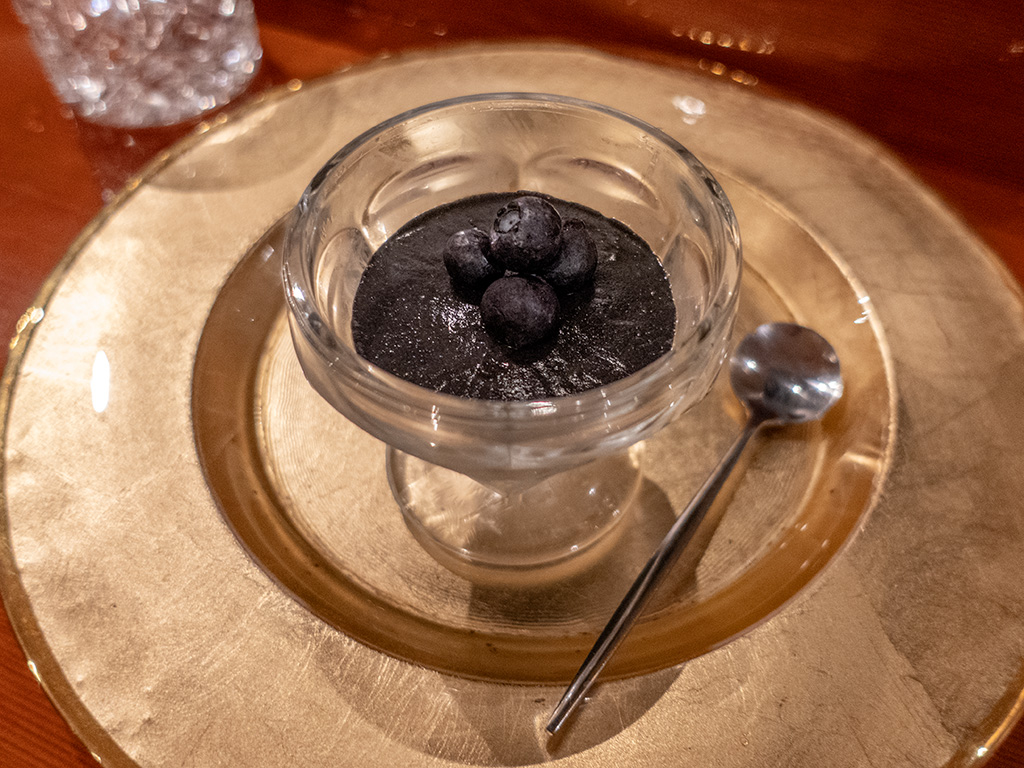
Finally, for dessert, we received a black sesame blueberry sorbet. This was a completely new flavor combination for me, and I thought it was very interesting. It tasted like there were no added sugars, which was perfect, because that allowed the natural sweetness of the fruit to handle the job and put more emphasis on the individual ingredients.
To take a brief intermission, there was something that happened that was interesting enough that I feel like I have to tell the story in order to make my blog post complete.
When I asked for tap water at the beginning of the meal, the waitress told me that they do not have free tap water and the only water they have available is à la carte glass-bottled water. I have never seen any other restaurant deny serving tap water before, so I re-clarified this with the waitress, and she doubled down. I was so confused that I assumed there was surely some kind of miscommunication, so I re-re-clarified, and the chef tripled down and confirmed that they do not serve free water.
Because this is an alcohol-serving establishment, the fact that they do not offer any free tap water conflicts with the standards of care established under the California Department of Alcoholic Beverage Control’s Responsible Beverage Service Training Program Act (California Code of Regulations, Title 4, Section 166) and the Human Right to Water state policy (California Water Code, Section 106.3). In an effort to rationalize this incredibly unusual system they had, I asked the chef how they navigate compliance with these guidelines and regulations.
In response, he asked if I was a lawyer, mostly in a light-hearted and teasing kind of way. I wasn’t planning on confirming anything about my work, but my friend said on my behalf that, yes, I do indeed do legal work as part of my profession.
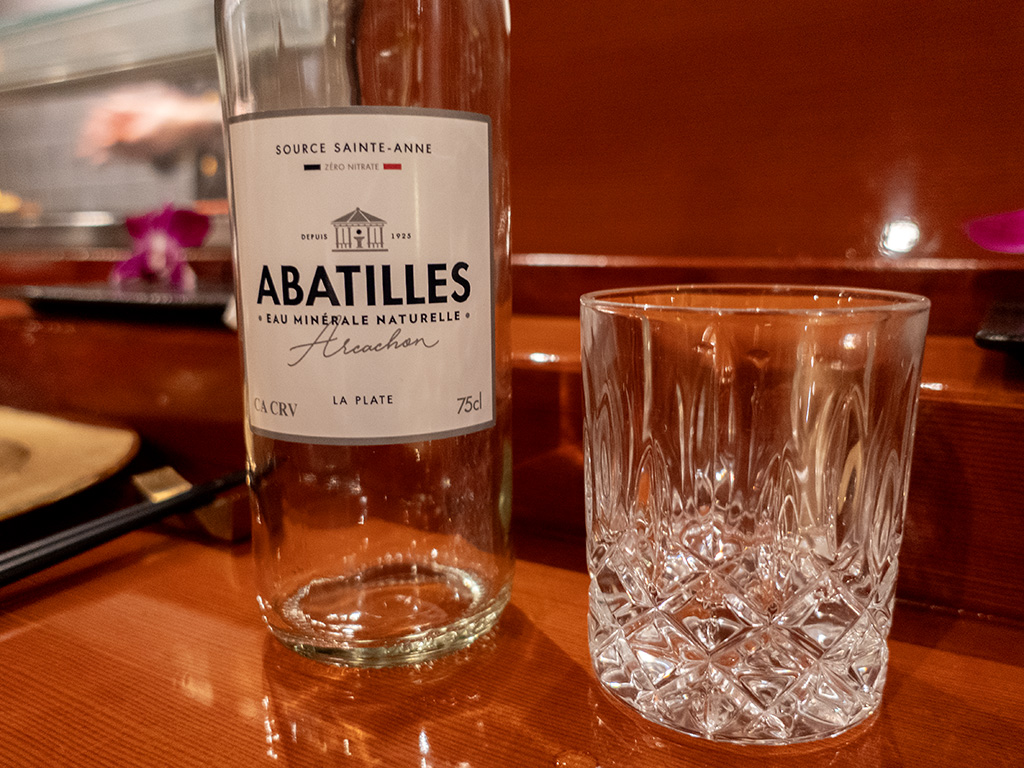
Chef Hilo didn’t have an answer for the compliance matter, but he explained his mindset and approach behind why he only serves bottled water—he thinks tap water, no matter how filtered, is too impure and unbecoming of a restaurant of this caliber. He instead scouted for and decided on Abatilles as his restaurant’s water of choice, sourced from Sainte-Anne Spring in Arcachon, France. It is primarily notable for containing no nitrates, low mineral content, and high alkalinity.
With that being said, rather than trying to argue, the chef went productively into problem-solving mode. He specifically wanted to make me happy with my experience, and I think he quickly identified that I wasn’t particularly satisfied with the idea of needing to pay an additional ~US$60 (after sales tax and gratuity) just to supply drinking water to my party of four. Omakase dinners are usually inclusive of everything except alcohol, so compared to other restaurants I’ve been to, having no tap water and only paid water options almost felt like a hidden fee.
Chef Hilo proposed a solution that, if I pay for one bottle of water for myself, he will cover the water for the rest of my party as a gift. I thought that was a good compromise and accepted his offer. The main thing I appreciated about this, though, is the fact that he had a practical, realistic, no-nonsense approach to coming to an agreement. It didn’t feel like he was using cookie-cutter “customer service training” like other establishments do; instead, it felt like he was treating me like a unique, individual human being and coming up with a unique, personalized solution specifically for me.
I think if I had dined alone or with one other friend like I usually do, that would’ve been the end of our meal. However, because we went as a group of four, there was less one-on-one conversation and far more interaction with the chef.
One of my friends really got along well with Chef Hilo. In fact, literally in the middle of dinner, they were gossiping about people they mutually know and were even setting up potential business deals. Due to the rapport they built, I think the chef’s impression of our entire group was improved. By the end of the dinner, he brought out a bottle of non-alcoholic champagne to share together with us.
Chef Hilo told us stories about past customers and advised us of the importance of building relationships with people. He also explained that his perspective on life changed when he realized that he has such a significant impact on other people around him. He wanted to celebrate with us with some champagne—not because there was a special event or anything, but because great memories are worth celebrating and cherishing.

In lieu of a menu, Hilo Beverly Hills has a little informational booklet that talks about its food and philosophy. Upon her request, Chef Hilo autographed one of them and gave it to my friend so she could take it home as a souvenir from the dinner.

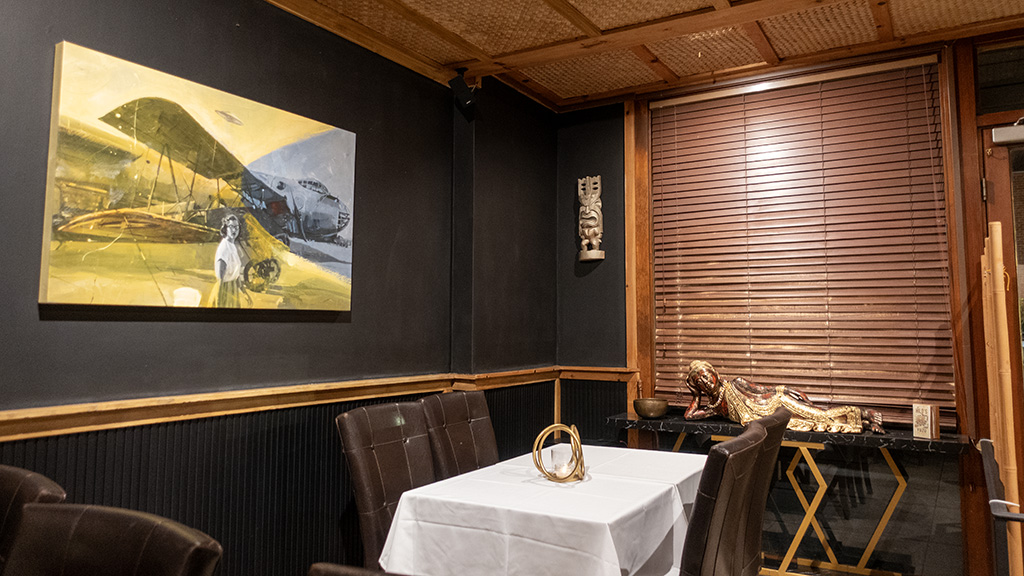
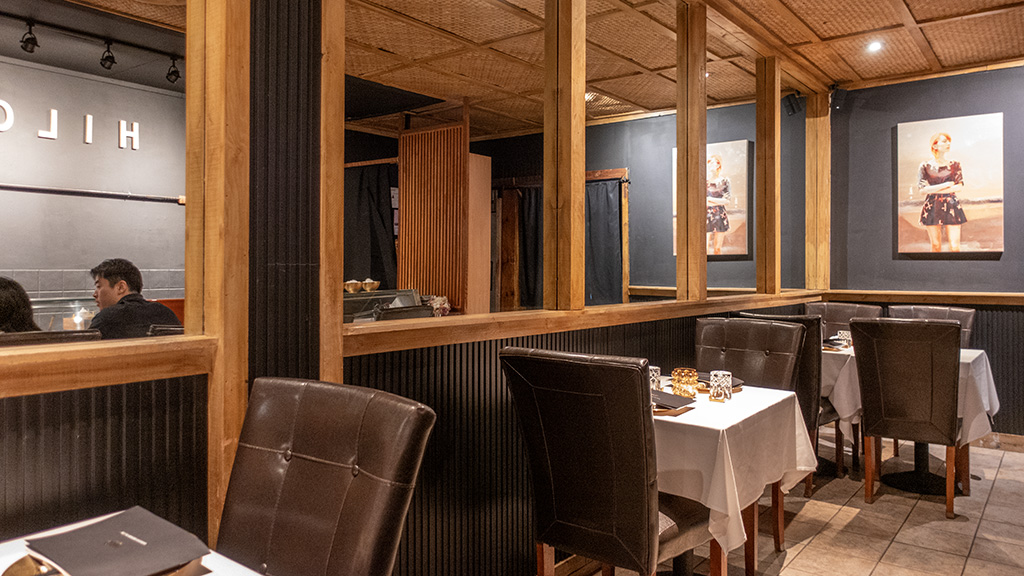
Here are a few other shots from the interior of the restaurant. My friend booked our reservation for the final seating of the night, and we were lucky enough that we were the only ones there that day, so we got the chef’s undivided attention.
| Full omakase ×3 | $ 750.00 |
| Omakase ×1 | $ 150.00 |
| Abatilles (750 mL) | $ 12.00 |
| Gratuity | $ 180.00 |
| Sales tax (9.75%) | $ 88.92 |
| Total | $ 1,180.92 |
If you read my blog a lot, you know that I am notoriously a stingy tipper, and am still very much against the United States’ out-of-control tipping culture. However, I tipped almost 20% anyway on this meal because of the great experience and because of the complimentary premium water. I would’ve tipped even more for the champagne, but he brought out the bottle after I had already signed the check and handed it back to the waitress.
Touching back on the water situation for a bit—after talking with and learning more about Chef Hilo, I was able to understand that the paid-water-only arrangement is not because he is trying to get away with making more money, but rather, because he genuinely wants his customers to have the pinnacle of a great experience with no imperfections or shortcomings. I think the intent behind someone’s actions matters a lot, and Chef Hilo is such an open and honest person that it is easy to read his good intentions.
Again, I want to reiterate that this restaurant is not for everyone. I know for a fact that there are going to be some people who find Chef Hilo to be unprofessional, disrespectful, crude, and unsophisticated. However, if you try his omakase experience with no predetermined expectations and take it in with an open mind, then I think most people will find him to be sincere, authentic, refreshing, and “anti-fake.” He doesn’t waste energy putting up an artificial façade; instead, he puts all his effort into preparing great food and curating an iconic dinner.
The price for the full omakase is not cheap, but if you’re looking for a high-end restaurant in Beverly Hills, you are probably expecting to spend a lot of money anyway. If you are not discouraged by my multiple disclaimers and warnings, and if you still find this to be intriguing, then I highly recommend Hilo Beverly Hills.