About Ads on My Website

This post is over 14 years old and may contain information that is incorrect, outdated, or no longer relevant.
My views and opinions can change, and those that are expressed in this post may not necessarily reflect the ones I hold today.
 

I got an email yesterday asking me about an advertisement found on my website.

First of all, I would like to make it clear that I am not responsible for placing any banner-sized advertise­ments on my website. The advertisement you see at the top-right corner is controlled by Google Adsense, and they decide what advertisements to put in that spot.

That being said, that also means that I do not personally support or endorse any advertisements ap­pear­ing in that ad zone.

The email that was sent to me yesterday asked me if the FLV player being advertised in that banner was a legitimate and reliable flash player. My answer to this is that I don’t know. According to the terms and conditions of Google Adsense, I am never permitted to ever click on any of the advertisements that appear on my website. In addition, even if I were to have permission to click on my own ads, I would not go through each one and test it out to see if it was a good website.

Thus, my word of advice for advertisements on my web­site is to be cautious when visiting other websites. If you think that something is suspicious on a website that shows up after clicking on one of my ads, leave it imme­diately and don’t download anything from it.

Also, make sure you have active and updated anti-virus software installed and running on your compu­ter.

As for that specific advertisement, if you really need a player for FLV files, I recommend getting VLC Media Player. Not only is it free, it is also open-source and rep­utable. I use VLC Media Player for playing pretty much all my video files. Even when I download a video in a file format with which I’m unfamiliar, VLC usually figures out a way to play it.

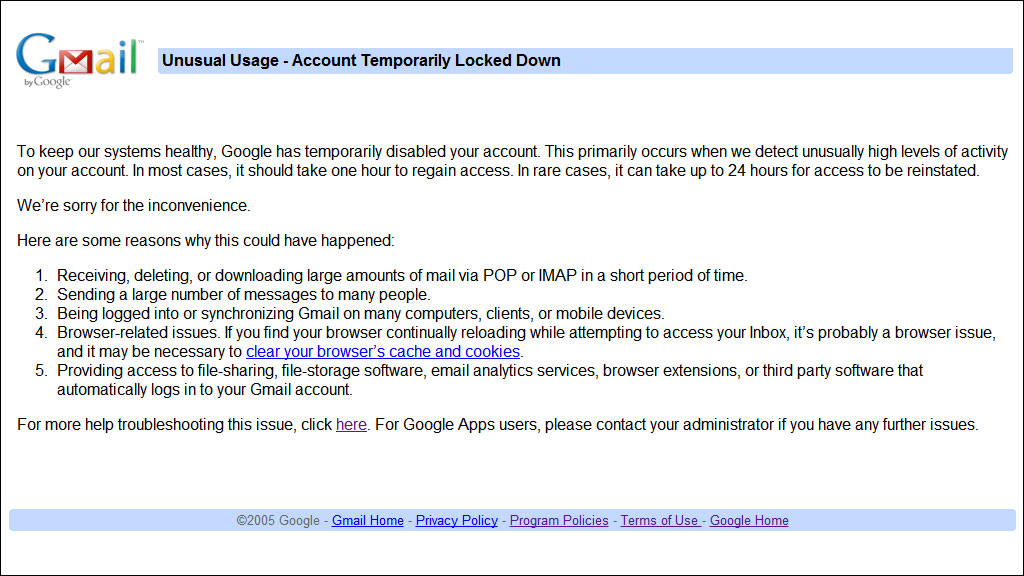
Yes, supporting VLC means there are going to be less people who click on that advertisement shown in the screenshot above if it ever appears again as a real advertisement, but I’d rather have my readers be safe than make a couple extra dollars off a malicious website’s ads.


—§—


This Is Why I Hide

This post is over 14 years old and may contain information that is incorrect, outdated, or no longer relevant.
My views and opinions can change, and those that are expressed in this post may not necessarily reflect the ones I hold today.
 

Apparently there’s a football game tonight, and ESPN is on the University of Wisconsin-Madison’s campus to do a pre-game show.

If you’re not aware already, I live more or less next door to Camp Randall Stadium, so thousands of people have walked past my apartment today screaming and yelling.

Crowd Outside of Camp Randall Stadium

This is why I hide inside my apartment during all football game days.


In other news, Strawburry17 (Meghan Camarena) released a new music video today for the song 1,000 Ships by Rachel Platten. As you probably know, I very rarely (if ever) embed videos in my blog that are not made by me, but I think this video is worth a spot here.

If you watched it and don’t get it, watch it again. It’s a good-enough video that it’s worth watching a few times.

If you still don’t understand it, here’s my interpretation of the video.

The character played by Jason Munday (the guy in the purple shirt and the main protagonist of the storyline) exists sometime in the future (I’m guessing 2015) and has built a time machine to go back and save the life of the character played by Meghan, the girl in the gray shirt and ponytail. As you can see by the newspaper story on the wall, Meghan’s character was killed while driving out to a café downtown to meet her friend Cindy after Cindy changed her plans last minute.

Unfortunately, this time machine that Jason’s character built isn’t the best time machine in the world and can only work three times before breaking down. He uses two of his three trials and fails, but gathers valuable knowledge about the setting and environment to devise a plan that will allow him to stall Meghan enough to avoid having her drive downtown and get killed by the vehicle collision. On his third and final attempt, he builds enough confidence and experience to successfully carry out his task and save a life.

The detail with which this story is told is incredible. Every object in the video has a significance that interlaces together to create an intricate plot progression. For example, even the way in which the newspaper articles and photographs are adhered to the wall has a subtle significance – the red sticky string is in the pattern of a heartbeat up until the newspaper article in which the girl’s death is announced, which at that point, it becomes flat, signifying death. If this was done intentionally, it shows a sophisticated level of attention to detail (even though I did also notice some continuity discrepancies such as random filming equipment in the background and the time on the iPhone being inconsistent).

The use of the timing of the music was also excellent. If you pay attention to the music, the ups and downs of the story match with the ups and downs of the music, and in many transitions, they match up down to the very last second (even though I think they missed precision timing on one of the most important transitions around at 2:32 – the point in time at which the cup hits the table should match up exactly with the return of the chorus, which is when Platten sings “eyes” and the bass guitar returns).

And finally, the use of special effects was outstanding. The effects are heavy at some points, but all of them were well-fitting and well-executed. I noticed that some of the effects kicked in a little bit early at times, but I’m guessing those were to put in to cover up any problems they might have had with chromakey. (Did you notice the time travel morph effect says “The End” at the end of the video?)

The one full complaint I have about this video is the selection of one of the backing actors – the individual with an aqua-blue iPhone case who acts as the hero in the second trial and gets his water spilled in the third trial. He seemed completely expressionless and the emotions he showed (or, the lack of emotions he showed) did not fit with the heroic nature of the character he was supposed to play.

Overall, I thought this video was good enough to claim a spot on my YouTube favorites playlist (which is extremely difficult to do). If you also liked it, you should subscribe to Strawburry17 for similar videos (not all of her videos are this sophisticated and complex, but good nonetheless).


—§—


The Magical Effects of Line Breaks

This post is over 14 years old and may contain information that is incorrect, outdated, or no longer relevant.
My views and opinions can change, and those that are expressed in this post may not necessarily reflect the ones I hold today.
 

Tip of the Day: Don’t go to lecture smelling like fresh pumpkin seeds.

It’s very distracting to the guy sitting next to you, and he’ll find it intriguing enough to blog about it.

In other news, I have two exams and a quiz next week, and I need to get started studying for them.

So today’s going to be one of those short blog post days.

But…

If I keep inserting line breaks between my sentences and phrases,

this blog post is going to seem longer than it really is

because it’s going to take up more lines.

So I guess it’s no longer

one of those

short blog

post

da

y

s

.


—§—


Unnecessary Typing Fail

This post is over 14 years old and may contain information that is incorrect, outdated, or no longer relevant.
My views and opinions can change, and those that are expressed in this post may not necessarily reflect the ones I hold today.
 

Tip of the Day: If you have Movable Type installed on your website (or your workplace’s website) and you have an account on it, don’t make your password longer than eight characters.

My deputy at work discovered today that only the first eight characters of your password matter, and everything after the eighth character can be random garbage and it won’t matter.

Most of the time I would hear this and say “that’s good to know,” but I’m particularly annoyed by this fact because I happen to have an 18-character password that I have been typing in for over one year. Usually on regular working days, I sign in to our Movable Type installation at least once, and frequently more than once.

Yes, that means I have typed in 10 extra unnecessary characters to my password hundreds of times.

-__-


In other news, I finished sending out an all-campus mass email last night to advertise open positions at the Badger Herald. Sending out the mass email is probably the most stressful part about being the web director, and now that I’m done with it, I’m free from that duty until next semester, or at the very least, a few months.

Now all I have to do is survive through a day or two of people replying to the email asking me to re­move/un­sub­scribe them from the mailing list. It might not seem like a big deal, but because the mass email was sent out to 39,362 recipients, even less than 1% of people requesting to be removed is a couple hundred emails.


—§—


The Problem with Eyewitnesses

This post is over 14 years old and may contain information that is incorrect, outdated, or no longer relevant.
My views and opinions can change, and those that are expressed in this post may not necessarily reflect the ones I hold today.


My Homework for Your Reading Pleasure

I haven’t had this section in my blog for a while because I haven’t written any interesting papers lately, but I recently wrote one for my sociological enterprise course. The prompt was an open topic about anything that we care about related to sociology, so I chose the unreliability of eyewitness testimonies and titled it “Is Seeing Really Believing?” The word count limit was 500, and my paper ended up being exactly that.

Have you ever been to Disneyland? If so, do you remember experiencing all the rides, seeing all the colors, and meeting all the characters like Mickey Mouse, Minnie Mouse, Bugs Bunny, and Pluto? Can you visualize yourself walking up to these characters, hugging them, and shaking their hands (or, in some cases, paws)?

If you answered yes to all of these questions, you just fell victim to deception by memory malleability.

Bugs Bunny would never be found at Disneyland because it’s a Warner Brothers character.

According to a study done by a doctoral candidate at the University of Washington, a simple stimulation of the mind with a fake Disneyland advertisement including an image of Bugs Bunny was enough to create false memories such that over a third of people questioned claimed to have met and made physical contact with Bugs Bunny at Disneyland (as opposed to less than a tenth of people questioned from the control group).

Sure, this is an interesting study that we can laugh at, but it has a much more important underlying significance. What if this person recalling this memory was an eyewitness in a criminal trial, and the future of someone’s life depended on this witness’ reconstruction of his/her memory?

Both in a courtroom and on the streets, “I saw it with my own eyes” is one of the most powerful phrases one can say when trying to convince someone to believe something. Because of our abnormal level of confidence in the idea that seeing is believing, we tend to put an irrational amount of trust in eyewitnesses. The consequences in a situation like the Bugs Bunny experiment aren’t severe, but, obviously, the repercussions in a courtroom are much more extreme when members of a jury place unproportional weight to eyewitness testimonies relative to other more reliable sources of evidence like expert analyses and DNA test results.

How exactly might an eyewitness to a crime get his or her memory of the event changed? Every time a memory is recalled, it gets slightly altered before being rewritten into the mind for restorage. This rewriting process is heavily affected by present personal and social environmental circumstances. For example, a witness may have seen an African-American as the potential suspect for a crime, but originally had some doubts. A few days later, this witness may see a completely different African-American on a breaking news broadcast being convicted of first-degree murder in an unrelated case. As she watches this story, she subconsciously correlates African Americans with crime slightly more than she did before. As this happens, her doubts from the crime she witnessed slowly diminish, and before she knows it, she starts seeing the original African American as definitely guilty.

Because of these severe flaws in eyewitness testimony, I propose that, similar to how the results of polygraph exams are not accepted as valid evidence in many states due to their low rate of reliability, eyewitness testimony also be removed as valid evidence in the court of law.


—§—


New Background, 2nd Day in a Row

This post is over 14 years old and may contain information that is incorrect, outdated, or no longer relevant.
My views and opinions can change, and those that are expressed in this post may not necessarily reflect the ones I hold today.
 

… Yes, I changed my background image two days in a row. I’m happy with this one, though, so I’ll be keeping it for a while.

If you’re curious to see what the original photograph was, it looked like this:

Madison Skyline

I basically took a larger version of that photograph, cropped it, adjusted the brightness and contrast, and applied a Gaussian blur.

Someone asked me about why I add a blur to my background photographs, and I told them that I would answer that in my next blog post, so here’s my response.

An easy example of why I do it is to look at any photograph with a low depth of field. If you take a look at those photos, you’ll notice that portions of it are blurry and portions of it are crisp. The (obvious) point of doing that is to draw attention to the sharper portion and have the blurry portions be con­sidered the background or anything that is not the main subject of the photograph.

By doing this on my website and making the entire background photograph blurry, I am drawing attention to the main content of my website, which would be the text and images embedded inside articles and blog posts. The blur encourages the eyes to concentrate on the crisp main content, but still gives some artistic and aesthetic value by adding color to the page.

A side effect of this is that it also makes the file size smaller. If you are unfamiliar with photography, you might not know yet that the blurrier an image is in .JPG form, the smaller it becomes. The smaller a file is, the faster it loads on the viewer’s computer. I understand that not everybody has blazing fast Internet, so I design my website such that it uses as little bandwidth as possible and loads as quickly as possible. Although this is not the main reason I use a blurred background, it is something that I like about using a blurred background.\


—§—