Hello, Mob Museum in Las Vegas, Nevada

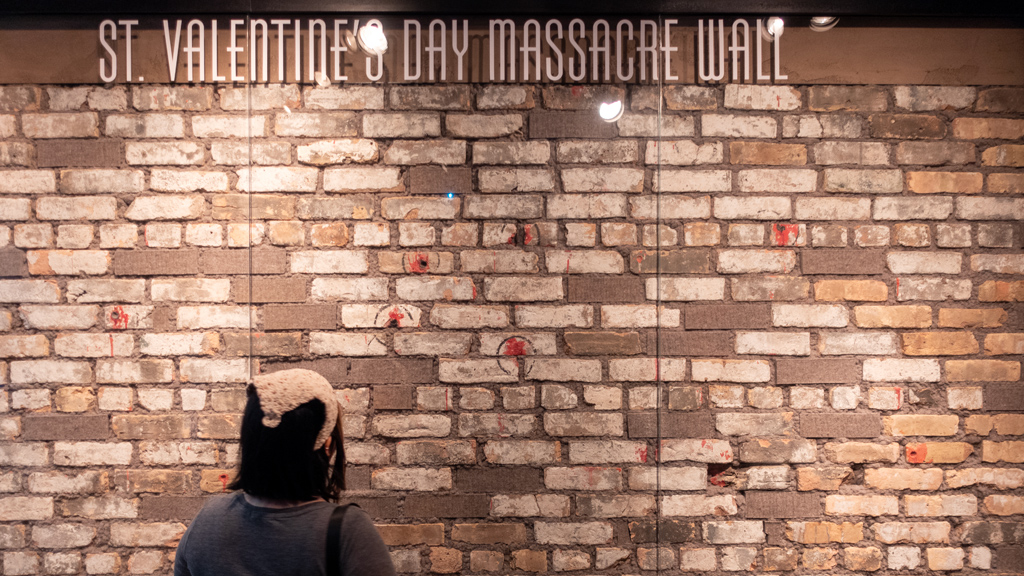
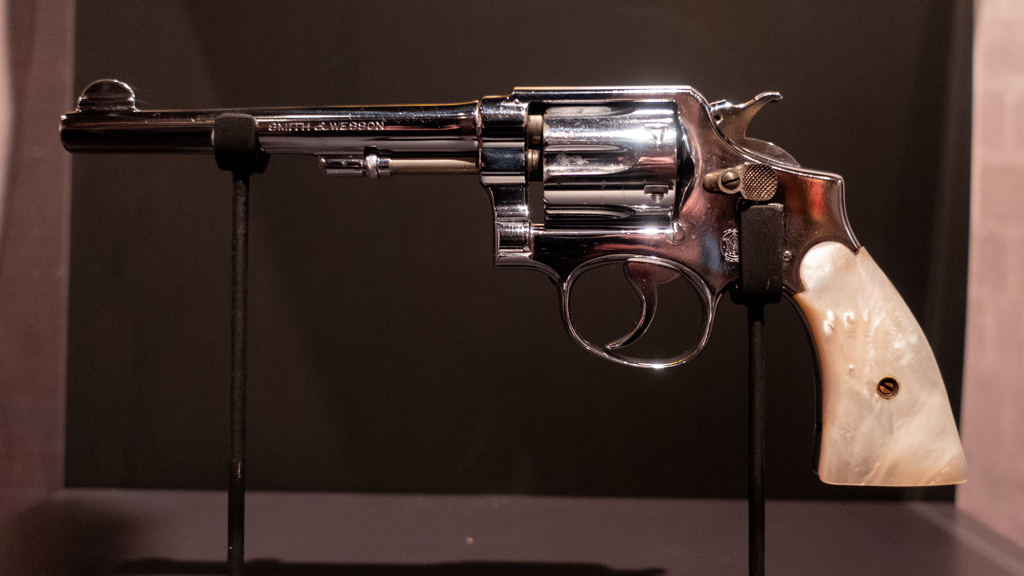
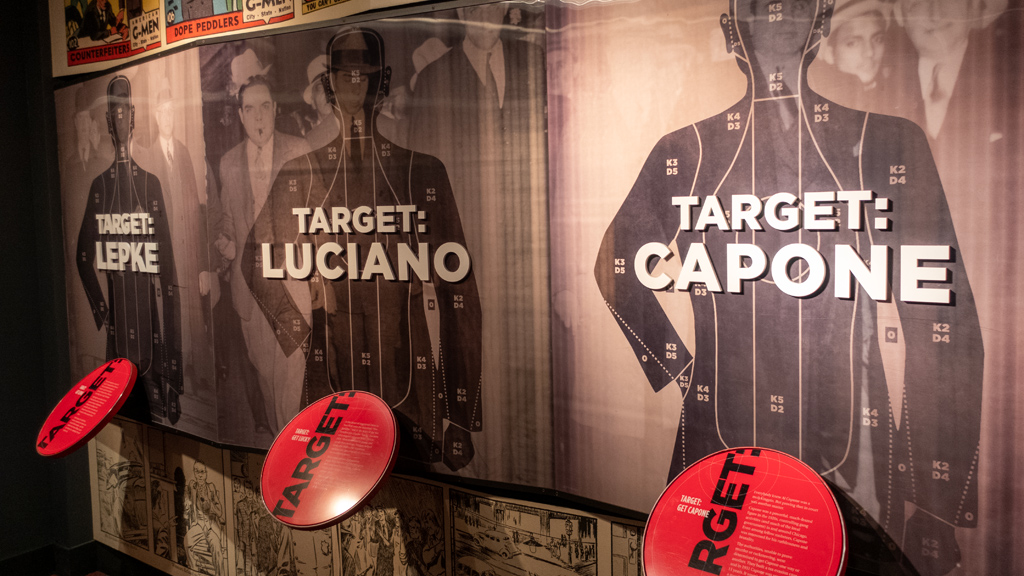
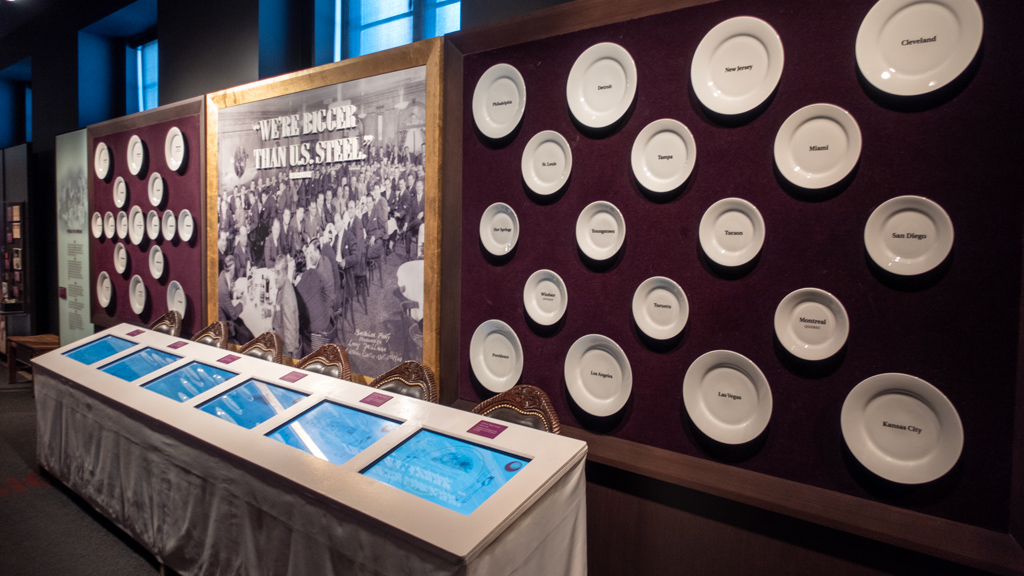
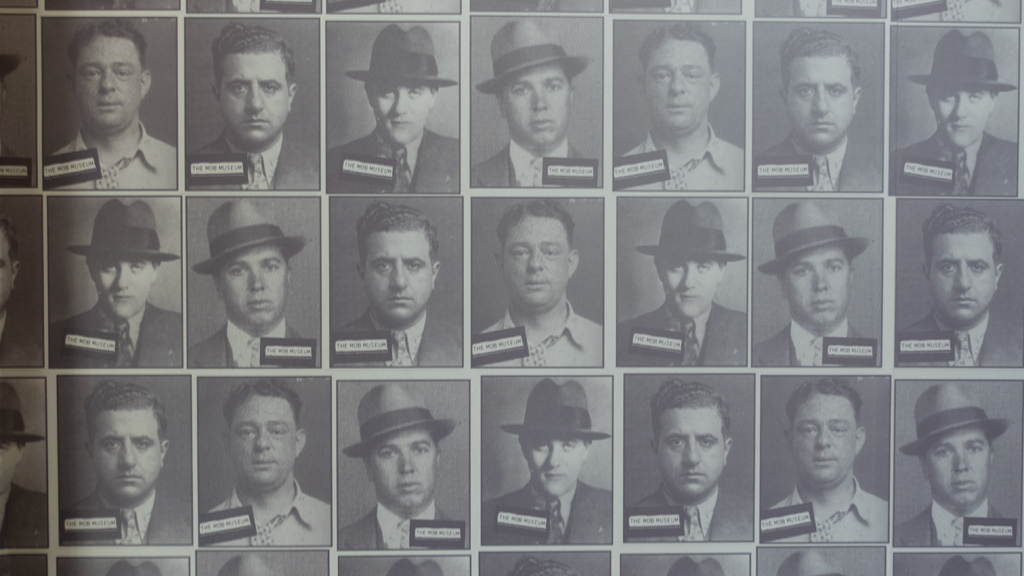
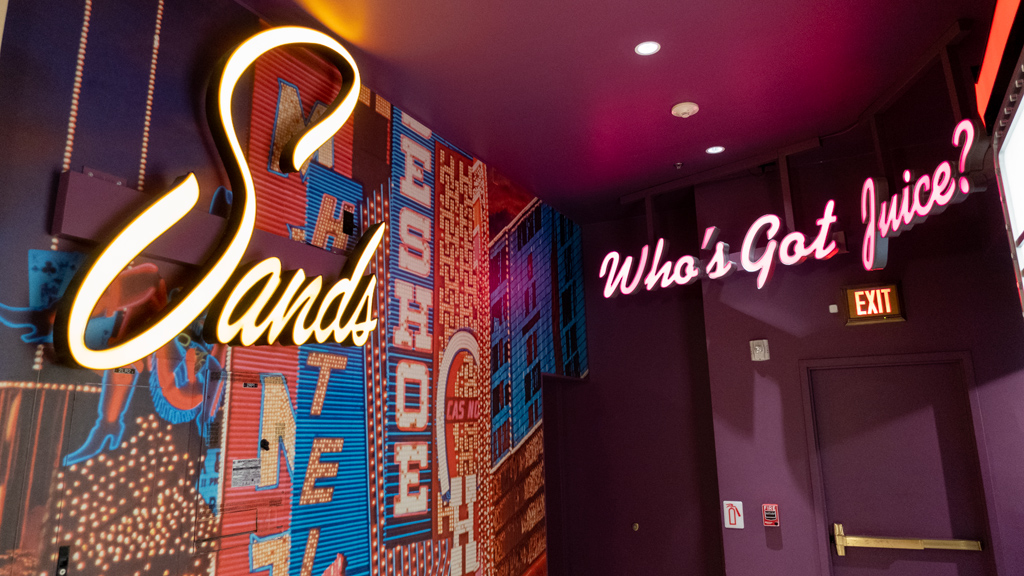
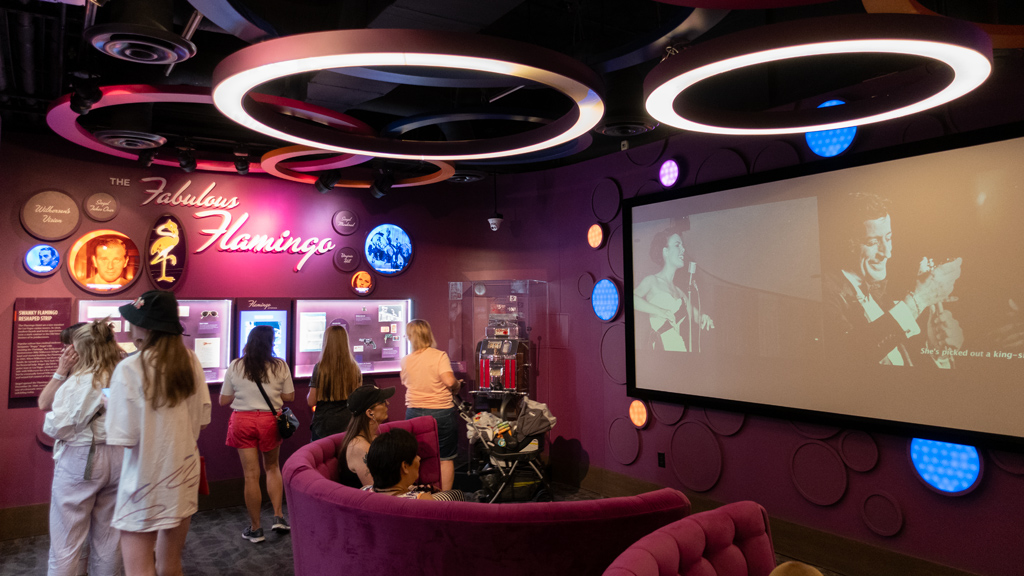
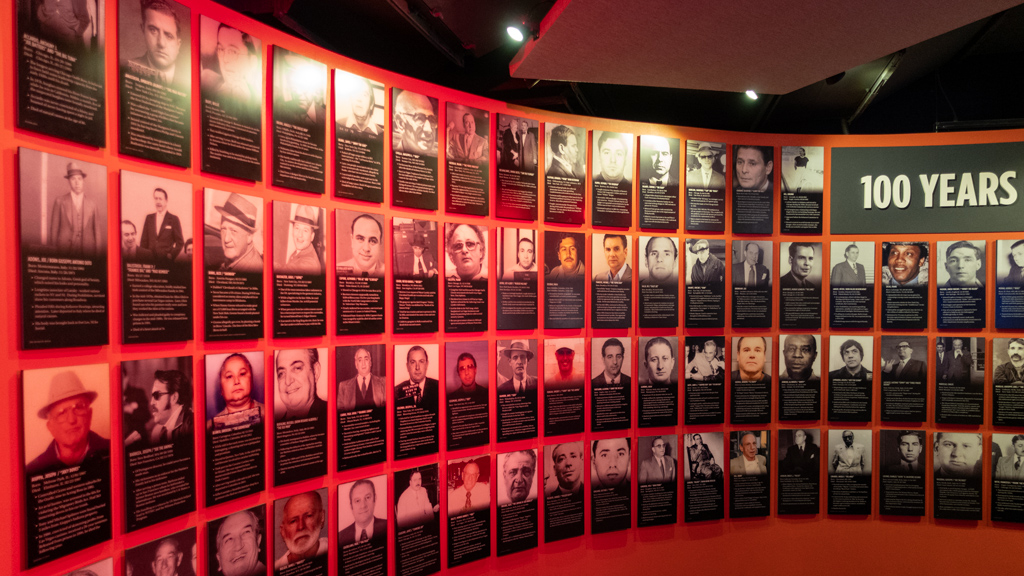
The National Museum of Organized Crime and Law Enforcement, better known to the general public as the Mob Museum, is a museum that’s been a­round Las Vegas for over a decade now and is regularly rated as one of the better tourist attractions in the Valley. While my friend Dani was in town vis­it­ing, she wanted to stop by the museum, so I joined her yesterday.

Fortunately, we were both able to get discounted general admission tickets at US$16.95, I because I’m a local Las Vegas resident and Dani because she was a student. Regular admission costs $29.95 each, with deluxe and premier passes going as high as $48.95.

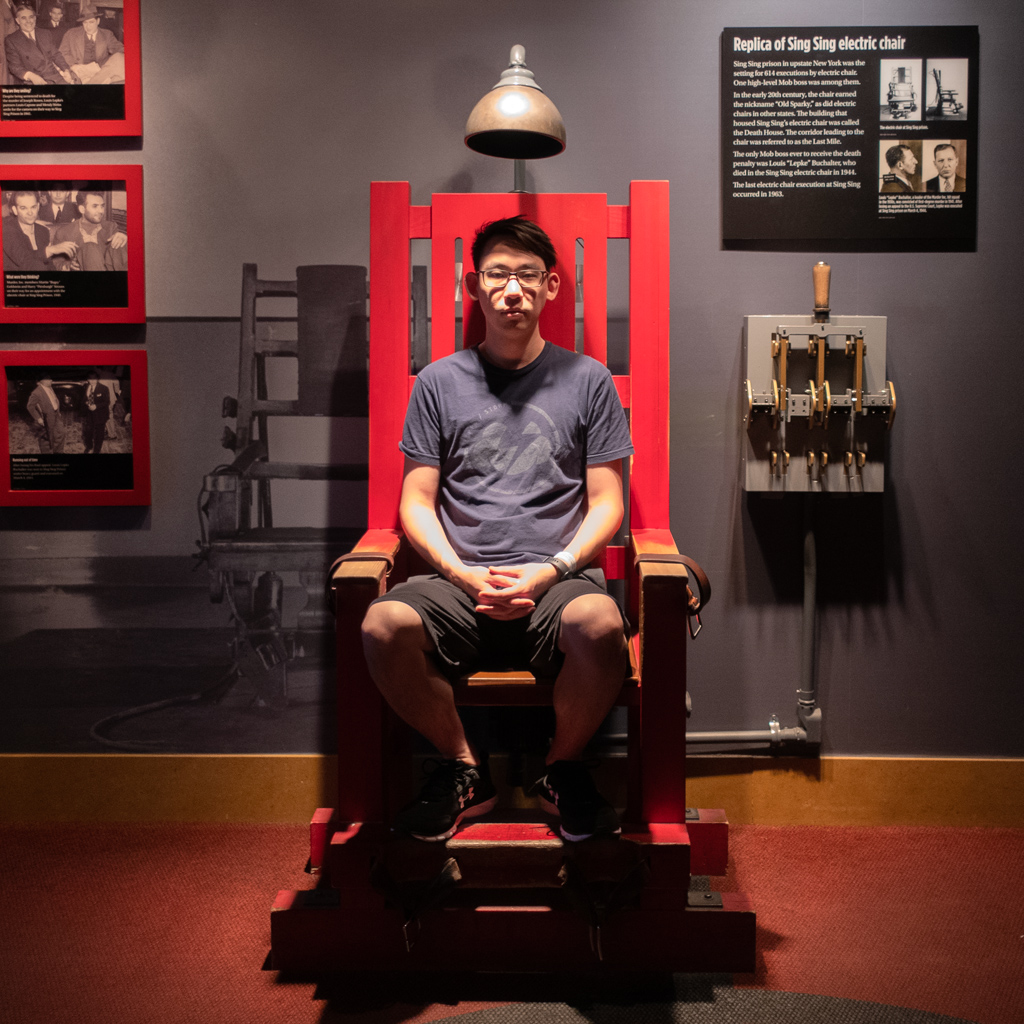
Dani took a photo of me sitting in an electric chair. Luckily, it was inoperable.

Adam Parkzer sitting in a replica electric chair

Back to some more normal museum things…

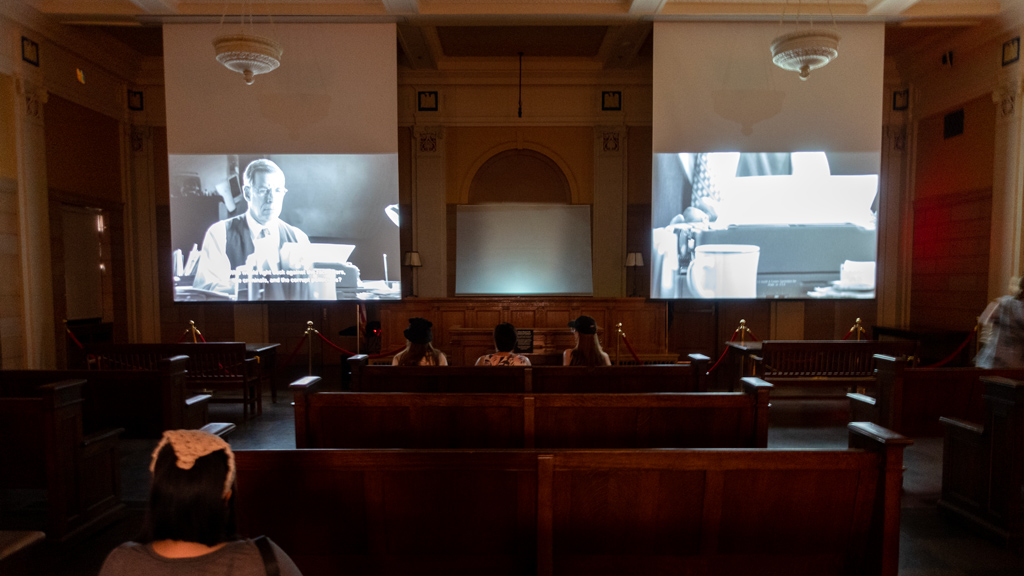
One of the floors of the museum had a little movie theater that played a short film about how that very room was previously a court used for questioning witnesses about mob activity. They even had a little concession stand outside and sold popcorn for people who wanted to enjoy a snack while enjoying the movie.

Back to even more normal museum things…

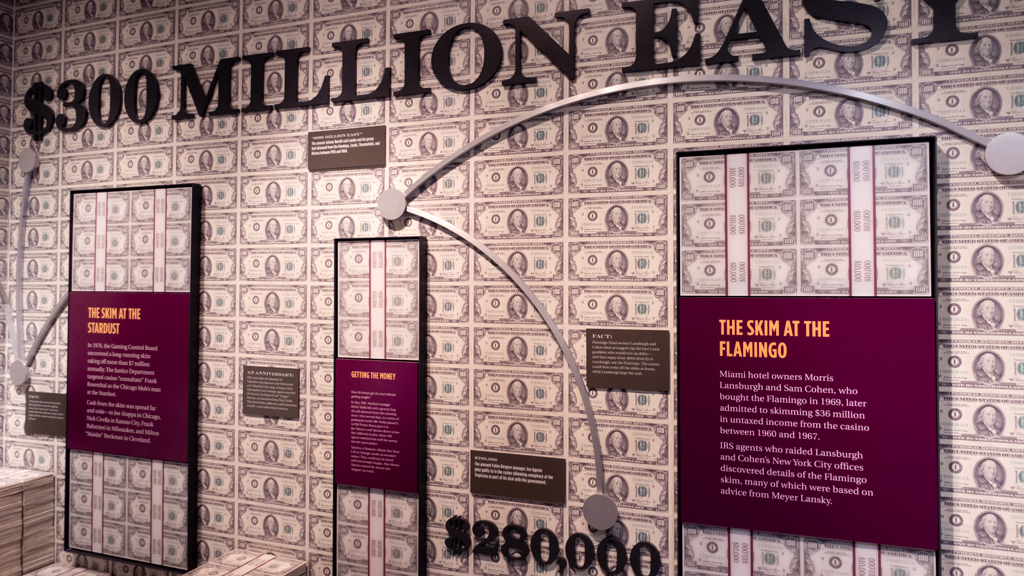
The later sections of the museum about casinos, fraud, money laundering, and tax evasion were interesting to me because of the background knowledge I have in legal and financial matters. I’ve studied a lot of these topics to ensure I have a comprehensive professional understanding of the topics for the purposes of running my own business and advising other businesses as a consultant, so it was nice seeing some historical real-world applications of this information.

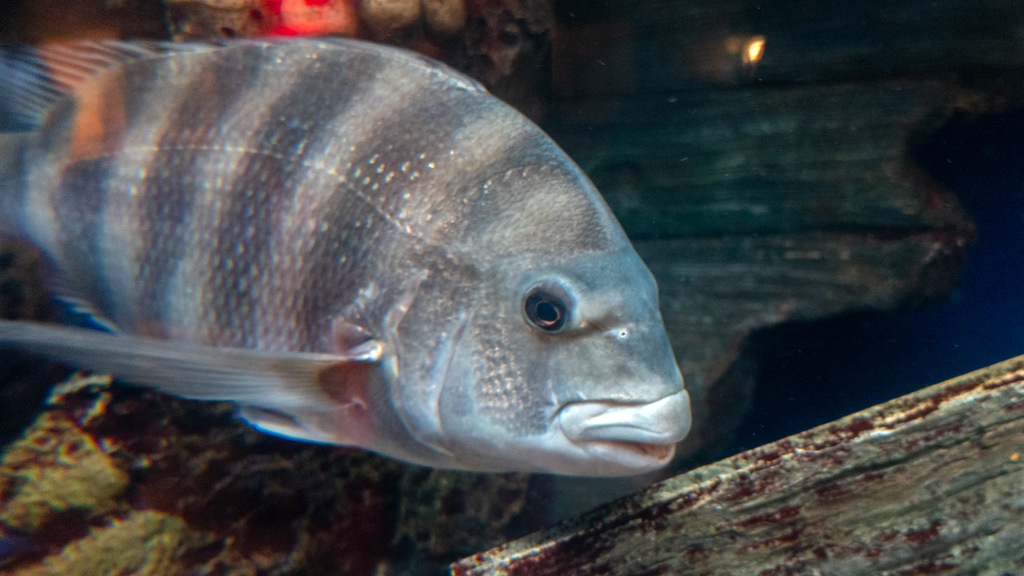
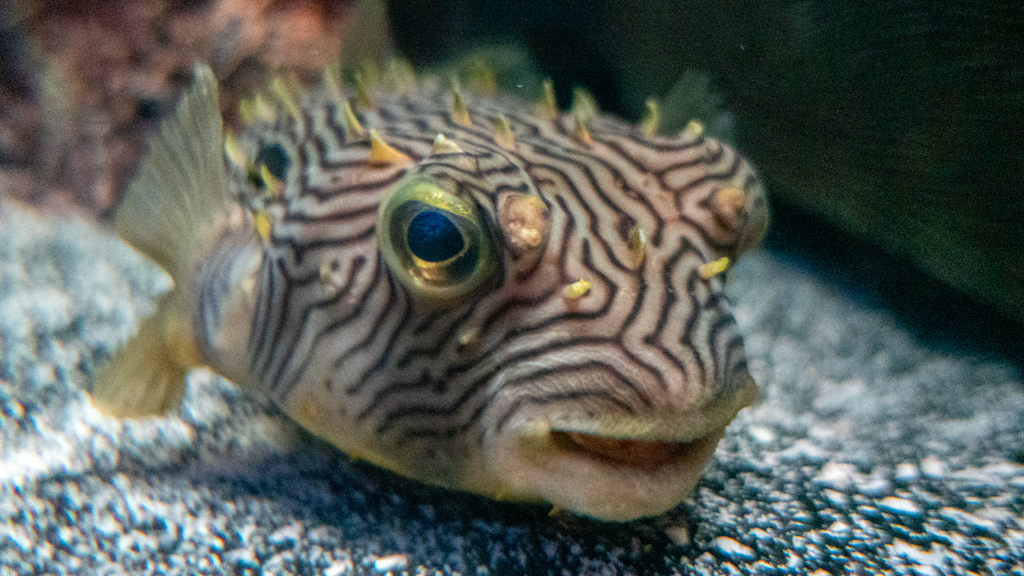
My favorite part of the museum… was the random fish tank in the basement of the building. I’m not sure why it was even there, but I made some new fish friends.

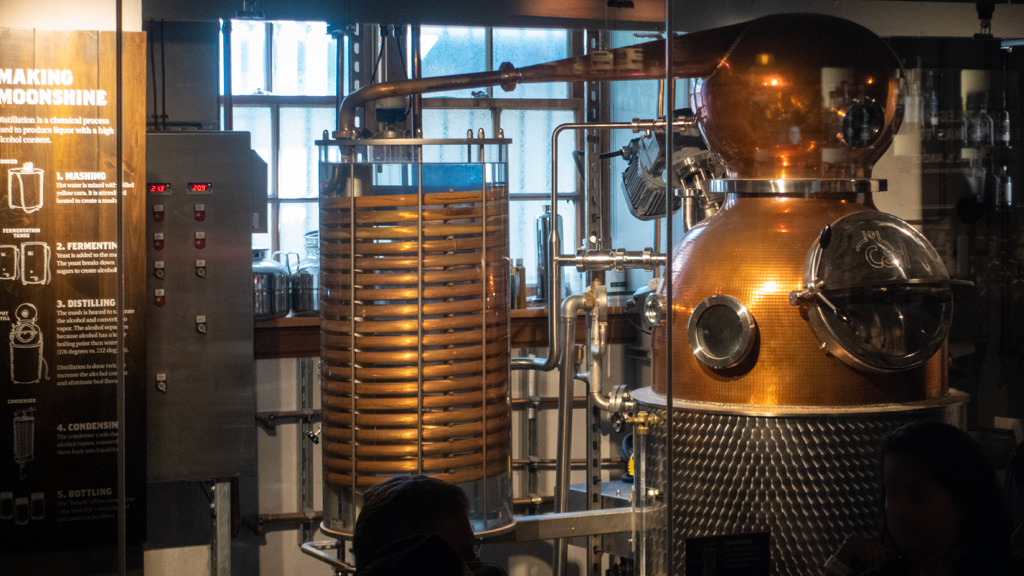
The basement had a bar that served food and drink, which we visited but did not participate. The bar had a little glass window through which I snapped a photo of some of the equipment used to make moonshine.

At least with general admission tickets, the Mob Museum was an extremely traditional museum that was very display and text heavy. I think it was a good visit at the discounted price, but I’d say the value proposition gets a little bit questionable at full price. The most memorable museums have always had a high degree of interactivity, and it’s unfortunate that anything involving more than just a self-guided tour requires an upgraded tier of admission.

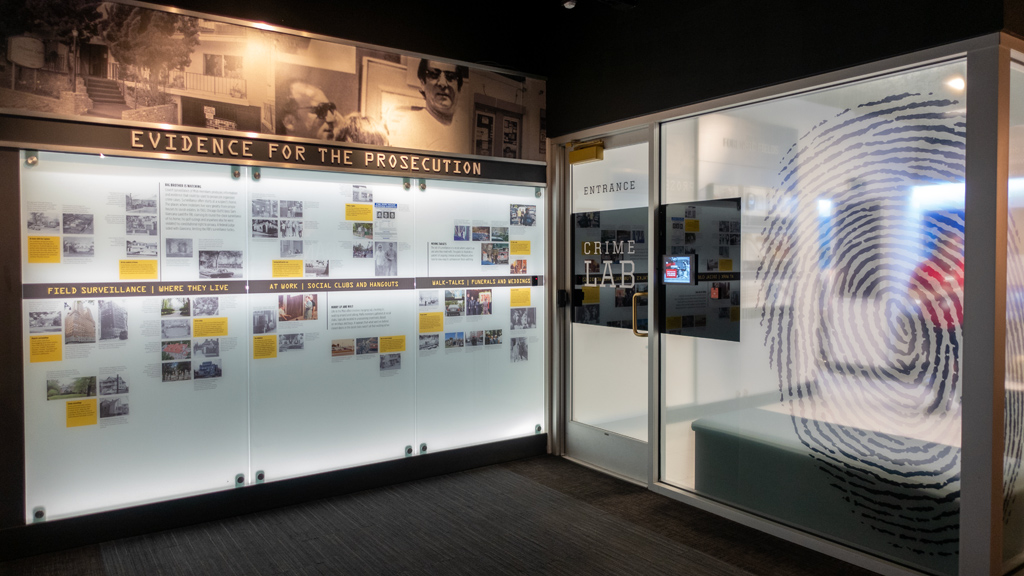
Out of the three available interactive experiences, none of them seemed particularly compelling to me—the crime lab and firearm training simulator are both things that I’ve done in a professional capacity, and the distillery tour and tasting wouldn’t have been relevant to me because I don’t drink alcohol. However, for someone who doesn’t have quite the background in law enforcement as I do, I think the two investigative activities could be fun.


—§—


Hello, Meow Wolf’s Ωmega Mart at AREA15 in Las Vegas, Nevada

Back in December 2018, I attended a networking event in Las Vegas at AREA15. It was basically an empty warehouse at that time—I vaguely recall there being a lit-up sculpture of some sort at one end of the building, but otherwise, it was just a bunch of people standing around and talking. Back then, I had no idea what the building was, but I later found out that it was a retail and entertainment complex scheduled to open in December 2019.

December 2019 came and went, and because of new ideas being implemented into AREA15, it didn’t formally open to the public until September 17, 2020. Meow Wolf’s Omega Mart’s grand opening was on February 18, 2021, and since then, I regularly saw a steady stream of advertising and organic social media coverage about it. I knew I wanted to check it out at some point, but I wasn’t in a particular rush to do so.

Earlier today, my friend Dani flew in to Las Vegas for a vacation with her family, and one of the things she had on her list of tourist activities was Omega Mart. I figured this would be a decent time to explore the installment for the first time, so I joined in.

The first section of Omega Mart resembled a regular supermarket… but with a strange twist. I’ve heard other people describe it as “walking through a grocery store while on LSD.” There are a lot of very strange products, and there are random hints sprinkled around that indicate something might be wrong.

From the supermarket area, there were a few pathways to a hidden area in the rear that had a completely different vibe. This section was basically a giant multi-floor maze of illusions, mini-games, and other attractions.

For admission, Dani paid US$64.00 for a general admission ticket and I paid US$54.00 for a discounted locals ticket, for a total of US$118.00.

Because we went on a Saturday, it was packed with people. Dani upgraded her ticket for US$3.00 (on top of the ticket prices above) to add on a scav­enger hunt, but a lot of the special stations were already in use and also had a few people waiting in line. We originally thought the scavenger hunt was just a fun way to sprinkle in a few additional vid­eos into the experience, but we later found out that it was actually a full-blown alternate reality storyline.

I’m conflicted about what my final verdict is, on whether or not I liked Omega Mart. However, I do have a few thoughts which might provide some fur­ther insight on why I can’t decide whether or not I would recommend going to Omega Mart.

The quantity of people there was overwhelming. In Omega Mart’s defense, I am on the extreme end of introversion, so I might just be biased here and could possibly be exaggerating how busy it was, but I had difficulty focusing on things in front of me because of the number of people around me. There were many times when I felt like we had to “dodge” bigger crowds so we weren’t wasting time just waiting around. It felt like we were sort of being “pushed,” assembly line style, to each subsequent intersection in the aisles and hallways. Some of the lore involved discovering surprises, but it wasn’t very surprising when you’ve just watched two other people uncover the surprise, such as a secret passageway through a hidden door.
I went into the experience having no idea what was going on, and I felt very lost for the first hour or so. I knew that I had entered some insane grocery store and I found the puns on the grocery products funny, but it never occurred to me what I was actually supposed to be doing. By the time we found the strange passageway through a “freezer” into the rear section of the mart, I was very surprised because I did not expect that at all. If I had a better plan from the beginning, I think my experience would’ve been more positive.

The layout of the rear area is extremely confusing. I think it was intended to be built as a maze, so I think having a map would’ve defeated the purpose, but we were going around in circles trying to find new things while re-visiting areas we had already seen a few times. On top of that, there was a certain room that seemed to be the most important in progressing the lore of the alternate reality storyline… except they had a really thick fog machine running, so I got a pretty bad headache and wanted to get out of that room as quickly as possible.

I think a simple way to put all this is that the barrier of entry is a bit high. You have to know what Omega Mart is about and how you “win,” otherwise there is a decent chance that you will miss important clues and hints that lead you the “next tier” of the exhibit. I know for a fact that if I had a better idea of the big picture of Omega Mart, I would’ve had more intrinsic motivation to be patient and go through everything more carefully, but because I was in a more casual mindset, I missed out on a lot of the experience.

As a side thought, I also think there is a near-guaranteed chance that there are at least a few people who never even found the rear section behind the grocery store (which was like 80%+ of the content) and left upset, wondering why admission was so expensive.

Based on my experience today, I would consider Omega Mart to be a “two visit” kind of place. I’d say it requires more than one visit for the optimal ex­pe­ri­ence for most people, because I think a lot of the base “discovery” process happens during the first trip, and then you go into the second trip with a clear objective, knowing what you have to do to “emerge victorious.” I’d also say that it doesn’t require more than two trips, because Omega Mart is a ver­y comprehensive and (presumably) static alternate reality puzzle, and it’s not like a regular art museum where you can go back every season and they’ll rotate out the exhibits with new material.

If you’re visiting Omega Mart and you are only able to do one visit, be it because of budgetary or time or other reasons, there are two routes you can take. The first is to do a lot of research about Omega Mart online so you know what to do right as you show up… though keep in mind that this will probably spoil a lot of the twists and turns in the lore for you. The other option is to allocate four or more hours for your trip and go very, very slowly and carefully through everything, doing multiple passes of everything and making sure to stand in every line and not skip anything.

Apart from the friend I accompanied this time, there have been a few other people who wanted to go to Omega Mart with me, so I am willing to give it one more shot (though I think going on a weekend during peak times would be a dealbreaker). With that being said, it’s definitely not for everyone, and it’s not something I would go to again by myself unless I had literally completely run out of other fun activities to do in Las Vegas.


—§—


Hello, Welder Up in Las Vegas, Nevada

I know quite a bit about pickup trucks and like following pickup truck news, but I’m not much of a car fan, and I’m definitely not much of an old car fan. As someone who likes the rapid advancement of technology, I never really saw the magic in classic vehicles.

Considering that my preferences expose me to a fairly pigeon-holed breadth of vehicles, I decided that would be a great reason to go to a rat rod mu­se­um, featuring cars that are intentionally built to look old, unfinished, and worn down—something that I otherwise wouldn’t actively seek out for hob­by purposes. My museum of choice was Welder Up, which apparently also has a television show on the Discovery channel.

They definitely went all-in on the rat rod vibe. There were also a few specially-themed vehicles with incredible craftsmanship and attention to detail.

This museum was unusually light on text and descriptions. There was one placard at the beginning describing the “cancer car,” which was designed to visualize the stages of progressing through cancer. But otherwise, none of the other vehicles on display had backstories, which I found to be unfortunate, because there were some very unique and interesting cars that I would have liked to learn more about.

Admission was US$5.00, which is extremely low for a Las Vegas museum, but the ticket price was proportional to the size of the museum—it was rel­a­tive­ly small, with one warehouse area and a few additional vehicles on display outdoors. It took me a little bit over half an hour to go through every­thing, and I thought it was a nice pit stop between some of my other errands I was running in the neighborhood.


—§—


Hello, Punk Rock Museum in Las Vegas, Nevada

As a middle schooler and high schooler during the 2000s, my taste in music consisted mostly of a combination of metalcore, punk rock, and pop punk. I actually have a playlist in Spotify called “Middle school” consisting of songs by bands like As I Lay Dying, Underoath, Chasing Victory, August Burns Red, He Is Legend, and The Fall of Troy. I also have a playlist called “High school” consisting of bands like Green Day, Sum 41, blink-182, All Time Low, Fall Out Boy, Taking Back Sunday, My Chemical Romance, and Yellowcard.

A new museum recently opened up in Las Vegas called the Punk Rock Museum. They had a locals’ discount for Las Vegas residents on weekdays, so I decided to head over earlier today to see if I can have a nostalgic experience and relive some parts of my childhood.

Although it was interesting looking at some of the relics of punk rock history, I think I am a little bit too young to be comfortably within the target au­di­ence, as I didn’t really recognize most of the bands until some of the final exhibits in the timeline. I also discovered that my taste in music was a lot more pop punk and a lot less punk rock than I thought it was.

The age difference was further made evident by the fact that, while I was on a self-guided tour, I ran into the guided tour group part-way through the museum. Today’s tour guide was Greg Hetson, the guitarist from The Circle Jerks and Bad Religion. He’s in his low 60s, and the people who purchased the premium guided tour tickets (which were five times more expensive than the locals’ general admission ticket) appeared to mostly be in their upper 30s and 40s.

If you’re really into punk rock, I think this would be an amazing museum for you. However, just like any other specialty museum, your results may vary if you’re not a huge fan of the specialty topic. The museum was a very traditional-feeling museum with a ton of displays holding relics of the punk rock past, safely secured behind glass. It wasn’t particularly text-heavy, but there were a few placards and informational cards spread throughout the exhibits.

They did have punk rock music playing from standard speakers, and there were also a few televisions showing footage from some old concerts. I would have liked for the museum to do something innovative and unconventional, like crafting some sort of captivating and immersive musical experience, but for now, it seems like everything they’ve set up is fairly straightforward.

There were little to no interactive experiences, and I’d say that this museum serves mainly as a potential social experience. If you go as a group of friends or are the more chatty type and can easily make friends with strangers, buying a guided tour ticket to meet a punk rock legend (which rotates depending on the day) and geeking out, then socializing at the museum bar and playing guitar in the jam room, would probably be a dream come true for a lot of punk rock fans.


—§—


Hello, Anima by EDO at the Gramercy in Las Vegas, Nevada

I love going to tasting menu restaurants. Sometimes referred to as “chef’s choice” or “omakase” in Japan, this meal option allows me to make only one single decision at the beginning—to order the tasting menu—and then the chef handles the rest.

Although I have my fair share of experience, I still don’t consider myself to be a food expert, so any chance I have, I am happy to let the professionals make the decisions for me so I can learn more about taste complementing, dish presentation, and flavor storytelling, among other culinary concepts.

 
When I meet up with friends, I usually let them pick the restaurant. I am probably the least picky eater alive, and I am quite literally willing to try any food that would be served at a restaurant (at least in the United States), so no matter what they pick, it’s an easy “yes” from me. This lets my friends se­lect a restaurant with food they like at a price point that is comfortable for them.

This time around, I was the one tasked (or burdened, depending on how you look at it) with selecting a restaurant. To make it even more challenging, the friend with whom I was going to dinner subscribes to veganism. It is extremely rare to find a restaurant that offers a vegan tasting menu, but I came across one in the Las Vegas Valley: Anima by EDO. She ordered the vegan tasting menu, and I ordered the regular version.

 
Our amuse-bouche was a beetroot dish. This was a complimentary hors d’œuvre and was not part of our tasting menus, but I assume they gave us beet­roots because she had ordered the vegan option, and the restaurant wanted to accommodate in a “lowest common denominator” kind of fashion.

Hilariously, my friend hated it, and I ate both portions. It literally felt like I was a rabbit.

The first dish of my tasting menu was Kaluga caviar and eggs. The caviar was placed atop some bottarga espuma contained in an eggshell, and below the whip was a creamy mixture of egg yolk and trout and salmon roe. I am very disappointed that my camera decided to focus on the spoon instead of the food in both photos I took of this dish, but I still had to include a shot because of how amazing it was.

I don’t know if it was because I had just finished eating the blandest beetroot I have ever had, but the caviar and eggs was an insane explosion of flavor. The caviar had the rich flavor that you’d expect from caviar. The espuma added a nice fluffy texture, but because of the strength of the other flavors, it didn’t throw off the overall profile at all. The inside was incredibly creamy, but did not leave any kind of greasy aftertaste.

I feel like I might have eaten this too quickly, as it was just an overwhelming assault of orgasmic flavors on my taste buds the entire time. It was also un­believably salty, which I usually do not like, but the salt did not bother me. Salt is great for enhancing flavors, but if there is too much salt and not e­nough base flavor, the salt just feels like it is pickling the inside of your mouth. Because the caviar, roe, yolk, and cream was so flavorful, the salt had a lot it could work with, so the enhancement effect was on overdrive.

I think I can comfortably say that this is one of my top few favorite dishes I have ever had in my entire life.

On the vegan side, my friend’s appetizer was farro and haricot vert with green apple and almond topped with cilantro vinaigrette.

According to the menu, my next dish was supposed to be salame rosa with sunchoke gremolata and chamomile maple syrup. Unfortunately, now that I am organizing my photographs and thinking back, I never received this entrée.

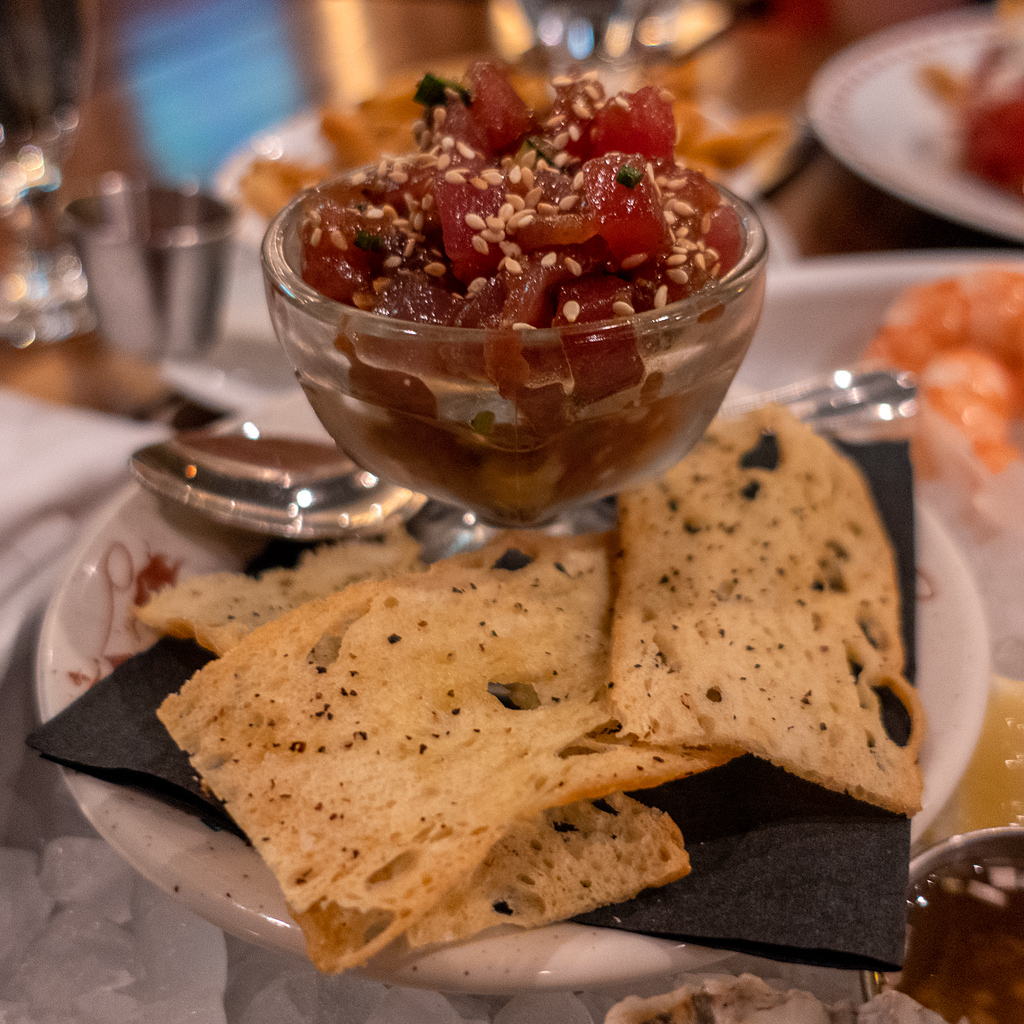
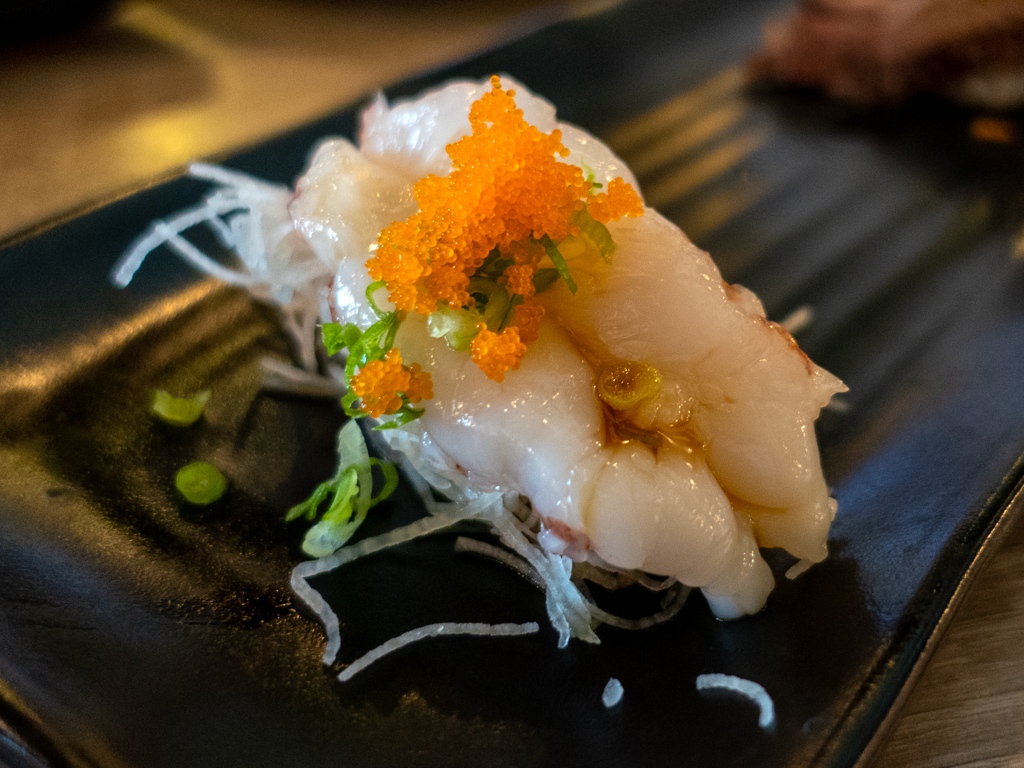
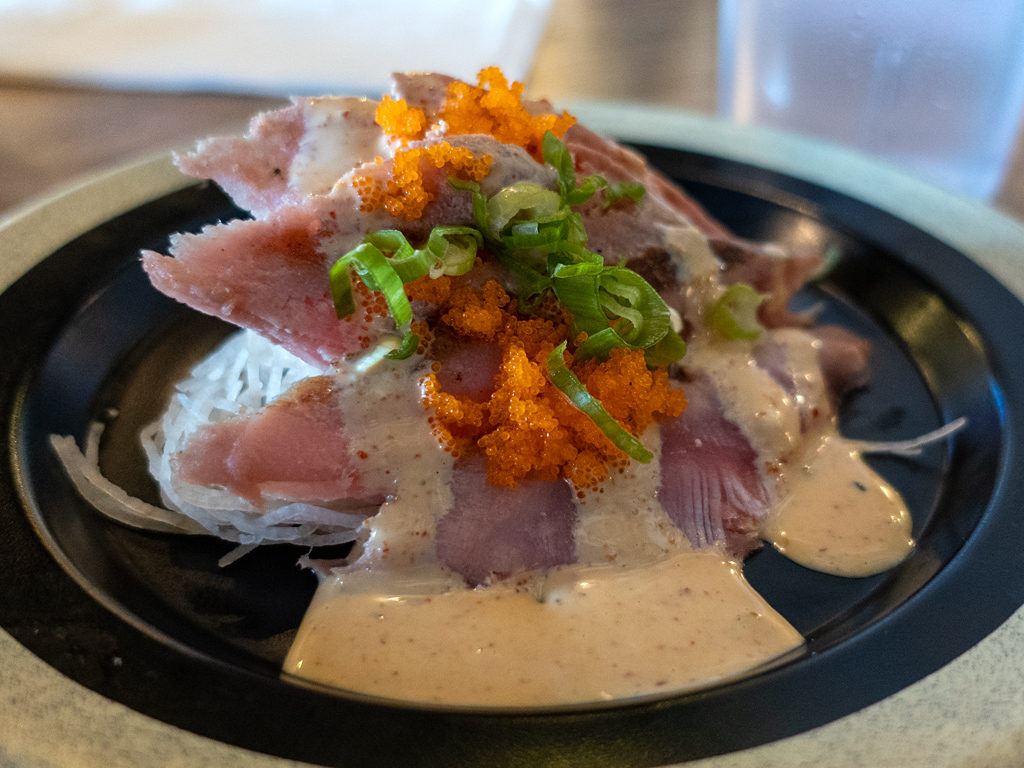
Instead, I went straight to the third dish, Hawaiian tuna sashimi with roasted bell pepper escabeche and balsamic pearls.

I wasn’t a big fan of this one. The escabeche basically tasted like regular salsa you’d find at Whole Foods Market in which you’d dip your tortilla chips while watching American football with your buddies. It was far too sour, which overpowered the tuna to the extent that I couldn’t really tell that I was even eating tuna.

The second dish for the vegan menu was very interesting—it was green tartare made from zucchini, avocado, and green bell pepper topped with a drizzle of pistachio vinaigrette.

Next up for me was a caprese salad with tomato gelée, balsamic gel, textures of basil, and tomato sand. I’m usually not the biggest fan of tomatoes and will generally only enjoy them in moderation, so when I first received this dish, I was a bit concerned at the large quantity of tomatoes. However, when I started eating, all my worries were dissipated.

The tomatoes were cooked so a lot of their sourness was subdued. The large tomato in the center of the plate was hollowed out in the middle and con­tained the gelée, which had a deep, rich flavor. The tomato sand added an earthy grit to the texture of the overall dish, and the cracker had a bittery burnt taste that rounded everything out.

Eating any of these components alone would have been underwhelming, but eating all parts together, in rotation, little by little, made this one of the best salads I’ve ever had.

Back to the vegan side, dish number three was a garden vegetable salad with asparagus, eggplant, bell peppers, frisée, and romesco.

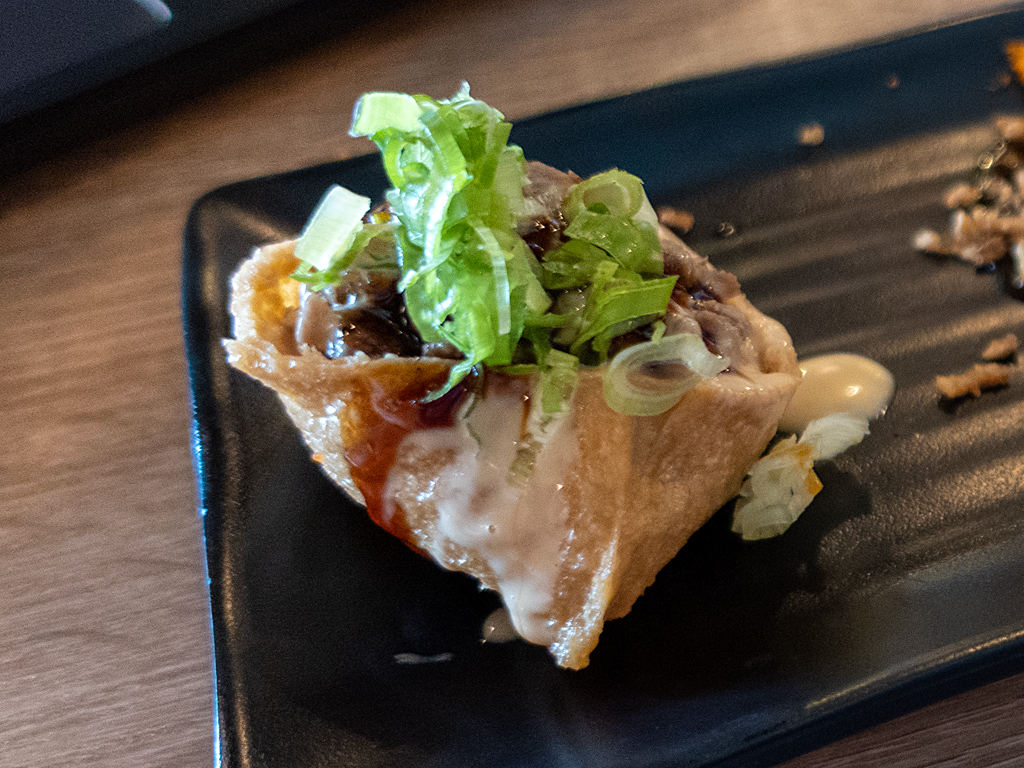
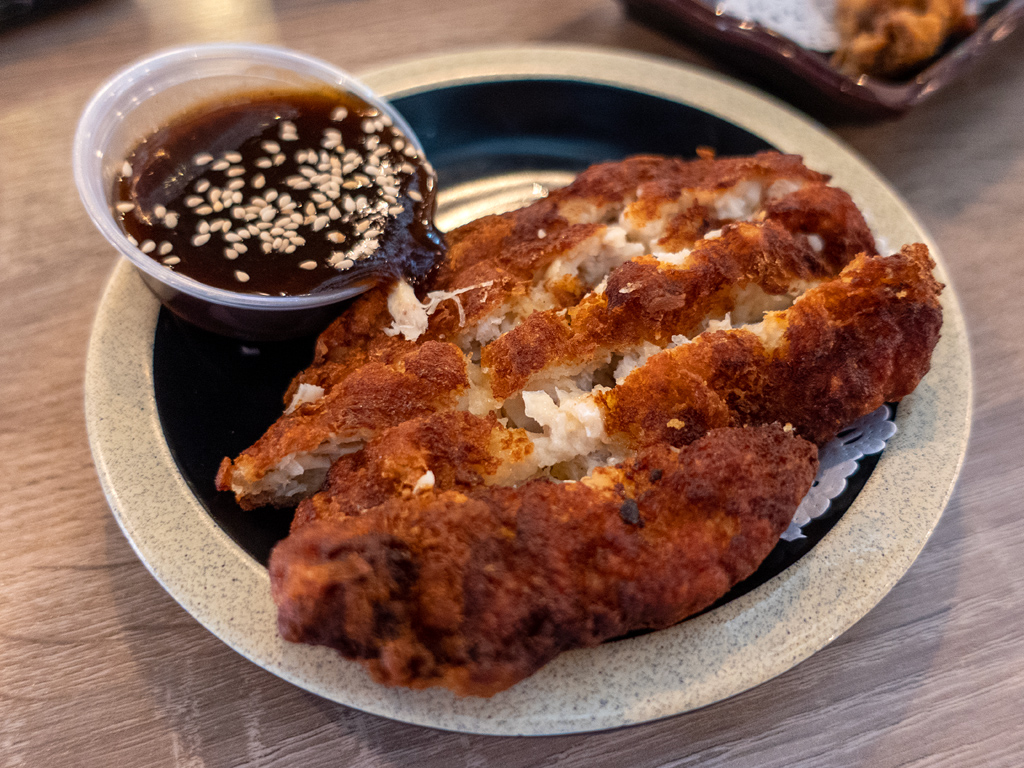
For my normal tasting menu, we were done with the introductory dishes and started getting into the main courses. As a transition dish between the ap­pe­tiz­ers and main entrées, I was served artichokes tempura with a side of Manzanilla olive hollandaise and pear mostarda.

Tempura usually leaves a greasy aftertaste and the oil stays behind on your fingers, but this chef somehow managed to batter and deep fry the artichokes in a way that didn’t have either of the previous downfalls of fried foods. It wasn’t just straight-up artichokes, though; from what I saw, it looked like the artichoke bracts were delayered, then secured in some sort of flour-based wrapping.

The sauce was unlike anything I had tasted before, and I think the sauce was secretly supposed to be the true star of the dish. The tempura was good, but not crazy in flavor, which I think was intended, because it gave a great base on which the sauce could be applied.

Next for the vegan tasting menu was oven-roasted celery root with truffle vinaigrette. You may notice that the presentation on this dish is a lot worse than the others… and that’s because this was one of those “prepare at your table” dishes.

The waiter brought out a pre-cut celery root standing upright, pressed down on it with a spoon to spread it out, cut open a pouch of truffle vinaigrette, and poured it on top. If I were to put it nicely, the waiter was still learning how to do his part, and hadn’t quite built up the skill and experience yet to stop the root from sticking together and the vinaigrette from clumping up.

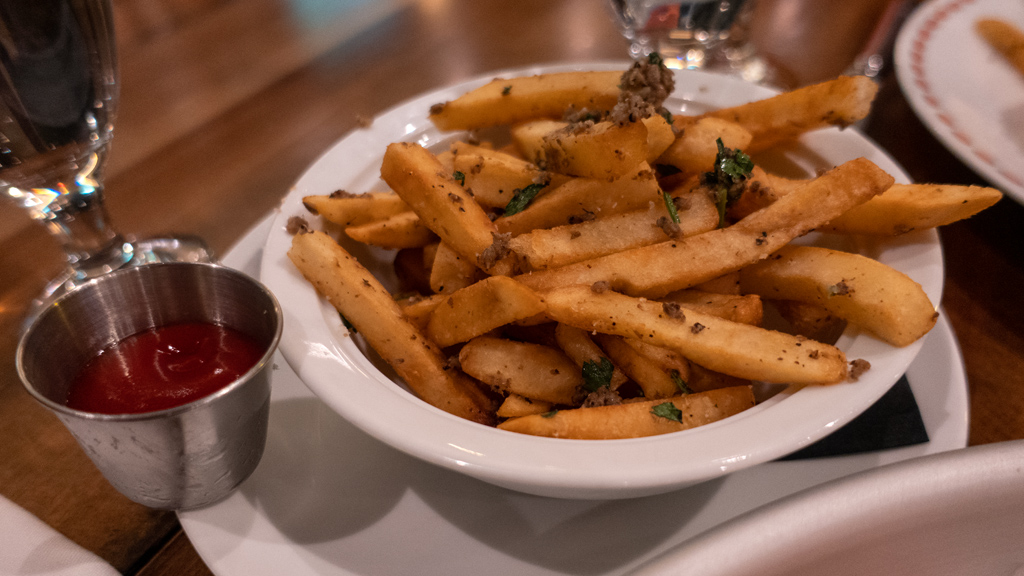
Flavor-wise, it was fine. I like cooking with truffle-infused olive oil at home (during the rare times that I do cook), and this dish tasted like what I im­ag­ine it would be if I were to just drink out of the olive oil bottle.

For my main entrées, I was served two pasta dishes. The first was squid ink spaghettini with lump crab, uni, pomodoro, and calabrian chili. Eating this reminded me of the first dish, in that it was just a constant explosion of amazing flavor.

You would think that mixing this many different strong ingredients would just create a jumble of weirdness, but that surprisingly didn’t happen here—I was able to consciously extract and savor each individual flavor, depending on what I was searching for with my taste buds. To top it all off, the texture of the spaghettini was amazing, with a satisfying balance of softness and chewiness.

The second pasta was oyster mushroom raviolini with dried figs, chestnuts, and porcini mushroom espuma. I didn’t really have any lasting thoughts about this raviolini, apart from the fact that it was just a solid, well-rounded, delicious raviolini dish. There was nothing notably special about it that I could detect, which, in itself, might have been what was special about it—it was a very “comfortable” dish to eat.

It was time for the grand finale: Washugyu steak.

Washugyu is a special type of wagyu beef cross-bred with Black Angus. Wagyu beef is known for its stunning marbling, which is the even distribution of intramuscular fat across the meat. This restaurant’s Washugyu dish was served next to some burnt onion with koji marinade and alongside a round of bordelaise sauce.

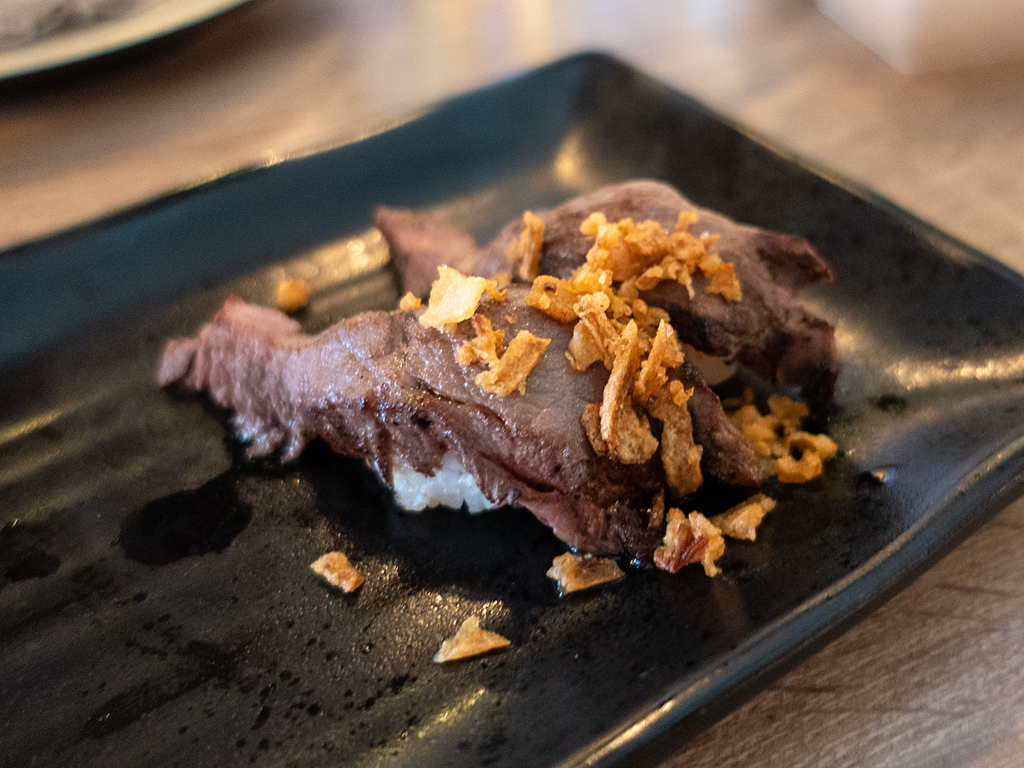
In my opinion, this was actually the worst dish, and I am mostly just confused at it. The meat was cooked blue rare on the inside (which is fine for me, but unusual to serve to the general public in that state of doneness without receiving a special request for it). On the contrary, the outside was burnt (not just charred, but actually burnt).

When I cut into it, the inside had little to no marbling that you expect from wagyu. It wasn’t particularly tender, and it had none of the melt-in-your-mouth texture you expect from wagyu. I could barely taste the steak in general because my taste buds were pummeled by the scowl-inducing bitterness of the badly-burnt crust.

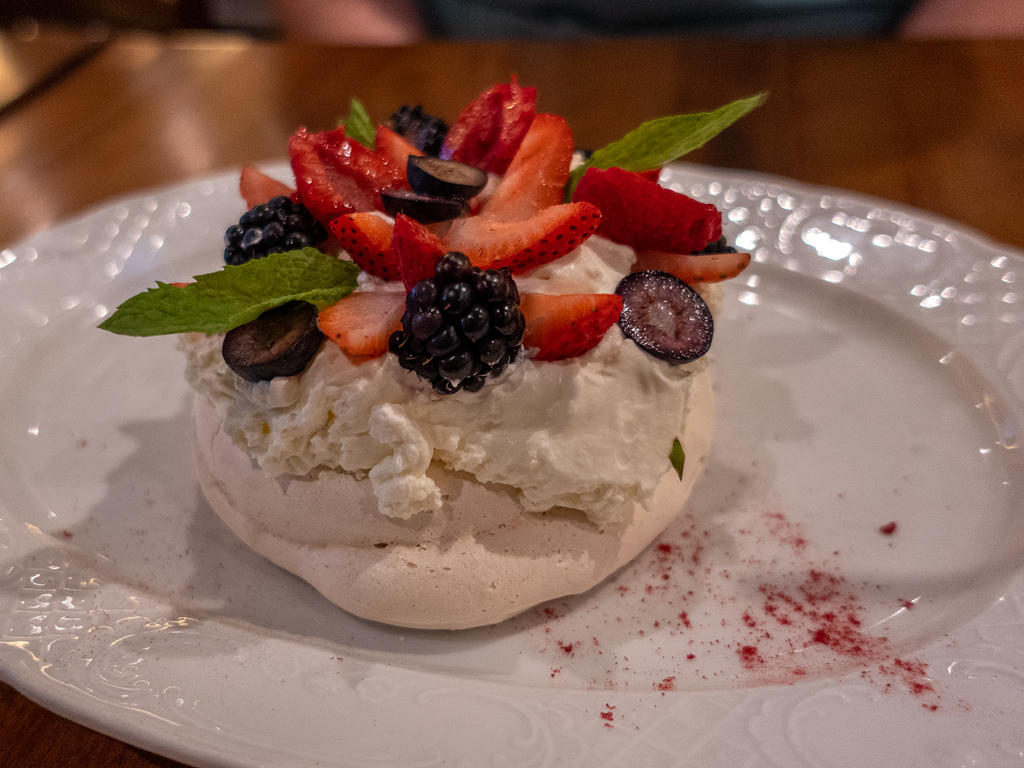
To wrap up the tasting menu, the final dish was the dessert of the day, crème brûlée. The caramelized sugar on top was fun to crack, the custard on bot­tom was smooth and delicious, and the ratio of the two was nicely balanced—overall, a nice, well-prepared crème brûlée with no frills.

Often, restaurants will try to stand out by crafting very creative dishes that aren’t found anywhere else. Also, often, these attempts end up being a huge hit-or-miss—the restaurant either comes up with an innovative and iconic dish, or it creates some gimmicky Frankensteinian entrée that makes you won­der how it got past quality control.

Anima by EDO is not only a great example of the “hit” in that scenario, but one where it has “hit” multiple times in a row. It serves boldly creative dishes that I have never seen before, and they are amazing. (As a side note, I find it ironic that the one dish that I think they messed up—the wagyu—is a fairly common and “boring” dish to begin with anyway.) It’s not often you come across some food where you think “wow, this is new,” and Anima by EDO managed to give me that eye-sparkling joy four times in a single dinner.

As for the vegan tasting menu, although I’m not a fan of vegan food because I think you miss out on way too much breadth of flavor by cutting out all animal products, I’m still impressed that Anima by EDO managed to come up with seven different interesting gourmet vegan dishes for a seven-course tasting menu. I, of course, would never have it for myself, but if you’re vegan and are sad about the lack of high-end restaurants that make top-tier vegan dishes, then this is a great option.

I’m split in my opinion about the cost. The price of my normal tasting menu was lower than expected, and I think it is very budget-friendly. On the other hand, I’m surprised that the vegan tasting menu’s price was close to mine, and I think the vegan one more closely resembles a high-end luxury restaurant price. This is what we paid:

Chef’s tasting menu (8 courses) $  80.00
Kaluga caviar and eggs add-on course $  18.00
Chef’s vegan tasting menu (7 courses) $  75.00
Tax (8.375%) $  14.49
Gratuity (20%) $  34.60
Total $ 222.09

If you’ve been consistently reading my blog, you know that I don’t hand out praise often and only do so when I think it is genuinely deserved. With that being said, I think I am absolutely justified in my overall very positive review. If you’re in the Las Vegas area and want to have a nice dining experience without the chaos and inflated prices of the Strip, I definitely recommend Anima by EDO.


—§—


Hello, Upper Bristlecone Trail at Mt. Charleston, and Zumo the Keeshond

During my routine once-every-two-months one-week-long air trip to Las Vegas to take care of all my errands all at once while road tripping across the country, I met up with two of my friends to go hiking at Mount Charleston, northwest of the Las Vegas Valley in Nevada. Also joining me this time around was Zumo, their Keeshond.

Before heading up to Mt. Charleston for our hike, we stopped by a gas station to get some beverages and snacks. Apparently there was a dog treat for sale at the gas station, so Zumo got a snack as well; if you look closely, you can see the small mess he left behind below his mouth.

As we got closer to the trailhead, we came across what appeared to be a wild horse. I’ve seen a ton of horses throughout my road trip, and even went to the Kentucky Derby Museum in Louisville to learn more about horses, but this is the first time that I saw a wild horse just roaming around out in the open.

Our trail of choice was Upper Bristlecone. We made it to the trailhead, which was right next to the Lee Canyon ski resort.

Near the trailhead was a large helicopter landing area. I walked over to the edge of the landing zone and snapped a photo of the mountains to the north­east.

The trail itself wasn’t too special for a majority of the hike—it was basically just a well-formed path cutting through forest. I did come across a few wild­flowers, like this red one.

Being a breed with a double-layer coat, Zumo got very warm very fast, and he had to take a lot of breaks to cool down.

In a sparse area of the forest, we found a little hut made out of branches and tree trunks. One of them even had a little entryway, so I climbed inside with Zumo for one of our breaks.

Eventually, we made it to the lookout point of the trail, which I guess you could consider the summit (there was no true “summit” because the trail con­tinued to an intersecting point of Upper and Lower Bristlecone, before turning into the regular Lower Bristlecone Trail). Immediately upon arrival, Zu­mo found some nice, cool rocks on which to lay down and cool down.

By this point, a thunderstorm had started to roll in. There was a decent amount of cloud coverage over by The Sisters…

… and clouds had completely engulfed Mummy Mountain.

The lookout point had a tree that was blossoming flowers with a very unique scent.

The storm clouds were rapidly approaching and it started drizzling, so we started making our way back down the mountain.

We arrived back at our vehicle just in time—with literally about half a minute to spare, it started pouring rain right as we got Zumo cleaned up and back in the car.

Unfortunately, my Fitbit activity tracker refuses to start tracking if I don’t have a data connection at the beginning of the hike (even if it can catch a GPS connection), so I wasn’t able to map this hike. However, based on other people’s maps on All Trails, it looks like our round-trip total was 3.2 miles (5.15 kilometers), with an elevation gain from base to lookout of 626 feet (191 meters).

Because the starting elevation was 8,692 feet (2,649 meters), the oxygen was sparse and it felt like much longer of a hike than it actually was. Even with the decent number of breaks we were taking to allow Zumo to rest up, I still got a little out-of-breath at times, and wished I had brought more than just a 28 fluid ounce (828 milliliter) bottle of Gatorade Zero.

There are a lot of great hikes at Mt. Charleston, and if it’s your first time, I’d recommend something like Cathedral Rock instead. Regardless, it was a good hike at Upper Bristlecone, and it was a nice opportunity to get away from the 100+°F (38+°C) heat of the Las Vegas Valley for a bit.


—§—