When I was younger, I really enjoyed being one of the first people to try something new. However, now that I’m older, I approach that concept with far more moderation than I used to. I obviously still enjoy novel experiences a lot, but I usually let things go through an initial iteration or two of polish and improvements first. For example, this is similar to how, if you value reliability and dependability, automobile experts will encourage you to wait at least one year before buying a new model release or generation of car so that the manufacturer can learn from the first cohort of purchasers and make fixes to recurring issues. Especially after running my own company for so long and advising a lot of other different businesses, I realized that being the first in line to try something usually means that you get a suboptimal experience and are basically volunteering your time to be an unpaid beta tester and quality assurance analyst.
With that being said, note that I said that I approach that concept in moderation, not as a hard rule. I guess I was subconsciously feeling extra adventurous lately because, during my routine browsing of chef’s tasting menu options available in the Las Vegas Valley, I came across a new restaurant called Lilli, and something compelled me to give it a try as one of their first diners since their grand opening.
Lilli is an American restaurant inspired and guided by French technique, located in the Chinatown neighborhood of the Las Vegas Valley, formally in the unincorporated town of Paradise, Nevada. They have an à la carte menu that they call the “Lounge” menu, but for regular dinner, they offer two tasting menus: a shorter four-course tasting menu, and a longer eight-course tasting menu that they simply just call “the tasting menu.” I was interested in trying a full meal, so of course, I got the full eight-course tasting menu.
Upon my arrival, I was seated in a fairly deep booth with high barriers on the sides. The barriers were tall enough that they almost felt like walls separating the booths into miniature cubicles… but only the side of the booth seat (with the chair seat on the opposite side of the table just being normal). This was fantastic for privacy for the person sitting in the booth seat, but it was definitely a bit unusual.
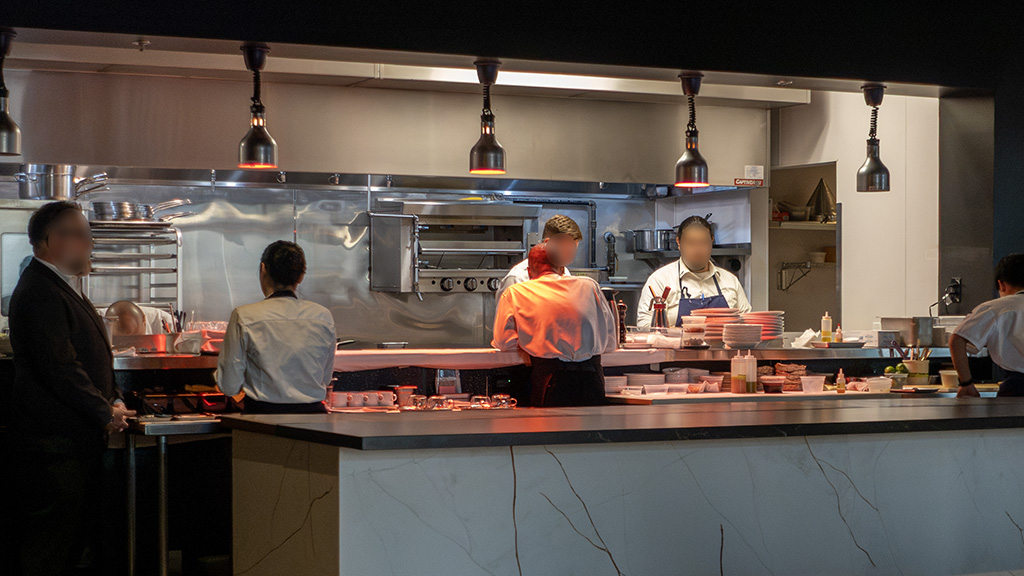
One of my favorite parts about chef’s tasting menus and omakase experiences is being able to sit at the kitchen bar and watch the staff cook and prepare your food. As an extra bonus, the chefs of some restaurants actively engage with the diners, explaining some specifics of the dishes and answering questions that people may have. Unfortunately, even though there was a long bar-style table right in front of the kitchen at Lilli, it seemed like it was not ready to support diners, as it remained completely empty and there weren’t even chairs in that area.
I told my waiter that I would like to have the eight-course tasting menu along with a non-alcoholic beverage. The drink menu didn’t have a mocktail section, so I asked him if they had any available options apart from just a basic soft drink. He said that he could ask the bartender to see if she could make something for me, and he asked if I had any particular likes or dislikes that he should relay to the bartender. I responded that I am fine with pretty much everything and would like the bartender to craft something that she thinks would go best with the eight-course tasting menu.
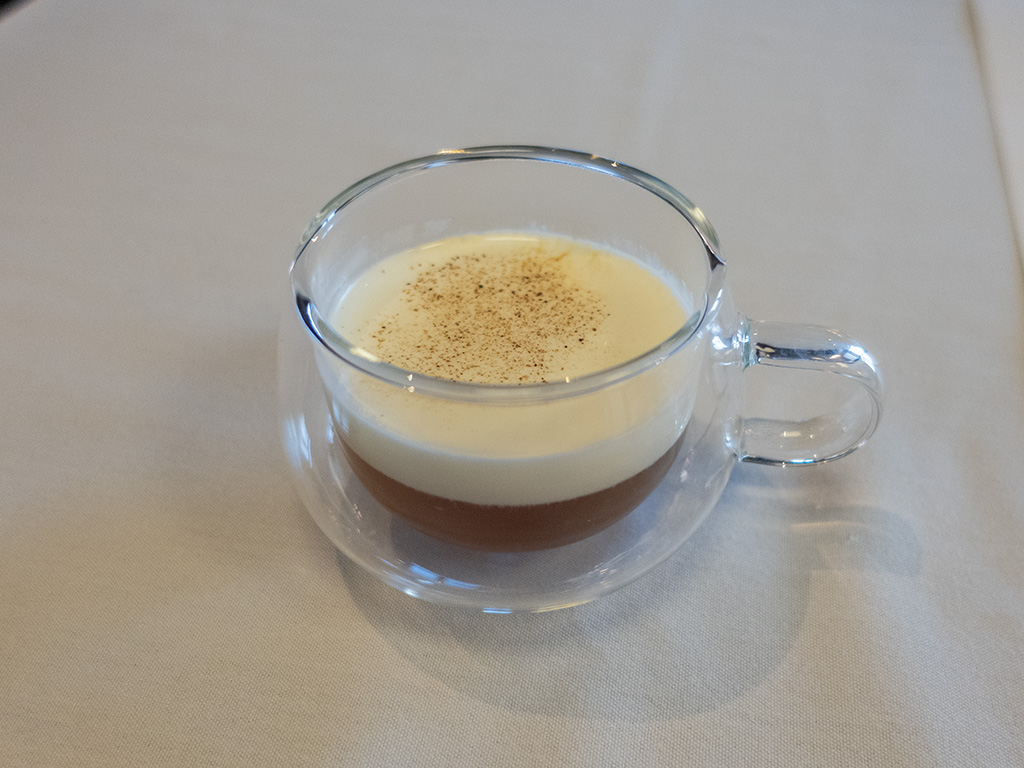
In the meantime, I got a small cup of broth to welcome me to the meal. When this was brought out, I was warned that the beverage was extremely hot and that I should be very careful. Unfortunately, this is a little bit tricky, because the hot beverage at the bottom is obviously shielded by the foam, so it’s not like I could blow on it to cool it off first (or even be able to gauge the temperature at all to see just how hot it actually is). I cautiously went in for a sip and immediately burned my tongue as the liquid passed through the foam, didn’t cool off enough, and scorched the inside of my mouth. I proceeded to enjoy the rest of my meal with a slightly tingly tongue. If the server needs to warn diners that something is extremely hot but there is no way to cool it down, then I feel like the proper solution is to just serve it at a lower temperature so that it is simply very hot and not extremely hot.
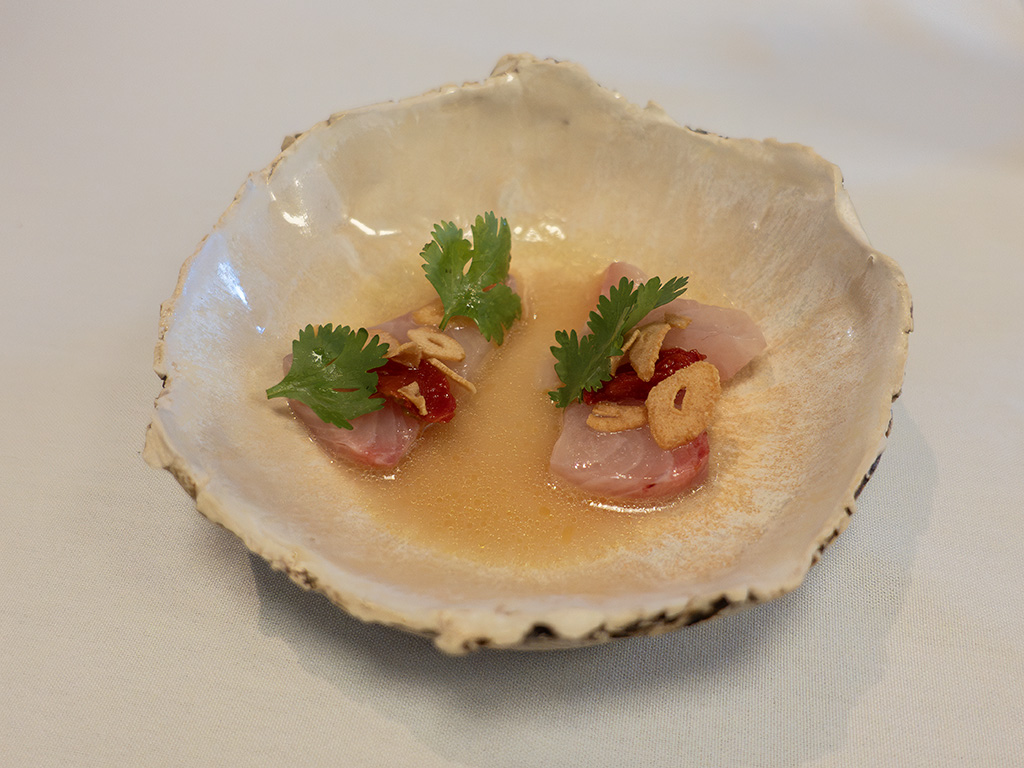
For the first appetizer, I was served Hawaiian kanpachi with garlic chips and tomato water vinaigrette.
Overall, this was a solid dish. The greater amberjack was good quality, but not over-the-top in excellence. Instead, the thing that made me like the dish was the selection of garnishes. The vinaigrette was flavorful, but not too sour. I like garlic, and I appreciated the addition of a crispy garlic flavor mixed in with the sashimi.
There was an option to upgrade this dish for an extra US$50.00 to add caviar. Considering how much caviar I already have, I decided to pass on the supplement for this dish so I could try it in its base form.
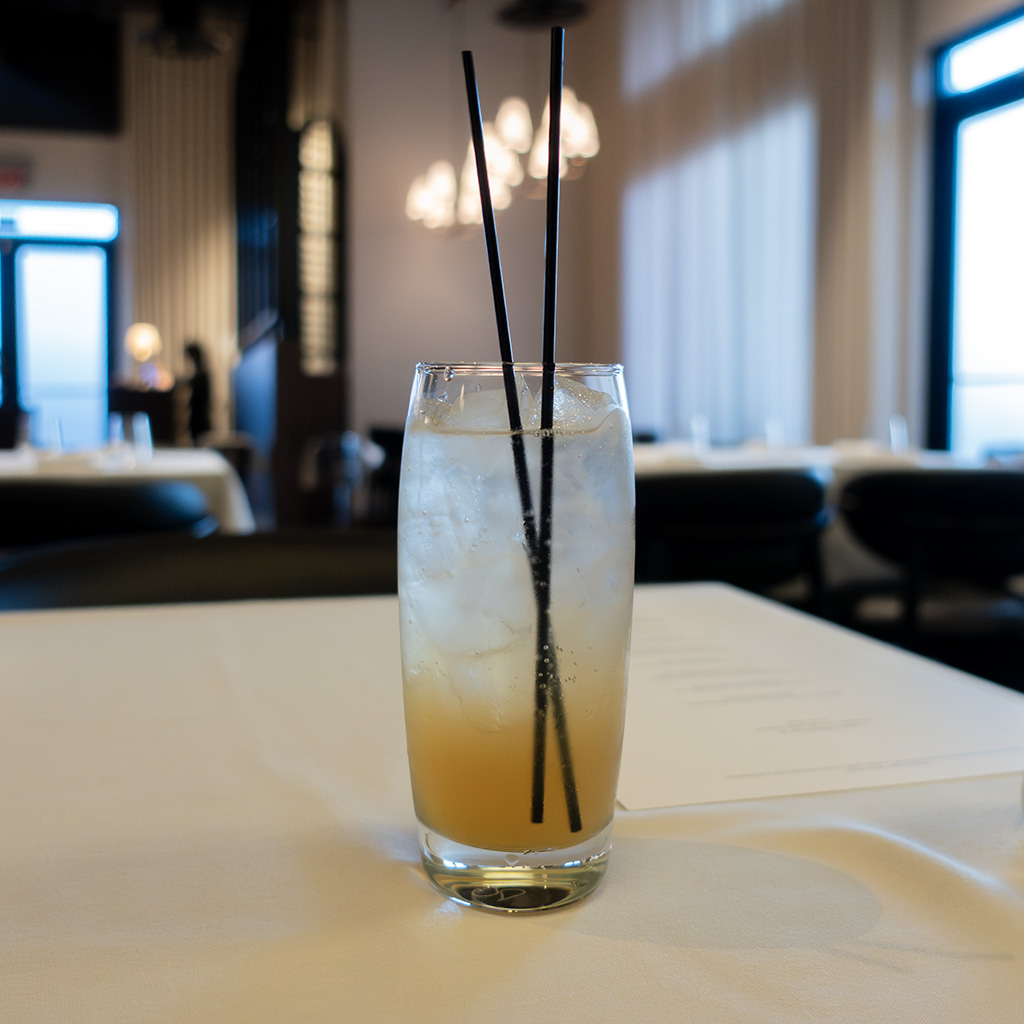
Around this time, the waiter also brought out my custom-made drink. He said nothing, put it on my table, smiled, and walked away. My expectation was that he would explain what the drink was and how it synergizes with the tasting menu (or alternatively, if he wasn’t briefed on that information, then I’d imagine the bartender could’ve taken a quick break to explain it herself).
Fortunately, through my burned tongue, I was able to identify that it was a yuzu drink. It was a good drink, but there wasn’t really anything particularly notable, special, or unique about it to warrant charging mocktail prices for what was basically a carbonated yuzu juice.
For those who do drink alcohol, they also had an option to add a wine pairing for US$88.00.
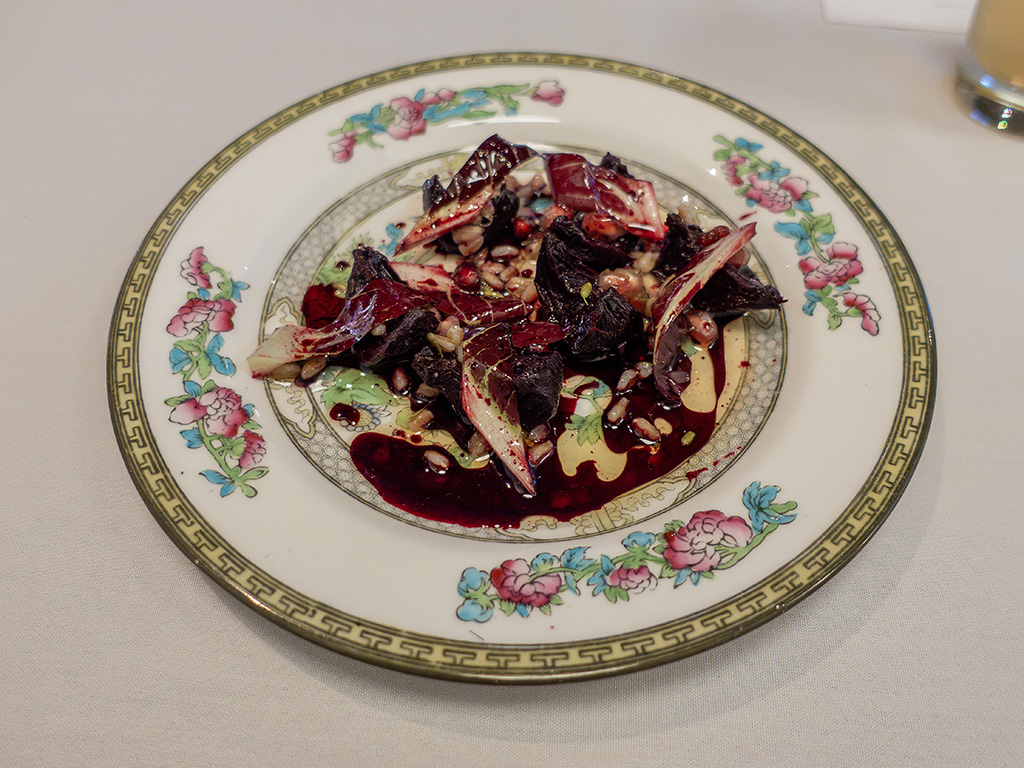
The next dish was pomegranate and beets with farro, chicory, and beet reduction.
I liked this dish because it had a very deep and rich beet flavor, and when it comes to vegetable dishes, I love when you can taste a more “concentrated” version of the vegetable without any wateriness, bitterness, or sourness. With that being said, for a lack of a different way to describe it, this dish sort of felt like it lacked substance. I don’t know if it was just because the portion size was very small and it was gone very quickly, or if the other elements of the dish just didn’t really add much to the overall flavor profile, but I was slightly underwhelmed after I was done with it.
One thing to note is that this is apparently the first dish that underwent slight changes ever since Lilli’s opening. My version had pomegranate in it, but the version of this dish served a week prior had melon instead. One of the staff members let me know that, rather than doing complete menu overhauls on a particular cadence (e.g., every month or every season), they instead plan on slowly evolving the tasting menu over time so that single dishes occasionally get modified or changed, and the tasting menu will have a more fluid development on an ongoing basis.
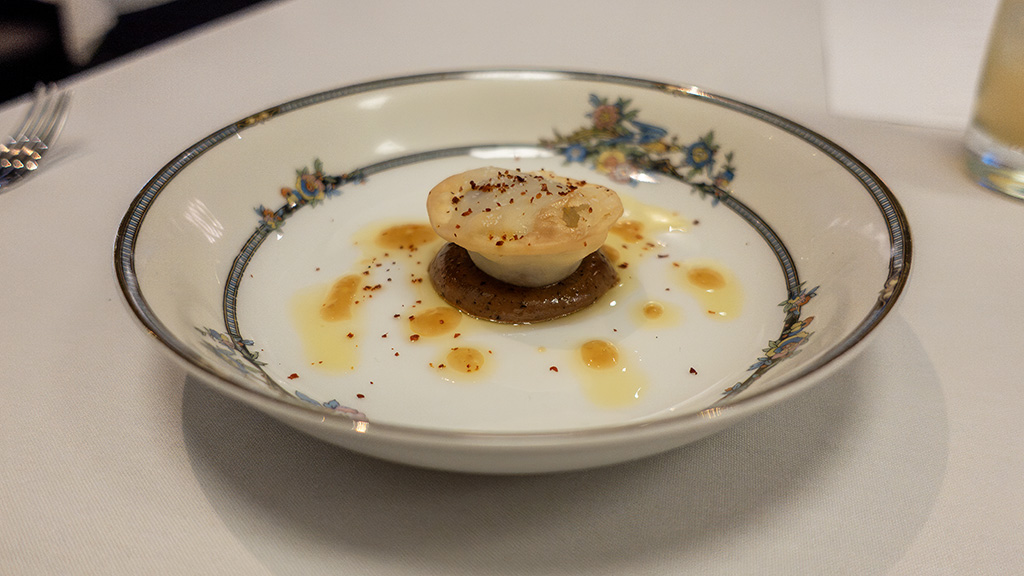
Next was an extra dish that was not present on the course list. When the waiter brought this out, he introduced it as a “gift from the chef.” That made me slightly concerned that I was being given special treatment due to them noticing that I was taking photographs with a point-and-shoot camera and assuming I was a food blogger. (Those who know me know that I always want to pay full price for everything and receive the same treatment as every other diner.) Fortunately, about ten minutes later, I heard a couple seated a few tables away from me also receive this “gift,” which made me relieved.
I regrettably forgot what the ingredients were of this dish, and somehow, looking back on the photograph is not triggering my memory. However, I do remember though that the flavor was quite unique and different. The texture was strange though—the little “hat” was unexpectedly tricky to cut through, and applying any pressure on it caused the bottom softer portion to splay out everywhere, so I’m wondering if there could’ve been a different way to assemble this so that there is a better balance between visual presentation and functional consumability.
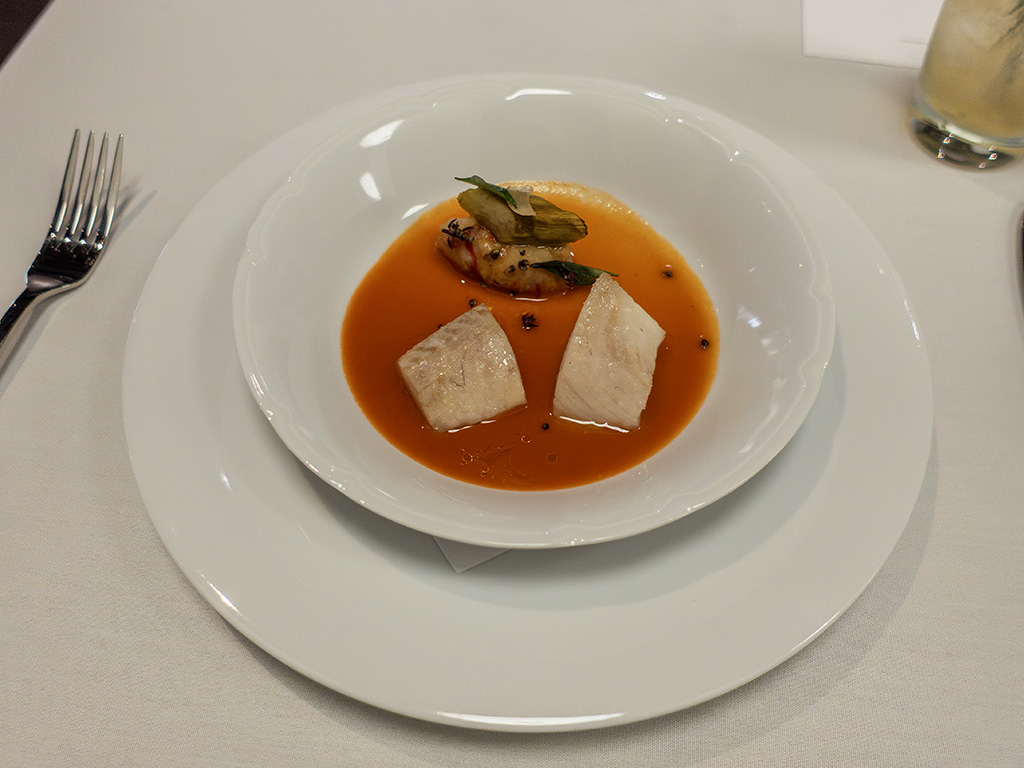
Entering into the series of entrées, the first main course was North Coast black cod with braised eggplant, butter beans, and paprika-shellfish broth.
The fish alone was fine and squarely just “above average.” There was nothing particularly tender or flaky about the texture, and taste-wise, it seemed to me like just regular decent sablefish. However, hilariously, the butter beans single-handedly made the entire dish. These were some of the best butter beans I’ve ever tasted in my entire life, and I have no idea what made them so special. I portioned them out with each bite, and it made everything delicious. I literally think it would make sense to just call this a butter bean dish, with the fish acting as a base upon which to enjoy the beans.
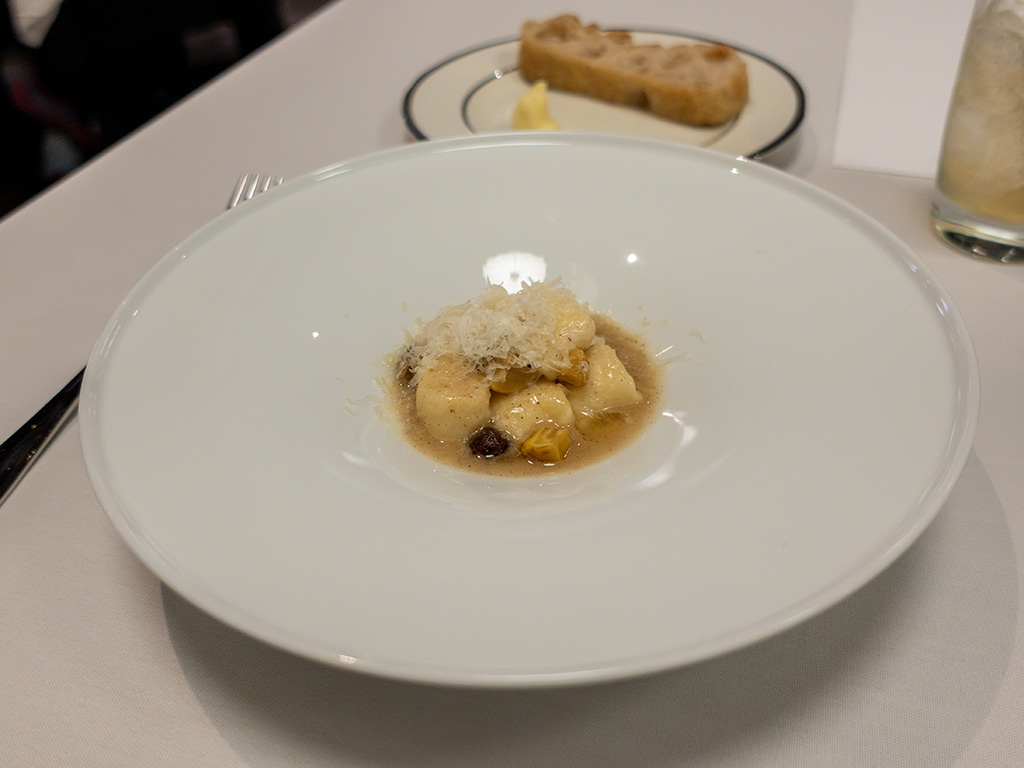
Next up was Missouri chestnut gnocchi with dates, Wagon Wheel cheese, and caramelized Korean rice wine.
When the waiter brought this dish over, I nearly gagged. The cheese on top of this dish smelled disgusting. Fortunately, when I mixed the cheese in with the sauce a bit more, it stopped giving off the odor, and it became much better. I am aware that a lot of cheeses smell much worse than they taste, and I’m guessing that this was one of those cheeses (or, alternatively, I might have just gotten nose-blind to it after a few minutes as a natural defense mechanism).
This was overwhelmingly my favorite dish of the dinner. There is no other way for me to describe it apart from calling it world-class savory candy. In fact, I’d say it was even better than candy, because it had all the positive aspects of candy without that much of the sweetness. The gnocchi was cooked to perfection, and the texture had a pristine balance of softness and chewiness. This was so delicious that I probably could’ve eaten five entire servings of it and still be eager to have more.
This was served with a small slice of bread on the side, along with a dollop of butter. I used the bread to wipe the sauce clean from my plate. I sampled a small portion of the butter, but ultimately did not use much of it because the bread already complemented the sauce perfectly, and I did not want the butter to alter the flavor profile of the sauce.
This dish had an option to get fresh shaved truffle added on top for an additional US$55.00; just like the caviar, I decided to pass on the supplement because I wanted to just try the base dish (and I’m glad I did, because it was already perfect as-is).
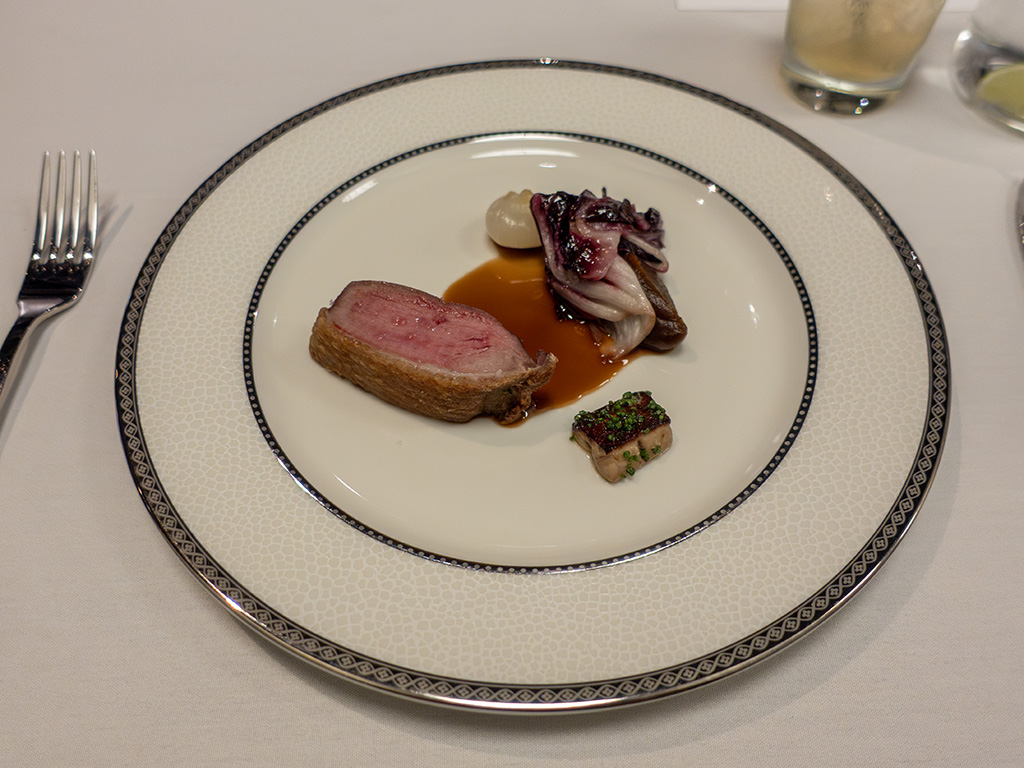
The next dish was Liberty duck breast with cipollini onions, jujubes, foie gras, and port jus.
The duck breast was fantastic. The flavor was great, but I especially enjoyed the texture of it. Usually, duck skin is cooked to a crisp, but this duck breast’s skin was prepared more like a crust on a steak, which I thought was different and very nice.
Unfortunately, beyond the duck breast and its skin, the rest of the dish was a bit mediocre for me. The foie gras seemed a bit too firm. There was a dollop of brown paste under the vegetables, which I assume was made out of jujubes, but for some reason, it didn’t really taste to me like jujubes and it had a bit more bitterness to it than I would have hoped.
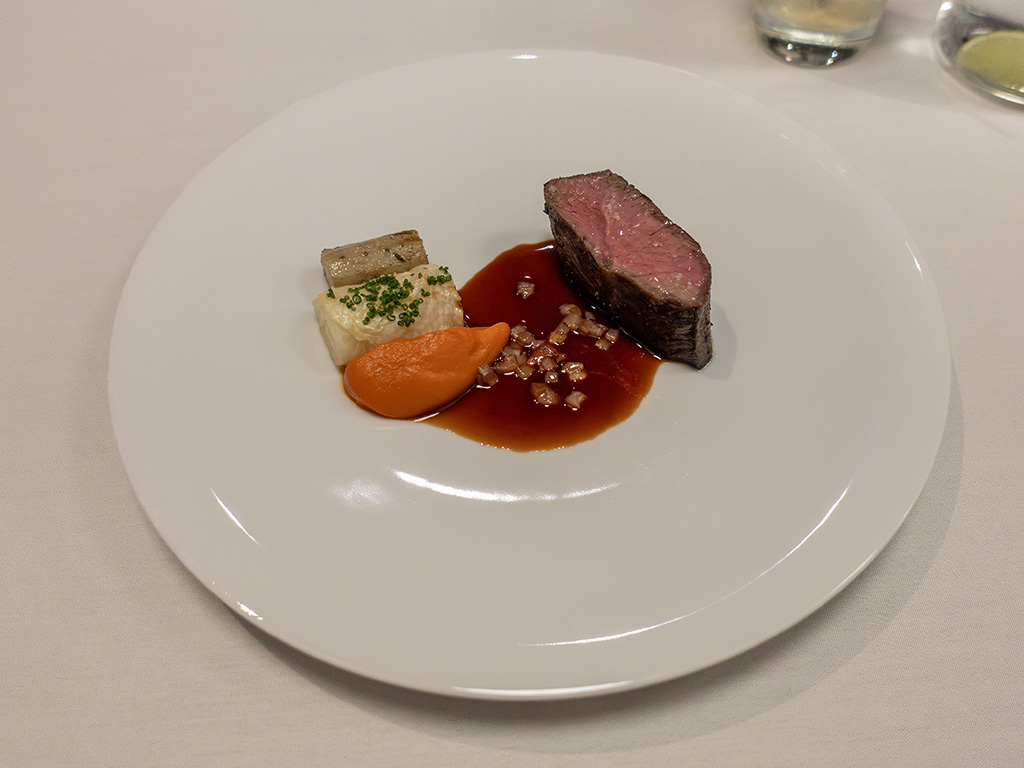
The final main entrée was dry-aged Flannery flat iron steak with beef fat cabbage, burdock, carrot purée, and borscht sauce.
After seeing the skin on the duck breast, I was expecting the crust on this steak to be stellar as well. Unfortunately, it had an unusually and unexpectedly stiff texture. A proper crust is obviously supposed to be “stiffer” than the tender portion of the meat, but this was more of a dry stiffness rather than a seared crispness.
My favorite part of this steak dish was actually the carrot purée. Just like how I mentioned during my comments about the beets, I love when vegetables have a deep, intense flavor of the vegetable itself. The carrot in this carrot purée was the most carroty carrot I have ever tasted. I feel like if all vegetables tasted this good, we would never have to fight with children to convince them to eat their vegetables.
This dish had an upgrade option to replace it with a Mishima Reserve American wagyu beef steak for an additional US$55.00. Even though wagyu is great, I have no issues with regular flat iron steak, so I passed on the supplement.
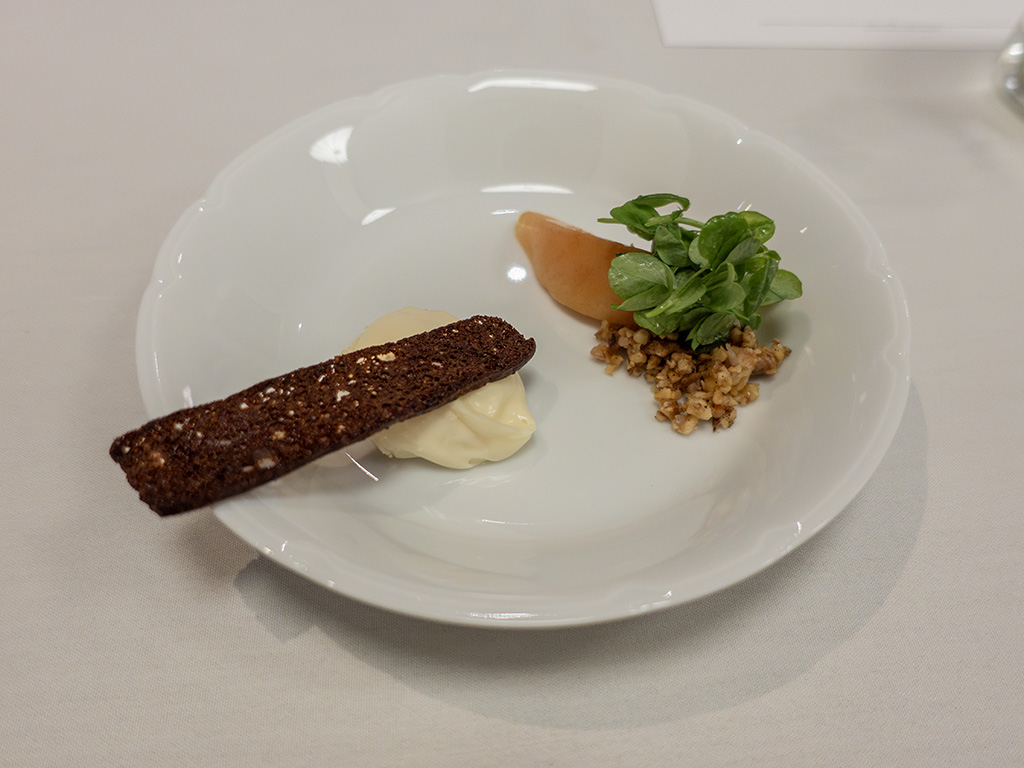
With the main entrées done, we moved on to the cheese dish that served as a bridge between the meats and dessert: Jasper Hill Farm Harbison with slow-cooked quince, walnuts, and pea shoot salad.
I am delighted to say that this cheese did not smell anywhere near as bad as the Wagon Wheel from earlier. The texture had a fun gooeyness to it. It tasted relatively mild, and even though it was quite salty, it was rich and creamy enough that the salt had plenty of baseline flavor to enhance without it isolating itself to my taste buds as excessively sharp or biting.
The way that this was served felt like it was done in a fairly “deconstructed” way. Some dishes are fun to have like that, but for this, it felt like I just had to put extra work into making sure I got a small portion of each ingredient in my mouth per bite in order to get the full flavor profile at once. I wonder if this might have been better served in a more cohesive way, such as with some of the ingredients loosely combined in with the cheese or used as toppings.
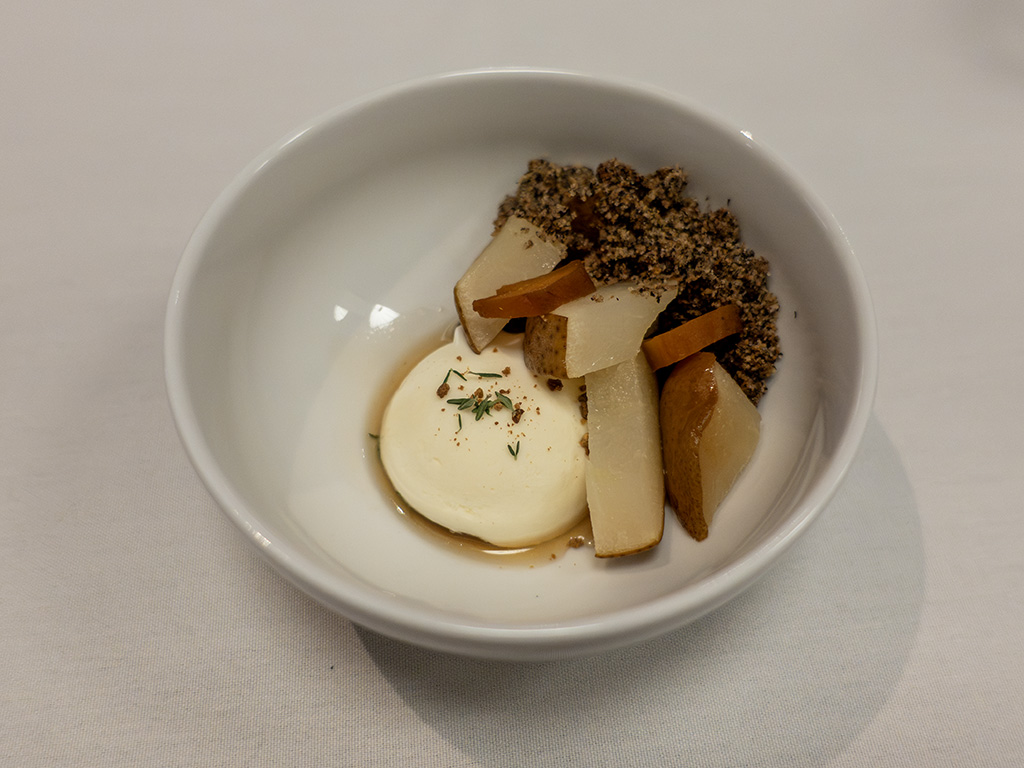
For the final course of the night, I was served dessert: honey-roasted pear with candied pumpkin, thyme, and toasted barley semifreddo.
I was not a huge fan of this dessert and found it somewhat confusing. Out of the four slices of pear, three of them were fairly firm and mild, while one of them was very soft and sweet and flavorful.
Because it was the end of my meal, a man in a suit, presumably the manager, came to chat with me to ask me about my meal. I was so convinced that something had gone wrong with this dessert that I brought it up to him and mentioned that three of my pear slices might have been undercooked. He actually confirmed the opposite, in that it was unusual that one of the slices was extra soft and sweet, and the chef intended for the pear to be on the firmer end. I personally much preferred the soft and sweet pear, especially considering that this is a dessert dish, so I provided him with my opinion.
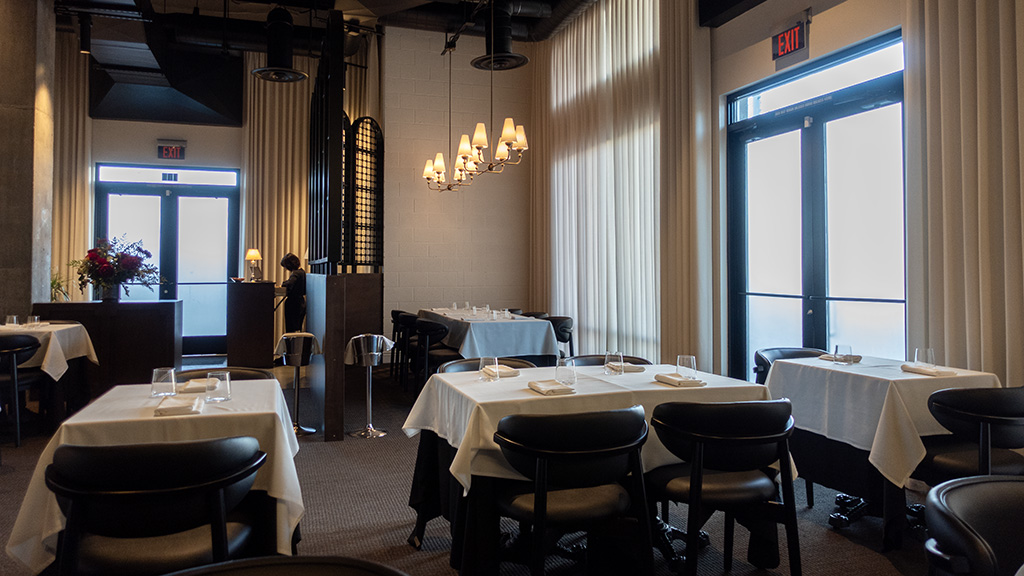
This is a view of the dining area, taken after peeking out from my half-cubicle-like booth. Like usual, I booked my reservation slot for the first seating of the night, which is why the rest of the restaurant is empty; over the next hour, all the tables were filled except for the large family one in the corner.
The vibe of the restaurant was a bit strange. I’m not an expert at interior design, so I can’t really articulate why it felt weird, but it definitely felt a little bit off. The natural light coming in from the glass doors was very bright, but it seemed like they wanted to keep the restaurant lighting dimmer and more moody, which clashed while the sun was still up. I also noticed that the doors and ceilings were quite tall, which I think made the room feel less cozy.
This is a view of the kitchen from where I was seated. As I mentioned earlier, there was an unused table that would’ve had an incredible view of the action, but there were no barstools there, so it just ended up being an empty countertop. I hope that, at some point, they accommodate seating solo or pair diners there so they can interact with the kitchen staff and get a full chef’s tasting menu experience.
| Eight-course tasting menu | $ 188.00 |
| Non-alcoholic beverage | $ 12.00 |
| Sales tax (8.375%) | $ 16.75 |
| Gratuity | $ 35.00 |
| Total | $ 251.75 |
I know I had a relatively high number of critiques about this restaurant, but believe it or not, I actually enjoyed the food overall. Most notably, I appreciated their dedication to creative and unique dishes composed with unconventional flavor combinations. I am a big fan of chefs who continue to innovate and integrate seasonal ingredients into their dishes, and the philosophy of Lilli’s chef seems to align with my values.
With regard to the three supplements I passed on: Lilli also offers a “Black Label Experience” for US$130.00 where you get all three supplements for $10 less than ordering each one individually. The main reason I passed on all of it is because I wanted to see what their baseline tasting menu experience was, as I believe that a great tasting menu should have a standalone level of excellence without needing to rely on mark-ups. A secondary reason I passed on all of it was because, even though the pricing wasn’t unreasonable, I still thought it was a little bit high for the amount of value that I personally would get from it.
My biggest complaint with the restaurant was how small the portion sizes were. I wouldn’t go as far as to say that I left hungry, but I definitely could’ve eaten a lot more food. This feeling was further exacerbated by the fact that there were very few filling carbs and nothing was particularly greasy or fried. Using light, fresh ingredients is obviously a very positive thing, but this means that some people might walk away from this thinking they had a series of snacks instead of a full dinner.
Considering that Lilli is so new, none of these issues register to me as red flags or anything. Especially with the manager coming to me to talk about my meal and take my feedback, in addition to going to other tables and doing the same with other diners, I have faith and trust that they are going to improve quickly and resolve all the random issues that come up. I personally will probably give it some time before I return to Lilli, but after several months, I am definitely open to revisiting and trying a more polished version of their tasting menu and dining experience.