Last week, I made a quick trip to Southern California to catsit for a friend and then do a LEGO-building live broadcast with my Twitch moderator @PhummyLW, which at this point, has almost become as much of a tradition as the anniversary dinners are.
While in town, I met up with a different friend (than the one for whom I was catsitting) to get some dinner together before I headed back home to Las Vegas. When I asked her where she wanted to go, she picked Kojima in the Sawtelle neighborhood of West Los Angeles. Her reasoning for it was because they received a Michelin Star relatively recently, so she expected the price to go up soon and wanted to try it out before it got too expensive.
I’m fairly transparent about my dislike of the Michelin Guide, but I feel like it’s been a little while since I’ve last complained about it, so I can re-summarize a limited selection of a couple of my biggest grievances about it.
The deal-breaking problem is that Michelin offers a paid service. The state of California and the country of South Korea are two very well-known examples of regions that paid very large sums under very large contract sizes to Michelin to fund them to come to their markets. Any time there’s money involved, the money becomes an incentive and inherently takes away the absolute neutrality of a ranking system. If a jurisdiction pays for Michelin inspectors to show up, then restaurants that inevitably don’t deserve Michelin Stars are going to get some, otherwise the Michelin Guide is going to feel bad about the state or country spending that much and getting little to nothing out of it. We also don’t know what other monetary transactions are happening behind the scenes that haven’t had public press coverage. To those who argue in support of the Michelin Guide’s integrity in remaining neutral and honest… if they actually had that much integrity, would they collect that much money to begin with?
The Michelin system also “dooms” restaurants into an unsustainable cycle. Restaurants that want to earn and maintain a Michelin Star need to push certain aspects of their operations to levels that result in extremely high stress for employees and unrealistically low profit margins for the business (even after raising prices). The Michelin system has a certain set of metrics that it uses to determine whether a restaurant is deserving of a Michelin Star, and in order to satisfy those requirements, many restaurants have to change the core identity that made them unique, and instead, end up just being vaguely homogenized with many of the other Michelin Star restaurants.
For these reasons, among a handful more, I myself never intentionally go out of my way to seek out Michelin Star restaurants. Instead, I search for restaurants that have a good reputation among regular people, or are offering well-designed tasting menus, or are doing something creative and innovative with their food. However, I will never not go to a restaurant due to the Michelin Guide. As you can see from me having visited this restaurant, if a friend specifically wants me to come along for a Michelin Star dinner, I have no problem joining.
I swear that all this is actually relevant specifically for Kojima, and I’m not just being a geriatric man ranting into the void. Remember how I said that the Michelin Guide implicitly encourages the homogenization of restaurants due to needing to excel in certain performance indicators? Well, Kojima earned a Michelin Star, but is not falling into that trap. Other restaurants often stop experimenting with new concepts in fear that one of them will be bad and make them lose their Star. However, Executive Chef Hayato Kojima is so experimental that he apparently changes his menu on a near-weekly basis. Unrelated to the Michelin Guide, restaurants like Kojima are ones that I want to support—ones that try out new things in an effort to make discoveries and advance the culinary arts.
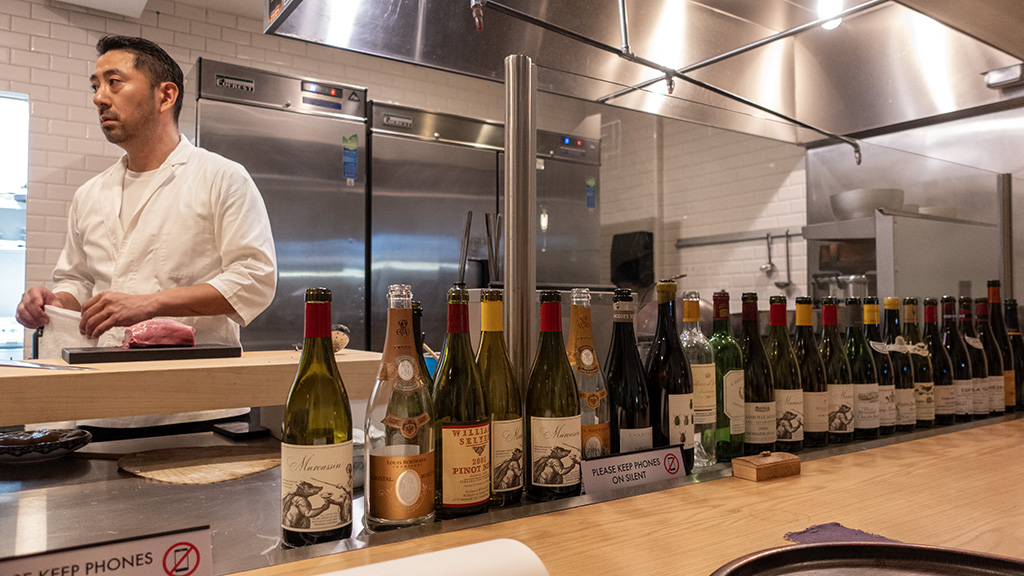
When my friend and I arrived at the restaurant, we were fortunate enough to be seated directly in front of the chef, so I had a great view throughout the entire dinner.
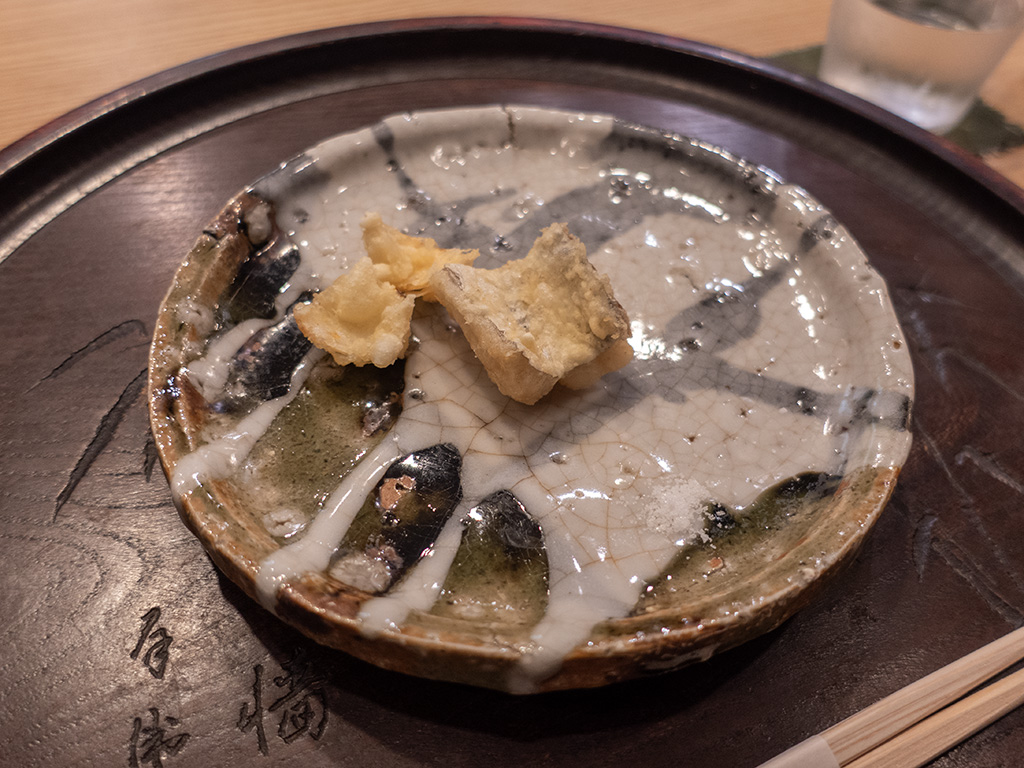
For the first appetizer, we received lightly fried pieces of fish and vegetables. It was visually obvious that this was fried, but flavor-wise, it was a very intriguing type of fried food—the fried flavor profile was there, but it had none of the greasiness.
As a side note, keep in mind that, because the menu is changed so frequently, there is no set list or written menu of what we had. The waitress explained how each dish was made as she brought it out, but because it’s already been a week, I don’t remember all the specifics and all the ingredients of each dish.
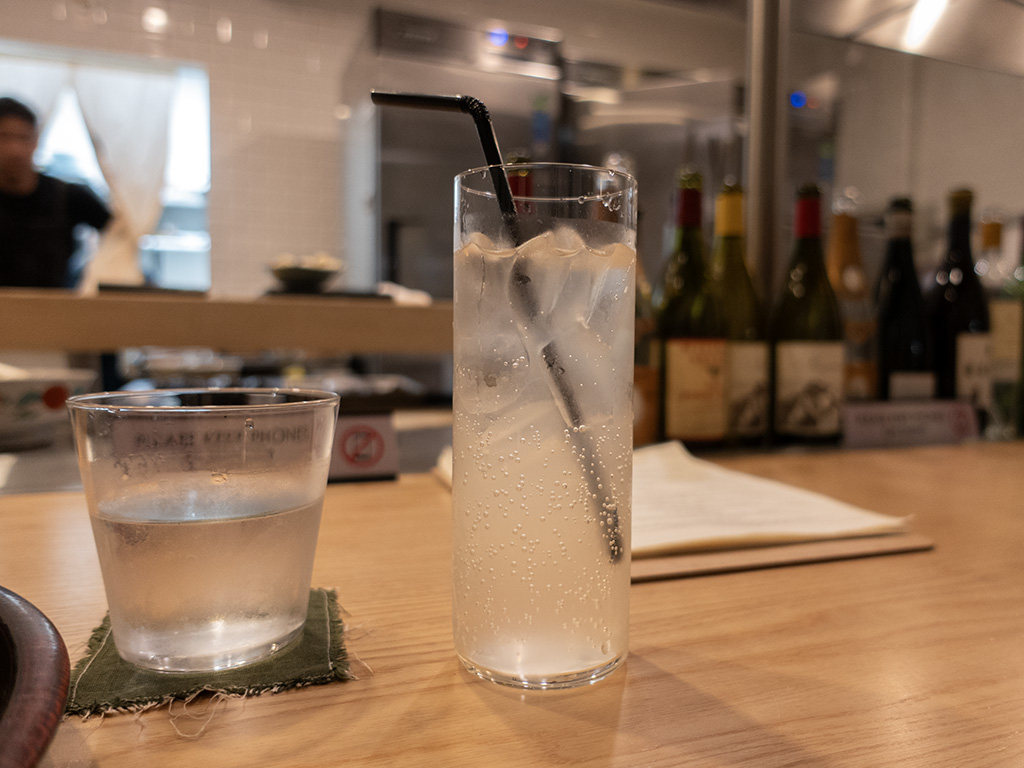
For my drink, I selected Kimino yuzu sparkling juice from the non-alcoholic beverage menu.
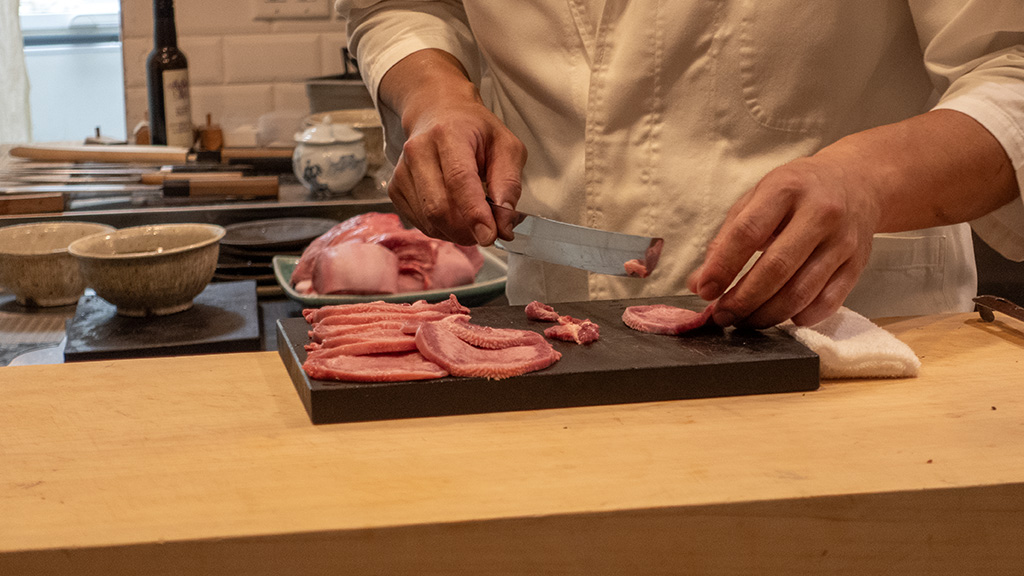
While we were eating our appetizers, the chef was already hard at work slicing and preparing some beef tongue.
As the beef tongue was cooking, the chef plated small bowls of potato salad, and also started preparing some scallops for the next dish.
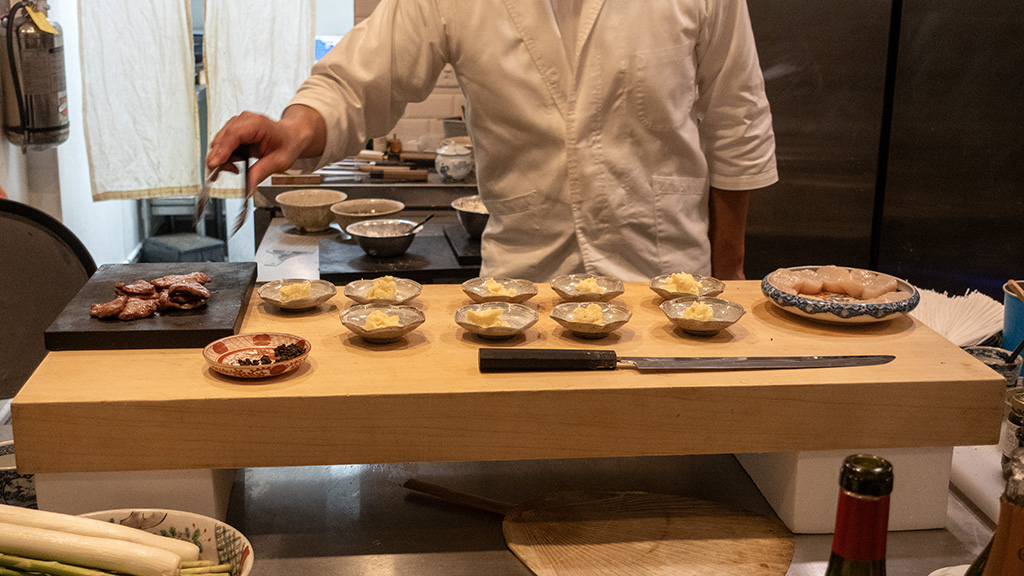
The beef tongue dish was incredible. Tongue is my favorite cut of beef, and I think this might have been the most tender and delicious beef tongue I’ve ever had. The potato salad had an incredibly soft and fluffy texture, and it had a very light and clean creaminess to it.
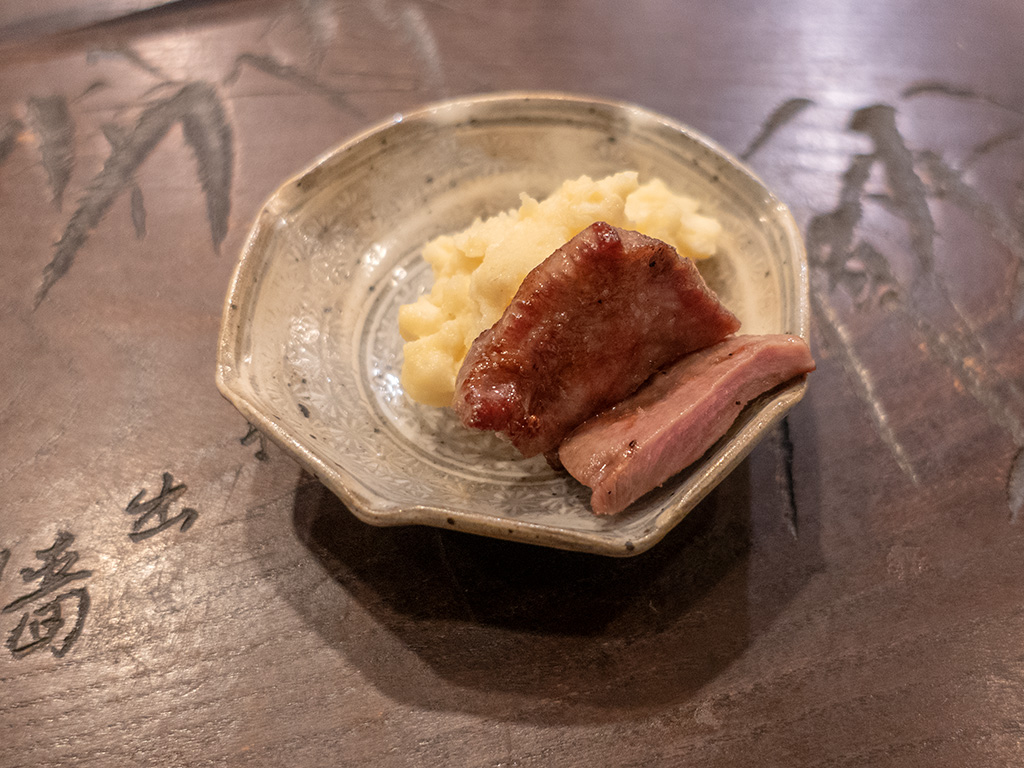
While we were enjoying the beef tongue, the chef grilled the scallops.
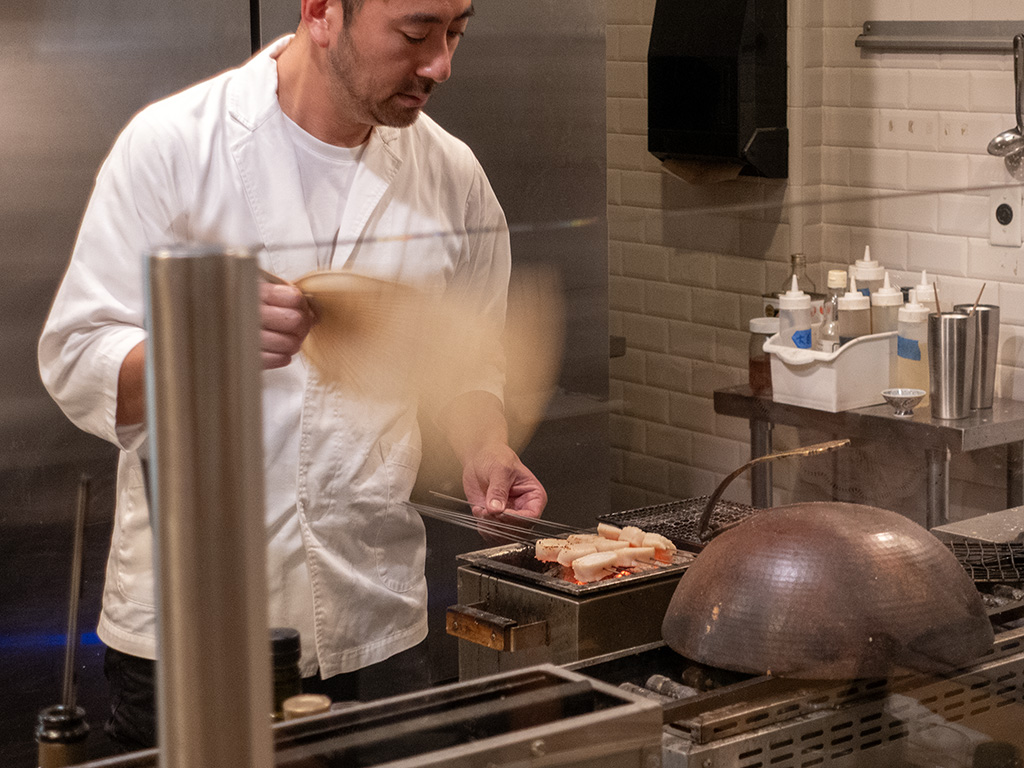
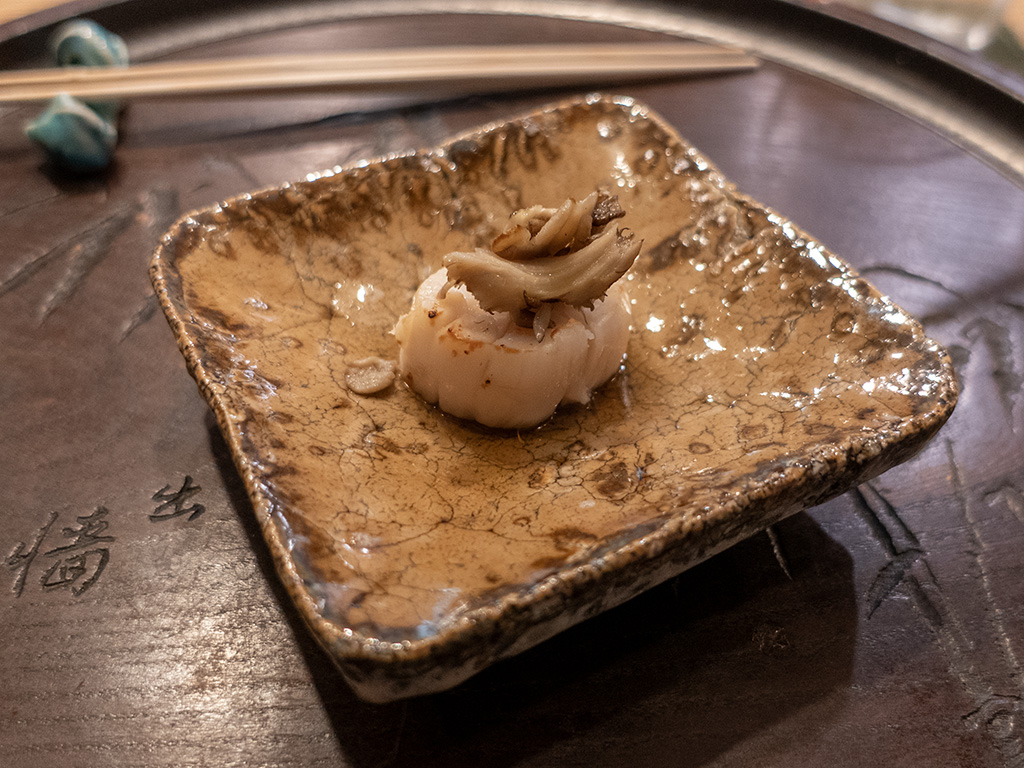
The scallop was served under some mushrooms. The scallop had the perfect consistency of tender and chewy, and the flavor combination of both the scallop and mushroom was complementary.
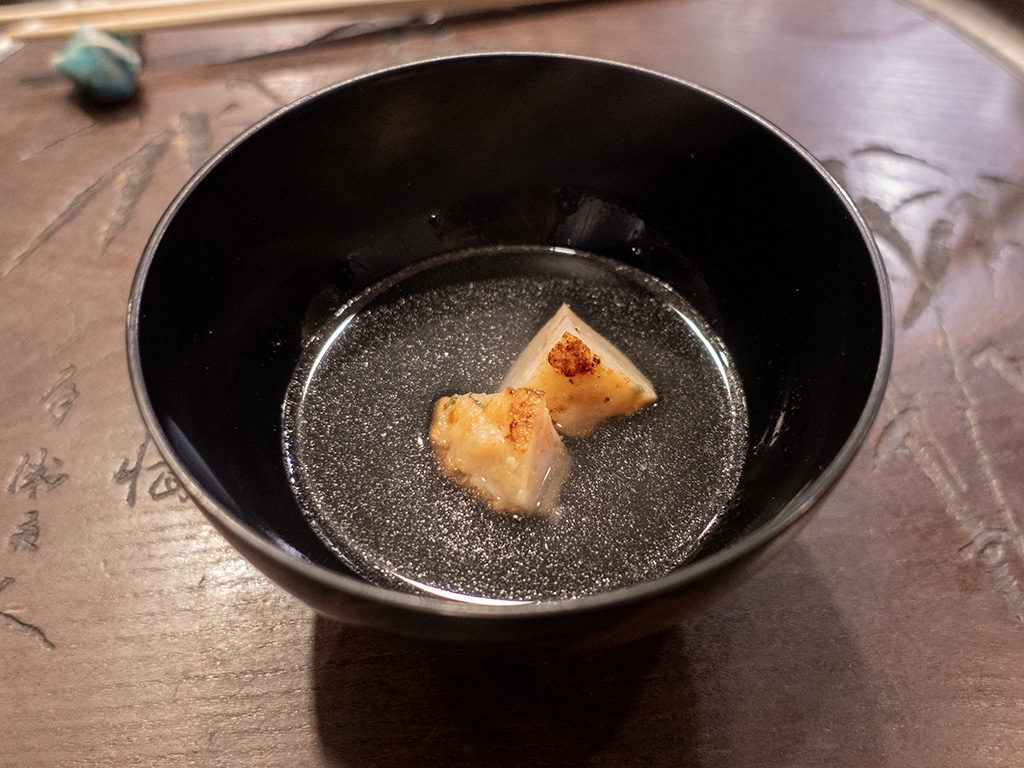
Next up was some broth. If I remember correctly, it was simmered with fish bones and other unused-but-still-edible fish products so it could extract all the rich flavor.
I don’t quite recall what the solid objects in the middle were made of, but the best way I can come up with to describe it was that they were “premium fish balls.” The consistency was that of ground and processed seafood, but the quality was as if it was just regular seafood.
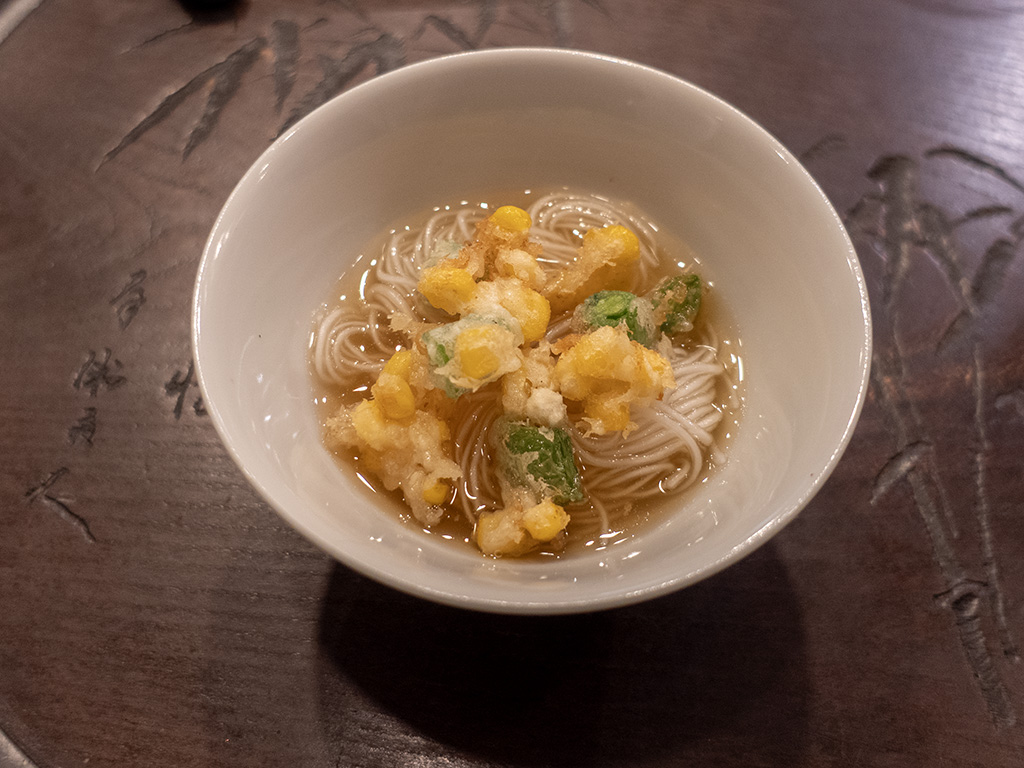
Afterwards, we got a small bowl of noodles. The noodles were cooked relatively firm, so there was still a bit of a resistant bite to them on the outside, and the inside was chewy. It was a very fitting texture for this cold noodle dish, and it also aligned perfectly with how I like my noodles cooked.
The soup was intensely flavorful, and the strength of it reminded me of an in-between of regular broth and dipping ramen broth. The tempura-fried vegetables served on top resembled the fried appetizer we had at the beginning of the meal.
When you go to a Japanese omakase restaurant, you generally expect to have a decent amount of sushi and sashimi. Thus, at this point of the meal, I was surprised that we hadn’t gotten any yet. Later on, I asked the waitress about the very low ratio of raw fish dishes to other dishes, and she clarified that they are not a sushi restaurant (and are simply a Japanese restaurant) because there is already a sushi restaurant elsewhere in the strip mall (and of course, Kojima’s tenancy reasonably comes with a non-compete clause).
However, this doesn’t mean that there are no fish or sushi-adjacent dishes. For the fish dishes that we did have, the chef was creative about making it so that it was actually a specialty dish and not just, for example, a piece of nigiri.
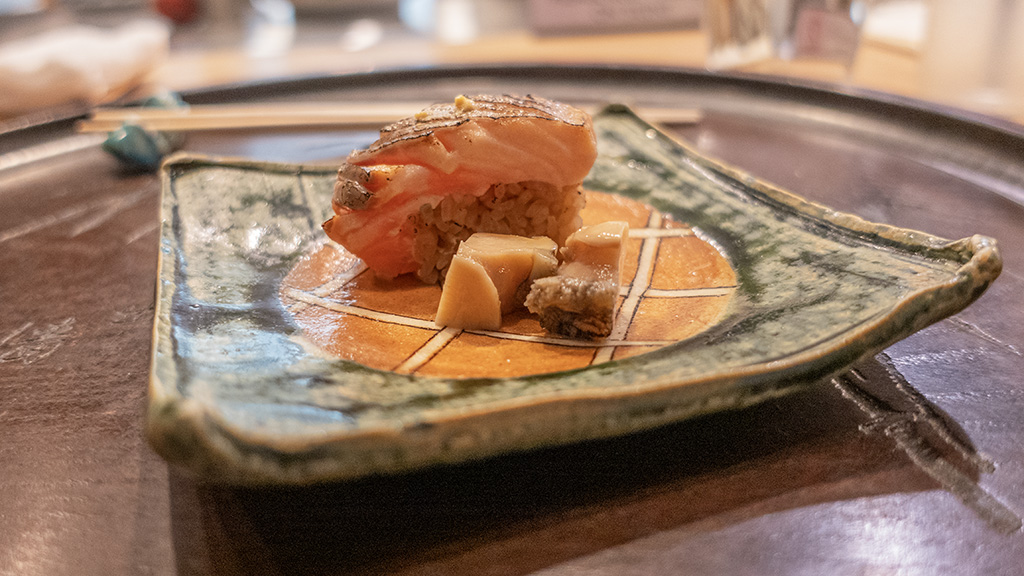
This next dish was a very thick piece of seared trout placed atop some brown rice and served alongside a few cuts of abalone. I approached this similarly to how I would approach eating nigiri, so I put the entire thing in my mouth. However, the portion size of the trout was so massive that I immediately regretted not just breaking the Japanese social norm of eating nigiri in one piece, and just biting it in half instead.
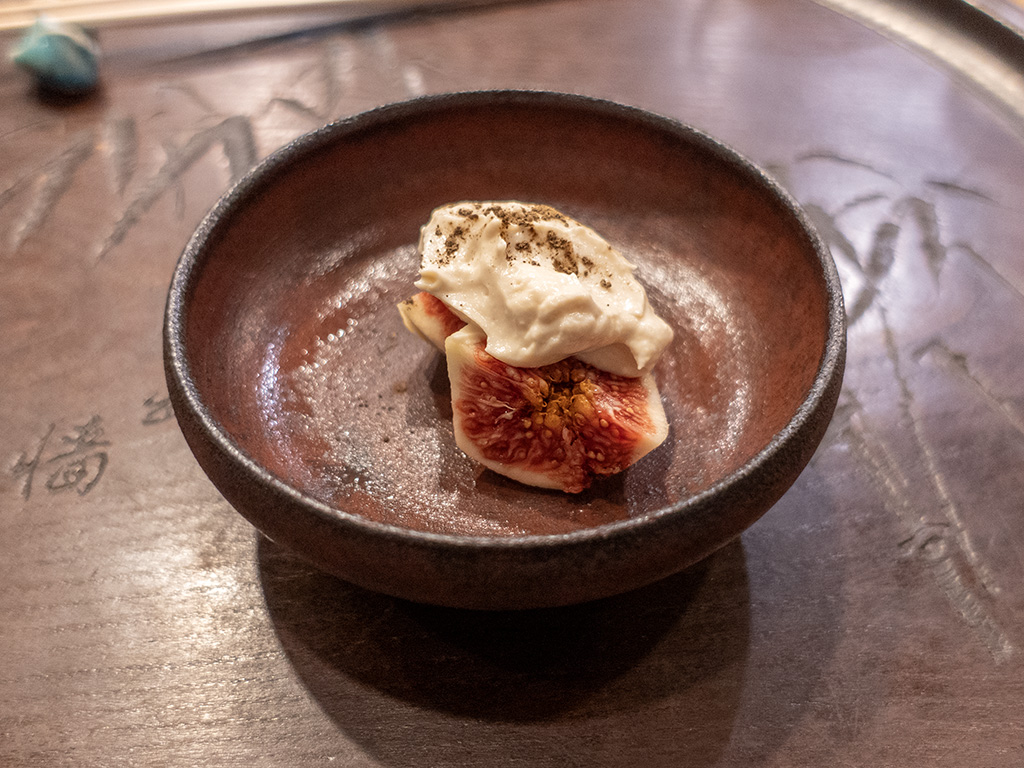
When this next small plate came out, I was concerned that the dinner might already be approaching its end, but luckily, this was just an intermission. As a palate cleanser, we received some fig with hojicha cream on top. It looks like it would be a good dessert, but it had very little sweetness to it, so it did indeed serve much better as an intermission dish.
In the meantime, the chef brought out a large portion of kinmedai, also known as splendid alfonsino.
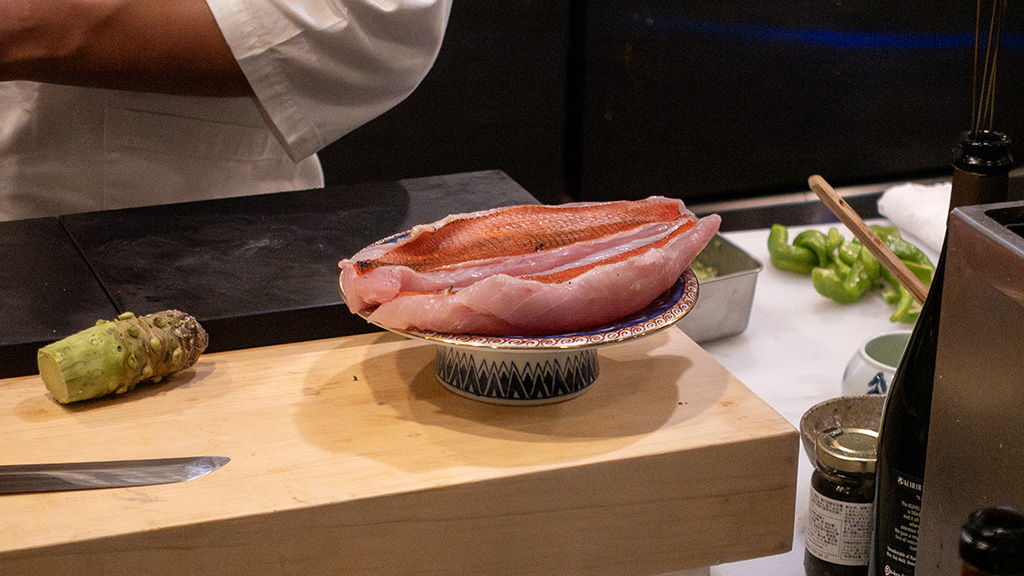
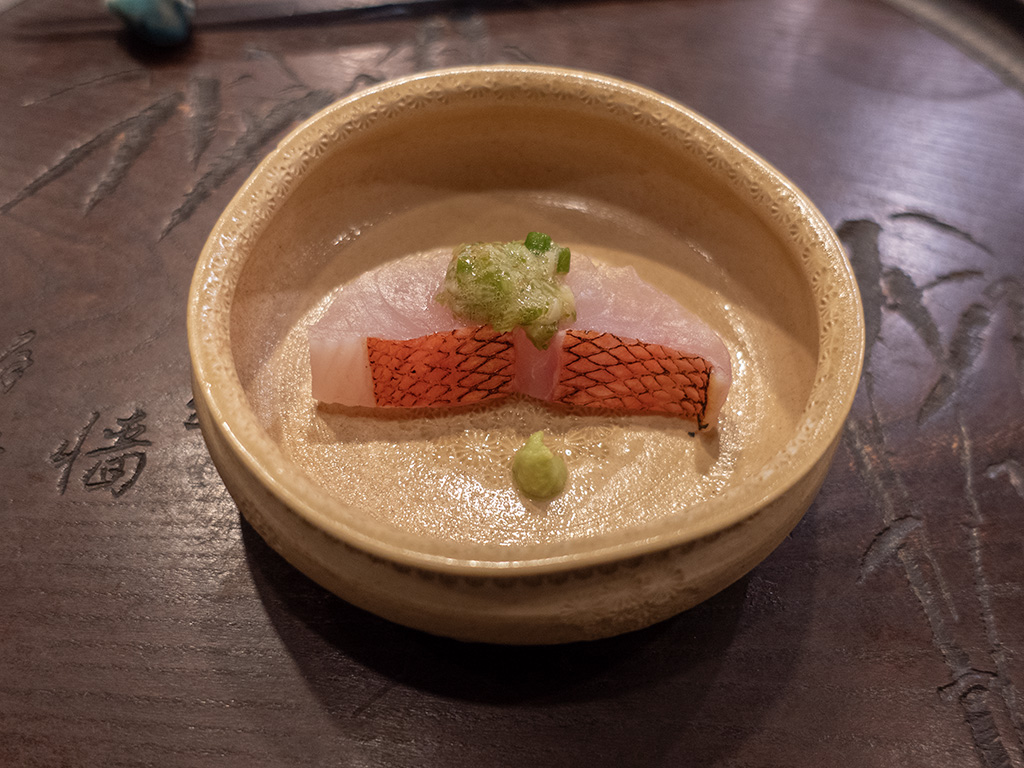
This was served as sashimi along with some freshly ground wasabi and some minced okra. I had never seen okra used like this before in combination with fish, and I appreciated being able to try a flavor profile that was completely new to me. The fact that there were no other garnishes or sides to go along with this meant that I was really able to focus in on the taste of the okra and kinmedai without any distractions, which I ended up liking a lot.
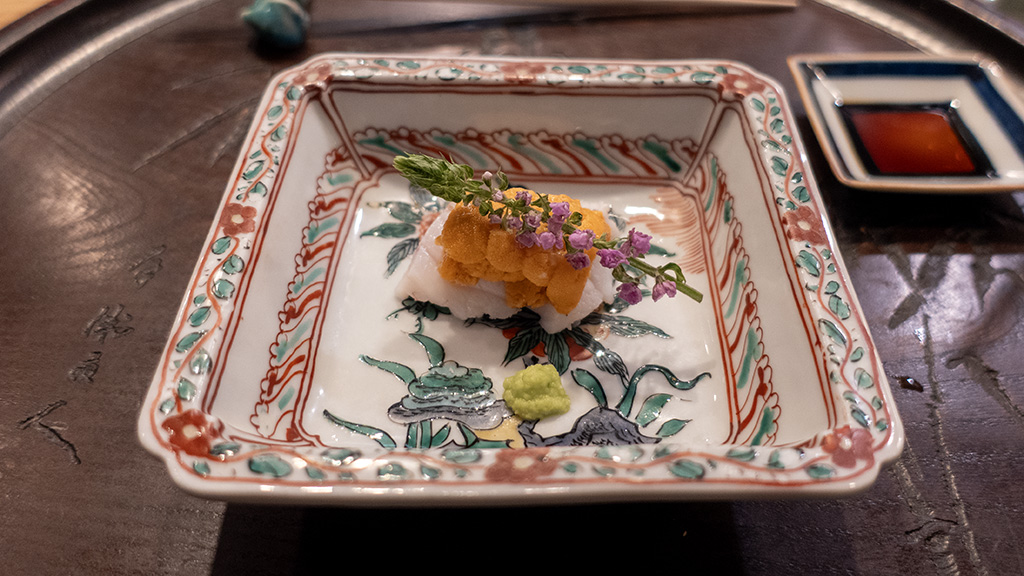
Next was some sea urchin, but instead of being served as gunkan atop some rice and wrapped with seaweed like it’s often found, this was served on top of some whitefish.
I am notorious for almost never using soy sauce with nigiri because I really like the original flavor of fish and rice, and if it’s not some kind of special-made soy sauce, then I think it too frequently detracts from the flavor profile such that it’s not worth the risk. However, upon the chef’s recommendation, I had this uni and whitefish combo with some of their house soy sauce. It was fairly light, so the extra saltiness helped enhance the rich flavor of the sea urchin.
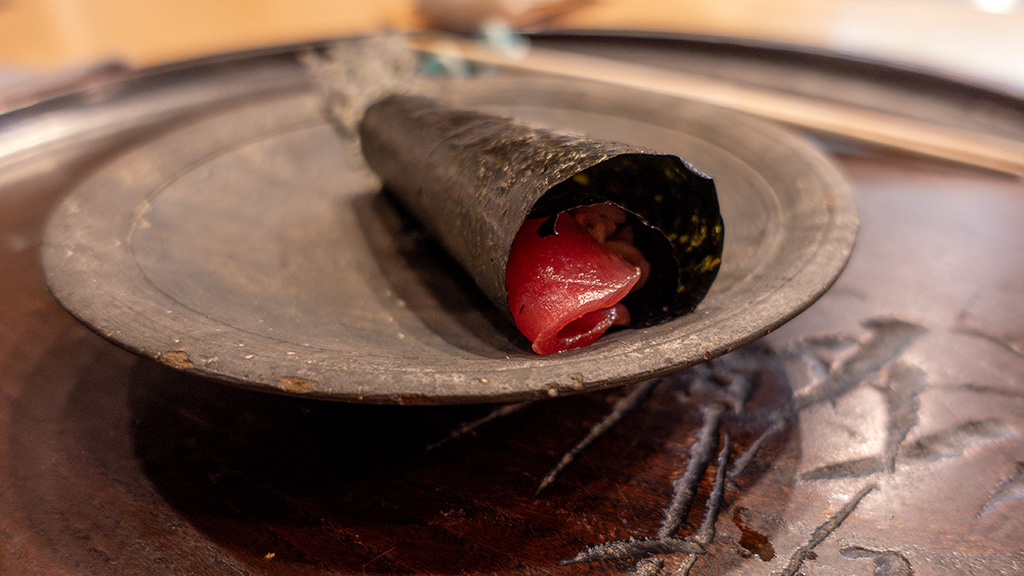
Afterwards, we were served a tuna hand roll. I don’t recall anything particularly remarkable about this (which, to be clear, is not always a bad thing). I think it was just simple and straightforward and didn’t stand out compared to all the other creative dishes of the omakase, but there was nothing wrong with it such that I would remember the tuna roll for any shortcomings.
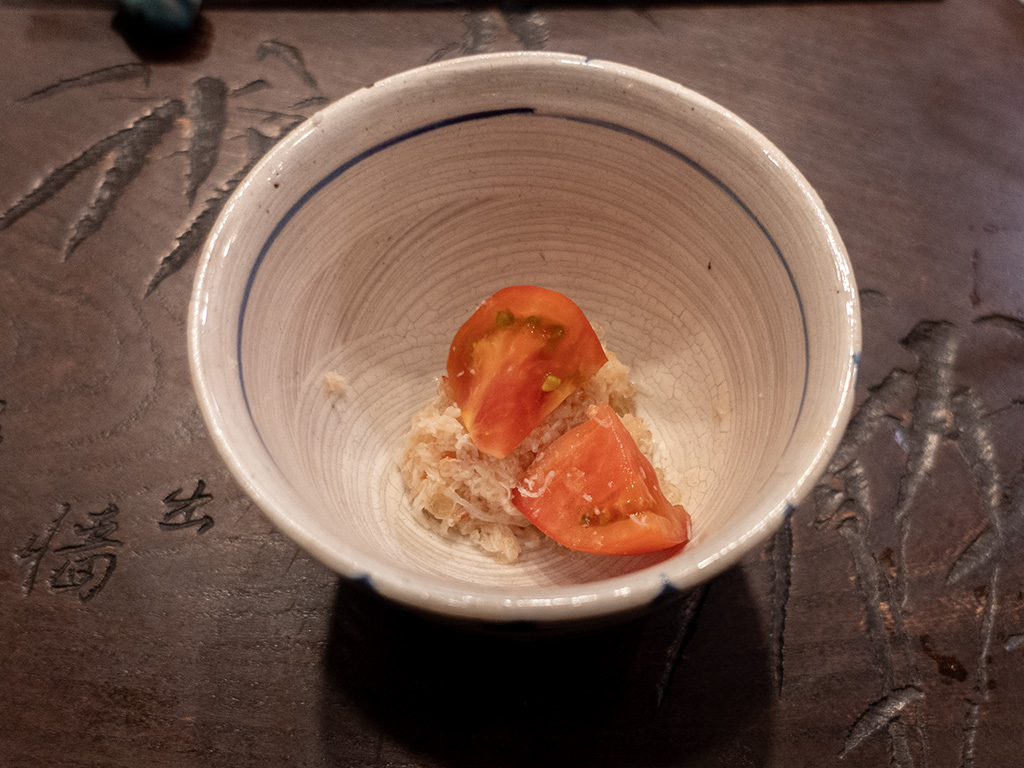
Next up was a bowl of crab and tomato. I often associate tomato as being prone to having an underlying sourness that needs other flavors to counteract it, but this tomato didn’t have much sourness to it and tasted refreshing. However, I’m not sure how or why this happened, but the crab seemed like it was somehow watered down a bit and wasn’t strong enough in flavor to properly complement the tomatoes.
As we were approaching the end of the night, the chef started preparing the grand finale dish.
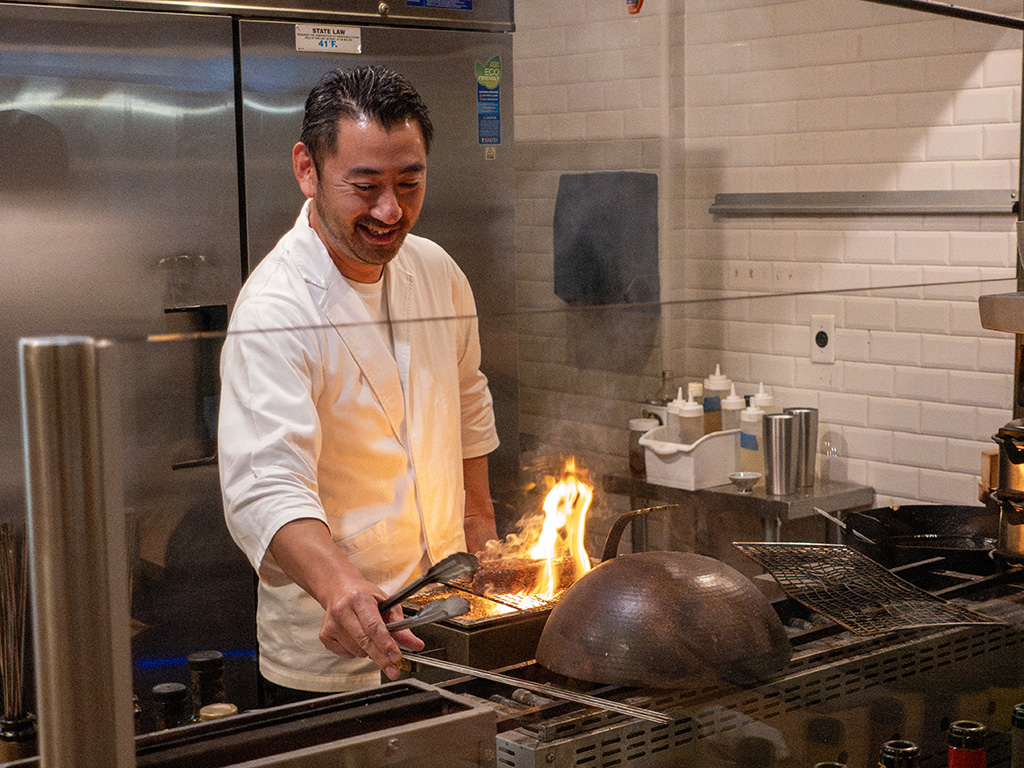
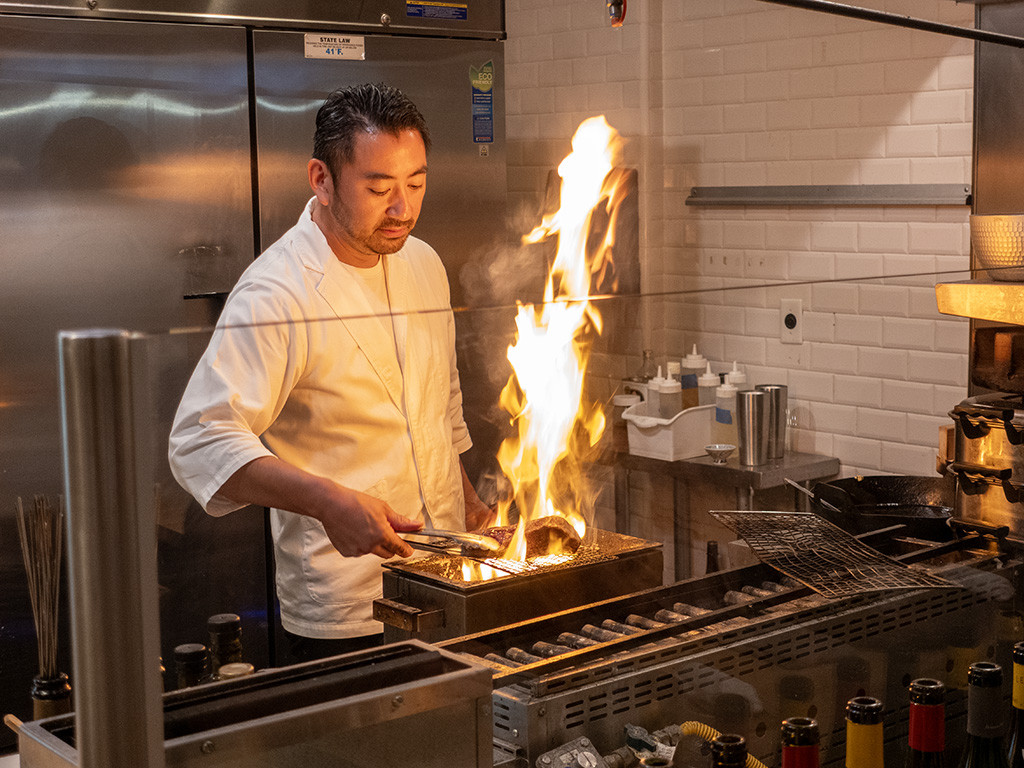
Thanks to my lucky seat, I had a great view of him grilling our wagyu beef. The grill didn’t flare up much when he was using it previously, but as expected, the wagyu created a nice spectacle due to the high fat content that rendered off and hit the flames.
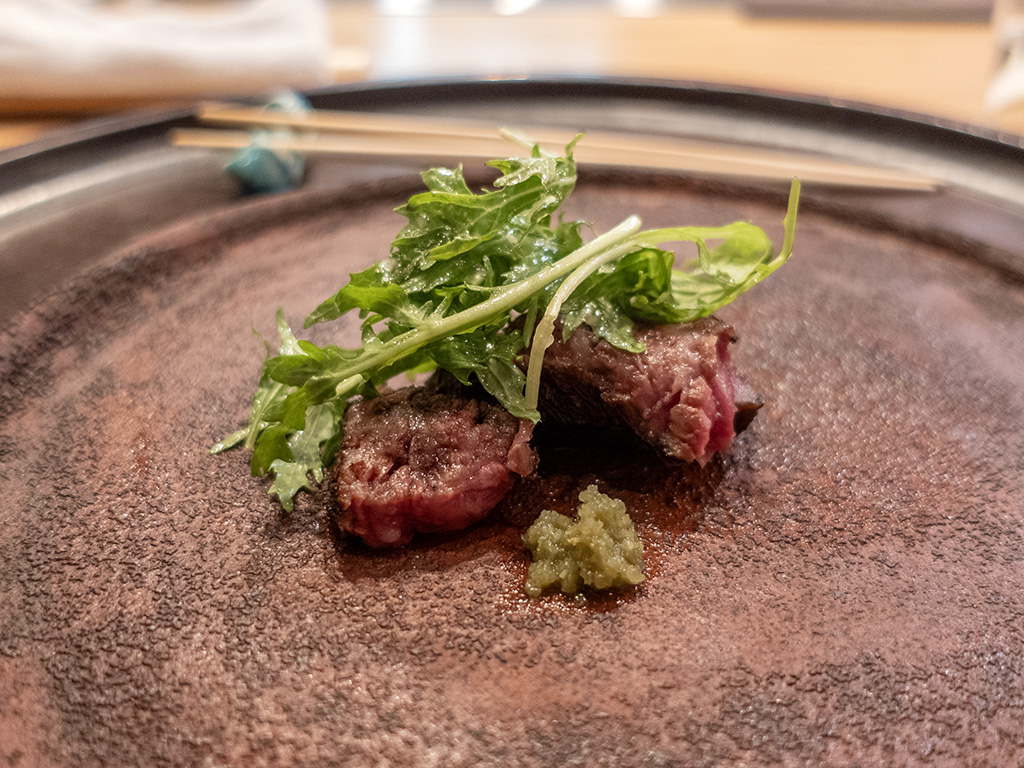
This is how the wagyu dish was served—a few slices of meat with some greens and garnish.
At this point, the chef had built up such high expectations for himself that I was hoping that something more interesting would’ve been done with this dish. However, there is also some rationale for serving this in a very simple way—it creates a stark contrast from and emphasizes the creativity of the previous dishes we ate, thus making us appreciate the prior dishes even more. With all that being said, the wagyu quality was fantastic, which is the most important part that actually matters.
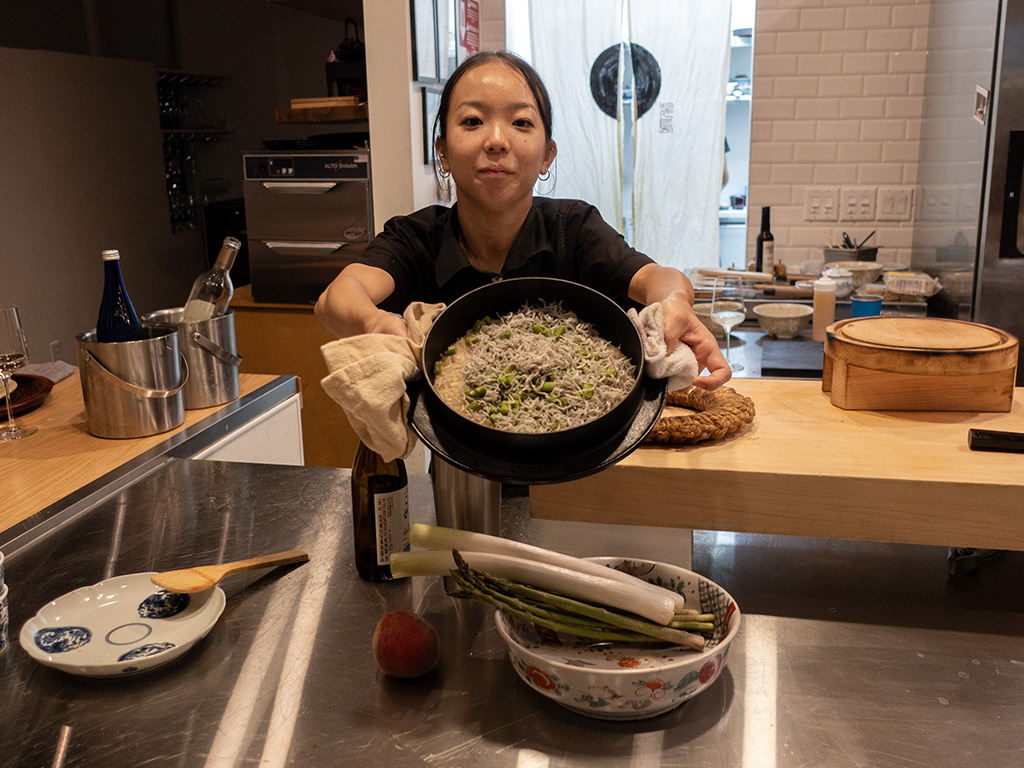
The last dish before dessert was some rice with vegetables and anchovies. The server showed us the full portion of rice inside the pot in which it was cooked.
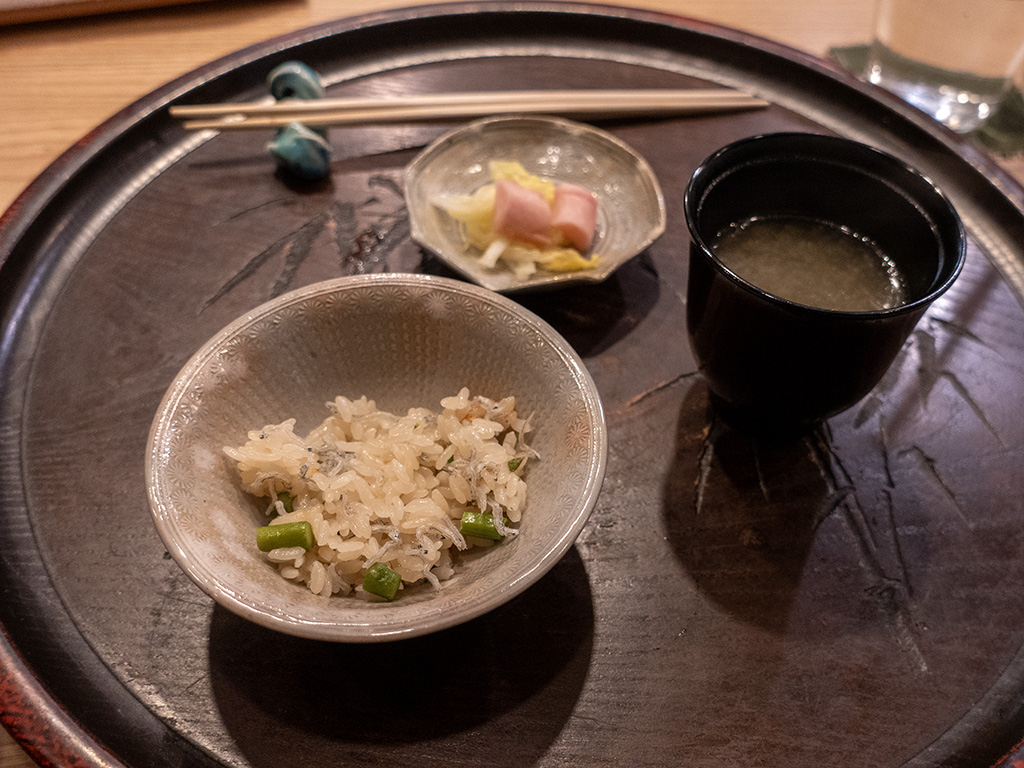
The rice came served alongside some pickled vegetables and some broth.
I’m a big fan of seafood in general, and that includes the small anchovies in the rice. When I was younger, I would snack on dried anchovies, but it’s been a really long time since I’ve had a properly-cooked anchovy-driven dish, so this rice was nice to have again.
That was a lot of rice cooked for just nine people, so I was able to enjoy a second serving of rice after everyone got their first portion.
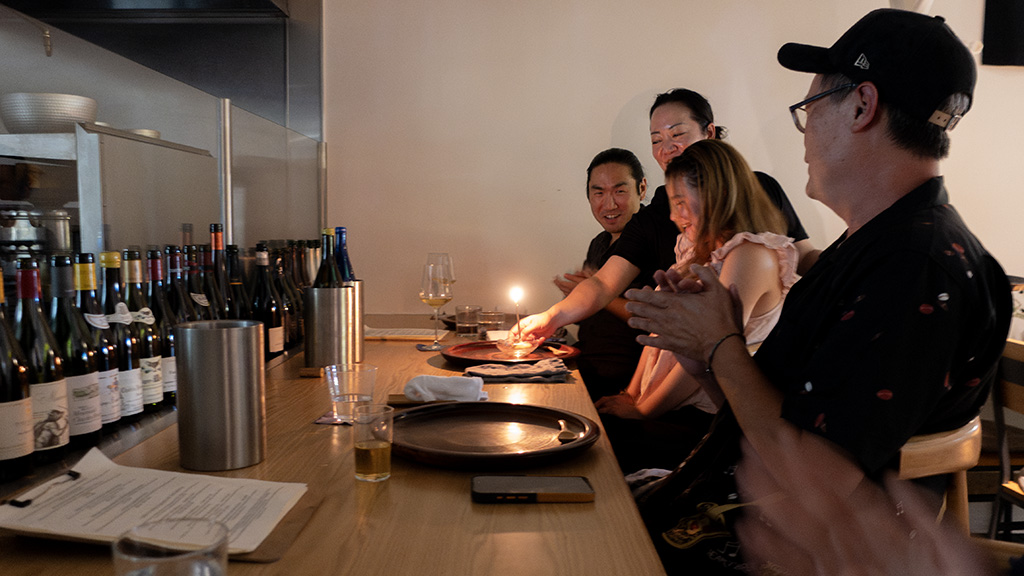
One of our fellow diners was celebrating her birthday, so when it was time for dessert, the restaurant staff brought out hers with a candle inside.
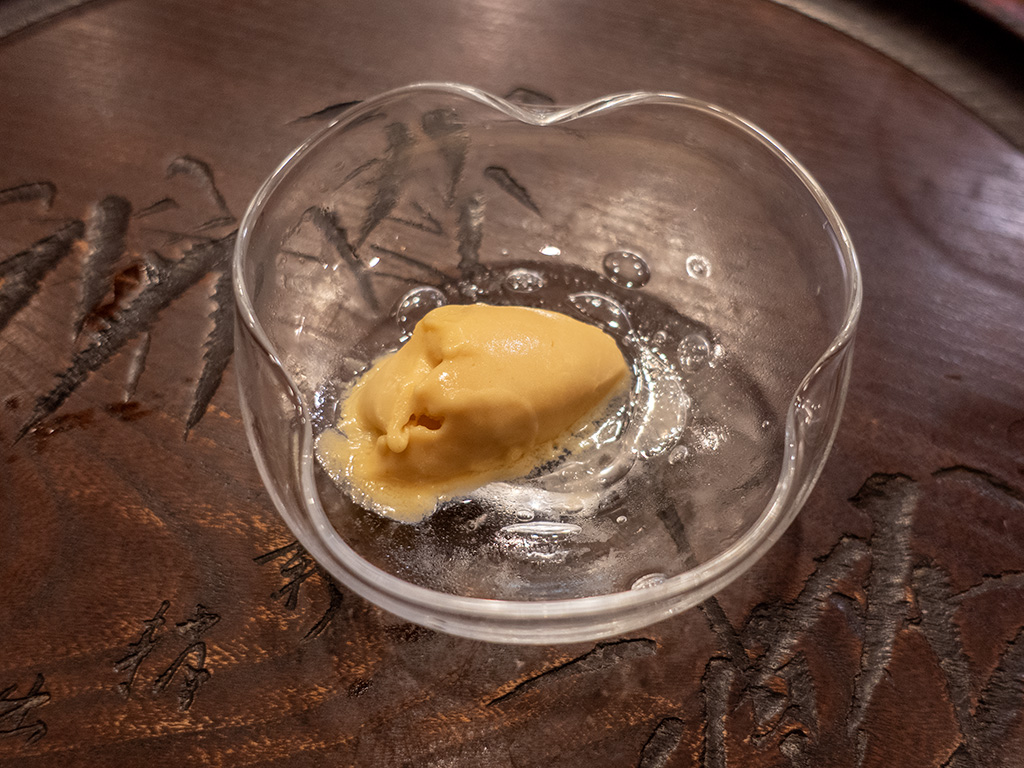
For dessert, we got a scoop of sorbet. As expected from a Japanese restaurant, it wasn’t excessively sweet, which I appreciated.
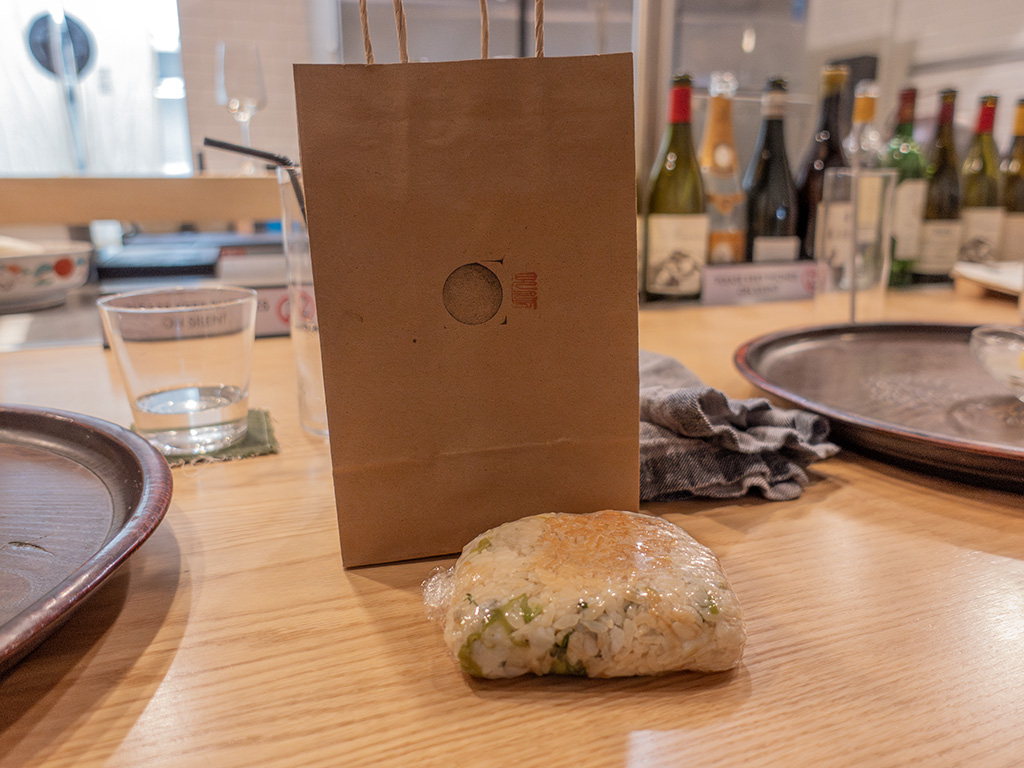
As a parting gift, we received some rice. Every solo diner received one bundle, and two women who showed up as a pair received one bundle each, but all the couples only got one to share. Unfortunately, it seems like the staff thought my friend and I were a couple, because they only gave us one. We didn’t bother asking for a second portion, and I gave the whole thing to my friend so she could bring it back home to her boyfriend.
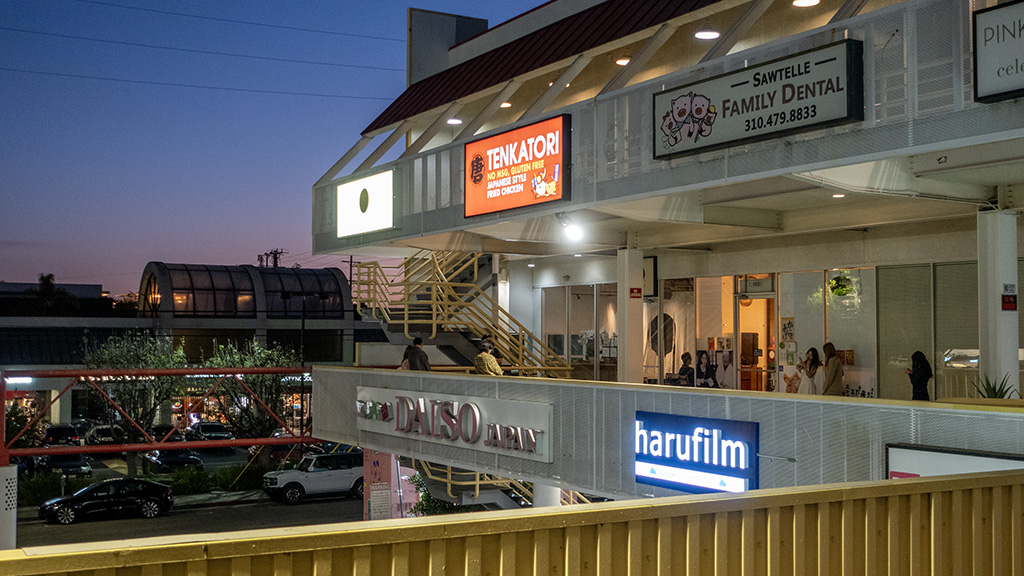
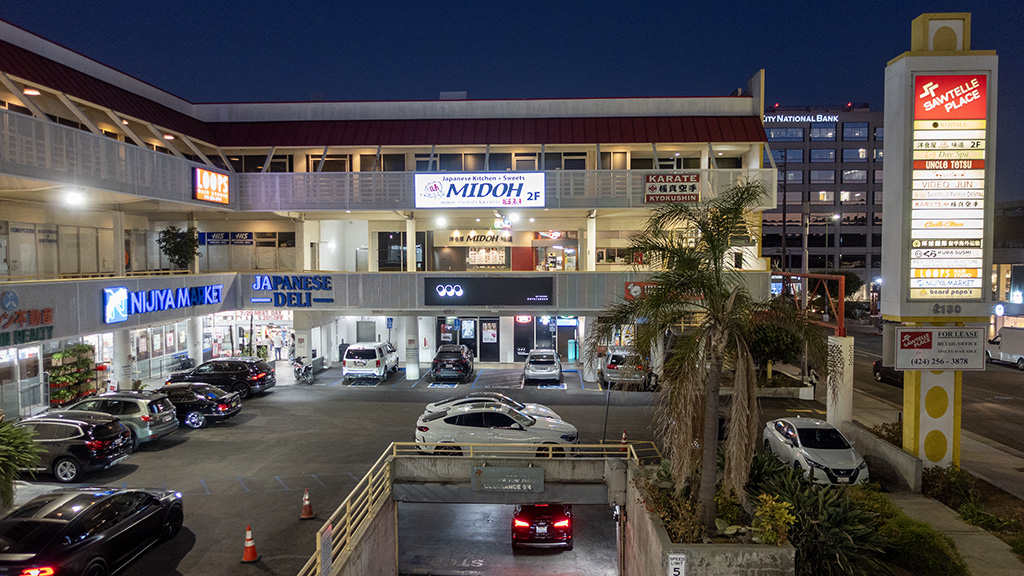
Here are some photographs of the outside of the restaurant. It’s located on the second floor of the strip mall, in the northwestern corner.
Parking is available in the underground lot for a small fee, but because our dinner went a little over time, the parking attendant went home before we were done, so there was nobody there to process the payment and we were able to leave the garage without paying.
| Omakase ×2 | $ 400.00 |
| Kimino yuzu sparkling juice ×2 | $ 14.00 |
| Service charge (15%) | $ 62.10 |
| Sales tax (9.75%) | $ 46.42 |
| Total | $ 522.52 |
A few quick notes about payment logistics: At the time of booking this reservation, there was a 50% required deposit on the price of the omakase, presumably to combat no-shows, which is obviously credited against your grand total once you finish your meal. Kojima bills a mandatory service charge of 15% in lieu of gratuity; because the service charge is included in the sales tax calculation, it becomes an effective ~16.5% addition to your check in exchange for being able to skip the tip.
As my friend mentioned, I’m not sure if the pricing on this is going to go up at any point in the near future or if reservations will become prohibitively difficult to secure, all due to receiving a Michelin Star. However, in its current state, I think the value you get during Kojima’s omakase experience is very reasonable.
The facet that makes me the most hopeful about the future of this restaurant is the fact that Chef Kojima continues to do his own thing and changes up the menu regularly to what he thinks is the best for his diners, without being influenced by external factors. His system is also great for repeat customers, and if a dynamic Japanese restaurant like this was in Las Vegas, I’d definitely become a regular there.
Overall, if a meal at this price point is within your budget, then I think Kojima is worth checking out.