I have an international trip coming up soon. While booking my flight, I wasn’t able to find any non-stop service to my destination out of my home airport of Harry Reid International Airport in Las Vegas, Nevada; rather than taking an itinerary with a layover, I decided to head over to Los Angeles, California ahead of time on my own to visit some friends for a little while before departing out of Los Angeles International Airport instead.
While in LA, I met up with one of my friends who had just gotten back from her own international trip. Her mom was in town too and had never dined at an omakase restaurant before, so we decided on going to Matsumoto together for dinner.
When I tried to book a reservation, I ran into some issues on their website. Rather than fighting with an online inanimate object, I decided to call the restaurant to see if they could just hold a reservation slot for me instead. The person who picked up the phone pretended like she was engaging in a conversation with me, but would answer my questions and statements with completely inapplicable responses and meaningless fragments. This would’ve been completely fine if she had just said that she doesn’t speak English—that isn’t an issue for someone running an authentic Japanese restaurant—but instead of disclosing her communication barrier, she just kept on pretending like she knew what I was saying. After I discovered that she was literally trolling, I bid her farewell and went back to the online booking system. I ended up resolving my problem by booking my reservation in two separate transactions.
Luckily, on the day of our dinner, everything went far more smoothly. I don’t know if the person who had previously answered the phone was there that day, but the service was great, both when we arrived and throughout our entire meal.
An overwhelming majority of the time, omakase restaurants I go to will charge a predetermined price for the meal. Sometimes, they will have different tiers of omakase experiences (i.e., starting with an entry-level tier with more basic sushi, all the way up to a very premium tier that has more desirable cuts of fish), but ultimately, you know what you’re getting yourself into before committing to the meal.
Matsumoto, on the other hand, left the omakase completely open-ended. Rather than charging a “bulk,” “discounted” rate for getting the full omakase, they basically charged everything a la carte. The reason I know this is because, when we received our check at the end of our meal, every single piece of nigiri we ate was itemized out with its associated price (which I will share throughout my blog post). This is obviously less optimal in terms of the cost-to-value ratio, but on the other hand, it allows for the maximum possible amount of customizability for your meal.
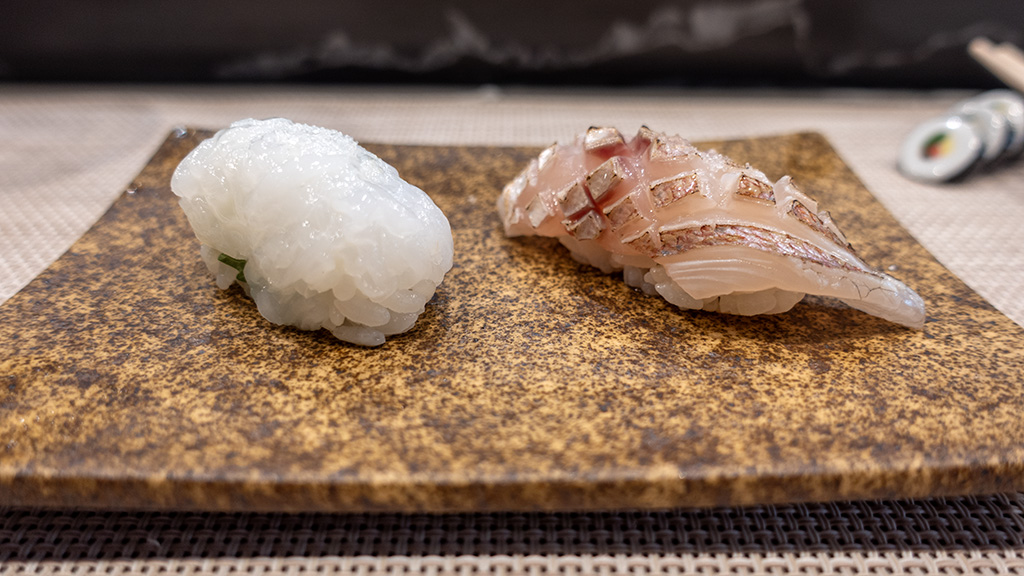
The nigiri came out in sets of two. For our first plate, we got bigfin reef squid (aori ika) atop a shiso leaf for US$9.00, and young sea bream (kodai) for US$7.00.
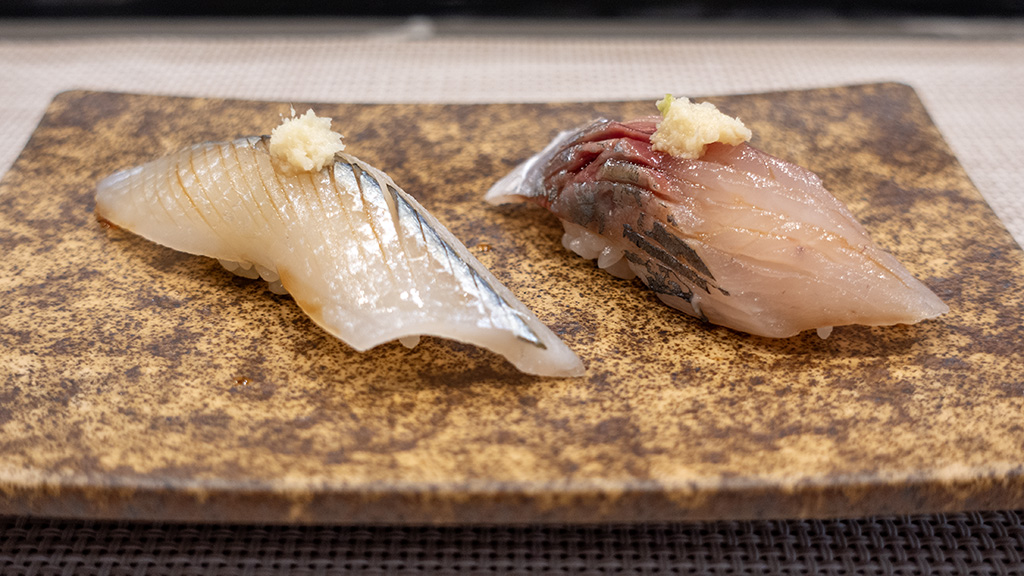
Next was Japanese halfbeak (sayori) for US$9.00, and horse mackerel (aji) for US$7.00.
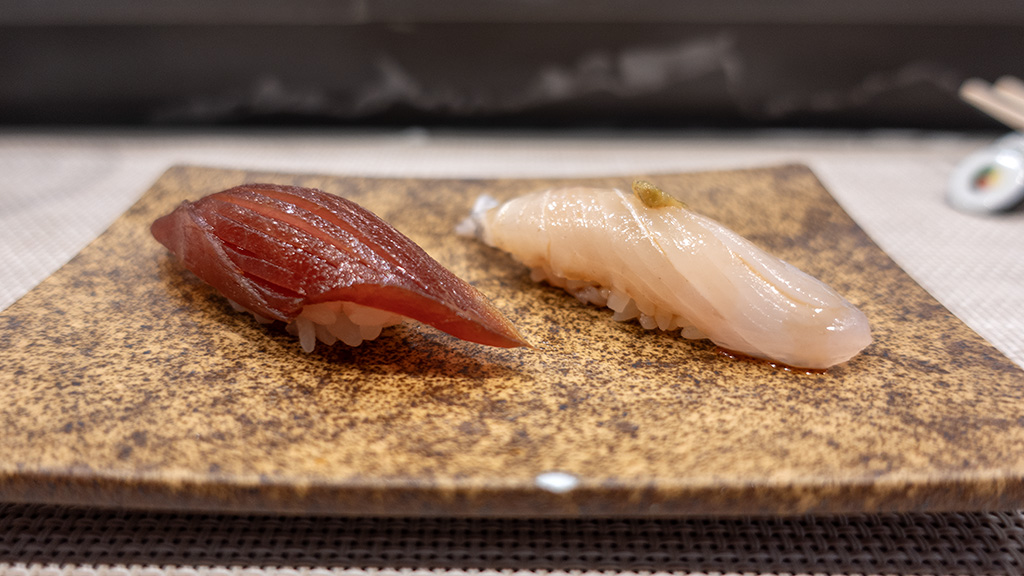
Following that was soy-marinated tuna (zuke maguro) for US$9.00, and greater amberjack (kampachi) for US$6.50.
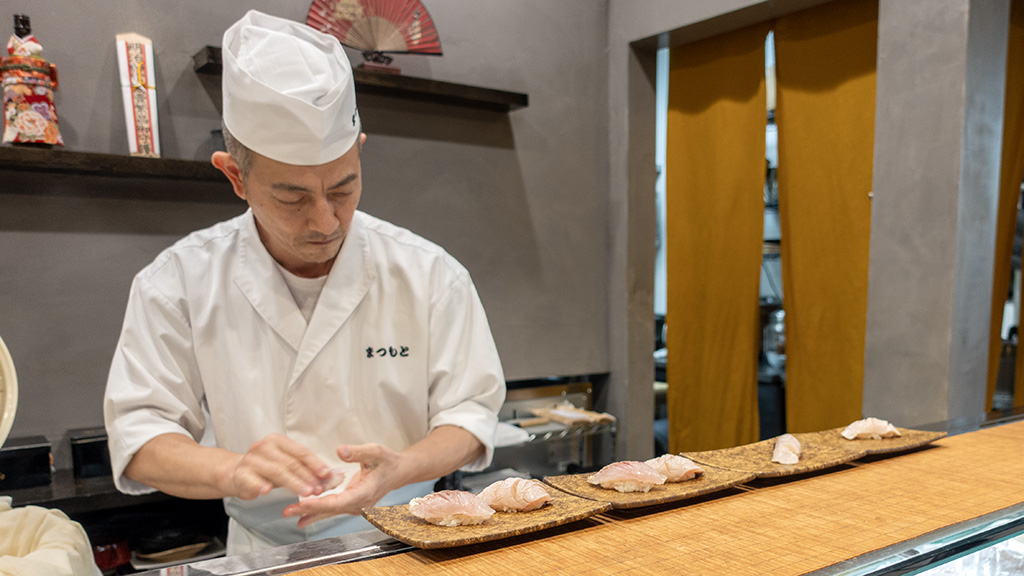
This was a traditional omakase experience at the restaurant’s sushi bar, which meant that we were able to watch the chef prepare our dishes throughout our meal.
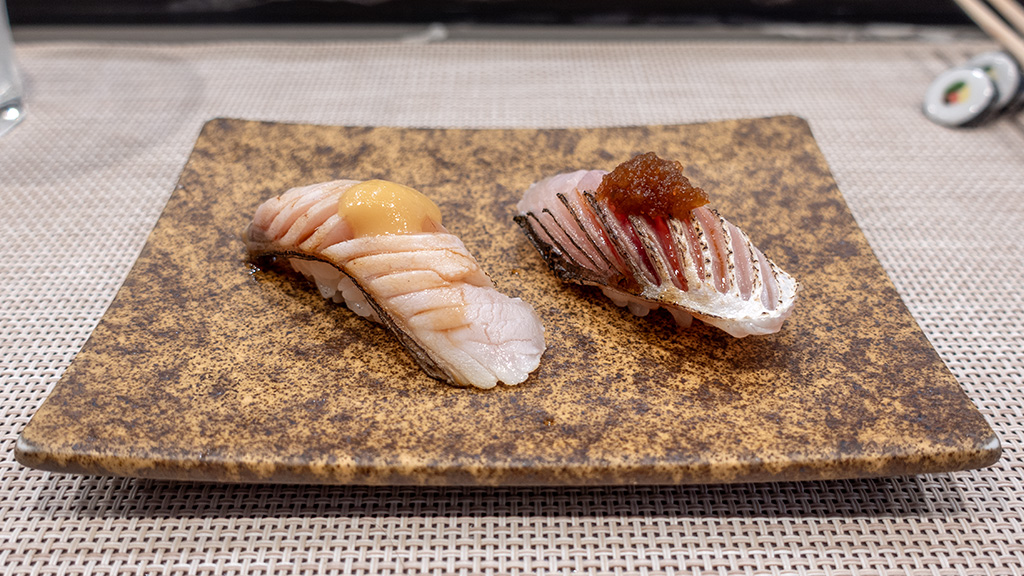
Next was Japanese Spanish mackerel (sawara) for US$7.00, and Japanese barracuda (kamasu) for US$8.50.
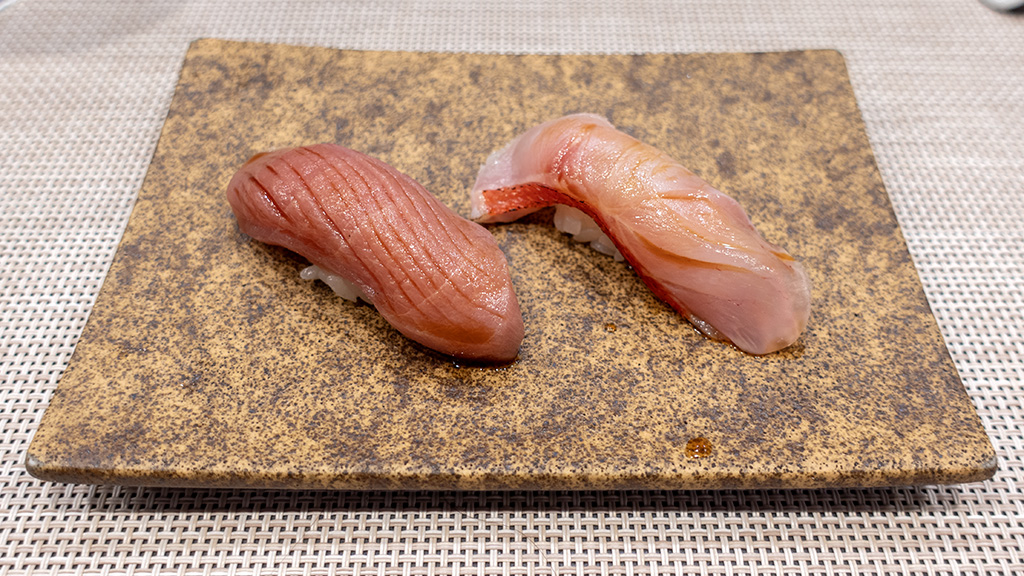
The subsequent plate had medium-fatty tuna belly (chutoro) for US$11.00, and golden eye snapper (kinmedai) for US$9.50.
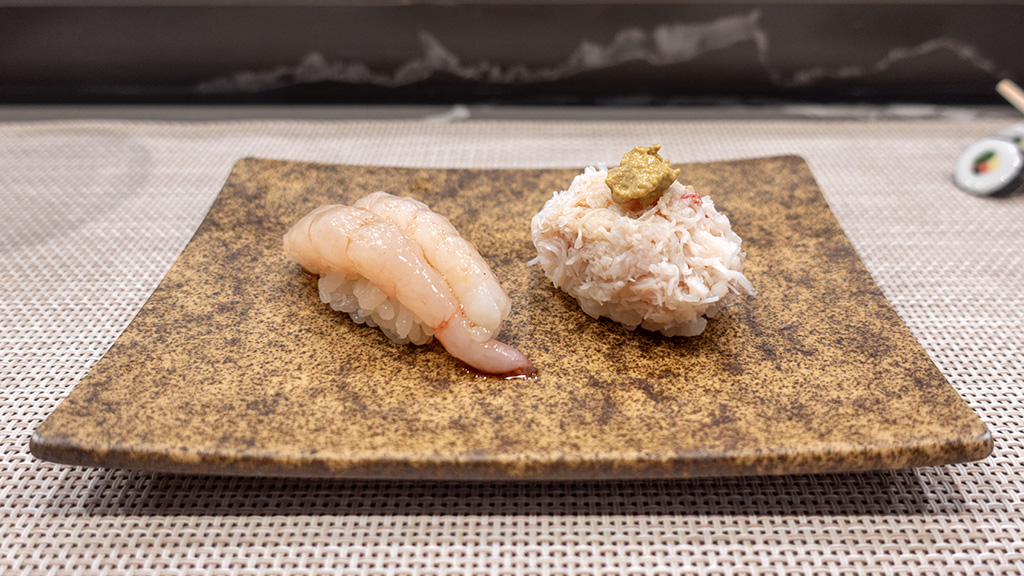
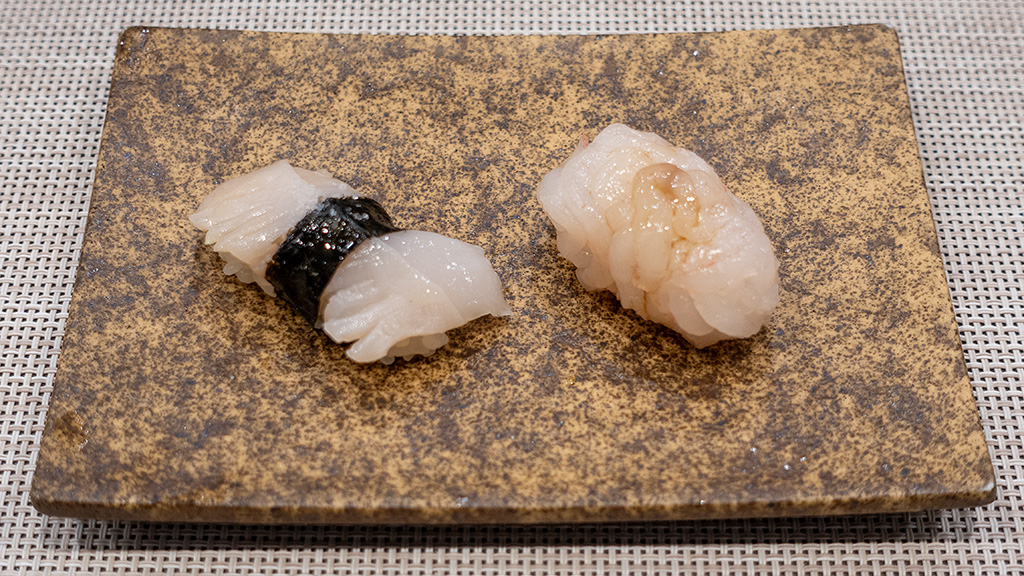
Afterwards, we got sweet shrimp (ama ebi) for US$11.00, and horsehair crab (kegani) for US$12.00.
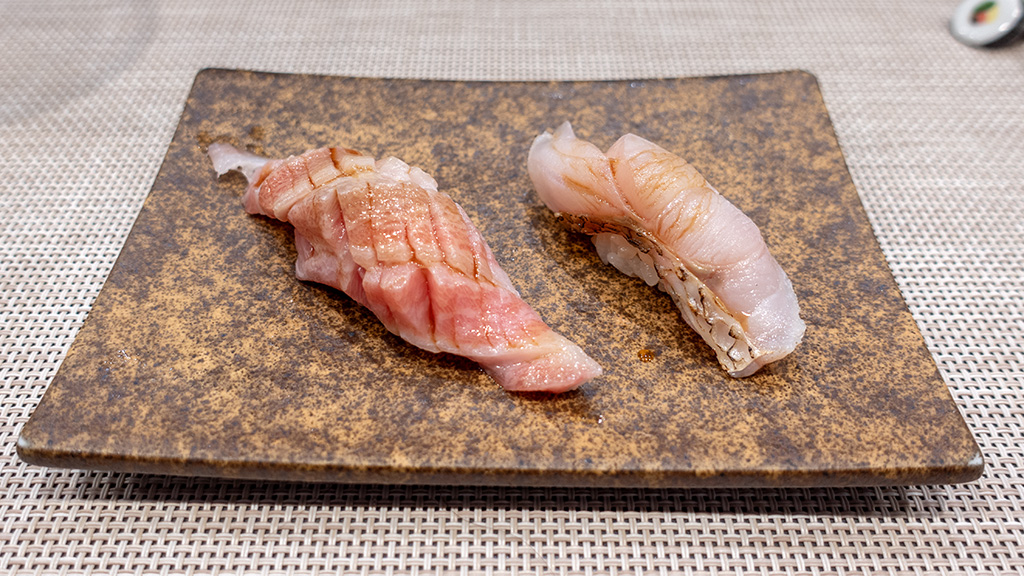
Our second-to-last plate of the regular omakase had extra-fatty tuna belly (otoro) for US$13.00, and blackthroat sea perch (nodoguro) for US$12.00.
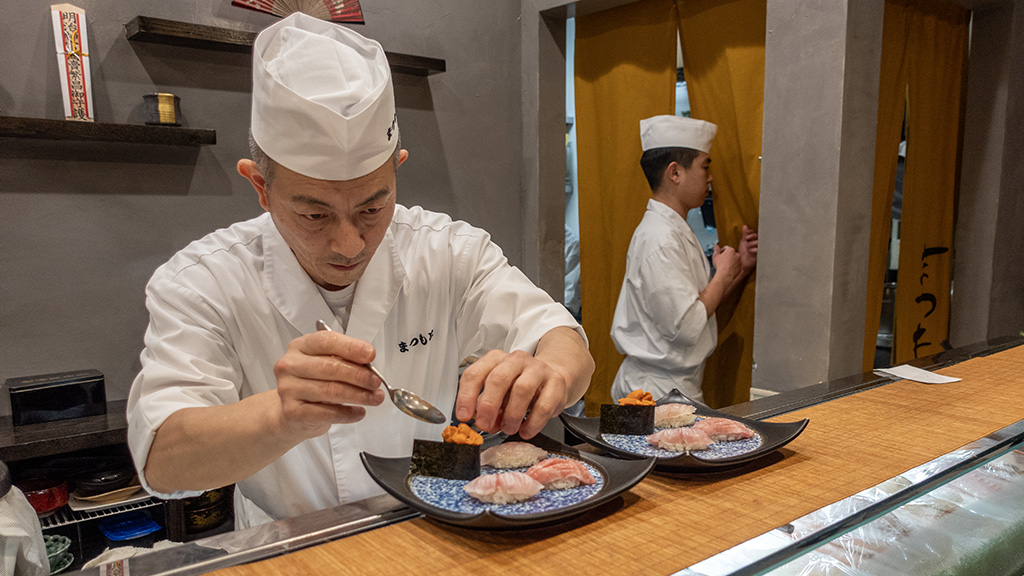
Here is a shot of the chef preparing the final pair of the regular omakase.
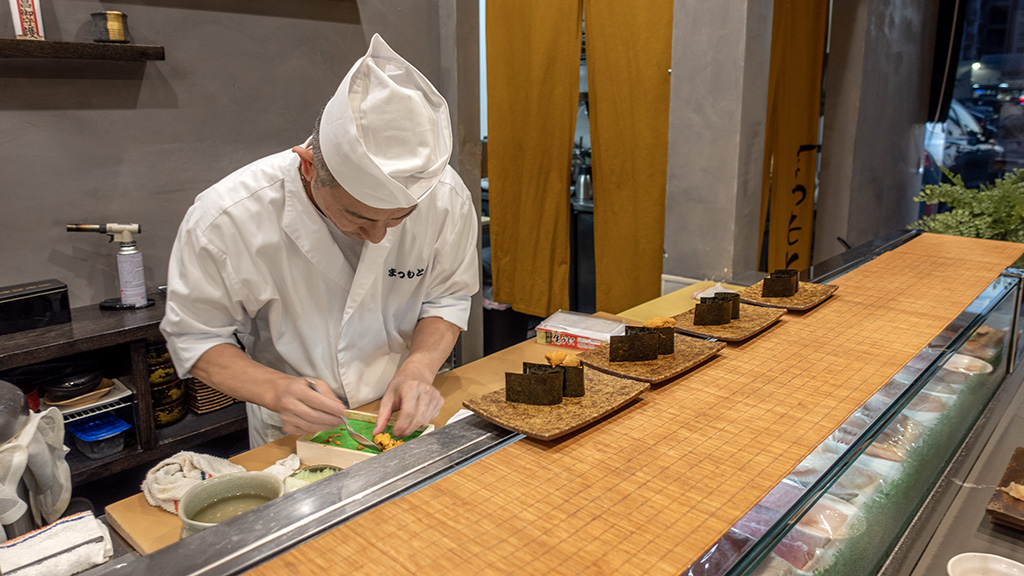
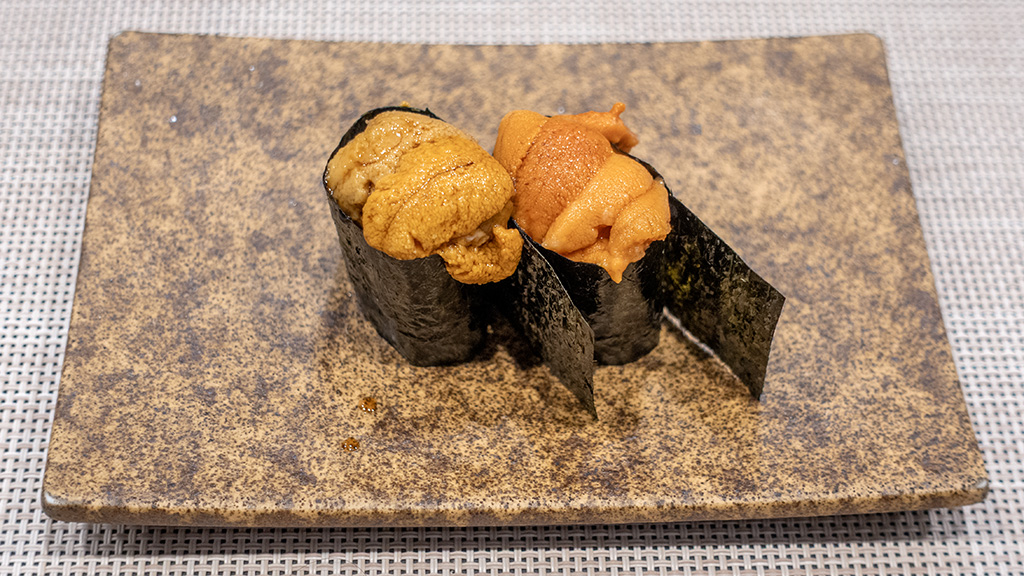
Our final plate consisted of two types of sea urchin (uni)—Bafun for US$17.00, and Mursaki for another US$17.00.
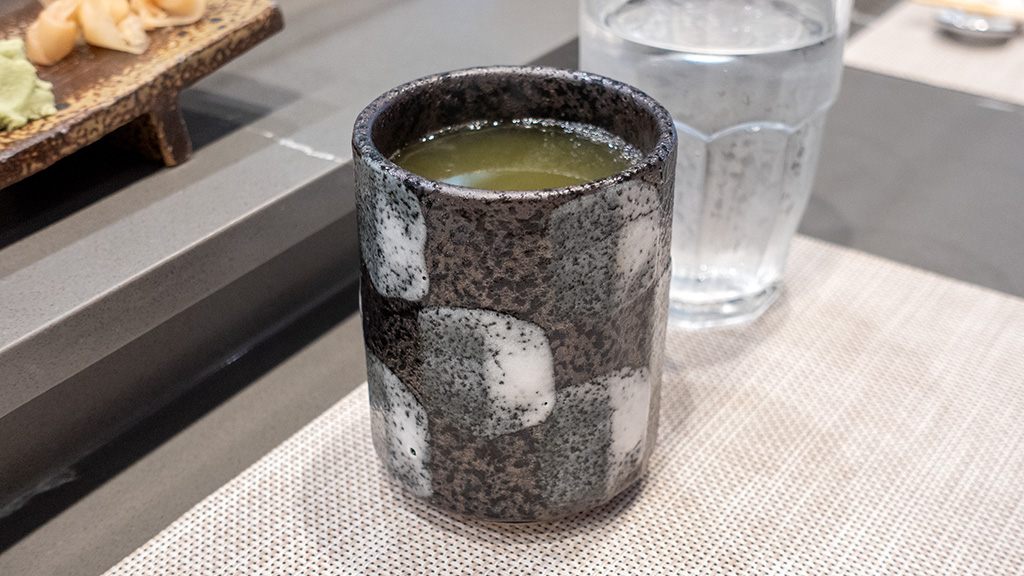
I’m a fan of colder beverages, but my friend likes to get hot tea whenever we go to a Japanese restaurant; this was her hot green tea, for US$3.00.
By this point, if you’re either familiar with sushi restaurants or have read a lot of restaurant reviews on my blog, you might have noticed that the fish we got served was fairly uncommon and unusual… which was one of my favorite things about the meal. As you can see, Matsuomoto did not serve any of the basics, i.e., no salmon, no yellowtail, and no lean tuna. All basics-adjacent fish was prepared in a way that was special, such as the fleshy tuna (akami) being soy-marinated, or the shrimp being sweet shrimp (ama ebi) instead of regular shrimp (ebi). This meant that I was able to eat an amazing variety of fish, some of which I had the opportunity to try for the very first time.
From here, we had the option of ending our meal or continuing. Each piece of nigiri was designed to be eaten in one bite, so we technically only had 16 “bites” of food so far. Although I was satisfied, I wasn’t anywhere close to full. I was having so much fun seeing so many intriguing different kinds of fish and trying new flavors that I told the chef I was happy to continue for at least a few more plates.
Our first bonus plate had jumbo clam (mirugai) for US$12.00, and baby white shrimp (shiro ebi) for US$11.00.
That was followed by kelp-cured Japanese horsehead tilefish (amadai kobujime) for US$8.50, and Pacific saury (sanma) for US$7.50.
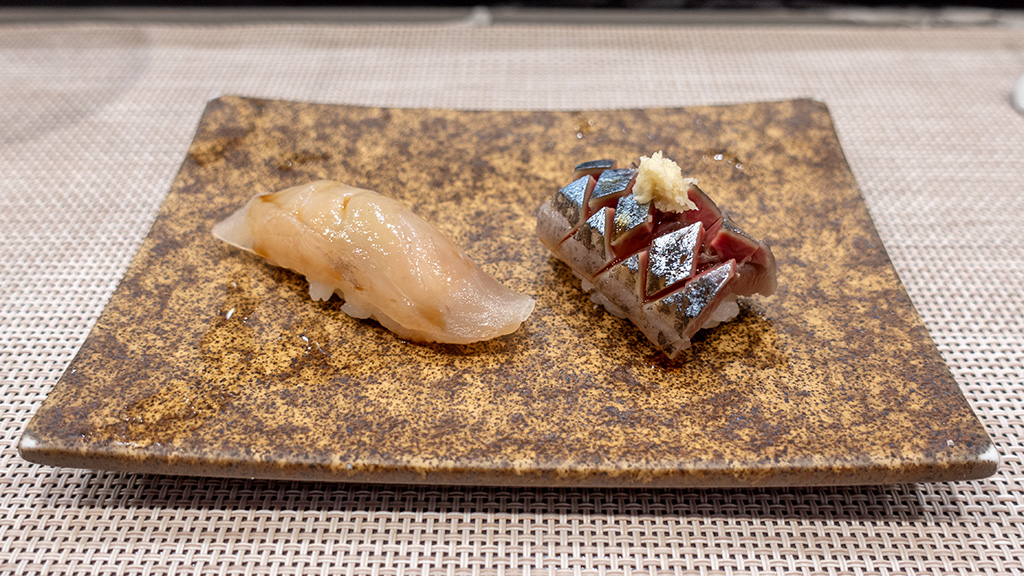
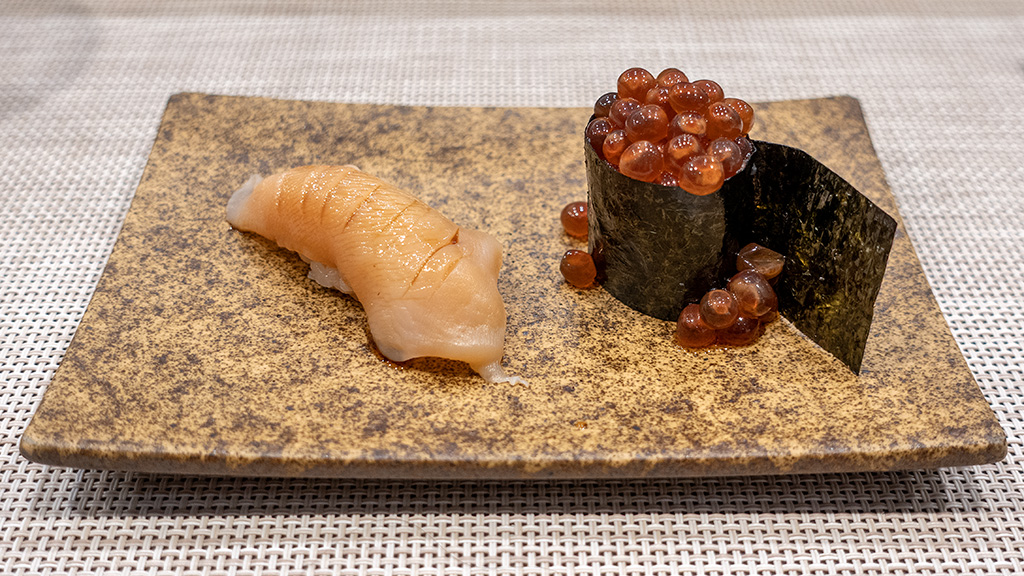
Our actual final sushi plate of the meal had round clam (aoyagi) for US$9.00, and marinated salmon roe (ikura okizuke) for US$7.00.
As our meal came to an end, our chef began focusing on other diners. Here is a shot of him preparing a plate for some people seated at the tables behind us.
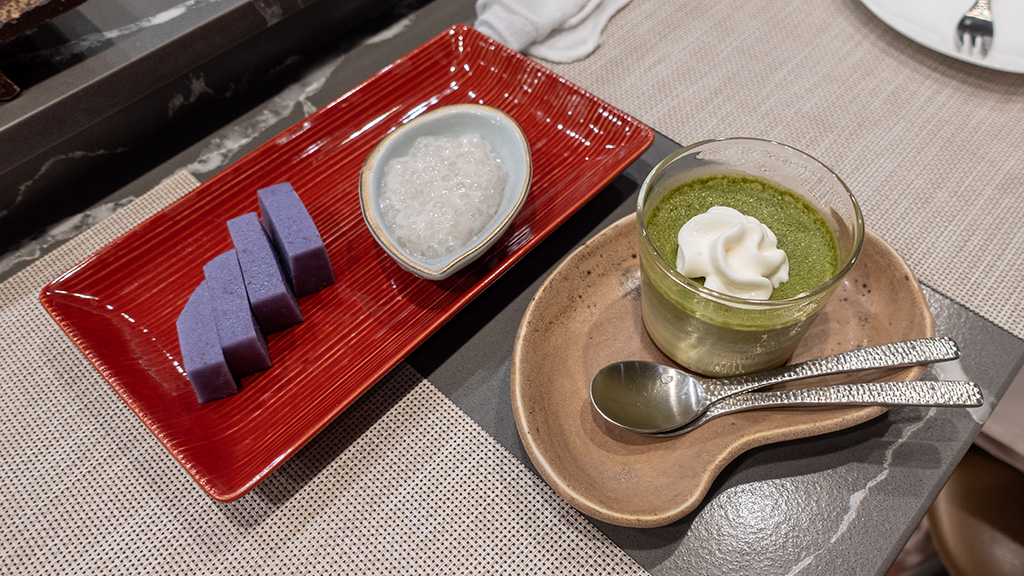
For dessert, my party shared one purple yam Yōkan for US$7.00, and one matcha pudding for US$9.00.
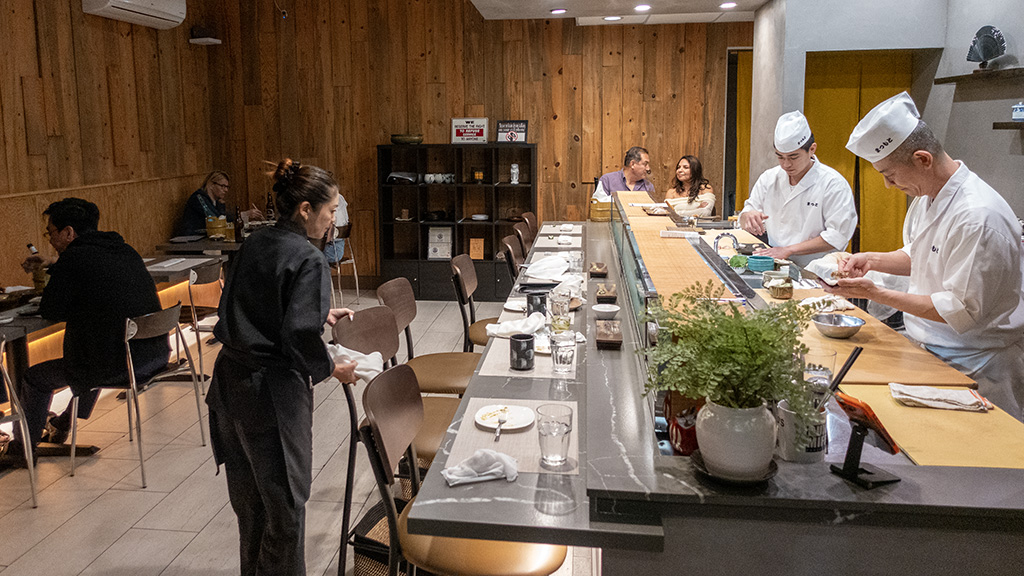
After finishing our meal and prior to departing, I snapped a photograph of the interior of the restaurant.
Cost-wise, this was a bit on the pricier end—just the 22 pieces of sushi came out to US$220.50 per person, excluding dessert, tax, and gratuity. With that being said, I’m very glad I got a chance to dine at Matsumoto because it exposed me to a lot of new types of fish that I think I otherwise would not have been able to try at other restaurants. The fact that sushi is my favorite food and I have gone to a lot of different sushi restaurants nationwide, yet still tried some cuts of fish at Matsumoto for the first time ever, should be a good indication of how unique of an omakase experience it provided.
I think if you’re relatively new to sushi, there are other restaurants that will offer much better value for your money by way of lower prices and larger portion sizes with comparable fish quality. However, if you’ve already been to a lot of sushi restaurants and are hoping to experience something fresh and novel, I think Matsumoto is definitely worth considering if you happen to be around the Koreatown neighborhood of Los Angeles.