After finding it on a list of recommended and relatively new tasting menus in the Las Vegas Valley, I decided to dine at A Different Beast, a Spanish restaurant in the Chinatown neighborhood of the unincorporated town of Spring Valley. I opted for their ten-course chef’s tasting menu without the wine pairing.
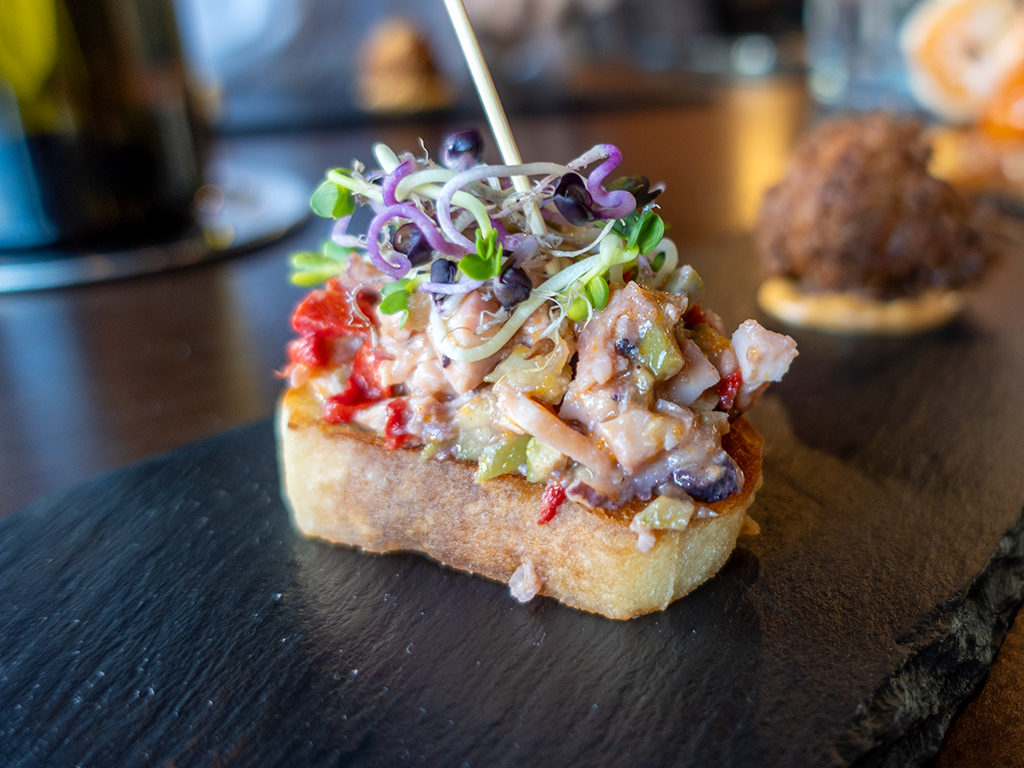
The tasting menu started with the pintxos trio. The first item was octopus tapenade with Ibarra chili, piquillo pepper, and house-marinated olive.
I couldn’t really distinctly identify the octopus flavor in this; instead, it tasted more like a seafood and vegetable mixture. It had a good balance of savoriness and tartness, and the texture of the bread was firm enough to hold everything up, yet still delicate enough to be soft.
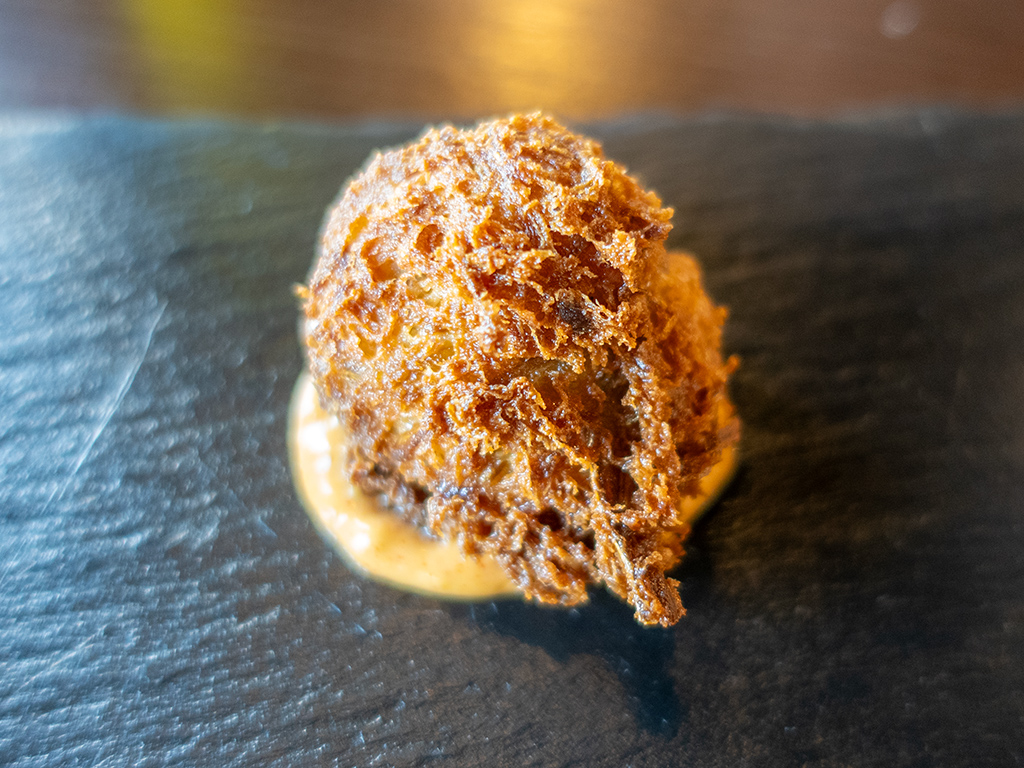
The second was buñuelo de alcachofa atop some Ibarra amarillo aioli.
I think this was a little bit too fried for my personal preference. Flavor-wise, I still thought it was fine. However, texture-wise, it was very fun to eat—it had a nice balance of both crispiness and softness.
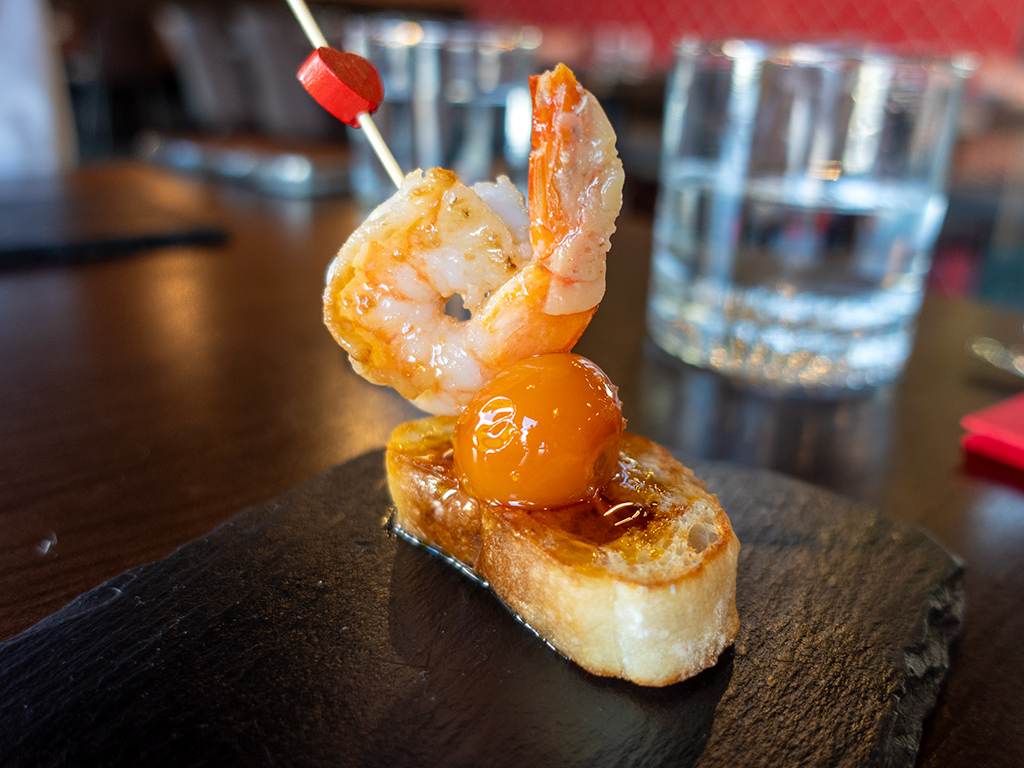
The third small bite of the trio was seared gamba with confit cherry tomato and paprika vinaigrette.
This was fantastic. The shrimp was tender and had the perfect amount of intensity of flavor; the cherry tomato was mild enough that it didn’t overpower the shrimp, yet wasn’t so mild that it watered down the bite; the vinaigrette added a nice depth to the flavor, but wasn’t too sour like other vinaigrettes; and the bread was neither too firm nor too soft.
Next up were our tapas. The first one was pan con tomate, containing heirloom tomatoes and jamón ibérico bellota.
I’m usually not a fan of jamón ibérico due to the extreme fattiness and intensity of the flavor, but this was very mild and subtle. I had originally thought the purpose of this dish was to showcase the jamón ibérico, so I actually mentioned how it was so mild that the flavor of the tomato was overwhelming it. Then my friend pointed out from the menu that this was actually intended to be a tomato dish, and not a jamón ibérico dish.
With that additional context in mind, I thought this was great. The jamón ibérico served its purpose in adding an additional dimension to the tomatoes, and the tomatoes were rich and flavorful. I am sometimes wary of tomatoes because of how sour they sometimes are, but these had no sourness whatsoever.

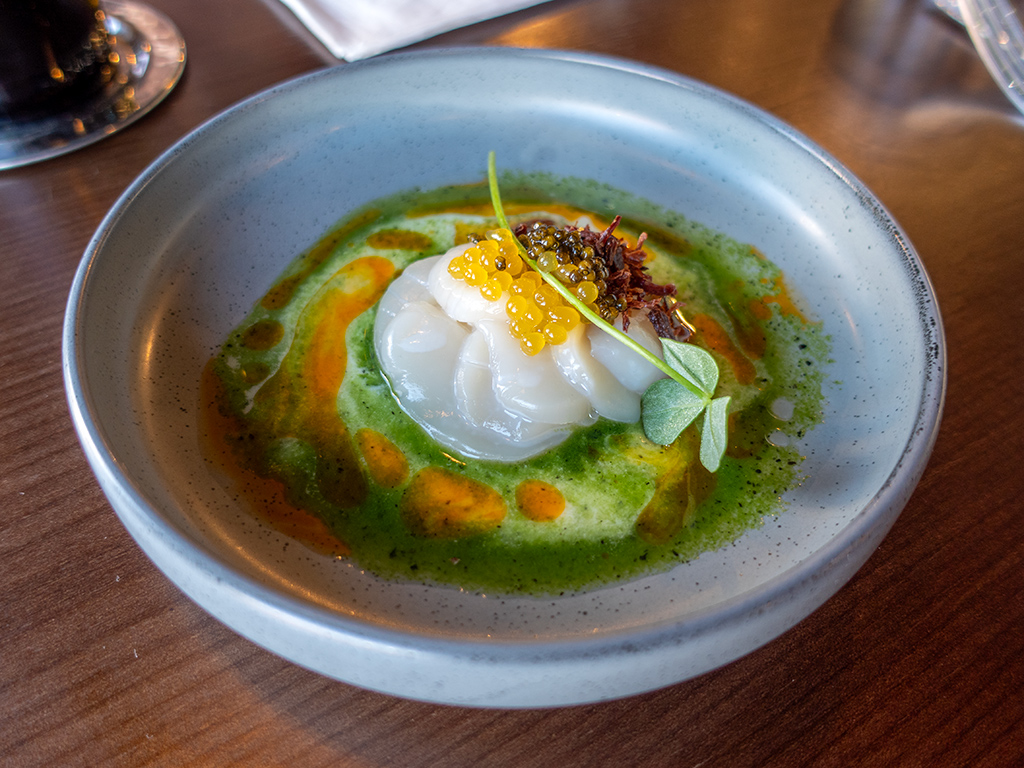
Next came vieiras crudas with royal ossetra and mango caviar, almond milk, and crispy jamón.
The fish was fantastic and resembled sashimi I would normally get at a Japanese restaurant but with two additional dimensions of flavor. The crunch of the jamón and the pop of the caviar accompanied the experience of biting into the fish very well. My favorite part about this dish was the sauce; it was light and smooth, and I ended up drinking the remainder as soup after I was done with the crudo.
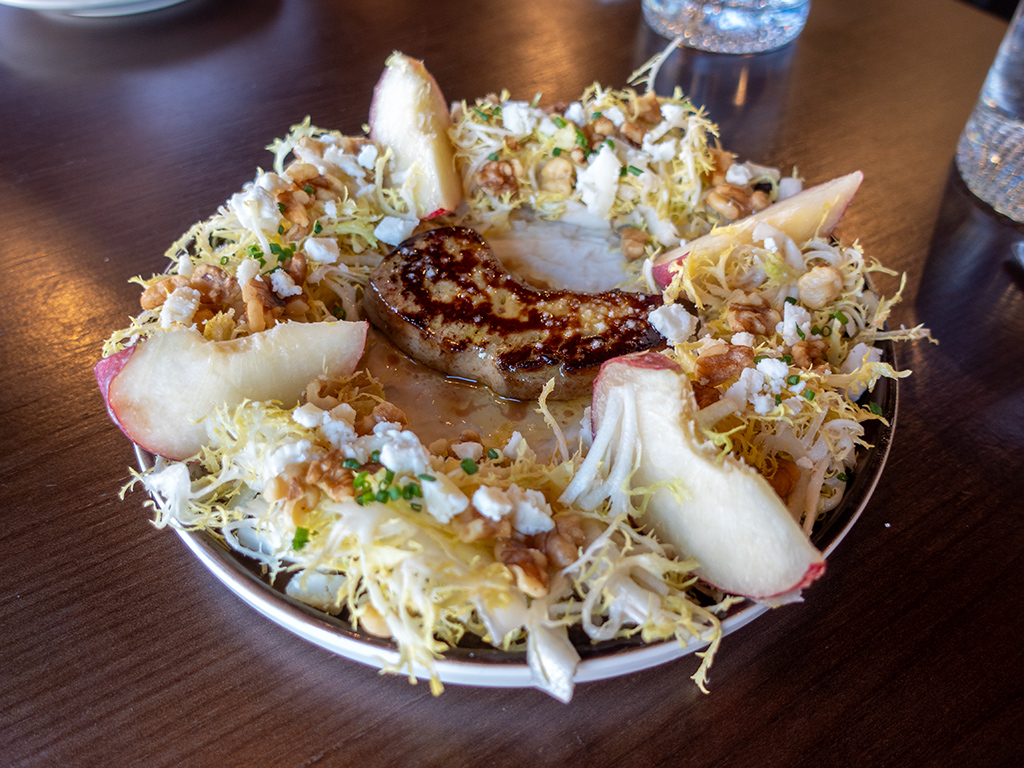
The friend with whom I was dining loves foie gras, so we of course added in the foie gras supplement with frisée, peaches, peach caramel, MitiCaña goat cheese, and walnuts.
This is literally the best foie gras dish I have ever had in my entire life.
The flavor of the foie gras was very strong and pure. There was a generous portion of salt on it, which extracted and enhanced the foie gras flavor even more.
Everything surrounding the foie gras served as a perfect compliment to it. The frisée and peaches were refreshing and absorbed some of the intense fattiness. The peach caramel and walnuts added an additional element of savoriness. The goat cheese was relatively mild and didn’t have a moldy taste to it.
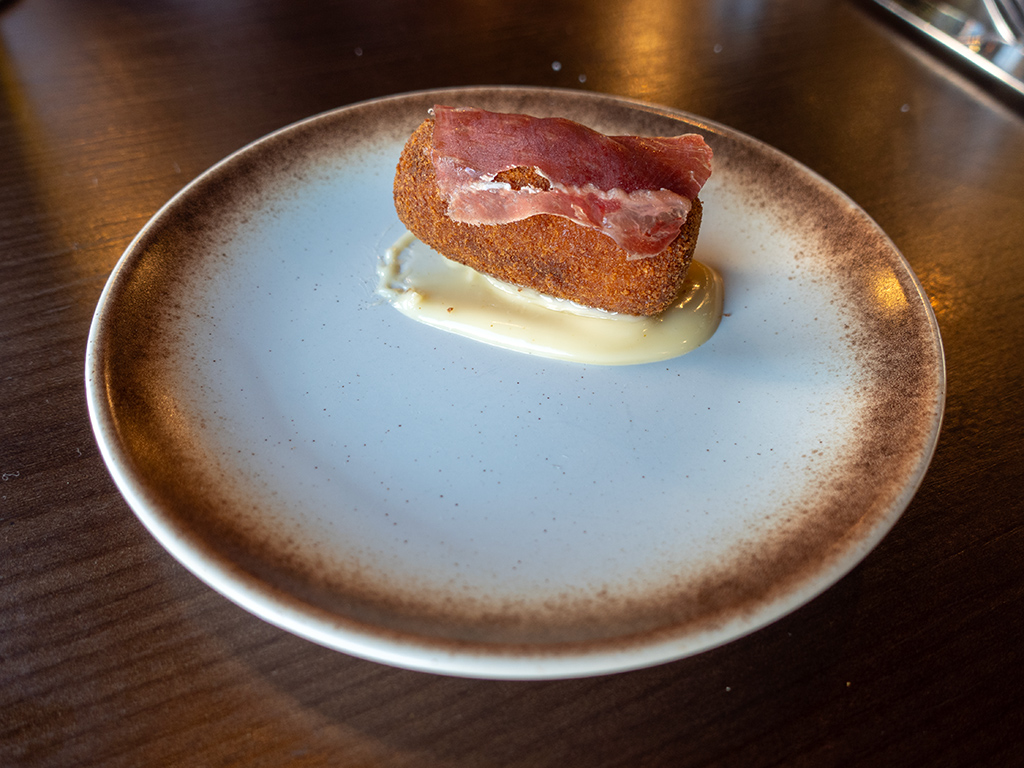
Our next dish was a croquetta de jamón with jamón ibérico bellota and garlic aioli.
Although it was still good, this was the dish that I was least impressed by. It had a somewhat generic hearty flavor profile to it that I didn’t find to be particularly unique or memorable. However, on the grander scale of things, I think it still played its role well as a component of the overall tasting menu.
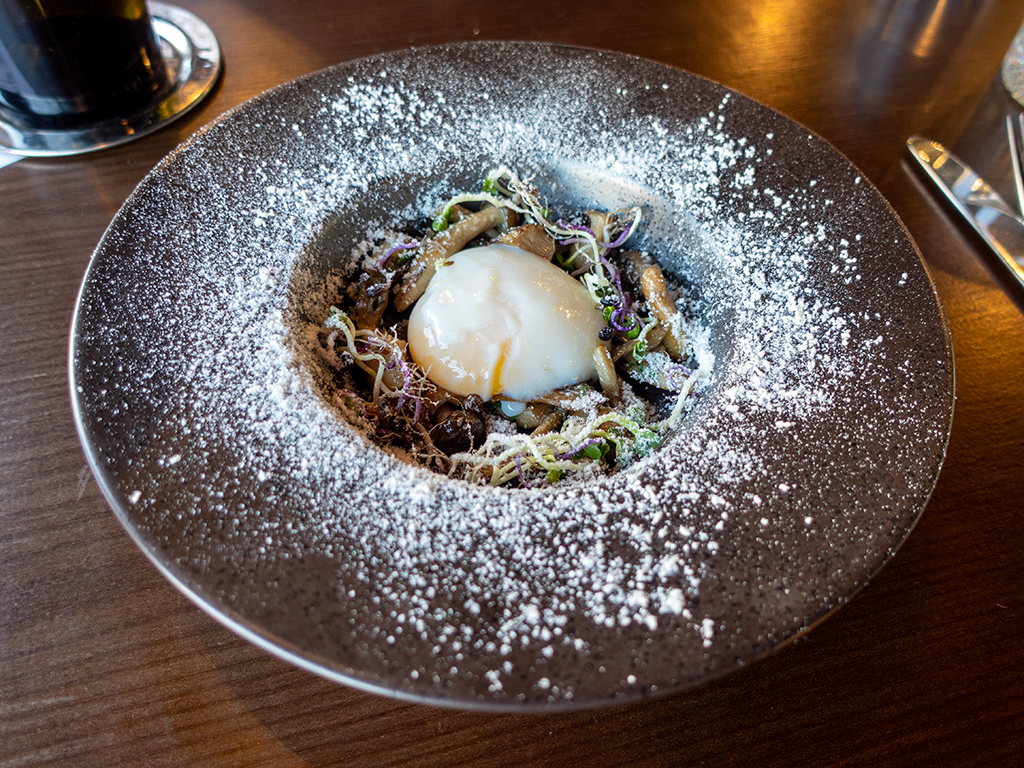
Next up was wild mushrooms with truffle powder and 63-degree egg.
I don’t really have much commentary or feedback on this dish—it just felt like I was eating very high-quality mushrooms covered in egg yolk. However, my friend is a big fan of mushrooms and has a far more refined palate when it comes to mushroom flavors, and she thought these were some of the best mushrooms she’s ever had.
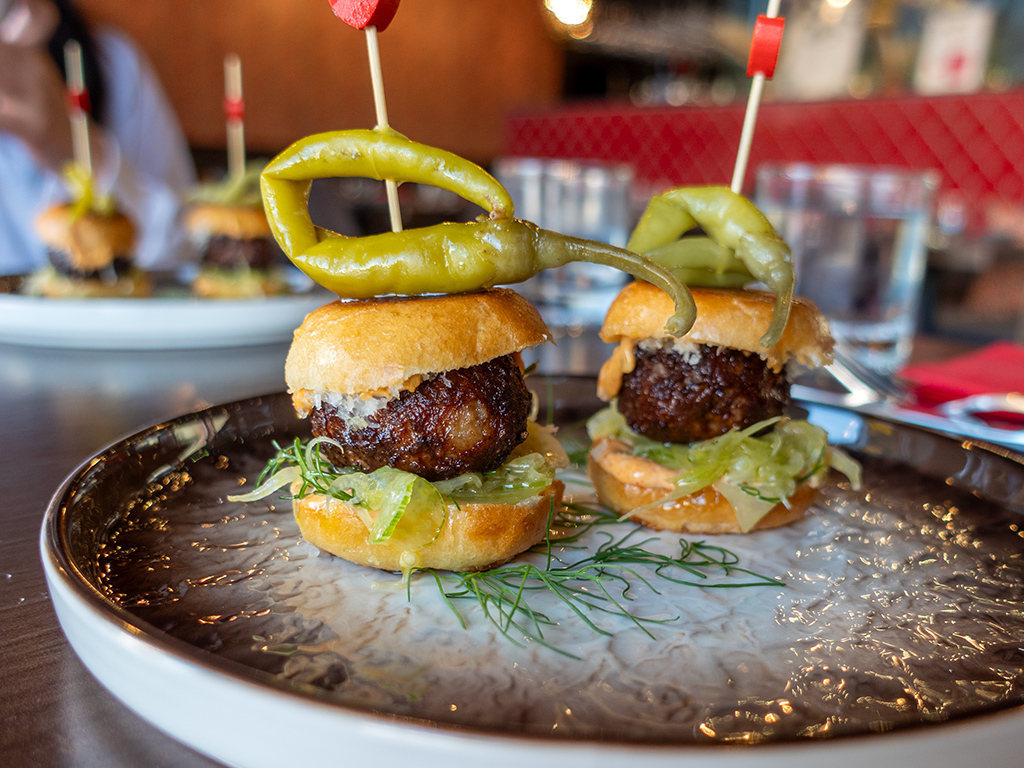
Last on the set of tapas was wagyu bocaditos with machego, ibarra amarillo aioli, petite watercress, and fennel slaw.
Although I find burgers with ketchup, mustard, and cheese to be somewhat nostalgic, I personally prefer them with pickles, peppers, and a spicy mayo sauce, so these wagyu sliders fit my preference perfectly. It had the rich fattiness you expect from wagyu beef, and the accompanying vegetables were pickled just enough to help pierce through the fattiness without being too sour and without overwhelming the flavor of the meat.
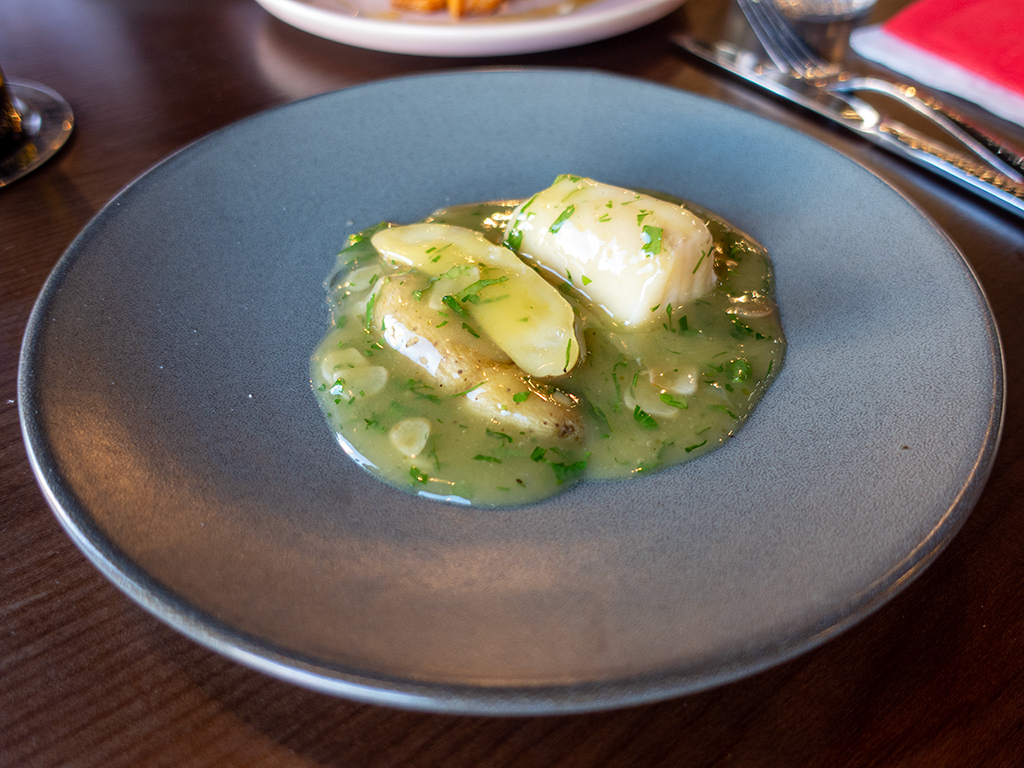
We were able to pick one item each out of a list of platos. I opted for a bacalao Pacífico with basque salsa verde, lemon, and yellow fingerlings.
This was a very interesting flavor profile that I had not ever experienced before, and I still have no idea how to even begin to describe it. It had a degree of bitterness to it, but it was just salty enough that it counteracted the bitterness before it actually became an entirely negative characteristic.
The fish was strangely somehow rubbery and tender at the same time. Cutting and biting into the outside of the fish was tricky because it was chewy and gave a decent amount of resistance, but once you actually got into the fleshy center, it was still soft and somewhat flaky. Even the vegetables had a somewhat comparably interesting texture phenomenon—the outside was gummy, while the inside was soft like normal boiled vegetables.
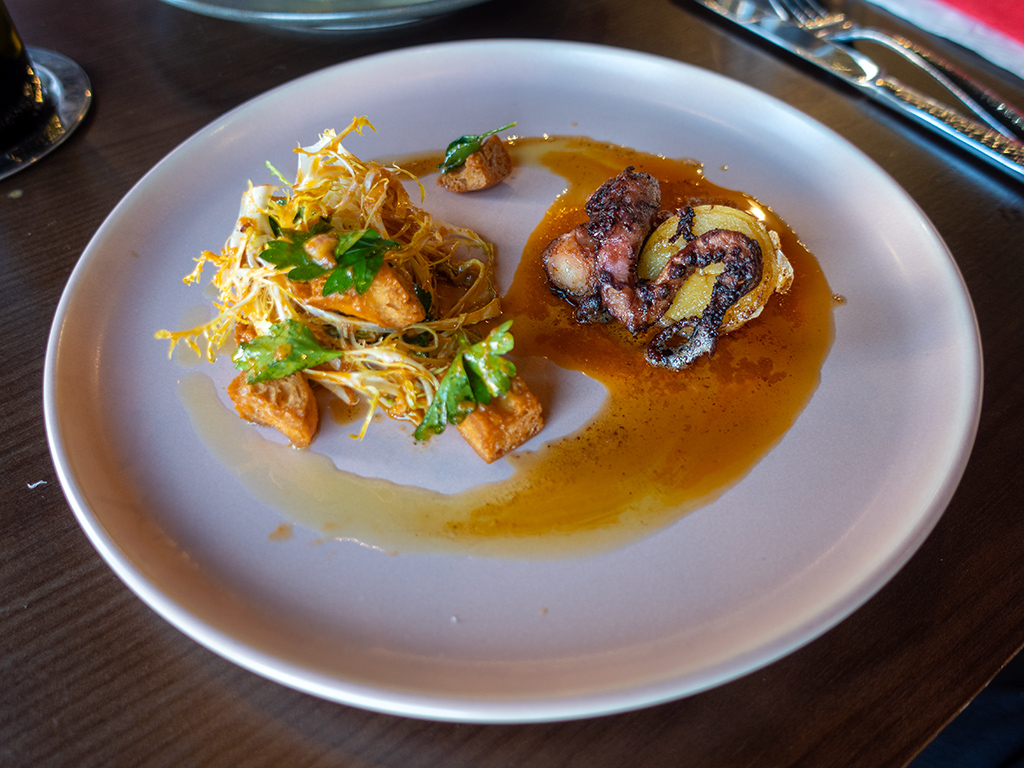
My friend’s plato was Spanish octopus with Yukon Gold potatoes, frisée, and lemon paprika vinaigrette.
By this point, I was getting pretty full, but I still sampled a small portion of the octopus so I could see how it was. The octopus was a little bit crispy on the outside but very tender on the inside. I also appreciated the char, as it added a degree of depth to the octopus’ flavor as if it was a natural seasoning.
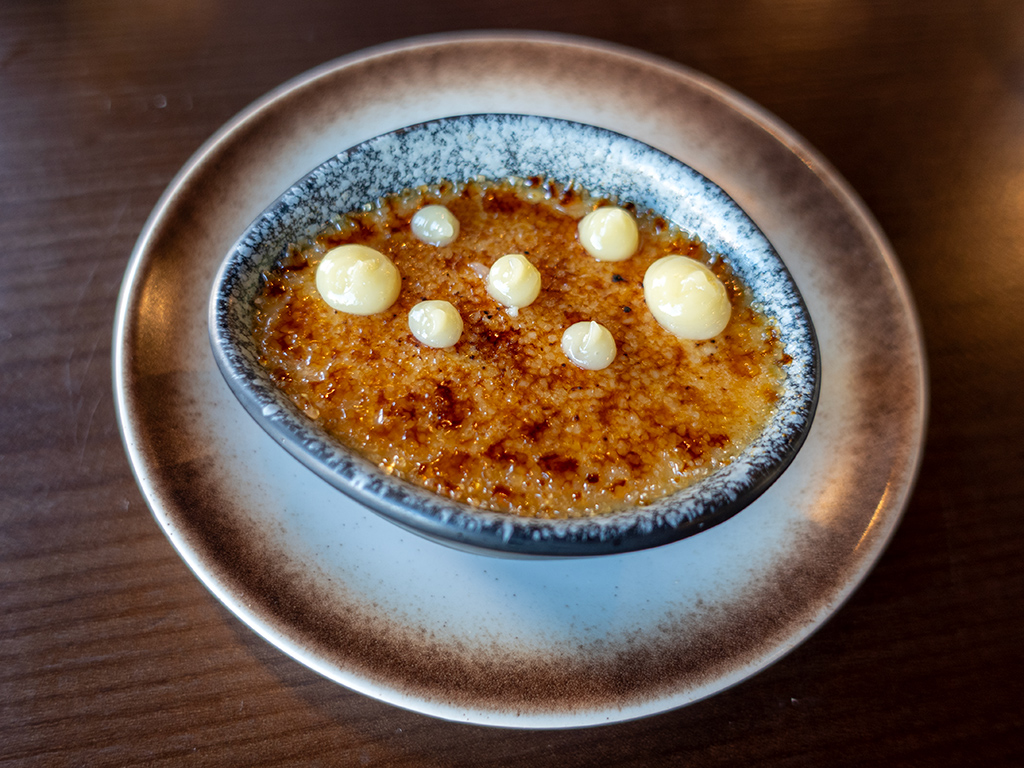
The postre, i.e., dessert, was a crema Catalana congelada with brûléed frozen custard and lemon curd.
This had everything you’d expect from solid crème brûlée—a satisfyingly crispy top, a delicate inside, and an overall sweet-but-not-too-sweet flavor profile.
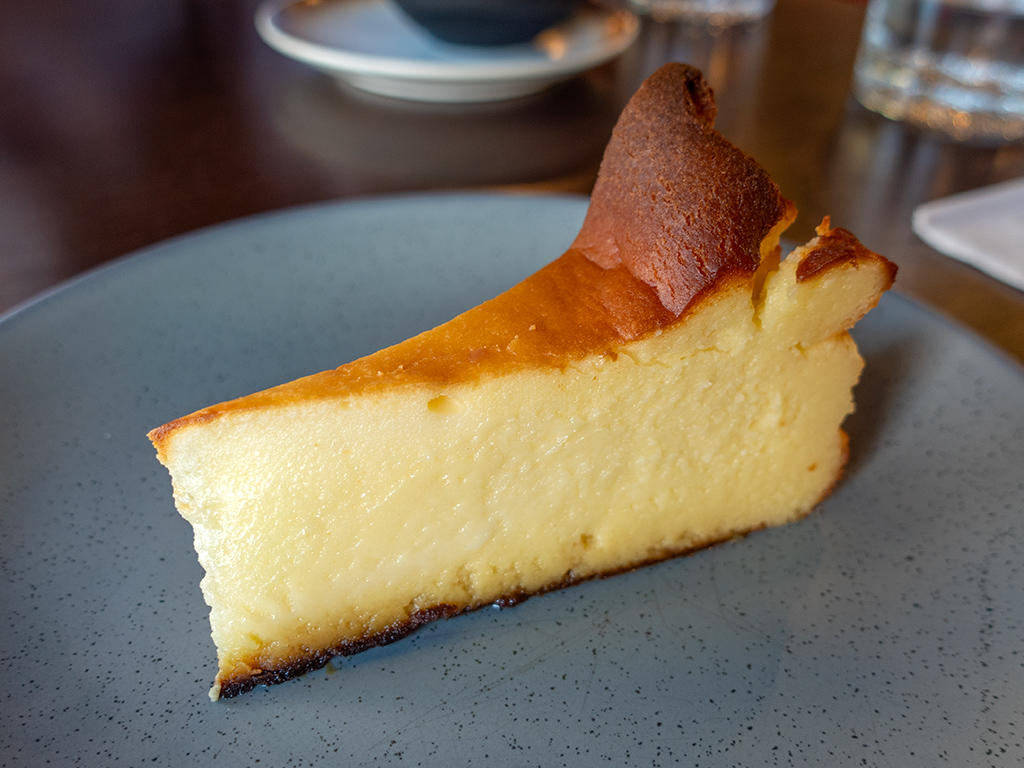
Normally the tasting menu comes with the crème brûlée as the designated dessert, but instead of giving us two of the same dessert, the chef swapped out one of them for a cheesecake.
I’m usually not the biggest fan of cheesecake, but this one wasn’t too bad. I much prefer the fluffy Japanese-style cheesecake over the thicker and heavier cheesecake that I often see in the United States, and this cheesecake more resembled the Japanese version.
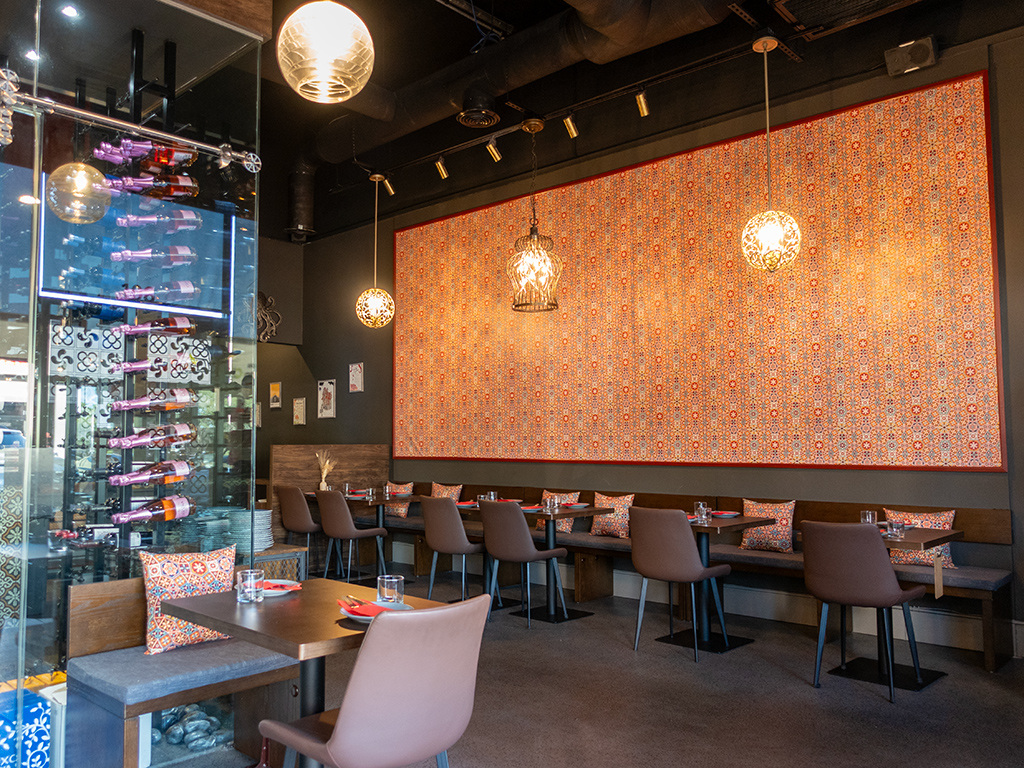
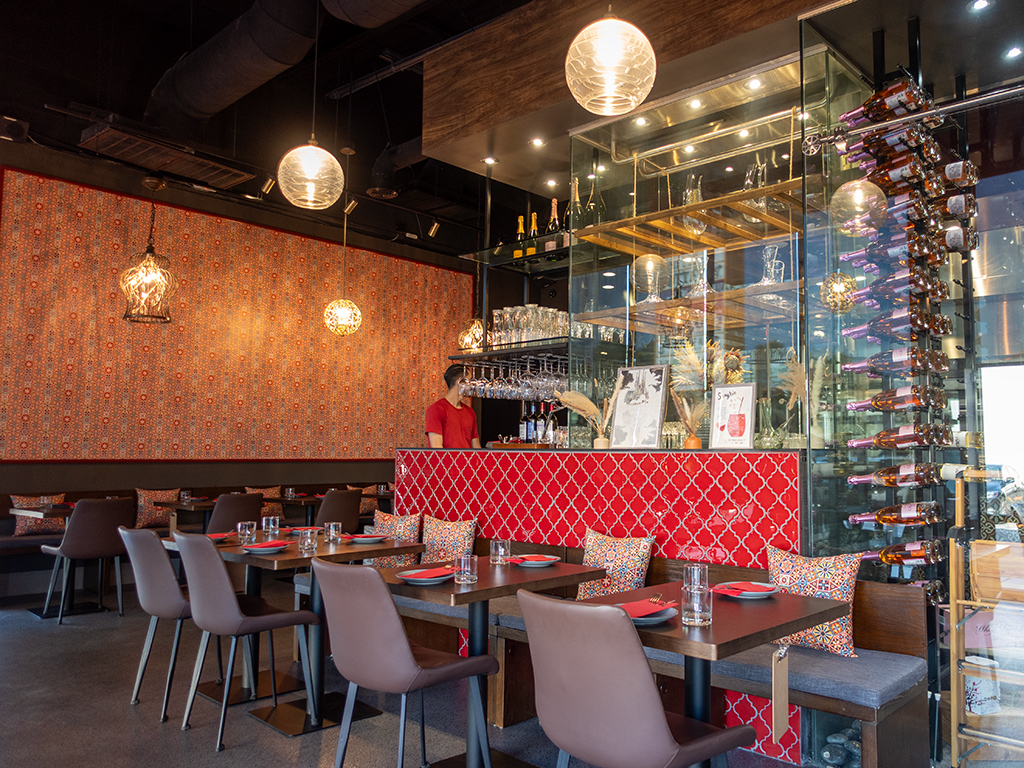
Our reservation was booked right at opening time, so after we were seated, I was able to get some shots of the empty restaurant before other diners arrived.
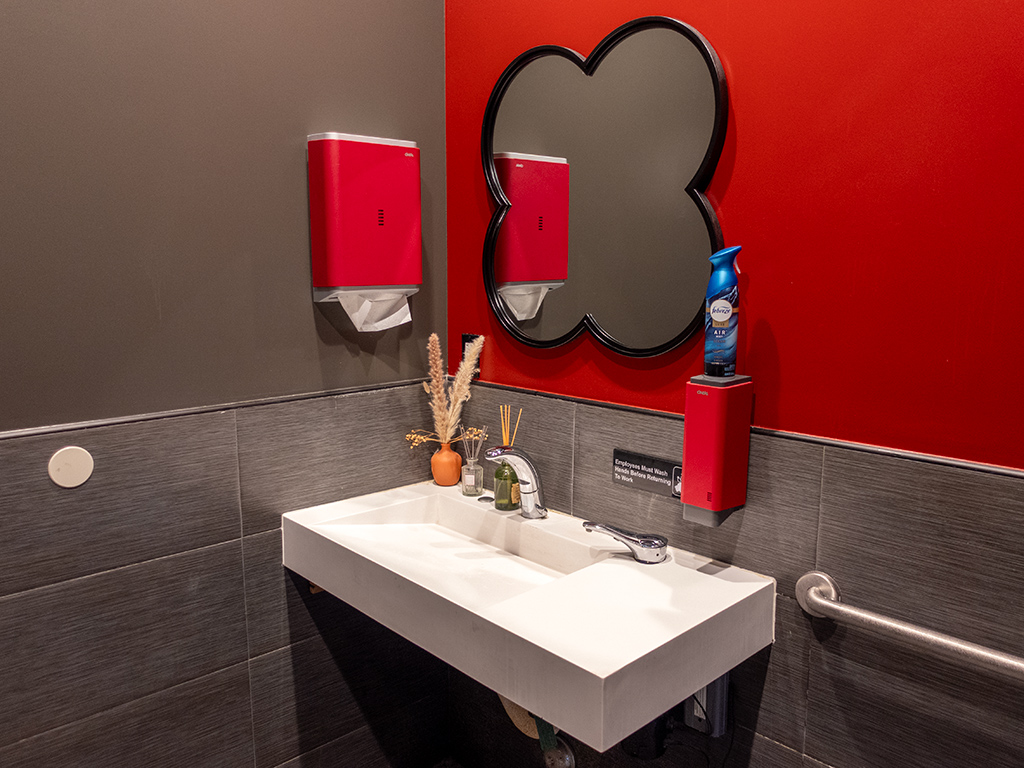
The bathroom had a comically high-tech toilet and bidet system attached to it—something that, to my knowledge, you would normally only find in countries like Japan, and not in the United States. I thought the bathroom was very clean and it had a nice theme to it, so I snapped a photo of it while I was in there.
| Chef’s tasting menu ×2 | $ 178.00 | Foie gras supplement | $ 23.00 | Plato enhancement | $ 6.00 |
| Sales tax (8.375%) | $ 17.34 |
| Service charge (20%) | $ 41.40 |
| Total | $ 265.74 |
I think this is some of the best value I’ve gotten out of a chef’s tasting menu in a long time. The food was all prepared very well, and the portion sizes were all reasonably large enough that each item completed its chapter in the flavor storyline, rather than leaving me wanting a few more bites of the dish.
I don’t find myself consuming Spanish cuisine too often, so I’m glad that this positive experience was my introduction to Spanish fine dining. The theming of the restaurant was nice, and I appreciated the commitment to demonstrating Spanish culture both in the food and in the environment.
Without any supplements or enhancements, the US$89 meal comes out to just shy of US$115 after sales tax and a service charge in lieu of gratuity. That is still on the higher end of cost for a single meal, but if this is within your budget, I highly recommend giving it a try—I don’t think there are too many other restaurants in Las Vegas where you can get this amount of value in terms of food quality, portion size, and service at this pricepoint.