I’m not really much of a cruise excursion person. I feel like most excursions are activities you can just go do on your own, and by booking one with the cruise line, you’re basically paying a big upcharge for logistical assistance and an “insurance policy,” e.g., if you are on your excursion and there is a delay, there is a guarantee that either the ship will wait for your excursion group or the cruise line will ensure they can get you to the next port on time, all expenses covered. For some people, that peace of mind is worth it, but if you want to be smarter with your money, the value might not always land with everyone. With that philosophy in mind, I want to make sure that, if I am booking an excursion, it offers something that I cannot otherwise get on an independent adventure.
During my most recent cruise on Royal Caribbean’s Navigator of the Seas, I noticed that they had an excursion available called “Behind the Waves: The Insider’s Tour.” I obviously cannot just go in crew-only areas of the cruise ship on my own, so I figured that this would make for a great (albeit unconventional) first-ever cruise excursion for me. Prior to sailing, I saw that a lot of cruise add-ons were discounted, so I purchased a ticket to this tour for US$105.99.
For my cruise itinerary, there were two sailing days near the end of the cruise. Both of these sailing days had two timeslots each for the all-access tour, totaling four tours. I booked the afternoon tour on day 2, but after I boarded, I was notified that the day 2 afternoon tour was canceled and I was rescheduled to attend the day 2 morning tour instead. Unfortunately, I am extremely asleep that early in the morning, so I went to guest services to see what they could do; luckily, there was still space left in the day 1 afternoon tour, so they re-rebooked me to that one instead.
Upon arrival to the tour meeting spot, the staff asked us to answer a health questionnaire and fill out a brief acknowledgment that attending the tour, and thus exposing ourselves to the crew-only mechanical areas of the ship, comes with inherent risk and that we are assuming that risk voluntarily in order to participate in the tour. I am absolutely that annoying type of person who reads through contracts thoroughly and disputes clauses I don’t like; with that being said, the waiver that Royal Caribbean provided was entirely reasonable, so I had no issue signing with no further questions.
After everyone’s paperwork was sorted, the tour began in the main dining room. Hilariously, because I have always gotten the unlimited premium dining package every time I went on a Royal Caribbean cruise and have only dined at specialty restaurants (or the extended-hours café for late-night snacks), I had never eaten in the main dining room before (and probably would have never even seen it at all, if it wasn’t for the fact that the Chef’s Table experience took place at a special table deep in the main dining room).
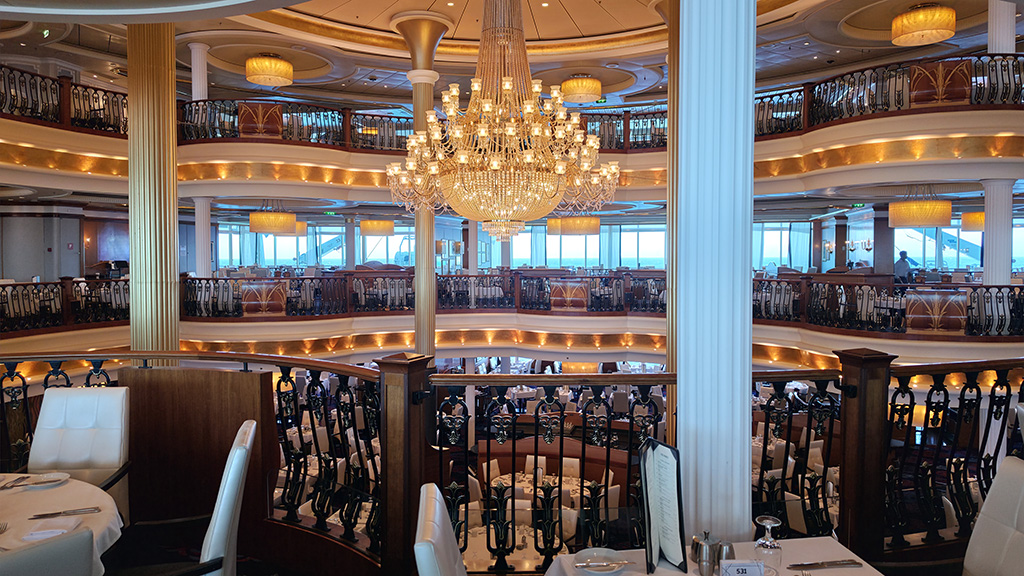
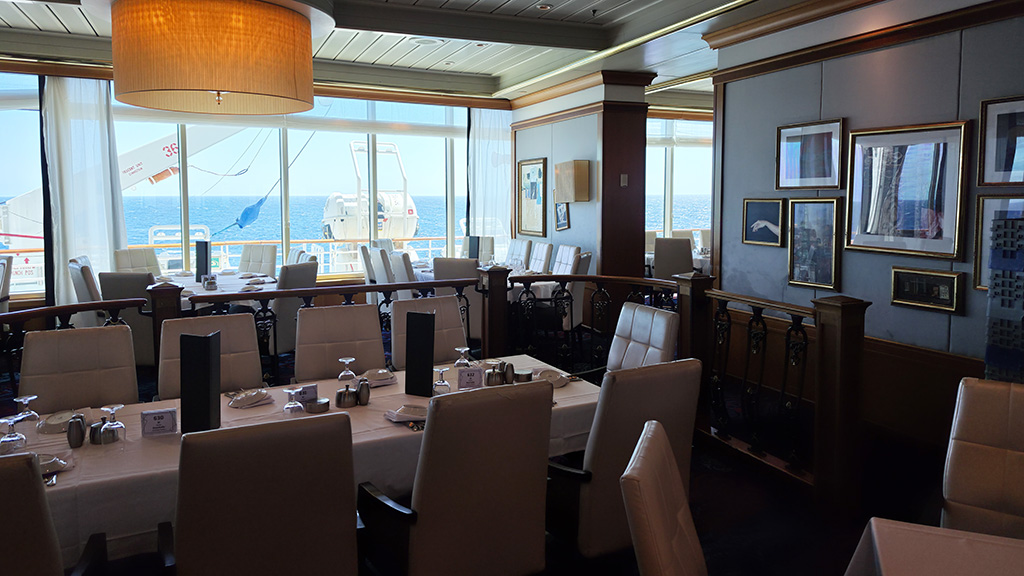
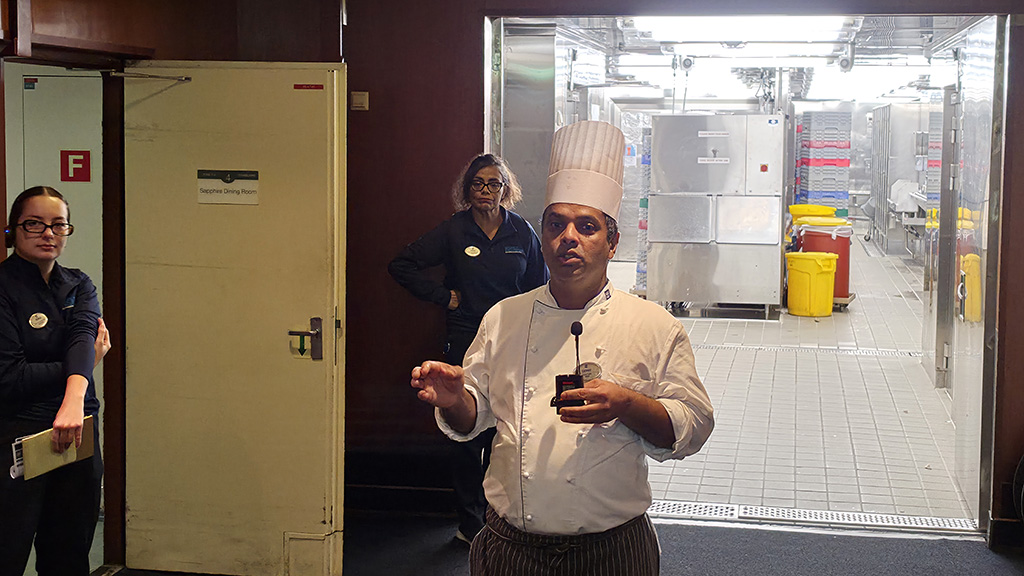
We were seated at a few of the tables near the edge of the dining room, and shortly thereafter, the head chef came out to explain the logistics of food service. He walked us through the three-floor dining room on Navigator of the Seas, and how each floor is dedicated to a specific type of dining—standard, expedited, and flexible.
We were then led back into the kitchen where we were able to see the equipment used to prepare our meals.
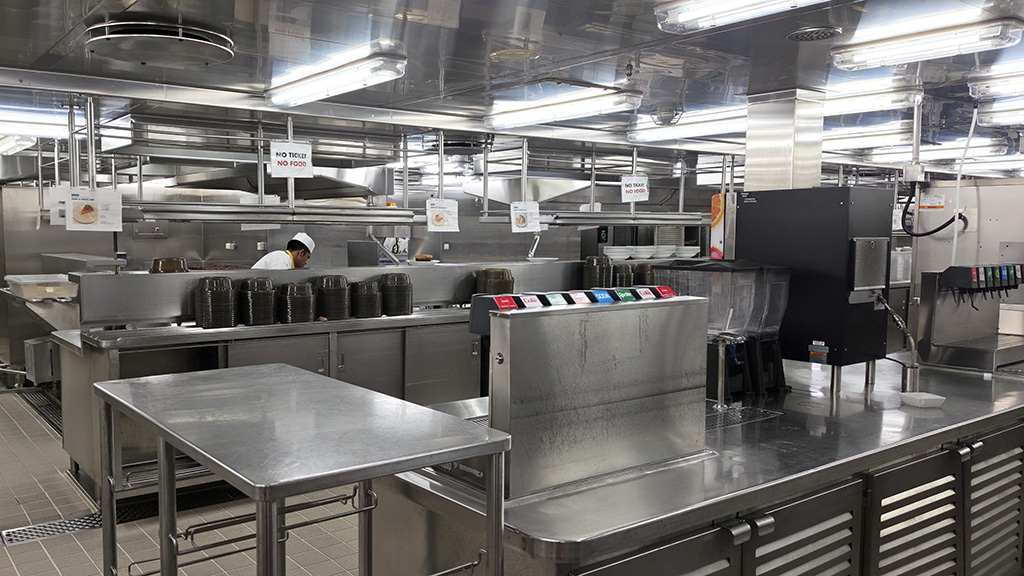
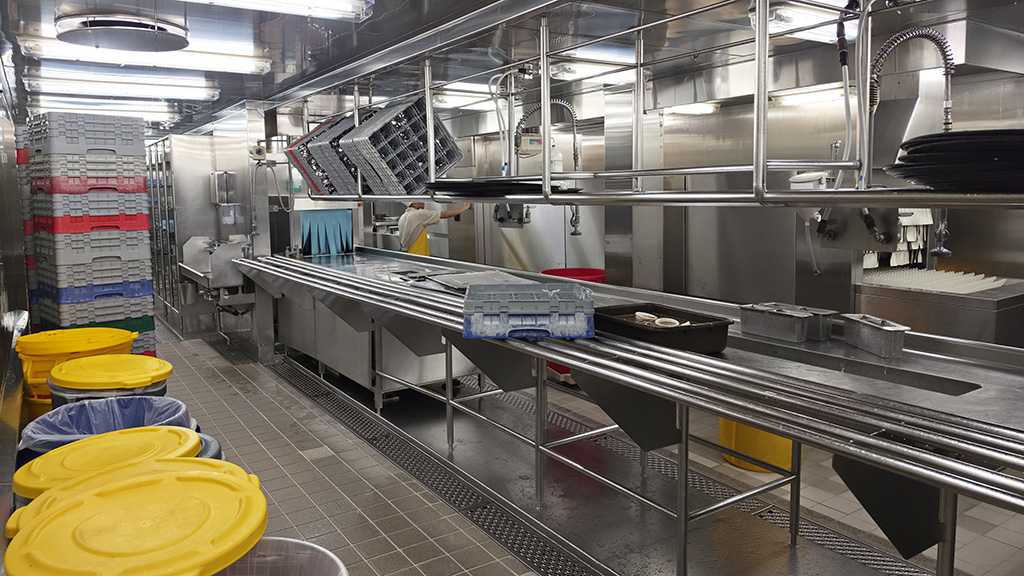
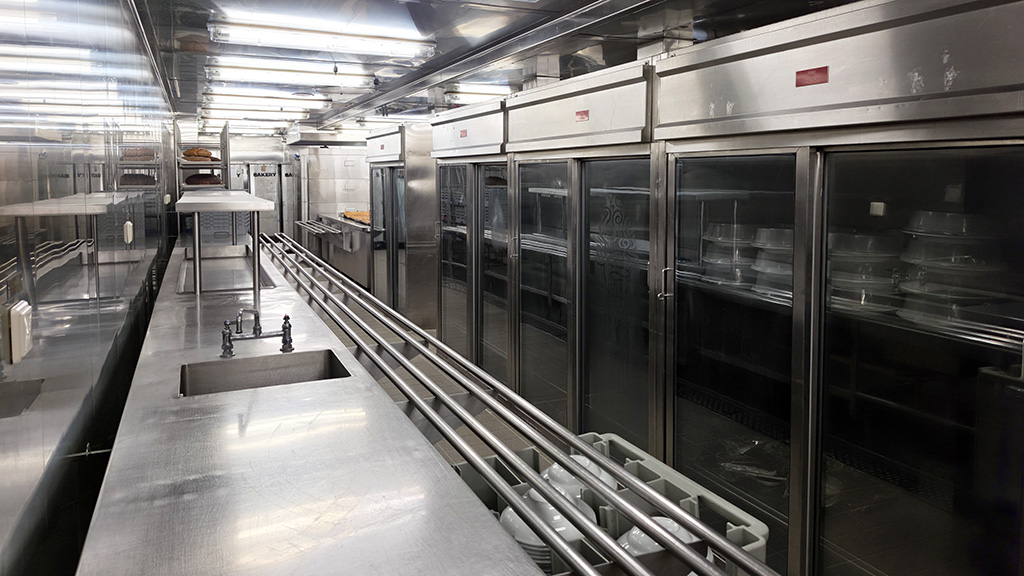
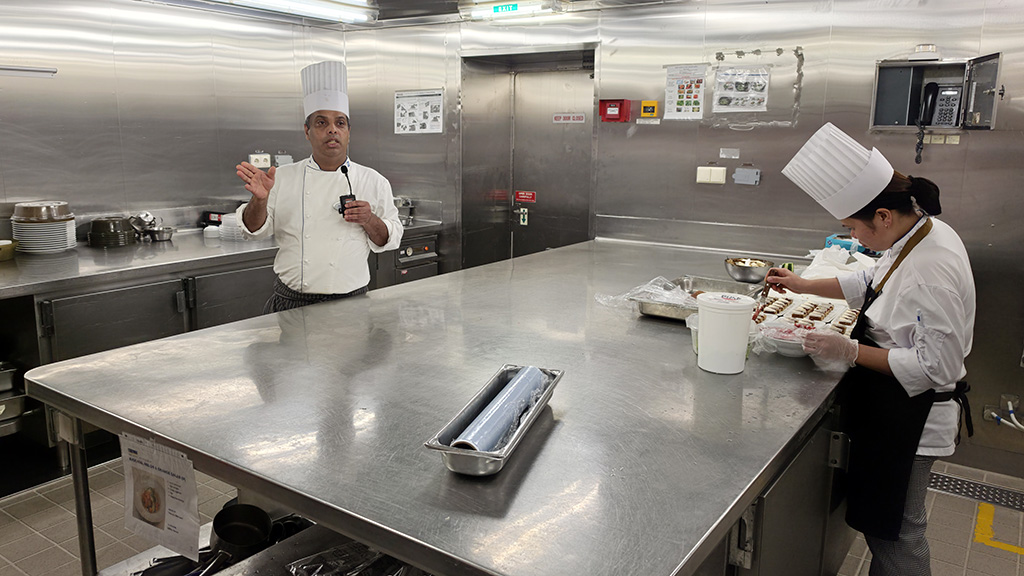
This tour took place early in the afternoon, so the kitchen servicing the main dining room was still empty, as I believe the earliest timeslot for dinner service begins at or around 5 PM. However, this one random table had one random employee making pastries. I don’t know if these were for the café and they just happened to request certain desserts from this particular kitchen instead, but I instead enjoyed the thought that maybe she had just been planted there and was instructed to pretend like she’s making something so that she could be a paid actor for the tour.
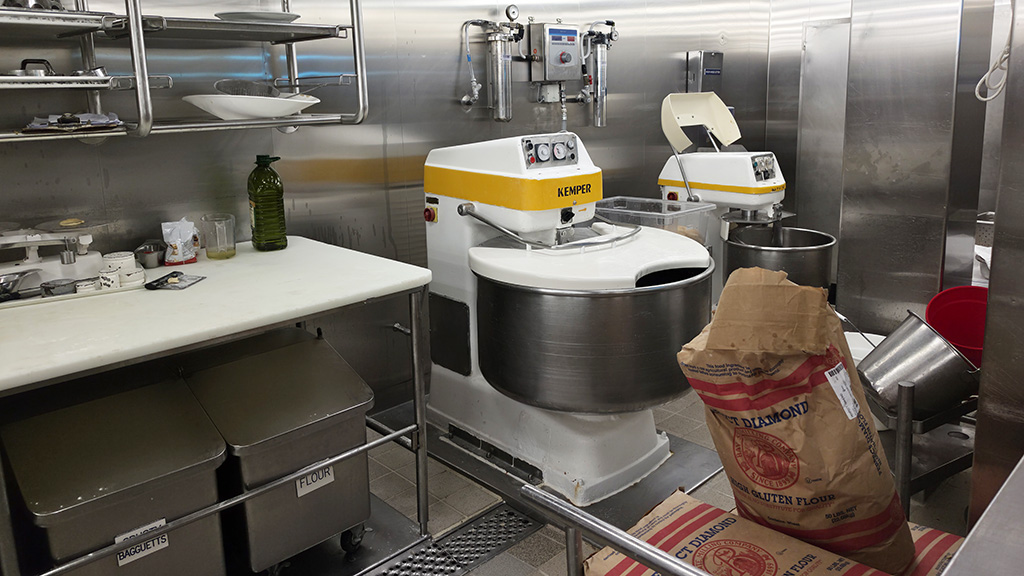
The kitchen was quite large; the head chef weaved us in and out through all the aisles so that we could take a look at all the different equipment in the different subsections of the kitchen.
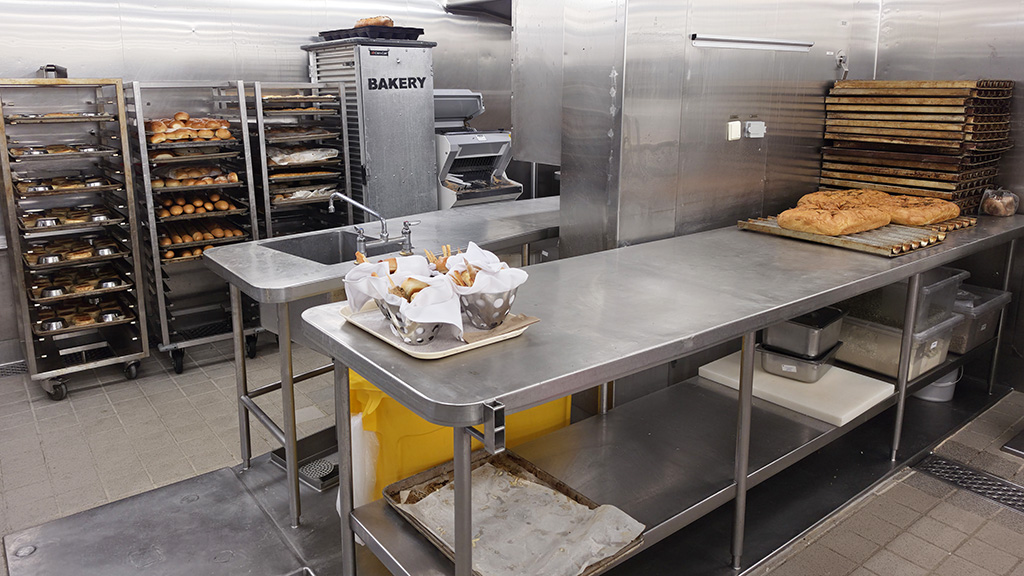
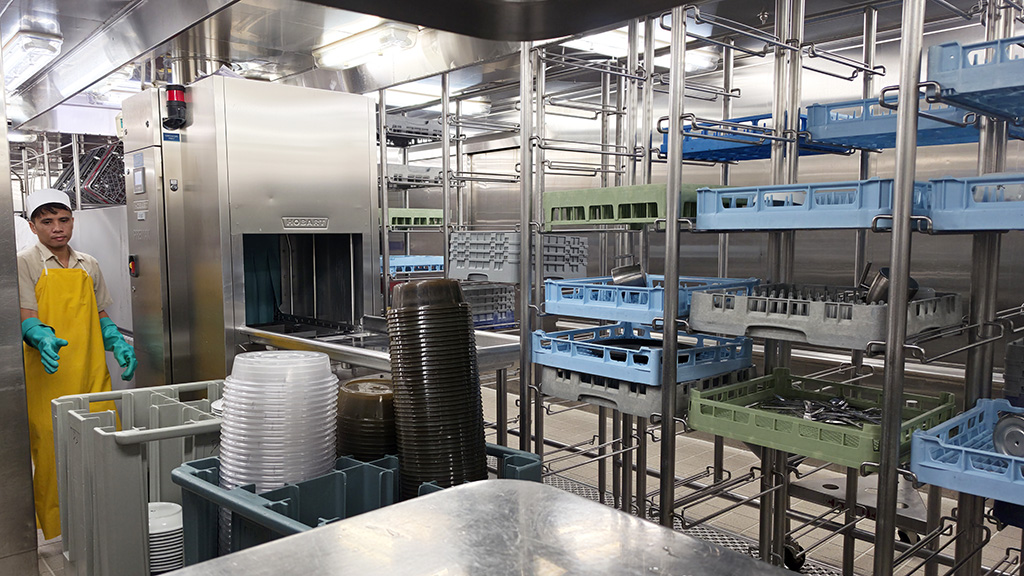
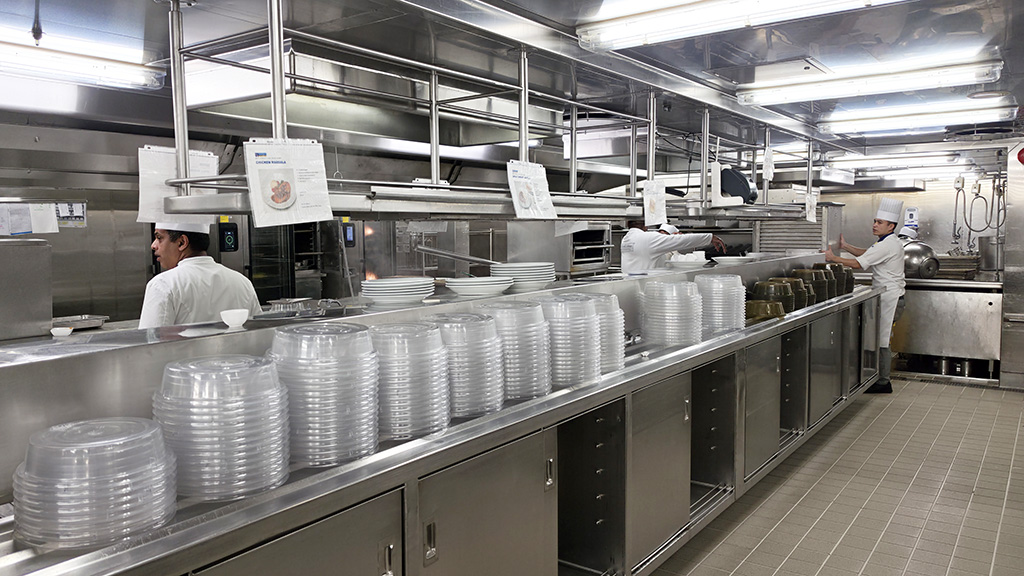
After wrapping up the kitchen portion of our tour, we were led out through a back door so that we could walk straight to the next crew-only area.
I found it amusing that they put all this effort into pasting an advertisement for Perfect Day at CocoCay onto the elevator, even though the only people who would see this elevator are employees (or guests on the tour). Maybe they are trying to advertise to their employees? Or maybe they just wanted the elevator to look less bland, considering that the picture they used of Royal Caribbean’s private island in the Bahamas is pretty nice.
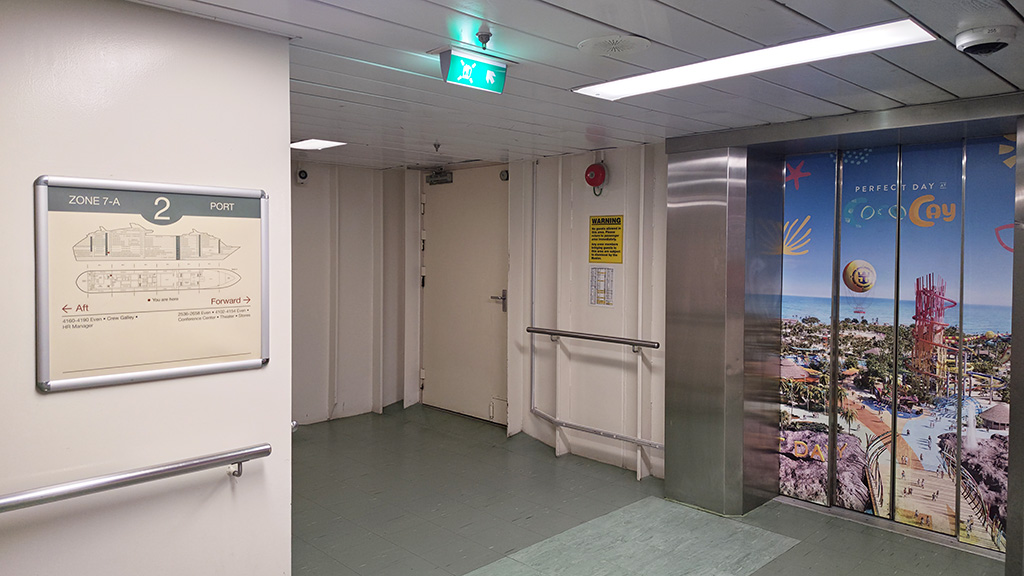
Right around the corner was the next area of our tour, the loading zone. As is probably self-explanatory, the loading zone is used to load pallets of food, equipment, consumables, and other products onto the ship. At the end of each cruise, the same area is used to unload trash and unused goods that won’t serve a purpose during future cruises.
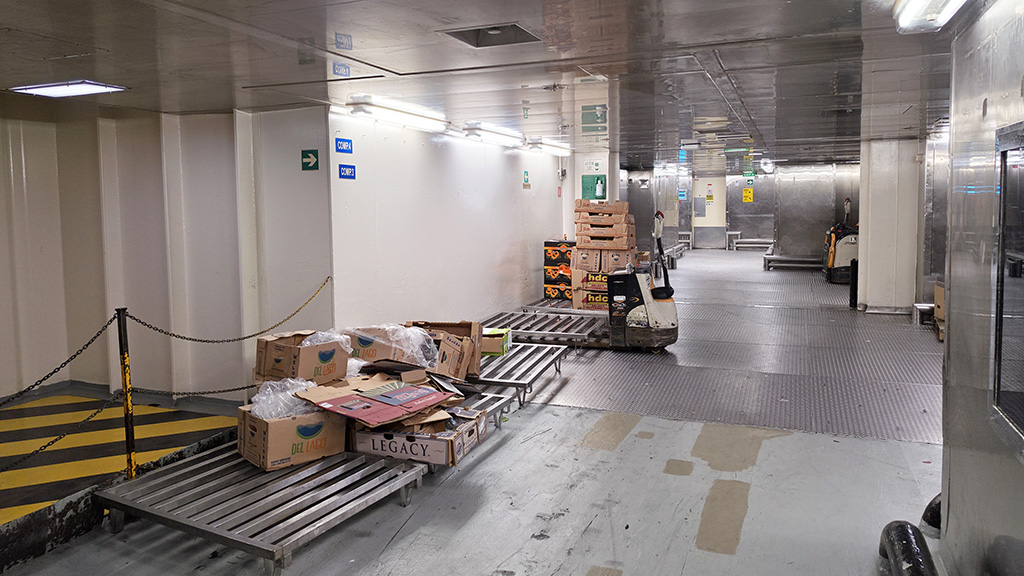
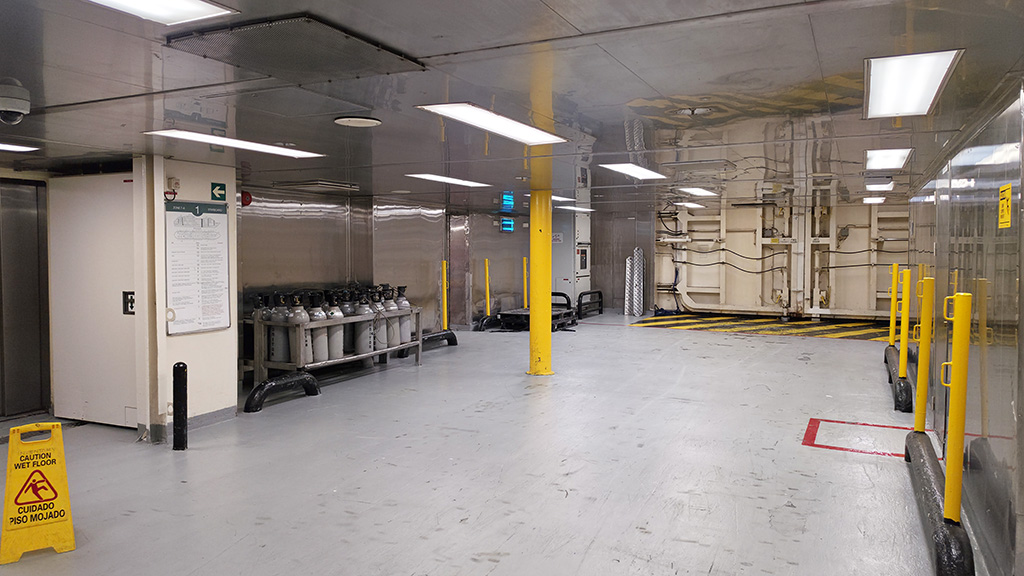
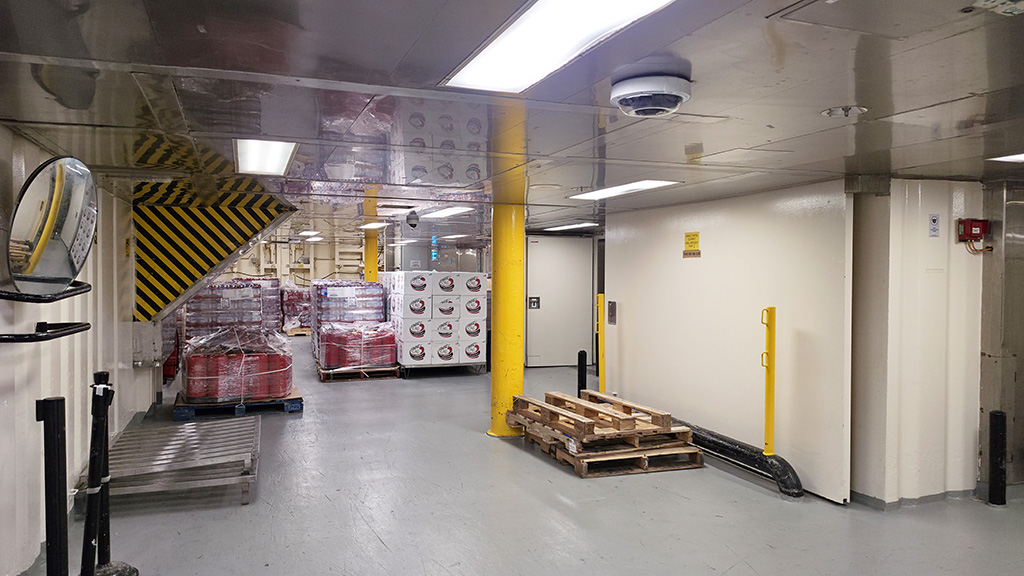
One of the logistics managers walked us through this area and answered questions about how the ship’s supply is controlled. He also brought us into the refrigeration unit to show us how the food was stored, and explained how the food portions were determined (i.e., based on passenger volume, expiration dates, and emergency buffer in case the ship cannot return to land for unexpected reasons).
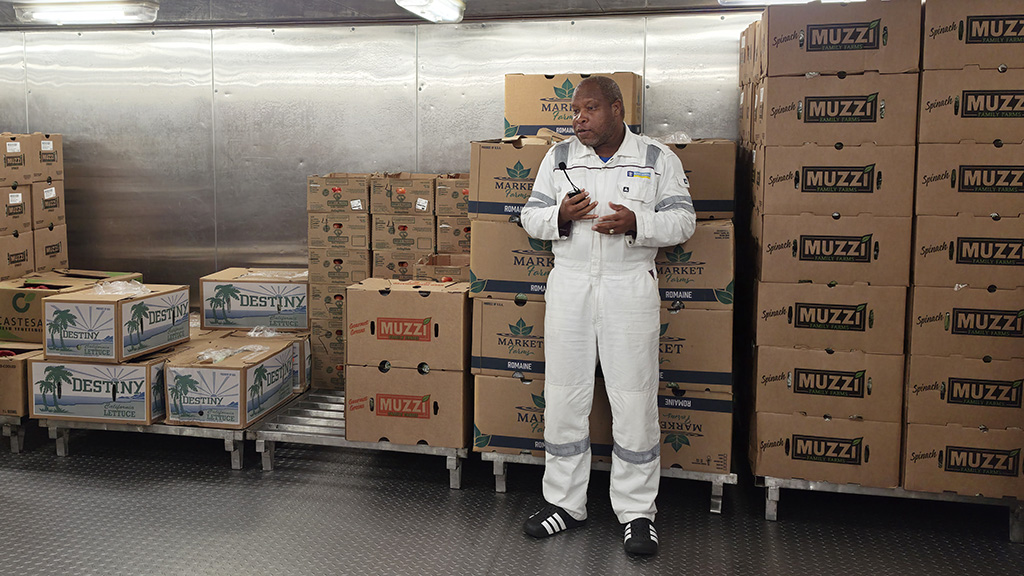
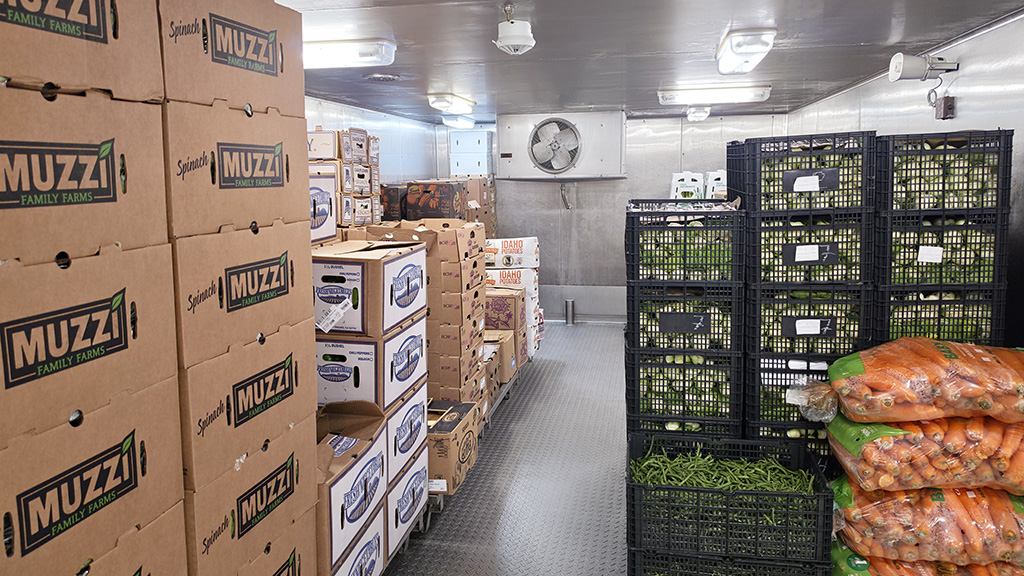
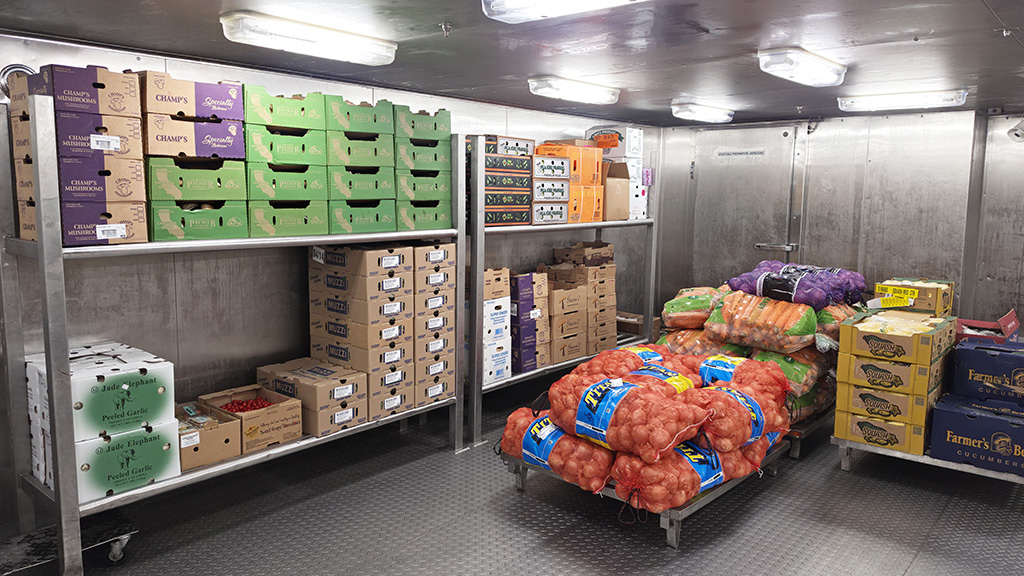
He also let us take a quick walk through the freezer as well, though that was short-lived for most people. I took a peek inside, realized that it was quite literally freezing, noticed the icicles hanging down from the ceiling, snapped a photograph, and promptly fled.
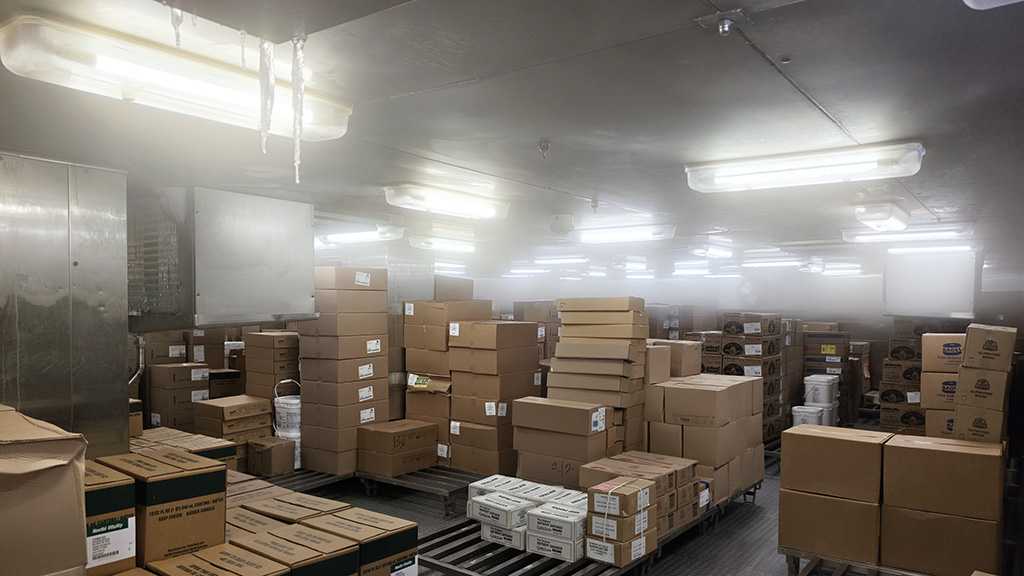
After that, we took another crew-only shortcut around to the next area of the tour.
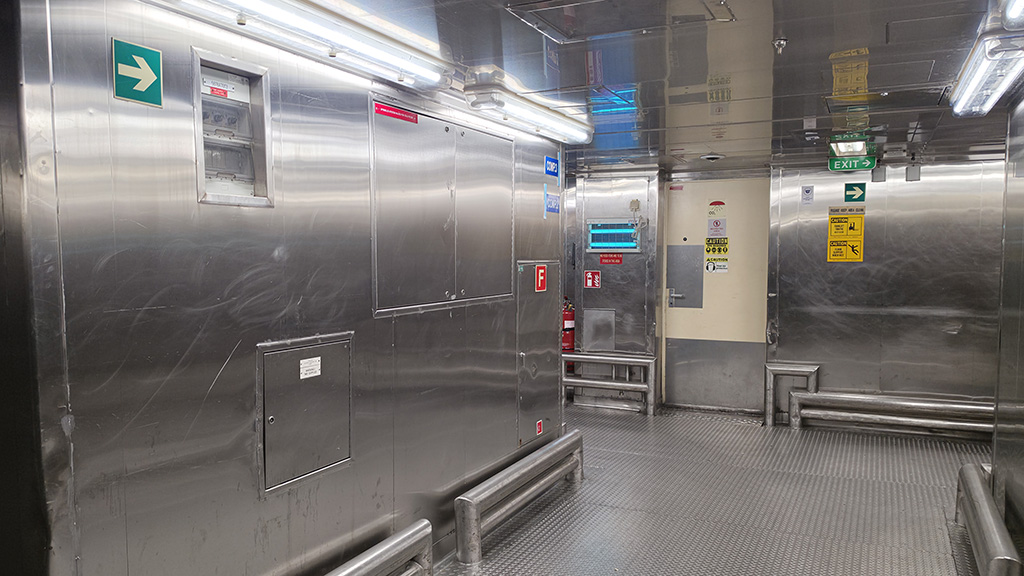
The garbage processing area is kept reasonably close to the loading zones, which makes sense because they’d probably want to easily get the trash off the ship.
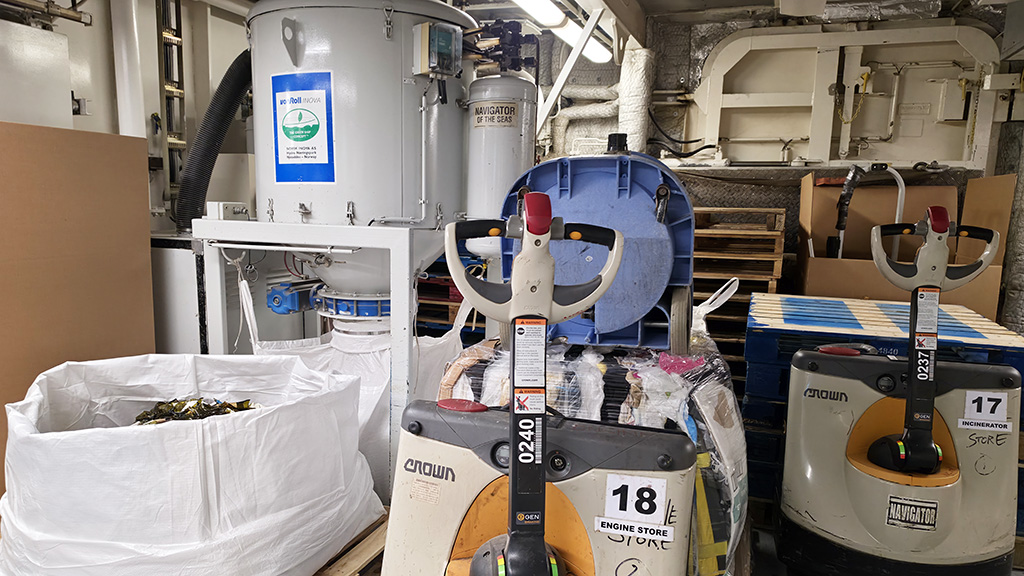
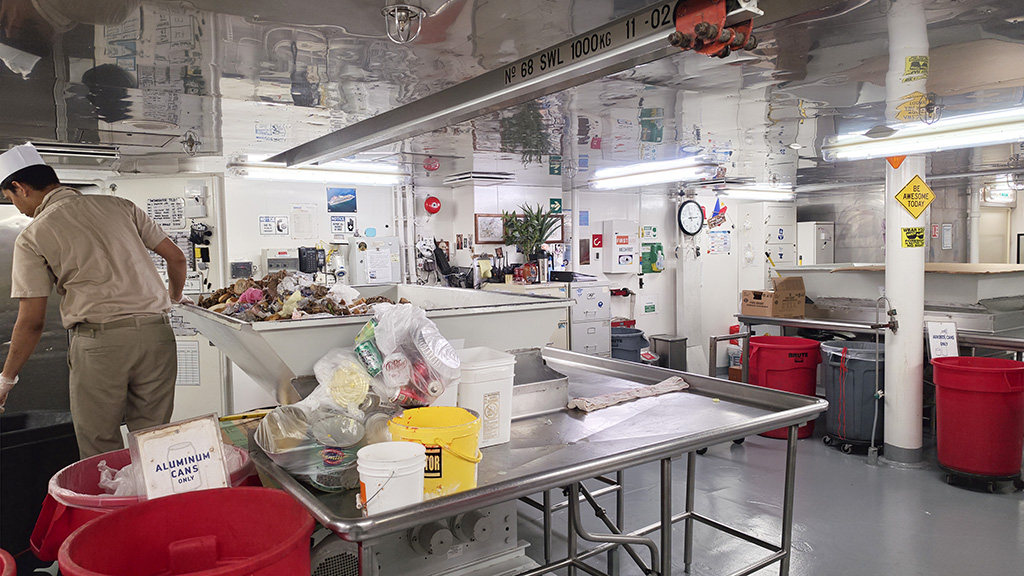
The tour briefly brought us into the trash sorting area where they separate different kinds of garbage and recyclables, and it smelled absolutely horrific. I was surprised that the employees working in this area seem to be handling it well, even without wearing face masks or any other protective gear apart from gloves.
Hopefully they get paid generously, because smelling garbage this close to your face in an enclosed space with poor ventilation on a cruise ship sounds magnitudes worse than what people have to endure working as trash collectors on land.
Next up was the control room.
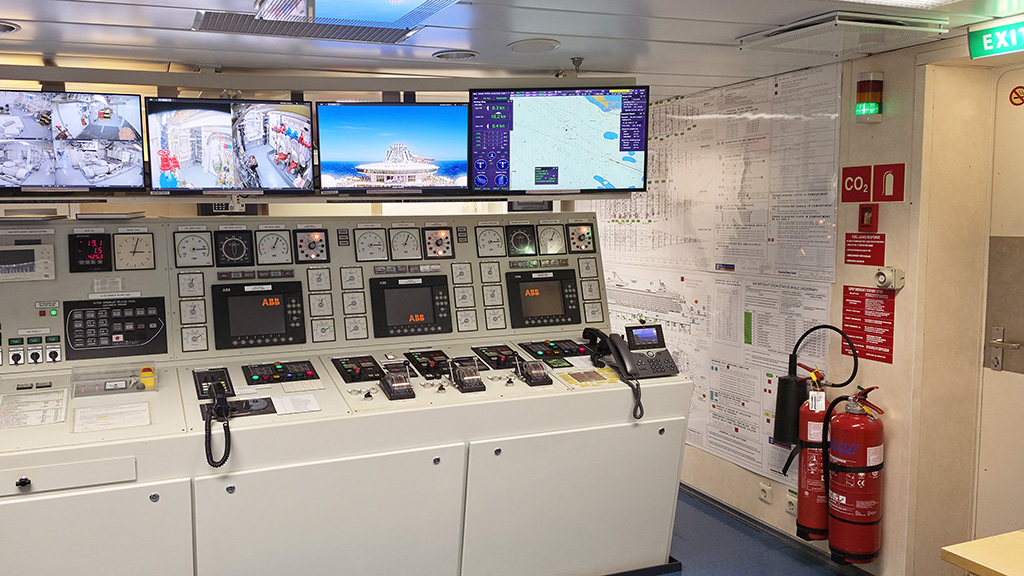
This is where engineers constantly monitor the ship, both to make sure it is in full mechanical function, and to make sure that no passengers are causing any security risks on board.
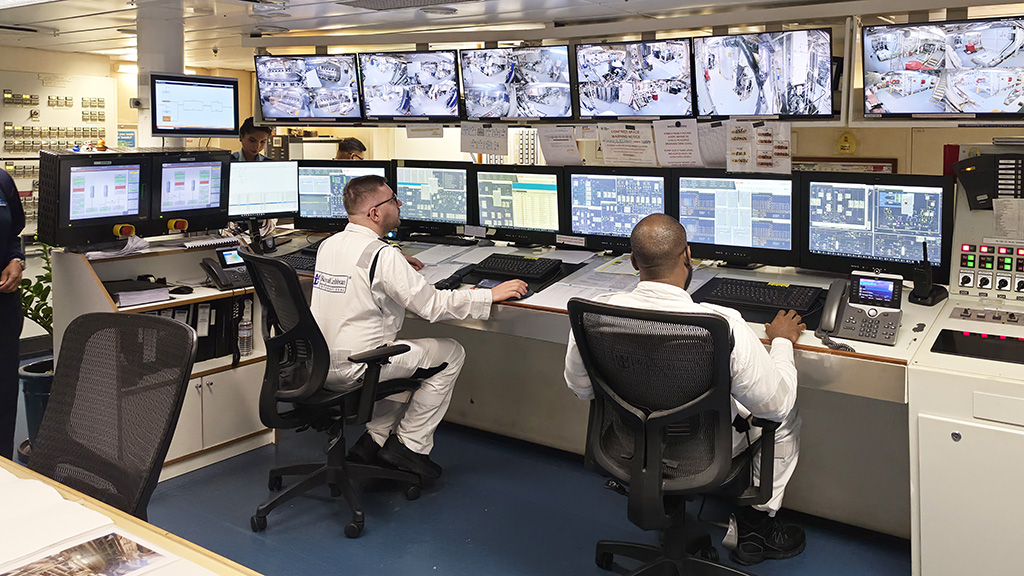
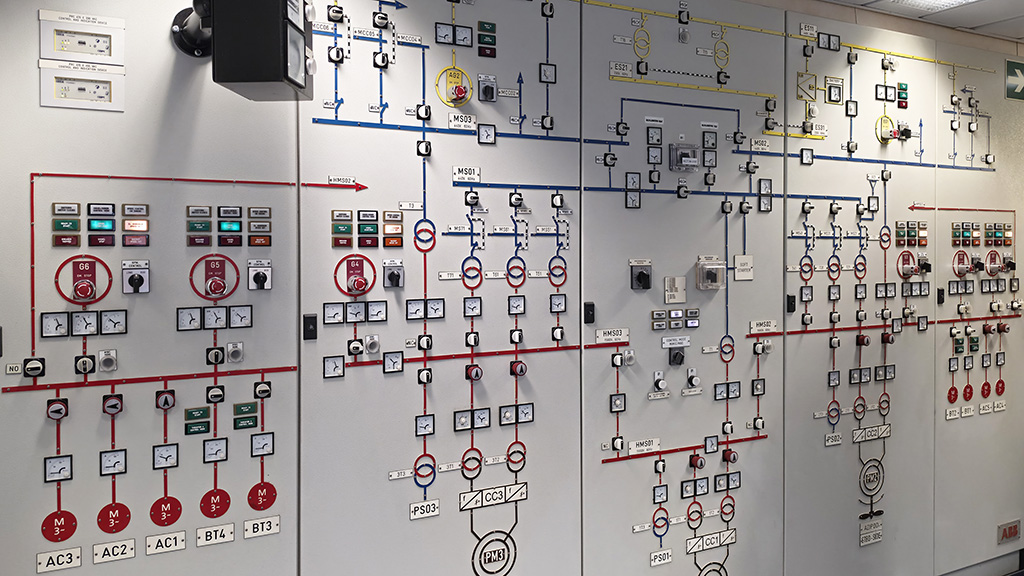
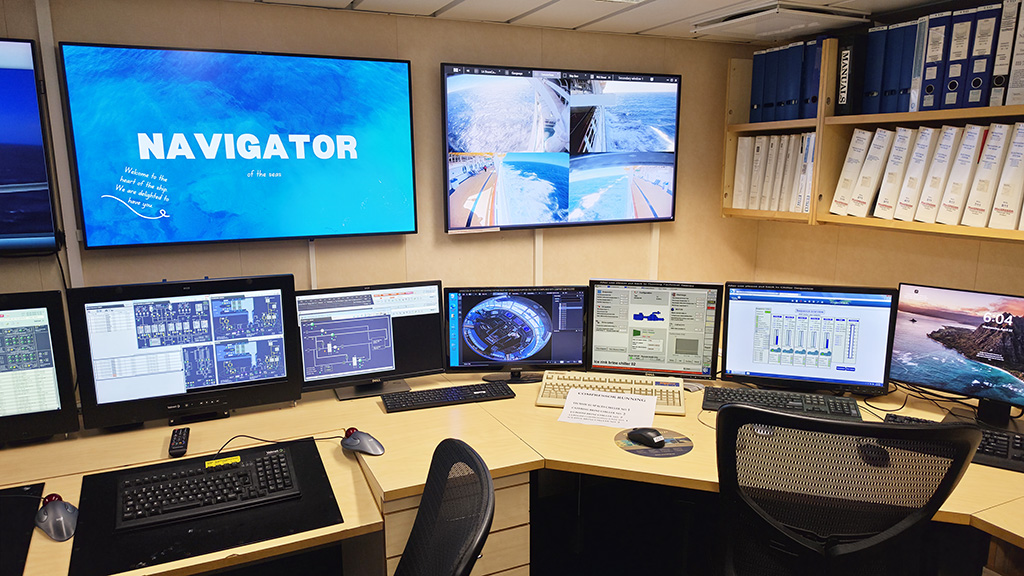
Apart from the main dining room, this was the second most peaceful area of the tour so far, so they used this space to do a little presentation about Navigator of the Seas.
I learned that the ship is apparently a lot older than I had originally thought, and it only looks fine and not particularly aged due to recent renovations. We were told that Navigator is about to reach the end of its lifespan soon, and in a handful more years, it will be moving on for its next adventure and fulfilling its next purpose, whatever and wherever Royal Caribbean will decide that may be.
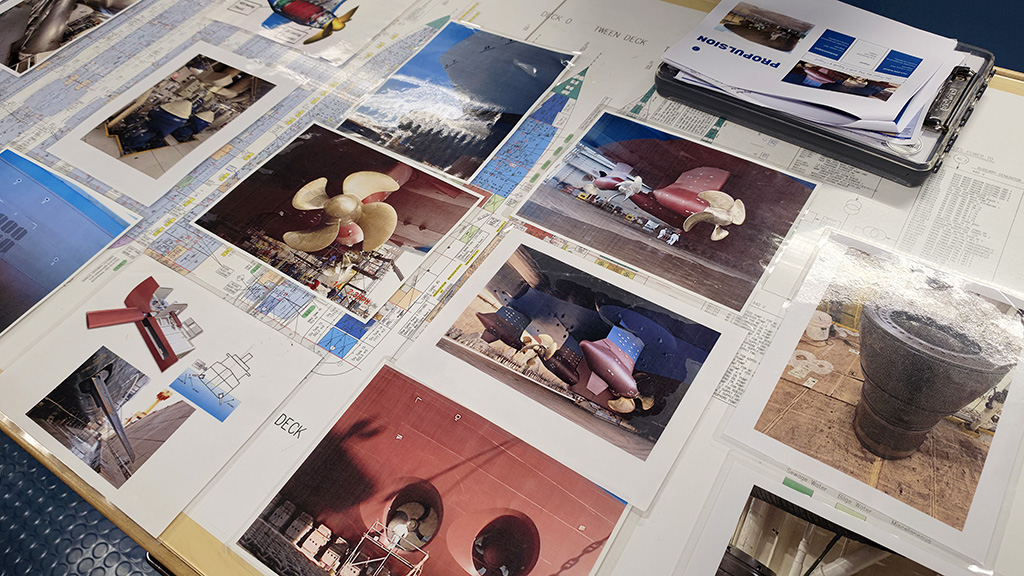
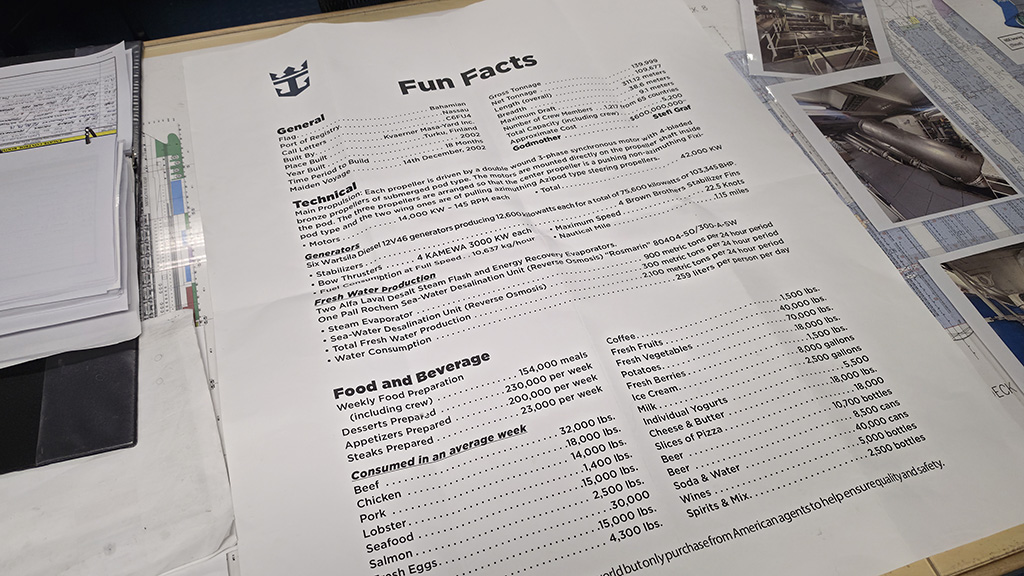
This is also the portion of the tour where I was able to learn some more detailed specifications about the size of the ship.
Navigator of the Seas is part of Royal Caribbean’s Voyager class of ships. Funny enough, even with a gross tonnage of about 140,000 and a passenger capacity of about 4,000, it’s actually now considered one of Royal Caribbean’s smaller ships. Above Voyager class is the Freedom class, and then above that is the Quantum class, which holds the Quantum of the Seas on which I took my previous, first cruise.
There are also two classes above that on which I have yet to venture: Oasis and Icon. Icon of the Seas and Star of the Seas, both part of the Icon class, are just barely under double the size of Navigator of the Seas in terms of gross tonnage and passenger capacity. I do want to take a cruise on one of those ships at some point, but because they are homeported in Florida, I will have to find some time to make my way over to either Miami or Cape Canaveral to do so.
After the conclusion of the presentation in the control room, we were led out to I-95 to take a shortcut direct to our next stop. I-95 is named after the Interstate 95 on the East Coast of the United States, a highway that stretches the entire height of the country from Miami, Florida to Houlton, Maine.
The I-95 on Royal Caribbean ships serves a similar purpose—it stretches the entirety of the ship and acts as a core corridor through which crew members can go from one side of the ship to the other without needing to reroute around obstacles.
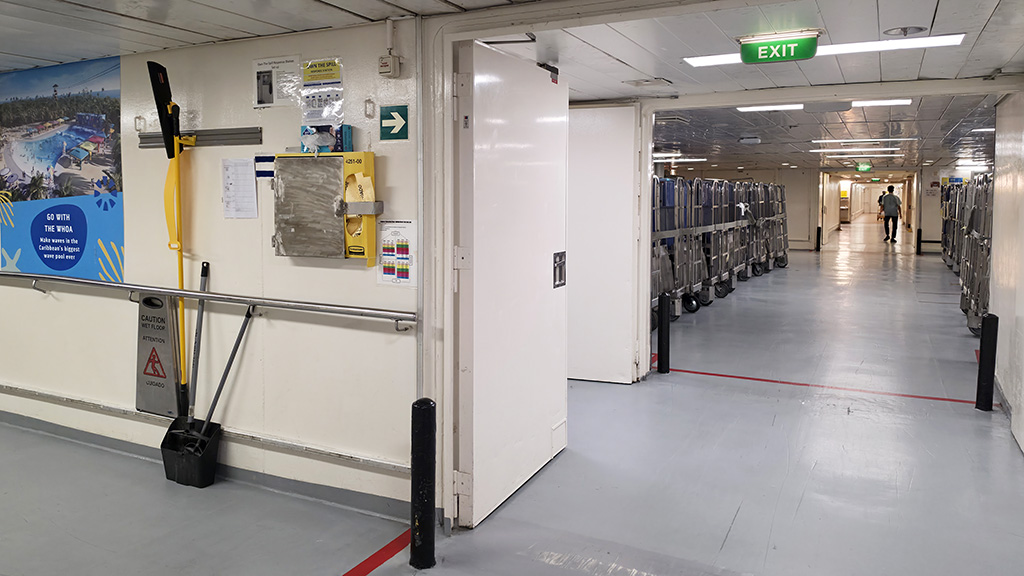
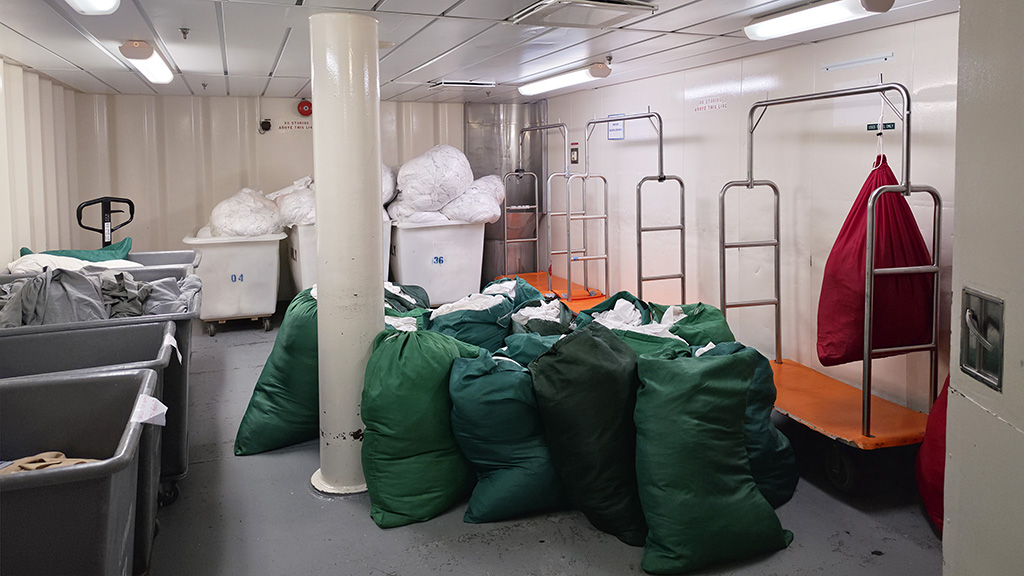
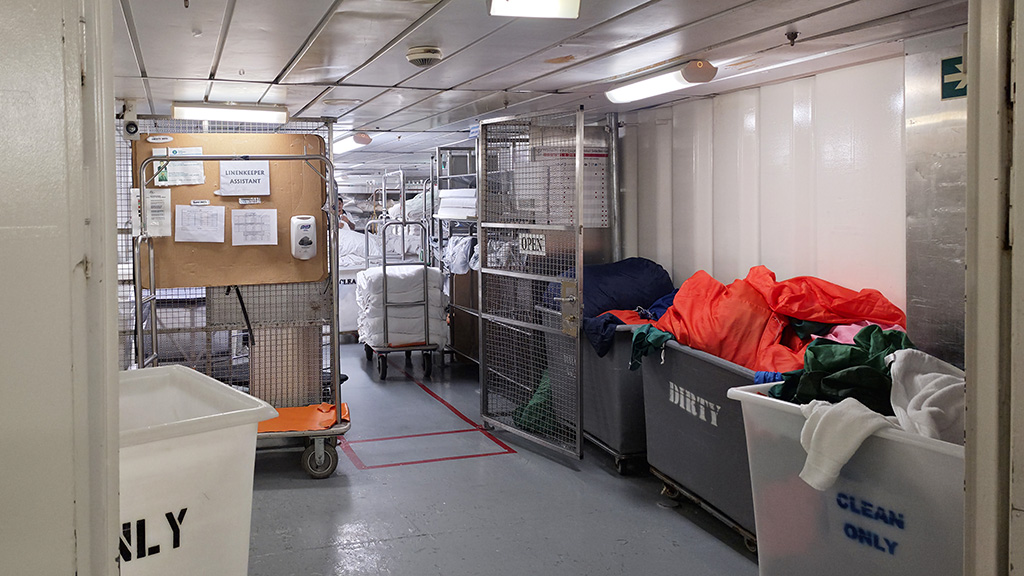
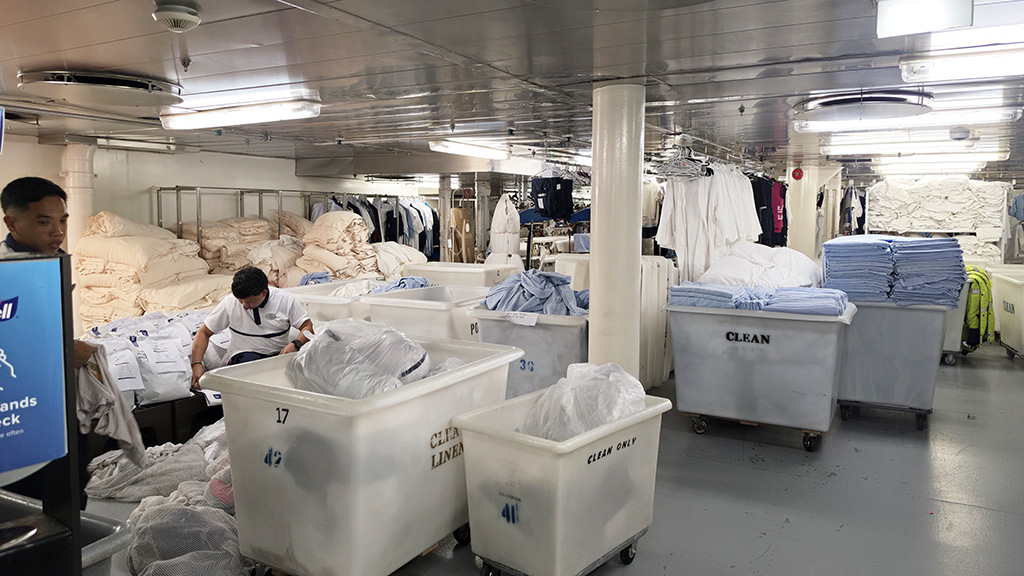
On the other end of I-95 was the laundry room. I’ve seen major laundry facilities in hotels before, but the laundry area on this cruise ship was on a whole other level.
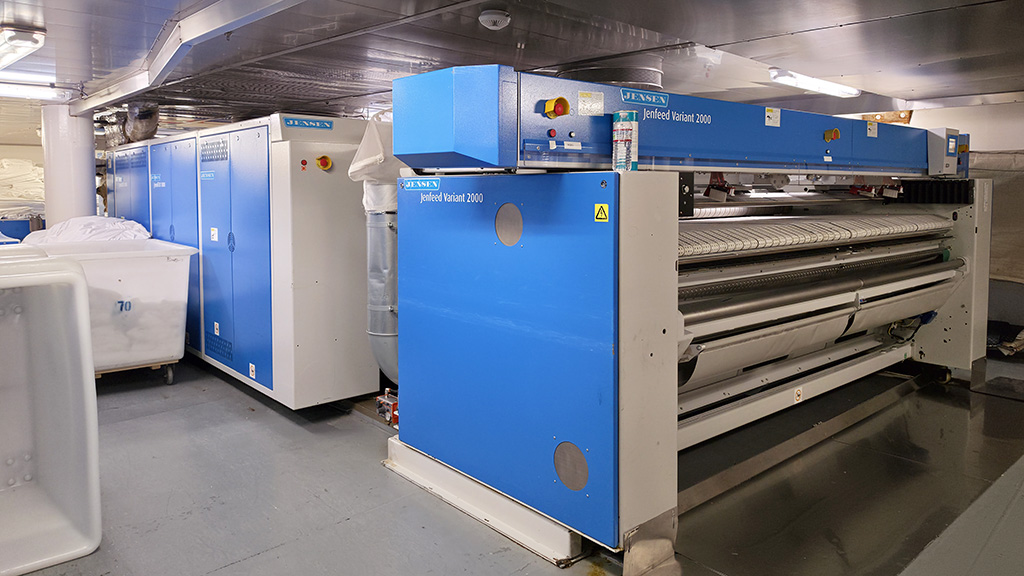

Unfortunately, by this point, I was starting to get seasick.
If you didn’t see the blog posts from my first cruise, you might not have the context that I easily get every type of motion sickness, but I managed to overcome seasickness and grow “sea legs” after the first day of my first cruise, likely because the ship was very large and relatively stable. I think another part of it was that my brain was able to quickly pick up on the motion of the ship and get used to the fact that it would rock back and forth, so it stopped sending me panic signals.
Well, the laundry room is below sea level. That means that any of the motion of the ship is in reverse, because the fulcrum of the motion is at sea level. This means that, whatever motion my brain was anticipating, it was literally exactly in reverse while I was in the laundry room. On top of that, these tours took place on sailing days, and the seas just happened to be particularly rough.
I was already starting to feel a bit unwell upon first entering the laundry room, but comboed with the heat, chemical smells, and long duration it took while they explained how exactly they did all the laundry, my condition worsened rapidly. By the end of the laundry room section, I was definitely seasick and wanted to go lay down.
However, they saved the best for last, and there was one final section of the tour I needed to see.
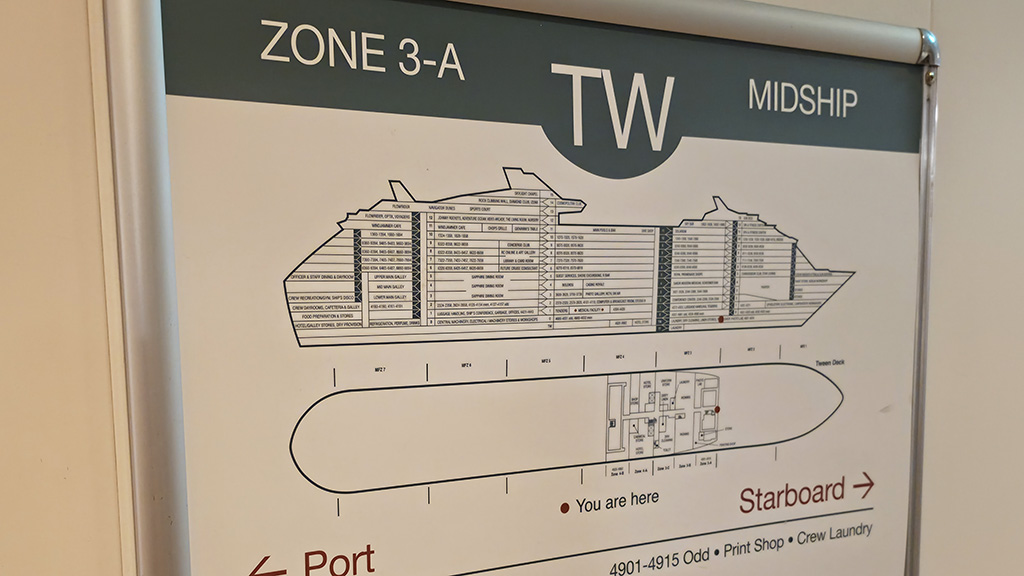
The final portion of the tour was the captain’s room on deck 10. As you’d expect from the name, this is where the captain and his highest-ranking crew operate and navigate the ship. It had an amazing panoramic view out of floor-to-ceiling windows.
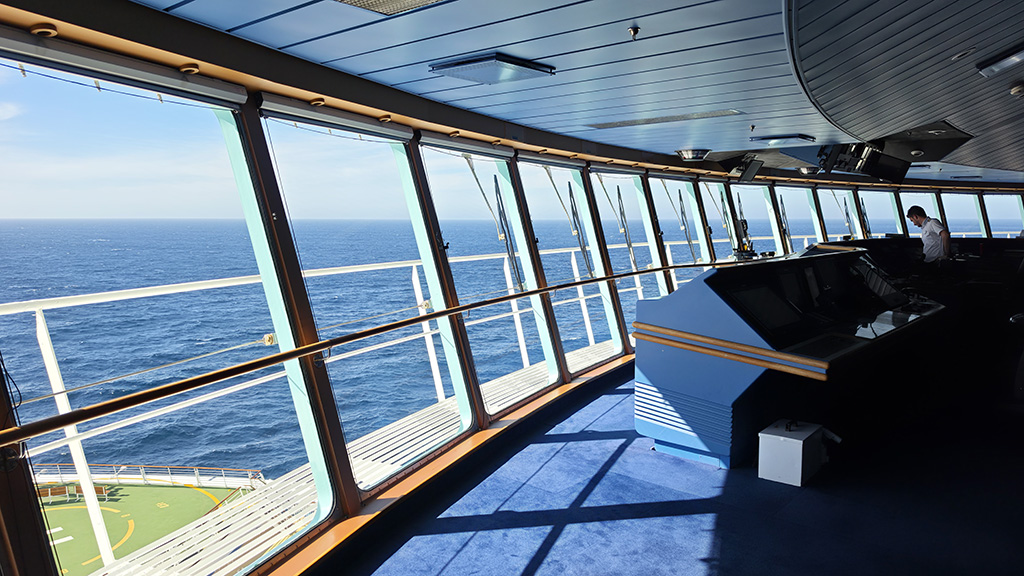
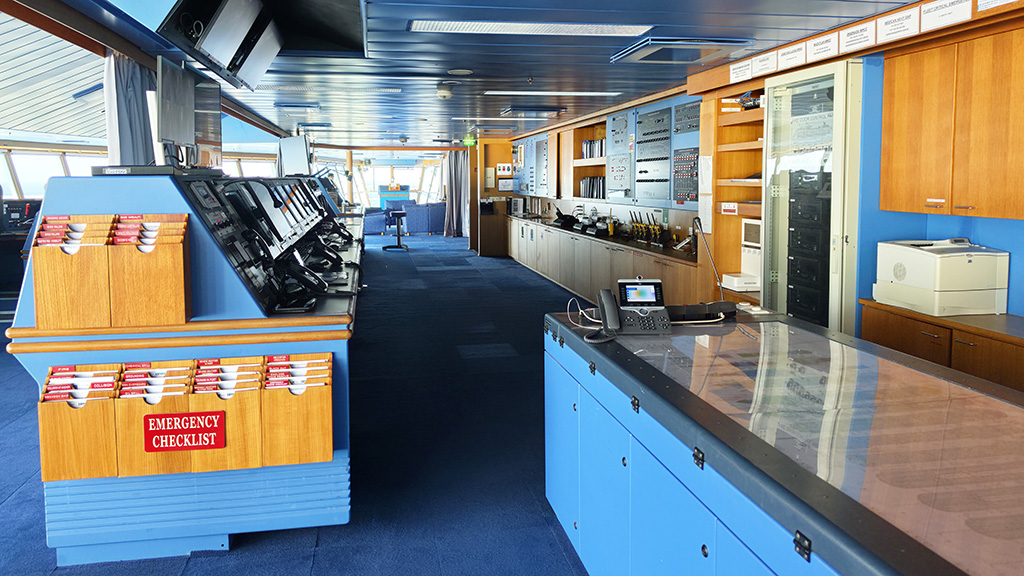
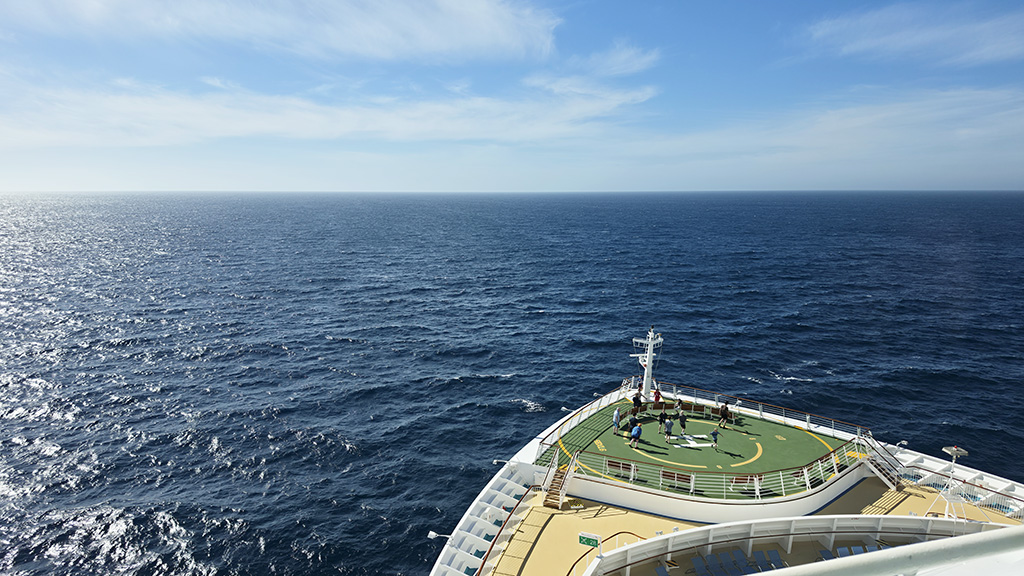
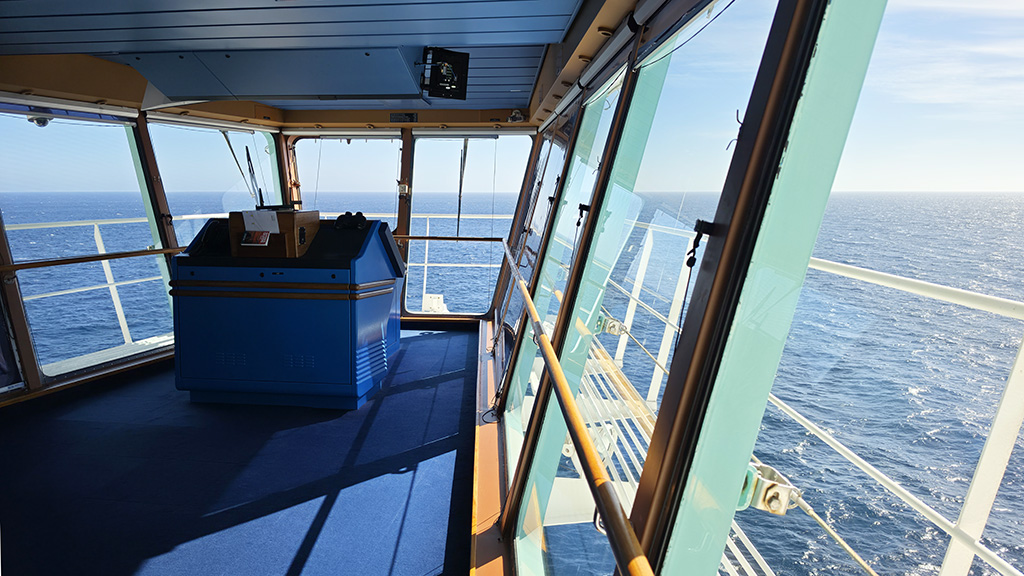

I don’t know if, by this point, my brain was putting in a lot of work trying to adapt to the reverse motion of the below-sea-level laundry room and I had messed it up again by going very high up on the ship shortly afterwards, but I was on the verge of vomiting. After checking in with the tour guide, she said that the tour was over and she was just hanging out to answer any leftover questions people had, so I let her know I was feeling unwell, thanked her for the experience, and excused myself back to my stateroom.
Overall, I enjoyed the tour, and I’m glad I spent a few hours on a sailing day to get a behind-the-scenes look at the ship. I’m someone who enjoys seeing how things work, so this tour satisfied that interest of mine very well. On top of that, I want to make sure I stay humble, so seeing large-scale operations like this run by highly qualified and intelligent people acts as a motivating factor for me to continue learning and growing so I can keep up with the rest of the world.
Cost-wise, I think ~US$100 might be a little bit high for a tour like this, especially considering that the price I paid was after a discount. I am guessing that the all-access tour on Icon of the Seas or Star of the Seas would be longer, so a $100 price point might be more reasonable for those ships, though I’m guessing that they might already be scaling it up for the larger ships and it might already be more expensive there. Regardless, I guess the market demand is setting the price of the tour, and considering how long Royal Caribbean has been in business, they probably already have analytics-based algorithms in place to determine ticket prices.
With that being said, at $100 per ticket, I think this is on the borderline of being just an enthusiast’s tour (i.e., you’d only find it worth it for the price if you already have an intrinsic interest in the topic), rather than a generalist’s tour. I personally thought it was worth it for myself, but it is probably not a tour I would repeat in the future unless there was a very special version of it for the newest Icon class ships that focused deeply on the latest technological advancements.